EP3970899B1 - Verfahren und system zur gleichmässigen bestrahlung eines rahmens eines verarbeiteten, mehrere rahmen aufweisenden substrats - Google Patents
Verfahren und system zur gleichmässigen bestrahlung eines rahmens eines verarbeiteten, mehrere rahmen aufweisenden substrats Download PDFInfo
- Publication number
- EP3970899B1 EP3970899B1 EP20306057.9A EP20306057A EP3970899B1 EP 3970899 B1 EP3970899 B1 EP 3970899B1 EP 20306057 A EP20306057 A EP 20306057A EP 3970899 B1 EP3970899 B1 EP 3970899B1
- Authority
- EP
- European Patent Office
- Prior art keywords
- processed substrate
- frame
- irradiation beam
- irradiation
- unit
- Prior art date
- Legal status (The legal status is an assumption and is not a legal conclusion. Google has not performed a legal analysis and makes no representation as to the accuracy of the status listed.)
- Active
Links
Images




Classifications
-
- B—PERFORMING OPERATIONS; TRANSPORTING
- B23—MACHINE TOOLS; METAL-WORKING NOT OTHERWISE PROVIDED FOR
- B23K—SOLDERING OR UNSOLDERING; WELDING; CLADDING OR PLATING BY SOLDERING OR WELDING; CUTTING BY APPLYING HEAT LOCALLY, e.g. FLAME CUTTING; WORKING BY LASER BEAM
- B23K26/00—Working by laser beam, e.g. welding, cutting or boring
- B23K26/352—Working by laser beam, e.g. welding, cutting or boring for surface treatment
-
- H—ELECTRICITY
- H10—SEMICONDUCTOR DEVICES; ELECTRIC SOLID-STATE DEVICES NOT OTHERWISE PROVIDED FOR
- H10P—GENERIC PROCESSES OR APPARATUS FOR THE MANUFACTURE OR TREATMENT OF DEVICES COVERED BY CLASS H10
- H10P72/00—Handling or holding of wafers, substrates or devices during manufacture or treatment thereof
- H10P72/04—Apparatus for manufacture or treatment
- H10P72/0431—Apparatus for thermal treatment
- H10P72/0436—Apparatus for thermal treatment mainly by radiation
-
- B—PERFORMING OPERATIONS; TRANSPORTING
- B23—MACHINE TOOLS; METAL-WORKING NOT OTHERWISE PROVIDED FOR
- B23K—SOLDERING OR UNSOLDERING; WELDING; CLADDING OR PLATING BY SOLDERING OR WELDING; CUTTING BY APPLYING HEAT LOCALLY, e.g. FLAME CUTTING; WORKING BY LASER BEAM
- B23K26/00—Working by laser beam, e.g. welding, cutting or boring
- B23K26/02—Positioning or observing the workpiece, e.g. with respect to the point of impact; Aligning, aiming or focusing the laser beam
- B23K26/03—Observing, e.g. monitoring, the workpiece
- B23K26/032—Observing, e.g. monitoring, the workpiece using optical means
-
- B—PERFORMING OPERATIONS; TRANSPORTING
- B23—MACHINE TOOLS; METAL-WORKING NOT OTHERWISE PROVIDED FOR
- B23K—SOLDERING OR UNSOLDERING; WELDING; CLADDING OR PLATING BY SOLDERING OR WELDING; CUTTING BY APPLYING HEAT LOCALLY, e.g. FLAME CUTTING; WORKING BY LASER BEAM
- B23K26/00—Working by laser beam, e.g. welding, cutting or boring
- B23K26/02—Positioning or observing the workpiece, e.g. with respect to the point of impact; Aligning, aiming or focusing the laser beam
- B23K26/04—Automatically aligning, aiming or focusing the laser beam, e.g. using the back-scattered light
- B23K26/042—Automatically aligning the laser beam
-
- B—PERFORMING OPERATIONS; TRANSPORTING
- B23—MACHINE TOOLS; METAL-WORKING NOT OTHERWISE PROVIDED FOR
- B23K—SOLDERING OR UNSOLDERING; WELDING; CLADDING OR PLATING BY SOLDERING OR WELDING; CUTTING BY APPLYING HEAT LOCALLY, e.g. FLAME CUTTING; WORKING BY LASER BEAM
- B23K26/00—Working by laser beam, e.g. welding, cutting or boring
- B23K26/02—Positioning or observing the workpiece, e.g. with respect to the point of impact; Aligning, aiming or focusing the laser beam
- B23K26/06—Shaping the laser beam, e.g. by masks or multi-focusing
- B23K26/062—Shaping the laser beam, e.g. by masks or multi-focusing by direct control of the laser beam
- B23K26/0622—Shaping the laser beam, e.g. by masks or multi-focusing by direct control of the laser beam by shaping pulses
-
- B—PERFORMING OPERATIONS; TRANSPORTING
- B23—MACHINE TOOLS; METAL-WORKING NOT OTHERWISE PROVIDED FOR
- B23K—SOLDERING OR UNSOLDERING; WELDING; CLADDING OR PLATING BY SOLDERING OR WELDING; CUTTING BY APPLYING HEAT LOCALLY, e.g. FLAME CUTTING; WORKING BY LASER BEAM
- B23K26/00—Working by laser beam, e.g. welding, cutting or boring
- B23K26/02—Positioning or observing the workpiece, e.g. with respect to the point of impact; Aligning, aiming or focusing the laser beam
- B23K26/06—Shaping the laser beam, e.g. by masks or multi-focusing
- B23K26/064—Shaping the laser beam, e.g. by masks or multi-focusing by means of optical elements, e.g. lenses, mirrors or prisms
- B23K26/0643—Shaping the laser beam, e.g. by masks or multi-focusing by means of optical elements, e.g. lenses, mirrors or prisms comprising mirrors
-
- B—PERFORMING OPERATIONS; TRANSPORTING
- B23—MACHINE TOOLS; METAL-WORKING NOT OTHERWISE PROVIDED FOR
- B23K—SOLDERING OR UNSOLDERING; WELDING; CLADDING OR PLATING BY SOLDERING OR WELDING; CUTTING BY APPLYING HEAT LOCALLY, e.g. FLAME CUTTING; WORKING BY LASER BEAM
- B23K26/00—Working by laser beam, e.g. welding, cutting or boring
- B23K26/08—Devices involving relative movement between laser beam and workpiece
- B23K26/082—Scanning systems, i.e. devices involving movement of the laser beam relative to the laser head
-
- G—PHYSICS
- G03—PHOTOGRAPHY; CINEMATOGRAPHY; ANALOGOUS TECHNIQUES USING WAVES OTHER THAN OPTICAL WAVES; ELECTROGRAPHY; HOLOGRAPHY
- G03F—PHOTOMECHANICAL PRODUCTION OF TEXTURED OR PATTERNED SURFACES, e.g. FOR PRINTING, FOR PROCESSING OF SEMICONDUCTOR DEVICES; MATERIALS THEREFOR; ORIGINALS THEREFOR; APPARATUS SPECIALLY ADAPTED THEREFOR
- G03F7/00—Photomechanical, e.g. photolithographic, production of textured or patterned surfaces, e.g. printing surfaces; Materials therefor, e.g. comprising photoresists; Apparatus specially adapted therefor
- G03F7/20—Exposure; Apparatus therefor
- G03F7/2002—Exposure; Apparatus therefor with visible light or UV light, through an original having an opaque pattern on a transparent support, e.g. film printing, projection printing; by reflection of visible or UV light from an original such as a printed image
- G03F7/2004—Exposure; Apparatus therefor with visible light or UV light, through an original having an opaque pattern on a transparent support, e.g. film printing, projection printing; by reflection of visible or UV light from an original such as a printed image characterised by the use of a particular light source, e.g. fluorescent lamps or deep UV light
-
- H—ELECTRICITY
- H10—SEMICONDUCTOR DEVICES; ELECTRIC SOLID-STATE DEVICES NOT OTHERWISE PROVIDED FOR
- H10P—GENERIC PROCESSES OR APPARATUS FOR THE MANUFACTURE OR TREATMENT OF DEVICES COVERED BY CLASS H10
- H10P14/00—Formation of materials, e.g. in the shape of layers or pillars
- H10P14/60—Formation of materials, e.g. in the shape of layers or pillars of insulating materials
- H10P14/65—Formation of materials, e.g. in the shape of layers or pillars of insulating materials characterised by treatments performed before or after the formation of the materials
- H10P14/6516—Formation of materials, e.g. in the shape of layers or pillars of insulating materials characterised by treatments performed before or after the formation of the materials of treatments performed after formation of the materials
- H10P14/6536—Formation of materials, e.g. in the shape of layers or pillars of insulating materials characterised by treatments performed before or after the formation of the materials of treatments performed after formation of the materials by exposure to radiation, e.g. visible light
- H10P14/6542—Formation of materials, e.g. in the shape of layers or pillars of insulating materials characterised by treatments performed before or after the formation of the materials of treatments performed after formation of the materials by exposure to radiation, e.g. visible light by using coherent radiation, e.g. using a laser
-
- H—ELECTRICITY
- H10—SEMICONDUCTOR DEVICES; ELECTRIC SOLID-STATE DEVICES NOT OTHERWISE PROVIDED FOR
- H10P—GENERIC PROCESSES OR APPARATUS FOR THE MANUFACTURE OR TREATMENT OF DEVICES COVERED BY CLASS H10
- H10P34/00—Irradiation with electromagnetic or particle radiation of wafers, substrates or parts of devices
- H10P34/40—Irradiation with electromagnetic or particle radiation of wafers, substrates or parts of devices with high-energy radiation
- H10P34/42—Irradiation with electromagnetic or particle radiation of wafers, substrates or parts of devices with high-energy radiation with electromagnetic radiation, e.g. laser annealing
-
- H—ELECTRICITY
- H10—SEMICONDUCTOR DEVICES; ELECTRIC SOLID-STATE DEVICES NOT OTHERWISE PROVIDED FOR
- H10P—GENERIC PROCESSES OR APPARATUS FOR THE MANUFACTURE OR TREATMENT OF DEVICES COVERED BY CLASS H10
- H10P72/00—Handling or holding of wafers, substrates or devices during manufacture or treatment thereof
- H10P72/06—Apparatus for monitoring, sorting, marking, testing or measuring
- H10P72/0606—Position monitoring, e.g. misposition detection or presence detection
-
- H—ELECTRICITY
- H10—SEMICONDUCTOR DEVICES; ELECTRIC SOLID-STATE DEVICES NOT OTHERWISE PROVIDED FOR
- H10P—GENERIC PROCESSES OR APPARATUS FOR THE MANUFACTURE OR TREATMENT OF DEVICES COVERED BY CLASS H10
- H10P72/00—Handling or holding of wafers, substrates or devices during manufacture or treatment thereof
- H10P72/06—Apparatus for monitoring, sorting, marking, testing or measuring
- H10P72/0606—Position monitoring, e.g. misposition detection or presence detection
- H10P72/0608—Position monitoring, e.g. misposition detection or presence detection of substrates stored in a container, a magazine, a carrier, a boat or the like
-
- H—ELECTRICITY
- H10—SEMICONDUCTOR DEVICES; ELECTRIC SOLID-STATE DEVICES NOT OTHERWISE PROVIDED FOR
- H10P—GENERIC PROCESSES OR APPARATUS FOR THE MANUFACTURE OR TREATMENT OF DEVICES COVERED BY CLASS H10
- H10P72/00—Handling or holding of wafers, substrates or devices during manufacture or treatment thereof
- H10P72/70—Handling or holding of wafers, substrates or devices during manufacture or treatment thereof for supporting or gripping
- H10P72/76—Handling or holding of wafers, substrates or devices during manufacture or treatment thereof for supporting or gripping using mechanical means, e.g. clamps or pinches
- H10P72/7604—Handling or holding of wafers, substrates or devices during manufacture or treatment thereof for supporting or gripping using mechanical means, e.g. clamps or pinches the wafers being placed on a susceptor, stage or support
- H10P72/7618—Handling or holding of wafers, substrates or devices during manufacture or treatment thereof for supporting or gripping using mechanical means, e.g. clamps or pinches the wafers being placed on a susceptor, stage or support characterised by a movable susceptor, stage or support, others than those only rotating on their own vertical axis, e.g. susceptors on a rotating carrousel
-
- H—ELECTRICITY
- H10—SEMICONDUCTOR DEVICES; ELECTRIC SOLID-STATE DEVICES NOT OTHERWISE PROVIDED FOR
- H10W—GENERIC PACKAGES, INTERCONNECTIONS, CONNECTORS OR OTHER CONSTRUCTIONAL DETAILS OF DEVICES COVERED BY CLASS H10
- H10W46/00—Marks applied to devices, e.g. for alignment or identification
-
- H—ELECTRICITY
- H10—SEMICONDUCTOR DEVICES; ELECTRIC SOLID-STATE DEVICES NOT OTHERWISE PROVIDED FOR
- H10W—GENERIC PACKAGES, INTERCONNECTIONS, CONNECTORS OR OTHER CONSTRUCTIONAL DETAILS OF DEVICES COVERED BY CLASS H10
- H10W46/00—Marks applied to devices, e.g. for alignment or identification
- H10W46/201—Marks applied to devices, e.g. for alignment or identification located on the periphery of wafers, e.g. orientation notches or lot numbers
-
- B—PERFORMING OPERATIONS; TRANSPORTING
- B23—MACHINE TOOLS; METAL-WORKING NOT OTHERWISE PROVIDED FOR
- B23K—SOLDERING OR UNSOLDERING; WELDING; CLADDING OR PLATING BY SOLDERING OR WELDING; CUTTING BY APPLYING HEAT LOCALLY, e.g. FLAME CUTTING; WORKING BY LASER BEAM
- B23K2101/00—Articles made by soldering, welding or cutting
- B23K2101/36—Electric or electronic devices
- B23K2101/40—Semiconductor devices
-
- B—PERFORMING OPERATIONS; TRANSPORTING
- B23—MACHINE TOOLS; METAL-WORKING NOT OTHERWISE PROVIDED FOR
- B23K—SOLDERING OR UNSOLDERING; WELDING; CLADDING OR PLATING BY SOLDERING OR WELDING; CUTTING BY APPLYING HEAT LOCALLY, e.g. FLAME CUTTING; WORKING BY LASER BEAM
- B23K2101/00—Articles made by soldering, welding or cutting
- B23K2101/36—Electric or electronic devices
- B23K2101/42—Printed circuits
Definitions
- the invention relates to the irradiation of semiconductor substrates. More precisely the invention relates to a method and a system for uniformly irradiating a frame of a processed substrate according to the preamble of claims 1 and 11 (see for example US 2007/024787 A1 ).
- thermal processing To manufacture semiconductor devices, a semiconductor substrate is exposed to a pulsed light beam during a process called thermal processing.
- a semiconductor substrate is generally formed by a wafer of material which comprises a plurality of frames. Each frame comprises one or more integrated circuits.
- the irradiation of the plurality of frames must follow some specific rules in order to irradiate each frame uniformly.
- the irradiation must be managed in order to avoid any overlap (corresponding to two or more irradiations of a frame).
- the wafer also has some areas that should not be irradiated. Indeed, the edges of the wafer are fragile and the irradiation could cause damages.
- a first known solution is to use an irradiation that is enough to cover the full wafer at the same time. In such a solution, there is no need to manage transition of irradiation from one frame to another. The uniformity is thus performed thanks to the arrangement of the system.
- a protective ring is used in order to prevent the edges from the irradiation.
- a second known solution is based on the use of a smaller irradiation that is not enough to cover the full wafer.
- This smaller irradiation is combined with a scanning stage adapted to move the wafer below the irradiation so that the full wafer is uniformly exposed without interruption.
- an optical scanning system can be used to move the irradiation in order to uniformly irradiate the wafer without interruption (the wafer is not moved in this alternative).
- a system comprising a scanning stage and an optical scanning system is adapted to irradiate uniformly the wafer (with the smaller irradiation).
- a method for uniformly irradiating a frame of a processed substrate, said processed substrate comprising a plurality of frames, two consecutive frames being separated by an intermediate zone comprises at least the following steps of:
- the irradiation is directed to a frame of the processed substrate.
- the invention enables the precise irradiation of the frame.
- the irradiation is such that the whole frame is uniformly irradiating leading to a best annealing process of the processed substrate.
- the present invention thus allows the precise irradiation of the parts of the processed substrate that need to be uniformly irradiated (i.e. the frames) and avoids irradiation of the parts that could be damaged by such irradiation (i.e. edges and intermediate zone).
- a system for uniformly irradiating a frame of a processed substrate, said processed substrate comprising a plurality of frames, two consecutive frames being separated by an intermediate zone is defined in claim 11, said system comprising at least the following features:
- the expression "uniformly irradiating" a surface means that the conditions of irradiation allow the whole considered surface to be exposed to the same light energy density and exposure duration.
- Figure 1 shows an example of a processed substrate 1.
- the processed substrate 1 is typically a silicon wafer or a compound wafer, such as commonly used in the semiconductor devices industries.
- the processed substrate 1 supports an array of frames 2 on its processed surface 5.
- Each frame comprises several areas.
- Each area of the frame presents specific optical and thermal properties.
- each frame comprises active devices, here for example formed by the arrangement of electronic devices such as transistors, resistors and the corresponding metallic interconnects.
- This intermediate zone 7 is generally free from active devices as it is generally damaged during the manufacturing of semiconductor devices.
- the width of the intermediate zone 7 is lower than 25 micrometers ( ⁇ m).
- the processed substrate 1 also comprises a peripheral area 9 situated on its peripheral edge.
- the peripheral area 9 is too small to support complete active devices.
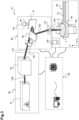
- Figures 3 to 6 represent different embodiments of a system 20; 21; 22; 23 for irradiating uniformly a frame 2 of the processed substrate 1 (particularly the processed surface 5 of the processed substrate 1).
- the system 20; 21; 22; 23 comprises a source unit 30.
- This source unit 30 comprises a light source 31 configures to emit a pulsed light beam 100 towards the processed surface 5 of the processed substrate 1.
- the light source 31 is for example an ultraviolet (UV) light source.
- the light source 31 comprises a laser source. Different types of laser source can be used here. An excimer laser light source can be used here for example.
- the wavelength of the emitted pulsed light beam 100 is here lower than 1064 nanometers (nm), even lower than 532 nanometers. Preferably, wavelength of the emitted pulsed light beam 100 is equal to or lower than 355 nanometers.
- the source unit 30 also comprises an optical system 33 which is coupled to the light source 31.
- This optical system 33 is suitable for modifying, controlling or monitoring the emitted pulsed light beam 100.
- the optical system 33 is suitable for modulating its fluence.
- the fluence corresponds to the energy delivered by the light source 31 per unit of area of the processed surface 5 of the processed substrate 1.
- the optical system 33 is positioned on the beam path between the light source 31 and the processed substrate 1. Fluence is preferably rapidly modulated by the optical system 33.
- the optical system 33 may be for instance an optical modulator suitable for modulating the transmission of the source unit 30.
- the optical system 33 is suitable for modulating the emitted pulsed light beam 100 with a fast response time.
- the response time is faster than 500 nanoseconds, preferably faster than 50 nanoseconds.
- the modulated light beam 101 outputs from the source unit 30.
- the modulated light beam 101 is then directed to a scanning unit 40 ( Figures 3 to 6 ).
- the scanning unit 40 is configured to irradiate the processed surface 5 of the processed substrate 1.
- the scanning unit 40 comprises two mirrors 41, 42. Each mirror is able to be rotated thanks to an associated rotation mechanism 43, 44.
- the modulated beam 101 is thus reflected by the two mirrors 41, 42 of the scanning unit 40 and outputs a reflected beam 102.
- the rotation mechanism 43, 44 is suitable for adapting the reflected beam 102 issuing from the two mirrors 41, 42 to the processed substrate 1 and the aimed irradiation of the processed surface 5.
- the scanning unit is for example a standard galvo scanner system.
- the scanning unit can be a polygon scanner system.
- the scanning unit can be a combination of polygons and mirrors.
- the scanning unit 40 also comprises an optical system 47.
- the optical system 47 is positioned between the two mirrors 41, 42 and the processed substrate 1. In complement to the source unit 30, the optical system 47 is configured to focus the reflected beam 102 on the processed surface 5 of the processed substrate 1.
- the optical system 47 is for example here a telecentric lens.
- an irradiation beam 105 outputs from the scanning unit 40.
- the irradiation beam 105 has here an irradiation wavelength lower than 1064 nanometers (nm), even lower than 532 nanometers.
- this irradiation wavelength is equal to or lower than 355 nanometers.
- the scanning unit 40 is configured to emit the irradiation beam 105 with an adapted shape and size in order to perform the objectives of the present invention. More particularly, the scanning unit 40 is configured to scan the irradiation beam 105 in order to uniformly irradiate one frame of the processed surface 5 of the processed substrate 1.
- the optical system 33 is configured such that the irradiation beam 105 is attenuated in transmitted energy in the intermediate region 7 of the processed substrate 1.
- the irradiation beam is for example attenuated from 0% to more than 80 % in the intermediate zone 7 compared to the irradiated beam covering the frame 2 of the processed substrate 1.
- the optical system 33 is also configured such that the irradiation beam 105 is for example attenuated from 80% to almost 100% in the adjacent frames.
- the attenuation in the optical system 33 is performed by modifying the transmission of the light beam by different physical means (and the associated physical phenomena).
- Different examples of physical means can be cited: sound waves that modify the optical properties of the material, electro-absorption modulation and electro-optic system in order to apply a voltage to modify the optical properties of the material or magneto-optic modulation that modifies the light propagation by applying a magnetic field on the material.
- the attenuation in the optical system 33 is for example performed by an acousto-optic modulator, an electro-absorption modulator, an electro-optic modulator, a magneto-optic modulator or micro and nano electromechanical devices (MEMS and NEMS).
- an acousto-optic modulator an electro-absorption modulator, an electro-optic modulator, a magneto-optic modulator or micro and nano electromechanical devices (MEMS and NEMS).
- the dimensions of the irradiation beam 105 are for example higher than 20 micrometers ( ⁇ m) in one direction and higher than 20 micrometers in the other direction.
- the processed surface 5 is here irradiated by a micro-spot associated with the irradiation beam 105.
- the scanning system 40 is configured to scan the processed substrate 1 with the irradiation beam 105 for example a circular surface of the processed substrate 1 with a diameter wider than 33 millimeters (mm).
- the largest surface irradiated by the irradiation beam 105 corresponds to the surface of the frame 2.
- the surface of the frame is equal to or smaller than 26x33 mm 2 .
- the scanning unit 40 is configured to emit the irradiation beam 105 with specific parameters: for example, at a given location, the irradiation time is shorter than 30 microseconds ( ⁇ s), even shorter than 1 microsecond. Preferably, the irradiation beam 105 is shorter than 1 nanosecond.
- the system 21; 22; 23; 24 comprises a support 50 designed to bear the processed substrate 1.
- the system 22; 24 comprises a vacuum chamber 70 housing the processed substrate 1 and the support 50.
- the vacuum chamber 70 is suitable for controlling the environment of irradiation of the processed substrate 1.
- the system 21; 22; 23; 24 also comprises a detecting unit 80.
- the detecting unit 80 is suitable for determining the position of the processed substrate 1 on the support 50.
- the detecting unit 80 comprises here a pattern camera and an associated pattern recognizing algorithm suitable for identifying and localizing a reference mark on the processed surface 5 of the processed substrate 1.
- the reference mark is for example a specific local pattern or a notch 8 formed on the processed surface 5 of the processed substrate 1 ( Figure 1 ).
- the pattern camera is for example based on visible light (wavelength comprised between 400 and 800 nanometers) or on infrared light (wavelength higher than 800 nanometers).
- the pattern camera based on visible light is preferably used for a reference mark on the processed surface 5 of the processed substrate 1.
- the pattern camera based on infrared light is for example used for a reference mark on a buried surface or on the opposite surface of the processed surface 5.
- the data from the detecting unit 80 are then used in order to match the position of the to-be-irradiated frame and the irradiation beam 105 (or the corresponding exposure position). Two alternatives are considered in the present invention to perform a movement.
- Figures 3 and 4 represent the first alternative, in which the support (and thus the to-be-irradiated frame of the processed substrate 1) is moved in order to match the frame 2 and the exposure position.
- the system 21; 22 further comprises a positioning unit 60 suitable for moving the support 50 bearing the processed substrate 1.
- the positioning unit 60 comprises two moving stages 61, 62 along the two axes x, y adapted to move the support 50 (thus the processed substrate 1) respectively in the x and y directions.
- the positioning unit 60 is able to move the support from a distance higher than 300 millimeters in the y direction and a distance higher than 200 millimeters in the x direction.
- the positioning unit 60 is adapted to move the processed substrate 1, step by step, from a frame 2 to another, corresponding here to a moving distance comprised between 20 and 36 millimeters in both directions.
- the precision associated with the positioning unit 60 is lower than 5 micrometers, preferably lower than 1 micrometer.
- the second alternative consists in moving the irradiation beam 105 (and thus the position of the corresponding micro-spot on the processed surface 5) instead of moving the processed substrate 1.
- the system 23; 24 here comprises an overhead moving unit 45 suitable for moving the scanning unit 40 in order to move the position of the micro-spot of the irradiation beam 105 on the processed surface 5 of the processed substrate 1.
- the overhead moving unit 45 comprises two moving parts 47, 48 adapted to move the scanning unit 40 respectively in the x and y directions. By moving the scanning unit 40 in the x or/and y directions, the overhead moving unit 45 thus allows moving the micro-spot of the irradiation beam 105 in the x and y directions in order to overlay the considered frame (i.e. the one to irradiate) of the processed surface 5 of the processed substrate 1.
- the precision associated with the overhead moving unit 45 is lower than 5 micrometers, preferably lower than 1 micrometer.
- the optical system 33 is thus able to adjust the modulated beam 101 at every moving step of the scanning unit 40.
- the system can comprise both the positioning unit and the overhead moving unit, thus enabling moving respectively the support and the scanning unit.
- This alternative is particularly advantageous for very large processed substrates such as flat display panel with diameters higher than one meter.
- the detection unit can be adapted to determine a rotation error.
- the support is able to rotate in order to compensate this error.
- the rotation movement is for example in the range of 2 degrees.
- the system 21; 22; 23; 24 also comprises a control unit 90 which controls the interaction of the different parts of the system 21; 22; 23; 24.
- the control unit 90 synchronizes the different parts of the system 21; 22; 23; 24.
- This control unit 90 includes a microprocessor and a memory.
- the memory stores instructions that allow the system 21; 22; 23; 24 to implement a method for uniformly irradiating the frame 2 of the processed substrate 1 as described below when these instructions are executed by the microprocessor.
- Figure 7 shows an exemplary flowchart corresponding to the method for uniformly irradiating the frame of the processed substrate according to the invention.
- this method comprises a step S2 of positioning the processed substrate 1 on the support 50. During this step S2 of positioning the processed substrate 1, the exact position of the processed substrate 1 is not known.
- the position of the processed substrate 1 needs to be determined.
- the method thus comprises a step S4 of determining an initial position of the processed substrate 1.
- the detecting unit 80 is adapted to detect one reference mark on the processed surface 5 of the processed substrate 1. Based on the detection of this reference mark, the control unit 90 is able to determine the initial position of the processed substrate 1.
- the position of the edges of the peripheral are 9 of the processed substrate 1 and particularly the position of the notch 8 can be used to determine the position of the processed substrate 1.
- the detecting unit 80 evaluates a positioning unit by comparing the theoretical (expected) position of the reference mark and the detected one. This positioning error is then used by the control unit 90 to determine the initial position of the processed substrate 1.
- control unit 90 then compares the detected initial position to an edge position.
- the edge position is localized in the peripheral area 9.
- the step S8 is implemented leading to the irradiation of the processed surface 5 of the processed substrate 1.
- the control unit 90 memorizes instructions in order to irradiate all the frames of the processed surface 5 of the processed substrate 1. These instructions for example comprise the order of the frames to irradiate. It is considered here that the previously named "to-be-irradiate frame” is for example the current frame to irradiate.
- control unit 90 thus compares the detected initial position to a first predetermined position corresponding to the to-be-irradiated frame.
- the detected initial position matches with the first predetermined position, it means that the micro-spot of the irradiating beam 105 is directed to the considered frame (which is the first one to be irradiated in the stored instructions).
- the method then comprises a step S10 of irradiating the considered frame by the irradiation beam 105.
- the irradiation beam 105 is controlled by the scanning unit 40 such that it irradiates uniformly the whole considered frame.
- the considered frame receives the transmitted energy whereas in the intermediate zone 7, the irradiation beam 105 is attenuated (meaning that the transmitted energy is lower than the one transmitted to the frame).
- the irradiation beam 105 is attenuated to more than 80% compared the irradiation beam 105 which covers the considered frame.
- the irradiation beam 105 is completely attenuated in the intermediate zone 7.
- the irradiation beam 105 is also attenuated in the surrounding frames of the considered irradiated frame (attenuation to more than 80% and preferably completely attenuated).
- the irradiation step is accurate and localized on the considered frame, thus allowing a uniform irradiation of this frame.
- step S12 the control unit 90 determined if all frames has been irradiated. If it is the case, the processed substrate 1 is annealed.
- the control unit 90 sends (step S14) an instruction to remove the processed substrate 1 from the support 50 in order to complete the preparation of the processed substrate 1 and obtain final products.
- the method comprises a step S16 of moving the micro-spot of the irradiation beam 105 from the first predetermined position to a second predetermined position associated with the following frame to irradiate (according to the order of irradiation of the stored instructions).
- Two alternatives can be considered to move the micro-spot of the irradiation beam 105 in order to direct the irradiation beam to the frame associated with the second predetermined position.
- the first solution is to move the support 50 bearing the processed substrate thanks to the positioning unit 60.
- the control unit 90 thus controls the positioning unit 60 in order to match the micro-spot of the irradiation beam with the second predetermined position.
- the second solution is to directly move the position of the micro-spot of the irradiation beam 105 on the processed surface 5 of the processed substrate 1 by moving the scanning unit 40 thanks to the overhead moving unit 45.
- the control unit 90 controls the overhead moving unit 45 to move the scanning unit 40 in order to match the micro-spot of the irradiation beam with the second predetermined position.
- step S16 When the step S16 is performed resulting in matching the micro-spot of the irradiation beam 105 with the second predetermined position on the processed surface 5 of the processed substrate 1, the method goes back to steps S10, S12, S14 and S16 as previously described.
- step S8 If, at step S8, the detected initial position is different from the first predetermined position, this point means that the irradiation beam is not directed to the frame to irradiate according to the stored instructions.
- the method thus continues at step S20 of moving the micro-spot of the irradiation beam 105 in order to direct the irradiation beam 105 to the frame associated with the first predetermined position.
- the two alternatives can be used here to match the micro-spot of the irradiation beam 105 with the first predetermined position.
- step S20 the method continues with the step S10 of irradiating the considered frame and the following steps as represented in Figure 7 .
- control unit 90 controls the optical system 33 in order to attenuate or even block the irradiation of the processed surface 5 of the processed substrate 1 (step S30).
- the peripheral edge 9 is not directly irradiated by the irradiation beam 105.
- step S32 of determining if all the frames have been irradiated (step S32).
- the control unit 90 sends (step S14 previously described) an instruction to remove the processed substrate 1 from the support 50 in order to complete the preparation of the processed substrate 1 and obtain final products.
- step S16 If some frames have not been irradiated, the method continues at step S16.
- this method stops when each frame of the processed surface 5 of the processed substrate has been uniformly irradiated.
- the control unit 90 is configured to implement this method on the whole processed surface 5 of the processed substrate 1, frame after frame, according to the stored instructions of irradiation.
Landscapes
- Physics & Mathematics (AREA)
- Optics & Photonics (AREA)
- Engineering & Computer Science (AREA)
- Plasma & Fusion (AREA)
- Mechanical Engineering (AREA)
- General Physics & Mathematics (AREA)
- Container, Conveyance, Adherence, Positioning, Of Wafer (AREA)
- Recrystallisation Techniques (AREA)
- Health & Medical Sciences (AREA)
- Toxicology (AREA)
- Electromagnetism (AREA)
- Laser Beam Processing (AREA)
Claims (17)
- Verfahren zur gleichmäßigen Bestrahlung eines Rahmens (2) eines verarbeiteten Substrats (1), wobei das verarbeitete Substrat (1) mehrere Rahmen (2) aufweist, wobei zwei aufeinanderfolgende Rahmen (2) durch eine Zwischenzone (7) getrennt sind,dadurch gekennzeichnet, daß das Verfahren die folgenden Schritte aufweist:- Bestimmen einer Ausgangsposition des verarbeiteten Substrats (1) unter Verwendung einer Erfassungseinheit (80),- Vergleichen der erfaßten Ausgangsposition mit einer ersten vorbestimmten Position, die einem ersten Rahmen des verarbeiteten Substrats (1) zugeordnet ist,- Bestrahlen des ersten Rahmens des verarbeiteten Substrats (1) mit einem Bestrahlungsstrahl (105), der von einer Quelleneinheit (30) ausgestrahlt wird und der von einer auf der ersten vorbestimmten Position befindlichen Abtasteinheit (40) abgelenkt wird, wobei der Bestrahlungsstrahl (105) so beschaffen ist, daß er den gesamten ersten Rahmen gleichmäßig abdeckt,wobei ein optisches System (33) so ausgelegt ist, daß der Bestrahlungsstrahl (105) in der Zwischenzone (7) gedämpft wird.
- Verfahren gemäß Anspruch 1, das außerdem einen Schritt des Bewegens des verarbeiteten Substrats (1) von der erfaßten Ausgangsposition zur vorbestimmten ersten Position aufweist, die dem ersten Rahmen des verarbeiteten Substrats (1) zugeordnet ist.
- Verfahren gemäß Anspruch 1, das außerdem einen Schritt des Bewegens der in der ersten vorbestimmten Position befindlichen Abtasteinheit (40) derart aufweist, daß der Bestrahlungsstrahl (105) auf den ersten Rahmen des verarbeiteten Substrats (1) gerichtet wird.
- Verfahren gemäß einem der Ansprüche 1 bis 3, wobei die Abtasteinheit (40) so ausgelegt ist, daß der Bestrahlungsstrahl (105) in der Zwischenzone (7) im Vergleich zum den ersten Rahmen abdeckenden Bestrahlungsstrahl um mehr als 80 % gedämpft wird.
- Verfahren gemäß einem der Ansprüche 1 bis 4, wobei das verarbeitete Substrat (1) mindestens eine Bezugsmarkierung aufweist und der Schritt des Bestimmens der Ausgangsposition einen Schritt des Erfassens mindestens einer Bezugsmarkierung auf dem verarbeiteten Substrat (1) aufweist.
- Verfahren gemäß einem der Ansprüche 1 bis 4, wobei das verarbeitete Substrat (1) Ränder eines peripheren Gebiets (9) und eine Einkerbung (8) aufweist und der Schritt des Bestimmens der Ausgangsposition einen Schritt des Erfassens der Ränder des peripheren Gebiets (9) und der Einkerbung (8) auf dem verarbeiteten Substrat (1) aufweist.
- Verfahren gemäß einem der Ansprüche 1 bis 6, das außerdem Schritte des- Bewegens des verarbeiteten Substrats (1) von der ersten vorbestimmten Position zu einer einem zweiten Rahmen zugeordneten zweiten vorbestimmten Position, wobei der zweite Rahmen direkt an den ersten Rahmen angrenzt, und- Bestrahlens des zweiten Rahmens des verarbeiteten Substrats (1) mit dem von der in der zweiten vorbestimmten Position befindlichen Strahlungseinheit (30) ausgesandten Bestrahlungsstrahl (105), wobei der Bestrahlungsstrahl (105) so beschaffen ist, daß er den gesamten zweiten Rahmen gleichmäßig abdeckt, aufweist.
- Verfahren gemäß einem der Ansprüche 1 bis 6, das außerdem Schritte des- Bewegens der in einer einem zweiten Rahmen des verarbeiteten Substrats (1) zugeordneten zweiten vorbestimmten Position befindlichen Abtasteinheit (40), wobei der zweite Rahmen direkt an den ersten Rahmen angrenzt, und- Bestrahlens des zweiten Rahmens des verarbeiteten Substrats (1) mit dem von der in der zweiten vorbestimmten Position befindlichen Strahlungseinheit (30) ausgesandten Bestrahlungsstrahl (105), wobei der Bestrahlungsstrahl (105) so beschaffen ist, daß er den gesamten zweiten Rahmen gleichmäßig abdeckt, aufweist.
- Verfahren gemäß einem der Ansprüche 1 bis 8, wobei der Schritt des Erfassens einen Schritt des Vergleichens der erfaßten Ausgangsposition mit mindestens einer Position eines Rands aufweist.
- Verfahren gemäß Anspruch 9, das auch einen Schritt des Blockierens der Bestrahlung des verarbeiteten Substrats (1), wenn die Ausgangsposition mindestens einer Position eines Rands entspricht, aufweist.
- System (21; 22; 23; 24) zur gleichmäßigen Bestrahlung eines Rahmens (2) eines verarbeiteten Substrats (1), wobei das verarbeitete Substrat (1) mehrere Rahmen (2) aufweist, wobei zwei aufeinanderfolgende Rahmen (2) durch eine Zwischenzone (7) getrennt sind,
wobei das System (21; 22; 23; 24)- eine Quelleneinheit (30), die dazu ausgelegt ist, einen Bestrahlungsstrahl (105) zur bearbeiteten Oberfläche (5) des verarbeiteten Substrats (1) auszustrahlen,- einen Träger (50), der dazu ausgelegt ist, das verarbeitete Substrat (1) zu tragen, aufweistund durch:- eine Erfassungseinheit (80), die dazu ausgelegt ist, eine Ausgangsposition des verarbeiteten Substrats (1) zu bestimmen,- eine Steuerungseinheit (90), die dazu ausgelegt ist, die erfaßte Ausgangsposition mit einer ersten vorbestimmten Position zu vergleichen, die einem ersten Rahmen des verarbeiteten Substrats (1) zugeordnet ist,- eine Abtasteinheit (40), die dazu ausgelegt ist, den ersten Rahmen des verarbeiteten Substrats (1) durch Ausstrahlen des Bestrahlungsstrahls (105) zu bestrahlen, wobei der Bestrahlungsstrahl (105) so beschaffen ist, daß er den gesamten ersten Rahmen gleichmäßig abdeckt, und- ein optisches System (33), das so ausgelegt ist, daß der Bestrahlungsstrahl (105) in der Zwischenzone (7) gedämpft wird,gekennzeichnet ist. - System (21; 22) gemäß Anspruch 11, das außerdem eine Positionierungseinheit (60) aufweist, die dazu ausgelegt ist, das verarbeitete Substrat (1) von der erfaßten Ausgangsposition zu einer ersten vorbestimmten Position zu bewegen, die einem ersten Rahmen des verarbeiteten Substrats zugeordnet ist.
- System (21; 22) gemäß Anspruch 11, das außerdem eine Überkopfbewegungseinheit (45) aufweist, die dazu ausgelegt ist, die in der ersten vorbestimmten Position befindliche Abtasteinheit (40) so zu bewegen, daß der Bestrahlungsstrahl (105) auf den ersten Rahmen des verarbeiteten Substrats (1) gerichtet wird.
- System (21; 22; 23; 24) gemäß Anspruch 11, wobei das optische System (33) so ausgelegt ist, daß der Bestrahlungsstrahl (105) in der Zwischenzone (7) im Vergleich zum den ersten Rahmen abdeckenden Bestrahlungsstrahl um mehr als 80 % gedämpft ist.
- System (21; 22; 23; 24) gemäß einem der Ansprüche 11 bis 14, wobei die Bestrahlungswellenlänge des Bestrahlungsstrahls (105) kleiner als 1064 Nanometer, vorzugsweise kleiner als oder gleich 355 Nanometer ist.
- System (21; 22; 23; 24) gemäß einem der Ansprüche 11 bis 15, wobei die Quelleneinheit (30) eine Laserquelle aufweist.
- System (21; 22; 23; 24) gemäß einem der Ansprüche 11 bis 16, das außerdem eine Vakuumkammer (70) aufweist, in der das verarbeitete Substrat (1) und der Träger (50) untergebracht sind.
Priority Applications (6)
| Application Number | Priority Date | Filing Date | Title |
|---|---|---|---|
| EP20306057.9A EP3970899B1 (de) | 2020-09-18 | 2020-09-18 | Verfahren und system zur gleichmässigen bestrahlung eines rahmens eines verarbeiteten, mehrere rahmen aufweisenden substrats |
| TW110134235A TW202215508A (zh) | 2020-09-18 | 2021-09-14 | 用於均勻照射被處理的基板的框的方法和系統 |
| JP2021149864A JP2022051542A (ja) | 2020-09-18 | 2021-09-15 | 被処理基板のフレームを均一に照射する方法およびシステム |
| US17/476,964 US12325085B2 (en) | 2020-09-18 | 2021-09-16 | Method and system for uniformly irradiating a frame of a processed substrate |
| KR1020210124813A KR20220038005A (ko) | 2020-09-18 | 2021-09-17 | 처리된 기판의 프레임을 균일하게 조사하기 위한 방법 및 장치 |
| CN202111089984.1A CN114203585A (zh) | 2020-09-18 | 2021-09-17 | 对处理衬底的框架进行均匀照射的方法和系统 |
Applications Claiming Priority (1)
| Application Number | Priority Date | Filing Date | Title |
|---|---|---|---|
| EP20306057.9A EP3970899B1 (de) | 2020-09-18 | 2020-09-18 | Verfahren und system zur gleichmässigen bestrahlung eines rahmens eines verarbeiteten, mehrere rahmen aufweisenden substrats |
Publications (2)
| Publication Number | Publication Date |
|---|---|
| EP3970899A1 EP3970899A1 (de) | 2022-03-23 |
| EP3970899B1 true EP3970899B1 (de) | 2023-11-22 |
Family
ID=72709260
Family Applications (1)
| Application Number | Title | Priority Date | Filing Date |
|---|---|---|---|
| EP20306057.9A Active EP3970899B1 (de) | 2020-09-18 | 2020-09-18 | Verfahren und system zur gleichmässigen bestrahlung eines rahmens eines verarbeiteten, mehrere rahmen aufweisenden substrats |
Country Status (6)
| Country | Link |
|---|---|
| US (1) | US12325085B2 (de) |
| EP (1) | EP3970899B1 (de) |
| JP (1) | JP2022051542A (de) |
| KR (1) | KR20220038005A (de) |
| CN (1) | CN114203585A (de) |
| TW (1) | TW202215508A (de) |
Family Cites Families (14)
| Publication number | Priority date | Publication date | Assignee | Title |
|---|---|---|---|---|
| JP3326654B2 (ja) * | 1994-05-02 | 2002-09-24 | ソニー株式会社 | 表示用半導体チップの製造方法 |
| JPH1187720A (ja) | 1997-09-08 | 1999-03-30 | Sanyo Electric Co Ltd | 半導体装置及び液晶表示装置 |
| JP4403599B2 (ja) * | 1999-04-19 | 2010-01-27 | ソニー株式会社 | 半導体薄膜の結晶化方法、レーザ照射装置、薄膜トランジスタの製造方法及び表示装置の製造方法 |
| US7119351B2 (en) * | 2002-05-17 | 2006-10-10 | Gsi Group Corporation | Method and system for machine vision-based feature detection and mark verification in a workpiece or wafer marking system |
| JP4589606B2 (ja) * | 2003-06-02 | 2010-12-01 | 住友重機械工業株式会社 | 半導体装置の製造方法 |
| US7731798B2 (en) * | 2004-12-01 | 2010-06-08 | Ultratech, Inc. | Heated chuck for laser thermal processing |
| JP4857639B2 (ja) * | 2005-07-27 | 2012-01-18 | ソニー株式会社 | 表示装置及び表示装置の製造方法 |
| US8138058B2 (en) | 2006-11-24 | 2012-03-20 | Semiconductor Energy Laboratory Co., Ltd. | Substrate with marker, manufacturing method thereof, laser irradiation apparatus, laser irradiation method, light exposure apparatus, and manufacturing method of semiconductor device |
| TWI389211B (zh) | 2008-04-30 | 2013-03-11 | 奇美電子股份有限公司 | 影像顯示系統及其製造方法 |
| EP2239084A1 (de) * | 2009-04-07 | 2010-10-13 | Excico France | Verfahren und Vorrichtung zum Bestrahlen einer Halbleitermaterialoberfläche mit Laserenergie |
| JP5595021B2 (ja) * | 2009-12-03 | 2014-09-24 | 住友重機械工業株式会社 | レーザ処理装置 |
| JP5452247B2 (ja) * | 2010-01-21 | 2014-03-26 | 東芝機械株式会社 | レーザダイシング装置 |
| KR101739019B1 (ko) | 2010-11-01 | 2017-05-24 | 삼성디스플레이 주식회사 | 레이저 결정화 시스템 및 이를 이용한 표시 장치 제조 방법 |
| KR102230321B1 (ko) * | 2017-05-25 | 2021-03-19 | 미쓰비시덴키 가부시키가이샤 | 레이저 가공 장치 |
-
2020
- 2020-09-18 EP EP20306057.9A patent/EP3970899B1/de active Active
-
2021
- 2021-09-14 TW TW110134235A patent/TW202215508A/zh unknown
- 2021-09-15 JP JP2021149864A patent/JP2022051542A/ja active Pending
- 2021-09-16 US US17/476,964 patent/US12325085B2/en active Active
- 2021-09-17 CN CN202111089984.1A patent/CN114203585A/zh active Pending
- 2021-09-17 KR KR1020210124813A patent/KR20220038005A/ko active Pending
Also Published As
| Publication number | Publication date |
|---|---|
| KR20220038005A (ko) | 2022-03-25 |
| US20220088714A1 (en) | 2022-03-24 |
| EP3970899A1 (de) | 2022-03-23 |
| TW202215508A (zh) | 2022-04-16 |
| US12325085B2 (en) | 2025-06-10 |
| JP2022051542A (ja) | 2022-03-31 |
| CN114203585A (zh) | 2022-03-18 |
Similar Documents
| Publication | Publication Date | Title |
|---|---|---|
| TWI414382B (zh) | 用於半導體鏈結處理中對準雷射光束之系統與方法 | |
| CN104302438B (zh) | 用于以激光辐射加工工件的方法和设备 | |
| US12303999B2 (en) | Laser processing system using Bessel beam and method for processing workpiece using Bessel beam | |
| US7718554B2 (en) | Focused laser beam processing | |
| WO2000053365A1 (en) | Laser machining apparatus | |
| JP2017177194A (ja) | レーザ加工装置及びレーザ加工方法 | |
| JP6788182B2 (ja) | レーザ加工装置及びレーザ加工方法 | |
| EP3970899B1 (de) | Verfahren und system zur gleichmässigen bestrahlung eines rahmens eines verarbeiteten, mehrere rahmen aufweisenden substrats | |
| JP2005279659A (ja) | レーザマーキング方法、レーザマーキング装置、マーク読取方法 | |
| WO2020012771A1 (ja) | レーザ加工装置、レーザ加工方法及び成膜マスクの製造方法 | |
| JP2002210578A (ja) | レーザ照射装置及びレーザ加工方法 | |
| KR101928922B1 (ko) | 어닐링 장치 및 어닐링 방법 | |
| JP2004098087A (ja) | レーザ加工装置およびレーザ加工方法 | |
| KR20190056895A (ko) | 미세 패턴 정밀 가공 장치 | |
| TWI910227B (zh) | 最小化照射非均勻性之系統和方法 | |
| KR20180060827A (ko) | 레이저 가공 장치 및 레이저 가공 방법 | |
| KR102012297B1 (ko) | 멀티빔 스캐너 시스템을 이용한 패턴 형성방법 | |
| JP2004317904A (ja) | 光ビーム生成装置 | |
| JP7605786B2 (ja) | レーザ加工装置 | |
| JPH106049A (ja) | レーザ加工装置及びレーザ加工方法 | |
| JP2020116599A (ja) | レーザ加工装置およびレーザ加工方法 | |
| KR20240053416A (ko) | 레이저 열처리 장치 및 레이저 열처리 방법 | |
| JP2019042762A (ja) | 蒸着マスクの製造方法及び加工マスク | |
| JPH0655285A (ja) | レーザ加工方法及びこの加工方法を用いたレーザ加工装置 | |
| US20080165406A1 (en) | Subsurface Reticle |
Legal Events
| Date | Code | Title | Description |
|---|---|---|---|
| PUAI | Public reference made under article 153(3) epc to a published international application that has entered the european phase |
Free format text: ORIGINAL CODE: 0009012 |
|
| STAA | Information on the status of an ep patent application or granted ep patent |
Free format text: STATUS: THE APPLICATION HAS BEEN PUBLISHED |
|
| AK | Designated contracting states |
Kind code of ref document: A1 Designated state(s): AL AT BE BG CH CY CZ DE DK EE ES FI FR GB GR HR HU IE IS IT LI LT LU LV MC MK MT NL NO PL PT RO RS SE SI SK SM TR |
|
| STAA | Information on the status of an ep patent application or granted ep patent |
Free format text: STATUS: REQUEST FOR EXAMINATION WAS MADE |
|
| 17P | Request for examination filed |
Effective date: 20220908 |
|
| RBV | Designated contracting states (corrected) |
Designated state(s): AL AT BE BG CH CY CZ DE DK EE ES FI FR GB GR HR HU IE IS IT LI LT LU LV MC MK MT NL NO PL PT RO RS SE SI SK SM TR |
|
| STAA | Information on the status of an ep patent application or granted ep patent |
Free format text: STATUS: EXAMINATION IS IN PROGRESS |
|
| 17Q | First examination report despatched |
Effective date: 20230327 |
|
| GRAP | Despatch of communication of intention to grant a patent |
Free format text: ORIGINAL CODE: EPIDOSNIGR1 |
|
| STAA | Information on the status of an ep patent application or granted ep patent |
Free format text: STATUS: GRANT OF PATENT IS INTENDED |
|
| RIC1 | Information provided on ipc code assigned before grant |
Ipc: B23K 101/42 20060101ALN20230712BHEP Ipc: B23K 101/40 20060101ALN20230712BHEP Ipc: H01L 21/324 20060101ALI20230712BHEP Ipc: H01L 21/268 20060101ALI20230712BHEP Ipc: H01L 21/20 20060101ALI20230712BHEP Ipc: B23K 26/352 20140101ALI20230712BHEP Ipc: B23K 26/082 20140101ALI20230712BHEP Ipc: B23K 26/0622 20140101ALI20230712BHEP Ipc: B23K 26/042 20140101ALI20230712BHEP Ipc: B23K 26/03 20060101AFI20230712BHEP |
|
| INTG | Intention to grant announced |
Effective date: 20230727 |
|
| RIN1 | Information on inventor provided before grant (corrected) |
Inventor name: GONZALEZ TRUJILLO, GUILLERMO ABRAHAM Inventor name: HUET, KARIM MIKAEL Inventor name: THEBAULT, GUILLAUME VINCENT Inventor name: DOURI, NABIL Inventor name: PERROT, SYLVAIN Inventor name: MAZZAMUTO, FULVIO |
|
| P01 | Opt-out of the competence of the unified patent court (upc) registered |
Effective date: 20230818 |
|
| GRAS | Grant fee paid |
Free format text: ORIGINAL CODE: EPIDOSNIGR3 |
|
| GRAA | (expected) grant |
Free format text: ORIGINAL CODE: 0009210 |
|
| STAA | Information on the status of an ep patent application or granted ep patent |
Free format text: STATUS: THE PATENT HAS BEEN GRANTED |
|
| AK | Designated contracting states |
Kind code of ref document: B1 Designated state(s): AL AT BE BG CH CY CZ DE DK EE ES FI FR GB GR HR HU IE IS IT LI LT LU LV MC MK MT NL NO PL PT RO RS SE SI SK SM TR |
|
| REG | Reference to a national code |
Ref country code: GB Ref legal event code: FG4D |
|
| REG | Reference to a national code |
Ref country code: CH Ref legal event code: EP Ref country code: DE Ref legal event code: R096 Ref document number: 602020021438 Country of ref document: DE |
|
| REG | Reference to a national code |
Ref country code: IE Ref legal event code: FG4D |
|
| REG | Reference to a national code |
Ref country code: LT Ref legal event code: MG9D |
|
| REG | Reference to a national code |
Ref country code: NL Ref legal event code: MP Effective date: 20231122 |
|
| PG25 | Lapsed in a contracting state [announced via postgrant information from national office to epo] |
Ref country code: GR Free format text: LAPSE BECAUSE OF FAILURE TO SUBMIT A TRANSLATION OF THE DESCRIPTION OR TO PAY THE FEE WITHIN THE PRESCRIBED TIME-LIMIT Effective date: 20240223 |
|
| PG25 | Lapsed in a contracting state [announced via postgrant information from national office to epo] |
Ref country code: IS Free format text: LAPSE BECAUSE OF FAILURE TO SUBMIT A TRANSLATION OF THE DESCRIPTION OR TO PAY THE FEE WITHIN THE PRESCRIBED TIME-LIMIT Effective date: 20240322 |
|
| PG25 | Lapsed in a contracting state [announced via postgrant information from national office to epo] |
Ref country code: LT Free format text: LAPSE BECAUSE OF FAILURE TO SUBMIT A TRANSLATION OF THE DESCRIPTION OR TO PAY THE FEE WITHIN THE PRESCRIBED TIME-LIMIT Effective date: 20231122 |
|
| PG25 | Lapsed in a contracting state [announced via postgrant information from national office to epo] |
Ref country code: NL Free format text: LAPSE BECAUSE OF FAILURE TO SUBMIT A TRANSLATION OF THE DESCRIPTION OR TO PAY THE FEE WITHIN THE PRESCRIBED TIME-LIMIT Effective date: 20231122 |
|
| PG25 | Lapsed in a contracting state [announced via postgrant information from national office to epo] |
Ref country code: ES Free format text: LAPSE BECAUSE OF FAILURE TO SUBMIT A TRANSLATION OF THE DESCRIPTION OR TO PAY THE FEE WITHIN THE PRESCRIBED TIME-LIMIT Effective date: 20231122 |
|
| PG25 | Lapsed in a contracting state [announced via postgrant information from national office to epo] |
Ref country code: NL Free format text: LAPSE BECAUSE OF FAILURE TO SUBMIT A TRANSLATION OF THE DESCRIPTION OR TO PAY THE FEE WITHIN THE PRESCRIBED TIME-LIMIT Effective date: 20231122 Ref country code: LT Free format text: LAPSE BECAUSE OF FAILURE TO SUBMIT A TRANSLATION OF THE DESCRIPTION OR TO PAY THE FEE WITHIN THE PRESCRIBED TIME-LIMIT Effective date: 20231122 Ref country code: IS Free format text: LAPSE BECAUSE OF FAILURE TO SUBMIT A TRANSLATION OF THE DESCRIPTION OR TO PAY THE FEE WITHIN THE PRESCRIBED TIME-LIMIT Effective date: 20240322 Ref country code: GR Free format text: LAPSE BECAUSE OF FAILURE TO SUBMIT A TRANSLATION OF THE DESCRIPTION OR TO PAY THE FEE WITHIN THE PRESCRIBED TIME-LIMIT Effective date: 20240223 Ref country code: ES Free format text: LAPSE BECAUSE OF FAILURE TO SUBMIT A TRANSLATION OF THE DESCRIPTION OR TO PAY THE FEE WITHIN THE PRESCRIBED TIME-LIMIT Effective date: 20231122 Ref country code: BG Free format text: LAPSE BECAUSE OF FAILURE TO SUBMIT A TRANSLATION OF THE DESCRIPTION OR TO PAY THE FEE WITHIN THE PRESCRIBED TIME-LIMIT Effective date: 20240222 Ref country code: PT Free format text: LAPSE BECAUSE OF FAILURE TO SUBMIT A TRANSLATION OF THE DESCRIPTION OR TO PAY THE FEE WITHIN THE PRESCRIBED TIME-LIMIT Effective date: 20240322 |
|
| PG25 | Lapsed in a contracting state [announced via postgrant information from national office to epo] |
Ref country code: SE Free format text: LAPSE BECAUSE OF FAILURE TO SUBMIT A TRANSLATION OF THE DESCRIPTION OR TO PAY THE FEE WITHIN THE PRESCRIBED TIME-LIMIT Effective date: 20231122 Ref country code: RS Free format text: LAPSE BECAUSE OF FAILURE TO SUBMIT A TRANSLATION OF THE DESCRIPTION OR TO PAY THE FEE WITHIN THE PRESCRIBED TIME-LIMIT Effective date: 20231122 Ref country code: PL Free format text: LAPSE BECAUSE OF FAILURE TO SUBMIT A TRANSLATION OF THE DESCRIPTION OR TO PAY THE FEE WITHIN THE PRESCRIBED TIME-LIMIT Effective date: 20231122 Ref country code: NO Free format text: LAPSE BECAUSE OF FAILURE TO SUBMIT A TRANSLATION OF THE DESCRIPTION OR TO PAY THE FEE WITHIN THE PRESCRIBED TIME-LIMIT Effective date: 20240222 Ref country code: LV Free format text: LAPSE BECAUSE OF FAILURE TO SUBMIT A TRANSLATION OF THE DESCRIPTION OR TO PAY THE FEE WITHIN THE PRESCRIBED TIME-LIMIT Effective date: 20231122 Ref country code: HR Free format text: LAPSE BECAUSE OF FAILURE TO SUBMIT A TRANSLATION OF THE DESCRIPTION OR TO PAY THE FEE WITHIN THE PRESCRIBED TIME-LIMIT Effective date: 20231122 |
|
| PG25 | Lapsed in a contracting state [announced via postgrant information from national office to epo] |
Ref country code: DK Free format text: LAPSE BECAUSE OF FAILURE TO SUBMIT A TRANSLATION OF THE DESCRIPTION OR TO PAY THE FEE WITHIN THE PRESCRIBED TIME-LIMIT Effective date: 20231122 |
|
| PG25 | Lapsed in a contracting state [announced via postgrant information from national office to epo] |
Ref country code: SK Free format text: LAPSE BECAUSE OF FAILURE TO SUBMIT A TRANSLATION OF THE DESCRIPTION OR TO PAY THE FEE WITHIN THE PRESCRIBED TIME-LIMIT Effective date: 20231122 |
|
| PG25 | Lapsed in a contracting state [announced via postgrant information from national office to epo] |
Ref country code: SM Free format text: LAPSE BECAUSE OF FAILURE TO SUBMIT A TRANSLATION OF THE DESCRIPTION OR TO PAY THE FEE WITHIN THE PRESCRIBED TIME-LIMIT Effective date: 20231122 Ref country code: SK Free format text: LAPSE BECAUSE OF FAILURE TO SUBMIT A TRANSLATION OF THE DESCRIPTION OR TO PAY THE FEE WITHIN THE PRESCRIBED TIME-LIMIT Effective date: 20231122 Ref country code: RO Free format text: LAPSE BECAUSE OF FAILURE TO SUBMIT A TRANSLATION OF THE DESCRIPTION OR TO PAY THE FEE WITHIN THE PRESCRIBED TIME-LIMIT Effective date: 20231122 Ref country code: EE Free format text: LAPSE BECAUSE OF FAILURE TO SUBMIT A TRANSLATION OF THE DESCRIPTION OR TO PAY THE FEE WITHIN THE PRESCRIBED TIME-LIMIT Effective date: 20231122 Ref country code: DK Free format text: LAPSE BECAUSE OF FAILURE TO SUBMIT A TRANSLATION OF THE DESCRIPTION OR TO PAY THE FEE WITHIN THE PRESCRIBED TIME-LIMIT Effective date: 20231122 |
|
| REG | Reference to a national code |
Ref country code: DE Ref legal event code: R097 Ref document number: 602020021438 Country of ref document: DE |
|
| PLBE | No opposition filed within time limit |
Free format text: ORIGINAL CODE: 0009261 |
|
| STAA | Information on the status of an ep patent application or granted ep patent |
Free format text: STATUS: NO OPPOSITION FILED WITHIN TIME LIMIT |
|
| PG25 | Lapsed in a contracting state [announced via postgrant information from national office to epo] |
Ref country code: SI Free format text: LAPSE BECAUSE OF FAILURE TO SUBMIT A TRANSLATION OF THE DESCRIPTION OR TO PAY THE FEE WITHIN THE PRESCRIBED TIME-LIMIT Effective date: 20231122 |
|
| 26N | No opposition filed |
Effective date: 20240823 |
|
| PG25 | Lapsed in a contracting state [announced via postgrant information from national office to epo] |
Ref country code: SI Free format text: LAPSE BECAUSE OF FAILURE TO SUBMIT A TRANSLATION OF THE DESCRIPTION OR TO PAY THE FEE WITHIN THE PRESCRIBED TIME-LIMIT Effective date: 20231122 |
|
| REG | Reference to a national code |
Ref country code: AT Ref legal event code: UEP Ref document number: 1633405 Country of ref document: AT Kind code of ref document: T Effective date: 20231122 |
|
| PG25 | Lapsed in a contracting state [announced via postgrant information from national office to epo] |
Ref country code: MC Free format text: LAPSE BECAUSE OF FAILURE TO SUBMIT A TRANSLATION OF THE DESCRIPTION OR TO PAY THE FEE WITHIN THE PRESCRIBED TIME-LIMIT Effective date: 20231122 |
|
| REG | Reference to a national code |
Ref country code: CH Ref legal event code: PL |
|
| PG25 | Lapsed in a contracting state [announced via postgrant information from national office to epo] |
Ref country code: LU Free format text: LAPSE BECAUSE OF NON-PAYMENT OF DUE FEES Effective date: 20240918 |
|
| GBPC | Gb: european patent ceased through non-payment of renewal fee |
Effective date: 20240918 |
|
| PG25 | Lapsed in a contracting state [announced via postgrant information from national office to epo] |
Ref country code: GB Free format text: LAPSE BECAUSE OF NON-PAYMENT OF DUE FEES Effective date: 20240918 |
|
| REG | Reference to a national code |
Ref country code: BE Ref legal event code: MM Effective date: 20240930 |
|
| PG25 | Lapsed in a contracting state [announced via postgrant information from national office to epo] |
Ref country code: BE Free format text: LAPSE BECAUSE OF NON-PAYMENT OF DUE FEES Effective date: 20240930 |
|
| PG25 | Lapsed in a contracting state [announced via postgrant information from national office to epo] |
Ref country code: CH Free format text: LAPSE BECAUSE OF NON-PAYMENT OF DUE FEES Effective date: 20240930 |
|
| PG25 | Lapsed in a contracting state [announced via postgrant information from national office to epo] |
Ref country code: IE Free format text: LAPSE BECAUSE OF NON-PAYMENT OF DUE FEES Effective date: 20240918 |
|
| PG25 | Lapsed in a contracting state [announced via postgrant information from national office to epo] |
Ref country code: FI Free format text: LAPSE BECAUSE OF FAILURE TO SUBMIT A TRANSLATION OF THE DESCRIPTION OR TO PAY THE FEE WITHIN THE PRESCRIBED TIME-LIMIT Effective date: 20231122 |
|
| PGFP | Annual fee paid to national office [announced via postgrant information from national office to epo] |
Ref country code: DE Payment date: 20250905 Year of fee payment: 6 |
|
| PGFP | Annual fee paid to national office [announced via postgrant information from national office to epo] |
Ref country code: IT Payment date: 20250926 Year of fee payment: 6 |
|
| PGFP | Annual fee paid to national office [announced via postgrant information from national office to epo] |
Ref country code: FR Payment date: 20250904 Year of fee payment: 6 Ref country code: AT Payment date: 20250905 Year of fee payment: 6 |
|
| PGFP | Annual fee paid to national office [announced via postgrant information from national office to epo] |
Ref country code: CZ Payment date: 20250908 Year of fee payment: 6 |
|
| PG25 | Lapsed in a contracting state [announced via postgrant information from national office to epo] |
Ref country code: CY Free format text: LAPSE BECAUSE OF FAILURE TO SUBMIT A TRANSLATION OF THE DESCRIPTION OR TO PAY THE FEE WITHIN THE PRESCRIBED TIME-LIMIT; INVALID AB INITIO Effective date: 20200918 |
|
| PG25 | Lapsed in a contracting state [announced via postgrant information from national office to epo] |
Ref country code: HU Free format text: LAPSE BECAUSE OF FAILURE TO SUBMIT A TRANSLATION OF THE DESCRIPTION OR TO PAY THE FEE WITHIN THE PRESCRIBED TIME-LIMIT; INVALID AB INITIO Effective date: 20200918 |
|
| REG | Reference to a national code |
Ref country code: DE Ref legal event code: R082 Ref document number: 602020021438 Country of ref document: DE |