EP3978281B1 - Véhicule pourvu de bruleur catalytique destiné à la climatisation d'un habitacle - Google Patents
Véhicule pourvu de bruleur catalytique destiné à la climatisation d'un habitacle Download PDFInfo
- Publication number
- EP3978281B1 EP3978281B1 EP21195420.1A EP21195420A EP3978281B1 EP 3978281 B1 EP3978281 B1 EP 3978281B1 EP 21195420 A EP21195420 A EP 21195420A EP 3978281 B1 EP3978281 B1 EP 3978281B1
- Authority
- EP
- European Patent Office
- Prior art keywords
- fuel cell
- burner
- passenger compartment
- vehicle
- air conditioning
- Prior art date
- Legal status (The legal status is an assumption and is not a legal conclusion. Google has not performed a legal analysis and makes no representation as to the accuracy of the status listed.)
- Active
Links
Images
Classifications
-
- B—PERFORMING OPERATIONS; TRANSPORTING
- B60—VEHICLES IN GENERAL
- B60H—ARRANGEMENTS OF HEATING, COOLING, VENTILATING OR OTHER AIR-TREATING DEVICES SPECIALLY ADAPTED FOR PASSENGER OR GOODS SPACES OF VEHICLES
- B60H1/00—Heating, cooling or ventilating devices
- B60H1/22—Heating, cooling or ventilating devices the heat source being other than the propulsion plant
- B60H1/2203—Heating, cooling or ventilating devices the heat source being other than the propulsion plant the heat being derived from burners
- B60H1/2212—Heating, cooling or ventilating devices the heat source being other than the propulsion plant the heat being derived from burners arrangements of burners for heating air
-
- B—PERFORMING OPERATIONS; TRANSPORTING
- B60—VEHICLES IN GENERAL
- B60H—ARRANGEMENTS OF HEATING, COOLING, VENTILATING OR OTHER AIR-TREATING DEVICES SPECIALLY ADAPTED FOR PASSENGER OR GOODS SPACES OF VEHICLES
- B60H1/00—Heating, cooling or ventilating devices
- B60H1/00357—Air-conditioning arrangements specially adapted for particular vehicles
- B60H1/00385—Air-conditioning arrangements specially adapted for particular vehicles for vehicles having an electrical drive, e.g. hybrid or fuel cell
- B60H1/00392—Air-conditioning arrangements specially adapted for particular vehicles for vehicles having an electrical drive, e.g. hybrid or fuel cell for electric vehicles having only electric drive means
-
- B—PERFORMING OPERATIONS; TRANSPORTING
- B60—VEHICLES IN GENERAL
- B60H—ARRANGEMENTS OF HEATING, COOLING, VENTILATING OR OTHER AIR-TREATING DEVICES SPECIALLY ADAPTED FOR PASSENGER OR GOODS SPACES OF VEHICLES
- B60H1/00—Heating, cooling or ventilating devices
- B60H1/02—Heating, cooling or ventilating devices the heat being derived from the propulsion plant
- B60H1/14—Heating, cooling or ventilating devices the heat being derived from the propulsion plant other than from cooling liquid of the plant
- B60H1/143—Heating, cooling or ventilating devices the heat being derived from the propulsion plant other than from cooling liquid of the plant the heat being derived from cooling an electric component, e.g. electric motors, electric circuits, fuel cells or batteries
-
- B—PERFORMING OPERATIONS; TRANSPORTING
- B60—VEHICLES IN GENERAL
- B60L—PROPULSION OF ELECTRICALLY-PROPELLED VEHICLES; SUPPLYING ELECTRIC POWER FOR AUXILIARY EQUIPMENT OF ELECTRICALLY-PROPELLED VEHICLES; ELECTRODYNAMIC BRAKE SYSTEMS FOR VEHICLES IN GENERAL; MAGNETIC SUSPENSION OR LEVITATION FOR VEHICLES; MONITORING OPERATING VARIABLES OF ELECTRICALLY-PROPELLED VEHICLES; ELECTRIC SAFETY DEVICES FOR ELECTRICALLY-PROPELLED VEHICLES
- B60L1/00—Supplying electric power to auxiliary equipment of vehicles
- B60L1/003—Supplying electric power to auxiliary equipment of vehicles to auxiliary motors, e.g. for pumps, compressors
-
- B—PERFORMING OPERATIONS; TRANSPORTING
- B60—VEHICLES IN GENERAL
- B60L—PROPULSION OF ELECTRICALLY-PROPELLED VEHICLES; SUPPLYING ELECTRIC POWER FOR AUXILIARY EQUIPMENT OF ELECTRICALLY-PROPELLED VEHICLES; ELECTRODYNAMIC BRAKE SYSTEMS FOR VEHICLES IN GENERAL; MAGNETIC SUSPENSION OR LEVITATION FOR VEHICLES; MONITORING OPERATING VARIABLES OF ELECTRICALLY-PROPELLED VEHICLES; ELECTRIC SAFETY DEVICES FOR ELECTRICALLY-PROPELLED VEHICLES
- B60L1/00—Supplying electric power to auxiliary equipment of vehicles
- B60L1/02—Supplying electric power to auxiliary equipment of vehicles to electric heating circuits
- B60L1/04—Supplying electric power to auxiliary equipment of vehicles to electric heating circuits fed by the power supply line
- B60L1/06—Supplying electric power to auxiliary equipment of vehicles to electric heating circuits fed by the power supply line using only one supply
- B60L1/08—Methods and devices for control or regulation
-
- B—PERFORMING OPERATIONS; TRANSPORTING
- B60—VEHICLES IN GENERAL
- B60L—PROPULSION OF ELECTRICALLY-PROPELLED VEHICLES; SUPPLYING ELECTRIC POWER FOR AUXILIARY EQUIPMENT OF ELECTRICALLY-PROPELLED VEHICLES; ELECTRODYNAMIC BRAKE SYSTEMS FOR VEHICLES IN GENERAL; MAGNETIC SUSPENSION OR LEVITATION FOR VEHICLES; MONITORING OPERATING VARIABLES OF ELECTRICALLY-PROPELLED VEHICLES; ELECTRIC SAFETY DEVICES FOR ELECTRICALLY-PROPELLED VEHICLES
- B60L3/00—Electric devices on electrically-propelled vehicles for safety purposes; Monitoring operating variables, e.g. speed, deceleration or energy consumption
- B60L3/0023—Detecting, eliminating, remedying or compensating for drive train abnormalities, e.g. failures within the drive train
- B60L3/0053—Detecting, eliminating, remedying or compensating for drive train abnormalities, e.g. failures within the drive train relating to fuel cells
-
- B—PERFORMING OPERATIONS; TRANSPORTING
- B60—VEHICLES IN GENERAL
- B60L—PROPULSION OF ELECTRICALLY-PROPELLED VEHICLES; SUPPLYING ELECTRIC POWER FOR AUXILIARY EQUIPMENT OF ELECTRICALLY-PROPELLED VEHICLES; ELECTRODYNAMIC BRAKE SYSTEMS FOR VEHICLES IN GENERAL; MAGNETIC SUSPENSION OR LEVITATION FOR VEHICLES; MONITORING OPERATING VARIABLES OF ELECTRICALLY-PROPELLED VEHICLES; ELECTRIC SAFETY DEVICES FOR ELECTRICALLY-PROPELLED VEHICLES
- B60L50/00—Electric propulsion with power supplied within the vehicle
- B60L50/50—Electric propulsion with power supplied within the vehicle using propulsion power supplied by batteries or fuel cells
- B60L50/70—Electric propulsion with power supplied within the vehicle using propulsion power supplied by batteries or fuel cells using power supplied by fuel cells
-
- B—PERFORMING OPERATIONS; TRANSPORTING
- B60—VEHICLES IN GENERAL
- B60L—PROPULSION OF ELECTRICALLY-PROPELLED VEHICLES; SUPPLYING ELECTRIC POWER FOR AUXILIARY EQUIPMENT OF ELECTRICALLY-PROPELLED VEHICLES; ELECTRODYNAMIC BRAKE SYSTEMS FOR VEHICLES IN GENERAL; MAGNETIC SUSPENSION OR LEVITATION FOR VEHICLES; MONITORING OPERATING VARIABLES OF ELECTRICALLY-PROPELLED VEHICLES; ELECTRIC SAFETY DEVICES FOR ELECTRICALLY-PROPELLED VEHICLES
- B60L50/00—Electric propulsion with power supplied within the vehicle
- B60L50/50—Electric propulsion with power supplied within the vehicle using propulsion power supplied by batteries or fuel cells
- B60L50/70—Electric propulsion with power supplied within the vehicle using propulsion power supplied by batteries or fuel cells using power supplied by fuel cells
- B60L50/72—Constructional details of fuel cells specially adapted for electric vehicles
-
- B—PERFORMING OPERATIONS; TRANSPORTING
- B60—VEHICLES IN GENERAL
- B60L—PROPULSION OF ELECTRICALLY-PROPELLED VEHICLES; SUPPLYING ELECTRIC POWER FOR AUXILIARY EQUIPMENT OF ELECTRICALLY-PROPELLED VEHICLES; ELECTRODYNAMIC BRAKE SYSTEMS FOR VEHICLES IN GENERAL; MAGNETIC SUSPENSION OR LEVITATION FOR VEHICLES; MONITORING OPERATING VARIABLES OF ELECTRICALLY-PROPELLED VEHICLES; ELECTRIC SAFETY DEVICES FOR ELECTRICALLY-PROPELLED VEHICLES
- B60L58/00—Methods or circuit arrangements for monitoring or controlling batteries or fuel cells, specially adapted for electric vehicles
- B60L58/30—Methods or circuit arrangements for monitoring or controlling batteries or fuel cells, specially adapted for electric vehicles for monitoring or controlling fuel cells
- B60L58/32—Methods or circuit arrangements for monitoring or controlling batteries or fuel cells, specially adapted for electric vehicles for monitoring or controlling fuel cells for controlling the temperature of fuel cells, e.g. by controlling the electric load
- B60L58/33—Methods or circuit arrangements for monitoring or controlling batteries or fuel cells, specially adapted for electric vehicles for monitoring or controlling fuel cells for controlling the temperature of fuel cells, e.g. by controlling the electric load by cooling
-
- B—PERFORMING OPERATIONS; TRANSPORTING
- B61—RAILWAYS
- B61D—BODY DETAILS OR KINDS OF RAILWAY VEHICLES
- B61D27/00—Heating, cooling, ventilating, or air-conditioning
- B61D27/0018—Air-conditioning means, i.e. combining at least two of the following ways of treating or supplying air, namely heating, cooling or ventilating
-
- H—ELECTRICITY
- H01—ELECTRIC ELEMENTS
- H01M—PROCESSES OR MEANS, e.g. BATTERIES, FOR THE DIRECT CONVERSION OF CHEMICAL ENERGY INTO ELECTRICAL ENERGY
- H01M8/00—Fuel cells; Manufacture thereof
- H01M8/04—Auxiliary arrangements, e.g. for control of pressure or for circulation of fluids
- H01M8/04007—Auxiliary arrangements, e.g. for control of pressure or for circulation of fluids related to heat exchange
- H01M8/04029—Heat exchange using liquids
-
- H—ELECTRICITY
- H01—ELECTRIC ELEMENTS
- H01M—PROCESSES OR MEANS, e.g. BATTERIES, FOR THE DIRECT CONVERSION OF CHEMICAL ENERGY INTO ELECTRICAL ENERGY
- H01M8/00—Fuel cells; Manufacture thereof
- H01M8/04—Auxiliary arrangements, e.g. for control of pressure or for circulation of fluids
- H01M8/04082—Arrangements for control of reactant parameters, e.g. pressure or concentration
- H01M8/04201—Reactant storage and supply, e.g. means for feeding, pipes
-
- H—ELECTRICITY
- H01—ELECTRIC ELEMENTS
- H01M—PROCESSES OR MEANS, e.g. BATTERIES, FOR THE DIRECT CONVERSION OF CHEMICAL ENERGY INTO ELECTRICAL ENERGY
- H01M8/00—Fuel cells; Manufacture thereof
- H01M8/10—Fuel cells with solid electrolytes
- H01M8/1007—Fuel cells with solid electrolytes with both reactants being gaseous or vaporised
-
- B—PERFORMING OPERATIONS; TRANSPORTING
- B60—VEHICLES IN GENERAL
- B60L—PROPULSION OF ELECTRICALLY-PROPELLED VEHICLES; SUPPLYING ELECTRIC POWER FOR AUXILIARY EQUIPMENT OF ELECTRICALLY-PROPELLED VEHICLES; ELECTRODYNAMIC BRAKE SYSTEMS FOR VEHICLES IN GENERAL; MAGNETIC SUSPENSION OR LEVITATION FOR VEHICLES; MONITORING OPERATING VARIABLES OF ELECTRICALLY-PROPELLED VEHICLES; ELECTRIC SAFETY DEVICES FOR ELECTRICALLY-PROPELLED VEHICLES
- B60L2240/00—Control parameters of input or output; Target parameters
- B60L2240/10—Vehicle control parameters
- B60L2240/34—Cabin temperature
-
- H—ELECTRICITY
- H01—ELECTRIC ELEMENTS
- H01M—PROCESSES OR MEANS, e.g. BATTERIES, FOR THE DIRECT CONVERSION OF CHEMICAL ENERGY INTO ELECTRICAL ENERGY
- H01M2250/00—Fuel cells for particular applications; Specific features of fuel cell system
- H01M2250/20—Fuel cells in motive systems, e.g. vehicle, ship, plane
-
- Y—GENERAL TAGGING OF NEW TECHNOLOGICAL DEVELOPMENTS; GENERAL TAGGING OF CROSS-SECTIONAL TECHNOLOGIES SPANNING OVER SEVERAL SECTIONS OF THE IPC; TECHNICAL SUBJECTS COVERED BY FORMER USPC CROSS-REFERENCE ART COLLECTIONS [XRACs] AND DIGESTS
- Y02—TECHNOLOGIES OR APPLICATIONS FOR MITIGATION OR ADAPTATION AGAINST CLIMATE CHANGE
- Y02E—REDUCTION OF GREENHOUSE GAS [GHG] EMISSIONS, RELATED TO ENERGY GENERATION, TRANSMISSION OR DISTRIBUTION
- Y02E60/00—Enabling technologies; Technologies with a potential or indirect contribution to GHG emissions mitigation
- Y02E60/30—Hydrogen technology
- Y02E60/50—Fuel cells
-
- Y—GENERAL TAGGING OF NEW TECHNOLOGICAL DEVELOPMENTS; GENERAL TAGGING OF CROSS-SECTIONAL TECHNOLOGIES SPANNING OVER SEVERAL SECTIONS OF THE IPC; TECHNICAL SUBJECTS COVERED BY FORMER USPC CROSS-REFERENCE ART COLLECTIONS [XRACs] AND DIGESTS
- Y02—TECHNOLOGIES OR APPLICATIONS FOR MITIGATION OR ADAPTATION AGAINST CLIMATE CHANGE
- Y02T—CLIMATE CHANGE MITIGATION TECHNOLOGIES RELATED TO TRANSPORTATION
- Y02T90/00—Enabling technologies or technologies with a potential or indirect contribution to GHG emissions mitigation
- Y02T90/40—Application of hydrogen technology to transportation, e.g. using fuel cells
Definitions
- the invention relates to a vehicle with a passenger compartment and an air conditioning system for air conditioning the passenger compartment.
- DE 199 31 061 A1 discloses a generic, fuel cell-powered vehicle with a catalytic burner designed to heat fuel cells.
- the catalytic burner can be operated with fuel from a partial flow of the fuel for the fuel cell and can be used as an auxiliary or auxiliary heater for a passenger compartment of the vehicle.
- CN 109 291 830 B teaches a vehicle with a fuel cell system and a catalytic burner for hydrogen combustion, which is thermally connected to heat exchangers for heating a passenger compartment, according to the preamble of independent patent claim 1.
- WO 2011/048734 A1 EP 1 465 274 A2 , WO 2007/117229 A1 and EP 1 906 108 A2 concern other fuel cell systems.
- the invention is based on the object of providing a vehicle with efficient heating.
- a vehicle according to the invention for example a land, water or air vehicle, in particular a large-capacity vehicle such as a bus or a rail vehicle, comprises a passenger compartment and an air conditioning system for air conditioning the passenger compartment.
- the air conditioning system comprises a Burner, in particular a catalytic burner, for the, in particular catalytic, combustion of a fuel gas for exclusively heating an air flow for the passenger compartment.
- the burner is free of connections to a coolant flow for a fuel cell of the vehicle for transferring thermal energy, in particular heat, from the burner to the coolant flow.
- the burner is designed as a catalytic burner. It can serve to heat the air flow for the passenger compartment when the vehicle is stationary and can thus be part of an auxiliary heater.
- the vehicle further comprises an electric drive and a fuel cell system for supplying the electric drive with energy, wherein the fuel cell system comprises at least one fuel cell.
- the vehicle comprises a fuel gas tank for storing fuel gas for the fuel cell.
- the fuel gas can be hydrogen.
- the fuel gas tank is connected to the burner of the air conditioning system, in particular by means of fuel gas-carrying pipes, so that fuel gas from the fuel gas tank can be fed to the burner, in particular a catalytic burner, for combustion, in particular catalytic combustion, in the burner.
- the air conditioning system has a first control unit for regulating or controlling the air flow for the passenger compartment. It is also suitably configured to control combustion in the burner, in particular the catalytic burner. It can also be configured accordingly to regulate or control the supply of fuel gas from the fuel gas tank to the burner.
- the fuel cell system has a second control unit.
- the first and second control units are different from each other.
- the first control unit of the air conditioning system is then designed to regulate or control the combustion of fuel gas in the burner and, if necessary, to correspondingly regulate or control the supply to Fuel gas from the fuel gas tank to the burner independently of the operation of the fuel cell; further developed also independently of the regulation or control of the fuel cell system by the second control unit, in particular at least independently of the operation and regulation or control of the coolant flow for the fuel cell by the second control unit of the fuel cell system.
- the regulation or control of the air conditioning system and the fuel cell system are therefore separate and independent of each other.
- the vehicle is further developed as a passenger transport vehicle, specifically a rail vehicle.
- the passenger compartment is the interior of the vehicle's car body intended for passengers.
- Air conditioning systems also abbreviated to HVAC (Heating, Ventilation and Air Conditioning), are air conditioning systems used to generate and maintain a specified quality of the air in the passenger compartment in terms of temperature, humidity, etc., particularly regardless of ambient conditions such as the weather.
- the vehicle's air conditioning system is designed to bring the air in the passenger compartment into a specified state. For this purpose, it is designed to heat and/or cool, humidify and/or dry air, and, if necessary, filter or exchange air, and, in particular, to generate or influence local air currents.
- the air flow for the passenger compartment can be heated using a burner.
- the air conditioning system of the vehicle can be further developed to include a suitably designed, first heat exchanger for, in particular, the direct transfer of heat from the, in particular catalytic, combustion of the fuel gas in the, in particular catalytic, burner to the air flow for the passenger compartment
- the first heat exchanger is then, in turn, free of any connection to the coolant flow for the vehicle's fuel cell for transferring heat to the coolant flow.
- the burner, the first heat exchanger, and the air flow for the passenger compartment are free of any connection to the coolant flow for the vehicle's fuel cell.
- the first heat exchanger of the air conditioning system is connected to lines for conducting the waste heat, for example an exhaust gas flow, from the burner and lines for conducting the air flow for the passenger compartment for transferring the heat from the catalytic combustion to the air flow for the passenger compartment.
- the air conditioning system is free of additional, in particular electrical, heating elements for heating the air flow for the passenger compartment.
- the burner therefore serves exclusively to heat the air in the passenger compartment and not to heat a fuel cell in the vehicle. It is exclusively assigned to the air conditioning system and is located separately from any fuel cell in the vehicle. Heat generated by the burner is not transferred to the fuel cell's coolant.
- At least the burner, in particular the catalytic burner, of the air conditioning system, in particular the entire air conditioning system, is arranged separately from the fuel cell system in the vehicle.
- at least the burner, in particular the catalytic burner, of the air conditioning system, but in particular the entire air conditioning system of the vehicle, is designed to be operable independently of the vehicle's fuel cell system.
- the at least one fuel cell of the The fuel cell system is located in the roof area of a vehicle body.
- the air conditioning system can also be located in the roof area of a vehicle body, but separately from the fuel cell system.
- the fuel cell system can be free of a burner or heating elements for heating the coolant flow for the vehicle's fuel cell.
- the vehicle's fuel cell is thus not preheated.
- the air conditioning system's burner is not coupled to the fuel cell's coolant flow in such a way as to transfer heat from the burner to the coolant flow.
- the vehicle can have a second heat exchanger for transferring heat from the fuel cell's coolant flow to the air flow for the passenger compartment.
- the second heat exchanger is then arranged upstream of the first heat exchanger in the air flow for the passenger compartment, according to a further development.
- the waste heat from the fuel cell can thus also be used to heat the air flow for the passenger compartment. No waste heat from the burner is transferred to the fuel cell's coolant flow via the second heat exchanger.
- the first and second heat exchangers are not identical.
- the first control unit of the air conditioning system is suitably designed to regulate or control the transfer of heat from the coolant flow of the fuel cell to the air flow for the passenger compartment.
- the first heat exchanger – and thus also the associated, in particular catalytic, burner – is arranged downstream of the second heat exchanger in the air flow for the passenger compartment.
- the control or Control of combustion, particularly catalytic combustion, in the burner can be dependent on the temperature of the air flow for the passenger compartment downstream of the second heat exchanger. It is therefore not independent of the state of the fuel cell system. If the fuel cell is shut down, no waste heat from the fuel cell would be transferred to the air flow for the passenger compartment. However, if the air flow for the passenger compartment is already heated by the waste heat from the fuel cell, the heating effect of the burner can be reduced.
- control of the combustion in the burner can also be dependent on a current actual temperature and depending on a specified target temperature of the room air in the passenger compartment of the vehicle and/or depending on a fill level or pressure of fuel gas in the fuel gas tank.
- the regulation or control of the burner is considered independent of the operation and regulation or control of the fuel cell system, in particular independent of the operation and regulation or control of the fuel cell's coolant flow.
- the air conditioning system and fuel cell can therefore be operated independently of each other and are designed accordingly.
- the operation of the fuel cell is not required to heat the passenger compartment.
- the invention also eliminates the need for battery power to generate heat using electric heating elements.
- the heat required to heat the passenger compartment is generated simply and efficiently by the air conditioning system's burner, particularly a catalytic burner, which can be fed with fuel gas from the fuel cell's fuel gas tank.
- Heat generation in a catalytic burner is more efficient than heat generation via a fuel cell and much more efficient than using energy from traction batteries, which, in turn, receive energy only from recuperation and the fuel cell. Furthermore, heating the vehicle with a fuel cell means longer operation and thus greater aging of the fuel cell. With a catalytic burner A higher temperature can also be generated, resulting in more efficient heating. The system can also be used to maintain the temperature during standby mode.
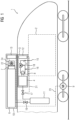
- FIG. 1 A rail vehicle 1 for passenger transport is shown schematically with a passenger compartment 2 and an air conditioning system 3 for air conditioning the passenger compartment 2.
- the air conditioning of the passenger compartment is achieved via an air flow 5 for the passenger compartment.
- Air is discharged from the passenger compartment 2 and released into the surroundings of the vehicle 1 and/or partially supplied to the air conditioning system 3. Additionally, air from the surroundings of the vehicle 1 can be supplied to the air conditioning system 3 and subsequently to the passenger compartment 2. For the sake of simplicity, only the air flow 5 is shown, which is initially extracted from the passenger compartment 2 at 15 and, after being conditioned, in particular heated, at position 16, is then supplied back to the passenger compartment 2.
- the air conditioning system 3 comprises a catalytic burner 4.
- the waste heat of the burner 4 is transferred in a first heat exchanger 8 to the air flow 5 for the passenger compartment of the vehicle 2.
- the catalytic burner 4 is connected to a fuel gas tank 11 via fuel gas-carrying pipes and a valve 17, which regulates the flow of fuel gas from the fuel gas tank 11 into the burner 4.
- the valve 17 is controlled by a first control unit 12 of the air conditioning system 3.
- the control of the burner 4 and thus the heat transfer via the first heat exchanger 8, for example by controlling the air flow 5 through the first heat exchanger 8 via a further, first valve 18, is also carried out by the first control unit 12 of the air conditioning system 3.
- the valve 18 is designed as a bypass valve in order to mix heated air with cold air.
- the burner 4 is free of any connection to the coolant flow 7 of the fuel cell 6 of the vehicle 1.
- the rail vehicle 1 is electrically powered.
- the drive 9 is powered by energy from the fuel cell 6, which are connected to each other via the electrical line 23.
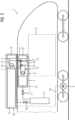
- Fig. 2 now illustrates a further embodiment of a rail vehicle 1 according to the invention.
- Heat is transferred from the burner 4 to the air flow 5 for the passenger compartment 2 via a first heat exchanger 8.
- waste heat from the fuel cell 6 can be transferred to the air flow 5 for the passenger compartment 2 of the rail vehicle 1, here via a second heat exchanger 14, which is different from the first heat exchanger 8. This occurs upstream of the burner 4 and upstream of the first heat exchanger 8.
- the heat transfer is also controlled by the first control unit 12 of the air conditioning system 3, for example by controlling a further, second valve 20, independently of the control of the fuel cell 6 by a second control unit 13.
- air is initially drawn in from the surroundings of the rail vehicle and/or from the interior, in particular from the passenger compartment 2, of the rail vehicle 1 by a fan controlled by the first control unit 12 at position 15.
- the air flow 5 for the passenger compartment 2 is first passed through the second heat exchanger 14 and only then to the air conditioning system 3 and the first heat exchanger 8 of the air conditioning system 3.
- the burner 4 serves exclusively to heat the air flow 5 for the passenger compartment 2. It is free of any connection to the coolant flow 7 of the fuel cell 6 for transferring heat from the burner 4 to the coolant flow 7.
Landscapes
- Engineering & Computer Science (AREA)
- Life Sciences & Earth Sciences (AREA)
- Sustainable Energy (AREA)
- Sustainable Development (AREA)
- Mechanical Engineering (AREA)
- Power Engineering (AREA)
- Transportation (AREA)
- Chemical & Material Sciences (AREA)
- Manufacturing & Machinery (AREA)
- Chemical Kinetics & Catalysis (AREA)
- Electrochemistry (AREA)
- General Chemical & Material Sciences (AREA)
- Physics & Mathematics (AREA)
- Thermal Sciences (AREA)
- Combustion & Propulsion (AREA)
- Air-Conditioning For Vehicles (AREA)
- Fuel Cell (AREA)
Claims (7)
- Véhicule (1) comprenant un habitacle (2) et une installation (3) de conditionnement d'air pour le conditionnement de l'habitacle, dans lequel l'installation (3) de conditionnement d'air comprend un brûleur (4) pour la combustion d'un gaz combustible afin de réchauffer exclusivement un courant (5) d'air pour l'habitacle (2) et le brûleur (4) est exempt d'une liaison à un courant (7) de fluide de refroidissement pour une pile (6) à combustible du véhicule (1) pour la transmission de chaleur du brûleur (4) au courant (7) de fluide de refroidissement, dans lequel le véhicule (1) a un entraînement (9) électrique et un système (10) de pile à combustible comprenant au moins une pile (6) à combustible pour l'alimentation de l'entraînement (9) électrique en énergie,
caractérisé
en ce que le véhicule (1) comprend un réservoir (11) de gaz combustible ayant du gaz combustible pour la pile (6) à combustible, dans lequel le brûleur (4) de l'installation (3) de conditionnement d'air communique avec le réservoir (11) de gaz combustible pour l'envoi de gaz combustible du réservoir (11) de gaz combustible au brûleur (4) de l'installation (3) de conditionnement d'air, dans lequel l'installation (3) de conditionnement d'air a une première unité (12) de commande et le système de pile à combustible, une deuxième unité (13) de commande, dans lequel la première unité (12) de commande de l'installation de conditionnement d'air est constituée pour la régulation ou pour la commande du courant (5) d'air pour l'habitacle (2) et pour la régulation ou la commande de la combustion dans le brûleur (4) indépendamment du fonctionnement du système (10) de pile à combustible. - Véhicule suivant la revendication 1,
caractérisé
en ce que le brûleur (4) de l'installation (3) de conditionnement d'air est un brûleur catalytique. - Véhicule suivant l'une des revendications 1 ou 2,
caractérisé
en ce que l'installation (3) de conditionnement d'air a un premier échangeur de chaleur (8) pour la transmission de la chaleur de la combustion du gaz combustible, du brûleur (4) au courant (5) d'air pour l'habitacle (2). - Véhicule suivant l'une des revendications 1 à 3,
caractérisé
en ce que le système (10) de pile à combustible est exempt d'un brûleur pour chauffer le courant (7) de fluide de refroidissement pour la pile (6) à combustible du véhicule (1). - Véhicule suivant l'une des revendications 1 à 4,
caractérisé
en ce qu'au moins le brûleur (4) de l'installation (3) de conditionnement d'air est disposé dans le véhicule (1) de manière séparée du système (10) de pile à combustible et constitué de manière à pouvoir fonctionner indépendamment. - Véhicule suivant la revendication 3,
caractérisé
en ce que le véhicule (1) a un deuxième échangeur de chaleur (14) pour la transmission de la chaleur du courant (5) de fluide de refroidissement de la pile (6) à combustible au courant (5) d'air pour l'habitacle (2), dans lequel le premier échangeur de chaleur (8) est monté en aval du deuxième échangeur de chaleur (14) dans le courant (5) d'air pour l'habitacle (2). - Véhicule suivant l'une des revendications 1 à 6,
caractérisé
en ce que l'installation (3) de conditionnement d'air n'a pas d'autre élément de chauffage pour le chauffage du courant (5) d'air pour l'habitacle (2).
Applications Claiming Priority (1)
| Application Number | Priority Date | Filing Date | Title |
|---|---|---|---|
| DE102020212393.4A DE102020212393B3 (de) | 2020-09-30 | 2020-09-30 | Fahrzeug mit katalytischem Brenner zur Klimatisierung eines Fahrgastraums |
Publications (2)
| Publication Number | Publication Date |
|---|---|
| EP3978281A1 EP3978281A1 (fr) | 2022-04-06 |
| EP3978281B1 true EP3978281B1 (fr) | 2025-05-07 |
Family
ID=77666307
Family Applications (1)
| Application Number | Title | Priority Date | Filing Date |
|---|---|---|---|
| EP21195420.1A Active EP3978281B1 (fr) | 2020-09-30 | 2021-09-08 | Véhicule pourvu de bruleur catalytique destiné à la climatisation d'un habitacle |
Country Status (2)
| Country | Link |
|---|---|
| EP (1) | EP3978281B1 (fr) |
| DE (1) | DE102020212393B3 (fr) |
Family Cites Families (8)
| Publication number | Priority date | Publication date | Assignee | Title |
|---|---|---|---|---|
| DE19931061A1 (de) | 1999-07-01 | 2001-01-11 | Mannesmann Ag | Anordnung zum Beheizen/Kühlen einer Brennstoffzelle und Brennstoffzellensystem |
| DE10315255A1 (de) * | 2003-04-03 | 2004-10-21 | J. Eberspächer GmbH & Co. KG | Brennstoffzellensystem und Brenneranordnung für ein Brennstoffzellensystem |
| DE10360458A1 (de) | 2003-12-22 | 2005-07-28 | J. Eberspächer GmbH & Co. KG | Brennstoffzellensystem |
| DE102004033545B4 (de) | 2004-07-09 | 2006-06-14 | J. Eberspächer GmbH & Co. KG | Brenner |
| US8124290B2 (en) | 2006-04-07 | 2012-02-28 | Utc Power Corporation | Operating fuel cell during down time on cryogenic hydrogen boil-off |
| DE102006046256A1 (de) | 2006-09-28 | 2008-04-03 | J. Eberspächer GmbH & Co. KG | Wasserstoffheizung |
| JP5162561B2 (ja) * | 2009-10-21 | 2013-03-13 | 美浜株式会社 | 空調システム |
| CN109291830B (zh) * | 2018-11-20 | 2019-12-20 | 吉林大学 | 一种燃料电池汽车热管理系统及其控制方法 |
-
2020
- 2020-09-30 DE DE102020212393.4A patent/DE102020212393B3/de not_active Expired - Fee Related
-
2021
- 2021-09-08 EP EP21195420.1A patent/EP3978281B1/fr active Active
Also Published As
| Publication number | Publication date |
|---|---|
| EP3978281A1 (fr) | 2022-04-06 |
| DE102020212393B3 (de) | 2021-12-30 |
Similar Documents
| Publication | Publication Date | Title |
|---|---|---|
| WO2010026024A2 (fr) | Régulation de la température par zone à bord d'un avion au moyen de la chaleur dissipée par une pile à combustible | |
| DE102013006356A1 (de) | Fahrzeugklimatisierungseinrichtung | |
| DE10301667B4 (de) | Einrichtung zum Konditionieren eines Fahrzeugs | |
| DE102018211559A1 (de) | Fahrzeug mit einer Klimatisierungsvorrichtung zum Erwärmen oder Kühlen eines elektrischen Energiespeichers | |
| DE102012023828A1 (de) | Brennstoffzellensystem für ein Brennstoffzellenfahrzeug | |
| EP1950064A1 (fr) | Dispositif de climatisation pour véhicule automobile | |
| DE102020212393B3 (de) | Fahrzeug mit katalytischem Brenner zur Klimatisierung eines Fahrgastraums | |
| DE10258196A1 (de) | System mit einem Verbrennungsmotor und einer Brennstoffzelle | |
| DE102006046256A1 (de) | Wasserstoffheizung | |
| EP1609641B1 (fr) | Appareil et méthode de climatisation d'un habitacle, en particulier d'un habitacle de véhicule automobile. | |
| WO2008037242A1 (fr) | Installation de climatisation pour la climatisation à l'arrêt d'un véhicule automobile | |
| WO2008037248A1 (fr) | Installation de climatisation pour un véhicule automobile | |
| EP1950065A1 (fr) | Dispositif de climatisation pour un véhicule automobile | |
| WO2008037245A1 (fr) | Installation de climatisation pour un véhicule automobile | |
| WO2008037238A1 (fr) | Installation de climatisation pour un véhicule automobile | |
| WO2008037243A1 (fr) | Installation de climatisation pour un véhicule automobile | |
| WO2008095471A1 (fr) | Véhicule automobile équipé d'une installation de climatisation | |
| WO2008040268A1 (fr) | Système de climatisation pour un véhicule automobile | |
| DE102006051741B4 (de) | Verfahren zum Regenerieren eines Reformers | |
| DE102007004127A1 (de) | Verfahren zum Steuern einer Klimaanlage | |
| WO2008037244A1 (fr) | Installation de climatisation pour un véhicule automobile | |
| WO2008101476A2 (fr) | Climatiseur pour véhicule automobile | |
| EP1958805A1 (fr) | Véhicule automobile doté d'une installation destinée à la climatisation | |
| EP1942021A1 (fr) | Installation de climatisation pour un véhicule automobile | |
| DE102006051748A1 (de) | Verfahren zum Regenerieren eines Reformers |
Legal Events
| Date | Code | Title | Description |
|---|---|---|---|
| PUAI | Public reference made under article 153(3) epc to a published international application that has entered the european phase |
Free format text: ORIGINAL CODE: 0009012 |
|
| STAA | Information on the status of an ep patent application or granted ep patent |
Free format text: STATUS: THE APPLICATION HAS BEEN PUBLISHED |
|
| AK | Designated contracting states |
Kind code of ref document: A1 Designated state(s): AL AT BE BG CH CY CZ DE DK EE ES FI FR GB GR HR HU IE IS IT LI LT LU LV MC MK MT NL NO PL PT RO RS SE SI SK SM TR |
|
| STAA | Information on the status of an ep patent application or granted ep patent |
Free format text: STATUS: REQUEST FOR EXAMINATION WAS MADE |
|
| 17P | Request for examination filed |
Effective date: 20221006 |
|
| RBV | Designated contracting states (corrected) |
Designated state(s): AL AT BE BG CH CY CZ DE DK EE ES FI FR GB GR HR HU IE IS IT LI LT LU LV MC MK MT NL NO PL PT RO RS SE SI SK SM TR |
|
| STAA | Information on the status of an ep patent application or granted ep patent |
Free format text: STATUS: EXAMINATION IS IN PROGRESS |
|
| 17Q | First examination report despatched |
Effective date: 20230504 |
|
| GRAP | Despatch of communication of intention to grant a patent |
Free format text: ORIGINAL CODE: EPIDOSNIGR1 |
|
| STAA | Information on the status of an ep patent application or granted ep patent |
Free format text: STATUS: GRANT OF PATENT IS INTENDED |
|
| RIC1 | Information provided on ipc code assigned before grant |
Ipc: H01M 8/1007 20160101ALI20250203BHEP Ipc: H01M 8/04082 20160101ALI20250203BHEP Ipc: H01M 8/04029 20160101ALI20250203BHEP Ipc: B61D 27/00 20060101ALI20250203BHEP Ipc: B60L 58/33 20190101ALI20250203BHEP Ipc: B60L 50/72 20190101ALI20250203BHEP Ipc: B60L 50/70 20190101ALI20250203BHEP Ipc: B60L 3/00 20190101ALI20250203BHEP Ipc: B60L 1/08 20060101ALI20250203BHEP Ipc: B60L 1/00 20060101ALI20250203BHEP Ipc: B60H 1/00 20060101ALI20250203BHEP Ipc: B60H 1/14 20060101ALI20250203BHEP Ipc: H01M 8/04014 20160101ALI20250203BHEP Ipc: B60H 1/22 20060101AFI20250203BHEP |
|
| INTG | Intention to grant announced |
Effective date: 20250218 |
|
| GRAS | Grant fee paid |
Free format text: ORIGINAL CODE: EPIDOSNIGR3 |
|
| GRAA | (expected) grant |
Free format text: ORIGINAL CODE: 0009210 |
|
| STAA | Information on the status of an ep patent application or granted ep patent |
Free format text: STATUS: THE PATENT HAS BEEN GRANTED |
|
| AK | Designated contracting states |
Kind code of ref document: B1 Designated state(s): AL AT BE BG CH CY CZ DE DK EE ES FI FR GB GR HR HU IE IS IT LI LT LU LV MC MK MT NL NO PL PT RO RS SE SI SK SM TR |
|
| REG | Reference to a national code |
Ref country code: GB Ref legal event code: FG4D Free format text: NOT ENGLISH |
|
| REG | Reference to a national code |
Ref country code: CH Ref legal event code: EP |
|
| REG | Reference to a national code |
Ref country code: DE Ref legal event code: R096 Ref document number: 502021007391 Country of ref document: DE |
|
| REG | Reference to a national code |
Ref country code: IE Ref legal event code: FG4D Free format text: LANGUAGE OF EP DOCUMENT: GERMAN |
|
| REG | Reference to a national code |
Ref country code: NL Ref legal event code: MP Effective date: 20250507 |
|
| PG25 | Lapsed in a contracting state [announced via postgrant information from national office to epo] |
Ref country code: PT Free format text: LAPSE BECAUSE OF FAILURE TO SUBMIT A TRANSLATION OF THE DESCRIPTION OR TO PAY THE FEE WITHIN THE PRESCRIBED TIME-LIMIT Effective date: 20250908 Ref country code: ES Free format text: LAPSE BECAUSE OF FAILURE TO SUBMIT A TRANSLATION OF THE DESCRIPTION OR TO PAY THE FEE WITHIN THE PRESCRIBED TIME-LIMIT Effective date: 20250507 Ref country code: FI Free format text: LAPSE BECAUSE OF FAILURE TO SUBMIT A TRANSLATION OF THE DESCRIPTION OR TO PAY THE FEE WITHIN THE PRESCRIBED TIME-LIMIT Effective date: 20250507 |
|
| REG | Reference to a national code |
Ref country code: LT Ref legal event code: MG9D |
|
| PG25 | Lapsed in a contracting state [announced via postgrant information from national office to epo] |
Ref country code: NO Free format text: LAPSE BECAUSE OF FAILURE TO SUBMIT A TRANSLATION OF THE DESCRIPTION OR TO PAY THE FEE WITHIN THE PRESCRIBED TIME-LIMIT Effective date: 20250807 Ref country code: GR Free format text: LAPSE BECAUSE OF FAILURE TO SUBMIT A TRANSLATION OF THE DESCRIPTION OR TO PAY THE FEE WITHIN THE PRESCRIBED TIME-LIMIT Effective date: 20250808 |
|
| PG25 | Lapsed in a contracting state [announced via postgrant information from national office to epo] |
Ref country code: NL Free format text: LAPSE BECAUSE OF FAILURE TO SUBMIT A TRANSLATION OF THE DESCRIPTION OR TO PAY THE FEE WITHIN THE PRESCRIBED TIME-LIMIT Effective date: 20250507 Ref country code: PL Free format text: LAPSE BECAUSE OF FAILURE TO SUBMIT A TRANSLATION OF THE DESCRIPTION OR TO PAY THE FEE WITHIN THE PRESCRIBED TIME-LIMIT Effective date: 20250507 |
|
| PG25 | Lapsed in a contracting state [announced via postgrant information from national office to epo] |
Ref country code: BG Free format text: LAPSE BECAUSE OF FAILURE TO SUBMIT A TRANSLATION OF THE DESCRIPTION OR TO PAY THE FEE WITHIN THE PRESCRIBED TIME-LIMIT Effective date: 20250507 |
|
| PG25 | Lapsed in a contracting state [announced via postgrant information from national office to epo] |
Ref country code: HR Free format text: LAPSE BECAUSE OF FAILURE TO SUBMIT A TRANSLATION OF THE DESCRIPTION OR TO PAY THE FEE WITHIN THE PRESCRIBED TIME-LIMIT Effective date: 20250507 |
|
| PGFP | Annual fee paid to national office [announced via postgrant information from national office to epo] |
Ref country code: AT Payment date: 20251020 Year of fee payment: 5 |
|
| PG25 | Lapsed in a contracting state [announced via postgrant information from national office to epo] |
Ref country code: RS Free format text: LAPSE BECAUSE OF FAILURE TO SUBMIT A TRANSLATION OF THE DESCRIPTION OR TO PAY THE FEE WITHIN THE PRESCRIBED TIME-LIMIT Effective date: 20250807 |
|
| PG25 | Lapsed in a contracting state [announced via postgrant information from national office to epo] |
Ref country code: IS Free format text: LAPSE BECAUSE OF FAILURE TO SUBMIT A TRANSLATION OF THE DESCRIPTION OR TO PAY THE FEE WITHIN THE PRESCRIBED TIME-LIMIT Effective date: 20250907 |
|
| PG25 | Lapsed in a contracting state [announced via postgrant information from national office to epo] |
Ref country code: LV Free format text: LAPSE BECAUSE OF FAILURE TO SUBMIT A TRANSLATION OF THE DESCRIPTION OR TO PAY THE FEE WITHIN THE PRESCRIBED TIME-LIMIT Effective date: 20250507 |
|
| PG25 | Lapsed in a contracting state [announced via postgrant information from national office to epo] |
Ref country code: SM Free format text: LAPSE BECAUSE OF FAILURE TO SUBMIT A TRANSLATION OF THE DESCRIPTION OR TO PAY THE FEE WITHIN THE PRESCRIBED TIME-LIMIT Effective date: 20250507 Ref country code: DK Free format text: LAPSE BECAUSE OF FAILURE TO SUBMIT A TRANSLATION OF THE DESCRIPTION OR TO PAY THE FEE WITHIN THE PRESCRIBED TIME-LIMIT Effective date: 20250507 |
|
| PG25 | Lapsed in a contracting state [announced via postgrant information from national office to epo] |
Ref country code: CZ Free format text: LAPSE BECAUSE OF FAILURE TO SUBMIT A TRANSLATION OF THE DESCRIPTION OR TO PAY THE FEE WITHIN THE PRESCRIBED TIME-LIMIT Effective date: 20250507 |
|
| PG25 | Lapsed in a contracting state [announced via postgrant information from national office to epo] |
Ref country code: EE Free format text: LAPSE BECAUSE OF FAILURE TO SUBMIT A TRANSLATION OF THE DESCRIPTION OR TO PAY THE FEE WITHIN THE PRESCRIBED TIME-LIMIT Effective date: 20250507 |
|
| PG25 | Lapsed in a contracting state [announced via postgrant information from national office to epo] |
Ref country code: SK Free format text: LAPSE BECAUSE OF FAILURE TO SUBMIT A TRANSLATION OF THE DESCRIPTION OR TO PAY THE FEE WITHIN THE PRESCRIBED TIME-LIMIT Effective date: 20250507 Ref country code: RO Free format text: LAPSE BECAUSE OF FAILURE TO SUBMIT A TRANSLATION OF THE DESCRIPTION OR TO PAY THE FEE WITHIN THE PRESCRIBED TIME-LIMIT Effective date: 20250507 |
|
| PG25 | Lapsed in a contracting state [announced via postgrant information from national office to epo] |
Ref country code: IT Free format text: LAPSE BECAUSE OF FAILURE TO SUBMIT A TRANSLATION OF THE DESCRIPTION OR TO PAY THE FEE WITHIN THE PRESCRIBED TIME-LIMIT Effective date: 20250507 |
|
| REG | Reference to a national code |
Ref country code: DE Ref legal event code: R097 Ref document number: 502021007391 Country of ref document: DE |
|
| PLBE | No opposition filed within time limit |
Free format text: ORIGINAL CODE: 0009261 |
|
| STAA | Information on the status of an ep patent application or granted ep patent |
Free format text: STATUS: NO OPPOSITION FILED WITHIN TIME LIMIT |
|
| REG | Reference to a national code |
Ref country code: CH Ref legal event code: L10 Free format text: ST27 STATUS EVENT CODE: U-0-0-L10-L00 (AS PROVIDED BY THE NATIONAL OFFICE) Effective date: 20260318 |
|
| REG | Reference to a national code |
Ref country code: DE Ref legal event code: R119 Ref document number: 502021007391 Country of ref document: DE |
|
| 26N | No opposition filed |
Effective date: 20260210 |
|
| REG | Reference to a national code |
Ref country code: CH Ref legal event code: H13 Free format text: ST27 STATUS EVENT CODE: U-0-0-H10-H13 (AS PROVIDED BY THE NATIONAL OFFICE) Effective date: 20260504 |
|
| PG25 | Lapsed in a contracting state [announced via postgrant information from national office to epo] |
Ref country code: LU Free format text: LAPSE BECAUSE OF NON-PAYMENT OF DUE FEES Effective date: 20250908 |
|
| GBPC | Gb: european patent ceased through non-payment of renewal fee |
Effective date: 20250908 |
|
| REG | Reference to a national code |
Ref country code: BE Ref legal event code: MM Effective date: 20250930 |
|
| PG25 | Lapsed in a contracting state [announced via postgrant information from national office to epo] |
Ref country code: LT Free format text: LAPSE BECAUSE OF FAILURE TO SUBMIT A TRANSLATION OF THE DESCRIPTION OR TO PAY THE FEE WITHIN THE PRESCRIBED TIME-LIMIT Effective date: 20250507 |
|
| PG25 | Lapsed in a contracting state [announced via postgrant information from national office to epo] |
Ref country code: MC Free format text: LAPSE BECAUSE OF FAILURE TO SUBMIT A TRANSLATION OF THE DESCRIPTION OR TO PAY THE FEE WITHIN THE PRESCRIBED TIME-LIMIT Effective date: 20250507 |
|
| PG25 | Lapsed in a contracting state [announced via postgrant information from national office to epo] |
Ref country code: GB Free format text: LAPSE BECAUSE OF NON-PAYMENT OF DUE FEES Effective date: 20250908 |
|
| PG25 | Lapsed in a contracting state [announced via postgrant information from national office to epo] |
Ref country code: DE Free format text: LAPSE BECAUSE OF NON-PAYMENT OF DUE FEES Effective date: 20260401 |
|
| PG25 | Lapsed in a contracting state [announced via postgrant information from national office to epo] |
Ref country code: IE Free format text: LAPSE BECAUSE OF NON-PAYMENT OF DUE FEES Effective date: 20250908 Ref country code: BE Free format text: LAPSE BECAUSE OF NON-PAYMENT OF DUE FEES Effective date: 20250930 Ref country code: CH Free format text: LAPSE BECAUSE OF NON-PAYMENT OF DUE FEES Effective date: 20250930 |
|
| PG25 | Lapsed in a contracting state [announced via postgrant information from national office to epo] |
Ref country code: FR Free format text: LAPSE BECAUSE OF NON-PAYMENT OF DUE FEES Effective date: 20250930 |
|
| PG25 | Lapsed in a contracting state [announced via postgrant information from national office to epo] |
Ref country code: SE Free format text: LAPSE BECAUSE OF FAILURE TO SUBMIT A TRANSLATION OF THE DESCRIPTION OR TO PAY THE FEE WITHIN THE PRESCRIBED TIME-LIMIT Effective date: 20250507 |