EP3989720B1 - Production line with flow-through feed heating and/or cooling system and heated surface for breeding and/or rearing insects, method for rearing insects and uses thereof - Google Patents
Production line with flow-through feed heating and/or cooling system and heated surface for breeding and/or rearing insects, method for rearing insects and uses thereof Download PDFInfo
- Publication number
- EP3989720B1 EP3989720B1 EP21807571.1A EP21807571A EP3989720B1 EP 3989720 B1 EP3989720 B1 EP 3989720B1 EP 21807571 A EP21807571 A EP 21807571A EP 3989720 B1 EP3989720 B1 EP 3989720B1
- Authority
- EP
- European Patent Office
- Prior art keywords
- heating
- feed
- cooling
- insects
- breeding
- Prior art date
- Legal status (The legal status is an assumption and is not a legal conclusion. Google has not performed a legal analysis and makes no representation as to the accuracy of the status listed.)
- Active
Links
Images




Classifications
-
- A—HUMAN NECESSITIES
- A01—AGRICULTURE; FORESTRY; ANIMAL HUSBANDRY; HUNTING; TRAPPING; FISHING
- A01K—ANIMAL HUSBANDRY; AVICULTURE; APICULTURE; PISCICULTURE; FISHING; REARING OR BREEDING ANIMALS, NOT OTHERWISE PROVIDED FOR; NEW BREEDS OF ANIMALS
- A01K1/00—Housing animals; Equipment therefor
- A01K1/0047—Air-conditioning, e.g. ventilation, of animal housings
- A01K1/0076—Arrangement of heaters or heat exchangers
-
- A—HUMAN NECESSITIES
- A01—AGRICULTURE; FORESTRY; ANIMAL HUSBANDRY; HUNTING; TRAPPING; FISHING
- A01K—ANIMAL HUSBANDRY; AVICULTURE; APICULTURE; PISCICULTURE; FISHING; REARING OR BREEDING ANIMALS, NOT OTHERWISE PROVIDED FOR; NEW BREEDS OF ANIMALS
- A01K67/00—Rearing or breeding animals, not otherwise provided for; New or modified breeds of animals
- A01K67/30—Rearing or breeding invertebrates
- A01K67/34—Insects
- A01K67/36—Industrial rearing of insects, e.g. insect farms
- A01K67/364—Heating, ventilating or air conditioning
-
- A—HUMAN NECESSITIES
- A01—AGRICULTURE; FORESTRY; ANIMAL HUSBANDRY; HUNTING; TRAPPING; FISHING
- A01K—ANIMAL HUSBANDRY; AVICULTURE; APICULTURE; PISCICULTURE; FISHING; REARING OR BREEDING ANIMALS, NOT OTHERWISE PROVIDED FOR; NEW BREEDS OF ANIMALS
- A01K2227/00—Animals characterised by species
- A01K2227/70—Invertebrates
- A01K2227/706—Insects, e.g. Drosophila melanogaster, medfly
Definitions
- One object of the invention is a production line for rearing insects and/or larval forms comprising a flow-through feed heating and/or cooling system on a production line, the use of a flow-through feed heating and/or cooling system on a production line and a production line for breeding insects, and a method of heating/cooling the feed during rearing of insects.
- Said flow-through feed heating and/or cooling system uses a flow-through heating/cooling in a closed system and a medium in the form of water, glycol or other.
- Another object of the invention is a heated production surface configured for rearing and/or breeding insects and/or larval forms of insects of the orders Coleoptera and/or Diptera, which uses an electrical heating system, the use thereof and a method of heating/cooling the feed during rearingof insects using thereof.
- a production line using a flow-through feed heating and/or cooling system as well as a production surface heated by an electrical heating system are particularly adapted for rearing and/or breeding insects and/or larval forms of insects of the order Coleoptera and Diptera.
- a group of insects with a particular potential as a source of protein for feed and food purposes are beetle larvae (Coleoptera) from the darkling beetle family ( Tenebrionidae ) and hymenopteran larvae ( Diptera ).
- species to be mentioned are: lesser mealworm ( Alphitobius diasperinus ), mealworm ( Tenebrio molitor ), superworm ( Zophobas morio ), confused flour beetle ( Tribolium confusum ), red flour beetle ( Tribolium castaneum ), black flour beetle ( Tribolium madens ), and other species of the darkling beetle family and Hymenoptera from species belonging to the genus Hermetia ( Hermetia illucens ). All the above mentioned species feed in the substrate at the larval growth stage.
- thermophilic organisms As the species bred belong to thermophilic organisms, the solutions used so far make it necessary to maintain a high air temperature reaching over 30°C throughout the entire rearing period, which in the case of large-cubature breeding rooms generates high energy consumption, most of which is lost in heating and/or cooling of the air and the room elements themselves and not the insects themselves.
- the KR200404190Y1 disclosed the device for creating conditions necessary for germination and growth of seeds planted in a seedling box with the electrical heating system.
- the aim of the invention is to overcome the abovementioned disadvantages resulting from the state of the art.
- This aim has been achieved by unexpectedly observing that the provision of insect feed in the form of heated and/or cooled feed by an engineered flow-through feed heating system and/or cooling placed on and/or under the breeding line based on flow-through heating/cooling in a closed system being a part of an engineered production line or breeding line, allows indirect heating/cooling of insects organisms and their surroundings, thus increases the fattening rate of the insects, at the same time decreases feed consumption per kg of animal body weight gain (FCR) and ensures stabilization of other parameters such as ambient temperature, humidity, thus stabilizing housing parameters and results of insect breeding.
- FCR animal body weight gain
- This aim has also been achieved by providing a heated production surface configured for rearing and/or breeding insects and/or larval forms of insects, which comprises an electrical feed heating system for the insect breeding line, which by heating the feed warms the insects and ensures optimum temperature conditions and improves the rearing performance and survival of the insects.
- the inventors of the present solution have found that it is preferable to use flow-through heating and/or cooling mounted on breeding lines in order to heat and/or cool the provided feed, which then constitutes a source of heat/cold for the larvae and insects feeding therein.
- the system allows precise control of thermal conditions in insect breeding, while minimizing energy losses through unnecessary heating/cooling of breeding spaces. Similar effects are obtained when feed is heated by a system of electrical heating of the production surface for rearing and/or breeding insects and/or larval forms of insects.
- a production line for rearing and/or breeding insects and/or larval forms of insects or a breeding line by integration with a flow-through feed heating and/or cooling system or a production surface heated by an electrical heating system increases the rearing efficiency by providing stable thermal conditions for the insects and insect larvae.
- the flow-through feed heating and/or cooling system placed directly in the biomass of insects and/or larval forms of insects and feed allows for maintaining relatively low temperature inside the breeding rooms when heating the feed or does not require cooling of the breeding rooms at high breeding room temperatures, because the insects assimilate the necessary heat/cold for their development by taking up the heated/cooled food as well as such a system heats/cools the feed on the breeding line or the breeding line itself and then the feed placed thereon.
- a flow-through heating and/or cooling system for feed laid on the line indirectly results in heating/cooling of the animals themselves.
- the first object of the invention is a production line for rearing and/or breeding insects and/or larval forms of insects, wherein it comprises:
- the cooling-heating medium is water or glycol.
- the heat exchanger provides heating and/or cooling of the heating-cooling medium to a temperature in the range of 7-50°C, preferably 15-50°C, more preferably 20-48°C, more preferably up to 25-35°C, more preferably up to 28-32°C.
- the heating-cooling pipes are made of a material with thermally conductive properties including copper, steel, aluminium, plastic, preferably plastic.
- the heat exchanger is based on a source of electrical energy, gas or the use of heat pumps or heat recuperation.
- the heating-cooling pipes are spaced from each other by 20 cm.
- the heating-cooling medium supply circuit and the heating-cooling medium return circuit comprise a system of shut-off valves, drain valves, vents, at least one temperature sensor and at least one pressure sensor, and they are fluidly connected to each other.
- the heating-cooling medium return circuit includes a rotameter.
- the heating-cooling medium supply circuit includes a solid particle filter.
- the fluid connection is provided by pipes made of steel.
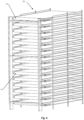
- the production line it comprises at least two, preferably several, preferably a dozen, preferably between five and thirty storeys comprising a breeding line and a flow-through feed heating and/or cooling system with a closed flow of the heating/cooling medium.
- the invention also relates to a method of heating/cooling the feed during rearing of insects of the orders Coleoptera and/or Diptera including a step in which the feed is heated and/or cooled by means of a flow-through feed heating and/or cooling system with a closed flow of the heating/cooling medium on a breeding line and wherein the step of rearing of insects and/or larval forms of insects is carried out using a production line as defined in the first object of the invention.
- the step a) of heating and/or cooling the feed is preceded by the step of laying the feed at the storage temperature on the breeding line adapted for laying feed for breeding insects.
- the bred insects are placed in drawer, box, or self-supporting systems.
- the invention also relates to the use of production line as defined in the first object of the invention for heating and/or cooling the feed during rearing of insects and/or larval forms of insects of the orders Coleoptera and/or Diptera.
- the second object of the invention relates to the heated production surface configured for rearing and/or breeding of insects and/or larval forms of insects of the orders Coleoptera and/or Diptera, which comprises: at least one breeding line for breeding insects for laying feed thereon; a feed heating system, which constitutes an electrical feed heating system on a breeding line placed on and/or under the surface of the breeding line, wherein preferably the electrical heating system of the breeding line comprises a heating cable placed on and/or under the breeding line in such a way as to heat the feed, wherein the heating cable is connected via connection wires to a control-power unit controlling the operation of the heating cable, said control-power unit being connected to an energy source; and wherein the breeding line comprises at least one storey, which constitutes an autonomous conveyor belt, preferably with profiled lateral sidewalls arranged bilaterally along the direction of movement of the conveyor belt, preferably the edges of the lateral sidewalls are bent inwards, preferably wherein the electrical feed heating system is selected from a heating mat or heating cable.
- the electrical feed heating system of the breeding line is placed on the surface of the breeding line.
- the invention also relates to the use of the heated production surface of the invention for heating the feed during rearing of insects and/or larval forms of insects of the orders Coleoptera and/or Diptera.
- the invention also relates to the method of heating the feed during rearing of insects and/or larval forms of insects of the orders Coleoptera and/or Diptera which includes a step where the feed is heated by means of a heated production surface of invention.
- the present invention is characterized by a much higher energy efficiency.
- the greatest advantage is the fact that it is no longer necessary to maintain a high temperature in the breeding rooms for heating the insects or the general cooling of breeding rooms for cooling the insects.
- the ambient temperature can be in the range of 8°C to 43°C. Due to the fact that the feed laid on the breeding lines is heated/cooled, the heating-cooling device used can be of much smaller capacity and will consume less energy than in the case of heating/cooling of the entire room.
- Another advantage is the speed and efficiency of heating/cooling.
- the feed in the system is heated in up to 12 hours from a temperature of 8°C (the temperature of feed stored during cold periods of the year) to a temperature between 20°C and 48°C, with the possibility of continuously adjusting it to regulate insect metabolism.
- a great advantage of the system for heating and/or cooling the feed on the breeding line is also the possibility to adapt the system as well as the breeding line according to the invention to a specific breeding surface, and so it can occupy from 5 to 100% of the total rearing surface.
- There is no limitation to the size of the production surface can even cover surfaces of more than 10,000 m 2 typical for the largest production halls.
- An exemplary flow-through feed heating and/or cooling system in a closed system for heating and/or cooling the feed which is particularly useful for heating and/or cooling the feed and thus indirectly bred insects, includes the following elements
- heating and/or cooling system installed on breeding lines in order to heat/cool the provided feed, which then constitutes a source of heat/cooling for the insect larvae feeding therein.
- the heating and/or cooling system and lines comprising them allow precise control of thermal conditions in insect breeding, while minimizing energy wasted by heating/cooling unnecessary spaces.
- the possibility of heating the feed using the system and a production line according to the invention can also be use to regulate its moisture due to the increased evaporation of water from the feed of higher temperature. This possibility has important practical consequences, because towards the end of insect fattening it is important to reduce feed moisture, so that the process of sieving insects from the substrate can take place more efficiently.
- the feed located on the line during fattening of insects has the moisture content of up to 80%, while by using the feed heating and/or cooling system, it is possible to dry it and reduce the moisture content at the end of fattening to a level of 20%.
- the feed located on the rearing lines is in a layer thickness from 2 to 20 cm depending on the type of feed and species of insect.
- the solutions according to the invention using a flow-through heating and/or cooling system installed on breeding lines for heating/cooling the fed feed is characterized by a much higher efficiency.
- the greatest advantage is that it is not necessary to maintain a high temperature in the breeding rooms when insects need to be warmed up and there is no need to cool down entire breeding rooms when insects need to be cooled down.
- the ambient temperature can be in the range from 8°C to 43°C.
- the heating-cooling device used can be of a much lower capacity and energy consumption than that used to heat/cool the entire room.
- the above-mentioned growth parameters as well as the FCR are closely correlated with the vital needs of the insects which have been shown to be 20-300% lower when using direct heating of feed on the breeding lines by a flow-through heating/cooling system.
- the use of heated/cooled feed reduces the stress associated with feeding the larvae/insects and increases their survival, which has been observed to be up to 45% higher when using a flow-through heating and/or cooling system compared to the standard rearing method where entire holding rooms are heated/cooled (Example 5). Thanks to the smooth regulation of the temperature of the fed feed, it is also possible to regulate the insects metabolism level and, if necessary, shorten or lengthen the life cycle, as well as the FCR for both Coleoptera and Diptera insects.
- the possibility to heat the feed can also be used to regulate its moisture content thanks to the increased evaporation of water from the feed of higher temperature.
- Another function of the system is the drying of secondary metabolites after insect production including faeces, which are a component of the fertiliser.
- An important advantage of production or breeding lines with a flow-through feed heating and/or cooling system as well as a heated production surface with an electrical feed heating system is the fact that such a feed heating and/or cooling system can be used both in multi-level/multi-storey production lines which are the subject of patent PL 230275B1 , which increases the available production space as well as when using a single level rearing system or even a "rack system".
- a great advantage is also the possibility of adapting the flow-through feed heating and/or cooling system as well as the heated production surface with an electrical feed heating system to the breeding surface, so it can occupy from 5 to 100% of the total rearing surface.
- production surface production or breeding lines with a flow-through feed heating and/or cooling system or an electrical feed heating system
- a heating and/or cooling system can even occupy surfaces of more than 10,000 m 2 characterizing the largest production halls.
- Example 1 Construction of a flow-through feed heating and/or cooling system for a breeding line for breeding and rearing insects.
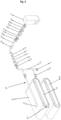
- the flow-through feed heating and/or cooling system 1 for heating/cooling feed in insect breeding ( Fig. 1 ) consists of two parts of a closed heating-cooling medium circulation system.
- the first part of the system ( Fig. 2 ) is connected at the outlet via the shut-off valve 12 to the heat exchanger 3 and constitutes the circuit supplying 17 the system with the heated/cooled heating-cooling medium.
- the second part of the system constitutes the return circuit 18 ( Fig. 3 ) of the heating-cooling medium and serves to receive the cooled/heated heating-cooling medium and transfer it to the heat exchanger 3, where it is again heated/cooled.
- the part supplying the system with heated/cooled heating-cooling medium additionally comprises a drain valve 5, which enables draining the medium e.g. when servicing the line or needing to replace the medium, placed downstream of the first circulation pump 6 and a three-way valve 2 directly connected to upstream of the second circulation pump 6, which enables mixing the medium from both parts of the system in order, e.g. to regulate the pressure or temperature.
- the part of the system receiving the cooled/heated heating-cooling medium comprises a balancing valve 4 equalizing pressure, located upstream of the shut-off valve 12 connecting at the outlet of the second part of the system with the heat exchanger 3.
- the heating-cooling medium in the flow-through feed heating and/or cooling system in insect breeding was water, heated by a gas furnace as heat exchanger 3.
- the temperature of water leaving the furnace was 39°C.
- the heated water was discharged from the furnace through a steel pipe 16 placed in an insulating bundle minimizing heat loss.
- the intensity of the water flow was 0.16m 3 /h.
- heated water is fed from the distributor 13 into a heating-cooling installation consisting of heating-cooling pipes 15 of PEX, which are arranged in two rows 20 cm apart from each other along the breeding line 14 intended for rearing insects.
- the heating-cooling pipes 15 are suspended directly above the breeding lines 14, onto which the feed for the bred insects is then laid.
- the laid feed has a temperature lower than the heating-cooling medium and of about 20°C, as a result of which it begins to receive its heat, until it reaches a thermal equilibrium at the level of 39°C, more preferably stabilizing the feed temperature at the level of 28-32°C.
- the water cooled to a temperature of about 38°C, returns through the heating-cooling pipe system 15 to the heat exchanger 3 here a heating device maintaining a constant temperature of the medium in the heating-cooling system (a flow-through feed heating and/or cooling system on the breeding line).
- Temperature sensors 7 as well as pressure sensors 8 of the heating-cooling medium are placed at specific points in the heating-cooling system, providing information about its physical parameters.
- a rotameter 9 is also installed at the entry to the breeding lines 14 in order to measure the flow rate of the medium.
- the gas boiler was provided with an automatic temperature regulation allowing for any temperature setting in the range from 7 to 50°C.
- Example 2 Production line comprising feed heating/cooling system on a production line above the conveyor belt
- the breeding line 14 was integrated with a feed heating and/or cooling system ( Fig. 1 ) , increasing the rearing efficiency by providing stable thermal conditions for the insect larvae.
- the breeding line 14 for rearing and/or breeding non-flying insects and/or larval forms of insects comprises at least one storey, which constitutes an autonomous conveyor belt 19 with profiled lateral sidewalls 20 of edges bent once or twice inwards, arranged bilaterally along the direction of movement of the conveyor belt ( Fig. 8B ) .
- the heating-cooling medium in the system is water.
- the water is heated in the heat exchanger 3 in the form of a gas furnace.
- the temperature of water leaving the furnace is 39°C.
- glycol can also be used.
- Glycol is a good medium because of its good thermal conductivity, high boiling point and low freezing point.
- the heated water is discharged from the furnace through a pipe 16 of steel placed in an insulating bundle to minimize heat loss.
- the intensity of water flow is 0.16 m 3 /h.
- the heated water is fed into a distributor 13 of the heating-cooling installation, from which it is fed into a system of heating-cooling pipes 15 of PEX, which are arranged in two rows at a distance of about 20 cm from each other along the breeding lines 14 intended for rearing insects.
- the distance between the heating pipes 15 has been selected, so that they lie in the middle of the breeding line 14 while ensuring similar contact with the entire feed. Whereas, their arrangement in two rows is due to the fact that through each breeding line 14 a heating-cooling pipe 15 runs both, one way and the other, i.e. they form a closed loop.
- the water inlets to the installation of each breeding line 14 are secured by shut-off valves 12.
- the pipes are suspended directly above the breeding lines 14, onto which the feed for the bred insects is then laid, and more specifically above the conveyor belt 19.
- the laid feed has a temperature lower than the heating-cooling medium and of about 20°C as a result of which it starts to receive its heat, until it reaches a thermal equilibrium at the level of 39°C, more preferably stabilizing the feed temperature at the level of 28-32°C.
- the layout of the supply of the heating-cooling medium and the receiving of the heating-cooling medium from the breeding line 14 comprise, downstream of the distributor 13, temperature sensors 7, e.g. PT-100 sensor, of the heating-cooling medium providing information about its physical parameters.
- the gas boiler (heat exchanger 3) is equipped with an automatic temperature regulation allowing for any temperature setting within the range from 7 to 50°C.
- the flow-through feed heating and/or cooling system 1 is placed directly into the biomass of the insect larvae and the feed, and allows for a relatively low temperature inside the breeding rooms, because the insects assimilate the necessary heat for their development by taking up the heated food.
- the flow-through heating and/or cooling system for the feed being laid on the line causes indirect heating of the animals themselves.
- Example 3 A production line comprising a heating and/or cooling system of the breeding line under the belt (heating/cooling the feed by heating/cooling the breeding line)
- the breeding line 14 has been integrated with a flow-through feed heating and/or cooling system 1 ( Fig. 1 ), increasing the rearing efficiency by providing stable thermal conditions for the insect larvae.
- the flow-through feed heating and/or cooling system 1 in this example of embodiment in its construction, i.e. the type of elements comprising it and the method of their connection, does not differ at all from the system described in example 1.
- the essential difference is that the heating-cooling pipes 15 were placed under the conveyor belt 19 of the breeding line 14.
- the heating-cooling pipes 15 of thermally conductive material are placed under the breeding line 14 transferring heat/cold to the breeding line 14, and the breeding line 14 heats/cools the insect biomass and the feed.
- the production line comprises at least one storey of breeding line 14 for rearing and/or breeding non-flying insects and/or larval forms of insects, which constitutes an autonomous conveyor belt 19 with profiled lateral sidewalls 20 of edges bent once, preferably twice inwards, arranged bilaterally along the direction of movement of the conveyor belt.
- the heating medium in the system is water.
- the water is heated in the heat exchanger 3 here a gas furnace.
- the temperature of water leaving the furnace is 39°C.
- glycol can also be used.
- Glycol is a good medium because of its good thermal conductivity, high boiling point and low freezing point.
- the heated water is discharged from the heat exchanger 3 in the form of a furnace through a pipe 16 of steel placed in an insulating bundle to minimise heat loss.
- the intensity of water flow is 0.16 m 3 /h
- the heated water is fed into a distributor 13 of the heating-cooling installation, from which it is fed into a system of heating-cooling pipes 15 of PEX, which are arranged in two rows at a distance of about 20 cm from each other along the breeding lines 14 intended for rearing insects.
- the distance between the heating-cooling pipes 15 has been selected so that they lie in the middle of the breeding line 14 under the conveyor belt 19 to ensure similar contact of heat/cold with the entire feed. Whereas, their arrangement in two rows is due to the fact that through each breeding line 14 a heating-cooling pipe 15 runs both, one way and the other, i.e. they form a closed loop.
- the water inlets to the installation of the flow-through heating/cooling system on each breeding line 14 are secured by shut-off valves 12.
- the heating-cooling pipes 15 are attached by clamps to pipes or support rails directly under the conveyor belt 19 of the breeding line 14, onto which the feed for the insects to be bred is then laid.
- the heat from the heating-cooling medium is transferred directly to the breeding line 14.
- the feed laid on the line has a temperature lower than the heating-cooling medium and of 20°C as a result of which it starts to receive its heat through the conveyor belt 19 of the heated breeding line 14, until it reaches a thermal equilibrium at the level of 39°C, more preferably stabilizing the feed temperature at the level of 28-32°C.
- the water, cooled to a temperature of 38°C returns through the system of heating-cooling pipes 15 and further pipes 16 to the heating device (heat exchanger 3).
- the layout of the supply of the heating-cooling medium and the receiving of the heating-cooling medium from the breeding line 14 comprise, downstream of the distributor 13, temperature sensors 7, e.g. PT-100 sensor, of the heating-cooling medium providing information about its physical parameters.
- the gas boiler (heat exchanger 3) is equipped with an automatic temperature regulation allowing for any temperature setting within the range from 7 to 50°C.
- the flow-through feed heating and/or cooling system is placed directly under the conveyor belt 19 of the breeding line 14, on which the biomass of the insect larvae and the feed is laid and allows for maintaining a relatively low temperature inside the breeding rooms, because the insects assimilate the necessary heat for their development by taking up the heated food.
- the flow-through heating and/or cooling system 1 for the feed being laid on the breeding line 14 causes indirect heating of the animals themselves.
- Example 4 Use of the flow-through heating and/or cooling system for heating and/or cooling the feed
- Example 5 Comparative measurement of body weight of bred insects and feed conversion ratio
- Insects bred using the described rearing method of heating and/or cooling of the feed on the breeding line according to the invention are characterized by a 25% faster fattening, achieving a 7.5% higher body weight at the end of the fattening, as well as a reduction of up to 12% in the feed conversion ratio (FCR).
- Tab. 3 Results of an insect rearing experiment on lines with heating the feed and without it. Feed heating No feed heating Type of feed Fruit and vegetable mix Fruit and vegetable mix Insect species H. illucens H. illucens BWG kg/m 2 6.42 5.97 FCR 6.8 7.77 Survival 93% 52% Rearing time 6 8
- Example 6 Use of the flow-through feed heating and/or cooling system on the breeding line for cooling the feed
- Insects bred using the method according to the invention with the use of a flow-through feed heating and/or cooling system on the breeding line were provided with optimised and stable temperature conditions, which resulted in reduced larval feeding stress and increased larval survival, which was observed to be up to 45% higher with the use of a flow-through heating and/or cooling system 1 compared to the standard rearing method, where entire holding rooms are heated/cooled (Table 3). Similar results of increased survival were obtained with cooling the feed.
- Example 8 Construction of an electrical feed heating system on the breeding line for insect breeding and rearing.
- a heated production surface for rearing and/or breeding insects and/or larval forms of insects with an electrical feed heating system on a production line 14 for heating feed in insect breeding is shown in Fig.11 and comprises an electrical feed heating system 22 comprising a heating cable 23 placed on and/or under the surface of the breeding line 14 such that direct contact with the feed or indirect contact is provided through the surface of the breeding line 14 for heating the feed laid thereon.
- the method of placing the heating cable 23 on and/or under the surface of the breeding line is known in the field of construction. It should be made clear, for the sake of clarity, that by breeding line 14 is meant the surface/substrate on which insect breeding is carried out.
- the construction of the line in terms of construction, is of any design, but with the condition that the breeding line 14 conducts heat well in the case where the heating cable is laid under the surface of the breeding line.
- the material of which the breeding line is made at the place of direct contact with the breeding mass (feed and insects) which is to be heated by the electric heating system 22 should provide good thermally conductive properties.
- the breeding line 14 may also be made entirely of such material.
- the breeding line 14 is made of metal, e.g. copper, steel or aluminium, plastic, ceramic or concrete. Stainless steel appears to be a preferred embodiment because of its ease of cleaning, its approval for contact with food and feed materials and its relatively low operating costs.
- the breeding line is in the form of a conveyor belt 19.
- the breeding line 14 is provided with sidewalls 20 to ensure bio-assurance.
- the electrical feed heating system 22 on the breeding line 14 for heating feed for insect breeding and rearing comprises the following construction elements:
- the heating cable 23 is powered by a current with predetermined parameters (voltage, frequency, amperage) controlled by the control-power unit 26 on the basis of data received from the feed temperature sensor 25.
- the control-power unit 26 is powered by an external power
- the control-power unit 26 is connected to the heating cable 23 via connection wires 24.
- the control-power unit allows to automatically change the parameters of the outgoing current in order to maintain the temperature of the heating cable within a predetermined temperature range from 7 to 50°C, preferably 20°C-48°C, more preferably to 25-35°C, more preferably to 28-32°C or other or zonally different.
- the electrical feed heating system 22 on the breeding line constituting a part heating the feed for rearing and/or breeding insects and/or larval forms of insects may also comprise multiple layouts of heating cables and the cables may be routed to more than one breeding line.
- an electrical feed heating system 22 on the breeding line 14 When using an electrical feed heating system 22 on the breeding line 14, the same results were obtained as in the case of a flow-through feed heating and/or cooling system with a closed flow of the heating-cooling medium, included in Tab. 3, 6, 7.
- the use of an electrical feed heating system on the line allows to heat the feed to the desired temperature and stabilize it within the selected temperature range so as to ensure optimum breeding conditions for a given insect species, thus ensuring the optimal thermal conditions for insects rearing as well as allow drying of secondary metabolites after insect production including faeces, which are a component of the fertilizer.
Landscapes
- Life Sciences & Earth Sciences (AREA)
- Environmental Sciences (AREA)
- Zoology (AREA)
- Animal Husbandry (AREA)
- Biodiversity & Conservation Biology (AREA)
- Animal Behavior & Ethology (AREA)
- Housing For Livestock And Birds (AREA)
- Fodder In General (AREA)
- Feed For Specific Animals (AREA)
- Catching Or Destruction (AREA)
Priority Applications (1)
| Application Number | Priority Date | Filing Date | Title |
|---|---|---|---|
| HRP20231594TT HRP20231594T1 (hr) | 2020-08-24 | 2021-07-05 | Proizvodna linija s protočnim sustavom grijanja i/ili hlađenja hrane i grijanom površinom za razmnožavanje i/ili uzgoj insekata, metoda uzgoja insekata i njena upotreba |
Applications Claiming Priority (2)
| Application Number | Priority Date | Filing Date | Title |
|---|---|---|---|
| PL435063A PL249128B1 (pl) | 2020-08-24 | 2020-08-24 | Linia produkcyjna do odchowu i/lub hodowli owadów i/lub form larwalnych owadów z rzędów Coleoptera i/lub Diptera, sposób ogrzewania paszy podczas hodowli tych owadów oraz zastosowanie systemu o przepływie zamkniętym do ogrzewania paszy na linii hodowlanej do hodowli owadów prowadzonej na takiej linii produkcyjnej |
| PCT/PL2021/050052 WO2021235958A1 (en) | 2020-08-24 | 2021-07-05 | Production line with flow-through feed heating and/or cooling system and heated surface for breeding insects, method for breeding insects and uses thereof |
Publications (4)
| Publication Number | Publication Date |
|---|---|
| EP3989720A1 EP3989720A1 (en) | 2022-05-04 |
| EP3989720A4 EP3989720A4 (en) | 2022-09-07 |
| EP3989720B1 true EP3989720B1 (en) | 2023-10-04 |
| EP3989720C0 EP3989720C0 (en) | 2023-10-04 |
Family
ID=78708708
Family Applications (1)
| Application Number | Title | Priority Date | Filing Date |
|---|---|---|---|
| EP21807571.1A Active EP3989720B1 (en) | 2020-08-24 | 2021-07-05 | Production line with flow-through feed heating and/or cooling system and heated surface for breeding and/or rearing insects, method for rearing insects and uses thereof |
Country Status (11)
| Country | Link |
|---|---|
| US (2) | US11627719B2 (pl) |
| EP (1) | EP3989720B1 (pl) |
| BR (1) | BR112022013108A2 (pl) |
| CA (2) | CA3164820C (pl) |
| CL (1) | CL2022001732A1 (pl) |
| ES (1) | ES2966581T3 (pl) |
| HR (1) | HRP20231594T1 (pl) |
| HU (1) | HUE065200T2 (pl) |
| IL (1) | IL292702A (pl) |
| PL (2) | PL249128B1 (pl) |
| WO (1) | WO2021235958A1 (pl) |
Cited By (1)
| Publication number | Priority date | Publication date | Assignee | Title |
|---|---|---|---|---|
| LU103325B1 (en) * | 2024-07-03 | 2026-01-05 | Reploid Group Ag | Method for controlling the temperature in a rearing room for flies |
Families Citing this family (4)
| Publication number | Priority date | Publication date | Assignee | Title |
|---|---|---|---|---|
| PL249128B1 (pl) * | 2020-08-24 | 2026-03-02 | Hipromine Spolka Akcyjna | Linia produkcyjna do odchowu i/lub hodowli owadów i/lub form larwalnych owadów z rzędów Coleoptera i/lub Diptera, sposób ogrzewania paszy podczas hodowli tych owadów oraz zastosowanie systemu o przepływie zamkniętym do ogrzewania paszy na linii hodowlanej do hodowli owadów prowadzonej na takiej linii produkcyjnej |
| WO2022079722A1 (en) * | 2020-10-18 | 2022-04-21 | Senecio Ltd. | System and method for automated cooling storage transport and release of beneficial insects |
| CN114365718A (zh) * | 2021-12-20 | 2022-04-19 | 深圳蓝与黑生态科技有限公司 | 昆虫养殖设备、移动式养殖箱和养殖车间 |
| PL249049B1 (pl) * | 2023-10-13 | 2026-02-23 | Tenebria Spolka Z Ograniczona Odpowiedzialnoscia | Platforma do karmienia i obserwacji larw owadów, zwłaszcza dla owada Tenebrio molitor |
Family Cites Families (21)
| Publication number | Priority date | Publication date | Assignee | Title |
|---|---|---|---|---|
| US5759224A (en) * | 1996-08-22 | 1998-06-02 | Olivier; Paul A. | Device and method for the continuous treatment of waste by means of fly larvae |
| KR200404190Y1 (ko) | 2005-09-22 | 2005-12-19 | 주식회사 남진농기 | 육묘장치 |
| ES2386472B1 (es) * | 2011-01-21 | 2013-07-09 | Juan Antonio Sánchez Sánchez | Aparato para la mecanización de la cría de larvas, puesta y extracción de huevos de insectos. |
| US9629339B2 (en) * | 2011-02-21 | 2017-04-25 | The University Of Georgia Research Foundation, Inc. | Systems and methods for rearing insect larvae |
| CA2871196C (en) * | 2012-05-07 | 2019-12-31 | Juan ALDANA | Contained systems to provide reproductive habitat for hermetia illucens |
| NL2010666B3 (en) * | 2013-04-19 | 2018-11-21 | Buhler Changzhou Insect Tech Co Ltd | Method and system for breeding insects, using a plurality of individual crates. |
| US9844223B2 (en) * | 2013-08-02 | 2017-12-19 | Enterra Feed Corporation | Hermetia illucens frass production and use in plant nutrition and pest management |
| KR102027487B1 (ko) * | 2015-03-30 | 2019-11-04 | 임운영 | 토양생물의 대단위 생육 시설 |
| US9844167B2 (en) * | 2015-06-26 | 2017-12-12 | Microsoft Technology Licensing, Llc | Underwater container cooling via external heat exchanger |
| CN105475241B (zh) * | 2015-12-28 | 2018-07-17 | 浙江大学 | 一种多层蝇蛆养殖装置及养殖方法 |
| KR101625616B1 (ko) | 2016-02-16 | 2016-05-30 | 김봉호 | 지렁이 사육장치 |
| PL230275B1 (pl) * | 2016-08-09 | 2018-10-31 | Hipromine Spolka Akcyjna | Linia technologiczna do odchowu lub hodowli owadów, modułowy system linii technologicznych, sposób odchowu lub hodowli owadów oraz zastosowanie linii technologicznej i systemu modułowego do odchowu lub hodowli owadów |
| CN106417193B (zh) * | 2016-11-25 | 2022-07-15 | 杭州谷胜科技有限公司 | 自动翻垛蝇蛆养殖装置 |
| US10939671B2 (en) * | 2016-12-19 | 2021-03-09 | M2M Community Foundation | Self-harvesting sustaining feed system for aquaponics |
| KR101963943B1 (ko) * | 2016-12-30 | 2019-03-29 | 최영범 | 유충 및 분변토 분리장치 |
| CN106922550A (zh) * | 2017-03-10 | 2017-07-07 | 湖南三湘智谷技术有限公司 | 一种养殖舍以及养殖系统 |
| US20180279563A1 (en) * | 2017-03-28 | 2018-10-04 | Biopod Systems Inc. | System and Methods for Mimicking the Environmental Conditions of a Habitat |
| CN107751117B (zh) * | 2017-11-23 | 2023-08-11 | 广州飞禧特生物科技有限公司 | 黑水虻幼虫分离干燥设备及方法 |
| CN210248030U (zh) * | 2019-02-27 | 2020-04-07 | 吴孟昆 | 黑水虻的饲养装置 |
| KR102024635B1 (ko) * | 2019-04-11 | 2019-09-24 | 홍경종 | 곤충유충을 이용한 유기성 폐기물 처리장치 |
| PL249128B1 (pl) * | 2020-08-24 | 2026-03-02 | Hipromine Spolka Akcyjna | Linia produkcyjna do odchowu i/lub hodowli owadów i/lub form larwalnych owadów z rzędów Coleoptera i/lub Diptera, sposób ogrzewania paszy podczas hodowli tych owadów oraz zastosowanie systemu o przepływie zamkniętym do ogrzewania paszy na linii hodowlanej do hodowli owadów prowadzonej na takiej linii produkcyjnej |
-
2020
- 2020-08-24 PL PL435063A patent/PL249128B1/pl unknown
-
2021
- 2021-07-05 IL IL292702A patent/IL292702A/en unknown
- 2021-07-05 EP EP21807571.1A patent/EP3989720B1/en active Active
- 2021-07-05 HR HRP20231594TT patent/HRP20231594T1/hr unknown
- 2021-07-05 HU HUE21807571A patent/HUE065200T2/hu unknown
- 2021-07-05 ES ES21807571T patent/ES2966581T3/es active Active
- 2021-07-05 PL PL21807571.1T patent/PL3989720T3/pl unknown
- 2021-07-05 CA CA3164820A patent/CA3164820C/en active Active
- 2021-07-05 CA CA3201079A patent/CA3201079C/en active Active
- 2021-07-05 BR BR112022013108A patent/BR112022013108A2/pt not_active Application Discontinuation
- 2021-07-05 WO PCT/PL2021/050052 patent/WO2021235958A1/en not_active Ceased
-
2022
- 2022-06-23 CL CL2022001732A patent/CL2022001732A1/es unknown
- 2022-07-04 US US17/857,150 patent/US11627719B2/en active Active
-
2023
- 2023-02-21 US US18/112,458 patent/US12121004B2/en active Active
Cited By (2)
| Publication number | Priority date | Publication date | Assignee | Title |
|---|---|---|---|---|
| LU103325B1 (en) * | 2024-07-03 | 2026-01-05 | Reploid Group Ag | Method for controlling the temperature in a rearing room for flies |
| WO2026008697A1 (en) * | 2024-07-03 | 2026-01-08 | Reploid Group Ag | Method for controlling the temperature in a rearing room for flies |
Also Published As
| Publication number | Publication date |
|---|---|
| PL435063A1 (pl) | 2022-02-28 |
| IL292702A (en) | 2022-07-01 |
| CA3164820C (en) | 2024-01-16 |
| US20220330514A1 (en) | 2022-10-20 |
| BR112022013108A2 (pt) | 2023-03-28 |
| CA3164820A1 (en) | 2021-11-25 |
| HRP20231594T1 (hr) | 2024-03-15 |
| CA3201079A1 (en) | 2021-11-25 |
| HUE065200T2 (hu) | 2024-05-28 |
| CL2022001732A1 (es) | 2023-02-24 |
| EP3989720A1 (en) | 2022-05-04 |
| PL3989720T3 (pl) | 2024-03-18 |
| EP3989720A4 (en) | 2022-09-07 |
| CA3201079C (en) | 2024-10-22 |
| US12121004B2 (en) | 2024-10-22 |
| US20230200346A1 (en) | 2023-06-29 |
| EP3989720C0 (en) | 2023-10-04 |
| US11627719B2 (en) | 2023-04-18 |
| PL249128B1 (pl) | 2026-03-02 |
| ES2966581T3 (es) | 2024-04-23 |
| WO2021235958A1 (en) | 2021-11-25 |
Similar Documents
| Publication | Publication Date | Title |
|---|---|---|
| EP3989720B1 (en) | Production line with flow-through feed heating and/or cooling system and heated surface for breeding and/or rearing insects, method for rearing insects and uses thereof | |
| US11284635B2 (en) | System and method for pasteurizing foods | |
| CN101617633A (zh) | 温控猪舍 | |
| CN206314246U (zh) | 一种粮仓气体调制及环流熏蒸系统 | |
| Johnson | Response of animals to heat | |
| EP3975709B1 (en) | Production surface with system of underfloor heating and/or cooling of insect feed, use of underfloor system and method for rearing insects using thereof | |
| Debnath et al. | The hidden dangers of winter: A brief review how cold stress affects cattle production | |
| KR20100048682A (ko) | 냉/난방장치 | |
| EP0055787A1 (en) | Method and apparatus for adjusting the moisture content of a stored commodity | |
| CN214842360U (zh) | 一种蓄热式有机肥制备粪污烘干线 | |
| KR100686634B1 (ko) | 양어장용 보일러 | |
| CN118613158A (zh) | 用于运送昆虫幼虫的移动式运送装置 | |
| KR101203104B1 (ko) | 다목적 히트펌프 시스템 | |
| RU2308828C1 (ru) | Система поения животных охлажденной водой | |
| CN223600579U (zh) | 一种牧场饮用水系统 | |
| Carr et al. | Low temperature brooding of broilers | |
| CN221901839U (zh) | 一种可调节温度的母猪分娩栏 | |
| JP2005237241A (ja) | 養鶏施設の給水装置 | |
| KR100872251B1 (ko) | 온실농예의 열병합수단 | |
| RU2737808C1 (ru) | Устройство для создания тепловых условий в зонах содержания молодняка животных с изменяемой генерацией уровня и направления теплового потока | |
| Kocaman et al. | Research on the determination of heat and water vapor emissions of Anatolian waterbuffaloes under indoor environmental conditions | |
| Ivanov et al. | Features of microclimate in buildings of light type for growing lactating sows | |
| Perano et al. | Heat Flux and Condensation Rate in Conductive Cooling Systems for Thermally Stressed Dairy Cattle. | |
| Cortus et al. | Conductive Cooling of Group-Housed Grow-Finish Pigs: Year 1 | |
| CN113091446A (zh) | 一种蓄热式有机肥制备粪污烘干线 |
Legal Events
| Date | Code | Title | Description |
|---|---|---|---|
| REG | Reference to a national code |
Ref country code: HR Ref legal event code: TUEP Ref document number: P20231594T Country of ref document: HR |
|
| STAA | Information on the status of an ep patent application or granted ep patent |
Free format text: STATUS: THE INTERNATIONAL PUBLICATION HAS BEEN MADE |
|
| PUAI | Public reference made under article 153(3) epc to a published international application that has entered the european phase |
Free format text: ORIGINAL CODE: 0009012 |
|
| STAA | Information on the status of an ep patent application or granted ep patent |
Free format text: STATUS: REQUEST FOR EXAMINATION WAS MADE |
|
| 17P | Request for examination filed |
Effective date: 20211229 |
|
| AK | Designated contracting states |
Kind code of ref document: A1 Designated state(s): AL AT BE BG CH CY CZ DE DK EE ES FI FR GB GR HR HU IE IS IT LI LT LU LV MC MK MT NL NO PL PT RO RS SE SI SK SM TR |
|
| STAA | Information on the status of an ep patent application or granted ep patent |
Free format text: STATUS: EXAMINATION IS IN PROGRESS |
|
| A4 | Supplementary search report drawn up and despatched |
Effective date: 20220808 |
|
| RIC1 | Information provided on ipc code assigned before grant |
Ipc: G05D 23/00 20060101ALI20220802BHEP Ipc: A01K 67/033 20060101AFI20220802BHEP |
|
| 17Q | First examination report despatched |
Effective date: 20220819 |
|
| GRAP | Despatch of communication of intention to grant a patent |
Free format text: ORIGINAL CODE: EPIDOSNIGR1 |
|
| STAA | Information on the status of an ep patent application or granted ep patent |
Free format text: STATUS: GRANT OF PATENT IS INTENDED |
|
| DAV | Request for validation of the european patent (deleted) | ||
| DAX | Request for extension of the european patent (deleted) | ||
| INTG | Intention to grant announced |
Effective date: 20230726 |
|
| GRAS | Grant fee paid |
Free format text: ORIGINAL CODE: EPIDOSNIGR3 |
|
| GRAA | (expected) grant |
Free format text: ORIGINAL CODE: 0009210 |
|
| STAA | Information on the status of an ep patent application or granted ep patent |
Free format text: STATUS: THE PATENT HAS BEEN GRANTED |
|
| AK | Designated contracting states |
Kind code of ref document: B1 Designated state(s): AL AT BE BG CH CY CZ DE DK EE ES FI FR GB GR HR HU IE IS IT LI LT LU LV MC MK MT NL NO PL PT RO RS SE SI SK SM TR |
|
| REG | Reference to a national code |
Ref country code: GB Ref legal event code: FG4D |
|
| REG | Reference to a national code |
Ref country code: CH Ref legal event code: EP |
|
| REG | Reference to a national code |
Ref country code: IE Ref legal event code: FG4D |
|
| REG | Reference to a national code |
Ref country code: DE Ref legal event code: R096 Ref document number: 602021005681 Country of ref document: DE |
|
| U01 | Request for unitary effect filed |
Effective date: 20231028 |
|
| U07 | Unitary effect registered |
Designated state(s): AT BE BG DE DK EE FI FR IT LT LU LV MT NL PT SE SI Effective date: 20231103 |
|
| REG | Reference to a national code |
Ref country code: NO Ref legal event code: T2 Effective date: 20231004 |
|
| PGFP | Annual fee paid to national office [announced via postgrant information from national office to epo] |
Ref country code: RO Payment date: 20231211 Year of fee payment: 4 |
|
| REG | Reference to a national code |
Ref country code: HR Ref legal event code: T1PR Ref document number: P20231594 Country of ref document: HR |
|
| PG25 | Lapsed in a contracting state [announced via postgrant information from national office to epo] |
Ref country code: GR Free format text: LAPSE BECAUSE OF FAILURE TO SUBMIT A TRANSLATION OF THE DESCRIPTION OR TO PAY THE FEE WITHIN THE PRESCRIBED TIME-LIMIT Effective date: 20240105 |
|
| PG25 | Lapsed in a contracting state [announced via postgrant information from national office to epo] |
Ref country code: IS Free format text: LAPSE BECAUSE OF FAILURE TO SUBMIT A TRANSLATION OF THE DESCRIPTION OR TO PAY THE FEE WITHIN THE PRESCRIBED TIME-LIMIT Effective date: 20240204 |
|
| REG | Reference to a national code |
Ref country code: ES Ref legal event code: FG2A Ref document number: 2966581 Country of ref document: ES Kind code of ref document: T3 Effective date: 20240423 |
|
| PG25 | Lapsed in a contracting state [announced via postgrant information from national office to epo] |
Ref country code: IS Free format text: LAPSE BECAUSE OF FAILURE TO SUBMIT A TRANSLATION OF THE DESCRIPTION OR TO PAY THE FEE WITHIN THE PRESCRIBED TIME-LIMIT Effective date: 20240204 Ref country code: GR Free format text: LAPSE BECAUSE OF FAILURE TO SUBMIT A TRANSLATION OF THE DESCRIPTION OR TO PAY THE FEE WITHIN THE PRESCRIBED TIME-LIMIT Effective date: 20240105 |
|
| PGFP | Annual fee paid to national office [announced via postgrant information from national office to epo] |
Ref country code: CZ Payment date: 20231206 Year of fee payment: 4 |
|
| REG | Reference to a national code |
Ref country code: HU Ref legal event code: AG4A Ref document number: E065200 Country of ref document: HU |
|
| PG25 | Lapsed in a contracting state [announced via postgrant information from national office to epo] |
Ref country code: RS Free format text: LAPSE BECAUSE OF FAILURE TO SUBMIT A TRANSLATION OF THE DESCRIPTION OR TO PAY THE FEE WITHIN THE PRESCRIBED TIME-LIMIT Effective date: 20231004 |
|
| PGFP | Annual fee paid to national office [announced via postgrant information from national office to epo] |
Ref country code: TR Payment date: 20240103 Year of fee payment: 4 |
|
| U20 | Renewal fee for the european patent with unitary effect paid |
Year of fee payment: 4 Effective date: 20240516 |
|
| PGFP | Annual fee paid to national office [announced via postgrant information from national office to epo] |
Ref country code: IE Payment date: 20240611 Year of fee payment: 4 |
|
| REG | Reference to a national code |
Ref country code: DE Ref legal event code: R097 Ref document number: 602021005681 Country of ref document: DE |
|
| PGFP | Annual fee paid to national office [announced via postgrant information from national office to epo] |
Ref country code: HR Payment date: 20240612 Year of fee payment: 4 |
|
| REG | Reference to a national code |
Ref country code: HR Ref legal event code: ODRP Ref document number: P20231594 Country of ref document: HR Payment date: 20240612 Year of fee payment: 4 |
|
| PG25 | Lapsed in a contracting state [announced via postgrant information from national office to epo] |
Ref country code: SK Free format text: LAPSE BECAUSE OF FAILURE TO SUBMIT A TRANSLATION OF THE DESCRIPTION OR TO PAY THE FEE WITHIN THE PRESCRIBED TIME-LIMIT Effective date: 20231004 |
|
| PG25 | Lapsed in a contracting state [announced via postgrant information from national office to epo] |
Ref country code: SM Free format text: LAPSE BECAUSE OF FAILURE TO SUBMIT A TRANSLATION OF THE DESCRIPTION OR TO PAY THE FEE WITHIN THE PRESCRIBED TIME-LIMIT Effective date: 20231004 Ref country code: SK Free format text: LAPSE BECAUSE OF FAILURE TO SUBMIT A TRANSLATION OF THE DESCRIPTION OR TO PAY THE FEE WITHIN THE PRESCRIBED TIME-LIMIT Effective date: 20231004 |
|
| PLBE | No opposition filed within time limit |
Free format text: ORIGINAL CODE: 0009261 |
|
| STAA | Information on the status of an ep patent application or granted ep patent |
Free format text: STATUS: NO OPPOSITION FILED WITHIN TIME LIMIT |
|
| 26N | No opposition filed |
Effective date: 20240705 |
|
| PG25 | Lapsed in a contracting state [announced via postgrant information from national office to epo] |
Ref country code: MC Free format text: LAPSE BECAUSE OF FAILURE TO SUBMIT A TRANSLATION OF THE DESCRIPTION OR TO PAY THE FEE WITHIN THE PRESCRIBED TIME-LIMIT Effective date: 20231004 |
|
| REG | Reference to a national code |
Ref country code: CH Ref legal event code: PL |
|
| PG25 | Lapsed in a contracting state [announced via postgrant information from national office to epo] |
Ref country code: CH Free format text: LAPSE BECAUSE OF NON-PAYMENT OF DUE FEES Effective date: 20240731 |
|
| PGFP | Annual fee paid to national office [announced via postgrant information from national office to epo] |
Ref country code: GB Payment date: 20250630 Year of fee payment: 5 |
|
| PGFP | Annual fee paid to national office [announced via postgrant information from national office to epo] |
Ref country code: HU Payment date: 20250701 Year of fee payment: 5 |
|
| U20 | Renewal fee for the european patent with unitary effect paid |
Year of fee payment: 5 Effective date: 20250703 |
|
| PGFP | Annual fee paid to national office [announced via postgrant information from national office to epo] |
Ref country code: ES Payment date: 20250808 Year of fee payment: 5 |
|
| PGFP | Annual fee paid to national office [announced via postgrant information from national office to epo] |
Ref country code: NO Payment date: 20250702 Year of fee payment: 5 |
|
| PGFP | Annual fee paid to national office [announced via postgrant information from national office to epo] |
Ref country code: PL Payment date: 20250703 Year of fee payment: 5 |
|
| PG25 | Lapsed in a contracting state [announced via postgrant information from national office to epo] |
Ref country code: CY Free format text: LAPSE BECAUSE OF FAILURE TO SUBMIT A TRANSLATION OF THE DESCRIPTION OR TO PAY THE FEE WITHIN THE PRESCRIBED TIME-LIMIT; INVALID AB INITIO Effective date: 20210705 |
|
| REG | Reference to a national code |
Ref country code: HU Ref legal event code: HC9C Owner name: HIPROMINE S.A., PL |
|
| REG | Reference to a national code |
Ref country code: HR Ref legal event code: PBON Ref document number: P20231594 Country of ref document: HR Effective date: 20250705 |
|
| PG25 | Lapsed in a contracting state [announced via postgrant information from national office to epo] |
Ref country code: CZ Free format text: LAPSE BECAUSE OF NON-PAYMENT OF DUE FEES Effective date: 20250705 |
|
| PG25 | Lapsed in a contracting state [announced via postgrant information from national office to epo] |
Ref country code: HR Free format text: LAPSE BECAUSE OF NON-PAYMENT OF DUE FEES Effective date: 20250705 |
|
| PG25 | Lapsed in a contracting state [announced via postgrant information from national office to epo] |
Ref country code: RO Free format text: LAPSE BECAUSE OF NON-PAYMENT OF DUE FEES Effective date: 20250705 |