EP3995611A1 - Hochdurchsatzverfahren zum erstellen und screening einer substanzbibliothek und reaktionsvorrichtung - Google Patents
Hochdurchsatzverfahren zum erstellen und screening einer substanzbibliothek und reaktionsvorrichtung Download PDFInfo
- Publication number
- EP3995611A1 EP3995611A1 EP20836669.0A EP20836669A EP3995611A1 EP 3995611 A1 EP3995611 A1 EP 3995611A1 EP 20836669 A EP20836669 A EP 20836669A EP 3995611 A1 EP3995611 A1 EP 3995611A1
- Authority
- EP
- European Patent Office
- Prior art keywords
- reaction
- addressable
- group
- compounds
- chambers
- Prior art date
- Legal status (The legal status is an assumption and is not a legal conclusion. Google has not performed a legal analysis and makes no representation as to the accuracy of the status listed.)
- Pending
Links
Images




Classifications
-
- C—CHEMISTRY; METALLURGY
- C40—COMBINATORIAL TECHNOLOGY
- C40B—COMBINATORIAL CHEMISTRY; LIBRARIES, e.g. CHEMICAL LIBRARIES
- C40B50/00—Methods of creating libraries, e.g. combinatorial synthesis
- C40B50/08—Liquid phase synthesis, i.e. wherein all library building blocks are in liquid phase or in solution during library creation; Particular methods of cleavage from the liquid support
-
- G—PHYSICS
- G01—MEASURING; TESTING
- G01N—INVESTIGATING OR ANALYSING MATERIALS BY DETERMINING THEIR CHEMICAL OR PHYSICAL PROPERTIES
- G01N33/00—Investigating or analysing materials by specific methods not covered by groups G01N1/00 - G01N31/00
- G01N33/48—Biological material, e.g. blood, urine; Haemocytometers
- G01N33/50—Chemical analysis of biological material, e.g. blood, urine; Testing involving biospecific ligand binding methods; Immunological testing
- G01N33/5005—Chemical analysis of biological material, e.g. blood, urine; Testing involving biospecific ligand binding methods; Immunological testing involving human or animal cells
- G01N33/5008—Chemical analysis of biological material, e.g. blood, urine; Testing involving biospecific ligand binding methods; Immunological testing involving human or animal cells for testing or evaluating the effect of chemical or biological compounds, e.g. drugs, cosmetics
- G01N33/5011—Chemical analysis of biological material, e.g. blood, urine; Testing involving biospecific ligand binding methods; Immunological testing involving human or animal cells for testing or evaluating the effect of chemical or biological compounds, e.g. drugs, cosmetics for testing antineoplastic activity
-
- C—CHEMISTRY; METALLURGY
- C40—COMBINATORIAL TECHNOLOGY
- C40B—COMBINATORIAL CHEMISTRY; LIBRARIES, e.g. CHEMICAL LIBRARIES
- C40B50/00—Methods of creating libraries, e.g. combinatorial synthesis
-
- C—CHEMISTRY; METALLURGY
- C07—ORGANIC CHEMISTRY
- C07D—HETEROCYCLIC COMPOUNDS
- C07D249/00—Heterocyclic compounds containing five-membered rings having three nitrogen atoms as the only ring hetero atoms
- C07D249/02—Heterocyclic compounds containing five-membered rings having three nitrogen atoms as the only ring hetero atoms not condensed with other rings
- C07D249/04—1,2,3-Triazoles; Hydrogenated 1,2,3-triazoles
-
- C—CHEMISTRY; METALLURGY
- C07—ORGANIC CHEMISTRY
- C07D—HETEROCYCLIC COMPOUNDS
- C07D249/00—Heterocyclic compounds containing five-membered rings having three nitrogen atoms as the only ring hetero atoms
- C07D249/02—Heterocyclic compounds containing five-membered rings having three nitrogen atoms as the only ring hetero atoms not condensed with other rings
- C07D249/04—1,2,3-Triazoles; Hydrogenated 1,2,3-triazoles
- C07D249/06—1,2,3-Triazoles; Hydrogenated 1,2,3-triazoles with aryl radicals directly attached to ring atoms
-
- C—CHEMISTRY; METALLURGY
- C07—ORGANIC CHEMISTRY
- C07D—HETEROCYCLIC COMPOUNDS
- C07D401/00—Heterocyclic compounds containing two or more hetero rings, having nitrogen atoms as the only ring hetero atoms, at least one ring being a six-membered ring with only one nitrogen atom
- C07D401/02—Heterocyclic compounds containing two or more hetero rings, having nitrogen atoms as the only ring hetero atoms, at least one ring being a six-membered ring with only one nitrogen atom containing two hetero rings
- C07D401/04—Heterocyclic compounds containing two or more hetero rings, having nitrogen atoms as the only ring hetero atoms, at least one ring being a six-membered ring with only one nitrogen atom containing two hetero rings directly linked by a ring-member-to-ring-member bond
-
- C—CHEMISTRY; METALLURGY
- C07—ORGANIC CHEMISTRY
- C07D—HETEROCYCLIC COMPOUNDS
- C07D401/00—Heterocyclic compounds containing two or more hetero rings, having nitrogen atoms as the only ring hetero atoms, at least one ring being a six-membered ring with only one nitrogen atom
- C07D401/02—Heterocyclic compounds containing two or more hetero rings, having nitrogen atoms as the only ring hetero atoms, at least one ring being a six-membered ring with only one nitrogen atom containing two hetero rings
- C07D401/06—Heterocyclic compounds containing two or more hetero rings, having nitrogen atoms as the only ring hetero atoms, at least one ring being a six-membered ring with only one nitrogen atom containing two hetero rings linked by a carbon chain containing only aliphatic carbon atoms
-
- C—CHEMISTRY; METALLURGY
- C07—ORGANIC CHEMISTRY
- C07D—HETEROCYCLIC COMPOUNDS
- C07D401/00—Heterocyclic compounds containing two or more hetero rings, having nitrogen atoms as the only ring hetero atoms, at least one ring being a six-membered ring with only one nitrogen atom
- C07D401/14—Heterocyclic compounds containing two or more hetero rings, having nitrogen atoms as the only ring hetero atoms, at least one ring being a six-membered ring with only one nitrogen atom containing three or more hetero rings
-
- C—CHEMISTRY; METALLURGY
- C07—ORGANIC CHEMISTRY
- C07D—HETEROCYCLIC COMPOUNDS
- C07D403/00—Heterocyclic compounds containing two or more hetero rings, having nitrogen atoms as the only ring hetero atoms, not provided for by group C07D401/00
- C07D403/02—Heterocyclic compounds containing two or more hetero rings, having nitrogen atoms as the only ring hetero atoms, not provided for by group C07D401/00 containing two hetero rings
- C07D403/06—Heterocyclic compounds containing two or more hetero rings, having nitrogen atoms as the only ring hetero atoms, not provided for by group C07D401/00 containing two hetero rings linked by a carbon chain containing only aliphatic carbon atoms
-
- C—CHEMISTRY; METALLURGY
- C07—ORGANIC CHEMISTRY
- C07D—HETEROCYCLIC COMPOUNDS
- C07D403/00—Heterocyclic compounds containing two or more hetero rings, having nitrogen atoms as the only ring hetero atoms, not provided for by group C07D401/00
- C07D403/02—Heterocyclic compounds containing two or more hetero rings, having nitrogen atoms as the only ring hetero atoms, not provided for by group C07D401/00 containing two hetero rings
- C07D403/12—Heterocyclic compounds containing two or more hetero rings, having nitrogen atoms as the only ring hetero atoms, not provided for by group C07D401/00 containing two hetero rings linked by a chain containing hetero atoms as chain links
-
- C—CHEMISTRY; METALLURGY
- C07—ORGANIC CHEMISTRY
- C07D—HETEROCYCLIC COMPOUNDS
- C07D403/00—Heterocyclic compounds containing two or more hetero rings, having nitrogen atoms as the only ring hetero atoms, not provided for by group C07D401/00
- C07D403/14—Heterocyclic compounds containing two or more hetero rings, having nitrogen atoms as the only ring hetero atoms, not provided for by group C07D401/00 containing three or more hetero rings
-
- C—CHEMISTRY; METALLURGY
- C07—ORGANIC CHEMISTRY
- C07D—HETEROCYCLIC COMPOUNDS
- C07D413/00—Heterocyclic compounds containing two or more hetero rings, at least one ring having nitrogen and oxygen atoms as the only ring hetero atoms
- C07D413/02—Heterocyclic compounds containing two or more hetero rings, at least one ring having nitrogen and oxygen atoms as the only ring hetero atoms containing two hetero rings
- C07D413/06—Heterocyclic compounds containing two or more hetero rings, at least one ring having nitrogen and oxygen atoms as the only ring hetero atoms containing two hetero rings linked by a carbon chain containing only aliphatic carbon atoms
-
- C—CHEMISTRY; METALLURGY
- C07—ORGANIC CHEMISTRY
- C07D—HETEROCYCLIC COMPOUNDS
- C07D413/00—Heterocyclic compounds containing two or more hetero rings, at least one ring having nitrogen and oxygen atoms as the only ring hetero atoms
- C07D413/14—Heterocyclic compounds containing two or more hetero rings, at least one ring having nitrogen and oxygen atoms as the only ring hetero atoms containing three or more hetero rings
-
- C—CHEMISTRY; METALLURGY
- C07—ORGANIC CHEMISTRY
- C07D—HETEROCYCLIC COMPOUNDS
- C07D417/00—Heterocyclic compounds containing two or more hetero rings, at least one ring having nitrogen and sulfur atoms as the only ring hetero atoms, not provided for by group C07D415/00
- C07D417/14—Heterocyclic compounds containing two or more hetero rings, at least one ring having nitrogen and sulfur atoms as the only ring hetero atoms, not provided for by group C07D415/00 containing three or more hetero rings
-
- C—CHEMISTRY; METALLURGY
- C07—ORGANIC CHEMISTRY
- C07D—HETEROCYCLIC COMPOUNDS
- C07D471/00—Heterocyclic compounds containing nitrogen atoms as the only ring hetero atoms in the condensed system, at least one ring being a six-membered ring with one nitrogen atom, not provided for by groups C07D451/00 - C07D463/00
- C07D471/02—Heterocyclic compounds containing nitrogen atoms as the only ring hetero atoms in the condensed system, at least one ring being a six-membered ring with one nitrogen atom, not provided for by groups C07D451/00 - C07D463/00 in which the condensed system contains two hetero rings
- C07D471/04—Ortho-condensed systems
-
- C—CHEMISTRY; METALLURGY
- C40—COMBINATORIAL TECHNOLOGY
- C40B—COMBINATORIAL CHEMISTRY; LIBRARIES, e.g. CHEMICAL LIBRARIES
- C40B30/00—Methods of screening libraries
- C40B30/06—Methods of screening libraries by measuring effects on living organisms, tissues or cells
-
- C—CHEMISTRY; METALLURGY
- C40—COMBINATORIAL TECHNOLOGY
- C40B—COMBINATORIAL CHEMISTRY; LIBRARIES, e.g. CHEMICAL LIBRARIES
- C40B40/00—Libraries per se, e.g. arrays, mixtures
- C40B40/04—Libraries containing only organic compounds
-
- C—CHEMISTRY; METALLURGY
- C40—COMBINATORIAL TECHNOLOGY
- C40B—COMBINATORIAL CHEMISTRY; LIBRARIES, e.g. CHEMICAL LIBRARIES
- C40B50/00—Methods of creating libraries, e.g. combinatorial synthesis
- C40B50/04—Methods of creating libraries, e.g. combinatorial synthesis using dynamic combinatorial chemistry techniques
-
- C—CHEMISTRY; METALLURGY
- C40—COMBINATORIAL TECHNOLOGY
- C40B—COMBINATORIAL CHEMISTRY; LIBRARIES, e.g. CHEMICAL LIBRARIES
- C40B60/00—Apparatus specially adapted for use in combinatorial chemistry or with libraries
- C40B60/02—Integrated apparatus specially adapted for creating libraries, screening libraries and for identifying library members
-
- C—CHEMISTRY; METALLURGY
- C40—COMBINATORIAL TECHNOLOGY
- C40B—COMBINATORIAL CHEMISTRY; LIBRARIES, e.g. CHEMICAL LIBRARIES
- C40B60/00—Apparatus specially adapted for use in combinatorial chemistry or with libraries
- C40B60/08—Integrated apparatus specially adapted for both creating and screening libraries
-
- G—PHYSICS
- G01—MEASURING; TESTING
- G01N—INVESTIGATING OR ANALYSING MATERIALS BY DETERMINING THEIR CHEMICAL OR PHYSICAL PROPERTIES
- G01N33/00—Investigating or analysing materials by specific methods not covered by groups G01N1/00 - G01N31/00
- G01N33/48—Biological material, e.g. blood, urine; Haemocytometers
- G01N33/50—Chemical analysis of biological material, e.g. blood, urine; Testing involving biospecific ligand binding methods; Immunological testing
-
- G—PHYSICS
- G01—MEASURING; TESTING
- G01N—INVESTIGATING OR ANALYSING MATERIALS BY DETERMINING THEIR CHEMICAL OR PHYSICAL PROPERTIES
- G01N33/00—Investigating or analysing materials by specific methods not covered by groups G01N1/00 - G01N31/00
- G01N33/48—Biological material, e.g. blood, urine; Haemocytometers
- G01N33/50—Chemical analysis of biological material, e.g. blood, urine; Testing involving biospecific ligand binding methods; Immunological testing
- G01N33/5005—Chemical analysis of biological material, e.g. blood, urine; Testing involving biospecific ligand binding methods; Immunological testing involving human or animal cells
- G01N33/5008—Chemical analysis of biological material, e.g. blood, urine; Testing involving biospecific ligand binding methods; Immunological testing involving human or animal cells for testing or evaluating the effect of chemical or biological compounds, e.g. drugs, cosmetics
-
- B—PERFORMING OPERATIONS; TRANSPORTING
- B01—PHYSICAL OR CHEMICAL PROCESSES OR APPARATUS IN GENERAL
- B01J—CHEMICAL OR PHYSICAL PROCESSES, e.g. CATALYSIS OR COLLOID CHEMISTRY; THEIR RELEVANT APPARATUS
- B01J2219/00—Chemical, physical or physico-chemical processes in general; Their relevant apparatus
- B01J2219/00274—Sequential or parallel reactions; Apparatus and devices for combinatorial chemistry or for making arrays; Chemical library technology
- B01J2219/00277—Apparatus
- B01J2219/00279—Features relating to reactor vessels
- B01J2219/00306—Reactor vessels in a multiple arrangement
- B01J2219/00313—Reactor vessels in a multiple arrangement the reactor vessels being formed by arrays of wells in blocks
- B01J2219/00315—Microtiter plates
-
- B—PERFORMING OPERATIONS; TRANSPORTING
- B01—PHYSICAL OR CHEMICAL PROCESSES OR APPARATUS IN GENERAL
- B01J—CHEMICAL OR PHYSICAL PROCESSES, e.g. CATALYSIS OR COLLOID CHEMISTRY; THEIR RELEVANT APPARATUS
- B01J2219/00—Chemical, physical or physico-chemical processes in general; Their relevant apparatus
- B01J2219/00274—Sequential or parallel reactions; Apparatus and devices for combinatorial chemistry or for making arrays; Chemical library technology
- B01J2219/00718—Type of compounds synthesised
- B01J2219/0072—Organic compounds
- B01J2219/00736—Non-biologic macromolecules, e.g. polymeric compounds
Definitions
- the present invention relates to the chemical and biological fields, in particular to a high-throughput method for constructing and screening compound library and a reaction device.
- Triazole is an important five-membered nitrogen heterocyclic compound, which involves a wide range of industrial applications, such as agricultural chemicals, corrosion inhibitors, dyes, fluorescent brighteners, and bioactive agents, etc. Azide functional groups are very important and widely used in organic synthesis. However, this kind of compounds have great potential safety hazards in the process of synthesis, storage and transportation due to their high energy, which leads to difficulty in synthesis and use.
- alkyl, acyl and sulfonyl azide are mostly obtained by nucleophilic substitution reactions with NaN 3 being used to replace the leaving functional groups in polar solvents, and the method need further purification, and the synthesis efficiency is not high, resulting tedious post-treatment when used for further activity screening.
- the invention provides a simple, efficient and high-throughput method for synthesizing a compound library and screening their activities.
- a method for constructing and screening a high-throughput compound library comprising:
- step (c) after adding activity test reagent, performing incubation so that the activity test reagent reacts or contacts with each synthesis reaction.
- the reactor comprises an array reactor.
- n is 20-50000, preferably 36-10000, more preferably 48-5000, most preferably 96-2500.
- the 1, 3-dipolar cyclization reagent is R-N 3 , where R is the molecular moiety or fragment attached to the azide group.
- m kinds of 1, 3-dipolar cyclization reagents located in m reaction chambers respectively, are used to react with the same kind of reaction substrates containing terminal unsaturated bond.
- the "terminal unsaturated bond” means that there is a double bond or triple bond between the terminal atom (except hydrogen atom) located at the terminal and its adjacent subterminal atom (except hydrogen atom).
- terminal atom and the adjacent subterminal atom are each independently selected from the group consisting of C, N, and combinations thereof.
- the reaction chamber is a micro or small reaction chamber.
- the volume of each of the reaction chambers is independently 5 ⁇ L-5000 ⁇ L.
- the volume of the reaction chamber is 10-2000 ⁇ L, more preferably from 20 ⁇ L-1500 ⁇ L.
- the volume of the reaction system in which the synthesis reaction is carried out is ⁇ 2ml, preferably ⁇ 1ml, more preferably ⁇ 0.6 ml.
- the volume of the reaction system in which the synthesis reaction is carried out is 5-2000 ⁇ L, preferably 10-1000 ⁇ L, more preferably 20-600 ⁇ L.
- the activity test reagent is selected from the group consisting of small molecule compounds, proteins, nucleic acids, cells and combinations thereof.
- the activity test reagent comprises an enzyme activity test reagent composition, or a cell activity test reagent composition.
- the activity test reagent is a compound having physiological activity, preferably selected from the group consisting of enzyme inhibitor, ligand/receptor binding inhibitor, angiogenesis inhibitor, cell adhesion inhibitor, gene expression inhibitor and growth factor-like active substance.
- the enzyme inhibitor is selected from the group consisting of tyrosinase inhibitor, cyclooxygenase inhibitor, telomerase inhibitor, matrix metalloprotein inhibitor, prostaglandin D synthesis inhibitor, phosphodiesterase inhibitor, cholinesterase inhibitor, viral protease inhibitor, reverse transcriptase inhibitor, and a combination thereof.
- the protein comprises an antibody, a ligand, an antigen, or a combination thereof.
- the step (c) comprises a step of detecting each of reaction chamber thereby obtaining activity test results in each chamber, respectively.
- a step of separating or purifying the reaction product is not included between the steps (b) and (c).
- step (b) after the end of step (b) (e.g. step (b1)), it is directly applied in step (c) for subsequent activity testing without separation.
- the reaction formula for the 1, 3-dipolar cycloaddition reaction is selected from the group consisting of wherein, R, R', R" and R are each independently R 1 or and R 1 and R 2 are each independently a substrate fragment.
- reaction formula for the 1, 3-dipolar cycloaddition reaction is as follows: wherein, R and R" are each independently R 1 or R 1 and R 2 are each independently a substrate fragment.
- R 1 and R 2 are the remaining molecular moiety of the reaction substrate other than molecular moiety of the terminal unsaturated bond.
- R 1 and R 2 each are independently drug active fragments.
- R 1 and R 2 are each independently substituted or unsubstituted groups selected from the group consisting of alkyl, cycloalkyl, heteroalkyl, heterocyclyl, alkenyl, cycloalkenyl, alkynyl, aryl, heteroaryl, sulfonyl, or a combination thereof.
- R 1 and R 2 are each independently selected from the group consisting of substituted or unsubstituted C 1 -C 12 alkyl, substituted or unsubstituted 3-12 heteroalkyl, substituted or unsubstituted 5-16 heteroaryl, substituted or unsubstituted C 6 -C 18 aryl, substituted or unsubstituted 3-20 heterocyclyl, substituted or unsubstituted C 3 -C 12 cycloalkyl; wherein the "substituted” means that one or more hydrogen atoms in the groups are substituted by substituent Ra, and Ra is selected from the group consisting of halogen, substituted or unsubstituted C 1 -C 6 alkyl, substituted or unsubstituted C 2 -C 6 alkenyl, substituted or unsubstituted C 2 -C 6 alkynyl, substituted or unsubstituted C 3 -C 12 cycloalkyl, o
- Rf-SO 2 -, NRf, -CN, hydroxyl, -ORf, NRdRe, substituted or unsubstituted C 1 -C 6 amino, substituted or unsubstituted -(C 1 -C 6 alkylene)-NH-(C 1 -C 6 alkylene), carboxyl, substituted or unsubstituted C 6 -C 10 aryl, substituted or unsubstituted 5-12-membered heteroaryl having 1-3 heteroatoms, substituted or unsubstituted 5-12-membered heterocyclyl having 1-4 heteroatoms, wherein the substituent is selected from group consisting of halogen, hydroxyl, carboxyl, cyano, C1-C6 alkoxy, and C1-C6 alkylamino;
- any one of the reaction substrates and the reaction products, or the groups or atoms thereof conforms to the relevant rules of the valence state of the compound (for example, the highest valence state of C is 4, and the highest valence state of N is 5).
- reaction substrates and reaction products are organic compounds.
- the R-NH 2 is unprotected free amine or a salt of acid-protected amine.
- the 1, 3-dipolar cycloaddition reaction is a modular synthesis using the click chemical reaction principle.
- the 1, 3-dipolar cyclization reagent is prepared in situ or added to the reaction chamber.
- step (b1) further comprises:
- the step (b0) is performed in or out of the reaction chamber.
- step (b0) reacting m different amines respectively located in m reaction chambers with FSO 2 N 3 respectively to obtain different R-N 3 .
- the molar ratio of R-NH 2 and FSO 2 N 3 is preferably about 1: 2 to 2: 1, such as about 1: 1.
- the molar ratio of the base and FSO 2 N 3 is about 10: 1 to 2: 1, preferably about 4: 1.
- the reaction for preparation of azide compound in the step (b0), can be carried out at 0°C-60%°C, preferably 25°C-30°C.
- the azide R-N 3 prepared in the step (b0) can be directly used in the subsequent 1, 3-dipolar cycloaddition reaction without separation.
- the inert solvent is selected from the group consisting of water, nitrile solvent, alcohol solvent, aromatic solvent, haloalkane solvent, sulfur dioxide, alkane solvent, ester solvent, ketone solvent, ether solvent, sulfoxide solvents, amide solvent and N-methylpyrrolidone, or a combination thereof.
- the nitrile solvent is acetonitrile.
- the alcohol solvent is selected from the group consisting of methanol, ethanol, tert-butyl alcohol, or a combination thereof.
- the aromatic solvent is selected from the group consisting of benzene, toluene, trifluorotoluene, fluorobenzene, or a combination thereof.
- the haloalkane solvent is selected from the group consisting of dichloromethane, chloroform, 1, 2-dichloroethane, or a combination thereof.
- the alkane solvent is selected from the group consisting of petroleum ether 30-60, petroleum ether 60-90, n -hexane, or a combination thereof.
- the ester solvent is ethyl acetate.
- the ketone solvent is acetone.
- the ether solvent is selected from the group consisting of methyl tert-butyl ether, 1, 4-dioxane, diethyl ether, tetrahydrofuran, or a combination thereof.
- the sulfoxide solvent is dimethyl sulfoxide.
- the amide solvent is N, N-dimethylformamide.
- the solvent is a mixed solvent of an ether solvent, a sulfoxide solvent and water, or a mixed solvent of an ether solvent, a nitrile solvent and water.
- the solvent is a mixture of methyl tert-butyl ether, dimethyl sulfoxide and water, or a mixture of methyl tert-butyl ether, acetonitrile and water.
- the solvent is a mixed solvent of ether solvent, sulfoxide solvent and water
- the volume ratio of the ether solvent, sulfoxide solvent and water is 2-7: 10-20: 0.8-1.2; preferably 5:15: 1.
- the solvent is a mixed solvent of ether solvent, nitrile solvent and water
- the volume ratio of the mixed solvent of ether solvent, nitrile solvent and water is 15-25: 0.8-1.2: 15-25; preferably 20: 1:20.
- the base in the step (b) (comprising steps (b0) and/or (b1)), is an inorganic base and/or an organic base.
- the inorganic base is one or more of sodium carbonate, potassium carbonate, cesium carbonate, sodium hydroxide, potassium hydroxide, sodium bicarbonate, potassium bicarbonate and potassium phosphate.
- the base when the base is an organic base, the organic base is one or more of triethylamine, N, N-di iso propyl ethylamine, pyrrole, pyridine, 4-dimethylaminopyridine, sodium acetate, potassium acetate, sodium methoxide, sodium ethoxide, potassium tert-butoxide, 1, 8-diazabicycloundecan-7-ene and tetramethylethylenediamine.
- the organic base is one or more of triethylamine, N, N-di iso propyl ethylamine, pyrrole, pyridine, 4-dimethylaminopyridine, sodium acetate, potassium acetate, sodium methoxide, sodium ethoxide, potassium tert-butoxide, 1, 8-diazabicycloundecan-7-ene and tetramethylethylenediamine.
- the method further comprises: correlating the reaction substrate, reaction product, and activity test data based on the addressable address of the reaction chambers to obtain an addressable data set.
- a high-throughput addressable reaction device comprising:
- the reactor comprises m reaction reagents respectly located in m reaction chambers; wherein, the reaction reagent is a 1, 3-dipolar cyclization reagent or an amine precursor (i.e. an amine fragment) thereof.
- the device further comprises (iii) an automatic pipetting module for adding a reaction reagent and/or an activity test reagent to predetermined each of addressable reaction chambers.
- the device further comprises (iv) a processor for controlling one or more of the reaction module, the activity test module, and the automatic pipetting module.
- the processor is also used for correlating the reaction substrate, the reaction product, and the activity test data based on the addressable address of the reaction chamber to obtain an addressable data set, and sending or storing the data set.
- the reactor is selected from the group consisting of a microplate, an array of PE tubes, an array of test tubes, an array of reaction flasks, or a combination thereof.
- the reactor is an array reactor.
- a method for constructing a compound library comprising the steps of: (1) using the high-throughput addressable reaction device described in the second aspect to construct the compound library .
- step (1) comprises the steps of:
- the method further comprises: (2) carrying out activity test in situ in the reaction chamber on the 1, 3-dipolar ring compound in the second compound library.
- a fourth aspect of the invention provides a use of a high-throughput addressable reaction device according to the second aspect for one or more uses selected from the group consisting of
- the present inventors have developed a high throughput method for constructing and screening a compound library and a device for the method for the first time.
- an addressable reaction chamber array formed by a plurality of independent and addressable reaction chambers is adopted for the first time, and specific synthetic reaction are independently carried out in each reaction chamber, thus a large number of different reaction products with well-defined structures could be prepared in high throughput and a high throughput compound library could be obtained.
- the experiment shows that subsequent compound activity determination in situ can be directly carried out in the addressable reaction chamber array (or corresponding compound library) containing the reaction product without separation and purification, thus greatly improving the construction and screening efficiency of compound library.
- the present invention was completed.
- the present inventor employs reaction chamber array to synthesize thousands of different 1, 3-dipolar ring reagents in high throughput (as a library of azides, or a first compound library), and then thousands of different 1, 3-dipolar ring reaction products (as triazole derivative library, or a second compound library) were synthesized in high throughput.
- reaction chamber array to synthesize thousands of different 1, 3-dipolar ring reagents in high throughput (as a library of azides, or a first compound library), and then thousands of different 1, 3-dipolar ring reaction products (as triazole derivative library, or a second compound library) were synthesized in high throughput.
- reaction chamber is any kind of devices capable of carrying out chemical reactions, including but not limited to micropore of microplate, PE tube, test tube, reaction flask, etc.
- substituent When a substituent is described by a conventional chemical formula written from left to right, the substituent also includes a chemically equivalent substituent obtained by writing a structural formula from right to left.
- substituent-CH 2 O- is equivalent to-OCH 2 -.
- C1-C6 alkyl is an alkyl having a total of 1 to 6 carbon atoms as defined below.
- the total number of carbon atoms in the simplified symbol does not include carbon that may be present in the substituent of the group.
- halogen refers to fluorine, chlorine, bromine or iodine.
- Halogen refers to fluorine, chlorine, bromine or iodine.
- Hydroxyl refers to -OH.
- Cyano refers to -CN.
- Amino refers to-NH2.
- Substituted amino refers to an amino substituted with one or two alkyl, alkylcarbonyl, aralkyl, heteroaralkyl as defined below, for example, monoalkylamino, dialkylamino, alkylamido, aralkylamino, heteroaralkylamino.
- Carboxyl refers to -COOH.
- alkyl refers to a fully saturated straight or branched hydrocarbon chain group consisting only of carbon and hydrogen atoms, having for example 1 to 12 (preferably 1 to 8, preferably 1 to 6) carbon atoms, and connected to the rest of the molecule by a single bond.
- Examples include but not limited to methyl, ethyl, n-propyl, isopropyl, n-butyl, isobutyl, sec-butyl, tert-butyl, n-amyl, 2-methyl-butyl, 2, 2-dimethyl-propyl, n-hexyl, heptyl, 2-methyl-hexyl, 3-methyl-hexyl, octyl, nonyl and decyl, etc.
- cycloalkyl examples include monocycloalkyl or polycycloalkyl such as cyclopropyl, cyclobutyl, cyclopentyl, cyclohexyl, cycloheptyl, cyclooctyl, cyclononyl and cyclodecyl.
- Alkylene is used alone or in combination words such as optionally substituted alkylene to denote the same group as “alkyl” as defined above, except that another hydrogen is removed to form a divalent group. It should be understood that the optional substituent may be attached to or form part of the alkylene chain.
- alkenyl used alone or in combination words such as “optionally substituted alkenyl” denotes a group formed from a straight-chain, branched or cyclic olefin, including an ethylene mono-, di- or polyunsaturated alkyl or cycloalkyl, preferably a C2-6 alkenyl, as defined above.
- alkenyl examples include vinyl, allyl, 1-methylvinyl, butenyl, isobutenyl, 3-methyl-2-butenyl, 1-pentenyl, cyclopentenyl, 1-methylcyclopentenyl, 1-hexenyl, 3-hexenyl, cyclohexenyl, 1-heptenyl, 3-heptenyl, 1-octenyl, cyclooctenyl, 1-nonenyl, 2-nonenyl, 3-nonenyl, 1-decenyl, 3-decenyl, 1, 3-butadienyl, 1, 4-pentadienyl, 1, 3-cyclopentadienyl, 1, 3-hexadienyl, 1, 4-hexadienyl, 1, 3-cyclohexadienyl, 1, 4-cyclohexadienyl, 1, 3-cycloheptadienyl, 1, 3, 5-cycloheptrienyl and 1, 3, 5, 7-cyclooo
- Alkynyl used alone or in combination words such as “optionally substituted alkynyl” denotes a group formed from a straight, branched or mono-, di- or polycyclic alkyne, preferably a C2-6 alkynyl.
- alkynyl examples include ethynyl, 1-propynyl, 1- and 2-butyynyl, 2-methyl-2-propynyl, 2-pentynyl, 3-pentynyl, 4-pentynyl, 2-hexynyl, 3-hexynyl, 4-hexynyl, 5-hexynyl, 10-undecynyl, 4-ethyl-1-octyn-3-yl, 7-dodecynyl, 9-dodecynyl, 10-dodecynyl, 3-methyl-1-dodecyn-3-yl, 2-tridecynyl, 11-tridecynyl, 3-tetradecynyl, 7-hexadecynyl, 3-octadecynyl, and the like.
- heteroalkyl as a group or part of other group means a fully saturated straight or branched hydrocarbon chain group consisting of 2 to 14 carbon atoms and 1 to 6 heteroatoms selected from the group consisting of nitrogen, phosphorus, oxygen and sulfur.
- the nitrogen, carbon or sulfur atoms in the heteroalkyl can be optionally oxidized; the nitrogen atoms can optionally be quaternized.
- heterocyclyl as a group or part of other means a stable 3 to 20 nonaromatic cyclic group consisting of 2 to 14 carbon atoms and 1 to 6 heteroatoms selected from the group consisting of nitrogen, phosphorus, oxygen and sulfur.
- the heterocyclyl may be a monocyclic, bicyclic, tricyclic, or more ring system, which may include a fused ring system, a bridge ring system, or a spiro ring system.
- the nitrogen, carbon or sulfur atoms in the heterocyclyl are optionally oxidized.
- the nitrogen atom can optionally be quaternized.
- the heterocyclyl can be partially or completely saturated.
- Heterocyclyl can be connected to the rest of the molecule via carbon atoms or heteroatoms and through single bond.
- one or more of the rings may be aryl or heteroaryl as defined below, provided that the connection point with the rest of the molecule is a non-aromatic ring atom.
- the heterocyclyl is preferably a stable 4-11 membered non-aromatic monocyclic, bicyclic, bridged or spiro group containing 1 to 3 heteroatoms selected from nitrogen, oxygen and sulfur, and more preferably a stable 4-8 non-aromatic monocyclic, bicyclic, bridged or spiro group containing 1 to 3 heteroatoms selected from nitrogen, oxygen and sulfur.
- heterocyclic groups include, but are not limited to pyrrolidinyl, morpholinyl, piperazinyl, homopiperazinyl, piperidinyl, thiomorpholinyl, 2, 7-diaza-spiro [3.5] nonan-7-yl, 2-oxa-6-aza-spiro [3.3] heptan-6-yl, 2,5-diaza-bicyclo[2.2.1]heptan-2-yl, azetidinyl, pyranyl, tetrahydropyranyl, thiopyranyl, tetrahydrofuranyl, oxazinyl, dioxycyclopentyl, tetrahydroisoquinolinyl, decahydroisoquinolinyl, imidazolinyl, imidazolidinyl, quinazinyl, thiazolidinyl, isothiazolidinyl, isoxazolidinyl, indoliny
- aryl as a group or a part of other group means a conjugated hydrocarbon ring system group having 6 to 18 carbon atoms (preferably 6 to 10 carbon atoms).
- the aryl may be a ring system of monocyclic, bicyclic, tricyclic or more rings and may also be fused with a cycloalkyl or heterocyclyl as defined above, provided that the aryl is connected to the rest of the molecule by a single bond via an atom on the aromatic ring.
- aryl examples include, but are not limited to phenyl, naphthyl, anthryl, phenanthryl, fluorenyl, 2, 3-dihydro-1H-isoindolyl, 2-benzoxazolinone, 2H-1, 4-benzoxazin-3 (4H)-keto-7-yl, and the like.
- heteroaryl as a group or part of other group means a 5-to 16-membered conjugated ring group having 1 to 15 carbon atoms (preferably 1 to 10 carbon atoms) and 1 to 6 heteroatoms selected from nitrogen, oxygen and sulfur in the ring.
- the heteroaryl may be a ring system of monocyclic, bicyclic, tricyclic or more rings and may also be fused with a cycloalkyl or heterocyclyl as defined above, provided that the heteroaryl is connected to the rest of the molecule by a single bond via an atom on the aromatic ring.
- the nitrogen, carbon or sulfur atoms in the heteroaryl can be optionally oxidized; the nitrogen atoms can optionally be quaternized.
- the heteroaryl is preferably a stable 5- to 12-membered aromatic group comprising 1 to 5 heteroatoms selected from nitrogen, oxygen and sulfur, and more preferably a stable 5- to 10-membered aromatic group comprising 1 to 4 heteroatoms selected from nitrogen, oxygen and sulfur or a 5-to 6-membered aromatic group comprising 1 to 3 heteroatoms selected from nitrogen, oxygen and sulfur.
- heteroaryl examples include but are not limited to thienyl, imidazolyl, pyrazolyl, thiazolyl, oxazolyl, oxadiazolyl, isoxazolyl, pyridyl, pyrimidyl, pyrazinyl, pyridazinyl, benzimidazolyl, benzopyrazolyl, indolyl, furyl, pyrrolyl, triazolyl, tetrazolyl, triazinyl, indazinyl, isoindolyl, indazolyl, isoindazolyl, purinyl, quinolinyl, isoquinolinyl, diazanaphthyl, naphthyridyl, quinoxolinyl, pterridinyl, carbazolyl, carbolinyl, phenanthridinyl, phenanthrolinyl, acridinyl, phenazin
- optionally or “substituted or unsubstituted” means that a subsequently described event or condition may or may not occur, and that the description includes both the occurrence and non-occurrence of the event or condition.
- optionally substituted aryl means substituted or unsubstituted aryl, and the description includes both substituted and unsubstituted aryl.
- the "optional" substituent as described in the claims and specification sections of the present invention is selected from the group consisting of alkyl, alkenyl, alkynyl, halogen, haloalkyl, haloalkenyl, haloalkynyl, cyano, nitro, optionally substituted aryl, optionally substituted heteroaryl, optionally substituted cyclic hydrocarbon, optionally substituted heterocyclic hydrocarbon.
- substrate fragment refers to the molecular portion of a reaction substrate other than a functional group (e. g., an unsaturated bond) involved in a particular reaction.
- moiety As used herein, the terms “moiety”, “structural moiety”, “chemical moiety,” “group” and “chemical group” refer to a particular fragment or functional group in a molecule. Chemical moieties are usually regarded as chemical entities embedded or attached to molecules.
- a synthesis reaction based on CuAAC is employed to realize chemical connection between two molecules, thereby constructing a compound library in high throughput.
- the diazotransfer can have certain industrial practicability even in a small laboratory.
- a person in the case of obtaining 1000 primary amines, a person can construct a library of 1000 primary amine compounds with a concentration of 0.1 mol/L within 2 weeks, and the 1000 primary amine compounds can be azidated in one day, thus constructing an azide compound library containing 1000 azide compounds.
- the 1000 azide compounds can react with terminal alkynyl compounds, for example, 100 terminal alkynyl compounds to obtain 100,000 triazole compounds which can be directly used for subsequent activity screening.
- the compound libraries constructed by the present invention contain mainly one compound in each reactor, rather than a mixture of many compounds, and are easy to control.
- the structures of the compounds in the library can be analyzed by any known structural analyse methods, such as mass spectrometry, tandem mass spectrometry, ultraviolet/visible absorption spectroscopy, proton nuclear magnetic resonance spectroscopy, C 13 nuclear magnetic resonance spectrum, infrared absorption spectrum and X-ray diffraction crystal spectrum, or their combination.
- the invention provides a method for constructing and screening a high-throughput compound library, which can simultaneously synthesize different compounds in large quantities at one time, and the constructed compound library can be used for high-throughput (HTS) random screening, searching for drugs or agricultural chemicals, searching for leading compounds of drugs or agricultural chemicals, etc.
- HTS high-throughput
- the compound library can be used for various screening.
- compounds having physiological activity include, but are not limited to enzyme inhibitor, ligand/receptor binding inhibitor, angiogenesis inhibitor, cell adhesion inhibitor, gene expression inhibitor and growth factor-like active substance.
- enzyme inhibitors include tyrosinase inhibitor, cyclooxygenase inhibitor, telomerase inhibitor, matrix metalloprotein inhibitor, prostaglandin D synthesis inhibitor, phosphodiesterase inhibitor, cholinesterase inhibitor, viral protease inhibitor and reverse transcriptase inhibitor.
- receptors include adrenergic receptor, histamine receptor, leukotriene receptor and opioid receptor.
- a 1, 3-dipolar cyclization reaction is carried out on a substrate fragment having an unsaturated bond at the terminal with a 1, 3-dipolar ring reagent to obtain a compound containing a 1, 3-dipolar ring structure, such as a triazole compound.
- exemplary reaction routes are as follows: wherein, R, R', R" and R'" are each independently R 1 or and R 1 and R 2 are each independently a substrate fragment.
- R 1 and R 2 are the remaining molecular moiety of the reaction substrate other than the molecular moiety of the terminal unsaturated bond.
- R 1 and R 2 each are independently drug active fragments from drug molecules.
- R, R', R" and R'" or corresponding R 1 and R 2 can be a variety of suitable organic groups.
- the representative R 1 and R 2 include organic groups formed of elements such as C, H, O, N, S, F, Cl, etc., such as a molecular moiety consisting of substituted or unsubstituted groups selected from the group consisting of alkyl, cycloalkyl, heteroalkyl, heterocyclyl, alkenyl, cycloalkenyl, alkynyl, aryl, heteroaryl, sulfonyl, or a combination thereof.
- any compound having an azide structure can be used as a 1, 3-dipolar cyclization agent of the present invention for reacting with a substrate having an unsaturated group (e.g. alkenyl, alkynyl, cycloalkenyl, cyano, etc.) at the terminal to obtain a compound containing nitrogen heterocycle.
- an unsaturated group e.g. alkenyl, alkynyl, cycloalkenyl, cyano, etc.
- a particularly preferred type of substrate is a drug molecule (e.g. erlotinib molecule) known in the art or a known drug molecule modified by an unsaturated group.
- the modification may be obtained by means of methods known in the art, using inverse synthetic analysis, for example, modification of unsaturated groups may be performed using coupling reactions known in the art (e.g. Suzuki reaction, etc.).
- an azide compound used as a 1, 3-dipolar cyclization reagent can also be prepared by reacting an amine fragment with a fluorosulfonyl azide.
- exemplary reactions are as follows: wherein the substituent R may be all substituted or unsubstituted alkyl, cycloalkyl, heteroalkyl, heterocyclyl, alkenyl, cycloalkenyl, alkynyl, aryl, heteroaryl, sulfonyl, or a combination thereof. See the definitions of R, R', R" and R'" above for the exemplary definitions of R.
- any substrate with a primary amine structure can be used as an amine fragment of the present invention for constructing an azide compound as a 1, 3-dipolar cyclization agent under the process of the present invention. It should be understood that due to the abundance of primary amine compounds in nature, the method can be carried out using any existing primary amine fragment or any subsequently developed primary amine fragment.
- the water phase in the reaction system was removed to obtain the organic phase which was fluorosulfonyl azide (FSO) 2 N 3 ) solution with a yield of 92% (through 19 F NMR determination, relative to the number of moles of sodium azide used; in methyl tert-butyl ether (MTBE), the chemical shift of the product is +61.5 ppm, and with known quantity can be used as internal standard ( ⁇ + 36.7 ppm) for quantification, and the total amount of products in the reaction system was calculated by the integral ratio of the signal of the product and the internal standard in fluorine spectrum, so as to calculate the reaction yield).
- FSO fluorosulfonyl azide
- MTBE methyl tert-butyl ether
- 1128 different primary amine compounds (including alkyl primary amine, aryl primary amine and heteroaryl primary amine) were respectively prepared into a solution with a concentration of about 100 mM, the solvent was dimethyl sulfoxide, the volume was about 1 ml, and the solution was stored in a 96-well microplate with a size of 1.2 ml.
- the primary amine compound is an aryl primary amine or heteroaryl primary amine, and the compound contains n primary amine functional groups that can be converted to azide
- 0.10/n mmol primary amine was dissolved in 1.0 ml of dimethyl sulfoxide in a 1.5 ml centrifuge tube, and then transferred to the wells in the corresponding locations of its corresponding microplate.
- the primary amine compound is an ammonium salt obtained by neutralizing alkyl primary amine with hydrochloric acid, methanesulfonic acid, tartaric acid, p -toluenesulfonic acid, or hydrobromic acid, and the compound contains n primary amine functional groups that can be converted to azide, 0.10/n mmol primary amine was dissolved in 1.0 ml of dimethyl sulfoxide in a 1.5 ml centrifuge tube, and then transferred to the wells in the corresponding locations of its corresponding microplate.
- the primary amine compound is a free alkyl primary amine
- the compound contains n primary amine functional groups that can be converted to azide
- 0.10/n mmol primary amine was dissolved in 1.0 ml 100/n mM methanesulfonic acid solution (solvent is dimethyl sulfoxide) in a 1.5 ml centrifuge tube.
- solvent is dimethyl sulfoxide
- the compound contains two or more free basic functional groups (primary amine, secondary amine, tertiary amine, guanidine, etc.), increase the concentration of methanesulfonic acid solution to 200/n mM.
- the prepared primary amine solution was then transferred to wells at in the corresponding locations of its corresponding microplate.
- the fluorosulfonyl azide solution prepared by the method of EXAMPLE 1 (the solvent was methyl tert-butyl ether, the concentration was about 400 mM through 19 F NMR determination, about 40 ml) diluted with dimethyl sulfoxide (40 ml) to obtain a fluorosulfonyl azide solution (the concentration was about 200 mM through 19 F NMR measurement, 80 ml, the solvent was dimethyl sulfoxide/methyl tert-butyl ether 1: 1).
- 1128 corresponding azides were obtained by this method.
- the 1128 azide solutions were distributed in 12 96-well microplates (serial number of the microplates were 1-7 and 10-14).
- the 96 separately stored primary amines mentioned in EXAMPLE 2 (some of which have poor solubility) were reacted by the same method in this example to yield 96 soluble azide solutions and transferred to a new 96-well microplate (see plate 8 of azide library for details). Thereby, a compound library containing 1224 azide solutions with different structures was constructed.
- the compound library containing 1224 azide solutions with different structures were distributed in 13 96-well microplates.
- the microplate of the azide compound library could be sealed and stored in a refrigerator at a refrigeration temperature (4°C), stable for at least 6 months.
- the compound library could be directly used for reaction without separation.
- Sodium ascorbate (2.48 g, 12.5 mmol), disodium hydrogen phosphate (7.0 g, 49.3 mmol) and citric acid (4.87 g, 25.4 mmol) were mixed and dissolved in distilled water to 100 ml aqueous solution to obtain a sodium buffer solution of ascorbate/disodium hydrogen phosphate/citric acid with a pH value of about 5.
- the solution (100 ⁇ l, the concentration of about 50 mM, containing about 5 ⁇ mol of azide) was taken from each well and transferred to a new 96-well plate with a size of 350 ⁇ l.
- 3-acetamidophenylacetylene solution (compound 4a, 100 mM, the solvent was dimethyl sulfoxide; 47.5 ⁇ 1, containing 4.75 ⁇ mol of 3-acetaminophenylacetylene) and copper sulfate/THPTA aqueous solution (the concentrations of both copper sulfate and THPTA were 20 mM respectively, 12.5 ⁇ 1, 0.25 ⁇ mol) were added to each well.
- the microplate was sealed and shaken for 6 hour at 800 rpm under 40 °C.
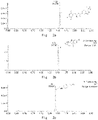
- the in-plate mixture was transferred one-to-one to an empty 1.2 ml 96-well plate, diluted by adding methanol (400 ⁇ 1) and acetonitrile (400 ⁇ 1) to each well, and the resulting 1, 2, 3-triazole products were detected by UPLC-MS.
- EXAMPLE 5 1, 2, 3-triazole compound library was obtained directly by diazotransfer and copper-catalyzed azide terminal acetylene cycloaddition reaction (CuAAC) using the primary amine compound library.
- CuAAC copper-catalyzed azide terminal acetylene cycloaddition reaction
- an aqueous potassium bicarbonate solution (3.0 M, 6.7 ⁇ l, containing 20 ⁇ mol of potassium bicarbonate), a fluorosulfonyl azide solution (refer to EXAMPLE 1, diluted in a solvent system of dimethyl sulfoxide/methyl tert-butyl ether 1: 1; 200 mM, 25 ⁇ l, containing 5 ⁇ mol of fluorosulfonyl azide) and dimethyl sulfoxide (18 ⁇ l) were successively added to each well making a total volume to about 100 ⁇ l.
- the 96-well plate was sealed and shaken for 1 hour at 800 rpm under 30 °C.
- Sodium ascorbate (2.48 g, 12.5 mmol), disodium hydrogen phosphate (7.0 g, 49.3 mmol) and citric acid (4.87 g, 25.4 mmol) were mixed and dissolved in distilled water to 100 ml aqueous solution to obtain a buffer solution of sodium ascorbate/disodium hydrogen phosphate/citric acid with a pH value of about 5.
- the sealing film was removed from the 96-well plate, and the above prepared buffer solution of sodium ascorbate/disodium hydrogen phosphate/citric acid (40 ⁇ 1) was added, and after film sealing, shaken at 800 rpm for 15 minutes at 30 °C.
- 3-acetamidophenylacetylene solution (compound 4a, 100 mM, the solvent was dimethyl sulfoxide; 47.5 ⁇ 1, containing 4.75 ⁇ mol of 3-acetaminophenylacetylene) and copper sulfate/THPTA aqueous solution (the concentrations of both copper sulfate and THPTA were 20 mM respectively, 12.5 ⁇ 1, 0.25 ⁇ mol) were added to each well.
- the microplate was sealed again and shaken for 6 hour at 800 rpm under 40 °C.
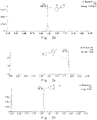
- the in-plate mixture was transferred one-to-one to an empty 1.2 ml 96-well plate, diluted by adding methanol (400 ⁇ l) and acetonitrile (400 ⁇ l) to each well, and the resulting 1, 2, 3-triazole product was detected by UPLC-MS.
- EXAMPLE 6 1, 2, 3-triazole compound library was obtained directly by diazotransfer and copper-catalyzed azide terminal acetylene cycloaddition reaction (CuAAC) using the primary amine compound library.
- CuAAC copper-catalyzed azide terminal acetylene cycloaddition reaction
- an aqueous potassium bicarbonate solution (3.0 M, 6.7 ⁇ 1, containing 20 ⁇ mol of potassium bicarbonate), a fluorosulfonyl azide solution (refer to EXAMPLE 1, diluted in a solvent system of dimethyl sulfoxide/methyl tert-butyl ether 1: 1; 200 mM, 25 ⁇ l, containing 5 ⁇ mol of fluorosulfonyl azide) and dimethyl sulfoxide (18 ⁇ 1) were successively added to each well making a total volume to about 100 ⁇ 1.
- the 96-well plate was sealed and shaken for 1 hour at 800 rpm under 30 °C.
- Sodium ascorbate (2.48 g, 12.5 mmol), disodium hydrogen phosphate (7.0 g, 49.3 mmol) and citric acid (4.87 g, 25.4 mmol) were mixed and dissolved in distilled water to 100 ml aqueous solution to obtain a buffer solution of sodium ascorbate/disodium hydrogen phosphate/citric acid with a pH value of about 5.
- the sealing film was removed from the 96-well plate, and the above prepared buffer solution of sodium ascorbate/disodium hydrogen phosphate/citric acid (40 ⁇ 1) was added and after film sealing, shaken at 800 rpm for 15 minutes at 30 °C.
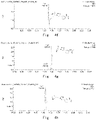
- the in-plate mixture was transferred one-to-one to a empty 96-well plate with a size of 1.2 ml, diluted by adding methanol (400 ⁇ l) and acetonitrile (400 ⁇ l) to each well, and the resulting 1, 2, 3-triazole product was detected by UPLC-MS.
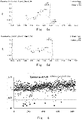
- the relative survival rate was calculated as the ratio of the survival rate of cells treated with Erlotinib derivatives to the survival rate of cells treated with positive compounds (Erlotinib), where lower relative survival rate means the activity of the compounds are better.
- the method of the invention can complete the preparation and screening process of compounds in the same reaction system (or reaction chamber). Since the two-step reactions were almost quantitative generation of products, the products could be used in enzymology and even cytology test experiments without separation, and it has important application value in the field of high-throughput synthesis and screening of compounds.
Landscapes
- Chemical & Material Sciences (AREA)
- Organic Chemistry (AREA)
- Health & Medical Sciences (AREA)
- Life Sciences & Earth Sciences (AREA)
- Molecular Biology (AREA)
- Biochemistry (AREA)
- Medicinal Chemistry (AREA)
- Chemical Kinetics & Catalysis (AREA)
- General Chemical & Material Sciences (AREA)
- Engineering & Computer Science (AREA)
- Immunology (AREA)
- Biomedical Technology (AREA)
- Hematology (AREA)
- Urology & Nephrology (AREA)
- Analytical Chemistry (AREA)
- General Health & Medical Sciences (AREA)
- Physics & Mathematics (AREA)
- Cell Biology (AREA)
- Pathology (AREA)
- Microbiology (AREA)
- General Physics & Mathematics (AREA)
- Food Science & Technology (AREA)
- Biotechnology (AREA)
- Bioinformatics & Cheminformatics (AREA)
- Toxicology (AREA)
- Tropical Medicine & Parasitology (AREA)
- Structural Engineering (AREA)
- Plural Heterocyclic Compounds (AREA)
- Nitrogen Condensed Heterocyclic Rings (AREA)
- Pharmaceuticals Containing Other Organic And Inorganic Compounds (AREA)
Applications Claiming Priority (2)
| Application Number | Priority Date | Filing Date | Title |
|---|---|---|---|
| CN201910605212.5A CN112176418B (zh) | 2019-07-05 | 2019-07-05 | 高通量的化合物库构建和筛选方法以及反应装置 |
| PCT/CN2020/099034 WO2021004326A1 (zh) | 2019-07-05 | 2020-06-29 | 高通量的化合物库构建和筛选方法以及反应装置 |
Publications (2)
| Publication Number | Publication Date |
|---|---|
| EP3995611A1 true EP3995611A1 (de) | 2022-05-11 |
| EP3995611A4 EP3995611A4 (de) | 2023-10-11 |
Family
ID=73915338
Family Applications (1)
| Application Number | Title | Priority Date | Filing Date |
|---|---|---|---|
| EP20836669.0A Pending EP3995611A4 (de) | 2019-07-05 | 2020-06-29 | Hochdurchsatzverfahren zum erstellen und screening einer substanzbibliothek und reaktionsvorrichtung |
Country Status (6)
| Country | Link |
|---|---|
| US (1) | US20220291202A1 (de) |
| EP (1) | EP3995611A4 (de) |
| JP (1) | JP7395209B2 (de) |
| KR (1) | KR102821071B1 (de) |
| CN (1) | CN112176418B (de) |
| WO (1) | WO2021004326A1 (de) |
Families Citing this family (8)
| Publication number | Priority date | Publication date | Assignee | Title |
|---|---|---|---|---|
| CN111333630A (zh) * | 2020-04-21 | 2020-06-26 | 侯延生 | 对野生型肺癌肿瘤细胞具有杀伤性能的厄洛替尼衍生物及其制备方法 |
| CN113603676B (zh) * | 2021-04-28 | 2022-05-24 | 浙江工业大学 | 基于厄洛替尼靶向降解egfr蛋白小分子化合物及其制备方法和应用 |
| CN114751867B (zh) * | 2022-03-31 | 2024-09-06 | 重庆市万虹饲料有限公司 | 一种饲料添加剂及其制备方法和应用 |
| CN114989141B (zh) * | 2022-06-09 | 2023-12-12 | 济南爱思医药科技有限公司 | 一种来那度胺衍生物及其制备方法和应用 |
| JP2024039602A (ja) * | 2022-09-09 | 2024-03-22 | ダイキン工業株式会社 | α-クロロアクリル酸エステル類の製造方法 |
| CN118005570B (zh) * | 2024-01-16 | 2026-04-14 | 山东华博基因工程有限公司 | 一种电化学免疫分析探针及其制备方法和应用、一种电化学直接免疫电极 |
| CN118439981A (zh) * | 2024-05-07 | 2024-08-06 | 浙江大学 | 一种氟磺酸类化合物及其应用 |
| CN120441550B (zh) * | 2025-07-07 | 2025-09-12 | 天津匠新致成科技有限公司 | 一种苯并氮杂卓-2-酮化合物及其制备方法和应用 |
Family Cites Families (7)
| Publication number | Priority date | Publication date | Assignee | Title |
|---|---|---|---|---|
| JPH11500419A (ja) * | 1995-01-11 | 1999-01-12 | パンラブス・インコーポレーテッド | 分類された大量の化学ライブラリの製造方法 |
| US20060172881A1 (en) * | 2004-12-22 | 2006-08-03 | Devaraj Neal K | Method of spatially controlling catalysis of a chemical reaction |
| ATE527542T1 (de) * | 2005-04-27 | 2011-10-15 | Siemens Medical Solutions | Verfahren zur herstellung von abbildungssonden unter verwendung von click chemie |
| WO2009105746A2 (en) * | 2008-02-22 | 2009-08-27 | University Of South Florida | Triazoles and processes for producing the same |
| WO2013191550A1 (en) * | 2012-06-20 | 2013-12-27 | Rijksuniversiteit Groningen | Regioselective diazotation of aminoglycosides |
| CN103421876A (zh) * | 2013-06-09 | 2013-12-04 | 华中农业大学 | 抗菌化合物高通量筛选方法及应用 |
| CN112079902B (zh) | 2019-06-12 | 2025-05-06 | 迪普深合医药研发(上海)有限公司 | 万古霉素衍生物、其中间体、制备方法、组合物及用途 |
-
2019
- 2019-07-05 CN CN201910605212.5A patent/CN112176418B/zh active Active
-
2020
- 2020-06-29 KR KR1020227003915A patent/KR102821071B1/ko active Active
- 2020-06-29 EP EP20836669.0A patent/EP3995611A4/de active Pending
- 2020-06-29 JP JP2022500069A patent/JP7395209B2/ja active Active
- 2020-06-29 WO PCT/CN2020/099034 patent/WO2021004326A1/zh not_active Ceased
- 2020-06-29 US US17/597,409 patent/US20220291202A1/en active Pending
Also Published As
| Publication number | Publication date |
|---|---|
| CN112176418A (zh) | 2021-01-05 |
| KR102821071B1 (ko) | 2025-06-16 |
| JP2022538491A (ja) | 2022-09-02 |
| EP3995611A4 (de) | 2023-10-11 |
| US20220291202A1 (en) | 2022-09-15 |
| CN112176418B (zh) | 2024-11-29 |
| KR20220034819A (ko) | 2022-03-18 |
| JP7395209B2 (ja) | 2023-12-11 |
| WO2021004326A1 (zh) | 2021-01-14 |
Similar Documents
| Publication | Publication Date | Title |
|---|---|---|
| EP3995611A1 (de) | Hochdurchsatzverfahren zum erstellen und screening einer substanzbibliothek und reaktionsvorrichtung | |
| Kadam et al. | NMR method for simultaneous host–guest binding constant measurement | |
| Gupta et al. | Substrate-controlled product-selectivity in the reaction of the Bestmann–Ohira reagent with N-unprotected isatin-derived olefins | |
| Guo et al. | A rhodamine 6G derived Schiff base as a fluorescent and colorimetric probe for pH detection and its crystal structure | |
| CN101880290B (zh) | 头孢孟多酯钠的制备方法 | |
| Sivalingam et al. | Cage‐To‐Cage Transformations in Self‐Assembled Coordination Cages Using “Acid/Base” or “Guest Binding‐Induced Strain” as Stimuli | |
| Busch et al. | Systematic Studies using 2‐(1‐Adamantylethynyl) pyrimidine‐5‐carbaldehyde as a Starting Material in Soai’s Asymmetric Autocatalysis | |
| Doll et al. | Are the Physical Properties of Xe@ Cryptophane Complexes Easily Predictable? The Case of syn-and anti-Tris-aza-Cryptophanes | |
| CN104498023A (zh) | 一种新型的含喹啉的荧光比率探针在检测Cd2+中的应用 | |
| Zhang et al. | Isolation, identification and characterization of novel process-related impurities in flupirtine maleate | |
| Mahajan et al. | Structural characterization and in silico toxicity prediction of degradation impurities of roxadustat | |
| CN114621138B (zh) | 一种尼可地尔三聚体的合成方法 | |
| Zhuang et al. | A highly selective fluorescent probe for hydrogen peroxide and its applications in living cells | |
| Zhu et al. | A cis tetraphenylethene-based Zn complex as probe for selective detection of triphosphate | |
| Kumar et al. | Characterization of a new pyran derivative: Synthesis, structure, and DFT analysis | |
| Bortňák et al. | On the formation of uncommon pyrazoloazepines from 5-aminopyrazoles as by-products in the Clauson-Kaas reaction | |
| Saito et al. | Synthesis of boradiazaindacene–imidazopyrazinone conjugate as lipophilic and yellow-chemiluminescent chemosensor for superoxide radical anion | |
| Iwai et al. | Synthesis of bis (functionalized) aminals via successive nucleophilic amidation and amination | |
| Derdau et al. | Synthesis and analysis of isotopically stable labeled nitrosamines as mass spectrometry standards for drug impurity quality control | |
| Dudhe et al. | Synthesis of 1-indolyl-3, 5, 8-substituted γ-carbolines: one-pot solvent-free protocol and biological evaluation | |
| Krawczyk et al. | 1H and 13C NMR spectra and solution structures of novel derivatives of 5-substituted creatinines | |
| Govdi et al. | Study of the iodine-promoted cyclization of 4, 5-diethynyl-1, 2, 3-triazoles for the synthesis of triazole-iodoheterocyclic dyads | |
| Afonso et al. | An expedient synthesis of cationic rhodamine fluorescent probes suitable for conjugation to amino acids and peptides | |
| Li et al. | Transition-metal-free, meta-selective arene CH direct α-aryl cyanomethylation of naphthalimide using a trifluoromethyl directing group | |
| Ručil et al. | Ring-Opening Reactions of the N-4-Nosyl Hough–Richardson Aziridine with Nitrogen Nucleophiles |
Legal Events
| Date | Code | Title | Description |
|---|---|---|---|
| STAA | Information on the status of an ep patent application or granted ep patent |
Free format text: STATUS: THE INTERNATIONAL PUBLICATION HAS BEEN MADE |
|
| PUAI | Public reference made under article 153(3) epc to a published international application that has entered the european phase |
Free format text: ORIGINAL CODE: 0009012 |
|
| STAA | Information on the status of an ep patent application or granted ep patent |
Free format text: STATUS: REQUEST FOR EXAMINATION WAS MADE |
|
| 17P | Request for examination filed |
Effective date: 20220204 |
|
| AK | Designated contracting states |
Kind code of ref document: A1 Designated state(s): AL AT BE BG CH CY CZ DE DK EE ES FI FR GB GR HR HU IE IS IT LI LT LU LV MC MK MT NL NO PL PT RO RS SE SI SK SM TR |
|
| DAV | Request for validation of the european patent (deleted) | ||
| DAX | Request for extension of the european patent (deleted) | ||
| RAP1 | Party data changed (applicant data changed or rights of an application transferred) |
Owner name: ZHONGHONGXIN INVESTMENT HOLDINGS (SHENZHEN) CO., LTD. |
|
| RIC1 | Information provided on ipc code assigned before grant |
Ipc: C40B 40/04 20060101ALI20230601BHEP Ipc: C40B 60/02 20060101ALI20230601BHEP Ipc: C40B 50/00 20060101AFI20230601BHEP |
|
| A4 | Supplementary search report drawn up and despatched |
Effective date: 20230911 |
|
| RIC1 | Information provided on ipc code assigned before grant |
Ipc: C40B 40/04 20060101ALI20230905BHEP Ipc: C40B 60/02 20060101ALI20230905BHEP Ipc: C40B 50/00 20060101AFI20230905BHEP |
|
| RAP1 | Party data changed (applicant data changed or rights of an application transferred) |
Owner name: DEEPSYN. CO |
|
| STAA | Information on the status of an ep patent application or granted ep patent |
Free format text: STATUS: EXAMINATION IS IN PROGRESS |
|
| 17Q | First examination report despatched |
Effective date: 20251017 |