EP3996830B1 - Verbesserte brennstoff-wasser-abscheidung mittels strukturprägung - Google Patents
Verbesserte brennstoff-wasser-abscheidung mittels strukturprägung Download PDFInfo
- Publication number
- EP3996830B1 EP3996830B1 EP20857751.0A EP20857751A EP3996830B1 EP 3996830 B1 EP3996830 B1 EP 3996830B1 EP 20857751 A EP20857751 A EP 20857751A EP 3996830 B1 EP3996830 B1 EP 3996830B1
- Authority
- EP
- European Patent Office
- Prior art keywords
- embossment
- structural
- filter media
- embossments
- axis
- Prior art date
- Legal status (The legal status is an assumption and is not a legal conclusion. Google has not performed a legal analysis and makes no representation as to the accuracy of the status listed.)
- Active
Links
Images






Classifications
-
- B—PERFORMING OPERATIONS; TRANSPORTING
- B01—PHYSICAL OR CHEMICAL PROCESSES OR APPARATUS IN GENERAL
- B01D—SEPARATION
- B01D29/00—Filters with filtering elements stationary during filtration, e.g. pressure or suction filters, not covered by groups B01D24/00 - B01D27/00; Filtering elements therefor
- B01D29/11—Filters with filtering elements stationary during filtration, e.g. pressure or suction filters, not covered by groups B01D24/00 - B01D27/00; Filtering elements therefor with bag, cage, hose, tube, sleeve or like filtering elements
- B01D29/13—Supported filter elements
- B01D29/15—Supported filter elements arranged for inward flow filtration
- B01D29/21—Supported filter elements arranged for inward flow filtration with corrugated, folded or wound sheets
-
- B—PERFORMING OPERATIONS; TRANSPORTING
- B01—PHYSICAL OR CHEMICAL PROCESSES OR APPARATUS IN GENERAL
- B01D—SEPARATION
- B01D17/00—Separation of liquids, not provided for elsewhere, e.g. by thermal diffusion
- B01D17/02—Separation of non-miscible liquids
- B01D17/04—Breaking emulsions
- B01D17/045—Breaking emulsions with coalescers
-
- B—PERFORMING OPERATIONS; TRANSPORTING
- B01—PHYSICAL OR CHEMICAL PROCESSES OR APPARATUS IN GENERAL
- B01D—SEPARATION
- B01D17/00—Separation of liquids, not provided for elsewhere, e.g. by thermal diffusion
- B01D17/06—Separation of liquids from each other by electricity
-
- B—PERFORMING OPERATIONS; TRANSPORTING
- B01—PHYSICAL OR CHEMICAL PROCESSES OR APPARATUS IN GENERAL
- B01D—SEPARATION
- B01D17/00—Separation of liquids, not provided for elsewhere, e.g. by thermal diffusion
- B01D17/08—Thickening liquid suspensions by filtration
- B01D17/10—Thickening liquid suspensions by filtration with stationary filtering elements
-
- B—PERFORMING OPERATIONS; TRANSPORTING
- B01—PHYSICAL OR CHEMICAL PROCESSES OR APPARATUS IN GENERAL
- B01D—SEPARATION
- B01D27/00—Cartridge filters of the throw-away type
- B01D27/04—Cartridge filters of the throw-away type with cartridges made of a piece of unitary material, e.g. filter paper
- B01D27/06—Cartridge filters of the throw-away type with cartridges made of a piece of unitary material, e.g. filter paper with corrugated, folded or wound material
-
- B—PERFORMING OPERATIONS; TRANSPORTING
- B01—PHYSICAL OR CHEMICAL PROCESSES OR APPARATUS IN GENERAL
- B01D—SEPARATION
- B01D29/00—Filters with filtering elements stationary during filtration, e.g. pressure or suction filters, not covered by groups B01D24/00 - B01D27/00; Filtering elements therefor
- B01D29/11—Filters with filtering elements stationary during filtration, e.g. pressure or suction filters, not covered by groups B01D24/00 - B01D27/00; Filtering elements therefor with bag, cage, hose, tube, sleeve or like filtering elements
- B01D29/31—Self-supporting filtering elements
- B01D29/33—Self-supporting filtering elements arranged for inward flow filtration
- B01D29/333—Self-supporting filtering elements arranged for inward flow filtration with corrugated, folded filtering elements
-
- B—PERFORMING OPERATIONS; TRANSPORTING
- B01—PHYSICAL OR CHEMICAL PROCESSES OR APPARATUS IN GENERAL
- B01D—SEPARATION
- B01D35/00—Filtering devices having features not specifically covered by groups B01D24/00 - B01D33/00, or for applications not specifically covered by groups B01D24/00 - B01D33/00; Auxiliary devices for filtration; Filter housing constructions
- B01D35/005—Filters specially adapted for use in internal-combustion engine lubrication or fuel systems
-
- B—PERFORMING OPERATIONS; TRANSPORTING
- B01—PHYSICAL OR CHEMICAL PROCESSES OR APPARATUS IN GENERAL
- B01D—SEPARATION
- B01D36/00—Filter circuits or combinations of filters with other separating devices
- B01D36/003—Filters in combination with devices for the removal of liquids
-
- B—PERFORMING OPERATIONS; TRANSPORTING
- B01—PHYSICAL OR CHEMICAL PROCESSES OR APPARATUS IN GENERAL
- B01D—SEPARATION
- B01D36/00—Filter circuits or combinations of filters with other separating devices
- B01D36/003—Filters in combination with devices for the removal of liquids
- B01D36/006—Purge means
-
- B—PERFORMING OPERATIONS; TRANSPORTING
- B01—PHYSICAL OR CHEMICAL PROCESSES OR APPARATUS IN GENERAL
- B01D—SEPARATION
- B01D2201/00—Details relating to filtering apparatus
- B01D2201/12—Pleated filters
-
- B—PERFORMING OPERATIONS; TRANSPORTING
- B01—PHYSICAL OR CHEMICAL PROCESSES OR APPARATUS IN GENERAL
- B01D—SEPARATION
- B01D2201/00—Details relating to filtering apparatus
- B01D2201/12—Pleated filters
- B01D2201/127—Pleated filters with means for keeping the spacing between the pleats
-
- B—PERFORMING OPERATIONS; TRANSPORTING
- B01—PHYSICAL OR CHEMICAL PROCESSES OR APPARATUS IN GENERAL
- B01D—SEPARATION
- B01D2201/00—Details relating to filtering apparatus
- B01D2201/32—Flow characteristics of the filter
Definitions
- This invention generally relates to filtration, and more specifically to coalescing filtration systems used for example in hydrocarbon fuel systems and applications.
- Coalescing filtration systems are often employed as the first stage in filter/separator vessels for hydrocarbon fluids e.g. fuels. Such systems filter out particulate contaminants and coalesce (combine) highly dispersed, emulsified water particles into larger water drops. These larger water drops are then collected and removed from the system.
- a variety of methodologies may be employed to achieve such coalescence. For example, small droplets of water entrained in the fuel can contact and adhere to strands of filter media (for example, fiberglass). The operating pressure in the system and fluid flow pushes the droplets along these strands until they reach an intersection of strands where they combine with other droplets, and hence coalesce, into large drops.
- filter media for example, fiberglass
- Embossed patterns are often pressed into the filter media. These patterns often run parallel to the machine direction causing the fluid flow to be parallel to the embossment leading to a lower embossment contact area with the water droplets.
- the elongated embossments will typically have the elongated axis parallel to the radius of the tube of filter media that is perpendicular to the central axis. This elongated axis is also then generally parallel to the flow of fluid through the block of filter media from an upstream face of the block of filter media to a downstream face of the block of filter media.
- coalesced water droplets run down along the filter media, e.g. parallel to the central axis of the tube of filter media, to a water collection bowl.
- this causes the water concentration to continually increase when moving from the top of the tube of filter media to the bottom of the tube of filter media leading to a high-water concentration at the bottom of the element before the water droplets get collected in the water collection bowl.
- the present application provides such a filter element and associated filter media as well as methods of forming the same, as defined in the appended claims.
- the present application provides improvements over the current state of the art.
- a pleated filter element comprising pleated filter media having a plurality of pleat flanks and a plurality of structural embossments.
- the pleated filter media has a first side forming an upstream surface and a second side forming a downstream surface.
- the pleated filter media includes a plurality of pleat flanks and a plurality of folds. Adjacent pleat flanks are connected by a corresponding one of the plurality of folds.
- the plurality of structural embossments are formed in at least one of the first and second sides of the pleat flanks.
- Each structural embossment has a first end and a second end that defines an embossment axis of the structural embossment.
- the embossment axis extends at a non-parallel and non-perpendicular orientation relative to the folds connected to the corresponding pleat flank.
- the pleated filter media forms a tube of filter media defining a longitudinal central axis.
- the folds extend parallel to the longitudinal central axis.
- Each structural embossment is elongated along the structural embossment's embossment axis.
- a first structural embossment of the plurality of structural embossments and a second structural embossment of the plurality of structural embossments are formed in a first pleat flank of the plurality pleat flanks.
- the embossment axis of the first structural embossment extends at a different angle than the embossment axis of the second structural embossment.
- the pleated filter media has a gravitational top and a gravitational bottom.
- the gravitational top is vertically above the gravitational bottom (e.g. in use).
- the folds extend between the gravitational top and the gravitation bottom.
- the embossment axis of the first structural embossment is less aligned with gravity than the embossment axis of the second structural embossment.
- the first structural embossment is located closer to the gravitational top than the second structural embossment.
- the pleated filter media forms a block of filter media that defines an upstream face and a downstream face.
- the block of filter media has a flow direction through which fluid to be filtered flows from the upstream face to the downstream face.
- the flow direction is generally perpendicular to the plurality of folds.
- the embossment axes are angled relative to the folds such that when moving in the flow direction from the upstream face towards the downstream face, the embossment axes move upward towards the gravitational top of the pleated filter media.
- a third structural embossment of the plurality of structural embossments is formed in a second pleat flank of the plurality of pleat flanks.
- a first fold of the plurality of folds is formed between the first and second pleat flanks.
- the first end of the third structural embossment is positioned axially between the first ends of the first and second structural embossments along the first fold.
- the first end of the second structural embossment being positioned axially between the first and second ends of the third structural embossment.
- the first, second, and third structural embossments form a shingled orientation, particularly when viewed in the fluid flow direction.
- the plurality of structural embossments each have a width that is generally perpendicular to the embossment axis. The width increases when moving from the first end toward the second end.
- the depth/height of the structural embossments increases when moving from the first end toward the second end.
- first and second structural embossments form a projection on the first side of the pleated filter media and a depression on the second side of the pleated filter media.
- the third structural embossment forms a projection on the second side of the second pleat flank and a depression on the first side of the second pleat flank.
- the filtration media is formed into a tube of pleated filter media defining a central longitudinal axis.
- Each of the structural embossments forms a projection on one of the first and second sides of the corresponding pleat flank and a depression in the other one of the first and second sides of the corresponding pleat flank.
- a width of the projection and depth of the depression measured generally perpendicular to the corresponding axis of the structural embossment increases when moving radially away from the central longitudinal axis of the tube of pleated filter media and along the embossment axis.
- a width of the projection and depth of the depression measured generally perpendicular to the corresponding axis of the structural embossment increases when moving radially away from the central longitudinal axis of the tube of pleated filter media and along the embossment axis.
- the pleated filter media is formed into a tube of pleated filter media.
- the tube of pleated filter media defines a central longitudinal axis.
- the tube of pleated filter media and is configured for fluid to be filtered to flow radially through the tube of pleated filter media as the fluid is filtered. Water that is separated moves generally parallel (or more parallel) to the central longitudinal axis.
- the tube of pleated filter media has a gravitational top and a gravitational bottom.
- the gravitational top is vertically above the gravitational bottom.
- the central longitudinal axis and folds extend between the gravitational top and the gravitation bottom.
- the embossment axis of the structural embossments is oriented relative to the longitudinal axis such that when moving along the embossment axis towards the gravitation bottom.
- the embossment axis moves radially outward and away from the longitudinal axis.
- other embodiments may have an opposite orientation.
- a method of making a filter element as outlined above includes providing filter media; embossing the filter media with a plurality of structural embossments; and folding the filter media about a plurality of folds to form a plurality of pleat flanks.
- a method of filtering water from a flow of fuel includes passing the flow of fuel through the filter media of the filter element as the fuel flows from an inlet of the filter element to an outlet of the filter element.
- a filtration system including a filter head, a housing and filter element as outlined above.
- the filter head has an inlet and an outlet.
- the housing defines a sump region.
- a filter element as outlined above is positioned within the housing vertically above, at least in part, the sump region and fluidly interposed between the inlet and outlet.
- a method of making filter media includes providing a layer of filtration media having a surface with a predetermined roughness. The method includes contacting the surface of the media with a device having a selected roughness to impart a greater roughness to the surface of the media than the predetermined roughness.
- the device may be a roller a plate, a belt or other structure for imparting enhanced surface roughness.
- the device may also include structure for forming structural embossments.
- the method includes the step of compressing the media with the device. This can form the enhanced surface roughness or the structural embossments.
- the method includes the step of pleating the media after the media is contacted with the device.
- the method includes the step of forming structural embossments in the surface of the media layer.
- the step of pleating the media includes forming fold lines between adjacent pleat panels.
- the method includes forming a plurality of the structural embossments that are elongated such that each of the plurality of the structural embossments has a first end and a second end defining an embossment axis extending between the first end and the second end.
- the embossment axis extends at a non-parallel and non-perpendicular orientation relative to the fold lines.
- a first structural embossment and a second structural embossment of the plurality of structural embossments are formed in a first pleat panel.
- the embossment axis of the first structural embossment extends at a different angle than the embossment axis of the second structural embossment relative to the fold line.
- the filter element has a gravitational top and a gravitational bottom.
- the gravitational top is vertically above the gravitational bottom.
- the embossment axis of the first structural embossment is less aligned with gravity than the embossment axis of the second structural embossment.
- a third structural embossment of the plurality of structural embossments is formed in a second pleat panel.
- the fold line is formed between the first and second pleat panels.
- the first end of the third structural embossment is positioned axially between the first ends of the first and second structural embossments along the fold line and the first end of the second structural embossment is positioned axially between the first and second ends of the third structural embossment.
- the plurality of structural embossments each have a width that is generally perpendicular to the embossment axis.
- the width increases when moving from the first end toward the second end. In some embodiments, this will be in a radially inward direction when the filter media is formed into a tube of pleated filter media. In other embodiments, this may simply be in a generally downstream direction e.g. from an upstream face to a downstream face of the filter media pack, such as in a panel filter element.
- the first and second structural embossments form a projection on a first side of the layer of filter media and a depression on the second side of the filter media.
- the third structural embossment forms a projection on the second side of the filter media and a recess on the first side of the filter media.
- the step of contacting the surface of the media with a device having a selected roughness to impart a greater roughness to the surface of the media than the predetermined roughness occurs on at least 80% and more preferably at least 90% of the filter media that does not include structural embossments.
- At least 95% of the surface of the filter media has been manipulated to include at least one of an increased surface roughness, a fold line and/or a structural embossment.
- the roller or plate has a surface roughness of at least 35 ⁇ and more preferably at least 190 ⁇ .
- the enhance surface roughness of the filter media is 20 ⁇ and more preferably at least 100g.
- the step of contacting the surface of the media with a device having a selected roughness to impart a greater roughness to the surface of the media than the predetermined roughness is performed without removing material of the filter media.
- the step of contacting the surface of the media with a device having a selected roughness to impart a greater roughness to the surface of the media than the predetermined roughness is performed by compacting the filter media to form the greater roughness.
- the surface of the layer of filter media is an upstream surface of the layer of filter media that is an exposed surface.
- the layer of filter media is a pre-laminated media formed from a plurality of media layers.
- the step of contacting the surface of the media with a device having a selected roughness to impart a greater roughness to the surface of the media than the predetermined roughness does not simultaneously secure the plurality of media layers to form the layer of filter media.
- the filter media is unwound from a roll of filter media in the laminated state prior to performing any surface roughness enhancement processes.
- the surface is not subsequently coated or covered after the step of contacting the surface of the media with a device having a selected roughness to impart a greater roughness to the surface of the media than the predetermined roughness.
- the surface roughness of the filter media layer has a contact angle measured using a Goniometer using water of between 130 degrees and 140 degrees and preferably at least 132 degrees.
- a filter element in one embodiment, includes a pleated filter media pack formed from a layer of filtration media.
- the layer of filtration media forms a plurality of pleat panels formed by a plurality of fold lines.
- the filtration media has an upstream surface and a downstream surface. The upstream surface is compressed to have a desired surface roughness.
- the surface roughness of the upstream surface is greater than the surface roughness of the downstream surface.
- the upstream surface of the layer of filtration media is exposed such that fluid to be filtered first contacts the upstream surface of the layer of filtration media.
- the surface that provides the desired roughness is not located between different layers of filter media. Further, the crevices or voids that form the surface roughness are not filled with other material.
- the layer of filtration media includes structural embossments in the upstream surface of the media layer.
- a plurality of the structural embossments are elongated such that each of the plurality of the structural embossments has a first end and a second end defining an embossment axis extending between the first end and the second end.
- the embossment axis extends at a non-parallel and non-perpendicular orientation relative to the fold lines.
- a first structural embossment and a second structural embossment of the plurality of structural embossments are formed in a first pleat panel.
- the embossment axis of the first structural embossment extending at a different angle than the embossment axis of the second structural embossment relative to the fold line.
- the filter element has a gravitational top and a gravitational bottom, the gravitational top being vertically above the gravitational bottom.
- the embossment axis of the first structural embossment is less aligned with gravity than the embossment axis of the second structural embossment.
- the first structural embossment being vertically above the second structural embossment.
- a third structural embossment of the plurality of structural embossments is formed in a second pleat panel.
- the fold line is formed between the first and second pleat panels.
- the first end of the third structural embossment is positioned axially between the first ends of the first and second structural embossments along the fold line and the first end of the second structural embossment is positioned axially between the first and second ends of the third structural embossment.
- first, second and third embossments are positioned between upstream fold lines and downstream fold lines (e.g. radially outer fold lines and radially inner fold lines in a cylindrical element).
- first, second and third embossments are positioned at a same location between the upstream and downstream fold lines.
- first, second, and third embossments are axially offset from one another along the fold lines.
- the plurality of structural embossments each have a width that is generally perpendicular to the embossment axis.
- the width increasing when moving from the first end toward the second end. In one particular embodiment, this increase in width occurs when moving towards the downstream fold lines (e.g. radially inward in a cylindrical filter element or through the media pack when moving from an upstream face towards a downstream face of a panel filter element).
- the first and second structural embossments form a projection on a first side of the layer of filter media and a depression on the second side of the filter media.
- the third structural embossment forms a projection on the second side of the filter media and a recess on the first side of the filter media.
- At least 80% and more preferably at least 90% of the filter media that does not include structural embossments has a surface roughness that is greater than the surface roughness of the structural embossments.
- At least 95% of the surface of the filter media has been manipulated to include at least one of an increased surface roughness, a fold line and/or a structural embossment.
- the surface roughness of the upstream surface is at least 116 ⁇ which is equivalent to that of 120 grit sand paper and more preferably at least 190 ⁇ , which is equivalent to that of 80 grit sand paper and even more preferably at least 425 ⁇ , which is equivalent to 40 grit sand paper.
- the surface roughness of the upstream surface is at least equivalent to that of 120 grit sand paper and more preferably at least equivalent to that of 80 grit sand paper and even more preferably at least equivalent to 40 grit sand paper.
- the surface roughness of the upstream surface has been manipulated to be at least 50% greater than in an unmanipulated state, more preferably at least 100% greater than in an unmanipulated state, and even more preferably at least 400% greater than in an unmanipulated state.
- the surface roughness of the upstream face of the layer of filter media has been provided by compressing the upstream face of the layer of filtration media and not by removal of material from the upstream face.
- the upstream surface of the layer of filtration media is an exposed surface and the voids in the upstream surface forming the surface roughness are not filled with or covered by other material. This does not include potential overlap of adjacent pleat panels once the filter media is folded about the pleat folds.
- the layer of filtration media is a pre-laminated media formed from a plurality of media layers secured to one another independent of the structures of the filtration media providing the surface roughness of the upstream face.
- the surface roughness of the filtration media layer has a contact angle measured using a goniometer using water of between 130 degrees and 140 degrees and preferably at least 132 degrees.
- a method of filtering water from a flow of fuel includes passing the flow of fuel through the filtration media of a filter element according to any one of the embodiments outlined above as the fuel flows from an inlet of the filter element to an outlet of the filter element.
- a filtration system including a filter head having an inlet and an outlet; a housing, the housing defining a sump region; and a filter element according to any one of the prior embodiments is provided.
- the filter element is positioned within the housing vertically above, at least in part, the sump region and fluidly interposed between the inlet and outlet.
- FIG. 1 illustrates a simplified filter element 100 incorporating the teachings of the present application.
- the filter element 100 includes pleated filter media 102 (also referred to as "filtration media") that is formed into a block of pleated filter media and particularly a cylindrical tube. While this embodiment illustrates the pleated filter media 102 in the cylindrical tube, other embodiments according to the present teachings could form the filter media in to a block of filter media that is in the form of a flat panel of filter media.
- Filter element 100 finds particular benefit in filtering water from a flow fluid, such as a flow of fuel.
- the filter element 100 may also filter particulate matter from the flow fluid.
- Dirty fluid enters the filter element 100 through one or more inlets, illustrated by arrows 104.
- the dirty fluid flows through the filter media 102 from an upstream side/face (radially outer side in the illustrated cylindrical tube of filter media) to a downstream side/face (radially inner side in the illustrated cylindrical tube of filter media) as the fluid flow through the filter media 102.
- the cleaned fluid flows through one or more outlets, illustrated by arrow 106.
- the filter media 102 is preferably configured to coalesce water entrained within the unfiltered fluid such that coalesced water droplets 110 will be separated from the fluid.
- the coalesced water droplets 110 will flow, illustrated by arrow 112 to a water sump 114 or other collection area.
- the flow of water droplets 110 is generally parallel to gravity (illustrated by arrow 124).
- FIG. 13 illustrates a filtration system 115 in which the filter element 100 can have particular applicability.
- the sump 114 is provided by a removable bowl 117 that is removably connected to a filter head 121.
- the filter head 121 provides the inlet 104 and outlet 106.
- the filter media 102 is one or more layers of filter media that is folded to form a pleated layer of filter media having a plurality of folds 120 that define fold lines that separate adjacent pleat panels 122.
- the folds 120 interconnect adjacent pairs of pleat panels 122 (also referred to as pleat flanks).
- the folds 120 are generally parallel to gravity, illustrated by arrow 124 in FIG. 1 .
- the water sump 114 is at a bottom end 130 of the filter media 102 while the outlet 106 as top end 132 where "top" and “bottom” are defined with reference to gravity. In this way, gravity can be used to force the coalesced water droplets 110 to flow toward the water sump 114 rather than outlet 106.
- the filter media 102 is preferably formed from pleated media with a plurality of pleat panels 122 separated by pleat folds 120.
- FIG. 2 is a top view of a pair of pleat panels 122A, 122B prior to being folded about fold line 120 that, in this embodiment, is provided by a score line during the manufacturing process.
- the fold 120 separates pleat panel 122A from pleat panel 122B, but also interconnects the two adjacent pleat panels 122A, 122B.
- the pleat folds 120 (which may be provided by score lines prior to folding) include radially outer pleat folds 120A and radially inner pleat folds 120B (e.g. the radially outer pleat folds 120A may be referred to as upstream pleat folds and the radially inner pleat folds 120B may referred to as downstream pleat folds with a radially outward to inward fluid flow as illustrated by arrow 104 in FIG. 1 ).
- the pleat panels 122 would generally extend radially (typically at a slight angle from perfectly radially) between the outer and inner pleat folds 120A, 120B.
- the outer pleat folds 120A can be considered to form a radially outer periphery or upstream face (illustrated by dashed line 119A) of the tube of filter media while the inner pleat folds 120B form a radially inner periphery or downstream face (illustrated by dashed line 119B) of the tube of filter media.
- pleat folds 120A would form an upstream face of the panel filter while pleat folds 120B would form a downstream face of the panel filter element.
- the pleat panels 122 would extend generally between the upstream and downstream faces.
- the filter media also includes a plurality of structural embossments 140A, 140B.
- Structural embossments 140A are formed in pleat panel 122A while structural embossments 140B are formed in pleat panel 122B.
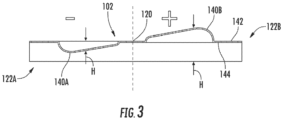
- FIG. 2 illustrates an upstream surface 142 (see also FIG. 3 ) of two pleat panels 122A, 122B of the filter media 102 prior to folding about fold line 120, which is opposite a downstream surface 144.
- dirty fluid will first contact upstream surface 142 and then pass through filter media 102 with cleaned fluid exiting the filter media 102 through downstream surface 144.
- the filter media has a plurality of manipulations according to embodiments of the application.
- the first manipulation is the formation of the pleat fold 120, which could be a score or crease.
- embossments 140A are negative embossments as they form a plurality of depressions in the upstream surface 142 and a plurality of protrusions in the downstream surface 144 of the filter media 102.
- embossments 140B are positive embossments as they form a plurality of protrusions in the upstream surface 142 and a plurality of depressions in the downstream surface 144.
- Each of the embossments 140 includes a first end 146 and second end 148.
- the embossments 140 extend longitudinally between the first and second ends 146, 148 along an embossment axis 150.
- the embossments taper between the first and second ends 146, 148.
- the width W (illustrated by a double headed arrow in FIG. 2 ) of the embossments 140 perpendicular to embossment axis 150 increases when moving from the first end 146 toward the second end 148. This results in a tear-dropped shape.
- the width can remain constant and need not increase when moving radially inward.
- each embossment 140 has width W that is at least double the thickness of the filter media and preferably at least 3 times the thickness of the filter media. In some embodiments, at least a portion of some or all of the embossments has a width W that is at least 4 times the thickness of the filter media.
- the height H of the embossments 140 increases when moving along the embossment axis 150 from one end to the other end of the embossment. As illustrated in FIG. 3 , the height H increases when moving along the embossment axis 150 away from fold 120. While described in terms of height H, the depth of negative embossments can have a similar orientation. At least a portion of each embossment 140 has height H that is at least double the thickness of the filter media and preferably at least 3 times the thickness of the filter media. In some embodiments, at least a portion of some or all of the embossments has a height H that is at least 4 times the thickness of the filter meida.
- the pleat panels 122 would be folded relative to one another about fold 120 such that the second ends 148 of the embossments 140 would be positioned radially closer to the central axis 150 of the tube of filter media 102.
- the embossments 140 In a flat panel filter, the embossments 140 would generally get wider when traveling from an upstream face toward a downstream face of the panel (e.g. in the direction of flow through the filter media panel.
- the orientation of the first and second ends 146, 148 could be switched such that the second ends 138 of the embossments 140 would be positioned radially farther from the central axis 150 of the tube of filter media 102 than the first ends 146.
- This angled orientation helps coalesce entrained water as the dirty fluid flows across the upstream face 142 of the filter media 102 and particularly the embossments 140.
- the embossments also help maintain spacing between the adjacent pleat panels 122A, 122B once folded.
- the embossment axis 150 extends at a non-parallel, non-perpendicular orientation relative to the folds 120 and gravity 124.
- the non-parallel, non-perpendicular orientation creates a shingled pattern when viewed in the radial direction, which helps reject more water drop 110 from entering the media.
- FIG. 14 is a simplified illustration of filter media 102 better illustrating the shingled orientation.
- the orientation of the embossment axis 150 from one embossment 140 to the next embossment 140 changes when transitioning from the top end 132 towards the bottom end 130.
- the orientation of vertically lower embossments 140 is steeper relative to the radial direction and closer to parallel to the pleat folds 120 and gravity 124 the closer the corresponding embossment 140 is located relative to bottom end 130.
- embossment axes 150 from one embossment to the next is further illustrated in FIG. 14 .
- the embossment axes 150' of the two lower embossments 140A' and 140B' are steeper than the embossment axes 150 of the two upper embossments 140A and 140B.
- embossments 140B, 140B' are shown in dashed lines as they are formed in a pleat panel that is hidden behind the pleat panel that forms embossments 140A, 140A'.
- embossments 140 of FIG. 14 are not teardrop shaped and are instead oval, which is an alternative shape.
- the increasing steepness when moving toward the bottom 130 increases the water blocking effect of the embossments 140. This blocks the water droplets 110 from entering the upstream pleated section of the filter media resulting in overall utilization of the surface area for filtration and better performance of the bottom section of the filter element 100. This is particularly beneficial as the separated water droplets 110 move vertically downward toward the bottom end 130 and sump 114.
- the increased water blocking performance helps compensate for the fact that the downward flow of the water 112 results in the bottom portions of the filter element 100 having a high water concentration before the water is collected in sump 114.
- the increasing angle of the embossment axes 150' as compared to embossment axes 150 increases the water blocking performance of the lower portion of the filter media 102.
- the embossments 140A of pleat panel 122A overlap with embossments 140B of pleat panel 122A when viewed perpendicular to the folds 120.
- the first end of an embossment 140B is positioned vertically between the first ends of two adjacent embossments 140A.
- the first end of an embossment 140A is positioned vertically between the first and second ends 146, 148 of an embossment 140B.
- the angle of the embossment axis 150 relative to the flow of fluid through the media 102 helps prevent the push through of coalesced water droplets by blocking the re-introduction into the media 102 and also uses gravity to assist with water separation.
- the embossment axes 150 are angled relative to fold 120 and gravity such that when moving in the fluid flow direction, the embossment axes 150 move toward the top 132.
- This orientation causes the water droplets 110 to move radially outward (illustrated by arrow 111), as the droplets 110 move vertically downward due to gravity 124. This further promotes removal of the water from the fluid being filtered.
- the water droplets would move outward towards the vertical wall of the bowl 117.
- the reverse orientation could be implemented.
- the filter media 102 Adjacent the plurality of embossments 140A, 140B 144, the filter media 102 has a plurality of flat surface regions 160.
- the structural embossments 140A of one pleat panel 122A are axially offset from the structural embossments 140B of the adjacent pleat panels 122B along the fold 120 such that when the panels 122A, 122B are folded relative to one another about fold 120, the embossments 140B are positioned axially between embossments 140A along fold 120.
- embossments 140B to cooperate with and/or align with the flat surface regions 160 of the adjacent pleat panel 122A, 122B. This helps maintain appropriate spacing between the pleat panels 122A, 122B.
- these surface regions 160 have been manipulated to have increased surface roughness. More particularly, the filter media 102 is generally formed with a first surface roughness and then the user manipulates the filter media 102, and particularly in these flat surface regions 160 to increase the surface roughness.
- the surface roughness of the upstream surface is at least 116 ⁇ , which is equivalent to that of 120 grit sand paper and more preferably at least 190 ⁇ , which is equivalent to that of 80 grit sand paper and even more preferably at least 425 ⁇ , which is equivalent to 40 grit sand paper.
- the surface regions 160 have, after manipulation, a surface roughness of at least 116 ⁇ and more preferably at least 425 ⁇ . It should be noted that in some preferred embodiments, the embossments 140 have a height of at least three times greater than the surface roughness.
- the surface roughness of the filter media after being manipulated is increased by at least 50% more preferably by at least 100% and even more preferably by at least 400%.
- the surface roughness of the upstream surface 142 is greater than the surface roughness of downstream surface 144.
- the surface roughness of only the upstream surface 142 is manipulated as this is the surface that is first contacted by the dirty fluid that has the entrained water. The surface roughness helps increase the surface energy of the upstream surface 142 and thus the water separation capabilities thereof.
- the increased surface roughness is illustrated schematically by dotted stippling on the surface of the filter media 102. This roughness may be referred to as micro roughness.
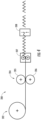
- FIG. 4 illustrates a simplified filter media processing system 200.
- the system includes a filter media supply 202, which is typically a roll of filter media that will be used to form filter media 102.
- the filter media is unwound from the roll and subsequently processed.
- a media manipulation station 204 Downstream from the filter media supply 202 is a media manipulation station 204 that includes one or more media manipulation tools 205, 206 that performs surface manipulation to one or more surfaces and/or regions of the filter media.
- the media manipulation station 204 include media manipulation tools in the form of opposed compression rollers.
- the media manipulation tools are provided by a pair of opposed belts.
- the media manipulation tools are provided by a pair of linearly actuated stamping plates that move toward and away from one another along an axis that is generally perpendicular to the flow media through the media manipulation station 204.
- the media manipulation station 204 only manipulates one side of the filter media, and particularly the side of the filter media that would become upstream surface 142 described above.
- the media manipulation tool 205, 206 that cooperates with that side of the media would manipulate the surface roughness of the corresponding surface of the filter media to increase the surface roughness as compared to an original surface roughness of the filter media.
- the media manipulation station 204 modifies the surface roughness without removing any or substantially any of the filter media, e.g. without abrading or laser etching of the media. Instead, it is preferred to modify the surface roughness simply by compressing the filter media. Removal methods can, among other things, leave debris on the filter media.
- the media manipulation tool 205, 206 that defines the desired surface roughness is formed from a material that is more rigid than the other one of the media manipulation tools 205, 206.
- the media manipulation tools 205, 206 may have the surface roughness profile laser etched into the surface of the tooling.
- the same media manipulation tool 205 or 206 has both the structural embossment and surface roughness features formed therein. In some embodiments, the media manipulation tool 205, 206 is entirely free of surface roughness features and only provides the structural embossments.
- the media manipulation tool 205, 206 has a rigid member that provides the structural embossment profiles formed therein and a micro-roughness film is attached to the rigid member.
- the micro-roughness film would surround the structural embossment profiles.
- the media manipulation station 204 has a two-step process where the roughness and structural embossments are formed using separate sets of tooling that are aligned sequentially such that one process is performed first and then the other process is performed. Typically, the roughness process would occur first.
- other systems may have only one of the various different media manipulation features.
- structural embossments do not have the surface thereof manipulated to increase roughness and only the remainder portion of the pleat panel (e.g. substantially planar portions of the filter media) are manipulated to provide improved surface roughness.
- the media manipulation tools 205, 206 have both a positive and negative structural embossment feature that align to form a single structural embossment.
- a projection of tool 205 would align with and press filter media into a corresponding recess of cooperating tool 206 to form an embossment.
- cooperating projection/recess features e.g. cooperating positive and negative features
- the surface roughness features will typically not be formed with such a positive/negative arrangement. Instead, the surface roughness features would be formed simply by one or the other tool 205, 206 without cooperating features between tools 205, 206 that cooperate to form the surface roughness.
- the filter media is a laminate of a plurality of layers of filter media. This laminate is formed and the layers thereof are secured to one another prior to passing through the media manipulation station 204.
- the surfaces that have had the surface roughness enhanced and increased it is preferred that these surfaces are not subsequently coated. This is particularly true because the surface roughness added to the filter media is not used as a means for securing separate layers together. Instead, the surface roughness should remain unencumbered by other material such that the improved water separation features remain.
- 206 Downstream from tool 205, 206 is a folder 207 that causes the adjacent pleat panels 122 to be folded about the corresponding pleat folds 120
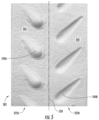
- FIG. 5 is a photograph of filter media 302 that has been manipulated to include a fold 320 to define pleat panes 322A, 322B, structural embossments 340A, 340B and flat surface regions 360 with enhanced roughness.
- FIG. 6 is a photograph similar to FIG. 5 . However, the filter media did not include the enhanced surface roughness surrounding the structural embossments.
- FIG. 7 is a photograph of an unmanipulated sample of the filter media used for the arrangements of FIGS. 5 and 6 .
- FIGS. 8 and 9 compare the contact angle for the control filter media of FIG. 7 and the modified filter media of FIG. 5 .
- the contact angle of water on the surface of the corresponding medias was tested using a Goniometer. It was determined that the sample with the surface roughness increased had a greater contact angle. More particularly, the control sample had an average contact angle of 129° plus or minus 0.8 (average of two values) while the sample with increased surface roughness had an average contact angle of 135° plus or minus 0.6 (average of two values).
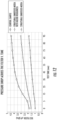
- FIG. 10 illustrates a comparison of the flow restriction vs. flow rate based on SAE J905.
- the liquid used was ultralow sulfur diesel (ULSD).
- ULSD ultralow sulfur diesel
- the modified samples each had reduced pressure drop than the control sample at a same flow rate.
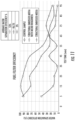
- FIG. 11 illustrates a comparison of water separation efficiency over time tested according to SAE J1488.
- the test flow rate was 1 gpm.
- the flow was outside-in with a cylindrical filter element.
- FIG. 12 plots the pressure drop over time for the three samples tested according to SAE J1488.
- the test flow rate was 1 gpm.
- the flow was outside-in with a cylindrical filter element.
Landscapes
- Chemical & Material Sciences (AREA)
- Chemical Kinetics & Catalysis (AREA)
- Physics & Mathematics (AREA)
- Thermal Sciences (AREA)
- Engineering & Computer Science (AREA)
- Combustion & Propulsion (AREA)
- Filtering Materials (AREA)
Claims (12)
- Ein gefaltetes Filterelement (100), das Folgendes beinhaltet:gefaltete Filtermedien (102), die eine erste Seite, die eine stromaufwärtige Oberfläche (142) bildet, und eine zweite Seite, die eine stromabwärtige Oberfläche (144) bildet, aufweisen, wobei die gefalteten Filtermedien eine Vielzahl von Faltflanken (122) und eine Vielzahl von Falzen (120) umfassen, wobei angrenzende Faltflanken (122A, 122B) durch einen entsprechenden der Vielzahl von Falzen (120) verbunden sind; undeine Vielzahl von Strukturprägungen (140), die in mindestens einer der ersten und zweiten Seite der Faltflanken (122) gebildet ist, wobei jede Strukturprägung (140) ein erstes Ende (146) und ein zweites Ende (148) aufweist, wobei das erste und zweite Ende eine Prägungsachse (150) der Strukturprägung definieren, wobei sich die Prägungsachse (150) in einer nicht-parallelen und nicht-senkrechten Ausrichtung relativ zu den Falzen (120), die mit der entsprechenden Faltflanke (122) verbunden sind, erstrecken;wobei eine erste Strukturprägung (140A) der Vielzahl von Strukturprägungen und eine zweite Strukturprägung (140A') der Vielzahl von Strukturprägungen in einer ersten Faltflanke (122A) der Vielzahl von Faltflanken gebildet sind, wobei sich die Prägungsachse (150) der ersten Strukturprägung (140A) in einem anderen Winkel als die Prägungsachse (150') der zweiten Strukturprägung (140A`) erstreckt; undwobei eine dritte Strukturprägung (140B) der Vielzahl von Strukturprägungen in einer zweiten Faltflanke (122B) der Vielzahl von Faltflanken gebildet ist, wobei eine erste Falze (120) der Vielzahl von Falzen zwischen der ersten und zweiten Faltplanke (122A, 122B) gebildet ist, wobei das erste Ende (146B) der dritten Strukturprägung (140B) axial zwischen den ersten Enden (146A, 146A') der ersten und zweiten Strukturprägung (140A, 140A) entlang der ersten Falze (120) gebildet ist und das erste Ende (146A') der zweiten Strukturprägung axial zwischen dem ersten (146B) und zweiten Ende (148B) der dritten Strukturprägung positioniert ist, wobei die erste (140A), zweite (140A') und dritte (140B) Strukturprägung eine geschindelte Ausrichtung bilden.
- Gefaltetes Filterelement (100) gemäß Anspruch 1, wobei:die gefalteten Filtermedien (102) ein Rohr von Filtermedien bilden, das eine zentrale Längsachse definiert, wobei sich die Falzen (120) parallel zu der zentralen Längsachse erstrecken; undjede Strukturprägung (140) entlang der Prägungsachse (150) der Strukturprägung verlängert ist.
- Gefaltetes Filterelement (100) gemäß Anspruch 1 oder Anspruch 2, wobei die gefalteten Filtermedien (102) eine Gravitationsoberseite (132) und eine Gravitationsunterseite (130) aufweisen, wobei sich die Gravitationsoberseite (132) vertikal über der Gravitationsunterseite (130) befindet, wobei sich die Falzen (120) zwischen der Gravitationsoberseite (132) und der Gravitationsunterseite (132) erstrecken, wobei die Prägungsachse (150) der ersten Strukturprägung (140A) weniger nach der Gravitation ausgerichtet ist als die Prägungsachse (150') der zweiten Strukturprägung (140A'), wobei die erste Strukturprägung (140A) näher an der Gravitationsoberseite (132) lokalisiert ist als die zweite Strukturprägung (140A').
- Gefaltetes Filterelement (100) gemäß Anspruch 3, wobei die gefalteten Filtermedien (102) einen Block von Filtermedien bilden, der eine stromaufwärtige Fläche und eine stromabwärtige Fläche definiert, wobei der Block von Filtermedien eine Fließrichtung aufweist, in der Fluid, das gefiltert werden soll, von der stromaufwärtigen Fläche zu der stromabwärtigen Fläche fließt, wobei die Fließrichtung im Allgemeinen senkrecht zu der Vielzahl von Falzen (120) ist.
- Gefaltetes Filterelement (100) gemäß Anspruch 4, wobei die Prägungsachsen (150, 150') relativ zu den Falzen (120) derart abgewinkelt sind, dass, wenn man sich in der Fließrichtung von der stromaufwärtigen Fläche zu der stromabwärtigen Fläche bewegt, sich die Prägungsachsen (150, 150') nach oben zu der Gravitationsoberseite (132) der gefalteten Filtermedien bewegen.
- Gefaltetes Filterelement (100) gemäß einem der Ansprüche 1-5, wobei die Vielzahl von Strukturprägungen (140) jeweils eine Breite (W) aufweisen, die im Allgemeinen senkrecht zu der Prägungsachse (150, 150') ist, wobei sich die Breite (W) bei Bewegung von dem ersten Ende (146) zu dem zweiten Ende (148) erhöht.
- Gefaltetes Filterelement (100) gemäß Anspruch 1, wobei:die erste und zweite Strukturprägung (140A, 140A') einen Vorsprung auf der ersten Seite (142) der gefalteten Filermedien und eine Vertiefung auf der zweiten Seite (144) der gefalteten Filtermedien bilden;die dritte Strukturprägung (140B) einen Vorsprung auf der zweiten Seite (144) der zweiten Faltflanke und eine Vertiefung auf der ersten Seite (142) der zweiten Faltflanke bildet.
- Gefaltetes Filterelement (100) gemäß einem der Ansprüche 1-7, wobei:die Filtrationsmedien (102) zu einem Rohr von gefalteten Filtermedien gebildet sind, das eine zentrale Längsachse definiert;jede der Strukturprägungen (140) einen Vorsprung auf einer der ersten und der zweiten Seite (142, 144) der entsprechenden Faltflanke (122) und eine Vertiefung in der anderen der ersten und zweiten Seite (142, 144) der entsprechenden Faltflanke (122) bildet;wobei sich eine Breite (W) des Vorsprungs und eine Tiefe (H) der Vertiefung, gemessen im Allgemeinen senkrecht zu der entsprechenden Faltflanke (122) beim Bewegen radial weg von der zentralen Längsachse des Rohrs von gefalteten Filtermedien und entlang der Prägungsachse (150, 150') erhöht.
- Gefaltetes Filterelement (100) gemäß einem der Ansprüche 1-8, wobei:die gefalteten Filtermedien (102) zu einem Rohr von gefalteten Filtermedien gebildet sind, wobei das Rohr von gefalteten Filtermedien eine zentrale Längsachse definiert, wobei das Rohr von gefalteten Filtermedien so konfiguriert ist, dass zu filterndes Fluid radial durch das Rohr von gefalteten Filtermedien fließt, während das Fluid gefiltert wird;das Rohr von gefalteten Filtermedien eine Gravitationsoberseite (132) und eine Gravitationsunterseite (130) aufweist, wobei sich die Gravitationsoberseite (132) vertikal über der Gravitationsunterseite (130) befindet, wobei sich die zentrale Längsachse und die Falzen (120) zwischen der Gravitationsoberseite (132) und der Gravitationsunterseite (130) erstrecken, wobei die Prägungsachse (150, 150') der Strukturprägungen (140) relativ zu der Längsachse derart ausgerichtet ist, dass, wenn man sich entlang der Prägungsachse (150, 150') zu der Gravitationsunterseite (130) bewegt, sich die Prägungsachse (150, 150') radial nach außen und weg von der Längsachse bewegt.
- Ein Verfahren zum Herstellen eines Filterelements (100) gemäß einem der vorhergehenden Ansprüche, das Folgendes beinhaltet:Bereitstellen von Filtermedien (102);Prägen der Filtermedien (102) mit einer Vielzahl von Strukturprägungen (140);Falzen der Filtermedien (102) um eine Vielzahl von Falzen (120), um eine Vielzahl von Faltflanken (122) zu bilden.
- Ein Verfahren zum Filtern von Wasser aus einem Fluss von Brennstoff, das Folgendes beinhaltet:
Führen des Flusses von Brennstoff durch die Filtermedien (102) des Filterelements (100) gemäß einem der Ansprüche 1 bis 9, während der Brennstoff von einem Eingang (104) des Filterelements zu einem Ausgang (106) des Filterelements fließt. - Ein Filtrationssystem (115), das Folgendes beinhaltet:einen Filterkopf (121), der einen Eingang (104) und einen Ausgang (106) aufweist,ein Gehäuse, wobei das Gehäuse eine Sumpfregion (114) definiert;ein Filterelement (100) gemäß einem der Ansprüche 1 bis 9, das innerhalb des Gehäuses vertikal über mindestens teilweise der Sumpfregion (114) positioniert ist und fluidisch zwischen dem Eingang (104) und dem Ausgang (106) eingefügt ist.
Priority Applications (1)
| Application Number | Priority Date | Filing Date | Title |
|---|---|---|---|
| EP25152917.8A EP4520418A3 (de) | 2019-08-26 | 2020-08-21 | Verbesserte kraftstoffwassertrennung mittels strukturprägung |
Applications Claiming Priority (2)
| Application Number | Priority Date | Filing Date | Title |
|---|---|---|---|
| US201962891458P | 2019-08-26 | 2019-08-26 | |
| PCT/US2020/047438 WO2021041229A1 (en) | 2019-08-26 | 2020-08-21 | Enhanced fuel water separation using structural embossing |
Related Child Applications (1)
| Application Number | Title | Priority Date | Filing Date |
|---|---|---|---|
| EP25152917.8A Division EP4520418A3 (de) | 2019-08-26 | 2020-08-21 | Verbesserte kraftstoffwassertrennung mittels strukturprägung |
Publications (3)
| Publication Number | Publication Date |
|---|---|
| EP3996830A1 EP3996830A1 (de) | 2022-05-18 |
| EP3996830A4 EP3996830A4 (de) | 2023-09-20 |
| EP3996830B1 true EP3996830B1 (de) | 2025-01-29 |
Family
ID=74683331
Family Applications (2)
| Application Number | Title | Priority Date | Filing Date |
|---|---|---|---|
| EP20857751.0A Active EP3996830B1 (de) | 2019-08-26 | 2020-08-21 | Verbesserte brennstoff-wasser-abscheidung mittels strukturprägung |
| EP25152917.8A Pending EP4520418A3 (de) | 2019-08-26 | 2020-08-21 | Verbesserte kraftstoffwassertrennung mittels strukturprägung |
Family Applications After (1)
| Application Number | Title | Priority Date | Filing Date |
|---|---|---|---|
| EP25152917.8A Pending EP4520418A3 (de) | 2019-08-26 | 2020-08-21 | Verbesserte kraftstoffwassertrennung mittels strukturprägung |
Country Status (6)
| Country | Link |
|---|---|
| US (2) | US12296287B2 (de) |
| EP (2) | EP3996830B1 (de) |
| JP (2) | JP7688019B2 (de) |
| CN (2) | CN118543158A (de) |
| BR (1) | BR112022003537A2 (de) |
| WO (1) | WO2021041229A1 (de) |
Families Citing this family (1)
| Publication number | Priority date | Publication date | Assignee | Title |
|---|---|---|---|---|
| WO2021041210A1 (en) * | 2019-08-26 | 2021-03-04 | Parker-Hannifin Corporation | Filter element and associated filter media providing fuel water separation using surface embossing |
Family Cites Families (22)
| Publication number | Priority date | Publication date | Assignee | Title |
|---|---|---|---|---|
| GB888205A (en) | 1959-10-09 | 1962-01-31 | Automotive Prod Co Ltd | Improvements in and relating to filter elements |
| US3058594A (en) | 1960-06-06 | 1962-10-16 | Purolator Products Inc | Pleated paper filter |
| US3198336A (en) | 1961-03-02 | 1965-08-03 | Harry E Hyslop | Pleated oil filter |
| DK0429805T3 (da) * | 1989-11-27 | 1995-05-01 | Asf Air System Filter Ag | Fremgangsmåde og indretning til fremstilling af et plisseret filterindlæg |
| ES2294389T3 (es) | 1999-07-07 | 2008-04-01 | 3M Innovative Properties Company | Articulo microfluidico. |
| US7081291B2 (en) | 2002-01-11 | 2006-07-25 | Domco Tarkett Inc. | Selectively embossed surface coverings and processes of manufacture |
| US6740137B2 (en) | 2002-06-14 | 2004-05-25 | 3M Innovative Properties Company | Collapsible pleated filter element |
| US7425227B1 (en) | 2004-06-17 | 2008-09-16 | Wix Filtration Corp Llc | Pleated filter element with offset emboss pattern |
| CN102159296A (zh) * | 2008-07-25 | 2011-08-17 | 唐纳森公司 | 空气过滤介质包装、过滤器元件、空气过滤介质以及方法 |
| JP2010201329A (ja) * | 2009-03-03 | 2010-09-16 | Ryuki Engineering:Kk | 塵埃集塵装置 |
| KR101739734B1 (ko) | 2009-10-19 | 2017-05-25 | 엘피디 테크놀러지스, 아이엔씨. | 양각된 유체 여과용 엘리먼트 |
| JP5602521B2 (ja) | 2010-07-02 | 2014-10-08 | ニッタ株式会社 | エアフィルタ挿入体 |
| DE102011113649A1 (de) * | 2011-09-19 | 2013-03-21 | Mann + Hummel Gmbh | Filterelement, Vorrichtung zum Falten eines bahnförmigen Filtermediums und Verfahren zur Herstellung eines zickzackförmig gefalteten Filterelements |
| JP5510430B2 (ja) * | 2011-11-04 | 2014-06-04 | 株式会社デンソー | 燃料フィルタ装置 |
| CN107617248B (zh) | 2013-03-08 | 2020-06-30 | 康明斯过滤Ip公司 | 带有调制波纹的波纹状过滤介质 |
| DE102013207254A1 (de) | 2013-04-22 | 2014-10-23 | Mahle International Gmbh | Verfahren und Vorrichtung zum Herstellen von Filterelementen |
| BR112017002156B1 (pt) | 2014-08-01 | 2021-10-13 | Donaldson Company Inc | Meios de filtro |
| US11813561B2 (en) | 2014-11-10 | 2023-11-14 | Donaldson Company, Inc. | Filtration media, filter packs, and filter elements with protrusions |
| DE102014117506A1 (de) * | 2014-11-28 | 2016-06-02 | Filta Co., Ltd | Filtermedium mit großem Faltenabstand |
| WO2017007348A1 (en) | 2015-07-08 | 2017-01-12 | Amazon Filters Spółka z Ograniczoną Odpowiedzialnością | Separation system for simultaneous removal of both solid particles and liquid droplets suspended in another liquid |
| EP3777989B1 (de) * | 2015-08-17 | 2025-06-04 | Parker-Hannifin Corporation | Filtermedienpacks, verfahren zur herstellung und filtermedienpressen |
| CN109890666B (zh) * | 2016-10-20 | 2022-03-11 | 康明斯滤清系统知识产权公司 | 平坦的片的间断的定向凸起 |
-
2020
- 2020-08-21 EP EP20857751.0A patent/EP3996830B1/de active Active
- 2020-08-21 EP EP25152917.8A patent/EP4520418A3/de active Pending
- 2020-08-21 CN CN202410623055.1A patent/CN118543158A/zh active Pending
- 2020-08-21 WO PCT/US2020/047438 patent/WO2021041229A1/en not_active Ceased
- 2020-08-21 CN CN202080060365.7A patent/CN114502249B/zh active Active
- 2020-08-21 JP JP2022512393A patent/JP7688019B2/ja active Active
- 2020-08-21 BR BR112022003537A patent/BR112022003537A2/pt unknown
-
2022
- 2022-02-23 US US17/678,171 patent/US12296287B2/en active Active
-
2025
- 2025-04-18 US US19/183,317 patent/US20260034481A1/en active Pending
- 2025-05-22 JP JP2025085486A patent/JP2025122110A/ja active Pending
Also Published As
| Publication number | Publication date |
|---|---|
| EP3996830A1 (de) | 2022-05-18 |
| EP4520418A3 (de) | 2025-05-14 |
| US20260034481A1 (en) | 2026-02-05 |
| US20220176277A1 (en) | 2022-06-09 |
| US12296287B2 (en) | 2025-05-13 |
| CN114502249B (zh) | 2024-06-07 |
| EP3996830A4 (de) | 2023-09-20 |
| JP2022547659A (ja) | 2022-11-15 |
| EP4520418A2 (de) | 2025-03-12 |
| CN118543158A (zh) | 2024-08-27 |
| WO2021041229A1 (en) | 2021-03-04 |
| JP2025122110A (ja) | 2025-08-20 |
| CN114502249A (zh) | 2022-05-13 |
| JP7688019B2 (ja) | 2025-06-03 |
| BR112022003537A2 (pt) | 2022-05-24 |
Similar Documents
| Publication | Publication Date | Title |
|---|---|---|
| US12263419B2 (en) | Filter element and associated filter media providing fuel water separation using surface embossing | |
| US8360251B2 (en) | Multi-layer coalescing media having a high porosity interior layer and uses thereof | |
| US20260034481A1 (en) | Enhanced fuel water separation using structural embossing | |
| JP3490174B2 (ja) | 液体分離方法、液体分離装置および凝集部材 | |
| CN102481499B (zh) | 油水分离中使用导流屏的双级过滤 | |
| EP0930926B1 (de) | Koaleszenzelement | |
| CN100379483C (zh) | 槽形过滤介体及其制造工艺 | |
| EP2142276B1 (de) | Filter mit eptfe und herstellungsverfahren | |
| US12370469B2 (en) | Perforated layer coalescer | |
| EP3529111B1 (de) | Unterbrochene, direktionale prägung einer flachen platte | |
| JP2011528990A (ja) | 空気ろ過媒体パック、フィルタエレメント、空気ろ過媒体および方法(ひだ付きろ過媒体、媒体パック、フィルタエレメントおよび流体ろ過方法) | |
| CN209815822U (zh) | 一种油水聚结分离装置 | |
| CN110035814A (zh) | 过滤元件 | |
| US11338232B2 (en) | Efficient non-clogging inertial vortex type particle scrubber | |
| CN117101275A (zh) | 过滤器元件、空气滤清器组件和方法 | |
| CN212609679U (zh) | 一种连续聚结与分离器和连续聚结除油装置 | |
| JPH0117724B2 (de) | ||
| RU2094083C1 (ru) | Устройство для разделения эмульсий | |
| CN113800592A (zh) | 一种连续聚结与分离器和连续聚结除油装置 | |
| BE1032386B1 (nl) | Filter | |
| RU2299086C1 (ru) | Устройство для разделения эмульсий | |
| SU1733391A1 (ru) | Сепаратор дл очистки нефтесодержащих вод | |
| JPH0672614U (ja) | フィルタエレメント | |
| CN1187776A (zh) | 用于分离含有固体物质的不可混溶的液体/液体混合物的方法和装置 | |
| UA56441A (uk) | Матеріал для розділення й очищення незмішуваних рідин |
Legal Events
| Date | Code | Title | Description |
|---|---|---|---|
| STAA | Information on the status of an ep patent application or granted ep patent |
Free format text: STATUS: THE INTERNATIONAL PUBLICATION HAS BEEN MADE |
|
| PUAI | Public reference made under article 153(3) epc to a published international application that has entered the european phase |
Free format text: ORIGINAL CODE: 0009012 |
|
| STAA | Information on the status of an ep patent application or granted ep patent |
Free format text: STATUS: REQUEST FOR EXAMINATION WAS MADE |
|
| 17P | Request for examination filed |
Effective date: 20220201 |
|
| AK | Designated contracting states |
Kind code of ref document: A1 Designated state(s): AL AT BE BG CH CY CZ DE DK EE ES FI FR GB GR HR HU IE IS IT LI LT LU LV MC MK MT NL NO PL PT RO RS SE SI SK SM TR |
|
| DAV | Request for validation of the european patent (deleted) | ||
| DAX | Request for extension of the european patent (deleted) | ||
| P01 | Opt-out of the competence of the unified patent court (upc) registered |
Effective date: 20230524 |
|
| A4 | Supplementary search report drawn up and despatched |
Effective date: 20230821 |
|
| RIC1 | Information provided on ipc code assigned before grant |
Ipc: B01D 17/00 20060101ALI20230814BHEP Ipc: B01D 36/00 20060101ALI20230814BHEP Ipc: B01D 17/06 20060101ALI20230814BHEP Ipc: B01D 29/33 20060101ALI20230814BHEP Ipc: B01D 35/00 20060101ALI20230814BHEP Ipc: B01D 27/06 20060101ALI20230814BHEP Ipc: B01D 17/04 20060101ALI20230814BHEP Ipc: B01D 29/01 20060101AFI20230814BHEP |
|
| GRAP | Despatch of communication of intention to grant a patent |
Free format text: ORIGINAL CODE: EPIDOSNIGR1 |
|
| STAA | Information on the status of an ep patent application or granted ep patent |
Free format text: STATUS: GRANT OF PATENT IS INTENDED |
|
| INTG | Intention to grant announced |
Effective date: 20240827 |
|
| GRAS | Grant fee paid |
Free format text: ORIGINAL CODE: EPIDOSNIGR3 |
|
| GRAA | (expected) grant |
Free format text: ORIGINAL CODE: 0009210 |
|
| STAA | Information on the status of an ep patent application or granted ep patent |
Free format text: STATUS: THE PATENT HAS BEEN GRANTED |
|
| AK | Designated contracting states |
Kind code of ref document: B1 Designated state(s): AL AT BE BG CH CY CZ DE DK EE ES FI FR GB GR HR HU IE IS IT LI LT LU LV MC MK MT NL NO PL PT RO RS SE SI SK SM TR |
|
| REG | Reference to a national code |
Ref country code: GB Ref legal event code: FG4D |
|
| REG | Reference to a national code |
Ref country code: CH Ref legal event code: EP |
|
| REG | Reference to a national code |
Ref country code: DE Ref legal event code: R096 Ref document number: 602020045624 Country of ref document: DE |
|
| REG | Reference to a national code |
Ref country code: IE Ref legal event code: FG4D |
|
| REG | Reference to a national code |
Ref country code: NL Ref legal event code: MP Effective date: 20250129 |
|
| PG25 | Lapsed in a contracting state [announced via postgrant information from national office to epo] |
Ref country code: NL Free format text: LAPSE BECAUSE OF FAILURE TO SUBMIT A TRANSLATION OF THE DESCRIPTION OR TO PAY THE FEE WITHIN THE PRESCRIBED TIME-LIMIT Effective date: 20250129 |
|
| PG25 | Lapsed in a contracting state [announced via postgrant information from national office to epo] |
Ref country code: RS Free format text: LAPSE BECAUSE OF FAILURE TO SUBMIT A TRANSLATION OF THE DESCRIPTION OR TO PAY THE FEE WITHIN THE PRESCRIBED TIME-LIMIT Effective date: 20250429 |
|
| PG25 | Lapsed in a contracting state [announced via postgrant information from national office to epo] |
Ref country code: FI Free format text: LAPSE BECAUSE OF FAILURE TO SUBMIT A TRANSLATION OF THE DESCRIPTION OR TO PAY THE FEE WITHIN THE PRESCRIBED TIME-LIMIT Effective date: 20250129 |
|
| PG25 | Lapsed in a contracting state [announced via postgrant information from national office to epo] |
Ref country code: PL Free format text: LAPSE BECAUSE OF FAILURE TO SUBMIT A TRANSLATION OF THE DESCRIPTION OR TO PAY THE FEE WITHIN THE PRESCRIBED TIME-LIMIT Effective date: 20250129 |
|
| PG25 | Lapsed in a contracting state [announced via postgrant information from national office to epo] |
Ref country code: ES Free format text: LAPSE BECAUSE OF FAILURE TO SUBMIT A TRANSLATION OF THE DESCRIPTION OR TO PAY THE FEE WITHIN THE PRESCRIBED TIME-LIMIT Effective date: 20250129 |
|
| REG | Reference to a national code |
Ref country code: LT Ref legal event code: MG9D |
|
| PG25 | Lapsed in a contracting state [announced via postgrant information from national office to epo] |
Ref country code: IS Free format text: LAPSE BECAUSE OF FAILURE TO SUBMIT A TRANSLATION OF THE DESCRIPTION OR TO PAY THE FEE WITHIN THE PRESCRIBED TIME-LIMIT Effective date: 20250529 Ref country code: NO Free format text: LAPSE BECAUSE OF FAILURE TO SUBMIT A TRANSLATION OF THE DESCRIPTION OR TO PAY THE FEE WITHIN THE PRESCRIBED TIME-LIMIT Effective date: 20250429 |
|
| REG | Reference to a national code |
Ref country code: AT Ref legal event code: MK05 Ref document number: 1762888 Country of ref document: AT Kind code of ref document: T Effective date: 20250129 |
|
| PG25 | Lapsed in a contracting state [announced via postgrant information from national office to epo] |
Ref country code: HR Free format text: LAPSE BECAUSE OF FAILURE TO SUBMIT A TRANSLATION OF THE DESCRIPTION OR TO PAY THE FEE WITHIN THE PRESCRIBED TIME-LIMIT Effective date: 20250129 |
|
| PG25 | Lapsed in a contracting state [announced via postgrant information from national office to epo] |
Ref country code: LV Free format text: LAPSE BECAUSE OF FAILURE TO SUBMIT A TRANSLATION OF THE DESCRIPTION OR TO PAY THE FEE WITHIN THE PRESCRIBED TIME-LIMIT Effective date: 20250129 Ref country code: PT Free format text: LAPSE BECAUSE OF FAILURE TO SUBMIT A TRANSLATION OF THE DESCRIPTION OR TO PAY THE FEE WITHIN THE PRESCRIBED TIME-LIMIT Effective date: 20250529 |
|
| PG25 | Lapsed in a contracting state [announced via postgrant information from national office to epo] |
Ref country code: GR Free format text: LAPSE BECAUSE OF FAILURE TO SUBMIT A TRANSLATION OF THE DESCRIPTION OR TO PAY THE FEE WITHIN THE PRESCRIBED TIME-LIMIT Effective date: 20250430 Ref country code: BG Free format text: LAPSE BECAUSE OF FAILURE TO SUBMIT A TRANSLATION OF THE DESCRIPTION OR TO PAY THE FEE WITHIN THE PRESCRIBED TIME-LIMIT Effective date: 20250129 |
|
| PG25 | Lapsed in a contracting state [announced via postgrant information from national office to epo] |
Ref country code: AT Free format text: LAPSE BECAUSE OF FAILURE TO SUBMIT A TRANSLATION OF THE DESCRIPTION OR TO PAY THE FEE WITHIN THE PRESCRIBED TIME-LIMIT Effective date: 20250129 |
|
| PG25 | Lapsed in a contracting state [announced via postgrant information from national office to epo] |
Ref country code: SE Free format text: LAPSE BECAUSE OF FAILURE TO SUBMIT A TRANSLATION OF THE DESCRIPTION OR TO PAY THE FEE WITHIN THE PRESCRIBED TIME-LIMIT Effective date: 20250129 |
|
| PG25 | Lapsed in a contracting state [announced via postgrant information from national office to epo] |
Ref country code: SM Free format text: LAPSE BECAUSE OF FAILURE TO SUBMIT A TRANSLATION OF THE DESCRIPTION OR TO PAY THE FEE WITHIN THE PRESCRIBED TIME-LIMIT Effective date: 20250129 |
|
| PG25 | Lapsed in a contracting state [announced via postgrant information from national office to epo] |
Ref country code: DK Free format text: LAPSE BECAUSE OF FAILURE TO SUBMIT A TRANSLATION OF THE DESCRIPTION OR TO PAY THE FEE WITHIN THE PRESCRIBED TIME-LIMIT Effective date: 20250129 |
|
| PGFP | Annual fee paid to national office [announced via postgrant information from national office to epo] |
Ref country code: DE Payment date: 20250827 Year of fee payment: 6 |
|
| PG25 | Lapsed in a contracting state [announced via postgrant information from national office to epo] |
Ref country code: IT Free format text: LAPSE BECAUSE OF FAILURE TO SUBMIT A TRANSLATION OF THE DESCRIPTION OR TO PAY THE FEE WITHIN THE PRESCRIBED TIME-LIMIT Effective date: 20250129 |
|
| PG25 | Lapsed in a contracting state [announced via postgrant information from national office to epo] |
Ref country code: EE Free format text: LAPSE BECAUSE OF FAILURE TO SUBMIT A TRANSLATION OF THE DESCRIPTION OR TO PAY THE FEE WITHIN THE PRESCRIBED TIME-LIMIT Effective date: 20250129 Ref country code: CZ Free format text: LAPSE BECAUSE OF FAILURE TO SUBMIT A TRANSLATION OF THE DESCRIPTION OR TO PAY THE FEE WITHIN THE PRESCRIBED TIME-LIMIT Effective date: 20250129 |
|
| PG25 | Lapsed in a contracting state [announced via postgrant information from national office to epo] |
Ref country code: RO Free format text: LAPSE BECAUSE OF FAILURE TO SUBMIT A TRANSLATION OF THE DESCRIPTION OR TO PAY THE FEE WITHIN THE PRESCRIBED TIME-LIMIT Effective date: 20250129 |
|
| PG25 | Lapsed in a contracting state [announced via postgrant information from national office to epo] |
Ref country code: SK Free format text: LAPSE BECAUSE OF FAILURE TO SUBMIT A TRANSLATION OF THE DESCRIPTION OR TO PAY THE FEE WITHIN THE PRESCRIBED TIME-LIMIT Effective date: 20250129 |
|
| REG | Reference to a national code |
Ref country code: DE Ref legal event code: R097 Ref document number: 602020045624 Country of ref document: DE |
|
| PLBE | No opposition filed within time limit |
Free format text: ORIGINAL CODE: 0009261 |
|
| STAA | Information on the status of an ep patent application or granted ep patent |
Free format text: STATUS: NO OPPOSITION FILED WITHIN TIME LIMIT |
|
| REG | Reference to a national code |
Ref country code: CH Ref legal event code: L10 Free format text: ST27 STATUS EVENT CODE: U-0-0-L10-L00 (AS PROVIDED BY THE NATIONAL OFFICE) Effective date: 20251210 |
|
| 26N | No opposition filed |
Effective date: 20251030 |
|
| REG | Reference to a national code |
Ref country code: CH Ref legal event code: H13 Free format text: ST27 STATUS EVENT CODE: U-0-0-H10-H13 (AS PROVIDED BY THE NATIONAL OFFICE) Effective date: 20260324 |
|
| PG25 | Lapsed in a contracting state [announced via postgrant information from national office to epo] |
Ref country code: MC Free format text: LAPSE BECAUSE OF FAILURE TO SUBMIT A TRANSLATION OF THE DESCRIPTION OR TO PAY THE FEE WITHIN THE PRESCRIBED TIME-LIMIT Effective date: 20250129 |
|
| PG25 | Lapsed in a contracting state [announced via postgrant information from national office to epo] |
Ref country code: LU Free format text: LAPSE BECAUSE OF NON-PAYMENT OF DUE FEES Effective date: 20250821 |
|
| PG25 | Lapsed in a contracting state [announced via postgrant information from national office to epo] |
Ref country code: CH Free format text: LAPSE BECAUSE OF NON-PAYMENT OF DUE FEES Effective date: 20250831 |