EP3997055B1 - Nouvelles formulations stables de composés 1-z-bromo alcènes-1 et leur utilisation dans la fabrication de phéromones - Google Patents
Nouvelles formulations stables de composés 1-z-bromo alcènes-1 et leur utilisation dans la fabrication de phéromones Download PDFInfo
- Publication number
- EP3997055B1 EP3997055B1 EP20736376.3A EP20736376A EP3997055B1 EP 3997055 B1 EP3997055 B1 EP 3997055B1 EP 20736376 A EP20736376 A EP 20736376A EP 3997055 B1 EP3997055 B1 EP 3997055B1
- Authority
- EP
- European Patent Office
- Prior art keywords
- composition
- general formula
- weight
- compound
- methyl
- Prior art date
- Legal status (The legal status is an assumption and is not a legal conclusion. Google has not performed a legal analysis and makes no representation as to the accuracy of the status listed.)
- Active
Links
Classifications
-
- C—CHEMISTRY; METALLURGY
- C07—ORGANIC CHEMISTRY
- C07C—ACYCLIC OR CARBOCYCLIC COMPOUNDS
- C07C17/00—Preparation of halogenated hydrocarbons
- C07C17/25—Preparation of halogenated hydrocarbons by splitting-off hydrogen halides from halogenated hydrocarbons
-
- C—CHEMISTRY; METALLURGY
- C07—ORGANIC CHEMISTRY
- C07C—ACYCLIC OR CARBOCYCLIC COMPOUNDS
- C07C67/00—Preparation of carboxylic acid esters
- C07C67/08—Preparation of carboxylic acid esters by reacting carboxylic acids or symmetrical anhydrides with the hydroxy or O-metal group of organic compounds
-
- C—CHEMISTRY; METALLURGY
- C07—ORGANIC CHEMISTRY
- C07C—ACYCLIC OR CARBOCYCLIC COMPOUNDS
- C07C17/00—Preparation of halogenated hydrocarbons
- C07C17/38—Separation; Purification; Stabilisation; Use of additives
- C07C17/42—Use of additives, e.g. for stabilisation
-
- C—CHEMISTRY; METALLURGY
- C07—ORGANIC CHEMISTRY
- C07C—ACYCLIC OR CARBOCYCLIC COMPOUNDS
- C07C17/00—Preparation of halogenated hydrocarbons
- C07C17/361—Preparation of halogenated hydrocarbons by reactions involving a decrease in the number of carbon atoms
- C07C17/363—Preparation of halogenated hydrocarbons by reactions involving a decrease in the number of carbon atoms by elimination of carboxyl groups
-
- C—CHEMISTRY; METALLURGY
- C07—ORGANIC CHEMISTRY
- C07C—ACYCLIC OR CARBOCYCLIC COMPOUNDS
- C07C21/00—Acyclic unsaturated compounds containing halogen atoms
- C07C21/02—Acyclic unsaturated compounds containing halogen atoms containing carbon-to-carbon double bonds
- C07C21/14—Acyclic unsaturated compounds containing halogen atoms containing carbon-to-carbon double bonds containing bromine
-
- C—CHEMISTRY; METALLURGY
- C07—ORGANIC CHEMISTRY
- C07C—ACYCLIC OR CARBOCYCLIC COMPOUNDS
- C07C21/00—Acyclic unsaturated compounds containing halogen atoms
- C07C21/02—Acyclic unsaturated compounds containing halogen atoms containing carbon-to-carbon double bonds
- C07C21/19—Halogenated dienes
-
- C—CHEMISTRY; METALLURGY
- C07—ORGANIC CHEMISTRY
- C07C—ACYCLIC OR CARBOCYCLIC COMPOUNDS
- C07C29/00—Preparation of compounds having hydroxy or O-metal groups bound to a carbon atom not belonging to a six-membered aromatic ring
- C07C29/32—Preparation of compounds having hydroxy or O-metal groups bound to a carbon atom not belonging to a six-membered aromatic ring increasing the number of carbon atoms by reactions without formation of -OH groups
-
- C—CHEMISTRY; METALLURGY
- C07—ORGANIC CHEMISTRY
- C07C—ACYCLIC OR CARBOCYCLIC COMPOUNDS
- C07C29/00—Preparation of compounds having hydroxy or O-metal groups bound to a carbon atom not belonging to a six-membered aromatic ring
- C07C29/36—Preparation of compounds having hydroxy or O-metal groups bound to a carbon atom not belonging to a six-membered aromatic ring increasing the number of carbon atoms by reactions with formation of hydroxy groups, which may occur via intermediates being derivatives of hydroxy, e.g. O-metal
-
- C—CHEMISTRY; METALLURGY
- C07—ORGANIC CHEMISTRY
- C07C—ACYCLIC OR CARBOCYCLIC COMPOUNDS
- C07C29/00—Preparation of compounds having hydroxy or O-metal groups bound to a carbon atom not belonging to a six-membered aromatic ring
- C07C29/44—Preparation of compounds having hydroxy or O-metal groups bound to a carbon atom not belonging to a six-membered aromatic ring increasing the number of carbon atoms by addition reactions, i.e. reactions involving at least one carbon-to-carbon double or triple bond
-
- C—CHEMISTRY; METALLURGY
- C07—ORGANIC CHEMISTRY
- C07C—ACYCLIC OR CARBOCYCLIC COMPOUNDS
- C07C33/00—Unsaturated compounds having hydroxy or O-metal groups bound to acyclic carbon atoms
- C07C33/02—Acyclic alcohols with carbon-to-carbon double bonds
- C07C33/025—Acyclic alcohols with carbon-to-carbon double bonds with only one double bond
-
- C—CHEMISTRY; METALLURGY
- C07—ORGANIC CHEMISTRY
- C07C—ACYCLIC OR CARBOCYCLIC COMPOUNDS
- C07C67/00—Preparation of carboxylic acid esters
- C07C67/28—Preparation of carboxylic acid esters by modifying the hydroxylic moiety of the ester, such modification not being an introduction of an ester group
- C07C67/293—Preparation of carboxylic acid esters by modifying the hydroxylic moiety of the ester, such modification not being an introduction of an ester group by isomerisation; by change of size of the carbon skeleton
-
- C—CHEMISTRY; METALLURGY
- C07—ORGANIC CHEMISTRY
- C07C—ACYCLIC OR CARBOCYCLIC COMPOUNDS
- C07C67/00—Preparation of carboxylic acid esters
- C07C67/48—Separation; Purification; Stabilisation; Use of additives
- C07C67/62—Use of additives, e.g. for stabilisation
-
- C—CHEMISTRY; METALLURGY
- C07—ORGANIC CHEMISTRY
- C07C—ACYCLIC OR CARBOCYCLIC COMPOUNDS
- C07C69/00—Esters of carboxylic acids; Esters of carbonic or haloformic acids
- C07C69/02—Esters of acyclic saturated monocarboxylic acids having the carboxyl group bound to an acyclic carbon atom or to hydrogen
- C07C69/12—Acetic acid esters
- C07C69/14—Acetic acid esters of monohydroxylic compounds
- C07C69/145—Acetic acid esters of monohydroxylic compounds of unsaturated alcohols
-
- C—CHEMISTRY; METALLURGY
- C07—ORGANIC CHEMISTRY
- C07B—GENERAL METHODS OF ORGANIC CHEMISTRY; APPARATUS THEREFOR
- C07B2200/00—Indexing scheme relating to specific properties of organic compounds
- C07B2200/09—Geometrical isomers
Definitions
- the present invention relates to new stable compositions of 1-Z-bromo alkene-1 compounds of general formula A:
- compositions are characterized in that they additionally comprise either at least one cyclic ether compound comprising between 4 and 6 carbon atoms, or at least one ether of general formula B: where R 1 and R 2 are carbon radicals not comprising any reactive function with respect to organomagnesiums or organolithiums.
- Z-bromovinyl compounds are key intermediates for the manufacture of certain organic molecules (see for example Allmendinger L. et al. Synlett 2005, 17, 2615 which describes the synthesis of sperabillin A and C from (Z)-1-bromoprop-1-ene; Fusini G et al. Tetrahedron 2018, 74, 4381 which describes the synthesis of semiochemicals from Bactrocera oleae ) and in particular for the production of Lepidopteran sex pheromones.
- Lepidopteran sex pheromones are unsaturated linear organic molecules of 8 to 20 carbon atoms, carrying double bonds whose number ranges from 1 to 3, conjugated or not. These molecules are also terminated by a polar function of the alcohol, aldehyde or acetate type.
- Another example is the pheromone bouquet of the oak processiffy which consists mainly of (Z,Z)-11,13-hexadecadienyl acetate and whose (E,Z) isomer repels the insect.
- Another method of choice consists of the coupling of halogenated vinyls with a Grignard reagent or an organolithium or an alkynide in the presence of a metal catalyst (see for example Cahiez, G.; Avedissian, H. Synthesis 1998, 1199 ; Cahiez, G. & al. Chem. Eur. J. 2012, 18, 5860 ; Cahiez, G. et al. Org. Lett. 2019, 21, 2679 ; Murahashi, S.-I. et al. J.Org. Chem. 1979, 14, 2408 ).
- This last method has the advantage of not generating phosphorus effluents.
- the inventors have surprisingly discovered that, in a composition comprising 1-Z-bromo alkene compounds, the presence of 0.5% to 30% by weight of an ether which is unreactive towards screws of organomagnesiums or organolithiums, relative to the total weight of the composition, makes it possible to preserve the stereochemistry of said 1-Z-bromo alkene compound over time and thus to make 1-Z-bromo alkene compounds industrially exploitable.
- compositions are compatible with their subsequent use of coupling with an organomagnesium compound; organomagnesium compounds are generally also stabilized by ethers.
- Another object of the invention is therefore the use of these compositions for the manufacture of pheromones carrying double bonds via organometallic couplings in the presence of organomagnesium or organolithium.
- the present invention relates to the use of a composition according to the invention in a coupling reaction of the compound 1-Z-Bromo alkene-1 of general formula A with a compound chosen from the group comprising organomagnesium and organolithiums.
- the present invention relates to the use of a composition according to the invention for the manufacture of a fatty chain pheromone.
- preservation medium which is compatible with a subsequent reaction with an organomagnesium or an organolithium means a preservation medium of which only the compound(s) 1-Z- Bromo alkene-1 of general formula A is (are) likely to react with organomagnesiums or organolithiums.
- organomagnesium an organic compound having a carbon-magnesium bond.
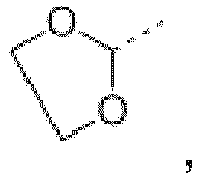
- the family of organomagnesiums includes, without limitation, Grignard reagents, which are mixed organomagnesiums of formula R'-MgX, where R' is a carbon chain and X a halogen, and in particular compounds of general formula Y-(CH 2 ) n -MgX where n is an integer between 2 and 20, preferably n is between 6 and 12 and where Y is an ether function, alkoxide (-OMgX), acetylate (-OC(O)CH 3 ) or acetal ( Or with R3 and R4 being identical or different C1-C8 alkyl chains, preferably R3 and R4 are chosen from methyl, ethyl or propyl groups).
- organolithium an organometallic compound having a carbon-lithium bond.
- the organolithiums include, without limitation, lithium alkyls such as methyllithium, butyllithium or hexyllithium or even the compounds of general formula R"-Li, where R" is a carbon chain, and in particular the compounds of general formula Y -(CH 2 ) n -Li where n is an integer between 2 and 20, preferably n is between 6 and 12, and where Y is an ether function, alkoxide (-OLi), acetylate (-OC(O )CH 3 ) or acetal ( Or with R3, R4 identical or different C1-C8 alkyl chains, preferably chosen from methyl, ethyl or propyl groups).
- labile hydrogen is meant a hydrogen atom having an acid character such as, for example, in a non-limiting manner, the hydrogen of alcohols, carboxylic acids, amines, and amides primary and secondary.
- an ether that does not include labile hydrogen is not likely to generate protons.
- the cyclic ether is chosen from tetrahydrofuran, methyl tetrahydrofuran and dioxane.
- the group R of the compound of general formula A is chosen from the group comprising the groups comprising methyl, ethyl, propyl, butyl, pentyl, hexyl, heptyl, octyl, nonyl, decanyl, undecanyl, dodecanyl, tridecanyl, tetradecanyl , pentadecanyl, hexadecanyl, heptadecanyl and octadecanyl.
- the R1 and R2 groups of the compound of general formula B which are identical or different, are chosen from the group comprising the methyl, ethyl, isopropyl, ter-butyl and neopentyl groups.
- compound B is methyl tert-butyl ether.
- the content of 1-Z-Bromo alkene-1 in the composition according to the invention is between 70 and 99.5% by weight, preferably between 90 and 99% by weight and even more preferably between 93 and 98% by weight, relative to the total weight of said composition.
- the ether content in the composition according to the invention is between 0.5 and 30% by weight, preferably between 1 and 10% by weight and still preferably between 3 and 10% by weight, relative to the total weight of said composition.
- a second subject of the present invention is the use of the composition according to the invention in a coupling reaction of a compound of general formula A with a compound chosen from the group comprising organomagnesiums and organolithiums.
- the invention relates to the use of the composition according to the invention in a coupling reaction of a compound of general formula A with an organomagnesium compound of formula R'-MgX, where R' is a carbon chain and X a halogen.
- said organomagnesium compound has the general formula Y-(CH 2 ) n -MgX where n is an integer between 2 and 20, preferably n is between 6 and 12, and where X is a chlorine or bromine atom and where Y is an ether, alkoxide (-OMgX), acetylate (-OC(O)CH 3 ) or acetal ( Or with R3 and R4 are identical or different C1-C8 alkyl chains, preferably R3 and R4 are chosen from methyl, ethyl and propyl groups).
- the reaction takes place in the presence of a catalyst.
- the invention relates to the use of the composition according to the invention in a coupling reaction of a compound of general formula A with an organolithium compound of general formula Y-(CH 2 ) n - Li where n is an integer between 2 and 20, preferably n is between 6 and 12 and where Y is an ether, alkoxide (-OLi), acetylate (-OC(O)CH 3 ) or acetal ( Or with R3 and R4 are identical or different C1-C8 alkyl chains, preferably R3 and R4 are chosen from methyl, ethyl and propyl groups).
- the reaction takes place in the presence of a catalyst.
- a third object of the present invention is the use of a composition according to the invention for the manufacture of fatty chain pheromone.
- the invention relates to the use of the composition according to the invention for the production of Lepidopteran pheromone carrying at least one unsaturation in a Z configuration via a coupling reaction in the presence of an organomagnesium or an organolithium and a metal complex.
- compositions according to the invention are used for the synthesis of compounds chosen from: Z-7-decen-1-yl acetate, Z-9-dodecen-1-yl acetate, Z-9-dodecen- 1-ol, Z-11-tetradecen-1-ol, Z-11-tetradecen-1-ol, Z-11-tetradecen-1-yl acetate, Z-11-tetra-decenal, (Z)-hexadec-13 -en-11-yn-1-yl acetate, (Z,Z)-11,13-hexadecadien-1-yl-acetate and (Z,Z)-11,13-hexadecadienal.
- compositions according to the invention are used for the synthesis of compounds chosen from: Z-5-decen-1-ol, Z-5-decen-1-yl acetate, Z-7-dodecen-1 -ol, Z-7-dodecen-1-yl acetate, Z-9-tetradecen-1-ol, Z-9-tetradecen-1-yl acetate, Z-9-tetradecenal, Z-11-hexadecen-1-ol , Z-11-hexadecen-1-yl acetate, Z-11-hexadecenal, Z-13-octadecen-1-yl acetate and Z-13-octadecenal.
- the analytical method consists of analysis by gas chromatography (GC) on an HP 5890 Series II device.
- the chromatographic column is an Optima delta 6.30 m, 0.25 mm, 0.25 ⁇ m column.
- the oven follows the following temperature profile: Initial temperature: 40°C; Initial time 5 min; Gradient 5°/min; Final temperature: 125°C; Duration 15 mins.
- the temperature of the injector is 250°C, that of the detector is 280°C, the injected volume is 1 ⁇ L and the pressure is 6psi.
- the concentration of the sample is 75 g/L in tetrahydrofuran (THF).
- the reactions are carried out in a 20 L jacketed glass reactor and the distillations are carried out using a glass column with 10 theoretical plates.
- the refrigerant is cooled to -15°C.
- the solution is then heated to 55° C., then an aqueous solution of 50% by weight of sodium hydroxide is added at a rate making it possible to control the CO 2 produced by the decarboxylation reaction and to maintain the temperature of the reaction medium between 53° and 80 °C.
- the temperature of the reactor is increased to 110° C. first under atmospheric pressure, then under pressure reduced to 100 mbar so as to cause the water and the last traces of product.
- the good distillation fractions are then combined and the organic solvent (DMF) is removed by aqueous washes.
- DMF organic solvent
- the refrigerant is cooled to -15°C.
- the solution is then heated to 55° C., then an aqueous solution of 50% by weight of sodium hydroxide is added at a rate making it possible to control the CO 2 produced by the decarboxylation reaction and to maintain the temperature of the reaction medium between 53° and 80 °C.
- the temperature of the reactor is increased to 110° C. first under atmospheric pressure, then under pressure reduced to 100 mbar so as to cause the water and the last traces of product.
- the good distillation fractions are then combined and the organic solvent (DMF) is removed by aqueous washes.
- DMF organic solvent
- a proportion (in %) of an ether and the stability of the Z/E ratio is studied by considering the number of days from which the Z/E ratio reaches a rate of less than 95% of Z isomer under aging conditions at controlled temperature (denoted T95).
- the data on the compositions studied are collated in the following table: [Table 1] Formulation No.
- compositions without ether have an isomeric ratio which goes from 97.1/2.9 to 95/5 at 4° C. in 3 days in the case of 1-Z-bromo butene-1 and from 99.7/0.3 to 95/5 at 4°C in 20 days in the case of 1-Z-bromohexene-1.
- all the compositions containing even a limited proportion of an ether lead to stereochemical stabilities over periods of more than 30 days at 25° C., which makes them usable in a multi-step synthesis process.
- THF and MTBE chosen for this example are conventional solvents for manufacturing or using organomagnesiums or organolithiums.
- compositions comprising the solvent of alkene (amylene) type or toluene
- T95s are respectively 9 and 10 days.
- the T95 is greater than 20 days but the dichloromethane introduced reacts violently with the organolithium compounds and the organomagnesium compounds.
- Example 5 Use of composition 9 of example 3 in reaction with BrMaO- (CH 2 ) 10 -MgBr for the manufacture of Z-11-hexadecenol
- Iron(III) acetylacetonate is added in one portion (14 mg).
- the walls of the tetracol are rinsed with 4 mL of THF.
- the (Z)-bromohex-1-ene (6.52g) is then introduced over 5 minutes while maintaining a temperature between -5°C and 0°C. Stirring is maintained at this temperature for 20 minutes.
- Example 6 Use of composition 5 of example 3 for the synthesis of the pheromone of the pine processiffy ((Z)-hexadec-13-en-11-yn -1-yl acetate)
Landscapes
- Chemical & Material Sciences (AREA)
- Organic Chemistry (AREA)
- Chemical Kinetics & Catalysis (AREA)
- Organic Low-Molecular-Weight Compounds And Preparation Thereof (AREA)
- Agricultural Chemicals And Associated Chemicals (AREA)
Description
- La présente invention concerne de nouvelles compositions stables de composés 1-Z-bromo alcènes-1 de formule générale A :

- Ces compositions sont caractérisées en ce qu'elles comprennent en plus soit au moins un composé éther cyclique comprenant entre 4 et 6 atomes de carbone, soit au moins un éther de formule générale B :

- Les composés Z-bromovinyliques sont des intermédiaires clés pour la fabrication de certaines molécules organiques (voir par exemple Allmendinger L. et al. Synlett 2005, 17, 2615 qui décrit la synthèse de sperabilline A et C à partir de (Z)-1-bromoprop-1-ène ; Fusini G. et al. Tetrahedron 2018, 74, 4381 qui décrit la synthèse de sémiochimiques issus de Bactrocera oleae) et en particulier pour la fabrication de phéromones sexuelles de lépidoptères. Les phéromones sexuelles de lépidoptères sont des molécules organiques linéaires insaturées de 8 à 20 atomes de carbone, porteuses de doubles liaisons dont le nombre va de 1 à 3, conjuguées ou non. Ces molécules sont en outre terminées par une fonction polaire de type alcool, aldéhyde ou acétate.
- La particularité de chaque phéromone sexuelle réside dans le fait que le signal phéromonal émis par un insecte doit être spécifique de ce seul insecte. Cette spécificité est rendue possible par l'ensemble des caractéristiques chimiques suivantes pour une molécule de phéromone donnée :
- longueur de chaine linéaire ; normalement ces chaines comportent un nombre pair d'atomes de carbone ;
- fonction terminale choisie parmi les fonctions alcool, aldéhydes et acétate ;
- nombre et position des doubles liaisons, certaines phéromones de lépidoptères se différenciant entre elles uniquement par le remplacement d'une double liaison par une triple liaison ; et
- stéréochimie de chaque double liaison.
- Par ailleurs, pour un signal phéromonal donné, plusieurs de ces molécules peuvent être associées en un bouquet phéromonal dans des proportions variables, ce qui multiplie les possibilités de spécificité de signal phéromonal.
- Par exemple, si on considère la famille des dérivés du 11-hexadecénol, nous constatons que :
- Le Z-11-hexadecénol et son acétate constituent les 2 composants du bouquet phéromonal de la sésamie du maïs qui fait des ravages tant en Europe qu'en Afrique, alors que son isomère E n'y contribue pas significativement.
- Le Z-11-hexadécénal est d'une part le composant majoritaire (80%) des phéromones de la pyrale du buis (en association avec son isomère E) ; il est aussi le composant principal (95%) des phéromones de la noctuelle de la tomate mais aussi du foreur du riz (chilo supressalis) alors que le E-hexadécénal ne contribue pas à leurs bouquets phéromonaux comme cela est référencé sur le site internet www.pherobase.com.
- Un autre exemple est le bouquet phéromonal de la processionnaire du chêne qui est constitué principalement du (Z,Z)-11,13-hexadecadienyl acétate et dont l'isomère (E,Z) est un répulsif de l'insecte.
- Ceci montre combien la sélectivité des structures chimiques que l'homme de l'art doit préparer est importante quand il s'agit de préparer une(les) phéromone(s) particulière(s) à un insecte (voir par exemple Quero et al. J. Chem. Ecology Food. Chem. 1995, 21, 1957-1969). Or, l'homme du métier a besoin de reproduire de manière synthétique ces phéromones de manière à pouvoir les utiliser dans le cadre de luttes biologiques contre des ravageurs des cultures.
- Dans le cadre de la préparation de phéromones sexuelles de lépidoptères, qui sont pour rappel des molécules organiques linéaires de 8 à 20 atomes de carbone, porteuses de doubles liaisons dont le nombre va de 1 à 3, conjuguées ou non, l'homme du métier dispose de diverses méthodes de création de doubles liaisons dans de longues chaînes aliphatiques décrites dans l'art antérieur.
- Les méthodes de choix pour créer des doubles liaisons dans des longues chaines aliphatiques sont d'abord les réactions de Wittig ou de Wittig Horner. De nombreux exemples de l'utilisation de telles réactions existent dans la littérature (voir par exemple les brevets
EP0630877 ,US 5395993 ,US 6838576 ,EP0241335B1 ). Ces réactions entre un aldéhyde et un ylure de phosphore conduisent à des sélectivités Z/E comprises entre 80/20 et 92/8. - Une autre méthode de choix consiste au couplage de vinyliques halogénés avec un réactif de Grignard ou un organolithien ou d'un alcynure en présence d'un catalyseur métallique (voir par exemple Cahiez, G.; Avedissian, H. Synthesis 1998, 1199 ; Cahiez, G. & al. Chem. Eur. J. 2012, 18, 5860 ; Cahiez, G. et al. Org. Lett. 2019, 21, 2679 ; Murahashi, S.-I. et al. J. Org. Chem. 1979, 14, 2408). Cette méthode est beaucoup plus stéréosélective puisqu'elle retient la configuration du composé halogéné de départ : si l'homme du métier possède un composé vinylique halogéné exclusivement dans la configuration Z, l'oléfine obtenue après couplage aura une configuration équivalente (Quero et al. J. Chem. Ecology Food. Chem. 1995, 21, 1957-196). Les meilleurs rendements sont obtenus quand le composé vinylique est un composé bromé.
- Cette dernière méthode présente l'avantage de ne pas générer des effluents phosphores.
- Cependant, la difficulté de la transposition industrielle de cette dernière méthode réside surtout dans l'accès à des produits composés vinyliques bromés dont le ratio isomérique Cis/Trans serait suffisamment stable pour qu'ils soient conservés dans des conditions économiques jusqu'à leur utilisation en tant qu'intermédiaires pour la synthèse de molécules organiques telles que ces phéromones, d'autant que leur utilisation peut se faire sur un site industriel différent de celui qui a vu leur production. Par ailleurs, la synthèse de certaines molécules organiques telles que les phéromones sexuelles de lépidoptères nécessite l'utilisation d'organomagnésien ou d'organolithien qui sont connus pour réagir par addition nucléophile avec les époxydes, les cétones et les cétones insaturées 1-4 et par réaction acido-basique avec les alcools.
- Il existe donc un réel besoin de disposer de composés vinyliques bromés dont le ratio isomérique Cis/Trans soit suffisamment stable pour qu'il soit conservé jusqu'à l'utilisation desdits composés en tant qu'intermédiaires de synthèse et dont le milieu de conservation soit compatible avec une réaction ultérieure avec un organomagnésien ou un organolithien.
- Des techniques de stabilisation de composés vinyliques halogénés ont été étudiées par le passé ; nous pouvons par exemple citer les brevets
US2364588 ,US2355319 etUS2376075 . Cependant, ces trois brevets portent uniquement sur la stabilisation au sens large de butènes halogénés, sans spécification de la stéréochimie du composé à stabiliser ni de la stéréochimie du composé persistant ou obtenu après un temps de stockage. - Ces trois brevets ne permettent donc pas à l'homme du métier de trouver une solution de stabilisation de la stéréochimie de composés 1-Z-bromo alcène. De plus, ils ne traitent pas de la problématique de disposer d'un milieu de conservation qui soit compatible avec une réaction ultérieure avec un organomagnésien ou un organolithien.
- Dans le cadre de la présente invention, les inventeurs ont découvert de manière surprenante que, dans une composition comprenant des composés 1-Z-bromo alcène, la présence de 0.5% à 30% en poids d'un éther non réactif vis-à-vis des organomagnésiens ou des organolithiens, par rapport au poids total de la composition, permet de préserver la stéréochimie dudit composé 1-Z-bromo alcène dans le temps et de rendre ainsi exploitable industriellement des composés 1-Z-bromo alcène.
- Un autre intérêt de ces compositions est qu'elles sont compatibles avec leur utilisation ultérieure de couplage avec un composé organomagnésien ; les composés organomagnésiens sont généralement eux aussi stabilisés par des éthers. Un autre objet de l'invention est donc l'utilisation de ces compositions pour la fabrication de phéromones porteuses de doubles liaisons via des couplages organométalliques en présence d'organomagnésiens ou d'organolithiens.
- Selon un premier aspect, la présente invention porte donc sur une composition comprenant :
- un 1-Z-Bromo alcène-1 de formule générale A:

- soit au moins un éther cyclique dont le cycle comprend entre 4 et 6 atomes de carbone, éventuellement substitué par un groupement alkyle en C1-C3, de préférence par un méthyle ;
- soit au moins un éther de formule générale B :

- et R1 et R2, identiques ou différents sont choisis dans le groupe comprenant : un groupement alkyle linéaire ou ramifié comportant 1 à 8 atomes de carbone,
- ladite composition étant caractérisée en ce que la teneur en 1-Z-Bromo alcène est comprise entre 70 et 99.5% en poids, de préférence entre 90 et 99% en poids et de manière encore préférentielle entre 93 et 98% en poids, par rapport au poids total de ladite composition.
- Selon un deuxième aspect, la présente invention porte sur l'utilisation d'une composition selon l'invention dans une réaction de couplage du composé 1-Z-Bromo alcène-1 de formule générale A avec un composé choisi dans le groupe comprenant les organomagnésiens et les organolithiens.
- Selon un troisième aspect, la présente invention porte sur l'utilisation d'une composition selon l'invention pour la fabrication de phéromone à chaine grasse.
- Au sens de la présente invention, par « milieu de conservation qui soit compatible avec une réaction ultérieure avec un organomagnésien ou un organolithien », on entend un milieu de conservation dont seul(s) le(s) composé(s) 1-Z-Bromo alcène-1 de formule générale A est(sont) susceptible(s) de réagir avec des organomagnésiens ou des organolithiens.
- Au sens de la présente invention, par « organomagnésien », on entend un composé organique présentant une liaison carbone-magnésium. La famille des organomagnésiens inclut de manière non limitative les réactifs de Grignard, qui sont des organomagnésiens mixtes de formule R'-MgX, où R' est une chaîne carbonée et X un halogène, et en particulier les composés de formule générale Y-(CH2)n-MgX où n est un nombre entier compris entre 2 et 20, de préférence n est compris entre 6 et 12 et où Y est une fonction éther, alcoolate (-OMgX), acétylate (-OC(O)CH3) ou acétal (


- Au sens de la présente invention, par « organolithien », on entend un composé organométallique présentant une liaison carbone-lithium. Les organolithiens incluent de manière non limitative les alkyles lithium tels que le méthyllithium, le butyllithium ou l'hexyllithium ou encore les composés de formule générale R"-Li, où R" est une chaîne carbonée, et en particulier les composés de formule générale Y-(CH2)n-Li où n est un nombre entier compris entre 2 et 20, de préférence n est compris entre 6 et 12, et où Y est une fonction éther, alcoolate (-OLi), acétylate (-OC(O)CH3) ou acétal (


- Au sens de la présente invention, par « hydrogène labile », on entend un atome d'hydrogène ayant un caractère acide tel que par exemple, de manière non limitative, l'hydrogène des alcools, des acides carboxyliques, des amines, et des amides primaires et secondaires. Ainsi, un éther qui ne comprend pas d'hydrogène labile n'est pas susceptible de générer des protons.
- Un premier objet de la présente invention est une composition comprenant :
- un 1-Z-Bromo alcène-1 de formule générale A:

- soit au moins un éther cyclique dont le cycle comprend entre 4 et 6 atomes de carbone, éventuellement substitué par un groupement alkyle en C1-C3, de préférence par un méthyle ;
- soit au moins un éther de formule générale B :

- où n est compris entre 1 et 4 et m est compris entre 0 et 5, en particulier entre 1 et 5, de préférence m est compris entre 1 et 3 ;
- et R1 et R2, identiques ou différents sont choisis dans le groupe comprenant : un groupement alkyle linéaire ou ramifié comportant 1 à 8 atomes de carbone,
- ladite composition étant caractérisée en ce que la teneur en 1-Z-Bromo alcène est comprise entre 70 et 99.5% en poids, de préférence entre 90 et 99% en poids et de manière encore préférentielle entre 93 et 98% en poids, par rapport au poids total de ladite composition.
- Selon un mode de réalisation préféré, l'éther cyclique est choisi parmi le tétrahydrofurane, le méthyl tetrahydrofurane et le dioxane.
- Selon un mode de réalisation, le groupement R du composé de formule générale A est choisi dans le groupe comprenant les groupements méthyl, éthyl, propyl, butyl, pentyl, hexyl, heptyl, octyl, nonyl, décanyl, undécanyl, dodécanyl, tridécanyl, tétradécanyl, pentadécanyl, hexadécanyl, heptadecanyl et octadecanyl.
- Selon un mode de réalisation, les groupements R1 et R2 du composé de formule générale B, identiques ou différents sont choisis dans le groupe comprenant les groupements méthyl, éthyl, isopropyl, ter-butyl et le néopentyl. Avantageusement le composé B est le méthyl tert-butyl éther.
- La teneur en 1-Z-Bromo alcène-1 dans la composition selon l'invention est comprise entre 70 et 99.5% en poids, de préférence entre 90 et 99% en poids et de manière encore préférentielle entre 93 et 98% en poids, par rapport au poids total de ladite composition.
- Selon un mode de réalisation, la teneur en éther dans la composition selon l'invention est comprise entre 0.5 et 30% en poids, de préférence entre 1 et 10% en poids et de manière encore préférentielle entre 3 et 10% en poids, par rapport au poids total de ladite composition.
- Un deuxième objet de la présente invention est l'utilisation de la composition selon l'invention dans une réaction de couplage d'un composé de formule générale A avec un composé choisi dans le groupe comprenant les organomagnésiens et les organolithiens.
- Selon un mode de réalisation, l'invention porte sur l'utilisation de la composition selon l'invention dans une réaction de couplage d'un composé de formule générale A avec un composé organomagnésien de formule R'-MgX, où R' est une chaîne carbonée et X un halogène. Selon un mode de réalisation préféré, ledit composé organomagnésien a pour formule générale Y-(CH2)n-MgX où n est un nombre entier compris entre 2 et 20, de préférence n est compris entre 6 et 12, et où X est un atome de chlore ou de brome et où Y est une fonction éther, alcoolate (-OMgX), acétylate (-OC(O)CH3) ou acétal (


- De préférence, la réaction a lieu en présence d'un catalyseur.
- Selon un autre mode de réalisation, l'invention porte sur l'utilisation de la composition selon l'invention dans une réaction de couplage d'un composé de formule générale A avec un composé organolithien de formule générale Y-(CH2)n-Li où n est un nombre entier compris entre 2 et 20, de préférence n est compris entre 6 et 12 et où Y est une fonction éther, alcoolate (-OLi), acétylate (-OC(O)CH3) ou acétal (


- De préférence, la réaction a lieu en présence d'un catalyseur.
- Un troisième objet de la présente invention est l'utilisation d'une composition selon l'invention pour la fabrication de phéromone à chaine grasse.
- Selon un mode de réalisation, l'invention porte sur l'utilisation de la composition selon l'invention pour la fabrication de phéromone de lépidoptère porteuse d'au moins une insaturation dans une configuration Z via une réaction de couplage en présence d'un organomagnésien ou d'un organolithien et d'un complexe métallique.
- Selon un mode de réalisation, les compositions selon l'invention sont utilisées pour la synthèse de composés choisis parmi : Z-7-décén-1-yl acétate, Z-9-dodecen-1-yl acétate, Z-9-dodecen-1-ol, Z-11-tetradécén-1-ol, Z-11-tetradécén-1-ol, Z-11-tetradecen-1-yl acétate, Z-11-tetra-décénal, (Z)-hexadec-13-en-11-yn -1-yl acétate, (Z,Z)-11,13-hexadecadien-1-yl-acetate et (Z,Z)-1 1,13-hexadecadienal.
- Selon un mode de réalisation, les compositions selon l'invention sont utilisées pour la synthèse de composés choisis parmi : Z-5-decen-1-ol, Z-5-decen-1-yl acétate, Z-7-dodecen-1-ol, Z-7-dodecen-1-yl acétate , Z-9-tetradecen-1-ol, Z-9-tetradecen-1-yl acétate, Z-9-tetradecenal , Z -11-hexadecen-1-ol, Z-11-hexadecen-1-yl acétate , Z-11-hexadecenal , Z-13-octadecen-1-yl acétate et Z-13-octadecenal.
- Les exemples qui suivent visent à illustrer la présente invention de manière non limitative et permettront de mieux comprendre l'invention et sa portée.
- La synthèse des acides α,β di-bromés précurseurs des composés selon l'invention sont obtenus selon le mode opératoire décrit dans la publication K. Mori, J.-L. Brevet, Synthesis, 1991, 1125.
- La méthode analytique consiste en une analyse par chromatographie en phase gaz (GC) sur un appareil HP 5890 Series II. La colonne chromatographique est une colonne Optima delta 6,30 m, 0,25 mm, 0,25 µm.
- Le four suit le profil de température suivant : Température initiale : 40°C ; Temps initial 5 min ; Gradient 5°/min ; Température finale : 125°C ; Durée 15 min.
- La température de l'injecteur est 250°C, celle du détecteur vaut 280°C, le volume injecté est de 1 µL et la pression est de 6psi. La concentration de l'échantillon est de 75 g/L dans le tétrahydrofurane (THF).
- Les réactions sont réalisées dans un réacteur de 20 L en verre à double enveloppe et les distillations sont effectuées au moyen d'une colonne verre de 10 plateaux théoriques.
- Dans un réacteur propre préalablement purgé à l'azote, on introduit successivement :
- de l'acide 2,3-dibromopentanoïque : 3,830 kg présentant une pureté massique de 86,6% (1 eq) ; et
- du diméthylformamide (DMF) : 7,660 L (2 vol).
- Le fluide réfrigérant est refroidi à -15°C. La solution est ensuite chauffée à 55°C, puis on ajoute une solution aqueuse à 50% massique de soude selon un débit permettant de contrôler le CO2 produit par la réaction de décarboxylation et de maintenir la température du milieu réactionnel entre 53° et 80°C.
- A la fin de l'addition de la solution aqueuse à 50% massique de soude, la température du réacteur est augmentée jusqu'à 110°C d'abord sous pression atmosphérique, puis sous pression réduite à 100 mbars de manière à entrainer l'eau et les dernières traces de produit.
- Les bonnes fractions de distillation sont ensuite rassemblées et le solvant organique (DMF) est éliminé par des lavages aqueux.
- On obtient 1,414 kg de 1-Z-Bromo butène-1 avec un excès isomérique 99.8/0.2 et une pureté massique >99%. La teneur en eau mesurée par titration de Karl Fischer est inférieure à 0.15%.
- Dans un réacteur propre préalablement purgé à l'azote, on introduit successivement :
- de l'acide 2,3-dibromoheptanoïque : 3,5 kg présentant une pureté massique de 88% (1 eq) ; et
- du diméthylformamide (DMF) : 6,3 L (2 vol).
- Le fluide réfrigérant est refroidi à -15°C.
- La solution est ensuite chauffée à 55°C, puis on ajoute une solution aqueuse à 50% massique de soude selon un débit permettant de contrôler le CO2 produit par la réaction de décarboxylation et de maintenir la température du milieu réactionnel entre 53° et 80°C.
- A la fin de l'addition de la solution aqueuse à 50% massique de soude, la température du réacteur est augmentée jusqu'à 110°C d'abord sous pression atmosphérique, puis sous pression réduite à 100 mbars de manière à entrainer l'eau et les dernières traces de produit.
- Les bonnes fractions de distillation sont ensuite rassemblées et le solvant organique (DMF) est éliminé par des lavages aqueux.
- On obtient 1,175 kg de 1-Z-Bromo hexène-1 avec un excès isomérique 99.7/0.3 et une pureté massique >99%.
- On ajoute au 1-Z-Bromo butène-1 de l'exemple 1 (noté C4) ou au 1-Z-bromohexène-1 de l'exemple 2 (noté C6), une proportion (en %) d'un éther et on étudie la stabilité du ratio Z/E en considérant le nombre de jours à partir duquel le ratio Z/E atteint un taux inférieur à 95% d'isomère Z dans des conditions de vieillissement à température contrôlée (noté T95). Les données sur les compositions étudiées sont rassemblées dans le tableau suivant :
[Table 1] N° de formulation 1 2 3 4 5 6 7 8 9 10 Bromoalcène C4 C6 Ether ajouté aucun THF MTBE MTBE MTBE Aucun THF MTBE MTBE MTBE % poids d'éther 0 5 3 45 9 0 5 3 4 9 Ratio initial Z/E 97.1/2.9 99.8/0.2 99.7/0.3 Température de stockage (°C) 4 25 25 25 4 4 25 25 25 4 T95 (jours) 3 >85 >85 160 >203 20 >85 >85 >85 >85 - Les inventeurs ont ainsi mis en évidence que les compositions sans éther présentent un ratio isomérique qui passe de 97.1/2.9 à 95/5 à 4°C en 3 jours dans le cas du 1-Z-bromo butène-1 et de 99.7/0.3 à 95/5 à 4°C en 20 jours dans le cas du 1-Z-bromohexène-1. En revanche, toutes les compositions contenant une proportion même limitée d'un éther conduisent à des stabilités stéréochimiques sur des durées supérieures à 30 jours à 25°C, ce qui les rend utilisables dans un processus de synthèse multi-étapes.
- Le THF et le MTBE choisis pour cet exemple sont des solvants classiques pour fabriquer ou utiliser des organomagnésiens ou des organolithiens.
- Au 1-Z-Bromo butène-1 de l'exemple 1, on ajoute soit 5% d'un solvant de type alcène (amylène), soit du toluène, soit un solvant chloré (dichlorométhane).
- Dans les cas des compositions comprenant le solvant de type alcène (amylène) ou le toluène, les T95 sont respectivement de 9 et 10 jours.
- Dans le cas de la composition comprenant le solvant chloré (dichlorométhane), le T95 est supérieur à 20 jours mais le dichlorométhane introduit réagit violemment avec les organolithiens et les organomagnésiens.
- Dans un tétracol sec de 250 mL équipé d'un thermomètre et d'une agitation mécanique, on introduit, sous argon à 25 °C, 44mL d'une solution à 1mol/L de l'organomagnésien BrMgO-(CH 2 ) 10 -MgBr obtenu à partir de chlorodécanol. Ensuite, on ajoute 45 mL de THF. Le mélange est refroidi à - 5 °C.
- L'acétylacétonate de fer(III) est ajouté en une portion (14 mg). Les parois du tétracol sont rincées avec 4 mL de THF. Le (Z)-bromohex-1-ène (6.52g) est ensuite introduit en 5 minutes en conservant une température comprise entre - 5 °C et 0 °C. L'agitation est maintenue à cette température pendant 20 minutes.
- On ajoute 80 mL d'une solution de HCl 1 mol/L en conservant une température inférieure à 30 °C. Les deux phases obtenues sont séparées : la phase aqueuse est extraite avec 3x20 mL d'éther de pétrole ; les phases organiques sont combinées, séchées sur MgSO4, filtrées et concentrées à l'évaporateur rotatif. L'huile résiduelle est distillée sous vide. Température d'ébullition à 0.04mmHg = 118 °C.
- On obtient alors 8.6 g d'une huile incolore caractérisée composée d'un mélange des isomères Z et E du 11-hexadécénol (89% de rendement) présentant un ratio isomérique Z/E de 97/3.
- Dans un tricol de 250 ml muni d'une agitation magnétique, à température ambiante, on charge 35mL de diéthylamine (Température : 19°C, milieu incolore) puis on inerte le milieu réactionnel par une séquence vide/azote.
- On prélève 10 mL de diéthylamine précédemment inertée pour solubiliser 10g de 11-dodecynol.
- On ajoute ensuite dans le tricol 20 mg de PdCl2 (milieu orange) et 54 mg de CuCl (milieu bleu/violet). Après homogénéisation du milieu, on effectue un inertage vide/azote (le milieu devient vert, petite endothermie de 5°C).
- On introduit 9,7 g de solution de 1-bromobut-1-ène contenant 9% de THF, goutte à goutte dans le milieu.
- On ajoute alors goutte à goutte le docec-11-yn-1-ol en solution dans la diéthylamine.
- On maintient sous agitation à 60°C pendant 5h jusqu'à ce que le milieu prenne une teinte marron clair.
- A la fin de la réaction, on ajoute 50 mL d'une solution 0.1N d'acide chlorhydrique puis on effectue plusieurs extractions au méthyl cyclohexane. Après évaporation de ce solvant on obtient 12.6g d'acétate de (Z)-hexadec-13-en-11-yn -1-yl à 97% avec un ratio isomérique Z/E de 98/2.
Claims (9)
- Composition comprenant :- un 1-Z-Bromo alcène-1 de formule générale A :
 - soit au moins un éther cyclique dont le cycle comprend entre 4 et 6 atomes de carbone, éventuellement substitué par un groupement alkyle en C1-C3, de préférence par un méthyle ;- soit au moins un éther de formule générale B :et R1 et R2, identiques ou différents sont choisis dans le groupe comprenant : un groupement alkyle linéaire ou ramifié comportant 1 à 8 atomes de carbone, ladite composition est caractérisée en ce que la teneur en 1-Z-Bromo alcène est comprise entre 70 et 99.5% en poids, de préférence entre 90 et 99% en poids et de manière encore préférentielle entre 93 et 98% en poids, par rapport au poids total de ladite composition.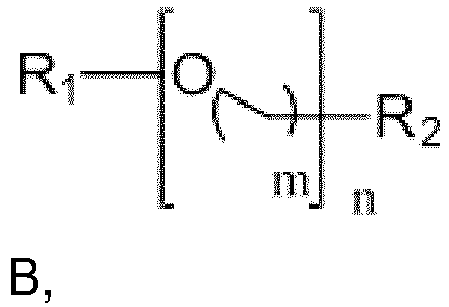
- Composition selon la revendication 1 caractérisée en ce que R est choisi dans le groupe comprenant les groupements méthyl, éthyl, propyl, butyl, pentyl, hexyl, heptyl, octyl, nonyl, décanyl, undécanyl, dodécanyl, tridécanyl, tétradécanyl, pentadécanyl, hexadécanyl, heptadecanyl et octadecanyl.
- Composition selon les revendications 1 ou 2 caractérisée en ce que R1 et R2, identiques ou différents sont choisis dans le groupe comprenant les groupements méthyl, éthyl, isopropyl, ter-butyl et le néopentyl.
- Composition selon l'une des revendications précédentes caractérisée en ce que l'éther cyclique est choisi dans le groupe comprenant le tétrahydrofurane, le méthyl tétrahydrofurane et le dioxane.
- Composition selon l'une des revendications 1 à 4 telle que la teneur en éther est comprise entre 0.5 et 30% en poids de préférence entre 1 et 10% en poids et de manière encore préférentielle entre 3 et 10% en poids, par rapport au poids total de ladite composition.
- Utilisation d'une composition selon l'une des revendications 1 à 5 dans une réaction de couplage d'un composé de formule générale A avec un composé choisi dans le groupe comprenant les organomagnésiens et les organolithiens.
- Utilisation d'une composition selon la revendication 6 dans une réaction de couplage d'un composé de formule générale A avec un composé organomagnésien de formule générale Y-(CH2)n-MgX où n est un nombre entier compris entre 2 et 20, X est un atome de chlore ou de brome et où Y est une fonction éther, alcoolate choisie parmi - OMgX, acétylate-OC(O)CH3 ou acétal choisie parmi

- Utilisation d'une composition selon la revendication 6 dans une réaction de couplage d'un composé de formule générale A avec un composé organolithien de formule générale Y-(CH2)n-Li où n est un nombre entier compris entre 2 et 20 et où Y est une fonction alcoolate OLi, acétylate -OC(O)CH3 ou acétal choisie parmi

- Utilisation d'une composition selon l'une des revendications 1 à 5 pour la fabrication de phéromone à chaine grasse.
Applications Claiming Priority (2)
| Application Number | Priority Date | Filing Date | Title |
|---|---|---|---|
| FR1907866A FR3098515B1 (fr) | 2019-07-12 | 2019-07-12 | Nouvelles formulations stables de composés 1-Z-bromo alcènes-1 et leur utilisation dans la fabrication de phéromones |
| PCT/EP2020/069399 WO2021009002A1 (fr) | 2019-07-12 | 2020-07-09 | Nouvelles formulations stables de composés 1-z-bromo alcènes-1 et leur utilisation dans la fabrication de phéromones |
Publications (3)
| Publication Number | Publication Date |
|---|---|
| EP3997055A1 EP3997055A1 (fr) | 2022-05-18 |
| EP3997055B1 true EP3997055B1 (fr) | 2023-08-23 |
| EP3997055C0 EP3997055C0 (fr) | 2023-08-23 |
Family
ID=68733223
Family Applications (1)
| Application Number | Title | Priority Date | Filing Date |
|---|---|---|---|
| EP20736376.3A Active EP3997055B1 (fr) | 2019-07-12 | 2020-07-09 | Nouvelles formulations stables de composés 1-z-bromo alcènes-1 et leur utilisation dans la fabrication de phéromones |
Country Status (7)
| Country | Link |
|---|---|
| US (1) | US12281068B2 (fr) |
| EP (1) | EP3997055B1 (fr) |
| CN (1) | CN114127035B (fr) |
| ES (1) | ES2964148T3 (fr) |
| FR (1) | FR3098515B1 (fr) |
| HU (1) | HUE063936T2 (fr) |
| WO (1) | WO2021009002A1 (fr) |
Family Cites Families (11)
| Publication number | Priority date | Publication date | Assignee | Title |
|---|---|---|---|---|
| US2355319A (en) | 1943-01-11 | 1944-08-08 | Shell Dev | Stabilization of halobutenes |
| US2376075A (en) | 1943-03-03 | 1945-05-15 | Shell Dev | Stabilization of halobutenes |
| US2364588A (en) | 1943-04-19 | 1944-12-05 | Shell Dev | Stabilization of halobutenes |
| US3839087A (en) * | 1972-11-17 | 1974-10-01 | Diamond Shamrock Corp | Perchloroethylene vapor degreasing process |
| US4385192A (en) * | 1978-07-05 | 1983-05-24 | Amvac Chemical Corporation | Process for manufacturing DBCP |
| DE2964092D1 (en) * | 1978-07-27 | 1982-12-30 | Ici Plc | Stabilisation of chlorinated aliphatic hydrocarbons |
| JPS62223136A (ja) | 1986-03-19 | 1987-10-01 | Shin Etsu Chem Co Ltd | 1―ハロ―(e,z)―7,9―アルカジエン化合物 |
| DE4142515A1 (de) | 1991-12-21 | 1993-06-24 | Basf Ag | Verfahren zur herstellung von alkenolen |
| EP0630877B1 (fr) | 1993-06-21 | 1997-03-12 | Shin-Etsu Chemical Co., Ltd. | Procédé de traitement des produits de réaction de type Wittig |
| BR0015712B1 (pt) * | 1999-11-18 | 2011-01-25 | sìntese de metátese de feromÈnios ou seus componentes. | |
| US6838576B1 (en) | 2003-10-23 | 2005-01-04 | 3M Innovative Properties Company | Process for preparing functional group-containing olefinic compounds |
-
2019
- 2019-07-12 FR FR1907866A patent/FR3098515B1/fr active Active
-
2020
- 2020-07-09 EP EP20736376.3A patent/EP3997055B1/fr active Active
- 2020-07-09 US US17/623,723 patent/US12281068B2/en active Active
- 2020-07-09 CN CN202080048585.8A patent/CN114127035B/zh active Active
- 2020-07-09 WO PCT/EP2020/069399 patent/WO2021009002A1/fr not_active Ceased
- 2020-07-09 HU HUE20736376A patent/HUE063936T2/hu unknown
- 2020-07-09 ES ES20736376T patent/ES2964148T3/es active Active
Also Published As
| Publication number | Publication date |
|---|---|
| CN114127035B (zh) | 2024-09-13 |
| CN114127035A (zh) | 2022-03-01 |
| HUE063936T2 (hu) | 2024-02-28 |
| WO2021009002A1 (fr) | 2021-01-21 |
| FR3098515B1 (fr) | 2022-11-04 |
| ES2964148T3 (es) | 2024-04-04 |
| EP3997055A1 (fr) | 2022-05-18 |
| FR3098515A1 (fr) | 2021-01-15 |
| US20220259134A1 (en) | 2022-08-18 |
| EP3997055C0 (fr) | 2023-08-23 |
| US12281068B2 (en) | 2025-04-22 |
Similar Documents
| Publication | Publication Date | Title |
|---|---|---|
| EP3060542B1 (fr) | Préparation de composés homoallyliques par réaction de précurseurs cyclopropylvinyliques avec des acides de brönsted | |
| EP3997055B1 (fr) | Nouvelles formulations stables de composés 1-z-bromo alcènes-1 et leur utilisation dans la fabrication de phéromones | |
| EP0946504A1 (fr) | Composes utiles pour la perhalogenoalcoylation, reactif pour mettre en oeuvre ces composes et procede de synthese pour l'obtention de ces composes | |
| CH616077A5 (fr) | ||
| EP0403945B1 (fr) | Carbinols cycloaliphatiques et leur utilisation à titre de produits de départ pour la préparation de dérivés furanniques | |
| EP0021927A1 (fr) | Procédé de préparation d'éthers aryliques | |
| EP0267828B1 (fr) | Composés polyfluorés et leur procédé de préparation | |
| NL2023931B1 (en) | Oxidation of santalene to santalol | |
| CA1259256A (fr) | Procede pour la destruction d'insectes et/ou d'acariens et compositions insecticides et/ou acaricides a base de derives 2,5-disubstitues de la pyrrolidine et/ou de la pyrroline-1 | |
| EP3089968A1 (fr) | Procede pour la synthese industrielle de la sordidine | |
| EP4291169A1 (fr) | Nouveau procede de fabrication des composants de la pheromone de la mineuse de la tomate | |
| BE883271R (fr) | Nouveaux pyrethroides | |
| CH637950A5 (fr) | Derive de phenyl-2 dihydro-5,6 pyrone-4. | |
| CA1186343A (fr) | Procede de preparation d'hydrocarbures acetyleniques vrais a chaine perfluoree | |
| LU84129A1 (fr) | Procede d'halogenation en meta de n-(o,o'-dialkyl phenyl)alaninates et homologues | |
| EP0070995A1 (fr) | Procédé pour la préparation de cétones cycloaliphatiques polyinsaturées | |
| Naeimi | Convenient, Easy and Highly Regioselective Preparation of Haloalcohols from the Reaction of Epoxides with Elemental Halogen Catalyzed by Hexamethylenetetramine (HMTA) | |
| Dreiding et al. | The Structure of the Solid Product from the Condensation of Methyl γ-Bromocrotonate with Sodium Methoxide1 | |
| FR3137092A1 (fr) | Nouveaux composés à base de fer, leurs procédés de préparation et leur utilisation comme catalyseurs | |
| WO2023144108A1 (fr) | Procédé de préparation d'acide p-hydroxycinnamiques | |
| CH677661A5 (en) | New 14-methyl-(10.3.-0)-penta-decenol | |
| EP0002142A1 (fr) | Complexes de boranes, leur préparation et leur utilisation dans des réactions d'hydroboration et de réduction | |
| WO2018069146A1 (fr) | Procede de synthese de pheromones | |
| FR2656301A1 (fr) | Procede catalytique de synthese d'un alcool. procede de synthese du catalyseur et nouveaux complexes metalliques. | |
| FR2542734A1 (fr) | Procede pour la preparation du propanoate de (e)-3,7-dimethyl-2,7-octadien-1-yle |
Legal Events
| Date | Code | Title | Description |
|---|---|---|---|
| STAA | Information on the status of an ep patent application or granted ep patent |
Free format text: STATUS: UNKNOWN |
|
| STAA | Information on the status of an ep patent application or granted ep patent |
Free format text: STATUS: THE INTERNATIONAL PUBLICATION HAS BEEN MADE |
|
| PUAI | Public reference made under article 153(3) epc to a published international application that has entered the european phase |
Free format text: ORIGINAL CODE: 0009012 |
|
| STAA | Information on the status of an ep patent application or granted ep patent |
Free format text: STATUS: REQUEST FOR EXAMINATION WAS MADE |
|
| 17P | Request for examination filed |
Effective date: 20220127 |
|
| AK | Designated contracting states |
Kind code of ref document: A1 Designated state(s): AL AT BE BG CH CY CZ DE DK EE ES FI FR GB GR HR HU IE IS IT LI LT LU LV MC MK MT NL NO PL PT RO RS SE SI SK SM TR |
|
| DAV | Request for validation of the european patent (deleted) | ||
| DAX | Request for extension of the european patent (deleted) | ||
| GRAP | Despatch of communication of intention to grant a patent |
Free format text: ORIGINAL CODE: EPIDOSNIGR1 |
|
| STAA | Information on the status of an ep patent application or granted ep patent |
Free format text: STATUS: GRANT OF PATENT IS INTENDED |
|
| INTG | Intention to grant announced |
Effective date: 20230328 |
|
| GRAS | Grant fee paid |
Free format text: ORIGINAL CODE: EPIDOSNIGR3 |
|
| GRAA | (expected) grant |
Free format text: ORIGINAL CODE: 0009210 |
|
| STAA | Information on the status of an ep patent application or granted ep patent |
Free format text: STATUS: THE PATENT HAS BEEN GRANTED |
|
| AK | Designated contracting states |
Kind code of ref document: B1 Designated state(s): AL AT BE BG CH CY CZ DE DK EE ES FI FR GB GR HR HU IE IS IT LI LT LU LV MC MK MT NL NO PL PT RO RS SE SI SK SM TR |
|
| REG | Reference to a national code |
Ref country code: GB Ref legal event code: FG4D Free format text: NOT ENGLISH |
|
| REG | Reference to a national code |
Ref country code: CH Ref legal event code: EP |
|
| REG | Reference to a national code |
Ref country code: IE Ref legal event code: FG4D Free format text: LANGUAGE OF EP DOCUMENT: FRENCH |
|
| REG | Reference to a national code |
Ref country code: DE Ref legal event code: R096 Ref document number: 602020016297 Country of ref document: DE |
|
| U01 | Request for unitary effect filed |
Effective date: 20230922 |
|
| U07 | Unitary effect registered |
Designated state(s): AT BE BG DE DK EE FI FR IT LT LU LV MT NL PT SE SI Effective date: 20230928 |
|
| PG25 | Lapsed in a contracting state [announced via postgrant information from national office to epo] |
Ref country code: GR Free format text: LAPSE BECAUSE OF FAILURE TO SUBMIT A TRANSLATION OF THE DESCRIPTION OR TO PAY THE FEE WITHIN THE PRESCRIBED TIME-LIMIT Effective date: 20231124 |
|
| PG25 | Lapsed in a contracting state [announced via postgrant information from national office to epo] |
Ref country code: IS Free format text: LAPSE BECAUSE OF FAILURE TO SUBMIT A TRANSLATION OF THE DESCRIPTION OR TO PAY THE FEE WITHIN THE PRESCRIBED TIME-LIMIT Effective date: 20231223 |
|
| PG25 | Lapsed in a contracting state [announced via postgrant information from national office to epo] |
Ref country code: RS Free format text: LAPSE BECAUSE OF FAILURE TO SUBMIT A TRANSLATION OF THE DESCRIPTION OR TO PAY THE FEE WITHIN THE PRESCRIBED TIME-LIMIT Effective date: 20230823 Ref country code: NO Free format text: LAPSE BECAUSE OF FAILURE TO SUBMIT A TRANSLATION OF THE DESCRIPTION OR TO PAY THE FEE WITHIN THE PRESCRIBED TIME-LIMIT Effective date: 20231123 Ref country code: IS Free format text: LAPSE BECAUSE OF FAILURE TO SUBMIT A TRANSLATION OF THE DESCRIPTION OR TO PAY THE FEE WITHIN THE PRESCRIBED TIME-LIMIT Effective date: 20231223 Ref country code: HR Free format text: LAPSE BECAUSE OF FAILURE TO SUBMIT A TRANSLATION OF THE DESCRIPTION OR TO PAY THE FEE WITHIN THE PRESCRIBED TIME-LIMIT Effective date: 20230823 Ref country code: GR Free format text: LAPSE BECAUSE OF FAILURE TO SUBMIT A TRANSLATION OF THE DESCRIPTION OR TO PAY THE FEE WITHIN THE PRESCRIBED TIME-LIMIT Effective date: 20231124 |
|
| REG | Reference to a national code |
Ref country code: HU Ref legal event code: AG4A Ref document number: E063936 Country of ref document: HU |
|
| PG25 | Lapsed in a contracting state [announced via postgrant information from national office to epo] |
Ref country code: PL Free format text: LAPSE BECAUSE OF FAILURE TO SUBMIT A TRANSLATION OF THE DESCRIPTION OR TO PAY THE FEE WITHIN THE PRESCRIBED TIME-LIMIT Effective date: 20230823 |
|
| REG | Reference to a national code |
Ref country code: ES Ref legal event code: FG2A Ref document number: 2964148 Country of ref document: ES Kind code of ref document: T3 Effective date: 20240404 |
|
| PG25 | Lapsed in a contracting state [announced via postgrant information from national office to epo] |
Ref country code: SM Free format text: LAPSE BECAUSE OF FAILURE TO SUBMIT A TRANSLATION OF THE DESCRIPTION OR TO PAY THE FEE WITHIN THE PRESCRIBED TIME-LIMIT Effective date: 20230823 Ref country code: RO Free format text: LAPSE BECAUSE OF FAILURE TO SUBMIT A TRANSLATION OF THE DESCRIPTION OR TO PAY THE FEE WITHIN THE PRESCRIBED TIME-LIMIT Effective date: 20230823 Ref country code: CZ Free format text: LAPSE BECAUSE OF FAILURE TO SUBMIT A TRANSLATION OF THE DESCRIPTION OR TO PAY THE FEE WITHIN THE PRESCRIBED TIME-LIMIT Effective date: 20230823 Ref country code: SK Free format text: LAPSE BECAUSE OF FAILURE TO SUBMIT A TRANSLATION OF THE DESCRIPTION OR TO PAY THE FEE WITHIN THE PRESCRIBED TIME-LIMIT Effective date: 20230823 |
|
| REG | Reference to a national code |
Ref country code: DE Ref legal event code: R097 Ref document number: 602020016297 Country of ref document: DE |
|
| PLBE | No opposition filed within time limit |
Free format text: ORIGINAL CODE: 0009261 |
|
| STAA | Information on the status of an ep patent application or granted ep patent |
Free format text: STATUS: NO OPPOSITION FILED WITHIN TIME LIMIT |
|
| U20 | Renewal fee for the european patent with unitary effect paid |
Year of fee payment: 5 Effective date: 20240614 |
|
| 26N | No opposition filed |
Effective date: 20240524 |
|
| PG25 | Lapsed in a contracting state [announced via postgrant information from national office to epo] |
Ref country code: MC Free format text: LAPSE BECAUSE OF FAILURE TO SUBMIT A TRANSLATION OF THE DESCRIPTION OR TO PAY THE FEE WITHIN THE PRESCRIBED TIME-LIMIT Effective date: 20230823 |
|
| REG | Reference to a national code |
Ref country code: CH Ref legal event code: PL |
|
| GBPC | Gb: european patent ceased through non-payment of renewal fee |
Effective date: 20240709 |
|
| PG25 | Lapsed in a contracting state [announced via postgrant information from national office to epo] |
Ref country code: CH Free format text: LAPSE BECAUSE OF NON-PAYMENT OF DUE FEES Effective date: 20240731 |
|
| PG25 | Lapsed in a contracting state [announced via postgrant information from national office to epo] |
Ref country code: GB Free format text: LAPSE BECAUSE OF NON-PAYMENT OF DUE FEES Effective date: 20240709 |
|
| U20 | Renewal fee for the european patent with unitary effect paid |
Year of fee payment: 6 Effective date: 20250616 |
|
| PG25 | Lapsed in a contracting state [announced via postgrant information from national office to epo] |
Ref country code: IE Free format text: LAPSE BECAUSE OF NON-PAYMENT OF DUE FEES Effective date: 20240709 |
|
| PGFP | Annual fee paid to national office [announced via postgrant information from national office to epo] |
Ref country code: HU Payment date: 20250627 Year of fee payment: 6 |
|
| PGFP | Annual fee paid to national office [announced via postgrant information from national office to epo] |
Ref country code: ES Payment date: 20250811 Year of fee payment: 6 |
|
| PG25 | Lapsed in a contracting state [announced via postgrant information from national office to epo] |
Ref country code: CY Free format text: LAPSE BECAUSE OF FAILURE TO SUBMIT A TRANSLATION OF THE DESCRIPTION OR TO PAY THE FEE WITHIN THE PRESCRIBED TIME-LIMIT; INVALID AB INITIO Effective date: 20200709 |