EP3998247A1 - Compost et procédé de production de compost - Google Patents
Compost et procédé de production de compost Download PDFInfo
- Publication number
- EP3998247A1 EP3998247A1 EP20837246.6A EP20837246A EP3998247A1 EP 3998247 A1 EP3998247 A1 EP 3998247A1 EP 20837246 A EP20837246 A EP 20837246A EP 3998247 A1 EP3998247 A1 EP 3998247A1
- Authority
- EP
- European Patent Office
- Prior art keywords
- compost
- organic waste
- additive
- parts
- mass
- Prior art date
- Legal status (The legal status is an assumption and is not a legal conclusion. Google has not performed a legal analysis and makes no representation as to the accuracy of the status listed.)
- Withdrawn
Links
- 239000002361 compost Substances 0.000 title claims abstract description 150
- 238000004519 manufacturing process Methods 0.000 title claims description 23
- 239000010815 organic waste Substances 0.000 claims abstract description 83
- 239000000654 additive Substances 0.000 claims abstract description 54
- 230000000996 additive effect Effects 0.000 claims abstract description 54
- KGBXLFKZBHKPEV-UHFFFAOYSA-N boric acid Chemical compound OB(O)O KGBXLFKZBHKPEV-UHFFFAOYSA-N 0.000 claims abstract description 20
- 239000004327 boric acid Substances 0.000 claims abstract description 20
- 210000003608 fece Anatomy 0.000 claims abstract description 20
- 150000002506 iron compounds Chemical class 0.000 claims abstract description 16
- 244000144972 livestock Species 0.000 claims abstract description 15
- RMAQACBXLXPBSY-UHFFFAOYSA-N silicic acid Chemical compound O[Si](O)(O)O RMAQACBXLXPBSY-UHFFFAOYSA-N 0.000 claims abstract description 15
- 235000012239 silicon dioxide Nutrition 0.000 claims abstract description 15
- 244000144977 poultry Species 0.000 claims abstract description 5
- 238000000855 fermentation Methods 0.000 claims description 44
- 230000004151 fermentation Effects 0.000 claims description 43
- 239000000203 mixture Substances 0.000 claims description 29
- 238000002156 mixing Methods 0.000 claims description 5
- 230000000694 effects Effects 0.000 abstract description 5
- 240000007154 Coffea arabica Species 0.000 description 31
- IJGRMHOSHXDMSA-UHFFFAOYSA-N Atomic nitrogen Chemical compound N#N IJGRMHOSHXDMSA-UHFFFAOYSA-N 0.000 description 30
- 230000000052 comparative effect Effects 0.000 description 28
- NBIIXXVUZAFLBC-UHFFFAOYSA-N Phosphoric acid Chemical compound OP(O)(O)=O NBIIXXVUZAFLBC-UHFFFAOYSA-N 0.000 description 24
- 230000035800 maturation Effects 0.000 description 21
- XEEYBQQBJWHFJM-UHFFFAOYSA-N Iron Chemical compound [Fe] XEEYBQQBJWHFJM-UHFFFAOYSA-N 0.000 description 19
- 239000002994 raw material Substances 0.000 description 18
- 229910052757 nitrogen Inorganic materials 0.000 description 15
- ZLMJMSJWJFRBEC-UHFFFAOYSA-N Potassium Chemical compound [K] ZLMJMSJWJFRBEC-UHFFFAOYSA-N 0.000 description 12
- 229910000147 aluminium phosphate Inorganic materials 0.000 description 12
- 239000011591 potassium Substances 0.000 description 12
- 229910052700 potassium Inorganic materials 0.000 description 12
- 238000000034 method Methods 0.000 description 11
- 241000533293 Sesbania emerus Species 0.000 description 10
- 239000000463 material Substances 0.000 description 10
- 238000004458 analytical method Methods 0.000 description 9
- CURLTUGMZLYLDI-UHFFFAOYSA-N Carbon dioxide Chemical compound O=C=O CURLTUGMZLYLDI-UHFFFAOYSA-N 0.000 description 8
- 238000001035 drying Methods 0.000 description 8
- 229910052742 iron Inorganic materials 0.000 description 8
- 241000287828 Gallus gallus Species 0.000 description 6
- HEMHJVSKTPXQMS-UHFFFAOYSA-M Sodium hydroxide Chemical compound [OH-].[Na+] HEMHJVSKTPXQMS-UHFFFAOYSA-M 0.000 description 6
- 238000010564 aerobic fermentation Methods 0.000 description 6
- 235000013330 chicken meat Nutrition 0.000 description 6
- 150000003839 salts Chemical class 0.000 description 6
- 239000002689 soil Substances 0.000 description 6
- 239000005022 packaging material Substances 0.000 description 5
- UQSXHKLRYXJYBZ-UHFFFAOYSA-N Iron oxide Chemical compound [Fe]=O UQSXHKLRYXJYBZ-UHFFFAOYSA-N 0.000 description 4
- 239000001569 carbon dioxide Substances 0.000 description 4
- 229910002092 carbon dioxide Inorganic materials 0.000 description 4
- 239000000306 component Substances 0.000 description 4
- KJFMBFZCATUALV-UHFFFAOYSA-N phenolphthalein Chemical compound C1=CC(O)=CC=C1C1(C=2C=CC(O)=CC=2)C2=CC=CC=C2C(=O)O1 KJFMBFZCATUALV-UHFFFAOYSA-N 0.000 description 4
- 239000000243 solution Substances 0.000 description 4
- 239000000126 substance Substances 0.000 description 4
- XLYOFNOQVPJJNP-UHFFFAOYSA-N water Substances O XLYOFNOQVPJJNP-UHFFFAOYSA-N 0.000 description 4
- 241000894006 Bacteria Species 0.000 description 3
- 235000013361 beverage Nutrition 0.000 description 3
- 238000000465 moulding Methods 0.000 description 3
- 235000013594 poultry meat Nutrition 0.000 description 3
- 230000001953 sensory effect Effects 0.000 description 3
- QGZKDVFQNNGYKY-UHFFFAOYSA-N Ammonia Chemical compound N QGZKDVFQNNGYKY-UHFFFAOYSA-N 0.000 description 2
- VYPSYNLAJGMNEJ-UHFFFAOYSA-N Silicium dioxide Chemical compound O=[Si]=O VYPSYNLAJGMNEJ-UHFFFAOYSA-N 0.000 description 2
- 244000269722 Thea sinensis Species 0.000 description 2
- 239000002253 acid Substances 0.000 description 2
- 230000000843 anti-fungal effect Effects 0.000 description 2
- 230000001877 deodorizing effect Effects 0.000 description 2
- 238000011156 evaluation Methods 0.000 description 2
- 239000003337 fertilizer Substances 0.000 description 2
- 229910052598 goethite Inorganic materials 0.000 description 2
- -1 heme iron Natural products 0.000 description 2
- AEIXRCIKZIZYPM-UHFFFAOYSA-M hydroxy(oxo)iron Chemical compound [O][Fe]O AEIXRCIKZIZYPM-UHFFFAOYSA-M 0.000 description 2
- 229910021331 inorganic silicon compound Inorganic materials 0.000 description 2
- RBTARNINKXHZNM-UHFFFAOYSA-K iron trichloride Chemical compound Cl[Fe](Cl)Cl RBTARNINKXHZNM-UHFFFAOYSA-K 0.000 description 2
- VCJMYUPGQJHHFU-UHFFFAOYSA-N iron(3+);trinitrate Chemical compound [Fe+3].[O-][N+]([O-])=O.[O-][N+]([O-])=O.[O-][N+]([O-])=O VCJMYUPGQJHHFU-UHFFFAOYSA-N 0.000 description 2
- JVTAAEKCZFNVCJ-UHFFFAOYSA-N lactic acid Chemical compound CC(O)C(O)=O JVTAAEKCZFNVCJ-UHFFFAOYSA-N 0.000 description 2
- 244000005700 microbiome Species 0.000 description 2
- 239000008188 pellet Substances 0.000 description 2
- 230000002335 preservative effect Effects 0.000 description 2
- NIFIFKQPDTWWGU-UHFFFAOYSA-N pyrite Chemical compound [Fe+2].[S-][S-] NIFIFKQPDTWWGU-UHFFFAOYSA-N 0.000 description 2
- 244000063299 Bacillus subtilis Species 0.000 description 1
- 235000014469 Bacillus subtilis Nutrition 0.000 description 1
- 241000283690 Bos taurus Species 0.000 description 1
- 241000283707 Capra Species 0.000 description 1
- OKTJSMMVPCPJKN-UHFFFAOYSA-N Carbon Chemical compound [C] OKTJSMMVPCPJKN-UHFFFAOYSA-N 0.000 description 1
- 235000007460 Coffea arabica Nutrition 0.000 description 1
- 241000283086 Equidae Species 0.000 description 1
- 244000068988 Glycine max Species 0.000 description 1
- 235000010469 Glycine max Nutrition 0.000 description 1
- 229910021578 Iron(III) chloride Inorganic materials 0.000 description 1
- 244000294411 Mirabilis expansa Species 0.000 description 1
- 235000015429 Mirabilis expansa Nutrition 0.000 description 1
- 241001494479 Pecora Species 0.000 description 1
- 240000004808 Saccharomyces cerevisiae Species 0.000 description 1
- 108010082455 Sebelipase alfa Proteins 0.000 description 1
- 241000282887 Suidae Species 0.000 description 1
- 238000010521 absorption reaction Methods 0.000 description 1
- 239000003929 acidic solution Substances 0.000 description 1
- 239000004480 active ingredient Substances 0.000 description 1
- 239000000853 adhesive Substances 0.000 description 1
- 230000001070 adhesive effect Effects 0.000 description 1
- 229910021529 ammonia Inorganic materials 0.000 description 1
- 239000007864 aqueous solution Substances 0.000 description 1
- 229910021538 borax Inorganic materials 0.000 description 1
- 229910052799 carbon Inorganic materials 0.000 description 1
- 238000006243 chemical reaction Methods 0.000 description 1
- 235000020971 citrus fruits Nutrition 0.000 description 1
- 239000004927 clay Substances 0.000 description 1
- 230000002596 correlated effect Effects 0.000 description 1
- 230000007423 decrease Effects 0.000 description 1
- 230000003247 decreasing effect Effects 0.000 description 1
- IJKVHSBPTUYDLN-UHFFFAOYSA-N dihydroxy(oxo)silane Chemical compound O[Si](O)=O IJKVHSBPTUYDLN-UHFFFAOYSA-N 0.000 description 1
- 238000010790 dilution Methods 0.000 description 1
- 239000012895 dilution Substances 0.000 description 1
- 238000002845 discoloration Methods 0.000 description 1
- KDJOAYSYCXTQGG-UHFFFAOYSA-N disilicic acid Chemical compound O[Si](O)(O)O[Si](O)(O)O KDJOAYSYCXTQGG-UHFFFAOYSA-N 0.000 description 1
- RDMZIKMKSGCBKK-UHFFFAOYSA-N disodium;(9,11-dioxido-5-oxoboranyloxy-2,4,6,8,10,12,13-heptaoxa-1,3,5,7,9,11-hexaborabicyclo[5.5.1]tridecan-3-yl)oxy-oxoborane;tetrahydrate Chemical compound O.O.O.O.[Na+].[Na+].O1B(OB=O)OB(OB=O)OB2OB([O-])OB([O-])OB1O2 RDMZIKMKSGCBKK-UHFFFAOYSA-N 0.000 description 1
- UQGFMSUEHSUPRD-UHFFFAOYSA-N disodium;3,7-dioxido-2,4,6,8,9-pentaoxa-1,3,5,7-tetraborabicyclo[3.3.1]nonane Chemical compound [Na+].[Na+].O1B([O-])OB2OB([O-])OB1O2 UQGFMSUEHSUPRD-UHFFFAOYSA-N 0.000 description 1
- 235000013399 edible fruits Nutrition 0.000 description 1
- 238000004993 emission spectroscopy Methods 0.000 description 1
- 238000000605 extraction Methods 0.000 description 1
- MSNWSDPPULHLDL-UHFFFAOYSA-K ferric hydroxide Chemical compound [OH-].[OH-].[OH-].[Fe+3] MSNWSDPPULHLDL-UHFFFAOYSA-K 0.000 description 1
- 238000011049 filling Methods 0.000 description 1
- 239000003292 glue Substances 0.000 description 1
- 230000005283 ground state Effects 0.000 description 1
- 150000003278 haem Chemical class 0.000 description 1
- 229910052500 inorganic mineral Inorganic materials 0.000 description 1
- RUTXIHLAWFEWGM-UHFFFAOYSA-H iron(3+) sulfate Chemical compound [Fe+3].[Fe+3].[O-]S([O-])(=O)=O.[O-]S([O-])(=O)=O.[O-]S([O-])(=O)=O RUTXIHLAWFEWGM-UHFFFAOYSA-H 0.000 description 1
- LIKBJVNGSGBSGK-UHFFFAOYSA-N iron(3+);oxygen(2-) Chemical compound [O-2].[O-2].[O-2].[Fe+3].[Fe+3] LIKBJVNGSGBSGK-UHFFFAOYSA-N 0.000 description 1
- SZVJSHCCFOBDDC-UHFFFAOYSA-N iron(II,III) oxide Inorganic materials O=[Fe]O[Fe]O[Fe]=O SZVJSHCCFOBDDC-UHFFFAOYSA-N 0.000 description 1
- JEIPFZHSYJVQDO-UHFFFAOYSA-N iron(III) oxide Inorganic materials O=[Fe]O[Fe]=O JEIPFZHSYJVQDO-UHFFFAOYSA-N 0.000 description 1
- 229910000360 iron(III) sulfate Inorganic materials 0.000 description 1
- 229940041615 kanuma Drugs 0.000 description 1
- 239000004310 lactic acid Substances 0.000 description 1
- 235000014655 lactic acid Nutrition 0.000 description 1
- 229910001710 laterite Inorganic materials 0.000 description 1
- 239000011504 laterite Substances 0.000 description 1
- 239000007788 liquid Substances 0.000 description 1
- 229910052960 marcasite Inorganic materials 0.000 description 1
- 238000005259 measurement Methods 0.000 description 1
- 239000011707 mineral Substances 0.000 description 1
- 235000013536 miso Nutrition 0.000 description 1
- 235000013557 nattō Nutrition 0.000 description 1
- 229930014626 natural product Natural products 0.000 description 1
- 239000005416 organic matter Substances 0.000 description 1
- 239000002245 particle Substances 0.000 description 1
- 239000000843 powder Substances 0.000 description 1
- 239000012256 powdered iron Substances 0.000 description 1
- 230000035755 proliferation Effects 0.000 description 1
- 230000001737 promoting effect Effects 0.000 description 1
- 239000008262 pumice Substances 0.000 description 1
- 229910052683 pyrite Inorganic materials 0.000 description 1
- 239000011028 pyrite Substances 0.000 description 1
- 229910021646 siderite Inorganic materials 0.000 description 1
- 239000000377 silicon dioxide Substances 0.000 description 1
- 239000004328 sodium tetraborate Substances 0.000 description 1
- 235000010339 sodium tetraborate Nutrition 0.000 description 1
- 239000007787 solid Substances 0.000 description 1
- 238000003756 stirring Methods 0.000 description 1
- 239000004575 stone Substances 0.000 description 1
- BIKXLKXABVUSMH-UHFFFAOYSA-N trizinc;diborate Chemical compound [Zn+2].[Zn+2].[Zn+2].[O-]B([O-])[O-].[O-]B([O-])[O-] BIKXLKXABVUSMH-UHFFFAOYSA-N 0.000 description 1
- 235000013311 vegetables Nutrition 0.000 description 1
- 239000002023 wood Substances 0.000 description 1
Images

Classifications
-
- C—CHEMISTRY; METALLURGY
- C05—FERTILISERS; MANUFACTURE THEREOF
- C05C—NITROGENOUS FERTILISERS
- C05C5/00—Fertilisers containing other nitrates
-
- C—CHEMISTRY; METALLURGY
- C05—FERTILISERS; MANUFACTURE THEREOF
- C05F—ORGANIC FERTILISERS NOT COVERED BY SUBCLASSES C05B, C05C, e.g. FERTILISERS FROM WASTE OR REFUSE
- C05F3/00—Fertilisers from human or animal excrements, e.g. manure
-
- C—CHEMISTRY; METALLURGY
- C05—FERTILISERS; MANUFACTURE THEREOF
- C05D—INORGANIC FERTILISERS NOT COVERED BY SUBCLASSES C05B, C05C; FERTILISERS PRODUCING CARBON DIOXIDE
- C05D9/00—Other inorganic fertilisers
- C05D9/02—Other inorganic fertilisers containing trace elements
-
- C—CHEMISTRY; METALLURGY
- C05—FERTILISERS; MANUFACTURE THEREOF
- C05F—ORGANIC FERTILISERS NOT COVERED BY SUBCLASSES C05B, C05C, e.g. FERTILISERS FROM WASTE OR REFUSE
- C05F17/00—Preparation of fertilisers characterised by biological or biochemical treatment steps, e.g. composting or fermentation
-
- C—CHEMISTRY; METALLURGY
- C05—FERTILISERS; MANUFACTURE THEREOF
- C05F—ORGANIC FERTILISERS NOT COVERED BY SUBCLASSES C05B, C05C, e.g. FERTILISERS FROM WASTE OR REFUSE
- C05F17/00—Preparation of fertilisers characterised by biological or biochemical treatment steps, e.g. composting or fermentation
- C05F17/10—Addition or removal of substances other than water or air to or from the material during the treatment
-
- C—CHEMISTRY; METALLURGY
- C05—FERTILISERS; MANUFACTURE THEREOF
- C05F—ORGANIC FERTILISERS NOT COVERED BY SUBCLASSES C05B, C05C, e.g. FERTILISERS FROM WASTE OR REFUSE
- C05F17/00—Preparation of fertilisers characterised by biological or biochemical treatment steps, e.g. composting or fermentation
- C05F17/20—Preparation of fertilisers characterised by biological or biochemical treatment steps, e.g. composting or fermentation using specific microorganisms or substances, e.g. enzymes, for activating or stimulating the treatment
-
- C—CHEMISTRY; METALLURGY
- C05—FERTILISERS; MANUFACTURE THEREOF
- C05F—ORGANIC FERTILISERS NOT COVERED BY SUBCLASSES C05B, C05C, e.g. FERTILISERS FROM WASTE OR REFUSE
- C05F17/00—Preparation of fertilisers characterised by biological or biochemical treatment steps, e.g. composting or fermentation
- C05F17/70—Controlling the treatment in response to process parameters
-
- C—CHEMISTRY; METALLURGY
- C05—FERTILISERS; MANUFACTURE THEREOF
- C05F—ORGANIC FERTILISERS NOT COVERED BY SUBCLASSES C05B, C05C, e.g. FERTILISERS FROM WASTE OR REFUSE
- C05F5/00—Fertilisers from distillery wastes, molasses, vinasses, sugar plant or similar wastes or residues, e.g. from waste originating from industrial processing of raw material of agricultural origin or derived products thereof
-
- C—CHEMISTRY; METALLURGY
- C05—FERTILISERS; MANUFACTURE THEREOF
- C05F—ORGANIC FERTILISERS NOT COVERED BY SUBCLASSES C05B, C05C, e.g. FERTILISERS FROM WASTE OR REFUSE
- C05F5/00—Fertilisers from distillery wastes, molasses, vinasses, sugar plant or similar wastes or residues, e.g. from waste originating from industrial processing of raw material of agricultural origin or derived products thereof
- C05F5/006—Waste from chemical processing of material, e.g. diestillation, roasting, cooking
-
- Y—GENERAL TAGGING OF NEW TECHNOLOGICAL DEVELOPMENTS; GENERAL TAGGING OF CROSS-SECTIONAL TECHNOLOGIES SPANNING OVER SEVERAL SECTIONS OF THE IPC; TECHNICAL SUBJECTS COVERED BY FORMER USPC CROSS-REFERENCE ART COLLECTIONS [XRACs] AND DIGESTS
- Y02—TECHNOLOGIES OR APPLICATIONS FOR MITIGATION OR ADAPTATION AGAINST CLIMATE CHANGE
- Y02A—TECHNOLOGIES FOR ADAPTATION TO CLIMATE CHANGE
- Y02A40/00—Adaptation technologies in agriculture, forestry, livestock or agroalimentary production
- Y02A40/10—Adaptation technologies in agriculture, forestry, livestock or agroalimentary production in agriculture
- Y02A40/20—Fertilizers of biological origin, e.g. guano or fertilizers made from animal corpses
-
- Y—GENERAL TAGGING OF NEW TECHNOLOGICAL DEVELOPMENTS; GENERAL TAGGING OF CROSS-SECTIONAL TECHNOLOGIES SPANNING OVER SEVERAL SECTIONS OF THE IPC; TECHNICAL SUBJECTS COVERED BY FORMER USPC CROSS-REFERENCE ART COLLECTIONS [XRACs] AND DIGESTS
- Y02—TECHNOLOGIES OR APPLICATIONS FOR MITIGATION OR ADAPTATION AGAINST CLIMATE CHANGE
- Y02P—CLIMATE CHANGE MITIGATION TECHNOLOGIES IN THE PRODUCTION OR PROCESSING OF GOODS
- Y02P20/00—Technologies relating to chemical industry
- Y02P20/141—Feedstock
- Y02P20/145—Feedstock the feedstock being materials of biological origin
-
- Y—GENERAL TAGGING OF NEW TECHNOLOGICAL DEVELOPMENTS; GENERAL TAGGING OF CROSS-SECTIONAL TECHNOLOGIES SPANNING OVER SEVERAL SECTIONS OF THE IPC; TECHNICAL SUBJECTS COVERED BY FORMER USPC CROSS-REFERENCE ART COLLECTIONS [XRACs] AND DIGESTS
- Y02—TECHNOLOGIES OR APPLICATIONS FOR MITIGATION OR ADAPTATION AGAINST CLIMATE CHANGE
- Y02W—CLIMATE CHANGE MITIGATION TECHNOLOGIES RELATED TO WASTEWATER TREATMENT OR WASTE MANAGEMENT
- Y02W30/00—Technologies for solid waste management
- Y02W30/40—Bio-organic fraction processing; Production of fertilisers from the organic fraction of waste or refuse
Definitions
- the present invention relates to a compost made of organic waste including livestock or poultry dung, coffee grounds and the like, and a compost production method.
- dung of livestock or poultry becomes organic waste containing a large amount of organic matter in addition to components such as nitrogen, phosphoric acid, potassium and the like, and is used as a raw material for compost subjected to a fermentation treatment.
- a compost using dung of livestock or the like as a raw material has a problem that a place of fermentation treatment and a place of use of the compost are limited because malodor is generated during or after the fermentation treatment. Therefore, in order to reduce generation of malodor, there is a compost production method in which wood chips or the like are mixed with dung of livestock or the like to promote a fermentation treatment (for example, see Patent Literature 1).
- coffee grounds, tea grounds, and the like discharged from beverage makers have been used as an organic waste different from dung of livestock or the like and used as raw materials for compost and the like.
- coffee grounds contain soluble nitrogen-free substances (52 to 54%), and attempts have been made to utilize the coffee grounds as agricultural fertilizers.
- C/N ratio because of their high content ratio of carbon to nitrogen (hereinafter referred to as C/N ratio) of about 30, there has been a problem that when the coffee grounds are used directly in soil, an amount of non-functional nitrogen decreases with rapid proliferation of microorganisms in the soil, so that growth of crops is hindered. Therefore, there is a compost production method in which, when coffee grounds are used as a raw material for compost or the like, a C/N ratio is lowered by performing aerobic fermentation for a long period of time such as 90 days or more, to compost the coffee grounds.
- Patent Literature 1 JP 2008-13380 A
- an object of the present invention is to provide a compost having a significantly reduced malodor and a good growth effect on crops due to use of organic waste such as dung of livestock or the like and coffee grounds and the like, and a compost production method.
- a compost of Application Example 1 to which the present invention is applied is a compost obtained by fermenting an organic waste, the compost including:
- a compost production method for the compost of Application Example 1 or Application Example 2 includes carrying out:
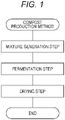
- FIG. 1 is a flowchart of a compost production method according to the present embodiment.
- the compost of the present embodiment is produced using, as raw materials, dung of livestock or the like as a first organic waste, a fibrous organic waste as a second organic waste, an iron compound as a first additive, and at least one or both of boric acid and silicic acid as a second additive.
- the first additive is blended in an amount of 0.1 to 50 parts by mass and the second additive is blended in an amount of 0.01 to 50 parts by mass based on 100 parts by mass of the second organic waste.
- the second additive is preferably blended, for example, in an amount of 0.01 to 50 parts by mass in the case of containing only boric acid, in an amount of 0.04 to 50 parts by mass in the case of containing only silicic acid, and in an amount of 0.1 to 4 parts by mass in the case of containing boric acid and silicic acid. More preferably, these raw materials in a bone-dry state are blended such that an amount of the mixture is 20 to 28 parts by mass based on 100 parts by mass of the first organic waste.
- the first additive is blended in an amount of 3 to 5 parts by mass
- the second additive is blended in an amount of 3 to 25 parts by mass (for example, the second additive is preferably blended in an amount of 3 to 5 parts by mass when containing only boric acid, in an amount of 17 to 20 parts by mass when containing only silicic acid, and in an amount of 20 to 25 parts by mass when containing boric acid and silicic acid) based on 100 parts by mass of the second organic waste.
- a mixture generation step of generating the mixture in which the second organic waste, the first additive and the second additive are mixed is carried out.
- a fermentation step of mixing the first organic waste, the mixture composed of the second organic waste, the first additive and the second additive, and a fermentation material in a fermentation apparatus and performing an aerobic fermentation treatment for about 30 days is carried out.
- the treatment is performed until a water content (for example, about 60 to 70%) of the object to be treated reaches about 40 to 45%.
- a drying step of performing drying by a dryer or the like is carried out after the fermentation step, and the treatment is performed until the water content reaches 15 to 35%, whereby the compost of the present embodiment is produced.
- the mixture is preferably blended in an amount 40 parts by mass or less based on 100 parts by mass of the first organic waste.
- the dung of livestock or the like which is the first organic waste of the present embodiment, is discharged from a barn of cows, pigs, chickens, sheep, goats, horses, or the like.
- the dung of livestock or the like may be used as it is when used as the first organic waste, or may be used in a state where the water content is reduced through the drying step or the like.
- the fibrous organic waste which is the second organic waste of the present embodiment, is coffee grounds, tea grounds, squeezed pomace of fruits or vegetables (for example, residue of citrus fruits), or the like discarded from a beverage maker or the like, and is fibrous.
- coffee grounds coffee grounds discarded after extraction of coffee are preferable, but coffee beans (seeds of coffee trees of arabica, robusta, liberica, and the like) themselves, roasted coffee beans, crushed coffee beans, dried coffee beans, powdered coffee beans, or the like may be used.
- coffee grounds or the like discarded from a beverage maker or the like may be used as they are when used as the second organic waste, or may be used in a state where the water content is reduced through the drying step and the like.
- the roasted coffee beans include coffee beans roasted by various methods such as home roasting, hot air roasting, infrared roasting, microwave roasting, superheated steam roasting, low temperature roasting or the like.
- the crushed coffee beans include coffee beans ground by various devices such as a coffee mill, a grinder, a stone mill or the like, and also include coffee beans ground in a coarsely ground state and a powder state.
- the second organic waste is preferably powdered with a small particle size, from the viewpoint of reaction efficiency with the first additive or the second additive which will be described later.
- the iron compound as the first additive of the present embodiment is, for example, a water-soluble iron compound such as iron (III) chloride, iron (III) sulfate or the like, an insoluble iron compound such as iron (III) oxide, iron (III) nitrate, iron (III) hydroxide or the like, or a combination of two or more of these iron compounds.
- a soil containing a large amount of an allophenic iron component such as red ball earth, Kanuma pumice, loam or the like, a soil containing an amorphous mineral (in particular, goethite), a natural product such as heme iron, seashells or the like, or the like may be used as the first additive.
- iron ore natural iron ore such as pyrite, marcasite, siderite, magnetite, goethite or the like
- iron material metallic iron
- red clay soil containing a large amount of iron oxide (III) such as laterite or the like
- an aqueous solution containing a trivalent iron ion in which a water-soluble iron compound is dissolved, or the like may be used as the first additive.
- a material containing boric acid as the second additive of the present embodiment is borax, boric acid, sodium boron oxide, zinc borate, disodium octaborate tetrahydrate, or a combination of two or more of these materials.
- amaterial containing silicic acid as the second additive of the present embodiment is an inorganic silicon compound such as silicic acid and a salt thereof, orthosilicic acid and a salt thereof, metasilicic acid and a salt thereof, disilicic acid and a salt thereof, trisilicic acid and a salt thereof, polysilicic acid and a salt thereof, silicon dioxide, or a combination of two or more of these inorganic silicon compounds.
- the fermentation material of the present embodiment contains an aerobic fermentative bacterium or a complex microorganism composed of yeast, a lactic acid bacterium, and Bacillus subtilis natto, and is, for example, "Ehime AI-1 (registered trademark)" or the like.
- the mass ratio of the fermentation material blended in the fermentation step described above in a bone-dry state the fermentation material is blended in an amount of 1 to 5 parts by mass based on 100 parts by mass of the first organic waste.
- a stirrer, a blower, and the like are provided in a fermentation lane.
- the stirrer stirs an object to be subjected to the fermentation treatment so as to generate voids into which air enters, and the blower operates so that a temperature during the fermentation treatment is 60°C or higher in order to promote aerobic fermentation.
- Fig. 1 is a table showing a mass and a mass ratio of each raw material component in the compost of Example 1.
- the compost of Example 1 was produced by the above-described production method using 1500 kg (450 kg in a bone-dry state) of chicken dung as the first organic waste, 300 kg (234 kg in a bone-dry state) of coffee grounds as the second organic waste, 10 kg (10 kg in a bone-dry state) of iron powder (for example, powdered iron oxide (III)) as the first additive, and 10 kg (10 kg in a bone-dry state) of boric acid as the second additive as raw materials.
- iron powder for example, powdered iron oxide (III)
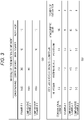
- Fig. 2(a) is a table showing masses of each raw material component of the compost of Example 1, the compost of Comparative Example 1, and the compost of Comparative Example 2
- Fig. 2(b) is a table showing content proportions of nitrogen, phosphoric acid, and potassium in each of the compost of Example 1, the conventional compost, the compost of Comparative Example 1, and the compost of Comparative Example 2, and results of analysis on an atmospheric odor and a degree of maturation of each of the compost of Example 1, the conventional compost, the compost of Comparative Example 1, and the compost of Comparative Example 2.
- 2(b) is a compost made of chicken dung as a raw material, and does not use the second organic waste (such as coffee grounds or the like), the first additive (such as iron compound or the like), and the second additive (such as boric acid or the like) as a raw material, unlike the compost of Example 1.
- the second organic waste such as coffee grounds or the like
- the first additive such as iron compound or the like
- the second additive such as boric acid or the like
- the compost of Comparative Example 1 was produced using 1500 kg of chicken dung as the first organic waste and 300 kg of coffee grounds as the second organic waste as raw materials. It is noted that in the compost of Comparative Example 1 as well, 10 L of "Ehime AI-1 (registered trademark)"was mixed as the fermentation material in the fermentation step, as in the compost of Example 1. That is, unlike the compost of Example 1, the compost of Comparative Example 1 is a compost which does not use iron powder as the first additive or boric acid as the second additive as a raw material.
- the compost of Comparative Example 2 was produced using 1500 kg of chicken dung as the first organic waste, 10 kg of iron powder as the first additive, and 10 kg of boric acid as the second additive as raw materials. It is noted that in the compost of Comparative Example 2 as well, 10 L of "Ehime AI-1 (registered trademark)"was mixed as the fermentation material in the fermentation step, as in the compost of Example 1. That is, unlike the compost of Example 1, the compost of Comparative Example 2 is a compost which does not use coffee grounds as the second organic waste as a raw material.
- the content proportions of nitrogen, phosphoric acid, and potassium in the compost are numerical values calculated based on the measured values according to Soil Environment Analysis Method, Chapter V, 14.A and ICP Emission Spectrometry.
- the method for analyzing the atmospheric odor is a method in which an odor sensory test, which is concentration measurement by a three-point comparative odor bag method, is conducted by three in-house panels. Specifically, as a sample for the odor sensory test, a sample obtained by filling 10 g of a compost put in a 3-L sealed bag with odor-free air and allowing the bag to stand at room temperature for 24 hours was used.
- results of the analysis on the atmospheric odor are values obtained by calculating, as a ratio, a numerical value of each of the composts of Example 1, Comparative Example 1, and Comparative Example 2 with respect to a measured value, which is a numerical value calculated from a logarithmic average of dilution ratios that can be sensed in the odor sensory test, assuming that the numerical value of the conventional compost as a reference is 100.
- the method for analyzing the degree of maturation is a method based on a method for determining the degree of maturation of the compost through simple determination of a carbon dioxide release rate. This is an analysis method based on the facts that it is clear that the carbon dioxide release rate and the degree of maturation (decay ripeness) of the compost are highly correlated, and that the degree of maturation (decay ripeness) can be determined from the carbon dioxide release rate.
- the method for analyzing the degree of maturation is a method in which a test paper (a filter paper immersed in a sodium hydroxide solution to which a phenolphthalein liquid is added) sealed in a sealed container containing 10 g of a compost is allowed to stand for 40 minutes and then a degree of discoloration of the test paper is determined by 3 in-house panels.
- a test paper a filter paper immersed in a sodium hydroxide solution to which a phenolphthalein liquid is added
- results of the analysis on the degree of maturation were evaluation values of 10-grade evaluation on a change in color in the test paper, for example, white (degree of maturation: 0) to pink (degree of maturation: 5) to red (degree of maturation: 10) because as the degree of maturation of the compost was higher, the redness of the test paper was increased based on the fact that phenolphthalein (red) was decolorized when the pH due to sodium hydroxide decreased upon absorption of carbon dioxide in the test paper.
- the conventional compost had content proportions of the components, nitrogen, phosphoric acid, and potassium of 3.2%, 6.2%, and 3.5%, respectively, an atmospheric odor of 100 as a reference value, and a degree of maturation of 8.
- the compost of Example 1 had content proportions of the components, nitrogen, phosphoric acid, and potassium of 2.6%, 1.9%, and 3.2%, respectively, an atmospheric odor of 9, and a degree of maturation of 8.
- the compost of Comparative Example 1 had content proportions of the components, nitrogen, phosphoric acid, and potassium of 5.2%, 4.5%, and 4.1%, respectively, an atmospheric odor of 89, and a degree of maturation of 2.
- the compost of Comparative Example 2 had content proportions of the components, nitrogen, phosphoric acid, and potassium of 3.0%, 2.5%, and 3.5%, respectively, an atmospheric odor of 67, and a degree of maturation of 8.
- the compost of Example 1 had substantially the same content proportions of nitrogen and potassium as the conventional compost, but had a smaller content proportion of phosphoric acid than the conventional compost. Further, the compost of Example 1 had substantially the same content proportions of nitrogen and potassium as the composts of Comparative Examples 1 and 2, but had a smaller content proportion of phosphoric acid than the composts of Comparative Examples 1 and 2. Further, based on the results of the analysis on the atmospheric odor and the degree of maturation based on comparison among the respective composts shown in Fig. 2(b), the compost of Example 1 had the same degree of maturation as the conventional compost, but an atmospheric odor reduced by 90% or more.
- the compost of Example 1 had a reduced atmospheric odor as compared with the composts of Comparative Examples 1 and 2.
- the fermentation treatment in the anaerobic fermentation was performed without the temperature reaching 60°C or higher in the fermentation treatment in the fermentation step.
- An ammonia odor during and after the fermentation treatment was reduced as compared with that of the conventional compost, but a miso (soybean paste) odor was stronger than that of the compost of Example 1.
- the fermentation treatment in the aerobic fermentation was performed in a state where the temperature reached 60°C or higher in the fermentation treatment in the fermentation step, but the compost had a lower degree of maturation than the compost of Example 1 and the like, and had malodor during and after the fermentation treatment reduced as compared with the conventional compost.
- the compost of the embodiment as described above can be a compost obtained by mixing and fermenting dung of livestock or the like as the first organic waste, a fibrous organic waste as the second organic waste, an iron compound as the first additive, and at least one or both of boric acid and silicic acid as the second additive.
- the compost of such an embodiment can have a significantly reduced malodor as compared with the conventional compost.
- the compost of such an embodiment can have a good growth effect on crops since the iron component of the iron compound, boric acid, and silicic acid are effective components of a fertilizer.
- the iron compound as the first additive is known to have a deodorizing effect, and, as shown in Fig.
- the compost of the present embodiment contains the first additive and thus has a further reduced malodor.
- boric acid and silicic acid as the second additive are known to have an antifungal effect and a preservative effect, and, as shown in Fig. 2(b), it can be inferred that the compost of the present embodiment contains the second additive and thus has a further reduced malodor.
- the compost of the embodiment as described above can be a compost in which the second organic waste contains coffee grounds as the fibrous organic waste, and an amount of the second organic waste is 20 to 28 parts by mass based on 100 parts by mass of the first organic waste, an amount of the first additive is 3 to 5 parts by mass based on 100 parts by mass of the second organic waste, and an amount of the second additive is 3 to 25 parts by mass based on 100 parts by mass of the second organic waste.
- the compost of such an embodiment can have a significantly reduced malodor as compared with the conventional compost.
- the coffee grounds, which are the fibrous organic waste as the second organic waste are porous substances and have a deodorizing effect, and thus, as shown in Fig.
- the compost of the present embodiment contains the coffee grounds, which are the first additive, and thus has a further reduced malodor.
- the coffee grounds which are porous substances can retain air and a fermentative bacterium for aerobic fermentation, and thus have an effect of promoting good aerobic fermentation in the fermentation step.
- the compost of the present embodiment contains the iron compound, boric acid, and silicic acid which are known to have an antifungal effect and a preservative effect, it is possible to suppress generation of mold and decay in the coffee grounds that are the second organic waste, so that malodor can be further reduced.
- the compost production method of the embodiment as described above can be a compost production method including carrying out: a mixture generation step of generating a mixture in which the second organic waste, the first additive and the second additive are mixed; and a fermentation step of mixing and aerobically fermenting the mixture generated in the mixture generation step and the first organic waste.
- a mixture in which an iron compound, boric acid, and the like are mixed with coffee grounds that easily generate mold or decay is produced, and thus generation of mold and decay in the coffee grounds can be further suppressed, so that malodor can be significantly reduced.
- the mixture generated in the mixture generation step is mixed with the first organic waste.
- the mixture may be mixed with the first organic waste in a state of being divided into predetermined amounts.
- 50 to 5000 g of the mixture may be enclosed in packaging materials of a biodegradable film, and the packaging materials in which the mixture is enclosed may be mixed with the first organic waste in the fermentation step.
- packaging materials in which the mixture is enclosed are used, the mixture is more easily uniformly mixed with the first organic waste than when such packaging materials are not used, and thus malodor can be further reduced.
- the packaging materials are made of a biodegradable film, and thus are degraded in the fermentation treatment in the fermentation step and do not impair the effect of the active ingredient on crop growth in the compost.
- the compost is produced through the mixture generation step, the fermentation step, and the drying step in the compost production method.
- a molding step in which the compost is molded into pellets having a predetermined shape may be carried out after the drying step.
- a glue or the like as a water-soluble organic adhesive component may be mixed with the compost subjected to the drying step, and the compost may be fitted into a mold having a predetermined shape to be molded into pellets.
- the pellet-shaped compost produced through such a molding step can be easily used when the compost is scattered, as compared with a conventional coarsely-grained compost.
Landscapes
- Chemical & Material Sciences (AREA)
- Organic Chemistry (AREA)
- Health & Medical Sciences (AREA)
- Life Sciences & Earth Sciences (AREA)
- Engineering & Computer Science (AREA)
- Chemical Kinetics & Catalysis (AREA)
- General Chemical & Material Sciences (AREA)
- Biochemistry (AREA)
- Biotechnology (AREA)
- Microbiology (AREA)
- Molecular Biology (AREA)
- Tropical Medicine & Parasitology (AREA)
- Botany (AREA)
- Environmental & Geological Engineering (AREA)
- Inorganic Chemistry (AREA)
- Fertilizers (AREA)
- Treatment Of Sludge (AREA)
- Processing Of Solid Wastes (AREA)
Applications Claiming Priority (2)
| Application Number | Priority Date | Filing Date | Title |
|---|---|---|---|
| JP2019127293 | 2019-07-09 | ||
| PCT/JP2020/026625 WO2021006285A1 (fr) | 2019-07-09 | 2020-07-08 | Compost et procédé de production de compost |
Publications (2)
| Publication Number | Publication Date |
|---|---|
| EP3998247A1 true EP3998247A1 (fr) | 2022-05-18 |
| EP3998247A4 EP3998247A4 (fr) | 2023-07-26 |
Family
ID=74114833
Family Applications (1)
| Application Number | Title | Priority Date | Filing Date |
|---|---|---|---|
| EP20837246.6A Withdrawn EP3998247A4 (fr) | 2019-07-09 | 2020-07-08 | Compost et procédé de production de compost |
Country Status (6)
| Country | Link |
|---|---|
| US (1) | US20220411343A1 (fr) |
| EP (1) | EP3998247A4 (fr) |
| JP (1) | JP7030372B2 (fr) |
| KR (1) | KR20220011704A (fr) |
| CN (1) | CN114008005A (fr) |
| WO (1) | WO2021006285A1 (fr) |
Families Citing this family (1)
| Publication number | Priority date | Publication date | Assignee | Title |
|---|---|---|---|---|
| JP7633644B2 (ja) * | 2020-10-16 | 2025-02-20 | 四国ケージ株式会社 | 堆肥製造方法 |
Family Cites Families (25)
| Publication number | Priority date | Publication date | Assignee | Title |
|---|---|---|---|---|
| JPH1179874A (ja) * | 1997-09-03 | 1999-03-23 | Akio Tobimatsu | 家畜糞尿の無臭発酵処理法 |
| JP2000203976A (ja) * | 1998-11-09 | 2000-07-25 | Food Cycle Systems:Kk | 有機廃棄物の再生処理方法 |
| JP2002145686A (ja) * | 2000-11-01 | 2002-05-22 | Hideaki Tanaka | 産業廃棄物の無公害処理とその有効利用 |
| JP4237955B2 (ja) * | 2001-09-21 | 2009-03-11 | クボタ松下電工外装株式会社 | 肥料とその製造方法 |
| JP2004155900A (ja) * | 2002-11-06 | 2004-06-03 | Hidekazu Itaka | 構造化濃縮深層水を用いた土壌活性剤 |
| JP2007177065A (ja) * | 2005-12-27 | 2007-07-12 | Kazuhiro Inoue | 土壌改良剤、それを用いた土壌改良方法及びその他の使用方法 |
| JP2008013380A (ja) | 2006-07-03 | 2008-01-24 | Tomuso:Kk | 堆肥製造方法 |
| CN101284737A (zh) * | 2007-04-10 | 2008-10-15 | 袁双喜 | 粪便堆肥除臭处理组合物 |
| CN101417140B (zh) * | 2008-12-15 | 2012-10-24 | 黑龙江省达丰科技开发有限责任公司 | 粪便除味剂及其制备方法 |
| CN102217469A (zh) * | 2010-04-19 | 2011-10-19 | 陆振冈 | 一种有机栽培介质及其应用方法 |
| CN103553801A (zh) * | 2013-10-31 | 2014-02-05 | 李洁 | 利用咖啡渣制备的蘑菇培养基 |
| CN103787765A (zh) * | 2014-01-21 | 2014-05-14 | 枞阳县白云生态园林有限责任公司 | 一种多功能增效肥料及其制备方法 |
| CN104137733B (zh) * | 2014-04-23 | 2016-03-09 | 安徽大学 | 一种富硒杏鲍菇的栽培及成份检测方法 |
| CN104803792B (zh) * | 2015-04-28 | 2019-02-01 | 云南省农业科学院热带亚热带经济作物研究所 | 蔗渣生物有机肥及制备方法 |
| CN105418335A (zh) * | 2015-12-30 | 2016-03-23 | 张秀丽 | 有益生物菌发酵的微生物有机肥 |
| CN106810354A (zh) * | 2016-12-29 | 2017-06-09 | 常熟市添源环保科技有限公司 | 一种无臭高效绿色有机肥 |
| CN107162781A (zh) * | 2017-06-27 | 2017-09-15 | 安徽省瑞森生物科技有限责任公司 | 一种有机肥发酵过程中减少有机氮流失的发酵方法 |
| CN107353149A (zh) * | 2017-06-27 | 2017-11-17 | 安徽省瑞森生物科技有限责任公司 | 一种减少家畜粪便发酵过程中产生臭气的发酵方法 |
| CN109420664A (zh) * | 2017-08-29 | 2019-03-05 | 浙江科罗尼生物科技有限公司 | 二价铁在促进有机类废弃物处理用菌群发酵方面的应用 |
| CN108129208A (zh) * | 2018-02-01 | 2018-06-08 | 云南省农业科学院热带亚热带经济作物研究所 | 一种甜橙专用生物有机肥及其制备方法与施用方法 |
| CN108314482A (zh) * | 2018-03-22 | 2018-07-24 | 中国科学院青岛生物能源与过程研究所 | 一种促进有机质降解、加速堆肥腐熟方法及其装置 |
| CN108299051A (zh) * | 2018-04-28 | 2018-07-20 | 河南牧业经济学院 | 一种小麦全价有机复合肥料及其制备方法 |
| CN108892581A (zh) * | 2018-09-30 | 2018-11-27 | 广西乐业康辉生态养殖专业合作社 | 一种有机肥的制备方法 |
| CN109279953A (zh) * | 2018-10-17 | 2019-01-29 | 内蒙古金地隆农业科技发展有限公司 | 一种无臭、高氮的畜禽粪便发酵有机肥的生产方法 |
| CN109627116A (zh) * | 2018-12-13 | 2019-04-16 | 袁洁莉 | 多功能生物有机肥及其制备方法和应用 |
-
2020
- 2020-07-08 KR KR1020217042006A patent/KR20220011704A/ko not_active Ceased
- 2020-07-08 US US17/623,223 patent/US20220411343A1/en not_active Abandoned
- 2020-07-08 EP EP20837246.6A patent/EP3998247A4/fr not_active Withdrawn
- 2020-07-08 WO PCT/JP2020/026625 patent/WO2021006285A1/fr not_active Ceased
- 2020-07-08 CN CN202080044177.5A patent/CN114008005A/zh active Pending
- 2020-07-08 JP JP2021504321A patent/JP7030372B2/ja active Active
Also Published As
| Publication number | Publication date |
|---|---|
| JPWO2021006285A1 (ja) | 2021-10-14 |
| CN114008005A (zh) | 2022-02-01 |
| WO2021006285A1 (fr) | 2021-01-14 |
| EP3998247A4 (fr) | 2023-07-26 |
| US20220411343A1 (en) | 2022-12-29 |
| JP7030372B2 (ja) | 2022-03-07 |
| KR20220011704A (ko) | 2022-01-28 |
Similar Documents
| Publication | Publication Date | Title |
|---|---|---|
| US6852142B2 (en) | Organic-based fertilizer | |
| US8034148B2 (en) | Methods and compositions for soil amendments and organic waste management | |
| Hanc et al. | Nutrient recovery from apple pomace waste by vermicomposting technology | |
| RU2595173C2 (ru) | Микробные органические удобрения и способы их получения | |
| US11046622B2 (en) | Semi-humic organic carbon material and methods of use thereof | |
| Amanullah et al. | Poultry manure to crops–A review | |
| RU2086522C1 (ru) | Способ получения органо-минерального удобрения | |
| Aziz et al. | Alternative fertilizers and sustainable agriculture | |
| CN107162835A (zh) | 一种植物营养液 | |
| CN108192635A (zh) | 一种土壤调理剂及其制备方法和应用 | |
| WO1991016280A1 (fr) | Procede de production d'engrais organique sterilise et appareil prevu a cet effet | |
| RU2174971C1 (ru) | Комплексное органоминеральное удобрение и способ его получения | |
| EP3998247A1 (fr) | Compost et procédé de production de compost | |
| MX2008008074A (es) | Fertilizante. | |
| JP2024500577A (ja) | さらに改良された肥料 | |
| DE3235452A1 (de) | Verfahren zur herstellung eines vollwertigen humustraegers und duengers auf rindenbasis | |
| CN106146150B (zh) | 磷肥增效剂及其制备方法、磷肥增效剂粉末和磷肥 | |
| KR101024528B1 (ko) | 액상 분뇨를 이용한 비료 및 그 제조방법 | |
| Schmidhalter | 15N mass balance technique for measuring ammonia losses from soil surface‐applied slurries containing various additives | |
| JP7633644B2 (ja) | 堆肥製造方法 | |
| Shrirao et al. | A Study on Composting by using Natural Accelerating Ingredients | |
| RU2337086C2 (ru) | Органоминеральное удобрение | |
| RU2731292C1 (ru) | Способ получения органоминерального удобрения | |
| RU2731291C1 (ru) | Способ получения удобрения из куриного помета | |
| Djongre et al. | Composting Cow Dung Enriched with Vivianite (Phosphocompost) for Agricultural Use in the Balaza Lawane Locality (Far North, Cameroon) |
Legal Events
| Date | Code | Title | Description |
|---|---|---|---|
| STAA | Information on the status of an ep patent application or granted ep patent |
Free format text: STATUS: THE INTERNATIONAL PUBLICATION HAS BEEN MADE |
|
| PUAI | Public reference made under article 153(3) epc to a published international application that has entered the european phase |
Free format text: ORIGINAL CODE: 0009012 |
|
| STAA | Information on the status of an ep patent application or granted ep patent |
Free format text: STATUS: REQUEST FOR EXAMINATION WAS MADE |
|
| 17P | Request for examination filed |
Effective date: 20211223 |
|
| AK | Designated contracting states |
Kind code of ref document: A1 Designated state(s): AL AT BE BG CH CY CZ DE DK EE ES FI FR GB GR HR HU IE IS IT LI LT LU LV MC MK MT NL NO PL PT RO RS SE SI SK SM TR |
|
| DAV | Request for validation of the european patent (deleted) | ||
| DAX | Request for extension of the european patent (deleted) | ||
| A4 | Supplementary search report drawn up and despatched |
Effective date: 20230622 |
|
| RIC1 | Information provided on ipc code assigned before grant |
Ipc: C05F 15/00 20060101ALI20230616BHEP Ipc: C05F 5/00 20060101ALI20230616BHEP Ipc: C05F 3/00 20060101AFI20230616BHEP |
|
| STAA | Information on the status of an ep patent application or granted ep patent |
Free format text: STATUS: THE APPLICATION HAS BEEN WITHDRAWN |
|
| 18W | Application withdrawn |
Effective date: 20240116 |