EP4001245A1 - Procédé de modification des propriétés surfaciques des substrats minéraux, des substrats de verre et vitrés - Google Patents
Procédé de modification des propriétés surfaciques des substrats minéraux, des substrats de verre et vitrés Download PDFInfo
- Publication number
- EP4001245A1 EP4001245A1 EP20207428.2A EP20207428A EP4001245A1 EP 4001245 A1 EP4001245 A1 EP 4001245A1 EP 20207428 A EP20207428 A EP 20207428A EP 4001245 A1 EP4001245 A1 EP 4001245A1
- Authority
- EP
- European Patent Office
- Prior art keywords
- precursor material
- substrate
- cleaning
- drying
- cleaned
- Prior art date
- Legal status (The legal status is an assumption and is not a legal conclusion. Google has not performed a legal analysis and makes no representation as to the accuracy of the status listed.)
- Pending
Links
Images



Classifications
-
- C—CHEMISTRY; METALLURGY
- C04—CEMENTS; CONCRETE; ARTIFICIAL STONE; CERAMICS; REFRACTORIES
- C04B—LIME, MAGNESIA; SLAG; CEMENTS; COMPOSITIONS THEREOF, e.g. MORTARS, CONCRETE OR LIKE BUILDING MATERIALS; ARTIFICIAL STONE; CERAMICS; REFRACTORIES; TREATMENT OF NATURAL STONE
- C04B41/00—After-treatment of mortars, concrete, artificial stone or ceramics; Treatment of natural stone
- C04B41/80—After-treatment of mortars, concrete, artificial stone or ceramics; Treatment of natural stone of only ceramics
- C04B41/81—Coating or impregnation
- C04B41/82—Coating or impregnation with organic materials
- C04B41/84—Compounds having one or more carbon-to-metal of carbon-to-silicon linkages
-
- C—CHEMISTRY; METALLURGY
- C03—GLASS; MINERAL OR SLAG WOOL
- C03C—CHEMICAL COMPOSITION OF GLASSES, GLAZES OR VITREOUS ENAMELS; SURFACE TREATMENT OF GLASS; SURFACE TREATMENT OF FIBRES OR FILAMENTS MADE FROM GLASS, MINERALS OR SLAGS; JOINING GLASS TO GLASS OR OTHER MATERIALS
- C03C17/00—Surface treatment of glass, not in the form of fibres or filaments, by coating
- C03C17/22—Surface treatment of glass, not in the form of fibres or filaments, by coating with other inorganic material
- C03C17/23—Oxides
- C03C17/25—Oxides by deposition from the liquid phase
-
- C—CHEMISTRY; METALLURGY
- C03—GLASS; MINERAL OR SLAG WOOL
- C03C—CHEMICAL COMPOSITION OF GLASSES, GLAZES OR VITREOUS ENAMELS; SURFACE TREATMENT OF GLASS; SURFACE TREATMENT OF FIBRES OR FILAMENTS MADE FROM GLASS, MINERALS OR SLAGS; JOINING GLASS TO GLASS OR OTHER MATERIALS
- C03C23/00—Other surface treatment of glass not in the form of fibres or filaments
- C03C23/0075—Cleaning of glass
-
- C—CHEMISTRY; METALLURGY
- C04—CEMENTS; CONCRETE; ARTIFICIAL STONE; CERAMICS; REFRACTORIES
- C04B—LIME, MAGNESIA; SLAG; CEMENTS; COMPOSITIONS THEREOF, e.g. MORTARS, CONCRETE OR LIKE BUILDING MATERIALS; ARTIFICIAL STONE; CERAMICS; REFRACTORIES; TREATMENT OF NATURAL STONE
- C04B41/00—After-treatment of mortars, concrete, artificial stone or ceramics; Treatment of natural stone
- C04B41/009—After-treatment of mortars, concrete, artificial stone or ceramics; Treatment of natural stone characterised by the material treated
-
- C—CHEMISTRY; METALLURGY
- C04—CEMENTS; CONCRETE; ARTIFICIAL STONE; CERAMICS; REFRACTORIES
- C04B—LIME, MAGNESIA; SLAG; CEMENTS; COMPOSITIONS THEREOF, e.g. MORTARS, CONCRETE OR LIKE BUILDING MATERIALS; ARTIFICIAL STONE; CERAMICS; REFRACTORIES; TREATMENT OF NATURAL STONE
- C04B41/00—After-treatment of mortars, concrete, artificial stone or ceramics; Treatment of natural stone
- C04B41/45—Coating or impregnating, e.g. injection in masonry, partial coating of green or fired ceramics, organic coating compositions for adhering together two concrete elements
- C04B41/46—Coating or impregnating, e.g. injection in masonry, partial coating of green or fired ceramics, organic coating compositions for adhering together two concrete elements with organic materials
- C04B41/49—Compounds having one or more carbon-to-metal or carbon-to-silicon linkages ; Organo-clay compounds; Organo-silicates, i.e. ortho- or polysilicic acid esters ; Organo-phosphorus compounds; Organo-inorganic complexes
-
- C—CHEMISTRY; METALLURGY
- C04—CEMENTS; CONCRETE; ARTIFICIAL STONE; CERAMICS; REFRACTORIES
- C04B—LIME, MAGNESIA; SLAG; CEMENTS; COMPOSITIONS THEREOF, e.g. MORTARS, CONCRETE OR LIKE BUILDING MATERIALS; ARTIFICIAL STONE; CERAMICS; REFRACTORIES; TREATMENT OF NATURAL STONE
- C04B41/00—After-treatment of mortars, concrete, artificial stone or ceramics; Treatment of natural stone
- C04B41/45—Coating or impregnating, e.g. injection in masonry, partial coating of green or fired ceramics, organic coating compositions for adhering together two concrete elements
- C04B41/46—Coating or impregnating, e.g. injection in masonry, partial coating of green or fired ceramics, organic coating compositions for adhering together two concrete elements with organic materials
- C04B41/49—Compounds having one or more carbon-to-metal or carbon-to-silicon linkages ; Organo-clay compounds; Organo-silicates, i.e. ortho- or polysilicic acid esters ; Organo-phosphorus compounds; Organo-inorganic complexes
- C04B41/4905—Compounds having one or more carbon-to-metal or carbon-to-silicon linkages ; Organo-clay compounds; Organo-silicates, i.e. ortho- or polysilicic acid esters ; Organo-phosphorus compounds; Organo-inorganic complexes containing silicon
- C04B41/4922—Compounds having one or more carbon-to-metal or carbon-to-silicon linkages ; Organo-clay compounds; Organo-silicates, i.e. ortho- or polysilicic acid esters ; Organo-phosphorus compounds; Organo-inorganic complexes containing silicon applied to the substrate as monomers, i.e. as organosilanes RnSiX4-n, e.g. alkyltrialkoxysilane, dialkyldialkoxysilane
-
- C—CHEMISTRY; METALLURGY
- C04—CEMENTS; CONCRETE; ARTIFICIAL STONE; CERAMICS; REFRACTORIES
- C04B—LIME, MAGNESIA; SLAG; CEMENTS; COMPOSITIONS THEREOF, e.g. MORTARS, CONCRETE OR LIKE BUILDING MATERIALS; ARTIFICIAL STONE; CERAMICS; REFRACTORIES; TREATMENT OF NATURAL STONE
- C04B41/00—After-treatment of mortars, concrete, artificial stone or ceramics; Treatment of natural stone
- C04B41/45—Coating or impregnating, e.g. injection in masonry, partial coating of green or fired ceramics, organic coating compositions for adhering together two concrete elements
- C04B41/50—Coating or impregnating, e.g. injection in masonry, partial coating of green or fired ceramics, organic coating compositions for adhering together two concrete elements with inorganic materials
- C04B41/5025—Coating or impregnating, e.g. injection in masonry, partial coating of green or fired ceramics, organic coating compositions for adhering together two concrete elements with inorganic materials with ceramic materials
- C04B41/5031—Alumina
-
- C—CHEMISTRY; METALLURGY
- C04—CEMENTS; CONCRETE; ARTIFICIAL STONE; CERAMICS; REFRACTORIES
- C04B—LIME, MAGNESIA; SLAG; CEMENTS; COMPOSITIONS THEREOF, e.g. MORTARS, CONCRETE OR LIKE BUILDING MATERIALS; ARTIFICIAL STONE; CERAMICS; REFRACTORIES; TREATMENT OF NATURAL STONE
- C04B41/00—After-treatment of mortars, concrete, artificial stone or ceramics; Treatment of natural stone
- C04B41/45—Coating or impregnating, e.g. injection in masonry, partial coating of green or fired ceramics, organic coating compositions for adhering together two concrete elements
- C04B41/50—Coating or impregnating, e.g. injection in masonry, partial coating of green or fired ceramics, organic coating compositions for adhering together two concrete elements with inorganic materials
- C04B41/5025—Coating or impregnating, e.g. injection in masonry, partial coating of green or fired ceramics, organic coating compositions for adhering together two concrete elements with inorganic materials with ceramic materials
- C04B41/5042—Zirconium oxides or zirconates; Hafnium oxides or hafnates
-
- C—CHEMISTRY; METALLURGY
- C04—CEMENTS; CONCRETE; ARTIFICIAL STONE; CERAMICS; REFRACTORIES
- C04B—LIME, MAGNESIA; SLAG; CEMENTS; COMPOSITIONS THEREOF, e.g. MORTARS, CONCRETE OR LIKE BUILDING MATERIALS; ARTIFICIAL STONE; CERAMICS; REFRACTORIES; TREATMENT OF NATURAL STONE
- C04B41/00—After-treatment of mortars, concrete, artificial stone or ceramics; Treatment of natural stone
- C04B41/45—Coating or impregnating, e.g. injection in masonry, partial coating of green or fired ceramics, organic coating compositions for adhering together two concrete elements
- C04B41/50—Coating or impregnating, e.g. injection in masonry, partial coating of green or fired ceramics, organic coating compositions for adhering together two concrete elements with inorganic materials
- C04B41/5076—Coating or impregnating, e.g. injection in masonry, partial coating of green or fired ceramics, organic coating compositions for adhering together two concrete elements with inorganic materials with masses bonded by inorganic cements
- C04B41/5089—Silica sols, alkyl, ammonium or alkali metal silicate cements
-
- C—CHEMISTRY; METALLURGY
- C04—CEMENTS; CONCRETE; ARTIFICIAL STONE; CERAMICS; REFRACTORIES
- C04B—LIME, MAGNESIA; SLAG; CEMENTS; COMPOSITIONS THEREOF, e.g. MORTARS, CONCRETE OR LIKE BUILDING MATERIALS; ARTIFICIAL STONE; CERAMICS; REFRACTORIES; TREATMENT OF NATURAL STONE
- C04B41/00—After-treatment of mortars, concrete, artificial stone or ceramics; Treatment of natural stone
- C04B41/45—Coating or impregnating, e.g. injection in masonry, partial coating of green or fired ceramics, organic coating compositions for adhering together two concrete elements
- C04B41/52—Multiple coating or impregnating multiple coating or impregnating with the same composition or with compositions only differing in the concentration of the constituents, is classified as single coating or impregnation
-
- C—CHEMISTRY; METALLURGY
- C04—CEMENTS; CONCRETE; ARTIFICIAL STONE; CERAMICS; REFRACTORIES
- C04B—LIME, MAGNESIA; SLAG; CEMENTS; COMPOSITIONS THEREOF, e.g. MORTARS, CONCRETE OR LIKE BUILDING MATERIALS; ARTIFICIAL STONE; CERAMICS; REFRACTORIES; TREATMENT OF NATURAL STONE
- C04B41/00—After-treatment of mortars, concrete, artificial stone or ceramics; Treatment of natural stone
- C04B41/60—After-treatment of mortars, concrete, artificial stone or ceramics; Treatment of natural stone of only artificial stone
- C04B41/61—Coating or impregnation
- C04B41/62—Coating or impregnation with organic materials
- C04B41/64—Compounds having one or more carbon-to-metal of carbon-to-silicon linkages
-
- C—CHEMISTRY; METALLURGY
- C04—CEMENTS; CONCRETE; ARTIFICIAL STONE; CERAMICS; REFRACTORIES
- C04B—LIME, MAGNESIA; SLAG; CEMENTS; COMPOSITIONS THEREOF, e.g. MORTARS, CONCRETE OR LIKE BUILDING MATERIALS; ARTIFICIAL STONE; CERAMICS; REFRACTORIES; TREATMENT OF NATURAL STONE
- C04B41/00—After-treatment of mortars, concrete, artificial stone or ceramics; Treatment of natural stone
- C04B41/60—After-treatment of mortars, concrete, artificial stone or ceramics; Treatment of natural stone of only artificial stone
- C04B41/61—Coating or impregnation
- C04B41/65—Coating or impregnation with inorganic materials
-
- C—CHEMISTRY; METALLURGY
- C04—CEMENTS; CONCRETE; ARTIFICIAL STONE; CERAMICS; REFRACTORIES
- C04B—LIME, MAGNESIA; SLAG; CEMENTS; COMPOSITIONS THEREOF, e.g. MORTARS, CONCRETE OR LIKE BUILDING MATERIALS; ARTIFICIAL STONE; CERAMICS; REFRACTORIES; TREATMENT OF NATURAL STONE
- C04B41/00—After-treatment of mortars, concrete, artificial stone or ceramics; Treatment of natural stone
- C04B41/60—After-treatment of mortars, concrete, artificial stone or ceramics; Treatment of natural stone of only artificial stone
- C04B41/61—Coating or impregnation
- C04B41/65—Coating or impregnation with inorganic materials
- C04B41/68—Silicic acid; Silicates
-
- C—CHEMISTRY; METALLURGY
- C04—CEMENTS; CONCRETE; ARTIFICIAL STONE; CERAMICS; REFRACTORIES
- C04B—LIME, MAGNESIA; SLAG; CEMENTS; COMPOSITIONS THEREOF, e.g. MORTARS, CONCRETE OR LIKE BUILDING MATERIALS; ARTIFICIAL STONE; CERAMICS; REFRACTORIES; TREATMENT OF NATURAL STONE
- C04B41/00—After-treatment of mortars, concrete, artificial stone or ceramics; Treatment of natural stone
- C04B41/60—After-treatment of mortars, concrete, artificial stone or ceramics; Treatment of natural stone of only artificial stone
- C04B41/61—Coating or impregnation
- C04B41/70—Coating or impregnation for obtaining at least two superposed coatings having different compositions
-
- C—CHEMISTRY; METALLURGY
- C04—CEMENTS; CONCRETE; ARTIFICIAL STONE; CERAMICS; REFRACTORIES
- C04B—LIME, MAGNESIA; SLAG; CEMENTS; COMPOSITIONS THEREOF, e.g. MORTARS, CONCRETE OR LIKE BUILDING MATERIALS; ARTIFICIAL STONE; CERAMICS; REFRACTORIES; TREATMENT OF NATURAL STONE
- C04B41/00—After-treatment of mortars, concrete, artificial stone or ceramics; Treatment of natural stone
- C04B41/80—After-treatment of mortars, concrete, artificial stone or ceramics; Treatment of natural stone of only ceramics
- C04B41/81—Coating or impregnation
- C04B41/85—Coating or impregnation with inorganic materials
-
- C—CHEMISTRY; METALLURGY
- C04—CEMENTS; CONCRETE; ARTIFICIAL STONE; CERAMICS; REFRACTORIES
- C04B—LIME, MAGNESIA; SLAG; CEMENTS; COMPOSITIONS THEREOF, e.g. MORTARS, CONCRETE OR LIKE BUILDING MATERIALS; ARTIFICIAL STONE; CERAMICS; REFRACTORIES; TREATMENT OF NATURAL STONE
- C04B41/00—After-treatment of mortars, concrete, artificial stone or ceramics; Treatment of natural stone
- C04B41/80—After-treatment of mortars, concrete, artificial stone or ceramics; Treatment of natural stone of only ceramics
- C04B41/81—Coating or impregnation
- C04B41/89—Coating or impregnation for obtaining at least two superposed coatings having different compositions
-
- C—CHEMISTRY; METALLURGY
- C03—GLASS; MINERAL OR SLAG WOOL
- C03C—CHEMICAL COMPOSITION OF GLASSES, GLAZES OR VITREOUS ENAMELS; SURFACE TREATMENT OF GLASS; SURFACE TREATMENT OF FIBRES OR FILAMENTS MADE FROM GLASS, MINERALS OR SLAGS; JOINING GLASS TO GLASS OR OTHER MATERIALS
- C03C2217/00—Coatings on glass
- C03C2217/40—Coatings comprising at least one inhomogeneous layer
- C03C2217/425—Coatings comprising at least one inhomogeneous layer consisting of a porous layer
-
- C—CHEMISTRY; METALLURGY
- C03—GLASS; MINERAL OR SLAG WOOL
- C03C—CHEMICAL COMPOSITION OF GLASSES, GLAZES OR VITREOUS ENAMELS; SURFACE TREATMENT OF GLASS; SURFACE TREATMENT OF FIBRES OR FILAMENTS MADE FROM GLASS, MINERALS OR SLAGS; JOINING GLASS TO GLASS OR OTHER MATERIALS
- C03C2218/00—Methods for coating glass
- C03C2218/10—Deposition methods
- C03C2218/11—Deposition methods from solutions or suspensions
- C03C2218/112—Deposition methods from solutions or suspensions by spraying
Definitions
- the present invention relates to a method for modifying the surface properties of mineral substrates, glass and glazed substrates.
- Materials with mineral surfaces or mineral substrates in general are nowadays used in a wide range of applications in a wide variety of areas. They serve as building and construction materials, countertops, wall and floor tiles and much more. These materials include in particular natural stone, artificial stone, ceramics and concrete. Glass is also used in many ways, for example as window glass, for shower cubicles and for furniture.
- the present invention relates to a method for modifying the surface properties of mineral substrates, glass and glazed substrates, in which a precursor material is applied to the surface of the substrate to be cured and the surface is subsequently either dried or cleaned or cleaned and dried becomes.
- the mineral surfaces include in particular those of natural stone, artificial stone, ceramics and concrete, but all mineral surfaces can be processed with the method according to the invention, for example also of gypsum or gypsum fiber boards.
- a precursor material which, starting from one or more members of the trivalent and tetravalent metal alkoxides, colloidal silica sol, alkali water glass and tetraethyl orthosilicate hydrolyzate, methyl triethyl orthosilicate hydrolyzate and tri- or tetravalent metal halides group is produced, wherein the precursor material is selected from the aforementioned group not exclusively based on colloidal silica sol, alkali water glass or a combination of these two, leading to an increase in the surface hardness of the treated substrate.
- These combinations as the starting point for the precursor material already lead to excellent results in terms of the hardness of the treated substrates without the need for further functionalization.
- the trivalent and/or tetravalent metal alkoxides are made from the metal alkoxides of B, Al, Si, Ti and Zr and the metal halides are made from tetrachlorosilane, trichlorosilane, titanium tetrachloride, titanium trichloride, aluminum trichloride, Zirconium tetrachloride and boron trichloride are preferably selected.
- the metal alkoxides are particularly preferred here because they are easier to handle.
- the substrate is further functionalized, with functionalization within the scope of the present invention in particular providing the substrate surface with further advantageous and therefore desirable properties is understood.
- This further functionalization can be a further increase in surface hardness, imparting antimicrobial properties, coloring, deepening of color, increase in gloss level, improvement in chemical resistance, improvement in scratch resistance or a combination of two or more of these properties.
- a functionalizing agent that imparts or promotes the corresponding property is simply added to the precursor material or, in another embodiment, such a functionalizing agent, alone or in combination of several of them, is used to produce a functionalizing agent in Used in the form of a solution or suspension.
- a functionalizing agent that imparts or promotes the corresponding property is simply added to the precursor material or, in another embodiment, such a functionalizing agent, alone or in combination of several of them, is used to produce a functionalizing agent in Used in the form of a solution or suspension.
- the further functionalization of the substrate surface is carried out by applying a functionalizing agent made from one or more functionalizing agents, followed by further drying or cleaning or cleaning and drying.
- An alternative embodiment of the present invention relates to a method for modifying surfaces of resin-bonded artificial stone, in which a mixture of water, one or more organic solvents and one or more acids is applied to the surface of the substrate to be modified and the surface is then either dried or cleaned or cleaned and dried.
- a functionalizing agent can already be introduced directly into the mixture described above.
- the embodiment of the method according to the invention in which at least one trivalent or tetravalent metal cation is contained in the precursor material is more preferred, since metal oxide crystals crystallize out in a very fine and uniform distribution during the plasticization of the resin portion and in very dense packing ensure special stability and thus hardness of the treated substrate.
- the colloidal silica sols used according to the invention can be obtained inexpensively, for example, under the trade names LEVASIL® and K ⁇ STROSOL® and can usually be used in the present process without further pretreatment.
- the Li, Na and K water glasses which are also available at low cost, can be used as the alkali water glass, which are either available as a solution and can be used directly, or are dissolved in an appropriate amount of water before use.
- the treated mineral surface is briefly cleaned to remove any excess material or dirt. This can be done in a simple way and in the simplest case by blowing off the surface with compressed air or a blower, if necessary also by polishing with one or more polishing heads, polishing discs or a combination of blowing and polishing, in which case the surface is first blown off and then easily polished off with the polishing heads or polishing pads.
- the alkoxide radicals are generally of any nature, but C 1 -C 4 alkoxides are generally preferred simply because of their comparatively favorable availability.
- the methoxides, ethoxides, iso- and n-propoxides and the n-, iso- and tert-butoxides are particularly noteworthy.
- the propoxides are particularly preferred.
- the precursor material contains, in addition to at least one metal alkoxide, tetraethyl orthosilicate hydrolyzate and/or methyl triethyl orthosilicate hydrolyzate, with a combination of at least one metal alkoxide, tetraethyl orthosilicate hydrolyzate and/or or Methyltriethylorthosilicate hydrolyzate and silica sol and/or alkali water glass is a precursor material leading to particularly hard surfaces and is therefore also particularly preferred.
- the drying mentioned preferably takes place by means of a fan device and/or a heating device, such as IR radiators, or a combination of both, in particular by means of a heated fan device.
- cleaning is preferably carried out in the simplest case by blowing off with compressed air, a blower or by light polishing with polishing devices customary in the field of ceramics and artificial stone processing with low contact pressure.
- the functionalization step which is independent and, with the exception of the exclusive selection of silica sol and/or alkali water glass from the group mentioned at the outset for producing the precursor material, is optional, surprisingly leads to an even greater increase in the hardness of the surface of the treated material Substrate and gives the substrate surface more advantageous functional properties.
- the first to be mentioned here is hydrophobing and hydrophilizing of the substrate surface, which make it more difficult for dirt to adhere or enable easy cleaning. Improved chemical resistance of the surface can also be obtained in this way. Also antimicrobial properties.
- the colour, color depth or degree of gloss of the substrates can also be modified in this way.
- the functionalizing agent is selected from the group comprising hydrophobing agents, hydrophilizing agents and agents imparting antimicrobial properties, in particular glycol silanes, polyether-functional trimethoxysilane, amino- and diamino-functional silanes, preferably 3-aminopropylmethyldiethoxysilane (AMMO), 3- Aminopropyltriethoxysilane (AMEO), bis(3-triethoxysilylpropyl)amine, bis(3-trimethoxysilylpropyl)amine and 2-aminoethyl-3-aminopropyltrimethoxysilane (DAMO), epoxysilanes such as 3-glycidyloxypropyltrimethoxysilane (GLYMO), 3- Glycidyloxypropyltriethoxysilane (GLYEO), ureidosilanes, in particular 3-ureidopropyltriethoxysilane, polyether-modified polydimethoxysilane
- glycolsilanes can be used for hydrophilic treatment, but also compounds such as polyether-functional trimethoxysilane, amino- and diamino-functional silanes such as 3-aminopropylmethyldiethoxysilane (AMMO), 3-aminopropyltriethoxysilane (AMEO), bis(3-triethoxysilylpropyl)amine, bis(3-trimethoxysilyl) propyl)amine, 2-aminoethyl-3-aminopropyltrimethoxysilane (DAMO), epoxysilanes such as 3-glycidyloxypropyltrimethoxysilane (GLYMO), 3-glycidyloxypropyltriethoxysilane (GLYEO), ureidosilanes such as 3-ureidopropyltriethoxysilane, polyether-modified polydimethylsiloxane or pyrogenic silicas.
- AMMO 3-aminopropylmethyldie
- Silicone oils such as methyl 2-fluoroacrylate can be used.
- polyfluoropolyether available as Fluorolink ® P54
- polyurethane with a polyfluoropolyether structure Fluorolink ® P 56
- PFPE tetraurethane acrylate Fluorolink ® AD 1700
- PFPE urethane methacrylate Fluorolink ® MD 700
- fluoroacrylate or Fluoroacrylate polymers such as methyl 2-fluoroacrylate can be used.
- the compounds listed below can be used as hydrophobing agents. All of the silanes listed are hydrolyzed in water and are present in solution as silanol or polymerized as siloxane.
- the silanes can have methoxy, ethoxy or chloro groups as functional leaving groups.
- Alkylsilanes hexadecyltrimethoxysilane, hexadecyltriethoxysilane, octyltriethoxysilane, octyltrimethoxysilane, octyltrichlorosilane, methyltrimethoxysilane
- Arylsilanes phenyltrimethoxysilane and phenyltriethoxysilane.
- Cyclosiloxanes dodecamethylcyclohexasiloxane, decamethylcyclopentasiloxane and octamethylcyclotetrasiloxane.
- Linear siloxanes polydimethylsiloxanes, hexamethyldisiloxane, amino-functional polydimethylsiloxane, polydimethylsiloxane (OH terminated).
- the surfaces of the substrates mentioned can also be provided with an antimicrobial finish.
- an antimicrobial finish This means that in particular antibacterial, fungicidal, algicidal and antiviral surface properties are obtained through the incorporation of corresponding metals or metal cations such as silver, platinum, copper, zinc, tin, nickel and iron as functionalizing agents in the precursor material or in the functionalizing agent.
- Ti in the form of TiO 2 especially anatase, titanates such as alkali metal, alkaline earth metal titanates, metal titanate, especially barium titanate, strontium titanate, aluminum titanate are particularly suitable for a corresponding antimicrobial functionality and can therefore be used without restriction as a functionalizing agent within the scope of the present invention , cobalt titanate, certitant, manganese titanate, iron titanates, nickel titanate, the silicates of the metal cations mentioned above and titanium silicates.
- titanates such as alkali metal, alkaline earth metal titanates, metal titanate, especially barium titanate, strontium titanate, aluminum titanate are particularly suitable for a corresponding antimicrobial functionality and can therefore be used without restriction as a functionalizing agent within the scope of the present invention , cobalt titanate, certitant, manganese titanate, iron titanates, nickel titanate, the silicates of the metal cations mentioned above and titanium silicates.
- Antibacterial and fungicidal organic substances such as dichloro-2-n-octyl-4-isothiazolin-3-one, 2,3-dichlorophenylpiperazine, 2-phenylphenol, benzoic acid, polyhexanide, isothiazolines, in particular methylisothiazolinone, chloromethylisothiazolinone, benzisothiazolinone, octylisothiazolinone and dichlorooctylisothiazolinone, quaternary ammonium compounds, e.g., didecyldimethylammonium chloride; C12-16 benzylalkyldimethylammonium chloride, cetyltrimethylammonium bromide, C12-14 alkyl[(ethylphenyl)methyl]dimethylammonium chloride, tetrabutylammonium hydroxide, cetylpyridinium chloride and imidazole) are also
- the precursor material and/or the functionalizing agent are each in the form of a solution or suspension, since these are easy to handle and dose.
- the solution and/or suspension can be applied in any manner, for example by dipping, flooding, pouring, dripping, brushing and printing, application by spraying or printing, for example using inkjet printing or digital printing technology, is preferred. particularly spraying with a fine to very fine droplet size spray. This has an advantageous effect on the homogeneity of the surface of the treated substrate.
- the precursor material and the functionalizing agent are applied at the same time and/or from a mixture of the same, because in this way work is only carried out in one step and drying or cleaning or drying and cleaning only has to be carried out once .
- the present invention also relates to a modified mineral substrate, glass or glazed substrate, obtained according to one of the process configurations described above in the form of a plate, tile, slab, a 3-D molded part and in particular in the form of a kitchen worktop, floor tile, a washing or sink, a shower tray, a wall or facade element, an insulating element or a dry construction element.
- the starting substances for the precursor material are carefully added to an appropriate amount of water and stirred for 2 to 48 hours, the solution becoming cloudy at most, at least as long as no silica sol and/or alkali water glass is added.
- This precursor material can be used as it is or stored for a longer period of time.
- the precursor material produced in this way is then applied to a corresponding substrate.
- any type of application can be used that ensures uniform wetting of the substrate surface, it is preferred according to the invention to apply by spraying with a fine spray mist or by printing, because in this way a particularly uniform, continuous application of material can be achieved.
- the application quantity can be regulated very easily and well. In general, it is sufficient if the surface is just completely wetted.
- the partially hydrolyzed or hydrolyzed metal compounds of the precursor material crystallize out in the form of their oxides or mixed oxides within a very short time, so that For example, an artificial stone or a ceramic already has a surface with greater hardness than the untreated substrate after simple drying. More simply, drying can be done at ambient conditions, accelerated by blowing off with compressed air or by means of a blower. Drying can be further accelerated by means of heated compressed or blown air or, for example, by IR radiation.
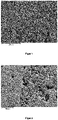
- figure 1 shows the result of the method according to the invention, in which a composition of a precursor material was treated according to Example 1 given below.
- the deposition of zirconium oxide crystals can be clearly seen, in particular filling the space between mineral components, of which only one can be seen in the left third of the image as an almost completely smooth surface, the smoothness being achieved by filling the originally present pores with the precursor material and subsequent crystallization.
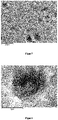
- figure 3 shows a surface of an artificial stone as in figure 1 in greater resolution, where a deposit of zirconium oxide crystals can be seen not only in the pores, but also on the surface of the mineral component of the artificial stone.
- the formation of a practically continuous layer of hard zirconium oxide crystals is regarded as the main reason for the greater hardness of the treated substrate and is unexpected, in particular with regard to the small amount of precursor material used.
- figure 4 shows an untreated artificial stone in the same resolution as figure 3 for comparison. The significantly larger and deeper pores or gaps can also be seen here.
- a ceramic was treated with a precursor material in accordance with example 13.
- the result is in figure 5 shown.
- the silicon oxide and zirconium oxide crystals, probably mixed crystals or mixtures of the crystals, can be clearly seen here on the surface and in the pores of the substrate.
- the difference to the in figure 6 depicted surface of a corresponding, untreated ceramic can be perceived very clearly.
- figure 7 which is a pottery as in figure 5 shown in higher resolution.
- the crystal deposits can be clearly seen, as well as a small depth of the pores after the treatment according to the method according to the invention.
- figure 8 the one after the application of the precursor material as previously described deposition in a pore of the ceramic, which has taken place in accordance with example 13, and thus shows a filling of the same.
- the filling and stabilization of the pores in addition to the formation of a practically continuous layer, makes a significant contribution to the surprising improvement in the surface hardness of the substrate. A fact that is considered independent of the treated substrate.
- a precursor material is first applied to a substrate surface, dried and/or lightly cleaned and then a hydrophobing agent and then simply dried.
- a hydrophobing agent is first applied to a substrate surface, dried and/or lightly cleaned and then a hydrophobing agent and then simply dried.
- FIG. This figure shows how, as a result of this treatment, a completely continuous layer was formed on a ceramic substrate, with all the pores being filled, so that instead of the original pores, only slight indentations are recognizable.
- a pore of the treated ceramic substrate shown in FIG. 11 is shown filling the format. It is not only striking that the pore is completely filled, it is also very smooth.
- surfaces of resin-bonded artificial stones have been successfully treated by treatment with a mixture of water, one or more organic solvents and one or more acids by spraying and subsequent drying and, if necessary, light cleaning by prolonged, light polishing with at least slightly dissolving and softening the resin content of the artificial stone and subsequent functionalization in their hardness and to give a greater depth of color.
- one or more solvents such as acetone, acetylacetonate, isopropanol and ethyl acetate in combination with one or more of hydrochloric acid, nitric acid, sulfuric acid and acetic acid are usable and sufficient.
- Example 1 demi. water 64.9% isopropanol 27.3% Zr-n-propoxide 5.5% hydrochloric acid 37% 1.3% Nitric acid 64.9% 1.0%
- Example 2 demi. water 61.5% isopropanol 23.7% Zr-n-propoxide 12.5% hydrochloric acid 37% 1.3% Nitric acid 64.9% 1.0%
- Example 3 demi. water 90.0% Al isopropoxide 5.0% Nitric acid 64.9% 5.0%
- Example 4 demi. water 90.5% Al isopropoxide 7.5% Nitric acid 64.9% 2.0%
- Example 5 demi. water 64.9% isopropanol 27.3% Zr-n-propoxide 5.5% hydrochloric acid 37% 1.3% Nitric acid 64.9% 1.0%
- Example 3 demi. water 90.0% Al isopropoxide 5.0% Nitric acid 64.9% 5.0%
- Example 4 demi. water 90.5% Al isopropoxide 7.5% Nitric acid 64.9% 2.0%
- Example 5 demi
- Example 6 demi. water 88.0% Al isopropoxide 10.0% Nitric acid 64.9% 2.0%
- Example 7 demi. water 85.0% Al isopropoxide 10.0% Nitric acid 64.9% 5.0%
- Example 8 demi. water 83.0% Al isopropoxide 15.0% Nitric acid 64.9% 2.0%
- Example 9 demi. water 65.0% Al isopropoxide 25.0% Nitric acid 64.9% 10.0%
- Example 10 Zr-n-propoxide 5.0% triethoxy(2,4,4trimethylpentyl)silane 13.2% decamethylcyclopentasiloxane 6.2% demi.
- Example 12 silica sol (7 nm) 5.6% ( Levasil® CC 301) silica sol (12 nm) 7.4% ( Levasil® CC 401) demi water 57.0% isopropanol 10.9% Zr-n-propoxide 2.2% hydrochloric acid 37% 0.5% Nitric acid 64.9% 0.4% formic acid 85% 8.0% tetraethylorthosilicate 8.0% (Dynasylan ® A)
- Example 13 silica sol (5 nm) 14.0% silica sol (22 nm) 18.5% demi.
- Example 17 3-aminopropyltriethoxysilane (AMEO) 2.5% Polyether functional trimethoxysilane 6.1% silica sol (5 nm) 1.5% silica sol (9 nm) 4.5% demi. water 89.5% acetic acid 60% 4.0% isopropanol 0.9%
- Example 18 bis(3-triethoxysilylpropyl)amine 5.8 3-Glycidyloxypropyltrimethoxysilane (GLYMO) 2.7% polyether-modified polydimethylsiloxane 19.1% demi. water 62.4% Fumed silica 10%
- a hydrophobic functionalization is possible by using a functionalizing agent with a composition according to Examples 19 and 20.
- Example 19 triethoxy(2,4,4trimethylpentyl)silane 17.1% methyltrimethoxysilane 2.2% demi. water 75.3% nitric acid 1.2% fluoroacrylate 4.2%
- Example 20 octyltriethoxysilane 4.2% hexadecyltriethoxysilane 2.5% phenyltriethoxysilane 5.6% amino functional polysiloxane 1.2% demi. water 83.9% acetic acid 60% 2.1% titanium tetrabutanolate 0.5%
Landscapes
- Chemical & Material Sciences (AREA)
- Engineering & Computer Science (AREA)
- Ceramic Engineering (AREA)
- Materials Engineering (AREA)
- Organic Chemistry (AREA)
- Structural Engineering (AREA)
- Inorganic Chemistry (AREA)
- Life Sciences & Earth Sciences (AREA)
- Chemical Kinetics & Catalysis (AREA)
- General Chemical & Material Sciences (AREA)
- Geochemistry & Mineralogy (AREA)
- Surface Treatment Of Glass (AREA)
Priority Applications (2)
| Application Number | Priority Date | Filing Date | Title |
|---|---|---|---|
| EP20207428.2A EP4001245A1 (fr) | 2020-11-13 | 2020-11-13 | Procédé de modification des propriétés surfaciques des substrats minéraux, des substrats de verre et vitrés |
| EP23159816.0A EP4209474A1 (fr) | 2020-11-13 | 2020-11-13 | Procédé de modification des propriétés de surface de pierre artificielle et pierre artificielle modifiée par le procédé |
Applications Claiming Priority (1)
| Application Number | Priority Date | Filing Date | Title |
|---|---|---|---|
| EP20207428.2A EP4001245A1 (fr) | 2020-11-13 | 2020-11-13 | Procédé de modification des propriétés surfaciques des substrats minéraux, des substrats de verre et vitrés |
Related Child Applications (1)
| Application Number | Title | Priority Date | Filing Date |
|---|---|---|---|
| EP23159816.0A Division EP4209474A1 (fr) | 2020-11-13 | 2020-11-13 | Procédé de modification des propriétés de surface de pierre artificielle et pierre artificielle modifiée par le procédé |
Publications (1)
| Publication Number | Publication Date |
|---|---|
| EP4001245A1 true EP4001245A1 (fr) | 2022-05-25 |
Family
ID=73448862
Family Applications (2)
| Application Number | Title | Priority Date | Filing Date |
|---|---|---|---|
| EP20207428.2A Pending EP4001245A1 (fr) | 2020-11-13 | 2020-11-13 | Procédé de modification des propriétés surfaciques des substrats minéraux, des substrats de verre et vitrés |
| EP23159816.0A Pending EP4209474A1 (fr) | 2020-11-13 | 2020-11-13 | Procédé de modification des propriétés de surface de pierre artificielle et pierre artificielle modifiée par le procédé |
Family Applications After (1)
| Application Number | Title | Priority Date | Filing Date |
|---|---|---|---|
| EP23159816.0A Pending EP4209474A1 (fr) | 2020-11-13 | 2020-11-13 | Procédé de modification des propriétés de surface de pierre artificielle et pierre artificielle modifiée par le procédé |
Country Status (1)
| Country | Link |
|---|---|
| EP (2) | EP4001245A1 (fr) |
Citations (5)
| Publication number | Priority date | Publication date | Assignee | Title |
|---|---|---|---|---|
| WO1997013730A2 (fr) * | 1995-09-28 | 1997-04-17 | Corning Incorporated | Systemes conferant des proprietes de non-adherence et de non-mouillabilite a une surface |
| DE10346018A1 (de) | 2003-10-02 | 2005-04-21 | Nanoquadrat Gmbh | Verfahren zum Versiegeln einer Oberfläche |
| DE102011087060A1 (de) | 2011-11-24 | 2013-05-29 | N-Tec Gmbh | Lösung oder Suspension zum Behandeln einer Oberfläche eines mineralischen Substrats, Verwendung derselben und damit hergestellter Formgegenstand |
| DE102016114000A1 (de) | 2016-07-29 | 2018-02-01 | Cosentino Research & Development, S.L. | Verfahren zum Infiltrieren einer Keramik-, Kunst- oder Natursteinoberfläche |
| US20190225849A1 (en) * | 2016-09-13 | 2019-07-25 | Omya International Ag | Slip resistant product |
Family Cites Families (1)
| Publication number | Priority date | Publication date | Assignee | Title |
|---|---|---|---|---|
| JPH0791513B2 (ja) * | 1987-02-24 | 1995-10-04 | 日本合成ゴム株式会社 | ジルコニア系コ−テイング用組成物 |
-
2020
- 2020-11-13 EP EP20207428.2A patent/EP4001245A1/fr active Pending
- 2020-11-13 EP EP23159816.0A patent/EP4209474A1/fr active Pending
Patent Citations (5)
| Publication number | Priority date | Publication date | Assignee | Title |
|---|---|---|---|---|
| WO1997013730A2 (fr) * | 1995-09-28 | 1997-04-17 | Corning Incorporated | Systemes conferant des proprietes de non-adherence et de non-mouillabilite a une surface |
| DE10346018A1 (de) | 2003-10-02 | 2005-04-21 | Nanoquadrat Gmbh | Verfahren zum Versiegeln einer Oberfläche |
| DE102011087060A1 (de) | 2011-11-24 | 2013-05-29 | N-Tec Gmbh | Lösung oder Suspension zum Behandeln einer Oberfläche eines mineralischen Substrats, Verwendung derselben und damit hergestellter Formgegenstand |
| DE102016114000A1 (de) | 2016-07-29 | 2018-02-01 | Cosentino Research & Development, S.L. | Verfahren zum Infiltrieren einer Keramik-, Kunst- oder Natursteinoberfläche |
| US20190225849A1 (en) * | 2016-09-13 | 2019-07-25 | Omya International Ag | Slip resistant product |
Also Published As
| Publication number | Publication date |
|---|---|
| EP4209474A1 (fr) | 2023-07-12 |
Similar Documents
| Publication | Publication Date | Title |
|---|---|---|
| DE69710678T2 (de) | Wasserabweisende Glasscheibe und Verfahren zu ihrer Herstellung | |
| EP2393762B1 (fr) | Composition exempte de fluor pour revêtement hydrophobe de surfaces à propriétés déperlantes améliorées | |
| EP2183321B1 (fr) | Systèmes de silanes aqueux à base de bis(trialcoxysilylalkyl)amines | |
| DE10063739B4 (de) | Substrate mit selbstreinigender Oberfläche, Verfahren zu deren Herstellung und deren Verwendung | |
| DE2809371C2 (de) | Wässeriges Reinigungs- und Konditioniermittel | |
| DE69930399T2 (de) | Photokatalysatorartikel mit verhinderung von verstopfungen und ablagerungen, verfahren zur herstellung des artikels | |
| EP1656329A1 (fr) | Objet a surface facilement nettoyable et procede pour sa production | |
| DE102008011413A1 (de) | Bindemittel zur Bindung von Schüttungen und losen Formationen und Verfahren zu deren Herstellung | |
| DE112013006146B4 (de) | Komposit aus Siliziumoxid-Nanoteilchen und Silsesquioxan-Polymer, Verfahren zur Herstellung desselben und Verbundwerkstoff, hergestellt unter Verwendung eines Komposit davon | |
| DE69507551T2 (de) | Wasserabstossende Zusammensetzung | |
| EP2202210B2 (fr) | Compositions hydrophobes comprenant du ciment | |
| WO2006010663A2 (fr) | Procede pour vitrifier des pierres naturelles | |
| EP2780297B1 (fr) | Composition contenant des co-condensats en blocs d'alcali-siliconates et de silicates à fonction propyl et procédé pour leur préparation | |
| DE102016114000A1 (de) | Verfahren zum Infiltrieren einer Keramik-, Kunst- oder Natursteinoberfläche | |
| DE69310655T2 (de) | Verfahren zum Färben von Haaren mit wasserlöslichen sauren Farbstoffen | |
| DE69502671T2 (de) | Anzeigevorrichtung mit einem mit einer licht absorbierenden schicht versehenen bildschirm | |
| DE102004021425A1 (de) | Verwendung photokatalytischer TiO2-Schichten zur Funktionalisierung von Substraten | |
| DE10325768A1 (de) | Beschichtungssystem für Glasoberflächen, Verfahren zu dessen Herstellung und dessen Anwendung | |
| DE102004063428B4 (de) | Keramischer Formkörper mit photokatalytisch-aktiver Beschichtung und Verfahren zur Herstellung desselben | |
| DE102019006134A1 (de) | Verfahren zum Modifizieren der Oberflächeneigenschaften von mineralischen Substraten, Glas- und glasierten Substraten | |
| WO2005115151A1 (fr) | Agents de revetement sol-gel fonctionnels | |
| WO2014049083A1 (fr) | Liant solide indépendant de l'action de substances catalytiquement actives destiné à être employé dans l'industrie de l'extraction de pétrole et de gaz | |
| EP4001245A1 (fr) | Procédé de modification des propriétés surfaciques des substrats minéraux, des substrats de verre et vitrés | |
| EP1943319A1 (fr) | Production de substrats enduits | |
| DE10018671C2 (de) | Verfahren zur Erzeugung einer hydrophoben Oberfläche von Gegenständen aus silikatkeramischen Werkstoffen sowie Gegenstand mit einer hydrophoben Oberfläche |
Legal Events
| Date | Code | Title | Description |
|---|---|---|---|
| PUAI | Public reference made under article 153(3) epc to a published international application that has entered the european phase |
Free format text: ORIGINAL CODE: 0009012 |
|
| STAA | Information on the status of an ep patent application or granted ep patent |
Free format text: STATUS: THE APPLICATION HAS BEEN PUBLISHED |
|
| AK | Designated contracting states |
Kind code of ref document: A1 Designated state(s): AL AT BE BG CH CY CZ DE DK EE ES FI FR GB GR HR HU IE IS IT LI LT LU LV MC MK MT NL NO PL PT RO RS SE SI SK SM TR |
|
| STAA | Information on the status of an ep patent application or granted ep patent |
Free format text: STATUS: REQUEST FOR EXAMINATION WAS MADE |
|
| 17P | Request for examination filed |
Effective date: 20221115 |
|
| RBV | Designated contracting states (corrected) |
Designated state(s): AL AT BE BG CH CY CZ DE DK EE ES FI FR GB GR HR HU IE IS IT LI LT LU LV MC MK MT NL NO PL PT RO RS SE SI SK SM TR |
|
| STAA | Information on the status of an ep patent application or granted ep patent |
Free format text: STATUS: EXAMINATION IS IN PROGRESS |
|
| 17Q | First examination report despatched |
Effective date: 20231221 |