EP4002720B1 - Système de communication mobile utilisant une gestion de bande passante active - Google Patents
Système de communication mobile utilisant une gestion de bande passante active Download PDFInfo
- Publication number
- EP4002720B1 EP4002720B1 EP21205030.6A EP21205030A EP4002720B1 EP 4002720 B1 EP4002720 B1 EP 4002720B1 EP 21205030 A EP21205030 A EP 21205030A EP 4002720 B1 EP4002720 B1 EP 4002720B1
- Authority
- EP
- European Patent Office
- Prior art keywords
- primary
- size
- antenna
- communication system
- mobile communication
- Prior art date
- Legal status (The legal status is an assumption and is not a legal conclusion. Google has not performed a legal analysis and makes no representation as to the accuracy of the status listed.)
- Active
Links
Images






Classifications
-
- H—ELECTRICITY
- H04—ELECTRIC COMMUNICATION TECHNIQUE
- H04B—TRANSMISSION
- H04B7/00—Radio transmission systems, i.e. using radiation field
- H04B7/14—Relay systems
- H04B7/15—Active relay systems
- H04B7/185—Space-based or airborne stations; Stations for satellite systems
- H04B7/1851—Systems using a satellite or space-based relay
- H04B7/18513—Transmission in a satellite or space-based system
-
- H—ELECTRICITY
- H04—ELECTRIC COMMUNICATION TECHNIQUE
- H04B—TRANSMISSION
- H04B7/00—Radio transmission systems, i.e. using radiation field
- H04B7/14—Relay systems
- H04B7/15—Active relay systems
- H04B7/185—Space-based or airborne stations; Stations for satellite systems
- H04B7/18502—Airborne stations
- H04B7/18506—Communications with or from aircraft, i.e. aeronautical mobile service
-
- H—ELECTRICITY
- H04—ELECTRIC COMMUNICATION TECHNIQUE
- H04B—TRANSMISSION
- H04B7/00—Radio transmission systems, i.e. using radiation field
- H04B7/14—Relay systems
- H04B7/15—Active relay systems
- H04B7/185—Space-based or airborne stations; Stations for satellite systems
- H04B7/1853—Satellite systems for providing telephony service to a mobile station, i.e. mobile satellite service
- H04B7/18539—Arrangements for managing radio, resources, i.e. for establishing or releasing a connection
- H04B7/18543—Arrangements for managing radio, resources, i.e. for establishing or releasing a connection for adaptation of transmission parameters, e.g. power control
-
- H—ELECTRICITY
- H04—ELECTRIC COMMUNICATION TECHNIQUE
- H04B—TRANSMISSION
- H04B7/00—Radio transmission systems, i.e. using radiation field
- H04B7/14—Relay systems
- H04B7/15—Active relay systems
- H04B7/185—Space-based or airborne stations; Stations for satellite systems
- H04B7/1851—Systems using a satellite or space-based relay
-
- H—ELECTRICITY
- H04—ELECTRIC COMMUNICATION TECHNIQUE
- H04B—TRANSMISSION
- H04B7/00—Radio transmission systems, i.e. using radiation field
- H04B7/14—Relay systems
- H04B7/15—Active relay systems
- H04B7/185—Space-based or airborne stations; Stations for satellite systems
- H04B7/1851—Systems using a satellite or space-based relay
- H04B7/18519—Operations control, administration or maintenance
-
- H—ELECTRICITY
- H04—ELECTRIC COMMUNICATION TECHNIQUE
- H04W—WIRELESS COMMUNICATION NETWORKS
- H04W28/00—Network traffic management; Network resource management
- H04W28/02—Traffic management, e.g. flow control or congestion control
- H04W28/06—Optimizing the usage of the radio link, e.g. header compression, information sizing, discarding information
-
- H—ELECTRICITY
- H04—ELECTRIC COMMUNICATION TECHNIQUE
- H04W—WIRELESS COMMUNICATION NETWORKS
- H04W28/00—Network traffic management; Network resource management
- H04W28/16—Central resource management; Negotiation of resources or communication parameters, e.g. negotiating bandwidth or QoS [Quality of Service]
- H04W28/18—Negotiating wireless communication parameters
- H04W28/20—Negotiating bandwidth
Definitions
- the present disclosure relates to a mobile communication system. More specifically, the present disclosure relates to a mobile communication system that employs active bandwidth management when sending two or more service data streams to one or more satellite resources over a wireless communication network.
- All digital communication systems such as, for example, cellular and satellite communication systems include several basic components.
- digital communications systems include a data source and/or data destination, a modulator and/or demodulator, a radio frequency (RF) up/down converter, and an antenna with an associated antenna controller.
- the differences in the specific components of digital communication systems are based on the type of modulation that is employed by a particular communication system as well as the channel access mechanism used in a multi-user environment.
- the specific type of antenna that is employed by a digital communication system also depends on the particular application as well.
- satellite communication systems typically employ highly directional antennas that focus RF energy in a particular direction.
- omni-directional antennas focus RF energy in all directions and may be used in applications such as, but not limited to, cellular networks.
- a technique for providing users with in-flight connectivity includes a first modem configured to process signals communicated with a non-terrestrial relay point.
- the apparatus includes a second modem configured to process signals communicated with a terrestrial relay point.
- the apparatus includes a wireless local area access node configured to communicate with user equipment on the aircraft and a small cell access node configured to communicate with user equipment on the aircraft.
- the apparatus includes a controller configured to manage first data streams between the small cell access node and the first modem and the second modem.
- the controller is configured to manage second data streams between the wireless local area access node and the first modem and the second modem.
- the apparatus may include avionics equipment.
- a broadband satellite communication system includes a ground earth station, a satellite, and a remote terminal that is installed physically on an aircraft.
- the remote terminal installed on the aircraft employs a satellite modem and manager, which is referred to as a ModMan.
- the ModMan is customized to host a specific modem card.
- the ModMan is only capable of supporting a single specific antenna and bandwidth, which is extremely limiting and may create issues. For example, once the remote terminal is installed on an aircraft, if the airline eventually decides to change the specific bandwidth or antenna, then it will be necessary to replace the remote terminal. Furthermore, a replacement terminal requires re-certification as well.
- the present disclosure is directed towards a mobile communication system that employs active bandwidth management when sending two or more service data streams to one or more satellite resources over a wireless communication network.
- the disclosed mobile communication system includes a modem manager that receives a primary service data stream from a primary data source as well as a secondary service data stream from a secondary data source, where the primary service data stream takes precedence over the secondary service data stream.
- the primary service data stream may have limited bandwidth needs.
- the disclosed mobile communication system determines if there is unused or available headroom in the wireless connection between the satellites and the mobile communication system.
- the modem manager determines whether there is enough available headroom in the wireless connection to support an aggregated data packet that includes both the primary service data stream and the secondary service data stream. If available headroom exists, then the aggregated data packet is transmitted over the wireless communication network to the satellites. Accordingly, the modem manager supports two or more service data streams without introducing additional elements or cost.
- a mobile communication system 10 for sending data over a wireless communication network to one or more satellite resources 14 is illustrated.
- the mobile communication system 10 is located upon a mobile platform 16.
- the mobile platform 16 is an aircraft 18, however, it is to be appreciated that the mobile platform 16 is any airborne, land-based, or sea-based platform that changes location.
- the mobile platform 16 is a marine vessel, a train, an automobile, or an unmanned or autonomous aircraft.
- the one or more satellite resources 14 may be any type of satellite for receiving data from the mobile platform 16 such as, for example, a low-earth orbit (LEO) or geosynchronous equatorial orbit (GEO) satellites.
- LEO low-earth orbit
- GEO geosynchronous equatorial orbit
- the mobile communication system 10 sends data to the two or more satellite resources 14. However, since the mobile platform 16 changes location over time, the specific satellite resources 14 that the mobile communication system 10 sends data to may change over time.
- the mobile communication system 10 sends two or more types of service data streams to the one or more satellite resources 14, where each service data stream corresponds to a unique communication profile. As explained below, the disclosed mobile communication system 10 employs active bandwidth management for supporting the two or more service data streams.
- the two or more service data streams include a primary service data stream and a secondary service data stream, where the primary service data stream takes precedence over the secondary data stream.
- the primary service data stream includes either aircraft information traffic or aircraft control traffic, while the secondary data stream includes entertainment traffic.
- this embodiment is merely exemplary in nature, and other or additional types of service data may be included as well. Indeed, although the disclosure describes only a primary service data stream and a secondary service data stream, it is to be appreciated that only two data streams are mentioned for purposes of simplicity and clarity, and the mobile communication system 10 may also manage more than two data services as well.
- the mobile communication system 10 includes an antenna terminal 20, a multi-channel modem unit 22, and a modem manager 26.
- the modem manager 26 is in electronic communication with the modem unit 22 and the antenna terminal 20, and the modem unit 22 is in electronic communication with the antenna terminal 20.
- an optional wireless communication link 24 may be used to electronically connect the antenna terminal 20 with the modem manager 26.
- the wireless communication link 24 operates at a relatively low frequency such as, for example, an L-band switch network ranging from about 1 to about 2 gigahertz.
- the modem manager 26 is in electronic communication with one or more primary data sources 30 and one or more secondary data sources 32.
- the modem manager 26 is in electronic communication with the one or more primary data sources 30 and the one or more secondary data sources 32 over an ethernet connection.
- the modem manager 26 receives a primary service data stream from the one or more primary data sources 30 and a secondary service data stream from the one or more secondary data sources 32.
- the one or more satellite resources 14 are also in wireless communication with the antenna terminal 20 of the mobile communication system 10 over a wireless communication network.
- the one or more satellite resources 14 are also in wireless communication with one or more ground earth stations 36 over a wireless communication network as well.
- the ground earth stations 36 are in electronic communication with a client 38 over a wireless communication network 39, where the wireless communication network 39 may be terrestrial internet.
- data is sent from the one or more satellite resources 14 to the antenna terminal 20 of the mobile communication system 10 over a forward channel 40.
- Data from the sources 30, 32 of the mobile platform 16 is communicated to the modem manager 26, and the data is then sent to the one or more satellite resources 14 through a return channel 42.
- Data is sent from each satellite resource 14 to the corresponding ground earth station 36 by a downlink 44.
- data is sent from a corresponding one of the ground earth stations 36 to one of the satellite resources 14 by an uplink 46.
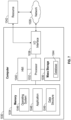
- FIG. 2 is a schematic diagram of the mobile communication system 10 shown in FIG. 1 .
- the antenna terminal 20 includes one or more antennas 50, where each antenna 50 includes both transmitting and receiving capabilities. For example, in the embodiment as shown in FIG. 2 , there are N number of antennas 50, where N is any whole number.
- the one or more antennas 50 include single-beam antennas, dual-beam antennas, and multi-beam antennas. In one embodiment, the antenna terminal 20 includes as few as one single-beam antenna 50. Alternatively, in another embodiment, the antenna terminal 20 unit includes a plurality of multi-beam antennas.
- the antennas 50 are combined Ka/Ku antennas, with the ability to switch between frequency bands as required.
- the one or more antennas 50 are in wireless communication with the modem manager 26 over the wireless communication link 24.
- the modem unit 22 includes two or more modems 54. For example, in the embodiment as shown in FIG. 2 , there are N number of modems 54.
- the two or more modems 54 are in electronic communication with one or more antennas 50.
- Each modem 54 is configured to support one of the service data streams (i.e., the primary service data stream and the secondary service data stream).
- the modem unit 22 includes an antenna switch 60 configured to connect each modem 54 to one or more of the antennas 50.
- the modem manager 26 is configured to manage the active bandwidth between the one or more satellite resources 14 and the mobile communication system 10. Specifically, the modem manager 26 is configured to continuously monitor the bandwidth utilization efficiency of the wireless communication between the one or more satellite resources 14 and the mobile communication system 10 (i.e., the return channel 42 seen in FIG. 1 ). The bandwidth capacity of wireless communication between the one or more satellite resources 14 and the mobile communication system 10 is configured to meet the service level agreement for the primary service data stream. However, it is to be appreciated that in at least some instances, the primary service data stream may have limited bandwidth needs. As a result, there may be a considerable amount of unused headroom in the wireless connection between the one or more satellite resources 14 and the mobile communication system 10.
- the mobile communication system 10 takes advantage of the unused headroom by actively managing the bandwidth of the wireless connection between the mobile communication system 10 and the one or more satellite resources 14 (i.e., the return channel 42). Specifically, the modem manager 26 determines the bandwidth utilization efficiency of the wireless connection between the mobile communication system 10 and the one or more satellite resources 14, where the modem manager 26 determines if available headroom 66 exists based on the bandwidth utilization efficiency. In response to determining there is available headroom 66 in the wireless connection between the one or more satellite resources 14 and the mobile communication system 10, the modem manager 26 then determines whether there is enough available headroom 66 to support a data service stream that combines the primary service data stream and the secondary service data stream together.
- the modem manager 26 combines the primary service data stream and the secondary service data stream together to create an aggregated data packet 70 (seen in FIG. 3 ). If the aggregated data packet 70 fits within the available headroom 66, then the modem manager 26 transmits the aggregated data packet 70 over the wireless communication network to the one or more satellite resources 14.
- the modem manager 26 actively manages the bandwidth utilization efficiency of the wireless connections between the one or more satellite resources 14 and the mobile communication system 10, thereby supporting the requirements of two or more service data streams, and without introducing additional elements or cost. It is to be appreciated that although the return channel 42 between the one or more satellite resources 14 and the mobile communication system 10 is described, a similar approach to managing bandwidth may be applied to the uplink 46 between one of the satellite resources 14 and the ground station 36 as well.
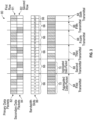
- FIG. 3 is an exemplary diagram 80 illustrating how the aggregated data packet 70 is created.
- the diagram 80 illustrates a plurality of primary data packets 82 that are arranged in sequence with one another along a first row R1, where the plurality of primary data packets 82 are part of the primary service data stream.
- the primary data packets 82 each represent a contiguous group of bits, where each primary data packet 82 is assigned a bandwidth and a priority.
- the diagram 80 also includes a plurality of secondary data packets 84 that are arranged in sequence with one another along a second row R2, where the plurality of secondary data packets 84 are part of the secondary service data stream.
- the secondary data packets 84 also represent a contiguous group of bits, where each secondary data packet 84 is assigned a bandwidth and a priority. In the exemplary embodiment as shown in FIG. 3 , there are sixteen primary data packets 82 and eight secondary data packets 84.
- the diagram 80 also illustrates a plurality of bandwidth slots 86 that are arranged in sequence with one another, where each bandwidth slot 86 represents a unit of headroom in the return channel 42 ( FIG. 1 ) for a specific unit of time.
- the bandwidth slot 86 may be measured by frequency (e.g., megahertz) or by data transfer rate (e.g., megabytes per second).
- twenty-seven bandwidth slots 86 are numbered in sequence (e.g., the slots are each numbered 1-27).
- the bandwidth slots 86 are divided into transmittals 88, where the transmittals 88 occur sequentially over the return channel 42. In the example as shown in FIG. 3 , six transmittals 88 are shown.
- the first transmittal 88 includes seven bandwidth slots 86
- the second transmittal 88 includes five bandwidth slots 86
- the third transmittal 88 includes five bandwidth slots 86
- the fourth transmittal 88 includes five bandwidth slots 86
- the fifth transmittal 88 includes three bandwidth slots 86
- the sixth transmittal 88 includes two bandwidth slots 86.
- the aggregated data packet 70 includes a size requiring six bandwidth slots 86.
- a size of the available headroom 66 is seven bandwidth slots 86.
- the modem manager 26 determines the size of the aggregated data packet 70 (e.g., six bandwidth slots 86) is less than the size of the available headroom 66 in the wireless connection between the one or more satellite resources 14 and the mobile communication system 10 (e.g., seven bandwidth slots 86). In response to determining the aggregated data packet 70 is less than or equal to the size of the available headroom 66, the modem manager 26 transmits the aggregated data packet 70 over the wireless communication network to the one or more satellite resources 14 (shown in FIG. 1 ).
- the aggregated data packet 70 e.g., six bandwidth slots 86
- the modem manager 26 transmits the aggregated data packet 70 over the wireless communication network to the one or more satellite resources 14 (shown in FIG. 1 ).
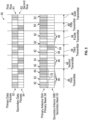
- the third transmittal 88 includes four primary data packets 82 and two secondary data packets 84. Therefore, the aggregated data packet 70 requires six bandwidth slots 86. However, in contrast to the first transmittal 88, the available headroom 66 includes only five bandwidth slots 86. Thus, the aggregated data packet 70 is greater than the size of the available headroom 66. Therefore, only the primary data packets 82 are sent during the third transmittal 88. In one embodiment, the remaining secondary data packets 84 that were not sent during the third transmittal 88 are transmitted during subsequent transmittals 88. For example, in the embodiment as seen in FIG. 3 , one of the two remaining secondary data packets 84 are sent during the fourth transmittal, and the other remaining secondary data packet 84 is sent during the fifth transmittal 88. As explained below, other alternatives exist when transmitting the remaining secondary data packets 84.
- the mobile communication system 10 includes a primary antenna 50A and a secondary antenna 50B, where the primary antenna 50A and the secondary antenna 50B operate in single-beam mode.
- the primary antenna 50A and the secondary antenna 50B include similar costs. In other words, the cost of transmitting data over the primary antenna 50A is about equal to the cost of transmitting data by the secondary antenna 50B.
- the primary data packets 82 of the primary service data stream are transmitted by the primary antenna 50A, while the secondary data packets 84 that are part of the secondary service data stream are transmitted by the secondary antenna 50B.
- a multi-beam antenna 50 configured to transmit at least a primary beam 90 and a secondary beam 92 is provided. Similar to the primary antenna 50A and the secondary antenna 50B, if the cost of transmitting data over the primary beam 90 transmitted by the multi-beam antenna 50 is similar to the cost of transmitting data over the secondary beam 92 transmitted by the multi-beam antenna 50, then the primary data packets 82 of the primary service data stream are transmitted by the primary beam 90 while the secondary data packets 84 of the secondary service data stream are transmitted by the secondary beam 92, which is shown in FIG. 4B .
- the cost of transmitting data over the primary antenna 50A is greater than the cost of transmitting data by the secondary antenna 50B. Accordingly, the modem manager 26 assigns the primary service data stream and the secondary data stream to the primary antenna 50A, but utilizes the secondary antenna 50B as a backup or alternative antenna for transmitting data when there is insufficient headroom available in the wireless connection between the primary antenna 50A and the one or more satellite resources 14. Similarly, the modem manager 26 also assigns the primary service data stream and the secondary data stream to the primary beam 90, but also utilizes the secondary beam 92 as an alternative beam for transmitting data when there is insufficient headroom available. Referring to FIGS. 1 , 4A , and FIG. 5 , the modem manager 26 ( FIG.
- the third transmittal 88 includes only five bandwidth slots 86.
- the aggregated data packet 70 is greater than the size of the available headroom 66. Therefore, as seen in FIG. 5 , the primary data packets 82 that are part of the third transmittal 88 are transmitted by the primary antenna 50A or the primary beam 90, however, the two remaining secondary data packets 84 are transmitted using the secondary antenna 50B or the secondary beam 92.
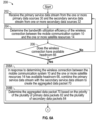
- FIGS. 1 , 2 , 3 , and 6A illustrate an exemplary process flow diagram illustrating a method 200 for sending data to the one or more satellite resources 14 over the wireless communication network.
- the method 200 may begin at block 202.
- the modem manager 26 receives the primary service data stream from the one or more primary data sources 30 and the secondary service data stream from the one or more secondary data sources 32.
- the method 200 may then proceed to block 204.
- the modem manager 26 determines the bandwidth utilization efficiency of the wireless connection between the mobile communication system 10 and the one or more satellite resources 14.
- the method 200 may then proceed to decision block 206.
- the modem manager 26 determines if the wireless connection between the one or more satellite resources 14 and the mobile communication system 10 has available headroom 66 ( FIG. 3 ) based on the bandwidth utilization efficiency described in block 204. For example, in one embodiment if the bandwidth utilization efficiency is one hundred percent (100%), then the modem manager 26 determines available headroom 66 does not exist, and the method 200 returns to block 202. However, if the bandwidth utilization efficiency is less than one hundred percent (100%), then the modem manager 26 determines available headroom 66 exists, and the method 200 proceeds to block 208A.
- the modem manager 26 compares the size of the aggregated data packet 70 with the size of the available headroom 66 of the wireless connection between the mobile communication system 10 and the one or more satellite resources 14. If the modem manager 26 determines the size of the aggregated data packet 70 is less than or equal to the size of the available headroom 66, then the method 200 proceeds to block 212.
- the modem manager 26 in response to determining the aggregated data packet 70 is less than or equal to the size of the available headroom 66, the modem manager 26 transmits the aggregated data packet 70 over the wireless connection. The method 200 may then terminate. However, if the modem manager 26 determines the size of the aggregated data packet 70 is greater than the size of the available headroom 66 of the wireless connection, then the method 200 proceeds to decision block 214.
- the modem manager 26 determines the multi-beam antenna 50 is available in multi-beam mode or, alternatively, if the modem manager 26 determines both a primary antenna 50A and a secondary antenna 50B (seen in FIG. 4A ) are available, then the method 200 proceeds to block 218. Otherwise, the method 200 returns back to block 202.
- the modem manager 26 in response to determining the size of the aggregated data packet 70 is greater than the size of the available headroom 66, assigns the primary data packets 82 of the primary service data stream that are part of the aggregated data packet 70 to the primary antenna 50 and the secondary data packets 84 of the secondary service data stream that are part of the aggregated data packet 70 to the secondary antenna 50B, which is shown in FIG. 4B .
- the modem manager 26 assigns the primary data packets 82 of the aggregated data packet 70 to the primary beam 90 and the secondary data packets 84 of the aggregated data packet 70 to the secondary beam 92.
- the method 200 may then terminate.
- the disclosed mobile communication system provides various technical effects and benefits.
- the modem manager employs active bandwidth management to support two or more service data streams, without the need to introduce additional elements or cost.
- the disclosed mobile communication system also improves the overall bandwidth utilization efficiency since the wireless connection to the one or more satellite resources is used to transmit the secondary service data stream if available headroom exists. It is to be appreciated that some conventional broadband satellite communication systems are customized to host a single specific modem card, which is extremely limiting.
- the disclosed mobile communication system includes two or more modems, which in turn support different types of antennas and bandwidths.
- the modem manager 26 are implemented on one or more computer devices or systems, such as exemplary computer system 1030.
- the computer system 1030 includes a processor 1032, a memory 1034, a mass storage memory device 1036, an input/output (I/O) interface 1038, and a Human Machine Interface (HMI) 1040.
- the computer system 1030 is operatively coupled to one or more external resources 1042 via the network 1026 or I/O interface 1038.
- External resources may include, but are not limited to, servers, databases, mass storage devices, peripheral devices, cloud-based network services, or any other suitable computer resource that may be used by the computer system 1030.
- the processor 1032 includes one or more devices selected from microprocessors, microcontrollers, digital signal processors, microcomputers, central processing units, field programmable gate arrays, programmable logic devices, state machines, logic circuits, analog circuits, digital circuits, or any other devices that manipulate signals (analog or digital) based on operational instructions that are stored in the memory 1034.
- Memory 1034 includes a single memory device or a plurality of memory devices including, but not limited to, read-only memory (ROM), random access memory (RAM), volatile memory, non-volatile memory, static random-access memory (SRAM), dynamic random-access memory (DRAM), flash memory, cache memory, or any other device capable of storing information.
- the mass storage memory device 1036 includes data storage devices such as a hard drive, optical drive, tape drive, volatile or non-volatile solid-state device, or any other device capable of storing information.
- the processor 1032 operates under the control of an operating system 1046 that resides in memory 1034.
- the operating system 1046 manages computer resources so that computer program code embodied as one or more computer software applications, such as an application 1048 residing in memory 1034, may have instructions executed by the processor 1032.
- the processor 1032 may execute the application 1048 directly, in which case the operating system 1046 may be omitted.
- One or more data structures 1049 also reside in memory 1034, and may be used by the processor 1032, operating system 1046, or application 1048 to store or manipulate data.
- the I/O interface 1038 provides a machine interface that operatively couples the processor 1032 to other devices and systems, such as the network 1026 or external resource 1042.
- the application 1048 thereby works cooperatively with the network 1026 or external resource 1042 by communicating via the I/O interface 1038 to provide the various features, functions, applications, processes, or modules comprising examples of the disclosure.
- the application 1048 also includes program code that is executed by one or more external resources 1042, or otherwise rely on functions or signals provided by other system or network components external to the computer system 1030.
- examples of the disclosure may include applications that are located externally to the computer system 1030, distributed among multiple computers or other external resources 1042, or provided by computing resources (hardware and software) that are provided as a service over the network 1026, such as a cloud computing service.
- the HMI 1040 is operatively coupled to the processor 1032 of computer system 1030 in a known manner to allow a user to interact directly with the computer system 1030.
- the HMI 1040 may include video or alphanumeric displays, a touch screen, a speaker, and any other suitable audio and visual indicators capable of providing data to the user.
- the HMI 1040 also includes input devices and controls such as an alphanumeric keyboard, a pointing device, keypads, pushbuttons, control knobs, microphones, etc., capable of accepting commands or input from the user and transmitting the entered input to the processor 1032.
- a database 1044 may reside on the mass storage memory device 1036 and may be used to collect and organize data used by the various systems and modules described herein.
- the database 1044 may include data and supporting data structures that store and organize the data.
- the database 1044 may be arranged with any database organization or structure including, but not limited to, a relational database, a hierarchical database, a network database, or combinations thereof.
- a database management system in the form of a computer software application executing as instructions on the processor 1032 may be used to access the information or data stored in records of the database 1044 in response to a query, where a query may be dynamically determined and executed by the operating system 1046, other applications 1048, or one or more modules.
Landscapes
- Engineering & Computer Science (AREA)
- Computer Networks & Wireless Communication (AREA)
- Signal Processing (AREA)
- Physics & Mathematics (AREA)
- Astronomy & Astrophysics (AREA)
- Aviation & Aerospace Engineering (AREA)
- General Physics & Mathematics (AREA)
- Quality & Reliability (AREA)
- Mobile Radio Communication Systems (AREA)
- Radio Relay Systems (AREA)
Claims (15)
- Système de communication mobile (10) sur une plateforme mobile (16), pour envoyer des données à une ou plusieurs ressources satellites (14) par l'intermédiaire d'une connexion sans fil, le système de communication mobile (10) comprenant:un ou plusieurs processeurs (1032);une ou plusieurs antennes (50) en communication électronique avec les un ou plusieurs processeurs (1032); etune mémoire (1034) couplée aux un ou plusieurs processeurs (1032), la mémoire (1034) stockant des données dans une base de données (1044) et un code de programme qui, lorsqu'il est exécuté par les un ou plusieurs processeurs (1032), amène le système de communication mobile (10) à:recevoir un flux de données de service primaire provenant d'une ou plusieurs sources de données primaires (30) et un flux de données de service secondaire provenant d'une ou plusieurs sources de données secondaires (32);déterminer une efficacité d'utilisation de bande passante de la connexion sans fil entre le système de communication mobile (10) et les une ou plusieurs ressources satellites (14);déterminer que la connexion sans fil a une marge de manœuvre disponible (66) sur la base de l'efficacité d'utilisation de bande passante des une ou plusieurs ressources satellites (14);en réponse à la détermination que la connexion sans fil a une marge de manœuvre disponible (66), combiner le flux de données de service primaire avec le flux de données de service secondaire pour créer un paquet de données agrégé (70);comparer une taille du paquet de données agrégé (70) avec une taille de la marge de manœuvre disponible (66) de la connexion sans fil entre le système de communication mobile (10) et les une ou plusieurs ressources satellites (14);déterminer si la taille du paquet de données agrégé (70) est inférieure ou égale à la taille de la marge de manœuvre disponible (66); eten réponse à la détermination que la taille du paquet de données agrégé (70) est inférieure ou égale à la taille de la marge de manœuvre disponible (66), transmettre le paquet de données agrégé (70) par l'intermédiaire de la connexion sans fil;déterminer si la taille du paquet de données agrégé (70) est supérieure à la taille de la marge de manœuvre disponible (66) de la connexion sans fil; eten réponse à la détermination que la taille du paquet de données agrégé (70) est supérieure à la taille de la marge de manœuvre disponible (66) et si les une ou plusieurs antennes (50) ne comprennent pas d'antenne multifaisceaux (50) et si pas plus d'une antenne (50) n'est disponible, continuer à recevoir le flux de données de service primaire et le flux de données de service secondaire.
- Système de communication mobile (10) selon la revendication 1,
où les une ou plusieurs antennes (50) comprennent une antenne multifaisceaux (50) configurée pour transmettre au moins un faisceau primaire (90) et un faisceau secondaire (92). - Système de communication mobile (10) selon la revendication 2,
où les un ou plusieurs processeurs (1032) exécutent des instructions pour:déterminer si la taille du paquet de données agrégé (70) est supérieure à la taille de la marge de manœuvre disponible (66) de la connexion sans fil; etdéterminer si l'antenne multifaisceaux (50) est disponible en mode multifaisceaux; eten réponse à la détermination que l'antenne multifaisceaux (50) est disponible en mode multifaisceaux, attribuer le flux de données de service primaire au faisceau primaire (90) et le flux de données de service secondaire au faisceau secondaire (92). - Système de communication mobile (10) selon la revendication 1,
où les une ou plusieurs antennes (50) comprennent une antenne primaire (50A) et une antenne secondaire (50B). - Système de communication mobile (10) selon la revendication 4,
où les un ou plusieurs processeurs (1032) exécutent des instructions pour:déterminer si la taille du paquet de données agrégé (70) est supérieure à la taille de la marge de manœuvre disponible (66) de la connexion sans fil; etdéterminer si l'antenne secondaire (50B) est disponible; eten réponse à la détermination que l'antenne secondaire (50B) est disponible, attribuer le flux de données de service primaire à l'antenne primaire (50A) et le flux de données de service secondaire à l'antenne secondaire (50B). - Système de communication mobile (10) selon l'une quelconque des revendications 1 à 5, où le flux de données de service primaire inclut une pluralité de paquets de données primaires (82) et le flux de données de service secondaire inclut une pluralité de paquets de données secondaires (84), et où les paquets de données primaires (82) et les paquets de données secondaires (84) indiquent les uns et les autres une bande passante et une priorité.
- Système de communication mobile (10) selon la revendication 6,où les un ou plusieurs processeurs (1032) exécutent des instructions pour:
déterminer le paquet de données agrégé (70) sur la base de la priorité des paquets de données primaires (82) et des paquets de données secondaires (84),où le flux de données de service primaire a la priorité sur le flux de données de service secondaire. - Système de communication mobile (10) selon la revendication 7,
où les un ou plusieurs processeurs (1032) exécutent des instructions pour:déterminer l'efficacité d'utilisation de bande passante des une ou plusieurs ressources satellites (14) sur la base de ce qui suit: où B représente une bande passante des une ou plusieurs ressources satellites (14), PB représente une bande passante des paquets de données primaires (82) et SB représente une bande passante des paquets de données secondaires (84).
 - Système de communication mobile (10) selon la revendication 1, comprenant en outre deux ou plusieurs modems (54) en communication électronique avec les un ou plusieurs processeurs (1032).
- Aéronef (18), comprenant le système de communication mobile (10) selon la revendication 9.
- Procédé (200) pour envoyer des données à une ou plusieurs ressources satellites (14) par l'intermédiaire d'une connexion sans fil par un système de communication mobile (10) sur une plate-forme mobile (16), le système de communication mobile (10) selon l'une quelconque des revendications 1 à 8, le procédé (200) comprenant:la réception, par un ordinateur (1030), d'un flux de données de service primaire provenant d'une ou plusieurs sources de données primaires (30) et d'un flux de données de service secondaire provenant d'une ou plusieurs sources de données secondaires (32);la détermination, par l'ordinateur (1030), d'une efficacité d'utilisation de bande passante d'une connexion sans fil entre le système de communication mobile (10) et les une ou plusieurs ressources satellites (14);la détermination, par l'ordinateur (1030), que la connexion sans fil a une marge de manœuvre disponible (66) sur la base de l'efficacité d'utilisation de la bande passante des une ou plusieurs ressources satellites (14);en réponse à la détermination que la connexion sans fil a une marge de manœuvre disponible (66), la combinaison du flux de données de service primaire avec le flux de données de service secondaire pour créer un paquet de données agrégé (70);la comparaison d'une taille du paquet de données agrégé (70) avec une taille de la marge de manœuvre disponible (66) de la connexion sans fil entre le système de communication mobile (10) et les une ou plusieurs ressources satellites (14);la détermination si la taille du paquet de données agrégé (70) est inférieure ou égale à la taille de la marge de manœuvre disponible (66); eten réponse à la détermination que la taille du paquet de données agrégé (70) est inférieure ou égale à la taille de la marge de manœuvre disponible (66), la transmission du paquet de données agrégé (70) par l'intermédiaire de la connexion sans fil;la détermination si la taille du paquet de données agrégé (70) est supérieure à la taille de la marge de manœuvre disponible (66) de la connexion sans fil; eten réponse à la détermination que la taille du paquet de données agrégé (70) est supérieure à la taille de la marge de manœuvre disponible (66) et si les une ou plusieurs antennes (50) ne comprennent pas d'antenne multifaisceaux (50) et si pas plus d'une antenne (50) n'est disponible, la continuation de la réception du flux de données de service primaire et du flux de données de service secondaire.
- Procédé (200) selon la revendication 11, où le système de communication mobile (10) comprend en outre une antenne primaire (50A) et une antenne secondaire (50B) en communication sans fil avec l'ordinateur (1030) par l'intermédiaire d'une liaison de communication sans fil.
- Procédé (200) selon la revendication 12, où le procédé (200) comprend en outre:la détermination si la taille du paquet de données agrégé (70) est supérieure à la taille de la marge de manœuvre disponible (66) de la connexion sans fil; etla détermination si l'antenne secondaire (50B) est disponible; eten réponse à la détermination que l'antenne secondaire (50B) est disponible, l'attribution du flux de données de service primaire à l'antenne primaire (50A) et du flux de données de service secondaire à l'antenne secondaire (50B).
- Procédé (200) selon la revendication 11, où le système de communication mobile (10) comprend en outre une antenne multifaisceaux en communication sans fil avec l'ordinateur (1030) par l'intermédiaire d'une liaison de communication sans fil, où l'antenne multifaisceaux est configurée pour transmettre un faisceau primaire (90) et un faisceau secondaire (92).
- Procédé (200) selon la revendication 14, comprenant en outre:la détermination si la taille du paquet de données agrégé (70) est supérieure à la taille de la marge de manœuvre disponible (66) de la connexion sans fil; etla détermination si l'antenne multifaisceaux est disponible en mode multifaisceaux; eten réponse à la détermination que l'antenne multifaisceaux est disponible en mode multifaisceaux, l'attribution du flux de données de service primaire au faisceau primaire (90) et du flux de données de service secondaire au faisceau secondaire (92).
Applications Claiming Priority (1)
| Application Number | Priority Date | Filing Date | Title |
|---|---|---|---|
| US202063114841P | 2020-11-17 | 2020-11-17 |
Publications (2)
| Publication Number | Publication Date |
|---|---|
| EP4002720A1 EP4002720A1 (fr) | 2022-05-25 |
| EP4002720B1 true EP4002720B1 (fr) | 2025-03-12 |
Family
ID=78621673
Family Applications (1)
| Application Number | Title | Priority Date | Filing Date |
|---|---|---|---|
| EP21205030.6A Active EP4002720B1 (fr) | 2020-11-17 | 2021-10-27 | Système de communication mobile utilisant une gestion de bande passante active |
Country Status (5)
| Country | Link |
|---|---|
| US (1) | US12149332B2 (fr) |
| EP (1) | EP4002720B1 (fr) |
| JP (1) | JP7851711B2 (fr) |
| CN (1) | CN114513242A (fr) |
| CA (1) | CA3131473A1 (fr) |
Families Citing this family (2)
| Publication number | Priority date | Publication date | Assignee | Title |
|---|---|---|---|---|
| US11924872B2 (en) * | 2020-12-31 | 2024-03-05 | Hughes Network Systems, Llc | Prioritization in aeronautical satellite networks |
| CN117254850B (zh) * | 2023-11-16 | 2024-02-13 | 上海卫星互联网研究院有限公司 | 资源调度方法及系统 |
Family Cites Families (10)
| Publication number | Priority date | Publication date | Assignee | Title |
|---|---|---|---|---|
| US6078958A (en) * | 1997-01-31 | 2000-06-20 | Hughes Electronics Corporation | System for allocating available bandwidth of a concentrated media output |
| US7054593B2 (en) | 2000-09-28 | 2006-05-30 | The Boeing Company | Return link design for PSD limited mobile satellite communication systems |
| MY167058A (en) | 2007-11-20 | 2018-08-02 | Telstra Corp Ltd | System and process for dimensioning a cellular telecommunications network |
| EP2548392B1 (fr) | 2010-03-16 | 2013-11-13 | ABB Research Ltd. | Procédé économe en énergie pour des communications dans un réseau de capteurs sans fil d'un système de commande industriel |
| EP2553963B1 (fr) | 2010-04-02 | 2020-07-22 | InterDigital Patent Holdings, Inc. | Procédé et appareil de prise en charge de communications via un noeud relais |
| US8432808B1 (en) | 2012-06-15 | 2013-04-30 | Viasat Inc. | Opportunistically delayed delivery in a satellite network |
| EP3637848B1 (fr) | 2012-09-07 | 2021-10-27 | Dejero Labs Inc. | Dispositif et procédé de caractérisation et d'optimisation de plusieurs connexions simultanées de données en temps réel |
| US9490891B2 (en) * | 2014-10-27 | 2016-11-08 | At&T Mobility Ii Llc | Techniques for in-flight connectivity |
| US9900082B1 (en) * | 2016-06-13 | 2018-02-20 | Stitel Networks, LLC | Converged data communications in satellite networks |
| US20200244345A1 (en) * | 2019-01-28 | 2020-07-30 | Peter E. Goettle | Apparatus and Methods for Broadband Aeronautical Communications Systems |
-
2021
- 2021-09-21 CA CA3131473A patent/CA3131473A1/fr active Pending
- 2021-10-27 EP EP21205030.6A patent/EP4002720B1/fr active Active
- 2021-11-16 US US17/527,345 patent/US12149332B2/en active Active
- 2021-11-16 JP JP2021186264A patent/JP7851711B2/ja active Active
- 2021-11-17 CN CN202111360039.0A patent/CN114513242A/zh active Pending
Also Published As
| Publication number | Publication date |
|---|---|
| JP7851711B2 (ja) | 2026-04-27 |
| EP4002720A1 (fr) | 2022-05-25 |
| CA3131473A1 (fr) | 2022-05-17 |
| JP2022080299A (ja) | 2022-05-27 |
| CN114513242A (zh) | 2022-05-17 |
| US20220158724A1 (en) | 2022-05-19 |
| US12149332B2 (en) | 2024-11-19 |
Similar Documents
| Publication | Publication Date | Title |
|---|---|---|
| CN113452432B (zh) | 多波束低轨卫星通信下行资源动态分配方法 | |
| US10707950B2 (en) | Relay platform for communicating telemetry data from one or more moving observation satellite(s) to the ground | |
| US6104911A (en) | Communication system with satellite diversity and method of operation thereof | |
| Richharia | Mobile satellite communications: principles and trends | |
| US6731909B2 (en) | Method and apparatus using a binary search pattern for identifying an interfering mobile terminal | |
| CN108432156B (zh) | 具有增加的通信容量的卫星系统和增加卫星系统容量的方法 | |
| Maine et al. | Crosslinks for the next-generation GPS | |
| EP1978651A2 (fr) | Attribution de bande passante programmable dans un système de communication satellite | |
| Yahia et al. | Evolution of high-throughput satellite systems: A vision of programmable regenerative payload | |
| CA3090403C (fr) | Systemes et procedes pour une attribution flexible de faisceaux a des passerelles dans un reseau de satellites de charge utile numerique a grand debit | |
| US20020104920A1 (en) | Method and apparatus for loading satellite software while moving a satellite to a new orbit | |
| EP4002720B1 (fr) | Système de communication mobile utilisant une gestion de bande passante active | |
| EP3741052B1 (fr) | Système de communication par satellite et procédé de communication dans un système de communication par satellite | |
| EP4169296B1 (fr) | Règles de transfert réduites pour noeuds de réseau aérospatial | |
| CN109039433B (zh) | 一种高通量卫星的接入载荷系统 | |
| Maine et al. | Communication architecture for GPS III | |
| Mortensen et al. | Automated spacecraft communications service demonstration using NASA’s SCaN testbed | |
| US10361796B2 (en) | Systems and methods for satellite noise and interference calibration using terminal measurements | |
| Acosta et al. | Advanced communications technology satellite (ACTS): four-year system performance | |
| Nessel et al. | Potential applications of active antenna technologies for emerging NASA space communications scenarios | |
| Gannon et al. | An augmented ground station architecture for spacecraft-initiated communication service requests | |
| Faber et al. | Heterogeneous Spacecraft Networks: General concept and case study of a cost-effective, multi-institutional Earth observation platform | |
| Abraham et al. | NASA deep space communications: future mission trends and their implications | |
| Jagadish | Effect of Ground Stations in Satellite Networks for Task Distribution in Centralized and Decentralized Approaches | |
| Cheung et al. | Architecture and concept of operation of next-generation ground network for communications and tracking of interplanetary smallsats |
Legal Events
| Date | Code | Title | Description |
|---|---|---|---|
| PUAI | Public reference made under article 153(3) epc to a published international application that has entered the european phase |
Free format text: ORIGINAL CODE: 0009012 |
|
| STAA | Information on the status of an ep patent application or granted ep patent |
Free format text: STATUS: THE APPLICATION HAS BEEN PUBLISHED |
|
| AK | Designated contracting states |
Kind code of ref document: A1 Designated state(s): AL AT BE BG CH CY CZ DE DK EE ES FI FR GB GR HR HU IE IS IT LI LT LU LV MC MK MT NL NO PL PT RO RS SE SI SK SM TR |
|
| STAA | Information on the status of an ep patent application or granted ep patent |
Free format text: STATUS: REQUEST FOR EXAMINATION WAS MADE |
|
| 17P | Request for examination filed |
Effective date: 20221005 |
|
| RBV | Designated contracting states (corrected) |
Designated state(s): AL AT BE BG CH CY CZ DE DK EE ES FI FR GB GR HR HU IE IS IT LI LT LU LV MC MK MT NL NO PL PT RO RS SE SI SK SM TR |
|
| RAP3 | Party data changed (applicant data changed or rights of an application transferred) |
Owner name: THE BOEING COMPANY |
|
| GRAP | Despatch of communication of intention to grant a patent |
Free format text: ORIGINAL CODE: EPIDOSNIGR1 |
|
| STAA | Information on the status of an ep patent application or granted ep patent |
Free format text: STATUS: GRANT OF PATENT IS INTENDED |
|
| INTG | Intention to grant announced |
Effective date: 20240820 |
|
| GRAJ | Information related to disapproval of communication of intention to grant by the applicant or resumption of examination proceedings by the epo deleted |
Free format text: ORIGINAL CODE: EPIDOSDIGR1 |
|
| STAA | Information on the status of an ep patent application or granted ep patent |
Free format text: STATUS: REQUEST FOR EXAMINATION WAS MADE |
|
| GRAP | Despatch of communication of intention to grant a patent |
Free format text: ORIGINAL CODE: EPIDOSNIGR1 |
|
| STAA | Information on the status of an ep patent application or granted ep patent |
Free format text: STATUS: GRANT OF PATENT IS INTENDED |
|
| INTC | Intention to grant announced (deleted) | ||
| GRAS | Grant fee paid |
Free format text: ORIGINAL CODE: EPIDOSNIGR3 |
|
| GRAA | (expected) grant |
Free format text: ORIGINAL CODE: 0009210 |
|
| STAA | Information on the status of an ep patent application or granted ep patent |
Free format text: STATUS: THE PATENT HAS BEEN GRANTED |
|
| INTG | Intention to grant announced |
Effective date: 20250117 |
|
| AK | Designated contracting states |
Kind code of ref document: B1 Designated state(s): AL AT BE BG CH CY CZ DE DK EE ES FI FR GB GR HR HU IE IS IT LI LT LU LV MC MK MT NL NO PL PT RO RS SE SI SK SM TR |
|
| REG | Reference to a national code |
Ref country code: GB Ref legal event code: FG4D |
|
| REG | Reference to a national code |
Ref country code: CH Ref legal event code: EP |
|
| REG | Reference to a national code |
Ref country code: DE Ref legal event code: R096 Ref document number: 602021027438 Country of ref document: DE |
|
| P01 | Opt-out of the competence of the unified patent court (upc) registered |
Free format text: CASE NUMBER: APP_10844/2025 Effective date: 20250305 |
|
| REG | Reference to a national code |
Ref country code: IE Ref legal event code: FG4D |
|
| PG25 | Lapsed in a contracting state [announced via postgrant information from national office to epo] |
Ref country code: RS Free format text: LAPSE BECAUSE OF FAILURE TO SUBMIT A TRANSLATION OF THE DESCRIPTION OR TO PAY THE FEE WITHIN THE PRESCRIBED TIME-LIMIT Effective date: 20250612 |
|
| PG25 | Lapsed in a contracting state [announced via postgrant information from national office to epo] |
Ref country code: FI Free format text: LAPSE BECAUSE OF FAILURE TO SUBMIT A TRANSLATION OF THE DESCRIPTION OR TO PAY THE FEE WITHIN THE PRESCRIBED TIME-LIMIT Effective date: 20250312 |
|
| PG25 | Lapsed in a contracting state [announced via postgrant information from national office to epo] |
Ref country code: ES Free format text: LAPSE BECAUSE OF FAILURE TO SUBMIT A TRANSLATION OF THE DESCRIPTION OR TO PAY THE FEE WITHIN THE PRESCRIBED TIME-LIMIT Effective date: 20250312 |
|
| REG | Reference to a national code |
Ref country code: LT Ref legal event code: MG9D |
|
| PG25 | Lapsed in a contracting state [announced via postgrant information from national office to epo] |
Ref country code: NO Free format text: LAPSE BECAUSE OF FAILURE TO SUBMIT A TRANSLATION OF THE DESCRIPTION OR TO PAY THE FEE WITHIN THE PRESCRIBED TIME-LIMIT Effective date: 20250612 |
|
| PG25 | Lapsed in a contracting state [announced via postgrant information from national office to epo] |
Ref country code: HR Free format text: LAPSE BECAUSE OF FAILURE TO SUBMIT A TRANSLATION OF THE DESCRIPTION OR TO PAY THE FEE WITHIN THE PRESCRIBED TIME-LIMIT Effective date: 20250312 |
|
| REG | Reference to a national code |
Ref country code: NL Ref legal event code: MP Effective date: 20250312 |
|
| PG25 | Lapsed in a contracting state [announced via postgrant information from national office to epo] |
Ref country code: LV Free format text: LAPSE BECAUSE OF FAILURE TO SUBMIT A TRANSLATION OF THE DESCRIPTION OR TO PAY THE FEE WITHIN THE PRESCRIBED TIME-LIMIT Effective date: 20250312 |
|
| PG25 | Lapsed in a contracting state [announced via postgrant information from national office to epo] |
Ref country code: BG Free format text: LAPSE BECAUSE OF FAILURE TO SUBMIT A TRANSLATION OF THE DESCRIPTION OR TO PAY THE FEE WITHIN THE PRESCRIBED TIME-LIMIT Effective date: 20250312 Ref country code: GR Free format text: LAPSE BECAUSE OF FAILURE TO SUBMIT A TRANSLATION OF THE DESCRIPTION OR TO PAY THE FEE WITHIN THE PRESCRIBED TIME-LIMIT Effective date: 20250613 |
|
| REG | Reference to a national code |
Ref country code: AT Ref legal event code: MK05 Ref document number: 1775905 Country of ref document: AT Kind code of ref document: T Effective date: 20250312 |
|
| PG25 | Lapsed in a contracting state [announced via postgrant information from national office to epo] |
Ref country code: NL Free format text: LAPSE BECAUSE OF FAILURE TO SUBMIT A TRANSLATION OF THE DESCRIPTION OR TO PAY THE FEE WITHIN THE PRESCRIBED TIME-LIMIT Effective date: 20250312 |
|
| PG25 | Lapsed in a contracting state [announced via postgrant information from national office to epo] |
Ref country code: SE Free format text: LAPSE BECAUSE OF FAILURE TO SUBMIT A TRANSLATION OF THE DESCRIPTION OR TO PAY THE FEE WITHIN THE PRESCRIBED TIME-LIMIT Effective date: 20250312 |
|
| PG25 | Lapsed in a contracting state [announced via postgrant information from national office to epo] |
Ref country code: SM Free format text: LAPSE BECAUSE OF FAILURE TO SUBMIT A TRANSLATION OF THE DESCRIPTION OR TO PAY THE FEE WITHIN THE PRESCRIBED TIME-LIMIT Effective date: 20250312 |
|
| PG25 | Lapsed in a contracting state [announced via postgrant information from national office to epo] |
Ref country code: PT Free format text: LAPSE BECAUSE OF FAILURE TO SUBMIT A TRANSLATION OF THE DESCRIPTION OR TO PAY THE FEE WITHIN THE PRESCRIBED TIME-LIMIT Effective date: 20250714 |
|
| PG25 | Lapsed in a contracting state [announced via postgrant information from national office to epo] |
Ref country code: PL Free format text: LAPSE BECAUSE OF FAILURE TO SUBMIT A TRANSLATION OF THE DESCRIPTION OR TO PAY THE FEE WITHIN THE PRESCRIBED TIME-LIMIT Effective date: 20250312 Ref country code: IT Free format text: LAPSE BECAUSE OF FAILURE TO SUBMIT A TRANSLATION OF THE DESCRIPTION OR TO PAY THE FEE WITHIN THE PRESCRIBED TIME-LIMIT Effective date: 20250312 |
|
| PG25 | Lapsed in a contracting state [announced via postgrant information from national office to epo] |
Ref country code: AT Free format text: LAPSE BECAUSE OF FAILURE TO SUBMIT A TRANSLATION OF THE DESCRIPTION OR TO PAY THE FEE WITHIN THE PRESCRIBED TIME-LIMIT Effective date: 20250312 |
|
| PG25 | Lapsed in a contracting state [announced via postgrant information from national office to epo] |
Ref country code: CZ Free format text: LAPSE BECAUSE OF FAILURE TO SUBMIT A TRANSLATION OF THE DESCRIPTION OR TO PAY THE FEE WITHIN THE PRESCRIBED TIME-LIMIT Effective date: 20250312 Ref country code: EE Free format text: LAPSE BECAUSE OF FAILURE TO SUBMIT A TRANSLATION OF THE DESCRIPTION OR TO PAY THE FEE WITHIN THE PRESCRIBED TIME-LIMIT Effective date: 20250312 |
|
| PG25 | Lapsed in a contracting state [announced via postgrant information from national office to epo] |
Ref country code: RO Free format text: LAPSE BECAUSE OF FAILURE TO SUBMIT A TRANSLATION OF THE DESCRIPTION OR TO PAY THE FEE WITHIN THE PRESCRIBED TIME-LIMIT Effective date: 20250312 |
|
| PG25 | Lapsed in a contracting state [announced via postgrant information from national office to epo] |
Ref country code: SK Free format text: LAPSE BECAUSE OF FAILURE TO SUBMIT A TRANSLATION OF THE DESCRIPTION OR TO PAY THE FEE WITHIN THE PRESCRIBED TIME-LIMIT Effective date: 20250312 |
|
| PG25 | Lapsed in a contracting state [announced via postgrant information from national office to epo] |
Ref country code: IS Free format text: LAPSE BECAUSE OF FAILURE TO SUBMIT A TRANSLATION OF THE DESCRIPTION OR TO PAY THE FEE WITHIN THE PRESCRIBED TIME-LIMIT Effective date: 20250712 |
|
| REG | Reference to a national code |
Ref country code: DE Ref legal event code: R097 Ref document number: 602021027438 Country of ref document: DE |
|
| PGFP | Annual fee paid to national office [announced via postgrant information from national office to epo] |
Ref country code: DE Payment date: 20251029 Year of fee payment: 5 |
|
| PGFP | Annual fee paid to national office [announced via postgrant information from national office to epo] |
Ref country code: GB Payment date: 20251027 Year of fee payment: 5 |
|
| PG25 | Lapsed in a contracting state [announced via postgrant information from national office to epo] |
Ref country code: DK Free format text: LAPSE BECAUSE OF FAILURE TO SUBMIT A TRANSLATION OF THE DESCRIPTION OR TO PAY THE FEE WITHIN THE PRESCRIBED TIME-LIMIT Effective date: 20250312 |
|
| PGFP | Annual fee paid to national office [announced via postgrant information from national office to epo] |
Ref country code: FR Payment date: 20251027 Year of fee payment: 5 |
|
| PLBE | No opposition filed within time limit |
Free format text: ORIGINAL CODE: 0009261 |
|
| STAA | Information on the status of an ep patent application or granted ep patent |
Free format text: STATUS: NO OPPOSITION FILED WITHIN TIME LIMIT |
|
| REG | Reference to a national code |
Ref country code: CH Ref legal event code: L10 Free format text: ST27 STATUS EVENT CODE: U-0-0-L10-L00 (AS PROVIDED BY THE NATIONAL OFFICE) Effective date: 20260121 |
|
| 26N | No opposition filed |
Effective date: 20251215 |