EP4003976B1 - Picolinamidderivate zur verwendung als landwirtschaftliche fungizide - Google Patents
Picolinamidderivate zur verwendung als landwirtschaftliche fungizide Download PDFInfo
- Publication number
- EP4003976B1 EP4003976B1 EP20747356.2A EP20747356A EP4003976B1 EP 4003976 B1 EP4003976 B1 EP 4003976B1 EP 20747356 A EP20747356 A EP 20747356A EP 4003976 B1 EP4003976 B1 EP 4003976B1
- Authority
- EP
- European Patent Office
- Prior art keywords
- independently
- alkyl
- compound
- cycloalkyl
- diseases
- Prior art date
- Legal status (The legal status is an assumption and is not a legal conclusion. Google has not performed a legal analysis and makes no representation as to the accuracy of the status listed.)
- Active
Links
Classifications
-
- A—HUMAN NECESSITIES
- A01—AGRICULTURE; FORESTRY; ANIMAL HUSBANDRY; HUNTING; TRAPPING; FISHING
- A01N—PRESERVATION OF BODIES OF HUMANS OR ANIMALS OR PLANTS OR PARTS THEREOF; BIOCIDES, e.g. AS DISINFECTANTS, AS PESTICIDES OR AS HERBICIDES; PEST REPELLANTS OR ATTRACTANTS; PLANT GROWTH REGULATORS
- A01N43/00—Biocides, pest repellants or attractants, or plant growth regulators containing heterocyclic compounds
- A01N43/90—Biocides, pest repellants or attractants, or plant growth regulators containing heterocyclic compounds having two or more relevant hetero rings, condensed among themselves or with a common carbocyclic ring system
-
- C—CHEMISTRY; METALLURGY
- C07—ORGANIC CHEMISTRY
- C07D—HETEROCYCLIC COMPOUNDS
- C07D401/00—Heterocyclic compounds containing two or more hetero rings, having nitrogen atoms as the only ring hetero atoms, at least one ring being a six-membered ring with only one nitrogen atom
- C07D401/02—Heterocyclic compounds containing two or more hetero rings, having nitrogen atoms as the only ring hetero atoms, at least one ring being a six-membered ring with only one nitrogen atom containing two hetero rings
- C07D401/12—Heterocyclic compounds containing two or more hetero rings, having nitrogen atoms as the only ring hetero atoms, at least one ring being a six-membered ring with only one nitrogen atom containing two hetero rings linked by a chain containing hetero atoms as chain links
-
- A—HUMAN NECESSITIES
- A01—AGRICULTURE; FORESTRY; ANIMAL HUSBANDRY; HUNTING; TRAPPING; FISHING
- A01N—PRESERVATION OF BODIES OF HUMANS OR ANIMALS OR PLANTS OR PARTS THEREOF; BIOCIDES, e.g. AS DISINFECTANTS, AS PESTICIDES OR AS HERBICIDES; PEST REPELLANTS OR ATTRACTANTS; PLANT GROWTH REGULATORS
- A01N43/00—Biocides, pest repellants or attractants, or plant growth regulators containing heterocyclic compounds
- A01N43/34—Biocides, pest repellants or attractants, or plant growth regulators containing heterocyclic compounds having rings with one nitrogen atom as the only ring hetero atom
- A01N43/40—Biocides, pest repellants or attractants, or plant growth regulators containing heterocyclic compounds having rings with one nitrogen atom as the only ring hetero atom six-membered rings
- A01N43/42—Biocides, pest repellants or attractants, or plant growth regulators containing heterocyclic compounds having rings with one nitrogen atom as the only ring hetero atom six-membered rings condensed with carbocyclic rings
-
- A—HUMAN NECESSITIES
- A01—AGRICULTURE; FORESTRY; ANIMAL HUSBANDRY; HUNTING; TRAPPING; FISHING
- A01P—BIOCIDAL, PEST REPELLANT, PEST ATTRACTANT OR PLANT GROWTH REGULATORY ACTIVITY OF CHEMICAL COMPOUNDS OR PREPARATIONS
- A01P3/00—Fungicides
-
- C—CHEMISTRY; METALLURGY
- C07—ORGANIC CHEMISTRY
- C07D—HETEROCYCLIC COMPOUNDS
- C07D401/00—Heterocyclic compounds containing two or more hetero rings, having nitrogen atoms as the only ring hetero atoms, at least one ring being a six-membered ring with only one nitrogen atom
- C07D401/14—Heterocyclic compounds containing two or more hetero rings, having nitrogen atoms as the only ring hetero atoms, at least one ring being a six-membered ring with only one nitrogen atom containing three or more hetero rings
-
- C—CHEMISTRY; METALLURGY
- C07—ORGANIC CHEMISTRY
- C07D—HETEROCYCLIC COMPOUNDS
- C07D498/00—Heterocyclic compounds containing in the condensed system at least one hetero ring having nitrogen and oxygen atoms as the only ring hetero atoms
- C07D498/02—Heterocyclic compounds containing in the condensed system at least one hetero ring having nitrogen and oxygen atoms as the only ring hetero atoms in which the condensed system contains two hetero rings
- C07D498/04—Ortho-condensed systems
Definitions
- the present invention relates to picolinic acid derivatives that are useful in treating fungal disease.
- a new threat contributing to this is the emergence of chemical-resistant organisms, for example, glyphosate-resistant weeds in the USA and strobilurin-resistant strains of septoria fungal species.
- Certain picolinic acid derivatives are shown to be useful in treating fungal disease in PCT/GB2019/050111 ( published as WO2019/141980 ).
- Other fungicidal compounds are known from EP1 134 214 A1 and WO01/49667 A1 .
- An aim of certain embodiments of the present invention is to provide pesticides (e.g. fungicides) which have activity either non-selectively, i.e. broad spectrum activity, or which are active specifically against selective target organisms.
- pesticides e.g. fungicides
- activity either non-selectively, i.e. broad spectrum activity, or which are active specifically against selective target organisms.
- An aim of certain embodiments of the present invention is to provide compounds which are less persistent in the environment after use than prior art compounds.
- the compounds of the present invention may be less prone to bioaccumulation once in the food chain than prior art compounds.
- Another aim of certain embodiments of the invention is to provide compounds which are less harmful to humans than prior art compounds.
- the compounds of the invention may be less harmful than prior art compounds to one or more of the following groups: amphibians, fish, mammals (including domesticated animals such as dogs, cats, cows, sheep, pigs, goats, etc.), reptiles, birds, and beneficial invertebrates (e.g. bees and other insects, or worms), beneficial nematodes, beneficial fungi and nitrogen-fixing bacteria.
- the compounds of the invention may be as active as or more active than prior art compounds. They may have activity against organisms which have developed a resistance to prior art compounds. However, the present invention may also concern compounds which have a lower or similar level of activity relative to that of the prior art compounds. These lower activity compounds are still effective as fungicides but may have other advantages relative to existing compounds such as, for example, a reduced environmental impact.
- the compounds of the invention may be more selective than prior art compounds, i.e. they may have better, similar or even slightly lower activity than prior art compounds against target species but have a significantly lower activity against non-target species (e.g. the crops which are being protected).
- Certain embodiments of the invention provide compounds that achieve one or more of the above aims.
- the compounds may be active in their own right or may metabolise or react in aqueous media to yield an active compound.
- the compound of formula I is a compound of formula II: wherein R 1 , R 2 , R 3 , R 4 , R 5a , n, Z 1 , Z 2 and R 6 are as described above for formula I; a single one of X 1 and X 2 is nitrogen and a single one of X 1 and X 2 is carbon; m is independently an integer selected from 0, 1, 2 and 3; p is independently an integer selected from 0, 1, 2, 3 and 4; and q is independently an integer selected from 0 and 1.
- the compound of formula I is a compound of formula III : wherein R 1 , R 2 , R 3 , R 4 , R 5a , n, Z 2 and R 6 are as described above for formula I; a single one of X 1 and X 2 is nitrogen and a single one of X 1 and X 2 is carbon; m is independently an integer selected from 0, 1, 2 and 3; and p1 is independently an integer selected from 0, 1, 2 and 3.
- the compound of formula I is a compound of formula IV : wherein R 1 , R 2 , R 5 and n are as described above for formula I; and R 3a is independently selected from: H, C 1 -C 4 -alkyl, C 3 -C 6 -cycloalkyl, C(O)R 14 , C(O)OR 14 , CH 2 OC(O)R 14 and CH 2 OC(O)OR 14 .
- the compound of formula I is a compound of formula V : wherein R 1 , R 2 , R 5 and n are as described above for formula I ; and Y 2 is independently selected from O and S.
- the compound of formula I is a compound of formula VI : wherein R 1 , R 2 , R 5a , n, Z 1 , Z 2 and R 6 are as described above for formula I ; a single one of X 1 and X 2 is nitrogen and a single one of X 1 and X 2 is carbon; m is independently an integer selected from 0, 1, 2 and 3; p is independently an integer selected from 0, 1, 2, 3 and 4; q is independently an integer selected from 0 and 1; and R 3a is independently selected from: H, C 1 -C 4 -alkyl, C 3 -C 6 -cycloalkyl, C(O)R 14 , C(O)OR 14 , CH 2 OC(O)R 14 and CH 2 OC(O)OR 14 .
- the compound of formula I is a compound of formula VI : wherein R 1 , R 2 , R 5a , n, Z 1 , Z 2 and R 6 are as described above for formula I ; a single one of X 1 and X 2 is nitrogen and a single one of X 1 and X 2 is carbon; m is independently an integer selected from 0, 1, 2 and 3; p is independently an integer selected from 0, 1, 2, 3 and 4; q is independently an integer selected from 0 and 1; and Y 2 is independently selected from O and S.
- the compound of formula I is a compound of formula VII: wherein R 1 , R 2 , R 5a , n, Z 2 and R 6 are as described above for formula I ; a single one of X 1 and X 2 is nitrogen and a single one of X 1 and X 2 is carbon; m is independently an integer selected from 0, 1, 2 and 3; p1 is independently an integer selected from 0, 1, 2 and 3; and R 3a is independently selected from: H, C 1 -C 4 -alkyl, C 3 -C 6 -cycloalkyl, C(O)R 14 , C(O)OR 14 , CH 2 OC(O)R 14 and CH 2 OC(O)OR 14 .
- the compound of formula I is a compound of formula VIII : wherein R 1 , R 2 , R 5a , n, Z 2 and R 6 are as described above for formula I ; a single one of X 1 and X 2 is nitrogen and a single one of X 1 and X 2 is carbon; m is independently an integer selected from 0, 1, 2 and 3; p1 is independently an integer selected from 0, 1, 2 and 3; and Y 2 is independently selected from O and S.
- the compound of formula I is a compound of formula IX : wherein R 1 , R 2 , R 3 , R 4 , R 5a , n, Z 2 and R 6 are as described above for formula I ; m is independently an integer selected from 0, 1, 2 and 3; and p2 is independently an integer selected from 0, 1 and 2.
- the compound of formula I is a compound of formula X : wherein R 1 , R 2 , R 3 , R 4 , R 5a , n, Z 2 and R 6 are as described above for formula I ; m1 is independently an integer selected from 0, 1 and 2; and p1 is independently an integer selected from 0, 1, 2 and 3.
- R 1 is independently at each occurrence selected from C 1 -C 4 -alkyl, halo and OR 11 .
- n is 1 or 2. Preferably, however, it may be that n is 0.
- R 2 may be independently selected from H, C 1 -C 4 -alkyl and C 3 -C 6 -cycloalkyl.
- R 2 may be independently selected from C 1 -C 4 -alkyl and C 3 -C 6 -cycloalkyl.
- R 2 may be methyl or ethyl.
- R 2 may be methyl.
- R 3 may be independently selected from H, C 1 -C 4 -alkyl, C 3 -C 6 -cycloalkyl, C(O)R 14 , C(O)OR 14 , CH 2 OC(O)R 14 and CH 2 OC(O)OR 14 .
- R 3 may be independently selected from H, C(O)R 14 , C(O)OR 14 , CH 2 OC(O)R 14 and CH 2 OC(O)OR 14 .
- R 3 may be independently selected from H, and C(O)R 14 .
- R 3 may be H.
- R 3 may be C(O)R 14 , e.g. C(O)Me.
- R 4 may be selected from C 3 -C 6 -cycloalkyl, C 1 -C 6 -alkyl and benzyl.
- R 4 may be C 1 -C 4 -alkyl, e.g. methyl.
- R 4 may be H.
- Y 2 may be S.
- Y 2 may be O.
- R 3 and R 4 together form a C 1 -C 2 -alkylene. It may be that R 3 and R 4 together form a C 1 alkylene, e.g. CH 2 or CMe 2 . It may be that R 3 and R 4 together form a C 2 alkylene, e.g. CH 2 CMe 2 , CMe 2 CH 2 or CH 2 CH 2 .
- Y 1 may be S.
- Y 1 may be O.
- R 5 is attached to the rest of the molecule via the ring of quinoline that comprises the nitrogen atom. It may be that R 5 is attached to the rest of the molecule via the ring of quinoline that does not comprise the nitrogen atom. It may be that R 5 is attached to the rest of the molecule via a carbon of quinoline that is not next to a carbon that is part of both rings of quinoline. Where present, it may be that Z 1 -Z 2 -R 6 is attached to R 5 via a carbon of quinoline that is not next to a carbon atom that is part of both rings of quinoline.
- R 5 may have the structure: wherein a single one of X 1 , X 2 , X 3 and X 4 is nitrogen and the other three of X 1 , X 2 , X 3 and X 4 are carbon; m is independently an integer selected from 0, 1, 2 and 3; p is independently an integer selected from 0, 1, 2, 3 and 4; and q is independently an integer selected from 0 and 1.
- R 5 may have the structure: wherein a single one of X 1 and X 2 is nitrogen and a single one of X 1 and X 2 is carbon; m is independently an integer selected from 0, 1, 2 and 3; p is independently an integer selected from 0, 1, 2, 3 and 4; and q is independently an integer selected from 0 and 1.
- R 5 may have the structure: wherein m is independently an integer selected from 0, 1, 2 and 3; p3 is independently an integer selected from 0, 1, 2 and 3; and q is independently an integer selected from 0 and 1.
- R 5 may have the structure: wherein m is independently an integer selected from 0, 1, 2 and 3; p5 is independently an integer selected from 0, 1 and 2; q is independently an integer selected from 0 and 1; and R 5b is selected from OR 11 and C 1 -C 6 -alkyl group. It may be that R 5b is C 1 -C 6 -alkyl.
- R 5 may have the structure: wherein m1 is independently an integer selected from 0, 1 and 2; p is independently an integer selected from 0, 1, 2, 3 and 4; and q is independently an integer selected from 0 and 1.
- R 5 may have the structure: wherein a single one of X 3 and X 4 is nitrogen and a single one of X 3 and X 4 is carbon; m is independently an integer selected from 0, 1, 2 and 3; p is independently an integer selected from 0, 1, 2, 3 and 4; and q is independently an integer selected from 0 and 1.
- q may be 0. Preferably, however, q is 1.
- the Z 1 -Z 2 -R 6 group is preferably situated para to the point of connection of R 5 to the rest of the molecule.
- R 5 may have the structure: wherein a single one of X 1 , X 2 , X 3 and X 4 is nitrogen and the other three of X 1 , X 2 , X 3 and X 4 are carbon; m is independently an integer selected from 0, 1, 2 and 3; and p1 is independently an integer selected from 0, 1, 2 and 3.
- R 5 may have the structure: wherein a single one of X 1 and X 2 is nitrogen and a single one of X 1 and X 2 is carbon; m is independently an integer selected from 0, 1, 2 and 3; and p1 is independently an integer selected from 0, 1, 2 and 3.
- R 5 may have the structure: wherein a single one of X 3 and X 4 is nitrogen and a single one of X 3 and X 4 is carbon; m is independently an integer selected from 0, 1, 2 and 3; and p1 is independently an integer selected from 0, 1, 2 and 3.
- X 3 may be N.
- X 4 may be N.
- R 5 may have the structure: wherein m is independently an integer selected from 0, 1, 2 and 3; and p2 is independently an integer selected from 0, 1 and 2.
- R 5 may have the structure: wherein m1 is independently an integer selected from 0, 1 and 2; and p1 is independently an integer selected from 0, 1, 2 and 3.
- m may be 0.
- n 1
- m2 may be 0.
- p may be 0. Where q is 0, however, p is preferably at least 1.
- p1 may be 0.
- p2 may be 0.
- p3 may be 0. Where q is 0, however, p3 is preferably at least 1.
- p4 may be 0. Where q is 0, however, p4 is preferably at least 1.
- p5 may be 0. Where q is 0, however, p5 is preferably at least 1.
- R 5a may be independently at each occurrence selected from: cyano, nitro, C 1 -C 4 -alkyl, halo and OR 11 .
- Z 1 may be CR 8 R 9 . Preferably, however, Z 1 is absent.
- Z 1 -Z 2 -R 6 may be Z 2 -R 6 .
- Z 2 may be absent or selected from C(O)O, OC(O), O, S, S(O), S(O) 2 , CR 8 R 9 and NR 7 .
- Z 2 may be absent or selected from C(O)O, OC(O), O, S, CR 8 R 9 , and NR 7 .
- Z 2 may be selected from CR 8 R 9 , S, NR 7 and O.
- Z 2 may be absent or selected from NR 7 , S, and O.
- Z 2 may be selected from NR 7 , S, and O.
- Z 2 may be selected from O and S.
- Z 2 may be O.
- Z 2 may be S.
- Z 2 may be NR 7 .
- Z 2 may be CR 8 R 9 .
- R 7 may be H. Preferably, however R 7 is C 1 -C 4 -alkyl, e.g. methyl.
- Z 2 may be absent.
- Z 1 -Z 2 -R 6 may be R 6 .
- R 6 may be CH 2 R 6a .
- R 6 may be R 6a .
- Z 1 -Z 2 -R 6 may be Z 1 -Z 2 -R 6a .
- Z 1 -Z 2 -R 6 may be Z 2 -R 6a .
- Z 1 -Z 2 -R 6 may be R 6a .
- R 6a may be optionally substituted phenyl, e.g. unsubstituted phenyl.
- R 6 maybe optionally substituted phenyl, e.g. unsubstituted phenyl.
- R 6a may have the structure: wherein x is an integer selected from 0, 1, 2, 3, 4 and 5.
- x may be at least 1. x may be 1, 2 or 3. x may be 1 or 2. x may be 1. x may be 0.
- R 15 may in a single occurrence be situated para to Z 2 .
- R 6a may have the structure: wherein y is an integer selected from 0, 1, 2, 3 and 4.
- y may be at least 1. y may be 1 or 2. y may be 1. y may be 0.
- R 6a may have the structure:
- R 15 may be independently at each occurrence selected from: cyano, nitro, C 1 -C 4 -alkyl, C 1 -C 4 -haloalkyl, halo, S-R 12 and O-R 11 .
- R 15 may be independently at each occurrence selected from: C 1 -C 4 -alkyl, C 1 -C 4 -haloalkyl and halo.
- R 6a may be a 6-membered heteroaryl, e.g. a pyridine.
- R 6a may have a structure selected from:
- R 6 may be C 3 -C 8 -alkyl, e.g. C 3 -C 6 -alkyl. This is particularly preferred where Z 2 is selected from O, S and NR 7 .
- the compound of formula ( I ) may be selected from:
- C m -C n refers to a group with m to n carbon atoms.
- alkyl refers to a linear or branched saturated monovalent hydrocarbon chain.
- C 1 -C 6 -alkyl may refer to methyl, ethyl, n-propyl, iso -propyl, n-butyl, sec -butyl, tert -butyl, n-pentyl and n-hexyl.
- the alkyl groups may be unsubstituted or substituted by one or more substituents. Specific substituents for each alkyl group independently may be fluorine, OR a or NHR a .
- alkylene refers to a linear saturated divalent hydrocarbon chain.
- the alkylene groups may be unsubstituted or substituted by one or more substituents. Specific substituents for each alkylene group independently may be C 1 -C 4 -alkyl, fluorine, OR a or NHR a .
- haloalkyl refers to a hydrocarbon group substituted with at least one halogen atom independently chosen at each occurrence from: fluorine, chlorine, bromine and iodine.
- the halogen atom may be present at any position on the hydrocarbon chain.
- C 1 -C 6 -haloalkyl may refer to chloromethyl, fluoromethyl, trifluoromethyl, chloroethyl e.g. 1-chloroethyl and 2-chloroethyl, trichloroethyl e.g. 1,2,2-trichloroethyl, 2,2,2-trichloroethyl, fluoroethyl e.g.
- a haloalkyl group may be a fluoroalkyl group, i.e. a hydrocarbon chain substituted with at least one fluorine atom.
- a haloalkyl group may have any amount of halogen substituents.
- the group may contain a single halogen substituent, it may have two or three halogen substituents, or it may be saturated with halogen substituents.
- alkenyl refers to a branched or linear hydrocarbon group containing at least one double bond.
- the double bond(s) may be present as the E or Z isomer.
- the double bond may be at any possible position of the hydrocarbon chain; for example, "C 2 -C 6 -alkenyl” may refer to ethenyl, propenyl, butenyl, butadienyl, pentenyl, pentadienyl, hexenyl and hexadienyl.
- the alkenyl groups may be unsubstituted or substituted by one or more substituents. Specific substituents for any saturated carbon atom in each alkenyl group independently may be fluorine, OR a or NHR a .
- alkynyl refers to a branched or linear hydrocarbon chain containing at least one triple bond.
- the triple bond may be at any possible position of the hydrocarbon chain.
- C 2 -C 6 -alkynyl may refer to ethynyl, propynyl, butynyl, pentynyl and hexynyl.
- the alkynyl groups may be unsubstituted or substituted by one or more substituents. Specific substituents for any saturated carbon atom in each alkynyl group independently may be fluorine, OR a or NHR a .
- cycloalkyl refers to a saturated hydrocarbon ring system containing, for example, 3, 4, 5 or 6 carbon atoms.
- C 3 -C 6 -cycloalkyl may refer to cyclopropyl, cyclobutyl, cyclopentyl, cyclohexyl.
- the cycloalkyl groups may be unsubstituted or substituted by one or more substituents. Specific substituents for each cycloalkyl group independently may be fluorine, OR a or NHR a .
- heterocycloalkyl may refer to a monocyclic or bicyclic saturated or partially saturated group having the indicated number of atoms in the ring system and comprising 1 or 2 heteroatoms independently selected from O, S and N in the ring system (in other words 1 or 2 of the atoms forming the ring system are selected from O, S and N).
- partially saturated it is meant that the ring may comprise one or two double bonds. This applies particularly to monocyclic rings with from 5 to 6 members. The double bond will typically be between two carbon atoms but may be between a carbon atom and a nitrogen atom.
- heterocycloalkyl groups include; piperidine, piperazine, morpholine, thiomorpholine, pyrrolidine, tetrahydrofuran, tetrahydrothiophene, dihydrofuran, tetrahydropyran, dihydropyran, dioxane, azepine.
- a heterocycloalkyl group may be unsubstituted or substituted by one or more substituents.
- Specific substituents for any saturated carbon atom in each heterocycloalkyl group may independently be fluorine, OR a or NHR a .
- Aryl groups may be any aromatic carbocyclic ring system (i.e. a ring system containing 2(2n + 1) ⁇ electrons). Aryl groups may have from 6 to 12 carbon atoms in the ring system. Aryl groups will typically be phenyl groups. Aryl groups may be naphthyl groups or biphenyl groups.
- heteroaryl groups may be any aromatic (i.e. a ring system containing 2(2n + 1) ⁇ electrons) 5-10 membered ring system comprising from 1 to 4 heteroatoms independently selected from O, S and N (in other words from 1 to 4 of the atoms forming the ring system are selected from O, S and N).
- any heteroaryl groups may be independently selected from: 5 membered heteroaryl groups in which the heteroaromatic ring is substituted with 14 heteroatoms independently selected from O, S and N; and 6-membered heteroaryl groups in which the heteroaromatic ring is substituted with 1-3 (e.g.1-2) nitrogen atoms; 9-membered bicyclic heteroaryl groups in which the heteroaromatic system is substituted with 1-4 heteroatoms independently selected from O, S and N; 10-membered bicyclic heteroaryl groups in which the heteroaromatic system is substituted with 1-4 nitrogen atoms.
- heteroaryl groups may be independently selected from: pyrrole, furan, thiophene, pyrazole, imidazole, oxazole, isoxazole, triazole, oxadiazole, thiadiazole, tetrazole, pyridine, pyridazine, pyrimidine, pyrazine, triazine, indole, isoindole, benzofuran, isobenzofuran, benzothiophene, indazole, benzimidazole, benzoxazole, benzothiazole, benzisoxazole, purine, quinoline, isoquinoline, cinnoline, quinazoline, quinoxaline, pteridine, phthalazine, naphthyridine.
- aryl or heteroaryl group is unsubstituted or is optionally substituted, where chemically possible, by 1 to 5 substituents which are each independently selected at each occurrence from: halo, nitro, cyano, NR a R a , NR a S(O) 2 R a , NR a C(O)R a , NR a CONR a R a , NR a CO 2 R a , OR a , SR a , S(O)R a , S(O) 2 OR a , S(O) 2 R a , S(O) 2 NR a R a , CO 2 R a C(O)R a , CONR a R a , CR b R b NR a R a , CR b R b OR a , C 1 -C 4 -alkyl, C
- the compounds of the invention may be obtained, stored and/or used in the form of an agronomically acceptable salt.
- Suitable salts include, but are not limited to, salts of acceptable inorganic acids such as hydrochloric, sulfuric, phosphoric, nitric, carbonic, boric, sulfamic, and hydrobromic acids, or salts of agronomically acceptable organic acids such as acetic, propionic, butyric, tartaric, maleic, hydroxymaleic, fumaric, malic, citric, lactic, mucic, gluconic, benzoic, succinic, oxalic, phenylacetic, methanesulfonic, toluenesulfonic, benzenesulfonic, salicylic, sulfanilic, aspartic, glutamic, edetic, stearic, palmitic, oleic, lauric, pantothenic, tannic, ascorbic and valeric acids.
- Suitable salts also include salts of inorganic and organic bases, e.g. counterions such as Na, Ca, K, Li, Mg, ammonium, trimethylsulfonium.
- the compounds may also be obtained, stored and/or used in the form of an N-oxide.
- acid addition salts or base salts wherein the counter ion is optically active for example, d-lactate or I-lysine, or racemic; for example, dl-tartrate or dl-arginine.
- Cis / trans isomers may be separated by conventional techniques well known to those skilled in the art, for example, chromatography and fractional crystallisation.
- chiral compounds of the invention may be obtained in enantiomerically-enriched form using chromatography, typically HPLC, on an asymmetric resin with a mobile phase consisting of a hydrocarbon, typically heptane or hexane, containing from 0 to 50% by volume of isopropanol, typically from 2% to 20%, and for specific examples, 0 to 5% by volume of an alkylamine e.g. 0.1% diethylamine. Concentration of the eluate affords the enriched mixture.
- the racemate (or a racemic precursor) may be reacted with a suitable optically active compound, for example, an alcohol, or, in the case where the compound of the invention contains an acidic or basic moiety, a base or acid such as 1-phenylethylamine or tartaric acid.
- a suitable optically active compound for example, an alcohol, or, in the case where the compound of the invention contains an acidic or basic moiety, a base or acid such as 1-phenylethylamine or tartaric acid.
- the resulting diastereomeric mixture may be separated by chromatography and/or fractional crystallisation and one or both of the diastereoisomers converted to the corresponding pure enantiomer(s) by means well known to a skilled person.
- the first type is the racemic compound (true racemate) referred to above wherein one homogeneous form of crystal is produced containing both enantiomers in equimolar amounts.
- the second type is the racemic mixture or conglomerate wherein two forms of crystal are produced in equimolar amounts each comprising a single enantiomer.
- Racemic mixtures may be separated by conventional techniques known to those skilled in the art - see for example, " Stereochemistry of Organic Compounds" by E. L. Eliel and S. H. Wilen (Wiley, 1994 ).
- the activity of the compounds of the present invention can be assessed by a variety of in silico, in vitro and in vivo assays. In silico analysis of a variety of compounds has been demonstrated to be predictive of ultimate in vitro and even in vivo activity.
- the present invention also includes all environmentally acceptable isotopically-labelled compounds of formulae I to X and their syntheses, wherein one or more atoms are replaced by atoms having the same atomic number, but an atomic mass or mass number different from the atomic mass or mass number usually found in nature.
- isotopes suitable for inclusion in the compounds of the invention include isotopes of hydrogen, such as 2 H and 3 H, carbon, such as 11 C, 13 C and 14 C, chlorine, such as 36 Cl, fluorine, such as 18 F, iodine, such as 123 I and 125 I, nitrogen, such as 13 N and 15 N, oxygen, such as 15 O, 17 O and 18 O, phosphorus, such as 32 P, and sulfur, such as 35 S.
- Isotopically-labelled compounds can generally be prepared by conventional techniques known to those skilled in the art or by processes analogous to those described using an appropriate isotopically-labelled reagent in place of the non-labelled reagent previously employed.
- the compounds of the invention can, at certain concentrations or application rates, be used as fungicides.
- a method for controlling fungal diseases comprising the application of an agronomically effective and substantially non-phytotoxic (to the crop plant) quantity of a compound of the invention to the seeds of the plants, to the plants themselves or to the area where it is intended that the plants will grow.
- the pesticide may be applied as a seed treatment, foliar application, stem application, drench or drip application (chemigation) to the seed, the plant or to the fruit of the plant or to soil or to inert substrate (e.g. inorganic substrates like sand, rockwool, glasswool; expanded minerals like perlite, vermiculite, zeolite or expanded clay), Pumbe, Pyroclastic materials or stuff, synthetic organic substrates (e.g. polyurethane) organic substrates (e.g. peat, composts, tree waste products like coir, wood fibre or chips, tree bark) or to a liquid substrate (e.g. floating hydroponic systems, Nutrient Film Technique, Aeroponics).
- inert substrate e.g. inorganic substrates like sand, rockwool, glasswool; expanded minerals like perlite, vermiculite, zeolite or expanded clay
- synthetic organic substrates e.g. polyurethane
- organic substrates e.g. peat
- the present invention also relates to a fungicidal composition
- a fungicidal composition comprising an effective and non-phytotoxic amount of an active compound of the invention.
- the composition may further comprise one or more additional fungicides.
- the term "effective and non-phytotoxic amount” means an amount of pesticide according to the invention which is sufficient to control or destroy any of the targeted pests present or liable to appear in the crops and which does not have any significant detrimental effect on the crops or indeed has a positive effect on plant vigour and yield in the absence of target organism.
- the amount will vary depending on the pest to be controlled, the type of crop, the climatic conditions and the compounds included in the pesticidal composition. This amount can be determined by systematic field trials, which are within the capabilities of a person skilled in the art.
- the active compounds of the invention can be formulated as solutions, emulsions, suspensions, powders, foams, pastes, granules, aerosols, microencapsulations in polymeric substances and in coating materials for seed, and also as ULV cold and warm fogging formulations.
- the active compounds can be used neat, or in the form of a formulation, e.g. ready-to-use solutions, emulsions, water- or oil-based suspensions, powders, wettable powders, pastes, soluble powders, dusts, soluble granules, granules for broadcasting, suspoemulsion concentrates, natural substances impregnated with active compound, synthetic substances impregnated with active compound, fertilizers and also microencapsulations in polymeric substances.
- Application may be carried out, for example, by watering, spraying, atomising, broadcasting, dusting, foaming, spreading, etc. It is also possible to apply the active compounds by the ultra-low volume method or to inject the preparation of active compound or the active compound itself into the soil. It is also possible to treat the seed of the plants.
- Formulations containing the compounds of the invention are produced in a known manner, for example by mixing the compounds with extenders (e.g. liquid solvents and/or solid carriers), optionally with the use of surfactants (e.g. emulsifiers and/or dispersants and/or foam-formers).
- extenders e.g. liquid solvents and/or solid carriers
- surfactants e.g. emulsifiers and/or dispersants and/or foam-formers.
- the formulations are prepared either in factories/production plants or alternatively before or during the application.
- auxiliaries are substances which are suitable for imparting to the composition itself and/or to preparations derived therefrom (for example; spray liquors, seed dressings) particular properties such as certain technical properties and/or also particular biological properties.
- suitable auxiliaries are: extenders, solvents and carriers.
- Suitable extenders are, for example, water, polar and nonpolar organic chemical liquids, for example from the classes of the aromatic and non-aromatic hydrocarbons (such as paraffins, alkylbenzenes, alkylnaphthalenes, chlorobenzenes), the alcohols and polyols (which, if appropriate, may also be substituted, etherified and/or esterified), the ketones (such as acetone, cyclohexanone), esters (including fats and oils) and (poly)ethers, the unsubstituted and substituted amines, amides, lactams (such as N-alkylpyrrolidones) and lactones, the sulfones and sulfoxides (such as dimethyl sulfoxide).
- aromatic and non-aromatic hydrocarbons such as paraffins, alkylbenzenes, alkylnaphthalenes, chlorobenzenes
- the alcohols and polyols
- suitable liquid solvents are: aromatics such as xylene, toluene or alkylnaphthalenes; chlorinated aromatics and chlorinated aliphatic hydrocarbons such as chlorobenzenes, chloroethylenes or methylene chloride; aliphatic hydrocarbons such as cyclohexane or paraffins, for example petroleum fractions; alcohols such as butanol or glycol and also their ethers and esters; ketones such as acetone, methyl ethyl ketone, methyl isobutyl ketone or cyclohexanone; strongly polar solvents such as dimethylformamide and dimethyl sulfoxide.
- aromatics such as xylene, toluene or alkylnaphthalenes
- chlorinated aromatics and chlorinated aliphatic hydrocarbons such as chlorobenzenes, chloroethylenes or methylene chloride
- aliphatic hydrocarbons such as cyclohexane
- Suitable solid carriers are: for example, ammonium salts and ground natural minerals such as kaolins, clays, talc, chalk, quartz, attapulgite, montmorillonite or diatomaceous earth, and ground synthetic minerals, such as finely divided silica, alumina and silicates;
- suitable solid carriers for granules are: for example, crushed and fractionated natural rocks such as calcite, marble, pumice, sepiolite and dolomite, and also synthetic granules of inorganic and organic meals, and granules of organic material such as paper, sawdust, coconut shells, maize cobs and tobacco stalks;
- suitable emulsifiers and/or foam-formers are: for example, nonionic and anionic emulsifiers, such as polyoxyethylene fatty acid esters, polyoxyethylene fatty alcohol ethers, for example alkylaryl polyglycol ethers, alkylsulfonates, alkyl sulfates
- oligo- or polymers for example those derived from vinylic monomers, from acrylic acid, from EO and/or PO alone or in combination with, for example, (poly)alcohols or (poly)amines. It is also possible to employ lignin and its sulfonic acid derivatives, unmodified and modified celluloses, aromatic and/or aliphatic sulfonic acids and their adducts with formaldehyde.
- Tackifiers such as carboxymethylcellulose and natural and synthetic polymers in the form of powders, granules or lattices, such as gum arabic, polyvinyl alcohol and polyvinyl acetate, as well as natural phospholipids such as cephalins and lecithins, and synthetic phospholipids, can be used in the formulations.
- Further additives may be mineral and vegetable oils. It is also possible to add colourants such as inorganic pigments, for example iron oxide, titanium oxide and Prussian Blue, and organic dyestuffs, such as alizarin dyestuffs, azo dyestuffs and metal phthalocyanine dyestuffs, and trace nutrients such as salts of iron, manganese, boron, copper, cobalt, molybdenum and zinc.
- colourants such as inorganic pigments, for example iron oxide, titanium oxide and Prussian Blue
- organic dyestuffs such as alizarin dyestuffs, azo dyestuffs and metal phthalocyanine dyestuffs
- trace nutrients such as salts of iron, manganese, boron, copper, cobalt, molybdenum and zinc.
- Other possible additives are perfumes, mineral or vegetable, optionally modified oils and waxes.
- the formulations may also comprise stabilizers, e.g. low-temperature stabilizers, preservatives, antioxidants, light stabilizers or other agents which improve chemical and/or physical stability.
- stabilizers e.g. low-temperature stabilizers, preservatives, antioxidants, light stabilizers or other agents which improve chemical and/or physical stability.
- the formulations generally comprise between 0.01 and 98% by weight of active compound, preferably between 0.1 and 95% and particularly preferably between 0.5 and 90%.
- the active compounds of the invention can also be used as a mixture with other known fungicides, for example, to improve the activity spectrum or to reduce or slow the development of resistance.
- a mixture with other known active compounds such as nematicides, herbicides, insecticides, acaricides, or bactericides, or with fertilizers and growth regulators, safeners or semiochemicals is also possible.
- Exemplary application rates of the active compounds according to the invention are: when treating leaves: from 0.1 to 10 000 g/ha, preferably from 10 to 1000 g/ha, particularly preferably from 50 to 300 g/ha (when the application is carried out by watering or dripping, it is even possible to reduce the application rate, especially when inert substrates such as rock wool or perlite are used); when treating seed: from 2 to 200 g per 100 kg of seed, preferably from 2.5 to 150 g per 100 kg of seed, and particularly preferably from 2.5 to 25 g per 100 kg of seed, very particularly preferably from 2.5 to 12.5 g per 100 kg of seed; when treating the soil: from 0.1 to 10000 g/ha, preferably from 1 to 5000 g/ha.
- compositions according to the invention are suitable for protecting any plant variety which is employed in agriculture, in the greenhouse, in forests or in horticulture and, in particular, cereals (e.g. wheat, barley, rye, millet and oats), maize, cotton, soya beans, rice, potatoes, sunflowers, beans, coffee, beet (for example sugar beet and fodder beet), peanuts, vegetables (e.g. tomatoes, cucumbers, onions and lettuce), lawns, fruit and nut trees (e.g. apples, pears, peaches, nectarines, apricots, hazelnut, pecan, macadamia, pistachio), soft fruit (e.g. strawberries, raspberries, blackcurrants, redcurrants), grapevines, bananas, cocoa and ornamental plants.
- cereals e.g. wheat, barley, rye, millet and oats
- maize cotton
- soya beans rice
- potatoes e.g. tomatoes, cucumbers
- the active compounds of the invention in combination with good plant tolerance and favourable toxicity to warm-blooded animals and being tolerated well by the environment, are suitable for protecting plants and plant organs, for increasing the harvest yields, for improving the quality of the harvested material and for controlling pests, in particular fungal diseases, which are encountered in agriculture, in horticulture, in animal husbandry, in forests, in gardens and leisure facilities, in the protection of stored products and of materials, and in the hygiene sector. They may be preferably employed as crop protection agents.
- the compounds of the invention have activity as fungicides.
- the compounds of the invention may be active against a broad spectrum of fungal diseases of plants. Alternatively, they may be active specifically against certain specific fungal diseases.
- wheat leaf blotch (Septoria tritici), wheat brown rust (Puccinia triticina), wheat stripe rust (Puccinia striiformis), scab of apple (Venturia inaequalis), powdery mildew of grapevine (Uncinula necator), barley scald (Rhynchosporium secalis), blast of rice (Magnaporthe grisea), rust of soybean (Phakopsora pachyrhizi), glume blotch of wheat (Leptosphaeria nodorum), powdery mildew of wheat (Blumeria graminis f. sp.
- the compounds of the invention may also have activity against other microbes, e.g. bacteria.
- the fungicidal compounds of the invention may also be used in the treatment of fungal diseases of humans and animals (e.g. mammals). Likewise, the bactericidal compounds of the invention may be used in the treatment of bacterial diseases of humans and animals.
- the invention includes a method of treating a fungal or bacterial disease, the method comprising of administering a therapeutic amount of an antifungal agent of the invention to a subject (e.g. a human subject) in need thereof.
- the compound may be formulated for topical administration to the infected area of the body or it may be formulated for oral or parenteral administration.
- Sensitive functional groups may need to be protected and deprotected during synthesis of a compound of the invention. This may be achieved by conventional methods, for example as described in " Protective Groups in Organic Synthesis” by TW Greene and PGM Wuts, John Wiley & Sons Inc. (1999 ), and references therein.
- Quinolines of formula A are commercially available.
- Activating group X on quinoline A can be used as a handle to introduce the Z 1 -Z 2 -R 6 group and provide quinoline B.
- Z 1 -Z 2 -R 6 can be introduced using coupling reactions (e.g. Buchwald-Hartwig, Suzuki) with a suitable coupling partner (e.g. a boronic ester) in which case X may be a halogen, e.g. bromide, or a boronic ester.
- Z 1 -Z 2 -R 6 can be introduced using an addition elimination reaction, in which case X may be a leaving groups, such as a halogen, e.g chloro, or a sulfonate, e.g. methylsulfonate.
- Addition/elimination reactions are particularly appropriate where Z 1 -Z 2 -R 6 is Z 2 R 6 and Z 2 is O, S or NR 7 .
- quinoline A is typically treated with R 6 -Z 2 -H in the presence of a base (e.g. NaH or Na 2 CO 3 ). Reduction of the nitro group, e.g. using Fe and NH 4 Cl using Pd/C and H 2 , then provides amine C .
- R 4 can be introduced at this stage, e.g. using an alkyl halide.
- Amide formation with picolinic acid derivative D (e.g. using LiHMDS) or E (e.g. using HATU) forms compounds of formula F , a subset of compounds of the invention.
- compounds of the invention can be accessed via quinoline G.
- Amine formation e.g. by heating with acetamide and K 2 CO 3 at 200 °C can provide amine H.
- Palladium coupling reaction e.g. Suzuki
- an appropriate halide or boronic ester can provide a compound of formula J .
- R 4 is not H, R 4 can be introduced at this stage, e.g. using an alkyl halide.
- Amide formation with picolinic acid derivative D (e.g. using LiHMDS) or E (e.g. using HATU) forms compounds of formula K, a subset of compounds of the invention.
- compounds of the invention can be accessed via quinoline L .
- a Palladium coupling reaction e.g. Suzuki
- an appropriate halide or boronic ester can provide a compound of formula M , a subset of compounds of the invention.
- Boc deprotection provides the corresponding amine N .
- R 4 is not H, R 4 can be introduced at this stage, e.g. using an alkyl halide.
- Amide formation with picolinic acid derivative D (e.g. using LiHMDS) or E (e.g. using HATU) forms compounds of formula O , a subset of compounds of the invention.
- Flash chromatography was carried out using a Biotage Isolera 4, with Biotage ® SNAP KP-Sil cartridges, packed with 50 ⁇ m silica particles with a surface area of 500 m 2 /g, or alternative cartridges (e.g. Puriflash, produced by Interchim) where stated, or using silica gel (40-63 ⁇ m particles).
- Visualisation was carried out with UV light (254 nm) and by staining with either potassium permanganate, phosphomolybdic acid (PMA) or ninhydrin solutions.
- LCMS was carried out on a Waters Alliance ZQ MS, using a YMC-Triart C18 50 x 2 mm, 5 micron LC column (solvent: 5-90% gradient of acetonitrile in water (with 1% by volume of 28% (by weight) aqueous ammonia solution)) by Method A, or (solvent: 5-90% gradient of acetonitrile in water (with 1% formic acid)) by Method B.
- Flow rate 0.8 mL/min. Wavelengths were 254 and 210 nm.
- 1 H NMR ⁇ H (DMSO- d 6 ): 12.21 (s, 1H), 11.08 (s, 1H), 8.46 (m, 2H), 8.30 - 7.87 (m, 2H), 7.63 (d, J 9.0 Hz, 1H), 7.46 - 6.94 (m, 6H), 3.93 (s, 3H);
- 6-Bromoquinolin-2-amine (69 mg, 0.30 mmol) was taken up in DMF (4 mL) and 8-methoxy-2,2-dimethyl-4H-[1,3]dioxino[5,4-b]pyridin-4-one 2,2,2-trifluoroacetate (250 mg, 0.77 mmol) added.
- Sodium bis(trimethylsilyl)amide solution (0.8 mL, 1.5 mmol) was added and the reaction stirred at 60 °C for 24 h. The reaction mixture was allowed to cool to rt and then water (5 mL) was added. A precipitate formed which was filtered, and the solid was slurried in ethanol, filtered and dried under vacuum to yield the title compound as a light brown solid (14.3 mg, 16 %).
- Example 15 (82 mg, 0.22 mmol) was dissolved in pyridine (1 mL) and acetic anhydride (0.4 mL, 4.4 mmol) and stirred for 1 h. The solvent was evaporated in vacuo and the residue was azeotroped sequentially with heptane, DCM and Et 2 O. The crude residue was purified by column chromatography (SiO 2 , 0-100 % EtOAc in PE) to afford the title compound as an orange solid (8 mg, 9 %).
- Example No Compound 1 H NMR/LCMS 18 4-methoxy-2-((6-phenylquinolin-2-yl)carbamoyl)pyridin-3-yl acetate
- 1 H NMR ⁇ H (DMSO- d 6 ): 12.21 (br s, 1H), 11.10 (br s, 1H), 8.50 (br s, 1H), 8.44 (d, J 8.8 Hz, 1H), 8.15 (br s, 1H), 8.02 (br s, 1H), 7.67 - 7.57 (m, 2H), 7.52 - 7.41 (m, 2H), 7.40 - 7.31 (m, 2H), 7.26 (br s, 1H), 3.94 (s, 3H); LCMS (Method B): 3.13 min, (422.1, MH + ).
- Example No Compound 1 H NMR/LCMS 29 2-((2-((4-fluorophenyl)thio) quinolin-6-yl)carbamoyl)-4-methoxypyridin-3-yl acetate
- Example 9 A solution of Example 9 (30 mg, 0.071 mmol) in anhydrous DCM (1 mL) was treated with thiophosgene (10.9 ⁇ L, 0.142 mmol) followed by pyridine (0.086 mL, 1.07 mmol), and the reaction was stirred at rt for 30 min. The reaction mixture was purified by column chromatography (SiO 2 , 0-100% EtOAc in PE) and the title compound was isolated as a pale yellow solid (5.9 mg, 18%).
- Example 48 Testing the fungicidal activity of the compounds of the invention
- agar used in the test was 1% potato dextrose agar. Sufficient spores were added to the appropriate agar to give 10,000 spores/mL agar.
- a x10 stock solution in 2% DMSO was produced for each dose i.e. 200, 20, 2 and 0.2 ppm, and 10 ⁇ l of this added to the appropriate wells on the plate.
- An equivalent amount of 2% DMSO and Proline stock at 500 and 100 ppm were added for the controls.
- 90 ⁇ l of the appropriate agar spore suspension was added to give the final well concentrations outlined in the first paragraph.
- the amount of fungal growth in each well was compared to the DMSO controls and scored according to the following key: A ⁇ EC50 ⁇ 2 ppm B ⁇ 2 ⁇ EC50 ⁇ 20 C ⁇ EC50 ⁇ 20
Landscapes
- Chemical & Material Sciences (AREA)
- Organic Chemistry (AREA)
- Life Sciences & Earth Sciences (AREA)
- Wood Science & Technology (AREA)
- Zoology (AREA)
- Plant Pathology (AREA)
- Environmental Sciences (AREA)
- Engineering & Computer Science (AREA)
- Pest Control & Pesticides (AREA)
- Dentistry (AREA)
- Agronomy & Crop Science (AREA)
- General Health & Medical Sciences (AREA)
- Health & Medical Sciences (AREA)
- Microbiology (AREA)
- Mycology (AREA)
- Chemical Kinetics & Catalysis (AREA)
- General Chemical & Material Sciences (AREA)
- Plural Heterocyclic Compounds (AREA)
- Pyridine Compounds (AREA)
- Pharmaceuticals Containing Other Organic And Inorganic Compounds (AREA)
- Agricultural Chemicals And Associated Chemicals (AREA)
- Nitrogen And Oxygen Or Sulfur-Condensed Heterocyclic Ring Systems (AREA)
Claims (15)
- Verbindung der Formel I oder agronomisch unbedenkliches Salz oder N-Oxid davon:
 Y1 unabhängig ausgewählt ist aus O oder S;R1, R5a und R15 jeweils unabhängig bei jedem Vorkommen ausgewählt sind aus C1-C6-Alkyl, C1-C6-Halogenalkyl, C3-C6-Cycloalkyl, Halogen, Nitro, OR11, SR12, OS(O)2R12, S(O)2R12, C(O)OR12, C(O)NR12R12, C(O)R12, S(O)2NR12R12, S(O)(NR12)R12, S(O)R12, Cyano, C2-C6-Alkenyl, C2-C6-Alkinyl und NR12R13;R2 und R3 jeweils unabhängig ausgewählt sind aus H, C1-C4-Alkyl, C3-C6-Cycloalkyl, C(O)R14, C(O)OR14, CH2OC(O)R14 und CH2OC(O)OR14;R4 unabhängig bei jedem Vorkommen ausgewählt ist aus: H, C3-C6-Cycloalkyl, C1-C6-Alkyl und Benzyl;oder R3 und R4 zusammen eine Gruppe bilden, die unabhängig ausgewählt ist aus C1-C2-Alkylen, -C(O)- und -C(S)-;R5 Chinolin ist, das mit 1 bis 5 R5a-Gruppen und/oder einer einzigen Z1-Z2-R6-Gruppe substituiert ist;Z1 unabhängig fehlt oder CR8R9 ist;Z2 unabhängig fehlt oder ausgewählt ist aus C(O)O, OC(O), O, S, S(O), S(O)2, C(O)NR7, NR7C(O), S(O)2NR7, NR7S(O)2, S(O)NR7, NR7S(O), CR8R9, C(O), C(S), C=NOR10 und NR7;R6 unabhängig bei jedem Vorkommen ausgewählt ist aus C3-C8-Alkyl und C0-C3-Alkylen-R6a; wobei R6a unabhängig bei jedem Vorkommen ausgewählt ist aus Phenyl, 5- oder 6-gliedrigem Heteroaryl, 5-, 6-, 7- oder 8-gliedrigem Heterocycloalkyl und Cs-Cs-Cycloalkyl; wobei die Heterocycloalkyl- oder Cycloalkylgruppe monocyclisch oder bicyclisch ist; wobei die Heteroaryl- oder Phenylgruppe optional mit 1 bis 5 R15-Gruppen substituiert ist oder die Heterocycloalkyl- oder Cycloalkylgruppe optional mit 1 bis 4 R16-Gruppen substituiert ist;R16 unabhängig bei jedem Vorkommen ausgewählt ist aus: =O, =S, C1-C6-Alkyl, C1C6-Halogenalkyl, C3-C6-Cycloalkyl; Halogen, Nitro, OR11, SR12, OS(O)2R12, S(O)2R12, S(O)2NR12R12, S(O)(NR12)R12, S(O)R12, Cyano, C2-C6-Alkenyl, C2-C6-Alkinyl und NR12R13;R7 und R12 jeweils unabhängig bei jedem Vorkommen ausgewählt sind aus: H, C3-C6-Cycloalkyl, C1-C6-Alkyl und Benzyl;oder, wenn zwei R12-Gruppen an das gleiche Stickstoffatom gebunden sind, die R12-Gruppen zusammen mit dem Stickstoffatom einen 4-, 5-, 6- oder 7-gliedrigen Heterocycloalkylring bilden,R8 unabhängig bei jedem Vorkommen ausgewählt ist aus: H, C3-C6-Cycloalkyl, C1-C6-Alkyl, Phenyl und 5- oder 6-gliedrigem Heteroaryl;R9 unabhängig bei jedem Vorkommen ausgewählt ist aus: H, Halogen und OR10;oder R8 und R9 zusammen mit dem Kohlenstoffatom, an das sie gebunden sind, einen C3-C6-Cycloalkylring oder einen 3-, 4-, 5- oder 6-gliedrigen Heterocycloalkylring bilden können;R10 jeweils unabhängig bei jedem Vorkommen ausgewählt ist aus: H, C3-C6-Cycloalkyl, C1-C6-Alkyl und C1-C3-Alkylen-R10a; wobei R10a unabhängig bei jedem Vorkommen ausgewählt ist aus Phenyl und 5- oder 6-gliedrigem Heteroaryl;R11 unabhängig bei jedem Vorkommen ausgewählt ist aus: H, C1-C6-Alkyl, C3-C6-Cycloalkyl, C(O)-C1-C6-Alkyl und C1-C6-Halogenalkyl;R13 unabhängig bei jedem Vorkommen ausgewählt ist aus; H, C1-C6-Alkyl, C(O)-C1-C6-Alkyl und S(O)2-C1-C6-Alkyl;oder, wenn eine R12-Gruppe und eine R13-Gruppe an das gleiche Stickstoffatom gebunden sind, die R12- und die R13-Gruppe zusammen mit dem Stickstoffatom einen 4-, 5-, 6- oder 7-gliedrigen Heterocycloalkylring bilden,R14 unabhängig bei jedem Vorkommen ist: C1-C6-Alkyl, Phenyl, Benzyl und C3-C6-Cycloalkyl,n unabhängig eine ganze Zahl ist, die ausgewählt ist aus 0, 1 und 2;m unabhängig eine ganze Zahl ist, die ausgewählt ist aus 0, 1, 2 und 3;p unabhängig eine ganze Zahl ist, die ausgewählt ist aus 0, 1, 2, 3 und 4;q unabhängig eine ganze Zahl ist, die ausgewählt ist aus 0 und 1; undwobei jedes beliebige vorgenannte Alkyl, Alkylen, Alkenyl, Cycloalkyl, Heterocycloalkyl (einschließlich, wenn zwei R12-Gruppen oder eine R12-Gruppe und eine R13-Gruppe zusammen mit einem Stickstoff, an den sie gebunden sind, einen Heterocycloalkylring bilden), Alkinyl, C(O)-Alkyl, S(O)2-Alkyl und Benzyl optional, wenn chemisch möglich, durch 1 bis 4 Substituenten substituiert ist, die jeweils unabhängig bei jedem Vorkommen ausgewählt sind aus der Gruppe bestehend aus: =O; =NRa, =NORa, C1-C4-Alkyl, Halogen, Nitro, Cyano, C1-C4-Halogenalkyl, C2-C4-Alkenyl, C2-C4-Alkinyl, NRaRb, S(O)2Ra, S(O)Ra, S(O)(NRa)Ra, S(O)2NRaRa, CO2Ra, C(O)Ra, CONRaRa, ORa und SRa;wobei Ra unabhängig ausgewählt ist aus H und C1-C4-Alkyl; und Rb unabhängig ausgewählt ist aus H, C1-C4-Alkyl, C(O)-C1-C4-Alkyl und S(O)2-C1-C4-Alkyl.
 - Verbindung nach Anspruch 1, wobei n 0 ist.
- Verbindung nach Anspruch 1 oder Anspruch 2, wobei R2 unabhängig ausgewählt ist aus C1-C4-Alkyl und C3-C6-Cycloalkyl.
- Verbindung nach einem der Ansprüche 1 bis 3, wobei R3 unabhängig ausgewählt ist aus H, C(O)R14, C(O)OR14, CH2OC(O)R14 und CH2OC(O)OR14; und/oder wobei R4 H ist.
- Verbindung nach einem der Ansprüche 1 bis 3, wobei R3 und R4 zusammen eine Gruppe bilden, die unabhängig ausgewählt ist aus C1-C2-Alkylen, -C(O)- und -C(S)-.
- Verbindung nach einem der Ansprüche 1 bis 5, wobei Y1 O ist.
- Verbindung nach einem der Ansprüche 1 bis 6, wobei R5 die Struktur
 wobei optional q 1 ist,wobei ferner optional R5 die folgende Struktur aufweist:
 wobei ferner optional R5 die folgende Struktur aufweist:
 wobei optional R5 die folgende Struktur aufweist:
- Verbindung nach Anspruch 7, wobei q 1 ist und wobei Z1 fehlt.
- Verbindung nach Anspruch 7 oder Anspruch 8, wobei q 1 ist und wobei Z2 unabhängig ausgewählt ist aus NR7, S und O.
- Verbindung nach Anspruch 7 oder Anspruch 8, wobei q 1 ist und wobei Z2 unabhängig fehlt; oder
wobei q 1 ist und wobei Z2 CR8R9 ist. - Verbindung nach einem der Ansprüche 7 bis 9, wobei R6 R6a ist, wobei optional R6a die folgende Struktur aufweist:

wobei R6 C3-C8-Alkyl ist. - Verbindung nach Anspruch 1, wobei die Verbindung der Formel (I) ausgewählt ist aus:

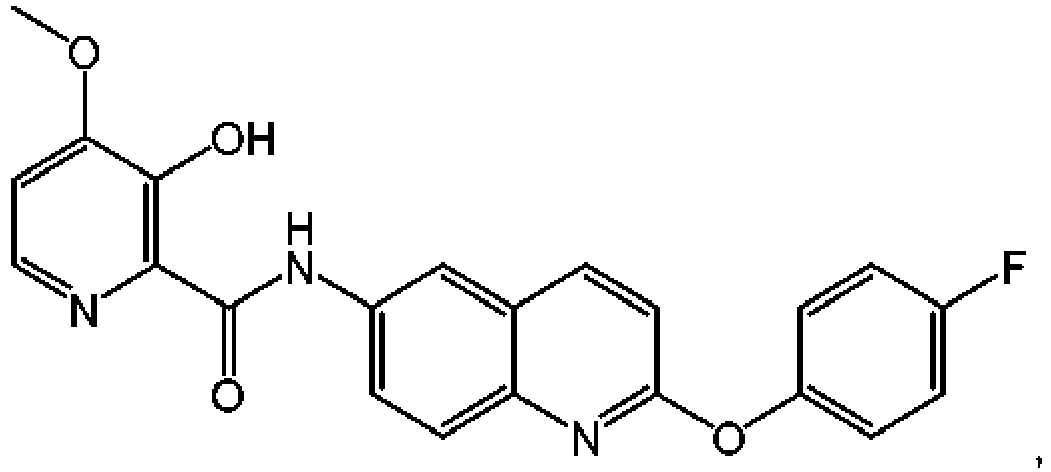


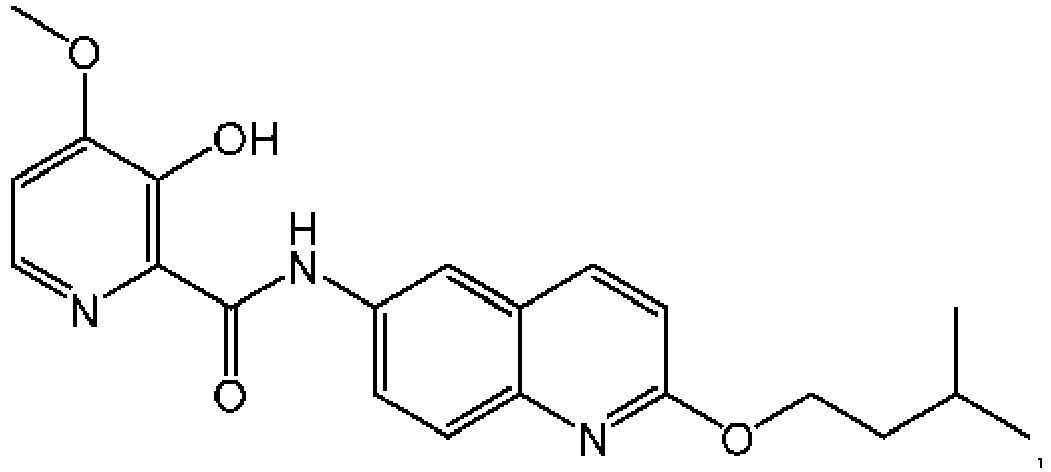


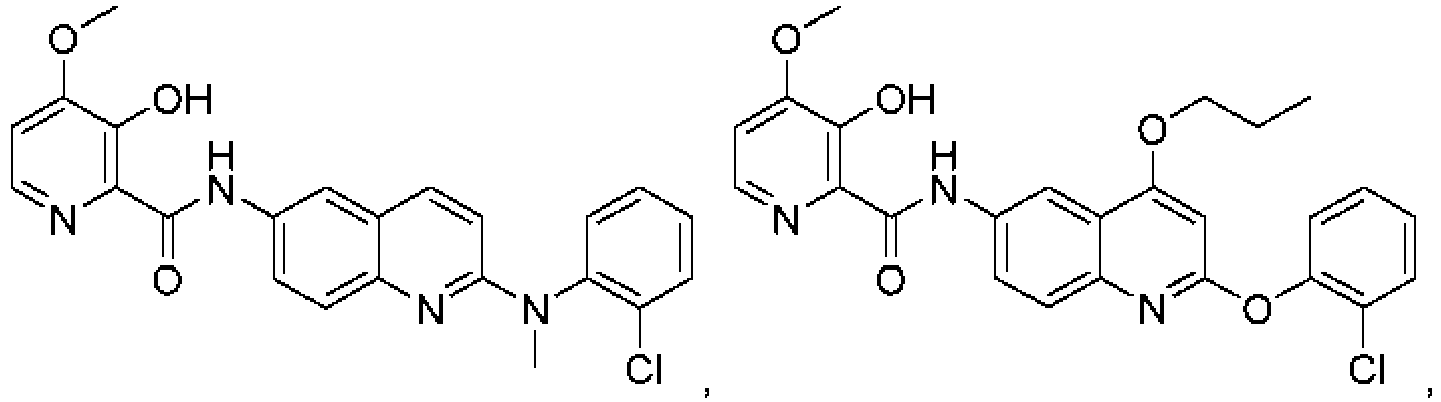


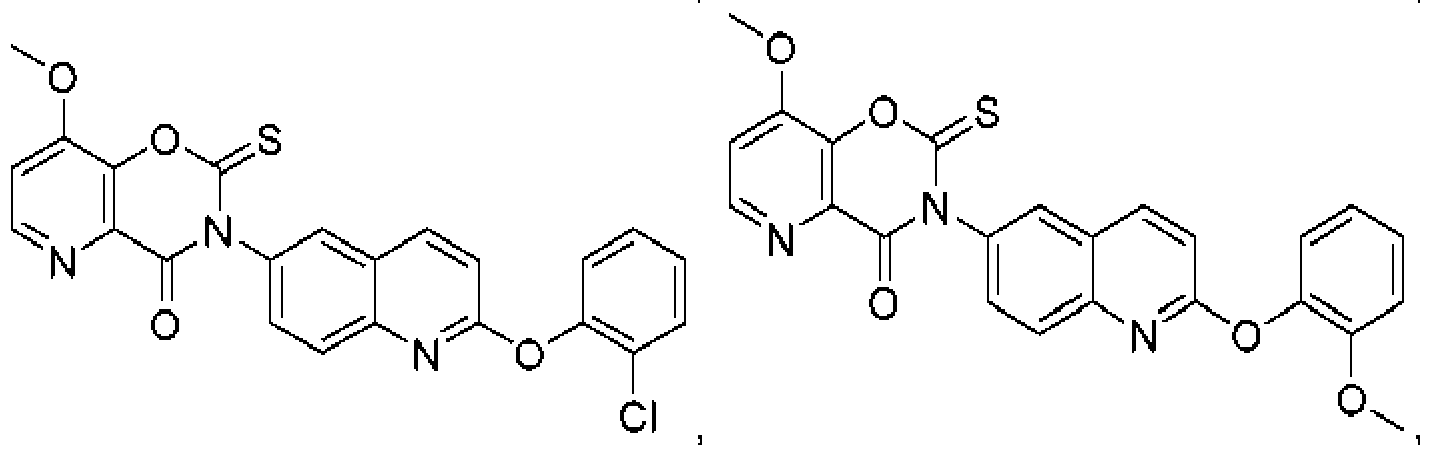


- Verfahren zum Bekämpfen von Pilzkrankheiten, wobei das Verfahren Anwenden einer agronomisch wirksamen und im Wesentlichen nicht phytotoxischen Quantität einer Verbindung nach einem der Ansprüche 1 bis 12 auf Samen von Pflanzen, auf Pflanzen selbst oder auf eine Fläche, auf der beabsichtigt ist, dass Pflanzen wachsen werden, umfasst.
- Verwendung einer Verbindung nach einem der Ansprüche 1 bis 12 zur Bekämpfung von Pilzkrankheiten von Pflanzen.
- Fungizide Zusammensetzung, umfassend eine wirksame und nicht phytotoxische Menge einer aktiven Verbindung nach einem der Ansprüche 1 bis 12.
Applications Claiming Priority (3)
| Application Number | Priority Date | Filing Date | Title |
|---|---|---|---|
| GBGB1910586.5A GB201910586D0 (en) | 2019-07-24 | 2019-07-24 | Agricultural chemicals |
| GBGB2001180.5A GB202001180D0 (en) | 2020-01-28 | 2020-01-28 | Agricultural chemicals |
| PCT/EP2020/070743 WO2021013910A1 (en) | 2019-07-24 | 2020-07-23 | Picolinamide derivatives useful as agricultural fungicides |
Publications (3)
| Publication Number | Publication Date |
|---|---|
| EP4003976A1 EP4003976A1 (de) | 2022-06-01 |
| EP4003976C0 EP4003976C0 (de) | 2024-04-24 |
| EP4003976B1 true EP4003976B1 (de) | 2024-04-24 |
Family
ID=71846365
Family Applications (1)
| Application Number | Title | Priority Date | Filing Date |
|---|---|---|---|
| EP20747356.2A Active EP4003976B1 (de) | 2019-07-24 | 2020-07-23 | Picolinamidderivate zur verwendung als landwirtschaftliche fungizide |
Country Status (15)
| Country | Link |
|---|---|
| US (1) | US20220256855A1 (de) |
| EP (1) | EP4003976B1 (de) |
| JP (1) | JP7696884B2 (de) |
| CN (1) | CN114514228B (de) |
| AU (1) | AU2020318764B2 (de) |
| BR (1) | BR112022001004A2 (de) |
| CA (1) | CA3148238A1 (de) |
| ES (1) | ES2987449T3 (de) |
| IL (1) | IL290032B2 (de) |
| MX (1) | MX2022000929A (de) |
| PL (1) | PL4003976T3 (de) |
| PY (1) | PY2038553A (de) |
| UA (1) | UA129375C2 (de) |
| UY (1) | UY38801A (de) |
| WO (1) | WO2021013910A1 (de) |
Families Citing this family (2)
| Publication number | Priority date | Publication date | Assignee | Title |
|---|---|---|---|---|
| GB202001181D0 (en) * | 2020-01-28 | 2020-03-11 | Globachem Nv | Agricultural Chemicals |
| CN119161264B (zh) * | 2024-08-23 | 2026-02-06 | 海南大学 | 一种含有喹诺酮类化合物的杀虫组合物及其应用 |
Family Cites Families (5)
| Publication number | Priority date | Publication date | Assignee | Title |
|---|---|---|---|---|
| US7183278B1 (en) * | 1998-11-04 | 2007-02-27 | Meiji Seika Kaisha, Ltd. | Picolinamide derivative and harmful organism control agent comprising said picolinamide derivative as active component |
| FR2803592A1 (fr) * | 2000-01-06 | 2001-07-13 | Aventis Cropscience Sa | Nouveaux derives de l'acide 3-hydroxypicolinique, leur procede de preparation et compositions fongicides les contenant. |
| US20070254894A1 (en) * | 2006-01-10 | 2007-11-01 | Kane John L Jr | Novel small molecules with selective cytotoxicity against human microvascular endothelial cell proliferation |
| WO2019006157A1 (en) * | 2017-06-28 | 2019-01-03 | Vanderbilt University | Pyridine quinoline compounds as mglur4 allosteric potentiators, compositions, and methods of treating neurological dysfunction |
| WO2019141980A1 (en) | 2018-01-17 | 2019-07-25 | Globachem Nv | Agricultural chemicals |
-
2020
- 2020-07-23 IL IL290032A patent/IL290032B2/en unknown
- 2020-07-23 WO PCT/EP2020/070743 patent/WO2021013910A1/en not_active Ceased
- 2020-07-23 JP JP2022504562A patent/JP7696884B2/ja active Active
- 2020-07-23 PY PY202002038553A patent/PY2038553A/es unknown
- 2020-07-23 AU AU2020318764A patent/AU2020318764B2/en active Active
- 2020-07-23 UY UY0001038801A patent/UY38801A/es not_active Application Discontinuation
- 2020-07-23 CN CN202080067320.2A patent/CN114514228B/zh active Active
- 2020-07-23 EP EP20747356.2A patent/EP4003976B1/de active Active
- 2020-07-23 BR BR112022001004A patent/BR112022001004A2/pt active IP Right Grant
- 2020-07-23 US US17/629,344 patent/US20220256855A1/en active Pending
- 2020-07-23 MX MX2022000929A patent/MX2022000929A/es unknown
- 2020-07-23 UA UAA202200276A patent/UA129375C2/uk unknown
- 2020-07-23 CA CA3148238A patent/CA3148238A1/en active Pending
- 2020-07-23 ES ES20747356T patent/ES2987449T3/es active Active
- 2020-07-23 PL PL20747356.2T patent/PL4003976T3/pl unknown
Also Published As
| Publication number | Publication date |
|---|---|
| IL290032A (en) | 2022-03-01 |
| CN114514228A (zh) | 2022-05-17 |
| WO2021013910A1 (en) | 2021-01-28 |
| CN114514228B (zh) | 2025-05-13 |
| MX2022000929A (es) | 2022-05-03 |
| BR112022001004A2 (pt) | 2022-06-14 |
| JP7696884B2 (ja) | 2025-06-23 |
| ES2987449T3 (es) | 2024-11-14 |
| CA3148238A1 (en) | 2021-01-28 |
| JP2022542103A (ja) | 2022-09-29 |
| PL4003976T3 (pl) | 2024-07-01 |
| AU2020318764B2 (en) | 2025-07-24 |
| IL290032B1 (en) | 2025-09-01 |
| IL290032B2 (en) | 2026-01-01 |
| EP4003976A1 (de) | 2022-06-01 |
| UA129375C2 (uk) | 2025-04-02 |
| US20220256855A1 (en) | 2022-08-18 |
| UY38801A (es) | 2020-10-30 |
| AU2020318764A1 (en) | 2022-02-24 |
| PY2038553A (es) | 2021-08-05 |
| EP4003976C0 (de) | 2024-04-24 |
Similar Documents
| Publication | Publication Date | Title |
|---|---|---|
| WO2019141980A1 (en) | Agricultural chemicals | |
| EP3442961B1 (de) | Landwirtschaftliche chemikalien | |
| WO2016055802A1 (en) | Agricultural chemicals | |
| EP4003976B1 (de) | Picolinamidderivate zur verwendung als landwirtschaftliche fungizide | |
| WO2019020981A1 (en) | PYRAZOLE, ISOTHIAZOLE AND ISOXAZOLE DERIVATIVES USEFUL AS AGRICULTURAL FUNGICIDES | |
| EP4097111B1 (de) | Pyrido[2,3-e]oxazinderivate als landwirtschaftliche chemikalien | |
| WO2015040352A1 (en) | Agricultural chemicals | |
| RU2826642C2 (ru) | Производные пиколинамида, пригодные в качестве сельскохозяйственных фунгицидов | |
| WO2016055801A2 (en) | Agricultural chemicals | |
| EP3740474B1 (de) | Landwirtschaftliche chemikalien | |
| EP3697771A1 (de) | Benzimidazolverbindungen als landwirtschaftliche chemikalien | |
| GB2587787A (en) | Agricultural chemicals | |
| EA047275B1 (ru) | ПИРИДО[2,3-е]ОКСАЗИНОВЫЕ ПРОИЗВОДНЫЕ В КАЧЕСТВЕ СЕЛЬСКОХОЗЯЙСТВЕННЫХ ХИМИЧЕСКИХ ВЕЩЕСТВ |
Legal Events
| Date | Code | Title | Description |
|---|---|---|---|
| STAA | Information on the status of an ep patent application or granted ep patent |
Free format text: STATUS: UNKNOWN |
|
| STAA | Information on the status of an ep patent application or granted ep patent |
Free format text: STATUS: THE INTERNATIONAL PUBLICATION HAS BEEN MADE |
|
| PUAI | Public reference made under article 153(3) epc to a published international application that has entered the european phase |
Free format text: ORIGINAL CODE: 0009012 |
|
| STAA | Information on the status of an ep patent application or granted ep patent |
Free format text: STATUS: REQUEST FOR EXAMINATION WAS MADE |
|
| 17P | Request for examination filed |
Effective date: 20220215 |
|
| AK | Designated contracting states |
Kind code of ref document: A1 Designated state(s): AL AT BE BG CH CY CZ DE DK EE ES FI FR GB GR HR HU IE IS IT LI LT LU LV MC MK MT NL NO PL PT RO RS SE SI SK SM TR |
|
| DAV | Request for validation of the european patent (deleted) | ||
| DAX | Request for extension of the european patent (deleted) | ||
| STAA | Information on the status of an ep patent application or granted ep patent |
Free format text: STATUS: EXAMINATION IS IN PROGRESS |
|
| 17Q | First examination report despatched |
Effective date: 20230301 |
|
| P01 | Opt-out of the competence of the unified patent court (upc) registered |
Effective date: 20230518 |
|
| GRAP | Despatch of communication of intention to grant a patent |
Free format text: ORIGINAL CODE: EPIDOSNIGR1 |
|
| STAA | Information on the status of an ep patent application or granted ep patent |
Free format text: STATUS: GRANT OF PATENT IS INTENDED |
|
| INTG | Intention to grant announced |
Effective date: 20231219 |
|
| GRAS | Grant fee paid |
Free format text: ORIGINAL CODE: EPIDOSNIGR3 |
|
| GRAA | (expected) grant |
Free format text: ORIGINAL CODE: 0009210 |
|
| STAA | Information on the status of an ep patent application or granted ep patent |
Free format text: STATUS: THE PATENT HAS BEEN GRANTED |
|
| AK | Designated contracting states |
Kind code of ref document: B1 Designated state(s): AL AT BE BG CH CY CZ DE DK EE ES FI FR GB GR HR HU IE IS IT LI LT LU LV MC MK MT NL NO PL PT RO RS SE SI SK SM TR |
|
| REG | Reference to a national code |
Ref country code: GB Ref legal event code: FG4D |
|
| REG | Reference to a national code |
Ref country code: CH Ref legal event code: EP |
|
| REG | Reference to a national code |
Ref country code: DE Ref legal event code: R096 Ref document number: 602020029627 Country of ref document: DE |
|
| REG | Reference to a national code |
Ref country code: IE Ref legal event code: FG4D |
|
| P04 | Withdrawal of opt-out of the competence of the unified patent court (upc) registered |
Effective date: 20240501 |
|
| U01 | Request for unitary effect filed |
Effective date: 20240429 |
|
| U07 | Unitary effect registered |
Designated state(s): AT BE BG DE DK EE FI FR IT LT LU LV MT NL PT SE SI Effective date: 20240506 |
|
| U20 | Renewal fee for the european patent with unitary effect paid |
Year of fee payment: 5 Effective date: 20240626 |
|
| PG25 | Lapsed in a contracting state [announced via postgrant information from national office to epo] |
Ref country code: IS Free format text: LAPSE BECAUSE OF FAILURE TO SUBMIT A TRANSLATION OF THE DESCRIPTION OR TO PAY THE FEE WITHIN THE PRESCRIBED TIME-LIMIT Effective date: 20240824 |
|
| PG25 | Lapsed in a contracting state [announced via postgrant information from national office to epo] |
Ref country code: HR Free format text: LAPSE BECAUSE OF FAILURE TO SUBMIT A TRANSLATION OF THE DESCRIPTION OR TO PAY THE FEE WITHIN THE PRESCRIBED TIME-LIMIT Effective date: 20240424 |
|
| PG25 | Lapsed in a contracting state [announced via postgrant information from national office to epo] |
Ref country code: GR Free format text: LAPSE BECAUSE OF FAILURE TO SUBMIT A TRANSLATION OF THE DESCRIPTION OR TO PAY THE FEE WITHIN THE PRESCRIBED TIME-LIMIT Effective date: 20240725 |
|
| PG25 | Lapsed in a contracting state [announced via postgrant information from national office to epo] |
Ref country code: NO Free format text: LAPSE BECAUSE OF FAILURE TO SUBMIT A TRANSLATION OF THE DESCRIPTION OR TO PAY THE FEE WITHIN THE PRESCRIBED TIME-LIMIT Effective date: 20240724 Ref country code: IS Free format text: LAPSE BECAUSE OF FAILURE TO SUBMIT A TRANSLATION OF THE DESCRIPTION OR TO PAY THE FEE WITHIN THE PRESCRIBED TIME-LIMIT Effective date: 20240824 Ref country code: HR Free format text: LAPSE BECAUSE OF FAILURE TO SUBMIT A TRANSLATION OF THE DESCRIPTION OR TO PAY THE FEE WITHIN THE PRESCRIBED TIME-LIMIT Effective date: 20240424 Ref country code: GR Free format text: LAPSE BECAUSE OF FAILURE TO SUBMIT A TRANSLATION OF THE DESCRIPTION OR TO PAY THE FEE WITHIN THE PRESCRIBED TIME-LIMIT Effective date: 20240725 Ref country code: RS Free format text: LAPSE BECAUSE OF FAILURE TO SUBMIT A TRANSLATION OF THE DESCRIPTION OR TO PAY THE FEE WITHIN THE PRESCRIBED TIME-LIMIT Effective date: 20240724 |
|
| REG | Reference to a national code |
Ref country code: ES Ref legal event code: FG2A Ref document number: 2987449 Country of ref document: ES Kind code of ref document: T3 Effective date: 20241114 |
|
| P05 | Withdrawal of opt-out of the competence of the unified patent court (upc) changed |
Free format text: CASE NUMBER: APP_24742/2024 Effective date: 20240506 |
|
| PG25 | Lapsed in a contracting state [announced via postgrant information from national office to epo] |
Ref country code: CZ Free format text: LAPSE BECAUSE OF FAILURE TO SUBMIT A TRANSLATION OF THE DESCRIPTION OR TO PAY THE FEE WITHIN THE PRESCRIBED TIME-LIMIT Effective date: 20240424 |
|
| PG25 | Lapsed in a contracting state [announced via postgrant information from national office to epo] |
Ref country code: SK Free format text: LAPSE BECAUSE OF FAILURE TO SUBMIT A TRANSLATION OF THE DESCRIPTION OR TO PAY THE FEE WITHIN THE PRESCRIBED TIME-LIMIT Effective date: 20240424 Ref country code: RO Free format text: LAPSE BECAUSE OF FAILURE TO SUBMIT A TRANSLATION OF THE DESCRIPTION OR TO PAY THE FEE WITHIN THE PRESCRIBED TIME-LIMIT Effective date: 20240424 |
|
| REG | Reference to a national code |
Ref country code: DE Ref legal event code: R097 Ref document number: 602020029627 Country of ref document: DE |
|
| PG25 | Lapsed in a contracting state [announced via postgrant information from national office to epo] |
Ref country code: SM Free format text: LAPSE BECAUSE OF FAILURE TO SUBMIT A TRANSLATION OF THE DESCRIPTION OR TO PAY THE FEE WITHIN THE PRESCRIBED TIME-LIMIT Effective date: 20240424 |
|
| PG25 | Lapsed in a contracting state [announced via postgrant information from national office to epo] |
Ref country code: SM Free format text: LAPSE BECAUSE OF FAILURE TO SUBMIT A TRANSLATION OF THE DESCRIPTION OR TO PAY THE FEE WITHIN THE PRESCRIBED TIME-LIMIT Effective date: 20240424 Ref country code: SK Free format text: LAPSE BECAUSE OF FAILURE TO SUBMIT A TRANSLATION OF THE DESCRIPTION OR TO PAY THE FEE WITHIN THE PRESCRIBED TIME-LIMIT Effective date: 20240424 Ref country code: RO Free format text: LAPSE BECAUSE OF FAILURE TO SUBMIT A TRANSLATION OF THE DESCRIPTION OR TO PAY THE FEE WITHIN THE PRESCRIBED TIME-LIMIT Effective date: 20240424 Ref country code: CZ Free format text: LAPSE BECAUSE OF FAILURE TO SUBMIT A TRANSLATION OF THE DESCRIPTION OR TO PAY THE FEE WITHIN THE PRESCRIBED TIME-LIMIT Effective date: 20240424 |
|
| PG25 | Lapsed in a contracting state [announced via postgrant information from national office to epo] |
Ref country code: MC Free format text: LAPSE BECAUSE OF FAILURE TO SUBMIT A TRANSLATION OF THE DESCRIPTION OR TO PAY THE FEE WITHIN THE PRESCRIBED TIME-LIMIT Effective date: 20240424 |
|
| PLBE | No opposition filed within time limit |
Free format text: ORIGINAL CODE: 0009261 |
|
| STAA | Information on the status of an ep patent application or granted ep patent |
Free format text: STATUS: NO OPPOSITION FILED WITHIN TIME LIMIT |
|
| 26N | No opposition filed |
Effective date: 20250127 |
|
| U20 | Renewal fee for the european patent with unitary effect paid |
Year of fee payment: 6 Effective date: 20250626 |
|
| PGFP | Annual fee paid to national office [announced via postgrant information from national office to epo] |
Ref country code: ES Payment date: 20250808 Year of fee payment: 6 |
|
| PGFP | Annual fee paid to national office [announced via postgrant information from national office to epo] |
Ref country code: PL Payment date: 20250711 Year of fee payment: 6 |
|
| PGFP | Annual fee paid to national office [announced via postgrant information from national office to epo] |
Ref country code: GB Payment date: 20250701 Year of fee payment: 6 |
|
| PGFP | Annual fee paid to national office [announced via postgrant information from national office to epo] |
Ref country code: CH Payment date: 20250808 Year of fee payment: 6 |
|
| PGFP | Annual fee paid to national office [announced via postgrant information from national office to epo] |
Ref country code: IE Payment date: 20250716 Year of fee payment: 6 |
|
| PG25 | Lapsed in a contracting state [announced via postgrant information from national office to epo] |
Ref country code: CY Free format text: LAPSE BECAUSE OF FAILURE TO SUBMIT A TRANSLATION OF THE DESCRIPTION OR TO PAY THE FEE WITHIN THE PRESCRIBED TIME-LIMIT; INVALID AB INITIO Effective date: 20200723 |
|
| PG25 | Lapsed in a contracting state [announced via postgrant information from national office to epo] |
Ref country code: HU Free format text: LAPSE BECAUSE OF FAILURE TO SUBMIT A TRANSLATION OF THE DESCRIPTION OR TO PAY THE FEE WITHIN THE PRESCRIBED TIME-LIMIT; INVALID AB INITIO Effective date: 20200723 |