EP4004244B1 - Procédé de récupération de lithium à partir de déchets de batteries au lithium-ion - Google Patents
Procédé de récupération de lithium à partir de déchets de batteries au lithium-ion Download PDFInfo
- Publication number
- EP4004244B1 EP4004244B1 EP20742778.2A EP20742778A EP4004244B1 EP 4004244 B1 EP4004244 B1 EP 4004244B1 EP 20742778 A EP20742778 A EP 20742778A EP 4004244 B1 EP4004244 B1 EP 4004244B1
- Authority
- EP
- European Patent Office
- Prior art keywords
- lithium
- solid
- transition metal
- particulate material
- viii
- Prior art date
- Legal status (The legal status is an assumption and is not a legal conclusion. Google has not performed a legal analysis and makes no representation as to the accuracy of the status listed.)
- Active
Links
Images



Classifications
-
- C—CHEMISTRY; METALLURGY
- C22—METALLURGY; FERROUS OR NON-FERROUS ALLOYS; TREATMENT OF ALLOYS OR NON-FERROUS METALS
- C22B—PRODUCTION AND REFINING OF METALS; PRETREATMENT OF RAW MATERIALS
- C22B7/00—Working up raw materials other than ores, e.g. scrap, to produce non-ferrous metals and compounds thereof; Methods of a general interest or applied to the winning of more than two metals
- C22B7/001—Dry processes
-
- C—CHEMISTRY; METALLURGY
- C01—INORGANIC CHEMISTRY
- C01D—COMPOUNDS OF ALKALI METALS, i.e. LITHIUM, SODIUM, POTASSIUM, RUBIDIUM, CAESIUM, OR FRANCIUM
- C01D15/00—Lithium compounds
- C01D15/02—Oxides; Hydroxides
-
- C—CHEMISTRY; METALLURGY
- C22—METALLURGY; FERROUS OR NON-FERROUS ALLOYS; TREATMENT OF ALLOYS OR NON-FERROUS METALS
- C22B—PRODUCTION AND REFINING OF METALS; PRETREATMENT OF RAW MATERIALS
- C22B1/00—Preliminary treatment of ores or scrap
- C22B1/005—Preliminary treatment of scrap
-
- C—CHEMISTRY; METALLURGY
- C22—METALLURGY; FERROUS OR NON-FERROUS ALLOYS; TREATMENT OF ALLOYS OR NON-FERROUS METALS
- C22B—PRODUCTION AND REFINING OF METALS; PRETREATMENT OF RAW MATERIALS
- C22B23/00—Obtaining nickel or cobalt
-
- C—CHEMISTRY; METALLURGY
- C22—METALLURGY; FERROUS OR NON-FERROUS ALLOYS; TREATMENT OF ALLOYS OR NON-FERROUS METALS
- C22B—PRODUCTION AND REFINING OF METALS; PRETREATMENT OF RAW MATERIALS
- C22B23/00—Obtaining nickel or cobalt
- C22B23/02—Obtaining nickel or cobalt by dry processes
-
- C—CHEMISTRY; METALLURGY
- C22—METALLURGY; FERROUS OR NON-FERROUS ALLOYS; TREATMENT OF ALLOYS OR NON-FERROUS METALS
- C22B—PRODUCTION AND REFINING OF METALS; PRETREATMENT OF RAW MATERIALS
- C22B26/00—Obtaining alkali, alkaline earth metals or magnesium
- C22B26/10—Obtaining alkali metals
- C22B26/12—Obtaining lithium
-
- C—CHEMISTRY; METALLURGY
- C22—METALLURGY; FERROUS OR NON-FERROUS ALLOYS; TREATMENT OF ALLOYS OR NON-FERROUS METALS
- C22B—PRODUCTION AND REFINING OF METALS; PRETREATMENT OF RAW MATERIALS
- C22B3/00—Extraction of metal compounds from ores or concentrates by wet processes
- C22B3/04—Extraction of metal compounds from ores or concentrates by wet processes by leaching
- C22B3/12—Extraction of metal compounds from ores or concentrates by wet processes by leaching in inorganic alkaline solutions
-
- C—CHEMISTRY; METALLURGY
- C22—METALLURGY; FERROUS OR NON-FERROUS ALLOYS; TREATMENT OF ALLOYS OR NON-FERROUS METALS
- C22B—PRODUCTION AND REFINING OF METALS; PRETREATMENT OF RAW MATERIALS
- C22B7/00—Working up raw materials other than ores, e.g. scrap, to produce non-ferrous metals and compounds thereof; Methods of a general interest or applied to the winning of more than two metals
- C22B7/001—Dry processes
- C22B7/004—Dry processes separating two or more metals by melting out (liquation), i.e. heating above the temperature of the lower melting metal component(s); by fractional crystallisation (controlled freezing)
-
- C—CHEMISTRY; METALLURGY
- C22—METALLURGY; FERROUS OR NON-FERROUS ALLOYS; TREATMENT OF ALLOYS OR NON-FERROUS METALS
- C22B—PRODUCTION AND REFINING OF METALS; PRETREATMENT OF RAW MATERIALS
- C22B7/00—Working up raw materials other than ores, e.g. scrap, to produce non-ferrous metals and compounds thereof; Methods of a general interest or applied to the winning of more than two metals
- C22B7/006—Wet processes
- C22B7/008—Wet processes by an alkaline or ammoniacal leaching
-
- H—ELECTRICITY
- H01—ELECTRIC ELEMENTS
- H01M—PROCESSES OR MEANS, e.g. BATTERIES, FOR THE DIRECT CONVERSION OF CHEMICAL ENERGY INTO ELECTRICAL ENERGY
- H01M10/00—Secondary cells; Manufacture thereof
- H01M10/54—Reclaiming serviceable parts of waste accumulators
-
- Y—GENERAL TAGGING OF NEW TECHNOLOGICAL DEVELOPMENTS; GENERAL TAGGING OF CROSS-SECTIONAL TECHNOLOGIES SPANNING OVER SEVERAL SECTIONS OF THE IPC; TECHNICAL SUBJECTS COVERED BY FORMER USPC CROSS-REFERENCE ART COLLECTIONS [XRACs] AND DIGESTS
- Y02—TECHNOLOGIES OR APPLICATIONS FOR MITIGATION OR ADAPTATION AGAINST CLIMATE CHANGE
- Y02P—CLIMATE CHANGE MITIGATION TECHNOLOGIES IN THE PRODUCTION OR PROCESSING OF GOODS
- Y02P10/00—Technologies related to metal processing
- Y02P10/20—Recycling
-
- Y—GENERAL TAGGING OF NEW TECHNOLOGICAL DEVELOPMENTS; GENERAL TAGGING OF CROSS-SECTIONAL TECHNOLOGIES SPANNING OVER SEVERAL SECTIONS OF THE IPC; TECHNICAL SUBJECTS COVERED BY FORMER USPC CROSS-REFERENCE ART COLLECTIONS [XRACs] AND DIGESTS
- Y02—TECHNOLOGIES OR APPLICATIONS FOR MITIGATION OR ADAPTATION AGAINST CLIMATE CHANGE
- Y02W—CLIMATE CHANGE MITIGATION TECHNOLOGIES RELATED TO WASTEWATER TREATMENT OR WASTE MANAGEMENT
- Y02W30/00—Technologies for solid waste management
- Y02W30/50—Reuse, recycling or recovery technologies
- Y02W30/84—Recycling of batteries or fuel cells
Definitions
- the present invention is directed towards a process for the recovery of lithium and other metals from spent lithium ion batteries or production waste containing at least one of the transition metals nickel, manganese and cobalt; the process pertains specifically to the separation of lithium from undesired impurities, by extracting lithium as lithium hydroxide from a particulate material obtained from the lithium ion batteries, particularly the cell material thereof, typically after discharging, shredding and reducing at elevated temperature, and recovery of other metals such as nickel, manganese and/or cobalt from the residue after said extraction step in a smelting process.
- One main process is the direct hydrometallurgical processing of battery scrap materials. Principles have been disclosed in WO 2017/091562 and in J. Power Sources, 2014, 262, 255 ff.
- Such hydrometallurgical processes will furnish transition metals as aqueous solutions, for example as sulfate solution, or in precipitated form, for example as hydroxides, separately or already in the desired stoichiometries for making a new cathode active material. In the latter case the composition of metal salt solutions may be adjusted to the desired stoichiometries by addition of single metal components.
- batteries are first dismantled to modules or even cells.
- the battery scrap is mechanically processed to separate bigger parts from casing and wiring.
- the electrode active materials i.e. the graphite from the anode and the lithium transition metal oxides from the cathode together with some impurities form a fine powder the so called black mass or black powder which constitute the feed of subsequent hydrometallurgical process steps.
- the battery scraps are subjected to a heat treatment or pyrolysis step which is performed at temperatures well below the melting point of the transition metals contained in the scrap in this respect this treatment differs from a smelting process that is operated above the melting point of the transition metals contained in the scrap.
- Such heat-treated black masses may be obtained from treating batteries in waste incineration ovens.
- the waste batteries or battery modules or battery cells are fed to the incineration oven where the battery feed is partially burned.
- the product of this treatment is cooled and mechanical-ly treated using any kind of shredding or milling device suitable to separate a metallic fraction from the powdery black mass.
- These black masses are materials of low reactivity under normal conditions and can thus be transported easily.
- waste batteries are treated in several steps in a way to bind the fluorine contained in the batteries in the conducting electrolyte salt, usually LiPF6, and the binder polymer, usually polyvinylidene fluoride (PVDF).
- the conducting electrolyte salt usually LiPF6
- the binder polymer usually polyvinylidene fluoride (PVDF).
- PVDF polyvinylidene fluoride
- JP 2012-229481 discloses a process for the recovery of metals from spent lithium ion batteries comprising a preliminary immersion step followed by high temperature oxidation, reductive roasting, aqueous treatment with filtration, and recovery of lithium carbonate from the filtrate and of transition metals from the residue.
- the other main process is based upon direct smelting of the corresponding battery scrap (e.g. EP1589121A1 ).
- a metal alloy containing Ni and Co is obtained while the lithium is lost in the slag from which it is very difficult to recover.
- the metal alloy obtained can be hydrometallurgically processed to extract the metals, e.g. the transition metals.
- JP2012112027 describes the separation of lithium and cobalt from the melt by evaporation; it is thus assumed that such process is operated above the boiling temperature of cobalt (i.e. >2870° C).
- the recovered metals or metal compounds are transformed to the corresponding transition metal salts, often sulfates and lithium carbonate and often lithium hydroxide.
- inventive process comprises steps defined in more detail below, hereinafter also referred to as step (a), step (b), step (c), step (d) etc.
- inventive process comprises steps defined in more detail below, hereinafter also referred to as step (a), step (b), step (c), step (d) etc.
- inventive process comprises steps defined in more detail below, hereinafter also referred to as step (a), step (b), step (c), step (d) etc.
- the invention thus primarily pertains to a process for the recovery of one or more transition metals and lithium as Li-salt from a material comprising waste lithium ion batteries or parts thereof, which process comprises the steps of
- the particulate material provided in step (a) is obtained from lithium containing transition metal oxide material, which material may stem from lithium ion batteries (battery waste), including spent batteries, waste battery material from production and off-spec material, which typically contains fluorine compounds and/or compounds of phosphorous as impurities, and further materials containing lithium and said transition metals without such impurities, such as cathode active materials from production waste.
- the material is subjected to a reduction step prior to present step (a) to convert the transition metals Ni and/or Co into the oxidation state lower than +2 or the metallic state, e.g. using reductive gases such as CO or hydrogen, e.g. by heating said material to a temperature in the range of from 200 to 900° C in the presence of H 2 .
- step (c) may be further subjected to a solid-solid separation for the removal of transition metals such as Ni before carrying out present step (d); in this case, the polar solvent used in step (b) contains an alkaline earth hydroxide.
- step (c) may be followed by said optional solid-solid separation, orthe slurry obtained from step (b) is subjected to a solid-solid separation and the obtained fractions are subsequently subjected to a solid-liquid separation.
- the optional solid-solid separation (as described further below in more detail as step d1) leads to a solid residue enriched in transition metal, especially nickel and/or cobalt, and a second solid residue depleted from transition metal.
- the present process brings about the advantage of keeping the lithium salts in a form allowing their recovery from solution, thus providing good recovery of lithium and transition metals.
- the polar solvent used in step (b) of the present process leaches lithium salt(s) from the material provided in step (a) and thus provides the desired separation of lithium in the liquid phase from the transition metals remaining in the solid residue. It is typically selected from water, alcohols, ketones, esters, organic carbonates, polyethers, nitriles, and mixtures thereof. Especially preferred is a polar solvent capable to dissolve an alkaline earth hydroxide such as calcium hydroxide at least in part, for example as good as water or even better. Examples of such solvents are polyols like glycol, glycerol or polyethylene glycols, and mixtures thereof.
- alkaline earth hydroxides or alkaline earth oxides may be added to the slurry; in case of alkaline earth oxides such as calcium oxide, the polar solvent used in step (b) is advantageously a protic solvent such as water, forming the alkaline earth hydroxide in situ.
- the leaching liquid used in step (b) for treating the particulate material (PM) provided in step (a) contains an alkaline earth hydroxide (AEH) such as calcium hydroxide.
- alkaline earth hydroxide such as calcium hydroxide.
- the addition of alkaline earth hydroxide in this step brings about the advantage of binding fluoride, and other anions capable of forming lithium salts of low solubility like carbonate, phosphate, aluminate, and further leads to an improved slagging, which simplifies the separation of metal or metal alloy from the product obtained in step (d).
- the invention thus preferably pertains to a process for the recovery of one or more transition metals and lithium as Li-salt from a material comprising waste lithium ion batteries or parts thereof, which process comprises the steps of
- PM preferably contains nickel and optional further transition metals such as Co.
- Protic solvents are mainly water, alcohols, and mixtures thereof.
- An aqueous medium such as an aqueous solvent or aqueous liquid contains primarily (i.e. by 50 % b.w. or more, especially 80 % b.w. or more, more especially 90 % b.w. or more) water, it includes water and mixtures of water with one or more alcohols; it may contain further dissolved substances as long as the major water content is maintained within one or more of the ranges given above.
- Step (b) primarily provides a suspension of the particulate material in the polar solvent; it is preferably carried out with heating; the treatment with the alkaline earth hydroxide is typically done at temperatures from the range 60 to 200° C, preferably 70 to 150° C. Where the boiling point of the polar solvent is exceeded, the treatment is carried out under pressure to hold the solvent, or at least a fraction thereof, in the liquid state. Of special technical importance is the temperature range around the boiling point of water, i.e. about 70 to 150° C, where the treatment can be achieved using an aqueous liquid or water at normal pressure or slightly elevated pressure (e.g. up to 5 bar). Alternatively, present step (b) can be carried out with application of higher temperatures and pressures, e.g. 150 to 300° C and 1.5 to 100 bar.
- the treatment is typically carried out by combining an amount of alkaline earth hydroxide (AEH) with the particulate material (PM), which corresponds to at least 5 %, and typically not more than 100 %, of its weight, e.g 50 - 1000 g of AEH on 1 kg of PM, preferably 100 - 1000 g AEH, more preferably 200 -1000 g AEH on 1 kg of PM.
- the amount of polar solvent is typically chosen to ensure miscibility of the components, e.g. using on one part by weight of combined solids (PM and AEH) 0.5 to 95, preferably about 2.5 to 21 parts by weight of the polar solvent; or in certain cases 1 to 20, e.g. about 2 to 10 parts by weight of the polar solvent.
- step (b) is carried out in a vessel that is protected against strong bases, for example molybdenum and copper rich steel alloys, nickelbased alloys, duplex stainless steel or glass-lined or enamel or titanium coated steel.
- strong bases for example molybdenum and copper rich steel alloys, nickelbased alloys, duplex stainless steel or glass-lined or enamel or titanium coated steel.
- polymer liners and polymer vessels from base-resistant polymers for example poly-ethylene such as HDPE and UHMPE, fluorinated polyethylene, perfluoroalkoxy alkanes (“PFA”), polytetrafluoroethylene (“PTFE”), PVdF and FEP.
- PFA perfluoroalkoxy alkanes
- PTFE polytetrafluoroethylene
- PVdF PVdF
- FEP stands for fluorinated ethylene propylene polymer, a copolymer from tetrafluoroethylene and hexafluoropropylene.
- the treatment is typically done using a mixing device, e.g. a stirrer, with power application typically up tp 10 W per kg of suspension, e.g. 0.5 to 10 W/kg, and/or cycled by pumping in order to achieve a good mixing and to avoid settling of insoluble components. Shearing can be further improved by employing baffles. Furthermore, the slurry obtained in step (b) may advantageously be subjected to a grinding treatment, for example in a ball mill or stirred ball mill; such grinding treatment may lead to a better access of the polar solvent to a particulate lithium containing transition metal oxide material. Shearing and milling devices applied typically are sufficiently corrosion resistant; they may be produced from similar materials and coatings as described above for the vessel.
- a mixing device e.g. a stirrer
- the material is transferred from the oven to a cooling unit.
- the material is cooled down to temperatures preferably of 100° C and below.
- the cooling can be done at ambient conditions e.g. by storing the hot material in a chamber or vessel or in a rotating tube which may be the final non-heated or cooled part of a rotary kiln where the heat treatment is performed such that the heat can be conducted to the environment.
- the hot material can be cooled and conveyed by cooled conveying screws.
- a faster cooling can be obtained by introducing gases which after having passed the hot material bed may be fed to a heat exchanger.
- gases can be designed as fixed, moving or fluidized bed.
- the gases used are preferably inert gases like nitrogen, argon or carbon dioxide.
- cooling under dry conditions in a gas atmosphere it is also possible to quench the hot material by a liquid.
- This can be done by spraying the cooling liquid to the hot material either in quantities that the liquid is evaporated and the material remains virtually dry (cooling by evaporation) or in bigger quantities that a slurry of the material is formed. Cooling by a liquid is especially preferred when the obtained cooled material or slurry can be employed directly in step (b) of this invention.
- the preferred quenching liquids are polar solvents that are sufficiently temperature stable most preferred is water.
- the liquid can be pumped to a heat exchanger and recycled back to the cooling vessel.
- preliminary step (i) is preferably carried out as follows: (i) heating the lithium containing transition metal oxide material to a temperature in the range of from 200 to 900° C in the presence of said carbonic material such as carbon; e.g. in the presence of graphite.
- the graphite contained in the black mass is used as reducing agent.
- the lithium containing transition metal oxide material heated in step (i) stems from lithium ion batteries and may contain typical impurities such as fluorine, as explained below in more detail.
- Step (i) carried out with carbonic material such as carbon as reducing agent includes heating the lithium containing transition metal oxide material to a temperature in the range of from 200 to 900° C, preferably 300 to 850° C, more preferably 500 to 850° C.
- the atmosphere used to effect the reduction contains either no oxygen, or up to 20% by volume of oxygen, the rest being a non-oxidizing gas, preferably nitrogen, argon, steam, carbon monoxide, carbon dioxide or mixtures of at least two of these gases.
- Preferred non-oxidizing gases are nitrogen and carbon monoxide and mixtures of nitrogen and carbon monoxide.
- step (i) of the present process is carried out under air or under diluted air, for example under an atmosphere containing 1 to 20%, preferably 1 to 10%, by volume (normal conditions) of oxygen, the rest, if present, being a non-oxidizing gas.
- the material is transferred from the oven to a cooling unit.
- the material is cooled down to temperatures preferably of 100° C and below.
- the cooling can be done at ambient conditions e.g. by storing the hot material in a chamber or vessel or in a rotating tube which may be the final non-heated or cooled part of a rotary kiln where the heat treatment is performed such that the heat can be conducted to the environment.
- the hot material can be cooled and conveyed by cooled conveying screws.
- a faster cooling can be obtained by introducing gases which after having passed the hot material bed may be fed to a heat exchanger.
- gases can be designed as fixed, moving or fluidized bed.
- the gases used are preferably inert gases like nitrogen, argon or carbon dioxide.
- reducing gases used for the reduction preferably during the beginning of the cooling period when the material is still at a temperature close to oven temperature.
- the gas composition may be changed to an inert gas at lower temperatures even oxygen containing gases like air or mixtures of air and inert gases may be employed.
- cooling under dry conditions in a gas atmosphere it is also possible to quench the hot material by a liquid.
- This can be done by spraying the cooling liquid to the hot material either in quantities that the liquid is evaporated and the material remains virtually dry (cooling by evaporation) or in bigger quantities that a slurry of the material is formed. Cooling by a liquid is especially preferred when the obtained cooled material or slurry can be employed directly in step (b) of this invention.
- the preferred quenching liquids are polar solvents that are sufficiently temperature stable most preferred is water.
- the liquid can be pumped to a heat exchanger and recycled back to the cooling vessel.
- the reduction conditions related to the hydrogen and/or carbon/oxygen concentration, and the temperature and duration of step (i) are chosen that at least a part of the lithium containing transition metal oxide material contains para-, anti-ferro-, ferro- and/or ferrimagnetic components.
- Preferred is the formation of ferro- or ferrimagnetic components resulting from the at least partial reduction of the lithium containing transition metal material.
- the extend of the reduction may vary in the range between 1 to 100% with respect to the nickel contained in the lithium containing transition metal material; preferred is a range from 80 to 100%.
- the particulate material provided in present step (a) thus contains a transition metal compound and/or transition metal, wherein the transition metal is selected from the group consisting of Mn, Ni and/or Co, and wherein further at least a fraction of said Ni and/or Co, if present, are in an oxidation state lower than +2, and at least a fraction of said Mn, if present, is manganese(ll)oxide; nickel and/or cobalt therein are typically at least in part present in their metallic state.
- the transition metal is selected from the group consisting of Mn, Ni and/or Co, and wherein further at least a fraction of said Ni and/or Co, if present, are in an oxidation state lower than +2, and at least a fraction of said Mn, if present, is manganese(ll)oxide; nickel and/or cobalt therein are typically at least in part present in their metallic state.
- the lithium salt present in the particulate material provided in present step (a) are detected by standard methods as described below.
- the lithium salt contained in the particulate material provided in step (a) typically comprise one or more salts of LiOH, LiF, Li2O, Li2CO3, LiHCO3, lithium aluminates, lithium phosphate salts, mixed oxides of Li and one or more of Ni, Co, Mn, Fe, Al, Cu and/or fluorides of Ni, Co, Mn, Fe, Al, Cu.
- LiOH, LiF, Li2O, Li2CO3, LiHCO3, lithium aluminates and lithium phosphates typically make up 95% b.w. or more of all lithium salts present. Very often contained are LiF, Li2CO3, LiOH and lithium aluminate in cases where the particulate material provided in step (a) stems from lithium ion batteries or parts thereof. A larger fraction of fluoride if present, e.g. 50 % b.w. or more of said fluoride, is typically present as lithium fluoride.
- fluoride salt present typically stems in part from the former battery electrolyte salt and the polymeric binder, which set free hydrogen fluoride during preliminary steps of discharging or dismantling or drying of the battery materials
- other species of fluoride salts resulting from the rapid reaction of the hydrogen fluoride with former cell or electrode materials such as cobalt fluoride, may be present as well.
- the particulate material provided in present step (a) generally is a battery material containing lithium and one or more transition metals including nickel and/or cobalt, e.g. a material that stems from lithium ion batteries or parts of lithium ion batteries, especially the cell materials thereof. It is provided for present step (a) in the form of a dry powder, wet powder or suspension of particles in a liquid.
- the material typically has an average particle diameter (D50 according to ISO 13320 EN:2009-10) from the range 1 ⁇ m to about 2 mm, especially 1 ⁇ m to 1 mm.
- D50 average particle diameter
- the upper limit of the size of particles in the powdery material is given by a sieving step performed before present step (a) or even before step (i), e.g. using a sieve whose mesh allows passing of particles of 2 mm at maximum, especially of 1 mm at maximum.
- said lithium containing transition metal oxide material is obtained after mechanic removal of casing, wiring or circuitry, thus typically consisting mainly of the cell material.
- such lithium ion batteries are discharged completely, e.g. by immersion in a dry conductive bath such as metal shreds, or at least 80% discharged electrically (preferably more than 90%, most preferably more than 95%) by which the residual electrical energy may be recovered, otherwise, shortcuts may occur that constitute fire and explosion hazards.
- Such lithium ion batteries may be disassembled, punched, milled, for example in a hammer mill, or shredded, for example in an industrial shredder.
- it is also possible to discharge the batteries by immersion into a conducting liquid e.g. an aqueous solution of a metal salt like sodium sulfate or the like. It is also possible to perform the shredding in a liquid preferably water. This has the advantage of preventing dust formation and the occurrence of ignitable atmospheres.
- electrolytes before subjecting the material to the preliminary step (i), especially electrolytes that comprise an organic solvent or a mixture of organic solvents, for example by drying, for example at temperatures in the range of from 50 to 250° C under atmospheric pressure or below.
- the lithium containing transition metal oxide material is preferably not exposed to higher temperatures (especially not to 400° C or more) under oxidizing conditions before subjecting it to present step (a).
- a heat treatment under oxidative conditions may be performed prior to the reduction step (i).
- This treatment may be done in a range of temperatures between 250 to 900° C, preferably between 350 and 800° C, e.g. 300 to 400° C.
- air or an oxygen containing gas may be introduced to the reactor.
- the oxidative treatment may be carried out in the presence of alkaline earth hydroxides or oxides.
- the reaction can also be carried out in the presence of water as steam thus applying hydrothermal conditions.
- said lithium containing transition metal oxide material is from battery scraps.
- said lithium containing transition metal oxide material is from mechanically treated battery scraps, for example from battery scraps treated in a hammer mill or in an industrial shredder. This mechanical treatment can be done under dry conditions or under wet conditions preferably in the presence of water.
- step (a1) prior to step (a) a step (a1) is performed, said step (a1) comprising the removal of e.g. carbon or organic polymers by a solid-solid separation method.
- solid-solid separation methods are electro-sorting, sieving, magnetic separation, flotation, or other classification methods.
- the solid-solid separation can be performed dry or in the presence of a suitable dispersing medium, preferably water.
- the mechanically treated battery scrap is ground prior to step (a).
- Such grinding is preferably performed in ball mills or stirred ball mills.
- the milling can be performed under wet or dry conditions, preferred are dry conditions.
- the washing of mechanically treated battery scrap is performed with non-protic solvents in the absence of humidity, e.g., under dry gases like dry air, dry nitrogen.
- the leaching may be carried out in the presence of oxidizing agents.
- a preferred oxidizing agent is oxygen as pure gas or in mixtures with inert gases e.g. nitrogen or as air.
- Other oxidizing agents are oxidizing acids, e.g. nitric acid, or peroxides like hydrogen peroxide.
- step (f) has a duration in the range of from 10 minutes to 10 hours, preferably 1 to 3 hours.
- the reaction mixture in step (f) is stirred at powers of at least 0.1 W/I or cycled by pumping in order to achieve a good mixing and to avoid settling of insoluble components. Shearing can be further improved by employing baffles. All these shearing devices need to be applied sufficiently corrosion resistant and may be produced from similar materials and coatings as described for the vessel itself.
- Step (f) may be performed under an atmosphere of air or under air diluted with N 2 . It is preferred, though, to perform step (f) under inert atmosphere, for example nitrogen or a rare gas such as Ar.
- inert atmosphere for example nitrogen or a rare gas such as Ar.
- step (f) leads to a dissolution of the metal compounds that remain after the leaching of the LiOH in step (b), including impurities other than carbon and organic polymers.
- a slurry is obtained after carrying out step (f).
- Residual lithium and transition metals such as, but not limited to nickel, cobalt, copper and, if applicable, manganese, are often in dissolved form in the leach, e.g. in the form of their salts.
- oxidizing acid In embodiments wherein a so-called oxidizing acid has been used in step (f) it is preferred to add reducing agent in order to remove non-used oxidant.
- oxidizing acids are nitric acid and combinations of nitric acid with hydrochloric acid.
- hydrochloric acid, sulfuric acid and methanesulfonic acid are preferred examples of non-oxidizing acids.
- step (f) is performed under inert gas like nitrogen or argon.
- the pH value of the above slurry or solution may be adjusted to 2.5 to 8, preferably 5.5 to 7.5 and even more preferably from 6 to 7.
- the pH value may be determined by conventional means, for example potentiometrically, and refers to the pH value of the continuous liquid phase at 20° C.
- the adjustment of the pH value is done by dilution with water or by addition of bases or by a combination thereof.
- suitable bases are ammonia and alkali metal hydroxides, for example LiOH, NaOH or KOH, in solid form, for example as pellets, or preferably as aqueous solutions. Combinations of at least two of the foregoing are feasible as well, for example combinations of ammonia and aqueous caustic soda.
- the optional step (g) of the inventive process may be performed in the presence or absence of one or more reducing agents.
- suitable reducing agents are hydrazine, primary alcohols such as, but not limited to methanol or ethanol, furthermore ascorbic acid, glucose and alkali metal sulfites. It is preferred to not use any reducing agent in step (g).
- the use of a reducing agent or inert atmosphere or both in combination is preferred in cases where major amounts of manganese are present in the transition metal oxide material, for example, at least 3 mol-%, referring to the transition metal part of the respective cathode active material.
- Step (g) of the inventive process may be performed under an atmosphere of an inert gas like e.g. nitrogen or argon or carbon dioxide.
- an inert gas like e.g. nitrogen or argon or carbon dioxide.
- Step (g) may be carried out in a batch reactor or - preferably - continuously, for example in a continuous stirred tank reactor or in a cascade of two or more, for example two or three continuous stirred tank reactors.
- the solids recovered in step (g) may be separated off and dissolved in an acid, for example hydrochloric acid or more preferably sulfuric acid.
- nickel, cobalt and/or manganese salts are added to the recycled metal salt solution from step (f) or (f1), (f2) or (f3) to adjust the metal ratio to the composition of a desired mixed metal hydroxide precipitate, which may be employed as precursor material for the production of cathode active material.
- additional metal salts may be added, preferably as an aqueous solution of anions of acids employed in step (f); an examples of such a metal is aluminum which may be added as aluminum sulfate.
- the mixed metal hydroxide precipitate may be separated from the liquid by solid-liquid separation and dried to obtain a dry mixed metal hydroxide precipitate with a water content of not more than 10 wt%.
- a cathode active material precursor can be obtained directly in the consecutive precipitation step (g).
- the solid alloy containing Ni and/or Co obtained in step (d) is treated, preferably after atomization, with ammonium (bi)carbonate in aqueous solution in concentrations of 0.2 to 30 wt%, preferably 1 to 20 % by weight.
- the slurry may be heated to temperatures of 30 to 150° C. At temperatures above the boiling point of the mixture the heating is performed under pressure. Below the boiling point the application of pressure is advantageous to maintain sufficient ammonia and carbon dioxide in the system.
- the treatment with ammonium (bi)carbonate may be performed under inert atmosphere or in the presence of oxygen for example under air.
- the leachate or solution may also contain additional ammonia and/or hydrogen peroxide.
- the precipitation of the transition metals after steps (f1), (f2) and (f3) is done by hydrogen under elevated pressure.
- the pH-value of the solution is kept basic by addition of ammonia and/or ammonium carbonate.
- Ni, Co and Cu can be precipitated as metals.
- Certain catalysts known in the art may be added to improve this reaction.
- Particle size distribution measurements including determination of D50, are performed according to ISO 13320 EN:2009-10.
- Elemental analysis of fluorine and fluoride is performed in accordance with standardized methods: DIN EN 14582:2016-12 with regard to the sample preparation for the overall fluorine content determination (waste samples); the detection method is an ion selective electrode measurement.
- DIN 38405-D4-2:1985-07 water samples; digestion of inorganic solids with subsequent acid-supported distillation and fluoride determination using ion selective electrode).
- ICP-OES inductively coupled plasma - optical emission spectroscopy
- ICP-MS inductively coupled plasma - mass spectrometry
- Phase compositions of solids [including the identification of manganese(II)oxide, and Ni and Co in an oxidation state lower than +2 (typically metallic) in the particulate material provided in present step (a)] are determined with powder x-ray diffraction (PXRD).
- PXRD powder x-ray diffraction
- normal pressure means 1 atm or 1013 mbar.
- Normal conditions mean normal pressure and 20° C.
- Nl stands for normal liter, liter at normal conditions (1 atm, 20° C).
- PFA stands for perfluoroalkoxy polymer.
- Percentages refer to % by weight unless specifically defined otherwise. The expressions % by weight and wt% may be used interchangeably. Wherever mentioned, the terms “room temperature” and “ambient temperature” denote a temperature between about 18 and 25° C. XRD denotes powder x-ray investigation (radiation as indicated, typically Cu k-alpha1 radiation of 154 pm or Mo k-alpha1 of 71 pm).
- Example 1 Providing a reduced mass from waste lithium ion batteries An amount of about1 t mechanically treated battery scrap containing spent cathode active material containing nickel, cobalt and manganese, organic carbon in the form of graphite and soot and residual electrolyte, and further impurities inter alia comprising fluorine compounds, phosphorous and calcium is treated to obtain a reduced mass according to the process described in Jia Li et al., Journal of Hazardous Materials 302 (2016) 97-104 . The atmosphere within the roasting system is air whose oxygen reacts with the carbon in the battery scrap to form carbon monoxide, treatment temperature is 800° C.
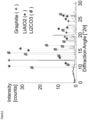
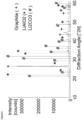
- the heat-treated material is recovered from the furnace, mechanically treated to obtain a particulate material and analyzed by means of X-ray powder diffraction ( Fig. 1 and 2 : Mo Ka radiation, Fig. 3 and 4 : Cu Ka radiation), elemental analysis (Tab. 2) and particle size distribution (Tab. 3).
- the Li content is 3.6 wt.-%, which acts as reference for all further leaching examples (see below).
- Fluorine is mainly represented as inorganic fluoride (88%). Particle sizes are well below 1 mm; D50 is determined to be 17.36 ⁇ m.
Landscapes
- Chemical & Material Sciences (AREA)
- Engineering & Computer Science (AREA)
- Materials Engineering (AREA)
- Organic Chemistry (AREA)
- Manufacturing & Machinery (AREA)
- Metallurgy (AREA)
- Mechanical Engineering (AREA)
- Environmental & Geological Engineering (AREA)
- Life Sciences & Earth Sciences (AREA)
- General Life Sciences & Earth Sciences (AREA)
- Geology (AREA)
- Geochemistry & Mineralogy (AREA)
- Inorganic Chemistry (AREA)
- General Chemical & Material Sciences (AREA)
- Electrochemistry (AREA)
- Chemical Kinetics & Catalysis (AREA)
- Manufacture And Refinement Of Metals (AREA)
- Secondary Cells (AREA)
- Battery Electrode And Active Subsutance (AREA)
Claims (15)
- Procédé de récupération d'un ou plusieurs métaux de transition, et de lithium en tant que sel de Li, généralement à partir d'un matériau comprenant des batteries lithium ion usagées ou des parties de celles-ci, lequel procédé comprend les étapes de(a) fourniture d'un matériau particulaire contenant un composé de métal de transition et/ou un métal de transition, le métal de transition étant choisi dans le groupe constitué par Ni et Co, et au moins une fraction dudit Ni et/ou Co étant dans un état d'oxydation inférieur à +2 ; lequel matériau particulaire contient en outre un sel de lithium ;(b) traitement du matériau fourni à l'étape (a) avec un solvant polaire, généralement un solvant protique ;(c) séparation du résidu solide contenant le métal de transition du liquide, éventuellement suivie de la soumission dudit résidu solide à une séparation solide-solide pour l'élimination du métal de transition tel que Ni ; et(d) traitement des solides contenant le métal de transition dans un four de fusion pour obtenir une masse fondue de métal contenant Ni et/ou Co ;à condition que, dans le cas où le résidu solide séparé à l'étape (c) est soumis à ladite séparation solide-solide pour l'élimination du métal de transition tel que Ni avant la mise en œuvre de la présente étape (d), le solvant polaire utilisé à l'étape (b) contienne un hydroxyde alcalino-terreux.
- Procédé selon la revendication 1, dans lequel le matériau particulaire fourni dans l'étape (a) est obtenu à partir de batteries lithium ion usagées, en particulier leurs matériaux de pile, et/ou un matériau de rebut obtenu de la production de batteries lithium ion ou de matériaux actifs de cathode lithium ion, et est fourni sous la forme d'une poudre sèche, d'une poudre humide ou d'une suspension de particules dans un liquide.
- Procédé selon la revendication 1 ou 2, dans lequel le matériau particulaire fourni dans l'étape (a) comprend des particules ayant un diamètre particulaire moyen D50 dans la plage de 1 µm à 2 mm lorsqu'il est détecté conformément à la norme ISO 13320 EN:2009-10.
- Procédé selon l'une quelconque des revendications précédentes, dans lequel le composé de métal de transition et/ou le métal de transition Ni et/ou Co dans un état d'oxydation inférieur à +2, contenu dans le matériau particulaire fourni dans l'étape (a), comprend Ni et/ou Co à l'état métallique, et dans lequel le composé de métal de transition et/ou le métal de transition contenu dans le matériau particulaire fourni dans l'étape (a) est de préférence présent en une quantité détectable par diffraction des rayons X sur poudre (rayonnement Cu-k-alpha-1).
- Procédé selon l'une quelconque des revendications précédentes, dans lequel le sel de lithium contenu dans le matériau particulaire fourni dans l'étape (a) comprend un ou plusieurs sels parmi LiOH, LiF, Li2O, Li2CO3, LiHCO3, des aluminates de lithium, des sels de phosphate de lithium ; des oxydes mixtes de Li et d'un ou plusieurs parmi Ni, Co, Mn, Fe, Al, Cu.
- Procédé selon l'une quelconque des revendications précédentes, dans lequel l'étape (b) est effectuée en présence d'un hydroxyde alcalino-terreux, et est de préférence effectuée pari) ajout de l'hydroxyde alcalino-terreux et/ou d'un oxyde alcalin, sous forme solide, ou d'un mélange comprenant l'hydroxyde alcalino-terreux sous forme de suspension ou de solution dans un solvant protique, généralement dans un liquide aqueux, et du matériau particulaire fourni à l'étape (a) simultanément au solvant polaire, qui est un solvant protique, et de préférence un liquide aqueux tel que l'eau ;
ou parii) ajout du matériau particulaire fourni à l'étape (a) au solvant polaire, qui est un solvant protique et de préférence un liquide aqueux tel que l'eau, pour obtenir une suspension, puis ajout de l'hydroxyde alcalino-terreux et/ou d'un oxyde alcalin, sous forme solide, ou d'un mélange comprenant un hydroxyde alcalino-terreux sous forme de suspension ou de solution dans un solvant protique tel qu'un liquide aqueux ;
ou pariii) ajout de l'hydroxyde alcalino-terreux et/ou d'un oxyde alcalin, sous forme solide ou de suspension de solides dans un solvant polaire, à un liquide aqueux tel que l'eau pour obtenir un mélange comprenant un hydroxyde alcalino-terreux, généralement sous forme de suspension ou de solution dans le liquide aqueux, et combinaison subséquente dudit mélange avec le matériau particulaire fourni dans l'étape (a) ; ou pariv) ajout de l'hydroxyde alcalino-terreux et/ou d'un oxyde alcalin, sous forme solide, au matériau particulaire fourni à l'étape (a) pour obtenir un mélange de solides, suivi par l'ajout du solvant polaire, qui est un solvant protique et de préférence un liquide aqueux tel que l'eau ;
ou parv) ajout du matériau particulaire fourni à l'étape (a) au solvant polaire, qui est un solvant protique et de préférence un liquide aqueux tel que l'eau, pour obtenir une suspension, suivi d'une filtration pour obtenir un filtrat, et ajout subséquent de l'hydroxyde alcalino-terreux et/ou d'un oxyde alcalin, sous forme solide, ou d'un mélange comprenant un hydroxyde alcalino-terreux, généralement sous forme de suspension ou de solution dans le solvant polaire, de préférence un liquide aqueux, au filtrat. - Procédé selon l'une quelconque des revendications précédentes, dans lequel le solvant polaire de l'étape (b) contient de l'hydroxyde de calcium, qui est ajouté tel quel audit solvant polaire, ou est formé in situ lors du contact de l'oxyde de calcium avec le solvant polaire choisi parmi les solvants protiques tels que les liquides aqueux ou l'eau.
- Procédé selon l'une quelconque des revendications précédentes, dans lequel le matériau particulaire fourni dans l'étape (a) comprend un matériau obtenu à partir de batteries lithium ion usagées après avoir effectué l'étape préliminaire (i) de chauffage dans des conditions inertes ou réductrices jusqu'à une température dans la plage de 80 à 900 °C, en particulier de 200 à 800 °C, laquelle étape préliminaire (i) est généralement effectuée après la décharge des batteries lithium ion, le démontage et/ou le déchiquetage.
- Procédé selon la revendication 8, dans lequel l'étape de chauffage (i) est conduite dans des conditions réductrices comprenant la présence de carbone et/ou d'un gaz réducteur choisi parmi l'hydrogène et le monoxyde de carbone.
- Procédé selon la revendication 8 ou 9, dans lequel, dans l'étape préliminaire (i), la température de chauffage est de la plage de 350 à 500 °C, notamment de 350 à 450 °C, et l'étape (i) est conduite en la présence de 35 % d'hydrogène ou plus en volume ; ou
où dans l'étape préliminaire (i), la température de chauffage est dans la plage de 500 à 850 °C, notamment de 600 à 800 °C, et l'étape (i) est conduite en la présence de carbone dans une atmosphère contenant jusqu'à 20 % en volume d'oxygène. - Procédé selon l'une quelconque des revendications précédentes, dans lequel le matériau particulaire fourni dans l'étape (a) est obtenu à partir de batteries lithium ion après retrait mécanique du boîtier, du câblage ou des circuits et décharge, et dans lequel ledit matériau n'est pas exposé à des températures de 400 °C ou plus dans des conditions oxydantes avant de le soumettre à la présente étape (a).
- Procédé selon l'une quelconque des revendications précédentes, comprenant l'étape supplémentaire de soumission des solides obtenus dans l'étape (c) à une séparation solide-solide, par exemple une séparation magnétique.
- Procédé selon l'une quelconque des revendications précédentes, dans lequel les solides contenant le métal de transition sont séchés jusqu'à une teneur résiduelle de liquides inférieure à 5 %, de préférence inférieure à 1 % en poids, et/ou sont mis en pastilles avant d'être introduits dans l'étape (d).
- Procédé selon l'une quelconque des revendications précédentes, dans lequel, dans l'étape (d), la température dans le four aux points de soutirage est comprise entre 1 200 et 1 600 °C, et le four est exploité en mode continu ou en mode discontinu, et/ou dans lequel les solides traités dans l'étape (d) contiennent en outre un ou plusieurs parmi les éléments cuivre, fer et manganèse.
- Procédé selon l'une quelconque des revendications 1 à 11, comprenant l'étape supplémentaire de récupération de lithium en tant qu'hydroxyde de lithium par cristallisation à partir du liquide obtenu dans l'étape (c), ou récupération de lithium en tant que carbonate de lithium après ajout de dioxyde de carbone au liquide obtenu dans l'étape (c) et isolement du carbonate de lithium formé.
Applications Claiming Priority (3)
| Application Number | Priority Date | Filing Date | Title |
|---|---|---|---|
| EP19188696 | 2019-07-26 | ||
| EP20151754 | 2020-01-14 | ||
| PCT/EP2020/071017 WO2021018788A1 (fr) | 2019-07-26 | 2020-07-24 | Procédé pour la récupération de lithium et d'autres métaux à partir de batteries au lithium-ion usagées |
Publications (2)
| Publication Number | Publication Date |
|---|---|
| EP4004244A1 EP4004244A1 (fr) | 2022-06-01 |
| EP4004244B1 true EP4004244B1 (fr) | 2025-07-02 |
Family
ID=71670276
Family Applications (1)
| Application Number | Title | Priority Date | Filing Date |
|---|---|---|---|
| EP20742778.2A Active EP4004244B1 (fr) | 2019-07-26 | 2020-07-24 | Procédé de récupération de lithium à partir de déchets de batteries au lithium-ion |
Country Status (13)
| Country | Link |
|---|---|
| US (1) | US20220352570A1 (fr) |
| EP (1) | EP4004244B1 (fr) |
| JP (1) | JP7617077B2 (fr) |
| CN (2) | CN121700195A (fr) |
| AU (1) | AU2020323235B2 (fr) |
| CA (1) | CA3144716A1 (fr) |
| ES (1) | ES3039905T3 (fr) |
| FI (1) | FI4004244T3 (fr) |
| HU (1) | HUE072992T2 (fr) |
| MX (1) | MX2022001040A (fr) |
| PL (1) | PL4004244T3 (fr) |
| TW (1) | TWI888394B (fr) |
| WO (1) | WO2021018788A1 (fr) |
Families Citing this family (25)
| Publication number | Priority date | Publication date | Assignee | Title |
|---|---|---|---|---|
| TW202105823A (zh) * | 2019-07-26 | 2021-02-01 | 德商巴斯夫歐洲公司 | 自廢鋰離子電池中回收鋰和其他金屬之方法 |
| IL273457A (en) * | 2020-03-19 | 2021-09-30 | Yeda Res & Dev | A method for extracting valuable metals from lithium-ion batteries |
| WO2022006469A1 (fr) * | 2020-07-01 | 2022-01-06 | Garrison Minerals, Llc | Nouveaux systèmes et procédés de lixiviation par acide réducteur d'électrodes de batterie usagées pour récupérer des matériaux de valeur |
| KR102680508B1 (ko) | 2020-08-24 | 2024-07-01 | 그린 라이온 피티이. 리미티드 | 리튬이온 배터리의 재활용에서의 불순물 제거 공정 |
| CN112981107B (zh) * | 2021-02-07 | 2022-09-23 | 余姚市鑫和电池材料有限公司 | 一种废旧三元锂电池正极材料回收碳酸锂的方法 |
| KR20220129729A (ko) * | 2021-03-17 | 2022-09-26 | 에스케이이노베이션 주식회사 | 리튬 전구체 재생 방법 |
| CN112939034B (zh) * | 2021-03-19 | 2023-08-15 | 江西云威新材料有限公司 | 一种工业级碳酸锂制备电池级无水氢氧化锂的方法 |
| US20240194961A1 (en) * | 2021-04-23 | 2024-06-13 | Batx Energies Pvt Ltd | A method for recycling of used scrap lithium battery |
| PH12022552713A1 (en) | 2021-05-07 | 2024-03-25 | Young Poong Corp | Method for recovering lithium from a waste lithium secondary battery using a pyrometallugical process |
| JP7838931B2 (ja) * | 2021-07-02 | 2026-04-01 | 株式会社神戸製鋼所 | 有価物質の回収方法 |
| CN113862476B (zh) * | 2021-09-16 | 2024-04-02 | 格林美股份有限公司 | 一种废旧锂离子电池预提锂方法 |
| CN116802886A (zh) | 2022-01-17 | 2023-09-22 | 绿狮私人有限公司 | 用于回收利用磷酸铁锂电池的方法 |
| AU2023223959B2 (en) * | 2022-02-23 | 2025-04-03 | Green Li-Ion Pte. Ltd | Processes and systems for purifying and recycling lithium-ion battery waste streams |
| TWI890995B (zh) | 2022-04-18 | 2025-07-21 | 新加坡商綠色鋰離子私人有限公司 | 用於自鋰離子電池組回收鋰之方法及系統 |
| CN115558789B (zh) * | 2022-08-31 | 2024-07-30 | 昆明理工大学 | 一种废铜锂复合带的回收方法 |
| EP4372108A1 (fr) * | 2023-03-22 | 2024-05-22 | Umicore | Récupération de lithium à partir de scories |
| CN119790524A (zh) * | 2023-05-31 | 2025-04-08 | 高丽亚铅株式会社 | 废电池处理方法 |
| CN116646635B (zh) * | 2023-07-18 | 2025-08-15 | 四川大学 | 废旧三元锂电池正极材料中锂和过渡金属的回收方法 |
| US12322771B2 (en) | 2023-08-23 | 2025-06-03 | Green Li-Ion Pte. Ltd. | Adaptable processes and systems for purifying co-precipitated or independent streams of manganese, nickel, and cobalt from lithium-ion battery waste streams |
| EP4575017A1 (fr) * | 2023-12-22 | 2025-06-25 | Umicore | Fusion de batterie pyrolysée |
| KR102783528B1 (ko) * | 2024-01-29 | 2025-03-19 | 주식회사 에코알앤에스 | 이산화탄소 저감이 가능한 폐이차전지 건식 재활용을 위한 회수 시스템 및 이를 이용한 회수 방법 |
| WO2025207753A1 (fr) * | 2024-03-26 | 2025-10-02 | Lithium Technologies, Inc. | Extraction et affinement sans calcination de composés de lithium à températures réduites à l'aide d'une charge d'alimentation flexible |
| WO2025212753A1 (fr) * | 2024-04-02 | 2025-10-09 | Redwood Materials, Inc. | Lixiviation assistée à la chaux de concentré métallique calciné pour la récupération de lithium |
| CN118472456B (zh) * | 2024-07-10 | 2024-09-24 | 光大环保技术装备(常州)有限公司 | 一种废旧电池回收装置及其方法 |
| US20260028695A1 (en) * | 2024-07-23 | 2026-01-29 | Zincfive, Inc. | Extraction and recovery of metals under ambient conditions |
Family Cites Families (21)
| Publication number | Priority date | Publication date | Assignee | Title |
|---|---|---|---|---|
| JP5077788B2 (ja) * | 2001-07-18 | 2012-11-21 | ティーエムシー株式会社 | 電池用電極材料の回収方法 |
| EP1589121B1 (fr) | 2004-04-19 | 2008-12-31 | Umicore | Recyclage d'une pile |
| CN101230422A (zh) * | 2008-02-02 | 2008-07-30 | 贵研铂业股份有限公司 | 一种从红土镍矿中富集镍及联产铁红的方法 |
| JP2012112027A (ja) | 2010-11-25 | 2012-06-14 | Kangen Yoyu Gijutsu Kenkyusho:Kk | リチウム並びにコバルトやその他メタルの回収方法 |
| JP5360118B2 (ja) | 2011-04-15 | 2013-12-04 | 住友金属鉱山株式会社 | 有価金属回収方法 |
| JP2012229481A (ja) * | 2011-04-27 | 2012-11-22 | Japan Metals & Chem Co Ltd | 使用済みリチウムイオン電池類の有価物の分別回収方法 |
| CN102251097B (zh) * | 2011-07-08 | 2012-09-26 | 鞍山鑫普新材料有限公司 | 一种从废旧锂电池中回收金属的方法 |
| CN105377765B (zh) | 2013-05-08 | 2018-01-26 | 巴斯夫欧洲公司 | 球形颗粒、其制备及用途 |
| CN103526047A (zh) * | 2013-09-27 | 2014-01-22 | 泰州永兴合金材料科技有限公司 | 一种褐铁矿型红土镍矿的冶炼方法及其产品 |
| CN104674013B (zh) * | 2015-03-11 | 2017-11-17 | 长沙矿冶研究院有限责任公司 | 一种含Co和/或Ni废旧电池的回收处理方法 |
| KR101770513B1 (ko) * | 2015-05-26 | 2017-08-23 | 부경대학교 산학협력단 | 리튬-코발트 산화물로부터 코발트 분말의 회수 방법 |
| WO2017091562A1 (fr) | 2015-11-24 | 2017-06-01 | Worcester Polytechnic Institute | Procédé et appareil permettant de recycler des batteries au lithium-ion |
| JP2017115179A (ja) * | 2015-12-22 | 2017-06-29 | 日本リサイクルセンター株式会社 | 有価物の回収方法 |
| US10205200B2 (en) * | 2016-07-07 | 2019-02-12 | Grst International Limited | Method for recycling lithium-ion battery |
| CN106848471B (zh) | 2017-04-18 | 2021-11-09 | 中科过程(北京)科技有限公司 | 一种废旧锂离子电池正极材料的混酸浸出及回收方法 |
| CN107394299A (zh) * | 2017-06-22 | 2017-11-24 | 深圳市沃特玛电池有限公司 | 一种锂离子电池正极极片的回收方法 |
| CN107978814A (zh) * | 2017-07-04 | 2018-05-01 | 中国科学院过程工程研究所 | 一种从废旧锂离子电池正极材料中选择性分离锂的方法 |
| CN108063295B (zh) * | 2017-12-06 | 2020-09-22 | 天齐锂业股份有限公司 | 从火法回收锂电池产生的炉渣中提取锂的方法 |
| CN108832215B (zh) * | 2018-06-14 | 2020-07-31 | 中国科学院过程工程研究所 | 一种选择性回收锂离子电池正极材料的方法 |
| CN109786739B (zh) * | 2019-01-29 | 2020-08-25 | 东北大学 | 一种熔盐辅助碳热还原回收锂电池正极材料的方法 |
| CN109888370B (zh) * | 2019-04-11 | 2024-08-09 | 中国恩菲工程技术有限公司 | 废旧锂离子电池热解方法及系统 |
-
2020
- 2020-07-23 TW TW109124961A patent/TWI888394B/zh active
- 2020-07-24 FI FIEP20742778.2T patent/FI4004244T3/fi active
- 2020-07-24 EP EP20742778.2A patent/EP4004244B1/fr active Active
- 2020-07-24 CN CN202511797688.5A patent/CN121700195A/zh active Pending
- 2020-07-24 PL PL20742778.2T patent/PL4004244T3/pl unknown
- 2020-07-24 MX MX2022001040A patent/MX2022001040A/es unknown
- 2020-07-24 AU AU2020323235A patent/AU2020323235B2/en not_active Expired - Fee Related
- 2020-07-24 JP JP2022504519A patent/JP7617077B2/ja active Active
- 2020-07-24 ES ES20742778T patent/ES3039905T3/es active Active
- 2020-07-24 CN CN202080053690.0A patent/CN114207161A/zh active Pending
- 2020-07-24 WO PCT/EP2020/071017 patent/WO2021018788A1/fr not_active Ceased
- 2020-07-24 HU HUE20742778A patent/HUE072992T2/hu unknown
- 2020-07-24 US US17/625,788 patent/US20220352570A1/en active Pending
- 2020-07-24 CA CA3144716A patent/CA3144716A1/fr active Pending
Also Published As
| Publication number | Publication date |
|---|---|
| PL4004244T3 (pl) | 2025-11-03 |
| MX2022001040A (es) | 2022-02-10 |
| KR20220038441A (ko) | 2022-03-28 |
| JP2022541321A (ja) | 2022-09-22 |
| CA3144716A1 (fr) | 2021-02-04 |
| US20220352570A1 (en) | 2022-11-03 |
| ES3039905T3 (en) | 2025-10-27 |
| JP7617077B2 (ja) | 2025-01-17 |
| AU2020323235B2 (en) | 2025-09-18 |
| TWI888394B (zh) | 2025-07-01 |
| EP4004244A1 (fr) | 2022-06-01 |
| FI4004244T3 (fi) | 2025-09-18 |
| AU2020323235A1 (en) | 2022-02-17 |
| HUE072992T2 (hu) | 2025-12-28 |
| CN114207161A (zh) | 2022-03-18 |
| CN121700195A (zh) | 2026-03-20 |
| WO2021018788A1 (fr) | 2021-02-04 |
| TW202111131A (zh) | 2021-03-16 |
Similar Documents
| Publication | Publication Date | Title |
|---|---|---|
| EP4004244B1 (fr) | Procédé de récupération de lithium à partir de déchets de batteries au lithium-ion | |
| EP4004245B1 (fr) | Procédé de récupération de lithium à partir de déchets de batteries au lithium-ion | |
| US12410493B2 (en) | Process for the recovery of lithium from waste lithium ion batteries | |
| KR102803965B1 (ko) | 폐 리튬 이온 전지의 재활용 방법 | |
| KR102956064B1 (ko) | 폐기 리튬 이온 배터리로부터 리튬 및 다른 금속의 회수 방법 | |
| KR102956721B1 (ko) | 폐기 리튬 이온 배터리로부터 리튬의 회수 방법 | |
| KR102956065B1 (ko) | 폐기 리튬 이온 배터리로부터 리튬 및 다른 금속의 회수 방법 |
Legal Events
| Date | Code | Title | Description |
|---|---|---|---|
| STAA | Information on the status of an ep patent application or granted ep patent |
Free format text: STATUS: UNKNOWN |
|
| STAA | Information on the status of an ep patent application or granted ep patent |
Free format text: STATUS: THE INTERNATIONAL PUBLICATION HAS BEEN MADE |
|
| PUAI | Public reference made under article 153(3) epc to a published international application that has entered the european phase |
Free format text: ORIGINAL CODE: 0009012 |
|
| STAA | Information on the status of an ep patent application or granted ep patent |
Free format text: STATUS: REQUEST FOR EXAMINATION WAS MADE |
|
| 17P | Request for examination filed |
Effective date: 20220228 |
|
| AK | Designated contracting states |
Kind code of ref document: A1 Designated state(s): AL AT BE BG CH CY CZ DE DK EE ES FI FR GB GR HR HU IE IS IT LI LT LU LV MC MK MT NL NO PL PT RO RS SE SI SK SM TR |
|
| DAV | Request for validation of the european patent (deleted) | ||
| DAX | Request for extension of the european patent (deleted) | ||
| GRAP | Despatch of communication of intention to grant a patent |
Free format text: ORIGINAL CODE: EPIDOSNIGR1 |
|
| STAA | Information on the status of an ep patent application or granted ep patent |
Free format text: STATUS: GRANT OF PATENT IS INTENDED |
|
| INTG | Intention to grant announced |
Effective date: 20250130 |
|
| GRAS | Grant fee paid |
Free format text: ORIGINAL CODE: EPIDOSNIGR3 |
|
| GRAA | (expected) grant |
Free format text: ORIGINAL CODE: 0009210 |
|
| STAA | Information on the status of an ep patent application or granted ep patent |
Free format text: STATUS: THE PATENT HAS BEEN GRANTED |
|
| AK | Designated contracting states |
Kind code of ref document: B1 Designated state(s): AL AT BE BG CH CY CZ DE DK EE ES FI FR GB GR HR HU IE IS IT LI LT LU LV MC MK MT NL NO PL PT RO RS SE SI SK SM TR |
|
| REG | Reference to a national code |
Ref country code: GB Ref legal event code: FG4D |
|
| REG | Reference to a national code |
Ref country code: CH Ref legal event code: EP |
|
| REG | Reference to a national code |
Ref country code: DE Ref legal event code: R096 Ref document number: 602020053807 Country of ref document: DE |
|
| REG | Reference to a national code |
Ref country code: IE Ref legal event code: FG4D |
|
| REG | Reference to a national code |
Ref country code: FI Ref legal event code: FGE |
|
| REG | Reference to a national code |
Ref country code: SE Ref legal event code: TRGR |
|
| PGFP | Annual fee paid to national office [announced via postgrant information from national office to epo] |
Ref country code: FI Payment date: 20250724 Year of fee payment: 6 Ref country code: ES Payment date: 20250812 Year of fee payment: 6 |
|
| PGFP | Annual fee paid to national office [announced via postgrant information from national office to epo] |
Ref country code: DE Payment date: 20250728 Year of fee payment: 6 |
|
| PGFP | Annual fee paid to national office [announced via postgrant information from national office to epo] |
Ref country code: GB Payment date: 20250722 Year of fee payment: 6 |
|
| PGFP | Annual fee paid to national office [announced via postgrant information from national office to epo] |
Ref country code: FR Payment date: 20250725 Year of fee payment: 6 |
|
| PGFP | Annual fee paid to national office [announced via postgrant information from national office to epo] |
Ref country code: SE Payment date: 20250725 Year of fee payment: 6 |
|
| REG | Reference to a national code |
Ref country code: ES Ref legal event code: FG2A Ref document number: 3039905 Country of ref document: ES Kind code of ref document: T3 Effective date: 20251027 |
|
| REG | Reference to a national code |
Ref country code: NL Ref legal event code: MP Effective date: 20250702 |
|
| PGFP | Annual fee paid to national office [announced via postgrant information from national office to epo] |
Ref country code: HU Payment date: 20250722 Year of fee payment: 6 |
|
| PG25 | Lapsed in a contracting state [announced via postgrant information from national office to epo] |
Ref country code: PT Free format text: LAPSE BECAUSE OF FAILURE TO SUBMIT A TRANSLATION OF THE DESCRIPTION OR TO PAY THE FEE WITHIN THE PRESCRIBED TIME-LIMIT Effective date: 20251103 |
|
| PG25 | Lapsed in a contracting state [announced via postgrant information from national office to epo] |
Ref country code: NL Free format text: LAPSE BECAUSE OF FAILURE TO SUBMIT A TRANSLATION OF THE DESCRIPTION OR TO PAY THE FEE WITHIN THE PRESCRIBED TIME-LIMIT Effective date: 20250702 |
|
| REG | Reference to a national code |
Ref country code: AT Ref legal event code: MK05 Ref document number: 1809326 Country of ref document: AT Kind code of ref document: T Effective date: 20250702 |
|
| REG | Reference to a national code |
Ref country code: HU Ref legal event code: AG4A Ref document number: E072992 Country of ref document: HU |
|
| PG25 | Lapsed in a contracting state [announced via postgrant information from national office to epo] |
Ref country code: IS Free format text: LAPSE BECAUSE OF FAILURE TO SUBMIT A TRANSLATION OF THE DESCRIPTION OR TO PAY THE FEE WITHIN THE PRESCRIBED TIME-LIMIT Effective date: 20251102 |
|
| PG25 | Lapsed in a contracting state [announced via postgrant information from national office to epo] |
Ref country code: NO Free format text: LAPSE BECAUSE OF FAILURE TO SUBMIT A TRANSLATION OF THE DESCRIPTION OR TO PAY THE FEE WITHIN THE PRESCRIBED TIME-LIMIT Effective date: 20251002 |
|
| REG | Reference to a national code |
Ref country code: LT Ref legal event code: MG9D |
|
| PG25 | Lapsed in a contracting state [announced via postgrant information from national office to epo] |
Ref country code: AT Free format text: LAPSE BECAUSE OF FAILURE TO SUBMIT A TRANSLATION OF THE DESCRIPTION OR TO PAY THE FEE WITHIN THE PRESCRIBED TIME-LIMIT Effective date: 20250702 |
|
| PG25 | Lapsed in a contracting state [announced via postgrant information from national office to epo] |
Ref country code: HR Free format text: LAPSE BECAUSE OF FAILURE TO SUBMIT A TRANSLATION OF THE DESCRIPTION OR TO PAY THE FEE WITHIN THE PRESCRIBED TIME-LIMIT Effective date: 20250702 |
|
| PG25 | Lapsed in a contracting state [announced via postgrant information from national office to epo] |
Ref country code: GR Free format text: LAPSE BECAUSE OF FAILURE TO SUBMIT A TRANSLATION OF THE DESCRIPTION OR TO PAY THE FEE WITHIN THE PRESCRIBED TIME-LIMIT Effective date: 20251003 |
|
| PG25 | Lapsed in a contracting state [announced via postgrant information from national office to epo] |
Ref country code: CZ Free format text: LAPSE BECAUSE OF FAILURE TO SUBMIT A TRANSLATION OF THE DESCRIPTION OR TO PAY THE FEE WITHIN THE PRESCRIBED TIME-LIMIT Effective date: 20250702 |
|
| PG25 | Lapsed in a contracting state [announced via postgrant information from national office to epo] |
Ref country code: LV Free format text: LAPSE BECAUSE OF FAILURE TO SUBMIT A TRANSLATION OF THE DESCRIPTION OR TO PAY THE FEE WITHIN THE PRESCRIBED TIME-LIMIT Effective date: 20250702 |
|
| PG25 | Lapsed in a contracting state [announced via postgrant information from national office to epo] |
Ref country code: BG Free format text: LAPSE BECAUSE OF FAILURE TO SUBMIT A TRANSLATION OF THE DESCRIPTION OR TO PAY THE FEE WITHIN THE PRESCRIBED TIME-LIMIT Effective date: 20250702 |
|
| PGFP | Annual fee paid to national office [announced via postgrant information from national office to epo] |
Ref country code: PL Payment date: 20250812 Year of fee payment: 6 |
|
| PG25 | Lapsed in a contracting state [announced via postgrant information from national office to epo] |
Ref country code: RS Free format text: LAPSE BECAUSE OF FAILURE TO SUBMIT A TRANSLATION OF THE DESCRIPTION OR TO PAY THE FEE WITHIN THE PRESCRIBED TIME-LIMIT Effective date: 20251002 |
|
| REG | Reference to a national code |
Ref country code: CH Ref legal event code: H13 Free format text: ST27 STATUS EVENT CODE: U-0-0-H10-H13 (AS PROVIDED BY THE NATIONAL OFFICE) Effective date: 20260224 |
|
| PG25 | Lapsed in a contracting state [announced via postgrant information from national office to epo] |
Ref country code: RO Free format text: LAPSE BECAUSE OF FAILURE TO SUBMIT A TRANSLATION OF THE DESCRIPTION OR TO PAY THE FEE WITHIN THE PRESCRIBED TIME-LIMIT Effective date: 20250702 Ref country code: LU Free format text: LAPSE BECAUSE OF NON-PAYMENT OF DUE FEES Effective date: 20250724 |
|
| REG | Reference to a national code |
Ref country code: BE Ref legal event code: MM Effective date: 20250731 |
|
| PG25 | Lapsed in a contracting state [announced via postgrant information from national office to epo] |
Ref country code: SM Free format text: LAPSE BECAUSE OF FAILURE TO SUBMIT A TRANSLATION OF THE DESCRIPTION OR TO PAY THE FEE WITHIN THE PRESCRIBED TIME-LIMIT Effective date: 20250702 |
|
| PG25 | Lapsed in a contracting state [announced via postgrant information from national office to epo] |
Ref country code: DK Free format text: LAPSE BECAUSE OF FAILURE TO SUBMIT A TRANSLATION OF THE DESCRIPTION OR TO PAY THE FEE WITHIN THE PRESCRIBED TIME-LIMIT Effective date: 20250702 |
|
| PG25 | Lapsed in a contracting state [announced via postgrant information from national office to epo] |
Ref country code: BE Free format text: LAPSE BECAUSE OF NON-PAYMENT OF DUE FEES Effective date: 20250731 Ref country code: IT Free format text: LAPSE BECAUSE OF FAILURE TO SUBMIT A TRANSLATION OF THE DESCRIPTION OR TO PAY THE FEE WITHIN THE PRESCRIBED TIME-LIMIT Effective date: 20250702 |
|
| PG25 | Lapsed in a contracting state [announced via postgrant information from national office to epo] |
Ref country code: CH Free format text: LAPSE BECAUSE OF NON-PAYMENT OF DUE FEES Effective date: 20250731 |
|
| PG25 | Lapsed in a contracting state [announced via postgrant information from national office to epo] |
Ref country code: EE Free format text: LAPSE BECAUSE OF FAILURE TO SUBMIT A TRANSLATION OF THE DESCRIPTION OR TO PAY THE FEE WITHIN THE PRESCRIBED TIME-LIMIT Effective date: 20250702 Ref country code: SK Free format text: LAPSE BECAUSE OF FAILURE TO SUBMIT A TRANSLATION OF THE DESCRIPTION OR TO PAY THE FEE WITHIN THE PRESCRIBED TIME-LIMIT Effective date: 20250702 |