EP4005676A1 - Dispositif de différenciation de riz paddy - Google Patents
Dispositif de différenciation de riz paddy Download PDFInfo
- Publication number
- EP4005676A1 EP4005676A1 EP20846017.0A EP20846017A EP4005676A1 EP 4005676 A1 EP4005676 A1 EP 4005676A1 EP 20846017 A EP20846017 A EP 20846017A EP 4005676 A1 EP4005676 A1 EP 4005676A1
- Authority
- EP
- European Patent Office
- Prior art keywords
- light
- paddy
- mixed grains
- light receiving
- receiving means
- Prior art date
- Legal status (The legal status is an assumption and is not a legal conclusion. Google has not performed a legal analysis and makes no representation as to the accuracy of the status listed.)
- Pending
Links
Images


Classifications
-
- B—PERFORMING OPERATIONS; TRANSPORTING
- B02—CRUSHING, PULVERISING, OR DISINTEGRATING; PREPARATORY TREATMENT OF GRAIN FOR MILLING
- B02B—PREPARING GRAIN FOR MILLING; REFINING GRANULAR FRUIT TO COMMERCIAL PRODUCTS BY WORKING THE SURFACE
- B02B5/00—Grain treatment not otherwise provided for
- B02B5/02—Combined processes
-
- B—PERFORMING OPERATIONS; TRANSPORTING
- B07—SEPARATING SOLIDS FROM SOLIDS; SORTING
- B07C—POSTAL SORTING; SORTING INDIVIDUAL ARTICLES, OR BULK MATERIAL FIT TO BE SORTED PIECE-MEAL, e.g. BY PICKING
- B07C5/00—Sorting according to a characteristic or feature of the articles or material being sorted, e.g. by control effected by devices which detect or measure such characteristic or feature; Sorting by manually actuated devices, e.g. switches
- B07C5/34—Sorting according to other particular properties
- B07C5/342—Sorting according to other particular properties according to optical properties, e.g. colour
- B07C5/3425—Sorting according to other particular properties according to optical properties, e.g. colour of granular material, e.g. ore particles, grain
-
- B—PERFORMING OPERATIONS; TRANSPORTING
- B02—CRUSHING, PULVERISING, OR DISINTEGRATING; PREPARATORY TREATMENT OF GRAIN FOR MILLING
- B02B—PREPARING GRAIN FOR MILLING; REFINING GRANULAR FRUIT TO COMMERCIAL PRODUCTS BY WORKING THE SURFACE
- B02B3/00—Hulling; Husking; Decorticating; Polishing; Removing the awns; Degerming
- B02B3/04—Hulling; Husking; Decorticating; Polishing; Removing the awns; Degerming by means of rollers
- B02B3/045—Hulling; Husking; Decorticating; Polishing; Removing the awns; Degerming by means of rollers cooperating rollers
-
- B—PERFORMING OPERATIONS; TRANSPORTING
- B02—CRUSHING, PULVERISING, OR DISINTEGRATING; PREPARATORY TREATMENT OF GRAIN FOR MILLING
- B02B—PREPARING GRAIN FOR MILLING; REFINING GRANULAR FRUIT TO COMMERCIAL PRODUCTS BY WORKING THE SURFACE
- B02B7/00—Auxiliary devices
-
- B—PERFORMING OPERATIONS; TRANSPORTING
- B07—SEPARATING SOLIDS FROM SOLIDS; SORTING
- B07C—POSTAL SORTING; SORTING INDIVIDUAL ARTICLES, OR BULK MATERIAL FIT TO BE SORTED PIECE-MEAL, e.g. BY PICKING
- B07C5/00—Sorting according to a characteristic or feature of the articles or material being sorted, e.g. by control effected by devices which detect or measure such characteristic or feature; Sorting by manually actuated devices, e.g. switches
- B07C5/02—Measures preceding sorting, e.g. arranging articles in a stream orientating
-
- B—PERFORMING OPERATIONS; TRANSPORTING
- B07—SEPARATING SOLIDS FROM SOLIDS; SORTING
- B07C—POSTAL SORTING; SORTING INDIVIDUAL ARTICLES, OR BULK MATERIAL FIT TO BE SORTED PIECE-MEAL, e.g. BY PICKING
- B07C5/00—Sorting according to a characteristic or feature of the articles or material being sorted, e.g. by control effected by devices which detect or measure such characteristic or feature; Sorting by manually actuated devices, e.g. switches
- B07C5/34—Sorting according to other particular properties
- B07C5/3416—Sorting according to other particular properties according to radiation transmissivity, e.g. for light, x-rays, particle radiation
-
- B—PERFORMING OPERATIONS; TRANSPORTING
- B07—SEPARATING SOLIDS FROM SOLIDS; SORTING
- B07C—POSTAL SORTING; SORTING INDIVIDUAL ARTICLES, OR BULK MATERIAL FIT TO BE SORTED PIECE-MEAL, e.g. BY PICKING
- B07C5/00—Sorting according to a characteristic or feature of the articles or material being sorted, e.g. by control effected by devices which detect or measure such characteristic or feature; Sorting by manually actuated devices, e.g. switches
- B07C5/36—Sorting apparatus characterised by the means used for distribution
- B07C5/361—Processing or control devices therefor, e.g. escort memory
- B07C5/362—Separating or distributor mechanisms
-
- G—PHYSICS
- G01—MEASURING; TESTING
- G01N—INVESTIGATING OR ANALYSING MATERIALS BY DETERMINING THEIR CHEMICAL OR PHYSICAL PROPERTIES
- G01N21/00—Investigating or analysing materials by the use of optical means, i.e. using sub-millimetre waves, infrared, visible or ultraviolet light
- G01N21/84—Systems specially adapted for particular applications
- G01N21/85—Investigating moving fluids or granular solids
-
- B—PERFORMING OPERATIONS; TRANSPORTING
- B07—SEPARATING SOLIDS FROM SOLIDS; SORTING
- B07C—POSTAL SORTING; SORTING INDIVIDUAL ARTICLES, OR BULK MATERIAL FIT TO BE SORTED PIECE-MEAL, e.g. BY PICKING
- B07C2501/00—Sorting according to a characteristic or feature of the articles or material to be sorted
- B07C2501/0018—Sorting the articles during free fall
-
- G—PHYSICS
- G01—MEASURING; TESTING
- G01N—INVESTIGATING OR ANALYSING MATERIALS BY DETERMINING THEIR CHEMICAL OR PHYSICAL PROPERTIES
- G01N21/00—Investigating or analysing materials by the use of optical means, i.e. using sub-millimetre waves, infrared, visible or ultraviolet light
- G01N21/84—Systems specially adapted for particular applications
- G01N21/85—Investigating moving fluids or granular solids
- G01N2021/8592—Grain or other flowing solid samples
-
- Y—GENERAL TAGGING OF NEW TECHNOLOGICAL DEVELOPMENTS; GENERAL TAGGING OF CROSS-SECTIONAL TECHNOLOGIES SPANNING OVER SEVERAL SECTIONS OF THE IPC; TECHNICAL SUBJECTS COVERED BY FORMER USPC CROSS-REFERENCE ART COLLECTIONS [XRACs] AND DIGESTS
- Y02—TECHNOLOGIES OR APPLICATIONS FOR MITIGATION OR ADAPTATION AGAINST CLIMATE CHANGE
- Y02P—CLIMATE CHANGE MITIGATION TECHNOLOGIES IN THE PRODUCTION OR PROCESSING OF GOODS
- Y02P60/00—Technologies relating to agriculture, livestock or agroalimentary industries
-
- Y—GENERAL TAGGING OF NEW TECHNOLOGICAL DEVELOPMENTS; GENERAL TAGGING OF CROSS-SECTIONAL TECHNOLOGIES SPANNING OVER SEVERAL SECTIONS OF THE IPC; TECHNICAL SUBJECTS COVERED BY FORMER USPC CROSS-REFERENCE ART COLLECTIONS [XRACs] AND DIGESTS
- Y02—TECHNOLOGIES OR APPLICATIONS FOR MITIGATION OR ADAPTATION AGAINST CLIMATE CHANGE
- Y02P—CLIMATE CHANGE MITIGATION TECHNOLOGIES IN THE PRODUCTION OR PROCESSING OF GOODS
- Y02P60/00—Technologies relating to agriculture, livestock or agroalimentary industries
- Y02P60/14—Measures for saving energy, e.g. in green houses
Definitions
- the present invention relates to a paddy discriminator that can discriminate paddy and brown rice from mixed grains composed of paddy and brown rice.
- the husking ratio may in some cases be around 85 to 95% due to mensurable factors such as roll diameters, width, combination of rolls of the same diameter and different diameters, roll rotation speed per minute, peripheral velocity, peripheral velocity difference rate, peripheral velocity difference length, and pressure between rubber rolls.
- a huller sorter for example, see Patent Literature 1 that has a swing sorting section that sorts the hulled rice passing through a huller section into brown rice, paddy and mixed grains attached to the huller section made up of a pair of husking rolls, and can husk the paddy extracted from the swing sorting section again and discharge only brown rice with good quality to outside the machine.
- a huller sorter for example, see Patent Literature 2 that has a paddy sorting section by color sorting attached to a paddy huller section made up of a pair of husking rolls, and can husk the paddy extracted by the paddy sorting section again and discharge only brown rice with good quality to outside the machine.
- Patent Literature 1 describes the operation and effect that by installing a suspension tank at a low position of the machine body, the overall height of the machine cab be lowered and stable and reliable hulling work can be carried out.
- Patent literature 2 indicates that by attaching the paddy sorting section by color sorting instead of the swing sorting section as in Patent Literature 1, complicated assembly and angle adjustment work like the swing sorting section are not required, and the problems of vibration and noise can be excluded.
- Patent Literature 2 describes the operation and effect that the entire device can be made as compact as possible, and automated.
- a large number of recessed portions are formed in a rectangular sorting board, the sorting board is tilted and swung, and brown rice having a shorter length than paddy is caused to enter the recessed portions by shape sorting and specific gravity sorting to transfer the brown rice upward of the sorting board.
- the paddy that does not enter the recessed portions is transferred downward of the sorting board to be segregated, whereby sorting is performed. Accordingly, if the paddy having the same length as the brown rice enters the recessed portions, the brown rice and paddy are unlikely to be sorted.
- the mechanism of the color sorting section includes a light source, a light receiving element, an injection nozzle, and a control circuit that operates the injection nozzle based on a change signal of a light amount detected by the light receiving element.
- Brown rice and paddy are discriminated based on a signal by a monochronic sensor (difference in shade of a single color such as white and black) like a change in light amount, and therefore the color sorting section may in some cases confuse brown rice with paddy.
- a device that detects a ratio (referred to as “husking ratio”) of brown rice in the mixed grains of the brown rice and paddy after husked.
- the husking ratio sensor described in Patent Literature 3 is a husking ratio sensor having a strobe photophore and color image pickup means placed in a chute in which mixed grains flow down, and the color image pickup means picks up an image synchronously with intermittent light emission of the strobe photophore.
- Three color signals of a red signal (R), a green signal (G) and a blue signal (B) are separated from image information picked up by the color image pickup means, and a ratio of these color components is calculated.
- a husking ratio is calculated by a predetermined calculation from the calculated ratio of the color components. Thereby, it is possible to increase an information amount, and perform accurate discrimination by using discrimination of a ratio of the three color components.
- the husking ratio sensor described in Patent Literature 3 causes a strobe photophore to flash as the light source, so that the husking ratio sensor can acquire only the information amount at the time of flashing, and has a small information amount. Accordingly, discrimination and sorting accuracy may be low. Further, since the reflected light at the time of irradiating the mixed grains with the light from the strobe photophore is acquired by the color image pickup means, only the reflection components of light can be acquired, and depending on the flowing-down condition of the raw material, paddy or brown rice may be difficult to distinguish in some cases.
- a technical problem to be solved by the present invention is to provide a paddy discriminator that acquires a reflection component and a transmission component of light received in light receiving means, and can accurately discriminate between paddy and brown rice.
- the invention according to claim 1 of the present application is a paddy discriminator including a downflow gutter in which mixed grains including paddy and brown rice are aligned and flow down, a light emission source that irradiates the mixed grains discharged from the downflow gutter with light, and light receiving means capable of receiving reflected light and transmitted light from the mixed grains irradiated with light by the light emission source, wherein the light emission source includes first illumination means that is provided on a light receiving means side of the mixed grains and is capable of irradiating the mixed grains with light of a red component, and second illumination means that is provided on a side away from the light receiving means of the mixed grains and is capable of irradiating the mixed grains with light of a green component.
- the invention according to claim 2 of the present application is the paddy discriminator according to claim 1, wherein as a light receiving result of the light receiving means, when a light reception amount of the light of the green component is larger than a predetermined green component threshold, the mixed grains that are discharged are discriminated as brown rice, and when a light reception amount of the light of the green component is smaller than the predetermined green component threshold, and a light reception amount of the light of the red component is larger than a predetermined red component threshold, the mixed grains that are discharged are discriminated as paddy.
- the invention according to claim 3 of the present application is the paddy discriminator according to claim 1 or 2, wherein the light emission source further comprises third illumination means that is provided at a position on an extension line connecting the light receiving means and the mixed grains and is capable of irradiating a background of the mixed grains with light of a blue component, and as the light receiving result of the light receiving means, when a light reception amount of the light of the blue component is out of a predetermined range, what is discharged from the downflow gutter is discriminated as foreign matter that is not the mixed grains.
- the invention according to claim 4 of the present application is the paddy discriminator according to any one of claims 1 to 3, wherein the downflow gutter is provided to extend to at least an observation region of the light receiving means in which the mixed grains are irradiated with light, and is capable of transmitting light from the light emission source.
- the invention according to claim 5 is the paddy discriminator according to any one of claims 1 to 4, wherein the paddy discriminator is mounted on a huller sorter, and performs notification prompting adjustment of a husker, according to a husking ratio calculated based on the light receiving result of the light receiving means.
- the invention according to claim 1 it is possible to enhance accuracy of discrimination of paddy and brown rice greatly as compared with the conventional art, by installing the first illumination means capable of irradiating the mixed grains of paddy and brown rice with the light of the red component, and the second illumination means capable of irradiating the mixed grains with the light of the green component, and receiving reflected light and transmitted light of each light by the light receiving means, based on the knowledge that paddy has poor transmission of the light of the green component, and higher reflectivity of the light of the red component, which is obtained in the verification experiment of the present invention.
- the discharged mixed grains are discriminated as brown rice, and when the light reception amount of the light of the green component is lower than the above described predetermined green component threshold, and the light reception amount of the light of the red component is higher than the predetermined red component threshold, the mixed grains discharged from the downflow gutter are discriminated as paddy, so that it is possible to discriminate the kinds of the mixed grains quickly without performing complicated discrimination processing.
- the third illumination means capable of irradiating the background with the light of the blue component, at the position on the extension line connecting the light receiving means and the mixed grains, it becomes possible to determine quickly that foreign matter other than the mixed grains is discharged from the downflow gutter, when a light reception amount of the light of the blue component is out of a the predetermined range.
- the downflow gutter by providing the downflow gutter extensively to the observation region of the light receiving means, and forming the downflow gutter of a transparent material such as glass, air resistance hardly occurs to the grains of the mixed grains, and the postures of the grains are stabilized, as compared with the case in which the mixed grains are discharged from the downflow gutter lower end as in the conventional art, so that it is possible to enhance the discrimination accuracy of the mixed grains.
- the paddy discriminator of the present invention is mounted on a huller sorter, and thereby it becomes possible to perform notification prompting adjustment of the husker properly to the administrator and the operator of the device, according to the husking ratio based on the discrimination result of the mixed grains by the light receiving means.
- FIG. 1 is a schematic sectional view of a huller sorter to which a paddy sorter of the present invention is applied.
- a main part is composed of a huller section 2 that removes husks (chaff) from paddy to make paddy brown rice, and a paddy sorting section 3 (paddy sorter 3) that is attached to the huller section 2 and can sort and remove only paddy from mixed grains made up of paddy and brown rice that are generated in the huller section 2.
- the above described huller section 2 includes a supply section 5 made up of a raw material hopper 4, a roll section 8 made up of a pair of husking rolls 6 disposed at a lower part of the supply section 5 and a roll gap device 7, a wind sorting section 10 in which a sorting wind passage 9 at a lower part of the roll section 8 is disposed to perform wind sorting, and a mixed grain elevating section 11 that transfers mixed grains of paddy and brown rice that are sorted by wind in the wind sorting section 10 to the paddy sorting section 3.
- the above described paddy sorting section 3 includes a vibration supply mechanism including a mixed grain hopper 12, a vibration device 13, and a vibration trough 14 that are located on a machine body upper part, and a downflow supply mechanism composed of an inclined downflow gutter 15. Further, the above described paddy sorting section 3 includes an optical inspection section 16 (corresponding to the "paddy discriminator" of the present invention) disposed to face a fall trajectory (a broken line portion "r" in Figure 1 ) of mixed grains at a lower end of the above described downflow gutter 15, and an ejector section 17 that discriminates brown rice from paddy with respect to the mixed grains and excludes only paddy from the mixed grains, based on an inspection result of the optical inspection section 16, in a machine body lower part.
- an optical inspection section 16 corresponding to the "paddy discriminator" of the present invention
- a brown rice collection hopper 18 that collects brown rice under the fall trajectory of the mixed grains, and a paddy collection hopper 19 that collects paddy that is excluded from the fall trajectory of the mixed grains are provided. Furthermore, in the above described brown rice collection hopper 18, a brown rice discharge section 20 that includes a conveyance mechanism that discharges the brown rice to outside of the huller sorter 1 is provided, and in the paddy collection hopper 19, a paddy discharge section 21 including a conveyance mechanism that conveys paddy to husk the paddy again is provided.
- the paddy discharge section 21 may be provided with a grain lifter 22 that can return the paddy to the husking roll type huller section 2.
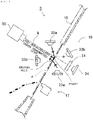
- FIG. 2 is a schematic view enlarging an internal structure of the paddy sorting section 3, in particular, the optical inspection section 16 and the ejector section 17.
- a structure of the paddy sorting section 3 that is a main part of the present invention will be describe with reference to Figure 2 .
- the paddy sorting section 3 is constituted mainly of the optical inspection section 16 disposed under the downflow gutter 15, and the ejector section 17 under the optical inspection section 16 as described above.
- a full color camera 30 (light receiving means) is provided on one side (front side) facing the downflow trajectory "r" of the mixed grains made up of paddy and brown rice at a downstream side of the downflow gutter 15. Ahead of a place where an optical axis k of the full color camera 30 is across the downflow trajectory "r", a background 31 is provided.
- the optical inspection section 16 is provided with first illumination means 32a and 32b that irradiates mixed grains with light on a side closer to the full color camera 30 than the downflow trajectory "r" of the mixed grains, and second illumination means 33a and 33b that irradiates the mixed grains with light on a side more away from the full color camera 30 than the downflow trajectory "r” of the mixed grains, and third illumination means 34 that irradiates a back surface of the above described background 31.
- first illumination means 32a and 32b that irradiates mixed grains with light on a side closer to the full color camera 30 than the downflow trajectory "r” of the mixed grains
- second illumination means 33a and 33b that irradiates the mixed grains with light on a side more away from the full color camera 30 than the downflow trajectory "r” of the mixed grains
- third illumination means 34 that irradiates a back surface of the above described background 31.
- the above described first illumination means 32a and 32b, second illumination means 33a and 33b and third illumination means 34 each has a light emission source of a single color, and in the present embodiment, as the most preferable example, light sources made up of red LED elements are adopted in the first illumination means 32a and 32b, light sources made up of green LED elements are adopted in the second illumination means 33a and 33b, and the light source made up of blue LED elements is adopted in the third illumination means 34.
- the LED elements to be used it is also possible to use RGB LED elements other than the LED elements of the single colors.
- the mixed grains that are objects to be sorted are irradiated with light of a red component from the first illumination means 32a and 32b, reflected light thereof is to be received by the light receiving element for the red component of the full color camera 30.
- the second illumination means 33a and 33b irradiates the mixed grains that are the objects to be sorted with light of a green component, transmitted light thereof is to be received by the light receiving element for a green component of the full color camera 30.
- the third illumination means 34 irradiates the background 31 with light of a blue component, whether or not the object to be sorted passes through the observation region "o", and whether or not foreign matter other than the mixed grains that are the objects to be sorted passes are to be discriminated by a light reception amount of the blue component of the full color camera 30.
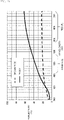
- Figure 3A shows relationships between light wavelengths and reflectance in brown rice and paddy in a graph
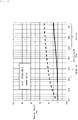
- Figure 3B shows relationships between light wavelengths and transmittance in a graph, and in both brown rice and paddy that are objects to be sorted, the light transmittance thereof do not have a large difference between the green color and red color.
- the light sources made up of red LED elements are preferably adopted in the first illumination means 32a and 32b with an objective of causing the full color camera 30 to receive the reflected light, based on the optical characteristics as described above, and it becomes possible to discriminate kinds of the mixed grains that are objects to be sorted more accurately.
- first illumination means 32a and 32b is set to be red
- the second illumination means 33a and 33b is set to be green
- the third illumination means 34 is set to be blue
- brown rice when brown rice passes through the observation region "o", brown rice optically has better transmissivity and lower reflectivity as compared with paddy as shown in Figure 3A and Figure 3B , so that the light reception amount of the light receiving element for the red component (reflection component) of the full color camera 30 is low, and a light reception amount of the light receiving element for the green component (transmission component) of the full color camera 30 becomes high.
- paddy optically has lower transmissivity, and higher reflectivity as compared with brown rice, so that when the paddy passes through the observation region "o", a light reception amount of the light receiving element for the red component (reflection component) of the full color camera 30 is high, and a light reception amount of the light receiving element of the green component (transmission component) of the full color camera 30 becomes low.
- a light reception amount of a blue component of the full color camera 30 has a substantially constant value since there is not a large difference in amount between brown rice and paddy. This is shown in Table 2.
- RGB component passage of paddy passage of brown rice R display high light reception amount display low light reception amount
- G display low light reception amount display high light reception amount
- B display light reception amount of fixed value display light reception amount of fixed value
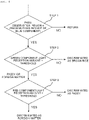
- Figure 4 is a flow for executing the aforementioned discrimination method.
- step 1 whether or not the mixed grains pass through the observation region "o" is discriminated based on the light reception amount of the blue component in the full color camera 30.
- step 2 whether or not the light reception amount of the green component in the full color camera 30 is higher or lower than a predetermined green component threshold is confirmed, and thereby whether brown rice having high transmissivity passes, or whether paddy or foreign matter other than the brown rice passes is discriminated.
- step 3 whether the light reception amount of the red component in the full color camera 30 is higher or lower than a predetermined red component threshold is confirmed, and thereby whether paddy passes or foreign matter other than paddy passes is discriminated.
- step 2 and step 3 described above it may be configured so that a ratio of the light reception amount of the red component that is the reflection component, and the light reception amount of the green component that is the transmission component (for example, a value of "reflection component/transmission component") is calculated, and the grain having the value larger than the predetermined threshold is determined as paddy, whereas the grain having the value smaller than the predetermined threshold is discriminated as brown rice.
- a ratio of the light reception amount of the red component that is the reflection component, and the light reception amount of the green component that is the transmission component for example, a value of "reflection component/transmission component"
- the full color camera 30 including the light receiving elements of the respective colors is used as the light receiving means, but the light receiving means is not necessarily limited to the device like this, but it is possible to use light reception sensors for single color corresponding to red, green and blue respectively.
- an image pickup camera can also be used, and in that case, respective color components of a red component, a green component and a blue component can be extracted by performing analysis processing of an image that is picked up.
- the mode in which the paddy discriminator of the present invention is applied to the paddy sorter 3, further, to the huller sorter 1 is described, but it is also possible to apply the paddy discriminator to an inspection device for mixed grains.
- FIG. 5 is a schematic view showing another embodiment of the paddy sorter of the present invention, a downflow gutter 15 is formed into a long shape, and a transparent member 40 of glass or the like is provided in a part of a bottom surface in a vicinity of the observation region "o".
- a transparent member 40 of glass or the like is provided in a part of a bottom surface in a vicinity of the observation region "o".
- FIG. 6 is a schematic diagram showing another embodiment of the huller sorter 1 to which the paddy sorter 3 of the present invention is applied.
- the huller sorter 1 shown in Figure 6 can adopt a centrifugal type (impeller type) husker instead of a roll type husker, as the huller section 2.
- a belt type can be adopted instead of a chute type (type using the downflow gutter 15 of the present embodiment) .
- the roll type husker When the roll type husker is adopted, if the husking ratio obtained from the discrimination result of the full color camera 30 of the paddy sorter 3 is 85% or lower, (1) a roll gap adjustment device of the roll type husker is controlled to perform control so that the husking ratio becomes close to the standard husking ratio of 85 to 95%. When the husking ratio does not reach the above described standard husking ratio even after a fixed time elapses after the roll gap control is carried out, (2) there is a risk of a flow rate of the paddy sorter 3 being excessive, so that control of reducing the flow rate is performed this time. When the husking ratio does not reach the above described standard husking ratio even after passing through (1) and (2), an abnormality is determined, and waring should be notified to an administrator or an operator of the device.
- the centrifugal type (impeller type) husker When the centrifugal type (impeller type) husker is adopted, if the husking ratio obtained from the discrimination result of the full color camera 30 of the paddy sorter 3 is 90% or lower, (1) a rotation speed of the centrifugal type husker is controlled to perform control so that the husking ratio is close to a standard husking ratio of 85 to 95%. When the husking ratio does not reach the above described standard husking ratio even after a fixed time elapses after the rotation speed control is carried out, (2) there is a risk of a flow rate of the paddy sorter 3 being excessive, so that control of reducing the flow rate is performed this time. When the husking ratio does not reach the above described standard husking ratio even after passing through (1) and (2), an abnormality is determined, and warning should be notified to an administrator or an operator of the device.
Landscapes
- General Health & Medical Sciences (AREA)
- Health & Medical Sciences (AREA)
- Chemical & Material Sciences (AREA)
- Physics & Mathematics (AREA)
- Analytical Chemistry (AREA)
- Biochemistry (AREA)
- Life Sciences & Earth Sciences (AREA)
- General Physics & Mathematics (AREA)
- Immunology (AREA)
- Pathology (AREA)
- Toxicology (AREA)
- Investigating Materials By The Use Of Optical Means Adapted For Particular Applications (AREA)
- Sorting Of Articles (AREA)
- Adjustment And Processing Of Grains (AREA)
Applications Claiming Priority (2)
| Application Number | Priority Date | Filing Date | Title |
|---|---|---|---|
| JP2019140257A JP7318397B2 (ja) | 2019-07-30 | 2019-07-30 | 籾判別機 |
| PCT/JP2020/028162 WO2021020219A1 (fr) | 2019-07-30 | 2020-07-20 | Dispositif de différenciation de riz paddy |
Publications (2)
| Publication Number | Publication Date |
|---|---|
| EP4005676A1 true EP4005676A1 (fr) | 2022-06-01 |
| EP4005676A4 EP4005676A4 (fr) | 2023-11-22 |
Family
ID=74229677
Family Applications (1)
| Application Number | Title | Priority Date | Filing Date |
|---|---|---|---|
| EP20846017.0A Pending EP4005676A4 (fr) | 2019-07-30 | 2020-07-20 | Dispositif de différenciation de riz paddy |
Country Status (7)
| Country | Link |
|---|---|
| US (1) | US12090486B2 (fr) |
| EP (1) | EP4005676A4 (fr) |
| JP (1) | JP7318397B2 (fr) |
| CN (1) | CN114245759B (fr) |
| BR (1) | BR112022001530A2 (fr) |
| TW (1) | TWI842933B (fr) |
| WO (1) | WO2021020219A1 (fr) |
Families Citing this family (2)
| Publication number | Priority date | Publication date | Assignee | Title |
|---|---|---|---|---|
| JP7609765B2 (ja) * | 2021-12-09 | 2025-01-07 | ヤンマーホールディングス株式会社 | 籾摺プラント |
| CN115308160B (zh) * | 2022-07-16 | 2025-08-05 | 米食味(杭州)农业科技有限公司 | 一种糙米口感检测的近红外数字仪器及其分析方法 |
Family Cites Families (19)
| Publication number | Priority date | Publication date | Assignee | Title |
|---|---|---|---|---|
| JPS59186679A (ja) | 1983-04-05 | 1984-10-23 | 株式会社 サタケ | 籾摺選別機の供給量自動調節装置 |
| JPS60190243A (ja) | 1984-03-09 | 1985-09-27 | 株式会社 サタケ | 籾摺選別装置 |
| JP2710954B2 (ja) | 1988-07-06 | 1998-02-10 | ヤンマー農機株式会社 | 穀粒の脱▲ふ▼率検出装置 |
| JPH02219747A (ja) | 1989-02-15 | 1990-09-03 | Kikkoman Corp | 取手付プラスチックブローボトル |
| US5314072A (en) * | 1992-09-02 | 1994-05-24 | Rutgers, The State University | Sorting plastic bottles for recycling |
| US5699724A (en) * | 1992-12-02 | 1997-12-23 | Buhler Ag | Cleaning and sorting bulk material |
| JP4674390B2 (ja) | 2000-06-15 | 2011-04-20 | 株式会社サタケ | 玄米色彩選別方法及び玄米色彩選別装置 |
| JP2002202265A (ja) * | 2000-12-28 | 2002-07-19 | Satake Corp | 米粒品位判別装置 |
| JP2004290743A (ja) | 2003-03-25 | 2004-10-21 | Mitsuka:Kk | 穀物粒の脱皮装置及び穀物粒の脱皮方法 |
| JP4902121B2 (ja) | 2005-01-21 | 2012-03-21 | ヤンマー株式会社 | 粒状物色彩選別機 |
| JP2007117925A (ja) | 2005-10-28 | 2007-05-17 | Kaneko Agricult Mach Co Ltd | 籾摺選機の摺米選別装置 |
| US7339660B1 (en) | 2006-11-29 | 2008-03-04 | Satake Usa, Inc. | Illumination device for product examination |
| JP5590861B2 (ja) | 2009-11-13 | 2014-09-17 | 静岡製機株式会社 | 色彩選別機 |
| WO2013145873A1 (fr) | 2012-03-27 | 2013-10-03 | 株式会社サタケ | Machine de tri de granulés de type optique |
| JP2015071135A (ja) * | 2013-10-03 | 2015-04-16 | ヤンマー株式会社 | 籾摺システム |
| CN103934223B (zh) | 2014-04-29 | 2016-08-24 | 合肥美亚光电技术股份有限公司 | 一种大米物料的检测分选方法和装置 |
| EP3236244A4 (fr) * | 2014-12-19 | 2018-11-14 | Satake Corporation | Dispositif de discrimination de qualité de grain |
| JP6687826B2 (ja) | 2015-04-06 | 2020-04-28 | 株式会社サタケ | 穀粒品位判別装置及び該装置における穀粒からの光の受光方法 |
| TWI603789B (zh) | 2016-03-21 | 2017-11-01 | 國立高雄第一科技大學 | 多色色彩選別機構 |
-
2019
- 2019-07-30 JP JP2019140257A patent/JP7318397B2/ja active Active
-
2020
- 2020-07-20 BR BR112022001530A patent/BR112022001530A2/pt unknown
- 2020-07-20 EP EP20846017.0A patent/EP4005676A4/fr active Pending
- 2020-07-20 CN CN202080055697.6A patent/CN114245759B/zh active Active
- 2020-07-20 US US17/631,108 patent/US12090486B2/en active Active
- 2020-07-20 WO PCT/JP2020/028162 patent/WO2021020219A1/fr not_active Ceased
- 2020-07-29 TW TW109125480A patent/TWI842933B/zh active
Also Published As
| Publication number | Publication date |
|---|---|
| JP7318397B2 (ja) | 2023-08-01 |
| WO2021020219A1 (fr) | 2021-02-04 |
| EP4005676A4 (fr) | 2023-11-22 |
| TW202103809A (zh) | 2021-02-01 |
| TWI842933B (zh) | 2024-05-21 |
| BR112022001530A2 (pt) | 2022-03-22 |
| JP2021020194A (ja) | 2021-02-18 |
| US20220212197A1 (en) | 2022-07-07 |
| US12090486B2 (en) | 2024-09-17 |
| CN114245759B (zh) | 2023-10-31 |
| CN114245759A (zh) | 2022-03-25 |
Similar Documents
| Publication | Publication Date | Title |
|---|---|---|
| JP3079932B2 (ja) | 穀粒色彩選別装置 | |
| US5703784A (en) | Machine vision apparatus and method for sorting objects | |
| AU724079B2 (en) | Method and apparatus for sorting product | |
| US5865990A (en) | Method and apparatus for sorting grain | |
| KR20150104105A (ko) | 종자를 선별하기 위한 시스템 및 방법 | |
| Pearson | Hardware-based image processing for high-speed inspection of grains | |
| JP2010042326A (ja) | 光学式穀粒選別装置 | |
| JP2008302314A (ja) | 光学式米粒選別機 | |
| US12090486B2 (en) | Paddy discriminator | |
| US20220008959A1 (en) | Optical sorter | |
| EP4063031A1 (fr) | Trieuse optique | |
| CN115372355B (zh) | 白帽检测设备 | |
| US12350715B2 (en) | Optical sorter, sorting simulation apparatus, and simulation method regarding sorting of sorting target using optical sorter | |
| WO2014076253A1 (fr) | Procédé et appareil d'identification, de tri ou de classification | |
| JP2009095758A (ja) | 殻付ピスタチオ粒の選別装置 | |
| CN210753887U (zh) | 稻谷分选装置及设备 | |
| JP7608784B2 (ja) | 光学式選別機及び該光学式選別機を備える籾摺調製設備 | |
| JP4674390B2 (ja) | 玄米色彩選別方法及び玄米色彩選別装置 | |
| US20250241245A1 (en) | Camera system for a self-propelled forage harvester | |
| JP2005028302A (ja) | 小麦用の色彩選別機 | |
| JP2001347231A (ja) | 玄米色彩選別方法及び玄米色彩選別装置 | |
| Galka et al. | Optical grain sorting machines: review of principles of operation and classification | |
| JP2769823B2 (ja) | 米粒品位判別装置 | |
| Bee et al. | Colour sorting in the food industry | |
| JPH049584B2 (fr) |
Legal Events
| Date | Code | Title | Description |
|---|---|---|---|
| STAA | Information on the status of an ep patent application or granted ep patent |
Free format text: STATUS: THE INTERNATIONAL PUBLICATION HAS BEEN MADE |
|
| PUAI | Public reference made under article 153(3) epc to a published international application that has entered the european phase |
Free format text: ORIGINAL CODE: 0009012 |
|
| STAA | Information on the status of an ep patent application or granted ep patent |
Free format text: STATUS: REQUEST FOR EXAMINATION WAS MADE |
|
| 17P | Request for examination filed |
Effective date: 20220221 |
|
| AK | Designated contracting states |
Kind code of ref document: A1 Designated state(s): AL AT BE BG CH CY CZ DE DK EE ES FI FR GB GR HR HU IE IS IT LI LT LU LV MC MK MT NL NO PL PT RO RS SE SI SK SM TR |
|
| DAV | Request for validation of the european patent (deleted) | ||
| DAX | Request for extension of the european patent (deleted) | ||
| REG | Reference to a national code |
Ref country code: DE Ref legal event code: R079 Free format text: PREVIOUS MAIN CLASS: B02B0007000000 Ipc: B07C0005342000 |
|
| A4 | Supplementary search report drawn up and despatched |
Effective date: 20231020 |
|
| RIC1 | Information provided on ipc code assigned before grant |
Ipc: B02B 3/04 20060101ALI20231016BHEP Ipc: B02B 5/02 20060101ALI20231016BHEP Ipc: G01N 21/85 20060101ALI20231016BHEP Ipc: B02B 7/00 20060101ALI20231016BHEP Ipc: B07C 5/34 20060101ALI20231016BHEP Ipc: B07C 5/342 20060101AFI20231016BHEP |
|
| STAA | Information on the status of an ep patent application or granted ep patent |
Free format text: STATUS: EXAMINATION IS IN PROGRESS |
|
| 17Q | First examination report despatched |
Effective date: 20250527 |