EP4006134A1 - Procédé de culture et récipient de culture - Google Patents
Procédé de culture et récipient de culture Download PDFInfo
- Publication number
- EP4006134A1 EP4006134A1 EP20843314.4A EP20843314A EP4006134A1 EP 4006134 A1 EP4006134 A1 EP 4006134A1 EP 20843314 A EP20843314 A EP 20843314A EP 4006134 A1 EP4006134 A1 EP 4006134A1
- Authority
- EP
- European Patent Office
- Prior art keywords
- well
- neurons
- culture
- flow channel
- axons
- Prior art date
- Legal status (The legal status is an assumption and is not a legal conclusion. Google has not performed a legal analysis and makes no representation as to the accuracy of the status listed.)
- Withdrawn
Links
Images




Classifications
-
- C—CHEMISTRY; METALLURGY
- C12—BIOCHEMISTRY; BEER; SPIRITS; WINE; VINEGAR; MICROBIOLOGY; ENZYMOLOGY; MUTATION OR GENETIC ENGINEERING
- C12M—APPARATUS FOR ENZYMOLOGY OR MICROBIOLOGY; APPARATUS FOR CULTURING MICROORGANISMS FOR PRODUCING BIOMASS, FOR GROWING CELLS OR FOR OBTAINING FERMENTATION OR METABOLIC PRODUCTS, i.e. BIOREACTORS OR FERMENTERS
- C12M23/00—Constructional details, e.g. recesses, hinges
- C12M23/02—Form or structure of the vessel
- C12M23/12—Well or multiwell plates
-
- C—CHEMISTRY; METALLURGY
- C12—BIOCHEMISTRY; BEER; SPIRITS; WINE; VINEGAR; MICROBIOLOGY; ENZYMOLOGY; MUTATION OR GENETIC ENGINEERING
- C12N—MICROORGANISMS OR ENZYMES; COMPOSITIONS THEREOF; PROPAGATING, PRESERVING, OR MAINTAINING MICROORGANISMS; MUTATION OR GENETIC ENGINEERING; CULTURE MEDIA
- C12N5/00—Undifferentiated human, animal or plant cells, e.g. cell lines; Tissues; Cultivation or maintenance thereof; Culture media therefor
- C12N5/06—Animal cells or tissues; Human cells or tissues
- C12N5/0697—Artificial constructs associating cells of different lineages, e.g. tissue equivalents
-
- C—CHEMISTRY; METALLURGY
- C12—BIOCHEMISTRY; BEER; SPIRITS; WINE; VINEGAR; MICROBIOLOGY; ENZYMOLOGY; MUTATION OR GENETIC ENGINEERING
- C12M—APPARATUS FOR ENZYMOLOGY OR MICROBIOLOGY; APPARATUS FOR CULTURING MICROORGANISMS FOR PRODUCING BIOMASS, FOR GROWING CELLS OR FOR OBTAINING FERMENTATION OR METABOLIC PRODUCTS, i.e. BIOREACTORS OR FERMENTERS
- C12M23/00—Constructional details, e.g. recesses, hinges
- C12M23/34—Internal compartments or partitions
-
- C—CHEMISTRY; METALLURGY
- C12—BIOCHEMISTRY; BEER; SPIRITS; WINE; VINEGAR; MICROBIOLOGY; ENZYMOLOGY; MUTATION OR GENETIC ENGINEERING
- C12M—APPARATUS FOR ENZYMOLOGY OR MICROBIOLOGY; APPARATUS FOR CULTURING MICROORGANISMS FOR PRODUCING BIOMASS, FOR GROWING CELLS OR FOR OBTAINING FERMENTATION OR METABOLIC PRODUCTS, i.e. BIOREACTORS OR FERMENTERS
- C12M25/00—Means for supporting, enclosing or fixing the microorganisms, e.g. immunocoatings
- C12M25/10—Hollow fibers or tubes
-
- C—CHEMISTRY; METALLURGY
- C12—BIOCHEMISTRY; BEER; SPIRITS; WINE; VINEGAR; MICROBIOLOGY; ENZYMOLOGY; MUTATION OR GENETIC ENGINEERING
- C12M—APPARATUS FOR ENZYMOLOGY OR MICROBIOLOGY; APPARATUS FOR CULTURING MICROORGANISMS FOR PRODUCING BIOMASS, FOR GROWING CELLS OR FOR OBTAINING FERMENTATION OR METABOLIC PRODUCTS, i.e. BIOREACTORS OR FERMENTERS
- C12M35/00—Means for application of stress for stimulating the growth of microorganisms or the generation of fermentation or metabolic products; Means for electroporation or cell fusion
- C12M35/08—Chemical, biochemical or biological means, e.g. plasma jet, co-culture
-
- C—CHEMISTRY; METALLURGY
- C12—BIOCHEMISTRY; BEER; SPIRITS; WINE; VINEGAR; MICROBIOLOGY; ENZYMOLOGY; MUTATION OR GENETIC ENGINEERING
- C12N—MICROORGANISMS OR ENZYMES; COMPOSITIONS THEREOF; PROPAGATING, PRESERVING, OR MAINTAINING MICROORGANISMS; MUTATION OR GENETIC ENGINEERING; CULTURE MEDIA
- C12N5/00—Undifferentiated human, animal or plant cells, e.g. cell lines; Tissues; Cultivation or maintenance thereof; Culture media therefor
- C12N5/06—Animal cells or tissues; Human cells or tissues
- C12N5/0602—Vertebrate cells
- C12N5/0618—Cells of the nervous system
- C12N5/0619—Neurons
-
- C—CHEMISTRY; METALLURGY
- C12—BIOCHEMISTRY; BEER; SPIRITS; WINE; VINEGAR; MICROBIOLOGY; ENZYMOLOGY; MUTATION OR GENETIC ENGINEERING
- C12N—MICROORGANISMS OR ENZYMES; COMPOSITIONS THEREOF; PROPAGATING, PRESERVING, OR MAINTAINING MICROORGANISMS; MUTATION OR GENETIC ENGINEERING; CULTURE MEDIA
- C12N5/00—Undifferentiated human, animal or plant cells, e.g. cell lines; Tissues; Cultivation or maintenance thereof; Culture media therefor
- C12N5/06—Animal cells or tissues; Human cells or tissues
- C12N5/0602—Vertebrate cells
- C12N5/0652—Cells of skeletal and connective tissues; Mesenchyme
- C12N5/0658—Skeletal muscle cells, e.g. myocytes, myotubes, myoblasts
-
- C—CHEMISTRY; METALLURGY
- C12—BIOCHEMISTRY; BEER; SPIRITS; WINE; VINEGAR; MICROBIOLOGY; ENZYMOLOGY; MUTATION OR GENETIC ENGINEERING
- C12N—MICROORGANISMS OR ENZYMES; COMPOSITIONS THEREOF; PROPAGATING, PRESERVING, OR MAINTAINING MICROORGANISMS; MUTATION OR GENETIC ENGINEERING; CULTURE MEDIA
- C12N2500/00—Specific components of cell culture medium
- C12N2500/02—Atmosphere, e.g. low oxygen conditions
Definitions
- the present disclosure relates to a culture method and a culture vessel for cells, and particularly relates to a culture method for neurons (nerve cells), a co-culture method for neurons and cells other than neurons, and a culture vessel for culturing them.
- axons extending from neurons are joined to cells other than neurons, such as skeletal muscle cells or skin cells. Co-culture of neurons and other cells is therefore expected to serve as an effective screening tool in the field of drug discovery.
- PTL 1 discloses culturing a cell mass of neurons in a predetermined culture vessel, extending the axons of the neurons in a bundle, and joining the axon terminals to a skeletal muscle.
- JP 2018-536424 A discloses creating a neuron network by connecting wells of a multiwell plate and co-culturing neurons and cells other than neurons.
- Co-culture involves seeding different cells in a culture space of a culture vessel and culturing them. Since a suitable culture medium differs depending on the cell type, it is difficult to culture different cells in the same vessel. Although this might be overcome by developing a culture medium capable of culturing both cells, developing such a culture medium is not easy.
- a first aspect of the present disclosure is a culture method of co-culturing a plurality of types of cells including neurons in a culture vessel having a plurality of wells, the culture method comprising: filling a first well and a second well included in the plurality of wells in the culture vessel with a culture medium for the neurons, and seeding the neurons in the first well, the first well and the second well communicating with each other through a flow channel; culturing axons of the neurons until the axons of the neurons reach the second well through the flow channel and also block the flow channel; and thereafter removing the culture medium in the second well, filling the second well with a culture medium for co-cultured cells to be co-cultured with the neurons, seeding the co-cultured cells in the second well, and culturing the co-cultured cells together with the axons of the neurons.
- the first well and the second well connected by the flow channel are disconnected, so that the second well can be filled with a culture medium different from that in the first well to perform culture.
- the cell bodies of the neurons cultured in the first well and the tips of the axons extending from the cell bodies cultured in the first well toward the second well and the other cells such as skeletal muscle cells cultured in the second well and joined to the tips of the axons can be cultured under separate suitable culture medium conditions.
- a second aspect of the present disclosure is a culture method of culturing neurons in a culture vessel having a plurality of wells, the culture method comprising: filling a first well and a second well included in the plurality of wells in the culture vessel with a culture medium for the neurons, and seeding the neurons in the first well, the first well and the second well communicating with each other through a flow channel; culturing axons of the neurons until the axons reach the second well through the flow channel and also block the flow channel; and thereafter removing the culture medium in the second well, filling the second well with a culture medium for culturing the axons, and culturing the axons.
- the first well and the second well connected by the flow channel are disconnected, so that the second well can be filled with a culture medium different from that in the first well to perform culture.
- the tips of the axons extending from the cell bodies of the neurons can be efficiently cultured in the second well under different culture medium conditions for promoting the growth of the axons.
- the first well has a first depression capable of storing a cell mass, at a bottom thereof, and a cell mass of the neurons is seeded in the first depression.
- the cell mass is prevented from breaking, and the axons extending from the cell bodies of the neurons tend to extend in one direction together.
- the neurons may be central neurons or peripheral neurons.
- the central neurons include cells derived from glutamatergic nerves, dopaminergic nerves, and GABAergic nerves.
- the peripheral neurons include cells derived from motor nerves and sensory nerves.
- the cells may be directly collected from an animal, or be an established cell line thereof. The cells may be obtained by differentiating and culturing various stem cells.
- a third aspect of the present disclosure is a culture vessel comprising a plurality of wells and configured to culture neurons or co-culture a plurality of types of cells including the neurons, wherein the plurality of wells include: a first well having a first depression capable of storing a cell mass, at a bottom thereof; and a second well communicating with the first well through a flow channel, and the flow channel has a maximum width of 20 ⁇ m to 100 ⁇ m in a direction orthogonal to a longitudinal direction thereof, and a depth of 20 ⁇ m to 100 ⁇ m.
- the flow channel can be blocked with the axons of the neurons cultured in an appropriate number depending on the type of the neurons.
- the second well can be filled with a culture medium different from that in the first well, and cells (co-cultured cells) other than neurons can be seeded in the second well and cultured to join to the tips of the axons using the culture medium suitable for co-culture.
- the neurons are peripheral neurons, and the number of the peripheral neurons seeded in the first depression is 1 ⁇ 10 4 to 4 ⁇ 10 4 , and the flow channel has a maximum cross-sectional area of 4 ⁇ 10 -6 cm 2 to 1 ⁇ 10 -4 cm 2 .
- the peripheral neurons are preferably motor neurons.
- the flow channel can be blocked more accurately by limiting the number of cells and the cross-sectional area of the flow channel to the foregoing ranges.
- the neurons are central neurons, and the number of the central neurons seeded in the first depression is 4 ⁇ 10 4 to 8 ⁇ 10 4 , and the flow channel has a maximum cross-sectional area of 4 ⁇ 10- 6 cm 2 to 1 ⁇ 10 -4 cm 2 .
- the central neurons are preferably glutamatergic neurons.
- the flow channel can be blocked more accurately by limiting the number of cells and the cross-sectional area of the flow channel to the foregoing ranges.
- the second well may have a second depression capable of storing a cell mass, at a bottom thereof.
- the cell mass is prevented from breaking, and culture can be performed in a cell mass state of high cell density.
- a fourth aspect of the present disclosure is a culture vessel comprising a plurality of wells and configured to culture neurons or co-culture a plurality of types of cells including the neurons, wherein the plurality of wells include: a first well having a first depression capable of storing a cell mass, at a bottom thereof; and a second well communicating with the first well through a flow channel, one end of the flow channel is connected to the bottom of the first well, and an other end of the flow channel is connected to a bottom of the second well, and the flow channel has a maximum width of 20 ⁇ m to 120 ⁇ m in a direction orthogonal to a longitudinal direction thereof, a depth of 20 ⁇ m to 120 ⁇ m, and a length of 2 mm to 6 mm in the longitudinal direction.
- the second well can be filled with a culture medium different from that in the first well to perform culture.
- the cell bodies of the neurons cultured in the first well and the tips of the axons extending from the cell bodies cultured in the first well toward the second well and the other cells such as skeletal muscle cells cultured in the second well and joined to the tips of the axons can be cultured under separate suitable culture medium conditions.
- a water contact angle of at least a surface of a part to be in contact with the neurons may be 90° to 15°.
- the neurons can be caused to adhere to the culture surface of the culture vessel more stably and cultured.
- At least a surface of a part to be in contact with the neurons may be made of an alicyclic structure-containing polymer.
- an alicyclic structure-containing polymer has high transparency, low autofluorescence (especially green), and low toxicity, the neurons can be cultured stably in a state in which observation and analysis in a culture process is easy.
- a fifth aspect of the present disclosure is a culture method of co-culturing a plurality of types of cells including neurons using the culture vessel according to the fourth aspect, the culture method comprising: filling the first well in the culture vessel with a culture medium for the neurons, and filling the second well communicating with the first well through the flow channel with a culture medium for co-cultured cells to be co-cultured with the neurons; seeding the neurons in the first well; seeding the co-cultured cells in the second well; culturing axons of the neurons until the axons of the neurons reach the second well through the flow channel; and thereafter culturing the axons of the neurons together with the co-cultured cells in the second well.
- the second well can be filled with a culture medium different from that in the first well to perform culture from the culture start stage.
- a sixth aspect of the present disclosure is a culture method of culturing neurons using the culture vessel according to the fourth aspect, the culture method comprising: filling the first well in the culture vessel with a culture medium for the neurons, and filling the second well communicating with the first well through the flow channel with a culture medium for culturing axons; seeding the neurons in the first well; culturing axons of the neurons until the axons reach the second well through the flow channel; and thereafter culturing the axons in the second well.
- the second well can be filled with a culture medium different from that in the first well to perform culture from the culture start stage.
- a culture method and a culture vessel according to the present disclosure have a feature that, when co-culturing neurons and other cells or when culturing the cell bodies of neurons and the tips of their axons in different wells, a flow channel through which a first well and a second well communicate with each other in the culture vessel is blocked with the cultured axons of the neurons or the size and length of the flow channel through which the first well and the second well communicate with each other in the culture vessel are controlled to specific ranges, thus enabling culture using a different culture medium in the second well from a culture medium in the first well.
- culture can be performed efficiently using, in each well, a different culture medium depending on the cells cultured in the well, with no need for a special process or member for blocking the flow channel.
- FIG. 1 is a plan view of a well body B of a 1 ⁇ 8 strip well for a 96-well plate according to one of the disclosed embodiments.
- the well body B has a plurality of wells including a first well 1 and a second well 2, and has, on its bottom surface, positioning depressions 5 for joining the well body B to a member D forming part of a well bottom.
- the first well 1 has a first depression 4 for seeding a cell mass of neurons N.
- the bottom of the first depression 4 is open, and forms part of a flow channel 3.
- the flow channel 3 is defined by the first depression 4, the bottom surface of the well body B, and a groove on the upper surface of the member D forming part of the well bottom, as a result of the well body B being joined to the member D forming part of the well bottom.
- FIG. 2 is a sectional view of the well body B in FIG. 1 .
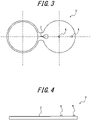
- FIG. 3 is a partial plan view of the member D forming part of the well bottom, which is joined to the well body B in FIG. 1 .
- the member D includes the groove portion of the flow channel 3 through which the first well 1 and the second well 2 communicate with each other, and positioning projections 6 for joining the member D to the well body B.
- the planar shape of the member D forming part of the well bottom conforms to the planar shape of the well body B in FIG. 1 , although the planar shape of the member D is not limited to such.
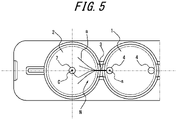
- FIG. 4 is a sectional view of the member D forming part of the well bottom. As a result of joining the positioning depressions 5 of the well body B in FIGS.
- a well strip having the flow channel 3 through which the first well 1 and the second well 2 communicate with each other is obtained. Since the member D forming part of the plate bottom portion in FIGS. 3 and 4 is made up of two wells, four members D each forming part of the well bottom are joined to one well body B. The presently disclosed techniques are, however, not limited to such, and one member D may have the same number of wells as one well body B and be joined to one well body B to obtain one well strip.
- FIGS. 1 to 4 illustrate an example of a well plate (for example, model number: MS-8508M manufactured by Sumitomo Bakelite Co., Ltd.) of the same size as 96-well plates commonly used in analyzers, obtained by connecting twelve 1 ⁇ 8 well strips with a holder.
- the presently disclosed techniques are, however, not limited to such, and a well strip or well plate shape having any number of wells, such as 6 wells, 12 wells, 24 wells, or 48 wells, may be used as long as there are a plurality of wells.
- the size of the plate is preferably in conformance with the ANSI/SBS standard compatible with experimental equipment, and is, for example, equal to the size of commercially available 96-well plates of approximately 8.5 in length and 12.8 in width.
- the culture vessel according to the present disclosure is not limited to a strip well and a well plate, and may have any structure as long as it includes two or more culture portions with a flow channel therebetween. For example, two dishes may be connected through a flow channel.
- the material of the culture vessel according to the present disclosure may be a material used in typical culture vessels, such as polystyrene, polycarbonate, polyolefin, a cycloolefin polymer (COP), polyimide, any of fluorinated products thereof, polydimethylsiloxane (PDMS), or glass.
- a COP is preferable because it has low autofluorescence and is suitable for fluorescent observation.
- the flow channel 3 through which the first well 1 and the second well 2 communicate with each other is defined by the groove formed on the upper surface of the member D forming part of the well bottom and the flat bottom surface and the first depression 4 of the well body B.
- the flow channel 3 may be defined by a groove formed on the bottom surface of the well body B and the first depression 4 and the flat upper surface of the member D forming part of the well bottom.
- a groove may be formed on each of the bottom surface of the well body B and the upper surface of the member D forming part of the well bottom, and the bottom surface of the well body B and the upper surface of the member D may be joined to form one flow channel 3.
- the cross-sectional shape of the groove forming the flow channel 3 in a direction orthogonal to its longitudinal direction may be rectangular, or semicircular with an arc-shaped bottom surface.
- the flow channel 3 formed may be rectangular, circular, oval, or the like.
- the maximum width of the flow channel in a direction orthogonal to its longitudinal direction is 20 ⁇ m to 100 ⁇ m, and the depth of the flow channel is 20 ⁇ m to 100 ⁇ m.
- the maximum width of the flow channel in a direction orthogonal to its longitudinal direction is 20 ⁇ m to 120 ⁇ m
- the depth of the flow channel is 20 ⁇ m to 120 ⁇ m
- the length of the flow channel in the longitudinal direction is 2 mm to 6 mm.
- the second well can be filled with a culture medium different from that in the first well to culture the tips of the axons or co-culture the axons and cells other than neurons in the second well.
- the maximum width of the flow channel 3 in the direction orthogonal to the longitudinal direction is 20 ⁇ m to 80 ⁇ m and the depth of the flow channel is 20 ⁇ m to 80 ⁇ m, from the viewpoint of further enhancing the sealability.
- the first well 1 is filled with a culture medium for neuron culture
- the second well 2 is filled with a culture medium suitable for culturing cells C to be co-cultured.
- Neurons N made into a cell mass by culture are seeded in the first depression 4 formed at the bottom of the first well 1.
- the cells C to be co-cultured are seeded in the second well 2.
- the first well 1 and the second well 2 are filled with a culture medium for neuron culture, and neurons N made into a cell mass by culture are seeded in the first depression 4 formed at the bottom of the first well 1.
- Culture is performed until axons a extend from the cell bodies s of the seeded neurons N, reach the second well 2 through the flow channel 3, and further block the flow channel 3.
- the culture medium in the first well 1 and the culture medium in the second well 2 can be replaced independently of each other. Accordingly, only the culture medium in the second well 2 in which the tips of the extended axons a are cultured is discarded by suction or the like.
- the second well 2 is filled with a culture medium suitable for culturing cells C to be co-cultured, and the cells C to be co-cultured are seeded and co-cultured, to join the axons a and the cells C to be co-cultured.
- the second well 2 may have a depression (second depression 7) at the bottom, and the cells C to be co-cultured, which have been made into a cell mass, may be seeded in the second depression 7.
- the second well 2 may be filled with a culture medium suitable for culturing the tips of the axons a, to continue the culture of the axons a alone.
- neurotransmitters secreted from the axon terminals such as acetylcholine, glutamic acid, dopamine, serotonin, adrenaline, and noradrenaline
- acetylcholine glutamic acid
- dopamine dopamine
- serotonin adrenaline
- noradrenaline noradrenaline
- a neural network is formed in the second well 2.
- a plurality of neural networks can be formed in the multiwell plate.
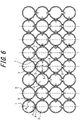
- a plate in which a flow channel 3 is formed between the first well 1 and each of the four second wells 2 at the maximum may be used, as illustrated in FIG. 6 .
- a cell mass of neurons N is seeded in a first depression 4 corresponding to each flow channel 3, and the axons a of the neurons N are extended to the corresponding second well 2, thus blocking the four flow channels 3 at the maximum extending from the first well 1.
- the culture medium in each second well 2 is then sucked, and each second well 2 is filled with a culture medium suitable for culturing cells to be co-cultured in the second well 2.
- the cells to be co-cultured are seeded in the second well 2.
- a maximum of four types of cells can be co-cultured with the axons a of the neurons N in one set of wells.
- FIG. 6 is a partial plan view of a 96-well plate, and illustrates 32 wells out of 96 wells.
- the number of wells is not limited to 96, and a multiwell plate with the same size as commercially available multiwell plates and the number of wells according to purpose, such as 6 wells, 12 wells, 24 wells, or 48 wells, may be produced and used.
- each well illustrated in FIGS. 1 to 6 is circular.
- the planar shape of each well is, however, not limited to such, and may be quadrilateral (rectangular) as illustrated in FIG. 7 .
- the maximum number of flow channels 3 extending from one first well 1 is theoretically eight, for communication between wells with the same channel length. Due to the presence of inter-well walls necessary for design in manufacture, however, the maximum number of flow channels 3 extending from one well is typically four, as illustrated in FIG. 6 .
- a plurality of flow channels 3 through which adjacent wells of one set of wells can communicate with each other can be formed with the same channel length.
- first depressions 4 are formed for each side of a quadrilateral first well 1 adjacent to a second well 2. If there are four second wells 2 adjacent to the first well 1, a maximum of twelve flow channels 3 extending from one first well 1 can be formed. Moreover, in the case where the planar shape of each well is quadrilateral, the length of the flow channel 3 can be shortened as compared with the case where the planar shape of each well is circular.
- FIG. 7 is a partial plan view of a well body B of a 1 ⁇ 8 strip well for a 96-well plate according to another one of the disclosed embodiments.
- the well body B has a first well 1, a second well 2, first depressions 4, and positioning depressions 5.
- FIGS. 8 and 9 are respectively a plan view and a sectional view of a member D forming part of a well bottom, which is joined to the well body B in FIG. 7 .
- the member D has grooves of flow channels 3 through which the first well 1 and the second well 2 communicate with each other, and positioning projections 6 for joining the member D to the well body B.
- FIGS. 7 to 9 has the same structure as the strip well illustrated in FIGS. 1 to 4 , but differs in that three flow channels 3 and three first depressions 4 are formed for one second well 2 from one first well 1.
- a plurality of flow channels 3 of the same length can be formed for one pair of a first well 1 and a second well 2.
- the length of each flow channel 3 can be shortened as compared with the case where the planar shape of each well is circular. This can reduce the culture period for the axons a to reach the second well 2 and block the flow channel 3.
- first depressions 4 and three flow channels 3 are formed per side of a rectangular well.
- the presently disclosed techniques are, however, not limited to such, and any number of first depressions 4 and flow channels 3 may be formed per side depending on the well size and the size of each first depression 4.
- Each first depression 4 preferably has a diameter of 0.5 mm to 2 mm, from the viewpoint of easy placement of a cell mass.
- the first depression 4 may have the same diameter or different diameters at its opening and bottom.
- the diameter at the opening is preferably greater than or equal to the diameter at the bottom, from the viewpoint of operability and more stable culture of a cell mass.
- the first depression 4 is tapered, i.e. decreases in diameter, from the opening to the bottom, from the viewpoint of easier placement of a cell mass.
- the first depression 4 is Y-shaped, that is, the first depression 4 is tapered from the opening to a midpoint in a direction toward the bottom and has the same diameter from the midpoint to the bottom.
- FIGS. 10 and 11 are respectively a plan view and a sectional view of a 6-well plate according to yet another one of the disclosed embodiments.
- the embodiment illustrated in FIGS. 10 and 11 has the same structure as the strip well illustrated in FIGS. 1 to 4 , but differs in the following: While the groove forming part of the flow channel 3 is formed on the upper surface of the member D forming part of the well bottom in the strip well illustrated in FIGS. 1 to 4 , the groove is formed on the lower surface of the well body B in this embodiment.
- the joint portion is on the bottom side of the flow channel, so that the proliferation of neurons N is not hindered by protrusion of the plate forming material into the flow channel 3 when joining the well body B and the member D forming part of the well bottom.
- the size of the flow channel 3 is approximately the same as the size (thickness) of an axon bundle formed by bundling a plurality of axons a of neurons N cultured.
- the size of the axon bundle depends on the type and number of neurons N.
- the size of the axon bundle is approximately 80 ⁇ m.
- glutamatergic neurons in the case where the number of cells is 3 ⁇ 10 4 to 5 ⁇ 10 4 , the size of the axon bundle is approximately 80 ⁇ m.
- the number of cells cultured is adjusted so that the size of the axon bundle will be approximately the same as the size of the entrance portion of the flow channel 3.
- the size of the axon bundle tends to decrease toward the tip of the axon bundle.
- the flow channel 3 can be blocked with the axon bundle at its entrance portion.
- the size of the flow channel 3 in a co-culture vessel is such that the maximum width of the flow channel 3 in the direction orthogonal to the longitudinal direction is 20 ⁇ m to 100 ⁇ m, and the depth of the flow channel is 20 ⁇ m to 100 ⁇ m.
- the number of peripheral neurons seeded in the first depression 4 is 1 ⁇ 10 4 to 4 ⁇ 10 4 and the cross-sectional area of the flow channel 3 is 4 ⁇ 10- 6 cm 2 to 1 ⁇ 10 -4 cm 2 .
- the number of central neurons seeded in the first depression 4 is 4 ⁇ 10 4 to 8 ⁇ 10 4 and the cross-sectional area of the flow channel 3 is 4 ⁇ 10 -6 cm 2 to 1 ⁇ 10 -4 cm 2 .
- Examples of the cells C to be co-cultured include skeletal muscle cells and skin cells, without being limited thereto.
- an artificial material such as microbeads covered with Lrp4 described in Yumoto et al., "Lrp4 is a retrograde signal for presynaptic differentiation at neuromuscular synapses", Nature, 489, 438-442 (2012 ) may be used in co-culture.
- the culture medium may be the same as or different from the culture medium for neurons to be placed in the first well.
- the neurons to be cultured may be central neurons or peripheral neurons.
- the central neurons include cells derived from glutamatergic nerves, dopaminergic nerves, and GABAergic nerves.
- the peripheral neurons include cells derived from motor nerves and sensory nerves.
- the cells may be directly collected from an animal, or be an established cell line thereof. The cells may be obtained by differentiating and culturing various stem cells.
- the size (thickness) of the axon bundle extending from the neurons depends on the type and number of neurons. For motor neurons, in the case where the number of cells is 1 ⁇ 10 4 to 2 ⁇ 10 4 , the size of the axon bundle is approximately 80 ⁇ m. For glutamatergic neurons, in the case where the number of cells is 3 ⁇ 10 4 to 5 ⁇ 10 4 , the size of the axon bundle is approximately 80 ⁇ m.
- the size of the flow channel through which the first well and the second well communicate with each other is such that the maximum width of the flow channel in the direction orthogonal to the longitudinal direction is 20 ⁇ m to 120 ⁇ m, the depth of the flow channel is 20 ⁇ m to 120 ⁇ m, and the length of the flow channel in the longitudinal direction is 2 mm to 6 mm.
- any of the width and depth of the flow channel is less than 20 ⁇ m, it is difficult to form the flow channel, and the axons may be unable to extend through the flow channel. If any of the width and depth of the flow channel is more than 120 ⁇ m, the culture medium in the first well and the culture medium in the second well tend to mix through the flow channel.
- the length of the flow channel in the longitudinal direction is less than 2 mm, the culture medium in the first well and the culture medium in the second well tend to mix through the flow channel. If the length of the flow channel in the longitudinal direction is more than 6 mm, the axons may be unable to reach the second well through the flow channel.
- the second well can be filled with a culture medium different from that in the first well to perform culture from culture start. This makes it possible to prepare for culture of the tips of axons or co-culture of axons and cells other than neurons in the second well beforehand.
- the maximum width of the flow channel in the direction orthogonal to the longitudinal direction is 60 ⁇ m to 80 ⁇ m
- the depth of the flow channel is 60 ⁇ m to 80 ⁇ m
- the length of the flow channel in the longitudinal direction is 2 mm to 3 mm.
- At least the water contact angle of the surface of the part to be in contact with the neurons is preferably 90° to 15°.
- the water contact angle is more preferably 90° to 60°, in order to ensure a moderate (i.e. not excessively high or low) adhesion strength of the cells.
- the water contact angle can be limited to the foregoing range by surface modification treatment such as atmospheric pressure plasma treatment, reduced pressure plasma treatment, vacuum ultraviolet treatment, corona treatment, or ozone treatment.
- the material of the culture vessel may be a material used in typical culture vessels, such as polystyrene, polycarbonate, polyolefin, a cycloolefin polymer (COP), polyimide, any of fluorinated products thereof, polydimethylsiloxane (PDMS), or glass.
- a material used in typical culture vessels such as polystyrene, polycarbonate, polyolefin, a cycloolefin polymer (COP), polyimide, any of fluorinated products thereof, polydimethylsiloxane (PDMS), or glass.
- the material of the culture vessel is preferably an alicyclic structure-containing polymer because it has low autofluorescence of green and is suitable for fluorescent observation, has high transparency, and has low toxicity. At least the surface of the part to be in contact with the neurons is preferably made of an alicyclic structure-containing polymer.
- the alicyclic structure-containing polymer is a resin having an alicyclic structure in the main chain and/or side chain.
- the alicyclic structure-containing polymer preferably contains an alicyclic structure in the main chain, from the viewpoint of the mechanical strength, the heat resistance, and the like.
- the alicyclic structure-containing polymer more preferably does not contain a polar group, from the viewpoint of the differentiation induction efficiency.
- the "polar group” herein denotes a polar atomic group. Examples of the polar group include an amino group, a carboxyl group, a hydroxyl group, and an acid anhydride group.
- Examples of the alicyclic structure include a saturated cyclic hydrocarbon (cycloalkane) structure and an unsaturated cyclic hydrocarbon (cycloalkene) structure. From the viewpoint of the mechanical strength, the heat resistance, and the like, a cycloalkane structure and a cycloalkene structure are preferable, and a cycloalkane structure is most preferable.
- the number of carbon atoms in the alicyclic structure is not limited, but is typically 4 to 30, preferably 5 to 20, and more preferably 5 to 15.
- the number of carbon atoms in the alicyclic structure within such range is favorable because the mechanical strength, the heat resistance, and the formability are well-balanced.
- the proportion of the repeating unit having the alicyclic structure in the alicyclic structure-containing polymer is selected as appropriate depending on the intended use, but is typically 30 wt% or more, preferably 50 wt% or more, and more preferably 70 wt% or more. If the proportion of the repeating unit having the alicyclic structure in the alicyclic structure-containing polymer is excessively low, the heat resistance is poor, which is not desirable.
- the balance other than the repeating unit having the alicyclic structure in the alicyclic structure-containing polymer is not limited, and is selected as appropriate depending on the intended use.
- the alicyclic structure-containing polymer examples include (1) a norbornene-based polymer, (2) a monocyclic cyclic olefin-based polymer, (3) a cyclic conjugated diene-based polymer, (4) a vinyl alicyclic hydrocarbon-based polymer, and hydrides of (1) to (4).
- a norbornene-based polymer and a hydride thereof are preferable from the viewpoint of the heat resistance, the mechanical strength, and the like.
- a norbornene-based polymer is obtained by polymerizing a norbornene-based monomer which is a monomer having a norbornene skeleton, and is roughly divided into a norbornene-based polymer obtained by ring-opening polymerization and a norbornene-based polymer obtained by addition polymerization.
- Examples of the norbornene-based polymer obtained by ring-opening polymerization include a ring-opening polymer of a norbornene-based monomer, a ring-opening polymer of a norbornene-based monomer and another monomer ring-opening copolymerizable with the norbornene-based monomer, and hydrides thereof.
- cycloolefin polymer COP
- Examples of the norbornene-based polymer obtained by addition polymerization include an addition polymer of a norbornene-based monomer and an addition polymer of a norbornene-based monomer and another monomer copolymerizable with the norbornene-based monomer.
- cycloolefin copolymer COC
- a ring-opening polymer hydride of a norbornene-based monomer is preferable from the viewpoint of the heat resistance, the mechanical strength, and the like.
- Examples of the norbornene-based monomer that can be used in the synthesis of the norbornene-based polymer include bicyclic monomers such as bicyclo[2.2.1]hepta-2-ene (common name: norbornene), 5-methyl-bicyclo[2.2.1]hepta-2-ene, 5,5-dimethyl-bicyclo[2.2.1]hepta-2-ene, 5-ethyl-bicyclo[2.2.1]hepta-2-ene, 5-ethylidene-bicyclo[2.2.1]hepta-2-ene, 5-vinyl-bicyclo[2.2.1]hepta-2-ene, 5-propenylbicyclo[2.2.1]hepta-2-ene, 5-methoxycarbonyl-bicyclo[2.2.1]hepta-2-ene, 5-cyanobicyclo[2.2.1]hepta-2-ene, and 5-methyl-5-methoxycarbonyl-bicyclo[2.2.1]hepta-2-ene; tricycl
- Examples of another monomer ring-opening copolymerizable with the norbornene-based monomer include monocyclic cycloolefin-based monomers such as cyclohexene, cycloheptene, cyclooctene, 1,4-cyclohexadiene, 1,5-cyclooctadiene, 1,5-cyclodecadiene, 1,5,9-cyclododecatriene, and 1,5,9,13-cyclohexadecatetraene.
- These monomers may have one or more substituents.
- substituents include an alkyl group, an alkylene group, an aryl group, a silyl group, an alkoxycarbonyl group, and an alkylidene group.
- Examples of another monomer addition copolymerizable with the norbornene-based monomer include ⁇ -olefin-based monomers having a carbon number of 2 to 20 such as ethylene, propylene, 1-butene, 1-pentene, and 1-hexene; cycloolefin-based monomers such as cyclobutene, cyclopentene, cyclohexene, cyclooctene, and tetracyclo[9.2.1.0 2,10 .0 3,8 ]tetradeca-3,5,7,12-tetraene (also called 3a,5,6,7a-tetrahydro-4,7-methano-1H-indene); and nonconjugated diene-based monomers such as 1,4-hexadiene, 4-methyl-1,4-hexadiene, 5-methyl-1,4-hexadiene, and 1,7-octadiene.
- ⁇ -olefin-based monomers are preferable and ethylene is more preferable as another monomer addition copolymerizable with the norbornene-based monomer.
- These monomers may have one or more substituents.
- substituents include an alkyl group, an alkylene group, an aryl group, a silyl group, an alkoxycarbonyl group, and an alkylidene group.
- a ring-opening polymer of a norbornene-based monomer or a ring-opening polymer of a norbornene-based monomer and another monomer ring-opening copolymerizable with the norbornene-based monomer can be obtained by polymerizing a monomer component in the presence of a known ring-opening polymerization catalyst.
- the ring-opening polymerization catalyst examples include a catalyst composed of: a halide of a metal such as ruthenium or osmium; nitrate or an acetylacetone compound; and a reductant, and a catalyst composed of: a halide of a metal such as titanium, zirconium, tungsten, or molybdenum or an acetylacetone compound; and an organic aluminum compound.
- a ring-opening polymer hydride of a norbornene-based monomer can be obtained by adding a known hydrogenation catalyst containing a transition metal such as nickel or palladium to a polymerization solution of the ring-opening polymer to hydrogenate a carbon-carbon unsaturated bond.
- a known hydrogenation catalyst containing a transition metal such as nickel or palladium
- An addition polymer of a norbornene-based monomer or an addition polymer of a norbornene-based monomer and another monomer copolymerizable with the norbornene-based monomer can be obtained by polymerizing a monomer component in the presence of a known addition polymerization catalyst.
- the addition polymerization catalyst include a catalyst composed of: titanium, zirconium, or a vanadium compound; and an organic aluminum compound.
- Examples of the monocyclic cyclic olefin-based polymer include addition polymers of monocyclic cyclic olefin-based monomers such as cyclohexene, cycloheptene, and cyclooctene.
- cyclic conjugated diene-based polymer examples include polymers obtained by 1,2- or 1,4-addition polymerization of cyclic conjugated diene-based monomers such as cyclopentadiene and cyclohexadiene, and hydrides thereof.
- vinyl alicyclic hydrocarbon polymer examples include polymers of vinyl alicyclic hydrocarbon-based monomers such as vinyl cyclohexene and vinyl cyclohexane and hydrides thereof; and hydrides of aromatic ring portions of polymers of vinyl aromatic monomers such as styrene and ⁇ -methylstyrene.
- the vinyl alicyclic hydrocarbon polymer may be a copolymer of any of these monomers and another monomer copolymerizable with the monomer.
- the molecular weight of the alicyclic structure-containing polymer is not limited, but is typically 5,000 or more, preferably 5,000 to 500,000, more preferably 8,000 to 200,000, and particularly preferably 10,000 to 100,000 in terms of the polyisoprene-equivalent weight average molecular weight measured by gel permeation chromatography in a cyclohexane solution (a toluene solution in the case where the polymer does not dissolve).
- the weight average molecular weight within such range is favorable because the mechanical strength and the formability are well-balanced.
- the glass transition temperature of the alicyclic structure-containing polymer is selected as appropriate depending on the intended use, but is typically 50 °C to 300 °C, preferably 80 °C to 280 °C, particularly preferably 90 °C to 250 °C, and further preferably 90 °C to 200 °C.
- the glass transition temperature within such range is favorable because the heat resistance and the formability are well-balanced.
- the glass transition temperature of the alicyclic structure-containing polymer is measured in accordance with JIS K 7121.
- the foregoing alicyclic structure-containing polymers may be used alone or in combination of two or more.
- Blending agents typically used in thermoplastic resin materials may be added to the alicyclic structure-containing polymer, in amounts typically used.
- the blending agents include a soft polymer, an antioxidant, an ultraviolet absorber, a light stabilizer, a near infrared absorber, a mold release agent, a colorant such as a dye or a pigment, a plasticizer, an antistatic agent, and a fluorescent whitening agent.
- the alicyclic structure-containing polymer may be mixed with one or more polymers (hereafter simply referred to as "other polymers") other than the soft polymer.
- the amount of the other polymers mixed with the alicyclic structure-containing polymer is typically 200 mass parts or less, preferably 150 mass parts or less, and more preferably 100 mass parts or less with respect to 100 mass parts of the alicyclic structure-containing polymer.
- the method of mixing the alicyclic structure-containing polymer with the blending agents and the other polymers is not limited as long as the blending agents are sufficiently dispersed in the polymer.
- the blending order is not limited, either.
- Examples of the blending method include a method of kneading resins in a molten state using a mixer, a uniaxial kneader, a biaxial kneader, a roll, a Brabender, an extruder, or the like, and a method of dissolving and dispersing resins in an appropriate solvent and then removing the solvent by a solidification method, a casting method, or a direct drying method.
- the kneaded material is usually extruded into a rod shape in a molten state, cut to an appropriate length with a strand cutter, and pelletized.
- any method may be selected depending on the desired shape of the culture vessel. Examples of the method include injection molding, extrusion, casting, inflation molding, blow molding, vacuum forming, press forming, compression molding, rotational molding, calendaring, roll forming, cutting, and spinning. Two or more of these forming methods may be used in combination.
- the culture vessel used in the present disclosure is preferably subjected to sterilization treatment.
- the sterilization treatment method is not limited, and may be selected from the methods commonly used in the medical field depending on the shape of the formed product and the cells used. Examples of such methods include heating methods such as a high-pressure steam method and a dry heat method; radiation methods that involve irradiation with radiation rays such as gamma rays or electron beams and irradiation methods that involve high-frequency irradiation; gas methods that involve contact with gases such as ethylene oxide gas (EOG); and filtration methods using sterilization filters.
- heating methods such as a high-pressure steam method and a dry heat method
- radiation methods that involve irradiation with radiation rays such as gamma rays or electron beams and irradiation methods that involve high-frequency irradiation
- gas methods that involve contact with gases such as ethylene oxide gas (EOG); and filtration methods using sterilization filters.
- EOG ethylene oxide gas
- a culture medium for neuron culture model number: ST-05790 manufactured by Veritas Corporation
- One cell mass (sphere) of 2 ⁇ 10 4 motor neurons (iCell ® Motor Neuron manufactured by FUJIFILM Cellular Dynamics, Inc. (iCell is a registered trademark in Japan, other countries, or both)) cultured in a 96-well plate was seeded in the first depression 4 of 1 mm in diameter formed at the bottom of each first well 1.
- the culture vessel was left in a 37 °C 5 % CO 2 incubator to perform culture.
- the culture medium was replaced every three or four days. Specifically, the culture medium was gently sucked and discarded using a 1000 ⁇ pipette, and 400 ⁇ l/well of the new culture medium for neuron culture was added into each well.
- the culture was continued until the axons extended from the motor neurons placed in the first depression 4 and reached the second well 2 through the flow channel 3 having a width of 80 ⁇ m in the direction orthogonal to the longitudinal direction and a depth of 80 ⁇ m and the axon bundle formed by bundling the axons completely blocked the flow channel 3.
- the culture medium in the second well 2 was completely sucked and removed, and 400 ⁇ l/well of a culture medium (model number: C-23160 manufactured by Takara Bio Inc.) for culturing human skeletal muscle cells (model number: C-12530 manufactured by Takara Bio Inc.) to be co-cultured with the axons of the neurons was added into each second well 2.
- 14400 human skeletal muscle cells were then seeded in the second well 2, and co-cultured with the axons of the neurons to join the axons and the human skeletal muscle cells.
- Whether the axon bundle completely blocked the flow channel 3 was determined by microscopic observation. As illustrated in the micrograph in FIG. 12 , the axon bundle filled the flow channel 3. Even when the culture medium in the second well 2 was sucked, the culture medium in the first well 1 did not flow into the second well 2 from the flow channel 3. This indicates that the axon bundle completely blocked the flow channel 3.
- Example 1-1 The same culture process as in Example 1-1 was performed, except that the neurons to be cultured were glutamatergic neurons, the material of the culture vessel according to the present disclosure in a 1 ⁇ 8 strip well shape was polydimethylsiloxane (model number: SILPOT 184 W/C manufactured by Dow Toray Co., Ltd.), and co-cultured cells are not used. Specifically, 6 ⁇ 10 4 glutamatergic neurons (iCell ® Gluta Neuron manufactured by FUJIFILM Cellular Dynamics, Inc.) were cultured using a culture medium for neuron culture (model number: ST-05790 manufactured by Veritas Corporation).
- a culture medium for neuron culture model number: ST-05790 manufactured by Veritas Corporation.
- Example 1-1 the axon bundle filled and blocked the flow channel 3. Accordingly, even when the culture medium in the second well 2 was sucked, the culture medium in the first well 1 did not flow into the second well 2 from the flow channel 3. This indicates that the axon bundle completely blocked the flow channel 3.
- the culture medium in the second well 2 was completely sucked and removed.
- Glia-conditioned medium product number: SBMBX9501D-3A manufactured by KAC Co., Ltd.
- 100-fold diluted N2 Supplement product number: 17502048 manufactured by Thermo Fisher Scientific, Inc.
- 50-fold diluted B27 Supplement product number: 17504044 manufactured by Thermo Fisher Scientific, Inc.
- PDMS product name: UV Cure Liquid Silicone Rubber, product number: KER-4690-A/B manufactured by Shin-Etsu Chemical Co., Ltd., water contact angle: 90°
- the flow channel 3 formed between each pair of first well 1 and second well 2 was rectangular, and had a width of 120 ⁇ m in the direction orthogonal to the longitudinal direction, a depth of 120 ⁇ m, and a length of 2 mm in the longitudinal direction (i.e., distance between wells).
- the culture medium for neuron culture in the first well 1 was gently sucked and discarded using a 1000 ⁇ pipette, and 400 ⁇ l/well of a culture medium for neuron culture (model number: ST-05790 manufactured by Veritas Corporation) heated to 37 °C was added into each well.
- a culture medium for neuron culture model number: ST-05790 manufactured by Veritas Corporation
- One cell mass (sphere) of 2 ⁇ 10 4 motor neurons (iCell ® Motor Neuron manufactured by FUJIFILM Cellular Dynamics, Inc.) cultured in a 96-well plate was seeded in the first depression 4 of 1 mm in diameter formed at the bottom of each first well 1, and a microscope was used to make sure that the cell mass was placed in the first depression 4.
- the pure water in the second well 2 was gently sucked and discarded using a 1000 ⁇ pipette, 400 ⁇ l/well of a culture medium (model number: C-23160 manufactured by Takara Bio Inc.) for culturing human skeletal muscle cells (model number: C-12530 manufactured by Takara Bio Inc.) to be co-cultured with the axons of the neurons was added into the second well 2.
- 14400 human skeletal muscle cells were then seeded in the second well 2.
- the culture vessel was left in a 37 °C 5 % CO 2 incubator to perform culture.
- the culture medium was replaced every three or four days. Specifically, the culture medium was gently sucked and discarded using a 1000 ⁇ pipette, and 400 ⁇ l/well of the new culture medium was added into each well.
- the culture was continued until the axons a extended from the motor neurons placed in the first depression 4 and reached the second well 2 through the flow channel 3 as illustrated in FIG. 12 . Further, the human skeletal muscle cells were co-cultured with the axons of the neurons to join the axons and the human skeletal muscle cells.
- the co-culture was successfully performed without mixing of the culture medium for neuron culture in the first well 1 and the culture medium for human skeletal muscle cell culture in the second well 2. Even in the case where the motor neurons are cultured alone, the culture medium for neuron culture in the first well 1 and the culture medium for culture of axons a in the second well 2 did not mix during a culture period of about one week.
- Example 2-1 The same test and cell culture process as in Example 2-1 were performed, except that the depth of the flow channel 3 in the culture vessel was 20 ⁇ m.
- Example 2-1 it was confirmed that the culture medium for neuron culture in the first well 1 and the pure water in the second well 2 did not mix through the flow channel 3 even after 24 hours. Moreover, the co-culture was successfully performed without mixing of the culture medium for neuron culture in the first well 1 and the culture medium for human skeletal muscle cell culture in the second well 2.
- Example 2-1 The same test and cell culture process as in Example 2-1 were performed, except that the width of the flow channel 3 in the direction orthogonal to the longitudinal direction of the flow channel 3 in the culture vessel was 20 ⁇ m.
- Example 2-1 it was confirmed that the culture medium for neuron culture in the first well 1 and the pure water in the second well 2 did not mix through the flow channel 3 even after 24 hours. Moreover, the co-culture was successfully performed without mixing of the culture medium for neuron culture in the first well 1 and the culture medium for human skeletal muscle cell culture in the second well 2.
- Example 2-1 The same test and cell culture process as in Example 2-1 were performed, except that the culture vessel was made of a COP (product name: ZEONEX, product number: 690R manufactured by Zeon Corporation), the width of the flow channel 3 in the direction orthogonal to the longitudinal direction was 80 ⁇ m, the depth of the flow channel 3 was 80 ⁇ m, and the water contact angle was 80°.
- COP product name: ZEONEX, product number: 690R manufactured by Zeon Corporation
- the width of the flow channel 3 in the direction orthogonal to the longitudinal direction was 80 ⁇ m
- the depth of the flow channel 3 was 80 ⁇ m
- the water contact angle was 80°.
- Example 2-1 it was confirmed that the culture medium for neuron culture in the first well 1 and the pure water in the second well 2 did not mix through the flow channel 3 even after 24 hours. Moreover, the co-culture was successfully performed without mixing of the culture medium for neuron culture in the first well 1 and the culture medium for human skeletal muscle cell culture in the second well 2.
- Example 2-1 The same test and cell culture process as in Example 2-1 were performed, except that the culture vessel was made of a COP, the width of the flow channel 3 in the direction orthogonal to the longitudinal direction was 80 ⁇ m, the depth of the flow channel 3 was 20 ⁇ m, and the water contact angle was 80°.
- Example 2-1 it was confirmed that the culture medium for neuron culture in the first well 1 and the pure water in the second well 2 did not mix through the flow channel 3 even after 24 hours. Moreover, the co-culture was successfully performed without mixing of the culture medium for neuron culture in the first well 1 and the culture medium for human skeletal muscle cell culture in the second well 2.
- Example 2-1 The same test and cell culture process as in Example 2-1 were performed, except that the culture vessel was made of a COP, the width of the flow channel 3 in the direction orthogonal to the longitudinal direction was 20 ⁇ m, the depth of the flow channel 3 was 80 ⁇ m, and the water contact angle was 80°.
- Example 2-1 it was confirmed that the culture medium for neuron culture in the first well 1 and the pure water in the second well 2 did not mix through the flow channel 3 even after 24 hours. Moreover, the co-culture was successfully performed without mixing of the culture medium for neuron culture in the first well 1 and the culture medium for human skeletal muscle cell culture in the second well 2.
- Example 2-1 The same test and cell culture process as in Example 2-1 were performed, except that the culture vessel was made of a COP and the length of the flow channel 3 in the longitudinal direction was 6 mm.
- Example 2-1 it was confirmed that the culture medium for neuron culture in the first well 1 and the pure water in the second well 2 did not mix through the flow channel 3 even after 24 hours. Moreover, the co-culture was successfully performed without mixing of the culture medium for neuron culture in the first well 1 and the culture medium for human skeletal muscle cell culture in the second well 2.
- Example 2-1 The same test and cell culture process as in Example 2-1 were performed, except that the culture vessel was made of polystyrene (PS) (product name: Toyo Styrol GP grade: MW1C manufactured by Toyo Styrene Co., Ltd.), the width of the flow channel 3 in the direction orthogonal to the longitudinal direction was 60 ⁇ m, the depth of the flow channel 3 was 60 ⁇ m, and the water contact angle was 40°.
- PS polystyrene
- Example 2-1 it was confirmed that the culture medium for neuron culture in the first well 1 and the pure water in the second well 2 did not mix through the flow channel 3 even after 24 hours. Moreover, the co-culture was successfully performed without mixing of the culture medium for neuron culture in the first well 1 and the culture medium for human skeletal muscle cell culture in the second well 2.
- Example 1-1 The same culture process as in Example 1-1 was performed, except that the number of motor neurons cultured was different from Example 1-1. Specifically, the number of motor neurons cultured in the first depression 4 of the first well 1 was 5 ⁇ 10 3 .
- the axons of the neurons cultured could not sufficiently block the flow channel 3.
- the culture medium in the second well 2 was sucked, the culture medium in the first well 1 flowed into the second well 2 from the flow channel 3.
- a culture medium for co-culture could not be added into the second well 2 separately.
- Example 1-1 The same culture process as in Example 1-1 was performed, except that the number of motor neurons cultured was different from Example 1-1. Specifically, the number of motor neurons cultured in the first depression 4 of the first well 1 was 5 ⁇ 10 4 .
- the nutrient components did not reach the inside of the cell mass, causing the cells inside to die. As a result, a sufficient number of axons could not be cultured.
- the culture medium in the second well 2 was sucked, the culture medium in the first well 1 flowed into the second well 2 from the flow channel 3. Thus, a culture medium for co-culture could not be added into the second well 2 separately.
- Example 2-1 The same test and cell culture process as in Example 2-1 were performed, except that the length of the flow channel 3 in the longitudinal direction was 1.5 mm.
- the culture medium for neuron culture in the first well 1 and the pure water in the second well 2 began to mix through the flow channel 3. Mixing of the culture medium and the pure water was clearly visible after 24 hours.
- the co-culture could not be performed without mixing of the culture medium for neuron culture in the first well 1 and the culture medium for human skeletal muscle cell culture in the second well 2.
- Example 2-1 The same test and cell culture process as in Example 2-1 were performed, except that the depth of the flow channel 3 was 18 ⁇ m.
- Example 2-1 The same test and cell culture process as in Example 2-1 were performed, except that the culture vessel was made of a COP, the width of the flow channel 3 in the direction orthogonal to the longitudinal direction was 80 ⁇ m, the depth of the flow channel 3 was 80 ⁇ m, and the length of the flow channel 3 in the longitudinal direction was 1.5 mm.
- the culture medium for neuron culture in the first well 1 and the pure water in the second well 2 began to mix through the flow channel 3. Mixing of the culture medium and the pure water was clearly visible after 24 hours.
- the co-culture could not be performed without mixing of the culture medium for neuron culture in the first well 1 and the culture medium for human skeletal muscle cell culture in the second well 2.
- Example 2-1 The same test and cell culture process as in Example 2-1 were performed, except that culture vessel was made of a COP, the width of the flow channel 3 in the direction orthogonal to the longitudinal direction was 80 ⁇ m, the depth of the flow channel 3 was 18 ⁇ m, and the length of the flow channel 3 in the longitudinal direction was 1.5 mm.
- Example 2-1 The same test and cell culture process as in Example 2-1 were performed, except that the culture vessel was made of a COP, the width of the flow channel 3 in the direction orthogonal to the longitudinal direction was 150 ⁇ m, and the depth of the flow channel 3 was 150 ⁇ m.
- the culture medium for neuron culture in the first well 1 and the pure water in the second well 2 began to mix through the flow channel 3. Mixing of the culture medium and the pure water was clearly visible after 24 hours.
- the co-culture could not be performed without mixing of the culture medium for neuron culture in the first well 1 and the culture medium for human skeletal muscle cell culture in the second well 2.
- the cell bodies of neurons and the tips of the axons extending from the cell bodies can be cultured under separate suitable culture medium conditions.
- the cell bodies of neurons and the tips of the axons and other cells to be joined to the tips of the axons can be cultured under separate suitable culture medium conditions. It is thus possible to perform culture using a different culture medium in each well depending on the cells cultured in the well, without making the culture process complex.
- neural networks by a plurality of types of cells can be efficiently formed between a plurality of wells.
Landscapes
- Health & Medical Sciences (AREA)
- Engineering & Computer Science (AREA)
- Life Sciences & Earth Sciences (AREA)
- Biomedical Technology (AREA)
- Chemical & Material Sciences (AREA)
- Organic Chemistry (AREA)
- Bioinformatics & Cheminformatics (AREA)
- Wood Science & Technology (AREA)
- Zoology (AREA)
- Biotechnology (AREA)
- Genetics & Genomics (AREA)
- Biochemistry (AREA)
- General Engineering & Computer Science (AREA)
- General Health & Medical Sciences (AREA)
- Microbiology (AREA)
- Cell Biology (AREA)
- Sustainable Development (AREA)
- Rheumatology (AREA)
- Neurology (AREA)
- Clinical Laboratory Science (AREA)
- Immunology (AREA)
- Neurosurgery (AREA)
- General Chemical & Material Sciences (AREA)
- Molecular Biology (AREA)
- Physiology (AREA)
- Apparatus Associated With Microorganisms And Enzymes (AREA)
Applications Claiming Priority (3)
| Application Number | Priority Date | Filing Date | Title |
|---|---|---|---|
| JP2019134262 | 2019-07-22 | ||
| JP2020034347 | 2020-02-28 | ||
| PCT/JP2020/028338 WO2021015213A1 (fr) | 2019-07-22 | 2020-07-21 | Procédé de culture et récipient de culture |
Publications (2)
| Publication Number | Publication Date |
|---|---|
| EP4006134A1 true EP4006134A1 (fr) | 2022-06-01 |
| EP4006134A4 EP4006134A4 (fr) | 2023-10-04 |
Family
ID=74194216
Family Applications (1)
| Application Number | Title | Priority Date | Filing Date |
|---|---|---|---|
| EP20843314.4A Withdrawn EP4006134A4 (fr) | 2019-07-22 | 2020-07-21 | Procédé de culture et récipient de culture |
Country Status (4)
| Country | Link |
|---|---|
| US (1) | US20220259567A1 (fr) |
| EP (1) | EP4006134A4 (fr) |
| JP (1) | JP7624179B2 (fr) |
| WO (1) | WO2021015213A1 (fr) |
Families Citing this family (2)
| Publication number | Priority date | Publication date | Assignee | Title |
|---|---|---|---|---|
| JP7685182B2 (ja) * | 2020-10-29 | 2025-05-29 | 慶應義塾 | 人工軸索束 |
| JP2024142686A (ja) * | 2023-03-30 | 2024-10-11 | ウシオ電機株式会社 | 神経細胞培養チップ |
Family Cites Families (10)
| Publication number | Priority date | Publication date | Assignee | Title |
|---|---|---|---|---|
| WO2006037033A2 (fr) * | 2004-09-24 | 2006-04-06 | The Regents Of The University Of California | Dispositif microfluidique pour la croissance controlee de cellules et procedes associes |
| FR2937050A1 (fr) * | 2008-10-10 | 2010-04-16 | Inst Curie | Dispositif de culture cellulaire |
| US20100323434A1 (en) * | 2009-06-19 | 2010-12-23 | In Hong Yang | Compartmentalized Nerve Culture System |
| JP2013021946A (ja) * | 2011-07-19 | 2013-02-04 | Shiseido Co Ltd | 皮膚刺激評価用invitro皮膚モデル組成物及びそれを用いた評価方法 |
| JP5904789B2 (ja) * | 2011-12-28 | 2016-04-20 | 株式会社 資生堂 | 末梢神経細胞とケラチノサイトの共培養系及びその使用方法 |
| WO2015092144A1 (fr) * | 2013-12-20 | 2015-06-25 | Tampereen Yliopisto | Plate-forme de culture cellulaire, système de culture cellulaire et procédé de modélisation d'une unité neurovasculaire in vitro |
| WO2017100705A1 (fr) | 2015-12-09 | 2017-06-15 | Robert John Petcavich | Réseau neuronal topologique in vitro de cellules de mammifères |
| JP6430680B2 (ja) | 2016-04-28 | 2018-11-28 | 一般財団法人生産技術研究奨励会 | 神経細胞を培養する装置、神経細胞を培養する方法、培養された神経細胞、軸索束内のプロテインを解析及び同定する方法並びに神経細胞の使用方法 |
| US10767149B2 (en) * | 2016-06-13 | 2020-09-08 | Massachusetts Institute Of Technology | Microfluidic device for three dimensional and compartmentalized coculture of neuronal and muscle cells, with functional force readout |
| JP7151966B2 (ja) * | 2017-06-14 | 2022-10-12 | 一般財団法人生産技術研究奨励会 | 神経細胞を培養する装置、神経細胞を培養する方法、軸索束の形態変性を配向性解析によって数値化する方法、神経組織、軸索束内のプロテインを解析及び同定する方法並びに神経細胞の使用方法 |
-
2020
- 2020-07-21 US US17/597,744 patent/US20220259567A1/en not_active Abandoned
- 2020-07-21 WO PCT/JP2020/028338 patent/WO2021015213A1/fr not_active Ceased
- 2020-07-21 EP EP20843314.4A patent/EP4006134A4/fr not_active Withdrawn
- 2020-07-21 JP JP2021534054A patent/JP7624179B2/ja active Active
Also Published As
| Publication number | Publication date |
|---|---|
| JPWO2021015213A1 (fr) | 2021-01-28 |
| WO2021015213A1 (fr) | 2021-01-28 |
| US20220259567A1 (en) | 2022-08-18 |
| JP7624179B2 (ja) | 2025-01-30 |
| EP4006134A4 (fr) | 2023-10-04 |
Similar Documents
| Publication | Publication Date | Title |
|---|---|---|
| Alessandri et al. | A 3D printed microfluidic device for production of functionalized hydrogel microcapsules for culture and differentiation of human Neuronal Stem Cells (hNSC) | |
| EP4006134A1 (fr) | Procédé de culture et récipient de culture | |
| KR102470046B1 (ko) | 접착형 세포의 배양 방법, 배양 용기 및 단백질의 생산 방법 | |
| JP2018201403A (ja) | 幹細胞の培養方法 | |
| JP7020146B2 (ja) | 培養容器 | |
| TWI669397B (zh) | 培養細胞的分化促進方法及培養細胞分化促進劑 | |
| JP7384167B2 (ja) | 心毒性評価方法 | |
| JP7268439B2 (ja) | 多能性幹細胞の分化誘導方法 | |
| JP7035616B2 (ja) | 人工多能性幹細胞の分化誘導方法 | |
| EP4534642A1 (fr) | Récipient de culture, son procédé de production et procédé de culture | |
| JP7543656B2 (ja) | 心毒性評価方法 | |
| JP6973082B2 (ja) | 接着型細胞の培養方法 | |
| JP6806058B2 (ja) | 細胞外マトリックス産生促進方法、細胞の培養方法、及び細胞外マトリックス産生促進剤 | |
| JP6988480B2 (ja) | 浮遊培養馴化接着型細胞の調製方法、接着型上皮細胞の上皮間葉転換誘導方法、及びそれらの利用 | |
| JP6716887B2 (ja) | 接着型細胞の培養方法、及びタンパク質の産生方法 | |
| EP4159669A1 (fr) | Puce à microcanal et son procédé de fabrication | |
| EP4411385A1 (fr) | Stratifié et son procédé de fabrication | |
| EP4299291A1 (fr) | Procédé de collage d?éléments en résine | |
| JP2023062597A (ja) | 心毒性評価方法 | |
| JP2025115811A (ja) | 心筋細胞の拍動評価方法および接着分子 | |
| JP2025152627A (ja) | 細胞培養容器および細胞培養容器の製造方法 | |
| JP2024140707A (ja) | 接着型細胞用培養容器およびそれを用いた接着型細胞の培養方法 |
Legal Events
| Date | Code | Title | Description |
|---|---|---|---|
| STAA | Information on the status of an ep patent application or granted ep patent |
Free format text: STATUS: THE INTERNATIONAL PUBLICATION HAS BEEN MADE |
|
| PUAI | Public reference made under article 153(3) epc to a published international application that has entered the european phase |
Free format text: ORIGINAL CODE: 0009012 |
|
| STAA | Information on the status of an ep patent application or granted ep patent |
Free format text: STATUS: REQUEST FOR EXAMINATION WAS MADE |
|
| 17P | Request for examination filed |
Effective date: 20220119 |
|
| AK | Designated contracting states |
Kind code of ref document: A1 Designated state(s): AL AT BE BG CH CY CZ DE DK EE ES FI FR GB GR HR HU IE IS IT LI LT LU LV MC MK MT NL NO PL PT RO RS SE SI SK SM TR |
|
| DAV | Request for validation of the european patent (deleted) | ||
| DAX | Request for extension of the european patent (deleted) | ||
| A4 | Supplementary search report drawn up and despatched |
Effective date: 20230905 |
|
| RIC1 | Information provided on ipc code assigned before grant |
Ipc: C12N 5/0793 20100101ALI20230830BHEP Ipc: C12N 5/079 20100101ALI20230830BHEP Ipc: C12M 3/00 20060101ALI20230830BHEP Ipc: C12M 1/18 20060101ALI20230830BHEP Ipc: C12M 1/00 20060101AFI20230830BHEP |
|
| STAA | Information on the status of an ep patent application or granted ep patent |
Free format text: STATUS: THE APPLICATION HAS BEEN WITHDRAWN |
|
| 18W | Application withdrawn |
Effective date: 20240125 |