EP4008002B1 - Système et procédé d'amélioration d'un signal audio dégradé - Google Patents
Système et procédé d'amélioration d'un signal audio dégradé Download PDFInfo
- Publication number
- EP4008002B1 EP4008002B1 EP20754125.1A EP20754125A EP4008002B1 EP 4008002 B1 EP4008002 B1 EP 4008002B1 EP 20754125 A EP20754125 A EP 20754125A EP 4008002 B1 EP4008002 B1 EP 4008002B1
- Authority
- EP
- European Patent Office
- Prior art keywords
- features
- audio signal
- mlm
- frequency
- gain
- Prior art date
- Legal status (The legal status is an assumption and is not a legal conclusion. Google has not performed a legal analysis and makes no representation as to the accuracy of the status listed.)
- Active
Links
Images


Classifications
-
- G—PHYSICS
- G10—MUSICAL INSTRUMENTS; ACOUSTICS
- G10L—SPEECH ANALYSIS TECHNIQUES OR SPEECH SYNTHESIS; SPEECH RECOGNITION; SPEECH OR VOICE PROCESSING TECHNIQUES; SPEECH OR AUDIO CODING OR DECODING
- G10L21/00—Speech or voice signal processing techniques to produce another audible or non-audible signal, e.g. visual or tactile, in order to modify its quality or its intelligibility
- G10L21/02—Speech enhancement, e.g. noise reduction or echo cancellation
-
- G—PHYSICS
- G10—MUSICAL INSTRUMENTS; ACOUSTICS
- G10L—SPEECH ANALYSIS TECHNIQUES OR SPEECH SYNTHESIS; SPEECH RECOGNITION; SPEECH OR VOICE PROCESSING TECHNIQUES; SPEECH OR AUDIO CODING OR DECODING
- G10L19/00—Speech or audio signals analysis-synthesis techniques for redundancy reduction, e.g. in vocoders; Coding or decoding of speech or audio signals, using source filter models or psychoacoustic analysis
- G10L19/02—Speech or audio signals analysis-synthesis techniques for redundancy reduction, e.g. in vocoders; Coding or decoding of speech or audio signals, using source filter models or psychoacoustic analysis using spectral analysis, e.g. transform vocoders or subband vocoders
- G10L19/0204—Speech or audio signals analysis-synthesis techniques for redundancy reduction, e.g. in vocoders; Coding or decoding of speech or audio signals, using source filter models or psychoacoustic analysis using spectral analysis, e.g. transform vocoders or subband vocoders using subband decomposition
- G10L19/0208—Subband vocoders
-
- G—PHYSICS
- G06—COMPUTING OR CALCULATING; COUNTING
- G06N—COMPUTING ARRANGEMENTS BASED ON SPECIFIC COMPUTATIONAL MODELS
- G06N20/00—Machine learning
-
- G—PHYSICS
- G10—MUSICAL INSTRUMENTS; ACOUSTICS
- G10L—SPEECH ANALYSIS TECHNIQUES OR SPEECH SYNTHESIS; SPEECH RECOGNITION; SPEECH OR VOICE PROCESSING TECHNIQUES; SPEECH OR AUDIO CODING OR DECODING
- G10L19/00—Speech or audio signals analysis-synthesis techniques for redundancy reduction, e.g. in vocoders; Coding or decoding of speech or audio signals, using source filter models or psychoacoustic analysis
- G10L19/005—Correction of errors induced by the transmission channel, if related to the coding algorithm
-
- G—PHYSICS
- G10—MUSICAL INSTRUMENTS; ACOUSTICS
- G10L—SPEECH ANALYSIS TECHNIQUES OR SPEECH SYNTHESIS; SPEECH RECOGNITION; SPEECH OR VOICE PROCESSING TECHNIQUES; SPEECH OR AUDIO CODING OR DECODING
- G10L25/00—Speech or voice analysis techniques not restricted to a single one of groups G10L15/00 - G10L21/00
- G10L25/03—Speech or voice analysis techniques not restricted to a single one of groups G10L15/00 - G10L21/00 characterised by the type of extracted parameters
- G10L25/18—Speech or voice analysis techniques not restricted to a single one of groups G10L15/00 - G10L21/00 characterised by the type of extracted parameters the extracted parameters being spectral information of each sub-band
-
- G—PHYSICS
- G10—MUSICAL INSTRUMENTS; ACOUSTICS
- G10L—SPEECH ANALYSIS TECHNIQUES OR SPEECH SYNTHESIS; SPEECH RECOGNITION; SPEECH OR VOICE PROCESSING TECHNIQUES; SPEECH OR AUDIO CODING OR DECODING
- G10L25/00—Speech or voice analysis techniques not restricted to a single one of groups G10L15/00 - G10L21/00
- G10L25/03—Speech or voice analysis techniques not restricted to a single one of groups G10L15/00 - G10L21/00 characterised by the type of extracted parameters
- G10L25/21—Speech or voice analysis techniques not restricted to a single one of groups G10L15/00 - G10L21/00 characterised by the type of extracted parameters the extracted parameters being power information
-
- G—PHYSICS
- G10—MUSICAL INSTRUMENTS; ACOUSTICS
- G10L—SPEECH ANALYSIS TECHNIQUES OR SPEECH SYNTHESIS; SPEECH RECOGNITION; SPEECH OR VOICE PROCESSING TECHNIQUES; SPEECH OR AUDIO CODING OR DECODING
- G10L21/00—Speech or voice signal processing techniques to produce another audible or non-audible signal, e.g. visual or tactile, in order to modify its quality or its intelligibility
- G10L21/02—Speech enhancement, e.g. noise reduction or echo cancellation
- G10L21/0208—Noise filtering
- G10L21/0216—Noise filtering characterised by the method used for estimating noise
- G10L21/0232—Processing in the frequency domain
-
- H—ELECTRICITY
- H04—ELECTRIC COMMUNICATION TECHNIQUE
- H04M—TELEPHONIC COMMUNICATION
- H04M3/00—Automatic or semi-automatic exchanges
- H04M3/42—Systems providing special services or facilities to subscribers
- H04M3/56—Arrangements for connecting several subscribers to a common circuit, i.e. affording conference facilities
- H04M3/568—Arrangements for connecting several subscribers to a common circuit, i.e. affording conference facilities audio processing specific to telephonic conferencing, e.g. spatial distribution, mixing of participants
Definitions
- the present disclosure relates to the field of audio enhancement, and in particular to methods, devices and software for supervised training of a machine learning model, MLM, the MLM trained to enhance a degraded audio signal by calculating gains to be applied to frequency bands of the degraded audio signal.
- MLM machine learning model
- the present disclosure further relates to methods, devices and software for use of such a trained MLM.
- An audio signal may be submitted to a variety of compression, transcoding and processing steps before being listened to. This may result in a reduced listening experience for a user, where the audio quality of the played audio signal is not satisfactory.
- a telephone conference service provider may find that there are significant degradations of audio quality before the audio signal is received by the telephone conference service.
- a mobile phone conversation may often have GSM encoded voice which is transcoded to G.711 before being received by the telephone conference service provider.
- the audio signal may thus be referred to as a degraded audio signal and enhancement of such a signal may advantageously be performed to reduce codec artefacts and improve the listening experience.
- the first difficulty is that various encoding/trans-coding may be applied to an audio signal before being received to be enhanced, which often are unknown for the enhancement system. Consequently, an algorithm used for enhancement is expected to handle various codec chains.
- Another problem is that besides distortion resulting from the encoding/ transcoding, there is typically noise and reverberation in the degraded audio signal.
- the third difficulty is that, since the algorithm may be implemented at the endpoints, and/or be required to handle enhancement in real time, the complexity of the algorithm may be an issue and is advantageously kept low.
- US 2016/111107 discloses a method to transform noisy speech signal to enhanced speech signals.
- the noisy speech is processed by an automatic speech recognition system to produce automatic speech recognition features.
- the automatic speech recognition features are combined with noisy speech spectral features and passed to a Deep Recurrent Neural Network using network parameters learned during a training process to produce a mask that is applied to the noisy speech to produce the enhanced speech.
- the recurrent neural network predicts a "mask” or a "filter,” which directly multiplies the short-time Fourier transform of the noisy speech signal to obtain the enhanced signal's short-time Fourier transform.
- CN110085249 discloses a single-channel speech enhancement method based on an attention-gated recurrent neural network.
- a method for supervised training of a machine learning model, MLM the MLM trained to enhance a degraded audio signal as set out in claim 1.
- over suppression should, in the context of present specification, be understood that when enhancing the degraded audio signal (e.g. reducing transcoding artifacts or removing noise etc.), some frequency bands of the degraded audio signal may be attenuated rather than amplified or attenuated to a higher degree than what is required. This should advantageously be avoided to improve the listening experience of the enhanced audio signal.
- clean audio signal should, in the context of present specification, be understood an audio signal without or with little defects that degrades the audio quality.
- the clean audio signal may be recorded using a high-end studio, or otherwise recorded to have a high quality.
- degraded audio signal should, in the context of present specification, be understood an audio signal having artefacts such as coding artefacts (due to e.g. compression), noise, reverberations, etc., that negatively influences the audio quality.
- artefacts such as coding artefacts (due to e.g. compression), noise, reverberations, etc., that negatively influences the audio quality.
- a machine learning model is implemented and trained as defined herein.
- the MLM is trained by receiving a clean audio signal (with no/little distortion), and a corresponding degraded audio signal (having distortion). From these audio signals, a first set of features is extracted from the received degraded audio signal, and a second set of features is extracted from the received clean audio signal. Each feature corresponds to a frequency band of the respective received audio signals. Gains for the plurality of frequency bands are derived by comparing each feature of the first set of features to a corresponding feature of the second set. The first set of features and the gains are input to the MLM, and used for training the MLM.
- the gains are thus used for reference, or as ground truth.
- the first set of features and the set of gains as input/output when training the MLM, instead of using Pulse code modulation, PCM, values of the degraded audio signal and the clean audio signal as input/output, the risk for unexpected errors in the enhancement process is reduced.
- Using gains and the first set of features as described herein facilitates a robustly trained MLM.
- Over suppression (in audio of one or more of the frequency bands) in the enhanced signal is avoided by implementing at least one of:
- the method facilitates reduction of over suppression in the trained MLM by at least one of:
- Frequency energy distribution of the clean audio signal and the degraded audio signal often differs. If the distribution differs, this may lead to over suppression. For example, if energy tends to decrease from low frequency to high frequency in the clean audio signal but for the degraded audio signal, frequency energy distribution is more balanced (not decreasing as much as the clean audio signal), this may lead to over suppression in high frequencies. By employing the pre-processing step described herein, such over suppression may be avoided.
- a loss function may be defined that specifically is configured to punish a predicted gain being lower than the ground truth gain more than a predicted gain being higher than the ground truth gain.
- over suppression is reduced using only one of the pre-processing step and the defined loss function of the MLM.
- both the pre-processing step and the defined loss function of the MLM is employed.
- the loss function is further weighted according to the frequency band of the features of the training set, such that an error for a feature corresponding to a relatively higher frequency band is weighted with a relatively higher weight.
- Distortion due to codecs may be more likely to happen in high frequencies, which may make it more important to avoid over suppression in such frequency bands.
- an error for a feature corresponding to a frequency band exceeding 6 kHz is weighted with a higher weight compared to an error for a feature corresponding to a frequency band below 6 kHz.
- Other threshold frequencies may be employed depending on the context.
- errors for features corresponding to frequency band(s) between two threshold frequencies, or above or below a threshold frequency are weighted with a relatively higher weight, based on a perceptual importance according to a psychoacoustic model.
- the first and second sets of features are extracted by converting the received degraded audio signal and clean audio signal into the frequency domain.
- the conversion may be performed using one from the list of: a short time Fourier transform, SFTF, a modified discrete cosine transform, MDCT, and a shifted discrete frequency transform, MDXT.
- the complex features resulting from the conversion to the frequency band may be banded (combined within a frequency band).
- the first and second set of features may be extracted by, for each frequency band of a plurality of frequency bands, for frequency bins of the frequency band, combining complex features of the frequency domain representation of the respective audio signal corresponding to the frequency bins into a single feature corresponding to that frequency band.
- the features of the first and second set of features corresponds to Mel-frequency band powers, Bark Scale band powers, log-frequency band powers or ERB band powers.
- the first and second sets of features are extracted by:
- the steps of combining frequency components of the frequency domain representation of the degraded audio signal into a feature, f 1,j comprises weighting the frequency components with different weights.
- the plurality of frequency bands are equally spaced in Mel frequency. Consequently, the extracted features may advantagously approximating the human auditory system's response more closely than if a linearly-spaced frequency bands are used.
- the first and second set of features are extracted by combining extracted features from a plurality of audio frames of the repective audio signals.
- the MLM may get more input data to work with.
- the extracted first and second set of features are further normalized prior to being used for deriving the set of gains.
- the trained MLM may be less sensitive to to differences in speech level and equalisation that arise from different microphones in different acoustic scenarios.
- the step of pre-processing comprises balancing a frequency energy distribution of the second set of features to be substantially equally distributed across the entire frequency band of the received clean audio signal.
- frequency energy distribution of a degraded audio signal may be more balanced or not decrease as much as a clean audio signal typically does. Consequently, the frequency energy distribution of the second set of features may be balanced to avoid over suppression. Balancing the frequency energy distribution may be less computationally complex compared to adjusting the frequency energy distribution of the first set of features to be more similar to the frequency energy shape of the clean audio signal.
- the pre-processing comprises: fitting a polynomial curve to the second set of features, defining a filter based on a difference between the polynomial curve and a constant function, and applying the filter to the second set of features.
- this is a low complexity embodiment for adjusting the frequency energy distribution such that the frequency energy distribution of the first set of features is substantially equal to the frequency energy distribution of the second set of features.
- the pre-processing comprises:
- the value of the constant function is set to the maximum value of the polynomial curve. In other embodiments, the mean value is chosen.
- the polynomial curve is one from the list of: a linear curve, a quadratic curve and a cubic curve.
- the loss function of the MLM is used to avoid over suppression. Accordingly, in some embodiments the loss function is configured to punish a predicted gain being lower than the ground truth gain more than a predicted gain being higher than the ground truth gain by multiplying a distance measurement between the predicted gain and the ground truth with a weight, the weight being relatively higher when:
- the ratio between the relatively higher weight and the relatively lower weight is between 3-7. In some embodiments, the ratio between the relatively higher weight and the relatively lower weight is 5.
- the method further comprises adding artificial pairs of features to the first and second sets of features, wherein an artificial pair of features comprises a first feature added to the first set of features and a second feature added to the second set of features, the first and second features having a same value and corresponding to a same frequency band.
- noise is added to the first set of features.
- the noise may be added only for a first threshold number of epochs when training the MLM. Consequently, a same pair of a degraded audio signal and a corresponding clean audio signal may result in slightly different gains for a same frequency band throughout the training of the MLM, to facilitate a robust MLM, with a reduced number of audio signals used for training.
- the received degraded audio signal is generated from the received clean audio signal. Consequently, a same clean audio signal may be used for producing a plurality of degraded audio signals, simulating different transcoding chains. A reduced number of clean audio signals may thus be required to train the MLM.
- generation of the degraded audio signal comprises applying at least one codec to the clean audio signal.
- the at least one codec comprises a voice codec.
- An MLM trained for a teleconferencing system may thus advantageously be trained.
- the method further comprising the step of, before comparing each feature of the first set of features to a corresponding feature of the second set of features to derive a set of gains, adjusting the first and/or the second set of features, wherein the adjustment comprises using distinct adjustment parameters during each training pass, epoch and/or minibatch of a training loop of the MLM.
- robustness of the trained MLM may be increased, and overfitting problems of the training process of the MLM may be avoided or reduced.
- the adjustment parameters are drawn from a plurality of probability distributions.
- the robustness may be further increased.
- the adjusting of the first set of features comprises at least one from the list of: adding fixed spectrum stationary noise, adding variable spectrum stationary noise, adding reverberation, adding non-stationary noise, adding simulated echo residuals, simulating microphone equalization, simulating microphone cutoff, and varying broadband level.
- generation of the degraded audio signal comprises applying an Intermediate Reference System, IRS, filter to the clean audio signal.
- IRS Intermediate Reference System
- generation of the degraded audio signal comprises applying a low pass filter to the clean audio signal.
- generation of the degraded audio signal comprises convolving a generated degraded audio signal with a narrow band impulse response. Reverbation in the degraded audio signal may thus advantagously be simulated.
- the MLM is one from a list of: an artificial neural network, ANN, a decision tree, a support vector machine, a mixture model, and a Bayesian network.
- the ANN may be a deep neural network, DNN, a shallow neural network, a convolutional neural network, CNN, etc.
- the mixture model may be a Gaussian Mixture model.
- the Bayesian network may be a Hidden Markov Model, HMM.
- a device configured for supervised training of a machine learning model, MLM, the MLM being trained to reduce codec artefacts in a degraded audio signal according to claim 14
- the second and third aspect may generally have the same features and advantages as the first aspect.
- the enhancement may comprise reducing coding artefacts of the received degraded audio signal.
- the first set of features is advantageously extracted in a same way as the extraction of features from the degraded audio signal used in the training of the MLM, excluding any adding of noise.
- the method further comprises the step of post-processing the output gains before using the gains for reducing coding artefacts of the received degraded audio signal.
- the post-processing may advantageously facilitate the output gains being in a reasonable range.
- the post-processing comprises at least one of:
- the degraded audio signal is a public switched telephone network, PSTN, call, wherein the steps of extracting a first set of features and inputting the extracted first set of features to the trained MLM is performed for at least one audio frame of the PSTN call.
- each audio frame is used for producing gains.
- every N:th audio frame is used for producing gains.
- the intermediate frames are enhanced using the gains from a previous audio frame for which the gains have been determined.
- the device may enhance the degraded audio signal in real time, i.e. the degraded audio signal may be streamed to the device. In other embodiments, the device enhances a recorded audio signal received by the device.
- the method is implemented in an end point of an audio conference system for enhancing incoming audio signals.
- the method is implemented in a server of an audio conference system for enhancing incoming audio signals before being transmitted to an end point.
- the present disclosure generally relates to the problem of enhancing an audio signal.
- a quality of an audio signal may be degraded, due to e.g. artefacts caused by encoding and/or transcoding of the audio signal, and due to noise added to the audio signal during recording and/or transmission of the audio signal.
- the degraded audio signal is sometimes exemplified as a public switched telephone network, PSTN, call.
- PSTN public switched telephone network
- VoIP voice over IP signal
- audio in streaming media or an analogue or digital recording of audio.
- the MLM may be embodied by a one from the list of: an artificial neural network, ANN, a decision tree, a support vector machine, SVM, a mixture model, and a Bayesian network.
- the ANN may be a Deep Neural network, DNN, a Convolutional Neural network, CNN, a shallow neural network or any other suitable type of ANN.
- a DNN is used by way of example when describing the invention.
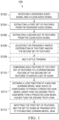
- Figure 1 shows by way of example a method 100 for supervised training of a machine learning model, MLM, to enhance a degraded audio signal by calculating gains to be applied to frequency bands of the degraded audio signal.
- MLM machine learning model
- the method 100 comprises receiving a degraded audio signal 308 and a clean audio signal 310 for training of the MLM.
- the degraded audio signal 308 and a clean audio signal 310 is thus received by a device 301 configured for training an MLM to enhance a degraded audio signal by calculating gains to be applied to frequency bands of the degraded audio signal.
- the device 301 comprises circuity, for example in the form of one or more processors, configured to receive the degraded audio signal 308 and the clean audio signal 310.
- the degraded audio signal 308 is generated from the clean audio signal 310 in a degraded audio creator unit 312.
- the degraded audio creator unit 312 may be part of a same device 300 as the enhancing device 301, or may be a device separate from the enhancing device 301 and wired or wirelessly connected to the enhancing device 301.
- the degraded audio creator may be implemented using one or more processors. The functionality of the degraded audio creator unit 312 will now be described.
- the degraded audio creator unit 312 may be seen as embodying a plurality of simulated transcoding chains.
- the degraded audio creator unit 312 receives a clean audio signal 310 and outputs one or more degraded audio signals 308.
- one clean audio signal may result in a plurality of clean-degraded audio signal pairs, where the input clean audio signal 310 is part of each pair, and where the degraded audio signal 308 in each pair comprises different types of artefacts.
- Each simulated transcoding chain in the degraded audio creator unit 312 contains a series of codecs and filters.
- the generation of the degraded audio signal may comprise applying at least one codec (e.g. a voice codec) to the clean audio signal.
- the generation of the degraded audio signal may alternatively or additionally comprise applying an Intermediate Reference System, IRS, filter to the clean audio signal.
- the generation of the degraded audio signal may alternatively or additionally comprise applying a low pass filter to the clean audio signal.
- the degraded audio signals outputted from the 11 transcoding chains may further be convolved with a narrow band impulse response before being used for training the MLM to simulate reverberations.
- the dynamic range compression may be performed by any suitable compressor, depending on the context and requirements.
- the dynamic range may be used to mimic the compression in a PSTN transcoding chain.
- the method 100 comprises extracting S104 a first set of features from the received degraded audio signal 308, and extracting S106 a second set of features from the received clean audio signal 310.
- Each feature of the first and second sets of features corresponds to a frequency band of the respective received audio signals 308, 310.
- the received degraded audio signal 308 and clean audio signal 310 is converted into the frequency domain.
- the frequency domain refers to the analysis of the audio signals with respect to frequency, rather than time.
- Any suitable mathematical transforms (Fourier transform, Wavelet transform, etc.,) for the conversation may be employed.
- Advantageous examples comprise a short time Fourier transform, SFTF, a modified discrete cosine transform, MDCT, and a shifted discrete frequency transform, MDXT.
- MDXT a short time Fourier transform
- MDCT modified discrete cosine transform
- MDXT shifted discrete frequency transform
- the features of the first and second set of features are advantageously banded features, meaning that a feature corresponds to a frequency band rather than a frequency bin. This will reduce the complexity of the training of the MLM, since less input values will be used for training.
- the first and second set of features are extracted by, for each frequency band of a plurality of frequency bands, for frequency bins of the frequency band, combining complex features of the frequency domain representation of the respective audio signal corresponding to the frequency bins into a single feature corresponding to that frequency band.
- the combination of the complex features may comprise calculating an absolute value of the complex values of the bins.
- the logarithm of the combined value may then be added to the first/second set of features.
- the features of the of the first and second set of features corresponds to Mel-frequency band powers, Bark Scale band powers, log-frequency band powers or ERB band powers.
- the first and second sets of features may be extracted by: converting the received degraded audio signal and clean audio signal into the frequency domain, for each frequency band, j, of a plurality of frequency bands
- the combining of frequency components of the frequency domain representation of the degraded/clean audio signal into a feature comprises weighting the frequency components with different weights.
- the frequency bands may be determined such that each comprise a same number of bins (such as 100, 160, 200, 320, etc., bins).
- the log of the power in of a number of spectral bands equally spaced in Mel frequency (hereinafter referred to as "logmelspec" values) is computed, for example every 10ms.
- logmelspec values for the most recent 5-20 frames of the audio signal (clean, degraded) is used and such features are "stacked up" into an extended 230-460 dimensional feature vector (first and second set of features).
- first and second set of features are extracted by combining extracted features from a plurality of audio frames of the repective audio signals.
- the normalization scheme comprises the following equations.
- the mean across time (mu) and the mean across time and frequency (L) can both be taken as weighted means if a confidence weighting w[f,t] is available for each input feature x[f,t]. This provides added noise robustness.
- equation 200 would be replaced with 200A and equation 201 would be replaced with equation 201 A.
- cepstrum to mean the discrete cosine transform of the logmelspec data. It is common to reverse the characters in part of the word in order to come up with a cepstral term that corresponds to a spectral term. For example, filtering implemented in the cepstral domain is commonly known as "liftering”. Therefore, we herein term the cepstral equivalent of a spectral band a "dnab”.
- a system for implementing the above described normalization method may comprises a speaker speaking into a microphone.
- the audio signal recorded by the microphone is sent to an Analogue-to-digital converter.
- the pulse code modulated data (PCM data) may be sent to a digital pre-processing unit (may include echo suppression, noise suppression, beam-forming for example).
- the PCM data is then used for feature extraction as described above. For example, the log of power in 25 frequency bands of equal width in Mel-frequency space are computed, resulting in a feature vector (eg 25 real numbers)
- the features from one audio frame is then sent to a stacking unit, which has a a history buffer and stores or "stacks up" multiple feature vectors into a 2 dimensional array of features in time and frequency.
- the normalization feature set comprising:
- the normalization feature set will then be used for input (optionally pre-processed to adjust the frequency energy distribution as described herein) to the MLM, e.g. a Deep Neural Network (DNN), Convolutional Neural Network (CNN) or Recurrent Neural Network (RNN).
- DNN Deep Neural Network
- CNN Convolutional Neural Network
- RNN Recurrent Neural Network
- pre-processing is applied to the sets of features.
- the pre-processing is adapted to adjust the frequency energy distribution of the first and/or the second set of features such that the frequency energy distribution of the first set of features is substantially equal to the frequency energy distribution of the second set of features. This is done to reduce over suppression of certain frequency bands when the trained MLM is used for enhancing a degraded audio signal.
- the coding/transcoding of the degraded audio signal may result in a timbre quality issue, where e.g.
- a high/low frequency bands of the degraded audio signal 308 have a substantially different frequency energy distribution compared to the clean audio signal 310.
- other frequency bands other than the high or low frequency part may show similar problems.
- the frequency energy distribution of degraded audio signal 308 and clean audio signal 310 is different.
- the method 100 for training an MLM may comprise a pre-processing step S108 that adjusts the frequency energy distribution of the first and/or the second set of features such that the frequency energy distribution of the first set of features is substantially equal to the frequency energy distribution of the second set of features.
- the adjustment may be applied to the first set of features, or the second set of features, or the first and the second set of features.
- pre-processing of the second set of features is described by way of example.
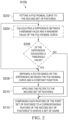
- the pre-processing comprises balancing a frequency energy distribution of the second set of features to be substantially equally distributed across the entire frequency band of the received clean audio signal. This may be done, since for a clean audio signal 310, energy trends to decrease from low frequency to high frequency. But for degraded audio signal 308, frequency energy may be more balanced or not decrease as much as for the clean audio signal 310. That means that their frequency energy shape is different, and if the first and second set of features is used as is to train the MLM, this may lead to over suppression in high frequencies. Such an embodiment is shown in Fig. 2 .
- the balancing of the frequency energy distribution of the second set of features may comprise: fitting S202 a polynomial curve to the second set of features, defining S208 a filter based on difference between the polynomial curve and a constant function, and applying S210 the filter to the second set of features.
- the adjusted second set of features may then be used for calculating S110 the gains for training (which will be further described below).
- the frequency energy distribution of the second set of features is only balanced in case the original frequency energy shape fulfils some prerequisites. For example, a difference between a minimum value and a maximum value of the polynomial curve may need to exceed a threshold value such as 3 dB, 5 dB or any other suitable threshold.
- the threshold value may thus correspond to e.g. a 3 dB difference in a frequency energy distribution of the first set of features across the entire frequency band of the received clean audio signal 310.
- the balancing of the frequency energy distribution of the second set of features may comprise: fitting S202 a polynomial curve to the second set of features, calculating S204 a difference between a minimum value and a maximum value of the polynomial curve, upon determining (in step S206) that the difference exceeds a threshold value: defining S208 a filter based on difference between the polynomial curve and a constant function, and applying S210 the filter to the second set of features.
- the adjusted second set of features may then be used for calculating S110 the gains for training (which will be further described below).
- the second set of features are used as is for calculating S110 the gains for training (which will be further described below).
- the polynomial curve may be one from a list of: a linear curve, a quadratic curve and a cubic curve.
- the value of the constant function may be set to the maximum value, minimum value or mean value of the polynomial curve.
- the first set of features may be adjusted to be more similar (in energy distribution) to the second set of features using similar processes as described above.
- both the first and second set of features may be adjusted to meet a target energy distribution.
- target energy distribution may be based on e.g. a perpetual importance of the different frequency bands.
- multi-style training S109 of the MLM is employed. Training of an MLM is advantageously employed using a lot of data, and the data need to be various to make sure the trained MLM robust. Multi-style training is a method of data augmentation, which is used for making data diversification.
- This step S109 may comprise adding random noise to the first and/or second set of features (adjusted or not according to step S108) before used of calculating the gains.
- the noise is added to the first set of features.
- the noise may have a limit of 5 %, 10 %, 20 %, etc., of the value of the feature it is added to.
- a same amount of noise is added to both a feature pair of the first and second set of features (i.e. one feature from the first set of features and a corresponding feature, relating to the same frequency band, of the second set of features), to simulate a change of energy level for the frequency band corresponding to the feature pair.
- the noise is added only for a first threshold number of epochs when training the MLM.
- the multi style training comprises using distinct adjustment/augmentation parameters during each training epoch (e.g., each epoch, minibatch, and/or pass, of or in the training loop), and such embodiments will now be described in conjunction with figure 6 .
- each training epoch e.g., each epoch, minibatch, and/or pass, of or in the training loop
- Such procedure efficiently adds different noise and reverb in the feature domain on each training pass/epoch. This may increases the ability of speech technology such as speech recognisers, wakeword detectors and noise suppressors to operate in real-world far-field conditions without many of the overfitting problems that traditionally plague multi-style training approaches.
- the degraded audio signal 308 and the clean audio signal 310 is received by a feature extraction unit 602.
- the feature extraction unit extracts a first set of features 604 from the degraded audio signal 308 and a second set of features from the clean audio signal 310 as described above.
- figure 6 does not include the optional feature of adjusting of the frequency energy distribution of the first and/or the second set of features, but such extension of the multi style training of figure 6 would mean that a pre-processing unit would receive the first 604 and second 606 set of features and perform the adjusting of the frequency energy distribution as described herein.
- the first 604 and second 606 set of features are received by a data augmentation unit 608 that implements the multi-style training (S109 in figure 1 ).
- the data augmentation unit 608 takes the first 604 and second 606 set of features and adjusts a set of features 604, 606 by applying augmentation (e.g., addition of reverberation, addition of stationary noise, addition of non-stationary noise, and/or addition of simulated echo residuals) thereto, thus generating augmented set of features 604*, 606*.
- the data augmentation unit 608 may operate on both or one of the received sets of features 604, 606. It should be noted that the data augmentation unit 608 operates:
- a stopping criterion 616 i.e. a defined number of epochs of training of the MLM 612 or a convergence criterion of the MLM 612
- the data augmentation unit will again augment the sets of features 604, 606 and the MLM 612 will be trained based on new augmented set(s) of features 604*, 606*.
- the stopping criterion 616 the feature extraction unit will operate on a next audio frame (if any) of the degraded audio signal 308 and the clean audio signal 310 to proceed with the training of the MLM.
- Examples of types of augmentations (using adjustment parameters) that the data augmentation unit 608 may perform in the feature domain (on the first and/or second set of features 604, 606) include (but are not limited to) the following:
- the adjustment/augmentation parameters thus are derived using one or more of the above strategies.
- the adjustment/augmentation parameters may be drawn from one or more probability distributions.
- FIG. 7 is a diagram showing an example of fixed spectrum stationary noise addition (augmentation) in accordance with an embodiment of the invention. Elements of Fig. 7 include the following:
- the examplary code listing is:
- the multi-style training S109 may further comprise adding artificial pairs of features to the first and second sets of features, wherein an artificial pair of feature comprises a first feature added to the first set of features and a second feature added to the second set of features, the first and second feature having a same value and corresponding to a same frequency band.
- the first and second sets of features (adjusted via processing and/or multi style training, or original) is then used for deriving a set of gains. This is done by comparing S110 each feature of the first set of features to a corresponding feature of the second set of features to derive a set of gains, each gain corresponding to a respective feature among the first set of features, and used as ground truth when training the MLM.
- the comparison comprises for each feature pair, subtracting the value of the feature of the first set of features from the value of the feature of the second set of features.
- over suppression in the trained MLM is reduced by defining S111 a loss function of the MLM that is configured to punish a predicted gain being lower than the ground truth gain more than a predicted gain being higher than the ground truth gain.
- the loss function is configured to punish a predicted gain being lower than the ground truth gain more than a predicted gain being higher than the ground truth gain by: multiplying a distance measurement between the predicted gain and the ground truth with a weight, the weight being relatively higher when:
- the ratio between the relatively higher weight and the relatively lower weight may be between 3-7, for example 5.
- i is a frame index
- j is a band index
- y pre is the predicted gain from the MLM and y true is the ground truth gain.
- the weight w may be multiplied with the second term in a) or with the sum of both the first (L2) term and the second term.
- a further weight, z is added to the equation, which weight depends on the frequency band j of the features of the training set, such that an error for a feature corresponding to a relatively higher frequency band is weighted with a relatively higher weight.
- an error for a feature corresponding to a frequency band exceeding 6 kHz is weighted with a higher weight compared to an error for a feature corresponding to a frequency band below 6 kHz.
- the weight w may be multiplied with the second term in a) or with the sum of both the first (L2) term and the second term.
- the method 100 continues by using the first set of features and the derived set of gains as a training set for training the MLM.
- the MLM may be a DNN.
- an architecture of such a DNN will now be described. This architecture has proven to be advantageous for the task of training the MLM for the purpose described herein.
- the architecture of the DNN may be a typical feed-forward full-connected deep neural network. It may have one input layer, six hidden layers and one output layer.
- the architecture may be summarized as follows:
- the network gets more input data to work with.
- a trained DNN for enhancing degraded audio (described further below) in a real time scenario, it may be advantageous to use a current audio frame from the degraded audio signal along with e.g. 7 history frames (previous frames) to reduce the latency of the enhancing process.
- device 301 may store the trained MLM 306 in memory 304 for later use, or send data pertaining to the trained MLM 306 to a separate device to be used for enhancing a degraded audio signal.
- Figure 4 shows a method 400 for enhancing a degraded audio signal which will be described in conjunction with Fig. 5 describing a device 500 comprising circuity 502 for performing the method 400.
- the method 400 comprising the steps of: receiving S402 a degraded audio signal 510; extracting S404 a first set of features from the received degraded audio signal; and inputting S406 the extracted first set of features to a machine learning model, MLM, 306 trained as described above.
- the trained MLM 306 may be received by the device by a wired or wireless transmission, or received from memory 504.
- the method 400 continues by using S410 output gains from the trained MLM 306 for enhancing the received degraded audio signal 510.
- the extracting S404 of the first set of features from the degraded audio signal 510 may be done as described above in conjunction with the training of the MLM.
- a zero mean and one variance normalization normalize the first set of features to have zero mean and unit variance
- a post-processing S410 of the output gains from the MLM may be employed.
- the post-processing may include limiting of gain range and gain decay control.
- Gain range limit is done to ensure that the output gain is in a reasonable range, which means that a degraded feature is not changed to much, which reduces the risk of unexpected errors.
- Gain decay control may be applied to keep the continuity of audio signal as enhanced. For this reason, the post-processing comprises at least one of:
- the 10 power of the output gain is calculated to go from log gain to band gain.
- a band inverse is performed to inverse band gain to gains relating to the frequency bins.
- the gains relating to frequency bins are multiplied with the corresponding part of the frequency domain representation of the degraded audio signal, i.e. the gains relating to frequency bins are multiplied with MDXT/MDCT/STFT complex feature to get enhanced MDXT/MDCT/STFT feature.
- MDXT/MDCT/STFT transform inverse is performed to go from the frequency domain to the time domain again, and the end result is an enhanced audio signal, 512.
- the degraded audio signal is a public switched telephone network, PSTN, call, wherein the steps of extracting a first set of features and inputting the extracted first set of features to the trained MLM is performed for at least one audio frame of the PSTN call.
- the device 500 may thus be used for enhancing audio quality of the PSTN call before a user hears the call.
- the device 500 may be adapted to handle offline recordings and/or enhancing audio signals in real time.
- the device 500 is part of an end point of an audio conference system and used for enhancing incoming audio signals (e.g. PSTN calls).
- the device 500 is part of an end point of a server of an audio conference system used for enhancing incoming audio signals (e.g. PSTN calls) before being transmitted to an end point.
- incoming audio signals e.g. PSTN calls
- the systems and methods disclosed hereinabove may be implemented as software, firmware, hardware or a combination thereof.
- aspects of the present application may be embodied, at least in part, in an apparatus, a system that includes more than one device, a method, a computer program product, etc.
- the division of tasks between functional units referred to in the above description does not necessarily correspond to the division into physical units; to the contrary, one physical component may have multiple functionalities, and one task may be carried out by several physical components in cooperation.
- Certain components or all components may be implemented as software executed by a digital signal processor or microprocessor or be implemented as hardware or as an application-specific integrated circuit.
- Such software may be distributed on computer readable media, which may comprise computer storage media (or non-transitory media) and communication media (or transitory media).
- computer storage media includes both volatile and nonvolatile, removable and non-removable media implemented in any method or technology for storage of information such as computer readable instructions, data structures, program modules or other data.
- Computer storage media includes, but is not limited to, RAM, ROM, EEPROM, flash memory or other memory technology, CD-ROM, digital versatile disks (DVD) or other optical disk storage, magnetic cassettes, magnetic tape, magnetic disk storage or other magnetic storage devices, or any other medium which can be used to store the desired information, and which can be accessed by a computer.
- communication media typically embodies computer readable instructions, data structures, program modules or other data in a modulated data signal such as a carrier wave or other transport mechanism and includes any information delivery media.
Landscapes
- Engineering & Computer Science (AREA)
- Physics & Mathematics (AREA)
- Health & Medical Sciences (AREA)
- Audiology, Speech & Language Pathology (AREA)
- Human Computer Interaction (AREA)
- Signal Processing (AREA)
- Acoustics & Sound (AREA)
- Multimedia (AREA)
- Computational Linguistics (AREA)
- Spectroscopy & Molecular Physics (AREA)
- Quality & Reliability (AREA)
- Software Systems (AREA)
- Theoretical Computer Science (AREA)
- Data Mining & Analysis (AREA)
- Medical Informatics (AREA)
- Evolutionary Computation (AREA)
- Computing Systems (AREA)
- General Engineering & Computer Science (AREA)
- General Physics & Mathematics (AREA)
- Mathematical Physics (AREA)
- Computer Vision & Pattern Recognition (AREA)
- Artificial Intelligence (AREA)
- Circuit For Audible Band Transducer (AREA)
- Compression, Expansion, Code Conversion, And Decoders (AREA)
- Measurement Of The Respiration, Hearing Ability, Form, And Blood Characteristics Of Living Organisms (AREA)
Claims (15)
- Procédé (100) de formation supervisée d'un modèle d'apprentissage automatique, MLM, pour améliorer un signal audio dégradé en calculant des gains à appliquer aux bandes de fréquences du signal audio dégradé, le procédé comprenant les étapes de :réception (S102) d'un signal audio dégradé (308) et d'un signal audio clair (310) pour la formation du MLM ;extraction (S104, S106) d'un premier ensemble de caractéristiques du signal audio dégradé reçu (308), et d'un second ensemble de caractéristiques du signal audio clair reçu (310), chaque caractéristique correspondant à une bande de fréquences des signaux audio reçus respectifs ;comparaison (S110) de chaque caractéristique du premier ensemble de caractéristiques à une caractéristique correspondante du second ensemble de caractéristiques pour déduire un ensemble de gains, chaque gain correspondant à une caractéristique respective parmi le premier ensemble de caractéristiques, et utilisé comme réalité concrète lors de la formation du MLM ;utilisation (S112) du premier ensemble de caractéristiques et de l'ensemble déduit de gains comme ensemble de formation pour former le MLM ;dans lequel le procédé comprend en outre au moins l'une de :une étape de pré-traitement (S108) effectuée avant de déduire l'ensemble de gains, dans lequel l'étape de pré-traitement comprenant l'ajustement de la distribution d'énergie de fréquence du premier et/ou du second ensemble(s) de caractéristiques de telle sorte qu'une différence entre la distribution d'énergie de fréquence du premier ensemble de caractéristiques et la distribution d'énergie de fréquence du second ensemble de caractéristiques soit réduite, etdéfinition (5111) d'une fonction de perte du MLM qui est configurée pour punir un gain prédit inférieur au gain de réalité concrète plus qu'un gain prédit supérieur au gain de réalité concrète.
- Procédé selon la revendication 1, dans lequel seule l'une parmi l'étape de prétraitement et l'étape de définition d'une fonction de perte du MLM est utilisée.
- Procédé selon la revendication 1, dans lequel l'étape de prétraitement et l'étape de définition d'une fonction de perte du MLM sont toutes deux utilisées.
- Procédé selon l'une quelconque des revendications 1-3, dans lequel la fonction de perte est en outre pondérée en fonction de la bande de fréquences des caractéristiques de l'ensemble de formation, de telle sorte qu'une erreur pour une caractéristique correspondant à une bande de fréquences relativement plus élevée soit pondérée avec un poids relativement plus élevé.
- Procédé selon la revendication 4, dans lequel une erreur pour une caractéristique correspondant à une bande de fréquences dépassant les 6 kHz est pondérée avec un poids plus élevé par rapport à une erreur pour une caractéristique correspondant à une bande de fréquences inférieure à 6 kHz.
- Procédé selon l'une quelconque des revendications 1-5, dans lequel les premier et second ensembles de caractéristiques sont extraits en convertissant le signal audio dégradé reçu et le signal audio clair dans le domaine fréquentiel.
- Procédé selon la revendication 6, dans lequel la conversion est effectuée en utilisant l'une parmi la liste suivante : une transformée de Fourier à court terme, SFTF, une transformée en cosinus discrets modifiée, MDCT, et une transformée de fréquence discrète décalée, MDXT, et dans lequel les premier et second ensembles de caractéristiques sont extraits, pour chaque bande de fréquences d'une pluralité de bandes de fréquences,
pour des groupes de fréquences de la bande de fréquences, la combinaison des caractéristiques complexes de la représentation du domaine fréquentiel du signal audio respectif correspondant aux groupes de fréquences en une seule caractéristique correspondant à cette bande de fréquences. - Procédé selon la revendication 7, dans lequel les caractéristiques des premier et second ensembles de caractéristiques correspondent à des puissances de bande de fréquences de Mel, des puissances de bande d'échelle Bark, des puissances de bande de fréquences logarithmique ou des puissances de bande ERB.
- Procédé selon l'une quelconque des revendications 1-8, dans lequel l'étape de prétraitement comprend l'équilibrage d'une distribution d'énergie de fréquence du second ensemble de caractéristiques sur toute la bande de fréquences du signal audio clair reçu.
- Procédé selon la revendication 9, dans lequel le prétraitement comprend :l'adaptation (S202) d'une courbe polynomiale au second ensemble de caractéristiques,la définition (5208) d'un filtre basé sur une différence entre la courbe polynomiale et une fonction constante,l'application (S210) du filtre au second ensemble de caractéristiques.
- Procédé selon la revendication 9, dans lequel le prétraitement comprend :l'adaptation (S202) d'une courbe polynomiale au second ensemble de caractéristiques,le calcul (S204) d'une différence entre une valeur minimale et une valeur maximale de la courbe polynomiale,lors de la détermination que la différence dépasse une valeur seuil (S206) :la définition (5208) d'un filtre basé sur la différence entre la courbe polynomiale et une fonction constante,l'application (S210) du filtre au second ensemble de caractéristiques.
- Procédé selon l'une quelconque des revendications 1-11, dans lequel la fonction de perte est configurée pour punir un gain prédit inférieur au gain de réalité concrète plus qu'un gain prédit supérieur au gain de réalité concrète par :la multiplication d'une mesure de distance entre le gain prédit et la réalité concrète par un poids, le poids étant relativement plus élevé lorsque :le gain prédit est inférieur au gain de réalité concrète, etle gain prédit est négatif,le poids étant relativement inférieur lorsque :le gain prédit est supérieur ou égal au gain de réalité concrète, oule gain prédit est positif.
- Procédé d'amélioration d'un signal audio dégradé, comprenant les étapes de :exécution d'un procédé selon l'une quelconque des revendications 1-12 pour former un modèle d'apprentissage automatique, MLM, (306) ;réception (S402) d'un signal audio dégradé (510) ;extraction (S404) d'un premier ensemble de caractéristiques du signal audio dégradé reçu (510) ;entrée (S406) du premier ensemble de caractéristiques extrait dans le MLM (306) ; etutilisation (S410) des gains de sortie du MLM (306) pour améliorer le signal audio dégradé reçu (510).
- Dispositif (301) configuré pour la formation supervisée d'un modèle d'apprentissage automatique, MLM, pour améliorer un signal audio dégradé en calculant des gains à appliquer aux bandes de fréquences du signal audio dégradé, le dispositif comprenant un ensemble de circuits (302) configuré pour :recevoir (S102) un signal audio dégradé (308) et un signal audio clair (310) pour la formation du MLM ;extraire (S104, S106) un premier ensemble de caractéristiques du signal audio dégradé reçu (308), et un second ensemble de caractéristiques du signal audio clair reçu (S310), chaque caractéristique correspondant à une bande de fréquences des signaux audio reçus respectifs ;comparer (S110) chaque caractéristique du premier ensemble de caractéristiques à une caractéristique correspondante du second ensemble de caractéristiques pour déduire un ensemble de gains, chaque gain correspondant à une caractéristique respective parmi le premier ensemble de caractéristiques, et utilisé comme réalité concrète lors de la formation du MLM ;utiliser (S112) le premier ensemble de caractéristiques et l'ensemble de gains déduit comme ensemble de formation pour former le MLM ;dans lequel l'ensemble de circuits est en outre configuré pour au moins l'une parmi :avant de déduire l'ensemble de gains, la réalisation d'un prétraitement (S108) comprenant l'ajustement de la distribution d'énergie de fréquence du premier et/ou du second ensemble(s) de caractéristiques de telle sorte qu'une différence entre la distribution d'énergie de fréquence du premier ensemble de caractéristiques et la distribution d'énergie de fréquence du second ensemble de caractéristiques soit réduite, etla définition (5111) d'une fonction de perte du MLM configurée pour punir un gain prédit inférieur au gain de vérité base plus qu'un gain prédit supérieur au gain de réalité concrète.
- Produit de programme informatique comprenant un support de stockage non transitoire lisible par ordinateur avec des instructions conçues pour mettre en oeuvre le procédé selon l'une quelconque des revendications 1-13 lorsqu'elles sont exécutées par un dispositif présentant une capacité de traitement.
Priority Applications (1)
| Application Number | Priority Date | Filing Date | Title |
|---|---|---|---|
| EP24190073.7A EP4459617A3 (fr) | 2019-08-01 | 2020-07-30 | Système et procédé d'amélioration d'un signal audio dégradé |
Applications Claiming Priority (4)
| Application Number | Priority Date | Filing Date | Title |
|---|---|---|---|
| CN2019098896 | 2019-08-01 | ||
| US201962889748P | 2019-08-21 | 2019-08-21 | |
| EP19211731 | 2019-11-27 | ||
| PCT/US2020/044324 WO2021022079A1 (fr) | 2019-08-01 | 2020-07-30 | Système et procédé d'amélioration d'un signal audio dégradé |
Related Child Applications (1)
| Application Number | Title | Priority Date | Filing Date |
|---|---|---|---|
| EP24190073.7A Division EP4459617A3 (fr) | 2019-08-01 | 2020-07-30 | Système et procédé d'amélioration d'un signal audio dégradé |
Publications (2)
| Publication Number | Publication Date |
|---|---|
| EP4008002A1 EP4008002A1 (fr) | 2022-06-08 |
| EP4008002B1 true EP4008002B1 (fr) | 2024-07-24 |
Family
ID=72039713
Family Applications (2)
| Application Number | Title | Priority Date | Filing Date |
|---|---|---|---|
| EP20754125.1A Active EP4008002B1 (fr) | 2019-08-01 | 2020-07-30 | Système et procédé d'amélioration d'un signal audio dégradé |
| EP24190073.7A Pending EP4459617A3 (fr) | 2019-08-01 | 2020-07-30 | Système et procédé d'amélioration d'un signal audio dégradé |
Family Applications After (1)
| Application Number | Title | Priority Date | Filing Date |
|---|---|---|---|
| EP24190073.7A Pending EP4459617A3 (fr) | 2019-08-01 | 2020-07-30 | Système et procédé d'amélioration d'un signal audio dégradé |
Country Status (4)
| Country | Link |
|---|---|
| US (2) | US11996108B2 (fr) |
| EP (2) | EP4008002B1 (fr) |
| CN (2) | CN114175152B (fr) |
| WO (1) | WO2021022079A1 (fr) |
Families Citing this family (17)
| Publication number | Priority date | Publication date | Assignee | Title |
|---|---|---|---|---|
| US12148441B2 (en) * | 2019-03-10 | 2024-11-19 | Kardome Technology Ltd. | Source separation for automatic speech recognition (ASR) |
| US11361749B2 (en) | 2020-03-11 | 2022-06-14 | Nuance Communications, Inc. | Ambient cooperative intelligence system and method |
| CN115605953B (zh) * | 2020-05-08 | 2026-03-17 | 微软技术许可有限责任公司 | 用于多麦克风信号处理的数据增强的系统和方法 |
| US20220199103A1 (en) * | 2020-12-23 | 2022-06-23 | Plantronics, Inc. | Method and system for improving quality of degraded speech |
| GB202104280D0 (en) * | 2021-03-26 | 2021-05-12 | Samsung Electronics Co Ltd | Method and apparatus for real-time sound enhancement |
| CN113345457B (zh) * | 2021-06-01 | 2022-06-17 | 广西大学 | 一种基于贝叶斯理论的声学回声消除自适应滤波器及滤波方法 |
| EP4364138B1 (fr) * | 2021-07-02 | 2026-03-11 | Dolby Laboratories Licensing Corporation | Atténuation de suppression excessive pour amélioration de la parole basée sur un apprentissage profond |
| CN116189698B (zh) * | 2021-11-25 | 2025-09-12 | 广州视源电子科技股份有限公司 | 语音增强模型的训练方法及装置、存储介质及设备 |
| CN113921030B (zh) * | 2021-12-07 | 2022-06-07 | 江苏清微智能科技有限公司 | 一种基于加权语音损失的语音增强神经网络训练方法及装置 |
| US12361960B2 (en) | 2022-04-25 | 2025-07-15 | Cisco Technology, Inc. | Transforming voice signals to compensate for effects from a facial covering |
| US12483657B2 (en) * | 2022-05-20 | 2025-11-25 | Cisco Technology, Inc. | Receiver side noise reduction and speech enhancement for PSTN callers |
| CN115238745B (zh) * | 2022-06-13 | 2025-11-21 | 四川新源生物电子科技有限公司 | 一种模拟采集脑电信号的生成方法和系统 |
| CN118038877B (zh) * | 2022-11-01 | 2026-03-10 | 抖音视界有限公司 | 一种音频信号的编码、解码方法及装置 |
| US12469510B2 (en) * | 2022-11-16 | 2025-11-11 | Cisco Technology, Inc. | Transforming speech signals to attenuate speech of competing individuals and other noise |
| US12561574B2 (en) | 2023-07-29 | 2026-02-24 | Zon Global Ip Inc. | Deterministically defined, differentiable, neuromorphically-informed I/O-mapped neural network |
| US12236964B1 (en) * | 2023-07-29 | 2025-02-25 | Seer Global, Inc. | Foundational AI model for capturing and encoding audio with artificial intelligence semantic analysis and without low pass or high pass filters |
| CN120932667A (zh) * | 2025-08-29 | 2025-11-11 | 广东伟邦科技股份有限公司 | 一种电梯远程报警对讲降噪方法及系统 |
Family Cites Families (15)
| Publication number | Priority date | Publication date | Assignee | Title |
|---|---|---|---|---|
| US5913194A (en) * | 1997-07-14 | 1999-06-15 | Motorola, Inc. | Method, device and system for using statistical information to reduce computation and memory requirements of a neural network based speech synthesis system |
| US6549587B1 (en) | 1999-09-20 | 2003-04-15 | Broadcom Corporation | Voice and data exchange over a packet based network with timing recovery |
| US6560225B1 (en) | 1999-08-18 | 2003-05-06 | Nortel Networks Limited | Enhanced performance VoDSL |
| US7289626B2 (en) | 2001-05-07 | 2007-10-30 | Siemens Communications, Inc. | Enhancement of sound quality for computer telephony systems |
| US7158572B2 (en) | 2002-02-14 | 2007-01-02 | Tellabs Operations, Inc. | Audio enhancement communication techniques |
| US20070264989A1 (en) | 2005-10-03 | 2007-11-15 | Rajesh Palakkal | Rendezvous calling systems and methods therefor |
| US8407049B2 (en) | 2008-04-23 | 2013-03-26 | Cogi, Inc. | Systems and methods for conversation enhancement |
| US8863256B1 (en) | 2011-01-14 | 2014-10-14 | Cisco Technology, Inc. | System and method for enabling secure transactions using flexible identity management in a vehicular environment |
| FR2990552A1 (fr) * | 2012-07-10 | 2013-11-15 | France Telecom | Traitement d'amelioration de la qualite des signaux audiofrequences |
| CN105489224B (zh) * | 2014-09-15 | 2019-10-18 | 讯飞智元信息科技有限公司 | 一种基于麦克风阵列的语音降噪方法及系统 |
| US9881631B2 (en) * | 2014-10-21 | 2018-01-30 | Mitsubishi Electric Research Laboratories, Inc. | Method for enhancing audio signal using phase information |
| EP3474280B1 (fr) * | 2017-10-19 | 2021-07-07 | Goodix Technology (HK) Company Limited | Processeur de signal pour l'amélioration du signal de parole |
| CN109887494B (zh) * | 2017-12-01 | 2022-08-16 | 腾讯科技(深圳)有限公司 | 重构语音信号的方法和装置 |
| US10872602B2 (en) | 2018-05-24 | 2020-12-22 | Dolby Laboratories Licensing Corporation | Training of acoustic models for far-field vocalization processing systems |
| CN110085249B (zh) * | 2019-05-09 | 2021-03-16 | 南京工程学院 | 基于注意力门控的循环神经网络的单通道语音增强方法 |
-
2020
- 2020-07-30 EP EP20754125.1A patent/EP4008002B1/fr active Active
- 2020-07-30 WO PCT/US2020/044324 patent/WO2021022079A1/fr not_active Ceased
- 2020-07-30 CN CN202080054701.7A patent/CN114175152B/zh active Active
- 2020-07-30 CN CN202511141006.5A patent/CN120932662A/zh active Pending
- 2020-07-30 US US17/632,220 patent/US11996108B2/en active Active
- 2020-07-30 EP EP24190073.7A patent/EP4459617A3/fr active Pending
-
2024
- 2024-05-24 US US18/674,555 patent/US12542142B2/en active Active
Also Published As
| Publication number | Publication date |
|---|---|
| US12542142B2 (en) | 2026-02-03 |
| US20220270625A1 (en) | 2022-08-25 |
| EP4008002A1 (fr) | 2022-06-08 |
| CN114175152A (zh) | 2022-03-11 |
| EP4459617A3 (fr) | 2024-12-11 |
| CN114175152B (zh) | 2025-10-14 |
| US20240395267A1 (en) | 2024-11-28 |
| US11996108B2 (en) | 2024-05-28 |
| EP4459617A2 (fr) | 2024-11-06 |
| WO2021022079A1 (fr) | 2021-02-04 |
| CN120932662A (zh) | 2025-11-11 |
Similar Documents
| Publication | Publication Date | Title |
|---|---|---|
| EP4008002B1 (fr) | Système et procédé d'amélioration d'un signal audio dégradé | |
| EP4004906B1 (fr) | Augmentation de données par époque pour l'apprentissage de modèles acoustiques | |
| US10622009B1 (en) | Methods for detecting double-talk | |
| CN114333749B (zh) | 啸叫抑制方法、装置、计算机设备和存储介质 | |
| US8538749B2 (en) | Systems, methods, apparatus, and computer program products for enhanced intelligibility | |
| US8521530B1 (en) | System and method for enhancing a monaural audio signal | |
| CN103354937B (zh) | 包括噪声抑制增益的中值滤波的后处理 | |
| US20120263317A1 (en) | Systems, methods, apparatus, and computer readable media for equalization | |
| JP4764995B2 (ja) | 雑音を含む音響信号の高品質化 | |
| Braun et al. | Effect of noise suppression losses on speech distortion and ASR performance | |
| CN112086093A (zh) | 解决基于感知的对抗音频攻击的自动语音识别系统 | |
| CN117321681A (zh) | 嘈杂环境中的语音优化 | |
| Saki et al. | Automatic switching between noise classification and speech enhancement for hearing aid devices | |
| JPH0566795A (ja) | 雑音抑圧装置とその調整装置 | |
| JP2014137405A (ja) | 音響処理装置及び音響処理方法 | |
| JP7383122B2 (ja) | 信号認識または修正のために音声データから抽出した特徴を正規化するための方法および装置 | |
| Cauchi et al. | Joint dereverberation and noise reduction using beamforming and a single-channel speech enhancement scheme | |
| EP3830823B1 (fr) | Insertion d'écart forcé pour écoute omniprésente | |
| Chhetri et al. | Speech enhancement: A survey of approaches and applications | |
| US20230326475A1 (en) | Apparatus, Methods and Computer Programs for Noise Suppression | |
| US20080219457A1 (en) | Enhancement of Speech Intelligibility in a Mobile Communication Device by Controlling the Operation of a Vibrator of a Vibrator in Dependance of the Background Noise | |
| RU2589298C1 (ru) | Способ повышения разборчивости и информативности звуковых сигналов в шумовой обстановке | |
| Li et al. | Joint noise reduction and listening enhancement for full-end speech enhancement | |
| EP4576079A1 (fr) | Appareils, procédés et programmes informatiques pour la suppression du bruit | |
| EP4498368A1 (fr) | Système et procédé de suppression de bruit maximum dépendant du niveau |
Legal Events
| Date | Code | Title | Description |
|---|---|---|---|
| STAA | Information on the status of an ep patent application or granted ep patent |
Free format text: STATUS: UNKNOWN |
|
| STAA | Information on the status of an ep patent application or granted ep patent |
Free format text: STATUS: THE INTERNATIONAL PUBLICATION HAS BEEN MADE |
|
| PUAI | Public reference made under article 153(3) epc to a published international application that has entered the european phase |
Free format text: ORIGINAL CODE: 0009012 |
|
| STAA | Information on the status of an ep patent application or granted ep patent |
Free format text: STATUS: REQUEST FOR EXAMINATION WAS MADE |
|
| 17P | Request for examination filed |
Effective date: 20220301 |
|
| AK | Designated contracting states |
Kind code of ref document: A1 Designated state(s): AL AT BE BG CH CY CZ DE DK EE ES FI FR GB GR HR HU IE IS IT LI LT LU LV MC MK MT NL NO PL PT RO RS SE SI SK SM TR |
|
| DAV | Request for validation of the european patent (deleted) | ||
| DAX | Request for extension of the european patent (deleted) | ||
| P01 | Opt-out of the competence of the unified patent court (upc) registered |
Effective date: 20230417 |
|
| STAA | Information on the status of an ep patent application or granted ep patent |
Free format text: STATUS: EXAMINATION IS IN PROGRESS |
|
| 17Q | First examination report despatched |
Effective date: 20230713 |
|
| GRAP | Despatch of communication of intention to grant a patent |
Free format text: ORIGINAL CODE: EPIDOSNIGR1 |
|
| STAA | Information on the status of an ep patent application or granted ep patent |
Free format text: STATUS: GRANT OF PATENT IS INTENDED |
|
| INTG | Intention to grant announced |
Effective date: 20240219 |
|
| GRAS | Grant fee paid |
Free format text: ORIGINAL CODE: EPIDOSNIGR3 |
|
| GRAA | (expected) grant |
Free format text: ORIGINAL CODE: 0009210 |
|
| STAA | Information on the status of an ep patent application or granted ep patent |
Free format text: STATUS: THE PATENT HAS BEEN GRANTED |
|
| AK | Designated contracting states |
Kind code of ref document: B1 Designated state(s): AL AT BE BG CH CY CZ DE DK EE ES FI FR GB GR HR HU IE IS IT LI LT LU LV MC MK MT NL NO PL PT RO RS SE SI SK SM TR |
|
| REG | Reference to a national code |
Ref country code: GB Ref legal event code: FG4D |
|
| REG | Reference to a national code |
Ref country code: CH Ref legal event code: EP |
|
| REG | Reference to a national code |
Ref country code: DE Ref legal event code: R096 Ref document number: 602020034500 Country of ref document: DE |
|
| REG | Reference to a national code |
Ref country code: IE Ref legal event code: FG4D |
|
| REG | Reference to a national code |
Ref country code: LT Ref legal event code: MG9D |
|
| REG | Reference to a national code |
Ref country code: NL Ref legal event code: MP Effective date: 20240724 |
|
| PG25 | Lapsed in a contracting state [announced via postgrant information from national office to epo] |
Ref country code: PT Free format text: LAPSE BECAUSE OF FAILURE TO SUBMIT A TRANSLATION OF THE DESCRIPTION OR TO PAY THE FEE WITHIN THE PRESCRIBED TIME-LIMIT Effective date: 20241125 |
|
| REG | Reference to a national code |
Ref country code: AT Ref legal event code: MK05 Ref document number: 1707095 Country of ref document: AT Kind code of ref document: T Effective date: 20240724 |
|
| PG25 | Lapsed in a contracting state [announced via postgrant information from national office to epo] |
Ref country code: NL Free format text: LAPSE BECAUSE OF FAILURE TO SUBMIT A TRANSLATION OF THE DESCRIPTION OR TO PAY THE FEE WITHIN THE PRESCRIBED TIME-LIMIT Effective date: 20240724 |
|
| PG25 | Lapsed in a contracting state [announced via postgrant information from national office to epo] |
Ref country code: PT Free format text: LAPSE BECAUSE OF FAILURE TO SUBMIT A TRANSLATION OF THE DESCRIPTION OR TO PAY THE FEE WITHIN THE PRESCRIBED TIME-LIMIT Effective date: 20241125 Ref country code: NL Free format text: LAPSE BECAUSE OF FAILURE TO SUBMIT A TRANSLATION OF THE DESCRIPTION OR TO PAY THE FEE WITHIN THE PRESCRIBED TIME-LIMIT Effective date: 20240724 |
|
| PG25 | Lapsed in a contracting state [announced via postgrant information from national office to epo] |
Ref country code: NO Free format text: LAPSE BECAUSE OF FAILURE TO SUBMIT A TRANSLATION OF THE DESCRIPTION OR TO PAY THE FEE WITHIN THE PRESCRIBED TIME-LIMIT Effective date: 20241024 |
|
| PG25 | Lapsed in a contracting state [announced via postgrant information from national office to epo] |
Ref country code: FI Free format text: LAPSE BECAUSE OF FAILURE TO SUBMIT A TRANSLATION OF THE DESCRIPTION OR TO PAY THE FEE WITHIN THE PRESCRIBED TIME-LIMIT Effective date: 20240724 Ref country code: PL Free format text: LAPSE BECAUSE OF FAILURE TO SUBMIT A TRANSLATION OF THE DESCRIPTION OR TO PAY THE FEE WITHIN THE PRESCRIBED TIME-LIMIT Effective date: 20240724 Ref country code: GR Free format text: LAPSE BECAUSE OF FAILURE TO SUBMIT A TRANSLATION OF THE DESCRIPTION OR TO PAY THE FEE WITHIN THE PRESCRIBED TIME-LIMIT Effective date: 20241025 |
|
| PG25 | Lapsed in a contracting state [announced via postgrant information from national office to epo] |
Ref country code: BG Free format text: LAPSE BECAUSE OF FAILURE TO SUBMIT A TRANSLATION OF THE DESCRIPTION OR TO PAY THE FEE WITHIN THE PRESCRIBED TIME-LIMIT Effective date: 20240724 |
|
| PG25 | Lapsed in a contracting state [announced via postgrant information from national office to epo] |
Ref country code: LV Free format text: LAPSE BECAUSE OF FAILURE TO SUBMIT A TRANSLATION OF THE DESCRIPTION OR TO PAY THE FEE WITHIN THE PRESCRIBED TIME-LIMIT Effective date: 20240724 |
|
| PG25 | Lapsed in a contracting state [announced via postgrant information from national office to epo] |
Ref country code: AT Free format text: LAPSE BECAUSE OF FAILURE TO SUBMIT A TRANSLATION OF THE DESCRIPTION OR TO PAY THE FEE WITHIN THE PRESCRIBED TIME-LIMIT Effective date: 20240724 Ref country code: IS Free format text: LAPSE BECAUSE OF FAILURE TO SUBMIT A TRANSLATION OF THE DESCRIPTION OR TO PAY THE FEE WITHIN THE PRESCRIBED TIME-LIMIT Effective date: 20241124 |
|
| PG25 | Lapsed in a contracting state [announced via postgrant information from national office to epo] |
Ref country code: HR Free format text: LAPSE BECAUSE OF FAILURE TO SUBMIT A TRANSLATION OF THE DESCRIPTION OR TO PAY THE FEE WITHIN THE PRESCRIBED TIME-LIMIT Effective date: 20240724 |
|
| PG25 | Lapsed in a contracting state [announced via postgrant information from national office to epo] |
Ref country code: RS Free format text: LAPSE BECAUSE OF FAILURE TO SUBMIT A TRANSLATION OF THE DESCRIPTION OR TO PAY THE FEE WITHIN THE PRESCRIBED TIME-LIMIT Effective date: 20241024 Ref country code: ES Free format text: LAPSE BECAUSE OF FAILURE TO SUBMIT A TRANSLATION OF THE DESCRIPTION OR TO PAY THE FEE WITHIN THE PRESCRIBED TIME-LIMIT Effective date: 20240724 |
|
| PG25 | Lapsed in a contracting state [announced via postgrant information from national office to epo] |
Ref country code: RS Free format text: LAPSE BECAUSE OF FAILURE TO SUBMIT A TRANSLATION OF THE DESCRIPTION OR TO PAY THE FEE WITHIN THE PRESCRIBED TIME-LIMIT Effective date: 20241024 Ref country code: PL Free format text: LAPSE BECAUSE OF FAILURE TO SUBMIT A TRANSLATION OF THE DESCRIPTION OR TO PAY THE FEE WITHIN THE PRESCRIBED TIME-LIMIT Effective date: 20240724 Ref country code: NO Free format text: LAPSE BECAUSE OF FAILURE TO SUBMIT A TRANSLATION OF THE DESCRIPTION OR TO PAY THE FEE WITHIN THE PRESCRIBED TIME-LIMIT Effective date: 20241024 Ref country code: LV Free format text: LAPSE BECAUSE OF FAILURE TO SUBMIT A TRANSLATION OF THE DESCRIPTION OR TO PAY THE FEE WITHIN THE PRESCRIBED TIME-LIMIT Effective date: 20240724 Ref country code: IS Free format text: LAPSE BECAUSE OF FAILURE TO SUBMIT A TRANSLATION OF THE DESCRIPTION OR TO PAY THE FEE WITHIN THE PRESCRIBED TIME-LIMIT Effective date: 20241124 Ref country code: HR Free format text: LAPSE BECAUSE OF FAILURE TO SUBMIT A TRANSLATION OF THE DESCRIPTION OR TO PAY THE FEE WITHIN THE PRESCRIBED TIME-LIMIT Effective date: 20240724 Ref country code: GR Free format text: LAPSE BECAUSE OF FAILURE TO SUBMIT A TRANSLATION OF THE DESCRIPTION OR TO PAY THE FEE WITHIN THE PRESCRIBED TIME-LIMIT Effective date: 20241025 Ref country code: FI Free format text: LAPSE BECAUSE OF FAILURE TO SUBMIT A TRANSLATION OF THE DESCRIPTION OR TO PAY THE FEE WITHIN THE PRESCRIBED TIME-LIMIT Effective date: 20240724 Ref country code: ES Free format text: LAPSE BECAUSE OF FAILURE TO SUBMIT A TRANSLATION OF THE DESCRIPTION OR TO PAY THE FEE WITHIN THE PRESCRIBED TIME-LIMIT Effective date: 20240724 Ref country code: BG Free format text: LAPSE BECAUSE OF FAILURE TO SUBMIT A TRANSLATION OF THE DESCRIPTION OR TO PAY THE FEE WITHIN THE PRESCRIBED TIME-LIMIT Effective date: 20240724 Ref country code: AT Free format text: LAPSE BECAUSE OF FAILURE TO SUBMIT A TRANSLATION OF THE DESCRIPTION OR TO PAY THE FEE WITHIN THE PRESCRIBED TIME-LIMIT Effective date: 20240724 |
|
| REG | Reference to a national code |
Ref country code: CH Ref legal event code: PL |
|
| PG25 | Lapsed in a contracting state [announced via postgrant information from national office to epo] |
Ref country code: LU Free format text: LAPSE BECAUSE OF NON-PAYMENT OF DUE FEES Effective date: 20240730 |
|
| PG25 | Lapsed in a contracting state [announced via postgrant information from national office to epo] |
Ref country code: LU Free format text: LAPSE BECAUSE OF NON-PAYMENT OF DUE FEES Effective date: 20240730 |
|
| PG25 | Lapsed in a contracting state [announced via postgrant information from national office to epo] |
Ref country code: RO Free format text: LAPSE BECAUSE OF FAILURE TO SUBMIT A TRANSLATION OF THE DESCRIPTION OR TO PAY THE FEE WITHIN THE PRESCRIBED TIME-LIMIT Effective date: 20240724 Ref country code: DK Free format text: LAPSE BECAUSE OF FAILURE TO SUBMIT A TRANSLATION OF THE DESCRIPTION OR TO PAY THE FEE WITHIN THE PRESCRIBED TIME-LIMIT Effective date: 20240724 Ref country code: SM Free format text: LAPSE BECAUSE OF FAILURE TO SUBMIT A TRANSLATION OF THE DESCRIPTION OR TO PAY THE FEE WITHIN THE PRESCRIBED TIME-LIMIT Effective date: 20240724 |
|
| PG25 | Lapsed in a contracting state [announced via postgrant information from national office to epo] |
Ref country code: CH Free format text: LAPSE BECAUSE OF NON-PAYMENT OF DUE FEES Effective date: 20240731 Ref country code: MC Free format text: LAPSE BECAUSE OF FAILURE TO SUBMIT A TRANSLATION OF THE DESCRIPTION OR TO PAY THE FEE WITHIN THE PRESCRIBED TIME-LIMIT Effective date: 20240724 Ref country code: BE Free format text: LAPSE BECAUSE OF NON-PAYMENT OF DUE FEES Effective date: 20240731 Ref country code: EE Free format text: LAPSE BECAUSE OF FAILURE TO SUBMIT A TRANSLATION OF THE DESCRIPTION OR TO PAY THE FEE WITHIN THE PRESCRIBED TIME-LIMIT Effective date: 20240724 |
|
| PG25 | Lapsed in a contracting state [announced via postgrant information from national office to epo] |
Ref country code: CZ Free format text: LAPSE BECAUSE OF FAILURE TO SUBMIT A TRANSLATION OF THE DESCRIPTION OR TO PAY THE FEE WITHIN THE PRESCRIBED TIME-LIMIT Effective date: 20240724 |
|
| REG | Reference to a national code |
Ref country code: DE Ref legal event code: R097 Ref document number: 602020034500 Country of ref document: DE |
|
| PG25 | Lapsed in a contracting state [announced via postgrant information from national office to epo] |
Ref country code: SK Free format text: LAPSE BECAUSE OF FAILURE TO SUBMIT A TRANSLATION OF THE DESCRIPTION OR TO PAY THE FEE WITHIN THE PRESCRIBED TIME-LIMIT Effective date: 20240724 Ref country code: IT Free format text: LAPSE BECAUSE OF FAILURE TO SUBMIT A TRANSLATION OF THE DESCRIPTION OR TO PAY THE FEE WITHIN THE PRESCRIBED TIME-LIMIT Effective date: 20240724 |
|
| PLBE | No opposition filed within time limit |
Free format text: ORIGINAL CODE: 0009261 |
|
| STAA | Information on the status of an ep patent application or granted ep patent |
Free format text: STATUS: NO OPPOSITION FILED WITHIN TIME LIMIT |
|
| REG | Reference to a national code |
Ref country code: BE Ref legal event code: MM Effective date: 20240731 |
|
| 26N | No opposition filed |
Effective date: 20250425 |
|
| PGFP | Annual fee paid to national office [announced via postgrant information from national office to epo] |
Ref country code: GB Payment date: 20250619 Year of fee payment: 6 |
|
| PGFP | Annual fee paid to national office [announced via postgrant information from national office to epo] |
Ref country code: FR Payment date: 20250620 Year of fee payment: 6 |
|
| PG25 | Lapsed in a contracting state [announced via postgrant information from national office to epo] |
Ref country code: IE Free format text: LAPSE BECAUSE OF NON-PAYMENT OF DUE FEES Effective date: 20240730 |
|
| PG25 | Lapsed in a contracting state [announced via postgrant information from national office to epo] |
Ref country code: SE Free format text: LAPSE BECAUSE OF FAILURE TO SUBMIT A TRANSLATION OF THE DESCRIPTION OR TO PAY THE FEE WITHIN THE PRESCRIBED TIME-LIMIT Effective date: 20240724 |
|
| PGFP | Annual fee paid to national office [announced via postgrant information from national office to epo] |
Ref country code: DE Payment date: 20250620 Year of fee payment: 6 |
|
| PG25 | Lapsed in a contracting state [announced via postgrant information from national office to epo] |
Ref country code: CY Free format text: LAPSE BECAUSE OF FAILURE TO SUBMIT A TRANSLATION OF THE DESCRIPTION OR TO PAY THE FEE WITHIN THE PRESCRIBED TIME-LIMIT; INVALID AB INITIO Effective date: 20200730 |
|
| PG25 | Lapsed in a contracting state [announced via postgrant information from national office to epo] |
Ref country code: HU Free format text: LAPSE BECAUSE OF FAILURE TO SUBMIT A TRANSLATION OF THE DESCRIPTION OR TO PAY THE FEE WITHIN THE PRESCRIBED TIME-LIMIT; INVALID AB INITIO Effective date: 20200730 |