EP4008609B1 - Agencement pour une caisse d'un véhicule automobile - Google Patents
Agencement pour une caisse d'un véhicule automobile Download PDFInfo
- Publication number
- EP4008609B1 EP4008609B1 EP21211376.5A EP21211376A EP4008609B1 EP 4008609 B1 EP4008609 B1 EP 4008609B1 EP 21211376 A EP21211376 A EP 21211376A EP 4008609 B1 EP4008609 B1 EP 4008609B1
- Authority
- EP
- European Patent Office
- Prior art keywords
- indexing member
- indexing
- arrangement
- support
- flange
- Prior art date
- Legal status (The legal status is an assumption and is not a legal conclusion. Google has not performed a legal analysis and makes no representation as to the accuracy of the status listed.)
- Active
Links
Images
Classifications
-
- B—PERFORMING OPERATIONS; TRANSPORTING
- B62—LAND VEHICLES FOR TRAVELLING OTHERWISE THAN ON RAILS
- B62D—MOTOR VEHICLES; TRAILERS
- B62D25/00—Superstructure or monocoque structure sub-units; Parts or details thereof not otherwise provided for
- B62D25/08—Front or rear portions
- B62D25/088—Details of structures as upper supports for springs or dampers
-
- B—PERFORMING OPERATIONS; TRANSPORTING
- B62—LAND VEHICLES FOR TRAVELLING OTHERWISE THAN ON RAILS
- B62D—MOTOR VEHICLES; TRAILERS
- B62D65/00—Designing, manufacturing, e.g. assembling, facilitating disassembly, or structurally modifying motor vehicles or trailers, not otherwise provided for
- B62D65/02—Joining sub-units or components to, or positioning sub-units or components with respect to, body shell or other sub-units or components
- B62D65/024—Positioning of sub-units or components with respect to body shell or other sub-units or components
-
- B—PERFORMING OPERATIONS; TRANSPORTING
- B62—LAND VEHICLES FOR TRAVELLING OTHERWISE THAN ON RAILS
- B62D—MOTOR VEHICLES; TRAILERS
- B62D65/00—Designing, manufacturing, e.g. assembling, facilitating disassembly, or structurally modifying motor vehicles or trailers, not otherwise provided for
- B62D65/02—Joining sub-units or components to, or positioning sub-units or components with respect to, body shell or other sub-units or components
- B62D65/12—Joining sub-units or components to, or positioning sub-units or components with respect to, body shell or other sub-units or components the sub-units or components being suspensions, brakes or wheel units
Definitions
- the invention relates to an arrangement for a body of a motor vehicle as well as an indexing device for such an arrangement.
- the invention also relates to a motor vehicle comprising at least said arrangement and/or at least said indexing device.
- motor vehicles are equipped with a suspension system comprising at least one shock absorber mounted at the level of a body of the vehicle, in particular at the level of a wheel arch of the vehicle.
- the body of the shock absorber is fixed on a support and requires a particular positioning, or arrangement, relative to it.
- the document DE 41 17 017 A1 describes an arrangement for a body of a vehicle according to the preamble of claim 1.
- the present invention fits into this context and aims to propose an arrangement comprising an indexing device advantageously allowing the simplification of the assembly of the arrangement of one or for a body of a motor vehicle and the simplification of the parts inventory management.
- the invention proposes an arrangement for a body of a motor vehicle, the arrangement comprising a support for a suspension system of a wheel of the vehicle, a shock absorber, a body of which is capable of being fixed on said support and an indexing device comprising a first indexing member and a second indexing member attached and each mounted integrally with the support.
- the arrangement is particularly characterized in that the first indexing member and the second indexing member are each configured to indifferently ensure the front indexing and the rear indexing of the shock absorber, in particular of the body of the shock absorber, relative to the support so as to ensure its adequate positioning relative to said support.
- the first indexing member and the second indexing member can each comprise a wing cooperating with the body of the shock absorber so as to ensure its adequate positioning relative to the support.
- At least the wing of the first indexing member and/or the wing of the second indexing member has(are) a structure and/or a symmetrical or substantially symmetrical geometry relative to a plane median passing through the wing specific to the corresponding indexing member.
- a first end and a second end of the wing of the first indexing member and/or of the wing of the second indexing member may each comprise an edge inclined relative to a main free edge of the wing, the main edge free connecting said first end and second end together and the inclined edge defining, relative to the support, a passage for receiving and guiding the body of the shock absorber.
- the inclined edge of the first end of the wing and the inclined edge of the second end of the wing of the first indexing member and/or of the wing of the second indexing member may have a shape complementary to at least one part of the body of the shock absorber.
- the inclined edge of the first end of the wing and the inclined edge of the second end of the wing of the first indexing member and/or of the wing of the second indexing member can present an angle ⁇ , relative to a part of the support extending to the right of the corresponding inclined edge, equal or substantially equal, the angle ⁇ being able to be between 20 and 85°.
- first indexing member and/or the second indexing member may comprise a fixing base, planar or essentially planar, delimiting at least one fixing zone of the corresponding indexing member on the support, the fixing base being connected to the wing.
- the fixing base may comprise a plurality of fixing zones.
- first indexing member and/or the second indexing member can be mounted integrally with the support by welding, in particular by at least one welding point.
- the first indexing member and/or the second indexing member may include at least one reinforcement extending between the wing and the fixing base of the corresponding indexing member.
- the first indexing member and/or the second indexing member may comprise a tab for guiding the position of the indexing member considered relative to the support, the guide tab being able to extend transversely to the wing of the corresponding indexing member and/or the guide tab which can come from the fixing base of the corresponding indexing member and being able to extend parallel or substantially parallel to said fixing portion.
- the first indexing member and the second indexing member may have an identical or substantially identical structure and/or geometry.
- an indexing device for a vehicle body arrangement or for a vehicle body arrangement as described above is also mentioned.
- This indexing device comprises a first indexing member and a second indexing member attached and configured to be mounted integral with a support, characterized in that the first indexing member and the second indexing member are configured to indifferently ensure the front indexing and rear indexing of the shock absorber, in particular of a body of the shock absorber, relative to the support so as to ensure its adequate positioning relative to said support.
- the first indexing member and the second indexing member can each comprise a wing configured to cooperate with the body of the same shock absorber so as to ensure its adequate positioning relative to the support.
- the invention finally relates to a motor vehicle comprising at least one arrangement according to the invention.
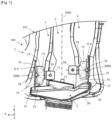
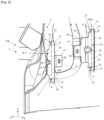
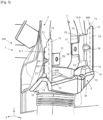
- THE figures 1 to 3 illustrate an example of realization of an arrangement 1 of one or for a body of a motor vehicle 100, in particular an arrangement implemented at the level of a wheel arch 101 of the vehicle 100.
- an arrangement can be implemented at the level of a front wheel arch 101 or at the level of a rear wheel arch 101.
- the arrangement 1 comprises a support 2 for a suspension system of a wheel, not shown, of the vehicle 100, such a support 2 comprising, for example a structure made of pressed sheet metal.
- the arrangement 1 further comprises a shock absorber 3, a body 30 of which is able to be fixed on said support 2 and an indexing device 4.
- the direction designated as longitudinal corresponds to an axis of advancement X in a straight line of the vehicle 100
- the vertical direction corresponds to a vertical axis Z, orthogonal to the axis X and oriented vertically when the vehicle 100 is on horizontal ground.
- the transverse direction corresponds to a Y axis, orthogonal to the X and Z axes.
- the indexing device 4 comprises two distinct parts: a first indexing member 5 and a second indexing member 6.
- indexing member is meant a member configured to allow positioning, that is to say guiding to a predefined suitable position, of the shock absorber 3 within the arrangement 1, in particular relative to the support 2.
- the indexing device 4 ensures that the shock absorber 3 is correctly positioned relative to the support 2 when the shock absorber 3 is approached from the support 2.
- the indexing device 4 is thus configured to be placed on the support 2 prior to the installation of the shock absorber 3. Furthermore, the indexing device 4 according to the invention is intended to remain on the vehicle 100 subsequently to the installation of the shock absorber 3 within the arrangement.
- the first indexing member 5 and the second indexing member 6 are attached and mounted integral with a support, in particular the same support 2. They are particularly configured to indifferently ensure the front indexing and the rear indexing of the shock absorber 3, in particular of the body 30 of the shock absorber 3, relative to the support 2.
- the first indexing member 5 can be mounted integral with the support 2 so as to ensure one of the front indexing or the rear indexing of the shock absorber 3 relative to the support 2
- the second indexing member 6 can be mounted integral with the support 2 so as to ensure the other of the front indexing or the rear indexing of the shock absorber 3 relative to the support 2.
- front and rear are defined in particular along the axis of advancement X of the vehicle 100.
- first indexing member 5 and the second indexing member 6, detailed in more detail in figure 2 And 3 preferably have the shape of squares or angles. They each include a right-angled wing 70 cooperating with the body 30 of the shock absorber 3 so as to ensure the adequate positioning of the latter relative to the support 2, that is to say to ensure its guidance.
- the wing 70 of the first indexing member 5 may have a structure and/or geometry that is symmetrical or substantially symmetrical relative to a primary median plane 5000, specific to the first indexing member 5 and passing by the wing 70.
- a primary median plane 5000 passes through a middle of the wing 70 measured along a direction defined by an axis of extension 500 of the wing 70 of the first indexing member 5.
- a primary median plane 5000 extends perpendicular to the wing 70, that is to say orthogonally to the extension axis 500 of said wing 70.
- the wing 70 of the second indexing member 6 may have a structure and/or geometry that is symmetrical or substantially symmetrical relative to a secondary median plane 6000, in particular distinct from the primary median plane. 5000 and specific to the second indexing member 6.
- a secondary median plane 6000 passes through the wing 70, in particular through a middle of the wing 70, along a direction defined by an axis of extension 600 of the wing 70 of the second indexing member 6.
- a secondary median plane 6000 extends perpendicular to the wing 70, that is to say orthogonal to the axis of extension 600 of said wing 70.
- substantially symmetrical is meant that the wing 70 can present at least part of the following options: dimensions or a shape, relating to the geometry, or all or part of the characteristics such as set out in the present description, relating to the structure, symmetrical relative to the primary median plane 5000 or secondary 6000 of the indexing member 5, 6 considered.
- symmetrical is meant that the wing 70 has dimensions, shape and characteristics as set out in the present description, symmetrical relative to the median plane, primary 5000 or secondary 6000, of the indexing member 5, 6 considered.
- any characteristic described with reference to “an indexing member”, to the “first indexing member 5" or to the “second indexing member 6" may extend to the first indexing member 5 and/or the second indexing member 6.
- similar elements specific to the first indexing member 5 and/or the second indexing member 6 will be indicated by identical references in the different figures.
- first indexing member 5 and the second indexing member 6 can, according to a particular illustrated example, have an identical or substantially identical structure and/or geometry ( s).
- the wing 70 of the first indexing member 5 and/or the wing 70 of the second indexing member 6 comprises(s) a first end 71 and a second end 72 which each delimit the wing 70 considered along of the direction defined by the extension axis 500, 600 which is specific to it.
- the wing 70 further comprises a free main edge 79 which connects such first end 72 and second end 73 together.
- the first end 71 and the second end 72 each include an inclined edge 73, relative to the main free edge 79, these inclined edges 73 each defining, relative to the support 2, a receiving passage 11 and guiding the body 30 of the shock absorber 3.
- such an inclined edge 73 can extend over all or part of the first end 71 on the one hand or the second end 72 on the other hand.
- the main free edge 79 can, as illustrated, connect the inclined edge 73 of the first end 71 and the inclined edge 73 of the second end 72 together.
- inclined edge is meant in particular an edge of the wing 70 extending transversely and at an angle strictly less than 90° with respect to the main free edge 79 and/or with respect to at least one plane orthogonal to the wing. 70.
- said plane can be parallel or substantially parallel to the primary or secondary median plane 5000, 6000 specific to the corresponding indexing member 5, 6.
- a plane considered may be perpendicular or substantially perpendicular to the primary or secondary median plane 5000, 6000 specific to the corresponding indexing member 5, 6.
- a junction zone of the main free edge 79 and the inclined edge 73 or the inclined edges 73 may have a rounding.
- the inclined edge 73 of the first end 71 and the inclined edge 73 of the second end 72 of the wing 7 make it possible to guide the shock absorber 3 at least along two distinct directions, in particular two directions orthogonal to one another. other, up to a suitable position in which the shock absorber 3 can then be fixed to the support 2.
- such inclined edges 73 allow the guidance of the shock absorber 3 along the longitudinal direction X and along the vertical direction Z.
- the inclined edge 73 of the first end 71 of the wing 70 and the inclined edge 73 of the second end 72 of the wing 70 have a at least partially complementary shape of at least part of the body 30 of the shock absorber 3 so as to optimize its guidance and maintenance in the appropriate position.
- the support 2 thus forms a first side of such a receiving passage 11 of the body 30 of the shock absorber 3 while the inclined edge 73 of the first end 71, or of the second end 72, forms a second side, distinct from the first side, of such a reception passage 11.
- each of the first indexing member 5 and second indexing member 6 participates in delimiting two receiving passages 11 each capable of receiving the shock absorber 3 and guiding the adequate positioning, only one of said two passages 11 being used depending on whether the indexing member considered is arranged in the front indexing position or in the rear indexing position.
- the inclined edge 73 of the first end 71 of the wing 70 and the inclined edge 73 of the second end 72 of the wing 70 each have an angle ⁇ of between 20 and 85° relative to at least one part of the support extending to the right of the corresponding inclined edge 73.
- an angle ⁇ is defined relative to a plane, as previously explained, perpendicular to the primary or secondary median plane 5000, 6000 of the corresponding indexing member 5, 6.
- Such a plane can in particular extend parallel to most of the main free edge 79.
- the inclined edge 73 of the first end 71 of the wing 70 and the inclined edge 73 of the second end 72 of the wing 70 each have an angle ⁇ of between 5 and 70° relative to a parallel plane or substantially parallel to the primary or secondary median plane 5000, 6000 of the indexing member 5, 6 considered.
- the inclined edge 73 of the first end 71 of the wing 70 and the inclined edge 73 of the second end 72 of the wing 70 may have an angle ⁇ equal or substantially equal.
- Such an angle ⁇ is particularly suited to a predefined shape of the support 2.
- first indexing member 5 and/or the second indexing member 6 comprise(s) a fixing base 74 of the indexing member 5, 6 considered on the support 2 of the vehicle 100.
- the fixing base 74 is, preferably, planar or substantially planar and configured to cooperate with the support 2.
- the fixing base 74 extends transversely to the wing 70, in particular, according to a particular example, perpendicular to this one. Additionally, the fixing base 74 can be connected to the wing 70. In other words, the fixing base 74 can thus form another wing, distinct from the wing 70, of the form of a square or angle such as than previously exposed.
- the fixing base 74 advantageously has a dimension, measured along the direction defined by the axis of extension 500, 600 considered, smaller than a dimension of the wing 70.
- the fixing base 74 is in particular at least arranged at a central portion, along the direction defined by the axis of extension 500, 600 considered, of the wing 70.
- the fixing base 74 can be made integrally with the wing 70.
- at least the wing 70 and the fixing base 74 form a one-piece assembly so that they cannot be dissociated from one another without resulting in the degradation or even destruction of the indexing member 5, 6.
- the fixing base 74 delimits at least one fixing zone 75 of the indexing member on the support 2.
- the fixing base 74 can delimit a plurality of fixing zones 75 of the indexing member 5, 6 on support 2.
- the first indexing member 5 and/or the second indexing member 6 is/are mounted integral with the support 2 by welding, in particular by at least one welding point.
- the fixing base 74 is dimensioned so as to delimit a fixing zone 75 whose longest dimension is greater than or equal to 20 mm.
- longest dimension we mean a diameter, for a circular or substantially circular fixing zone 75, or a diagonal, for a polygonal fixing zone 75.
- the support 2 advantageously comprises at least one first flat or substantially flat surface 21 configured to allow the fixing of the fixing base 74 of the first indexing member 5 or the fixing base 74 of the second indexing member 6.
- the support 2 comprises, in a similar manner, at least one second flat or substantially flat surface 22 configured to cooperate with the fixing base 74 of the first indexing member. indexing 5 or with the fixing base 74 of the second indexing member 6.
- first surface 21 and second surface 22 can cooperate with all or part of the fixing base 74 considered, that is to say with at least one fixing zone 75 of the fixing base 74 considered.
- Such an arrangement aims in particular to optimize a contact zone, and therefore the connection, between the indexing member 5, 6 and the support 2.
- the angle ⁇ defining the inclined edges 73 as previously exposed can then be defined relative to the flat surface, that is to say relative to the first flat surface 21 or to the second flat surface 22, on which the indexing member 5, 6 considered.
- these can optionally include at least one reinforcement 76.
- the reinforcement 76 extends between the wing 70 and the base fixing 74 of the corresponding indexing member 5, 6, projecting perpendicularly to the fixing base 74 and/or to the wing 70. It can in particular be obtained by stamping the indexing member 5, 6, for example by making a boss in the connecting angle of the wing 70 and the fixing base 74 of the bracket or angle.
- the reinforcement 76 can have a central positioning, along the direction defined by the extension axis 500, 600 considered, within the fixing base 74 and/or the wing 70.
- the reinforcement 76 can then, according to the particular example illustrated, be interposed, along the direction defined by the axis of extension 500, 600 considered, between two distinct fixing zones 75 included in the same fixing portion 74.
- the first indexing member 5 and/or the second indexing member 6 may comprise a plurality of reinforcements 76 connecting the wing 70 to the fixing base 74.
- the first indexing member 5 and/or the second indexing member 6 may comprise a guide tab 77 for the position of the indexing member 5, 6 relative to the support 2.
- the guide tab 77 can extend transversely to the wing 70 of the corresponding indexing member, in particular the guide tab 77 can extend orthogonally to the wing 70 of the indexing member 5, 6 considered.
- the guide tab 77 comprises an opening or perforation 78, in particular substantially in its center, allowing the movement and positioning of the indexing member 5, 6 up to a suitable fixing position on the support 2 during the assembly of arrangement 1 according to the invention.
- a perforation 78 can be configured to cooperate with a tool and/or a machine for assembling at least part of the arrangement according to the invention.
- the guide tab 77 can come from the fixing base 74 of the indexing member.
- the guide tab 77 can extend parallel or substantially parallel to said fixing portion 74.
- the guide tab 77 extends, preferably, opposite the wing 70 relative to the fixing base 74.
- the fixing base 74 is interposed between the wing 70 and the guide tab 77 along at least one direction, in particular, in this case, substantially along the longitudinal direction X when the arrangement is assembled.
- the wing 70, the fixing base 74 and the guide tab 77 of the same indexing member 5, 6 form a single piece assembly.
- the first indexing member 5 and the second indexing member 6 of the indexing device 4 are attached and mounted integrally with the support 2 via their base respective fixing 74. Hence, the first indexing member 5 is positioned so as to ensure the front indexing of the shock absorber 3 while the second indexing member 6 is positioned so as to ensure the rear indexing of this same shock absorber 3.
- the first indexing member 5 and the second indexing member 6 of the indexing device 4 make it possible, as previously explained, to ensure indifferently the front indexing and the rear indexing of the shock absorber 3 relative to the support 2, that is to say that the positions of the first indexing member 5 and the second indexing member 6 could be reversed so that the first indexing member 5 is positioned in order to ensure the rear indexing of the shock absorber and that the second indexing member 6 is positioned to ensure the front indexing of the shock absorber.
- Such a positioning alternative is in particular obtained by pivoting of the indexing member 5, 6 considered, such pivoting being able, according to a non-limiting example, to be carried out around an axis of rotation centered on the perforation 78, then by positioning of the fixing base 74 on the first flat surface 21 or the second flat surface 22 of the support with a view to welding the indexing member on the support 2.
- the change in positioning of the indexing member indexing considered from a front indexing position to a rear indexing position, or vice versa may include a pivoting of the indexing member 5, 6 of the order of 120 to 240° around the axis of rotation considered.
- such an axis of rotation can extend parallel to the transverse direction.
- the first indexing member 5 and the second indexing member 6 are thus arranged on either side of a main median plane 2000 of the support 2.
- the first indexing member 5 and the second member of indexing members 6 are arranged so that a distance separating the guide lugs 77 specific to each of the first and second indexing members 5, 6 is less than a distance separating the wing 70 from said indexing members 5, 6 of said median main plan 2000.
- the guide tab 77 and the fixing base 74 specific to each of the first and second indexing members 5, 6 are interposed between the wing 70 of the first indexing member 5 and the wing 70 of the second indexing member 6, in particular along an axis orthogonal to the main median plane 2000 of the support 2.
- first indexing member 5 and/or the second indexing member 6 is/are configured so as to cooperate with distinct parts of the body 30 of the shock absorber 3, in particular distal parts 31, 32 of the body 30 of the shock absorber 3, the most distant from the main median plane 2000 of the support 2.
- the present invention thus proposes an arrangement for a body of a motor vehicle according to independent claim 1.
- Such an arrangement, or device has the advantage of reducing the number of spare part references, thus simplifying the management of spare part stocks and likewise reducing production costs and the risk of errors during assembly.
Landscapes
- Engineering & Computer Science (AREA)
- Chemical & Material Sciences (AREA)
- Combustion & Propulsion (AREA)
- Transportation (AREA)
- Mechanical Engineering (AREA)
- Manufacturing & Machinery (AREA)
- Vehicle Body Suspensions (AREA)
- Fluid-Damping Devices (AREA)
Description
- L'invention concerne un agencement pour une caisse d'un véhicule automobile ainsi qu'un dispositif d'indexage d'un tel agencement. L'invention concerne également un véhicule automobile comprenant au moins ledit agencement et/ou au moins ledit dispositif d'indexage.
- Classiquement, les véhicules automobiles sont équipés d'un système de suspension comprenant au moins un amortisseur monté au niveau d'une caisse du véhicule, notamment au niveau d'un passage de roue du véhicule. Le corps de l'amortisseur est fixé sur un support et nécessite un positionnement, ou agencement, particulier relativement à celui-ci.
- A cette fin, il est connu d'intégrer à un tel agencement de l'amortisseur un dispositif d'indexage comprenant un organe d'indexage avant et un organe d'indexage arrière. Actuellement, on différencie de tels organes d'indexage, chacun adoptant une forme particulière dédiée au positionnement de l'amortisseur. Un tel agencement présente l'inconvénient de multiplier les références et la gestion des stocks de pièces détachées, entraînant de ce fait, d'une part, un risque d'erreur lors du montage et, d'autre part, un surcoût de production dû à la démultiplication des références.
- Le document
DE 41 17 017 A1 décrit un agencement pour une caisse d'un véhicule selon le préambule de la revendication 1. - La présente invention s'inscrit dans ce contexte et vise à proposer un agencement comprenant un dispositif d'indexage permettant avantageusement la simplification de l'assemblage de l'agencement d'une ou pour une caisse d'un véhicule automobile et la simplification de la gestion des stocks de pièces.
- A cette fin, l'invention propose un agencement pour une caisse d'un véhicule automobile, l'agencement comprenant un support pour un système de suspension d'une roue du véhicule, un amortisseur dont un corps est apte à être fixé sur ledit support et un dispositif d'indexage comprenant un premier organe d'indexage et un deuxième organe d'indexage rapportés et chacun monté solidaire du support. L'agencement est particulièrement caractérisé en ce que le premier organe d'indexage et le deuxième organe d'indexage sont chacun configurés pour indifféremment assurer l'indexage avant et l'indexage arrière de l'amortisseur, notamment du corps de l'amortisseur, relativement au support de sorte à assurer son positionnement adéquat relativement audit support.
- Le premier organe d'indexage et le deuxième organe d'indexage peuvent comprendre chacun une aile coopérant avec le corps de l'amortisseur de sorte à assurer son positionnement adéquat relativement au support.
- Notamment, au moins l'aile du premier organe d'indexage et/ou l'aile du deuxième organe d'indexage présente(nt) une structure et/ou une géométrie symétrique(s) ou sensiblement symétrique(s) relativement à un plan médian passant par l'aile propre à l'organe d'indexage correspondant.
- Une première extrémité et une deuxième extrémité de l'aile du premier organe d'indexage et/ou de l'aile du deuxième organe d'indexage peuvent comporter chacune un bord incliné relativement à un bord principal libre de l'aile, le bord principal libre reliant lesdites première extrémité et deuxième extrémité entre elles et le bord incliné définissant, relativement au support, un passage de réception et de guidage du corps de l'amortisseur.
- Le bord incliné de la première extrémité de l'aile et le bord incliné de la deuxième extrémité de l'aile du premier organe d'indexage et/ou de l'aile du deuxième organe d'indexage peuvent présenter une forme complémentaire d'au moins une partie du corps de l'amortisseur.
- Selon un exemple particulier de réalisation, le bord incliné de la première extrémité de l'aile et le bord incliné de la deuxième extrémité de l'aile du premier organe d'indexage et/ou de l'aile du deuxième organe d'indexage peuvent présenter un angle α, relativement à une partie du support s'étendant au droit du bord incliné correspondant, égal ou sensiblement égal, l'angle α pouvant être compris entre 20 et 85°.
- Additionnellement, le premier organe d'indexage et/ou le deuxième organe d'indexage peu(ven)t comporter une embase de fixation, plane ou essentiellement plane, délimitant au moins une zone de fixation de l'organe d'indexage correspondant sur le support, l'embase de fixation étant reliée à l'aile.
- De manière optionnelle, l'embase de fixation peut comprendre une pluralité de zones de fixation.
- Notamment, le premier organe d'indexage et/ou le deuxième organe d'indexage peu(ven)t être monté(s) solidaire(s) du support par soudage, notamment par au moins un point de soudure.
- Optionnellement, le premier organe d'indexage et/ou le deuxième organe d'indexage peu(ven)t comporter au moins un renfort s'étendant entre l'aile et l'embase de fixation de l'organe d'indexage correspondant.
- Le premier organe d'indexage et/ou le deuxième organe d'indexage peu(ven)t comprendre une patte de guidage de la position de l'organe d'indexage considéré relativement au support, la patte de guidage pouvant s'étendre transversalement à l'aile de l'organe d'indexage correspondant et/ou la patte de guidage pouvant être issue de l'embase de fixation de l'organe d'indexage correspondant et pouvant s'étendre parallèlement ou sensiblement parallèlement à ladite portion de fixation.
- Le premier organe d'indexage et le deuxième organe d'indexage peuvent présenter une structure et/ou une géométrie identique(s) ou sensiblement identique(s).
- Selon un mode de réalisation non revendiqué, un dispositif d'indexation pour un agencement de carrosserie de véhicule ou pour un agencement de carrosserie de véhicule tel que décrit ci-dessus est également mentionné. Ce dispositif d'indexage comprend un premier organe d'indexage et un deuxième organe d'indexage rapportés et configurés pour être montés solidaires d'un support, caractérisé en ce que le premier organe d'indexage et le deuxième organe d'indexage sont configurés pour indifféremment assurer l'indexage avant et l'indexage arrière de l'amortisseur, notamment d'un corps de l'amortisseur, relativement au support de sorte à assurer son positionnement adéquat relativement audit support.
- Notamment, dans un tel dispositif d'indexage, le premier organe d'indexage et le deuxième organe d'indexage peuvent chacun comprendre une aile configurée pour coopérer avec le corps d'un même amortisseur de sorte à assurer son positionnement adéquat relativement au support.
- L'invention concerne enfin un véhicule automobile comprenant au moins un agencement selon l'invention.
- D'autres détails, caractéristiques et avantages ressortiront plus clairement à la lecture de la description détaillée donnée ci-après, à titre indicatif et non limitatif, en relation avec les différents exemples de réalisation illustrés sur les figures suivantes :
- [
Fig. 1 ] Lafigure 1 représente une vue de face d'un exemple de réalisation d'un agencement pour une caisse d'un véhicule automobile comprenant un dispositif d'indexage d'un amortisseur. - [
Fig. 2 ] Lafigure 2 représente une vue en perspective de l'agencement illustré à lafigure 1 , sans l'amortisseur. - [
Fig. 3 ] Lafigure 3 représente une vue en perspective de l'agencement illustré à lafigure 1 . - Les
figures 1 à 3 illustrent un exemple de réalisation d'un agencement 1 d'une ou pour une caisse d'un véhicule 100 automobile, notamment un agencement mis en oeuvre au niveau d'un passage de roue 101 du véhicule 100. Notamment, un tel agencement peut être mis en oeuvre au niveau d'un passage de roue 101 avant ou au niveau d'un passage de roue 101 arrière. L'agencement 1 comprend un support 2 pour un système de suspension d'une roue, non représentée, du véhicule 100, un tel support 2 comprenant, par exemple une structure en tôle emboutie. L'agencement 1 comprend, en outre, un amortisseur 3 dont un corps 30 est apte à être fixé sur ledit support 2 et un dispositif d'indexage 4. - Dans l'ensemble de la description ci-après, la direction désignée comme longitudinale correspond à un axe d'avancement X en ligne droite du véhicule 100, la direction verticale correspond à un axe vertical Z, orthogonal à l'axe X et orienté verticalement lorsque le véhicule 100 se trouve sur un sol horizontal. Enfin, la direction transversale correspond à un axe Y, orthogonal aux axes X et Z.
- Selon l'invention, le dispositif d'indexage 4 selon l'invention comprend deux pièces distinctes : un premier organe d'indexage 5 et un deuxième organe d'indexage 6. On entend par « organe d'indexage » un organe configuré pour permettre la mise en positionnement, c'est-à-dire le guidage jusqu'à une position adéquate prédéfinie, de l'amortisseur 3 au sein de l'agencement 1, en particulier relativement au support 2. Autrement dit, le dispositif d'indexage 4 permet d'assurer que l'amortisseur 3 soit correctement positionné relativement au support 2 lorsque l'on approche l'amortisseur 3 du support 2.
- Le dispositif d'indexage 4 est ainsi configuré pour être disposé sur le support 2 préalablement à l'installation de l'amortisseur 3. Par ailleurs, le dispositif d'indexage 4 selon l'invention est destiné à demeurer sur le véhicule 100 ultérieurement à l'installation de l'amortisseur 3 au sein de l'agencement.
- Le premier organe d'indexage 5 et le deuxième organe d'indexage 6 sont rapportés et montés solidaires d'un support, notamment du même support 2. Ils sont particulièrement configurés pour indifféremment assurer l'indexage avant et l'indexage arrière de l'amortisseur 3, notamment du corps 30 de l'amortisseur 3, relativement au support 2.
- En d'autres termes, d'une part le premier organe d'indexage 5 peut être monté solidaire du support 2 de sorte à assurer l'un de l'indexage avant ou de l'indexage arrière de l'amortisseur 3 relativement au support 2, et, d'autre part le deuxième organe d'indexage 6 peut être monté solidaire du support 2 de sorte à assurer l'autre de l'indexage avant ou de l'indexage arrière de l'amortisseur 3 relativement au support 2. Les termes « avant » et « arrière » sont notamment définis le long de l'axe d'avancement X du véhicule 100.
- De manière générale, le premier organe d'indexage 5 et le deuxième organe d'indexage 6, davantage détaillés aux
figures 2 et3 ont, de préférence des formes d'équerres ou de cornières. Ils comprennent chacun une aile 70 d'équerre coopérant avec le corps 30 de l'amortisseur 3 de sorte à assurer le positionnement adéquat de celui-ci relativement au support 2, c'est-à-dire à assurer son guidage. - Particulièrement, l'aile 70 du premier organe d'indexage 5 peut présenter une structure et/ou une géométrie symétrique(s) ou sensiblement symétrique(s) relativement à un plan médian primaire 5000, propre au premier organe d'indexage 5 et passant par l'aile 70. On entend alors par « géométrie » une forme et/ou des dimensions des organes d'indexage 5, 6. Un tel plan médian primaire 5000 passe par un milieu de l'aile 70 mesuré le long d'une direction définie par un axe d'extension 500 de l'aile 70 du premier organe d'indexage 5. De manière particulière, un tel plan médian primaire 5000 s'étend perpendiculairement à l'aile 70, c'est-à-dire orthogonalement à l'axe d'extension 500 de ladite aile 70.
- De manière similaire ou alternative, l'aile 70 du deuxième organe d'indexage 6 peut présenter une structure et/ou une géométrie symétrique(s) ou sensiblement symétrique(s) relativement à un plan médian secondaire 6000, notamment distinct du plan médian primaire 5000 et propre au deuxième organe d'indexage 6. Un tel plan médian secondaire 6000 passe par l'aile 70, notamment par un milieu de l'aile 70, le long d'une direction définie par un axe d'extension 600 de l'aile 70 du deuxième organe d'indexage 6. Tel que précédemment exposé, un tel plan médian secondaire 6000 s'étend perpendiculairement à l'aile 70, c'est-à-dire orthogonalement à l'axe d'extension 600 de ladite aile 70.
- On entend par « sensiblement symétrique » que l'aile 70 peut présenter au moins une partie des options suivantes : des dimensions ou une forme, relatives à la géométrie, ou tout ou partie des caractéristiques telles qu'exposées dans la présente description, relatives à la structure, symétriques relativement au plan médian primaire 5000 ou secondaire 6000 de l'organe d'indexage 5, 6 considéré.
- On entend par « symétrique » que l'aile 70 présente des dimensions, une forme et des caractéristiques telles qu'exposées dans la présente description, symétriques relativement au plan médian, primaire 5000 ou secondaire 6000, de l'organe d'indexage 5, 6 considéré.
- Il est entendu que, dans l'ensemble de la description ci-après, toute caractéristique décrite en référence à « un organe d'indexage », au « premier organe d'indexage 5 » ou au « deuxième organe d'indexage 6 » peut s'étendre au premier organe d'indexage 5 et/ou au deuxième organe indexage 6. Aussi, les éléments similaires propres au premier organe d'indexage 5 et/ou au deuxième organe d'indexage 6 seront indiqués par des références identiques dans les différentes figures.
- En outre, au sein de l'agencement 1, le premier organe d'indexage 5 et le deuxième organe d'indexage 6 peuvent, selon un exemple particulier illustré, présenter une structure et/ou une géométrie identique(s) ou sensiblement identique(s).
- Optionnellement, l'aile 70 du premier organe d'indexage 5 et/ou l'aile 70 du deuxième organe d'indexage 6 comporte(nt) une première extrémité 71 et une deuxième extrémité 72 qui délimitent chacune l'aile 70 considérée le long de la direction définie par l'axe d'extension 500, 600 qui lui est propre.
- L'aile 70 comprend, en outre, un bord principal libre 79 qui relie de telles première extrémité 72 et deuxième extrémité 73 entre elles. Particulièrement, la première extrémité 71 et la deuxième extrémité 72 comportent chacune un bord incliné 73, par rapport au bord principal libre 79, ces bords inclinés 73 définissant chacun, relativement au support 2, un passage de réception 11 et de guidage du corps 30 de l'amortisseur 3. Notamment, un tel bord incliné 73 peut s'étendre sur tout ou partie de la première extrémité 71 d'une part ou de la deuxième extrémité 72 d'autre part. Autrement dit, le bord principal libre 79 peut, tel qu'illustré, relier entre eux le bord incliné 73 de la première extrémité 71 et le bord incliné 73 de la deuxième extrémité 72.
- On entend notamment par « bord incliné » un bord de l'aile 70 s'étendant transversalement et à un angle strictement inférieur à 90° par rapport au bord principal libre 79 et/ou par rapport à au moins un plan orthogonal à l'aile 70. Par exemple ledit plan, non représenté, peut être parallèle ou sensiblement parallèle au plan médian primaire ou secondaire 5000, 6000 propre à l'organe d'indexage 5, 6 correspondant. Alternativement ou en combinaison, un plan considéré peut être perpendiculaire ou sensiblement perpendiculaire au plan médian primaire ou secondaire 5000, 6000 propre à l'organe d'indexage 5, 6 correspondant.
- De manière particulière, une zone de jonction du bord principal libre 79 et du bord incliné 73 ou des bords inclinés 73 peut présenter un arrondi.
- Le bord incliné 73 de la première extrémité 71 et le bord incliné 73 de la deuxième extrémité 72 de l'aile 7 permettent de guider l'amortisseur 3 au moins le long de deux directions distinctes, notamment deux directions orthogonales l'une à l'autre, jusqu'à une position adaptée dans laquelle l'amortisseur 3 peut alors être fixé au support 2. En l'espèce, lorsque l'agencement 1 est mis en oeuvre, de tels bords inclinés 73 permettent le guidage de l'amortisseur 3 le long de la direction longitudinale X et le long de la direction verticale Z.
- Notamment, le bord incliné 73 de la première extrémité 71 de l'aile 70 et le bord incliné 73 de la deuxième extrémité 72 de l'aile 70 présentent une forme au moins partiellement complémentaire d'au moins une partie du corps 30 de l'amortisseur 3 de sorte à en optimiser le guidage et le maintien dans la position adéquate. Le support 2 forme ainsi un premier côté d'un tel passage de réception 11 du corps 30 de l'amortisseur 3 tandis que le bord incliné 73 de la première extrémité 71, ou de la deuxième extrémité 72, forme un deuxième côté, distinct du premier côté, d'un tel passage de réception 11.
- Lorsque l'agencement 1 selon l'invention est mis en oeuvre, chacun des premier organe d'indexage 5 et deuxième organe d'indexage 6 participe à délimiter deux passages de réception 11 chacun apte à recevoir l'amortisseur 3 et à en guider le positionnement adéquat, un seul desdits deux passages 11 étant utilisé selon que l'organe d'indexage considéré est disposé en position d'indexage avant ou en position d'indexage arrière.
- De manière particulière, le bord incliné 73 de la première extrémité 71 de l'aile 70 et le bord incliné 73 de la deuxième extrémité 72 de l'aile 70 présentent chacun un angle α compris entre 20 et 85° relativement à au moins une partie du support s'étendant au droit du bord incliné 73 correspondant. En d'autres termes, un tel angle α est défini relativement à un plan, tel que précédemment exposé, perpendiculaire au plan médian primaire ou secondaire 5000, 6000 de l'organe d'indexage 5, 6 correspondant. Un tel plan peut notamment s'étendre parallèlement à l'essentiel du bord principal libre 79.
- Selon une autre formulation, le bord incliné 73 de la première extrémité 71 de l'aile 70 et le bord incliné 73 de la deuxième extrémité 72 de l'aile 70 présentent chacun un angle β compris entre 5 et 70° relativement à un plan parallèle ou sensiblement parallèle au plan médian primaire ou secondaire 5000, 6000 de l'organe d'indexage 5, 6 considéré.
- Particulièrement, le bord incliné 73 de la première extrémité 71 de l'aile 70 et le bord incliné 73 de la deuxième extrémité 72 de l'aile 70 peuvent présenter un angle α égal ou sensiblement égal. Un tel angle α est particulièrement adapté à une forme prédéfinie du support 2.
- En outre, le premier organe d'indexage 5 et/ou le deuxième organe d'indexage 6 comporte(nt) une embase de fixation 74 de l'organe d'indexage 5, 6 considéré sur le support 2 du véhicule 100.
- L'embase de fixation 74 est, de manière préférentielle, plane ou sensiblement plane et configurée pour coopérer avec le support 2. L'embase de fixation 74 s'étend transversalement à l'aile 70, notamment, selon un exemple particulier, perpendiculairement à celle-ci. Additionnellement, l'embase de fixation 74 peut être reliée à l'aile 70. Autrement dit, l'embase de fixation 74 peut ainsi former une autre aile, distincte de l'aile 70, de la forme d'équerre ou de cornière telle que précédemment exposée.
- Selon l'exemple illustré, l'embase de fixation 74 présente avantageusement une dimension, mesurée le long de la direction définie par l'axe d'extension 500, 600 considéré, inférieure à une dimension de l'aile 70.
- En outre, l'embase de fixation 74 est notamment au moins disposée au niveau d'une portion centrale, le long de la direction définie par l'axe d'extension 500, 600 considéré, de l'aile 70.
- En particulier, l'embase de fixation 74 peut être venue de matière avec l'aile 70. En d'autres termes, au moins l'aile 70 et l'embase de fixation 74 forment un ensemble monobloc de sorte qu'elles ne peuvent être dissociées l'une de l'autre sans résulter en la dégradation, voire la destruction de l'organe d'indexage 5, 6.
- L'embase de fixation 74 délimite au moins une zone de fixation 75 de l'organe d'indexage sur le support 2. Avantageusement, l'embase de fixation 74 peut délimiter une pluralité de zones de fixations 75 de l'organe d'indexage 5, 6 sur le support 2.
- Selon un exemple particulier préférentiel, le premier organe d'indexage 5 et/ou du deuxième organe d'indexage 6 est/sont monté(s) solidaire(s) du support 2 par soudage, notamment par au moins un point de soudure. A cette fin, l'embase de fixation 74 est dimensionnée de sorte à délimiter une zone de fixation 75 dont une dimension la plus longue est supérieure ou égale à 20 mm. On entend par dimension la plus longue un diamètre, pour une zone de fixation 75 circulaire ou sensiblement circulaire, ou une diagonale, pour une zone de fixation 75 polygonale.
- En ce sens, au sein de l'agencement 1 selon l'invention, le support 2 comprend avantageusement au moins une première surface 21 plane ou sensiblement plane configurée pour permettre la fixation de l'embase de fixation 74 du premier organe d'indexage 5 ou de l'embase de fixation 74 du deuxième organe d'indexage 6. Le support 2 comprend, de manière similaire, au moins une deuxième surface 22 plane ou sensiblement plane configurée pour coopérer avec l'embase de fixation 74 du premier organe d'indexage 5 ou avec l'embase de fixation 74 du deuxième organe d'indexage 6.
- Notamment, de telles première surface 21 et deuxième surface 22 peuvent coopérer avec tout ou partie de l'embase de fixation 74 considérée, c'est-à-dire avec au moins une zone de fixation 75 de l'embase de fixation 74 considérée. Un tel arrangement vise notamment à optimiser une zone de contact, et donc la liaison, entre l'organe d'indexage 5, 6 et le support 2.
- L'angle α définissant les bords inclinés 73 tels que précédemment exposés peut alors être défini relativement à la surface plane, c'est-à-dire relativement à la première surface plane 21 ou à la deuxième surface plane 22, sur laquelle est fixé l'organe d'indexage 5, 6 considéré.
- Afin d'assurer la résistance mécanique du premier organe d'indexage 5 et du deuxième organe d'indexage 6, ceux-ci peuvent optionnellement comporter au moins un renfort 76. Le renfort 76 s'étend entre l'aile 70 et l'embase de fixation 74 de l'organe d'indexage 5, 6 correspondant, faisant saillie perpendiculairement à l'embase de fixation 74 et/ou à l'aile 70. Il peut notamment être obtenu par emboutissage de l'organe d'indexage 5, 6, par exemple par réalisation d'un bossage dans l'angle de liaison de l'aile 70 et de l'embase de fixation 74 de l'équerre ou de la cornière.
- Avantageusement, le renfort 76 peut présenter un positionnement central, le long de la direction définie par l'axe d'extension 500, 600 considéré, au sein de l'embase de fixation 74 et/ou de l'aile 70. Le renfort 76 peut alors, selon l'exemple particulier illustré, être interposé, le long de la direction définie par l'axe d'extension 500, 600 considéré, entre deux zones de fixation 75 distinctes comprises dans une même portion de fixation 74.
- Selon une alternative non représentée, le premier organe d'indexage 5 et/ou le deuxième organe d'indexage 6 peu(ven)t comprendre une pluralité de renforts 76 reliant l'aile 70 à l'embase de fixation 74.
- De manière avantageuse, le premier organe d'indexage 5 et/ou le deuxième organe d'indexage 6 peu(ven)t comprendre une patte de guidage 77 de la position de l'organe d'indexage 5, 6 relativement au support 2. La patte de guidage 77 peut s'étendre transversalement à l'aile 70 de l'organe d'indexage correspondant, notamment la patte de guidage 77 peut s'étendre orthogonalement à l'aile 70 de l'organe d'indexage 5, 6 considéré.
- La patte de guidage 77 comprend une ouverture ou perforation 78, notamment sensiblement en son centre, permettant le déplacement et le positionnement de l'organe d'indexage 5, 6 jusqu'à une position adaptée de fixation sur le support 2 lors de l'assemblage de l'agencement 1 selon l'invention. Par exemple, une telle perforation 78 peut être configurée pour coopérer avec un outil et/ou une machine d'assemblage d'au moins une partie de l'agencement selon l'invention.
- Alternativement ou en combinaison, la patte de guidage 77 peut être issue de l'embase de fixation 74 de l'organe d'indexage. En particulier, la patte de guidage 77 peut s'étendre parallèlement ou sensiblement parallèlement à ladite portion de fixation 74.
- Selon l'exemple de réalisation illustré, la patte de guidage 77 s'étend, de préférence, à l'opposé de l'aile 70 relativement à l'embase de fixation 74. En d'autres termes, l'embase de fixation 74 est interposée entre l'aile 70 et la patte de guidage 77 le long d'au moins une direction, notamment, en l'espèce, sensiblement le long de la direction longitudinale X lorsque l'agencement est assemblé.
- Notamment, selon un exemple particulier, l'aile 70, l'embase de fixation 74 et la patte de guidage 77 d'un même organe d'indexage 5, 6 forment un ensemble monobloc.
- Ainsi, lorsque l'agencement 1 selon l'invention est assemblé, le premier organe d'indexage 5 et le deuxième organe d'indexage 6 du dispositif d'indexage 4 sont rapportés et montés solidaire du support 2 par l'intermédiaire de leur embase de fixation 74 respective. En l'espère, le premier organe d'indexage 5 est positionné de sorte à assurer l'indexage avant de l'amortisseur 3 tandis que le deuxième organe d'indexage 6 est positionné afin d'assurer l'indexage arrière de ce même amortisseur 3.
- Avantageusement, le premier organe d'indexage 5 et le deuxième organe d'indexage 6 du dispositif d'indexage 4 selon l'invention permettent, tels que précédemment exposés, d'assurer indifféremment l'indexage avant et l'indexage arrière de l'amortisseur 3 relativement au support 2, c'est-à-dire que les positions du premier organe d'indexage 5 et du deuxième organe d'indexage 6 pourraient être inversées de sorte que le premier organe d'indexage 5 soit positionné afin d'assurer l'indexage arrière de l'amortisseur et que le deuxième organe d'indexage 6 soit positionné afin d'assurer l'indexage avant de l'amortisseur.
- Une telle alternative de positionnement est notamment obtenue par pivotement de l'organe d'indexage 5, 6 considéré, un tel pivotement pouvant, selon un exemple non limitatif, être réalisé autour d'un axe de rotation centré sur la perforation 78, puis par positionnement de l'embase de fixation 74 sur la première surface plane 21 ou la deuxième surface plane 22 du support en vue du soudage de l'organe d'indexage sur le support 2. Notamment, le changement de positionnement de l'organe d'indexage considéré depuis une position d'indexage avant vers une position d'indexage arrière, ou inversement, peut comprendre un pivotement de l'organe d'indexage 5, 6 de l'ordre de 120 à 240° autour de l'axe de rotation considéré. Notamment, un tel axe de rotation, non représenté, peut s'étendre parallèlement à la direction transversale.
- Le premier organe d'indexage 5 et le deuxième organe d'indexage 6 sont ainsi disposés de part et d'autre d'un plan principal médian 2000 du support 2. En outre, le premier organe d'indexage 5 et le deuxième organe d'indexage 6 sont disposés de sorte qu'une distance séparant les pattes de guidage 77 propres à chacun des premier et deuxième organes d'indexage 5, 6 soit inférieure à une distance séparant l'aile 70 desdits organes d'indexage 5, 6 dudit plan principal médian 2000.
- En d'autres termes, la patte de guidage 77 et l'embase de fixation 74 propres à chacun des premier et deuxième organes d'indexage 5, 6 sont interposées entre l'aile 70 du premier organe d'indexage 5 et l'aile 70 du deuxième organe d'indexage 6, notamment le long d'un axe orthogonal au plan principal médian 2000 du support 2.
- Particulièrement, le premier organe d'indexage 5 et/ou le deuxième organe d'indexage 6 est/sont configuré(s) de sorte à coopérer avec des parties distinctes du corps 30 de l'amortisseur 3, notamment des parties distales 31, 32 du corps 30 de l'amortisseur 3, les plus distantes du plan principal médian 2000 du support 2.
- La présente invention propose ainsi un agencement pour une caisse d'un véhicule automobile selon la revendication indépendante 1.
- Un tel agencement, ou dispositif, présente l'avantage de réduire le nombre de références de pièces détachées, simplifiant ainsi la gestion des stocks de pièces détachées et réduisant de même les coûts de production et les risques d'erreurs lors du montage.
- Toutefois, la présente invention n'est pas limitée aux moyens et configurations décrits et illustrés ici et s'étend également à toutes les configurations qui relèvent de la portée des revendications annexées.
Claims (11)
- Agencement (1) pour une caisse d'un véhicule (100) automobile, l'agencement (1) comprenant un support (2) pour un système de suspension d'une roue du véhicule (100), un amortisseur (3) dont un corps (30) est apte à être fixé sur ledit support (2) et un dispositif d'indexage (4) comprenant un premier organe d'indexage (5) et un deuxième organe d'indexage (6) rapportés et chacun monté solidaire du support (2), caractérisé en ce que le premier organe d'indexage (5) et le deuxième organe d'indexage (6) sont chacun configurés pour indifféremment assurer l'indexage avant et l'indexage arrière de l'amortisseur (3), notamment du corps (30) de l'amortisseur (3), relativement au support (2) de sorte à assurer son positionnement adéquat relativement audit support (2).
- Agencement (1) selon la revendication précédente, dans lequel le premier organe d'indexage (5) et le deuxième organe d'indexage (6) comprennent chacun une aile (70) coopérant avec le corps (30) de l'amortisseur (3) de sorte à assurer son positionnement adéquat relativement au support (2).
- Agencement (1) selon la revendication précédente dans lequel au moins l'aile (70) du premier organe d'indexage (5) et/ou l'aile (70) du deuxième organe d'indexage (6) présente(nt) une structure et/ou une géométrie symétrique(s) ou sensiblement symétrique(s) relativement à un plan médian (5000, 6000) passant par l'aile (70) propre à l'organe d'indexage (5, 6) correspondant.
- Agencement (1) selon l'une des revendications 2 ou 3, dans lequel une première extrémité (71) et une deuxième extrémité (72) de l'aile (70) du premier organe d'indexage (5) et/ou de l'aile (70) du deuxième organe d'indexage (6) comportent chacune un bord incliné (73) relativement à un bord principal libre (79) de l'aile (70), le bord principal libre (79) reliant lesdites première extrémité (71) et deuxième extrémité (72) entre elles et le bord incliné (73) définissant, relativement au support (2), un passage de réception (11) et de guidage du corps (30) de l'amortisseur (3).
- Agencement (1) selon la revendication précédente, dans lequel le bord incliné (73) de la première extrémité (71) de l'aile (70) et le bord incliné (73) de la deuxième extrémité (72) de l'aile (70) du premier organe d'indexage (5) et/ou de l'aile (70) du deuxième organe d'indexage (6) présentent une forme complémentaire d'au moins une partie du corps (30) de l'amortisseur (3).
- Agencement (1) selon la revendication 4 ou 5, dans lequel le bord incliné (73) de la première extrémité (71) de l'aile (70) et le bord incliné (73) de la deuxième extrémité (72) de l'aile (70) du premier organe d'indexage (5) et/ou de l'aile (70) du deuxième organe d'indexage (6) présentent un angle α, relativement à une partie du support (2) s'étendant au droit du bord incliné (73) correspondant, égal ou sensiblement égal, l'angle α étant compris entre 20 et 85°.
- Agencement (1) selon l'une des revendications 2 à 6, dans lequel le premier organe d'indexage (5) et/ou le deuxième organe d'indexage (6) comporte(nt) une embase de fixation (74), plane ou essentiellement plane, délimitant au moins une zone de fixation (75) de l'organe d'indexage (5, 6) correspondant sur le support (2), l'embase de fixation (74) étant reliée à l'aile (70).
- Agencement (1) selon la revendication précédente, dans lequel le premier organe d'indexage (5) et/ou le deuxième organe d'indexage (6) comporte(nt) au moins un renfort (76) s'étendant entre l'aile (70) et l'embase de fixation (74) de l'organe d'indexage (5, 6) correspondant.
- Agencement (1) selon l'une des revendications 2 à 8, dans lequel le premier organe d'indexage (5) et/ou le deuxième organe d'indexage (6) compren(nent)(d) une patte de guidage (77) de la position de l'organe d'indexage (5, 6) considéré relativement au support (2), la patte de guidage (77) s'étendant transversalement à l'aile (70) de l'organe d'indexage (5, 6) correspondant et/ou la patte de guidage (77) étant issue de l'embase de fixation (74) de l'organe d'indexage (5, 6) correspondant et s'étendant parallèlement ou sensiblement parallèlement à ladite portion de fixation (74).
- Agencement (1) selon l'une des revendications précédentes, dans lequel le premier organe d'indexage (5) et le deuxième organe d'indexage (6) présentent une structure et/ou une géométrie identique(s) ou sensiblement identique(s).
- Véhicule (100) automobile comprenant au moins un agencement (1) selon l'une des revendications 1 à 10.
Applications Claiming Priority (1)
| Application Number | Priority Date | Filing Date | Title |
|---|---|---|---|
| FR2012511A FR3116791B1 (fr) | 2020-12-02 | 2020-12-02 | Agencement pour une caisse d’un véhicule automobile et dispositif d’indexage pour un tel agencement. |
Publications (2)
| Publication Number | Publication Date |
|---|---|
| EP4008609A1 EP4008609A1 (fr) | 2022-06-08 |
| EP4008609B1 true EP4008609B1 (fr) | 2024-07-17 |
Family
ID=74045982
Family Applications (1)
| Application Number | Title | Priority Date | Filing Date |
|---|---|---|---|
| EP21211376.5A Active EP4008609B1 (fr) | 2020-12-02 | 2021-11-30 | Agencement pour une caisse d'un véhicule automobile |
Country Status (2)
| Country | Link |
|---|---|
| EP (1) | EP4008609B1 (fr) |
| FR (1) | FR3116791B1 (fr) |
Family Cites Families (3)
| Publication number | Priority date | Publication date | Assignee | Title |
|---|---|---|---|---|
| JP2600978B2 (ja) * | 1990-05-25 | 1997-04-16 | 日産自動車株式会社 | サスペンションのアッパリンク支持部構造 |
| KR100335956B1 (ko) * | 1999-11-23 | 2002-05-10 | 이계안 | 차량의 리어 서스펜션 장착 브라켓트 |
| JP4094588B2 (ja) * | 2004-08-03 | 2008-06-04 | 本田技研工業株式会社 | 車両用リヤサスペンションの取付構造 |
-
2020
- 2020-12-02 FR FR2012511A patent/FR3116791B1/fr active Active
-
2021
- 2021-11-30 EP EP21211376.5A patent/EP4008609B1/fr active Active
Also Published As
| Publication number | Publication date |
|---|---|
| EP4008609A1 (fr) | 2022-06-08 |
| FR3116791A1 (fr) | 2022-06-03 |
| FR3116791B1 (fr) | 2023-01-06 |
Similar Documents
| Publication | Publication Date | Title |
|---|---|---|
| EP1544035B1 (fr) | Ensemble de partie avant de véhicule automobile comportant des moyens perfectionnés de fixation et d'ajustement en position, et véhicule automobile pourvu d'un tel ensemble | |
| EP3944985B1 (fr) | Siege de vehicule | |
| EP4008609B1 (fr) | Agencement pour une caisse d'un véhicule automobile | |
| EP1689598B1 (fr) | Essieu souple dont la raideur transversale est augmentee a l'aide d'au moins une piece formant coupelle de ressort, coupelle de ressort et vehicule correspondant | |
| EP2890906A1 (fr) | Bague de fixation d'une tige sur un support et assemblage obtenu | |
| FR3094326A1 (fr) | Structure arrière de caisse de véhicule automobile comportant des platines de renfort fixées sur les longeronnets avant | |
| EP4168270A1 (fr) | Support de fixation d'un siège de véhicule automobile utilisable pour différentes versions d'une gamme de véhicule | |
| FR3139783A1 (fr) | extension de longeronnet arrière pour véhicule automobile | |
| FR3073436A1 (fr) | Dispositif de pilotage hyperstatique entre deux orifices | |
| EP4538117B1 (fr) | Enjoliveur de parechocs et ensemble de parechocs pour véhicule automobile | |
| EP2868519B1 (fr) | Siège escamotable anti déversement | |
| FR3145335A1 (fr) | Déflecteur aéraulique pour véhicule automobile | |
| EP2922742B1 (fr) | Dispositif de réception d'un élément de suspension d'un véhicule automobile, agencement comportant deux dispositifs identiques, et procédé de fabrication de l'agencement | |
| EP3628514B1 (fr) | Chape déformable plastiquement pour le montage d'une roue de véhicule automobile | |
| FR3102418A1 (fr) | Armature de siège d’un véhicule automobile et siège de véhicule associé | |
| FR3156418A1 (fr) | Dispositif de déport de la zone d’accueil d’un appui cric de véhicule automobile | |
| FR3148984A1 (fr) | Déflecteur aéraulique pour véhicule automobile | |
| EP4729390A1 (fr) | Pièce de fixation d'une colonne de direction sur un support d'un véhicule automobile, ensemble associé et procédé de fabrication associé | |
| FR3160665A1 (fr) | Ensemble pour véhicule automobile et véhicule comprenant un tel ensemble | |
| WO2023208726A1 (fr) | Ensemble de connexion d'un système d'essuyage | |
| EP4538151A1 (fr) | Agencement pour véhicule automobile comprenant un ensemble de verrouillage d'un capot et un élément de cadre porteur | |
| FR3119587A1 (fr) | Adaptateur d’un système d’essuyage | |
| FR3159786A1 (fr) | Arrangement de châssis pour véhicule automobile | |
| FR3154668A1 (fr) | Structure de véhicule avec support d’accoudoir fixé au passage de roue arrière | |
| FR3146295A1 (fr) | Dispositif d’ancrage d’au moins un siège arrière rabattable de véhicule |
Legal Events
| Date | Code | Title | Description |
|---|---|---|---|
| PUAI | Public reference made under article 153(3) epc to a published international application that has entered the european phase |
Free format text: ORIGINAL CODE: 0009012 |
|
| STAA | Information on the status of an ep patent application or granted ep patent |
Free format text: STATUS: THE APPLICATION HAS BEEN PUBLISHED |
|
| AK | Designated contracting states |
Kind code of ref document: A1 Designated state(s): AL AT BE BG CH CY CZ DE DK EE ES FI FR GB GR HR HU IE IS IT LI LT LU LV MC MK MT NL NO PL PT RO RS SE SI SK SM TR |
|
| RAP3 | Party data changed (applicant data changed or rights of an application transferred) |
Owner name: RENAULT S.A.S |
|
| STAA | Information on the status of an ep patent application or granted ep patent |
Free format text: STATUS: REQUEST FOR EXAMINATION WAS MADE |
|
| 17P | Request for examination filed |
Effective date: 20221114 |
|
| RBV | Designated contracting states (corrected) |
Designated state(s): AL AT BE BG CH CY CZ DE DK EE ES FI FR GB GR HR HU IE IS IT LI LT LU LV MC MK MT NL NO PL PT RO RS SE SI SK SM TR |
|
| STAA | Information on the status of an ep patent application or granted ep patent |
Free format text: STATUS: EXAMINATION IS IN PROGRESS |
|
| 17Q | First examination report despatched |
Effective date: 20230419 |
|
| P01 | Opt-out of the competence of the unified patent court (upc) registered |
Effective date: 20230608 |
|
| GRAP | Despatch of communication of intention to grant a patent |
Free format text: ORIGINAL CODE: EPIDOSNIGR1 |
|
| STAA | Information on the status of an ep patent application or granted ep patent |
Free format text: STATUS: GRANT OF PATENT IS INTENDED |
|
| INTG | Intention to grant announced |
Effective date: 20240208 |
|
| GRAS | Grant fee paid |
Free format text: ORIGINAL CODE: EPIDOSNIGR3 |
|
| GRAA | (expected) grant |
Free format text: ORIGINAL CODE: 0009210 |
|
| STAA | Information on the status of an ep patent application or granted ep patent |
Free format text: STATUS: THE PATENT HAS BEEN GRANTED |
|
| AK | Designated contracting states |
Kind code of ref document: B1 Designated state(s): AL AT BE BG CH CY CZ DE DK EE ES FI FR GB GR HR HU IE IS IT LI LT LU LV MC MK MT NL NO PL PT RO RS SE SI SK SM TR |
|
| REG | Reference to a national code |
Ref country code: CH Ref legal event code: EP |
|
| REG | Reference to a national code |
Ref country code: DE Ref legal event code: R096 Ref document number: 602021015775 Country of ref document: DE |
|
| REG | Reference to a national code |
Ref country code: IE Ref legal event code: FG4D Free format text: LANGUAGE OF EP DOCUMENT: FRENCH |
|
| REG | Reference to a national code |
Ref country code: LT Ref legal event code: MG9D |
|
| REG | Reference to a national code |
Ref country code: NL Ref legal event code: MP Effective date: 20240717 |
|
| PG25 | Lapsed in a contracting state [announced via postgrant information from national office to epo] |
Ref country code: PT Free format text: LAPSE BECAUSE OF FAILURE TO SUBMIT A TRANSLATION OF THE DESCRIPTION OR TO PAY THE FEE WITHIN THE PRESCRIBED TIME-LIMIT Effective date: 20241118 |
|
| REG | Reference to a national code |
Ref country code: AT Ref legal event code: MK05 Ref document number: 1703863 Country of ref document: AT Kind code of ref document: T Effective date: 20240717 |
|
| PG25 | Lapsed in a contracting state [announced via postgrant information from national office to epo] |
Ref country code: NL Free format text: LAPSE BECAUSE OF FAILURE TO SUBMIT A TRANSLATION OF THE DESCRIPTION OR TO PAY THE FEE WITHIN THE PRESCRIBED TIME-LIMIT Effective date: 20240717 |
|
| PG25 | Lapsed in a contracting state [announced via postgrant information from national office to epo] |
Ref country code: PT Free format text: LAPSE BECAUSE OF FAILURE TO SUBMIT A TRANSLATION OF THE DESCRIPTION OR TO PAY THE FEE WITHIN THE PRESCRIBED TIME-LIMIT Effective date: 20241118 Ref country code: NL Free format text: LAPSE BECAUSE OF FAILURE TO SUBMIT A TRANSLATION OF THE DESCRIPTION OR TO PAY THE FEE WITHIN THE PRESCRIBED TIME-LIMIT Effective date: 20240717 |
|
| PG25 | Lapsed in a contracting state [announced via postgrant information from national office to epo] |
Ref country code: NO Free format text: LAPSE BECAUSE OF FAILURE TO SUBMIT A TRANSLATION OF THE DESCRIPTION OR TO PAY THE FEE WITHIN THE PRESCRIBED TIME-LIMIT Effective date: 20241017 |
|
| PG25 | Lapsed in a contracting state [announced via postgrant information from national office to epo] |
Ref country code: GR Free format text: LAPSE BECAUSE OF FAILURE TO SUBMIT A TRANSLATION OF THE DESCRIPTION OR TO PAY THE FEE WITHIN THE PRESCRIBED TIME-LIMIT Effective date: 20241018 Ref country code: PL Free format text: LAPSE BECAUSE OF FAILURE TO SUBMIT A TRANSLATION OF THE DESCRIPTION OR TO PAY THE FEE WITHIN THE PRESCRIBED TIME-LIMIT Effective date: 20240717 Ref country code: FI Free format text: LAPSE BECAUSE OF FAILURE TO SUBMIT A TRANSLATION OF THE DESCRIPTION OR TO PAY THE FEE WITHIN THE PRESCRIBED TIME-LIMIT Effective date: 20240717 |
|
| PG25 | Lapsed in a contracting state [announced via postgrant information from national office to epo] |
Ref country code: BG Free format text: LAPSE BECAUSE OF FAILURE TO SUBMIT A TRANSLATION OF THE DESCRIPTION OR TO PAY THE FEE WITHIN THE PRESCRIBED TIME-LIMIT Effective date: 20240717 |
|
| PG25 | Lapsed in a contracting state [announced via postgrant information from national office to epo] |
Ref country code: LV Free format text: LAPSE BECAUSE OF FAILURE TO SUBMIT A TRANSLATION OF THE DESCRIPTION OR TO PAY THE FEE WITHIN THE PRESCRIBED TIME-LIMIT Effective date: 20240717 |
|
| PG25 | Lapsed in a contracting state [announced via postgrant information from national office to epo] |
Ref country code: IS Free format text: LAPSE BECAUSE OF FAILURE TO SUBMIT A TRANSLATION OF THE DESCRIPTION OR TO PAY THE FEE WITHIN THE PRESCRIBED TIME-LIMIT Effective date: 20241117 Ref country code: AT Free format text: LAPSE BECAUSE OF FAILURE TO SUBMIT A TRANSLATION OF THE DESCRIPTION OR TO PAY THE FEE WITHIN THE PRESCRIBED TIME-LIMIT Effective date: 20240717 |
|
| PG25 | Lapsed in a contracting state [announced via postgrant information from national office to epo] |
Ref country code: HR Free format text: LAPSE BECAUSE OF FAILURE TO SUBMIT A TRANSLATION OF THE DESCRIPTION OR TO PAY THE FEE WITHIN THE PRESCRIBED TIME-LIMIT Effective date: 20240717 |
|
| PG25 | Lapsed in a contracting state [announced via postgrant information from national office to epo] |
Ref country code: RS Free format text: LAPSE BECAUSE OF FAILURE TO SUBMIT A TRANSLATION OF THE DESCRIPTION OR TO PAY THE FEE WITHIN THE PRESCRIBED TIME-LIMIT Effective date: 20241017 Ref country code: ES Free format text: LAPSE BECAUSE OF FAILURE TO SUBMIT A TRANSLATION OF THE DESCRIPTION OR TO PAY THE FEE WITHIN THE PRESCRIBED TIME-LIMIT Effective date: 20240717 |
|
| PG25 | Lapsed in a contracting state [announced via postgrant information from national office to epo] |
Ref country code: RS Free format text: LAPSE BECAUSE OF FAILURE TO SUBMIT A TRANSLATION OF THE DESCRIPTION OR TO PAY THE FEE WITHIN THE PRESCRIBED TIME-LIMIT Effective date: 20241017 Ref country code: PL Free format text: LAPSE BECAUSE OF FAILURE TO SUBMIT A TRANSLATION OF THE DESCRIPTION OR TO PAY THE FEE WITHIN THE PRESCRIBED TIME-LIMIT Effective date: 20240717 Ref country code: NO Free format text: LAPSE BECAUSE OF FAILURE TO SUBMIT A TRANSLATION OF THE DESCRIPTION OR TO PAY THE FEE WITHIN THE PRESCRIBED TIME-LIMIT Effective date: 20241017 Ref country code: LV Free format text: LAPSE BECAUSE OF FAILURE TO SUBMIT A TRANSLATION OF THE DESCRIPTION OR TO PAY THE FEE WITHIN THE PRESCRIBED TIME-LIMIT Effective date: 20240717 Ref country code: IS Free format text: LAPSE BECAUSE OF FAILURE TO SUBMIT A TRANSLATION OF THE DESCRIPTION OR TO PAY THE FEE WITHIN THE PRESCRIBED TIME-LIMIT Effective date: 20241117 Ref country code: HR Free format text: LAPSE BECAUSE OF FAILURE TO SUBMIT A TRANSLATION OF THE DESCRIPTION OR TO PAY THE FEE WITHIN THE PRESCRIBED TIME-LIMIT Effective date: 20240717 Ref country code: GR Free format text: LAPSE BECAUSE OF FAILURE TO SUBMIT A TRANSLATION OF THE DESCRIPTION OR TO PAY THE FEE WITHIN THE PRESCRIBED TIME-LIMIT Effective date: 20241018 Ref country code: FI Free format text: LAPSE BECAUSE OF FAILURE TO SUBMIT A TRANSLATION OF THE DESCRIPTION OR TO PAY THE FEE WITHIN THE PRESCRIBED TIME-LIMIT Effective date: 20240717 Ref country code: ES Free format text: LAPSE BECAUSE OF FAILURE TO SUBMIT A TRANSLATION OF THE DESCRIPTION OR TO PAY THE FEE WITHIN THE PRESCRIBED TIME-LIMIT Effective date: 20240717 Ref country code: BG Free format text: LAPSE BECAUSE OF FAILURE TO SUBMIT A TRANSLATION OF THE DESCRIPTION OR TO PAY THE FEE WITHIN THE PRESCRIBED TIME-LIMIT Effective date: 20240717 Ref country code: AT Free format text: LAPSE BECAUSE OF FAILURE TO SUBMIT A TRANSLATION OF THE DESCRIPTION OR TO PAY THE FEE WITHIN THE PRESCRIBED TIME-LIMIT Effective date: 20240717 |
|
| PG25 | Lapsed in a contracting state [announced via postgrant information from national office to epo] |
Ref country code: RO Free format text: LAPSE BECAUSE OF FAILURE TO SUBMIT A TRANSLATION OF THE DESCRIPTION OR TO PAY THE FEE WITHIN THE PRESCRIBED TIME-LIMIT Effective date: 20240717 Ref country code: DK Free format text: LAPSE BECAUSE OF FAILURE TO SUBMIT A TRANSLATION OF THE DESCRIPTION OR TO PAY THE FEE WITHIN THE PRESCRIBED TIME-LIMIT Effective date: 20240717 Ref country code: SM Free format text: LAPSE BECAUSE OF FAILURE TO SUBMIT A TRANSLATION OF THE DESCRIPTION OR TO PAY THE FEE WITHIN THE PRESCRIBED TIME-LIMIT Effective date: 20240717 |
|
| REG | Reference to a national code |
Ref country code: DE Ref legal event code: R097 Ref document number: 602021015775 Country of ref document: DE |
|
| PG25 | Lapsed in a contracting state [announced via postgrant information from national office to epo] |
Ref country code: EE Free format text: LAPSE BECAUSE OF FAILURE TO SUBMIT A TRANSLATION OF THE DESCRIPTION OR TO PAY THE FEE WITHIN THE PRESCRIBED TIME-LIMIT Effective date: 20240717 |
|
| PG25 | Lapsed in a contracting state [announced via postgrant information from national office to epo] |
Ref country code: CZ Free format text: LAPSE BECAUSE OF FAILURE TO SUBMIT A TRANSLATION OF THE DESCRIPTION OR TO PAY THE FEE WITHIN THE PRESCRIBED TIME-LIMIT Effective date: 20240717 |
|
| PG25 | Lapsed in a contracting state [announced via postgrant information from national office to epo] |
Ref country code: SK Free format text: LAPSE BECAUSE OF FAILURE TO SUBMIT A TRANSLATION OF THE DESCRIPTION OR TO PAY THE FEE WITHIN THE PRESCRIBED TIME-LIMIT Effective date: 20240717 |
|
| PLBE | No opposition filed within time limit |
Free format text: ORIGINAL CODE: 0009261 |
|
| STAA | Information on the status of an ep patent application or granted ep patent |
Free format text: STATUS: NO OPPOSITION FILED WITHIN TIME LIMIT |
|
| 26N | No opposition filed |
Effective date: 20250422 |
|
| REG | Reference to a national code |
Ref country code: CH Ref legal event code: PL |
|
| PG25 | Lapsed in a contracting state [announced via postgrant information from national office to epo] |
Ref country code: MC Free format text: LAPSE BECAUSE OF FAILURE TO SUBMIT A TRANSLATION OF THE DESCRIPTION OR TO PAY THE FEE WITHIN THE PRESCRIBED TIME-LIMIT Effective date: 20240717 |
|
| PG25 | Lapsed in a contracting state [announced via postgrant information from national office to epo] |
Ref country code: LU Free format text: LAPSE BECAUSE OF NON-PAYMENT OF DUE FEES Effective date: 20241130 |
|
| REG | Reference to a national code |
Ref country code: CH Ref legal event code: PL |
|
| PG25 | Lapsed in a contracting state [announced via postgrant information from national office to epo] |
Ref country code: CH Free format text: LAPSE BECAUSE OF NON-PAYMENT OF DUE FEES Effective date: 20241130 |
|
| REG | Reference to a national code |
Ref country code: BE Ref legal event code: MM Effective date: 20241130 |
|
| PG25 | Lapsed in a contracting state [announced via postgrant information from national office to epo] |
Ref country code: SE Free format text: LAPSE BECAUSE OF FAILURE TO SUBMIT A TRANSLATION OF THE DESCRIPTION OR TO PAY THE FEE WITHIN THE PRESCRIBED TIME-LIMIT Effective date: 20240717 |
|
| PG25 | Lapsed in a contracting state [announced via postgrant information from national office to epo] |
Ref country code: BE Free format text: LAPSE BECAUSE OF NON-PAYMENT OF DUE FEES Effective date: 20241130 |
|
| PG25 | Lapsed in a contracting state [announced via postgrant information from national office to epo] |
Ref country code: IE Free format text: LAPSE BECAUSE OF NON-PAYMENT OF DUE FEES Effective date: 20241130 |
|
| PGFP | Annual fee paid to national office [announced via postgrant information from national office to epo] |
Ref country code: DE Payment date: 20251119 Year of fee payment: 5 |
|
| PGFP | Annual fee paid to national office [announced via postgrant information from national office to epo] |
Ref country code: GB Payment date: 20251121 Year of fee payment: 5 |
|
| PGFP | Annual fee paid to national office [announced via postgrant information from national office to epo] |
Ref country code: FR Payment date: 20251126 Year of fee payment: 5 |
|
| PG25 | Lapsed in a contracting state [announced via postgrant information from national office to epo] |
Ref country code: IT Free format text: LAPSE BECAUSE OF FAILURE TO SUBMIT A TRANSLATION OF THE DESCRIPTION OR TO PAY THE FEE WITHIN THE PRESCRIBED TIME-LIMIT Effective date: 20240717 |
|
| PG25 | Lapsed in a contracting state [announced via postgrant information from national office to epo] |
Ref country code: CY Free format text: LAPSE BECAUSE OF FAILURE TO SUBMIT A TRANSLATION OF THE DESCRIPTION OR TO PAY THE FEE WITHIN THE PRESCRIBED TIME-LIMIT; INVALID AB INITIO Effective date: 20211130 |