EP4008790B1 - Colorants monoazoïques dotés d'une amine cyclique en tant qu'extincteurs de fluorescence - Google Patents
Colorants monoazoïques dotés d'une amine cyclique en tant qu'extincteurs de fluorescence Download PDFInfo
- Publication number
- EP4008790B1 EP4008790B1 EP21199977.6A EP21199977A EP4008790B1 EP 4008790 B1 EP4008790 B1 EP 4008790B1 EP 21199977 A EP21199977 A EP 21199977A EP 4008790 B1 EP4008790 B1 EP 4008790B1
- Authority
- EP
- European Patent Office
- Prior art keywords
- compound
- dyes
- nucleic acid
- synthesis
- given below
- Prior art date
- Legal status (The legal status is an assumption and is not a legal conclusion. Google has not performed a legal analysis and makes no representation as to the accuracy of the status listed.)
- Active
Links
Images



Classifications
-
- C—CHEMISTRY; METALLURGY
- C09—DYES; PAINTS; POLISHES; NATURAL RESINS; ADHESIVES; COMPOSITIONS NOT OTHERWISE PROVIDED FOR; APPLICATIONS OF MATERIALS NOT OTHERWISE PROVIDED FOR
- C09B—ORGANIC DYES OR CLOSELY-RELATED COMPOUNDS FOR PRODUCING DYES, e.g. PIGMENTS; MORDANTS; LAKES
- C09B29/00—Monoazo dyes prepared by diazotising and coupling
- C09B29/34—Monoazo dyes prepared by diazotising and coupling from other coupling components
- C09B29/36—Monoazo dyes prepared by diazotising and coupling from other coupling components from heterocyclic compounds
- C09B29/3604—Monoazo dyes prepared by diazotising and coupling from other coupling components from heterocyclic compounds containing only a nitrogen as heteroatom
- C09B29/3617—Monoazo dyes prepared by diazotising and coupling from other coupling components from heterocyclic compounds containing only a nitrogen as heteroatom containing a six-membered heterocyclic with only one nitrogen as heteroatom
- C09B29/3643—Monoazo dyes prepared by diazotising and coupling from other coupling components from heterocyclic compounds containing only a nitrogen as heteroatom containing a six-membered heterocyclic with only one nitrogen as heteroatom from quinolines or hydrogenated quinolines
-
- C—CHEMISTRY; METALLURGY
- C09—DYES; PAINTS; POLISHES; NATURAL RESINS; ADHESIVES; COMPOSITIONS NOT OTHERWISE PROVIDED FOR; APPLICATIONS OF MATERIALS NOT OTHERWISE PROVIDED FOR
- C09B—ORGANIC DYES OR CLOSELY-RELATED COMPOUNDS FOR PRODUCING DYES, e.g. PIGMENTS; MORDANTS; LAKES
- C09B56/00—Azo dyes containing other chromophoric systems
- C09B56/005—Azo-nitro dyes
-
- C—CHEMISTRY; METALLURGY
- C12—BIOCHEMISTRY; BEER; SPIRITS; WINE; VINEGAR; MICROBIOLOGY; ENZYMOLOGY; MUTATION OR GENETIC ENGINEERING
- C12Q—MEASURING OR TESTING PROCESSES INVOLVING ENZYMES, NUCLEIC ACIDS OR MICROORGANISMS; COMPOSITIONS OR TEST PAPERS THEREFOR; PROCESSES OF PREPARING SUCH COMPOSITIONS; CONDITION-RESPONSIVE CONTROL IN MICROBIOLOGICAL OR ENZYMOLOGICAL PROCESSES
- C12Q1/00—Measuring or testing processes involving enzymes, nucleic acids or microorganisms; Compositions therefor; Processes of preparing such compositions
- C12Q1/68—Measuring or testing processes involving enzymes, nucleic acids or microorganisms; Compositions therefor; Processes of preparing such compositions involving nucleic acids
-
- C—CHEMISTRY; METALLURGY
- C12—BIOCHEMISTRY; BEER; SPIRITS; WINE; VINEGAR; MICROBIOLOGY; ENZYMOLOGY; MUTATION OR GENETIC ENGINEERING
- C12Q—MEASURING OR TESTING PROCESSES INVOLVING ENZYMES, NUCLEIC ACIDS OR MICROORGANISMS; COMPOSITIONS OR TEST PAPERS THEREFOR; PROCESSES OF PREPARING SUCH COMPOSITIONS; CONDITION-RESPONSIVE CONTROL IN MICROBIOLOGICAL OR ENZYMOLOGICAL PROCESSES
- C12Q1/00—Measuring or testing processes involving enzymes, nucleic acids or microorganisms; Compositions therefor; Processes of preparing such compositions
- C12Q1/68—Measuring or testing processes involving enzymes, nucleic acids or microorganisms; Compositions therefor; Processes of preparing such compositions involving nucleic acids
- C12Q1/6813—Hybridisation assays
- C12Q1/6816—Hybridisation assays characterised by the detection means
- C12Q1/6818—Hybridisation assays characterised by the detection means involving interaction of two or more labels, e.g. resonant energy transfer
-
- C—CHEMISTRY; METALLURGY
- C12—BIOCHEMISTRY; BEER; SPIRITS; WINE; VINEGAR; MICROBIOLOGY; ENZYMOLOGY; MUTATION OR GENETIC ENGINEERING
- C12Q—MEASURING OR TESTING PROCESSES INVOLVING ENZYMES, NUCLEIC ACIDS OR MICROORGANISMS; COMPOSITIONS OR TEST PAPERS THEREFOR; PROCESSES OF PREPARING SUCH COMPOSITIONS; CONDITION-RESPONSIVE CONTROL IN MICROBIOLOGICAL OR ENZYMOLOGICAL PROCESSES
- C12Q1/00—Measuring or testing processes involving enzymes, nucleic acids or microorganisms; Compositions therefor; Processes of preparing such compositions
- C12Q1/68—Measuring or testing processes involving enzymes, nucleic acids or microorganisms; Compositions therefor; Processes of preparing such compositions involving nucleic acids
- C12Q1/6844—Nucleic acid amplification reactions
- C12Q1/6846—Common amplification features
-
- C—CHEMISTRY; METALLURGY
- C12—BIOCHEMISTRY; BEER; SPIRITS; WINE; VINEGAR; MICROBIOLOGY; ENZYMOLOGY; MUTATION OR GENETIC ENGINEERING
- C12Q—MEASURING OR TESTING PROCESSES INVOLVING ENZYMES, NUCLEIC ACIDS OR MICROORGANISMS; COMPOSITIONS OR TEST PAPERS THEREFOR; PROCESSES OF PREPARING SUCH COMPOSITIONS; CONDITION-RESPONSIVE CONTROL IN MICROBIOLOGICAL OR ENZYMOLOGICAL PROCESSES
- C12Q1/00—Measuring or testing processes involving enzymes, nucleic acids or microorganisms; Compositions therefor; Processes of preparing such compositions
- C12Q1/68—Measuring or testing processes involving enzymes, nucleic acids or microorganisms; Compositions therefor; Processes of preparing such compositions involving nucleic acids
- C12Q1/6876—Nucleic acid products used in the analysis of nucleic acids, e.g. primers or probes
-
- C—CHEMISTRY; METALLURGY
- C12—BIOCHEMISTRY; BEER; SPIRITS; WINE; VINEGAR; MICROBIOLOGY; ENZYMOLOGY; MUTATION OR GENETIC ENGINEERING
- C12Q—MEASURING OR TESTING PROCESSES INVOLVING ENZYMES, NUCLEIC ACIDS OR MICROORGANISMS; COMPOSITIONS OR TEST PAPERS THEREFOR; PROCESSES OF PREPARING SUCH COMPOSITIONS; CONDITION-RESPONSIVE CONTROL IN MICROBIOLOGICAL OR ENZYMOLOGICAL PROCESSES
- C12Q1/00—Measuring or testing processes involving enzymes, nucleic acids or microorganisms; Compositions therefor; Processes of preparing such compositions
- C12Q1/70—Measuring or testing processes involving enzymes, nucleic acids or microorganisms; Compositions therefor; Processes of preparing such compositions involving virus or bacteriophage
- C12Q1/701—Specific hybridization probes
- C12Q1/708—Specific hybridization probes for papilloma
-
- C—CHEMISTRY; METALLURGY
- C12—BIOCHEMISTRY; BEER; SPIRITS; WINE; VINEGAR; MICROBIOLOGY; ENZYMOLOGY; MUTATION OR GENETIC ENGINEERING
- C12Q—MEASURING OR TESTING PROCESSES INVOLVING ENZYMES, NUCLEIC ACIDS OR MICROORGANISMS; COMPOSITIONS OR TEST PAPERS THEREFOR; PROCESSES OF PREPARING SUCH COMPOSITIONS; CONDITION-RESPONSIVE CONTROL IN MICROBIOLOGICAL OR ENZYMOLOGICAL PROCESSES
- C12Q2565/00—Nucleic acid analysis characterised by mode or means of detection
- C12Q2565/10—Detection mode being characterised by the assay principle
- C12Q2565/101—Interaction between at least two labels
Definitions
- the sensitivity of these systems depends upon a sufficient amount of double-stranded nucleic acid being produced to generate a signal that is distinguishable from background fluorescence.
- a variation of this system uses PCR primers modified with quenchers that reduce signal generation of fluorescent intercalators bound to a primer dimer molecule. See, e.g., U.S. Patent no. 6,323,337 .
- Another method of detecting and/or quantifying nucleic acids of interest includes incorporation of fluorescent labels. See, e.g., U.S. Patent no. 5,866,336 .
- signal generation is dependent upon the incorporation of primers into double-stranded amplification products.
- the primers are designed such that they have extra sequences added onto their 5' ends.
- the primers adopt stem-loop structures through intramolecular hybridization that bring a fluorescence resonance energy transfer (FRET) quencher into proximity with an energy donor, thereby preventing fluorescence.
- FRET fluorescence resonance energy transfer
- the quencher and donor are physically separated and the donor produces a fluorescent signal.
- the specificity of this system depends upon the specificity of the amplification reaction itself. Since the stem-loop sequences are derived from extra sequences, the T m profile of signal generation is the same whether the amplicons were derived from the appropriate target molecules or from non-target sequences.
- probe-based systems can also be used for real-time analysis.
- a dual probe system can be used in a homogeneous assay to detect the presence of appropriate target sequences.
- one probe comprises an energy donor and the other probe comprises an energy acceptor. See European patent application publication no. 0 070 685 .
- the two probes can bind to adjacent sequences and energy transfer will take place. In the absence of target sequences, the probes remain unbound and no energy transfer takes place.
- the primer annealing step during each individual cycle can also allow the simultaneous binding of each probe to target sequences providing an assessment of the presence and amount of the target sequences.
- one of the primers comprises an energy transfer element and a single energy transfer probe is used. Labeled probes have also been used in conjunction with fluorescent intercalators, which combines the specificity of the probe methodology with the enhancement of fluorescence derived from binding to nucleic acids. See e.g., U.S. Patent no. 4,868,103 and PCT Publication no. WO 99/28500 .
- probes used in real-time detection and/or quantification of nucleic acids of interest include an energy donor and an energy acceptor in the same nucleic acid.
- the energy acceptor "quenches" fluorescent energy emission in the absence of complementary targets. See, e.g., U.S. Patent 5,118,801 ("molecular beacons" used where the energy donor and the quencher are kept in proximity by secondary structures formed by internal base pairing).
- target sequences are present, complementary sequences in the molecular beacons linearize by hybridizing to the target, thereby separating the donor and the acceptor such that the acceptor no longer quenches the emission of the donor, which produces signal.
- Probes comprising a non-fluorescent dark dye as energy acceptor (quencher) have also been used in the methods described above. When in close proximity, quenchers absorb emitted fluorescence from a donor dye and give no emission. Dabcyl is one such quencher with many applications, but its short absorption wavelength limits its use only to fluorescent reporters with short emission wavelengths, such as fluorescein and coumarin dyes. See, e.g., US patent nos. 5866336 , 5919630 , 5925517 , and 6150097 and PCT publication nos. WO9513399A1 , WO9929905A2 , WO9949293A2 , WO9963112A2 .
- the present disclosure provides a series of fluorescence quenchers that are monoazo dyes comprising cyclic amine groups.
- the monoazo dyes described herein are essentially non-fluorescent in nature but are efficient quenchers of dyes that emit fluorescence over a larger range of wavelengths as compared to known quenchers.
- the quencher dyes described herein quench fluorescence emission over wavelengths from about 500 nm to about 700 nm.
- the terms "quencher,” “dark quencher,” and “non-fluorescent dark dye” refer interchangeably to the monoazo dyes described herein that have the ability to suppress emission of fluorescence from a donor dye and that do not emit the absorbed fluorescence.
- the present disclosure also provides a composition comprising a molecule attached to a monoazo dye described herein.
- the molecule is a nucleic acid.
- the molecule is a protein.
- the monoazo dye is modified by the addition of a reactive group (R x ).
- the molecule is modified by the addition of a reactive group.
- compositions for detecting various nucleic acid targets by techniques comprising quantitative PCR and flow cytometry are provided.
- the composition is a kit comprising in packaged combination: (a) one or more monoazo dye compounds described herein or a molecule covalently attached to one or more monoazo dye compounds described herein; and (b) instructions for their use.
- the monoazo dye is modified by the addition of a reactive group.
- the disclosure further provides a composition
- a composition comprising a solid support to which is covalently or non-covalently attached one or more of the monoazo dye compounds described herein, wherein the compound or compounds are modified by the addition of a reactive group (R x ) for attachment of the dye to a target molecule.
- R x reactive group
- the monoazo dyes described herein are utilized as a component of one or more probes for use in a multiplex assay for detecting and/or quantifying one or more species of interest in a mixture, such as a biological sample.
- a multiplex assay two or more distinct species are detected using the monoazo compound described herein and probes labeled with a donor fluorophore.
- preferred species rely on donor-acceptor energy transfer such that the fluorescent species is bright and spectrally well-resolved and the energy transfer between the fluorescent species and the monoazo quencher is efficient.
- the disclosure is directed to a dye having the structure of Formula II:
- certain R groups are joined together to form one or more fused 5- or 6-membered ring structures.
- the complex rings that are formed between R groups may be unsubstituted or may be further substituted with any of the R groups described previously to form complex ring structures. Examples of rings and complex rings containing the amine group include:
- At least one of the R groups is a reactive group thereby allowing the dyes to be attached to a target molecule.
- reactive groups include a nucleophilic reactive group, an electrophilic reactive group, a terminal alkene, a terminal alkyne, a platinum coordinate group or an alkylating agent. The skilled artisan will recognize what types of reactive groups can be used to attach the dark quencher dyes described herein to a particular component in the target molecule.
- the reactive group is an electrophilic reactive group.
- electrophilic reactive groups include isocyanate, isothiocyanate, monochlorotriazine, dichlorotriazine, 4,6,-dichloro-1,3,5-triazines, mono- or di-halogen substituted pyridine, mono- or di-halogen substituted diazine, maleimide, haloacetamide, aziridine, sulfonyl halide, acid halide, hydroxysuccinimide ester, hydroxysulfosuccinimide ester, imido ester, hydrazine, azidonitrophenol, azide, 3-(2-pyridyl dithio)-propionamide, glyoxal and aldehyde groups.
- the reactive group is a nucleophilic reactive group.
- nucleophilic reactive groups include reactive thiol, amine and hydroxyl groups.
- reactive thiol, amine or hydroxyl groups can be protected, and the reactive groups generated after removal of the protective group.
- a dye is attached to a terminal alkene or alkyne group. See, e.g., U.S. Patent Application Serial No. 2003/0225247 .
- platinum coordinate groups can be used to attach dyes to a target molecule. See U.S. Patent No. 5,580,990 .
- alkyl groups are used to attach dyes to a target molecule. See U.S. Patent No. 6,593,465 .
- target molecules that can be labeled by the monoazo dyes described herein include a nucleoside, a nucleotide, an oligonucleotide, a polynucleotide, a peptide nucleic acid, a protein, a peptide, an enzyme, an antigen, an antibody, a hormone, a hormone receptor, a cellular receptor, a lymphokine, a cytokine, a hapten, a lectin, avidin, strepavidin, digoxygenin, a carbohydrate, an oligosaccharide, a polysaccharide, a lipid, liposomes, a glycolipid, a viral particle, a viral component, a bacterial cell, a bacterial component, a eukaryotic cell, a eukaryotic cell component, a natural drug, a synthetic drug, a glass particle, a glass surface, natural polymers, synthetic polymers, a plastic particle, a plastic particle
- the nucleoside, nucleotide, oligonucleotide, or polynucleotide comprises one or more ribonucleoside moieties, ribonucleotide moieties, deoxyribonucleoside moieties, deoxyribonucleotide moieties, modified ribonucleosides, modified ribonucleotides, modified deoxyribonucleosides, modified deoxyribonucleotides, ribonucleotide analogues, deoxyribonucleotide analogues, and any combination thereof.
- the monoazo dyes described herein can have other dyes as targets, thereby creating composite dyes in which two or more dyes are covalently attached.
- the composite dyes have unique properties that are not present in either dye alone. For example, if one of the dyes described herein is covalently joined to another dye such that it creates an extended conjugation system, the spectral characteristics of the dye pair may be different than the spectral characteristics of either dye component alone.
- the conjugation systems of the joined dyes do not overlap but the proximity allows an internal energy transfer to take place, thereby extending the Stokes shift. See, e.g., U.S. Patent No. 5,401,847 ; U.S. Patent No.
- composite dyes exhibit enhanced binding and energy transfer. See, e.g., U.S. Patent No. 5,646,264 .
- composite dyes include not only two dyes, but can comprise oligomeric or polymeric dyes.
- the composite dyes described herein comprise multimers of same dye.
- the composite dyes comprise multimers of different dyes. The skilled artisan will appreciate that the identities of the dyes included in multimers are dependent on the desired properties of the dye multimers.
- the dyes described herein are attached to a target-specific moiety.
- binding between the target-specific moiety and its corresponding target is monitored by essentially determining the presence or amount of dye that is bound to the target.
- well-known examples of such assays include hybridizations between complementary nucleic acids as well as binding that take place between antibodies and their corresponding antigens.
- Other binding pairs of interest include ligand/receptor, hormone/hormone receptor, carbohydrate/lectin and enzyme/substrate pairs.
- Assays can be carried out in which a first component of the binding pair is fixed to a solid support, and a second component of the binding pair is in solution. Accordingly, by binding to the first component fixed to the support, the second component also is attached to the support.
- binding pairs described herein can be used in microarray assays, where labeled analytes become bound to discrete sites on the microarray. Binding pairs described herein are used in homogeneous probe-dependent assays. Examples of such methods include energy transfer between adjacent probes ( U.S. Patent No. 4,868,103 ), the Taqman exonuclease assay ( U.S. Patent No. 5,538,848 and U.S. Patent No. 5,210,015 ), molecular beacon assays ( U.S. Patent No. 5,118,801 and U.S. Patent No. 5,925,517 ) and various real time assays ( U.S. Patent Application Serial No. 10/096,076 ).
- the dyes described herein can be used as quenchers in energy transfer systems for detection and/or quantification of proteins or nucleic acids.
- energy transfer is detected by an increase in signal from a Fluorescence Resonance Energy Transfer (FRET) acceptor as it absorbs energy from a FRET donor.
- FRET Fluorescence Resonance Energy Transfer
- energy transfer can be detected by a loss of signal from a donor as it transfers energy to an energy acceptor. See, e.g., Livak et al.
- compositions disclosed herein can be used in real-time PCR reactions that utilize a variety of different conformations. See, e.g., Arya et al. (2005) Expert Rev Mol Diagn. 5:209-219 ; Marras et al. (2005) Clinica Chemica Acta 363:48-60 ; Wong and Medrano (2005) Biotechniques 39:75-85 ; and US Patent 8,241,179 (real-time PCR technique in which each primer used for PCR-based amplification has an energy transfer element, and primer locations are designed such that an amplicon has two energy transfer elements in sufficient proximity that energy is transferred from one extended primer to the energy transfer acceptor on the primer of the other strand).
- the dyes described herein can be used in methods other than classical PCR methods, such as isothermal amplification systems that generate nucleic acid products and use primers and/or probes labeled with quenchers. See, e.g., Gill and Ghaemi (2008) Nucleosides, Nucleotides and Nucleic Acids 27:224-243 .
- the quencher dyes described herein are adapted for use in various immunoassay formats for protein quantification. See, e.g., Niemeyer et al. (2005) TRENDS in Biotechnology 23:208-216 , and Gullberg et al. (2004) Proc. Nat Acad Sci (USA) 101: 8420-8424 .
- the dark quencher dyes described herein can be used in methods for detecting qualitatively or quantitatively the presence of a single-stranded nucleic acid of interest in a sample comprising the steps of (a) providing (i) a composition of matter comprising at least two parts: a first part comprising at least one first nucleic acid primer that comprises (A) at least one first energy transfer element; and (B) a nucleic acid sequence that is complementary to a nucleotide sequence in at least a portion of the nucleic acid of interest; and a second part comprising at least one second nucleic acid primer that comprises: (A') at least one second energy transfer element; and (B') a nucleic acid sequence that is identical to a nucleotide sequence in at least a portion of the nucleic acid of interest; wherein the first nucleic acid primer does not comprise the second energy transfer element, and wherein the second nucleic acid primer does not comprise the first energy transfer element, the first energy transfer element is an energy transfer donor
- TSTU (2-succinimido-1,1,3,3-tetramethyluronium tetrafluoroborate, 412 mg, 1.37 mmols) and DIPEA (diisopropylethylamine, 390.3 ⁇ L, 2.28 mmols) was added to a solution of compound 5 (500 mg, 1.14 mmols) in DMF (20 mL). The mixture was stirred at room temperature for 3 hours (monitor the reaction by TLC: hexanes/ethyl acetate, 2/1). The solvent was evaporated to dryness under vacuum. The residue was dissolved in dichloromethane (200 mL) and washed with water (3 ⁇ 200 mL) and brine (200 mL). The solution was dried with anhydrous sodium sulfate, then filtered and evaporated to dryness to give product as a dark solid (136.5 mg, 22%).
- the structure of compound 6 is given below:
- Compound 10 (98.2 mg, 36%) was made from compound 7 (171 mg) and Fast Red B salt (274.3 mg) following the procedure in Example 4.
- the structure of Compound 10 is given below:
- Compound 13 (7.2 mg, 15%) was prepared from compound 12 (27.1 mg) and compound 3 (28.9 mg) following the procedure in Example 4.
- the structure of Compound 13 is given below:
- Compound 14 was prepared from compound 13 following the procedure in Example 5. The structure of Compound 14 is given below:
- Solvents were removed under vacuum and the residue pellet was purified by HPLC using a gradient of triethylammoniumacetate (0.1 M, pH 6.9) and acetonitrile as eluting solvents. The fractions containing pure conjugates were combined, evaporated, and co-evaporated with water to remove excessive salt. The final blue pellet was dissolved in water and stored at -20 °C until further use.
- conjugates of compound 5 with ATP, GTP, CTP, TTP, UTP, dATP, dGTP, dCTP, dTTP, ddUTP, ddATP and ddCTP were prepared through similar procedures using respective modified nucleotides containing amino groups.
- the oligos were purchased with an amino group on the 5 position of the thymine base for labeling with various dyes.
- the NHS ester of the dye (Fluorescein, Red598s or Cy5) or compound 6 and 23 were added in a 20-fold excess to the oligo in 50 mM sodium carbonate, pH 9.6, 50% dimethyl formamide, and incubated with shaking at 22°C for 2 hours.
- the reaction mixture was then dried in a SpeedVac vacuum concentrator.
- the dried oligos were resuspended in 400 ⁇ l water and 40 ⁇ l of 3 M sodium acetate, pH 5.3 was added to this, followed by 1 ml of ice cold ethanol.
- the combined mixture was then chilled at -80°C for 1 hour, and then centrifuged at 16,000 ⁇ g for 45 minutes. The supernatant containing unincorporated dye was removed using vacuum aspiration. 400 ⁇ l of 70% ethanol was added, and the tube was again centrifuged for 30 minutes at 16,000 ⁇ g. The supernatant was removed using vacuum aspiration. After removal of all ethanol, the oligos were resuspended in 50 ⁇ l of water. The oligos were HPLC purified prior to use in PCR using standard methods known to those in the field.
- PCR was performed with 0.55 ⁇ M of the YpF574 and YpR600 in buffer (50 mM HEPES, pH 7.6, 10 mMKCl, 10 mM (NH 4 ) 2 SO 4 , 2.5 mM MgCl 2 , 0.002% Tween20, 5% sucrose, 200 mM Betaine, 160 mM 1,2-propanediol, 200 mM each of the dNTPs) with 1.5 units of Ampigene HS Taq DNA Polymerase (ENZO, Farmingdale, NY). About 10 to 20 copies of the target DNA mixed with 1 ⁇ g/ml single-stranded Salmon Sperm DNA (SIGMA, St.
- SIGMA Single-stranded Salmon Sperm DNA
- a molecular beacon with a hairpin structure with 6-FAM on the 5' end and compound 6 on the 3' end was used in this study.
- This construct was targeted to the mRNA of high risk HPV E6/E7 (each probe at a concentration of 8 nM).
- Pap smear samples fixed in ThinPrep solution were spun down, supernatant was aspirated, and cells were resuspended in PBS containing 5% formaldehyde. Cells were incubated for 30 minutes, then washed 3 times with PBS. Cells were resuspended in hybridization buffer (2% Triton X-100 in 1x SSC) containing a cocktail of molecular beacons. Cells were incubated in the dark at 65 °C for 1 hour to induce hybridization to the target sequences, then at 4 °C for 30 minutes to ensure unbound probes returned to their hairpin structure. Cells were then run in a FACSCalibur flow cytometer to measure bound beacons.
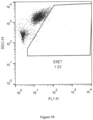
- Figure 10 shows a typical E6/E7 negative Pap smear sample and Figure 11 a typical E6/E7 positive Pap smear sample.
Landscapes
- Chemical & Material Sciences (AREA)
- Organic Chemistry (AREA)
- Life Sciences & Earth Sciences (AREA)
- Proteomics, Peptides & Aminoacids (AREA)
- Health & Medical Sciences (AREA)
- Zoology (AREA)
- Wood Science & Technology (AREA)
- Engineering & Computer Science (AREA)
- Immunology (AREA)
- Analytical Chemistry (AREA)
- Molecular Biology (AREA)
- General Engineering & Computer Science (AREA)
- Biotechnology (AREA)
- Biophysics (AREA)
- Physics & Mathematics (AREA)
- Biochemistry (AREA)
- Bioinformatics & Cheminformatics (AREA)
- Microbiology (AREA)
- General Health & Medical Sciences (AREA)
- Genetics & Genomics (AREA)
- Chemical Kinetics & Catalysis (AREA)
- Virology (AREA)
- Plural Heterocyclic Compounds (AREA)
- Measuring Or Testing Involving Enzymes Or Micro-Organisms (AREA)
- Investigating Or Analysing Biological Materials (AREA)
- Investigating, Analyzing Materials By Fluorescence Or Luminescence (AREA)
Claims (4)
- Composé choisi parmi :


- Composé choisi parmi :


- Composé selon la revendication 1, dans lequel le composé est lié à une molécule cible.
- Composé selon la revendication 3, dans lequel la molécule cible est choisie parmi un nucléotide, un oligonucléotide ou un polynucléotide.
Applications Claiming Priority (3)
| Application Number | Priority Date | Filing Date | Title |
|---|---|---|---|
| US14/672,944 US9957393B2 (en) | 2015-03-30 | 2015-03-30 | Monoazo dyes with cyclic amine as fluorescence quenchers |
| PCT/US2015/047363 WO2016160051A1 (fr) | 2015-03-30 | 2015-08-28 | Colorants monoazoïques dotés d'une amine cyclique en tant qu'extincteurs de fluorescence |
| EP15759617.2A EP3277832B1 (fr) | 2015-03-30 | 2015-08-28 | Colorants monoazoïques dotés d'une amine cyclique en tant qu'extincteurs de fluorescence |
Related Parent Applications (1)
| Application Number | Title | Priority Date | Filing Date |
|---|---|---|---|
| EP15759617.2A Division EP3277832B1 (fr) | 2015-03-30 | 2015-08-28 | Colorants monoazoïques dotés d'une amine cyclique en tant qu'extincteurs de fluorescence |
Publications (2)
| Publication Number | Publication Date |
|---|---|
| EP4008790A1 EP4008790A1 (fr) | 2022-06-08 |
| EP4008790B1 true EP4008790B1 (fr) | 2024-07-17 |
Family
ID=54062843
Family Applications (2)
| Application Number | Title | Priority Date | Filing Date |
|---|---|---|---|
| EP15759617.2A Active EP3277832B1 (fr) | 2015-03-30 | 2015-08-28 | Colorants monoazoïques dotés d'une amine cyclique en tant qu'extincteurs de fluorescence |
| EP21199977.6A Active EP4008790B1 (fr) | 2015-03-30 | 2015-08-28 | Colorants monoazoïques dotés d'une amine cyclique en tant qu'extincteurs de fluorescence |
Family Applications Before (1)
| Application Number | Title | Priority Date | Filing Date |
|---|---|---|---|
| EP15759617.2A Active EP3277832B1 (fr) | 2015-03-30 | 2015-08-28 | Colorants monoazoïques dotés d'une amine cyclique en tant qu'extincteurs de fluorescence |
Country Status (4)
| Country | Link |
|---|---|
| US (5) | US9957393B2 (fr) |
| EP (2) | EP3277832B1 (fr) |
| CA (2) | CA2979548C (fr) |
| WO (1) | WO2016160051A1 (fr) |
Families Citing this family (1)
| Publication number | Priority date | Publication date | Assignee | Title |
|---|---|---|---|---|
| EP4185643A4 (fr) * | 2020-07-23 | 2024-09-11 | Enzo Biochem, Inc. | Conjugués polymères d'extinction de fluorescence et leurs utilisations |
Family Cites Families (53)
| Publication number | Priority date | Publication date | Assignee | Title |
|---|---|---|---|---|
| IT971425B (it) * | 1972-01-07 | 1974-04-30 | Eastman Kodak Co | Composti azoici |
| DE3019739A1 (de) | 1980-05-23 | 1981-12-03 | Cassella Ag, 6000 Frankfurt | Verfahren zum bedrucken von synthetischem hydrophobem fasermaterial |
| CA1190838A (fr) | 1981-07-17 | 1985-07-23 | Cavit Akin | Procede de diagnostic d'hybridation |
| JPS5920356A (ja) | 1982-07-27 | 1984-02-02 | Gosei Senriyou Gijutsu Kenkyu Kumiai | モノアゾ化合物及びそれを用いる染色法 |
| JPS5930861A (ja) | 1982-08-12 | 1984-02-18 | Gosei Senriyou Gijutsu Kenkyu Kumiai | モノアゾ化合物及びそれを用いる染色法 |
| JPS5986658A (ja) | 1982-11-10 | 1984-05-18 | Gosei Senriyou Gijutsu Kenkyu Kumiai | 水不溶性モノアゾ化合物及びそれを用いる染色方法 |
| JPS60221464A (ja) | 1984-04-18 | 1985-11-06 | Gosei Senriyou Gijutsu Kenkyu Kumiai | モノアゾ化合物及びそれを用いる染色法 |
| US4868103A (en) | 1986-02-19 | 1989-09-19 | Enzo Biochem, Inc. | Analyte detection by means of energy transfer |
| DE68916592T2 (de) * | 1988-06-23 | 1994-12-01 | Agfa Gevaert Nv | Für elektrophotographische Zwecke geeignetes photoempfindliches Aufzeichnungsmaterial. |
| US5118801A (en) | 1988-09-30 | 1992-06-02 | The Public Health Research Institute | Nucleic acid process containing improved molecular switch |
| US5401847A (en) | 1990-03-14 | 1995-03-28 | Regents Of The University Of California | DNA complexes with dyes designed for energy transfer as fluorescent markers |
| US5455175A (en) | 1990-06-04 | 1995-10-03 | University Of Utah Research Foundation | Rapid thermal cycling device |
| NL9001639A (nl) | 1990-07-19 | 1992-02-17 | Amc Amsterdam | Pt-houdende verbinding, werkwijze voor de bereiding ervan, alsmede toepassing van dergelijke verbindingen. |
| US5210015A (en) | 1990-08-06 | 1993-05-11 | Hoffman-La Roche Inc. | Homogeneous assay system using the nuclease activity of a nucleic acid polymerase |
| US5994056A (en) | 1991-05-02 | 1999-11-30 | Roche Molecular Systems, Inc. | Homogeneous methods for nucleic acid amplification and detection |
| DK1921169T3 (da) | 1993-11-12 | 2012-06-04 | Phri Properties Inc | Hybridiseringssonder til nukleinsyredetektion, universelle stamceller, fremgangsmåder og kits |
| US5925517A (en) | 1993-11-12 | 1999-07-20 | The Public Health Research Institute Of The City Of New York, Inc. | Detectably labeled dual conformation oligonucleotide probes, assays and kits |
| US5538848A (en) | 1994-11-16 | 1996-07-23 | Applied Biosystems Division, Perkin-Elmer Corp. | Method for detecting nucleic acid amplification using self-quenching fluorescence probe |
| US5866636A (en) | 1994-09-12 | 1999-02-02 | Sumitomo Electric Industries, Ltd. | Non-asbestos friction material |
| GB9506117D0 (en) | 1995-03-25 | 1995-05-10 | Ici Plc | Dye diffusion thermal transfer printing |
| US6008373A (en) | 1995-06-07 | 1999-12-28 | Carnegie Mellon University | Fluorescent labeling complexes with large stokes shift formed by coupling together cyanine and other fluorochromes capable of resonance energy transfer |
| AU713667B2 (en) | 1996-04-12 | 1999-12-09 | Phri Properties, Inc. | Detection probes, kits and assays |
| US5800996A (en) | 1996-05-03 | 1998-09-01 | The Perkin Elmer Corporation | Energy transfer dyes with enchanced fluorescence |
| JP4540754B2 (ja) | 1996-06-04 | 2010-09-08 | ユニバーシティ オブ ユタ リサーチ ファウンデーション | Pcr中のハイブリダイゼーションのモニタリング |
| US5866336A (en) | 1996-07-16 | 1999-02-02 | Oncor, Inc. | Nucleic acid amplification oligonucleotides with molecular energy transfer labels and methods based thereon |
| US5846726A (en) | 1997-05-13 | 1998-12-08 | Becton, Dickinson And Company | Detection of nucleic acids by fluorescence quenching |
| WO1998052961A1 (fr) | 1997-05-19 | 1998-11-26 | Mirus Corporation | Procede permettant de fixer en une seule etape un marqueur sur des molecules cibles |
| GB9725197D0 (en) | 1997-11-29 | 1998-01-28 | Secr Defence | Detection system |
| WO1999029905A2 (fr) | 1997-12-12 | 1999-06-17 | Intergen Company | Methode de detection de l'apoptose a l'aide d'oligonucleotides marques par fret |
| US6080868A (en) | 1998-01-23 | 2000-06-27 | The Perkin-Elmer Corporation | Nitro-substituted non-fluorescent asymmetric cyanine dye compounds |
| WO1999049293A2 (fr) | 1998-03-24 | 1999-09-30 | Boston Probes, Inc. | Procedes, kits et compositions se rapportant a des complexes de detection |
| US6468743B1 (en) | 1998-05-18 | 2002-10-22 | Conagra Grocery Products Company | PCR techniques for detecting microbial contaminants in foodstuffs |
| WO2000001349A2 (fr) * | 1998-07-01 | 2000-01-13 | The Trustees Of The University Of Pennsylvania | Modification allosterique d'interactions intermoleculaires induite par une cavite et methodes permettant d'identifier les composes effectuant ces interactions |
| US6727356B1 (en) * | 1999-12-08 | 2004-04-27 | Epoch Pharmaceuticals, Inc. | Fluorescent quenching detection reagents and methods |
| US7019129B1 (en) | 2000-05-09 | 2006-03-28 | Biosearch Technologies, Inc. | Dark quenchers for donor-acceptor energy transfer |
| US6323337B1 (en) | 2000-05-12 | 2001-11-27 | Molecular Probes, Inc. | Quenching oligonucleotides |
| US9261460B2 (en) | 2002-03-12 | 2016-02-16 | Enzo Life Sciences, Inc. | Real-time nucleic acid detection processes and compositions |
| US7166478B2 (en) | 2002-03-12 | 2007-01-23 | Enzo Life Sciences, Inc., C/O Enzo Biochem, Inc. | Labeling reagents and labeled targets, target labeling processes and other processes for using same in nucleic acid determinations and analyses |
| WO2005049849A2 (fr) | 2003-11-14 | 2005-06-02 | Integrated Dna Technologies, Inc. | Colorants azo d'extinction de fluorescence, leurs procedes de preparation et d'utilisation |
| PT1538154E (pt) | 2003-11-20 | 2009-03-23 | Exiqon As | Composições de agentes de extinção com porções de antraquinona |
| EP1844161A4 (fr) | 2005-02-04 | 2010-10-27 | Berry & Associates Inc | Extincteurs sombres, sondes et autres conjugues les contenant, et utilisation associee |
| JP2008545659A (ja) | 2005-05-20 | 2008-12-18 | インテグレイテッド ディーエヌエイ テクノロジーズ インコーポレイテッド | オリゴヌクレオチドを標識する化合物及び方法 |
| WO2006132588A1 (fr) | 2005-06-10 | 2006-12-14 | Quiatech Ab | Methode pour purifier des oligonucleotides synthetiques contenant au moins une etiquette |
| DE102005050834A1 (de) | 2005-10-20 | 2007-04-26 | Friedrich-Schiller-Universität Jena | Verwendung von langwelligen Azofarbstoffen als Löscher für fluoreszenzbasierende Nachweisreaktionen |
| DE102005050833A1 (de) | 2005-10-20 | 2007-04-26 | Friedrich-Schiller-Universität Jena | Verwendung von langwelligen Azofarbstoffen als Löscher für fluoreszenzbasierende Nachweisreaktionen |
| GB0621050D0 (en) | 2006-10-23 | 2006-11-29 | Univ Strathclyde | Functionalised polymers for labelling metal surfaces |
| KR100992789B1 (ko) | 2008-11-17 | 2010-11-05 | 현대자동차주식회사 | 하이브리드 차량의 무단변속기 유압제어장치 |
| US20100311184A1 (en) | 2009-06-04 | 2010-12-09 | Aat Bioquest, Inc. | Azo heterocyclic dyes and their biological conjugates |
| US7956169B1 (en) | 2010-06-16 | 2011-06-07 | Chemgenes Corporation | Synthesis of novel azo-dyes and their use in oligonucleotide synthesis |
| CN104703971B (zh) | 2012-08-02 | 2018-08-21 | 株式会社百奥尼 | 新型偶氮化合物及其利用、以及其制造方法 |
| JP6328131B2 (ja) | 2012-11-20 | 2018-05-23 | コーニンクレッカ フィリップス エヌ ヴェKoninklijke Philips N.V. | 容量性マイクロマシントランスデューサ及びその製造方法 |
| EP4570924A3 (fr) | 2013-01-24 | 2025-09-03 | California Institute of Technology | Procédés de caractérisation et de détection à base de chromophore |
| EP2868702A1 (fr) * | 2013-10-29 | 2015-05-06 | DyStar Colours Distribution GmbH | Colorants dispersives, leur préparation et utilisation |
-
2015
- 2015-03-30 US US14/672,944 patent/US9957393B2/en active Active
- 2015-08-28 WO PCT/US2015/047363 patent/WO2016160051A1/fr not_active Ceased
- 2015-08-28 EP EP15759617.2A patent/EP3277832B1/fr active Active
- 2015-08-28 CA CA2979548A patent/CA2979548C/fr active Active
- 2015-08-28 CA CA3080785A patent/CA3080785C/fr active Active
- 2015-08-28 EP EP21199977.6A patent/EP4008790B1/fr active Active
-
2017
- 2017-09-07 US US15/698,069 patent/US9951227B2/en active Active
-
2018
- 2018-03-22 US US15/928,290 patent/US10131789B2/en active Active
- 2018-10-06 US US16/153,723 patent/US10865309B2/en active Active
-
2020
- 2020-11-02 US US17/086,514 patent/US20210079225A1/en not_active Abandoned
Also Published As
| Publication number | Publication date |
|---|---|
| CA2979548A1 (fr) | 2016-10-06 |
| US9951227B2 (en) | 2018-04-24 |
| EP3277832B1 (fr) | 2021-10-06 |
| CA2979548C (fr) | 2020-07-21 |
| CA3080785A1 (fr) | 2016-10-06 |
| EP4008790A1 (fr) | 2022-06-08 |
| US20160289779A1 (en) | 2016-10-06 |
| CA3080785C (fr) | 2022-08-23 |
| US20210079225A1 (en) | 2021-03-18 |
| EP3277832A1 (fr) | 2018-02-07 |
| US10131789B2 (en) | 2018-11-20 |
| WO2016160051A1 (fr) | 2016-10-06 |
| US20180215920A1 (en) | 2018-08-02 |
| US20190062560A1 (en) | 2019-02-28 |
| US10865309B2 (en) | 2020-12-15 |
| US9957393B2 (en) | 2018-05-01 |
| US20170369954A1 (en) | 2017-12-28 |
Similar Documents
| Publication | Publication Date | Title |
|---|---|---|
| US6184379B1 (en) | Rhodamine derivatives and the use thereof | |
| AU740989B2 (en) | Asymmetric cyanine dye quenchers | |
| US11939350B2 (en) | Fluorescent dyes and methods of use thereof | |
| WO2005049849A2 (fr) | Colorants azo d'extinction de fluorescence, leurs procedes de preparation et d'utilisation | |
| EP4491743A2 (fr) | Nouvel extincteur et combinaisons de colorants rapporteurs | |
| US20210079225A1 (en) | Monoazo dyes with cyclic amine as fluorescence quenchers | |
| CA3121649C (fr) | Colorants fluorescents | |
| RU2795062C2 (ru) | Новые комбинации гасителя и репортерного красителя |
Legal Events
| Date | Code | Title | Description |
|---|---|---|---|
| PUAI | Public reference made under article 153(3) epc to a published international application that has entered the european phase |
Free format text: ORIGINAL CODE: 0009012 |
|
| STAA | Information on the status of an ep patent application or granted ep patent |
Free format text: STATUS: THE APPLICATION HAS BEEN PUBLISHED |
|
| AC | Divisional application: reference to earlier application |
Ref document number: 3277832 Country of ref document: EP Kind code of ref document: P |
|
| AK | Designated contracting states |
Kind code of ref document: A1 Designated state(s): AL AT BE BG CH CY CZ DE DK EE ES FI FR GB GR HR HU IE IS IT LI LT LU LV MC MK MT NL NO PL PT RO RS SE SI SK SM TR |
|
| STAA | Information on the status of an ep patent application or granted ep patent |
Free format text: STATUS: REQUEST FOR EXAMINATION WAS MADE |
|
| 17P | Request for examination filed |
Effective date: 20220707 |
|
| RBV | Designated contracting states (corrected) |
Designated state(s): AL AT BE BG CH CY CZ DE DK EE ES FI FR GB GR HR HU IE IS IT LI LT LU LV MC MK MT NL NO PL PT RO RS SE SI SK SM TR |
|
| STAA | Information on the status of an ep patent application or granted ep patent |
Free format text: STATUS: EXAMINATION IS IN PROGRESS |
|
| 17Q | First examination report despatched |
Effective date: 20221020 |
|
| GRAP | Despatch of communication of intention to grant a patent |
Free format text: ORIGINAL CODE: EPIDOSNIGR1 |
|
| STAA | Information on the status of an ep patent application or granted ep patent |
Free format text: STATUS: GRANT OF PATENT IS INTENDED |
|
| INTG | Intention to grant announced |
Effective date: 20240216 |
|
| GRAS | Grant fee paid |
Free format text: ORIGINAL CODE: EPIDOSNIGR3 |
|
| GRAA | (expected) grant |
Free format text: ORIGINAL CODE: 0009210 |
|
| STAA | Information on the status of an ep patent application or granted ep patent |
Free format text: STATUS: THE PATENT HAS BEEN GRANTED |
|
| AC | Divisional application: reference to earlier application |
Ref document number: 3277832 Country of ref document: EP Kind code of ref document: P |
|
| AK | Designated contracting states |
Kind code of ref document: B1 Designated state(s): AL AT BE BG CH CY CZ DE DK EE ES FI FR GB GR HR HU IE IS IT LI LT LU LV MC MK MT NL NO PL PT RO RS SE SI SK SM TR |
|
| REG | Reference to a national code |
Ref country code: CH Ref legal event code: EP |
|
| REG | Reference to a national code |
Ref country code: DE Ref legal event code: R096 Ref document number: 602015089292 Country of ref document: DE |
|
| REG | Reference to a national code |
Ref country code: IE Ref legal event code: FG4D |
|
| REG | Reference to a national code |
Ref country code: LT Ref legal event code: MG9D |
|
| REG | Reference to a national code |
Ref country code: NL Ref legal event code: MP Effective date: 20240717 |
|
| PG25 | Lapsed in a contracting state [announced via postgrant information from national office to epo] |
Ref country code: PT Free format text: LAPSE BECAUSE OF FAILURE TO SUBMIT A TRANSLATION OF THE DESCRIPTION OR TO PAY THE FEE WITHIN THE PRESCRIBED TIME-LIMIT Effective date: 20241118 |
|
| REG | Reference to a national code |
Ref country code: AT Ref legal event code: MK05 Ref document number: 1704190 Country of ref document: AT Kind code of ref document: T Effective date: 20240717 |
|
| PG25 | Lapsed in a contracting state [announced via postgrant information from national office to epo] |
Ref country code: NL Free format text: LAPSE BECAUSE OF FAILURE TO SUBMIT A TRANSLATION OF THE DESCRIPTION OR TO PAY THE FEE WITHIN THE PRESCRIBED TIME-LIMIT Effective date: 20240717 |
|
| PG25 | Lapsed in a contracting state [announced via postgrant information from national office to epo] |
Ref country code: PT Free format text: LAPSE BECAUSE OF FAILURE TO SUBMIT A TRANSLATION OF THE DESCRIPTION OR TO PAY THE FEE WITHIN THE PRESCRIBED TIME-LIMIT Effective date: 20241118 Ref country code: NL Free format text: LAPSE BECAUSE OF FAILURE TO SUBMIT A TRANSLATION OF THE DESCRIPTION OR TO PAY THE FEE WITHIN THE PRESCRIBED TIME-LIMIT Effective date: 20240717 |
|
| PG25 | Lapsed in a contracting state [announced via postgrant information from national office to epo] |
Ref country code: NO Free format text: LAPSE BECAUSE OF FAILURE TO SUBMIT A TRANSLATION OF THE DESCRIPTION OR TO PAY THE FEE WITHIN THE PRESCRIBED TIME-LIMIT Effective date: 20241017 |
|
| PG25 | Lapsed in a contracting state [announced via postgrant information from national office to epo] |
Ref country code: GR Free format text: LAPSE BECAUSE OF FAILURE TO SUBMIT A TRANSLATION OF THE DESCRIPTION OR TO PAY THE FEE WITHIN THE PRESCRIBED TIME-LIMIT Effective date: 20241018 Ref country code: FI Free format text: LAPSE BECAUSE OF FAILURE TO SUBMIT A TRANSLATION OF THE DESCRIPTION OR TO PAY THE FEE WITHIN THE PRESCRIBED TIME-LIMIT Effective date: 20240717 Ref country code: PL Free format text: LAPSE BECAUSE OF FAILURE TO SUBMIT A TRANSLATION OF THE DESCRIPTION OR TO PAY THE FEE WITHIN THE PRESCRIBED TIME-LIMIT Effective date: 20240717 |
|
| PG25 | Lapsed in a contracting state [announced via postgrant information from national office to epo] |
Ref country code: BG Free format text: LAPSE BECAUSE OF FAILURE TO SUBMIT A TRANSLATION OF THE DESCRIPTION OR TO PAY THE FEE WITHIN THE PRESCRIBED TIME-LIMIT Effective date: 20240717 |
|
| PG25 | Lapsed in a contracting state [announced via postgrant information from national office to epo] |
Ref country code: LV Free format text: LAPSE BECAUSE OF FAILURE TO SUBMIT A TRANSLATION OF THE DESCRIPTION OR TO PAY THE FEE WITHIN THE PRESCRIBED TIME-LIMIT Effective date: 20240717 |
|
| PG25 | Lapsed in a contracting state [announced via postgrant information from national office to epo] |
Ref country code: IS Free format text: LAPSE BECAUSE OF FAILURE TO SUBMIT A TRANSLATION OF THE DESCRIPTION OR TO PAY THE FEE WITHIN THE PRESCRIBED TIME-LIMIT Effective date: 20241117 Ref country code: AT Free format text: LAPSE BECAUSE OF FAILURE TO SUBMIT A TRANSLATION OF THE DESCRIPTION OR TO PAY THE FEE WITHIN THE PRESCRIBED TIME-LIMIT Effective date: 20240717 |
|
| PG25 | Lapsed in a contracting state [announced via postgrant information from national office to epo] |
Ref country code: HR Free format text: LAPSE BECAUSE OF FAILURE TO SUBMIT A TRANSLATION OF THE DESCRIPTION OR TO PAY THE FEE WITHIN THE PRESCRIBED TIME-LIMIT Effective date: 20240717 |
|
| PG25 | Lapsed in a contracting state [announced via postgrant information from national office to epo] |
Ref country code: ES Free format text: LAPSE BECAUSE OF FAILURE TO SUBMIT A TRANSLATION OF THE DESCRIPTION OR TO PAY THE FEE WITHIN THE PRESCRIBED TIME-LIMIT Effective date: 20240717 Ref country code: RS Free format text: LAPSE BECAUSE OF FAILURE TO SUBMIT A TRANSLATION OF THE DESCRIPTION OR TO PAY THE FEE WITHIN THE PRESCRIBED TIME-LIMIT Effective date: 20241017 |
|
| PG25 | Lapsed in a contracting state [announced via postgrant information from national office to epo] |
Ref country code: RS Free format text: LAPSE BECAUSE OF FAILURE TO SUBMIT A TRANSLATION OF THE DESCRIPTION OR TO PAY THE FEE WITHIN THE PRESCRIBED TIME-LIMIT Effective date: 20241017 Ref country code: PL Free format text: LAPSE BECAUSE OF FAILURE TO SUBMIT A TRANSLATION OF THE DESCRIPTION OR TO PAY THE FEE WITHIN THE PRESCRIBED TIME-LIMIT Effective date: 20240717 Ref country code: NO Free format text: LAPSE BECAUSE OF FAILURE TO SUBMIT A TRANSLATION OF THE DESCRIPTION OR TO PAY THE FEE WITHIN THE PRESCRIBED TIME-LIMIT Effective date: 20241017 Ref country code: LV Free format text: LAPSE BECAUSE OF FAILURE TO SUBMIT A TRANSLATION OF THE DESCRIPTION OR TO PAY THE FEE WITHIN THE PRESCRIBED TIME-LIMIT Effective date: 20240717 Ref country code: IS Free format text: LAPSE BECAUSE OF FAILURE TO SUBMIT A TRANSLATION OF THE DESCRIPTION OR TO PAY THE FEE WITHIN THE PRESCRIBED TIME-LIMIT Effective date: 20241117 Ref country code: HR Free format text: LAPSE BECAUSE OF FAILURE TO SUBMIT A TRANSLATION OF THE DESCRIPTION OR TO PAY THE FEE WITHIN THE PRESCRIBED TIME-LIMIT Effective date: 20240717 Ref country code: GR Free format text: LAPSE BECAUSE OF FAILURE TO SUBMIT A TRANSLATION OF THE DESCRIPTION OR TO PAY THE FEE WITHIN THE PRESCRIBED TIME-LIMIT Effective date: 20241018 Ref country code: FI Free format text: LAPSE BECAUSE OF FAILURE TO SUBMIT A TRANSLATION OF THE DESCRIPTION OR TO PAY THE FEE WITHIN THE PRESCRIBED TIME-LIMIT Effective date: 20240717 Ref country code: ES Free format text: LAPSE BECAUSE OF FAILURE TO SUBMIT A TRANSLATION OF THE DESCRIPTION OR TO PAY THE FEE WITHIN THE PRESCRIBED TIME-LIMIT Effective date: 20240717 Ref country code: BG Free format text: LAPSE BECAUSE OF FAILURE TO SUBMIT A TRANSLATION OF THE DESCRIPTION OR TO PAY THE FEE WITHIN THE PRESCRIBED TIME-LIMIT Effective date: 20240717 Ref country code: AT Free format text: LAPSE BECAUSE OF FAILURE TO SUBMIT A TRANSLATION OF THE DESCRIPTION OR TO PAY THE FEE WITHIN THE PRESCRIBED TIME-LIMIT Effective date: 20240717 |
|
| REG | Reference to a national code |
Ref country code: CH Ref legal event code: PL |
|
| PG25 | Lapsed in a contracting state [announced via postgrant information from national office to epo] |
Ref country code: RO Free format text: LAPSE BECAUSE OF FAILURE TO SUBMIT A TRANSLATION OF THE DESCRIPTION OR TO PAY THE FEE WITHIN THE PRESCRIBED TIME-LIMIT Effective date: 20240717 Ref country code: SM Free format text: LAPSE BECAUSE OF FAILURE TO SUBMIT A TRANSLATION OF THE DESCRIPTION OR TO PAY THE FEE WITHIN THE PRESCRIBED TIME-LIMIT Effective date: 20240717 Ref country code: DK Free format text: LAPSE BECAUSE OF FAILURE TO SUBMIT A TRANSLATION OF THE DESCRIPTION OR TO PAY THE FEE WITHIN THE PRESCRIBED TIME-LIMIT Effective date: 20240717 |
|
| PG25 | Lapsed in a contracting state [announced via postgrant information from national office to epo] |
Ref country code: LU Free format text: LAPSE BECAUSE OF NON-PAYMENT OF DUE FEES Effective date: 20240828 |
|
| REG | Reference to a national code |
Ref country code: DE Ref legal event code: R097 Ref document number: 602015089292 Country of ref document: DE |
|
| PG25 | Lapsed in a contracting state [announced via postgrant information from national office to epo] |
Ref country code: MC Free format text: LAPSE BECAUSE OF FAILURE TO SUBMIT A TRANSLATION OF THE DESCRIPTION OR TO PAY THE FEE WITHIN THE PRESCRIBED TIME-LIMIT Effective date: 20240717 Ref country code: CH Free format text: LAPSE BECAUSE OF NON-PAYMENT OF DUE FEES Effective date: 20240831 Ref country code: EE Free format text: LAPSE BECAUSE OF FAILURE TO SUBMIT A TRANSLATION OF THE DESCRIPTION OR TO PAY THE FEE WITHIN THE PRESCRIBED TIME-LIMIT Effective date: 20240717 |
|
| PG25 | Lapsed in a contracting state [announced via postgrant information from national office to epo] |
Ref country code: CZ Free format text: LAPSE BECAUSE OF FAILURE TO SUBMIT A TRANSLATION OF THE DESCRIPTION OR TO PAY THE FEE WITHIN THE PRESCRIBED TIME-LIMIT Effective date: 20240717 |
|
| PG25 | Lapsed in a contracting state [announced via postgrant information from national office to epo] |
Ref country code: SK Free format text: LAPSE BECAUSE OF FAILURE TO SUBMIT A TRANSLATION OF THE DESCRIPTION OR TO PAY THE FEE WITHIN THE PRESCRIBED TIME-LIMIT Effective date: 20240717 |
|
| PLBE | No opposition filed within time limit |
Free format text: ORIGINAL CODE: 0009261 |
|
| STAA | Information on the status of an ep patent application or granted ep patent |
Free format text: STATUS: NO OPPOSITION FILED WITHIN TIME LIMIT |
|
| 26N | No opposition filed |
Effective date: 20250422 |
|
| REG | Reference to a national code |
Ref country code: BE Ref legal event code: MM Effective date: 20240831 |
|
| PG25 | Lapsed in a contracting state [announced via postgrant information from national office to epo] |
Ref country code: BE Free format text: LAPSE BECAUSE OF NON-PAYMENT OF DUE FEES Effective date: 20240831 |
|
| PG25 | Lapsed in a contracting state [announced via postgrant information from national office to epo] |
Ref country code: IE Free format text: LAPSE BECAUSE OF NON-PAYMENT OF DUE FEES Effective date: 20240828 |
|
| PG25 | Lapsed in a contracting state [announced via postgrant information from national office to epo] |
Ref country code: SE Free format text: LAPSE BECAUSE OF FAILURE TO SUBMIT A TRANSLATION OF THE DESCRIPTION OR TO PAY THE FEE WITHIN THE PRESCRIBED TIME-LIMIT Effective date: 20240717 |
|
| PGFP | Annual fee paid to national office [announced via postgrant information from national office to epo] |
Ref country code: DE Payment date: 20250827 Year of fee payment: 11 |
|
| PGFP | Annual fee paid to national office [announced via postgrant information from national office to epo] |
Ref country code: GB Payment date: 20250827 Year of fee payment: 11 |
|
| PGFP | Annual fee paid to national office [announced via postgrant information from national office to epo] |
Ref country code: FR Payment date: 20250825 Year of fee payment: 11 |
|
| PG25 | Lapsed in a contracting state [announced via postgrant information from national office to epo] |
Ref country code: CY Free format text: LAPSE BECAUSE OF FAILURE TO SUBMIT A TRANSLATION OF THE DESCRIPTION OR TO PAY THE FEE WITHIN THE PRESCRIBED TIME-LIMIT; INVALID AB INITIO Effective date: 20150828 Ref country code: IT Free format text: LAPSE BECAUSE OF FAILURE TO SUBMIT A TRANSLATION OF THE DESCRIPTION OR TO PAY THE FEE WITHIN THE PRESCRIBED TIME-LIMIT Effective date: 20240717 |
|
| PG25 | Lapsed in a contracting state [announced via postgrant information from national office to epo] |
Ref country code: HU Free format text: LAPSE BECAUSE OF FAILURE TO SUBMIT A TRANSLATION OF THE DESCRIPTION OR TO PAY THE FEE WITHIN THE PRESCRIBED TIME-LIMIT; INVALID AB INITIO Effective date: 20150828 |