EP4032876A1 - Heterocyclische verbindung und organische lichtemittierende vorrichtung damit - Google Patents
Heterocyclische verbindung und organische lichtemittierende vorrichtung damit Download PDFInfo
- Publication number
- EP4032876A1 EP4032876A1 EP20865020.0A EP20865020A EP4032876A1 EP 4032876 A1 EP4032876 A1 EP 4032876A1 EP 20865020 A EP20865020 A EP 20865020A EP 4032876 A1 EP4032876 A1 EP 4032876A1
- Authority
- EP
- European Patent Office
- Prior art keywords
- group
- substituted
- carbon atoms
- light emitting
- unsubstituted
- Prior art date
- Legal status (The legal status is an assumption and is not a legal conclusion. Google has not performed a legal analysis and makes no representation as to the accuracy of the status listed.)
- Granted
Links
Images


Classifications
-
- C—CHEMISTRY; METALLURGY
- C07—ORGANIC CHEMISTRY
- C07C—ACYCLIC OR CARBOCYCLIC COMPOUNDS
- C07C211/00—Compounds containing amino groups bound to a carbon skeleton
- C07C211/43—Compounds containing amino groups bound to a carbon skeleton having amino groups bound to carbon atoms of six-membered aromatic rings of the carbon skeleton
- C07C211/54—Compounds containing amino groups bound to a carbon skeleton having amino groups bound to carbon atoms of six-membered aromatic rings of the carbon skeleton having amino groups bound to two or three six-membered aromatic rings
-
- C—CHEMISTRY; METALLURGY
- C07—ORGANIC CHEMISTRY
- C07C—ACYCLIC OR CARBOCYCLIC COMPOUNDS
- C07C211/00—Compounds containing amino groups bound to a carbon skeleton
- C07C211/43—Compounds containing amino groups bound to a carbon skeleton having amino groups bound to carbon atoms of six-membered aromatic rings of the carbon skeleton
- C07C211/57—Compounds containing amino groups bound to a carbon skeleton having amino groups bound to carbon atoms of six-membered aromatic rings of the carbon skeleton having amino groups bound to carbon atoms of six-membered aromatic rings being part of condensed ring systems of the carbon skeleton
- C07C211/58—Naphthylamines; N-substituted derivatives thereof
-
- C—CHEMISTRY; METALLURGY
- C07—ORGANIC CHEMISTRY
- C07C—ACYCLIC OR CARBOCYCLIC COMPOUNDS
- C07C211/00—Compounds containing amino groups bound to a carbon skeleton
- C07C211/43—Compounds containing amino groups bound to a carbon skeleton having amino groups bound to carbon atoms of six-membered aromatic rings of the carbon skeleton
- C07C211/57—Compounds containing amino groups bound to a carbon skeleton having amino groups bound to carbon atoms of six-membered aromatic rings of the carbon skeleton having amino groups bound to carbon atoms of six-membered aromatic rings being part of condensed ring systems of the carbon skeleton
- C07C211/61—Compounds containing amino groups bound to a carbon skeleton having amino groups bound to carbon atoms of six-membered aromatic rings of the carbon skeleton having amino groups bound to carbon atoms of six-membered aromatic rings being part of condensed ring systems of the carbon skeleton with at least one of the condensed ring systems formed by three or more rings
-
- C—CHEMISTRY; METALLURGY
- C07—ORGANIC CHEMISTRY
- C07D—HETEROCYCLIC COMPOUNDS
- C07D209/00—Heterocyclic compounds containing five-membered rings, condensed with other rings, with one nitrogen atom as the only ring hetero atom
- C07D209/56—Ring systems containing three or more rings
- C07D209/80—[b, c]- or [b, d]-condensed
- C07D209/82—Carbazoles; Hydrogenated carbazoles
-
- C—CHEMISTRY; METALLURGY
- C07—ORGANIC CHEMISTRY
- C07D—HETEROCYCLIC COMPOUNDS
- C07D209/00—Heterocyclic compounds containing five-membered rings, condensed with other rings, with one nitrogen atom as the only ring hetero atom
- C07D209/56—Ring systems containing three or more rings
- C07D209/80—[b, c]- or [b, d]-condensed
- C07D209/82—Carbazoles; Hydrogenated carbazoles
- C07D209/86—Carbazoles; Hydrogenated carbazoles with only hydrogen atoms, hydrocarbon or substituted hydrocarbon radicals, directly attached to carbon atoms of the ring system
-
- C—CHEMISTRY; METALLURGY
- C07—ORGANIC CHEMISTRY
- C07D—HETEROCYCLIC COMPOUNDS
- C07D209/00—Heterocyclic compounds containing five-membered rings, condensed with other rings, with one nitrogen atom as the only ring hetero atom
- C07D209/56—Ring systems containing three or more rings
- C07D209/80—[b, c]- or [b, d]-condensed
- C07D209/82—Carbazoles; Hydrogenated carbazoles
- C07D209/88—Carbazoles; Hydrogenated carbazoles with hetero atoms or with carbon atoms having three bonds to hetero atoms with at the most one bond to halogen, e.g. ester or nitrile radicals, directly attached to carbon atoms of the ring system
-
- C—CHEMISTRY; METALLURGY
- C07—ORGANIC CHEMISTRY
- C07D—HETEROCYCLIC COMPOUNDS
- C07D307/00—Heterocyclic compounds containing five-membered rings having one oxygen atom as the only ring hetero atom
- C07D307/77—Heterocyclic compounds containing five-membered rings having one oxygen atom as the only ring hetero atom ortho- or peri-condensed with carbocyclic rings or ring systems
- C07D307/91—Dibenzofurans; Hydrogenated dibenzofurans
-
- C—CHEMISTRY; METALLURGY
- C07—ORGANIC CHEMISTRY
- C07D—HETEROCYCLIC COMPOUNDS
- C07D311/00—Heterocyclic compounds containing six-membered rings having one oxygen atom as the only hetero atom, condensed with other rings
- C07D311/02—Heterocyclic compounds containing six-membered rings having one oxygen atom as the only hetero atom, condensed with other rings ortho- or peri-condensed with carbocyclic rings or ring systems
- C07D311/78—Ring systems having three or more relevant rings
-
- C—CHEMISTRY; METALLURGY
- C07—ORGANIC CHEMISTRY
- C07D—HETEROCYCLIC COMPOUNDS
- C07D311/00—Heterocyclic compounds containing six-membered rings having one oxygen atom as the only hetero atom, condensed with other rings
- C07D311/96—Heterocyclic compounds containing six-membered rings having one oxygen atom as the only hetero atom, condensed with other rings spiro-condensed with carbocyclic rings or ring systems
-
- C—CHEMISTRY; METALLURGY
- C07—ORGANIC CHEMISTRY
- C07D—HETEROCYCLIC COMPOUNDS
- C07D333/00—Heterocyclic compounds containing five-membered rings having one sulfur atom as the only ring hetero atom
- C07D333/50—Heterocyclic compounds containing five-membered rings having one sulfur atom as the only ring hetero atom condensed with carbocyclic rings or ring systems
- C07D333/76—Dibenzothiophenes
-
- C—CHEMISTRY; METALLURGY
- C09—DYES; PAINTS; POLISHES; NATURAL RESINS; ADHESIVES; COMPOSITIONS NOT OTHERWISE PROVIDED FOR; APPLICATIONS OF MATERIALS NOT OTHERWISE PROVIDED FOR
- C09K—MATERIALS FOR MISCELLANEOUS APPLICATIONS, NOT PROVIDED FOR ELSEWHERE
- C09K11/00—Luminescent materials, e.g. electroluminescent or chemiluminescent
- C09K11/06—Luminescent materials, e.g. electroluminescent or chemiluminescent containing organic luminescent materials
-
- H—ELECTRICITY
- H10—SEMICONDUCTOR DEVICES; ELECTRIC SOLID-STATE DEVICES NOT OTHERWISE PROVIDED FOR
- H10K—ORGANIC ELECTRIC SOLID-STATE DEVICES
- H10K50/00—Organic light-emitting devices
- H10K50/10—OLEDs or polymer light-emitting diodes [PLED]
- H10K50/11—OLEDs or polymer light-emitting diodes [PLED] characterised by the electroluminescent [EL] layers
-
- H—ELECTRICITY
- H10—SEMICONDUCTOR DEVICES; ELECTRIC SOLID-STATE DEVICES NOT OTHERWISE PROVIDED FOR
- H10K—ORGANIC ELECTRIC SOLID-STATE DEVICES
- H10K50/00—Organic light-emitting devices
- H10K50/10—OLEDs or polymer light-emitting diodes [PLED]
- H10K50/11—OLEDs or polymer light-emitting diodes [PLED] characterised by the electroluminescent [EL] layers
- H10K50/12—OLEDs or polymer light-emitting diodes [PLED] characterised by the electroluminescent [EL] layers comprising dopants
-
- H—ELECTRICITY
- H10—SEMICONDUCTOR DEVICES; ELECTRIC SOLID-STATE DEVICES NOT OTHERWISE PROVIDED FOR
- H10K—ORGANIC ELECTRIC SOLID-STATE DEVICES
- H10K50/00—Organic light-emitting devices
- H10K50/10—OLEDs or polymer light-emitting diodes [PLED]
- H10K50/14—Carrier transporting layers
- H10K50/15—Hole transporting layers
-
- H—ELECTRICITY
- H10—SEMICONDUCTOR DEVICES; ELECTRIC SOLID-STATE DEVICES NOT OTHERWISE PROVIDED FOR
- H10K—ORGANIC ELECTRIC SOLID-STATE DEVICES
- H10K85/00—Organic materials used in the body or electrodes of devices covered by this subclass
- H10K85/60—Organic compounds having low molecular weight
- H10K85/615—Polycyclic condensed aromatic hydrocarbons, e.g. anthracene
-
- H—ELECTRICITY
- H10—SEMICONDUCTOR DEVICES; ELECTRIC SOLID-STATE DEVICES NOT OTHERWISE PROVIDED FOR
- H10K—ORGANIC ELECTRIC SOLID-STATE DEVICES
- H10K85/00—Organic materials used in the body or electrodes of devices covered by this subclass
- H10K85/60—Organic compounds having low molecular weight
- H10K85/615—Polycyclic condensed aromatic hydrocarbons, e.g. anthracene
- H10K85/624—Polycyclic condensed aromatic hydrocarbons, e.g. anthracene containing six or more rings
-
- H—ELECTRICITY
- H10—SEMICONDUCTOR DEVICES; ELECTRIC SOLID-STATE DEVICES NOT OTHERWISE PROVIDED FOR
- H10K—ORGANIC ELECTRIC SOLID-STATE DEVICES
- H10K85/00—Organic materials used in the body or electrodes of devices covered by this subclass
- H10K85/60—Organic compounds having low molecular weight
- H10K85/615—Polycyclic condensed aromatic hydrocarbons, e.g. anthracene
- H10K85/626—Polycyclic condensed aromatic hydrocarbons, e.g. anthracene containing more than one polycyclic condensed aromatic rings, e.g. bis-anthracene
-
- H—ELECTRICITY
- H10—SEMICONDUCTOR DEVICES; ELECTRIC SOLID-STATE DEVICES NOT OTHERWISE PROVIDED FOR
- H10K—ORGANIC ELECTRIC SOLID-STATE DEVICES
- H10K85/00—Organic materials used in the body or electrodes of devices covered by this subclass
- H10K85/60—Organic compounds having low molecular weight
- H10K85/631—Amine compounds having at least two aryl rest on at least one amine-nitrogen atom, e.g. triphenylamine
-
- H—ELECTRICITY
- H10—SEMICONDUCTOR DEVICES; ELECTRIC SOLID-STATE DEVICES NOT OTHERWISE PROVIDED FOR
- H10K—ORGANIC ELECTRIC SOLID-STATE DEVICES
- H10K85/00—Organic materials used in the body or electrodes of devices covered by this subclass
- H10K85/60—Organic compounds having low molecular weight
- H10K85/631—Amine compounds having at least two aryl rest on at least one amine-nitrogen atom, e.g. triphenylamine
- H10K85/633—Amine compounds having at least two aryl rest on at least one amine-nitrogen atom, e.g. triphenylamine comprising polycyclic condensed aromatic hydrocarbons as substituents on the nitrogen atom
-
- H—ELECTRICITY
- H10—SEMICONDUCTOR DEVICES; ELECTRIC SOLID-STATE DEVICES NOT OTHERWISE PROVIDED FOR
- H10K—ORGANIC ELECTRIC SOLID-STATE DEVICES
- H10K85/00—Organic materials used in the body or electrodes of devices covered by this subclass
- H10K85/60—Organic compounds having low molecular weight
- H10K85/631—Amine compounds having at least two aryl rest on at least one amine-nitrogen atom, e.g. triphenylamine
- H10K85/636—Amine compounds having at least two aryl rest on at least one amine-nitrogen atom, e.g. triphenylamine comprising heteroaromatic hydrocarbons as substituents on the nitrogen atom
-
- H—ELECTRICITY
- H10—SEMICONDUCTOR DEVICES; ELECTRIC SOLID-STATE DEVICES NOT OTHERWISE PROVIDED FOR
- H10K—ORGANIC ELECTRIC SOLID-STATE DEVICES
- H10K85/00—Organic materials used in the body or electrodes of devices covered by this subclass
- H10K85/60—Organic compounds having low molecular weight
- H10K85/649—Aromatic compounds comprising a hetero atom
- H10K85/657—Polycyclic condensed heteroaromatic hydrocarbons
- H10K85/6572—Polycyclic condensed heteroaromatic hydrocarbons comprising only nitrogen in the heteroaromatic polycondensed ring system, e.g. phenanthroline or carbazole
-
- H—ELECTRICITY
- H10—SEMICONDUCTOR DEVICES; ELECTRIC SOLID-STATE DEVICES NOT OTHERWISE PROVIDED FOR
- H10K—ORGANIC ELECTRIC SOLID-STATE DEVICES
- H10K85/00—Organic materials used in the body or electrodes of devices covered by this subclass
- H10K85/60—Organic compounds having low molecular weight
- H10K85/649—Aromatic compounds comprising a hetero atom
- H10K85/657—Polycyclic condensed heteroaromatic hydrocarbons
- H10K85/6574—Polycyclic condensed heteroaromatic hydrocarbons comprising only oxygen in the heteroaromatic polycondensed ring system, e.g. cumarine dyes
-
- H—ELECTRICITY
- H10—SEMICONDUCTOR DEVICES; ELECTRIC SOLID-STATE DEVICES NOT OTHERWISE PROVIDED FOR
- H10K—ORGANIC ELECTRIC SOLID-STATE DEVICES
- H10K85/00—Organic materials used in the body or electrodes of devices covered by this subclass
- H10K85/60—Organic compounds having low molecular weight
- H10K85/649—Aromatic compounds comprising a hetero atom
- H10K85/657—Polycyclic condensed heteroaromatic hydrocarbons
- H10K85/6576—Polycyclic condensed heteroaromatic hydrocarbons comprising only sulfur in the heteroaromatic polycondensed ring system, e.g. benzothiophene
-
- C—CHEMISTRY; METALLURGY
- C07—ORGANIC CHEMISTRY
- C07C—ACYCLIC OR CARBOCYCLIC COMPOUNDS
- C07C2603/00—Systems containing at least three condensed rings
- C07C2603/02—Ortho- or ortho- and peri-condensed systems
- C07C2603/04—Ortho- or ortho- and peri-condensed systems containing three rings
- C07C2603/06—Ortho- or ortho- and peri-condensed systems containing three rings containing at least one ring with less than six ring members
- C07C2603/10—Ortho- or ortho- and peri-condensed systems containing three rings containing at least one ring with less than six ring members containing five-membered rings
- C07C2603/12—Ortho- or ortho- and peri-condensed systems containing three rings containing at least one ring with less than six ring members containing five-membered rings only one five-membered ring
- C07C2603/18—Fluorenes; Hydrogenated fluorenes
-
- C—CHEMISTRY; METALLURGY
- C07—ORGANIC CHEMISTRY
- C07C—ACYCLIC OR CARBOCYCLIC COMPOUNDS
- C07C2603/00—Systems containing at least three condensed rings
- C07C2603/02—Ortho- or ortho- and peri-condensed systems
- C07C2603/04—Ortho- or ortho- and peri-condensed systems containing three rings
- C07C2603/22—Ortho- or ortho- and peri-condensed systems containing three rings containing only six-membered rings
- C07C2603/24—Anthracenes; Hydrogenated anthracenes
-
- C—CHEMISTRY; METALLURGY
- C07—ORGANIC CHEMISTRY
- C07C—ACYCLIC OR CARBOCYCLIC COMPOUNDS
- C07C2603/00—Systems containing at least three condensed rings
- C07C2603/02—Ortho- or ortho- and peri-condensed systems
- C07C2603/04—Ortho- or ortho- and peri-condensed systems containing three rings
- C07C2603/22—Ortho- or ortho- and peri-condensed systems containing three rings containing only six-membered rings
- C07C2603/26—Phenanthrenes; Hydrogenated phenanthrenes
-
- C—CHEMISTRY; METALLURGY
- C07—ORGANIC CHEMISTRY
- C07C—ACYCLIC OR CARBOCYCLIC COMPOUNDS
- C07C2603/00—Systems containing at least three condensed rings
- C07C2603/93—Spiro compounds
- C07C2603/94—Spiro compounds containing "free" spiro atoms
-
- C—CHEMISTRY; METALLURGY
- C07—ORGANIC CHEMISTRY
- C07C—ACYCLIC OR CARBOCYCLIC COMPOUNDS
- C07C2603/00—Systems containing at least three condensed rings
- C07C2603/93—Spiro compounds
- C07C2603/95—Spiro compounds containing "not free" spiro atoms
- C07C2603/96—Spiro compounds containing "not free" spiro atoms containing at least one ring with less than six members
- C07C2603/97—Spiro compounds containing "not free" spiro atoms containing at least one ring with less than six members containing five-membered rings
-
- C—CHEMISTRY; METALLURGY
- C09—DYES; PAINTS; POLISHES; NATURAL RESINS; ADHESIVES; COMPOSITIONS NOT OTHERWISE PROVIDED FOR; APPLICATIONS OF MATERIALS NOT OTHERWISE PROVIDED FOR
- C09K—MATERIALS FOR MISCELLANEOUS APPLICATIONS, NOT PROVIDED FOR ELSEWHERE
- C09K2211/00—Chemical nature of organic luminescent or tenebrescent compounds
- C09K2211/10—Non-macromolecular compounds
- C09K2211/1003—Carbocyclic compounds
- C09K2211/1007—Non-condensed systems
-
- C—CHEMISTRY; METALLURGY
- C09—DYES; PAINTS; POLISHES; NATURAL RESINS; ADHESIVES; COMPOSITIONS NOT OTHERWISE PROVIDED FOR; APPLICATIONS OF MATERIALS NOT OTHERWISE PROVIDED FOR
- C09K—MATERIALS FOR MISCELLANEOUS APPLICATIONS, NOT PROVIDED FOR ELSEWHERE
- C09K2211/00—Chemical nature of organic luminescent or tenebrescent compounds
- C09K2211/10—Non-macromolecular compounds
- C09K2211/1003—Carbocyclic compounds
- C09K2211/1011—Condensed systems
-
- C—CHEMISTRY; METALLURGY
- C09—DYES; PAINTS; POLISHES; NATURAL RESINS; ADHESIVES; COMPOSITIONS NOT OTHERWISE PROVIDED FOR; APPLICATIONS OF MATERIALS NOT OTHERWISE PROVIDED FOR
- C09K—MATERIALS FOR MISCELLANEOUS APPLICATIONS, NOT PROVIDED FOR ELSEWHERE
- C09K2211/00—Chemical nature of organic luminescent or tenebrescent compounds
- C09K2211/10—Non-macromolecular compounds
- C09K2211/1003—Carbocyclic compounds
- C09K2211/1014—Carbocyclic compounds bridged by heteroatoms, e.g. N, P, Si or B
-
- C—CHEMISTRY; METALLURGY
- C09—DYES; PAINTS; POLISHES; NATURAL RESINS; ADHESIVES; COMPOSITIONS NOT OTHERWISE PROVIDED FOR; APPLICATIONS OF MATERIALS NOT OTHERWISE PROVIDED FOR
- C09K—MATERIALS FOR MISCELLANEOUS APPLICATIONS, NOT PROVIDED FOR ELSEWHERE
- C09K2211/00—Chemical nature of organic luminescent or tenebrescent compounds
- C09K2211/10—Non-macromolecular compounds
- C09K2211/1018—Heterocyclic compounds
-
- C—CHEMISTRY; METALLURGY
- C09—DYES; PAINTS; POLISHES; NATURAL RESINS; ADHESIVES; COMPOSITIONS NOT OTHERWISE PROVIDED FOR; APPLICATIONS OF MATERIALS NOT OTHERWISE PROVIDED FOR
- C09K—MATERIALS FOR MISCELLANEOUS APPLICATIONS, NOT PROVIDED FOR ELSEWHERE
- C09K2211/00—Chemical nature of organic luminescent or tenebrescent compounds
- C09K2211/10—Non-macromolecular compounds
- C09K2211/1018—Heterocyclic compounds
- C09K2211/1025—Heterocyclic compounds characterised by ligands
- C09K2211/1029—Heterocyclic compounds characterised by ligands containing one nitrogen atom as the heteroatom
-
- C—CHEMISTRY; METALLURGY
- C09—DYES; PAINTS; POLISHES; NATURAL RESINS; ADHESIVES; COMPOSITIONS NOT OTHERWISE PROVIDED FOR; APPLICATIONS OF MATERIALS NOT OTHERWISE PROVIDED FOR
- C09K—MATERIALS FOR MISCELLANEOUS APPLICATIONS, NOT PROVIDED FOR ELSEWHERE
- C09K2211/00—Chemical nature of organic luminescent or tenebrescent compounds
- C09K2211/10—Non-macromolecular compounds
- C09K2211/1018—Heterocyclic compounds
- C09K2211/1025—Heterocyclic compounds characterised by ligands
- C09K2211/1088—Heterocyclic compounds characterised by ligands containing oxygen as the only heteroatom
-
- C—CHEMISTRY; METALLURGY
- C09—DYES; PAINTS; POLISHES; NATURAL RESINS; ADHESIVES; COMPOSITIONS NOT OTHERWISE PROVIDED FOR; APPLICATIONS OF MATERIALS NOT OTHERWISE PROVIDED FOR
- C09K—MATERIALS FOR MISCELLANEOUS APPLICATIONS, NOT PROVIDED FOR ELSEWHERE
- C09K2211/00—Chemical nature of organic luminescent or tenebrescent compounds
- C09K2211/10—Non-macromolecular compounds
- C09K2211/1018—Heterocyclic compounds
- C09K2211/1025—Heterocyclic compounds characterised by ligands
- C09K2211/1092—Heterocyclic compounds characterised by ligands containing sulfur as the only heteroatom
-
- H—ELECTRICITY
- H10—SEMICONDUCTOR DEVICES; ELECTRIC SOLID-STATE DEVICES NOT OTHERWISE PROVIDED FOR
- H10K—ORGANIC ELECTRIC SOLID-STATE DEVICES
- H10K2101/00—Properties of the organic materials covered by group H10K85/00
- H10K2101/10—Triplet emission
-
- H—ELECTRICITY
- H10—SEMICONDUCTOR DEVICES; ELECTRIC SOLID-STATE DEVICES NOT OTHERWISE PROVIDED FOR
- H10K—ORGANIC ELECTRIC SOLID-STATE DEVICES
- H10K2101/00—Properties of the organic materials covered by group H10K85/00
- H10K2101/90—Multiple hosts in the emissive layer
-
- H—ELECTRICITY
- H10—SEMICONDUCTOR DEVICES; ELECTRIC SOLID-STATE DEVICES NOT OTHERWISE PROVIDED FOR
- H10K—ORGANIC ELECTRIC SOLID-STATE DEVICES
- H10K50/00—Organic light-emitting devices
- H10K50/10—OLEDs or polymer light-emitting diodes [PLED]
- H10K50/14—Carrier transporting layers
- H10K50/15—Hole transporting layers
- H10K50/156—Hole transporting layers comprising a multilayered structure
-
- H—ELECTRICITY
- H10—SEMICONDUCTOR DEVICES; ELECTRIC SOLID-STATE DEVICES NOT OTHERWISE PROVIDED FOR
- H10K—ORGANIC ELECTRIC SOLID-STATE DEVICES
- H10K50/00—Organic light-emitting devices
- H10K50/10—OLEDs or polymer light-emitting diodes [PLED]
- H10K50/19—Tandem OLEDs
Definitions
- the present specification relates to a heterocyclic compound, and an organic light emitting device including the same.
- An electroluminescent device is one type of self-emissive display devices, and has an advantage of having a wide viewing angle, and a high response speed as well as having an excellent contrast.
- An organic light emitting device has a structure disposing an organic thin film between two electrodes. When a voltage is applied to an organic light emitting device having such a structure, electrons and holes injected from the two electrodes bind and pair in the organic thin film, and light emits as these annihilate.
- the organic thin film may be formed in a single layer or a multilayer as necessary.
- a material of the organic thin film may have a light emitting function as necessary.
- compounds capable of forming a light emitting layer themselves alone may be used, or compounds capable of performing a role of a host or a dopant of a host-dopant-based light emitting layer may also be used.
- compounds capable of performing roles of hole injection, hole transfer, electron blocking, hole blocking, electron transfer, electron injection and the like may also be used as a material of the organic thin film.
- the present specification is directed to providing a heterocyclic compound, and an organic light emitting device including the same.
- One embodiment of the present application provides a heterocyclic compound represented by the following Chemical Formula 1.
- an organic light emitting device including a first electrode; a second electrode; and one or more organic material layers provided between the first electrode and the second electrode, wherein one or more layers of the organic material layers include the heterocyclic compound represented by Chemical Formula 1.
- a compound described in the present specification can be used as a material of an organic material layer of an organic light emitting device.
- the compound is capable of performing a role of a hole injection material, a hole transfer material, a light emitting material, an electron transfer material, an electron injection material or the like.
- the compound can be used as an electron transfer layer material, a hole blocking layer material or a charge generation layer material of an organic light emitting device.
- a driving voltage of the device can be lowered, light efficiency can be enhanced, and lifetime properties of the device can be enhanced.
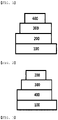
- FIG. 1 to FIG. 4 are diagrams each illustrating a lamination structure of an organic light emitting device according to one embodiment of the present application.
- substitution means a hydrogen atom bonding to a carbon atom of a compound being changed to another substituent, and the position of substitution is not limited as long as it is a position at which the hydrogen atom is substituted, that is, a position at which a substituent can substitute, and when two or more substituents substitute, the two or more substituents may be the same as or different from each other.
- substituted or unsubstituted means being substituted with one or more substituents selected from the group consisting of a linear or branched alkyl group having 1 to 60 carbon atoms; a linear or branched alkenyl group having 2 to 60 carbon atoms; a linear or branched alkynyl group having 2 to 60 carbon atoms; a monocyclic or polycyclic cycloalkyl group having 3 to 60 carbon atoms; a monocyclic or polycyclic heterocycloalkyl group having 2 to 60 carbon atoms; a monocyclic or polycyclic aryl group having 6 to 60 carbon atoms; a monocyclic or polycyclic heteroaryl group having 2 to 60 carbon atoms; a silyl group; a phosphine oxide group; and an amine group, or being unsubstituted, or being substituted with a substituent linking two or more substituents selected from among the substituents illustrated above, or being un
- substituted or unsubstituted may mean being substituted with one or more substituents selected from the group consisting of a monocyclic or polycyclic aryl group having 6 to 60 carbon atoms; or a monocyclic or polycyclic heteroaryl group having 2 to 60 carbon atoms, or being unsubstituted.
- a "case of a substituent being not indicated in a chemical formula or compound structure” means that a hydrogen atom bonds to a carbon atom.
- deuterium ( 2 H) is an isotope of hydrogen, some hydrogen atoms may be deuterium.
- a "case of a substituent being not indicated in a chemical formula or compound structure” may mean that positions that may come as a substituent may all be hydrogen or deuterium.
- positions that may come as a substituent may all be hydrogen or deuterium.
- deuterium is an isotope of hydrogen
- some hydrogen atoms may be deuterium that is an isotope, and herein, a content of the deuterium may be from 0% to 100%.
- hydrogen and deuterium may be mixed in compounds when deuterium is not explicitly excluded such as a deuterium content being 0%, a hydrogen content being 100% or substituents being all hydrogen.
- deuterium is one of isotopes of hydrogen, is an element having deuteron formed with one proton and one neutron as a nucleus, and may be expressed as hydrogen-2, and the elemental symbol may also be written as D or 2H.
- an isotope means an atom with the same atomic number (Z) but with a different mass number (A), and may also be interpreted as an element with the same number of protons but with a different number of neutrons.
- having a deuterium content of 20% in a phenyl group represented by means that the total number of substituents that the phenyl group may have is 5 (T1 in the formula), and the number of deuterium among these is 1 (T2 in the formula).
- having a deuterium content of 20% in a phenyl group may be represented by the following structural formulae.
- a phenyl group having a deuterium content of 0% may mean a phenyl group that does not include a deuterium atom, that is, a phenyl group that has 5 hydrogen atoms.
- the halogen may be fluorine, chlorine, bromine or iodine.
- the alkyl group includes linear or branched having 1 to 60 carbon atoms, and may be further substituted with other substituents.
- the number of carbon atoms of the alkyl group may be from 1 to 60, specifically from 1 to 40 and more specifically from 1 to 20.
- Specific examples thereof may include a methyl group, an ethyl group, a propyl group, an n-propyl group, an isopropyl group, a butyl group, an n-butyl group, an isobutyl group, a tert-butyl group, a sec-butyl group, a 1-methyl-butyl group, a 1-ethyl-butyl group, a pentyl group, an n-pentyl group, an isopentyl group, a neopentyl group, a tert-pentyl group, a hexyl group, an n-hexyl group, a 1-methylpentyl group, a 2-methylpentyl group, a 4-methyl-2-pentyl group, a 3,3-dimethylbutyl group, a 2-ethylbutyl group, a heptyl group, an n-heptyl group,
- the alkenyl group includes linear or branched having 2 to 60 carbon atoms, and may be further substituted with other substituents.
- the number of carbon atoms of the alkenyl group may be from 2 to 60, specifically from 2 to 40 and more specifically from 2 to 20.
- Specific examples thereof may include a vinyl group, a 1-propenyl group, an isopropenyl group, a 1-butenyl group, a 2-butenyl group, a 3-butenyl group, a 1-pentenyl group, a 2-pentenyl group, a 3-pentenyl group, a 3-methyl-1-butenyl group, a 1,3-butadienyl group, an allyl group, a 1-phenylvinyl-1-yl group, a 2-phenylvinyl-1-yl group, a 2,2-diphenylvinyl-1-yl group, a 2-phenyl-2-(naphthyl-1-yl)vinyl-1-yl group, a 2,2-bis(diphenyl-1-yl)vinyl-1-yl group, a stilbenyl group, a styrenyl group and the like, but are not limited thereto.
- the alkynyl group includes linear or branched having 2 to 60 carbon atoms, and may be further substituted with other substituents.
- the number of carbon atoms of the alkynyl group may be from 2 to 60, specifically from 2 to 40 and more specifically from 2 to 20.
- the alkoxy group may be linear, branched or cyclic.
- the number of carbon atoms of the alkoxy group is not particularly limited, but is preferably from 1 to 20. Specific examples thereof may include methoxy, ethoxy, n-propoxy, isopropoxy, n-butoxy, isobutoxy, tert-butoxy, sec-butoxy, n-pentyloxy, neopentyloxy, isopentyloxy, n-hexyloxy, 3,3-dimethylbutyloxy, 2-ethylbutyloxy, n-octyloxy, n-nonyloxy, n-decyloxy, benzyloxy, p-methylbenzyloxy and the like, but are not limited thereto.
- the cycloalkyl group includes monocyclic or polycyclic having 3 to 60 carbon atoms, and may be further substituted with other substituents.
- the polycyclic means a group in which the cycloalkyl group is directly linked to or fused with other cyclic groups.
- the other cyclic groups may be a cycloalkyl group, but may also be different types of cyclic groups such as a heterocycloalkyl group, an aryl group and a heteroaryl group.
- the number of carbon groups of the cycloalkyl group may be from 3 to 60, specifically from 3 to 40 and more specifically from 5 to 20.
- Specific examples thereof may include a cyclopropyl group, a cyclobutyl group, a cyclopentyl group, a 3-methylcyclopentyl group, a 2,3-dimethylcyclopentyl group, a cyclohexyl group, a 3-methylcyclohexyl group, a 4-methylcyclohexyl group, a 2,3-dimethylcyclohexyl group, a 3,4,5-trimethylcyclohexyl group, a 4-tert-butylcyclohexyl group, a cycloheptyl group, a cyclooctyl group and the like, but are not limited thereto.
- the heterocycloalkyl group includes O, S, Se, N or Si as a heteroatom, includes monocyclic or polycyclic having 2 to 60 carbon atoms, and may be further substituted with other substituents.
- the polycyclic means a group in which the heterocycloalkyl group is directly linked to or fused with other cyclic groups.
- the other cyclic groups may be a heterocycloalkyl group, but may also be different types of cyclic groups such as a cycloalkyl group, an aryl group and a heteroaryl group.
- the number of carbon atoms of the heterocycloalkyl group may be from 2 to 60, specifically from 2 to 40 and more specifically from 3 to 20.
- the aryl group includes monocyclic or polycyclic having 6 to 60 carbon atoms, and may be further substituted with other substituents.
- the polycyclic means a group in which the aryl group is directly linked to or fused with other cyclic groups.
- the other cyclic groups may be an aryl group, but may also be different types of cyclic groups such as a cycloalkyl group, a heterocycloalkyl group and a heteroaryl group.
- the aryl group includes a spiro group.
- the number of carbon atoms of the aryl group may be from 6 to 60, specifically from 6 to 40 and more specifically from 6 to 25.
- the aryl group may include a phenyl group, a biphenyl group, a terphenyl group, a naphthyl group, an anthryl group, a chrysenyl group, a phenanthrenyl group, a perylenyl group, a fluoranthenyl group, a triphenylenyl group, a phenalenyl group, a pyrenyl group, a tetracenyl group, a pentacenyl group, a fluorenyl group, an indenyl group, an acenaphthylenyl group, a benzofluorenyl group, a spirobifluorenyl group, a 2,3-dihydro-1H-indenyl group, a fused ring thereof, and the like, but are not limited thereto.
- R101 and R102 are the same as or different from each other and may be each independently a substituent formed with at least one of hydrogen; deuterium; a halogen group; an alkyl group; an alkenyl group; an alkoxy group; a cycloalkyl group; an aryl group; and a heterocyclic group.
- Specific examples of the phosphine oxide may include a diphenylphosphine oxide group, a dinaphthylphosphine oxide group and the like, but are not limited thereto.
- the silyl group is a substituent including Si, having the Si atom directly linked as a radical, and is represented by -SiR 104 R 105 R 106 .
- R 104 to R 106 are the same as or different from each other, and may be each independently a substituent formed with at least one of hydrogen; deuterium; a halogen group; an alkyl group; an alkenyl group; an alkoxy group; a cycloalkyl group; an aryl group; and a heterocyclic group.
- silyl group may include a trimethylsilyl group, a triethylsilyl group, a t-butyldimethylsilyl group, a vinyldimethylsilyl group, a propyldimethylsilyl group, a triphenylsilyl group, a diphenylsilyl group, a phenylsilyl group and the like, but are not limited thereto.
- the fluorenyl group may be substituted, and adjacent substituents may bond to each other to form a ring.
- the spiro group is a group including a spiro structure, and may have 15 to 60 carbon atoms.
- the spiro group may include structures in which a 2,3-dihydro-1H-indene group or a cyclohexane group spiro bonds to a fluorenyl group.
- the spiro group may include any one of groups of the following structural formulae.
- the heteroaryl group includes S, O, Se, N or Si as a heteroatom, includes monocyclic or polycyclic having 2 to 60 carbon atoms, and may be further substituted with other substituents.
- the polycyclic means a group in which the heteroaryl group is directly linked to or fused with other cyclic groups.
- the other cyclic groups may be a heteroaryl group, but may also be different types of cyclic groups such as a cycloalkyl group, a heterocycloalkyl group and an aryl group.
- the number of carbon atoms of the heteroaryl group may be from 2 to 60, specifically from 2 to 40 and more specifically from 3 to 25.
- heteroaryl group may include a pyridyl group, a pyrrolyl group, a pyrimidyl group, a pyridazinyl group, a furanyl group, a thiophene group, an imidazolyl group, a pyrazolyl group, an oxazolyl group, an isoxazolyl group, a thiazolyl group, an isothiazolyl group, a triazolyl group, a furazanyl group, an oxadiazolyl group, a thiadiazolyl group, a dithiazolyl group, a tetrazolyl group, a pyranyl group, a thiopyranyl group, a diazinyl group, an oxazinyl group, a thiazinyl group, a dioxynyl group, a triazinyl group, a tetrazinyl group, a te
- the amine group may be selected from the group consisting of a monoalkylamine group; a monoarylamine group; a monoheteroarylamine group; -NH 2 ; a dialkylamine group; a diarylamine group; a diheteroarylamine group; an alkylarylamine group; an alkylheteroarylamine group; and an arylheteroarylamine group, and although not particularly limited thereto, the number of carbon atoms is preferably from 1 to 30.
- the amine group may include a methylamine group, a dimethylamine group, an ethylamine group, a diethylamine group, a phenylamine group, a naphthylamine group, a biphenylamine group, a dibiphenylamine group, an anthracenylamine group, a 9-methyl-anthracenylamine group, a diphenylamine group, a phenylnaphthylamine group, a ditolylamine group, a phenyltolylamine group, a triphenylamine group, a biphenylnaphthylamine group, a phenylbiphenylamine group, a biphenylfluorenylamine group, a phenyltriphenylenylamine group, a biphenyltriphenylenylamine group and the like, but are not limited thereto.
- the arylene group means the aryl group having two bonding sites, that is, a divalent group.
- the descriptions on the aryl group provided above may be applied thereto except for those that are each a divalent group.
- the heteroarylene group means the heteroaryl group having two bonding sites, that is, a divalent group.
- the descriptions on the heteroaryl group provided above may be applied thereto except for those that are each a divalent group.
- an "adjacent" group may mean a substituent substituting an atom directly linked to an atom substituted by the corresponding substituent, a substituent sterically most closely positioned to the corresponding substituent, or another substituent substituting an atom substituted by the corresponding substituent.
- two substituents substituting ortho positions in a benzene ring, and two substituents substituting the same carbon in an aliphatic ring may be interpreted as groups "adjacent" to each other.
- One embodiment of the present application provides a heterocyclic compound represented by the following Chemical Formula 1.
- Hole mobility is generally affected by orientation and space size formed by interactions between materials used during a deposition process.
- uniform orientation and space in which holes may be formed are both obtained, and therefore, a hole transfer ability is superior and a highest occupied molecular orbital (HOMO) energy level may be stabilized.
- HOMO highest occupied molecular orbital
- X 1 to X 3 of Chemical Formula 1 are the same as or different from each other, and may be each independently hydrogen; deuterium; a substituted or unsubstituted aryl group having 6 to 20 carbon atoms; or a substituted or unsubstituted heteroaryl group having 2 to 40 carbon atoms.
- X 1 to X 3 are the same as or different from each other, and each independently hydrogen or deuterium.
- X 1 to X 3 are the same as or different from each other, and each independently a substituted or unsubstituted aryl group having 6 to 20 carbon atoms; or a substituted or unsubstituted heteroaryl group having 2 to 40 carbon atoms.
- X 1 is a substituted or unsubstituted aryl group having 6 to 20 carbon atoms; or a substituted or unsubstituted heteroaryl group having 2 to 40 carbon atoms.
- X 1 is hydrogen; or deuterium.
- X 1 is hydrogen
- X 1 is deuterium
- X 2 is a substituted or unsubstituted aryl group having 6 to 20 carbon atoms; or a substituted or unsubstituted heteroaryl group having 2 to 40 carbon atoms.
- X 2 is hydrogen; or deuterium.
- X 2 is hydrogen
- X 2 is deuterium
- X 3 is a substituted or unsubstituted aryl group having 6 to 20 carbon atoms; or a substituted or unsubstituted heteroaryl group having 2 to 40 carbon atoms.
- X 3 is hydrogen; or deuterium.
- X 3 is hydrogen
- X 3 is deuterium
- X 1 to X 3 are hydrogen.
- a of Chemical Formula 1 may be an integer of 1 to 6
- b thereof may be an integer of 1 to 3
- c thereof may be an integer of 1 to 4
- substituents in the parentheses may be the same as or different from each other.
- a is an integer of 1 to 6.
- a is 6.
- a is 5.
- a is 4.
- a is 3.
- a is 2.
- a is 1.
- substituents in the parentheses are the same as or different from each other.
- b is an integer of 1 to 3.
- b is 3.
- b is 2.
- b is 1.
- substituents in the parentheses are the same as or different from each other.
- c is an integer of 1 to 4.
- c is 4.
- c is 3.
- c is 2.
- c is 1.
- substituents in the parentheses are the same as or different from each other.
- k, l, m and n of Chemical Formula 1 are each independently an integer of 1 to 3, and when k, l, m and n are 2 or greater, substituents in the parentheses may be the same as or different from each other.
- m is an integer of 1 to 3.
- m is 3.
- n is 2.
- m is 1.
- substituents in the parentheses are the same as or different from each other.
- n is an integer of 1 to 3.
- n 3.
- n is 2.
- n 1
- substituents in the parentheses are the same as or different from each other.
- Chemical Formula 1 is represented by any one of the following Chemical Formula 2 to Chemical Formula 5.
- L 1 to L 4 are the same as or different from each other, and may be each independently a direct bond; a substituted or unsubstituted arylene group; or a substituted or unsubstituted heteroarylene group.
- L 1 to L 4 are the same as or different from each other, and may be each independently a direct bond; a substituted or unsubstituted arylene group having 6 to 60 carbon atoms; or a substituted or unsubstituted heteroarylene group having 2 to 60 carbon atoms.
- L 1 to L 4 are the same as or different from each other, and may be each independently a direct bond; a substituted or unsubstituted arylene group having 6 to 40 carbon atoms; or a substituted or unsubstituted heteroarylene group having 2 to 40 carbon atoms.
- L 1 to L 4 are the same as or different from each other, and may be each independently a direct bond; a substituted or unsubstituted arylene group having 6 to 20 carbon atoms; or a substituted or unsubstituted heteroarylene group having 2 to 20 carbon atoms.
- L 1 to L 4 are the same as or different from each other, and may be each independently a direct bond; a substituted or unsubstituted phenylene group; or a substituted or unsubstituted biphenylene group.
- L 1 to L 4 are the same as or different from each other, and may be each independently a direct bond; a phenylene group; or a biphenylene group.
- L 1 and L 2 are the same as or different from each other, and may be each independently a direct bond; a substituted or unsubstituted arylene group; or a substituted or unsubstituted heteroarylene group.
- L 1 and L 2 may be different from each other.
- L 1 and L 2 may be the same as each other.
- L 1 is a direct bond
- L 2 may be a substituted or unsubstituted arylene group having 6 to 60 carbon atoms; or a substituted or unsubstituted heteroarylene group having 2 to 60 carbon atoms.
- L 1 is a direct bond
- L 2 may be a substituted or unsubstituted arylene group having 6 to 40 carbon atoms; or a substituted or unsubstituted heteroarylene group having 2 to 40 carbon atoms.
- L 1 is a direct bond
- L 2 may be a substituted or unsubstituted arylene group having 6 to 20 carbon atoms; or a substituted or unsubstituted heteroarylene group having 2 to 20 carbon atoms.
- L 2 is a direct bond
- L 1 may be a substituted or unsubstituted arylene group having 6 to 60 carbon atoms; or a substituted or unsubstituted heteroarylene group having 2 to 60 carbon atoms.
- L 2 is a direct bond
- L 1 may be a substituted or unsubstituted arylene group having 6 to 40 carbon atoms; or a substituted or unsubstituted heteroarylene group having 2 to 40 carbon atoms.
- L 2 is a direct bond
- L 1 may be a substituted or unsubstituted arylene group having 6 to 20 carbon atoms; or a substituted or unsubstituted heteroarylene group having 2 to 20 carbon atoms.
- L 1 may be a direct bond; a substituted or unsubstituted arylene group having 6 to 60 carbon atoms; or a substituted or unsubstituted heteroarylene group having 2 to 60 carbon atoms.
- L 1 may be a direct bond; a substituted or unsubstituted arylene group having 6 to 40 carbon atoms; or a substituted or unsubstituted heteroarylene group having 2 to 40 carbon atoms.
- L 1 may be a direct bond; a substituted or unsubstituted arylene group having 6 to 20 carbon atoms; or a substituted or unsubstituted heteroarylene group having 2 to 20 carbon atoms.
- L 1 may be a direct bond; a substituted or unsubstituted phenylene group; or a substituted or unsubstituted biphenylene group.
- L 1 may be a direct bond; a phenylene group; or a biphenylene group.
- L 1 is a direct bond.
- L 1 is a phenylene group.
- L 1 is a biphenylene group.
- L 2 may be a direct bond; a substituted or unsubstituted arylene group having 6 to 60 carbon atoms; or a substituted or unsubstituted heteroarylene group having 2 to 60 carbon atoms.
- L 2 may be a direct bond; a substituted or unsubstituted arylene group having 6 to 40 carbon atoms; or a substituted or unsubstituted heteroarylene group having 2 to 40 carbon atoms.
- L 2 may be a direct bond; a substituted or unsubstituted arylene group having 6 to 20 carbon atoms; or a substituted or unsubstituted heteroarylene group having 2 to 20 carbon atoms.
- L 2 may be a direct bond; a substituted or unsubstituted phenylene group; or a substituted or unsubstituted biphenylene group.
- L 2 may be a direct bond; a phenylene group; a biphenylene group; or a naphthylene group.
- L 2 is a direct bond
- L 2 is a phenylene group.
- L 2 is a biphenylene group.
- L 1 and L 2 are a direct bond.
- L 3 and L 4 are the same as or different from each other, and each independently a direct bond; a substituted or unsubstituted arylene group; or a substituted or unsubstituted heteroarylene group.
- L 3 and L 4 are the same as or different from each other, and may be each independently a direct bond; a substituted or unsubstituted arylene group having 6 to 60 carbon atoms; or a substituted or unsubstituted heteroarylene group having 2 to 60 carbon atoms.
- L 3 and L 4 are the same as or different from each other, and may be each independently a direct bond; a substituted or unsubstituted arylene group having 6 to 40 carbon atoms; or a substituted or unsubstituted heteroarylene group having 2 to 40 carbon atoms.
- L 3 and L 4 are the same as or different from each other, and may be each independently a direct bond; a substituted or unsubstituted arylene group having 6 to 20 carbon atoms; or a substituted or unsubstituted heteroarylene group having 2 to 20 carbon atoms.
- L 3 and L 4 are the same as or different from each other, and may be each independently a direct bond; a substituted or unsubstituted phenylene group; or a substituted or unsubstituted biphenylene group.
- L 3 and L 4 are the same as or different from each other, and may be each independently a direct bond; a phenylene group; or a biphenylene group.
- L 3 and L 4 may be the same as each other.
- L 3 and L 4 may be different from each other.
- L 3 is a direct bond
- L 4 may be a substituted or unsubstituted arylene group having 6 to 60 carbon atoms; or a substituted or unsubstituted heteroarylene group having 2 to 60 carbon atoms.
- L 3 is a direct bond
- L 4 may be a substituted or unsubstituted arylene group having 6 to 40 carbon atoms; or a substituted or unsubstituted heteroarylene group having 2 to 40 carbon atoms.
- L 3 is a direct bond
- L 4 may be a substituted or unsubstituted arylene group having 6 to 20 carbon atoms; or a substituted or unsubstituted heteroarylene group having 2 to 20 carbon atoms.
- L 4 is a direct bond
- L 3 may be a substituted or unsubstituted arylene group having 6 to 60 carbon atoms; or a substituted or unsubstituted heteroarylene group having 2 to 60 carbon atoms.
- L 4 is a direct bond
- L 3 may be a substituted or unsubstituted arylene group having 6 to 40 carbon atoms; or a substituted or unsubstituted heteroarylene group having 2 to 40 carbon atoms.
- L 4 is a direct bond
- L 3 may be a substituted or unsubstituted arylene group having 6 to 20 carbon atoms; or a substituted or unsubstituted heteroarylene group having 2 to 20 carbon atoms.
- L 3 may be a direct bond; a substituted or unsubstituted arylene group having 6 to 60 carbon atoms; or a substituted or unsubstituted heteroarylene group having 2 to 60 carbon atoms.
- L 3 may be a direct bond; a substituted or unsubstituted arylene group having 6 to 40 carbon atoms; or a substituted or unsubstituted heteroarylene group having 2 to 40 carbon atoms.
- L 3 may be a direct bond; a substituted or unsubstituted arylene group having 6 to 20 carbon atoms; or a substituted or unsubstituted heteroarylene group having 2 to 20 carbon atoms.
- L 3 may be a direct bond; a substituted or unsubstituted phenylene group; or a substituted or unsubstituted biphenylene group.
- L 3 may be a direct bond; a phenylene group; or a biphenylene group.
- L 3 is a direct bond.
- L 3 is a phenylene group.
- L 3 is a biphenylene group.
- L 4 may be a direct bond; a substituted or unsubstituted arylene group having 6 to 60 carbon atoms; or a substituted or unsubstituted heteroarylene group having 2 to 60 carbon atoms.
- L 4 may be a direct bond; a substituted or unsubstituted arylene group having 6 to 40 carbon atoms; or a substituted or unsubstituted heteroarylene group having 2 to 40 carbon atoms.
- L 4 may be a direct bond; a substituted or unsubstituted arylene group having 6 to 20 carbon atoms; or a substituted or unsubstituted heteroarylene group having 2 to 20 carbon atoms.
- L 4 may be a direct bond; a substituted or unsubstituted phenylene group; or a substituted or unsubstituted biphenylene group.
- L 4 may be a direct bond; a phenylene group; a biphenylene group; or a naphthylene group.
- L 4 is a direct bond.
- L 4 is a phenylene group.
- L 4 is a biphenylene group.
- Ar 1 and Ar 2 of Chemical Formula 1 are the same as or different from each other, and may be each independently a substituted or unsubstituted aryl group having 6 to 40 carbon atoms; or a substituted or unsubstituted heteroaryl group having 2 to 40 carbon atoms.
- Ar 1 and Ar 2 of Chemical Formula 1 are the same as or different from each other, and may be each independently a substituted or unsubstituted aryl group having 6 to 40 carbon atoms; or a substituted or unsubstituted heteroaryl group having 2 to 40 carbon atoms.
- Ar 1 and Ar 2 are the same as or different from each other, and may be each independently a substituted or unsubstituted phenyl group; a substituted or unsubstituted biphenyl group; a substituted or unsubstituted terphenyl group; a substituted or unsubstituted naphthyl group; a substituted or unsubstituted phenanthrenyl group; a substituted or unsubstituted fluorenyl group; a substituted or unsubstituted carbazole group; a substituted or unsubstituted triphenylenyl group; a substituted or unsubstituted dibenzofuran group; a substituted or unsubstituted dibenzothiophene group; a substituted or unsubstituted spirobifluorenyl group; or a substituted or unsubstituted spiro[fluorene-9,9'-xant
- Ar 1 of Chemical Formula 1 may be a substituted or unsubstituted aryl group having 6 to 40 carbon atoms; or a substituted or unsubstituted heteroaryl group having 2 to 40 carbon atoms.
- Ar 1 may be a substituted or unsubstituted phenyl group; a substituted or unsubstituted biphenyl group; a substituted or unsubstituted terphenyl group; a substituted or unsubstituted naphthyl group; a substituted or unsubstituted phenanthrenyl group; a substituted or unsubstituted fluorenyl group; a substituted or unsubstituted carbazole group; a substituted or unsubstituted triphenylenyl group; a substituted or unsubstituted dibenzofuran group; a substituted or unsubstituted dibenzothiophene group; a substituted or unsubstituted spirobifluorenyl group; or a substituted or unsubstituted spiro[fluorene-9,9'-xanthene] group.
- Ar 1 may be a substituted or unsubstituted phenyl group; a substituted or unsubstituted biphenyl group; a substituted or unsubstituted terphenyl group; a substituted or unsubstituted naphthyl group; a substituted or unsubstituted fluorenyl group; a substituted or unsubstituted dibenzofuran group; a substituted or unsubstituted dibenzothiophene group; or a substituted or unsubstituted spirobifluorenyl group.
- Ar 1 may be a phenyl group; a biphenyl group; a terphenyl group; a naphthyl group; a fluorenyl group; a dibenzofuran group; a dibenzothiophene group; or a spirobifluorenyl group.
- Ar 1 of Chemical Formula 1 is represented by any one of the following chemical formulae.
- hydrogen may be substituted with deuterium, and means a position at which Ar 1 bonds to Chemical Formula 1.
- Ar 2 of Chemical Formula 1 may be a substituted or unsubstituted aryl group having 6 to 40 carbon atoms; or a substituted or unsubstituted heteroaryl group having 2 to 40 carbon atoms.
- Ar 2 may be a substituted or unsubstituted phenyl group; a substituted or unsubstituted biphenyl group; a substituted or unsubstituted terphenyl group; a substituted or unsubstituted naphthyl group; a substituted or unsubstituted phenanthrenyl group; a substituted or unsubstituted fluorenyl group; a substituted or unsubstituted carbazole group; a substituted or unsubstituted triphenylenyl group; a substituted or unsubstituted dibenzofuran group; a substituted or unsubstituted dibenzothiophene group; a substituted or unsubstituted spirobifluorenyl group; or a substituted or unsubstituted spiro[fluorene-9,9'-xanthene] group.
- Ar 2 may be a phenyl group unsubstituted or substituted with a cyano group; a biphenyl group; a terphenyl group; a naphthyl group unsubstituted or substituted with a phenyl group; a phenanthrenyl group unsubstituted or substituted with a phenyl group; a 9,9-dimethyl-9H-fluorenyl group unsubstituted or substituted with a phenyl group; a carbazole group unsubstituted or substituted with a phenyl group or a naphthyl group; a triphenylenyl group; a dibenzofuran group unsubstituted or substituted with a phenyl group; a dibenzothiophene group unsubstituted or substituted with a phenyl group; a spirobifluorenyl group unsubstituted or substitute
- Ar 2 of Chemical Formula 1 is represented by any one of the following chemical formulae.
- hydrogen may be substituted with deuterium, and means a position at which Ar 2 bonds to Chemical Formula 1.
- R 1 and R 2 are the same as or different from each other, and may be each independently a substituted or unsubstituted alkyl group having 1 to 20 carbon atoms; a substituted or unsubstituted aryl group having 6 to 40 carbon atoms; or a substituted or unsubstituted heteroaryl group having 2 to 40 carbon atoms.
- R 1 and R 2 are the same as or different from each other, and may be each independently a substituted or unsubstituted alkyl group having 1 to 10 carbon atoms; a substituted or unsubstituted aryl group having 6 to 20 carbon atoms; or a substituted or unsubstituted heteroaryl group having 2 to 20 carbon atoms.
- R 1 and R 2 are the same as or different from each other, and may be each independently a substituted or unsubstituted methyl group; a substituted or unsubstituted phenyl group; or a substituted or unsubstituted spirobifluorenyl group.
- R 1 and R 2 are the same as or different from each other, and may be each independently a methyl group; a phenyl group; or a spirobifluorenyl group.
- R 1 and R 2 may be the same as each other.
- R 1 and R 2 may be different from each other.
- R 1 may be a substituted or unsubstituted alkyl group having 1 to 20 carbon atoms; a substituted or unsubstituted aryl group having 6 to 40 carbon atoms; or a substituted or unsubstituted heteroaryl group having 2 to 40 carbon atoms.
- R 1 may be a substituted or unsubstituted alkyl group having 1 to 10 carbon atoms; a substituted or unsubstituted aryl group having 6 to 20 carbon atoms; or a substituted or unsubstituted heteroaryl group having 2 to 20 carbon atoms.
- R 1 may be a substituted or unsubstituted methyl group; a substituted or unsubstituted phenyl group; or a substituted or unsubstituted spirobifluorenyl group.
- R 1 may be a methyl group; a phenyl group; or a spirobifluorenyl group.
- R 1 is a methyl group.
- R 1 is a phenyl group.
- R 1 is a spirobifluorenyl group.
- R 2 may be a substituted or unsubstituted alkyl group having 1 to 20 carbon atoms; a substituted or unsubstituted aryl group having 6 to 40 carbon atoms; or a substituted or unsubstituted heteroaryl group having 2 to 40 carbon atoms.
- R 2 may be a substituted or unsubstituted alkyl group having 1 to 10 carbon atoms; a substituted or unsubstituted aryl group having 6 to 20 carbon atoms; or a substituted or unsubstituted heteroaryl group having 2 to 20 carbon atoms.
- R 2 may be a substituted or unsubstituted methyl group; a substituted or unsubstituted phenyl group; or a substituted or unsubstituted spirobifluorenyl group.
- R 2 may be a methyl group; a phenyl group; or a spirobifluorenyl group.
- R 2 is a methyl group.
- R 2 is a phenyl group.
- R 2 is a spirobifluorenyl group.
- Chemical Formula 1 is represented by any one of the following compounds.
- the energy band gap may be finely controlled, and meanwhile, properties at interfaces between organic materials are enhanced, and material applications may become diverse.
- the heterocyclic compound has a high glass transition temperature (Tg) and thereby has superior thermal stability.
- Tg glass transition temperature
- the heterocyclic compound according to one embodiment of the present application may be prepared using a multi-step chemical reaction. Some intermediate compounds are prepared first, and from the intermediate compounds, the compound of Chemical Formula 1 may be prepared. More specifically, the heterocyclic compound according to one embodiment of the present application may be prepared based on preparation examples to describe later.
- organic light emitting device including the heterocyclic compound represented by Chemical Formula 1.
- the "organic light emitting device” may be expressed in terms such as an “organic light emitting diode”, an “OLED”, an “OLED device” and an “organic electroluminescent device”.
- One embodiment of the present application provides an organic light emitting device including a first electrode; a second electrode; and one or more organic material layers provided between the first electrode and the second electrode, wherein one or more layers of the organic material layers include the heterocyclic compound represented by Chemical Formula 1.
- the first electrode may be an anode
- the second electrode may be a cathode
- the first electrode may be a cathode
- the second electrode may be an anode
- the organic light emitting device may be a blue organic light emitting device, and the heterocyclic compound according to Chemical Formula 1 may be used as a material of the blue organic light emitting device.
- the organic light emitting device may be a green organic light emitting device, and the heterocyclic compound according to Chemical Formula 1 may be used as a material of the green organic light emitting device.
- the organic light emitting device may be a red organic light emitting device, and the heterocyclic compound according to Chemical Formula 1 may be used as a material of the red organic light emitting device.
- the organic light emitting device of the present application may be manufactured using common organic light emitting device manufacturing methods and materials except that one or more of the organic material layers are formed using the heterocyclic compound described above.
- the heterocyclic compound may be formed into an organic material layer through a solution coating method as well as a vacuum deposition method when manufacturing the organic light emitting device.
- the solution coating method means spin coating, dip coating, inkjet printing, screen printing, a spray method, roll coating and the like, but is not limited thereto.
- the organic material layer of the organic light emitting device of the present application may be formed in a single layer structure, but may be formed in a multilayer structure in which two or more organic material layers are laminated.
- the organic light emitting device of the present disclosure may have a structure including a hole injection layer, a hole transfer layer, a hole auxiliary layer, a light emitting layer, an electron transfer layer, an electron injection layer and the like as the organic material layer.
- the structure of the organic light emitting device is not limited thereto, and may include a smaller number of organic material layers.
- the organic material layer includes a hole transfer layer, and the hole transfer layer may include the heterocyclic compound.
- the hole transfer layer means a layer performing a role of receiving holes from a hole injection layer and transferring the holes to a light emitting layer.
- the heterocyclic compound is a material having proper hole mobility, and using the heterocyclic compound in the hole transfer layer may increase excitons formed in the light emitting layer. In other words, when using the heterocyclic compound in the hole transfer layer, the organic light emitting device may have superior driving, efficiency and lifetime.
- the organic material layer includes a hole auxiliary layer
- the hole auxiliary layer may include the heterocyclic compound.
- the hole auxiliary layer means a layer performing a role of preventing electrons from passing over from a light emitting layer to a hole transfer layer by matching a proper energy level between the hole transfer layer and the light emitting layer.
- the heterocyclic compound is a material having proper hole mobility, and using the heterocyclic compound in the hole auxiliary layer may prevent a decrease in the excitons formed in the light emitting layer. In other words, when using the heterocyclic compound in the hole auxiliary layer, the organic light emitting device may have superior driving, efficiency and lifetime.
- the hole auxiliary layer may also perform a function of an electron blocking layer, and may be expressed as an electron blocking layer instead of the hole auxiliary layer.
- the organic light emitting device of the present disclosure may further include one, two or more layers selected from the group consisting of a light emitting layer, a hole injection layer, a hole transfer layer, an electron injection layer, an electron transfer layer, a hole auxiliary layer and a hole blocking layer.
- FIG 1 to FIG. 3 illustrate a lamination order of electrodes and organic material layers of an organic light emitting device according to one embodiment of the present application.
- the scope of the present application is not limited to these diagrams, and structures of organic light emitting devices known in the art may also be used in the present application.
- FIG. 1 illustrates an organic light emitting device in which an anode (200), an organic material layer (300) and a cathode (400) are consecutively laminated on a substrate (100).
- the structure is not limited to such a structure, and as illustrated in FIG. 2 , an organic light emitting device in which a cathode, an organic material layer and an anode are consecutively laminated on a substrate may also be obtained.
- FIG. 3 illustrates a case of the organic material layer being a multilayer.
- the organic light emitting device according to FIG. 3 includes a hole injection layer (301), a hole transfer layer (302), a light emitting layer (303), a hole blocking layer (304), an electron transfer layer (305) and an electron injection layer (306).
- a hole injection layer 301
- a hole transfer layer 302
- a light emitting layer 303
- a hole blocking layer a hole blocking layer
- an electron transfer layer (305)
- an electron injection layer (306).
- the scope of the present application is not limited to such a lamination structure, and as necessary, layers other than the light emitting layer may not be included, and other necessary functional layers may be further added.
- the organic material layer including the compound represented by Chemical Formula 1 may further include other materials as necessary.
- the organic light emitting device includes an anode, a first stack provided on the anode and including a first light emitting layer, a charge generation layer provided on the first stack, a second stack provided on the charge generation layer and including a second light emitting layer, and a cathode provided on the second stack.
- first stack and the second stack may each independently further include one or more types of the hole injection layer, the hole transfer layer, the hole blocking layer, the electron transfer layer, the electron injection layer and the like described above.
- the charge generation layer may be an N-type charge generation layer, and the charge generation layer may further include a dopant known in the art in addition to the heterocyclic compound represented by Chemical Formula 1.
- an organic light emitting device having a 2-stack tandem structure is illustrated in FIG. 4 .
- the first electron blocking layer, the first hole blocking layer, the second hole blocking layer and the like described in FIG. 4 may not be included in some cases.
- anode material materials having relatively large work function may be used, and transparent conductive oxides, metals, conductive polymers or the like may be used.
- the anode material include metals such as vanadium, chromium, copper, zinc and gold, or alloys thereof; metal oxides such as zinc oxide, indium oxide, indium tin oxide (ITO) and indium zinc oxide (IZO); combinations of metals and oxides such as ZnO:Al or SnO 2 :Sb; conductive polymers such as poly(3-methylthiophene), poly[3,4-(ethylene-1,2-dioxy)thiophene] (PEDOT), polypyrrole and polyaniline, and the like, but are not limited thereto.
- metals such as vanadium, chromium, copper, zinc and gold, or alloys thereof
- metal oxides such as zinc oxide, indium oxide, indium tin oxide (ITO) and indium zinc oxide (IZO); combinations of metals and oxides such as ZnO:A
- the cathode material materials having relatively small work function may be used, and metals, metal oxides, conductive polymers or the like may be used.
- specific examples of the cathode material include metals such as magnesium, calcium, sodium, potassium, titanium, indium, yttrium, lithium, gadolinium, aluminum, silver, tin and lead, or alloys thereof; multilayer structure materials such as LiF/Al or LiO 2 /Al, and the like, but are not limited thereto.
- hole injection material known hole injection materials may be used, and for example, phthalocyanine compounds such as copper phthalocyanine disclosed in US Patent No. 4,356,429 , or starburst-type amine derivatives such as tris(4-carbazoyl-9-ylphenyl)amine (TCTA), 4,4',4"-tri[phenyl(m-tolyl)amino]triphenylamine (m-MTDATA) or 1,3,5-tris[4-(3-methylphenylphenylamino)phenyl]benzene (m-MTDAPB) described in the literature [ Advanced Material, 6, p.677 (1994 )], polyaniline/dodecylbenzene sulfonic acid, poly(3,4-ethylenedioxythiophene)/poly(4-styrenesulfonate), polyaniline/camphor sulfonic acid or polyaniline/poly(4-styrenesulfonate) that are TCTA
- hole transfer material pyrazoline derivatives, arylamine-based derivatives, stilbene derivatives, triphenyldiamine derivatives and the like may be used, and low molecular or high molecular materials may also be used.
- LiF is typically used in the art, however, the present application is not limited thereto.
- red, green or blue light emitting materials may be used, and as necessary, two or more light emitting materials may be mixed and used.
- two or more light emitting materials may be used by being deposited as individual sources of supply or by being premixed and deposited as one source of supply.
- fluorescent materials may also be used as the light emitting material, however, phosphorescent materials may also be used.
- materials emitting light by bonding electrons and holes injected from an anode and a cathode, respectively may be used alone, however, materials having a host material and a dopant material involving in light emission together may also be used.
- same series hosts may be mixed, or different series hosts may be mixed.
- any two or more types of materials among n-type host materials or p-type host materials may be selected and used as a host material of a light emitting layer.
- the organic material layer includes a light emitting layer, and the light emitting layer may include the heterocyclic compound as a host material of a light emitting material.
- the light emitting layer may include two or more host materials, and at least one of the host materials may include the heterocyclic compound as a host material of a light emitting material.
- the light emitting layer may include two or more host materials, at least one of the host materials is a p-type host material, and the p-type host material may include the heterocyclic compound as a host material of a light emitting material.
- the light emitting layer may include two or more host materials, the two or more host materials each include one or more p-type host material and n-type host material, and the p-type host material may include the heterocyclic compound as a host material of a light emitting material.
- the organic light emitting device When including the heterocyclic compound as a host material of a light emitting material, the organic light emitting device may have superior driving, efficiency and lifetime. In addition, when using the heterocyclic compound having a superior hole transfer ability as a p-type host material, the organic light emitting device may have more superior driving, efficiency and lifetime.
- the organic light emitting device may be a top-emission type, a bottom-emission type or a dual-emission type depending on the materials used.
- the heterocyclic compound according to one embodiment of the present application may also be used in an organic electronic device including an organic solar cell, an organic photo conductor, an organic transistor and the like under a similar principle used in the organic light emitting device.
- target compounds were synthesized in the same manner as in Preparation Example 1 except that Compound A was used instead of phenylboronic acid and Compound B was used instead of 9,9-dimethyl-N-phenyl-9H-fluoren-2-amine.
- Table 1 Compound No. Compound A Compound B Target compound Yield 2 62% 13 71% 24 68% 18 63% 24 74% 43 80% 49 80% 60 75% 70 71% 86 63% 91 82% 100 67% 166 81% 183 71% 223 63% 271 83% 308 51% 324 66%
- target compounds were synthesized in the same manner as in Preparation Example 2 except that Compound C was used instead of A-3, Compound D was used instead of (4-bromophenyl)boronic acid, and Compound E was used instead of N-(4-(9,9-dimethyl-9H-fluoren-2-yl) phenyl)phenanthren-9-amine.
- Compound C was used instead of A-3
- Compound D was used instead of (4-bromophenyl)boronic acid
- Compound E was used instead of N-(4-(9,9-dimethyl-9H-fluoren-2-yl) phenyl)phenanthren-9-amine.
- Compound C Compound D
- Target compound Yield 3 81% 16 62% 21 76% 22 78% 30 86% 32 91% 38 62% 69 78% 81 77% 83 69% 92 83% 126 89% 136 88% 152 67% 181 73% 184 85% 224 72% 240 74% 241 69% 252 76% 262 71% 264 66% 273 77% 275 64% 284 83% 337 70% 356 80% 359 75%
- a glass substrate on which ITO was coated as a thin film to a thickness of 1,500 ⁇ was cleaned with distilled water ultrasonic waves. After the cleaning with distilled water was finished, the substrate was ultrasonic cleaned with solvents such as acetone, methanol and isopropyl alcohol, then dried, and UVO treatment was conducted for 5 minutes using UV in a UV cleaner. After that, the substrate was transferred to a plasma cleaner (PT), and after conducting plasma treatment under vacuum for ITO work function and residual film removal, the substrate was transferred to a thermal deposition apparatus for organic deposition.
- PT plasma cleaner
- the chamber was evacuated until the degree of vacuum therein reached 10 -6 torr, and then 2-TNATA was evaporated by applying a current to the cell to deposit a hole injection layer having a thickness of 600 ⁇ on the ITO substrate.
- 2-TNATA was evaporated by applying a current to the cell to deposit a hole injection layer having a thickness of 600 ⁇ on the ITO substrate.
- NPB N,N'-bis( ⁇ -naphthyl)-N,N'-diphenyl-4,4'-diamine
- a light emitting layer was thermal vacuum deposited thereon as follows.
- a compound of 9-[4-(4,6-diphenyl-1,3,5-triazin-2-yl)phenyl]-9'-phenyl-3,3'-bi-9H-carbazole was deposited to a thickness of 400 ⁇ as a host, and as a green phosphorescent dopant, Ir(ppy) 3 was doped by 7% with respect to the host material weight and deposited.
- BCP was deposited to a thickness of 60 ⁇ as a hole blocking layer
- Alq 3 was deposited to a thickness of 200 ⁇ thereon as an electron transfer layer.
- an electron injection layer was formed on the electron transfer layer by depositing lithium fluoride (LiF) to a thickness of 10 ⁇ , and then a cathode was formed on the electron injection layer by depositing an aluminum (Al) cathode to a thickness of 1,200 ⁇ , and as a result, an organic electroluminescent device was manufactured.
- LiF lithium fluoride
- Al aluminum
- Organic light emitting devices were manufactured in the same manner except that compounds shown in the following Table 5 were used instead of the compound NPB used when forming the hole transfer layer in the manufacturing process of the organic light emitting device of Experimental Example 1.
- hole transfer compounds M1 to M3 of Comparative Examples 2 to 4 other than the NPB of Comparative Example 1 are as follows.
- T 90 was measured when standard luminance was 6,000 cd/m 2 through a lifetime measurement system (M6000) manufactured by McScience Inc..
- T 90 means a lifetime (unit: h, time), a time taken to be 90% with respect to initial luminance.
- M1 of Comparative Example 2 has a tri-substituted structure, and uniform orientation is difficult to form therein and deposition occurs in an irregular form resulting in a decrease in the hole mobility and thereby affecting driving and efficiency.
- M2 of Comparative Example 3 has a monosubstituted structure and has excellent hole mobility by forming uniform orientation compared to a tri-substituted structure, however, it is difficult to form space due to the linear structure during deposition making it difficult to readily form holes, and driving and efficiency are somewhat inferior by having less favorable hole mobility compared to a bi-substituted structure.
- M3 of Comparative Example 3 has a bi-substituted structure and has similar orientation and space size formed during deposition, which may result in similar hole mobility compared to when using the compound according to the present application, however, when examining the structure threedimensionally, it was identified that the structure substituted at the second and the third positions of the naphthyl group had steric hindrance occurring between the substituents compared to the structure substituted at the first and the second positions making the molecule unstable resulting in unfavorable lifetime properties of the device.
- a transparent ITO electrode thin film obtained from glass for an organic light emitting device (manufactured by Samsung-Corning Co., Ltd.) was ultrasonic cleaned using trichloroethylene, acetone, ethanol and distilled water consecutively for 5 minutes each, stored in isopropanol, and used.
- the ITO substrate was installed in a substrate folder of a vacuum deposition apparatus, and the following 4,4',4"-tris(N,N-(2-naphthyl)-phenylamino)triphenylamine (2-TNATA) was introduced to a cell in the vacuum deposition apparatus.
- the chamber was evacuated until the degree of vacuum therein reached 10 -6 torr, and then 2-TNATA was evaporated by applying a current to the cell to deposit a hole injection layer having a thickness of 600 ⁇ on the ITO substrate.
- 2-TNATA was evaporated by applying a current to the cell to deposit a hole injection layer having a thickness of 600 ⁇ on the ITO substrate.
- NPB N,N'-bis( ⁇ -naphthyl)-N,N'-diphenyl-4,4'-diamine
- a blue light emitting material having a structure as below was deposited thereon as a light emitting layer.
- H1 a blue light emitting host material
- D1 a blue light emitting dopant material
- a compound of the following structural formula E1 was deposited to a thickness of 300 ⁇ .
- lithium fluoride LiF
- Al cathode As an electron injection layer, lithium fluoride (LiF) was deposited to a thickness of 10 ⁇ , and an Al cathode was employed to a thickness of 1,000 ⁇ , and as a result, an organic light emitting device was manufactured. Meanwhile, all the organic compounds required to manufacture the organic light emitting device were vacuum sublimation purified under 10 -6 torr to 10 -8 torr for each material to be used in the organic light emitting device manufacture.
- Organic light emitting devices were manufactured in the same manner as in Experimental Example 2 except that a hole transfer layer having a thickness of 150 ⁇ was formed using NPB and then a hole auxiliary layer having a thickness of 50 ⁇ was formed on the hole transfer layer using compounds shown in the following Table 6.
- T 95 means a lifetime (unit: h, time), a time taken to be 95% with respect to initial luminance.
- the hole auxiliary layer when using the compound according to the present application as a hole auxiliary layer, the hole auxiliary layer more effectively performs a role of preventing electrons in the light emitting layer from passing over to the hole transfer layer like an electron blocking layer compared when not using the compound according to the present application, and, in addition thereto, more effectively tunes energy level and light emission wavelength between the light emitting layer and the hole transfer layer, which has an effect of improving color purity.
- a glass substrate on which indium tin oxide (ITO) was coated as a thin film to a thickness of 1,500 ⁇ was cleaned with distilled water ultrasonic waves. After the cleaning with distilled water was finished, the substrate was ultrasonic cleaned with solvents such as acetone, methanol and isopropyl alcohol, then dried, and UVO treatment was conducted for 5 minutes using UV in a UV cleaner. After that, the substrate was transferred to a plasma cleaner (PT), and after conducting plasma treatment under vacuum for ITO work function and residual film removal, the substrate was transferred to a thermal deposition apparatus for organic deposition.
- PT plasma cleaner
- a light emitting layer was thermal vacuum deposited thereon as follows.
- a host of the light emitting layer a compound described in the following Table 7 was used as a single host, or two host compounds were deposited in one source of supply using an n-host (n-type host) having a favorable electron transfer ability as a first host and a p-host (p-type host) having a favorable hole transfer ability as a second host, and to the host, (piq) 2 (Ir) (acac) , a red phosphorescent dopant, was doped by 3% with respect to the host material weight or Ir(ppy) 3 , a green phosphorescent dopant, was doped by 7% with respect to the host material weight, and the result was deposited to a thickness of 500 ⁇ .
- BCP was deposited to a thickness of 60 ⁇ as a hole blocking layer
- Alq 3 was deposited to a thickness of 200 ⁇ thereon as an electron transfer layer.
- the compound used as the n-host is as follows.
- an electron injection layer was formed on the electron transfer layer by depositing lithium fluoride (LiF) to a thickness of 10 ⁇ , and then a cathode was formed on the electron injection layer by depositing an aluminum (Al) cathode to a thickness of 1,200 ⁇ , and as a result, an organic light emitting device was manufactured.
- LiF lithium fluoride
- Al aluminum
- the organic light emitting devices of Examples 93 to 102 forming the light emitting layer using the compound according to the present application as a single host material had similar or sometimes superior light emission efficiency and lifetime compared to the organic light emitting devices of Comparative Examples 9, 12 and 13 forming the light emitting layer using a first host material corresponding to the n-host and using a compound that is not the compound according to the present application as a second host material corresponding to the p-host at the same time.
- an organic light emitting device using an n-host (n-type host) having a favorable electron transfer ability as a first host and a p-host (p-type host) having a favorable hole transfer ability as a second host generally has superior light emission efficiency and lifetime compared to an organic light emitting device using a single host material, this means that light emission efficiency and lifetime of an organic light emitting device may be significantly improved when using the compound according to the present application as a host material.
Landscapes
- Chemical & Material Sciences (AREA)
- Organic Chemistry (AREA)
- Engineering & Computer Science (AREA)
- Materials Engineering (AREA)
- Physics & Mathematics (AREA)
- Spectroscopy & Molecular Physics (AREA)
- Optics & Photonics (AREA)
- Electroluminescent Light Sources (AREA)
- Organic Low-Molecular-Weight Compounds And Preparation Thereof (AREA)
Applications Claiming Priority (2)
| Application Number | Priority Date | Filing Date | Title |
|---|---|---|---|
| KR1020190114331A KR102267451B1 (ko) | 2019-09-17 | 2019-09-17 | 헤테로고리 화합물 및 이를 포함하는 유기 발광 소자 |
| PCT/KR2020/012488 WO2021054714A1 (ko) | 2019-09-17 | 2020-09-16 | 헤테로고리 화합물 및 이를 포함하는 유기 발광 소자 |
Publications (3)
| Publication Number | Publication Date |
|---|---|
| EP4032876A1 true EP4032876A1 (de) | 2022-07-27 |
| EP4032876A4 EP4032876A4 (de) | 2023-10-04 |
| EP4032876B1 EP4032876B1 (de) | 2025-08-13 |
Family
ID=74884037
Family Applications (1)
| Application Number | Title | Priority Date | Filing Date |
|---|---|---|---|
| EP20865020.0A Active EP4032876B1 (de) | 2019-09-17 | 2020-09-16 | Heterocyclische verbindung und organische lichtemittierende vorrichtung damit |
Country Status (6)
| Country | Link |
|---|---|
| US (1) | US20220393108A1 (de) |
| EP (1) | EP4032876B1 (de) |
| JP (1) | JP7365733B2 (de) |
| KR (1) | KR102267451B1 (de) |
| CN (1) | CN114080381A (de) |
| WO (1) | WO2021054714A1 (de) |
Families Citing this family (12)
| Publication number | Priority date | Publication date | Assignee | Title |
|---|---|---|---|---|
| KR102911154B1 (ko) * | 2019-12-18 | 2026-01-13 | 덕산네오룩스 주식회사 | 유기전기소자용 화합물, 이를 이용한 유기전기소자 및 그 전자 장치 |
| CN113511978B (zh) * | 2020-04-09 | 2024-10-15 | 北京鼎材科技有限公司 | 一种化合物、其应用及采用其的有机电致发光器件 |
| CN113861043B (zh) * | 2020-06-30 | 2024-07-05 | 北京鼎材科技有限公司 | 一种化合物及其应用 |
| CN117203184A (zh) * | 2021-04-23 | 2023-12-08 | 德山新勒克斯有限公司 | 有机电气元件用化合物、利用其的有机电气元件及其电子装置 |
| KR102292406B1 (ko) * | 2021-04-23 | 2021-08-23 | 덕산네오룩스 주식회사 | 유기전기 소자용 화합물, 이를 이용한 유기전기소자 및 그 전자 장치 |
| KR20240026282A (ko) * | 2021-06-25 | 2024-02-27 | 이데미쓰 고산 가부시키가이샤 | 화합물, 유기 전기발광 소자용 재료, 유기 전기발광 소자, 및 전자 기기 |
| CN115594598A (zh) * | 2021-06-28 | 2023-01-13 | 北京鼎材科技有限公司(Cn) | 一种有机化合物及其应用 |
| KR102710965B1 (ko) * | 2021-10-28 | 2024-10-02 | 엘티소재주식회사 | 아민 화합물 및 이를 포함하는 유기 발광 소자 |
| CN118284595A (zh) | 2021-11-25 | 2024-07-02 | 保土谷化学工业株式会社 | 芳基胺化合物、有机电致发光元件和电子器件 |
| WO2023162947A1 (ja) * | 2022-02-25 | 2023-08-31 | 出光興産株式会社 | 化合物、有機エレクトロルミネッセンス素子用材料、有機エレクトロルミネッセンス素子、及び電子機器 |
| CN121318897A (zh) * | 2022-05-23 | 2026-01-13 | 江苏三月科技股份有限公司 | 一种芳香族有机化合物及包含其的有机电致发光器件 |
| WO2023237073A1 (zh) * | 2022-06-10 | 2023-12-14 | 浙江光昊光电科技有限公司 | 芳胺有机化合物及其在有机电子器件中的应用 |
Family Cites Families (12)
| Publication number | Priority date | Publication date | Assignee | Title |
|---|---|---|---|---|
| US4356429A (en) | 1980-07-17 | 1982-10-26 | Eastman Kodak Company | Organic electroluminescent cell |
| JP2018156721A (ja) * | 2015-07-14 | 2018-10-04 | 出光興産株式会社 | 有機エレクトロルミネッセンス素子および電子機器 |
| KR102671576B1 (ko) * | 2015-09-10 | 2024-06-05 | 주식회사 동진쎄미켐 | 신규한 화합물 및 이를 포함하는 유기발광소자 |
| KR20190007892A (ko) * | 2017-07-14 | 2019-01-23 | 주식회사 동진쎄미켐 | 신규 화합물 및 이를 포함하는 유기 발광 소자 |
| KR102081739B1 (ko) * | 2017-11-03 | 2020-02-26 | (주)씨엠디엘 | 2,3-치환된 나프틸아민 유도체 유기발광 화합물 및 유기 전계 발광 소자 |
| KR20190052505A (ko) * | 2017-11-08 | 2019-05-16 | 에스에프씨 주식회사 | 아민 치환기를 갖는 나프탈렌 유도체 화합물 및 이를 포함하는 유기발광소자 |
| KR102712839B1 (ko) * | 2018-01-26 | 2024-10-07 | 삼성디스플레이 주식회사 | 유기 전계 발광 소자 및 유기 전계 발광 소자용 모노아민 화합물 |
| US20200235297A1 (en) * | 2018-01-26 | 2020-07-23 | Samsung Display Co., Ltd. | Organic electroluminescence device and monoamine compound for organic electroluminescence device |
| US11871656B2 (en) * | 2018-01-26 | 2024-01-09 | Samsung Display Co., Ltd. | Organic electroluminescence device and monoamine compound for organic electroluminescence device |
| KR102490273B1 (ko) | 2018-03-29 | 2023-01-20 | 에스케이하이닉스 주식회사 | 전자 장치 |
| CN110511151B (zh) * | 2019-04-30 | 2020-10-09 | 北京鼎材科技有限公司 | 一种化合物、包含其的有机电致发光器件及其应用 |
| CN110950762B (zh) * | 2019-09-10 | 2022-11-25 | 北京鼎材科技有限公司 | 有机化合物及含有其的有机电致发光器件 |
-
2019
- 2019-09-17 KR KR1020190114331A patent/KR102267451B1/ko active Active
-
2020
- 2020-09-16 WO PCT/KR2020/012488 patent/WO2021054714A1/ko not_active Ceased
- 2020-09-16 JP JP2022504171A patent/JP7365733B2/ja active Active
- 2020-09-16 CN CN202080049551.0A patent/CN114080381A/zh active Pending
- 2020-09-16 US US17/619,751 patent/US20220393108A1/en active Pending
- 2020-09-16 EP EP20865020.0A patent/EP4032876B1/de active Active
Also Published As
| Publication number | Publication date |
|---|---|
| KR102267451B1 (ko) | 2021-06-23 |
| US20220393108A1 (en) | 2022-12-08 |
| EP4032876A4 (de) | 2023-10-04 |
| TW202116724A (zh) | 2021-05-01 |
| KR20210033119A (ko) | 2021-03-26 |
| WO2021054714A1 (ko) | 2021-03-25 |
| JP7365733B2 (ja) | 2023-10-20 |
| EP4032876B1 (de) | 2025-08-13 |
| CN114080381A (zh) | 2022-02-22 |
| JP2022548195A (ja) | 2022-11-17 |
Similar Documents
| Publication | Publication Date | Title |
|---|---|---|
| EP4032876B1 (de) | Heterocyclische verbindung und organische lichtemittierende vorrichtung damit | |
| EP4190779A1 (de) | Heterocyclische verbindung, organische lichtemittierende vorrichtung damit und zusammensetzung für organische schicht einer organischen lichtemittierenden vorrichtung | |
| EP3757095A2 (de) | Heterocyclische verbindung und organische lichtemittierende vorrichtung mit verwendung davon | |
| EP4063359A1 (de) | Heterocyclische verbindung, organische lichtemittierende vorrichtung damit, zusammensetzung für die organische schicht einer organischen lichtemittierenden vorrichtung und verfahren zur herstellung einer organischen lichtemittierenden vorrichtung | |
| EP3683217A1 (de) | Heterocyclische verbindung und organisches lichtemittierendes element damit | |
| EP3243820B1 (de) | Heterocyclische verbindung und organische leuchtdiode damit | |
| EP4174058A1 (de) | Heterocyclische verbindung und organische lichtemittierende vorrichtung damit | |
| EP4249478A1 (de) | Verbindung und organische lichtemittierende vorrichtung damit | |
| EP4212526A1 (de) | Heterocyclische verbindung und organische lichtemittierende vorrichtung damit | |
| EP4015515A1 (de) | Heterocyclische verbindung und organische lichtemittierende vorrichtung damit | |
| EP4043454A1 (de) | Heterocyclische verbindung, organische lichtemittierende diode damit, zusammensetzung für die organische schicht einer organischen lichtemittierenden diode und verfahren zur herstellung einer organischen lichtemittierenden diode | |
| EP4201930A1 (de) | Heterocyclische verbindung, organische lichtemittierende vorrichtung damit und zusammensetzung für organische materialschicht einer organischen lichtemittierenden vorrichtung | |
| EP4140990B1 (de) | Benzo[b]naphtho[2,1-d]furan-verbindung und organische lichtemittierende vorrichtung damit | |
| EP4212519A1 (de) | Heterocyclische verbindung und organisches lichtemittierendes element damit | |
| EP4206198A1 (de) | Heterocyclische verbindung, organische lichtemittierende vorrichtung damit und zusammensetzung für organische materialschicht einer organischen lichtemittierenden vorrichtung | |
| EP4134370A1 (de) | Heterocyclische verbindung und organische lichtemittierende vorrichtung damit | |
| EP4174060A1 (de) | Verbindung und organische lichtemittierende vorrichtung damit | |
| EP4148057B1 (de) | Benzofurocatbazol-verbindung und organische lichtemittierende vorrichtung | |
| KR102848530B1 (ko) | 헤테로고리 화합물, 이를 포함하는 유기 발광 소자 및 유기물층용 조성물 | |
| US20260026256A1 (en) | Heterocyclic compound and organic light-emitting device comprising same | |
| KR102906127B1 (ko) | 헤테로고리 화합물, 이를 포함하는 유기 발광 소자, 이의 제조 방법 및 유기 발광 소자의 유기물층용 조성물 | |
| KR102563303B1 (ko) | 헤테로 고리 화합물, 이를 포함하는 유기 발광 소자, 이의 제조방법 및 유기물층용 조성물 | |
| EP4265612A1 (de) | Heterocyclische verbindung, organische lichtemittierende vorrichtung damit, herstellungsverfahren dafür und zusammensetzung für organische materialschicht | |
| KR20230083526A (ko) | 헤테로 고리 화합물 및 이를 포함하는 유기 발광 소자 | |
| KR102903395B1 (ko) | 헤테로고리 화합물 및 이를 포함하는 유기 발광 소자 |
Legal Events
| Date | Code | Title | Description |
|---|---|---|---|
| STAA | Information on the status of an ep patent application or granted ep patent |
Free format text: STATUS: THE INTERNATIONAL PUBLICATION HAS BEEN MADE |
|
| PUAI | Public reference made under article 153(3) epc to a published international application that has entered the european phase |
Free format text: ORIGINAL CODE: 0009012 |
|
| STAA | Information on the status of an ep patent application or granted ep patent |
Free format text: STATUS: REQUEST FOR EXAMINATION WAS MADE |
|
| 17P | Request for examination filed |
Effective date: 20220211 |
|
| AK | Designated contracting states |
Kind code of ref document: A1 Designated state(s): AL AT BE BG CH CY CZ DE DK EE ES FI FR GB GR HR HU IE IS IT LI LT LU LV MC MK MT NL NO PL PT RO RS SE SI SK SM TR |
|
| DAV | Request for validation of the european patent (deleted) | ||
| DAX | Request for extension of the european patent (deleted) | ||
| REG | Reference to a national code |
Ref country code: DE Ref legal event code: R079 Free format text: PREVIOUS MAIN CLASS: C07C0211610000 Ipc: C09K0011060000 Ref document number: 602020056673 Country of ref document: DE |
|
| A4 | Supplementary search report drawn up and despatched |
Effective date: 20230904 |
|
| RIC1 | Information provided on ipc code assigned before grant |
Ipc: H10K 85/60 20230101ALI20230829BHEP Ipc: C07D 333/76 20060101ALI20230829BHEP Ipc: C07D 307/91 20060101ALI20230829BHEP Ipc: C07D 209/88 20060101ALI20230829BHEP Ipc: C07D 209/82 20060101ALI20230829BHEP Ipc: C07C 211/61 20060101ALI20230829BHEP Ipc: C07C 211/58 20060101ALI20230829BHEP Ipc: C07C 211/54 20060101ALI20230829BHEP Ipc: C09K 11/06 20060101AFI20230829BHEP |
|
| STAA | Information on the status of an ep patent application or granted ep patent |
Free format text: STATUS: EXAMINATION IS IN PROGRESS |
|
| 17Q | First examination report despatched |
Effective date: 20240626 |
|
| GRAP | Despatch of communication of intention to grant a patent |
Free format text: ORIGINAL CODE: EPIDOSNIGR1 |
|
| STAA | Information on the status of an ep patent application or granted ep patent |
Free format text: STATUS: GRANT OF PATENT IS INTENDED |
|
| GRAJ | Information related to disapproval of communication of intention to grant by the applicant or resumption of examination proceedings by the epo deleted |
Free format text: ORIGINAL CODE: EPIDOSDIGR1 |
|
| STAA | Information on the status of an ep patent application or granted ep patent |
Free format text: STATUS: EXAMINATION IS IN PROGRESS |
|
| RIC1 | Information provided on ipc code assigned before grant |
Ipc: H10K 101/10 20230101ALN20250417BHEP Ipc: H10K 50/15 20230101ALN20250417BHEP Ipc: H10K 50/11 20230101ALN20250417BHEP Ipc: H10K 85/60 20230101ALI20250417BHEP Ipc: C07C 211/54 20060101ALI20250417BHEP Ipc: C07C 211/58 20060101ALI20250417BHEP Ipc: C07C 211/61 20060101ALI20250417BHEP Ipc: C07D 209/82 20060101ALI20250417BHEP Ipc: C07D 209/88 20060101ALI20250417BHEP Ipc: C07D 307/91 20060101ALI20250417BHEP Ipc: C07D 333/76 20060101ALI20250417BHEP Ipc: C09K 11/06 20060101AFI20250417BHEP |
|
| INTG | Intention to grant announced |
Effective date: 20250429 |
|
| GRAP | Despatch of communication of intention to grant a patent |
Free format text: ORIGINAL CODE: EPIDOSNIGR1 |
|
| STAA | Information on the status of an ep patent application or granted ep patent |
Free format text: STATUS: GRANT OF PATENT IS INTENDED |
|
| INTC | Intention to grant announced (deleted) | ||
| RIC1 | Information provided on ipc code assigned before grant |
Ipc: H10K 101/10 20230101ALN20250506BHEP Ipc: H10K 50/15 20230101ALN20250506BHEP Ipc: H10K 50/11 20230101ALN20250506BHEP Ipc: H10K 85/60 20230101ALI20250506BHEP Ipc: C07C 211/54 20060101ALI20250506BHEP Ipc: C07C 211/58 20060101ALI20250506BHEP Ipc: C07C 211/61 20060101ALI20250506BHEP Ipc: C07D 209/82 20060101ALI20250506BHEP Ipc: C07D 209/88 20060101ALI20250506BHEP Ipc: C07D 307/91 20060101ALI20250506BHEP Ipc: C07D 333/76 20060101ALI20250506BHEP Ipc: C09K 11/06 20060101AFI20250506BHEP |
|
| INTG | Intention to grant announced |
Effective date: 20250602 |
|
| GRAS | Grant fee paid |
Free format text: ORIGINAL CODE: EPIDOSNIGR3 |
|
| GRAA | (expected) grant |
Free format text: ORIGINAL CODE: 0009210 |
|
| STAA | Information on the status of an ep patent application or granted ep patent |
Free format text: STATUS: THE PATENT HAS BEEN GRANTED |
|
| P01 | Opt-out of the competence of the unified patent court (upc) registered |
Free format text: CASE NUMBER: APP_28132/2025 Effective date: 20250612 |
|
| AK | Designated contracting states |
Kind code of ref document: B1 Designated state(s): AL AT BE BG CH CY CZ DE DK EE ES FI FR GB GR HR HU IE IS IT LI LT LU LV MC MK MT NL NO PL PT RO RS SE SI SK SM TR |
|
| REG | Reference to a national code |
Ref country code: GB Ref legal event code: FG4D |
|
| REG | Reference to a national code |
Ref country code: CH Ref legal event code: EP |
|
| REG | Reference to a national code |
Ref country code: DE Ref legal event code: R096 Ref document number: 602020056673 Country of ref document: DE |
|
| REG | Reference to a national code |
Ref country code: IE Ref legal event code: FG4D |
|
| PGFP | Annual fee paid to national office [announced via postgrant information from national office to epo] |
Ref country code: DE Payment date: 20250827 Year of fee payment: 6 |
|
| PGFP | Annual fee paid to national office [announced via postgrant information from national office to epo] |
Ref country code: FR Payment date: 20250908 Year of fee payment: 6 |
|
| REG | Reference to a national code |
Ref country code: NL Ref legal event code: MP Effective date: 20250813 |
|
| PG25 | Lapsed in a contracting state [announced via postgrant information from national office to epo] |
Ref country code: IS Free format text: LAPSE BECAUSE OF FAILURE TO SUBMIT A TRANSLATION OF THE DESCRIPTION OR TO PAY THE FEE WITHIN THE PRESCRIBED TIME-LIMIT Effective date: 20251213 |
|
| PG25 | Lapsed in a contracting state [announced via postgrant information from national office to epo] |
Ref country code: NO Free format text: LAPSE BECAUSE OF FAILURE TO SUBMIT A TRANSLATION OF THE DESCRIPTION OR TO PAY THE FEE WITHIN THE PRESCRIBED TIME-LIMIT Effective date: 20251113 |
|
| REG | Reference to a national code |
Ref country code: LT Ref legal event code: MG9D |
|
| PG25 | Lapsed in a contracting state [announced via postgrant information from national office to epo] |
Ref country code: PT Free format text: LAPSE BECAUSE OF FAILURE TO SUBMIT A TRANSLATION OF THE DESCRIPTION OR TO PAY THE FEE WITHIN THE PRESCRIBED TIME-LIMIT Effective date: 20251215 |
|
| PG25 | Lapsed in a contracting state [announced via postgrant information from national office to epo] |
Ref country code: FI Free format text: LAPSE BECAUSE OF FAILURE TO SUBMIT A TRANSLATION OF THE DESCRIPTION OR TO PAY THE FEE WITHIN THE PRESCRIBED TIME-LIMIT Effective date: 20250813 |
|
| PG25 | Lapsed in a contracting state [announced via postgrant information from national office to epo] |
Ref country code: HR Free format text: LAPSE BECAUSE OF FAILURE TO SUBMIT A TRANSLATION OF THE DESCRIPTION OR TO PAY THE FEE WITHIN THE PRESCRIBED TIME-LIMIT Effective date: 20250813 Ref country code: NL Free format text: LAPSE BECAUSE OF FAILURE TO SUBMIT A TRANSLATION OF THE DESCRIPTION OR TO PAY THE FEE WITHIN THE PRESCRIBED TIME-LIMIT Effective date: 20250813 |
|
| PG25 | Lapsed in a contracting state [announced via postgrant information from national office to epo] |
Ref country code: GR Free format text: LAPSE BECAUSE OF FAILURE TO SUBMIT A TRANSLATION OF THE DESCRIPTION OR TO PAY THE FEE WITHIN THE PRESCRIBED TIME-LIMIT Effective date: 20251114 |
|
| PG25 | Lapsed in a contracting state [announced via postgrant information from national office to epo] |
Ref country code: SE Free format text: LAPSE BECAUSE OF FAILURE TO SUBMIT A TRANSLATION OF THE DESCRIPTION OR TO PAY THE FEE WITHIN THE PRESCRIBED TIME-LIMIT Effective date: 20250813 |
|
| PG25 | Lapsed in a contracting state [announced via postgrant information from national office to epo] |
Ref country code: LV Free format text: LAPSE BECAUSE OF FAILURE TO SUBMIT A TRANSLATION OF THE DESCRIPTION OR TO PAY THE FEE WITHIN THE PRESCRIBED TIME-LIMIT Effective date: 20250813 |
|
| PG25 | Lapsed in a contracting state [announced via postgrant information from national office to epo] |
Ref country code: PL Free format text: LAPSE BECAUSE OF FAILURE TO SUBMIT A TRANSLATION OF THE DESCRIPTION OR TO PAY THE FEE WITHIN THE PRESCRIBED TIME-LIMIT Effective date: 20250813 Ref country code: BG Free format text: LAPSE BECAUSE OF FAILURE TO SUBMIT A TRANSLATION OF THE DESCRIPTION OR TO PAY THE FEE WITHIN THE PRESCRIBED TIME-LIMIT Effective date: 20250813 |
|
| PG25 | Lapsed in a contracting state [announced via postgrant information from national office to epo] |
Ref country code: RS Free format text: LAPSE BECAUSE OF FAILURE TO SUBMIT A TRANSLATION OF THE DESCRIPTION OR TO PAY THE FEE WITHIN THE PRESCRIBED TIME-LIMIT Effective date: 20251113 |
|
| PG25 | Lapsed in a contracting state [announced via postgrant information from national office to epo] |
Ref country code: ES Free format text: LAPSE BECAUSE OF FAILURE TO SUBMIT A TRANSLATION OF THE DESCRIPTION OR TO PAY THE FEE WITHIN THE PRESCRIBED TIME-LIMIT Effective date: 20250813 |
|
| REG | Reference to a national code |
Ref country code: AT Ref legal event code: MK05 Ref document number: 1824656 Country of ref document: AT Kind code of ref document: T Effective date: 20250813 |
|
| PG25 | Lapsed in a contracting state [announced via postgrant information from national office to epo] |
Ref country code: RO Free format text: LAPSE BECAUSE OF FAILURE TO SUBMIT A TRANSLATION OF THE DESCRIPTION OR TO PAY THE FEE WITHIN THE PRESCRIBED TIME-LIMIT Effective date: 20250813 |
|
| PG25 | Lapsed in a contracting state [announced via postgrant information from national office to epo] |
Ref country code: SM Free format text: LAPSE BECAUSE OF FAILURE TO SUBMIT A TRANSLATION OF THE DESCRIPTION OR TO PAY THE FEE WITHIN THE PRESCRIBED TIME-LIMIT Effective date: 20250813 |
|
| PG25 | Lapsed in a contracting state [announced via postgrant information from national office to epo] |
Ref country code: DK Free format text: LAPSE BECAUSE OF FAILURE TO SUBMIT A TRANSLATION OF THE DESCRIPTION OR TO PAY THE FEE WITHIN THE PRESCRIBED TIME-LIMIT Effective date: 20250813 |
|
| PG25 | Lapsed in a contracting state [announced via postgrant information from national office to epo] |
Ref country code: AT Free format text: LAPSE BECAUSE OF FAILURE TO SUBMIT A TRANSLATION OF THE DESCRIPTION OR TO PAY THE FEE WITHIN THE PRESCRIBED TIME-LIMIT Effective date: 20250813 |
|
| PG25 | Lapsed in a contracting state [announced via postgrant information from national office to epo] |
Ref country code: IT Free format text: LAPSE BECAUSE OF FAILURE TO SUBMIT A TRANSLATION OF THE DESCRIPTION OR TO PAY THE FEE WITHIN THE PRESCRIBED TIME-LIMIT Effective date: 20250813 |
|
| PG25 | Lapsed in a contracting state [announced via postgrant information from national office to epo] |
Ref country code: CZ Free format text: LAPSE BECAUSE OF FAILURE TO SUBMIT A TRANSLATION OF THE DESCRIPTION OR TO PAY THE FEE WITHIN THE PRESCRIBED TIME-LIMIT Effective date: 20250813 |
|
| REG | Reference to a national code |
Ref country code: CH Ref legal event code: H13 Free format text: ST27 STATUS EVENT CODE: U-0-0-H10-H13 (AS PROVIDED BY THE NATIONAL OFFICE) Effective date: 20260425 |
|
| PG25 | Lapsed in a contracting state [announced via postgrant information from national office to epo] |
Ref country code: SK Free format text: LAPSE BECAUSE OF FAILURE TO SUBMIT A TRANSLATION OF THE DESCRIPTION OR TO PAY THE FEE WITHIN THE PRESCRIBED TIME-LIMIT Effective date: 20250813 Ref country code: EE Free format text: LAPSE BECAUSE OF FAILURE TO SUBMIT A TRANSLATION OF THE DESCRIPTION OR TO PAY THE FEE WITHIN THE PRESCRIBED TIME-LIMIT Effective date: 20250813 |