EP4033360A1 - Procédé de commande et de redémarrage automatique d'un dispositif technique - Google Patents
Procédé de commande et de redémarrage automatique d'un dispositif technique Download PDFInfo
- Publication number
- EP4033360A1 EP4033360A1 EP21153401.1A EP21153401A EP4033360A1 EP 4033360 A1 EP4033360 A1 EP 4033360A1 EP 21153401 A EP21153401 A EP 21153401A EP 4033360 A1 EP4033360 A1 EP 4033360A1
- Authority
- EP
- European Patent Office
- Prior art keywords
- subsystem
- mss
- ftdss
- time
- subsystems
- Prior art date
- Legal status (The legal status is an assumption and is not a legal conclusion. Google has not performed a legal analysis and makes no representation as to the accuracy of the status listed.)
- Granted
Links
Images


Classifications
-
- G—PHYSICS
- G06—COMPUTING OR CALCULATING; COUNTING
- G06F—ELECTRIC DIGITAL DATA PROCESSING
- G06F11/00—Error detection; Error correction; Monitoring
- G06F11/07—Responding to the occurrence of a fault, e.g. fault tolerance
- G06F11/0796—Safety measures, i.e. ensuring safe condition in the event of error, e.g. for controlling element
-
- G—PHYSICS
- G06—COMPUTING OR CALCULATING; COUNTING
- G06F—ELECTRIC DIGITAL DATA PROCESSING
- G06F1/00—Details not covered by groups G06F3/00 - G06F13/00 and G06F21/00
- G06F1/04—Generating or distributing clock signals or signals derived directly therefrom
- G06F1/12—Synchronisation of different clock signals provided by a plurality of clock generators
-
- G—PHYSICS
- G06—COMPUTING OR CALCULATING; COUNTING
- G06F—ELECTRIC DIGITAL DATA PROCESSING
- G06F9/00—Arrangements for program control, e.g. control units
- G06F9/06—Arrangements for program control, e.g. control units using stored programs, i.e. using an internal store of processing equipment to receive or retain programs
- G06F9/44—Arrangements for executing specific programs
- G06F9/4401—Bootstrapping
- G06F9/4406—Loading of operating system
-
- G—PHYSICS
- G06—COMPUTING OR CALCULATING; COUNTING
- G06F—ELECTRIC DIGITAL DATA PROCESSING
- G06F1/00—Details not covered by groups G06F3/00 - G06F13/00 and G06F21/00
- G06F1/24—Resetting means
-
- G—PHYSICS
- G06—COMPUTING OR CALCULATING; COUNTING
- G06F—ELECTRIC DIGITAL DATA PROCESSING
- G06F11/00—Error detection; Error correction; Monitoring
- G06F11/07—Responding to the occurrence of a fault, e.g. fault tolerance
- G06F11/0703—Error or fault processing not based on redundancy, i.e. by taking additional measures to deal with the error or fault not making use of redundancy in operation, in hardware, or in data representation
- G06F11/0706—Error or fault processing not based on redundancy, i.e. by taking additional measures to deal with the error or fault not making use of redundancy in operation, in hardware, or in data representation the processing taking place on a specific hardware platform or in a specific software environment
- G06F11/0736—Error or fault processing not based on redundancy, i.e. by taking additional measures to deal with the error or fault not making use of redundancy in operation, in hardware, or in data representation the processing taking place on a specific hardware platform or in a specific software environment in functional embedded systems, i.e. in a data processing system designed as a combination of hardware and software dedicated to performing a certain function
- G06F11/0739—Error or fault processing not based on redundancy, i.e. by taking additional measures to deal with the error or fault not making use of redundancy in operation, in hardware, or in data representation the processing taking place on a specific hardware platform or in a specific software environment in functional embedded systems, i.e. in a data processing system designed as a combination of hardware and software dedicated to performing a certain function in a data processing system embedded in automotive or aircraft systems
-
- G—PHYSICS
- G06—COMPUTING OR CALCULATING; COUNTING
- G06F—ELECTRIC DIGITAL DATA PROCESSING
- G06F11/00—Error detection; Error correction; Monitoring
- G06F11/07—Responding to the occurrence of a fault, e.g. fault tolerance
- G06F11/0703—Error or fault processing not based on redundancy, i.e. by taking additional measures to deal with the error or fault not making use of redundancy in operation, in hardware, or in data representation
- G06F11/0751—Error or fault detection not based on redundancy
-
- G—PHYSICS
- G06—COMPUTING OR CALCULATING; COUNTING
- G06F—ELECTRIC DIGITAL DATA PROCESSING
- G06F11/00—Error detection; Error correction; Monitoring
- G06F11/30—Monitoring
- G06F11/3003—Monitoring arrangements specially adapted to the computing system or computing system component being monitored
- G06F11/3006—Monitoring arrangements specially adapted to the computing system or computing system component being monitored where the computing system is distributed, e.g. networked systems, clusters, multiprocessor systems
-
- G—PHYSICS
- G06—COMPUTING OR CALCULATING; COUNTING
- G06F—ELECTRIC DIGITAL DATA PROCESSING
- G06F9/00—Arrangements for program control, e.g. control units
- G06F9/06—Arrangements for program control, e.g. control units using stored programs, i.e. using an internal store of processing equipment to receive or retain programs
- G06F9/44—Arrangements for executing specific programs
- G06F9/445—Program loading or initiating
-
- G—PHYSICS
- G06—COMPUTING OR CALCULATING; COUNTING
- G06F—ELECTRIC DIGITAL DATA PROCESSING
- G06F11/00—Error detection; Error correction; Monitoring
- G06F11/07—Responding to the occurrence of a fault, e.g. fault tolerance
- G06F11/14—Error detection or correction of the data by redundancy in operations
- G06F11/1479—Generic software techniques for error detection or fault masking
-
- G—PHYSICS
- G06—COMPUTING OR CALCULATING; COUNTING
- G06F—ELECTRIC DIGITAL DATA PROCESSING
- G06F11/00—Error detection; Error correction; Monitoring
- G06F11/07—Responding to the occurrence of a fault, e.g. fault tolerance
- G06F11/16—Error detection or correction of the data by redundancy in hardware
- G06F11/20—Error detection or correction of the data by redundancy in hardware using active fault-masking, e.g. by switching out faulty elements or by switching in spare elements
- G06F11/202—Error detection or correction of the data by redundancy in hardware using active fault-masking, e.g. by switching out faulty elements or by switching in spare elements where processing functionality is redundant
-
- G—PHYSICS
- G06—COMPUTING OR CALCULATING; COUNTING
- G06F—ELECTRIC DIGITAL DATA PROCESSING
- G06F11/00—Error detection; Error correction; Monitoring
- G06F11/30—Monitoring
- G06F11/3055—Monitoring arrangements for monitoring the status of the computing system or of the computing system component, e.g. monitoring if the computing system is on, off, available, not available
-
- G—PHYSICS
- G06—COMPUTING OR CALCULATING; COUNTING
- G06F—ELECTRIC DIGITAL DATA PROCESSING
- G06F11/00—Error detection; Error correction; Monitoring
- G06F11/30—Monitoring
- G06F11/3058—Monitoring arrangements for monitoring environmental properties or parameters of the computing system or of the computing system component, e.g. monitoring of power, currents, temperature, humidity, position, vibrations
Definitions
- the invention relates to a method for controlling and automatically restarting a technical device, e.g. a technical system such as a robot or a vehicle, in particular a motor vehicle, with a distributed real-time computer system, the real-time computer system comprising subsystems, in particular a large number of subsystems, where, for example, the subsystems are arranged hierarchically, and where the subsystems are synchronized via a global time, for example by having a time server which is preferably outside the hierarchy of the subsystems, the time server periodically sending synchronization messages to each subsystem, such as to the clocks of each subsystem , to synchronize the subsystems or the clocks of the subsystems to set up the global time, and using this global time, the time axis is divided into a sequence of synchronized time slices.
- a technical device e.g. a technical system such as a robot or a vehicle, in particular a motor vehicle
- a distributed real-time computer system comprising subsystems, in particular
- the invention also relates to a real-time computer system, in particular a distributed real-time computer system, for controlling a technical device, e.g. a technical system, such as a robot or a vehicle, in particular a motor vehicle, with the real-time computer system comprising subsystems, in particular a large number of subsystems, with e.g the subsystems are arranged hierarchically, and wherein the subsystems are synchronized via a global time, for example by having a time server which is preferably outside the hierarchy of the subsystems, the time server being set up to periodically send synchronization messages to each subsystem, for example to the clocks each subsystem, for synchronizing the subsystems or the clocks of the subsystems to construct the global time, and using this global time the time axis is divided into a sequence of synchronized time slices.
- a technical device e.g. a technical system, such as a robot or a vehicle, in particular a motor vehicle
- the real-time computer system comprising sub
- the invention lies in the field of computer technology. It describes a method for safe autonomous operation and restart after a transient error has occurred a technical device, such as a robot or a vehicle, in particular a motor vehicle, and a real-time computer system for controlling such a technical device.
- a technical device such as a robot or a vehicle, in particular a motor vehicle
- a real-time computer system for controlling such a technical device.
- a system consisting of a technical device and a real-time computer system controlling the device is also referred to as a cyber-physical system (CPS) .
- CPS cyber-physical system
- a technical device e.g. a technical system, such as a robot or a vehicle, in particular a motor vehicle
- a process model running on the real-time computer system evaluates the sensor data and transfers the calculated target values to the actuators that influence the course of the physical processes.
- the environment can be observed, for example, with optical sensors (camera), LIDAR, radar sensors and various other sensors.
- the evaluation of the sensor data, the data fusion of the sensor data and the creation of the necessary environmental models, as well as the planning of the trajectories, require complex software components with millions of commands.
- an error occurring in the real-time computer system can have serious consequences.
- Such an error can be triggered by a transient or permanent failure of the hardware of a subsystem or by a defect in the software (design error).
- the requirement is that the mean time to fail ( MTTF ) of a catastrophic system-level failure must be in the order of 10 8 to 10 9 hours.
- the architecture of a secure real-time computer system must ensure that any possible byzantine error in any of the complex subsystems of the real-time computer system, whether caused by an accidental hardware failure, a software design flaw or an intrusion, is detected and controlled in such a way that the technical Device is brought into a safe state.
- the safe state can be static, ie the operation of the technical device is stopped, or dynamic, ie the technical device is brought into a safe operating area.
- a transient cause of error exists if the cause of error is temporary, which has not led to permanent damage to computer hardware, in particular the real-time computer system, or the technical device.
- An example of a transient error is a cosmic radiation-triggered Single Event Upset (SEU) [Con02], which has resulted in a one-time bit flip in a computer's memory, but does not further affect the future physical functioning of the memory.
- SEU Single Event Upset
- a permanent cause of error exists if the cause of error is permanent and has led to permanent damage to the computer hardware or the technical device.
- An example of a permanent failure is a broken electrical wire.
- ASIL Automotive Safety Integrity Levels
- ASIL A lowest safety level
- ASIL B lowest safety level
- ASIL C highest Security_level
- ASIL D describes a very complex software development process that should lead to error-free software. NASA's experience has shown [Dvo09] that it is practically impossible to eliminate all design errors in a complex software system, i.e. a system with more than 10,000 commands.
- a software system or software is not a simple software system or software, we call it a complex software system or complex software.
- a complex software system or complex software can contain unrecognized design errors, eg Byzantine errors such as those triggered by an intrusion.
- the real-time computer system disclosed here consists of at least four largely independent subsystems, which are preferably arranged hierarchically and whose design is diverse, so that the subsystems are largely independent of one another and can check one another.
- largely independent is intended to express the fact that full independence means the exclusion of all influencing factors that could affect the subsystems at the same time, such as temperature, cosmic radiation, which can trigger SEU (single event upsets), delay in the event of an accident, power supply etc. would require. Since the realization of totally independent subsystems is technically not possible, the term largely independent is introduced.
- a time server preferably outside the hierarchy, which periodically sends time signals to the other subsystems to synchronize the subsystems' clocks and maintain a global time.
- the time axis is divided into a series of synchronized time slices. Normally, at the beginning of a time slice, the environment is observed by a subsystem with the existing sensors. The intended calculations are carried out during a time slice. At the end of a time slice, the results of the calculations are made available to the other subsystems by means of messages.
- a subsystem preferably forms an independent fault containment unit (FCU), [Kop12, p.136-138].
- FCU fault containment unit
- a subsystem is an FCU if the immediate consequences of all internal error causes are encapsulated and a defined error behavior of the output messages is given on the surface. The encapsulation ensures that two FCUs fail as far as possible independently of each other.
- a decision subsystem Fault-Tolerant Decision Subsystem -FTDSS
- FTDSS includes simple software running on fault-tolerant hardware.
- Fault-tolerant hardware as described in [Kop12, p.155-157], masks an error occurring in the hardware.
- the FTDSS has no access to the Internet technical device. Since the FTDSS runs simple software on fault-tolerant hardware, and when no Internet access is available, it can be assumed that the FTDSS is a secure subsystem that is functioning correctly and has a required reliability of less than 10 -8 failures/hour reached. Demonstrating such high reliability requires rigorous ASIL D system development supported by formal methods and would be impractical when a software system is complex.
- Each of these three subsystems is encapsulated and autonomous and evaluates the sensor data with diverse software. Because each of these three subsystems, or the software that runs on these subsystems, contains well over 10,000 instructions, these three subsystems are complex. It is assumed that a complex software system is developed and validated according to ASIL B and that the mean time (MTTF) until an error occurs is 10 -4 hours in operation.
- MTTF mean time
- the described architecture can handle the worst case scenario, namely that a Byzantine failure occurs in one of the complex subsystems at any given time.
- a Byzantine error regardless of whether the cause of the error is a hardware error, a software error or an intrusion - is recognized and controlled by the proposed architecture, especially since the complex subsystems form fault containment units.
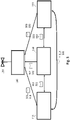
- FIG. 1 shows the structure of the distributed real-time computer system for controlling a technical device, for example a technical installation or a machine, such as a robot or a vehicle, in particular a motor vehicle.
- a technical device for example a technical installation or a machine, such as a robot or a vehicle, in particular a motor vehicle.
- the real-time computer system includes, as in 1 shown, subsystems 100, 110, 120, 130, wherein each subsystem is a fault containment unit and the subsystems are preferably arranged in a hierarchy.
- the real-time computer system also includes a time server 210, which is outside of the hierarchy that may be implemented.
- a global time is implemented in the real-time computer system in a known manner, or by means of the time server 210, by means of which the subsystems 100, 110, 120, 130 are time-synchronized.
- the time axis is divided into time slices, which are time segments of the same duration that preferably follow one another directly, with these time slices being synchronized with one another for all subsystems via the global time, so that a time slice considered in each case begins and ends at the same time for each of the subsystems.
- FDSS fault-tolerant decision subsystem
- NPSS Normal Processing Subsystem
- MSS Monitor Subsystem
- CEHSS Critical Event Handling Subsystem
- the Fault-Tolerant Decision Subsystem (FTDSS) 100 is a secure subsystem, ie it contains simple software running on fault-tolerant hardware. It is assumed that a safe subsystem fulfills the given reliability requirements, depending on the specific application, as described above.
- the data processing subsystems 110, 120, 130 may be insecure subsystems, ie they may contain complex software running on non-fault tolerant hardware. It is assumed that a complex software system is developed and validated according to ASIL B and that the mean time (MTTF) until an error occurs is 10 -4 hours in operation. It cannot be ruled out that a Byzantine error occurs in an insecure subsystem.
- MTTF mean time
- the normal processing subsystem (NPSS) 110 observes the environment with sensors 160, preferably its own, builds up an environmental model and calculates a set of setpoint values for the actuators 150 in normal operation.
- the target values that the subsystem 110 has calculated are sent in a message 111 to the fault-tolerant decision subsystem (FTDSS) 100 and in a message 112 to the monitor subsystem (MSS) 120 .
- FDSS fault-tolerant decision subsystem
- MSS monitor subsystem
- the subsystem 110 recognizes that the assumptions about normal operation have been violated, it aborts a running process and brings the technical device into a safe state.
- an operator for example the driver of a motor vehicle, can be informed about this and, if necessary, control can be handed over to him.
- the critical event handling subsystem (CEHSS) 130 observes the environment with sensors 160, preferably its own, builds its own environmental model with diverse software and calculates a set of setpoint values for the actuators 150 in abnormal operation. It sends these setpoints in a message 131 to the Fault-Tolerant Decision Subsystem (FTDSS) 100.
- FDSS Fault-Tolerant Decision Subsystem
- the Fault-Tolerant Decision Subsystem (FTDSS) 100 receives the messages 111, 131 with the target values for normal and abnormal operation and sends these target values in a message 102 to the Monitor Subsystem (MSS) 120.
- MSS Monitor Subsystem
- the monitor subsystem (MSS) 120 checks in each time slice whether the set of setpoints for normal operation, which it received directly from the normal processing subsystem (NPSS) 110 in the message 112 , with an environmental model from the MSS 120 was calculated on the basis of sensor data determined with sensors 160 using diverse software, is compatible and ensures safe guidance of the technical device under normal conditions.
- NPSS normal processing subsystem
- An environmental model is, for example, a digital data structure that, at a given point in time, represents an image of the characteristics of the environment of a technical device that are essential for the specified task.
- An example of an environmental model is the description of a street and the objects on the street at the selected point in time.
- the monitor subsystem (MSS) 120 also checks whether the set of setpoints that it receives directly from the normal processing subsystem (NPSS) 110 in the message 112 is identical to the corresponding set of setpoints that it receives from the normal processing subsystem ( NPSS) 110 via the Fault-Tolerant Decision Subsystem (FTDSS) 100 in the message 102 to the Monitor Subsystem (MSS) 120 was sent.
- NPSS normal processing subsystem
- FDSS Fault-Tolerant Decision Subsystem
- NPSS Normal-Processing Subsystem
- MSS Monitor Subsystem
- FDSS Fault Tolerant Decision Subsystem
- the monitor subsystem (MSS) 120 If both checks performed by the monitor subsystem (MSS) 120 are positive, the correctness indicator-1 is set to the value TRUE. If one of the two checks is negative, the correctness indicator 1 is set to the value FALSE. Subsequent to the check, the Monitor Subsystem (MSS) 120 sends the Correctness Indicator-1 in a message 121 to the Fault-Tolerant Decision Subsystem (FTDSS) 100.
- FDSS Fault-Tolerant Decision Subsystem
- the Fault-Tolerant Decision Subsystem (FTDSS) 100 decides as follows in each time slice: In the event that the correctness indicator-1 contains the value TRUE, the set of setpoints for normal operation is sent in the message 101 to the actuators 150 , im In the event that the correctness indicator-1 contains the value FALSE or that the expected message 121 with the correctness indicator-1 is absent, the set of target values for the abnormal operation is forwarded to the actuators 150 in the message 101 , and from this point in time in the following time slices only target values for the abnormal operation forwarded to the actuators 150 until the technical device has arrived in a safe state. The absence of the expected message 121 with the correctness indicator 1 is an indicator for the fail-silent failure of the monitor subsystem (MSS) 120.
- MSS monitor subsystem
- the Fault-Tolerant Decision Subsystem (FTDSS) 100 includes software that is particularly simple and can be implemented without the support of operating systems. This is advantageous because experience has shown that operating systems are complex and not free from design errors [Cho01].
- the Monitor Subsystem (MSS) 120 must also check in each time slice whether the set of setpoints for abnormal operation, which it receives from the Critical Event Handling Subsystem (CEHSS) 130 by means of messages 131, 102 , with the environmental model based on the Was calculated by the MSS on the basis of the sensor data of the sensors 160 of the MSS, is compatible and ensures reliable management of the process in abnormal operation. If this is the case, the monitor subsystem (MSS) 120 sets another correctness indicator, the correctness indicator 2, to the value TRUE, and if this is not the case, or if the MSS 120 does not receive a message from the CEHSS 130 in a time slice was received, the correctness indicator 2 is set to the value FALSE.
- the transmission of the setpoints for the abnormal operation via the detour with the messages 131, 102 via the FTDSS 100 is necessary in order to rule out a byzantine error in the critical event handling subsystem (CEHSS) 130 .
- CEHSS critical event handling subsystem
- the monitor subsystem (MSS) 120 sends the value of the correctness indicator 2 or the correctness indicator 2 to the normal processing subsystem (NPSS) 110 with a message 122, so that the normal processing subsystem (NPSS) 110 can be informed whether an error has occurred in the Critical Event Handling Subsystem (CEHSS) 130 or this subsystem has failed due to a fail-silent error.
- the normal processing subsystem (NPSS) 110 checks whether the correctness indicator 2 received from the monitor subsystem (MSS) 120 has the value FALSE, and if this is the case, the technical device is activated by the normal processing subsystem (NPSS) 110 into a safe state.
- each of the data processing subsystems 110, 120, 130 carries out an analysis of the sensor data, the fusion of the sensor data from the sensors 160 and/or the definition of trajectories using diverse software. This reduces the likelihood of the same software error occurring in multiple subsystems.
- a trajectory is, for example, a path that the technical device can execute over time in order to fulfill the specified task.
- the characteristics of the trajectories of a device depend on the construction of the device, the given task and the current environmental conditions. For example, a possible path that a vehicle can take under the given environmental conditions to reach its destination is called a trajectory.
- a trajectory can also be described as the chronological sequence of target values.
- each of the data processing subsystems 110, 120, 130 has its own set of sensors 160 . This prevents a fault in one sensor from leading to a correlated failure of several subsystems.
- the normal processing subsystem (NPSS) 110 can send the planned trajectory for normal operation in the message 112 to the monitor subsystem (MSS) 120 in each time slice, in addition to the set of setpoint values, in order to give the monitor subsystem (MSS) 120 the opportunity to give to check the planned trajectories.
- the Fault-Tolerant Decision Subsystem, FTDSS, 100 sends the setpoint values forwarded to the actuators 150 in messages 401, 402 to the NPSS 110 and to the MSS 120 in each time slice. If the NPSS 110 and/or the MSS 120 due to a Checking the setpoints contained in the messages 401, 402 determine that the FTDSS 100 has forwarded the setpoints for the abnormal operation to the actuators 150 , a restart of the MSS 120 and the NPSS 110 is triggered.
- CEHSS 130 informs FTDSS 100 whether the technical device is in a safe state.
- the FTDSS 100 again passes the set points received from the NPSS 110 to the actuators for normal operation.
- both the NPSS 110 and the MSS 120 are set up to initiate their own restart.
- the NPSS 110 and the MSS 120 each have a watchdog that can trigger the restart of the respective data processing subsystem 110, 120 .
- the CEHSS 130 preferably also has a watchdog which can trigger a restart of the CEHSS 130 .
- time server 210 shows a time server 210 as it would appear in a real-time computer system 1 can be provided, for example, which periodically sends synchronization messages 211 to the subsystems 100, 110, 120, 130 for synchronizing the clocks of the subsystems. It is advantageous if the time server 210 is designed to be fault-tolerant.
- each of the subsystems 100, 110, 120, 130, 210 has a has independent power supply (e.g. by its own battery).
Landscapes
- Engineering & Computer Science (AREA)
- Theoretical Computer Science (AREA)
- Physics & Mathematics (AREA)
- General Engineering & Computer Science (AREA)
- General Physics & Mathematics (AREA)
- Software Systems (AREA)
- Quality & Reliability (AREA)
- Computing Systems (AREA)
- Mathematical Physics (AREA)
- Computer Security & Cryptography (AREA)
- Safety Devices In Control Systems (AREA)
- Hardware Redundancy (AREA)
- Diaphragms For Electromechanical Transducers (AREA)
- Manufacture, Treatment Of Glass Fibers (AREA)
- Heating, Cooling, Or Curing Plastics Or The Like In General (AREA)
Priority Applications (3)
| Application Number | Priority Date | Filing Date | Title |
|---|---|---|---|
| EP21153401.1A EP4033360B1 (fr) | 2021-01-26 | 2021-01-26 | Procédé de commande et de redémarrage automatique d'un dispositif technique |
| US17/540,564 US11662764B2 (en) | 2021-01-26 | 2021-12-02 | Method for controlling and automatically restarting a technical apparatus |
| CN202210090926.9A CN114791830B (zh) | 2021-01-26 | 2022-01-26 | 用于控制和自动重启技术装置的方法 |
Applications Claiming Priority (1)
| Application Number | Priority Date | Filing Date | Title |
|---|---|---|---|
| EP21153401.1A EP4033360B1 (fr) | 2021-01-26 | 2021-01-26 | Procédé de commande et de redémarrage automatique d'un dispositif technique |
Publications (2)
| Publication Number | Publication Date |
|---|---|
| EP4033360A1 true EP4033360A1 (fr) | 2022-07-27 |
| EP4033360B1 EP4033360B1 (fr) | 2023-03-01 |
Family
ID=74285206
Family Applications (1)
| Application Number | Title | Priority Date | Filing Date |
|---|---|---|---|
| EP21153401.1A Active EP4033360B1 (fr) | 2021-01-26 | 2021-01-26 | Procédé de commande et de redémarrage automatique d'un dispositif technique |
Country Status (3)
| Country | Link |
|---|---|
| US (1) | US11662764B2 (fr) |
| EP (1) | EP4033360B1 (fr) |
| CN (1) | CN114791830B (fr) |
Cited By (1)
| Publication number | Priority date | Publication date | Assignee | Title |
|---|---|---|---|---|
| EP4455812A1 (fr) * | 2023-04-25 | 2024-10-30 | TTTech Computertechnik Aktiengesellschaft | Système de commande et procédé de commande sécurisée d'une installation technique |
Citations (4)
| Publication number | Priority date | Publication date | Assignee | Title |
|---|---|---|---|---|
| US5513319A (en) | 1993-07-02 | 1996-04-30 | Dell Usa, L.P. | Watchdog timer for computer system reset |
| EP3176696A1 (fr) * | 2015-12-02 | 2017-06-07 | Fts Computertechnik Gmbh | Procédé de réalisation et d'exécution d'une application complexe en temps réel |
| EP3376330A1 (fr) * | 2017-03-17 | 2018-09-19 | TTTech Computertechnik AG | Procédé tolérant aux pannes destiné à détecter des pannes dans un système électronique pour la commande d'un objet contrôlé |
| EP3557356A1 (fr) * | 2018-04-16 | 2019-10-23 | TTTech Auto AG | Procédé et système d'automatisation permettant le fonctionnement automatique sûr d'une machine ou d'un véhicule |
Family Cites Families (1)
| Publication number | Priority date | Publication date | Assignee | Title |
|---|---|---|---|---|
| DE102012024818A1 (de) * | 2012-03-06 | 2013-09-12 | Conti Temic Microelectronic Gmbh | Verfahren zur Verbesserung der funktionalen Sicherheit und Steigerung der Verfügbarkeit eines elektronischen Regelungssystems sowie ein elektronisches Regelungssystem |
-
2021
- 2021-01-26 EP EP21153401.1A patent/EP4033360B1/fr active Active
- 2021-12-02 US US17/540,564 patent/US11662764B2/en active Active
-
2022
- 2022-01-26 CN CN202210090926.9A patent/CN114791830B/zh active Active
Patent Citations (4)
| Publication number | Priority date | Publication date | Assignee | Title |
|---|---|---|---|---|
| US5513319A (en) | 1993-07-02 | 1996-04-30 | Dell Usa, L.P. | Watchdog timer for computer system reset |
| EP3176696A1 (fr) * | 2015-12-02 | 2017-06-07 | Fts Computertechnik Gmbh | Procédé de réalisation et d'exécution d'une application complexe en temps réel |
| EP3376330A1 (fr) * | 2017-03-17 | 2018-09-19 | TTTech Computertechnik AG | Procédé tolérant aux pannes destiné à détecter des pannes dans un système électronique pour la commande d'un objet contrôlé |
| EP3557356A1 (fr) * | 2018-04-16 | 2019-10-23 | TTTech Auto AG | Procédé et système d'automatisation permettant le fonctionnement automatique sûr d'une machine ou d'un véhicule |
Non-Patent Citations (6)
| Title |
|---|
| "Definition von einem byzantinischen Fehler", WIKIPEDIA, Retrieved from the Internet <URL:https://de.wikipedia.org/wiki/ByzantinischerFehler> |
| "NASA Study on Flight Software Complexity. Final Report", 2009, JET PROPULSION LABORATORY |
| AVIZIENIS, A: "The N-Version Approach to Fault-Tolerant Systems", IEEE TRANS. ON SOFTWARE ENGINEERING, vol. 11, no. 12, 1985, pages 1491 - 1501, XP008063631 |
| CHOU, A. ET AL.: "An Empirical Study of Operating System Errors", PROC. OF THE ACM SOPS 2001, 2001, pages 73 - 88 |
| CONSTANTINESCU,C.: "Impact of deep submicron technology on dependability of VLSI circuits", PROCEEDINGS INTERNATIONAL CONFERENCE ON DEPENDABLE SYSTEMS AND NETWORKS, WASHINGTON, DC, USA, 2002, pages 205 - 209, XP010600298, DOI: 10.1109/DSN.2002.1028901 |
| KOPETZ, H: "Real-Time Systems-Design Principles for Distributed Embedded Applications", 2011, SPRINGER VERLAG |
Cited By (1)
| Publication number | Priority date | Publication date | Assignee | Title |
|---|---|---|---|---|
| EP4455812A1 (fr) * | 2023-04-25 | 2024-10-30 | TTTech Computertechnik Aktiengesellschaft | Système de commande et procédé de commande sécurisée d'une installation technique |
Also Published As
| Publication number | Publication date |
|---|---|
| CN114791830A (zh) | 2022-07-26 |
| US20220236762A1 (en) | 2022-07-28 |
| EP4033360B1 (fr) | 2023-03-01 |
| CN114791830B (zh) | 2024-05-03 |
| US11662764B2 (en) | 2023-05-30 |
Similar Documents
| Publication | Publication Date | Title |
|---|---|---|
| EP2359204B1 (fr) | Système de maintenance central adaptatif et procédé de planification d'opérations de maintenance de systèmes | |
| DE69812763T2 (de) | In Situ-System und Verfahren zur autonomen Fehlererkennung, -Isolierung und Korrektur in Raumfahrzeugen | |
| DE69228803T2 (de) | Wartungs-vorrichtung und verfahren ausgelöst durch wissenbasiertemaschine | |
| EP2817682B1 (fr) | Procédé permettant un fonctionnement à sécurité intégrée d'un système de commande de processus à l'aide de dispositifs de commande redondants | |
| EP2972607A1 (fr) | Procédé de traitement d'erreurs dans une unité de commande centrale et unité de commande | |
| EP3211533B1 (fr) | Architecture de système tolérant aux pannes destinée à commander une installation physique, en particulier une machine ou un véhicule automobile | |
| DE19919504A1 (de) | Triebwerksregler, Triebwerk und Verfahren zum Regeln eines Triebwerks | |
| WO2022268270A1 (fr) | Dispositif de commande et système d'assistance pour un véhicule | |
| EP1231537A1 (fr) | Mise en service automatique d'un groupe d'ordinateurs après une erreur corrigible | |
| EP4033360B1 (fr) | Procédé de commande et de redémarrage automatique d'un dispositif technique | |
| EP3557356A1 (fr) | Procédé et système d'automatisation permettant le fonctionnement automatique sûr d'une machine ou d'un véhicule | |
| EP4009121B1 (fr) | Procédé de commande d'un dispositif technique | |
| EP3020162B1 (fr) | Déduplication sémantique | |
| EP3486825A1 (fr) | Procédé et dispositif de détermination assistée par ordinateur d'une gravité d'un non-respect de l'intégrité constaté | |
| DE3642851A1 (de) | Fehlertolerantes rechensystem und verfahren zum erkennen, lokalisieren und eliminieren von fehlerhaften einheiten in einem solchen system | |
| EP2864845A1 (fr) | Reconfiguration automatisée d'un circuit de réglage à événements discrets | |
| DE102016217762A1 (de) | Überwachung von sicherheitsrelevanten Funktionen durch eine nicht sichere Recheneinheit | |
| EP4715598A1 (fr) | Système et procédé de compensation de défaillances de composants | |
| DE102019109353B3 (de) | Dynamische Anomalieerkennung und -behandlung | |
| DE102023004853A1 (de) | Verfahren zur Fehlerbehebung von sicherheitsrelevanten mikrocontrollergesteuerten Anwendungen in einem Kraftfahrzeug, sicherheitsrelevanten Computerprogrammprodukt, sicherheitsrelevanten Mikrocontroller, sowie Kraftfahrzeug | |
| EP4517531A1 (fr) | Procédé pour exécuter un processus technique en mode de contrôle et mode de réparation | |
| EP4506766A1 (fr) | Redondance basée sur un jumeau numérique à couplage étroit | |
| WO2026057199A1 (fr) | Surveillance d'un système technique comprenant une pluralité de sous-systèmes | |
| DE102013201831A1 (de) | Verfahren und Vorrichtung zum Analysieren von Ereignissen in einem System | |
| DE102021126122A1 (de) | Fehlerdiagnoseschaltung und Verfahren zum Betreiben eines Gerätes |
Legal Events
| Date | Code | Title | Description |
|---|---|---|---|
| PUAI | Public reference made under article 153(3) epc to a published international application that has entered the european phase |
Free format text: ORIGINAL CODE: 0009012 |
|
| STAA | Information on the status of an ep patent application or granted ep patent |
Free format text: STATUS: THE APPLICATION HAS BEEN PUBLISHED |
|
| STAA | Information on the status of an ep patent application or granted ep patent |
Free format text: STATUS: REQUEST FOR EXAMINATION WAS MADE |
|
| AK | Designated contracting states |
Kind code of ref document: A1 Designated state(s): AL AT BE BG CH CY CZ DE DK EE ES FI FR GB GR HR HU IE IS IT LI LT LU LV MC MK MT NL NO PL PT RO RS SE SI SK SM TR |
|
| 17P | Request for examination filed |
Effective date: 20220714 |
|
| RBV | Designated contracting states (corrected) |
Designated state(s): AL AT BE BG CH CY CZ DE DK EE ES FI FR GB GR HR HU IE IS IT LI LT LU LV MC MK MT NL NO PL PT RO RS SE SI SK SM TR |
|
| GRAP | Despatch of communication of intention to grant a patent |
Free format text: ORIGINAL CODE: EPIDOSNIGR1 |
|
| STAA | Information on the status of an ep patent application or granted ep patent |
Free format text: STATUS: GRANT OF PATENT IS INTENDED |
|
| RIC1 | Information provided on ipc code assigned before grant |
Ipc: G06F 11/20 20060101ALN20220830BHEP Ipc: G06F 11/14 20060101ALN20220830BHEP Ipc: G06F 11/30 20060101ALN20220830BHEP Ipc: G06F 11/07 20060101AFI20220830BHEP |
|
| INTG | Intention to grant announced |
Effective date: 20220923 |
|
| GRAS | Grant fee paid |
Free format text: ORIGINAL CODE: EPIDOSNIGR3 |
|
| GRAA | (expected) grant |
Free format text: ORIGINAL CODE: 0009210 |
|
| STAA | Information on the status of an ep patent application or granted ep patent |
Free format text: STATUS: THE PATENT HAS BEEN GRANTED |
|
| AK | Designated contracting states |
Kind code of ref document: B1 Designated state(s): AL AT BE BG CH CY CZ DE DK EE ES FI FR GB GR HR HU IE IS IT LI LT LU LV MC MK MT NL NO PL PT RO RS SE SI SK SM TR |
|
| REG | Reference to a national code |
Ref country code: GB Ref legal event code: FG4D Free format text: NOT ENGLISH |
|
| REG | Reference to a national code |
Ref country code: CH Ref legal event code: EP Ref country code: AT Ref legal event code: REF Ref document number: 1551472 Country of ref document: AT Kind code of ref document: T Effective date: 20230315 |
|
| REG | Reference to a national code |
Ref country code: DE Ref legal event code: R096 Ref document number: 502021000459 Country of ref document: DE |
|
| REG | Reference to a national code |
Ref country code: IE Ref legal event code: FG4D Free format text: LANGUAGE OF EP DOCUMENT: GERMAN |
|
| REG | Reference to a national code |
Ref country code: LT Ref legal event code: MG9D |
|
| REG | Reference to a national code |
Ref country code: NL Ref legal event code: MP Effective date: 20230301 |
|
| PG25 | Lapsed in a contracting state [announced via postgrant information from national office to epo] |
Ref country code: RS Free format text: LAPSE BECAUSE OF FAILURE TO SUBMIT A TRANSLATION OF THE DESCRIPTION OR TO PAY THE FEE WITHIN THE PRESCRIBED TIME-LIMIT Effective date: 20230301 Ref country code: NO Free format text: LAPSE BECAUSE OF FAILURE TO SUBMIT A TRANSLATION OF THE DESCRIPTION OR TO PAY THE FEE WITHIN THE PRESCRIBED TIME-LIMIT Effective date: 20230601 Ref country code: LV Free format text: LAPSE BECAUSE OF FAILURE TO SUBMIT A TRANSLATION OF THE DESCRIPTION OR TO PAY THE FEE WITHIN THE PRESCRIBED TIME-LIMIT Effective date: 20230301 Ref country code: LT Free format text: LAPSE BECAUSE OF FAILURE TO SUBMIT A TRANSLATION OF THE DESCRIPTION OR TO PAY THE FEE WITHIN THE PRESCRIBED TIME-LIMIT Effective date: 20230301 Ref country code: HR Free format text: LAPSE BECAUSE OF FAILURE TO SUBMIT A TRANSLATION OF THE DESCRIPTION OR TO PAY THE FEE WITHIN THE PRESCRIBED TIME-LIMIT Effective date: 20230301 Ref country code: ES Free format text: LAPSE BECAUSE OF FAILURE TO SUBMIT A TRANSLATION OF THE DESCRIPTION OR TO PAY THE FEE WITHIN THE PRESCRIBED TIME-LIMIT Effective date: 20230301 |
|
| PG25 | Lapsed in a contracting state [announced via postgrant information from national office to epo] |
Ref country code: SE Free format text: LAPSE BECAUSE OF FAILURE TO SUBMIT A TRANSLATION OF THE DESCRIPTION OR TO PAY THE FEE WITHIN THE PRESCRIBED TIME-LIMIT Effective date: 20230301 Ref country code: PL Free format text: LAPSE BECAUSE OF FAILURE TO SUBMIT A TRANSLATION OF THE DESCRIPTION OR TO PAY THE FEE WITHIN THE PRESCRIBED TIME-LIMIT Effective date: 20230301 Ref country code: NL Free format text: LAPSE BECAUSE OF FAILURE TO SUBMIT A TRANSLATION OF THE DESCRIPTION OR TO PAY THE FEE WITHIN THE PRESCRIBED TIME-LIMIT Effective date: 20230301 Ref country code: GR Free format text: LAPSE BECAUSE OF FAILURE TO SUBMIT A TRANSLATION OF THE DESCRIPTION OR TO PAY THE FEE WITHIN THE PRESCRIBED TIME-LIMIT Effective date: 20230602 Ref country code: FI Free format text: LAPSE BECAUSE OF FAILURE TO SUBMIT A TRANSLATION OF THE DESCRIPTION OR TO PAY THE FEE WITHIN THE PRESCRIBED TIME-LIMIT Effective date: 20230301 |
|
| PG25 | Lapsed in a contracting state [announced via postgrant information from national office to epo] |
Ref country code: SM Free format text: LAPSE BECAUSE OF FAILURE TO SUBMIT A TRANSLATION OF THE DESCRIPTION OR TO PAY THE FEE WITHIN THE PRESCRIBED TIME-LIMIT Effective date: 20230301 Ref country code: RO Free format text: LAPSE BECAUSE OF FAILURE TO SUBMIT A TRANSLATION OF THE DESCRIPTION OR TO PAY THE FEE WITHIN THE PRESCRIBED TIME-LIMIT Effective date: 20230301 Ref country code: PT Free format text: LAPSE BECAUSE OF FAILURE TO SUBMIT A TRANSLATION OF THE DESCRIPTION OR TO PAY THE FEE WITHIN THE PRESCRIBED TIME-LIMIT Effective date: 20230703 Ref country code: EE Free format text: LAPSE BECAUSE OF FAILURE TO SUBMIT A TRANSLATION OF THE DESCRIPTION OR TO PAY THE FEE WITHIN THE PRESCRIBED TIME-LIMIT Effective date: 20230301 Ref country code: CZ Free format text: LAPSE BECAUSE OF FAILURE TO SUBMIT A TRANSLATION OF THE DESCRIPTION OR TO PAY THE FEE WITHIN THE PRESCRIBED TIME-LIMIT Effective date: 20230301 |
|
| PG25 | Lapsed in a contracting state [announced via postgrant information from national office to epo] |
Ref country code: SK Free format text: LAPSE BECAUSE OF FAILURE TO SUBMIT A TRANSLATION OF THE DESCRIPTION OR TO PAY THE FEE WITHIN THE PRESCRIBED TIME-LIMIT Effective date: 20230301 Ref country code: IS Free format text: LAPSE BECAUSE OF FAILURE TO SUBMIT A TRANSLATION OF THE DESCRIPTION OR TO PAY THE FEE WITHIN THE PRESCRIBED TIME-LIMIT Effective date: 20230701 |
|
| REG | Reference to a national code |
Ref country code: DE Ref legal event code: R097 Ref document number: 502021000459 Country of ref document: DE |
|
| PLBE | No opposition filed within time limit |
Free format text: ORIGINAL CODE: 0009261 |
|
| STAA | Information on the status of an ep patent application or granted ep patent |
Free format text: STATUS: NO OPPOSITION FILED WITHIN TIME LIMIT |
|
| PG25 | Lapsed in a contracting state [announced via postgrant information from national office to epo] |
Ref country code: SI Free format text: LAPSE BECAUSE OF FAILURE TO SUBMIT A TRANSLATION OF THE DESCRIPTION OR TO PAY THE FEE WITHIN THE PRESCRIBED TIME-LIMIT Effective date: 20230301 Ref country code: DK Free format text: LAPSE BECAUSE OF FAILURE TO SUBMIT A TRANSLATION OF THE DESCRIPTION OR TO PAY THE FEE WITHIN THE PRESCRIBED TIME-LIMIT Effective date: 20230301 |
|
| 26N | No opposition filed |
Effective date: 20231204 |
|
| PG25 | Lapsed in a contracting state [announced via postgrant information from national office to epo] |
Ref country code: IT Free format text: LAPSE BECAUSE OF FAILURE TO SUBMIT A TRANSLATION OF THE DESCRIPTION OR TO PAY THE FEE WITHIN THE PRESCRIBED TIME-LIMIT Effective date: 20230301 |
|
| PG25 | Lapsed in a contracting state [announced via postgrant information from national office to epo] |
Ref country code: MC Free format text: LAPSE BECAUSE OF FAILURE TO SUBMIT A TRANSLATION OF THE DESCRIPTION OR TO PAY THE FEE WITHIN THE PRESCRIBED TIME-LIMIT Effective date: 20230301 |
|
| PG25 | Lapsed in a contracting state [announced via postgrant information from national office to epo] |
Ref country code: MC Free format text: LAPSE BECAUSE OF FAILURE TO SUBMIT A TRANSLATION OF THE DESCRIPTION OR TO PAY THE FEE WITHIN THE PRESCRIBED TIME-LIMIT Effective date: 20230301 |
|
| REG | Reference to a national code |
Ref country code: CH Ref legal event code: PL |
|
| PG25 | Lapsed in a contracting state [announced via postgrant information from national office to epo] |
Ref country code: LU Free format text: LAPSE BECAUSE OF NON-PAYMENT OF DUE FEES Effective date: 20240126 |
|
| PG25 | Lapsed in a contracting state [announced via postgrant information from national office to epo] |
Ref country code: LU Free format text: LAPSE BECAUSE OF NON-PAYMENT OF DUE FEES Effective date: 20240126 |
|
| PG25 | Lapsed in a contracting state [announced via postgrant information from national office to epo] |
Ref country code: BE Free format text: LAPSE BECAUSE OF NON-PAYMENT OF DUE FEES Effective date: 20240131 |
|
| PG25 | Lapsed in a contracting state [announced via postgrant information from national office to epo] |
Ref country code: CH Free format text: LAPSE BECAUSE OF NON-PAYMENT OF DUE FEES Effective date: 20240131 |
|
| PG25 | Lapsed in a contracting state [announced via postgrant information from national office to epo] |
Ref country code: CH Free format text: LAPSE BECAUSE OF NON-PAYMENT OF DUE FEES Effective date: 20240131 Ref country code: BE Free format text: LAPSE BECAUSE OF NON-PAYMENT OF DUE FEES Effective date: 20240131 |
|
| REG | Reference to a national code |
Ref country code: BE Ref legal event code: MM Effective date: 20240131 |
|
| PG25 | Lapsed in a contracting state [announced via postgrant information from national office to epo] |
Ref country code: BG Free format text: LAPSE BECAUSE OF FAILURE TO SUBMIT A TRANSLATION OF THE DESCRIPTION OR TO PAY THE FEE WITHIN THE PRESCRIBED TIME-LIMIT Effective date: 20230301 |
|
| PG25 | Lapsed in a contracting state [announced via postgrant information from national office to epo] |
Ref country code: BG Free format text: LAPSE BECAUSE OF FAILURE TO SUBMIT A TRANSLATION OF THE DESCRIPTION OR TO PAY THE FEE WITHIN THE PRESCRIBED TIME-LIMIT Effective date: 20230301 |
|
| PG25 | Lapsed in a contracting state [announced via postgrant information from national office to epo] |
Ref country code: IE Free format text: LAPSE BECAUSE OF NON-PAYMENT OF DUE FEES Effective date: 20240126 |
|
| PG25 | Lapsed in a contracting state [announced via postgrant information from national office to epo] |
Ref country code: IE Free format text: LAPSE BECAUSE OF NON-PAYMENT OF DUE FEES Effective date: 20240126 |
|
| PGFP | Annual fee paid to national office [announced via postgrant information from national office to epo] |
Ref country code: AT Payment date: 20250417 Year of fee payment: 5 |
|
| PG25 | Lapsed in a contracting state [announced via postgrant information from national office to epo] |
Ref country code: CY Free format text: LAPSE BECAUSE OF FAILURE TO SUBMIT A TRANSLATION OF THE DESCRIPTION OR TO PAY THE FEE WITHIN THE PRESCRIBED TIME-LIMIT; INVALID AB INITIO Effective date: 20210126 |
|
| PG25 | Lapsed in a contracting state [announced via postgrant information from national office to epo] |
Ref country code: HU Free format text: LAPSE BECAUSE OF FAILURE TO SUBMIT A TRANSLATION OF THE DESCRIPTION OR TO PAY THE FEE WITHIN THE PRESCRIBED TIME-LIMIT; INVALID AB INITIO Effective date: 20210126 |
|
| PG25 | Lapsed in a contracting state [announced via postgrant information from national office to epo] |
Ref country code: TR Free format text: LAPSE BECAUSE OF FAILURE TO SUBMIT A TRANSLATION OF THE DESCRIPTION OR TO PAY THE FEE WITHIN THE PRESCRIBED TIME-LIMIT Effective date: 20230301 |
|
| PGFP | Annual fee paid to national office [announced via postgrant information from national office to epo] |
Ref country code: GB Payment date: 20251220 Year of fee payment: 6 |
|
| PGFP | Annual fee paid to national office [announced via postgrant information from national office to epo] |
Ref country code: FR Payment date: 20251217 Year of fee payment: 6 |
|
| PGFP | Annual fee paid to national office [announced via postgrant information from national office to epo] |
Ref country code: DE Payment date: 20251217 Year of fee payment: 6 |