EP4037293A1 - Résilience des fonctions de service réseau - Google Patents
Résilience des fonctions de service réseau Download PDFInfo
- Publication number
- EP4037293A1 EP4037293A1 EP22151140.5A EP22151140A EP4037293A1 EP 4037293 A1 EP4037293 A1 EP 4037293A1 EP 22151140 A EP22151140 A EP 22151140A EP 4037293 A1 EP4037293 A1 EP 4037293A1
- Authority
- EP
- European Patent Office
- Prior art keywords
- function
- service
- network
- charging
- request
- Prior art date
- Legal status (The legal status is an assumption and is not a legal conclusion. Google has not performed a legal analysis and makes no representation as to the accuracy of the status listed.)
- Pending
Links
Images




Classifications
-
- H—ELECTRICITY
- H04—ELECTRIC COMMUNICATION TECHNIQUE
- H04L—TRANSMISSION OF DIGITAL INFORMATION, e.g. TELEGRAPHIC COMMUNICATION
- H04L67/00—Network arrangements or protocols for supporting network services or applications
- H04L67/01—Protocols
- H04L67/10—Protocols in which an application is distributed across nodes in the network
- H04L67/1001—Protocols in which an application is distributed across nodes in the network for accessing one among a plurality of replicated servers
- H04L67/10015—Access to distributed or replicated servers, e.g. using brokers
-
- H—ELECTRICITY
- H04—ELECTRIC COMMUNICATION TECHNIQUE
- H04L—TRANSMISSION OF DIGITAL INFORMATION, e.g. TELEGRAPHIC COMMUNICATION
- H04L67/00—Network arrangements or protocols for supporting network services or applications
- H04L67/50—Network services
- H04L67/51—Discovery or management thereof, e.g. service location protocol [SLP] or web services
-
- H—ELECTRICITY
- H04—ELECTRIC COMMUNICATION TECHNIQUE
- H04L—TRANSMISSION OF DIGITAL INFORMATION, e.g. TELEGRAPHIC COMMUNICATION
- H04L12/00—Data switching networks
- H04L12/02—Details
- H04L12/14—Charging, metering or billing arrangements specially adapted for data communications, e.g. authentication, authorisation and accounting [AAA] framework
- H04L12/1425—Charging, metering or billing arrangements specially adapted for data communications, e.g. authentication, authorisation and accounting [AAA] framework involving dedicated fields in the data packet for billing purposes
-
- G—PHYSICS
- G06—COMPUTING OR CALCULATING; COUNTING
- G06F—ELECTRIC DIGITAL DATA PROCESSING
- G06F11/00—Error detection; Error correction; Monitoring
- G06F11/07—Responding to the occurrence of a fault, e.g. fault tolerance
- G06F11/14—Error detection or correction of the data by redundancy in operations
- G06F11/1402—Saving, restoring, recovering or retrying
- G06F11/1415—Saving, restoring, recovering or retrying at system level
- G06F11/142—Reconfiguring to eliminate the error
- G06F11/1423—Reconfiguring to eliminate the error by reconfiguration of paths
-
- H—ELECTRICITY
- H04—ELECTRIC COMMUNICATION TECHNIQUE
- H04L—TRANSMISSION OF DIGITAL INFORMATION, e.g. TELEGRAPHIC COMMUNICATION
- H04L67/00—Network arrangements or protocols for supporting network services or applications
- H04L67/50—Network services
- H04L67/56—Provisioning of proxy services
- H04L67/566—Grouping or aggregating service requests, e.g. for unified processing
-
- H—ELECTRICITY
- H04—ELECTRIC COMMUNICATION TECHNIQUE
- H04L—TRANSMISSION OF DIGITAL INFORMATION, e.g. TELEGRAPHIC COMMUNICATION
- H04L69/00—Network arrangements, protocols or services independent of the application payload and not provided for in the other groups of this subclass
- H04L69/40—Network arrangements, protocols or services independent of the application payload and not provided for in the other groups of this subclass for recovering from a failure of a protocol instance or entity, e.g. service redundancy protocols, protocol state redundancy or protocol service redirection
-
- G—PHYSICS
- G06—COMPUTING OR CALCULATING; COUNTING
- G06F—ELECTRIC DIGITAL DATA PROCESSING
- G06F11/00—Error detection; Error correction; Monitoring
- G06F11/07—Responding to the occurrence of a fault, e.g. fault tolerance
- G06F11/16—Error detection or correction of the data by redundancy in hardware
- G06F11/20—Error detection or correction of the data by redundancy in hardware using active fault-masking, e.g. by switching out faulty elements or by switching in spare elements
- G06F11/202—Error detection or correction of the data by redundancy in hardware using active fault-masking, e.g. by switching out faulty elements or by switching in spare elements where processing functionality is redundant
- G06F11/2023—Failover techniques
- G06F11/2028—Failover techniques eliminating a faulty processor or activating a spare
Definitions
- the present disclosure relates to apparatus, methods, and computer programs, and in particular but not exclusively to apparatus, methods and computer programs for network apparatuses.
- a communication system can be seen as a facility that enables communication sessions between two or more entities such as user terminals, access nodes and/or other nodes by providing carriers between the various entities involved in the communications path.
- a communication system can be provided for example by means of a communication network and one or more compatible communication devices.
- the communication sessions may comprise, for example, communication of data for carrying communications such as voice, electronic mail (email), text message, multimedia and/or content data and so on.
- Content may be multicast or uni-cast to communication devices.
- the communication system and associated devices typically operate in accordance with a required standard or specification which sets out what the various entities associated with the system are permitted to do and how that should be achieved. Communication protocols and/or parameters which shall be used for the connection are also typically defined.
- UTRAN 3G radio
- Another example of an architecture that is known is the long-term evolution (LTE) or the Universal Mobile Telecommunications System (UMTS) radio-access technology.
- LTE long-term evolution
- UMTS Universal Mobile Telecommunications System
- Another example communication system is so called 5G system that allows user equipment (UE) or user device to contact a 5G core via e.g. new radio (NR) access technology or via other access technology such as Untrusted access to 5GC or wireline access technology.
- NR new radio
- a network apparatus for a network function comprising: means for, in response to a request from a service consumer, determining a first network service function for providing services to the service consumer; means for determining a second network service function, wherein the second network service function is an alternative or backup network service function to provide the service to the service consumer; and means for providing the service consumer with an identity of the second network service function.
- the first and second network service functions may comprise first and second charging functions.
- the means for determining may comprise means for determining the first and second charging functions.
- the service may comprise a charging service.
- Said means for determining the second charging function may comprise means for sending a charging request for said charging services to the first charging function; and means for receiving, from the first charging function, the identity of the second charging function, and an indication that the second charging function is an alternative charging function for the said charging services.
- Said means for determining the second network service function may comprise means for sending a discovery request for a network service function to a network repository function and means for receiving, from the network repository function, at least the identity of the first network service function, the identity of the second network service function, and an indication that the second network service function is an alternative to the first network service function.
- Said means for providing the service consumer with the identity of the first network service function and the identity of the second network service function may comprise means for inserting the identity of the second network service function into a header of a message; and means for sending the message to the service consumer.
- the second network service function may be explicitly indicated as being a backup network service function to the first network service function in said header.
- Said message may be a charging data response received from the first network service function comprising a first charging function.
- a network apparatus for a service consumer comprising: means for sending a request to a network function for selecting a first network service function to provide charging services to the service consumer; and means for receiving, in response to said request, an identity of a second network service function, wherein the second network service function is an alternative or backup network service function to provide the service to the service consumer.
- the network apparatus may further comprise means for receiving an indication that the first network service function is unable to provide said services to the service consumer; and means for, in response to receiving said indication, directing at least one future request for a service to the second network service function.
- the network function may comprise a Service Communication Proxy.
- the first and second network service functions may comprise first and second charging functions and the service may comprise a charging service.
- a network apparatus for a first network service function comprising: means for receiving a request to provide services to a service consumer; and means for responding to said request with an identity of a second network service function, wherein the second network service function is an alternative or backup network service function to provide the service to the service consumer.
- the identity of the second network service function may be comprised in a header comprising an identity of the first network service function.
- a method for a network apparatus for a network function comprising: in response to a request from a service consumer, determining a first network service function for providing services to the service consumer; determining a second network service function, wherein the second network service function is an alternative or backup network service function to provide the service to the service consumer; and providing the service consumer with an identity of the second network service function.
- a method for a network apparatus for a service consumer comprising: sending a request to a network function for selecting a first network service function to provide services to the service consumer; and receiving, in response to said request, an identity of a second network service function, wherein the second network service function is an alternative or backup network service function to provide the service to the service consumer.
- a computer program product comprising computer code that, when executed by at least one processor of network apparatus for a service consumer, causes the network apparatus to perform: sending a request to a network function for selecting a first network service function to provide services to the service consumer; and receiving, in response to said request, an identity of a second network service function, wherein the second network service function is an alternative or backup network service function to provide the service to the service consumer.
- a network apparatus for a network function, the network apparatus comprising: at least one processor; and at least one memory comprising code that, when executed by the at least one processor, causes the network apparatus to: in response to a request from a service consumer, determine a first network service function for providing services to the service consumer; determine an identity of a second network service function, wherein the second network service function is an alternative or backup network service function to provide the service to the service consumer; and provide the service consumer with the identity of the second network service function.
- Said determining an identity of the second charging function may comprise: sending a charging request for said charging services to the first charging function; and receiving, from the first charging function, the identity of the second charging function, and an indication that the second charging function is an alternative charging function for the said charging services.
- Said providing the service consumer with the identity of the first charging function and the identity of the second charging function may comprise: inserting the identity of the second charging function into a header of a message, the header further comprising the identity of the first charging function; and sending the message to the service consumer.
- the second charging function may be explicitly indicated as being a backup charging function to the first charging function in said header.
- Said message may be a charging data response received from the first charging function.
- the network function may be a Service Communication Proxy.
- the identity of the second charging function may be comprised in a header comprising an identity of the first charging function.
- a network apparatus for a service consumer comprising: at least one processor; and at least one memory comprising code that, when executed by the at least one processor, causes the network apparatus to: send a request to a network function for selecting a first network service function to provide services to the service consumer; and receive, in response to said request, an identity of a second network service function, wherein the second network service function is an alternative or backup network service function to provide a service to the service consumer.
- the network function may be a Service Communication Proxy.
- the service may be a charging service provided by a charging function.
- the identity of a second charging function may be comprised in a header comprising an identity of a first charging function.
- a method for a network apparatus for a network function comprising: in response to a request from a service consumer, selecting a first charging function for providing charging services to the service consumer; determining an identity of a second charging function, wherein the second charging function is an alternative or backup charging function to provide the charging service to the service consumer; and providing the service consumer with the identity of the second charging function.
- a method for a network apparatus for a service consumer comprising: sending a request to a network function for determining a first charging function to provide charging services to the service consumer; and receiving, in response to said request, an identity of a second charging function, wherein the second charging function is an alternative or backup charging function to provide the charging service to the service consumer.
- a method for a first charging function, the method comprising: receiving a request to provide services to a service consumer; and responding to said request with an identity of a second charging function, wherein the second charging function is an alternative or backup charging function to provide the charging service to the service consumer.
- a network apparatus for a service consumer comprising: sending circuitry for sending a request to a network function for selecting a first charging function to provide charging services to the service consumer; and receiving circuitry for receiving, in response to said request, an identity of a second charging function, wherein the second charging function is an alternative or backup charging function to provide the charging service to the service consumer.
- FIG. 1 shows a schematic representation of a 5G system (5GS) 100.
- the 5GS may comprise a user equipment (UE) 102 (which may also be referred to as a communication device or a terminal), a 5G access network (AN) (which may be a 5G Radio Access Network (RAN) or any other type of 5G AN such as a Non-3GPP Interworking Function (N3IWF) /a Trusted Non3GPP Gateway Function (TNGF) for Untrusted / Trusted Non-3GPP access or Wireline Access Gateway Function (W-AGF) for Wireline access) 104, a 5G core (5GC) 106, one or more application functions (AF) 108 and one or more data networks (DN) 110.
- UE user equipment
- AN which may also be referred to as a communication device or a terminal
- AN which may be a 5G Radio Access Network (RAN) or any other type of 5G AN such as a Non-3GPP Interworking Function (N3I
- the 5G RAN may comprise one or more gNodeB (gNB) distributed unit functions connected to one or more gNodeB (gNB) unit functions.
- the RAN may comprise one or more access nodes.
- the 5GC 106 also comprises a network data analytics function (NWDAF) 126.
- NWDAF network data analytics function
- the NWDAF is responsible for providing network analytics information upon request from one or more network functions or apparatus within the network.
- Network functions can also subscribe to the NWDAF 126 to receive information therefrom.
- the NWDAF 126 is also configured to receive and store network information from one or more network functions or apparatus within the network.
- the data collection by the NWDAF 126 may be performed based on at least one subscription to the events provided by the at least one network function.
- An NRF maintains an updated repository of 5G elements available in the operator's network, along with the services provided by each of the elements in the 5G core that are expected to be instantiated, scaled and/or terminated without or minimal manual intervention.
- the NRF maintains a record of available NF instances and their supported services.
- An NF instance may be considered to be an identifiable software instance running on dedicated hardware, or in virtualised platform, e.g on the cloud.
- the NRF allows other NF instances to subscribe and be notified of registrations from NF instances of a given type.
- the NRF may support service discovery, by receipt of Discovery Requests from NF instances and details which NF instances support specific services. Therefore NF Service consumers or Service Communication Proxies (SCP) (which obtain NF services on behalf of another network entity) may discover NF service producers by performing for example, an NF Discovery procedure towards the NRF.
- SCP Service Communication Proxies
- Network Function set and Network Function service set each comprise functionally equivalent and inter-changeable Network Function instances or Network Function services instances. This means that if a Network Function fails or fails to provide a particular service, a replacement may be readily determined from the Network Function set and Network Function service set respectively. This has been supported by functionality comprised in the AMF from 3GPP Rel-15 onwards, and supported by other types of Network Functions from 3GPP Rel-16 onwards.
- the resiliency of Network Function services in 5G Service Based Architecture is also supported by the concept of primary and secondary Charging Function instances or Charging Function service instances (from 3GPP Rel-15 onwards).
- resiliency of Charging Function services can be supported by deploying a pair of primary and secondary Charging Function instances, whereby the secondary Charging Function instance can take over the control of charging for charging sessions supported by the primary Charging Function instance when the latter is no longer reachable or available.
- Resiliency of Charging Function services can be supported by deploying a pair of primary and secondary Charging Function service instances, whereby the secondary Charging Function service instance can take over the control of charging for charging sessions supported by the primary Charging Function service instance when the latter is no longer reachable or available.
- the primary and secondary Charging Function service instances can be part of the same Charging Function instance or different Charging Function instances.
- the Charging Function consumer may be, for example, a Short Message Service Function (SMSF), an SMF, a PCF, or AMF.
- SMSF Short Message Service Function
- SMF Session Management Function
- PCF Packet Control Function
- AMF Access Management Function
- the Charging Function consumer may provide various discovery parameters to the Service and Communication Proxy. Discovery parameters may include, for example the Subscriber Permanent Identity (SUPI) for the subscriber receiving the service, the Charging Function group ID, etc.
- SUPI Subscriber Permanent Identity
- the Service Communication Proxy then performs the Charging Function Discovery with the Network Repository Function using the provided discovery parameters.
- the Service Communication Proxy may then select a specific Charging Function service instance returned by the Network Repository Function for forwarding to the Charging Function consumer. This selection may be based on at least one of a plurality of different factors. For example, the selection may be based on priority, capacity and load of all the candidate Charging Function service instances returned by the Network Repository Function.
- a Charging Function service consumer uses delegated discovery, no means exists to enable the Service Communication Proxy or the Charging Function to return in the service response the identity of the alternate (e.g. secondary) Charging Function instance.
- the Charging Function service consumer would need to re-perform a discovery process.
- the Charging Function service consumer would need to send a new Network Function discovery request towards the Network Repository Function to retrieve the Network Function profile of the Charging Function instance originally selected by the Service Communication Proxy, solely for the purpose of discovering the alternative (e.g. secondary) Charging Function instance registered in the Network Function profile of the Charging Function instance originally selected by the Service Communication Proxy.
- This Information Element is present if the Charging Function service instance serves as a secondary Charging Function instance of another primary Charging Function service instance. When present, it is set to the servicelnstanceld of the primary Charging Function service instance. This Information Element shall be absent if the secondaryChfServicelnstance is present. SecondaryChfS ervicelnstance string C 0..1 This Information Element is present if the Charging Function service instance serves as a primary Charging Function instance of another secondary Charging Function service instance. When present, it is set to the servicelnstanceld of the secondary Charging Function service instance. This Information Element is absent if the primaryChfServiceInstance is present.
- a Charging Function service consumer When a Charging Function service consumer performs Network Repository Function-based Charging Function selection with delegated discovery, the Charging Function service consumer does not know which specific Charging Function service instance has been selected by the Service Communication Proxy. As a result, the Charging Function service consumer is not aware of the ChfServicelnfo corresponding to the Charging Function Service Instance ID selected by Service Communication Proxy. This means that the Charging Function service consumer cannot determine the alternative Charging Function service instance towards which it should attempt to communicate which if it can no longer reach the Charging Function service instance originally selected by the Service Communication Proxy e.g. by sending a Charging Data Request [Update] or Charging Data Request[Terminate] message.
- the Service Communication Proxy or some other network function
- Charging Function to provide the identity of the alternate Charging Function (Service) Instance ID to the Charging Function service Consumer.
- Service Communication Proxy or some other network function
- Charging Function may provide this alternate identifier by, for example, using a new field in a header (or a new header). This header may include the alternate Charging Function instance ID and/or Charging Function service instance ID.
- the new header/header comprising the new information element will be referred to as a 3GPP SBI custom header 3gpp-Sbi-Alternate-Chf-Id in the following. However, it is understood this this is not limiting.
- the 3gpp-Sbi-Alternate-Chf-Id header may be returned by the Charging Function or by the Service Communication Proxy in service responses to the Charging Function service consumers, e.g. during the establishment of a charging session, or e.g. during the lifetime of the charging session if the information about the alternate Charging Function instance or Charging Function service instance has changed.
- the 3gpp-Sbi-Alternate-Chf-Id header may comprise the identity of secondary CHF (Service) Instance.
- the 3gpp-Sbi-Alternate-Chf-Id header may comprise a Network Function Instance ID (as defined in 3GPP TS 29.510).
- the 3gpp-Sbi-Alternate-Chf-Id header may comprise a Network Function Service Instance ID (as defined in 3GPP TS 29.510).
- the 3gpp-Sbi-Alternate-Chf-Id header may be encoded.
- the encoding may follow the augmented Backus-Naur form (ABNF) of encoding, which is defined in IETF RFC 7230.
- ABNF Backus-Naur form
- the 3gpp-Sbi-Alternate-Chf-Id header may comprise the identity of secondary CHF (Service) Instance, and a Network Function Instance ID.
- the 3gpp-Sbi-Alternate-Chf-Id header may not comprise a Network Function Service Instance ID.
- the 3gpp-Sbi-Alternate-Chf-Id header may comprise the identity of secondary CHF (Service) Instance, a Network Function Instance ID, and a Network Function Service Instance ID.
- the header may also indicate whether the Charging Function instance or Charging Function service instance ID included in the header corresponds to the primary or secondary Charging Function instance. This is shown in the following examples.
- the 3gpp-Sbi-Alternate-Chf-Id header may indicate that the Charging Function (service) instance included in the header corresponds to the primary Charging Function (service) instance.
- the 3gpp-Sbi-Alternate-Chf-Id header may comprise the identity of secondary CHF (Service) Instance, a Network Function Instance ID, and an indication that the Network Function is a primary Function.
- the header may comprise a Network Function Service Instance ID.
- the 3gpp-Sbi-Alternate-Chf-Id header may indicate that the Charging Function (service) instance included in the header corresponds to the secondary Charging Function (service) instance.
- the 3gpp-Sbi-Alternate-Chf-Id header may comprise the identity of secondary CHF (Service) Instance, a Network Function Instance ID, and an indication that the Network Function is a secondary Function.
- the header may comprise a Network Function Service Instance ID.
- the charging session may be established towards the primary Charging Function (service) instance by the Service Communication Proxy.
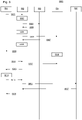
- FIGS 5 and 6 illustrate potential call signalling between network elements.
- Figure 5 shows an example signaling between a Network Function service consumer 501, a Service Communication Proxy 502, a Network Repository Function 503, a first Charging Function 504 and a second Charging Function 505.
- the Service Communication Proxy 502 performs Charging Function Discovery.
- the Service Communication Proxy 502 sends a Discovery Request to the Network Repository Function 503.
- the Network Repository Function responds to the Discovery request of 5003.
- the Service Communication Proxy 502 selects a Charging Function from a plurality of Charging Functions provided in the response of 5004. In the present case, the Service Communication Proxy 502 selects the first Charging Function 504. The Service Communication Proxy 502 also determines that the first Charging Function 504 is indicated as having an alternate partner Charging Function (the second Charging Function 505 in the present case). The Service Communication Proxy 502 therefore stores identifiers of both the first and second Charging Functions with the service instance identifier for the Network Function service consumer 501.
- the Service Communication Proxy 502 sends an initial charging request to the first Charging Function 504.
- the Service Communication Proxy 502 receives a response to the initial charging request of 5006 from the first Charging Function.
- the response may indicate that the request of 5006 was a success.
- the header of this message may comprise the address of the first Charging Function 504.
- the Service Communication Proxy 502 checks the response received at 5007 to determine that it does not comprise an SBI-based binding header. Such a binding header indicates resiliency information via the network function set and network function service set concepts. When it does not comprise an SBI-based binding header, the Service Communication Proxy 502 adds the alternate Charging Function instance identifier (and service instance identifier if applicable) of 5005 for the second Charging Function to the header for forwarding at 5009.
- the Service Communication Proxy 502 sends a charging data response message to the Network Function service consumer 501.
- This response may indicate that the Charging Function request of 5001.
- This response may comprise the address of the first Charging Function 504.
- This response may comprise the alternate Charging Function instance identifier (and service instance identifier if applicable) of 5005 for the second Charging Function 505.
- the first Charging Function 504 becomes unable to perform functions for the Network Function service consumer 501.
- the Network Function service consumer sends a charging data request (e.g. an update request) to the Service Communication Proxy 502.
- This charging data request may comprise the address of the first Charging Function.
- the Service Communication Proxy 502 responds to the request of 5011 by indicating that there was an error in delivering the request to the first Charging Function 504.
- the Network Function service consumer 501 determines to re-send the charging request message of 5011, but to change the address of the Charging Function comprised in the charging request message to that of the second Charging Function 505.
- the Network Function service consumer 501 sends a new charging request (e.g. update) message to the Service Communication Proxy 502.
- This new request comprises the address of (or an identifier of) the second Charging Function 505.
- the Service Communication Proxy 502 sends a charging data response to the Network Function service consumer in response to the request of 5015. This response indicates that the update was made successfully.
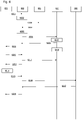
- Figure 6 shows an example signaling between a Network Function service consumer 601, a Service Communication Proxy 602, a Network Repository Function 603, a first Charging Function 604 and a second Charging Function 605.
- the Network Function service consumer 601 sends a Charging Data Request to the Service Communication Proxy 602.
- the Charging Data Request may be an initial request, and may request information on a Charging Function for a service to be provided by the Network Function service consumer.
- the Service Communication Proxy 602 performs Charging Function Discovery.
- the Service Communication Proxy 602 sends a Discovery Request to the Network Repository Function 603.
- the Network Repository Function responds to the Discovery request of 6003.
- the Service Communication Proxy 602 selects a Charging Function from a plurality of Charging Functions provided in the response of 6004.
- the Service Communication Proxy 602 sends an initial charging request to the first Charging Function 604.
- the first Charging Function 604 adds an identifier of an alternate partner Charging Function (the second Charging Function 605 in the present case) to a header for responding to the charging request of 6006.
- the first Charging Function 604 responds to the charging request of 6006.
- This response comprises an identifier for the second Charging Function 605.
- an identifier for the service instance of the second Charging Function 605 may also be comprised within the response.
- the response comprises the identifier for the second Charging Function 605.
- an identifier for the service instance of the second Charging Function 605 may also be comprised within the response, as well as an identifier for the first Charging Function (and/or service instance of the first Charging Function).
- the first Charging Function 604 becomes unable to perform functions for the Network Function service consumer 601.
- the Network Function service consumer 601 sends a charging data request (e.g. an update request) to the Service Communication Proxy 602.
- This charging data request may comprise the address of the first Charging Function 604.
- the Service Communication Proxy 602 forwards the request of 6011 to the first Charging Function 604.
- the Network Function service consumer 601 determines to re-send the charging request message of 6011, but to change the address of the Charging Function comprised in the charging request message to that of the second Charging Function 605.
- the Network Function service consumer 601 sends a new charging request (e.g. update) message to the Service Communication Proxy 602.
- This new request comprises the address of (or an identifier of) the second Charging Function 605.
- the Service Communication Proxy 602 forwards the request received at 6015 to the second Charging Function 605.
- the Service Communication Proxy 602 receives, from the second Charging Function 605, a response to the request of 6016.
- the Service Communication Proxy 602 sends a charging data response to the Network Function service consumer 601 in response to the request of 6015. This response indicates that the update was made successfully.
- Figures 7 to 9 are flowcharts illustrating potential actions that may be performed by at least some of the entities described above.
- the network apparatus in response to a request from a service consumer, determines a first charging function for providing charging services to the service consumer.
- the network apparatus determines an identity of a second charging function.
- the second charging function is an alternative or backup charging function to provide the charging service to the service consumer.
- the second charging function may provide charging services provided by the first charging function when the first charging function is unable to. It is understood that the term "charging function", when used in the present case, may encompass charging service instances.
- the determining the second charging function may comprise sending a charging request for said charging services to the first charging function, and receiving, from the first charging function, the identity of the second charging function, and an indication that the second charging function is an alternative charging function for the said charging services.
- the network apparatus provides the service consumer with the identity of the second charging function.
- the providing the service consumer with the identity of the first charging function and the identity of the second charging function may comprise: inserting the identity of the second charging function into a header of a message, the header further comprising the identity of the first charging function, and sending the message to the service consumer.
- Said message may be a charging data response received from the first charging function.
- the identity of the second charging function may be explicitly indicated as being a backup (or alternate) charging function to the first charging function in said header.
- the network apparatus may provide the service consumer with an identity of the first charging function.
- the network apparatus sends a request to a network function for selecting a first charging function to provide charging services to the service consumer.
- the network apparatus receives, in response to said request, an identity of a second charging function, wherein the second charging function is an alternative or backup charging function to provide the charging service to the service consumer.
- Said identity of a second charging function may be comprised within a header of the response to said request.
- the second charging function may be explicitly indicated as being a backup charging function to the first charging function in said header.
- the second charging function may be explicitly indicated as being usable in the event that the first charging function can no longer provide a requested service to the service consumer.
- the response may comprise an identity of the first charging function.
- the identity of the first charging function may be comprised in a header of the response to said request.
- Figure 9 is a flow chart illustrating potential actions of a network apparatus for a first charging function.
- This first charging function may interact with at least one of the network function of Figure 7 and the service consumer of Figure 8 .
- the network apparatus receives, from a function, a request to provide services to a service consumer.
- the network apparatus responds to said request with an identity of a second charging function, wherein the second charging function is an alternative or backup charging function to provide the charging service to the service consumer.
- the identity of the second charging function may be comprised in a header.
- An identity of the second charging function may be comprised in a header.
- the identity of the first charging function and the identity of the second charging function may be comprised in the same header.
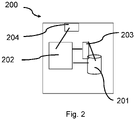
- a possible wireless communication device will now be described in more detail with reference to Figure 3 showing a schematic, partially sectioned view of a communication device 300.
- a communication device is often referred to as user equipment (UE) or terminal.
- An appropriate mobile communication device may be provided by any device capable of sending and receiving radio signals.
- Non-limiting examples comprise a mobile station (MS) or mobile device such as a mobile phone or what is known as a 'smart phone', a computer provided with a wireless interface card or other wireless interface facility (e.g., USB dongle), personal data assistant (PDA) or a tablet provided with wireless communication capabilities, or any combinations of these or the like.
- MS mobile station
- PDA personal data assistant
- a mobile communication device may provide, for example, communication of data for carrying communications such as voice, electronic mail (email), text message, multimedia and so on. Users may thus be offered and provided numerous services via their communication devices. Non-limiting examples of these services comprise two-way or multi-way calls, data communication or multimedia services or simply an access to a data communications network system, such as the Internet. Users may also be provided broadcast or multicast data. Non-limiting examples of the content comprise downloads, television and radio programs, videos, advertisements, various alerts and other information.
- a wireless communication device may be for example a mobile device, that is, a device not fixed to a particular location, or it may be a stationary device.
- the wireless device may need human interaction for communication, or may not need human interaction for communication.
- the terms UE or "user" are used to refer to any type of wireless communication device.
- a wireless device is typically provided with at least one data processing entity 301, at least one memory 302 and other possible components 303 for use in software and hardware aided execution of tasks it is designed to perform, including control of access to and communications with access systems and other communication devices.
- the data processing, storage and other relevant control apparatus can be provided on an appropriate circuit board and/or in chipsets. This feature is denoted by reference 704.
- the user may control the operation of the wireless device by means of a suitable user interface such as key pad 305, voice commands, touch sensitive screen or pad, combinations thereof or the like.
- a display 308, a speaker and a microphone can be also provided.
- a wireless communication device may comprise appropriate connectors (either wired or wireless) to other devices and/or for connecting external accessories, for example hands-free equipment, thereto.
- Figure 4 shows a schematic representation of non-volatile memory media 400a (e.g. computer disc (CD) or digital versatile disc (DVD)) and 400b (e.g. universal serial bus (USB) memory stick) storing instructions and/or parameters 402 which when executed by a processor allow the processor to perform one or more of the steps of the methods of Figures 7 to Figure 9 .
- non-volatile memory media 400a e.g. computer disc (CD) or digital versatile disc (DVD)
- 400b e.g. universal serial bus (USB) memory stick
- a first and a second network service function may be configured to provide other functions than a first and second charging function.
- the determining may comprise determining, instead of a first and a second charging function, determining another type of network service function.
- some embodiments may be implemented in hardware or special purpose circuits, software, logic or any combination thereof.
- some aspects may be implemented in hardware, while other aspects may be implemented in firmware or software which may be executed by a controller, microprocessor or other computing device, although embodiments are not limited thereto.
- firmware or software which may be executed by a controller, microprocessor or other computing device, although embodiments are not limited thereto. While various embodiments may be illustrated and described as block diagrams, flow charts, or using some other pictorial representation, it is well understood that these blocks, apparatus, systems, techniques or methods described herein may be implemented in, as non-limiting examples, hardware, software, firmware, special purpose circuits or logic, general purpose hardware or controller or other computing devices, or some combination thereof.
- the memory may be of any type suitable to the local technical environment and may be implemented using any suitable data storage technology, such as semiconductor-based memory devices, magnetic memory devices and systems, optical memory devices and systems, fixed memory and removable memory.
- the data processors may be of any type suitable to the local technical environment, and may include one or more of general purpose computers, special purpose computers, microprocessors, digital signal processors (DSPs), application specific integrated circuits (AStudy ItemC), gate level circuits and processors based on multi-core processor architecture, as non-limiting examples.
- circuitry may be configured to perform one or more of the functions and/or method steps previously described. That circuitry may be provided in the base station and/or in the communications device.
- circuitry may refer to one or more or all of the following:
- circuitry also covers an implementation of merely a hardware circuit or processor (or multiple processors) or portion of a hardware circuit or processor and its (or their) accompanying software and/or firmware.
- circuitry also covers, for example integrated device.
Landscapes
- Engineering & Computer Science (AREA)
- Computer Networks & Wireless Communication (AREA)
- Signal Processing (AREA)
- Theoretical Computer Science (AREA)
- Quality & Reliability (AREA)
- Physics & Mathematics (AREA)
- General Engineering & Computer Science (AREA)
- General Physics & Mathematics (AREA)
- Computer Security & Cryptography (AREA)
- Mobile Radio Communication Systems (AREA)
- Data Exchanges In Wide-Area Networks (AREA)
- Hardware Redundancy (AREA)
Applications Claiming Priority (1)
| Application Number | Priority Date | Filing Date | Title |
|---|---|---|---|
| IN202141004052 | 2021-01-29 |
Publications (1)
| Publication Number | Publication Date |
|---|---|
| EP4037293A1 true EP4037293A1 (fr) | 2022-08-03 |
Family
ID=79316915
Family Applications (1)
| Application Number | Title | Priority Date | Filing Date |
|---|---|---|---|
| EP22151140.5A Pending EP4037293A1 (fr) | 2021-01-29 | 2022-01-12 | Résilience des fonctions de service réseau |
Country Status (3)
| Country | Link |
|---|---|
| US (1) | US12160482B2 (fr) |
| EP (1) | EP4037293A1 (fr) |
| CN (1) | CN114915508B (fr) |
Families Citing this family (8)
| Publication number | Priority date | Publication date | Assignee | Title |
|---|---|---|---|---|
| EP4233379B1 (fr) * | 2020-10-23 | 2026-03-18 | Telefonaktiebolaget LM Ericsson (publ) | Noeuds de réseau et procédés dans ceux-ci pour assurer une fonction de réseau de secours |
| EP4285561A1 (fr) * | 2021-01-31 | 2023-12-06 | Telefonaktiebolaget LM Ericsson (publ) | Noeuds de réseau et procédés associés pour fournir une indication de liaison |
| US12219087B2 (en) * | 2021-08-19 | 2025-02-04 | Verizon Patent And Licensing Inc. | Systems and methods for regional segmentation and selection of charging function |
| US12349050B2 (en) * | 2022-01-18 | 2025-07-01 | Oracle International Corporation | Methods, systems, and computer readable media for prioritizing among alternate network function (NF) instances |
| WO2024014749A1 (fr) * | 2022-07-15 | 2024-01-18 | Samsung Electronics Co., Ltd. | Appareil et procédé pour effectuer une gestion et une découverte de fonction de réseau dans un réseau sans fil |
| CN118215014A (zh) * | 2022-12-16 | 2024-06-18 | 华为技术有限公司 | 计费方法和装置 |
| US12192069B1 (en) * | 2023-07-06 | 2025-01-07 | Dish Wireless L.L.C. | Multi-layered charging system |
| US12526224B2 (en) * | 2023-10-10 | 2026-01-13 | Oracle International Corporation | Methods, systems, and computer readable media for selecting network function (NF) profiles of NF set mates to enable alternate routing |
Citations (1)
| Publication number | Priority date | Publication date | Assignee | Title |
|---|---|---|---|---|
| WO2020202043A1 (fr) * | 2019-04-02 | 2020-10-08 | Telefonaktiebolaget Lm Ericsson (Publ) | Procédé de resélection d'une instance de service de fonction de réseau (nf) d'un producteur de service nf |
Family Cites Families (14)
| Publication number | Priority date | Publication date | Assignee | Title |
|---|---|---|---|---|
| US8270952B2 (en) | 2009-01-28 | 2012-09-18 | Headwater Partners I Llc | Open development system for access service providers |
| US9357081B2 (en) * | 2010-11-15 | 2016-05-31 | Alcatel Lucent | Method for choosing an alternate offline charging system during an overload and apparatus associated therewith |
| CN102638355A (zh) | 2011-02-14 | 2012-08-15 | 阿尔卡特朗讯 | 基于网络资源使用信息确定策略计费规则的方法和装置 |
| US8977233B2 (en) | 2012-07-05 | 2015-03-10 | Alcatel Lucent | Identification of timestamps for a partial CDR when failover occurs in an offline charging system |
| CN110999346B (zh) | 2017-08-14 | 2022-03-29 | 瑞典爱立信有限公司 | 执行针对服务消费方的服务的方法以及对应的网络节点 |
| US11006316B2 (en) | 2017-10-16 | 2021-05-11 | Ofinno, Llc | Header compression for ethernet frame |
| US10609154B2 (en) | 2018-03-30 | 2020-03-31 | Ofinno, Llc | Data transmission over user plane for cellular IoT |
| WO2020002761A1 (fr) | 2018-06-26 | 2020-01-02 | Nokia Technologies Oy | Prise en charge d'interactions entre des fonctions de réseau sans état dans un réseau central |
| US11509728B2 (en) | 2018-06-29 | 2022-11-22 | Nokia Solutions And Networks Oy | Methods and apparatuses for discovering a network function acting as network function service consumer |
| US10855851B2 (en) * | 2018-09-13 | 2020-12-01 | Ofinno, Llc | Charging control with SMF |
| WO2020156685A1 (fr) | 2019-02-01 | 2020-08-06 | Telefonaktiebolaget Lm Ericsson (Publ) | Procédés, appareils et supports lisibles par ordinateur concernant la taxation dans un réseau de communication |
| US10772062B1 (en) | 2019-04-15 | 2020-09-08 | T-Mobile Usa, Inc. | Network-function monitoring and control |
| US10833938B1 (en) | 2019-07-31 | 2020-11-10 | Oracle International Corporation | Methods, systems, and computer readable media for network function (NF) topology synchronization |
| US11323550B2 (en) * | 2020-02-17 | 2022-05-03 | Cisco Technology, Inc. | Techniques to send load-share notifications to multiple receivers |
-
2022
- 2022-01-10 US US17/571,757 patent/US12160482B2/en active Active
- 2022-01-12 EP EP22151140.5A patent/EP4037293A1/fr active Pending
- 2022-01-25 CN CN202210088529.8A patent/CN114915508B/zh active Active
Patent Citations (1)
| Publication number | Priority date | Publication date | Assignee | Title |
|---|---|---|---|---|
| WO2020202043A1 (fr) * | 2019-04-02 | 2020-10-08 | Telefonaktiebolaget Lm Ericsson (Publ) | Procédé de resélection d'une instance de service de fonction de réseau (nf) d'un producteur de service nf |
Non-Patent Citations (4)
| Title |
|---|
| 3GPP TS 23.501 |
| 3GPP TS 29.500 |
| 3GPP TS 29.510 |
| CHINA MOBILE: "AUSF/UDM discovery based SUCI information", vol. SA WG2, no. E (e-meeting); 20201116 - 20201120, 12 January 2021 (2021-01-12), XP051968563, Retrieved from the Internet <URL:https://ftp.3gpp.org/tsg_ct/WG4_protocollars_ex-CN4/TSGCT4_101e-bis_meeting/Docs/C4-210047.zip> [retrieved on 20210112] * |
Also Published As
| Publication number | Publication date |
|---|---|
| CN114915508B (zh) | 2024-08-23 |
| US20220247827A1 (en) | 2022-08-04 |
| CN114915508A (zh) | 2022-08-16 |
| US12160482B2 (en) | 2024-12-03 |
Similar Documents
| Publication | Publication Date | Title |
|---|---|---|
| EP4037293A1 (fr) | Résilience des fonctions de service réseau | |
| US11811625B2 (en) | Method, apparatus, and computer program | |
| CN111955031B (zh) | 在移动通信系统中使用网络切片的方法和设备 | |
| KR102224248B1 (ko) | 통신 시스템에서 PDU(Protocol Data Unit) 세션을 설립하는 방법 | |
| EP3989518B1 (fr) | Appareil, procédés et programmes informatiques | |
| US11979937B2 (en) | Method, apparatus and computer program | |
| US20230413214A1 (en) | Method, apparatus and computer program | |
| US11765618B2 (en) | Wireless communication system | |
| EP4324125B1 (fr) | Appareil, procédé et programme informatique permettant de gérer une requête concernant des fonctions de réseau cognitif et/ou des modèles d'apprentissage machine | |
| EP4179792A2 (fr) | Commande d'opérateur de comportement d'équipement utilisateur lors de l'enregistrement et de la fin de l'enregistrement avec des tranches de réseau et l'établissement et la libération de sessions de pdu dans un système de communication | |
| US12127105B2 (en) | Managing mode of access to a compatible set of network slices | |
| CN101194443B (zh) | 利用终端性能版本来执行组合业务的终端、方法以及系统 | |
| US20240388902A1 (en) | Causing an authentication procedure between mobile equipment and core network | |
| WO2025056431A1 (fr) | Appareil, procédé et programme informatique | |
| US20240129837A1 (en) | Methods, apparatuses and computer program products for identifying an access network node | |
| US12494975B2 (en) | Apparatus, method, and computer program | |
| WO2023147856A1 (fr) | Appareil, procédés et programmes informatiques | |
| US20230319677A1 (en) | Shared cu up address management | |
| WO2022022837A1 (fr) | Procédé, appareil et programme informatique pour permettre une session de communication | |
| US12519709B2 (en) | Apparatuses, methods, and computer programs for exchanging analytics data | |
| WO2020001757A1 (fr) | Procédé, système et appareil de gestion de profils de dispositif utilisateur | |
| CN119586115A (zh) | 使用网络功能之间的绑定指示来共享有关网络功能服务实例的资源冗余信息 | |
| WO2025180857A1 (fr) | Appareil, procédé et programme informatique |
Legal Events
| Date | Code | Title | Description |
|---|---|---|---|
| PUAI | Public reference made under article 153(3) epc to a published international application that has entered the european phase |
Free format text: ORIGINAL CODE: 0009012 |
|
| STAA | Information on the status of an ep patent application or granted ep patent |
Free format text: STATUS: THE APPLICATION HAS BEEN PUBLISHED |
|
| AK | Designated contracting states |
Kind code of ref document: A1 Designated state(s): AL AT BE BG CH CY CZ DE DK EE ES FI FR GB GR HR HU IE IS IT LI LT LU LV MC MK MT NL NO PL PT RO RS SE SI SK SM TR |
|
| STAA | Information on the status of an ep patent application or granted ep patent |
Free format text: STATUS: REQUEST FOR EXAMINATION WAS MADE |
|
| 17P | Request for examination filed |
Effective date: 20230203 |
|
| RBV | Designated contracting states (corrected) |
Designated state(s): AL AT BE BG CH CY CZ DE DK EE ES FI FR GB GR HR HU IE IS IT LI LT LU LV MC MK MT NL NO PL PT RO RS SE SI SK SM TR |
|
| STAA | Information on the status of an ep patent application or granted ep patent |
Free format text: STATUS: EXAMINATION IS IN PROGRESS |
|
| 17Q | First examination report despatched |
Effective date: 20230818 |
|
| GRAP | Despatch of communication of intention to grant a patent |
Free format text: ORIGINAL CODE: EPIDOSNIGR1 |
|
| STAA | Information on the status of an ep patent application or granted ep patent |
Free format text: STATUS: GRANT OF PATENT IS INTENDED |
|
| RIC1 | Information provided on ipc code assigned before grant |
Ipc: H04L 67/10 20220101AFI20260219BHEP Ipc: H04L 67/51 20220101ALI20260219BHEP Ipc: H04L 67/52 20220101ALI20260219BHEP Ipc: G06F 11/14 20060101ALI20260219BHEP Ipc: G06F 11/20 20060101ALI20260219BHEP Ipc: H04L 67/1001 20220101ALI20260219BHEP Ipc: H04L 69/40 20220101ALI20260219BHEP |
|
| INTG | Intention to grant announced |
Effective date: 20260306 |