EP4040421B1 - Procédé et dispositif de prédiction de données de trafic et dispositif electronique - Google Patents
Procédé et dispositif de prédiction de données de trafic et dispositif electronique Download PDFInfo
- Publication number
- EP4040421B1 EP4040421B1 EP22179168.4A EP22179168A EP4040421B1 EP 4040421 B1 EP4040421 B1 EP 4040421B1 EP 22179168 A EP22179168 A EP 22179168A EP 4040421 B1 EP4040421 B1 EP 4040421B1
- Authority
- EP
- European Patent Office
- Prior art keywords
- period
- historical
- traffic data
- target
- time point
- Prior art date
- Legal status (The legal status is an assumption and is not a legal conclusion. Google has not performed a legal analysis and makes no representation as to the accuracy of the status listed.)
- Active
Links
Images
Classifications
-
- G—PHYSICS
- G06—COMPUTING OR CALCULATING; COUNTING
- G06Q—INFORMATION AND COMMUNICATION TECHNOLOGY [ICT] SPECIALLY ADAPTED FOR ADMINISTRATIVE, COMMERCIAL, FINANCIAL, MANAGERIAL OR SUPERVISORY PURPOSES; SYSTEMS OR METHODS SPECIALLY ADAPTED FOR ADMINISTRATIVE, COMMERCIAL, FINANCIAL, MANAGERIAL OR SUPERVISORY PURPOSES, NOT OTHERWISE PROVIDED FOR
- G06Q10/00—Administration; Management
- G06Q10/04—Forecasting or optimisation specially adapted for administrative or management purposes, e.g. linear programming or "cutting stock problem"
-
- G—PHYSICS
- G08—SIGNALLING
- G08G—TRAFFIC CONTROL SYSTEMS
- G08G1/00—Traffic control systems for road vehicles
- G08G1/01—Detecting movement of traffic to be counted or controlled
- G08G1/0104—Measuring and analyzing of parameters relative to traffic conditions
- G08G1/0125—Traffic data processing
- G08G1/0129—Traffic data processing for creating historical data or processing based on historical data
-
- G—PHYSICS
- G08—SIGNALLING
- G08G—TRAFFIC CONTROL SYSTEMS
- G08G1/00—Traffic control systems for road vehicles
- G08G1/01—Detecting movement of traffic to be counted or controlled
- G08G1/0104—Measuring and analyzing of parameters relative to traffic conditions
- G08G1/0108—Measuring and analyzing of parameters relative to traffic conditions based on the source of data
- G08G1/0116—Measuring and analyzing of parameters relative to traffic conditions based on the source of data from roadside infrastructure, e.g. beacons
-
- G—PHYSICS
- G06—COMPUTING OR CALCULATING; COUNTING
- G06F—ELECTRIC DIGITAL DATA PROCESSING
- G06F16/00—Information retrieval; Database structures therefor; File system structures therefor
- G06F16/20—Information retrieval; Database structures therefor; File system structures therefor of structured data, e.g. relational data
- G06F16/24—Querying
- G06F16/245—Query processing
- G06F16/2458—Special types of queries, e.g. statistical queries, fuzzy queries or distributed queries
- G06F16/2477—Temporal data queries
-
- G—PHYSICS
- G06—COMPUTING OR CALCULATING; COUNTING
- G06F—ELECTRIC DIGITAL DATA PROCESSING
- G06F18/00—Pattern recognition
- G06F18/20—Analysing
- G06F18/22—Matching criteria, e.g. proximity measures
-
- G—PHYSICS
- G06—COMPUTING OR CALCULATING; COUNTING
- G06Q—INFORMATION AND COMMUNICATION TECHNOLOGY [ICT] SPECIALLY ADAPTED FOR ADMINISTRATIVE, COMMERCIAL, FINANCIAL, MANAGERIAL OR SUPERVISORY PURPOSES; SYSTEMS OR METHODS SPECIALLY ADAPTED FOR ADMINISTRATIVE, COMMERCIAL, FINANCIAL, MANAGERIAL OR SUPERVISORY PURPOSES, NOT OTHERWISE PROVIDED FOR
- G06Q30/00—Commerce
- G06Q30/02—Marketing; Price estimation or determination; Fundraising
- G06Q30/0201—Market modelling; Market analysis; Collecting market data
-
- G—PHYSICS
- G06—COMPUTING OR CALCULATING; COUNTING
- G06Q—INFORMATION AND COMMUNICATION TECHNOLOGY [ICT] SPECIALLY ADAPTED FOR ADMINISTRATIVE, COMMERCIAL, FINANCIAL, MANAGERIAL OR SUPERVISORY PURPOSES; SYSTEMS OR METHODS SPECIALLY ADAPTED FOR ADMINISTRATIVE, COMMERCIAL, FINANCIAL, MANAGERIAL OR SUPERVISORY PURPOSES, NOT OTHERWISE PROVIDED FOR
- G06Q50/00—Information and communication technology [ICT] specially adapted for implementation of business processes of specific business sectors, e.g. utilities or tourism
- G06Q50/10—Services
- G06Q50/26—Government or public services
-
- G—PHYSICS
- G06—COMPUTING OR CALCULATING; COUNTING
- G06Q—INFORMATION AND COMMUNICATION TECHNOLOGY [ICT] SPECIALLY ADAPTED FOR ADMINISTRATIVE, COMMERCIAL, FINANCIAL, MANAGERIAL OR SUPERVISORY PURPOSES; SYSTEMS OR METHODS SPECIALLY ADAPTED FOR ADMINISTRATIVE, COMMERCIAL, FINANCIAL, MANAGERIAL OR SUPERVISORY PURPOSES, NOT OTHERWISE PROVIDED FOR
- G06Q50/00—Information and communication technology [ICT] specially adapted for implementation of business processes of specific business sectors, e.g. utilities or tourism
- G06Q50/40—Business processes related to the transportation industry
-
- G—PHYSICS
- G08—SIGNALLING
- G08G—TRAFFIC CONTROL SYSTEMS
- G08G1/00—Traffic control systems for road vehicles
- G08G1/01—Detecting movement of traffic to be counted or controlled
- G08G1/0104—Measuring and analyzing of parameters relative to traffic conditions
- G08G1/0108—Measuring and analyzing of parameters relative to traffic conditions based on the source of data
-
- G—PHYSICS
- G08—SIGNALLING
- G08G—TRAFFIC CONTROL SYSTEMS
- G08G1/00—Traffic control systems for road vehicles
- G08G1/01—Detecting movement of traffic to be counted or controlled
- G08G1/0104—Measuring and analyzing of parameters relative to traffic conditions
- G08G1/0137—Measuring and analyzing of parameters relative to traffic conditions for specific applications
- G08G1/0141—Measuring and analyzing of parameters relative to traffic conditions for specific applications for traffic information dissemination
-
- G—PHYSICS
- G08—SIGNALLING
- G08G—TRAFFIC CONTROL SYSTEMS
- G08G1/00—Traffic control systems for road vehicles
- G08G1/01—Detecting movement of traffic to be counted or controlled
- G08G1/0104—Measuring and analyzing of parameters relative to traffic conditions
- G08G1/0137—Measuring and analyzing of parameters relative to traffic conditions for specific applications
- G08G1/0145—Measuring and analyzing of parameters relative to traffic conditions for specific applications for active traffic flow control
-
- G—PHYSICS
- G08—SIGNALLING
- G08G—TRAFFIC CONTROL SYSTEMS
- G08G1/00—Traffic control systems for road vehicles
- G08G1/01—Detecting movement of traffic to be counted or controlled
- G08G1/04—Detecting movement of traffic to be counted or controlled using optical or ultrasonic detectors
-
- G—PHYSICS
- G06—COMPUTING OR CALCULATING; COUNTING
- G06N—COMPUTING ARRANGEMENTS BASED ON SPECIFIC COMPUTATIONAL MODELS
- G06N5/00—Computing arrangements using knowledge-based models
- G06N5/04—Inference or reasoning models
Definitions
- the disclosure relates to the field of computer technology, specially the field of intelligent transportation technology, and in particular to a method for predicting traffic data, an apparatus for predicting traffic data and an electronic device.
- Traffic data prediction is an important part of intelligent transportation technology. Accurate traffic data prediction helps to take appropriate traffic control measures in time to make traffic more orderly.
- the road traffic system is a time-varying and complex nonlinear system, not only including natural factors, such as seasons and climate, but also including various human factors, such as traffic accidents, emergencies and psychological states of drivers, which affects real-time and accurate prediction of road traffic data.
- Document US 2019/139402 A1 discloses a speed prediction method and apparatus.
- the method includes: obtaining traffic-effecting parameter information of a first road segment in a current time period; determining a similarity between the traffic-effecting parameter information and historical traffic-effecting parameter information of the first road segment stored in a historical traffic database, and determining target historical traffic-effecting parameter information according to the determined similarity; and predicting a first speed of a vehicle on the first road segment in the next time period, according to a speed of a vehicle in a next time period of a time period corresponding to the target historical traffic-effecting parameter information, stored in the historical traffic database.
- the disclosure provides a method for predicting traffic data, an apparatus for predicting traffic data and an electronic device.
- the disclosure provides a method for predicting traffic data.
- the traffic data in the reference period that meets requirements is selected from the historical periods, thereby realizing the prediction of the traffic data in the target period, which not only maintains characteristics of the traffic data in the historical periods, but also ensure easy operation and high prediction accuracy.
- the disclosure provides an apparatus for predicting traffic data.
- the disclosure provides a non-transitory computer-readable storage medium stored with computer instructions.
- the disclosure provides a computer program product.
- embodiments of the first aspect provide a method for predicting traffic data as defined in claim 1.
- embodiments of the second aspect provide an apparatus for predicting traffic data ad defined in claim 5.
- embodiments of the third aspect provide a non-transitory computer readable storage medium stored with computer instructions, in which the computer instructions are configured to cause the computer to perform the method according to the embodiments of the first aspect.
- embodiments of the fourth aspect provide a computer program product including a computer program, in which when the computer program is executed by a processor, the method according to the embodiments of the first aspect is implemented.
- Traffic data in a plurality of periods is obtained.
- the plurality of periods includes the target period and at least one historical period before the target period.
- the reference period is determined from the at least one historical period based on the time interval between each of the at least one historical period and the target period.
- the data similarity between the target period and the reference period is determined based on traffic data at the first time point in the target period and traffic data at the time point corresponding to the first time point in the reference period.
- Reference traffic data at the time point in the reference period is obtained, the time point in the reference period corresponding to the second time point to be predicted in the target period.
- Traffic data at the second time point in the target period is predicted based on the data similarity between the target period and the reference period, and the reference traffic data in the reference period.
- the traffic data in the reference period that can be used for reference to the target period is selected from the historical period, so as to predict the traffic data of the target period according to the traffic data in the reference period.
- the prediction accuracy is high.
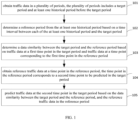
- FIG. 1 is a flowchart of a method for predicting traffic data according to an embodiment of the disclosure.
- the method includes the following steps.
- step 101 traffic data in a plurality of periods is obtained, the plurality of periods including a target period and at least one historical period before the target period.
- the traffic data monitored in the plurality of periods is obtained through a video sensing device.
- a video sensing device By connecting the video sensing device and a traffic signal light device, road traffic flow and light state information of the traffic signal are strongly bound, without aligning a control clock of the signal light with the video sensing device.
- the traffic data acquired by the video sensing device will be stored in a preset database. When the outside world needs to extract the traffic information of a target road, the required traffic data can be directly extracted from the database.
- the traffic data includes current real-time traffic data and historical real-time traffic data within various time periods. In a possible implementation, the traffic data includes values of multiple indicators, such as flow, saturation and crossing time.
- the period is relative to the sampling point, and according to historical experience, it is only necessary to collect traffic data at 4 sampling points in respective periods before the current time point, and then the traffic data at the next time point can be predicted.
- the traffic flow at the current time point t is v(t)
- the traffic data of the previous sampling points are v(t-1), v(t-2), and v(t-3) respectively.
- the traffic flow at the sampling points of the historical periods can be expressed as: v h (t), v h (t-1), v h (t-2) and v h (t-3).
- the traffic flow at the next time point of the current period and at the next time point of the historical period are: v(t+1), v h (t+1) respectively.
- sampling points are only used for exemplary description, and do not constitute a limitation to this embodiment. Those skilled in the art may know that other period numbers or sampling point numbers do not affect the implementation of this embodiment.
- a reference period is determined from the at least one historical period based on a time interval between each of the at least one historical period and the target period.
- a target number of historical periods are selected as the reference period.
- the data prediction error of each historical period may be obtained at first, and the target number is determined according to the number of historical periods having data prediction error within a preset error range in the at least one historical period, and further, the target number of historical periods closest to the target period are selected as the reference periods.
- the time interval between the historical period and the target period is different from the time interval between any two sampling points in step 101.
- the time interval mentioned in this step may be the time interval between the current period, that is, the target period, and the historical period, such as today and the day before yesterday.
- the determination of the reference period may include two implementation schemes.
- the target number of historical periods are selected as the reference period in turn, namely the target number is determined at first, and then the target number of historical periods closest to the target period are searched from a database.
- the determination of the target number is determined according to the data prediction error of each historical period and the preset error range.
- the target number is determined first according to the data prediction error of each historical period and the preset error range, and then the historical period corresponding to the data prediction error within the preset error range is determined as the reference period.
- a data similarity between the target period and the reference period is determined based on traffic data at a first time point in the target period and traffic data at a time point corresponding to the first time point in the reference period.
- a first state vector of the target period is determined based on traffic data at a plurality of first time points in the target period.
- a second state vector of the reference period is determined based on traffic data at time points corresponding to the plurality of first time points in the reference period.
- a first correlation coefficient of the flow between two historical periods is determined based on the flow of each of the at least one historical period.
- a second correlation coefficient of the saturation between two historical periods is determined based on the saturation of each of the at least one historical period.
- a vector distance between the first state vector and the second state vector is determined based on a difference corresponding to the flow between the first state vector and the second state vector, a difference corresponding to the saturation between the first state vector and the second state vector, the first correlation coefficient and the second correlation coefficient.
- the data similarity between the target period and the reference period is determined based on the vector distance between the first state vector and the second state vector.
- the plurality of first time points may be 4 sampling time points set according to experience, which includes the current time point t, the previous time points t-1, t-2, and t-3.
- the state vector is composed of the flow and saturation in the traffic data at the sampling time points of the period.
- the state vector of the target period is
- X [v(t)...v(t-3), o(t)...o(t-3)], in which o(t) represents the saturation. Similarly, oh(t) represents the saturation of the historical period.
- x may be expressed as the traffic flow v(t) at the current time point, and y may be expressed as the traffic flow v(t+1) at the next time point; or, x may be expressed as the saturation o(t) at the current time point, y may be expressed as the saturation o(t+1) at the next time point.
- first correlation coefficient r1 and the second correlation coefficient r2 obtained from the traffic data in each historical period are applicable to all periods including the current period and respective historical periods.
- the traffic data sampled at the 4 sampling points (first time points) in the target period and the traffic data of the corresponding time points in the reference period obtained in step 102 are brought into the calculation formula of the vector distance.
- the data similarity between the target period and the reference period is obtained.
- step 104 reference traffic data at a time point in the reference period is obtained, the time point in the reference period being corresponding to a second time point to be predicted in the target period.
- the second time point to be predicted in the target period is relative to the first time point, and the time interval between the first time point and the second time point is one cycle.
- the first time point includes: t-3, t-2, t-1 and t, then the second time point is t+1.
- the reference traffic data corresponding to the second time point obtained from the reference period only includes the data of traffic flow.
- step 105 traffic data at the second time point in the target period is predicted based on the data similarity between the target period and the reference period, and the reference traffic data in the reference period.
- a weight of the reference period is determined based on the data similarity between the target period and the reference period, in which the weight has a negative correlation with the data similarity.
- the traffic data at the second time point in the target period is predicted by weighting the reference traffic data in the reference period based on the weight of the reference period.
- the negative correlation refers to a correlation in which the weight decreases as the similarity increases, and increases as the similarity decreases, for example, an inverse relationship.
- ⁇ is the weight of the reference period
- D i is the vector distance between the target period and the reference period. It can be seen from the formula that the larger the vector distance, the smaller the weight.
- the reference traffic flow data at the corresponding time point in the reference period can be used more as the traffic flow at the second time point in the target period.
- the weight of the reference period is small, the amount of data in the reference period used is also small, so that the reference traffic data at the second time point of the reference period is effectively used, to further improve the prediction accuracy.
- traffic data in a plurality of periods is obtained.
- the plurality of periods includes the target period and at least one historical period before the target period.
- the reference period is determined from the at least one historical period based on the time interval between each of the at least one historical period and the target period.
- the data similarity between the target period and the reference period is determined based on traffic data at the first time point in the target period and traffic data at a time point corresponding to the first time point in the reference period.
- Reference traffic data at the time point in the reference period is obtained, the time point in the reference period being corresponding to the second time point to be predicted in the target period.
- Traffic data at the second time point in the target period is predicted based on the data similarity between the target period and the reference period, and the reference traffic data in the reference period.
- the traffic data in the reference period that meets the requirements is selected from the historical periods by comparing the traffic data in the historical period with the target period data. Therefore, the prediction of the traffic data in the target period is realized, which not only maintains the characteristics of the traffic data in the historical period, but also ensure easy operation and high prediction accuracy.
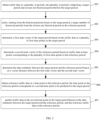
- FIG. 2 is a flowchart of another method for predicting traffic data according to an embodiment of the disclosure.
- the method includes the following steps.
- step 201 traffic data in a plurality of periods is obtained, the plurality of periods including a target period and at least one historical period before the target period.
- step 101 in the above embodiment specific reference may be made to step 101 in the above embodiment, the principle is the same, and details are not repeated here.
- step 202 starting from the historical period closest to the target period, a target number of historical periods are selected from the at least one historical period as the reference period.
- a data prediction error of each of the at least one historical period is obtained, and the target number is determined based on a number of historical periods having data prediction error within a preset error range in the at least one historical period.
- the data prediction error of each of the at least one historical period is actually a difference between the predicted traffic flow and the actual traffic flow at the time point in each of the historical periods corresponding to the next time point in step 101 in the above embodiment.
- the preset error range is an error value distribution interval obtained according to the data prediction error of each historical period, and this distribution interval can be selected based on error ratios of less than 20% according to experience. For example, in each of the historical periods, the predicted traffic flow value at the next time point is A, and the actual traffic flow value is B, then the data prediction error ratio is (A-B)/A. Then, the data prediction error ratios whose values is less than 20% are counted, and the preset error range is determined according to upper and lower limits of these data error values.
- the time interval between each historical period and the target period is selected to be no more than 20 days at most. Then, starting from the target period, traffic data of 20 periods are sequentially acquired, and the data prediction error of these traffic data is compared with the preset error range, and the historical periods having the data prediction error within the preset error range are selected. The number of these historical periods that meet the requirements is counted to obtain the target number.
- the target number of historical periods are selected as the reference periods.
- the selection of the reference period may include two schemes.
- the historical period that meets the requirement is determined as the reference period.
- the requirement may be: the similarity between the historical period and the target period being greater than or equal to a certain threshold, or the prediction error being less than or equal to a certain error limit.
- a target number of historical periods are successively selected as the reference periods.
- the data prediction errors of the reference periods are all within the preset error range, and the reference periods may be discretely or adjacently arranged in the historical time (e.g., the number of days).
- the reference periods are only adjacent to each other, and are the target number of historical periods adjacent to the target period.
- a first state vector of the target period is determined based on the traffic data at a plurality of first time points in the target period.
- the influence factor with the highest correlation coefficient between periods is determined as the indicator of the state vector, that is, flow and saturation. Therefore, the traffic data of the subsequent target period predicted according to the flow and saturation in the historical period is more accurate.
- a second state vector of the reference period is determined based on traffic data at time points corresponding to the plurality of first time points in the reference period.
- step 205 the data similarity between the target period and the reference period is determined based on a vector distance between the first state vector and the second state vector.
- the calculation method of the vector distance is shown in step 103 of the above embodiment, and the principle is the same, which will not be repeated here. Since the target number of reference periods need to be selected, the target number of vector distances need to be calculated.
- step 206 reference traffic data at a time point in the reference period is obtained, the time point in the reference period being corresponding to a second time point to be predicted in the target period.
- step 104 in the above embodiment, and the principle is the same, which will not be repeated here.
- step 207 traffic data at the second time point in the target period is predicted based on the data similarity between the target period and the reference period, and the reference traffic data in the reference period.
- the weight of the reference period is determined according to the data similarity between the target period and the reference period.
- the weight has a negative correlation with the data similarity.
- the reference traffic data in the reference period is weighted to predict the traffic data of the second time point in the target period.
- the reference traffic data in the reference period used in this embodiment is real-time traffic flow data at a time point corresponding to the second time point in the target period.
- this embodiment does not perform any processing on the original data in the reference period, the characteristics of the original data are maintained, which is not only beneficial to the authenticity of the predicted data, but also easy to operate.
- the traffic data may contain other influence factors, other influence factors can also be predicted by using the method for predicting traffic data described in the disclosure, which is not limited herein.
- traffic data in a plurality of periods is obtained.
- the plurality of periods includes the target period and at least one historical period before the target period.
- the reference periods are determined from the at least one historical period based on a time interval between each of the at least one historical period and the target period.
- the data similarity between the target period and the reference period is determined based on traffic data at the first time point in the target period and traffic data at the time point corresponding to the first time point in the reference period.
- Reference traffic data at the time point in the reference period is obtained, the time point in the reference period being corresponding to the second time point to be predicted in the target period.
- Traffic data at the second time point in the target period is predicted based on the data similarity between the target period and the reference period, and the reference traffic data in the reference period.
- the traffic data in the reference period that meets the requirements is selected from the historical period by comparing the traffic data in the historical period with the target period data. Therefore, the prediction of the traffic data in the target period is realized, which not only maintains the characteristics of the traffic data in the historical period, but also ensure easy operation and high prediction accuracy.
- the disclosure also provides an apparatus for predicting traffic data.
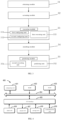
- FIG. 3 is a schematic diagram of an apparatus for predicting traffic data according to an embodiment of the disclosure.
- the apparatus includes: an obtaining module 31, a screening module 32, an executing module 33, a matching module 34 and a predicting module 35.
- the obtaining module 31 is configured to obtain traffic data in a plurality of periods, the plurality of periods includes a target period and at least one historical period before the target period.
- the screening module 32 is configured to determine a reference period from the at least one historical period based on a time interval between each of the at least one historical period and the target period.
- the executing module 33 is configured to determine a data similarity between the target period and the reference period based on traffic data at a first time point in the target period and traffic data at a time point corresponding to the first time point in the reference period.
- the matching module 34 is configured to obtain reference traffic data at a time point in the reference period, the time point in the reference period corresponds to a second time point to be predicted in the target period.
- the predicting module 35 is configured to predict traffic data at the second time point in the target period based on the data similarity between the target period and the reference period, and the reference traffic data in the reference period.
- the executing module 33 also includes: a first configuring unit 331, a second configuring unit 332 and a first executing unit 333.
- the first configuring unit 331 is configured to determine a first state vector of the target period based on the traffic data at a plurality of first time points in the target period.
- the second configuring unit 332 is configured to determine a second state vector of the reference period based on traffic data at time points corresponding to the plurality of first time points in the reference period.
- the first executing unit 333 is configured to determine the data similarity between the target period and the reference period based on a vector distance between the first state vector and the second state vector.
- the predicting module 35 also includes: a second executing unit 351 and a predicting unit 352.
- the second executing unit 351 is configured to determine a weight of the reference period based on the data similarity between the target period and the reference period, in which the weight has a negative correlation with the data similarity.
- the predicting unit 352 is configured to predict the traffic data at the second time point in the target period by weighting the reference traffic data in the reference period based on the weight of the reference period.
- the screening module 32 is further configured to:
- the first executing unit 333 is further configured to:
- traffic data in a plurality of periods is obtained.
- the plurality of periods includes a target period and at least one historical period before the target period.
- a reference period is determined from the at least one historical period based on a time interval between each of the at least one historical period and the target period.
- a data similarity between the target period and the reference period is determined based on traffic data at a first time point in the target period and traffic data at a time point corresponding to the first time point in the reference period.
- Reference traffic data at a time point in the reference period is obtained, the time point in the reference period corresponds to a second time point to be predicted in the target period.
- Traffic data at the second time point in the target period is predicted based on the data similarity between the target period and the reference period, and the reference traffic data in the reference period.
- the traffic data in the reference period that meets the requirements is selected from the historical period by comparing the traffic data in the historical period with the target period data. Therefore, the prediction of the traffic data in the target period is realized, which not only maintains the characteristics of the traffic data in the historical period, but also ensure easy operation and high prediction accuracy.
- the disclosure also provides an electronic device, a readable storage medium and a computer program product.
- FIG. 4 is a block diagram of an electronic device 400 according to embodiments of the disclosure.
- Electronic devices are intended to represent various forms of digital computers, such as laptop computers, desktop computers, workbenches, personal digital assistants, servers, blade servers, mainframe computers, and other suitable computers.
- Electronic devices may also represent various forms of mobile devices, such as personal digital processing, cellular phones, smart phones, wearable devices, and other similar computing devices.
- the components shown here, their connections and relations, and their functions are merely examples, and are not intended to limit the implementation of the disclosure described and/or required herein.
- the device 400 includes a computing unit 401 performing various appropriate actions and processes based on computer programs stored in a read-only memory (ROM) 402 or computer programs loaded from the storage unit 408 to a random access memory (RAM) 403.
- ROM read-only memory
- RAM random access memory
- various programs and data required for the operation of the device 400 are stored.
- the computing unit 401, the ROM 402, and the RAM 403 are connected to each other through a bus 404.
- An input/output (I/O) interface 405 is also connected to the bus 404.
- Components in the device 400 are connected to the I/O interface 405, including: an inputting unit 406, such as a keyboard, a mouse; an outputting unit 407, such as various types of displays, speakers; a storage unit 408, such as a disk, an optical disk; and a communication unit 409, such as network cards, modems, wireless communication transceivers, and the like.
- the communication unit 409 allows the device 400 to exchange information/data with other devices through a computer network such as the Internet and/or various telecommunication networks.
- the computing unit 401 may be various general-purpose and/or dedicated processing components with processing and computing capabilities. Some examples of computing unit 401 include, but are not limited to, a central processing unit (CPU), a graphics processing unit (GPU), various dedicated artificial intelligence (AI) computing chips, various computing units that run machine learning model algorithms, and a digital signal processor (DSP), and any appropriate processor, controller and microcontroller.
- the computing unit 401 executes the various methods and processes described above, such as the method for predicting traffic data.
- the method may be implemented as a computer software program, which is tangibly contained in a machine-readable medium, such as the storage unit 408.
- part or all of the computer program may be loaded and/or installed on the device 400 via the ROM 402 and/or the communication unit 409.
- the computer program When the computer program is loaded on the RAM 403 and executed by the computing unit 401, one or more steps of the method described above may be executed.
- the computing unit 401 may be configured to perform the method for predicting traffic data in any other suitable manner (for example, by means of firmware).
- Various implementations of the systems and techniques described above may be implemented by a digital electronic circuit system, an integrated circuit system, Field Programmable Gate Arrays (FPGAs), Application Specific Integrated Circuits (ASICs), Application Specific Standard Products (ASSPs), System on Chip (SOCs), Load programmable logic devices (CPLDs), computer hardware, firmware, software, and/or a combination thereof.
- FPGAs Field Programmable Gate Arrays
- ASICs Application Specific Integrated Circuits
- ASSPs Application Specific Standard Products
- SOCs System on Chip
- CPLDs Load programmable logic devices
- programmable system including at least one programmable processor, which may be a dedicated or general programmable processor for receiving data and instructions from the storage system, at least one input device and at least one output device, and transmitting the data and instructions to the storage system, the at least one input device and the at least one output device.
- programmable processor which may be a dedicated or general programmable processor for receiving data and instructions from the storage system, at least one input device and at least one output device, and transmitting the data and instructions to the storage system, the at least one input device and the at least one output device.
- the program code configured to implement the method of the disclosure may be written in any combination of one or more programming languages. These program codes may be provided to the processors or controllers of general-purpose computers, dedicated computers, or other programmable data processing devices, so that the program codes, when executed by the processors or controllers, enable the functions/operations specified in the flowchart and/or block diagram to be implemented.
- the program code may be executed entirely on the machine, partly executed on the machine, partly executed on the machine and partly executed on the remote machine as an independent software package, or entirely executed on the remote machine or server.
- a machine-readable medium may be a tangible medium that may contain or store a program for use by or in connection with an instruction execution system, apparatus, or device.
- the machine-readable medium may be a machine-readable signal medium or a machine-readable storage medium.
- a machine-readable medium may include, but is not limited to, an electronic, magnetic, optical, electromagnetic, infrared, or semiconductor system, apparatus, or device, or any suitable combination of the foregoing.
- machine-readable storage media include electrical connections based on one or more wires, portable computer disks, hard disks, random access memories (RAM), read-only memories (ROM), electrically programmable read-only-memory (EPROM), flash memory, fiber optics, compact disc read-only memories (CD-ROM), optical storage devices, magnetic storage devices, or any suitable combination of the foregoing.
- RAM random access memories
- ROM read-only memories
- EPROM electrically programmable read-only-memory
- flash memory fiber optics
- CD-ROM compact disc read-only memories
- optical storage devices magnetic storage devices, or any suitable combination of the foregoing.
- the systems and techniques described herein may be implemented on a computer having a display device (e.g., a Cathode Ray Tube (CRT) or a Liquid Crystal Display (LCD) monitor for displaying information to a user); and a keyboard and pointing device (such as a mouse or trackball) through which the user can provide input to the computer.
- a display device e.g., a Cathode Ray Tube (CRT) or a Liquid Crystal Display (LCD) monitor for displaying information to a user
- LCD Liquid Crystal Display
- keyboard and pointing device such as a mouse or trackball
- Other kinds of devices may also be used to provide interaction with the user.
- the feedback provided to the user may be any form of sensory feedback (e.g., visual feedback, auditory feedback, or haptic feedback), and the input from the user may be received in any form (including acoustic input, voice input, or tactile input).
- the systems and technologies described herein can be implemented in a computing system that includes background components (for example, a data server), or a computing system that includes middleware components (for example, an application server), or a computing system that includes front-end components (for example, a user computer with a graphical user interface or a web browser, through which the user can interact with the implementation of the systems and technologies described herein), or include such background components, intermediate computing components, or any combination of front-end components.
- the components of the system may be interconnected by any form or medium of digital data communication (e.g., a communication network). Examples of communication networks include: local area network (LAN), wide area network (WAN), the Internet and Block-chain network.
- the computer system may include a client and a server.
- the client and server are generally remote from each other and interacting through a communication network.
- the client-server relation is generated by computer programs running on the respective computers and having a client-server relation with each other.
- the server can be a cloud server, also known as a cloud computing server or a cloud host, which is a host product in the cloud computing service system, to solve the traditional physical host with a Virtual Private Server (VPS) service, which has the defects of difficult management and weak business expansibility.
- the server can also be a server for a distributed system, or a server that incorporates a block-chain.
- artificial intelligence is a discipline that studies certain thinking processes and intelligent behaviors (such as learning, reasoning, thinking and planning) that allow computers to simulate life, which has both hardware-level technologies and software-level technologies.
- Artificial intelligence hardware technology generally includes technologies such as sensors, dedicated artificial intelligence chips, cloud computing, distributed storage, and big data processing.
- Artificial intelligence software technology generally includes computer vision technology, speech recognition technology, natural language processing technology, and its learning/deep learning, big data processing technology, knowledge map technology and other aspects.
Landscapes
- Engineering & Computer Science (AREA)
- Business, Economics & Management (AREA)
- Physics & Mathematics (AREA)
- General Physics & Mathematics (AREA)
- Strategic Management (AREA)
- Theoretical Computer Science (AREA)
- Economics (AREA)
- Human Resources & Organizations (AREA)
- Analytical Chemistry (AREA)
- Chemical & Material Sciences (AREA)
- Tourism & Hospitality (AREA)
- Marketing (AREA)
- General Business, Economics & Management (AREA)
- Development Economics (AREA)
- Entrepreneurship & Innovation (AREA)
- Data Mining & Analysis (AREA)
- Game Theory and Decision Science (AREA)
- Operations Research (AREA)
- Quality & Reliability (AREA)
- Primary Health Care (AREA)
- Accounting & Taxation (AREA)
- Health & Medical Sciences (AREA)
- General Health & Medical Sciences (AREA)
- Finance (AREA)
- General Engineering & Computer Science (AREA)
- Databases & Information Systems (AREA)
- Computational Linguistics (AREA)
- Software Systems (AREA)
- Probability & Statistics with Applications (AREA)
- Mathematical Physics (AREA)
- Fuzzy Systems (AREA)
- Bioinformatics & Cheminformatics (AREA)
- Life Sciences & Earth Sciences (AREA)
- Educational Administration (AREA)
- Artificial Intelligence (AREA)
- Bioinformatics & Computational Biology (AREA)
- Computer Vision & Pattern Recognition (AREA)
- Evolutionary Biology (AREA)
- Evolutionary Computation (AREA)
- Traffic Control Systems (AREA)
Claims (10)
- Procédé de prédiction de données de trafic, comprenant :l'obtention de données de trafic dans une pluralité de périodes, la pluralité de périodes comprenant une période cible et au moins une période historique antérieure à la période cible (101 ; 201) ;la détermination d'une période de référence à partir de la au moins une période historique sur la base d'un intervalle de temps entre chacune de la au moins une période historique et la période cible (102) ;la détermination d'une similarité de données entre la période cible et la période de référence sur la base de données de trafic à un premier instant dans la période cible et de données de trafic à un instant correspondant au premier instant dans la période de référence (103) ;l'obtention de données de trafic de référence à un instant dans la période de référence, l'instant dans la période de référence correspondant à un second instant à prédire dans la période cible (104 ; 206) ; etla prédiction de données de trafic au second instant dans la période cible sur la base de la similarité de données entre la période cible et la période de référence, et des données de trafic de référence dans la période de référence (105 ; 207),dans lequel les données de trafic comprennent le flux et la saturation, et la détermination de la similarité de données entre la période cible et la période de référence sur la base des données de trafic au premier instant de la période cible et des données de trafic à l'instant correspondant au premier instant dans la période de référence (103), comprend :la détermination d'un premier vecteur d'état de la période cible sur la base de données de trafic à une pluralité de premiers instants dans la période cible (203) ;la détermination d'un second vecteur d'état de la période de référence sur la base de données de trafic à des instants correspondant à la pluralité de premiers instants dans la période de référence (204) ;la détermination d'un premier coefficient de corrélation du flux entre des périodes historiques sur la base du flux de chacune de la au moins une période historique ;la détermination d'un second coefficient de corrélation de la saturation entre des périodes historiques sur la base de la saturation de chacune de la au moins une période historique ;la détermination de la distance vectorielle sur la base d'une différence correspondant au flux entre le premier vecteur d'état et le second vecteur d'état, d'une différence correspondant à la saturation entre le premier vecteur d'état et le second vecteur d'état, du premier coefficient de corrélation et du second coefficient de corrélation ; etla détermination de la similarité de données entre la période cible et la période de référence sur la base d'une distance vectorielle entre le premier vecteur d'état et le second vecteur d'état (205).
- Procédé selon la revendication 1, dans lequel la détermination de la période de référence à partir de la au moins une période historique sur la base de l'intervalle de temps entre chacune de la au moins une période historique et la période cible (102) comprend :
la sélection, à partir de la période historique la plus proche de la période cible, d'un nombre cible de périodes historiques parmi la au moins une période historique en tant que périodes de référence (202). - Procédé selon la revendication 2, avant de sélectionner le nombre cible de périodes historiques parmi la au moins une période historique commençant à partir de la période historique la plus proche de la période cible en tant que périodes de référence, comprenant en outre :l'obtention d'une erreur de prédiction de données de chacune de la au moins une période historique ; etla détermination du nombre cible sur la base d'un nombre de périodes historiques présentant une erreur de prédiction de données dans une plage d'erreur prédéfinie dans la au moins une période historique.
- Procédé selon l'une quelconque des revendications 1 à 3, dans lequel la prédiction des données de trafic au second instant dans la période cible sur la base de la similarité de données entre la période cible et la période de référence, et des données de trafic de référence dans la période de référence (105 ; 207), comprend :la détermination d'un poids de la période de référence sur la base de la similarité de données entre la période cible et la période de référence, dans lequel le poids présente une corrélation négative avec la similarité de données ; etla prédiction des données de trafic au second instant dans la période cible en pondérant les données de trafic de référence dans la période de référence sur la base du poids de la période de référence.
- Appareil de prédiction de données de trafic, comprenant :un module d'obtention (31), configuré pour obtenir des données de trafic dans une pluralité de périodes, la pluralité de périodes comprenant une période cible et au moins une période historique antérieure à la période cible ;un module de filtrage (32), configuré pour déterminer une période de référence à partir de la au moins une période historique sur la base d'un intervalle de temps entre chacune de la au moins une période historique et la période cible ;un module d'exécution (33), configuré pour déterminer une similarité de données entre la période cible et la période de référence sur la base de données de trafic à un premier instant dans la période cible et de données de trafic à un instant correspondant au premier instant dans la période de référence ;un module d'adaptation (34), configuré pour obtenir des données de trafic de référence à un instant dans la période de référence, l'instant dans la période de référence correspondant à un second instant à prédire dans la période cible ; etun module de prédiction (35), configuré pour prédire des données de trafic au second instant dans la période cible sur la base de la similarité de données entre la période cible et la période de référence, et des données de trafic de référence dans la période de référence,dans lequel les données de trafic comprennent le flux et la saturation, et le module d'exécution (33) comprend :une première unité de configuration (331), configurée pour déterminer un premier vecteur d'état de la période cible sur la base des données de trafic à une pluralité de premiers instants dans la période cible ;une seconde unité de configuration (332), configurée pour déterminer un second vecteur d'état de la période de référence sur la base de données de trafic à des instants correspondant à la pluralité de premiers instants dans la période de référence ; etune première unité d'exécution (333), configurée pour :déterminer un premier coefficient de corrélation du flux entre des périodes historiques sur la base du flux de chacune de la au moins une période historique ;déterminer un second coefficient de corrélation de la saturation entre des périodes historiques sur la base de la saturation de chacune de la au moins une période historique ;déterminer la distance vectorielle sur la base d'une différence correspondant au flux entre le premier vecteur d'état et le second vecteur d'état, d'une différence correspondant à la saturation entre le premier vecteur d'état et le second vecteur d'état, du premier coefficient de corrélation et du second coefficient de corrélation ; etdéterminer la similarité de données entre la période cible et la période de référence sur la base d'une distance vectorielle entre le premier vecteur d'état et le second vecteur d'état.
- Appareil selon la revendication 5, dans lequel le module de filtrage (32) est configuré pour sélectionner, à partir de la période historique la plus proche de la période cible, un nombre cible de périodes historiques parmi la au moins une période historique en tant que périodes de référence.
- Appareil selon la revendication 6, dans lequel le premier module de filtrage (32) est en outre configuré pour :obtenir une erreur de prédiction de données de chacune de la au moins une période historique ; etdéterminer le nombre cible sur la base d'un nombre de périodes historiques présentant une erreur de prédiction de données dans une plage d'erreur prédéfinie dans la au moins une période historique.
- Appareil selon l'une quelconque des revendications 5 à 7, dans lequel le module de prédiction (35) comprend :une seconde unité d'exécution (351), configurée pour déterminer un poids de la période de référence sur la base de la similarité de données entre la période cible et la période de référence, dans lequel le poids présente une corrélation négative avec la similarité de données ; etune unité de prédiction (352), configurée pour prédire les données de trafic au second instant dans la période cible en pondérant les données de trafic de référence dans la période de référence sur la base du poids de la période de référence.
- Support de stockage non transitoire lisible par ordinateur stockant des instructions informatiques, dans lequel les instructions informatiques sont configurées pour amener l'ordinateur à réaliser le procédé selon l'une quelconque des revendications 1-4.
- Produit de programme informatique comprenant un programme informatique, dans lequel, lorsque le programme informatique est exécuté par un processeur, le procédé selon l'une quelconque des revendications 1-4 est mis en oeuvre.
Applications Claiming Priority (1)
| Application Number | Priority Date | Filing Date | Title |
|---|---|---|---|
| CN202110677845.4A CN113592136A (zh) | 2021-06-18 | 2021-06-18 | 一种交通数据预测方法、装置及电子设备 |
Publications (3)
| Publication Number | Publication Date |
|---|---|
| EP4040421A2 EP4040421A2 (fr) | 2022-08-10 |
| EP4040421A3 EP4040421A3 (fr) | 2022-12-07 |
| EP4040421B1 true EP4040421B1 (fr) | 2024-02-14 |
Family
ID=78244062
Family Applications (1)
| Application Number | Title | Priority Date | Filing Date |
|---|---|---|---|
| EP22179168.4A Active EP4040421B1 (fr) | 2021-06-18 | 2022-06-15 | Procédé et dispositif de prédiction de données de trafic et dispositif electronique |
Country Status (5)
| Country | Link |
|---|---|
| US (1) | US20220309912A1 (fr) |
| EP (1) | EP4040421B1 (fr) |
| JP (1) | JP7446359B2 (fr) |
| KR (1) | KR20220042315A (fr) |
| CN (1) | CN113592136A (fr) |
Families Citing this family (6)
| Publication number | Priority date | Publication date | Assignee | Title |
|---|---|---|---|---|
| CN114330875A (zh) * | 2021-12-28 | 2022-04-12 | 北京百度网讯科技有限公司 | 环境信息确定方法、装置、电子设备及存储介质 |
| CN115830851B (zh) * | 2022-11-03 | 2024-05-31 | 阿波罗智联(北京)科技有限公司 | 交通流量调节方法、装置、设备及介质 |
| CN117093610A (zh) * | 2023-08-30 | 2023-11-21 | 中国民航信息网络股份有限公司 | 一种缓存数据的生命周期的确定方法及相关设备 |
| CN119811065B (zh) * | 2023-10-10 | 2025-11-28 | 青岛海信网络科技股份有限公司 | 道路拥堵的预测方法及电子设备 |
| CN118096242A (zh) * | 2024-04-26 | 2024-05-28 | 数应科技(浙江)有限公司 | 一种预测方法、装置、电子设备及存储介质 |
| CN119127746B (zh) * | 2024-08-16 | 2025-06-20 | 成都玖锦科技有限公司 | 时间间隔误差确定方法和装置、电子设备及存储介质 |
Family Cites Families (17)
| Publication number | Priority date | Publication date | Assignee | Title |
|---|---|---|---|---|
| SE470367B (sv) * | 1992-11-19 | 1994-01-31 | Kjell Olsson | Sätt att prediktera trafikparametrar |
| JP4223968B2 (ja) | 2004-02-12 | 2009-02-12 | トヨタ自動車株式会社 | 交通状況予測装置および方法 |
| JP4932524B2 (ja) | 2006-10-20 | 2012-05-16 | 日本電気株式会社 | 旅行時間予測装置、旅行時間予測方法、交通情報提供システム及びプログラム |
| JP2008215874A (ja) | 2007-02-28 | 2008-09-18 | Yamaha Corp | エンジン音認識装置および駐車場管理システム |
| BRPI1014364A2 (pt) * | 2009-04-22 | 2019-09-24 | Inrix Inc | previsão de condições esperadas de tráfego em estrada com base em dados atuais e históricos |
| DE102011083677A1 (de) * | 2011-09-29 | 2013-04-04 | Bayerische Motoren Werke Aktiengesellschaft | Prognose einer Verkehrssituation für ein Fahrzeug |
| US9536424B2 (en) * | 2014-02-10 | 2017-01-03 | Here Global B.V. | Adaptive traffic dynamics prediction |
| CN107369318A (zh) * | 2016-05-11 | 2017-11-21 | 杭州海康威视数字技术股份有限公司 | 一种速度预测方法及装置 |
| CN106557842A (zh) * | 2016-11-23 | 2017-04-05 | 上海银天下科技有限公司 | 预测k线的方法及装置 |
| JP6931159B2 (ja) | 2017-04-12 | 2021-09-01 | 富士通株式会社 | 交通予測プログラム、交通予測装置、及び交通予測方法 |
| CN107038478B (zh) * | 2017-04-20 | 2023-10-27 | 百度在线网络技术(北京)有限公司 | 路况预测方法及装置、计算机设备与可读介质 |
| CN110517479B (zh) * | 2018-05-22 | 2020-11-03 | 杭州海康威视系统技术有限公司 | 一种城市道路交通预测方法、装置及电子设备 |
| CN108564790B (zh) * | 2018-06-12 | 2020-12-22 | 国交空间信息技术(北京)有限公司 | 一种基于交通流时空相似性的城市短时交通流预测方法 |
| US10848905B2 (en) * | 2018-09-13 | 2020-11-24 | Uber Technologies, Inc. | Selectively highlighting map features associated with places |
| US20220048535A1 (en) * | 2020-08-12 | 2022-02-17 | Woven Planet North America, Inc. | Generating Goal States for Prioritizing Path Planning |
| US12450527B2 (en) * | 2020-09-08 | 2025-10-21 | Lyft, Inc. | Utilizing provider device efficiency metrics to select a provider device for a future time window |
| US11816603B2 (en) * | 2020-09-22 | 2023-11-14 | Uber Technolgies, Inc. | Active notification using transportation service prediction |
-
2021
- 2021-06-18 CN CN202110677845.4A patent/CN113592136A/zh active Pending
-
2022
- 2022-03-17 KR KR1020220033144A patent/KR20220042315A/ko not_active Ceased
- 2022-04-14 JP JP2022066800A patent/JP7446359B2/ja active Active
- 2022-06-15 EP EP22179168.4A patent/EP4040421B1/fr active Active
- 2022-06-16 US US17/807,198 patent/US20220309912A1/en not_active Abandoned
Also Published As
| Publication number | Publication date |
|---|---|
| JP7446359B2 (ja) | 2024-03-08 |
| US20220309912A1 (en) | 2022-09-29 |
| JP2022095895A (ja) | 2022-06-28 |
| CN113592136A (zh) | 2021-11-02 |
| EP4040421A2 (fr) | 2022-08-10 |
| KR20220042315A (ko) | 2022-04-05 |
| EP4040421A3 (fr) | 2022-12-07 |
Similar Documents
| Publication | Publication Date | Title |
|---|---|---|
| EP4040421A2 (fr) | Procédé et dispositif de prédiction de données de trafic et dispositif electronique | |
| EP4064277A1 (fr) | Procédé et appareil d'apprentissage d'un modèle de reconnaissance vocale, dispositif et support d'informations | |
| CN114648676A (zh) | 点云处理模型的训练和点云实例分割方法及装置 | |
| EP4047582A2 (fr) | Procédé et appareil de génération de signal de commande pour feu de signalisation, dispositif électronique et support | |
| EP4015998A2 (fr) | Procédé et appareil pour demander des informations de navigation, support et produit programme | |
| US12361037B2 (en) | Method for processing question, electronic device and storage medium | |
| CN112652165A (zh) | 模型训练及路况预测方法、装置、设备、介质及程序产品 | |
| CN113723712A (zh) | 风电功率预测方法、系统、设备及介质 | |
| CN115082920A (zh) | 深度学习模型的训练方法、图像处理方法和装置 | |
| CN113379059A (zh) | 用于量子数据分类的模型训练方法以及量子数据分类方法 | |
| CN113902260A (zh) | 信息预测方法、装置、电子设备和介质 | |
| CN119621588B (zh) | 一种智能体测评方法、装置、电子设备、存储介质和程序 | |
| EP4012344A2 (fr) | Procede et appareil de generation d'informations d'itinéraire, dispositif, support et produit | |
| US20230140148A1 (en) | Methods for community search, electronic device and storage medium | |
| CN115453661B (zh) | 气象预报方法、装置、设备以及存储介质 | |
| CN113420692A (zh) | 生成方向识别模型的方法、装置、设备、介质及程序产品 | |
| EP4141386A1 (fr) | Procédé et appareil de surveillance de données routières, dispositif électronique et support d'enregistrement | |
| CN114492793A (zh) | 一种模型训练和样本生成方法、装置、设备及存储介质 | |
| EP4040420B1 (fr) | Procede et appareil d'acquisition de volume de trafic et dispositif electronique | |
| CN118469381A (zh) | 信息处理方法、装置、设备、介质和程序产品 | |
| CN115984618A (zh) | 图像检测模型训练、图像检测方法、装置、设备及介质 | |
| CN115330067A (zh) | 一种交通拥堵预测方法、装置、电子设备及存储介质 | |
| CN114218504A (zh) | 阻断路段识别方法、装置、电子设备及存储介质 | |
| CN115359477A (zh) | 一种三维目标检测模型的确定方法、装置及电子设备 | |
| CN109255432B (zh) | 神经网络模型构建方法及装置、存储介质、电子设备 |
Legal Events
| Date | Code | Title | Description |
|---|---|---|---|
| PUAI | Public reference made under article 153(3) epc to a published international application that has entered the european phase |
Free format text: ORIGINAL CODE: 0009012 |
|
| STAA | Information on the status of an ep patent application or granted ep patent |
Free format text: STATUS: REQUEST FOR EXAMINATION WAS MADE |
|
| 17P | Request for examination filed |
Effective date: 20220615 |
|
| AK | Designated contracting states |
Kind code of ref document: A2 Designated state(s): AL AT BE BG CH CY CZ DE DK EE ES FI FR GB GR HR HU IE IS IT LI LT LU LV MC MK MT NL NO PL PT RO RS SE SI SK SM TR |
|
| PUAL | Search report despatched |
Free format text: ORIGINAL CODE: 0009013 |
|
| AK | Designated contracting states |
Kind code of ref document: A3 Designated state(s): AL AT BE BG CH CY CZ DE DK EE ES FI FR GB GR HR HU IE IS IT LI LT LU LV MC MK MT NL NO PL PT RO RS SE SI SK SM TR |
|
| RIC1 | Information provided on ipc code assigned before grant |
Ipc: G06Q 50/30 20120101ALI20221102BHEP Ipc: G06N 20/00 20190101ALI20221102BHEP Ipc: G08G 1/01 20060101AFI20221102BHEP Ipc: G06Q 30/02 20120101ALI20221102BHEP Ipc: G06Q 10/04 20120101ALI20221102BHEP Ipc: G08G 1/04 20060101ALI20221102BHEP |
|
| RIC1 | Information provided on ipc code assigned before grant |
Ipc: G06N 5/04 20060101ALI20230731BHEP Ipc: G06Q 30/0201 20230101ALI20230731BHEP Ipc: G06N 20/00 20190101ALI20230731BHEP Ipc: G08G 1/04 20060101ALI20230731BHEP Ipc: G06Q 10/04 20120101ALI20230731BHEP Ipc: G06Q 30/02 20120101ALI20230731BHEP Ipc: G06Q 50/30 20120101ALI20230731BHEP Ipc: G08G 1/01 20060101AFI20230731BHEP |
|
| GRAP | Despatch of communication of intention to grant a patent |
Free format text: ORIGINAL CODE: EPIDOSNIGR1 |
|
| STAA | Information on the status of an ep patent application or granted ep patent |
Free format text: STATUS: GRANT OF PATENT IS INTENDED |
|
| INTG | Intention to grant announced |
Effective date: 20230922 |
|
| P01 | Opt-out of the competence of the unified patent court (upc) registered |
Effective date: 20231020 |
|
| GRAS | Grant fee paid |
Free format text: ORIGINAL CODE: EPIDOSNIGR3 |
|
| GRAA | (expected) grant |
Free format text: ORIGINAL CODE: 0009210 |
|
| STAA | Information on the status of an ep patent application or granted ep patent |
Free format text: STATUS: THE PATENT HAS BEEN GRANTED |
|
| AK | Designated contracting states |
Kind code of ref document: B1 Designated state(s): AL AT BE BG CH CY CZ DE DK EE ES FI FR GB GR HR HU IE IS IT LI LT LU LV MC MK MT NL NO PL PT RO RS SE SI SK SM TR |
|
| REG | Reference to a national code |
Ref country code: GB Ref legal event code: FG4D |
|
| REG | Reference to a national code |
Ref country code: CH Ref legal event code: EP |
|
| REG | Reference to a national code |
Ref country code: DE Ref legal event code: R096 Ref document number: 602022001931 Country of ref document: DE |
|
| REG | Reference to a national code |
Ref country code: IE Ref legal event code: FG4D |
|
| REG | Reference to a national code |
Ref country code: LT Ref legal event code: MG9D |
|
| REG | Reference to a national code |
Ref country code: NL Ref legal event code: MP Effective date: 20240214 |
|
| PG25 | Lapsed in a contracting state [announced via postgrant information from national office to epo] |
Ref country code: IS Free format text: LAPSE BECAUSE OF FAILURE TO SUBMIT A TRANSLATION OF THE DESCRIPTION OR TO PAY THE FEE WITHIN THE PRESCRIBED TIME-LIMIT Effective date: 20240614 |
|
| PG25 | Lapsed in a contracting state [announced via postgrant information from national office to epo] |
Ref country code: LT Free format text: LAPSE BECAUSE OF FAILURE TO SUBMIT A TRANSLATION OF THE DESCRIPTION OR TO PAY THE FEE WITHIN THE PRESCRIBED TIME-LIMIT Effective date: 20240214 |
|
| PG25 | Lapsed in a contracting state [announced via postgrant information from national office to epo] |
Ref country code: GR Free format text: LAPSE BECAUSE OF FAILURE TO SUBMIT A TRANSLATION OF THE DESCRIPTION OR TO PAY THE FEE WITHIN THE PRESCRIBED TIME-LIMIT Effective date: 20240515 |
|
| REG | Reference to a national code |
Ref country code: AT Ref legal event code: MK05 Ref document number: 1657728 Country of ref document: AT Kind code of ref document: T Effective date: 20240214 |
|
| PG25 | Lapsed in a contracting state [announced via postgrant information from national office to epo] |
Ref country code: RS Free format text: LAPSE BECAUSE OF FAILURE TO SUBMIT A TRANSLATION OF THE DESCRIPTION OR TO PAY THE FEE WITHIN THE PRESCRIBED TIME-LIMIT Effective date: 20240514 Ref country code: HR Free format text: LAPSE BECAUSE OF FAILURE TO SUBMIT A TRANSLATION OF THE DESCRIPTION OR TO PAY THE FEE WITHIN THE PRESCRIBED TIME-LIMIT Effective date: 20240214 Ref country code: NL Free format text: LAPSE BECAUSE OF FAILURE TO SUBMIT A TRANSLATION OF THE DESCRIPTION OR TO PAY THE FEE WITHIN THE PRESCRIBED TIME-LIMIT Effective date: 20240214 |
|
| PG25 | Lapsed in a contracting state [announced via postgrant information from national office to epo] |
Ref country code: ES Free format text: LAPSE BECAUSE OF FAILURE TO SUBMIT A TRANSLATION OF THE DESCRIPTION OR TO PAY THE FEE WITHIN THE PRESCRIBED TIME-LIMIT Effective date: 20240214 |
|
| PG25 | Lapsed in a contracting state [announced via postgrant information from national office to epo] |
Ref country code: AT Free format text: LAPSE BECAUSE OF FAILURE TO SUBMIT A TRANSLATION OF THE DESCRIPTION OR TO PAY THE FEE WITHIN THE PRESCRIBED TIME-LIMIT Effective date: 20240214 |
|
| PG25 | Lapsed in a contracting state [announced via postgrant information from national office to epo] |
Ref country code: RS Free format text: LAPSE BECAUSE OF FAILURE TO SUBMIT A TRANSLATION OF THE DESCRIPTION OR TO PAY THE FEE WITHIN THE PRESCRIBED TIME-LIMIT Effective date: 20240514 Ref country code: NO Free format text: LAPSE BECAUSE OF FAILURE TO SUBMIT A TRANSLATION OF THE DESCRIPTION OR TO PAY THE FEE WITHIN THE PRESCRIBED TIME-LIMIT Effective date: 20240514 Ref country code: NL Free format text: LAPSE BECAUSE OF FAILURE TO SUBMIT A TRANSLATION OF THE DESCRIPTION OR TO PAY THE FEE WITHIN THE PRESCRIBED TIME-LIMIT Effective date: 20240214 Ref country code: LT Free format text: LAPSE BECAUSE OF FAILURE TO SUBMIT A TRANSLATION OF THE DESCRIPTION OR TO PAY THE FEE WITHIN THE PRESCRIBED TIME-LIMIT Effective date: 20240214 Ref country code: IS Free format text: LAPSE BECAUSE OF FAILURE TO SUBMIT A TRANSLATION OF THE DESCRIPTION OR TO PAY THE FEE WITHIN THE PRESCRIBED TIME-LIMIT Effective date: 20240614 Ref country code: HR Free format text: LAPSE BECAUSE OF FAILURE TO SUBMIT A TRANSLATION OF THE DESCRIPTION OR TO PAY THE FEE WITHIN THE PRESCRIBED TIME-LIMIT Effective date: 20240214 Ref country code: GR Free format text: LAPSE BECAUSE OF FAILURE TO SUBMIT A TRANSLATION OF THE DESCRIPTION OR TO PAY THE FEE WITHIN THE PRESCRIBED TIME-LIMIT Effective date: 20240515 Ref country code: FI Free format text: LAPSE BECAUSE OF FAILURE TO SUBMIT A TRANSLATION OF THE DESCRIPTION OR TO PAY THE FEE WITHIN THE PRESCRIBED TIME-LIMIT Effective date: 20240214 Ref country code: ES Free format text: LAPSE BECAUSE OF FAILURE TO SUBMIT A TRANSLATION OF THE DESCRIPTION OR TO PAY THE FEE WITHIN THE PRESCRIBED TIME-LIMIT Effective date: 20240214 Ref country code: BG Free format text: LAPSE BECAUSE OF FAILURE TO SUBMIT A TRANSLATION OF THE DESCRIPTION OR TO PAY THE FEE WITHIN THE PRESCRIBED TIME-LIMIT Effective date: 20240214 Ref country code: AT Free format text: LAPSE BECAUSE OF FAILURE TO SUBMIT A TRANSLATION OF THE DESCRIPTION OR TO PAY THE FEE WITHIN THE PRESCRIBED TIME-LIMIT Effective date: 20240214 |
|
| PG25 | Lapsed in a contracting state [announced via postgrant information from national office to epo] |
Ref country code: PL Free format text: LAPSE BECAUSE OF FAILURE TO SUBMIT A TRANSLATION OF THE DESCRIPTION OR TO PAY THE FEE WITHIN THE PRESCRIBED TIME-LIMIT Effective date: 20240214 Ref country code: PT Free format text: LAPSE BECAUSE OF FAILURE TO SUBMIT A TRANSLATION OF THE DESCRIPTION OR TO PAY THE FEE WITHIN THE PRESCRIBED TIME-LIMIT Effective date: 20240614 |
|
| PG25 | Lapsed in a contracting state [announced via postgrant information from national office to epo] |
Ref country code: SE Free format text: LAPSE BECAUSE OF FAILURE TO SUBMIT A TRANSLATION OF THE DESCRIPTION OR TO PAY THE FEE WITHIN THE PRESCRIBED TIME-LIMIT Effective date: 20240214 Ref country code: PT Free format text: LAPSE BECAUSE OF FAILURE TO SUBMIT A TRANSLATION OF THE DESCRIPTION OR TO PAY THE FEE WITHIN THE PRESCRIBED TIME-LIMIT Effective date: 20240614 Ref country code: PL Free format text: LAPSE BECAUSE OF FAILURE TO SUBMIT A TRANSLATION OF THE DESCRIPTION OR TO PAY THE FEE WITHIN THE PRESCRIBED TIME-LIMIT Effective date: 20240214 Ref country code: LV Free format text: LAPSE BECAUSE OF FAILURE TO SUBMIT A TRANSLATION OF THE DESCRIPTION OR TO PAY THE FEE WITHIN THE PRESCRIBED TIME-LIMIT Effective date: 20240214 |
|
| PG25 | Lapsed in a contracting state [announced via postgrant information from national office to epo] |
Ref country code: DK Free format text: LAPSE BECAUSE OF FAILURE TO SUBMIT A TRANSLATION OF THE DESCRIPTION OR TO PAY THE FEE WITHIN THE PRESCRIBED TIME-LIMIT Effective date: 20240214 |
|
| PG25 | Lapsed in a contracting state [announced via postgrant information from national office to epo] |
Ref country code: SM Free format text: LAPSE BECAUSE OF FAILURE TO SUBMIT A TRANSLATION OF THE DESCRIPTION OR TO PAY THE FEE WITHIN THE PRESCRIBED TIME-LIMIT Effective date: 20240214 |
|
| PG25 | Lapsed in a contracting state [announced via postgrant information from national office to epo] |
Ref country code: EE Free format text: LAPSE BECAUSE OF FAILURE TO SUBMIT A TRANSLATION OF THE DESCRIPTION OR TO PAY THE FEE WITHIN THE PRESCRIBED TIME-LIMIT Effective date: 20240214 Ref country code: CZ Free format text: LAPSE BECAUSE OF FAILURE TO SUBMIT A TRANSLATION OF THE DESCRIPTION OR TO PAY THE FEE WITHIN THE PRESCRIBED TIME-LIMIT Effective date: 20240214 |
|
| PG25 | Lapsed in a contracting state [announced via postgrant information from national office to epo] |
Ref country code: SK Free format text: LAPSE BECAUSE OF FAILURE TO SUBMIT A TRANSLATION OF THE DESCRIPTION OR TO PAY THE FEE WITHIN THE PRESCRIBED TIME-LIMIT Effective date: 20240214 |
|
| PG25 | Lapsed in a contracting state [announced via postgrant information from national office to epo] |
Ref country code: SM Free format text: LAPSE BECAUSE OF FAILURE TO SUBMIT A TRANSLATION OF THE DESCRIPTION OR TO PAY THE FEE WITHIN THE PRESCRIBED TIME-LIMIT Effective date: 20240214 Ref country code: SK Free format text: LAPSE BECAUSE OF FAILURE TO SUBMIT A TRANSLATION OF THE DESCRIPTION OR TO PAY THE FEE WITHIN THE PRESCRIBED TIME-LIMIT Effective date: 20240214 Ref country code: RO Free format text: LAPSE BECAUSE OF FAILURE TO SUBMIT A TRANSLATION OF THE DESCRIPTION OR TO PAY THE FEE WITHIN THE PRESCRIBED TIME-LIMIT Effective date: 20240214 Ref country code: EE Free format text: LAPSE BECAUSE OF FAILURE TO SUBMIT A TRANSLATION OF THE DESCRIPTION OR TO PAY THE FEE WITHIN THE PRESCRIBED TIME-LIMIT Effective date: 20240214 Ref country code: DK Free format text: LAPSE BECAUSE OF FAILURE TO SUBMIT A TRANSLATION OF THE DESCRIPTION OR TO PAY THE FEE WITHIN THE PRESCRIBED TIME-LIMIT Effective date: 20240214 Ref country code: CZ Free format text: LAPSE BECAUSE OF FAILURE TO SUBMIT A TRANSLATION OF THE DESCRIPTION OR TO PAY THE FEE WITHIN THE PRESCRIBED TIME-LIMIT Effective date: 20240214 |
|
| REG | Reference to a national code |
Ref country code: DE Ref legal event code: R097 Ref document number: 602022001931 Country of ref document: DE |
|
| PG25 | Lapsed in a contracting state [announced via postgrant information from national office to epo] |
Ref country code: IT Free format text: LAPSE BECAUSE OF FAILURE TO SUBMIT A TRANSLATION OF THE DESCRIPTION OR TO PAY THE FEE WITHIN THE PRESCRIBED TIME-LIMIT Effective date: 20240214 |
|
| PLBE | No opposition filed within time limit |
Free format text: ORIGINAL CODE: 0009261 |
|
| STAA | Information on the status of an ep patent application or granted ep patent |
Free format text: STATUS: NO OPPOSITION FILED WITHIN TIME LIMIT |
|
| PG25 | Lapsed in a contracting state [announced via postgrant information from national office to epo] |
Ref country code: IT Free format text: LAPSE BECAUSE OF FAILURE TO SUBMIT A TRANSLATION OF THE DESCRIPTION OR TO PAY THE FEE WITHIN THE PRESCRIBED TIME-LIMIT Effective date: 20240214 |
|
| 26N | No opposition filed |
Effective date: 20241115 |
|
| PG25 | Lapsed in a contracting state [announced via postgrant information from national office to epo] |
Ref country code: MC Free format text: LAPSE BECAUSE OF FAILURE TO SUBMIT A TRANSLATION OF THE DESCRIPTION OR TO PAY THE FEE WITHIN THE PRESCRIBED TIME-LIMIT Effective date: 20240214 |
|
| PG25 | Lapsed in a contracting state [announced via postgrant information from national office to epo] |
Ref country code: LU Free format text: LAPSE BECAUSE OF NON-PAYMENT OF DUE FEES Effective date: 20240615 |
|
| PG25 | Lapsed in a contracting state [announced via postgrant information from national office to epo] |
Ref country code: IE Free format text: LAPSE BECAUSE OF NON-PAYMENT OF DUE FEES Effective date: 20240615 |
|
| PG25 | Lapsed in a contracting state [announced via postgrant information from national office to epo] |
Ref country code: SI Free format text: LAPSE BECAUSE OF FAILURE TO SUBMIT A TRANSLATION OF THE DESCRIPTION OR TO PAY THE FEE WITHIN THE PRESCRIBED TIME-LIMIT Effective date: 20240214 Ref country code: BE Free format text: LAPSE BECAUSE OF NON-PAYMENT OF DUE FEES Effective date: 20240630 |
|
| PG25 | Lapsed in a contracting state [announced via postgrant information from national office to epo] |
Ref country code: FR Free format text: LAPSE BECAUSE OF NON-PAYMENT OF DUE FEES Effective date: 20240630 |
|
| REG | Reference to a national code |
Ref country code: BE Ref legal event code: MM Effective date: 20240630 |
|
| PGFP | Annual fee paid to national office [announced via postgrant information from national office to epo] |
Ref country code: DE Payment date: 20250618 Year of fee payment: 4 |
|
| PG25 | Lapsed in a contracting state [announced via postgrant information from national office to epo] |
Ref country code: CY Free format text: LAPSE BECAUSE OF FAILURE TO SUBMIT A TRANSLATION OF THE DESCRIPTION OR TO PAY THE FEE WITHIN THE PRESCRIBED TIME-LIMIT; INVALID AB INITIO Effective date: 20220615 |
|
| REG | Reference to a national code |
Ref country code: CH Ref legal event code: H13 Free format text: ST27 STATUS EVENT CODE: U-0-0-H10-H13 (AS PROVIDED BY THE NATIONAL OFFICE) Effective date: 20260127 |
|
| PG25 | Lapsed in a contracting state [announced via postgrant information from national office to epo] |
Ref country code: HU Free format text: LAPSE BECAUSE OF FAILURE TO SUBMIT A TRANSLATION OF THE DESCRIPTION OR TO PAY THE FEE WITHIN THE PRESCRIBED TIME-LIMIT; INVALID AB INITIO Effective date: 20220615 |
|
| PG25 | Lapsed in a contracting state [announced via postgrant information from national office to epo] |
Ref country code: CH Free format text: LAPSE BECAUSE OF NON-PAYMENT OF DUE FEES Effective date: 20250630 |