EP4047582A2 - Procédé et appareil de génération de signal de commande pour feu de signalisation, dispositif électronique et support - Google Patents
Procédé et appareil de génération de signal de commande pour feu de signalisation, dispositif électronique et support Download PDFInfo
- Publication number
- EP4047582A2 EP4047582A2 EP22179593.3A EP22179593A EP4047582A2 EP 4047582 A2 EP4047582 A2 EP 4047582A2 EP 22179593 A EP22179593 A EP 22179593A EP 4047582 A2 EP4047582 A2 EP 4047582A2
- Authority
- EP
- European Patent Office
- Prior art keywords
- traffic
- data
- congestion
- flow direction
- control signal
- Prior art date
- Legal status (The legal status is an assumption and is not a legal conclusion. Google has not performed a legal analysis and makes no representation as to the accuracy of the status listed.)
- Withdrawn
Links
Images

Classifications
-
- G—PHYSICS
- G08—SIGNALLING
- G08G—TRAFFIC CONTROL SYSTEMS
- G08G1/00—Traffic control systems for road vehicles
- G08G1/07—Controlling traffic signals
- G08G1/081—Plural intersections under common control
- G08G1/082—Controlling the time between beginning of the same phase of a cycle at adjacent intersections
-
- G—PHYSICS
- G08—SIGNALLING
- G08G—TRAFFIC CONTROL SYSTEMS
- G08G1/00—Traffic control systems for road vehicles
- G08G1/07—Controlling traffic signals
- G08G1/075—Ramp control
-
- G—PHYSICS
- G08—SIGNALLING
- G08G—TRAFFIC CONTROL SYSTEMS
- G08G1/00—Traffic control systems for road vehicles
- G08G1/07—Controlling traffic signals
-
- G—PHYSICS
- G08—SIGNALLING
- G08G—TRAFFIC CONTROL SYSTEMS
- G08G1/00—Traffic control systems for road vehicles
- G08G1/01—Detecting movement of traffic to be counted or controlled
- G08G1/0104—Measuring and analyzing of parameters relative to traffic conditions
- G08G1/0108—Measuring and analyzing of parameters relative to traffic conditions based on the source of data
- G08G1/0112—Measuring and analyzing of parameters relative to traffic conditions based on the source of data from the vehicle, e.g. floating car data [FCD]
-
- G—PHYSICS
- G06—COMPUTING OR CALCULATING; COUNTING
- G06V—IMAGE OR VIDEO RECOGNITION OR UNDERSTANDING
- G06V20/00—Scenes; Scene-specific elements
- G06V20/50—Context or environment of the image
- G06V20/52—Surveillance or monitoring of activities, e.g. for recognising suspicious objects
- G06V20/54—Surveillance or monitoring of activities, e.g. for recognising suspicious objects of traffic, e.g. cars on the road, trains or boats
-
- G—PHYSICS
- G08—SIGNALLING
- G08G—TRAFFIC CONTROL SYSTEMS
- G08G1/00—Traffic control systems for road vehicles
- G08G1/01—Detecting movement of traffic to be counted or controlled
- G08G1/0104—Measuring and analyzing of parameters relative to traffic conditions
- G08G1/0108—Measuring and analyzing of parameters relative to traffic conditions based on the source of data
- G08G1/0116—Measuring and analyzing of parameters relative to traffic conditions based on the source of data from roadside infrastructure, e.g. beacons
-
- G—PHYSICS
- G08—SIGNALLING
- G08G—TRAFFIC CONTROL SYSTEMS
- G08G1/00—Traffic control systems for road vehicles
- G08G1/01—Detecting movement of traffic to be counted or controlled
- G08G1/0104—Measuring and analyzing of parameters relative to traffic conditions
- G08G1/0125—Traffic data processing
- G08G1/0129—Traffic data processing for creating historical data or processing based on historical data
-
- G—PHYSICS
- G08—SIGNALLING
- G08G—TRAFFIC CONTROL SYSTEMS
- G08G1/00—Traffic control systems for road vehicles
- G08G1/01—Detecting movement of traffic to be counted or controlled
- G08G1/0104—Measuring and analyzing of parameters relative to traffic conditions
- G08G1/0125—Traffic data processing
- G08G1/0133—Traffic data processing for classifying traffic situation
-
- G—PHYSICS
- G08—SIGNALLING
- G08G—TRAFFIC CONTROL SYSTEMS
- G08G1/00—Traffic control systems for road vehicles
- G08G1/01—Detecting movement of traffic to be counted or controlled
- G08G1/0104—Measuring and analyzing of parameters relative to traffic conditions
- G08G1/0137—Measuring and analyzing of parameters relative to traffic conditions for specific applications
- G08G1/0145—Measuring and analyzing of parameters relative to traffic conditions for specific applications for active traffic flow control
-
- G—PHYSICS
- G08—SIGNALLING
- G08G—TRAFFIC CONTROL SYSTEMS
- G08G1/00—Traffic control systems for road vehicles
- G08G1/01—Detecting movement of traffic to be counted or controlled
- G08G1/042—Detecting movement of traffic to be counted or controlled using inductive or magnetic detectors
-
- G—PHYSICS
- G08—SIGNALLING
- G08G—TRAFFIC CONTROL SYSTEMS
- G08G1/00—Traffic control systems for road vehicles
- G08G1/01—Detecting movement of traffic to be counted or controlled
- G08G1/056—Detecting movement of traffic to be counted or controlled with provision for distinguishing direction of travel
-
- G—PHYSICS
- G08—SIGNALLING
- G08G—TRAFFIC CONTROL SYSTEMS
- G08G1/00—Traffic control systems for road vehicles
- G08G1/07—Controlling traffic signals
- G08G1/08—Controlling traffic signals according to detected number or speed of vehicles
-
- G—PHYSICS
- G06—COMPUTING OR CALCULATING; COUNTING
- G06V—IMAGE OR VIDEO RECOGNITION OR UNDERSTANDING
- G06V2201/00—Indexing scheme relating to image or video recognition or understanding
- G06V2201/08—Detecting or categorising vehicles
Definitions
- the present disclosure relates to a field of computer technology, in particular to a field of intelligent transportation, and more specifically to a method and an apparatus of generating a control signal for a traffic light, an electronic device, a medium, and a program product.
- a traffic light such as adjusting a green light duration of the traffic light, based on a traffic congestion, so as to improve the traffic congestion.
- a control precision is poor and a control effect is not good in controlling the traffic light based on the traffic congestion.
- the present disclosure provides a method and an apparatus of generating a control signal for a traffic light, an electronic device, a storage medium, and a program product.
- a method of generating a control signal for a traffic light including: determining, in response to receiving a plurality of traffic data sets from different data sources, a plurality of traffic congestion data corresponding to the plurality of traffic data sets respectively based on the plurality of traffic data sets; calculating fused traffic congestion data based on the plurality of traffic congestion data and weights respectively corresponding to the plurality of traffic congestion data; and generating, based on the fused traffic congestion data, a control signal for controlling the traffic light.
- an apparatus of generating a control signal for a traffic light including: a determination module configured to determine, in response to receiving a plurality of traffic data sets from different data sources, a plurality of traffic congestion data corresponding to the plurality of traffic data sets respectively based on the plurality of traffic data sets; a calculation module configured to calculate fused traffic congestion data based on the plurality of traffic congestion data and weights respectively corresponding to the plurality of traffic congestion data; and a first generation module configured to generate, based on the fused traffic congestion data, a control signal for controlling the traffic light.
- an electronic device including: at least one processor; and a memory communicatively connected to the at least one processor, the memory stores instructions executable by the at least one processor, and the instructions, when executed by the at least one processor, allow the at least one processor to implement the method of generating the control signal for the traffic light described above.
- a non-transitory computer-readable storage medium having computer instructions stored thereon, the computer instructions allow a computer to implement the method of generating the control signal for the traffic light described above.
- a computer program product containing a computer program, the computer program, when executed by a processor, is allowed to implement the method of generating the control signal for the traffic light described above.
- a system including at least one of A, B and C should include but not be limited to a system including only A, a system including only B, a system including only C, a system including A and B, a system including A and C, a system including B and C, and/or a system including A, B and C).
- the embodiments of the present disclosure provide a method of generating a control signal for a traffic light.
- the method of generating the control signal for the traffic light may include: determining, in response to receiving a plurality of traffic data sets from different data sources, a plurality of traffic congestion data corresponding to the plurality of traffic data sets respectively based on the plurality of traffic data sets; then calculating fused traffic congestion data based on the plurality of traffic congestion data and weights respectively corresponding to the plurality of traffic congestion data; and then generating, based on the fused traffic congestion data, a control signal for controlling the traffic light.
- FIG. 1 schematically shows an application scenario to which a method and an apparatus of generating a control signal for a traffic light may be applied according to an embodiment of the present disclosure. It should be noted that FIG. 1 only shows an example of the application scenario to which the embodiments of the present disclosure may be applied so as to help those skilled in the art understand technical contents of the present disclosure. It does not mean that the embodiments of the present disclosure may not be used for other apparatuses, systems, environments or scenarios.
- an application scenario 100 may include data sources 101, 102 and 103, an electronic device 104, and a traffic light 105.
- the electronic device 104 may receive a plurality of traffic data sets from the data sources 101, 102 and 103, and data of each of the traffic data sets may come from, for example, one of the data sources.
- the electronic device 104 may calculate current traffic congestion data based on the plurality of traffic data sets, generate a control signal for controlling the traffic light 105 based on the traffic congestion data, and transmit the control signal to the traffic light 105 so as to control the traffic light 105.
- Controlling the traffic light 105 may include, for example, controlling a green light duration of the traffic light 105, a red light duration of the traffic light 105, and the like.
- the method of generating the control signal for the traffic light provided by the embodiments of the present disclosure may be implemented by the electronic device 104. Accordingly, the apparatus of generating the control signal for the traffic light provided by the embodiments of the present disclosure may be arranged in the electronic device 104.
- the embodiments of the present disclosure provide a method of generating a control signal for a traffic light.
- the method of generating the control signal for the traffic light according to an exemplary embodiment of the present disclosure is described below with reference to FIG. 2 to FIG. 4 in combination with the application scenario of FIG. 1 .
- FIG. 2 schematically shows a flowchart of a method of generating a control signal for a traffic light according to an embodiment of the present disclosure.
- a method 200 of generating a control signal for a traffic light may include, for example, operation S210 to operation S230.
- a plurality of traffic congestion data corresponding to the plurality of traffic data sets respectively are determined based on the plurality of traffic data sets.
- fused traffic congestion data is calculated based on the plurality of traffic congestion data and weights respectively corresponding to the plurality of traffic congestion data.
- a control signal for controlling the traffic light is generated based on the fused traffic congestion data.
- traffic congestion data is calculated based on the traffic data set, so that a plurality of traffic congestion data corresponding to the plurality of traffic data sets respectively are obtained.
- fused traffic congestion data may be calculated based on the plurality of traffic congestion data and weights respectively corresponding to the plurality of traffic congestion data.
- Each traffic data set may correspond to a different weight.
- different weights may be configured for different traffic data sets according to data accuracy of the data sources. The higher the data accuracy, the greater the weight. Since the fused traffic congestion data is obtained based on data from a plurality of data sources, the fused traffic congestion data may reflect a current traffic congestion relatively accurately.
- a control signal for controlling the traffic light is generated based on the fused traffic congestion data.
- the control signal may control a green light duration or a red light duration of the traffic light.
- a congestion degree may be reduced according to the fused traffic congestion data, so as to improve the traffic congestion.
- data from different data sources may include data from a traditional data acquisition device and Internet data.
- the data acquired by the traditional data acquisition device may be combined with the Internet data to determine the fused traffic congestion data, so that an accuracy of determining the traffic congestion may be improved, and a robustness of an algorithm used in a process of determining the traffic congestion may be improved.
- the data sources may include, for example, a video acquisition device, a geomagnetic data acquisition device, and an electronic map.
- the video acquisition device and the geomagnetic data acquisition device may be, for example, traditional data acquisition devices, and data of the electronic map may be, for example, the Internet data.
- a calculation of traffic congestion data for each data source will be described below.
- a traffic data set from the video acquisition device may include a length of time of a vehicle passing through an intersection.
- a ratio of the length of time of the vehicle passing through the intersection to a length of time allowed for the vehicle to pass is determined as traffic congestion data corresponding to the traffic data set from the video acquisition device.
- a traffic data set from the geomagnetic data acquisition device may include a number of vehicles passing through the intersection.
- a ratio of the number of vehicles passing through the intersection to a reference number of vehicles may be determined as traffic congestion data corresponding to the traffic data set from the geomagnetic data acquisition device.
- the traffic congestion data may include a traffic saturation level.
- a traffic data set from the electronic map may include driving track data of a vehicle.
- Driving delay data of the vehicle may be determined as the traffic congestion data based on the driving track data of the vehicle.
- an electronic device for implementing the method of the embodiments of the present disclosure may be in communication with the electronic map.
- the electronic device may receive driving track data of a vehicle (floating car track data) from the electronic map, and the driving delay data of the vehicle may be determined based on the driving track data of the vehicle.
- the driving delay data may include, for example, a length of time of the vehicle passing through the intersection, a length of queue of vehicles at the intersection, etc.
- the driving delay data may be determined as the traffic congestion data.
- the fused traffic congestion data may be calculated based on various saturation levels and corresponding weights.
- the fused traffic congestion data may be represented by, for example, a weighted saturation level DS.
- DS ⁇ v DS v + ⁇ d DS d + ⁇ g DS g
- DS v represents the traffic congestion data (saturation level) for the video acquisition device
- ⁇ v represents the weight for the video acquisition device
- DS d represents the traffic congestion data (saturation level) for the geomagnetic data acquisition device
- ⁇ d represents the weight for the geomagnetic data acquisition device
- DS g represents the traffic congestion data (saturation level) for the electronic map
- ⁇ g represents the weight for the electronic map.
- data from a plurality of data sources are combined to determine the fused traffic congestion data, so that an accuracy of determining the traffic congestion may be improved, and a robustness of an algorithm used in a process of determining the traffic congestion may be improved.
- traffic congestion data (saturation level) for a plurality of historical time periods may be determined based on the corresponding traffic data set, and traffic congestion data for a current time period may be determined based on the traffic congestion data for the plurality of historical time periods and respective weights.
- a weight for each historical time period is associated with a time interval between the historical time period and the current time period.
- the current time period may be, for example, a current green light duration.
- the plurality of historical time periods may be, for example, a green light duration in the past, and each cycle corresponds to a green light duration, that is, the plurality of historical time periods may be a plurality of historical cycles.
- DS v of the current time period may be calculated, for example, based on DS v of the three historical time periods in the past and the respective weights.
- the weights for the three historical time periods may be, for example, 0.5, 0.3 and 0.2, respectively. The closer the historical time period is to the current time period, the greater the weight for the historical time period.
- the current time period may be, for example, the current green light duration.
- the plurality of historical time periods may be, for example, a green light duration in the past, and each cycle corresponds to a green light duration, that is, the plurality of historical time periods may be a plurality of historical cycles.
- DS d of the current time period may be calculated, for example, based on DS d of the three historical time periods in the past and the respective weights.
- the weights for the three historical time periods may be, for example, 0.5, 0.3 and 0.2, respectively. The closer the historical time period is to the current time period, the greater the weight for the historical time period.
- each historical time period may be, for example, 5 minutes, and the three historical time periods may be, for example, the last three five minutes.
- DS g of the current time period may be calculated, for example, based on DS g of the three historical time periods in the past and the respective weights.
- the weights for the three historical time periods may be, for example, 0.5, 0.3 and 0.2, respectively. The closer the historical time period is to the current time period, the greater the weight for the historical time period. If a traffic flow is small when the historical time period is 5 minutes, the historical time period may be adjusted to 10 minutes.
- the current traffic congestion data is calculated through the traffic congestion data (saturation level) in the historical time period, and the current congestion is determined by comprehensively considering recent data, which may improve an accuracy of the current traffic congestion data.
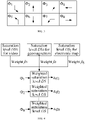
- FIG. 3 schematically shows a schematic diagram of traffic flow directions according to an embodiment of the present disclosure.
- an intersection may include, for example, a plurality of traffic flow directions, such as eight traffic flow directions.
- a traffic flow direction may be called a phase ⁇ .
- the eight traffic flow directions may be represented by, for example, ⁇ 1 to ⁇ 8 .
- DS v , DS d and DS g for each traffic flow direction may be calculated.
- the fused traffic congestion data of each traffic flow direction may be calculated using Equation (1), so as to obtain the fused traffic congestion data for the plurality of traffic flow directions.
- a congestion degree of each traffic flow direction in the plurality of traffic flow directions may be determined based on the fused traffic congestion data, and a first traffic flow direction with a congestion degree meeting a preset congestion condition may be determined from the plurality of traffic flow directions based on the congestion degree of each traffic flow direction.
- Traffic flow direction other than the first traffic flow direction is a second traffic flow direction.
- One or more most congested traffic flow directions in the plurality of traffic flow directions have the congestion degree meeting the preset congestion condition.
- a control signal for a traffic light for the first traffic flow direction may be generated, so as to control the traffic light based on the control signal to reduce the congestion degree of the first traffic flow direction.
- Controlling the traffic light includes adjusting the green light duration of the traffic light, such as increasing the green light duration for the first traffic flow direction, so that more vehicles pass through the intersection via the first traffic flow direction to reduce the traffic congestion.
- a control signal for a traffic light for the second traffic flow direction may be generated based on a restrictive condition.
- a congestion degree of the second traffic flow direction does not meet the preset congestion condition.
- the restrictive condition may include that an increase of the green light duration for the first traffic flow direction is equal to a decrease of the green light duration for the second traffic flow direction.
- the green light duration for the second traffic flow direction may be reduced while increasing the green light duration for the first traffic flow direction.
- the traffic lights for other traffic flow directions are considered, so as to ensure a stability and a robustness of an overall system.
- an objective function for the plurality of traffic flow directions may be expressed as Equation (2).
- L ⁇ ⁇ g i ⁇ w i ⁇ ⁇ i
- w i represents a weight for an i-th traffic flow direction
- 1 is a default of w i .
- a weight for a traffic flow direction of a main road may be greater than that for a traffic flow direction of a non-main road.
- ⁇ 1.
- the supersaturated phase indicates a phase (traffic flow direction) with a large traffic congestion degree, such as a traffic flow direction with a large weighted saturation level DS.
- the non-supersaturated phase indicates a phase (traffic flow direction) with a small traffic congestion degree, such as a traffic flow direction with a small weighted saturation level DS.
- the embodiments of the present disclosure may be implemented to adjust a value of ⁇ g i when the objective function meets a certain condition.
- the embodiments of the present disclosure are implemented to mainly adjust the green light duration for the supersaturated phase (the first traffic flow direction), and the green light duration for the unsaturated phase (the second traffic flow direction) may be adjusted accordingly under a constraint condition (restrictive condition).
- the constraint condition (restrictive condition) may be expressed as, for example, Equation (5).
- FIG. 4 schematically shows a schematic diagram of generating a control signal for a traffic light according to an embodiment of the present disclosure.
- the saturation level DS v (traffic congestion data) for the video acquisition device is calculated based on the traffic data set for the video acquisition device, and the current saturation level DS v may be calculated based on the saturation level DS v of a plurality of historical time periods and corresponding weights.
- the saturation level DS d (traffic congestion data) for the geomagnetic data acquisition device may be calculated based on the traffic data set for the geomagnetic data acquisition device.
- the saturation level DS g (traffic congestion data) for the electronic map may be calculated based on the traffic data set for the electronic map.
- the saturation levels DS v , DS d and DS g correspond to weights ⁇ v , ⁇ d and ⁇ g , respectively.
- the weighted saturation level DS (fused traffic congestion data) may be calculated based on various saturation levels and the corresponding weights.
- the green light duration change amplitude ⁇ g i of the traffic flow direction may be adjusted. For example, the green light duration for the first traffic flow direction may be increased while decreasing the green light duration for the second traffic flow direction.
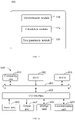
- FIG. 5 schematically shows a block diagram of an apparatus of generating a control signal for a traffic light according to an embodiment of the present disclosure.
- an apparatus 500 of generating a control signal for a traffic light may include, for example, a determination module 510, a calculation module 520, and a first generation module 530.
- the determination module 510 may be used to determine, in response to receiving a plurality of traffic data sets from different data sources, a plurality of traffic congestion data corresponding to the plurality of traffic data sets respectively based on the plurality of traffic data sets. According to the embodiments of the present disclosure, the determination module 510 may perform, for example, the operation S210 described above with reference to FIG. 2 , which will not repeated here.
- the calculation module 520 may be used to calculate fused traffic congestion data based on the plurality of traffic congestion data and weights respectively corresponding to the plurality of traffic congestion data. According to the embodiments of the present disclosure, the calculation module 520 may perform, for example, the operation S220 described above with reference to FIG. 2 , which will not repeated here.
- the first generation module 530 may be used to generate a control signal for controlling the traffic light based on the fused traffic congestion data. According to the embodiments of the present disclosure, the first generation module 530 may perform, for example, the operation S230 described above with reference to FIG. 2 , which will not be repeated here.
- the data source may include a video acquisition device
- the traffic data set from the video acquisition device may include a length of time of a vehicle passing through an intersection.
- the determination module may be further used to, for the traffic data set from the video acquisition device, determine a ratio of the length of time of the vehicle passing through the intersection to a length of time allowed for the vehicle to pass as traffic congestion data corresponding to the traffic data set from the video acquisition device.
- the data source may include a geomagnetic data acquisition device, and a traffic data set from the geomagnetic data acquisition device may include a number of vehicles passing through an intersection.
- the determination module may be further used to, for the traffic data set from the geomagnetic data acquisition device, determine a ratio of the number of vehicles passing through the intersection to a reference number of vehicles as the traffic congestion data corresponding to the traffic data set from the geomagnetic data acquisition device.
- the data source may include an electronic map
- a traffic data set from the electronic map may include driving track data of a vehicle.
- the determination module may be further used to, for the traffic data set from the electronic map, determine the driving delay data of the vehicle as the traffic congestion data based on the driving track data of the vehicle.
- the fused traffic congestion data may include data for a plurality of traffic flow directions.
- the first generation module 530 may include a first determination sub-module and a generation sub-module.
- the first determination sub-module is used to determine a congestion degree of each of the plurality of traffic flow directions based on the fused traffic congestion data.
- the generation sub-module is used to, for a first traffic flow direction in the plurality of traffic flow directions, generate a control signal for a traffic light for the first traffic flow direction, so as to control the traffic light based on the control signal to reduce a congestion degree of the first traffic flow direction.
- the congestion degree of the first traffic flow direction meets a preset congestion condition.
- the apparatus 500 may further include a second generation module used to, for a second traffic flow direction in the plurality of traffic flow directions, generate a control signal for a traffic light for the second traffic flow direction based on a restrictive condition.
- the congestion degree of the second traffic flow direction does not meet the preset congestion condition.
- Controlling the traffic light includes adjusting the green light duration of the traffic light, and the restrictive condition includes that the increase of the green light duration for the first traffic flow direction is equal to the decrease of the green light duration for the second traffic flow direction.
- the determination module 510 includes a second determination sub-module and a third determination sub-module.
- the second determination sub-module is used to determine traffic congestion data for a plurality of historical time periods based on the traffic data set.
- the third determination sub-module is used to determine traffic congestion data for the current time period based on the traffic congestion data for the plurality of historical time periods and corresponding weights.
- a weight corresponding to each historical time period is associated with a time interval between the historical time period and the current time period.
- the collection, storage, use, processing, transmission, provision, disclosure, and application of the user's personal information involved are all in compliance with relevant laws and regulations, take essential confidentiality measures, and do not violate public order and good customs.
- authorization or consent is obtained from the user before the user's personal information is obtained or collected.
- the present disclosure further provides an electronic device, a readable storage medium, and a computer program product.
- FIG. 6 shows a block diagram of an electronic device for implementing the method of generating the control signal for the traffic light according to the embodiments of the present disclosure.
- FIG. 6 shows a schematic block diagram of an exemplary electronic device 600 for implementing the embodiments of the present disclosure.
- the electronic device 600 is intended to represent various forms of digital computers, such as a laptop computer, a desktop computer, a workstation, a personal digital assistant, a server, a blade server, a mainframe computer, and other suitable computers.
- the electronic device may further represent various forms of mobile devices, such as a personal digital assistant, a cellular phone, a smart phone, a wearable device, and other similar computing devices.
- the components as illustrated herein, and connections, relationships, and functions thereof are merely examples, and are not intended to limit the implementation of the present disclosure described and/or required herein.
- the electronic device 600 may include a computing unit 601, which may perform various appropriate actions and processing based on a computer program stored in a read-only memory (ROM) 602 or a computer program loaded from a storage unit 608 into a random access memory (RAM) 603. Various programs and data required for the operation of the electronic device 600 may be stored in the RAM 603.
- the computing unit 601, the ROM 602 and the RAM 603 are connected to each other through a bus 604.
- An input/output (I/O) interface 605 is further connected to the bus 604.
- Various components in the electronic device 600 including an input unit 606 such as a keyboard, a mouse, etc., an output unit 607 such as various types of displays, speakers, etc., a storage unit 608 such as a magnetic disk, an optical disk, etc., and a communication unit 609 such as a network card, a modem, a wireless communication transceiver, etc., are connected to the I/O interface 605.
- the communication unit 609 allows the electronic device 600 to exchange information/data with other devices through a computer network such as the Internet and/or various telecommunication networks.
- the computing unit 601 may be various general-purpose and/or special-purpose processing components with processing and computing capabilities. Some examples of the computing unit 601 include but are not limited to a central processing unit (CPU), a graphics processing unit (GPU), various dedicated artificial intelligence (AI) computing chips, various computing units running machine learning model algorithms, a digital signal processor (DSP), and any appropriate processor, controller, microcontroller, and so on.
- the computing unit 601 may perform the various methods and processes described above, such as the method of generating the control signal for the traffic light.
- the method of generating the control signal for the traffic light may be implemented as a computer software program that is tangibly contained on a machine-readable medium, such as a storage unit 608.
- part or all of a computer program may be loaded and/or installed on the electronic device 600 via the ROM 602 and/or the communication unit 609.
- the computer program When the computer program is loaded into the RAM 603 and executed by the computing unit 601, one or more steps of the method of generating the control signal for the traffic light described above may be performed.
- the computing unit 601 may be configured to perform the method of generating the control signal for the traffic light in any other appropriate way (for example, by means of firmware).
- Various embodiments of the systems and technologies described herein may be implemented in a digital electronic circuit system, an integrated circuit system, a field programmable gate array (FPGA), an application specific integrated circuit (ASIC), an application specific standard product (ASSP), a system on chip (SOC), a complex programmable logic device (CPLD), a computer hardware, firmware, software, and/or combinations thereof.
- FPGA field programmable gate array
- ASIC application specific integrated circuit
- ASSP application specific standard product
- SOC system on chip
- CPLD complex programmable logic device
- the programmable processor may be a dedicated or general-purpose programmable processor, which may receive data and instructions from the storage system, the at least one input device and the at least one output device, and may transmit the data and instructions to the storage system, the at least one input device, and the at least one output device.
- Program codes for implementing the method of the present disclosure may be written in any combination of one or more programming languages. These program codes may be provided to a processor or a controller of a general-purpose computer, a special-purpose computer, or other programmable data processing devices, so that when the program codes are executed by the processor or the controller, the functions/operations specified in the flowchart and/or block diagram may be implemented.
- the program codes may be executed completely on the machine, partly on the machine, partly on the machine and partly on the remote machine as an independent software package, or completely on the remote machine or the server.
- the machine readable medium may be a tangible medium that may contain or store programs for use by or in combination with an instruction execution system, device or apparatus.
- the machine readable medium may be a machine-readable signal medium or a machine-readable storage medium.
- the machine readable medium may include, but not be limited to, electronic, magnetic, optical, electromagnetic, infrared or semiconductor systems, devices or apparatuses, or any suitable combination of the above.
- machine readable storage medium may include electrical connections based on one or more wires, portable computer disks, hard disks, random access memory (RAM), read-only memory (ROM), erasable programmable read-only memory (EPROM or flash memory), optical fiber, convenient compact disk read-only memory (CD-ROM), optical storage device, magnetic storage device, or any suitable combination of the above.
- RAM random access memory
- ROM read-only memory
- EPROM or flash memory erasable programmable read-only memory
- CD-ROM compact disk read-only memory
- magnetic storage device magnetic storage device, or any suitable combination of the above.
- a computer including a display device (for example, a CRT (cathode ray tube) or LCD (liquid crystal display) monitor) for displaying information to the user), and a keyboard and a pointing device (for example, a mouse or a trackball) through which the user may provide the input to the computer.
- a display device for example, a CRT (cathode ray tube) or LCD (liquid crystal display) monitor
- a keyboard and a pointing device for example, a mouse or a trackball
- Other types of devices may also be used to provide interaction with users.
- a feedback provided to the user may be any form of sensory feedback (for example, visual feedback, auditory feedback, or tactile feedback), and the input from the user may be received in any form (including acoustic input, voice input or tactile input).
- the systems and technologies described herein may be implemented in a computing system including back-end components (for example, a data server), or a computing system including middleware components (for example, an application server), or a computing system including front-end components (for example, a user computer having a graphical user interface or web browser through which the user may interact with the implementation of the system and technology described herein), or a computing system including any combination of such back-end components, middleware components or front-end components.
- the components of the system may be connected to each other by digital data communication (for example, a communication network) in any form or through any medium. Examples of the communication network include a local area network (LAN), a wide area network (WAN), and Internet.
- LAN local area network
- WAN wide area network
- Internet Internet
- the computer system may include a client and a server.
- the client and the server are generally far away from each other and usually interact through a communication network.
- the relationship between the client and the server is generated through computer programs running on the corresponding computers and having a client-server relationship with each other.
- the server may be a cloud server, a server of a distributed system, or a server combined with a blockchain.
- steps of the processes illustrated above may be reordered, added or deleted in various manners.
- the steps described in the present disclosure may be performed in parallel, sequentially, or in a different order, as long as a desired result of the technical solution of the present disclosure may be achieved. This is not limited in the present disclosure.
Landscapes
- Physics & Mathematics (AREA)
- General Physics & Mathematics (AREA)
- Chemical & Material Sciences (AREA)
- Analytical Chemistry (AREA)
- Engineering & Computer Science (AREA)
- Multimedia (AREA)
- Theoretical Computer Science (AREA)
- Traffic Control Systems (AREA)
Applications Claiming Priority (1)
| Application Number | Priority Date | Filing Date | Title |
|---|---|---|---|
| CN202110715782.7A CN113409593A (zh) | 2021-06-25 | 2021-06-25 | 交通信号灯的控制信号生成方法、装置、电子设备和介质 |
Publications (2)
| Publication Number | Publication Date |
|---|---|
| EP4047582A2 true EP4047582A2 (fr) | 2022-08-24 |
| EP4047582A3 EP4047582A3 (fr) | 2022-12-07 |
Family
ID=77679535
Family Applications (1)
| Application Number | Title | Priority Date | Filing Date |
|---|---|---|---|
| EP22179593.3A Withdrawn EP4047582A3 (fr) | 2021-06-25 | 2022-06-17 | Procédé et appareil de génération de signal de commande pour feu de signalisation, dispositif électronique et support |
Country Status (5)
| Country | Link |
|---|---|
| US (1) | US20220319314A1 (fr) |
| EP (1) | EP4047582A3 (fr) |
| JP (1) | JP2022101679A (fr) |
| KR (1) | KR20220069894A (fr) |
| CN (1) | CN113409593A (fr) |
Families Citing this family (6)
| Publication number | Priority date | Publication date | Assignee | Title |
|---|---|---|---|---|
| CN113724499A (zh) * | 2021-11-01 | 2021-11-30 | 华录易云科技有限公司 | 一种道路交通事件三维可视化分析方法及系统 |
| CN114120647B (zh) * | 2021-11-26 | 2023-01-24 | 阿波罗智联(北京)科技有限公司 | 交通数据处理方法、装置、电子设备和介质 |
| CN114418468B (zh) | 2022-03-29 | 2022-07-05 | 成都秦川物联网科技股份有限公司 | 一种智慧城市交通调度策略控制方法和物联网系统 |
| CN118314732B (zh) * | 2024-05-10 | 2025-03-11 | 深圳市旗扬特种装备技术工程有限公司 | 一种红绿灯控制方法、系统、电子设备及介质 |
| CN118865711B (zh) * | 2024-09-12 | 2025-10-28 | 北京百度网讯科技有限公司 | 交通信号处理方法、装置、电子设备和存储介质 |
| CN119169840B (zh) * | 2024-10-18 | 2025-03-11 | 浙江大华技术股份有限公司 | 一种交通拥堵调控方法、系统、电子设备及存储介质 |
Family Cites Families (20)
| Publication number | Priority date | Publication date | Assignee | Title |
|---|---|---|---|---|
| JPH01276298A (ja) * | 1988-04-27 | 1989-11-06 | Ricoh Co Ltd | 交通信号装置 |
| JP4534813B2 (ja) * | 2005-03-15 | 2010-09-01 | オムロン株式会社 | 信号制御システム、および信号制御方法 |
| JP5009143B2 (ja) * | 2007-12-13 | 2012-08-22 | 住友電気工業株式会社 | 交通信号制御装置、プログラム及び方法 |
| JP2009301345A (ja) * | 2008-06-13 | 2009-12-24 | Denso Corp | 交通情報提供システム及び交通情報提供装置 |
| CN101783069A (zh) * | 2009-12-29 | 2010-07-21 | 北京世纪高通科技有限公司 | 一种交通信息融合处理方法及系统 |
| CN103514741A (zh) * | 2012-06-19 | 2014-01-15 | 上海炎翔通信科技有限公司 | 交通拥堵信息处理系统及移动通信终端 |
| US9165461B1 (en) * | 2015-05-06 | 2015-10-20 | Intellectual Fortress, LLC | Image processing based traffic flow control system and method |
| US9576481B2 (en) * | 2015-04-30 | 2017-02-21 | Here Global B.V. | Method and system for intelligent traffic jam detection |
| CN106408958A (zh) * | 2015-07-31 | 2017-02-15 | 富士通株式会社 | 路口信号灯的控制装置及方法 |
| JP6214796B1 (ja) * | 2016-03-30 | 2017-10-18 | 三菱電機株式会社 | 走行計画生成装置、走行計画生成方法及び走行計画生成プログラム |
| CN107705586B (zh) * | 2016-08-08 | 2022-05-10 | 阿里巴巴集团控股有限公司 | 道路交叉口的车流控制方法以及装置 |
| US9805595B1 (en) * | 2016-10-27 | 2017-10-31 | International Business Machines Corporation | Vehicle and non-vehicle traffic flow control |
| CN108806283B (zh) * | 2017-05-02 | 2021-06-08 | 中移物联网有限公司 | 一种交通信号灯的控制方法及车联网平台 |
| CN107610470A (zh) * | 2017-10-31 | 2018-01-19 | 迈锐数据(北京)有限公司 | 一种交通拥堵评价方法和装置 |
| CN111383449A (zh) * | 2018-12-29 | 2020-07-07 | 北京嘀嘀无限科技发展有限公司 | 路口通行预估方法、计算机设备和计算机可读存储介质 |
| CN110689738A (zh) * | 2019-09-24 | 2020-01-14 | 北京地平线机器人技术研发有限公司 | 交通信号灯的控制方法和装置、存储介质、电子设备 |
| CN113593262B (zh) * | 2019-11-14 | 2022-09-27 | 北京百度网讯科技有限公司 | 交通信号控制方法、装置、计算机设备和存储介质 |
| CN111862632A (zh) * | 2020-04-29 | 2020-10-30 | 南阳师范学院 | 一种智能交通信号灯防拥堵的方法及装置 |
| CN111915887A (zh) * | 2020-07-10 | 2020-11-10 | 广州运星科技有限公司 | 一种基于多源异构交通数据的集成与处理系统及其方法 |
| CN112435487A (zh) * | 2020-11-11 | 2021-03-02 | 浪潮商用机器有限公司 | 基于边缘计算的信号灯控制方法、装置、设备及存储介质 |
-
2021
- 2021-06-25 CN CN202110715782.7A patent/CN113409593A/zh active Pending
-
2022
- 2022-04-27 JP JP2022072806A patent/JP2022101679A/ja active Pending
- 2022-05-10 KR KR1020220057519A patent/KR20220069894A/ko not_active Ceased
- 2022-06-17 US US17/842,902 patent/US20220319314A1/en not_active Abandoned
- 2022-06-17 EP EP22179593.3A patent/EP4047582A3/fr not_active Withdrawn
Also Published As
| Publication number | Publication date |
|---|---|
| CN113409593A (zh) | 2021-09-17 |
| EP4047582A3 (fr) | 2022-12-07 |
| JP2022101679A (ja) | 2022-07-06 |
| KR20220069894A (ko) | 2022-05-27 |
| US20220319314A1 (en) | 2022-10-06 |
Similar Documents
| Publication | Publication Date | Title |
|---|---|---|
| EP4047582A2 (fr) | Procédé et appareil de génération de signal de commande pour feu de signalisation, dispositif électronique et support | |
| US20220129731A1 (en) | Method and apparatus for training image recognition model, and method and apparatus for recognizing image | |
| US11887473B2 (en) | Road congestion detection method and device, and electronic device | |
| US12422262B2 (en) | Navigation path planning method and apparatus, device, and storage medium | |
| US20230334986A1 (en) | Method of performing green wave coordination control, electronic device and storage medium | |
| US20220237529A1 (en) | Method, electronic device and storage medium for determining status of trajectory point | |
| US20220204000A1 (en) | Method for determining automatic driving feature, apparatus, device, medium and program product | |
| US20230066021A1 (en) | Object detection | |
| EP4040421B1 (fr) | Procédé et dispositif de prédiction de données de trafic et dispositif electronique | |
| US20220327922A1 (en) | Method of determining state of intersection, electronic device, and storage medium | |
| EP4123595A2 (fr) | Procédé et appareil de redressement d'image de texte, procédé et appareil d'apprentissage, dispositif électronique et support | |
| EP4012344A2 (fr) | Procede et appareil de generation d'informations d'itinéraire, dispositif, support et produit | |
| US20220246032A1 (en) | Method and apparatus for prompting navigation information, and medium | |
| US20220139218A1 (en) | Data verification method and apparatus, device and storage medium | |
| EP4064239A2 (fr) | Procede et appareil de determination de l'etat d'une intersection, support de stockage, et produit programme | |
| WO2023098828A1 (fr) | Procédé et appareil de combinaison de vitesse de véhicule, ainsi que dispositif électronique et support de stockage | |
| CN114973740B (zh) | 语音播报时机的确定方法、装置及电子设备 | |
| US20230009941A1 (en) | Method of processing data for target model, electronic device, and storage medium | |
| US20250307571A1 (en) | Large language model-based target sequence generation method, device and medium | |
| US20230111511A1 (en) | Intersection vertex height value acquisition method and apparatus, electronic device and storage medium | |
| CN113837502A (zh) | 一种基于深度学习的航班价格预测方法及系统 | |
| EP4174847B1 (fr) | Procédé et appareil de détection de diffusion de navigation, et dispositif électronique et support | |
| CN117314433A (zh) | 银行网点的交易风险控制方法、装置、设备及存储介质 | |
| WO2023273001A1 (fr) | Procédé et appareil de recommandation d'informations pour véhicule, et véhicule et dispositif électronique | |
| US20250182031A1 (en) | Method, apparatus and terminal device for processing performance indicators |
Legal Events
| Date | Code | Title | Description |
|---|---|---|---|
| PUAI | Public reference made under article 153(3) epc to a published international application that has entered the european phase |
Free format text: ORIGINAL CODE: 0009012 |
|
| STAA | Information on the status of an ep patent application or granted ep patent |
Free format text: STATUS: REQUEST FOR EXAMINATION WAS MADE |
|
| 17P | Request for examination filed |
Effective date: 20220617 |
|
| AK | Designated contracting states |
Kind code of ref document: A2 Designated state(s): AL AT BE BG CH CY CZ DE DK EE ES FI FR GB GR HR HU IE IS IT LI LT LU LV MC MK MT NL NO PL PT RO RS SE SI SK SM TR |
|
| PUAL | Search report despatched |
Free format text: ORIGINAL CODE: 0009013 |
|
| AK | Designated contracting states |
Kind code of ref document: A3 Designated state(s): AL AT BE BG CH CY CZ DE DK EE ES FI FR GB GR HR HU IE IS IT LI LT LU LV MC MK MT NL NO PL PT RO RS SE SI SK SM TR |
|
| RIC1 | Information provided on ipc code assigned before grant |
Ipc: G08G 1/08 20060101ALI20221103BHEP Ipc: G08G 1/042 20060101ALI20221103BHEP Ipc: G08G 1/01 20060101AFI20221103BHEP |
|
| STAA | Information on the status of an ep patent application or granted ep patent |
Free format text: STATUS: THE APPLICATION IS DEEMED TO BE WITHDRAWN |
|
| 18D | Application deemed to be withdrawn |
Effective date: 20230608 |