EP4043484A1 - Récepteur de somatostatine - Google Patents
Récepteur de somatostatine Download PDFInfo
- Publication number
- EP4043484A1 EP4043484A1 EP20873301.4A EP20873301A EP4043484A1 EP 4043484 A1 EP4043484 A1 EP 4043484A1 EP 20873301 A EP20873301 A EP 20873301A EP 4043484 A1 EP4043484 A1 EP 4043484A1
- Authority
- EP
- European Patent Office
- Prior art keywords
- heterodimer
- somatostatin receptor
- receptor subtype
- compound
- sstr1
- Prior art date
- Legal status (The legal status is an assumption and is not a legal conclusion. Google has not performed a legal analysis and makes no representation as to the accuracy of the status listed.)
- Pending
Links
- 108050001286 Somatostatin Receptor Proteins 0.000 title claims abstract description 25
- 102000011096 Somatostatin receptor Human genes 0.000 title claims abstract description 25
- 239000000833 heterodimer Substances 0.000 claims abstract description 92
- 150000001875 compounds Chemical class 0.000 claims abstract description 88
- 108010064556 somatostatin receptor subtype-4 Proteins 0.000 claims abstract description 83
- 238000000034 method Methods 0.000 claims abstract description 78
- 238000012216 screening Methods 0.000 claims abstract description 34
- 238000012360 testing method Methods 0.000 claims abstract description 32
- 239000000710 homodimer Substances 0.000 claims description 27
- 230000003993 interaction Effects 0.000 claims description 22
- 238000009825 accumulation Methods 0.000 claims description 17
- 201000010099 disease Diseases 0.000 claims description 17
- 208000037265 diseases, disorders, signs and symptoms Diseases 0.000 claims description 17
- 239000013598 vector Substances 0.000 claims description 15
- 239000000556 agonist Substances 0.000 claims description 13
- 238000010384 proximity ligation assay Methods 0.000 claims description 12
- 230000019491 signal transduction Effects 0.000 claims description 10
- 238000005259 measurement Methods 0.000 claims description 9
- 229940125516 allosteric modulator Drugs 0.000 claims description 5
- 210000000056 organ Anatomy 0.000 claims description 3
- 102000013455 Amyloid beta-Peptides Human genes 0.000 claims description 2
- 108010090849 Amyloid beta-Peptides Proteins 0.000 claims description 2
- 102100029329 Somatostatin receptor type 1 Human genes 0.000 description 98
- 108010082379 somatostatin receptor type 1 Proteins 0.000 description 90
- 210000004027 cell Anatomy 0.000 description 64
- 108090000028 Neprilysin Proteins 0.000 description 37
- 102000003729 Neprilysin Human genes 0.000 description 35
- 102100023801 Somatostatin receptor type 4 Human genes 0.000 description 35
- 108090000623 proteins and genes Proteins 0.000 description 27
- 102000004169 proteins and genes Human genes 0.000 description 23
- 230000000694 effects Effects 0.000 description 22
- 239000000243 solution Substances 0.000 description 18
- 108020004414 DNA Proteins 0.000 description 15
- 208000024827 Alzheimer disease Diseases 0.000 description 14
- 101150095213 Sstr1 gene Proteins 0.000 description 14
- 239000000203 mixture Substances 0.000 description 13
- 108090000765 processed proteins & peptides Proteins 0.000 description 13
- 102000005962 receptors Human genes 0.000 description 12
- 108020003175 receptors Proteins 0.000 description 12
- 239000000758 substrate Substances 0.000 description 12
- 238000012744 immunostaining Methods 0.000 description 11
- 238000011534 incubation Methods 0.000 description 11
- NHXLMOGPVYXJNR-ATOGVRKGSA-N somatostatin Chemical compound C([C@H]1C(=O)N[C@H](C(N[C@@H](CO)C(=O)N[C@@H](CSSC[C@@H](C(=O)N[C@@H](CCCCN)C(=O)N[C@@H](CC(N)=O)C(=O)N[C@@H](CC=2C=CC=CC=2)C(=O)N[C@@H](CC=2C=CC=CC=2)C(=O)N[C@@H](CC=2C3=CC=CC=C3NC=2)C(=O)N[C@@H](CCCCN)C(=O)N[C@H](C(=O)N1)[C@@H](C)O)NC(=O)CNC(=O)[C@H](C)N)C(O)=O)=O)[C@H](O)C)C1=CC=CC=C1 NHXLMOGPVYXJNR-ATOGVRKGSA-N 0.000 description 11
- 210000004556 brain Anatomy 0.000 description 10
- 102000005157 Somatostatin Human genes 0.000 description 9
- 108010056088 Somatostatin Proteins 0.000 description 9
- 210000004978 chinese hamster ovary cell Anatomy 0.000 description 9
- 238000010790 dilution Methods 0.000 description 9
- 239000012895 dilution Substances 0.000 description 9
- 229960000553 somatostatin Drugs 0.000 description 9
- 101150033839 4 gene Proteins 0.000 description 8
- 230000015556 catabolic process Effects 0.000 description 8
- 230000003449 preventive effect Effects 0.000 description 8
- 238000001890 transfection Methods 0.000 description 8
- 230000004913 activation Effects 0.000 description 7
- 238000006731 degradation reaction Methods 0.000 description 7
- 239000002773 nucleotide Substances 0.000 description 7
- 125000003729 nucleotide group Chemical group 0.000 description 7
- 239000013612 plasmid Substances 0.000 description 7
- 210000001519 tissue Anatomy 0.000 description 7
- 230000000903 blocking effect Effects 0.000 description 6
- 238000006243 chemical reaction Methods 0.000 description 6
- 239000000284 extract Substances 0.000 description 6
- 239000003550 marker Substances 0.000 description 6
- 238000002360 preparation method Methods 0.000 description 6
- FAPWRFPIFSIZLT-UHFFFAOYSA-M Sodium chloride Chemical compound [Na+].[Cl-] FAPWRFPIFSIZLT-UHFFFAOYSA-M 0.000 description 5
- 230000003281 allosteric effect Effects 0.000 description 5
- -1 amide compound Chemical class 0.000 description 5
- 239000003795 chemical substances by application Substances 0.000 description 5
- 210000002569 neuron Anatomy 0.000 description 5
- 239000000523 sample Substances 0.000 description 5
- 239000000126 substance Substances 0.000 description 5
- 238000001262 western blot Methods 0.000 description 5
- 241000282412 Homo Species 0.000 description 4
- 101100257837 Homo sapiens SSTR1 gene Proteins 0.000 description 4
- 241000124008 Mammalia Species 0.000 description 4
- 230000003321 amplification Effects 0.000 description 4
- 210000000170 cell membrane Anatomy 0.000 description 4
- 239000007857 degradation product Substances 0.000 description 4
- 238000001514 detection method Methods 0.000 description 4
- 239000003814 drug Substances 0.000 description 4
- 238000003199 nucleic acid amplification method Methods 0.000 description 4
- 230000008823 permeabilization Effects 0.000 description 4
- 229940124597 therapeutic agent Drugs 0.000 description 4
- 230000001225 therapeutic effect Effects 0.000 description 4
- 238000002965 ELISA Methods 0.000 description 3
- 102000003960 Ligases Human genes 0.000 description 3
- 108090000364 Ligases Proteins 0.000 description 3
- 241000283973 Oryctolagus cuniculus Species 0.000 description 3
- 238000001042 affinity chromatography Methods 0.000 description 3
- 230000015572 biosynthetic process Effects 0.000 description 3
- 230000005754 cellular signaling Effects 0.000 description 3
- 210000003710 cerebral cortex Anatomy 0.000 description 3
- 239000003153 chemical reaction reagent Substances 0.000 description 3
- 238000010586 diagram Methods 0.000 description 3
- 238000002866 fluorescence resonance energy transfer Methods 0.000 description 3
- 230000006870 function Effects 0.000 description 3
- PCHJSUWPFVWCPO-UHFFFAOYSA-N gold Chemical compound [Au] PCHJSUWPFVWCPO-UHFFFAOYSA-N 0.000 description 3
- 239000010931 gold Substances 0.000 description 3
- 229910052737 gold Inorganic materials 0.000 description 3
- 210000001320 hippocampus Anatomy 0.000 description 3
- 210000003016 hypothalamus Anatomy 0.000 description 3
- 238000001114 immunoprecipitation Methods 0.000 description 3
- 230000031146 intracellular signal transduction Effects 0.000 description 3
- 239000011259 mixed solution Substances 0.000 description 3
- 239000004031 partial agonist Substances 0.000 description 3
- 230000028327 secretion Effects 0.000 description 3
- 239000011534 wash buffer Substances 0.000 description 3
- XLYOFNOQVPJJNP-UHFFFAOYSA-N water Substances O XLYOFNOQVPJJNP-UHFFFAOYSA-N 0.000 description 3
- FWBHETKCLVMNFS-UHFFFAOYSA-N 4',6-Diamino-2-phenylindol Chemical compound C1=CC(C(=N)N)=CC=C1C1=CC2=CC=C(C(N)=N)C=C2N1 FWBHETKCLVMNFS-UHFFFAOYSA-N 0.000 description 2
- 239000012099 Alexa Fluor family Substances 0.000 description 2
- 102000002260 Alkaline Phosphatase Human genes 0.000 description 2
- 108020004774 Alkaline Phosphatase Proteins 0.000 description 2
- 208000037259 Amyloid Plaque Diseases 0.000 description 2
- 101800001288 Atrial natriuretic factor Proteins 0.000 description 2
- 102400001282 Atrial natriuretic peptide Human genes 0.000 description 2
- 101800001890 Atrial natriuretic peptide Proteins 0.000 description 2
- 241000283690 Bos taurus Species 0.000 description 2
- 241000283707 Capra Species 0.000 description 2
- 102000004190 Enzymes Human genes 0.000 description 2
- 108090000790 Enzymes Proteins 0.000 description 2
- 102000003688 G-Protein-Coupled Receptors Human genes 0.000 description 2
- 108090000045 G-Protein-Coupled Receptors Proteins 0.000 description 2
- 102000004862 Gastrin releasing peptide Human genes 0.000 description 2
- 108090001053 Gastrin releasing peptide Proteins 0.000 description 2
- 102000018997 Growth Hormone Human genes 0.000 description 2
- 108010051696 Growth Hormone Proteins 0.000 description 2
- 241000238631 Hexapoda Species 0.000 description 2
- 101000829153 Homo sapiens Somatostatin receptor type 5 Proteins 0.000 description 2
- 241001465754 Metazoa Species 0.000 description 2
- 241000699670 Mus sp. Species 0.000 description 2
- 208000012902 Nervous system disease Diseases 0.000 description 2
- 208000025966 Neurological disease Diseases 0.000 description 2
- 108091028043 Nucleic acid sequence Proteins 0.000 description 2
- 239000012124 Opti-MEM Substances 0.000 description 2
- 108010067902 Peptide Library Proteins 0.000 description 2
- 241000700159 Rattus Species 0.000 description 2
- 240000004808 Saccharomyces cerevisiae Species 0.000 description 2
- 102100023806 Somatostatin receptor type 5 Human genes 0.000 description 2
- 241000282887 Suidae Species 0.000 description 2
- 239000007983 Tris buffer Substances 0.000 description 2
- 230000006933 amyloid-beta aggregation Effects 0.000 description 2
- 230000001580 bacterial effect Effects 0.000 description 2
- 238000000225 bioluminescence resonance energy transfer Methods 0.000 description 2
- 210000004204 blood vessel Anatomy 0.000 description 2
- NSQLIUXCMFBZME-MPVJKSABSA-N carperitide Chemical compound C([C@H]1C(=O)NCC(=O)NCC(=O)N[C@@H](CCCNC(N)=N)C(=O)N[C@@H](CCSC)C(=O)N[C@@H](CC(O)=O)C(=O)N[C@@H](CCCNC(N)=N)C(=O)N[C@H](C(NCC(=O)N[C@@H](C)C(=O)N[C@@H](CCC(N)=O)C(=O)N[C@@H](CO)C(=O)NCC(=O)N[C@@H](CC(C)C)C(=O)NCC(=O)N[C@@H](CSSC[C@@H](C(=O)N1)NC(=O)[C@H](CO)NC(=O)[C@H](CO)NC(=O)[C@H](CCCNC(N)=N)NC(=O)[C@H](CCCNC(N)=N)NC(=O)[C@H](CC(C)C)NC(=O)[C@@H](N)CO)C(=O)N[C@@H](CC(N)=O)C(=O)N[C@@H](CO)C(=O)N[C@@H](CC=1C=CC=CC=1)C(=O)N[C@@H](CCCNC(N)=N)C(=O)N[C@@H](CC=1C=CC(O)=CC=1)C(O)=O)=O)[C@@H](C)CC)C1=CC=CC=C1 NSQLIUXCMFBZME-MPVJKSABSA-N 0.000 description 2
- 238000004587 chromatography analysis Methods 0.000 description 2
- 208000010877 cognitive disease Diseases 0.000 description 2
- 150000001924 cycloalkanes Chemical class 0.000 description 2
- 239000000539 dimer Substances 0.000 description 2
- 239000006274 endogenous ligand Substances 0.000 description 2
- 238000012407 engineering method Methods 0.000 description 2
- 238000002474 experimental method Methods 0.000 description 2
- 239000013604 expression vector Substances 0.000 description 2
- PUBCCFNQJQKCNC-XKNFJVFFSA-N gastrin-releasingpeptide Chemical compound C([C@@H](C(=O)N[C@@H](CC(C)C)C(=O)N[C@@H](CCSC)C(N)=O)NC(=O)CNC(=O)[C@@H](NC(=O)[C@H](C)NC(=O)[C@H](CC=1C2=CC=CC=C2NC=1)NC(=O)[C@H](CC=1N=CNC=1)NC(=O)[C@H](CC(N)=O)NC(=O)CNC(=O)[C@H](CCCN=C(N)N)NC(=O)[C@H]1N(CCC1)C(=O)[C@H](CC=1C=CC(O)=CC=1)NC(=O)[C@H](CCSC)NC(=O)[C@H](CCCCN)NC(=O)[C@@H](NC(=O)[C@H](CC(C)C)NC(=O)[C@@H](NC(=O)[C@@H](NC(=O)CNC(=O)CNC(=O)CNC(=O)[C@H](C)NC(=O)[C@H]1N(CCC1)C(=O)[C@H](CC(C)C)NC(=O)[C@H]1N(CCC1)C(=O)[C@@H](N)C(C)C)[C@@H](C)O)C(C)C)[C@@H](C)O)C(C)C)C1=CNC=N1 PUBCCFNQJQKCNC-XKNFJVFFSA-N 0.000 description 2
- 210000001035 gastrointestinal tract Anatomy 0.000 description 2
- 239000000122 growth hormone Substances 0.000 description 2
- 238000003364 immunohistochemistry Methods 0.000 description 2
- 238000000126 in silico method Methods 0.000 description 2
- 238000001727 in vivo Methods 0.000 description 2
- 239000003112 inhibitor Substances 0.000 description 2
- 230000005764 inhibitory process Effects 0.000 description 2
- NOESYZHRGYRDHS-UHFFFAOYSA-N insulin Chemical compound N1C(=O)C(NC(=O)C(CCC(N)=O)NC(=O)C(CCC(O)=O)NC(=O)C(C(C)C)NC(=O)C(NC(=O)CN)C(C)CC)CSSCC(C(NC(CO)C(=O)NC(CC(C)C)C(=O)NC(CC=2C=CC(O)=CC=2)C(=O)NC(CCC(N)=O)C(=O)NC(CC(C)C)C(=O)NC(CCC(O)=O)C(=O)NC(CC(N)=O)C(=O)NC(CC=2C=CC(O)=CC=2)C(=O)NC(CSSCC(NC(=O)C(C(C)C)NC(=O)C(CC(C)C)NC(=O)C(CC=2C=CC(O)=CC=2)NC(=O)C(CC(C)C)NC(=O)C(C)NC(=O)C(CCC(O)=O)NC(=O)C(C(C)C)NC(=O)C(CC(C)C)NC(=O)C(CC=2NC=NC=2)NC(=O)C(CO)NC(=O)CNC2=O)C(=O)NCC(=O)NC(CCC(O)=O)C(=O)NC(CCCNC(N)=N)C(=O)NCC(=O)NC(CC=3C=CC=CC=3)C(=O)NC(CC=3C=CC=CC=3)C(=O)NC(CC=3C=CC(O)=CC=3)C(=O)NC(C(C)O)C(=O)N3C(CCC3)C(=O)NC(CCCCN)C(=O)NC(C)C(O)=O)C(=O)NC(CC(N)=O)C(O)=O)=O)NC(=O)C(C(C)CC)NC(=O)C(CO)NC(=O)C(C(C)O)NC(=O)C1CSSCC2NC(=O)C(CC(C)C)NC(=O)C(NC(=O)C(CCC(N)=O)NC(=O)C(CC(N)=O)NC(=O)C(NC(=O)C(N)CC=1C=CC=CC=1)C(C)C)CC1=CN=CN1 NOESYZHRGYRDHS-UHFFFAOYSA-N 0.000 description 2
- 238000011835 investigation Methods 0.000 description 2
- 239000003446 ligand Substances 0.000 description 2
- 230000001404 mediated effect Effects 0.000 description 2
- 210000004379 membrane Anatomy 0.000 description 2
- 239000012528 membrane Substances 0.000 description 2
- 238000010369 molecular cloning Methods 0.000 description 2
- 238000010172 mouse model Methods 0.000 description 2
- 238000002823 phage display Methods 0.000 description 2
- 239000008363 phosphate buffer Substances 0.000 description 2
- 229920000729 poly(L-lysine) polymer Polymers 0.000 description 2
- 229940126027 positive allosteric modulator Drugs 0.000 description 2
- 230000002265 prevention Effects 0.000 description 2
- 102000004196 processed proteins & peptides Human genes 0.000 description 2
- 238000012545 processing Methods 0.000 description 2
- 239000000047 product Substances 0.000 description 2
- 238000002821 scintillation proximity assay Methods 0.000 description 2
- 210000002966 serum Anatomy 0.000 description 2
- 150000003384 small molecules Chemical class 0.000 description 2
- 239000011780 sodium chloride Substances 0.000 description 2
- 210000002325 somatostatin-secreting cell Anatomy 0.000 description 2
- UCSJYZPVAKXKNQ-HZYVHMACSA-N streptomycin Chemical compound CN[C@H]1[C@H](O)[C@@H](O)[C@H](CO)O[C@H]1O[C@@H]1[C@](C=O)(O)[C@H](C)O[C@H]1O[C@@H]1[C@@H](NC(N)=N)[C@H](O)[C@@H](NC(N)=N)[C@H](O)[C@H]1O UCSJYZPVAKXKNQ-HZYVHMACSA-N 0.000 description 2
- 239000000725 suspension Substances 0.000 description 2
- 208000024891 symptom Diseases 0.000 description 2
- LENZDBCJOHFCAS-UHFFFAOYSA-N tris Chemical compound OCC(N)(CO)CO LENZDBCJOHFCAS-UHFFFAOYSA-N 0.000 description 2
- 241001515965 unidentified phage Species 0.000 description 2
- VVEJUSYNERNRME-XGFVQVCISA-N (4r,7s,10r,13s,16r,19s,22r,25s,28r,31s)-13,28-bis(4-aminobutyl)-25-(2-amino-2-oxoethyl)-31-[[2-[[(2s)-2-aminopropanoyl]amino]acetyl]amino]-19,22-dibenzyl-10-[(1r)-1-hydroxyethyl]-7-(hydroxymethyl)-16-(1h-indol-3-ylmethyl)-6,9,12,15,18,21,24,27,30-nonaoxo- Chemical compound C([C@H]1C(=O)N[C@H](CC=2C3=CC=CC=C3NC=2)C(=O)N[C@@H](CCCCN)C(=O)N[C@@H](C(N[C@@H](CO)C(=O)N[C@@H](CSSC[C@H](C(=O)N[C@H](CCCCN)C(=O)N[C@@H](CC(N)=O)C(=O)N[C@H](CC=2C=CC=CC=2)C(=O)N1)NC(=O)CNC(=O)[C@H](C)N)C(O)=O)=O)[C@H](O)C)C1=CC=CC=C1 VVEJUSYNERNRME-XGFVQVCISA-N 0.000 description 1
- OBYNJKLOYWCXEP-UHFFFAOYSA-N 2-[3-(dimethylamino)-6-dimethylazaniumylidenexanthen-9-yl]-4-isothiocyanatobenzoate Chemical compound C=12C=CC(=[N+](C)C)C=C2OC2=CC(N(C)C)=CC=C2C=1C1=CC(N=C=S)=CC=C1C([O-])=O OBYNJKLOYWCXEP-UHFFFAOYSA-N 0.000 description 1
- STMADPGDXALQMG-RLSLOFABSA-N 5-[[(2S)-1-[[(2S)-1-[[(2S)-1-(naphthalen-2-ylamino)-1-oxo-3-phenylpropan-2-yl]amino]-1-oxopropan-2-yl]amino]-1-oxopropan-2-yl]amino]-5-oxopentanoic acid Chemical compound C[C@H](NC(=O)CCCC(O)=O)C(=O)N[C@@H](C)C(=O)N[C@@H](Cc1ccccc1)C(=O)Nc1ccc2ccccc2c1 STMADPGDXALQMG-RLSLOFABSA-N 0.000 description 1
- QFJWKXYGBSQMDX-RLSLOFABSA-N 5-[[(2s)-1-[[(2s)-1-[[(2s)-1-[(4-methoxynaphthalen-2-yl)amino]-1-oxo-3-phenylpropan-2-yl]amino]-1-oxopropan-2-yl]amino]-1-oxopropan-2-yl]amino]-5-oxopentanoic acid Chemical compound C([C@@H](C(=O)NC=1C=C(C2=CC=CC=C2C=1)OC)NC(=O)[C@H](C)NC(=O)[C@H](C)NC(=O)CCCC(O)=O)C1=CC=CC=C1 QFJWKXYGBSQMDX-RLSLOFABSA-N 0.000 description 1
- 229920001817 Agar Polymers 0.000 description 1
- 206010059245 Angiopathy Diseases 0.000 description 1
- 241000228212 Aspergillus Species 0.000 description 1
- 230000007082 Aβ accumulation Effects 0.000 description 1
- 230000007324 Aβ metabolism Effects 0.000 description 1
- 244000063299 Bacillus subtilis Species 0.000 description 1
- 235000014469 Bacillus subtilis Nutrition 0.000 description 1
- 208000014644 Brain disease Diseases 0.000 description 1
- 206010006187 Breast cancer Diseases 0.000 description 1
- 208000026310 Breast neoplasm Diseases 0.000 description 1
- 102000012410 DNA Ligases Human genes 0.000 description 1
- 108010061982 DNA Ligases Proteins 0.000 description 1
- 102000016928 DNA-directed DNA polymerase Human genes 0.000 description 1
- 108010014303 DNA-directed DNA polymerase Proteins 0.000 description 1
- 206010012289 Dementia Diseases 0.000 description 1
- 208000031124 Dementia Alzheimer type Diseases 0.000 description 1
- 229920002307 Dextran Polymers 0.000 description 1
- 201000010374 Down Syndrome Diseases 0.000 description 1
- 241000255581 Drosophila <fruit fly, genus> Species 0.000 description 1
- 239000006144 Dulbecco’s modified Eagle's medium Substances 0.000 description 1
- 102000002045 Endothelin Human genes 0.000 description 1
- 108050009340 Endothelin Proteins 0.000 description 1
- 108010092674 Enkephalins Proteins 0.000 description 1
- 241000588724 Escherichia coli Species 0.000 description 1
- XZWYTXMRWQJBGX-VXBMVYAYSA-N FLAG peptide Chemical compound NCCCC[C@@H](C(O)=O)NC(=O)[C@H](CC(O)=O)NC(=O)[C@H](CC(O)=O)NC(=O)[C@H](CC(O)=O)NC(=O)[C@H](CC(O)=O)NC(=O)[C@H](CCCCN)NC(=O)[C@@H](NC(=O)[C@@H](N)CC(O)=O)CC1=CC=C(O)C=C1 XZWYTXMRWQJBGX-VXBMVYAYSA-N 0.000 description 1
- 241000700662 Fowlpox virus Species 0.000 description 1
- 108091006027 G proteins Proteins 0.000 description 1
- 102000030782 GTP binding Human genes 0.000 description 1
- 108091000058 GTP-Binding Proteins 0.000 description 1
- 102400000321 Glucagon Human genes 0.000 description 1
- 108060003199 Glucagon Proteins 0.000 description 1
- 101500024338 Homo sapiens Somatostatin-14 Proteins 0.000 description 1
- 102000008394 Immunoglobulin Fragments Human genes 0.000 description 1
- 108010021625 Immunoglobulin Fragments Proteins 0.000 description 1
- 102000004877 Insulin Human genes 0.000 description 1
- 108090001061 Insulin Proteins 0.000 description 1
- 102000004856 Lectins Human genes 0.000 description 1
- 108090001090 Lectins Proteins 0.000 description 1
- URLZCHNOLZSCCA-VABKMULXSA-N Leu-enkephalin Chemical compound C([C@@H](C(=O)N[C@@H](CC(C)C)C(O)=O)NC(=O)CNC(=O)CNC(=O)[C@@H](N)CC=1C=CC(O)=CC=1)C1=CC=CC=C1 URLZCHNOLZSCCA-VABKMULXSA-N 0.000 description 1
- 241000829100 Macaca mulatta polyomavirus 1 Species 0.000 description 1
- 229910019142 PO4 Inorganic materials 0.000 description 1
- 229930040373 Paraformaldehyde Natural products 0.000 description 1
- 229930182555 Penicillin Natural products 0.000 description 1
- JGSARLDLIJGVTE-MBNYWOFBSA-N Penicillin G Chemical compound N([C@H]1[C@H]2SC([C@@H](N2C1=O)C(O)=O)(C)C)C(=O)CC1=CC=CC=C1 JGSARLDLIJGVTE-MBNYWOFBSA-N 0.000 description 1
- 102000003992 Peroxidases Human genes 0.000 description 1
- 108010004729 Phycoerythrin Proteins 0.000 description 1
- 229920001213 Polysorbate 20 Polymers 0.000 description 1
- 108010086019 Secretin Proteins 0.000 description 1
- 102100037505 Secretin Human genes 0.000 description 1
- 102400000820 Somatostatin-14 Human genes 0.000 description 1
- 241000256248 Spodoptera Species 0.000 description 1
- 241000191940 Staphylococcus Species 0.000 description 1
- 241000194017 Streptococcus Species 0.000 description 1
- 241000187747 Streptomyces Species 0.000 description 1
- 241000701093 Suid alphaherpesvirus 1 Species 0.000 description 1
- 108010036928 Thiorphan Proteins 0.000 description 1
- 206010044688 Trisomy 21 Diseases 0.000 description 1
- 241000700618 Vaccinia virus Species 0.000 description 1
- 241000700605 Viruses Species 0.000 description 1
- 230000005856 abnormality Effects 0.000 description 1
- 239000002253 acid Substances 0.000 description 1
- 239000008272 agar Substances 0.000 description 1
- 230000002776 aggregation Effects 0.000 description 1
- 238000004220 aggregation Methods 0.000 description 1
- 230000032683 aging Effects 0.000 description 1
- 150000001412 amines Chemical class 0.000 description 1
- 150000001413 amino acids Chemical class 0.000 description 1
- BFNBIHQBYMNNAN-UHFFFAOYSA-N ammonium sulfate Chemical compound N.N.OS(O)(=O)=O BFNBIHQBYMNNAN-UHFFFAOYSA-N 0.000 description 1
- 229910052921 ammonium sulfate Inorganic materials 0.000 description 1
- 238000012870 ammonium sulfate precipitation Methods 0.000 description 1
- 235000011130 ammonium sulphate Nutrition 0.000 description 1
- 230000001195 anabolic effect Effects 0.000 description 1
- 238000004458 analytical method Methods 0.000 description 1
- 238000005571 anion exchange chromatography Methods 0.000 description 1
- 150000001450 anions Chemical class 0.000 description 1
- 210000004227 basal ganglia Anatomy 0.000 description 1
- 102000005936 beta-Galactosidase Human genes 0.000 description 1
- 108010005774 beta-Galactosidase Proteins 0.000 description 1
- 238000004166 bioassay Methods 0.000 description 1
- 230000008499 blood brain barrier function Effects 0.000 description 1
- 210000001218 blood-brain barrier Anatomy 0.000 description 1
- 230000007177 brain activity Effects 0.000 description 1
- 239000000872 buffer Substances 0.000 description 1
- 235000014121 butter Nutrition 0.000 description 1
- 239000001506 calcium phosphate Substances 0.000 description 1
- 229910000389 calcium phosphate Inorganic materials 0.000 description 1
- 235000011010 calcium phosphates Nutrition 0.000 description 1
- 230000001925 catabolic effect Effects 0.000 description 1
- 238000005277 cation exchange chromatography Methods 0.000 description 1
- 210000001159 caudate nucleus Anatomy 0.000 description 1
- 230000001364 causal effect Effects 0.000 description 1
- 238000004113 cell culture Methods 0.000 description 1
- 210000001638 cerebellum Anatomy 0.000 description 1
- 230000002490 cerebral effect Effects 0.000 description 1
- 206010008118 cerebral infarction Diseases 0.000 description 1
- 208000013677 cerebrovascular dementia Diseases 0.000 description 1
- 208000026106 cerebrovascular disease Diseases 0.000 description 1
- 210000000349 chromosome Anatomy 0.000 description 1
- 230000006999 cognitive decline Effects 0.000 description 1
- 238000012790 confirmation Methods 0.000 description 1
- 230000001276 controlling effect Effects 0.000 description 1
- 210000000877 corpus callosum Anatomy 0.000 description 1
- 238000012258 culturing Methods 0.000 description 1
- 230000009849 deactivation Effects 0.000 description 1
- 230000003247 decreasing effect Effects 0.000 description 1
- 230000007547 defect Effects 0.000 description 1
- 230000002950 deficient Effects 0.000 description 1
- 230000000593 degrading effect Effects 0.000 description 1
- 230000008021 deposition Effects 0.000 description 1
- 238000011161 development Methods 0.000 description 1
- 230000018109 developmental process Effects 0.000 description 1
- 239000003085 diluting agent Substances 0.000 description 1
- 238000004520 electroporation Methods 0.000 description 1
- 210000003890 endocrine cell Anatomy 0.000 description 1
- ZUBDGKVDJUIMQQ-UBFCDGJISA-N endothelin-1 Chemical compound C([C@@H](C(=O)N[C@@H](CC(C)C)C(=O)N[C@@H](CC(O)=O)C(=O)N[C@@H]([C@@H](C)CC)C(=O)N[C@@H]([C@@H](C)CC)C(=O)N[C@@H](CC=1C2=CC=CC=C2NC=1)C(O)=O)NC(=O)[C@H]1NC(=O)[C@H](CC=2C=CC=CC=2)NC(=O)[C@@H](CC=2C=CC(O)=CC=2)NC(=O)[C@H](C(C)C)NC(=O)[C@H]2CSSC[C@@H](C(N[C@H](CO)C(=O)N[C@@H](CO)C(=O)N[C@H](CC(C)C)C(=O)N[C@@H](CCSC)C(=O)N[C@H](CC(O)=O)C(=O)N[C@@H](CCCCN)C(=O)N[C@@H](CCC(O)=O)C(=O)N2)=O)NC(=O)[C@@H](CO)NC(=O)[C@H](N)CSSC1)C1=CNC=N1 ZUBDGKVDJUIMQQ-UBFCDGJISA-N 0.000 description 1
- 238000012869 ethanol precipitation Methods 0.000 description 1
- 238000000605 extraction Methods 0.000 description 1
- 238000000855 fermentation Methods 0.000 description 1
- 230000004151 fermentation Effects 0.000 description 1
- MHMNJMPURVTYEJ-UHFFFAOYSA-N fluorescein-5-isothiocyanate Chemical compound O1C(=O)C2=CC(N=C=S)=CC=C2C21C1=CC=C(O)C=C1OC1=CC(O)=CC=C21 MHMNJMPURVTYEJ-UHFFFAOYSA-N 0.000 description 1
- 238000000799 fluorescence microscopy Methods 0.000 description 1
- 239000012634 fragment Substances 0.000 description 1
- 210000001652 frontal lobe Anatomy 0.000 description 1
- 230000002538 fungal effect Effects 0.000 description 1
- 230000027119 gastric acid secretion Effects 0.000 description 1
- 230000002068 genetic effect Effects 0.000 description 1
- MASNOZXLGMXCHN-ZLPAWPGGSA-N glucagon Chemical compound C([C@@H](C(=O)N[C@H](C(=O)N[C@@H](CCC(N)=O)C(=O)N[C@@H](CC=1C2=CC=CC=C2NC=1)C(=O)N[C@@H](CC(C)C)C(=O)N[C@@H](CCSC)C(=O)N[C@@H](CC(N)=O)C(=O)N[C@@H]([C@@H](C)O)C(O)=O)C(C)C)NC(=O)[C@H](CC(O)=O)NC(=O)[C@H](CCC(N)=O)NC(=O)[C@H](C)NC(=O)[C@H](CCCNC(N)=N)NC(=O)[C@H](CCCNC(N)=N)NC(=O)[C@H](CO)NC(=O)[C@H](CC(O)=O)NC(=O)[C@H](CC(C)C)NC(=O)[C@H](CC=1C=CC(O)=CC=1)NC(=O)[C@H](CCCCN)NC(=O)[C@H](CO)NC(=O)[C@H](CC=1C=CC(O)=CC=1)NC(=O)[C@H](CC(O)=O)NC(=O)[C@H](CO)NC(=O)[C@@H](NC(=O)[C@H](CC=1C=CC=CC=1)NC(=O)[C@@H](NC(=O)CNC(=O)[C@H](CCC(N)=O)NC(=O)[C@H](CO)NC(=O)[C@@H](N)CC=1NC=NC=1)[C@@H](C)O)[C@@H](C)O)C1=CC=CC=C1 MASNOZXLGMXCHN-ZLPAWPGGSA-N 0.000 description 1
- 229960004666 glucagon Drugs 0.000 description 1
- 239000001963 growth medium Substances 0.000 description 1
- 230000035931 haemagglutination Effects 0.000 description 1
- 238000004128 high performance liquid chromatography Methods 0.000 description 1
- 238000004191 hydrophobic interaction chromatography Methods 0.000 description 1
- 238000012872 hydroxylapatite chromatography Methods 0.000 description 1
- 238000003384 imaging method Methods 0.000 description 1
- 208000015181 infectious disease Diseases 0.000 description 1
- 229940125396 insulin Drugs 0.000 description 1
- 210000004153 islets of langerhan Anatomy 0.000 description 1
- 239000012948 isocyanate Substances 0.000 description 1
- 238000011813 knockout mouse model Methods 0.000 description 1
- 239000002523 lectin Substances 0.000 description 1
- 150000002632 lipids Chemical class 0.000 description 1
- 238000001638 lipofection Methods 0.000 description 1
- 239000007788 liquid Substances 0.000 description 1
- 238000011068 loading method Methods 0.000 description 1
- 230000004807 localization Effects 0.000 description 1
- 230000007246 mechanism Effects 0.000 description 1
- 210000001767 medulla oblongata Anatomy 0.000 description 1
- 201000001441 melanoma Diseases 0.000 description 1
- 230000002503 metabolic effect Effects 0.000 description 1
- CWWARWOPSKGELM-SARDKLJWSA-N methyl (2s)-2-[[(2s)-2-[[2-[[(2s)-2-[[(2s)-2-[[(2s)-5-amino-2-[[(2s)-5-amino-2-[[(2s)-1-[(2s)-6-amino-2-[[(2s)-1-[(2s)-2-amino-5-(diaminomethylideneamino)pentanoyl]pyrrolidine-2-carbonyl]amino]hexanoyl]pyrrolidine-2-carbonyl]amino]-5-oxopentanoyl]amino]-5 Chemical compound C([C@@H](C(=O)NCC(=O)N[C@@H](CC(C)C)C(=O)N[C@@H](CCSC)C(=O)OC)NC(=O)[C@H](CC=1C=CC=CC=1)NC(=O)[C@H](CCC(N)=O)NC(=O)[C@H](CCC(N)=O)NC(=O)[C@H]1N(CCC1)C(=O)[C@H](CCCCN)NC(=O)[C@H]1N(CCC1)C(=O)[C@@H](N)CCCN=C(N)N)C1=CC=CC=C1 CWWARWOPSKGELM-SARDKLJWSA-N 0.000 description 1
- 229920000609 methyl cellulose Polymers 0.000 description 1
- 239000001923 methylcellulose Substances 0.000 description 1
- 238000000520 microinjection Methods 0.000 description 1
- 229940126619 mouse monoclonal antibody Drugs 0.000 description 1
- 229930014626 natural product Natural products 0.000 description 1
- 229940126662 negative allosteric modulator Drugs 0.000 description 1
- 230000017066 negative regulation of growth Effects 0.000 description 1
- 230000004770 neurodegeneration Effects 0.000 description 1
- 208000015122 neurodegenerative disease Diseases 0.000 description 1
- 239000002858 neurotransmitter agent Substances 0.000 description 1
- 230000007935 neutral effect Effects 0.000 description 1
- 210000004940 nucleus Anatomy 0.000 description 1
- 210000000869 occipital lobe Anatomy 0.000 description 1
- 210000000956 olfactory bulb Anatomy 0.000 description 1
- 239000003960 organic solvent Substances 0.000 description 1
- 239000006174 pH buffer Substances 0.000 description 1
- 210000000496 pancreas Anatomy 0.000 description 1
- 229920002866 paraformaldehyde Polymers 0.000 description 1
- 229940049954 penicillin Drugs 0.000 description 1
- 239000000813 peptide hormone Substances 0.000 description 1
- 230000035699 permeability Effects 0.000 description 1
- 108040007629 peroxidase activity proteins Proteins 0.000 description 1
- 239000008177 pharmaceutical agent Substances 0.000 description 1
- 239000010452 phosphate Substances 0.000 description 1
- 229940080469 phosphocellulose Drugs 0.000 description 1
- 239000000419 plant extract Substances 0.000 description 1
- 239000000256 polyoxyethylene sorbitan monolaurate Substances 0.000 description 1
- 235000010486 polyoxyethylene sorbitan monolaurate Nutrition 0.000 description 1
- 230000001323 posttranslational effect Effects 0.000 description 1
- 239000002243 precursor Substances 0.000 description 1
- 210000001236 prokaryotic cell Anatomy 0.000 description 1
- 230000004850 protein–protein interaction Effects 0.000 description 1
- 238000000746 purification Methods 0.000 description 1
- 210000002637 putamen Anatomy 0.000 description 1
- 150000003235 pyrrolidines Chemical class 0.000 description 1
- 238000011002 quantification Methods 0.000 description 1
- 230000035484 reaction time Effects 0.000 description 1
- 230000001105 regulatory effect Effects 0.000 description 1
- 238000009738 saturating Methods 0.000 description 1
- 229960002101 secretin Drugs 0.000 description 1
- OWMZNFCDEHGFEP-NFBCVYDUSA-N secretin human Chemical compound C([C@@H](C(=O)N[C@H](C(=O)N[C@@H](CO)C(=O)N[C@@H](CCC(O)=O)C(=O)N[C@@H](CC(C)C)C(=O)N[C@@H](CO)C(=O)N[C@@H](CCCNC(N)=N)C(=O)N[C@@H](CC(C)C)C(=O)N[C@@H](CCCNC(N)=N)C(=O)N[C@@H](CCC(O)=O)C(=O)NCC(=O)N[C@@H](C)C(=O)N[C@@H](CCCNC(N)=N)C(=O)N[C@@H](CC(C)C)C(=O)N[C@@H](CCC(N)=O)C(=O)N[C@@H](CCCNC(N)=N)C(=O)N[C@@H](CC(C)C)C(=O)N[C@@H](CC(C)C)C(=O)N[C@@H](CCC(N)=O)C(=O)NCC(=O)N[C@@H](CC(C)C)C(=O)N[C@@H](C(C)C)C(N)=O)[C@@H](C)O)NC(=O)[C@@H](NC(=O)CNC(=O)[C@H](CC(O)=O)NC(=O)[C@H](CO)NC(=O)[C@@H](N)CC=1NC=NC=1)[C@@H](C)O)C1=CC=CC=C1 OWMZNFCDEHGFEP-NFBCVYDUSA-N 0.000 description 1
- 239000007787 solid Substances 0.000 description 1
- 108090000680 somatostatin receptor 5 Proteins 0.000 description 1
- 102000004115 somatostatin receptor 5 Human genes 0.000 description 1
- GGYTXJNZMFRSLX-DFTNLTQTSA-N somatostatin-28 Chemical compound N([C@@H](C)C(=O)N[C@@H](CCSC)C(=O)N[C@@H](C)C(=O)N1[C@@H](CCC1)C(=O)N[C@@H](CCCNC(N)=N)C(=O)N[C@@H](CCC(O)=O)C(=O)N[C@@H](CCCNC(N)=N)C(=O)N[C@@H](CCCCN)C(=O)N[C@@H](C)C(=O)NCC(=O)N[C@@H]1C(N[C@@H](CCCCN)C(=O)N[C@@H](CC(N)=O)C(=O)N[C@@H](CC=2C=CC=CC=2)C(=O)N[C@@H](CC=2C=CC=CC=2)C(=O)N[C@@H](CC=2C3=CC=CC=C3NC=2)C(=O)N[C@@H](CCCCN)C(=O)N[C@H](C(=O)N[C@@H](CC=2C=CC=CC=2)C(=O)N[C@H](C(=O)N[C@@H](CO)C(=O)N[C@@H](CSSC1)C(O)=O)[C@@H](C)O)[C@@H](C)O)=O)C(=O)[C@@H]1CCCN1C(=O)[C@H](CC(N)=O)NC(=O)[C@H](CO)NC(=O)[C@H](CC(N)=O)NC(=O)[C@H](C)NC(=O)[C@@H](N)CO GGYTXJNZMFRSLX-DFTNLTQTSA-N 0.000 description 1
- 230000000638 stimulation Effects 0.000 description 1
- 229960005322 streptomycin Drugs 0.000 description 1
- 238000012916 structural analysis Methods 0.000 description 1
- 210000003523 substantia nigra Anatomy 0.000 description 1
- 210000004281 subthalamic nucleus Anatomy 0.000 description 1
- 238000002198 surface plasmon resonance spectroscopy Methods 0.000 description 1
- 210000003478 temporal lobe Anatomy 0.000 description 1
- 210000001103 thalamus Anatomy 0.000 description 1
- 238000004809 thin layer chromatography Methods 0.000 description 1
- LJJKNPQAGWVLDQ-SNVBAGLBSA-N thiorphan Chemical compound OC(=O)CNC(=O)[C@@H](CS)CC1=CC=CC=C1 LJJKNPQAGWVLDQ-SNVBAGLBSA-N 0.000 description 1
- 150000003585 thioureas Chemical class 0.000 description 1
- 238000010361 transduction Methods 0.000 description 1
- 230000026683 transduction Effects 0.000 description 1
- 238000013519 translation Methods 0.000 description 1
- QORWJWZARLRLPR-UHFFFAOYSA-H tricalcium bis(phosphate) Chemical compound [Ca+2].[Ca+2].[Ca+2].[O-]P([O-])([O-])=O.[O-]P([O-])([O-])=O QORWJWZARLRLPR-UHFFFAOYSA-H 0.000 description 1
- GPRLSGONYQIRFK-MNYXATJNSA-N triton Chemical compound [3H+] GPRLSGONYQIRFK-MNYXATJNSA-N 0.000 description 1
- 241000701161 unidentified adenovirus Species 0.000 description 1
- 241001430294 unidentified retrovirus Species 0.000 description 1
Images

Classifications
-
- C—CHEMISTRY; METALLURGY
- C07—ORGANIC CHEMISTRY
- C07K—PEPTIDES
- C07K14/00—Peptides having more than 20 amino acids; Gastrins; Somatostatins; Melanotropins; Derivatives thereof
- C07K14/435—Peptides having more than 20 amino acids; Gastrins; Somatostatins; Melanotropins; Derivatives thereof from animals; from humans
- C07K14/705—Receptors; Cell surface antigens; Cell surface determinants
- C07K14/72—Receptors; Cell surface antigens; Cell surface determinants for hormones
- C07K14/723—G protein coupled receptor, e.g. TSHR-thyrotropin-receptor, LH/hCG receptor, FSH receptor
-
- G—PHYSICS
- G01—MEASURING; TESTING
- G01N—INVESTIGATING OR ANALYSING MATERIALS BY DETERMINING THEIR CHEMICAL OR PHYSICAL PROPERTIES
- G01N33/00—Investigating or analysing materials by specific methods not covered by groups G01N1/00 - G01N31/00
- G01N33/48—Biological material, e.g. blood, urine; Haemocytometers
- G01N33/50—Chemical analysis of biological material, e.g. blood, urine; Testing involving biospecific ligand binding methods; Immunological testing
- G01N33/53—Immunoassay; Biospecific binding assay; Materials therefor
- G01N33/566—Immunoassay; Biospecific binding assay; Materials therefor using specific carrier or receptor proteins as ligand binding reagents where possible specific carrier or receptor proteins are classified with their target compounds
-
- G—PHYSICS
- G01—MEASURING; TESTING
- G01N—INVESTIGATING OR ANALYSING MATERIALS BY DETERMINING THEIR CHEMICAL OR PHYSICAL PROPERTIES
- G01N2333/00—Assays involving biological materials from specific organisms or of a specific nature
- G01N2333/435—Assays involving biological materials from specific organisms or of a specific nature from animals; from humans
- G01N2333/575—Hormones
- G01N2333/655—Somatostatins
-
- G—PHYSICS
- G01—MEASURING; TESTING
- G01N—INVESTIGATING OR ANALYSING MATERIALS BY DETERMINING THEIR CHEMICAL OR PHYSICAL PROPERTIES
- G01N2333/00—Assays involving biological materials from specific organisms or of a specific nature
- G01N2333/435—Assays involving biological materials from specific organisms or of a specific nature from animals; from humans
- G01N2333/705—Assays involving receptors, cell surface antigens or cell surface determinants
- G01N2333/72—Assays involving receptors, cell surface antigens or cell surface determinants for hormones
-
- G—PHYSICS
- G01—MEASURING; TESTING
- G01N—INVESTIGATING OR ANALYSING MATERIALS BY DETERMINING THEIR CHEMICAL OR PHYSICAL PROPERTIES
- G01N2333/00—Assays involving biological materials from specific organisms or of a specific nature
- G01N2333/435—Assays involving biological materials from specific organisms or of a specific nature from animals; from humans
- G01N2333/705—Assays involving receptors, cell surface antigens or cell surface determinants
- G01N2333/72—Assays involving receptors, cell surface antigens or cell surface determinants for hormones
- G01N2333/726—G protein coupled receptor, e.g. TSHR-thyrotropin-receptor, LH/hCG receptor, FSH
-
- G—PHYSICS
- G01—MEASURING; TESTING
- G01N—INVESTIGATING OR ANALYSING MATERIALS BY DETERMINING THEIR CHEMICAL OR PHYSICAL PROPERTIES
- G01N2500/00—Screening for compounds of potential therapeutic value
- G01N2500/04—Screening involving studying the effect of compounds C directly on molecule A (e.g. C are potential ligands for a receptor A, or potential substrates for an enzyme A)
Definitions
- the present invention relates to a transformant expressing a heterodimer of somatostatin receptor subtypes 1 and 4, an isolated heterodimer, and a method for screening a compound that interacts with the heterodimer.
- Amyloid ⁇ deposits in brain parenchyma and blood vessels of patients with neurological diseases such as Alzheimer's disease and is regarded as a causative substance of various symptoms, including cognitive decline.
- a ⁇ is a physiological protein that is constantly produced in the normal brain, it is prone to aggregation and deposition and is also a major component of senile plaques found in the brain of patients with Alzheimer's disease and, Down's syndrome as well as of the elderly.
- a ⁇ consists of 39 to 43 amino acids derived from transmembrane precursor protein ( ⁇ APP) and is said to result from normal metabolic processing of ⁇ APP in the neurons.
- ⁇ APP transmembrane precursor protein
- a ⁇ in the brain of patients with Alzheimer's disease is considered to be caused by a defect in the A ⁇ catabolic system or an abnormality in the anabolic mechanism
- substances involved in A ⁇ catabolism are considered useful in treatment and prevention of neurological diseases such as Alzheimer's disease.
- Non-patent Document 1 neprilysin, a type of neutral endopeptidase, functions as a degrading enzyme of A ⁇ in the brain (Non-patent Document 1), and it was reported that early accumulation of A ⁇ oligomers in the brain and cognitive dysfunction appears in a mouse model of Alzheimer's disease deficient in neprilysin (Non-patent Document 2). Since then, it has been reported that agerelated accumulation of A ⁇ in the human brain and progression of Alzheimer's disease are associated with decreased neprilysin levels (Non-patent Documents 3 and 4).
- SST somatostatin
- SST is converted through posttranslational processing into SST-14 consisting of 14 peptides in the pancreas and hypothalamus and SST-28 consisting of 28 peptides in the gastrointestinal tract and is known to exert its effects via a somatostatin receptor (SSTR), a member of G protein-binding receptor family.
- SSTR somatostatin receptor
- SSTRs include subtypes 1 to 5 (SSTR1 to SSTR5), and each subtype is known to exhibit a different distribution in various tissues in the body.
- SSTR4 is expressed at high levels in the hippocampus, the center of memory, and in the cerebral cortex, where high-level brain activity occurs, and recent studies using knockout mice have shown that SSTR1 and/or SSTR4 are potential targets for the development of preventive/therapeutic agents for Alzheimer's disease (Non-patent Document 3).
- SSTR1 to SSTR5 are considered to regulate diverse signal transduction pathways by forming homodimers and/or heterodimers on the cell membrane.
- Non-patent Document 5 From detailed experimental results obtained using fluorescence resonance energy transfer method, immunohistochemistry, Western blotting, and immunoprecipitation, it was reported that human SSTR4 and human SSTR5 form heterodimers, but there is no heterodimer consisting of human SSTR1 and human SSTR4 (Non-patent Document 5). In contrast, in 2019, it was reported that SSTR1 and SSTR4 may form dimers, based on the results of immunoprecipitation-Western blotting (IP-Western) using human breast cancer cell lines with SSTR1 and SSTR4 over-expressed (Non-patent Document 6).
- Non-patent Document 6 is a method with low specificity and quantitative performance, and the Western blot analysis does not include a necessary molecular weight marker, and the like, so the experimental results in Non-patent Document 6 are not considered reliable.
- Non-patent Document 6 also discloses that heterodimer formation of SSTR1 and SSTR4 is further promoted in the presence of a certain SST analog. As mentioned above, there have been conflicting reports on whether SSTR1 and SSTR4 form a heterodimer, and no consensus has yet been reached.
- Patent Documents 1 and 2 thiourea derivatives having an affinity for SSTR4
- Patent Document 3 pyrrolidine derivatives
- Patent Document 4 describes a novel cycloalkane derivative having selective agonist activity of SSTR4, and the use of the cycloalkane derivative as a therapeutic agent and/or a preventive agent for A ⁇ -related neurodegenerative diseases such as Alzheimer's disease.
- Patent Document 5 reveals that a sulfonylamino-RF amide compound binds to SSTR1 and especially SSTR4 and discloses that the sulfonylamino-RF amide compound is useful in prevention or treatment of neuro-mutational diseases including Alzheimer's disease.
- An object of the present invention is to demonstrate the existence of a heterodimer of SSTR1 and SSTR4, and also to provide a method for screening a factor that binds to such a heterodimer and the heterodimer that can be used in the screening method, thereby enabling a search for preventive and/or therapeutic agents for diseases caused by A ⁇ deposition such as Alzheimer's disease.
- the present inventors prepared CHO cells coexpressing SSTR1 and SSTR4 proteins and demonstrated that the SSTR1 and SSTR4 proteins form a heterodimer on the cell membrane by using the latest method which enables accurate detection of a protein-protein interaction called proximity ligation assay, and thus completed the present invention.
- the present invention relates to (1) a transformant expressing a heterodimer of SSTR1 and SSTR4 into which a DNA encoding SSTR1 and a DNA encoding SSTR4 have been introduced; (2) the transformant according to (1) above, wherein a vector comprising the DNA encoding SSTR1 and a vector comprising the DNA encoding SSTR4 have been co-introduced; (3) the transformant according to (1) or (2) above, wherein expression of the heterodimer of SSTR1 and SSTR4 is confirmed by expressing SSTR1 and SSTR4 which have been each differently labeled in the transformant, and determining a proximity between the different labels by a proximity ligation assay method; (4) the transformant according to any one of (1) to (3) above, for elucidating a signal transduction system involving the heterodimer of SSTR1 and SSTR4; and (5) an isolated heterodimer of SSTR1 and SSTR4.
- the present invention also relates to (6) a method for screening a compound that interacts with a heterodimer of SSTR1 and SSTR4, comprising selecting the compound that interacts with the heterodimer from test compounds; (7) the method according to (6) above, comprising steps (a), (b), and (c): (a) a step of bringing a test compound into contact with a heterodimer of SSTR1 and SSTR4; (b) a step of measuring interaction of the heterodimer with the test compound; and (c) a step of selecting a compound that interacts with the heterodimer based on the measurement results in (b) above; (8) the method according to (7) above, comprising steps (d), (e), and (f) after step (c): (d) a step of bringing the test compound selected in (c) above into contact with a homodimer of SSTR1 and/or a homodimer of SSTR4; (e) a step of measuring interaction of the test compound with the homodimer
- neprilysin it is possible to screen a compound that can interact with a heterodimer of SSTR1 and SSTR4 to induce activation of neprilysin.
- a compound can be utilized as a therapeutic and/or preventive agent for diseases caused by accumulation of A ⁇ since it is likely to accelerate degradation of A ⁇ through the activation of neprilysin.
- the transformant of the present invention is not particularly restricted as long as it is a transformant expressing a heterodimer of SSTR1 protein and SSTR 4 protein into which a DNA encoding the SSTR1 protein and a DNA encoding the SSTR4 protein are introduced
- DNA encoding the SSTR1 protein and DNA encoding the SSTR4 protein may be respectively referred to as an "SSTR1 gene” and an “SSTR4 gene,” and these two DNAs may be collectively referred to as an "SSTR1/4 gene.”
- the “heterodimer of the SSTR1 protein and the SSTR4 protein” may also be referred to as an "SSTR1/4 heterodimer”).
- the "SSTR1 protein” and the “SSTR4 protein” each mean a known G protein-coupled receptor described in Olias et al.(Journal of Neurochemistry, 2004, 89, 1057-1091 ), Moller et al. (Biochimica et Biophysica Acta, 2003, 1616, 1-84 ), and the like, while in the present invention, the "SSTR1/4 heterodimer” means a dimer formed by association of these two different subtypes of receptor proteins.
- the transformant of the present invention is also characterized in that the SSTR1 protein and the SSTR4 protein derived from a foreign SSTR1/4 gene introduced are expressed, and the SSTR1/4 heterodimer containing them is expressed in the cell or on the cell surface.
- the "SSTR1 gene” may be any DNA as long as it contains a nucleotide sequence encoding the SSTR1 protein
- the "SSTR4 gene” may be any DNA as long as it contains a nucleotide sequence encoding the SSTR4 protein, but both of these genes are preferably derived from mammals such as humans, mice, rats, rabbits, cattle, and pigs and further preferably derived from humans.
- Specific examples of the "SSTR1 gene” and the "SSTR4 gene” suitably include a nucleotide sequence shown in positions 1 to 1173 of SEQ ID No: 1 and a nucleotide sequence shown in positions 1 to 1164 of SEQ ID No: 2, respectively.
- the SSTR1/4 gene may further contain a nucleotide sequence encoding a marker protein and/or a peptide tag for purification, detection, and quantification of the protein.
- the "marker protein” is not particularly limited, and examples thereof suitably include a conventionally known marker protein such as alkaline phosphatase, a Fc region of an antibody, HRP, and GFP, while examples of the "peptide tag” suitably include a conventionally known peptide tag such as Myc tag, a FLAG tag, His tag, and GST tag.
- the transformant of the present invention can be prepared by introducing the SSTR1/4 gene into a host cell.
- the SSTR1/4 gene may be integrated into a vector that can be expressed in the host cell, both genes may be integrated into one vector, and each may be integrated into a separate vector.
- vectors suitably include an expression system derived from chromosomes, episomes, and viruses, such as a vector derived from bacterial plasmid; a vector derived from yeast plasmid; a vector derived from a papovavirus like SV40, vaccinia virus, adenovirus, fowlpox virus, pseudorabies virus, and retrovirus; a vector derived from bacteriophage or transposon; and a vector derived from a combination thereof, such as a vector derived from genetic factors of plasmid and bacteriophage like cosmid and phagemid.
- These vectors may also contain a control sequence that not only causes expression but also regulates expression. Specific examples thereof suitably include a known plasmid such as pcDNA3.1, pcDNA6.2, pUC18, p3XFLAG-CMV10, and AcNPV.
- the "host cell” may be any cell as long as it can express the SSTR1/4 heterodimer, and examples thereof suitably include a bacterial prokaryotic cell such as E. coli, Streptomyces, Bacillus Subtilis, Streptococcus, and Staphylococcus; a fungal cell such as yeast and Aspergillus; a cell line derived from insects such as Drosophila S2 and Spodoptera Sf9; and a cell line derived from mammals such as CHO cell, N1E-115 cell, SH-SY5Y cell, HeLa cell, L cell, COS cell, C127 cell, BHK21 cell, HEK293 cell, and Bowes melanoma cell, and among them, a CHO cell is preferred.
- a bacterial prokaryotic cell such as E. coli, Streptomyces, Bacillus Subtilis, Streptococcus, and Staphylococcus
- a fungal cell such as yeast and As
- the "host cell” may also be a primary cultured nerve cell collected from an insect or a mammal.
- a “primary cultured nerve cell” can be collected from any of brain regions (for example, hippocampus, thalamus, hypothalamus, subthalamic nucleus, cerebral cortex, medulla oblongata, cerebellum, occipital lobe, frontal lobe, temporal lobe, putamen, caudate nucleus, corpus callosum, substantia nigra, olfactory bulb, amygdaloid nucleus, and basal ganglia) using a known method (such as a method described in Culturing Nerve Cells (The MIT press, 1991 )) and the like), and among them, a primary cultured nerve cell collected from the hippocampus or cerebral cortex is preferred.
- Introduction of the gene into the host cell can be performed through methods described in many standard laboratory manuals such as Davis et al. (BASIC METHODS IN MOLECULAR BIOLOGY, 1986 ) and Sambrook et al. (MOLECULAR CLONING: A LABORATORY MANUAL, 2nd Ed., Cold Spring Harbor Laboratory Press, Cold Spring Harbor, N.Y., 1989 ), for example, lipofection, calcium phosphate transfection, DEAE-dextran mediated transfection, transvection, microinjection, cationic lipid-mediated transfection, electroporation, transduction, scrape loading, ballistic introduction, and infection.
- a method for confirming the expression of SSTR1 protein and SSTR4 protein in the host cell after the introduction of the gene is not particularly restricted as long as it is a known protein engineering method, and examples thereof include Immunostaining, Western blotting, immunoprecipitation, and ELISA using an antibody that specifically recognizes the SSTR1 protein and/or the SSTR4 protein or an antibody that specifically recognizes a marker protein or a peptide tag contained in the SSTR1/4 gene.
- a method for confirming the formation of an SSTR1/4 heterodimer on the cell surface or in the cell of the transformant of the present invention is not particularly limited as long as it is a known protein engineering method, and specific examples thereof suitably include proximity ligation assay method, fluorescence resonance energy transfer method (FRET), immunohistochemistry, Western blotting, immunoprecipitation, bioluminescence resonance energy transfer (BRET), affinity chromatography, biomolecular fluorescence complementation, and scintillation proximity assay (SPA), but among them, particularly suitably include a confirmation method of expressing SSTR1 protein and SSTR4 protein which have been each differently labeled in the transformant of the present invention, and determining the proximity between the different labels by a proximity ligation assay method.
- FRET fluorescence resonance energy transfer method
- BRET bioluminescence resonance energy transfer
- SPA scintillation proximity assay
- the proximity ligation assay method can be performed using a commercially available product such as Duolink (R) (manufactured by Sigma-Aldrich), and a signal obtained through the proximity ligation assay method can be detected and analyzed using standard fluorescence microscopy and image analysis software programs.
- Duolink manufactured by Sigma-Aldrich
- the transformant of the present invention can be used to elucidate a signal transduction system involving the SSTR1/4 heterodimer.
- the "signal transduction system” may be any intracellular signal transduction system as long as the system is specifically activated via the SSTR1/4 heterodimer, but preferably it is an intracellular signal transduction system involved in the activation of neprilysin.
- the "neprilysin” is one type of known neutral endopeptidase described in Saido (A ⁇ METABOLISM AND ALZHEIMER'S DISEASE, 2003, ISBN: 1-58706-230-5 ) and the like, which is present in various tissues of animals and is known to have A ⁇ -degrading activity.
- the transformant of the present invention may be limited to the transformant for use in application of "elucidation of the signal transduction system involved in the activity of neprilysin via the SSTR1/4 heterodimer.”
- the transformant of the present invention for use in such application may also be one into which a DNA encoding neprilysin is further introduced in addition to the SSTR1/4 gene.
- the "DNA encoding neprilysin” may be any DNA as long as it contains a nucleotide sequence encoding a neprilysin protein, but is preferably derived from mammals such as humans, mice, rats, rabbits, cattle, and pigs (hereinafter, the "DNA encoding neprilysin” is referred to as the "neprilysin gene").
- the introduction of the neprilysin gene can be performed in the same manner as the method for introducing the SSTR1/4 gene into a host cell.
- Examples of a method for "elucidating the signal transduction system involved in the activity of neprilysin via the SSTR1/4 heterodimer" using the transformant of the present invention include a method for measuring the activity of neprilysin according to known methods described in Japanese unexamined Patent Application Publication No. 2002-34596 , Japanese unexamined Patent Application Publication No.
- 2004-151079 comprising incubating a compound that can interact with the SSTR1/4 heterodimer (such as somatostatin, a known somatostatin analog, and any test compound) with the transformant of the present invention and then either fixing such a transformant or preparing a cell extract or a neprilysin extract from such a transformant.
- a compound that can interact with the SSTR1/4 heterodimer such as somatostatin, a known somatostatin analog, and any test compound
- the "activity of neprilysin” can be calculated by using a substrate for neprilysin to measure the amount of the substrate degraded.
- the "substrate for neprilysin” is not particularly limited, and examples thereof suitably include a synthetic compound such as benzyloxycarbonyl-alanyl-alanyl-leucyl-paranitroanilide, benzyloxycarbonyl-alanyl-alanyl-phenylalanyl-paranitroanilide, benzyloxycarbonyl-glycyl-glycyl-leucyl-paranitroanilide, benzyloxycarbonyl-glycyl-glycyl-phenylalanyl-paranitroanilide, glutaryl-alanyl-alanyl-phenylalanyl-4-methoxy-2-naphthylamide, glutaryl-alanyl-alanyl-phenylalanyl-2-n
- conditions of the "incubation" can be appropriately selected by those skilled in the art depending on the substrate to be used.
- concentration of the substrate varies depending on the substrate used, but a reaction may be carried out at 0.1 to 1000 ⁇ g/ml.
- concentration of the substrate is preferably 1 to 100 ⁇ g/ml and further preferably 3 to 30 ⁇ g/ml in the reaction system.
- the reaction temperature is preferably 20°C to 45°C and further preferably 20°C to 40°C.
- the reaction time varies depending on conditions of a reaction system such as a substrate to be used and its concentration, but for example, it may be appropriately selected from 5 minutes to 24 hours. In terms of rapidity, it is preferable to set the reaction system such that measurements can be made in a short time of 5 to 60 minutes.
- the reaction is preferably carried out at a neutral pH, that is, pH 6 to 9, and more preferably at pH 7 to 8.
- the "amount of degraded neprilysin substrate” can be calculated by measuring concentration of a compound generated by degradation (hereinafter may be referred to as a "degradation product"). Specifically, for example, if the degradation product emits fluorescence or if the degradation product reacts with a reagent to emit fluorescence, the amount of the degraded neprilysin substrate can be measured by measuring its fluorescence intensity. As another aspect, an amount of the degradation product and/or neprilysin substrate can also be analyzed by thin-layer chromatography, HPLC, or the like. At this point, the amount of degradation may be corrected with a value measured by adding an inhibitor (for example, thiorphan).
- an inhibitor for example, thiorphan
- the activity of neprilysin may also be taken as the amount of substrate degraded per unit cell mass.
- the "activity of neprilysin" data thus obtained can be used to elucidate an intracellular signal transduction system that activates neprilysin via the SSTR1/4 heterodimer.
- the transformant of the present invention can also be used to prepare the "isolated SSTR1/4 heterodimer" of the present invention.
- an SSTR1/4 heterodimer can be recovered and purified from a culture in which the transformant of the present invention is cultured, using known methods such as ammonium sulfate or ethanol precipitation, acid extraction, anion or cation exchange chromatography, phosphocellulose chromatography, hydrophobic interaction chromatography, affinity chromatography, hydroxylapatite chromatography and lectin chromatography to obtain the "isolated SSTR1/4 heterodimer.”
- affinity chromatography it is possible to use, for example, a column to which an anti-SSTRl monoclonal antibody or an anti-SSTR4 monoclonal antibody is bound, and a column to which substances having affinity to a marker protein or a peptide tag attached to the SSTR1/4 heterodimer are bound.
- the screening method of the present invention is not particularly limited as long as it comprises steps (a), (b), and (c): (a) a step of bringing a test compound into contact with an SSTR1/4 heterodimer; (b) a step of measuring interaction of the heterodimer with the test compound; and (c) a step of selecting a compound that interacts with the heterodimer based on the measurement results in (b) above (hereinafter, the above steps (a) to (c) may be referred to as the "first step").
- the screening method of the present invention may further comprise steps (d'), (e), and (f): (d') a step of bringing the test compound into contact with a homodimer of SSTR1 and/or a homodimer of SSTR4; (e) a step of measuring the interaction of the test compound with the homodimer; and (f) a step of selecting a compound having a weaker interaction than the interaction measured in (b) above based on the measurement results in (e)above (hereinafter, the above steps (d') to (f) may be referred to as the "second step").
- the first step and the second step may be carried out in the order of the first step followed by the second step, or may be carried out in the order of the second step followed by the first step, or may be carried out simultaneously, but it is preferable to carry out in the order of the first step followed by the second step.
- the screening method of the present invention comprises the first step followed by steps (d), (e), and (f): (d) a step of bringing the test compound selected in (c) above into contact with a homodimer of SSTR1 and/or a homodimer of SSTR4; (e) a step of measuring the interaction of the test compound with the homodimer; and (f) a step of selecting a compound having a weaker interaction than the interaction measured in (b) of the first step based on the measurement results in (e) above.
- the "SSTR1/4 heterodimer" used in the step (a) of the screening method of the present invention may be an SSTR1/4 heterodimer expressed on a cell surface or an isolated one.
- the transformant of the present invention may be used as it is, or a cell extract or a membrane fraction containing the "SSTR1/4 heterodimer" derived from such a transformant may be used, and the isolated SSTR1/4 heterodimer of the present invention may be used.
- the "homodimer of SSTR1" and the “homodimer of SSTR4" used in the above step (d') or (d) may be a homodimer of SSTR1 or SSTR4 expressed on the cell surface or an isolated one.
- a transformant into which each of the SSTR1 gene and the SSTR4 gene has been introduced independently may be prepared by the same method as for preparing the transformant of the present invention, and as the "homodimer of SSTR1" or the "homodimer of SSTR4,” such a transformant may be used as it is, or a cell extract or a membrane fraction containing a homodimer of SSTR1 or SSTR4 derived from such a transformant may be used.
- isolated SSTR1 homodimer or SSTR4 homodimer can be prepared by the same method as for preparing the isolated SSTR1/4 heterodimer of the present invention and used as the "homodimer of SSTR1" or the "homodimer of SSTR4.”
- test compound in the screening method is not particularly limited as long as it is a compound that can bind to the SSTR1/4 heterodimer, and may be a known compound or a novel compound.
- test compound include a protein (including an antibody), a peptide, a non-peptide compound (such as nucleotide, amine, sugar, and lipid), an organic low-molecular-weight compound, an inorganic low-molecular-weight compound, a fermentation product, a cell extract, a plant extract, and an animal tissue extract, and also suitably include a known compound library and peptide library such as a natural compound library, an allosteric compound library, a peptide library, an antibody fragment library, a synthetic compound library, a fragment-based library, and a phage display library.
- test compound may also be a known peptide analog of somatostatin (for example, U.S. Patent Nos. 4,485,101 and 5,409,894 ; or International Publication No. WO 97/47317 ) and a known non-peptide SSTR agonist (International Publication No. WO 97/03054 ; U.S. Patent No. 6,221,870 ; or U.S. Patent Nos. 6,329,389 and 6,352,982 ).
- the form of the test compound is not particularly limited, and examples thereof include a solid, liquid, mixture with a base agent, a suspension, or a solution. In the case of a suspension or a solution, water, pH buffer, methylcellulose solution, a saline solution, an aqueous organic solvent, or the like can be used.
- the SSTR1/4 heterodimer can be brought into contact with the test compound by a usual method.
- the amount, concentration, number of contacts, and contact time of the test compound used in such steps can be selected appropriately by those skilled in the art within a range that does not seriously affect the structure of the SSTR1/4 heterodimer.
- the test compound is added to a culture solution and agar culture medium containing such a transformant or the like at a concentration of about 0.001 to 100 ⁇ M, thereby bringing the SSTR1/4 heterodimer into contact with the test compound.
- test compound which is found to interact with the heterodimer can be selected as a "compound that interacts with the SSTR1/4 heterodimer" in the above step (c).
- the test compound having a weaker intensity of interaction with the homodimer than that of interaction with the heterodimer can be selected as a "compound that interacts with the SSTR1/4 heterodimer" by comparing the measurement results in step (b) above with those in step (e) above.
- a compound that specifically binds to the SSTR1/4 heterodimer but not to (or only exhibits a low affinity to) the homodimer of SSTR1 or the homodimer of SSTR4 can be selected through the above step (f).
- the screening method of the present invention may further comprise (a') a step of selecting a test compound that has the possibility to interact with the SSTR1/4 heterodimer by in silico screening.
- step (a') it is preferable to carry out step (a') before step (a) from the viewpoint of efficiency.
- the in silico screening can be performed by any method known to those in the art using known docking software such as DOCK, FlexX, AutoDock, GOLD, Glide, and Ph4Dock based on the three-dimensional structure information of the SSTR1/4 heterodimer obtained by X-ray structural analysis, cryomicroscopic analysis, or the like.
- the above step (a') may also be a step of selecting a test compound using a known compound database such as ChEMBL (http//www.ebi.ac.uk/chembl/), DrugBank (http//www.drugbank.ca/), CTD (http://ctd.mdibl.org/), and PubChem BioAssay (http://www.ncbi.nlm.nih.gov/pcassay).
- ChEMBL http//www.ebi.ac.uk/chembl/
- DrugBank http//www.drugbank.ca/
- CTD http://ctd.mdibl.org/
- PubChem BioAssay http://www.ncbi.nlm.nih.gov/pcassay.
- the “compound” selected by the screening method of the present invention is preferably an agonist or allosteric modulator of the SSTR1/4 heterodimer.
- the "agonist” means a ligand that binds to an orthosteric site of a receptor and increases the signal transduction activity of the receptor and includes a full agonist capable of maximum receptor stimulation and a partial agonist unable to elicit full activity even at saturating concentrations.
- the "compound” in the present invention may be either a full agonist or a partial agonist but is preferably a partial agonist.
- the "allosteric modulator” means a substance that binds to an allosteric site of a G protein-coupled receptor (in other words, a regulatory site physically distinct from an active site of the protein) and regulates signal transduction activity of the receptor.
- an allosteric modulator even if an endogenous ligand is also bound, is known to modify receptor function by binding to the receptor at a different site and altering the affinity of such an endogenous ligand for the receptor, thereby controlling the strength of activation or deactivation of the receptor.
- allosteric modulators are known to include a positive allosteric modulator that increases the activity of a receptor and a negative allosteric modulator that suppresses the activity of a receptor
- the "compound" in the present invention is preferably a positive allosteric modulator.
- the "compound” can be used to identify an organ, tissue, or cell expressing an SSTR1/4 heterodimer.
- the compound may be labeled with a radioisotope such as 67 Ga, 68 Ga, 99 mTc (Tc- 99 m) , 111 In, 123 I, and 125 I and administered to humans or non-human animals followed by scintigraphy, thereby identifying tissues and cells expressing the SSTR1/4 heterodimer in vivo.
- a labeled antibody is prepared with a fluorescent substance such as FITC (fluorescein isocyanate) or tetramethylrhodamine isothiocyanate, a radioisotope such as 125 I, 32 P, 14 C, 35 S, and 3 H, and an enzyme such as alkaline phosphatase, peroxidase, ⁇ -galactosidase, or phycoerythrin, and the expression of the SSTR1/4 heterodimer in tissues and cells collected from living organisms can be identified by methods such as RIA, ELISA, a fluorescent antibody method, a plaque method, a spot method, a hemagglutination method, and an Ouchterlony method.
- FITC fluorescein isocyanate
- tetramethylrhodamine isothiocyanate a radioisotope
- a radioisotope such as 125 I, 32 P, 14 C, 35 S, and 3 H
- an enzyme
- the "compound” selected by the screening method of the present invention has the possibility to activate neprilysin via an SSTR1/4 heterodimer and accelerate degradation of A ⁇ levels. Accordingly, the screening method of the present invention can be employed as the method for screening a compound that improves the activity of neprilysin, and the screening method of the present invention can also be employed as the method for screening a compound for treating and/or preventing a disease caused by the accumulation of A ⁇ protein.
- the "disease caused by the accumulation of A ⁇ protein” means a disease or condition in which a causal relationship between A ⁇ levels and the disease is suggested in vivo and includes Alzheimer's disease, cerebrovascular amyloid angiopathy, cerebrovascular dementia, other dementia, cerebral infarction, and the like, in which accumulation of A ⁇ in a brain parenchyma region (called senile plaques) or the accumulation in the cerebral blood vessels is observed.
- the compound is expected to have a preventive effect on patients before the onset of the "disease caused by the accumulation of A ⁇ protein" (effect of suppressing an increase in A ⁇ protein levels) and a therapeutic effect on patients who are diagnosed to have the "disease caused by the accumulation of A ⁇ protein” (effect of improving symptoms and delaying progression by degradation of already accumulated A ⁇ protein).
- the transformant of the present invention can be used for the application of the method for screening a compound that improves the activity of neprilysin and also used for the application of the method for screening a compound for treating and/or preventing a disease caused by accumulation of A ⁇ protein.
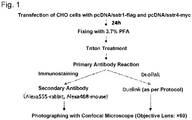
- a 24-well plate for cell culture (manufactured by Thermo Fisher Scientific) with a coverslip (manufactured by Matsunami Glass Ind., Ltd) placed therein was coated with poly-L-lysine (PLL; manufactured by Sigma) to prepare a culture plate.
- CHO cells were suspended in a culture solution (DMEM containing 10% FBS (manufactured by Nichirei Bioscience), penicillin, and streptomycin (manufactured by NACALAI TESQUE, INC.); manufactured by Gibco) and seeded at 2.7 ⁇ 10 4 /500 ⁇ L/well in two of the culture plates. The two plates were provided each for immunostaining and proximity ligation assay.
- a plasmid mixture was prepared so that pcDNA-SSTR1 and pcDNA-SSTR4 each had a final concentration of 1 mg/ml.
- Opti-MEM manufactured by Gibco
- FuGENE-HD manufactured by Promega
- the amount of each solution used here is as follows:
- the mixed solution for transfection prepared in (1-2) above was incubated at room temperature for 5 to 10 minutes, then added to the two plates prepared in (1-1) above (25 ⁇ L/well), mixed slowly, and cultured for another 24 hours. In each plate, 20 wells were transfection treated, while 4 wells were untreated to make control groups.
- a phosphate buffer containing 3.7% paraformaldehyde (PFA-phosphate buffer) was added (300 ⁇ L/well), and the cells were incubated at room temperature for 15 minutes for fixation. After incubation, the PFA-phosphate butter was removed, and then an operation of adding PBS and incubating for 10 minutes was repeated three times to wash the cells.
- PFA-phosphate buffer 3.7% paraformaldehyde
- TritonX100 manufactured by NACALAI TESQUE, INC
- Triton-PBS PBS containing 0.1% or 0.5% TritonX100 (manufactured by NACALAI TESQUE, INC)
- Triton-PBS was added to the cells obtained in (2-1) above (25 ⁇ L/well) and incubated at room temperature for 5 minutes for permeabilization. After incubation, Triton-PBS was removed, and then an operation of adding PBS and incubating for 10 minutes was repeated three times to wash the cells. As illustrated in Figure 1 , these cells were subjected to immunostaining (Example 3) and proximity ligation assay (Example 4). In these experiments, four experimental groups were set up as shown in Table 1 below, in which different concentrations of TritonX100-PBS and combinations of the primary antibodies were used for each.
- Experimental group A Experimental group B
- Experimental group C Experimental group D
- Triton (permeabilization) 0.1% 0.1% 0.5% 0.5%
- Anti-FLAG antibody primary antibody 1000-fold dilution 200-fold dilution 1000-fold dilution 200-fold dilution
- Anti-Myc antibody primary antibody 8000-fold dilution 1000-fold dilution 8000-fold dilution 1000-fold dilution 1000-fold dilution
- PBS containing 10% normal goat serum (10% NGS-PBS) was added to the cells obtained in (2-2) above and incubated at room temperature for 30 minutes for blocking treatment. After incubation, 10% NGS-PBS was removed, and then PBS was added and incubated for 5 minutes to wash the cells.
- An anti-FLAG antibody (DYKDDDDK Tag (D6W5B) rabbit monoclonal antibody; CST #14793; manufactured by Cell Signaling Technology, Inc.), and anti-Myc antibody (Myc-Tag (9B11) mouse monoclonal antibody; CST #2276; manufactured by Cell Signaling Technology, Inc.) were diluted using PBS containing 5% normal goat serum (5% NGS-PBS) to prepare a primary antibody mixture for immunostaining.
- the dilution ratio of each antibody is as shown in Table 1.
- the primary antibody mixture for immunostaining was added to the cells obtained in (3-1) above and incubated at 4°C overnight. After incubation, the primary antibody mixture for immunostaining was removed, and an operation of adding PBS and incubating for 5 minutes was repeated three times to wash the cells.
- An Alexa Fluor Plus 555-labeled anti-rabbit antibody (manufactured by Thermo Fisher Scientific) and an Alexa Fluor Plus 488-labeled anti-mouse antibody (manufactured by Thermo Fisher Scientific) were diluted 1000-fold with PBS to prepare a secondary antibody mixture for immunostaining.
- the secondary antibody mixture for immunostaining was added to the cells obtained in (3-2) above and incubated at room temperature for 1 hour. After incubation, the secondary antibody mixture for immunostaining was removed, and then an operation of adding PBS and incubating for 10 minutes was repeated three times to wash the cells.
- the cells stained in (3-3) above were embedded into a Prolong Gold antifade reagent (manufactured by Thermo Fisher Scientific) and stored at 4°C for 1 day until observation.
- a proximity ligation assay was performed using a Duolink PLA kit (manufactured by Sigma-Aldrich). First, a Duolink blocking solution was added to the cells obtained in (2-2) above and incubated at 37°C for 60 minutes for blocking treatment. After incubation, the Duolink blocking solution was removed, and then PBS was added and incubated for 5 minutes to wash the cells.
- a Duolink PLA kit manufactured by Sigma-Aldrich
- the anti-FLAG antibody and anti-Myc antibody were diluted with the Duolink antibody diluent as shown in Table 1 to prepare a primary antibody mixture for Duolink.
- the primary antibody mixture for Duolink was added to the cells obtained in (4-1) above and incubated at 4°C overnight. After incubation, the primary antibody mixture for Duolink was removed, and then an operation of adding PBS and incubating for 5 minutes was repeated twice to wash the cells.
- PLA probe solution For the preparation of 50 ⁇ L of PLA probe solution, 10 ⁇ L of PLA probe anti-rabbit (+), 10 ⁇ L of PLA probe anti-mouse (-), and 30 ⁇ L of PBS were mixed. The PLA probe solution was added to the cells obtained in (4-2) above and incubated in a constant humidity chamber at 37°C for 1 hour. After incubation, the PLA probe solution was removed, and then an operation of adding a wash buffer A (0.01 M Tris, 0.15 M NaCl, and 0.05% Tween 20) and incubating for 5 minutes was repeated twice to wash the cells.
- a wash buffer A (0.01 M Tris, 0.15 M NaCl, and 0.05% Tween 20
- ligase solution For the preparation of 50 ⁇ L of ligase solution, 10 ⁇ L of 5X Ligation Stock (manufactured by Sigma), 1.25 ⁇ L of DNA Ligase (manufactured by Sigma), and 38.75 ⁇ L of water were mixed. The ligase solution was added to the cells obtained in (4-3) above and incubated in a constant humidity chamber at 37°C for 30 minutes. After incubation, the ligase solution was removed, and then an operation of adding the wash buffer A and incubating for 5 minutes was repeated twice to wash the cells.
- amplification solution For the preparation of 50 ⁇ L of amplification solution, 10 ⁇ L of 5X Amplification Buffer (manufactured by Sigma), 0.625 ⁇ L of DNA polymerase (manufactured by Sigma), and 39.4 ⁇ L of water were mixed.
- the amplification solution was added to the cells obtained in (4-4) above and incubated in a constant humidity chamber at 37°C for 100 minutes. After incubation, the amplification solution was removed, and then an operation of adding a wash buffer B (0.2 M Tris and 0.1 M NaCl) and incubating for 10 minutes was repeated twice to wash the cells.
- a wash buffer B 0.2 M Tris and 0.1 M NaCl
- the cells obtained in (4-4) above were embedded into a Prolong Gold Antifade Reagent (manufactured by Thermo Fisher Scientific) and stored at 4°C for 1 day until detection.
- the present invention it is possible to demonstrate the existence of a heterodimer of SSTR1 and SSTR4, and also to provide a method for screening a factor that binds to such a heterodimer and the heterodimer that can be used in the screening method, thus enabling a search for a preventive and/or therapeutic agent for a disease caused by A ⁇ deposition such as Alzheimer's disease.
- the transformant of the present invention can be used in the preparation of an isolated SSTR1/4 heterodimer, elucidation of a signal transduction system involving a heterodimer of somatostatin receptor subtype 1 and somatostatin receptor subtype 4, a method for screening a compound that improves the activity of neprilysin, a method for screening a compound for treating and/or preventing a disease caused by accumulation of A ⁇ protein, and the like.
- the screening method of the present invention can be employed as the method for screening a compound that improves the activity of neprilysin and also employed as the method for screening a compound for treating and/or preventing a disease caused by the accumulation of A ⁇ protein.
Landscapes
- Health & Medical Sciences (AREA)
- Life Sciences & Earth Sciences (AREA)
- Chemical & Material Sciences (AREA)
- Immunology (AREA)
- Engineering & Computer Science (AREA)
- Molecular Biology (AREA)
- Organic Chemistry (AREA)
- Cell Biology (AREA)
- Urology & Nephrology (AREA)
- Biochemistry (AREA)
- Hematology (AREA)
- General Health & Medical Sciences (AREA)
- Biomedical Technology (AREA)
- Medicinal Chemistry (AREA)
- Biotechnology (AREA)
- Food Science & Technology (AREA)
- Toxicology (AREA)
- Endocrinology (AREA)
- Genetics & Genomics (AREA)
- Gastroenterology & Hepatology (AREA)
- Biophysics (AREA)
- Microbiology (AREA)
- Zoology (AREA)
- Proteomics, Peptides & Aminoacids (AREA)
- Physics & Mathematics (AREA)
- Analytical Chemistry (AREA)
- General Physics & Mathematics (AREA)
- Pathology (AREA)
- Investigating Or Analysing Biological Materials (AREA)
- Peptides Or Proteins (AREA)
- Measuring Or Testing Involving Enzymes Or Micro-Organisms (AREA)
- Micro-Organisms Or Cultivation Processes Thereof (AREA)
- Medicines That Contain Protein Lipid Enzymes And Other Medicines (AREA)
Applications Claiming Priority (2)
| Application Number | Priority Date | Filing Date | Title |
|---|---|---|---|
| JP2019179597A JP7099717B2 (ja) | 2019-09-30 | 2019-09-30 | ソマトスタチン受容体 |
| PCT/JP2020/037086 WO2021065985A1 (fr) | 2019-09-30 | 2020-09-30 | Récepteur de somatostatine |
Publications (2)
| Publication Number | Publication Date |
|---|---|
| EP4043484A1 true EP4043484A1 (fr) | 2022-08-17 |
| EP4043484A4 EP4043484A4 (fr) | 2023-11-01 |
Family
ID=75272929
Family Applications (1)
| Application Number | Title | Priority Date | Filing Date |
|---|---|---|---|
| EP20873301.4A Pending EP4043484A4 (fr) | 2019-09-30 | 2020-09-30 | Récepteur de somatostatine |
Country Status (4)
| Country | Link |
|---|---|
| US (1) | US20230266316A1 (fr) |
| EP (1) | EP4043484A4 (fr) |
| JP (1) | JP7099717B2 (fr) |
| WO (1) | WO2021065985A1 (fr) |
Family Cites Families (18)
| Publication number | Priority date | Publication date | Assignee | Title |
|---|---|---|---|---|
| US4485101A (en) | 1983-10-11 | 1984-11-27 | Administrators Of The Tulane Educational Fund | Peptides |
| US5409894A (en) | 1991-03-14 | 1995-04-25 | Sandoz Ltd. | Method of preventing balloon catheterization blood vessel damage |
| TW357143B (en) | 1995-07-07 | 1999-05-01 | Novartis Ag | Benzo[g]quinoline derivatives |
| WO1997043278A1 (fr) | 1996-05-14 | 1997-11-20 | Novo Nordisk A/S | Agonistes et antagonistes de la somatostatine |
| ATE233098T1 (de) | 1996-06-11 | 2003-03-15 | Novartis Ag | Kombination eines somatostatin analogs und eines rapamycins |
| ATE309993T1 (de) | 1997-04-21 | 2005-12-15 | Takeda Pharmaceutical | 4,1-benzoxazepine, ihre analoga, und ihre verwendung als somatostatin-agonisten |
| GB9711043D0 (en) | 1997-05-29 | 1997-07-23 | Ciba Geigy Ag | Organic compounds |
| EP1070054A1 (fr) | 1998-04-08 | 2001-01-24 | Takeda Chemical Industries, Ltd. | Composes amines, leur production, et leur utilisation comme antagonistes ou agonistes du recepteur de la somatostatine |
| CA2246791A1 (fr) * | 1998-09-01 | 2000-03-01 | Alison Buchan | Traitement de l'endothelium avec des analogues de la somatostatine |
| JP2002034596A (ja) | 2000-07-26 | 2002-02-05 | Inst Of Physical & Chemical Res | アルツハイマー病の危険因子または防止因子のスクリーニング方法 |
| JP4511805B2 (ja) | 2002-04-26 | 2010-07-28 | 武田薬品工業株式会社 | ネプリライシンの活性測定法 |
| US7572574B2 (en) * | 2002-04-26 | 2009-08-11 | Riken | Method of measuring neprilysin activity |
| FI20031455A0 (fi) * | 2003-10-06 | 2003-10-06 | Juvantia Pharma Ltd Oy | Sulfonyyliamino-peptidomimeettejä, jotka ovat aktiivisia somatostatiinireseptorialatyyppien 4 (SSTR4) ja 1 (SSTR1) suhteen |
| WO2010059922A1 (fr) | 2008-11-21 | 2010-05-27 | Ligand Pharmaceuticals Incorporated | Composés de pyrrolidine carboxamide |
| WO2011047165A1 (fr) * | 2009-10-16 | 2011-04-21 | Southern Illinois University Edwardsville | Procédés de traitement d'un dysfonctionnement de la mémoire |
| WO2014016401A1 (fr) * | 2012-07-27 | 2014-01-30 | Centre Leon Berard | Détection du complexe erα/src/pi3k en tant que marqueur de prédiction dans le cancer du sein |
| EP3045448A4 (fr) * | 2013-09-12 | 2017-01-25 | Sumitomo Chemical Company Limited | Composé hétérocyclique saturé contenant de l'azote |
| JP2015054844A (ja) | 2013-09-12 | 2015-03-23 | 住友化学株式会社 | シクロアルカン誘導体 |
-
2019
- 2019-09-30 JP JP2019179597A patent/JP7099717B2/ja active Active
-
2020
- 2020-09-30 WO PCT/JP2020/037086 patent/WO2021065985A1/fr not_active Ceased
- 2020-09-30 US US17/763,444 patent/US20230266316A1/en not_active Abandoned
- 2020-09-30 EP EP20873301.4A patent/EP4043484A4/fr active Pending
Also Published As
| Publication number | Publication date |
|---|---|
| US20230266316A1 (en) | 2023-08-24 |
| WO2021065985A1 (fr) | 2021-04-08 |
| JP7099717B2 (ja) | 2022-07-12 |
| JP2021052674A (ja) | 2021-04-08 |
| EP4043484A4 (fr) | 2023-11-01 |
Similar Documents
| Publication | Publication Date | Title |
|---|---|---|
| US7045299B2 (en) | Physiologically active peptide and use thereof | |
| WO2000024890A1 (fr) | Nouvellesroteines receptrices couplees aux proteines g, leurs adn et leursigands | |
| US20200138951A1 (en) | Fkbp52-tau interaction as a novel therapeutical target for treating the neurological disorders involving tau dysfunction | |
| EP1741792B1 (fr) | Nouveau ligand de protéine de récepteur conjuguée à une protéine g et utilisation de celui-ci | |
| US7919260B2 (en) | Screening methods using GPR52 | |
| EP4043484A1 (fr) | Récepteur de somatostatine | |
| EP1698697A2 (fr) | Protéine contenant SSD, son procédé de préparation et son utilisation | |
| EP1693456B1 (fr) | Procede d'identification de modulateurs d'un recepteur couple a la proteine g | |
| US20050176632A1 (en) | Angiogenesis inhibitors | |
| EP1767655A1 (fr) | Méthode de contrôle des fonctions d'une cellule | |
| JP2012167017A (ja) | ペプチドおよびその用途 | |
| US20100068208A1 (en) | Degranulation inhibitor | |
| US20060035835A1 (en) | Novel protein, production and use thereof | |
| US20100183584A1 (en) | Conformation and activity of gbeta5 complexes | |
| US7892755B2 (en) | Screening method | |
| US20100040621A1 (en) | Novel polpeptide and use thereof | |
| CN101147066A (zh) | Mgc4504的用途 | |
| JP2002360279A (ja) | 新規gタンパク質共役型レセプタータンパク質およびそのdna |
Legal Events
| Date | Code | Title | Description |
|---|---|---|---|
| STAA | Information on the status of an ep patent application or granted ep patent |
Free format text: STATUS: THE INTERNATIONAL PUBLICATION HAS BEEN MADE |
|
| PUAI | Public reference made under article 153(3) epc to a published international application that has entered the european phase |
Free format text: ORIGINAL CODE: 0009012 |
|
| STAA | Information on the status of an ep patent application or granted ep patent |
Free format text: STATUS: REQUEST FOR EXAMINATION WAS MADE |
|
| 17P | Request for examination filed |
Effective date: 20220426 |
|
| AK | Designated contracting states |
Kind code of ref document: A1 Designated state(s): AL AT BE BG CH CY CZ DE DK EE ES FI FR GB GR HR HU IE IS IT LI LT LU LV MC MK MT NL NO PL PT RO RS SE SI SK SM TR |
|
| DAV | Request for validation of the european patent (deleted) | ||
| DAX | Request for extension of the european patent (deleted) | ||
| REG | Reference to a national code |
Ref country code: DE Ref legal event code: R079 Free format text: PREVIOUS MAIN CLASS: C07K0014705000 Ipc: G01N0033566000 |
|
| A4 | Supplementary search report drawn up and despatched |
Effective date: 20231002 |
|
| RIC1 | Information provided on ipc code assigned before grant |
Ipc: C07K 14/72 20060101ALI20230926BHEP Ipc: C07K 14/705 20060101ALI20230926BHEP Ipc: G01N 33/566 20060101AFI20230926BHEP |