EP4043681B1 - Système de détection de pincement - Google Patents
Système de détection de pincement Download PDFInfo
- Publication number
- EP4043681B1 EP4043681B1 EP21156659.1A EP21156659A EP4043681B1 EP 4043681 B1 EP4043681 B1 EP 4043681B1 EP 21156659 A EP21156659 A EP 21156659A EP 4043681 B1 EP4043681 B1 EP 4043681B1
- Authority
- EP
- European Patent Office
- Prior art keywords
- pinch
- detection system
- pinch detection
- closure member
- detect
- Prior art date
- Legal status (The legal status is an assumption and is not a legal conclusion. Google has not performed a legal analysis and makes no representation as to the accuracy of the status listed.)
- Active
Links
Images



Classifications
-
- E—FIXED CONSTRUCTIONS
- E05—LOCKS; KEYS; WINDOW OR DOOR FITTINGS; SAFES
- E05F—DEVICES FOR MOVING WINGS INTO OPEN OR CLOSED POSITION; CHECKS FOR WINGS; WING FITTINGS NOT OTHERWISE PROVIDED FOR, CONCERNED WITH THE FUNCTIONING OF THE WING
- E05F15/00—Power-operated mechanisms for wings
- E05F15/40—Safety devices, e.g. detection of obstructions or end positions
- E05F15/41—Detection by monitoring transmitted force or torque; Safety couplings with activation dependent upon torque or force, e.g. slip couplings
-
- B—PERFORMING OPERATIONS; TRANSPORTING
- B60—VEHICLES IN GENERAL
- B60J—WINDOWS, WINDSCREENS, NON-FIXED ROOFS, DOORS, OR SIMILAR DEVICES FOR VEHICLES; REMOVABLE EXTERNAL PROTECTIVE COVERINGS SPECIALLY ADAPTED FOR VEHICLES
- B60J7/00—Non-fixed roofs; Roofs with movable panels, e.g. rotary sunroofs
-
- B—PERFORMING OPERATIONS; TRANSPORTING
- B60—VEHICLES IN GENERAL
- B60J—WINDOWS, WINDSCREENS, NON-FIXED ROOFS, DOORS, OR SIMILAR DEVICES FOR VEHICLES; REMOVABLE EXTERNAL PROTECTIVE COVERINGS SPECIALLY ADAPTED FOR VEHICLES
- B60J7/00—Non-fixed roofs; Roofs with movable panels, e.g. rotary sunroofs
- B60J7/02—Non-fixed roofs; Roofs with movable panels, e.g. rotary sunroofs of sliding type, e.g. comprising guide shoes
- B60J7/04—Non-fixed roofs; Roofs with movable panels, e.g. rotary sunroofs of sliding type, e.g. comprising guide shoes with rigid plate-like element or elements, e.g. open roofs with harmonica-type folding rigid panels
- B60J7/057—Driving or actuating arrangements e.g. manually operated levers or knobs
-
- B—PERFORMING OPERATIONS; TRANSPORTING
- B60—VEHICLES IN GENERAL
- B60J—WINDOWS, WINDSCREENS, NON-FIXED ROOFS, DOORS, OR SIMILAR DEVICES FOR VEHICLES; REMOVABLE EXTERNAL PROTECTIVE COVERINGS SPECIALLY ADAPTED FOR VEHICLES
- B60J7/00—Non-fixed roofs; Roofs with movable panels, e.g. rotary sunroofs
- B60J7/02—Non-fixed roofs; Roofs with movable panels, e.g. rotary sunroofs of sliding type, e.g. comprising guide shoes
- B60J7/04—Non-fixed roofs; Roofs with movable panels, e.g. rotary sunroofs of sliding type, e.g. comprising guide shoes with rigid plate-like element or elements, e.g. open roofs with harmonica-type folding rigid panels
- B60J7/057—Driving or actuating arrangements e.g. manually operated levers or knobs
- B60J7/0573—Driving or actuating arrangements e.g. manually operated levers or knobs power driven arrangements, e.g. electrical
-
- B—PERFORMING OPERATIONS; TRANSPORTING
- B60—VEHICLES IN GENERAL
- B60J—WINDOWS, WINDSCREENS, NON-FIXED ROOFS, DOORS, OR SIMILAR DEVICES FOR VEHICLES; REMOVABLE EXTERNAL PROTECTIVE COVERINGS SPECIALLY ADAPTED FOR VEHICLES
- B60J7/00—Non-fixed roofs; Roofs with movable panels, e.g. rotary sunroofs
- B60J7/22—Wind deflectors for open roofs
-
- E—FIXED CONSTRUCTIONS
- E05—LOCKS; KEYS; WINDOW OR DOOR FITTINGS; SAFES
- E05F—DEVICES FOR MOVING WINGS INTO OPEN OR CLOSED POSITION; CHECKS FOR WINGS; WING FITTINGS NOT OTHERWISE PROVIDED FOR, CONCERNED WITH THE FUNCTIONING OF THE WING
- E05F15/00—Power-operated mechanisms for wings
- E05F15/40—Safety devices, e.g. detection of obstructions or end positions
-
- E—FIXED CONSTRUCTIONS
- E05—LOCKS; KEYS; WINDOW OR DOOR FITTINGS; SAFES
- E05F—DEVICES FOR MOVING WINGS INTO OPEN OR CLOSED POSITION; CHECKS FOR WINGS; WING FITTINGS NOT OTHERWISE PROVIDED FOR, CONCERNED WITH THE FUNCTIONING OF THE WING
- E05F15/00—Power-operated mechanisms for wings
- E05F15/60—Power-operated mechanisms for wings using electrical actuators
- E05F15/603—Power-operated mechanisms for wings using electrical actuators using rotary electromotors
- E05F15/632—Power-operated mechanisms for wings using electrical actuators using rotary electromotors for horizontally-sliding wings
- E05F15/643—Power-operated mechanisms for wings using electrical actuators using rotary electromotors for horizontally-sliding wings operated by flexible elongated pulling elements, e.g. belts, chains or cables
- E05F15/646—Power-operated mechanisms for wings using electrical actuators using rotary electromotors for horizontally-sliding wings operated by flexible elongated pulling elements, e.g. belts, chains or cables allowing or involving a secondary movement of the wing, e.g. rotational or transversal
-
- E—FIXED CONSTRUCTIONS
- E05—LOCKS; KEYS; WINDOW OR DOOR FITTINGS; SAFES
- E05F—DEVICES FOR MOVING WINGS INTO OPEN OR CLOSED POSITION; CHECKS FOR WINGS; WING FITTINGS NOT OTHERWISE PROVIDED FOR, CONCERNED WITH THE FUNCTIONING OF THE WING
- E05F15/00—Power-operated mechanisms for wings
- E05F15/60—Power-operated mechanisms for wings using electrical actuators
- E05F15/603—Power-operated mechanisms for wings using electrical actuators using rotary electromotors
- E05F15/632—Power-operated mechanisms for wings using electrical actuators using rotary electromotors for horizontally-sliding wings
- E05F15/655—Power-operated mechanisms for wings using electrical actuators using rotary electromotors for horizontally-sliding wings specially adapted for vehicle wings
- E05F15/659—Control circuits therefor
-
- E—FIXED CONSTRUCTIONS
- E05—LOCKS; KEYS; WINDOW OR DOOR FITTINGS; SAFES
- E05Y—INDEXING SCHEME ASSOCIATED WITH SUBCLASSES E05D AND E05F, RELATING TO CONSTRUCTION ELEMENTS, ELECTRIC CONTROL, POWER SUPPLY, POWER SIGNAL OR TRANSMISSION, USER INTERFACES, MOUNTING OR COUPLING, DETAILS, ACCESSORIES, AUXILIARY OPERATIONS NOT OTHERWISE PROVIDED FOR, APPLICATION THEREOF
- E05Y2400/00—Electronic control; Electrical power; Power supply; Power or signal transmission; User interfaces
- E05Y2400/10—Electronic control
- E05Y2400/52—Safety arrangements associated with the wing motor
- E05Y2400/53—Wing impact prevention or reduction
- E05Y2400/54—Obstruction or resistance detection
- E05Y2400/55—Obstruction or resistance detection by using load sensors
- E05Y2400/554—Obstruction or resistance detection by using load sensors sensing motor load
-
- E—FIXED CONSTRUCTIONS
- E05—LOCKS; KEYS; WINDOW OR DOOR FITTINGS; SAFES
- E05Y—INDEXING SCHEME ASSOCIATED WITH SUBCLASSES E05D AND E05F, RELATING TO CONSTRUCTION ELEMENTS, ELECTRIC CONTROL, POWER SUPPLY, POWER SIGNAL OR TRANSMISSION, USER INTERFACES, MOUNTING OR COUPLING, DETAILS, ACCESSORIES, AUXILIARY OPERATIONS NOT OTHERWISE PROVIDED FOR, APPLICATION THEREOF
- E05Y2400/00—Electronic control; Electrical power; Power supply; Power or signal transmission; User interfaces
- E05Y2400/10—Electronic control
- E05Y2400/52—Safety arrangements associated with the wing motor
- E05Y2400/53—Wing impact prevention or reduction
- E05Y2400/54—Obstruction or resistance detection
- E05Y2400/56—Obstruction or resistance detection by using speed sensors
- E05Y2400/564—Obstruction or resistance detection by using speed sensors sensing motor speed
-
- E—FIXED CONSTRUCTIONS
- E05—LOCKS; KEYS; WINDOW OR DOOR FITTINGS; SAFES
- E05Y—INDEXING SCHEME ASSOCIATED WITH SUBCLASSES E05D AND E05F, RELATING TO CONSTRUCTION ELEMENTS, ELECTRIC CONTROL, POWER SUPPLY, POWER SIGNAL OR TRANSMISSION, USER INTERFACES, MOUNTING OR COUPLING, DETAILS, ACCESSORIES, AUXILIARY OPERATIONS NOT OTHERWISE PROVIDED FOR, APPLICATION THEREOF
- E05Y2400/00—Electronic control; Electrical power; Power supply; Power or signal transmission; User interfaces
- E05Y2400/10—Electronic control
- E05Y2400/52—Safety arrangements associated with the wing motor
- E05Y2400/53—Wing impact prevention or reduction
- E05Y2400/54—Obstruction or resistance detection
- E05Y2400/58—Sensitivity setting or adjustment
-
- E—FIXED CONSTRUCTIONS
- E05—LOCKS; KEYS; WINDOW OR DOOR FITTINGS; SAFES
- E05Y—INDEXING SCHEME ASSOCIATED WITH SUBCLASSES E05D AND E05F, RELATING TO CONSTRUCTION ELEMENTS, ELECTRIC CONTROL, POWER SUPPLY, POWER SIGNAL OR TRANSMISSION, USER INTERFACES, MOUNTING OR COUPLING, DETAILS, ACCESSORIES, AUXILIARY OPERATIONS NOT OTHERWISE PROVIDED FOR, APPLICATION THEREOF
- E05Y2800/00—Details, accessories and auxiliary operations not otherwise provided for
- E05Y2800/20—Combinations of elements
- E05Y2800/22—Combinations of elements of not identical elements of the same category, e.g. combinations of not identical springs
-
- E—FIXED CONSTRUCTIONS
- E05—LOCKS; KEYS; WINDOW OR DOOR FITTINGS; SAFES
- E05Y—INDEXING SCHEME ASSOCIATED WITH SUBCLASSES E05D AND E05F, RELATING TO CONSTRUCTION ELEMENTS, ELECTRIC CONTROL, POWER SUPPLY, POWER SIGNAL OR TRANSMISSION, USER INTERFACES, MOUNTING OR COUPLING, DETAILS, ACCESSORIES, AUXILIARY OPERATIONS NOT OTHERWISE PROVIDED FOR, APPLICATION THEREOF
- E05Y2900/00—Application of doors, windows, wings or fittings thereof
- E05Y2900/50—Application of doors, windows, wings or fittings thereof for vehicles
- E05Y2900/53—Type of wing
- E05Y2900/542—Roof panels
Definitions
- a pinch detection system needs to be able to detect a pinch with any foreign object irrespective of properties of the foreign object.
- Indirect pinch detection systems need to designed with different kind of properties of foreign objects in mind.
- a stiffness or compression rate of the object needs to be considered. The stiffer the object, i.e. the higher the compression rate of the object, the faster an exerted force increases with displacement of the closure member.
- the stiffness or compression rate may be represented with a spring rate expressed in N/mm. With a soft object having a relatively small spring rate, e.g. a spring rate of about 10 or about 20 N/mm, the closure member may move over a small distance before a maximum pinch force of e.g.
- the object is achieved in an open-roof assembly for covering or at least partly uncovering an opening in a vehicle roof exhibiting all features of claim 1.
- Adapting such configuration setting enables the first pinch detection system to detect a hard object next to or instead of a soft object, although such configuration setting for hard object detection may result in false reversals if used continuously.
- a hard object is effectively detected twice before a reversal is initiated: a first time by the second pinch detection system and a second time by the first pinch detection unit.
- the chance of incorrect pinch detection is reduced.
- a single, short deviation from normal operation may be detected by the second pinch detection system as a potential pinch with a hard object, after which the first pinch detection system may not detect any further deviation such that an incorrect pinch detection does not occur.
- the first detection unit is also operable to detect a pinch with a soft object, while the second pinch detection system detects a pinch with a hard object.
- the first pinch detection system may be already detecting a deviation from normal operation without determining that a soft object is pinched, when the second pinch detection system detects a potential pinch with a hard object. Then, the configuration setting of the first pinch detection system is adapted and the detection of the pinch with a hard object by the first pinch detection system may not need to start from the beginning, but may continue with the already detected deviation, ensuring a timely detection.
- the configuration setting comprises a detection threshold and the adaption of the configuration setting comprises lowering the detection threshold.
- a pinch with a hard object needs to be detected earlier than a pinch with a soft object as the pinch force increases faster while the closure member is moving.
- An earlier detection is possible by lowering a detection threshold.
- any physical property relating to a force exerted by the drive assembly through the closure member may be monitored. Then, when such physical property exceeds a predetermined threshold, it may be considered that a pinch has occurred. Lowering the threshold inevitably results in earlier detection. Examples of a possibly relevant physical property are a motor current, a motor rotational speed, a position of the closure member, advancement in position of the closure member and combinations thereof. Other suitable properties may be used as well.
- the first pinch detection system is configured to detect a pinch by comparison of a property detected during movement of the closure member with a predetermined reference value of such property.
- a physical property relating to the movement of the closure member and/or a force exerted by the closure member may be monitored.
- a reference value may be stored and be used for comparison.
- such value may be dependent on a position of the closure member, for example, which may improve accuracy. Such increase in accuracy reduces the chance of an incorrect reversal, as apparent to those skilled in the art.
- Such a pinch detection system is as such known from prior art and is therefore not further elucidated herein.
- the second pinch detection system is configured to detect a pinch by application of a mathematical model of the open-roof assembly.
- a mathematical model and suitable mathematical theory a fast and accurate system may be designed, which is enabled to detect any unexpected behaviour quickly.
- the second pinch detection system uses a state space representation as a mathematical model and a disturbance observer to detect a deviation from a normal operation.
- Fig. 1A illustrates a vehicle roof 1 having an open roof assembly arranged therein.
- the open roof assembly comprises a moveable panel 2a and a fixed panel 2b.
- the moveable panel 2a is also referred to as a closure member, since the moveable panel 2a is moveable over a first roof opening 3a such to enable to open and to close the first roof opening 3a.
- a wind deflector 4 is arranged at a front side of the first roof opening 3a.
- the illustrated vehicle roof 1 corresponds to a passenger car.
- the present invention is however not limited to passenger cars. Any other kind of vehicles that may be provided with a moveable panel are contemplated as well.
- the wind deflector 4 is raised by a spring force when the moveable panel 2a slides to an open position and the wind deflector 4 is pushed down by the moveable panel 2a when the moveable panel 2a slides back into its closed position.
- the moveable panel 2a is shown in an open position and the wind deflector 4 is shown in a raised position.
- Fig. 1B the moveable panel 2a is shown in a closed position and the wind deflector 4 is correspondingly shown in a position in which it is held down.
- Fig. 2C illustrates a relation between position and needed force.
- position is represented and the vertical axis represents an exerted force.
- F max represents a maximum force to be exerted on a foreign object before a movement of the closure member is interrupted and preferably reversed.
- a number of pinch detection systems are known that are suitable as the first pinch detection system.
- a known and common system compares a force exerted by the drive assembly driving the moveable closure member with a predetermined reference value. For increased accuracy, such reference value may be dependent on the position of the closure member. Such position dependent reference value may be determined or updated during a preceding closing movement that is executed without disturbance.
- the second pinch detection system 200 is configured to detect a pinch with a hard object.
- the second pinch detection system 200 may be suitable to detect only hard objects or may be configurable to detect a pinch with either soft or hard objects or may be suited to detect a pinch with any kind of object.
- the second pinch detection system 200 detects the occurrence of a pinch
- a configuration setting of the first pinch detection system 100 is adapted. So as above described, the threshold is decreased, resulting in the first pinch detection system being able to detect a pinch with either a soft or a hard object. Then, if the first pinch detection system 100 detects a pinch as well, it is presumed that the pinch actually has occurred as it has been detected twice, reducing the chance that it was an accidental, incorrect detection. The pinch detection by the first pinch detection system 100 is then used as the output signal of the pinch detection unit 20.
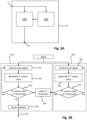
- Fig. 3B illustrates the method of pinch detection by the pinch detection unit 20 of Fig. 3A .
- the first pinch detection system 100 performs steps 100 - 106, while the second pinch detection system 200 performs steps 201 - 203.
- the first step 201 of the second pinch detection system 200 comprises receiving the input signal, representing the data needed for detecting the occurrence of a pinch.
- the received data are processed in a second step 202 of the second pinch detection system 200, generating at least one second output value, which is compared to a second threshold in a third step 203 of the second pinch detection system 200. If the second output value does not exceed the second threshold, the method returns to the first step 201. If it however does exceed the second threshold, the second pinch detection system 200 induces a further step 106 in the first pinch detection system 100, wherein the first threshold is adapted to increase detection sensitivity for hard-object pinches.
- the first detection system upon detection of a hard object by the second pinch detection system, the first detection system needs to perform a second detection to prevent an incorrect detection. Therefore, a certain period of time is needed for the first detection system after detection of a pinch with a hard object by the second detection system.
- This additional detection time T add is added to the second detection time T 200 in case of a detection of a pinch with a hard object.
- the additional detection time T add is however shorter than the first detection time T 100 due to the adapted configuration setting, e.g. an adapted threshold.
- the second pinch detection system is expected to detect the pinch before the first pinch detection system does.
- the configuration setting of the first pinch detection system is then adapted accordingly. Still, in the range [SR2 - SR3], even without adapting the configuration setting, the first pinch detection system would detect the pinch at the first detection time T 100 . With the adaption of the configuration setting, such detection can only be sooner. So, in a worst case situation, a pinch is detected at the first detection time T 100 , possibly sooner.
- structural elements may be generated by application of three-dimensional (3D) printing techniques. Therefore, any reference to a structural element is intended to encompass any computer executable instructions that instruct a computer to generate such a structural element by three-dimensional printing techniques or similar computer controlled manufacturing techniques. Furthermore, any such reference to a structural element is also intended to encompass a computer readable medium carrying such computer executable instructions.
Landscapes
- Engineering & Computer Science (AREA)
- Mechanical Engineering (AREA)
- Power-Operated Mechanisms For Wings (AREA)
- Geophysics And Detection Of Objects (AREA)
Claims (7)
- Ensemble toit ouvert pour recouvrir ou au moins partiellement découvrir une ouverture dans un toit de véhicule (1), l'ensemble toit ouvert comprenant un élément de fermeture agencé de façon mobile (2a), un ensemble d'entraînement pour déplacer l'élément de fermeture (2a) et une unité de commande (11) couplée de manière fonctionnelle à l'ensemble d'entraînement pour commander un mouvement de l'élément de fermeture (2a), dans lequel l'unité de commande (11) comprend une unité de détection de pincement (20) pour détecter un pincement de l'élément de fermeture (2a) avec un objet, l'unité de détection de pincement (20) comprenant un premier système de détection de pincement (100) et un deuxième système de détection de pincement (200) différent, dans lequel• le premier système de détection de pincement (100) est configuré pour détecter un pincement avec un objet ayant une rigidité inférieure à un premier seuil prédéterminé, ci-après « un objet mou » ; et• le deuxième système de détection de pincement (200) est configuré pour détecter un pincement avec un objet ayant une rigidité supérieure à un deuxième seuil prédéterminé, ci-après « un objet dur » ;dans lequel l'unité de détection de pincement (20) est configurée pour adapter un paramètre de configuration du premier système de détection de pincement (100) lors de la détection d'un pincement avec un objet dur par le deuxième système de détection de pincement (200) afin de configurer le premier système de détection de pincement (100) pour qu'il détecte un pincement avec ledit objet dur,caractérisé en ce quele paramètre de configuration comprend un seuil de détection et l'adaptation du paramètre de configuration comprend l'abaissement du seuil de détection ;le premier système de détection de pincement (100) est configuré pour détecter un pincement par comparaison d'une propriété physique se rapportant au mouvement de l'élément de fermeture et/ou à une force exercée par l'élément de fermeture détectée pendant le mouvement de l'élément de fermeture (2a) à une valeur de référence prédéterminée d'une telle propriété ; etle deuxième système de détection de pincement (200) est configuré pour détecter un pincement par application d'une représentation d'espace d'états de l'ensemble toit ouvert sous la forme d'un modèle mathématique et d'un observateur de perturbation afin de détecter un écart par rapport à un fonctionnement normal.
- Ensemble toit ouvert selon la revendication 1, dans lequel l'unité de détection de pincement (20) est configurée pour déterminer qu'un pincement s'est produit lorsque le premier système de détection de pincement (100) a détecté un pincement.
- Ensemble toit ouvert selon la revendication 1, dans lequel l'unité de détection de pincement (20) est configurée pour réadapter le paramètre de configuration du premier système de détection de pincement (100) afin de détecter un pincement avec un objet mou, si un pincement avec un objet dur n'est pas détecté dans un laps de temps prédéterminé après l'adaptation du premier paramètre de configuration de seuil prédéterminé du premier système de détection de pincement (100).
- Procédé de détection d'un pincement d'un élément de fermeture agencé de façon mobile (2a) d'un ensemble toit ouvert, le procédé comprenant le fonctionnement d'une unité de commande (11) pour réaliser les étapes consistant àa) détecter un pincement avec un objet ayant une rigidité inférieure à un premier seuil prédéterminé, ci-après « un objet mou », en utilisant un premier système de détection de pincement (100) ;b) détecter un pincement avec un objet ayant une rigidité supérieure à un deuxième seuil prédéterminé, ci-après « un objet dur », en utilisant un deuxième système de détection de pincement (200) ;c) lorsque le deuxième système de détection de pincement (200) détecte un pincement, adapter un paramètre de configuration du premier système de détection de pincement (100) afin de configurer le premier système de détection de pincement (100) pour qu'il détecte un pincement avec un objet dur, dans lequel le paramètre de configuration comprend un seuil de détection et dans lequel l'adaptation du paramètre de configuration comprend l'abaissement du seuil de détection ; etd) après l'adaptation du paramètre de configuration du premier système de détection de pincement (100), détecter un pincement avec un objet dur en utilisant le premier système de détection de pincement (100) ;dans lequella détection d'un pincement en utilisant le premier système de détection de pincement (100) comprend : la détection d'une propriété physique se rapportant au mouvement de l'élément de fermeture et/ou à une force exercée par l'élément de fermeture pendant le mouvement de l'élément de fermeture (2a), et la comparaison de la propriété à une valeur de référence prédéterminée d'une telle propriété, etla détection d'un pincement en utilisant le deuxième système de détection de pincement (200) comprend l'application d'une représentation d'espace d'états de l'ensemble toit ouvert sous la forme d'un modèle mathématique et d'un observateur de perturbation pour déterminer un écart par rapport à un fonctionnement normal.
- Procédé selon la revendication 4, dans lequel le procédé comprend en outre une étape consistant à
e) déterminer qu'un pincement s'est produit lorsque le premier système de détection de pincement (100) a détecté un pincement dans au moins l'une de l'étape a et de l'étape d. - Procédé selon la revendication 4, dans lequel le procédé comprend en outre une étape consistant à
f) réadapter le paramètre de configuration du premier système de détection de pincement (100) pour détecter un pincement avec un objet mou, si un pincement avec un objet dur n'est pas détecté dans un laps de temps prédéterminé après l'adaptation du paramètre de configuration. - Support de stockage lisible par ordinateur stockant des instructions exécutables par ordinateur pour ordonner à une unité de commande (11) d'un ensemble toit ouvert de réaliser le procédé selon la revendication 4.
Priority Applications (3)
| Application Number | Priority Date | Filing Date | Title |
|---|---|---|---|
| EP21156659.1A EP4043681B1 (fr) | 2021-02-11 | 2021-02-11 | Système de détection de pincement |
| US17/667,831 US12084904B2 (en) | 2021-02-11 | 2022-02-09 | Pinch detection system |
| CN202210123302.2A CN114919386A (zh) | 2021-02-11 | 2022-02-10 | 挤压检测系统 |
Applications Claiming Priority (1)
| Application Number | Priority Date | Filing Date | Title |
|---|---|---|---|
| EP21156659.1A EP4043681B1 (fr) | 2021-02-11 | 2021-02-11 | Système de détection de pincement |
Publications (2)
| Publication Number | Publication Date |
|---|---|
| EP4043681A1 EP4043681A1 (fr) | 2022-08-17 |
| EP4043681B1 true EP4043681B1 (fr) | 2025-04-09 |
Family
ID=74591914
Family Applications (1)
| Application Number | Title | Priority Date | Filing Date |
|---|---|---|---|
| EP21156659.1A Active EP4043681B1 (fr) | 2021-02-11 | 2021-02-11 | Système de détection de pincement |
Country Status (3)
| Country | Link |
|---|---|
| US (1) | US12084904B2 (fr) |
| EP (1) | EP4043681B1 (fr) |
| CN (1) | CN114919386A (fr) |
Families Citing this family (1)
| Publication number | Priority date | Publication date | Assignee | Title |
|---|---|---|---|---|
| EP4379179A1 (fr) | 2022-11-30 | 2024-06-05 | Inalfa Roof Systems Group B.V. | Système de détection de pincement |
Citations (1)
| Publication number | Priority date | Publication date | Assignee | Title |
|---|---|---|---|---|
| WO2021004188A1 (fr) * | 2019-07-10 | 2021-01-14 | 北京经纬恒润科技股份有限公司 | Procédé et système de détection anti-pincement |
Family Cites Families (6)
| Publication number | Priority date | Publication date | Assignee | Title |
|---|---|---|---|---|
| US5351439A (en) * | 1992-04-21 | 1994-10-04 | Koito Manufacturing Co., Ltd. | Power window apparatus having improved safety device |
| US7579802B2 (en) * | 1992-04-22 | 2009-08-25 | Nartron Corporation | Collision monitoring system |
| US6794837B1 (en) * | 2002-05-31 | 2004-09-21 | Valeo Electrical Systems, Inc. | Motor speed-based anti-pinch control apparatus and method with start-up transient detection and compensation |
| DE102009019015A1 (de) * | 2009-04-27 | 2010-11-11 | Continental Automotive Gmbh | Verfahren und Vorrichtung zum Erkennen einer Einklemmsituation |
| US20220243521A1 (en) * | 2016-04-25 | 2022-08-04 | Magna Closures Inc. | A power closure member actuation system |
| CN111251847B (zh) * | 2018-11-30 | 2024-09-20 | 英纳法天窗系统集团有限公司 | 用于开放式车顶组件的防夹捕系统 |
-
2021
- 2021-02-11 EP EP21156659.1A patent/EP4043681B1/fr active Active
-
2022
- 2022-02-09 US US17/667,831 patent/US12084904B2/en active Active
- 2022-02-10 CN CN202210123302.2A patent/CN114919386A/zh active Pending
Patent Citations (1)
| Publication number | Priority date | Publication date | Assignee | Title |
|---|---|---|---|---|
| WO2021004188A1 (fr) * | 2019-07-10 | 2021-01-14 | 北京经纬恒润科技股份有限公司 | Procédé et système de détection anti-pincement |
Also Published As
| Publication number | Publication date |
|---|---|
| EP4043681A1 (fr) | 2022-08-17 |
| US20220268073A1 (en) | 2022-08-25 |
| CN114919386A (zh) | 2022-08-19 |
| US12084904B2 (en) | 2024-09-10 |
Similar Documents
| Publication | Publication Date | Title |
|---|---|---|
| US7309971B2 (en) | Opening and closing body control device | |
| JP4781127B2 (ja) | 電動機制御装置 | |
| CN101934711B (zh) | 包括顶蓬面板和遮阳面板的顶蓬系统 | |
| JP2004003159A (ja) | 開閉体の挟み込み検知装置 | |
| US10464399B2 (en) | Vehicle window opening device | |
| EP4043681B1 (fr) | Système de détection de pincement | |
| US7570001B2 (en) | Vehicular open and close panel system | |
| KR101323028B1 (ko) | 안티-핀치 시스템 제어 방법 및 이러한 방법을 사용하는 장치 | |
| EP4379179A1 (fr) | Système de détection de pincement | |
| JP2002256762A (ja) | 電動移動装置 | |
| US11577589B2 (en) | Open roof assembly for use in a vehicle and a method for operating same | |
| US11718163B2 (en) | Method and system for obstruction detection | |
| EP4082812B1 (fr) | Système de détection de pincement | |
| US12234678B2 (en) | Control unit and method for operating an open roof assembly | |
| US12110728B2 (en) | Method and motor control system for use in a vehicle roof assembly | |
| EP3650627B1 (fr) | Procédé et dispositif de positionnement précis d'un panneau à agencement mobile | |
| JP2021032019A (ja) | ロールシェード装置 | |
| JP2024062211A (ja) | 開閉体制御装置 | |
| JP4789601B2 (ja) | 電動機制御装置 | |
| KR100534275B1 (ko) | 경사로에서의 슬라이딩 도어 과부하 방지장치 | |
| JPH11350833A (ja) | パワ−ウインド制御装置 | |
| JPH0719563U (ja) | 安全装置付パワーウインド装置 |
Legal Events
| Date | Code | Title | Description |
|---|---|---|---|
| PUAI | Public reference made under article 153(3) epc to a published international application that has entered the european phase |
Free format text: ORIGINAL CODE: 0009012 |
|
| STAA | Information on the status of an ep patent application or granted ep patent |
Free format text: STATUS: THE APPLICATION HAS BEEN PUBLISHED |
|
| AK | Designated contracting states |
Kind code of ref document: A1 Designated state(s): AL AT BE BG CH CY CZ DE DK EE ES FI FR GB GR HR HU IE IS IT LI LT LU LV MC MK MT NL NO PL PT RO RS SE SI SK SM TR |
|
| STAA | Information on the status of an ep patent application or granted ep patent |
Free format text: STATUS: REQUEST FOR EXAMINATION WAS MADE |
|
| 17P | Request for examination filed |
Effective date: 20230217 |
|
| RBV | Designated contracting states (corrected) |
Designated state(s): AL AT BE BG CH CY CZ DE DK EE ES FI FR GB GR HR HU IE IS IT LI LT LU LV MC MK MT NL NO PL PT RO RS SE SI SK SM TR |
|
| STAA | Information on the status of an ep patent application or granted ep patent |
Free format text: STATUS: EXAMINATION IS IN PROGRESS |
|
| 17Q | First examination report despatched |
Effective date: 20230725 |
|
| GRAP | Despatch of communication of intention to grant a patent |
Free format text: ORIGINAL CODE: EPIDOSNIGR1 |
|
| STAA | Information on the status of an ep patent application or granted ep patent |
Free format text: STATUS: GRANT OF PATENT IS INTENDED |
|
| INTG | Intention to grant announced |
Effective date: 20240912 |
|
| GRAS | Grant fee paid |
Free format text: ORIGINAL CODE: EPIDOSNIGR3 |
|
| GRAA | (expected) grant |
Free format text: ORIGINAL CODE: 0009210 |
|
| STAA | Information on the status of an ep patent application or granted ep patent |
Free format text: STATUS: THE PATENT HAS BEEN GRANTED |
|
| AK | Designated contracting states |
Kind code of ref document: B1 Designated state(s): AL AT BE BG CH CY CZ DE DK EE ES FI FR GB GR HR HU IE IS IT LI LT LU LV MC MK MT NL NO PL PT RO RS SE SI SK SM TR |
|
| REG | Reference to a national code |
Ref country code: GB Ref legal event code: FG4D |
|
| REG | Reference to a national code |
Ref country code: CH Ref legal event code: EP |
|
| REG | Reference to a national code |
Ref country code: DE Ref legal event code: R096 Ref document number: 602021028742 Country of ref document: DE |
|
| REG | Reference to a national code |
Ref country code: IE Ref legal event code: FG4D |
|
| REG | Reference to a national code |
Ref country code: NL Ref legal event code: MP Effective date: 20250409 |
|
| PG25 | Lapsed in a contracting state [announced via postgrant information from national office to epo] |
Ref country code: NL Free format text: LAPSE BECAUSE OF FAILURE TO SUBMIT A TRANSLATION OF THE DESCRIPTION OR TO PAY THE FEE WITHIN THE PRESCRIBED TIME-LIMIT Effective date: 20250409 |
|
| REG | Reference to a national code |
Ref country code: AT Ref legal event code: MK05 Ref document number: 1783650 Country of ref document: AT Kind code of ref document: T Effective date: 20250409 |
|
| PG25 | Lapsed in a contracting state [announced via postgrant information from national office to epo] |
Ref country code: ES Free format text: LAPSE BECAUSE OF FAILURE TO SUBMIT A TRANSLATION OF THE DESCRIPTION OR TO PAY THE FEE WITHIN THE PRESCRIBED TIME-LIMIT Effective date: 20250409 Ref country code: PT Free format text: LAPSE BECAUSE OF FAILURE TO SUBMIT A TRANSLATION OF THE DESCRIPTION OR TO PAY THE FEE WITHIN THE PRESCRIBED TIME-LIMIT Effective date: 20250811 Ref country code: FI Free format text: LAPSE BECAUSE OF FAILURE TO SUBMIT A TRANSLATION OF THE DESCRIPTION OR TO PAY THE FEE WITHIN THE PRESCRIBED TIME-LIMIT Effective date: 20250409 |
|
| REG | Reference to a national code |
Ref country code: LT Ref legal event code: MG9D |
|
| PG25 | Lapsed in a contracting state [announced via postgrant information from national office to epo] |
Ref country code: GR Free format text: LAPSE BECAUSE OF FAILURE TO SUBMIT A TRANSLATION OF THE DESCRIPTION OR TO PAY THE FEE WITHIN THE PRESCRIBED TIME-LIMIT Effective date: 20250710 Ref country code: NO Free format text: LAPSE BECAUSE OF FAILURE TO SUBMIT A TRANSLATION OF THE DESCRIPTION OR TO PAY THE FEE WITHIN THE PRESCRIBED TIME-LIMIT Effective date: 20250709 |
|
| PG25 | Lapsed in a contracting state [announced via postgrant information from national office to epo] |
Ref country code: PL Free format text: LAPSE BECAUSE OF FAILURE TO SUBMIT A TRANSLATION OF THE DESCRIPTION OR TO PAY THE FEE WITHIN THE PRESCRIBED TIME-LIMIT Effective date: 20250409 |
|
| PG25 | Lapsed in a contracting state [announced via postgrant information from national office to epo] |
Ref country code: BG Free format text: LAPSE BECAUSE OF FAILURE TO SUBMIT A TRANSLATION OF THE DESCRIPTION OR TO PAY THE FEE WITHIN THE PRESCRIBED TIME-LIMIT Effective date: 20250409 |
|
| PG25 | Lapsed in a contracting state [announced via postgrant information from national office to epo] |
Ref country code: HR Free format text: LAPSE BECAUSE OF FAILURE TO SUBMIT A TRANSLATION OF THE DESCRIPTION OR TO PAY THE FEE WITHIN THE PRESCRIBED TIME-LIMIT Effective date: 20250409 |
|
| PG25 | Lapsed in a contracting state [announced via postgrant information from national office to epo] |
Ref country code: AT Free format text: LAPSE BECAUSE OF FAILURE TO SUBMIT A TRANSLATION OF THE DESCRIPTION OR TO PAY THE FEE WITHIN THE PRESCRIBED TIME-LIMIT Effective date: 20250409 |
|
| PG25 | Lapsed in a contracting state [announced via postgrant information from national office to epo] |
Ref country code: RS Free format text: LAPSE BECAUSE OF FAILURE TO SUBMIT A TRANSLATION OF THE DESCRIPTION OR TO PAY THE FEE WITHIN THE PRESCRIBED TIME-LIMIT Effective date: 20250709 |
|
| PG25 | Lapsed in a contracting state [announced via postgrant information from national office to epo] |
Ref country code: IS Free format text: LAPSE BECAUSE OF FAILURE TO SUBMIT A TRANSLATION OF THE DESCRIPTION OR TO PAY THE FEE WITHIN THE PRESCRIBED TIME-LIMIT Effective date: 20250809 |
|
| PG25 | Lapsed in a contracting state [announced via postgrant information from national office to epo] |
Ref country code: LV Free format text: LAPSE BECAUSE OF FAILURE TO SUBMIT A TRANSLATION OF THE DESCRIPTION OR TO PAY THE FEE WITHIN THE PRESCRIBED TIME-LIMIT Effective date: 20250409 |
|
| REG | Reference to a national code |
Ref country code: DE Ref legal event code: R097 Ref document number: 602021028742 Country of ref document: DE |
|
| PG25 | Lapsed in a contracting state [announced via postgrant information from national office to epo] |
Ref country code: DK Free format text: LAPSE BECAUSE OF FAILURE TO SUBMIT A TRANSLATION OF THE DESCRIPTION OR TO PAY THE FEE WITHIN THE PRESCRIBED TIME-LIMIT Effective date: 20250409 Ref country code: SM Free format text: LAPSE BECAUSE OF FAILURE TO SUBMIT A TRANSLATION OF THE DESCRIPTION OR TO PAY THE FEE WITHIN THE PRESCRIBED TIME-LIMIT Effective date: 20250409 |
|
| PG25 | Lapsed in a contracting state [announced via postgrant information from national office to epo] |
Ref country code: CZ Free format text: LAPSE BECAUSE OF FAILURE TO SUBMIT A TRANSLATION OF THE DESCRIPTION OR TO PAY THE FEE WITHIN THE PRESCRIBED TIME-LIMIT Effective date: 20250409 |
|
| PG25 | Lapsed in a contracting state [announced via postgrant information from national office to epo] |
Ref country code: EE Free format text: LAPSE BECAUSE OF FAILURE TO SUBMIT A TRANSLATION OF THE DESCRIPTION OR TO PAY THE FEE WITHIN THE PRESCRIBED TIME-LIMIT Effective date: 20250409 |
|
| PG25 | Lapsed in a contracting state [announced via postgrant information from national office to epo] |
Ref country code: SK Free format text: LAPSE BECAUSE OF FAILURE TO SUBMIT A TRANSLATION OF THE DESCRIPTION OR TO PAY THE FEE WITHIN THE PRESCRIBED TIME-LIMIT Effective date: 20250409 |
|
| PG25 | Lapsed in a contracting state [announced via postgrant information from national office to epo] |
Ref country code: IT Free format text: LAPSE BECAUSE OF FAILURE TO SUBMIT A TRANSLATION OF THE DESCRIPTION OR TO PAY THE FEE WITHIN THE PRESCRIBED TIME-LIMIT Effective date: 20250409 |
|
| PLBE | No opposition filed within time limit |
Free format text: ORIGINAL CODE: 0009261 |
|
| STAA | Information on the status of an ep patent application or granted ep patent |
Free format text: STATUS: NO OPPOSITION FILED WITHIN TIME LIMIT |
|
| REG | Reference to a national code |
Ref country code: CH Ref legal event code: L10 Free format text: ST27 STATUS EVENT CODE: U-0-0-L10-L00 (AS PROVIDED BY THE NATIONAL OFFICE) Effective date: 20260218 |
|
| 26N | No opposition filed |
Effective date: 20260112 |
|
| PGFP | Annual fee paid to national office [announced via postgrant information from national office to epo] |
Ref country code: DE Payment date: 20260220 Year of fee payment: 6 |
|
| PGFP | Annual fee paid to national office [announced via postgrant information from national office to epo] |
Ref country code: FR Payment date: 20260224 Year of fee payment: 6 |