EP4044706A1 - Procédé et appareil de communication - Google Patents
Procédé et appareil de communication Download PDFInfo
- Publication number
- EP4044706A1 EP4044706A1 EP20884392.0A EP20884392A EP4044706A1 EP 4044706 A1 EP4044706 A1 EP 4044706A1 EP 20884392 A EP20884392 A EP 20884392A EP 4044706 A1 EP4044706 A1 EP 4044706A1
- Authority
- EP
- European Patent Office
- Prior art keywords
- information
- sim1
- sim2
- paging message
- message
- Prior art date
- Legal status (The legal status is an assumption and is not a legal conclusion. Google has not performed a legal analysis and makes no representation as to the accuracy of the status listed.)
- Granted
Links
Images











Classifications
-
- H—ELECTRICITY
- H04—ELECTRIC COMMUNICATION TECHNIQUE
- H04W—WIRELESS COMMUNICATION NETWORKS
- H04W68/00—User notification, e.g. alerting and paging, for incoming communication, change of service or the like
- H04W68/12—Inter-network notification
-
- H—ELECTRICITY
- H04—ELECTRIC COMMUNICATION TECHNIQUE
- H04W—WIRELESS COMMUNICATION NETWORKS
- H04W68/00—User notification, e.g. alerting and paging, for incoming communication, change of service or the like
-
- H—ELECTRICITY
- H04—ELECTRIC COMMUNICATION TECHNIQUE
- H04W—WIRELESS COMMUNICATION NETWORKS
- H04W68/00—User notification, e.g. alerting and paging, for incoming communication, change of service or the like
- H04W68/02—Arrangements for increasing efficiency of notification or paging channel
-
- H—ELECTRICITY
- H04—ELECTRIC COMMUNICATION TECHNIQUE
- H04W—WIRELESS COMMUNICATION NETWORKS
- H04W8/00—Network data management
- H04W8/18—Processing of user or subscriber data, e.g. subscribed services, user preferences or user profiles; Transfer of user or subscriber data
- H04W8/183—Processing at user equipment or user record carrier
-
- H—ELECTRICITY
- H04—ELECTRIC COMMUNICATION TECHNIQUE
- H04W—WIRELESS COMMUNICATION NETWORKS
- H04W28/00—Network traffic management; Network resource management
- H04W28/02—Traffic management, e.g. flow control or congestion control
- H04W28/0268—Traffic management, e.g. flow control or congestion control using specific QoS parameters for wireless networks, e.g. QoS class identifier [QCI] or guaranteed bit rate [GBR]
-
- H—ELECTRICITY
- H04—ELECTRIC COMMUNICATION TECHNIQUE
- H04W—WIRELESS COMMUNICATION NETWORKS
- H04W68/00—User notification, e.g. alerting and paging, for incoming communication, change of service or the like
- H04W68/005—Transmission of information for alerting of incoming communication
-
- H—ELECTRICITY
- H04—ELECTRIC COMMUNICATION TECHNIQUE
- H04W—WIRELESS COMMUNICATION NETWORKS
- H04W76/00—Connection management
- H04W76/20—Manipulation of established connections
-
- H—ELECTRICITY
- H04—ELECTRIC COMMUNICATION TECHNIQUE
- H04W—WIRELESS COMMUNICATION NETWORKS
- H04W60/00—Affiliation to network, e.g. registration; Terminating affiliation with the network, e.g. de-registration
- H04W60/04—Affiliation to network, e.g. registration; Terminating affiliation with the network, e.g. de-registration using triggered events
-
- H—ELECTRICITY
- H04—ELECTRIC COMMUNICATION TECHNIQUE
- H04W—WIRELESS COMMUNICATION NETWORKS
- H04W88/00—Devices specially adapted for wireless communication networks, e.g. terminals, base stations or access point devices
- H04W88/02—Terminal devices
- H04W88/06—Terminal devices adapted for operation in multiple networks or having at least two operational modes, e.g. multi-mode terminals
Definitions
- Embodiments of this application relate to the field of communication technologies, and in particular, to a communications method and apparatus.
- a dual-card terminal is a terminal simultaneously equipped with two telephone cards.
- the telephone card may be, for example, a subscriber identity module (subscriber identity module, SIM) card or a universal subscriber identity module (universal subscriber identity module, USIM) card.
- SIM subscriber identity module
- USIM universal subscriber identity module
- the terminal sends data of the telephone card to the terminal through a transmit chain.
- This process may be understood as follows: After modulation and demodulation processing is performed on a baseband signal generated by the terminal, a radio frequency signal is generated, and the radio frequency signal is sent to a base station through antennas.
- a transmit chain Two telephone cards share and preempt one transmit chain (transmit chain, Tx chain). For example, the two telephone cards are denoted as a card 1 and a card 2.
- the card 1 For a terminal with only one transmit chain, if the card 1 is in connected state and the card 2 is in non-connected state, when the card 2 needs to actively initiate a service or the card 2 receives paging from a network, the card 2 needs to enter a connected state, and the card 2 is to preempt the transmit chain. In this case, if the card 2 successfully preempts the transmit chain, a connection of the card 1 is disconnected and the card 1 enters a non-connected state. However, the base station does not know that the connection of the card 1 is disconnected, and continues sending data of the card 1 to the terminal. Consequently, the data of the card 1 is lost, and user experience is affected.
- Embodiments of this application provide a communications method and apparatus, to resolve a problem of a loss of terminal data caused when one SIM card of a dual-card terminal with one transmit chain is in connected state and the other SIM card has a service requirement.
- a communications method is performed by a communications apparatus and a first device.
- the communications apparatus may be a terminal, and the communications apparatus includes/supports a SIM1 and a SIM2.
- the first device may be an access network device or a core network device serving the terminal.
- the method includes the following procedure: The first device serves the SIM1 of the communications apparatus, and when the SIM1 is in connected state, the communications apparatus determines that the SIM2 needs to enter a connected state from a non-connected state.
- the communications apparatus sends first information to the first device through the SIM1.
- the first device receives the first information from the communications apparatus.
- the first information indicates to stop sending a SIM1 paging message to the communications apparatus, or the first information includes or indicates a condition in which sending a SIM1 paging message to the communications apparatus is allowed.
- the communications apparatus sends the first information to the first device.
- the first information indicates to stop sending a SIM1 paging message to the communications apparatus.
- the first device or a second device may learn, based on the first information, that a connection of the SIM1 is disconnected, and therefore does not continue sending data of the SIM1 to the communications apparatus. This can avoid a data loss caused because the first device continues sending data when the connection of the SIM1 is disconnected.
- the first device or the second device does not send a SIM1 paging message to the communications apparatus, to save network resources, and prevent the SIM1 from preempting a transmit chain after the communications apparatus receives a SIM1 paging message, that is, prevent a service of the SIM card 2 from being affected by preempting the transmit chain. This ensures that the SIM2 can normally perform a service.
- the first information may indicate how the first device sends a paging message for the SIM card 1, or may indicate how the second device sends a paging message for the SIM1.
- the second device is a device different from the first device. If the first information indicates a paging manner of the second device, after receiving the first information, the first device further needs to continue sending the first information upwards to notify the second device.
- the first information may indicate how the first device sends a paging message for the SIM1.
- the first information indicates the first device to stop sending a SIM1 paging message to the communications apparatus, or the first information includes or indicates a condition in which the first device is allowed to send a SIM1 paging message to the communications apparatus.
- the first device stops, based on the first information, sending a SIM1 paging message to the communications apparatus, or determines, based on the first information, the condition in which sending a SIM1 paging message to the communications apparatus is allowed.
- the first information indicates the second device to stop sending a SIM1 paging message to the communications apparatus, or the first information includes or indicates a condition in which the second device is allowed to send a SIM1 paging message to the communications apparatus.
- the first device sends second information to the second device.
- the second information indicates the second device to stop sending a SIM1 paging message to the communications apparatus, or the second information includes or indicates the condition in which the second device is allowed to send a SIM1 paging message to the communications apparatus.
- the second device determines, based on the second information, whether sending a paging message to the SIM1 allowed, or determines a condition in which paging the SIM1 is allowed.
- An execution manner is similar to that for the first device. Mutual reference may be made between the two devices, and details are not described again.
- a network side is indicated to stop paging the SIM1 or is notified of a condition in which paging the SIM1 is allowed. This can avoid impact on a service of the SIM2, and can avoid a data loss caused because the SIM1 cannot receive data in non-connected state, to reduce overheads for paging the SIM1 on the network side.
- the first information includes or indicates the condition in which the first device or the second device is allowed to send a SIM1 paging message to the communications apparatus.
- the first information includes or indicates: information about a service that allows the first device or the second device to send a SIM1 paging message to the communications apparatus; or information about a PDU session that allows the first device or the second device to send a SIM1 paging message to the communications apparatus; or information about a QoS flow that allows the first device or the second device to send a SIM1 paging message to the communications apparatus; or information about a service that triggers the SIM2 to enter a connected state; or information about a PDU session that triggers the SIM2 to enter a connected state; or information about a QoS flow that triggers the SIM2 to enter a connected state.
- the communications apparatus may indicate a first service, a first PDU session, or a first QoS flow to the first device, to indicate a service/PDU session/QoS flow of the SIM1 for which the network side is allowed to send a paging message to the communications apparatus.
- the communications apparatus may indicate a second service, a second PDU session, or a second QoS flow to the first device, and the network side determines, based on the second service, the second PDU session, or the second QoS flow, a service/PDU session/QoS flow of the SIM1 for which a paging message can be sent to the communications apparatus.
- the information about a service that allows sending a SIM1 paging message to the communications apparatus includes: a type of a service that allows sending a SIM1 paging message to the communications apparatus; or a priority of a service that allows sending a SIM1 paging message to the communications apparatus; or a lowest priority of services that allow sending a SIM1 paging message to the communications apparatus.
- the information about a PDU session that allows sending a SIM1 paging message to the communications apparatus includes: description information used to describe a PDU session that allows sending a SIM1 paging message to the communications apparatus; or a priority of a PDU session that allows sending a SIM1 paging message to the communications apparatus; or a lowest priority of PDU sessions that allow sending a SIM1 paging message to the communications apparatus.
- the information about a service that allows sending a SIM1 paging message to the communications apparatus includes: description information used to describe a quality of service QoS flow that allows sending a SIM1 paging message to the communications apparatus; or a QoS priority of a QoS flow that allows sending a SIM1 paging message to the communications apparatus; or a lowest priority of QoS flows that allow sending a SIM1 paging message to the communications apparatus.
- a service that triggers the SIM2 to enter a connected state is an emergency call service or a location update service
- the first information indicates the first device or a second device to stop sending a SIM1 paging message to the communications apparatus.
- the method further includes: The communications apparatus receives a first paging message for paging the SIM2, where the first paging message includes or indicates information about the service that triggers the SIM2 to enter a connected state.
- the communications apparatus determines the first information based on the information about the service that triggers the SIM2 to enter a connected state. For example, the communications apparatus determines content of the first information based on a priority of the service that triggers the SIM2 to enter a connected state.
- the method further includes: The communications apparatus receives, from the first device, a second paging message for paging the SIM2.
- the communications apparatus enables the SIM2 to enter a connected state.
- the communications apparatus determines information about the service that triggers the SIM2 to enter a connected state.
- the communications apparatus determines the first information based on the information about the service that triggers the SIM2 to enter a connected state.
- the SIM2 is temporarily enabled to enter a connected state, to learn of the service that triggers the SIM2 to enter a connected state, so as to determine the first information.
- that the communications apparatus enables the SIM2 to enter a connected state includes: The communications apparatus sends, through the SIM1, a request message to an access network device serving the SIM1, where the request message is used to request to suspend scheduling a slot of the SIM1.
- the communications apparatus is connected, in the slot through the SIM2, to an access network device serving the SIM2. Scheduling suspension is requested from the access network device, so that the network side is notified that the SIM1 of the communications apparatus only leaves temporarily, and the network side may reserve data that is to be sent to the SIM1, and does not send the data to the SIM1 in a gap, to reduce overheads.
- that the communications apparatus sends first information to a first device through the SIM1 includes: The communications apparatus determines that a priority of the service that triggers the SIM2 to enter a connected state is higher than a priority of a service performed when the SIM1 is in connected state. The communications apparatus sends the first information to the first device through the SIM1. If the priority of the service that triggers the SIM2 to enter a connected state is lower than or not higher than the priority of the service performed when the SIM1 is in connected state, the communications apparatus may select to continue to perform a service of the SIM1. In this way, a preferred service can be correctly selected when services of the SIM1 and the SIM2 conflict, to improve user experience.
- the first information includes information about a timer, and the information about the timer indicates duration in which the first device or the second device stops sending a SIM1 paging message to the communications apparatus, or indicates duration in which sending a paging message meeting the condition to the communications apparatus is allowed.
- the timer is designed, to effectively coordinate using of a transmit chain by the two cards. After the timer expires, a service of the SIM1 is performed in time, and normal paging of the SIM1 is resumed.
- the method further includes: The communications apparatus receives second information sent by the first device or the second device, where the second information indicates to change the SIM1 to a non-connected state.
- the communications apparatus enables, based on the second information, the SIM2 to enter a connected state.
- the method further includes: If the communications apparatus determines that the SIM2 is switched from a connected state to a non-connected state, or the communications apparatus determines that the service that triggers the SIM2 to enter a connected state ends, the communications apparatus sends third information to the first device through the SIM1, where the third information indicates that the first device or the second device is allowed to send a paging message to the SIM1. According to an indication of the third information, using of a transmit chain by the two cards can be effectively coordinated. After the third information is received, a service of the SIM1 is performed in time, and normal paging of the SIM1 is resumed.
- that the communications apparatus sends first information to a first device through the SIM1 includes: The communications apparatus sends, through the SIM1, an RRC message to an access network device serving the communications apparatus, where the RRC message carries the first information.
- the RRC message may be an RRC suspend message or an RRC release message.
- a suspend or release action is performed by using an RRC suspend or release message.
- the communications apparatus sends, through the SIM1, a NAS message to a core network device serving the communications apparatus, where the first NAS message carries the first information.
- the first information includes information about a timer.
- the method further includes: before the timer expires, stopping sending a SIM1 paging message to the communications apparatus, or sending a paging message meeting the condition to the communications apparatus.
- the timer is designed, to effectively coordinate using of a transmit chain by the two cards. After the timer expires, a service of the SIM1 is performed in time, and normal paging of the SIM1 is resumed.
- the method further includes: sending second information to the communications apparatus, where the second information indicates to change the SIM1 to a non-connected state, and indicates the communications apparatus to enable the SIM2 to enter a connected state.
- the first device is an access network device, and the receiving first information from the communications apparatus includes: receiving an RRC message from the communications apparatus, where the RRC message carries the first information.
- the first device is a core network device, and the receiving first information from the communications apparatus includes: receiving a NAS message from the communications apparatus, where the NAS message carries the first information.
- the RRC message is a user equipment assistance information message; or the RRC message is a release message requested by user equipment; or the RRC message is a suspend message requested by user equipment.
- the NAS message is a registration message; or the NAS message is an uplink transport message; or the NAS message is a PDU session modification message.
- the first device may be an AMF.
- An advantage of performing control by the AMF is that there are few procedures, and signaling overheads are reduced.
- the first device may be an SMF.
- An advantage of performing control by the SMF is that the SMF can sense a service status, and no additional function is required.
- the first device may be an access network device, and an advantage of performing control by the access network device is that a core network entity does not need to be modified.
- a communications apparatus may be a terminal, an apparatus (for example, a chip, a chip system, or a circuit) in the terminal, or an apparatus that can be used in cooperation with the terminal.
- the apparatus may include modules that one-to-one correspond to the methods/operations/steps/actions performed by the terminal in the first aspect.
- the modules may be implemented by a hardware circuit, software, or a combination of a hardware circuit and software.
- the communications apparatus may include a processing module, a first communications module SIM1, and a second communications module SIM2.
- the processing module is configured to invoke the first communications module SIM1 or the second communications module SIM2 to perform a receiving and/or sending function.
- the processing module in the apparatus may further perform another method performed by the terminal in the first aspect. Details are not described herein again.
- an apparatus may be a network device, or an apparatus (for example, a chip, a chip system, or a circuit) in the network device, or an apparatus that can be used in cooperation with the network device.
- the network device is a first device.
- the apparatus may include modules that one-to-one correspond to the methods/operations/steps/actions performed by the first device in the first aspect.
- the modules may be implemented by a hardware circuit, software, or a combination of a hardware circuit and software.
- a processing module is configured to serve a first card of a terminal, where the terminal includes the first card and a second card.
- a communications module is configured to receive first information from the terminal, where the first information indicates the first device or a second device to stop sending, to the terminal, a paging message for paging the first card, or the first information includes or indicates a condition in which the first device or a second device is allowed to send, to the terminal, a paging message for paging the first card.
- the communications module and the processing module in the communications apparatus may further perform another method performed by the first device in the first aspect. Details are not described herein again.
- inventions of this application provide a communications apparatus.
- the communications apparatus supports installation of at least two SIM cards, and the communications apparatus includes a memory and a processor.
- the memory is configured to store instructions, and the processor is configured to communicate with another device through the first communications module or the second communications module, for example, receive and send data or signals.
- the another device may be a network device.
- the processor is configured to invoke a group of programs, instructions, or data to perform the method performed by the terminal in the first aspect.
- the memory may be coupled to the processor, and when executing the instructions or data stored in the memory, the processor can implement the method performed by the terminal in the first aspect.
- inventions of this application provide a communications apparatus.
- the apparatus includes a memory and a processor, the memory stores instructions, and the processor is configured to execute the instructions, so that the communications apparatus performs the method performed by the network device in the first aspect.
- the apparatus may further include the memory, configured to store a program, instructions, or data invoked by the processor.
- the memory is coupled to the processor, and when executing the instructions or data stored in the memory, the processor can implement the method performed by the first device in the first aspect.
- embodiments of this application further provide a computer-readable storage medium.
- the computer storage medium stores computer-readable instructions, and when the computer-readable instructions are run on a computer, the computer is enabled to perform the method according to any one of the first aspect or the possible designs of the first aspect.
- a computer program product including instructions is provided.
- the computer program product is run on a computer, the computer is enabled to perform the method according to any one of the first aspect and the possible designs of the first aspect.
- inventions of this application provide a chip system.
- the chip system includes a processor, and may further include a memory, configured to implement the method according to any one of the first aspect or the possible designs of the first aspect.
- the chip system may include a chip, or may include a chip and another discrete device.
- inventions of this application provide a system.
- the system includes a terminal and a first device, and the terminal and the first device perform the corresponding method in the first aspect.
- Embodiments of this application provide a communications method and an apparatus, which may be used in a dual-card single-chain terminal, to avoid a data loss of one card of the terminal when the other card enters a connected state.
- the method and the apparatus are based on a same concept. Because a problem-resolving principle of the method is similar to that of the apparatus, mutual reference may be made to implementations of the apparatus and the method. Repeated parts are not described in detail.
- the term "and/or" describes an association relationship between associated objects and indicates that three relationships may exist. For example, A and/or B may indicate the following three cases: Only A exists, both A and B exist, and only B exists.
- the character "/" generally represents an "or” relationship between the associated objects.
- the communications method provided in embodiments of this application may be used in a 5th generation (5th generation, 5G) communications system, for example, 5G new radio (new radio, NR), or may be used in various future communications systems.
- 5th generation, 5G 5th generation
- 5G new radio new radio, NR
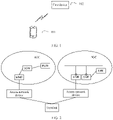
- FIG. 1 shows an architecture of a possible communications system to which a communications method is applicable according to an embodiment of this application.
- the communications system may include a terminal 101 and a first device 102.
- the first device 102 may be an access network device, or may be a core network device.
- the first device or the terminal may be hardware, or may be software obtained through function division, or a combination of hardware and software.
- the first device may communicate with the terminal through another device or network element.
- the first device 102 may send downlink data to the terminal 101, and may also receive uplink data sent by the terminal 101.
- the terminal 101 may also send uplink data to the first device 102, and may also receive downlink data sent by the first device 102.
- the first device 102 may be an access network device.
- the access network device is a node in a radio access network (radio access network, RAN), and may also be referred to as a base station or a RAN node (or device).
- the access network device 101 is a gNB/an NR-NB, a transmission reception point (transmission reception point, TRP), an evolved NodeB (evolved NodeB, eNB), a radio network controller (radio network controller, RNC), a NodeB (NodeB, NB), a base station controller (base station controller, BSC), a base transceiver station (base transceiver station, BTS), a home base station (for example, a home evolved NodeB or a home NodeB, HNB), a baseband unit (base band unit, BBU), a wireless fidelity (wireless fidelity, Wi-Fi) access point (access point, AP), a network side device in a 5G communications system, or a network
- the first device 102 may be a core network device.
- the first device 102 is an authentication management function (authentication management function, AMF), and the AMF is used for an access and mobility management function.
- the first device 102 is a mobility management entity (Mobility Management Entity, MME), and the MME is used for an access and mobility management function.
- AMF authentication management function
- MME mobility management entity
- the communications system may further include some other devices in a core network.
- a core network in 5G is represented by a 5G core network (5G core, 5GC), and a core network in 4G is represented by a 4G core network (4G core, 4GC).
- the 5GC includes one or more network functions (network function, NF), and the NF may also be referred to as a network function entity or a network function network element.
- the 5GC may further include a session management function (session management function, SMF) and a user plane function (user plane function, UPF).
- SMF session management function
- UPF user plane function
- the SMF is configured to manage a protocol data unit (Protocol Data Unit, PDU) session (Session) of a user and a quality of service (Quality of Service, QoS) flow (flow) in the PDU session.
- the UPF is configured to send data for a user.
- the 4GC includes one or more network functions (network function, NF), and the NF may also be referred to as a network function entity or a network function network element.
- the 4GC may further include a public data network (Public Data Network, PDN) gateway (PDN Gateway, PGW) and a serving gateway (Serving Gateway, SGW).
- PDN public Data Network
- PGW serving gateway
- SGW serving gateway
- the PGW and the SGW are configured to set up a PDN connection (connection) of a user and an evolved packet system (Evolved Packet System, EPS) bearer (bearer), and send user data.
- EPS evolved Packet System
- EPS evolved Packet System
- embodiments of this application provide a possible communications system, including a terminal, an access network device, and some NFs in the 5GC or some NFs in the 4GC.
- the communications system may further include a second device.
- the second device may be an NF in 5GC, such as the AMF, the SMF, or the UPF in the foregoing example; or the second device may be an NF in 4GC, such as the MME, the SGW, or the PGW in the foregoing example.
- the first device is an AMF
- the second device included in the communications system may be an SMF or a UPF.
- the second device included in the communications system may be an SGW or a PGW.
- the terminal 101 may also be referred to as user equipment (user equipment, UE), a mobile station (mobile station, MS), a mobile terminal (mobile terminal, MT), or the like, and is a device that provides a user with voice or data connectivity, or may be an internet of things device.
- the terminal device 101 includes a handheld device with a wireless connection function, or a vehicle-mounted device.
- the terminal device 101 may be a mobile phone (mobile phone), a tablet computer, a notebook computer, a palmtop computer, a mobile internet device (mobile internet device, MID), a wearable device (for example, a smartwatch, a smart band, or a pedometer), a vehicle-mounted device (for example, a vehicle-mounted device on an automobile, a bicycle, an electric vehicle, an aircraft, a ship, a train, or a high-speed train), a virtual reality (virtual reality, VR) device, an augmented reality (augmented reality, AR) device, a wireless terminal in industrial control (industrial control), a smart home device (for example, a refrigerator, a television, an air conditioner, or an electricity meter), an intelligent robot, a workshop device, a wireless terminal in self-driving (self driving), a wireless terminal in remote medical surgery (remote medical surgery), a wireless terminal in a smart grid (smart grid), a wireless terminal in transportation safety (transportation safety), a wireless terminal in a
- the terminal may have a plurality of cards.
- the two cards may be represented by a first card and a second card, namely, subscriber identity module (Subscriber Identity Module, SIM) cards, and are usually referred to as "SIM cards".
- SIM Subscriber Identity Module
- the SIM card is a smart card mainly used to store subscriber identity data, SMS message data, and a phone number.
- the SIM card may be used in a GSM network, a TD-SCDMA network, or the like, and may also be used in an IDEN telephone.
- the SIM card may further include a USIM card, an embedded SIM (embedded-SIM, eSIM), a soft SIM, or the like.
- a dual-card terminal has two communications modules that support two SIM cards, so that a first card and a second card each can register with a network and communicate with the network.
- both the first card and the second card of the dual-card terminal can receive paging from a network side.
- the terminal has two transmit chains. The first card may communicate with the network side through a first transmit chain, and the second card may communicate with the network side through a second transmit chain.
- a method is designed for a dual-card dual-standby single-pass terminal or a dual-card single-standby single-pass terminal.
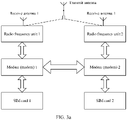
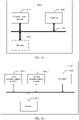
- FIG. 3a is a schematic diagram of a structure of the dual-card terminal.
- the first card is represented by a SIM card 1
- the second card is represented by a SIM card 2.
- the terminal has two communications modules that support the SIM card 1 and the SIM card 2 in communicating with a network.
- the communications module may alternatively be a circuit or a chip that includes a modem.
- the communications module communicates with a network device through components such as a radio frequency unit and an antenna.
- the communications module may alternatively include a modem (modem) and a radio frequency unit.
- the communications module obtains information such as subscriber identity data from a corresponding SIM card, and communicates with a corresponding network device by using the information.
- modem modem
- the SIM card 1 is connected to a modem (modem) 1, and the modem 1 is connected to a radio frequency unit 1.
- a second communications module includes a modem (modem) 2 and a radio frequency unit 2, the SIM card 2 is connected to the modem 2, and the modem 2 is connected to a radio frequency unit 2.
- the modem 1 modulates and demodulates a baseband signal of the terminal generated by the first communications module, to generate a demodulated signal.
- the radio frequency unit 1 generates a radio frequency signal by using the demodulated signal, and sends the radio frequency signal through an antenna.
- the modem 2 modulates and demodulates a baseband signal of the terminal generated by the SIM2, to generate a demodulated signal.
- the radio frequency unit 2 generates a radio frequency signal by using the demodulated signal for sending.
- the radio frequency unit may be referred to as a radio frequency chip.
- the single-pass means that the terminal has only one uplink transmit chain or only one uplink transmit antenna.
- the SIM card 1 sends a radio signal to a base station through the radio frequency chip connected to the modem 1, the SIM card 2 cannot send a signal through the uplink transmit chain.
- the SIM2 performs service communication
- the SIM1 cannot perform service communication.
- the service communication includes making a call, accessing the internet, and the like.
- the SIM1 may be understood as a communications module of the terminal corresponding to the SIM card 1. That the SIM1 is in or enters a connected state may be understood as: The terminal is connected to a corresponding network device by using identification information of the SIM card 1, to perform corresponding service communication. Paging the SIM1 by the network device may be understood as a process in which the network device sends paging to a corresponding communications module of the terminal by using an identifier corresponding to the SIM card 1. This is similar for the SIM1, and details are not described again.
- a process in which the terminal communicates with the network device through the SIM1 includes: The modem 1 obtains information such as a user identity from the SIM card 1, and establishes communication with the network device by using the information. After generating data, the modem 1 sends the data to the network device (for example, a base station) through the transmit antenna and the radio frequency unit 1. Correspondingly, after receiving data from the network device (for example, the base station), a receive antenna 1 sends the data to the modem 1 through the radio frequency unit 1, and the modem 1 processes the data.
- the network device for example, a base station
- a receive antenna 1 sends the data to the modem 1 through the radio frequency unit 1
- the modem 1 processes the data.
- the terminal has two modules, and supports installation of the SIM card 1 and the SIM card 2.
- the SIM card 1 is connected to the modem 1, the modem 1 is connected to the radio frequency unit 1, and the radio frequency unit 1 is connected to the receive antenna 1.
- the SIM card 2 is connected to the modem 2, the modem 2 is connected to the radio frequency unit 2 connected to a receive antenna 2.
- the two SIMs share a same transmit antenna. Because the transmit antenna is shared, the two SIMs share a same transmit chain. At a same moment, only one SIM can occupy the transmit chain to send data.
- Embodiments of this application are based on an initial scenario in which the SIM1 is in connected state and the SIM2 is in non-connected state.
- the terminal and the first device perform operations, so that a network side performs paging according to the method in this application, to avoid a loss of service data of the SIM1.
- the SIM1 being in connected state may be understood as:
- the terminal may set up a communication channel to the base station as the first card, the SIM card 1.
- the terminal sets up a radio resource control (Radio Resource Control, RRC) connection to the base station.
- the terminal may receive data or signaling from or send data or signaling to the network side as the first card, the SIM card 1.
- RRC Radio Resource Control
- the SIM2 being in non-connected state may be understood as: The terminal sets up no communication channel to the base station as the second card.
- the non-connected state may include an idle (idle) state or an inactive (inactive) state.
- the SIM2 being in non-connected state may alternatively be understood as: The terminal cannot send signaling or data to the network side as the second card, and cannot receive signaling or data from the network side as the second card.
- the SIM2 may actively enter a connected state.
- the terminal may need to initiate a service through the SIM2.
- the SIM2 may passively enter a connected state.
- the terminal may receive a SIM2 paging message from the network side. That the terminal initiates the service through the SIM2 may be understood as: The terminal initiates the service as the SIM2. That the terminal receives a SIM2 paging message from the network side may be understood as: The terminal receives the paging message from the network side, where the paging message is used to page an identity corresponding to the SIM2.
- the identity of the SIM2 includes an international mobile subscriber identity (international mobile subscriber identity, IMSI) and a temporary identifier corresponding to the IMSI, for example, a globally unique temporary UE identity (globally unique temporary UE identity, GUTI), a cell-radio network temporary identifier (cell-radio network temporary identifier, C-RNTI), and a serving-temporary mobile subscriber identity (serving-temporary mobile subscriber identity, S-TMSI).
- IMSI international mobile subscriber identity
- GUTI globally unique temporary UE identity
- C-RNTI cell-radio network temporary identifier
- S-TMSI serving-temporary mobile subscriber identity
- SIM2 SIM2
- the terminal generates, by using the modem 2 corresponding to the SIM2, a request message sent to the network, and sends the request message to the network through the radio frequency chip (the radio frequency unit 2) corresponding to the modem 2.
- That the terminal receives a SIM2 paging message from the network side includes: The terminal receives the paging message by using the radio frequency unit 2 corresponding to the modem 2, and the modem 2 determines that an identifier in the paging message matches the identity corresponding to the SIM2, so that the modem 2 determines that the paging message is used to page the SIM2.
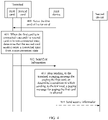
- the SIM2 when downlink data of the SIM2 arrives at the network side, the SIM2 may be paged based on the following method shown in FIG. 3b .
- a UPF receives the downlink data of the SIM2 sent to the terminal.
- the UPF sends a data notification message to an SMF when determining that a data channel corresponding to the downlink data does not exist.
- the SMF determines that the terminal cannot be paged, the SMF sends a failure message to the UPF.
- the SMF sends a request to an AMF, where the request carries an allocation/retention priority (allocation/retention priority, ARP) or a 5G quality of service identifier (5G QoS identifier, 5QI) corresponding to a data service.
- ARP allocation/retention priority
- 5G QoS identifier 5G QoS identifier
- the AMF sends an acknowledgment response to the SMF, to be specific, notifies the SMF that a message sent by the SMF is received.
- the AMF sends a paging message to the terminal through a base station (gNB).
- gNB base station
- the AMF sends a notification message to the terminal by using a NAS message.
- the terminal After receiving the paging message or the notification message, the terminal sends a service request (service request) message to the AMF by using an RRC message.
- a service request service request
- the terminal sends the service request message to the AMF through the SIM2. It may be understood that if the SIM1 is originally in connected state, the SIM2 has preempted a transmit chain.
- S307 The gNB forwards the service request (service request) message to the AMF.
- S308 The AMF sends a PDU session context update request message to the SMF.
- S309 The SMF performs an N4 session setup or modification procedure with a UPF.
- S310 The SMF sends a PDU session context update response message to the AMF.
- S308 to S310 are used to set up a connection between the UPF and the base station.
- the AMF sends a request (N2 request) to the base station, to set up a connection between the UPF and the base station.
- S312 The base station performs RRC connection configuration on the terminal.
- the terminal may receive and send data based on the SIM2.
- the network side pages the SIM2. After a connection to the SIM2 is set up, the SIM1 cannot use the transmit chain. Similarly, if data of the SIM1 arrives, a similar process is performed. As a result, the transmit chain is switched between the SIM1 and the SIM2.
- the terminal includes the SIM1 and the SIM2, and the terminal is a dual-card dual-standby single-pass terminal or a dual-card single-standby single-pass terminal.
- the method in this embodiment includes the following steps.
- S400 A first device serves the SIM1 of the terminal.
- S401 The terminal determines that the SIM1 is in connected state, and the SIM2 needs to enter a connected state from a non-connected state.
- S402 The terminal sends first information to the first device through the SIM1, and the first device receives the first information from the terminal.
- the first information may include or indicate different content.
- the first information indicates to stop sending a SIM1 paging message to the terminal.
- the first information includes or indicates a condition in which sending a SIM1 paging message to the terminal is allowed.
- the first information indicates the first device or a second device to stop sending a SIM1 paging message to the terminal.
- the first information includes or indicates a condition in which the first device or a second device is allowed to send a SIM1 paging message to the terminal.
- the terminal sends the first information to the first device through the SIM1.
- the first information indicates the first device to stop sending a SIM1 paging message to the terminal, or the first information includes or indicates a condition in which the first device is allowed to send a SIM1 paging message to the terminal.
- the terminal sends the first information from the SIM1 to the second device through the first device.
- the first information indicates the second device to stop sending a SIM1 paging message to the terminal, or the first information includes or indicates a condition in which the second device is allowed to send a SIM1 paging message to the terminal.
- the first information indicates the first device or the second device to stop sending a SIM1 paging message to the terminal may be understood as two meanings:
- the first information may directly indicate the first device or the second device to stop sending a SIM1 paging message to the terminal.
- the first device or the second device may determine, based on the first information, to stop sending a SIM1 paging message to the terminal.
- stopping sending a SIM1 paging message to the terminal may also be understood as stopping triggering another device to send a SIM1 paging message to the terminal.
- the first information indicates an SMF to stop sending a SIM1 paging message to the terminal, it may be understood as:
- the first information indicates the SMF to stop triggering an AMF to send a SIM1 paging message to the terminal.
- the SMF when the SMF receives a data notification or downlink data sent by a UPF, the SMF locally blocks the data notification or the downlink data, and does not send, to the AMF, a message for triggering the AMF to page UE.
- the first information indicates the UPF to stop sending a SIM1 paging message to the terminal, it may be understood as:
- the first information indicates the UPF to stop triggering, by using the SMF, the AMF to send a SIM1 paging message to the terminal.
- the UPF when the UPF receives downlink data sent to the SIM1, the UPF locally blocks the downlink data and does not send a message or data to the SMF.
- the condition in which sending a SIM1 paging message to the terminal is allowed may also be understood as a condition in which triggering another device to send a SIM1 paging message to the terminal is allowed.
- the first information indicates a condition in which the SMF is allowed to send a SIM1 paging message to the terminal, it may be understood as:
- the first information indicates a condition in which the SMF is allowed to trigger the AMF to send a SIM1 paging message to the terminal.
- the SMF receives a data notification or downlink data sent by the UPF, the SMF performs determining.
- the SMF blocks the data notification or the downlink data, and does not send, to the AMF, a message for triggering the AMF to page UE.
- the first information indicates a condition in which the UPF is allowed to trigger, by using the SMF, the AMF to send a SIM1 paging message to the terminal, to be specific, when the UPF receives downlink data sent to the SIM1, if the condition is not met, the UPF blocks the downlink data, and does not send a message or data to the SMF.
- the understanding of the SIM2 is similar.
- the condition in which sending a SIM2 paging message to the terminal is allowed may also be understood as a condition in which triggering another device to send a SIM2 paging message to the terminal is allowed.
- the first information includes or indicates the condition in which the first device or the second device is allowed to send a SIM1 paging message to the terminal. That the first information includes the condition in which the first device or the second device is allowed to send a SIM1 paging message to the terminal means that the first information provides content used by the first device or the second device to determine the condition, and the first device or the second device may determine the condition based on the first information. That the first information indicates the condition in which the first device or the second device is allowed to send a SIM1 paging message to the terminal means that the first information directly indicates the condition, and the first device and the second device may directly obtain the condition from the first information.
- the first information may be information for enabling or activating (active) a mobile initiated connection only (mobile initiated connection only, MICO) mode (mode), or information for enabling or activating (active) a power saving mode (power saving mode, PSM).
- MICO mobile initiated connection only
- PSM power saving mode
- the terminal may first determine whether to send the first information. For example, the terminal may compare, based on importance degrees or priorities of services, a service that triggers the SIM2 to enter a connected state with a service that triggers the SIM1 to enter a connected state. If a priority of the service that triggers the SIM2 to enter a connected state is higher than or not lower than a priority of the service that triggers the SIM1 to enter a connected state, the terminal determines to send the first information.
- the first device may perform S403 or S404 based on different content included or indicated by the first information. If the first information indicates the first device to stop sending a SIM1 paging message to the terminal, or the first information includes or indicates a condition in which the first device is allowed to send a SIM1 paging message to the terminal, S403 is performed; otherwise, S404 is performed.
- the first device stops, based on the first information, sending a SIM1 paging message to the terminal.
- the first device determines, based on the first information, the condition in which sending a SIM1 paging message to the terminal is allowed.
- the first device after determining the condition in which sending a SIM1 paging message to the terminal is allowed, the first device sends a paging message meeting the condition to the terminal.
- the first device sends second information to the second device, where the second information indicates the second device to stop sending a SIM1 paging message to the terminal. If the first information includes or indicates the condition in which the second device is allowed to send a SIM1 paging message to the terminal, the first device sends second information to the second device, where the second information includes or indicates the condition in which the second device is allowed to send a SIM1 paging message to the terminal.
- the second device After receiving the second information from the first device, the second device stops, based on the second information, sending a SIM1 paging message to the terminal, or sends, based on the second information, a paging message meeting the condition to the terminal.
- the condition is determined based on the second information.
- the first device may independently determine whether to perform subsequent paging based on the first information. If the first device determines not to page the SIM1 based on the first information, the first device may return a response message to the terminal. The response message indicates the terminal that the first device continues to page the SIM1 in an original manner, or indicates the terminal that the first device does not page the SIM1 based on the first information.
- the first information sent by the terminal to the first device when the terminal determines that the SIM2 needs to enter a connected state from a non-connected state may include or indicate any two of the foregoing content, and an application scenario does not need to be limited. For example, once determining that the SIM2 needs to enter a connected state from a non-connected state, the terminal sends the first information to the first device. The first information indicates the first device or the second device to stop sending a SIM1 paging message to the terminal. For another example, once determining that the SIM2 needs to enter a connected state from a non-connected state, the terminal sends the first information to the first device. The first information includes or indicates the condition in which the first device or the second device is allowed to send a SIM1 paging message to the terminal.
- the terminal may determine content included or indicated by the first information sent to the first device.
- the terminal may determine, based on a reason of the service that triggers the SIM2 to enter a connected state, the content included or indicated by the first information. For example, the terminal determines an importance degree of the service that triggers the SIM2 to enter a connected state, or strength of a requirement for executing the service, and determines that the content included or indicated by the first information is indicating the first device or the second device to stop sending a SIM1 paging message to the terminal.
- the first information indicates the first device or the second device to stop sending a SIM1 paging message to the terminal.
- the terminal may determine that the first information indicates the first device or the second device to stop sending a SIM1 paging message to the terminal.
- the stop herein may be understood as complete stop or temporary stop.
- the emergency call service may be, for example, a voice call such as a call to 110 or 119 by using the SIM2.
- the terminal After receiving an emergency call request triggered by a user, if the terminal determines that a network in which the SIM1 is located does not support the emergency call service and a network in which the SIM2 is located supports the emergency call service, the terminal determines that the emergency call service needs to be performed by using the SIM2.
- the terminal may determine that the first information indicates the first device or the second device to stop sending a SIM1 paging message to the terminal.
- the SIM2 may need to perform the location update service.
- the location update service takes a relatively short period of time, and a requirement for executing the location update service is very high. Otherwise, the normal use of the SIM2 is affected.
- the SIM2 needs to occupy the transmit chain. Because there is only one transmit chain, a connection of the SIM1 needs to be disconnected.
- the terminal sends the first information to the first device.
- the first information indicates to stop sending a SIM1 paging message to the terminal.
- the first device or the second device may learn, based on the first information, that a connection of the SIM1 is disconnected, and therefore does not continue sending data of the SIM1 to the terminal. This can avoid a data loss caused because the first device continues sending data when the connection of the SIM1 is disconnected.
- the first device or the second device does not send a SIM1 paging message to the terminal, to save network resources, and prevent the SIM1 from preempting the transmit chain after the terminal receives a SIM1 paging message, that is, prevent a service from being affected by preempting the transmit chain of the SIM2. This ensures that the chain through which the SIM2 performs a service can be normally used.
- the cases 1 and 2 are only examples of two services.
- the first information may indicate the first device or the second device to stop sending a SIM1 paging message to the terminal.
- the terminal may determine, based on the reason of the service that triggers the SIM2 to enter a connected state, that the content included or indicated by the first information is the condition in which the first device or the second device is allowed to send a SIM1 paging message to the terminal.
- the first device or the second device may be briefly described as a network side.
- the terminal needs to determine the service that triggers the SIM2 to enter a connected state.
- the terminal actively initiates a service through the SIM2, the SIM2 is triggered to enter a connected state. Because the terminal actively initiates the service of the SIM2, the terminal can clearly determine the service that triggers the SIM2 to enter a connected state.
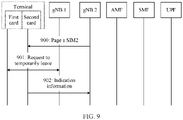
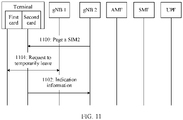
- the SIM2 paging message may be denoted as a first paging message.
- the first paging message may include or indicate information about a service that triggers the SIM2 to enter a connected state. If the first paging message does not include or does not indicate the information about the service that triggers the SIM2 to enter a connected state, the terminal may first temporarily leave the network of the SIM1, access the network of the SIM2. When accessing the network of the SIM2, the terminal determines the service that triggers the SIM2 to enter a connected state.
- the terminal receives, from the first device, a second paging message for paging the SIM2, the terminal enables the SIM2 to enter a connected state, and the terminal determines the information about the service that triggers the SIM2 to enter a connected state.
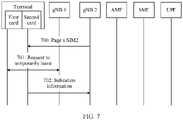
- the terminal may send, through the SIM1, a request message to an access network device serving the SIM1.
- the request message is used to request to suspend scheduling a slot or a gap (gap) of the SIM1.
- the terminal is connected, in the slot or the gap through the SIM2, to an access network device serving the SIM2, that is, enables the SIM2 to enter a connected state.
- the terminal After determining the service that triggers the SIM2 to enter a connected state, the terminal determines the first information based on the service that triggers the SIM2 to enter a connected state.
- the content included or indicated by the first information is the condition in which the network side is allowed to send a SIM1 paging message to the terminal.
- the terminal sends the first information to the network side, and the network side may determine, based on the first information, that a SIM1 paging message can be sent to the terminal.
- the paging message is specific to some services of the SIM1. For ease of description, some services that allow paging the SIM1 are denoted as first services.
- the service that triggers the SIM2 to enter a connected state is denoted as a second service.
- the condition in which the network side is allowed to send a SIM1 paging message to the terminal may be understood as any one or a combination of the following:
- the terminal may indicate the first service, the first PDU session, or the first QoS flow to the first device, to indicate a service/PDU session/QoS flow of the SIM1 for which the network side is allowed to send a paging message to the terminal.
- the terminal may indicate the second service, the second PDU session, or the second QoS flow to the first device, and the network side determines, based on the second service, the second PDU session, or the second QoS flow, a service/PDU session/QoS flow of the SIM1 for which a paging message can be sent to the terminal.
- the content included or indicated by the first information may be in the following several forms:
- Information about a service that allows the first device or the second device to send a SIM1 paging message to the terminal that is, information about the first service.
- the information about the first service may be: a type of a service that allows sending a SIM1 paging message to the terminal; or a priority of a service that allows sending a SIM1 paging message to the terminal; or a lowest priority of services that allow sending a SIM1 paging message to the terminal.
- the type of a service that allows sending a SIM1 paging message to the terminal may be a specific service type, for example, a voice service, a short message service, or an unstructured supplementary service data (unstructured supplementary service data, USSD) service.
- a specific service type for example, a voice service, a short message service, or an unstructured supplementary service data (unstructured supplementary service data, USSD) service.
- a priority may be represented by a sequence number, and 1, 2, 3, and 4 ... may represent priorities in descending order. If priorities of services that allow sending a SIM1 paging message to the terminal are ⁇ 1, 2, 3 ⁇ , it indicates that the first information indicates that a priority of a service that allows the network side to send a SIM1 paging message to the terminal is 1, 2, or 3. If the lowest priority of services that allow sending a SIM1 paging message to the terminal is 3, it indicates that the first information indicates that a priority of a service that allows the network side to send a SIM1 paging message to the terminal is 1, 2, or 3.
- Priorities of different services may be negotiated by the terminal and the network side in advance, or notified by the network side to the terminal, or specified in a protocol.
- priorities of services in descending order are as follows: 1. a voice service; 2. a short message service or USSD service; 3. an IP multimedia system (IP multimedia system, IMS) service other than the voice service and the short message service; and 4. a data service.
- IP multimedia system IP multimedia system, IMS
- the network side may page the SIM1 for a service whose priority is higher than or not lower than a priority of the data service. For example, the priority is higher than the priority of the data service.
- the content that may be included or indicated by the first information may be in several forms: Form 1: a voice service, a short message service or a USSD service, and an IMS service other than the voice service and the short message service; Form 2: ⁇ 1, 2, 3 ⁇ ; and Form 3: 3.
- the information about the first PDU session may be: description information used to describe a PDU session that allows sending a SIM1 paging message to the terminal; or a priority of a PDU session that allows sending a SIM1 paging message to the terminal; or a lowest priority of PDU sessions that allow sending a SIM1 paging message to the terminal.
- the description information used to describe a PDU session that allows sending a SIM1 paging message to the terminal may be a PDU session corresponding to a specific service type, for example, a PDU session corresponding to a voice service, a PDU session corresponding to a short message service, or a PDU session corresponding to a USSD service, or may be a parameter of the PDU session.
- the parameter of the PDU session may include one or more of the following: a data network name (data network name, DNN), slice information, or an access network type.
- a priority of a PDU session may be represented by a sequence number, and 1, 2, 3, and 4 ... may represent a descending order of priorities. If priorities of PDU sessions that allow sending a SIM1 paging message to the terminal are ⁇ 1, 2, 3 ⁇ , it indicates that the first information indicates that a priority of a PDU session that allows the network side to send a SIM1 paging message to the terminal is 1, 2, or 3. If the lowest priority of PDU sessions that allow sending a SIM1 paging message to the terminal is 3, it indicates that the first information indicates that a priority of a PDU session that allows the network side to send a SIM1 paging message to the terminal is 1, 2, or 3.
- Priorities of different PDU sessions may be negotiated by the terminal and the network side in advance, or notified by the network side to the terminal, or specified in a protocol.
- priorities of PDU sessions in descending order are as follows: 1. a PDU session corresponding to a voice service; 2. a PDU session corresponding to a short message service or a USSD service; 3. a PDU session corresponding to an IMS service other than the voice service and the short message service; and 4. a PDU session corresponding to a data service.
- the network side may page the SIM1 for a PDU session corresponding to service whose priority is higher than (or not lower than) a priority of the PDU session corresponding to the data service. For example, the priority is higher than the priority of the PDU session corresponding to the data service.
- the content that may be included or indicated by the first information may be in several forms: Form 1: a PDU session corresponding to a voice service, a PDU session corresponding to a short message service or a USSD service, and a PDU session corresponding to an IMS service other than the voice service and the short message service; Form 2: ⁇ 1, 2, 3 ⁇ ; and Form 3: 3.
- Information about a QoS flow that allows the first device or the second device to send a SIM1 paging message to the terminal that is, information about the first QoS flow.
- the information about the first QoS flow may be: description information used to describe a quality of service QoS flow that allows sending a SIM1 paging message to the terminal; or a priority of a QoS flow that allows sending a SIM1 paging message to the terminal; or a lowest priority of QoS flows that allow sending a SIM1 paging message to the terminal.
- the description information used to describe a QoS flow that allows sending a SIM1 paging message to the terminal may be a QoS flow corresponding to a specific service type, for example, a QoS flow corresponding to a voice service, a QoS flow corresponding to a short message service, or a QoS flow corresponding to a USSD service, or may be a parameter of the QoS flow.
- the parameter of the QoS flow may include one or more of the following: an ARP or a 5QI.
- a priority of a QoS flow may be represented by a sequence number, and 1, 2, 3, and 4 ... may represent a descending order of priorities. If priorities of QoS flows that allow sending a SIM1 paging message to the terminal are ⁇ 1, 2, 3 ⁇ , it indicates that the first information indicates that a priority of a QoS flow that allows the network side to send a SIM1 paging message to the terminal is 1, 2, or 3. If the lowest priority of QoS flows that allow sending a SIM1 paging message to the terminal is 3, it indicates that the first information indicates that a priority of a QoS flow that allows the network side to send a SIM1 paging message to the terminal is 1, 2, or 3.
- Priorities of different QoS flows may be negotiated by the terminal and the network side in advance, or notified by the network side to the terminal, or specified in a protocol.
- priorities of QoS flows in descending order are as follows: 1. a QoS flow corresponding to a voice service; 2. a QoS flow corresponding to a short message service or a USSD service; 3. a QoS flow corresponding to an IMS service other than a voice service and a short message service; and 4. a PDU session corresponding to a data service.
- the network side may page the SIM1 for a QoS flow whose priority is higher than (or not lower than) a priority of the QoS flow corresponding to the data service. For example, the priority is higher than the priority of the QoS flow corresponding to the data service.
- the content that may be included or indicated by the first information may be in several forms: Form 1: a QoS flow corresponding to a voice service, a QoS flow corresponding to a short message service or a USSD service, and a QoS flow corresponding to an IMS service other than the voice service and the short message service; Form 2: ⁇ 1, 2, 3 ⁇ ; and Form 3: 3.
- Information about the service that triggers the SIM2 to enter a connected state namely, information about the second service.
- the information about the second service may be a service type of the second service, or may be a service priority of the second service.
- the first information may include or indicate a data service, or may be 4.
- the first information may include or indicate a PDU session corresponding to a data service, or may be 4.
- the first information may include or indicate a QoS flow corresponding to a data service, or may be 4.
- the terminal sends the first information to the first device through the SIM1, and the first device receives the first information from the terminal.
- the first device may be an access network device serving the terminal, or may be a core network device serving the terminal.
- the first device may be an access network device serving the terminal, and the second device may be a core network device serving the terminal, for example, an AMF, an SMF, a UPF, an MME, an SGW, or a PGW.
- the terminal sends an RRC message to the access network device through the SIM1, and the RRC message carries the first information.
- the RRC message may be a user equipment assistance information (UE assistance information) message, or the RRC message may be a user equipment release request message, or the RRC message may be a user equipment suspend request message.
- the first information indicates the access network device or the core network device to stop sending a paging message or send a paging message that meets the condition.
- the access network device further sends second information to the core network device, to indicate, by using the second information, the core network device to stop sending a paging message or send a paging message that meets the condition. For example, after receiving the first information, the access network device sends the second information to the AMF, to indicate, by using the second information, the AMF to stop sending a paging message or send a paging message that meets the condition.
- the AMF continues to send third information to the SMF, to indicate, by using the third information, the SMF to stop sending a paging message or send a paging message that meets the condition.
- the SMF continues to send fourth information to the UPF, to indicate, by using the fourth information, the UPF to stop sending a paging message or send a paging message that meets the condition.
- the first device may be a core network device serving the terminal, and the second device may be another core network device serving the terminal.
- the first device is an AMF serving the terminal.
- the terminal sends a NAS message to the AMF through the SIM1, and the NAS message carries the first information.
- the NAS message may be a registration (registration or attach) message, or the NAS message may be an uplink transport (UL transport) message, or the NAS message is a PDU session modification (PDU session modification) message.
- the first information indicates the core network device or the another core network device to stop sending a paging message or send a paging message that meets the condition.
- the AMF stops, based on the first information, sending a paging message or sends, based on the first information, a paging message that meets the condition. If the first information indicates the another core network device (for example, the SMF) to stop sending a paging message or send a paging message that meets the condition, after receiving the first information, the AMF further sends the second information to the SMF, to indicate, by using the second information, the SMF to stop sending a paging message or send a paging message that meets the condition.
- the core network device for example, the AMF
- the SMF continues to send third information to the UPF, to indicate, by using the third information, the UPF to stop sending a paging message or send a paging message that meets the condition.
- the first information may include or indicate different content.
- the first information indicates the first device or the second device to stop sending a SIM1 paging message to the terminal.
- the first information includes or indicates the condition in which the first device or the second device is allowed to send a SIM1 paging message to the terminal.
- the first information sent by the terminal to the first device may further include information about a timer.
- the information about the timer may be carried in the first information, or may be sent together with the first information, or the information about the timer and the first information may be separately sent.
- the information about the timer indicates duration in which the first device or the second device stops sending a SIM1 paging message to the terminal, or indicates duration in which sending a paging message meeting the condition to the terminal is allowed. That is, before the timer expires, sending a SIM1 paging message to the terminal is stopped; or before the timer expires, sending a paging message meeting the condition to the terminal is allowed.
- the first device or the second device stops sending a SIM1 paging message to the terminal before the timer expires, or the first device or the second device is allowed to send a paging message meeting the condition to the terminal before the timer expires.
- the network side sends a second message to the terminal, and the terminal receives the second message sent by the network side.
- the network side may be a base station or a core network device serving the SIM1.
- the second message is used to change the SIM1 to a non-connected state.
- the terminal After receiving the second message, the terminal enables, based on the second message, the SIM2 to enter a connected state.
- the terminal After the SIM2 enters a connected state, the terminal performs the service that triggers the SIM2 to enter a connected state.
- the terminal determines that the service that triggers the SIM2 to enter a connected state ends, or the terminal determines that the SIM2 is switched from a connected state to a non-connected state, the terminal sends, through the SIM1, third information to the base station or the core network device serving the SIM1.
- the third information is used by the base station or the core network device to determine to allow sending a paging message to the SIM1.
- embodiments of this application provide another communications method.
- the terminal may first determine whether to send the first information.
- the terminal may alternatively determine not to send the first information. For example, the terminal determines that the SIM1 continues to be in connected state. In this case, the terminal needs to indicate the network of the SIM2 to stop paging the SIM2, or notify, to the network of the SIM2, a condition in which the SIM2 can be paged. For example, if a priority of the service that triggers the SIM2 to enter a connected state is lower than or not higher than a priority of the service that triggers the SIM1 to enter a connected state, it is determined that the SIM1 continues to be in connected state.
- the following describes in detail the another communications method provided in embodiments of this application.
- a specific process of the another communications method provided in embodiments of this application is described as follows: The method is performed by a terminal and a first device.
- the terminal includes a SIM1 and a SIM2.
- the terminal may be a dual-card dual-standby single-pass terminal or a dual-card single-standby single-pass terminal.
- the first device serves the SIM1 of the terminal.
- S502 The terminal sends fifth information to a third device through the SIM2, and the third device receives the fifth information from the terminal.
- the fifth information may include or indicate different content.
- the fifth information indicates the third device or a fourth device to stop sending a SIM2 paging message to the terminal.
- the fifth information includes or indicates a condition in which the third device or a fourth device is allowed to send a SIM2 paging message to the terminal.
- the fifth information includes or indicates the condition in which the third device or the fourth device is allowed to send a SIM2 paging message to the terminal. That the fifth information includes the condition in which the third device or the fourth device is allowed to send a SIM2 paging message to the terminal means that the fifth information provides content used by the third device or the fourth device to determine the condition, and the third device or the fourth device may determine the condition based on the fifth information. That the fifth information indicates the condition in which the third device or the fourth device is allowed to send a SIM2 paging message to the terminal means that the fifth information directly indicates the condition, and the third device and the fourth device may directly obtain the condition from the fifth information.
- the third device may perform S503 or S504 based on different content included or indicated by the fifth information. If the fifth information indicates the third device to stop sending a SIM2 paging message to the terminal, or the fifth information includes or indicates a condition in which the third device is allowed to send a SIM2 paging message to the terminal, S503 is performed; otherwise, S504 is performed.
- the third device stops, based on the fifth information, sending a SIM2 paging message to the terminal.
- the fifth information includes or indicates the condition in which the third device is allowed to stop sending a SIM2 paging message to the terminal
- the third device determines, based on the fifth information, the condition in which sending a SIM2 paging message to the terminal is allowed.
- the third device after determining the condition in which sending a SIM2 paging message to the terminal is allowed, the third device sends a paging message meeting the condition to the terminal.
- the third device sends sixth information to the fourth device, where the sixth information indicates the fourth device to stop sending a SIM2 paging message to the terminal. If the fifth information includes or indicates a condition in which the fourth device is allowed to send a SIM2 paging message to the terminal, the third device sends sixth information to the fourth device, where the sixth information includes or indicates a condition in which the fourth device is allowed to send a SIM2 paging message to the terminal.
- the fourth device After receiving the sixth information from the third device, the fourth device stops, based on the sixth information, sending a SIM2 paging message to the terminal, or sends, based on the sixth information, a paging message meeting the condition to the terminal.
- the condition is determined based on the sixth information.
- the terminal sends the fifth information to the third device through the SIM2, and the third device receives the fifth information from the terminal.
- the terminal needs to enable the SIM2 to enter a connected state, and can send the fifth information to the third device through the SIM2 only after the SIM2 enters a connected state.
- the terminal determines to continue to perform a service on the SIM1. Therefore, before the SIM2 enters a connected state, the terminal needs to temporarily leave a network of the SIM1.
- a method for temporarily leaving the network of the SIM1 is not limited in this application.
- the terminal may send, through the SIM1, a request message to an access network device serving the SIM1.
- the request message is used to request to suspend scheduling a slot or a gap (gap) of the SIM1.
- the terminal is connected, in the slot or the gap through the SIM2, to an access network device serving the SIM2, that is, enables the SIM2 to enter a connected state.
- the request message may be an RRC message.
- the SIM2 in the embodiment in FIG. 5 may correspond to the SIM1 in the embodiment in FIG. 4
- the third device in the embodiment in FIG. 5 may correspond to the first device in the embodiment in FIG. 4
- the fourth device in the embodiment in FIG. 5 may correspond to the second device in the embodiment in FIG. 4
- the fifth information in the embodiment in FIG. 5 may correspond to the first information in the embodiment in FIG. 4
- the sixth information in the embodiment in FIG. 5 may correspond to the third information in the embodiment in FIG. 4 .
- content included or indicated by the fifth information may be determined based on a currently performed service of the SIM1, for example, an importance degree or a priority degree of the currently performed service of the SIM1, to determine to a condition in which the third device or the fourth device stops paging the SIM2 by or a condition for paging the SIM2.
- the condition for paging the SIM2 includes a paging message corresponding to a service, a PDU session, or a QoS flow, and may be determined by comparing a priority of a service/a PDU session/a QoS flow of the SIM2 with a priority of a currently performed service/a PDU session/a QoS flow of the SIM1.
- a prerequisite environment of the application scenarios is that the SIM1 is in connected state, and the SIM2 is in non-connected state.
- a SIM1 of a terminal is represented by a SIM1
- a SIM2 of the terminal is represented by a SIM2
- an access network device is represented by a gNB
- core network devices include an AMF, an SMF, and a UPF.
- a terminal and UE represent different terms of a same device.
- a base station and a gNB represent different terms of a same device.
- Application scenario 1 When determining to perform a service of a SIM2, a terminal needs to send information to a network of a SIM1, so that the network (AMF) of the SIM1 stops paging the SIM1 or sends a paging message that meets a condition to page the SIM1.
- AMF network
- S601 The UE obtains a reason why the UE needs to switch from the SIM1 to the SIM2 to perform a service, and determines whether to stop receiving a paging message through the SIM1.
- the reason may be that the UE locally initiates a service, for example, actively makes a call or makes an emergency call to 110 or 119.
- the UE determines that the SIM2 initiates an emergency call, the UE determines that the SIM1 stops receiving a paging message (paging).
- the UE receives an emergency call request from a user.
- the SIM2 needs to preempt a chain of the SIM1 and the UE indicates the SIM1 to stop receiving a paging message.
- a purpose of stopping receiving a paging message from the SIM1 is to avoid impact on the emergency call of the SIM2.
- the UE determines that the SIM2 requests to perform location update. If the UE determines that the SIM1 stops receiving paging. After the UE indicates, to a network side, information that the SIM1 stops receiving paging, the UE may or may not detect whether there is paging delivered to the SIM1.
- the location update takes a short time and is mandatory.
- a purpose of stopping receiving a paging message from the SIM1 is to avoid interruption of the location update of the SIM2.
- the UE determines, based on a service that triggers the SIM2 to enter a connected state, a description of paging that can be received by the SIM1.
- the UE performs determining based on a service that triggers the SIM2 to initiate a request.
- the UE performs determining based on a service indication in a paging message, or the UE temporarily disconnects the SIM1 from the network, and the UE is first temporarily connected to the network of the SIM2 and performs determining after learning of a service corresponding to the SIM2.
- the UE initiates a service based on the SIM2, and determines that a service for which the SIM1 can receive paging.
- priorities of services may be arranged in the following order:
- a network side of the SIM1 may send paging for services with priorities 1, 2, 3, and 4 to the SIM1.
- the network side of the SIM1 may send paging for a service with a priority 1 to the SIM1.
- the UE determines, based on a PDU session used when the SIM2 initiates a service, a PDU session corresponding to which the network side of the SIM1 can send, for the SIM1, paging.
- priorities of PDU sessions are as follows:
- the network side of the SIM1 may send, for the SIM1, paging corresponding to PDU sessions with priorities 1, 2, and 3.
- the network side of the SIM1 may send, for the SIM1, paging corresponding to a PDU session with a priority 1.
- the UE determines, based on a QoS flow used when the SIM2 initiates a service, a QoS flow corresponding to which the SIM1 can receive paging.
- a PDU session includes one or more QoS flows.
- priorities of QoS flows are as follows:
- the network side of the SIM1 may send, to the SIM1, paging corresponding to QoS flows of services with priorities 1, 2, 3, and 4.
- the network side of the SIM1 may send, to the SIM1, paging corresponding to a QoS flow of a service with a priority 1.
- the UE sends a message to a gNB, for example, an RRC release request (RRC release request) message or an RRC suspend request (RRC suspend request) message.
- the message carries indication information.
- the RRC release request message is used to request to suspend (suspend) or release (release) a connection (an RRC connection) between the SIM1 and the gNB.
- the indication information includes or indicates:
- the indication information further includes information for enabling dual-card optimization.
- the gNB sends a request message (for example, an N2 UE request message) to an AMF, to request the AMF to release or suspend a connection of the UE.
- the request message further carries the indication information in S602.
- a transmit chain is switched from the SIM1 to the SIM2. Therefore, the SIM1 needs to be released.
- the AMF records, based on the indication information, a status in which the UE can receive paging.
- the AMF may independently determine whether to agree with content indicated by the indication information. If the AMF does not agree with the indication information, the AMF may further send a response message to the UE. The response message indicates that the AMF does not agree with the indication information. The AMF continues to send a SIM1 paging message to the UE in an original manner.
- the AMF After receiving the indication information sent in S603, the AMF starts a timer based on the indication information. Before the timer expires, the AMF does not send paging to the UE, or sends only paging that meets a requirement of the indication information to the UE.
- the gNB releases a connection between the SIM1 of the UE and the gNB.
- the gNB may directly release the connection between the SIM1 of the UE and the gNB after receiving the message in S602, or may release the connection after receiving the message from the AMF
- a UPF receives downlink data of the SIM1 sent to the UE.
- the UPF When determining that a data chain corresponding to the downlink data does not exist, the UPF sends a data notification (data notification) message to an SMF, where the message includes a differentiated services code point (differentiated services code point, DSCP) and a quality of service flow identifier (QoS flow ID, QFI).
- a differentiated services code point differentiated services code point
- QoS flow ID quality of service flow identifier
- the SMF sends a request message to the AMF.
- the request message is Namf_Communication_NlN2MessageTransfer.
- the request message carries an ARP, 5QI information, a paging policy indicator (paging policy indicator, PPI), or a PDU session identifier (PDU session ID) corresponding to a data service.
- PPI paging policy indicator
- PDU session ID PDU session identifier
- the SMF obtains the PPI based on the DSCP, and obtains the ARP and the 5QI based on the QFI.
- S609 The AMF determines, based on the information in S604, a to-be-performed step.
- the AMF directly performs S610 and S611 to reject the SMF.
- the AMF determines whether the service that triggers paging meets a condition. If the service that triggers paging does not meet the condition, the AMF directly performs S610 and S611 to reject the SMF.
- the AMF specifically determines, based on a PPI indication, a type of the service that triggers paging.
- the AMF determines whether the PDU session that triggers paging meets a requirement. If the PDU session that triggers paging does not meet the requirement, the AMF directly performs S610 and S611 to reject the SMF.
- the AMF specifically determines, based on a PDU session (session) ID, the PDU session that triggers paging.
- the AMF determines whether the QoS flow that triggers paging meets a requirement. If the QoS flow that triggers paging does not meet the requirement, the AMF directly performs S610 and S611 to reject the SMF.
- the AMF specifically determines, based on the APR and 5QI, the QoS flow that triggers paging.
- the AMF sends a response message to the SMF, to reject the SMF.
- the response message is Namf_Communication_N1N2MessageTransfer Response.
- the SMF sends a failure indication (failure indication) to the UPF.
- the UE may switch to the SIM1 to continue to perform a service.
- the UE sends information about a timer to the AMF, before the timer expires, and the AMF sends a paging message based on the indication information and based on the information about the timer sent by the UE or information about the timer determined by the AMF, the following S613 to S615 are omitted.
- RRC setup complete The UE sends an RRC setup complete (RRC setup complete) message to the gNB through the SIM1, where the RRC setup complete message includes indication information, that is, indication information indicating to receive all paging or information indicating to disable dual-card optimization.
- S614 The gNB sends, to the AMF, a message (N2 message) that carries the indication information.
- the AMF determines, based on the indication information, a service for which paging can be received, and stores the service.
- a function of the indication information in S613 to S615 is different from a function of the indication information in S602 to S609.
- the indication information in S613 to S615 is denoted as indication information 2.
- the indication information 2 indicates that the service of the SIM2 ends, or indicates that the SIM1 can be normally paged.
- Application scenario 2 When determining to perform a service of a SIM1, a terminal needs to send information to a network of a SIM2, so that the network (AMF) of the SIM2 stops paging the SIM2 or sends a paging message that meets a condition to page the SIM2. It is assumed that a network with which the SIM1 registers is a gNB 1, and a network with which the SIM1 registers is a gNB 2. The two SIM cards may alternatively register with a same network.
- the terminal may request the gNB 1 to allocate a gap gap to the SIM1, and request the gNB 1 not to send data to the SIM1 during the gap. In this case, the gNB 1 does not send data to the SIM1 during the gap. In this way, resources on a network side can be saved, and a network disconnection of the SIM2 is not affected due to paging the SIM1 by the gNB 1, and subsequent steps are not affected.
- S702 The terminal determines, based on a service currently performed through the SIM1, a service/PDU session/QoS flow corresponding to which paging can be sent to the SIM2 by the network of the SIM2, and sends indication information to the gNB 2 through the SIM2. Content of the indication information is the same as that described in S602 in the figure.
- a specific determining method refer to a method for determining a service/PDU session/QoS flow corresponding to which paging can be sent to the SIM1 by the network of the SIM1 in the embodiment in FIG. 6A and FIG. 6B .
- S703 to S715 are similar to S603 to S615, except that the description of the SIM1 is replaced with the description of the SIM2, and the description of the SIM2 is replaced with the description of the SIM1.
- the gNB, the AMF, the SMF, and the UPF in FIG. 6A and FIG. 6B are respectively a gNB, an AMF, an SMF, and a UPF in the network with which the SIM1 registers.
- the gNB 2, the AMF, the SMF, and the UPF in FIG. 7 are respectively a gNB 2, an AMF, an SMF, and a UPF in the network with which the SIM2 registers.
- Application scenario 3 When determining to perform a service of a SIM2, a terminal needs to send information to a network of a SIM1, so that the network (SMF) of the SIM1 stops paging the SIM1 or sends a paging message that meets a condition to page the SIM1.
- SMS network
- the SMF records, based on the indication information, a status in which the UE can accept paging the SIM1.
- S807 and S808 are the same as S606 and S607.
- S809 The SMF determines, based on the information in S806, a to-be-performed step. The following cases are included.
- the SMF determines to stop triggering the AMF to page the SIM1, and directly performs S810 to reject a UPF. That is, the SMF locally performs blocking, and does not send, to the AMF, a message for triggering the AMF to send paging to the UE.
- the SMF determines whether the service that triggers paging meets a requirement. If the service that triggers paging does not meet the requirement, the SMF directly performs S810 to reject the UPF. That is, the SMF locally performs blocking, and does not send, to the AMF, a message for triggering the AMF to send paging to the UE.
- the SMF may determine, based on a DSCP indication, a type of the service that triggers paging.
- the SMF determines whether the PDU session that triggers paging meets a requirement. If the PDU session that triggers paging does not meet the requirement, the AMF directly performs S810 to reject the UPF.
- the SMF locally determines the PDU session that triggers paging.
- the SMF determines whether the QoS flow that triggers paging meets a requirement. If the QoS flow that triggers paging does not meet the requirement, the SMF directly performs S810 to reject the UPF.
- the SMF may determine, based on a QFI, the QoS flow that triggers paging.
- the SMF sends a failure indication (failure indication) to the UPF.
- S811 to 813 are the same as S612 to 614.
- the AMF determines an SMF that currently serves the terminal.
- S815 The AMF sends indication information to each SMF determined in S814.
- a PDU session context update message (Nsmf PDUsession updateSMContext) may be sent, and the indication information is carried in the message.
- the SMF continues to send paging for all services to the terminal based on the indication information.
- a function of the indication information in S811 to S815 is different from a function of the indication information in S802 to S809.
- the indication information in S1011 to S1015 is denoted as indication information 2.
- the indication information 2 indicates that the service of the SIM2 ends, or indicates that the SIM1 can be normally paged.
- Application scenario 4 When determining to perform a service of a SIM1, a terminal needs to send information to a network of a SIM2, so that the network (SMF) of the SIM2 stops paging the SIM2 or sends a paging message that meets a condition to page the SIM2.
- SMS network
- the gNB, the AMF, the SMF, and the UPF in FIG. 8A and FIG. 8B are respectively a gNB, an AMF, an SMF, and a UPF in the network with which the SIM1 registers.
- the gNB 2, the AMF, the SMF, and the UPF in FIG. 9 are respectively a gNB 2, an AMF, an SMF, and a UPF in the network with which the SIM2 registers.
- Application scenario 5 When determining to perform a service of a SIM2, a terminal needs to send information to a network of a SIM1, so that the network (UPF) of the SIM1 stops paging the SIM1 or sends a paging message that meets a condition to page the SIM1.
- the network (UPF) of the SIM1 stops paging the SIM1 or sends a paging message that meets a condition to page the SIM1.
- S1001 to S1006 are the same as S801 to S806.
- the UPF records a paging status based on the indication information.
- S1007 The SMF sends a message to the UPF, for example, an N4 session modification request (N4 Session Modification Request) message.
- the message carries the indication information.
- the UPF records, based on the indication information, a status in which SIM1 paging can be sent to the terminal.
- the UPF receives the downlink data of the card 1 sent to the terminal.
- the UPF determines, based on the information in S1007, a to-be-performed step.
- the UPF determines to stop triggering SIM1 paging, and the UPF stores the data, and does not send the data to the SMF.
- the UPF determines whether the service that triggers paging meets a requirement. If the service that triggers paging does not meet the requirement, the UPF stores the data, and does not send the data to the SMF.
- the UPF specifically determines, based on a DSCP indication of a received data packet, a type of the service that triggers paging.
- the UPF determines whether the PDU session that triggers paging meets a requirement. If the PDU session that triggers paging does not meet the requirement, the UPF stores the data, and does not send the data to the SMF.
- the UPF locally determines the PDU session that triggers paging.
- the UPF determines whether the QoS flow that triggers paging meets a requirement. If the QoS flow that triggers paging does not meet the requirement, the SMF directly performs S1010 to reject the UPF.
- the UPF locally determines the QoS flow that triggers paging.
- S1010 to S1014 are the same as S811 to S815.
- the SMF sends a message to the UPF, for example, an N4 session modification request (N4 Session Modification Request), where the message carries indication information, to indicate that the service of the SIM2 ends, or indicate that the SIM1 can be normally paged.
- N4 Session Modification Request N4 Session Modification Request
- the UPF determines, based on the indication information, that paging can be sent to the SIM1, the UPF sends the stored data to the UE according to the conventional technology.
- a function of the indication information in S1011 to S1015 is different from a function of the indication information in S1002 to S1009.
- the indication information in S1011 to S1015 is denoted as indication information 2.
- Application scenario 6 When determining to perform a service of a SIM1, a terminal needs to send information to a network of a SIM2, so that the network (UPF) of the SIM2 stops paging the SIM2 or sends a paging message that meets a condition to page the SIM2.
- the network (UPF) of the SIM2 stops paging the SIM2 or sends a paging message that meets a condition to page the SIM2.
- S1100 to S1102 are the same as S700 to S702.
- S1103 to S1115 are similar to S1003 to S1015, except that the description of the SIM1 is replaced with the description of the SIM2, and the description of the SIM2 is replaced with the description of the SIM1.
- the gNB, the AMF, the SMF, and the UPF in FIG. 10A and FIG. 10B are respectively a gNB, an AMF, an SMF, and a UPF in the network with which the SIM1 registers.
- the gNB 2, the AMF, the SMF, and the UPF in FIG. 11 are respectively a gNB 2, an AMF, an SMF, and a UPF in the network with which the SIM2 registers.
- Application scenario 7 When determining to perform a service of a SIM2, a terminal needs to send information to a network of a SIM1, so that the network (gNB) of the SIM1 stops paging the SIM1 or sends a paging message that meets a condition to page the SIM1.
- the network (gNB) of the SIM1 stops paging the SIM1 or sends a paging message that meets a condition to page the SIM1.
- This embodiment of this application scenario mainly corresponds to a suspending (suspend) case.
- the suspending herein means that the gNB retains information about the terminal, maintains a connection channel between the gNB and a network side, and releases only a connection between the gNB and the terminal.
- S1201 is the same as S601.
- the UE sends a message to the gNB, for example, an RRC suspend request (RRC suspend request) message.
- the message carries indication information.
- S1203 The gNB records, based on the indication information, a status in which the UE can accept paging.
- the gNB After receiving the indication information sent in S1203, the gNB starts a timer based on the indication information. Before the timer expires, the gNB does not send paging to the UE, or sends only paging that meets a requirement of the indication information to the UE.
- the gNB releases a connection between the SIM1 of the UE and the gNB.
- the gNB performs a suspension process.
- a core network device sends downlink data of the SIM1 to the gNB, and the gNB receives the downlink data sent to the SIM1.
- S1207 The gNB determines, based on the information recorded in S1203, a to-be-performed step.
- the gNB If the indication information indicates to stop sending SIM1 paging to the terminal, the gNB stores the data, and does not initiate paging.
- the gNB determines whether the service that triggers paging meets a requirement. If the service that triggers paging does not meet the requirement, the gNB stores the data, and does not initiate paging.
- the gNB may determine, based on a paging priority indication, a type of the service that triggers paging.
- the gNB determines whether the PDU session that triggers paging meets a requirement. If the PDU session that triggers paging does not meet the requirement, the gNB stores the data, and does not initiate paging.
- the gNB locally determines the PDU session that triggers paging.
- the gNB determines whether the QoS flow that triggers paging meets a requirement. If the QoS flow that triggers paging does not meet the requirement, the gNB stores the data, and does not initiate paging.
- the gNB locally determines the QoS flow that triggers paging.
- S1208 When determining that the service of the SIM2 ends, the UE may switch to the SIM1 to continue to perform a service.
- the UE sends a resume request to the gNB through the SIM1, for example, an RRC resume request message (RRC resume request), where the resume request includes indication information 2.
- RRC resume request an RRC resume request message
- the indication information 2 indicates that the service of the SIM2 ends, or indicates that the SIM1 can be normally paged. That is, the indication information 2 indicates that the network side can send all paging or disable a dual-card paging optimization function.
- S1211 Send the stored data to the UE.
- Application scenario 8 When determining to perform a service of a SIM1, a terminal needs to send information to a network of a SIM2, so that the network (gNB) of the SIM2 stops paging the SIM2 or sends a paging message that meets a condition to page the SIM2.
- the network (gNB) of the SIM2 stops paging the SIM2 or sends a paging message that meets a condition to page the SIM2.
- S1300 to S1302 are the same as S700 to S702.
- S1303 to S1311 are similar to S1203 to S1211, except that the description of the SIM1 is replaced with the description of the SIM2, and the description of the SIM2 is replaced with the description of the SIM1.
- the gNB, the AMF, the SMF, and the UPF in FIG. 12 are respectively a gNB, an AMF, an SMF, and a UPF in the network with which the SIM1 registers.
- the gNB 2, the AMF, the SMF, and the UPF in FIG. 13 are respectively a gNB 2, an AMF, an SMF, and a UPF in the network with which the SIM2 registers.
- the indication information is sent by using an RRC message.
- the indication information may alternatively be sent by using a NAS message.
- the terminal sends a NAS message to the AMF, and uses the NAS message to carry indication information, or the terminal sends a NAS message to the SMF, and uses the NAS message to carry indication information.
- An example in which the terminal sends a NAS message to the AMF and uses the NAS message to carry the indication information is used to describe an application scenario 9 by using FIG. 14 .
- FIG. 14 shows a process in which a terminal sends indication information by using a NAS message.
- S1401 is the same as S601/S701/S801/S901/S1001/S1101/S1201/S1301.
- S1402 The terminal sends a NAS message to the AMF, where the NAS message carries indication information.
- the application scenario 9 describes a process in the foregoing application scenarios, and a difference is that the RRC message carrying indication information in the foregoing application scenarios is changed to the NAS message. Specific details are similar to those in the foregoing application scenarios 1 to 6, and only a message carrying indication information is changed from the RRC message to the NAS message. For details, refer to the description of the application scenarios 1 to 6. Repeated parts are not described herein again.
- a terminal has two cards, which are represented by a card 1 and a card 2. Signal icons of the two cards are displayed in an upper left corner of an interface of the terminal.
- An example of the application is described as follows: As shown in FIG. 15a , a network side serves the card 1 of the terminal. The card 1 is in connected state, and the card 2 is in non-connected state.
- the terminal performs a voice call service through the card 1, and performs a voice call service with a user 157xxxxxxxx. Call duration is 10:00 min.
- FIG. 15b at a moment at which the terminal performs a voice call service through the card 1 for duration of 10:01 min, a voice call prompt for the card 2 is received, and a user 159xxxxxxxx is calling the card 2.
- the terminal determines to answer the voice call to the card 2, hangs up the call to the card 1, and sends first information to the network side of the card 1 through the card 1.
- the terminal determines, based on importance or a priority of the voice service on the card 2, content included or indicated by the first information.
- the first information may indicate the network side of the card 1 to stop sending a card 1 paging message to the terminal.
- the first information may indicate a condition in which the network side of the card 1 is allowed to send a card 1 paging message to the terminal. In this way, an indication of the first information can avoid impact on the card 2 caused when the network side of the card 1 pages the card 1 in a process in which the card 2 is used to perform a voice call service.
- the card 1 paging message may be allowed for an internet access service. In this case, when the card 2 is used to perform a voice call service, the card 1 may be used to access a network.
- the communications apparatus may be a terminal, or may be a chip or the like that can be disposed on a terminal.
- a method embodiment is described as follows:
- a second aspect is applied to a network device side.
- the network device is a first device.
- a method embodiment is described as follows:
- a fourth aspect is applied to a network device side.
- a network device is a first device, and a method embodiment is described below.
- the communications apparatus 1600 may support installation of at least two SIM cards.
- the communications apparatus 1600 may be a terminal, or may be an apparatus in a terminal or a network device, or an apparatus that can be used in cooperation with a terminal or a network device.
- the communications apparatus 1600 may include modules that one-to-one correspond to the methods/operations/steps/actions performed by the terminal in the method embodiments.
- the modules may be implemented by a hardware circuit, software, or a combination of a hardware circuit and software.
- the communications apparatus 1600 may include a processing module 1601, a first communications module 1602, and a second communications module 1603.
- the processing module 1601 is configured to invoke the first communications module SIM1 1602 or the second communications module SIM2 1603 to perform a receiving and/or sending function.
- the processing module 1601 is configured to invoke the first communications module SIM1 1602 or the second communications module SIM2 1603 to perform a receiving and/or sending function.
- Embodiment 1 A communications apparatus is provided, including a processing module, a first communications module SIM1, and a second communications module SIM2.
- the processing module is configured to:
- Embodiment 2 According to the apparatus in Embodiment 1, the processing module is further configured to: receive, through the SIM2, a first paging message for paging the SIM2, where the first paging message includes or indicates information about a service that triggers the SIM2 to enter a connected state.
- the processing module is further configured to determine the first information based on the information about the service that triggers the SIM2 to enter a connected state.
- Embodiment 3 According to the apparatus in Embodiment 1 or 2, the processing module is further configured to receive, from the first device through the SIM2, a second paging message for paging the SIM2.
- the processing module is further configured to enable the SIM2 to enter a connected state; determine information about a service that triggers the SIM2 to enter a connected state; and determine the first information based on the information about the service that triggers the SIM2 to enter a connected state.
- Embodiment 4 According to the apparatus in Embodiment 1, 2, or 3, when enabling the SIM2 to enter a connected state, the processing module is configured to send, through the SIM1, a request message to an access network device serving the SIM1, where the request message is used to request to suspend scheduling a slot of the SIM1. The processing module is configured to connect, in the slot through the SIM2, to an access network device that provides a service for the SIM2.
- Embodiment 5 According to the apparatus in any one of Embodiments 1 to 4, when sending the first information to the first device through the SIM1, the processing module is configured to determine that a priority of the service that triggers the SIM2 to enter a connected state is higher than a priority of a service performed when the SIM1 is in connected state. The processing module is configured to send the first information to the first device through the SIM1.
- the first information includes information about a timer, and the information about the timer indicates duration in which the first device or the second device stops sending a SIM1 paging message to the terminal, or indicates duration in which sending a paging message meeting the condition to the terminal is allowed.
- Embodiment 7 According to the apparatus in any one of Embodiments 1 to 6, the processing module is further configured to:
- Embodiment 8 According to the apparatus in Embodiment 7,
- Embodiment 9 According to the apparatus in any one of Embodiments 1 to 8, when sending the first information to the first device in through the SIM1, the processing module is specifically configured to: send, through the SIM1, an RRC message to an access network device serving the terminal, where the RRC message carries the first information; or send, through the SIM1, a NAS message to a core network device serving the terminal, where the first NAS message carries the first information.
- Embodiment 10 According to the apparatus in Embodiment 9, the RRC message is a user equipment assistance information message; or the RRC message is a release message requested by user equipment; or the RRC message is a suspend message requested by user equipment.
- Embodiment 11 According to the apparatus in Embodiment 9, the NAS message is a registration message; or the NAS message is an uplink transport message; or the NAS message is a PDU session modification message.
- Embodiment 1 A communications apparatus is provided, including a processing module and a communications module.
- the processing module is configured to determine that when the SIM1 is in connected state, the SIM2 needs to enter a connected state from a non-connected state.
- the communications module is further configured to send, by using the processing module, first information to a first device through the SIM2, where the first information indicates to stop sending a SIM2 paging message to the terminal, or the first information includes or indicates a condition in which sending a SIM2 paging message to the terminal is allowed.
- the first information includes or indicates the condition in which sending a SIM1 paging message to the terminal is allowed, and the first information includes or indicates: information about a service that allows sending a SIM2 paging message to the terminal; or information about a PDU session that allows the first device or the second device to send a SIM2 paging message to the terminal; or information about a QoS flow that allows the first device or the second device to send a SIM2 paging message to the terminal; or information about a service performed when the SIM1 is in connected state; or information about a PDU session performed when the SIM1 is in connected state; or information about a QoS flow performed when the SIM1 is in connected state.
- Embodiment 3 According to the apparatus in Embodiment 2, the information about a service that allows sending a SIM2 paging message to the terminal includes: a type of service that allows sending a SIM2 paging message to the terminal; or a priority of a service that allows sending a SIM2 paging message to the terminal; or a lowest priority of services that allow sending a SIM2 paging message to the terminal.
- Embodiment 4 According to the apparatus in Embodiment 2 or 3, the information about a PDU session that allows sending a SIM2 paging message to the terminal includes: description information used to describe a PDU session that allows sending a SIM2 paging message to the terminal; or a priority of a PDU session that allows sending a SIM2 paging message to the terminal; or a lowest priority of PDU sessions that allow sending a SIM2 paging message to the terminal.
- the information about a service that allows sending a SIM2 paging message to the terminal includes: description information used to describe a quality of service QoS flow that allows sending a SIM2 paging message to the terminal; or a QoS priority of a QoS flow that allows sending a SIM2 paging message to the terminal; or a lowest priority of QoS flows that allow sending a SIM2 paging message to the terminal.
- Embodiment 7 According to the apparatus in any one of Embodiments 1 to 6, the processing module is further configured to: receive, through the SIM2, a first paging message for paging the SIM2, where the first paging message includes or indicates information about a service that triggers the SIM2 to enter a connected state.
- the processing module is further configured to determine the first information based on the information about the service that triggers the SIM2 to enter a connected state.
- Embodiment 8 According to the apparatus in any one of Embodiments 1 to 6, the processing module is further configured to receive, from the first device through the SIM2, a second paging message for paging the SIM2; and enable the SIM2 to enter a connected state; determine information about a service that triggers the SIM2 to enter a connected state; and determine the first information based on the information about the service that triggers the SIM2 to enter a connected state.
- Embodiment 9 According to the apparatus in Embodiment 8, when enabling the SIM2 to enter a connected state, the processing module is specifically configured to send, through the SIM1, a request message to an access network device serving the SIM1, where the request message is used to request to suspend scheduling a slot of the SIM1; and connect, in the slot through the SIM2, to an access network device serving the SIM2.
- Embodiment 10 According to the apparatus in any one of Embodiments 1 to 9, when sending the first information to the first device through the SIM2, the processing module is specifically configured to determine that a priority of the service that triggers the SIM2 to enter a connected state is lower than a priority of a service performed when the SIM1 is in connected state; and send the first information to the first device through the SIM2.
- Embodiment 11 According to the apparatus in any one of Embodiments 1 to 10, the first information includes information about a timer, and the information about the timer indicates duration in which the first device or the second device stops sending a SIM2 paging message to the terminal, or indicates duration in which sending a paging message meeting the condition to the terminal is allowed.
- Embodiment 12 According to the apparatus in any one of Embodiments 1 to 11, when sending the first information to the first device in through the SIM2, the processing module is specifically configured to: send, through the SIM2, an RRC message to an access network device serving the terminal, where the first RRC message carries the first information; or send, through the SIM2, a NAS message to a core network device serving the terminal, where the first NAS message carries the first information.
- Embodiment 13 According to the apparatus in Embodiment 12, the RRC message is a user equipment assistance information message; or the RRC message is a release message requested by user equipment; or the RRC message is a suspend message requested by user equipment.
- Embodiment 14 According to the apparatus in Embodiment 12, the NAS message is a registration message; or the NAS message is an uplink transport message; or the NAS message is a PDU session modification message.
- the communications apparatus 1700 may be a network device, or an apparatus in a network device, or an apparatus that can be used in cooperation with a network device.
- the network device may be, for example, the first device or the second device in the foregoing method embodiments.
- the communications apparatus 1700 may include modules that one-to-one correspond to the methods/operations/steps/actions performed by the first device or the second device in the method embodiments.
- the modules may be implemented by a hardware circuit, software, or a combination of a hardware circuit and software.
- the apparatus may include a processing module 1701 and a communications module 1702.
- the processing module 1701 is configured to invoke the communications module 1702 to perform a function of receiving and/or sending.
- the processing module is configured to serve a SIM1 of a terminal.
- the communications module is configured to receive first information from the terminal, where the first information indicates the first device or the second device to stop sending a SIM1 paging message to the terminal, or the first information includes or indicates a condition in which the first device or the second device is allowed to send a SIM1 paging message to the terminal.
- Embodiment 2 According to the apparatus in Embodiment 1, the first information indicates the first device to stop sending a SIM1 paging message to the terminal, or the first information includes or indicates a condition in which the first device is allowed to send a SIM1 paging message to the terminal.
- the processing module is further configured to invoke the communications module to: stop, based on the first information, sending a SIM1 paging message to the terminal, or determine, based on the first information, the condition in which sending a SIM1 paging message to the terminal is allowed.
- Embodiment 3 According to the apparatus in Embodiment 1, the first information indicates the second device to stop sending a SIM1 paging message to the terminal, or the first information includes or indicates a condition in which the second device is allowed to send a SIM1 paging message to the terminal.
- the processing module is further configured to invoke the communications module to: forward the first information to the second device, or send second information based on the first information, where the second information indicates the second device to stop sending a SIM1 paging message to the terminal, or the second information includes or indicates the condition in which the second device is allowed to send a SIM1 paging message to the terminal.
- the first information includes or indicates the condition in which the first device or the second device is allowed to send a SIM1 paging message to the terminal, and the first information includes or indicates: information about a service that allows the first device or the second device to send a SIM1 paging message to the terminal; or information about a PDU session that allows the first device or the second device to send a SIM1 paging message to the terminal; or information about a QoS flow that allows the first device or the second device to send a SIM1 paging message to the terminal; or information about a service that triggers the SIM2 to enter a connected state; or information about a PDU session that triggers the SIM2 to enter a connected state; or information about a QoS flow that triggers the SIM2 to enter a connected state.
- Embodiment 5 According to the apparatus in Embodiment 4, the information about a service that allows sending a SIM1 paging message to the terminal includes: a type of service that allows sending a SIM1 paging message to the terminal; or a priority of a service that allows sending a SIM1 paging message to the terminal; or a lowest priority of services that allow sending a SIM1 paging message to the terminal.
- Embodiment 6 According to the apparatus in Embodiment 4 or 5, the information about a PDU session that allows sending a SIM1 paging message to the terminal includes: description information used to describe a PDU session that allows sending a SIM1 paging message to the terminal; or a priority of a PDU session that allows sending a SIM1 paging message to the terminal; or a lowest priority of PDU sessions that allow sending a SIM1 paging message to the terminal.
- the information about a service that allows sending a SIM1 paging message to the terminal includes: description information used to describe a quality of service QoS flow that allows sending a SIM1 paging message to the terminal; or a QoS priority of a QoS flow that allows sending a SIM1 paging message to the terminal; or a lowest priority of QoS flows that allow sending a SIM1 paging message to the terminal.
- Embodiment 8 According to the apparatus in Embodiment 1, a service that triggers the SIM2 to enter a connected state is an emergency call service or a location update service, and the first information indicates the first device or a second device to stop sending a SIM1 paging message to the terminal.
- a service that triggers the SIM2 to enter a connected state is an emergency call service or a location update service
- the first information indicates the first device or a second device to stop sending a SIM1 paging message to the terminal.
- Embodiment 9 According to the apparatus in any one of Embodiments 1 to 8, the first information includes information about a timer, and the processing module is further configured to invoke the communications module to: before the timer expires, stop sending a SIM1 paging message to the terminal, or send a paging message meeting the condition to the terminal.
- Embodiment 10 According to the apparatus in any one of Embodiments 1 to 9, the communications module is further configured to: send second information to the terminal, where the second information indicates to change the SIM1 to a non-connected state, and indicates the terminal, to enable the SIM2 to enter a connected state.
- Embodiment 11 According to the apparatus in any one of Embodiments 1 to 10, the first device is an access network device, and the communications module is specifically configured to receive an RRC message from the terminal, where the RRC message carries the first information; or the first device is a core network device, and the communications module is specifically configured to receive a NAS message from the terminal, where the NAS message carries the first information.
- Embodiment 12 According to the apparatus in Embodiment 11, the RRC message is a user equipment assistance information message; or the RRC message is a release message requested by user equipment; or the RRC message is a suspend message requested by user equipment.
- Embodiment 13 According to the apparatus in Embodiment 11, the NAS message is a registration message; or the NAS message is an uplink transport message; or the NAS message is a PDU session modification message.
- the processing module is further configured to invoke the communications module to: stop, based on the first information, sending a SIM2 paging message to the terminal, or determine, based on the first information, the condition in which sending a SIM2 paging message to the terminal is allowed.
- Embodiment 3 According to the apparatus in Embodiment 1, the first information indicates the second device to stop sending a SIM2 paging message to the terminal, or the first information includes or indicates a condition in which the second device is allowed to send a SIM2 paging message to the terminal.
- the processing module is further configured to invoke the communications module to: forward the first information to the second device, or send second information based on the first information, where the second information indicates the second device to stop sending a SIM2 paging message to the terminal, or the second information includes or indicates the condition in which the second device is allowed to send a SIM2 paging message to the terminal.
- the first information includes or indicates the condition in which the first device or the second device is allowed to send a SIM1 paging message to the terminal, and the first information includes or indicates: information about a service that allows the first device or the second device to send a SIM2 paging message to the terminal; or information about a PDU session that allows the first device or the second device to send a SIM2 paging message to the terminal; or information about a QoS flow that allows the first device or the second device to send a SIM2 paging message to the terminal; or information about a service performed when the SIM1 is in connected state; or information about a PDU session performed when the SIM1 is in connected state; or information about a QoS flow performed when the SIM1 is in connected state.
- Embodiment 5 According to the apparatus in Embodiment 4, the information about a service that allows sending a SIM2 paging message to the terminal includes: a type of service that allows sending a SIM2 paging message to the terminal; or a priority of a service that allows sending a SIM2 paging message to the terminal; or a lowest priority of services that allow sending a SIM2 paging message to the terminal.
- Embodiment 6 According to the apparatus in Embodiment 4 or 5, the information about a PDU session that allows sending a SIM2 paging message to the terminal includes: description information used to describe a PDU session that allows sending a SIM2 paging message to the terminal; or a priority of a PDU session that allows sending a SIM2 paging message to the terminal; or a lowest priority of PDU sessions that allow sending a SIM2 paging message to the terminal.
- the information about a service that allows sending a SIM2 paging message to the terminal includes: description information used to describe a quality of service QoS flow that allows sending a SIM2 paging message to the terminal; or a QoS priority of a QoS flow that allows sending a SIM2 paging message to the terminal; or a lowest priority of QoS flows that allow sending a SIM2 paging message to the terminal.
- Embodiment 8 According to the apparatus in any one of Embodiments 1 to 7, the first information includes information about a timer, and the communications module is further configured to: before the timer expires, stop sending a SIM2 paging message to the terminal, or send a paging message meeting the condition to the terminal.
- Embodiment 9 According to the apparatus in any one of Embodiments 1 to 8, the first device is an access network device, and the communications module is configured to receive an RRC message from the terminal, where the RRC message carries the first information; or the first device is a core network device, and the communications module is configured to receive a NAS message from the terminal, where the NAS message carries the first information.
- Embodiment 10 According to the apparatus in Embodiment 9, the RRC message is a user equipment assistance information message; or the RRC message is a release message requested by user equipment; or the RRC message is a suspend message requested by user equipment.
- Embodiment 11 According to the apparatus in Embodiment 9, the NAS message is a registration message; or the NAS message is an uplink transport message; or the NAS message is a PDU session modification message.
- FIG. 18 shows a communications apparatus 1800 according to an embodiment of this application.
- the communications apparatus 1800 is configured to implement functions of the terminal in the foregoing methods.
- the apparatus may be a terminal, an apparatus in the terminal, or an apparatus that can be used in cooperation with the terminal.
- the apparatus may be a chip system.
- the chip system may include a chip, or may include a chip and another discrete component.
- the communications apparatus 1800 includes at least one processor 1820, configured to implement a function of the terminal in the methods provided in embodiments of this application.
- the communications apparatus 1900 may include a first communications module 1910-1 and a second communications module 1910-2. For example, when the communications apparatus 1900 is a first device, another device may be a terminal.
- the processor 1920 receives and sends data through the first communication module 1910-1 or the second communication module 1910-2, and is configured to implement the methods in the foregoing method embodiments.
- the apparatus 1900 may further include at least one memory 1930, configured to store program instructions and/or data.
- the memory 1930 is coupled to the processor 1920. Coupling in this embodiment of this application may be indirect coupling or a communication connection between apparatuses, units, or modules in an electrical form, a mechanical form, or another form, and is used for information exchange between the apparatuses, the units, or the modules.
- the processor 1920 may operate in collaboration with the memory 1930.
- the processor 1920 may execute the program instructions stored in the memory 1930. At least one of the at least one memory may be included in the processor.
- Embodiment 1 The processor is configured to determine that when the SIM1 is in connected state and the SIM2 is in non-connected state, the SIM2 needs to enter a connected state from a non-connected state.
- the processor is configured to send first information to a first device through the SIM1, where the first information indicates to stop sending a SIM1 paging message to the terminal, or the first information includes or indicates a condition in which sending a SIM1 paging message to the terminal is allowed.
- Embodiment 2 According to the apparatus in Embodiment 1, the processor is further receive, through the SIM2, a first paging message for paging the SIM2, where the first paging message includes or indicates information about a service that triggers the SIM2 to enter a connected state.
- the processor is further configured to determine the first information based on the information about the service that triggers the SIM2 to enter a connected state.
- Embodiment 3 According to the apparatus in Embodiment 1 or 2, the processor is further configured to receive, from the first device through the SIM2, a second paging message for paging the SIM2.
- the processor is further configured to enable the SIM2 to enter a connected state; determine information about a service that triggers the SIM2 to enter a connected state; and determine the first information based on the information about the service that triggers the SIM2 to enter a connected state.
- Embodiment 4 According to the apparatus in Embodiment 1, 2, or 3, when enabling the SIM2 to enter a connected state, the processor is configured to send, through the SIM1, a request message to an access network device serving the SIM1, where the request message is used to request to suspend scheduling a slot of the SIM1; and the processor is configured to connect, in the slot through the SIM2, to an access network device serving the SIM2.
- Embodiment 5 According to the apparatus in any one of Embodiments 1 to 4, when sending the first information to the first device through the SIM1, the processor is configured to determine that a priority of the service that triggers the SIM2 to enter a connected state is higher than a priority of a service performed when the SIM1 is in connected state. The processor is configured to send the first information to the first device through the SIM1.
- the first information includes information about a timer, and the information about the timer indicates duration in which the first device or the second device stops sending a SIM1 paging message to the terminal, or indicates duration in which sending a paging message meeting the condition to the terminal is allowed.
- Embodiment 7 According to the apparatus in any one of Embodiments 1 to 6, the processor is further configured to:
- Embodiment 8 According to the apparatus in Embodiment 7,
- Embodiment 9 According to the apparatus in any one of Embodiments 1 to 8, when sending the first information to the first device in through the SIM1, the processor is specifically configured to: send, through the SIM1, an RRC message to an access network device serving the terminal, where the RRC message carries the first information; or send, through the SIM1, a NAS message to a core network device serving the terminal, where the first NAS message carries the first information.
- Embodiment 10 According to the apparatus in Embodiment 9, the RRC message is a user equipment assistance information message; or the RRC message is a release message requested by user equipment; or the RRC message is a suspend message requested by user equipment.
- Embodiment 11 According to the apparatus in Embodiment 9, the NAS message is a registration message; or the NAS message is an uplink transport message; or the NAS message is a PDU session modification message.
- Embodiment 1 The processor is configured to determine that when the SIM1 is in connected state and the SIM2 is in non-connected state, the SIM2 needs to enter a connected state from a non-connected state.
- the processor is further configured to send first information to a first device through the SIM2, where the first information indicates the first device or a second device to stop sending a SIM2 paging message to the terminal, or the first information includes or indicates a condition in which the first device or a second device is allowed to send a SIM2 paging message to the terminal.
- the first information includes or indicates the condition in which the first device or the second device is allowed to send a SIM1 paging message to the terminal, and the first information includes or indicates: information about a service that allows the first device or the second device to send a SIM2 paging message to the terminal; or information about a PDU session that allows the first device or the second device to send a SIM2 paging message to the terminal; or information about a QoS flow that allows the first device or the second device to send a SIM2 paging message to the terminal; or information about a service performed when the SIM1 is in connected state; or information about a PDU session performed when the SIM1 is in connected state; or information about a QoS flow performed when the SIM1 is in connected state.
- Embodiment 3 According to the apparatus in Embodiment 2, the information about a service that allows sending a SIM2 paging message to the terminal includes: a type of service that allows sending a SIM2 paging message to the terminal; or a priority of a service that allows sending a SIM2 paging message to the terminal; or a lowest priority of services that allow sending a SIM2 paging message to the terminal.
- Embodiment 4 According to the apparatus in Embodiment 2 or 3, the information about a PDU session that allows sending a SIM2 paging message to the terminal includes: description information used to describe a PDU session that allows sending a SIM2 paging message to the terminal; or a priority of a PDU session that allows sending a SIM2 paging message to the terminal; or a lowest priority of PDU sessions that allow sending a SIM2 paging message to the terminal.
- the information about a service that allows sending a SIM2 paging message to the terminal includes: description information used to describe a quality of service QoS flow that allows sending a SIM2 paging message to the terminal; or a QoS priority of a QoS flow that allows sending a SIM2 paging message to the terminal; or a lowest priority of QoS flows that allow sending a SIM2 paging message to the terminal.
- Embodiment 7 According to the apparatus in any one of Embodiments 1 to 6, the processor is further configured to: receive, through the SIM2, a first paging message for paging the SIM2, where the first paging message includes or indicates information about a service that triggers the SIM2 to enter a connected state.
- the processor is further configured to determine the first information based on the information about the service that triggers the SIM2 to enter a connected state.
- Embodiment 8 According to the apparatus in any one of Embodiments 1 to 6, the processor is further configured to receive, from the first device through the SIM2, a second paging message for paging the SIM2; and the processor is further configured to enable the SIM2 to enter a connected state; determine information about a service that triggers the SIM2 to enter a connected state; and determine the first information based on the information about the service that triggers the SIM2 to enter a connected state.
- Embodiment 9 According to the apparatus in Embodiment 8, when enabling the SIM2 to enter a connected state, the processor is specifically configured to send, through the SIM1, a request message to an access network device serving the SIM1, where the request message is used to request to suspend scheduling a slot of the SIM1; and the processor is specifically configured to connect, in the slot through the SIM2, to an access network device serving the SIM2.
- Embodiment 10 According to the apparatus in any one of Embodiments 1 to 9, when sending the first information to the first device through the SIM2, the processor is specifically configured to determine that a priority of the service that triggers the SIM2 to enter a connected state is lower than a priority of a service performed when the SIM1 is in connected state; and the processor is specifically configured to send the first information to the first device through the SIM2.
- Embodiment 11 According to the apparatus in any one of Embodiments 1 to 10, the first information includes information about a timer, and the information about the timer indicates duration in which the first device or the second device stops sending a SIM2 paging message to the terminal, or indicates duration in which sending a paging message meeting the condition to the terminal is allowed.
- Embodiment 12 According to the apparatus in any one of Embodiments 1 to 11, when sending the first information to the first device in through the SIM2, the processor is specifically configured to: send, through the SIM2, an RRC message to an access network device serving the terminal, where the first RRC message carries the first information; or send, through the SIM2, a NAS message to a core network device serving the terminal, where the first NAS message carries the first information.
- Embodiment 13 According to the apparatus in Embodiment 12, the RRC message is a user equipment assistance information message; or the RRC message is a release message requested by user equipment; or the RRC message is a suspend message requested by user equipment.
- Embodiment 14 According to the apparatus in Embodiment 12, the NAS message is a registration message; or the NAS message is an uplink transport message; or the NAS message is a PDU session modification message.
- FIG. 19 shows a communications apparatus 1900 according to an embodiment of this application.
- the communications apparatus 1900 is configured to implement functions of the first device in the foregoing methods.
- the communications apparatus may be the first device, may be an apparatus in the first device, or an apparatus that can be used in cooperation with the first device.
- the communications apparatus 1900 may be a chip system. In this embodiment of this application, the chip system may include a chip, or may include a chip and another discrete component.
- the communications apparatus 1900 includes at least one processor 1920, configured to implement a function of the first device in the methods provided in embodiments of this application.
- the communications apparatus 1900 may further include a communications interface 1910.
- the communications interface may be a transceiver, a circuit, a bus, a module, or a communications interface of another type, and is configured to communicate with another device by using a transmission medium.
- the communications interface 1910 is used by an apparatus in the apparatus 1900 to communicate with another device.
- the another device may be the terminal.
- the processor 1920 receives and sends data through the communications interface 1910, and is configured to implement the methods in the foregoing method embodiments.
- specific operations performed by the modules are described in an eleventh aspect or a twelfth aspect.
- the processor is configured to serve a SIM1 of the terminal.
- the communications interface is configured to receive first information from the terminal, where the first information indicates the first device or a second device to stop sending a SIM1 paging message to the terminal, or the first information includes or indicates a condition in which the first device or a second device is allowed to send a SIM1 paging message to the terminal.
- Embodiment 2 According to the apparatus in Embodiment 1, the first information indicates the first device to stop sending a SIM1 paging message to the terminal, or the first information includes or indicates a condition in which the first device is allowed to send a SIM1 paging message to the terminal; and the processor is further configured to invoke the communications interface to: stop, based on the first information, sending a SIM1 paging message to the terminal, or determine, based on the first information, the condition in which sending a SIM1 paging message to the terminal is allowed.
- Embodiment 3 According to the apparatus in Embodiment 1, the first information indicates the second device to stop sending a SIM1 paging message to the terminal, or the first information includes or indicates a condition in which the second device is allowed to send a SIM1 paging message to the terminal; and the processor is further configured to invoke the communications interface to: forward the first information to the second device, or send second information based on the first information, where the second information indicates the second device to stop sending a SIM1 paging message to the terminal, or the second information includes or indicates the condition in which the second device is allowed to send a SIM1 paging message to the terminal.
- the first information includes or indicates the condition in which the first device or the second device is allowed to send a SIM1 paging message to the terminal, and the first information includes or indicates: information about a service that allows the first device or the second device to send a SIM1 paging message to the terminal; or information about a PDU session that allows the first device or the second device to send a SIM1 paging message to the terminal; or information about a QoS flow that allows the first device or the second device to send a SIM1 paging message to the terminal; or information about a service that triggers the SIM2 to enter a connected state; or information about a PDU session that triggers the SIM2 to enter a connected state; or information about a QoS flow that triggers the SIM2 to enter a connected state.
- Embodiment 5 According to the apparatus in Embodiment 4, the information about a service that allows sending a SIM1 paging message to the terminal includes: a type of service that allows sending a SIM1 paging message to the terminal; or a priority of a service that allows sending a SIM1 paging message to the terminal; or a lowest priority of services that allow sending a SIM1 paging message to the terminal.
- Embodiment 6 According to the apparatus in Embodiment 4 or 5, the information about a PDU session that allows sending a SIM1 paging message to the terminal includes: description information used to describe a PDU session that allows sending a SIM1 paging message to the terminal; or a priority of a PDU session that allows sending a SIM1 paging message to the terminal; or a lowest priority of PDU sessions that allow sending a SIM1 paging message to the terminal.
- the information about a service that allows sending a SIM1 paging message to the terminal includes: description information used to describe a quality of service QoS flow that allows sending a SIM1 paging message to the terminal; or a QoS priority of a QoS flow that allows sending a SIM1 paging message to the terminal; or a lowest priority of QoS flows that allow sending a SIM1 paging message to the terminal.
- Embodiment 8 According to the apparatus in Embodiment 1, a service that triggers the SIM2 to enter a connected state is an emergency call service or a location update service, and the first information indicates the first device or a second device to stop sending a SIM1 paging message to the terminal.
- a service that triggers the SIM2 to enter a connected state is an emergency call service or a location update service
- the first information indicates the first device or a second device to stop sending a SIM1 paging message to the terminal.
- Embodiment 9 According to the apparatus in any one of Embodiments 1 to 8, the first information includes information about a timer, and the processor is further configured to invoke the communications interface to: before the timer expires, stop sending a SIM1 paging message to the terminal, or send a paging message meeting the condition to the terminal.
- Embodiment 10 According to the apparatus in any one of Embodiments 1 to 9, the communications interface is further configured to: send second information to the terminal, where the second information indicates to change the SIM1 to a non-connected state, and indicates the terminal, to enable the SIM2 to enter a connected state.
- Embodiment 11 According to the apparatus in any one of Embodiments 1 to 10, the first device is an access network device, and the communications interface is specifically configured to receive an RRC message from the terminal, where the RRC message carries the first information; or the first device is a core network device, and the communications interface is specifically configured to receive a NAS message from the terminal, where the NAS message carries the first information.
- Embodiment 12 According to the apparatus in Embodiment 11, the RRC message is a user equipment assistance information message; or the RRC message is a release message requested by user equipment; or the RRC message is a suspend message requested by user equipment.
- Embodiment 13 According to the apparatus in Embodiment 11, the NAS message is a registration message; or the NAS message is an uplink transport message; or the NAS message is a PDU session modification message.
- the processor is configured to serve a SIM1 of a terminal, where the terminal includes the SIM1 and a SIM2.
- the communications interface is configured to receive first information from the terminal, where the first information indicates the first device or a second device to stop sending a SIM2 paging message to the terminal, or the first information includes or indicates a condition in which the first device or a second device is allowed to send a SIM2 paging message to the terminal.
- Embodiment 2 According to the apparatus in Embodiment 1, the first information indicates the first device to stop sending a SIM2 paging message to the terminal, or the first information includes or indicates a condition in which the first device is allowed to send a SIM2 paging message to the terminal; and the processor is further configured to invoke the communications interface to: stop, based on the first information, sending a SIM2 paging message to the terminal, or determine, based on the first information, the condition in which sending a SIM2 paging message to the terminal is allowed.
- Embodiment 3 According to the apparatus in Embodiment 1, the first information indicates the second device to stop sending a SIM2 paging message to the terminal, or the first information includes or indicates a condition in which the second device is allowed to send a SIM2 paging message to the terminal; and the processor is further configured to invoke the communications interface to: forward the first information to the second device, or send second information based on the first information, where the second information indicates the second device to stop sending a SIM2 paging message to the terminal, or the second information includes or indicates the condition in which the second device is allowed to send a SIM2 paging message to the terminal.
- the first information includes or indicates the condition in which the first device or the second device is allowed to send a SIM1 paging message to the terminal, and the first information includes or indicates: information about a service that allows the first device or the second device to send a SIM2 paging message to the terminal; or information about a PDU session that allows the first device or the second device to send a SIM2 paging message to the terminal; or information about a QoS flow that allows the first device or the second device to send a SIM2 paging message to the terminal; or information about a service performed when the SIM1 is in connected state; or information about a PDU session performed when the SIM1 is in connected state; or information about a QoS flow performed when the SIM1 is in connected state.
- Embodiment 5 According to the apparatus in Embodiment 4, the information about a service that allows sending a SIM2 paging message to the terminal includes: a type of service that allows sending a SIM2 paging message to the terminal; or a priority of a service that allows sending a SIM2 paging message to the terminal; or a lowest priority of services that allow sending a SIM2 paging message to the terminal.
- Embodiment 6 According to the apparatus in Embodiment 4 or 5, the information about a PDU session that allows sending a SIM2 paging message to the terminal includes: description information used to describe a PDU session that allows sending a SIM2 paging message to the terminal; or a priority of a PDU session that allows sending a SIM2 paging message to the terminal; or a lowest priority of PDU sessions that allow sending a SIM2 paging message to the terminal.
- the information about a service that allows sending a SIM2 paging message to the terminal includes: description information used to describe a quality of service QoS flow that allows sending a SIM2 paging message to the terminal; or a QoS priority of a QoS flow that allows sending a SIM2 paging message to the terminal; or a lowest priority of QoS flows that allow sending a SIM2 paging message to the terminal.
- Embodiment 8 According to the apparatus in any one of Embodiments 1 to 7, the first information includes information about a timer, and the communications interface is further configured to: before the timer expires, stop sending a SIM2 paging message to the terminal, or send a paging message meeting the condition to the terminal.
- Embodiment 9 According to the apparatus in any one of Embodiments 1 to 8, the first device is an access network device, and the communications interface is configured to receive an RRC message from the terminal, where the RRC message carries the first information; or the first device is a core network device, and the communications interface is configured to receive a NAS message from the terminal, where the NAS message carries the first information.
- Embodiment 10 According to the apparatus in Embodiment 9, the RRC message is a user equipment assistance information message; or the RRC message is a release message requested by user equipment; or the RRC message is a suspend message requested by user equipment.
- Embodiment 11 According to the apparatus in Embodiment 9, the NAS message is a registration message; or the NAS message is an uplink transport message; or the NAS message is a PDU session modification message.
- the apparatus 1900 may further include at least one memory 1930, configured to store program instructions and/or data.
- the memory 1930 is coupled to the processor 1920. Coupling in this embodiment of this application may be indirect coupling or a communication connection between apparatuses, units, or modules in an electrical form, a mechanical form, or another form, and is used for information exchange between the apparatuses, the units, or the modules.
- the processor 1920 may operate in collaboration with the memory 1930.
- the processor 1920 may execute the program instructions stored in the memory 1930. At least one of the at least one memory may be included in the processor.
- This embodiment of this application does not limit a specific connection medium between the first communications module 1910-1, the first communications module 1910-2, the processor 1920, and the memory 1930.
- the memory 1930, the first communications module 1910-1, the first communications module 1910-2, and the processor 1920 are connected through a bus in FIG. 19 , and the bus is represented by a bold line in FIG. 19 .
- the bus may be classified into an address bus, a data bus, a control bus, or the like. For ease of representation, only one bold line is used in FIG. 19 to represent the bus, but this does not mean that there is only one bus or one type of bus.
- baseband signals may be output or received by the communications module 1702, the first communications module 1910-1, and the first communications module 1910-2.
- radio frequency signals may be output or received by the communications module 1702, the first communications module 1910-1, and the first communications module 1910-2.
- the processor may be a general-purpose processor, a digital signal processor, an application-specific integrated circuit, a field programmable gate array or another programmable logic device, a discrete gate or transistor logic device, or a discrete hardware component, and may implement or perform the methods, steps, and logical block diagrams disclosed in embodiments of this application.
- the general-purpose processor may be a microprocessor, any conventional processor, or the like.
- the steps of the methods disclosed with reference to embodiments of this application may be directly performed by a hardware processor, or may be performed by using a combination of hardware in the processor and a software module.
- the memory may be a nonvolatile memory, such as a hard disk drive (hard disk drive, HDD) or a solid-state drive (solid-state drive, SSD), or may be a volatile memory (volatile memory), such as a random-access memory (random-access memory, RAM).
- the memory is any other medium that can carry or store expected program code in a form of an instruction or a data structure and can be accessed by a computer, but is not limited thereto.
- the memory in embodiments of this application may alternatively be a circuit or any other apparatus that can implement a storage function, and is configured to store program instructions and/or data.
- Some or all of the operations and functions that are performed by the terminal and that are described in the foregoing method embodiments of this application, or some or all of the operations and functions that are performed by the first device and that are described in the foregoing method embodiments of this application may be completed by using a chip or an integrated circuit.
- embodiments of this application further provide a chip, including a processor, configured to support the apparatus in implementing the functions of the terminal or the first device in the foregoing method embodiments.
- the chip is connected to a memory or the chip includes a memory, and the memory is configured to store program instructions and data that are necessary for the apparatus.
- Embodiments of this application provide a computer storage medium that stores a computer program.
- the computer program includes instructions used to perform the foregoing method embodiments.
- Embodiments of this application provide a computer program product including instructions.
- the computer program product is run on a computer, the computer is enabled to perform the foregoing method embodiments.
- this application may be provided as a method, a system, or a computer program product. Therefore, this application may use a form of a hardware-only embodiment, a software-only embodiment, or an embodiment with a combination of software and hardware. Moreover, this application may use a form of a computer program product that is implemented on one or more computer usable storage media (including but not limited to a disk memory, a CD-ROM, an optical memory, and the like) that include computer usable program code.
- a computer usable storage media including but not limited to a disk memory, a CD-ROM, an optical memory, and the like
- These computer program instructions may be provided for a general-purpose computer, a dedicated computer, an embedded processor, or a processor of another programmable data processing device to generate a machine, so that the instructions executed by the computer or the processor of the another programmable data processing device generate an apparatus for implementing a specific function in one or more processes in the flowcharts and/or in one or more blocks in the block diagrams.
- These computer program instructions may be stored in a computer readable memory that can instruct the computer or any other programmable data processing device to work in a specific manner, so that the instructions stored in the computer readable memory generate an artifact that includes an instruction apparatus.
- the instruction apparatus implements a specified function in one or more processes in the flowcharts and/or in one or more blocks in the block diagrams.
- These computer program instructions may also be loaded onto a computer or another programmable data processing device, so that a series of operations and steps are performed on the computer or the another programmable device, to generate computer-implemented processing. Therefore, the instructions executed on the computer or the another programmable device provide steps for implementing a specific function in one or more processes in the flowcharts and/or in one or more blocks in the block diagrams.
Landscapes
- Engineering & Computer Science (AREA)
- Computer Networks & Wireless Communication (AREA)
- Signal Processing (AREA)
- Databases & Information Systems (AREA)
- Mobile Radio Communication Systems (AREA)
- Telephone Function (AREA)
- Telephonic Communication Services (AREA)
Priority Applications (1)
| Application Number | Priority Date | Filing Date | Title |
|---|---|---|---|
| EP24212798.3A EP4529306A3 (fr) | 2019-11-08 | 2020-10-26 | Procédé et appareil de communication |
Applications Claiming Priority (2)
| Application Number | Priority Date | Filing Date | Title |
|---|---|---|---|
| CN201911090557.8A CN112788745B (zh) | 2019-11-08 | 2019-11-08 | 一种通信方法及装置 |
| PCT/CN2020/123747 WO2021088675A1 (fr) | 2019-11-08 | 2020-10-26 | Procédé et appareil de communication |
Related Child Applications (1)
| Application Number | Title | Priority Date | Filing Date |
|---|---|---|---|
| EP24212798.3A Division EP4529306A3 (fr) | 2019-11-08 | 2020-10-26 | Procédé et appareil de communication |
Publications (3)
| Publication Number | Publication Date |
|---|---|
| EP4044706A1 true EP4044706A1 (fr) | 2022-08-17 |
| EP4044706A4 EP4044706A4 (fr) | 2022-12-07 |
| EP4044706B1 EP4044706B1 (fr) | 2024-12-11 |
Family
ID=75749021
Family Applications (2)
| Application Number | Title | Priority Date | Filing Date |
|---|---|---|---|
| EP20884392.0A Active EP4044706B1 (fr) | 2019-11-08 | 2020-10-26 | Procédé et appareil de communication |
| EP24212798.3A Pending EP4529306A3 (fr) | 2019-11-08 | 2020-10-26 | Procédé et appareil de communication |
Family Applications After (1)
| Application Number | Title | Priority Date | Filing Date |
|---|---|---|---|
| EP24212798.3A Pending EP4529306A3 (fr) | 2019-11-08 | 2020-10-26 | Procédé et appareil de communication |
Country Status (5)
| Country | Link |
|---|---|
| US (1) | US12425834B2 (fr) |
| EP (2) | EP4044706B1 (fr) |
| JP (1) | JP7401668B2 (fr) |
| CN (2) | CN112788745B (fr) |
| WO (1) | WO2021088675A1 (fr) |
Cited By (1)
| Publication number | Priority date | Publication date | Assignee | Title |
|---|---|---|---|---|
| EP4048000A4 (fr) * | 2019-12-06 | 2023-01-04 | Huawei Technologies Co., Ltd. | Procédé et appareil de radiomessagerie |
Families Citing this family (11)
| Publication number | Priority date | Publication date | Assignee | Title |
|---|---|---|---|---|
| CN113079553A (zh) * | 2020-01-06 | 2021-07-06 | 大唐移动通信设备有限公司 | 信息传输方法及装置 |
| CN113225778A (zh) * | 2020-01-20 | 2021-08-06 | 维沃移动通信有限公司 | 消息通知方法、终端和网络设备 |
| US11394658B2 (en) | 2020-04-08 | 2022-07-19 | Apple Inc. | Coordinated internet protocol packet filtering |
| CN113228764A (zh) * | 2021-04-01 | 2021-08-06 | 北京小米移动软件有限公司 | 寻呼处理方法及装置、通信设备及存储介质 |
| CN115442890A (zh) * | 2021-06-02 | 2022-12-06 | 维沃移动通信有限公司 | 信息处理方法、装置、通信设备及可读存储介质 |
| US20240284546A1 (en) * | 2021-06-17 | 2024-08-22 | Beijing Xiaomi Mobile Software Co., Ltd. | Method for controlling connection switching |
| US20240298295A1 (en) * | 2021-06-25 | 2024-09-05 | Beijing Xiaomi Mobile Software Co., Ltd. | Paging recovery processing method and apparatus, communications device, and storage medium |
| WO2023279393A1 (fr) * | 2021-07-09 | 2023-01-12 | 北京小米移动软件有限公司 | Procédé et appareil d'envoi d'informations, procédé et appareil de restriction de radiomessagerie, appareil de communication et support de stockage |
| CN115885555B (zh) * | 2021-07-27 | 2025-06-03 | 北京小米移动软件有限公司 | 信息发送、寻呼限制方法和装置、通信装置和存储介质 |
| CN113994725B (zh) * | 2021-09-09 | 2023-08-22 | 北京小米移动软件有限公司 | 间隙请求、请求接收方法和装置、通信装置和存储介质 |
| CN116801228A (zh) * | 2022-03-14 | 2023-09-22 | 荣耀终端有限公司 | 数据传输方法及终端设备 |
Family Cites Families (18)
| Publication number | Priority date | Publication date | Assignee | Title |
|---|---|---|---|---|
| CN100518369C (zh) * | 2005-09-23 | 2009-07-22 | 华为技术有限公司 | 一种基于双模/多模终端的业务实现方法和系统 |
| CN103167610B (zh) * | 2011-12-12 | 2017-10-13 | 安华高科技通用Ip(新加坡)公司 | 用于多sim用户设备的智能资源控制 |
| CN103379468A (zh) * | 2012-04-27 | 2013-10-30 | 马维尔国际有限公司 | 单收发机dsds终端及用于该终端的接收方法 |
| WO2013170140A2 (fr) | 2012-05-10 | 2013-11-14 | Interdigital Patent Holdings, Inc. | Traitement de la pagination et de la diffusion d'informations système dans des réseaux virtualisés |
| US9445385B2 (en) * | 2014-02-25 | 2016-09-13 | Qualcomm Incorporated | System and methods for improving network registration for all SIMs of a multi-SIM device using a dynamically-determined registration order |
| US9590787B2 (en) * | 2014-06-25 | 2017-03-07 | Intel Corporation | Feedback control during planned gaps in data streams |
| US20160381710A1 (en) * | 2015-06-29 | 2016-12-29 | Qualcomm Incorporated | System and Methods for Using a Radio Frequency Resource to Improve Performance on a Data Communication in a Multi-Subscriber Identity Module (SIM) Wireless Communication Device |
| JP6633202B2 (ja) * | 2015-11-12 | 2020-01-22 | ソニーモバイルコミュニケーションズ株式会社 | ユーザ機器、ネットワークノード、及び無線通信方法 |
| US10568073B2 (en) * | 2016-12-07 | 2020-02-18 | Samsung Electronics Co., Ltd. | Methods and dual SIM dual standby (DSDS) devices for managing data communication |
| CN109315017B (zh) * | 2017-03-25 | 2021-05-07 | 华为技术有限公司 | 一种实现双卡双待双通的通信方法及终端 |
| WO2018236164A1 (fr) * | 2017-06-21 | 2018-12-27 | 엘지전자(주) | Procédé et dispositif d'exécution d'une procédure de demande de service dans un système de communication sans fil |
| US10779254B2 (en) | 2017-08-16 | 2020-09-15 | Electronics And Telecommunications Research Institute | Service request method for 5G local service |
| CN109788494B (zh) * | 2017-11-13 | 2022-06-07 | 苹果公司 | 用于具有蜂窝能力的辅助无线设备与多sim无线设备的兼容性的方法和装置 |
| KR102835583B1 (ko) * | 2018-10-17 | 2025-07-16 | 삼성전자주식회사 | 다중 sim 무선 통신을 위한 장치 및 방법 |
| CN111278106B (zh) | 2019-01-18 | 2021-12-07 | 维沃移动通信有限公司 | 寻呼指示方法、寻呼方法、终端和网络侧设备 |
| EP3962231A4 (fr) * | 2019-04-25 | 2022-12-21 | Beijing Xiaomi Mobile Software Co., Ltd. | Procédé et dispositif de réponse de radiomessagerie et procédé et dispositif de radiomessagerie |
| US11252787B2 (en) * | 2019-10-03 | 2022-02-15 | Apple Inc. | System enablers for multi-SIM devices |
| EP4489489A3 (fr) * | 2019-10-11 | 2025-01-15 | Lenovo (Singapore) Pte. Ltd. | Radiomessagerie pour plusieurs sim |
-
2019
- 2019-11-08 CN CN201911090557.8A patent/CN112788745B/zh active Active
-
2020
- 2020-10-26 JP JP2022525966A patent/JP7401668B2/ja active Active
- 2020-10-26 WO PCT/CN2020/123747 patent/WO2021088675A1/fr not_active Ceased
- 2020-10-26 US US17/774,936 patent/US12425834B2/en active Active
- 2020-10-26 CN CN202080077724.XA patent/CN114667776A/zh active Pending
- 2020-10-26 EP EP20884392.0A patent/EP4044706B1/fr active Active
- 2020-10-26 EP EP24212798.3A patent/EP4529306A3/fr active Pending
Cited By (1)
| Publication number | Priority date | Publication date | Assignee | Title |
|---|---|---|---|---|
| EP4048000A4 (fr) * | 2019-12-06 | 2023-01-04 | Huawei Technologies Co., Ltd. | Procédé et appareil de radiomessagerie |
Also Published As
| Publication number | Publication date |
|---|---|
| KR20220087553A (ko) | 2022-06-24 |
| US20220394459A1 (en) | 2022-12-08 |
| WO2021088675A1 (fr) | 2021-05-14 |
| EP4044706B1 (fr) | 2024-12-11 |
| EP4529306A3 (fr) | 2025-05-28 |
| CN112788745B (zh) | 2022-11-04 |
| US12425834B2 (en) | 2025-09-23 |
| EP4044706A4 (fr) | 2022-12-07 |
| JP2023501337A (ja) | 2023-01-18 |
| CN112788745A (zh) | 2021-05-11 |
| JP7401668B2 (ja) | 2023-12-19 |
| CN114667776A (zh) | 2022-06-24 |
| EP4529306A2 (fr) | 2025-03-26 |
Similar Documents
| Publication | Publication Date | Title |
|---|---|---|
| EP4044706B1 (fr) | Procédé et appareil de communication | |
| US11778550B2 (en) | Methods and apparatus relating to inactive mode in a wireless communications network | |
| US20240414623A1 (en) | Communication Method and Apparatus | |
| CN110602750B (zh) | 传输链路管理、建立、迁移方法、装置、基站及存储介质 | |
| EP4207844A1 (fr) | Prise en charge de mt-sdt en considération de la division cu-du | |
| EP4247061A1 (fr) | Procédé, appareil et système de communication | |
| US20230276216A1 (en) | Method for ui/ux display for supporting service continuity when disaster situation ends, and device supporting same | |
| EP4005276B1 (fr) | Utilisation efficace de ressources physiques et logiques en connectivité double | |
| KR20200058478A (ko) | 복제 전송을 위한 방법 및 장치 | |
| CN111093234A (zh) | 交叉流程的处理方法、装置、设备和存储介质 | |
| US20230156458A1 (en) | Method for information transmission, communication device, and storage medium | |
| JP2023522781A (ja) | ネットワーク切替方法、装置、機器および記憶媒体 | |
| EP4132035B1 (fr) | Procédé et appareil de communication | |
| US20200252842A1 (en) | Managing cell group configuration in disaggregated base station architecture | |
| KR102957331B1 (ko) | 통신 방법 및 장치 | |
| US12185276B2 (en) | Network-triggered paging for multi-radio dual connectivity | |
| EP4516002A1 (fr) | Procédé de communication sans fil, équipement utilisateur et station de base pour transmission de petites données (sdt) | |
| EP4030697B1 (fr) | Procédé et appareil de communication | |
| EP4694568A1 (fr) | Procédé et appareil de communication | |
| WO2025157148A1 (fr) | Procédé, appareil, et système de communication | |
| CN121751296A (zh) | 一种通信方法及装置 | |
| CN121771879A (zh) | 一种通信方法及装置 | |
| CN119485263A (zh) | 一种通信方法、装置及通信系统 | |
| CN119012347A (zh) | 通信方法及装置 | |
| CN119946795A (zh) | 一种通信方法和装置 |
Legal Events
| Date | Code | Title | Description |
|---|---|---|---|
| STAA | Information on the status of an ep patent application or granted ep patent |
Free format text: STATUS: THE INTERNATIONAL PUBLICATION HAS BEEN MADE |
|
| PUAI | Public reference made under article 153(3) epc to a published international application that has entered the european phase |
Free format text: ORIGINAL CODE: 0009012 |
|
| STAA | Information on the status of an ep patent application or granted ep patent |
Free format text: STATUS: REQUEST FOR EXAMINATION WAS MADE |
|
| 17P | Request for examination filed |
Effective date: 20220509 |
|
| AK | Designated contracting states |
Kind code of ref document: A1 Designated state(s): AL AT BE BG CH CY CZ DE DK EE ES FI FR GB GR HR HU IE IS IT LI LT LU LV MC MK MT NL NO PL PT RO RS SE SI SK SM TR |
|
| REG | Reference to a national code |
Ref country code: DE Ref legal event code: R079 Free format text: PREVIOUS MAIN CLASS: H04W0068000000 Ipc: H04W0068020000 Ref document number: 602020043146 Country of ref document: DE |
|
| A4 | Supplementary search report drawn up and despatched |
Effective date: 20221107 |
|
| RIC1 | Information provided on ipc code assigned before grant |
Ipc: H04W 88/06 20090101ALN20221101BHEP Ipc: H04W 8/20 20090101ALI20221101BHEP Ipc: H04W 68/02 20090101AFI20221101BHEP |
|
| DAV | Request for validation of the european patent (deleted) | ||
| DAX | Request for extension of the european patent (deleted) | ||
| STAA | Information on the status of an ep patent application or granted ep patent |
Free format text: STATUS: EXAMINATION IS IN PROGRESS |
|
| 17Q | First examination report despatched |
Effective date: 20230605 |
|
| RIC1 | Information provided on ipc code assigned before grant |
Ipc: H04W 60/04 20090101ALN20240429BHEP Ipc: H04W 88/06 20090101ALN20240429BHEP Ipc: H04W 68/02 20090101AFI20240429BHEP |
|
| GRAP | Despatch of communication of intention to grant a patent |
Free format text: ORIGINAL CODE: EPIDOSNIGR1 |
|
| STAA | Information on the status of an ep patent application or granted ep patent |
Free format text: STATUS: GRANT OF PATENT IS INTENDED |
|
| RIC1 | Information provided on ipc code assigned before grant |
Ipc: H04W 60/04 20090101ALN20240604BHEP Ipc: H04W 88/06 20090101ALN20240604BHEP Ipc: H04W 68/02 20090101AFI20240604BHEP |
|
| INTG | Intention to grant announced |
Effective date: 20240627 |
|
| GRAS | Grant fee paid |
Free format text: ORIGINAL CODE: EPIDOSNIGR3 |
|
| GRAA | (expected) grant |
Free format text: ORIGINAL CODE: 0009210 |
|
| STAA | Information on the status of an ep patent application or granted ep patent |
Free format text: STATUS: THE PATENT HAS BEEN GRANTED |
|
| AK | Designated contracting states |
Kind code of ref document: B1 Designated state(s): AL AT BE BG CH CY CZ DE DK EE ES FI FR GB GR HR HU IE IS IT LI LT LU LV MC MK MT NL NO PL PT RO RS SE SI SK SM TR |
|
| REG | Reference to a national code |
Ref country code: GB Ref legal event code: FG4D |
|
| REG | Reference to a national code |
Ref country code: CH Ref legal event code: EP |
|
| REG | Reference to a national code |
Ref country code: IE Ref legal event code: FG4D |
|
| REG | Reference to a national code |
Ref country code: DE Ref legal event code: R096 Ref document number: 602020043146 Country of ref document: DE |
|
| REG | Reference to a national code |
Ref country code: LT Ref legal event code: MG9D |
|
| PG25 | Lapsed in a contracting state [announced via postgrant information from national office to epo] |
Ref country code: HR Free format text: LAPSE BECAUSE OF FAILURE TO SUBMIT A TRANSLATION OF THE DESCRIPTION OR TO PAY THE FEE WITHIN THE PRESCRIBED TIME-LIMIT Effective date: 20241211 |
|
| PG25 | Lapsed in a contracting state [announced via postgrant information from national office to epo] |
Ref country code: FI Free format text: LAPSE BECAUSE OF FAILURE TO SUBMIT A TRANSLATION OF THE DESCRIPTION OR TO PAY THE FEE WITHIN THE PRESCRIBED TIME-LIMIT Effective date: 20241211 |
|
| PG25 | Lapsed in a contracting state [announced via postgrant information from national office to epo] |
Ref country code: BG Free format text: LAPSE BECAUSE OF FAILURE TO SUBMIT A TRANSLATION OF THE DESCRIPTION OR TO PAY THE FEE WITHIN THE PRESCRIBED TIME-LIMIT Effective date: 20241211 |
|
| REG | Reference to a national code |
Ref country code: NL Ref legal event code: MP Effective date: 20241211 |
|
| PG25 | Lapsed in a contracting state [announced via postgrant information from national office to epo] |
Ref country code: ES Free format text: LAPSE BECAUSE OF FAILURE TO SUBMIT A TRANSLATION OF THE DESCRIPTION OR TO PAY THE FEE WITHIN THE PRESCRIBED TIME-LIMIT Effective date: 20241211 |
|
| PG25 | Lapsed in a contracting state [announced via postgrant information from national office to epo] |
Ref country code: NO Free format text: LAPSE BECAUSE OF FAILURE TO SUBMIT A TRANSLATION OF THE DESCRIPTION OR TO PAY THE FEE WITHIN THE PRESCRIBED TIME-LIMIT Effective date: 20250311 |
|
| PG25 | Lapsed in a contracting state [announced via postgrant information from national office to epo] |
Ref country code: LV Free format text: LAPSE BECAUSE OF FAILURE TO SUBMIT A TRANSLATION OF THE DESCRIPTION OR TO PAY THE FEE WITHIN THE PRESCRIBED TIME-LIMIT Effective date: 20241211 Ref country code: GR Free format text: LAPSE BECAUSE OF FAILURE TO SUBMIT A TRANSLATION OF THE DESCRIPTION OR TO PAY THE FEE WITHIN THE PRESCRIBED TIME-LIMIT Effective date: 20250312 |
|
| PG25 | Lapsed in a contracting state [announced via postgrant information from national office to epo] |
Ref country code: RS Free format text: LAPSE BECAUSE OF FAILURE TO SUBMIT A TRANSLATION OF THE DESCRIPTION OR TO PAY THE FEE WITHIN THE PRESCRIBED TIME-LIMIT Effective date: 20250311 |
|
| PG25 | Lapsed in a contracting state [announced via postgrant information from national office to epo] |
Ref country code: NL Free format text: LAPSE BECAUSE OF FAILURE TO SUBMIT A TRANSLATION OF THE DESCRIPTION OR TO PAY THE FEE WITHIN THE PRESCRIBED TIME-LIMIT Effective date: 20241211 |
|
| REG | Reference to a national code |
Ref country code: AT Ref legal event code: MK05 Ref document number: 1751363 Country of ref document: AT Kind code of ref document: T Effective date: 20241211 |
|
| PG25 | Lapsed in a contracting state [announced via postgrant information from national office to epo] |
Ref country code: SM Free format text: LAPSE BECAUSE OF FAILURE TO SUBMIT A TRANSLATION OF THE DESCRIPTION OR TO PAY THE FEE WITHIN THE PRESCRIBED TIME-LIMIT Effective date: 20241211 |
|
| PG25 | Lapsed in a contracting state [announced via postgrant information from national office to epo] |
Ref country code: PL Free format text: LAPSE BECAUSE OF FAILURE TO SUBMIT A TRANSLATION OF THE DESCRIPTION OR TO PAY THE FEE WITHIN THE PRESCRIBED TIME-LIMIT Effective date: 20241211 |
|
| PG25 | Lapsed in a contracting state [announced via postgrant information from national office to epo] |
Ref country code: IS Free format text: LAPSE BECAUSE OF FAILURE TO SUBMIT A TRANSLATION OF THE DESCRIPTION OR TO PAY THE FEE WITHIN THE PRESCRIBED TIME-LIMIT Effective date: 20250411 |
|
| PG25 | Lapsed in a contracting state [announced via postgrant information from national office to epo] |
Ref country code: PT Free format text: LAPSE BECAUSE OF FAILURE TO SUBMIT A TRANSLATION OF THE DESCRIPTION OR TO PAY THE FEE WITHIN THE PRESCRIBED TIME-LIMIT Effective date: 20250411 |
|
| PG25 | Lapsed in a contracting state [announced via postgrant information from national office to epo] |
Ref country code: EE Free format text: LAPSE BECAUSE OF FAILURE TO SUBMIT A TRANSLATION OF THE DESCRIPTION OR TO PAY THE FEE WITHIN THE PRESCRIBED TIME-LIMIT Effective date: 20241211 |
|
| PG25 | Lapsed in a contracting state [announced via postgrant information from national office to epo] |
Ref country code: RO Free format text: LAPSE BECAUSE OF FAILURE TO SUBMIT A TRANSLATION OF THE DESCRIPTION OR TO PAY THE FEE WITHIN THE PRESCRIBED TIME-LIMIT Effective date: 20241211 Ref country code: AT Free format text: LAPSE BECAUSE OF FAILURE TO SUBMIT A TRANSLATION OF THE DESCRIPTION OR TO PAY THE FEE WITHIN THE PRESCRIBED TIME-LIMIT Effective date: 20241211 |
|
| PG25 | Lapsed in a contracting state [announced via postgrant information from national office to epo] |
Ref country code: SK Free format text: LAPSE BECAUSE OF FAILURE TO SUBMIT A TRANSLATION OF THE DESCRIPTION OR TO PAY THE FEE WITHIN THE PRESCRIBED TIME-LIMIT Effective date: 20241211 |
|
| PG25 | Lapsed in a contracting state [announced via postgrant information from national office to epo] |
Ref country code: CZ Free format text: LAPSE BECAUSE OF FAILURE TO SUBMIT A TRANSLATION OF THE DESCRIPTION OR TO PAY THE FEE WITHIN THE PRESCRIBED TIME-LIMIT Effective date: 20241211 |
|
| PG25 | Lapsed in a contracting state [announced via postgrant information from national office to epo] |
Ref country code: IT Free format text: LAPSE BECAUSE OF FAILURE TO SUBMIT A TRANSLATION OF THE DESCRIPTION OR TO PAY THE FEE WITHIN THE PRESCRIBED TIME-LIMIT Effective date: 20241211 |
|
| PG25 | Lapsed in a contracting state [announced via postgrant information from national office to epo] |
Ref country code: SE Free format text: LAPSE BECAUSE OF FAILURE TO SUBMIT A TRANSLATION OF THE DESCRIPTION OR TO PAY THE FEE WITHIN THE PRESCRIBED TIME-LIMIT Effective date: 20241211 |
|
| REG | Reference to a national code |
Ref country code: DE Ref legal event code: R097 Ref document number: 602020043146 Country of ref document: DE |
|
| PG25 | Lapsed in a contracting state [announced via postgrant information from national office to epo] |
Ref country code: DK Free format text: LAPSE BECAUSE OF FAILURE TO SUBMIT A TRANSLATION OF THE DESCRIPTION OR TO PAY THE FEE WITHIN THE PRESCRIBED TIME-LIMIT Effective date: 20241211 |
|
| PLBE | No opposition filed within time limit |
Free format text: ORIGINAL CODE: 0009261 |
|
| STAA | Information on the status of an ep patent application or granted ep patent |
Free format text: STATUS: NO OPPOSITION FILED WITHIN TIME LIMIT |
|
| 26N | No opposition filed |
Effective date: 20250912 |
|
| PGFP | Annual fee paid to national office [announced via postgrant information from national office to epo] |
Ref country code: DE Payment date: 20250902 Year of fee payment: 6 |