EP4046595A1 - Procédé de détermination d'une teinte de dent - Google Patents
Procédé de détermination d'une teinte de dent Download PDFInfo
- Publication number
- EP4046595A1 EP4046595A1 EP22157154.0A EP22157154A EP4046595A1 EP 4046595 A1 EP4046595 A1 EP 4046595A1 EP 22157154 A EP22157154 A EP 22157154A EP 4046595 A1 EP4046595 A1 EP 4046595A1
- Authority
- EP
- European Patent Office
- Prior art keywords
- tooth
- evaluation
- evaluation device
- color
- segment
- Prior art date
- Legal status (The legal status is an assumption and is not a legal conclusion. Google has not performed a legal analysis and makes no representation as to the accuracy of the status listed.)
- Granted
Links
Images


Classifications
-
- G—PHYSICS
- G01—MEASURING; TESTING
- G01J—MEASUREMENT OF INTENSITY, VELOCITY, SPECTRAL CONTENT, POLARISATION, PHASE OR PULSE CHARACTERISTICS OF INFRARED, VISIBLE OR ULTRAVIOLET LIGHT; COLORIMETRY; RADIATION PYROMETRY
- G01J3/00—Spectrometry; Spectrophotometry; Monochromators; Measuring colours
- G01J3/46—Measurement of colour; Colour measuring devices, e.g. colorimeters
- G01J3/50—Measurement of colour; Colour measuring devices, e.g. colorimeters using electric radiation detectors
- G01J3/508—Measurement of colour; Colour measuring devices, e.g. colorimeters using electric radiation detectors measuring the colour of teeth
-
- A—HUMAN NECESSITIES
- A61—MEDICAL OR VETERINARY SCIENCE; HYGIENE
- A61B—DIAGNOSIS; SURGERY; IDENTIFICATION
- A61B5/00—Measuring for diagnostic purposes; Identification of persons
- A61B5/103—Measuring devices for testing the shape, pattern, colour, size or movement of the body or parts thereof, for diagnostic purposes
- A61B5/1032—Determining colour of tissue for diagnostic purposes
-
- G—PHYSICS
- G06—COMPUTING OR CALCULATING; COUNTING
- G06T—IMAGE DATA PROCESSING OR GENERATION, IN GENERAL
- G06T7/00—Image analysis
- G06T7/90—Determination of colour characteristics
-
- A—HUMAN NECESSITIES
- A61—MEDICAL OR VETERINARY SCIENCE; HYGIENE
- A61B—DIAGNOSIS; SURGERY; IDENTIFICATION
- A61B5/00—Measuring for diagnostic purposes; Identification of persons
- A61B5/0059—Measuring for diagnostic purposes; Identification of persons using light, e.g. diagnosis by transillumination, diascopy, fluorescence
- A61B5/0082—Measuring for diagnostic purposes; Identification of persons using light, e.g. diagnosis by transillumination, diascopy, fluorescence adapted for particular medical purposes
- A61B5/0088—Measuring for diagnostic purposes; Identification of persons using light, e.g. diagnosis by transillumination, diascopy, fluorescence adapted for particular medical purposes for oral or dental tissue
-
- A—HUMAN NECESSITIES
- A61—MEDICAL OR VETERINARY SCIENCE; HYGIENE
- A61B—DIAGNOSIS; SURGERY; IDENTIFICATION
- A61B5/00—Measuring for diagnostic purposes; Identification of persons
- A61B5/45—For evaluating or diagnosing the musculoskeletal system or teeth
- A61B5/4538—Evaluating a particular part of the muscoloskeletal system or a particular medical condition
- A61B5/4542—Evaluating the mouth, e.g. the jaw
- A61B5/4547—Evaluating teeth
-
- A—HUMAN NECESSITIES
- A61—MEDICAL OR VETERINARY SCIENCE; HYGIENE
- A61C—DENTISTRY; APPARATUS OR METHODS FOR ORAL OR DENTAL HYGIENE
- A61C19/00—Dental auxiliary appliances
- A61C19/04—Measuring instruments specially adapted for dentistry
-
- A—HUMAN NECESSITIES
- A61—MEDICAL OR VETERINARY SCIENCE; HYGIENE
- A61C—DENTISTRY; APPARATUS OR METHODS FOR ORAL OR DENTAL HYGIENE
- A61C19/00—Dental auxiliary appliances
- A61C19/10—Supports for artificial teeth for transport or for comparison of the colour
-
- G—PHYSICS
- G01—MEASURING; TESTING
- G01J—MEASUREMENT OF INTENSITY, VELOCITY, SPECTRAL CONTENT, POLARISATION, PHASE OR PULSE CHARACTERISTICS OF INFRARED, VISIBLE OR ULTRAVIOLET LIGHT; COLORIMETRY; RADIATION PYROMETRY
- G01J3/00—Spectrometry; Spectrophotometry; Monochromators; Measuring colours
- G01J3/46—Measurement of colour; Colour measuring devices, e.g. colorimeters
- G01J3/462—Computing operations in or between colour spaces; Colour management systems
-
- G—PHYSICS
- G01—MEASURING; TESTING
- G01J—MEASUREMENT OF INTENSITY, VELOCITY, SPECTRAL CONTENT, POLARISATION, PHASE OR PULSE CHARACTERISTICS OF INFRARED, VISIBLE OR ULTRAVIOLET LIGHT; COLORIMETRY; RADIATION PYROMETRY
- G01J3/00—Spectrometry; Spectrophotometry; Monochromators; Measuring colours
- G01J3/46—Measurement of colour; Colour measuring devices, e.g. colorimeters
- G01J3/463—Colour matching
-
- G—PHYSICS
- G01—MEASURING; TESTING
- G01J—MEASUREMENT OF INTENSITY, VELOCITY, SPECTRAL CONTENT, POLARISATION, PHASE OR PULSE CHARACTERISTICS OF INFRARED, VISIBLE OR ULTRAVIOLET LIGHT; COLORIMETRY; RADIATION PYROMETRY
- G01J3/00—Spectrometry; Spectrophotometry; Monochromators; Measuring colours
- G01J3/46—Measurement of colour; Colour measuring devices, e.g. colorimeters
- G01J3/52—Measurement of colour; Colour measuring devices, e.g. colorimeters using colour charts
-
- G—PHYSICS
- G06—COMPUTING OR CALCULATING; COUNTING
- G06N—COMPUTING ARRANGEMENTS BASED ON SPECIFIC COMPUTATIONAL MODELS
- G06N3/00—Computing arrangements based on biological models
- G06N3/02—Neural networks
- G06N3/04—Architecture, e.g. interconnection topology
-
- G—PHYSICS
- G06—COMPUTING OR CALCULATING; COUNTING
- G06N—COMPUTING ARRANGEMENTS BASED ON SPECIFIC COMPUTATIONAL MODELS
- G06N3/00—Computing arrangements based on biological models
- G06N3/02—Neural networks
- G06N3/04—Architecture, e.g. interconnection topology
- G06N3/045—Combinations of networks
-
- G—PHYSICS
- G06—COMPUTING OR CALCULATING; COUNTING
- G06N—COMPUTING ARRANGEMENTS BASED ON SPECIFIC COMPUTATIONAL MODELS
- G06N3/00—Computing arrangements based on biological models
- G06N3/02—Neural networks
- G06N3/08—Learning methods
-
- G—PHYSICS
- G06—COMPUTING OR CALCULATING; COUNTING
- G06T—IMAGE DATA PROCESSING OR GENERATION, IN GENERAL
- G06T7/00—Image analysis
- G06T7/0002—Inspection of images, e.g. flaw detection
- G06T7/0012—Biomedical image inspection
-
- G—PHYSICS
- G06—COMPUTING OR CALCULATING; COUNTING
- G06T—IMAGE DATA PROCESSING OR GENERATION, IN GENERAL
- G06T7/00—Image analysis
- G06T7/0002—Inspection of images, e.g. flaw detection
- G06T7/0012—Biomedical image inspection
- G06T7/0014—Biomedical image inspection using an image reference approach
-
- G—PHYSICS
- G06—COMPUTING OR CALCULATING; COUNTING
- G06T—IMAGE DATA PROCESSING OR GENERATION, IN GENERAL
- G06T7/00—Image analysis
- G06T7/10—Segmentation; Edge detection
-
- G—PHYSICS
- G06—COMPUTING OR CALCULATING; COUNTING
- G06T—IMAGE DATA PROCESSING OR GENERATION, IN GENERAL
- G06T7/00—Image analysis
- G06T7/10—Segmentation; Edge detection
- G06T7/11—Region-based segmentation
-
- G—PHYSICS
- G06—COMPUTING OR CALCULATING; COUNTING
- G06T—IMAGE DATA PROCESSING OR GENERATION, IN GENERAL
- G06T7/00—Image analysis
- G06T7/30—Determination of transform parameters for the alignment of images, i.e. image registration
-
- G—PHYSICS
- G06—COMPUTING OR CALCULATING; COUNTING
- G06T—IMAGE DATA PROCESSING OR GENERATION, IN GENERAL
- G06T7/00—Image analysis
- G06T7/60—Analysis of geometric attributes
-
- G—PHYSICS
- G16—INFORMATION AND COMMUNICATION TECHNOLOGY [ICT] SPECIALLY ADAPTED FOR SPECIFIC APPLICATION FIELDS
- G16H—HEALTHCARE INFORMATICS, i.e. INFORMATION AND COMMUNICATION TECHNOLOGY [ICT] SPECIALLY ADAPTED FOR THE HANDLING OR PROCESSING OF MEDICAL OR HEALTHCARE DATA
- G16H30/00—ICT specially adapted for the handling or processing of medical images
- G16H30/40—ICT specially adapted for the handling or processing of medical images for processing medical images, e.g. editing
-
- G—PHYSICS
- G16—INFORMATION AND COMMUNICATION TECHNOLOGY [ICT] SPECIALLY ADAPTED FOR SPECIFIC APPLICATION FIELDS
- G16H—HEALTHCARE INFORMATICS, i.e. INFORMATION AND COMMUNICATION TECHNOLOGY [ICT] SPECIALLY ADAPTED FOR THE HANDLING OR PROCESSING OF MEDICAL OR HEALTHCARE DATA
- G16H50/00—ICT specially adapted for medical diagnosis, medical simulation or medical data mining; ICT specially adapted for detecting, monitoring or modelling epidemics or pandemics
- G16H50/20—ICT specially adapted for medical diagnosis, medical simulation or medical data mining; ICT specially adapted for detecting, monitoring or modelling epidemics or pandemics for computer-aided diagnosis, e.g. based on medical expert systems
-
- A—HUMAN NECESSITIES
- A61—MEDICAL OR VETERINARY SCIENCE; HYGIENE
- A61C—DENTISTRY; APPARATUS OR METHODS FOR ORAL OR DENTAL HYGIENE
- A61C9/00—Impression cups, i.e. impression trays; Impression methods
- A61C9/004—Means or methods for taking digitized impressions
- A61C9/0046—Data acquisition means or methods
- A61C9/0053—Optical means or methods, e.g. scanning the teeth by a laser or light beam
-
- G—PHYSICS
- G06—COMPUTING OR CALCULATING; COUNTING
- G06T—IMAGE DATA PROCESSING OR GENERATION, IN GENERAL
- G06T2207/00—Indexing scheme for image analysis or image enhancement
- G06T2207/10—Image acquisition modality
- G06T2207/10024—Color image
-
- G—PHYSICS
- G06—COMPUTING OR CALCULATING; COUNTING
- G06T—IMAGE DATA PROCESSING OR GENERATION, IN GENERAL
- G06T2207/00—Indexing scheme for image analysis or image enhancement
- G06T2207/10—Image acquisition modality
- G06T2207/10141—Special mode during image acquisition
- G06T2207/10152—Varying illumination
-
- G—PHYSICS
- G06—COMPUTING OR CALCULATING; COUNTING
- G06T—IMAGE DATA PROCESSING OR GENERATION, IN GENERAL
- G06T2207/00—Indexing scheme for image analysis or image enhancement
- G06T2207/20—Special algorithmic details
- G06T2207/20021—Dividing image into blocks, subimages or windows
-
- G—PHYSICS
- G06—COMPUTING OR CALCULATING; COUNTING
- G06T—IMAGE DATA PROCESSING OR GENERATION, IN GENERAL
- G06T2207/00—Indexing scheme for image analysis or image enhancement
- G06T2207/20—Special algorithmic details
- G06T2207/20081—Training; Learning
-
- G—PHYSICS
- G06—COMPUTING OR CALCULATING; COUNTING
- G06T—IMAGE DATA PROCESSING OR GENERATION, IN GENERAL
- G06T2207/00—Indexing scheme for image analysis or image enhancement
- G06T2207/20—Special algorithmic details
- G06T2207/20084—Artificial neural networks [ANN]
-
- G—PHYSICS
- G06—COMPUTING OR CALCULATING; COUNTING
- G06T—IMAGE DATA PROCESSING OR GENERATION, IN GENERAL
- G06T2207/00—Indexing scheme for image analysis or image enhancement
- G06T2207/30—Subject of image; Context of image processing
- G06T2207/30004—Biomedical image processing
- G06T2207/30036—Dental; Teeth
Definitions
- the invention relates to a method for determining a tooth color according to the preamble of claim 1.
- the above solution requires reproducible lighting conditions. It is true that the detected color of the tooth can be calibrated or normalized by the presence of the auxiliary body with the known tooth color. However, it has been shown that, despite this possibility, deviations occur in practice, so that the accuracy of color determination that can be achieved in the laboratory does not exist in practice.
- the invention is based on the object of creating a method for determining a tooth color according to the preamble of claim 1 that also ensures precise color determinations in practice.
- an evaluation device first acquires and evaluates images of sample teeth in an iterative learning algorithm under different lighting conditions and recording angles and learns an assignment of the images acquired in each case to the known correct sample tooth color.
- the detection and learning at different recording angles is important according to the invention and contributes significantly to improving the recognition capability of the evaluation device.
- An initial recording device is used to record the images of sample teeth.
- This initial reception device can be of particularly high quality.
- a professional single-lens reflex camera can be used whose raw data can be read out.
- the quality of the raw data is typically better than the camera data converted to a standard format such as JPG.
- a camera of a terminal device for example that of a smartphone, as the initial recording device.
- the evaluation device accesses the learned images and the image data recorded with them.
- the evaluation device preferably has a first part, which is used in the preparatory step, and a second part, which is then used in practice for the evaluation device.
- the second part accesses the same data as the first part.
- the evaluation device can be used on site, for example in a dentist's practice, without having to do without the data obtained in advance.
- the second part of the evaluation device is then used, which accesses the same data as the first part.
- the sample tooth shade does not have to be real and saved; a virtual generation of the sample tooth color, ie the definition in a fixed color space, is rather sufficient. It is also possible to generate a tooth color only numerically in a virtual color space, preferably in the RGB space, and to use this as a reference. Such a color is referred to here as an RGB tooth color, it being understood that colors generated in this way in other virtual tooth spaces should also be included.
- the same sample teeth can be recorded with the light spectrum of a halogen lamp, an LED lamp and daylight in sunshine and on the other hand in cloudy skies. This also with three different brightness levels. And also with 5 to 15 different shooting angles in the vertical and horizontal directions.
- This refinement can also be modified in such a way that the iteration is only terminated after the change has fallen below the threshold value several times.
- an evaluation step Before an evaluation step is carried out by a terminal, it carries out a data reconciliation to the effect that the data determined are stored locally on the terminal as far as necessary and in particular completely.
- This data is regularly synchronized so that changes are regularly sent to the end devices.
- the current data from the evaluation device are always available, provided they were produced and made available in the preparatory step.
- the first part of the evaluation device is only active in the preparatory step, but is still available if there are other lighting conditions or recording angles. are to be recorded.
- the evaluation device can also be placed in the cloud as an executable or compileable program.
- This solution has the advantage that a dentist can also use the evaluation device in its first part if necessary, if he has the necessary equipment, and can even take his special lighting conditions into account, provided that he has sample tooth colors available he needed to carry out the first step.
- the dentist can then make the data that he has determined and that is new with regard to the special lighting conditions available to other dentists in the cloud.
- Comparable handling is also possible if a regional adjustment is desired:
- the light spectrum of daylight differs geographically between areas close to the equator and areas close to the poles, since the absorption bands of the atmosphere are much more important in areas close to the poles.
- reference points are attached to the auxiliary body.
- the reference points are chosen so that they can be recognized by the evaluation device. If, for example, three or four reference points are provided, their arrangement in the recorded image allows conclusions to be drawn as to the angle at which the recording was made.
- this angle detection is used to draw conclusions or to compare data with the data associated with the recording angle in question.
- the segmentation has the advantage that areas can be blanked out whose data recorded in the evaluation step indicate that reflections are present.
- Various parameters can be used for the evaluation carried out by the evaluation device: For example, it is possible to normalize the brightness of the surroundings using an ambient light sensor. Typically, end devices such as smartphones have an ambient light sensor that typically adjusts the brightness of the display.
- High-quality smartphones can also spectrally differentiate between artificial light and daylight. This distinction is also made via the built-in ambient light sensor. This differentiation result can also preferably be used according to the invention in that the incorrect data are not made available to the evaluation device from the outset.
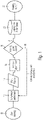
- the preparatory step 12 of the method according to the invention for determining a tooth color is shown schematically.
- the preliminary step 12 is referred to herein as training 10 and begins according to the flow chart of FIG 1 with the start of training 10.
- images which can also be referred to as “images”, are recorded in step 12.
- the images represent sample tooth colors and the corresponding teeth designed as a sample are recorded, recorded and evaluated under different lighting conditions and recording angles.
- the recorded data are fed to an image pipeline 14 as a sub-program, the design of which 2 is evident.
- the edited data is passed to a training algorithm 16. This performs the actual training, i.e. the optimized reproduction of the sample tooth colors under the different lighting conditions and recording angles of the form of data.
- step 18 it is checked whether the training was sufficient. If this was not the case, i.e. greater accuracy is required, the system jumps back to block 12 and the acquired data runs through the image pipeline 14 again.
- the training is considered to be sufficient, the "trained" data is stored in the cloud, in step 20. The training at block 22 is thus ended.
- the image pipeline 14 is started in step 26.
- Image data 28 are present, which are stored in step 28 in the image memory.
- Image 30 is now available and its resolution and format are checked in step 32 . If the resolution and format are not sufficient, path 34 is taken, while if both format and resolution are sufficient, execution continues with path 36.
- the image 30 is then examined in path 36, in step 38, where the reference points of the reference object are; these are recorded. Again, there is the possibility, in path 40, that no or insufficient reference points could be determined.
- path 42 is continued and the relevant information is extracted from image 30 in block 44 .
- this includes color values that are extracted from the reference object.
- color values are processed with the path.
- the color values are sent to the algorithm, which generates the color information of image 30 from them in path 54, and in block 56 the data is transferred to the calling program, ie the end of the image pipeline subprogram.
- the toothed segment data are also processed further.
- block 58 it is checked whether reflections are present. If these are above a threshold value, path 60 is taken, which, just like path 34 and path 40, ends with block 62 having no result.
- a first block 70 represents the cloud and a second block 72 represents the smartphone.
- the end user captured image data is passed to the cloud at block 74 and the image pipeline is entered at block 76 ( 2 ).
- This image pipeline is the same as image pipeline 14 in 1 .
- step 78 After processing and evaluating the data, in step 78 it is checked whether there are enough images. If so, path 80 is taken and at block 82 a classification algorithm is performed. Classified colors are therefore present at block 84 on the output side of block 82 . These are routed to the smartphone 72 via the block 86 .
- the smartphone receives the data and in block 90 the color classification is complete.
- step 78 If, on the other hand, it is determined in step 78 that there are not enough images, path 92 is taken. In this case the color classification is started in block 94 by the smartphone and a picture is taken at 96 .
- the recording of the recording or the image is thus triggered or released via the path 92 .
- this image is routed to the cloud via path 102 and loaded there, so that the execution in block 74 can start with this image.
- CNNs convolutional neural networks
- CNNs are neural networks used primarily to classify images (name what they see), group images by similarity (photo search), and recognize objects in scenes. For example, CNNs are used to identify faces, people, street signs, tumors, animals, and many other aspects of visual data.
- AlexNet ImageNet competition 2012
- the CNNs of the present invention do not perceive images as humans do. Rather, it is crucial how an image is supplied to and processed by a CNN.
- CNNs perceive images as volumes, that is, as three-dimensional objects, rather than as a flat canvas measured only by width and height. That's because digital color images have red-blue-green (RGB) coding, which mixes these three colors to create the spectrum of colors that humans perceive.
- RGB red-blue-green
- a CNN captures such images as three separate layers of color stacked on top of each other.
- a CNN receives a normal color image as a rectangular box whose width and height are measured by the number of pixels in those dimensions and whose depth includes three layers, one for each letter in RGB. These deep layers are called channels.
- CNNs roughly consist of three different layers through which the input images are propagated consecutively using mathematical operations. The number, properties and arrangement of the layers can be changed depending on the application in order to optimize the results.
- figure 5 shows a possible architecture of a CNN. The next sections describe the different layers in more detail.
- FIG 5 shows a schematic representation of a CNN convolution layer.
- a CNN takes square arrays of pixels and runs them through a filter.
- This filter is also a square matrix, smaller than the image itself and the same size as the field. Also known as the kernel, the filter's job is to find patterns in the pixels. This process is called folding or convolution.
- the next layer in a CNN has three names: max-pooling, downsampling, and subsampling.
- 6 shows an example Max Pooling Layer.
- the inputs from the previous layer are fed into a downsampling layer, and as with convolutions, this method is applied patch-by-patch.
- max pooling simply becomes the largest value from a field in an image taken (see 6 ), inserted into a new matrix alongside the max values from other fields and the rest of the information contained in the activation maps discarded.
- the dense layers are "traditional" layers that are also used in classic neural networks. They consist of a variable number of neurons. Neurons in such layers have full connections to all outputs in the previous layer, as in normal neural networks. Your outputs can therefore be calculated using a matrix multiplication followed by a bias offset.
- a bias offset please refer to the following link in full: www.a dventuresinmachinelearning.com/wp-content/uploads/2020/02/A-beginnersintroduction-to-neural-networks-V3.pdf .
- CNNs While CNNs have hitherto been used exclusively for recognizing objects in images, this architecture is used according to the invention in order to classify the colors of objects with a very high level of accuracy.
Landscapes
- Engineering & Computer Science (AREA)
- Physics & Mathematics (AREA)
- Health & Medical Sciences (AREA)
- General Physics & Mathematics (AREA)
- Theoretical Computer Science (AREA)
- Life Sciences & Earth Sciences (AREA)
- Spectroscopy & Molecular Physics (AREA)
- General Health & Medical Sciences (AREA)
- Computer Vision & Pattern Recognition (AREA)
- Biomedical Technology (AREA)
- Medical Informatics (AREA)
- Biophysics (AREA)
- Public Health (AREA)
- Molecular Biology (AREA)
- Mathematical Physics (AREA)
- Data Mining & Analysis (AREA)
- Dentistry (AREA)
- Animal Behavior & Ethology (AREA)
- Oral & Maxillofacial Surgery (AREA)
- Veterinary Medicine (AREA)
- Radiology & Medical Imaging (AREA)
- Software Systems (AREA)
- Artificial Intelligence (AREA)
- Computational Linguistics (AREA)
- Epidemiology (AREA)
- Evolutionary Computation (AREA)
- Nuclear Medicine, Radiotherapy & Molecular Imaging (AREA)
- Computing Systems (AREA)
- General Engineering & Computer Science (AREA)
- Pathology (AREA)
- Quality & Reliability (AREA)
- Heart & Thoracic Surgery (AREA)
- Surgery (AREA)
- Primary Health Care (AREA)
- Geometry (AREA)
- Databases & Information Systems (AREA)
- Rheumatology (AREA)
- Orthopedic Medicine & Surgery (AREA)
- Physical Education & Sports Medicine (AREA)
- Audiology, Speech & Language Pathology (AREA)
Applications Claiming Priority (1)
| Application Number | Priority Date | Filing Date | Title |
|---|---|---|---|
| EP21158015.4A EP4046594A1 (fr) | 2021-02-18 | 2021-02-18 | Procédé d'estimation d'une teinte de dents |
Publications (2)
| Publication Number | Publication Date |
|---|---|
| EP4046595A1 true EP4046595A1 (fr) | 2022-08-24 |
| EP4046595B1 EP4046595B1 (fr) | 2026-04-01 |
Family
ID=74672076
Family Applications (2)
| Application Number | Title | Priority Date | Filing Date |
|---|---|---|---|
| EP21158015.4A Pending EP4046594A1 (fr) | 2021-02-18 | 2021-02-18 | Procédé d'estimation d'une teinte de dents |
| EP22157154.0A Active EP4046595B1 (fr) | 2021-02-18 | 2022-02-16 | Procédé de détermination d'une teinte de dent |
Family Applications Before (1)
| Application Number | Title | Priority Date | Filing Date |
|---|---|---|---|
| EP21158015.4A Pending EP4046594A1 (fr) | 2021-02-18 | 2021-02-18 | Procédé d'estimation d'une teinte de dents |
Country Status (5)
| Country | Link |
|---|---|
| US (1) | US12188823B2 (fr) |
| EP (2) | EP4046594A1 (fr) |
| JP (1) | JP2022130308A (fr) |
| KR (1) | KR20220118339A (fr) |
| CN (1) | CN114972547B (fr) |
Families Citing this family (7)
| Publication number | Priority date | Publication date | Assignee | Title |
|---|---|---|---|---|
| EP4046594A1 (fr) * | 2021-02-18 | 2022-08-24 | Ivoclar Vivadent AG | Procédé d'estimation d'une teinte de dents |
| JPWO2023032338A1 (fr) * | 2021-08-30 | 2023-03-09 | ||
| CN120202495A (zh) * | 2022-10-04 | 2025-06-24 | 施霖 | 获取被摄对象表面多点色度坐标值的装置与方法 |
| TWI871195B (zh) * | 2024-02-22 | 2025-01-21 | 達擎股份有限公司 | 影像色彩顯示還原系統、方法及顯示系統 |
| TWI879710B (zh) * | 2024-02-22 | 2025-04-01 | 達擎股份有限公司 | 影像色彩顯示還原系統及方法 |
| WO2025163356A1 (fr) * | 2024-10-19 | 2025-08-07 | Arzani Sarah | Dispositif de détection et de détermination de la couleur de couronnes dentaires |
| CN119887953A (zh) * | 2025-03-28 | 2025-04-25 | 先临三维科技股份有限公司 | 确定牙齿颜色的方法、装置及设备 |
Citations (4)
| Publication number | Priority date | Publication date | Assignee | Title |
|---|---|---|---|---|
| WO2000063661A1 (fr) * | 1999-04-19 | 2000-10-26 | Österreichisches Forschungszentrum Seibersdorf Ges.Mbh | Procede et dispositif pour determiner la couleur de dents |
| EP2256470A1 (fr) * | 2009-05-29 | 2010-12-01 | Ivoclar Vivadent AG | Dispositif d'analyse de couleurs dentaires |
| EP3613382A1 (fr) | 2018-08-23 | 2020-02-26 | Ivoclar Vivadent AG | Système d'un corps de sélection de couleur et procédé de détermination de la couleur d'une dent |
| EP3613381A1 (fr) * | 2018-08-23 | 2020-02-26 | Ivoclar Vivadent AG | Système d'un corps d'aide à la sélection de couleur et procédé de détermination de la couleur d'une dent |
Family Cites Families (39)
| Publication number | Priority date | Publication date | Assignee | Title |
|---|---|---|---|---|
| US20040078299A1 (en) * | 2002-01-31 | 2004-04-22 | Kathleen Down-Logan | Portable color and style analysis, match and management system |
| EP2433555A3 (fr) * | 2002-07-26 | 2013-01-16 | Olympus Corporation | Système de traitement d'images |
| JP3710802B2 (ja) * | 2003-12-16 | 2005-10-26 | 株式会社ジーシー | 歯牙材料色調選択支援プログラム及び歯牙材料色調選択支援方法 |
| JP5073996B2 (ja) * | 2006-09-20 | 2012-11-14 | オリンパス株式会社 | 画像処理装置 |
| JP2010214055A (ja) * | 2009-03-19 | 2010-09-30 | South Coast Dental Kk | 歯色の時系列表示装置及びその方法 |
| US8775341B1 (en) | 2010-10-26 | 2014-07-08 | Michael Lamport Commons | Intelligent control with hierarchical stacked neural networks |
| ES2551235T3 (es) | 2011-02-14 | 2015-11-17 | Ivoclar Vivadent Ag | Procedimiento para la fabricación de una pieza de restauración dental y dispositivo CAD/CAM |
| US8848991B2 (en) * | 2012-03-16 | 2014-09-30 | Soek Gam Tjioe | Dental shade matching device |
| JP6254826B2 (ja) * | 2012-11-09 | 2017-12-27 | 富士フイルム株式会社 | カメラシステム、これに用いられる色変換装置及び方法並びに色変換プログラム |
| US9934188B2 (en) | 2015-08-27 | 2018-04-03 | Kabushiki Kaisha Toshiba | Electronic device with connector for video signal interface |
| US10007987B1 (en) | 2016-02-04 | 2018-06-26 | Dennis Braunston | Enhanced tooth shade matching system |
| US10467815B2 (en) * | 2016-12-16 | 2019-11-05 | Align Technology, Inc. | Augmented reality planning and viewing of dental treatment outcomes |
| US10888399B2 (en) * | 2016-12-16 | 2021-01-12 | Align Technology, Inc. | Augmented reality enhancements for dental practitioners |
| DE102017211331A1 (de) | 2017-07-04 | 2019-01-10 | Robert Bosch Gmbh | Bildauswertung mit zielgerichteter Vorverarbeitung |
| CN115462921B (zh) * | 2017-07-27 | 2025-05-06 | 阿莱恩技术有限公司 | 牙齿着色、透明度和上釉 |
| US11222256B2 (en) | 2017-10-17 | 2022-01-11 | Xilinx, Inc. | Neural network processing system having multiple processors and a neural network accelerator |
| US11030746B2 (en) * | 2018-01-18 | 2021-06-08 | Chengdu Besmile Medical Technology Co., Ltd. | Assisted dental beautification method and apparatus for implementing the same |
| ES2882585T3 (es) * | 2018-02-21 | 2021-12-02 | Ivoclar Vivadent Ag | Procedimiento para alinear un modelo tridimensional de una dentadura de un paciente sobre una imagen del rostro del paciente grabada por una cámara |
| US10543067B2 (en) | 2018-02-22 | 2020-01-28 | Tanaka Dental Products | Method, system, and kit for coloring dental ceramics |
| EP3784111A2 (fr) * | 2018-04-25 | 2021-03-03 | Dentlytec G.P.L. Ltd. | Dispositif de mesure de propriétés |
| CN110414541B (zh) | 2018-04-26 | 2022-09-09 | 京东方科技集团股份有限公司 | 用于识别物体的方法、设备和计算机可读存储介质 |
| US11244195B2 (en) | 2018-05-01 | 2022-02-08 | Adobe Inc. | Iteratively applying neural networks to automatically identify pixels of salient objects portrayed in digital images |
| US11026766B2 (en) * | 2018-05-21 | 2021-06-08 | Align Technology, Inc. | Photo realistic rendering of smile image after treatment |
| CN110717929B (zh) | 2018-07-11 | 2024-12-03 | 腾讯科技(深圳)有限公司 | 图像目标检测方法、装置及存储介质 |
| EP3608701A1 (fr) | 2018-08-09 | 2020-02-12 | Olympus Soft Imaging Solutions GmbH | Procédé de fourniture d'au moins un procédé d'évaluation pour échantillons |
| US20200060798A1 (en) | 2018-08-23 | 2020-02-27 | Ivoclar Vivadent Ag | Color Selection Aid For Target Objects Such As Dental Objects |
| KR102644126B1 (ko) | 2018-11-16 | 2024-03-07 | 삼성전자주식회사 | 영상 처리 장치 및 그 동작 방법 |
| KR102200496B1 (ko) | 2018-12-06 | 2021-01-08 | 주식회사 엘지씨엔에스 | 딥러닝을 이용한 이미지 인식 방법 및 서버 |
| EP3709305A1 (fr) * | 2019-03-11 | 2020-09-16 | 3Shape A/S | Procédé de présentation graphique d'une pluralité de balayages |
| NL2022738B1 (en) * | 2019-03-14 | 2020-09-18 | Identiq Tandtechniek | Method for providing a natural colour and optical depth to a tooth object |
| US11191342B2 (en) * | 2019-07-18 | 2021-12-07 | L'oreal | Techniques for identifying skin color in images having uncontrolled lighting conditions |
| US11250580B2 (en) | 2019-09-24 | 2022-02-15 | Dentsply Sirona Inc. | Method, system and computer readable storage media for registering intraoral measurements |
| US12205689B2 (en) * | 2020-01-13 | 2025-01-21 | The Catholic University Of Korea Industry—Academic Cooperation Foundation | Dental medical record device and dental medical record method thereof |
| CN111652839A (zh) * | 2020-04-21 | 2020-09-11 | 上海市杨浦区市东医院 | 基于快速区域全卷积神经网络的牙齿比色检测方法及系统 |
| CN111563887B (zh) * | 2020-04-30 | 2022-04-22 | 北京航空航天大学杭州创新研究院 | 一种口腔图像的智能分析方法与装置 |
| AU2021277220A1 (en) * | 2020-05-20 | 2023-01-05 | Get-Grin Inc. | Systems and methods for remote dental monitoring |
| FR3113826A1 (fr) * | 2020-09-08 | 2022-03-11 | Dental Monitoring | Procede de selection d’un produit dentaire |
| US11475544B2 (en) * | 2020-10-16 | 2022-10-18 | Adobe Inc. | Automated braces removal from images |
| EP4046594A1 (fr) * | 2021-02-18 | 2022-08-24 | Ivoclar Vivadent AG | Procédé d'estimation d'une teinte de dents |
-
2021
- 2021-02-18 EP EP21158015.4A patent/EP4046594A1/fr active Pending
-
2022
- 2022-01-31 JP JP2022012764A patent/JP2022130308A/ja active Pending
- 2022-02-16 EP EP22157154.0A patent/EP4046595B1/fr active Active
- 2022-02-17 US US17/674,463 patent/US12188823B2/en active Active
- 2022-02-17 KR KR1020220020542A patent/KR20220118339A/ko active Pending
- 2022-02-18 CN CN202210148578.6A patent/CN114972547B/zh active Active
Patent Citations (4)
| Publication number | Priority date | Publication date | Assignee | Title |
|---|---|---|---|---|
| WO2000063661A1 (fr) * | 1999-04-19 | 2000-10-26 | Österreichisches Forschungszentrum Seibersdorf Ges.Mbh | Procede et dispositif pour determiner la couleur de dents |
| EP2256470A1 (fr) * | 2009-05-29 | 2010-12-01 | Ivoclar Vivadent AG | Dispositif d'analyse de couleurs dentaires |
| EP3613382A1 (fr) | 2018-08-23 | 2020-02-26 | Ivoclar Vivadent AG | Système d'un corps de sélection de couleur et procédé de détermination de la couleur d'une dent |
| EP3613381A1 (fr) * | 2018-08-23 | 2020-02-26 | Ivoclar Vivadent AG | Système d'un corps d'aide à la sélection de couleur et procédé de détermination de la couleur d'une dent |
Non-Patent Citations (1)
| Title |
|---|
| ALEX KRIZHEVSKY ET AL: "ImageNet classification with deep convolutional neural networks", COMMUNICATIONS OF THE ACM, vol. 60, no. 6, 24 May 2017 (2017-05-24), United States, pages 84 - 90, XP055591516, ISSN: 0001-0782, DOI: 10.1145/3065386 * |
Also Published As
| Publication number | Publication date |
|---|---|
| JP2022130308A (ja) | 2022-09-06 |
| CN114972547B (zh) | 2025-11-28 |
| EP4046594A1 (fr) | 2022-08-24 |
| CN114972547A (zh) | 2022-08-30 |
| EP4046595B1 (fr) | 2026-04-01 |
| US12188823B2 (en) | 2025-01-07 |
| KR20220118339A (ko) | 2022-08-25 |
| US20220260420A1 (en) | 2022-08-18 |
Similar Documents
| Publication | Publication Date | Title |
|---|---|---|
| EP4046595B1 (fr) | Procédé de détermination d'une teinte de dent | |
| EP0425595B1 (fr) | Procede et dispositif pour la classification optique automatique de plantes | |
| DE112009000949T5 (de) | Detektion eines freien Fahrpfads für ein Fahrzeug | |
| DE69322095T2 (de) | Verfahren und gerät zur identifizierung eines objekts mittels eine geordneten folge von grenz-pixel-parametern | |
| DE102012016160A1 (de) | Bilderfassung für eine spätere Nachfokussierung oder Fokusmanipulation | |
| WO2019166361A1 (fr) | Procédé pour la division d'une ou plusieurs images d'un échantillon en données d'image divisées par colorants, produit de programme informatique, support lisible par ordinateur sur lequel le produit de programme informatique est enregistré, et système pour la division d'une ou plusieurs images d'un échantillon en données d'images divisées par colorants | |
| DE102016216795A1 (de) | Verfahren zur Ermittlung von Ergebnisbilddaten | |
| DE102020126610A1 (de) | Mikroskopiesystem und verfahren zum erzeugen von trainingsdaten | |
| DE102015208087A1 (de) | Verfahren zum Generieren eines reflektionsreduzierten Kontrastbildes und diesbezügliche Vorrichtungen | |
| DE102017219244B4 (de) | Inspektionsbedingungsbestimmungseinrichtung, inspektionsbedingungsbestimmungsverfahren und inspektionsbedingungsbestimmungsprogramm | |
| EP4075396A1 (fr) | Procédé et agencement de détection optique de la tête d'une personne | |
| DE2749018A1 (de) | Kontrollsystem zur pruefung der echtheit von ausweisen | |
| DE102018201909A1 (de) | Verfahren und Vorrichtung zur Objekterkennung | |
| EP1797533A1 (fr) | Procede et dispositif pour segmenter une representation numerique de cellules | |
| EP3876149A1 (fr) | Procédé de détection physique, en particulier optique, d'au moins un objet utile | |
| DE102012200930A1 (de) | Vorrichtung und Verfahren zum Erfassen einer Pflanze vor einem Hintergrund | |
| DE19700318A1 (de) | Verfahren zur Bestimmung der Geometriedaten von Abtastvorlagen | |
| EP3155588B1 (fr) | Système d'acquisition et de traitement d'une image d'un corps complet et procédé pour faire fonctionner celui-ci | |
| DE2217281A1 (de) | Dichtenmessung durch Bildanalyse. > | |
| DE102015208084A1 (de) | Verfahren zum Generieren eines Kontrastbildes einer Objektbeschaffenheit und diesbezügliche Vorrichtungen | |
| DE102021130505B4 (de) | Verfahren zur Bestimmung einer Beleuchtungsfarbe, Bildverarbeitungsvorrichtung und Aufnahmesystem | |
| EP3540507A1 (fr) | Dispositif de prise d'image et procédé de prise d'une image d'un document et utilisation | |
| DE102018130710B3 (de) | Vorrichtung und Verfahren zur Erzeugung von Prüfbilddaten sowie System mit derartiger Vorrichtung | |
| DE102019110344A1 (de) | Vorrichtung zum physikalischen, insbesondere zum optischen, Erfassen zumindest eines Nutzungsobjektes | |
| EP3471056B1 (fr) | Procédé de délimitation de zones d'image à observer dans des images |
Legal Events
| Date | Code | Title | Description |
|---|---|---|---|
| PUAI | Public reference made under article 153(3) epc to a published international application that has entered the european phase |
Free format text: ORIGINAL CODE: 0009012 |
|
| STAA | Information on the status of an ep patent application or granted ep patent |
Free format text: STATUS: THE APPLICATION HAS BEEN PUBLISHED |
|
| AK | Designated contracting states |
Kind code of ref document: A1 Designated state(s): AL AT BE BG CH CY CZ DE DK EE ES FI FR GB GR HR HU IE IS IT LI LT LU LV MC MK MT NL NO PL PT RO RS SE SI SK SM TR |
|
| STAA | Information on the status of an ep patent application or granted ep patent |
Free format text: STATUS: REQUEST FOR EXAMINATION WAS MADE |
|
| 17P | Request for examination filed |
Effective date: 20230209 |
|
| RBV | Designated contracting states (corrected) |
Designated state(s): AL AT BE BG CH CY CZ DE DK EE ES FI FR GB GR HR HU IE IS IT LI LT LU LV MC MK MT NL NO PL PT RO RS SE SI SK SM TR |
|
| GRAP | Despatch of communication of intention to grant a patent |
Free format text: ORIGINAL CODE: EPIDOSNIGR1 |
|
| STAA | Information on the status of an ep patent application or granted ep patent |
Free format text: STATUS: GRANT OF PATENT IS INTENDED |
|
| INTG | Intention to grant announced |
Effective date: 20251114 |
|
| GRAS | Grant fee paid |
Free format text: ORIGINAL CODE: EPIDOSNIGR3 |
|
| GRAA | (expected) grant |
Free format text: ORIGINAL CODE: 0009210 |
|
| STAA | Information on the status of an ep patent application or granted ep patent |
Free format text: STATUS: THE PATENT HAS BEEN GRANTED |
|
| P01 | Opt-out of the competence of the unified patent court (upc) registered |
Free format text: CASE NUMBER: UPC_APP_0004996_4046595/2026 Effective date: 20260211 |
|
| AK | Designated contracting states |
Kind code of ref document: B1 Designated state(s): AL AT BE BG CH CY CZ DE DK EE ES FI FR GB GR HR HU IE IS IT LI LT LU LV MC MK MT NL NO PL PT RO RS SE SI SK SM TR |
|
| REG | Reference to a national code |
Ref country code: CH Ref legal event code: F10 Free format text: ST27 STATUS EVENT CODE: U-0-0-F10-F00 (AS PROVIDED BY THE NATIONAL OFFICE) Effective date: 20260401 Ref country code: GB Ref legal event code: FG4D Free format text: NOT ENGLISH |
|
| REG | Reference to a national code |
Ref country code: CH Ref legal event code: R17 Free format text: ST27 STATUS EVENT CODE: U-0-0-R10-R17 (AS PROVIDED BY THE NATIONAL OFFICE) Effective date: 20260408 |
|
| REG | Reference to a national code |
Ref country code: IE Ref legal event code: FG4D Free format text: LANGUAGE OF EP DOCUMENT: GERMAN |
|
| REG | Reference to a national code |
Ref country code: DE Ref legal event code: R096 Ref document number: 502022007488 Country of ref document: DE |