EP4053268A2 - Procédé de production de lymphocytes t cd8alpha+beta+cytotoxiques - Google Patents
Procédé de production de lymphocytes t cd8alpha+beta+cytotoxiques Download PDFInfo
- Publication number
- EP4053268A2 EP4053268A2 EP22170264.0A EP22170264A EP4053268A2 EP 4053268 A2 EP4053268 A2 EP 4053268A2 EP 22170264 A EP22170264 A EP 22170264A EP 4053268 A2 EP4053268 A2 EP 4053268A2
- Authority
- EP
- European Patent Office
- Prior art keywords
- cells
- medium
- cytotoxic
- culture
- lymphocytes
- Prior art date
- Legal status (The legal status is an assumption and is not a legal conclusion. Google has not performed a legal analysis and makes no representation as to the accuracy of the status listed.)
- Granted
Links
Images






Classifications
-
- C—CHEMISTRY; METALLURGY
- C12—BIOCHEMISTRY; BEER; SPIRITS; WINE; VINEGAR; MICROBIOLOGY; ENZYMOLOGY; MUTATION OR GENETIC ENGINEERING
- C12N—MICROORGANISMS OR ENZYMES; COMPOSITIONS THEREOF; PROPAGATING, PRESERVING, OR MAINTAINING MICROORGANISMS; MUTATION OR GENETIC ENGINEERING; CULTURE MEDIA
- C12N5/00—Undifferentiated human, animal or plant cells, e.g. cell lines; Tissues; Cultivation or maintenance thereof; Culture media therefor
- C12N5/0018—Culture media for cell or tissue culture
-
- A—HUMAN NECESSITIES
- A61—MEDICAL OR VETERINARY SCIENCE; HYGIENE
- A61P—SPECIFIC THERAPEUTIC ACTIVITY OF CHEMICAL COMPOUNDS OR MEDICINAL PREPARATIONS
- A61P37/00—Drugs for immunological or allergic disorders
- A61P37/02—Immunomodulators
-
- A—HUMAN NECESSITIES
- A61—MEDICAL OR VETERINARY SCIENCE; HYGIENE
- A61K—PREPARATIONS FOR MEDICAL, DENTAL OR TOILETRY PURPOSES
- A61K35/00—Medicinal preparations containing materials or reaction products thereof with undetermined constitution
- A61K35/12—Materials from mammals; Compositions comprising non-specified tissues or cells; Compositions comprising non-embryonic stem cells; Genetically modified cells
- A61K35/14—Blood; Artificial blood
- A61K35/17—Lymphocytes; B-cells; T-cells; Natural killer cells; Interferon-activated or cytokine-activated lymphocytes
-
- A—HUMAN NECESSITIES
- A61—MEDICAL OR VETERINARY SCIENCE; HYGIENE
- A61K—PREPARATIONS FOR MEDICAL, DENTAL OR TOILETRY PURPOSES
- A61K39/00—Medicinal preparations containing antigens or antibodies
- A61K39/12—Viral antigens
-
- A—HUMAN NECESSITIES
- A61—MEDICAL OR VETERINARY SCIENCE; HYGIENE
- A61K—PREPARATIONS FOR MEDICAL, DENTAL OR TOILETRY PURPOSES
- A61K40/00—Cellular immunotherapy
- A61K40/10—Cellular immunotherapy characterised by the cell type used
- A61K40/11—T-cells, e.g. tumour infiltrating lymphocytes [TIL] or regulatory T [Treg] cells; Lymphokine-activated killer [LAK] cells
-
- A—HUMAN NECESSITIES
- A61—MEDICAL OR VETERINARY SCIENCE; HYGIENE
- A61K—PREPARATIONS FOR MEDICAL, DENTAL OR TOILETRY PURPOSES
- A61K40/00—Cellular immunotherapy
- A61K40/40—Cellular immunotherapy characterised by antigens that are targeted or presented by cells of the immune system
- A61K40/41—Vertebrate antigens
- A61K40/42—Cancer antigens
- A61K40/4202—Receptors, cell surface antigens or cell surface determinants
- A61K40/421—Immunoglobulin superfamily
-
- A—HUMAN NECESSITIES
- A61—MEDICAL OR VETERINARY SCIENCE; HYGIENE
- A61K—PREPARATIONS FOR MEDICAL, DENTAL OR TOILETRY PURPOSES
- A61K40/00—Cellular immunotherapy
- A61K40/40—Cellular immunotherapy characterised by antigens that are targeted or presented by cells of the immune system
- A61K40/46—Viral antigens
-
- A—HUMAN NECESSITIES
- A61—MEDICAL OR VETERINARY SCIENCE; HYGIENE
- A61P—SPECIFIC THERAPEUTIC ACTIVITY OF CHEMICAL COMPOUNDS OR MEDICINAL PREPARATIONS
- A61P31/00—Antiinfectives, i.e. antibiotics, antiseptics, chemotherapeutics
- A61P31/12—Antivirals
- A61P31/14—Antivirals for RNA viruses
- A61P31/18—Antivirals for RNA viruses for HIV
-
- A—HUMAN NECESSITIES
- A61—MEDICAL OR VETERINARY SCIENCE; HYGIENE
- A61P—SPECIFIC THERAPEUTIC ACTIVITY OF CHEMICAL COMPOUNDS OR MEDICINAL PREPARATIONS
- A61P43/00—Drugs for specific purposes, not provided for in groups A61P1/00-A61P41/00
-
- C—CHEMISTRY; METALLURGY
- C07—ORGANIC CHEMISTRY
- C07K—PEPTIDES
- C07K14/00—Peptides having more than 20 amino acids; Gastrins; Somatostatins; Melanotropins; Derivatives thereof
- C07K14/435—Peptides having more than 20 amino acids; Gastrins; Somatostatins; Melanotropins; Derivatives thereof from animals; from humans
- C07K14/705—Receptors; Cell surface antigens; Cell surface determinants
- C07K14/70503—Immunoglobulin superfamily
- C07K14/7051—T-cell receptor (TcR)-CD3 complex
-
- C—CHEMISTRY; METALLURGY
- C12—BIOCHEMISTRY; BEER; SPIRITS; WINE; VINEGAR; MICROBIOLOGY; ENZYMOLOGY; MUTATION OR GENETIC ENGINEERING
- C12N—MICROORGANISMS OR ENZYMES; COMPOSITIONS THEREOF; PROPAGATING, PRESERVING, OR MAINTAINING MICROORGANISMS; MUTATION OR GENETIC ENGINEERING; CULTURE MEDIA
- C12N5/00—Undifferentiated human, animal or plant cells, e.g. cell lines; Tissues; Cultivation or maintenance thereof; Culture media therefor
- C12N5/06—Animal cells or tissues; Human cells or tissues
- C12N5/0602—Vertebrate cells
- C12N5/0634—Cells from the blood or the immune system
- C12N5/0636—T lymphocytes
- C12N5/0638—Cytotoxic T lymphocytes [CTL] or lymphokine activated killer cells [LAK]
-
- C—CHEMISTRY; METALLURGY
- C12—BIOCHEMISTRY; BEER; SPIRITS; WINE; VINEGAR; MICROBIOLOGY; ENZYMOLOGY; MUTATION OR GENETIC ENGINEERING
- C12N—MICROORGANISMS OR ENZYMES; COMPOSITIONS THEREOF; PROPAGATING, PRESERVING, OR MAINTAINING MICROORGANISMS; MUTATION OR GENETIC ENGINEERING; CULTURE MEDIA
- C12N5/00—Undifferentiated human, animal or plant cells, e.g. cell lines; Tissues; Cultivation or maintenance thereof; Culture media therefor
- C12N5/06—Animal cells or tissues; Human cells or tissues
- C12N5/0602—Vertebrate cells
- C12N5/0696—Artificially induced pluripotent stem cells, e.g. iPS
-
- A—HUMAN NECESSITIES
- A61—MEDICAL OR VETERINARY SCIENCE; HYGIENE
- A61K—PREPARATIONS FOR MEDICAL, DENTAL OR TOILETRY PURPOSES
- A61K39/00—Medicinal preparations containing antigens or antibodies
- A61K2039/57—Medicinal preparations containing antigens or antibodies characterised by the type of response, e.g. Th1, Th2
- A61K2039/572—Medicinal preparations containing antigens or antibodies characterised by the type of response, e.g. Th1, Th2 cytotoxic response
-
- A—HUMAN NECESSITIES
- A61—MEDICAL OR VETERINARY SCIENCE; HYGIENE
- A61K—PREPARATIONS FOR MEDICAL, DENTAL OR TOILETRY PURPOSES
- A61K2239/00—Indexing codes associated with cellular immunotherapy of group A61K40/00
- A61K2239/46—Indexing codes associated with cellular immunotherapy of group A61K40/00 characterised by the cancer treated
- A61K2239/48—Blood cells, e.g. leukemia or lymphoma
-
- C—CHEMISTRY; METALLURGY
- C12—BIOCHEMISTRY; BEER; SPIRITS; WINE; VINEGAR; MICROBIOLOGY; ENZYMOLOGY; MUTATION OR GENETIC ENGINEERING
- C12N—MICROORGANISMS OR ENZYMES; COMPOSITIONS THEREOF; PROPAGATING, PRESERVING, OR MAINTAINING MICROORGANISMS; MUTATION OR GENETIC ENGINEERING; CULTURE MEDIA
- C12N2500/00—Specific components of cell culture medium
- C12N2500/30—Organic components
- C12N2500/38—Vitamins
-
- C—CHEMISTRY; METALLURGY
- C12—BIOCHEMISTRY; BEER; SPIRITS; WINE; VINEGAR; MICROBIOLOGY; ENZYMOLOGY; MUTATION OR GENETIC ENGINEERING
- C12N—MICROORGANISMS OR ENZYMES; COMPOSITIONS THEREOF; PROPAGATING, PRESERVING, OR MAINTAINING MICROORGANISMS; MUTATION OR GENETIC ENGINEERING; CULTURE MEDIA
- C12N2501/00—Active agents used in cell culture processes, e.g. differentation
- C12N2501/20—Cytokines; Chemokines
- C12N2501/23—Interleukins [IL]
- C12N2501/2307—Interleukin-7 (IL-7)
-
- C—CHEMISTRY; METALLURGY
- C12—BIOCHEMISTRY; BEER; SPIRITS; WINE; VINEGAR; MICROBIOLOGY; ENZYMOLOGY; MUTATION OR GENETIC ENGINEERING
- C12N—MICROORGANISMS OR ENZYMES; COMPOSITIONS THEREOF; PROPAGATING, PRESERVING, OR MAINTAINING MICROORGANISMS; MUTATION OR GENETIC ENGINEERING; CULTURE MEDIA
- C12N2501/00—Active agents used in cell culture processes, e.g. differentation
- C12N2501/20—Cytokines; Chemokines
- C12N2501/23—Interleukins [IL]
- C12N2501/2312—Interleukin-12 (IL-12)
-
- C—CHEMISTRY; METALLURGY
- C12—BIOCHEMISTRY; BEER; SPIRITS; WINE; VINEGAR; MICROBIOLOGY; ENZYMOLOGY; MUTATION OR GENETIC ENGINEERING
- C12N—MICROORGANISMS OR ENZYMES; COMPOSITIONS THEREOF; PROPAGATING, PRESERVING, OR MAINTAINING MICROORGANISMS; MUTATION OR GENETIC ENGINEERING; CULTURE MEDIA
- C12N2501/00—Active agents used in cell culture processes, e.g. differentation
- C12N2501/20—Cytokines; Chemokines
- C12N2501/23—Interleukins [IL]
- C12N2501/2315—Interleukin-15 (IL-15)
-
- C—CHEMISTRY; METALLURGY
- C12—BIOCHEMISTRY; BEER; SPIRITS; WINE; VINEGAR; MICROBIOLOGY; ENZYMOLOGY; MUTATION OR GENETIC ENGINEERING
- C12N—MICROORGANISMS OR ENZYMES; COMPOSITIONS THEREOF; PROPAGATING, PRESERVING, OR MAINTAINING MICROORGANISMS; MUTATION OR GENETIC ENGINEERING; CULTURE MEDIA
- C12N2501/00—Active agents used in cell culture processes, e.g. differentation
- C12N2501/20—Cytokines; Chemokines
- C12N2501/23—Interleukins [IL]
- C12N2501/2318—Interleukin-18 (IL-18)
-
- C—CHEMISTRY; METALLURGY
- C12—BIOCHEMISTRY; BEER; SPIRITS; WINE; VINEGAR; MICROBIOLOGY; ENZYMOLOGY; MUTATION OR GENETIC ENGINEERING
- C12N—MICROORGANISMS OR ENZYMES; COMPOSITIONS THEREOF; PROPAGATING, PRESERVING, OR MAINTAINING MICROORGANISMS; MUTATION OR GENETIC ENGINEERING; CULTURE MEDIA
- C12N2501/00—Active agents used in cell culture processes, e.g. differentation
- C12N2501/20—Cytokines; Chemokines
- C12N2501/23—Interleukins [IL]
- C12N2501/2321—Interleukin-21 (IL-21)
-
- C—CHEMISTRY; METALLURGY
- C12—BIOCHEMISTRY; BEER; SPIRITS; WINE; VINEGAR; MICROBIOLOGY; ENZYMOLOGY; MUTATION OR GENETIC ENGINEERING
- C12N—MICROORGANISMS OR ENZYMES; COMPOSITIONS THEREOF; PROPAGATING, PRESERVING, OR MAINTAINING MICROORGANISMS; MUTATION OR GENETIC ENGINEERING; CULTURE MEDIA
- C12N2501/00—Active agents used in cell culture processes, e.g. differentation
- C12N2501/20—Cytokines; Chemokines
- C12N2501/26—Flt-3 ligand (CD135L, flk-2 ligand)
-
- C—CHEMISTRY; METALLURGY
- C12—BIOCHEMISTRY; BEER; SPIRITS; WINE; VINEGAR; MICROBIOLOGY; ENZYMOLOGY; MUTATION OR GENETIC ENGINEERING
- C12N—MICROORGANISMS OR ENZYMES; COMPOSITIONS THEREOF; PROPAGATING, PRESERVING, OR MAINTAINING MICROORGANISMS; MUTATION OR GENETIC ENGINEERING; CULTURE MEDIA
- C12N2501/00—Active agents used in cell culture processes, e.g. differentation
- C12N2501/40—Regulators of development
- C12N2501/42—Notch; Delta; Jagged; Serrate
-
- C—CHEMISTRY; METALLURGY
- C12—BIOCHEMISTRY; BEER; SPIRITS; WINE; VINEGAR; MICROBIOLOGY; ENZYMOLOGY; MUTATION OR GENETIC ENGINEERING
- C12N—MICROORGANISMS OR ENZYMES; COMPOSITIONS THEREOF; PROPAGATING, PRESERVING, OR MAINTAINING MICROORGANISMS; MUTATION OR GENETIC ENGINEERING; CULTURE MEDIA
- C12N2501/00—Active agents used in cell culture processes, e.g. differentation
- C12N2501/40—Regulators of development
- C12N2501/48—Regulators of apoptosis
-
- C—CHEMISTRY; METALLURGY
- C12—BIOCHEMISTRY; BEER; SPIRITS; WINE; VINEGAR; MICROBIOLOGY; ENZYMOLOGY; MUTATION OR GENETIC ENGINEERING
- C12N—MICROORGANISMS OR ENZYMES; COMPOSITIONS THEREOF; PROPAGATING, PRESERVING, OR MAINTAINING MICROORGANISMS; MUTATION OR GENETIC ENGINEERING; CULTURE MEDIA
- C12N2501/00—Active agents used in cell culture processes, e.g. differentation
- C12N2501/50—Cell markers; Cell surface determinants
-
- C—CHEMISTRY; METALLURGY
- C12—BIOCHEMISTRY; BEER; SPIRITS; WINE; VINEGAR; MICROBIOLOGY; ENZYMOLOGY; MUTATION OR GENETIC ENGINEERING
- C12N—MICROORGANISMS OR ENZYMES; COMPOSITIONS THEREOF; PROPAGATING, PRESERVING, OR MAINTAINING MICROORGANISMS; MUTATION OR GENETIC ENGINEERING; CULTURE MEDIA
- C12N2501/00—Active agents used in cell culture processes, e.g. differentation
- C12N2501/50—Cell markers; Cell surface determinants
- C12N2501/515—CD3, T-cell receptor complex
-
- C—CHEMISTRY; METALLURGY
- C12—BIOCHEMISTRY; BEER; SPIRITS; WINE; VINEGAR; MICROBIOLOGY; ENZYMOLOGY; MUTATION OR GENETIC ENGINEERING
- C12N—MICROORGANISMS OR ENZYMES; COMPOSITIONS THEREOF; PROPAGATING, PRESERVING, OR MAINTAINING MICROORGANISMS; MUTATION OR GENETIC ENGINEERING; CULTURE MEDIA
- C12N2501/00—Active agents used in cell culture processes, e.g. differentation
- C12N2501/998—Proteins not provided for elsewhere
-
- C—CHEMISTRY; METALLURGY
- C12—BIOCHEMISTRY; BEER; SPIRITS; WINE; VINEGAR; MICROBIOLOGY; ENZYMOLOGY; MUTATION OR GENETIC ENGINEERING
- C12N—MICROORGANISMS OR ENZYMES; COMPOSITIONS THEREOF; PROPAGATING, PRESERVING, OR MAINTAINING MICROORGANISMS; MUTATION OR GENETIC ENGINEERING; CULTURE MEDIA
- C12N2502/00—Coculture with; Conditioned medium produced by
- C12N2502/30—Coculture with; Conditioned medium produced by tumour cells
-
- C—CHEMISTRY; METALLURGY
- C12—BIOCHEMISTRY; BEER; SPIRITS; WINE; VINEGAR; MICROBIOLOGY; ENZYMOLOGY; MUTATION OR GENETIC ENGINEERING
- C12N—MICROORGANISMS OR ENZYMES; COMPOSITIONS THEREOF; PROPAGATING, PRESERVING, OR MAINTAINING MICROORGANISMS; MUTATION OR GENETIC ENGINEERING; CULTURE MEDIA
- C12N2506/00—Differentiation of animal cells from one lineage to another; Differentiation of pluripotent cells
- C12N2506/45—Differentiation of animal cells from one lineage to another; Differentiation of pluripotent cells from artificially induced pluripotent stem cells
-
- C—CHEMISTRY; METALLURGY
- C12—BIOCHEMISTRY; BEER; SPIRITS; WINE; VINEGAR; MICROBIOLOGY; ENZYMOLOGY; MUTATION OR GENETIC ENGINEERING
- C12N—MICROORGANISMS OR ENZYMES; COMPOSITIONS THEREOF; PROPAGATING, PRESERVING, OR MAINTAINING MICROORGANISMS; MUTATION OR GENETIC ENGINEERING; CULTURE MEDIA
- C12N2533/00—Supports or coatings for cell culture, characterised by material
- C12N2533/50—Proteins
-
- C—CHEMISTRY; METALLURGY
- C12—BIOCHEMISTRY; BEER; SPIRITS; WINE; VINEGAR; MICROBIOLOGY; ENZYMOLOGY; MUTATION OR GENETIC ENGINEERING
- C12N—MICROORGANISMS OR ENZYMES; COMPOSITIONS THEREOF; PROPAGATING, PRESERVING, OR MAINTAINING MICROORGANISMS; MUTATION OR GENETIC ENGINEERING; CULTURE MEDIA
- C12N2533/00—Supports or coatings for cell culture, characterised by material
- C12N2533/50—Proteins
- C12N2533/52—Fibronectin; Laminin
-
- C—CHEMISTRY; METALLURGY
- C12—BIOCHEMISTRY; BEER; SPIRITS; WINE; VINEGAR; MICROBIOLOGY; ENZYMOLOGY; MUTATION OR GENETIC ENGINEERING
- C12N—MICROORGANISMS OR ENZYMES; COMPOSITIONS THEREOF; PROPAGATING, PRESERVING, OR MAINTAINING MICROORGANISMS; MUTATION OR GENETIC ENGINEERING; CULTURE MEDIA
- C12N2740/00—Reverse transcribing RNA viruses
- C12N2740/00011—Details
- C12N2740/10011—Retroviridae
- C12N2740/16011—Human Immunodeficiency Virus, HIV
- C12N2740/16311—Human Immunodeficiency Virus, HIV concerning HIV regulatory proteins
- C12N2740/16334—Use of virus or viral component as vaccine, e.g. live-attenuated or inactivated virus, VLP, viral protein
Definitions
- the present invention relates to a method of producing CD8 ⁇ + ⁇ + cytotoxic T lymphocytes, preferably a method of producing CD8 ⁇ + ⁇ + cytotoxic T lymphocytes from pluripotent stem cells.
- CTLs cytotoxic T lymphocytes
- Patent Document 1 discloses a method of producing T cells, the method comprising the steps of: inducing hematopoietic progenitor cells from pluripotent stem cells; inducing CD4/CD8 double-positive cells from the hematopoietic progenitor cells; and inducing CD8-positive T cells from the CD4/CD8 double-positive cells.
- Patent Document 2 discloses a method of producing CD8-positive T cells, the method comprising: inducing CD4/CD8 double-positive T cells from pluripotent stem cells using a medium supplemented with vitamin C; and culturing the induced cells in a medium containing an adrenocortical hormone agent.
- Patent Document 3 and Non-patent Document 1 disclose that iPSCs were induced from human peripheral blood CTLs, and that hematopoietic progenitor cells were produced from the iPSCs, followed by co-culturing the produced cells with OP9/DLL1 cells expressing the Notch ligand DLL-1 in a medium containing IL (interleukin)-2, IL-7, and IL-15, to allow final differentiation into CTLs successfully.
- IL interleukin
- Non-patent Document 1 Cell Stem Cell. 2013 Jan 3; 12(1):114-26 .
- the redifferentiated CTLs disclosed in Patent Document 3 and Non-patent Document 1 had all of the CTL functions such as high cytotoxic activity, cytokine productivity, and proliferative capacity while retaining the antigen specificities of the original CTLs.
- those cells also have NK cell-like properties, which are not found in normal CTLs. That is, while normal CTLs, including the original CTLs, belong to lymphocytes of the acquired immune system, the redifferentiated CTL had properties of lymphocytes of the innate immune system, to which NK cells belong.
- lymphocytes of the innate immune system found in the redifferentiated CTLs, the following are thought to especially strongly affect their clinical application: (1) a natural killer (NK) activity that injures targets non-antigen-specifically; (2) constant expression of activation molecules (such as NKp46) that induce the NK activity; (3) lower proliferative capacity and viability relative to those of normal CTLs of the acquired immune system; and (4) a decrease in the antigen recognition capacity caused by the fact that CD8, which is an accessory molecule of the antigen receptor, is a CD8 ⁇ homodimer rather than the normal molecule, a CD8 ⁇ heterodimer.
- NK natural killer
- NKp46 constant expression of activation molecules that induce the NK activity
- lower proliferative capacity and viability relative to those of normal CTLs of the acquired immune system and (4) a decrease in the antigen recognition capacity caused by the fact that CD8, which is an accessory molecule of the antigen receptor, is a CD8 ⁇ homodimer rather than the normal molecule
- an object of the present invention is to provide a method of efficiently producing CTLs having intrinsic properties of lymphocytes of the acquired immune system suitable for cellular immunotherapy.
- the present inventors intensively studied to solve the above problems. As a result, by carrying out the step of culturing CD4/CD8 double-positive T cells in a medium containing IL-7 and a T-cell receptor activator, CTLs showing no NK activity and maintaining expression of CD8 ⁇ for a long period, that is, CTLs that are closer to normal CTLs of the acquired immune system, could be successfully prepared. Based on such findings, the present invention was completed.
- the present invention provides the following inventions.
- CTLs which show no NK activity, which maintain expression of CD8 ⁇ even during long-term culture, and which are closer to normal CTLs of the acquired immune system, can be prepared.
- the CTLs obtained by the method of the present invention exhibit higher antigen-specific cytotoxic activity, cytokine production, and proliferative capacity compared to those conventionally obtained.
- the excellent characteristics of the CTLs obtained by the method of the present invention include not only the differentiation shift from lymphocytes of the innate immune system to those of the acquired immune system, but also maturation into naive/memory cells showing no cell exhaustion and maintenance characteristics of these cells.
- These CTLs have a remarkable proliferative capacity which enables expansion culture in vitro by a factor of not less than 10 14 .
- the present invention largely contributes to the current cellular immunotherapy, which has difficulty in obtaining the cells therefor.
- the present invention provides a method of producing CD8 ⁇ + ⁇ + cytotoxic T lymphocytes, the method comprising the step of: culturing CD4/CD8 double-positive T cells in a medium containing IL-7 and a T-cell receptor activator, to induce CD8 ⁇ + ⁇ + cytotoxic T lymphocytes.
- the CD8 ⁇ + ⁇ + cytotoxic T lymphocytes means T cells whose surface antigens CD8 ⁇ and CD8 ⁇ are both positive (wherein CD4 is negative), which T cells have cytotoxic activity.
- Cytotoxic T lymphocytes recognize, through T-cell receptors (TCRs) present on the cell surface, antigen peptides derived from viruses, tumors, and the like presented together with class 1 major histocompatibility antigen (MHC class 1, HLA class 1) of antigen-presenting cells, to exert cytotoxic activity specifically to cells presenting the antigen peptides as foreign substances.
- TCRs T-cell receptors
- MHC class 1, HLA class 1 class 1 major histocompatibility antigen
- the cytotoxic activity can be confirmed using as an index secretion or production of Granzyme, perforin, or the like.
- CD4/CD8 double-positive T cells means T cells whose surface antigens CD4 and CD8 are both positive (CD8 + CD4 + ).
- CD4/CD8 double-positive T cells can be induced to differentiate into CD4-positive cells (CD8 - CD4 + ) or CD8-positive cells (CD8 + CD4 - ).
- CD8 ⁇ + ⁇ + cytotoxic T lymphocytes are induced from CD4/CD8 double-positive T cells.
- the source of the CD4/CD8 double-positive T cells is not limited, and the CD4/CD8 double-positive T cells are preferably obtained by differentiation induction from pluripotent stem cells.
- the pluripotent stem cells are stem cells having pluripotency that allows differentiation into many kinds of cells present in a living body, which stem cells also have the proliferative capacity.
- the pluripotent stem cells include arbitrary cells which can be induced into CD4/CD8 double-positive T cells.
- Examples of the pluripotent stem cells include, but are not limited to, embryonic stem (ES) cells, embryonic stem cells derived from a cloned embryo obtained by nuclear transfer (ntES cells), germline stem cells (“GS cells”), embryonic germ cells (“EG cells”), induced pluripotent stem (iPS) cells, and pluripotent cells derived from cultured fibroblasts or bone marrow stem cells (Muse cells).
- the pluripotent stem cells are preferably iPS cells from the viewpoint of the fact that these cells can be obtained without destroying embryos, eggs, or the like during the production process.
- the pluripotent stem cells are more preferably human iPS cells.
- iPS cells Methods for producing iPS cells are known in the art. These cells can be produced by introducing reprogramming factors into somatic cells. Examples of the reprogramming factors herein include genes such as Oct3/4, Sox2, Sox1, Sox3, Sox15, Sox17, Klf4, Klf2, c-Myc, N-Myc, L-Myc, Nanog, Lin28, Fbx15, ERas, ECAT15-2, Tcl1, beta-catenin, Lin28b, Sall1, Sall4, Esrrb, Nr5a2, Tbx3, and Glis1, and gene products thereof. These reprogramming factors may be used individually, or may be used in combination.
- Examples of the combination of the reprogramming factors include those described in WO 2007/069666 ; WO 2008/118820 ; WO 2009/007852 ; WO 2009/032194 ; WO 2009/058413 ; WO 2009/057831 ; WO 2009/075119 ; WO 2009/079007 ; WO 2009/091659 ; WO 2009/101084 ; WO 2009/101407 ; WO 2009/102983 ; WO 2009/114949 ; WO 2009/117439 ; WO 2009/126250 ; WO 2009/126251 ; WO 2009/126655 ; WO 2009/157593 ; WO 2010/009015 ; WO 2010/033906 ; WO 2010/033920 ; WO 2010/042800 ; WO 2010/050626 ; WO 2010/056831 ; WO 2010/068955 ; WO 2010/098419 ; WO 2010/102267 ; WO 2010/111409 ;
- somatic cells examples include any of fetal somatic cells, neonatal somatic cells, and mature, healthy or diseased somatic cells, as well as any of primary cultured cells, subcultured cells, and established cell lines.
- iPS cells are preferably produced using, as the somatic cells, lymphocytes (T cells) that have undergone gene rearrangement of T-cell receptor (TCR).
- T cells lymphocytes
- the reprogramming step is preferably carried out after activation of the lymphocytes by stimulation with an anti-CD3 antibody and an anti-CD28 antibody in the presence of IL-2.
- Such stimulation can be carried out by, for example, culturing the lymphocytes for a predetermined period in a medium supplemented with IL-2, the anti-CD3 antibody, and the anti-CD28 antibody.
- the T cells may be stimulated by performing culture for a certain period on a culture dish having a surface to which the anti-CD3 antibody and the anti-CD28 antibody are bound.
- the stimulation may also be carried out by adding, to the medium, an antigen peptide that can be recognized by human T cells, together with feeder cells.
- the CD8 ⁇ + ⁇ + cytotoxic T lymphocytes produced in the present invention preferably have a desired antigen specificity.
- the lymphocytes used as the source of the iPS cells preferably have a desired antigen specificity, and the lymphocytes may be specifically isolated by purification using an affinity column or the like to which a desired antigen is immobilized.
- an affinity column or the like to which a desired antigen is immobilized.
- a method in which lymphocytes having a desired antigen specificity are purified from a human tissue using a tetramer of MHC (major histocompatibility complex) (the so-called "MHC tetramer”) to which a desired antigen is bound may also be employed.
- the mammalian individual from which the somatic cells are collected is not limited.
- the mammalian individual is preferably human.
- the somatic cells used as the source of the iPS cells are preferably isolated from the subject to whom the CD8 ⁇ + ⁇ + cytotoxic T lymphocytes are administered, from the viewpoint of easily matching the type of human leukocyte antigen (HLA) with the patient.
- HLA human leukocyte antigen
- the method of obtaining the CD4/CD8 double-positive T cells from the pluripotent stem cells is not limited, and may be a known method. Examples of the method include those comprising the following steps (a) and (b):
- the method of inducing CD4/CD8 double-positive T cells from pluripotent stem cells is not limited to the following method.
- the hematopoietic progenitor cells are cells that are capable of differentiation into blood cells such as lymphocytes, eosinophils, neutrophils, basophils, erythrocytes, and megakaryocytes. Hematopoietic progenitor cells can be identified based on positivity of CD34 and/or CD43, which are surface antigens.
- the hematopoietic progenitor cells can be produced by, for example, a method comprising the step of culturing pluripotent stem cells in a medium supplemented with vitamin C.
- vitamin C means L-ascorbic acid or a derivative thereof
- L-ascorbic acid derivative means a derivative that becomes vitamin C by enzymatic reaction in a living body.
- the derivative of L-ascorbic acid include vitamin C phosphate, ascorbic acid glucoside, ascorbyl ethyl, vitamin C ester, ascorbyl tetrahexyldecanoate, ascorbyl stearate, and ascorbyl 2-phosphate 6-palmitate.
- the vitamin C is preferably vitamin C phosphate.
- the vitamin C phosphate include salts of L-ascorbic acid phosphate such as L-ascorbic acid phosphate Na and L-ascorbic acid phosphate Mg.
- the medium used for the step of inducing hematopoietic progenitor cells is not limited.
- the medium may be prepared by adding vitamin C to a basal medium used for culture of animal cells.
- the basal medium include Iscove's Modified Dulbecco's Medium (IMDM), Medium 199, Eagle's Minimum Essential Medium (EMEM), ⁇ MEM medium, Dulbecco's modified Eagle's Medium (DMEM), Ham's F12 medium, RPMI 1640 medium, Fischer's medium, and Neurobasal Medium (Life Technologies), and mixed media thereof.
- the medium may contain serum, or may be serum-free.
- the basal medium may also contain one or more of substances such as albumin, insulin, transferrin, selenium, fatty acid, trace elements, 2-mercaptoethanol, thiol glycerol, lipids, amino acids, L-glutamine, non-essential amino acids, vitamins, growth factors, low molecular weight compounds, antibiotics, antioxidants, pyruvic acid, buffers, inorganic salts, and cytokines.
- substances such as albumin, insulin, transferrin, selenium, fatty acid, trace elements, 2-mercaptoethanol, thiol glycerol, lipids, amino acids, L-glutamine, non-essential amino acids, vitamins, growth factors, low molecular weight compounds, antibiotics, antioxidants, pyruvic acid, buffers, inorganic salts, and cytokines.
- the basal medium is, for example, IMDM medium containing serum, insulin, transferrin, serine, thiol glycerol, L-glutamine, and ascorbic acid.
- the medium used for the step of inducing hematopoietic progenitor cells may be further supplemented with a cytokine(s) selected from the group consisting of BMP4 (bone morphogenetic protein 4), VEGF (vascular endothelial growth factor), SCF (stem cell factor), and FLT3L (Flt3 ligand).
- BMP4 bone morphogenetic protein 4
- VEGF vascular endothelial growth factor
- SCF stem cell factor
- FLT3L FLT3L
- the medium is more preferably a medium supplemented with VEGF, SCF, and FLT3L.
- the amount of vitamin C added to the medium corresponds to, for example, 5 ng/ml to 100 ⁇ g/ml.
- the amount of VEGF added to the medium corresponds to, for example, 10 ng/ml to 100 ng/ml.
- the amount of SCF added to the medium corresponds to, for example, 10 ng/ml to 100 ng/ml.
- the amount of FLT3L added to the medium corresponds to, for example, 1 ng/ml to 100 ng/ml.
- the pluripotent stem cells may be cultured by adherent culture or suspension culture.
- the culture may be carried out in a culture vessel coated with a coating agent, and co-culture with other cells may be carried out.
- the other cells for the co-culture include C3H10T1/2 ( Takayama N., et al. J Exp Med. 2817-2830, 2010 ) and stromal cells derived from a different species ( Niwa A et al. J Cell Physiol. 2009 Nov; 221(2): 367-77 ).
- the coating agent include Matrigel ( Niwa A, et al. PLoS One.
- Examples of the method of the suspension culture include the methods described in Chadwick et al. Blood 2003, 102: 906-15 , Vijayaragavan et al. Cell Stem Cell 2009, 4: 248-62 , and Saeki et al. Stem Cells 2009, 27: 59-67 .
- the hematopoietic progenitor cells may also be prepared from a net-like structure (which is also referred to as ES-sac or iPS-sac) obtained by culture of pluripotent stem cells.
- the "net-like structure” herein is a three-dimensional sacshaped structure (having a space therein) derived from pluripotent stem cells.
- the structure is formed with an endothelial cell population and/or the like, and contains hematopoietic progenitor cells therein.
- the temperature conditions for the step of inducing hematopoietic progenitor cells are not limited.
- the temperature is, for example, about 37°C to about 42°C, preferably about 37 to about 39°C.
- the culture period is, for example, not less than 6 days.
- the culture may be carried out under hypoxic conditions. Examples of the hypoxic conditions include oxygen concentrations of 15%, 10%, 9%, 8%, 7%, 6%, and 5%, and oxygen concentrations lower than these.
- the culture in the step of inducing hematopoietic progenitor cells may be carried out by appropriate combination of the above conditions.
- Examples of the combination include the steps of: (i) culturing pluripotent stem cells on C3H10T1/2 in a basal medium supplemented with vitamin C under hypoxic conditions; and (ii) further adding VEGF, SCF, and FLT3L to the medium of (i), and performing culture under normal oxygen conditions.
- the period of carrying out the step (i) is not less than 6 days, and the period of carrying out the step (ii) is not less than 6 days.
- the CD4/CD8 double-positive T cells can be induced by the step of culturing hematopoietic progenitor cells in a medium supplemented with vitamin C.
- the medium used for the induction of the CD4/CD8 double-positive T cells is not limited.
- the medium may be prepared by adding vitamin C to a basal medium used for culture of animal cells.
- the basal medium include Iscove's Modified Dulbecco's Medium (IMDM), Medium 199, Eagle's Minimum Essential Medium (EMEM), ⁇ MEM medium, Dulbecco's modified Eagle's Medium (DMEM), Ham's F12 medium, RPMI 1640 medium, Fischer's medium, and Neurobasal Medium (Life Technologies), and mixed media thereof.
- the medium may contain serum, or may be serum-free.
- the basal medium may also contain one or more of substances such as albumin, insulin, transferrin, selenium, fatty acid, trace elements, 2-mercaptoethanol, thiol glycerol, lipids, amino acids, L-glutamine, non-essential amino acids, vitamins, growth factors, low molecular weight compounds, antibiotics, antioxidants, pyruvic acid, buffers, inorganic salts, and cytokines.
- substances such as albumin, insulin, transferrin, selenium, fatty acid, trace elements, 2-mercaptoethanol, thiol glycerol, lipids, amino acids, L-glutamine, non-essential amino acids, vitamins, growth factors, low molecular weight compounds, antibiotics, antioxidants, pyruvic acid, buffers, inorganic salts, and cytokines.
- a preferred basal medium used for the induction of the CD4/CD8 double-positive T cells is ⁇ MEM medium containing serum, transferrin, serine, and L-glutamine.
- the type and the concentration of the vitamin C added to the basal medium are as described above for the case of the induction of the hematopoietic progenitor cells.
- the medium used for the induction of the CD4/CD8 double-positive T cells in the present invention preferably further contains a cytokine selected from the group consisting of FLT3L and IL-7.
- the concentration of IL-7 in the medium used for the induction of the CD4/CD8 double-positive T cells is, for example, 0.01 ng/ml to 100 ng/ml, preferably 0.1 ng/ml to 10 ng/ml.
- the concentration of FLT3L in the medium used for the induction of the CD4/CD8 double-positive T cells is, for example, 1 ng/ml to 100 ng/ml.
- the hematopoietic progenitor cells may be cultured by adherent culture or suspension culture.
- adherent culture a coated culture vessel may be used, and/or co-culture with feeder cells or the like may be carried out.
- feeder cells for the co-culture include a bone-marrow stromal cell line, OP9 cells (available from Riken BioResource Center).
- the OP9 cells may be preferably OP-DL1 cells, which constantly express Dll1 ( Holmes R1 and Zuniga-Pflucker JC. Cold Spring Harb Protoc. 2009(2 )).
- Dll1 In cases where OP9 cells are used as the feeder cells, Dll1, or a fusion protein of Dll1 and Fc or the like, separately provided may be added to the medium as appropriate to perform the co-culture.
- Dll1 include: proteins encoded by genes having the nucleotide sequence of NCBI accession No. NM_005618 in cases of human, or NCBI accession No. NM_007865 in cases of mouse; and naturally occurring variants having high sequence identities (for example, having a sequence identity of not less than 90%) to these proteins and having equivalent functions.
- the feeder cells are preferably appropriately replaced during the culture. The replacement of the feeder cells may be carried out by transferring the subject cells during culture onto feeder cells that have been preliminarily plated.
- the culture temperature conditions for the culture of the hematopoietic progenitor cells for the induction of the CD4/CD8 double-positive T cells are not limited.
- the temperature is, for example, about 37°C to about 42°C, preferably about 37 to about 39°C.
- the culture period can be appropriately determined by those skilled in the art by monitoring of the number of the CD4/CD8 double-positive T cells and/or the like.
- the number of days is not limited as long as the hematopoietic progenitor cells can be obtained. Examples of the number of days include not less than 10 days.
- the CD8 ⁇ + ⁇ + cytotoxic T lymphocytes can be produced by culturing CD4/CD8 double-positive T cells in a medium containing IL-7 and a T-cell receptor activator. This step is preferably adherent culture, and the culture is preferably carried out without using feeder cells. It is preferred to carry out the culture in a state where the CD4/CD8 double-positive T cells directly adhere to a culture vessel coated with a fibronectin fragment and/or a Notch ligand.
- the concentration of IL-7 in the medium used for the induction of the CD8 ⁇ + ⁇ + cytotoxic T lymphocytes is preferably higher than the concentration of IL-7 in the medium used for the "Step of Inducing CD4/CD8 Double-positive T Cells from Hematopoietic Progenitor Cells".
- the concentration is, for example, 0.05 ng/ml to 500 ng/ml, preferably 0.1 ng/ml to 100 ng/ml, more preferably 0.5 ng/ml to 50 ng/ml.
- T-cell receptor activator examples include PHA (phytohemagglutinin), anti-CD3 antibody, anti-CD28 antibody, PMA, and ionomycin.
- an anti-CD3 antibody or the like may be added to the medium followed by culturing the CD4/CD8 double-positive T cells for a certain period, to stimulate the T-cell receptor (TCR).
- the anti-CD3 antibody or the like may have magnetic beads or the like bound thereto.
- the T-cell receptor may be stimulated by culturing the T cells on a culture dish having a surface to which an anti-CD3 antibody is bound. Such a case also corresponds to the culture in a medium containing a TCR activator.
- the concentration of the anti-CD3 antibody to be bound to the surface of the culture dish is not limited. The concentration is, for example, 0.1 to 100 ⁇ g/ml.
- the T-cell receptor activator is included into the medium together with IL-7 when the "Step of Inducing CD8 ⁇ + ⁇ + Cytotoxic T Lymphocytes from CD4/CD8 Double-positive T Cells" begins, and, preferably after 1 or 2 days of culture, the medium is replaced with a medium containing IL-7 but not containing a T-cell receptor activator (wherein, for example, the concentration of the T-cell receptor activator is less than 1 ng/ml or under the detection limit), followed by continuation of the culture.
- a culture vessel coated with a fibronectin fragment and/or a Notch ligand is preferably used at the time of the replacement with the medium not containing a T-cell receptor activator.
- the culture is further carried out preferably in a medium containing IL-7, IL-21, and Flt3L using a culture vessel containing neither a fibronectin fragment nor a Notch ligand (that is, a culture vessel not coated with these).
- the medium used for the step of inducing CD8 ⁇ + ⁇ + cytotoxic T lymphocytes is not limited, and may be prepared by using a medium used for culture of animal cells as a basal medium, and adding IL-7, a TCR activator, and/or the like thereto.
- the basal medium include Iscove's Modified Dulbecco's Medium (IMDM), Medium 199, Eagle's Minimum Essential Medium (EMEM), ⁇ MEM medium, Dulbecco's modified Eagle's Medium (DMEM), Ham's F12 medium, RPMI 1640 medium, Fischer's medium, and Neurobasal Medium (Life Technologies), and mixed media thereof.
- the medium may contain serum, or may be serum-free.
- the basal medium may also contain one or more of substances such as albumin, insulin, transferrin, selenium, fatty acid, trace elements, 2-mercaptoethanol, thiol glycerol, lipids, amino acids, L-glutamine, non-essential amino acids, vitamins, growth factors, low molecular weight compounds, antibiotics, antioxidants, pyruvic acid, buffers, inorganic salts, and cytokines.
- a preferred basal medium is ⁇ MEM medium containing serum, transferrin, serine, L-glutamine, and ascorbic acid.
- the medium used for the step of inducing CD8 ⁇ + ⁇ + cytotoxic T lymphocytes preferably further contains a cytokine other than IL-7, or vitamin C.
- the cytokine include FLT3L and IL-21.
- the medium preferably does not contain IL-15 (for example, the concentration of IL-15 is less than 1 ng/ml or under the detection limit).
- IL-15 for example, the concentration of IL-15 is less than 1 ng/ml or under the detection limit.
- the medium used for the step of inducing CD8 ⁇ + ⁇ + cytotoxic T lymphocytes may contain a caspase inhibitor. Examples of the caspase inhibitor include Pan Caspase fmk Inhibitor Z-VAD.
- the type and the concentration of the vitamin C used for the induction of the CD8 ⁇ + ⁇ + cytotoxic T lymphocytes are as described above for the case of the induction of the hematopoietic progenitor cells.
- the concentration of FLT3L in the medium used for the induction of the CD8 ⁇ + ⁇ + cytotoxic T lymphocytes is, for example, 1 ng/ml to 100 ng/ml.
- the concentration of IL-21 in the medium used for the induction of the CD8 ⁇ + ⁇ + cytotoxic T lymphocytes is, for example, 1 ng/ml to 100 ng/ml.
- the Notch ligand means a substance which binds to a Notch signal receptor to activate a Notch signal.
- the Notch signal receptor means a single-pass transmembrane protein that is a heterodimer composed of NECD and TM-NICD, which is produced by cleavage of a Notch receptor composed of an extracellular domain (NECD), a transmembrane domain (TM), and an intracellular domain (NICD) into the TM-NICD by processing.
- Examples of the ligand of the Notch signal receptor include members of the Delta-like family (DLL1, DLL3, DLL4) and the Jagged family (JAG1, JAG2).
- the ligand of the Notch signal receptor may be a recombinant, or a fusion protein with Fc or the like. For example, it is commercially available from Adipogen, and can be easily used.
- the ligand of the Notch signal receptor used in the present invention is preferably DLL4 or JAG1.
- the fibronectin (FN) fragment is selected from fragments contained in the FN-binding domain, cell adhesion domain, or heparin-binding domain.
- FN fibronectin
- the fragment may be a fragment in which a plurality of domains are repeatedly linked to each other.
- a fragment containing a cell adhesion domain containing a ligand for VLA-5, a heparin-binding domain, a CS-1 domain that is a ligand for VLA-4, III 1 , or the like may be used in the present invention.
- the fragment include CH-271, CH-296, H-271, and H-296 described in J. Biochem., vol. 110, pp, 284 to 291 (1991 ), and derivatives and modified products thereof.
- the CH-296 is commercially available under the name of RetroNectin (registered trademark).
- a polypeptide corresponding to the 2/3-portion in the C-terminal side of III 1 is also commercially available under the name of Fibronectin Fragment III 1 -C.
- the FN fragment may be used in a state where it is immobilized on an appropriate solid phase, for example, a carrier for cell culture such as cell culture equipment, bead, membrane, or slide glass.
- the immobilization of the FN fragment on the solid phase can be carried out by, for example, the method described in WO 00/09168 .
- the concentration of the FN fragment used in the present invention is not limited. For example, it is added to the medium such that the final concentration is 0.001 to 500 ⁇ g/ml, preferably 0.01 to 500 ⁇ g/ml.
- immobilization to a solid phase may be carried out using a FN fragment solution having the above concentration. Culturing of a cell population in the presence of a FN fragment is described in detail in WO 03/080817 , and the culture may be carried out with reference thereto.
- the Notch ligand may also be used by immobilization on cell culture equipment, and the concentration and the method therefor are also as described above.
- the temperature conditions for the culture of the CD4/CD8 double-positive T cells for the induction of the CD8 ⁇ + ⁇ + cytotoxic T lymphocytes are not limited.
- the temperature is, for example, about 37°C to about 42°C, preferably about 37 to about 39°C.
- the culture period can be appropriately determined by those skilled in the art by monitoring of the number of the CD8-positive T cells and/or the like.
- the number of days is not limited as long as the hematopoietic progenitor cells can be obtained. Examples of the number of days include not less than 1 day.
- the expansion culture can be carried out using a medium containing, for example, IL-7, IL-15, and IL-21.
- the expansion culture can be carried out using a medium containing, in addition to IL-7 and IL-15, one or more of IL-21, IL-18, IL-12, and TL1A(TNF-like ligand 1A; another name, vascular endothelial growth inhibitor (VEGI) or TNF superfamily member 15 (TNFSF15)).
- VEGI vascular endothelial growth inhibitor
- TNFSF15 TNF superfamily member 15
- the cells obtained from the CD4/CD8 double-positive T cells are further subjected to sorting of CD8 ⁇ + ⁇ + cytotoxic T lymphocytes using FACS, an affinity column, or the like, and then the sorted cells are subjected to the above expansion culture.
- the sorting may be carried out using as an index/indexes one or more of CD8 ⁇ positivity, CD5 positivity, CD336 negativity, and CDla negativity. Since CD8 ⁇ is an auxiliary receptor of TCR, sorting for CD8 ⁇ positivity enables sorting of CTLs having high antigen recognition capacity, and moreover, elimination of abnormal NK-like cells.
- CD5 positivity As an index, cells stably expressing CD8 ⁇ and having high proliferative capacity can be sorted. Further, since CDla is a marker for immature T cells, immature cells can be eliminated by sorting using CDla negativity as an index. Further, since CD336 is a marker which is not expressed in normal CTLs, and which is expressed only in cells of the innate immune system, abnormal NK-like cells can be eliminated by sorting using CD336 negativity as an index.
- the medium used for the step of expansion culture of the CD8 ⁇ + ⁇ + cytotoxic T lymphocytes is not limited, and may be prepared by using a medium used for culture of animal cells as a basal medium, and adding a cytokine(s) such as IL-7, IL-15, and IL-21 thereto.
- the basal medium include Iscove's Modified Dulbecco's Medium (IMDM), Medium 199, Eagle's Minimum Essential Medium (EMEM), ⁇ MEM medium, Dulbecco's modified Eagle's Medium (DMEM), Ham's F12 medium, RPMI 1640 medium, Fischer's medium, and Neurobasal Medium (Life Technologies), and mixed media thereof.
- the medium may contain serum, or may be serum-free.
- the basal medium may also contain one or more of substances such as albumin, insulin, transferrin, selenium, fatty acid, trace elements, 2-mercaptoethanol, thiol glycerol, lipids, amino acids, L-glutamine, non-essential amino acids, vitamins, growth factors, low molecular weight compounds, antibiotics, antioxidants, pyruvic acid, buffers, inorganic salts, and cytokines.
- a preferred basal medium is ⁇ MEM medium containing serum, transferrin, serine, L-glutamine, and ascorbic acid.
- the medium used for the step of expansion culture of the CD8 ⁇ + ⁇ + cytotoxic T lymphocytes preferably further contains an anti-CD3 antibody and vitamin C.
- the type and the concentration of the vitamin C used for the step of expansion culture of the CD8 ⁇ + ⁇ + cytotoxic T lymphocytes are as described above.
- the concentration of IL-7 in the medium used for the step of expansion culture of the CD8 ⁇ + ⁇ + cytotoxic T lymphocytes is, for example, 1 ng/ml to 100 ng/ml.
- the concentration of IL-15 in the medium used for the step of expansion culture of the CD8 ⁇ + ⁇ + cytotoxic T lymphocytes is, for example, 1 ng/ml to 100 ng/ml.
- the concentration of IL-21 in the medium used for the step of expansion culture of the CD8 ⁇ + ⁇ + cytotoxic T lymphocytes is, for example, 1 ng/ml to 100 ng/ml.
- the concentration of IL-12 in the medium used for the step of expansion culture of the CD8 ⁇ + ⁇ + cytotoxic T lymphocytes is, for example, 1 ng/ml to 100 ng/ml.
- the concentration of IL-18 in the medium used for the step of expansion culture of the CD8 ⁇ + ⁇ + cytotoxic T lymphocytes is, for example, 1 ng/ml to 100 ng/ml.
- the concentration of TLlAin the medium used for the step of expansion culture of the CD8 ⁇ + ⁇ + cytotoxic T lymphocytes is, for example, 1 ng/ml to 100 ng/ml.
- the anti-CD3 antibody is not limited as long as it is an antibody that specifically recognizes CD3.
- Examples of the anti-CD3 antibody include the antibody produced from OKT3 clone.
- the concentration of the anti-CD3 antibody in the medium is, for example, 10 ng/ml to 10 ⁇ g/ml.
- the anti-CD3 antibody may be immobilized on the culture vessel. The anti-CD3 antibody may be removed during the expansion culture.
- the temperature conditions for the step of expansion culture of the CD8 ⁇ + ⁇ + cytotoxic T lymphocytes are not limited.
- the temperature is, for example, about 37°C to about 42°C, preferably about 37 to about 39°C.
- the culture period can be appropriately determined by those skilled in the art by monitoring of the number of the CD8 ⁇ + ⁇ + cytotoxic T lymphocytes and/or the like.
- the number of days is not limited as long as the CD8 ⁇ + ⁇ + cytotoxic T lymphocytes can be obtained. Examples of the number of days include not less than 5 days.
- IL-7 and IL-15 are preferably present in the medium throughout the expansion culture step.
- IL-21, IL-18, IL-12, and TL1A as long as they are present in the medium during the initial phase of the expansion culture step (for example, from the beginning to Hour 12, Hour 16, Hour 24, or Hour 72 of the expansion culture), they do not need to be contained in the medium thereafter.
- the CD8 ⁇ + ⁇ + cytotoxic T lymphocytes may be co-cultured with feeder cells.
- the feeder cells are not limited. From the viewpoint of further promoting maturation and proliferation of the CD8 ⁇ + ⁇ + cytotoxic T lymphocytes through cell contact and the like, the feeder cells are preferably peripheral blood mononuclear cells (PBMCC).
- PBMCC peripheral blood mononuclear cells
- the expansion culture step is applicable also to T cells other than cells derived from pluripotent stem cells, for example, T cells isolated from a T cell clone or a living body.
- the present invention provides a method of allowing proliferation of T cells, comprising the step of culturing T cells in a medium containing IL-7 and IL-15, and one or more of IL-21, IL-18, IL-12, and TL1A. Further, the present invention provides a medium for culturing T cells, containing IL-7 and IL-15, and one or more of IL-21, IL-18, IL-12, and TL1A.
- the T cells as mentioned herein are preferably cytotoxic T lymphocytes, more preferably CD8 ⁇ + ⁇ + cytotoxic T lymphocytes.
- the T cells are not limited to T cells other than cells derived from pluripotent stem cells, and may also be T cells isolated from a T cell clone or a living body.
- the CD8 ⁇ + ⁇ + cytotoxic T lymphocytes (culture) produced by the method of the present invention have an antigen-specific cytotoxic activity as shown in the Examples below.
- the CD8 ⁇ + ⁇ + cytotoxic T lymphocytes, preferably human CD8 ⁇ + ⁇ + cytotoxic T lymphocytes, produced by the method of the present invention are useful for treatment or prevention of diseases such as tumors, infections (for example, chronic infections), and autoimmune deficiency.
- the present invention provides a pharmaceutical composition comprising CD8 ⁇ + ⁇ + cytotoxic T lymphocytes produced by the method of the present invention, and a cellular immunotherapy using the CD8 ⁇ + ⁇ + cytotoxic T lymphocytes.
- the administration of the T cells (CD8 ⁇ + ⁇ + CTLs) to the subject to be treated may be, but does not need to be, preferably parenteral administration such as intravenous, intraperitoneal, subcutaneous, or intramuscular administration, more preferably intravenous administration.
- the administration may also be topical administration to an affected area.
- the pharmaceutical composition of the present invention can be prepared by subjecting the CD8 ⁇ + ⁇ + cytotoxic T lymphocytes produced by the method of the present invention to formulation by a known pharmaceutical method.
- the pharmaceutical composition may be used, mainly parenterally, as a capsule, solution, film-coated agent, suspension, emulsion, injection solution (such as a solution for intravenous injection or drip infusion), or the like.
- a pharmaceutically acceptable carrier or medium more specifically, sterile water or physiological saline, vegetable oil, solvent, base, emulsifier, suspending agent, surfactant, stabilizer, vehicle, antiseptic, binder, diluent, isotonic agent, soothing agent, bulking agent, disintegrator, buffer, coating agent, lubricant, coloring agent, solubilizer, or other additives.
- a pharmaceutically acceptable carrier or medium more specifically, sterile water or physiological saline, vegetable oil, solvent, base, emulsifier, suspending agent, surfactant, stabilizer, vehicle, antiseptic, binder, diluent, isotonic agent, soothing agent, bulking agent, disintegrator, buffer, coating agent, lubricant, coloring agent, solubilizer, or other additives.
- known pharmaceutical compositions, immunostimulants, and the like used for treatment or prevention of the above diseases may be used in combination.
- the dose is appropriately selected according to, for example, the age, body weight, symptoms, and health conditions of the subject, and the type of the composition (for example, whether the composition is a pharmaceutical or food or beverage).
- the cellular immunotherapy using the CD8 ⁇ + ⁇ + cytotoxic T lymphocytes of the present invention comprises the steps of: isolating T cells having a desired antigen specificity from a human; inducing iPS cells from the T cells having a desired antigen specificity; allowing the iPS cells to differentiate into CD4/CD8 double-positive T cells; allowing the CD4/CD8 double-positive T cells to differentiate into CD8 ⁇ + ⁇ + cytotoxic T lymphocytes; and administering the resulting CD8 ⁇ + ⁇ + cytotoxic T lymphocytes into a body of a mammal such as a human.
- the subject from which the T cells are to be isolated preferably has the same HLA type as the subject to which the CD8 ⁇ + ⁇ + cytotoxic T lymphocytes obtained by the present invention are to be administered.
- the subject from which the T cells are to be isolated is more preferably the same as the subject to which the CD8 ⁇ + ⁇ + cytotoxic T lymphocytes obtained by the present invention are to be administered.
- the CD8 ⁇ + ⁇ + cytotoxic T lymphocytes produced by the method of the present invention may be administered as they are, or the cells may be administered in the form of a pharmaceutical composition formulated as described above.
- iPS cells (TKT3v 1-7 line) were established using the method described in Nishimura T, et al., Cell Stem Cell. 12(1): 114-126, 2013 from human CD3-positive T cells isolated with informed consent.
- C3H10T1/2 cells and OP9/DLL1 cells were obtained from Riken BioResource Center.
- K562/HLA A-24 was provided by Dr. Tachikawa at Tokyo University (currently at National Institute of Infectious Diseases).
- a small cluster of the TKT3v 1-7 line was plated (Day 0), and the cells were cultured for 7 days under hypoxic conditions (5% O 2 ) in EB medium (IMDM supplemented with 15% fetal bovine serum (FBS), 10 ⁇ g/ml human insulin, 5.5 ⁇ g/ml human transferrin, 5 ng/ml sodium selenite, 2 mM L-glutamine, 0.45 mM ⁇ -monothioglycerol, and 50 ⁇ g/ml phospho ascorbic acid) (Day 7).
- EB medium IMDM supplemented with 15% fetal bovine serum (FBS), 10 ⁇ g/ml human insulin, 5.5 ⁇ g/ml human transferrin, 5 ng/ml sodium selenite, 2 mM L-glutamine, 0.45 mM ⁇ -monothioglycerol, and 50 ⁇ g/ml phospho ascorbic acid
- Hematopoietic cells contained in the resulting net-like structure (which is also referred to as iPS-SAC) (CD34 + hematopoietic progenitor cells) were collected, and then plated on OP9/DLL1 cells.
- iPS-SAC hematopoietic progenitor cells
- the cells were then cultured in OP9 medium ( ⁇ MEM supplemented with 15% FBS, 2 mM L-glutamine, 100 U/ml penicillin, 50 ⁇ g/ml phospho ascorbic acid, 100 ng/ml streptomycin, 5.5 ⁇ g/ml human transferrin, and 5 ng/ml sodium selenite) supplemented with 10 ng/ml FLT3L and 1 ng/ml IL-7, under normal oxygen pressure conditions for 23 days (Day 37).
- the cells were plated onto fresh OP9/DLL1 cells every 3 to 4 days.
- ⁇ MEM medium containing 20% FBS, PSG (penicillin-streptomycin-L-glutamine), ITS (insulin-transferrin-sodium selenite), 50 ⁇ g/ml phospho ascorbic acid, 10 ⁇ M Pan Caspase fmk Inhibitor Z-VAD (FMK001, R&D), 10 ng/ml IL-7, 20 ng/ml IL-21, 10 ng/ml Flt3L, and 2 ⁇ g/ml anti-human CD3 antibody (OKT3) was added.
- FBS penicillin-streptomycin-L-glutamine
- ITS insulin-transferrin-sodium selenite
- 50 ⁇ g/ml phospho ascorbic acid 50 ⁇ g/ml phospho ascorbic acid
- 10 ⁇ M Pan Caspase fmk Inhibitor Z-VAD FMK001, R&D
- 10 ng/ml IL-7 20 ng/m
- the medium was completely washed away, and, after transferring the cells to a plate coated with 5 ⁇ g/ml Retronectin (Takara Bio Inc.), culture was carried out.
- the medium used was the same as the medium for Day 37 except that the anti-CD3 antibody was not included.
- the culture vessel coated with Retronectin was prepared by placing their solutions in a culture vessel and leaving the culture vessel to stand at 4°C overnight, followed by washing with PBS.
- the medium was replaced with the medium having the same composition as the medium for Day 38 except that the IL-21 concentration was 10 ng/ml.
- the culture was further continued after transferring the cells to a plate coated with neither Fc-DLL4 nor Retronectin.
- the cells were collected on Day 43, and sorted for CD8 ⁇ + CD336 - CD5 + CD1a - cells by FACS.
- a 96-well flat bottom plate 1 ⁇ g/ml anti-CD3 antibody (OKT3) prepared by dilution with PBS was placed, and the plate was then left to stand at 4°C overnight to provide an OKT3-coated plate.
- the CD8 ⁇ + CD5 + CD1a - cells obtained as described above were suspended in ⁇ MEM medium containing 20% FBS, PSG, ITS, 50 ⁇ g/ml phospho ascorbic acid, 5 ng/ml IL-7, 5 ng/ml IL-15, and 10 ng/ml IL-21, and then transferred to the OKT3-coated plate, followed by performing culture for 16 hours.
- the cells were then transferred to a well not coated with OKT3, and the culture was continued while performing half-medium changes at 3-day intervals thereafter.
- the components other than IL-21 were always added in the same amounts.
- IL-21 was added at 5 ng/ml only in the first medium change.
- CD8 ⁇ + ⁇ + CTLs modified iPSC-CTLs
- CTLs obtained by differentiation induction by a conventional protocol were used as a control for comparison.
- the conventional protocol employed was a method in which expansion culture is carried out directly after the DP cell induction step, without carrying out a maturation step.
- CD8 ⁇ + CD5 + CD1a - cells obtained as described above were suspended in ⁇ MEM medium containing 20% FBS, PSG, ITS, 50 ⁇ g/ml phospho ascorbic acid, 10 ⁇ M Pan Caspase fmk Inhibitor Z-VAD (FMK001, R&D), 5 ng/ml IL-7, 5 ng/ml IL-15, 20 ng/ml IL-21, 50 ng/ml IL-12, 50 ng/ml IL-18, and 50 ng/ml TL1A (2 ⁇ 10 4 cells/200 ⁇ l/well), and then transferred to the OKT3-coated plate, followed by performing culture for 16 hours.
- ⁇ MEM medium containing 20% FBS, PSG, ITS, 50 ⁇ g/ml phospho ascorbic acid, 10 ⁇ M Pan Caspase fmk Inhibitor Z-VAD (FMK001, R&D), 5 ng/ml IL-7, 5 ng/m
- the cells were then transferred to a well not coated with OKT3, and the culture was continued while performing half-medium changes at 3-day intervals thereafter.
- ⁇ MEM medium containing 20% FBS, PSG, ITS, 50 ⁇ g/ml phospho ascorbic acid, 5 ng/ml IL-7, and 5 ng/ml IL-15 was used.
- the cells on Day 14 after the beginning of the expansion culture were subjected to the following experiment as CD8 ⁇ + ⁇ + CTLs (modified iPSC-CTLs).
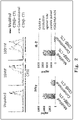
- the modified iPSC-CTLs prepared by the method of the present invention, the conventional CTLs prepared by the conventional method, and the original CTLs used as the source of the iPS cells were investigated for expression of CD8 ⁇ and CD8 ⁇ using a flow cytometer.
- the modified iPSC-CTLs were found to show stable expression of CD8 ⁇ even after repeated expansion culture.
- the antigen-binding capacities of TCRs of the above cells were quantified by the tetramer method.
- the level of binding of the modified iPSC-CTLs prepared by the method of the present invention to the HLA-tetramer was as high as that of the original CTLs.
- the conventional CTLs obtained by the conventional method showed remarkably weak binding to the HLA-tetramer because of the absence of expression of CD8 ⁇ .
- modified iPSC-CTLs Modified CD8b+ CTL
- conventional iPSC-CTLs conventional CD8b - CTL
- K562/HLA A-24 presenting 0 (Unpulsed), 10 nM, or 100 nM specific antigen peptide (Nef138-8).
- CFSE is a reagent used for proliferation assays since its fluorescence intensity decreases each time proliferation occurs ( J Vis Exp. 2010; (44): 2259 ) (the higher the number of times of proliferation, the lower the CFSE fluorescence from the cells).
- the modified iPSC-CTLs showed a higher proliferative capacity than the conventional CTLs. Further, the modified CTLs also showed a much higher cytokine productivity.
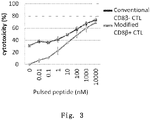
- the modified iPSC-CTLs (Modified CD8b + CTL) or the conventional iPSC-CTLs (Conventional CD8b- CTL) were co-cultured with K562/HLA A-24 pulsed with various concentrations of a specific antigen peptide (Nef138), and the cytotoxic activity was investigated using the LDH activity as an index. The results are shown in Fig. 3 . While the modified iPSC-CTLs showed disappearance of the NK activity, they had a better antigen-specific cytotoxic activity compared to the conventional CTLs. Thus, both showed equivalent levels of cytotoxic activity to the target cells presenting a sufficient amount of antigen.
- the modified iPSC-CTLs (Modified CD8b + CTL), the conventional iPSC-CTLs (conventional CD8b - CTL), and the original T cell clone were analyzed by FACS.
- CD28 and CD27 are costimulators expressed only in naive or central memory cells, and CCR7 is a homing molecule indispensable for immune surveillance. All of these are functional molecules directly linked to the CTL function. As shown in Fig. 4 , while expression of these molecules disappeared in the original CTLs during the ex vivo culture, recovery of the expression was found only in the modified iPSC-CTLs.
- both the modified and conventional iPSC-CTLs showed CD45RA + CD45RO - , which is characteristic to naive cells.
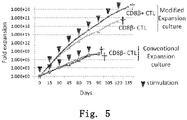
- modified iPSC-CTLs (Modified CD8b + CTL) prepared by the method of the present invention (Expansion Culture 1) and the conventional iPSC-CTLs (conventional CD8b - CTL) were analyzed for their proliferation.
- the modified iPSC-CTLs showed an extremely high proliferative capacity of not less than 10 20 .
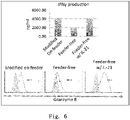
- the modified iPSC-CTLs (Modified CD8b + CTL) prepared by the method of the present invention (Expansion Culture 1) were stimulated in the presence of PHA + PBMC or no feeder cells (with or without addition of IL-21), and the production of the cytokine IFN ⁇ and the expression level of the cytotoxic molecule Granzyme B were quantified. As shown in Fig. 6 , it became clear that addition of IL-21 in feeder-free expansion culture promotes not only production of the cytokine, but also expression of Granzyme B, so that the functionality can be maintained similarly to the on-feeder method.
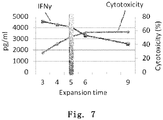
- the modified iPSC-CTLs (Modified CD8b+ CTL) prepared by the method of the present invention (Expansion Culture 1) were stimulated with PHA + PBMC, and their cytokine production and cytotoxic activity were investigated. As shown in Fig. 7 , as the stimulation was repeatedly carried out, possibly because of the naive phenotype, the modified iPSC-CTLs acquired cytotoxic activity while losing the IFN ⁇ production capacity.
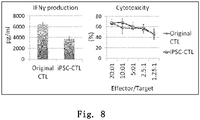
- the modified iPSC-CTLs (Modified CD8b+ CTL) prepared by the method of the present invention (Expansion Culture 1) and the original CTLs were stimulated with PHA + PBMC.
- the production of the cytokine IFN ⁇ and the expression level of the cytotoxic molecule Granzyme B were quantified.
- iPSC-CTLs prepared by the combination of on-feeder and feeder-free expansion cultures as expected in clinical application were compared with the original CTLs in terms of the function. As a result, it became clear that both have equivalent cytotoxic activities although the former CTLs have a rather weaker cytokine production capacity.
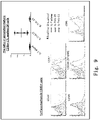
- Fig. 9 The effect of addition of IL-15 and IL-21 in the iPSC-CTL maturation process was studied. The results are shown in Fig. 9 .
- the upper graph in Fig. 9 shows the production efficiency of CD8 ⁇ + ⁇ + CTLs against DP cells. It can be seen that the production efficiency of CD8 ⁇ + ⁇ + CTLs drastically increased by the addition of IL-15.
- the IL-2/IFN ⁇ profile of the modified iPSC-CTLs prepared by the method of the present invention corresponded to an intermediate between naive and CM, exhibiting an extremely high IL-2 production capacity as is the case with less differentiated cells. From this result, it is suggested that the iPSC-CTLs have naive/CM-like characteristics and high antitumor activity.
- ⁇ MEM medium containing 20% FBS, PSG (penicillin-streptomycin-L-glutamine), ITS (insulin-transferrin-sodium selenite), 50 ⁇ g/ml phospho ascorbic acid, 10 ⁇ M Pan Caspase fmk Inhibitor Z-VAD (FMK001, R&D), 10 ng/ml IL-7, 10 ng/ml Flt3L, and 2 ⁇ g/ml anti-human CD3 antibody (OKT3) was added.
- the medium was completely washed away, and, after transferring the cells to a plate coated with 5 ⁇ g/ml Retronectin (Takara Bio Inc.) and 1 ⁇ g/ml Fc-DLL4 (Sino Biological Inc.), culture was carried out.
- the medium used was the same as the medium for Day 37 except that the anti-CD3 antibody was not included.
- the culture vessel coated with Fc-DLL4 and Retronectin was prepared by placing their solutions in a culture vessel and leaving the culture vessel to stand at 4°C overnight, followed by washing with PBS.
- the medium was replaced with the medium which was the same as the medium for Day 38 except that IL-21 was further added at 10 ng/ml.
- the culture was further continued after transferring the cells to a plate coated with neither Fc-DLL4 nor Retronectin.
- the cells were collected on Day 58, and sorted for CD8 ⁇ + CD336 - CD5 + CD1a - cells by FACS.
- Fig. 11 shows a FACS result obtained after sorting CD8 ⁇ /CD5 double-positive cells from iPSC-CTLs maturated by a conventional method, and then carrying out PHA on-feeder expansion culture for 2 weeks.
- iPSC-CTLs even though the culture was started with the CD8 ⁇ /CD5 double-positive cells, expression of both molecules largely decreased by the single time of expansion culture because of low expression stability (especially in CD5).
- CD8 ⁇ + CD5 bright cells were divided into CD8 ⁇ + CD5 bright cells and CD8 ⁇ + CD5 - cells, and the second expansion culture was carried out under feeder-free conditions, the CD8b + CD5 bright cells were found to show a much higher proliferative capacity than the CD8b + CD5 - cells ( Fig. 12 ). This is consistent with a past report which showed that CD5 can be used as an index of highly proliferative CTLs ( Nature Immunology, 16.1 (2015), 107-117 .).
- the modified iPSC-CTLs induced by the protocol 2 showed high expression of CD5 from immediately after the maturation, and a high expression level equivalent to that of the primary CTLs could be maintained even after four times of expansion culture ( Fig. 13 ).
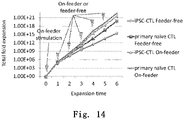
- proliferation occurred by the continuous stimulation of the modified iPSC-CTLs, proliferation occurred by a factor of more than 10 20 in the on-feeder case, and more than 10 15 even in the feeder-free case in total.
- the proliferative capacities were lower than those of the primary naive CTLs, extremely high proliferative capacities suitable for clinical application could be observed ( Fig. 14 ).
- the modified iPSC-CTLs (Modified CD8b + CTL) prepared by the method of the present invention (Expansion Culture 2) and the parental CTL clone (H25-4) were analyzed for their proliferation.
- Fig. 15 a proliferation-promoting effect was found when expansion culture was carried out after adding one or more of IL-21, IL-12, IL-18, and TLlAin addition to the basal cytokines IL-7 and IL-15.
- the modified iPSC-CTLs (Modified CD8b + CTL) prepared by the method of the present invention (Expansion Culture 2) were stimulated with PHA + PBMC, and their cytokine production and cytotoxic activity were investigated. As a result, as shown in Fig. 16 , it was found that not only the fold expansion, but also the cytokine productivity and the cytotoxic activity can be increased when expansion culture is carried out after adding one or more of IL-21, IL-12, IL-18, and TLlAin addition to the basal cytokines IL-7 and IL-15.
Landscapes
- Health & Medical Sciences (AREA)
- Life Sciences & Earth Sciences (AREA)
- Engineering & Computer Science (AREA)
- Chemical & Material Sciences (AREA)
- General Health & Medical Sciences (AREA)
- Immunology (AREA)
- Biomedical Technology (AREA)
- Organic Chemistry (AREA)
- Biotechnology (AREA)
- Zoology (AREA)
- Veterinary Medicine (AREA)
- Animal Behavior & Ethology (AREA)
- Public Health (AREA)
- Bioinformatics & Cheminformatics (AREA)
- Genetics & Genomics (AREA)
- Wood Science & Technology (AREA)
- Epidemiology (AREA)
- Cell Biology (AREA)
- Medicinal Chemistry (AREA)
- Microbiology (AREA)
- Biochemistry (AREA)
- Pharmacology & Pharmacy (AREA)
- General Engineering & Computer Science (AREA)
- Virology (AREA)
- Hematology (AREA)
- General Chemical & Material Sciences (AREA)
- Chemical Kinetics & Catalysis (AREA)
- Nuclear Medicine, Radiotherapy & Molecular Imaging (AREA)
- Developmental Biology & Embryology (AREA)
- Molecular Biology (AREA)
- Transplantation (AREA)
- Toxicology (AREA)
- AIDS & HIV (AREA)
- Tropical Medicine & Parasitology (AREA)
- Proteomics, Peptides & Aminoacids (AREA)
- Communicable Diseases (AREA)
- Oncology (AREA)
- Mycology (AREA)
- Biophysics (AREA)
- Gastroenterology & Hepatology (AREA)
Applications Claiming Priority (3)
| Application Number | Priority Date | Filing Date | Title |
|---|---|---|---|
| JP2017008995 | 2017-01-20 | ||
| EP18741888.4A EP3572502B1 (fr) | 2017-01-20 | 2018-01-19 | Procédé de production de lymphocytes t cd8 alpha+ beta+ cytotoxiques |
| PCT/JP2018/001667 WO2018135646A1 (fr) | 2017-01-20 | 2018-01-19 | PROCÉDÉ DE PRODUCTION DE LYMPHOCYTES T CD8α+β+ CYTOTOXIQUES |
Related Parent Applications (2)
| Application Number | Title | Priority Date | Filing Date |
|---|---|---|---|
| EP18741888.4A Division EP3572502B1 (fr) | 2017-01-20 | 2018-01-19 | Procédé de production de lymphocytes t cd8 alpha+ beta+ cytotoxiques |
| EP18741888.4A Division-Into EP3572502B1 (fr) | 2017-01-20 | 2018-01-19 | Procédé de production de lymphocytes t cd8 alpha+ beta+ cytotoxiques |
Publications (3)
| Publication Number | Publication Date |
|---|---|
| EP4053268A2 true EP4053268A2 (fr) | 2022-09-07 |
| EP4053268A3 EP4053268A3 (fr) | 2022-12-07 |
| EP4053268B1 EP4053268B1 (fr) | 2025-10-08 |
Family
ID=62908479
Family Applications (2)
| Application Number | Title | Priority Date | Filing Date |
|---|---|---|---|
| EP18741888.4A Active EP3572502B1 (fr) | 2017-01-20 | 2018-01-19 | Procédé de production de lymphocytes t cd8 alpha+ beta+ cytotoxiques |
| EP22170264.0A Active EP4053268B1 (fr) | 2017-01-20 | 2018-01-19 | Procédé de production de lymphocytes t cd8alpha+beta+cytotoxiques |
Family Applications Before (1)
| Application Number | Title | Priority Date | Filing Date |
|---|---|---|---|
| EP18741888.4A Active EP3572502B1 (fr) | 2017-01-20 | 2018-01-19 | Procédé de production de lymphocytes t cd8 alpha+ beta+ cytotoxiques |
Country Status (5)
| Country | Link |
|---|---|
| US (2) | US12006512B2 (fr) |
| EP (2) | EP3572502B1 (fr) |
| JP (3) | JP7136454B2 (fr) |
| CN (1) | CN110199017A (fr) |
| WO (1) | WO2018135646A1 (fr) |
Families Citing this family (16)
| Publication number | Priority date | Publication date | Assignee | Title |
|---|---|---|---|---|
| TW202020145A (zh) * | 2018-07-13 | 2020-06-01 | 國立大學法人京都大學 | γδT細胞的製造方法 |
| CN112567025B (zh) * | 2018-08-10 | 2025-01-17 | 国立大学法人京都大学 | Cd3阳性细胞的制造方法 |
| GB201911958D0 (en) * | 2019-08-20 | 2019-10-02 | Adaptimmune Ltd | Methods of t cell production |
| TW202130807A (zh) * | 2019-10-28 | 2021-08-16 | 日商第一三共股份有限公司 | 具有cd45ra⁺及ccr7⁺之細胞表面標誌的t細胞之製造方法 |
| JPWO2021200901A1 (fr) | 2020-03-31 | 2021-10-07 | ||
| US20230257705A1 (en) | 2020-06-17 | 2023-08-17 | Kyoto University | Chimeric antigen receptor-expressing immunocompetent cells |
| CN111849913B (zh) * | 2020-07-31 | 2021-05-25 | 南京北恒生物科技有限公司 | 工程化免疫细胞及其用途 |
| BR112023018844A2 (pt) * | 2021-04-07 | 2023-10-10 | Century Therapeutics Inc | Composições e métodos para geração de células t gama-delta de células-tronco pluripotentes induzidas |
| AU2022349176A1 (en) | 2021-09-27 | 2024-04-11 | Kyoto University | Method for producing t cell |
| CN113832102B (zh) * | 2021-09-27 | 2024-03-12 | 苏州东岭生物技术有限公司 | Cd3/cd28/dll4磁珠及其制备方法和应用 |
| US20250195655A1 (en) | 2022-02-04 | 2025-06-19 | Kyoto University | T cell production method |
| CN119256076A (zh) | 2022-03-23 | 2025-01-03 | 国立大学法人京都大学 | 用于产生调节性t细胞的方法 |
| EP4600352A1 (fr) | 2022-09-26 | 2025-08-13 | Kyoto University | Procédé de production de lymphocytes t |
| AU2022489605A1 (en) | 2022-12-02 | 2025-07-17 | Nuwacell Biotechnologies Co., Ltd. | Culture medium, coating matrix and method for expanding midbrain dopaminergic progenitor cells |
| EP4717765A1 (fr) | 2023-05-22 | 2026-04-01 | Kyoto University | Procédé de production d'une population cellulaire contenant des lymphocytes t auxiliaires cd4 uniques positifs à partir de cellules souches pluripotentes |
| CN121646636A (zh) | 2023-06-02 | 2026-03-10 | 国立大学法人京都大学 | T细胞祖细胞产生方法 |
Citations (36)
| Publication number | Priority date | Publication date | Assignee | Title |
|---|---|---|---|---|
| WO2000009168A1 (fr) | 1998-08-11 | 2000-02-24 | The United States Of America, Represented By Department Of Health And Human Services | Procede relatif a la transduction de cellules mammaliennes, et produits connexes |
| WO2003080817A1 (fr) | 2002-03-25 | 2003-10-02 | Takara Bio Inc. | Procede de production de lymphocyte cytotoxique |
| WO2007069666A1 (fr) | 2005-12-13 | 2007-06-21 | Kyoto University | Facteur de reprogrammation nucleaire |
| WO2008118820A2 (fr) | 2007-03-23 | 2008-10-02 | Wisconsin Alumni Research Foundation | Reprogrammation d'une cellule somatique |
| WO2009007852A2 (fr) | 2007-06-15 | 2009-01-15 | Izumi Bio, Inc | Cellules multipotentes/pluripotentes et procédés s'y rapportant |
| WO2009032194A1 (fr) | 2007-08-31 | 2009-03-12 | Whitehead Institute For Biomedical Research | Stimulation de la voie wnt dans la reprogrammation de cellules somatiques |
| WO2009058413A1 (fr) | 2007-10-29 | 2009-05-07 | Shi-Lung Lin | Génération de cellules de type cellules souches embryonnaires humaines à l'aide d'arn intronique |
| WO2009057831A1 (fr) | 2007-10-31 | 2009-05-07 | Kyoto University | Procédé de re-programmation nucléaire |
| WO2009075119A1 (fr) | 2007-12-10 | 2009-06-18 | Kyoto University | Procédé efficace d'initialisation de noyaux |
| WO2009079007A1 (fr) | 2007-12-17 | 2009-06-25 | Gliamed, Inc. | Cellules souches et procédé de reprogrammation de cellules somatiques de mammifères adultes |
| WO2009091659A2 (fr) | 2008-01-16 | 2009-07-23 | Shi-Lung Lin | Génération de cellules pluripotentes de type cellules souches embryonnaires sans tumeur utilisant des agents d'arn recombinant inductible |
| WO2009102983A2 (fr) | 2008-02-15 | 2009-08-20 | President And Fellows Of Harvard College | Induction efficace de cellules souches multipotentes à l’aide de composés à petites molécules |
| WO2009101407A2 (fr) | 2008-02-11 | 2009-08-20 | Cambridge Enterprise Limited | Reprogrammation perfectionnée de cellules de mammifère et cellules ainsi obtenues |
| WO2009101084A1 (fr) | 2008-02-13 | 2009-08-20 | Fondazione Telethon | Procédé pour la reprogrammation de cellules différenciées |
| WO2009114949A1 (fr) | 2008-03-20 | 2009-09-24 | UNIVERSITé LAVAL | Procédés permettant de déprogrammer les cellules somatiques et utilisations de ces procédés |
| WO2009117439A2 (fr) | 2008-03-17 | 2009-09-24 | The Scripps Research Institute | Approches chimiques et génétiques combinées pour la génération de cellules souches pluripotentes induites |
| WO2009126251A2 (fr) | 2008-04-07 | 2009-10-15 | Nupotential, Inc. | Reprogrammation d’une cellule par induction d’un gène pluripotent à l’aide d’un modulateur hdac |
| WO2009157593A1 (fr) | 2008-06-27 | 2009-12-30 | Kyoto University | Procédé consistant à établir efficacement des cellules souches pluripotentes induites |
| WO2010009015A2 (fr) | 2008-07-14 | 2010-01-21 | Oklahoma Medical Research Foundation | Production de cellules pluripotentes par inhibition de la fonction bright/arid3a |
| WO2010033920A2 (fr) | 2008-09-19 | 2010-03-25 | Whitehead Institute For Biomedical Research | Compositions et procédés pour améliorer la reprogrammation d'une cellule |
| WO2010033906A2 (fr) | 2008-09-19 | 2010-03-25 | President And Fellows Of Harvard College | Induction efficace de cellules souches pluripotentes au moyen de composés à petite molécule |
| WO2010042800A1 (fr) | 2008-10-10 | 2010-04-15 | Nevada Cancer Institute | Procédés de reprogrammation de cellules somatiques et procédés d'utilisation de telles cellules |
| WO2010050626A1 (fr) | 2008-10-30 | 2010-05-06 | Kyoto University | Procédé pour produire des cellules souches pluripotentes induites |
| WO2010056831A2 (fr) | 2008-11-12 | 2010-05-20 | Nupotential, Inc. | Reprogrammation d'une cellule par induction d'un gène pluripotent à l'aide d'un modulateur de hdac |
| WO2010068955A2 (fr) | 2008-12-13 | 2010-06-17 | Dna Microarray | Dosage de niche micro-environnementale pour criblage de cellules souches pluripotentes induites (cips) |
| WO2010098419A1 (fr) | 2009-02-27 | 2010-09-02 | Kyoto University | Nouvelle substance de reprogrammation nucléaire |
| WO2010102267A2 (fr) | 2009-03-06 | 2010-09-10 | Ipierian, Inc. | Inhibiteurs de la voie tgf-bêta pour l'amélioration de la reprogrammation cellulaire de cellules humaines |
| WO2010111422A2 (fr) | 2009-03-25 | 2010-09-30 | The Salk Institute For Biological Studies | Génération de cellules souches pluripotentes induites en utilisant deux facteurs et l'inactivation de p53 |
| WO2010111409A2 (fr) | 2009-03-25 | 2010-09-30 | The Salk Institute For Biological Studies | Cellules souches pluripotentes |
| WO2010115050A2 (fr) | 2009-04-01 | 2010-10-07 | The Regents Of The University Of California | Microarn spécifiques de cellules souches embryonnaires, qui favorisent la pluripotence induite |
| WO2010124290A2 (fr) | 2009-04-24 | 2010-10-28 | Whitehead Institute For Biomedical Research | Compositions et procédés pour dériver ou cultiver des cellules pluripotentes |
| WO2010147395A2 (fr) | 2009-06-16 | 2010-12-23 | Korea Research Institute Of Bioscience And Biotechnology | Composition de milieu comprenant un neuropeptide y pour la génération, le maintien, la croissance non différenciée prolongée de cellules souches pluripotentes et procédé de culture de cellules souches pluripotentes l'utilisant |
| WO2010147612A1 (fr) | 2009-06-18 | 2010-12-23 | Lixte Biotechnology, Inc. | Procédés de modulation de la régulation cellulaire par inhibition de p53 |
| WO2011096482A1 (fr) | 2010-02-03 | 2011-08-11 | 国立大学法人東京大学 | Procédé de reconstruction du système immunitaire par utilisation de cellules souches pluripotentes |
| WO2013176197A1 (fr) | 2012-05-22 | 2013-11-28 | 国立大学法人 東京大学 | Procédé de production de lymphocytes t spécifiques d'un antigène |
| WO2016076415A1 (fr) | 2014-11-13 | 2016-05-19 | 国立大学法人京都大学 | Procédé d'induction de lymphocytes t à partir de cellules souches pluripotentes |
Family Cites Families (18)
| Publication number | Priority date | Publication date | Assignee | Title |
|---|---|---|---|---|
| KR101331746B1 (ko) * | 2003-08-22 | 2013-11-20 | 다카라 바이오 가부시키가이샤 | 세포 상해성 림프구의 제조 방법 |
| EP1814580B1 (fr) * | 2004-11-24 | 2016-08-10 | Fred Hutchinson Cancer Research Center | Methodes d'utilisation d'il-21 pour l'immunotherapie adoptive et l'identification d'antigenes tumoraux |
| PT1956080E (pt) * | 2005-08-08 | 2011-12-30 | San Raffaele Centro Fond | Uso de il-7 e il-15 para a modificação genética de linfócitos t da memória |
| EP2336303B1 (fr) * | 2008-09-08 | 2015-07-15 | Riken | CELLULES iPS ISSUES DE CELLULES NKT ET CELLULES NKT ASSOCIEES |
| WO2011024791A1 (fr) * | 2009-08-25 | 2011-03-03 | タカラバイオ株式会社 | Procédé de fabrication d'une population de lymphocytes t en présence d'acide rétinoïque |
| US8075895B2 (en) * | 2009-09-22 | 2011-12-13 | Janssen Pharmaceutica N.V. | Identification of antigenic peptides from multiple myeloma cells |
| US9206394B2 (en) | 2010-02-03 | 2015-12-08 | The University Of Tokyo | Method for reconstructing immune function using pluripotent stem cells |
| BR112013022052A2 (pt) | 2011-03-01 | 2016-11-22 | Novo Nordisk As | ligantes antagonísticos de dr3 |
| WO2013035099A1 (fr) | 2011-09-08 | 2013-03-14 | Yeda Research And Development Co. Ltd. | Lymphocytes t mémoires centraux anti-tierce partie, leurs procédés de production et leur utilisation dans le cadre d'une transplantation ou du traitement d'une maladie |
| EP3027755B1 (fr) * | 2013-08-02 | 2019-10-09 | The Regents of The University of California | Modification d'une immunité antivirale médiée par les cellules t par des cellules souches et des récepteurs d'antigène chimériques |
| WO2016183350A1 (fr) | 2015-05-13 | 2016-11-17 | Terumobct, Inc. | Expansion cellulaire |
| CN104789527B (zh) * | 2015-05-15 | 2018-05-29 | 江苏杰晟生物科技有限公司 | 一种自体自然杀伤细胞鸡尾酒式培养的制备方法及其试剂盒产品 |
| US20160361415A1 (en) | 2015-05-28 | 2016-12-15 | Armo Biosciences, Inc. | Methods of Using Interleukin-10 for Treating Diseases and Disorders |
| WO2017100403A1 (fr) * | 2015-12-08 | 2017-06-15 | Regents Of The University Of Minnesota | Lymphocyte t humain dérivé de cellule souche pluripotente induite dérivée de lymphocyte t et procédés de fabrication et d'utilisation |
| LT3444334T (lt) | 2016-04-15 | 2021-12-10 | Kyoto University | Antigenui specifinių cd8 teigiamų t ląstelių indikavimo būdas |
| WO2017221850A1 (fr) | 2016-06-21 | 2017-12-28 | 国立大学法人名古屋大学 | Molécule adaptateur pour amélioration des fonctions de cellule t |
| MX2019000180A (es) | 2016-06-28 | 2019-11-05 | Geneius Biotechnology Inc | Composiciones de células t para la inmunoterapia. |
| JP2020533971A (ja) * | 2017-08-28 | 2020-11-26 | アルター・バイオサイエンス・コーポレーション | Il−15をベースとするil−7及びil−21への融合物 |
-
2018
- 2018-01-19 CN CN201880007974.9A patent/CN110199017A/zh active Pending
- 2018-01-19 EP EP18741888.4A patent/EP3572502B1/fr active Active
- 2018-01-19 US US16/479,575 patent/US12006512B2/en active Active
- 2018-01-19 WO PCT/JP2018/001667 patent/WO2018135646A1/fr not_active Ceased
- 2018-01-19 JP JP2018562467A patent/JP7136454B2/ja active Active
- 2018-01-19 EP EP22170264.0A patent/EP4053268B1/fr active Active
-
2022
- 2022-08-25 JP JP2022133779A patent/JP2022162093A/ja active Pending
-
2024
- 2024-05-06 US US18/656,496 patent/US20240294871A1/en active Pending
- 2024-05-16 JP JP2024080226A patent/JP7777884B2/ja active Active
Patent Citations (38)
| Publication number | Priority date | Publication date | Assignee | Title |
|---|---|---|---|---|
| WO2000009168A1 (fr) | 1998-08-11 | 2000-02-24 | The United States Of America, Represented By Department Of Health And Human Services | Procede relatif a la transduction de cellules mammaliennes, et produits connexes |
| WO2003080817A1 (fr) | 2002-03-25 | 2003-10-02 | Takara Bio Inc. | Procede de production de lymphocyte cytotoxique |
| WO2007069666A1 (fr) | 2005-12-13 | 2007-06-21 | Kyoto University | Facteur de reprogrammation nucleaire |
| WO2008118820A2 (fr) | 2007-03-23 | 2008-10-02 | Wisconsin Alumni Research Foundation | Reprogrammation d'une cellule somatique |
| WO2009007852A2 (fr) | 2007-06-15 | 2009-01-15 | Izumi Bio, Inc | Cellules multipotentes/pluripotentes et procédés s'y rapportant |
| WO2009032194A1 (fr) | 2007-08-31 | 2009-03-12 | Whitehead Institute For Biomedical Research | Stimulation de la voie wnt dans la reprogrammation de cellules somatiques |
| WO2009058413A1 (fr) | 2007-10-29 | 2009-05-07 | Shi-Lung Lin | Génération de cellules de type cellules souches embryonnaires humaines à l'aide d'arn intronique |
| WO2009057831A1 (fr) | 2007-10-31 | 2009-05-07 | Kyoto University | Procédé de re-programmation nucléaire |
| WO2009075119A1 (fr) | 2007-12-10 | 2009-06-18 | Kyoto University | Procédé efficace d'initialisation de noyaux |
| WO2009079007A1 (fr) | 2007-12-17 | 2009-06-25 | Gliamed, Inc. | Cellules souches et procédé de reprogrammation de cellules somatiques de mammifères adultes |
| WO2009091659A2 (fr) | 2008-01-16 | 2009-07-23 | Shi-Lung Lin | Génération de cellules pluripotentes de type cellules souches embryonnaires sans tumeur utilisant des agents d'arn recombinant inductible |
| WO2009101407A2 (fr) | 2008-02-11 | 2009-08-20 | Cambridge Enterprise Limited | Reprogrammation perfectionnée de cellules de mammifère et cellules ainsi obtenues |
| WO2009101084A1 (fr) | 2008-02-13 | 2009-08-20 | Fondazione Telethon | Procédé pour la reprogrammation de cellules différenciées |
| WO2009102983A2 (fr) | 2008-02-15 | 2009-08-20 | President And Fellows Of Harvard College | Induction efficace de cellules souches multipotentes à l’aide de composés à petites molécules |
| WO2009117439A2 (fr) | 2008-03-17 | 2009-09-24 | The Scripps Research Institute | Approches chimiques et génétiques combinées pour la génération de cellules souches pluripotentes induites |
| WO2009114949A1 (fr) | 2008-03-20 | 2009-09-24 | UNIVERSITé LAVAL | Procédés permettant de déprogrammer les cellules somatiques et utilisations de ces procédés |
| WO2009126655A2 (fr) | 2008-04-07 | 2009-10-15 | Nupotential, Inc. | Reprogrammation d’une cellule par induction d’un gène pluripotent par utilisation d’un modulateur à petite molécule |
| WO2009126250A2 (fr) | 2008-04-07 | 2009-10-15 | Nupotential, Inc. | Reprogrammation d’une cellule par induction d’un gène pluripotent par interférence arn |
| WO2009126251A2 (fr) | 2008-04-07 | 2009-10-15 | Nupotential, Inc. | Reprogrammation d’une cellule par induction d’un gène pluripotent à l’aide d’un modulateur hdac |
| WO2009157593A1 (fr) | 2008-06-27 | 2009-12-30 | Kyoto University | Procédé consistant à établir efficacement des cellules souches pluripotentes induites |
| WO2010009015A2 (fr) | 2008-07-14 | 2010-01-21 | Oklahoma Medical Research Foundation | Production de cellules pluripotentes par inhibition de la fonction bright/arid3a |
| WO2010033920A2 (fr) | 2008-09-19 | 2010-03-25 | Whitehead Institute For Biomedical Research | Compositions et procédés pour améliorer la reprogrammation d'une cellule |
| WO2010033906A2 (fr) | 2008-09-19 | 2010-03-25 | President And Fellows Of Harvard College | Induction efficace de cellules souches pluripotentes au moyen de composés à petite molécule |
| WO2010042800A1 (fr) | 2008-10-10 | 2010-04-15 | Nevada Cancer Institute | Procédés de reprogrammation de cellules somatiques et procédés d'utilisation de telles cellules |
| WO2010050626A1 (fr) | 2008-10-30 | 2010-05-06 | Kyoto University | Procédé pour produire des cellules souches pluripotentes induites |
| WO2010056831A2 (fr) | 2008-11-12 | 2010-05-20 | Nupotential, Inc. | Reprogrammation d'une cellule par induction d'un gène pluripotent à l'aide d'un modulateur de hdac |
| WO2010068955A2 (fr) | 2008-12-13 | 2010-06-17 | Dna Microarray | Dosage de niche micro-environnementale pour criblage de cellules souches pluripotentes induites (cips) |
| WO2010098419A1 (fr) | 2009-02-27 | 2010-09-02 | Kyoto University | Nouvelle substance de reprogrammation nucléaire |
| WO2010102267A2 (fr) | 2009-03-06 | 2010-09-10 | Ipierian, Inc. | Inhibiteurs de la voie tgf-bêta pour l'amélioration de la reprogrammation cellulaire de cellules humaines |
| WO2010111422A2 (fr) | 2009-03-25 | 2010-09-30 | The Salk Institute For Biological Studies | Génération de cellules souches pluripotentes induites en utilisant deux facteurs et l'inactivation de p53 |
| WO2010111409A2 (fr) | 2009-03-25 | 2010-09-30 | The Salk Institute For Biological Studies | Cellules souches pluripotentes |
| WO2010115050A2 (fr) | 2009-04-01 | 2010-10-07 | The Regents Of The University Of California | Microarn spécifiques de cellules souches embryonnaires, qui favorisent la pluripotence induite |
| WO2010124290A2 (fr) | 2009-04-24 | 2010-10-28 | Whitehead Institute For Biomedical Research | Compositions et procédés pour dériver ou cultiver des cellules pluripotentes |
| WO2010147395A2 (fr) | 2009-06-16 | 2010-12-23 | Korea Research Institute Of Bioscience And Biotechnology | Composition de milieu comprenant un neuropeptide y pour la génération, le maintien, la croissance non différenciée prolongée de cellules souches pluripotentes et procédé de culture de cellules souches pluripotentes l'utilisant |
| WO2010147612A1 (fr) | 2009-06-18 | 2010-12-23 | Lixte Biotechnology, Inc. | Procédés de modulation de la régulation cellulaire par inhibition de p53 |
| WO2011096482A1 (fr) | 2010-02-03 | 2011-08-11 | 国立大学法人東京大学 | Procédé de reconstruction du système immunitaire par utilisation de cellules souches pluripotentes |
| WO2013176197A1 (fr) | 2012-05-22 | 2013-11-28 | 国立大学法人 東京大学 | Procédé de production de lymphocytes t spécifiques d'un antigène |
| WO2016076415A1 (fr) | 2014-11-13 | 2016-05-19 | 国立大学法人京都大学 | Procédé d'induction de lymphocytes t à partir de cellules souches pluripotentes |
Non-Patent Citations (19)
| Title |
|---|
| CELL STEM CELL, vol. 12, no. 1, 3 January 2013 (2013-01-03), pages 114 - 26 |
| CHADWICK ET AL., BLOOD, vol. 102, 2003, pages 906 - 15 |
| EMINLI S ET AL., STEM CELLS, vol. 26, 2008, pages 2467 - 2474 |
| FENG B ET AL., NAT. CELL BIOL., vol. 11, 2009, pages 197 - 203 |
| HAN J ET AL., NATURE, vol. 463, 2010, pages 1096 - 100 |
| HENG JC ET AL., CELL STEM CELL, vol. 6, 2010, pages 167 - 74 |
| HUANGFU D ET AL., NAT. BIOTECHNOL., vol. 26, 2008, pages 1269 - 1275 |
| KIM JB ET AL., NATURE, vol. 461, 2009, pages 649 - 643 |
| LYSSIOTIS CA ET AL., PROC NATL ACAD SCI USA., vol. 106, 2009, pages 8912 - 8917 |
| MAEKAWA M ET AL., NATURE, vol. 474, 2011, pages 225 - 9 |
| MALI P ET AL., STEM CELLS, vol. 28, 2010, pages 713 - 720 |
| NISHIMURA T ET AL., CELL STEM CELL, vol. 12, no. 1, 2013, pages 114 - 126 |
| NIWA A ET AL., J CELL PHYSIOL., vol. 221, no. 2, November 2009 (2009-11-01), pages 367 - 77 |
| NIWA A ET AL., PLOS ONE, vol. 6, no. 7, 2011, pages e22261 |
| R.L.JUDSON, NAT. BIOTECHNOL., vol. 27, 2009, pages 459 - 461 |
| SAEKI ET AL., STEM CELLS, vol. 27, 2009, pages 59 - 67 |
| TAKAYAMA N. ET AL., J EXP MED., 2010, pages 2817 - 2830 |
| VIJAYARAGAVAN ET AL., CELL STEM CELL, vol. 4, 2009, pages 248 - 62 |
| ZHAO Y ET AL., CELL STEM CELL, vol. 3, 2008, pages 132 - 135 |
Also Published As
| Publication number | Publication date |
|---|---|
| JPWO2018135646A1 (ja) | 2019-11-07 |
| JP7136454B2 (ja) | 2022-09-13 |
| WO2018135646A1 (fr) | 2018-07-26 |
| US12006512B2 (en) | 2024-06-11 |
| EP4053268A3 (fr) | 2022-12-07 |
| CN110199017A (zh) | 2019-09-03 |
| EP3572502A4 (fr) | 2020-09-09 |
| US20190367877A1 (en) | 2019-12-05 |
| JP7777884B2 (ja) | 2025-12-01 |
| US20240294871A1 (en) | 2024-09-05 |
| JP2024096494A (ja) | 2024-07-12 |
| EP3572502A1 (fr) | 2019-11-27 |
| EP3572502B1 (fr) | 2023-01-11 |
| EP4053268B1 (fr) | 2025-10-08 |
| JP2022162093A (ja) | 2022-10-21 |
Similar Documents
| Publication | Publication Date | Title |
|---|---|---|
| US20240294871A1 (en) | METHOD FOR PRODUCING CD8alpha+beta+ CYTOTOXIC T CELLS | |
| US11578310B2 (en) | Method for producing CD4/CD8 double-positive T cells | |
| US10660915B2 (en) | Method for induction of T cells from pluripotent stem cells | |
| US20250129075A1 (en) | Production method for t cells or nk cells, medium for culturing t cells or nk cells, method for culturing t cells or nk cells, method for maintaining undifferentiated state of undifferentiated t cells, and growth-accelerating agent for t cells or nk cells | |
| JP2019530438A (ja) | 血小板様細胞を含有する血液の血小板に富む画分を用いて成体細胞をプログラミングするための組成物および方法 | |
| CN112513255A (zh) | 介由iPS细胞制造再生T细胞群体的方法 | |
| EP3597734A1 (fr) | Procédé de production de lymphocytes t auxiliaires à partir de cellules souches pluripotentes | |
| EP3693456A1 (fr) | Procédé de production d'une colonie de lymphocytes t génétiquement diverse dérivée d'une cellule ips | |
| US20240052309A1 (en) | Method for producing regenerated t cell via ips cell | |
| CN116964194A (zh) | 诱导性多能干细胞衍生的γδT细胞及其产生方法 | |
| US20220233665A1 (en) | Medicinal composition | |
| EP4717765A1 (fr) | Procédé de production d'une population cellulaire contenant des lymphocytes t auxiliaires cd4 uniques positifs à partir de cellules souches pluripotentes |
Legal Events
| Date | Code | Title | Description |
|---|---|---|---|
| PUAI | Public reference made under article 153(3) epc to a published international application that has entered the european phase |
Free format text: ORIGINAL CODE: 0009012 |
|
| STAA | Information on the status of an ep patent application or granted ep patent |
Free format text: STATUS: THE APPLICATION HAS BEEN PUBLISHED |
|
| AC | Divisional application: reference to earlier application |
Ref document number: 3572502 Country of ref document: EP Kind code of ref document: P |
|
| AK | Designated contracting states |
Kind code of ref document: A2 Designated state(s): AL AT BE BG CH CY CZ DE DK EE ES FI FR GB GR HR HU IE IS IT LI LT LU LV MC MK MT NL NO PL PT RO RS SE SI SK SM TR |
|
| PUAL | Search report despatched |
Free format text: ORIGINAL CODE: 0009013 |
|
| AK | Designated contracting states |
Kind code of ref document: A3 Designated state(s): AL AT BE BG CH CY CZ DE DK EE ES FI FR GB GR HR HU IE IS IT LI LT LU LV MC MK MT NL NO PL PT RO RS SE SI SK SM TR |
|
| RIC1 | Information provided on ipc code assigned before grant |
Ipc: C12N 5/10 20060101ALI20221102BHEP Ipc: A61P 43/00 20060101ALI20221102BHEP Ipc: A61P 37/02 20060101ALI20221102BHEP Ipc: A61K 35/545 20150101ALI20221102BHEP Ipc: A61K 35/17 20150101ALI20221102BHEP Ipc: C12N 5/0783 20100101AFI20221102BHEP |
|
| STAA | Information on the status of an ep patent application or granted ep patent |
Free format text: STATUS: REQUEST FOR EXAMINATION WAS MADE |
|
| 17P | Request for examination filed |
Effective date: 20230516 |
|
| RBV | Designated contracting states (corrected) |
Designated state(s): AL AT BE BG CH CY CZ DE DK EE ES FI FR GB GR HR HU IE IS IT LI LT LU LV MC MK MT NL NO PL PT RO RS SE SI SK SM TR |
|
| STAA | Information on the status of an ep patent application or granted ep patent |
Free format text: STATUS: EXAMINATION IS IN PROGRESS |
|
| 17Q | First examination report despatched |
Effective date: 20230927 |
|
| GRAP | Despatch of communication of intention to grant a patent |
Free format text: ORIGINAL CODE: EPIDOSNIGR1 |
|
| STAA | Information on the status of an ep patent application or granted ep patent |
Free format text: STATUS: GRANT OF PATENT IS INTENDED |
|
| INTG | Intention to grant announced |
Effective date: 20250516 |
|
| GRAS | Grant fee paid |
Free format text: ORIGINAL CODE: EPIDOSNIGR3 |
|
| GRAA | (expected) grant |
Free format text: ORIGINAL CODE: 0009210 |
|
| STAA | Information on the status of an ep patent application or granted ep patent |
Free format text: STATUS: THE PATENT HAS BEEN GRANTED |
|
| P01 | Opt-out of the competence of the unified patent court (upc) registered |
Free format text: CASE NUMBER: UPC_APP_3733_4053268/2025 Effective date: 20250820 |
|
| AC | Divisional application: reference to earlier application |
Ref document number: 3572502 Country of ref document: EP Kind code of ref document: P |
|
| AK | Designated contracting states |
Kind code of ref document: B1 Designated state(s): AL AT BE BG CH CY CZ DE DK EE ES FI FR GB GR HR HU IE IS IT LI LT LU LV MC MK MT NL NO PL PT RO RS SE SI SK SM TR |
|
| REG | Reference to a national code |
Ref country code: GB Ref legal event code: FG4D Ref country code: CH Ref legal event code: F10 Free format text: ST27 STATUS EVENT CODE: U-0-0-F10-F00 (AS PROVIDED BY THE NATIONAL OFFICE) Effective date: 20251008 |
|
| REG | Reference to a national code |
Ref country code: DE Ref legal event code: R096 Ref document number: 602018086299 Country of ref document: DE |
|
| REG | Reference to a national code |
Ref country code: IE Ref legal event code: FG4D |
|
| REG | Reference to a national code |
Ref country code: NL Ref legal event code: MP Effective date: 20251008 |
|
| REG | Reference to a national code |
Ref country code: AT Ref legal event code: MK05 Ref document number: 1844813 Country of ref document: AT Kind code of ref document: T Effective date: 20251008 |
|
| PG25 | Lapsed in a contracting state [announced via postgrant information from national office to epo] |
Ref country code: NL Free format text: LAPSE BECAUSE OF FAILURE TO SUBMIT A TRANSLATION OF THE DESCRIPTION OR TO PAY THE FEE WITHIN THE PRESCRIBED TIME-LIMIT Effective date: 20251008 |
|
| PGFP | Annual fee paid to national office [announced via postgrant information from national office to epo] |
Ref country code: GB Payment date: 20260121 Year of fee payment: 9 |
|
| PG25 | Lapsed in a contracting state [announced via postgrant information from national office to epo] |
Ref country code: ES Free format text: LAPSE BECAUSE OF FAILURE TO SUBMIT A TRANSLATION OF THE DESCRIPTION OR TO PAY THE FEE WITHIN THE PRESCRIBED TIME-LIMIT Effective date: 20251008 |
|
| REG | Reference to a national code |
Ref country code: LT Ref legal event code: MG9D |
|
| PG25 | Lapsed in a contracting state [announced via postgrant information from national office to epo] |
Ref country code: NO Free format text: LAPSE BECAUSE OF FAILURE TO SUBMIT A TRANSLATION OF THE DESCRIPTION OR TO PAY THE FEE WITHIN THE PRESCRIBED TIME-LIMIT Effective date: 20260108 |
|
| PGFP | Annual fee paid to national office [announced via postgrant information from national office to epo] |
Ref country code: DE Payment date: 20260122 Year of fee payment: 9 |
|
| PG25 | Lapsed in a contracting state [announced via postgrant information from national office to epo] |
Ref country code: HR Free format text: LAPSE BECAUSE OF FAILURE TO SUBMIT A TRANSLATION OF THE DESCRIPTION OR TO PAY THE FEE WITHIN THE PRESCRIBED TIME-LIMIT Effective date: 20251008 Ref country code: AT Free format text: LAPSE BECAUSE OF FAILURE TO SUBMIT A TRANSLATION OF THE DESCRIPTION OR TO PAY THE FEE WITHIN THE PRESCRIBED TIME-LIMIT Effective date: 20251008 Ref country code: FI Free format text: LAPSE BECAUSE OF FAILURE TO SUBMIT A TRANSLATION OF THE DESCRIPTION OR TO PAY THE FEE WITHIN THE PRESCRIBED TIME-LIMIT Effective date: 20251008 |
|
| PG25 | Lapsed in a contracting state [announced via postgrant information from national office to epo] |
Ref country code: RS Free format text: LAPSE BECAUSE OF FAILURE TO SUBMIT A TRANSLATION OF THE DESCRIPTION OR TO PAY THE FEE WITHIN THE PRESCRIBED TIME-LIMIT Effective date: 20260108 |
|
| PG25 | Lapsed in a contracting state [announced via postgrant information from national office to epo] |
Ref country code: IS Free format text: LAPSE BECAUSE OF FAILURE TO SUBMIT A TRANSLATION OF THE DESCRIPTION OR TO PAY THE FEE WITHIN THE PRESCRIBED TIME-LIMIT Effective date: 20260208 |
|
| PGFP | Annual fee paid to national office [announced via postgrant information from national office to epo] |
Ref country code: FR Payment date: 20260122 Year of fee payment: 9 |
|
| PG25 | Lapsed in a contracting state [announced via postgrant information from national office to epo] |
Ref country code: PT Free format text: LAPSE BECAUSE OF FAILURE TO SUBMIT A TRANSLATION OF THE DESCRIPTION OR TO PAY THE FEE WITHIN THE PRESCRIBED TIME-LIMIT Effective date: 20260209 |
|
| PG25 | Lapsed in a contracting state [announced via postgrant information from national office to epo] |
Ref country code: PL Free format text: LAPSE BECAUSE OF FAILURE TO SUBMIT A TRANSLATION OF THE DESCRIPTION OR TO PAY THE FEE WITHIN THE PRESCRIBED TIME-LIMIT Effective date: 20251008 |
|
| PG25 | Lapsed in a contracting state [announced via postgrant information from national office to epo] |
Ref country code: LV Free format text: LAPSE BECAUSE OF FAILURE TO SUBMIT A TRANSLATION OF THE DESCRIPTION OR TO PAY THE FEE WITHIN THE PRESCRIBED TIME-LIMIT Effective date: 20251008 |