EP4060440B1 - Système pourvu d'au moins un système d'installation pourvu d'au moins plusieurs éléments d'installation - Google Patents
Système pourvu d'au moins un système d'installation pourvu d'au moins plusieurs éléments d'installation Download PDFInfo
- Publication number
- EP4060440B1 EP4060440B1 EP22150356.8A EP22150356A EP4060440B1 EP 4060440 B1 EP4060440 B1 EP 4060440B1 EP 22150356 A EP22150356 A EP 22150356A EP 4060440 B1 EP4060440 B1 EP 4060440B1
- Authority
- EP
- European Patent Office
- Prior art keywords
- plant
- risk
- pscc
- autonomous mobile
- library
- Prior art date
- Legal status (The legal status is an assumption and is not a legal conclusion. Google has not performed a legal analysis and makes no representation as to the accuracy of the status listed.)
- Active
Links
Images

Classifications
-
- G—PHYSICS
- G06—COMPUTING OR CALCULATING; COUNTING
- G06Q—INFORMATION AND COMMUNICATION TECHNOLOGY [ICT] SPECIALLY ADAPTED FOR ADMINISTRATIVE, COMMERCIAL, FINANCIAL, MANAGERIAL OR SUPERVISORY PURPOSES; SYSTEMS OR METHODS SPECIALLY ADAPTED FOR ADMINISTRATIVE, COMMERCIAL, FINANCIAL, MANAGERIAL OR SUPERVISORY PURPOSES, NOT OTHERWISE PROVIDED FOR
- G06Q10/00—Administration; Management
- G06Q10/06—Resources, workflows, human or project management; Enterprise or organisation planning; Enterprise or organisation modelling
- G06Q10/063—Operations research, analysis or management
- G06Q10/0635—Risk analysis of enterprise or organisation activities
-
- G—PHYSICS
- G06—COMPUTING OR CALCULATING; COUNTING
- G06Q—INFORMATION AND COMMUNICATION TECHNOLOGY [ICT] SPECIALLY ADAPTED FOR ADMINISTRATIVE, COMMERCIAL, FINANCIAL, MANAGERIAL OR SUPERVISORY PURPOSES; SYSTEMS OR METHODS SPECIALLY ADAPTED FOR ADMINISTRATIVE, COMMERCIAL, FINANCIAL, MANAGERIAL OR SUPERVISORY PURPOSES, NOT OTHERWISE PROVIDED FOR
- G06Q30/00—Commerce
- G06Q30/018—Certifying business or products
-
- G—PHYSICS
- G05—CONTROLLING; REGULATING
- G05B—CONTROL OR REGULATING SYSTEMS IN GENERAL; FUNCTIONAL ELEMENTS OF SUCH SYSTEMS; MONITORING OR TESTING ARRANGEMENTS FOR SUCH SYSTEMS OR ELEMENTS
- G05B19/00—Program-control systems
- G05B19/02—Program-control systems electric
- G05B19/418—Total factory control, i.e. centrally controlling a plurality of machines, e.g. direct or distributed numerical control [DNC], flexible manufacturing systems [FMS], integrated manufacturing systems [IMS] or computer integrated manufacturing [CIM]
- G05B19/4184—Total factory control, i.e. centrally controlling a plurality of machines, e.g. direct or distributed numerical control [DNC], flexible manufacturing systems [FMS], integrated manufacturing systems [IMS] or computer integrated manufacturing [CIM] characterised by fault tolerance, reliability of production system
-
- B—PERFORMING OPERATIONS; TRANSPORTING
- B25—HAND TOOLS; PORTABLE POWER-DRIVEN TOOLS; MANIPULATORS
- B25J—MANIPULATORS; CHAMBERS PROVIDED WITH MANIPULATION DEVICES
- B25J9/00—Program-controlled manipulators
- B25J9/16—Program controls
- B25J9/1674—Program controls characterised by safety, monitoring, diagnostic
-
- G—PHYSICS
- G05—CONTROLLING; REGULATING
- G05B—CONTROL OR REGULATING SYSTEMS IN GENERAL; FUNCTIONAL ELEMENTS OF SUCH SYSTEMS; MONITORING OR TESTING ARRANGEMENTS FOR SUCH SYSTEMS OR ELEMENTS
- G05B19/00—Program-control systems
- G05B19/02—Program-control systems electric
- G05B19/04—Program control other than numerical control, i.e. in sequence controllers or logic controllers
- G05B19/042—Program control other than numerical control, i.e. in sequence controllers or logic controllers using digital processors
- G05B19/0423—Input/output
-
- G—PHYSICS
- G05—CONTROLLING; REGULATING
- G05B—CONTROL OR REGULATING SYSTEMS IN GENERAL; FUNCTIONAL ELEMENTS OF SUCH SYSTEMS; MONITORING OR TESTING ARRANGEMENTS FOR SUCH SYSTEMS OR ELEMENTS
- G05B19/00—Program-control systems
- G05B19/02—Program-control systems electric
- G05B19/18—Numerical control [NC], i.e. automatically operating machines, in particular machine tools, e.g. in a manufacturing environment, so as to execute positioning, movement or co-ordinated operations by means of program data in numerical form
- G05B19/406—Numerical control [NC], i.e. automatically operating machines, in particular machine tools, e.g. in a manufacturing environment, so as to execute positioning, movement or co-ordinated operations by means of program data in numerical form characterised by monitoring or safety
-
- G—PHYSICS
- G05—CONTROLLING; REGULATING
- G05B—CONTROL OR REGULATING SYSTEMS IN GENERAL; FUNCTIONAL ELEMENTS OF SUCH SYSTEMS; MONITORING OR TESTING ARRANGEMENTS FOR SUCH SYSTEMS OR ELEMENTS
- G05B19/00—Program-control systems
- G05B19/02—Program-control systems electric
- G05B19/418—Total factory control, i.e. centrally controlling a plurality of machines, e.g. direct or distributed numerical control [DNC], flexible manufacturing systems [FMS], integrated manufacturing systems [IMS] or computer integrated manufacturing [CIM]
- G05B19/41845—Total factory control, i.e. centrally controlling a plurality of machines, e.g. direct or distributed numerical control [DNC], flexible manufacturing systems [FMS], integrated manufacturing systems [IMS] or computer integrated manufacturing [CIM] characterised by system universality, reconfigurability, modularity
-
- G—PHYSICS
- G05—CONTROLLING; REGULATING
- G05B—CONTROL OR REGULATING SYSTEMS IN GENERAL; FUNCTIONAL ELEMENTS OF SUCH SYSTEMS; MONITORING OR TESTING ARRANGEMENTS FOR SUCH SYSTEMS OR ELEMENTS
- G05B19/00—Program-control systems
- G05B19/02—Program-control systems electric
- G05B19/418—Total factory control, i.e. centrally controlling a plurality of machines, e.g. direct or distributed numerical control [DNC], flexible manufacturing systems [FMS], integrated manufacturing systems [IMS] or computer integrated manufacturing [CIM]
- G05B19/41885—Total factory control, i.e. centrally controlling a plurality of machines, e.g. direct or distributed numerical control [DNC], flexible manufacturing systems [FMS], integrated manufacturing systems [IMS] or computer integrated manufacturing [CIM] characterised by modeling, simulation of the manufacturing system
-
- G—PHYSICS
- G05—CONTROLLING; REGULATING
- G05B—CONTROL OR REGULATING SYSTEMS IN GENERAL; FUNCTIONAL ELEMENTS OF SUCH SYSTEMS; MONITORING OR TESTING ARRANGEMENTS FOR SUCH SYSTEMS OR ELEMENTS
- G05B9/00—Safety arrangements
- G05B9/02—Safety arrangements electric
-
- G—PHYSICS
- G06—COMPUTING OR CALCULATING; COUNTING
- G06F—ELECTRIC DIGITAL DATA PROCESSING
- G06F16/00—Information retrieval; Database structures therefor; File system structures therefor
- G06F16/20—Information retrieval; Database structures therefor; File system structures therefor of structured data, e.g. relational data
- G06F16/21—Design, administration or maintenance of databases
- G06F16/211—Schema design and management
-
- G—PHYSICS
- G06—COMPUTING OR CALCULATING; COUNTING
- G06F—ELECTRIC DIGITAL DATA PROCESSING
- G06F16/00—Information retrieval; Database structures therefor; File system structures therefor
- G06F16/20—Information retrieval; Database structures therefor; File system structures therefor of structured data, e.g. relational data
- G06F16/25—Integrating or interfacing systems involving database management systems
-
- G—PHYSICS
- G06—COMPUTING OR CALCULATING; COUNTING
- G06Q—INFORMATION AND COMMUNICATION TECHNOLOGY [ICT] SPECIALLY ADAPTED FOR ADMINISTRATIVE, COMMERCIAL, FINANCIAL, MANAGERIAL OR SUPERVISORY PURPOSES; SYSTEMS OR METHODS SPECIALLY ADAPTED FOR ADMINISTRATIVE, COMMERCIAL, FINANCIAL, MANAGERIAL OR SUPERVISORY PURPOSES, NOT OTHERWISE PROVIDED FOR
- G06Q50/00—Information and communication technology [ICT] specially adapted for implementation of business processes of specific business sectors, e.g. utilities or tourism
- G06Q50/04—Manufacturing
-
- G—PHYSICS
- G16—INFORMATION AND COMMUNICATION TECHNOLOGY [ICT] SPECIALLY ADAPTED FOR SPECIFIC APPLICATION FIELDS
- G16Y—INFORMATION AND COMMUNICATION TECHNOLOGY SPECIALLY ADAPTED FOR THE INTERNET OF THINGS [IoT]
- G16Y10/00—Economic sectors
- G16Y10/25—Manufacturing
-
- G—PHYSICS
- G05—CONTROLLING; REGULATING
- G05B—CONTROL OR REGULATING SYSTEMS IN GENERAL; FUNCTIONAL ELEMENTS OF SUCH SYSTEMS; MONITORING OR TESTING ARRANGEMENTS FOR SUCH SYSTEMS OR ELEMENTS
- G05B2219/00—Program-control systems
- G05B2219/30—Nc systems
- G05B2219/31—From computer integrated manufacturing till monitoring
- G05B2219/31481—Safety monitoring system, redundant display, print systems for process data
Definitions
- the present invention relates to a system with at least one plant system with at least several plant parts, with at least several autonomous mobile robots, mobile machines and several sensors for generating data for use in safety-related protection of the plant system, with a local plant safety system being associated with the plant system.
- AGVs Automated Guided Vehicles
- AGCs Automatic Guided Carts, autonomously guided small vehicles
- AMRs Autonomous Mobile Robots
- Plant parts or agents are, for example, other machines or machine parts, for example mobile ones, which represent further elements of such automation concepts or plant systems.
- ERP enterprise resource planning system
- MES manufacturing execution system
- a system will act in an automation pyramid between a manufacturing system (Manufacturing Execution System, MES) and a monitoring, control and data acquisition system (Supervisory Control and Data acquisition system, SCADA), which plans the structure of the production lines and provides the autonomous mobile robots with orders. In subsequent production operations, this system also coordinates the routes of the autonomous mobile robots for the material flow.
- this system is called plant layout and plant parts coordination system (Plant Layout and Agent Coordination System, PLACS).
- the plant layout and plant parts coordination system then defines the driving profiles of the plant parts or the autonomous mobile robots.
- the plant layout and plant parts coordination system creates these dynamically, i.e. these storage locations are not rigid and they can change in position and size.
- delivery orders are sent from the plant layout and plant parts coordination system to the autonomous mobile robots.
- the autonomous mobile robots are in constant exchange with the plant layout and plant parts coordination system and other autonomous mobile robots via a communication network.
- obstacles, "traffic jams" etc. are known to every autonomous mobile robot.
- the autonomous mobile robots are able to calculate and carry out the shortest and best optimized routes.
- Functional safety technology is based on the principle of being able to assess the associated risk for every hazard that can arise from a plant, machine or the "industrial" environment in general and then to be able to implement suitable countermeasures. Since both the operator and the manufacturer of such systems assume liability for safe operation, a natural person is always ultimately responsible for assessing the risk and the effectiveness of the implemented measures.
- Classic functional safety is achieved in such systems by machine-centric identification of the hazards, analysis of the risk of injury and then implementation of risk-reducing measures.
- an autonomously mobile robot will be used in such a way that collision avoidance is realized with the help of a safety laser scanner, for example.
- the scanner detects objects based on speed-dependent protective fields, in response the speed is reduced to a standstill before a collision occurs.
- this reaches its limits where the object is an interaction point (e.g. material transfer, battery charging station, bottleneck, etc.) or something similar that the autonomously mobile robot has to approach.
- the position can be detected using localization technologies (UWB radio, radio, WLAN, odometry, local features, etc.).
- localization technologies UWB radio, radio, WLAN, odometry, local features, etc.
- the system-centric approach is in contrast to the machine-centric approach.
- all stationary danger points are known and the position of all moving objects (AMR, agents and people) are also known under real-time conditions.
- a risk index can be assigned to each object based on the knowledge of the automation task and the current trajectory.
- an appropriate risk-reducing reaction is then initiated in the system before a hazard occurs.
- This can be, for example, alternative routes, speed reduction, etc.
- the plant-centric approach with object location can deal better with flexible plant concepts, but has weaknesses in determining the risk index of plant parts and the flexible restructuring of the plant using plant parts and autonomous mobile robots.
- the administration shell is the digital image of an object.
- physical and virtual assets that are the objects of the administration shell are considered.
- the administration shell provides the interface for I4.0 communication.
- An object of the invention is to provide an improved system for the security of a plant system.
- the invention allows a global, secure image of the plant system to be generated in the plant security system.
- the system combines the machine-centric concept with the system-centric concept. Furthermore, it defines mechanisms for automated risk assessment and action planning, implementation and validation of dynamic functional safety technology in an automated, flexible system. For example, through the use of edge cloud computing, sensor data fusion, artificial intelligence and services, the solution space for dynamic functional safety technology is constantly being expanded.
- the plant library system there is a public asset library system (also referred to as Safety Cloud ECO System, SCES).
- the operator of this application i.e. the plant library system, is a company or a user group that ensures that there are also suitable functions and risk reduction measures for the identified hazards.
- the plant library system has a library of hazards, methods, functions, algorithms, measures and risk indicators in the second database.
- risk assessments and measures and functions assigned to the stored hazards are always stored in the plant library system.
- the solution finding method for each hazard is also stored in the second database, from the hazard to the identified risk to the measure and the necessary algorithms for risk reduction.
- PSCC Plant Safety Control Cloud
- the plant library system has at least a second data model with at least data sets for the plant security system.
- the plant library system does not have an image of the plant security system, but rather a collection of scenarios that can fit the plant security system and can be executed on the plant security system.
- the plant security system has a connection to a coordination system.
- the system thus includes a coordination system.
- the plant safety system receives data from a planned layout change prior to activation and evaluates this in a simulation.
- the plant safety system itself carries out the safety functions. For this purpose it has, for example, appropriate security-relevant architectures. For example, redundant and/or two-channel structures and/or diagnostic devices with regard to technologies, functional execution, communication and data management.
- the data sets each have at least one geometry, one hazard, one safety level, one position, one speed, one identification and one measure.
- the operator of the plant library system is constantly expanding this library.
- the operator of the plant library system and the user groups of the plant library system organize the plant library system, for example, as an open community approach, i.e. the user groups have their own know-how in functional safety technology. You carry out your own risk analyzes and define the methods of risk reduction and make the results available in the plant library system. User groups can also use the system library system to make their solutions (data sets) available to third parties in exchange for licenses.
- the operator of the plant library system offers the service of risk analysis, definition of risk reduction measures and their development as a digital service. With each new threat, a new data set is generated, which is then available as an element in the library.
- the plant safety system is designed to carry out a risk assessment and a risk assessment for the plant system cyclically or after a change has been determined, and to make decisions about the need for risk minimization cyclically or after a change has been determined, as a result of which the plant safety system is designed to automatically and dynamically create a risk assessment of the plant system.
- the basis for the risk reduction measures is the availability of a digital twin of the plant system as a representation in the plant security system.
- the focus of the digital twin is on movement sequences, positions and other characteristics that can lead to hazards for people in the plant system.
- all required sensors are connected to the plant security system in order to be able to feed in their data to generate the digital twin.
- the image of the plant system in the plant security system must be kept up to date at all times.
- sensors are arranged on the autonomous mobile robots and on the plant parts, and the sensors generate sensor data for the plant security system.
- Autonomous mobile robots, moving machines or moving plant parts are equipped with imaging, position-determining sensors and identification sensors, for example, in order to keep the digital twin constantly up-to-date when fulfilling the automation task at runtime.
- different autonomous mobile robots deliver position and corresponding imaging data to the plant safety system constantly or according to the request of the plant safety system. In this way, this data can be checked for plausibility against one another, which contributes to the fail-safety of the digital twin. To optimize the spatial mapping, this data from different sources can also be merged.
- the autonomous mobile robots can also be equipped with different sensor technologies.
- drones it may also be necessary to use drones as autonomous mobile robots in addition to the autonomous mobile robots required for the automation task. This can be the case when imaging data is required from different perspectives, which the autonomous mobile robots cannot provide optimally. Furthermore, the use of autonomous drone robots can make sense if the autonomous mobile robots are to work with a minimal sensor setup for the automation task for cost reasons. Depending on the requirements, the autonomous drone robots can have degrees of freedom of movement in the X, Y and Z directions.
- the environment can be detected and the position can be determined using the sensor technologies UWB radio localization and LIDAR or LIDAR localization.
- the UWB radio localization uses, for example, UWB radio stations and UWB tags, or UWB transponders.
- UWB radio stations and UWB tags, or UWB transponders are only examples of a wide range of possibilities.
- the plant security system has a digital card.
- a UWB localization determines the position of the different plant parts and autonomous mobile robots or vehicles by means of runtime measurement and triangulation.
- LIDAR is also used, for example, to create the map based on the contour data.
- the map is created with an autonomous mobile robot and stored as a central map in the plant security system.
- This central map is enriched with the data from the UWB localization and, if necessary, WLAN data.
- a digital twin of the plant system has thus been created in the plant safety system.
- the position can be determined from different sources.
- the digital twin running on the plant security system contains the plant system map. This map is constantly updated with the position data and the imaging data of the plant components and autonomous mobile robots.
- the map in the plant security system and the data from the positioning and imaging data are used on the autonomous mobile robots to determine the position of each autonomous mobile robot.
- the map on the plant security system can also be stored as a local copy on the autonomous mobile robots.
- the position of all system parts and autonomous mobile robots is determined.
- the autonomous mobile robots continuously provide data to the plant security system to keep the map up-to-date and in return also have continuous access to an up-to-date map.
- each autonomous mobile robot receives identifiers from the plant security system for the other moving objects (e.g. autonomously mobile vehicles, autonomous mobile robots, moving machines, plant parts) that are located in the area.
- This information contains, for example, further information such as the classification of the object and the exact position, movement information, etc.
- the first step is to react locally to the autonomous mobile robot by avoiding collisions.
- the autonomous mobile robots that are in the environment of the changes in the real situation compared to the digital twin are informed about the plant security system notified of the change.
- the plant safety system is checked to see whether the changed situation is an already classified risk, see "Risk reduction for which there is already a risk classification in the plant safety system.
- the corresponding data records are updated on the autonomous mobile robots, i.e. the measures implemented in the software are also updated.
- experts can be trained specialists for functional safety, or automated artificial intelligence-supported expert systems.
- Collision avoidance is the primary protection function that is performed locally on the autonomous mobile robots as soon as an object is in the direction of travel of the autonomous mobile robot and it cannot be ruled out that it is a person.
- Data from sensors on the autonomous mobile robot as well as data from the plant safety system are used to detect objects.
- Risk reduction for which a risk classification already exists in the plant safety system Based on the available data, for example based primarily on the imaging data, an image of the situation is created locally on the autonomous mobile robot. The data is transmitted to the plant security system. Further data can be used there to detail the depiction of the situation. This further data can come from stationary imaging sensors, imaging sensors of other autonomous mobile robots in the vicinity, and so on. The situation is checked in the database of the plant safety system to see whether this situation is already a known scenario. If a risk classification already exists for the situation, then the corresponding measures are carried out on the autonomous mobile robot.
- a situation is analyzed with regard to the risk of injury for a person.
- the analysis is based on different characteristics such as geometry, structure, movement profiles, interaction with other plant components, probability of occurrence, frequency and duration of exposure, severity of possible injury, etc.
- the implemented measures are checked for their effectiveness using simulation and testing. If the result is positive, the measures are marked as validated.
- the application of the tools is also stored as a data set for methodology in order to continuously improve the available ones.
- discrepancies between the digital map and the recognized real environmental situation are recognized by the plant security system.
- the plant library system is designed to read in applicable standards and/or regulations and the plant library system is designed to automatically and dynamically create the risk assessment based on the applicable standards and/or regulations.
- This procedure requires that all necessary steps are carried out according to a uniform and software-supported set of rules. This means that the methods of risk reduction that human experts use are mapped as algorithms in the automated expert system in such a way that the expert system can use the same implementation and methodology as human experts.
- the automated expert system can fall back on technological approaches from an artificial intelligence.
- the proof of risk reduction is then not only based on the data and scenarios available in the plant security system, but also based on extended external data.
- a situation is analyzed with regard to the risk of injury for a person.
- the analysis is based on different characteristics such as geometry, structure, movement profiles, interaction with other system parts, probability of occurrence, frequency and duration of exposure, severity of possible injuries, etc.
- the use of the automated expert system can already be supported by the use of simulation.
- the process steps from measure design to validation are iterative steps that are very much based on simulation and training of algorithms.
- the automated expert system runs through these steps until the simulation on the plant library system results in a sufficiently high risk reduction.
- the data record is then made available on the plant library system, but is not marked as validated.
- the implementation for different target systems can already be part of the provided dataset, but is not yet operational without validation by a person.
- the data created here is stored as a data record and can then be made available both in the plant security system and in the plant library system at the library level.
- the plant safety system is designed to record and check risk reduction measures cyclically or after a change has been determined and is designed to adapt the risk reduction measures cyclically or after a change has been determined.
- the environment is recorded from different perspectives and different sensor technologies.
- Security mechanisms when creating the digital twin Different autonomous mobile robots and system parts with different hardware platforms and navigation software use the central map. This means that the central card is constantly checked.
- Security mechanisms in the data storage of the data records The data sets in the plant security system and plant library system are stored on different redundant parts of the plant library system. Known backup methods of IT and OT are applied.
- the communication must generally meet security requirements in accordance with the communication tasks.
- the security mechanisms here can range from simple CRCs, such as in the security layer of TCP, through secure communication protocols to the use of block chain technologies.
- the plant safety system and the plant library system are constructed as expert systems which are designed to continuously expand the database for new hazards and are designed to generate new data sets.
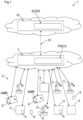
- figure 1 shows a system 1 with at least one installation system 2 with at least several installation parts 3, with at least several autonomous mobile robots AMR, moveable machines and several sensors 5 for generating data for use in safety-related protection of the installation system 2, with a local installation security system PSCC being associated with the installation system 2, with data of the local installation safety system PSCC being stored in a first database 7, with the local installation safety system PSCC having a first data model with data records of the installation system 2, with associated with the local plant security system PSCC there is a decentralized public plant library system SCES, the plant library system SCES being stored in a second database 10, the plant library system SCES having at least one second data model at least data sets for the plant security system (PSCC)2, the plant security system PSCC and the plant library system SCES being connected to one another via an interface 12, with the interface 12 being able to transmit data and data sets between the plant security system PSCC and the plant library system SCES.
- a local installation security system PSCC being associated with the installation system 2
- data of the local installation safety system PSCC being
- FIG 1 there is a public asset library system.
- the operator of this application i.e. the plant library system SCES, is a company or a user group that ensures that there are also suitable functions and measures for risk reduction for the identified hazards.
- the plant library system SCES has a library of hazards, methods, functions, algorithms, measures and risk indicators in the second database 10.
- risk assessments, measures and functions assigned to the stored hazards are always stored in the SCES plant library system. Based on this expert knowledge, the method of finding a solution for each hazard, from the hazard to the determined Risk up to the measure and the necessary algorithms for risk reduction in the second database 10 stored.
- the data records each have at least one geometry, one hazard, one safety level, one position, one speed, one identification and one measure.
- the plant safety system PSCC is designed to carry out a risk assessment and a risk assessment for the plant system 2 cyclically or after a change has been identified, and to make decisions about the need for risk minimization cyclically or after a change has been identified, whereby the plant safety system PSCC is designed to automatically and dynamically create a risk assessment of the plant system 2.
- the basis for risk reduction measures is the availability of a digital twin of plant system 2 as a representation in the PSCC plant security system.
- the focus of the digital twin is on movement sequences, positions and other characteristics that can lead to hazards for people in system 2.
- all required sensors 5 are connected to the plant security system PSCC in order to be able to feed in their data there for generating the digital twin.
- the image of the plant system 2 in the plant security system PSCC must be kept up-to-date at all times.
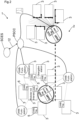
- figure 2 shows a schematic representation of a system 2.
- sensors are arranged on the autonomous mobile robots AMR and on the system parts 3 and the sensors 5 generate sensor data for the system security system PSCC.
- autonomous mobile robots AMR, moving machines or moving system parts 3 are equipped with imaging, position-determining sensors 5 and identification sensors in order to keep the digital twin constantly up-to-date when fulfilling the automation task at runtime.
- different autonomous mobile robots AMR supply position and corresponding imaging data to the plant safety system PSCC constantly or according to the request of the plant safety system PSCC. In this way, this data can be checked for plausibility against one another, which contributes to the fail-safety of the digital twin. To optimize the spatial mapping, this data from different sources can also be merged.
- the autonomous mobile robots AMR can also be equipped with different sensor technologies.
- drones it may also be necessary to use drones as autonomous mobile robots in addition to the autonomous mobile robots AMR required for the automation task. This can be the case when imaging data from different perspectives are required, which the autonomous mobile robots AMR cannot optimally deliver. Furthermore, the use of autonomous drone robots can make sense if the autonomous mobile robots AMR are to work with a minimal sensor setup for the automation task for cost reasons. Depending on the requirements, the autonomous drone robots can have degrees of freedom of movement in the X, Y and Z directions.
- the environment can be detected and the position can be determined using the sensor technologies UWB localization and LIDAR or LIDAR localization.
- the UWB radio localization uses, for example, UWB radio stations and UWB tags, or UWB transponders.
- UWB radio stations and UWB tags, or UWB transponders are only examples of a wide range of possibilities.
- the plant security system has a digital map.
- a UWB localization determines the position of the different system parts 3 and autonomous mobile robots AMR or vehicles by means of transit time measurement and triangulation.
- LIDAR is also used, for example, to create the map based on the contour data.
- the map is created with an autonomous mobile robot AMR and stored as a central map in the plant security system.
- This central map is enriched with the data from the UWB localization and, if necessary, WLAN data.
- a digital twin of plant system 2 has thus been created in the PSCC plant security system.
- the position can be determined from different sources.
- the digital twin which runs on the plant security system PSCC, contains the map of the plant system 2. This map is constantly updated by the position data and the imaging data of the plant parts 3 and the autonomous mobile robot AMR.
- the map in the plant security system PSCC and the data from the position-determining and imaging data are used on the autonomous mobile robots AMR to determine the position of each autonomous mobile robot AMR.
- the card on the plant security system PSCC can also be stored as a local copy on the autonomous mobile robots AMR.
- the position of all system parts 3 and autonomous mobile robots AMR is determined.
- the autonomous mobile robots AMR continuously supply data to the plant security system PSCC in order to keep the map up to date and in return also have continuous access to an up-to-date map.
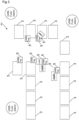
- figure 3 shows a schematic representation of a plant system 2.
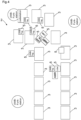
- figure 4 shows the investment system according to figure 3 with changes made.
- Each autonomous mobile robot AMR receives from the plant security system SCES identifiers on the other moving objects (z. B. autonomously mobile vehicles, autonomous mobile robot AMR, moving machines, plant parts 3) which are in the area.
- This information contains, for example, further information such as the classification of the object and the exact position, movement information, etc.
- figure 5 shows a flowchart of a classification request.
- the first step is to react locally to the autonomous mobile robot AMR by avoiding collisions.
- the autonomous mobile robots AMR which are in the vicinity of the changes in the real situation compared to the digital twin, are informed about the change via the plant security system PSCC.
- the plant safety system PSCC checks whether the changed situation is an already classified risk, see "Risk reduction for which there is already a risk classification in the plant safety system PSCC.
- the corresponding data records are updated on the autonomous mobile robot AMR, i.e. the measures implemented in the software are also updated.
- experts can be trained specialists for functional safety, or automated artificial intelligence-supported expert systems.
- Collision avoidance is the primary protection function that is performed locally on the autonomous mobile robot AMR as soon as an object is in the direction of travel of the autonomous mobile robot AMR and it cannot be ruled out that it is a person. Both data from sensors 5 on the autonomous mobile robot AMR and data from the plant security system PSCC are used to detect objects.
- an image of the situation is created locally on the autonomous mobile robot AMR.
- the data is transmitted to the plant security system PSCC. Further data can be used there to detail the depiction of the situation. This additional data can come from stationary imaging sensors 5, imaging sensors 5 of other autonomous mobile robots AMR in the vicinity, and so on.
- the database of the plant security system PSCC is checked to see whether this situation is already a known scenario. If a risk classification already exists for the situation, then the corresponding measures are carried out on the autonomous mobile robot AMR.
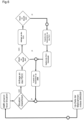
- figure 6 shows a schematic flowchart for risks that have already been classified.
- the situation is compared with already classified data sets on the plant security system PSCC. If a match is found, then this record is taken for action and implementation.
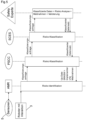
- figure 7 shows a schematic schedule for unclassified risks and an assessment by an expert.
- a situation is analyzed with regard to the risk of injury for a person.
- the analysis is carried out, for example, on the basis of different characteristics such as geometry, structure, movement profiles, interaction with other system parts, probability of occurrence, frequency and duration of exposure, severity of possible injuries, etc.
- the implemented measures are checked for their effectiveness using simulation and testing. If the result is positive, the measures are marked as validated.
- the application of the tools is also stored as a data set for methodology in order to continuously improve the available ones.
- the facility library system is designed to read in applicable standards and/or regulations, and the facility library system is designed to automatically and dynamically create the risk assessment based on the applicable standards and/or regulations.
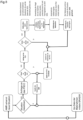
- figure 8 shows a risk reduction for unclassified risks through automated expert systems in the plant library system SCES.
- This procedure requires that all necessary steps are carried out according to a uniform and software-supported set of rules. This means that the methods of Risk reduction that human experts apply are mapped as an algorithm in the automated expert system in such a way that the expert system can apply the same implementation and methodology as human experts.
- the automated expert system can fall back on technological approaches from an artificial intelligence.
- Evidence of risk reduction is then not only to be provided based on the data and scenarios available in the plant safety system PSCC, but also on extended external data.
- a situation is analyzed with regard to the risk of injury for a person.
- the analysis is based on different characteristics such as geometry, structure, movement profiles, interaction with other system parts, probability of occurrence, frequency and duration of exposure, severity of possible injuries, etc.
- the process steps from measure design to validation are iterative steps that are very much based on simulation and training of algorithms. These steps are run through by the automated expert system until the simulation on the plant library system SCES results in a sufficiently high risk reduction. The data record is then made available on the SCES plant library system, but is not marked as validated.
- the implementation for different target systems can already be part of the provided dataset, but is not yet operational without validation by a person.
- the data created here is stored as a data record and can then be made available both in the plant security system PSCC and in the plant library system SCES at the library level.
- the plant safety system 2 is designed to detect and check risk reduction measures cyclically or after a change has been identified, and is designed to adapt the risk reduction measures cyclically or after a change has been identified.
- the environment is recorded from different perspectives and different sensor technologies.
- the data sets in the plant security system PSCC and the plant library system SCES are stored, for example, on different redundant parts of the plant library system SCES.
- Known backup methods of IT and OT are applied.
- the communication must generally meet security requirements in accordance with the communication tasks.
- the security mechanisms here can range from simple CRCs, such as in the security layer of TCP, through secure communication protocols to the use of block chain technologies.
Landscapes
- Engineering & Computer Science (AREA)
- Business, Economics & Management (AREA)
- Physics & Mathematics (AREA)
- General Physics & Mathematics (AREA)
- Theoretical Computer Science (AREA)
- Manufacturing & Machinery (AREA)
- Automation & Control Theory (AREA)
- Human Resources & Organizations (AREA)
- Economics (AREA)
- General Engineering & Computer Science (AREA)
- Strategic Management (AREA)
- General Business, Economics & Management (AREA)
- Quality & Reliability (AREA)
- Databases & Information Systems (AREA)
- Entrepreneurship & Innovation (AREA)
- Development Economics (AREA)
- Marketing (AREA)
- Accounting & Taxation (AREA)
- Tourism & Hospitality (AREA)
- Data Mining & Analysis (AREA)
- Robotics (AREA)
- Mechanical Engineering (AREA)
- Finance (AREA)
- Human Computer Interaction (AREA)
- Game Theory and Decision Science (AREA)
- Educational Administration (AREA)
- Operations Research (AREA)
- General Health & Medical Sciences (AREA)
- Primary Health Care (AREA)
- Health & Medical Sciences (AREA)
- Computing Systems (AREA)
- Control Of Position, Course, Altitude, Or Attitude Of Moving Bodies (AREA)
- Testing And Monitoring For Control Systems (AREA)
- Aviation & Aerospace Engineering (AREA)
- Radar, Positioning & Navigation (AREA)
- Remote Sensing (AREA)
Claims (7)
- Système (1)comprenant au moins un système d'installation (2) ayant au moins plusieurs parties d'installation (3), au moins plusieurs robots mobiles autonomes (AMR), des machines mobiles et plusieurs capteurs (5) de génération de données destinées à être utilisées pour la sécurisation orientée sécurité du système d'installation (2),dans lequelun système de sécurité d'installation local (PSCC) est présent en association avec le système d'installation (2),les données du système de sécurité d'installation local (PSCC) sont stockées dans une première base de données (7),le système de sécurité d'installation local (PSCC) présente un premier modèle de données avec des ensembles de données du système d'installation (2),un système de bibliothèque d'installation public décentralisé (SCES) est présent en association avec le système de sécurité d'installation local (PSCC),le système de bibliothèque d'installation (SCES) est stocké dans une deuxième base de données (10),le système de bibliothèque d'installation (SCES) présente au moins un deuxième modèle de données avec au moins des ensembles de données pour le système de sécurité d'installation (PSCC),le système de sécurité d'installation (PSCC) et le système de bibliothèque d'installation (SCES) sont reliés entre eux par une interface (12),des données et des ensembles de données peuvent être transmis entre le système de sécurité d'installation (PSCC) et le système de bibliothèque d'installation (SCES) par l'intermédiaire de l'interface (12),les ensembles de données incluent chacun au moins une géométrie, un danger, un niveau de sécurité, une position, une vitesse, une identification et une action,le système de sécurité d'installation (PSCC) est conçu pour effectuer, de manière cyclique ou après avoir détecté un changement, une évaluation des risques et une appréciation des risques pour le système d'installation (2) et pour prendre, de manière cyclique ou après avoir détecté un changement, des décisions concernant la nécessité de minimiser les risques, moyennant quoi le système de sécurité d'installation (PSCC) est conçu pour établir automatiquement et dynamiquement une appréciation des risques du système d'installation (2),le système de bibliothèque d'installation (SCES) est conçu pour lire les normes et/ou les prescriptions applicables, et le système de bibliothèque d'installation (SCES) est conçu pour effectuer l'établissement automatique et dynamique de l'évaluation des risques en se basant sur les normes et/ou des prescriptions applicables,le robot mobile autonome est conçu pour, dans une première étape, réagir localement en évitant les collisions, dans le cadre d'une procédure de réduction des risques,le système de sécurité d'installation est conçu pour, dans une deuxième étape, informer les robots mobiles autonomes du changement, robots qui se trouvent dans l'environnement des changements de la situation réelle par rapport à un jumeau numérique,le système de sécurité d'installation est conçu pour vérifier, dans une troisième étape, si la situation changée est un risque déjà classifié,les robots mobiles autonomes sont conçus pour mettre à jour les ensembles de données correspondants si le risque est déjà classifié,le système de sécurité d'installation est conçu pour rechercher un risque et un ensemble de données appropriés sur le système de bibliothèque d'installation au niveau de la bibliothèque publique, si aucun risque classifié et donc aucun ensemble de données n'existe pour la nouvelle situation sur le système de sécurité d'installation,le système de bibliothèque d'installation est conçu pour reprendre un nouvel ensemble de données classifié, qui a été créé au moyen d'une analyse de risque par des experts, si aucun ensemble de données classifié correspondant n'existe sur le système de bibliothèque d'installation.
- Système (1) selon la revendication 1,
caractérisé en ce que les capteurs (5) sont disposés sur les robots mobiles autonomes (AMR) et sur les parties d'installation (3), et les capteurs (5) génèrent des données de capteurs pour le système de sécurité d'installation (PSCC). - Système (1) selon l'une au moins des revendications précédentes, caractérisé en ce que le système de sécurité d'installation (PSCC) comporte une carte numérique.
- Système (1) selon l'une au moins des revendications précédentes, conçu pour effectuer une détermination de la position de toutes les parties d'installation (3) et de tous les robots mobiles autonomes (AMR).
- Système (1) selon la revendication 3,
caractérisé en ce que des écarts entre la carte numérique et une situation environnementale réelle saisie sont détectés par le système de sécurité d'installation (PSCC). - Système (1) selon l'une au moins des revendications précédentes, caractérisé en ce que le système de sécurité d'installation (PSCC) est conçu pour enregistrer et vérifier les actions de réduction des risques, de manière cyclique ou après avoir détecté un changement, et est conçu pour adapter les actions de réduction des risques, de manière cyclique ou après avoir détecté un changement.
- Système (1) selon l'une au moins des revendications précédentes, caractérisé en ce que le système de sécurité d'installation (PSCC) et le système de bibliothèque d'installation (SCES) sont réalisés sous forme de systèmes experts respectifs qui sont conçus pour élargir en continu la base de données concernant de nouveaux dangers et qui sont conçus pour générer de nouveaux ensembles de données.
Applications Claiming Priority (1)
| Application Number | Priority Date | Filing Date | Title |
|---|---|---|---|
| DE102021106584.4A DE102021106584B4 (de) | 2021-03-18 | 2021-03-18 | System mit mindestens einem Anlagesystem mit mindestens mehreren Anlageteilen |
Publications (2)
| Publication Number | Publication Date |
|---|---|
| EP4060440A1 EP4060440A1 (fr) | 2022-09-21 |
| EP4060440B1 true EP4060440B1 (fr) | 2023-07-26 |
Family
ID=82850900
Family Applications (1)
| Application Number | Title | Priority Date | Filing Date |
|---|---|---|---|
| EP22150356.8A Active EP4060440B1 (fr) | 2021-03-18 | 2022-01-05 | Système pourvu d'au moins un système d'installation pourvu d'au moins plusieurs éléments d'installation |
Country Status (4)
| Country | Link |
|---|---|
| US (1) | US12271909B2 (fr) |
| EP (1) | EP4060440B1 (fr) |
| CN (1) | CN115115165B (fr) |
| DE (1) | DE102021106584B4 (fr) |
Cited By (1)
| Publication number | Priority date | Publication date | Assignee | Title |
|---|---|---|---|---|
| DE102024202375B3 (de) * | 2024-03-13 | 2025-07-10 | Fraunhofer-Gesellschaft zur Förderung der angewandten Forschung eingetragener Verein | Verfahren zum Steuern eines mobilen Roboters und mobiler Roboter |
Families Citing this family (3)
| Publication number | Priority date | Publication date | Assignee | Title |
|---|---|---|---|---|
| US12515320B2 (en) * | 2021-12-20 | 2026-01-06 | Intel Corporation | Reliable real-time deployment of robot safety updates |
| EP4414916A1 (fr) | 2023-02-07 | 2024-08-14 | Siemens Aktiengesellschaft | Procédé et système pour optimiser les planifications de production de produits et de logistique de sol de marchandises ou de magasin |
| DE102023108687A1 (de) * | 2023-04-05 | 2024-10-10 | Intel Corporation | Vorrichtung, Gerät, Verfahren und Computerprogramm für eine autonom agierende Maschine oder ein Computersystem |
Family Cites Families (49)
| Publication number | Priority date | Publication date | Assignee | Title |
|---|---|---|---|---|
| FR2772880B1 (fr) * | 1997-12-24 | 2000-01-14 | Alpes Systeme Automation | Dispositif et procede de controle du fonctionnement d'une installation industrielle |
| US6505145B1 (en) * | 1999-02-22 | 2003-01-07 | Northeast Equipment Inc. | Apparatus and method for monitoring and maintaining plant equipment |
| US20050075970A1 (en) * | 2003-10-06 | 2005-04-07 | Doyle Thomas James | Risk assessment system and method |
| US7243001B2 (en) * | 2004-06-15 | 2007-07-10 | Amazon Technologies, Inc. | Time-based warehouse movement maps |
| US7720639B2 (en) * | 2005-10-27 | 2010-05-18 | General Electric Company | Automatic remote monitoring and diagnostics system and communication method for communicating between a programmable logic controller and a central unit |
| US8010475B2 (en) * | 2007-04-13 | 2011-08-30 | Siemens Corporation | Online fault detection and avoidance framework for distributed factory control systems |
| US9323247B2 (en) * | 2007-09-14 | 2016-04-26 | Fisher-Rosemount Systems, Inc. | Personalized plant asset data representation and search system |
| JP4521448B2 (ja) * | 2008-01-31 | 2010-08-11 | 株式会社東芝 | 遠隔監視・診断システム |
| DE102008044018B4 (de) | 2008-11-24 | 2010-08-19 | Beckhoff Automation Gmbh | Verfahren zum Bestimmen einer Sicherheitsstufe und Sicherheitsmanager |
| JP4598865B2 (ja) * | 2009-02-17 | 2010-12-15 | ファナック株式会社 | 工作機械と組み合わせて使用するロボットの制御装置 |
| US20110029658A1 (en) * | 2009-07-24 | 2011-02-03 | Theodore Werth | System and methods for providing a multi-device, multi-service platform via a client agent |
| US9043003B2 (en) * | 2009-07-31 | 2015-05-26 | Fisher-Rosemount Systems, Inc. | Graphical view sidebar for a process control system |
| DE202010008137U1 (de) * | 2010-07-22 | 2011-11-14 | Sick Ag | Sensorsystem zur Anlagenüberwachung |
| JP5627477B2 (ja) | 2011-01-20 | 2014-11-19 | 三菱重工業株式会社 | プラント安全設計支援装置及びプラント監視保守支援装置 |
| DE102013111052A1 (de) * | 2013-10-07 | 2015-04-23 | Endress + Hauser Gmbh + Co. Kg | System zum flexiblen Betreiben einer Automatisierungsanlage |
| FR3015333B1 (fr) * | 2013-12-23 | 2017-04-28 | Inst De Rech Tech Jules Verne | Systeme, notamment de production, utilisant des robots cooperants |
| EP2937745B1 (fr) * | 2014-04-25 | 2016-10-05 | Sick Ag | Commande de sécurité destinée au fonctionnement sécurisé d'une installation technique et procédé de fonctionnement de la commande de sécurité |
| JP5890477B2 (ja) * | 2014-07-09 | 2016-03-22 | ファナック株式会社 | ロボットプログラム修正システム |
| SG11201704188TA (en) * | 2014-11-26 | 2017-06-29 | Tlv Co Ltd | Device management system and maintenance work method using the system |
| JP6467943B2 (ja) * | 2015-01-27 | 2019-02-13 | 日本精機株式会社 | プラント機器状態収集システム |
| DE102015108359A1 (de) | 2015-05-27 | 2016-12-01 | Phoenix Contact Gmbh & Co. Kg | Verfahren und Vorrichtung zur automatischen Validierung von Sicherheitsfunktionen an einem modular aufgebauten Sicherheitssystem |
| AU2016204572A1 (en) * | 2015-06-30 | 2017-01-19 | Remsafe Pty Ltd | An equipment isolation system |
| US10274930B2 (en) * | 2015-08-03 | 2019-04-30 | Siemens Aktiengesellschaft | Machine human interface—MHI |
| US9689696B1 (en) * | 2015-09-22 | 2017-06-27 | X Development Llc | Determining handoff checkpoints for low-resolution robot planning |
| US9764470B2 (en) * | 2015-10-05 | 2017-09-19 | X Development Llc | Selective deployment of robots to perform mapping |
| GB2559903B (en) * | 2015-10-12 | 2022-02-23 | Fisher Rosemount Systems Inc | Determining device system tags for commissioning portions of a disconnected process control loop |
| DK3193071T3 (en) * | 2016-01-18 | 2018-09-03 | Sick Ag | SECURITY SYSTEM |
| DE102016102282B4 (de) | 2016-02-10 | 2024-01-04 | Phoenix Contact Gmbh & Co. Kg | Verfahren und Vorrichtung zum Überwachen einer Datenverarbeitung und -übertragung in einer Sicherheitskette eines Sicherheitssystems |
| JP6849705B2 (ja) * | 2016-06-24 | 2021-03-24 | スイス リインシュランス カンパニー リミテッド | 自動化されたリスク制御システムを含む自律的又は部分的に自律的な自動車及びそれに対応する方法 |
| JP6747894B2 (ja) * | 2016-07-08 | 2020-08-26 | ファナック株式会社 | ネットワークを利用した診断サービスシステム及び診断方法 |
| EP3316401B1 (fr) * | 2016-10-25 | 2018-10-24 | Sick Ag | Commande sécurisée d'au moins une machine |
| DE102016013406B4 (de) * | 2016-11-11 | 2022-02-03 | Schenck Process Europe Gmbh | Verfahren zum Betrieb eines Zustandsüberwachungssystems einer Schwingmaschine und Zustandsüberwachungssystem |
| WO2019028389A1 (fr) * | 2017-08-04 | 2019-02-07 | Walmart Apollo, Llc | Systèmes, dispositifs et procédés pour générer une carte de communication tridimensionnelle dynamique |
| CN107817744B (zh) * | 2017-10-25 | 2019-07-02 | 长春市智慧城市科技有限公司 | 公共设施安全监测系统 |
| EP3578319B1 (fr) * | 2018-06-07 | 2021-01-20 | Sick Ag | Procédé de sécurisation d'un endroit dangereux |
| EP3579174A1 (fr) * | 2018-06-08 | 2019-12-11 | Hexagon Technology Center GmbH | Véhicules mobiles dans la fabrication |
| US12464041B2 (en) * | 2019-02-13 | 2025-11-04 | Telefonaktiebolaget Lm Ericsson (Publ) | Industrial automation with 5G and beyond |
| EP3702855A1 (fr) * | 2019-03-01 | 2020-09-02 | Siemens Aktiengesellschaft | Procédé et système pour déterminer la sécurité de machines et la qualité de produits pour système de production cyberphysique flexible |
| WO2021019383A1 (fr) * | 2019-07-31 | 2021-02-04 | Tata Consultancy Services Limited | Robot mobile autonome à plateforme modulaire unique |
| CN111383456B (zh) * | 2020-04-16 | 2022-09-27 | 上海丰豹商务咨询有限公司 | 一种用于智能道路基础设施系统的本地化人工智能系统 |
| WO2022101403A1 (fr) * | 2020-11-13 | 2022-05-19 | UMNAI Limited | Prédiction comportementale et réglages de limite, régulation et assurance de sécurité de systèmes d'apprentissage machine et d'intelligence artificielle |
| DE102020133789A1 (de) * | 2020-12-16 | 2022-06-23 | Sick Ag | Sicherheitssystem und Verfahren mit einem Sicherheitssystem |
| US20220100184A1 (en) * | 2021-12-09 | 2022-03-31 | Intel Corporation | Learning-based techniques for autonomous agent task allocation |
| US20220118621A1 (en) * | 2021-12-24 | 2022-04-21 | Intel Corporation | Enhanced robot safety perception and integrity monitoring |
| EP4594829A1 (fr) * | 2022-09-27 | 2025-08-06 | Seegrid Corporation | Système et procédé de gestion de ressources partagées |
| WO2024079318A1 (fr) * | 2022-10-14 | 2024-04-18 | Pilz Gmbh & Co. Kg | Système et procédé de surveillance liée à la sécurité d'une installation industrielle |
| US20240182282A1 (en) * | 2022-12-05 | 2024-06-06 | Seegrid Corporation | Hybrid autonomous system and human integration system and method |
| CA3264207A1 (fr) * | 2022-12-05 | 2024-06-13 | Seegrid Corporation | Système pour modéliser un flux de processus et dupliquer des tâches dans une automatisation du flux des matières |
| EP4630209A1 (fr) * | 2022-12-05 | 2025-10-15 | Seegrid Corporation | Cadre d'étape configurable par un utilisateur centré sur un processus pour composer une automatisation de flux de matériau |
-
2021
- 2021-03-18 DE DE102021106584.4A patent/DE102021106584B4/de active Active
-
2022
- 2022-01-05 EP EP22150356.8A patent/EP4060440B1/fr active Active
- 2022-03-17 US US17/697,341 patent/US12271909B2/en active Active
- 2022-03-18 CN CN202210272805.6A patent/CN115115165B/zh active Active
Cited By (1)
| Publication number | Priority date | Publication date | Assignee | Title |
|---|---|---|---|---|
| DE102024202375B3 (de) * | 2024-03-13 | 2025-07-10 | Fraunhofer-Gesellschaft zur Förderung der angewandten Forschung eingetragener Verein | Verfahren zum Steuern eines mobilen Roboters und mobiler Roboter |
Also Published As
| Publication number | Publication date |
|---|---|
| CN115115165B (zh) | 2024-10-22 |
| EP4060440A1 (fr) | 2022-09-21 |
| CN115115165A (zh) | 2022-09-27 |
| DE102021106584A1 (de) | 2022-09-22 |
| US12271909B2 (en) | 2025-04-08 |
| DE102021106584B4 (de) | 2024-02-22 |
| US20220300875A1 (en) | 2022-09-22 |
Similar Documents
| Publication | Publication Date | Title |
|---|---|---|
| EP4060440B1 (fr) | Système pourvu d'au moins un système d'installation pourvu d'au moins plusieurs éléments d'installation | |
| EP3709106B1 (fr) | Mise en sécurité d'une machine | |
| WO2018087343A1 (fr) | Procédé de commande d'un système de moyens de transport, système de traitement de données | |
| DE102012111194A1 (de) | System und Verfahren zur Steuerung des Betriebs einer Fluggesellschaft | |
| EP3699704B1 (fr) | Système et procédé de vérification des exigences du système des systèmes cyber-physiques | |
| DE102019211770B3 (de) | Verfahren zur rechnergestützten Erfassung und Auswertung eines Arbeitsablaufs, bei dem ein menschlicher Werker und ein robotisches System wechselwirken | |
| EP3881079A1 (fr) | Système de laboratoire muni d'appareils de laboratoire au moins partiellement en réseau et procédé de commande d'un système de laboratoire muni d'appareils de laboratoire au moins partiellement en réseau | |
| DE102018215560A1 (de) | Verfahren zum Koordinieren und Überwachen von Objekten | |
| EP3712720B1 (fr) | Procédé et dispositif de commande d'une installation technique avec une architecture simplex adaptative | |
| WO2023111184A1 (fr) | Attribution d'une tâche à un expert à distance | |
| DE102022120424A1 (de) | Sicherheitssystem und Verfahren mit einem Sicherheitssystem | |
| WO2019243052A1 (fr) | Procédé et dispositif de surveillance et/ou de commande mutuelle de systèmes techniques autonomes | |
| DE202021101370U1 (de) | System mit mindestens einem Anlagesystem mit mindestens mehreren Anlageteilen | |
| DE102021114191A1 (de) | Verteiltes System | |
| EP4508621B1 (fr) | Procédé de prédiction d'une influence d'un usager de la route sur au moins un autre usager de la route, et procédé de fonctionnement d'un véhicule | |
| DE102020104267A1 (de) | Computerimplementiertes Regelungs- oder Folgeregelungsverfahren oder Optimierungsverfahren zur Absicherung von Steuerungsalgorithmen einer Regelung und/oder Regelungsalgorithmen | |
| EP4591244A1 (fr) | Commande sécurisée de systèmes techniques-physiques | |
| WO2024008232A1 (fr) | Procédé de détection dynamique d'encliquetage dans un robot collaboratif par intelligence artificielle et compensation dynamique des trajectoires | |
| EP4339634A1 (fr) | Procédé de détermination d'une position d'une unité mobile et/ou mobile pour la configuration de celle-ci dans un réseau de communication | |
| DE102021002160A1 (de) | Verfahren zur Bildung eines Fahrzeugverbundes | |
| DE102021109399A1 (de) | Vorrichtung und Verfahren zur Identifizierung von Veränderungen an einer Maschinenanordnung | |
| EP4597372B1 (fr) | Surveillance de sécurité | |
| EP4414799A1 (fr) | Navigation d'un opérateur dans une installation technique | |
| WO2014005938A2 (fr) | Détermination de l'aptitude d'une ressource | |
| EP4703234A1 (fr) | Procédé de transformation de plan de voie et programme de simulation de plan de voie transformée |
Legal Events
| Date | Code | Title | Description |
|---|---|---|---|
| PUAI | Public reference made under article 153(3) epc to a published international application that has entered the european phase |
Free format text: ORIGINAL CODE: 0009012 |
|
| STAA | Information on the status of an ep patent application or granted ep patent |
Free format text: STATUS: THE APPLICATION HAS BEEN PUBLISHED |
|
| AK | Designated contracting states |
Kind code of ref document: A1 Designated state(s): AL AT BE BG CH CY CZ DE DK EE ES FI FR GB GR HR HU IE IS IT LI LT LU LV MC MK MT NL NO PL PT RO RS SE SI SK SM TR |
|
| STAA | Information on the status of an ep patent application or granted ep patent |
Free format text: STATUS: REQUEST FOR EXAMINATION WAS MADE |
|
| 17P | Request for examination filed |
Effective date: 20230113 |
|
| RBV | Designated contracting states (corrected) |
Designated state(s): AL AT BE BG CH CY CZ DE DK EE ES FI FR GB GR HR HU IE IS IT LI LT LU LV MC MK MT NL NO PL PT RO RS SE SI SK SM TR |
|
| GRAP | Despatch of communication of intention to grant a patent |
Free format text: ORIGINAL CODE: EPIDOSNIGR1 |
|
| STAA | Information on the status of an ep patent application or granted ep patent |
Free format text: STATUS: GRANT OF PATENT IS INTENDED |
|
| INTG | Intention to grant announced |
Effective date: 20230418 |
|
| GRAS | Grant fee paid |
Free format text: ORIGINAL CODE: EPIDOSNIGR3 |
|
| GRAA | (expected) grant |
Free format text: ORIGINAL CODE: 0009210 |
|
| STAA | Information on the status of an ep patent application or granted ep patent |
Free format text: STATUS: THE PATENT HAS BEEN GRANTED |
|
| AK | Designated contracting states |
Kind code of ref document: B1 Designated state(s): AL AT BE BG CH CY CZ DE DK EE ES FI FR GB GR HR HU IE IS IT LI LT LU LV MC MK MT NL NO PL PT RO RS SE SI SK SM TR |
|
| REG | Reference to a national code |
Ref country code: CH Ref legal event code: EP |
|
| REG | Reference to a national code |
Ref country code: IE Ref legal event code: FG4D Free format text: LANGUAGE OF EP DOCUMENT: GERMAN |
|
| REG | Reference to a national code |
Ref country code: DE Ref legal event code: R096 Ref document number: 502022000059 Country of ref document: DE |
|
| REG | Reference to a national code |
Ref country code: LT Ref legal event code: MG9D |
|
| REG | Reference to a national code |
Ref country code: NL Ref legal event code: MP Effective date: 20230726 |
|
| PG25 | Lapsed in a contracting state [announced via postgrant information from national office to epo] |
Ref country code: NL Free format text: LAPSE BECAUSE OF FAILURE TO SUBMIT A TRANSLATION OF THE DESCRIPTION OR TO PAY THE FEE WITHIN THE PRESCRIBED TIME-LIMIT Effective date: 20230726 |
|
| PG25 | Lapsed in a contracting state [announced via postgrant information from national office to epo] |
Ref country code: GR Free format text: LAPSE BECAUSE OF FAILURE TO SUBMIT A TRANSLATION OF THE DESCRIPTION OR TO PAY THE FEE WITHIN THE PRESCRIBED TIME-LIMIT Effective date: 20231027 |
|
| PG25 | Lapsed in a contracting state [announced via postgrant information from national office to epo] |
Ref country code: IS Free format text: LAPSE BECAUSE OF FAILURE TO SUBMIT A TRANSLATION OF THE DESCRIPTION OR TO PAY THE FEE WITHIN THE PRESCRIBED TIME-LIMIT Effective date: 20231126 |
|
| PG25 | Lapsed in a contracting state [announced via postgrant information from national office to epo] |
Ref country code: SE Free format text: LAPSE BECAUSE OF FAILURE TO SUBMIT A TRANSLATION OF THE DESCRIPTION OR TO PAY THE FEE WITHIN THE PRESCRIBED TIME-LIMIT Effective date: 20230726 Ref country code: RS Free format text: LAPSE BECAUSE OF FAILURE TO SUBMIT A TRANSLATION OF THE DESCRIPTION OR TO PAY THE FEE WITHIN THE PRESCRIBED TIME-LIMIT Effective date: 20230726 Ref country code: PT Free format text: LAPSE BECAUSE OF FAILURE TO SUBMIT A TRANSLATION OF THE DESCRIPTION OR TO PAY THE FEE WITHIN THE PRESCRIBED TIME-LIMIT Effective date: 20231127 Ref country code: NO Free format text: LAPSE BECAUSE OF FAILURE TO SUBMIT A TRANSLATION OF THE DESCRIPTION OR TO PAY THE FEE WITHIN THE PRESCRIBED TIME-LIMIT Effective date: 20231026 Ref country code: LV Free format text: LAPSE BECAUSE OF FAILURE TO SUBMIT A TRANSLATION OF THE DESCRIPTION OR TO PAY THE FEE WITHIN THE PRESCRIBED TIME-LIMIT Effective date: 20230726 Ref country code: LT Free format text: LAPSE BECAUSE OF FAILURE TO SUBMIT A TRANSLATION OF THE DESCRIPTION OR TO PAY THE FEE WITHIN THE PRESCRIBED TIME-LIMIT Effective date: 20230726 Ref country code: IS Free format text: LAPSE BECAUSE OF FAILURE TO SUBMIT A TRANSLATION OF THE DESCRIPTION OR TO PAY THE FEE WITHIN THE PRESCRIBED TIME-LIMIT Effective date: 20231126 Ref country code: HR Free format text: LAPSE BECAUSE OF FAILURE TO SUBMIT A TRANSLATION OF THE DESCRIPTION OR TO PAY THE FEE WITHIN THE PRESCRIBED TIME-LIMIT Effective date: 20230726 Ref country code: GR Free format text: LAPSE BECAUSE OF FAILURE TO SUBMIT A TRANSLATION OF THE DESCRIPTION OR TO PAY THE FEE WITHIN THE PRESCRIBED TIME-LIMIT Effective date: 20231027 Ref country code: FI Free format text: LAPSE BECAUSE OF FAILURE TO SUBMIT A TRANSLATION OF THE DESCRIPTION OR TO PAY THE FEE WITHIN THE PRESCRIBED TIME-LIMIT Effective date: 20230726 |
|
| PG25 | Lapsed in a contracting state [announced via postgrant information from national office to epo] |
Ref country code: PL Free format text: LAPSE BECAUSE OF FAILURE TO SUBMIT A TRANSLATION OF THE DESCRIPTION OR TO PAY THE FEE WITHIN THE PRESCRIBED TIME-LIMIT Effective date: 20230726 |
|
| PG25 | Lapsed in a contracting state [announced via postgrant information from national office to epo] |
Ref country code: ES Free format text: LAPSE BECAUSE OF FAILURE TO SUBMIT A TRANSLATION OF THE DESCRIPTION OR TO PAY THE FEE WITHIN THE PRESCRIBED TIME-LIMIT Effective date: 20230726 |
|
| REG | Reference to a national code |
Ref country code: DE Ref legal event code: R097 Ref document number: 502022000059 Country of ref document: DE |
|
| PG25 | Lapsed in a contracting state [announced via postgrant information from national office to epo] |
Ref country code: SM Free format text: LAPSE BECAUSE OF FAILURE TO SUBMIT A TRANSLATION OF THE DESCRIPTION OR TO PAY THE FEE WITHIN THE PRESCRIBED TIME-LIMIT Effective date: 20230726 Ref country code: RO Free format text: LAPSE BECAUSE OF FAILURE TO SUBMIT A TRANSLATION OF THE DESCRIPTION OR TO PAY THE FEE WITHIN THE PRESCRIBED TIME-LIMIT Effective date: 20230726 Ref country code: ES Free format text: LAPSE BECAUSE OF FAILURE TO SUBMIT A TRANSLATION OF THE DESCRIPTION OR TO PAY THE FEE WITHIN THE PRESCRIBED TIME-LIMIT Effective date: 20230726 Ref country code: EE Free format text: LAPSE BECAUSE OF FAILURE TO SUBMIT A TRANSLATION OF THE DESCRIPTION OR TO PAY THE FEE WITHIN THE PRESCRIBED TIME-LIMIT Effective date: 20230726 Ref country code: DK Free format text: LAPSE BECAUSE OF FAILURE TO SUBMIT A TRANSLATION OF THE DESCRIPTION OR TO PAY THE FEE WITHIN THE PRESCRIBED TIME-LIMIT Effective date: 20230726 Ref country code: CZ Free format text: LAPSE BECAUSE OF FAILURE TO SUBMIT A TRANSLATION OF THE DESCRIPTION OR TO PAY THE FEE WITHIN THE PRESCRIBED TIME-LIMIT Effective date: 20230726 Ref country code: SK Free format text: LAPSE BECAUSE OF FAILURE TO SUBMIT A TRANSLATION OF THE DESCRIPTION OR TO PAY THE FEE WITHIN THE PRESCRIBED TIME-LIMIT Effective date: 20230726 |
|
| PLBE | No opposition filed within time limit |
Free format text: ORIGINAL CODE: 0009261 |
|
| STAA | Information on the status of an ep patent application or granted ep patent |
Free format text: STATUS: NO OPPOSITION FILED WITHIN TIME LIMIT |
|
| 26N | No opposition filed |
Effective date: 20240429 |
|
| PG25 | Lapsed in a contracting state [announced via postgrant information from national office to epo] |
Ref country code: SI Free format text: LAPSE BECAUSE OF FAILURE TO SUBMIT A TRANSLATION OF THE DESCRIPTION OR TO PAY THE FEE WITHIN THE PRESCRIBED TIME-LIMIT Effective date: 20230726 |
|
| PG25 | Lapsed in a contracting state [announced via postgrant information from national office to epo] |
Ref country code: MC Free format text: LAPSE BECAUSE OF FAILURE TO SUBMIT A TRANSLATION OF THE DESCRIPTION OR TO PAY THE FEE WITHIN THE PRESCRIBED TIME-LIMIT Effective date: 20230726 |
|
| PG25 | Lapsed in a contracting state [announced via postgrant information from national office to epo] |
Ref country code: MC Free format text: LAPSE BECAUSE OF FAILURE TO SUBMIT A TRANSLATION OF THE DESCRIPTION OR TO PAY THE FEE WITHIN THE PRESCRIBED TIME-LIMIT Effective date: 20230726 |
|
| PG25 | Lapsed in a contracting state [announced via postgrant information from national office to epo] |
Ref country code: LU Free format text: LAPSE BECAUSE OF NON-PAYMENT OF DUE FEES Effective date: 20240105 |
|
| PG25 | Lapsed in a contracting state [announced via postgrant information from national office to epo] |
Ref country code: LU Free format text: LAPSE BECAUSE OF NON-PAYMENT OF DUE FEES Effective date: 20240105 |
|
| PG25 | Lapsed in a contracting state [announced via postgrant information from national office to epo] |
Ref country code: BE Free format text: LAPSE BECAUSE OF NON-PAYMENT OF DUE FEES Effective date: 20240131 |
|
| PG25 | Lapsed in a contracting state [announced via postgrant information from national office to epo] |
Ref country code: FR Free format text: LAPSE BECAUSE OF NON-PAYMENT OF DUE FEES Effective date: 20240131 |
|
| PG25 | Lapsed in a contracting state [announced via postgrant information from national office to epo] |
Ref country code: FR Free format text: LAPSE BECAUSE OF NON-PAYMENT OF DUE FEES Effective date: 20240131 Ref country code: BE Free format text: LAPSE BECAUSE OF NON-PAYMENT OF DUE FEES Effective date: 20240131 |
|
| REG | Reference to a national code |
Ref country code: BE Ref legal event code: MM Effective date: 20240131 |
|
| PG25 | Lapsed in a contracting state [announced via postgrant information from national office to epo] |
Ref country code: BG Free format text: LAPSE BECAUSE OF FAILURE TO SUBMIT A TRANSLATION OF THE DESCRIPTION OR TO PAY THE FEE WITHIN THE PRESCRIBED TIME-LIMIT Effective date: 20230726 |
|
| PG25 | Lapsed in a contracting state [announced via postgrant information from national office to epo] |
Ref country code: BG Free format text: LAPSE BECAUSE OF FAILURE TO SUBMIT A TRANSLATION OF THE DESCRIPTION OR TO PAY THE FEE WITHIN THE PRESCRIBED TIME-LIMIT Effective date: 20230726 |
|
| PG25 | Lapsed in a contracting state [announced via postgrant information from national office to epo] |
Ref country code: IE Free format text: LAPSE BECAUSE OF NON-PAYMENT OF DUE FEES Effective date: 20240105 |
|
| PG25 | Lapsed in a contracting state [announced via postgrant information from national office to epo] |
Ref country code: IE Free format text: LAPSE BECAUSE OF NON-PAYMENT OF DUE FEES Effective date: 20240105 |
|
| PG25 | Lapsed in a contracting state [announced via postgrant information from national office to epo] |
Ref country code: CY Free format text: LAPSE BECAUSE OF FAILURE TO SUBMIT A TRANSLATION OF THE DESCRIPTION OR TO PAY THE FEE WITHIN THE PRESCRIBED TIME-LIMIT; INVALID AB INITIO Effective date: 20220105 |
|
| REG | Reference to a national code |
Ref country code: CH Ref legal event code: PL |
|
| PG25 | Lapsed in a contracting state [announced via postgrant information from national office to epo] |
Ref country code: CH Free format text: LAPSE BECAUSE OF NON-PAYMENT OF DUE FEES Effective date: 20250131 |
|
| PG25 | Lapsed in a contracting state [announced via postgrant information from national office to epo] |
Ref country code: TR Free format text: LAPSE BECAUSE OF FAILURE TO SUBMIT A TRANSLATION OF THE DESCRIPTION OR TO PAY THE FEE WITHIN THE PRESCRIBED TIME-LIMIT Effective date: 20230726 |
|
| PGFP | Annual fee paid to national office [announced via postgrant information from national office to epo] |
Ref country code: GB Payment date: 20260122 Year of fee payment: 5 |
|
| PGFP | Annual fee paid to national office [announced via postgrant information from national office to epo] |
Ref country code: DE Payment date: 20260120 Year of fee payment: 5 |
|
| PGFP | Annual fee paid to national office [announced via postgrant information from national office to epo] |
Ref country code: AT Payment date: 20260301 Year of fee payment: 5 |
|
| PGFP | Annual fee paid to national office [announced via postgrant information from national office to epo] |
Ref country code: IT Payment date: 20260130 Year of fee payment: 5 |