EP4067521B1 - Alliage d'aluminium et son procédé de préparation - Google Patents
Alliage d'aluminium et son procédé de préparation Download PDFInfo
- Publication number
- EP4067521B1 EP4067521B1 EP20894656.6A EP20894656A EP4067521B1 EP 4067521 B1 EP4067521 B1 EP 4067521B1 EP 20894656 A EP20894656 A EP 20894656A EP 4067521 B1 EP4067521 B1 EP 4067521B1
- Authority
- EP
- European Patent Office
- Prior art keywords
- aluminum alloy
- content
- present disclosure
- mass
- elements
- Prior art date
- Legal status (The legal status is an assumption and is not a legal conclusion. Google has not performed a legal analysis and makes no representation as to the accuracy of the status listed.)
- Active
Links
Images
Classifications
-
- C—CHEMISTRY; METALLURGY
- C22—METALLURGY; FERROUS OR NON-FERROUS ALLOYS; TREATMENT OF ALLOYS OR NON-FERROUS METALS
- C22C—ALLOYS
- C22C21/00—Alloys based on aluminium
- C22C21/02—Alloys based on aluminium with silicon as the next major constituent
-
- B—PERFORMING OPERATIONS; TRANSPORTING
- B22—CASTING; POWDER METALLURGY
- B22D—CASTING OF METALS; CASTING OF OTHER SUBSTANCES BY THE SAME PROCESSES OR DEVICES
- B22D17/00—Pressure die casting or injection die casting, i.e. casting in which the metal is forced into a mould under high pressure
-
- B—PERFORMING OPERATIONS; TRANSPORTING
- B22—CASTING; POWDER METALLURGY
- B22D—CASTING OF METALS; CASTING OF OTHER SUBSTANCES BY THE SAME PROCESSES OR DEVICES
- B22D21/00—Casting non-ferrous metals or metallic compounds so far as their metallurgical properties are of importance for the casting procedure; Selection of compositions therefor
- B22D21/02—Casting exceedingly oxidisable non-ferrous metals, e.g. in inert atmosphere
- B22D21/04—Casting aluminium or magnesium
-
- C—CHEMISTRY; METALLURGY
- C22—METALLURGY; FERROUS OR NON-FERROUS ALLOYS; TREATMENT OF ALLOYS OR NON-FERROUS METALS
- C22C—ALLOYS
- C22C1/00—Making non-ferrous alloys
- C22C1/02—Making non-ferrous alloys by melting
- C22C1/026—Alloys based on aluminium
-
- C—CHEMISTRY; METALLURGY
- C22—METALLURGY; FERROUS OR NON-FERROUS ALLOYS; TREATMENT OF ALLOYS OR NON-FERROUS METALS
- C22C—ALLOYS
- C22C1/00—Making non-ferrous alloys
- C22C1/02—Making non-ferrous alloys by melting
- C22C1/03—Making non-ferrous alloys by melting using master alloys
-
- C—CHEMISTRY; METALLURGY
- C22—METALLURGY; FERROUS OR NON-FERROUS ALLOYS; TREATMENT OF ALLOYS OR NON-FERROUS METALS
- C22C—ALLOYS
- C22C1/00—Making non-ferrous alloys
- C22C1/06—Making non-ferrous alloys with the use of special agents for refining or deoxidising
-
- C—CHEMISTRY; METALLURGY
- C22—METALLURGY; FERROUS OR NON-FERROUS ALLOYS; TREATMENT OF ALLOYS OR NON-FERROUS METALS
- C22F—CHANGING THE PHYSICAL STRUCTURE OF NON-FERROUS METALS AND NON-FERROUS ALLOYS
- C22F1/00—Changing the physical structure of non-ferrous metals or alloys by heat treatment or by hot or cold working
- C22F1/04—Changing the physical structure of non-ferrous metals or alloys by heat treatment or by hot or cold working of aluminium or alloys based thereon
- C22F1/043—Changing the physical structure of non-ferrous metals or alloys by heat treatment or by hot or cold working of aluminium or alloys based thereon of alloys with silicon as the next major constituent
Definitions
- the present disclosure relates to the technical field of die-casting aluminum alloy, and more specifically, to an aluminum alloy and a preparation method thereof.
- Die casting is a precision casting process that is characterized by forcing molten metal under high pressure into a metal mold cavity with a complex shape. Die castings are characterized by a very small dimensional tolerance and a high surface precision. In most cases, die castings can be directly assembled for use without turning.
- Die casting of aluminum alloys has high requirements on their mechanical properties, such as yield strength, tensile strength, elongation, and melt fluidity.
- existing die-casting aluminum alloy materials are highly dependent on the accuracy of control conditions for the formation process and are greatly affected by slight variation in process parameters, so that it is difficult to give consideration to the requirements of both the strength and elongation for die casting.
- Exemplary aluminum alloys are disclosed in CN 106 119 626 A , EP 1 443 122 A1 , CN 107 937 768 A , EP 3 235 917 A1 , and CN 108 624 788 A .
- the present disclosure discloses an aluminum alloy and a preparation method.
- the invention provides an aluminum alloy as defined in claim 1.
- the aluminum alloy includes: 8-11% of Si, 2-3% of Cu, 0.7-1.1% of Mg, 0.7-1.5% of Mn, 0.01-0.015% of Sr, 0.01-0.015% of Cr, 0-0.4% of Fe, 0.02-0.1% of Ti, 0.01-0.02% of Ga, 0.004-0.02% of B, 0-2% of Zn, and the balance of Al and less than 0.1% of other elements.
- the aluminum alloy has a yield strength of 240 to 260 MPa determined in accordance with GBT 228.1-2010, a tensile strength of 380 to 410 MPa determined in accordance with GBT 228.1-2010, an elongation of 3 to 6% determined in accordance with GBT 228.1-2010, and a thermal conductivity of 130 to 142 W/(k ⁇ m) determined in accordance with ASTM E1461.
- the aluminum alloy in percentage by mass, includes: 9-10.8% of Si, 2.5-2.8% of Cu, 0.7-1.1% of Mg, 0.9-1.3% of Mn, 0.01-0.015% of Sr, 0.01-0.015% of Cr, 0-0.4% of Fe, 0.03-0.1% of Ti, 0.01-0.015% of Ga, 0.004-0.01% of B, 0-2% of Zn, and the balance of Al and less than 0.1% of other elements.
- the mass ratio of Ti to B is (5 to 10):1.
- the content of Ga in percentage by mass is greater than the content of Sr in percentage by mass.
- the content of Si and the content of Cu satisfy the following condition: (Wt(Cu) - 0.2) ⁇ 3 ⁇ Wt(Si) ⁇ (Wt(Cu) - 0.2) ⁇ 5.
- the content of Mn and the content of Cu satisfy the following condition: (Wt(Mn) - 0.3) ⁇ 2.5 ⁇ Wt(Cu) ⁇ (Wt(Mn) - 0.3) ⁇ 4.
- the other elements include one or more of Zr, Ni, Ce, Sc, and Er.
- the invention further provides a method for preparing the foregoing aluminum alloy as defined in claim 8.
- the method includes the following steps: weighing out various raw materials in required proportions based on proportions of all elements in the aluminum alloy, melting the raw materials in a melting furnace to obtain a molten metal, and subjecting the molten metal to slag removal and refining and degassing, and then casting, to obtain an aluminum alloy ingot.
- the slag removal includes adding a slag remover into the molten metal, the slag remover including one or more of an aluminum alloy slag remover agent NF-1 and an aluminum alloy slag-removal agent DSG.
- the refining is carried out at 700-710°C, and the refining includes adding a refining agent into the molten metal, the refining agent including one or more of hexafluoroethane and an aluminum refining agent ZS-AJ01C.
- the method further includes die casting the aluminum alloy ingot for formation.
- the method includes carrying out artificial aging on the die-cast aluminum alloy.
- the artificial aging is carried out at 100-200°C for 1.5-3 h.
- the aluminum alloy provided in the present disclosure has high yield strength and thermal conductivity, and ensures good elongation without sacrificing the strength.
- the yield strength is about 240-260 MPa
- the tensile strength is about 380-410 MPa
- the elongation is 3-6%
- the thermal conductivity is about 130-142 W/ (K•m).
- the aluminum alloy material has low process requirements, and has good process adaptability in die casting.
- the present invention provides an aluminum alloy.
- the aluminum alloy includes: 8-11% of Si, 2-3% of Cu, 0.7-1.1% of Mg, 0.7-1.5% of Mn, 0.01-0.015% of Sr, 0.01-0.015% of Cr, 0-0.4% of Fe, 0.02-0.1% of Ti, 0.01-0.02% of Ga, 0.004-0.02% of B, 0-2% of Zn, and the balance of Al and less than 0.1% of other elements.
- the aluminum alloy provided in the present disclosure has high yield strength and thermal conductivity, and ensures good elongation without sacrificing the strength.
- the yield strength is about 240-260 MPa (for example, 240 MPa, 242 MPa, 245 MPa, 248 MPa, 250 MPa, 251 MPa, 253 MPa, 255 MPa, 258 MPa, or 260 MPa)
- the tensile strength is about 380-410 MPa (for example, 380 MPa, 385 MPa, 390 MPa, 395 MPa, 400 MPa, 405 MPa, or 410 MPa)
- the elongation is about 3-6% (for example, 3%, 3.5%, 4%, 4.5%, 5%, 5.5%, or 6%)
- the thermal conductivity is about 130-142 W/(K•m) (for example, 130 W/(K•m), 132 W/(K•m), 135 W/(K•m),
- the aluminum alloy in percentage by mass, includes: 9-10.8% of Si, 2.5-2.8% of Cu, 0.7-1.1% of Mg, 0.9-1.3% of Mn, 0.01-0.015% of Sr, 0.01-0.015% of Cr, 0-0.4% of Fe, 0.03-0.1% of Ti, 0.01-0.015% of Ga, 0.004-0.01% of B, 0-2% of Zn, and the balance of Al and less than 0.1% of other elements.
- the aluminum alloy is composed of the following components in percentage by mass: 9-10.8% of Si, 2.5-2.8% of Cu, 0.7-1.1% of Mg, 0.9-1.3% of Mn, 0.01-0.015% of Sr, 0.01-0.015% of Cr, 0-0.4% of Fe, 0.03-0.1% of Ti, 0.01-0.015% of Ga, 0.004-0.01% of B, 0-2% of Zn, and the balance of Al.
- the content of Si is 9%, 9.8%, 10%, 10.5%, or 10.8%
- the content of Cu is 2.5%, 2.6%, or 2.8%
- the content of Mg is 0.7%, 0.8%, 0.9%, 1%, or 1.1%
- the content of Mn is 0.9%, 1%, 1.1%, 1.2%, or 1.3%
- the content of Sr is 0.01%, 0.013%, 0.015%, or 0.02%
- the content of Cr is 0.01%, 0.013%, or 0.015%
- the content of Fe is 0, 0.1%, 0.2%, 0.3%, or 0.4%
- the content of Ti is 0.03%, 0.04%, 0.05%, or 0.06%
- the content of Ga is 0.01%, 0.013%, or 0.015%
- the content of B is 0.004%, 0.005%, 0.006%, 0.007%, or 0.008%
- the content of Zn is 0, 0.3%, 0.6%, 0.9%, 1.3%, 1.7%, or 2%.
- Si and Al form eutectic Si and primary Si. Dispersed primary Si and fine ⁇ -Al grains are formed under the effect of Sr, increasing the strength and fluidity of the aluminum alloy.
- Cu is solubilized into Al to form a solid solution phase, and precipitated Al 2 Cu strengthening phase is dispersed on the grain boundary.
- the yield strength increases and the elongation decreases gradually.
- the Mg content is more than 0.7%
- a dispersion strengthening phase (with a particle size below 10 ⁇ m) mainly composed of Al 2 Cu is precipitated.
- the area occupied by this phase in the aluminum alloy gradually increases.
- the Mg content is more than 1.1%
- the grains of this phase in the aluminum alloy will increase sharply, and the elongation will decrease greatly.
- Mn and Cr are solubilized into the aluminum alloy matrix to inhibit the grain growth of primary Si and ⁇ -Al, so that the primary Si is dispersed among grains.
- Ti and B are dispersed among the grains, so that primary Si can uniformly distribute into ⁇ -Al, which greatly inhibits the growth of ⁇ -Al (the particle size of ⁇ -Al is reduced by one-third compared with that in the aluminum alloy without the addition of Ti and B).
- an excessively high content of Zn is easily solubilized into the aluminum alloy, thereby affecting the solubilization of Cu, Mn, and Mg, which will affect the precipitated second phase and greatly change the thermal conductivity of the aluminum alloy.
- an excessively high content of Fe will make the aluminum alloy brittle and thus affect the elongation of the aluminum alloy.
- the mechanical properties, thermal conductivity, and elongation of the aluminum alloy are the result of the combined effect of the foregoing elements. Any element that deviates from the scope provided by the present disclosure deviates from the disclosure intent of the present disclosure, resulting in a reduction in mechanical properties, thermal conductivity, or elongation of the aluminum alloy, thereby detrimental to the use of the aluminum alloy as a die-casting material.
- the mass ratio of Ti to B is (5 to 10): 1, for example 5:1, 6:1, 7:1, 8:1, 9:1, or 10:1. It was found through further experiments that Ti and B in this ratio ensure the high strength and thermal conductivity of the aluminum alloy. The reason is that Ti within this content range is uniformly distributed around the eutectic Si, increasing the strength of the aluminum alloy, and the addition ofB in this ratio ensures the high strength with good thermal conductivity.
- the content of Ga in percentage by mass is greater than the content of Sr in percentage by mass.
- a high-strength ⁇ solid solution is formed in the aluminum alloy.
- Ti, Ga, and B form a fine strengthening phase evenly distributed between the eutectic Si and ⁇ solid solution, which greatly increases the yield strength of the aluminum alloy while ensuring the elongation of the aluminum alloy.
- the other elements include one or more of Zr, Ni, Ce, Sc, and Er.
- Zr, Ni, Ce, Sc, and Er are harmful elements that need to be reduced as impurities from the aluminum alloy as much as possible.
- the aluminum alloy does not include the other elements.
- the solubilization of Ni into ⁇ solid solution of the alloy will have a greater impact on Cu, Mn, and Mg, resulting in severe segregation, thereby making the aluminum alloy brittle.
- Zr, Ce, Er, and Sc form a second phase that cannot be solubilized in the aluminum alloy, so that the distribution of composition of the aluminum alloy is uneven, making the aluminum alloy brittle.
- the present invention provides a method for preparing the foregoing aluminum alloy.
- the method includes the following steps: weighing out various raw materials in required proportions based on proportions of all elements in the aluminum alloy, melting the raw materials in a melting furnace to obtain a molten metal, and subjecting the molten metal to slag removal and refining and degassing, and then casting, to obtain an aluminum alloy ingot.
- the raw materials include an Al-containing material, a Si-containing material, a Mg-containing material, a Fe-containing material, a Sr-containing material, a Ti-containing material, a B-containing material, a Cu-containing material, a Mn-containing material, a Ga-containing material, a Cr-containing material, and a Zn-containing material.
- the raw materials are selected from alloys or elements containing the foregoing elements.
- the slag removal includes adding a slag remover into the molten metal, the slag remover including one or more of an aluminum alloy slag remover agent NF-1 and an aluminum alloy slag-removal agent DSG.
- the refining is carried out at 700-710°C (specifically 700°C, 701°C, 702°C, 703°C, 704°C, 705°C, 706°C, 707°C, 708°C, 709°C, or 710°C).
- the refining includes adding a refining agent into the molten metal and stirring.
- the refining agent includes one or more of hexafluoroethane and an aluminum refining agent ZS-AJ01C.
- the method further includes die casting the aluminum alloy ingot for formation.
- the casting is carried out at 680-720°C (for example 680°C, 690°C, 700°C, 710°C, or 720°C).
- artificial aging is carried out on the die-cast aluminum alloy at 100-200°C (for example 100°C, 110°C, 120°C, 130°C, 140°C, 150°C, 160°C, 170°C, 180°C, 190°C, or 200°C) for 1.5-3 h (for example 1.5 h, 2 h, 2.5 h, or 3 h).
- the aluminum alloy is precipitation-hardened by the artificial aging, and the precipitation hardening effect can be observed by testing the mechanical properties of the aluminum alloy.
- the precipitation of Al 2 Cu phase is accelerated at 100-200°C, increasing the strength of the grain boundary, thereby increasing the strength and hardness of the alloy.
- Example 1 Si Cu Mn Mg Ti Sr Cr Fe Ga B Zn Inevitable impurities and Al
- Example 1 9.5 2.7 1.2 1 0.04 0.013 0.012 0 0.014 0.005 0
- Example 2 10 2.7 1.2 1 0.04 0.013 0.012 0 0.014 0.005 0
- Example 3 10.5 2.7 1.2 1 0.04 0.013 0.012 0 0.014 0.005 0
- Example 4 10 2.5 1.2 1 0.04 0.013 0.012 0 0.014 0.005 0
- Example 5 10 2.6 1.2 1 0.04 0.013 0.012 0 0.014 0.005 0
- Example 6 10 2.8 1.2 1 0.04 0.013 0.012 0 0.014 0.005 0
- Example 7 10 2.5 0.9 1 0.04 0.013 0.012 0 0.014 0.005 0
- Example 9 10 2.5 1.1 1 0.04 0.013 0.012 0 0.014 0.005 0
- Example 10 10
- This example is used to describe the aluminum alloy and the preparation method thereof in the present disclosure, including the following steps:
- the components of the aluminum alloy in percentage by mass include: 9.5% of Si, 2.7% of Cu, 1% of Mg, 1.2% of Mn, 0.013% of Sr, 0.012% of Cr, 0% of Fe, 0.04% of Ti, 0.014% of Ga, 0.005% of B, 0% of Zn, and the balance of Al and less than 0.1% of inevitable impurities.
- the required mass of intermediate alloys or metal elements was calculated based on the mass of the foregoing components of the aluminum alloy, the intermediate alloys or metal elements were melted in a melting furnace to obtain a molten metal, and the molten metal was subjected to slag removal by using a slag remover and was subjected to refining and degassing by using a refining agent at 700-710°C, and then was cast to obtain an aluminum alloy ingot. The aluminum alloy ingot was naturally aged for 7 d to obtain an aluminum alloy.
- Examples 2-34 are used to describe the aluminum alloy and the preparation method thereof in the present disclosure, including most of the steps in Example 1, and the difference is as follows:
- compositions of the aluminum alloy in Examples 2-34 are shown in Table 1, the required mass of intermediate alloys or metal elements was calculated based on the mass of the foregoing components of the aluminum alloy, the intermediate alloys or metal elements were melted in a melting furnace to obtain a molten metal, and the molten metal was subjected to slag removal by using a slag remover and was subjected to refining and degassing by using a refining agent at 700-710°C, and then was cast to obtain an aluminum alloy ingot. The aluminum alloy ingot was naturally aged for 7 d to obtain an aluminum alloy.
- This comparative example is used to compare with the aluminum alloy and the preparation method thereof in the present disclosure, including the following steps:
- the components of the aluminum alloy in percentage by mass include: 7.8% of Si, 2.7% of Cu, 1% of Mg, 1.2% of Mn, 0.013% of Sr, 0.012% of Cr, 0% of Fe, 0.04% of Ti, 0.014% of Ga, 0.005% of B, 0% of Zn, and the balance of Al and less than 0.1% of inevitable impurities.
- the required mass of intermediate alloys or metal elements was calculated based on the mass of the foregoing components of the aluminum alloy, the intermediate alloys or metal elements were melted in a melting furnace to obtain a molten metal, and the molten metal was subjected to slag removal by using a slag remover and was subjected to refining and degassing by using a refining agent at 700-710°C, and then was cast to obtain an aluminum alloy ingot. The aluminum alloy ingot was naturally aged for 7 d to obtain an aluminum alloy.
- Comparative Examples 2-13 are used to compare with the aluminum alloy and the preparation method thereof in the present disclosure, including most of the steps in Example 1, and the difference is as follows:
- compositions of the aluminum alloy in Comparative Examples 2-13 are shown in Table 1, the required mass of intermediate alloys or metal elements was calculated based on the mass of the foregoing components of the aluminum alloy, the intermediate alloys or metal elements were melted in a melting furnace to obtain a molten metal, and the molten metal was subjected to slag removal by using a slag remover and was subjected to refining and degassing by using a refining agent at 700-710°C, and then was cast to obtain an aluminum alloy ingot. The aluminum alloy ingot was naturally aged for 7 d to obtain an aluminum alloy.
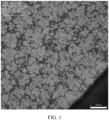
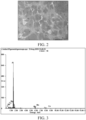
- Example 2 The aluminum alloy prepared in Example 1 was imaged by using a scanning electron microscope (SEM) to obtain SEM images shown in FIG. 1 and FIG. 2 .
- SEM scanning electron microscope
- the area marked with the cross in FIG. 2 was subjected to diffraction to obtain an SEM-diffraction spectrum shown in FIG. 3 .
- the EDS spectrum was analyzed to obtain the composition of the area marked with the cross in FIG. 2 , as shown in Table 2.
- Table 2 Element wt% at% CK 02.52 05.94 OK 01.42 02.52 MgK 00.81 00.95 AlK 71.05 74.60 SiK 07.69 07.76 MnK 12.40 06.39 CuK 04.11 01.83 Matrix Correction ZAF
- Tensile test The yield strength, tensile strength, and elongation were tested according to GBT 228.1-2010 Metallic Materials Tensile Testing Part 1: Room Temperature Test Methods.
- Thermal conductivity test A thermally conductive ingot wafer of ⁇ 12.7 ⁇ 3 mm was prepared as a to-be-tested piece, and graphite was evenly sprayed on both sides of the to-be-tested piece to form a coating. The coated piece was tested by using a laser thermal conductivity instrument. The laser thermal conductivity test was carried out in accordance with ASTM E1461 Standard Test Method for Thermal Diffusivity by the Flash Method.
Landscapes
- Chemical & Material Sciences (AREA)
- Engineering & Computer Science (AREA)
- Mechanical Engineering (AREA)
- Materials Engineering (AREA)
- Metallurgy (AREA)
- Organic Chemistry (AREA)
- Physics & Mathematics (AREA)
- Thermal Sciences (AREA)
- Crystallography & Structural Chemistry (AREA)
- Continuous Casting (AREA)
- Conductive Materials (AREA)
Claims (11)
- Alliage d'aluminium - en pourcentage en masse - l'alliage d'aluminium comprenant :
8-11 % de Si, 2-3 % de Cu, 0,7-1,1 % de Mg, 0,7-1,5 % de Mn, 0,01-0,015 % de Sr, 0,01-0,015 % de Cr, 0-0,4 % de Fe, 0,02-0,1 % de Ti, 0,01-0,02 % de Ga, 0,004-0,02 % de B, 0-2 % de Zn, et le reste d'Al et moins de 0,1 % d'autres éléments, l'alliage d'aluminium ayant une limite d'élasticité de 240 à 260 MPa déterminée conformément à la norme GBT 228.1-2010, une résistance à la traction de 380 à 410 MPa déterminée conformément à la norme GBT 228.1-2010, un allongement de 3 à 6 % déterminé conformément à la norme GBT 228.1-2010 et une conductivité thermique de 130 à 142 W/(K•m) déterminée conformément à la norme ASTM E1461. - Alliage d'aluminium selon la revendication 1 - en pourcentage en masse - l'alliage d'aluminium comprenant :
9-10,8 % de Si, 2,5-2,8 % de Cu, 0,7-1,1 % de Mg, 0,9-1,3 % de Mn, 0,01-0,015 % de Sr, 0,01-0,015 % de Cr, 0-0,4 % de Fe, 0,03-0,1 % de Ti, 0,01-0,015 % de Ga, 0,004-0,01 % de B, 0-2 % de Zn, et le reste d'Al et moins de 0,1 % d'autres éléments. - Alliage d'aluminium selon la revendication 1 ou 2, un rapport de masse entre Ti et B dans l'alliage d'aluminium étant de (5 à 10):1 .
- Alliage d'aluminium selon l'une quelconque des revendications 1 à 3, une teneur en Ga en pourcentage en masse étant supérieure à une teneur en Sr en pourcentage en masse, dans l'alliage d'aluminium.
- Alliage d'aluminium selon l'une quelconque des revendications 1 à 4, une teneur en Si et une teneur en Cu dans l'alliage d'aluminium satisfaisant la condition suivante :

- Alliage d'aluminium selon l'une quelconque des revendications 1 à 5, une teneur en Mn et une teneur en Cu dans l'alliage d'aluminium satisfaisant la condition suivante :

- Alliage d'aluminium selon l'une quelconque des revendications 1 à 6, les autres éléments comprenant un ou plusieurs éléments parmi Zr, Ni, Ce, Sc, et Er.
- Procédé de préparation de l'alliage d'aluminium selon l'une quelconque des revendications 1 à 7, comprenant les étapes suivantes :
peser des matières premières diverses dans les proportions requises basé sur les proportions de tous les éléments de l'alliage d'aluminium, faire fondre les matières premières dans un four de fusion pour obtenir un métal fondu, et soumettre le métal fondu à l'élimination de scories, à l'affinage et au dégazage, puis à une coulée, pour obtenir un lingot d'alliage d'aluminium. - Procédé selon la revendication 8, comprenant en outre :
coulée sous pression du lingot d'alliage d'aluminium pour formation. - Alliage d'aluminium selon la revendication 9, comprenant effectuer un vieillissement artificiel de l'alliage d'aluminium coulé sous pression.
- Procédé selon la revendication 10, le vieillissement artificiel étant effectué à 100-200 °C pendant 1,5-3 h.
Applications Claiming Priority (2)
| Application Number | Priority Date | Filing Date | Title |
|---|---|---|---|
| CN201911174477.0A CN112391562B (zh) | 2019-11-26 | 2019-11-26 | 一种铝合金及其制备方法 |
| PCT/CN2020/081455 WO2021103362A1 (fr) | 2019-11-26 | 2020-03-26 | Alliage d'aluminium et son procédé de préparation |
Publications (3)
| Publication Number | Publication Date |
|---|---|
| EP4067521A1 EP4067521A1 (fr) | 2022-10-05 |
| EP4067521A4 EP4067521A4 (fr) | 2023-01-04 |
| EP4067521B1 true EP4067521B1 (fr) | 2024-07-31 |
Family
ID=74603736
Family Applications (1)
| Application Number | Title | Priority Date | Filing Date |
|---|---|---|---|
| EP20894656.6A Active EP4067521B1 (fr) | 2019-11-26 | 2020-03-26 | Alliage d'aluminium et son procédé de préparation |
Country Status (4)
| Country | Link |
|---|---|
| US (1) | US20230002864A1 (fr) |
| EP (1) | EP4067521B1 (fr) |
| CN (1) | CN112391562B (fr) |
| WO (1) | WO2021103362A1 (fr) |
Families Citing this family (10)
| Publication number | Priority date | Publication date | Assignee | Title |
|---|---|---|---|---|
| CN113774257B (zh) * | 2021-08-26 | 2023-06-02 | 山东创新金属科技有限公司 | 一种铝硅镁系铸造铝合金的短流程生产工艺 |
| JP7666281B2 (ja) * | 2021-10-04 | 2025-04-22 | トヨタ自動車株式会社 | アルミニウム合金材料及びその製造方法 |
| CN114015914B (zh) * | 2021-10-28 | 2023-01-17 | 上海嘉朗实业南通智能科技有限公司 | 一种高强度高导热性压铸铝合金材料及其制备方法 |
| CN114323849B (zh) * | 2021-12-22 | 2023-01-17 | 河北新立中有色金属集团有限公司 | 铸造铝合金333z.1铸态光谱单点标准样品的制备方法 |
| CN116411208B (zh) * | 2021-12-30 | 2026-02-10 | 比亚迪股份有限公司 | 一种压铸铝合金及其制备方法 |
| CN116121574B (zh) * | 2023-02-08 | 2024-06-28 | 内蒙古蒙泰集团有限公司 | 一种适用于铝硅铸造合金中的铁相改形方法 |
| CN116752018B (zh) * | 2023-08-21 | 2023-12-05 | 小米汽车科技有限公司 | 一种免热处理的压铸铝合金材料及其制备方法、汽车结构件 |
| CN116987936A (zh) * | 2023-09-22 | 2023-11-03 | 广东辉煌金属制品有限公司 | Al-Si系免热处理铝合金、其制备方法及应用 |
| CN117778825B (zh) * | 2023-11-23 | 2025-12-12 | 福建祥鑫新材料科技有限公司 | 一种发动机用铝合金及其制备方法 |
| CN118028636B (zh) * | 2024-02-05 | 2024-11-29 | 广东辉煌金属制品有限公司 | Al-Si系压铸铝合金及其制备方法、散热结构 |
Family Cites Families (10)
| Publication number | Priority date | Publication date | Assignee | Title |
|---|---|---|---|---|
| JPS5330448A (en) * | 1976-09-02 | 1978-03-22 | Sumitomo Light Metal Ind | Brazing aluminum alloy clad with pseudooanode effect |
| JPS59100249A (ja) * | 1982-11-26 | 1984-06-09 | Showa Alum Corp | 高温強度特性と犠性防食効果をあわせもつアルミニウム合金ブレ−ジングシ−ト |
| JP2506115B2 (ja) * | 1987-07-11 | 1996-06-12 | 株式会社豊田自動織機製作所 | シャ−切断性の良い高強度・耐摩耗性アルミニウム合金とその製造法 |
| CN1250758C (zh) * | 2002-10-01 | 2006-04-12 | 西南铝业(集团)有限责任公司 | 高硅铸铝光谱标准样品及其制备方法 |
| ATE437972T1 (de) * | 2003-01-23 | 2009-08-15 | Rheinfelden Aluminium Gmbh | Druckgusslegierung aus aluminiumlegierung |
| EP3235917B1 (fr) * | 2016-04-19 | 2018-08-15 | Rheinfelden Alloys GmbH & Co. KG | Alliage d'aluminium pour moulage sous pression |
| CN106119626A (zh) * | 2016-08-30 | 2016-11-16 | 苏州梅克卡斯汽车科技有限公司 | 一种汽车轻量化底盘铝合金结构件及其制备方法 |
| CN108531754B (zh) * | 2017-03-04 | 2020-04-17 | 河北立中有色金属集团有限公司 | 一种高电导率铸造铝合金 |
| CN108624788A (zh) * | 2017-03-17 | 2018-10-09 | 姚晓宁 | 高强韧铸造铝合金及其制备方法 |
| CN107937768B (zh) * | 2017-12-18 | 2019-12-17 | 广州致远新材料科技有限公司 | 一种挤压铸造铝合金材料及其制备方法 |
-
2019
- 2019-11-26 CN CN201911174477.0A patent/CN112391562B/zh active Active
-
2020
- 2020-03-26 EP EP20894656.6A patent/EP4067521B1/fr active Active
- 2020-03-26 US US17/780,493 patent/US20230002864A1/en active Pending
- 2020-03-26 WO PCT/CN2020/081455 patent/WO2021103362A1/fr not_active Ceased
Also Published As
| Publication number | Publication date |
|---|---|
| CN112391562B (zh) | 2021-09-21 |
| EP4067521A1 (fr) | 2022-10-05 |
| EP4067521A4 (fr) | 2023-01-04 |
| WO2021103362A1 (fr) | 2021-06-03 |
| US20230002864A1 (en) | 2023-01-05 |
| CN112391562A (zh) | 2021-02-23 |
Similar Documents
| Publication | Publication Date | Title |
|---|---|---|
| EP4067521B1 (fr) | Alliage d'aluminium et son procédé de préparation | |
| EP2475794B1 (fr) | Coulée d'alliage d'aluminium et procédé de fabrication associé | |
| EP4083244B1 (fr) | Matériau en poudre en aluminium résistant à la chaleur | |
| EP4079880B1 (fr) | Alliage d'aluminium et application correspondante | |
| WO2013144343A1 (fr) | Alliage et son procédé de fabrication | |
| KR102337486B1 (ko) | 알루미늄 다이캐스팅 제품의 제조방법 및 이 방법에 의해 제조된 알루미늄 다이캐스팅 제품 | |
| EP2719784A1 (fr) | Alliage d'aluminium ayant d'excellentes caractéristiques à haute température | |
| EP3878991A1 (fr) | Alliage d'aluminium destiné à une coulée sous pression et matériau d'alliage d'aluminium coulé sous pression | |
| EP4206342A1 (fr) | Alliage d'aluminium et son utilisation | |
| CN110832093A (zh) | 用于添加剂技术的铝合金 | |
| JP4923498B2 (ja) | 高強度・低比重アルミニウム合金 | |
| EP3842558A1 (fr) | Tôle d'alliage d'aluminium pour couvercle de batterie pour moulage de soupape antidéflagrante intégrée et son procédé de production | |
| EP0861912B9 (fr) | Elément revêtu résistant à l'usure | |
| EP3872203A1 (fr) | Tôle d'alliage d'aluminium pour couvercle de batterie permettant de former une soupape antidéflagrante intégrée et son procédé de production | |
| EP4170051A1 (fr) | Alliage d'aluminium, son procédé de préparation et son application | |
| CN110195176A (zh) | 一种高强韧压铸铝合金及其制备方法 | |
| EP3877562B1 (fr) | Alliages d'aluminium-lithium de la série 2xxx | |
| CN111212923A (zh) | 铸造用模具材料及铜合金原材料 | |
| EP1522600B1 (fr) | Alliage d' Aluminium forgé à haute résistance en fatigue | |
| EP3943629B1 (fr) | Alliage d'aluminium et matériau de coulée sous pression en alliage d'aluminium | |
| EP3862449A1 (fr) | Plaque en alliage d'aluminium pour couvercle de batterie destinée à être utilisée pour mouler une valve antidéflagrante intégrée, et son procédé de production | |
| JP4058398B2 (ja) | 高温疲労強度に優れたアルミニウム合金鍛造材 | |
| JP3920656B2 (ja) | ホウ素含有高剛性Al合金 | |
| KR102780397B1 (ko) | 비열처리형 알루미늄 합금 및 이를 이용한 알루미늄 합금 부품의 제조방법 | |
| HK40037312A (en) | Aluminum alloy and preparation method thereof |
Legal Events
| Date | Code | Title | Description |
|---|---|---|---|
| STAA | Information on the status of an ep patent application or granted ep patent |
Free format text: STATUS: THE INTERNATIONAL PUBLICATION HAS BEEN MADE |
|
| PUAI | Public reference made under article 153(3) epc to a published international application that has entered the european phase |
Free format text: ORIGINAL CODE: 0009012 |
|
| STAA | Information on the status of an ep patent application or granted ep patent |
Free format text: STATUS: REQUEST FOR EXAMINATION WAS MADE |
|
| 17P | Request for examination filed |
Effective date: 20220527 |
|
| AK | Designated contracting states |
Kind code of ref document: A1 Designated state(s): AL AT BE BG CH CY CZ DE DK EE ES FI FR GB GR HR HU IE IS IT LI LT LU LV MC MK MT NL NO PL PT RO RS SE SI SK SM TR |
|
| A4 | Supplementary search report drawn up and despatched |
Effective date: 20221207 |
|
| RIC1 | Information provided on ipc code assigned before grant |
Ipc: C22C 1/03 20060101ALI20221201BHEP Ipc: C22F 1/043 20060101ALI20221201BHEP Ipc: B22D 21/04 20060101ALI20221201BHEP Ipc: C22C 1/06 20060101ALI20221201BHEP Ipc: C22C 1/02 20060101ALI20221201BHEP Ipc: C22C 21/02 20060101AFI20221201BHEP |
|
| DAV | Request for validation of the european patent (deleted) | ||
| DAX | Request for extension of the european patent (deleted) | ||
| GRAP | Despatch of communication of intention to grant a patent |
Free format text: ORIGINAL CODE: EPIDOSNIGR1 |
|
| STAA | Information on the status of an ep patent application or granted ep patent |
Free format text: STATUS: GRANT OF PATENT IS INTENDED |
|
| INTG | Intention to grant announced |
Effective date: 20240411 |
|
| GRAS | Grant fee paid |
Free format text: ORIGINAL CODE: EPIDOSNIGR3 |
|
| GRAA | (expected) grant |
Free format text: ORIGINAL CODE: 0009210 |
|
| STAA | Information on the status of an ep patent application or granted ep patent |
Free format text: STATUS: THE PATENT HAS BEEN GRANTED |
|
| P01 | Opt-out of the competence of the unified patent court (upc) registered |
Free format text: CASE NUMBER: APP_36088/2024 Effective date: 20240617 |
|
| AK | Designated contracting states |
Kind code of ref document: B1 Designated state(s): AL AT BE BG CH CY CZ DE DK EE ES FI FR GB GR HR HU IE IS IT LI LT LU LV MC MK MT NL NO PL PT RO RS SE SI SK SM TR |
|
| REG | Reference to a national code |
Ref country code: CH Ref legal event code: EP Ref country code: GB Ref legal event code: FG4D |
|
| REG | Reference to a national code |
Ref country code: DE Ref legal event code: R096 Ref document number: 602020035079 Country of ref document: DE |
|
| REG | Reference to a national code |
Ref country code: IE Ref legal event code: FG4D |
|
| REG | Reference to a national code |
Ref country code: LT Ref legal event code: MG9D |
|
| REG | Reference to a national code |
Ref country code: NL Ref legal event code: MP Effective date: 20240731 |
|
| PG25 | Lapsed in a contracting state [announced via postgrant information from national office to epo] |
Ref country code: PT Free format text: LAPSE BECAUSE OF FAILURE TO SUBMIT A TRANSLATION OF THE DESCRIPTION OR TO PAY THE FEE WITHIN THE PRESCRIBED TIME-LIMIT Effective date: 20241202 |
|
| REG | Reference to a national code |
Ref country code: AT Ref legal event code: MK05 Ref document number: 1708520 Country of ref document: AT Kind code of ref document: T Effective date: 20240731 |
|
| PG25 | Lapsed in a contracting state [announced via postgrant information from national office to epo] |
Ref country code: PT Free format text: LAPSE BECAUSE OF FAILURE TO SUBMIT A TRANSLATION OF THE DESCRIPTION OR TO PAY THE FEE WITHIN THE PRESCRIBED TIME-LIMIT Effective date: 20241202 |
|
| PG25 | Lapsed in a contracting state [announced via postgrant information from national office to epo] |
Ref country code: NO Free format text: LAPSE BECAUSE OF FAILURE TO SUBMIT A TRANSLATION OF THE DESCRIPTION OR TO PAY THE FEE WITHIN THE PRESCRIBED TIME-LIMIT Effective date: 20241031 |
|
| PG25 | Lapsed in a contracting state [announced via postgrant information from national office to epo] |
Ref country code: FI Free format text: LAPSE BECAUSE OF FAILURE TO SUBMIT A TRANSLATION OF THE DESCRIPTION OR TO PAY THE FEE WITHIN THE PRESCRIBED TIME-LIMIT Effective date: 20240731 Ref country code: NL Free format text: LAPSE BECAUSE OF FAILURE TO SUBMIT A TRANSLATION OF THE DESCRIPTION OR TO PAY THE FEE WITHIN THE PRESCRIBED TIME-LIMIT Effective date: 20240731 Ref country code: GR Free format text: LAPSE BECAUSE OF FAILURE TO SUBMIT A TRANSLATION OF THE DESCRIPTION OR TO PAY THE FEE WITHIN THE PRESCRIBED TIME-LIMIT Effective date: 20241101 Ref country code: PL Free format text: LAPSE BECAUSE OF FAILURE TO SUBMIT A TRANSLATION OF THE DESCRIPTION OR TO PAY THE FEE WITHIN THE PRESCRIBED TIME-LIMIT Effective date: 20240731 |
|
| PG25 | Lapsed in a contracting state [announced via postgrant information from national office to epo] |
Ref country code: BG Free format text: LAPSE BECAUSE OF FAILURE TO SUBMIT A TRANSLATION OF THE DESCRIPTION OR TO PAY THE FEE WITHIN THE PRESCRIBED TIME-LIMIT Effective date: 20240731 |
|
| PG25 | Lapsed in a contracting state [announced via postgrant information from national office to epo] |
Ref country code: LV Free format text: LAPSE BECAUSE OF FAILURE TO SUBMIT A TRANSLATION OF THE DESCRIPTION OR TO PAY THE FEE WITHIN THE PRESCRIBED TIME-LIMIT Effective date: 20240731 |
|
| PG25 | Lapsed in a contracting state [announced via postgrant information from national office to epo] |
Ref country code: AT Free format text: LAPSE BECAUSE OF FAILURE TO SUBMIT A TRANSLATION OF THE DESCRIPTION OR TO PAY THE FEE WITHIN THE PRESCRIBED TIME-LIMIT Effective date: 20240731 Ref country code: IS Free format text: LAPSE BECAUSE OF FAILURE TO SUBMIT A TRANSLATION OF THE DESCRIPTION OR TO PAY THE FEE WITHIN THE PRESCRIBED TIME-LIMIT Effective date: 20241130 |
|
| PG25 | Lapsed in a contracting state [announced via postgrant information from national office to epo] |
Ref country code: HR Free format text: LAPSE BECAUSE OF FAILURE TO SUBMIT A TRANSLATION OF THE DESCRIPTION OR TO PAY THE FEE WITHIN THE PRESCRIBED TIME-LIMIT Effective date: 20240731 |
|
| PG25 | Lapsed in a contracting state [announced via postgrant information from national office to epo] |
Ref country code: ES Free format text: LAPSE BECAUSE OF FAILURE TO SUBMIT A TRANSLATION OF THE DESCRIPTION OR TO PAY THE FEE WITHIN THE PRESCRIBED TIME-LIMIT Effective date: 20240731 Ref country code: RS Free format text: LAPSE BECAUSE OF FAILURE TO SUBMIT A TRANSLATION OF THE DESCRIPTION OR TO PAY THE FEE WITHIN THE PRESCRIBED TIME-LIMIT Effective date: 20241031 |
|
| PG25 | Lapsed in a contracting state [announced via postgrant information from national office to epo] |
Ref country code: RS Free format text: LAPSE BECAUSE OF FAILURE TO SUBMIT A TRANSLATION OF THE DESCRIPTION OR TO PAY THE FEE WITHIN THE PRESCRIBED TIME-LIMIT Effective date: 20241031 Ref country code: PL Free format text: LAPSE BECAUSE OF FAILURE TO SUBMIT A TRANSLATION OF THE DESCRIPTION OR TO PAY THE FEE WITHIN THE PRESCRIBED TIME-LIMIT Effective date: 20240731 Ref country code: NO Free format text: LAPSE BECAUSE OF FAILURE TO SUBMIT A TRANSLATION OF THE DESCRIPTION OR TO PAY THE FEE WITHIN THE PRESCRIBED TIME-LIMIT Effective date: 20241031 Ref country code: NL Free format text: LAPSE BECAUSE OF FAILURE TO SUBMIT A TRANSLATION OF THE DESCRIPTION OR TO PAY THE FEE WITHIN THE PRESCRIBED TIME-LIMIT Effective date: 20240731 Ref country code: LV Free format text: LAPSE BECAUSE OF FAILURE TO SUBMIT A TRANSLATION OF THE DESCRIPTION OR TO PAY THE FEE WITHIN THE PRESCRIBED TIME-LIMIT Effective date: 20240731 Ref country code: IS Free format text: LAPSE BECAUSE OF FAILURE TO SUBMIT A TRANSLATION OF THE DESCRIPTION OR TO PAY THE FEE WITHIN THE PRESCRIBED TIME-LIMIT Effective date: 20241130 Ref country code: HR Free format text: LAPSE BECAUSE OF FAILURE TO SUBMIT A TRANSLATION OF THE DESCRIPTION OR TO PAY THE FEE WITHIN THE PRESCRIBED TIME-LIMIT Effective date: 20240731 Ref country code: GR Free format text: LAPSE BECAUSE OF FAILURE TO SUBMIT A TRANSLATION OF THE DESCRIPTION OR TO PAY THE FEE WITHIN THE PRESCRIBED TIME-LIMIT Effective date: 20241101 Ref country code: FI Free format text: LAPSE BECAUSE OF FAILURE TO SUBMIT A TRANSLATION OF THE DESCRIPTION OR TO PAY THE FEE WITHIN THE PRESCRIBED TIME-LIMIT Effective date: 20240731 Ref country code: ES Free format text: LAPSE BECAUSE OF FAILURE TO SUBMIT A TRANSLATION OF THE DESCRIPTION OR TO PAY THE FEE WITHIN THE PRESCRIBED TIME-LIMIT Effective date: 20240731 Ref country code: BG Free format text: LAPSE BECAUSE OF FAILURE TO SUBMIT A TRANSLATION OF THE DESCRIPTION OR TO PAY THE FEE WITHIN THE PRESCRIBED TIME-LIMIT Effective date: 20240731 Ref country code: AT Free format text: LAPSE BECAUSE OF FAILURE TO SUBMIT A TRANSLATION OF THE DESCRIPTION OR TO PAY THE FEE WITHIN THE PRESCRIBED TIME-LIMIT Effective date: 20240731 |
|
| PG25 | Lapsed in a contracting state [announced via postgrant information from national office to epo] |
Ref country code: SM Free format text: LAPSE BECAUSE OF FAILURE TO SUBMIT A TRANSLATION OF THE DESCRIPTION OR TO PAY THE FEE WITHIN THE PRESCRIBED TIME-LIMIT Effective date: 20240731 Ref country code: DK Free format text: LAPSE BECAUSE OF FAILURE TO SUBMIT A TRANSLATION OF THE DESCRIPTION OR TO PAY THE FEE WITHIN THE PRESCRIBED TIME-LIMIT Effective date: 20240731 Ref country code: RO Free format text: LAPSE BECAUSE OF FAILURE TO SUBMIT A TRANSLATION OF THE DESCRIPTION OR TO PAY THE FEE WITHIN THE PRESCRIBED TIME-LIMIT Effective date: 20240731 |
|
| PG25 | Lapsed in a contracting state [announced via postgrant information from national office to epo] |
Ref country code: EE Free format text: LAPSE BECAUSE OF FAILURE TO SUBMIT A TRANSLATION OF THE DESCRIPTION OR TO PAY THE FEE WITHIN THE PRESCRIBED TIME-LIMIT Effective date: 20240731 |
|
| PG25 | Lapsed in a contracting state [announced via postgrant information from national office to epo] |
Ref country code: CZ Free format text: LAPSE BECAUSE OF FAILURE TO SUBMIT A TRANSLATION OF THE DESCRIPTION OR TO PAY THE FEE WITHIN THE PRESCRIBED TIME-LIMIT Effective date: 20240731 |
|
| PG25 | Lapsed in a contracting state [announced via postgrant information from national office to epo] |
Ref country code: SK Free format text: LAPSE BECAUSE OF FAILURE TO SUBMIT A TRANSLATION OF THE DESCRIPTION OR TO PAY THE FEE WITHIN THE PRESCRIBED TIME-LIMIT Effective date: 20240731 Ref country code: IT Free format text: LAPSE BECAUSE OF FAILURE TO SUBMIT A TRANSLATION OF THE DESCRIPTION OR TO PAY THE FEE WITHIN THE PRESCRIBED TIME-LIMIT Effective date: 20240731 |
|
| REG | Reference to a national code |
Ref country code: DE Ref legal event code: R097 Ref document number: 602020035079 Country of ref document: DE |
|
| PLBE | No opposition filed within time limit |
Free format text: ORIGINAL CODE: 0009261 |
|
| STAA | Information on the status of an ep patent application or granted ep patent |
Free format text: STATUS: NO OPPOSITION FILED WITHIN TIME LIMIT |
|
| 26N | No opposition filed |
Effective date: 20250501 |
|
| PG25 | Lapsed in a contracting state [announced via postgrant information from national office to epo] |
Ref country code: SE Free format text: LAPSE BECAUSE OF FAILURE TO SUBMIT A TRANSLATION OF THE DESCRIPTION OR TO PAY THE FEE WITHIN THE PRESCRIBED TIME-LIMIT Effective date: 20240731 |
|
| PG25 | Lapsed in a contracting state [announced via postgrant information from national office to epo] |
Ref country code: MC Free format text: LAPSE BECAUSE OF FAILURE TO SUBMIT A TRANSLATION OF THE DESCRIPTION OR TO PAY THE FEE WITHIN THE PRESCRIBED TIME-LIMIT Effective date: 20240731 |
|
| REG | Reference to a national code |
Ref country code: CH Ref legal event code: H13 Free format text: ST27 STATUS EVENT CODE: U-0-0-H10-H13 (AS PROVIDED BY THE NATIONAL OFFICE) Effective date: 20251023 |
|
| PG25 | Lapsed in a contracting state [announced via postgrant information from national office to epo] |
Ref country code: LU Free format text: LAPSE BECAUSE OF NON-PAYMENT OF DUE FEES Effective date: 20250326 |
|
| REG | Reference to a national code |
Ref country code: BE Ref legal event code: MM Effective date: 20250331 |
|
| PG25 | Lapsed in a contracting state [announced via postgrant information from national office to epo] |
Ref country code: BE Free format text: LAPSE BECAUSE OF NON-PAYMENT OF DUE FEES Effective date: 20250331 |
|
| PG25 | Lapsed in a contracting state [announced via postgrant information from national office to epo] |
Ref country code: CH Free format text: LAPSE BECAUSE OF NON-PAYMENT OF DUE FEES Effective date: 20250331 |
|
| PG25 | Lapsed in a contracting state [announced via postgrant information from national office to epo] |
Ref country code: IE Free format text: LAPSE BECAUSE OF NON-PAYMENT OF DUE FEES Effective date: 20250326 |
|
| PGFP | Annual fee paid to national office [announced via postgrant information from national office to epo] |
Ref country code: GB Payment date: 20260324 Year of fee payment: 7 |
|
| PGFP | Annual fee paid to national office [announced via postgrant information from national office to epo] |
Ref country code: DE Payment date: 20260320 Year of fee payment: 7 |
|
| PGFP | Annual fee paid to national office [announced via postgrant information from national office to epo] |
Ref country code: FR Payment date: 20260324 Year of fee payment: 7 |