EP4068173A1 - Système et procédé d'analyse de cause de défaut de produit et support lisible par ordinateur - Google Patents
Système et procédé d'analyse de cause de défaut de produit et support lisible par ordinateur Download PDFInfo
- Publication number
- EP4068173A1 EP4068173A1 EP19945404.2A EP19945404A EP4068173A1 EP 4068173 A1 EP4068173 A1 EP 4068173A1 EP 19945404 A EP19945404 A EP 19945404A EP 4068173 A1 EP4068173 A1 EP 4068173A1
- Authority
- EP
- European Patent Office
- Prior art keywords
- analyzed
- defect
- correlation
- determining
- processing device
- Prior art date
- Legal status (The legal status is an assumption and is not a legal conclusion. Google has not performed a legal analysis and makes no representation as to the accuracy of the status listed.)
- Withdrawn
Links
Images
Classifications
-
- G—PHYSICS
- G05—CONTROLLING; REGULATING
- G05B—CONTROL OR REGULATING SYSTEMS IN GENERAL; FUNCTIONAL ELEMENTS OF SUCH SYSTEMS; MONITORING OR TESTING ARRANGEMENTS FOR SUCH SYSTEMS OR ELEMENTS
- G05B19/00—Program-control systems
- G05B19/02—Program-control systems electric
- G05B19/418—Total factory control, i.e. centrally controlling a plurality of machines, e.g. direct or distributed numerical control [DNC], flexible manufacturing systems [FMS], integrated manufacturing systems [IMS] or computer integrated manufacturing [CIM]
- G05B19/41875—Total factory control, i.e. centrally controlling a plurality of machines, e.g. direct or distributed numerical control [DNC], flexible manufacturing systems [FMS], integrated manufacturing systems [IMS] or computer integrated manufacturing [CIM] characterised by quality surveillance of production
-
- G—PHYSICS
- G05—CONTROLLING; REGULATING
- G05B—CONTROL OR REGULATING SYSTEMS IN GENERAL; FUNCTIONAL ELEMENTS OF SUCH SYSTEMS; MONITORING OR TESTING ARRANGEMENTS FOR SUCH SYSTEMS OR ELEMENTS
- G05B19/00—Program-control systems
- G05B19/02—Program-control systems electric
- G05B19/18—Numerical control [NC], i.e. automatically operating machines, in particular machine tools, e.g. in a manufacturing environment, so as to execute positioning, movement or co-ordinated operations by means of program data in numerical form
- G05B19/406—Numerical control [NC], i.e. automatically operating machines, in particular machine tools, e.g. in a manufacturing environment, so as to execute positioning, movement or co-ordinated operations by means of program data in numerical form characterised by monitoring or safety
-
- G—PHYSICS
- G05—CONTROLLING; REGULATING
- G05B—CONTROL OR REGULATING SYSTEMS IN GENERAL; FUNCTIONAL ELEMENTS OF SUCH SYSTEMS; MONITORING OR TESTING ARRANGEMENTS FOR SUCH SYSTEMS OR ELEMENTS
- G05B23/00—Testing or monitoring of control systems or parts thereof
- G05B23/02—Electric testing or monitoring
- G05B23/0205—Electric testing or monitoring by means of a monitoring system capable of detecting and responding to faults
- G05B23/0218—Electric testing or monitoring by means of a monitoring system capable of detecting and responding to faults characterised by the fault detection method dealing with either existing or incipient faults
- G05B23/0224—Process history based detection method, e.g. whereby history implies the availability of large amounts of data
- G05B23/0227—Qualitative history assessment, whereby the type of data acted upon, e.g. waveforms, images or patterns, is not relevant, e.g. rule based assessment; if-then decisions
- G05B23/0237—Qualitative history assessment, whereby the type of data acted upon, e.g. waveforms, images or patterns, is not relevant, e.g. rule based assessment; if-then decisions based on parallel systems, e.g. comparing signals produced at the same time by same type systems and detect faulty ones by noticing differences among their responses
-
- G—PHYSICS
- G06—COMPUTING OR CALCULATING; COUNTING
- G06F—ELECTRIC DIGITAL DATA PROCESSING
- G06F3/00—Input arrangements for transferring data to be processed into a form capable of being handled by the computer; Output arrangements for transferring data from processing unit to output unit, e.g. interface arrangements
- G06F3/14—Digital output to display device ; Cooperation and interconnection of the display device with other functional units
- G06F3/147—Digital output to display device ; Cooperation and interconnection of the display device with other functional units using display panels
-
- G—PHYSICS
- G06—COMPUTING OR CALCULATING; COUNTING
- G06N—COMPUTING ARRANGEMENTS BASED ON SPECIFIC COMPUTATIONAL MODELS
- G06N20/00—Machine learning
-
- G—PHYSICS
- G06—COMPUTING OR CALCULATING; COUNTING
- G06N—COMPUTING ARRANGEMENTS BASED ON SPECIFIC COMPUTATIONAL MODELS
- G06N20/00—Machine learning
- G06N20/20—Ensemble learning
-
- G—PHYSICS
- G06—COMPUTING OR CALCULATING; COUNTING
- G06N—COMPUTING ARRANGEMENTS BASED ON SPECIFIC COMPUTATIONAL MODELS
- G06N5/00—Computing arrangements using knowledge-based models
- G06N5/01—Dynamic search techniques; Heuristics; Dynamic trees; Branch-and-bound
-
- G—PHYSICS
- G06—COMPUTING OR CALCULATING; COUNTING
- G06Q—INFORMATION AND COMMUNICATION TECHNOLOGY [ICT] SPECIALLY ADAPTED FOR ADMINISTRATIVE, COMMERCIAL, FINANCIAL, MANAGERIAL OR SUPERVISORY PURPOSES; SYSTEMS OR METHODS SPECIALLY ADAPTED FOR ADMINISTRATIVE, COMMERCIAL, FINANCIAL, MANAGERIAL OR SUPERVISORY PURPOSES, NOT OTHERWISE PROVIDED FOR
- G06Q10/00—Administration; Management
- G06Q10/06—Resources, workflows, human or project management; Enterprise or organisation planning; Enterprise or organisation modelling
- G06Q10/063—Operations research, analysis or management
- G06Q10/0633—Workflow analysis
-
- G—PHYSICS
- G06—COMPUTING OR CALCULATING; COUNTING
- G06Q—INFORMATION AND COMMUNICATION TECHNOLOGY [ICT] SPECIALLY ADAPTED FOR ADMINISTRATIVE, COMMERCIAL, FINANCIAL, MANAGERIAL OR SUPERVISORY PURPOSES; SYSTEMS OR METHODS SPECIALLY ADAPTED FOR ADMINISTRATIVE, COMMERCIAL, FINANCIAL, MANAGERIAL OR SUPERVISORY PURPOSES, NOT OTHERWISE PROVIDED FOR
- G06Q10/00—Administration; Management
- G06Q10/06—Resources, workflows, human or project management; Enterprise or organisation planning; Enterprise or organisation modelling
- G06Q10/063—Operations research, analysis or management
- G06Q10/0639—Performance analysis of employees; Performance analysis of enterprise or organisation operations
- G06Q10/06395—Quality analysis or management
-
- G—PHYSICS
- G06—COMPUTING OR CALCULATING; COUNTING
- G06Q—INFORMATION AND COMMUNICATION TECHNOLOGY [ICT] SPECIALLY ADAPTED FOR ADMINISTRATIVE, COMMERCIAL, FINANCIAL, MANAGERIAL OR SUPERVISORY PURPOSES; SYSTEMS OR METHODS SPECIALLY ADAPTED FOR ADMINISTRATIVE, COMMERCIAL, FINANCIAL, MANAGERIAL OR SUPERVISORY PURPOSES, NOT OTHERWISE PROVIDED FOR
- G06Q50/00—Information and communication technology [ICT] specially adapted for implementation of business processes of specific business sectors, e.g. utilities or tourism
- G06Q50/04—Manufacturing
-
- G—PHYSICS
- G05—CONTROLLING; REGULATING
- G05B—CONTROL OR REGULATING SYSTEMS IN GENERAL; FUNCTIONAL ELEMENTS OF SUCH SYSTEMS; MONITORING OR TESTING ARRANGEMENTS FOR SUCH SYSTEMS OR ELEMENTS
- G05B2219/00—Program-control systems
- G05B2219/30—Nc systems
- G05B2219/31—From computer integrated manufacturing till monitoring
- G05B2219/31314—Store in workpiece detected defects
-
- G—PHYSICS
- G05—CONTROLLING; REGULATING
- G05B—CONTROL OR REGULATING SYSTEMS IN GENERAL; FUNCTIONAL ELEMENTS OF SUCH SYSTEMS; MONITORING OR TESTING ARRANGEMENTS FOR SUCH SYSTEMS OR ELEMENTS
- G05B2219/00—Program-control systems
- G05B2219/30—Nc systems
- G05B2219/32—Operator till task planning
- G05B2219/32221—Correlation between defect and measured parameters to find origin of defect
-
- G—PHYSICS
- G05—CONTROLLING; REGULATING
- G05B—CONTROL OR REGULATING SYSTEMS IN GENERAL; FUNCTIONAL ELEMENTS OF SUCH SYSTEMS; MONITORING OR TESTING ARRANGEMENTS FOR SUCH SYSTEMS OR ELEMENTS
- G05B2219/00—Program-control systems
- G05B2219/30—Nc systems
- G05B2219/32—Operator till task planning
- G05B2219/32222—Fault, defect detection of origin of fault, defect of product
Definitions
- Embodiments of the present disclosure relate to the field of manufacturing display panels, in particular to a system and a method for analyzing cause of product defect and a computer readable medium.
- a method for determining a correlation between a processing device and a defect has important significance for positioning the defect, adjusting a production procedure and the like.
- Embodiments of the present disclosure provide a system and a method for analyzing cause of product defect and a computer readable medium.
- an embodiment of the present disclosure provides a system for analyzing cause of product defect, including: a distributed storage device, an analysis device, and a display device, where,
- the determining the correlation weight of the processing device to be analyzed in the processing devices corresponding to the defect to be analyzed includes:
- the determining the correlation between the processing device to be analyzed and the defect to be analyzed according to the correlation weight includes: for each processing device to be analyzed, determining the correlation between the processing device to be analyzed and the defect to be analyzed according to a sum of the sub-correlation weight of the first group and the sub-correlation weight of the second group.
- the determining the correlation between the processing device to be analyzed and the defect to be analyzed according to the correlation weight includes: for each processing device to be analyzed, determining a value parameter according to the sub-correlation weight of the first group and the sub-correlation weight of the second group, and determining the correlation between the processing device to be analyzed and the defect to be analyzed according to the value parameter.
- Qi is the sub-correlation weight of the i th group, i is 1 or 2
- DGi is a proportion of the products with the defect to be analyzed in the i th group to all the products with the defect to be analyzed
- DBi is a proportion of the products without the defect to be analyzed in the i th group to all the products without the defect to be analyzed.
- the determining the correlation weight of the processing device to be analyzed in the processing devices corresponding to the defect to be analyzed includes: determining at least a portion of the processing devices as the processing devices to be analyzed corresponding to the defect to be analyzed according to a preset corresponding relation.
- the production record further includes: parameter values of at least a portion of process parameters used by at least a portion of the processing devices, by which the product is processed during the production procedure, for processing the product; and after acquiring the production record from the production data stored in the distributed storage device, a preset machine learning model is configured to perform: determining the correlation between at least the portion of process parameters used by at least the portion of the processing devices and the defect to be analyzed, according to the production record.
- the machine learning model includes any one of a random forest model, a gradient-boosted tree model, and an XGBoost model.
- determining a recommended parameter value range for at least a portion of the process parameters according to the correlation between the process parameters and the defect to be analyzed determining a recommended parameter value range for at least a portion of the process parameters according to the correlation between the process parameters and the defect to be analyzed.
- the determining the recommended parameter value range for the at least the portion of the process parameters includes: determining the process parameter which has a correlation with the defect to be analyzed greater than a second preset value or ranked before a second preset position, as a key process parameter to be analyzed, and only determining the recommended parameter value range of the key process parameter to be analyzed.
- the product is a display panel.
- an embodiment of the present disclosure provides a method for analyzing cause of product defect, including: determining a correlation weight of a processing device to be analyzed in a plurality of processing devices corresponding to a defect to be analyzed according to a production record, and determining a correlation between the processing device to be analyzed and the defect to be analyzed according to the correlation weight;
- the production record includes information of processing devices by which a plurality of products are processed during production procedures for producing the products and information of defects occurring, where each of the products is processed by multiple ones of the processing devices during the production procedure, and each of the processing devices participates in only the production procedures for producing a portion of the products.
- the determining the correlation weight of the processing device to be analyzed in the processing devices corresponding to the defect to be analyzed, and determining the correlation between the processing device to be analyzed and the defect to be analyzed according to the correlation weight includes:
- the determining the correlation weight of the processing device to be analyzed in the processing devices corresponding to the defect to be analyzed, and determining the correlation between the processing device to be analyzed and the defect to be analyzed according to the correlation weight includes:
- the production record further includes: parameter values of at least a portion of process parameters used by at least a portion of the processing devices, by which the product is processed during the production procedure, for processing the product; the method further includes: determining, by a preset machine learning model, the correlation between at least the portion of process parameters used by at least the portion of the processing devices and the defect to be analyzed, according to the production record.
- the method further includes: after determining the correlation between at least the portion of process parameters used by at least the portion of the processing devices and the defect to be analyzed, determining a recommended parameter value range for at least a portion of the process parameters according to the correlation between the process parameters and the defect to be analyzed.
- an embodiment of the present disclosure provides a computer readable medium storing a computer program, which, when being executed by a processor, implements the method for analyzing cause of product defect described above.
- Embodiments of the present disclosure may be described with reference to plan and/or cross-sectional views by way of idealized schematic illustrations of the present disclosure. Accordingly, the example illustrations may be modified in accordance with manufacturing techniques and/or tolerances.
- Embodiments of the present disclosure are not limited to the embodiments shown in the drawings, but include configuration modifications formed based on a manufacturing process.
- regions illustrated in the drawings have schematic properties, and shapes of the regions shown in the drawings illustrate specific shapes of the regions of elements, but are not intended to be limiting.
- each of the production lines includes a plurality of process stations, and each of the process stations is used to perform a certain processing (e.g., cleaning, deposition, exposure, etching, cartridge-loading, inspection, etc.) on the products, including semi-finished products.
- each process station generally has a plurality of processing devices for performing the same processing; certainly, although the processing is theoretically the same, actual processing effects are not completely the same due to differences in model, state, etc. between different processing devices.
- each product needs to pass through a plurality of process stations during the production procedure, and process stations passed by different products in the production procedures may be different; further, products passing through the same process station may be processed by different processing devices therein.
- each processing device participates in the production procedures of a portion of the products, but does not participate in the production procedures of all of the products, i.e. each processing device must participate in only the production procedures of a portion of the products.
- an embodiment of the present disclosure provides a system for analyzing cause of product defect.
- the system according to the embodiment of the present disclosure can determine a correlation between the processing devices in the production line and various defects of product, namely, determine cause of product defect, so as to position the defect and adjust the production procedure and the like.
- defect refers to a quality defect of the product that may lead to a reduction in quality of the product or even lead to the product to be rejected, or may lead to the product needing to be reworked or repaired.
- Defects may be classified into various types as required.
- the defects may be classified according to their direct effects on performances of the products, such as bright line defects, dark line defects, hot spot defects, and the like; alternatively, the defects may be classified according to specific causes of the defects, such as defects of short circuit between a gate line and a data line, alignment defects, and the like; alternatively, the defects may be classified according to general causes of the defects, such as defects caused by an array process, and the like; alternatively, defects may be classified according to severities of the defects, such as defects leading to scrap, defects leading to reduced quality, and the like; alternatively, the defects may not be classified, that is, a product is considered to have a defect if any defect exists, and is considered to have no defect if no defect exists.
- the above correlation is for "one" type of defects, i.e., the same processing device has different correlations with respect to different types of defects.
- a correlation between a processing device and a defect means a degree of influence of participation of the processing device on occurrence probability of the defect in a product.
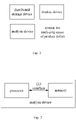
- a system for analyzing cause of product defect includes a distributed storage device, an analysis device, and a display device.
- the distributed storage device is configured to store production data generated by a factory device.
- the analysis device includes one or more processors configured to perform operations to determine a correlation.
- the display device is configured to display an analysis result of the analysis device.
- the distributed storage device stores therein production data obtained from the factory device.
- the factory device refers to any device in each factory, and may include processing devices in process stations, a management device for managing a production line in the factory, and the like;
- the production data refers to any information related to production, including which production lines of products are participated in by each processing device, and whether and what types of defects exist in each product.
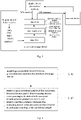
- the analysis device includes a processor (e.g., CPU) having data processing capability, and may further include a memory (e.g., hard disk) storing a desired program, and the processor is coupled to the memory via an I/O interface to enable information interaction, whereby the processor can perform a desired operation according to the program stored in the memory to implement the operation of determining the correlation.
- a processor e.g., CPU
- a memory e.g., hard disk
- the display device has a display function for displaying the analysis result (such as the correlation) calculated by the analysis device.
- the distributed storage device stores relatively complete data (such as a database), and the distributed storage device includes a plurality of hardware memories, and different hardware memories are distributed at different physical locations (such as different factories or different production lines), and mutually transmit information through a network, so that the data are in a distributed relationship, but logically form a database based on big data technology.
- raw data of different factory devices are stored in corresponding manufacturing systems, such as relational databases (such as Oracle, Mysql, etc.) of YMS (Yield Management System), FDC (Fault Detection and Classification), MES (Manufacturing Execution System), etc.
- a data extraction tool such as Sqoop, keyle, etc.
- the distributed storage device such as Hadoop Distributed File System, HDFSHadoop Distributed File System, HDFS
- Data in the distributed storage device may be stored by Hive tool or stored in Hbase database format.
- Hive tool the above raw data is first stored in a data lake; and then, preprocessing such as data cleansing and data conversion can be performed in the Hive tool according to application themes, scenes and the like of the data, so that a data warehouse with different themes (such as a production record theme, a detection data theme and a device data theme) and a data mart with different scenes (such as a device analysis scene and a parameter analysis scene) are obtained.
- the data mart may be coupled to the display device, the analysis device and the like through different API interfaces so as to realize data interaction there-between.
- RDBMS Relational Database Management System
- DFS Distributed File management System
- the grid computing scheme for the RDBMS divides a problem requiring huge computing power into a plurality of small parts, distributes the small parts to a plurality of computers for processing respectively, and finally integrates computing results.
- Oracle RAC real application cluster
- Oracle RAC real application cluster
- an application system of the grid computing scheme for the RDBMS cannot meet user's requirements when the data amount is relatively large, for example, due to limited expansion space of hardware, an efficiency of processing data would be very low due to bottleneck of input/output of a hard disk after the data is increased to a large enough order.
- the Hive tool is a data warehouse tool based on Hadoop and can be used for data extraction, transformation and loading (ETL), the Hive tool defines a simple SQL-like query language and allows complex analysis work which cannot be completed by default tools through a mapper and a reducer of customized MapReduce.
- the Hive tool has no special limiting to a data format to be stored and no index for data, and a user can freely organize a table in the Hive tool to process data in a database.
- a parallel processing of the distributed file management can meet storage and processing requirements of mass data, a user can query and process simple data through SQL, and a user-defined function can be adopted for complex processing. Therefore, when analyzing mass data of a factory, data of a database of the factory needs to be extracted into a distributed file system, so that, on one hand, raw data cannot be damaged, and on the other hand, an efficiency of data analysis is improved.
- the display device may include one or more displays, for example include one or more terminals having a display function, so that the analysis device may transmit the correlation obtained by the analysis device to the display device, and the display device can display the correlation.
- the display device may further be used to display an "interactive interface", which may include a sub-interface for displaying the analysis results (e.g., correlation), a sub-interface for controlling the system for analyzing cause of product defect to perform required works (e.g., task setting), and a sub-interface for controlling each processing device (e.g., setting process parameters of the processing device).
- an "interactive interface” may include a sub-interface for displaying the analysis results (e.g., correlation), a sub-interface for controlling the system for analyzing cause of product defect to perform required works (e.g., task setting), and a sub-interface for controlling each processing device (e.g., setting process parameters of the processing device).
- the distributed storage device can efficiently realize collection and preliminary processing of the raw data of a plurality of factory devices in a big data mode, and the analysis device can conveniently acquire required data from the distributed storage device so as to calculate the correlation between the processing device and the defect and display the correlation by the display device. Therefore, the embodiment of the present disclosure can automatically analyze the cause of product defect so as to position the defect, adjust the production procedure and the like.
- the product is a display panel.
- the embodiment of the present disclosure can be used for determining the correlation between each processing device in a production line for producing a display panel (such as a liquid crystal display panel, an organic light emitting diode display panel and the like) and a defect during the production procedure of the display panel.
- a display panel such as a liquid crystal display panel, an organic light emitting diode display panel and the like
- the embodiment of the present disclosure may be used for other products as well.
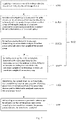
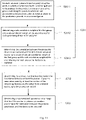
- operations performed by the one or more processors of the above analysis device to determine the correlation may include following steps S101 and S102.
- the production record includes information of processing devices by which a plurality of products are processed during production procedures for producing the products and information of defect occurring, where each product goes through multiple processing devices during the production procedure, and each of the processing devices participates in only the production procedure for producing a portion of the products.
- the production record includes information about which processing device the products (e.g., products produced in a single production line) have gone through during the production procedure (information about the processing device that the products have gone through during the production procedure), and whether or not the products have a defect and what defect the products have (information about the defect of the products).
- each processing device in the production record above should participate in production of a portion of the products, but not participate in production of all of the products.
- a part of the information of the production record may be as shown in the following table 1.
- TABLE 1 production history of product and defect relation table
- Product number Processing device 01 Processing device 03
- Processing device 05 Processing device 06
- a table entry of a certain processing device corresponding to each product being “1” indicates that the product goes through the processing device in the production procedure, and being “0” indicates that the product are not processed by the processing device in the production procedure;
- a table entry of a certain defect corresponding to each product being “1” indicates that the product has the defect, and being “0” indicates that the product does not have the defect.
- the production record may be pre-data-cleaned.
- data cleansing By data cleansing, integrity and accuracy of input data of a related algorithm can be ensured, so that a subsequent calculation process is facilitated.
- data cleansing including but not limited to missing value processing, invalid column deleting, etc., may be used to resolve problems of missing, redundant, etc., present in the data.
- the above data cleansing may be performed after the analysis device extracting the data, or may also be performed by the distributed storage device on the data in the data mart.
- the production record further includes: parameter values of at least a portion of process parameters used by at least a portion of the processing devices, that the product goes through during the production procedure, for processing the product.
- the parameter values of the process parameters used by each processing device for processing each product such as a temperature value of a temperature parameter, a pressure value of an air pressure parameter, and a power value of a power parameter, may be recorded.
- a part of the information of the production record may be as shown in the following table 2.
- TABLE 2 relationship between process parameters of a certain processing device and products Product number process parameter 1 process parameter 2 process parameter 3 ... AK890545A1 1786 124 117 ... AK890545A2 1786 121 109 ... DD890233A3 1786 119 114 ... DD890233A4 1786 119 110 ... AK890545A1 1778 120 108 ... DD890233A3 1778 115 108 ... AK890545B3 1778 117 106 ... ... ... ... ... ... ... ... ... ...
- At least a portion of the processing devices are selected as the processing devices to be analyzed, correlations of which need to be determined, correlation weights of the processing devices to be analyzed corresponding to specific types of defects to be analyzed are calculated, and finally, correlations between the processing devices to be analyzed and the defects to be analyzed are obtained.
- the correlation between the processing device and a certain defect to be analyzed is calculated each time, and when the correlation corresponding to a certain defect to be analyzed is calculated, a "defect" in the data refers to the defect to be analyzed (i.e., other types of defects are not considered as defects).
- a "defect" in the data refers to the defect to be analyzed (i.e., other types of defects are not considered as defects).
- correlation weight of the processing device to be analyzed corresponding to the defect to be analyzed is calculated according to the number of the products with or without the defect among the products of which the production procedures are participated or not participated in by the processing device, can represent a weight attribute of influence of the processing device to be analyzed on occurrence probability of the defect to be analyzed, and is related to the correlation between the processing device to be analyzed and the defect to be analyzed.
- correlation between the processing device to be analyzed and the defect to be analyzed refers to a degree of influence of participation of the processing device to be analyzed on probability that the defect to be analyzed occurs in the product.
- the step (S102) may include steps S1021 and S1022.
- all products are divided into two groups according to whether the processing device participates in the production procedures of the products, the products of the first group are processed by the processing device to be analyzed, and the products of the second group are not processed by the processing device to be analyzed.
- the sub-correlation weights of the two groups are calculated according to the data of the two groups.
- the correlation weight can be calculated according to the above sub-correlation weights Qi, can represent influence capability of a variable (such as whether the processing device participates in the production procedure of the product) on a result (such as whether the product has the defect), and specifically, the greater the absolute value of the correlation weight (the correlation weight may be positive or negative) is, the greater the influence capability is.
- the correlation weight in the embodiment of the present disclosure can represent influence capability of the processing device to be analyzed on the defect to be analyzed. Therefore, by sequencing absolute values of correlation weights of the processing devices to be analyzed, which processing device to be analyzed is more likely to cause the defect to be analyzed can be determined, so that positioning of the defect, adjusting of the production procedure and the like are facilitated.
- step S1023 is further performed after step S1022.
- the sum of the sub-correlation weights of the above two groups may be subsequently calculated as a total correlation weight, which is used as a parameter representing the correlation between the processing device to be analyzed and the defect to be analyzed, and is output to the display device.
- step 1024 is performed after step S1022.
- the value parameter representing influence of the processing device to be analyzed on the defect to be analyzed can be further calculated according to the sub-correlation weights, and the value parameter is taken as a parameter representing the correlation between the processing device to be analyzed and the defect to be analyzed, and is output to the display device.
- the above value parameter can be further calculated according to the sub-correlation weights Qi of the groups (certainly, substantially also can obtained from G i , G total , B i , B total ).
- the value parameter may also represent influence capability of a variable (e.g., whether the processing device participates in the production procedure of the product) on a result (e.g., whether the product has the defect), and specifically, the greater the value parameter is, the greater the influence capability is.
- the number of the products may vary from thousands to hundreds of thousands, and for needs of the factory, no matter what magnitude the actual number of the products is, it is very important to analyze the cause of the defect, and thus in many cases, the correlation weight can be used to represent the correlation.
- the value parameter can better adapt to different data volumes, and can be used as a supplement to the correlation weight.
- the value parameter can be used as a further basis for determining which processing device to be analyzed has a relative larger correlation when correlation weights of two processing device to be analyzed are the same or very close to each other.
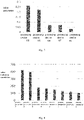
- value parameters of a portion of the processing devices to be analyzed may be as shown in Fig. 7 .
- the present step (S102) includes: determining at least a portion of the processing devices as the processing devices to be analyzed corresponding to the defect to be analyzed according to a preset corresponding relation.
- a certain type of defect can be caused only by some processing devices, but is independent of or has low correlation with other processing devices, for example, a color filter process defect of a display panel cannot be caused by processing devices for array processes (such as processing device for etching data lines). That is, it is considered that there is no correlation between some processing devices and some defects (i.e., the correlation there-between is 0), and thus it is meaningless to analyze the correlation between these processing devices and these defects.
- a corresponding relation may be predetermined (e.g., based on expert opinions), and includes a plurality of types of defects and processing devices associated with the defects. Therefore, when a certain defect is to be analyzed, the processing devices possibly related to the defect to be analyzed can be determined to be the processing devices to be analyzed according to the corresponding relation, and only the processing devices to be analyzed are analyzed to reduce an amount of computation.
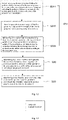
- step S103 is further performed after acquiring the production record from the production data stored in the distributed storage device (S101).
- the correlation between the process parameter of the processing device and the defect to be analyzed can be analyzed through a machine learning model, namely, by taking the process parameters as variables, a degree of influence on probability of the product having the defect to be analyzed due to varying of values (parameter values) of the variables is analyzed; and the correlation between the process parameters and the defect to be analyzed is further transmitted to the display device.
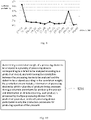
- the correlation of a portion of process parameters may be as shown in Fig. 8 .
- the "numerical value representing the correlation" in the figure is only a result calculated by the machine learning model and representing a relative magnitude of the correlation, and is not necessarily the actual probability or the like.
- Machine Learning is one of artificial intelligence techniques, which obtains a machine learning model by performing machine learning (training) on an initial preset model, and the machine learning model processes a specific problem.
- a process of obtaining the machine learning model may include feature engineering, model selection, model parameter adjustment, model evaluation, and the like.
- the feature engineering is a process of preprocessing initial data to fit it to the model, which exemplarily and particularly can use algorithms including, but not limited to, Dummy (redundant) coding, numerical type data normalization, Pearson correlation analysis, and the like.
- the model selection refers to selecting an appropriate type of model, and in some implementations, the machine learning model includes any one of a random forest model, a gradient boost tree (GBDT) model, and an XGBoost (eXtreme Gradient boost) model.
- GBDT gradient boost tree
- XGBoost eXtreme Gradient boost
- the model parameter adjustment is also called "training", which refers to a process of inputting existing data into a model for processing, and adjusting parameters in the model according to a result of the processing.
- exemplary algorithms for adjusting parameters specifically include, but not limited to, automated parameter search methods such as Grid Search, Random Search, and the like.
- the model evaluation is a process of evaluating a trained model to determine if it has met requirements for a practical application.
- step (S103) may be performed after the step (S101) of acquiring the production record, and there is no necessary order relationship between the steps S102 and S103.
- the present step (S103) includes: determining the processing device to be analyzed, which has a correlation with the defect to be analyzed greater than a first preset value or ranked before a first preset position, as a key processing device to be analyzed, and only determining the correlation between at least the portion of process parameters of the key processing device to be analyzed and the defect to be analyzed.
- a portion of the processing devices to be analyzed having a relative higher correlation with the defect to be analyzed may be selected as key processing devices to be analyzed, so that only the correlation between the key processing device to be analyzed and the defect to be analyzed is analyzed to reduce an amount of computation.
- step S103 further includes: S104, determining a recommended parameter value range for at least a portion of the process parameters according to the correlation between the process parameters and the defect to be analyzed.
- what range of value of the process parameter resulting in a relative low probability of causing the defect to be analyzed may be further analyzed, and the range is taken as a recommended parameter value range, and the recommended parameter value range is provided to the display device, so that the user can optimize the process parameter.
- the present step (S104) includes: determining the process parameter which has a correlation with the defect to be analyzed greater than a second preset value or ranked before a second preset position, as a key process parameter, and only determining the recommended parameter value range of the key process parameter.
- a portion of the process parameters with a relative higher correlation with the defect to be analyzed may be selected as the key process parameters, so that only the correlation between the key process parameters and the defect to be analyzed can be analyzed to reduce an amount of computation.
- the present step (S104) includes: for each process parameter of which the recommended parameter value range needs to be determined, respectively counting statistical probabilities that the product processed by the processing device corresponding to the process parameter in the production procedure has the defect to be analyzed when the parameter value of the process parameter is within a plurality of preset ranges respectively, and determining a preset range corresponding to the minimum statistical probability as the recommended parameter value range of the process parameter.
- a plurality of preset ranges can be selected from possible value ranges of each process parameter, probabilities (statistical probabilities) that the product processed by the processing device has the defect to be analyzed when the value of the process parameter is respectively in the preset ranges are respectively counted, and the preset range resulting in a lowest statistical probability is used as the recommended parameter value range of the process parameter.
- the preset ranges of each process parameter may be non-overlapping, but a union of the preset ranges is equal to a possible value range of the process parameter.
- the preset ranges corresponding to the possible value range may be [A, B1), [B1, B2), [B2, B3) « [Bn, C].
- the above preset ranges may be obtained by equally dividing the possible value range of the process parameter, or may be set manually.
- Fig. 9 the statistical probability that the product processed by the processing device has the defect to be analyzed when the parameter value of the process parameter is within the preset ranges respectively is shown. It can be seen from Fig. 9 that when the parameter value of the process parameter is within [43, 46) (unit is not shown), the statistical probability is lowest, and thus the range [43, 46) can be used as the recommended parameter value range.
- a particular machine learning model may be selected such that the recommended parameter value range is given directly by the machine learning model.
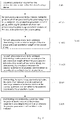
- an embodiment of the present disclosure provides a method for analyzing cause of product defect, including: S201, determining a correlation weight of a processing device to be analyzed in a plurality of processing devices corresponding to a defect to be analyzed according to a production record, and determining the correlation between the processing device to be analyzed and the defect to be analyzed according to the correlation weight.
- the production record includes information of processing devices by which a plurality of products being processed during production procedures for producing the product and information of defects occurring, each product is processed by multiple processing devices in the production procedure, and each processing device participates in only the production procedures for producing a portion of the products.
- the determining the correlation weight of the processing device to be analyzed in the processing devices corresponding to the defect to be analyzed, and determining the correlation between the processing device to be analyzed and the defect to be analyzed according to the correlation weight (S201) includes:
- the determining the correlation weight of the processing device to be analyzed in the processing devices corresponding to the defect to be analyzed, and determining the correlation between the processing device to be analyzed and the defect to be analyzed according to the correlation weight (S201) includes:
- the production record further includes: parameter values of at least a portion of process parameters used by at least a portion of the processing devices, by which the product is processed in the production procedure, for processing the product.
- the method further includes: S202, determining, by a preset machine learning model, the correlation between at least the portion of process parameters used by at least the portion of the processing devices and the defect to be analyzed according to the production record.
- the method further includes: S203, determining a recommended parameter value range of at least the portion of process parameters according to the correlation between the process parameters and the defect to be analyzed.
- an embodiment of the present disclosure provides a computer readable medium storing a computer program, which, when being executed by a processor, implements the method for analyzing cause of product defect described above.
- a division between the functional modules/units mentioned in the above description does not necessarily correspond to a division of physical components; for example, one physical component may have multiple functions, or one function or step may be performed by several physical components in cooperation.
- Some or all of the physical components may be implemented as software executed by a processor, such as a Central Processing Unit (CPU), digital signal processor, or microprocessor, or as hardware, or as an integrated circuit, such as an application specific integrated circuit.
- a processor such as a Central Processing Unit (CPU), digital signal processor, or microprocessor
- Such software may be distributed on the computer readable medium, which may include computer storage medium (or non-transitory medium) and communication medium (or transitory medium).
- the term computer storage medium includes volatile and nonvolatile, removable and non-removable medium implemented in any method or technology for storage of information such as computer readable instructions, data structures, program modules or other data, as well known to those skilled in the art.
- the computer storage medium includes, but is not limited to, random access memory (RAM, more specifically SDRAM, DDR, etc.), Read Only Memory (ROM), Electrically Erasable Programmable Read Only Memory (EEPROM), FLASH memory (FLASH), or other disk storage; compact disk read only memory (CD-ROM), Digital Versatile Disk (DVD), or other optical disk storage; magnetic cassettes, magnetic tape, magnetic disk storage or other magnetic storage; any other medium which can be used to store desired information and capable of being accessed by a computer.
- the communication medium typically includes computer readable instructions, data structures, program modules or other data in a modulated data signal such as in a carrier wave or other transport mechanism and includes any information delivery medium as well known to those skilled in the art.
Landscapes
- Engineering & Computer Science (AREA)
- Business, Economics & Management (AREA)
- Theoretical Computer Science (AREA)
- Physics & Mathematics (AREA)
- General Physics & Mathematics (AREA)
- Human Resources & Organizations (AREA)
- General Engineering & Computer Science (AREA)
- Economics (AREA)
- Strategic Management (AREA)
- Software Systems (AREA)
- Entrepreneurship & Innovation (AREA)
- Automation & Control Theory (AREA)
- Manufacturing & Machinery (AREA)
- General Business, Economics & Management (AREA)
- Development Economics (AREA)
- Marketing (AREA)
- Quality & Reliability (AREA)
- Tourism & Hospitality (AREA)
- Educational Administration (AREA)
- Artificial Intelligence (AREA)
- Mathematical Physics (AREA)
- Data Mining & Analysis (AREA)
- Evolutionary Computation (AREA)
- Computing Systems (AREA)
- Human Computer Interaction (AREA)
- Operations Research (AREA)
- Game Theory and Decision Science (AREA)
- Medical Informatics (AREA)
- Computer Vision & Pattern Recognition (AREA)
- Health & Medical Sciences (AREA)
- General Health & Medical Sciences (AREA)
- Primary Health Care (AREA)
- Computational Linguistics (AREA)
- General Factory Administration (AREA)
- Management, Administration, Business Operations System, And Electronic Commerce (AREA)
Applications Claiming Priority (1)
| Application Number | Priority Date | Filing Date | Title |
|---|---|---|---|
| PCT/CN2019/121907 WO2021102891A1 (fr) | 2019-11-29 | 2019-11-29 | Système et procédé d'analyse de cause de défaut de produit et support lisible par ordinateur |
Publications (2)
| Publication Number | Publication Date |
|---|---|
| EP4068173A1 true EP4068173A1 (fr) | 2022-10-05 |
| EP4068173A4 EP4068173A4 (fr) | 2022-11-16 |
Family
ID=76129770
Family Applications (1)
| Application Number | Title | Priority Date | Filing Date |
|---|---|---|---|
| EP19945404.2A Withdrawn EP4068173A4 (fr) | 2019-11-29 | 2019-11-29 | Système et procédé d'analyse de cause de défaut de produit et support lisible par ordinateur |
Country Status (6)
| Country | Link |
|---|---|
| US (1) | US20210364999A1 (fr) |
| EP (1) | EP4068173A4 (fr) |
| JP (1) | JP7502345B2 (fr) |
| KR (1) | KR102865983B1 (fr) |
| CN (1) | CN113454661A (fr) |
| WO (1) | WO2021102891A1 (fr) |
Families Citing this family (11)
| Publication number | Priority date | Publication date | Assignee | Title |
|---|---|---|---|---|
| US12572150B2 (en) | 2019-11-05 | 2026-03-10 | Strong Force Vcn Portfolio 2019, Llc | Robot fleet management for value chain networks |
| EP3839530A1 (fr) * | 2019-12-20 | 2021-06-23 | Siemens Aktiengesellschaft | Procédés et systèmes pour évaluer des cartes de circuit imprimé |
| CN113537751B (zh) * | 2021-07-09 | 2024-05-17 | 联通(浙江)产业互联网有限公司 | 影响磨加工产品质量要素的确定方法和装置 |
| CN114358531A (zh) * | 2021-12-20 | 2022-04-15 | 深圳鼎晶科技有限公司 | 一种基于云平台的品质管理方法、装置、电子设备及存储介质 |
| CN116724321A (zh) * | 2022-01-06 | 2023-09-08 | 京东方科技集团股份有限公司 | 数据处理方法、系统、计算机可读存储介质 |
| CN114418011B (zh) * | 2022-01-21 | 2023-05-12 | 京东方科技集团股份有限公司 | 一种产品不良成因分析的方法、设备及系统、存储介质 |
| CN114444986B (zh) * | 2022-04-11 | 2022-06-03 | 成都数之联科技股份有限公司 | 产品分析方法及系统及装置及介质 |
| CN119278417A (zh) * | 2022-06-01 | 2025-01-07 | 三菱电机株式会社 | 生产系统、生产线分析方法、学习装置、推理装置、学习完毕模型以及学习完毕模型的生成方法 |
| US20240020105A1 (en) * | 2022-07-12 | 2024-01-18 | At&T Intellectual Property I, L.P. | Targeted software and hardware updates for user equipment based on specific user profiles related to their usage |
| US20250053166A1 (en) * | 2023-08-09 | 2025-02-13 | Microsoft Technology Licensing, Llc | Detecting a quality-related faulty component and predicting uncorrectable errors incurred by a component using machine learning |
| US12608542B2 (en) * | 2024-03-01 | 2026-04-21 | Hitachi, Ltd. | Defect knowledge circulation system |
Family Cites Families (14)
| Publication number | Priority date | Publication date | Assignee | Title |
|---|---|---|---|---|
| JPH09219347A (ja) * | 1996-02-09 | 1997-08-19 | Matsushita Electric Ind Co Ltd | 半導体プロセスの管理方法及びその管理装置 |
| JPH11354396A (ja) * | 1998-06-05 | 1999-12-24 | Matsushita Electric Ind Co Ltd | 半導体プロセスの管理方法及びその装置 |
| US20060048010A1 (en) * | 2004-08-30 | 2006-03-02 | Hung-En Tai | Data analyzing method for a fault detection and classification system |
| JP4633084B2 (ja) | 2007-05-08 | 2011-02-16 | シャープ株式会社 | 不良要因推定方法、不良要因推定装置、プログラム、および、記録媒体 |
| WO2012115819A1 (fr) | 2011-02-24 | 2012-08-30 | 3M Innovative Properties Company | Système pour la détection de non-uniformités dans des matières à base de bande continue |
| CN104123298B (zh) * | 2013-04-26 | 2017-09-29 | 华为技术有限公司 | 产品缺陷的分析方法和设备 |
| CN103530467B (zh) * | 2013-10-23 | 2016-08-17 | 中国兵器科学研究院 | 一种基于缺陷概率的工艺分析与优化设计方法 |
| CA2993824A1 (fr) * | 2015-07-29 | 2017-02-02 | Illinois Tool Works Inc. | Systeme et procede fournissant un logiciel de soudure en tant que service |
| TWI584134B (zh) * | 2015-11-03 | 2017-05-21 | 財團法人工業技術研究院 | 製程異因分析方法與製程異因分析系統 |
| JP6778277B2 (ja) | 2016-12-07 | 2020-10-28 | 株式会社日立製作所 | 品質管理装置及び品質管理方法 |
| CN107295068A (zh) * | 2017-05-27 | 2017-10-24 | 镇江苏仪德科技有限公司 | 一种基于以太网的产品质量监测系统 |
| CN109711659B (zh) * | 2018-11-09 | 2021-04-13 | 成都数之联科技有限公司 | 一种工业生产的良率提升管理系统和方法 |
| WO2020110224A1 (fr) * | 2018-11-28 | 2020-06-04 | Eizo株式会社 | Procédé de traitement d'informations et programme informatique |
| TWI759669B (zh) * | 2019-12-23 | 2022-04-01 | 中強光電股份有限公司 | 顯示畫面檢測方法與顯示畫面檢測系統 |
-
2019
- 2019-11-29 CN CN201980002712.8A patent/CN113454661A/zh active Pending
- 2019-11-29 WO PCT/CN2019/121907 patent/WO2021102891A1/fr not_active Ceased
- 2019-11-29 EP EP19945404.2A patent/EP4068173A4/fr not_active Withdrawn
- 2019-11-29 KR KR1020217037714A patent/KR102865983B1/ko active Active
- 2019-11-29 US US16/972,402 patent/US20210364999A1/en not_active Abandoned
- 2019-11-29 JP JP2021572044A patent/JP7502345B2/ja active Active
Also Published As
| Publication number | Publication date |
|---|---|
| JP2023511464A (ja) | 2023-03-20 |
| JP7502345B2 (ja) | 2024-06-18 |
| KR20220107118A (ko) | 2022-08-02 |
| WO2021102891A1 (fr) | 2021-06-03 |
| CN113454661A (zh) | 2021-09-28 |
| EP4068173A4 (fr) | 2022-11-16 |
| US20210364999A1 (en) | 2021-11-25 |
| KR102865983B1 (ko) | 2025-09-30 |
Similar Documents
| Publication | Publication Date | Title |
|---|---|---|
| EP4068173A1 (fr) | Système et procédé d'analyse de cause de défaut de produit et support lisible par ordinateur | |
| WO2021052031A1 (fr) | Procédé et système de pré-alerte de risque de stock de marchandises basés sur un écart interquartile statistique, et support de stockage lisible par ordinateur | |
| CN108364106A (zh) | 一种报销单风险预测方法、装置、终端设备及存储介质 | |
| EP4468203A1 (fr) | Procédé et appareil de détection d'anomalie, support lisible par ordinateur et appareil électronique | |
| CN111367754B (zh) | 数据监控方法、装置、计算机设备及存储介质 | |
| CN113597664A (zh) | 确定不良原因的方法、电子设备、存储介质及系统 | |
| EP4113418B1 (fr) | Système de planification de production basé sur un modèle de planification non linéaire, procédé de planification de production et support de stockage lisible par ordinateur | |
| US20240152818A1 (en) | Methods for mitigation of algorithmic bias discrimination, proxy discrimination and disparate impact | |
| WO2023103527A1 (fr) | Procédé et dispositif de prédiction de fréquence d'accès | |
| CN112949825A (zh) | 一种资源调整方法、装置及设备 | |
| CN115735203B (zh) | 数据处理方法、装置、设备及存储介质 | |
| CN110287272A (zh) | 一种可配置实时特征提取方法、装置及系统 | |
| CN116724321A (zh) | 数据处理方法、系统、计算机可读存储介质 | |
| CN109324963A (zh) | 自动测试收益结果的方法及终端设备 | |
| CN112927012A (zh) | 营销数据的处理方法及装置、营销模型的训练方法及装置 | |
| US11703837B2 (en) | System and method for recommending maximum quantity of work in process, and computer readable medium | |
| Uskenbayeva et al. | Multidimensional indexing structure development for the optimal formation of aggregated indicators in OLAP hypercube | |
| CN118035180A (zh) | 元数据补全方法及装置 | |
| CN116977091A (zh) | 个股投资组合的确定方法、装置、电子设备及可读存储介质 | |
| CN116226214A (zh) | 一种字段数据集的筛选管理方法、系统和存储介质 | |
| CN110413602B (zh) | 一种分层清洗式大数据清洗方法 | |
| CN113762794A (zh) | 一种基于价值链分析的产业链招商方法及系统 | |
| Cao | Prediction and Analysis of Corporate Financial Distress Based on Random Forest Model and GBDT | |
| CN117078112B (zh) | 应用于企业异常用电管理的能耗检测方法及数据分析系统 | |
| CN119850190B (zh) | 抽水蓄能设备检修策略评价方法、装置、计算机设备、可读存储介质和程序产品 |
Legal Events
| Date | Code | Title | Description |
|---|---|---|---|
| STAA | Information on the status of an ep patent application or granted ep patent |
Free format text: STATUS: UNKNOWN |
|
| STAA | Information on the status of an ep patent application or granted ep patent |
Free format text: STATUS: THE INTERNATIONAL PUBLICATION HAS BEEN MADE |
|
| PUAI | Public reference made under article 153(3) epc to a published international application that has entered the european phase |
Free format text: ORIGINAL CODE: 0009012 |
|
| STAA | Information on the status of an ep patent application or granted ep patent |
Free format text: STATUS: REQUEST FOR EXAMINATION WAS MADE |
|
| 17P | Request for examination filed |
Effective date: 20210325 |
|
| AK | Designated contracting states |
Kind code of ref document: A1 Designated state(s): AL AT BE BG CH CY CZ DE DK EE ES FI FR GB GR HR HU IE IS IT LI LT LU LV MC MK MT NL NO PL PT RO RS SE SI SK SM TR |
|
| A4 | Supplementary search report drawn up and despatched |
Effective date: 20221013 |
|
| RIC1 | Information provided on ipc code assigned before grant |
Ipc: G05B 19/418 20060101ALI20221007BHEP Ipc: G06Q 50/04 20120101ALI20221007BHEP Ipc: G06Q 10/06 20120101AFI20221007BHEP |
|
| DAV | Request for validation of the european patent (deleted) | ||
| DAX | Request for extension of the european patent (deleted) | ||
| STAA | Information on the status of an ep patent application or granted ep patent |
Free format text: STATUS: EXAMINATION IS IN PROGRESS |
|
| 17Q | First examination report despatched |
Effective date: 20231010 |
|
| STAA | Information on the status of an ep patent application or granted ep patent |
Free format text: STATUS: THE APPLICATION HAS BEEN WITHDRAWN |
|
| 18W | Application withdrawn |
Effective date: 20240201 |