EP4068826A1 - Confiance distribuée entre ordinateurs mobiles - Google Patents
Confiance distribuée entre ordinateurs mobiles Download PDFInfo
- Publication number
- EP4068826A1 EP4068826A1 EP22165588.9A EP22165588A EP4068826A1 EP 4068826 A1 EP4068826 A1 EP 4068826A1 EP 22165588 A EP22165588 A EP 22165588A EP 4068826 A1 EP4068826 A1 EP 4068826A1
- Authority
- EP
- European Patent Office
- Prior art keywords
- assessment
- requester
- state machine
- group
- assessments
- Prior art date
- Legal status (The legal status is an assumption and is not a legal conclusion. Google has not performed a legal analysis and makes no representation as to the accuracy of the status listed.)
- Pending
Links
Images



Classifications
-
- H—ELECTRICITY
- H04—ELECTRIC COMMUNICATION TECHNIQUE
- H04W—WIRELESS COMMUNICATION NETWORKS
- H04W12/00—Security arrangements; Authentication; Protecting privacy or anonymity
- H04W12/12—Detection or prevention of fraud
- H04W12/121—Wireless intrusion detection systems [WIDS]; Wireless intrusion prevention systems [WIPS]
- H04W12/122—Counter-measures against attacks; Protection against rogue devices
-
- H—ELECTRICITY
- H04—ELECTRIC COMMUNICATION TECHNIQUE
- H04L—TRANSMISSION OF DIGITAL INFORMATION, e.g. TELEGRAPHIC COMMUNICATION
- H04L9/00—Cryptographic mechanisms or cryptographic arrangements for secret or secure communications; Network security protocols
- H04L9/50—Cryptographic mechanisms or cryptographic arrangements for secret or secure communications; Network security protocols using hash chains, e.g. blockchains or hash trees
-
- G—PHYSICS
- G05—CONTROLLING; REGULATING
- G05D—SYSTEMS FOR CONTROLLING OR REGULATING NON-ELECTRIC VARIABLES
- G05D1/00—Control of position, course, altitude or attitude of land, water, air or space vehicles, e.g. using automatic pilots
- G05D1/02—Control of position or course in two dimensions
- G05D1/021—Control of position or course in two dimensions specially adapted to land vehicles
- G05D1/0276—Control of position or course in two dimensions specially adapted to land vehicles using signals provided by a source external to the vehicle
-
- H—ELECTRICITY
- H04—ELECTRIC COMMUNICATION TECHNIQUE
- H04W—WIRELESS COMMUNICATION NETWORKS
- H04W12/00—Security arrangements; Authentication; Protecting privacy or anonymity
- H04W12/009—Security arrangements; Authentication; Protecting privacy or anonymity specially adapted for networks, e.g. wireless sensor networks, ad-hoc networks, RFID networks or cloud networks
-
- H—ELECTRICITY
- H04—ELECTRIC COMMUNICATION TECHNIQUE
- H04W—WIRELESS COMMUNICATION NETWORKS
- H04W4/00—Services specially adapted for wireless communication networks; Facilities therefor
- H04W4/30—Services specially adapted for particular environments, situations or purposes
- H04W4/40—Services specially adapted for particular environments, situations or purposes for vehicles, e.g. vehicle-to-pedestrians [V2P]
- H04W4/46—Services specially adapted for particular environments, situations or purposes for vehicles, e.g. vehicle-to-pedestrians [V2P] for vehicle-to-vehicle communication [V2V]
-
- H—ELECTRICITY
- H04—ELECTRIC COMMUNICATION TECHNIQUE
- H04L—TRANSMISSION OF DIGITAL INFORMATION, e.g. TELEGRAPHIC COMMUNICATION
- H04L2209/00—Additional information or applications relating to cryptographic mechanisms or cryptographic arrangements for secret or secure communication H04L9/00
- H04L2209/46—Secure multiparty computation, e.g. millionaire problem
Definitions
- Various example embodiments relate to distributed trust between mobile computers.
- Mobile computers and particularly drones may operate in very sensitive environments, such as in border patrol. In such environments, the drones may be attacked with falsified updates, incorrect/malicious commands or even be joined by malicious drones pretending to be part of a drone swarm or group. Notably, drones on longer missions may require updating their firmware, guidance, and operations during mission time.
- a method in a mobile computer comprising:
- the appending the global assessment may comprise appending the global assessment for each requester to a local copy of the blockchain.
- the local assessments may be values computed using a ruleset.
- the ruleset may be defined in the closed blockchain.
- the ruleset may combine parameters of different types or units using feature scaling.
- the ruleset may refer to an appraisal policy for evidence or to an appraisal policy for attestation results.
- One attester may have same or different ruleset than another attester.
- a common ruleset may be used.
- the common ruleset may be written in the blockchain, e.g., for protecting the integrity of the ruleset applied by the attesters.
- the local assessment may be based on a manufacturer of the requester.
- the local assessment may be based on that whether the requester has a same manufacturer with the attester.
- the local assessment may be based on an operating system of the requester.
- the local assessment may be based on that whether the requester has a same operating system with the attester.
- the local assessment may be based on one or more internal factors.
- the local assessment may be based on one or more external factors.
- the group trust assessment may refer to local assessments being computed and shared during the protocol.
- the blockchain may be a permissioned blockchain.
- the method may further comprise authenticating to the blockchain.
- the blockchain may have as its permitted members a group of state machine replication protocol members.
- the blockchain may be a permissionless blockchain.
- the method may further comprise granting or refusing the request of the requester depending on the global assessment.
- the local assessment may be defined as a numeric value.
- the local assessment may be defined as a Boolean value.
- the global assessment may be defined as a numeric value.
- the global assessment may be defined as a Boolean value.
- the state machine replication protocol may be a practical byzantine fault tolerant protocol, PBFT.
- the state machine replication protocol may be based on Quorum.
- the state machine replication protocol may be based on Multichain.
- a global trust assessment is decided if consensus is reached on a decided ruleset.
- the global assessment may be formed using at least a statistical characterization function.
- the statistical characterization function may be average.
- the statistical characterization function may be a mean function.
- the statistical characterization function may be logarithmic average function.
- the statistical characterization function may be a root mean square function.
- the global assessment may be defined as a value between a minimum and maximum.
- the granting of the request may be performed if the global assessment meets or exceeds a given threshold.
- the threshold may be 50 % between the minimum and maximum.
- the threshold may be 2/3 of the range between the minimum and maximum.
- the threshold may be increased for given requests.
- the threshold may be lowered for given requests.
- the method may further comprise updating locally maintained global assessment for each requester of the assessment matrix according to the global assessment.
- a mobile computer comprising:
- the mobile computer may operate in the rank member role at one point of time and in a leader role at another point of time.
- the mobile computer may be or comprise or be comprised by a drone.
- the mobile computer may be or comprise or be comprised by a vehicle.
- the mobile computer may be or comprise or be comprised by a robot.
- the mobile computer may be autonomously mobile.
- a method for operating drones or other mobile computers in sensitive environments where the drones may be attacked with updates, incorrect/malicious commands or even be joined by malicious drones pretending to be part of the drone swarm or group.
- the method may include leveraging both trusted computing capabilities and that each individual drone can decide on the level of assurance and trust of any other drone.
- a computer program comprising computer executable program code configured to execute any preceding example aspect.
- the computer program may be stored in a computer readable memory medium.
- Any foregoing memory medium may comprise a digital data storage such as a data disc or diskette, optical storage, magnetic storage, holographic storage, optomagnetic storage, phase-change memory, resistive random access memory, magnetic random access memory, solid-electrolyte memory, ferroelectric random access memory, organic memory, or polymer memory.
- the memory medium may be formed into a device without other substantial functions than storing memory or it may be formed as part of a device with other functions, including but not limited to a memory of a computer, a chip set, and a sub assembly of an electronic device.
- an apparatus comprising a memory and a processor that are configured to cause the apparatus to perform the method of any example aspect.
- an apparatus comprising means for performing the method of any example aspect.
- Fig. 1 shows an architectural drawing of a system of an example embodiment.
- a number of mobile computers such as drones, are schematically shown as a group.
- the mobile computers are capable of wireless communications with each other, e.g., within a given range that allows the group to communicate at least when relatively close to each other.
- Fig. 2 shows a flow chart of various features of a process of an example embodiment in a mobile computer to assess trustworthiness of a requester of some command or service.
- Fig. 2 is uses drones as an example of a mobile computer.
- the mobile computers could be any of: drones; autonomously or partly autonomously moving robots; autonomously or partly autonomously moving vehicles; or any combination of some or all of these.
- Fig. 2 shows the following steps:
- Request(Dx) a client drone CD receives an attestation request from a drone Dx and has to decide whether to trust the latter or not (see Fig. 1 box a).
- the request contains, for example, any message from one drone to another.
- the attestation request complies with a particular protocol.
- TrustAssessment(Dx) the attestation request is sent from the CD to a current leader drone LD asking to obtain a global assessment on the trustworthiness of the client drone Dx.
- the global assessment on the trustworthiness will be computed as the average value of all local assessments computed by the validating drones VD in the fleet or group of a state machine replication protocol members (see Fig. 1 box b).
- the global assessment comprises forwarding the request for a consensus based decision to the validating drones VD.
- the Leader drone LD buffers any received attestation requests for a given time (such as at least 5 s, at least 10 s, at least 30 s, at least 60 s, at least 300 s, or at least 1000 s) and then proceeds.
- CreateOrderedList(D1,...,Dx,...,Dn) The Leader drone LD collects all the requests for global assessment received by and from the different drones and creates an ordered list. For using Practical Byzantine Fault Tolerance, PBFT, permissioned block chain, each state machine replication protocol member authenticates itself.
- PBFT Practical Byzantine Fault Tolerance
- Pre-prepare() the ordered list is sent in broadcast to the client drone CD and to the validating drones VD. This message officially starts the PBFT protocol (see Fig. 1 box c).
- Pre-prepare(), prepare(), commit() functions are in an example embodiment standard functions of the PBFT protocol.
- ShareAssessment() before proceeding with the PBFT protocol, the Client drone CD, Leader drone LD, and Validating drones VD must exchange their local assessment values for all the drones specified within the ordered list ( Fig. 1 box d). This is done, e.g., by each drone sending a matrix as exemplified in Table 1 below.
- Table 1 example of matrix sent by a Drone during the ShareAssessment phase and containing the local assessments of all the drones specified within the TrustAssessment request sent by LD Drones specified by LD D i ... Dx ... Dj Local assessment 4 ... 7 ... 6
- Prepare() a standard PBFT-like message used to make sure that the Client drone CD, the Leader Drone LD, and the Validating drones VD receive the local assessment matrices and can continue with the consensus protocol.
- Commit() a step of a PBFT-like protocol in which the Client drone CD, the Leader drone LD, and the Validating drones VD reach (for each drone specified in the ordered list) an agreement on the trustworthiness of Dx.
- the Client drone CD, the Leader drone LD, and the Validating drones VD may apply a specific function on the local assessments received by the other drones (see Fig. 1 box e).
- the specific function is in an example embodiment an arithmetic or geometric average (see Table 2).
- Compute ranking As each state machine replication protocol member has the knowledge of every other member (or those that did reply), the members compute their ranking for each requestor and also they each compute and share the global assessment to each other.
- Average is taken if a consensus is found, in which case the result comes from a set of rules based on various properties obtained by the PBFT protocol of the Dx.
- the average and consensus have different goals in the protocol.
- the consensus per-se may only regulate how to reach an agreement between attesters.
- the average may regulate on what to reach agreement.
- the ruleset being used during the consensus is the average function and the consensus is reached (e.g., the majority of attesters agree on the computed average values), then the average may be taken as the global assessment.
- An attestation protocol has mechanisms, such as Remote ATtestation ProcedureS (RATS) described in charter-ietf-rats-01, which may distribute details by a set of claims generated by suitable hardware.
- Forensic evidence is acquired using the attestation protocol by the validating drones and may include an initial registration on sending the attestation request.
- assessments (or attestations) of elements are made by an attester and generate a claim.
- the claim contains, e.g., a cryptographically verifiable (provenance and by implication identity of the element) assessment which is then passed on for matches against expected values through a rule mechanism. In an example embodiment, it is at this point we obtain one assessment of trust in that element.
- Table 2 example of using the average as the function to reach a global assessment on all the local assessments Drones specified by LD D i ... D x ... D j D1 local assessment 4 ... 7 ... 6 D2 local assessment 8 ... 7 ... 4 ... ... ... ... ... ... Di local assessment 7 ... 3 ... 9 ... ... ... ... ... ... ... Dn local assessment 3 ... 8 ... 5 Global assessment Avg.(D1-Dn) ... Avg.(D1-Dn) ... Avg.(D1-Dn)
- UpdateGlobalTrust() for each drone listed in the Leader drone LD request, drones update their global assessment values.
- updating refers to, for example, that new assessment is added or changed assessment replaces the old one.
- AppendNewBlock() the new agreed block is added to the local blockchain data structure by all drones (see Fig. 1 box f). This enables storing the results of the global assessment in a falsification resistant manner.
- AppendNewBlock() the Client drone CD, the Leader drone LD, and the Validating drones VD append a new block.
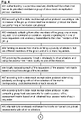
- Fig. 3 shows a flow chart of various features of a process of different example embodiments in a mobile computer, comprising any of:
- Fig.4 shows a flow chart of various features of a process of different example embodiments in a mobile computer, comprising:
- Fig. 5 shows a block diagram of an apparatus 500 according to an embodiment of the invention.
- the apparatus 500 comprises a memory 540 including a persistent computer program code 550.
- the apparatus 500 further comprises a processor 520 for controlling the operation of the apparatus 500 using the computer program code 540, a communication unit 510 for communicating with other nodes.
- the communication unit 510 comprises, for example, a local area network (LAN) port; a wireless local area network (WLAN) unit; Bluetooth unit; cellular data communication unit; or satellite data communication unit.
- the processor 520 comprises, for example, any one or more of: a master control unit (MCU); a microprocessor; a digital signal processor (DSP); an application specific integrated circuit (ASIC); a field programmable gate array; and a microcontroller.
- circuitry may refer to one or more or all of the following:
- circuitry also covers an implementation of merely a hardware circuit or processor (or multiple processors) or portion of a hardware circuit or processor and its (or their) accompanying software and/or firmware.
- circuitry also covers, for example and if applicable to the particular claim element, a baseband integrated circuit or processor integrated circuit for a mobile device or a similar integrated circuit in server, a cellular network device, or other computing or network device.
- a technical effect of one or more of the example embodiments disclosed herein is that trust relationship of mobile computers can by dynamically updated without centralised control. Another technical effect of one or more of the example embodiments disclosed herein is that rogue mobile computer attacks can be mitigated based on group assessment. Another technical effect of one or more of the example embodiments disclosed herein is that local assessments can be efficiently shared with other attesters in matrices using a predefined structure. Another technical effect of one or more of the example embodiments disclosed herein is that resilience against communications interference or failures may be enhanced by sharing the local assessments with the matrices in relatively brief bursts. Another technical effect of one or more example embodiments disclosed herein is combining two kinds of assessments, local and global, which are different in nature (aka in the way they are computed) and thus provide different properties.
- Embodiments of the present invention may be implemented in software, hardware, application logic or a combination of software, hardware, and application logic.
- the application logic, software, or an instruction set is maintained on any one of various conventional computer-readable media.
- a "computer-readable medium" may be any non-transitory media or means that can contain, store, communicate, propagate, or transport the instructions for use by or in connection with an instruction execution system, apparatus, or device, such as a computer, with one example of a computer described and depicted in Fig. 5 .
- a computer-readable medium may comprise a computer-readable storage medium that may be any media or means that can contain or store the instructions for use by or in connection with an instruction execution system, apparatus, or device, such as a computer.
- the different functions discussed herein may be performed in a different order and/or concurrently with each other. Furthermore, if desired, one or more of the before-described functions may be optional or may be combined.
Landscapes
- Engineering & Computer Science (AREA)
- Computer Networks & Wireless Communication (AREA)
- Signal Processing (AREA)
- Computer Security & Cryptography (AREA)
- Aviation & Aerospace Engineering (AREA)
- Radar, Positioning & Navigation (AREA)
- Remote Sensing (AREA)
- Physics & Mathematics (AREA)
- General Physics & Mathematics (AREA)
- Automation & Control Theory (AREA)
- Management, Administration, Business Operations System, And Electronic Commerce (AREA)
- Mobile Radio Communication Systems (AREA)
Applications Claiming Priority (1)
| Application Number | Priority Date | Filing Date | Title |
|---|---|---|---|
| FI20215389 | 2021-03-31 |
Publications (1)
| Publication Number | Publication Date |
|---|---|
| EP4068826A1 true EP4068826A1 (fr) | 2022-10-05 |
Family
ID=81327181
Family Applications (1)
| Application Number | Title | Priority Date | Filing Date |
|---|---|---|---|
| EP22165588.9A Pending EP4068826A1 (fr) | 2021-03-31 | 2022-03-30 | Confiance distribuée entre ordinateurs mobiles |
Country Status (2)
| Country | Link |
|---|---|
| US (1) | US20220337438A1 (fr) |
| EP (1) | EP4068826A1 (fr) |
Family Cites Families (7)
| Publication number | Priority date | Publication date | Assignee | Title |
|---|---|---|---|---|
| US9876775B2 (en) * | 2012-11-09 | 2018-01-23 | Ent Technologies, Inc. | Generalized entity network translation (GENT) |
| US10467624B2 (en) * | 2016-06-29 | 2019-11-05 | Paypal, Inc. | Mobile devices enabling customer identity validation via central depository |
| US10958628B2 (en) * | 2017-12-18 | 2021-03-23 | International Business Machines Corporation | Protecting sensitive data in a distributed ledger system using a blockchain channel hierarchy |
| WO2019217323A1 (fr) * | 2018-05-06 | 2019-11-14 | Strong Force TX Portfolio 2018, LLC | Procédés et systèmes pour améliorer des machines et des systèmes qui automatisent l'exécution d'un registre distribué et d'autres transactions sur des marchés au comptant et à terme pour l'énergie, le calcul, le stockage et d'autres ressources |
| US20200027089A1 (en) * | 2018-07-20 | 2020-01-23 | Coral Protocol | Blockchain transaction safety using smart contracts |
| US11424911B2 (en) * | 2020-03-03 | 2022-08-23 | International Business Machines Corporation | Storage and communication environment for cryptographic tags |
| KR102812575B1 (ko) * | 2021-03-12 | 2025-05-27 | 마이클 이라 카노비츠 | 블록체인 기반 데이터의 인증된 수정 |
-
2022
- 2022-03-30 EP EP22165588.9A patent/EP4068826A1/fr active Pending
- 2022-03-30 US US17/708,798 patent/US20220337438A1/en not_active Abandoned
Non-Patent Citations (3)
| Title |
|---|
| CINQUE MARCELLO ET AL: "Trust Management in Fog/Edge Computing by Means of Blockchain Technologies", 2018 IEEE INTERNATIONAL CONFERENCE ON INTERNET OF THINGS (ITHINGS) AND IEEE GREEN COMPUTING AND COMMUNICATIONS (GREENCOM) AND IEEE CYBER, PHYSICAL AND SOCIAL COMPUTING (CPSCOM) AND IEEE SMART DATA (SMARTDATA), IEEE, 30 July 2018 (2018-07-30), pages 1433 - 1439, XP033556277, DOI: 10.1109/CYBERMATICS_2018.2018.00244 * |
| GUANGQUAN XU ET AL: "SG-PBFT: a Secure and Highly Efficient Blockchain PBFT Consensus Algorithm for Internet of Vehicles", ARXIV.ORG, CORNELL UNIVERSITY LIBRARY, 201 OLIN LIBRARY CORNELL UNIVERSITY ITHACA, NY 14853, 5 January 2021 (2021-01-05), XP081852140 * |
| KESHAVARZ MAHSA ET AL: "UASTrustChain: A Decentralized Blockchain- Based Trust Monitoring Framework for Autonomous Unmanned Aerial Systems", IEEE ACCESS, IEEE, USA, vol. 8, 14 December 2020 (2020-12-14), pages 226074 - 226088, XP011828605, DOI: 10.1109/ACCESS.2020.3044844 * |
Also Published As
| Publication number | Publication date |
|---|---|
| US20220337438A1 (en) | 2022-10-20 |
Similar Documents
| Publication | Publication Date | Title |
|---|---|---|
| US12132609B2 (en) | Blockchains for securing IoT devices | |
| US11204919B2 (en) | Optimizing queries and other retrieve operations in a blockchain | |
| US11005812B2 (en) | Autonomous decentralization of centralized stateful security services with systematic tamper resistance | |
| EP3580905B1 (fr) | Réseau de chaîne de blocs de consortium avec protocoles de chaîne de blocs et de consensus vérifiés | |
| US11683213B2 (en) | Autonomous management of resources by an administrative node network | |
| US10832241B2 (en) | Transaction reservation for block space on a blockchain | |
| EP1706825B1 (fr) | Evitement de stockage d'etat client sur un serveur | |
| EP2501100B1 (fr) | Système de réseau de quarantaine | |
| EP3275123B1 (fr) | Prestation guidée par le but dans des systèmes iot | |
| CN110855777B (zh) | 一种基于区块链的节点管理方法及装置 | |
| US20190108498A1 (en) | Decentralized pooled mining for enabling proof-of-work on blockchains | |
| US10171504B2 (en) | Network access with dynamic authorization | |
| KR20150016259A (ko) | 분산형 운영체제 물리적 자원을 관리하는 기법 | |
| CN115865418B (zh) | 一种基于区块链和拜占庭容错算法的跨域访问控制方法 | |
| CN113312635A (zh) | 一种基于状态隐私保护的多智能体容错一致性方法及系统 | |
| US11797663B2 (en) | Password management system and method for providing access to a password protected device | |
| US12393716B2 (en) | User data management method and related device | |
| WO2020172037A1 (fr) | Gestion centralisée de données pour pare-feu à base d'identité distribué | |
| US20240291639A1 (en) | Secure distribution of cryptographic keys and policy attributes based on geographic trusted location | |
| CN110061831A (zh) | 一种无人机集群在作战过程中的网络安全通信的实现方法 | |
| EP4068826A1 (fr) | Confiance distribuée entre ordinateurs mobiles | |
| CN111526108B (zh) | 防止网络攻击的方法与装置 | |
| US20240396753A1 (en) | Systems and methods for verifiable secure computing using multi-party computation and blockchain network | |
| WO2023284549A1 (fr) | Procédé de gestion de données d'utilisateur et dispositif associé | |
| CN115996377B (zh) | 切片认证和授权方法、装置、终端及网络设备 |
Legal Events
| Date | Code | Title | Description |
|---|---|---|---|
| PUAI | Public reference made under article 153(3) epc to a published international application that has entered the european phase |
Free format text: ORIGINAL CODE: 0009012 |
|
| STAA | Information on the status of an ep patent application or granted ep patent |
Free format text: STATUS: THE APPLICATION HAS BEEN PUBLISHED |
|
| AK | Designated contracting states |
Kind code of ref document: A1 Designated state(s): AL AT BE BG CH CY CZ DE DK EE ES FI FR GB GR HR HU IE IS IT LI LT LU LV MC MK MT NL NO PL PT RO RS SE SI SK SM TR |
|
| STAA | Information on the status of an ep patent application or granted ep patent |
Free format text: STATUS: REQUEST FOR EXAMINATION WAS MADE |
|
| 17P | Request for examination filed |
Effective date: 20230320 |
|
| RBV | Designated contracting states (corrected) |
Designated state(s): AL AT BE BG CH CY CZ DE DK EE ES FI FR GB GR HR HU IE IS IT LI LT LU LV MC MK MT NL NO PL PT RO RS SE SI SK SM TR |