EP4081502B1 - Co-kristall von ketoprofen und dessen herstellung, pharmazeutische zusammensetzungen damit und verwendungen davon - Google Patents
Co-kristall von ketoprofen und dessen herstellung, pharmazeutische zusammensetzungen damit und verwendungen davon Download PDFInfo
- Publication number
- EP4081502B1 EP4081502B1 EP20839009.6A EP20839009A EP4081502B1 EP 4081502 B1 EP4081502 B1 EP 4081502B1 EP 20839009 A EP20839009 A EP 20839009A EP 4081502 B1 EP4081502 B1 EP 4081502B1
- Authority
- EP
- European Patent Office
- Prior art keywords
- ketoprofen
- lysine
- crystal
- crystal form
- ketoprofen lysine
- Prior art date
- Legal status (The legal status is an assumption and is not a legal conclusion. Google has not performed a legal analysis and makes no representation as to the accuracy of the status listed.)
- Active
Links
Images





Classifications
-
- C—CHEMISTRY; METALLURGY
- C07—ORGANIC CHEMISTRY
- C07C—ACYCLIC OR CARBOCYCLIC COMPOUNDS
- C07C51/00—Preparation of carboxylic acids or their salts, halides or anhydrides
- C07C51/41—Preparation of salts of carboxylic acids
-
- C—CHEMISTRY; METALLURGY
- C07—ORGANIC CHEMISTRY
- C07C—ACYCLIC OR CARBOCYCLIC COMPOUNDS
- C07C57/00—Unsaturated compounds having carboxyl groups bound to acyclic carbon atoms
- C07C57/30—Unsaturated compounds having carboxyl groups bound to acyclic carbon atoms containing six-membered aromatic rings
-
- C—CHEMISTRY; METALLURGY
- C07—ORGANIC CHEMISTRY
- C07B—GENERAL METHODS OF ORGANIC CHEMISTRY; APPARATUS THEREFOR
- C07B2200/00—Indexing scheme relating to specific properties of organic compounds
- C07B2200/13—Crystalline forms, e.g. polymorphs
Definitions
- the present invention refers to a co-crystal of Ketoprofen Lysine named Form 4, to a process for its preparation, to a pharmaceutical composition comprising said co-crystal and to their medical use, in particular to their use in the treatment of pain and inflammatory diseases.
- Ketoprofen ((RS)-2-(3-benzoylphenyl)-propionic acid, chemical formula C 16 H 14 O 3 ) of formula is one of the propionic acid class of nonsteroidal anti-inflammatory drugs (NSAID) with analgesic and antipyretic effects.
- NSAID nonsteroidal anti-inflammatory drugs
- Ketoprofen is one of the non-steroidal anti-inflammatory drugs of widespread use in clinics, both for the treatment of serious inflammatory conditions and for its use in analgesic and antipyretic by inhibiting the body's production of prostaglandin.
- compositions of current use containing Ketoprofen have a racemate as its active ingredient, where the two enantiomers S(+) and R(-) are present in equimolecular ratio.
- the active ingredient is normally used as free acid, practically insoluble in water, in pharmaceutical compositions destined for oral use, while for alternative ways of administration, suitable Ketoprofen salts with organic and inorganic bases, such as for instance, Ketoprofen Sodium, or aminoacids, such as Ketoprofen Lysine Salt, have been used,
- Ketoprofen are usefully employed in the treatment of those pathological symptoms of rheumatoid and chronic type, which require the drug to be administered at high dosage, continuously and for long time. It is important and desirable that for the treatment of acute and very painful manifestations there are pharmaceutical compositions suitable for immediate and manageable use, which rapidly release the active ingredient and are of high bio-availability. Typical examples of these compositions are those by parenteral administration and/or by oral administration, which allow a fine dispersion of the active ingredient.
- API active pharmaceutical ingredient
- Co-crystals can be defined as a stoichiometric multi-component system formed between two or more compounds, which are solid under ambient conditions, connected by non-covalent and non-ionic interactions.
- compositions are non-ionic supramolecular complexes and can be used to improve physicochemical property issues such as solubility, stability and bioavailability in pharmaceutical development without changing the chemical composition of the API.
- Co-crystals containing API can be used to deliver API therapeutically.
- New drug formulations comprising co-crystals of API with pharmaceutically acceptable coformers may, in some cases, have superior properties over existing drug formulations.
- co-crystal formation is not predictable and, in fact, not always possible.
- Ketoprofen Lysine Salt shows low crystallinity and rather high particle size, as shown herein in figure 12 and at Table 11. These properties of Ketoprofen Lysine Salt may not be ideal in terms of hygroscopicity and flowability of the powder or of dissolution profile and possibly in vivo bioavailability.
- Ketoprofen and Lysine under certain process conditions, can form a co-crystal (herein named Form 4) which is characterized by higher crystallinity, lower particle size and better taste than previous Ketoprofen Lysine Salt. Additionally, Ketoprofen Lysine co-crystal Form 4 shows a higher dissolution rate when compared to Ketoprofen Lysine co-crystal Form 1.
- a first object of the present invention refers to a co-crystal of Ketoprofen Lysine (Form 4) characterized by having an X ray diffraction pattern with characteristic peaks at 13.6; 16.0; 16.5; 17.3; 19.1; 19.4; 20.5; 21.8; 22.9; 23.5; 24.9; 25.9; 27.6° 2theta, with a margin of error on the value indicated for each peak of ⁇ 0.20 degrees (2 theta).
- Another object of the present invention is a pharmaceutical composition
- a pharmaceutical composition comprising the co-crystal of Ketoprofen Lysine (Form 4) of the present invention and at least a physiologically acceptable excipient.
- Another object of the present invention is a pharmaceutical composition
- a pharmaceutical composition comprising the co-crystal of Ketoprofen Lysine (Form 4) of the present invention in combination with at least another pharmaceutically active ingredient.
- Another object of the present invention refers to the co-crystal of Ketoprofen Lysine (Form 4) and to the pharmaceutical composition comprising said co-crystal for use as a medicament.
- Another object of the present invention refers to the co-crystal of Ketoprofen Lysine (Form 4) and to the pharmaceutical composition comprising said co-crystal for the use in the treatment of pain and inflammatory diseases.
- Another object of the present invention is a process for the preparation of the co-crystal of the present invention, wherein said process comprises the following steps:
- KL1 Ketoprofen Lysine co-crystal Form 1 KL4 Ketoprofen Lysine co-crystal Form 4; KLS Ketoprofen Lysine Salt; KET Ketoprofen; LYS Lysine
- physiologically acceptable excipient refers to a substance devoid of any pharmacological effect of its own and which does not produce adverse reactions when administered to a mammal, preferably a human.
- Physiologically acceptable excipients are well known in the art and are disclosed, for instance in the Handbook of Pharmaceutical Excipients, sixth edition 2009 , herein incorporated by reference.
- room temperature means a temperature range of 18 to 25°C.
- co-crystal means a stoichiometric multi-component system, in which the components are connected by non-covalent, non-ionic interactions and, individually, are solid under room conditions.
- pain means pain caused by disturbances of different nature and origin, such as, for example: headache or cephalalgy: both primary and therefore not related to other factors or diseases, and secondary and therefore dependent on trauma, injury and distinct diseases; toothache: in case of abscesses or caries that create pain in the dental pulp, with numerous blood vessels and nerves; menstrual pains: abdominal and lower abdominal pain and headaches caused by hormonal changes typical of the period of menstruation; neuralgia, or intense nerve pain due to strains, trauma and infections; pain in the muscles, or myalgia: pains located at the level of muscles when using or touching them, due to sudden contractions or traumas; osteoarticular pains, such as joint inflammations (to the bones, cartilages, ligaments and tendons) following traumas, old age, strains and injuries.
- headache or cephalalgy both primary and therefore not related to other factors or diseases, and secondary and therefore dependent on trauma, injury and distinct diseases
- toothache in case of abscesses or caries that create pain in the dental pulp,
- saturated solution is to be construed as a chemical solution containing the maximum concentration of a solute dissolved in the solvent at a certain temperature. In the present context, if not otherwise stated, reference is made to room temperature.
- non-saturated solution is to be construed as a chemical solution containing a concentration of a solute dissolved in the solvent at a certain temperature which is lower than the maximum concentration of the solute dissolved in that solvent at the same temperature. In the present context, if not otherwise stated, reference is made to room temperature.
- a first object of the present invention refers to a co-crystal of Ketoprofen Lysine (Form 4) characterized by an X ray diffraction pattern with characteristic peaks at 13.6; 16.0; 16.5; 17.3; 19.1; 19.4; 20.5; 21.8; 22.9; 23.5; 24.9; 25.9; 27.6° 2theta, with a margin of error on the value indicated for each peak of ⁇ 0.20 degrees (2 theta).
- the Ketoprofen Lysine co-crystal Form 4 of the present invention is a polymorph of Ketoprofen Lysine co-crystal Form 1, as demonstrated by XRPD (Table 2) and ss-NMR (Table 7) analysis.
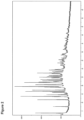
- Ketoprofen Lysine co-crystal Form 4 of the present invention The comparison of the XRDP patterns of Ketoprofen Lysine co-crystal Form 4 of the present invention and Ketoprofen Lysine co-crystal Form 1 is shown in Figure 3 and Table 2.
- the XRPD diffractogram shows relevant differences between the two polymorphs Form 1 and Form 4 of Ketoprofen Lysine co-crystal in the region from 15 to 28° 2theta, with the peaks showing a shift ⁇ 0.2 degrees at 15.5; 16.0; 17.3, 19.2; 19.3; 19.4; 21.7; 24.5; 24.7; 25.9; 26.0; 26.5° 2theta and the peaks with a shift of 0.3 degrees at 25.9 vs 26.2, 26.5 vs 26.8, 26.5 vs 26.8 2theta.
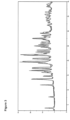
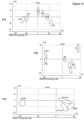
- Ketoprofen Lysine co-crystal Form 4 of the present invention is shown in the 13 C (100 MHz) and 15 N (40.56 MHz) CPMAS solid-state NMR spectra, as depicted in Figures 4 , 5 and in Table 7.
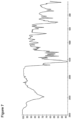
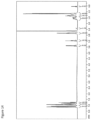
- the Ketoprofen Lysine co-crystal Form 4 of the present invention is further characterized by TGA ( Figure 9B ), DSC ( Figure 10A ), FT-IR ( Figure 6 and Table 4), FT-Raman ( Figure 8 and Table 5), and liquid 1H-NMR spectra ( Figure 14 ).
- the molecular ratio between Ketoprofen and Lysine of the co-crystal Form 4 of the present invention is 1:1.
- the co-crystal of the present invention is co-crystal of (R)-2-(3-benzoylphenyl)-propionic acid D-Lysine.
- the co-crystal of the present invention is co-crystal of (R)-2-(3-benzoylphenyl)-propionic acid L-Lysine.
- the co-crystal of the present invention is co-crystal of (S)-2-(3-benzoylphenyl)-propionic acid D-Lysine.
- the co-crystal of the present invention is co-crystal of (S)-2-(3-benzoylphenyl)-propionic acid L-Lysine.
- Ketoprofen Lysine co-crystal Form 4 of the present invention shows a high dissolution rate, higher than the dissolution rate of Ketoprofen Lysine co-crystal Form 1 (Table 10).
- Ketoprofen Lysine co-crystal Form 4 of the present invention is predictive of an advantageous use in the treatment of those pathological and chronic symptoms, which require the drug to be administered at high dosage, continuously and for long time.
- said excipients are selected from the group consisting of: povidone, colloidal silica, hydroxypropylmethylcellulose, eudragit EPO, sodium dodecyl sulfate, stearic acid, magnesium stearate, aspartame, mannitol, xylitol, talc, flavors.
- the pharmaceutical composition of the present invention is in a solid form, more preferably in solid granulate form.
- Another object of the present invention is the co-crystal of Ketoprofen Lysine Form 4 and the pharmaceutical composition comprising said co-crystal for medical use, preferably for use in the treatment of pain and inflammation diseases.
- the co-crystal of Ketoprofen Lysine Form 4 and the pharmaceutical composition comprising said co-crystal are used in the treatment of pain, in which the pain is selected from the group consisting of: acute pain, headache, toothache, menstrual pain, muscle pain, osteoarticular pain.
- the co-crystal of Ketoprofen Lysine Form 4 and the pharmaceutical composition comprising said co-crystal are used in the treatment of inflammation diseases, in which the inflammation diseases are selected from the group consisting of rheumatic diseases.
- Another object of the present invention is a pharmaceutical composition
- a pharmaceutical composition comprising the co-crystal of Ketoprofen Lysine (Form 4) of the present invention in combination with one or more pharmaceutically active ingredients.
- Another object of the present invention is a process for the preparation of the co-crystal of the present invention, wherein said process comprises the following steps:
- the present process is characterized by one or more of the following features, taken alone or in combinations.
- the solvent of step a) is 2-methyl -1- propanol.
- the non-saturated solution of step a) has a concentration of Ketoprofen lower than 350 mg/ml, more preferably lower than 200 mg/ml, even more preferably lower than 100 mg/ml.
- the non-saturated solution of Ketoprofen of step a) has a concentration of Ketoprofen from 50 to 150 mg/ml, more preferably from 70 to 120 mg/m, even more preferably from 80 to 100 mg/ml.
- the non-saturated solution of Ketoprofen of step a) has a concentration of Ketoprofen lower than 200 mg/ml, preferably lower than 150 mg/ml, more preferably lower than 100 mg/ml.
- step b) of the present process solid lysine is mixed with the non - saturated solution of step a) by direct addition of the solid powder to the solution, preferably under stirring, to provide the admixture.
- step a) can be added to solid lysine, preferably under stirring, to provide the admixture.
- solid lysine can be in form of a suspension in a suitable anti-solvent, namely in a solvent in which Lysine has a low solubility such as for instance Ethyl Acetate, Ethanol, Methanol, 2-Methyl-1-propanol, or their admixtures, preferably in 2-methyl-1-propanol.
- the anti-solvent is preferably used in a volume to weight ratio from 10 to 70 ml/g, more preferably from 30 to 50 ml/g of Lysine.
- An indicative value of low solubility is for instance the solubility of Lysine in 2-Methyl-1-propanol, which is about 0.026 g/ml.
- the admixture obtained at step b) is stirred for 1 to 80 hours, more preferably from 3 to 70 hours, even more preferably from 5 to 60 hours.
- the admixture obtained at step b) is stirred at a temperature from 5°C to 70°C, more preferably from 25°C to 60°C, even more preferably from 50°C to 60°C.
- the admixture obtained at step b) has a water content from 0.3 to 1.5% (v/v), more preferably from 0.8% to 1.1% (v/v).
- the molar ratio Ketoprofen : Lysine is from 1.5:1 to 3.5:1, more preferably from 2:1 to 3:1.
- the admixture obtained at step b), after having been stirred for a suitable time and at a certain temperature, is cooled down at a temperature from -5°C to 60°C, more preferably from 10°C to 50°C, even more preferably to room temperature.
- the non-saturated solution of Ketoprofen in 2-methyl -1- propanol of step a) has a concentration of Ketoprofen from 80 to 100 mg/ml and in a molar ratio Ketoprofen /Lysine from 2:1 to 3:1.
- step b) solid lysine is mixed with the non-saturated solution of step a) by direct addition of the solid powder to the solution. The admixture obtained at step b) is stirred for 5 to 60 hours at a temperature from 50°C to 60°C and then cooled down at room temperature.
- the present process provides for Ketoprofen Lysine co-crystal Form 4 of the present invention in high yield as reported in Table 1.
- Ketoprofen free acid (1.9 g, 7.5 mmol) was dissolved in 20 mL of 2-methyl -1-propanol (MPR) and left to stir at room temperature up to dissolution. Then solid Lysine (0.55 g, 3.75 mmol) was added and the resulting mixture was heated at 50°C for 3 hours. The mixture was then cooled at 5°C and filtered. A washing with MPR (6 mL x 2) was performed to recover the powder from the reactor's wall. The filtered cake was then washed with mother liquor under vacuum. The filtered cake was dried into the drying oven at 60°C and 50 mbar vacuum for 16 hours. The compound was obtained as a white powder in 63% yield.
- MPR 2-methyl -1-propanol
- the compound was characterized by XRPD, TGA, DSC, FT-IR, FT-Raman, liquid state 1H-NMR (see sections below).
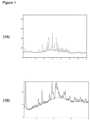
- Ketoprofen 0.76 g and racemic Lysine 0.44 g were stirred in 20 mL of methanol at 40°C for 1 hour. Ketoprofen was dissolved while the suspended Lysine was filtered off (filter 0.45 um) directly in a Mettler Toledo Easymax 102 reactor. The solution was left under stirring for 5 minutes in the reactor, then 100mL of ethyl acetate was added and the solution was cooled down to -5°C without solid formation. Additional ethyl acetate (20 mL) was added through pipette in two aliquots (10 mL and 10 mL) to trigger the nucleation. The system was left under stirring until the suspension became milky. Additional 30 minutes of stirring was applied. The precipitate was then filtered and characterized by XRPD ( Figure 1B ).
- X-ray tube Name: Toshiba Analix type A-26L Anode material: Cu Maximus output: 0.60 kW Focus size: 1 ⁇ 10 mm K ⁇ Filter Name: Ni-filter Thickness (mm): 0.015 Material: Ni Goniometer (Angle measuring device) Type: Vertical ⁇ /2 ⁇ Goniometer radius: 150 mm Scanning axis: ⁇ /2 ⁇ linked 2 ⁇ scanning range: +2 ° to +140 ° ⁇ /2 ⁇ axis minimum step angle: 0.005 ° (2 ⁇ ) Position speed: 500 °/min (2 ⁇ ) Scanning speed: 0.01 to 100 °/min Datum angle: 2 ⁇ 10 ° X-ray take-off angle: 6 ° (fixed) Slit DS: 1.25 ° IHS: 10.0 mm SS: none (open) RS: none (open) Incident side Soller slit: 2.5 ° Receiving side Soller slit: 2.5 ° Detector Name: D/teX Ultra High-speed 1D Detector
- the XRPD diffractograms showed some relevant differences in the region from 15 to 27° 2theta with the peaks showing similar relative intensity.
- Ketoprofen Lysine co-crystal Form 1 showed the characteristic peaks at 15.7; 16.2; 17.5; 19.4; 19.5; 19.6; 21.9; 24.7; 24.9; 26.2; 26.8° 2theta, while Ketoprofen lysine co-crystal Form 4 showed the distinguishing peaks at 15.5; 16.0; 17.3, 19.2; 19.3; 19.4; 21.7; 24.5; 24.7; 25.9; 26.0; 26.5° 2theta: these peaks have a shift ⁇ 0.2 deg.
- the peaks of Ketoprofen Lysine co-crystal Form 4 with a shift of 0.3 degrees were found at 25.9 vs 26.2, 26.5 vs 26.8, 26.5 vs 26.8.
- Ketoprofen Lysine co-crystal Form 4 XRPD pattern showed slight but not negligible differences when compared to the XRPD pattern observed for Form 1.
- Ketoprofen Lysine co-crystal Form 4 represents a polymorph of Ketoprofen Lysine co-crystal Form 1 with similar crystallinity.
- the Ketoprofen Lysine co-crystal Form 4 of the present invention is distinguished from the previous Ketoprofen Lysine Salt, as resulted from the analysis reported herein below.
- Ketoprofen Lysine Salt is shown in Figure 1A .
- the characteristic XRPD peaks of Ketoprofen Lysine Salt are reported in the following Table 3.
- Table 3 XRPD Peak List of Ketoprofen Lysine Salt Pos. [°2Th.] Height [cts] FWHM [°2Th.] d-spacing [ ⁇ ] Rel. Int.
- Ketoprofen Lysine salt showed the most intense peaks at 13.0, 17.4, 18.9, 19.5, 20.9, 21.5 and 26.6° 2theta
- Ketoprofen lysine co-crystal Form 4 showed the distinguishing peaks at 15.5; 16.0; 17.3, 19.2; 19.3; 19.4; 21.7; 24.5; 24.7; 25.9; 26.0; 26.5° 2theta.
- the sample was weighed in an aluminum pan hermetically sealed with an aluminum pierced cover. The analysis was performed heating the sample from 25°C to 320°C at 10 K/min.
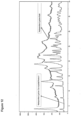
- Ketoprofen Lysine co-crystal Form 4 TGA thermogram is reported in Figure 9 in comparison with the thermogram of Form 1.
- thermogram of Form 4 showed multiple weight losses:
- the TGA curve profile of Ketoprofen Lysine co-crystal Form 4 is slightly different from that of Ketoprofen Lysine co-crystal Form 1 with the latter showing a weight loss of 34.40% due to degradation compared to 35.53% of Ketoprofen Lysine co-crystal Form 4.
- the analysis was carried out using a DSC Mettler Toledo DSC1.
- the sample was weighed in an aluminum pan hermetically sealed with an aluminum cover. The analysis was performed heating the sample from 25°C to 320°C at 10 K/min.
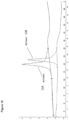
- the DSC thermogram for Ketoprofen Lysine co-crystal Form 4 is reported in Figure 10 (10A) in comparison with Ketoprofen Lysine co-crystal Form 1 (10B).
- the DSC thermogram for Ketoprofen Lysine Salt is shown in Figure 13 .
- the DSC thermogram of KL Form 4 had a profile different from that of KL Form 1 with the latter showing the endothermic peak at a higher onset temperature (164.14 °C Form 1 vs 152.18 °C Form 4). Furthermore, both the polymorphs thermograms differ from the thermogram of the previous Ketoprofen Lysine Salt which showed the 1st endothermic peak at 110.92°C (54.67 J/g, onset 100.53°C, end-set 118.35°C) and above 120°C multiple partially overlapped endothermic peaks due to degradation steps.
- FT-Raman spectra were recorded with a Nicolet iS50 FT-IR Spectrometer.
- the excitation source was a Nd-YAG laser (1064 nm) in the backscattering (180°) configuration.
- the focused laser beam diameter was approximately 50 mm and the spectral resolution 4 cm -1 .
- the spectra were recorded with a laser power at the sample of approximately 100 mW.
- Solid-state NMR (ss-NMR) spectra were acquired with a BrukerAvance II 400 Ultra Shield instrument, operating at 400.23, 100.63 and 40.56 MHz, respectively for 1 H, 13 C and 15 N nuclei. Powder samples were packed into cylindrical zirconia rotors with a 4 mm o.d. and an 80 ⁇ L volume. A certain amount of sample was collected and used without further preparations to fill the rotor.
- 13 C CPMAS (cross polarized magic angle spinning) spectra were acquired at a spinning speed of 12 kHz, using a ramp cross-polarization pulse sequence with ss-NMR spectra were acquired with a Bruker Avance II 400 Ultra Shield instrument, operating at 400.23, 100.63 and 40.56 MHz, respectively for 1 H, 13 C and 15 N nuclei. Powder samples were packed into cylindrical zirconia rotors with a 4 mm o.d. and an 80 ⁇ L volume. A certain amount of sample was collected and used without further preparations to fill the rotor.
- N CPMAS spectra were acquired at a spinning speed of 9 kHz using a ramp cross-polarization pulse sequence with a 90° 1 H pulse of 3.60 ⁇ s, a contact time between 1 and 4 ms, optimized recycle delays between 1.1 and 3.4 s, a number of scans in the range 14330-22770, depending on the sample.
- TPPM pulse phase modulation
- Ketoprofen Lysine Salt is distinguished from those of the present Ketoprofen Lysine co-crystal Form 4 and both differ from the characteristic signals of the starting materials Ketoprofen and Lysine.
- Ketoprofen Lysine co-crystal Form 4 exhibit an average full width at half maximum (FWHM) value of 143 Hz. All resonances fall at the same chemical shift of those of Ketoprofen Lysine co-crystal Form 1, some further broad shoulders appear in the carboxylic region (170-200 ppm), as well as in the aromatic (120-150 ppm) and aliphatic (20-60 ppm) ones.
- Table 8 13 C CPMAS solid-state NMR peak list of Ketoprofen Lysine Salt.
- Table 8 shows the peak list of the characteristic signals of Ketoprofen Lysine Salt.
- the average full width at half-maximum value (133 Hz) is consistent with a moderately crystalline phase.
- the carboxylic signals infer a 1:1 ratio between Ketoprofen and Lysine.
- Figure 4C shows the carboxylic region of the 13C - ss-NMR overlapped spectra of Ketoprofen Lysine co-crystal Form 4, Ketoprofen Lysine co-crystal Form 1, Ketoprofen and Lysine.
- the signals of the polymorphs Ketoprofen Lysine co-crystal Form 1 and Ketoprofen Lysine co-crystal Form 4 are both distinguishable from the signals of Ketoprofen and Lysine.
- Ketoprofen lysine form 4 can be defined as a homogeneous phase.
- Figure 5A displays the 15 N CPMAS solid-state NMR spectra of Ketoprofen Lysine co-crystal Form 4, acquired at room temperature with a spinning speed of 9 kHz, with the characteristic 15 N resonances of Ketoprofen Lysine co-crystal Form 4, in particular with the signal at about 43 ppm.
- Figure 5B shows an overlap of the 15 N CPMAS solid-state NMR spectra of Ketoprofen Lysine co-crystal Form 4 and Lysine.
- Ketoprofen Lysine co-crystal Form 4 and Ketoprofen Lysine co-crystal Form 1 were performed in simulated gastric fluid (SGF) and simulated salivary fluid (SSF).
- GSF gastric simulated fluid
- PB6.5 USP phosphate buffer pH 6.5
- Ketoprofen Lysine co-crystal Form 4 in SGF compared with the solubility of Ketoprofen Lysine co-crystal Form 1, is shown in the following Table 9.
- Ketoprofen Lysine co-crystal Form 4 was similar to Ketoprofen Lysine co-crystal Form 1.
- IDR intrinsic dissolution rates
- SGF gastric fluid
- PH 6.5 simulated salivary fluid
- the assay was performed by using technologically advanced taste sensors equipped with ions selective potentiometric electrodes (ISPE) sensing system that provides results with high correlation to sensory scores.
- ISPE ions selective potentiometric electrodes
- PCA Principal Component Analysis
- PLS-DA Partial Least Discriminant Analysis
- Ketoprofen Lysine co-crystal Form 4 data are closer to the sweet taste zone than the data obtained with Ketoprofen Lysine co-crystal Form 1, thus supporting the expectation of a better taste of the present Ketoprofen Lysine co-crystal Form 4.
- Ketoprofen Lysine co-crystal Form 4 and Ketoprofen Lysine Salt were analysed by Mastersizer laser diffraction. Particle size analysis is related to the rheological behaviour of the powder and to the dissolution rate of the product.
- Ketoprofen Lysine co-crystal Form 4 A significant variation of the particle size between Ketoprofen Lysine co-crystal Form 4 and Ketoprofen Lysine Salt was observed, as reported in the following Table 11: Table 11 Comparison between the PSD of Ketoprofen Lysine co-crystal Form 4 and Ketoprofen Lysine Salt PSD Ketoprofen Lysine co-crystal Form 4 Ketoprofen Lysine Salt D10 ( ⁇ m) 33.68 83.82 D50 ( ⁇ m) 84.26 130.78 D90 ( ⁇ m) 142.94 347.74
- Ketoprofen Lysine co-crystal Form 4 As shown in Table 11, a significant difference in particle size distribution between Ketoprofen Lysine co-crystal Form 4 and Ketoprofen Lysine Salt was observed, with the latter showing a PSD D90 2.43-fold greater than Ketoprofen Lysine co-crystal Form 4.
- the present Ketoprofen Lysine co-crystal Form 4 is characterized by a particle size distribution in which D90 is lower than 220 ⁇ m, preferably lower than 150 ⁇ m.
- the particle size of the present Ketoprofen Lysine co-crystal Form 4 lower than the particle size of the previous Ketoprofen Lysine Salt, can provide for many advantages. In fact, particle size distribution plays an important role in the preparation process (quality control) and in the development of suitable manufacturing methods. Smaller final mean particle sizes can improve content uniformity, solubility, dissolution, absorption rates and bioavailability.
- Ketoprofen Lysine Co-Crystal Form 4 compared with the previous Ketoprofen Lysine Salt, is that it can be obtained directly from the crystallization step in the desired smaller particle size, thus minimizing or even avoiding downstream micronization of the powder in order to get the desired PSD, with a potential reduction of process steps, time and, in the end, manufacturing costs.
- Ketoprofen Lysine co-crystal Form 4 has a crystallinity significantly higher than Ketoprofen Lysine Salt where the presence of amorphous phase is evident ( Figure 12 ). This property is typically related with a better stability of Ketoprofen Lysine co-crystal Form 4 especially in terms of lower hygroscopicity if compared with Ketoprofen Lysine Salt.
- the lower Particle Size Distribution combined with the higher crystallinity of Ketoprofen Lysine co-crystal Form 4 is advantageous over the previous Ketoprofen Lysine Salt both in relation to the setting of fluid-dynamic parameters in the formulation process and for the preparation and formulation of the coated granulate of Ketoprofen Lysine.
- the evaluation of the dynamic flow and the shear properties as well as stability of the powder through tests such as basic stability energy, stability index, specific energy and conditioned bulk density show greater friction phenomena in the powder bed for Ketoprofen Lysine Salt compared to Ketoprofen Lysine co-crystal Form 4.
- the phenomenon could be derived from the greater amorphous degree, the irregular shape and the higher hygroscopicity of Ketoprofen Lysine Salt compared to Ketoprofen Lysine co-crystal Form 4.
- Ketoprofen oral formulations are designed for a systemic effect by absorption through the gastrointestinal tract. Both drug dissolution and permeability through the gastrointestinal tract need to be sufficiently good to reach the bloodstream.
- the lower particle size of Ketoprofen Lysine co-crystal Form 4, compared to Ketoprofen Lysine Salt, may be predictive of improved dissolution-rate and bioavailability (study ongoing).
- Reducing the particle size increases the particle surface area in contact with the juices of the gastrointestinal tract favouring dissolution, improving safety and efficacy, as well as providing better compliance and enhanced dose tolerance.
- Ketoprofen Lysine co-crystal Form 4 was synthetized, isolated and characterized by XRPD, TGA, DSC, FT-IR, FT-Raman and NMR.
- Ketoprofen Lysine co-crystal Form 4 represents a polymorph of Ketoprofen Lysine co-crystal Form 1 with similar crystallinity (according to XRPD analysis) and comparable but distinguished thermal properties (similar degradation profile - TGA/EGA, and melting point at slight lower temperature - DSC analysis).
- Solid-state NMR showed the presence of a homogeneous system characterized by a short-range structure almost identical with that of Ketoprofen Lysine co-crystal Form 1 featuring a site-specific disorder. Moreover, Ketoprofen and Lysine were found to be present with a stoichiometric ratio 1:1, in agreement with thermal analysis results.
- Ketoprofen Lysine co-crystal Form 1 and Ketoprofen Lysine co-crystal Form 4 appears as polymorphs of the same co-crystal.
- Ketoprofen Lysine co-crystal Form 4 clearly differs from the previous Ketoprofen Lysine Salt as confirmed by XRPD, 13 C-ss-NMR, FT-IR, FT-Raman and DSC analyses.
- Ketoprofen Lysine co-crystal Form 4 was similar to that of Ketoprofen Lysine co-crystal Form 1.
- the present Ketoprofen Lysine co-crystal Form 4 interestingly shows smaller particle size than Ketoprofen Lysine Salt predictive of improved applications particularly in oral dosage formulations.
- Ketoprofen Lysine co-crystal Form 4 resulted to have a better taste (i.e. close to sweet) compared to Ketoprofen Lysine co-crystal Form 1 taste.
Landscapes
- Chemical & Material Sciences (AREA)
- Organic Chemistry (AREA)
- Engineering & Computer Science (AREA)
- Oil, Petroleum & Natural Gas (AREA)
- Acyclic And Carbocyclic Compounds In Medicinal Compositions (AREA)
- Organic Low-Molecular-Weight Compounds And Preparation Thereof (AREA)
Claims (17)
- Co-Kristall von Ketoprofen-Lysin (Form 4), dadurch gekennzeichnet, dass er ein Röntgenbeugungsmuster mit charakteristischen Peaks bei 13,6; 16,0; 16,5; 17,3; 19,1; 19,4; 20,5; 21,8; 22,9; 23,5; 24,9; 25,9; 27,6°2theta ± 0,20 Grad aufweist.
- Co-Kristall nach Anspruch 1, wobei das Molekularverhältnis von Ketoprofen zu Lysin 1:1 beträgt.
- Co-Kristall nach Anspruch 1 oder 2, gekennzeichnet durch einen endothermen Peak bei 158,8°C ± 2°C, gemessen mittels DSC nach dem in der Beschreibung angegebenen Verfahren.
- Co-Kristall nach einem der Ansprüche 1 bis 3, gekennzeichnet durch eine Teilchengrößenverteilung, bei der D90 kleiner als 220 µm, vorzugsweise kleiner als 150 µm ist, gemessen nach dem in der Beschreibung angegebenen Verfahren.
- Pharmazeutische Zusammensetzung, umfassend den Co-Kristall von Ketoprofen-Lysin (Form 4) nach einem der vorhergehenden Ansprüche und mindestens einen physiologisch akzeptablen Hilfsstoff.
- Pharmazeutische Zusammensetzung nach Anspruch 5, wobei die Hilfsstoffe ausgewählt sind aus der Gruppe bestehend aus: Povidon, kolloidalem Siliciumdioxid, Hydroxypropylmethylcellulose, Eudragit EPO, Natriumdodecylsulfat, Stearinsäure, Magnesiumstearat, Aspartam, Mannitol, Xylitol, Talkum, Aromen.
- Pharmazeutische Zusammensetzung nach Anspruch 5 oder 6, wobei die pharmazeutische Zusammensetzung in fester Granulatform vorliegt.
- Pharmazeutische Zusammensetzung, umfassend den Co-Kristall von Ketoprofen-Lysin (Form 4) nach einem der Ansprüche 1 bis 4 in Kombination mit mindestens einem anderen pharmazeutisch wirksamen Bestandteil.
- Co-Kristall von Ketoprofen-Lysin (Form 4) nach einem der Ansprüche 1 bis 4 und pharmazeutische Zusammensetzung nach einem der Ansprüche 5 bis 8 zur Verwendung als Arzneimittel.
- Co-Kristall und pharmazeutische Zusammensetzung zur Verwendung nach Anspruch 9, wobei die Verwendung bei der Behandlung von Schmerz- und Entzündungskrankheiten erfolgt.
- Co-Kristall und pharmazeutische Zusammensetzung zur Verwendung nach Anspruch 10, wobei der Schmerz ausgewählt ist aus der Gruppe bestehend aus: akutem Schmerz, Kopfschmerz, Zahnschmerz, Menstruationsschmerz, Muskelschmerz, Knochengelenkschmerz.
- Co-Kristall und pharmazeutische Zusammensetzung zur Verwendung nach Anspruch 10, wobei die Entzündungskrankheiten ausgewählt ist aus der Gruppe bestehend aus der Rheumatitis-Krankheit.
- Verfahren zur Herstellung des Co-Kristalls von Ketoprofen-Lysin (Form 4), wobei das Verfahren die folgenden Schritte umfasst:a) Herstellen einer ungesättigten Lösung von Ketoprofen in einem Lösungsmittel, ausgewählt aus 2-Methyl-1-propanol und Ethylacetat;b) Mischen der nicht gesättigten Lösung von Ketoprofen mit festem Lysin, um ein Gemisch bereitzustellen.
- Verfahren nach Anspruch 13, wobei die ungesättigte Lösung von Schritt a) eine Ketoprofen-Konzentration von 50 bis 150 mg/ml, vorzugsweise von 70 bis 120 mg/m, bevorzugter von 80 bis 100 mg/ml aufweist.
- Verfahren nach Anspruch 13 oder 14, wobei das molare Verhältnis Ketoprofen: Lysin ist von 1,5:1 bis 3,5:1, bevorzugter von 2:1 bis 3:1.
- Verfahren nach einem der Ansprüche 13 bis 15, wobei das in Schritt b) erhaltene Gemisch einen Wassergehalt von 0,3 bis 1,5 % (v/v), bevorzugter von 0,8% bis 1,1 % (v/v) aufweist.
- Verfahren nach einem der Ansprüche 13 bis 16, wobei das Lösungsmittel von Schritt a) 2-Methyl-1-propanol ist.
Priority Applications (4)
| Application Number | Priority Date | Filing Date | Title |
|---|---|---|---|
| RS20250295A RS66667B1 (sr) | 2019-12-23 | 2020-12-21 | Kokristal ketoprofena i njegovo dobijanje, farmaceutske kompozicije koje ga sadrže i njihova primena |
| SI202030594T SI4081502T1 (sl) | 2019-12-23 | 2020-12-21 | Ko-kristal ketoprofena in njegova priprava, farmacevtski sestavki, ki ga vsebujejo, in njegova uporaba |
| SM20250145T SMT202500145T1 (it) | 2019-12-23 | 2020-12-21 | Co-cristallo di ketoprofene e sua preparazione, composizioni farmaceutiche comprendenti lo stesso e relativi usi |
| HRP20250365TT HRP20250365T1 (hr) | 2019-12-23 | 2020-12-21 | Kokristal ketoprofena i njegova priprema, farmaceutski spojevi koji ga sadrže i njihova primjena |
Applications Claiming Priority (2)
| Application Number | Priority Date | Filing Date | Title |
|---|---|---|---|
| EP19219293.8A EP3842408A1 (de) | 2019-12-23 | 2019-12-23 | Co-kristall von ketoprofen und dessen herstellung, pharmazeutische zusammensetzungen damit und verwendungen davon |
| PCT/EP2020/087436 WO2021130162A1 (en) | 2019-12-23 | 2020-12-21 | Co-crystal of ketoprofen and its preparation, pharmaceutical compositions comprising the same and uses thereof |
Publications (2)
| Publication Number | Publication Date |
|---|---|
| EP4081502A1 EP4081502A1 (de) | 2022-11-02 |
| EP4081502B1 true EP4081502B1 (de) | 2025-02-12 |
Family
ID=69055669
Family Applications (2)
| Application Number | Title | Priority Date | Filing Date |
|---|---|---|---|
| EP19219293.8A Withdrawn EP3842408A1 (de) | 2019-12-23 | 2019-12-23 | Co-kristall von ketoprofen und dessen herstellung, pharmazeutische zusammensetzungen damit und verwendungen davon |
| EP20839009.6A Active EP4081502B1 (de) | 2019-12-23 | 2020-12-21 | Co-kristall von ketoprofen und dessen herstellung, pharmazeutische zusammensetzungen damit und verwendungen davon |
Family Applications Before (1)
| Application Number | Title | Priority Date | Filing Date |
|---|---|---|---|
| EP19219293.8A Withdrawn EP3842408A1 (de) | 2019-12-23 | 2019-12-23 | Co-kristall von ketoprofen und dessen herstellung, pharmazeutische zusammensetzungen damit und verwendungen davon |
Country Status (18)
| Country | Link |
|---|---|
| US (1) | US12528760B2 (de) |
| EP (2) | EP3842408A1 (de) |
| CN (1) | CN115038686B (de) |
| BR (1) | BR112022010498A2 (de) |
| CA (1) | CA3160501A1 (de) |
| DK (1) | DK4081502T3 (de) |
| ES (1) | ES3016818T3 (de) |
| FI (1) | FI4081502T3 (de) |
| HR (1) | HRP20250365T1 (de) |
| HU (1) | HUE070960T2 (de) |
| IL (1) | IL293984B2 (de) |
| LT (1) | LT4081502T (de) |
| PL (1) | PL4081502T3 (de) |
| PT (1) | PT4081502T (de) |
| RS (1) | RS66667B1 (de) |
| SI (1) | SI4081502T1 (de) |
| SM (1) | SMT202500145T1 (de) |
| WO (1) | WO2021130162A1 (de) |
Families Citing this family (4)
| Publication number | Priority date | Publication date | Assignee | Title |
|---|---|---|---|---|
| EP3900716A1 (de) | 2020-04-21 | 2021-10-27 | Dompe' Farmaceutici S.P.A. | Co-kristall von gabapentin, ketoprofen und lysin, pharmazeutische zusammensetzungen und ihre medizinische verwendung |
| EP3900715A1 (de) | 2020-04-21 | 2021-10-27 | Dompe' Farmaceutici S.P.A. | Synergistische beimischungen von gabapentin und ketoprofen, pharmazeutische zusammensetzungen und ihre medizinische verwendung |
| CN115504968B (zh) * | 2022-11-21 | 2023-04-18 | 歌礼生物科技(杭州)有限公司 | 三嗪衍生物 |
| CN118370720B (zh) * | 2024-06-21 | 2024-09-17 | 中润药业有限公司 | 一种右酮洛芬氨丁三醇注射液及其制备方法 |
Family Cites Families (17)
| Publication number | Priority date | Publication date | Assignee | Title |
|---|---|---|---|---|
| GB1497044A (en) | 1974-03-07 | 1978-01-05 | Prodotti Antibiotici Spa | Salts of phenyl-alkanoic acids |
| IT1104556B (it) | 1977-05-12 | 1985-10-21 | Medea Res Srl | Sale di lisina dell'acido meta-benzoil-idratropico,processo per la sua preparazione e composizione farmaceutiche che lo contengono |
| JPS59190912A (ja) * | 1983-04-15 | 1984-10-29 | Hokuriku Seiyaku Co Ltd | 消炎鎮痛クリ−ム剤 |
| WO1994020449A1 (en) | 1993-03-09 | 1994-09-15 | Dompe'farmaceutici Spa | Salts of 2-(3-benzoylphenyl)propionic acid with achiral and chiral organic bases and pharmaceutical compositions thereof |
| IT1277741B1 (it) | 1995-12-28 | 1997-11-12 | Dompe Spa | Composizioni farmaceutiche parenterali contenenti sali di alchilammonio di acidi 2-arilpropionici |
| EP1558234B1 (de) | 2002-10-25 | 2007-05-23 | Dompé S.P.A. | Schmerzfreie injektions-zubereitungen von 2-arylpropionsäuresalzen |
| CN1939893A (zh) * | 2005-09-28 | 2007-04-04 | 北京赛生药业有限公司 | 赖氨酸酮洛芬及其制备方法 |
| MX2008011823A (es) | 2006-03-16 | 2008-10-31 | Novartis Ag | Forma de dosificacion solida que contiene un agente activo de sabor encubierto. |
| EP1935405A1 (de) | 2006-12-22 | 2008-06-25 | LEK Pharmaceuticals D.D. | Im Mund zerfallende Tabletten |
| US9833510B2 (en) | 2007-06-12 | 2017-12-05 | Johnson & Johnson Consumer Inc. | Modified release solid or semi-solid dosage forms |
| EP2177215A1 (de) | 2008-10-17 | 2010-04-21 | Laboratorios Del. Dr. Esteve, S.A. | Co-Kristalle von Tramadol und NSARs |
| FR2959130A1 (fr) | 2010-04-21 | 2011-10-28 | Sanofi Aventis | Procede de preparation de compositions pharmaceutiques destinees a l'administration par voie orale comprenant un ou plusieurs principes actifs et les compositions les comprenant. |
| WO2012071517A2 (en) | 2010-11-24 | 2012-05-31 | Thar Pharmaceuticals, Inc. | Novel crystalline forms |
| US9447050B2 (en) | 2011-04-05 | 2016-09-20 | The Translational Genomics Research Institute | Solid forms of curcumin |
| CN103524365A (zh) * | 2013-09-03 | 2014-01-22 | 蚌埠丰原医药科技发展有限公司 | 一种赖氨酸酮洛芬的制备方法 |
| CN104987287B (zh) * | 2015-06-10 | 2017-07-18 | 上海现代制药海门有限公司 | 一种球形酮基布洛芬赖氨酸盐的制备方法 |
| EP3670489A1 (de) * | 2018-12-21 | 2020-06-24 | Dompé farmaceutici S.p.A. | Cokristall von ketoprofen, zusammensetzungen damit, verfahren zur herstellung davon und verwendungen davon |
-
2019
- 2019-12-23 EP EP19219293.8A patent/EP3842408A1/de not_active Withdrawn
-
2020
- 2020-12-21 HR HRP20250365TT patent/HRP20250365T1/hr unknown
- 2020-12-21 PT PT208390096T patent/PT4081502T/pt unknown
- 2020-12-21 PL PL20839009.6T patent/PL4081502T3/pl unknown
- 2020-12-21 WO PCT/EP2020/087436 patent/WO2021130162A1/en not_active Ceased
- 2020-12-21 LT LTEPPCT/EP2020/087436T patent/LT4081502T/lt unknown
- 2020-12-21 SI SI202030594T patent/SI4081502T1/sl unknown
- 2020-12-21 CA CA3160501A patent/CA3160501A1/en active Pending
- 2020-12-21 US US17/787,611 patent/US12528760B2/en active Active
- 2020-12-21 ES ES20839009T patent/ES3016818T3/es active Active
- 2020-12-21 CN CN202080089143.8A patent/CN115038686B/zh active Active
- 2020-12-21 RS RS20250295A patent/RS66667B1/sr unknown
- 2020-12-21 FI FIEP20839009.6T patent/FI4081502T3/fi active
- 2020-12-21 BR BR112022010498A patent/BR112022010498A2/pt active Search and Examination
- 2020-12-21 DK DK20839009.6T patent/DK4081502T3/da active
- 2020-12-21 EP EP20839009.6A patent/EP4081502B1/de active Active
- 2020-12-21 IL IL293984A patent/IL293984B2/en unknown
- 2020-12-21 HU HUE20839009A patent/HUE070960T2/hu unknown
- 2020-12-21 SM SM20250145T patent/SMT202500145T1/it unknown
Also Published As
| Publication number | Publication date |
|---|---|
| PL4081502T3 (pl) | 2025-05-12 |
| US20230002302A1 (en) | 2023-01-05 |
| IL293984A (en) | 2022-08-01 |
| LT4081502T (lt) | 2025-04-10 |
| PT4081502T (pt) | 2025-04-01 |
| US12528760B2 (en) | 2026-01-20 |
| RS66667B1 (sr) | 2025-05-30 |
| SMT202500145T1 (it) | 2025-05-12 |
| HUE070960T2 (hu) | 2025-07-28 |
| DK4081502T3 (da) | 2025-03-24 |
| IL293984B1 (en) | 2025-03-01 |
| CA3160501A1 (en) | 2021-07-01 |
| CN115038686B (zh) | 2024-04-30 |
| EP4081502A1 (de) | 2022-11-02 |
| ES3016818T3 (en) | 2025-05-09 |
| EP3842408A1 (de) | 2021-06-30 |
| WO2021130162A1 (en) | 2021-07-01 |
| CN115038686A (zh) | 2022-09-09 |
| FI4081502T3 (fi) | 2025-03-28 |
| BR112022010498A2 (pt) | 2023-01-10 |
| SI4081502T1 (sl) | 2025-05-30 |
| HRP20250365T1 (hr) | 2025-05-09 |
| IL293984B2 (en) | 2025-07-01 |
Similar Documents
| Publication | Publication Date | Title |
|---|---|---|
| US12528760B2 (en) | Co-crystal of ketoprofen and its preparation, pharmaceutical compositions comprising the same and uses thereof | |
| US20250312301A1 (en) | Co-crystal of ketoprofen, compositions comprising the same, process of producing the same, and uses thereof | |
| Li et al. | Eutectics and salt of dapsone with hydroxybenzoic acids: binary phase diagrams, characterization and evaluation | |
| EP4138807B1 (de) | Co-kristall von gabapentin, ketoprofen und lysin, pharmazeutische zusammensetzungen und ihre medizinische verwendung | |
| RU2842656C1 (ru) | Сокристалл кетопрофена и его получение, содержащие его фармацевтические композиции и их применение | |
| HK40075204A (en) | Co-crystal of ketoprofen and its preparation, pharmaceutical compositions comprising the same and uses thereof | |
| HK40075204B (en) | Co-crystal of ketoprofen and its preparation, pharmaceutical compositions comprising the same and uses thereof | |
| US8748437B2 (en) | Crystal of 2-(3,4 dichlorobenzyl)-5-methyl-4-oxo-3,4-dihydrothien[2,3-D]pyrimidine-6-carboxylic acid | |
| Sharma et al. | Development of an Innovative Efonidipine Hydrochloride Ethanoate Co-crystals with Dicarboxylic Acids: In-Vitro, Bioavailability and Antihypertensive Properties | |
| Abdelrahman et al. | Modulating nimodipine crystallinity for enhancing dissolution: development of geriatric-friendly dosage form | |
| RU2802975C2 (ru) | Со-кристалл кетопрофена, содержащие его композиции, способ его получения и применения | |
| KR102170422B1 (ko) | 토파시티닙의 신규 염, 이의 제조방법 및 이를 포함하는 약학 조성물 | |
| EP4161899B1 (de) | Co-kristall von ketoprofen, lysin und gabapentin | |
| EP4169903A1 (de) | Co-kristalle von nichtsteroidalen entzündungshemmenden arzneimitteln, lysin und gabapentin, pharmazeutische zusammensetzungen und deren medizinische verwendung | |
| HK40081082B (en) | Co-crystal of gabapentin, ketoprofen and lysine, pharmaceutical compositions and their medical use | |
| HK40081082A (en) | Co-crystal of gabapentin, ketoprofen and lysine, pharmaceutical compositions and their medical use | |
| EA048060B1 (ru) | Сокристаллы габапентина, кетопрофена и лизина, фармацевтические композиции и их медицинское применение | |
| EA052760B1 (ru) | Супрамолекулярное соединение 1-n-[4-(6,7-диметоксихинолин-4-ил)оксифенил]-1-n'-(4-фторфенил)циклопропан-1,1-дикарбоксамида (s)–малата и лактозы 1:1, способы его получения и композиция | |
| KR20160146428A (ko) | 솔리페나신 또는 그의 약학적으로 허용되는 염과 락토즈를 포함하는 안정한 무정형 솔리페나신 약학 조성물 및 그의 제조방법 |
Legal Events
| Date | Code | Title | Description |
|---|---|---|---|
| REG | Reference to a national code |
Ref country code: HR Ref legal event code: TUEP Ref document number: P20250365T Country of ref document: HR |
|
| STAA | Information on the status of an ep patent application or granted ep patent |
Free format text: STATUS: UNKNOWN |
|
| STAA | Information on the status of an ep patent application or granted ep patent |
Free format text: STATUS: THE INTERNATIONAL PUBLICATION HAS BEEN MADE |
|
| PUAI | Public reference made under article 153(3) epc to a published international application that has entered the european phase |
Free format text: ORIGINAL CODE: 0009012 |
|
| STAA | Information on the status of an ep patent application or granted ep patent |
Free format text: STATUS: REQUEST FOR EXAMINATION WAS MADE |
|
| 17P | Request for examination filed |
Effective date: 20220614 |
|
| AK | Designated contracting states |
Kind code of ref document: A1 Designated state(s): AL AT BE BG CH CY CZ DE DK EE ES FI FR GB GR HR HU IE IS IT LI LT LU LV MC MK MT NL NO PL PT RO RS SE SI SK SM TR |
|
| REG | Reference to a national code |
Ref country code: HK Ref legal event code: DE Ref document number: 40075204 Country of ref document: HK |
|
| DAV | Request for validation of the european patent (deleted) | ||
| DAX | Request for extension of the european patent (deleted) | ||
| P01 | Opt-out of the competence of the unified patent court (upc) registered |
Effective date: 20230528 |
|
| GRAP | Despatch of communication of intention to grant a patent |
Free format text: ORIGINAL CODE: EPIDOSNIGR1 |
|
| STAA | Information on the status of an ep patent application or granted ep patent |
Free format text: STATUS: GRANT OF PATENT IS INTENDED |
|
| GRAS | Grant fee paid |
Free format text: ORIGINAL CODE: EPIDOSNIGR3 |
|
| INTG | Intention to grant announced |
Effective date: 20241113 |
|
| GRAA | (expected) grant |
Free format text: ORIGINAL CODE: 0009210 |
|
| STAA | Information on the status of an ep patent application or granted ep patent |
Free format text: STATUS: THE PATENT HAS BEEN GRANTED |
|
| RAP3 | Party data changed (applicant data changed or rights of an application transferred) |
Owner name: DOMPE FARMACEUTICI SPA |
|
| AK | Designated contracting states |
Kind code of ref document: B1 Designated state(s): AL AT BE BG CH CY CZ DE DK EE ES FI FR GB GR HR HU IE IS IT LI LT LU LV MC MK MT NL NO PL PT RO RS SE SI SK SM TR |
|
| REG | Reference to a national code |
Ref country code: GB Ref legal event code: FG4D |
|
| REG | Reference to a national code |
Ref country code: CH Ref legal event code: EP |
|
| REG | Reference to a national code |
Ref country code: DE Ref legal event code: R096 Ref document number: 602020046057 Country of ref document: DE |
|
| REG | Reference to a national code |
Ref country code: IE Ref legal event code: FG4D |
|
| REG | Reference to a national code |
Ref country code: DK Ref legal event code: T3 Effective date: 20250318 |
|
| REG | Reference to a national code |
Ref country code: FI Ref legal event code: FGE |
|
| REG | Reference to a national code |
Ref country code: PT Ref legal event code: SC4A Ref document number: 4081502 Country of ref document: PT Date of ref document: 20250401 Kind code of ref document: T Free format text: AVAILABILITY OF NATIONAL TRANSLATION Effective date: 20250325 |
|
| REG | Reference to a national code |
Ref country code: SE Ref legal event code: TRGR |
|
| REG | Reference to a national code |
Ref country code: NL Ref legal event code: FP |
|
| REG | Reference to a national code |
Ref country code: HR Ref legal event code: T1PR Ref document number: P20250365 Country of ref document: HR Ref country code: ES Ref legal event code: FG2A Ref document number: 3016818 Country of ref document: ES Kind code of ref document: T3 Effective date: 20250509 |
|
| REG | Reference to a national code |
Ref country code: SK Ref legal event code: T3 Ref document number: E 46195 Country of ref document: SK |
|
| REG | Reference to a national code |
Ref country code: GR Ref legal event code: EP Ref document number: 20250400707 Country of ref document: GR Effective date: 20250514 |
|
| PG25 | Lapsed in a contracting state [announced via postgrant information from national office to epo] |
Ref country code: IS Free format text: LAPSE BECAUSE OF FAILURE TO SUBMIT A TRANSLATION OF THE DESCRIPTION OR TO PAY THE FEE WITHIN THE PRESCRIBED TIME-LIMIT Effective date: 20250612 |
|
| PG25 | Lapsed in a contracting state [announced via postgrant information from national office to epo] |
Ref country code: BG Free format text: LAPSE BECAUSE OF FAILURE TO SUBMIT A TRANSLATION OF THE DESCRIPTION OR TO PAY THE FEE WITHIN THE PRESCRIBED TIME-LIMIT Effective date: 20250212 |
|
| REG | Reference to a national code |
Ref country code: HU Ref legal event code: AG4A Ref document number: E070960 Country of ref document: HU |
|
| PG25 | Lapsed in a contracting state [announced via postgrant information from national office to epo] |
Ref country code: EE Free format text: LAPSE BECAUSE OF FAILURE TO SUBMIT A TRANSLATION OF THE DESCRIPTION OR TO PAY THE FEE WITHIN THE PRESCRIBED TIME-LIMIT Effective date: 20250212 |
|
| REG | Reference to a national code |
Ref country code: DE Ref legal event code: R097 Ref document number: 602020046057 Country of ref document: DE |
|
| PLBE | No opposition filed within time limit |
Free format text: ORIGINAL CODE: 0009261 |
|
| STAA | Information on the status of an ep patent application or granted ep patent |
Free format text: STATUS: NO OPPOSITION FILED WITHIN TIME LIMIT |
|
| REG | Reference to a national code |
Ref country code: CH Ref legal event code: L10 Free format text: ST27 STATUS EVENT CODE: U-0-0-L10-L00 (AS PROVIDED BY THE NATIONAL OFFICE) Effective date: 20251224 |
|
| REG | Reference to a national code |
Ref country code: CH Ref legal event code: U11 Free format text: ST27 STATUS EVENT CODE: U-0-0-U10-U11 (AS PROVIDED BY THE NATIONAL OFFICE) Effective date: 20260101 |
|
| PGFP | Annual fee paid to national office [announced via postgrant information from national office to epo] |
Ref country code: LT Payment date: 20251202 Year of fee payment: 6 Ref country code: GB Payment date: 20251229 Year of fee payment: 6 |
|
| PGFP | Annual fee paid to national office [announced via postgrant information from national office to epo] |
Ref country code: NO Payment date: 20251231 Year of fee payment: 6 Ref country code: MC Payment date: 20251204 Year of fee payment: 6 |
|
| PGFP | Annual fee paid to national office [announced via postgrant information from national office to epo] |
Ref country code: SM Payment date: 20251209 Year of fee payment: 6 Ref country code: MK Payment date: 20251203 Year of fee payment: 6 Ref country code: PT Payment date: 20251209 Year of fee payment: 6 Ref country code: AT Payment date: 20251230 Year of fee payment: 6 |
|
| PGFP | Annual fee paid to national office [announced via postgrant information from national office to epo] |
Ref country code: IT Payment date: 20251219 Year of fee payment: 6 Ref country code: FI Payment date: 20251226 Year of fee payment: 6 Ref country code: DK Payment date: 20251226 Year of fee payment: 6 |
|
| PGFP | Annual fee paid to national office [announced via postgrant information from national office to epo] |
Ref country code: LU Payment date: 20251229 Year of fee payment: 6 Ref country code: HR Payment date: 20251205 Year of fee payment: 6 Ref country code: HU Payment date: 20251205 Year of fee payment: 6 Ref country code: NL Payment date: 20251226 Year of fee payment: 6 Ref country code: FR Payment date: 20251226 Year of fee payment: 6 |
|
| PGFP | Annual fee paid to national office [announced via postgrant information from national office to epo] |
Ref country code: AL Payment date: 20251212 Year of fee payment: 6 Ref country code: GR Payment date: 20251230 Year of fee payment: 6 Ref country code: BE Payment date: 20251229 Year of fee payment: 6 |
|
| REG | Reference to a national code |
Ref country code: HR Ref legal event code: ODRP Ref document number: P20250365 Country of ref document: HR Payment date: 20251205 Year of fee payment: 6 |
|
| PGFP | Annual fee paid to national office [announced via postgrant information from national office to epo] |
Ref country code: SE Payment date: 20251227 Year of fee payment: 6 |
|
| PGFP | Annual fee paid to national office [announced via postgrant information from national office to epo] |
Ref country code: IE Payment date: 20251229 Year of fee payment: 6 Ref country code: CZ Payment date: 20251210 Year of fee payment: 6 |
|
| 26N | No opposition filed |
Effective date: 20251113 |
|
| PGFP | Annual fee paid to national office [announced via postgrant information from national office to epo] |
Ref country code: MT Payment date: 20251202 Year of fee payment: 6 Ref country code: LV Payment date: 20251202 Year of fee payment: 6 |
|
| PGFP | Annual fee paid to national office [announced via postgrant information from national office to epo] |
Ref country code: PL Payment date: 20251203 Year of fee payment: 6 |
|
| PGFP | Annual fee paid to national office [announced via postgrant information from national office to epo] |
Ref country code: SK Payment date: 20251203 Year of fee payment: 6 Ref country code: RO Payment date: 20251205 Year of fee payment: 6 |
|
| PGFP | Annual fee paid to national office [announced via postgrant information from national office to epo] |
Ref country code: RS Payment date: 20251202 Year of fee payment: 6 |
|
| PGFP | Annual fee paid to national office [announced via postgrant information from national office to epo] |
Ref country code: SI Payment date: 20251201 Year of fee payment: 6 |
|
| PGFP | Annual fee paid to national office [announced via postgrant information from national office to epo] |
Ref country code: ES Payment date: 20260102 Year of fee payment: 6 |
|
| PGFP | Annual fee paid to national office [announced via postgrant information from national office to epo] |
Ref country code: DE Payment date: 20251229 Year of fee payment: 6 |
|
| PGFP | Annual fee paid to national office [announced via postgrant information from national office to epo] |
Ref country code: CH Payment date: 20260101 Year of fee payment: 6 |
|
| PGFP | Annual fee paid to national office [announced via postgrant information from national office to epo] |
Ref country code: CY Payment date: 20251211 Year of fee payment: 6 |
|
| REG | Reference to a national code |
Ref country code: AT Ref legal event code: UEP Ref document number: 1765965 Country of ref document: AT Kind code of ref document: T Effective date: 20250212 |