EP4085257B1 - Systeme und verfahren zur verbesserten automatisierung von laborprozessen - Google Patents
Systeme und verfahren zur verbesserten automatisierung von laborprozessen Download PDFInfo
- Publication number
- EP4085257B1 EP4085257B1 EP20851296.2A EP20851296A EP4085257B1 EP 4085257 B1 EP4085257 B1 EP 4085257B1 EP 20851296 A EP20851296 A EP 20851296A EP 4085257 B1 EP4085257 B1 EP 4085257B1
- Authority
- EP
- European Patent Office
- Prior art keywords
- factor
- liquid
- liquid handling
- group
- protocol
- Prior art date
- Legal status (The legal status is an assumption and is not a legal conclusion. Google has not performed a legal analysis and makes no representation as to the accuracy of the status listed.)
- Active
Links
Images



Classifications
-
- G—PHYSICS
- G01—MEASURING; TESTING
- G01N—INVESTIGATING OR ANALYSING MATERIALS BY DETERMINING THEIR CHEMICAL OR PHYSICAL PROPERTIES
- G01N35/00—Automatic analysis not limited to methods or materials provided for in any single one of groups G01N1/00 - G01N33/00; Handling materials therefor
- G01N35/00584—Control arrangements for automatic analysers
- G01N35/0092—Scheduling
-
- G—PHYSICS
- G06—COMPUTING OR CALCULATING; COUNTING
- G06N—COMPUTING ARRANGEMENTS BASED ON SPECIFIC COMPUTATIONAL MODELS
- G06N3/00—Computing arrangements based on biological models
- G06N3/12—Computing arrangements based on biological models using genetic models
- G06N3/126—Evolutionary algorithms, e.g. genetic algorithms or genetic programming
-
- G—PHYSICS
- G01—MEASURING; TESTING
- G01N—INVESTIGATING OR ANALYSING MATERIALS BY DETERMINING THEIR CHEMICAL OR PHYSICAL PROPERTIES
- G01N35/00—Automatic analysis not limited to methods or materials provided for in any single one of groups G01N1/00 - G01N33/00; Handling materials therefor
- G01N35/00584—Control arrangements for automatic analysers
- G01N35/0092—Scheduling
- G01N2035/0094—Scheduling optimisation; experiment design
-
- G—PHYSICS
- G06—COMPUTING OR CALCULATING; COUNTING
- G06N—COMPUTING ARRANGEMENTS BASED ON SPECIFIC COMPUTATIONAL MODELS
- G06N5/00—Computing arrangements using knowledge-based models
- G06N5/01—Dynamic search techniques; Heuristics; Dynamic trees; Branch-and-bound
-
- G—PHYSICS
- G06—COMPUTING OR CALCULATING; COUNTING
- G06N—COMPUTING ARRANGEMENTS BASED ON SPECIFIC COMPUTATIONAL MODELS
- G06N7/00—Computing arrangements based on specific mathematical models
- G06N7/01—Probabilistic graphical models, e.g. probabilistic networks
Definitions
- a device is intended to mean a single device or more than one device or to an assembly comprising a plurality of devices operating in combination.
- any reference referred to as being “incorporated herein” is to be understood as being incorporated in its entirety.
- Liquids handled within processes may also possess discrete properties that are distinctive and contributory to potential liquid handling error if overlooked.
- Such properties may include cellular/optical density of microbial (e.g. bacterial) or eukaryotic cells (e.g. animal, fungal, or plant/plant protoplast cells); biomolecular composition (e.g. nucleic acid, protein, peptide, cytokine or oligo-/polysaccharide concentration); concentration of biomolecules, including metabolites and waste products; properties that can be analysed and are indicative of cell health, cell viability or cell reproducibility; and biopolymer integrity (e.g. integrity of nucleic acid - single-stranded and double-stranded; proteins, polypeptides, polysaccharides etc.).
- microbial e.g. bacterial
- eukaryotic cells e.g. animal, fungal, or plant/plant protoplast cells
- biomolecular composition e.g. nucleic acid, protein,
- liquid handling devices will comprise a platform, that may include a centrally positioned surface, that integrates with one or a variety of automated and movable pipetting or other liquid handling technologies (e.g. mechanical or acoustic).
- the platform accommodates a range of containers which may be selected from microwell plates, test tubes, flasks, beakers, cartridges and vials.
- the containers will conform to standard laboratory ware and glassware.
- the output of the design and implementation phase may be a document or file - such as a .csv or .exe file - that is transmitted, uploaded to or otherwise installed on the one or more processors controlling the laboratory liquid handling device and when executed controls the implementation of the liquid handling optimisation procedure.
- the results of the procedure may likewise be transmitted or downloaded/transmitted to one or more processors for further analysis according to the methods of the invention described above.
- liquid source volume and/or liquid source depth as well as liquid destination volume and/or depth may also be important factors either alone or in combination with other parameters.
- Material and geometric parameters may affect handling error in automation that utilises liquid handling with a permanent or disposable pipetting tips.
- parameters of the tip itself will affect the liquid handling properties of the apparatus as a whole including: size; tip capacity; presence of a filter within the tip; whether the tip is fixed or not; conductive/nonconductive; tip material (e.g. polypropylene, or other plastics material, glass, or metal/metal alloy); bore size; tip make (e.g. manufacturer identity and/or batch number); tip coating if any; and/or tip design or geometry.
- the aforementioned method comprises at least first and second process factors that are different and wherein the first process factor is an equipment process factor.
- the second process factor is selected from either of a liquid process factor; and a protocol process factor.
- the aforementioned method comprises at least first and second process factors that are different and wherein the first process factor is a liquid process factor.
- the second process factor is selected from either of; an equipment process factor and a protocol process factor.
- the aforementioned method comprises at least first and second process factors that are different and wherein the first process factor is a protocol process factor.
- the second process factor is selected from either of; an equipment process factor and a liquid process factor.
- the aforementioned method comprises at least first, second and third process factors and wherein the first and second process factors are different equipment process factors.
- the third process factor is selected from either of a liquid process factor; and a protocol process factor.
- Devices and apparatus may be configured to operate the methods of the invention as described herein. Such devices may be existing liquid handling systems, such as those set out above.
- the device comprises or is comprised within a laboratory pipetting robot.
- the device comprises an automated liquid handling system selected from the group consisting of: a dispenser; an acoustic liquid handler; and an optofluidic liquid handler.
- the liquid handling management software auto-generated instructions that incorporated the specified liquid handling actions for each sample.
- the instructions were then translated to the format needed for a liquid handling device (in this case, a Gilson Pipetmax ® ), and these translated instructions were used to run the array of liquid handling policies in the context of the qPCR protocol on the device.
- a liquid handling device in this case, a Gilson Pipetmax ®
- a non-exhaustive list of exemplary liquid handling process parameters are set out in Table 2. Some parameters may be varied or kept as constant as required.
- DEFAULTPIPETTESPEED number Default pipette speed in ml/min. This will be used for ASPSPEED, DSPSPEED, PRE_MIX_RATE and POST_MIX_RATE if no value is specified DEFAULTZSPEED number Default z movement speed in mm/s DSPENTRYSPEED number allows slow moves into liquids DSPREFERENCE integer where to be when dispensing: 0 well bottom, 1 well top DSPSPEED number dispense pipetting rate, this has preference over DEFAULTPIPETTESPEED for Dispense steps DSPZOFFSET number mm above DSPREFERENCE DSP_WAIT number wait time in seconds post dispense EXTRA_ASP_VOLUME Volume additional volume to take up when aspirating EXTRA_DISP_VOLUME Volume additional volume to dispense MIX_VOLUME_OVERRIDE_TIP_MA X true/false Default to using the maximum volume for the current tip type if the specified post mix volume is
- a DoE statistical method was used to optimise the transformation efficiency of E.coli Neb 10 beta cells using a pre-optimised 5 parts Sapl assembly on a Gilson Pipetmax ® liquid handler.
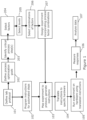
- Antha ® was used as part of a three-step process involving: i) ingestion of the statistical experimental design, ii) translation of the experimental design into physical actions and iii) physical execution of the experimental plan on the liquid handing apparatus.
- Mammalian cells are more complex than their prokaryotic counterparts. Optimising their treatment during automated laboratory processing that requires liquid handling is a multi-objective process. It requires optimisation of factors such as transfer precision, accuracy and cell viability. If cells cannot be transferred in a viable fashion, although precise and accurate, the outcome of the overall process is unfavourable, and may render the results essentially unusable.
- Antha ® was used as an automated workflow platform to demonstrate the importance of optimising liquid handling factors in combination with process factors in to deliver a successful biological process for an automated protocol.
- the following multiple factors were optimised in tandem.
- Evaporation of liquids is impacted by several physical and chemical parameters. Biological liquids are impacted by these same parameters, which can go on to affect the performance of an automated biological process.
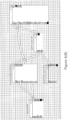
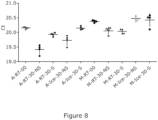
- Figure 8 Shows the results of the various combinations of process factors considered with a lower Ct being a better outcome.
- the automation was compared to manual handling (M) which unexpectedly demonstrated significantly poorer outcome for all results irrespective of factor optimisation.
Landscapes
- Physics & Mathematics (AREA)
- Engineering & Computer Science (AREA)
- Health & Medical Sciences (AREA)
- Life Sciences & Earth Sciences (AREA)
- Biophysics (AREA)
- General Physics & Mathematics (AREA)
- General Health & Medical Sciences (AREA)
- Theoretical Computer Science (AREA)
- Bioinformatics & Cheminformatics (AREA)
- Bioinformatics & Computational Biology (AREA)
- Evolutionary Biology (AREA)
- Pathology (AREA)
- Chemical & Material Sciences (AREA)
- Analytical Chemistry (AREA)
- Biochemistry (AREA)
- Immunology (AREA)
- Evolutionary Computation (AREA)
- Computing Systems (AREA)
- General Engineering & Computer Science (AREA)
- Molecular Biology (AREA)
- Mathematical Physics (AREA)
- Software Systems (AREA)
- Data Mining & Analysis (AREA)
- Computational Linguistics (AREA)
- Biomedical Technology (AREA)
- Artificial Intelligence (AREA)
- Genetics & Genomics (AREA)
- Physiology (AREA)
- Sampling And Sample Adjustment (AREA)
- Apparatus Associated With Microorganisms And Enzymes (AREA)
- Automatic Analysis And Handling Materials Therefor (AREA)
Claims (15)
- Ein computerimplementiertes Verfahren zum Verbessern der Prozessleistung eines automatisierten Laborprotokolls, wobei mindestens ein Teil des Protokolls mindestens einen Flüssigkeitshandhabungsschritt erfordert, der unter Verwendung eines Flüssigkeitshandhabungsapparats unter der operativen Steuerung eines Prozessors durchgeführt wird, wobei das Verfahren Folgendes umfasst:i. Definieren von mindestens einem Flüssigkeitshandhabungsschritt in dem Protokoll, das eine Flüssigkeitshandhabungsoperation umfasst;ii. Auswählen von mindestens einem ersten und mindestens einem zweiten Prozessfaktor für den mindestens einen Flüssigkeitshandhabungsschritt in dem Protokoll, wobei der erste und zweite Prozessfaktor unterschiedlich sind und aus der Gruppe ausgewählt werden, die aus Folgendem besteht: einem Ausrüstungsprozessfaktor; einem Flüssigkeitsprozessfaktor und einem Protokollprozessfaktor;iii. Zuweisen von Parametervariationen für den ersten und zweiten Prozessfaktor, die zur Untersuchung ausgewählt werden;iv. Durchführen einer Vielzahl von Testläufen an dem Flüssigkeitshandhabungsapparat, um die Auswirkungen der Parametervariationen für den ersten und zweiten Prozessfaktor zu bestimmen;v. Analysieren der Resultate der Vielzahl von Testläufen, um den einen oder die mehreren Testläufe zu identifizieren, die eine optimale Prozessleistung zeigen; undvi. Abändern des automatisierten Laborprotokolls, um die Prozessleistung des Flüssigkeitshandhabungsapparats zu verbessern.
- Verfahren nach Anspruch 1, wobei der Ausrüstungsprozessfaktor aus der Gruppe ausgewählt wird, die aus Folgendem besteht: einem Automatisierungsfaktor; einem Pipettierungsfaktor; einem Pipettenspitzenfaktor; einem Spendefaktor und einem Einhausungsfaktor.
- Verfahren nach Anspruch 2, wobei der Automatisierungsfaktor aus der Gruppe ausgewählt wird, die aus Folgendem besteht: Fabrikat und/oder Modell von Flüssigkeitshandhabungsapparat; Konfiguration von Flüssigkeitshandhabungsapparat; und Einstellung von Flüssigkeitshandhabungsapparat; oderwobei der Pipettierungsfaktor aus der Gruppe ausgewählt wird, die aus Folgendem besteht: Aspirierungsgeschwindigkeit; Spendegeschwindigkeit; Mischgeschwindigkeit; Wartezeit; überschüssiges aspiriertes Volumen; überschüssiges gespendetes Volumen; Aspirierungs-/Spendeposition relativ zu dem Container/der Flüssigkeit, die adressiert werden; Spitzenbewegungsgeschwindigkeit; Ausblaswahl; Vorbefeuchtung von Spitze; Anzahl von Spitzenverwendungen; Vormischung von Flüssigkeitsquelle; Nachmischung von Flüssigkeitsziel; Flüssigkeitsquellenvolumen; und Flüssigkeitsquellentiefe; oderwobei der Pipettierungsfaktor aus der Gruppe ausgewählt wird, die aus Folgendem besteht: Pipettenspitzengröße; Pipettenspitzenkapazität; Vorhandensein oder Abwesenheit von Filter; fixierte oder entfernbare Spitze; Leitfähigkeitseigenschaften des Spitzenmaterials; Auswahl des Spitzenmaterials; Bohrungsgröße; Spitzenfabrikat; Spitzenbeschichtung; Spitzengeometrie und Chargennummer; oderwobei der Spendefaktor aus der Gruppe ausgewählt wird, die aus Folgendem besteht: Betrag der Flüssigkeit in Ziel-Well; Typ der Flüssigkeit in Ziel-Well; Kraft des Spendens; Wahl von pulsiertem Spenden oder kontinuierlichem Spenden; Dauer des Spendens; und Auswahl von akustischem oder physikalischem Spenden; oder wobei der Einhausungsfaktor aus der Gruppe ausgewählt wird, die aus Folgendem besteht: Einhausungseigenschaften; Quellencontainergeometrie; Zielcontainergeometrie; Quellencontainermaterial; Zielcontainermaterial; und Zielcontainerkapazität.
- Verfahren nach einem der Ansprüche 1 bis 3, wobei der Flüssigkeitsprozessfaktor aus der Gruppe ausgewählt wird, die aus Folgendem besteht: einem physikalischen Flüssigkeitsfaktor; einem Stabilitätsfaktor; einem chemischen Flüssigkeitsfaktor; und einem biologischen Flüssigkeitsfaktor.
- Verfahren nach Anspruch 4, wobei der physikalische Flüssigkeitsfaktor aus der Gruppe ausgewählt wird, die aus Folgenden besteht: Viskosität; Oberflächenspannung; Ladung; Hydrophobie; Volatilität; Rheologie; Flüssigkeitstemperatur; und Scherempfindlichkeit; oderwobei der Stabilitätsfaktor aus der Gruppe ausgewählt wird, die aus Folgendem besteht: Temperaturlabilität; Lichtlabilität; chemische Stabilität; und biochemische Stabilität; oderwobei der chemische Flüssigkeitsfaktor aus der Gruppe ausgewählt wird, die aus Folgendem besteht: pH; Ionengehalt; gesamter organischer Kohlenstoffgehalt; Gelöstesidentität; und Radioisotopengehalt; oderwobei der biologische Flüssigkeitsfaktor aus der Gruppe ausgewählt wird, die aus Folgendem besteht: Zellüberleben; Zelldichte; Zellstabilität; Zellgesundheit; biomolekulare Zusammensetzung; biomolekulare Konzentration; und biopolymere Integrität.
- Verfahren nach einem der Ansprüche 1 bis 5, wobei der Protokollprozessfaktor aus der Gruppe ausgewählt wird, die aus Folgendem besteht: einem Umgebungsfaktor; einem Agitationsfaktor; und einem Zeitfaktor.
- Verfahren nach Anspruch 6, wobei der Umgebungsfaktor aus der Gruppe ausgewählt wird, die aus Folgendem besteht: Umgebungstemperatur; Umgebungsfeuchtigkeit; barometrischer Druck; atmosphärische Zirkulation; atmosphärische Flussrate; elektromagnetische Strahlungsexpositionsniveaus; und Typ der elektromagnetischen Strahlung; oderwobei der Agitationsfaktor aus Folgendem ausgewählt wird: Vorhandensein oder Abwesenheit von Agitation; Typ der Agitation; und Betrag der Agitation; oderwobei der Zeitfaktor aus der Gruppe ausgewählt wird, die aus Folgendem besteht: Zeitpunkt des Protokolls; Vorhandensein oder Abwesenheit von Zeitverzögerung zwischen Prozessschritten; Länge von Zeitverzögerung zwischen Prozessschritten; und Anzahl von Zeitverzögerung zwischen Prozessschritten.
- Verfahren nach einem der Ansprüche 1 bis 7, wobei mindestens ein dritter oder mehr Prozessfaktoren für den einen Flüssigkeitshandhabungsschritt ausgewählt werden; und/oder wobei mehr als ein Flüssigkeitshandhabungsschritt definiert wird und mindestens ein erster und mindestens ein zweiter Prozessfaktor für jeden Flüssigkeitshandhabungsschritt ausgewählt werden.
- Verfahren nach einem der Ansprüche 1 bis 8, wobei der Prozessor innerhalb einer Vorrichtung umfasst ist, die eine grafische Benutzerschnittstelle umfasst; wobei optional der Prozessor innerhalb einer Vorrichtung umfasst ist, die aus einem der Gruppe ausgewählt wird, die Folgendes umfasst: einen Laptop; eine mobile Vorrichtung; ein Tablet und einen Personalcomputer.
- Verfahren nach einem der Ansprüche 1 bis 9, wobei sich der Prozessor entfernt von dem Flüssigkeitshandhabungsapparat befindet.
- Verfahren nach einem der Ansprüche 1 bis 10, wobei das Analysieren der Resultate der Vielzahl von Testläufen unter Verwendung eines Optimierungsalgorithmus ausgeführt wird.
- Verfahren nach Anspruch 11, wobei der Optimierungsalgorithmus ein Response-Surface-Design umfasst; oderwobei der Optimierungsalgorithmus ein bayessches experimentelles Design umfasst;oder wobei der Optimierungsalgorithmus ein Monte-Carlo-Verfahren umfasst; oderwobei der Optimierungsalgorithmus einen faktoriellen oder fraktionellen faktoriellen Design-of-Experiments-Ansatz umfasst, der aus der Gruppe ausgewählt wird, die aus Folgendem besteht: einem Box-Behnken-Design; einem Plackett-Burmann-Design; einem Taguchi-Verfahren; und einem Definitive-Screening-Design; oderwobei der Optimierungsalgorithmus ein genetisches Algorithmus-/evolutionäres rechnergestütztes Verfahren umfasst; oderwobei der Optimierungsalgorithmus ein lineares Programmierungs-/Simplexverfahren umfasst; oderwobei der Optimierungsalgorithmus ein Constraint-Satisfaction-Verfahren umfasst.
- Verfahren nach einem der Ansprüche 1 bis 12, wobei der Optimierungsalgorithmus einen Maschinenlernansatz umfasst.
- Eine Vorrichtung zum Ausführen eines Laborprotokolls, wobei die Vorrichtung mindestens ein automatisiertes Flüssigkeitshandhabungssystem und mindestens einen Prozessor zum Steuern einer Operation des Flüssigkeitshandhabungssystem umfasst, wobei der Prozessor dazu konfiguriert ist, einen Prozessoptimierungsvorgang durchzuführen, um die Prozessleistung des Protokolls zu verbessern, wobei der Prozessoptimierungsvorgang ein Verfahren gemäß einem der Ansprüche 1 bis 13 umfasst.
- Vorrichtung nach Anspruch 14, wobei die Vorrichtung einen Laborpipettierungsroboter umfasst; und/oder wobei die Vorrichtung ein automatisiertes Flüssigkeitshandhabungssystem umfasst, das aus der Gruppe ausgewählt wird, die aus Folgendem besteht: einem Spender; einem akustischen Flüssigkeitshandhaber; und einem optofluidischen Flüssigkeitshandhaber.
Applications Claiming Priority (2)
| Application Number | Priority Date | Filing Date | Title |
|---|---|---|---|
| GBGB1919469.5A GB201919469D0 (en) | 2019-12-31 | 2019-12-31 | Systems and methods for improved liquid handling for automation of laboratory processes |
| PCT/GB2020/053374 WO2021136932A1 (en) | 2019-12-31 | 2020-12-29 | Systems and methods for improved automation of laboratory processes |
Publications (3)
| Publication Number | Publication Date |
|---|---|
| EP4085257A1 EP4085257A1 (de) | 2022-11-09 |
| EP4085257C0 EP4085257C0 (de) | 2024-07-10 |
| EP4085257B1 true EP4085257B1 (de) | 2024-07-10 |
Family
ID=69416514
Family Applications (1)
| Application Number | Title | Priority Date | Filing Date |
|---|---|---|---|
| EP20851296.2A Active EP4085257B1 (de) | 2019-12-31 | 2020-12-29 | Systeme und verfahren zur verbesserten automatisierung von laborprozessen |
Country Status (4)
| Country | Link |
|---|---|
| US (1) | US20220326265A1 (de) |
| EP (1) | EP4085257B1 (de) |
| GB (1) | GB201919469D0 (de) |
| WO (1) | WO2021136932A1 (de) |
Families Citing this family (3)
| Publication number | Priority date | Publication date | Assignee | Title |
|---|---|---|---|---|
| EP3851191A1 (de) * | 2020-01-17 | 2021-07-21 | Eppendorf AG | Verfahren zum betreiben einer kolbenhubpipette, kolbenhubpipette, datenverarbeitungsgerät und system |
| EP4390669A4 (de) * | 2021-08-20 | 2025-07-09 | Yaskawa Electric Corp | Roboterprogrammerzeugungssystem, roboterprogrammerzeugungsverfahren, protokollumsetzungsbestimmungsvorrichtung, roboterprogramm, protokoll und herstellungssystem |
| GB202305498D0 (en) | 2023-04-14 | 2023-05-31 | Synthace Ltd | Methods for optimisation of liquid handling processes |
Family Cites Families (9)
| Publication number | Priority date | Publication date | Assignee | Title |
|---|---|---|---|---|
| US6477442B1 (en) * | 1995-08-10 | 2002-11-05 | Fred M. Valerino, Sr. | Autoacceptertube delivery system with a robotic interface |
| EP1191312A3 (de) * | 2000-09-21 | 2004-12-22 | Tecan Trading AG | System und Verfahren zur Optimierung der Parameter von Flüssigkeitshandhabungsinstrumenten |
| US7517494B2 (en) * | 2003-04-30 | 2009-04-14 | Hewlett-Packard Development Company, L.P. | Test tray and test system for determining response of a biological sample |
| US20060202922A1 (en) * | 2005-03-10 | 2006-09-14 | Hanna Christopher P | Method for optimizing a purification procedure |
| US11035940B2 (en) * | 2015-07-17 | 2021-06-15 | Origin Wireless, Inc. | Method, apparatus, and system for wireless proximity and presence monitoring |
| GB201405243D0 (en) * | 2014-03-24 | 2014-05-07 | Synthace Ltd | System and apparatus 1 |
| EP3133268B1 (de) * | 2015-08-21 | 2020-09-30 | Ansaldo Energia IP UK Limited | Verfahren zum betrieb eines kraftwerks |
| US10144537B2 (en) * | 2016-11-30 | 2018-12-04 | Mallinckrodt Nuclear Medicine Llc | Systems and methods for dispensing radioactive liquids |
| WO2019147743A1 (en) * | 2018-01-26 | 2019-08-01 | Massachusetts Institute Of Technology | Structure-guided chemical modification of guide rna and its applications |
-
2019
- 2019-12-31 GB GBGB1919469.5A patent/GB201919469D0/en not_active Ceased
-
2020
- 2020-12-29 WO PCT/GB2020/053374 patent/WO2021136932A1/en not_active Ceased
- 2020-12-29 EP EP20851296.2A patent/EP4085257B1/de active Active
-
2022
- 2022-06-29 US US17/809,797 patent/US20220326265A1/en not_active Abandoned
Also Published As
| Publication number | Publication date |
|---|---|
| GB201919469D0 (en) | 2020-02-12 |
| EP4085257C0 (de) | 2024-07-10 |
| WO2021136932A1 (en) | 2021-07-08 |
| US20220326265A1 (en) | 2022-10-13 |
| EP4085257A1 (de) | 2022-11-09 |
Similar Documents
| Publication | Publication Date | Title |
|---|---|---|
| US20220326265A1 (en) | Systems and methods for improved automation of laboratory processes | |
| Tegally et al. | Unlocking the efficiency of genomics laboratories with robotic liquid-handling | |
| Torres-Acosta et al. | Automated liquid-handling operations for robust, resilient, and efficient bio-based laboratory practices | |
| Hemmerich et al. | Microbioreactor systems for accelerated bioprocess development | |
| Streets et al. | Chip in a lab: Microfluidics for next generation life science research | |
| EP1188126B1 (de) | Verfahren, vorrichtung, hergestellter gegenstand und benutzeroberflächen für die automatische präparierung von biologischen tests und die reinigung von makromolekülen | |
| Bogue | Robots in the laboratory: a review of applications | |
| Xu et al. | Forming a large-scale droplet array in a microcage array chip for high-throughput screening | |
| Kwon et al. | Advancing high-throughput screening systems for synthetic biology and biofoundry | |
| Caen et al. | Microfluidics as a strategic player to decipher single-cell omics? | |
| US12420277B2 (en) | Device and method for producing individually processed fluid samples | |
| JP2020526751A (ja) | 反応スクリーニング及び最適化装置並びにその方法 | |
| EP3755992B1 (de) | Computerimplementiertes verfahren und system zur spektroskopischen analyse von biologischem material | |
| US20240401026A1 (en) | System and method for single cell phenotypical profiling and deterministic nanoliter-droplet encapsulation and deterministic droplet consortia assemblies | |
| Arndt et al. | Model‐based workflow for scale‐up of process strategies developed in miniaturized bioreactor systems | |
| Gómez et al. | ANDeS: An automated nanoliter droplet selection and collection device | |
| Choudhury et al. | Liquid handling technologies: a study through major discoveries and advancements | |
| Nealon et al. | Use of operating windows in the assessment of integrated robotic systems for the measurement of bioprocess kinetics | |
| Li et al. | Permeability-Engineered Compartmentalization System Promises Next-Generation Single-Cell Analysis | |
| Cardona et al. | High-throughput automation design considerations for biotechnology processes involving RNA purification protocols using multi-centrifuge bioseparation steps | |
| WO2024213903A1 (en) | Methods for optimisation of liquid handling processes | |
| Goyal et al. | Repurposing a microfluidic formulation device for automated DNA construction | |
| US7463982B2 (en) | Liquid class predictor for liquid handling of complex mixtures | |
| Sathiasealan | The Automation of LAMP Biomolecular Assays Using the Eppendorf Epmotion™ 5075 Robotic Pipettor | |
| Fazal et al. | Robotics in single-cell omics |
Legal Events
| Date | Code | Title | Description |
|---|---|---|---|
| STAA | Information on the status of an ep patent application or granted ep patent |
Free format text: STATUS: UNKNOWN |
|
| STAA | Information on the status of an ep patent application or granted ep patent |
Free format text: STATUS: THE INTERNATIONAL PUBLICATION HAS BEEN MADE |
|
| PUAI | Public reference made under article 153(3) epc to a published international application that has entered the european phase |
Free format text: ORIGINAL CODE: 0009012 |
|
| STAA | Information on the status of an ep patent application or granted ep patent |
Free format text: STATUS: REQUEST FOR EXAMINATION WAS MADE |
|
| 17P | Request for examination filed |
Effective date: 20220801 |
|
| AK | Designated contracting states |
Kind code of ref document: A1 Designated state(s): AL AT BE BG CH CY CZ DE DK EE ES FI FR GB GR HR HU IE IS IT LI LT LU LV MC MK MT NL NO PL PT RO RS SE SI SK SM TR |
|
| DAV | Request for validation of the european patent (deleted) | ||
| DAX | Request for extension of the european patent (deleted) | ||
| GRAP | Despatch of communication of intention to grant a patent |
Free format text: ORIGINAL CODE: EPIDOSNIGR1 |
|
| STAA | Information on the status of an ep patent application or granted ep patent |
Free format text: STATUS: GRANT OF PATENT IS INTENDED |
|
| INTG | Intention to grant announced |
Effective date: 20240207 |
|
| GRAS | Grant fee paid |
Free format text: ORIGINAL CODE: EPIDOSNIGR3 |
|
| GRAA | (expected) grant |
Free format text: ORIGINAL CODE: 0009210 |
|
| STAA | Information on the status of an ep patent application or granted ep patent |
Free format text: STATUS: THE PATENT HAS BEEN GRANTED |
|
| AK | Designated contracting states |
Kind code of ref document: B1 Designated state(s): AL AT BE BG CH CY CZ DE DK EE ES FI FR GB GR HR HU IE IS IT LI LT LU LV MC MK MT NL NO PL PT RO RS SE SI SK SM TR |
|
| RIN1 | Information on inventor provided before grant (corrected) |
Inventor name: SADOWSKI, MICHAEL IAN Inventor name: BROWN, STEVEN RICHARD Inventor name: GRANT, CHRISTOPHER RICHARD Inventor name: LEITAO, JOSE NUNO DE ARAUJO Inventor name: SANCHANIA, VISHAL Inventor name: GERSHATER, MARKUS |
|
| REG | Reference to a national code |
Ref country code: CH Ref legal event code: EP |
|
| REG | Reference to a national code |
Ref country code: DE Ref legal event code: R096 Ref document number: 602020033881 Country of ref document: DE |
|
| U01 | Request for unitary effect filed |
Effective date: 20240808 |
|
| U07 | Unitary effect registered |
Designated state(s): AT BE BG DE DK EE FI FR IT LT LU LV MT NL PT SE SI Effective date: 20240821 |
|
| PG25 | Lapsed in a contracting state [announced via postgrant information from national office to epo] |
Ref country code: NO Free format text: LAPSE BECAUSE OF FAILURE TO SUBMIT A TRANSLATION OF THE DESCRIPTION OR TO PAY THE FEE WITHIN THE PRESCRIBED TIME-LIMIT Effective date: 20241010 |
|
| PG25 | Lapsed in a contracting state [announced via postgrant information from national office to epo] |
Ref country code: GR Free format text: LAPSE BECAUSE OF FAILURE TO SUBMIT A TRANSLATION OF THE DESCRIPTION OR TO PAY THE FEE WITHIN THE PRESCRIBED TIME-LIMIT Effective date: 20241011 Ref country code: PL Free format text: LAPSE BECAUSE OF FAILURE TO SUBMIT A TRANSLATION OF THE DESCRIPTION OR TO PAY THE FEE WITHIN THE PRESCRIBED TIME-LIMIT Effective date: 20240710 |
|
| PG25 | Lapsed in a contracting state [announced via postgrant information from national office to epo] |
Ref country code: IS Free format text: LAPSE BECAUSE OF FAILURE TO SUBMIT A TRANSLATION OF THE DESCRIPTION OR TO PAY THE FEE WITHIN THE PRESCRIBED TIME-LIMIT Effective date: 20241110 |
|
| PG25 | Lapsed in a contracting state [announced via postgrant information from national office to epo] |
Ref country code: HR Free format text: LAPSE BECAUSE OF FAILURE TO SUBMIT A TRANSLATION OF THE DESCRIPTION OR TO PAY THE FEE WITHIN THE PRESCRIBED TIME-LIMIT Effective date: 20240710 |
|
| PG25 | Lapsed in a contracting state [announced via postgrant information from national office to epo] |
Ref country code: RS Free format text: LAPSE BECAUSE OF FAILURE TO SUBMIT A TRANSLATION OF THE DESCRIPTION OR TO PAY THE FEE WITHIN THE PRESCRIBED TIME-LIMIT Effective date: 20241010 Ref country code: ES Free format text: LAPSE BECAUSE OF FAILURE TO SUBMIT A TRANSLATION OF THE DESCRIPTION OR TO PAY THE FEE WITHIN THE PRESCRIBED TIME-LIMIT Effective date: 20240710 |
|
| U20 | Renewal fee for the european patent with unitary effect paid |
Year of fee payment: 5 Effective date: 20241220 |
|
| PG25 | Lapsed in a contracting state [announced via postgrant information from national office to epo] |
Ref country code: RS Free format text: LAPSE BECAUSE OF FAILURE TO SUBMIT A TRANSLATION OF THE DESCRIPTION OR TO PAY THE FEE WITHIN THE PRESCRIBED TIME-LIMIT Effective date: 20241010 Ref country code: PL Free format text: LAPSE BECAUSE OF FAILURE TO SUBMIT A TRANSLATION OF THE DESCRIPTION OR TO PAY THE FEE WITHIN THE PRESCRIBED TIME-LIMIT Effective date: 20240710 Ref country code: NO Free format text: LAPSE BECAUSE OF FAILURE TO SUBMIT A TRANSLATION OF THE DESCRIPTION OR TO PAY THE FEE WITHIN THE PRESCRIBED TIME-LIMIT Effective date: 20241010 Ref country code: IS Free format text: LAPSE BECAUSE OF FAILURE TO SUBMIT A TRANSLATION OF THE DESCRIPTION OR TO PAY THE FEE WITHIN THE PRESCRIBED TIME-LIMIT Effective date: 20241110 Ref country code: HR Free format text: LAPSE BECAUSE OF FAILURE TO SUBMIT A TRANSLATION OF THE DESCRIPTION OR TO PAY THE FEE WITHIN THE PRESCRIBED TIME-LIMIT Effective date: 20240710 Ref country code: GR Free format text: LAPSE BECAUSE OF FAILURE TO SUBMIT A TRANSLATION OF THE DESCRIPTION OR TO PAY THE FEE WITHIN THE PRESCRIBED TIME-LIMIT Effective date: 20241011 Ref country code: ES Free format text: LAPSE BECAUSE OF FAILURE TO SUBMIT A TRANSLATION OF THE DESCRIPTION OR TO PAY THE FEE WITHIN THE PRESCRIBED TIME-LIMIT Effective date: 20240710 |
|
| PG25 | Lapsed in a contracting state [announced via postgrant information from national office to epo] |
Ref country code: SM Free format text: LAPSE BECAUSE OF FAILURE TO SUBMIT A TRANSLATION OF THE DESCRIPTION OR TO PAY THE FEE WITHIN THE PRESCRIBED TIME-LIMIT Effective date: 20240710 |
|
| PG25 | Lapsed in a contracting state [announced via postgrant information from national office to epo] |
Ref country code: CZ Free format text: LAPSE BECAUSE OF FAILURE TO SUBMIT A TRANSLATION OF THE DESCRIPTION OR TO PAY THE FEE WITHIN THE PRESCRIBED TIME-LIMIT Effective date: 20240710 |
|
| PG25 | Lapsed in a contracting state [announced via postgrant information from national office to epo] |
Ref country code: SK Free format text: LAPSE BECAUSE OF FAILURE TO SUBMIT A TRANSLATION OF THE DESCRIPTION OR TO PAY THE FEE WITHIN THE PRESCRIBED TIME-LIMIT Effective date: 20240710 |
|
| PLBE | No opposition filed within time limit |
Free format text: ORIGINAL CODE: 0009261 |
|
| STAA | Information on the status of an ep patent application or granted ep patent |
Free format text: STATUS: NO OPPOSITION FILED WITHIN TIME LIMIT |
|
| 26N | No opposition filed |
Effective date: 20250411 |
|
| PG25 | Lapsed in a contracting state [announced via postgrant information from national office to epo] |
Ref country code: MC Free format text: LAPSE BECAUSE OF FAILURE TO SUBMIT A TRANSLATION OF THE DESCRIPTION OR TO PAY THE FEE WITHIN THE PRESCRIBED TIME-LIMIT Effective date: 20240710 |
|
| PG25 | Lapsed in a contracting state [announced via postgrant information from national office to epo] |
Ref country code: IE Free format text: LAPSE BECAUSE OF NON-PAYMENT OF DUE FEES Effective date: 20241229 |
|
| PG25 | Lapsed in a contracting state [announced via postgrant information from national office to epo] |
Ref country code: RO Free format text: LAPSE BECAUSE OF FAILURE TO SUBMIT A TRANSLATION OF THE DESCRIPTION OR TO PAY THE FEE WITHIN THE PRESCRIBED TIME-LIMIT Effective date: 20240710 |
|
| REG | Reference to a national code |
Ref country code: CH Ref legal event code: U11 Free format text: ST27 STATUS EVENT CODE: U-0-0-U10-U11 (AS PROVIDED BY THE NATIONAL OFFICE) Effective date: 20260101 |
|
| PGFP | Annual fee paid to national office [announced via postgrant information from national office to epo] |
Ref country code: GB Payment date: 20251229 Year of fee payment: 6 |
|
| U20 | Renewal fee for the european patent with unitary effect paid |
Year of fee payment: 6 Effective date: 20251223 |
|
| PGFP | Annual fee paid to national office [announced via postgrant information from national office to epo] |
Ref country code: CH Payment date: 20260101 Year of fee payment: 6 |
|
| PG25 | Lapsed in a contracting state [announced via postgrant information from national office to epo] |
Ref country code: CY Free format text: LAPSE BECAUSE OF FAILURE TO SUBMIT A TRANSLATION OF THE DESCRIPTION OR TO PAY THE FEE WITHIN THE PRESCRIBED TIME-LIMIT Effective date: 20240710 |