EP4085257B1 - Systèmes et procédés pour l'automatisation améliorée des traitements de laboratoire - Google Patents
Systèmes et procédés pour l'automatisation améliorée des traitements de laboratoire Download PDFInfo
- Publication number
- EP4085257B1 EP4085257B1 EP20851296.2A EP20851296A EP4085257B1 EP 4085257 B1 EP4085257 B1 EP 4085257B1 EP 20851296 A EP20851296 A EP 20851296A EP 4085257 B1 EP4085257 B1 EP 4085257B1
- Authority
- EP
- European Patent Office
- Prior art keywords
- factor
- liquid
- liquid handling
- group
- protocol
- Prior art date
- Legal status (The legal status is an assumption and is not a legal conclusion. Google has not performed a legal analysis and makes no representation as to the accuracy of the status listed.)
- Active
Links
Images



Classifications
-
- G—PHYSICS
- G01—MEASURING; TESTING
- G01N—INVESTIGATING OR ANALYSING MATERIALS BY DETERMINING THEIR CHEMICAL OR PHYSICAL PROPERTIES
- G01N35/00—Automatic analysis not limited to methods or materials provided for in any single one of groups G01N1/00 - G01N33/00; Handling materials therefor
- G01N35/00584—Control arrangements for automatic analysers
- G01N35/0092—Scheduling
-
- G—PHYSICS
- G06—COMPUTING OR CALCULATING; COUNTING
- G06N—COMPUTING ARRANGEMENTS BASED ON SPECIFIC COMPUTATIONAL MODELS
- G06N3/00—Computing arrangements based on biological models
- G06N3/12—Computing arrangements based on biological models using genetic models
- G06N3/126—Evolutionary algorithms, e.g. genetic algorithms or genetic programming
-
- G—PHYSICS
- G01—MEASURING; TESTING
- G01N—INVESTIGATING OR ANALYSING MATERIALS BY DETERMINING THEIR CHEMICAL OR PHYSICAL PROPERTIES
- G01N35/00—Automatic analysis not limited to methods or materials provided for in any single one of groups G01N1/00 - G01N33/00; Handling materials therefor
- G01N35/00584—Control arrangements for automatic analysers
- G01N35/0092—Scheduling
- G01N2035/0094—Scheduling optimisation; experiment design
-
- G—PHYSICS
- G06—COMPUTING OR CALCULATING; COUNTING
- G06N—COMPUTING ARRANGEMENTS BASED ON SPECIFIC COMPUTATIONAL MODELS
- G06N5/00—Computing arrangements using knowledge-based models
- G06N5/01—Dynamic search techniques; Heuristics; Dynamic trees; Branch-and-bound
-
- G—PHYSICS
- G06—COMPUTING OR CALCULATING; COUNTING
- G06N—COMPUTING ARRANGEMENTS BASED ON SPECIFIC COMPUTATIONAL MODELS
- G06N7/00—Computing arrangements based on specific mathematical models
- G06N7/01—Probabilistic graphical models, e.g. probabilistic networks
Definitions
- a device is intended to mean a single device or more than one device or to an assembly comprising a plurality of devices operating in combination.
- any reference referred to as being “incorporated herein” is to be understood as being incorporated in its entirety.
- Liquids handled within processes may also possess discrete properties that are distinctive and contributory to potential liquid handling error if overlooked.
- Such properties may include cellular/optical density of microbial (e.g. bacterial) or eukaryotic cells (e.g. animal, fungal, or plant/plant protoplast cells); biomolecular composition (e.g. nucleic acid, protein, peptide, cytokine or oligo-/polysaccharide concentration); concentration of biomolecules, including metabolites and waste products; properties that can be analysed and are indicative of cell health, cell viability or cell reproducibility; and biopolymer integrity (e.g. integrity of nucleic acid - single-stranded and double-stranded; proteins, polypeptides, polysaccharides etc.).
- microbial e.g. bacterial
- eukaryotic cells e.g. animal, fungal, or plant/plant protoplast cells
- biomolecular composition e.g. nucleic acid, protein,
- liquid handling devices will comprise a platform, that may include a centrally positioned surface, that integrates with one or a variety of automated and movable pipetting or other liquid handling technologies (e.g. mechanical or acoustic).
- the platform accommodates a range of containers which may be selected from microwell plates, test tubes, flasks, beakers, cartridges and vials.
- the containers will conform to standard laboratory ware and glassware.
- the output of the design and implementation phase may be a document or file - such as a .csv or .exe file - that is transmitted, uploaded to or otherwise installed on the one or more processors controlling the laboratory liquid handling device and when executed controls the implementation of the liquid handling optimisation procedure.
- the results of the procedure may likewise be transmitted or downloaded/transmitted to one or more processors for further analysis according to the methods of the invention described above.
- liquid source volume and/or liquid source depth as well as liquid destination volume and/or depth may also be important factors either alone or in combination with other parameters.
- Material and geometric parameters may affect handling error in automation that utilises liquid handling with a permanent or disposable pipetting tips.
- parameters of the tip itself will affect the liquid handling properties of the apparatus as a whole including: size; tip capacity; presence of a filter within the tip; whether the tip is fixed or not; conductive/nonconductive; tip material (e.g. polypropylene, or other plastics material, glass, or metal/metal alloy); bore size; tip make (e.g. manufacturer identity and/or batch number); tip coating if any; and/or tip design or geometry.
- the aforementioned method comprises at least first and second process factors that are different and wherein the first process factor is an equipment process factor.
- the second process factor is selected from either of a liquid process factor; and a protocol process factor.
- the aforementioned method comprises at least first and second process factors that are different and wherein the first process factor is a liquid process factor.
- the second process factor is selected from either of; an equipment process factor and a protocol process factor.
- the aforementioned method comprises at least first and second process factors that are different and wherein the first process factor is a protocol process factor.
- the second process factor is selected from either of; an equipment process factor and a liquid process factor.
- the aforementioned method comprises at least first, second and third process factors and wherein the first and second process factors are different equipment process factors.
- the third process factor is selected from either of a liquid process factor; and a protocol process factor.
- Devices and apparatus may be configured to operate the methods of the invention as described herein. Such devices may be existing liquid handling systems, such as those set out above.
- the device comprises or is comprised within a laboratory pipetting robot.
- the device comprises an automated liquid handling system selected from the group consisting of: a dispenser; an acoustic liquid handler; and an optofluidic liquid handler.
- the liquid handling management software auto-generated instructions that incorporated the specified liquid handling actions for each sample.
- the instructions were then translated to the format needed for a liquid handling device (in this case, a Gilson Pipetmax ® ), and these translated instructions were used to run the array of liquid handling policies in the context of the qPCR protocol on the device.
- a liquid handling device in this case, a Gilson Pipetmax ®
- a non-exhaustive list of exemplary liquid handling process parameters are set out in Table 2. Some parameters may be varied or kept as constant as required.
- DEFAULTPIPETTESPEED number Default pipette speed in ml/min. This will be used for ASPSPEED, DSPSPEED, PRE_MIX_RATE and POST_MIX_RATE if no value is specified DEFAULTZSPEED number Default z movement speed in mm/s DSPENTRYSPEED number allows slow moves into liquids DSPREFERENCE integer where to be when dispensing: 0 well bottom, 1 well top DSPSPEED number dispense pipetting rate, this has preference over DEFAULTPIPETTESPEED for Dispense steps DSPZOFFSET number mm above DSPREFERENCE DSP_WAIT number wait time in seconds post dispense EXTRA_ASP_VOLUME Volume additional volume to take up when aspirating EXTRA_DISP_VOLUME Volume additional volume to dispense MIX_VOLUME_OVERRIDE_TIP_MA X true/false Default to using the maximum volume for the current tip type if the specified post mix volume is
- a DoE statistical method was used to optimise the transformation efficiency of E.coli Neb 10 beta cells using a pre-optimised 5 parts Sapl assembly on a Gilson Pipetmax ® liquid handler.
- Antha ® was used as part of a three-step process involving: i) ingestion of the statistical experimental design, ii) translation of the experimental design into physical actions and iii) physical execution of the experimental plan on the liquid handing apparatus.
- Mammalian cells are more complex than their prokaryotic counterparts. Optimising their treatment during automated laboratory processing that requires liquid handling is a multi-objective process. It requires optimisation of factors such as transfer precision, accuracy and cell viability. If cells cannot be transferred in a viable fashion, although precise and accurate, the outcome of the overall process is unfavourable, and may render the results essentially unusable.
- Antha ® was used as an automated workflow platform to demonstrate the importance of optimising liquid handling factors in combination with process factors in to deliver a successful biological process for an automated protocol.
- the following multiple factors were optimised in tandem.
- Evaporation of liquids is impacted by several physical and chemical parameters. Biological liquids are impacted by these same parameters, which can go on to affect the performance of an automated biological process.
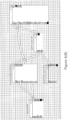
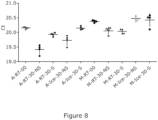
- Figure 8 Shows the results of the various combinations of process factors considered with a lower Ct being a better outcome.
- the automation was compared to manual handling (M) which unexpectedly demonstrated significantly poorer outcome for all results irrespective of factor optimisation.
Landscapes
- Physics & Mathematics (AREA)
- Engineering & Computer Science (AREA)
- Health & Medical Sciences (AREA)
- Life Sciences & Earth Sciences (AREA)
- Biophysics (AREA)
- General Physics & Mathematics (AREA)
- General Health & Medical Sciences (AREA)
- Theoretical Computer Science (AREA)
- Bioinformatics & Cheminformatics (AREA)
- Bioinformatics & Computational Biology (AREA)
- Evolutionary Biology (AREA)
- Pathology (AREA)
- Chemical & Material Sciences (AREA)
- Analytical Chemistry (AREA)
- Biochemistry (AREA)
- Immunology (AREA)
- Evolutionary Computation (AREA)
- Computing Systems (AREA)
- General Engineering & Computer Science (AREA)
- Molecular Biology (AREA)
- Mathematical Physics (AREA)
- Software Systems (AREA)
- Data Mining & Analysis (AREA)
- Computational Linguistics (AREA)
- Biomedical Technology (AREA)
- Artificial Intelligence (AREA)
- Genetics & Genomics (AREA)
- Physiology (AREA)
- Sampling And Sample Adjustment (AREA)
- Apparatus Associated With Microorganisms And Enzymes (AREA)
- Automatic Analysis And Handling Materials Therefor (AREA)
Claims (15)
- Un procédé mis en oeuvre par ordinateur d'amélioration des performances de traitement d'un protocole de laboratoire automatisé, au moins une partie dudit protocole exigeant au moins une étape de manipulation de liquide qui est exécutée au moyen d'un appareil de manipulation de liquide sous la commande fonctionnelle d'un processeur, le procédé comprenant :i. la définition d'au moins une étape de manipulation de liquide dans le protocole qui comprend une opération de manipulation de liquide,ii. la sélection d'au moins un premier et d'au moins un deuxième facteur de traitement pour la au moins une étape de manipulation de liquide dans le protocole, où les premier et deuxième facteurs de traitement sont différents et sont sélectionnés dans le groupe se composant de : un facteur de traitement d'équipement, un facteur de traitement de liquide et un facteur de traitement de protocole,iii. l'affectation de variations de paramètre pour les premier et deuxième facteurs de traitement sélectionnés à des fins d'investigation,iv. l'exécution d'une pluralité de tests sur l'appareil de manipulation de liquide de façon à déterminer les effets des variations de paramètre pour les premier et deuxième facteurs de traitement,v. l'analyse des résultats de la pluralité de tests de façon à identifier les un ou plusieurs tests qui montrent des performances de traitement optimales, etvi. la modification du protocole de laboratoire automatisé de façon à améliorer les performances de traitement de l'appareil de manipulation de liquide.
- Le procédé selon la Revendication 1, où le facteur de traitement d'équipement est sélectionné dans le groupe se composant de : un facteur d'automatisation, un facteur de pipetage, un facteur de pointe de pipette, un facteur de délivrance et un facteur de confinement.
- Le procédé selon la Revendication 2, où le facteur d'automatisation est sélectionné dans le groupe se composant de : une marque et/ou un modèle de l'appareil de manipulation de liquide, une configuration de l'appareil de manipulation de liquide et une mise en place de l'appareil de manipulation de liquide, ouoù le facteur de pipetage est sélectionné dans le groupe se composant de : une vitesse d'aspiration, une vitesse de délivrance, une vitesse de mélange, un temps d'attente, un volume aspiré en excès, un volume délivré en excès, une position d'aspiration/délivrance par rapport au conteneur/liquide concerné, une vitesse de déplacement de la pointe, un choix de soufflage, un pré-mouillage de la pointe, un nombre d'utilisations de pointe, un prémélange de source de liquide, un post-mélange de destination de liquide, un volume de source de liquide et une profondeur de source de liquide, ouoù le facteur de pointe de pipette est sélectionné dans le groupe se composant de : une taille de pointe de pipette, une capacité de pointe de pipette, une présence ou une absence de filtre, une pointe fixe ou amovible, des propriétés de conductivité du matériau de la pointe, une sélection du matériau de la pointe, une taille de l'alésage, une marque de la pointe, un revêtement de la pointe, une géométrie de la pointe et un numéro de lot, ouoù le facteur de délivrance est sélectionné dans le groupe se composant de : une quantité de liquide dans le puits de destination, un type de liquide dans le puits de destination, une force de délivrance, un choix entre délivrance pulsée ou délivrance continue, une durée de délivrance et une sélection entre délivrance physique ou acoustique, ouoù le facteur de confinement est sélectionné dans le groupe se composant de : propriétés de confinement, une géométrie de conteneur source, une géométrie de conteneur de destination, un matériau de conteneur source, un matériau de conteneur de destination et une capacité de conteneur de destination.
- Le procédé selon l'une quelconque des Revendications 1 à 3, où le facteur de traitement de liquide est sélectionné dans le groupe se composant de : un facteur de liquide physique, un facteur de stabilité, un facteur de liquide chimique et un facteur de liquide biologique.
- Le procédé selon la Revendication 4, où le facteur de liquide physique est sélectionné dans le groupe se composant de : une viscosité, une tension de surface, une charge, une hydrophobicité, une volatilité, une rhéologie, une température de liquide et une sensibilité au cisaillement, ouoù le facteur de stabilité est sélectionné dans le groupe se composant de : une labilité de température, une labilité de la lumière, une stabilité chimique et une stabilité biochimique, ouoù le facteur de liquide chimique est sélectionné dans le groupe se composant de : un pH, une teneur en ions, une teneur en carbone organique totale, une identité de soluté et une teneur en radioisotopes, ouoù le facteur de liquide biologique est sélectionné dans le groupe se composant de : une survie cellulaire, une densité cellulaire, une stabilité cellulaire, une santé cellulaire, une composition biomoléculaire, une concentration biomoléculaire et une intégrité biopolymérique.
- Le procédé selon l'une quelconque des Revendications 1 à 5, où le facteur de traitement de protocole est sélectionné dans le groupe se composant de : un facteur environnemental, un facteur d'agitation et un facteur temporel.
- Le procédé selon la Revendication 6, où le facteur environnemental est sélectionné dans le groupe se composant de : une température environnementale, une humidité environnementale, une pression barométrique, une circulation atmosphérique, un débit de flux atmosphérique, des niveaux d'exposition au rayonnement électromagnétique et un type de rayonnement électromagnétique, ouoù le facteur d'agitation est sélectionné parmi : une présence ou une absence d'agitation, un type d'agitation et une quantité d'agitation, ouoù le facteur temporel est sélectionné dans le groupe se composant de : une échéance du protocole, une présence ou une absence d'un délai entre les étapes de traitement, une longueur du délai entre les étapes de traitement et un nombre de délais entre les étapes de traitement.
- Le procédé selon l'une quelconque des Revendications 1 à 7, où au moins un troisième ou plus facteurs de traitement sont sélectionnés pour ladite étape de manipulation de liquide, et/ou où plus d'une étape de manipulation de liquide est définie et au moins un premier et au moins un deuxième facteurs de traitement sont sélectionnés pour chaque étape de manipulation de liquide.
- Le procédé selon l'une quelconque des Revendications 1 à 8, où le processeur est inclus à l'intérieur d'un dispositif qui comprend une interface utilisateur graphique, éventuellement où le processeur est inclus à l'intérieur d'un dispositif sélectionné parmi des dispositifs d'un groupe comprenant : un ordinateur portatif, un dispositif mobile, une tablette et un ordinateur personnel.
- Le procédé selon l'une quelconque des Revendications 1 à 9, où le processeur est installé à distance de l'appareil de manipulation de liquide.
- Le procédé selon l'une quelconque des Revendications 1 à 10, où l'analyse des résultats de la pluralité de tests est exécutée au moyen d'un algorithme d'optimisation.
- Le procédé selon la Revendication 11, où l'algorithme d'optimisation comprend un modèle de surface de réponse, ouoù l'algorithme d'optimisation comprend un modèle expérimental bayésien, ouoù l'algorithme d'optimisation comprend une méthode de Monte Carlo, ouoù l'algorithme d'optimisation comprend un factoriel de plan d'expériences ou une approche de factoriel fractionné sélectionnée dans le groupe se composant de : un plan Box-Behnken, un plan Plackett-Burmann, une méthode Taguchi et un plan de criblage définitif, ouoù l'algorithme d'optimisation comprend un procédé computationnel d'algorithme génétique/évolutionnaire, ouoù l'algorithme d'optimisation comprend un procédé de programmation linéaire/simplex, ouoù l'algorithme d'optimisation comprend un procédé de satisfaction de contrainte.
- Le procédé selon l'une quelconque des Revendications 1 à 12, où l'algorithme d'optimisation comprend une approche d'apprentissage par ordinateur.
- Un dispositif d'exécution d'un protocole de laboratoire, le dispositif comprenant au moins un système de manipulation de liquide automatisé, et au moins un processeur destiné à la commande d'un fonctionnement du système de manipulation de liquide, le processeur étant configuré de façon à exécuter une procédure d'optimisation de traitement afin d'améliorer des performances de traitement du protocole, où la procédure d'optimisation de traitement comprend un procédé décrit dans l'une quelconque des Revendications 1 à 13.
- Le dispositif selon la Revendication 14, où le dispositif comprend un robot de pipetage de laboratoire, et/ou où le dispositif comprend un système de manipulation de liquide automatisé sélectionné dans le groupe se composant de : un dispositif de délivrance, un dispositif de manipulation de liquide acoustique et un dispositif de manipulation de liquide optofluidique.
Applications Claiming Priority (2)
| Application Number | Priority Date | Filing Date | Title |
|---|---|---|---|
| GBGB1919469.5A GB201919469D0 (en) | 2019-12-31 | 2019-12-31 | Systems and methods for improved liquid handling for automation of laboratory processes |
| PCT/GB2020/053374 WO2021136932A1 (fr) | 2019-12-31 | 2020-12-29 | Systèmes et procédés pour l'automatisation améliorée des traitements de laboratoire |
Publications (3)
| Publication Number | Publication Date |
|---|---|
| EP4085257A1 EP4085257A1 (fr) | 2022-11-09 |
| EP4085257B1 true EP4085257B1 (fr) | 2024-07-10 |
| EP4085257C0 EP4085257C0 (fr) | 2024-07-10 |
Family
ID=69416514
Family Applications (1)
| Application Number | Title | Priority Date | Filing Date |
|---|---|---|---|
| EP20851296.2A Active EP4085257B1 (fr) | 2019-12-31 | 2020-12-29 | Systèmes et procédés pour l'automatisation améliorée des traitements de laboratoire |
Country Status (4)
| Country | Link |
|---|---|
| US (1) | US20220326265A1 (fr) |
| EP (1) | EP4085257B1 (fr) |
| GB (1) | GB201919469D0 (fr) |
| WO (1) | WO2021136932A1 (fr) |
Families Citing this family (3)
| Publication number | Priority date | Publication date | Assignee | Title |
|---|---|---|---|---|
| EP3851191A1 (fr) * | 2020-01-17 | 2021-07-21 | Eppendorf AG | Procédé de fonctionnement d'une pipette à course de piston, pipette à course de piston, appareil et système de traitement des données |
| US20240362001A1 (en) * | 2021-08-20 | 2024-10-31 | Kabushiki Kaisha Yaskawa Denki | Robot program generation system, robot program generation method, protocol conversion determination device, robot program, protocol, and manufacturing system |
| GB202305498D0 (en) | 2023-04-14 | 2023-05-31 | Synthace Ltd | Methods for optimisation of liquid handling processes |
Family Cites Families (9)
| Publication number | Priority date | Publication date | Assignee | Title |
|---|---|---|---|---|
| US6477442B1 (en) * | 1995-08-10 | 2002-11-05 | Fred M. Valerino, Sr. | Autoacceptertube delivery system with a robotic interface |
| EP1191312A3 (fr) | 2000-09-21 | 2004-12-22 | Tecan Trading AG | Système et méthode d'optimisation des paramètres d'instruments de manipulation de fluides |
| US7517494B2 (en) * | 2003-04-30 | 2009-04-14 | Hewlett-Packard Development Company, L.P. | Test tray and test system for determining response of a biological sample |
| US20060202922A1 (en) * | 2005-03-10 | 2006-09-14 | Hanna Christopher P | Method for optimizing a purification procedure |
| US11035940B2 (en) * | 2015-07-17 | 2021-06-15 | Origin Wireless, Inc. | Method, apparatus, and system for wireless proximity and presence monitoring |
| GB201405243D0 (en) * | 2014-03-24 | 2014-05-07 | Synthace Ltd | System and apparatus 1 |
| EP3133268B1 (fr) * | 2015-08-21 | 2020-09-30 | Ansaldo Energia IP UK Limited | Procédé d'opération d'une centrale électrique |
| US10144537B2 (en) * | 2016-11-30 | 2018-12-04 | Mallinckrodt Nuclear Medicine Llc | Systems and methods for dispensing radioactive liquids |
| WO2019147743A1 (fr) * | 2018-01-26 | 2019-08-01 | Massachusetts Institute Of Technology | Modification chimique guidée par la structure d'un arn guide et ses applications |
-
2019
- 2019-12-31 GB GBGB1919469.5A patent/GB201919469D0/en not_active Ceased
-
2020
- 2020-12-29 WO PCT/GB2020/053374 patent/WO2021136932A1/fr not_active Ceased
- 2020-12-29 EP EP20851296.2A patent/EP4085257B1/fr active Active
-
2022
- 2022-06-29 US US17/809,797 patent/US20220326265A1/en not_active Abandoned
Also Published As
| Publication number | Publication date |
|---|---|
| US20220326265A1 (en) | 2022-10-13 |
| GB201919469D0 (en) | 2020-02-12 |
| WO2021136932A1 (fr) | 2021-07-08 |
| EP4085257A1 (fr) | 2022-11-09 |
| EP4085257C0 (fr) | 2024-07-10 |
Similar Documents
| Publication | Publication Date | Title |
|---|---|---|
| US20220326265A1 (en) | Systems and methods for improved automation of laboratory processes | |
| Tegally et al. | Unlocking the efficiency of genomics laboratories with robotic liquid-handling | |
| Torres-Acosta et al. | Automated liquid-handling operations for robust, resilient, and efficient bio-based laboratory practices | |
| Hemmerich et al. | Microbioreactor systems for accelerated bioprocess development | |
| Neubauer et al. | Consistent development of bioprocesses from microliter cultures to the industrial scale | |
| Streets et al. | Chip in a lab: Microfluidics for next generation life science research | |
| EP1188126B1 (fr) | Procedes, appareil, articles de fabrication, et interface utilisateur pour effectuer la preparation de dosage biologique et la purification automatisees de macromolecules | |
| Bogue | Robots in the laboratory: a review of applications | |
| Xu et al. | Forming a large-scale droplet array in a microcage array chip for high-throughput screening | |
| Kwon et al. | Advancing high-throughput screening systems for synthetic biology and biofoundry | |
| Caen et al. | Microfluidics as a strategic player to decipher single-cell omics? | |
| US12420277B2 (en) | Device and method for producing individually processed fluid samples | |
| JP2020526751A (ja) | 反応スクリーニング及び最適化装置並びにその方法 | |
| US20230184673A1 (en) | Computer-implemented method and system for spectroscopic analysis of biological material | |
| US20240401026A1 (en) | System and method for single cell phenotypical profiling and deterministic nanoliter-droplet encapsulation and deterministic droplet consortia assemblies | |
| Arndt et al. | Model‐based workflow for scale‐up of process strategies developed in miniaturized bioreactor systems | |
| Gómez et al. | ANDeS: An automated nanoliter droplet selection and collection device | |
| Choudhury et al. | Liquid handling technologies: a study through major discoveries and advancements | |
| Nealon et al. | Use of operating windows in the assessment of integrated robotic systems for the measurement of bioprocess kinetics | |
| Shih et al. | Next generation tools to accelerate the synthetic biology process | |
| Cardona et al. | High-throughput automation design considerations for biotechnology processes involving RNA purification protocols using multi-centrifuge bioseparation steps | |
| WO2024213903A1 (fr) | Procédés pour l'optimisation de processus de manipulation de liquide | |
| Goyal et al. | Repurposing a microfluidic formulation device for automated DNA construction | |
| Lezia et al. | Design, Mutate, Screen: High-throughput creation of genetic clocks with different period-amplitude characteristics | |
| Sathiasealan | The Automation of LAMP Biomolecular Assays Using the Eppendorf Epmotion™ 5075 Robotic Pipettor |
Legal Events
| Date | Code | Title | Description |
|---|---|---|---|
| STAA | Information on the status of an ep patent application or granted ep patent |
Free format text: STATUS: UNKNOWN |
|
| STAA | Information on the status of an ep patent application or granted ep patent |
Free format text: STATUS: THE INTERNATIONAL PUBLICATION HAS BEEN MADE |
|
| PUAI | Public reference made under article 153(3) epc to a published international application that has entered the european phase |
Free format text: ORIGINAL CODE: 0009012 |
|
| STAA | Information on the status of an ep patent application or granted ep patent |
Free format text: STATUS: REQUEST FOR EXAMINATION WAS MADE |
|
| 17P | Request for examination filed |
Effective date: 20220801 |
|
| AK | Designated contracting states |
Kind code of ref document: A1 Designated state(s): AL AT BE BG CH CY CZ DE DK EE ES FI FR GB GR HR HU IE IS IT LI LT LU LV MC MK MT NL NO PL PT RO RS SE SI SK SM TR |
|
| DAV | Request for validation of the european patent (deleted) | ||
| DAX | Request for extension of the european patent (deleted) | ||
| GRAP | Despatch of communication of intention to grant a patent |
Free format text: ORIGINAL CODE: EPIDOSNIGR1 |
|
| STAA | Information on the status of an ep patent application or granted ep patent |
Free format text: STATUS: GRANT OF PATENT IS INTENDED |
|
| INTG | Intention to grant announced |
Effective date: 20240207 |
|
| GRAS | Grant fee paid |
Free format text: ORIGINAL CODE: EPIDOSNIGR3 |
|
| GRAA | (expected) grant |
Free format text: ORIGINAL CODE: 0009210 |
|
| STAA | Information on the status of an ep patent application or granted ep patent |
Free format text: STATUS: THE PATENT HAS BEEN GRANTED |
|
| AK | Designated contracting states |
Kind code of ref document: B1 Designated state(s): AL AT BE BG CH CY CZ DE DK EE ES FI FR GB GR HR HU IE IS IT LI LT LU LV MC MK MT NL NO PL PT RO RS SE SI SK SM TR |
|
| RIN1 | Information on inventor provided before grant (corrected) |
Inventor name: SADOWSKI, MICHAEL IAN Inventor name: BROWN, STEVEN RICHARD Inventor name: GRANT, CHRISTOPHER RICHARD Inventor name: LEITAO, JOSE NUNO DE ARAUJO Inventor name: SANCHANIA, VISHAL Inventor name: GERSHATER, MARKUS |
|
| REG | Reference to a national code |
Ref country code: CH Ref legal event code: EP |
|
| REG | Reference to a national code |
Ref country code: DE Ref legal event code: R096 Ref document number: 602020033881 Country of ref document: DE |
|
| U01 | Request for unitary effect filed |
Effective date: 20240808 |
|
| U07 | Unitary effect registered |
Designated state(s): AT BE BG DE DK EE FI FR IT LT LU LV MT NL PT SE SI Effective date: 20240821 |
|
| PG25 | Lapsed in a contracting state [announced via postgrant information from national office to epo] |
Ref country code: NO Free format text: LAPSE BECAUSE OF FAILURE TO SUBMIT A TRANSLATION OF THE DESCRIPTION OR TO PAY THE FEE WITHIN THE PRESCRIBED TIME-LIMIT Effective date: 20241010 |
|
| PG25 | Lapsed in a contracting state [announced via postgrant information from national office to epo] |
Ref country code: GR Free format text: LAPSE BECAUSE OF FAILURE TO SUBMIT A TRANSLATION OF THE DESCRIPTION OR TO PAY THE FEE WITHIN THE PRESCRIBED TIME-LIMIT Effective date: 20241011 Ref country code: PL Free format text: LAPSE BECAUSE OF FAILURE TO SUBMIT A TRANSLATION OF THE DESCRIPTION OR TO PAY THE FEE WITHIN THE PRESCRIBED TIME-LIMIT Effective date: 20240710 |
|
| PG25 | Lapsed in a contracting state [announced via postgrant information from national office to epo] |
Ref country code: IS Free format text: LAPSE BECAUSE OF FAILURE TO SUBMIT A TRANSLATION OF THE DESCRIPTION OR TO PAY THE FEE WITHIN THE PRESCRIBED TIME-LIMIT Effective date: 20241110 |
|
| PG25 | Lapsed in a contracting state [announced via postgrant information from national office to epo] |
Ref country code: HR Free format text: LAPSE BECAUSE OF FAILURE TO SUBMIT A TRANSLATION OF THE DESCRIPTION OR TO PAY THE FEE WITHIN THE PRESCRIBED TIME-LIMIT Effective date: 20240710 |
|
| PG25 | Lapsed in a contracting state [announced via postgrant information from national office to epo] |
Ref country code: RS Free format text: LAPSE BECAUSE OF FAILURE TO SUBMIT A TRANSLATION OF THE DESCRIPTION OR TO PAY THE FEE WITHIN THE PRESCRIBED TIME-LIMIT Effective date: 20241010 Ref country code: ES Free format text: LAPSE BECAUSE OF FAILURE TO SUBMIT A TRANSLATION OF THE DESCRIPTION OR TO PAY THE FEE WITHIN THE PRESCRIBED TIME-LIMIT Effective date: 20240710 |
|
| U20 | Renewal fee for the european patent with unitary effect paid |
Year of fee payment: 5 Effective date: 20241220 |
|
| PG25 | Lapsed in a contracting state [announced via postgrant information from national office to epo] |
Ref country code: RS Free format text: LAPSE BECAUSE OF FAILURE TO SUBMIT A TRANSLATION OF THE DESCRIPTION OR TO PAY THE FEE WITHIN THE PRESCRIBED TIME-LIMIT Effective date: 20241010 Ref country code: PL Free format text: LAPSE BECAUSE OF FAILURE TO SUBMIT A TRANSLATION OF THE DESCRIPTION OR TO PAY THE FEE WITHIN THE PRESCRIBED TIME-LIMIT Effective date: 20240710 Ref country code: NO Free format text: LAPSE BECAUSE OF FAILURE TO SUBMIT A TRANSLATION OF THE DESCRIPTION OR TO PAY THE FEE WITHIN THE PRESCRIBED TIME-LIMIT Effective date: 20241010 Ref country code: IS Free format text: LAPSE BECAUSE OF FAILURE TO SUBMIT A TRANSLATION OF THE DESCRIPTION OR TO PAY THE FEE WITHIN THE PRESCRIBED TIME-LIMIT Effective date: 20241110 Ref country code: HR Free format text: LAPSE BECAUSE OF FAILURE TO SUBMIT A TRANSLATION OF THE DESCRIPTION OR TO PAY THE FEE WITHIN THE PRESCRIBED TIME-LIMIT Effective date: 20240710 Ref country code: GR Free format text: LAPSE BECAUSE OF FAILURE TO SUBMIT A TRANSLATION OF THE DESCRIPTION OR TO PAY THE FEE WITHIN THE PRESCRIBED TIME-LIMIT Effective date: 20241011 Ref country code: ES Free format text: LAPSE BECAUSE OF FAILURE TO SUBMIT A TRANSLATION OF THE DESCRIPTION OR TO PAY THE FEE WITHIN THE PRESCRIBED TIME-LIMIT Effective date: 20240710 |
|
| PG25 | Lapsed in a contracting state [announced via postgrant information from national office to epo] |
Ref country code: SM Free format text: LAPSE BECAUSE OF FAILURE TO SUBMIT A TRANSLATION OF THE DESCRIPTION OR TO PAY THE FEE WITHIN THE PRESCRIBED TIME-LIMIT Effective date: 20240710 |
|
| PG25 | Lapsed in a contracting state [announced via postgrant information from national office to epo] |
Ref country code: CZ Free format text: LAPSE BECAUSE OF FAILURE TO SUBMIT A TRANSLATION OF THE DESCRIPTION OR TO PAY THE FEE WITHIN THE PRESCRIBED TIME-LIMIT Effective date: 20240710 |
|
| PG25 | Lapsed in a contracting state [announced via postgrant information from national office to epo] |
Ref country code: SK Free format text: LAPSE BECAUSE OF FAILURE TO SUBMIT A TRANSLATION OF THE DESCRIPTION OR TO PAY THE FEE WITHIN THE PRESCRIBED TIME-LIMIT Effective date: 20240710 |
|
| PLBE | No opposition filed within time limit |
Free format text: ORIGINAL CODE: 0009261 |
|
| STAA | Information on the status of an ep patent application or granted ep patent |
Free format text: STATUS: NO OPPOSITION FILED WITHIN TIME LIMIT |
|
| 26N | No opposition filed |
Effective date: 20250411 |
|
| PG25 | Lapsed in a contracting state [announced via postgrant information from national office to epo] |
Ref country code: MC Free format text: LAPSE BECAUSE OF FAILURE TO SUBMIT A TRANSLATION OF THE DESCRIPTION OR TO PAY THE FEE WITHIN THE PRESCRIBED TIME-LIMIT Effective date: 20240710 |
|
| PG25 | Lapsed in a contracting state [announced via postgrant information from national office to epo] |
Ref country code: IE Free format text: LAPSE BECAUSE OF NON-PAYMENT OF DUE FEES Effective date: 20241229 |
|
| PG25 | Lapsed in a contracting state [announced via postgrant information from national office to epo] |
Ref country code: RO Free format text: LAPSE BECAUSE OF FAILURE TO SUBMIT A TRANSLATION OF THE DESCRIPTION OR TO PAY THE FEE WITHIN THE PRESCRIBED TIME-LIMIT Effective date: 20240710 |
|
| REG | Reference to a national code |
Ref country code: CH Ref legal event code: U11 Free format text: ST27 STATUS EVENT CODE: U-0-0-U10-U11 (AS PROVIDED BY THE NATIONAL OFFICE) Effective date: 20260101 |
|
| PGFP | Annual fee paid to national office [announced via postgrant information from national office to epo] |
Ref country code: GB Payment date: 20251229 Year of fee payment: 6 |
|
| U20 | Renewal fee for the european patent with unitary effect paid |
Year of fee payment: 6 Effective date: 20251223 |
|
| PGFP | Annual fee paid to national office [announced via postgrant information from national office to epo] |
Ref country code: CH Payment date: 20260101 Year of fee payment: 6 |