EP4085928A1 - Vecteurs hvt recombinants exprimant de multiples antigènes de pathogènes aviaires, et vaccins les contenant - Google Patents
Vecteurs hvt recombinants exprimant de multiples antigènes de pathogènes aviaires, et vaccins les contenant Download PDFInfo
- Publication number
- EP4085928A1 EP4085928A1 EP22169086.0A EP22169086A EP4085928A1 EP 4085928 A1 EP4085928 A1 EP 4085928A1 EP 22169086 A EP22169086 A EP 22169086A EP 4085928 A1 EP4085928 A1 EP 4085928A1
- Authority
- EP
- European Patent Office
- Prior art keywords
- hvt
- ndv
- antigen
- ibdv
- seq
- Prior art date
- Legal status (The legal status is an assumption and is not a legal conclusion. Google has not performed a legal analysis and makes no representation as to the accuracy of the status listed.)
- Pending
Links
Images














Classifications
-
- C—CHEMISTRY; METALLURGY
- C12—BIOCHEMISTRY; BEER; SPIRITS; WINE; VINEGAR; MICROBIOLOGY; ENZYMOLOGY; MUTATION OR GENETIC ENGINEERING
- C12N—MICROORGANISMS OR ENZYMES; COMPOSITIONS THEREOF; PROPAGATING, PRESERVING, OR MAINTAINING MICROORGANISMS; MUTATION OR GENETIC ENGINEERING; CULTURE MEDIA
- C12N15/00—Mutation or genetic engineering; DNA or RNA concerning genetic engineering, vectors, e.g. plasmids, or their isolation, preparation or purification; Use of hosts therefor
- C12N15/09—Recombinant DNA-technology
- C12N15/63—Introduction of foreign genetic material using vectors; Vectors; Use of hosts therefor; Regulation of expression
- C12N15/79—Vectors or expression systems specially adapted for eukaryotic hosts
- C12N15/85—Vectors or expression systems specially adapted for eukaryotic hosts for animal cells
- C12N15/86—Viral vectors
- C12N15/869—Herpesviral vectors
-
- A—HUMAN NECESSITIES
- A61—MEDICAL OR VETERINARY SCIENCE; HYGIENE
- A61K—PREPARATIONS FOR MEDICAL, DENTAL OR TOILETRY PURPOSES
- A61K39/00—Medicinal preparations containing antigens or antibodies
- A61K39/12—Viral antigens
-
- A—HUMAN NECESSITIES
- A61—MEDICAL OR VETERINARY SCIENCE; HYGIENE
- A61K—PREPARATIONS FOR MEDICAL, DENTAL OR TOILETRY PURPOSES
- A61K39/00—Medicinal preparations containing antigens or antibodies
- A61K39/12—Viral antigens
- A61K39/155—Paramyxoviridae, e.g. parainfluenza virus
-
- A—HUMAN NECESSITIES
- A61—MEDICAL OR VETERINARY SCIENCE; HYGIENE
- A61K—PREPARATIONS FOR MEDICAL, DENTAL OR TOILETRY PURPOSES
- A61K39/00—Medicinal preparations containing antigens or antibodies
- A61K39/12—Viral antigens
- A61K39/155—Paramyxoviridae, e.g. parainfluenza virus
- A61K39/17—Newcastle disease virus
-
- A—HUMAN NECESSITIES
- A61—MEDICAL OR VETERINARY SCIENCE; HYGIENE
- A61K—PREPARATIONS FOR MEDICAL, DENTAL OR TOILETRY PURPOSES
- A61K39/00—Medicinal preparations containing antigens or antibodies
- A61K39/12—Viral antigens
- A61K39/245—Herpetoviridae, e.g. herpes simplex virus
-
- A—HUMAN NECESSITIES
- A61—MEDICAL OR VETERINARY SCIENCE; HYGIENE
- A61K—PREPARATIONS FOR MEDICAL, DENTAL OR TOILETRY PURPOSES
- A61K39/00—Medicinal preparations containing antigens or antibodies
- A61K39/12—Viral antigens
- A61K39/295—Polyvalent viral antigens; Mixtures of viral and bacterial antigens
-
- A—HUMAN NECESSITIES
- A61—MEDICAL OR VETERINARY SCIENCE; HYGIENE
- A61P—SPECIFIC THERAPEUTIC ACTIVITY OF CHEMICAL COMPOUNDS OR MEDICINAL PREPARATIONS
- A61P31/00—Antiinfectives, i.e. antibiotics, antiseptics, chemotherapeutics
- A61P31/04—Antibacterial agents
-
- A—HUMAN NECESSITIES
- A61—MEDICAL OR VETERINARY SCIENCE; HYGIENE
- A61P—SPECIFIC THERAPEUTIC ACTIVITY OF CHEMICAL COMPOUNDS OR MEDICINAL PREPARATIONS
- A61P31/00—Antiinfectives, i.e. antibiotics, antiseptics, chemotherapeutics
- A61P31/12—Antivirals
-
- A—HUMAN NECESSITIES
- A61—MEDICAL OR VETERINARY SCIENCE; HYGIENE
- A61P—SPECIFIC THERAPEUTIC ACTIVITY OF CHEMICAL COMPOUNDS OR MEDICINAL PREPARATIONS
- A61P31/00—Antiinfectives, i.e. antibiotics, antiseptics, chemotherapeutics
- A61P31/12—Antivirals
- A61P31/14—Antivirals for RNA viruses
-
- A—HUMAN NECESSITIES
- A61—MEDICAL OR VETERINARY SCIENCE; HYGIENE
- A61P—SPECIFIC THERAPEUTIC ACTIVITY OF CHEMICAL COMPOUNDS OR MEDICINAL PREPARATIONS
- A61P31/00—Antiinfectives, i.e. antibiotics, antiseptics, chemotherapeutics
- A61P31/12—Antivirals
- A61P31/20—Antivirals for DNA viruses
-
- A—HUMAN NECESSITIES
- A61—MEDICAL OR VETERINARY SCIENCE; HYGIENE
- A61P—SPECIFIC THERAPEUTIC ACTIVITY OF CHEMICAL COMPOUNDS OR MEDICINAL PREPARATIONS
- A61P31/00—Antiinfectives, i.e. antibiotics, antiseptics, chemotherapeutics
- A61P31/12—Antivirals
- A61P31/20—Antivirals for DNA viruses
- A61P31/22—Antivirals for DNA viruses for herpes viruses
-
- A—HUMAN NECESSITIES
- A61—MEDICAL OR VETERINARY SCIENCE; HYGIENE
- A61P—SPECIFIC THERAPEUTIC ACTIVITY OF CHEMICAL COMPOUNDS OR MEDICINAL PREPARATIONS
- A61P37/00—Drugs for immunological or allergic disorders
- A61P37/02—Immunomodulators
- A61P37/04—Immunostimulants
-
- A—HUMAN NECESSITIES
- A61—MEDICAL OR VETERINARY SCIENCE; HYGIENE
- A61P—SPECIFIC THERAPEUTIC ACTIVITY OF CHEMICAL COMPOUNDS OR MEDICINAL PREPARATIONS
- A61P43/00—Drugs for specific purposes, not provided for in groups A61P1/00-A61P41/00
-
- C—CHEMISTRY; METALLURGY
- C07—ORGANIC CHEMISTRY
- C07K—PEPTIDES
- C07K14/00—Peptides having more than 20 amino acids; Gastrins; Somatostatins; Melanotropins; Derivatives thereof
- C07K14/005—Peptides having more than 20 amino acids; Gastrins; Somatostatins; Melanotropins; Derivatives thereof from viruses
-
- C—CHEMISTRY; METALLURGY
- C07—ORGANIC CHEMISTRY
- C07K—PEPTIDES
- C07K14/00—Peptides having more than 20 amino acids; Gastrins; Somatostatins; Melanotropins; Derivatives thereof
- C07K14/005—Peptides having more than 20 amino acids; Gastrins; Somatostatins; Melanotropins; Derivatives thereof from viruses
- C07K14/01—DNA viruses
- C07K14/03—Herpetoviridae, e.g. pseudorabies virus
-
- C—CHEMISTRY; METALLURGY
- C07—ORGANIC CHEMISTRY
- C07K—PEPTIDES
- C07K14/00—Peptides having more than 20 amino acids; Gastrins; Somatostatins; Melanotropins; Derivatives thereof
- C07K14/005—Peptides having more than 20 amino acids; Gastrins; Somatostatins; Melanotropins; Derivatives thereof from viruses
- C07K14/08—RNA viruses
-
- C—CHEMISTRY; METALLURGY
- C12—BIOCHEMISTRY; BEER; SPIRITS; WINE; VINEGAR; MICROBIOLOGY; ENZYMOLOGY; MUTATION OR GENETIC ENGINEERING
- C12N—MICROORGANISMS OR ENZYMES; COMPOSITIONS THEREOF; PROPAGATING, PRESERVING, OR MAINTAINING MICROORGANISMS; MUTATION OR GENETIC ENGINEERING; CULTURE MEDIA
- C12N15/00—Mutation or genetic engineering; DNA or RNA concerning genetic engineering, vectors, e.g. plasmids, or their isolation, preparation or purification; Use of hosts therefor
- C12N15/09—Recombinant DNA-technology
- C12N15/63—Introduction of foreign genetic material using vectors; Vectors; Use of hosts therefor; Regulation of expression
- C12N15/79—Vectors or expression systems specially adapted for eukaryotic hosts
- C12N15/85—Vectors or expression systems specially adapted for eukaryotic hosts for animal cells
- C12N15/86—Viral vectors
-
- C—CHEMISTRY; METALLURGY
- C12—BIOCHEMISTRY; BEER; SPIRITS; WINE; VINEGAR; MICROBIOLOGY; ENZYMOLOGY; MUTATION OR GENETIC ENGINEERING
- C12N—MICROORGANISMS OR ENZYMES; COMPOSITIONS THEREOF; PROPAGATING, PRESERVING, OR MAINTAINING MICROORGANISMS; MUTATION OR GENETIC ENGINEERING; CULTURE MEDIA
- C12N7/00—Viruses; Bacteriophages; Compositions thereof; Preparation or purification thereof
-
- A—HUMAN NECESSITIES
- A61—MEDICAL OR VETERINARY SCIENCE; HYGIENE
- A61K—PREPARATIONS FOR MEDICAL, DENTAL OR TOILETRY PURPOSES
- A61K39/00—Medicinal preparations containing antigens or antibodies
- A61K2039/545—Medicinal preparations containing antigens or antibodies characterised by the dose, timing or administration schedule
-
- A—HUMAN NECESSITIES
- A61—MEDICAL OR VETERINARY SCIENCE; HYGIENE
- A61K—PREPARATIONS FOR MEDICAL, DENTAL OR TOILETRY PURPOSES
- A61K39/00—Medicinal preparations containing antigens or antibodies
- A61K2039/55—Medicinal preparations containing antigens or antibodies characterised by the host/recipient, e.g. newborn with maternal antibodies
- A61K2039/552—Veterinary vaccine
-
- A—HUMAN NECESSITIES
- A61—MEDICAL OR VETERINARY SCIENCE; HYGIENE
- A61K—PREPARATIONS FOR MEDICAL, DENTAL OR TOILETRY PURPOSES
- A61K39/00—Medicinal preparations containing antigens or antibodies
- A61K2039/70—Multivalent vaccine
-
- C—CHEMISTRY; METALLURGY
- C12—BIOCHEMISTRY; BEER; SPIRITS; WINE; VINEGAR; MICROBIOLOGY; ENZYMOLOGY; MUTATION OR GENETIC ENGINEERING
- C12N—MICROORGANISMS OR ENZYMES; COMPOSITIONS THEREOF; PROPAGATING, PRESERVING, OR MAINTAINING MICROORGANISMS; MUTATION OR GENETIC ENGINEERING; CULTURE MEDIA
- C12N2710/00—MICROORGANISMS OR ENZYMES; COMPOSITIONS THEREOF; PROPAGATING, PRESERVING, OR MAINTAINING MICROORGANISMS; MUTATION OR GENETIC ENGINEERING; CULTURE MEDIA dsDNA viruses
- C12N2710/00011—Details
- C12N2710/16011—Herpesviridae
- C12N2710/16022—New viral proteins or individual genes, new structural or functional aspects of known viral proteins or genes
-
- C—CHEMISTRY; METALLURGY
- C12—BIOCHEMISTRY; BEER; SPIRITS; WINE; VINEGAR; MICROBIOLOGY; ENZYMOLOGY; MUTATION OR GENETIC ENGINEERING
- C12N—MICROORGANISMS OR ENZYMES; COMPOSITIONS THEREOF; PROPAGATING, PRESERVING, OR MAINTAINING MICROORGANISMS; MUTATION OR GENETIC ENGINEERING; CULTURE MEDIA
- C12N2710/00—MICROORGANISMS OR ENZYMES; COMPOSITIONS THEREOF; PROPAGATING, PRESERVING, OR MAINTAINING MICROORGANISMS; MUTATION OR GENETIC ENGINEERING; CULTURE MEDIA dsDNA viruses
- C12N2710/00011—Details
- C12N2710/16011—Herpesviridae
- C12N2710/16034—Use of virus or viral component as vaccine, e.g. live-attenuated or inactivated virus, VLP, viral protein
-
- C—CHEMISTRY; METALLURGY
- C12—BIOCHEMISTRY; BEER; SPIRITS; WINE; VINEGAR; MICROBIOLOGY; ENZYMOLOGY; MUTATION OR GENETIC ENGINEERING
- C12N—MICROORGANISMS OR ENZYMES; COMPOSITIONS THEREOF; PROPAGATING, PRESERVING, OR MAINTAINING MICROORGANISMS; MUTATION OR GENETIC ENGINEERING; CULTURE MEDIA
- C12N2710/00—MICROORGANISMS OR ENZYMES; COMPOSITIONS THEREOF; PROPAGATING, PRESERVING, OR MAINTAINING MICROORGANISMS; MUTATION OR GENETIC ENGINEERING; CULTURE MEDIA dsDNA viruses
- C12N2710/00011—Details
- C12N2710/16011—Herpesviridae
- C12N2710/16311—Mardivirus, e.g. Gallid herpesvirus 2, Marek-like viruses, turkey HV
-
- C—CHEMISTRY; METALLURGY
- C12—BIOCHEMISTRY; BEER; SPIRITS; WINE; VINEGAR; MICROBIOLOGY; ENZYMOLOGY; MUTATION OR GENETIC ENGINEERING
- C12N—MICROORGANISMS OR ENZYMES; COMPOSITIONS THEREOF; PROPAGATING, PRESERVING, OR MAINTAINING MICROORGANISMS; MUTATION OR GENETIC ENGINEERING; CULTURE MEDIA
- C12N2710/00—MICROORGANISMS OR ENZYMES; COMPOSITIONS THEREOF; PROPAGATING, PRESERVING, OR MAINTAINING MICROORGANISMS; MUTATION OR GENETIC ENGINEERING; CULTURE MEDIA dsDNA viruses
- C12N2710/00011—Details
- C12N2710/16011—Herpesviridae
- C12N2710/16311—Mardivirus, e.g. Gallid herpesvirus 2, Marek-like viruses, turkey HV
- C12N2710/16322—New viral proteins or individual genes, new structural or functional aspects of known viral proteins or genes
-
- C—CHEMISTRY; METALLURGY
- C12—BIOCHEMISTRY; BEER; SPIRITS; WINE; VINEGAR; MICROBIOLOGY; ENZYMOLOGY; MUTATION OR GENETIC ENGINEERING
- C12N—MICROORGANISMS OR ENZYMES; COMPOSITIONS THEREOF; PROPAGATING, PRESERVING, OR MAINTAINING MICROORGANISMS; MUTATION OR GENETIC ENGINEERING; CULTURE MEDIA
- C12N2710/00—MICROORGANISMS OR ENZYMES; COMPOSITIONS THEREOF; PROPAGATING, PRESERVING, OR MAINTAINING MICROORGANISMS; MUTATION OR GENETIC ENGINEERING; CULTURE MEDIA dsDNA viruses
- C12N2710/00011—Details
- C12N2710/16011—Herpesviridae
- C12N2710/16311—Mardivirus, e.g. Gallid herpesvirus 2, Marek-like viruses, turkey HV
- C12N2710/16334—Use of virus or viral component as vaccine, e.g. live-attenuated or inactivated virus, VLP, viral protein
-
- C—CHEMISTRY; METALLURGY
- C12—BIOCHEMISTRY; BEER; SPIRITS; WINE; VINEGAR; MICROBIOLOGY; ENZYMOLOGY; MUTATION OR GENETIC ENGINEERING
- C12N—MICROORGANISMS OR ENZYMES; COMPOSITIONS THEREOF; PROPAGATING, PRESERVING, OR MAINTAINING MICROORGANISMS; MUTATION OR GENETIC ENGINEERING; CULTURE MEDIA
- C12N2710/00—MICROORGANISMS OR ENZYMES; COMPOSITIONS THEREOF; PROPAGATING, PRESERVING, OR MAINTAINING MICROORGANISMS; MUTATION OR GENETIC ENGINEERING; CULTURE MEDIA dsDNA viruses
- C12N2710/00011—Details
- C12N2710/16011—Herpesviridae
- C12N2710/16311—Mardivirus, e.g. Gallid herpesvirus 2, Marek-like viruses, turkey HV
- C12N2710/16341—Use of virus, viral particle or viral elements as a vector
- C12N2710/16343—Use of virus, viral particle or viral elements as a vector viral genome or elements thereof as genetic vector
-
- C—CHEMISTRY; METALLURGY
- C12—BIOCHEMISTRY; BEER; SPIRITS; WINE; VINEGAR; MICROBIOLOGY; ENZYMOLOGY; MUTATION OR GENETIC ENGINEERING
- C12N—MICROORGANISMS OR ENZYMES; COMPOSITIONS THEREOF; PROPAGATING, PRESERVING, OR MAINTAINING MICROORGANISMS; MUTATION OR GENETIC ENGINEERING; CULTURE MEDIA
- C12N2710/00—MICROORGANISMS OR ENZYMES; COMPOSITIONS THEREOF; PROPAGATING, PRESERVING, OR MAINTAINING MICROORGANISMS; MUTATION OR GENETIC ENGINEERING; CULTURE MEDIA dsDNA viruses
- C12N2710/00011—Details
- C12N2710/16011—Herpesviridae
- C12N2710/16311—Mardivirus, e.g. Gallid herpesvirus 2, Marek-like viruses, turkey HV
- C12N2710/16361—Methods of inactivation or attenuation
- C12N2710/16363—Methods of inactivation or attenuation by chemical treatment
-
- C—CHEMISTRY; METALLURGY
- C12—BIOCHEMISTRY; BEER; SPIRITS; WINE; VINEGAR; MICROBIOLOGY; ENZYMOLOGY; MUTATION OR GENETIC ENGINEERING
- C12N—MICROORGANISMS OR ENZYMES; COMPOSITIONS THEREOF; PROPAGATING, PRESERVING, OR MAINTAINING MICROORGANISMS; MUTATION OR GENETIC ENGINEERING; CULTURE MEDIA
- C12N2710/00—MICROORGANISMS OR ENZYMES; COMPOSITIONS THEREOF; PROPAGATING, PRESERVING, OR MAINTAINING MICROORGANISMS; MUTATION OR GENETIC ENGINEERING; CULTURE MEDIA dsDNA viruses
- C12N2710/00011—Details
- C12N2710/16011—Herpesviridae
- C12N2710/16611—Simplexvirus, e.g. human herpesvirus 1, 2
- C12N2710/16634—Use of virus or viral component as vaccine, e.g. live-attenuated or inactivated virus, VLP, viral protein
-
- C—CHEMISTRY; METALLURGY
- C12—BIOCHEMISTRY; BEER; SPIRITS; WINE; VINEGAR; MICROBIOLOGY; ENZYMOLOGY; MUTATION OR GENETIC ENGINEERING
- C12N—MICROORGANISMS OR ENZYMES; COMPOSITIONS THEREOF; PROPAGATING, PRESERVING, OR MAINTAINING MICROORGANISMS; MUTATION OR GENETIC ENGINEERING; CULTURE MEDIA
- C12N2720/00—MICROORGANISMS OR ENZYMES; COMPOSITIONS THEREOF; PROPAGATING, PRESERVING, OR MAINTAINING MICROORGANISMS; MUTATION OR GENETIC ENGINEERING; CULTURE MEDIA dsRNA viruses
- C12N2720/00011—Details
- C12N2720/10011—Birnaviridae
- C12N2720/10022—New viral proteins or individual genes, new structural or functional aspects of known viral proteins or genes
-
- C—CHEMISTRY; METALLURGY
- C12—BIOCHEMISTRY; BEER; SPIRITS; WINE; VINEGAR; MICROBIOLOGY; ENZYMOLOGY; MUTATION OR GENETIC ENGINEERING
- C12N—MICROORGANISMS OR ENZYMES; COMPOSITIONS THEREOF; PROPAGATING, PRESERVING, OR MAINTAINING MICROORGANISMS; MUTATION OR GENETIC ENGINEERING; CULTURE MEDIA
- C12N2720/00—MICROORGANISMS OR ENZYMES; COMPOSITIONS THEREOF; PROPAGATING, PRESERVING, OR MAINTAINING MICROORGANISMS; MUTATION OR GENETIC ENGINEERING; CULTURE MEDIA dsRNA viruses
- C12N2720/00011—Details
- C12N2720/10011—Birnaviridae
- C12N2720/10034—Use of virus or viral component as vaccine, e.g. live-attenuated or inactivated virus, VLP, viral protein
-
- C—CHEMISTRY; METALLURGY
- C12—BIOCHEMISTRY; BEER; SPIRITS; WINE; VINEGAR; MICROBIOLOGY; ENZYMOLOGY; MUTATION OR GENETIC ENGINEERING
- C12N—MICROORGANISMS OR ENZYMES; COMPOSITIONS THEREOF; PROPAGATING, PRESERVING, OR MAINTAINING MICROORGANISMS; MUTATION OR GENETIC ENGINEERING; CULTURE MEDIA
- C12N2760/00—MICROORGANISMS OR ENZYMES; COMPOSITIONS THEREOF; PROPAGATING, PRESERVING, OR MAINTAINING MICROORGANISMS; MUTATION OR GENETIC ENGINEERING; CULTURE MEDIA ssRNA viruses negative-sense
- C12N2760/00011—Details
- C12N2760/16011—Orthomyxoviridae
- C12N2760/16111—Influenzavirus A, i.e. influenza A virus
- C12N2760/16161—Methods of inactivation or attenuation
- C12N2760/16163—Methods of inactivation or attenuation by chemical treatment
-
- C—CHEMISTRY; METALLURGY
- C12—BIOCHEMISTRY; BEER; SPIRITS; WINE; VINEGAR; MICROBIOLOGY; ENZYMOLOGY; MUTATION OR GENETIC ENGINEERING
- C12N—MICROORGANISMS OR ENZYMES; COMPOSITIONS THEREOF; PROPAGATING, PRESERVING, OR MAINTAINING MICROORGANISMS; MUTATION OR GENETIC ENGINEERING; CULTURE MEDIA
- C12N2760/00—MICROORGANISMS OR ENZYMES; COMPOSITIONS THEREOF; PROPAGATING, PRESERVING, OR MAINTAINING MICROORGANISMS; MUTATION OR GENETIC ENGINEERING; CULTURE MEDIA ssRNA viruses negative-sense
- C12N2760/00011—Details
- C12N2760/18011—Paramyxoviridae
- C12N2760/18111—Avulavirus, e.g. Newcastle disease virus
- C12N2760/18122—New viral proteins or individual genes, new structural or functional aspects of known viral proteins or genes
-
- C—CHEMISTRY; METALLURGY
- C12—BIOCHEMISTRY; BEER; SPIRITS; WINE; VINEGAR; MICROBIOLOGY; ENZYMOLOGY; MUTATION OR GENETIC ENGINEERING
- C12N—MICROORGANISMS OR ENZYMES; COMPOSITIONS THEREOF; PROPAGATING, PRESERVING, OR MAINTAINING MICROORGANISMS; MUTATION OR GENETIC ENGINEERING; CULTURE MEDIA
- C12N2760/00—MICROORGANISMS OR ENZYMES; COMPOSITIONS THEREOF; PROPAGATING, PRESERVING, OR MAINTAINING MICROORGANISMS; MUTATION OR GENETIC ENGINEERING; CULTURE MEDIA ssRNA viruses negative-sense
- C12N2760/00011—Details
- C12N2760/18011—Paramyxoviridae
- C12N2760/18111—Avulavirus, e.g. Newcastle disease virus
- C12N2760/18134—Use of virus or viral component as vaccine, e.g. live-attenuated or inactivated virus, VLP, viral protein
-
- C—CHEMISTRY; METALLURGY
- C12—BIOCHEMISTRY; BEER; SPIRITS; WINE; VINEGAR; MICROBIOLOGY; ENZYMOLOGY; MUTATION OR GENETIC ENGINEERING
- C12N—MICROORGANISMS OR ENZYMES; COMPOSITIONS THEREOF; PROPAGATING, PRESERVING, OR MAINTAINING MICROORGANISMS; MUTATION OR GENETIC ENGINEERING; CULTURE MEDIA
- C12N2760/00—MICROORGANISMS OR ENZYMES; COMPOSITIONS THEREOF; PROPAGATING, PRESERVING, OR MAINTAINING MICROORGANISMS; MUTATION OR GENETIC ENGINEERING; CULTURE MEDIA ssRNA viruses negative-sense
- C12N2760/00011—Details
- C12N2760/18011—Paramyxoviridae
- C12N2760/18111—Avulavirus, e.g. Newcastle disease virus
- C12N2760/18161—Methods of inactivation or attenuation
- C12N2760/18163—Methods of inactivation or attenuation by chemical treatment
-
- C—CHEMISTRY; METALLURGY
- C12—BIOCHEMISTRY; BEER; SPIRITS; WINE; VINEGAR; MICROBIOLOGY; ENZYMOLOGY; MUTATION OR GENETIC ENGINEERING
- C12N—MICROORGANISMS OR ENZYMES; COMPOSITIONS THEREOF; PROPAGATING, PRESERVING, OR MAINTAINING MICROORGANISMS; MUTATION OR GENETIC ENGINEERING; CULTURE MEDIA
- C12N2770/00—MICROORGANISMS OR ENZYMES; COMPOSITIONS THEREOF; PROPAGATING, PRESERVING, OR MAINTAINING MICROORGANISMS; MUTATION OR GENETIC ENGINEERING; CULTURE MEDIA ssRNA viruses positive-sense
- C12N2770/00011—Details
- C12N2770/20011—Coronaviridae
- C12N2770/20034—Use of virus or viral component as vaccine, e.g. live-attenuated or inactivated virus, VLP, viral protein
-
- C—CHEMISTRY; METALLURGY
- C12—BIOCHEMISTRY; BEER; SPIRITS; WINE; VINEGAR; MICROBIOLOGY; ENZYMOLOGY; MUTATION OR GENETIC ENGINEERING
- C12N—MICROORGANISMS OR ENZYMES; COMPOSITIONS THEREOF; PROPAGATING, PRESERVING, OR MAINTAINING MICROORGANISMS; MUTATION OR GENETIC ENGINEERING; CULTURE MEDIA
- C12N2830/00—Vector systems having a special element relevant for transcription
- C12N2830/20—Vector systems having a special element relevant for transcription transcription of more than one cistron
-
- C—CHEMISTRY; METALLURGY
- C12—BIOCHEMISTRY; BEER; SPIRITS; WINE; VINEGAR; MICROBIOLOGY; ENZYMOLOGY; MUTATION OR GENETIC ENGINEERING
- C12N—MICROORGANISMS OR ENZYMES; COMPOSITIONS THEREOF; PROPAGATING, PRESERVING, OR MAINTAINING MICROORGANISMS; MUTATION OR GENETIC ENGINEERING; CULTURE MEDIA
- C12N2830/00—Vector systems having a special element relevant for transcription
- C12N2830/50—Vector systems having a special element relevant for transcription regulating RNA stability, not being an intron, e.g. poly A signal
-
- C—CHEMISTRY; METALLURGY
- C12—BIOCHEMISTRY; BEER; SPIRITS; WINE; VINEGAR; MICROBIOLOGY; ENZYMOLOGY; MUTATION OR GENETIC ENGINEERING
- C12N—MICROORGANISMS OR ENZYMES; COMPOSITIONS THEREOF; PROPAGATING, PRESERVING, OR MAINTAINING MICROORGANISMS; MUTATION OR GENETIC ENGINEERING; CULTURE MEDIA
- C12N2840/00—Vectors comprising a special translation-regulating system
- C12N2840/20—Vectors comprising a special translation-regulating system translation of more than one cistron
- C12N2840/203—Vectors comprising a special translation-regulating system translation of more than one cistron having an IRES
Definitions
- the invention relates to recombinant viral vectors for the insertion and expression of foreign genes for use as safe immunization vehicles to protect against a variety of pathogens. It also relates to multivalent composition or vaccine comprising one or more recombinant viral vectors for protection against a variety of pathogens. The present invention relates to methods of making and using the recombinant viral vectors.
- ND Newcastle disease
- IBD infectious bursal disease
- MD infectious bronchitis
- IB infectious laryngotracheitis
- AI avian influenza
- ND is caused by the avian paramyxovirus 1 (APMV-1) also designated ND virus (NDV) belonging to the Paramyxoviridae family.
- MD is caused by Gallid herpesvirus 2 ( Herpesviridae family) also designated as MD virus serotype 1 (MDV1).
- IB is caused by IB virus (IBV) belonging to the Coronaviridae family
- ILT is caused by Gallid herpesvirus 1 ( Herpesviridae family) also designated ILT virus (ILTV)
- AI is caused by AI virus (AIV) belonging to the Orthomyxoviridae family.
- the viral vectors used comprise avipox viruses, especially fowlpox ( EP-A-0,517,292 ), Marek's virus, such as serotypes 1, 2 and 3 (HVT) ( WO87/04463 ; WO2013/082317 ), or alternatively the ITLV, NDV and avian adenovirus.
- avipox viruses especially fowlpox ( EP-A-0,517,292 ), Marek's virus, such as serotypes 1, 2 and 3 (HVT) ( WO87/04463 ; WO2013/082317 ), or alternatively the ITLV, NDV and avian adenovirus.
- HVT herpesvirus of turkeys
- MDV serotype 3 herpesvirus 1 or MDV serotype 3 vectors expressing antigens from various pathogens
- IBDV IBDV
- NDV NDV
- ILTV ILTV
- AIV antigens from various pathogens
- HVT vector-expressing IBDV VP2 protective gene that has shown clear advantages over classical IBD vaccines ( Bublot et al J.Comp. Path.2007,Vol.137, S81-S84 ; US 5,980,906 ).
- HVT vectors of interest are those expressing either NDV ( Morgan et al 1992, Avian dis. 36, 858-70 ; US 6,866,852 ; US5,650,153 ), ILTV ( Johnson et al, 2010 Avian Dis 54, 1251-1259 ; US6,299,882 ; US5,853,733 , EP 1801204 ), or NDV and IBDV ( US9,114,108 ; WO2016102647 , WO2013/057235 , WO2015032910 , WO2013144355 ) protective gene(s).
- US2016/0158347 reported the use of the oligodeoxynucleotide TLR21 agonist to increase the immune response against the antigen that expressed by HVT vector.
- the present invention showed surprising result when polyvalent compositions or vaccines comprising recombinant HVT vector were effective to protect animals against a variety of avian pathogens without interference. Surprising results were also observed when various combinations of promoters/linkers, codon-optimized gene, polyA tails and insertion sites conferred different levels of efficacy and stability to the expression of one or more heterologous genes in vivo and in vitro.
- the present invention provides stable HVT vectors which are able to efficiently express multiple genes and overcomes the well-known problem that HVT vectors with multiple inserts are less stable.
- the present invention relates to a recombinant HVT vector comprising one, two or more heterologous polynucleotides coding for and expressing at least one antigen of an avian pathogen.
- the present invention provides a composition or vaccine comprising one or more recombinant HVT vectors comprising one, two or more heterologous polynucleotides coding for and expressing at least one antigen of an avian pathogen.
- the present invention relates to a method of vaccinating an animal, or inducing an immunogenic or protective response in an animal, comprising at least one administration of the composition or vector of the present invention.
- first, second, etc. may be used herein to describe various elements, these elements should not be limited by these terms. These terms are only used to distinguish one element from another.
- a first gesture could be termed a second gesture, and, similarly, a second gesture could be termed a first gesture, without departing from the scope of the present invention. All methods or processes described herein can be performed in any suitable order unless otherwise indicated herein or otherwise clearly contradicted by context.
- animal is used herein to include all mammals, birds and fish.
- the animal as used herein may be selected from the group consisting of equine (e.g., horse), canine (e.g., dogs, wolves, foxes, coyotes, jackals), feline (e.g., lions, tigers, domestic cats, wild cats, other big cats, and other felines including cheetahs and lynx), bovine (e.g., cattle), swine (e.g., pig), ovine (e.g., sheep, goats, lamas, bisons), avian (e.g., chicken, duck, goose, turkey, quail, pheasant, parrot, finches, hawk, crow, ostrich, emu and cassowary), primate (e.g., prosimian, tarsier, monkey, gibbon, ape), humans, and fish.
- the term "animal” also includes
- polypeptide and “protein” are used interchangeably herein to refer to a polymer of consecutive amino acid residues.
- nucleic acid refers to RNA, DNA, cDNA, or cRNA and derivatives thereof, such as those containing modified backbones. It should be appreciated that the invention provides polynucleotides comprising sequences complementary to those described herein.
- the "polynucleotide” contemplated in the present invention includes both the forward strand (5' to 3') and reverse complementary strand (3' to 5').
- Polynucleotides according to the invention can be prepared in different ways (e.g. by chemical synthesis, by gene cloning etc.) and can take various forms (e.g. linear or branched, single or double stranded, or a hybrid thereof, primers, probes etc.).
- genomic DNA or “genome” is used interchangeably and refers to the heritable genetic information of a host organism.
- the genomic DNA comprises the DNA of the nucleus (also referred to as chromosomal DNA) but also the DNA of the plastids (e.g., chloroplasts) and other cellular organelles (e.g., mitochondria).
- the genomic DNA or genome contemplated in the present invention also refers to the RNA of a virus.
- the RNA may be a positive strand or a negative strand RNA.
- genomic DNA contemplated in the present invention includes the genomic DNA containing sequences complementary to those described herein.
- the term “genomic DNA” also refers to messenger RNA (mRNA), complementary DNA (cDNA), and complementary RNA (cRNA).
- genes or polynucleotides include introns and exons as in genomic sequence, or just the coding sequences as in cDNAs , such as an open reading frame (ORF), starting from the start codon (methionine codon) and ending with a termination signal (stop codon).
- Genes and polynucleotides can also include regions that regulate their expression, such as transcription initiation, translation and transcription termination.
- promoters and ribosome binding regions in general these regulatory elements lie approximately between 60 and 250 nucleotides upstream of the start codon of the coding sequence or gene; Doree S M et al.
- Gene or polynucleotide also refers to a nucleic acid fragment that expresses mRNA or functional RNA, or encodes a specific protein, and which includes regulatory sequences.
- heterologous DNA refers to the DNA derived from a different organism, such as a different cell type or a different species from the recipient.
- the term also refers a DNA or fragment thereof on the same genome of the host DNA wherein the heterologous DNA is inserted into a region of the genome which is different from its original location.
- the term "antigen" or "immunogen” means a substance that induces a specific immune response in a host animal.
- the antigen may comprise a whole organism, killed, attenuated or live; a subunit or portion of an organism; a recombinant vector containing an insert with immunogenic properties; a piece or fragment of DNA capable of inducing an immune response upon presentation to a host animal; a polypeptide, an epitope, a hapten, or any combination thereof.
- the immunogen or antigen may comprise a toxin or antitoxin.
- immunogenic protein or peptide includes polypeptides that are immunologically active in the sense that once administered to the host, it is able to evoke an immune response of the humoral and/or cellular type directed against the protein.
- the protein fragment is such that it has substantially the same immunological activity as the total protein.
- a protein fragment according to the invention comprises or consists essentially of or consists of at least one epitope or antigenic determinant.
- An "immunogenic" protein or polypeptide, as used herein, includes the full-length sequence of the protein, analogs thereof, or immunogenic fragments thereof.
- immunological fragment is meant a fragment of a protein which includes one or more epitopes and thus elicits the immunological response described above.
- fragments can be identified using any number of epitope mapping techniques, well known in the art. For example, linear epitopes may be determined by e.g., concurrently synthesizing large numbers of peptides on solid supports, the peptides corresponding to portions of the protein molecule, and reacting the peptides with antibodies while the peptides are still attached to the supports.
- conformational epitopes are readily identified by determining spatial conformation of amino acids such as by, e.g., x-ray crystallography and 2-dimensional nuclear magnetic resonance.
- immunological response denotes the replacement of an amino acid residue by another biologically similar residue, or the replacement of a nucleotide in a nucleic acid sequence such that the encoded amino acid residue does not change or is another biologically similar residue.
- conservative substitutions will generally be conservative in nature, i.e., those substitutions that take place within a family of amino acids.
- amino acids are generally divided into four families: (1) acidic--aspartate and glutamate; (2) basiclysine, arginine, histidine; (3) non-polar--alanine, valine, leucine, isoleucine, proline, phenylalanine, methionine, tryptophan; and (4) uncharged polar--glycine, asparagine, glutamine, cysteine, serine, threonine, tyrosine. Phenylalanine, tryptophan, and tyrosine are sometimes classified as aromatic amino acids.
- conservative variations include the substitution of one hydrophobic residue such as isoleucine, valine, leucine or methionine for another hydrophobic residue, or the substitution of one polar residue for another polar residue, such as the substitution of arginine for lysine, glutamic acid for aspartic acid, or glutamine for asparagine, and the like; or a similar conservative replacement of an amino acid with a structurally related amino acid that will not have a major effect on the biological activity.
- Proteins having substantially the same amino acid sequence as the reference molecule but possessing minor amino acid substitutions that do not substantially affect the immunogenicity of the protein are, therefore, within the definition of the reference polypeptide. All of the polypeptides produced by these modifications are included herein.
- the term "conservative variation” also includes the use of a substituted amino acid in place of an unsubstituted parent amino acid provided that antibodies raised to the substituted polypeptide also immunoreact with the unsubstituted polypeptide.
- epitope refers to the site on an antigen or hapten to which specific B cells and/or T cells respond.
- the term is also used interchangeably with "antigenic determinant” or "antigenic determinant site”.
- Antibodies that recognize the same epitope can be identified in a simple immunoassay showing the ability of one antibody to block the binding of another antibody to a target antigen.
- an "immunological response" to a composition or vaccine is the development in the host of a cellular and/or antibody-mediated immune response to a composition or vaccine of interest.
- an "immunological response” includes but is not limited to one or more of the following effects: the production of antibodies, B cells, helper T cells, and/or cytotoxic T cells, directed specifically to an antigen or antigens included in the composition or vaccine of interest.
- the host will display either a therapeutic or protective immunological response such that resistance to new infection will be enhanced and/or the clinical severity of the disease reduced. Such protection will be demonstrated by either a reduction or lack of symptoms normally displayed by an infected host, a quicker recovery time and/or a lowered viral titer in the infected host.
- the terms “recombinant” and “genetically modified” are used interchangeably and refer to any modification, alteration or engineering of a polynucleotide or protein in its native form or structure, or any modification, alteration or engineering of a polynucleotide or protein in its native environment or surrounding.
- the modification, alteration or engineering of a polynucleotide or protein may include, but is not limited to, deletion of one or more nucleotides or amino acids, deletion of an entire gene, codon-optimization of a gene, conservative substitution of amino acids, insertion of one or more heterologous polynucleotides.
- polyvalent vaccine or composition refers to a composition or vaccine containing more than one composition or vaccines.
- the polyvalent vaccine or composition may contain two, three, four or more compositions or vaccines.
- the polyvalent vaccine or composition may comprise recombinant viral vectors, active or attenuated or killed wild-type viruses, or a mixture of recombinant viral vectors and wild-type viruses in active or attenuated or killed forms.
- One embodiment of the invention provides a recombinant HVT viral vector comprising one, two or more heterologous polynucleotides coding for and expressing at least one antigen or polypeptide of an avian pathogen.
- the HVT strains used for the recombinant viral vector may be any HVT strains, including, but not limited to, the HVT strain FC126 ( Igarashi T. et al., J. Gen. Virol. 70, 1789-1804, 1989 ).
- the genes coding for antigen or polypeptide may be those coding for Newcastle Disease Virus fusion protein (NDV-F), Newcastle Disease Virus hemagglutinin neuraminidase (NDV-HN), Marek's Disease Virus glycoprotein C (gC), Marek's Disease Virus glycoprotein B (gB), Marek's Disease Virus glycoprotein E (gE), Marek's Disease Virus glycoprotein I (gI), Marek's Disease Virus glycoprotein H (gH) or Marek's Disease Virus glycoprotein L (gL), Infectious Bursal Disease Virus (IBDV) VP2, IBDV VPX, IBDV VP3, IBDV VP4, ILTV glycoprotein B, ILTV glycoprotein I, ILTV UL32, ILTV glycoprotein D, ILTV glycoprotein E, ILTV glycoprotein C, influenza hemagglutinin (HA), influenza neuraminidase (NA), protective genes derived from Mycoplasma gallisepticum (
- the antigen or polypeptide may be any antigen from the poultry pathogen selected form the group consisting of avian encephalomyelitis virus, avian reovirus, avian paramyxovirus, avian metapneumovirus, avian influenza virus, avian adenovirus, fowl pox virus, avian coronavirus, avian rotavirus, chick anemia virus, avian astrovirus, avian parvovirus, avian retrovirus, avian picornavirus, coccidiosis ( Eimeria sp .), Campylobacter sp., Salmonella sp., Pasteurella sp., Avibacterium sp., Mycoplasma gallisepticum, Mycoplasma synoviae, Clostridium sp., and Escherichia coli.
- avian encephalomyelitis virus avian reovirus
- avian paramyxovirus avian
- homologs of aforementioned antigen or polynucleotides are intended to be within the scope of the present invention.
- the term “homologs” includes orthologs, analogs and paralogs.
- the term “analogs” refers to two polynucleotides or polypeptides that have the same or similar function, but that have evolved separately in unrelated organisms.
- the term “orthologs” refers to two polynucleotides or polypeptides from different species, but that have evolved from a common ancestral gene by speciation. Normally, orthologs encode polypeptides having the same or similar functions.
- paralogs refers to two polynucleotides or polypeptides that are related by duplication within a genome. Paralogs usually have different functions, but these functions may be related. Analogs, orthologs, and paralogs of a wild-type polypeptide can differ from the wild-type polypeptide by post-translational modifications, by amino acid sequence differences, or by both. In particular, homologs of the invention will generally exhibit at least 80-85%, 85-90%, 90-95%, or 95%, 96%, 97%, 98%, 99% sequence identity, with all or part of the polynucleotide or polypeptide sequences of antigens described above, and will exhibit a similar function.
- the present invention provides a recombinant HVT viral vector comprising one, two or more heterologous polynucleotides coding for and expressing the NDV-F antigen or polypeptide, the IBDV VP2 antigen or polypeptide, the ILTV gD antigen or polypeptide, or a combination thereof.
- the NDV-F antigen or polypeptide has at least 70%, 75%, 80%, 85%, 90%, 95%, 96%, 97%, 98% or 99% sequence identity to a polypeptide having the sequence as set forth in SEQ ID NO: 5 or 22, or a conservative variant, an allelic variant, a homolog or an immunogenic fragment comprising at least eight or at least ten consecutive amino acids of one of these polypeptides, or a combination of these polypeptides.
- the heterologous polynucleotide encodes an NDV-F antigen or polypeptide having at least 70%, 75%, 80%, 85%, 90%, 95%, 96%, 97%, 98% or 99% sequence identity to a polypeptide having the sequence as set forth in SEQ ID NO:5.
- the heterologous polynucleotide has at least 70%, 75%, 80%, 85%, 90%, 95%, 96%, 97%, 98% or 99% sequence identity to a polynucleotide having the sequence as set forth in SEQ ID NO:3, 4 or 21.
- the IBDV VP2 antigen or polypeptide has at least 70%, 75%, 80%, 85%, 90%, 95%, 96%, 97%, 98% or 99% sequence identity to a polypeptide having the sequence as set forth in SEQ ID NO:2, or a conservative variant, an allelic variant, a homolog or an immunogenic fragment comprising at least eight or at least ten consecutive amino acids of one of these polypeptides, or a combination of these polypeptides.
- the heterologous polynucleotide encodes an IBDV VP2 antigen or polypeptide having at least 70%, 75%, 80%, 85%, 90%, 95%, 96%, 97%, 98% or 99% sequence identity to a polypeptide having the sequence as set forth in SEQ ID NO:2.
- the heterologous polynucleotide has at least 70%, 75%, 80%, 85%, 90%, 95%, 96%, 97%, 98% or 99% sequence identity to a polynucleotide having the sequence as set forth in SEQ ID NO:1
- the ILTV gD antigen or polypeptide has at least 70%, 75%, 80%, 85%, 90%, 95%, 96%, 97%, 98% or 99% sequence identity to a polypeptide having the sequence as set forth in SEQ ID NO: 17, or a conservative variant, an allelic variant, a homolog or an immunogenic fragment comprising at least eight or at least ten consecutive amino acids of one of these polypeptides, or a combination of these polypeptides.
- the heterologous polynucleotide encodes an ILTV gD antigen or polypeptide having at least 70%, 75%, 80%, 85%, 90%, 95%, 96%, 97%, 98% or 99% sequence identity to a polypeptide having the sequence as set forth in SEQ ID NO: 17.
- the heterologous polynucleotide has at least 70%, 75%, 80%, 85%, 90%, 95%, 96%, 97%, 98% or 99% sequence identity to a polynucleotide having the sequence as set forth in SEQ ID NO: 16.
- Variants include allelic variants.
- allelic variant refers to a polynucleotide or a polypeptide containing polymorphisms that lead to changes in the amino acid sequences of a protein and that exist within a natural population (e.g., a virus species or variety). Such natural allelic variations can typically result in 1- 5% variance in a polynucleotide or a polypeptide.
- Allelic variants can be identified by sequencing the nucleic acid sequence of interest in a number of different species, which can be readily carried out by using hybridization probes to identify the same gene genetic locus in those species. Any and all such nucleic acid variations and resulting amino acid polymorphisms or variations that are the result of natural allelic variation and that do not alter the functional activity of gene of interest, are intended to be within the scope of the invention.
- sequence identity with respect to sequences can refer to, for example, the number of positions with identical nucleotides or amino acids divided by the number of nucleotides or amino acids in the shorter of the two sequences wherein alignment of the two sequences can be determined in accordance with the Wilbur and Lipman algorithm (Wilbur and Lipman).
- the sequence identity or sequence similarity of two amino acid sequences, or the sequence identity between two nucleotide sequences can be determined using Vector NTI software package (Invitrogen, 1600 Faraday Ave., Carlsbad, CA).
- RNA sequences are said to be similar, or have a degree of sequence identity or homology with DNA sequences, thymidine (T) in the DNA sequence is considered equal to uracil (U) in the RNA sequence.
- RNA sequences are within the scope of the invention and can be derived from DNA sequences, by thymidine (T) in the DNA sequence being considered equal to uracil (U) in RNA sequences.
- polynucleotides of the disclosure include sequences that are degenerate as a result of the genetic code, e.g., optimized codon usage for a specific host.
- optimized refers to a polynucleotide that is genetically engineered to increase its expression in a given species.
- the DNA sequence of these genes can be modified to 1) comprise codons preferred by highly expressed genes in a particular species; 2) comprise an A+T or G+C content in nucleotide base composition to that substantially found in said species; 3) form an initiation sequence of said species; or 4) eliminate sequences that cause destabilization, inappropriate polyadenylation, degradation and termination of RNA, or that form secondary structure hairpins or RNA splice sites.
- Increased expression of NDV F, IBDV VP2 or ILTV gD protein in said species can be achieved by utilizing the distribution frequency of codon usage in eukaryotes and prokaryotes, or in a particular species.
- the term "frequency of preferred codon usage” refers to the preference exhibited by a specific host cell in usage of nucleotide codons to specify a given amino acid. There are 20 natural amino acids, most of which are specified by more than one codon. Therefore, all degenerate nucleotide sequences are included in the disclosure as long as the amino acid sequence of the NDV-F, IBDV VP2 or ILTV gD polypeptide encoded by the nucleotide sequence is functionally unchanged.
- heterologous polynucleotides Successful expression of the heterologous polynucleotides by the recombinant/modified infectious virus requires two conditions. First, the heterologous polynucleotides must be inserted or introduced into a region of the genome of the virus in order that the modified virus remains viable. The second condition for expression of inserted heterologous polynucleotides is the presence of a regulatory sequences allowing expression of the gene in the viral background (for instance: promoter, enhancer, donor and acceptor splicing sites and intron, Kozak translation initiation consensus sequence, polyadenylation signals, untranslated sequence elements).
- a regulatory sequences allowing expression of the gene in the viral background (for instance: promoter, enhancer, donor and acceptor splicing sites and intron, Kozak translation initiation consensus sequence, polyadenylation signals, untranslated sequence elements).
- the insertion site may be any non-essential region of the HVT genome, including, but not limited to, the region between the STOP codon of ORF UL55 and the junction of UL with the adjacent repeat region (intergenic region 1, the IG1 locus, US5,980,906 ), the IG2 (intergenic region 2) locus, the IG3 (intergenic region 3) locus, the UL43 locus, the US10 locus, the US2 locus, the SORF3/US2 locus (see FIG. 2 )
- the promoters include, but are not limited to, an immediate early (IE) human cytomegalovirus (CMV) (hCMV) promoter, mouse CMV (mCMV) IE promoter, guinea pig CMV (gpCMV) IE promoter, an SV40 promoter, Pseudorabies Virus promoters such as that of glycoprotein X promoter, Herpes Simplex Virus-1 such as the alpha 4 promoter, Marek's Disease Viruses (including MDV-1, MDV-2 and HVT) promoters such as those driving glycoproteins gC, gB, gE, or gI expression, HHV3gB promoter (Human Herpesvirus Type 3 glycoprotein B promoter), Infectious Laryngotracheitis Virus promoters such as those of glycoprotein gB, gE, gI, gD, gC genes,
- IE immediate early
- hCMV human cytomegalovirus
- One embodiment of the invention provides a recombinant HVT vector comprising a first heterologous polynucleotide coding for and expressing the IBDV VP2 antigen or polypeptide and a second polynucleotide coding for and expressing the NDV-F antigen or polypeptide.
- the NDV-F antigen or polypeptide has at least 70%, 75%, 80%, 85%, 90%, 95%, 96%, 97%, 98% or 99% sequence identity to a polypeptide having the sequence as set forth in SEQ ID NO:5.
- the IBDV VP2 antigen or polypeptide has at least 70%, 75%, 80%, 85%, 90%, 95%, 96%, 97%, 98% or 99% sequence identity to a polypeptide having the sequence as set forth in SEQ ID NO:2.
- the polynucleotide encoding the NDV-F polypeptide is operably linked to the SV40 promoter having the sequence as set forth in SEQ ID NO:7 and the expression of NDV-F antigen or polypeptide is regulated by the SV40 promoter.
- NDV-F antigen or polypeptide is regulated by the SV40 polyA signal having the sequence as set forth in SEQ ID NO:8, or the synthetic polyA signal having the sequence as set forth in SEQ ID NO:9.
- the expression of IBDV VP2 antigen or polypeptide is regulated by the mCMV-IE promoter having the sequence as set forth in SEQ ID NO:6 and the SV40 polyA signal having the sequence as set forth in SEQ ID NO:8, or the synthetic polyA signal having the sequence as set forth in SEQ ID NO:9.
- Another embodiment of the invention provides a recombinant HVT vector comprising a first heterologous polynucleotide coding for and expressing the IBDV VP2 antigen or polypeptide and a second polynucleotide coding for and expressing the NDV-F antigen or polypeptide, and further comprising a sequence which regulates the expression of the second polynucleotide.
- the regulatory sequences or linkers may be an internal ribosome entry site (IRES), an RNA sequence derived from Encephalomyocarditis virus (EMCV), or a sequence encoding a self-cleaving porcine teschovirus-1 2A or foot and mouth disease virus (FMDV) peptide (P2A).
- the recombinant HVT vector comprises a first polynucleotide encoding the IBDV VP2 antigen and a second polynucleotide encoding the NDV-F antigen, and further comprises the IRES having the sequence as set forth in SEQ ID NO:10.
- the recombinant HVT comprises a first polynucleotide encoding the IBDV VP2 antigen and a second polynucleotide encoding the NDV-F antigen, and further comprises the P2A encoding polynucleotide having the sequence as set forth in SEQ ID NO: 11.
- One embodiment of the invention provides a recombinant HVT vector comprising a first heterologous polynucleotide coding for and expressing the NDV F antigen or polypeptide and a second polynucleotide coding for and expressing the ILTV gD antigen or polypeptide, and further comprising a sequence which regulates the expression of the second polynucleotide.
- the regulatory sequences or linkers may be an internal ribosome entry site (IRES), an RNA sequence derived from Encephalomyocarditis virus (EMCV), or a sequence encoding a self-cleaving porcine teschovirus-1 2A or foot and mouth disease virus (FMDV) peptide (P2A).
- the ILTV gD antigen or polypeptide has at least 70%, 75%, 80%, 85%, 90%, 95%, 96%, 97%, 98% or 99% sequence identity to a polypeptide having the sequence as set forth in SEQ ID NO:17.
- the NDV F antigen or polypeptide has at least 70%, 75%, 80%, 85%, 90%, 95%, 96%, 97%, 98% or 99% sequence identity to a polypeptide having the sequence as set forth in SEQ ID NO:5 or 22.
- the recombinant HVT vector comprises a first polynucleotide encoding the NDV F antigen and a second polynucleotide encoding the ILTV gD antigen, and further comprises the IRES having the sequence as set forth in SEQ ID NO: 10.
- Another embodiment of the invention provides a recombinant HVT vector comprising a first heterologous polynucleotide coding for and expressing the NDV F antigen or polypeptide and a second polynucleotide coding for and expressing the ILTV gD antigen or polypeptide.
- the ILTV gD antigen or polypeptide has at least 70%, 75%, 80%, 85%, 90%, 95%, 96%, 97%, 98% or 99% sequence identity to a polypeptide having the sequence as set forth in SEQ ID NO: 17.
- the NDV F antigen or polypeptide has at least 70%, 75%, 80%, 85%, 90%, 95%, 96%, 97%, 98% or 99% sequence identity to a polypeptide having the sequence as set forth in SEQ ID NO: 5 or 22.
- the polynucleotide encoding the NDV F polypeptide is operably linked to the SV40 promoter and the expression of NDV F antigen or polypeptide is regulated by the SV40 promoter.
- the polynucleotide encoding the ILTV gD polypeptide is operably linked to the HHV3gB promoter and the expression of ILTV gD antigen or polypeptide is regulated by the HHV3gB promoter.
- the HHV3gB promoter is in the reverse direction.
- the expressions of the NDV F antigen and ILTV gD antigen are regulated by SV40 promoter and reverse HHV3gB promoter, and are in opposite directions.
- Another embodiment of the invention provides a recombinant HVT vector comprising a first heterologous polynucleotide coding for and expressing the IBDV VP2 antigen or polypeptide and a second polynucleotide coding for and expressing the ILTV gD antigen or polypeptide.
- the ILTV gD antigen or polypeptide has at least 70%, 75%, 80%, 85%, 90%, 95%, 96%, 97%, 98% or 99% sequence identity to a polypeptide having the sequence as set forth in SEQ ID NO: 17.
- the IBDV VP2 antigen or polypeptide has at least 70%, 75%, 80%, 85%, 90%, 95%, 96%, 97%, 98% or 99% sequence identity to a polypeptide having the sequence as set forth in SEQ ID NO:2.
- the recombinant HVT vector comprises a first polynucleotide encoding the IBDV VP2 antigen and a second polynucleotide encoding the ILTV gD antigen, and further comprises the IRES having the sequence as set forth in SEQ ID NO: 10.
- Another embodiment of the invention provides a recombinant HVT vector comprising a heterologous polynucleotide coding for and expressing the ILTV gD antigen or polypeptide.
- the ILTV gD antigen or polypeptide has at least 70%, 75%, 80%, 85%, 90%, 95%, 96%, 97%, 98% or 99% sequence identity to a polypeptide having the sequence as set forth in SEQ ID NO: 17.
- the polynucleotide encoding the ILTV gD polypeptide is operably linked to the SV40 promoter and the expression of ILTV gD antigen or polypeptide is regulated by the SV40 promoter.
- the polynucleotides encoding the IBDV VP2 antigen, and/or NDV-F antigen, and/or ILTV gD antigen may be inserted in one or more locus regions selected from the group consisting of IG1, IG2, US10, US2, SORF3-US2 and gD of HVT genome.
- the polynucleotides encoding the IBDV VP2 antigen, and/or NDV-F antigen, and/or ILTV gD antigen are inserted in the same locus, such as IG1 of HVT genome.
- the present invention relates to a pharmaceutical composition or vaccine comprising one or more recombinant HVT vectors of the present invention and a pharmaceutically or veterinarily acceptable carrier, excipient, vehicle or adjuvant.
- the HVT vector may comprise two heterologous polynucleotides, and wherein the first polynucleotide comprises a polynucleotide encoding a polypeptide selected from the group consisting of an Infectious Bursal Disease Virus (IBDV) VP2 antigen, an Infectious Laryngotracheitis Virus (ILTV) glycoprotein D (gD) antigen and a Newcastle Disease Virus F (NDV-F) antigen, and wherein the second polynucleotide comprises a polynucleotide encoding a polypeptide selected from the group consisting of an Infectious Bursal Disease Virus (IBDV) VP2 antigen, an Infectious Laryngotracheitis Virus (ILTV) glycoprotein D (I
- the present invention provides a composition or vaccine comprising an HVT viral vector comprising: i) a first heterologous polynucleotide coding for and expressing an IBDV VP2 antigen or an NDV-F antigen; ii) a second polynucleotide coding for and expressing an NDV-F antigen or an IBDV VP2 antigen; and iii) optionally a pharmaceutically or veterinarily acceptable carrier, excipient, vehicle or adjuvant.
- the present invention provides a composition or vaccine comprising an HVT viral vector comprising: i) a first heterologous polynucleotide coding for and expressing an IBDV VP2 antigen or an ILTV gD antigen; ii) a second polynucleotide coding for and expressing an ILTV gD antigen or an IBDV VP2; and iii) optionally a pharmaceutically or veterinarily acceptable carrier, excipient, vehicle or adjuvant.
- the present invention provides a composition or vaccine comprising an HVT viral vector comprising: i) a first heterologous polynucleotide coding for and expressing an NDV-F antigen or an ILTV gD antigen; ii) a second polynucleotide coding for and expressing an ILTV gD antigen or an NDV-F antigen; and iii) optionally a pharmaceutically or veterinarily acceptable carrier, excipient, vehicle or adjuvant.
- the present invention provides a composition or vaccine comprising an HVT viral vector comprising a heterologous polynucleotide coding for and expressing an ILTV gD antigen, and optionally a pharmaceutically or veterinarily acceptable carrier, excipient, vehicle or adjuvant.
- the present invention provides a composition or vaccine comprising an HVT comprising a polynucleotide having at least 70%, 75%, 80%, 85%, 90%, 95%, 96%, 97%, 98% or 99% sequence identity to a polynucleotide having the sequence as set forth in SEQ ID NO:1, 3, 4, 12, 13, 14, 15, 16, 18, 19, 20, 21, 25, 26 or 27.
- insertion of two or more heterologous polynucleotides in one locus confers better protection and efficacy then insertion in multiple loci.
- expressing more than one heterologous polynucleotide from a single mRNA through an IRES or P2A provides better protection and efficacy against avian diseases.
- the experimental data provided by the present invention disclose that constructs comprising IRES elements provided better protection than constructs comprising P2A elements.
- a pharmaceutically or veterinarily acceptable carrier or adjuvant or vehicle or excipient can be Marek's disease vaccine diluent used for MD vaccines.
- Other pharmaceutically or veterinarily acceptable carrier or adjuvant or vehicle or excipients that can be used for methods of this invention include, but are not limited to, 0.9% NaCl (e.g., saline) solution or a phosphate buffer, poly-(L-glutamate), the Lactated Ringer's Injection diluent (sodium chloride, sodium lactate, potassium chloride and calcium chloride), or polyvinylpyrrolidone.
- the pharmaceutically or veterinarily acceptable carrier or vehicle or adjuvant or excipients may be any compound or combination of compounds facilitating the administration of the vector (or protein expressed from an inventive vector in vitro ), or facilitating transfection or infection and/or improve preservation of the vector (or protein). Doses and dose volumes are herein discussed in the general description and can also be determined by the skilled artisan from this disclosure read in conjunction with the knowledge in the art, without any undue experimentation.
- optionally other compounds may be added as pharmaceutically or veterinarily acceptable carriers or adjuvants or vehicles or excipients, including, but not limited to, alum; CpG oligonucleotides (ODN), in particular ODN 2006, 2007, 2059, or 2135 ( Pontarollo R.A. et al., Vet. Immunol. Immunopath, 2002, 84: 43-59 ; Wernette C.M. et al., Vet. Immunol. Immunopath, 2002, 84: 223-236 ; Mutwiri G. et al., Vet. Immunol.
- ODN CpG oligonucleotides
- compositions and vaccines according to the invention may comprise or consist essentially of one or more adjuvants.
- Suitable adjuvants for use in the practice of the present invention are (1) polymers of acrylic or methacrylic acid, maleic anhydride and alkenyl derivative polymers, (2) immunostimulating sequences (ISS), such as oligodeoxyribonucleotide sequences having one or more non-methylated CpG units ( Klinman et al., 1996; WO98/16247 ), (3) an oil in water emulsion, such as the SPT emulsion described on p 147 of " Vaccine Design, The Subunit and Adjuvant Approach" published by M. Powell, M.
- cation lipids containing a quaternary ammonium salt e.g., DDA (5) cytokines, (6) aluminum hydroxide or aluminum phosphate, (7) saponin or (8) other adjuvants discussed in any document cited and incorporated by reference into the instant application, or (9) any combinations or mixtures thereof.
- a quaternary ammonium salt e.g., DDA (5) cytokines, (6) aluminum hydroxide or aluminum phosphate, (7) saponin or (8) other adjuvants discussed in any document cited and incorporated by reference into the instant application, or (9) any combinations or mixtures thereof.
- the adjuvant may include TS6 TS7, TS8 and TS9 ( US7,371,395 ), LR2, LR3 and LR4 ( US7,691,368 ), TSAP ( US20110129494 ), TRIGEN TM (Newport Labs), synthetic dsRNAs (e.g. poly-IC, poly-ICLC [HILTONOL ® ]), and MONTANIDE TM adjuvants (W/O, W/O/W, O/W, IMS and Gel; all produced by SEPPIC).
- the invention provides for the administration of a therapeutically effective amount of a vaccine or composition for the delivery of recombinant HVT vectors in a target cell. Determination of the therapeutically effective amount is routine experimentation for one of ordinary skill in the art.
- Another aspect of the invention relates to a method for inducing an immunological response in an animal against one or more antigens or a protective response in an animal against one or more avian pathogens, which method comprises inoculating the animal at least once with the vaccine or pharmaceutical composition of the present invention.
- Yet another aspect of the invention relates to a method for inducing an immunological response in an animal to one or more antigens or a protective response in an animal against one or more avian pathogens in a prime-boost administration regimen, which is comprised of at least one primary administration and at least one booster administration using at least one common polypeptide, antigen, epitope or immunogen.
- the immunological composition or vaccine used in primary administration may be same, may be different in nature from those used as a booster.
- the avian pathogens may be Newcastle Disease Virus (NDV), Infectious Bursal Disease Virus (i.e., IBDV or Gumboro Disease virus), Marek's Disease Virus (MDV), Infectious Laryngotracheitis Virus (ILTV), avian encephalomyelitis virus, avian reovirus, avian paramyxovirus, avian metapneumovirus, avian influenza virus, avian adenovirus, fowl pox virus, avian coronavirus, avian rotavirus, avian parvovirus, avian astrovirus and chick anemia virus coccidiosis ( Eimeria sp.
- NDV Newcastle Disease Virus
- IBDV or Gumboro Disease virus i.e., IBDV or Gumboro Disease virus
- MDV Marek's Disease Virus
- ILTV Infectious Laryngotracheitis Virus
- Campylobacter sp. Salmonella sp., Mycoplasma gallisepticum, Mycoplasma synoviae, Pasteurella sp., Avibacterium sp., E. coli or Clostridium sp.
- one administration of the vaccine in avian is performed either at one day-of-age by the subcutaneous or intramuscular route or in ovo in 17-19 day-old embryo.
- a second administration can be done within 0-30 days after the first administration.
- a variety of administration routes in day-old chicks may be used such as subcutaneously or intramuscularly, intradermally, transdermally.
- the in ovo vaccination can be performed in the amniotic sac and/or the embryo.
- Commercially available in ovo and SC administration devices can be used for vaccination.
- composition or vaccine may contain a dose from about 10 2 to about 10 20 , about 10 3 to about 10 18 , about 10 4 to about 10 16 , about 10 5 to about 10 12 VLPs (virus like particles) produced in vitro or in vivo from a viral vector, a plasmid, or baculovirus.
- VLPs virus like particles
- the viral vector may be titrated based on any virus titration methods including, but not limited to, FFA (Focus Forming Assay) or FFU (Focus Forming Unit), TCID 50 (50% Tissue Culture Infective Dose), PFU (Plaque Forming Units), and FAID 50 (50% Fluorescent Antibody Infectious Dose), and the VLPs produced in vitro can be titrated by hemagglutination assay, ELISA, and electron microscopy. Other methods may also be applicable depending on the type of VLP.
- FFA Fluorescent Antibody Infectious Dose
- composition or vaccine may contain from about 10 2.0 to about 10 7.0 TCID 50 or PFU/dose, from about 10 2.0 to about 10 7.0 TCID 50 or PFU/dose, and from about 10 2.0 to about 10 6.5 TCID 50 or PFU/dose.
- the dose volumes can be between about 0.01 and about 10 ml, between about 0.01 and about 5 ml.
- the objective of the study is to construct a recombinant HVT in which an expression cassette containing a mouse cytomegalovirus promoter (mCMV), a gene encoding an infectious bursal disease virus viral protein 2 (VP2), Simian virus 40 poly A tail (SV40 poly A), Simian virus 40 promoter (SV40 promoter), a gene encoding a Newcastle disease virus fusion protein (NDV-F) and synthetic poly A tail (syn poly A tail) is integrated in the intergenic site 1 (IG1).
- mCMV mouse cytomegalovirus promoter
- VP2 infectious bursal disease virus viral protein 2
- SV40 poly A Simian virus 40 poly A tail
- SV40 promoter Simian virus 40 promoter
- NDV-F Newcastle disease virus fusion protein
- synthetic poly A tail synthetic poly A tail
- the parental virus used in the construct is vHVT13 (an HVT vector expressing the IBDV VP2 gene, active ingredient of Merial's VAXXITEK ® (HVT+IBD) Vaccine, also known as vHVT17 in US 5,980,906 ).
- the vHVT13 vector contains an expression cassette composed of mCMV IE promoter (SEQ ID NO:6), IBDV VP2 gene (SEQ ID NO:1 encoding SEQ ID NO:2), and SV40 poly A tail (SEQ ID NO:8) inserted into the IG1 insertion site.
- a Newcastle disease virus Fusion Protein (NDV-F) corresponding to genotype VIId sequence was chemically synthesized and codon optimized (GenScript).
- the F protein cleavage site of this synthetic gene was altered to match a lentogenic F cleavage site sequence and the resultant NDV-F gene sequence has 99% amino acid sequence identity to NDV-F sequence deposited in GenBank (AY337464).
- Mouse CMV IE promoter was used for IBD-VP2, and SV40 promoter was used for NDV-F.
- the insertion locus is intergenic site 1 (IG1) in HVT ( Fig. 2 ).
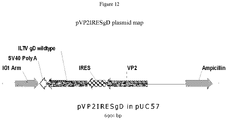
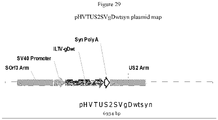
- Donor plasmid pFSV40VP2 an insertion plasmid containing the VP2/SV40 poly A and flanking arm of IG1+SV40 promoter+NDV-F+synthetic poly A was constructed as described below.
- Chicken embryo fibroblast cells (CEF) were used for in vitro recombination.
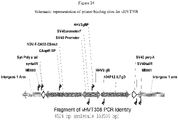
- Synthetic DNA in pUC57 containing the IBDV VP2 gene (SEQ ID NO: 1 encoding SEQ ID NO:2), SV40 poly A tail (SEQ ID NO:8), SV40 promoter (SEQ ID NO:7), NDV-F gene (SEQ ID NO:3 encoding SEQ ID NO:5), and synthetic poly A tail (SEQ ID NO:9) was synthesized by GeneScript ( Fig. 3 ).
- the plasmid, pFSV40VP2 was transformed using Top10 Oneshot kit (cat#C404002, Invitrogen) and a large scale culture was grown and plasmid extraction was done using Qiagens Maxi Prep kit. Transient expression of the maxi prep was verified using Fugene Transfection Reagent in Chicken Embryo Fibroblast Cells (CEF's) and chicken polyclonal sera against NDV.
- a standard homologous recombination procedure was followed by co-electroporation of secondary CEF cells using pFSV40VP2 plasmid and viral DNA isolated from vHVT13 Vaccine. Co-electroporation was performed using 1 ⁇ 10 7 2° CEF in 300 ⁇ l Opti-MEM and shocked at 150 volts with 950 capacitance in a 2 mm electroporation cuvette. The transfected cells were seeded into 96-well plate and incubated for 4 days. The cells grown in the 96-well plate were then duplicated into two 96-well plates and incubated for 3 more days. One set of 96-well plates was used for IFA using chicken polyclonal sera against NDV-F to identify positive wells containing recombinants and another set of 96-well plates was used for recovering the infected cells from the positive wells.
- the recombinant viral purification methods were performed first by 96-well plate duplication and IFA selection for the wells containing the most IFA positive plaques with the least amount of IFA negative plaques. Wells matching those criteria were then harvested and adjusted to 1ml in DMEM+2% FBS. From the 1ml stock, 5-20ul were removed and mixed with 1 ⁇ 10 7 CEFs in 10ml DMEM+2% FBS and aliquoted onto a new 96-well plate to have single virus plaques per well. The 96-well plates were duplicated after 5 days of incubation and wells that contained plaques were tested for the presence of double recombinant and absence of vHVT13 parental virus by IFA and PCR.
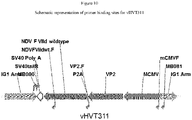
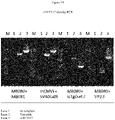
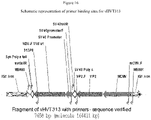
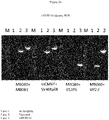
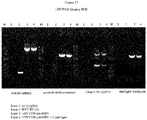
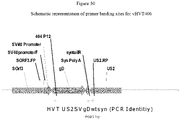
- PCR primers (Table 1) were designed to specifically identify the IBDV-VP2 and NDV-F VIId gene, the promoters, the poly As, as well as, the purity of the recombinant virus from Vaxxitek parental virus. The locations of the primer binding sites are shown in Figure 4 . PCR was performed using 200 ⁇ g of DNA template along with the specified primer pairs indicted in Table 1.
- PCR cycling conditions are as follows: 94°C - 2 min; 30 cycles of 94°C - 30 sec, 60°C - 45 sec, 68°C - 3 min (5 min for MB080+MB081 primer set); 68°C - 5 min (7 min for MB080+MB081 primer set).
- Table 1 Expected PCR bands using specific primer sets Primer set Vaxxitek vHVT309 MB080+MB081 3350 5577 MB010+NDVFVlldopt.F -- 737 MB080+VP2.F 405 2632 SV40tailR+mCMVF 3021 3021 syntailR+SV40promoterF -- 2184
- the recombinant material was diluted 1:100 in media. Approximately 50 ⁇ l of the diluted virus was added to 20 ml of DMEM+2% FBS with 2 ⁇ 10 7 CEFs and then aliquoted onto two 96 well plates (100 ⁇ l/well). The plates were incubated for 4 days at 37°C+5% CO 2 until viral plaques were visible. The plates were fixed with 95% ice-cold acetone for three minutes, allowed to air dry for ten minutes and washed three times with water.
- Dual immunofluorescent staining was performed for plate #1 using chicken anti-sera against Newcastle Disease virus (NDV Pab) (lot# C0117A, Charles Rivers Laboratories) at 1:500 and HVT L78 monoclonal antibody (HVT Mab) ( Lee et al. 1983, J. Immunol. 130 (2) 1003-6 ; Merial batch) at 1:3000 and the plate was incubated at 37°C for 1 hour.
- NDV Pab chicken anti-sera against Newcastle Disease virus
- HVT Mab HVT L78 monoclonal antibody
- Dual Immunofluorescent was performed for plate #2 using chicken anti-sera against Infectious Bursal Disease virus (IBDV Pab) at1:500 (lot# G0117, Charles Rivers Laboratories) and HVT L78 monoclonal antibody (HVT Mab) (Merial) at 1:3000 and the plate was incubated at 37°C for 1 hour. After one hour incubation, the plates were washed three times with PBS. To both plate #1 and #2 FITC labeled anti-chicken IgG (cat# F8888, Sigma) at 1:500 and TRITC labeled Alex Fluor donkey anti-mouse (cat# A10037, Invitrogen) at 1:300 was added. Again the plates were incubated at 37°C for 1 hour.
- IBDV Pab chicken anti-sera against Infectious Bursal Disease virus
- HVT Mab HVT L78 monoclonal antibody
- FITC fluorescein isothiocyanate
- TRITC tetramethyl rhodamine iso-thiocyanate
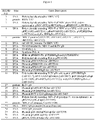
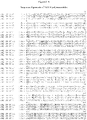
- the nucleotide and amino acid sequences of the donor plasmid pFSV40VP2 are assigned SEQ ID NO as shown in Fig.1 .
- Genomic DNA of vHVT13 virus was co-electroporated with pFSV40VP2 donor plasmid to generate recombinant using homologous recombination technique.
- Recombinant virus was separated from parental Vaxxitek virus by immunofluorescent positive well selection and PCR screening in multiple rounds of plaque purification.
- a plaque purified recombinant virus expressing the NDV-F protein, designated vHVT309 was scaled up from tissue culture flasks to 5 ⁇ 850cm 2 roller bottles. After about 72 hrs post infection the infected CEFs were harvested. Aliquots were frozen in liquid nitrogen, each aliquot contained 10% FBS and 10% DMSO. Titrations were performed in triplicate on CEFs and a titer of 1.5 ⁇ 10 5 pfu/ml was obtained for vHVT309.
- Dual immunofluorescent staining was performed using chicken anti-sera (Pab) at 1:500 and HVT L78 monoclonal antibody (Mab) at 1:3000 followed by a FITC labeled anti-chicken IgG at 1:500 and TRITC labeled Alex Fluor donkey anti-mouse at 1:300.
- Plate #1 compares the expression of Newcastle Disease virus with HVT and plate #2 compares the expression of Infectious Bursal Disease virus with HVT. All examined HVT TRITC positive plaques of vHVT309 were found to express NDV-F and IBDV-VP2 proteins.
- vHVT309 is a recombinant virus containing an IBDV-VP2 gene under the control of mCMV promoter and a NDV-F gene under the control of an SV40 promoter.
- the newly generated vHVT309 is free of any detectable parental vHVT13 virus.
- the objective of the study is to construct a recombinant HVT in which an expression cassette containing a mouse cytomegalovirus promoter (mCMV), a gene encoding an infectious bursal disease virus viral protein 2 (VP2), internal ribosome entry site (IRES), a gene encoding a Newcastle Disease virus fusion protein (NDV-F), and Simian virus 40 poly A tail (SV40 poly A) is integrated in the intergenic site 1 (IG1) ( Fig. 2 ).
- mCMV mouse cytomegalovirus promoter
- VP2 infectious bursal disease virus viral protein 2
- IRES internal ribosome entry site
- NDV-F Newcastle Disease virus fusion protein
- Simian virus 40 poly A tail Simian virus 40 poly A tail
- the parental virus used in the construct is vHVT13.
- a Newcastle disease virus Fusion Protein (NDV-F) corresponding to genotype VIId sequence was chemically synthesized and codon optimized (GenScript).
- GenScript The F protein cleavage site of this synthetic gene was altered to match a lentogenic F cleavage site sequence and the resultant NDV-F gene sequence has 99% amino acid sequence identity to NDV-F sequence deposited in GenBank (AY337464).
- Mouse CMV IE promoter was used for IBD-VP2 (in the parental Vaxxitek virus).
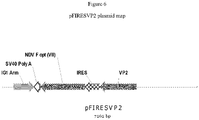
- IRES an RNA sequence derived from Encephalomyocarditis virus (EMCV), that allows the initiation of translation within an mRNA immediately downstream from where the IRES is located, was inserted at the end of the VP2 gene to initiate translation of a downstream NDV-F gene. This was the first time that IRES was used in an HVT vector.
- EMCV Encephalomyocarditis virus
- the insertion locus is intergenic site 1 (IG1) in HVT ( Fig. 2 ).
- Donor plasmid pFIRESVP2 an insertion plasmid containing the VP2 gene + IRES+NDV-F and SV40 poly A/flanking arm of IG1 was constructed as described below.
- Chicken embryo fibroblast cells (CEF) were used for in vitro recombination.
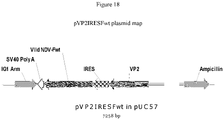
- Synthetic DNA in pUC57 containing the IBDV VP2 gene (SEQ ID NO:1 encoding SEQ ID NO:2), IRES (SEQ ID NO:10), NDV-F gene (SEQ ID NO:3 encoding SEQ ID NO:5), and SV40 poly A tail (SEQ ID NO:8) was synthesized by GeneScript ( Fig. 6 ).
- the plasmid, pFIRESVP2 was transformed using Top10 Oneshot kit (cat#C404002, Invitrogen) and a large scale culture was grown and plasmid extraction was done using Qiagens Maxi Prep kit.
- Example 1.1 The homologous recombination procedure as described in Example 1.1 was followed to make recombinant vHVT310.
- Example 1.1 The PCR analysis procedure as described in Example 1.1 was performed to verify vHVT310.
- Example 1.1 The expression analysis described in Example 1.1 was performed to analyze the expression of vHVT310.
- the nucleotide and amino acid sequence of the donor plasmid pFIRESVP2 are assigned SEQ ID NO as shown in Fig.1 .
- Genomic DNA of Vaxxitek virus was co-electroporated with pFIRESVP2 donor plasmid to generate recombinant virus using homologous recombination technique.
- Recombinant virus was separated from parental vHVT13 virus by immunofluorescent positive well selection and PCR screening in multiple rounds of plaque purification.
- a plaque purified recombinant virus expressing the NDV-F protein, designated vHVT310 was scaled up from tissue culture flasks to 5 ⁇ 850cm 2 roller bottles. After about 72 hrs post infection the infected CEFs were harvested. Aliquots were frozen in liquid nitrogen, each aliquot contained 10% FBS and 10% DMSO. Titrations were performed in triplicate on CEFs and a titer of 2.0 ⁇ 10 6 pfu/ml was obtained for vHVT310.
- Dual Immunofluorescent staining was performed using chicken anti-sera (Pab) at 1:500 and HVT L78 monoclonal antibody (Mab) at 1:3000 followed by a FITC labeled anti-chicken IgG at 1:500 and TRITC labeled Alex Fluor donkey anti-mouse at 1:300.
- Plate #1 compares the expression of Newcastle Disease virus with HVT and plate #2 compares the expression of Infectious Bursal Disease virus with HVT. All examined HVT TRITC positive plaques of vHVT310 were found to express NDV-F and IBDV-VP2 proteins.
- vHVT310 is a recombinant virus containing an IBDV-VP2 and NDV-F gene under the control of mCMV promoter, where the translation of NDV-F gene is initiated by IRES from EMCV.
- the newly generated recombinant vHVT310 is free of any detectable parental vHVT13 virus.
- the objective of the study is to construct a recombinant HVT in which an expression cassette containing a mouse cytomegalovirus promoter (mCMV), a gene encoding an infectious bursal disease virus viral protein 2 (VP2), self-cleaving porcine teschovirus-1 2A peptide (P2A), a gene encoding a Newcastle Disease virus fusion protein (NDV-F), and Simian virus 40 poly A tail (SV40 poly A) is integrated in the intergenic site 1 (IG1) ( Fig. 2 ).
- mCMV mouse cytomegalovirus promoter
- VP2A infectious bursal disease virus viral protein 2
- P2A self-cleaving porcine teschovirus-1 2A peptide
- NDV-F Newcastle Disease virus fusion protein
- Simian virus 40 poly A tail Simian virus 40 poly A tail
- the parental virus used in the construct is vHVT13 (an HVT vector expressing the IBDV VP2 gene, Merial's VAXXITEK ® (HVT+IBD) Vaccine).
- the polynucleotide corresponding to wild-type genotype VIId Newcastle disease virus Fusion Protein (NDV-F) sequence was chemically synthesized (GenScript).
- the F protein cleavage site of this synthetic gene was altered to match a lentogenic F cleavage site sequence and the resultant NDV-F gene sequence has 99% amino acid sequence identity to NDV-F sequence deposited in GenBank (AY337464).
- Mouse CMV IE promoter was used for IBD-VP2 (in the parental Vaxxitek virus).
- P2A porcine teschovirus-1 2A peptide
- the insertion locus is intergenic site 1 (IG1) in HVT ( Fig. 2 ).
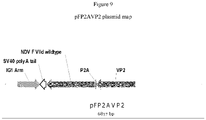
- Donor plasmid pFP2AVP2 an insertion plasmid containing the VP2+P2A+NDV-F and SV40 poly A/flanking arm of IG1 was constructed as described below.
- Chicken embryo fibroblast cells (CEF) were used for in vitro recombination.
- Synthetic DNA in pUC57 containing the IBDV VP2 gene (SEQ ID NO:1 encoding SEQ ID NO:2), P2A encoding DNA (SEQ ID NO: 11), NDV-F gene (SEQ ID NO:4 encoding SEQ ID NO:5), and SV40 poly A tail (SEQ ID NO:8) was synthesized by GeneScript ( Fig. 9 ).
- the plasmid, pFP2AVP2 was transformed using Top10 Oneshot kit (cat#C404002, Invitrogen) and a large scale culture was grown and plasmid extraction was done using Qiagens Maxi Prep kit.
- Example 1.1 The homologous recombination procedure as described in Example 1.1 was followed to make recombinant vHVT311.
- Example 1.1 The expression analysis described in Example 1.1 was performed to analyze the expression of vHVT311.
- the nucleotide and amino acid sequences of the donor plasmid pFP2AVP2 are assigned SEQ ID NO as shown in Fig.1 .
- Genomic DNA of Vaxxitek virus was co-electroporated with pFP2AVP2 donor plasmid to generate recombinant virus using homologous recombination technique.
- Recombinant virus was separated from parental Vaxxitek virus by immunofluorescent positive well selection and PCR screening in multiple rounds of plaque purification.
- Dual Immunofluorescents was performed using chicken anti-sera (Pab) at 1:500 and a monoclonal antibody (Mab) at 1:3000 followed by a FITC labeled anti-chicken IgG at 1:500 and TRITC labeled Alex Fluor donkey anti-mouse at 1:300.
- Plate #1 compares the expression of Newcastle Disease virus with HVT and plate #2 compares the expression of Infectious Bursal Disease virus with Newcastle Disease virus. All examined HVT TRITC positive plaques of vHVT311 were found to express NDV-F and all NDV TRITC positive plaques were found to express IBDV-VP2 proteins.
- vHVT311 is a recombinant virus containing an IBDV-VP2 and NDV-F gene under the control of mCMV promoter in which the 2A peptide-mediated cleavage result in co-expression of VP2 and F proteins.
- the newly generated recombinant vHVT311 is free of any detectable parental vHVT13 virus.
- the objective of the study is to construct a recombinant HVT in which an expression cassette containing a mouse cytomegalovirus promoter (mCMV), a gene encoding an infectious bursal disease virus viral protein 2 (VP2), internal ribosome entry site (IRES), a gene encoding an Infectious Laryngotracheitis glycoprotein D protein (ILTV-gD), and Simian virus 40 poly A tail (SV40 poly A) is integrated in the intergenic site 1 (IG1) ( Fig. 2 ).
- mCMV mouse cytomegalovirus promoter
- VP2 infectious bursal disease virus viral protein 2
- IRES internal ribosome entry site
- ILTV-gD Infectious Laryngotracheitis glycoprotein D protein
- Simian virus 40 poly A tail Simian virus 40 poly A tail
- IG1 intergenic site 1
- the parental virus used in the construct is vHVT13.
- An Infectious Laryngotracheitis virus glycoprotein D (ILTV gD) sequence which was chemically synthesized (GenScript) was used in the construct.
- Mouse CMV IE promoter was used for IBD-VP2 (in the parental vHVT13 virus).
- the insertion locus is intergenic site 1 (IG1) in HVT ( Fig. 2 ).
- Donor plasmid pVP2IRESgD an insertion plasmid containing the VP2 gene + IRES+ILTV-gD and SV40 poly A/flanking arm of IG1 was constructed as described below.
- Chicken embryo fibroblast cells (CEF) were used for in vitro recombination.
- Synthetic DNA in pUC57 containing the IBDV VP2 gene (SEQ ID NO:1 encoding SEQ ID NO:2), IRES (SEQ ID NO:10), ILTV-gD gene (SEQ ID NO:16 encoding SEQ ID NO:17), and SV40 poly A tail (SEQ ID NO:8) was synthesized by GenScript.
- the plasmid, pFIRESVP2 was transformed into dcm-/dam- competent cells (New England Biolabs, cat# C2925I) then digested with Hind III/ Sal I . The 5kb fragment was gel extracted.
- a synthetic DNA in pUC57 containing a partial IRES, ILTV-gD wildtype, and SV40 poly A tail was synthesized by GenScript.
- the plasmid, Sal-Fse gD-IRES was digested with Hind III/ Sal I .
- the 1.9kb fragment was gel extracted.
- the two fragments were ligated and transformed using Top10 Oneshot kit (cat#C404002, Invitrogen). Colonies were screen by Hind III/ Sbf I for the correct pattern.
- the final donor plasmid was sequenced verified and designated pVP2IRESgD (see Figure 12 ).
- Example 1.1 The homologous recombination procedure as described in Example 1.1 was followed to make recombinant vHVT317.
- Example 1.1 The PCR analysis procedure as described in Example 1.1 was performed to verify vHVT317.
- Example 1.1 The expression analysis described in Example 1.1 was performed to analyze the expression of vHVT317.
- the nucleotide and amino acid sequence of the donor plasmid pVP2IRESgD are assigned SEQ ID NO as shown in Fig.1 .
- Dual Immunofluorescents was performed using chicken anti-sera (Polyclonal antibody) at 1:500 and a monoclonal antibody (Mab) at 1:3000 followed by a FITC labeled anti-chicken IgG at 1:500 and TRITC labeled Alex Fluor donkey anti-mouse at 1:300. All examined plaques of vHVT317 were found to express IBDV-VP2 proteins compared to HVT positive plaques and all and plaques were found to express ILTV-gD proteins when compared to IBDV positive plaques.
- vHVT317 is a recombinant virus containing an IBDV-VP2 and ILTV-gD gene under the control of mCMV promoter, where the translation of ILTV-gD gene is initiated by IRES from EMCV.
- the newly generated recombinant vHVT317 is free of any detectable parental vHVT13 virus.
- the objective of the study is to construct a recombinant HVT in which an expression cassette containing a mouse cytomegalovirus promoter (mCMV), a gene encoding an infectious bursal disease virus viral protein 2 (VP2), Simian virus 40 poly A tail (SV40 poly A), Simian virus 40 promoter (SV40 promoter), a gene encoding a wildtype Newcastle disease virus fusion protein (NDV-F) and synthetic poly A tail (syn poly A tail) is integrated in the intergenic site 1 (IG1) ( Fig. 2 ).
- mCMV mouse cytomegalovirus promoter
- VP2 infectious bursal disease virus viral protein 2
- SV40 poly A Simian virus 40 poly A tail
- SV40 promoter Simian virus 40 promoter
- NDV-F wildtype Newcastle disease virus fusion protein
- synthetic poly A tail synthetic poly A tail
- the parental virus used in the construct is vHVT13.
- the F protein cleavage site of this synthetic gene was altered to match a lentogenic F cleavage site sequence and the resultant NDV-F gene sequence has 99% amino acid sequence identity to NDV-F sequence deposited in GenBank (AY337464).
- Mouse CMV IE promoter for IBD-VP2 (in the parental Vaxxitek virus) and SV40 promoter for NDV-F were used.
- the insertion locus is intergenic site 1 (IG1) ( Fig. 2 ).
- Donor plasmid pFwtSV40VP2 an insertion plasmid containing the VP2/SV40 poly A and flanking arm of IG1+SV40 promoter+NDV-F+synthetic poly A was constructed as described below.
- Chicken embryo fibroblast cells (CEF) were used for in vitro recombination.
- Synthetic DNA in pUC57 containing the IBDV VP2 gene (SEQ ID NO:1 encoding SEQ ID NO:2), SV40 poly A tail (SEQ ID NO:8), SV40 promoter (SEQ ID NO:7), NDV-F gene (SEQ ID NO:4 encoding SEQ ID NO:5), and synthetic poly A tail (SEQ ID NO:9) was synthesized by GeneScript.
- the plasmid, pFSV40VP2 was then digested with Sbf I/ Avr II and the 5.6kb fragment was gel extracted.
- a plasmid, pHM103NDVFwtsyn was also digested with Sbf I/ Avr II and the 1.9kb fragment was gel extracted.
- the fragments were then ligated together and transformed using Top10 Oneshot kit (cat#C404002, Invitrogen). Colonies were screened with PstI for the correct pattern. Transient expression of the maxi prep was verified using Fugene Transfection Reagent in Chicken Embryo Fibroblast Cells (CEF's) and chicken polyclonal sera against NDV.
- the final donor plasmid was sequenced verified and designated pFwtSV40VP2 (see Figure 15 ).
- Example 1.1 The homologous recombination procedure as described in Example 1.1 was followed to make recombinant vHVT313.
- Example 1.1 The PCR analysis procedure as described in Example 1.1 was performed to verify vHVT313.
- Example 1.1 The expression analysis described in Example 1.1 was performed to analyze the expression of vHVT313.
- the nucleotide and amino acid sequence of the donor plasmid pFwtSV40VP2 are assigned SEQ ID NO as shown in Fig.1 .
- Dual Immunofluorescents was performed using chicken anti-sera (Pab) and an anti-HVT monoclonal antibody (Mab) followed by a FITC labeled anti-chicken IgG and TRITC labeled Alex Fluor donkey anti-mouse. All examined TRITC positive plaques of vHVT313 were found to express NDV-F and IBDV-VP2 proteins.
- vHVT313 is a recombinant virus containing an IBDV-VP2 gene under the control of mCMV promoter and a NDV-F wildtype gene under the control of an SV40 promoter.
- the newly generated vHVT313 is free of any detectable parental Vaxxitek virus.
- the objective of the study is to construct a recombinant HVT in which an expression cassette containing a mouse cytomegalovirus promoter (mCMV), a gene encoding an infectious bursal disease virus viral protein 2 (VP2), internal ribosome entry site (IRES), a gene encoding a wildtype Newcastle Disease virus fusion protein (NDV-F), and Simian virus 40 poly A tail (SV40 poly A) is integrated in the IG1 locus ( Fig. 2 ).
- mCMV mouse cytomegalovirus promoter
- VP2 infectious bursal disease virus viral protein 2
- IRES internal ribosome entry site
- NDV-F wildtype Newcastle Disease virus fusion protein
- Simian virus 40 poly A tail Simian virus 40 poly A tail
- the parental virus used in the construct is vHVT13.
- the F protein cleavage site of this synthetic gene was altered to match a lentogenic F cleavage site sequence and the resultant NDV-F gene sequence has 99% amino acid sequence identity to NDV-F sequence deposited in GenBank (AY337464).
- Mouse CMV IE promoter was used for IBD-VP2 (in the parental Vaxxitek virus). IRES was inserted at the end of the VP2 gene to initiate translation of a downstream NDV-F gene.
- the insertion locus is IG1 ( Fig. 2 ).
- Donor plasmid pVP2IRESFwt an insertion plasmid containing the VP2 gene + IRES+NDV-F and SV40 poly A/flanking arm of IG1 was constructed as described below.
- Chicken embryo fibroblast cells (CEF) were used for in vitro recombination.
- Synthetic DNA in pUC57 containing the IBDV VP2 gene (SEQ ID NO:1 encoding SEQ ID NO:2), IRES(SEQ ID NO:10), NDV-F gene(SEQ ID NO:4 encoding SEQ ID NO:5), and SV40 poly A tail (SEQ ID NO:8), was synthesized by GenScript.
- the plasmid, pFIRESVP2 was transformed into dcm-/dam- competent cells (New England Biolabs, cat# C2925I) then digested with Hind III/ Sal I . The 5kb fragment was gel extracted.
- a synthetic DNA in pUC57 containing a partial IRES, NDV-F wildtype, and SV40 poly A tail was synthesized by GenScript.
- the plasmid, Sal-Hind-Fwt+ was digested with Hind III/ Sal I .
- the 2.2kb fragment was gel extracted.
- the two fragments were ligated and transformed using Top10 Oneshot kit (cat#C404002, Invitrogen).
- the final donor plasmid was sequenced verified and designated pVP2IRESFwt (see Figure 18 ).
- Example 1.1 The homologous recombination procedure as described in Example 1.1 was followed to make recombinant vHVT316.
- Example 1.1 The PCR analysis procedure as described in Example 1.1 was performed to verify vHVT316.
- Example 1.1 The expression analysis described in Example 1.1 was performed to analyze the expression of vHVT316.
- the nucleotide and amino acid sequence of the donor plasmid pVP2IRESFwt are assigned SEQ ID NO as shown in Fig.1 .
- Dual Immunofluorescent staining was performed using chicken anti-sera (Pab) and a monoclonal antibody (Mab) followed by a FITC labeled anti-chicken IgG and TRITC labeled Alex Fluor donkey anti-mouse. All examined plaques of vHVT316 were found to express IBDV-VP2 proteins compared to HVT positive plaques and all and plaques were found to express IBDV-VP2 proteins when compared to NDV positive plaques.
- vHVT316 is a recombinant virus containing an IBDV-VP2 and NDV-F gene under the control of mCMV promoter, where the translation of NDV-F gene is initiated by IRES from EMCV.
- the newly generated recombinant vHVT316 is free of any detectable parental Vaxxitek virus.
- the objective of the study is to construct a recombinant HVT in which an expression cassette containing an SV40 promoter, ILTV glycoprotein D, and synthetic poly A into the SORF3-US2 site of vHVT13.
- the parental virus used in the construct is vHVT13.
- An Infectious Laryngotracheitis virus glycoprotein D (ILTV gD) sequence which was chemically synthesized (GenScript) was used in the construct.
- SV40 promoter was used for ILTV gD.
- the insertion locus is SORF3-US2 for ILTV gD and IG1 for IBDV VP2 from vVHT13 ( Fig. 2 ).
- Donor plasmid HVT US2SVgDwtsyn containing SORF3-US2 arms, SV40 promoter (SEQ ID NO:7), gene encoding ILTV wild-type gD (SEQ ID NO:16 encoding SEQ ID NO:17), and synthetic polyA (SEQ ID NO:9) was constructed (see Fig. 22 ).
- Chicken embryo fibroblast cells (CEF) were used for in vitro recombination.
- Example 1.1 The homologous recombination procedure as described in Example 1.1 was followed to make recombinant vHVT407.
- Example 1.1 The expression analysis described in Example 1.1 was performed to analyze the expression of vHVT407.
- the nucleotide and amino acid sequence of the donor plasmid HVT US2SVgDwtsyn are assigned SEQ ID NO as shown in Fig.1 .
- Dual Immunofluorescent staining was performed using chicken anti-sera (Pab) and a monoclonal antibody (Mab) followed by a FITC labeled anti-chicken IgG and TRITC labeled Alex Fluor donkey anti-mouse. All examined plaques of vHVT407 were found to express IBDV-VP2 and ILTV gD proteins.
- vHVT407 is a recombinant virus containing IBDV-VP2 and ILTV gD genes.
- the newly generated recombinant vHVT407 is free of any detectable parental vHVT13 virus.
- the objective of the study is to construct an insertion plasmid for the Intergenic region I site that will contain a Synthetic poly A tail, NDV F, SV40 promoter, HHV3gB promoter, ILTV gD, and SV40 poly A tail for homologous recombination into HVT FC126.
- the parental virus used in the construct is HVT FC126.
- a synthetic Newcastle disease virus Fusion Protein (NDV-F) (SEQ ID NO:21 encoding SEQ ID NO:22) corresponding to genotype V sequence was chemically synthesized and codon optimized (GenScript). The F protein cleavage site of this synthetic gene was altered to match a lentogenic F cleavage site sequence.
- a synthetic wildtype ILTV glycoprotein D (SEQ ID NO:16 encoding SEQ ID NO: 17) was chemically synthesized.
- Chicken embryo fibroblast cells (CEF) were used for in vitro recombination.
- Example 1.1 The homologous recombination procedure as described in Example 1.1 was followed to make the recombinant vHVT308. Serial passaging was performed to pre-MSV+13.
- Example 1.1 The PCR analysis procedure as described in Example 1.1 was performed to verify the recombinant vHVT308.
- Example 1.1 The expression analysis described in Example 1.1 was performed to analyze the expression of the recombinant vHVT308.
- the nucleotide and amino acid sequence of the donor plasmid pHVTIG1gDCaFopt are assigned SEQ ID NO as shown in Fig.1 .
- Dual Immunofluorescent staining was performed using chicken anti-sera (Pab) and a monoclonal antibody (Mab) followed by a FITC labeled anti-chicken IgG and TRITC labeled Alex Fluor donkey anti-mouse. All examined plaques of vHVT308 were found to express NDV-F and ILTV-gD proteins.
- recombinant virus Purity of recombinant virus was verified by PCR using primer pairs that are specific to the HVT flanking arms, the promoters, the NDV-F and ILTV-gD genes, and the poly A tails.
- the PCR results demonstrate that recombinant virus vHVT308 carries the intended expression cassette and the virus stock is free from detectable amounts of parental HVT virus (Table 6.1 and Figs.24 and 25 ).
- vHVT308 is a recombinant HVT virus containing an NDV-F gene under the control of an SV40 promoter and an ILTV-gD gene under the control of an HHV3gB promoter. vHVT308 is free of any detectable parental HVT virus.
- the objective of the study is to construct a recombinant HVT in which an expression cassette containing an mCMV promoter, Newcastle Disease virus fusion protein (NDV-F), internal ribosome entry site (IRES), Infectious Laryngotracheitis glycoprotein D (ILTV-gD), and Simian virus 40 poly A tail (SV40 poly A) will homologously recombine with the flanking arms in the intergenic region 1 (IG1) of vHVT13 (HVT+IBD).
- NDV-F Newcastle Disease virus fusion protein
- IVS Internal ribosome entry site
- ILTV-gD Infectious Laryngotracheitis glycoprotein D
- SV40 poly A Simian virus 40 poly A tail
- the parental virus used in the construct is vHVT13.
- a Newcastle disease virus Fusion Protein (NDV-F) corresponding to the wildtype genotype VIId sequence (SEQ ID NO:4 encoding SEQ ID NO:5) was chemically synthesized (GenScript).
- the F protein cleavage site of this synthetic gene was altered to match a lentogenic F cleavage site sequence and the resultant NDV-F gene sequence has 99% nucleotide as well as amino acid sequence identity to NDV-F sequence deposited in GenBank (AY337464).
- a synthetic wildtype ILTV glycoprotein D (SEQ ID NO:16 encoding SEQ ID NO:17) was chemically synthesized.
- Donor plasmid_pFwtIRESgD contained the left flanking arm of IG1, mCMV (mouse CMV IE) promoter, NDV-F, IRES, ILTV-gD, SV40 poly A, and the right flanking arm of IG1 (see Fig.26 ).
- Chicken embryo fibroblast cells (CEF) were used for in vitro recombination.
- Example 1.1 The homologous recombination procedure as described in Example 1.1 was followed to make the recombinant vHVT322. Serial passaging was performed to pre-MSV+13.
- Example 1.1 The PCR analysis procedure as described in Example 1.1 was performed to verify the recombinant vHVT322.
- Example 1.1 The expression analysis described in Example 1.1 was performed to analyze the expression of the recombinant vHVT322.
- the nucleotide and amino acid sequence of the donor plasmid pFwtIRESgD are assigned SEQ ID NO as shown in Fig.1 .
- Dual Immunofluorescent staining was performed using chicken anti-sera (Pab) and a monoclonal antibody (Mab) followed by a FITC labeled anti-chicken IgG and TRITC labeled Alex Fluor donkey anti-mouse. All examined TRITC positive plaques of vHVT322 were found to express NDV-F and ILTV-gD proteins.
- vHVT322 is a recombinant HVT virus containing an NDV-F and ILTV-gD gene under the control of mCMV promoter. vHVT322 is free of any detectable parental vHVT13 virus.
- Example 1.10 Construction of recombinant vHVT406 expressing ILT-gDwt The objective of the study is to construct a recombinant HVT of which the SORF3-US2 site contains the SV40 promoter, Infectious Larygotracheitis gD, and synthetic poly A tail for homologous recombination into HVT FC126.
- HVT FC126 The parental virus used in the construct is HVT FC126.
- Donor plasmid pHVTUS2SVgDwtsyn contained the SORF3 and US2 arms of HVT FC126, SV40 promoter, ILTV gDwt (SEQ ID NO:16 encoding SEQ ID NO:17) and synthetic poly A (see FIG.29 ).
- Chicken embryo fibroblast cells (CEF) were used for in vitro recombination.
- Example 1.1 The homologous recombination procedure as described in Example 1.1 was followed to make the recombinant vHVT406. Serial passaging was performed to pre-MSV+13 (x+12).
- Example 1.1 The PCR analysis procedure as described in Example 1.1 was performed to verify the recombinant vHVT406.
- Example 1.1 The expression analysis described in Example 1.1 was performed to analyze the expression of the recombinant vHVT406.
- the nucleotide and amino acid sequence of the donor plasmid pHVTUS2SVgDwtsyn are assigned SEQ ID NO as shown in Fig.1 .
- Genomic DNA of HVT virus was co-electroporated with pHVTUS2SVgDwtsyn donor plasmid to generate recombinant HVT using homologous recombination technique.
- Recombinant virus was separated from parental HVT virus by immunofluorescent positive well selection and PCR screening in multiple rounds of plaque purification.
- a plaque purified recombinant HVT virus expressing the ILTV-gD protein was designated vHVT406.
- vHVT406 viral plaques were visualized using both the TRITC and FITC filters for the dual staining.
- the FITC showed the ILTV-gDwt expression and the TRITC showed the HVT expression. Because of the small wells of the 96 well plates, each well was recorded with the plaques first counted with the TRITC filter and then recounted with the FITC filter. A combined 600+ plaques were counted between the pre-MSV and pre-MSV+13 passage. All the plaques were positive for both the FITC and TRITC for both passages.
- PCR analysis of vHVT406 was performed using the PCR primers listed in Table 6.3 (see FIG.30 ). As shown in FIG. 31 , the sizes of PCR products after gel electrophoresis correspond well with the expected sizes and the banding patterns. There is no evidence of the parental HVT FC126 virus in vHVT406.
- vHVT406 is a recombinant HVT virus containing an SV40 promoter, ILTV-gDwt gene, and synthetic poly A tail in the SOrf3-US2 site. vHVT406 is free of any detectable parental HVT virus.
- the HVT vectors constructed above were tested for genomic/expression stability after multiple in vitro passages in Chicken embryo fibroblast cells (CEF).
- the HVT vectors expressing two genes were stable after multiple passages. Contrary to the common knowledge that HVT with multiple inserts are less stable, the results demonstrated surprisingly that the HVT vectors of the present invention are stable and express two genes efficiently.
- the aim of the study was to assess the efficacy of four HVT recombinant constructs (vHVT306, vHVT309, vHVT310 & vHVT311) expressing the IBDV VP2 gene and NDV F gene administered to one-day-old SPF chickens against Newcastle disease challenges (Texas GB strain) performed on D28.
- Table 7 Characteristics of the vectors used in the challenge study Name Parental virus gene Promoter/ linker Poly-A Locus vHVT306 ⁇ vHVT13 ⁇ IBDV VP2 mCMV IE SV40 Poly A IG1 NDV F SV40 Synthetic Poly A SORF3-US2 vHVT309 vHVT13 IBDV VP2 mCMV IE SV40 poly A IG1 NDV F SV40 Synthetic PolyA IG1 vHVT310 vHVT13 IBDV VP2 mCMV IE N/A IG1 NDV F IRES SV40 poly A IG1 vHVT311 vHVT13 IBDV VP2 mCMV IE N/A IG1 NDV F P2A SV40 poly A IG1 vHVT306 ⁇ : the vHVT vector expressing IBDV VP2 and NDV F (see US9,
- vHVT13 ⁇ is the active ingredient of the licensed VAXXITEK HVT-IBD vaccine based on an HVT vector expressing the IBDV VP2 gene (described as vHVT17 in US 5,980,906 and EP 0 719 864 ).
- Table 8 ND efficacy induced by different HVT-IBD+ND double constructs in SPF chicks Group Vaccine Dose (PFU) ND protection after D28 challenge 1 vHVT306 ⁇ 1580 95% (19/20) 2 vHVT309 1680 90% (18/20) 3 vHVT310 2840 95% (19/20) 4 vHVT311 2980 90% (18/20) 5 - - 0% (0/15) vHVT306 ⁇ : used as a control
- Example 3 IBD efficacy induced by vHVT309, vHVT310, vHVT311 and vHVT407 against a standard IBDV challenge at D35
- the aim of the study was to assess the efficacy of three HVT recombinant constructs (vHVT309, vHVT310 & vHVT311) expressing the IBDV VP2 gene and NDV F gene and one construct (vHVT407) expressing the IBDV VP2 gene and ILTV gD gene administered to one-day-old SPF chickens against standard IBDV challenge performed on D35.
- One-day-old specific pathogen free (SPF) chicks were assigned to 4 groups as shown in Table 9. All birds from groups 1 to 4 (20 birds/group) were vaccinated by the subcutaneous (SC) route with 0.2 mL of different HVT-IBD+ND or HVT-IBD+ILT constructs at the dose indicated. The 20 birds from group 5 were left unvaccinated. Thirty five days after vaccination (at D35), all birds were challenged with the infectious bursal disease virus (IBDV) classical STC strain by the intraocular (IO) route (10 2.0 EID50 in 0.03 mL/bird). Four days post-challenge (at D39) all birds were terminated and necropsied to examine for gross bursal lesions.
- IBDV infectious bursal disease virus
- IO intraocular
- Example 4 IBD efficacy induced by vHVT309, vHVT310, vHVT311 and vHVT407 against a variant IBDV challenge at D35
- the aim of the study was to assess the efficacy of three HVT recombinant constructs (vHVT309, vHVT310 & vHVT311) expressing the IBDV VP2 gene and NDV F gene and one construct (vHVT407) expressing the IBDV VP2 gene and ILTV gD gene administered to one-day-old SPF chickens against a variant (Delaware E) IBDV challenge performed on D35.
- One-day-old specific pathogen free (SPF) chicks were assigned to 6 groups as shown in Table 10. All birds from groups 1 to 4 (19-20 birds/group) were vaccinated by the subcutaneous (SC) route with 0.2 mL of different HVT-IBD+ND or HVT-IBD+ILTconstructs at the dose indicated. Birds from group 5 (19 birds) and group 6 (18 birds) were left unvaccinated. At D35, all birds from groups 1 to 5 were challenged with the infectious bursal disease virus (IBDV) variant Delaware E strain by the intraocular (IO) route (10 3.0 EID50 in 0.03 mL/bird). Birds from group 6 were left unchallenged. At D46, body weight and bursal weight of all birds were measured. The B/B wt. ratios (bursa weight/body weight ratio ⁇ 100) were calculated for all groups.
- IBDV infectious bursal disease virus
- IO intraocular
- mice from groups 1 and 2 had a mean B/B wt. ratio similar as that of non-vaccinated non-challenged controls (group 6) and greater than those of non-vaccinated challenged controls (group 5). Birds of group 3 were not protected and birds of group 4 were partially protected.
- vHVT310 which contains IRES provided better protection than vHVT311 which contains P2A.
- Table 10 IBD efficacy induced by different HVT-IBD+ND or HVT-IBD+ILT double constructs in SPF chicks after challenge at D35 with variant E IBDV strain Group Vaccine Dose (PFU) Number of birds IBDV challenge at D35 Mean B/B wt.
- the aim of the study was to assess the efficacy of three HVT recombinant constructs (vHVT306, vHVT309 & vHVT310) expressing the IBDV VP2 gene and NDV F gene administered to one-day-old broiler chickens against vvIBDV challenge performed on D28.
- Hubbard JA957 line Seventy one-day-old broiler chicks (Hubbard JA957 line) were assigned to 5 groups as shown in Table 11. All birds from groups 2 to 5 (about 15 birds/group) were vaccinated by the subcutaneous (SC) route with 0.2 mL of different HVT-IBD+ND constructs at the dose indicated. Ten birds from group 1 were left unvaccinated. Twenty eight days after vaccination (at D28), all birds were challenged with the very virulent IBDV (vvIBDV) 91-168 strain by the intraocular (IO) route (10 4.3 EID50 in 0.05 mL/bird). Ten days post-challenge (at D38) all birds were terminated and necropsied to examine for gross bursal lesions.
- SC subcutaneous
- IO intraocular
- Bursal and body were weighted and histopathology was performed on the bursa. Histological lesions of the bursa were scored from 0 to 5 according to the following scale : 0 - No lesion, normal bursa ; 1 - 1% to 25% of the follicles show lymphoid depletion (i.e., less than 50% of depletion in 1 affected follicle), influx of heterophils in lesions; 2 - 26% to 50% of the follicles show nearly complete lymphoid depletion (i.e., with more than 75% of depletion in 1 affected follicle), the affected follicles show necrosis lesions and severe influx of heterophils may be detected; 3 - 51% to 75% of the follicles show lymphoid depletion; affected follicles show necrosis lesions and a severe influx of heterophils is detected; 4 - 76% to 100% of the follicles show nearly complete lymphoi
- the aim of the study was to assess the efficacy of three HVT recombinant constructs (vHVT306, vHVT309 & vHVT310) expressing the IBDV VP2 gene and NDV F gene administered to one-day-old broiler chickens against velogenic NDV challenge performed on D42.
- One-day-old broiler chicks were assigned to 4 groups as shown in Table 12. All birds from groups 2 to 4 (16-20 birds/group) were vaccinated by the subcutaneous (SC) route with 0.2 mL of different HVT-IBD+ND constructs at the dose indicated. Twelve birds from group 1 were left unvaccinated. Forty two days after vaccination (at D42), all birds were challenged with the velogenic NDV Herts 33 strain by the intramuscular (IM) route (10 5.0 EID50 in 0.2 mL/bird). All birds were observed for clinical signs during 14 days post-challenge. Birds were considered as protected if they did not die or show ND clinical signs.
- SC subcutaneous
- IM intramuscular
- Example 7 ND efficacy induced by vHVT306, vHVT309 & vHVT310 against a velogenic NDV challenge at D42 in broilers
- the aim of the study was to re-assess the efficacy of three HVT recombinant constructs (vHVT306, vHVT309 & vHVT310) expressing the IBDV VP2 gene and NDV F gene administered to one-day-old broiler chickens against velogenic NDV challenge performed on D42.
- One-day-old broiler chicks were assigned to 4 groups as shown in Table 13. All birds from groups 2 to 4 (16-20 birds/group) were vaccinated by the subcutaneous (SC) route with 0.2 mL of different HVT-IBD+ND constructs at 2000 PFU. Nineteen birds from group 1 were left unvaccinated. Forty two days after vaccination (at D42), all birds were challenged with the velogenic NDV Herts 33 strain by the intramuscular (IM) route (10 5.0 EID50 in 0.2 mL/bird). All birds were observed for clinical signs during 14 days post-challenge. Birds were considered as protected if they did not die or show ND clinical signs.
- IM intramuscular
- Example 8 IBD efficacy induced by vHVT306, vHVT309 & vHVT310 against a standard IBDV challenge at D14 in SPF chicks
- the aim of the study was to assess the efficacy of three HVT recombinant constructs (vHVT306, vHVT309 & vHVT310) expressing the IBDV VP2 gene and NDV F gene administered to one-day-old SPF chickens against standard IBDV challenge performed at D14.
- One-day-old specific pathogen free (SPF) chicks were assigned to 4 groups as shown in Table 14. All birds from groups 1 to 3 (21-22 birds/group) were vaccinated by the subcutaneous (SC) route with 0.2 mL of different HVT-IBD+ND constructs at the dose indicated. The 22 birds from group 4 were left unvaccinated. Fourteen days after vaccination (at D14), all birds were challenged with the infectious bursal disease virus (IBDV) classical STC strain by the intraocular (IO) route (10 1.4 EID50 in 0.03 mL/bird). Four days post-challenge (at D18) all birds were terminated and necropsied to examine for gross bursal lesions.
- IBDV infectious bursal disease virus
- IO intraocular
- Example 9 IBD efficacy induced by vHVT306, vHVT309 & vHVT310 in SPF chicks after variant IBD challenge at D14
- the aim of the study was to assess the efficacy of three HVT recombinant constructs (vHVT306, vHVT309 & vHVT310) expressing the IBDV VP2 gene and NDV F gene administered to one-day-old SPF chickens against variant IBDV challenge performed at D14.
- One-day-old specific pathogen free (SPF) chicks were assigned to 5 groups as shown in Table 15. All birds from groups 1 to 3 (20 birds/group) were vaccinated by the subcutaneous (SC) route with 0.2 mL of different HVT-IBD+ND constructs at the dose indicated. Birds from group 4 and group 5 (19-20 birds/group) were left unvaccinated. At D14, all birds from groups 1 to 4 were challenged with the infectious bursal disease virus (IBDV) variant Delaware E strain by the intraocular (IO) route (10 2.2 EID50 in 0.03 mL/bird). Birds from group 5 were left unchallenged. At D25, body weight and bursal weight of all birds were measured. The B/B wt. ratios (bursa weight/body weight ratio x100) were calculated for all groups.
- IBDV infectious bursal disease virus
- IO intraocular
- Recombinant vHVT306 and vHVT309 have two independent expression cassettes (two mRNAs).
- the constructs expressing two genes through an IRES or P2A are not only in one insertion site, but also the genes are expressed from a single mRNA.
- the aim of the study was to assess the efficacy of three HVT recombinant constructs (vHVT306, vHVT309 & vHVT310) expressing the IBDV VP2 gene and NDV F gene administered to one-day-old SPF chickens against standard IBDV challenge performed at D28.
- One-day-old specific pathogen free (SPF) chicks were assigned to 4 groups as shown in Table 16. All birds from groups 1 to 3 (20-22 birds/group) were vaccinated by the subcutaneous (SC) route with 0.2 mL of different HVT-IBD+ND constructs at the dose indicated. The 22 birds from group 4 were left unvaccinated. Twenty eight days after vaccination (at D28), all birds were challenged with the infectious bursal disease virus (IBDV) classical STC strain by the intraocular (IO) route (10 2.0 EID50 in 0.03 mL/bird). Four days post-challenge (at D32) all birds were terminated and necropsied to examine for gross bursal lesions.
- IBDV infectious bursal disease virus
- IO intraocular
- Example 11 IBD efficacy induced by vHVT306, vHVT309 & vHVT310 in SPF chicks after variant IBD challenge at D28
- the aim of the study was to assess the efficacy of three HVT recombinant constructs (vHVT306, vHVT309 & vHVT310) expressing the IBDV VP2 gene and NDV F gene administered to one-day-old SPF chickens against variant IBDV challenge performed at D28.
- One-day-old specific pathogen free (SPF) chicks were assigned to 5 groups as shown in Table 17. All birds from groups 1 to 3 (20 birds/group) were vaccinated by the subcutaneous (SC) route with 0.2 mL of different HVT-IBD+ND constructs at the dose indicated. Birds from group 4 and group 5 (18-19 birds/group) were left unvaccinated. At D28, all birds from groups 1 to 4 were challenged with the infectious bursal disease virus (IBDV) variant Delaware E strain by the intraocular (IO) route (10 2.2 EID50 in 0.03 mL/bird). Birds from group 5 were left unchallenged. At D39, body weight and bursal weight of all birds were measured. The B/B wt. ratios (bursa weight/body weight ratio x100) were calculated for all groups.
- IBDV infectious bursal disease virus
- IO intraocular
- Example 12 Newcastle disease (ND) efficacy induced at D21 and D28 by vHVT306, vHVT309 & vHVT310 in SPF chicks
- the aim of the study was to assess the efficacy of three HVT recombinant constructs (vHVT309, vHVT310 & vHVT311) expressing the IBDV VP2 gene and NDV F gene administered to one-day-old SPF chickens against Newcastle disease challenges (Texas GB strain) performed on D21 and D28.
- One-day-old specific pathogen free (SPF) chicks were assigned to 4 groups as shown in Table 18. All birds from groups 1 to 3 (50 birds/group) were vaccinated by the subcutaneous (SC) route with 0.2 mL of different HVT-IBD+ND constructs at the dose indicated. The 30 birds from group 4 were left unvaccinated. Twenty one (D21) days post-vaccination, 20 birds from groups 1-3 and 15 birds from group 4 were challenged with NDV Texas GB strain by the intramuscular (IM) route (10 4.2 egg infectious dose 50% (EID50) in 0.1 mL/bird).
- IM intramuscular
- IM intramuscular
- EID50 egg infectious dose 50%
- Example 13 Marek's disease (MD) efficacy induced by vHVT306, vHVT309 & vHVT310 in SPF chicks
- the aim of the study was to assess the efficacy of three HVT recombinant constructs (vHVT309, vHVT310 & vHVT311) expressing the IBDV VP2 gene and NDV F gene administered to one-day-old SPF chickens against Marek's disease challenges (GA strain, 2 batches & 2 dilutions).
- One-day-old specific pathogen free (SPF) chicks were assigned to 4 groups as shown in Table 19. All birds from groups 1 to 3 (20 birds/group) were vaccinated by the subcutaneous (SC) route with 0.2 mL of different HVT-IBD+ND constructs at the dose indicated. The 20 birds from group 4 were left unvaccinated.
- D4 Four days post-vaccination (D4), 18-20 birds from groups 1-4 were challenged with two dilutions (1:5 and 1:640) of two different batches (#1 and #2) of the vMDV GA22 strain by the SC route. Birds were observed for clinical signs attributable to Marek's disease during 46-50 days post-hatch. At D46-D50, all remaining birds were necropsied and checked for Marek's disease lesions. Birds that did not show any MD clinical signs or lesions were considered as protected.
- results of protection are shown in Table 19. Infectivity in control birds of group 4 varied between 75-90%. Overall, protection induced by vHVT310 was the best followed closely by vHVT306 and then vHVT309. Table 19 MD efficacy induced by different HVT-IBD+ND double constructs in SPF chicks against 2 different lots of GA22 challenge either diluted 1:5 or 1:640 Group Vaccine Dose (PFU) MD protect. GA22 lot #1 1:5 dil. MD protect. GA22 lot #1 1:640 dil. MD protect. GA22 lot #2 1:5 dil. MD protect. GA22 lot #2 1:640 dil.
- PFU Group Vaccine Dose
- Example 14 IBD efficacy induced by vHVT306 and vHVT407 against a classical IBDV challenge at D21 in SPF chicks
- the aim of the study was to assess the efficacy of two HVT recombinant constructs, one (vHVT306) expressing the IBDV VP2 gene and NDV F gene and the other (vHVT407) expressing the IBDV VP2 gene and ILTV gD gene administered to one-day-old SPF chickens against a classical IBDV challenge performed on D21.
- Example 15 ILT efficacy induced by vHVT407 against an ILTV challenge at D21 in SPF chicks
- the aim of the study was to assess the efficacy of two vHVT407 recombinant construct expressing the IBDV VP2 gene and the ILTV gD gene administered to one-day-old SPF chickens against an ILTV challenge performed on D21.
- results of protection are shown in Table 21.
- Significant ILT protection was induced by vaccination with vHVT407 in these challenge conditions.
- Table 21 ILT efficacy induced by vHVT407 construct in SPF chicks after challenge at D21 with ILT-96-3 ILTV strain Group Vaccine Dose (PFU) Clinical signs #dead/#sick/total Clinical Protection 1 vHVT13 ⁇ 3420 6/2/11 27% 2 vHVT407 2880 2/0/12 83% vHVT13 ⁇ : used as a negative control.
- Example 16 ILT efficacy induced by vHVT407, a commercial HVT-ILT and a commercial chicken embryo origin (CEO) vaccine against an ILTV challenge at D21 in broiler chicks
- the aim of the study was to assess the efficacy of vHVT407 recombinant construct expressing the IBDV VP2 gene and the ILTV gD gene administered to one-day-old broiler chickens compared to a commercial HVT-ILT vaccine (INNOVAX ® ILT) against an ILTV challenge performed on D21.
- ILT protection was induced by vaccination with vHVT407, which was higher than that induced by INNOVAX ILT.
- Table 22 ILT efficacy induced by vHVT407 and INNOVAX ILT constructs in broiler chicks after challenge at D21 with ILT-96-3 ILTV strain Group Vaccine Dose Clinical signs #dead/#sick/total Clinical Protection 1 vHVT13 ⁇ 2200 PFU 5/7/12 0% 2 vHVT407 1860 PFU 1/4/11 55% 3 INNOVAX ILT ⁇ 2240 PFU 0/10/12 17% vHVT13 ⁇ : used as a negative control. ⁇ INNOVAX ® ILT used as a positive control
- Example 17 Newcastle disease (ND) efficacy induced at D14, D21 and D32 by vHVT310 & vHVT316 in SPF chicks
- the aim of the study was to compare the onset of ND immunity of two HVT recombinant constructs (vHVT310 & vHVT316) expressing the IBDV VP2 gene and NDV F gene administered to one-day-old SPF chickens against Newcastle disease challenges (Texas GB strain) performed on D14, D21 and D32.
- One-day-old specific pathogen free (SPF) chicks were assigned to 3 groups as shown in Table 23. All birds from groups 1 to 2 (59-70 birds/group; see table) were vaccinated by the subcutaneous (SC) route with 0.2 mL of different HVT-IBD+ND constructs at the dose indicated. The 45 birds from group 3 were left unvaccinated. At D14, D21 and D32, 15-30 birds (see table) from groups 1-3 were challenged with NDV Texas GB strain by the intramuscular (IM) route (10 4.0 EID50/bird) in 0.1 mL/bird). Birds were observed for clinical signs during 14 days after challenge. Birds that did not show any ND clinical signs (including central nervous, or respiratory signs and/or death) for up to 14 days post-challenge were considered as protected.
- IM intramuscular
- Example 18 ILTV efficacy induced by HVT vectors expressing ILTV gD and IBDV VP2 or expressing ILTV gD and NDV F
- the aim of the study is to assess the efficacy of the HVT recombinant constructs expressing ILTV gD and IBDV VP2 (such as vHVT317 and vHVT407) or expressing ILTV gD and NDV F genes (such as vHVT308 and vHVT322) administered to chickens against ILTV challenges.
- ILTV gD and IBDV VP2 such as vHVT317 and vHVT407
- ILTV gD and NDV F genes such as vHVT308 and vHVT322
- Chickens are assigned to different groups. Birds are vaccinated by the subcutaneous (SC) route with 0.2 mL of different HVT constructs. The birds from one group are left unvaccinated. Birds are challenged with ILTV by the intratracheal (IT) or the infraorbital sinus route. Birds are observed for clinical signs during 11-14 days after challenge. Birds that do not show any ILTV clinical signs (including respiratory distress associated with coughing, sneezing, rales, depression, gasping and/or bloody mucous exudates and/or death) for up to 14 days post-challenge are considered as protected.
- SC subcutaneous
- I intratracheal
- I intratracheal
- ILTV infraorbital sinus route
- Example 19 IBD efficacy induced by HVT vectors expressing ILTV gD and IBDV VP2
- the aim of the study is to assess the efficacy of the HVT recombinant constructs expressing ILTV gD and IBDV VP2 (such as vHVT317 and vHVT407) administered to chickens against IBD challenges.
- Chickens are assigned to different groups. Birds are vaccinated by the subcutaneous (SC) route with 0.2 mL of different HVT constructs. The birds from one group are left unvaccinated. Birds are challenged with IBD by the intraocular (IO) route. Birds are observed for clinical signs during 4 to 10 days after challenge. Birds that do not show any IBD clinical signs (including depression and/or death) and that do not show bursal lesions and/or atrophy for up to 10 days post-challenge are considered as protected.
- SC subcutaneous
- IO intraocular
- Example 20 NDV efficacy induced by HVT vectors expressing ILTV gD and NDV F
- the aim of the study is to assess the efficacy of the HVT recombinant constructs expressing ILTV gD and NDV F genes (such as vHVT308 and vHVT322) administered to chickens against NDV challenges.
- Chickens are assigned to different groups. Birds are vaccinated by the subcutaneous (SC) route with 0.2 mL of different HVT constructs. The birds from one group are left unvaccinated. Birds are challenged with NDV by the intramuscular (IM) route. Birds are observed for clinical signs during 14 days after challenge. Birds that do not show any ND clinical signs (including central nervous, or respiratory signs and/or death) for up to 14 days post-challenge are considered as protected.
- SC subcutaneous
- IM intramuscular
- Example 21 IBD efficacy induced by vHVT316 & vHVT317 against a standard IBDV challenge at D28 in SPF chicks
- the aim of the study was to assess the efficacy of two HVT recombinant constructs (vHVT316 & vHVT317) expressing either the IBDV VP2 gene and NDV F gene (vHVT316) or the IBDV VP2 gene and ILTV gD gene (vHVT317) administered to one-day-old SPF chickens against standard IBDV challenge performed at D28.
- One-day-old specific pathogen free (SPF) chicks were assigned to 3 groups as shown in Table 24. All birds from groups 1 & 2 (15 birds/group) were vaccinated by the subcutaneous (SC) route with 0.2 mL of vHVT316 & vHVT317 at the dose indicated. The 15 birds from group 3 were left unvaccinated. Twenty eight days after vaccination (at D28), all birds were challenged with the infectious bursal disease virus (IBDV) classical STC strain by the intraocular (IO) route (10 2.0 EID50 in 0.03 mL/bird). Four days post-challenge (at D32), all birds were terminated and necropsied to examine for gross bursal lesions.
- IBDV infectious bursal disease virus
- IO intraocular
- Example 22 IBD efficacy induced by vHVT310, vHVT316 & vHVT317 in SPF chicks after variant IBD challenge at D28
- the aim of the study was to assess the efficacy of three HVT recombinant constructs (vHVT310, vHVT316 & vHVT317) expressing either the IBDV VP2 gene and NDV F gene (vHVT310 & vHVT316) or the IBDV VP2 gene and ILTV gD gene (vHVT317) administered to one-day-old SPF chickens against variant IBDV challenge performed at D28.
- One-day-old specific pathogen free (SPF) chicks were assigned to 5 groups as shown in Table 25. All birds from groups 1 to 3 (15 birds/group) were vaccinated by the subcutaneous (SC) route with 0.2 mL of vHVT310, vHVT316 & vHVT317 at the dose indicated. Birds from group 4 and group 5 (15 birds/group) were left unvaccinated. At D28, all birds from groups 1 to 4 were challenged with the infectious bursal disease virus (IBDV) variant Delaware E strain by the intraocular (IO) route (10 3.0 EID50 in 0.03 mL/bird). Birds from group 5 were left unchallenged. At D39, body weight and bursal weight of all birds were measured. The B/B wt. ratios (bursa weight/body weight ratio x100) were calculated for all groups.
- IBDV infectious bursal disease virus
- IO intraocular
- the aim of the study was to assess the efficacy of the vHVT317 recombinant construct expressing the IBDV VP2 gene and the ILTV gD gene administered to one-day-old SPF chickens against an ILTV challenge performed on D28.
- results of protection based on the 3 different criteria are shown in Table 26.
- the ILT challenge was severe since it killed (or birds were euthanized when they show very severe clinical signs for ethical reason) 86.7% of non-vaccinated birds.
- High levels of ILT protection were induced by vaccination with vHVT317 in these challenge conditions.
- Table 26 ILT efficacy induced by vHVT317 construct in SPF chicks after challenge at D28 with ILT-96-3 ILTV strain Group Vaccine Dose (PFU) Number of birds % Mortality % Protection based on criteria 1 / 2 / 3 1 vHVT317 1030 15 0% 100% / 86.7% /100% 2 - - 15 86.7% 6.7% / 6.7% / 6.7% / 6.7%
- Example 24 ILT efficacy induced by vHVT317, a commercial HVT-ILT and a commercial chicken embryo origin (CEO) vaccine against an ILTV challenge at D21 in broiler chicks
- the aim of the study was to assess the efficacy of vHVT317 recombinant construct expressing the IBDV VP2 gene and the ILTV gD gene administered to one-day-old broiler chickens compared to a commercial HVT-ILT vaccine (INNOVAX ® ILT, Merck Animal Health) against an ILTV challenge performed on D28.
- Results of protection using the 3 criteria are shown in Table 27. All controls were considered non-protected for the 3 criteria. Both tested vaccines induced high and similar ILT protection. There were no significant difference between body weight at D26 (before challenge); however, after challenge, body weights of vaccinated birds were significantly (p ⁇ 0.0001) higher than those of non-vaccinated birds indicating protection against weight loss.
- Example 25 IBD efficacy induced by the in ovo administration of vHVT317 after variant IBD challenge at 28 day-of-age in SPF chicks
- the aim of the study was to assess the efficacy of vHVT317 expressing the IBDV VP2 gene and ILTV gD gene administered in ovo to 18-19 day-old embryos from SPF chickens against variant IBDV challenge performed at 28 day-of-age (31 days post-vaccination).
- Table 28 results of protection are shown in Table 28. A clear bursal atrophy was observed in all non-vaccinated challenged birds. Protection was observed in vHVT317-vaccinated groups at the 2 tested doses.
- Table 28 IBD efficacy induced by vHVT317 administered in ovo after challenge at 28 day-of-age with variant E IBDV strain in SPF chicks Group Vaccine Dose (PFU) Number of birds IBDV challenge Mean B/B wt. ratio 1 vHVT317 2250 20 Yes 0.41 2 vHVT317 3225 20 Yes 0.60 3 - - 20 Yes 0.13 4 - - 20 No 0.69
- Example 26 ILT efficacy induced by vHVT317 administered by the in ovo route against a ILTV challenge at D28 in SPF chicks
- the aim of the study was to assess the efficacy of the vHVT317 recombinant construct expressing the IBDV VP2 gene and the ILTV gD gene administered by the in ovo route to 18-19 day-old embryos against an ILTV challenge performed on D28 (at 25 day-of-age) in SPF chickens.
- Efficacy against ILT challenge was determined by the absence of typical ILT clinical signs such as: depression, respiratory distress associated with coughing, sneezing, rales, gasping with extended neck, with or without bloody and/or mucous discharge; dyspnea and mouth breathing; infra-orbital sinuses swelling, with or without drainage; and/or swollen conjunctiva with partial or complete closure of the eyes. Any mortality post-challenge, except due to trauma, or any clear condition that excludes the bird from the study, were considered positive for ILT.
- results of ILT protection are shown in Table 29. The results showed that most vHVT317 vaccinated birds were protected. Table 29 ILT efficacy induced by vHVT317 administered by the in ovo route after infraorbital sinus challenge at D28 with 63140 ILTV strain in SPF chicks Group Vaccine Dose (PFU) Number of birds % Protection (number protected/total) 1 vHVT317 2300 20 85% (17/20) 2 - - 20 5% (1/20)
- the aim of the study was to assess the efficacy of two HVT recombinant constructs (vHVT309 & vHVT310) expressing the IBDV VP2 gene and NDV F gene administered to one-day-old SPF chickens against velogenic NDV challenge performed on D21.
- One-day-old SPF chicks were assigned to 3 groups of birds as shown in Table 30. All birds from groups 2 and 3 were vaccinated by the subcutaneous (SC) route with 0.2 mL of vHVT309 (14 birds ; group 2) or vHVT310 (15 birds; group 3) at a target dose of 2000 PFU. Birds from group 1 (5 birds) were left unvaccinated. Two birds of group 2 died on D5 for unknown reason. Twenty one days after vaccination (at D21), the blood of 10 birds from group 3 was collected for serology; then, all birds from all 3 groups were challenged with the velogenic NDV Herts 33 strain by the intramuscular (IM) route (10 5.0 EID50 in 0.2 mL/bird). All birds were observed for clinical signs during 14 days post-challenge. Birds were considered as protected if they did not die or show ND clinical signs.
- SC subcutaneous
- vHVT309 14 birds ; group 2 or vHVT310 (15 birds; group 3) at a target
- Results of protection are summarized in Table 30. All non-vaccinated birds of group 1 died after challenge; all vaccinated birds were protected.
- the vHVT310 construct induced significant anti-NDV (mean of 3.7 ⁇ 0.3 (standard deviation) log10 by ELISA (ID Screen Newcastle Disease Indirect kit from ID-VET) and mean of 3.9 ⁇ 0.7 log2 by HI test) and anti-IBDV (mean of 3.7 log10 ⁇ 0.2 log10 by ELISA (ProFLOK IBD Plus ELISA kit from Zoetis) antibodies in all the 10 G3-bird serums sampled on D21.
- the aim of the study was to assess the efficacy of two HVT recombinant constructs (vHVT309 & vHVT310) expressing the IBDV VP2 gene and NDV F gene administered to one-day-old SPF chickens against a classical IBDV challenge performed on D21.
- One-day-old SPF chicks (white Leghorn) were assigned to 3 groups as shown in Table 31. All birds from groups 2 & 3 (about 15 birds/group) were vaccinated by the subcutaneous (SC) route with 0.2 mL of vHVT309 (group 2) or vHVT310 (group 3) construct at a target dose of 2000 PFU. Ten birds from group 1 were left unvaccinated. Two unspecific early deaths were recorded in group 2. Twenty one days after vaccination (at D21), all birds were challenged with the classical 52/70 Faragher IBDV strain by the intraocular (IO) route (10 2.0 EID50 in 0.05 mL/bird).
- IO intraocular
- the chickens were considered protected if(1) they survived and did not show notable clinical signs of the disease, especially no apathy/ruffled feathers during more than 2 days or absence of prostration, and (2) they showed a histology score of the Bursa of Fabricius ⁇ 3.
- Results of protection are shown in Table 31. All controls were positive for IBD infection. Complete IBD protection was induced by vaccination with vHVT309 or vHVT310. Table 31 IBD efficacy induced by two HVT constructs expressing two genes in SPF chicks after challenge at D21 with Faragher IBDV strain Group Vaccine Dose (log10 PFU) Clinical signs #dead/#sick/total Mean Bursal/body weight ratio ( ⁇ 1000) Protection 1 - - 4/1/10 1.7 ⁇ 0.6 ⁇ 0% 2 vHVT309 3.3 0/0/14 5.4 ⁇ 1.2 100% 3 vHVT310 3.3 0/0/15 5.5 ⁇ 0.7 100% ⁇ mean ⁇ standard deviation Table 32 Scoring scale of histological lesions of the bursa of Fabricius ⁇ Score Histology observation/lesions 0 No lesion, normal bursa 1 1% to 25% of the follicles show lymphoid depletion (i.e.
- the aim of the study was to assess the safety of vHVT317 on hatchability when administered by the in ovo route.
- the aim of the study is to assess and compare the efficacy of vHVT406 recombinant construct expressing the ILTV gD gene and a commercial HVT-ILT vectored vaccine against ILT challenge.
- Results are shown in Table 34 below. The results showed that all vHVT406 vaccinated birds were protected. Surprisingly, the results also showed that good protection (100% protection) was achieved in vHVT406 group when lower dose (6,960pfu/0.2ml) was used when compared to the higher dose (10,340pfu/0.2ml) used for the commercial product Innovax HVT-ILT.
- the goal of the study is to assess and compare the efficacy of the vHVT406 and two commercial HVT-ILT vectored vaccines against ILT challenge.
- Results are shown in Table 35 below.
- the results showed that all but one vHVT406 vaccinated birds were protected. Surprisingly, the results also showed that good protection (91.7% protection) was achieved in vHVT406 group when lower dose (810pfu/0.2ml) was used when compared to the higher dose (1590pfu/0.2ml) used for the commercial product Innovax HVT-ILT to achieve the same protection level (91.7%). Further, vHVT406 provided better protection (91.7%) when used at a lower dose than the commercial product Vectormune HVT-ILT which only provided 75% protection.
Landscapes
- Health & Medical Sciences (AREA)
- Life Sciences & Earth Sciences (AREA)
- Chemical & Material Sciences (AREA)
- Virology (AREA)
- General Health & Medical Sciences (AREA)
- Organic Chemistry (AREA)
- Medicinal Chemistry (AREA)
- Veterinary Medicine (AREA)
- Pharmacology & Pharmacy (AREA)
- Animal Behavior & Ethology (AREA)
- Public Health (AREA)
- Genetics & Genomics (AREA)
- Engineering & Computer Science (AREA)
- Immunology (AREA)
- Microbiology (AREA)
- Molecular Biology (AREA)
- Bioinformatics & Cheminformatics (AREA)
- Mycology (AREA)
- Epidemiology (AREA)
- Zoology (AREA)
- Biotechnology (AREA)
- General Chemical & Material Sciences (AREA)
- Chemical Kinetics & Catalysis (AREA)
- Nuclear Medicine, Radiotherapy & Molecular Imaging (AREA)
- Wood Science & Technology (AREA)
- Biochemistry (AREA)
- Biomedical Technology (AREA)
- General Engineering & Computer Science (AREA)
- Biophysics (AREA)
- Communicable Diseases (AREA)
- Oncology (AREA)
- Proteomics, Peptides & Aminoacids (AREA)
- Gastroenterology & Hepatology (AREA)
- Physics & Mathematics (AREA)
- Plant Pathology (AREA)
- Pulmonology (AREA)
- Tropical Medicine & Parasitology (AREA)
- Medicines Containing Antibodies Or Antigens For Use As Internal Diagnostic Agents (AREA)
- Micro-Organisms Or Cultivation Processes Thereof (AREA)
- Medicines Containing Material From Animals Or Micro-Organisms (AREA)
Applications Claiming Priority (3)
| Application Number | Priority Date | Filing Date | Title |
|---|---|---|---|
| US201662433842P | 2016-12-14 | 2016-12-14 | |
| PCT/US2017/066139 WO2018112051A1 (fr) | 2016-12-14 | 2017-12-13 | Vecteurs hvt recombinants exprimant de multiples antigènes de pathogènes aviaires, et vaccins les contenant |
| EP17823319.3A EP3554536B1 (fr) | 2016-12-14 | 2017-12-13 | Vecteurs vht pour l'expression d'antigènes de pathogènes des oiseaux, et vaccins les comprenants |
Related Parent Applications (2)
| Application Number | Title | Priority Date | Filing Date |
|---|---|---|---|
| EP17823319.3A Division EP3554536B1 (fr) | 2016-12-14 | 2017-12-13 | Vecteurs vht pour l'expression d'antigènes de pathogènes des oiseaux, et vaccins les comprenants |
| EP17823319.3A Division-Into EP3554536B1 (fr) | 2016-12-14 | 2017-12-13 | Vecteurs vht pour l'expression d'antigènes de pathogènes des oiseaux, et vaccins les comprenants |
Publications (1)
| Publication Number | Publication Date |
|---|---|
| EP4085928A1 true EP4085928A1 (fr) | 2022-11-09 |
Family
ID=60915665
Family Applications (5)
| Application Number | Title | Priority Date | Filing Date |
|---|---|---|---|
| EP17823319.3A Active EP3554536B1 (fr) | 2016-12-14 | 2017-12-13 | Vecteurs vht pour l'expression d'antigènes de pathogènes des oiseaux, et vaccins les comprenants |
| EP22169086.0A Pending EP4085928A1 (fr) | 2016-12-14 | 2017-12-13 | Vecteurs hvt recombinants exprimant de multiples antigènes de pathogènes aviaires, et vaccins les contenant |
| EP22169088.6A Pending EP4112072A1 (fr) | 2016-12-14 | 2017-12-13 | Vecteurs hvt recombinants exprimant de multiples antigènes de pathogènes aviaires, et vaccins les contenant |
| EP20177566.5A Withdrawn EP3744342A1 (fr) | 2016-12-14 | 2017-12-13 | Vecteurs hvt recombinants exprimant de multiples antigènes de pathogènes aviaires, et vaccins les contenant |
| EP21151205.8A Pending EP3854415A1 (fr) | 2016-12-14 | 2017-12-13 | Vecteurs hvt recombinants exprimant de multiples antigènes de pathogènes aviaires, et vaccins les contenant |
Family Applications Before (1)
| Application Number | Title | Priority Date | Filing Date |
|---|---|---|---|
| EP17823319.3A Active EP3554536B1 (fr) | 2016-12-14 | 2017-12-13 | Vecteurs vht pour l'expression d'antigènes de pathogènes des oiseaux, et vaccins les comprenants |
Family Applications After (3)
| Application Number | Title | Priority Date | Filing Date |
|---|---|---|---|
| EP22169088.6A Pending EP4112072A1 (fr) | 2016-12-14 | 2017-12-13 | Vecteurs hvt recombinants exprimant de multiples antigènes de pathogènes aviaires, et vaccins les contenant |
| EP20177566.5A Withdrawn EP3744342A1 (fr) | 2016-12-14 | 2017-12-13 | Vecteurs hvt recombinants exprimant de multiples antigènes de pathogènes aviaires, et vaccins les contenant |
| EP21151205.8A Pending EP3854415A1 (fr) | 2016-12-14 | 2017-12-13 | Vecteurs hvt recombinants exprimant de multiples antigènes de pathogènes aviaires, et vaccins les contenant |
Country Status (23)
| Country | Link |
|---|---|
| US (5) | US10323257B2 (fr) |
| EP (5) | EP3554536B1 (fr) |
| JP (1) | JP7217703B2 (fr) |
| KR (3) | KR102780119B1 (fr) |
| CN (3) | CN117357642A (fr) |
| AR (1) | AR110377A1 (fr) |
| BR (1) | BR112019012280A2 (fr) |
| CA (1) | CA3047101A1 (fr) |
| CL (1) | CL2019001640A1 (fr) |
| CO (1) | CO2019006820A2 (fr) |
| EC (1) | ECSP19049787A (fr) |
| ES (1) | ES2936117T3 (fr) |
| HR (1) | HRP20221527T1 (fr) |
| HU (1) | HUE060926T2 (fr) |
| MA (2) | MA49874A (fr) |
| MX (2) | MX385359B (fr) |
| PE (1) | PE20191701A1 (fr) |
| PH (1) | PH12019501366A1 (fr) |
| PL (1) | PL3554536T3 (fr) |
| PT (1) | PT3554536T (fr) |
| RU (1) | RU2752836C2 (fr) |
| WO (1) | WO2018112051A1 (fr) |
| ZA (1) | ZA201903801B (fr) |
Families Citing this family (21)
| Publication number | Priority date | Publication date | Assignee | Title |
|---|---|---|---|---|
| EP3471766B1 (fr) | 2016-06-17 | 2022-12-14 | Intervet International B.V. | Constructions de recombinaison d'un virus non pathogène de la maladie de marek codant pour des antigènes du virus infectieux de la laryngotrachéite et du virus de la maladie infectieuse de la bourse de fabricius |
| CN117357642A (zh) | 2016-12-14 | 2024-01-09 | 勃林格殷格翰动物保健美国公司 | 表达禽病原体的多种抗原的重组hvt载体及其用途 |
| BR112020007213A2 (pt) * | 2017-10-12 | 2020-10-13 | Intervet International B.V. | construtos de vírus da doença de marek não patogênico recombinante que codificam múltiplos antígenos heterólogos |
| CN109136198B (zh) * | 2018-08-21 | 2021-04-13 | 华南农业大学 | 一种表达鸡传染性贫血病毒vp1、vp2基因重组鸡痘病毒活载体疫苗 |
| US12421524B2 (en) | 2018-09-24 | 2025-09-23 | Merck Sharp & Dohme Llc | Expression vectors for eukaryotic expression systems |
| US11464849B2 (en) * | 2019-09-11 | 2022-10-11 | Zoetis Services Llc | Recombinant herpesvirus of turkey vectors expressing antigens of avian pathogens and uses thereof |
| CN114828882A (zh) | 2019-12-20 | 2022-07-29 | 英特维特国际股份有限公司 | 多价hvt载体疫苗 |
| EP4126028A1 (fr) * | 2020-03-27 | 2023-02-08 | Svenska Vaccinfabriken Produktion AB | Compositions et méthodes de traitement et de prévention des coronavirus |
| US12440556B2 (en) * | 2020-06-15 | 2025-10-14 | Zoetis Services Llc | Genetically modified cell line for production of Marek's disease virus vaccine and methods of making and using the same |
| CN116472057A (zh) * | 2020-06-17 | 2023-07-21 | 勃林格殷格翰动物保健有限公司 | 表达流感血凝素的重组hvt载体和免疫原性组合物,以及其生产和用途 |
| KR102221150B1 (ko) | 2020-08-19 | 2021-02-26 | 국방과학연구소 | 이중 항원 발현벡터 및 이를 포함한 유전자 백신 |
| CN112375125B (zh) * | 2020-11-23 | 2021-09-28 | 东北农业大学 | 一种多肽及其在预防鸡传染性法氏囊病中的应用 |
| JP2024501943A (ja) | 2020-12-24 | 2024-01-17 | インターベット インターナショナル ベー. フェー. | 多価hvtベクターワクチン |
| US20250352642A1 (en) | 2022-05-05 | 2025-11-20 | Intervet Inc. | New multivalent hvt vector vaccine |
| CN116064668B (zh) * | 2022-11-10 | 2024-08-02 | 华南农业大学 | 一种重组腺病毒质粒、制备方法和重组腺病毒 |
| WO2025201373A2 (fr) * | 2024-03-27 | 2025-10-02 | Boehringer Ingelheim Vetmedica (China) Co., Ltd. | Virus de la maladie de marek recombinant |
| CN119320459B (zh) * | 2024-06-03 | 2025-04-11 | 中国动物卫生与流行病学中心 | 一种鸡传染性支气管炎病毒抗原表位融合肽 |
| WO2026013162A1 (fr) | 2024-07-10 | 2026-01-15 | Boehringer Ingelheim Vetmedica Gmbh | Vecteur vaccinal du virus herpès du dindon pour le traitement et la prévention d'infections provoquées par le virus de la grippe aviaire chez des dindons |
| WO2026013161A1 (fr) | 2024-07-10 | 2026-01-15 | Boehringer Ingelheim Vetmedica Gmbh | Vaccination de première immunisation et de rappel pour le traitement et la prévention d'infections provoquées par le virus de la grippe aviaire chez les aviens |
| CN119265146B (zh) * | 2024-12-10 | 2025-08-12 | 中国农业科学院都市农业研究所 | 一种共同表达新城疫病毒f基因和传染性法氏囊病毒新型变异株vp2基因的重组马立克氏病病毒及其应用 |
| CN119265145A (zh) * | 2024-12-10 | 2025-01-07 | 中国农业科学院都市农业研究所 | 一种共同表达新城疫病毒f基因和传染性法氏囊病毒超强毒株vp2基因的重组马立克氏病病毒及其应用 |
Citations (24)
| Publication number | Priority date | Publication date | Assignee | Title |
|---|---|---|---|---|
| WO1987004463A1 (fr) | 1986-01-27 | 1987-07-30 | Syntro Corporation | Virus herpetiques attenues, virus herpetiques comprenant de l'adn etranger contenant une sequence d'acide amine et vaccin les contenant |
| EP0517292A1 (fr) | 1991-05-27 | 1992-12-09 | SOLVAY (Société Anonyme) | Virus de l'Avipox recombinant |
| US5187087A (en) | 1989-12-04 | 1993-02-16 | Akzo N.V. | Recominbant herpesvirus of turkeys and live vector vaccines derived thereof |
| US5650153A (en) | 1988-03-20 | 1997-07-22 | The Research Foundation For Microbial Diseases | Recombinant Marek's disease virus and vaccine |
| WO1998016247A1 (fr) | 1996-10-11 | 1998-04-23 | The Regents Of The University Of California | Conjugues polynucleotide immunostimulateur/molecule immunomodulatrice |
| US5853733A (en) | 1993-02-26 | 1998-12-29 | Syntro Corporation | Recombinant herpesvirus of turkeys and uses thereof |
| US5980906A (en) | 1994-12-30 | 1999-11-09 | Rhone Merieux | Live recombinant avian vaccine using an avian herpesvirus as vector |
| US5980912A (en) | 1997-03-25 | 1999-11-09 | Zonagen, Inc. | Chitosan induced immunopotentiation |
| US6183753B1 (en) | 1994-08-09 | 2001-02-06 | Schering-Plough Veterinary Corp. | Recombinant chimeric virus and uses thereof |
| US6299882B1 (en) | 1999-04-09 | 2001-10-09 | Schering Corporation | UL54.5 of Marek's disease virus (MDV) |
| US6866852B2 (en) | 2002-01-31 | 2005-03-15 | Zeon Corporation | Recombinant herpesvirus of turkeys and use thereof |
| EP1801204A1 (fr) | 1994-08-09 | 2007-06-27 | Schering-Plough Ltd. | Souches virales herpès recombinantes et utilisations de celles-ci |
| US7371395B2 (en) | 2003-07-24 | 2008-05-13 | Merial Limited | Vaccine formulations |
| US7691368B2 (en) | 2005-04-15 | 2010-04-06 | Merial Limited | Vaccine formulations |
| US20110129494A1 (en) | 2009-09-10 | 2011-06-02 | Noel Joseph Francois Detraz | Vaccine Formulations Comprising Saponin-containing Adjuvants |
| WO2013057235A1 (fr) | 2011-10-21 | 2013-04-25 | Intervet International B.V. | Vecteur mdv non pathogène recombinant conférant une immunité multivalente |
| WO2013082327A1 (fr) * | 2011-11-30 | 2013-06-06 | Merial Limited | Vecteurs hvt recombinants exprimant des antigènes de pathogènes aviaires et utilisations associées |
| WO2013144355A1 (fr) | 2012-03-30 | 2013-10-03 | Ceva Sante Animale | Virus herpès aviaire recombinant multivalents et vaccins pour immuniser les espèces aviaires |
| WO2015032910A1 (fr) | 2013-09-06 | 2015-03-12 | Ceva Sante Animale | Virus recombinés de la maladie de marek et leurs utilisations |
| US9114108B2 (en) | 2011-11-30 | 2015-08-25 | Merial, Inc. | Recombinant HVT vectors expressing antigens of avian pathogens and uses thereof |
| US20160158347A1 (en) | 2013-07-26 | 2016-06-09 | Intervet Inc. | Acceleration of Vector Virus Induced Immune Response in Avians |
| WO2016102647A1 (fr) | 2014-12-24 | 2016-06-30 | Intervet International B.V. | Vaccin nd-ibd vectorisé dans hvt amélioré |
| CN106701693A (zh) * | 2017-01-19 | 2017-05-24 | 北京邦卓生物科技有限公司 | 表达血清ⅰ型马立克氏病病毒gb基因的重组火鸡疱疹病毒的构建及其应用 |
| WO2018112051A1 (fr) | 2016-12-14 | 2018-06-21 | Merial, Inc. | Vecteurs hvt recombinants exprimant de multiples antigènes de pathogènes aviaires, et vaccins les contenant |
Family Cites Families (10)
| Publication number | Priority date | Publication date | Assignee | Title |
|---|---|---|---|---|
| CA2216139C (fr) * | 1995-03-23 | 2013-01-08 | Syntro Corporation | Virus de la laryngotracheite infectieuse recombine et ses utilisations |
| FR2758986B1 (fr) | 1997-01-31 | 1999-04-30 | Rhone Merieux | Vaccin vivant recombinant aviaire, utilisant comme vecteur le virus de la laryngotracheite infectieuse aviaire |
| AU6698900A (en) * | 1999-07-16 | 2001-02-05 | Agricultural Research Service | Live recombinant vaccine against avian leukosis virus using a marek's disease virus (mdv) virus as vector |
| EP2768964B1 (fr) | 2011-10-21 | 2018-10-10 | Intervet International B.V. | Vecteurs recombinants non-pathogènes de virus de la maladie de marek, codant pour des antigènes du virus de la laryngo-trachéite infectieuse et du virus de la maladie de newcastle |
| CN103072306B (zh) | 2012-12-27 | 2014-07-23 | 瑞安市华科包装机械有限公司 | 一种纸盒的内盒、面纸粘合成型装置 |
| CN103074306A (zh) * | 2013-02-04 | 2013-05-01 | 扬州大学 | 新城疫病毒rNDV-H52AH9及其构建方法和应用 |
| DK3313864T3 (da) * | 2015-06-23 | 2021-11-01 | Boehringer Ingelheim Animal Health Usa Inc | Rekombinante virusvektorer indeholdende prrsv minor protein og fremgangsmåder til fremstilling og anvendelse deraf |
| EP3334833A4 (fr) * | 2015-08-10 | 2019-04-24 | The Texas A&M University System | Vaccins du virus de l'herpès de dinde recombinant et utilisations de celui-ci |
| EP3471766B1 (fr) * | 2016-06-17 | 2022-12-14 | Intervet International B.V. | Constructions de recombinaison d'un virus non pathogène de la maladie de marek codant pour des antigènes du virus infectieux de la laryngotrachéite et du virus de la maladie infectieuse de la bourse de fabricius |
| BR112020007213A2 (pt) * | 2017-10-12 | 2020-10-13 | Intervet International B.V. | construtos de vírus da doença de marek não patogênico recombinante que codificam múltiplos antígenos heterólogos |
-
2017
- 2017-12-13 CN CN202311311140.6A patent/CN117357642A/zh active Pending
- 2017-12-13 EP EP17823319.3A patent/EP3554536B1/fr active Active
- 2017-12-13 ES ES17823319T patent/ES2936117T3/es active Active
- 2017-12-13 KR KR1020237041688A patent/KR102780119B1/ko active Active
- 2017-12-13 KR KR1020257007666A patent/KR20250040086A/ko active Pending
- 2017-12-13 HU HUE17823319A patent/HUE060926T2/hu unknown
- 2017-12-13 PE PE2019001260A patent/PE20191701A1/es unknown
- 2017-12-13 WO PCT/US2017/066139 patent/WO2018112051A1/fr not_active Ceased
- 2017-12-13 MA MA049874A patent/MA49874A/fr unknown
- 2017-12-13 PL PL17823319.3T patent/PL3554536T3/pl unknown
- 2017-12-13 MX MX2019007005A patent/MX385359B/es unknown
- 2017-12-13 JP JP2019532099A patent/JP7217703B2/ja active Active
- 2017-12-13 MA MA055772A patent/MA55772A/fr unknown
- 2017-12-13 US US15/840,764 patent/US10323257B2/en active Active
- 2017-12-13 RU RU2019121381A patent/RU2752836C2/ru active
- 2017-12-13 CN CN201780085887.0A patent/CN110505879B/zh active Active
- 2017-12-13 EP EP22169086.0A patent/EP4085928A1/fr active Pending
- 2017-12-13 EP EP22169088.6A patent/EP4112072A1/fr active Pending
- 2017-12-13 BR BR112019012280A patent/BR112019012280A2/pt unknown
- 2017-12-13 CN CN202311310992.3A patent/CN117357641A/zh active Pending
- 2017-12-13 CA CA3047101A patent/CA3047101A1/fr active Pending
- 2017-12-13 HR HRP20221527TT patent/HRP20221527T1/hr unknown
- 2017-12-13 PT PT178233193T patent/PT3554536T/pt unknown
- 2017-12-13 EP EP20177566.5A patent/EP3744342A1/fr not_active Withdrawn
- 2017-12-13 EP EP21151205.8A patent/EP3854415A1/fr active Pending
- 2017-12-13 KR KR1020197019510A patent/KR102617503B1/ko active Active
- 2017-12-14 AR ARP170103521A patent/AR110377A1/es unknown
-
2019
- 2019-04-24 US US16/393,743 patent/US10822620B2/en active Active
- 2019-06-12 ZA ZA2019/03801A patent/ZA201903801B/en unknown
- 2019-06-13 MX MX2021009840A patent/MX2021009840A/es unknown
- 2019-06-14 PH PH12019501366A patent/PH12019501366A1/en unknown
- 2019-06-14 CL CL2019001640A patent/CL2019001640A1/es unknown
- 2019-06-26 CO CONC2019/0006820A patent/CO2019006820A2/es unknown
- 2019-07-12 EC ECSENADI201949787A patent/ECSP19049787A/es unknown
-
2020
- 2020-09-28 US US17/035,109 patent/US11421249B2/en active Active
-
2022
- 2022-07-15 US US17/812,732 patent/US12385068B2/en active Active
-
2025
- 2025-07-10 US US19/265,498 patent/US20250333766A1/en active Pending
Patent Citations (25)
| Publication number | Priority date | Publication date | Assignee | Title |
|---|---|---|---|---|
| WO1987004463A1 (fr) | 1986-01-27 | 1987-07-30 | Syntro Corporation | Virus herpetiques attenues, virus herpetiques comprenant de l'adn etranger contenant une sequence d'acide amine et vaccin les contenant |
| US5650153A (en) | 1988-03-20 | 1997-07-22 | The Research Foundation For Microbial Diseases | Recombinant Marek's disease virus and vaccine |
| US5187087A (en) | 1989-12-04 | 1993-02-16 | Akzo N.V. | Recominbant herpesvirus of turkeys and live vector vaccines derived thereof |
| EP0517292A1 (fr) | 1991-05-27 | 1992-12-09 | SOLVAY (Société Anonyme) | Virus de l'Avipox recombinant |
| US5853733A (en) | 1993-02-26 | 1998-12-29 | Syntro Corporation | Recombinant herpesvirus of turkeys and uses thereof |
| US6183753B1 (en) | 1994-08-09 | 2001-02-06 | Schering-Plough Veterinary Corp. | Recombinant chimeric virus and uses thereof |
| EP1801204A1 (fr) | 1994-08-09 | 2007-06-27 | Schering-Plough Ltd. | Souches virales herpès recombinantes et utilisations de celles-ci |
| US5980906A (en) | 1994-12-30 | 1999-11-09 | Rhone Merieux | Live recombinant avian vaccine using an avian herpesvirus as vector |
| WO1998016247A1 (fr) | 1996-10-11 | 1998-04-23 | The Regents Of The University Of California | Conjugues polynucleotide immunostimulateur/molecule immunomodulatrice |
| US5980912A (en) | 1997-03-25 | 1999-11-09 | Zonagen, Inc. | Chitosan induced immunopotentiation |
| US6299882B1 (en) | 1999-04-09 | 2001-10-09 | Schering Corporation | UL54.5 of Marek's disease virus (MDV) |
| US6866852B2 (en) | 2002-01-31 | 2005-03-15 | Zeon Corporation | Recombinant herpesvirus of turkeys and use thereof |
| US7371395B2 (en) | 2003-07-24 | 2008-05-13 | Merial Limited | Vaccine formulations |
| US7691368B2 (en) | 2005-04-15 | 2010-04-06 | Merial Limited | Vaccine formulations |
| US20110129494A1 (en) | 2009-09-10 | 2011-06-02 | Noel Joseph Francois Detraz | Vaccine Formulations Comprising Saponin-containing Adjuvants |
| WO2013057235A1 (fr) | 2011-10-21 | 2013-04-25 | Intervet International B.V. | Vecteur mdv non pathogène recombinant conférant une immunité multivalente |
| WO2013082327A1 (fr) * | 2011-11-30 | 2013-06-06 | Merial Limited | Vecteurs hvt recombinants exprimant des antigènes de pathogènes aviaires et utilisations associées |
| WO2013082317A2 (fr) | 2011-11-30 | 2013-06-06 | Merial Limited | Vecteurs recombinants de gallid herpèsvirus 3 (mdv sérotype 2) exprimant des antigènes de pathogènes aviaires et leurs utilisations |
| US9114108B2 (en) | 2011-11-30 | 2015-08-25 | Merial, Inc. | Recombinant HVT vectors expressing antigens of avian pathogens and uses thereof |
| WO2013144355A1 (fr) | 2012-03-30 | 2013-10-03 | Ceva Sante Animale | Virus herpès aviaire recombinant multivalents et vaccins pour immuniser les espèces aviaires |
| US20160158347A1 (en) | 2013-07-26 | 2016-06-09 | Intervet Inc. | Acceleration of Vector Virus Induced Immune Response in Avians |
| WO2015032910A1 (fr) | 2013-09-06 | 2015-03-12 | Ceva Sante Animale | Virus recombinés de la maladie de marek et leurs utilisations |
| WO2016102647A1 (fr) | 2014-12-24 | 2016-06-30 | Intervet International B.V. | Vaccin nd-ibd vectorisé dans hvt amélioré |
| WO2018112051A1 (fr) | 2016-12-14 | 2018-06-21 | Merial, Inc. | Vecteurs hvt recombinants exprimant de multiples antigènes de pathogènes aviaires, et vaccins les contenant |
| CN106701693A (zh) * | 2017-01-19 | 2017-05-24 | 北京邦卓生物科技有限公司 | 表达血清ⅰ型马立克氏病病毒gb基因的重组火鸡疱疹病毒的构建及其应用 |
Non-Patent Citations (12)
| Title |
|---|
| "Molecular Cloning: A Laboratory Manual", 2014, COLD SPRING HARBOR LABORATORY |
| "Vaccine Design The Subunit and Adjuvant Approach", PHARMACEUTICAL BIOTECHNOLOGY, vol. 6, pages 157 |
| BUBLOT ET AL., J.COMP. PATH., vol. 137, 2007, pages S81 - S84 |
| IGARASHI T. ET AL., J. GEN. VIROL., vol. 70, 1989, pages 1789 - 1804 |
| JOHNSON DEIRDRE I ET AL: "Protection Against Infectious Laryngotracheitis by In Ovo Vaccination with Commercially Available Viral Vector Recombinant Vaccines", AVIAN DISEASES, AMERICAN ASSOCIATION OF AVIAN PATHOLOGISTS, KENNET SQ., PA, US, vol. 54, no. 4, 1 December 2010 (2010-12-01), pages 1251 - 1259, XP008166663, ISSN: 0005-2086, [retrieved on 20100903], DOI: 10.1637/9401-052310-REG.1 * |
| JOHNSON ET AL., AVIAN DIS, vol. 54, 2010, pages 1251 - 1259 |
| LEE ET AL., J. IMMUNOL., vol. 130, no. 2, 1983, pages 1003 - 6 |
| LINDA GERGEN ET AL: "A double recombinant herpes virus of turkeys for the protection of chickens against Newcastle, infectious laryngotracheitis and Marek's diseases", AVIAN PATHOLOGY, vol. 48, no. 1, 2 January 2019 (2019-01-02), GB, pages 45 - 56, XP055729425, ISSN: 0307-9457, DOI: 10.1080/03079457.2018.1546376 * |
| MORGAN ET AL., AVIAN DIS, vol. 36, 1992, pages 858 - 70 |
| MUTWIRI G. ET AL., VET. IMMUNOL. IMMUNOPATH, vol. 91, 2003, pages 89 - 103 |
| PONTAROLLO R.A. ET AL., VET. IMMUNOL. IMMUNOPATH, vol. 84, 2002, pages 223 - 236 |
| W. ZHAO ET AL: "Newcastle Disease Virus (NDV) Recombinants Expressing Infectious Laryngotracheitis Virus (ILTV) Glycoproteins gB and gD Protect Chickens against ILTV and NDV Challenges", JOURNAL OF VIROLOGY, vol. 88, no. 15, 1 August 2014 (2014-08-01), US, pages 8397 - 8406, XP055220380, ISSN: 0022-538X, DOI: 10.1128/JVI.01321-14 * |
Also Published As
Similar Documents
| Publication | Publication Date | Title |
|---|---|---|
| US12385068B2 (en) | Recombinant HVT vectors expressing multiple antigens of avian pathogens and uses thereof | |
| EP3251691B1 (fr) | Vecteurs hvt de recombinaison exprimant des antigènes de pathogènes aviaires et leurs utilisations | |
| US9555096B2 (en) | Recombinant HVT vectors expressing antigens of avian pathogens and uses thereof | |
| HK40058584A (en) | Recombinant hvt vectors expressing multiple antigens of avian pathogens, and vaccines comprising them | |
| HK40016467A (en) | Recombinant hvt vectors expressing multiple antigens of avian pathogens, and vaccines comprising them | |
| HK40016467B (en) | Recombinant hvt vectors expressing multiple antigens of avian pathogens, and vaccines comprising them | |
| HK40077732A (en) | Recombinant hvt vectors expressing antigens of avian pathogens and uses thereof | |
| HK40021345A (en) | Recombinant gallid herpesvirus 3 (mdv serotype 2) vectors expressing antigens of avian pathogens and uses thereof | |
| HK1247832B (en) | Recombinant hvt vectors expressing antigens of avian pathogens and uses thereof | |
| HK40017399A (en) | Recombinant hvt vectors expressing antigens of avian pathogens and uses thereof | |
| HK1197175B (en) | Recombinant hvt vectors expressing antigens of avian pathogens and uses thereof | |
| HK1200018B (en) | Recombinant gallid herpesvirus 3 (mdv serotype 2) vectors expressing antigens of avian pathogens and uses thereof |
Legal Events
| Date | Code | Title | Description |
|---|---|---|---|
| PUAI | Public reference made under article 153(3) epc to a published international application that has entered the european phase |
Free format text: ORIGINAL CODE: 0009012 |
|
| STAA | Information on the status of an ep patent application or granted ep patent |
Free format text: STATUS: THE APPLICATION HAS BEEN PUBLISHED |
|
| AC | Divisional application: reference to earlier application |
Ref document number: 3554536 Country of ref document: EP Kind code of ref document: P |
|
| AK | Designated contracting states |
Kind code of ref document: A1 Designated state(s): AL AT BE BG CH CY CZ DE DK EE ES FI FR GB GR HR HU IE IS IT LI LT LU LV MC MK MT NL NO PL PT RO RS SE SI SK SM TR |
|
| STAA | Information on the status of an ep patent application or granted ep patent |
Free format text: STATUS: REQUEST FOR EXAMINATION WAS MADE |
|
| 17P | Request for examination filed |
Effective date: 20230504 |
|
| RAV | Requested validation state of the european patent: fee paid |
Extension state: MA Effective date: 20230504 |
|
| RBV | Designated contracting states (corrected) |
Designated state(s): AL AT BE BG CH CY CZ DE DK EE ES FI FR GB GR HR HU IE IS IT LI LT LU LV MC MK MT NL NO PL PT RO RS SE SI SK SM TR |
|
| STAA | Information on the status of an ep patent application or granted ep patent |
Free format text: STATUS: EXAMINATION IS IN PROGRESS |
|
| 17Q | First examination report despatched |
Effective date: 20231103 |
|
| TPAC | Observations filed by third parties |
Free format text: ORIGINAL CODE: EPIDOSNTIPA |