EP4089948A1 - Dci-erzeugungsverfahren, zellenplanungsverfahren, system, vorrichtung und medium - Google Patents
Dci-erzeugungsverfahren, zellenplanungsverfahren, system, vorrichtung und medium Download PDFInfo
- Publication number
- EP4089948A1 EP4089948A1 EP21738630.9A EP21738630A EP4089948A1 EP 4089948 A1 EP4089948 A1 EP 4089948A1 EP 21738630 A EP21738630 A EP 21738630A EP 4089948 A1 EP4089948 A1 EP 4089948A1
- Authority
- EP
- European Patent Office
- Prior art keywords
- target
- dci
- domain
- target cells
- field
- Prior art date
- Legal status (The legal status is an assumption and is not a legal conclusion. Google has not performed a legal analysis and makes no representation as to the accuracy of the status listed.)
- Withdrawn
Links
Images





Classifications
-
- H—ELECTRICITY
- H04—ELECTRIC COMMUNICATION TECHNIQUE
- H04L—TRANSMISSION OF DIGITAL INFORMATION, e.g. TELEGRAPHIC COMMUNICATION
- H04L5/00—Arrangements affording multiple use of the transmission path
- H04L5/003—Arrangements for allocating sub-channels of the transmission path
- H04L5/0053—Allocation of signalling, i.e. of overhead other than pilot signals
-
- H—ELECTRICITY
- H04—ELECTRIC COMMUNICATION TECHNIQUE
- H04W—WIRELESS COMMUNICATION NETWORKS
- H04W72/00—Local resource management
- H04W72/20—Control channels or signalling for resource management
- H04W72/23—Control channels or signalling for resource management in the downlink direction of a wireless link, i.e. towards a terminal
-
- H—ELECTRICITY
- H04—ELECTRIC COMMUNICATION TECHNIQUE
- H04W—WIRELESS COMMUNICATION NETWORKS
- H04W72/00—Local resource management
- H04W72/04—Wireless resource allocation
- H04W72/044—Wireless resource allocation based on the type of the allocated resource
- H04W72/0446—Resources in time domain, e.g. slots or frames
-
- H—ELECTRICITY
- H04—ELECTRIC COMMUNICATION TECHNIQUE
- H04W—WIRELESS COMMUNICATION NETWORKS
- H04W72/00—Local resource management
- H04W72/04—Wireless resource allocation
- H04W72/044—Wireless resource allocation based on the type of the allocated resource
- H04W72/0453—Resources in frequency domain, e.g. a carrier in FDMA
Definitions
- This disclosure relates to the technical field of downlink control information (DCI) transmission, and in particular, to a method for generating a DCI, a method for scheduling a cell, systems, a device, and a medium.
- DCI downlink control information
- one downlink control information can contain only scheduling information for one cell, e.g., a scheduled DCI format in new radio (NR) contains DCI 0_0/0_1/0_2/1_0/1_1/1_2.
- DCI 1_0 contains:
- DCI 1_1 contains:
- TB 2 contains:
- a value of a carrier indicator field in a DCI is CrossCarrierSchedulingConfig.
- UE on a serving cell is required to monitor a physical downlink control channel (PDCCH) candidate in a UE-specific search space. If UE is not configured with a carrier indicator field, the PDCCH candidate monitored by the UE does not contain a carrier indicator field. If UE is configured with a carrier indicator field, the PDCCH candidate monitored by the UE contains a carrier indicator field.
- PDCCH physical downlink control channel
- the UE does not expect to monitor the PDCCH candidate on the SCell.
- the UE For serving cells where UE monitors a PDCCH candidate, the UE at least monitors a PDCCH candidate of a serving cell where the UE is camped on.
- one DCI can contain only scheduling information for one cell, in the related art, in order to schedule multiple cells, it needs to transmit multiple DCIs.
- Each DCI needs to occupy a corresponding PDCCH. Therefore, in order to schedule multiple cells, it needs to occupy multiple PDCCHs, thereby consuming many communication resources.
- one DCI contains only scheduling information for a corresponding cell and is subjected to a length of each field in the DCI, so that the DCI is difficult to be compatible with scheduling information for multiple cells.
- a technical problem to-be-solved in the disclosure is to overcome a deficiency that one downlink control information (DCI) cannot be compatible with configuration information for multiple cells.
- DCI downlink control information
- a method for generating a DCI, a method for scheduling a cell, systems, a device, and a medium are provided.
- a method for generating a DCI is further provided in the disclosure.
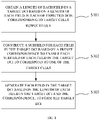
- the method includes the following. Obtain a length of each field in a target DCI based on a length of each field in each of expected DCIs corresponding to target cells respectively, where the number of the target cells is multiple, each of the expected DCIs is a DCI required for scheduling one of the target cells individually, and the length of each field in the target DCI is a length required to be compatible with corresponding fields in the expected DCIs. Construct a subfield for each field in the target DCI based on a preset correspondence to enable each subfield of each field in the target DCI to correspond to one of the target cells. Generate each field in the target DCI based on the length of each field in the target DCI and the correspondence, to form the target DCI.
- obtaining the length of each field in the target DCI based on the length of each field in each of the expected DCIs corresponding to the target cells respectively includes obtaining a length of a corresponding field in the target DCI based on a maximum value among lengths of corresponding fields in the expected DCIs.
- obtaining the length of each field in the target DCI based on the length of each field in each of the expected DCIs corresponding to the target cells respectively includes obtaining a length of a corresponding field in the target DCI based on a sum of lengths of corresponding fields in the expected DCIs.
- a length of a frequency-domain-resource assignment field in the target DCI is max ⁇ log 2 N n RB DL , BWP N n RB DL , BWP + 1 / 2 ⁇ , where n ⁇ [1, K], and K is the number of the target cells.
- the length of the frequency-domain-resource assignment field in the target DCI is max ( N ( n ) RBG ), where n ⁇ [1, K], and K is the number of the target cells.
- the frequency-domain-resource assignment field in the target DCI includes a type indicator bit indicative of that each of the target cells corresponds to the resource allocation type 1 or the resource allocation type 0, and the length of the frequency-domain-resource assignment field is ( max ( max ⁇ log 2 N n RB DL , BWP N n RB DL , BWP + 1 / 2 ⁇ , , max ( N ( n ) RBG )) + 1), where n ⁇ [1, K], N n RB DL , BWP corresponds to a mode in which each of the target cells is indicated as the resource allocation type 1, N ( n ) RBG corresponds to a mode in which each of the target cells is indicated as the resource allocation type 0, and K is the number of the target cells.
- the frequency-domain-resource assignment field in the target DCI includes K type indicator bits, each of the K type indicator bits corresponds to one of the target cells and indicates that the one of the target cells corresponds to the resource allocation type 1 or the resource allocation type 0, and the length of the frequency-domain-resource assignment field is ( max ( max ⁇ log 2 N n RB DL , BWP N n RB DL , BWP + 1 / 2 ⁇ , max ( N ( n ) RBG )) + K ), where n ⁇ [1, K], N n RB DL , BWP corresponds to the mode in which each of the target cells is indicated as the resource allocation type 1, N ( n ) RBG corresponds to the mode in which each of the target cells is indicated as the resource allocation type 0, and K is the number of the target cells.
- the method for generating a DCI further includes setting one of the target cells as a reference cell.
- Obtaining the length of each field in the target DCI based on the length of each field in each of the expected DCIs corresponding to the target cells respectively includes obtaining the length of each field in the target DCI based on a length of each field in an expected DCI corresponding to the reference cell.
- Constructing the subfield for each field in the target DCI based on the preset correspondence includes setting each field in the target DCI to correspond to the target cells simultaneously.
- Generating each field in the target DCI based on the length of each field in the target DCI and the correspondence to form the target DCI includes assigning the expected DCI corresponding to the reference cell as the target DCI.
- a method for scheduling a cell is further provided in the disclosure.
- the method includes generating the target DCI based on the method for generating a DCI in the disclosure and scheduling the target cells based on the target DCI.
- the method for scheduling a cell further includes constructing a bandwidth part (BWP) configuration table.
- the BWP configuration table contains BWP configuration information corresponding to each of the target cells.
- Scheduling the target cells based on the target DCI includes inquiring the BWP configuration table based on a BWP indicator field in the target DCI, to obtain the BWP configuration information corresponding to each of the target cells, and configuring a corresponding target cell based on the BWP configuration information.
- the method for scheduling a cell further includes constructing a time-domain-resource assignment table.
- the time-domain-resource assignment table contains time-domain-resource configuration information corresponding to each of the target cells.
- Scheduling the target cells based on the target DCI includes inquiring the time-domain-resource assignment table based on a time-domain-resource assignment field in the target DCI, to obtain the time-domain-resource configuration information corresponding to each of the target cells, and configuring a corresponding target cell based on the time-domain-resource configuration information.
- the BWP configuration information includes an activation mode, where the activation mode is indicative of that the target cells maintain a current BWP
- the time-domain-resource assignment table includes an index block and multiple table blocks, each of the multiple table blocks corresponds to one of the target cells, and each element in the index block is used to index simultaneously corresponding elements in the multiple table blocks, to obtain the time-domain-resource configuration information.
- Inquiring the time-domain-resource assignment table based on the time-domain-resource assignment field in the target DCI, to obtain the time-domain-resource configuration information corresponding to each of the target cells includes indexing simultaneously corresponding elements in the multiple table blocks based on an element corresponding to the time-domain-resource assignment field in the index block, to obtain the time-domain-resource configuration information.
- the time-domain-resource assignment table includes multiple sub-tables, each of the multiple sub-tables includes an index block and a table block, each table block corresponds to one of the target cells, and each element in the index block is used to index corresponding elements in a corresponding table block, to obtain the time-domain-resource configuration information.
- Inquiring the time-domain-resource assignment table based on the time-domain-resource assignment field in the target DCI, to obtain the time-domain-resource configuration information corresponding to each of the target cells includes indexing corresponding elements in the table block based on an element corresponding to the time-domain-resource assignment field in the index block, to obtain the time-domain-resource configuration information corresponding to each of the target cells.
- the method for scheduling a cell further includes constructing a reference time-domain-resource assignment table, where the reference time-domain-resource assignment table contains time-domain-resource configuration information corresponding to the reference cell.
- Scheduling the target cells based on the target DCI includes inquiring the reference time-domain-resource assignment table based on a time-domain-resource assignment field in the target DCI, to obtain the time-domain-resource configuration information, and configuring each of the target cells based on the time-domain-resource configuration information.
- the electronic device includes a memory, a processor, and computer programs stored in the memory and capable of running on the processor.
- the processor When executing the computer programs, the processor implements the method for generating a DCI or the method for scheduling a cell of the disclosure.
- a computer-readable storage medium is further provided in the disclosure.
- the computer-readable storage medium stores computer programs thereon, where the computer programs are executed by a processor to implement the method for generating a DCI or the method for scheduling a cell of the disclosure.
- the system for generating a DCI includes a length obtaining unit, a subfield constructing unit, and a target-DCI generating unit.
- the length obtaining unit is configured to obtain a length of each field in a target DCI based on a length of each field in each of expected DCIs corresponding to target cells respectively, where the number of the target cells is multiple, each of the expected DCIs is a DCI required for scheduling one of the target cells individually, and the length of each field in the target DCI is a length required to be compatible with corresponding fields in the expected DCIs.
- the subfield constructing unit is configured to construct a subfield for each field in the target DCI based on a preset correspondence to enable each subfield of each field in the target DCI to correspond to one of the target cells.
- the target-DCI generating unit is configured to generate each field in the target DCI based on the length of each field in the target DCI and the correspondence, to form the target DCI.
- the length obtaining unit is further configured to obtain a length of a corresponding field in the target DCI based on a maximum value among lengths of corresponding fields in the expected DCIs.
- the length obtaining unit is further configured to obtain a length of a corresponding field in the target DCI based on a sum of lengths of corresponding fields in the expected DCIs.
- a length of a frequency-domain-resource assignment field in the target DCI is max ⁇ log 2 N n RB DL , BWP N n RB DL , BWP + 1 / 2 ⁇ , where n ⁇ [1, K], and K is the number of the target cells.
- the length of the frequency-domain-resource assignment field in the target DCI is max ( N ( n ) RBG ), where n ⁇ [1, K], and K is the number of the target cells.
- the frequency-domain-resource assignment field in the target DCI includes a type indicator bit indicative of that each of the target cells corresponds to the resource allocation type 1 or the resource allocation type 0, and the length of the frequency-domain-resource assignment field is max max ⁇ log 2 N n RB DL , BWP N n RB DL , BWP + 1 / 2 ⁇ , max N n RBG + 1 , where n ⁇ [1, K], N n RB DL , BWP corresponds to a mode in which each of the target cells is indicated as the resource allocation type 1, N ( n ) RBG corresponds to a mode in which each of the target cells is indicated as the resource allocation type 0, and K is the number of the target cells.
- the frequency-domain-resource assignment field in the target DCI includes K type indicator bits, each of the K type indicator bits corresponds to one of the target cells and indicates that the one of the target cells corresponds to the resource allocation type 1 or the resource allocation type 0, and the length of the frequency-domain-resource assignment field is max max ⁇ log 2 N n RB DL , BWP N n RB DL , BWP + 1 / 2 ⁇ , max N n RBG + K , where n ⁇ [1, K], N n RB DL , BWP corresponds to the mode in which each of the target cells is indicated as the resource allocation type 1, N ( n ) RBG corresponds to the mode in which each of the target cells is indicated as the resource allocation type 0, and K is the number of the target cells.
- the system for generating a DCI further includes a reference setting unit.
- the reference setting unit is configured to set one of the target cells as a reference cell.
- the length obtaining unit is configured to obtain the length of each field in the target DCI based on a length of each field in an expected DCI corresponding to the reference cell.
- the subfield constructing unit is further configured to set each field in the target DCI to correspond to the target cells simultaneously.
- the target-DCI generating unit is further configured to assign the expected DCI corresponding to the reference cell as the target DCI.
- a system for scheduling a cell is further provided in the disclosure.
- the system for scheduling a cell includes a scheduling unit and the system for generating a DCI in the disclosure.
- the system for generating a DCI is configured to generate the target DCI.
- the scheduling unit is configured to schedule the target cells based on the target DCI.
- the system for scheduling a cell further includes a table constructing unit.
- the table constructing unit is configured to construct a BWP configuration table, where the BWP configuration table contains BWP configuration information corresponding to each of the target cells.
- the scheduling unit is further configured to inquire the BWP configuration table based on a BWP indicator field in the target DCI, to obtain the BWP configuration information corresponding to each of the target cells, and configure a corresponding target cell based on the BWP configuration information.
- the table constructing unit is configured to construct a time-domain-resource assignment table, where the time-domain-resource assignment table contains time-domain-resource configuration information corresponding to each of the target cells.
- the scheduling unit is further configured to inquire the time-domain-resource assignment table based on a time-domain-resource assignment field in the target DCI, to obtain the time-domain-resource configuration information corresponding to each of the target cells, and configure a corresponding target cell based on the time-domain-resource configuration information.
- the BWP configuration information includes an activation mode, where the activation mode is indicative of that the target cells maintain a current BWP
- the time-domain-resource assignment table includes an index block and multiple table blocks, each of the multiple table blocks corresponds to one of the target cells, and each element in the index block is used to index simultaneously corresponding elements in the multiple table blocks, to obtain the time-domain-resource configuration information.
- the scheduling unit is further configured to index simultaneously corresponding elements in the multiple table blocks based on an element corresponding to the time-domain-resource assignment field in the index block, to obtain the time-domain-resource configuration information.
- the time-domain-resource assignment table includes multiple sub-tables, each of the multiple sub-tables includes an index block and a table block, each table block corresponds to one of the target cells, and each element in the index block is used to index corresponding elements in a corresponding table block, to obtain the time-domain-resource configuration information.
- the scheduling unit is further configured to index corresponding elements in the table block based on an element corresponding to the time-domain-resource assignment field in the index block, to obtain the time-domain-resource configuration information corresponding to each of the target cells.
- the system for scheduling a cell further includes a table constructing unit.
- the table constructing unit is configured to construct a reference time-domain-resource assignment table, where the reference time-domain-resource assignment table contains time-domain-resource configuration information corresponding to the reference cell.
- the scheduling unit is further configured to inquire the reference time-domain-resource assignment table based on a time-domain-resource assignment field in the target DCI, to obtain the time-domain-resource configuration information, and configure each of the target cells based on the time-domain-resource configuration information.
- the positive progress effect of the disclosure is that in the disclosure, by improving DCI information, one target DCI can be compatible with scheduling information for multiple cells, thereby supporting simultaneous scheduling of the cells, and saving communication resources such as PDCCHs.
- a method for generating a downlink control information is provided in the embodiment.
- the method for generating a DCI includes the following.
- each field in a target DCI based on a length of each field in each of expected DCIs corresponding to target cells respectively.
- the number of the target cells is multiple
- each of the expected DCIs is a DCI required for scheduling one of the target cells individually
- the length of each field in the target DCI is a length required to be compatible with corresponding fields in the expected DCIs.
- At S103 generate each field in the target DCI based on the length of each field in the target DCI, to form the target DCI.
- each field in the target DCI can has a suitable length to be compatible with corresponding fields corresponding to the cells, such that each field can contain scheduling information for the cells. That is, one DCI can be compatible with the scheduling information for the cells, thereby supporting simultaneous scheduling of the cells.
- scheduling of the cells it is only required to generate and transmit one target DCI, and only one physical downlink control channel (PDCCH) is occupied, thereby saving communication resources such as PDCCHs.
- PDCCH physical downlink control channel
- a method for generating a DCI is provided in the embodiment on the basis of the embodiment 1.
- At S101 obtain a length of a corresponding field in the target DCI based on a maximum value among lengths of corresponding fields in the expected DCIs.
- the number of the target cells is supposed to be K. Based on the related art, for individual scheduling of the K target cells, it needs to configure expected DCIs respectively for the K target cells. Taking a frequency-domain-resource assignment field as an example, frequency-domain-resource assignment fields in the expected DCIs each have a length corresponding to a corresponding target cell. In an optional implementation, a maximum value among the lengths is assigned as a length of a frequency-domain-resource assignment field in the target DCI. Determining manners of lengths of other fields in the target DCI are similar to the above.
- the length of the target DCI generated can be compatible with scheduling information for the target cells, thereby realizing that one target DCI contains the scheduling information for the target cells to support simultaneous scheduling of the target cells.
- the length of the frequency-domain-resource assignment field in the target DCI is a sum of the maximum value among the lengths and a preset bit-width value. A subfield corresponding to the preset bit-width value is used to configure resource allocation types for the target cells. Determining manners of lengths of other fields in the target DCI are similar to the above.
- the field contains W-bit scheduling information, where the W-bit scheduling information is used to schedule the target cells.
- the target DCI is transmitted through a preset PDCCH, where the PDCCH corresponds to the target cells. Subsequent to reception of the target DCI, the target cells respectively obtain the W-bit scheduling information in the field in the target DCI by analyzing the target DCI.
- this field in an expected DCI corresponding to a certain target cell has Y (Y is less than or equal to W) bits
- the target cell assigns lowest Y bits in the W-bit scheduling information as a subfield corresponding to the target cell to obtain corresponding scheduling information.
- the complete field is assigned as a subfield corresponding to the target cell to obtain corresponding scheduling information.
- lowest X bits in the field are assigned as a subfield corresponding to the target cell to obtain corresponding scheduling information.
- Usage of other fields in the target DCI for the target cells is similar to the above. Based on this, one target DCI can be compatible with configuration information for multiple cells.
- the length (the number of bits) of the frequency-domain-resource assignment field is up to a BWP for a target cell corresponding to a maximum number of physical resource blocks (PRBs) in the target cells. That is, on condition that each of the target cells supports only the resource allocation type 1, the length of the frequency-domain-resource assignment field in the target DCI is max ⁇ log 2 N n RB DL , BWP N n RB DL , BWP + 1 / 2 ⁇ , where n ⁇ [1, K], and K is the number of the target cells. N n RB DL , BWP (n ⁇ [1, K]) respectively corresponds to each of the target cells.
- PRBs physical resource blocks
- the length of the frequency-domain-resource assignment field is up to a BWP for a target cell corresponding to a maximum value of N RBG in the target cells. That is, on condition that each of the target cells supports only the resource allocation type 0, the length of the frequency-domain-resource assignment field is max ( N ( n ) RBG ), where n ⁇ [1, K], and K is the number of the target cells.
- N n RB DL , BWP ⁇ N n RB DL , BWP / P ⁇ (n ⁇ [1, K]) respectively corresponds to each of the target cells.
- the length of the frequency-domain-resource assignment field is max max ⁇ log 2 N i RB DL , BWP N i RB DL , BWP + 1 / 2 ⁇ , max N j RBG , where N i RB DL , BWP respectively corresponds to each of the part of the target cells supporting only the resource allocation type 0, and N ( j ) RBG respectively corresponds to each of the other part of the target cells supporting only the resource allocation type 1.
- the number of the part of the target cells supporting only the resource allocation type 0 is L
- K is the number of target cells expected to be scheduled
- L, M, and K are all positive integers)
- the frequency-domain-resource assignment field in the target DCI includes a type indicator bit indicative of that each of the target cells corresponds to the resource allocation type 1 or the resource allocation type 0, and the length of the frequency-domain-resource assignment field is max max ⁇ log 2 N n RB DL , BWP N n RB DL , BWP + 1 / 2 ⁇ , max N n RBG + 1 , where n ⁇ [1, K], N n RB DL , BWP corresponds to a mode in which each of the target cells is indicated as the resource allocation type 1, N ( n ) RBG corresponds to a mode in which each of the target cells is indicated as the resource allocation type 0, and K is the number of the target cells.
- a most significant bit (MSB) of the frequency-domain-resource assignment field in the DCI is assigned as the type indicator bit.
- MSB most significant bit
- the frequency-domain-resource assignment field in the target DCI includes K type indicator bits, each of the K type indicator bits corresponds to one of the target cells and indicates that the one of the target cells corresponds to the resource allocation type 1 or the resource allocation type 0, and the length of the frequency-domain-resource assignment field is max max ⁇ log 2 N n RB DL , BWP N n RB DL , BWP + 1 / 2 ⁇ , max N n RBG + K , where n ⁇ [1, K], N n RB DL , BWP corresponds to the mode in which each of the target cells is indicated as the resource allocation type 1, N ( n ) RBG corresponds to the mode in which each of the target cells is indicated as the resource allocation type 0, and K is the number of the target cells.
- each of highest K bits of the frequency-domain-resource assignment field in the DCI is a type indicator bit.
- An MSB of the frequency-domain-resource assignment field corresponds to a first target cell. When a value of the bit is 0, the first target cell is indicated as the resource allocation type 0. When the value of the bit is 1, the first target cell is indicated as the resource allocation type 1. If the first target cell supports only the resource allocation type 0 or the resource allocation type 1, the first target cell ignores the bit, and a resource allocation type of the first target cell is not affected by the bit.
- a second highest bit of the frequency-domain-resource assignment field corresponds to a second target cell. When a value of the bit is 0, the second target cell is indicated as the resource allocation type 0.
- the second target cell When the value of the bit is 1, the second target cell is indicated as the resource allocation type 1. If the second target cell supports only the resource allocation type 0 or the resource allocation type 1, the second target cell ignores the bit, and a resource allocation type of the second target cell is not affected by the bit. Accordingly, a Kth highest bit of the frequency-domain-resource assignment field corresponds to a Kth target cell. When a value of the bit is 0, the Kth target cell is indicated as the resource allocation type 0. When the value of the bit is 1, the Kth target cell is indicated as the resource allocation type 1. If the Kth target cell supports only the resource allocation type 0 or the resource allocation type 1, the Kth target cell ignores the bit, and a resource allocation type of the Kth target cell is not affected by the bit.
- the corresponding field in the target DCI can be compatible with all the target cells required to be scheduled, thereby saving resources.
- one target DCI can be compatible with scheduling information for the cells, thereby supporting simultaneous scheduling of the cells.
- scheduling of multiple cells it is only required to generate and transmit one target DCI, and only one PDCCH is occupied, thereby saving communication resources such as PDCCHs.
- a method for generating a DCI is provided in the embodiment on the basis of the embodiment 1.
- at S101 obtain a length of a corresponding field in the target DCI based on a sum of lengths of corresponding fields in the expected DCIs.
- the number of the target cells is supposed to be K. Based on the related art, for individual scheduling of the K target cells, it needs to configure expected DCIs respectively for the K target cells. Taking a frequency-domain-resource assignment field as an example, frequency-domain-resource assignment fields in the expected DCIs each have a length corresponding to a corresponding target cell. A length of a frequency-domain-resource assignment field in an expected DCI corresponding to an ith target cell is supposed to be W i (i E [1, K]).
- lowest W 1 bits i.e., a With bit to a first bit of the frequency-domain-resource assignment field, where the first bit is a lowest bit of the frequency-domain-resource assignment field
- construct a first subfield where the first subfield corresponds to a first target cell.
- W 2 bits i.e., a (W 1 + W 2 )th bit to a (W 1 + 1)th bit of the frequency-domain-resource assignment field
- adjacent to the first subfield construct a second subfield, where the second subfield corresponds to a second target cell.
- each target cell parses the frequency-domain-resource assignment field in the target DCI, and obtains corresponding configuration information from a corresponding subfield in the frequency-domain-resource assignment field based on a preset correspondence. Determining manners and usage of lengths of other fields in the target DCI are similar to the above. Accordingly, the length of the target DCI generated can be compatible with scheduling information for the target cells, thereby realizing that one target DCI contains the scheduling information for the target cells to support simultaneous scheduling of the target cells.
- the lowest W 1 bits i.e., the With bit to the first bit of the frequency-domain-resource assignment field, where the first bit is the lowest bit of the frequency-domain-resource assignment field
- W 2 bits i.e., the (W 1 + W 2 )th bit to the (W 1 + 1)th bit of the frequency-domain-resource assignment field
- adjacent to the first subfield construct the second subfield, where the second subfield corresponds to the second target cell.
- Highest A bits of the frequency-domain-resource assignment field are used to configure resource allocation types of the target cells. Determining manners and usage of lengths of other fields in the target DCI are similar to the above.
- subfields corresponding to the target cells respectively can be relatively separate, such that configuration for a certain target cell may not be affected or limited by configuration for other cells, thereby having a relative high flexibility.
- one target DCI can be compatible with scheduling information for the cells, thereby supporting to simultaneous scheduling of the cells.
- scheduling of multiple cells it is only required to generate and transmit one target DCI, and only one PDCCH is occupied, thereby saving communication resources such as PDCCHs.
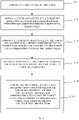
- a method for generating a DCI is provided in the embodiment on the basis of the embodiment 1. Referring to FIG. 2 , the method for generating a DCI further includes the following.
- S101 includes obtaining the length of each field in the target DCI based on a length of each field in an expected DCI corresponding to the reference cell.
- S 102 includes setting each field in the target DCI to correspond to the target cells simultaneously.
- S 103 includes assigning the expected DCI corresponding to the reference cell as the target DCI.
- each of other target cells except for the reference cell adopts the same configuration as the reference cell.
- the target DCI (i.e., the expected DCI corresponding to the reference cell) is transmitted through a preset PDCCH, where the PDCCH corresponds to the target cells.
- the target cells can obtain corresponding scheduling information by analyzing the target DCI.
- one DCI can be compatible with scheduling information for multiple cells, thereby supporting simultaneous scheduling of the multiple cells.
- it is only required to generate and transmit one target DCI, and only one PDCCH is occupied, thereby saving communication resources such as PDCCHs.
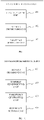
- a method for scheduling a cell is provided in the embodiment.
- the method for scheduling a cell includes generating the target DCI based on the method for generating a DCI in any one of the embodiments 1 to 3.
- the method for scheduling a cell further includes the following.
- the target DCI can be compatible with the scheduling information for the target cells, thereby supporting simultaneous scheduling of the target cells through one target DCI.
- the target DCI By scheduling the target cells based on the target DCI, only one PDCCH is occupied, thereby saving communication resources such as PDCCHs.
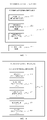
- a method for scheduling a cell is provided in the embodiment on the basis of the embodiment 5.
- the method for scheduling a cell includes the following.
- the BWP configuration table contains BWP configuration information corresponding to each of the target cells.
- S104 includes S1041.
- the BWP configuration table is configured by higher-layer signaling (radio resource control (RRC) signaling).
- RRC radio resource control
- the number of the target cells being 2 is taken as an example.
- a first column of the BWP configuration table is an index column
- a second column contains BWP configuration information corresponding to a first cell (cell 1)
- a third column contains BWP configuration information corresponding to a second cell (cell 2).
- a value of the BWP indicator field of the DCI is 1
- a row where a value of the BWP configuration index is 1 in the BWP configuration table is correspondingly used, such that the BWP configuration information corresponding to the cell 1 is 1, and the BWP configuration information corresponding to the cell 2 is 1.
- the cell 1 and the cell 2 perform BWP switching based on their respective BWP configuration information. Specific meaning of the BWP configuration information is known by those skilled in the art, which will not be repeated herein.
- the BWP configuration table supports at least three target cells, and the number of columns of the BWP configuration table is suited to the number of the target cells.
- a format of rows and columns of the BWP configuration table adopted is obtained through transposition based on Table 1.
- Table 1 BWP configuration index BWP configuration information corresponding to cell 1 BWP configuration information corresponding to cell 2 0 0 0 1 1 1 2 2 2 2
- the BWP configuration information includes an activation mode, where the activation mode is indicative of that a corresponding target cell maintains a current BWP.
- the activation mode is represented with "active BWP", representing that performing no BWP switching and the current BWP is still used.
- Benefits of the activation mode lie in that a PDCCH on a single cell can be used to perform BWP switching for the single cell, and scheduling for a part or all of PDCCHs on multiple cells is performed based on the current BWP without further active BWP adjustment, thereby facilitating to improving efficiency of BWP switching.
- the BWP configuration table supports at least three target cells, and the number of columns of the BWP configuration table is suited to the number of the target cells.
- a format of rows and columns of the BWP configuration table adopted is obtained through transposition based on Table 2.
- Table 2 BWP configuration index BWP configuration information corresponding to cell 1
- BWP configuration table By setting the BWP configuration table, when multiple cells are scheduled based on the method for scheduling a cell in the embodiment, BWPs for the cells can be simultaneously configured, improving efficiency.
- a method for scheduling a cell is provided in the embodiment on the basis of the embodiment 5.
- the method for scheduling a cell may further include the following.
- the time-domain-resource assignment table contains time-domain-resource configuration information corresponding to each of the target cells.
- S104 includes S 1042.
- the time-domain-resource assignment table includes an index block and multiple table blocks, each of the multiple table blocks corresponds to one of the target cells, and each element in the index block is used to index simultaneously corresponding elements in the multiple table blocks, to obtain the time-domain-resource configuration information.
- index simultaneously corresponding elements in the multiple table blocks based on an element corresponding to the time-domain-resource assignment field in the index block, to obtain the time-domain-resource configuration information.
- the time-domain-resource assignment table is a single table. "Time-domain-resource assignment (TDRA) index" column in the time-domain-resource assignment table is assigned as the index block. A second column to a fifth column of the time-domain-resource assignment table construct a first table block, where the first table block corresponds to the cell 1.
- TDRA Time-domain-resource assignment
- the second column i.e., "K0 (downlink (DL)) or K2 (uplink (UL)) (time-domain offset) for cell 1" column, includes time-domain offset information, "start and length indicator (SLIV) for cell 1" column includes SLIV configuration information, "mapping type for cell 1" column includes mapping type configuration information, and "repetition for cell 1" column includes retransmission configuration information.
- a sixth column to a ninth column of the time-domain-resource assignment table construct a second table block, where the second table block corresponds to the cell 2.
- a structure of the second table block is similar to that of the first table block.
- TDRA index Values in the "TDRA index” column are respectively 0, 1, 2, ..., 15.
- the values of the TDRA index and values of corresponding time-domain offset/SLIV/mapping type/repetition are similar to those in the related art, such that several behavior illustration is omitted in Table 3.
- time-domain-resource configuration information corresponding to each of the target cells by inquiring the time-domain-resource assignment table based on a value of the time-domain-resource assignment field in the target DCI (corresponding to a value of the TDRA index). For example, if the value of the time-domain-resource assignment field in the target DCI is 1, obtain the time-domain-resource configuration information corresponding to each of the target cells based on a row where the value of the TDRA index is 1 in the time-domain-resource assignment table.
- the time-domain-resource assignment table supports at least three target cells, and the number of table blocks in the time-domain-resource assignment table is suited to the number of the target cells.
- a format of rows and columns of the time-domain-resource assignment table adopted is obtained through transposition based on Table 3.
- Table 3 TDRA index K0 (DL) or K2 (UL) for cell 1 SLIV for cell 1 Mapping type for cell 1 Repetition for cell 1 K0 (DL) or K2 (UL) for cell 2 SLIV for cell 2 Mapping type for cell 2 Repetition for cell 2 0 1 145 Type B 2 1 145 Type B 4 1 2 136 Type B 2 2 145 Type B 4 ... 15 1 78 Type B 1 1 98 Type B 1
- the time-domain-resource assignment table includes multiple sub-tables, each of the multiple sub-tables includes an index block and a table block, each table block corresponds to one of the target cells, and each element in the index block is used to index corresponding elements in a corresponding table block, to obtain the time-domain-resource configuration information.
- index corresponding elements in the table block based on an element corresponding to the time-domain-resource assignment field in the index block, to obtain the time-domain-resource configuration information corresponding to each of the target cells.
- the time-domain-resource assignment table includes 2 sub-tables.
- the 2 sub-tables reference can be made to Table 4 and Table 5 respectively, where a first sub-table (Table 4) corresponds to the cell 1, and a second sub-table (Table 5) corresponds to the cell 2.
- TDRA index column is assigned as the index block, and a second column to a fourth column construct a first table block, where the first table block corresponds to the cell 1.
- the second column i.e., "K0 (DL) or K2 (UL) (time-domain offset)" column, includes time-domain offset information
- "SLIV” column includes SLIV configuration information
- "mapping type” column includes mapping type configuration information
- "repetition for cell 1" column includes retransmission configuration information.
- the first table block includes 4 columns, i.e., time-domain offset/SLIV/mapping type/repetition columns, where the 4 columns are respectively used to configure time-domain offset/SLIV/mapping type/repetition information for the cell 1.
- a structure of the second sub-table is similar to that of the first sub-table, "TDRA index” column is assigned as the index block, and a second column to a fourth column construct a second table block, where the second table block corresponds to the cell 2.
- time-domain-resource configuration information corresponding to a cell by inquiring each of the multiple sub-tables based on the value of the time-domain-resource assignment field in the target DCI (corresponding to a value of the TDRA index). For example, if the value of the time-domain-resource assignment field in the target DCI is 1, obtain time-domain-resource configuration information corresponding to the cell 1 based on a row where the value of the TDRA index is 1 in the first sub-table, and obtain time-domain-resource configuration information corresponding to the cell 2 based on a row where the value of the TDRA index is 1 in the second sub-table.
- the time-domain-resource assignment table supports at least three target cells greater than or equal to 3, and the number of sub-tables in the time-domain-resource assignment table is suited to the number of the target cells.
- a format of rows and columns of sub-tables of the time-domain-resource assignment table is obtained through transposition based on Table 4 and Table 5.
- Table 4 TDRA index K0 (DL) or K2 (UL) SLIV Mapping type 0 1 145 Type B 1 2 136 Type B ... 15 1 78 Type B
- Table 5 TDRA index K0 (DL) or K2 (UL) SLIV Mapping type 0 1 145 Type B 1 2 136 Type B ... 15 1 78 Type B
- TDRA index Values in the "TDRA index” column are respectively 0, 1, 2, ..., 15.
- the value of the TDRA index and values of time-domain offset/SLIV/mapping type are similar to those in the related art, such that several behavior illustration is omitted in Table 4 and Table 5.
- the method for scheduling a cell illustrated in FIG. 6 is obtained by combining the method for scheduling a cell in the embodiment and the method for scheduling a cell in the embodiment 6.
- a method for scheduling a cell is provided in the embodiment.
- the method for scheduling a cell includes generating the target DCI based on the method for generating a DCI in the embodiment 4.
- the method for scheduling a cell further includes the following.
- the method for scheduling a cell further includes S15.
- construct a reference time-domain-resource assignment table contains time-domain-resource configuration information corresponding to the reference cell.
- the cell 1 is supposed to be the reference cell.
- FIG. 6 illustrates an optional structure of the reference time-domain-resource assignment table.
- the reference time-domain-resource assignment table includes a "TDRA index" column and a table block juxtaposed with the "TDRA index” column.
- the table block includes 3 columns, i.e., time-domain offset/SLIV/mapping type columns, where the 3 columns are respectively used to configure time-domain offset/SLIV/mapping type information for each of the cells.
- the number of the target cells being 2 is taken for illustration.
- time-domain-resource assignment indicator field in the DCI is 0, a row where a value of the "TDRA index" is 0 is correspondingly used, and time-domain-resource information obtained by the cell 1 is that a start symbol in a next slot is 0 and a length of the next slot is 14 symbols.
- a scheduling resource for the cell 2 obtained by the cell 2 is that the start symbol in the next slot for the cell 1 is 0 and the length of the next slot is 14 symbols.
- a subcarrier spacing for the cell 1 is different from that for the cell 2 in this case, cross slot may appear. Referring to FIG. 9 , in this case, for the cell 2, division on slot edges and symbols in different scheduling directions is performed.
- one PDSCH originally scheduled will be automatically divided into two PDSCHs.
- an original PDSCH may be divided into a part in the DL and a part in part of the UL, but in the UL PDSCH transmission cannot be performed, so that PDSCH transmission is not performed.
- Table 6 TDRA index K0 (DL) or K2 (UL) SLIV Mapping type 0 1 27 Type A 1 2 27 Type A ... 15 1 78 Type B
- the reference time-domain-resource assignment table supports at least three target cells, and each of the target cells is configured based on the time-domain-resource assignment table.
- a format of rows and columns of the reference time-domain-resource assignment table is obtained through transposition based on Table 6.
- FIG. 10 is a schematic structural diagram illustrating an electronic device in the embodiment of the disclosure.
- the electronic device includes a memory, a processor, and computer programs that are stored in the memory and capable of running on the processor.
- the processor is configured to execute the programs to implement the method for generating a DCI in any one of embodiment 1 to embodiment 4.
- the processor is configured to execute the programs to implement the method for scheduling a cell in any one of embodiment 5 to embodiment 7.
- An electronic device 30 illustrated in FIG. 10 is only an example and may not constitute any limitation to functions and application scopes of embodiments of the disclosure.
- the electronic device 30 may be represented as a general computing device, e.g., a server device.
- Components of the electronic device 30 may include but are not limited to at least one processor 31, at least one memory 32, and a bus 33 coupled with different system components (including the memory 32 and the processor 31).
- the bus 33 includes a data bus, an address bus, and a control bus.
- the memory 32 may include a volatile memory, e.g., a random-access memory (RAM) 321 and/or a cache memory 322, and may also further include a read-only memory (ROM) 323.
- RAM random-access memory
- ROM read-only memory
- the memory 32 may also include a program/practical tool 325 with a set (at least one) program module 324, where the program module 324 includes but is not limited to an operating system, one or more application programs, other program modules, and program data. Each of or a combination of these examples may include implementation of the network environment.
- the processor 31 is configured to execute the computer programs stored in the memory 32 to perform various functional applications and data processing, e.g., the method for generating a DCI in any one of embodiment 1 to embodiment 4, or the method for scheduling a cell in any one of embodiment 5 to embodiment 7 in the disclosure.
- the electronic device 30 can also communicate with one or more external devices 34 (for example, a keyboard, a pointing device, and so on). The communication can be implemented through an input/output (I/O) interface 35.
- the model-generated device 30 can also communicate with one or more networks (e.g., a local area network (LAN), a wide area network (WAN), and/or a public network, e.g., an Internet) through a network adapter 36. As illustrated in FIG. 10 , the network adapter 36 communicates with other modules of the model-generated device 30 via the bus 33.
- networks e.g., a local area network (LAN), a wide area network (WAN), and/or a public network, e.g., an Internet
- model-generated device 30 can be used by combining the model-generated device 30, including but not limited to: a micro code, a device driver, a redundant processor, an external disk drive array, a redundant array of independent disk (RAID) system, a disk drive, and a data backup storage system.
- a computer-readable storage medium is provided in the embodiment.
- the computer-readable storage medium is configured to store computer programs which when executed by a processor, implement the operations in the method for generating a DCI in any one of embodiment 1 to embodiment 4, or the operations in the method for scheduling a cell in any one of embodiment 5 to embodiment 7.
- the readable storage medium may specifically include but is not limited to a portable disk, a hard disk, an RAM, an ROM, an erasable programmable ROM (EPROM), an optical storage device, a magnetic storage device, or any suitable combination thereof.
- the disclosure can also be implemented as a program product.
- the program product includes program codes which when executed on a terminal device, enable the terminal device to implement the operations in the method for generating a DCI in any one of embodiment 1 to embodiment 4, or the operations in the method for scheduling a cell in any one of embodiment 5 to embodiment 7.
- the program codes used to execute the disclosure can be programmed through any combinations of one or more types of program design languages.
- the program codes can be executed completely or partially on UE, executed as a separate software packet, executed partially on the UE and partially on a remote device, or executed completely on the remote device.
- the system for generating a DCI includes a length obtaining unit 401, a subfield constructing unit 402, and a target-DCI generating unit 403.
- the length obtaining unit 401 is configured to obtain a length of each field in a target DCI based on a length of each field in each of expected DCIs corresponding to target cells respectively, where the number of the target cells is multiple, each of the expected DCIs is a DCI required for scheduling one of the target cells individually, and the length of each field in the target DCI is a length required to be compatible with corresponding fields in the expected DCIs.
- the subfield constructing unit 402 is configured to construct a subfield for each field in the target DCI based on a preset correspondence to enable each subfield of each field in the target DCI to correspond to one of the target cells.
- the target-DCI generating unit 403 is configured to generate each field in the target DCI based on the length of each field in the target DCI and the correspondence, to form the target DCI.
- each field in the target DCI can has a suitable length to be compatible with corresponding fields corresponding to the cells, such that each field can contain scheduling information for the cells. That is, one DCI can be compatible with the scheduling information for the cells, thereby supporting simultaneous scheduling of the cells. During scheduling of the cells, it is only required to generate and transmit one target DCI, and only one PDSCH is occupied, thereby saving communication resources such as PDSCHs.
- a system for generating a DCI is provided in the embodiment on the basis of the embodiment 11.
- the length obtaining unit 401 is further configured to obtain a length of a corresponding field in the target DCI based on a maximum value among lengths of corresponding fields in the expected DCIs.
- the number of the target cells is supposed to be K. Based on the related art, for individual scheduling of the K target cells, it needs to configure expected DCIs respectively for the K target cells. Taking a frequency-domain-resource assignment field as an example, frequency-domain-resource assignment fields in the expected DCIs each have a length corresponding to a corresponding target cell. In an optional implementation, a maximum value among the lengths is assigned as a length of a frequency-domain-resource assignment field in the target DCI. Determining manners of lengths of other fields in the target DCI are similar to the above.
- the length of the target DCI generated can be compatible with scheduling information for the target cells, thereby realizing that one target DCI contains the scheduling information for the target cells to support simultaneous scheduling of the target cells.
- the length of the frequency-domain-resource assignment field in the target DCI is a sum of the maximum value among the lengths and a preset bit-width value. A subfield corresponding to the preset bit-width value is used to configure resource allocation types for the target cells. Determining manners of lengths of other fields in the target DCI are similar to the above.
- the field contains W-bit scheduling information, where the W-bit scheduling information is used to schedule the target cells.
- the target DCI is transmitted through a preset PDCCH, where the PDCCH corresponds to the target cells. Subsequent to reception of the target DCI, the target cells respectively obtain the W-bit scheduling information in the field in the target DCI by analyzing the target DCI.
- this field in an expected DCI corresponding to a certain target cell has Y (Y is less than or equal to W) bits
- the target cell assigns lowest Y bits in the W-bit scheduling information as a subfield corresponding to the target cell to obtain corresponding scheduling information.
- the complete field is assigned as a subfield corresponding to the target cell to obtain corresponding scheduling information.
- lowest X bits in the field are assigned as a subfield corresponding to the target cell to obtain corresponding scheduling information.
- Usage of other fields in the target DCI for the target cells is similar to the above. Based on this, one target DCI can be compatible with configuration information for multiple cells.
- the length (the number of bits) of the frequency-domain-resource assignment field is up to a BWP for a target cell corresponding to a maximum number of physical resource blocks (PRBs) in the target cells. That is, on condition that each of the target cells supports only the resource allocation type 1, the length of the frequency-domain-resource assignment field in the target DCI is max ⁇ log 2 N n RB DL , BWP N n RB DL , BWP + 1 / 2 ⁇ , where n ⁇ [1, K], and K is the number of the target cells. N n RB DL , BWP (n ⁇ [1, K]) respectively corresponds to each of the target cells.
- PRBs physical resource blocks
- the length of the frequency-domain-resource assignment field is up to a BWP for a target cell corresponding to a maximum value of N RBG in the target cells. That is, on condition that each of the target cells supports only the resource allocation type 0, the length of the frequency-domain-resource assignment field is max ( N ( n ) RBG ), where n ⁇ [1, K], and K is the number of the target cells.
- N n RB DL , BWP ⁇ N n RB DL , BWP / P ⁇ (n ⁇ [1, K]) respectively corresponds to each of the target cells.
- the length of the frequency-domain-resource assignment field is max max ⁇ log 2 N i RB DL , BWP N i RB DL , BWP + 1 / 2 ⁇ , max N j RBG , where N i RB DL , BWP respectively corresponds to each of the part of the target cells supporting only the resource allocation type 0, and N ( j ) RBG respectively corresponds to each of the other part of the target cells supporting only the resource allocation type 1.
- the number of the part of the target cells supporting only the resource allocation type 0 is L
- K is the number of target cells expected to be scheduled
- L, M, and K are all positive integers)
- the frequency-domain-resource assignment field in the target DCI includes a type indicator bit indicative of that each of the target cells corresponds to the resource allocation type 1 or the resource allocation type 0, and the length of the frequency-domain-resource assignment field is max max ⁇ log 2 N n RB DL , BWP N n RB DL , BWP + 1 / 2 ⁇ , max N n RBG + 1 , where n ⁇ [1, K], N n RB DL , BWP corresponds to a mode in which each of the target cells is indicated as the resource allocation type 1, N ( n ) RBG corresponds to a mode in which each of the target cells is indicated as the resource allocation type 0, and K is the number of the target cells.
- a most significant bit (MSB) of the frequency-domain-resource assignment field in the DCI is assigned as the type indicator bit.
- MSB most significant bit
- the frequency-domain-resource assignment field in the target DCI includes K type indicator bits, each of the K type indicator bits corresponds to one of the target cells and indicates that the one of the target cells corresponds to the resource allocation type 1 or the resource allocation type 0, and the length of the frequency-domain-resource assignment field is max max ⁇ log 2 N n RB DL , BWP N n RB DL , BWP + 1 / 2 ⁇ , max N n RBG + K , where n ⁇ [1, K], N n RB DL , BWP corresponds to the mode in which each of the target cells is indicated as the resource allocation type 1, N ( n ) RBG corresponds to the mode in which each of the target cells is indicated as the resource allocation type 0, and K is the number of the target cells.
- each of highest K bits of the frequency-domain-resource assignment field in the DCI is the type indicator bit.
- An MSB of the frequency-domain-resource assignment field corresponds to a first target cell. When a value of the bit is 0, the first target cell is indicated as the resource allocation type 0. When the value of the bit is 1, the first target cell is indicated as the resource allocation type 1. If the first target cell supports only the resource allocation type 0 or the resource allocation type 1, the first target cell ignores the bit, and a resource allocation type of the first target cell is not affected by the bit.
- a second highest bit of the frequency-domain-resource assignment field corresponds to a second target cell. When a value of the bit is 0, the second target cell is indicated as the resource allocation type 0.
- the second target cell When the value of the bit is 1, the second target cell is indicated as the resource allocation type 1. If the second target cell supports only the resource allocation type 0 or the resource allocation type 1, the second target cell ignores the bit, and a resource allocation type of the second target cell is not affected by the bit. Accordingly, a Kth highest bit of the frequency-domain-resource assignment field corresponds to a Kth target cell. When a value of the bit is 0, the Kth target cell is indicated as the resource allocation type 0. When the value of the bit is 1, the Kth target cell is indicated as the resource allocation type 1. If the Kth target cell supports only the resource allocation type 0 or the resource allocation type 1, the Kth target cell ignores the bit, and a resource allocation type of the Kth target cell is not affected by the bit.
- the corresponding field in the target DCI can be compatible with all the target cells required to be scheduled, thereby saving resources.
- one target DCI can be compatible with scheduling information for the cells, thereby supporting simultaneous scheduling of the cells.
- scheduling of multiple cells it is only required to generate and transmit one target DCI, and only one PDSCH is occupied, thereby saving communication resources such as PDSCHs.
- a system for generating a DCI is provided in the embodiment on the basis of the embodiment 11.
- the length obtaining unit 401 is further configured to obtain a length of a corresponding field in the target DCI based on a sum of lengths of corresponding fields in the expected DCIs.
- the number of the target cells is supposed to be K. Based on the related art, for individual scheduling of the K target cells, it needs to configure expected DCIs respectively for the K target cells. Taking a frequency-domain-resource assignment field as an example, frequency-domain-resource assignment fields in the expected DCIs each have a length corresponding to a corresponding target cell. A length of a frequency-domain-resource assignment field in an expected DCI corresponding to an ith target cell is supposed to be W i (i ⁇ [1, K]).
- lowest W 1 bits i.e., a With bit to a first bit of the frequency-domain-resource assignment field, where the first bit is a lowest bit of the frequency-domain-resource assignment field
- construct a first subfield where the first subfield corresponds to a first target cell.
- W 2 bits i.e., a (W 1 + W 2 )th bit to a (W 1 + 1)th bit of the frequency-domain-resource assignment field
- adjacent to the first subfield construct a second subfield, where the second subfield corresponds to a second target cell.
- each target cell parses the frequency-domain-resource assignment field in the target DCI, and obtains corresponding configuration information from a corresponding subfield in the frequency-domain-resource assignment field based on a preset correspondence. Determining manners and usage of lengths of other fields in the target DCI are similar to the above. Accordingly, the length of the target DCI generated can be compatible with scheduling information for the target cells, thereby realizing that one target DCI contains the scheduling information for the target cells to support simultaneous scheduling of the target cells.
- the lowest W 1 bits i.e., the With bit to the first bit of the frequency-domain-resource assignment field, where the first bit is the lowest bit of the frequency-domain-resource assignment field
- W 2 bits i.e., the (W 1 + W 2 )th bit to the (W 1 + 1)th bit of the frequency-domain-resource assignment field
- adjacent to the first subfield construct the second subfield, where the second subfield corresponds to the second target cell.
- Highest A bits of the frequency-domain-resource assignment field are used to configure resource allocation types of the target cells. Determining manners and usage of lengths of other fields in the target DCI are similar to the above.
- subfields corresponding to the target cells respectively can be relatively separate, such that configuration for a certain target cell may not be affected or limited by configuration for other cells, thereby having a relative high flexibility.
- one target DCI can be compatible with scheduling information for the cells, thereby supporting simultaneous scheduling of the cells.
- scheduling of multiple cells it is only required to generate and transmit one target DCI, and only one PSCCH is occupied, thereby saving communication resources such as PSCCHs.
- the system for generating a DCI further includes a reference setting unit 404.
- the reference setting unit 404 is configured to set one of the target cells as a reference cell.
- the length obtaining unit 401 is configured to obtain the length of each field in the target DCI based on a length of each field in an expected DCI corresponding to the reference cell.
- the subfield constructing unit 402 is configured to set each field in the target DCI to correspond to the target cells simultaneously.
- the target-DCI generating unit 403 is configured to assign the expected DCI corresponding to the reference cell as the target DCI. That is, during scheduling of the target cells, each of other target cells except for the reference cell adopts the same configuration as the reference cell.
- the target DCI (i.e., the expected DCI corresponding to the reference cell) is transmitted through a preset PDCCH, where the PDCCH corresponds to the target cells.
- the target cells can obtain corresponding scheduling information by analyzing the target DCI.
- one DCI can be compatible with scheduling information for multiple cells, thereby supporting simultaneous scheduling of the multiple cells.
- it is only required to generate and transmit one target DCI, and only one PDSCH is occupied, thereby saving communication resources such as PDSCHs.
- the system for scheduling a cell includes a scheduling unit 405 and the system for generating a DCI 5 in any one of the embodiments 11 to 13.
- the system 5 for generating a DCI is configured to generate the target DCI.
- the scheduling unit 405 is configured to schedule the target cells based on the target DCI.
- the target DCI can be compatible with the scheduling information for the target cells, thereby supporting simultaneous scheduling of the target cells through one target DCI.
- By scheduling the target cells based on the target DCI only one PDSCH is occupied, thereby saving communication resources such as PDSCHs.
- the system for scheduling a cell includes a table constructing unit 406.
- the table constructing unit 406 is configured to construct a BWP configuration table, where the BWP configuration table contains BWP configuration information corresponding to each of the target cells.
- the scheduling unit 405 is further configured to inquire the BWP configuration table based on a BWP indicator field in the target DCI, to obtain the BWP configuration information corresponding to each of the target cells, and configure a corresponding target cell based on the BWP configuration information.
- the BWP configuration table is configured by higher-layer signaling (RRC signaling).
- RRC signaling The number of the target cells being 2 is taken as an example.
- a first column of the BWP configuration table is an index column
- a second column contains BWP configuration information corresponding to cell 1
- a third column contains BWP configuration information corresponding to cell 2.
- a value of the BWP indicator field of the DCI is 1, a row where a value of the BWP configuration index is 1 in the BWP configuration table is correspondingly used, such that the BWP configuration information corresponding to the cell 1 is 1, and the BWP configuration information corresponding to the cell 2 is 1.
- the cell 1 and the cell 2 perform BWP switching based on their respective BWP configuration information. Specific meaning of the BWP configuration information is known by those skilled in the art, which will not be repeated herein.
- the BWP configuration table supports at least three target cells, and the number of columns of the BWP configuration table is suited to the number of the target cells.
- a format of rows and columns of the BWP configuration table adopted is obtained through transposition based on Table 1.
- the BWP configuration information includes an activation mode, where the activation mode is indicative of that a corresponding target cell maintains a current BWP.
- the activation mode is represented with "active BWP", representing that performing no BWP switching and the current BWP is still used.
- Benefits of the activation mode lie in that a PDCCH on a single cell can be used to perform BWP switching for the single cell, and scheduling for a part or all of PDCCHs on multiple cells is performed based on the current BWP without further active BWP adjustment, thereby facilitating to improving efficiency of BWP switching.
- the BWP configuration table supports at least three target cells, and the number of columns of the BWP configuration table is suited to the number of the target cells.
- a format of rows and columns of the BWP configuration table adopted is obtained through transposition based on Table 2.
- BWP configuration table By setting the BWP configuration table, when multiple cells are scheduled based on the system for scheduling a cell in the implementation, BWPs for the cells can be simultaneously configured, improving efficiency.
- the system for scheduling a cell includes a table constructing unit 406.
- the table constructing unit 406 is configured to construct a time-domain-resource assignment table.
- the time-domain-resource assignment table contains time-domain-resource configuration information corresponding to each of the target cells.
- the scheduling unit 405 is further configured to inquire the time-domain-resource assignment table based on a time-domain-resource assignment field in the target DCI, to obtain the time-domain-resource configuration information corresponding to each of the target cells, and configure a corresponding target cell based on the time-domain-resource configuration information.
- the time-domain-resource assignment table includes an index block and multiple table blocks, each of the multiple table blocks corresponds to one of the target cells, and each element in the index block is used to index simultaneously corresponding elements in the multiple table blocks, to obtain the time-domain-resource configuration information.
- index simultaneously corresponding elements in the multiple table blocks based on an element corresponding to the time-domain-resource assignment field in the index block, to obtain the time-domain-resource configuration information.
- the time-domain-resource assignment table is a single table.
- "TDRA index” column in the time-domain-resource assignment table is assigned as the index block.
- a second column to a fifth column of the time-domain-resource assignment table construct a first table block, where the first table block corresponds to the cell 1.
- the second column i.e., "K0 (DL) or K2 (UL) (time-domain offset) for cell 1" column, includes time-domain offset information
- "SLIV for cell 1" column includes SLIV configuration information
- "mapping type for cell 1" column includes mapping type configuration information
- "repetition for cell 1" column includes retransmission configuration information.
- a sixth column to a ninth column of the time-domain-resource assignment table construct a second table block, where the second table block corresponds to the cell 2.
- a structure of the second table block is similar to that of the first table block.
- TDRA index Values in the "TDRA index” column are respectively 0, 1, 2, ..., 15.
- the value of the TDRA index and values of corresponding time-domain offset/SLIV/mapping type/repetition are similar to those in the related art, such that several behavior illustration is omitted in Table 3.
- time-domain-resource configuration information corresponding to each of the target cells by inquiring the time-domain-resource assignment table based on a value of the time-domain-resource assignment field in the target DCI (corresponding to a value of the TDRA index). For example, if the value of the time-domain-resource assignment field in the target DCI is 1, obtain the time-domain-resource configuration information corresponding to each of the target cells based on a row where the value of the TDRA index is 1 in the time-domain-resource assignment table.
- the time-domain-resource assignment table supports at least three target cells, and the number of table blocks in the time-domain-resource assignment table is suited to the number of the target cells.
- a format of rows and columns of the time-domain-resource assignment table adopted is obtained through transposition based on Table 3.
- the time-domain-resource assignment table includes multiple sub-tables, each of the multiple sub-tables includes an index block and a table block, each table block corresponds to one of the target cells, and each element in the index block is used to index corresponding elements in a corresponding table block, to obtain the time-domain-resource configuration information.
- index corresponding elements in the table block based on an element corresponding to the time-domain-resource assignment field in the index block, to obtain the time-domain-resource configuration information corresponding to each of the target cells.
- the time-domain-resource assignment table includes 2 sub-tables.
- the 2 sub-tables reference can be made to Table 4 and Table 5 respectively, where a first sub-table (Table 4) corresponds to the cell 1, and a second sub-table (Table 5) corresponds to the cell 2.
- TDRA index column is assigned as the index block, and a second column to a fourth column construct a first table block, where the first table block corresponds to the cell 1.
- the second column i.e., "K0 (DL) or K2 (UL) (time-domain offset)" column, includes time-domain offset information
- "SLIV” column includes SLIV configuration information
- "mapping type” column includes mapping type configuration information
- "repetition for cell 1" column includes retransmission configuration information.
- the first table block includes 4 columns, i.e., time-domain offset/SLIV/mapping type/repetition columns, where the 4 columns are respectively used to configure time-domain offset/SLIV/mapping type/repetition information for the cell 1.
- a structure of the second sub-table is similar to that of the first sub-table, "TDRA index” column is assigned as the index block, and a second column to a fourth column construct a second table block, where the second table block corresponds to the cell 2.
- the time-domain-resource assignment table supports at least three target cells, and the number of sub-tables in the time-domain-resource assignment table is suited to the number of the target cells.
- a format of rows and columns of sub-tables of the time-domain-resource assignment table is obtained through transposition based on Table 4 and Table 5.
- TDRA index Values in the "TDRA index” column are respectively 0, 1, 2, ..., 15.
- the value of the TDRA index and values of time-domain offset/SLIV/mapping type are similar to those in the related art, such that several behavior illustration is omitted in Table 4 and Table 5.
- the table constructing unit 406 is configured to construct the time-domain-resource assignment table and the BWP configuration table.
- the scheduling unit 405 is further configured to inquire the time-domain-resource assignment table based on the time-domain-resource assignment field in the target DCI, to obtain the time-domain-resource configuration information corresponding to each of the target cells, inquire the BWP table based on the BWP indicator field in the target DCI, to obtain BWP configuration information corresponding to each of the target cells, and configure a corresponding target cell based on the BWP configuration information and the time-domain-resource configuration information.
- the system for scheduling a cell includes the scheduling unit 405 and the system for generating a DCI 6 in the embodiment 14.
- the system 6 for generating a DCI is configured to generate the target DCI.
- the scheduling unit 405 is configured to schedule the target cells based on the target DCI.
- the system for scheduling a cell further includes a table constructing unit 406.
- the table constructing unit 406 is configured to construct a reference time-domain-resource assignment table, where the reference time-domain-resource assignment table contains time-domain-resource configuration information corresponding to the reference cell.
- the scheduling unit 405 is further configured to inquire the reference time-domain-resource assignment table based on the time-domain-resource assignment field in the target DCI, to obtain the time-domain-resource configuration information, and configure each of the target cells based on the time-domain-resource configuration information.
- the cell 1 is supposed to be the reference cell.
- FIG. 6 illustrates an optional structure of the reference time-domain-resource assignment table.
- the reference time-domain-resource assignment table includes a "TDRA index" column and a table block juxtaposed with the "TDRA index” column.
- the table block includes 3 columns, i.e., time-domain offset/SLIV/mapping type columns, where the 3 columns are respectively used to configure time-domain offset/SLIV/mapping type information for each of the cells.
- the number of the target cells being 2 is taken for illustration.
- time-domain-resource assignment indicator field in the DCI is 0, a row where a value of the "TDRA index" is 0 is correspondingly used, and time-domain-resource information obtained by the cell 1 is that a start symbol in a next slot is 0 and a length of the next slot is 14 symbols.
- a scheduling resource for the cell 2 obtained by the cell 2 is that the start symbol in the next slot for the cell 1 is 0 and the length of the next slot is 14 symbols.
- a subcarrier spacing for the cell 1 is different from that for the cell 2 in this case, cross slot may appear. Referring to FIG. 9 , in this case, for the cell 2, division on slot edges and symbols in different scheduling directions is performed.
- one PDSCH originally scheduled will be automatically divided into two PDSCHs.
- an original PDSCH may be divided into a part in the DL and a part in part of the UL, but in the UL the PDSCH transmission cannot be performed, so that PDSCH transmission is not performed.
- the reference time-domain-resource assignment table supports at least three target cells, and each of the target cells is configured based on the time-domain-resource assignment table.
- a format of rows and columns of the reference time-domain-resource assignment table is obtained through transposition based on Table 6.
Landscapes
- Engineering & Computer Science (AREA)
- Signal Processing (AREA)
- Computer Networks & Wireless Communication (AREA)
- Mobile Radio Communication Systems (AREA)
Applications Claiming Priority (2)
| Application Number | Priority Date | Filing Date | Title |
|---|---|---|---|
| CN202010028277.0A CN111245586B (zh) | 2020-01-10 | 2020-01-10 | Dci的生成方法、小区的调度方法、系统、设备和介质 |
| PCT/CN2021/075600 WO2021139825A1 (zh) | 2020-01-10 | 2021-02-05 | Dci的生成方法、小区的调度方法、系统、设备和介质 |
Publications (2)
| Publication Number | Publication Date |
|---|---|
| EP4089948A1 true EP4089948A1 (de) | 2022-11-16 |
| EP4089948A4 EP4089948A4 (de) | 2024-01-03 |
Family
ID=70866169
Family Applications (1)
| Application Number | Title | Priority Date | Filing Date |
|---|---|---|---|
| EP21738630.9A Withdrawn EP4089948A4 (de) | 2020-01-10 | 2021-02-05 | Dci-erzeugungsverfahren, zellenplanungsverfahren, system, vorrichtung und medium |
Country Status (5)
| Country | Link |
|---|---|
| US (2) | US12225547B2 (de) |
| EP (1) | EP4089948A4 (de) |
| JP (1) | JP2023552503A (de) |
| CN (1) | CN111245586B (de) |
| WO (1) | WO2021139825A1 (de) |
Cited By (1)
| Publication number | Priority date | Publication date | Assignee | Title |
|---|---|---|---|---|
| EP4518505A4 (de) * | 2022-04-29 | 2025-07-02 | Beijing Xiaomi Mobile Software Co Ltd | Verfahren und vorrichtung zur bestimmung von planungsinformationen sowie verfahren und vorrichtung zum senden von downlink-steuerinformationen |
Families Citing this family (18)
| Publication number | Priority date | Publication date | Assignee | Title |
|---|---|---|---|---|
| CN111245586B (zh) * | 2020-01-10 | 2022-03-25 | 北京紫光展锐通信技术有限公司 | Dci的生成方法、小区的调度方法、系统、设备和介质 |
| CN111935844B (zh) * | 2020-08-07 | 2025-01-03 | 中兴通讯股份有限公司 | 一种控制信令传输、获取方法,设备和存储介质 |
| US12255846B2 (en) | 2020-08-07 | 2025-03-18 | Apple Inc. | Method and apparatus for hybrid automatic repeat request (HARQ)-acknowledgement (ACK) feedback for semi-persistent scheduling (SPS) physical downlink shared channel (PDSCH) release |
| CN114071747B (zh) | 2020-08-07 | 2025-05-27 | 维沃移动通信有限公司 | 信息确定方法、信息发送方法及终端 |
| EP4193519A4 (de) | 2020-08-07 | 2024-05-01 | Apple Inc. | Verfahren und vorrichtung für gruppenbasierte rückkopplung von hybrid automatic repeat request (harq) -quittment (ack) eines gemeinsam genutzten physikalischen downlink-kanals (pdsch) in der drahtlosen kommunikation |
| US20250212228A1 (en) * | 2022-03-24 | 2025-06-26 | Nec Corporation | Methods, devices and computer readable media for communications |
| CN114828056B (zh) * | 2022-04-02 | 2025-01-21 | 中国信息通信研究院 | 一种无线通信数据调度方法和设备 |
| WO2023206276A1 (en) * | 2022-04-28 | 2023-11-02 | Zte Corporation | Efficient multi-cell scheduling mechanism |
| CN115004836A (zh) * | 2022-04-29 | 2022-09-02 | 北京小米移动软件有限公司 | 调度信息确定、下行控制信息发送方法和装置 |
| CN116762454A (zh) * | 2022-04-29 | 2023-09-15 | 北京小米移动软件有限公司 | 调度信息确定、下行控制信息发送方法和装置 |
| CN117643150A (zh) * | 2022-06-30 | 2024-03-01 | 中兴通讯股份有限公司 | 用于无线通信的多小区调度与传输 |
| CN119183676A (zh) * | 2022-07-08 | 2024-12-24 | 中兴通讯股份有限公司 | 用于在不同调度情况下的多小区调度的方法和系统 |
| CN117500063A (zh) * | 2022-07-22 | 2024-02-02 | 北京紫光展锐通信技术有限公司 | 调度信息指示方法及通信装置 |
| CN119054259A (zh) * | 2022-08-04 | 2024-11-29 | Oppo广东移动通信有限公司 | 时域资源分配的配置方法、装置、设备及存储介质 |
| CN117768073A (zh) * | 2022-08-08 | 2024-03-26 | 上海朗帛通信技术有限公司 | 一种被用于无线通信的节点中的方法和装置 |
| CN117880985A (zh) * | 2022-09-30 | 2024-04-12 | 大唐移动通信设备有限公司 | 信息处理方法、配置方法、装置、终端及网络侧设备 |
| CN118433894A (zh) * | 2023-02-01 | 2024-08-02 | 大唐移动通信设备有限公司 | 信息处理方法、装置、网络设备及终端 |
| CN118524543A (zh) * | 2023-02-17 | 2024-08-20 | 大唐移动通信设备有限公司 | 信息处理方法、装置、终端及网络设备 |
Family Cites Families (16)
| Publication number | Priority date | Publication date | Assignee | Title |
|---|---|---|---|---|
| CN103812625B (zh) * | 2012-11-07 | 2017-11-24 | 上海贝尔股份有限公司 | 一种用于基于载波聚合确定下行控制信息的方法和设备 |
| CN104901775B (zh) * | 2014-03-09 | 2018-12-21 | 上海朗帛通信技术有限公司 | 一种在非授权频谱上的通信方法和装置 |
| EP3247061B1 (de) * | 2015-01-12 | 2023-03-01 | LG Electronics Inc. | Verfahren zum betrieb eines benutzergeräts in einem drahtloskommunikationssystem und vorrichtung dafür |
| CN112073166B (zh) * | 2015-01-28 | 2023-10-13 | 交互数字专利控股公司 | Wtru及其实施的方法 |
| US10757690B2 (en) * | 2016-11-03 | 2020-08-25 | Qualcomm Incorporated | Control information piggyback in shared channel |
| CN108882382B (zh) * | 2017-05-12 | 2020-04-21 | 华为技术有限公司 | 传输方法、终端和网络设备 |
| US11576085B2 (en) * | 2017-10-25 | 2023-02-07 | Qualcomm Incorporated | Secondary cell activation and deactivation enhancements in new radio |
| US11025456B2 (en) * | 2018-01-12 | 2021-06-01 | Apple Inc. | Time domain resource allocation for mobile communication |
| CN111684747B (zh) * | 2018-02-09 | 2021-12-17 | 华为技术有限公司 | 传输信息的方法和终端设备 |
| CN110166209B (zh) * | 2018-02-14 | 2024-05-24 | 华为技术有限公司 | 下行控制信息传输方法 |
| US10993254B2 (en) * | 2018-02-16 | 2021-04-27 | Qualcomm Incorporated | Downlink control information signaling schemes for bandwidth part switching |
| US10880949B2 (en) * | 2018-05-15 | 2020-12-29 | Comcast Cable Communications, Llc | Multiple active bandwidth parts |
| US11109397B2 (en) * | 2018-05-18 | 2021-08-31 | Comcast Cable Communications, Llc | Cross-carrier scheduling with multiple active bandwidth parts |
| US11395322B2 (en) * | 2019-03-22 | 2022-07-19 | Samsung Electronics Co., Ltd. | Adjusting parameters of a transmission in response to interference |
| US12177777B2 (en) * | 2019-04-02 | 2024-12-24 | Apple Inc. | Cross-slot scheduling power saving techniques |
| CN111245586B (zh) * | 2020-01-10 | 2022-03-25 | 北京紫光展锐通信技术有限公司 | Dci的生成方法、小区的调度方法、系统、设备和介质 |
-
2020
- 2020-01-10 CN CN202010028277.0A patent/CN111245586B/zh active Active
-
2021
- 2021-02-05 WO PCT/CN2021/075600 patent/WO2021139825A1/zh not_active Ceased
- 2021-02-05 JP JP2022542786A patent/JP2023552503A/ja active Pending
- 2021-02-05 EP EP21738630.9A patent/EP4089948A4/de not_active Withdrawn
-
2022
- 2022-07-09 US US17/861,170 patent/US12225547B2/en active Active
-
2024
- 2024-12-31 US US19/006,754 patent/US20250142579A1/en active Pending
Cited By (1)
| Publication number | Priority date | Publication date | Assignee | Title |
|---|---|---|---|---|
| EP4518505A4 (de) * | 2022-04-29 | 2025-07-02 | Beijing Xiaomi Mobile Software Co Ltd | Verfahren und vorrichtung zur bestimmung von planungsinformationen sowie verfahren und vorrichtung zum senden von downlink-steuerinformationen |
Also Published As
| Publication number | Publication date |
|---|---|
| WO2021139825A1 (zh) | 2021-07-15 |
| EP4089948A4 (de) | 2024-01-03 |
| US12225547B2 (en) | 2025-02-11 |
| CN111245586A (zh) | 2020-06-05 |
| JP2023552503A (ja) | 2023-12-18 |
| US20250142579A1 (en) | 2025-05-01 |
| US20220353851A1 (en) | 2022-11-03 |
| CN111245586B (zh) | 2022-03-25 |
Similar Documents
| Publication | Publication Date | Title |
|---|---|---|
| EP4089948A1 (de) | Dci-erzeugungsverfahren, zellenplanungsverfahren, system, vorrichtung und medium | |
| US11930508B2 (en) | Downlink control information transmission method | |
| EP2941077B1 (de) | Pdsch-übertragungsverfahren und -vorrichtung | |
| EP3462660B1 (de) | Verfahren und vorrichtung zum empfangen von stuerkanalressourcen | |
| CN113473632B (zh) | 物理下行共享信道的调度方法、网络设备及终端设备 | |
| RU2471297C2 (ru) | Отображение и сигнализация общих опорных символов для множества антенн | |
| EP3681070A1 (de) | Verfahren zum senden von feedbackinformationen, vorrichtung, endgerät, basisstation und speichermedium | |
| RU2696547C1 (ru) | Способ и терминал для передачи данных | |
| EP3297193A1 (de) | Verfahren und vorrichtung zum senden von uplink-steuerinformationen | |
| CN113225751B (zh) | 搜索空间的监听方法和设备 | |
| EP2938145B1 (de) | Verfahren und vorrichtung zur bestimmung von epdcch-kandidaten | |
| EP3413667B1 (de) | Verfahren und vorrichtung zur zuweisung von uplink- und downlinkübertragungsressourcen | |
| EP3043601A1 (de) | Verfahren und vorrichtung zum senden von uplink-informationen, verfahren und vorrichtung zum empfangen von uplink-informationen und kommunikationssystem | |
| JP6139686B2 (ja) | ダウンリンク制御情報を送信するための方法、ネットワーク側装置、およびユーザ機器 | |
| EP4161198A1 (de) | Informationsübertragungsverfahren und -vorrichtung | |
| US12375220B2 (en) | Radio (NR) multicast broadcast service (MBS) | |
| CN101951684A (zh) | 一种确认信息的发送方法及用户终端 | |
| EP3731582A1 (de) | Benutzergerät, basisstation und entsprechendes verfahren | |
| EP3410796B1 (de) | Verfahren und vorrichtung zur übertragung und detektion von downlink-steuerinformationen | |
| EP3376699A1 (de) | Verfahren und vorrichtung für ressourcenzuweisung | |
| US11595183B2 (en) | Joint resource assigning method and device for allocating resources to terminal | |
| US20220295493A1 (en) | Resource indication method and apparatus, and service node and storage medium | |
| EP3499774B1 (de) | Verfahren und vorrichtung zur kanalressourcenbestimmung und ressourcenabbildung | |
| EP3923494A1 (de) | Transportblockgrössenbestimmungsverfahren und kommunikationsvorrichtung | |
| WO2022077501A1 (en) | Method, device and memory for scheduling downlink control information |
Legal Events
| Date | Code | Title | Description |
|---|---|---|---|
| STAA | Information on the status of an ep patent application or granted ep patent |
Free format text: STATUS: THE INTERNATIONAL PUBLICATION HAS BEEN MADE |
|
| PUAI | Public reference made under article 153(3) epc to a published international application that has entered the european phase |
Free format text: ORIGINAL CODE: 0009012 |
|
| STAA | Information on the status of an ep patent application or granted ep patent |
Free format text: STATUS: REQUEST FOR EXAMINATION WAS MADE |
|
| 17P | Request for examination filed |
Effective date: 20220809 |
|
| AK | Designated contracting states |
Kind code of ref document: A1 Designated state(s): AL AT BE BG CH CY CZ DE DK EE ES FI FR GB GR HR HU IE IS IT LI LT LU LV MC MK MT NL NO PL PT RO RS SE SI SK SM TR |
|
| XX | Miscellaneous (additional remarks) |
Free format text: A REQUEST FOR RESTORATION OF THE RIGHT OF PRIORITY UNDER RULE 49TER.2 PCT IS PENDING BEFORE THE EPO AS DESIGNATED OFFICE. |
|
| DAV | Request for validation of the european patent (deleted) | ||
| DAX | Request for extension of the european patent (deleted) | ||
| A4 | Supplementary search report drawn up and despatched |
Effective date: 20231204 |
|
| RIC1 | Information provided on ipc code assigned before grant |
Ipc: H04L 5/00 20060101AFI20231128BHEP |
|
| STAA | Information on the status of an ep patent application or granted ep patent |
Free format text: STATUS: THE APPLICATION HAS BEEN WITHDRAWN |
|
| 18W | Application withdrawn |
Effective date: 20250221 |