EP4090971B1 - Verfahren zur trennung von spermien mit unbeschädigtem intaktem kopf von spermien mit beschädigtem kopf und somatischen zellen - Google Patents
Verfahren zur trennung von spermien mit unbeschädigtem intaktem kopf von spermien mit beschädigtem kopf und somatischen zellen Download PDFInfo
- Publication number
- EP4090971B1 EP4090971B1 EP21703812.4A EP21703812A EP4090971B1 EP 4090971 B1 EP4090971 B1 EP 4090971B1 EP 21703812 A EP21703812 A EP 21703812A EP 4090971 B1 EP4090971 B1 EP 4090971B1
- Authority
- EP
- European Patent Office
- Prior art keywords
- sperm
- antibody
- cells
- heads
- sample
- Prior art date
- Legal status (The legal status is an assumption and is not a legal conclusion. Google has not performed a legal analysis and makes no representation as to the accuracy of the status listed.)
- Active
Links
Images



Classifications
-
- G—PHYSICS
- G01—MEASURING; TESTING
- G01N—INVESTIGATING OR ANALYSING MATERIALS BY DETERMINING THEIR CHEMICAL OR PHYSICAL PROPERTIES
- G01N33/00—Investigating or analysing materials by specific methods not covered by groups G01N1/00 - G01N31/00
- G01N33/48—Biological material, e.g. blood, urine; Haemocytometers
- G01N33/50—Chemical analysis of biological material, e.g. blood, urine; Testing involving biospecific ligand binding methods; Immunological testing
- G01N33/68—Chemical analysis of biological material, e.g. blood, urine; Testing involving biospecific ligand binding methods; Immunological testing involving proteins, peptides or amino acids
- G01N33/689—Chemical analysis of biological material, e.g. blood, urine; Testing involving biospecific ligand binding methods; Immunological testing involving proteins, peptides or amino acids related to pregnancy or the gonads
-
- B—PERFORMING OPERATIONS; TRANSPORTING
- B01—PHYSICAL OR CHEMICAL PROCESSES OR APPARATUS IN GENERAL
- B01D—SEPARATION
- B01D57/00—Separation, other than separation of solids, not fully covered by a single other group or subclass, e.g. B03C
-
- C—CHEMISTRY; METALLURGY
- C12—BIOCHEMISTRY; BEER; SPIRITS; WINE; VINEGAR; MICROBIOLOGY; ENZYMOLOGY; MUTATION OR GENETIC ENGINEERING
- C12N—MICROORGANISMS OR ENZYMES; COMPOSITIONS THEREOF; PROPAGATING, PRESERVING, OR MAINTAINING MICROORGANISMS; MUTATION OR GENETIC ENGINEERING; CULTURE MEDIA
- C12N5/00—Undifferentiated human, animal or plant cells, e.g. cell lines; Tissues; Cultivation or maintenance thereof; Culture media therefor
- C12N5/06—Animal cells or tissues; Human cells or tissues
- C12N5/0602—Vertebrate cells
- C12N5/0608—Germ cells
- C12N5/061—Sperm cells, spermatogonia
-
- G—PHYSICS
- G01—MEASURING; TESTING
- G01N—INVESTIGATING OR ANALYSING MATERIALS BY DETERMINING THEIR CHEMICAL OR PHYSICAL PROPERTIES
- G01N33/00—Investigating or analysing materials by specific methods not covered by groups G01N1/00 - G01N31/00
- G01N33/48—Biological material, e.g. blood, urine; Haemocytometers
- G01N33/50—Chemical analysis of biological material, e.g. blood, urine; Testing involving biospecific ligand binding methods; Immunological testing
- G01N33/5005—Chemical analysis of biological material, e.g. blood, urine; Testing involving biospecific ligand binding methods; Immunological testing involving human or animal cells
Definitions
- the present invention relates to a method of separation of sperm with undamaged intact heads from sperm with damaged heads, as well as from somatic cells and cell debris, in cell-containing samples obtained from an animal, such as ejaculate or semen sample. Without these further steps being part of the invention, this method enables, for example, to use the separated sperm with intact heads in assisted reproduction, animal breeding programs and veterinary medicine to enhance the fertility success.
- CD46 membrane cofactor protein
- sperm membrane-associated glycoprotein that is present in human cells including sperm and in cells of other mammals. In somatic cells, CD46 is present on their surface and it plays a key role in protecting host cells from complement attack - a mechanism which is also used by tumour cells. Another role of CD46 protein is activation of several intracellular pathways in different types of cells including T-lymphocytes. Several pathogens use it as a receptor enabling them to enter the cell. In sperm, CD46 is localized on the head, specifically in an acrosome, and it only becomes surface exposed after a sperm acrosome reaction. The acrosome may be damaged, deformed or disrupted in non-physiological way. If the acrosome is damaged, the sperm is unable to penetrate the egg surroundings and fertilize the egg. The presence of damaged sperm, as well as somatic cells of any kind in the semen is not favourable for successful fertilization.
- CD46 The role of CD46 in fertilization was already noticed by using monoclonal antibodies to the first short consensus repeat (SCR1) ectodomain of CD46, which resulted in blocking the complement-independent interaction of human sperm with zona-free oocytes/eggs in vitro.
- SCR1 first short consensus repeat
- CD46 -/- deficient mouse males show a higher rate of spontaneous acrosome reaction compared to wild type males. This finding led to the theory that CD46 plays a role in the stabilization of the acrosomal membrane and consequently the whole acrosome region.
- CD46 was reported to have a reduced expression in humans with idiopathic infertility.
- the CD46 protein is expressed in all cells except erythrocytes and exists predominantly in four different isoforms - these isoforms are the products of alternative splicing of a single gene. They consist of four extracellular domains on the amino terminus called short consensus repeats (SCRs), a serine-threonine-proline (STP)-rich area, transmembrane domain (TM), intracytoplasmic anchor and one of two forms of cytoplasmic tail (CYT-1 of 16 amino acids and CYT-2 of 23 amino acids) that arise by alternative splicing at carboxyl terminus.
- SCR1, 2 and 4 domains are sites of N-linked glycosylation.
- the STP region is a site of extensive O-linked glycosylation and is composed of 14 or 29 amino acids.
- the size of the STP region depends on the presence of STP exon B that can be possibly spliced out. Absence of STP exon B leads to lower molecular weight protein isoforms of CD46, while its presence leads to CD46 higher molecular weight isoforms. However, an even lower molecular weight hypoglycosylated isoform of CD46 is expressed in mammalian sperm. In humans, polymorphisms of CD46 gene were detected in normal individuals with both restriction enzymes, HindIII and EcoRI.
- the present invention is a novel method for separation of sperm with undamaged intact heads, exploiting the fact that sperm with undamaged intact heads do not present CD46 on their surface in contrast to sperm with damaged heads (partially or totally damaged acrosomes) and the majority of somatic cells, as well as cell debris, which present CD46 on their surface; and on a novel concept of using CD46 as a selector in a simple, fast and effective method.
- the present invention provides a method of separation of sperm cells with undamaged intact heads from sperm cells with damaged heads and/or somatic cells and/or cell debris in a sperm sample obtained from an animal, comprising the steps of:
- unbound sperm with undamaged intact healthy heads can be separated from the sperm marked or selected for damaged heads (namely acrosomes) as well as from somatic cells and debris that are present in a sperm sample, such as an ejaculate or any other sperm containing sample. This allows to separate the undisrupted sperm with undamaged intact heads for further use, and to remove the disrupted sperm with damaged heads, somatic cells and debris from a sperm sample.
- the animal is preferably a vertebrate such as a mammal or a bird.
- damaged sperm in this description is intended to designate sperm cells with partially or totally damaged heads, namely acrosomes, so that CD46 is presented on the surface of the sperm cells and/or is accessible for the anti-CD46 antibody.
- sperm with undamaged intact heads or “undisrupted sperm cells” or “undamaged sperm cells” or “sperm cells with undisrupted heads” or “sperm cells with undamaged heads” designates sperm cells with intact and undisrupted heads, so that CD46 is not presented on the surface of the sperm cells and/or is not accessible for the anti-CD46 antibody.
- cell debris is characterized as cellular components and fragmented remnants of dead or damaged cells or tissues.
- sperm sample includes a sample containing a mixture of cells including sperm cells.
- the sperm sample is a sperm-containing sample such as an ejaculate, or a pre-treated sperm sample, or a semen sample or a pre-treated semen sample.
- the sperm sample used in the present invention is typically a sperm sample which has not yet been contacted with an egg, i.e., the sperm cells have not yet undergone the acrosome reaction.
- binding and “bound” include in particular conjugation, covalent binding or non-covalent binding.
- the invention enables to separate sperm cells with undamaged intact heads from sperm cells labeled by anti-CD46 antibody for damaged heads (namely damaged acrosome), as well as from somatic cells and cell debris that are present in the sample.
- the sample may be a sperm sample including ejaculate or semen sample, or a pre-treated sperm sample such as pre-treated ejaculate or a pre-treated semen sample.
- the pre-treatment may include removal of seminal fluid and/or tissues and/or debris from the ejaculate or from the semen sample or from fresh or conserved sperm, e.g. by density gradient centrifugation or by a swim-up, or by any other suitable method.
- the sample containing only sperm cells with undamaged intact heads may further be used in assisted reproduction techniques, including in vitro fertilization, intracytoplasmic sperm injection etc., in animal breeding programs and/or in veterinary medicine.
- the method thus results in a selection and separation of sperm cells with damaged heads and/or somatic cells and/or cell debris from the fraction of the sample not presenting CD46.
- fraction of the sample not presenting CD46 or the "sperm sample free of CD46 presenting cells” are used herein as synonyms.
- This fraction of the sample may include sperm cells with undamaged intact head and/or acellular components of the sample and/or red blood cells.
- any obtained fraction i.e., the fraction of the sample not presenting CD46, or the fraction of CD46-presenting cells bound to the carrier and/or to the tag, can be used for further processing as needed, for example in artificial fertilization technologies, animal breeding programs, medical applications, for storage purposes, or research.
- the CD46 peptides for anti-CD46 antibody production can be the whole CD46 (molecule/protein/peptide/ligand/receptor) or its modifications, isoforms and transcript variants (synthetically prepared substances which contain/incorporate a part of the sequence of the molecule) and derivatives (synthetically prepared substances which constitute non-functional subunit of the molecule).
- the anti-CD46 antibody may be a commercially available antibody or an antibody produced by known methods.
- the antibodies may be monoclonal or polyclonal, conjugated or unconjugated, directly or indirectly prepared antibodies against CD46.
- the anti-CD46 antibodies may be prepared by any suitable method, including, for example, proteomic synthesis, hybridoma cell line technology and immunization by a tissue, cells, whole protein, extracellular part, cytoplasmic tail or peptides with/without post-translational modifications.
- the anti-CD46 antibodies may also be or include synthetic antibodies or derivatives of synthetic antibodies.
- the anti-CD46 antibody may be prepared by a method including immunization of animals and/or cells by immunization peptides, which are derived from individual species.
- the immunization peptide may be the peptide PFEAMELKGTPKLY (SEQ ID NO. 1).
- the carrier may be a substance or device capable of binding the anti-CD46 antibody or part thereof.
- the carrier may preferably be in a solid form, in a form of solution or in a form of gel.
- suitable carriers include: beads, magnetic beads, polymeric substrates (e.g. polyacrylamide, polystyrene, polycarbonate), cellulosic substrates (e.g., agarose, sepharose), metallic substrates, magnetic or magnetizable carriers.
- Carriers are typically materials capable of covalent or non-covalent, specifically or non-specifically, directly or indirectly in single or multiple steps binding of the anti-CD46 antibody.
- the carriers may be applied by coating or immobilization on the surface of materials or devices.
- the carriers or the antibodies or the binding ligands may be coated or immobilized on the inner surface of a vessel, such as a well, well plate, beaker, capillary or test tube (if antibodies or ligands are coated or immobilized on the inner surface of a vessel, then the vessel acts as a carrier).
- a vessel such as a well, well plate, beaker, capillary or test tube (if antibodies or ligands are coated or immobilized on the inner surface of a vessel, then the vessel acts as a carrier).
- the contacting step of anti-CD46 antibody with a carrier is preferably carried out at about room temperature, in a physiological buffer (such as phosphate buffer, physiological saline solution).
- a physiological buffer such as phosphate buffer, physiological saline solution.
- the anti-CD46 antibody-carrier complex allows selection and separation of sperm cells with damaged heads and/or somatic cells and/or cell debris from sperm cells with undamaged intact heads from an ejaculate or from a sperm sample in general. Selection is based on presence or absence of CD46 labeling (meaning absence of CD46 labeling on the surface of sperm with undamaged intact heads).
- the tag bound to the anti-CD46 antibody may be selected from fluorophores, chromophores, quantum dots, oligonucleotides, magnetic particles, coated magnetic particles (e.g., polymer-coated magnetic particles), His-tag, MBP-tag, GST-tag, CBP-tag, and Strep-tag.
- fluorophores chromophores
- quantum dots oligonucleotides
- magnetic particles coated magnetic particles (e.g., polymer-coated magnetic particles), His-tag, MBP-tag, GST-tag, CBP-tag, and Strep-tag.
- Magnetic particles and coated magnetic particles may preferably have the size from 1 to 3000 nm, more preferably from 1 to 500 nm, or from 1 to 200 nm.
- the removal of the CD46 presenting cells is typically based on the removal of the carrier to which the CD46 presenting cells are bound via the anti-CD46 antibody.
- the removal of the CD46 presenting cells is typically based on cell sorting based on the presence or absence of the tag.
- the carrier separation techniques or separation techniques based on the presence or absence of the tag include methods capable to separate carrier comprising anti-CD46 antibody with or without the CD46 presenting cells and methods capable to separate tagged cells from untagged cells.
- the method may be direct/indirect, passive/active, gradient, biological, biochemical, physical, chemical, enzymatic, non-enzymatic, mechanical.
- the method may preferably be selected from centrifugation, sedimentation, flow separation methods such as FACS, capillary flow separation, separation on chips, or methods using a magnetic force in case of magnetic or magnetizable carriers and/or tags, for example MACS or magnetic separation.
- the removal step may also be performed by collecting the fraction of the sample containing the unbound sperm with undamaged intact heads, for example when the carrier is a vessel.
- the method of the present invention is performed in vitro or ex vivo.
- Example 1 Differentiation of sperm with undamaged intact heads from sperm with damaged heads
- Mouse epididymal sperm were labeled for nucleus by Hoechst, and for the head integrity by an anti-CD46 primary antibody (clone MM10, HM1118, Hycult Biotech, Uden, Netherland) visualized by a secondary fluorescent antibody (anti-donkey Alexa Fluor 488, Molecular Probes, Prague, Czech Republic).
- the Hoechst labeling showed all the cells present in the sample, while the labeling by anti-CD46 antibody showed only sperm cells with damaged heads.
- Figure 2 shows an image obtained from the sample - in the left panel, labeling by the anti-CD46 antibody shows the damaged heads of sperm cells.
- labeling by Hoechst shows all the cells present in the picture.
- the position of the sperm cell with the undamaged intact head is marked by a cross in the left panel, for better understanding of the images by the reader.
- Example 2 Differentiation of sperm with undamaged intact heads from sperm with damaged heads, somatic cells and cell debris
- sperm cells in fresh human ejaculate were labeled for nucleus by Hoechst, and for the head integrity by an anti-CD46 primary antibody (clone M177, sc-52647, Santa Cruz Biotechnology, Inc. ) visualized by a secondary fluorescent antibody (anti-mouse Alexa Fluor 488, Molecular Probes, Prague, Czech Republic).
- the Hoechst labeling showed all the cells present in the sample, while the labeling by anti-CD46 antibody showed only sperm cells with damaged head.
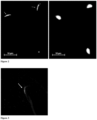
- Figure 5 shows an image obtained from the sample -
- Top left panel anti-CD46 antibody labels sperm cells with damaged heads (arrows) and somatic cells (*) and cell debris (**).
- Top right panel all present sperm, somatic cells and debris labeled by Hoechst.
- Bottom left panel Sperm cells with intact undamaged heads are not labeled by anti-CD46 antibody (+).
- Bottom right panel Sperm with intact undamaged heads labeled by Hoechst. The position of the sperm cell with undamaged intact head has been marked by a cross in the top and bottom left panels, for better understanding of the images by the reader.
- Rabbit pre-immune serum (day 0) and rabbit anti-CD46 peptide polyclonal antiserum (day 112) were affinity-purified against the non-conjugated peptide immobilised using a SulfoLink kit (Perbio Science, Cramlington, UK) according to the protocol provided.
- Approximately 0.5 mg of free peptide was immobilized to an agarose gel support via a reaction between iodoacetyl groups on the coupling gel and the N-terminal cysteine residue on the peptide.
- the column was washed and non-specific binding sites on the gel blocked by incubation with L-cysteine. Excess L-cysteine was eluted by washing.
- the column was incubated with serum and washed to remove non-bound serum proteins. Bound proteins were eluted using 100 mM glycine buffer (pH 2.5-3.0) (Sigma-Aldrich, Dorset, UK) and 1ml fractions were collected. The concentration of the affinity-purified serum was ascertained by absorbance at 280 nm (molar extinction coefficient of 1.4).
- Example 4 General procedure for separation of sperm with undamaged intact heads from sperm with damaged heads
- Cell sample suspension ejaculate or semen sample
- primary species specific antibody anti-CD46 conjugated to a carrier or with a tag Cell sample suspension (ejaculate or semen sample), primary species specific antibody anti-CD46 conjugated to a carrier or with a tag.
- the ejaculate or semen sample is incubated for 30 minutes with the anti-CD46 antibody conjugated to the carrier or conjugated with the tag, at room temperature, in a physiological buffer (PBS, phosphate buffer saline). Standard procedures and materials were used for binding the antibody to the carrier or to the tag.
- PBS physiological buffer
- the incubation of the anti-CD46 antibody-carrier complex or anti-CD46 antibody-tag with the ejaculate or semen sample was followed by separation of the carrier or the tag with the conjugated anti-CD46 antibody to which the CD46 presenting cells are bound.
- the remaining unbound sperm fraction with undamaged intact heads were transferred to a new container for further use in assisted reproduction (artificial insemination) such as intrauterine insemination (IUI), in vitro fertilization (IVF) or intracytoplasmic sperm injection (ICSI), storage purpose, medicine, or any other technique or research.
- assisted reproduction artificial insemination
- IUI intrauterine insemination
- IVF in vitro fertilization
- ICSI intracytoplasmic sperm injection
- Example 5 General procedure for separation of sperm with undamaged intact heads from sperm with damaged heads (cryopreserved sample)
- Cryopreserved sample (animal ejaculate or animal semen sample), primary species specific antibody anti-CD46 conjugated to a carrier.
- the sample is incubated for 30 minutes with the anti-CD46 antibody conjugated to the carrier, at room temperature, in a physiological buffer (PBS, phosphate buffer saline); followed by separation of the carrier with the conjugated anti-CD46 antibody to which the CD46 presenting cells are bound.
- PBS physiological buffer
- the remaining unbound sperm fraction with undamaged intact heads were transferred to a new container for further use in assisted reproduction (artificial insemination) such as intrauterine insemination (IUI), in vitro fertilization (IVF) or intracytoplasmic sperm injection (ICSI), storage purpose, medicine, or any other technique or research.
- assisted reproduction artificial insemination
- IUI intrauterine insemination
- IVF in vitro fertilization
- ICSI intracytoplasmic sperm injection
- Example 6 Separation of sperm with undamaged intact heads from sperm with damaged heads from the mouse ( Mus musculus sp. ) semen sample
- the anti-mouse CD46 antibody (clone MM10, HM1118, Hycult Biotech, Uden, Netherland) is bound to magnetic beads as a carrier, at room temperature, in a physiological buffer (phosphate buffer) and forms an anti-CD46 antibody-carrier complex.
- the complex is added to a mouse semen sample, the procedure of Example 4 was followed. All the CD46 presenting sperm with damaged heads and all somatic cells, mainly white blood cells, and cell debris are bound to the anti-CD46 antibody-carrier complex and further separated by magnetic field, using a magnetic stand. The unbound sperm with undamaged intact heads remain in the suspension.
- Example 7 Separation of sperm with undamaged intact heads from sperm with damaged heads from the rat (Ratus sp.) semen sample
- the anti-rat CD46 antibody (clone MM10, HM1118, Hycult Biotech, Uden, Netherland) is bound to agarose beads as a carrier, at room temperature, in a physiological buffer (PBS, phosphate buffer saline).
- PBS physiological buffer
- Example 4 All the CD46 presenting sperm with damaged heads and all somatic cells, mainly white blood cells, and cell debris are bound to the anti-CD46 antibody-carrier complex and further separated by centrifugation. The unbound sperm with undamaged intact heads remain in the suspension.
- Example 8 Separation of sperm with undamaged intact heads from sperm with damaged heads from the pig (Sus sp.) ejaculate
- the anti-pig CD46 antibody (clone JM6C11, MCA2262GA, Bio-Rad Laboratories, Hercules, CA) is bound to pre-coated walls of a microcentrifuge tube with a carrier.
- the procedure of Example 4 was followed. All the CD46 presenting sperm with damaged heads and all somatic cells, mainly white blood cells, and cell debris are bound to the anti-CD46 antibody-carrier complex. The unbound sperm with undamaged intact heads remain in the suspension which is transferred into a new container, ready for further use.
- Example 9 Separation of sperm with undamaged intact heads from sperm with damaged heads from the bull (Taurus sp.) ejaculate
- the anti-bull CD46 antibody (clone MEM-258, ABIN94152, Antibodies Online, Aachen, Germany) is bound to magnetic beads as a carrier.
- the procedure of Example 4 was followed. All the CD46 presenting sperm with damaged heads and all somatic cells, mainly white blood cells, and cell debris are bound to the anti-CD46 antibody-carrier complex and further separated by magnetic field, using a magnetic stand. The unbound sperm with undamaged intact heads remain in the suspension.
- Example 10 Separation of sperm with undamaged intact heads from sperm with damaged heads from the horse (Equus sp.) ejaculate
- the anti-horse CD46 antibody (ab231984, Abcam, Cambridge, UK) is bound to polyacrylamide beads.
- the procedure of Example 4 was followed. All the CD46 presenting sperm with damaged heads and all somatic cells, mainly white blood cells, and cell debris are bound to the anti-CD46 antibody-carrier complex and further separated by centrifugation. The unbound sperm with undamaged intact heads remain in the suspension.
- Example 11 Separation of sperm with undamaged intact heads from sperm with damaged heads from the canine (Canis sp.) ejaculate
- the anti-dog CD46 antibody (E4.3, Santa Cruz Biotechnology, Inc., Santa Cruz, CA) is bound to magnetic beads as a carrier.
- the procedure of Example 4 was followed. All the CD46 presenting sperm with damaged heads and all somatic cells, mainly white blood cells, and cell debris are bound to the anti-CD46 antibody-carrier complex and further separated by magnetic field. The unbound sperm with undamaged intact heads remain in the suspension.
- Example 12 Separation of sperm with undamaged and intact heads from sperm with damaged heads in sperm sample from the cryopreserved pig (Sus sp.) semen sample
- Example 5 The procedure of Example 5 was followed, using the antibody and carrier as specified in Example 8. All the CD46 presenting sperm with damaged heads and all somatic cells, mainly white blood cells, and cell debris are bound to the anti-CD46 antibody-carrier complex. The unbound sperm with undamaged intact heads remain in the suspension which is transferred into another container, and they are ready to be used for short or long-term storage under any conditions and media such as cryopreservation or any kind of sample preservation.
- Example 13 Separation of sperm with undamaged and intact heads from sperm with damaged heads from the cryopreserved bull (Taurus sp.) semen sample
- Example 5 The procedure of Example 5 was followed, using the antibody and carrier as specified in Example 9. All the CD46 presenting sperm with damaged heads and all somatic cells, mainly white blood cells, and cell debris are bound to the anti-CD46 antibody-carrier complex and further separated by magnetic field. The unbound sperm with undamaged intact heads remain in the suspension and they are ready to be used for short or long-term storage under any conditions and media such as cryopreservation or any kind of sample preservation.
- Example 14 Separation of sperm with undamaged and intact heads from sperm with damaged heads from the sperm sample of zebra finch ( Taeniopygia guttata )
- the polyclonal antibody produced according to Example 3 was bound to magnetic beads and was used in the procedure of Example 4. All the CD46 presenting sperm with damaged heads and all somatic cells, mainly white blood cells, and cell debris are bound to the anti-CD46 antibody-carrier complex and separated by magnetic field, using a magnetic stand.
- Example 15 Sperm motility analysis ( Figure 9)
- Motility was measured with a Computer Assisted Sperm Analysis (CASA) system (ISAS, Proiser, Valencia, Spain). Total motility and progressive motility were evaluated based on manufacturer's setting (thresholds were VAP 10 ⁇ m.s - and STR 80% for motile and progressively motile sperm, respectively). A 2 ⁇ L drop of each semen sample was placed in a 37°C prewarmed Leja counting chamber (IMV Technologies, France). Six fields per sample were evaluated at 100 ⁇ magnification negative phase-contrast objective. Constant temperature during analysis was ensured by a heating plate prewarmed to 37°C as a part of microscope. The evaluation was based on the analysis of 60 consecutive digitized images, which were taken at a time lapse of 1 s with a camera at a frequency of 60 fps. At least 100 trajectories were analysed per field.
- CASA Computer Assisted Sperm Analysis
- Example 16 Sperm acrosomal damage detection by CD46 antibody with fluorescent tag using fluorescent microscopy ( Figure 5)
- the present invention is a technology for selection and separation of CD46 presenting components from cells not presenting CD46 in cell samples obtained from an animal.
- the cells not presenting CD46 are sperm with undamaged intact heads.
- the technology may thus serve for separation of sperm with undamaged intact heads from sperm with damaged heads, as well as from somatic cells and cell debris in a sperm sample.
- This technology is designed to separate sperm with undamaged intact heads, suitable for use in assisted reproduction, medicine (in particular breeding programs and veterinary medicine) and research.
- the invention results in an increased quality of the sperm cell sample, as well as allows separation of somatic cells and/or debris from sperm-containing samples. Such purified samples result in an increased fertilization or medical or research success.
- the invention also results in an increased quality of the sperm sample for long- or short-term storage under any condition and media such as cryopreservation. This invention also saves large amount of cryoprotectives and plastic by storage of the pre-selected quality sample.
Landscapes
- Health & Medical Sciences (AREA)
- Life Sciences & Earth Sciences (AREA)
- Engineering & Computer Science (AREA)
- Chemical & Material Sciences (AREA)
- Biomedical Technology (AREA)
- Immunology (AREA)
- Biotechnology (AREA)
- Hematology (AREA)
- Molecular Biology (AREA)
- Urology & Nephrology (AREA)
- Cell Biology (AREA)
- Microbiology (AREA)
- General Health & Medical Sciences (AREA)
- Biochemistry (AREA)
- Analytical Chemistry (AREA)
- Wood Science & Technology (AREA)
- Medicinal Chemistry (AREA)
- Food Science & Technology (AREA)
- Organic Chemistry (AREA)
- General Physics & Mathematics (AREA)
- Pathology (AREA)
- Reproductive Health (AREA)
- Zoology (AREA)
- Bioinformatics & Cheminformatics (AREA)
- Genetics & Genomics (AREA)
- Physics & Mathematics (AREA)
- Developmental Biology & Embryology (AREA)
- General Engineering & Computer Science (AREA)
- Tropical Medicine & Parasitology (AREA)
- Chemical Kinetics & Catalysis (AREA)
- Gynecology & Obstetrics (AREA)
- Pregnancy & Childbirth (AREA)
- Proteomics, Peptides & Aminoacids (AREA)
- Micro-Organisms Or Cultivation Processes Thereof (AREA)
- Peptides Or Proteins (AREA)
Claims (9)
- Verfahren zur Trennung von Spermien mit unbeschädigten intakten Köpfen von Spermien mit beschädigten Köpfen und/oder somatischen Zellen und/oder Zelltrümmern in einer von einem Tier gewonnenen Spermienprobe, umfassend die Schritte:- Bereitstellen eines an einen Träger und/oder eine Markierung gebundenen Anti-CD46-Antikörpers;- Inkontaktbringen der Spermienprobe mit dem an den Träger und/oder die Markierung gebundenen Anti-CD46-Antikörper, um CD46-präsentierende Zellen und/oder Zelltrümmer aus der Spermienprobe an den Anti-CD46-Antikörper zu binden;- Entfernen der über den Anti-CD46-Antikörper an den Träger und/oder die Markierung gebundenen CD46-präsentierenden Zellen, um eine Spermienprobe zu erhalten, die frei von CD46-präsentierenden Zellen ist, wobei CD46-präsentierende Zellen Spermien mit beschädigten Köpfen, somatische Zellen und Zelltrümmer umfassen.
- Verfahren nach Anspruch 1, wobei die Spermienprobe, die frei von CD46-präsentierenden Zellen ist, ein Spermium ist, das im Wesentlichen nur Spermien mit unbeschädigten intakten Köpfen enthält.
- Verfahren nach Anspruch 1 oder 2, wobei die Ausgangsspermaprobe ein Ejakulat oder ein vorbehandeltes Ejakulat oder eine Samenprobe oder eine vorbehandelte Samenprobe ist, wobei die Vorbehandlung vorzugsweise die Entfernung von Samenflüssigkeit und/oder Gewebe und/oder Zelltrümmern aus dem Ejakulat umfasst.
- Verfahren nach einem der vorhergehenden Ansprüche, das die folgenden Schritte umfasst:- Bereitstellen von mindestens einem Immunisierungspeptid zur Produktion von Anti-CD46-Antikörpern;- Herstellen eines Anti-CD46-Antikörpers;- Binden des Anti-CD46-Antikörpers an einen Träger und/oder an eine Markierung;- Inkontaktbringen der Spermaprobe mit dem an den Träger und/oder an die Markierung gebundenen Anti-CD46-Antikörper mit einer Spermaprobe, um CD46-präsentierende Zellen, einschließlich Spermien mit beschädigten Köpfen und/oder somatische Zellen und/oder Zelltrümmer, aus der Spermaprobe an den Anti-CD46-Antikörper zu binden;- Abtrennen der Spermien mit beschädigten Köpfen und/oder somatischen Zellen und/oder Zelltrümmern, die über den Anti-CD46-Antikörper an den Träger und/oder an die Markierung gebunden sind, von der Spermienprobe;wodurch zwei Zellfraktionen erhalten werden: 1) Spermien mit unbeschädigten intakten Köpfen und 2) Spermien mit beschädigten Köpfen und/oder somatischen Zellen und/oder Zelltrümmern.
- Verfahren nach Anspruch 4, wobei der Anti-CD46-Antikörper durch Immunisierung eines Nutztiers mit einem Immunisierungspeptid mit der Sequenz PFEAMELKGTPKLY (SEQ ID NO. 1) erzeugt wird.
- Verfahren nach einem der vorhergehenden Ansprüche, wobei der Träger aus der Gruppe ausgewählt ist, die Perlen, magnetische Perlen, Polymersubstrate, Zellulosesubstrate, metallische Substrate, magnetische oder magnetisierbare Träger umfasst.
- Verfahren nach einem der Ansprüche 1 bis 5, wobei der Träger ein Gefäß ist, wie beispielsweise eine Vertiefung, eine Vertiefungsplatte, ein Becher, eine Kapillare oder ein Reagenzglas, wobei der Anti-CD46-Antikörper auf der Innenfläche des Gefäßes beschichtet oder immobilisiert ist; oder wobei der Träger auf der Innenfläche eines Gefäßes beschichtet oder immobilisiert ist, wie beispielsweise eine Vertiefung, eine Vertiefungsplatte, ein Becher, eine Kapillare oder ein Reagenzglas.
- Verfahren nach einem der vorhergehenden Ansprüche, wobei die Entfernung der CD46-präsentierenden Zellen, die über den Anti-CD46-Antikörper an den Träger und/oder an die Markierung gebunden sind, durch Zentrifugation, Sedimentation, Durchflusstrennungsverfahren wie FACS, Kapillarflusstrennung, Trennung auf Chips oder durch Verwendung magnetischer Kraft wie MACS oder magnetische Trennung durchgeführt wird.
- Verwendung des Anti-CD46-Antikörpers zur In-vitro-Trennung von Spermienzellen mit unbeschädigten intakten Köpfen von Spermienzellen mit beschädigten Köpfen und/oder somatischen Zellen und/oder Zelltrümmern in einer von einem Tier gewonnenen Spermienprobe.
Applications Claiming Priority (2)
| Application Number | Priority Date | Filing Date | Title |
|---|---|---|---|
| EP20152470.9A EP3851852A1 (de) | 2020-01-17 | 2020-01-17 | Verfahren zur trennung von spermien mit unbeschädigtem intaktem kopf von spermien mit beschädigtem kopf und somatischen zellen |
| PCT/CZ2021/050004 WO2021143958A1 (en) | 2020-01-17 | 2021-01-17 | Method for separation of sperm with undamaged intact heads from sperm with damaged heads and somatic cells |
Publications (3)
| Publication Number | Publication Date |
|---|---|
| EP4090971A1 EP4090971A1 (de) | 2022-11-23 |
| EP4090971C0 EP4090971C0 (de) | 2025-02-26 |
| EP4090971B1 true EP4090971B1 (de) | 2025-02-26 |
Family
ID=69177104
Family Applications (2)
| Application Number | Title | Priority Date | Filing Date |
|---|---|---|---|
| EP20152470.9A Withdrawn EP3851852A1 (de) | 2020-01-17 | 2020-01-17 | Verfahren zur trennung von spermien mit unbeschädigtem intaktem kopf von spermien mit beschädigtem kopf und somatischen zellen |
| EP21703812.4A Active EP4090971B1 (de) | 2020-01-17 | 2021-01-17 | Verfahren zur trennung von spermien mit unbeschädigtem intaktem kopf von spermien mit beschädigtem kopf und somatischen zellen |
Family Applications Before (1)
| Application Number | Title | Priority Date | Filing Date |
|---|---|---|---|
| EP20152470.9A Withdrawn EP3851852A1 (de) | 2020-01-17 | 2020-01-17 | Verfahren zur trennung von spermien mit unbeschädigtem intaktem kopf von spermien mit beschädigtem kopf und somatischen zellen |
Country Status (5)
| Country | Link |
|---|---|
| EP (2) | EP3851852A1 (de) |
| CZ (1) | CZ2020223A3 (de) |
| ES (1) | ES3019611T3 (de) |
| PL (1) | PL4090971T3 (de) |
| WO (1) | WO2021143958A1 (de) |
Family Cites Families (1)
| Publication number | Priority date | Publication date | Assignee | Title |
|---|---|---|---|---|
| US20170191029A1 (en) | 2016-01-04 | 2017-07-06 | University Of Tennessee Research Foundation | Methods for improvement of semen quality |
-
2020
- 2020-01-17 EP EP20152470.9A patent/EP3851852A1/de not_active Withdrawn
- 2020-04-17 CZ CZ2020223A patent/CZ2020223A3/cs unknown
-
2021
- 2021-01-17 ES ES21703812T patent/ES3019611T3/es active Active
- 2021-01-17 EP EP21703812.4A patent/EP4090971B1/de active Active
- 2021-01-17 WO PCT/CZ2021/050004 patent/WO2021143958A1/en not_active Ceased
- 2021-01-17 PL PL21703812.4T patent/PL4090971T3/pl unknown
Also Published As
| Publication number | Publication date |
|---|---|
| PL4090971T3 (pl) | 2025-04-22 |
| EP4090971C0 (de) | 2025-02-26 |
| CZ308863B6 (cs) | 2021-07-21 |
| WO2021143958A1 (en) | 2021-07-22 |
| CZ2020223A3 (cs) | 2021-07-21 |
| EP3851852A1 (de) | 2021-07-21 |
| EP4090971A1 (de) | 2022-11-23 |
| ES3019611T3 (en) | 2025-05-20 |
Similar Documents
| Publication | Publication Date | Title |
|---|---|---|
| US7833147B2 (en) | Process for enriching a population of sperm cells | |
| Yoon et al. | Development of porcine oocytes from preovulatory follicles of different sizes after maturation in media supplemented with follicular fluids | |
| US20050114915A1 (en) | Method for sex biasing spermatozoa | |
| EP3107554A1 (de) | Antikörper zur verdrehung des geschlechtsverhältnisses und verfahren zur verwendung davon | |
| Feugang et al. | Beneficial effects of relaxin on motility characteristics of stored boar spermatozoa | |
| Heyner et al. | Functions of the IGFs in early mammalian development | |
| CN107921071B (zh) | 用于低剂量授精的方法和组合物 | |
| EP4090971B1 (de) | Verfahren zur trennung von spermien mit unbeschädigtem intaktem kopf von spermien mit beschädigtem kopf und somatischen zellen | |
| EP3851853A1 (de) | Verfahren zur trennung von spermien mit unbeschädigtem intaktem kopf von spermien mit beschädigtem kopf und somatischen zellen | |
| Ichikawa et al. | Possible involvement of annexin A6 in preferential sperm penetration in the germinal disk region | |
| US20090305270A1 (en) | Antigenic surface structure of sperm cells associated with the y chromosome | |
| CN101048496B (zh) | 富集精细胞群的方法 | |
| CN102643780B (zh) | 富集精细胞群的方法 | |
| WO2024243349A2 (en) | Modifying allocation of sample processing procedures for elite animals to maximize throughput | |
| BAWEJA | DEVELOPMENT OF IMMUNOPROBES FOR SEXING SPERMATOZOA OF DAIRY CATTLE AND BUFFALO | |
| JP2007129991A (ja) | 哺乳動物のa型(未分化型)精祖細胞の同定、分離及び/又は回収方法 | |
| HK1174660B (en) | Process for enriching a population of sperm cells |
Legal Events
| Date | Code | Title | Description |
|---|---|---|---|
| STAA | Information on the status of an ep patent application or granted ep patent |
Free format text: STATUS: UNKNOWN |
|
| STAA | Information on the status of an ep patent application or granted ep patent |
Free format text: STATUS: THE INTERNATIONAL PUBLICATION HAS BEEN MADE |
|
| PUAI | Public reference made under article 153(3) epc to a published international application that has entered the european phase |
Free format text: ORIGINAL CODE: 0009012 |
|
| STAA | Information on the status of an ep patent application or granted ep patent |
Free format text: STATUS: REQUEST FOR EXAMINATION WAS MADE |
|
| 17P | Request for examination filed |
Effective date: 20220817 |
|
| AK | Designated contracting states |
Kind code of ref document: A1 Designated state(s): AL AT BE BG CH CY CZ DE DK EE ES FI FR GB GR HR HU IE IS IT LI LT LU LV MC MK MT NL NO PL PT RO RS SE SI SK SM TR |
|
| DAV | Request for validation of the european patent (deleted) | ||
| DAX | Request for extension of the european patent (deleted) | ||
| STAA | Information on the status of an ep patent application or granted ep patent |
Free format text: STATUS: EXAMINATION IS IN PROGRESS |
|
| 17Q | First examination report despatched |
Effective date: 20231110 |
|
| RAP1 | Party data changed (applicant data changed or rights of an application transferred) |
Owner name: CESKA ZEMEDELSKA UNIVERZITA V PRAZE Owner name: MOLECULE 46 S.R.O. Owner name: BIOTECHNOLOGICKY USTAV AV CR, V.V.I. |
|
| GRAP | Despatch of communication of intention to grant a patent |
Free format text: ORIGINAL CODE: EPIDOSNIGR1 |
|
| STAA | Information on the status of an ep patent application or granted ep patent |
Free format text: STATUS: GRANT OF PATENT IS INTENDED |
|
| INTG | Intention to grant announced |
Effective date: 20240923 |
|
| GRAS | Grant fee paid |
Free format text: ORIGINAL CODE: EPIDOSNIGR3 |
|
| GRAA | (expected) grant |
Free format text: ORIGINAL CODE: 0009210 |
|
| STAA | Information on the status of an ep patent application or granted ep patent |
Free format text: STATUS: THE PATENT HAS BEEN GRANTED |
|
| AK | Designated contracting states |
Kind code of ref document: B1 Designated state(s): AL AT BE BG CH CY CZ DE DK EE ES FI FR GB GR HR HU IE IS IT LI LT LU LV MC MK MT NL NO PL PT RO RS SE SI SK SM TR |
|
| REG | Reference to a national code |
Ref country code: GB Ref legal event code: FG4D |
|
| REG | Reference to a national code |
Ref country code: CH Ref legal event code: EP |
|
| REG | Reference to a national code |
Ref country code: DE Ref legal event code: R096 Ref document number: 602021026742 Country of ref document: DE |
|
| REG | Reference to a national code |
Ref country code: IE Ref legal event code: FG4D |
|
| U01 | Request for unitary effect filed |
Effective date: 20250227 |
|
| U07 | Unitary effect registered |
Designated state(s): AT BE BG DE DK EE FI FR IT LT LU LV MT NL PT RO SE SI Effective date: 20250310 |
|
| REG | Reference to a national code |
Ref country code: ES Ref legal event code: FG2A Ref document number: 3019611 Country of ref document: ES Kind code of ref document: T3 Effective date: 20250520 |
|
| REG | Reference to a national code |
Ref country code: SK Ref legal event code: T3 Ref document number: E 46132 Country of ref document: SK |
|
| PG25 | Lapsed in a contracting state [announced via postgrant information from national office to epo] |
Ref country code: RS Free format text: LAPSE BECAUSE OF FAILURE TO SUBMIT A TRANSLATION OF THE DESCRIPTION OR TO PAY THE FEE WITHIN THE PRESCRIBED TIME-LIMIT Effective date: 20250526 |
|
| PG25 | Lapsed in a contracting state [announced via postgrant information from national office to epo] |
Ref country code: IS Free format text: LAPSE BECAUSE OF FAILURE TO SUBMIT A TRANSLATION OF THE DESCRIPTION OR TO PAY THE FEE WITHIN THE PRESCRIBED TIME-LIMIT Effective date: 20250626 |
|
| PG25 | Lapsed in a contracting state [announced via postgrant information from national office to epo] |
Ref country code: HR Free format text: LAPSE BECAUSE OF FAILURE TO SUBMIT A TRANSLATION OF THE DESCRIPTION OR TO PAY THE FEE WITHIN THE PRESCRIBED TIME-LIMIT Effective date: 20250226 |
|
| PG25 | Lapsed in a contracting state [announced via postgrant information from national office to epo] |
Ref country code: GR Free format text: LAPSE BECAUSE OF FAILURE TO SUBMIT A TRANSLATION OF THE DESCRIPTION OR TO PAY THE FEE WITHIN THE PRESCRIBED TIME-LIMIT Effective date: 20250527 |
|
| PG25 | Lapsed in a contracting state [announced via postgrant information from national office to epo] |
Ref country code: SM Free format text: LAPSE BECAUSE OF FAILURE TO SUBMIT A TRANSLATION OF THE DESCRIPTION OR TO PAY THE FEE WITHIN THE PRESCRIBED TIME-LIMIT Effective date: 20250226 |
|
| PG25 | Lapsed in a contracting state [announced via postgrant information from national office to epo] |
Ref country code: CZ Free format text: LAPSE BECAUSE OF FAILURE TO SUBMIT A TRANSLATION OF THE DESCRIPTION OR TO PAY THE FEE WITHIN THE PRESCRIBED TIME-LIMIT Effective date: 20250226 |
|
| PLBE | No opposition filed within time limit |
Free format text: ORIGINAL CODE: 0009261 |
|
| STAA | Information on the status of an ep patent application or granted ep patent |
Free format text: STATUS: NO OPPOSITION FILED WITHIN TIME LIMIT |
|
| REG | Reference to a national code |
Ref country code: CH Ref legal event code: L10 Free format text: ST27 STATUS EVENT CODE: U-0-0-L10-L00 (AS PROVIDED BY THE NATIONAL OFFICE) Effective date: 20260107 |
|
| 26N | No opposition filed |
Effective date: 20251127 |
|
| REG | Reference to a national code |
Ref country code: CH Ref legal event code: U11 Free format text: ST27 STATUS EVENT CODE: U-0-0-U10-U11 (AS PROVIDED BY THE NATIONAL OFFICE) Effective date: 20260204 |
|
| U20 | Renewal fee for the european patent with unitary effect paid |
Year of fee payment: 6 Effective date: 20260129 |
|
| PGFP | Annual fee paid to national office [announced via postgrant information from national office to epo] |
Ref country code: GB Payment date: 20260128 Year of fee payment: 6 |
|
| PGFP | Annual fee paid to national office [announced via postgrant information from national office to epo] |
Ref country code: NO Payment date: 20260127 Year of fee payment: 6 Ref country code: IE Payment date: 20260128 Year of fee payment: 6 |
|
| PGFP | Annual fee paid to national office [announced via postgrant information from national office to epo] |
Ref country code: TR Payment date: 20260114 Year of fee payment: 6 |
|
| PGFP | Annual fee paid to national office [announced via postgrant information from national office to epo] |
Ref country code: CH Payment date: 20260204 Year of fee payment: 6 |
|
| PGFP | Annual fee paid to national office [announced via postgrant information from national office to epo] |
Ref country code: PL Payment date: 20260115 Year of fee payment: 6 |
|
| PGFP | Annual fee paid to national office [announced via postgrant information from national office to epo] |
Ref country code: SK Payment date: 20260114 Year of fee payment: 6 |