EP4092061B1 - Strahlungspolymerisierbare zusammensetzung, gehärtete schicht derselben, optische faser, die die gehärtete schicht enthält, und herstellungsverfahren dafür - Google Patents
Strahlungspolymerisierbare zusammensetzung, gehärtete schicht derselben, optische faser, die die gehärtete schicht enthält, und herstellungsverfahren dafür Download PDFInfo
- Publication number
- EP4092061B1 EP4092061B1 EP21741615.5A EP21741615A EP4092061B1 EP 4092061 B1 EP4092061 B1 EP 4092061B1 EP 21741615 A EP21741615 A EP 21741615A EP 4092061 B1 EP4092061 B1 EP 4092061B1
- Authority
- EP
- European Patent Office
- Prior art keywords
- group
- formula
- polymerizable composition
- radiation polymerizable
- radiation
- Prior art date
- Legal status (The legal status is an assumption and is not a legal conclusion. Google has not performed a legal analysis and makes no representation as to the accuracy of the status listed.)
- Active
Links
Classifications
-
- C—CHEMISTRY; METALLURGY
- C03—GLASS; MINERAL OR SLAG WOOL
- C03C—CHEMICAL COMPOSITION OF GLASSES, GLAZES OR VITREOUS ENAMELS; SURFACE TREATMENT OF GLASS; SURFACE TREATMENT OF FIBRES OR FILAMENTS MADE FROM GLASS, MINERALS OR SLAGS; JOINING GLASS TO GLASS OR OTHER MATERIALS
- C03C25/00—Surface treatment of fibres or filaments made from glass, minerals or slags
- C03C25/10—Coating
- C03C25/104—Coating to obtain optical fibres
- C03C25/106—Single coatings
-
- C—CHEMISTRY; METALLURGY
- C03—GLASS; MINERAL OR SLAG WOOL
- C03C—CHEMICAL COMPOSITION OF GLASSES, GLAZES OR VITREOUS ENAMELS; SURFACE TREATMENT OF GLASS; SURFACE TREATMENT OF FIBRES OR FILAMENTS MADE FROM GLASS, MINERALS OR SLAGS; JOINING GLASS TO GLASS OR OTHER MATERIALS
- C03C25/00—Surface treatment of fibres or filaments made from glass, minerals or slags
- C03C25/10—Coating
- C03C25/104—Coating to obtain optical fibres
-
- C—CHEMISTRY; METALLURGY
- C03—GLASS; MINERAL OR SLAG WOOL
- C03C—CHEMICAL COMPOSITION OF GLASSES, GLAZES OR VITREOUS ENAMELS; SURFACE TREATMENT OF GLASS; SURFACE TREATMENT OF FIBRES OR FILAMENTS MADE FROM GLASS, MINERALS OR SLAGS; JOINING GLASS TO GLASS OR OTHER MATERIALS
- C03C25/00—Surface treatment of fibres or filaments made from glass, minerals or slags
- C03C25/10—Coating
- C03C25/24—Coatings containing organic materials
- C03C25/26—Macromolecular compounds or prepolymers
- C03C25/28—Macromolecular compounds or prepolymers obtained by reactions involving only carbon-to-carbon unsaturated bonds
-
- C—CHEMISTRY; METALLURGY
- C03—GLASS; MINERAL OR SLAG WOOL
- C03C—CHEMICAL COMPOSITION OF GLASSES, GLAZES OR VITREOUS ENAMELS; SURFACE TREATMENT OF GLASS; SURFACE TREATMENT OF FIBRES OR FILAMENTS MADE FROM GLASS, MINERALS OR SLAGS; JOINING GLASS TO GLASS OR OTHER MATERIALS
- C03C25/00—Surface treatment of fibres or filaments made from glass, minerals or slags
- C03C25/10—Coating
- C03C25/24—Coatings containing organic materials
- C03C25/26—Macromolecular compounds or prepolymers
- C03C25/32—Macromolecular compounds or prepolymers obtained otherwise than by reactions involving only carbon-to-carbon unsaturated bonds
- C03C25/326—Polyureas; Polyurethanes
-
- C—CHEMISTRY; METALLURGY
- C08—ORGANIC MACROMOLECULAR COMPOUNDS; THEIR PREPARATION OR CHEMICAL WORKING-UP; COMPOSITIONS BASED THEREON
- C08F—MACROMOLECULAR COMPOUNDS OBTAINED BY REACTIONS ONLY INVOLVING CARBON-TO-CARBON UNSATURATED BONDS
- C08F222/00—Copolymers of compounds having one or more unsaturated aliphatic radicals, each having only one carbon-to-carbon double bond, and at least one being terminated by a carboxyl radical and containing at least one other carboxyl radical in the molecule; Salts, anhydrides, esters, amides, imides, or nitriles thereof
- C08F222/04—Anhydrides, e.g. cyclic anhydrides
- C08F222/06—Maleic anhydride
-
- C—CHEMISTRY; METALLURGY
- C08—ORGANIC MACROMOLECULAR COMPOUNDS; THEIR PREPARATION OR CHEMICAL WORKING-UP; COMPOSITIONS BASED THEREON
- C08F—MACROMOLECULAR COMPOUNDS OBTAINED BY REACTIONS ONLY INVOLVING CARBON-TO-CARBON UNSATURATED BONDS
- C08F222/00—Copolymers of compounds having one or more unsaturated aliphatic radicals, each having only one carbon-to-carbon double bond, and at least one being terminated by a carboxyl radical and containing at least one other carboxyl radical in the molecule; Salts, anhydrides, esters, amides, imides, or nitriles thereof
- C08F222/36—Amides or imides
- C08F222/40—Imides, e.g. cyclic imides
-
- C—CHEMISTRY; METALLURGY
- C08—ORGANIC MACROMOLECULAR COMPOUNDS; THEIR PREPARATION OR CHEMICAL WORKING-UP; COMPOSITIONS BASED THEREON
- C08F—MACROMOLECULAR COMPOUNDS OBTAINED BY REACTIONS ONLY INVOLVING CARBON-TO-CARBON UNSATURATED BONDS
- C08F290/00—Macromolecular compounds obtained by polymerising monomers on to polymers modified by introduction of aliphatic unsaturated end or side groups
- C08F290/02—Macromolecular compounds obtained by polymerising monomers on to polymers modified by introduction of aliphatic unsaturated end or side groups on to polymers modified by introduction of unsaturated end groups
- C08F290/06—Polymers provided for in subclass C08G
- C08F290/067—Polyurethanes; Polyureas
-
- C—CHEMISTRY; METALLURGY
- C08—ORGANIC MACROMOLECULAR COMPOUNDS; THEIR PREPARATION OR CHEMICAL WORKING-UP; COMPOSITIONS BASED THEREON
- C08G—MACROMOLECULAR COMPOUNDS OBTAINED OTHERWISE THAN BY REACTIONS ONLY INVOLVING UNSATURATED CARBON-TO-CARBON BONDS
- C08G18/00—Polymeric products of isocyanates or isothiocyanates
- C08G18/04—Polymeric products of isocyanates or isothiocyanates with vinyl compounds
-
- C—CHEMISTRY; METALLURGY
- C08—ORGANIC MACROMOLECULAR COMPOUNDS; THEIR PREPARATION OR CHEMICAL WORKING-UP; COMPOSITIONS BASED THEREON
- C08G—MACROMOLECULAR COMPOUNDS OBTAINED OTHERWISE THAN BY REACTIONS ONLY INVOLVING UNSATURATED CARBON-TO-CARBON BONDS
- C08G18/00—Polymeric products of isocyanates or isothiocyanates
- C08G18/06—Polymeric products of isocyanates or isothiocyanates with compounds having active hydrogen
- C08G18/08—Processes
- C08G18/0838—Manufacture of polymers in the presence of non-reactive compounds
- C08G18/0842—Manufacture of polymers in the presence of non-reactive compounds in the presence of liquid diluents
- C08G18/0847—Manufacture of polymers in the presence of non-reactive compounds in the presence of liquid diluents in the presence of solvents for the polymers
- C08G18/0852—Manufacture of polymers in the presence of non-reactive compounds in the presence of liquid diluents in the presence of solvents for the polymers the solvents being organic
-
- C—CHEMISTRY; METALLURGY
- C08—ORGANIC MACROMOLECULAR COMPOUNDS; THEIR PREPARATION OR CHEMICAL WORKING-UP; COMPOSITIONS BASED THEREON
- C08G—MACROMOLECULAR COMPOUNDS OBTAINED OTHERWISE THAN BY REACTIONS ONLY INVOLVING UNSATURATED CARBON-TO-CARBON BONDS
- C08G18/00—Polymeric products of isocyanates or isothiocyanates
- C08G18/06—Polymeric products of isocyanates or isothiocyanates with compounds having active hydrogen
- C08G18/08—Processes
- C08G18/16—Catalysts
- C08G18/22—Catalysts containing metal compounds
- C08G18/24—Catalysts containing metal compounds of tin
- C08G18/244—Catalysts containing metal compounds of tin tin salts of carboxylic acids
- C08G18/246—Catalysts containing metal compounds of tin tin salts of carboxylic acids containing also tin-carbon bonds
-
- C—CHEMISTRY; METALLURGY
- C08—ORGANIC MACROMOLECULAR COMPOUNDS; THEIR PREPARATION OR CHEMICAL WORKING-UP; COMPOSITIONS BASED THEREON
- C08G—MACROMOLECULAR COMPOUNDS OBTAINED OTHERWISE THAN BY REACTIONS ONLY INVOLVING UNSATURATED CARBON-TO-CARBON BONDS
- C08G18/00—Polymeric products of isocyanates or isothiocyanates
- C08G18/06—Polymeric products of isocyanates or isothiocyanates with compounds having active hydrogen
- C08G18/28—Polymeric products of isocyanates or isothiocyanates with compounds having active hydrogen characterised by the compounds used containing active hydrogen
- C08G18/40—High-molecular-weight compounds
- C08G18/48—Polyethers
- C08G18/4825—Polyethers containing two hydroxy groups
-
- C—CHEMISTRY; METALLURGY
- C08—ORGANIC MACROMOLECULAR COMPOUNDS; THEIR PREPARATION OR CHEMICAL WORKING-UP; COMPOSITIONS BASED THEREON
- C08G—MACROMOLECULAR COMPOUNDS OBTAINED OTHERWISE THAN BY REACTIONS ONLY INVOLVING UNSATURATED CARBON-TO-CARBON BONDS
- C08G18/00—Polymeric products of isocyanates or isothiocyanates
- C08G18/06—Polymeric products of isocyanates or isothiocyanates with compounds having active hydrogen
- C08G18/28—Polymeric products of isocyanates or isothiocyanates with compounds having active hydrogen characterised by the compounds used containing active hydrogen
- C08G18/67—Unsaturated compounds having active hydrogen
- C08G18/671—Unsaturated compounds having only one group containing active hydrogen
- C08G18/6715—Unsaturated monofunctional alcohols or amines
-
- C—CHEMISTRY; METALLURGY
- C08—ORGANIC MACROMOLECULAR COMPOUNDS; THEIR PREPARATION OR CHEMICAL WORKING-UP; COMPOSITIONS BASED THEREON
- C08G—MACROMOLECULAR COMPOUNDS OBTAINED OTHERWISE THAN BY REACTIONS ONLY INVOLVING UNSATURATED CARBON-TO-CARBON BONDS
- C08G18/00—Polymeric products of isocyanates or isothiocyanates
- C08G18/06—Polymeric products of isocyanates or isothiocyanates with compounds having active hydrogen
- C08G18/28—Polymeric products of isocyanates or isothiocyanates with compounds having active hydrogen characterised by the compounds used containing active hydrogen
- C08G18/67—Unsaturated compounds having active hydrogen
- C08G18/671—Unsaturated compounds having only one group containing active hydrogen
- C08G18/672—Esters of acrylic or alkyl acrylic acid having only one group containing active hydrogen
-
- C—CHEMISTRY; METALLURGY
- C08—ORGANIC MACROMOLECULAR COMPOUNDS; THEIR PREPARATION OR CHEMICAL WORKING-UP; COMPOSITIONS BASED THEREON
- C08G—MACROMOLECULAR COMPOUNDS OBTAINED OTHERWISE THAN BY REACTIONS ONLY INVOLVING UNSATURATED CARBON-TO-CARBON BONDS
- C08G18/00—Polymeric products of isocyanates or isothiocyanates
- C08G18/06—Polymeric products of isocyanates or isothiocyanates with compounds having active hydrogen
- C08G18/70—Polymeric products of isocyanates or isothiocyanates with compounds having active hydrogen characterised by the isocyanates or isothiocyanates used
- C08G18/72—Polyisocyanates or polyisothiocyanates
- C08G18/74—Polyisocyanates or polyisothiocyanates cyclic
- C08G18/76—Polyisocyanates or polyisothiocyanates cyclic aromatic
-
- C—CHEMISTRY; METALLURGY
- C08—ORGANIC MACROMOLECULAR COMPOUNDS; THEIR PREPARATION OR CHEMICAL WORKING-UP; COMPOSITIONS BASED THEREON
- C08G—MACROMOLECULAR COMPOUNDS OBTAINED OTHERWISE THAN BY REACTIONS ONLY INVOLVING UNSATURATED CARBON-TO-CARBON BONDS
- C08G18/00—Polymeric products of isocyanates or isothiocyanates
- C08G18/06—Polymeric products of isocyanates or isothiocyanates with compounds having active hydrogen
- C08G18/70—Polymeric products of isocyanates or isothiocyanates with compounds having active hydrogen characterised by the isocyanates or isothiocyanates used
- C08G18/72—Polyisocyanates or polyisothiocyanates
- C08G18/74—Polyisocyanates or polyisothiocyanates cyclic
- C08G18/76—Polyisocyanates or polyisothiocyanates cyclic aromatic
- C08G18/7614—Polyisocyanates or polyisothiocyanates cyclic aromatic containing only one aromatic ring
- C08G18/7621—Polyisocyanates or polyisothiocyanates cyclic aromatic containing only one aromatic ring being toluene diisocyanate including isomer mixtures
-
- C—CHEMISTRY; METALLURGY
- C09—DYES; PAINTS; POLISHES; NATURAL RESINS; ADHESIVES; COMPOSITIONS NOT OTHERWISE PROVIDED FOR; APPLICATIONS OF MATERIALS NOT OTHERWISE PROVIDED FOR
- C09D—COATING COMPOSITIONS, e.g. PAINTS, VARNISHES OR LACQUERS; FILLING PASTES; CHEMICAL PAINT OR INK REMOVERS; INKS; CORRECTING FLUIDS; WOODSTAINS; PASTES OR SOLIDS FOR COLOURING OR PRINTING; USE OF MATERIALS THEREFOR
- C09D175/00—Coating compositions based on polyureas or polyurethanes; Coating compositions based on derivatives of such polymers
- C09D175/04—Polyurethanes
- C09D175/14—Polyurethanes having carbon-to-carbon unsaturated bonds
- C09D175/16—Polyurethanes having carbon-to-carbon unsaturated bonds having terminal carbon-to-carbon unsaturated bonds
-
- G—PHYSICS
- G02—OPTICS
- G02B—OPTICAL ELEMENTS, SYSTEMS OR APPARATUS
- G02B6/00—Light guides; Structural details of arrangements comprising light guides and other optical elements, e.g. couplings
- G02B6/02—Optical fibres with cladding with or without a coating
- G02B6/02033—Core or cladding made from organic material, e.g. polymeric material
Definitions
- the present invention relates to a resin composition that is suitable as an optical fiber coating material, particularly as a primary material of an optical fiber, and has a fast curing rate by irradiation with radiation.
- An optical fiber is produced by coating a glass fiber, which has been obtained by thermal melt-spinning of glass, with a resin for the purpose of protection and reinforcement.
- a resin coating a structure obtained by providing a soft first coating layer (hereinafter also referred to as a "primary coating layer”) on the surface of the glass fiber and, on the outside thereof, providing a high-rigidity second coating layer (hereinafter also referred to as a "secondary coating layer”) is known.
- An optical fiber having a structure in which a primary coating layer and a secondary coating layer are provided on a single glass fiber is normally known as an optical fiber strand, and an optical fiber strand may further have a colored ink layer or an up-jacket layer on the outside of the secondary coating layer.
- tape-shaped optical fibers and optical fiber cables in which a plurality of such optical fiber strands provided with resin coatings are fixed together with a binding material are also well known.
- a resin composition for forming a first coating layer of an optical fiber strand is called a primary material
- a resin composition for forming a second coating layer is called a secondary material
- a resin composition that is used as a binding material for a plurality of optical fiber strands is called a bundling material.
- a plurality of tape-shaped optical fibers and optical fiber cables are further bound together by a binding material, and the binding material used in such cases is also called a bundling material.
- resin coating methods in the above cases methods in which a liquid curable resin composition is applied and then cured by means of heat or light, particularly ultraviolet rays, are widely used.
- the cured product of the primary material must be flexible in order to prevent the glass fiber from being bent or the like due to localized pressure from the outside. For this reason, primary coating layers normally have a Young's modulus of 1 to 10 MPa.
- JP 2012-111674 A discloses, as a resin composition that is suitable as a primary material of an optical fiber strand, a radiation curable resin composition comprising a urethane oligomer and a monofunctional acrylic monomer.
- thermosetting resins Since radiation curable resin compositions have a faster curing rate than thermosetting resins, optical fibers can be produced with high productivity. However, in order to further improve productivity, radiation curable resin compositions with a faster curing rate are desired.
- One object of the present invention is to provide a radiation curable resin composition that is suitable as a primary material of an optical fiber and has a faster curing rate by irradiation with radiation than that of conventional compositions.
- One object of the present invention is to provide a cured layer of the radiation curable resin composition.
- One object of the present invention is to provide an optical fiber comprising the cured layer and a production method therefor.
- One aspect of the present invention is a radiation polymerizable composition for forming a primary coating layer of an optical fiber, the radiation polymerizable composition comprising:
- Another aspect of the present invention is a cured layer of a radiation polymerizable composition.
- Another aspect of the present invention is an optical fiber comprising a cured layer of a radiation polymerizable composition and an assembly thereof.
- Another aspect of the present invention is a method for producing an optical fiber comprising a primary coating layer, comprising: disposing a radiation polymerizable composition on at least part of a surface of a glass fiber; and curing the radiation polymerizable composition by radiation irradiation.
- the radiation polymerizable composition of the present embodiment is a radiation polymerizable composition for forming a primary coating layer of an optical fiber, comprising: (A) a urethane oligomer comprising a predetermined structure; (B) one or more compounds selected from maleic anhydride and compounds represented by predetermined formulas; and (C) a radiation polymerization initiator.
- the present composition further comprises a compound having one or more ethylenically unsaturated groups other than the above-mentioned component (A) as component (D).
- radiation polymerizable composition is understood to refer to a composition that is cured by a polymerization reaction induced by irradiation with radiation.
- radiation include infrared rays, visible light rays, ultraviolet rays, X-rays, electron beams, ⁇ -rays, ⁇ -rays, and ⁇ -rays, with ultraviolet rays being particularly preferred.
- the expression "primary coating layer of an optical fiber” is understood to refer to a coating layer, among the coating layers provided on a glass fiber, that is disposed at the position closest to the glass fiber.
- the primary coating layer may be provided so as to cover at least part of the glass fiber surface.
- the expression "for forming a primary coating layer of an optical fiber” is understood to refer to being able to be used to form a primary coating layer of an optical fiber, or being for the purpose of forming a primary coating layer of an optical fiber.
- urethane oligomer is understood to refer to an oligomer comprising a urethane bond (-NHCOO-) in the repeat units in the main chain. Urethane bonds can generally be formed by inducing a reaction between a diol and a diisocyanate. The diols and diisocyanates that are usable will be explained below.
- the urethane oligomer (A) comprises the structure represented by formula (I) below: wherein R is a vinyl group and * is a bond.
- the expression "comprising a structure” is understood to refer to the urethane oligomer comprising, in the structure thereof, at least one structure represented by the above-mentioned formula (I).
- the urethane oligomer preferably comprises the structure represented by formula (I) at at least one terminal of the main chain.
- * bonds to various atoms.
- the structure represented by formula (I) can preferably bond to the main chain of the urethane oligomer (preferably a structural unit derived from a diisocyanate constituting the urethane oligomer) via the bond with the oxygen atom (-O-).
- alkanediyl groups examples include alkanediyl groups comprising 1 to 6 carbon atoms (having 1 to 6 carbon atoms). Since alkanediyl groups comprising 1 to 6 carbon atoms are the same as those mentioned in formula (I-1) explained below, the descriptions thereof are omitted here.
- the urethane oligomer (A) preferably comprises the structure represented by formula (I) as part of the structure of formula (I-1) below: wherein R is a vinyl group, X is an alkanediyl group comprising 1 to 6 carbon atoms (having 1 to 6 carbon atoms), n is an integer of 0 or 1, m is an integer of 0 or 1, and * is a bond; * bonds to the main chain of a urethane oligomer; * preferably forms a urethane bond with a structural unit derived from a diisocyanate constituting the urethane oligomer; n is preferably 1 from the viewpoint of ease of bonding to the main chain of the urethane oligomer; and m is preferably 1.
- alkanediyl groups having 1 to 6 carbon atoms include a methane-1,1-diyl group, an ethane-1,1-diyl group, an ethane-1,2-diyl group, a propane-1,1-diyl group, a propane-1,2-diyl group, a propane-1,3-diyl group, a propane-2,2-diyl group, a butane-1,2-diyl group, a butane-1,3-diyl group, a butane-1,4-diyl group, a butane-2,2-diyl group, a pentane-1,4-diyl group, a pentane-1,5-diyl group, a hexane-1,5-diyl group, and a hexane-1,6-diyl group.
- the alkanediyl group having 1 to 6 carbon atoms is even more preferably a methane-1,1-diyl group, an ethane-1,1-diyl group, an ethane-1,2-diyl group, a propane-1,1-diyl group, a propane-1,2-diyl group, a propane-1,3-diyl group, or a propane-2,2-diyl group, and is particularly preferably a methane-1,1-diyl group.
- substituents satisfying the structure represented by formula (I-1) include a 2-vinylphenoxy group, a 3-vinylphenoxy group, a 4-vinylphenoxy group, a 3-vinylbenzyloxy group, a 4-vinylbenzyloxy group, a 3-vinylphenethyloxy group, a 4-vinylphenethyloxy group, a 3-vinylphenyl-1-propoxy group, a 3-vinylphenyl-2-propoxy group, a 4-vinylphenyl-1-propoxy group, and a 4-vinylphenyl-2-propoxy group.
- the urethane oligomer (A) preferably comprises one or more substituents selected from the group consisting of a 2-vinylphenoxy group, a 3-vinylphenoxy group, a 4-vinylphenoxy group, a 3-vinylbenzyloxy group, and a 4-vinylbenzyloxy group, and more preferably comprises one or more substituents selected from a 3-vinylbenzyloxy group and a 4-vinylbenzyloxy group.
- the urethane oligomer (A) preferably has the structure represented by formula (I) at at least one terminal of the main chain, and more preferably comprises a urethane oligomer having the structure represented by formula (I) at both terminals of the main chain.
- a urethane oligomer having the structure represented by formula (I) at both terminals of the main chain By comprising a urethane oligomer having the structure represented by formula (I) at both terminals of the main chain, the curing rate by irradiation with radiation can be improved more easily.
- the urethane oligomer (A) comprises a urethane oligomer (A-1) having the structure represented by formula (I) at both terminals of the main chain and a urethane oligomer (A-2) having the structure represented by formula (I) at one terminal of the main chain and an aliphatic alkoxy group having 1 to 10 carbon atoms at the other terminal.
- a urethane oligomer (A-1) having the structure represented by formula (I) at both terminals of the main chain and a urethane oligomer (A-2) having the structure represented by formula (I) at one terminal of the main chain and an aliphatic alkoxy group having 1 to 10 carbon atoms at the other terminal facilitates adjustment of the Young's modulus while further improving the curing rate by irradiation with radiation.
- Examples of aliphatic alkoxy groups having 1 to 10 carbon atoms that the urethane oligomer (A-2) can have at the other terminal include a methoxy group, an ethoxy group, a 1-propoxy group, a 2-propoxy group, a 1-butoxy group, a 2-butoxy group, a t-butoxy group, a pentyloxy group, a hexyloxy group, a heptyloxy group, a 2-ethyl-1-hexyloxy group, an octyloxy group, and a decyloxy group.
- the urethane oligomer (A-2) can comprise substituents selected from these groups.
- the urethane oligomer (A) may comprise a plurality of types of urethane oligomers (A-2) with different terminal structures.
- the urethane oligomer (A-2) more preferably includes a functional group selected from a methoxy group, an ethoxy group, a 1-propoxy group, a 2-propoxy group, and a 2-ethyl-1-hexyloxy group, and even more preferably comprises a functional group selected from a methoxy group and a 2-ethyl-1-hexyloxy group.
- the diol forming the urethane bond in the urethane oligomer (A) is not particularly limited, but is preferably an aliphatic polyether diol.
- polyethylene glycol, polypropylene glycol, polytetramethylene glycol, polyhexamethylene glycol, polyheptamethylene glycol, polydecamethylene glycol, aliphatic polyether diols obtained by ring-opening copolymerization of two or more types of ion-polymerizable cyclic compounds, and the like are preferred.
- Examples of the above-mentioned ion-polymerizable cyclic compounds include cyclic ethers such as ethylene oxide, propylene oxide, butene-1-oxide, isobutene oxide, 3,3- bis -chloromethyloxetane, tetrahydrofuran, 2-methyltetrahydrofuran, 3-methyltetrahydrofuran, dioxane, trioxane, tetraoxane, cyclohexene oxide, styrene oxide, epichlorohydrin, glycidyl methacrylate, allyl glycidyl ether, allyl glycidyl carbonate, butadiene monoxide, isoprene monoxide, vinyloxetane, vinyltetrahydrofuran, vinylcyclohexene oxide, phenyl glycidyl ether, butyl glycidyl ether, and benzoic acid
- polyether diols obtained by ring-opening copolymerization of two or more types of the above-mentioned ion-polymerizable cyclic compounds include binary copolymers obtained by combinations of tetrahydrofuran and propylene oxide, tetrahydrofuran and 2-methyltetrahydrofuran, tetrahydrofuran and 3-methyltetrahydrofuran, tetrahydrofuran and ethylene oxide, propylene oxide and ethylene oxide, and butene-1-oxide and ethylene oxide; and ternary polymers obtained by a combination of tetrahydrofuran, butene-1-oxide, and ethylene oxide.
- polyether diols obtained by ring-opening copolymerization of the above-mentioned ion-polymerizable cyclic compounds with cyclic imines such as ethyleneimine, with cyclic lactonic acids such as ⁇ -propiolactone or glycolic acid lactide, or with dimethylcyclopolysiloxanes may also be used.
- the above-mentioned aliphatic polyether diols may, for example, be obtained as commercially available products such as PTMG650, PTMG1000, and PTMG2000 (the above manufactured by Mitsubishi Chemical Corp.); PPG400, PPG1000, PPG3000, and EXCENOL 720, 1020, and 2020 (the above manufactured by AGC Inc.); PEG1000, Unisafe DC1100, and DC1800 (the above manufactured by NOF CORPORATION); PPTG2000, PPTG1000, PTG400, and PTGL2000 (the above manufactured by Hodogaya Chemical Co., Ltd.); Z-3001-4, Z-3001-5, PBG2000A, PBG2000B, EO/BO4000, and EO/BO2000 (the above manufactured by DKS Co., Ltd.); and Acclaim 2200, 2220, 3201, 3205, 4200, 4220, 8200, and 12000 (the above manufactured by Sumitomo Bayer Urethane Co., Ltd.).
- a diol that is a ring-opened polymer of one or more types of ion-polymerizable cyclic compounds having 2 to 4 carbon atoms and that has an average molecular weight of 1000 to 5000 is preferably used from the standpoint of achieving both high-speed applicability of the resin liquid and flexibility of the coating material.
- preferable diol compounds include ring-opened polymers of one or more oxides selected from ethylene oxide, propylene oxide, butene-1-oxide, and isobutene oxide, having an average molecular weight of 1000 to 4000.
- a ring-opened polymer of propylene oxide having an average molecular weight of 1000 to 3000 is particularly preferred.
- diisocyanate forming the urethane bond in the urethane oligomer (A) examples include aromatic diisocyanates, alicyclic diisocyanates, and aliphatic diisocyanates.
- aromatic diisocyanates include 2,4-tolylene diisocyanate, 2,6-tolylene diisocyanate, 1,3-xylylene diisocyanate, 1,4-xylylene diisocyanate, 1,5-naphthalene diisocyanate, m-phenylene diisocyanate, p-phenylene diisocyanate, 3,3'-dimethyl-4,4'-diphenylmethane diisocyanate, 4,4'-diphenylmethane diisocyanate, 3,3'-dimethylphenylene diisocyanate, 4,4'-biphenylene diisocyanate, bis(2-isocyanate ethyl) fumarate, 6-isopropyl-1,3-pheny
- alicyclic diisocyanates examples include isophorone diisocyanate, methylene bis (4-cyclohexyl isocyanate), hydrogenated diphenylmethane diisocyanate, hydrogenated xylylene diisocyanate, 2,5- bis (isocyanatomethyl)-bicyclo[2.2.1]heptane, and 2,6- bis (isocyanatomethyl)-bicyclo[2.2.1]heptane.
- aliphatic diisocyanates examples include 1,6-hexane diisocyanate, 2,2,4-trimethylhexamethylene diisocyanate, and lysine diisocyanate.
- aromatic diisocyanates are more preferred, and 2,4-tolylene diisocyanate and 2,6-tolylene diisocyanate are particularly preferred, from the viewpoint of economically obtaining a composition with stable quality.
- diisocyanates may be used alone or in combinations of two or more types.
- the content of component (A) is preferably 5 % to 95 % by mass relative to the total amount of the radiation polymerizable composition.
- the content of component (A) is more preferably 10 % to 95 % by mass, even more preferably 35 % to 90 % by mass, and particularly preferably 50 % to 85 % by mass from the viewpoint of being able to more easily improve the curing rate by irradiation with radiation.
- the urethane oligomer (A) is preferably synthesized by inducing a reaction between a diol component and a diisocyanate component, and thereafter inducing a reaction with a monovalent aromatic alcohol compound comprising the structure represented by formula (I).
- a urethane oligomer having both terminals sealed with aromatic alcohol compounds comprising the structure represented by formula (I) is obtained.
- the urethane oligomer (A) can be synthesized by inducing a reaction between a diol component and a diisocyanate component, thereafter inducing a reaction with a monovalent aromatic alcohol compound comprising the structure represented by formula (I), and then further inducing a reaction with an aliphatic alcohol compound having 1 to 10 carbon atoms.
- a urethane oligomer having one terminal sealed with an aromatic alcohol compound comprising the structure represented by formula (I) and the other terminal sealed with an aliphatic alcohol compound having 1 to 10 carbon atoms is obtained.
- Examples of monovalent aromatic alcohol compounds comprising the structure represented by formula (I) include 2-vinylphenol, 3-vinylphenol, 4-vinylphenol, 3-vinylbenzyl alcohol, 4-vinylbenzyl alcohol, 3-vinylphenethyl alcohol, 4-vinylphenethyl alcohol, 3-vinylphenyl-1-propanol, 3-vinylphenyl-2-propanol, 4-vinylphenyl-1-propanol, and 4-vinylphenyl-2-propanol.
- One or more compounds selected from the group consisting of these compounds can be used.
- Examples of aliphatic alcohol compounds having 1 to 10 carbon atoms include monovalent aliphatic alcohols such as methanol, ethanol, 1-propanol, 2-propanol, 1-butanol, 2-butanol, 2-methylpropanol, 1-pentanol, 1-hexanol, 1-heptanol, 2-ethyl-1-hexanol, 1-octanol, and 1-decanol.
- the used proportions of the diol, the diisocyanate, the monovalent aromatic alcohol compound comprising the structure represented by formula (I), and the optionally used aliphatic alcohol compound having 1 to 10 carbon atoms when synthesizing the urethane oligomer (A) are preferably such that, relative to 1 equivalent of hydroxyl groups included in the polyol, there are 1.1 to 3 equivalents of isocyanate groups included in the diisocyanate, 0.2 to 1.5 equivalents of the hydroxyl group of the monovalent aromatic alcohol compound comprising the structure represented by formula (I), and 0.01 to 1 equivalents of hydroxyl groups of the aliphatic alcohol having 1 to 10 carbon atoms.
- a urethanization catalyst selected from copper naphthenate, cobalt naphthenate, zinc naphthenate, dibutyltin dilaurate, dioctyltin dilaurate, triethylamine, 1,4-diazabicyclo[2.2.2]octane, 2,6,7-trimethyl-1,4-diazabicyclo[2.2.2]octane, and the like is preferably used in an amount of 0.01 % to 1 % by mass relative to the overall amount of the reactants. Additionally, the reaction is normally carried out at a reaction temperature of 5 to 90 °C, particularly preferably at 10 to 80 °C.
- Component (B) comprises one or more compounds of:
- examples of alkanediyl groups comprising 1 to 6 carbon atoms (having 1 to 6 carbon atoms) that can constitute R 1 include a methane-1,1-diyl group, an ethane-1,1-diyl group, an ethane-1,2-diyl group, a propane-1,1-diyl group, a propane-1,2-diyl group, a propane-1,3-diyl group, a propane-2,2-diyl group, a butane-1,2-diyl group, a butane-1,3-diyl group, a butane-1,4-diyl group, a butane-2,2-diyl group, a pentane-1,4-diyl group, a pentane-1,5-diyl group, a hexane-1,5-diyl group, and a hexane-1,6-
- examples of alkyl groups that can constitute R 3 and R 4 each independently include alkyl groups having 1 to 6 carbon atoms.
- alkyl groups having 1 to 6 carbon atoms include linear or branched alkyl groups such as a methyl group, an ethyl group, an n -propyl group, an isopropyl group, an n -butyl group, a sec -butyl group, a tert-butyl group, an n -pentyl group, a 2-methy-butyl group, a 3-methy-butyl group, a 2-ethyl-propyl group, and an n -hexyl group.
- alkoxy groups that can constitute R 3 and R 4 each independently include alkoxy groups having 1 to 6 carbon atoms.
- alkoxy groups having 1 to 6 carbon atoms include linear or branched alkoxy groups such as a methoxy group, an ethoxy group, a butoxy group, and a t-butoxy group.
- R 5 is an alkanediyl group having 1 to 6 carbon atoms.
- alkanediyl groups having 1 to 6 carbon atoms include those identical to the alkanediyl groups having 1 to 6 carbon atoms that can constitute R 1 in formula (II).
- component (B) comprises a compound represented by formula (II-3) below: wherein Y is represented by one or more of the formulas below: wherein * is a bond.
- component (B) comprises a compound represented by one of the formulas below:
- component (B) comprises a compound represented by formula (II-4) below:
- the content of component (B) is preferably 0.1 % to 30 % by mass relative to the total amount of the radiation polymerizable composition.
- the content of component (B) is preferably 0.1 % to 30 % by mass, more preferably 0.5 % to 25 % by mass, even more preferably 0.5 % to 20 % by mass, and particularly preferably 1 % to 15 % by mass from the viewpoint of being able to more easily improve the curing rate by irradiation with radiation.
- Component (C) is a radiation polymerization initiator.
- radiation polymerization initiator is understood to refer to a compound that generates a radical by irradiation with radiation.
- the radiation polymerization initiator include 1-hydroxycyclohexyl phenyl ketone, 2,2-dimethoxy-2-phenylacetophenone, xanthone, fluorenone, benzaldehyde, fluorene, anthraquinone, triphenylamine, carbazole, 3-methylacetophenone, 4-chlorobenzophenone, 4,4'-dimethoxybenzophenone, 4,4'-diaminobenzophenone, Michler's ketone, benzoin propyl ether, benzoin ethyl ether, benzyl dimethyl ketal, 1-(4-isopropylphenyl)-2-hydroxy-2-methylpropane-1-one, 2-hydroxy-2-methyl-1-phenylpropane-1-one
- a photosensitizer can optionally be added to the radiation polymerization initiator.
- the photosensitizer include triethylamine, diethylamine, N -methyldiethanolamine, ethanolamine, 4-dimethylaminobenzoic acid, methyl 4-dimethylaminobenzoate, ethyl 4-dimethylaminobenzoate, and isoamyl 4-dimethylaminobenzoate; and Ubecryl P102, 103, 104, and 105 (the above manufactured by UCB).
- the content of component (C) is preferably 0.1 % to 10 % by mass relative to the total amount of the radiation polymerizable composition.
- the content of component (C) is more preferably 0.1 % to 7 % by mass, even more preferably 0.3 % to 7 % by mass, from the viewpoint of being able to effectively initiate curing by irradiation with radiation.
- the resin composition can further comprise (D) a compound other than the above-mentioned component (A) and comprising one or more ethylenically unsaturated groups.
- a resin composition comprising component (D) facilitates adjustment of the Young's modulus of the cured product to be within a range that is favorable for use as a primary material (material for forming a primary coating layer) of an optical fiber.
- component (D) examples include monofunctional acrylic monomers.
- monofunctional acrylic monomers include vinyl group-containing lactams such as N -vinylpyrrolidone and N-vinylcaprolactam, alicyclic structure-containing (meth)acrylates such as isobornyl (meth)acrylate, bornyl (meth)acrylate, tricyclodecanyl (meth)acrylate, dicyclopentanyl (meth)acrylate, dicyclopentenyl (meth)acrylate, and cyclohexyl (meth)acrylate, benzyl (meth)acrylate, 4-butylcyclohexyl (meth)acrylate, acryloylmorpholine, vinylimidazole, and vinylpyridine.
- vinyl group-containing lactams such as N -vinylpyrrolidone and N-vinylcaprolactam
- alicyclic structure-containing (meth)acrylates such as isobornyl (meth)acrylate,
- examples of monofunctional acrylic monomers include phenoxyethyl (meth)acrylate, 2-hydroxyethyl (meth)acrylate, 2-hydroxypropyl (meth)acrylate, 4-hydroxybutyl acrylate, 2-ethylhexyl (meth)acrylate, stearyl (meth)acrylate, isostearyl (meth)acrylate, tetrahydrofurfuryl (meth)acrylate, polyethylene glycol mono (meth)acrylate, polypropylene glycol mono(meth)acrylate, methoxyethylene glycol (meth)acrylate, ethoxyethyl (meth)acrylate, methoxypolyethylene glycol (meth)acrylate, methoxypolypropylene glycol (meth)acrylate, diacetone (meth)acrylamide, isobutoxymethyl (meth)acrylamide, N , N -dimethyl (meth)acrylamide, t-octyl (meth)acrylamide, dimethyl
- the resin composition preferably comprises one or more compounds selected from phenoxyethyl (meth)acrylate, 2-ethylhexyl (meth)acrylate, N-vinylcaprolactam, isobornyl (meth)acrylate, and acryloylmorpholine from the viewpoint of the Young's modulus of the cured product.
- component (D) examples include Aronix M-111, M-113, M-114, and M-117 (the above manufactured by TOAGOSEI CO., LTD.), KAYARAD TC110S, R629, and R644 (the above manufactured by Nippon Kayaku Co., Ltd.), and IBXA and Viscoat 3700 (the above manufactured by OSAKA ORGANIC CHEMICAL INDUSTRY LTD.).
- the content of component (D) is preferably 3 % to 45 % by mass, more preferably 5 % to 30 % by mass, relative to the total amount of the radiation polymerizable composition.
- a compound comprising two or more ethylenically unsaturated groups can be blended into the radiation curable resin composition as component (E).
- Component (E) is typically a monomer comprising two or more ethylenically unsaturated groups.
- component (E) include trimethylolpropane tri(meth)acrylate, pentaerythritol tri(meth)acrylate, ethylene glycol di(meth)acrylate, tetraethylene glycol di(meth)acrylate, polyethylene glycol di(meth)acrylate, 1,4-butanediol di(meth)acrylate, 1,6-hexanediol di(meth)acrylate, neopentyl glycol di(meth)acrylate, trimethylolpropane trioxyethyl (meth)acrylate, tris (2-hydroxyethyl)isocyanurate tri(meth)acrylate, tris (2-hydroxyethyl)isocyanurate di(meth)acrylate, tricyclodecane dimethanol di(meth)acrylate, di(meth)acrylates of diols of ethylene oxide or propylene oxide adducts of bisphenol A, di(meth)acrylates of di(me
- examples of commercially available products include Yupimer UV SA1002 and SA2007 (the above manufactured by Mitsubishi Chemical Corp.); Viscoat 700 (manufactured by OSAKA ORGANIC CHEMICAL INDUSTRY LTD.); KAYARAD R-604, DPCA-20, -30, -60, and -10, HX-620, D-310, and D-330 (the above manufactured by Nippon Kayaku Co., Ltd.); and Aronix M-210, M-215, M-315, and M-325 (the above manufactured by TOAGOSEI CO., LTD.).
- the content of component (E) is preferably 2 % by mass or less (0 % to 2 % by mass) and more preferably 1.5 % by mass or less (0 % to 1.5 % by mass) relative to the total amount of the resin composition.
- a silane coupling agent (F) can be blended into the radiation curable resin composition within a range that does not hinder the effects of the invention.
- Component (F) is not particularly limited, and it is possible to use vinyltrichlorosilane, vinyltriethoxysilane, vinyl- tris ( ⁇ -methoxy-ethoxy)silane, ⁇ -(3,4-epoxycyclohexyl)-ethyltrimethoxysilane, ⁇ -glycidoxypropyltrimethoxysilane, ⁇ -glycidoxypropylmethyldiethoxysilane, ⁇ -methacryloxypropyltrimethoxysilane, N -( ⁇ -aminoethyl)- ⁇ -aminopropyltrimethoxysilane, N -( ⁇ -aminoethyl)- ⁇ -aminopropyltrimethyldimethoxysilane, N -phenyl- ⁇ -aminopropyltri
- bis [3-(triethoxysilyl)propyl] tetrasulfide, bis [3-(triethoxysilyl)propyl] disulfide, ⁇ -trimethoxysilylpropyldimethylthiocarbamyl tetrasulfide, ⁇ -trimethoxysilylpropylbenzothiazyl tetrasulfide, and the like can also be used.
- Examples of commercially available products of these compounds include SH6062 and SZ6030 (the above manufactured by Dow Corning Toray Silicone Co., Ltd.); and KBE 903, 603, and 403 (the above manufactured by Shin-Etsu Chemical Co., Ltd.).
- silane coupling agents ⁇ -glycidoxypropyltrimethoxysilane, ⁇ -methacryloxypropyltrimethoxysilane, ⁇ -mercaptopropyltrimethoxysilane, and ⁇ -aminopropyltrimethoxysilane are preferred from the viewpoint of adhesion strength between the coating and glass.
- These silane coupling agents may be used alone or in combinations of two or more types.
- the content of the silane coupling agent (F) is preferably 0.01 % to 2 % by mass, more preferably 0.1 % to 1.5 % by mass, and particularly preferably 0.5 % to 1.5 % by mass relative to the total amount of the radiation polymerizable composition from the viewpoint of maintaining adhesion strength between the cured product and the glass fiber.
- additives may be blended as needed, such as antioxidants, colorants, ultraviolet absorbers, photostabilizers, thermal polymerization inhibitors, leveling agents, surfactants, storage stabilizers, plasticizers, lubricants, solvents, fillers, anti-aging agents, wettability-improving agents, and coating surface-improving agents.
- antioxidants include Irganox 1010, 1035, 1076, and 1222 (the above manufactured by BASF Japan Ltd.); and Antigene P and 3C and Sumilizer GA-80 and GP (manufactured by Sumitomo Chemical Co., Ltd.).
- ultraviolet absorbers include TINUVIN P, 234, 320, 326, 327, 328, 329, and 213 (the above manufactured by BASF Japan Ltd.); and SEESORB 102, 103, 501, 202, 712, and 704 (the above manufactured by Shipro Kasei Kaisha, Ltd.).
- photostabilizers examples include TINUVIN 292, 144, and 622 LD, and Sanol LS-770 and 765 (the above manufactured by BASF Japan Ltd.); and TM-061 (manufactured by Sumitomo Chemical Co., Ltd.).
- fatty acid ester-based non-ionic surfactants are preferable for effectively suppressing the occurrence of defects when the optical fiber strands are immersed in hot water.
- Non-ionic surfactants such as glycerin fatty acid esters, sorbitan fatty acid esters, polyoxyethylene sorbitan fatty acid esters, and polyoxysorbitol fatty acid esters are particularly preferred.
- oligomers and polymers, other additives, and the like may be optionally blended into the radiation curable resin composition within a range that does not hinder the effects of the invention.
- oligomers and polymers examples include polyester (meth)acrylate, epoxy (meth)acrylate, polyamide (meth)acrylate, siloxane polymers comprising (meth)acryloyloxy groups, and glycidyl methacrylate.
- the production method for the radiation curable resin composition is not particularly limited, and can be performed by melt-blending the components in a conventionally known reaction vessel equipped with a stirrer.
- the viscosity of the radiation curable resin composition is preferably 0.1 to 10 Pa ⁇ s, more preferably 1 to 8 Pa ⁇ s, at 25 °C from the viewpoints of handling ability and applicability.
- the curing rate by irradiation with radiation can be improved more than in the case of conventional compositions.
- the curing rate of the radiation curable resin composition can be evaluated by using the rate of increase in the Young's modulus as an index.
- the curing rate of the radiation curable resin composition can be evaluated by the ratio of the Young's modulus of a test film cured by irradiation with radiation at an energy dose of 0.02 J/cm 2 to the Young's modulus of a test film cured at an energy dose of 1.00 J/cm 2 at 25 °C, or the ratio of the Young's modulus of a test film cured by irradiation with radiation at an energy dose of 0.03 J/cm 2 to the Young's modulus of a test film cured at an energy dose of 1.00 J/cm 2 at 25 °C.
- the curing rate of the radiation curable resin composition can be evaluated by using one or both of formulas (A) and (B) below.
- Curing Rate % Y 0.02 / Y 1.00
- Curing Rate % Y 0.03 / Y 1.00
- Y 0.02 is the Young's modulus of a film cured by irradiation with radiation at an energy dose of 0.02 J/cm 2 at 25 °C
- Y 0.03 is the Young's modulus of a film cured by irradiation with radiation at an energy dose of 0.03 J/cm 2 at 25 °C
- Y 1.00 is the Young's modulus of a film cured by irradiation with radiation at an energy dose of 1.00 J/cm 2 at 25 °C.
- the curing rate of the radiation curable resin composition is preferably such that the curing rate evaluated by the above-mentioned formula (A) is 0.45 or more. If the curing rate evaluated by formula (A) is 0.45 or more, then a primary coating layer of an optical fiber can be formed with higher productivity than with conventional compositions.
- the curing rate evaluated by formula (A) is more preferably 0.50 or more and even more preferably 0.60 or more.
- the curing rate of the radiation curable resin composition is preferably such that the curing rate evaluated by the above-mentioned formula (B) is 0.60 or more. If the curing rate evaluated by formula (B) is 0.60 or more, then a primary coating layer of an optical fiber can be formed with higher productivity than with conventional compositions.
- the curing rate evaluated by formula (B) is more preferably 0.65 or more and even more preferably 0.70 or more.
- component (A) has a slower reaction rate than that of the constituent components of conventional resin compositions.
- radiation curable resin compositions comprising components (A) to (C) surprisingly exhibited an increase in curing rate by irradiation with radiation, regardless of the reaction rate.
- component (A) comprising the structure represented by formula (I) and component (B).
- the above-mentioned radiation curable resin composition has a faster curing rate by irradiation with radiation than that of conventional resin compositions and can form a cured product having flexibility.
- the above-mentioned radiation curable resin composition can be favorably used as a primary material for forming a primary coating layer of an optical fiber.
- a primary material comprising the radiation curable resin composition has a fast curing rate by irradiation with radiation, making it possible to produce optical fibers with high productivity.
- a cured layer formed from the radiation curable resin composition has a low Young's modulus that is favorable for use as a primary coating layer of an optical fiber.
- the Young's modulus of the cured product of the radiation curable resin composition is preferably 0.1 to 0.9 MPa at 25 °C from the viewpoint of being able to be used favorably as a primary coating layer of an optical fiber. If the Young's modulus of a cured layer formed from the radiation curable resin composition is 0.1 to 0.9 MPa at 25 °C, then so-called microbending, in which the glass fiber becomes bent when localized pressure is applied to the optical fiber, can be prevented.
- the Young's modulus of the cured layer of the radiation curable resin composition is more preferably 0.2 to 0.9 MPa and even more preferably 0.3 to 0.85 MPa.
- An optical fiber comprising a cured layer of the radiation curable resin composition is provided with the cured layer of the radiation curable resin composition as a primary coating layer on the surface of a glass fiber.
- the optical fiber preferably comprises a secondary coating layer having a Young's modulus of 1000 MPa or more, preferably 1000 to 2000 MPa, contacting the outside of the primary coating layer.
- a glass fiber provided with a primary coating layer and a secondary coating layer, in this order, on the surface thereof can be used as an optical fiber strand.
- the method for producing the optical fiber comprises disposing a radiation polymerizable composition on at least part of a surface of a glass fiber, and curing the radiation polymerizable composition by radiation irradiation, wherein the radiation polymerizable composition comprises the above-mentioned radiation polymerizable composition.
- the method for disposing the radiation polymerizable composition on at least part of the surface of a glass fiber is not limited, and may involve applying a radiation polymerizable composition to the surface of the glass fiber, immersing the glass fiber in a radiation polymerizable composition, and the like, in accordance with a conventionally known method.
- the method for curing the aforementioned radiation polymerizable composition by radiation irradiation is not limited, and involves irradiating a radiation polymerizable composition with one or more types of radiation selected from infrared rays, visible light rays, ultraviolet rays, X-rays, electron beams, ⁇ -rays, ⁇ -rays, ⁇ -rays, and the like.
- the production of an optical fiber generally involves applying a primary material and a secondary material while thermally melting and drawing a melted quartz preform, and radiation-curing the materials to form a primary coating layer and a secondary coating layer.
- An optical fiber assembly is an assembly comprising two or more optical fibers comprising cured layers of the above-mentioned radiation curable resin composition, and may be formed into a tape-shaped optical fiber or an optical fiber cable in which the optical fibers are fixed together with a binding material.
- a reaction vessel equipped with a stirrer was charged with 886.98 g of polypropylene glycol ("EXENOL 3020", manufactured by AGC Inc.) having a number average molecular weight of 3000, 74.35 g of 2,4-tolylene diisocyanate, and 0.24 g of 2,6-di- t -butyl- p -cresol.
- the mixture was heated while stirring until the liquid temperature reached 40 °C.
- the molar ratio of polypropylene glycol to 2,4-tolylene diisocyanate was 2 : 3. After adding 0.27 g of dibutyltin dilaurate, the mixture was gradually heated to 55 °C over the course of 15 minutes while stirring.
- PPG3000 is a structural unit derived from polypropylene glycol having a number average molecular weight of 3000
- TDI is a structural unit derived from 2,4-tolylene diisocyanate
- VBA is a structural unit derived from vinylbenzyl alcohol. All of the "-" bonds are urethane bonds.
- a urethane oligomer was obtained using the same method as in Synthesis Example 1, except that 33.22 g of 2-hydroxyethyl acrylate was used instead of vinylbenzyl alcohol.
- the amount of raw material added in accordance with the value of the repetition number n and the molar ratio of polypropylene glycol to 2,4-tolylene diisocyanate are shown in Table 1.
- the obtained urethane oligomer has the structure represented by formula (2) below.
- PPG3000 is a structural unit derived from polypropylene glycol having a number average molecular weight of 3000
- TDI is a structural unit derived from 2,4-tolylene diisocyanate
- HEA is a structural unit derived from 2-hydroxyethyl acrylate. All of the "-" bonds are urethane bonds.
- a reaction vessel equipped with a stirrer was charged with 887.47 g of polypropylene glycol ("Exenol 3020", manufactured by AGC Inc.) having a number average molecular weight of 3000, 74.39 g of 2,4-tolylene diisocyanate, and 0.24 g of 2,6-di- t -butyl- p -cresol.
- the mixture was heated while stirring until the liquid temperature reached 40 °C.
- the molar ratio of polypropylene glycol to 2,4-tolylene diisocyanate was 2 : 3. After adding 0.27 g of dibutyltin dilaurate, the mixture was gradually heated to 55 °C over the course of 15 minutes while stirring.
- PPG3000 is a structural unit derived from polypropylene glycol having a number average molecular weight of 3000
- TDI is a structural unit derived from 2,4-tolylene diisocyanate
- VBA is a structural unit derived from vinylbenzyl alcohol
- ethylhexanol is a structural unit derived from 2-ethylhexanol. All of the "-" bonds are urethane bonds.
- a urethane oligomer was obtained using the same method as in Synthesis Example 2, except that 4.63 g of methanol was used instead of 2-ethylhexanol.
- the amount of raw material added in accordance with the value of the repetition number n and the molar ratio of polypropylene glycol to 2,4-tolylene diisocyanate are shown in Table 1.
- the obtained urethane oligomer has the structure represented by formula (4) below.
- PPG3000 is a structural unit derived from polypropylene glycol having a number average molecular weight of 3000
- TDI is a structural unit derived from 2,4-tolylene diisocyanate
- VBA is a structural unit derived from vinylbenzyl alcohol
- methanol is a structural unit derived from methanol. All of the "-" bonds are urethane bonds.
- a urethane oligomer was obtained using the same method as in Synthesis Example 2, except that 16.58 g of 2-hydroxyethyl acrylate was used instead of vinylbenzyl alcohol.
- the amount of raw material added in accordance with the value of the repetition number n and the molar ratio of polypropylene glycol to 2,4-tolylene diisocyanate are shown in Table 1.
- the obtained urethane oligomer has the structure represented by formula (5) below.
- PPG3000 is a structural unit derived from polypropylene glycol having a number average molecular weight of 3000
- TDI is a structural unit derived from 2,4-tolylene diisocyanate
- HEA is a structural unit derived from 2-hydroxyethyl acrylate. All of the "-" bonds are urethane bonds.
- TPO-X 2,4,6-trimethylbenzoyldiphenylphosphine oxide (Lucirin TPO-X, manufactured by BASF)
- the Young's modulus after curing of the resin compositions obtained in the examples and comparative examples was measured.
- a glass plate was coated with a resin composition using an applicator bar having a thickness of 354 ⁇ m and cured in air by irradiation with ultraviolet rays with a light intensity of 200 mW/cm 2 and a belt speed of 3.3 m/min so as to achieve an energy dose of 1.00 J/cm 2 to obtain a test film (1).
- a metal halide lamp manufactured by ORC Manufacturing Co., Ltd. was used for the ultraviolet ray irradiation.
- the light intensity and the energy dose were measured using an industrial UV checker UVPF-A1: the light receiving part PD-365 (manufactured by Eye Graphics Co., Ltd.), and the belt speed was determined to be the aforementioned value so as to achieve the aforementioned energy dose.
- a resin composition was cured by irradiation with ultraviolet rays with a light intensity of 150 mW/cm 2 and a belt speed of 11.0 m/min so as to achieve an energy dose of 0.02 J/cm 2 to obtain a test film (2).
- a resin composition was cured by irradiation with ultraviolet rays with a light intensity of 150 mW/cm 2 and a belt speed of 7.3 m/min so as to achieve an energy dose of 0.03 J/cm 2 to obtain a test film (3).
- Strip-like samples having a width of 6 mm and a length of 25 mm were created from each of the three types of cured films.
- tensile testing was performed in compliance with JIS K7127 at a temperature of 23 °C and a humidity of 50 % using tensile tester 5542 (manufactured by Instron Corp.). The Young's modulus was determined from the tensile strength at a pulling speed of 1 mm/min and a strain of 2.5 %. The results are shown in Table 2.
- the ratio of the Young's modulus of the test film (2) to the Young's modulus of the test film (1) was calculated using the formula below, and the curing rate of the compositions was evaluated. The results are shown in Table 2.
- Curing Rate % Y 0.02 / Y 1.00 wherein Y 0.02 is the Young's modulus of the film cured by irradiation with ultraviolet rays with a light intensity of 150 mW/cm 2 and a belt speed of 11.0 m/min so as to achieve an energy dose of 0.02 J/cm 2 , and Y 1.00 is the Young's modulus of the film cured by irradiation with ultraviolet rays with a light intensity of 200 mW/cm 2 and a belt speed of 3.3 m/min so as to achieve an energy dose of 1.00 J/cm 2 .
- the ratio of the Young's modulus of the test film (3) to the Young's modulus of the test film (1) was calculated using the formula below, and the curing rate of the compositions was evaluated.
- Curing Rate % Y 0.03 / Y 1.00 wherein Y 0.03 is the Young's modulus of the film cured by irradiation with ultraviolet rays with a light intensity of 150 mW/cm 2 and a belt speed of 7.3 m/min so as to achieve an energy dose of 0.03 J/cm 2 , and Y 1.00 is the Young's modulus of the film cured by irradiation with ultraviolet rays with a light intensity of 200 mW/cm 2 and a belt speed of 3.3 m/min so as to achieve an energy dose of 1.00 J/cm 2 .
- Table 2 indicates that the resin compositions of the examples have a Young's modulus that is suitable as a primary material of an optical fiber and have a faster curing rate by irradiation with radiation than that of conventional resin compositions.
Landscapes
- Chemical & Material Sciences (AREA)
- Organic Chemistry (AREA)
- Chemical Kinetics & Catalysis (AREA)
- Health & Medical Sciences (AREA)
- Polymers & Plastics (AREA)
- Medicinal Chemistry (AREA)
- Life Sciences & Earth Sciences (AREA)
- Engineering & Computer Science (AREA)
- Materials Engineering (AREA)
- General Life Sciences & Earth Sciences (AREA)
- Geochemistry & Mineralogy (AREA)
- General Chemical & Material Sciences (AREA)
- Physics & Mathematics (AREA)
- Wood Science & Technology (AREA)
- Manufacturing & Machinery (AREA)
- General Physics & Mathematics (AREA)
- Optics & Photonics (AREA)
- Macromonomer-Based Addition Polymer (AREA)
- Optical Fibers, Optical Fiber Cores, And Optical Fiber Bundles (AREA)
Claims (15)
- Strahlungspolymerisierbare Zusammensetzung zur Bildung einer Primärbeschichtungsschicht einer optischen Faser, wobei die strahlungspolymerisierbare Zusammensetzung Folgendes umfasst:(A) ein Urethanoligomer, umfassend eine Struktur, dargestellt durch die nachstehende Formel (I):
 (B) eine oder mehrere Verbindungen von:(i) Maleinsäureanhydrid,(ii) eine Verbindung, dargestellt durch die nachstehende Formel (II):
 wobei R1 eine Einfachbindung oder eine Alkandiylgruppe umfassend 1 bis 6 Kohlenstoffatome ist, undR2 ein Wasserstoffatom, eine Hydroxygruppe oder eine Gruppe ist, dargestellt durch die nachstehende Formel (II-1) oder Formel (II-2):
 wobei R3 ein Wasserstoffatom, eine Aminogruppe, eine Carboxygruppe, eine Hydroxygruppe, eine Alkylgruppe oder eine Alkoxygruppe ist und * eine Bindung ist, und
 wobei R4 ein Wasserstoffatom, eine Aminogruppe, eine Carboxygruppe, eine Hydroxygruppe, eine Alkylgruppe oder eine Alkoxygruppe ist und * eine Bindung ist, oder(iii) eine Verbindung, dargestellt durch nachstehende Formel (III):
 (C) einen Strahlungspolymerisationsinitiator.
 - Strahlungspolymerisierbare Zusammensetzung nach Anspruch 1, wobei:das Urethanoligomer (A) die Struktur dargestellt durch Formel (I) als Teil der Struktur dargestellt durch nachstehende Formel (I-1) umfasst:
 wobei R eine Vinylgruppe ist, X eine Alkandiylgruppe umfassend 1 bis 6 Kohlenstoffatome ist, n eine ganze Zahl von 0 oder 1 ist, m eine ganze Zahl von 0 oder 1 ist und * eine Bindung ist.
 - Strahlungspolymerisierbare Zusammensetzung nach Anspruch 1 oder 2, wobei das Urethanoligomer (A) die Struktur dargestellt durch Formel (I) an mindestens einem Ende der Hauptkette umfasst.
- Strahlungspolymerisierbare Zusammensetzung nach einem der Ansprüche 1 bis 3, wobei das Urethanoligomer (A) ein Urethanoligomer, umfassend die Struktur dargestellt durch Formel (I) an beiden Enden der Hauptkette, und ein Urethanoligomer, umfassend die Struktur dargestellt durch Formel (I)an einem Ende der Hauptkette und umfassend eine aliphatische Alkoxygruppe umfassend 1 bis 10 Kohlenstoffatome am anderen Ende der Hauptkette, umfasst.
- Strahlungspolymerisierbare Zusammensetzung nach einem der Ansprüche 1 bis 4, wobei das Urethanoligomer (A) einen oder mehrere Substituenten einer 2-Vinylphenoxygruppe, einer 3-Vinylphenoxygruppe, einer 4-Vinylphenoxygruppe, einer 3-Vinylbenzyloxygruppe und einer 4-Vinylbenzyloxygruppe umfasst.
- Strahlungspolymerisierbare Zusammensetzung nach einem der Ansprüche 1 bis 5, wobei Komponente (B) eine Verbindung umfasst, dargestellt durch nachstehende Formel (II-3):


wobei * eine Bindung ist. - Strahlungspolymerisierbare Zusammensetzung nach einem der Ansprüche 1 bis 5, wobei Komponente (B) eine Verbindung umfasst, dargestellt durch eine der nachstehenden Formeln:


- Strahlungspolymerisierbare Zusammensetzung nach einem der Ansprüche 1 bis 7, wobei:der Gehalt von Komponente (A) 5 bis 95 Massenprozent, vorzugsweise 35 bis 90 Massenprozent und stärker bevorzugt 50 bis 85 Massenprozent, bezogen auf die Gesamtmenge der strahlungspolymerisierbaren Zusammensetzung, ist;der Gehalt von Komponente (B) 0,1 bis 30 Massenprozent, vorzugsweise 0,5 bis 20 Massenprozent und stärker bevorzugt 1 bis 15 Massenprozent, bezogen auf die Gesamtmenge der strahlungspolymerisierbaren Zusammensetzung, ist; undder Gehalt von Komponente (C) 0,1 bis 10 Massenprozent, vorzugsweise 0,3 bis 7 Massenprozent, bezogen auf die Gesamtmenge der strahlungspolymerisierbaren Zusammensetzung, ist.
- Strahlungspolymerisierbare Zusammensetzung nach einem der Ansprüche 1 bis 8, ferner umfassend (D) eine von Komponente (A) verschiedene Verbindung, und umfassend eine ethylenisch ungesättigte Gruppe, wobei Komponente (D) vorzugsweise eine oder mehrere Verbindungen von Phenoxyethyl(meth)acrylat, 2-Ethylhexyl(meth)acrylat, N-Vinylcaprolactam, Isobornyl(meth)acrylat und Acryloylmorpholin umfasst.
- Strahlungspolymerisierbare Zusammensetzung nach Anspruch 9, wobei der Gehalt von Komponente (D) 3 bis 45 Massenprozent, vorzugsweise 5 bis 30 Massenprozent, bezogen auf die Gesamtmenge der strahlungspolymerisierbaren Zusammensetzung, ist.
- Gehärtete Schicht der strahlungspolymerisierbaren Zusammensetzung nach einem der Ansprüche 1 bis 10.
- Optische Faser, umfassend die gehärtete Schicht nach Anspruch 11.
- Optische Faseranordnung, umfassend zwei oder mehr optische Fasern nach Anspruch 12.
- Verwendung einer strahlungspolymerisierbaren Zusammensetzung zur Bildung einer Primärbeschichtungsschicht einer optischen Faser, wobei die strahlungspolymerisierbare Zusammensetzung umfasst:(A) ein Urethanoligomer, umfassend eine Struktur, dargestellt durch nachstehende Formel (I):
 (B) eine oder mehrere Verbindungen von:(i) Maleinsäureanhydrid,(ii) eine Verbindung, dargestellt durch nachstehende Formel (II):
 wobei R1 eine Einfachbindung oder eine Alkandiylgruppe umfassend 1 bis 6 Kohlenstoffatome ist, undR2 ein Wasserstoffatom, eine Hydroxygruppe oder eine Gruppe, dargestellt durch nachstehende Formel (II-1) oder Formel (II-2) ist:
 wobei R3 ein Wasserstoffatom, eine Aminogruppe, eine Carboxygruppe, eine Hydroxygruppe, eine Alkylgruppe oder eine Alkoxygruppe ist und * eine Bindung ist, und
 wobei R4 ein Wasserstoffatom, eine Aminogruppe, eine Carboxygruppe, eine Hydroxygruppe, eine Alkylgruppe oder eine Alkoxygruppe ist und * eine Bindung ist, oder(iii) eine Verbindung, dargestellt durch nachstehende Formel (III):
 (C) einen Strahlungspolymerisationsinitiator.
 - Verfahren zum Herstellen einer optischen Faser umfassend eine Primärbeschichtungsschicht, umfassend:Aufbringen einer strahlungspolymerisierbaren Zusammensetzung auf mindestens einen Teil der Oberfläche einer Glasfaser; undHärten der strahlungspolymerisierbaren Zusammensetzung durch Bestrahlung, wobei die strahlungspolymerisierbare Zusammensetzung umfasst:(A) ein Urethanoligomer, umfassend eine Struktur, dargestellt durch die nachstehende Formel (I):
 (B) eine oder mehrere Verbindungen von:(i) Maleinsäureanhydrid,(ii) eine Verbindung, dargestellt durch die nachstehende Formel (II):
 wobei R1 eine Einfachbindung oder eine Alkandiylgruppe umfassend 1 bis 6 Kohlenstoffatome ist, undR2 ein Wasserstoffatom, eine Hydroxygruppe oder eine Gruppe, dargestellt durch nachstehende Formel (II-1) oder Formel (II-2) ist:
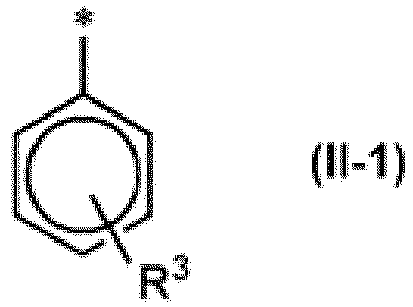 wobei R3 ein Wasserstoffatom, eine Aminogruppe, eine Carboxygruppe, eine Hydroxygruppe, eine Alkylgruppe oder eine Alkoxygruppe ist und * eine Bindung ist, und
 wobei R4 ein Wasserstoffatom, eine Aminogruppe, eine Carboxygruppe, eine Hydroxygruppe, eine Alkylgruppe oder eine Alkoxygruppe ist und * eine Bindung ist, oder(iii) eine Verbindung, dargestellt durch nachstehende Formel (III):
 (C) einen Strahlungspolymerisationsinitiator.
Applications Claiming Priority (2)
| Application Number | Priority Date | Filing Date | Title |
|---|---|---|---|
| JP2020005448 | 2020-01-16 | ||
| PCT/JP2021/001263 WO2021145433A1 (ja) | 2020-01-16 | 2021-01-15 | 放射線重合性組成物及びその硬化層、並びに硬化層を含む光ファイバ及びその製造方法 |
Publications (4)
| Publication Number | Publication Date |
|---|---|
| EP4092061A1 EP4092061A1 (de) | 2022-11-23 |
| EP4092061A4 EP4092061A4 (de) | 2024-02-21 |
| EP4092061C0 EP4092061C0 (de) | 2025-02-12 |
| EP4092061B1 true EP4092061B1 (de) | 2025-02-12 |
Family
ID=76863788
Family Applications (1)
| Application Number | Title | Priority Date | Filing Date |
|---|---|---|---|
| EP21741615.5A Active EP4092061B1 (de) | 2020-01-16 | 2021-01-15 | Strahlungspolymerisierbare zusammensetzung, gehärtete schicht derselben, optische faser, die die gehärtete schicht enthält, und herstellungsverfahren dafür |
Country Status (5)
| Country | Link |
|---|---|
| US (1) | US11697616B2 (de) |
| EP (1) | EP4092061B1 (de) |
| JP (1) | JP7308297B2 (de) |
| CN (1) | CN114981329B (de) |
| WO (1) | WO2021145433A1 (de) |
Family Cites Families (13)
| Publication number | Priority date | Publication date | Assignee | Title |
|---|---|---|---|---|
| JP2784325B2 (ja) * | 1994-06-28 | 1998-08-06 | 住友金属工業株式会社 | 高端面耐食性の着色潤滑処理亜鉛系めっき鋼板とその製法 |
| JPH08134156A (ja) | 1994-11-02 | 1996-05-28 | Sumitomo Chem Co Ltd | 光硬化性樹脂組成物 |
| JP2000344844A (ja) * | 1999-06-02 | 2000-12-12 | Shin Etsu Chem Co Ltd | 液状放射線硬化型樹脂組成物、光ファイバ用被覆組成物及び光ファイバ |
| US6872760B2 (en) * | 2003-02-06 | 2005-03-29 | Ppg Industries Ohio, Inc. | Radiation-curable composition for optical fiber coating materials |
| JP4401262B2 (ja) * | 2004-02-02 | 2010-01-20 | 富士フイルム株式会社 | 平版印刷版原版 |
| ATE423175T1 (de) * | 2006-12-05 | 2009-03-15 | Dsm Ip Assets Bv | Strahlungshärtbare beschichtungszusammensetzung |
| JP2012111924A (ja) * | 2009-12-28 | 2012-06-14 | Jsr Corp | 放射線硬化性樹脂組成物 |
| JP5788672B2 (ja) | 2009-12-28 | 2015-10-07 | Jsr株式会社 | 放射線硬化性樹脂組成物 |
| JP6699493B2 (ja) | 2016-10-03 | 2020-05-27 | 住友電気工業株式会社 | 光ファイバ心線 |
| EP3507318B1 (de) * | 2017-01-31 | 2022-11-09 | Hewlett-Packard Development Company, L.P. | Reaktive polyurethandispersionen |
| JP2019007992A (ja) * | 2017-06-20 | 2019-01-17 | 住友電気工業株式会社 | 光ファイバ及び光ファイバリボン |
| CN110958993B (zh) * | 2017-07-31 | 2022-06-28 | 住友电气工业株式会社 | 光纤及光纤的制造方法 |
| JP7192801B2 (ja) | 2018-01-12 | 2022-12-20 | 住友電気工業株式会社 | 紫外線硬化型樹脂組成物及び光ファイバ |
-
2021
- 2021-01-15 US US17/791,937 patent/US11697616B2/en active Active
- 2021-01-15 CN CN202180009638.XA patent/CN114981329B/zh active Active
- 2021-01-15 JP JP2021571264A patent/JP7308297B2/ja active Active
- 2021-01-15 WO PCT/JP2021/001263 patent/WO2021145433A1/ja not_active Ceased
- 2021-01-15 EP EP21741615.5A patent/EP4092061B1/de active Active
Also Published As
| Publication number | Publication date |
|---|---|
| EP4092061C0 (de) | 2025-02-12 |
| EP4092061A4 (de) | 2024-02-21 |
| CN114981329A (zh) | 2022-08-30 |
| WO2021145433A1 (ja) | 2021-07-22 |
| JPWO2021145433A1 (de) | 2021-07-22 |
| US11697616B2 (en) | 2023-07-11 |
| JP7308297B2 (ja) | 2023-07-13 |
| CN114981329B (zh) | 2024-06-21 |
| EP4092061A1 (de) | 2022-11-23 |
| US20230122926A1 (en) | 2023-04-20 |
Similar Documents
| Publication | Publication Date | Title |
|---|---|---|
| JP5788672B2 (ja) | 放射線硬化性樹脂組成物 | |
| KR101486123B1 (ko) | D1499 방사선 경화성 수지 조성물 | |
| KR100694911B1 (ko) | 액상 경화성 수지 조성물 및 이의 조성물로 코팅된 광섬유 | |
| US20110150410A1 (en) | Curable liquid composition, cured layer and coated optical fiber | |
| EP3825290A1 (de) | Strahlungshärtbare harzzusammensetzung | |
| JP2010235814A (ja) | 液状硬化性樹脂組成物 | |
| EP1487889B1 (de) | Härtbare flüssige harzzusammensetzung | |
| KR20070041670A (ko) | 경화성 액체 수지 조성물 | |
| WO2021020588A1 (en) | Radiation-curable resin composition and its cured product, and optical fiber | |
| JP2001181359A (ja) | 液状硬化性樹脂組成物およびその硬化物 | |
| EP1362016B1 (de) | Härtbare harzzusammensetzungen für glasfaserbeschichtungen und beschichtete produkte | |
| JP2017141126A (ja) | 放射線硬化性樹脂組成物 | |
| US12583789B2 (en) | Composition for forming coating layer of optical fiber and cured layer thereof, optical fiber having cured layer, and use thereof | |
| JP2010235813A (ja) | 液状硬化性樹脂組成物 | |
| JP2010235812A (ja) | 液状硬化性樹脂組成物 | |
| JP2017141125A (ja) | 放射線硬化性樹脂組成物 | |
| US11697616B2 (en) | Radiation polymerizable composition, cured layer of same, optical fiber containing cured layer and method for producing same | |
| JP5201792B2 (ja) | 液状硬化性樹脂組成物 | |
| JP5162525B2 (ja) | 液状硬化性樹脂組成物 | |
| JP4568516B2 (ja) | 液状硬化性樹脂組成物 | |
| JP7716208B2 (ja) | 光ファイバ被覆層形成用組成物及びその硬化層、並びに硬化層を有する光ファイバ及び光ファイバ被覆層形成用組成物の使用 | |
| JP2009197164A (ja) | 液状硬化性樹脂組成物 | |
| JP2007119705A (ja) | 液状硬化性樹脂組成物 | |
| JPH11302329A (ja) | 液状硬化性樹脂組成物、およびその硬化物 | |
| JP2009149794A (ja) | 液状硬化性樹脂組成物 |
Legal Events
| Date | Code | Title | Description |
|---|---|---|---|
| STAA | Information on the status of an ep patent application or granted ep patent |
Free format text: STATUS: THE INTERNATIONAL PUBLICATION HAS BEEN MADE |
|
| PUAI | Public reference made under article 153(3) epc to a published international application that has entered the european phase |
Free format text: ORIGINAL CODE: 0009012 |
|
| STAA | Information on the status of an ep patent application or granted ep patent |
Free format text: STATUS: REQUEST FOR EXAMINATION WAS MADE |
|
| 17P | Request for examination filed |
Effective date: 20220809 |
|
| AK | Designated contracting states |
Kind code of ref document: A1 Designated state(s): AL AT BE BG CH CY CZ DE DK EE ES FI FR GB GR HR HU IE IS IT LI LT LU LV MC MK MT NL NO PL PT RO RS SE SI SK SM TR |
|
| DAV | Request for validation of the european patent (deleted) | ||
| DAX | Request for extension of the european patent (deleted) | ||
| A4 | Supplementary search report drawn up and despatched |
Effective date: 20240118 |
|
| RIC1 | Information provided on ipc code assigned before grant |
Ipc: G02B 6/44 20060101ALI20240112BHEP Ipc: C03C 25/326 20180101ALI20240112BHEP Ipc: C03C 25/104 20180101ALI20240112BHEP Ipc: C08G 18/67 20060101ALI20240112BHEP Ipc: C08F 290/06 20060101AFI20240112BHEP |
|
| GRAP | Despatch of communication of intention to grant a patent |
Free format text: ORIGINAL CODE: EPIDOSNIGR1 |
|
| STAA | Information on the status of an ep patent application or granted ep patent |
Free format text: STATUS: GRANT OF PATENT IS INTENDED |
|
| INTG | Intention to grant announced |
Effective date: 20240913 |
|
| GRAS | Grant fee paid |
Free format text: ORIGINAL CODE: EPIDOSNIGR3 |
|
| GRAA | (expected) grant |
Free format text: ORIGINAL CODE: 0009210 |
|
| STAA | Information on the status of an ep patent application or granted ep patent |
Free format text: STATUS: THE PATENT HAS BEEN GRANTED |
|
| AK | Designated contracting states |
Kind code of ref document: B1 Designated state(s): AL AT BE BG CH CY CZ DE DK EE ES FI FR GB GR HR HU IE IS IT LI LT LU LV MC MK MT NL NO PL PT RO RS SE SI SK SM TR |
|
| REG | Reference to a national code |
Ref country code: GB Ref legal event code: FG4D |
|
| REG | Reference to a national code |
Ref country code: CH Ref legal event code: EP |
|
| REG | Reference to a national code |
Ref country code: DE Ref legal event code: R096 Ref document number: 602021026023 Country of ref document: DE |
|
| REG | Reference to a national code |
Ref country code: IE Ref legal event code: FG4D |
|
| U01 | Request for unitary effect filed |
Effective date: 20250218 |
|
| U07 | Unitary effect registered |
Designated state(s): AT BE BG DE DK EE FI FR IT LT LU LV MT NL PT RO SE SI Effective date: 20250226 |
|
| PG25 | Lapsed in a contracting state [announced via postgrant information from national office to epo] |
Ref country code: RS Free format text: LAPSE BECAUSE OF FAILURE TO SUBMIT A TRANSLATION OF THE DESCRIPTION OR TO PAY THE FEE WITHIN THE PRESCRIBED TIME-LIMIT Effective date: 20250512 |
|
| PG25 | Lapsed in a contracting state [announced via postgrant information from national office to epo] |
Ref country code: PL Free format text: LAPSE BECAUSE OF FAILURE TO SUBMIT A TRANSLATION OF THE DESCRIPTION OR TO PAY THE FEE WITHIN THE PRESCRIBED TIME-LIMIT Effective date: 20250212 |
|
| PG25 | Lapsed in a contracting state [announced via postgrant information from national office to epo] |
Ref country code: ES Free format text: LAPSE BECAUSE OF FAILURE TO SUBMIT A TRANSLATION OF THE DESCRIPTION OR TO PAY THE FEE WITHIN THE PRESCRIBED TIME-LIMIT Effective date: 20250212 |
|
| PG25 | Lapsed in a contracting state [announced via postgrant information from national office to epo] |
Ref country code: NO Free format text: LAPSE BECAUSE OF FAILURE TO SUBMIT A TRANSLATION OF THE DESCRIPTION OR TO PAY THE FEE WITHIN THE PRESCRIBED TIME-LIMIT Effective date: 20250512 Ref country code: IS Free format text: LAPSE BECAUSE OF FAILURE TO SUBMIT A TRANSLATION OF THE DESCRIPTION OR TO PAY THE FEE WITHIN THE PRESCRIBED TIME-LIMIT Effective date: 20250612 |
|
| PG25 | Lapsed in a contracting state [announced via postgrant information from national office to epo] |
Ref country code: HR Free format text: LAPSE BECAUSE OF FAILURE TO SUBMIT A TRANSLATION OF THE DESCRIPTION OR TO PAY THE FEE WITHIN THE PRESCRIBED TIME-LIMIT Effective date: 20250212 |
|
| PG25 | Lapsed in a contracting state [announced via postgrant information from national office to epo] |
Ref country code: GR Free format text: LAPSE BECAUSE OF FAILURE TO SUBMIT A TRANSLATION OF THE DESCRIPTION OR TO PAY THE FEE WITHIN THE PRESCRIBED TIME-LIMIT Effective date: 20250513 |
|
| PG25 | Lapsed in a contracting state [announced via postgrant information from national office to epo] |
Ref country code: SM Free format text: LAPSE BECAUSE OF FAILURE TO SUBMIT A TRANSLATION OF THE DESCRIPTION OR TO PAY THE FEE WITHIN THE PRESCRIBED TIME-LIMIT Effective date: 20250212 |
|
| PG25 | Lapsed in a contracting state [announced via postgrant information from national office to epo] |
Ref country code: CZ Free format text: LAPSE BECAUSE OF FAILURE TO SUBMIT A TRANSLATION OF THE DESCRIPTION OR TO PAY THE FEE WITHIN THE PRESCRIBED TIME-LIMIT Effective date: 20250212 |
|
| PG25 | Lapsed in a contracting state [announced via postgrant information from national office to epo] |
Ref country code: SK Free format text: LAPSE BECAUSE OF FAILURE TO SUBMIT A TRANSLATION OF THE DESCRIPTION OR TO PAY THE FEE WITHIN THE PRESCRIBED TIME-LIMIT Effective date: 20250212 |
|
| PLBE | No opposition filed within time limit |
Free format text: ORIGINAL CODE: 0009261 |
|
| STAA | Information on the status of an ep patent application or granted ep patent |
Free format text: STATUS: NO OPPOSITION FILED WITHIN TIME LIMIT |
|
| 26N | No opposition filed |
Effective date: 20251113 |
|
| U20 | Renewal fee for the european patent with unitary effect paid |
Year of fee payment: 6 Effective date: 20251218 |