EP4094379B1 - Manipulation de sr pour formation de faisceau analogique - Google Patents
Manipulation de sr pour formation de faisceau analogique Download PDFInfo
- Publication number
- EP4094379B1 EP4094379B1 EP21701306.9A EP21701306A EP4094379B1 EP 4094379 B1 EP4094379 B1 EP 4094379B1 EP 21701306 A EP21701306 A EP 21701306A EP 4094379 B1 EP4094379 B1 EP 4094379B1
- Authority
- EP
- European Patent Office
- Prior art keywords
- base station
- wide beam
- pucch
- periodic
- wide
- Prior art date
- Legal status (The legal status is an assumption and is not a legal conclusion. Google has not performed a legal analysis and makes no representation as to the accuracy of the status listed.)
- Active
Links
Images



Classifications
-
- H—ELECTRICITY
- H04—ELECTRIC COMMUNICATION TECHNIQUE
- H04B—TRANSMISSION
- H04B7/00—Radio transmission systems, i.e. using radiation field
- H04B7/02—Diversity systems; Multi-antenna system, i.e. transmission or reception using multiple antennas
- H04B7/04—Diversity systems; Multi-antenna system, i.e. transmission or reception using multiple antennas using two or more spaced independent antennas
- H04B7/06—Diversity systems; Multi-antenna system, i.e. transmission or reception using multiple antennas using two or more spaced independent antennas at the transmitting station
- H04B7/0613—Diversity systems; Multi-antenna system, i.e. transmission or reception using multiple antennas using two or more spaced independent antennas at the transmitting station using simultaneous transmission
- H04B7/0615—Diversity systems; Multi-antenna system, i.e. transmission or reception using multiple antennas using two or more spaced independent antennas at the transmitting station using simultaneous transmission of weighted versions of same signal
- H04B7/0617—Diversity systems; Multi-antenna system, i.e. transmission or reception using multiple antennas using two or more spaced independent antennas at the transmitting station using simultaneous transmission of weighted versions of same signal for beam forming
-
- H—ELECTRICITY
- H04—ELECTRIC COMMUNICATION TECHNIQUE
- H04B—TRANSMISSION
- H04B7/00—Radio transmission systems, i.e. using radiation field
- H04B7/02—Diversity systems; Multi-antenna system, i.e. transmission or reception using multiple antennas
- H04B7/04—Diversity systems; Multi-antenna system, i.e. transmission or reception using multiple antennas using two or more spaced independent antennas
- H04B7/08—Diversity systems; Multi-antenna system, i.e. transmission or reception using multiple antennas using two or more spaced independent antennas at the receiving station
- H04B7/0868—Hybrid systems, i.e. switching and combining
- H04B7/088—Hybrid systems, i.e. switching and combining using beam selection
-
- H—ELECTRICITY
- H04—ELECTRIC COMMUNICATION TECHNIQUE
- H04L—TRANSMISSION OF DIGITAL INFORMATION, e.g. TELEGRAPHIC COMMUNICATION
- H04L1/00—Arrangements for detecting or preventing errors in the information received
- H04L1/12—Arrangements for detecting or preventing errors in the information received by using return channel
- H04L1/16—Arrangements for detecting or preventing errors in the information received by using return channel in which the return channel carries supervisory signals, e.g. repetition request signals
- H04L1/18—Automatic repetition systems, e.g. Van Duuren systems
- H04L1/1829—Arrangements specially adapted for the receiver end
-
- H—ELECTRICITY
- H04—ELECTRIC COMMUNICATION TECHNIQUE
- H04W—WIRELESS COMMUNICATION NETWORKS
- H04W72/00—Local resource management
- H04W72/20—Control channels or signalling for resource management
- H04W72/21—Control channels or signalling for resource management in the uplink direction of a wireless link, i.e. towards the network
Definitions
- This invention is directed to methods and apparatus involving handing of scheduling requests in an analogue beam forming, ABF, based radio system.
- the invention is related to an ABF based Time Division Duplex, TDD, based 5G radio system.
- Slot n represents a Downlink, DL, slot where UE when decoding the PDCCH, 100, will receive DL data in PDSCH,101, and where UE will report feedback of the decoded result, ACK or NACK, in PUCCH, 103.
- Field, 105 illustrates that PDCCH will contain a field representing where PDSCH data will be received and, 106, illustrates that PDCCH will contain a second field controlling when PUCCH,103, will be transmitted.
- Slots n, n+1, n+2, n+4, n+5, n+6, represent DL slots, and slot n+3 and n+7 represents Uplink, UL, slots.
- PDCCH in slot n+3 comprise a PDCCH that represents an UL slot transmission.
- the PDCCH will contain a delay field, 107, which indicates when the PUSCH, 102, transmission will start in slot n+7.
- a phased array antenna will be used to define a number of semi-static beams.
- a plurality of narrow beams is arranged within each respective wide beam such that a wide beam serves a larger geographical area compared to a narrow beam.
- a narrow beam has a larger antenna gain compared to a wide beam.
- semi static is meant that the beams wide beams and narrow beams are typically fixed after the antennas have been mounted and adjusted.
- the beam will point at a certain direction towards the UE where the PDCCH,100, and PDSCH,101, are aimed for, whilst in slot n+1 the beam may be in the same direction or other direction dependent on which UE data is aimed for in that particular slot, and the same goes for slot n+2.
- the beam will first be set against the UE which may send data UL in PUSCH,102, and then possibly switch direction to a part in slot n+3 to receive data from the UE that was scheduled for transmission at this slot (not seen in figure).
- the beam will be set to receive PUCCH data from slot n, n+1 and n+2. If these slots represent data from different UE the beam will be changed between the PUCCH symbols.
- SchedulingRequestResourceConfig a set of configurations for SR transmission in a PUCCH using either PUCCH format 0 or PUCCH format 1.
- Chapter 9.2.5.1 states: "UE procedure for multiplexing HARQ-ACK or CSI and SR in a PUCCH.
- a UE is configured to transmit K PUCCHs for respective K SRs in a slot, as determined by a set of schedulingRequestResourceId, with SR transmission occasions that would overlap with a transmission of a PUCCH with HARQ-ACK information from the UE in the slot or with a transmission of a PUCCH with CSI report(s) from the UE in the slot.”
- the gNB sends downlink data to UE so that the ACK or NACK will be sent in the same slot as the periodic SR occurs in - AND - that the periodic SR-PUCCH overlaps in time when the ACK-NACK PUCCHs start symbol occurs in time - THEN - the SR (either 0 or 1) will be merged into the ACK-NACK message.
- a Buffer Status Report can be sent in a PUSCH (102) transmission. Since the BSR contains a better representation of the UE amount of pending data to send that outperforms the single bit representation that the scheduling request is capable of and when a BSR is sent the SR does not need to be sent (case c).
- a scheduling request can also be sent in a random-access opportunity. More exactly, the UE will use that if no periodic SR opportunities are configured (case d).
- PDCCH can be of different kinds. See 3GPP 38.212 V15.7.0 (2019-09), chapter 7.3.1 .
- PDCCH format 0_1 is used for PUSCH data transmission. Within that format the following exists as stated in 3GPP UL-SCH indicator - 1 bit. A value of "1" indicates UL-SCH shall be transmitted on the PUSCH and a value of "0" indicates UL-SCH shall not be transmitted on the PUSCH.
- a UE is not expected to receive a DCI format 0_1 with UL-SCH indicator of "0" and CSI request of all zero(s).
- the above 'UL-SCH indicator' allows for transmission of CSI data which can be seen as a form of layer 1 control information. With the flag set to "0" the gNB will not expect any UL-SCH data to be received.
- a HARQ protocol is used between gNB and UE. The details are specified in 3GPP TS 38.321 chapter 5.3.2.
- the purpose of the HARQ protocol is to recover from PDU decode failures in both directions by sending feedback (ACK/NACK) from receiver to transmitting side allowing for retransmission.
- Prior art document US 2018/0310257 A1 shows a method for a user equipment (UE) to determine a total power for transmissions in a cell group (CG) or a power for transmission of a channel or signal in a cell of a CG of a 5G system.
- the method comprises receiving configuration information for first and second CGs and for first and second maximum total powers for transmissions in the first and second CGs and determining first and second total powers for transmissions in the first and second CGs, respectively.
- the method also comprises receiving configuration information for a set of values for one or more parameters used to determine a power for transmission of a channel or signal in a cell of a CG and an indication for a value for each parameter from the one or more parameters.
- DL transmissions on the higher frequency band can be with narrow beamwidth.
- UL transmissions on the lower frequency band can be omni-directional (with wide beamwidth).
- a second operating scenario where a conventional mechanism for determining a PL for the purposes of UL power control is not sufficient occurs when a UE receives over a first narrow beamwidth and also transmits over a second narrow beamwidth where a location or size of the first beamwidth is different than a location or size of the second beamwidth.
- a second design for multiplexing HARQ-ACK and a single SR bit in a same PUCCH, in case of one or two HARQ-ACK bits is for the UE to use a resource configured for HARQ-ACK transmission when the UE does not have a positive SR and to use a resource configured for SR transmission when the UE has a positive SR.
- the handover command may include a set of dedicated and/or common PRACH resources that are associated with beams of the target cell.
- the dedicated PRACH resources if provided, will be associated with beams considered to be suitable, based on RRM measurements reported by the UE.
- D2 notes that. A sufficiently narrow beam should be formed with lots of antenna elements.
- the beamwidth correspondingly tends to be reduced, and hence the beam with the large directional antenna gain cannot cover the whole horizontal sector area specifically in a 3-sector configuration.
- One concept closely related to beam sweeping is the concept of beam pairing which is used to select the best beam pair between a UE and its serving cell, which can be used for control signaling or data transmission.
- the best beam pair may include a beam pair above a predetermined threshold.
- a beam pair will consist of UE RX beam and NR-Node TX beam while for uplink transmission, a beam pair will consist of UE TX beam and NR-Node RX beam.
- US2019/349962 A1 discloses a method for transmitting a scheduling request signal of a UE using a broad-beam rather than a narrow beam (a sharp beam or a fine beam) to a base station.
- a UE performs scheduling request transmission using a broad beam in the form of a sector beam without transmitting a final narrow beam.
- the broad beam may include upstream candidate beams of the UE.
- One or more scheduling request signals may be transmitted using a single sector beam on a single scheduling request resource.
- the UE performs scheduling request transmission using a broad beam in the form of a sector beam without transmitting a final narrow beam.
- the broad beam may include upstream candidate beams of the UE.
- One or more scheduling request signals may be received using a single sector beam on a single scheduling request resource.
- the scheduling request may reuse the typical single scheduling request resource allocation procedure.
- a sector beam used for transmitting the scheduling request has a form of a beam including a final beam.
- the UE generates a sector beam including a best beam of the UE and transmits a scheduling request using the generated beam. At this time, it is possible to perform repetitive transmission by 'Nx' for insufficient beam gain.
- a method for a base station, gNB communicating with a plurality of User Entities according to a Time Division Duplex, TDD, access scheme via antennas, the base station moreover being adapted for receiving Scheduling Requests, SRs, from the UEs, a SR indicating a request for scheduling an uplink transmission from a UE.
- the base station communicating over a plurality of antennas associated with respective wide beams and narrow beams, a plurality of wide beams, covering respective areas, whereby for each wide beam at least one narrow beam forms a joint area with a wide beam.
- the TDD scheme involving at least a Physical Uplink Shared Channel, PUSCH, the TDD scheme comprises periodically appearing SR occasions, the base station being adapted for receiving and decoding a transmission from a UE and establishing whether a SR from at least one UE is received in a periodic occasion, wherein the method moreover being adapted for
- the periodically appearing SR occasions are distributed in such a manner that they reappear in at least a same slot number and / or symbol position of a frame in a repetitive sequence of frames, in other words that the periodically appearing occasions are vertically aligned in the TDD scheme.
- the base station may be a 5G base station, gNodeB, and each periodically occurring SR occasion may be a periodic SR PUCCH.
- the base station is being adapted for using a wide beam for receiving and decoding at least one SR from a UE on the periodically occurring SR occasions.
- a periodic SR, 300 is provided on the PUSCH channel 102 shown in fig. 1 .
- the base station may be a 5G base station, gNB.
- the base station communicates with UEs via a number of wide beam antennas, WB1- WBn, and narrow beam antennas, NB (only a single narrow beam indicated for clarity of illustration).
- the wide beam antennas may be arranged into contiguous substantially non-overlapping areas.
- each wide beam may be further subdivided into a number of narrow beam areas.
- UEs may appear under any of these areas and processors, c.f. PCU_A, fig. 3 , are provided in the base station that are tracing the appearance of UE's under respective areas.
- the UE comprises a processor PCU_UE an interface IF_UE and a memory, MEM_UE, in which memory instructions are stored for carrying out the method steps explained above.
- the UE communicates via the interface IF_UE.
- the IF_UE comprises both an external interface, communicating with a transmitter and receiver, and internal interfaces (not shown).
- a base station such as a gNB, comprising a processor PCU_A, an interface IF_A; and a memory, MEM_A. Instructions are stored in the memory for being performed by the processor such that the method steps explained above are carried out and signalling is communicated on the interface.
- the above apparatuses / entities are adapted to communicate over known external telecom interfaces or via application programming interfaces, API, as appropriate.
- the TDD pattern comprises seven rows identical to the first row, where we after the last row return to the first row and the pattern repeats.
- a periodic SR e.g. 1 symbol, 300, may now be configured - confer fig. 1 - in any of the 'light shaded' (79, 3, PUSCH (102)) parts.
- Either the periodic SR is multiplexed in frequency with the existing content. If a SR is multiplexed, a problem will occur for the ABF in that the beam needs to serve a UE positioned in one location in the cell and a periodic SR for another UE positioned in another location in the cell. This can be seen as 'best effort' solution - gNB may be able to decode the SR.
- a wide beam is used thus enabling reception from an expanded number of UE's under the corresponding geographical area of the wide beam.
- multiple UE's can be configured within one and the same periodic SR symbol.
- the UE will be configured having an individual Physical Resource Block, PRB, and individual cyclic shift. Within a 100 MHz bandwidth this means 66*12 different UE's can be allocated, as further illustrated in fig. 5
- a wide beam is used each time a periodic SR occurs.
- a maximum amount of SR opportunities is provided, i.e. 14.
- an "adaptive wide beam switch scheme” is applied to use only those wide beams which serves UE's.
- the periodic SRs, 300 are only used for WB1, WB2 and WB6, I.e. the wide beam cycle is shortened, in order to shorten the delay when gNB decodes an SR from a UE.
- the UE will not know whether gNB decodes the SR that the UE transmits. For instance, the UE in fig. 4 may transmit periodic SRs 300 up to 7 times until gNB uses a correct wide beam and decodes the SR.
- a first aspect of a first embodiment of a method for the invention for selecting antenna beams for decoding a scheduling requests, SR, from a UE, is illustrated.
- the method proceeds to 609 in which HARQ-ACK PUCCH is decoded using a narrow beam, and if no, to 0104 in which a wide beam is selected from used wide beams.
- the method proceeds to 602. From 604, the method proceeds to 607, in which it is determined whether a single UE is falling within the coverage of the wide beam.
- all UE_ID's which exists from ACTIVE WIDEBEAM LIST for corresponding wide beam (step 303).
- Figs. 7 , 8 and 9 show aspects of a method for updating given UEs that appear within the coverage of a wide beam over time.
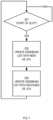
- 201 in fig. 7 , it is determined whether a start of a slot has been reached 201; and if no, await the start. If yes, proceed to 202 in which a wide beam list is updated with new UE IDs. Moreover, the wide beam list id updated with respect to released UEs 203. The method returns to 201.
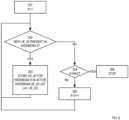
- a counter X is initiated with value 1, in 301.
- the method proceeds to 302 in which it is determined whether a new UE_ID is present within the coverage for a wide beam index X. If so, the new UE_ID for wide beam X is stored in an active wide beam list associated with wide beam X listing UE_IDs, 303. If no new UE_ID is encountered in 302, index X is incremented 305, insofar a MAX value corresponding to the number of wide beams has not been reached, 306.
- Steps 404 correspond to step 304, 405 to 305 and 406 to 306.
- the lists will indicate whether a single UE is occurring within a respective wide beam, which is resolved in 607 in fig. 6 .
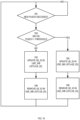
- step 701 mit is determined whether a new PUSCH is decoded.
- step 702 if yes to 701, it is determined whether the Signal to interference Ratio, SIR, on the PUSCH is lower than a threshold.
- a UE - designated by its UE_ID - is included (703) in a list of UEs for which a wide beam is to be used (USE_WB_LIST) and the UE is removed (704) from a list of UEs for which a narrow beam is to be used (USE_NB_ LIST),
- a UE - designated by its UE_ID - is included (705) in a list of UEs for which a narrow beam is to be used (USE_NB_LIST) and the UE is removed (706) from a list of UEs for which a wide beam is to be used (USE_WB_ LIST).
- the effect of the above aspects of embodiments of the invention is that UEs experiencing a below SIR threshold are reached by a narrow beam, whereas UEs having a SIR above the threshold are served by a wide beam having the effect that the wide beam is not overloaded. It is noted that a lower or equal to sign may be an option for the expression in 702.
- processing means comprises any circuit and/or device suitably adapted to perform the above functions.
- processing means comprises general- or special-purpose programmable microprocessors, Digital Signal Processors (DSP), Application Specific Integrated Circuits (ASIC), Programmable Logic Arrays (PLA), Field Programmable Gate Arrays (FPGA), special purpose electronic circuits, etc., or a combination thereof.
- the program code means may be loaded in a memory, such as a RAM (Random Access Memory), from a storage medium, such as a read-only memory (ROM) or other non-volatile memory, such as flash memory, or from another device via a suitable data interface, the described features may be implemented by hardwired circuitry instead of software or in combination with software.
- a memory such as a RAM (Random Access Memory)
- ROM read-only memory
- flash memory non-volatile memory
- the described features may be implemented by hardwired circuitry instead of software or in combination with software.
- a computer program or computer program product is provided carrying out the method steps defined above.
- NFVS network function virtualization system
- the methods discussed above may alternatively be implemented by means of a system based on network functions virtualization.
- NFVS network function virtualization system
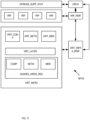
- the NFVS may be arranged along the lines described in Fig. 4 , ETSI GS NFV 002 V. 1.1.1 (2013-10) and comprises the following elements:
- a NFV management and orchestration system comprising an Orchestrator, ORCH, a VNF manager, VNF_MGR, and a virtualised Infrastructure manager, VIRT_INFRA MGR.
- the NFVS moreover comprises an operational / business support system, OP/BUSS_SUPP_SYST; a number of virtual network function instances, VNF, by which the method steps explained above are instantiated; and a virtualised infrastructure, VIRT _INFRA.
- the VIRT _INFRA comprises a virtual computing, VIRT_COMP, virtual network; VIRT_NETW, and virtual memory, VIRT_MEM, a virtualisation layer, VIRT_LAYER, (e.g. hypervisor) and shared hardware resources, SHARED_HARDW_RES comprising computing devices, COMP, network devices, NETW, comprising e.g. standard switches and other network devices, and standard data storage devices, MEM.
- the periodically appearing SR occasions may be distributed in such a manner that they reappear in at least a same slot number and / or symbol position of a frame in a repetitive sequence of frames, in other words such that the periodically appearing occasions are vertically aligned in the TDD scheme.
- the base station may be a 5G base station, gNodeB, gNB, and each periodically occurring SR occasion, 300, being a periodic SR PUCCH, 602.
- the base station may moreover be adapted for
- the base station may be
- multiple UE's, UE may be configured within one and the same periodic SR symbol, 300.
- a method is also provided further comprising
- a base station comprising a processor, PCU_A, an interface, IF_A, and a memory, MEM_A, adapted for communicating with a plurality of User Entities, UE, UE1, UE2 ac-cording to a Time Division Duplex, TDD, access scheme via antennas, the base station moreover being adapted for receiving Scheduling Requests, SRs, from the UEs, a SR indicating a request for scheduling an uplink transmission from a UE,
- the periodically appearing SR occasions may be distributed in such a manner that they reappear in at least a same slot number and / or symbol position of a frame in a repetitive sequence of frames, in other words, such that the periodically appearing occasions are vertically aligned in the TDD scheme.
- the base station may be a 5G base station, gNodeB, gNB, and each periodically occurring SR occasion, 300, being a periodic SR PUCCH, 602.
- the base station may be adapted for
- the base station may be adapted for, if a single UE does not appear under the wide beam, i.e. plural UEs under wide beam,
- the base station may be further adapted for, to handle multiple UE's, UE, be configured within one and the same periodic SR symbol, 300.
- the base station may further comprise
Landscapes
- Engineering & Computer Science (AREA)
- Computer Networks & Wireless Communication (AREA)
- Signal Processing (AREA)
- Mobile Radio Communication Systems (AREA)
Claims (14)
- Procédé pour une station de base (gNB) communiquant avec une pluralité d'Entités d'Utilisateur, UE, (UE1, UE2) selon un mécanisme d'accès à duplexage par répartition dans le temps, TDD, via des antennes, la station de base étant en outre adaptée pour recevoir des Requêtes de Programmation, SRS, des UEs, une SR indiquant une requête de programmation d'une transmission de liaison montante à partir d'un UE,la station de base communiquant sur une pluralité d'antennes associées à des faisceaux larges respectifs (WB1-WBn) et des faisceaux étroits (NB), une pluralité de faisceaux larges (WB, WB1-WBn) couvrant des zones respectives, moyennant quoi pour chaque faisceau large (WB1-WBn) au moins un faisceau étroit (NB) forme une zone commune avec un faisceau large (WB; WB1-WBn),le mécanisme TDD impliquant au moins un Canal Partagé Physique Montant, PUSCH, (102),le mécanisme TDD comprend des occasions SR se produisant périodiquement (300), la station de base étant adaptée pour recevoir et décoder une transmission d'un UE et établir si une SR d'au moins un UE est reçue dans une occasion périodique,caractérisé en ce quele procédé est adapté pour- déterminer (607) si au moins un UE apparaît sous un faisceau large, et
si un seul UE apparaît sous le faisceau large,- utiliser (613) un faisceau étroit (NB) à l'intérieur du faisceau large pour recevoir et décoder au moins un SR périodique reçu de l'UE sous ledit faisceau large. - Procédé selon la revendication 1, dans lequel les occasions SR se produisant périodiquement (300) sont réparties de telle manière qu'elles réapparaissent dans au moins un même numéro de tranche et/ou position de symbole d'une trame dans une séquence répétitive de trames.
- Procédé selon la revendication 1 ou 2, la station de base étant une station de base 5G, gNodeB (gNB), et chaque occasion SR se produisant périodiquement (300) étant un SR PUCCH périodique (602).
- Procédé selon une quelconque des revendications 1 à 3, dans lequel la station de base est adaptée pour- utiliser (611) un faisceau large (WB) pour recevoir et décoder au moins un SR à partir d'un UE lors des occasions SR se produisant périodiquement (300).
- Procédé selon les revendications 1 à 4, dans lequel, si un seul UE n'apparaît pas sous le faisceau large, c'est-à-dire si plusieurs UE apparaissent sous le faisceau large,- utiliser un faisceau large pour décoder le SR-PUCCH.
- Procédé selon les revendications 1 à 5, dans lequel plusieurs UEs (UE) peuvent être configurés dans un seul et même symbole SR périodique (300).
- Procédé selon une quelconque des revendications 4 à 6 comprenant en outre de- déterminer (603) si le SR-PUCCH périodique est multiplexé sur un message d'accusé de réception de demande de répétition automatique hybride, HARQ-ACK PUCCH, (602),- si oui à la détermination que le SR-PUCCH périodique est multiplexé sur un HARQ-ACK PUCCH - décoder (609) le HARQ-ACK PUCCH,- si non à la détermination que le SR-PUCCH périodique est multiplexé sur un HARQACK PUCCH - sélectionner (604) un faisceau large parmi les faisceaux larges utilisés.
- Station de base (gNB) comprenant un processeur (PCU_A), une interface (IF_A) et une mémoire, (MEM_A) adaptée pour communiquer avec une pluralité d'Entités d'Utilisateurs, UEs, (UE1, UE2) selon un mécanisme d'accèsà duplexage par répartition dans le temps, TDD, via des antennes, la station de base étant en outre adaptée pour recevoir des requêtes de programmation, SRS, des UEs, une SR indiquant une requête de programmation d'une transmission de liaison montante à partir d'un UE, la station de base communiquant sur une pluralité d'antennes associées à des faisceaux larges (WB1-WBn) et faisceaux étroits respectifs (NB), une pluralité de faisceaux larges (WB, WB1-WBn) couvrant des zones respectives, moyennant quoi pour chaque faisceau large (WB1-WBn) au moins un faisceau étroit (NB) forme une zone conjointe avec un faisceau large (WB; WB1-WBn),le mécanisme TDD impliquant au moins un Canal Partagé Physique Montant, PUSCH, (102),le mécanisme TDD comprend des occasions SR se produisant périodiquement (300), la station de base étant adaptée pour recevoir et décoder une transmission d'un UE et établir si une SR d'au moins un UE est reçue dans une occasion périodique,caractérisé en ce quela station de base est en outre adaptée pour- déterminer (607) si au moins un UE apparaît sous un faisceau large, et
si un seul UE apparaît sous le faisceau large,- utiliser (613) un faisceau étroit (NB) à l'intérieur du faisceau large pour recevoir et décoder au moins un SR périodique reçu de l'UE sous ledit faisceau large. - Station de base selon la revendication 8, dans laquelle les occasions SR se produisant périodiquement sont réparties de telle manière qu'elles réapparaissent dans au moins un même numéro de tranche et/ou position de symbole d'une trame dans une séquence répétitive de trames.
- Station de base selon la revendication 8 ou 9, la station de base étant une station de base 5G, gNodeB (gNB), et chaque occasion SR se produisant périodiquement (300) étant un SR PUCCH périodique (602) .
- Station de base selon une quelconque des revendications 8 - 10, dans laquelle la station de base est adaptée pour- utiliser (611) un faisceau large (WB) pour recevoir et décoder au moins un SR à partir d'un UE lors des occasions SR se produisant périodiquement (300).
- Station de base selon la revendication 9 - 11 dans laquelle, si un seul UE n'apparaît pas sous le faisceau large, c'est-à-dire si plusieurs UE apparaissent sous le faisceau large,- utiliser un faisceau large pour décoder le SR-PUCCH.
- Station de base selon une quelconque des revendications 9 - 12, dans laquelle plusieurs UEs (UE) peuvent être configurés dans un seul et même symbole SR périodique (300).
- Station de base selon une quelconque des revendications précédentes 12 - 13, comprenant en outre de- déterminer (603) si le SR-PUCCH périodique est multiplexé sur un message d'accusé de réception de demande de répétition automatique hybride, HARQ-ACK PUCCH, (602),- si oui à la détermination que le SR-PUCCH périodique est multiplexé sur un HARQ-ACK PUCCH - décoder (609) le HARQ-ACK PUCCH,- si non à la détermination que le SR-PUCCH périodique est multiplexé sur un HARQACK PUCCH - sélectionner (604) un faisceau large parmi les faisceaux larges utilisés.
Applications Claiming Priority (2)
| Application Number | Priority Date | Filing Date | Title |
|---|---|---|---|
| US202062963925P | 2020-01-21 | 2020-01-21 | |
| PCT/EP2021/051227 WO2021148485A1 (fr) | 2020-01-21 | 2021-01-20 | Manipulation de sr pour formation de faisceau analogique |
Publications (2)
| Publication Number | Publication Date |
|---|---|
| EP4094379A1 EP4094379A1 (fr) | 2022-11-30 |
| EP4094379B1 true EP4094379B1 (fr) | 2023-10-25 |
Family
ID=74205865
Family Applications (1)
| Application Number | Title | Priority Date | Filing Date |
|---|---|---|---|
| EP21701306.9A Active EP4094379B1 (fr) | 2020-01-21 | 2021-01-20 | Manipulation de sr pour formation de faisceau analogique |
Country Status (4)
| Country | Link |
|---|---|
| US (1) | US12028136B2 (fr) |
| EP (1) | EP4094379B1 (fr) |
| CN (1) | CN114982152B (fr) |
| WO (1) | WO2021148485A1 (fr) |
Family Cites Families (9)
| Publication number | Priority date | Publication date | Assignee | Title |
|---|---|---|---|---|
| WO2017127126A1 (fr) * | 2016-01-19 | 2017-07-27 | Intel IP Corporation | Dispositifs et procédés pour fournir une requête de liaison montante 5g |
| KR102130999B1 (ko) | 2016-11-04 | 2020-07-09 | 주식회사 케이티 | 무선 통신에서 멀티 빔 기반 스케줄링 요청을 수행하는 방법 및 장치 |
| US10412745B2 (en) * | 2016-11-30 | 2019-09-10 | Telefonaktiebolaget Lm Ericsson (Publ) | Peak-to-average power ratio reduction in multiuser MIMO systems |
| US20190349915A1 (en) * | 2017-01-03 | 2019-11-14 | Lg Electronics Inc. | Method for transmitting/receiving signals by using beams in wireless communication system, and device for same |
| US11140706B2 (en) * | 2017-02-01 | 2021-10-05 | Qualcomm Incorporated | Data transmissions during base station beamsweep |
| AU2017397007A1 (en) * | 2017-02-06 | 2019-08-29 | Telefonaktiebolaget Lm Ericsson (Publ) | CSI reporting on small control channels |
| US10548096B2 (en) * | 2017-04-21 | 2020-01-28 | Samsung Electronics Co., Ltd. | Information type multiplexing and power control |
| JP7319962B2 (ja) | 2017-08-10 | 2023-08-02 | アイピーエルエー ホールディングス インコーポレイテッド | 新無線におけるコネクテッドモードのモビリティ |
| US10505616B1 (en) * | 2018-06-01 | 2019-12-10 | Samsung Electronics Co., Ltd. | Method and apparatus for machine learning based wide beam optimization in cellular network |
-
2021
- 2021-01-20 EP EP21701306.9A patent/EP4094379B1/fr active Active
- 2021-01-20 WO PCT/EP2021/051227 patent/WO2021148485A1/fr not_active Ceased
- 2021-01-20 US US17/792,023 patent/US12028136B2/en active Active
- 2021-01-20 CN CN202180009708.1A patent/CN114982152B/zh active Active
Also Published As
| Publication number | Publication date |
|---|---|
| WO2021148485A1 (fr) | 2021-07-29 |
| EP4094379A1 (fr) | 2022-11-30 |
| CN114982152A (zh) | 2022-08-30 |
| US20230088907A1 (en) | 2023-03-23 |
| CN114982152B (zh) | 2025-09-19 |
| US12028136B2 (en) | 2024-07-02 |
Similar Documents
| Publication | Publication Date | Title |
|---|---|---|
| JP7399246B2 (ja) | フレキシブルアップリンク制御シグナリングのためのチャネル状態情報フィードバック | |
| CN115735347B (zh) | 针对子带全双工的时隙格式指示符(sfi)增强 | |
| CN115428355B (zh) | 侧行链路波束配置和指示 | |
| CN111095819B (zh) | 新无线电中的组公共控制信息的传输 | |
| CN110832790B (zh) | 用于发送波束故障恢复请求的系统和方法 | |
| EP4229901B1 (fr) | Mesure de canal et d'interférence à l'aide de ressources planifiées semi-persistantes dans une communication sans fil | |
| US11576061B2 (en) | Beam report for multi-stream communication | |
| US12335989B2 (en) | Channel state information reporting for half-duplex and full-duplex modes | |
| KR20220087542A (ko) | 전송채널의 구성 방법 및 장치, 전송채널의 송신 방법 및 장치, 설비 및 저장매체 | |
| EP3338393B1 (fr) | Réception de messages de commande de liaison montante multiples dans un même intervalle de temps | |
| EP4608040A2 (fr) | Gestion dynamique de ressources de signalisation de commande de liaison montante dans un réseau sans fil | |
| EP4093099A1 (fr) | Commande de la puissance de signal de référence de sondage pour système sans fil à entrées et sorties multiples | |
| EP3739787B1 (fr) | Transmission et réception des informations de commande de liaison montante | |
| EP3673585B1 (fr) | Procédé et dispositif de commande de transmission de formation de faisceaux | |
| CN116746076A (zh) | 接收用于无线设备之间的通信的空间配置指示 | |
| CN103703848A (zh) | 无线基站和通信控制方法 | |
| CN111757469B (zh) | 一种波束失败的处理方法及装置 | |
| JP2023522745A (ja) | 端末装置、ネットワーク装置及び通信のための方法 | |
| EP4094379B1 (fr) | Manipulation de sr pour formation de faisceau analogique | |
| CN114175712B (zh) | 使与波束切换相关联的误块率(bler)最小化 | |
| CN116472681A (zh) | 频带之间的辅助式波束管理 | |
| CN115004576B (zh) | 用于有效的可靠且低等待时间通信的空间分集报告 | |
| EP4557843A1 (fr) | Système et procédé de distribution d'énergie dans un système à antennes multiples | |
| JP6857538B2 (ja) | 無線基地局 | |
| HK40017271B (en) | Transmission of uplink control information in new radio |
Legal Events
| Date | Code | Title | Description |
|---|---|---|---|
| STAA | Information on the status of an ep patent application or granted ep patent |
Free format text: STATUS: UNKNOWN |
|
| STAA | Information on the status of an ep patent application or granted ep patent |
Free format text: STATUS: THE INTERNATIONAL PUBLICATION HAS BEEN MADE |
|
| PUAI | Public reference made under article 153(3) epc to a published international application that has entered the european phase |
Free format text: ORIGINAL CODE: 0009012 |
|
| STAA | Information on the status of an ep patent application or granted ep patent |
Free format text: STATUS: REQUEST FOR EXAMINATION WAS MADE |
|
| 17P | Request for examination filed |
Effective date: 20220729 |
|
| AK | Designated contracting states |
Kind code of ref document: A1 Designated state(s): AL AT BE BG CH CY CZ DE DK EE ES FI FR GB GR HR HU IE IS IT LI LT LU LV MC MK MT NL NO PL PT RO RS SE SI SK SM TR |
|
| DAV | Request for validation of the european patent (deleted) | ||
| DAX | Request for extension of the european patent (deleted) | ||
| GRAP | Despatch of communication of intention to grant a patent |
Free format text: ORIGINAL CODE: EPIDOSNIGR1 |
|
| STAA | Information on the status of an ep patent application or granted ep patent |
Free format text: STATUS: GRANT OF PATENT IS INTENDED |
|
| INTG | Intention to grant announced |
Effective date: 20230602 |
|
| GRAS | Grant fee paid |
Free format text: ORIGINAL CODE: EPIDOSNIGR3 |
|
| GRAA | (expected) grant |
Free format text: ORIGINAL CODE: 0009210 |
|
| STAA | Information on the status of an ep patent application or granted ep patent |
Free format text: STATUS: THE PATENT HAS BEEN GRANTED |
|
| AK | Designated contracting states |
Kind code of ref document: B1 Designated state(s): AL AT BE BG CH CY CZ DE DK EE ES FI FR GB GR HR HU IE IS IT LI LT LU LV MC MK MT NL NO PL PT RO RS SE SI SK SM TR |
|
| REG | Reference to a national code |
Ref country code: GB Ref legal event code: FG4D |
|
| REG | Reference to a national code |
Ref country code: CH Ref legal event code: EP |
|
| REG | Reference to a national code |
Ref country code: DE Ref legal event code: R096 Ref document number: 602021006226 Country of ref document: DE |
|
| REG | Reference to a national code |
Ref country code: IE Ref legal event code: FG4D |
|
| REG | Reference to a national code |
Ref country code: LT Ref legal event code: MG9D |
|
| REG | Reference to a national code |
Ref country code: NL Ref legal event code: MP Effective date: 20231025 |
|
| REG | Reference to a national code |
Ref country code: AT Ref legal event code: MK05 Ref document number: 1625720 Country of ref document: AT Kind code of ref document: T Effective date: 20231025 |
|
| PG25 | Lapsed in a contracting state [announced via postgrant information from national office to epo] |
Ref country code: NL Free format text: LAPSE BECAUSE OF FAILURE TO SUBMIT A TRANSLATION OF THE DESCRIPTION OR TO PAY THE FEE WITHIN THE PRESCRIBED TIME-LIMIT Effective date: 20231025 |
|
| PG25 | Lapsed in a contracting state [announced via postgrant information from national office to epo] |
Ref country code: GR Free format text: LAPSE BECAUSE OF FAILURE TO SUBMIT A TRANSLATION OF THE DESCRIPTION OR TO PAY THE FEE WITHIN THE PRESCRIBED TIME-LIMIT Effective date: 20240126 |
|
| PG25 | Lapsed in a contracting state [announced via postgrant information from national office to epo] |
Ref country code: IS Free format text: LAPSE BECAUSE OF FAILURE TO SUBMIT A TRANSLATION OF THE DESCRIPTION OR TO PAY THE FEE WITHIN THE PRESCRIBED TIME-LIMIT Effective date: 20240225 |
|
| PG25 | Lapsed in a contracting state [announced via postgrant information from national office to epo] |
Ref country code: LT Free format text: LAPSE BECAUSE OF FAILURE TO SUBMIT A TRANSLATION OF THE DESCRIPTION OR TO PAY THE FEE WITHIN THE PRESCRIBED TIME-LIMIT Effective date: 20231025 |
|
| PG25 | Lapsed in a contracting state [announced via postgrant information from national office to epo] |
Ref country code: AT Free format text: LAPSE BECAUSE OF FAILURE TO SUBMIT A TRANSLATION OF THE DESCRIPTION OR TO PAY THE FEE WITHIN THE PRESCRIBED TIME-LIMIT Effective date: 20231025 |
|
| PG25 | Lapsed in a contracting state [announced via postgrant information from national office to epo] |
Ref country code: ES Free format text: LAPSE BECAUSE OF FAILURE TO SUBMIT A TRANSLATION OF THE DESCRIPTION OR TO PAY THE FEE WITHIN THE PRESCRIBED TIME-LIMIT Effective date: 20231025 |
|
| PG25 | Lapsed in a contracting state [announced via postgrant information from national office to epo] |
Ref country code: LT Free format text: LAPSE BECAUSE OF FAILURE TO SUBMIT A TRANSLATION OF THE DESCRIPTION OR TO PAY THE FEE WITHIN THE PRESCRIBED TIME-LIMIT Effective date: 20231025 Ref country code: IS Free format text: LAPSE BECAUSE OF FAILURE TO SUBMIT A TRANSLATION OF THE DESCRIPTION OR TO PAY THE FEE WITHIN THE PRESCRIBED TIME-LIMIT Effective date: 20240225 Ref country code: GR Free format text: LAPSE BECAUSE OF FAILURE TO SUBMIT A TRANSLATION OF THE DESCRIPTION OR TO PAY THE FEE WITHIN THE PRESCRIBED TIME-LIMIT Effective date: 20240126 Ref country code: ES Free format text: LAPSE BECAUSE OF FAILURE TO SUBMIT A TRANSLATION OF THE DESCRIPTION OR TO PAY THE FEE WITHIN THE PRESCRIBED TIME-LIMIT Effective date: 20231025 Ref country code: BG Free format text: LAPSE BECAUSE OF FAILURE TO SUBMIT A TRANSLATION OF THE DESCRIPTION OR TO PAY THE FEE WITHIN THE PRESCRIBED TIME-LIMIT Effective date: 20240125 Ref country code: AT Free format text: LAPSE BECAUSE OF FAILURE TO SUBMIT A TRANSLATION OF THE DESCRIPTION OR TO PAY THE FEE WITHIN THE PRESCRIBED TIME-LIMIT Effective date: 20231025 Ref country code: PT Free format text: LAPSE BECAUSE OF FAILURE TO SUBMIT A TRANSLATION OF THE DESCRIPTION OR TO PAY THE FEE WITHIN THE PRESCRIBED TIME-LIMIT Effective date: 20240226 |
|
| PG25 | Lapsed in a contracting state [announced via postgrant information from national office to epo] |
Ref country code: SE Free format text: LAPSE BECAUSE OF FAILURE TO SUBMIT A TRANSLATION OF THE DESCRIPTION OR TO PAY THE FEE WITHIN THE PRESCRIBED TIME-LIMIT Effective date: 20231025 Ref country code: RS Free format text: LAPSE BECAUSE OF FAILURE TO SUBMIT A TRANSLATION OF THE DESCRIPTION OR TO PAY THE FEE WITHIN THE PRESCRIBED TIME-LIMIT Effective date: 20231025 Ref country code: PL Free format text: LAPSE BECAUSE OF FAILURE TO SUBMIT A TRANSLATION OF THE DESCRIPTION OR TO PAY THE FEE WITHIN THE PRESCRIBED TIME-LIMIT Effective date: 20231025 Ref country code: NO Free format text: LAPSE BECAUSE OF FAILURE TO SUBMIT A TRANSLATION OF THE DESCRIPTION OR TO PAY THE FEE WITHIN THE PRESCRIBED TIME-LIMIT Effective date: 20240125 Ref country code: LV Free format text: LAPSE BECAUSE OF FAILURE TO SUBMIT A TRANSLATION OF THE DESCRIPTION OR TO PAY THE FEE WITHIN THE PRESCRIBED TIME-LIMIT Effective date: 20231025 Ref country code: HR Free format text: LAPSE BECAUSE OF FAILURE TO SUBMIT A TRANSLATION OF THE DESCRIPTION OR TO PAY THE FEE WITHIN THE PRESCRIBED TIME-LIMIT Effective date: 20231025 |
|
| PG25 | Lapsed in a contracting state [announced via postgrant information from national office to epo] |
Ref country code: DK Free format text: LAPSE BECAUSE OF FAILURE TO SUBMIT A TRANSLATION OF THE DESCRIPTION OR TO PAY THE FEE WITHIN THE PRESCRIBED TIME-LIMIT Effective date: 20231025 |
|
| PG25 | Lapsed in a contracting state [announced via postgrant information from national office to epo] |
Ref country code: CZ Free format text: LAPSE BECAUSE OF FAILURE TO SUBMIT A TRANSLATION OF THE DESCRIPTION OR TO PAY THE FEE WITHIN THE PRESCRIBED TIME-LIMIT Effective date: 20231025 |
|
| REG | Reference to a national code |
Ref country code: DE Ref legal event code: R097 Ref document number: 602021006226 Country of ref document: DE |
|
| PG25 | Lapsed in a contracting state [announced via postgrant information from national office to epo] |
Ref country code: SK Free format text: LAPSE BECAUSE OF FAILURE TO SUBMIT A TRANSLATION OF THE DESCRIPTION OR TO PAY THE FEE WITHIN THE PRESCRIBED TIME-LIMIT Effective date: 20231025 |
|
| PG25 | Lapsed in a contracting state [announced via postgrant information from national office to epo] |
Ref country code: SM Free format text: LAPSE BECAUSE OF FAILURE TO SUBMIT A TRANSLATION OF THE DESCRIPTION OR TO PAY THE FEE WITHIN THE PRESCRIBED TIME-LIMIT Effective date: 20231025 Ref country code: SK Free format text: LAPSE BECAUSE OF FAILURE TO SUBMIT A TRANSLATION OF THE DESCRIPTION OR TO PAY THE FEE WITHIN THE PRESCRIBED TIME-LIMIT Effective date: 20231025 Ref country code: RO Free format text: LAPSE BECAUSE OF FAILURE TO SUBMIT A TRANSLATION OF THE DESCRIPTION OR TO PAY THE FEE WITHIN THE PRESCRIBED TIME-LIMIT Effective date: 20231025 Ref country code: IT Free format text: LAPSE BECAUSE OF FAILURE TO SUBMIT A TRANSLATION OF THE DESCRIPTION OR TO PAY THE FEE WITHIN THE PRESCRIBED TIME-LIMIT Effective date: 20231025 Ref country code: EE Free format text: LAPSE BECAUSE OF FAILURE TO SUBMIT A TRANSLATION OF THE DESCRIPTION OR TO PAY THE FEE WITHIN THE PRESCRIBED TIME-LIMIT Effective date: 20231025 Ref country code: DK Free format text: LAPSE BECAUSE OF FAILURE TO SUBMIT A TRANSLATION OF THE DESCRIPTION OR TO PAY THE FEE WITHIN THE PRESCRIBED TIME-LIMIT Effective date: 20231025 Ref country code: CZ Free format text: LAPSE BECAUSE OF FAILURE TO SUBMIT A TRANSLATION OF THE DESCRIPTION OR TO PAY THE FEE WITHIN THE PRESCRIBED TIME-LIMIT Effective date: 20231025 |
|
| PG25 | Lapsed in a contracting state [announced via postgrant information from national office to epo] |
Ref country code: MC Free format text: LAPSE BECAUSE OF FAILURE TO SUBMIT A TRANSLATION OF THE DESCRIPTION OR TO PAY THE FEE WITHIN THE PRESCRIBED TIME-LIMIT Effective date: 20231025 |
|
| PG25 | Lapsed in a contracting state [announced via postgrant information from national office to epo] |
Ref country code: MC Free format text: LAPSE BECAUSE OF FAILURE TO SUBMIT A TRANSLATION OF THE DESCRIPTION OR TO PAY THE FEE WITHIN THE PRESCRIBED TIME-LIMIT Effective date: 20231025 |
|
| PLBE | No opposition filed within time limit |
Free format text: ORIGINAL CODE: 0009261 |
|
| REG | Reference to a national code |
Ref country code: CH Ref legal event code: PL |
|
| STAA | Information on the status of an ep patent application or granted ep patent |
Free format text: STATUS: NO OPPOSITION FILED WITHIN TIME LIMIT |
|
| PG25 | Lapsed in a contracting state [announced via postgrant information from national office to epo] |
Ref country code: LU Free format text: LAPSE BECAUSE OF NON-PAYMENT OF DUE FEES Effective date: 20240120 |
|
| PG25 | Lapsed in a contracting state [announced via postgrant information from national office to epo] |
Ref country code: LU Free format text: LAPSE BECAUSE OF NON-PAYMENT OF DUE FEES Effective date: 20240120 |
|
| 26N | No opposition filed |
Effective date: 20240726 |
|
| PG25 | Lapsed in a contracting state [announced via postgrant information from national office to epo] |
Ref country code: BE Free format text: LAPSE BECAUSE OF NON-PAYMENT OF DUE FEES Effective date: 20240131 |
|
| PG25 | Lapsed in a contracting state [announced via postgrant information from national office to epo] |
Ref country code: FR Free format text: LAPSE BECAUSE OF NON-PAYMENT OF DUE FEES Effective date: 20240131 |
|
| PG25 | Lapsed in a contracting state [announced via postgrant information from national office to epo] |
Ref country code: CH Free format text: LAPSE BECAUSE OF NON-PAYMENT OF DUE FEES Effective date: 20240131 |
|
| PG25 | Lapsed in a contracting state [announced via postgrant information from national office to epo] |
Ref country code: SI Free format text: LAPSE BECAUSE OF FAILURE TO SUBMIT A TRANSLATION OF THE DESCRIPTION OR TO PAY THE FEE WITHIN THE PRESCRIBED TIME-LIMIT Effective date: 20231025 |
|
| PG25 | Lapsed in a contracting state [announced via postgrant information from national office to epo] |
Ref country code: SI Free format text: LAPSE BECAUSE OF FAILURE TO SUBMIT A TRANSLATION OF THE DESCRIPTION OR TO PAY THE FEE WITHIN THE PRESCRIBED TIME-LIMIT Effective date: 20231025 Ref country code: FR Free format text: LAPSE BECAUSE OF NON-PAYMENT OF DUE FEES Effective date: 20240131 Ref country code: CH Free format text: LAPSE BECAUSE OF NON-PAYMENT OF DUE FEES Effective date: 20240131 Ref country code: BE Free format text: LAPSE BECAUSE OF NON-PAYMENT OF DUE FEES Effective date: 20240131 |
|
| REG | Reference to a national code |
Ref country code: BE Ref legal event code: MM Effective date: 20240131 |
|
| PG25 | Lapsed in a contracting state [announced via postgrant information from national office to epo] |
Ref country code: IE Free format text: LAPSE BECAUSE OF NON-PAYMENT OF DUE FEES Effective date: 20240120 |
|
| PG25 | Lapsed in a contracting state [announced via postgrant information from national office to epo] |
Ref country code: IE Free format text: LAPSE BECAUSE OF NON-PAYMENT OF DUE FEES Effective date: 20240120 |
|
| PG25 | Lapsed in a contracting state [announced via postgrant information from national office to epo] |
Ref country code: CY Free format text: LAPSE BECAUSE OF FAILURE TO SUBMIT A TRANSLATION OF THE DESCRIPTION OR TO PAY THE FEE WITHIN THE PRESCRIBED TIME-LIMIT; INVALID AB INITIO Effective date: 20210120 |
|
| PG25 | Lapsed in a contracting state [announced via postgrant information from national office to epo] |
Ref country code: HU Free format text: LAPSE BECAUSE OF FAILURE TO SUBMIT A TRANSLATION OF THE DESCRIPTION OR TO PAY THE FEE WITHIN THE PRESCRIBED TIME-LIMIT; INVALID AB INITIO Effective date: 20210120 |
|
| PG25 | Lapsed in a contracting state [announced via postgrant information from national office to epo] |
Ref country code: FI Free format text: LAPSE BECAUSE OF FAILURE TO SUBMIT A TRANSLATION OF THE DESCRIPTION OR TO PAY THE FEE WITHIN THE PRESCRIBED TIME-LIMIT Effective date: 20231025 |
|
| PG25 | Lapsed in a contracting state [announced via postgrant information from national office to epo] |
Ref country code: TR Free format text: LAPSE BECAUSE OF FAILURE TO SUBMIT A TRANSLATION OF THE DESCRIPTION OR TO PAY THE FEE WITHIN THE PRESCRIBED TIME-LIMIT Effective date: 20231025 |
|
| PGFP | Annual fee paid to national office [announced via postgrant information from national office to epo] |
Ref country code: GB Payment date: 20260127 Year of fee payment: 6 |
|
| PGFP | Annual fee paid to national office [announced via postgrant information from national office to epo] |
Ref country code: DE Payment date: 20260128 Year of fee payment: 6 |