EP4095184A1 - Procédé de préparation d'un polymère superabsorbant - Google Patents
Procédé de préparation d'un polymère superabsorbant Download PDFInfo
- Publication number
- EP4095184A1 EP4095184A1 EP21911571.4A EP21911571A EP4095184A1 EP 4095184 A1 EP4095184 A1 EP 4095184A1 EP 21911571 A EP21911571 A EP 21911571A EP 4095184 A1 EP4095184 A1 EP 4095184A1
- Authority
- EP
- European Patent Office
- Prior art keywords
- reassembly
- fine
- super absorbent
- absorbent polymer
- weight
- Prior art date
- Legal status (The legal status is an assumption and is not a legal conclusion. Google has not performed a legal analysis and makes no representation as to the accuracy of the status listed.)
- Granted
Links
Images


Classifications
-
- B—PERFORMING OPERATIONS; TRANSPORTING
- B01—PHYSICAL OR CHEMICAL PROCESSES OR APPARATUS IN GENERAL
- B01J—CHEMICAL OR PHYSICAL PROCESSES, e.g. CATALYSIS OR COLLOID CHEMISTRY; THEIR RELEVANT APPARATUS
- B01J20/00—Solid sorbent compositions or filter aid compositions; Sorbents for chromatography; Processes for preparing, regenerating or reactivating thereof
- B01J20/22—Solid sorbent compositions or filter aid compositions; Sorbents for chromatography; Processes for preparing, regenerating or reactivating thereof comprising organic material
- B01J20/26—Synthetic macromolecular compounds
- B01J20/265—Synthetic macromolecular compounds modified or post-treated polymers
- B01J20/267—Cross-linked polymers
-
- C—CHEMISTRY; METALLURGY
- C08—ORGANIC MACROMOLECULAR COMPOUNDS; THEIR PREPARATION OR CHEMICAL WORKING-UP; COMPOSITIONS BASED THEREON
- C08J—WORKING-UP; GENERAL PROCESSES OF COMPOUNDING; AFTER-TREATMENT NOT COVERED BY SUBCLASSES C08B, C08C, C08F, C08G or C08H
- C08J3/00—Processes of treating or compounding macromolecular substances
- C08J3/12—Powdering or granulating
-
- B—PERFORMING OPERATIONS; TRANSPORTING
- B01—PHYSICAL OR CHEMICAL PROCESSES OR APPARATUS IN GENERAL
- B01J—CHEMICAL OR PHYSICAL PROCESSES, e.g. CATALYSIS OR COLLOID CHEMISTRY; THEIR RELEVANT APPARATUS
- B01J20/00—Solid sorbent compositions or filter aid compositions; Sorbents for chromatography; Processes for preparing, regenerating or reactivating thereof
- B01J20/30—Processes for preparing, regenerating, or reactivating
- B01J20/32—Impregnating or coating ; Solid sorbent compositions obtained from processes involving impregnating or coating
- B01J20/3231—Impregnating or coating ; Solid sorbent compositions obtained from processes involving impregnating or coating characterised by the coating or impregnating layer
- B01J20/3242—Layers with a functional group, e.g. an affinity material, a ligand, a reactant or a complexing group
- B01J20/3268—Macromolecular compounds
- B01J20/328—Polymers on the carrier being further modified
- B01J20/3282—Crosslinked polymers
-
- C—CHEMISTRY; METALLURGY
- C08—ORGANIC MACROMOLECULAR COMPOUNDS; THEIR PREPARATION OR CHEMICAL WORKING-UP; COMPOSITIONS BASED THEREON
- C08F—MACROMOLECULAR COMPOUNDS OBTAINED BY REACTIONS ONLY INVOLVING CARBON-TO-CARBON UNSATURATED BONDS
- C08F220/00—Copolymers of compounds having one or more unsaturated aliphatic radicals, each having only one carbon-to-carbon double bond, and only one being terminated by only one carboxyl radical or a salt, anhydride ester, amide, imide or nitrile thereof
- C08F220/02—Monocarboxylic acids having less than ten carbon atoms; Derivatives thereof
- C08F220/04—Acids; Metal salts or ammonium salts thereof
- C08F220/06—Acrylic acid; Methacrylic acid; Metal salts or ammonium salts thereof
-
- C—CHEMISTRY; METALLURGY
- C08—ORGANIC MACROMOLECULAR COMPOUNDS; THEIR PREPARATION OR CHEMICAL WORKING-UP; COMPOSITIONS BASED THEREON
- C08F—MACROMOLECULAR COMPOUNDS OBTAINED BY REACTIONS ONLY INVOLVING CARBON-TO-CARBON UNSATURATED BONDS
- C08F6/00—Post-polymerisation treatments
- C08F6/008—Treatment of solid polymer wetted by water or organic solvents, e.g. coagulum, filter cakes
-
- C—CHEMISTRY; METALLURGY
- C08—ORGANIC MACROMOLECULAR COMPOUNDS; THEIR PREPARATION OR CHEMICAL WORKING-UP; COMPOSITIONS BASED THEREON
- C08J—WORKING-UP; GENERAL PROCESSES OF COMPOUNDING; AFTER-TREATMENT NOT COVERED BY SUBCLASSES C08B, C08C, C08F, C08G or C08H
- C08J3/00—Processes of treating or compounding macromolecular substances
- C08J3/24—Crosslinking, e.g. vulcanising, of macromolecules
- C08J3/245—Differential crosslinking of one polymer with one crosslinking type, e.g. surface crosslinking
-
- B—PERFORMING OPERATIONS; TRANSPORTING
- B01—PHYSICAL OR CHEMICAL PROCESSES OR APPARATUS IN GENERAL
- B01J—CHEMICAL OR PHYSICAL PROCESSES, e.g. CATALYSIS OR COLLOID CHEMISTRY; THEIR RELEVANT APPARATUS
- B01J2220/00—Aspects relating to sorbent materials
- B01J2220/50—Aspects relating to the use of sorbent or filter aid materials
- B01J2220/68—Superabsorbents
-
- C—CHEMISTRY; METALLURGY
- C08—ORGANIC MACROMOLECULAR COMPOUNDS; THEIR PREPARATION OR CHEMICAL WORKING-UP; COMPOSITIONS BASED THEREON
- C08J—WORKING-UP; GENERAL PROCESSES OF COMPOUNDING; AFTER-TREATMENT NOT COVERED BY SUBCLASSES C08B, C08C, C08F, C08G or C08H
- C08J2333/00—Characterised by the use of homopolymers or copolymers of compounds having one or more unsaturated aliphatic radicals, each having only one carbon-to-carbon double bond, and only one being terminated by only one carboxyl radical, or of salts, anhydrides, esters, amides, imides, or nitriles thereof; Derivatives of such polymers
- C08J2333/02—Homopolymers or copolymers of acids; Metal or ammonium salts thereof
-
- C—CHEMISTRY; METALLURGY
- C08—ORGANIC MACROMOLECULAR COMPOUNDS; THEIR PREPARATION OR CHEMICAL WORKING-UP; COMPOSITIONS BASED THEREON
- C08L—COMPOSITIONS OF MACROMOLECULAR COMPOUNDS
- C08L101/00—Compositions of unspecified macromolecular compounds
- C08L101/12—Compositions of unspecified macromolecular compounds characterised by physical features, e.g. anisotropy, viscosity or electrical conductivity
- C08L101/14—Compositions of unspecified macromolecular compounds characterised by physical features, e.g. anisotropy, viscosity or electrical conductivity the macromolecular compounds being water soluble or water swellable, e.g. aqueous gels
Definitions
- the present disclosure relates to a method for preparing a super absorbent polymer. More specifically, it relates to a method for preparing a super absorbent polymer capable of improving drying efficiency, reducing a generation amount of re-fines, and simultaneously improving absorption performance, in particular, absorption under pressure and permeability of the finally prepared super absorbent polymer by controlling granulation strength of the extruded fine reassembly.
- a super absorbent polymer is a type of synthetic polymeric material capable of absorbing 500 to 1000 times its own weight of moisture.
- Such super absorbent polymers started to be practically applied in sanitary products, and they are now being widely used not only for hygiene products such as disposable diapers for children, etc., but also for water retaining soil products for gardening, water stop materials for the civil engineering and construction, sheets for raising seedling, fresh-keeping agents for food distribution fields, materials for poultices, or the like.
- An absorption mechanism of the super absorbent polymer is governed by interaction of penetration pressure due to the difference in electrical attraction caused by charges of a polymer electrolyte, affinity between water and a polymer electrolyte, molecular expansion due to repulsion between polymer electrolyte ions, and inhibition of expansion due to cross-linking.
- water absorbency of the super absorbent polymer depends on the affinity and molecular expansion, and an absorption rate is largely dependent on the osmotic pressure of the absorbent polymer itself.
- the fines separated in the preparation of the super absorbent polymer are reassembled into large particles by a reassembly process, and then manufactured and used as a super absorbent polymer.
- a representative method of the reassembly method there is a method of agglomeration by mixing the fines with water.
- the present invention has the following characteristics: a polycarboxylic acid-based copolymer is added in the preparation of a fine reassembly, a process for preparing an extruded fine reassembly by extrusion is further performed on the fine reassembly after the preparation of the fine reassembly, and granulation strength of the prepared extruded fine reassembly is adjusted by controlling the amount of water input in the preparation of the fine reassembly and the extruded fine reassembly.
- drying efficiency can be improved during the subsequent drying process, a generation amount of re-fines can be reduced, and as a result, absorption performance, particularly absorption under pressure and permeability, of the finally prepared super absorbent polymer can be improved.
- step 1 is a step of preparing a hydrogel polymer.
- the water-soluble ethylene-based unsaturated monomer may be any monomer commonly used in the preparation of a super absorbent polymer. Specifically, the water-soluble ethylene-based unsaturated monomer may have acidic groups, and some of the acidic groups may be neutralized by a neutralizing agent.
- the water-soluble ethylene-based unsaturated monomer at least one monomer selected from the group consisting of an anionic monomer and a salt thereof, a nonionic hydrophilic monomer, and an amino-containing unsaturated monomer and a quaternary compound thereof may be used.
- the water-soluble ethylene-based unsaturated monomer at least one selected from the group consisting of an anionic monomer of (meth)acrylic acid, maleic anhydride, fumalic acid, crotonic acid, itaconic acid, 2-acryloylethanesulfonic acid, 2-methacryloylethanesulfonic acid, 2-(meth)acryloylpropane sulfonic acid, or 2-(meth)acrylamide-2-methyl propane sulfonic acid, and a salt thereof; a nonionic hydrophilic monomer of (meth)acrylamide, N-substituted (meth)acrylate, 2-hydroxyethyl(meth)acrylate, 2-hydroxypropyl(meth)acrylate, methoxypolyethyleneglycol(meth)acrylate, or polyethyleneglycol(meth)acrylate; and an amino-containing unsaturated monomer of (N,N)-dimethylaminoethyl(meth)acryl
- acrylic acid or a salt thereof for example, acrylic acid or an alkali metal salt thereof such as sodium salt, may be used.
- acrylic acid or an alkali metal salt thereof such as sodium salt
- the water-soluble ethylene-based unsaturated monomer may be used by neutralizing some of the acid groups with a neutralizing agent.
- a water-soluble ethylene-based unsaturated monomer having at least partially neutralized acidic groups is used, the prepared polymer has water retention properties and absorbs surrounding water to form a hydrogel polymer having a moisture content of 40 wt% or more.
- a basic material such as sodium hydroxide, potassium hydroxide, ammonium hydroxide, etc. that can neutralize an acidic group in the water-soluble ethylene-based unsaturated monomer may be used as the neutralizing agent.
- the amount of the neutralizing agent may be appropriately determined in consideration of the degree of neutralization of the water-soluble ethylene-based unsaturated monomer or the degree of neutralization in the hydrogel polymer.
- a degree of neutralization of the water-soluble ethylene-based unsaturated monomer may be 50 to 90 mol%, 60 to 85 mol%, 65 to 85 mol%, or 65 to 75 mol%, wherein the degree of neutralization refers to the degree to which the acidic groups contained in the water-soluble ethylene-based unsaturated monomer are neutralized by the neutralizing agent.
- the range of the degree of neutralization may vary depending on the final physical properties. An excessively high degree of neutralization causes the neutralized monomers to be precipitated, and thus polymerization may not readily occur. On the contrary, an excessively low degree of neutralization not only deteriorates absorbency of the polymer, but also gives the polymer hard-to-handle properties, such as those of an elastic rubber.
- a concentration of the water-soluble ethylene-based unsaturated monomer may be about 20 to 60 wt%, or about 40 to 50 wt% based on the monomer composition containing the raw materials of the super absorbent polymer and the solvent, and properly controlled in consideration of polymerization time and reaction conditions.
- concentration of the monomer is excessively low, the yield of the super absorbent polymer is low and there may be a problem in economic efficiency.
- concentration is excessively high, it may cause problems in processes in that some of the monomer may be extracted or the pulverization efficiency of the polymerized hydrogel polymer may be lowered in the pulverization process, and thus physical properties of the super absorbent polymer may be deteriorated.
- the polymerization initiator is not particularly limited as long as it is generally used in the preparation of a super absorbent polymer.
- the polymerization initiator may be an initiator for thermal polymerization or an initiator for photopolymerization by UV radiation according to the polymerization method.
- the composition may additionally include the thermal polymerization initiator.
- the polymerization initiator may be used in an amount of 0.001 to 2 wt% based on a total weight of the monomer composition.
- concentration of the polymerization initiator is excessively low, the polymerization rate may become slow, and a large amount of residual monomers may be extracted from the final product.
- concentration of the polymerization initiator is higher than the above range, polymer chains forming a network are shortened, so that the content of extractable components increases and absorption under pressure decreases, thereby lowering physical properties of the polymer.
- any compound which can form a radical by light such as UV rays may be used as the photopolymerization initiator without limitation.
- the photopolymerization initiator may be one or more compounds selected from the group consisting of benzoin ether, dialkyl acetophenone, hydroxyl alkylketone, phenyl glyoxylate, benzyl dimethyl ketal, acyl phosphine, and ⁇ -aminoketone.
- acyl phosphine diphenyl(2,4,6-trimethylbenzoyl)-phosphine oxide, or commercial lucirin TPO, namely, 2,4,6-trimethylbenzoyl-trimethyl phosphine oxide, may be used.
- More various photopolymerization initiators are well disclosed in " UV Coatings: Basics, Recent Developments and New Application (Elsevier, 2007)" written by Reinhold Schwalm, p 115 , and the present disclosure is not limited thereto.
- a concentration of the photopolymerization initiator in the monomer composition may be about 0.01 to about 1.0 wt%.
- concentration of the photopolymerization initiator is excessively low, the polymerization rate may become slow, and when the concentration is excessively high, the molecular weight of the super absorbent polymer may become low and properties may be uneven.
- one or more initiators selected from the group consisting of a persulfate-based initiator, an azo-based initiator, hydrogen peroxide, and ascorbic acid may be used.
- a concentration of the thermal polymerization initiator included in the monomer composition may be 0.001 to 0.5 wt%.
- concentration of the thermal polymerization initiator is excessively low, additional thermal polymerization hardly occurs and there may be less effect of adding the thermal polymerization initiator.
- concentration of the thermal polymerization initiator is excessively high, the molecular weight of the super absorbent polymer may become low and the properties may be uneven.
- the raw materials such as the water-soluble ethylene-based unsaturated monomer, the photopolymerization initiator, the thermal polymerization initiator, the internal cross-linking agent, and the additive may be prepared in the form of a monomer composition solution dissolved in a solvent.
- a hydrogel polymer in the form of a sheet having a belt width may usually be obtained.
- a thickness of the polymer sheet may vary depending on the concentration and injection rate of the monomer composition to be injected, and it is preferable to supply the monomer composition so that the polymer in the form of a sheet has a thickness of 0.5 to 5 cm.
- the monomer composition is supplied to such an extent that the thickness of the polymer sheet is too thin, the production efficiency may be low.
- the thickness of the polymer sheet exceeds 5 cm, the polymerization reaction may not occur evenly over the entire thickness due to the excessively thick thickness.
- the moisture content of the hydrogel polymer obtained by the above method may be 40 to 80 wt%.
- moisture content of the hydrogel polymer in the present disclosure is the content of moisture in the entire weight of the hydrogel polymer, and it means a value of which the weight of the dried polymer is subtracted from the weight of the hydrogel polymer.
- the moisture content is defined as a value calculated according to the following Equation 1 by measuring the weight loss due to moisture evaporation from the polymer in the process of increasing the temperature of the polymer for drying through infrared heating.
- drying time may be about 20 to about 90 minutes in consideration of process efficiency.
- the pulverization process may be performed according to a conventional method, and specifically, a pin mill, a hammer mill, a screw mill, a roll mill, a disc mill, or a jog mill may be used, but the present disclosure is not limited thereto.
- the polymer powder obtained after pulverization is generally classified according to the particle diameter.
- step 3 is a step of mixing the fines having a particle diameter of less than 150 ⁇ m classified in the step 2 with water and a polycarboxylic acid-based copolymer as an additive, followed by reassembling to prepare a fine reassembly.
- a polycarboxylic acid-based copolymer is added as an additive for increasing dispersibility in the formation of the fine reassembly, thereby increasing stability of continuous operation of the reassembling process.
- the extruded fine reassembly obtained after drying, pulverization and classification has a low proportion of re-crushing again into fines after the pulverization step, that is, a low proportion of re-fines or a low generation of re-fines, and has high granulation strength.
- the extruded fine reassembly has a generation amount of re-fines having a particle diameter of less than 150 ⁇ m after pulverization of about 20 wt% or less, 18 wt% or less, or 17 wt% or less based on a total weight of the extruded fine reassembly.
- the lower generation amount of re-fines can be evaluated as the better, it may be more than 0 wt%, 1 wt% or more, or 10 wt% or more in consideration of limitations in the process, and the like.
- polyalcohol-based compound may include one or more selected from the group consisting of mono-, di-, tri-, tetra- or polyethylene glycol, monopropylene glycol, 1,3-propanediol, dipropylene glycol, 2,3,4-trimethyl-1,3-pentanediol, polypropylene glycol, glycerol, polyglycerol, 2-butene-1,4-diol, 1,4-butanediol, 1,3-butanediol, 1,5-pentanediol, 1,6-hexanediol, and 1,2-cyclohexane dimethanol.
- the cross-linking reaction and the drying process may be carried out simultaneously by heating the polymer particles to which the surface cross-linking agent is added.
- the permeability of the super absorbent polymer may be measured by the method described in the literature ( Buchholz, F.L. and Graham, A.T., "Modern Superabsorbent Polymer Technology,” John Wiley & Sons (1998), page 161 ) under a load of 0.3 psi with 0.9% saline solution.
- the method and conditions for measuring the permeability will be described in more detail in the following experimental examples.
- Example 1 It was performed in the same manner as in Example 1, except that the additive was not added in the process for preparing the fine reassembly in Example 1.
- PCE is the polycarboxylic acid copolymer (weight average molecular weight: 40,000 g/mol) prepared in Preparation Example
- PEG6000 is polyethylene glycol (number average molecular weight: 6000 g/mol).
- At is the weight of the sample after drying, that is, the weight of the extruded fine reassembly after drying
- Ao is the weight of the sample before drying, that is, the weight of the extruded fine reassembly before drying.
- Example 1 in which water was added during the extrusion process had a higher initial moisture content, but a faster drying rate than Comparative Example 2.
- the moisture content is the content of moisture in the entire weight of the extruded fine reassembly, and can be calculated according to Equation 1 below.
- At is the weight of the extruded fine reassembly after drying
- Ao is the weight of the extruded fine reassembly before drying.
- the centrifuge retention capacity of the extruded fine reassemblies prepared in Examples and Comparative Examples was measured based on the EDANA WSP 241.3.
- CRC (g/g) was calculated by using the obtained weight values according to the following Equation 3.
- CRC g / g W 2 g ⁇ W 1 g / W 0 g ⁇ 1 in the Equation 3,
- the absorption rate was calculated by adding 2 g of the extruded fine reassembly prepared in one of Examples and Comparative Examples to 50 mL of saline at 25 °C, stirring a magnetic bar (8 mm in diameter and 30 mm in length) at 600 rpm, and measuring the time until vortex disappeared in seconds.
- the content of re-fines having a particle diameter of less than 150 ⁇ m was measured after pulverizing the extruded fine reassembly prepared in one of Examples and Comparatives using a hammer mill, followed by classification. Then, a percentage of the weight of re-fines to the total weight of the extruded fine reassembly was calculated and recorded as the generation amount of re-fines.
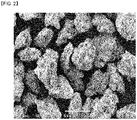
- Example 2 The shape of the extruded fine reassemblies prepared in Example 2 and Comparative Example 3 was observed using a scanning electron microscope (SEM). The results are shown in FIGs. 2 and 3 , respectively.
- SEM scanning electron microscope
- Comparative Example 1 a lump was formed inside the mixer during the process for forming the fine reassembly, and continuous operation was impossible, so the extruded fine reassembly and the super absorbent polymer were not manufactured.
- the centrifuge retention capacity of the super absorbent polymers prepared in Examples and Comparative Examples was measured based on the EDANA WSP 241.3, as in the method for measuring the centrifuge retention capacity of the extruded fine reassembly.
- 0.2 g of a sample of the super absorbent polymer was placed in a tea bag and precipitated in 0.9% saline for 30 minutes. After dehydration for 3 minutes with a centrifugal force of 250G (gravity), the amount W 2 (g) of saline absorbed was measured. Further, after carrying out the same operation without using the extruded fine reassembly, the weight W 1 (g) at that time was measured.
- the absorption under pressure (AUP) of the super absorbent polymers of Examples and Comparative Examples was measured according to the EDANA (European Disposables and Nonwovens Association) WSP 242.3.
- a 400 mesh stainless steel screen was installed in a cylindrical bottom of a plastic having an inner diameter of 60 mm.
- W 0 (g, 0.90 g) of the polymer prepared in one of Examples and Comparative Examples was uniformly scattered on the screen at a temperature of 23 ⁇ 2°C and a relative humidity of 45%.
- a piston which can uniformly provide a load of 0.7 psi was placed on the polymer.
- the outer diameter of the piston was slightly smaller than 60 mm, there was no gap with the inner wall of the cylinder, and jig-jog of the cylinder was not interrupted.
- the weight W 3 (g) of the device was measured.
- a glass filter having a diameter of 125 mm and a thickness of 5 mm was placed in a petri dish having a diameter of 150 mm, and saline (0.9 wt% sodium chloride) was poured in the dish. At this time, the saline was poured until the surface level of the saline became equal to the upper surface of the glass filter.
- One piece of filter paper having a diameter of 120 mm was placed thereon. After the measuring device was mounted on the filter paper, the liquid was absorbed for 1 hour under a load. After 1 hour, the measuring device was lifted, and the weight W 4 (g) was measured.
- 0.7AUP(g/g) was calculated by using the obtained weight values according to the following Equation 2.
- 0.7 AUP g / g W 4 g ⁇ W 3 g / W 0 g in Equation 2,
- W 0 (g) is an initial weight (g) of the super absorbent polymer,
- W 3 (g) is a sum of a weight of the super absorbent polymer and a weight of the device providing a load to the super absorbent polymer, and
- W 4 (g) is a sum of a weight of the super absorbent polymer and a weight of the device providing a load to the super absorbent polymer, after making the super absorbent polymer absorb the saline for 1 hour under a load (0.7 psi).
- the permeability was measured by the method described in the literature ( Buchholz, F.L. and Graham, A.T., "Modern Superabsorbent Polymer Technology,” John Wiley & Sons (1998), page 161 ) under a load of 0.3 psi with 0.9% saline solution.
- 0.2 g of super absorbent polymer particles having a particle diameter of 300 to 600 ⁇ m were taken from the super absorbent polymer prepared in Examples or Comparative Examples, and put into a cylinder ( ⁇ 20 mm).
- one end of the cylinder includes a stopcock, and an upper limit line and a lower limit line are marked.
- the upper limit line of the cylinder is marked at the position when 40 mL of saline solution is filled, and the lower limit line is marked at the position when 20 mL of saline solution is filled.
- saline solution 50 g of 0.9% saline (NaCl) solution was added into the cylinder in which the stopcock was locked, and left for 30 minutes. If necessary, additional saline solution is added such that the level of the saline solution reaches the upper limit line of the cylinder.
- NaCl 0.9% saline
- a load of 0.3 psi was applied to the cylinder containing the saline-absorbing super absorbent polymer and allowed to stand for 1 minute. Thereafter, the stopcock located at the bottom of the cylinder was opened to measure the time taken for the 0.9% saline solution to pass from the upper limit line marked on the cylinder to the lower limit line. All measurements were carried out at a temperature of 24 ⁇ 1°C and a relative humidity of 50 ⁇ 10%.
- Ts (unit: seconds) means the time taken for 0.9% saline solution to permeate a saline-absorbing super absorbent polymer under a pressure of 0.3 psi, after preparing the saline-absorbing super absorbent polymer by swelling 0.2 g of a super absorbent polymer with 0.9% saline (NaCl) solution for 30 minutes.
- T 0 (unit: seconds) means the time taken for 0.9% saline solution to permeate under a pressure of 0.3 psi without the saline-absorbing superabsorbent polymer.
- the absorption rate was measured according to JIS K 7224. Specifically, it was calculated by adding 2 g of the super absorbent polymer to 50 mL of saline at 25 °C, stirring a magnetic bar (8 mm in diameter and 30 mm in length) at 600 rpm, and measuring the time until vortex disappeared in seconds.
Landscapes
- Chemical & Material Sciences (AREA)
- Chemical Kinetics & Catalysis (AREA)
- Organic Chemistry (AREA)
- Health & Medical Sciences (AREA)
- Medicinal Chemistry (AREA)
- Polymers & Plastics (AREA)
- Analytical Chemistry (AREA)
- Addition Polymer Or Copolymer, Post-Treatments, Or Chemical Modifications (AREA)
- Processes Of Treating Macromolecular Substances (AREA)
Applications Claiming Priority (3)
| Application Number | Priority Date | Filing Date | Title |
|---|---|---|---|
| KR20200183356 | 2020-12-24 | ||
| KR1020210185042A KR102863104B1 (ko) | 2020-12-24 | 2021-12-22 | 고흡수성 수지의 제조방법 |
| PCT/KR2021/019711 WO2022139505A1 (fr) | 2020-12-24 | 2021-12-23 | Procédé de préparation d'un polymère superabsorbant |
Publications (3)
| Publication Number | Publication Date |
|---|---|
| EP4095184A1 true EP4095184A1 (fr) | 2022-11-30 |
| EP4095184A4 EP4095184A4 (fr) | 2023-08-23 |
| EP4095184B1 EP4095184B1 (fr) | 2025-12-17 |
Family
ID=82159659
Family Applications (1)
| Application Number | Title | Priority Date | Filing Date |
|---|---|---|---|
| EP21911571.4A Active EP4095184B1 (fr) | 2020-12-24 | 2021-12-23 | Procédé de préparation d'un polymère superabsorbant |
Country Status (5)
| Country | Link |
|---|---|
| US (1) | US12528072B2 (fr) |
| EP (1) | EP4095184B1 (fr) |
| JP (1) | JP7427319B2 (fr) |
| CN (1) | CN115210301B (fr) |
| WO (1) | WO2022139505A1 (fr) |
Family Cites Families (14)
| Publication number | Priority date | Publication date | Assignee | Title |
|---|---|---|---|---|
| US5064582A (en) * | 1989-09-15 | 1991-11-12 | The Dow Chemical Company | Process and apparatus for recycling aqueous fluid absorbents fines |
| JPH10113557A (ja) * | 1996-10-07 | 1998-05-06 | Toagosei Co Ltd | 粒状吸水性樹脂の製造方法 |
| JP2004067878A (ja) | 2002-08-06 | 2004-03-04 | Toagosei Co Ltd | 含水ゲル粒子の製造方法 |
| JP2008526502A (ja) | 2005-01-18 | 2008-07-24 | 株式会社日本触媒 | 吸水剤およびその製造方法 |
| JP5064032B2 (ja) | 2005-03-25 | 2012-10-31 | 株式会社日本触媒 | 吸水性樹脂造粒物の製造方法および吸水性樹脂造粒物 |
| KR101684649B1 (ko) | 2014-06-13 | 2016-12-08 | 주식회사 엘지화학 | 고흡수성 수지의 제조 방법 및 이를 통해 제조된 고흡수성 수지 |
| KR101752384B1 (ko) | 2014-11-27 | 2017-06-30 | 주식회사 엘지화학 | 고흡수성 수지의 제조 방법 및 이를 통해 제조된 고흡수성 수지 |
| KR101855353B1 (ko) | 2015-06-09 | 2018-05-08 | 주식회사 엘지화학 | 고흡수성 수지의 미분 재조립체를 포함하는 고흡수성 수지의 제조 방법 및 이로부터 제조된 고흡수성 수지 |
| KR101848470B1 (ko) * | 2015-07-10 | 2018-04-12 | 주식회사 엘지화학 | 고흡수성 수지의 제조 방법 및 이로부터 제조된 고흡수성 수지 |
| KR101880218B1 (ko) | 2015-11-06 | 2018-07-20 | 주식회사 엘지화학 | 고흡수성 수지의 제조 방법 및 이를 통해 제조된 고흡수성 수지 |
| KR101853401B1 (ko) * | 2016-03-11 | 2018-04-30 | 주식회사 엘지화학 | 고흡수성 수지의 제조 방법, 및 고흡수성 수지 |
| KR102518937B1 (ko) | 2017-12-22 | 2023-04-05 | 주식회사 엘지화학 | 고흡수성 수지의 제조 방법 |
| KR102555379B1 (ko) | 2018-01-16 | 2023-07-12 | 주식회사 엘지화학 | 고흡수성 수지의 제조 방법 |
| KR102513452B1 (ko) | 2019-01-15 | 2023-03-22 | 주식회사 엘지화학 | 고흡수성 수지의 제조방법 |
-
2021
- 2021-12-23 JP JP2022552346A patent/JP7427319B2/ja active Active
- 2021-12-23 WO PCT/KR2021/019711 patent/WO2022139505A1/fr not_active Ceased
- 2021-12-23 US US17/909,901 patent/US12528072B2/en active Active
- 2021-12-23 CN CN202180017948.6A patent/CN115210301B/zh active Active
- 2021-12-23 EP EP21911571.4A patent/EP4095184B1/fr active Active
Also Published As
| Publication number | Publication date |
|---|---|
| US20230124243A1 (en) | 2023-04-20 |
| US12528072B2 (en) | 2026-01-20 |
| JP7427319B2 (ja) | 2024-02-05 |
| JP2023515852A (ja) | 2023-04-14 |
| CN115210301B (zh) | 2025-08-01 |
| WO2022139505A1 (fr) | 2022-06-30 |
| EP4095184B1 (fr) | 2025-12-17 |
| EP4095184A4 (fr) | 2023-08-23 |
| CN115210301A (zh) | 2022-10-18 |
Similar Documents
| Publication | Publication Date | Title |
|---|---|---|
| US10208171B2 (en) | Preparation method of superabsorbent polymer and superabsorbent polymer prepared thereby | |
| EP3540001B1 (fr) | Résine hautement absorbante et procédé pour sa production | |
| EP3067370B1 (fr) | Procédé de préparation d'une résine super-absorbante | |
| EP3438162B1 (fr) | Polymère superabsorbant et son procédé de préparation | |
| EP3453737B1 (fr) | Polymère superabsorbant et son procédé de préparation | |
| KR102555379B1 (ko) | 고흡수성 수지의 제조 방법 | |
| EP3333198B1 (fr) | Procédé de préparation d'une résine hautement absorbante | |
| CN107207745B (zh) | 超吸收性聚合物的制备方法 | |
| EP3318594A1 (fr) | Procédé de préparation d'une résine superabsorbante | |
| EP3318584B1 (fr) | Procédé de préparation de résine super-absorbante, et résine super-absorbante ainsi préparée | |
| US11814489B2 (en) | Superabsorbent polymer and preparation method thereof | |
| KR102518937B1 (ko) | 고흡수성 수지의 제조 방법 | |
| US10711074B2 (en) | Super absorbent polymer and method for preparing same | |
| EP3722352B1 (fr) | Procédé de production d'un polymère superabsorbant et polymère superabsorbant | |
| EP4458885A1 (fr) | Procédé de préparation d'une résine superabsorbante | |
| US11613591B2 (en) | Method for preparing super absorbent polymer | |
| US12528072B2 (en) | Method for preparing super absorbent polymer | |
| EP3178855A2 (fr) | Procédé de préparation de polymère superabsorbant | |
| KR102513452B1 (ko) | 고흡수성 수지의 제조방법 | |
| KR102863104B1 (ko) | 고흡수성 수지의 제조방법 | |
| KR20190064978A (ko) | 고흡수성 수지 및 이의 제조 방법 | |
| CN118055969A (zh) | 超吸收性聚合物组合物及其制备方法 | |
| KR20260043854A (ko) | 고흡수성 수지의 제조 방법 | |
| KR20220077680A (ko) | 고흡수성 수지의 제조 방법 |
Legal Events
| Date | Code | Title | Description |
|---|---|---|---|
| STAA | Information on the status of an ep patent application or granted ep patent |
Free format text: STATUS: THE INTERNATIONAL PUBLICATION HAS BEEN MADE |
|
| PUAI | Public reference made under article 153(3) epc to a published international application that has entered the european phase |
Free format text: ORIGINAL CODE: 0009012 |
|
| STAA | Information on the status of an ep patent application or granted ep patent |
Free format text: STATUS: REQUEST FOR EXAMINATION WAS MADE |
|
| 17P | Request for examination filed |
Effective date: 20220825 |
|
| AK | Designated contracting states |
Kind code of ref document: A1 Designated state(s): AL AT BE BG CH CY CZ DE DK EE ES FI FR GB GR HR HU IE IS IT LI LT LU LV MC MK MT NL NO PL PT RO RS SE SI SK SM TR |
|
| A4 | Supplementary search report drawn up and despatched |
Effective date: 20230725 |
|
| RIC1 | Information provided on ipc code assigned before grant |
Ipc: C08J 11/04 20060101ALI20230719BHEP Ipc: C08J 3/20 20060101ALI20230719BHEP Ipc: C08J 3/00 20060101ALI20230719BHEP Ipc: C08F 6/00 20060101ALI20230719BHEP Ipc: C08K 5/098 20060101ALI20230719BHEP Ipc: C08K 3/36 20060101ALI20230719BHEP Ipc: C08F 220/06 20060101ALI20230719BHEP Ipc: C08K 5/00 20060101ALI20230719BHEP Ipc: C08F 220/28 20060101ALI20230719BHEP Ipc: C08J 3/075 20060101ALI20230719BHEP Ipc: C08J 3/12 20060101ALI20230719BHEP Ipc: C08J 3/24 20060101AFI20230719BHEP |
|
| DAV | Request for validation of the european patent (deleted) | ||
| DAX | Request for extension of the european patent (deleted) | ||
| REG | Reference to a national code |
Ref country code: DE Ref legal event code: R079 Free format text: PREVIOUS MAIN CLASS: C08J0003240000 Ref country code: DE Ref legal event code: R079 Ref document number: 602021044777 Country of ref document: DE Free format text: PREVIOUS MAIN CLASS: C08J0003240000 Ipc: C08F0006000000 |
|
| GRAP | Despatch of communication of intention to grant a patent |
Free format text: ORIGINAL CODE: EPIDOSNIGR1 |
|
| STAA | Information on the status of an ep patent application or granted ep patent |
Free format text: STATUS: GRANT OF PATENT IS INTENDED |
|
| RIC1 | Information provided on ipc code assigned before grant |
Ipc: C08F 6/00 20060101AFI20250903BHEP Ipc: C08J 3/24 20060101ALI20250903BHEP Ipc: C08J 3/12 20060101ALI20250903BHEP Ipc: C08J 3/075 20060101ALI20250903BHEP Ipc: C08F 220/28 20060101ALI20250903BHEP Ipc: C08K 5/00 20060101ALI20250903BHEP Ipc: C08F 220/06 20060101ALI20250903BHEP Ipc: C08K 3/36 20060101ALI20250903BHEP Ipc: C08K 5/098 20060101ALI20250903BHEP Ipc: C08J 3/00 20060101ALI20250903BHEP Ipc: C08J 3/20 20060101ALI20250903BHEP Ipc: C08J 11/04 20060101ALI20250903BHEP Ipc: C08L 101/14 20060101ALN20250903BHEP |
|
| INTG | Intention to grant announced |
Effective date: 20250912 |
|
| GRAS | Grant fee paid |
Free format text: ORIGINAL CODE: EPIDOSNIGR3 |
|
| GRAA | (expected) grant |
Free format text: ORIGINAL CODE: 0009210 |
|
| STAA | Information on the status of an ep patent application or granted ep patent |
Free format text: STATUS: THE PATENT HAS BEEN GRANTED |
|
| AK | Designated contracting states |
Kind code of ref document: B1 Designated state(s): AL AT BE BG CH CY CZ DE DK EE ES FI FR GB GR HR HU IE IS IT LI LT LU LV MC MK MT NL NO PL PT RO RS SE SI SK SM TR |
|
| REG | Reference to a national code |
Ref country code: CH Ref legal event code: F10 Free format text: ST27 STATUS EVENT CODE: U-0-0-F10-F00 (AS PROVIDED BY THE NATIONAL OFFICE) Effective date: 20251217 Ref country code: GB Ref legal event code: FG4D |
|
| REG | Reference to a national code |
Ref country code: DE Ref legal event code: R096 Ref document number: 602021044777 Country of ref document: DE |
|
| PGFP | Annual fee paid to national office [announced via postgrant information from national office to epo] |
Ref country code: GB Payment date: 20251229 Year of fee payment: 5 |
|
| PGFP | Annual fee paid to national office [announced via postgrant information from national office to epo] |
Ref country code: AT Payment date: 20260113 Year of fee payment: 5 |
|
| PGFP | Annual fee paid to national office [announced via postgrant information from national office to epo] |
Ref country code: FR Payment date: 20251229 Year of fee payment: 5 |
|
| REG | Reference to a national code |
Ref country code: LT Ref legal event code: MG9D |
|
| PG25 | Lapsed in a contracting state [announced via postgrant information from national office to epo] |
Ref country code: NO Free format text: LAPSE BECAUSE OF FAILURE TO SUBMIT A TRANSLATION OF THE DESCRIPTION OR TO PAY THE FEE WITHIN THE PRESCRIBED TIME-LIMIT Effective date: 20260317 |
|
| PGFP | Annual fee paid to national office [announced via postgrant information from national office to epo] |
Ref country code: DE Payment date: 20251229 Year of fee payment: 5 |
|
| PG25 | Lapsed in a contracting state [announced via postgrant information from national office to epo] |
Ref country code: HR Free format text: LAPSE BECAUSE OF FAILURE TO SUBMIT A TRANSLATION OF THE DESCRIPTION OR TO PAY THE FEE WITHIN THE PRESCRIBED TIME-LIMIT Effective date: 20251217 Ref country code: FI Free format text: LAPSE BECAUSE OF FAILURE TO SUBMIT A TRANSLATION OF THE DESCRIPTION OR TO PAY THE FEE WITHIN THE PRESCRIBED TIME-LIMIT Effective date: 20251217 |
|
| PGFP | Annual fee paid to national office [announced via postgrant information from national office to epo] |
Ref country code: BE Payment date: 20251229 Year of fee payment: 5 |
|
| PG25 | Lapsed in a contracting state [announced via postgrant information from national office to epo] |
Ref country code: RS Free format text: LAPSE BECAUSE OF FAILURE TO SUBMIT A TRANSLATION OF THE DESCRIPTION OR TO PAY THE FEE WITHIN THE PRESCRIBED TIME-LIMIT Effective date: 20260317 |
|
| REG | Reference to a national code |
Ref country code: NL Ref legal event code: MP Effective date: 20251217 |
|
| PG25 | Lapsed in a contracting state [announced via postgrant information from national office to epo] |
Ref country code: LV Free format text: LAPSE BECAUSE OF FAILURE TO SUBMIT A TRANSLATION OF THE DESCRIPTION OR TO PAY THE FEE WITHIN THE PRESCRIBED TIME-LIMIT Effective date: 20251217 |