EP4097580B1 - Circuit intégré photonique et procédé - Google Patents
Circuit intégré photonique et procédé Download PDFInfo
- Publication number
- EP4097580B1 EP4097580B1 EP21707163.8A EP21707163A EP4097580B1 EP 4097580 B1 EP4097580 B1 EP 4097580B1 EP 21707163 A EP21707163 A EP 21707163A EP 4097580 B1 EP4097580 B1 EP 4097580B1
- Authority
- EP
- European Patent Office
- Prior art keywords
- light
- intensity
- light source
- property
- random number
- Prior art date
- Legal status (The legal status is an assumption and is not a legal conclusion. Google has not performed a legal analysis and makes no representation as to the accuracy of the status listed.)
- Active
Links
Images


Classifications
-
- G—PHYSICS
- G06—COMPUTING OR CALCULATING; COUNTING
- G06F—ELECTRIC DIGITAL DATA PROCESSING
- G06F7/00—Methods or arrangements for processing data by operating upon the order or content of the data handled
- G06F7/58—Random or pseudo-random number generators
- G06F7/588—Random number generators, i.e. based on natural stochastic processes
-
- G—PHYSICS
- G02—OPTICS
- G02B—OPTICAL ELEMENTS, SYSTEMS OR APPARATUS
- G02B6/00—Light guides; Structural details of arrangements comprising light guides and other optical elements, e.g. couplings
- G02B6/24—Coupling light guides
- G02B6/42—Coupling light guides with opto-electronic elements
- G02B6/4201—Packages, e.g. shape, construction, internal or external details
- G02B6/4204—Packages, e.g. shape, construction, internal or external details the coupling comprising intermediate optical elements, e.g. lenses, holograms
- G02B6/4206—Optical features
-
- G—PHYSICS
- G02—OPTICS
- G02B—OPTICAL ELEMENTS, SYSTEMS OR APPARATUS
- G02B6/00—Light guides; Structural details of arrangements comprising light guides and other optical elements, e.g. couplings
- G02B6/24—Coupling light guides
- G02B6/42—Coupling light guides with opto-electronic elements
- G02B6/4298—Coupling light guides with opto-electronic elements coupling with non-coherent light sources and/or radiation detectors, e.g. lamps, incandescent bulbs, scintillation chambers
Definitions
- Random number generators are known which are based on the inherently random behaviour of photons caused by quantum mechanics effects. For example, behaviour of a single photon can be determined and used to generate a truly random number.
- EP2788863A1 relates to an integrated quantum-random noise generator using quantum vacuum states of light
- Satoshi et al. Optics Express, vol. 19, no. 7, 28 March 2011 relates to chaos laser chips with delayed optical feedback using a passive ring waveguide.
- CN110569022A relates to an all-silicon-based CMOS quantum random number generator. It is desirable to provide an improved random number generator based on photon detection.
- Examples described herein relate to a photonic integrated circuit (PIC) for use in generating a random number, based on the behaviour of photons according to quantum mechanics effects.
- the PIC can be considered a monolithic PIC.
- the substrate is for example a compound of elements from groups III and V of the Periodic Table, for example a so-called III-V semiconductor compound such as Indium Phosphide (InP).
- InP Indium Phosphide
- Such a PIC can be fully contained without optical input or output and is sufficiently compact that it can be integrated in devices such as computers and smart phones. Indeed, such a PIC is more compact, and more simple in construction and operation than known random number generators.
- the PIC is of or less than 100 microns x 1000 - 4000 microns x 4000 microns.
- Fig. 1 illustrates schematically a system of examples for generating a random number, implemented at least in part as a PIC on a common substrate which is for example of a III-V semiconductor compound such as InP.
- Fig. 4 illustrates a flow diagram of a method for generating a random number.
- the PIC for use in generating the random number comprises a light source 2 on the substrate (illustrated later with Fig. 3 ), a light detector 4 on the substrate, and a light guidance system 6 on the substrate and configured to direct light from the light source to the light detector.
- Waveguides 8 (illustrated schematically as arrows) of the light guidance system guide light from the light source to the light detector 4.
- Light from the light source when incident on, in other words received by, the light detector 4 causes the light detector to output an electrical signal for use in generating the random number This is explained in further detail later.
- the light source is for example a semiconductor optical amplifier (SOA) or a laser.
- the light detector in other words a photodetector, is for example a photodiode capable of detecting a low light intensity.
- a photon detector is simpler than in known examples referred to as 'single-photon detectors' which use more complex or design limiting detectors such as a silicon photomultiplier (SiPM) avalanche photodiode.
- the photodiode in examples is a monolithically integrated photodiode with a sampling rate of at least giga-Hertz (GHz) frequencies; this offers quicker operation, and hence quicker generation of random numbers, than photodetectors in known systems. Plus, such photodiodes with such GHz or higher sampling rates can detect larger magnitude photocurrents than known photodetectors, which overcomes background electronic noise even more so that quantum effects related fluctuations dominate even more.
- GHz giga-Hertz
- the attenuation system is configured to attenuate an intensity of light output from the light source to an intensity used by the light detector 4 for use in generating a random number. Hence, between the light source and the light detector 4, the attenuation system reduces the intensity of light.
- the attenuation system comprises one or more light splitters 10 such as passive light splitters on the common substrate.
- FIG. 1 shows two such light splitters, but this is schematic; a first light splitter 10a receives light from the light source before other of the light splitters, such as a second light splitter 10b, receives light from the light source (via the first light splitter).
- Fig. 1 is schematic in that although first and second light splitters are shown, in some other examples there may be only one such light splitter, and in other examples there may be more than two light splitters, as required to reduce the light intensity to a level suitable for the light detector 4 (and the overall system set up) to be used in generating a random number.
- a suitable level is sufficiently low such that any fluctuations in the light intensity detected by the light detector 4 are dominated by quantum effects, and hence are in accordance with Poisson statistics. Otherwise, for a higher intensity, and hence a larger number of photons detected per sample by the light detector, any fluctuations caused by quantum effects would be masked, and hence too negligible, relative to the total number of photons detected per sample, to be satisfactorily detectable and used for random number generation.
- the skilled person is familiar with Poisson statistics and hence the Poisson probability distribution which describes the probability of a number of events occurring in a given time period, with the events occurring at a known constant mean rate and which are independent of the time since the last event. Application of the Poisson distribution in generating a random number is explained further below.
- the standard deviation, or inherent fluctuation, of the Poissonian distribution is the square root of the mean sample size. Therefore, the variation relative to the mean sample size decreases with more photon counts per sample.
- low photon counts, especially single photon counting requires optimised photo diodes and electronics.
- An InP PIC features a high sample-rate and low electronic background noise of the photodiode. Therefore, at photon counts of 1000 photons per sample, the inherent quantum fluctuation is still well above (at least ⁇ 10x) the electronic background current. At a high sample rate these 1000 photons per sample will still generate an appreciable photodiode current that can be measured with conventional readout electronics.
- the light source, light detectors and light splitters of the light attenuation system are optically connected to each other, as appropriate, by the light guidance system such as waveguides 8.
- the light guidance system such as waveguides 8.
- an input of the first light splitter is optically connected by a waveguide to receive light from the light source, in some examples directly, and an output of the first light splitter is optically connected by a waveguide to either an input of a subsequent light splitter, or to a light detector.
- Each splitter may be considered to guide or redirect portions of the light from the input to the outputs of the splitter, but as the function of the splitter is to reduce the intensity of light propagating from the light source, the splitters are described herein as part of the light attenuation system.
- the light attenuation system in some examples is configured to, between the light source and the light detector 4, attenuate the intensity of light from the light source by a factor of at least 1000. So, for example light incident on the light detector 4 has an intensity of at most 0.1% of that output by the light source.
- Each light splitter splits light originating from the light source into a first portion of light for propagation to the light detector 4 by the light guidance system, and into a second portion of light which is not guided to the light detector 4.
- a plurality of light splitters may be arranged in series with each other, such that the first portion of light output from one light splitter is guided onwards to be input to the next light splitter in the series, which in turn outputs its first portion of light to be guided onwards to any subsequent light splitters in the series, in turn, until reaching the light detector 4.
- Each light splitter of the attenuation system is for example a light filter, and is for example a multimode interferometer (MMI) which the skilled person is familiar with.
- MMI multimode interferometer
- the waveguide width is increased to transition the light from single mode propagation to multimode propagation.
- the spatial distribution of the optical modes changes as a function of the MMI length, and the appropriate distribution required for a particular splitter's application can be calculated using numerical computation.
- 2 waveguides are fabricated at the length from the start of the MMI where two modes have formed and are spatially well separated.
- each splitter reduces the light intensity in some examples by 50% (such that the first portion of light is 50% and the second portion of light is 50% the intensity of light input to the splitter), and in other examples each splitter reduces the light intensity by 70% (such that the first portion of light is 30% and the second portion of light is 70% the intensity of light input to the splitter).
- 50% such that the first portion of light is 50% and the second portion of light is 50% the intensity of light input to the splitter
- each splitter reduces the light intensity by 70% (such that the first portion of light is 30% and the second portion of light is 70% the intensity of light input to the splitter).
- 50:50 splitters are used in series in some examples, to reduce the intensity for the light detector 4
- six so-called 30:70 splitters are used in series in other examples to reduce the intensity for the light detector 4.
- different splitting ratios are envisaged.
- An MMI is an example of a passive light splitter which does not require driving by a voltage in order to function (as would be the case for an active component).
- Using passive light splitters in the light attenuation system means that a higher power can be used for the light source, which in turn can reduce the need for, and/or the power requirements of, circuitry for driving active components elsewhere in the PIC. Plus, as will be explained further below, such a passive light splitter means that the intensity of light output by the light source can be monitored, which in turn can assist calibration and tuning of the system for generating the random number.
- the light detector 4 described so far is also referred to herein as a first light detector.
- Each second light detector is of the same type of photodiode as the first light detector, but in other examples may be a different type.
- the first light detector is a balanced photodiode or another type of optimised high-accuracy photodiode; the second light detector may be the same or a different type of light detector.
- the PIC comprises first circuitry for processing an electrical signal output by each of the one or more second light detectors.
- a second light detector is for example used to monitor the intensity of light output by the light source. If the second light detector detects a deviation from a target intensity, which indicates that the intensity of light in the first portion guided onwards to the light detector has also deviated, appropriate action can be taken.
- the first circuitry receives the electrical signal from the respective second light detector.
- a property e.g. electrical current
- a property e.g. electrical current
- the first circuitry can cause an appropriate response to maintain the system's ability to generate a random number.
- Such a response may be to adjust a current applied to the light source, to adjust the intensity of light output by the light source. In this way, if the intensity of the second portion is less than the target intensity, the current can be increased to increase the intensity of light output by the light source, to reduce a difference between the actual intensity and the target intensity.
- such a response can be to calibrate a process (described further below) for generating the random number, by adjusting at least one of a threshold value, or a magnitude of a property (e.g. electrical current) measured from the electrical signal output by the first light detector 4, to compensate for any deviation in light intensity from the light source. Otherwise, such a deviation may cause the system to fail, in that any supposedly random number generated is not in fact truly random.
- Such monitoring is performed at least by the second light detector which receives the second portion of light from the first light splitter in the series, and in some examples more than one of the second portion of light from a light splitter in the series is used to monitor the attenuation.
- the second portion of light from each light splitter is output respectively to a different second light detector, so that each attenuation step by a splitter is monitored, and any deviation from a target intensity adjusted for in the current applied to the light source and/or in the processing of the electrical signal output by the first light detector 4.
- the PIC comprises second circuitry configured to use the electrical signal output by the first photodetector 4 for generating a random number.
- the second circuitry receives the electrical signal output by the light detector 4 and determines, based on a property (e.g. electrical current) of the electrical signal a value for use in generating the random number.
- a property e.g. electrical current
- Such a value is in these examples a binary value, otherwise known as a bit, with a value of either 1 or 0.
- a string of binary values may be generated based on a series of measurements of the electrical current; one binary value per measurement.
- the property of the electrical signal measured varies, or fluctuates, over a period of time, caused by quantum effects affecting the passage of photons from the light source to the first light detector 4.
- Various methods are envisaged to use the fluctuations in the property of the electrical signal output by the first light detector 4 in generating a random number.
- the measurements fit the Poisson distribution.
- each measurement of the property of the electrical signal can be compared against the Poisson distribution, or a parameter derived therefrom, to determine the value (e.g. a 1 or a 0) yielded for each measurement, for generating the random number.
- Fig. 2a shows an example plot of many electrical current measurements of the electrical signal output by a light detector 4.
- the plot assumes 1000 photons are detected per measurement (referred to as a readout in the Figure), with the x axis being time and the y axis the electrical current magnitude for each readout.
- Each readout can be considered a sample of the electrical current, with subsequent samples taken regularly at intervals of equal time duration apart from each other.
- the current per readout fluctuates about an average magnitude which is illustrated by the concentration of data points along a horizontal band on the plot.
- FIG. 2b shows the same readouts now plotted as a histogram, with electrical current magnitude for each readout on the x axis and the frequency of each measurement on the y axis.
- the histogram plot is a Poisson distribution.
- An average readout in these examples an average electrical current magnitude, is determined. This average is for example a mean value which corresponds with the most commonly measured electrical current magnitude, as shown by the vertical line 14 in Figure 2b .
- Such an average value is set as a threshold value for determining which value to assign for use in generating the random number, or in other examples it is envisaged that a different statistical value may be calculated and used to set the threshold value. After determining the average value, each subsequent measurement of the property such as electrical current is corresponded with the average value.
- a difference between the measurement and the threshold value is calculated, or it is determined whether the measurement is greater or less than the threshold value.
- the magnitude of the difference, or simply whether the measurement is greater or less than the threshold value can be used to determine the value assigned from the measurement, for generating the random number.
- Figure 2b shows that if the measurement is less than the threshold value 14, a bit value of 0 is determined and recorded in the bit string, whereas if the measurement is greater than the threshold value 14, a bit value of 1 is determined and recorded in the bit string. This method is repeated for each subsequent measurement, to generate a string of bit values which is randomly generated given its dependence on quantum effect based fluctuations in the light intensity on the light detector 4.
- the threshold value is determined before the circuitry starts to generate a random number. Measurements of the property of the electrical signal output by the light detector 4 may be sampled over a given period of time, sufficiently long to determine an average value (e.g. the mean) of the Poisson distribution of measurements. This average value is then set as the threshold value for use in determining the values (e.g. bits) based on future fluctuations of the property.
- a threshold value may be determined and stored during a calibration process during manufacture, before shipping the circuit to a consumer, again by measuring the property over a sufficiently long period of time to determine the average value for the Poisson distribution.
- Such techniques may include chemical vapour deposition techniques such as metalorganic vapour-phase epitaxy (MOVPE) or molecular beam epitaxy (MBE). Etching techniques may be used to remove portions of material, as part of patterning, as the skilled person will appreciate.
- CVPE metalorganic vapour-phase epitaxy
- MBE molecular beam epitaxy
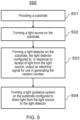
- the method comprises forming a plurality of the second light detectors described above, the light attenuation system comprises a series of passive light splitters, each of the series of passive light splitters respectively configured to split light from the light source into a first portion of light for propagation to the first light detector by the light guidance system, and a second portion of light for propagation to a second light detector of the plurality of second light detectors for use in at least one of: adjusting a current applied to the light source to adjust the intensity of light output by the light source, to reduce a difference between an actual intensity output by the light source and a target intensity to be output by the light source; or calibrating, on the basis of a difference between the actual intensity and the target intensity, a process for generating the random number.
- the light attenuation system comprises a series of passive light splitters, each of the series of passive light splitters respectively configured to split light from the light source into a first portion of light for propagation to the first light detector by the light guidance system, and a second portion of light for propagation
Landscapes
- Physics & Mathematics (AREA)
- General Physics & Mathematics (AREA)
- Engineering & Computer Science (AREA)
- Theoretical Computer Science (AREA)
- Mathematical Analysis (AREA)
- Pure & Applied Mathematics (AREA)
- Mathematical Optimization (AREA)
- General Engineering & Computer Science (AREA)
- Computational Mathematics (AREA)
- Optics & Photonics (AREA)
- Photometry And Measurement Of Optical Pulse Characteristics (AREA)
- Optical Modulation, Optical Deflection, Nonlinear Optics, Optical Demodulation, Optical Logic Elements (AREA)
- Semiconductor Integrated Circuits (AREA)
- Design And Manufacture Of Integrated Circuits (AREA)
Claims (13)
- Circuit intégré photonique, PIC, à utiliser pour générer un nombre aléatoire, comprenant :une source de lumière (2) sur un substrat ;un diviseur de lumière (10a, 10b) configuré pour diviser la lumière provenant de la source de lumière (2) en une première partie de lumière et une seconde partie de lumière ;un premier détecteur de lumière (4) sur le substrat configuré pour, en réponse à la réception de la première partie de lumière, émettre un premier signal électrique à utiliser pour générer le nombre aléatoire ;un système de guidage de lumière (6) sur le substrat, configuré pour diriger la première partie de lumière vers le premier détecteur de lumière (4) ;un second détecteur de lumière (12) sur le substrat, configuré pour recevoir la seconde partie de lumière, pour contrôler l'intensité de la lumière émise par la source de lumière (2) afin de détecter un écart par rapport à une intensité cible ; etune circuiterie configurée pour :i) recevoir, un signal électrique émis par le second détecteur de lumière (12) et basé sur la seconde partie de lumière ;ii) déterminer une grandeur du signal électrique émis par le second détecteur de lumière (12), la grandeur indiquant l'intensité de la lumière émise par la source de lumière (2) ;iii) déterminer, sur la base de la grandeur, que l'intensité de la lumière émise par la source de lumière (2) est différente de l'intensité cible ; eten réponse à iii), au moins l'un parmi :iv) ajuster un courant appliqué à la source de lumière pour ajuster l'intensité de la lumière émise par la source de lumière (2), afin de réduire une différence entre l'intensité de la lumière émise par la source de lumière (2) et l'intensité cible ; ouv) étalonner, sur la base d'une différence entre l'intensité de la lumière émise par la source de lumière (2) et l'intensité cible, un processus de génération du nombre aléatoire.
- PIC selon la revendication 1, comprenant un système d'atténuation de lumière sur le substrat configuré pour, entre la première source de lumière et le premier détecteur de lumière, atténuer l'intensité de la lumière provenant de la source de lumière de telle sorte que des fluctuations de l'intensité de la première partie de lumière détectée par le premier détecteur de lumière sont dominées par des statistiques de Poisson ; et éventuellement
atténuer l'intensité de la lumière émise par la source de lumière d'un facteur d'au moins 1 000. - PIC selon la revendication 1 ou la revendication 2, dans lequel la circuiterie est une première circuiterie, et le PIC comprend une seconde circuiterie configurée pour :recevoir le premier signal électrique, etdéterminer, sur la base d'une propriété du premier signal électrique, une valeur à utiliser pour générer le nombre aléatoire ;
ourecevoir le premier signal électrique,mesurer une propriété du premier signal électrique à un moment dans le temps,sur la base de la propriété au moment dans le temps, déterminer qu'une grandeur de la propriété au moment dans le temps est inférieure à une valeur seuil, etsur la base de la grandeur de la propriété au moment dans le temps étant inférieure à la valeur seuil, déterminer une valeur à utiliser pour générer le nombre aléatoire. - PIC selon la revendication 3, dans lequel la valeur à utiliser pour générer le nombre aléatoire est une première valeur, la seconde circuiterie étant configurée pour :mesurer la propriété du premier signal électrique à un second moment dans le temps ;sur la base de la propriété mesurée au second moment dans le temps, déterminer qu'une grandeur de la propriété mesurée au second moment dans le temps est supérieure à la valeur seuil ; etsur la base de la grandeur de la propriété mesurée au second moment dans le temps étant supérieure à la valeur seuil, déterminer une seconde valeur, différente de la première valeur, à utiliser pour générer le nombre aléatoire.
- Procédé de génération d'un nombre aléatoire, comprenant :i) l'émission de la lumière provenant d'une source de lumière (2) sur un substrat ;ii) la division de la lumière provenant de la source de lumière (2), par un diviseur de lumière (10a, 10b), en une première partie de lumière à propager vers un premier détecteur de lumière (4) et en une seconde partie de lumière à recevoir par un second détecteur de lumière (12) ;iii) le guidage, par un système de guidage de lumière (6) sur le substrat, de la première partie de la lumière provenant de la source de lumière (2) vers le premier détecteur de lumière (4) sur le substrat ;iv) le contrôle, par le second détecteur de lumière (12), de l'intensité de la lumière émise par la source de lumière (2) afin de détecter un écart par rapport à une intensité cible ;v) la détermination d'une grandeur d'un signal électrique émis par le second détecteur de lumière (12), sur la base de la seconde partie de lumière, la grandeur indiquant l'intensité de la lumière émise par la source de lumière (2) ;vi) le fait de déterminer, sur la base de la grandeur, que l'intensité de la lumière émise par la source de lumière (2) est différente de l'intensité cible de la lumière à émettre par la source de lumière (2) ;en réponse à vi), au moins l'un parmi :vii) l'ajustement d'un courant appliqué à la source de lumière (2) pour ajuster l'intensité de la lumière émise par la source de lumière (2), afin de réduire une différence entre l'intensité de la lumière émise par la source de lumière (2) et l'intensité cible ; ouviii) l'étalonnage, sur la base d'une différence entre l'intensité de la lumière émise par la source de lumière (2) et l'intensité cible, d'un processus de génération du nombre aléatoire ; etl'émission, par le premier détecteur de lumière (4), d'un signal électrique à utiliser pour générer un nombre aléatoire.
- Procédé selon la revendication 5, comprenant :l'atténuation, par un système d'atténuation de lumière sur le substrat, et entre la source de lumière et le premier détecteur de lumière, d'une intensité de la lumière émise par la source de lumière de telle sorte que les fluctuations de l'intensité de la lumière détectée par le premier détecteur de lumière sont dominées par des statistiques de Poisson ; oul'atténuation, par un système d'atténuation de lumière sur le substrat, et entre la source de lumière et le premier détecteur de lumière, d'une intensité de la lumière émise par la source de lumière de telle sorte que des fluctuations de l'intensité de la lumière détectée par le premier détecteur de lumière sont dominées par des statistiques de Poisson, le système d'atténuation de lumière étant configuré pour, entre la source de lumière et le premier détecteur de lumière, atténuer l'intensité de la lumière provenant de la source de lumière d'un facteur d'au moins 1 000.
- Procédé selon l'une quelconque de la revendication 5 ou de la revendication 6 comprenant :la détermination, sur la base d'une propriété du signal électrique émis par le premier détecteur de lumière, d'une valeur à utiliser pour générer le nombre aléatoire ; oula détermination, sur la base d'une propriété du signal électrique émis par le premier détecteur de lumière, d'une valeur à utiliser pour générer le nombre aléatoire ;la mesure d'une propriété du signal électrique à un moment dans le temps ;sur la base de la propriété, le fait de déterminer qu'une grandeur de la propriété mesurée est inférieure à une valeur seuil ; etsur la base du fait que la grandeur de la propriété mesurée est inférieure à la valeur seuil, la détermination d'une valeur à utiliser pour générer le nombre aléatoire.
- Procédé selon la revendication 7, dans lequel la valeur à utiliser pour générer le nombre aléatoire est une première valeur, le procédé comprenant :la mesure de la propriété du signal électrique à un second moment dans le temps ;sur la base de la propriété du signal électrique au second moment dans le temps, le fait de déterminer qu'une grandeur de la propriété du signal électrique au second moment dans le temps est supérieure à la valeur seuil ; etsur la base du fait que la propriété du signal électrique au second moment dans le temps est supérieure à la valeur seuil, la détermination d'une seconde valeur, différente de la première, à utiliser pour générer le nombre aléatoire.
- PIC selon la revendication 3 ou 4, ou procédé selon la revendication 7 ou 8, dans lequel au moins l'une parmi : la valeur à utiliser pour générer le nombre aléatoire est une valeur binaire ;la propriété est un courant électrique ; oula valeur seuil est une grandeur moyenne de la propriété du signal électrique.
- PIC selon la revendication 4, ou procédé selon la revendication 8, dans lequel la seconde valeur est une valeur binaire.
- PIC selon l'une quelconque des revendications 1 à 4, 9 ou 10, ou procédé selon l'une quelconque des revendications 5 à 10, dans lequel au moins l'un parmi :le substrat est composé d'au moins l'un parmi : un composé semiconducteur III-V, ou du phosphure d'indium ;le diviseur de lumière comprend un interféromètre multimode ;le diviseur de lumière est un premier diviseur de lumière et le PIC, sur le substrat, comprend un second diviseur de lumière ;le PIC, sur le substrat, comprend une série de diviseurs de lumière passifs ; oule PIC, sur le substrat, comprend une série d'interféromètres multimodes.
- PIC selon l'une quelconque des revendications 1 à 4 ou 9 à 11, ou procédé selon l'une quelconque des revendications 5 à 11, dans lequel le diviseur de lumière est un diviseur de lumière passif.
- Procédé de fabrication d'un PIC selon l'une quelconque des revendications 1 à 4 ou 9 à 12.
Priority Applications (1)
| Application Number | Priority Date | Filing Date | Title |
|---|---|---|---|
| EP24215117.3A EP4509980B1 (fr) | 2020-01-31 | 2021-01-29 | Circuit intégré photonique et procédé |
Applications Claiming Priority (2)
| Application Number | Priority Date | Filing Date | Title |
|---|---|---|---|
| GB2001402.3A GB2592904A (en) | 2020-01-31 | 2020-01-31 | Photonic integrated circuit and method |
| PCT/EP2021/052192 WO2021152139A1 (fr) | 2020-01-31 | 2021-01-29 | Circuit intégré photonique et procédé |
Related Child Applications (2)
| Application Number | Title | Priority Date | Filing Date |
|---|---|---|---|
| EP24215117.3A Division EP4509980B1 (fr) | 2020-01-31 | 2021-01-29 | Circuit intégré photonique et procédé |
| EP24215117.3A Division-Into EP4509980B1 (fr) | 2020-01-31 | 2021-01-29 | Circuit intégré photonique et procédé |
Publications (2)
| Publication Number | Publication Date |
|---|---|
| EP4097580A1 EP4097580A1 (fr) | 2022-12-07 |
| EP4097580B1 true EP4097580B1 (fr) | 2025-01-01 |
Family
ID=69800248
Family Applications (2)
| Application Number | Title | Priority Date | Filing Date |
|---|---|---|---|
| EP24215117.3A Active EP4509980B1 (fr) | 2020-01-31 | 2021-01-29 | Circuit intégré photonique et procédé |
| EP21707163.8A Active EP4097580B1 (fr) | 2020-01-31 | 2021-01-29 | Circuit intégré photonique et procédé |
Family Applications Before (1)
| Application Number | Title | Priority Date | Filing Date |
|---|---|---|---|
| EP24215117.3A Active EP4509980B1 (fr) | 2020-01-31 | 2021-01-29 | Circuit intégré photonique et procédé |
Country Status (6)
| Country | Link |
|---|---|
| US (2) | US12450033B2 (fr) |
| EP (2) | EP4509980B1 (fr) |
| JP (2) | JP7664267B2 (fr) |
| CN (1) | CN115023684A (fr) |
| GB (1) | GB2592904A (fr) |
| WO (1) | WO2021152139A1 (fr) |
Families Citing this family (4)
| Publication number | Priority date | Publication date | Assignee | Title |
|---|---|---|---|---|
| WO2024228716A2 (fr) * | 2022-07-11 | 2024-11-07 | Qwerx Inc. | Systèmes et procédés de génération directe de nombres aléatoires à partir d'événements aléatoires quantiques |
| CN115599344A (zh) * | 2022-09-30 | 2023-01-13 | 中国电子科技集团公司第三十研究所(Cn) | 基于放大自发辐射噪声的光电集成量子随机数发生器芯片 |
| US12238202B2 (en) | 2023-01-10 | 2025-02-25 | Qwerx Inc. | Systems and methods for continuous generation and management of ephemeral cryptographic keys |
| NL2036178B1 (en) * | 2023-11-03 | 2025-05-14 | Cublq B V | True Quantum Random Number Generator |
Citations (1)
| Publication number | Priority date | Publication date | Assignee | Title |
|---|---|---|---|---|
| CN110569022A (zh) * | 2019-09-09 | 2019-12-13 | 弦海(上海)量子科技有限公司 | 全硅基cmos量子随机数发生装置 |
Family Cites Families (18)
| Publication number | Priority date | Publication date | Assignee | Title |
|---|---|---|---|---|
| US6539410B1 (en) * | 1999-03-17 | 2003-03-25 | Michael Jay Klass | Random number generator |
| GB0915000D0 (en) * | 2009-08-27 | 2009-09-30 | Univ Bruxelles | Quantum random number generation |
| EP2788863B1 (fr) * | 2011-12-07 | 2018-12-12 | Quintessencelabs Pty Ltd | Générateur de bruit quantique aléatoire intégré utilisant des états de vide quantique de lumière |
| US9335973B2 (en) * | 2014-01-03 | 2016-05-10 | Ut-Battelle, Llc | Quantum random number generator |
| GB2526288B (en) * | 2014-05-19 | 2016-04-13 | Toshiba Res Europe Ltd | A random number generator |
| GB2536248B (en) * | 2015-03-10 | 2021-10-20 | Univ Bristol | Optical apparatus |
| WO2016191679A1 (fr) * | 2015-05-28 | 2016-12-01 | Massachusetts Institute Of Technology | Appareils et procédés de distribution quantique de clés |
| CA2991785C (fr) | 2015-07-29 | 2023-11-14 | Los Alamos National Security, Llc | Generateurs quantiques de nombres aleatoires |
| EP3452896B1 (fr) | 2016-05-05 | 2024-01-17 | The Trustees Of Dartmouth College | Génération de nombres aléatoires quantiques de capteur d'image quantique |
| WO2018139486A1 (fr) * | 2017-01-26 | 2018-08-02 | 国立研究開発法人産業技術総合研究所 | Dispositif de fabrication pour atténuateur de lumière laser, atténuateur de lumière laser fabriqué à partir de ce dispositif de fabrication, et procédé de fabrication de cet atténuateur de lumière laser |
| CN108738361B (zh) * | 2017-02-24 | 2024-03-12 | Id量子技术公司 | 利用多个光源的基于量子噪声的随机数生成设备 |
| WO2019006039A1 (fr) | 2017-06-27 | 2019-01-03 | The Trustees Of The Stevens Institute Of Technology | Dispositif intégré à une puce, reconfigurable et permettant une vérification d'authenticité, et procédés de génération de nombres aléatoires |
| CN107658694B (zh) | 2017-11-16 | 2020-01-03 | 太原理工大学 | 一种随机散射光反馈的InP基单片集成混沌半导体激光器芯片 |
| JP6992819B2 (ja) * | 2017-11-28 | 2022-01-13 | 日本電気株式会社 | 乱数発生回路および乱数発生方法 |
| CN108446099B (zh) * | 2018-05-02 | 2024-05-14 | 如般量子科技有限公司 | 源无关高维时间编码的量子随机数发生器 |
| TWI852756B (zh) * | 2018-05-15 | 2024-08-11 | 美商萊特美特股份有限公司 | 光子處理系統及方法 |
| US10540146B1 (en) * | 2018-08-20 | 2020-01-21 | Wells Fargo Bank, N.A. | Systems and methods for single chip quantum random number generation |
| CN110196710B (zh) * | 2019-05-13 | 2023-06-16 | 弦海(上海)量子科技有限公司 | 芯片结构零差探测的量子随机数发生器 |
-
2020
- 2020-01-31 GB GB2001402.3A patent/GB2592904A/en not_active Withdrawn
-
2021
- 2021-01-29 JP JP2022543628A patent/JP7664267B2/ja active Active
- 2021-01-29 WO PCT/EP2021/052192 patent/WO2021152139A1/fr not_active Ceased
- 2021-01-29 EP EP24215117.3A patent/EP4509980B1/fr active Active
- 2021-01-29 EP EP21707163.8A patent/EP4097580B1/fr active Active
- 2021-01-29 CN CN202180012048.2A patent/CN115023684A/zh active Pending
-
2022
- 2022-07-29 US US17/876,601 patent/US12450033B2/en active Active
-
2025
- 2025-04-07 JP JP2025063013A patent/JP2025128066A/ja active Pending
- 2025-09-16 US US19/330,309 patent/US20260017021A1/en active Pending
Patent Citations (1)
| Publication number | Priority date | Publication date | Assignee | Title |
|---|---|---|---|---|
| CN110569022A (zh) * | 2019-09-09 | 2019-12-13 | 弦海(上海)量子科技有限公司 | 全硅基cmos量子随机数发生装置 |
Also Published As
| Publication number | Publication date |
|---|---|
| EP4509980A3 (fr) | 2025-04-30 |
| CN115023684A (zh) | 2022-09-06 |
| EP4509980C0 (fr) | 2026-03-04 |
| GB2592904A (en) | 2021-09-15 |
| JP2025128066A (ja) | 2025-09-02 |
| EP4097580A1 (fr) | 2022-12-07 |
| WO2021152139A1 (fr) | 2021-08-05 |
| US12450033B2 (en) | 2025-10-21 |
| EP4509980A2 (fr) | 2025-02-19 |
| JP2023512932A (ja) | 2023-03-30 |
| JP7664267B2 (ja) | 2025-04-17 |
| EP4509980B1 (fr) | 2026-03-04 |
| US20260017021A1 (en) | 2026-01-15 |
| US20220391174A1 (en) | 2022-12-08 |
| GB202001402D0 (en) | 2020-03-18 |
Similar Documents
| Publication | Publication Date | Title |
|---|---|---|
| US12450033B2 (en) | Photonic integrated circuit and method | |
| US9965250B2 (en) | Integrated quantum-random noise generator using quantum vacuum states of light | |
| US7718948B2 (en) | Monitoring light pulses | |
| US9772223B2 (en) | Characterization of single-photon detectors using a continuous wave laser source | |
| US7701590B2 (en) | Apparatus, methods, devices, and systems in which differences and/or changes in photosensed positions and/or quantities relate to shifts and/or differences in photon energies | |
| CN103674287B (zh) | 一种基于标准具的激光波长监测装置 | |
| CN118282506B (zh) | 一种用于光电探测阵列的时间延迟校准方法和通信装置 | |
| US4754131A (en) | Devices using avalanche photodiode and capable of detecting a small number of photons | |
| Sim et al. | Optimization of charge and multiplication layers of 20‐Gbps InGaAs/InAlAs avalanche photodiode | |
| CN110618807B (zh) | 一种混合集成量子随机数发生装置及发生系统 | |
| CN102829866A (zh) | 分布反馈式光纤激光器无源光谱测量系统 | |
| TWI877546B (zh) | 光電系統及方法 | |
| CN111785712A (zh) | 一种无偏量子熵源芯片结构 | |
| CN118732993B (zh) | 一种基于简化线性光采样的量子随机数发生器及生成方法 | |
| Cervelli et al. | Time stability of asymmetric Fabry-Perot modulator-based analog lightwave links | |
| US11194026B2 (en) | Light detection device | |
| EP3806166B1 (fr) | Détecteur de différence optique et dispositif d'inspection | |
| Lemmi et al. | Hybrid integration of GaAs-based VCSEL array with amorphous silicon sensor | |
| CN118069098A (zh) | 一种基于量子点光采样的量子随机数发生器及方法 | |
| CN121876942A (zh) | 一种基于宽谱谐振式光学陀螺仪噪声分离装置及方法 | |
| Kuz'Min et al. | Metrological Analysis of Recirculation-Type Fiber-Optic Sensors | |
| Moeller et al. | Fiber-chip coupling for advanced microsystems | |
| KR19990052167A (ko) | 파장안정화 장치 및 능동 파장 측정 장치용 광검출기 | |
| Chen et al. | A novel ingaas photodiode fabrication and its application | |
| Jefvert | Position and velocity sensing measurements using an integrated VCSEL and pin photodetector assembly |
Legal Events
| Date | Code | Title | Description |
|---|---|---|---|
| STAA | Information on the status of an ep patent application or granted ep patent |
Free format text: STATUS: UNKNOWN |
|
| STAA | Information on the status of an ep patent application or granted ep patent |
Free format text: STATUS: THE INTERNATIONAL PUBLICATION HAS BEEN MADE |
|
| PUAI | Public reference made under article 153(3) epc to a published international application that has entered the european phase |
Free format text: ORIGINAL CODE: 0009012 |
|
| STAA | Information on the status of an ep patent application or granted ep patent |
Free format text: STATUS: REQUEST FOR EXAMINATION WAS MADE |
|
| 17P | Request for examination filed |
Effective date: 20220831 |
|
| AK | Designated contracting states |
Kind code of ref document: A1 Designated state(s): AL AT BE BG CH CY CZ DE DK EE ES FI FR GB GR HR HU IE IS IT LI LT LU LV MC MK MT NL NO PL PT RO RS SE SI SK SM TR |
|
| DAV | Request for validation of the european patent (deleted) | ||
| DAX | Request for extension of the european patent (deleted) | ||
| STAA | Information on the status of an ep patent application or granted ep patent |
Free format text: STATUS: EXAMINATION IS IN PROGRESS |
|
| 17Q | First examination report despatched |
Effective date: 20231109 |
|
| GRAP | Despatch of communication of intention to grant a patent |
Free format text: ORIGINAL CODE: EPIDOSNIGR1 |
|
| STAA | Information on the status of an ep patent application or granted ep patent |
Free format text: STATUS: GRANT OF PATENT IS INTENDED |
|
| INTG | Intention to grant announced |
Effective date: 20240422 |
|
| GRAJ | Information related to disapproval of communication of intention to grant by the applicant or resumption of examination proceedings by the epo deleted |
Free format text: ORIGINAL CODE: EPIDOSDIGR1 |
|
| STAA | Information on the status of an ep patent application or granted ep patent |
Free format text: STATUS: EXAMINATION IS IN PROGRESS |
|
| GRAP | Despatch of communication of intention to grant a patent |
Free format text: ORIGINAL CODE: EPIDOSNIGR1 |
|
| STAA | Information on the status of an ep patent application or granted ep patent |
Free format text: STATUS: GRANT OF PATENT IS INTENDED |
|
| GRAJ | Information related to disapproval of communication of intention to grant by the applicant or resumption of examination proceedings by the epo deleted |
Free format text: ORIGINAL CODE: EPIDOSDIGR1 |
|
| STAA | Information on the status of an ep patent application or granted ep patent |
Free format text: STATUS: EXAMINATION IS IN PROGRESS |
|
| INTC | Intention to grant announced (deleted) | ||
| GRAP | Despatch of communication of intention to grant a patent |
Free format text: ORIGINAL CODE: EPIDOSNIGR1 |
|
| STAA | Information on the status of an ep patent application or granted ep patent |
Free format text: STATUS: GRANT OF PATENT IS INTENDED |
|
| INTG | Intention to grant announced |
Effective date: 20240702 |
|
| INTC | Intention to grant announced (deleted) | ||
| INTG | Intention to grant announced |
Effective date: 20240726 |
|
| GRAS | Grant fee paid |
Free format text: ORIGINAL CODE: EPIDOSNIGR3 |
|
| GRAA | (expected) grant |
Free format text: ORIGINAL CODE: 0009210 |
|
| STAA | Information on the status of an ep patent application or granted ep patent |
Free format text: STATUS: THE PATENT HAS BEEN GRANTED |
|
| AK | Designated contracting states |
Kind code of ref document: B1 Designated state(s): AL AT BE BG CH CY CZ DE DK EE ES FI FR GB GR HR HU IE IS IT LI LT LU LV MC MK MT NL NO PL PT RO RS SE SI SK SM TR |
|
| RAP3 | Party data changed (applicant data changed or rights of an application transferred) |
Owner name: SMART PHOTONICS HOLDING B.V. |
|
| REG | Reference to a national code |
Ref country code: GB Ref legal event code: FG4D |
|
| RIN1 | Information on inventor provided before grant (corrected) |
Inventor name: BONARDI, ANTONIO Inventor name: KLEIJN, STEVEN EVERARD FILIPPUS |
|
| REG | Reference to a national code |
Ref country code: CH Ref legal event code: EP |
|
| REG | Reference to a national code |
Ref country code: DE Ref legal event code: R096 Ref document number: 602021024230 Country of ref document: DE |
|
| P01 | Opt-out of the competence of the unified patent court (upc) registered |
Free format text: CASE NUMBER: APP_66808/2024 Effective date: 20241217 |
|
| REG | Reference to a national code |
Ref country code: IE Ref legal event code: FG4D |
|
| REG | Reference to a national code |
Ref country code: NL Ref legal event code: FP |
|
| PGFP | Annual fee paid to national office [announced via postgrant information from national office to epo] |
Ref country code: AT Payment date: 20250417 Year of fee payment: 5 |
|
| REG | Reference to a national code |
Ref country code: LT Ref legal event code: MG9D |
|
| REG | Reference to a national code |
Ref country code: AT Ref legal event code: MK05 Ref document number: 1756949 Country of ref document: AT Kind code of ref document: T Effective date: 20250101 |
|
| PG25 | Lapsed in a contracting state [announced via postgrant information from national office to epo] |
Ref country code: FI Free format text: LAPSE BECAUSE OF FAILURE TO SUBMIT A TRANSLATION OF THE DESCRIPTION OR TO PAY THE FEE WITHIN THE PRESCRIBED TIME-LIMIT Effective date: 20250101 |
|
| PG25 | Lapsed in a contracting state [announced via postgrant information from national office to epo] |
Ref country code: PL Free format text: LAPSE BECAUSE OF FAILURE TO SUBMIT A TRANSLATION OF THE DESCRIPTION OR TO PAY THE FEE WITHIN THE PRESCRIBED TIME-LIMIT Effective date: 20250101 |
|
| PG25 | Lapsed in a contracting state [announced via postgrant information from national office to epo] |
Ref country code: ES Free format text: LAPSE BECAUSE OF FAILURE TO SUBMIT A TRANSLATION OF THE DESCRIPTION OR TO PAY THE FEE WITHIN THE PRESCRIBED TIME-LIMIT Effective date: 20250101 |
|
| PG25 | Lapsed in a contracting state [announced via postgrant information from national office to epo] |
Ref country code: IS Free format text: LAPSE BECAUSE OF FAILURE TO SUBMIT A TRANSLATION OF THE DESCRIPTION OR TO PAY THE FEE WITHIN THE PRESCRIBED TIME-LIMIT Effective date: 20250501 Ref country code: NO Free format text: LAPSE BECAUSE OF FAILURE TO SUBMIT A TRANSLATION OF THE DESCRIPTION OR TO PAY THE FEE WITHIN THE PRESCRIBED TIME-LIMIT Effective date: 20250401 |
|
| PG25 | Lapsed in a contracting state [announced via postgrant information from national office to epo] |
Ref country code: HR Free format text: LAPSE BECAUSE OF FAILURE TO SUBMIT A TRANSLATION OF THE DESCRIPTION OR TO PAY THE FEE WITHIN THE PRESCRIBED TIME-LIMIT Effective date: 20250101 |
|
| PG25 | Lapsed in a contracting state [announced via postgrant information from national office to epo] |
Ref country code: PT Free format text: LAPSE BECAUSE OF FAILURE TO SUBMIT A TRANSLATION OF THE DESCRIPTION OR TO PAY THE FEE WITHIN THE PRESCRIBED TIME-LIMIT Effective date: 20250502 Ref country code: LV Free format text: LAPSE BECAUSE OF FAILURE TO SUBMIT A TRANSLATION OF THE DESCRIPTION OR TO PAY THE FEE WITHIN THE PRESCRIBED TIME-LIMIT Effective date: 20250101 |
|
| PG25 | Lapsed in a contracting state [announced via postgrant information from national office to epo] |
Ref country code: GR Free format text: LAPSE BECAUSE OF FAILURE TO SUBMIT A TRANSLATION OF THE DESCRIPTION OR TO PAY THE FEE WITHIN THE PRESCRIBED TIME-LIMIT Effective date: 20250402 Ref country code: BG Free format text: LAPSE BECAUSE OF FAILURE TO SUBMIT A TRANSLATION OF THE DESCRIPTION OR TO PAY THE FEE WITHIN THE PRESCRIBED TIME-LIMIT Effective date: 20250101 |
|
| PG25 | Lapsed in a contracting state [announced via postgrant information from national office to epo] |
Ref country code: AT Free format text: LAPSE BECAUSE OF FAILURE TO SUBMIT A TRANSLATION OF THE DESCRIPTION OR TO PAY THE FEE WITHIN THE PRESCRIBED TIME-LIMIT Effective date: 20250101 |
|
| PG25 | Lapsed in a contracting state [announced via postgrant information from national office to epo] |
Ref country code: CZ Free format text: LAPSE BECAUSE OF FAILURE TO SUBMIT A TRANSLATION OF THE DESCRIPTION OR TO PAY THE FEE WITHIN THE PRESCRIBED TIME-LIMIT Effective date: 20250101 |
|
| REG | Reference to a national code |
Ref country code: CH Ref legal event code: PL |
|
| PG25 | Lapsed in a contracting state [announced via postgrant information from national office to epo] |
Ref country code: SE Free format text: LAPSE BECAUSE OF FAILURE TO SUBMIT A TRANSLATION OF THE DESCRIPTION OR TO PAY THE FEE WITHIN THE PRESCRIBED TIME-LIMIT Effective date: 20250101 |
|
| PG25 | Lapsed in a contracting state [announced via postgrant information from national office to epo] |
Ref country code: LU Free format text: LAPSE BECAUSE OF NON-PAYMENT OF DUE FEES Effective date: 20250129 |
|
| REG | Reference to a national code |
Ref country code: DE Ref legal event code: R097 Ref document number: 602021024230 Country of ref document: DE |
|
| PG25 | Lapsed in a contracting state [announced via postgrant information from national office to epo] |
Ref country code: SM Free format text: LAPSE BECAUSE OF FAILURE TO SUBMIT A TRANSLATION OF THE DESCRIPTION OR TO PAY THE FEE WITHIN THE PRESCRIBED TIME-LIMIT Effective date: 20250101 |
|
| PG25 | Lapsed in a contracting state [announced via postgrant information from national office to epo] |
Ref country code: DK Free format text: LAPSE BECAUSE OF FAILURE TO SUBMIT A TRANSLATION OF THE DESCRIPTION OR TO PAY THE FEE WITHIN THE PRESCRIBED TIME-LIMIT Effective date: 20250101 |
|
| PG25 | Lapsed in a contracting state [announced via postgrant information from national office to epo] |
Ref country code: MC Free format text: LAPSE BECAUSE OF FAILURE TO SUBMIT A TRANSLATION OF THE DESCRIPTION OR TO PAY THE FEE WITHIN THE PRESCRIBED TIME-LIMIT Effective date: 20250101 |
|
| PG25 | Lapsed in a contracting state [announced via postgrant information from national office to epo] |
Ref country code: IT Free format text: LAPSE BECAUSE OF FAILURE TO SUBMIT A TRANSLATION OF THE DESCRIPTION OR TO PAY THE FEE WITHIN THE PRESCRIBED TIME-LIMIT Effective date: 20250101 |
|
| PG25 | Lapsed in a contracting state [announced via postgrant information from national office to epo] |
Ref country code: BE Free format text: LAPSE BECAUSE OF NON-PAYMENT OF DUE FEES Effective date: 20250131 |
|
| PG25 | Lapsed in a contracting state [announced via postgrant information from national office to epo] |
Ref country code: CH Free format text: LAPSE BECAUSE OF NON-PAYMENT OF DUE FEES Effective date: 20250131 |
|
| PG25 | Lapsed in a contracting state [announced via postgrant information from national office to epo] |
Ref country code: EE Free format text: LAPSE BECAUSE OF FAILURE TO SUBMIT A TRANSLATION OF THE DESCRIPTION OR TO PAY THE FEE WITHIN THE PRESCRIBED TIME-LIMIT Effective date: 20250101 |
|
| REG | Reference to a national code |
Ref country code: BE Ref legal event code: MM Effective date: 20250131 |
|
| PG25 | Lapsed in a contracting state [announced via postgrant information from national office to epo] |
Ref country code: RO Free format text: LAPSE BECAUSE OF FAILURE TO SUBMIT A TRANSLATION OF THE DESCRIPTION OR TO PAY THE FEE WITHIN THE PRESCRIBED TIME-LIMIT Effective date: 20250101 |
|
| PG25 | Lapsed in a contracting state [announced via postgrant information from national office to epo] |
Ref country code: SK Free format text: LAPSE BECAUSE OF FAILURE TO SUBMIT A TRANSLATION OF THE DESCRIPTION OR TO PAY THE FEE WITHIN THE PRESCRIBED TIME-LIMIT Effective date: 20250101 |
|
| PLBE | No opposition filed within time limit |
Free format text: ORIGINAL CODE: 0009261 |
|
| STAA | Information on the status of an ep patent application or granted ep patent |
Free format text: STATUS: NO OPPOSITION FILED WITHIN TIME LIMIT |
|
| 26N | No opposition filed |
Effective date: 20251002 |
|
| PG25 | Lapsed in a contracting state [announced via postgrant information from national office to epo] |
Ref country code: IE Free format text: LAPSE BECAUSE OF NON-PAYMENT OF DUE FEES Effective date: 20250129 |
|
| PGFP | Annual fee paid to national office [announced via postgrant information from national office to epo] |
Ref country code: NL Payment date: 20260122 Year of fee payment: 6 |
|
| PGFP | Annual fee paid to national office [announced via postgrant information from national office to epo] |
Ref country code: GB Payment date: 20260126 Year of fee payment: 6 |
|
| PGFP | Annual fee paid to national office [announced via postgrant information from national office to epo] |
Ref country code: DE Payment date: 20260127 Year of fee payment: 6 |
|
| PGFP | Annual fee paid to national office [announced via postgrant information from national office to epo] |
Ref country code: FR Payment date: 20260126 Year of fee payment: 6 |