EP4100183B1 - Biegesystem zum formen von wellen und verfahren zur verwendung des systems - Google Patents
Biegesystem zum formen von wellen und verfahren zur verwendung des systems Download PDFInfo
- Publication number
- EP4100183B1 EP4100183B1 EP21710184.9A EP21710184A EP4100183B1 EP 4100183 B1 EP4100183 B1 EP 4100183B1 EP 21710184 A EP21710184 A EP 21710184A EP 4100183 B1 EP4100183 B1 EP 4100183B1
- Authority
- EP
- European Patent Office
- Prior art keywords
- punch
- bending
- actuator
- frame
- metal sheet
- Prior art date
- Legal status (The legal status is an assumption and is not a legal conclusion. Google has not performed a legal analysis and makes no representation as to the accuracy of the status listed.)
- Active
Links
Images


Classifications
-
- B—PERFORMING OPERATIONS; TRANSPORTING
- B21—MECHANICAL METAL-WORKING WITHOUT ESSENTIALLY REMOVING MATERIAL; PUNCHING METAL
- B21D—WORKING OR PROCESSING OF SHEET METAL OR METAL TUBES, RODS OR PROFILES WITHOUT ESSENTIALLY REMOVING MATERIAL; PUNCHING METAL
- B21D13/00—Corrugating sheet metal, rods or profiles; Bending sheet metal, rods or profiles into wave form
- B21D13/02—Corrugating sheet metal, rods or profiles; Bending sheet metal, rods or profiles into wave form by pressing
-
- B—PERFORMING OPERATIONS; TRANSPORTING
- B21—MECHANICAL METAL-WORKING WITHOUT ESSENTIALLY REMOVING MATERIAL; PUNCHING METAL
- B21D—WORKING OR PROCESSING OF SHEET METAL OR METAL TUBES, RODS OR PROFILES WITHOUT ESSENTIALLY REMOVING MATERIAL; PUNCHING METAL
- B21D17/00—Forming single grooves in sheet metal or tubular or hollow articles
- B21D17/02—Forming single grooves in sheet metal or tubular or hollow articles by pressing
-
- B—PERFORMING OPERATIONS; TRANSPORTING
- B21—MECHANICAL METAL-WORKING WITHOUT ESSENTIALLY REMOVING MATERIAL; PUNCHING METAL
- B21D—WORKING OR PROCESSING OF SHEET METAL OR METAL TUBES, RODS OR PROFILES WITHOUT ESSENTIALLY REMOVING MATERIAL; PUNCHING METAL
- B21D43/00—Feeding, positioning or storing devices combined with, or arranged in, or specially adapted for use in connection with, apparatus for working or processing sheet metal, metal tubes or metal profiles; Associations therewith of cutting devices
- B21D43/003—Positioning devices
-
- B—PERFORMING OPERATIONS; TRANSPORTING
- B21—MECHANICAL METAL-WORKING WITHOUT ESSENTIALLY REMOVING MATERIAL; PUNCHING METAL
- B21D—WORKING OR PROCESSING OF SHEET METAL OR METAL TUBES, RODS OR PROFILES WITHOUT ESSENTIALLY REMOVING MATERIAL; PUNCHING METAL
- B21D43/00—Feeding, positioning or storing devices combined with, or arranged in, or specially adapted for use in connection with, apparatus for working or processing sheet metal, metal tubes or metal profiles; Associations therewith of cutting devices
- B21D43/006—Feeding elongated articles, such as tubes, bars, or profiles
-
- B—PERFORMING OPERATIONS; TRANSPORTING
- B21—MECHANICAL METAL-WORKING WITHOUT ESSENTIALLY REMOVING MATERIAL; PUNCHING METAL
- B21D—WORKING OR PROCESSING OF SHEET METAL OR METAL TUBES, RODS OR PROFILES WITHOUT ESSENTIALLY REMOVING MATERIAL; PUNCHING METAL
- B21D51/00—Making hollow objects
- B21D51/02—Making hollow objects characterised by the structure of the objects
- B21D51/12—Making hollow objects characterised by the structure of the objects objects with corrugated walls
Definitions
- the invention relates to a bending installation intended for forming corrugations in a metal sheet.
- the corrugated metal sheet obtained by means of such a folding installation being intended for the construction of a waterproof membrane for a tank
- the invention also relates to the field of tanks, waterproof and thermally insulating, with membranes, for storage and/or the transport of a fluid, such as a liquefied gas.
- the document KR20150100009 discloses an installation for shaping corrugated sheets intended to form a waterproof membrane for a liquefied natural gas tank.
- the shaping installation comprises a device equipped with profiling rollers and making it possible to continuously form longitudinal undulations, that is to say extending parallel to the direction of advance of the sheet. Subsequently, the sheets are cut and then pass through a press which is arranged to stamp the sheets and form, with each press stroke, a transverse corrugation, that is to say a corrugation extending perpendicular to the longitudinal corrugations.
- This system makes it possible to produce corrugated sheets of great length.
- the transverse corrugations are not produced continuously, which harms the efficiency of the corrugated sheet forming process.
- the transverse corrugations are made by a stamping process and not by a folding process.
- stamping operations unlike folding operations, have the effect of modifying the thickness of the metal sheet at the level of the corrugation, and consequently, of degrading the mechanical properties of the corrugated sheets.
- EP3360620 discloses a folding installation according to the preamble of claim 1.
- WO2017077214 discloses a folding installation for forming, in a metal sheet having a preformed corrugation, a corrugation perpendicular to said preformed corrugation.
- An idea underlying the invention is to propose a folding installation intended for the formation of transverse corrugations in a metal sheet which is simple and effective. Another idea underlying the invention is to propose a folding installation allowing corrugations to be produced in a more productive manner. Another idea underlying the invention consists of proposing a folding installation which makes it possible to obtain corrugations without significantly modifying the thickness of the sheet.
- such a folding installation comprises one or more of the following characteristics.
- the metal sheet is intended for the formation of a membrane for a liquefied gas storage tank.
- control unit is configured to control the drive device so as to ensure the advance of the metal sheet from the rear to the front at a speed V1 and the control unit is configured so that: - the second actuator moves the punch towards the position of folding at a speed V7 between 0.95 V 1 2 ⁇ 1 sin ⁇ ⁇ 1 tan ⁇ and 1.05 V 1 2 ⁇ 1 sin ⁇ ⁇ 1 tan ⁇ and preferably equal to V 1 2 ⁇ 1 sin ⁇ ⁇ 1 tan ⁇ ; with ⁇ : the angle formed between one of the sides of the substantially triangular section of the punch and a horizontal axis.
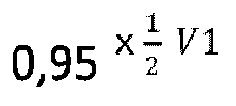
- control unit is configured such that the first actuator moves the frame of the folding device from the rear position to the front position at a speed V2 which is between 0.95 ⁇ 1 2 V 1 And 1.05 ⁇ 1 2 V 1 , when moving the punch from the intermediate position to the folding position.
- the speed V2 is preferably equal to 1 2 V 1 , the aforementioned speed range making it possible to take into account parasitic phenomena, such as sliding phenomena in particular.
- control unit is configured such that the first actuator continues to move the chassis towards the front position when the second actuator moves the punch from the folding position to the rest position.
- the lateral dies each comprise one or more grooves extending parallel to the direction of advance and each intended to receive a previously formed longitudinal undulation.
- control unit is configured such that the third actuator moves the lower frame from the rest position to the folding position during the movement of the punch from the rest position to an intermediate position in which said punch comes into contact with the sheet metal.
- the folding device comprises return members which are configured to return the lateral dies towards the spaced position.
- the punch is fixed to a pusher which is capable of being moved by the first actuator in order to move the punch between the rest position and the folding position
- the folding device comprising two side clamps which are arranged on either side of the punch, each blank clamp comprising a clamping surface facing one of the lateral dies, each blank clamp being mounted movable vertically on a respective flank clamp support, the blank clamp supports flanks being mounted movable horizontally on the pusher parallel to the direction of advance between a spaced position and a close position.
- the folding installation further comprises, upstream of the folding device, a profiling device configured to form at least one undulation extending parallel to the direction of advance.
- a profiling device configured to form at least one undulation extending parallel to the direction of advance.
- the folding installation further comprises, downstream of the folding device, a shaping device which is configured to modify a corrugation previously folded by means of the folding device.
- control unit is configured to control the fourth actuator and the fifth actuator.
- control unit is configured to control the drive device so as to ensure the advance of the metal sheet from the rear to the front at a speed V1 and the control unit is configured as such so that the fourth actuator moves the frame of the shaping device from the rear position to the front position at a speed V3 which is equal to V1 during the movement of the punch of the folding device from the rest position towards an intermediate position in which the punch of the folding device comes into contact with the metal sheet and which is zero during the movement of the punch of the folding device from the intermediate position to the folding position.
- such a method of using a folding installation comprises one or more of the following characteristics.
- the second actuator is controlled such that the second actuator moves the punch towards the folding position at a speed V7 between 0.95 V 1 2 ⁇ 1 sin ⁇ ⁇ 1 tan ⁇ and 1.05 V 1 2 ⁇ 1 sin ⁇ ⁇ 1 tan ⁇ and preferably equal to V 1 2 ⁇ 1 sin ⁇ ⁇ 1 tan ⁇ ; with ⁇ : the angle formed between one of the sides of the substantially triangular section of the punch and a horizontal axis.
- the first actuator is controlled so as to move the frame of the folding device from the rear position to the front position at a speed V2 which is between 0.95 ⁇ 1 2 V 1 And 1.05 ⁇ 1 2 V 1 , and advantageously equal to 1 2 V 1 when moving the punch from an intermediate position in which the punch of the bending device comes into contact with the metal sheet towards the folding position.
- the first actuator and the second actuator are controlled so as to continue the movement of the chassis towards the front position during the movement of the punch from the folding position to the rest position.
- Fig.1 illustrates a corrugated metal sheet 1, intended for the formation of a waterproof membrane of a storage tank for a fluid, such as liquefied natural gas.
- the metal sheet 1 comprises a first series of parallel corrugations 2, extending in a direction y and a second series of parallel corrugations 3 extending in a direction x.
- the x and y directions of the series of undulations are perpendicular.
- the corrugations 2, 3 project from the side of the internal face of the metal sheet 1, intended to be brought into contact with the fluid contained in the tank.
- the edges of the metal sheet 1 are here parallel to the corrugations 2, 3.
- the metal sheet 1 comprises, between the corrugations 2, 3, a plurality of flat surfaces 4. At the level of each intersection between two corrugations 2, 3, the metal sheet 1 comprises a node zone 5.
- the node zone 5 comprises a portion central 6 having a top projecting towards the inside of the tank. Furthermore, the central portion 6 is bordered, on the one hand, by a pair of concave undulations 7 formed in the crest of the undulation 3 and, on the other hand, by a pair of recesses 8 into which the undulation 2.
- the corrugations 2, 3 of the metal sheet 1 allow the sealing membrane to be flexible in order to be able to deform under the effect of thermal and mechanical stresses generated by the fluid stored in the tank.
- the metal sheet 1 can in particular be made of stainless steel, aluminum, Invar ® : that is to say an alloy of iron and nickel whose expansion coefficient is typically between 1.2.10 -6 and 2.10 - 6 K -1 , or in an iron alloy with a high manganese content whose expansion coefficient is typically of the order of 7.10 -6 K -1 .
- Invar ® an alloy of iron and nickel whose expansion coefficient is typically between 1.2.10 -6 and 2.10 - 6 K -1 , or in an iron alloy with a high manganese content whose expansion coefficient is typically of the order of 7.10 -6 K -1 .
- the use of other metals or alloys is also possible.
- the metal sheet 1 has a thickness of approximately 1.2 mm. Other thicknesses are also possible, knowing that a thickening of the metal sheet 1 leads to an increase in its cost and generally increases the rigidity of the corrugations 2, 3.
- the installation comprises a coil 10 on which a strip of metal sheet 1 is wound.
- the folding installation 9 also includes a drive device 11 ensuring the advance of the metal sheet 1 in a direction of advance, symbolized by an arrow f, on the figures 2, 3 And 4 .
- the drive device 11 comprises one or more pairs of rollers. Each pair of rollers comprises a lower roller and an upper roller intended to be arranged vertically on either side of the metal sheet 1.
- the rollers as well as the coil 10 are articulated around axes of rotation which are horizontal and parallel to each other. to each other.
- One or more of the rollers is rotated by a motor so as to ensure the advance of the metal sheet 1.
- the drive device 11 is thus configured to ensure the advance of the metal sheet 1 at a constant speed V1.
- the drive device comprises the coil 10 and a motor arranged to rotate the coil 10 and thus unwind the metal sheet.
- the folding installation 9 also comprises a profiling device configured to form, in the metal sheet 1, one or more longitudinal undulations, that is to say extending parallel to the direction in advance f.
- the profiling device comprises, for example, profiling rollers, as described in the document KR20150100009 .
- the metal sheet 1 which is presented to the folding installation 9 has previously formed corrugations which extend parallel to the direction of advance f.
- the folding installation 9 comprises a folding device 12 intended for the formation of a series of undulations transverse to the direction of advance f.
- the folding device 12 comprises a frame 13 which is mounted movable parallel to the direction of advance between a rear position, shown in [ Fig.2 ], and a forward position, shown on [ Fig.5 ].
- the chassis 13 is, for example, guided on rails extending parallel to the direction of advance f.
- the folding installation 9 comprises at least one actuator 14, such as a cylinder or a motor, which makes it possible to move the chassis 13 between the rear position and the front position.
- the folding device 12 further comprises a pusher 15 equipped with a punch 16 which is intended to deform the metal sheet 1 in order to form a transverse corrugation.
- the punch 16 extends in a transverse direction which is orthogonal to the direction of advance f.
- Each punch 16 comprises, at its lower end, a head having a substantially triangular section, that is to say V-shaped.
- the pusher 15 is mounted movable vertically on the chassis 13 of the folding device 12 between a high rest position, shown on [ Fig.2 ], and a low folding position, shown on [ Fig.5 ], in which the punch 16 deforms the metal sheet 1 in order to form a transverse corrugation.
- the folding device 12 comprises at least one actuator 17, such as a cylinder for example, which makes it possible to move the pusher 15 between the upper rest position and the lower folding position.
- the folding device 12 comprises a lower frame 18 which is mounted movable vertically on the chassis 13 of the folding device 12 between a low rest position, illustrated in [ Fig.2 ], and a high folding position, shown on [ Fig.5 ].
- the folding device 12 comprises at least one actuator 19, such as a jack for example, which makes it possible to move the lower frame 18 between the lower rest position and the upper folding position.
- the folding device 12 also comprises two lateral dies 20, 21, respectively rear and front, which are mounted, on the lower frame 18, sliding horizontally in a direction parallel to the direction of advance f, for example by means of guide rails. guidance.
- the lateral dies 20, 21 comprise an upper surface for supporting the metal sheet 1.
- Each of the two lateral dies 20, 21 further comprises a concave half-indentation formed in the edge facing the other lateral die 20 , 21.
- the lateral dies 20, 21 each comprise one or more grooves which each correspond to the shape of one of the longitudinal corrugations, each groove being intended upon receipt of a longitudinal corrugation, previously formed in the metal sheet 1.
- the lateral dies 20, 21 are movably mounted on the lower frame 18 between a spaced position, shown on the [ Fig.2 ], and a close position, shown on [ Fig.5 ].
- the metal sheet 1 being pressed against the lateral dies 20, 21, for example by means of side clamps, such as described below, the metal sheet 1, when it is folded, transmits a force of traction to the lateral dies 20, 21 which thus moves them from the spaced position to the close position.
- the folding device 12 comprises return members, not illustrated, such as mechanical springs or gas springs for example, which are configured to return the lateral dies 20, 21 from the close position to the separated position.
- the folding device 12 comprises dedicated actuators, not shown on the figures 2 to 5 , which allow you to move or to assist the movement of the lateral dies 20, 21 between their spaced position and their close position.
- the folding device 12 further comprises side clamps which extend on either side of the punch 16 and each have a clamping surface facing a side dies 20, 21.
- the side clamps are mounted vertically movable on a side clamp support.
- the folding device 12 comprises elastic members which tend to move the sidewall clamps towards a low stop position relative to their respective sidewall clamp support.
- the sidewall supports are mounted sliding horizontally on the pusher 15, in a direction parallel to the direction of advance f, between a spaced position and a close position.
- the vertical mobility of the sidewalls relative to the pusher 15 allows said sidewalls to press the metal sheet 1 against the lateral dies 20, 21, in an intermediate vertical position of the pusher 15 then to compensate for the descent of the pusher 15 between the intermediate position and the folding position.
- the folding device 12 comprises return members, such as mechanical springs or gas springs for example, which are configured to return the side clamps from the close position to the spread position.
- the folding device 12 can also include dedicated actuators, not shown on the figures 2 to 5 , which make it possible to move or assist the movement of the side clamps between their spread position and their close position.
- the folding device 12 comprises knives configured to provide concave corrugations in each of the longitudinal corrugations on either side. other of the transverse undulation to be maintained.
- knives configured to provide concave corrugations in each of the longitudinal corrugations on either side. other of the transverse undulation to be maintained.
- the folding installation 9 also includes an optional shaping device 22, which is intended to give the transverse undulations previously formed by the folding device their final shape.
- the shaping device 22 comprises a frame 23 which is mounted movable parallel to the direction of advance between a rear position, shown on [ Fig.2 ], and a forward position, shown on [ Fig.5 ], for example by means of guide rails.
- the installation comprises at least one actuator 24, such as a jack or a motor which makes it possible to move the chassis 23 between the rear position and the front position.
- the shaping device 22 further comprises a punch 25 which has a shape corresponding to the final shape of the transverse undulations.
- the punch 25 of the shaping device 22 has a semi-elliptical shape while the punch 16 of the folding device 12 has a substantially triangular shape.
- the punch 25 is mounted movable vertically between a high rest position, shown on the [ Fig.2 ], and a low conforming position, shown on [ Fig.5 ], in which the punch 25 deforms the metal sheet 1 in order to give a transverse undulation, previously formed by the folding device 12, its final shape.
- the shaping device 22 comprises at least one actuator 26, such as a jack, which makes it possible to move the punch 25 between the upper rest position and the lower shaping position.
- the shaping device 22 also comprises a die 27 which is arranged facing the punch 25 and which includes an imprint having a shape complementary to that of the punch 25.
- the die 27 is movably mounted on the frame 23 of the shaping device 22 between a low position, shown on the [ Fig.2 ], and a high conforming position, shown on [ Fig.5 ].
- the shaping device 22 comprises at least one actuator 28, such as a jack for example, which makes it possible to move the die 27 between the lower rest position and the upper shaping position.
- the folding installation 9 comprises a control unit 29 which makes it possible to control the different actuators 14, 17, 19, 24, 26, 28 and to synchronize the movement of the components of the folding installation 9.
- the drive device 11 as well as each of the actuators 14, 17, 19, 24, 26, 28, described above, are associated with a position sensor which delivers, to the control unit 29, a signal representative of the speed V1 of advance of the metal sheet 1, signals representative of the position of the frame 13 of the folding device 12, of the pusher 15, of the lower frame 18 and optionally of the side clamps and lateral dies 20, 21, as well as signals representative of the position of the frame 23 of the shaping device 22, of the punch of the shaping device 22 and of the die 27 of the shaping device 22.
- the control unit 29 includes a memory and a microprocessor making it possible to store the data and process them in accordance with the method detailed below. More particularly, the control unit 29 is configured so that the different components of the folding installation 9 follow the kinematics described below.
- a first step enter the initial state represented on the [ Fig.2 ] and the first intermediate state represented on the [ Fig.3 ], the frame 13 of the folding device 12 and that of the shaping device 22 are moved towards their forward position respectively at a speed V2 and V3, said speeds V2 and V3 being equal to the speed V1 of advance of the metal sheet 1 Downstream of the folding installation 9, the metal sheet 1 is moved at a speed V4 which, in the initial state, is also equal to V1.
- the punch 25 and the die 27 of the shaping device 22 are respectively moved towards their low and high shaping position while the pusher 15 and the lower frame 18 of the folding device 12 are respectively moved towards their low and high position folding.
- the lower frame 18 of the folding device 12 reaches the upper folding position before or at the same time as the punch 16 reaches an intermediate position, shown in [ Fig.3 ], in which it comes into contact with the metal sheet 1 and, therefore, the folding of the corrugation begins.
- the die 27 of the shaping device 22 reaches the high shaping position before or at the same time as the punch 16 reaches an intermediate position in which it comes into contact with the metal sheet 1.
- the actuator 24 is controlled so that the matrix 27 of the shaping device 22 comes to position itself opposite a corrugation previously formed by the folding device 9.
- the actuator 17 moving the punch 16 of the folding device 12 is moved at a speed such that the reduction in the dimension of the metal sheet 1 due to the folding operation compensates for the advance of the metal sheet 1.
- the speed of the metal sheet 1 downstream of the folding device 12 is therefore zero.
- the control unit 29 reduces the speed V2 of movement of the chassis 13 of the folding device 12.
- the metal sheet 1 transmits, during its folding, a traction force to the lateral dies 20, 21 which moves from their spread position to their close position.
- the speed of relative movement of the lateral dies 20, 21 relative to the frame 13 of the folding device 12 is equal to V2.
- the absolute speed V5 of the rear lateral die 20 is substantially equal to V1 while the absolute speed V6 of the front lateral die 21 is zero.
- the actuator of the lateral die 20 is controlled to move said lateral die 20, towards the front, by relative to the chassis 13, at a speed substantially equal to V2 while the actuator of the lateral die 21 is controlled to move said lateral die 21 relative to the chassis 13 at a speed substantially equal to V2.
- the punch of the shaping device 22 has reached the low shaping position in the fourth state, shown in [ Fig.5 ].
- the installation includes a cutting device, not illustrated, which makes it possible to cut the metal sheet downstream of the shaping device 22.
Landscapes
- Engineering & Computer Science (AREA)
- Mechanical Engineering (AREA)
- Bending Of Plates, Rods, And Pipes (AREA)
- Folding Of Thin Sheet-Like Materials, Special Discharging Devices, And Others (AREA)
- Mounting, Exchange, And Manufacturing Of Dies (AREA)
Claims (16)
- Biegeanlage (9) zum Bilden von Querwellen in einem Metallblech (1), wobei die Biegeanlage (9) umfasst:- eine Antriebsvorrichtung (11), die einen horizontalen Vorschub des Metallblechs (1) von hinten nach vorne in einer Vorschubrichtung gewährleistet; und- eine Biegevorrichtung (12) umfassend:- einen Rahmen (13), welcher parallel zur Vorschubrichtung zwischen einer hinteren Position und einer vorderen Position beweglich montiert ist, wobei der Rahmen (13) mit einem ersten Stellglied (14) verbunden ist, welches geeignet ist, den Rahmen (13) zwischen der hinteren Position und der vorderen Position zu bewegen; und- einen Stempel (16), der sich in einer Querrichtung ausdehnt, die orthogonal zur Vorschubrichtung ist; und- eine Steuereinheit (29), die so konfiguriert ist, dass sie das erste Stellglied (14) steuert;wobei die Biegeanlage (9) dadurch gekennzeichnet ist, dass der Stempel (16) vertikal auf dem Rahmen (13) zwischen einer Ruheposition und einer Biegeposition, in der der Stempel (16) das Metallblech (1) verformt, beweglich ist, um eine der Querwellen zu bilden, wobei der Stempel (16) mit einem zweiten Stellglied (17) verbunden ist, das geeignet ist, den Stempel (16) zwischen der Ruheposition und der Biegeposition zu bewegen; und dass die Steuereinheit (29) so konfiguriert ist, dass sie das zweite Stellglied (17) steuert, und so konfiguriert ist, dass sie gleichzeitig den Rahmen (13) der Biegevorrichtung (12) aus der hinteren Position in die vordere Position und den Stempel (16) aus der Ruheposition in die Biegeposition bewegt.
- Biegeanlage (9) gemäß Anspruch 1, wobei die Steuereinheit (29) so konfiguriert ist, dass sie die Antriebsvorrichtung (11) so steuert, dass das Metallblech (1) mit einer Geschwindigkeit V1 von hinten nach vorne vorgeschoben wird, und wobei die Steuereinheit (29) so konfiguriert ist, dass:- das zweite Stellglied (17) den Stempel (16) in Richtung der Biegeposition mit einer Geschwindigkeit V7 bewegt, die zwischenα: der Winkel, der zwischen einer Seite des Stempelabschnitts (17) und einer horizontalen Achse gebildet.


- Biegeanlage (9) gemäß Anspruch 1 oder 2, wobei die Steuereinheit (29) so konfiguriert ist, dass:- das erste Stellglied (14) den Rahmen (13) der Biegevorrichtung (12) von der hinteren Position in die vordere Position mit einer Geschwindigkeit V2 bewegt, die, bei der Bewegung des Stempels (16) aus der Ruheposition in eine Zwischenposition, in der der Stempel (16) das Metallblech (1) berührt, gleich V1 ist und bei der Bewegung des Stempels (16) aus der Zwischenposition in die Biegeposition kleiner ist als V1.
- Biegeanlage (9) gemäß Anspruch 3, wobei die Steuereinheit (29) so konfiguriert ist, dass das erste Stellglied (14) den Rahmen (13) der Biegevorrichtung (12) von der hinteren Position in die vordere Position mit einer Geschwindigkeit V2, die zwischen


- Biegeanlage (9) gemäß einem der Ansprüche 1 bis 4, wobei die Steuereinheit (29) so konfiguriert ist, dass das erste Stellglied (14) den Rahmen (13) weiter in die vordere Position bewegt, während das zweite Stellglied (17) den Stempel (16) aus der Biegeposition in die Ruheposition bewegt.
- Biegeanlage (9) gemäß einem der Ansprüche 1 bis 5, wobei die Biegevorrichtung (12) umfasst:- ein unteres Gestell (18), das vertikal beweglich auf dem Rahmen (13) der Biegevorrichtung (12) montiert und gegenüber dem Stempel (16) angeordnet ist, wobei das untere Gestell (18) mit einem dritten Stellglied (19) verbunden ist, das das untere Gestell (18) zwischen einer Ruheposition und einer Biegeposition bewegen kann; und- zwei seitliche Matrizen (20, 21), die jeweils eine obere Auflagefläche zur Aufnahme des Metallblechs (1) und einen Halbabdruck aufweisen; wobei die beiden seitlichen Matrizen (20, 21) auf dem unteren Gestell (18) in einer Richtung parallel zur Vorschubrichtung zwischen einer beabstandeten Position und einer angenäherten Position, in der die Halbabdrücke gemeinsam einen Abdruck mit einer Form bilden, die komplementär zu derjenigen des Stempels (16) ist, horizontal verschiebbar montiert sind.
- Biegeanlage (9) gemäß Anspruch 6, wobei die Steuereinheit (29) so konfiguriert ist, dass das dritte Stellglied (19) das untere Gestell (18) aus der Ruheposition in die Biegeposition bewegt, wenn der Stempel (16) aus der Ruheposition in eine Zwischenposition, in welcher der Stempel (16) das Blech berührt, bewegt wird.
- Biegeanlage (9) gemäß einem der Ansprüche 1 bis 7, weiterhin umfassend, stromabwärts der Biegevorrichtung (12), eine Formgebungsvorrichtung (22), die konfiguriert ist, um eine zuvor mittels der Biegevorrichtung (12) gebogene Welle zu modifizieren.
- Biegeanlage (9) gemäß Anspruch 8, wobei die Formgebungsvorrichtung (22) umfasst:- einen Rahmen (23), der parallel zur Vorschubrichtung zwischen einer hinteren Position und einer vorderen Position beweglich montiert ist, wobei der Rahmen (23) mit einem vierten Stellglied (24) verbunden ist, welches den Rahmen (23) zwischen der hinteren Position und der vorderen Position bewegen kann; und- einen Stempel (25), der vertikal beweglich auf dem Rahmen (23) der Formgebungsvorrichtung (22) zwischen einer Ruheposition und einer Formgebungsposition montiert ist, wobei der Stempel das Metallblech (1) verformt, um die Form einer Querwelle zu ändern, die zuvor durch die Biegevorrichtung (12) gebildet wurde, wobei der Stempel (25) mit einem fünften Stellglied (26) verbunden ist, welches dazu geeignet ist, den Stempel (25) zwischen der Ruheposition und der Formgebungsposition zu bewegen.
- Biegeanlage (9) gemäß Anspruch 9, wobei die Steuereinheit (29) so konfiguriert ist, dass sie das vierte Stellglied (24) und das fünfte Stellglied (26) steuert.
- Biegeanlage (9) gemäß Anspruch 10, wobei die Steuereinheit (29) so konfiguriert ist, dass sie die Antriebsvorrichtung (11) so steuert, dass das Metallblech (1) mit einer Geschwindigkeit V1 von hinten nach vorne vorgeschoben wird, und wobei die Steuereinheit (29) so konfiguriert ist, dass das vierte Stellglied (24) den Rahmen (23) der Formgebungsvorrichtung (22) aus der hinteren Position in die vordere Position mit einer Geschwindigkeit V3 bewegt, die bei der Bewegung des Stempels (16) der Biegevorrichtung (12) aus der Ruheposition in eine Zwischenposition, in der der Stempel (16) der Biegevorrichtung das Metallblech (1) berührt, gleich V1 ist und bei der Bewegung des Stempels (16) der Biegevorrichtung (12) aus der Zwischenposition in die Biegeposition gleich null ist.
- Verfahren zum Betreiben einer Biegeanlage (9) gemäß einem der Ansprüche 1 bis 11, wobei das Verfahren umfasst:- Positionieren eines Metallblechs (1), so dass die Antriebsvorrichtung (11) für einen Vorschub des Metallblechs (1) sorgt; und- Ansteuern des ersten Stellglieds (14) und des zweiten Stellglieds (17) mittels der Steuereinheit (29), um gleichzeitig den Rahmen (13) der Biegevorrichtung (12) aus der hinteren Position in die vordere Position und den Stempel (16) aus der Ruheposition in die Biegeposition zu bewegen.
- Verfahren gemäß Anspruch 12, bei dem das zweite Stellglied so gesteuert wird, dass:- das zweite Stellglied (17) den Stempel (16) in Richtung der Biegeposition mit einer Geschwindigkeit V7 zwischenα: der Winkel zwischen einer der Seiten des Querschnitts des Stempels (17) und einer horizontalen Achse.


- Verfahren gemäß Anspruch 12 oder 13, bei dem das erste Stellglied (14) so gesteuert wird, dass es den Rahmen (13) der Biegevorrichtung (12) von der hinteren Position in die vordere Position mit einer Geschwindigkeit, die zwischen


- Verfahren gemäß einem der Ansprüche 12 bis 14, wobei das erste Stellglied (14) und das zweite Stellglied (17) so angesteuert werden, dass der Rahmen (13) bei der Bewegung des Stempels (16) aus der Biegeposition in die Ruheposition weiter in die Vorwärtsposition bewegt wird.
- Verfahren gemäß einem der Ansprüche 12 bis 15, wobei die Biegeanlage (9) weiterhin stromabwärts der Biegevorrichtung (12) eine Formgebungsvorrichtung (22) umfasst, die zum Modifizieren einer zuvor mittels der Biegevorrichtung (12) gefalteten Welle konfiguriert ist, wobei die Formgebungsvorrichtung (22) umfasst:- einen Rahmen (23), welcher parallel zur Vorschubrichtung zwischen einer hinteren Position und einer vorderen Position beweglich angebracht ist, wobei der Rahmen (23) mit einem vierten Stellglied (24) verbunden ist, welches dazu geeignet ist, den Rahmen (23) zwischen der hinteren Position und der vorderen Position zu bewegen; und- einen Stempel (25), welcher vertikal beweglich an dem Rahmen (23) der Formgebungsvorrichtung (22) zwischen einer Ruheposition und einer Biegeposition angebracht ist, wobei der Stempel (25) das Metallblech (1) verformt, um die Form einer Querwelle zu ändern, die zuvor durch die Biegevorrichtung (12) gebildet wurde, wobei der Stempel (25) mit einem fünften Stellglied (26) verbunden ist, welches den Stempel zwischen der Ruheposition und der Biegeposition bewegen kann,und wobei das vierte Stellglied (24) so gesteuert wird, dass es den Rahmen (23) der Formgebungsvorrichtung (22) aus der hinteren Position in die vordere Position mit einer Geschwindigkeit V3 bewegt, die gleich V1 ist, wenn der Stempel (16) der Biegevorrichtung (12) aus der Ruheposition in eine Zwischenposition, in welcher der Stempel (16) der Biegevorrichtung (12) das Metallblech (1) berührt, bewegt wird und die gleich null ist, wenn der Stempels (16) der Biegevorrichtung (12) von einer Zwischenposition, in der der Stempel (16) der Biegevorrichtung (12) das Metallblech (1) berührt, in die Biegeposition bewegt wird.
Applications Claiming Priority (2)
| Application Number | Priority Date | Filing Date | Title |
|---|---|---|---|
| FR2001184A FR3106993B1 (fr) | 2020-02-06 | 2020-02-06 | Installation de pliage destinée à la formation d’ondulations |
| PCT/EP2021/052654 WO2021156359A1 (fr) | 2020-02-06 | 2021-02-04 | Installation de pliage destinee a la formation d'ondulations et méthode d'utilisation de l'installation |
Publications (3)
| Publication Number | Publication Date |
|---|---|
| EP4100183A1 EP4100183A1 (de) | 2022-12-14 |
| EP4100183B1 true EP4100183B1 (de) | 2024-01-31 |
| EP4100183C0 EP4100183C0 (de) | 2024-01-31 |
Family
ID=70918560
Family Applications (1)
| Application Number | Title | Priority Date | Filing Date |
|---|---|---|---|
| EP21710184.9A Active EP4100183B1 (de) | 2020-02-06 | 2021-02-04 | Biegesystem zum formen von wellen und verfahren zur verwendung des systems |
Country Status (7)
| Country | Link |
|---|---|
| EP (1) | EP4100183B1 (de) |
| JP (1) | JP7777534B2 (de) |
| KR (1) | KR20220134640A (de) |
| CN (1) | CN115066302A (de) |
| ES (1) | ES2977961T3 (de) |
| FR (1) | FR3106993B1 (de) |
| WO (1) | WO2021156359A1 (de) |
Families Citing this family (1)
| Publication number | Priority date | Publication date | Assignee | Title |
|---|---|---|---|---|
| CN117399480A (zh) * | 2023-10-27 | 2024-01-16 | 中海石油气电集团有限责任公司 | 波纹板冲压方法及波纹板 |
Family Cites Families (14)
| Publication number | Priority date | Publication date | Assignee | Title |
|---|---|---|---|---|
| JP3696968B2 (ja) * | 1996-04-18 | 2005-09-21 | 三菱重工業株式会社 | 板材の成形機 |
| US7117777B1 (en) * | 2004-02-04 | 2006-10-10 | River Solutions, Inc. | Flying punch for webs |
| TW200626257A (en) * | 2005-01-31 | 2006-08-01 | jin-zong Yang | Forming machine for making heat-insulated roof tiles with glazed colors |
| KR100531981B1 (ko) * | 2005-09-12 | 2005-11-29 | (주)삼우멤코 | 이형 피치 게이지를 구비한 액화천연가스 저장탱크용멤브레인 성형 장치 |
| KR100547987B1 (ko) * | 2005-10-31 | 2006-02-01 | (주)삼우멤코 | 액화천연가스 저장탱크용 보더형 멤브레인 시트의 제작장치 |
| KR101410285B1 (ko) * | 2007-04-04 | 2014-06-20 | 정동욱 | 일 방향 압력 롤러를 구비한 액화천연가스 저장탱크용멤브레인 성형장치 |
| KR100743472B1 (ko) * | 2007-04-30 | 2007-07-30 | (주)삼우멤코 | 위치조정 실린더 연동형 액화천연가스 저장탱크용 멤브레인성형장치 |
| KR100766309B1 (ko) * | 2007-04-30 | 2007-10-12 | (주)삼우멤코 | 성형용 멤브레인 탑재대가 연결된 액화천연가스 저장탱크용멤브레인 성형장치 |
| KR20150100009A (ko) | 2014-02-24 | 2015-09-02 | 대우조선해양 주식회사 | Lng 저장탱크의 코러게이션 멤브레인 제조방법 |
| EP3194089B1 (de) * | 2014-09-02 | 2018-06-06 | Gaztransport Et Technigaz | Faltvorrichtung zur gleichzeitigen herstellung einer vielzahl von wellen in einer metallplatte und verfahren zur verwendung einer derartigen vorrichtung |
| FR3043344B1 (fr) * | 2015-11-05 | 2017-12-08 | Gaztransport Et Technigaz | Machine de pliage pour former une ondulation dans une tole metallique et procede d'utilisation d'une telle machine de pliage |
| EP3360620A1 (de) * | 2017-02-10 | 2018-08-15 | Linde Aktiengesellschaft | Verfahren und vorrichtung zum herstellen eines gewellten packungsblechs für eine strukturierte packung |
| FR3080547B1 (fr) * | 2018-04-27 | 2020-04-24 | Gaztransport Et Technigaz | Dispositif de pliage pour former une ondulation dans une tole metallique |
| CN209379744U (zh) * | 2018-11-30 | 2019-09-13 | 宁波凯荣船用机械有限公司 | 薄膜型液化天然气液货舱维护系统不锈钢波纹板生产线 |
-
2020
- 2020-02-06 FR FR2001184A patent/FR3106993B1/fr active Active
-
2021
- 2021-02-04 KR KR1020227030782A patent/KR20220134640A/ko active Pending
- 2021-02-04 JP JP2022547841A patent/JP7777534B2/ja active Active
- 2021-02-04 CN CN202180013073.2A patent/CN115066302A/zh active Pending
- 2021-02-04 WO PCT/EP2021/052654 patent/WO2021156359A1/fr not_active Ceased
- 2021-02-04 ES ES21710184T patent/ES2977961T3/es active Active
- 2021-02-04 EP EP21710184.9A patent/EP4100183B1/de active Active
Also Published As
| Publication number | Publication date |
|---|---|
| CN115066302A (zh) | 2022-09-16 |
| FR3106993B1 (fr) | 2022-01-07 |
| JP2023513174A (ja) | 2023-03-30 |
| JP7777534B2 (ja) | 2025-11-28 |
| KR20220134640A (ko) | 2022-10-05 |
| ES2977961T3 (es) | 2024-09-03 |
| EP4100183A1 (de) | 2022-12-14 |
| EP4100183C0 (de) | 2024-01-31 |
| FR3106993A1 (fr) | 2021-08-13 |
| WO2021156359A1 (fr) | 2021-08-12 |
Similar Documents
| Publication | Publication Date | Title |
|---|---|---|
| EP3194089B1 (de) | Faltvorrichtung zur gleichzeitigen herstellung einer vielzahl von wellen in einer metallplatte und verfahren zur verwendung einer derartigen vorrichtung | |
| EP3140058B1 (de) | Faltvorrichtung zur herstellung einer wellung in einem metallblech und verfahren zur verwendung einer faltbaren vorrichtung | |
| WO2017077214A1 (fr) | Machine de pliage pour former une ondulation dans une tôle metallique et procede d'utilisation d'une telle machine de pliage | |
| EP0376808B1 (de) | Verfahren und Vorrichtung zum Tiefziehen von Blattmaterialien mit einem deformierbaren Stempel unter einem Tauchkolben | |
| WO2018065685A1 (fr) | Machine de pliage pour former une ondulation dans une tole metallique et son procede d'utilisation | |
| FR3080547A1 (fr) | Dispositif de pliage pour former une ondulation dans une tole metallique | |
| EP2864067B1 (de) | Rohrkerbungsverfahren und zugehörige kerbungsmaschine | |
| FR3057185A1 (fr) | Machine de pliage pour former une ondulation dans une tole metallique | |
| EP3181312B1 (de) | Regulierbare anordnung zur umwandlung einer ebenen halterung, kassette, einheit und damit ausgerüstete maschine | |
| EP0622152A1 (de) | Bearbeitungsstation mit Stümpfpositionierung und Laserstrahlschweissen von zwei Blechkanten | |
| WO2009044077A2 (fr) | Dispositif de soudage a double epaulement pour le soudage de pieces par friction malaxage et procede de soudage | |
| EP0489646A1 (de) | Verfahren und Vorrichtung zum Positionieren von einer Deckelfolienbahn vor deren Versiegelung an einer Behältereinheit | |
| EP0380894A1 (de) | Vorrichtung zum Tiefziehen von Blattmaterialien | |
| FR3106993A1 (fr) | Installation de pliage destinée à la formation d’ondulations | |
| EP1190786B1 (de) | Verfahren zum Hochdruckumformen von Blechen und Vorrichtung zur Durchführung des Verfahrens | |
| EP0201403A1 (de) | Rohrschneidvorrichtung und Verfahren zum Schneiden von Rohren | |
| FR3025123A1 (fr) | Dispositif et procede de pliage pour former simultanement une pluralite d'ondulations dans une tole metallique | |
| EP1461170A1 (de) | Verfahren und vorrichtung zur herstellung von rastnuten in rohren und so hergestelltes rohr | |
| FR3020771A1 (fr) | Guidage d'un flan de tole sur une matrice de decoupe | |
| FR2772652A1 (fr) | Procede et dispositif de formage de fils metalliques | |
| EP1563920B1 (de) | Presse zum Strangpressen von Rohren | |
| EP3242757B1 (de) | Werkzeug und verfahren zum formen einer kante eines stanzstückes mit unterschnittrückführung | |
| WO2013068492A1 (fr) | Procédé et dispositif de découpe d'un tube et procédé de fabrication d'un échangeur de chaleur utilisant un tel tube | |
| EP2004341B1 (de) | Verfahren zum präzisions-extrudieren von hohlkomponenten aus metall und entsprechende vorrichtung | |
| RU2818787C1 (ru) | Гибочная система для образования гофров и способ применения системы |
Legal Events
| Date | Code | Title | Description |
|---|---|---|---|
| STAA | Information on the status of an ep patent application or granted ep patent |
Free format text: STATUS: UNKNOWN |
|
| STAA | Information on the status of an ep patent application or granted ep patent |
Free format text: STATUS: THE INTERNATIONAL PUBLICATION HAS BEEN MADE |
|
| PUAI | Public reference made under article 153(3) epc to a published international application that has entered the european phase |
Free format text: ORIGINAL CODE: 0009012 |
|
| STAA | Information on the status of an ep patent application or granted ep patent |
Free format text: STATUS: REQUEST FOR EXAMINATION WAS MADE |
|
| 17P | Request for examination filed |
Effective date: 20220622 |
|
| AK | Designated contracting states |
Kind code of ref document: A1 Designated state(s): AL AT BE BG CH CY CZ DE DK EE ES FI FR GB GR HR HU IE IS IT LI LT LU LV MC MK MT NL NO PL PT RO RS SE SI SK SM TR |
|
| DAV | Request for validation of the european patent (deleted) | ||
| DAX | Request for extension of the european patent (deleted) | ||
| GRAP | Despatch of communication of intention to grant a patent |
Free format text: ORIGINAL CODE: EPIDOSNIGR1 |
|
| STAA | Information on the status of an ep patent application or granted ep patent |
Free format text: STATUS: GRANT OF PATENT IS INTENDED |
|
| INTG | Intention to grant announced |
Effective date: 20230925 |
|
| GRAS | Grant fee paid |
Free format text: ORIGINAL CODE: EPIDOSNIGR3 |
|
| GRAA | (expected) grant |
Free format text: ORIGINAL CODE: 0009210 |
|
| STAA | Information on the status of an ep patent application or granted ep patent |
Free format text: STATUS: THE PATENT HAS BEEN GRANTED |
|
| AK | Designated contracting states |
Kind code of ref document: B1 Designated state(s): AL AT BE BG CH CY CZ DE DK EE ES FI FR GB GR HR HU IE IS IT LI LT LU LV MC MK MT NL NO PL PT RO RS SE SI SK SM TR |
|
| REG | Reference to a national code |
Ref country code: GB Ref legal event code: FG4D Free format text: NOT ENGLISH Ref country code: CH Ref legal event code: EP |
|
| REG | Reference to a national code |
Ref country code: DE Ref legal event code: R096 Ref document number: 602021009006 Country of ref document: DE |
|
| REG | Reference to a national code |
Ref country code: IE Ref legal event code: FG4D Free format text: LANGUAGE OF EP DOCUMENT: FRENCH |
|
| U01 | Request for unitary effect filed |
Effective date: 20240219 |
|
| U07 | Unitary effect registered |
Designated state(s): AT BE BG DE DK EE FI FR IT LT LU LV MT NL PT SE SI Effective date: 20240229 |
|
| U20 | Renewal fee for the european patent with unitary effect paid |
Year of fee payment: 4 Effective date: 20240226 |
|
| REG | Reference to a national code |
Ref country code: LT Ref legal event code: MG9D |
|
| PG25 | Lapsed in a contracting state [announced via postgrant information from national office to epo] |
Ref country code: IS Free format text: LAPSE BECAUSE OF FAILURE TO SUBMIT A TRANSLATION OF THE DESCRIPTION OR TO PAY THE FEE WITHIN THE PRESCRIBED TIME-LIMIT Effective date: 20240531 |
|
| PG25 | Lapsed in a contracting state [announced via postgrant information from national office to epo] |
Ref country code: GR Free format text: LAPSE BECAUSE OF FAILURE TO SUBMIT A TRANSLATION OF THE DESCRIPTION OR TO PAY THE FEE WITHIN THE PRESCRIBED TIME-LIMIT Effective date: 20240501 |
|
| PG25 | Lapsed in a contracting state [announced via postgrant information from national office to epo] |
Ref country code: HR Free format text: LAPSE BECAUSE OF FAILURE TO SUBMIT A TRANSLATION OF THE DESCRIPTION OR TO PAY THE FEE WITHIN THE PRESCRIBED TIME-LIMIT Effective date: 20240131 Ref country code: RS Free format text: LAPSE BECAUSE OF FAILURE TO SUBMIT A TRANSLATION OF THE DESCRIPTION OR TO PAY THE FEE WITHIN THE PRESCRIBED TIME-LIMIT Effective date: 20240430 |
|
| PG25 | Lapsed in a contracting state [announced via postgrant information from national office to epo] |
Ref country code: RS Free format text: LAPSE BECAUSE OF FAILURE TO SUBMIT A TRANSLATION OF THE DESCRIPTION OR TO PAY THE FEE WITHIN THE PRESCRIBED TIME-LIMIT Effective date: 20240430 Ref country code: NO Free format text: LAPSE BECAUSE OF FAILURE TO SUBMIT A TRANSLATION OF THE DESCRIPTION OR TO PAY THE FEE WITHIN THE PRESCRIBED TIME-LIMIT Effective date: 20240430 Ref country code: IS Free format text: LAPSE BECAUSE OF FAILURE TO SUBMIT A TRANSLATION OF THE DESCRIPTION OR TO PAY THE FEE WITHIN THE PRESCRIBED TIME-LIMIT Effective date: 20240531 Ref country code: HR Free format text: LAPSE BECAUSE OF FAILURE TO SUBMIT A TRANSLATION OF THE DESCRIPTION OR TO PAY THE FEE WITHIN THE PRESCRIBED TIME-LIMIT Effective date: 20240131 Ref country code: GR Free format text: LAPSE BECAUSE OF FAILURE TO SUBMIT A TRANSLATION OF THE DESCRIPTION OR TO PAY THE FEE WITHIN THE PRESCRIBED TIME-LIMIT Effective date: 20240501 |
|
| PG25 | Lapsed in a contracting state [announced via postgrant information from national office to epo] |
Ref country code: PL Free format text: LAPSE BECAUSE OF FAILURE TO SUBMIT A TRANSLATION OF THE DESCRIPTION OR TO PAY THE FEE WITHIN THE PRESCRIBED TIME-LIMIT Effective date: 20240131 |
|
| PG25 | Lapsed in a contracting state [announced via postgrant information from national office to epo] |
Ref country code: PL Free format text: LAPSE BECAUSE OF FAILURE TO SUBMIT A TRANSLATION OF THE DESCRIPTION OR TO PAY THE FEE WITHIN THE PRESCRIBED TIME-LIMIT Effective date: 20240131 |
|
| REG | Reference to a national code |
Ref country code: ES Ref legal event code: FG2A Ref document number: 2977961 Country of ref document: ES Kind code of ref document: T3 Effective date: 20240903 |
|
| REG | Reference to a national code |
Ref country code: CH Ref legal event code: PL |
|
| PG25 | Lapsed in a contracting state [announced via postgrant information from national office to epo] |
Ref country code: SM Free format text: LAPSE BECAUSE OF FAILURE TO SUBMIT A TRANSLATION OF THE DESCRIPTION OR TO PAY THE FEE WITHIN THE PRESCRIBED TIME-LIMIT Effective date: 20240131 |
|
| PG25 | Lapsed in a contracting state [announced via postgrant information from national office to epo] |
Ref country code: CH Free format text: LAPSE BECAUSE OF NON-PAYMENT OF DUE FEES Effective date: 20240229 |
|
| PG25 | Lapsed in a contracting state [announced via postgrant information from national office to epo] |
Ref country code: CZ Free format text: LAPSE BECAUSE OF FAILURE TO SUBMIT A TRANSLATION OF THE DESCRIPTION OR TO PAY THE FEE WITHIN THE PRESCRIBED TIME-LIMIT Effective date: 20240131 |
|
| PG25 | Lapsed in a contracting state [announced via postgrant information from national office to epo] |
Ref country code: SK Free format text: LAPSE BECAUSE OF FAILURE TO SUBMIT A TRANSLATION OF THE DESCRIPTION OR TO PAY THE FEE WITHIN THE PRESCRIBED TIME-LIMIT Effective date: 20240131 |
|
| PG25 | Lapsed in a contracting state [announced via postgrant information from national office to epo] |
Ref country code: SM Free format text: LAPSE BECAUSE OF FAILURE TO SUBMIT A TRANSLATION OF THE DESCRIPTION OR TO PAY THE FEE WITHIN THE PRESCRIBED TIME-LIMIT Effective date: 20240131 Ref country code: SK Free format text: LAPSE BECAUSE OF FAILURE TO SUBMIT A TRANSLATION OF THE DESCRIPTION OR TO PAY THE FEE WITHIN THE PRESCRIBED TIME-LIMIT Effective date: 20240131 Ref country code: RO Free format text: LAPSE BECAUSE OF FAILURE TO SUBMIT A TRANSLATION OF THE DESCRIPTION OR TO PAY THE FEE WITHIN THE PRESCRIBED TIME-LIMIT Effective date: 20240131 Ref country code: CZ Free format text: LAPSE BECAUSE OF FAILURE TO SUBMIT A TRANSLATION OF THE DESCRIPTION OR TO PAY THE FEE WITHIN THE PRESCRIBED TIME-LIMIT Effective date: 20240131 Ref country code: CH Free format text: LAPSE BECAUSE OF NON-PAYMENT OF DUE FEES Effective date: 20240229 |
|
| REG | Reference to a national code |
Ref country code: DE Ref legal event code: R097 Ref document number: 602021009006 Country of ref document: DE |
|
| PG25 | Lapsed in a contracting state [announced via postgrant information from national office to epo] |
Ref country code: MC Free format text: LAPSE BECAUSE OF FAILURE TO SUBMIT A TRANSLATION OF THE DESCRIPTION OR TO PAY THE FEE WITHIN THE PRESCRIBED TIME-LIMIT Effective date: 20240131 |
|
| PG25 | Lapsed in a contracting state [announced via postgrant information from national office to epo] |
Ref country code: MC Free format text: LAPSE BECAUSE OF FAILURE TO SUBMIT A TRANSLATION OF THE DESCRIPTION OR TO PAY THE FEE WITHIN THE PRESCRIBED TIME-LIMIT Effective date: 20240131 |
|
| PLBE | No opposition filed within time limit |
Free format text: ORIGINAL CODE: 0009261 |
|
| STAA | Information on the status of an ep patent application or granted ep patent |
Free format text: STATUS: NO OPPOSITION FILED WITHIN TIME LIMIT |
|
| 26N | No opposition filed |
Effective date: 20241101 |
|
| PG25 | Lapsed in a contracting state [announced via postgrant information from national office to epo] |
Ref country code: IE Free format text: LAPSE BECAUSE OF NON-PAYMENT OF DUE FEES Effective date: 20240204 |
|
| PG25 | Lapsed in a contracting state [announced via postgrant information from national office to epo] |
Ref country code: IE Free format text: LAPSE BECAUSE OF NON-PAYMENT OF DUE FEES Effective date: 20240204 |
|
| U20 | Renewal fee for the european patent with unitary effect paid |
Year of fee payment: 5 Effective date: 20250129 |
|
| PG25 | Lapsed in a contracting state [announced via postgrant information from national office to epo] |
Ref country code: CY Free format text: LAPSE BECAUSE OF FAILURE TO SUBMIT A TRANSLATION OF THE DESCRIPTION OR TO PAY THE FEE WITHIN THE PRESCRIBED TIME-LIMIT; INVALID AB INITIO Effective date: 20210204 |
|
| PG25 | Lapsed in a contracting state [announced via postgrant information from national office to epo] |
Ref country code: HU Free format text: LAPSE BECAUSE OF FAILURE TO SUBMIT A TRANSLATION OF THE DESCRIPTION OR TO PAY THE FEE WITHIN THE PRESCRIBED TIME-LIMIT; INVALID AB INITIO Effective date: 20210204 |
|
| GBPC | Gb: european patent ceased through non-payment of renewal fee |
Effective date: 20250204 |
|
| PG25 | Lapsed in a contracting state [announced via postgrant information from national office to epo] |
Ref country code: TR Free format text: LAPSE BECAUSE OF FAILURE TO SUBMIT A TRANSLATION OF THE DESCRIPTION OR TO PAY THE FEE WITHIN THE PRESCRIBED TIME-LIMIT Effective date: 20240131 |
|
| PG25 | Lapsed in a contracting state [announced via postgrant information from national office to epo] |
Ref country code: GB Free format text: LAPSE BECAUSE OF NON-PAYMENT OF DUE FEES Effective date: 20250204 |
|
| U20 | Renewal fee for the european patent with unitary effect paid |
Year of fee payment: 6 Effective date: 20260121 |
|
| PGFP | Annual fee paid to national office [announced via postgrant information from national office to epo] |
Ref country code: ES Payment date: 20260309 Year of fee payment: 6 |