EP4100411B1 - Composés constituant des dérivés de salinomycine modifiés en c20, leur procédé d'obtention, composition les contenant, utilisation desdits composés et procédé d'obtention d'un produit intermédiaire - Google Patents
Composés constituant des dérivés de salinomycine modifiés en c20, leur procédé d'obtention, composition les contenant, utilisation desdits composés et procédé d'obtention d'un produit intermédiaire Download PDFInfo
- Publication number
- EP4100411B1 EP4100411B1 EP21704473.4A EP21704473A EP4100411B1 EP 4100411 B1 EP4100411 B1 EP 4100411B1 EP 21704473 A EP21704473 A EP 21704473A EP 4100411 B1 EP4100411 B1 EP 4100411B1
- Authority
- EP
- European Patent Office
- Prior art keywords
- carbons
- cancer
- chain
- formula
- group
- Prior art date
- Legal status (The legal status is an assumption and is not a legal conclusion. Google has not performed a legal analysis and makes no representation as to the accuracy of the status listed.)
- Active
Links
Classifications
-
- C—CHEMISTRY; METALLURGY
- C07—ORGANIC CHEMISTRY
- C07D—HETEROCYCLIC COMPOUNDS
- C07D493/00—Heterocyclic compounds containing oxygen atoms as the only ring hetero atoms in the condensed system
- C07D493/12—Heterocyclic compounds containing oxygen atoms as the only ring hetero atoms in the condensed system in which the condensed system contains three hetero rings
- C07D493/20—Spiro-condensed systems
-
- A—HUMAN NECESSITIES
- A61—MEDICAL OR VETERINARY SCIENCE; HYGIENE
- A61K—PREPARATIONS FOR MEDICAL, DENTAL OR TOILETRY PURPOSES
- A61K31/00—Medicinal preparations containing organic active ingredients
- A61K31/33—Heterocyclic compounds
- A61K31/335—Heterocyclic compounds having oxygen as the only ring hetero atom, e.g. fungichromin
- A61K31/35—Heterocyclic compounds having oxygen as the only ring hetero atom, e.g. fungichromin having six-membered rings with one oxygen as the only ring hetero atom
-
- A—HUMAN NECESSITIES
- A61—MEDICAL OR VETERINARY SCIENCE; HYGIENE
- A61P—SPECIFIC THERAPEUTIC ACTIVITY OF CHEMICAL COMPOUNDS OR MEDICINAL PREPARATIONS
- A61P35/00—Antineoplastic agents
-
- A—HUMAN NECESSITIES
- A61—MEDICAL OR VETERINARY SCIENCE; HYGIENE
- A61P—SPECIFIC THERAPEUTIC ACTIVITY OF CHEMICAL COMPOUNDS OR MEDICINAL PREPARATIONS
- A61P35/00—Antineoplastic agents
- A61P35/02—Antineoplastic agents specific for leukemia
-
- C—CHEMISTRY; METALLURGY
- C07—ORGANIC CHEMISTRY
- C07D—HETEROCYCLIC COMPOUNDS
- C07D493/00—Heterocyclic compounds containing oxygen atoms as the only ring hetero atoms in the condensed system
- C07D493/02—Heterocyclic compounds containing oxygen atoms as the only ring hetero atoms in the condensed system in which the condensed system contains two hetero rings
- C07D493/10—Spiro-condensed systems
Definitions
- the invention relates to individually modified salinomycin derivatives modified at position C-20, a method for obtaining the same, a composition containing the same, and a use thereof as a medicament, particularly as an anti-cancer agent.
- the invention also relates to a method for obtaining an intermediate product in a method for obtaining salinomycin derivatives modified at position C-20.
- Salinomycin is a natural polyether ionophore antibiotic isolated from Streptomyces albus commonly used in veterinary with the formula (1):
- Salinomycin is known for its high anti-microbial activity, but also for its anti-cancer activity. In in vitro and in vivo tests, salinomycin has shown efficacy against a variety of cancer cells, including drug-resistant cells and cancer stem cells. The mechanism of biological action of salinomycin is related to the ability of this compound to selectively complex metal cations, primarily sodium and potassium cations, and to transport them subsequently across biological membranes. This leads to an imbalance of cations in the cell, changes in intracellular pH, and ultimately results in cell death. The high anti-cancer activity of salinomycin is also related to the effect of said compound on various molecular targets and signalling pathways, including AMPK, MAPK, VEGF or Wnt/ ⁇ -catenin. Salinomycin has been successfully used on a small group of patients with advanced head, neck, breast and ovarian cancer. Salinomycin therapy resulted in inhibition of cancer progression with no acute side effects, thus demonstrating a high therapeutic potential of this compound.
- Patent application EP3191493 and a scientific publication disclose amine derivatives of salinomycin obtained at C-20 position.
- some compounds exhibited higher anti-cancer activity and selectivity against CD24 cancer stem cells, as well as the ability to inhibit mammosphere formation compared to the original salinomycin.
- the use of amine derivatives of salinomycin at C-20 position also resulted in a reduction in the volume and weight of tumours in mice with implanted human MCF-7 breast cancer.
- the high anti-cancer activity of said derivatives is related to their ability to induce ferroptosis, i.e. programmed cell death dependent on iron cation content.
- Salinomycin and intermediate products required to obtained derivatives thereof may be unstable in the reaction medium, especially in the presence of acidic and/or basic agents.
- Salinomycin, as well as its derivatives are sensitive to high temperatures and may therefore undergo irreversible degradation.
- the presence of multiple functional groups presents an additional challenge for selective modification of salinomycin molecule, including any chemo- and regioselective modification of one of the three hydroxyl groups present within its structure.
- Another problem is the exorbitant price of commercially available salinomycin, which significantly hinders the development of new and efficient methods for chemical modification of the compound.
- the invention addresses prior art difficulties regarding the preparation of salinomycin derivatives modified at the C-20 position while retaining the absolute configuration R on the asymmetric C-20 carbon atom (as in the starting salinomycin).
- the subject matter of the invention was therefore to obtain new salinomycin derivatives modified at C-20 position using the method according to the invention.
- Said method comprises obtaining an intermediate product as a result of specific transformations involving selected reactions, reactants and agents as well as conditions of the reaction allowing said derivatives to be obtained while retaining the absolute configuration R at the asymmetric carbon at the C-20 position in a relatively uncomplicated and efficient process.
- a further subject matter of the invention was to obtain new derivatives of the natural ionophore salinomycin, in acidic form and salts thereof, modified at the C-20 position, which could be used in anti-cancer therapy. It is also an subject matter of the invention to provide such salinomycin derivatives modified at the C-20 carbon having an activity against cancer cells with highly advantageous selectivity.
- the salinomycin derivatives according to the invention have very good activity and selectivity against neoplastic diseases, in particular against cancers selected from the group comprising: melanoma, colon cancer, breast cancer or biphenotypic leukaemia.
- the invention relates to compounds constituting C20- N -acyl derivatives of salinomycin with the general formula (2): , wherein:
- these compounds are derivatives with the following formulae:
- inventive compounds have the following formulae:
- the compound has the following formula:
- the compound has the following formula:
- the invention also relates to a pharmaceutical composition
- a pharmaceutical composition comprising the compound defined above and at least one pharmaceutically acceptable excipient.
- Another subject matter of the invention is a method for obtaining an intermediate product for obtaining the compounds defined above.
- the intermediate product is C20-aminosalinomycin with the following formula (3): or a salt thereof.
- the method for obtaining this intermediate product involves the following steps:
- Another subject matter of the invention is a method for obtaining the compounds defined above in the reaction between C20-aminosalinomycin with the formula (3): and:
- the method for obtaining said compounds comprises the following:
- the invention also relates to the compound defined above for use as a medicament.
- the compound is for use as an anti-cancer agent.
- the compound defined above is for use in treatment of conditions selected from the group comprising leukaemia, including without limitation acute myeloid leukaemia, chronic myeloid leukaemia, acute lymphoblastic leukaemia, multiple myeloma; non-small cell lung cancer, including without limitation lung epithelial cell carcinoma, lung adenocarcinoma, human lung squamous cell cancer; large intestine (colon) cancer, including without limitation large intestine adenocarcinoma, colon epithelial cell cancer; tumour of the central nervous system, including without limitation brain tumours such as glioma; melanoma, including without limitation malignant melanoma, epithelial melanoma, non-epithelial melanoma; ovarian cancer, including without limitation epithelial ovarian cancer, ovarian cystadeno
- the compound is for use in treatment of conditions selected from the group of: melanoma, colon cancer, breast cancer and biphenotypic leukaemia.
- the invention relates to compounds constituting C20- N- acyl ( N -amide, N -carbamate (urethane) and urea) salinomycin derivatives with the general formula (2): , wherein:
- the compounds according to the invention have an absolute configuration R on the asymmetric C-20 carbon.
- the absolute configuration of the novel derivatives on the asymmetric C-20 carbon is the same as the absolute configuration on the asymmetric C-20 carbon of the starting salinomycin. Therefore, the preparation of the novel salinomycin derivatives according to the invention provides a retention of the configuration on the asymmetric C-20 carbon of salinomycin.
- the X moiety in the compounds according to the invention may be R, O-R or NH-R.
- X denotes R.
- the salinomycin derivatives may be referred to as N -amide derivatives.
- R denotes O-R.
- the salinomycin derivatives may then be referred to as N -carbamate (urethane) derivatives.
- R may denote NH-R.
- the salinomycin derivatives may then be referred to as urea derivatives.
- the R substituent is as defined in detail below, without limitations. It will be apparent to a person skilled in the art that other R substituents similar to those recited below, even to those recited as specific groups, are also within the scope of the invention.
- the R substituent in the general formula (2) defining the compounds according to the invention is a straight-chain or branched-chain alkyl group comprising 1 to 10 carbons.
- the R substituent is a straight-chain alkyl group.
- R is a branched-chain alkyl group.
- the alkyl group comprises 1 to 10 carbons, more preferably 1 to 5 carbons, also more preferably 1 to 3 carbons.
- R is a methyl, ethyl, n-butyl, isopropyl, neopentyl residue.
- the R substituent in the general formula (2) defining the compounds according to the invention is a straight-chain or branched-chain alkyl group comprising 1 to 10 carbons which is substituted at any position of the carbon chain by 1 to 5 halogens, which may be present at the same carbon or at different carbons.
- Halogen denotes an atom of fluorine (F), chlorine (Cl), bromine (Br) or iodine (I), in particular a chlorine.
- the R substituent is a straight-chain alkyl group.
- R is a branched-chain alkyl group.
- the alkyl group comprises 1 to 10 carbons, more preferably 1 to 5 carbons, also more preferably 1 to 3 carbons.
- R is an alkyl monohalide.
- R is an alkyl dihalide or an alkyl trihalide.
- R is a chloromethyl, 3-chloropropyl, 2,2,2-trichloroethyl moiety.
- the R substituent in the general formula (2) defining the compounds according to the invention is a straight-chain alkyl group comprising 2 to 10 carbons which comprises ether moiety at any position of the carbon chain (ether moiety, -O-).
- the R substituent is a straight-chain alkyl group.
- R is a branched-chain alkyl group.
- the alkyl group comprises 2 to 10 carbons, more preferably 2 to 5 carbons, also more preferably 2 to 3 carbons.
- the alkyl group may contain 1 to 3 ether moieties, preferably 2, and even more preferably one -O- group.
- R is a dimethyl ether moiety.
- R groups constituting an alkyl group as defined above, comprising both one or more halogen substituent and an ether moiety.
- Halogen denotes an atom of fluorine (F), chlorine (Cl), bromine (Br) or iodine (I), in particular a chlorine.
- R is an alkyl substituted with one halogen and comprising one ether moiety.
- the R substituent in the general formula (2) defining the compounds according to the invention is a straight-chain alkyl group comprising 3 to 10 carbons which comprises multiple bonds, either double or triple bonds, at any position of the carbon chain.
- the alkyl group comprises 3 to 10 carbons, more preferably 3 to 5 carbons, also more preferably 3 carbons.
- the R group is a propargyl (prop-2-ynyl) moiety.
- the R substituent in the general formula (2) defining the compounds according to the invention is a monocyclic, dicyclic or tricyclic alkyl group comprising 5 to 10 carbons.
- the cyclic alkyl group may be substituted with a halogen.
- Halogen denotes an atom of fluorine (F), chlorine (Cl), bromine (Br) or iodine (I), in particular a chlorine.
- R is adamantyl.
- R may also be a cyclopentyl or cyclohexyl substituent.
- the R substituent in the general formula (2) defining the compounds according to the invention is an aromatic aryl group.
- R is a six-membered aromatic ring.
- R is a phenyl substituent.
- the R substituent in the general formula (2) defining the compounds according to the invention is an aromatic aryl group substituted by 1 to 3 substituents independently selected from alkyl, alkoxy, hydroxy, nitro and nitrile groups or halogens.
- Halogen denotes an atom of fluorine (F), chlorine (Cl), bromine (Br) or iodine (I), in particular a chlorine.
- the aryl group comprises two of the aforementioned substituents. These may be two halogens. They may also be two nitro groups.
- the aryl group comprises an alkyl substituted with one, two, or three halogens. Said groups may be in the ortho , meta or para position of the aryl group.
- the R substituent is a para- chloromethylphenyl substituent.
- the R substituent in the general formula (2) defining the compounds according to the invention is an aromatic heteroaryl group, wherein 1 or more carbons are substituted by 1 or more heteroatoms from a group comprising atoms of oxygen, nitrogen or sulphur.
- the heteroatom is an atom of oxygen.
- the heteroatom is an atom of sulphur.
- the heteroatom is an atom of nitrogen.
- the R substituent is a 1-furyl residue.
- the R substituent in the general formula (2) defining the compounds according to the invention is an alkyl-aryl group, wherein the aromatic aryl group as defined above is linked to a salinomycin molecule by a carbon chain comprising 1 to 5 carbons.
- the carbon chain is straight or branched.
- the compounds according to the invention may also be in the form of salts.
- the general formula of the salts of salinomycin derivatives according to the invention is illustrated by the general formula (2a):
- Preferred salts of the compounds according to the invention are sodium, potassium or lithium salt.
- Y in the general formula (2a) is then respectively: Na, K, Li.
- the scope of the invention also includes salts with divalent metals, such as e.g. magnesium.
- the invention also relates to a composition
- a composition comprising the compound according to the invention and at least one pharmaceutically acceptable excipient.
- Pharmaceutically acceptable excipients are known in the art and are exemplified in Remington: The Science and Practice of Pharmacy 1995, ed. by E. W. Martin, Mack Publishing Company, 19 Edition, Easton, Pa .
- the composition comprises one compound according to the invention and at least one pharmaceutically acceptable excipient.
- the invention also relates to a method for obtaining novel compounds according to the invention, C20-modified salinomycin derivatives, by reacting C20-aminosalinomycin (3) and compounds with the general formulas (4), (5), (6) or (7) according to the claims.
- this method will be explained for two preferred aspects:
- a preferred embodiment of the invention is a method for obtaining compounds according to the invention, such as: C20- N -amide and C20- N -carbamate (urethane) salinomycin derivatives with the general formula (2), where X denotes R or O-R, respectively, and R is as defined above, in the reaction between C20-aminosalinomycin with the formula (3): and
- the method optionally comprises a step of transforming the resulting compound in acidic form into a salt thereof.
- a person skilled in the art will know how to select the reaction conditions for the conversion of a salinomycin derivative in acidic form into a salt thereof.
- both the acid chloride with the general formula (4), and the chloroformate with the general formula (6) are first mixed with 4-dimethylaminopyridine (DMAP) and a suitable aliphatic amine, and finally C20-aminosalinomycin with the formula (3) is added to the mixture according to the procedure described in detail below.
- DMAP 4-dimethylaminopyridine
- the reaction is carried out in apolar chloroaliphatic or aromatic solvent or in tetrahydrofuran, preferably in chloroform, methylene chloride, toluene, benzene, tetrahydrofuran, most preferably in chloroform or methylene chloride, or in an aprotic polar solvent such as simple nitrile, preferably in acetonitrile, or in a simple tertiary amide, preferably in N , N -dimethylformamide, in the presence of 4-dimethylaminopyridine (DMAP) acting as a reaction activator and an aliphatic amine.
- apolar chloroaliphatic or aromatic solvent or in tetrahydrofuran preferably in chloroform, methylene chloride, toluene, benzene, tetrahydrofuran, most preferably in chloroform or methylene chloride, or in an aprotic polar solvent such as simple nitrile, preferably
- the reaction is conducted under anhydrous conditions.
- the aliphatic amine used is triethylamine, tripropylamine, tributylamine, diisopropylamine, triisopropylamine, triisobutylamine, A, A-diisopropylethylamine, most preferably triethylamine.
- Aliphatic amines complex the by-product resulting from the reaction, namely hydrogen chloride. The binding of hydrogen chloride by the aliphatic amine prevents undesired side reactions and prevents the irreversible decomposition of the compound with the formula (3).
- an aliphatic amine preferably triethylamine, followed by acid chloride with the general formula (4) or chloroformate with the general formula (6) is added at 0°C to a solution of 4-dimethylaminopyridine (DMAP) in an apolar chloroaliphatic or aromatic solvent, or in tetrahydrofuran, preferably in chloroform, methylene chloride, toluene, benzene, tetrahydrofuran, most preferably in chloroform or methylene chloride, or in a polar aprotic solvent such as simple nitrile, preferably in acetonitrile, or in a simple tertiary amide, preferably in N , N- dimethylformamide.
- DMAP 4-dimethylaminopyridine
- the reaction should be carried out at a reduced temperature ( ⁇ 5°C) for another 30 minutes. Cooling of the reaction system is then discontinued, the reaction mixture is let to warm up to room temperature and mixing is continued until the reaction is over, with the reaction completeness preferably being monitored by thin layer chromatography TLC.
- reaction mixture is then washed with an aqueous solution of sodium carbonate (0,1 M).
- organic layer is evaporated under reduced pressure, and the residue is purified by column chromatography, preferably using a CombiFlash ® chromatograph with an ELS detector, using a column filled with silica and a mixture of organic solvents, preferably a mixture of ethyl acetate:n-hexane with an increasing gradient of ethyl acetate concentration from 0% to 100%.
- the combined organic layers are evaporated until dry under reduced pressure, and then repeatedly evaporated with n-pentane.
- carboxylic acids with the general formula (5) When carboxylic acids with the general formula (5) are used, it is essential for the success of the reaction that they are appropriately pre-activated with suitable coupling agents/activators according to the procedure described in detail below.
- the reaction is carried out in apolar chloroaliphatic or aromatic solvent or in tetrahydrofuran, preferably in chloroform, methylene chloride, toluene, benzene, tetrahydrofuran, most preferably in chloroform or methylene chloride, or in an aprotic polar solvent such as simple nitrile, preferably in acetonitrile, or in a simple tertiary amide, preferably in N , N- dimethylformamide.
- the reaction is conducted under anhydrous conditions and in the presence of a coupling agent.
- the coupling agent used is N , N '-dicyclohexylcarbodiimide (DCC), N,N'- diisopropylcarbodiimide (DIC), 1,1'-carbonyldiimidazole (CDI), 1-ethyl-3-(3'-dimethylaminopropyl)carbodiimide hydrochloride (EDC), 2-(7-aza-1 H -benzotriazol-1-yl)-1,1,3,3-tetramethyluronium hexafluorophosphate (HATU), wherein, if N,N'- dicyclohexylcarbodiimide (DCC) is used, it is preferable to use also p -toluenesulfonic acid, N- hydroxysuccinimide, 3-hydroxy-4-keto-1,2,3-benzotriazine, N-hydroxybenzotriazole
- a coupling agent is added to a solution of carboxylic acid with the general formula (5) in apolar chloroaliphatic or aromatic solvent or in tetrahydrofuran, preferably in chloroform, methylene chloride, toluene, benzene, tetrahydrofuran, most preferably in chloroform or methylene chloride, or in an aprotic polar solvent such as simple nitrile, preferably in acetonitrile, or in a simple tertiary amide, preferably in N , N -dimethylformamide, at room temperature.
- apolar chloroaliphatic or aromatic solvent or in tetrahydrofuran preferably in chloroform, methylene chloride, toluene, benzene, tetrahydrofuran, most preferably in chloroform or methylene chloride, or in an aprotic polar solvent such as simple nitrile, preferably in acetonitrile, or in a
- reaction mixture is then evaporated under reduced pressure, and the residue is purified by column chromatography, preferably using a CombiFlash ® chromatograph with an ELS detector, using a column filled with silica and a mixture of organic solvents, preferably a mixture of ethyl acetate:n-hexane with an increasing gradient of ethyl acetate concentration from 0% to 100%.
- column chromatography preferably using a CombiFlash ® chromatograph with an ELS detector, using a column filled with silica and a mixture of organic solvents, preferably a mixture of ethyl acetate:n-hexane with an increasing gradient of ethyl acetate concentration from 0% to 100%.
- an apolar chloroaliphatic solvent preferably methylene chloride or chloroform
- the invention relates to a method for obtaining novel C20-urea salinomycin derivatives with the general formula (2), where X denotes NH-R, and R is as defined above, in a reaction between C20-aminosalinomycin with the formula (3): and isocyanate with the general formula (7): , wherein R is as defined above.
- the method optionally comprises a step of transforming the resulting compound in acidic form into a salt thereof.
- a person skilled in the art will know how to select the reaction conditions for the conversion of a salinomycin derivative in acidic form into a salt thereof.
- the reaction with the isocyanate with the general formula (7) is carried out in apolar chloroaliphatic or aromatic solvent or in tetrahydrofuran, preferably in chloroform, methylene chloride, toluene, benzene, tetrahydrofuran, most preferably in chloroform or methylene chloride, or in an aprotic polar solvent such as simple nitrile, preferably in acetonitrile, or in a simple tertiary amide, preferably in N , N- dimethylformamide, at room temperature. Also preferably, the reaction is conducted under anhydrous conditions.
- reaction completeness is preferably monitored using thin layer chromatography TLC, the reaction mixture is washed with an aqueous solution of sodium bicarbonate (0.1 M). The organic layer is evaporated under reduced pressure, and the residue is purified by column chromatography, preferably using a CombiFlash ® chromatograph with an ELS detector, using a column filled with silica and a mixture of organic solvents, preferably a mixture of ethyl acetate:n-hexane with an increasing gradient of ethyl acetate concentration from 0% to 100%.
- an apolar chloroaliphatic solvent preferably methylene chloride or chloroform
- the invention also relates to a method for obtaining an intermediate product for the method for obtaining salinomycin derivatives modified at C-20 carbon.
- the three-step procedure for the synthesis of the intermediate compound with the formula (3) starts with the chemoselective oxidation of the C20-hydroxy group of salinomycin with the formula (1) taking place in an apolar chloroaliphatic solvent, preferably in methylene chloride or chloroform, at room temperature using activated manganese(IV) oxide [according to: EP3191493 or Mai et al., Nature Chemistry, 9, 2017, 1025-1033 ], followed by a two-step reductive amination of the resulting C20-oxosalinomycin [following the general procedure described in: EP3191493 or Mai et al., Nature Chemistry, 9, 2017, 1025-1033 ] with the formula (8):
- the modified procedure for the preparation of the compound with the formula (8) comprises the use of an alcoholic solution of ammonia at a suitable concentration, as well as increasing the activation (imine formation) time to 5 hours.
- the reaction intermediate product (imine) is reduced by slowly adding sodium borohydride or a sodium borohydride derivative, in particular sodium cyanoborohydride, in the presence of cerium salts, preferably cerium(III) chloride, to obtain C20-aminosalinomycin with the formula (3).
- the invention also relates to the novel salinomycin derivatives according to the invention for use as a medicament.
- the compounds according to the invention are intended for use as anti-cancer agents.
- the compound according to the invention is suitable for use in conditions selected without limitations from the group comprising leukaemia, including without limitation acute myeloid leukaemia, chronic myeloid leukaemia, acute lymphoblastic leukaemia, biphenotypic leukaemia, multiple myeloma; non-small cell lung cancer, including without limitation lung epithelial cell carcinoma, lung adenocarcinoma, human lung squamous cell cancer; large intestine (colon) cancer, including without limitation large intestine adenocarcinoma, colon epithelial cell cancer; tumour of the central nervous system, including without limitation brain tumours such as glioma; melanoma, including without limitation malignant melanoma, epithelial melanoma, non-epithelial melanoma; ovarian cancer, including without limitation epithelial ovarian cancer, ovarian cystadenocarcinoma; kidney cancer, including without limitation renal cell carcinoma; prostate cancer, including without limitation prostate a
- cancer in this description, the terms “cancer”, “”tumor”, “neoplasm” and “carcinoma” are used interchangeably.
- Anti-cancer activity is understood as:
- Normal murine BALB/3T3 fibroblasts were also used in the tests for determining the selectivity coefficients of the compounds used in the assays. These values allow for predicting the direction of action of salinomycin derivatives by answering the question whether these compounds will first destroy cancer cells or attack normal body cells.
- Table 1 summarises the data for all cell lines (both cancer and normal) used in the in vitro studies.
- Table 1. Cell line symbol Cell line name Source of origin of the cell line Number of cells per well in the test B16-F0 murine melanoma ATCC 0,25 ⁇ 10 4 Hs294T human melanoma ATCC 0,20 ⁇ 10 4 LoVo drug-sensitive human colon cancer ATCC 1,00 ⁇ 10 4 LoVo/DX drug-resistant human colon cancer Prof. E.
- cytotoxicity tests were performed according to the procedure described below.
- Stock solutions of the test compounds at 10 mg/mL were prepared for each experiment ex tempore by dissolving 1 mg of the preparation in 100 ⁇ L of dimethylsulfoxide (DMSO).
- DMSO dimethylsulfoxide
- the solvent for further dilutions was a culture medium.
- Compounds were tested at concentration ranges of 100 to 0.00001 ⁇ g/mL (for the B16-F0 and Hs294T cell lines) and 100 to 0.1 ⁇ g/mL (for the LoVo, LoVo/DX, MCF-7, MV-4-11 and BALB/3T3 cell lines).
- the assays of the cytotoxic effects of the tested compounds and the reference compound - cisplatin were carried out in 96-hour in vitro cultures.
- An MTT tetrazolium salt reduction assay [as per: Wietrzyk et al., Anti-cancer drugs, 2007, 18, 447-457 ] was performed for MV-4-11 cells (human biphenotypic leukaemia) to evaluate the metabolic activity of cancer cells.
- MTT reading 20 ⁇ L of MTT solution was added to each well of the 96-well plate. After 4 hours of incubation at 37°C, 80 ⁇ L of lysis buffer was added to each well. After another 24 hours of incubation at 37°C, optical density of individual samples was read at 570 nm using a Synergy H4 (universal) plate reader (BioTek Instruments, USA).
- SRB reading 50 ⁇ L of cold 50% trichloroacetic acid was added to each well of the 96-well plate. After 60 minutes of incubation at room temperature, the plates were washed 4 times with water and then dried on paper towels. 50 ⁇ L of a 0.1% solution of sulforhodamine B (SRB) in 1% acetic acid was then added to each well to stain the cell protein precipitated in the well. After a 30 min. incubation with SRB at room temperature, the plates were washed 4 times with 1% acetic acid and dried again on paper towels. In the next step, 150 ⁇ L of 10 mM TRIS buffer was added to each well to dissolve the dye bound with the cell protein. The optical density of individual samples was read at 540 nm using a Synergy H4 (universal) plate reader (BioTek Instruments, USA).
- IC 50 values i.e. the concentration of the test compound required to inhibit cell growth by 50% [as per: Nevozhay, PLoS One, 2014, 9, e106186 ]. Mean IC 50 values were then calculated based on another 3 to 5 replicates of the test, together with standard deviation values.
- Table 3 clearly shows that the compounds according to the invention have an anti-cancer activity against cancer cells from various tissues and organs. Moreover, the derivatives obtained have an anti-proliferative effect that is several times more potent compared to the parent compound, e.g. derivatives with the formulae (10), (15), (17), or an anti-proliferative effect that is even tens of times more potent, e.g. compounds with the formulae (21), (22), (25).
- the results of activity tests carried out on drug-sensitive and drug-resistant human colon cancer cells indicate that the compounds according to the invention can overcome drug resistance of cancer cells. Furthermore, the compounds according to the invention are characterised by an excellent selectivity of action, which demonstrates their extensive therapeutic potential.
- a person skilled in the art will know how to select a particular derivative to treat the appropriate type of cancer.
- the derivative with the formula (21) has preferred effect againts melanoma cells
- the compound with the formula (25) has preferred effect againts biphenotypic leukaemia cells.
- Triethylamine (8 mg, 1.2 eq.) and acetyl chloride (7 mg, 1.2 eq.) were added to a solution of 4-dimethylaminopyridine (10 mg, 1.2 eq.) in anhydrous methylene chloride (7 mL) cooled to a temperature of 0°C and this was stirred for 30 minutes at reduced temperature ( ⁇ 5°C).
- C20-aminosalinomycin 50 mg, 1.0 eq.
- reaction mixture was washed with an aqueous solution of sodium carbonate (0.1 M).
- the organic layer was evaporated until dry under reduced pressure and the residue was purified using a CombiFlash ® chromatograph with ELS detector, using a silica-filled column and a solvent mixture of ethyl acetate:n-hexane with an increasing gradient of ethyl acetate concentration from 0% to 100%.
- Propyl isocyanate (18 mg, 3.0 eq.) was added to a solution of C20-aminosalinomycin (50 mg, 1.0 eq.) in anhydrous methylene chloride (7 mL) at room temperature. This was stirred at room temperature until the reaction was over, which was monitored by thin-layer chromatography TLC.
- an ammonia solution (7.0 N in methanol, 0.7 mL) was added to the solution of C20-oxosalinomycin (90 mg, 1.0 eq.) with the formula (8) in methanol (7 mL) at room temperature. This was mixed at room temperature for 5 hours, followed by addition of CeCl 3 ⁇ 7H 2 O (49 mg, 1.0 eq.), followed by, after 30 minutes, slow (overnight) addition of a solution of sodium cyanoborohydride - NaBH 3 CN (17 mg, 2.0 eq.) in methanol (5 mL). The progress of the reaction was monitored using thin layer chromatography TLC.
- Table 4 summarises the test results for C20-epi-salinomycin derivatives versus corresponding derivatives according to the invention. The results presented clearly show that in neither case the epi derivatives show higher activity than the corresponding derivatives according to the invention. For some tested cell lines, salinomycin derivatives with the substituent at the C-20 position located at the epi position show a complete lack of activity thus presenting a difference of orders of magnitude compared to the derivatives according to the invention.
Landscapes
- Chemical & Material Sciences (AREA)
- Organic Chemistry (AREA)
- Health & Medical Sciences (AREA)
- General Health & Medical Sciences (AREA)
- Veterinary Medicine (AREA)
- Medicinal Chemistry (AREA)
- Public Health (AREA)
- Pharmacology & Pharmacy (AREA)
- Life Sciences & Earth Sciences (AREA)
- Animal Behavior & Ethology (AREA)
- Chemical Kinetics & Catalysis (AREA)
- Nuclear Medicine, Radiotherapy & Molecular Imaging (AREA)
- General Chemical & Material Sciences (AREA)
- Epidemiology (AREA)
- Hematology (AREA)
- Oncology (AREA)
- Pharmaceuticals Containing Other Organic And Inorganic Compounds (AREA)
- Heterocyclic Carbon Compounds Containing A Hetero Ring Having Oxygen Or Sulfur (AREA)
- Pyrane Compounds (AREA)
- Saccharide Compounds (AREA)
Claims (13)
- Composé constituant un dérivé C20-N-acyle de la salinomycine, le composé comportant la formule générale (2) :
 - X désigne R, O-R ou NH-R ;- R désigne :ou un sel de ce composé.- un groupe alkyle à chaîne droite ou ramifié comprenant 1 à 10 carbones,- un groupe alkyle à chaîne droite ou ramifié comprenant 1 à 10 carbones, qui est substitué à n'importe quelle position de la chaîne de carbones par 1 à 5 halogènes, qui peuvent être présents au même carbone ou à différents carbones,- un groupe alkyle à chaîne droite comprenant 2 à 10 carbones, qui comprend une fraction d'éther à n'importe quelle position de la chaîne de carbones,- un groupe alkyle à chaîne droite comprenant 3 à 10 carbones, qui comprend des liaisons multiples, des liaisons soit doubles soit triples, à n'importe quelle position de la chaîne de carbones,- un groupe alkyle monocyclique, dicyclique ou tricyclique comprenant 5 à 10 carbones,- un groupe aryle aromatique, où ceux qui comprennent un anneau aromatique à six chaînons sont préférés,- un groupe aryle aromatique substitué par 1 à 3 substituants indépendamment sélectionnés entre des groupes alkyle, alkoxy, hydroxy, nitro et nitrile ou des halogènes,- un groupe hétéroaryle aromatique, où 1 ou plusieurs carbones sont substitués par 1 ou plusieurs hétéroatomes d'un groupe comprenant des atomes d'oxygène, d'azote ou de soufre, ou- un groupe alkyle-aryle, où le groupe aryle aromatique tel que défini ci-dessus est lié à une molécule de salinomycine par une chaîne de carbones comprenant 1 à 5 carbones (alkyle comprenant 1 à 5 carbones) ;
 - Composé selon la revendication 1, comportant la formule suivante :

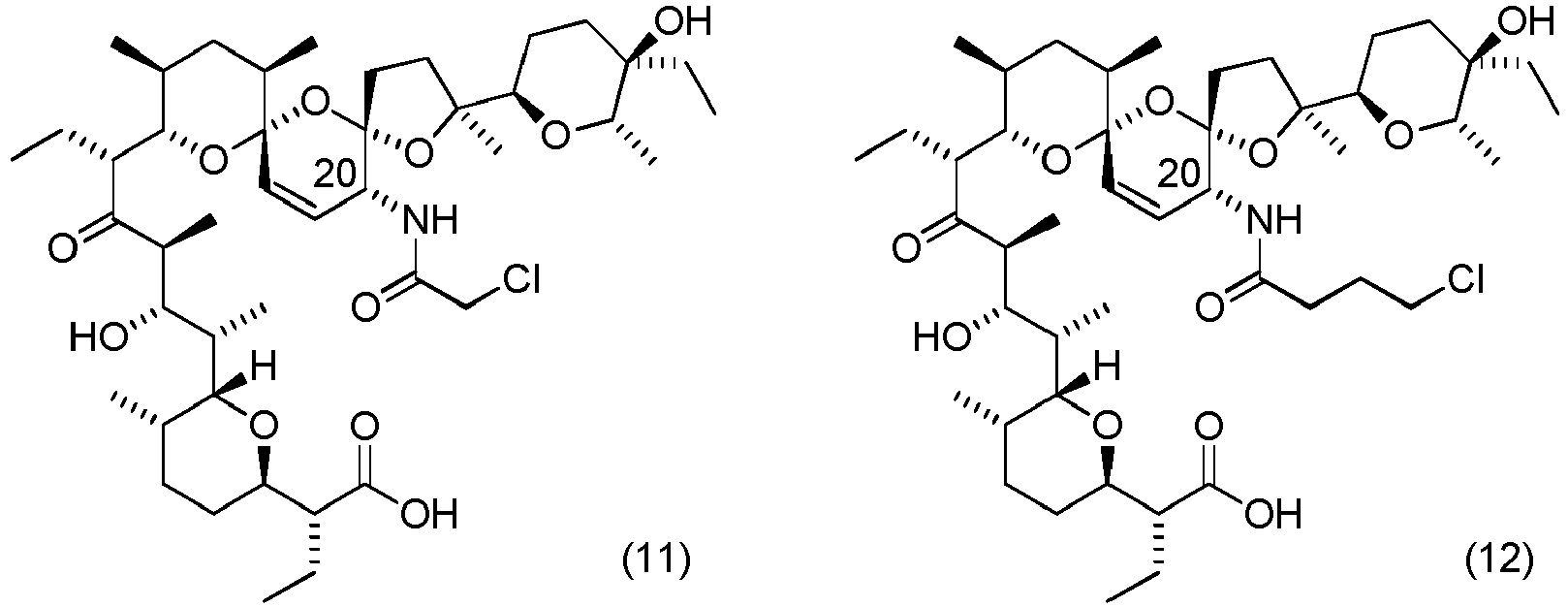
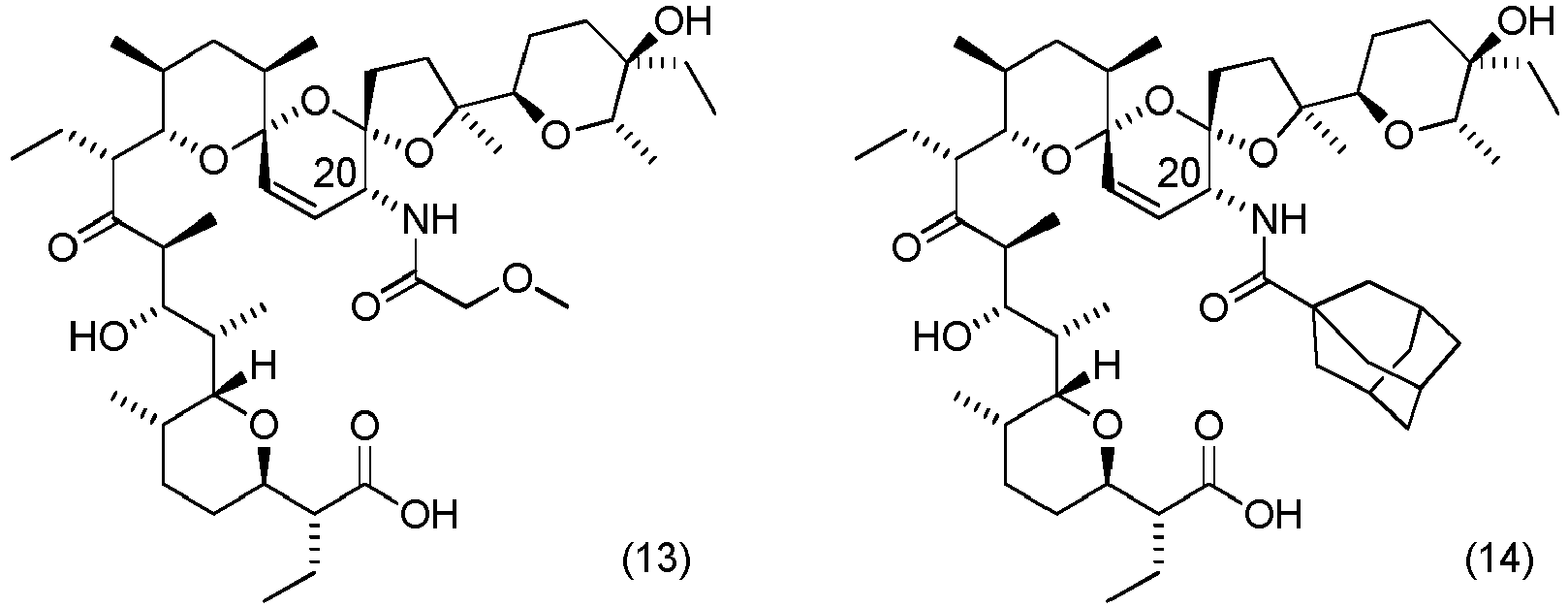


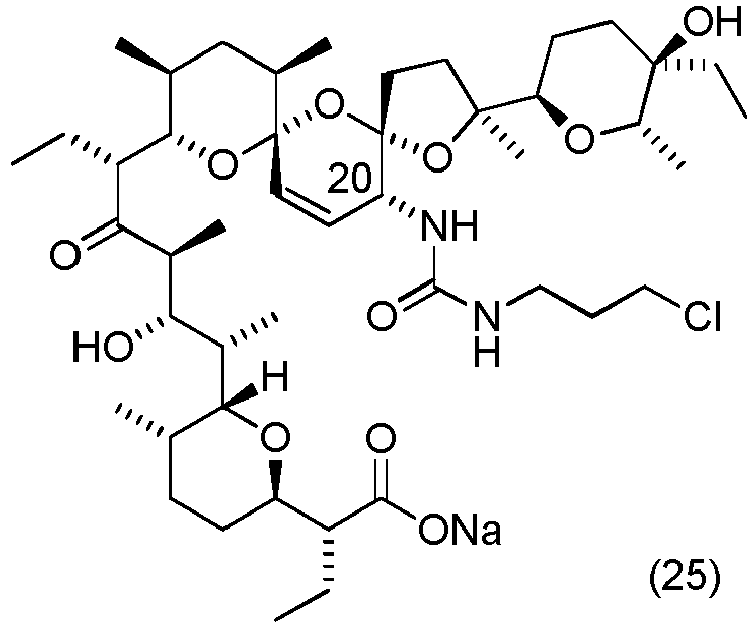
- Composé selon la revendication 1 ou 2, comportant la formule suivante :


- Composé selon l'une quelconque des revendications 1 à 3, comportant la formule suivante :

- Composé selon l'une quelconque des revendications 1 à 3, comportant la formule

- Composition pharmaceutique comprenant le composé selon l'une quelconque des revendications 1 à 5 et au moins un excipient de qualité pharmaceutique.
- Procédé pour obtenir un produit intermédiaire pour obtenir le composé selon l'une quelconque des revendications 1 à 5, constituant une C20-aminosalinomycine ayant la formule (3) :
 ou un sel de celle-ci,comprenant les étapes de :c) l'oxydation chimiosélective du groupe C20-hydroxy de salinomycine ayant la formule (1) :
 d) suivie par l'amination réductive stéréosélective de la C20-oxosalinomycine résultante ayant la formule (8) :
- Procédé pour obtenir un composé selon l'une quelconque des revendications 1 à 5, comprenant la réaction de C20-aminosalinomycine ayant la formule (3) :
 chlorure d'acide ayant la formule générale (4) :
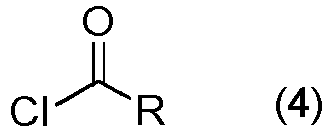 acide carboxylique ayant la formule générale (5) :
 chloroformate ayant la formule générale (6) :
 isocyanate ayant la formule générale (7) :
 - un groupe alkyle à chaîne droite ou ramifié comprenant 1 à 10 carbones,- un groupe alkyle à chaîne droite ou ramifié comprenant 1 à 10 carbones, qui est substitué à n'importe quelle position de la chaîne de carbones par 1 à 5 halogènes, qui peuvent être présents au même carbone ou à différents carbones,- un groupe alkyle à chaîne droite comprenant 2 à 10 carbones, qui comprend une fraction d'éther à n'importe quelle position de la chaîne de carbones,- un groupe alkyle à chaîne droite comprenant 3 à 10 carbones, qui comprend des liaisons multiples, des liaisons soit doubles soit triples, à n'importe quelle position de la chaîne de carbones,- un groupe alkyle monocyclique, dicyclique ou tricyclique comprenant 5 à 10 carbones,- un groupe aryle aromatique, où ceux qui comprennent un anneau aromatique à six chaînons sont préférés,- un groupe aryle aromatique substitué par 1 à 3 substituants indépendamment sélectionnés entre les groupes alkyle, alkoxy, hydroxy, nitro et nitrile ou des halogènes,- un groupe hétéroaryle aromatique, où 1 ou plusieurs carbones sont substitués par 1 ou plusieurs hétéroatomes d'un groupe comprenant des atomes d'oxygène, azote ou soufre, ou- un groupe alkyl-aryle, où le groupe aryle aromatique tel que défini ci-dessus est lié à une molécule de salinomycine par une chaîne de carbones comprenant 1 à 5 carbones (alkyle comprenant 1 à 5 carbones) ;optionnellement, comprenant une étape de transformation du composé résultant sous forme acide en un sel de celui-ci.
 - Procédé selon la revendication 8, où :a) dans la première étape, un intermédiaire ayant la formule (3) est obtenu :


 b) dans la deuxième étape, un composé ayant la formule générale (2) est obtenu :
 - X désigne R, O-R ou NH-R ;- R désigne :- un groupe alkyle à chaîne droite ou ramifié comprenant 1 à 10 carbones,- un groupe alkyle à chaîne droite ou ramifié comprenant 1 à 10 carbones, qui est substitué à n'importe quelle position de la chaîne de carbones par 1 à 5 halogènes, qui peuvent être présents au même carbone ou à différents carbones,- un groupe alkyle à chaîne droite comprenant 2 à 10 carbones, qui comprend une fraction d'éther à n'importe quelle position de la chaîne de carbones,- un groupe alkyle à chaîne droite comprenant 3 à 10 carbones, qui comprend des liaisons multiples, des liaisons soit doubles soit triples, à n'importe quelle position de la chaîne de carbones,- un groupe alkyle monocyclique, dicyclique ou tricyclique comprenant 5 à 10 carbones,- un groupe aryle aromatique, où ceux qui comprennent un anneau aromatique à six chaînons sont préférés,- un groupe aryle aromatique substitué par 1 à 3 substituants indépendamment sélectionnés entre les groupes alkyle, alkoxy, hydroxy, nitro et nitrile ou des halogènes,- un groupe hétéroaryle aromatique, où 1 ou plusieurs carbones sont substitués par 1 ou plusieurs hétéroatomes d'un groupe comprenant des atomes d'oxygène, d'azote ou de soufre, ou- un groupe alkyl-aryle, où le groupe aryle aromatique tel que défini ci-dessus est lié à une molécule de salinomycine par une chaîne de carbones comprenant 1 à 5 carbones (alkyle comprenant 1 à 5 carbones),par réaction de la C20-aminosalinomycine ayant la formule (3) :
 chlorure d'acide ayant la formule générale (4) :
 acide carboxylique ayant la formule générale (5) :
 chloroformate ayant la formule générale (6) :
 isocyanate ayant la formule générale (7) :
 optionnellement, comprenant une étape de transformation du composé résultant sous forme acide en un sel de celui-ci.
 - Composé selon l'une quelconque des revendications 1 à 5 pour utilisation comme médicament.
- Composé selon l'une quelconque des revendications 1 à 5, pour utilisation selon la revendication 10 comme agent anti-cancer.
- Composé selon l'une quelconque des revendications 1 à 5 pour utilisation selon la revendication 10 ou 11, où il est prévu pour l'utilisation dans le traitement d'affections sélectionnées dans le groupe comprenant : leucémie, y compris, sans limitation, leucémie myéloïde aiguë, leucémie myéloïde chronique, leucémie lymphoblastique aiguë, myélome multiple ; cancer du poumon « non à petites cellules », y compris, sans limitation, carcinome des cellules épithéliales pulmonaires, adénocarcinome pulmonaire, cancer squameux pulmonaire humain ; cancer du gros intestin (côlon), y compris, sans limitation, adénocarcinome du gros intestin, cancer des cellules épithéliales du côlon ; tumeur du système nerveux central, y compris, sans limitation, tumeurs du cerveau telles que gliome ; mélanome, y compris, sans limitation, mélanome malin, mélanome épithélial, mélanome non épithélial ; cancer de l'ovaire, y compris, sans limitation, cancer épithélial de l'ovaire, cystadénocarcinome de l'ovaire ; cancer du rein, y compris, sans limitation, carcinome des cellules rénales ; cancer de la prostate, y compris, sans limitation, adénocarcinome de la prostate ; cancer du sein, y compris, sans limitation, adénocarcinome du sein, cancer du sein inflammatoire, adénocarcinome métastatique ; cancer de l'estomac ; cancer du pancréas ; sarcome et cancer du corps de l'utérus, ainsi que son variant résistant aux médicaments ; cancer du col de l'utérus ; cancer de la vessie.
- Composé selon l'une quelconque des revendications 1 à 5 pour utilisation selon l'une quelconque des revendications 10 à 12, où il est prévu pour l'utilisation dans le traitement d'affections sélectionnées dans le groupe comprenant : mélanome, cancer du côlon, cancer du sein et leucémie biphénotypique.
Applications Claiming Priority (2)
| Application Number | Priority Date | Filing Date | Title |
|---|---|---|---|
| PL432858A PL242212B1 (pl) | 2020-02-07 | 2020-02-07 | Związki stanowiące C20-modyfikowane pochodne salinomycyny, sposób ich otrzymywania, kompozycja je zawierająca, zastosowanie tych związków oraz sposób otrzymywania produktu pośredniego |
| PCT/EP2021/052843 WO2021156461A1 (fr) | 2020-02-07 | 2021-02-05 | Composés constituant des dérivés de salinomycine modifiés en c20, leur procédé d'obtention, composition les contenant, utilisation desdits composés et procédé d'obtention d'un produit intermédiaire |
Publications (3)
| Publication Number | Publication Date |
|---|---|
| EP4100411A1 EP4100411A1 (fr) | 2022-12-14 |
| EP4100411C0 EP4100411C0 (fr) | 2023-08-16 |
| EP4100411B1 true EP4100411B1 (fr) | 2023-08-16 |
Family
ID=77199742
Family Applications (1)
| Application Number | Title | Priority Date | Filing Date |
|---|---|---|---|
| EP21704473.4A Active EP4100411B1 (fr) | 2020-02-07 | 2021-02-05 | Composés constituant des dérivés de salinomycine modifiés en c20, leur procédé d'obtention, composition les contenant, utilisation desdits composés et procédé d'obtention d'un produit intermédiaire |
Country Status (10)
| Country | Link |
|---|---|
| US (1) | US20220402932A1 (fr) |
| EP (1) | EP4100411B1 (fr) |
| JP (1) | JP7694995B2 (fr) |
| KR (1) | KR102935998B1 (fr) |
| CN (1) | CN115052879B (fr) |
| AU (1) | AU2021217480B2 (fr) |
| CA (1) | CA3167852A1 (fr) |
| ES (1) | ES2957260T3 (fr) |
| PL (1) | PL242212B1 (fr) |
| WO (1) | WO2021156461A1 (fr) |
Families Citing this family (5)
| Publication number | Priority date | Publication date | Assignee | Title |
|---|---|---|---|---|
| PL248049B1 (pl) * | 2021-08-05 | 2025-10-06 | Fileclo Spolka Z Ograniczona Odpowiedzialnoscia | Sposoby otrzymywania związku stanowiącego pochodną C20-aminosalinomycyny |
| PL246999B1 (pl) * | 2021-08-05 | 2025-04-22 | Fileclo Spolka Z Ograniczona Odpowiedzialnoscia | Związki stanowiące C20-modyfikowane pochodne salinomycyny, sposób ich otrzymywania, kompozycja je zawierająca, zastosowanie tych związków oraz produkty pośrednie |
| CN116478215B (zh) * | 2023-03-20 | 2024-09-17 | 中国海洋大学 | 一种含二茂铁结构的化合物及其应用 |
| WO2025117564A1 (fr) * | 2023-11-27 | 2025-06-05 | Dana-Farber Cancer Institute, Inc. | Conjugués anticorps-médicament et méthodes d'utilisation |
| CN120398907A (zh) * | 2024-01-31 | 2025-08-01 | 南京安吉生物科技有限公司 | 盐霉素衍生物及其制备方法与应用 |
Family Cites Families (6)
| Publication number | Priority date | Publication date | Assignee | Title |
|---|---|---|---|---|
| CN103193841A (zh) * | 2012-01-06 | 2013-07-10 | 维瑞斯特姆有限公司 | 治疗性化合物及相关使用方法 |
| US10287298B2 (en) * | 2014-09-12 | 2019-05-14 | Centre National De La Recherche Scientifique (Cnrs) | Nitrogen-containing analogs of salinomycin, synthesis and use against cancer stem cells and malaria |
| CN106800561B (zh) * | 2015-10-19 | 2021-07-20 | 中国医学科学院药物研究所 | C20位差向异构化盐霉素及其衍生物、其制备方法和用途 |
| PL246999B1 (pl) * | 2021-08-05 | 2025-04-22 | Fileclo Spolka Z Ograniczona Odpowiedzialnoscia | Związki stanowiące C20-modyfikowane pochodne salinomycyny, sposób ich otrzymywania, kompozycja je zawierająca, zastosowanie tych związków oraz produkty pośrednie |
| WO2023031362A1 (fr) * | 2021-09-03 | 2023-03-09 | Centre National De La Recherche Scientifique | Dérivés azotés de narasine, leur synthèse et leurs utilisations |
| US20240400576A1 (en) * | 2021-09-03 | 2024-12-05 | Centre National De La Recherche Scientifique | Nitrogen-containing derivatives of salinomycin, synthesis and uses thereof |
-
2020
- 2020-02-07 PL PL432858A patent/PL242212B1/pl unknown
-
2021
- 2021-02-05 CA CA3167852A patent/CA3167852A1/fr active Pending
- 2021-02-05 CN CN202180013077.0A patent/CN115052879B/zh active Active
- 2021-02-05 JP JP2022544138A patent/JP7694995B2/ja active Active
- 2021-02-05 US US17/796,879 patent/US20220402932A1/en active Pending
- 2021-02-05 KR KR1020227031017A patent/KR102935998B1/ko active Active
- 2021-02-05 ES ES21704473T patent/ES2957260T3/es active Active
- 2021-02-05 WO PCT/EP2021/052843 patent/WO2021156461A1/fr not_active Ceased
- 2021-02-05 EP EP21704473.4A patent/EP4100411B1/fr active Active
- 2021-02-05 AU AU2021217480A patent/AU2021217480B2/en active Active
Also Published As
| Publication number | Publication date |
|---|---|
| US20220402932A1 (en) | 2022-12-22 |
| EP4100411C0 (fr) | 2023-08-16 |
| ES2957260T3 (es) | 2024-01-16 |
| JP2023514054A (ja) | 2023-04-05 |
| PL242212B1 (pl) | 2023-01-30 |
| KR102935998B1 (ko) | 2026-03-06 |
| PL432858A1 (pl) | 2021-08-09 |
| AU2021217480A1 (en) | 2022-08-11 |
| AU2021217480B2 (en) | 2026-04-23 |
| JP7694995B2 (ja) | 2025-06-18 |
| WO2021156461A1 (fr) | 2021-08-12 |
| CA3167852A1 (fr) | 2021-08-12 |
| KR20220139946A (ko) | 2022-10-17 |
| EP4100411A1 (fr) | 2022-12-14 |
| CN115052879B (zh) | 2024-05-10 |
| CN115052879A (zh) | 2022-09-13 |
Similar Documents
| Publication | Publication Date | Title |
|---|---|---|
| EP4100411B1 (fr) | Composés constituant des dérivés de salinomycine modifiés en c20, leur procédé d'obtention, composition les contenant, utilisation desdits composés et procédé d'obtention d'un produit intermédiaire | |
| KR20210052331A (ko) | Ezh2 저해제 및 e3 리가제 바인더를 포함하는 화합물 및 이를 유효성분으로 함유하는 ezh2 관련 질환의 예방 또는 치료용 약학적 조성물 | |
| US20230310640A1 (en) | Pyrrolobenzodiazepine derivative and ligand-linker conjugate thereof | |
| Khalil et al. | Novel nalidixic acid derivatives targeting topoisomerase II enzyme; Design, synthesis, anticancer activity and effect on cell cycle profile | |
| WO1994003434A1 (fr) | Analogues de la distamycine contenant de l'imidazole | |
| Antoszczak et al. | Synthesis and antiproliferative activity of new bioconjugates of Salinomycin with amino acid esters | |
| El-Gamal et al. | Design and synthesis of new RAF kinase-inhibiting antiproliferative quinoline derivatives. Part 2: Diarylurea derivatives | |
| El-Gamal et al. | Synthesis, in vitro antiproliferative activity, and kinase inhibitory effects of pyrazole-containing diarylureas and diarylamides | |
| Tang et al. | Synthesis and biological evaluation of 5-aminoethyl benzophenanthridone derivatives as DNA topoisomerase IB inhibitors | |
| Akhtar et al. | In-vitro cytotoxic evaluation of newly designed ciprofloxacinoxadiazole hybrids against human liver tumor cell line (Huh7). | |
| Li et al. | Synthesis, structure–activity relationship and biological evaluation of novel nitrogen mustard sophoridinic acid derivatives as potential anticancer agents | |
| EP3248981A1 (fr) | Dérivés d'acides aminés estérifiés à fonction c14-hydroxyle de triptolide, procédé pour leur préparation et utilisation correspondante | |
| EP4556480A1 (fr) | Composés constituant des dérivés de salinomycine modifiés en c20, procédé d'obtention, composition les contenant et utilisation desdits composés | |
| Ghinet et al. | Enhanced antitumor potential induced by chloroacetate-loaded benzophenones acting as fused tubulin-pyruvate dehydrogenase kinase 1 (PDHK1) ligands | |
| US20150374646A1 (en) | Treatment of cancer and other conditions using a transcription factor modulator | |
| CA2716925A1 (fr) | Nouvel hydrazide contenant des conjugues de taxane | |
| DK161833B (da) | Analogifremgangsmaade til fremstilling af n-(vinblastinoyl-23)-derivater af aminosyrer eller farmaceutisk acceptable syreadditionssalte deraf | |
| Zhao et al. | Discovery and optimization of 2-thio-5-amino substituted benzoquinones as potent anticancer agents | |
| JP6570034B2 (ja) | 新規なグルタミン酸誘導体およびその用途 | |
| Soni | Development of Salinomycin Derivatives as Potential Anticancer Agents | |
| PL248049B1 (pl) | Sposoby otrzymywania związku stanowiącego pochodną C20-aminosalinomycyny | |
| JP2002528414A (ja) | 抗腫瘍クリセン誘導体 | |
| CN121226393A (zh) | 一种靶向增强p53蛋白转录功能的化合物及其应用 | |
| Leung | Exploiting functional groups that are rare in Nature for applications in medicinal chemistry | |
| PL231213B1 (pl) | Pochodne kolchicyny, sposób ich wytwarzania i zastosowanie |
Legal Events
| Date | Code | Title | Description |
|---|---|---|---|
| STAA | Information on the status of an ep patent application or granted ep patent |
Free format text: STATUS: UNKNOWN |
|
| STAA | Information on the status of an ep patent application or granted ep patent |
Free format text: STATUS: THE INTERNATIONAL PUBLICATION HAS BEEN MADE |
|
| PUAI | Public reference made under article 153(3) epc to a published international application that has entered the european phase |
Free format text: ORIGINAL CODE: 0009012 |
|
| STAA | Information on the status of an ep patent application or granted ep patent |
Free format text: STATUS: REQUEST FOR EXAMINATION WAS MADE |
|
| 17P | Request for examination filed |
Effective date: 20220824 |
|
| AK | Designated contracting states |
Kind code of ref document: A1 Designated state(s): AL AT BE BG CH CY CZ DE DK EE ES FI FR GB GR HR HU IE IS IT LI LT LU LV MC MK MT NL NO PL PT RO RS SE SI SK SM TR |
|
| GRAP | Despatch of communication of intention to grant a patent |
Free format text: ORIGINAL CODE: EPIDOSNIGR1 |
|
| STAA | Information on the status of an ep patent application or granted ep patent |
Free format text: STATUS: GRANT OF PATENT IS INTENDED |
|
| DAV | Request for validation of the european patent (deleted) | ||
| DAX | Request for extension of the european patent (deleted) | ||
| INTG | Intention to grant announced |
Effective date: 20230403 |
|
| GRAS | Grant fee paid |
Free format text: ORIGINAL CODE: EPIDOSNIGR3 |
|
| GRAA | (expected) grant |
Free format text: ORIGINAL CODE: 0009210 |
|
| STAA | Information on the status of an ep patent application or granted ep patent |
Free format text: STATUS: THE PATENT HAS BEEN GRANTED |
|
| AK | Designated contracting states |
Kind code of ref document: B1 Designated state(s): AL AT BE BG CH CY CZ DE DK EE ES FI FR GB GR HR HU IE IS IT LI LT LU LV MC MK MT NL NO PL PT RO RS SE SI SK SM TR |
|
| REG | Reference to a national code |
Ref country code: CH Ref legal event code: EP Ref country code: DE Ref legal event code: R096 Ref document number: 602021004348 Country of ref document: DE |
|
| REG | Reference to a national code |
Ref country code: IE Ref legal event code: FG4D |
|
| U01 | Request for unitary effect filed |
Effective date: 20230915 |
|
| U07 | Unitary effect registered |
Designated state(s): AT BE BG DE DK EE FI FR IT LT LU LV MT NL PT SE SI Effective date: 20230922 |
|
| REG | Reference to a national code |
Ref country code: ES Ref legal event code: FG2A Ref document number: 2957260 Country of ref document: ES Kind code of ref document: T3 Effective date: 20240116 |
|
| PG25 | Lapsed in a contracting state [announced via postgrant information from national office to epo] |
Ref country code: GR Free format text: LAPSE BECAUSE OF FAILURE TO SUBMIT A TRANSLATION OF THE DESCRIPTION OR TO PAY THE FEE WITHIN THE PRESCRIBED TIME-LIMIT Effective date: 20231117 |
|
| PG25 | Lapsed in a contracting state [announced via postgrant information from national office to epo] |
Ref country code: IS Free format text: LAPSE BECAUSE OF FAILURE TO SUBMIT A TRANSLATION OF THE DESCRIPTION OR TO PAY THE FEE WITHIN THE PRESCRIBED TIME-LIMIT Effective date: 20231216 |
|
| PG25 | Lapsed in a contracting state [announced via postgrant information from national office to epo] |
Ref country code: RS Free format text: LAPSE BECAUSE OF FAILURE TO SUBMIT A TRANSLATION OF THE DESCRIPTION OR TO PAY THE FEE WITHIN THE PRESCRIBED TIME-LIMIT Effective date: 20230816 Ref country code: NO Free format text: LAPSE BECAUSE OF FAILURE TO SUBMIT A TRANSLATION OF THE DESCRIPTION OR TO PAY THE FEE WITHIN THE PRESCRIBED TIME-LIMIT Effective date: 20231116 Ref country code: IS Free format text: LAPSE BECAUSE OF FAILURE TO SUBMIT A TRANSLATION OF THE DESCRIPTION OR TO PAY THE FEE WITHIN THE PRESCRIBED TIME-LIMIT Effective date: 20231216 Ref country code: HR Free format text: LAPSE BECAUSE OF FAILURE TO SUBMIT A TRANSLATION OF THE DESCRIPTION OR TO PAY THE FEE WITHIN THE PRESCRIBED TIME-LIMIT Effective date: 20230816 Ref country code: GR Free format text: LAPSE BECAUSE OF FAILURE TO SUBMIT A TRANSLATION OF THE DESCRIPTION OR TO PAY THE FEE WITHIN THE PRESCRIBED TIME-LIMIT Effective date: 20231117 |
|
| PG25 | Lapsed in a contracting state [announced via postgrant information from national office to epo] |
Ref country code: PL Free format text: LAPSE BECAUSE OF FAILURE TO SUBMIT A TRANSLATION OF THE DESCRIPTION OR TO PAY THE FEE WITHIN THE PRESCRIBED TIME-LIMIT Effective date: 20230816 |
|
| U20 | Renewal fee for the european patent with unitary effect paid |
Year of fee payment: 4 Effective date: 20240227 |
|
| PG25 | Lapsed in a contracting state [announced via postgrant information from national office to epo] |
Ref country code: SM Free format text: LAPSE BECAUSE OF FAILURE TO SUBMIT A TRANSLATION OF THE DESCRIPTION OR TO PAY THE FEE WITHIN THE PRESCRIBED TIME-LIMIT Effective date: 20230816 Ref country code: RO Free format text: LAPSE BECAUSE OF FAILURE TO SUBMIT A TRANSLATION OF THE DESCRIPTION OR TO PAY THE FEE WITHIN THE PRESCRIBED TIME-LIMIT Effective date: 20230816 Ref country code: CZ Free format text: LAPSE BECAUSE OF FAILURE TO SUBMIT A TRANSLATION OF THE DESCRIPTION OR TO PAY THE FEE WITHIN THE PRESCRIBED TIME-LIMIT Effective date: 20230816 Ref country code: SK Free format text: LAPSE BECAUSE OF FAILURE TO SUBMIT A TRANSLATION OF THE DESCRIPTION OR TO PAY THE FEE WITHIN THE PRESCRIBED TIME-LIMIT Effective date: 20230816 |
|
| REG | Reference to a national code |
Ref country code: DE Ref legal event code: R097 Ref document number: 602021004348 Country of ref document: DE |
|
| PLBE | No opposition filed within time limit |
Free format text: ORIGINAL CODE: 0009261 |
|
| STAA | Information on the status of an ep patent application or granted ep patent |
Free format text: STATUS: NO OPPOSITION FILED WITHIN TIME LIMIT |
|
| 26N | No opposition filed |
Effective date: 20240517 |
|
| PG25 | Lapsed in a contracting state [announced via postgrant information from national office to epo] |
Ref country code: MC Free format text: LAPSE BECAUSE OF FAILURE TO SUBMIT A TRANSLATION OF THE DESCRIPTION OR TO PAY THE FEE WITHIN THE PRESCRIBED TIME-LIMIT Effective date: 20230816 |
|
| PG25 | Lapsed in a contracting state [announced via postgrant information from national office to epo] |
Ref country code: IE Free format text: LAPSE BECAUSE OF NON-PAYMENT OF DUE FEES Effective date: 20240205 |
|
| PG25 | Lapsed in a contracting state [announced via postgrant information from national office to epo] |
Ref country code: IE Free format text: LAPSE BECAUSE OF NON-PAYMENT OF DUE FEES Effective date: 20240205 |
|
| U20 | Renewal fee for the european patent with unitary effect paid |
Year of fee payment: 5 Effective date: 20250227 |
|
| PG25 | Lapsed in a contracting state [announced via postgrant information from national office to epo] |
Ref country code: CY Free format text: LAPSE BECAUSE OF FAILURE TO SUBMIT A TRANSLATION OF THE DESCRIPTION OR TO PAY THE FEE WITHIN THE PRESCRIBED TIME-LIMIT; INVALID AB INITIO Effective date: 20210205 |
|
| PG25 | Lapsed in a contracting state [announced via postgrant information from national office to epo] |
Ref country code: HU Free format text: LAPSE BECAUSE OF FAILURE TO SUBMIT A TRANSLATION OF THE DESCRIPTION OR TO PAY THE FEE WITHIN THE PRESCRIBED TIME-LIMIT; INVALID AB INITIO Effective date: 20210205 |
|
| PG25 | Lapsed in a contracting state [announced via postgrant information from national office to epo] |
Ref country code: TR Free format text: LAPSE BECAUSE OF FAILURE TO SUBMIT A TRANSLATION OF THE DESCRIPTION OR TO PAY THE FEE WITHIN THE PRESCRIBED TIME-LIMIT Effective date: 20230816 |
|
| REG | Reference to a national code |
Ref country code: CH Ref legal event code: U11 Free format text: ST27 STATUS EVENT CODE: U-0-0-U10-U11 (AS PROVIDED BY THE NATIONAL OFFICE) Effective date: 20260301 |
|
| U20 | Renewal fee for the european patent with unitary effect paid |
Year of fee payment: 6 Effective date: 20260227 |
|
| PGFP | Annual fee paid to national office [announced via postgrant information from national office to epo] |
Ref country code: GB Payment date: 20260227 Year of fee payment: 6 |
|
| PGFP | Annual fee paid to national office [announced via postgrant information from national office to epo] |
Ref country code: ES Payment date: 20260302 Year of fee payment: 6 |
|
| PGFP | Annual fee paid to national office [announced via postgrant information from national office to epo] |
Ref country code: CH Payment date: 20260301 Year of fee payment: 6 |