EP4105683A1 - Kraftfahrzeugbeleuchtungseinrichtung - Google Patents
Kraftfahrzeugbeleuchtungseinrichtung Download PDFInfo
- Publication number
- EP4105683A1 EP4105683A1 EP22179497.7A EP22179497A EP4105683A1 EP 4105683 A1 EP4105683 A1 EP 4105683A1 EP 22179497 A EP22179497 A EP 22179497A EP 4105683 A1 EP4105683 A1 EP 4105683A1
- Authority
- EP
- European Patent Office
- Prior art keywords
- lidar
- lens
- light source
- light
- lighting device
- Prior art date
- Legal status (The legal status is an assumption and is not a legal conclusion. Google has not performed a legal analysis and makes no representation as to the accuracy of the status listed.)
- Pending
Links
Images




Classifications
-
- F—MECHANICAL ENGINEERING; LIGHTING; HEATING; WEAPONS; BLASTING
- F21—LIGHTING
- F21S—NON-PORTABLE LIGHTING DEVICES; SYSTEMS THEREOF; VEHICLE LIGHTING DEVICES SPECIALLY ADAPTED FOR VEHICLE EXTERIORS
- F21S41/00—Illuminating devices specially adapted for vehicle exteriors, e.g. headlamps
- F21S41/10—Illuminating devices specially adapted for vehicle exteriors, e.g. headlamps characterised by the light source
- F21S41/14—Illuminating devices specially adapted for vehicle exteriors, e.g. headlamps characterised by the light source characterised by the type of light source
- F21S41/141—Light emitting diodes [LED]
-
- G—PHYSICS
- G01—MEASURING; TESTING
- G01S—RADIO DIRECTION-FINDING; RADIO NAVIGATION; DETERMINING DISTANCE OR VELOCITY BY USE OF RADIO WAVES; LOCATING OR PRESENCE-DETECTING BY USE OF THE REFLECTION OR RERADIATION OF RADIO WAVES; ANALOGOUS ARRANGEMENTS USING OTHER WAVES
- G01S17/00—Systems using the reflection or reradiation of electromagnetic waves other than radio waves, e.g. lidar systems
- G01S17/88—Lidar systems specially adapted for specific applications
- G01S17/93—Lidar systems specially adapted for specific applications for anti-collision purposes
- G01S17/931—Lidar systems specially adapted for specific applications for anti-collision purposes of land vehicles
-
- F—MECHANICAL ENGINEERING; LIGHTING; HEATING; WEAPONS; BLASTING
- F21—LIGHTING
- F21S—NON-PORTABLE LIGHTING DEVICES; SYSTEMS THEREOF; VEHICLE LIGHTING DEVICES SPECIALLY ADAPTED FOR VEHICLE EXTERIORS
- F21S41/00—Illuminating devices specially adapted for vehicle exteriors, e.g. headlamps
- F21S41/10—Illuminating devices specially adapted for vehicle exteriors, e.g. headlamps characterised by the light source
- F21S41/14—Illuminating devices specially adapted for vehicle exteriors, e.g. headlamps characterised by the light source characterised by the type of light source
- F21S41/141—Light emitting diodes [LED]
- F21S41/147—Light emitting diodes [LED] the main emission direction of the LED being angled to the optical axis of the illuminating device
-
- F—MECHANICAL ENGINEERING; LIGHTING; HEATING; WEAPONS; BLASTING
- F21—LIGHTING
- F21S—NON-PORTABLE LIGHTING DEVICES; SYSTEMS THEREOF; VEHICLE LIGHTING DEVICES SPECIALLY ADAPTED FOR VEHICLE EXTERIORS
- F21S41/00—Illuminating devices specially adapted for vehicle exteriors, e.g. headlamps
- F21S41/20—Illuminating devices specially adapted for vehicle exteriors, e.g. headlamps characterised by refractors, transparent cover plates, light guides or filters
- F21S41/25—Projection lenses
-
- F—MECHANICAL ENGINEERING; LIGHTING; HEATING; WEAPONS; BLASTING
- F21—LIGHTING
- F21S—NON-PORTABLE LIGHTING DEVICES; SYSTEMS THEREOF; VEHICLE LIGHTING DEVICES SPECIALLY ADAPTED FOR VEHICLE EXTERIORS
- F21S41/00—Illuminating devices specially adapted for vehicle exteriors, e.g. headlamps
- F21S41/20—Illuminating devices specially adapted for vehicle exteriors, e.g. headlamps characterised by refractors, transparent cover plates, light guides or filters
- F21S41/25—Projection lenses
- F21S41/255—Lenses with a front view of circular or truncated circular outline
-
- F—MECHANICAL ENGINEERING; LIGHTING; HEATING; WEAPONS; BLASTING
- F21—LIGHTING
- F21S—NON-PORTABLE LIGHTING DEVICES; SYSTEMS THEREOF; VEHICLE LIGHTING DEVICES SPECIALLY ADAPTED FOR VEHICLE EXTERIORS
- F21S43/00—Signalling devices specially adapted for vehicle exteriors, e.g. brake lamps, direction indicator lights or reversing lights
- F21S43/10—Signalling devices specially adapted for vehicle exteriors, e.g. brake lamps, direction indicator lights or reversing lights characterised by the light source
- F21S43/13—Signalling devices specially adapted for vehicle exteriors, e.g. brake lamps, direction indicator lights or reversing lights characterised by the light source characterised by the type of light source
- F21S43/14—Light emitting diodes [LED]
-
- F—MECHANICAL ENGINEERING; LIGHTING; HEATING; WEAPONS; BLASTING
- F21—LIGHTING
- F21S—NON-PORTABLE LIGHTING DEVICES; SYSTEMS THEREOF; VEHICLE LIGHTING DEVICES SPECIALLY ADAPTED FOR VEHICLE EXTERIORS
- F21S43/00—Signalling devices specially adapted for vehicle exteriors, e.g. brake lamps, direction indicator lights or reversing lights
- F21S43/20—Signalling devices specially adapted for vehicle exteriors, e.g. brake lamps, direction indicator lights or reversing lights characterised by refractors, transparent cover plates, light guides or filters
-
- G—PHYSICS
- G01—MEASURING; TESTING
- G01S—RADIO DIRECTION-FINDING; RADIO NAVIGATION; DETERMINING DISTANCE OR VELOCITY BY USE OF RADIO WAVES; LOCATING OR PRESENCE-DETECTING BY USE OF THE REFLECTION OR RERADIATION OF RADIO WAVES; ANALOGOUS ARRANGEMENTS USING OTHER WAVES
- G01S17/00—Systems using the reflection or reradiation of electromagnetic waves other than radio waves, e.g. lidar systems
- G01S17/88—Lidar systems specially adapted for specific applications
-
- G—PHYSICS
- G01—MEASURING; TESTING
- G01S—RADIO DIRECTION-FINDING; RADIO NAVIGATION; DETERMINING DISTANCE OR VELOCITY BY USE OF RADIO WAVES; LOCATING OR PRESENCE-DETECTING BY USE OF THE REFLECTION OR RERADIATION OF RADIO WAVES; ANALOGOUS ARRANGEMENTS USING OTHER WAVES
- G01S7/00—Details of systems according to groups G01S13/00, G01S15/00, G01S17/00
- G01S7/48—Details of systems according to groups G01S13/00, G01S15/00, G01S17/00 of systems according to group G01S17/00
- G01S7/481—Constructional features, e.g. arrangements of optical elements
-
- G—PHYSICS
- G01—MEASURING; TESTING
- G01S—RADIO DIRECTION-FINDING; RADIO NAVIGATION; DETERMINING DISTANCE OR VELOCITY BY USE OF RADIO WAVES; LOCATING OR PRESENCE-DETECTING BY USE OF THE REFLECTION OR RERADIATION OF RADIO WAVES; ANALOGOUS ARRANGEMENTS USING OTHER WAVES
- G01S7/00—Details of systems according to groups G01S13/00, G01S15/00, G01S17/00
- G01S7/48—Details of systems according to groups G01S13/00, G01S15/00, G01S17/00 of systems according to group G01S17/00
- G01S7/481—Constructional features, e.g. arrangements of optical elements
- G01S7/4811—Constructional features, e.g. arrangements of optical elements common to transmitter and receiver
- G01S7/4813—Housing arrangements
-
- B—PERFORMING OPERATIONS; TRANSPORTING
- B60—VEHICLES IN GENERAL
- B60Q—ARRANGEMENT OF SIGNALLING OR LIGHTING DEVICES, THE MOUNTING OR SUPPORTING THEREOF OR CIRCUITS THEREFOR, FOR VEHICLES IN GENERAL
- B60Q1/00—Arrangement of optical signalling or lighting devices, the mounting or supporting thereof or circuits therefor
- B60Q1/0017—Devices integrating an element dedicated to another function
- B60Q1/0023—Devices integrating an element dedicated to another function the element being a sensor, e.g. distance sensor, camera
-
- F—MECHANICAL ENGINEERING; LIGHTING; HEATING; WEAPONS; BLASTING
- F21—LIGHTING
- F21W—INDEXING SCHEME ASSOCIATED WITH SUBCLASSES F21K, F21L, F21S and F21V, RELATING TO USES OR APPLICATIONS OF LIGHTING DEVICES OR SYSTEMS
- F21W2102/00—Exterior vehicle lighting devices for illuminating purposes
- F21W2102/10—Arrangement or contour of the emitted light
- F21W2102/13—Arrangement or contour of the emitted light for high-beam region or low-beam region
-
- F—MECHANICAL ENGINEERING; LIGHTING; HEATING; WEAPONS; BLASTING
- F21—LIGHTING
- F21W—INDEXING SCHEME ASSOCIATED WITH SUBCLASSES F21K, F21L, F21S and F21V, RELATING TO USES OR APPLICATIONS OF LIGHTING DEVICES OR SYSTEMS
- F21W2103/00—Exterior vehicle lighting devices for signalling purposes
- F21W2103/55—Daytime running lights [DRL]
-
- F—MECHANICAL ENGINEERING; LIGHTING; HEATING; WEAPONS; BLASTING
- F21—LIGHTING
- F21W—INDEXING SCHEME ASSOCIATED WITH SUBCLASSES F21K, F21L, F21S and F21V, RELATING TO USES OR APPLICATIONS OF LIGHTING DEVICES OR SYSTEMS
- F21W2107/00—Use or application of lighting devices on or in particular types of vehicles
- F21W2107/10—Use or application of lighting devices on or in particular types of vehicles for land vehicles
-
- F—MECHANICAL ENGINEERING; LIGHTING; HEATING; WEAPONS; BLASTING
- F21—LIGHTING
- F21Y—INDEXING SCHEME ASSOCIATED WITH SUBCLASSES F21K, F21L, F21S and F21V, RELATING TO THE FORM OR THE KIND OF THE LIGHT SOURCES OR OF THE COLOUR OF THE LIGHT EMITTED
- F21Y2115/00—Light-generating elements of semiconductor light sources
- F21Y2115/10—Light-emitting diodes [LED]
-
- G—PHYSICS
- G01—MEASURING; TESTING
- G01S—RADIO DIRECTION-FINDING; RADIO NAVIGATION; DETERMINING DISTANCE OR VELOCITY BY USE OF RADIO WAVES; LOCATING OR PRESENCE-DETECTING BY USE OF THE REFLECTION OR RERADIATION OF RADIO WAVES; ANALOGOUS ARRANGEMENTS USING OTHER WAVES
- G01S13/00—Systems using the reflection or reradiation of radio waves, e.g. radar systems; Analogous systems using reflection or reradiation of waves whose nature or wavelength is irrelevant or unspecified
- G01S13/88—Radar or analogous systems specially adapted for specific applications
- G01S13/93—Radar or analogous systems specially adapted for specific applications for anti-collision purposes
- G01S13/931—Radar or analogous systems specially adapted for specific applications for anti-collision purposes of land vehicles
- G01S2013/9327—Sensor installation details
- G01S2013/93277—Sensor installation details in the lights
Definitions
- the invention relates to a motor vehicle lighting device according to patent claim 1.
- a motor vehicle lighting device according to the preamble of claim 1 is already known.
- This motor vehicle lighting device has a headlight.
- the headlight has a light source for visible light, an infrared radiation source and light exit optics, which have a light entry surface illuminated by the light source and the infrared radiation source and a light exit surface.
- An optical output deflection element directs infrared radiation emitted by the infrared radiation source onto the light entry surface.
- Optical sensors such as cameras and LIDAR systems can be arranged, for example, in the passenger compartment of the vehicle or in its headlights.
- the object of the invention is to unobtrusively integrate a LIDAR system in a motor vehicle lighting device.
- a LIDAR detector and a light source are arranged within a module housing.
- a laser beam can be fed to the LIDAR detector through an optical lens. Visible light can be guided out of the module housing through the lens by means of the light source.
- a LIDAR emitter, with which the laser beam can be emitted, is arranged inside the module housing.
- the light source for visible light can in particular be a light-emitting diode or consist of several light-emitting diodes.
- Lighting for illuminating the route can be arranged adjacent to the light source, for example as a matrix light, also with light-emitting diodes is executed.
- a headlight allows both a good illumination of the route and a good detection of objects by means of LIDAR, ie the relevant sensor shows a good performance.
- the light source for visible light forms staging lighting, the purpose of which is to give outsiders the impression that the LIDAR detector and/or the LIDAR emitter is a conventional lighting device and/or a parking light acts.
- the light of such a staging lighting thus "outshines" the LIDAR detector and/or the LIDAR emitter.
- the optics of the LIDAR module are illuminated with visible light from the inside, so to speak.
- the LIDAR detector and the LIDAR emitter each form one of two LIDAR components of the LIDAR system, with one component and/or the other component representing the light source as a type Can be assigned staging lighting.
- Such staging lighting can be provided for both the LIDAR detector and the LIDAR emitter to ensure the same appearance.
- the motor vehicle lighting device can have, in addition to the light source, a lighting device for visible light, which is a separate component from the light source and which is designed in particular as daytime running lights or low beams, whereas the light source is designed as staging lighting and/or as a position light and/or the overhead -Value and/or daytime running lights supported.
- a lighting device for visible light which is a separate component from the light source and which is designed in particular as daytime running lights or low beams
- the light source is designed as staging lighting and/or as a position light and/or the overhead -Value and/or daytime running lights supported.
- the visible light is radiated against a device that directs the visible light in the direction away from the one component and/or towards the lens and that the device is preferably in the form of a light guide ring and/or is designed as a reflective surface of the diaphragm and/or as a lens surface of a meniscus lens.
- the light beam can in particular be guided and/or reflected below the cut-off line, so that hardly any light above the cut-off line affects the overhead values mentioned.
- the light source for illumination can be anywhere perpendicular to an optical axis be arranged, for example above, below but also to the side of the optical axis.
- the arrangement can be specified, for example, for reasons of space.
- the light source does not have to be used exclusively as staging lighting.
- the light source can also support the illumination of the roadway and can in particular be designed as a low beam, side light or parking light.
- the legal requirements must also be observed.
- An example of such a legal requirement is the limitation of brightness above a so-called light-dark boundary.
- the maximum brightness at a certain height, the so-called overhead value can be limited to such an extent that, on the one hand, reflective street signs are still illuminated, but, on the other hand, people at eye level are not dazzled.
- One way of primarily illuminating the space below the cut-off line is to arrange the light source above an optical axis of the lens when the module housing is installed. In this case, no further lens needs to be arranged in the direction of the optical axis between the lens and the light source.
- the light source can be placed between the LIDAR detector and the lens.
- a bandpass filter can be provided in front of the LIDAR detector.
- the laser beam is guided from the lens to the LIDAR detector within a space that is divided by the bandpass filter into a detection space and an illumination space, with the bandpass filter being transparent to the laser beam and impermeable to the light from the light source .
- a screen can be provided in front of the LIDAR detector to protect the LIDAR detector from undesired scattered light.
- the laser beam is guided from the lens to the LIDAR detector within a space that is divided by a diaphragm into a rear diaphragm space with the LIDAR detector and a front diaphragm space without the LIDAR detector, and that at least the largest portion of the visible light can be guided out of the pre-aperture space through the lens.
- Stray light towards the LIDAR detector can also be reduced/prevented by using a tube.
- a tube does not necessarily have to be a circular tube, but can also have an oval cross section.
- the tube may be rectangular in the manner of a square tube or other hollow polygonal shape.
- the first component and the lens are enclosed by the opaque tube and that the light source has an area that is transparent to visible light, in particular a recess, and that the light source is arranged outside an inner surface of the tube in such a way that the visible light passes through the transparent area into a space inside the tube can be radiated and/or conducted.
- the LIDAR emitter and the LIDAR detector are from each other, the more imprecisely the position data of the obstacles/objects to be determined are determined. This is because the connecting components between the LIDAR emitter and the LIDAR detector deform due to temperature variations and shrinkage/shock.
- the LIDAR measurement is particularly accurate if it is provided that the LIDAR detector and the LIDAR emitter are formed side by side on a common LIDAR module, and that the LIDAR emitter as a solid-state LIDAR emitter in particular with a microelectromechanical chip is executed.
- the module housing 2 is in particular a headlight module or a rear light module and is therefore attached to the front or the rear of a motor vehicle.
- a lighting device 6 is arranged in the module housing 2, which has lens optics and is designed as a low beam and/or a high beam and/or a rear light and/or a reversing light and/or a brake light and/or a flashing light and/or a matrix headlight. In this respect, the visible light of the lighting device 6 is used
- the roadway is illuminated and/or road users are shown the position and/or direction of travel and/or other information about the motor vehicle.
- the lighting device 6 is arranged inside the module housing 2 next to a LIDAR module 8 which comprises a LIDAR emitter 10 and a detector unit 12 .
- the LIDAR module 8 is separated from the lighting device 6 in such a way that its visible light within the module housing 2 cannot reach the LIDAR module 8 , in particular its detector unit 12 , directly.
- the beam path of the visible light of the illumination device 6 is designed accordingly.
- a partition wall 14 is arranged between the lighting device 6 and the LIDAR module 8 .
- a laser beam can be emitted whose wavelength is in the infrared light range, in the near infrared light range (NIR) or in the ultraviolet range.
- the laser beam is guided out of the module housing 2 and reflected or scattered by surfaces that lie in the beam path of the laser beam.
- the backscattered laser beam is detected by the detector unit 12 .
- the distance to the surface of the object from which the backscattered laser beam emanates is determined on the basis of the transit time of the laser beam.
- the LIDAR module 8 is thus used in the motor vehicle in order to recognize people and objects in the area surrounding the motor vehicle and to determine their distance.
- a three-dimensional image of the environment can be calculated.
- the detector unit 12 and the LIDAR emitter 10 are formed side by side.
- a longitudinal axis 16 of the LIDAR emitter 10 and an optical axis 18 of the detector unit 12 are aligned almost parallel to one another.
- the LIDAR emitter 10 and the detector unit 12 are screwed to a circuit board 20 so that they cannot move, so that the LIDAR emitter 10 and the detector unit 12 are firmly connected to one another, ie are immovable relative to one another.
- the circuit board 20 also includes a control unit for the LIDAR emitter 10 and evaluation electronics for the detector unit 12.
- the LIDAR emitter 10 and on off 3 visible LIDAR detector 22 of the detector unit 12 form two LIDAR components of a LIDAR system.
- the detector unit 12 and its beam path are shown schematically, with a presentation lighting that is also shown being explained as an example. However, such a staging lighting could also be arranged on the LIDAR emitter 10 .
- the LIDAR detector 22 is designed as a matrix detector.
- This matrix detector can be designed in particular as a solid-state detector and a CCD chip, a CMOS detector or have a similar chip.
- the LIDAR detector 22 is followed in axial succession by a bandpass filter 24, an optical device 26, a diaphragm 28 and a lens 30.
- a light source 32 and a light guide ring 34 are also arranged between the diaphragm 28 and the lens 30 .
- the light source 32 and the light guide ring 34 are arranged between the LIDAR detector 22 and the objective 30, which is formed by two different optical lenses 36, 38.
- the laser beam is guided from the lenses 36, 38 to the LIDAR detector 22 within a space 37.
- FIG. This space 37 is divided into a detection space 39 and an illumination space 41 by the bandpass filter 24 .
- said space 37 is divided by the diaphragm 28 into a rear diaphragm space 43 with the LIDAR detector 22 and a front diaphragm space 45 without the LIDAR detector 22 .
- the lens 30, the light source 32 and the light guide ring 34 are arranged in the pre-aperture space.
- the optics device 26 and the bandpass filter 24 are arranged in the rear space 43 of the diaphragm. At least most of the visible light from the light source 32 can be guided out of the pre-aperture space 45 through the lens 38 .
- the light from the light source 32 is introduced into the light guide ring 34, which can only be seen with its cross-sectional area in the lateral section.
- the light source 32 is radially outside of the light guide ring 34 arranged.
- the light source 32 and the light guide ring 34 are arranged adjacent to one another in a common plane.
- the light guide ring 34 is arranged in the direction of the optical axis 18 towards the lens 30 and offset to the diaphragm 28 .
- the light guide ring 34 is arranged coaxially with an aperture 40 and is circular.
- the light guide ring 34 has on its side facing the diaphragm 28 prisms 44 which guide the visible light out of the light guide ring 34 forward out of the lens 30 so that the lens 30 appears luminous to outside observers of the motor vehicle.
- the detector unit 12 with its lens 30 in the LIDAR module 8 ( 2 ) integrated next to the lighting device 6 without breaking the design language.
- the detector unit 12 is integrated in such a way that at first glance it is perceived as an additional lighting device.
- the said staging lighting is created by means of the light source 32 and the light guide ring 34 .
- a further staging lighting is preferably also arranged in the area of the LIDAR emitter 10, so that this also fits into the design of a motor vehicle lighting for the outside observer.
- the optics device 26 has more lenses than the lens 30.
- the optics device 26 comprises three different lenses 46, 48, 50 in this exemplary embodiment, which in this respect between the diaphragm 28 and the bandpass filter 24 are arranged. Consequently, the laser beam incident on the optics 30 can be fed to the LIDAR detector 22 through the five optical lenses 38 , 36 , 50 , 48 , 46 , the diaphragm 28 and the bandpass filter 24 .
- the bandpass filter 24 is permeable for the laser beam.
- the wavelength of the laser beam is in the near-infrared light range, which is between 800 nm and 1500 nm.
- the bandpass filter 24 in this exemplary embodiment is transparent to such a wavelength. Restricting the permeability to this wavelength range prevents scattered light from the staging lighting from also being able to impinge on the LIDAR detector 22 . In this respect, the bandpass filter 24 is not transparent to visible radiation.
- the aperture 28 and the lens 30 are designed in such a way that as little light as possible from the light source 32 can pass through the aperture 40 to the LIDAR detector 22 .
- the aperture 28 and the lens 30 are preferably designed in such a way that no light at all from the light source 32 can pass through the aperture 40 to the LIDAR detector 22 .
- the bandpass filter 24 is arranged within the aperture 40 . Moreover, the band-pass filter 24 may be provided in place of the aperture 28. That is, the bandpass filter 24 is then either between the optical device 26 and the Lens 30 arranged or no optical device 26 is provided.
- the lens surfaces of the lenses of the objective 30 and/or the optics device 26 have an anti-reflection coating for optimized transmission of the laser beam, which prevents reflections of the laser beam. That is, as a result of the anti-reflection coating, radiation in the wavelength of the laser is reflected less at the surface of the lens in question. On the other hand, stronger reflection of the visible light from the light source or the staging lighting is desired.
- the antireflection coating of the relevant lens is designed in such a way that it has an antireflection effect selectively only for the wavelength of the laser beam and, on the other hand, has a reduced antireflection effect for the visible light Light, or in the range of the spectrum of the light source 32 has.
- the lenses 46, 48, 50 which are on the side of the light source 32 axially facing the LIDAR detector 22, with an inexpensive anti-reflection coating, which also has a reduced anti-reflection effect for visible light
- the lenses 36 , 38 which are on the axially opposite side of the light source from the LIDAR detector 22, have no anti-reflection coating at all.
- these lenses would be the lenses 36, 38 of the objective 30, whereas the lenses 46, 48, 50 of the optical device 26 have an anti-reflection coating which reduces reflection for both laser beams and visible light.
- only the outermost lens 38 has no anti-reflection coating.
- only the outermost lens 38 has an anti-reflective coating that reflects visible light more than the laser beam, and the anti-reflective coating transmits the laser beam better than if no anti-reflective coating were present.
- the light source 32 is arranged next to or directly behind the outermost lens 38 that closes off the objective 30 . In this respect, the light source 32 can be provided outside the lens or even outside the detector unit 12 .
- the diaphragm 28 is designed with a reflecting or mirroring surface on its side facing away from the LIDAR detector 22 .
- the side of the diaphragm facing the LIDAR detector 22, on the other hand, is black in order to absorb scattered light and marginal rays that would otherwise impair the imaging quality of the lens. Further screens can be provided between the screen 28 and the LIDAR detector 22, which screens have black surfaces on both sides for the reason mentioned above.
- FIG. 12 shows an embodiment in which the diaphragm 28 is arranged very close to the immediately adjacent lens 136 of the objective 130.
- FIG. In contrast to the embodiment according to 3 no fiber optic ring is provided.
- Light source 132 lags relative to light source 132 3 a relatively large beam angle ⁇ with a light cone axis that is almost perpendicular to the optical axis 18 is.
- visible light is thrown from the light source 132 both in the direction of the diaphragm 28 and in the direction of the outermost lens 38 .
- visible light from the outermost lens 38 is directed outwardly refracted such that the outermost lens 38 appears to the outside observer as part of a vehicle light.
- Part of the visible light directed outward is thrown directly from the light source 132 in the direction of the lens 38 .
- the visible light is reflected from a reflective and/or specular surface 144 of the bezel 28 to the outermost lens 38 .
- the staging lighting after 4 can support the low beam. However, legal requirements for the cut-off line and the overhead values mentioned above must be observed.
- the light source 132 is arranged behind the outermost lens 38 and is illuminated from above when the motor vehicle lighting device is installed.
- the light cone axis can cross the optical axis 18 .
- a light guide can also be used to support the low beam with the staging lighting Find application, however, in contrast to the fiber optic ring 3 is arranged exclusively above the optical axis 18 and is therefore located in the upper half of the lens 130 .
- the light source is arranged in such a way that the visible light that comes directly from the light source or is reflected by the surface of the diaphragm and is preferably radiated by the lens into the lower hemisphere in such a way that light primarily or exclusively enters the cut-off line is radiated. This ensures that hardly any light above the cut-off line affects the overhead values.
- the focal length of the lens 136 of the objective 130, which is closest to the aperture 28, is preferably greater than the distance between the light source 132 and the outermost lens 38. A virtual image of the light source 132 is therefore generated.
- the light source 132 is therefore arranged at such a great distance from the optical axis 18 that an uppermost marginal ray 52 emanating from the light source 132 is still deflected below the light-dark boundary by the outermost lens 38 .
- figure 5 12 shows an alternative embodiment in which the lenses 236, 238 of the objective 230 are enclosed in a tube 53 made of opaque plastic or metal, so that the lenses 236, 238 are covered in a non-transparent manner radially outwards and inwards.
- the pipe 53 is in the form of a tube executed, but could also be designed oval or square.
- the light source 232 has an area that is transparent to visible light and is designed as a recess 54 in the exemplary embodiment.
- the light source 232 is arranged outside the tube 53 in such a way that the visible light is radiated and/or guided through the transparent area 54 into a space inside the tube 53 . This space is formed by the pre-shutter space 45 .
- the illumination can be adapted to the specific requirements of the detector unit 212 by appropriate configuration of a light transmission cross section of the transparent area 54 .
- the beam angle ⁇ of the light source 232 can be limited to the outermost lens 238 .
- the transparent area 54 is designed as an opening that runs obliquely in a wall of the tube 53 . Starting from the outside, this inclined recess runs in the direction of the front end of the tube 53 or in the direction of the lens 238.
- the transparent area in the tube 53 is preferably designed such that only the outermost lens 238 is illuminated, but not the lens 236 that is closer to the diaphragm 28.
- the light source 232 emits the visible light at a defined irradiation angle ⁇ , which is acute and which is confined between a light cone axis 258 of the light source 232 and the optical axis 18 .
- the irradiation angle ⁇ is so small that its apex in front of the outermost lens 238 and consequently lies outside the lens 230 .
- an inner wall 60 of an opening channel of the transparent area 54 can be made absorbing or reflecting for visible light, depending on the requirement.
- the lens 236 of the objective 230 immediately adjacent to the diaphragm 28 is designed as a meniscus lens.
- the two lenses 236, 238 of the objective 230 have different outer diameters.
- the outer lens 238 has a larger outside diameter than the meniscus lens.
- the tube 53 has different inner diameters on its inner surface 70 .
- a meniscus lens is provided.
- the irradiation angle ⁇ is not acute. Instead, the irradiation angle ⁇ is preferably at least about 90°.
- the associated vertex lies within the optics 330.
- the cone axis 358 of the light cone with the emission angle ⁇ is therefore aligned perpendicular to the optical axis 18.
- the light source 332 radiates visible light into the meniscus lens through the transparent area 354 of the tube 353 on the lateral surface 62 or lens side surface of the meniscus lens.
- the aperture 28 facing surface 64 of Meniscus lens has a smaller radius of curvature R1 than the opposite surface 66 of the meniscus lens.
- the light radiated in by the light source 332 is totally reflected at the interface of the surface 64 with the smaller radius of curvature R1 to the air and is thus deflected in the direction of the outer lens 338 .
- the visible light in the embodiment after 6 in contrast to the previous exemplary embodiment the light source 332 does not radiate directly into the outermost lens 338 . Instead, the light is redirected to the outermost lens 338 via another component of the lens 330 .
Landscapes
- Engineering & Computer Science (AREA)
- Physics & Mathematics (AREA)
- General Engineering & Computer Science (AREA)
- Computer Networks & Wireless Communication (AREA)
- General Physics & Mathematics (AREA)
- Radar, Positioning & Navigation (AREA)
- Remote Sensing (AREA)
- Microelectronics & Electronic Packaging (AREA)
- Optics & Photonics (AREA)
- Electromagnetism (AREA)
- Optical Radar Systems And Details Thereof (AREA)
Abstract
Description
- Die Erfindung betrifft eine Kraftfahrzeugbeleuchtungseinrichtung gemäß Patentanspruch 1.
- Aus
DE 10 2017 109 905 A1 ist bereits eine Kraftfahrzeugbeleuchtungseinrichtung gemäß dem Oberbegriff von Anspruch 1 bekannt. Diese Kraftfahrzeugbeleuchtungseinrichtung weist einen Scheinwerfer auf. Der Scheinwerfer weist eine Lichtquelle für sichtbares Licht, eine Infrarotstrahlungsquelle und eine Lichtaustrittsoptik auf, die eine von der Lichtquelle und der Infrarotstrahlungsquelle beleuchtete Lichteintrittsfläche und eine Lichtaustrittsfläche aufweist. Ein optisches Ausgangs-Umlenkelement, richtet von der Infrarotstrahlungsquelle ausgehende Infrarotstrahlung auf die Lichteintrittsfläche. - Im Rahmen von Fahrassistenzsystemen und dem autonomen Fahren werden immer mehr Sensoren am Fahrzeug angebracht. Optische Sensoren wie Kameras und LIDAR-Systeme können beispielsweise im Fahrgastinnenraum des Fahrzeugs oder auch in dessen Scheinwerfern angeordnet sein.
- Aufgabe der Erfindung ist es, ein LIDAR-System in einer Kraftfahrzeugbeleuchtungseinrichtung unauffällig zu integrieren.
- Diese Aufgabe wird mit den Merkmalen des Patentanspruchs 1 gelöst.
- Bei der erfindungsgemäßen Kraftfahrzeugbeleuchtungseinrichtung sind ein LIDAR-Detektor und eine Lichtquelle innerhalb eines Modulgehäuses angeordnet. Dem LIDAR-Detektor ist durch eine optische Linse ein Laserstrahl zuleitbar. Mittels der Lichtquelle ist sichtbares Licht durch die Linse aus dem Modulgehäuse herausleitbar. Innerhalb des Modulgehäuses ist ein LIDAR-Emitter angeordnet, mit dem der Laserstrahl emittierbar ist. Mithin sind sowohl der LIDAR-Emitter des LIDAR-Systems, der LIDAR-Detektor und eine Lichtquelle optimal positioniert.
- Die Lichtquelle für sichtbares Licht kann insbesondere eine Leuchtdiode sein oder aus mehreren Leuchtdioden bestehen.
- Benachbart zur Lichtquelle kann eine Beleuchtung zur Ausleuchtung der Fahrstrecke angeordnet sein, die beispielsweise als Matrixlicht ebenfalls mit Leuchtdioden ausgeführt ist. Ein solcher Scheinwerfer erlaubt sowohl eine gute Ausleuchtung der Fahrstrecke als auch eine gute Erfassung von Objekten mittels LIDAR, d.h. der dahingehende Sensor zeigt eine gute Performance.
- Besonders vorteilhaft ist es, wenn die Lichtquelle für sichtbares Licht eine Inszenierungsbeleuchtung bildet, deren Zweck es ist, für Außenstehende den Eindruck zu erwecken, dass es sich bei dem LIDAR-Detektor und/oder dem LIDAR-Emitter um eine herkömmliche Beleuchtungseinrichtung und/oder ein Standlicht handelt. Das Licht einer solchen Inszenierungsbeleuchtung "überstrahlt" somit den LIDAR-Detektor und/oder den LIDAR-Emitter.
- Für Außenstehende ergibt sich somit ein Erscheinungsbild, das nahe bei heutigen Scheinwerfern ohne Sensoren liegt. Insoweit wird das heutige Design beibehalten und die Sensoren des LIDAR-Systems sind weitestgehend unauffällig integriert. Heutige Scheinwerfer weisen nämlich üblicherweise mehrere Lichtmodule auf. Dieses gewohnte und ästhetische Design wird durch die Integration des LIDAR-Systems nicht zu stark beeinflusst.
- Mittels der Inszenierungsbeleuchtung wird sozusagen die Optik des LIDAR-Moduls mit sichtbarem Licht von innenheraus beleuchtet. Dabei bilden der LIDAR-Detektor und der LIDAR-Emitter jeweils eine von zwei LIDAR-Komponenten des LIDAR-Systems, wobei der einen Komponente und/oder der anderen Komponente die Lichtquelle als eine Art Inszenierungsbeleuchtung zugeordnet sein kann.
- Eine solche Inszenierungsbeleuchtung kann sowohl für den LIDAR-Detektor als auch für den LIDAR-Emitter vorgesehen sein, um ein gleiches Erscheinungsbild zu gewährleisten.
- Insofern kann die Kraftfahrzeugbeleuchtungseinrichtung zusätzlich zur Lichtquelle eine Beleuchtungseinrichtung für sichtbares Licht aufweisen, die insofern ein separates Bauteil von der Lichtquelle ist und die insbesondere als Tagfahrlicht oder Abblendlicht ausgebildet ist, wohingegen die Lichtquelle als Inszenierungsbeleuchtung und/oder als Positionslicht ausgeführt ist und/oder den Overhead-Wert und/oder das Tagfahrlicht unterstützt.
- Um möglichst viel Licht der Lichtquelle vom LIDAR-Detektor wegzuleiten kann vorgesehen sein, dass das sichtbare Licht gegen eine Einrichtung gestrahlt wird, die das sichtbare Licht in Richtung von der einen Komponente weg und/oder zur Linse hin leitet und dass die Einrichtung vorzugsweise als Lichtleiterring und/oder als reflektierende Oberfläche der Blende und/oder als Linsenoberfläche einer Meniskuslinse ausgeführt ist. Dabei kann der Lichtstrahl insbesondere unter die Hell-Dunkel-Grenze geleitet und/oder reflektiert werden, sodass kaum Licht über der Hell-Dunkel-Grenze die besagten Overhead-Werte beeinträchtigt.
- Im Allgemeinen kann die Lichtquelle zur Beleuchtung an einer beliebigen Stelle senkrecht zu einer optischen Achse angeordnet sein, also beispielsweise oben, unten aber auch seitlich von der optischen Achse. Die Anordnung kann beispielsweise aus Platzgründen vorgegeben sein.
- Jedoch kann es auch andere Randbedingungen geben, nämlich gesetzliche Rahmenbedingungen. Die Lichtquelle muss nämlich nicht ausschließlich als Inszenierungsbeleuchtung genutzt werden. Die Lichtquelle kann zusätzlich die Ausleuchtung der Fahrbahn unterstützen und insbesondere als Abblend-, Stand- oder Parklicht ausgeführt sein. Dabei sind aber auch die gesetzlichen Vorgaben einzuhalten. Ein Beispiel für eine solche gesetzliche Vorgabe ist die Begrenzung der Helligkeit oberhalb über einer sogenannten Hell-Dunkel-Grenze. Sprich, die maximale Helligkeit in einer bestimmten Höhe, der sogenannten Overhead-Wert, kann auf ein Maß begrenzt sein, sodass einerseits reflektierende Straßenschilder noch ausgeleuchtet werden, andererseits jedoch keine Menschen auf Augenhöhe geblendet werden.
- Eine Möglichkeit, um vorrangig den Raum unterhalb der Hell-Dunkel-Grenze auszuleuchten ist es, die Lichtquelle in Einbaulage des Modulgehäuses oberhalb einer optischen Achse der Linse anzuordnen. Dabei braucht in Richtung der optischen Achse zwischen der Linse und der Lichtquelle keine weitere Linse angeordnet sein.
- Um den LIDAR-Detektor zu verbergen, kann die Lichtquelle zwischen dem LIDAR-Detektor und der Linse angeordnet sein.
- Um den LIDAR-Detektor besonders effektiv vor unerwünschtem Streulicht zu schützen, das von der Lichtquelle und/oder der Sonne auf dem LIDAR-Detektor auftrifft, kann ein Bandpassfilter vor dem LIDAR-Detektor vorgesehen sein. Insbesondere kann vorgesehen sein, dass der Laserstrahl von der Linse zum LIDAR-Detektor innerhalb eines Raumes geführt wird, der von dem Bandpassfilter in einen Detektionsraum und einen Beleuchtungsraum aufgeteilt wird, wobei der Bandpassfilter für den Laserstrahl transparent ist und für das Licht der Lichtquelle undurchlässig ist.
- Außerdem oder stattdessen kann zum Schutz des LIDAR-Detektor vor unerwünschtem Streulicht eine Blende vor dem LIDAR-Detektor vorgesehen sein. Insbesondere kann vorgesehen sein, dass der Laserstrahl von der Linse zum LIDAR-Detektor innerhalb eines Raumes geführt wird, der von einer Blende in einen Blendenhinterraum mit dem LIDAR-Detektor und einen Vorblendenraum ohne den LIDAR-Detektor aufgeteilt wird, und dass zumindest der größte Anteil des sichtbaren Lichts aus dem Vorblendenraum durch die Linse herausleitbar ist.
- Streulicht in Richtung des LIDAR-Detektor kann auch mittels eines Rohrs vermindern/verhindert werden. Ein solches Rohr muss nicht zwangsläufig ein kreisrunder Tubus sein, sondern kann im Querschnitt auch oval sein. Ferner kann das Rohr in der Art eines Vierkantrohrs rechteckig sein oder eine andere hohle Polygonform aufweisen. Insofern kann vorgesehen sein, dass die erste Komponente und die Linse von dem undurchsichtigen Rohr umfasst sind und dass die Lichtquelle einen für sichtbares Licht transparenten Bereich, insbesondere eine Ausnehmung, aufweist, und dass die Lichtquelle derart außerhalb einer Innenfläche des Rohrs angeordnet ist, dass das sichtbare Licht durch den transparenten Bereich in einen Raum innerhalb des Rohrs gestrahlt und/oder geleitet werden kann.
- Je weiter der LIDAR-Emitter und der LIDAR-Detektor voneinander entfernt sind, desto ungenauer werden die Positionsdaten der zu ermittelnden Hindernisse/Objekte bestimmt. Das liegt daran, dass sich die Verbindungsbauteile zwischen dem LIDAR-Emitter und der LIDAR-Detektor wegen Temperaturschwankungen und Schwindungen/Stößen verformen. Insofern ist die LIDAR-Messung besonders genau, wenn vorgesehen ist, dass der LIDAR-Detektor und der LIDAR-Emitter nebeneinander an einem gemeinsamen LIDAR-Modul ausgebildet sind, und dass der LIDAR-Emitter als solid-state-LIDAR-Emitter insbesondere mit einem mikroelektromechanischen Chip ausgeführt ist.
- Weitere Merkmale, Anwendungsmöglichkeiten und Vorteile der Erfindung ergeben sich aus der nachfolgenden Beschreibung von Ausführungsbeispielen der Erfindung, die anhand der Zeichnung erläutert werden.
- Es zeigen:
-
Fig. 1 eine Kraftfahrzeugbeleuchtungseinrichtung, die ein LIDAR-Modul aufweist, -
Fig. 2 in vier verschiedenen Ansichten als Einzelteil das LIDAR-Modul ausFig. 1 , das eine Detektoreinheit aufweist, -
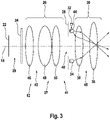
Fig. 3 schematisch die Detektoreinheit ausFig. 2 , -
Fig. 4 ein alternatives Ausführungsbeispiel der Detektoreinheit, -
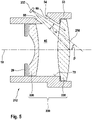
Fig. 5 ein weiteres alternatives Ausführungsbeispiel der Detektoreinheit, und -
Fig. 6 ein weiteres alternatives Ausführungsbeispiel der Detektoreinheit. -
Fig. 1 zeigt ein Modulgehäuse 2 einer Kraftfahrzeugbeleuchtungseinrichtung 4, die auch noch eine oder mehrere weitere zeichnerisch nicht näher dargestellte Beleuchtungsmodule aufweisen kann. Das Modulgehäuse 2 ist insbesondere ein Scheinwerfermodul oder ein Rückleuchtenmodul und insofern an der Front oder dem Heck eines Kraftfahrzeugs angebracht. Im Modulgehäuse 2 ist eine Beleuchtungseinrichtung 6 angeordnet, die eine Linsenoptik aufweist und als Abblendlicht und/oder als Fernlicht und/oder als Rücklicht und/oder als Rückfahrlicht und/oder als Bremslicht und/oder als Blinklicht und/oder als Matrixscheinwerfer ausgebildet ist. Insofern wird mittels sichtbaren Lichts der Beleuchtungseinrichtung 6 die - Fahrbahn ausgeleuchtet und/oder Verkehrsteilnehmern werden Position und/oder Fahrtrichtung und/oder weitere Informationen über das Kraftfahrzeug angezeigt.
- Die Beleuchtungseinrichtung 6 ist innerhalb des Modulgehäuses 2 neben einem LIDAR-Modul 8 angeordnet, das einen LIDAR-Emitter 10 und eine Detektoreinheit 12 umfasst. Das LIDAR-Modul 8 ist derart von der Beleuchtungseinrichtung 6 getrennt, dass deren sichtbares Licht innerhalb des Modulgehäuses 2 nicht direkt zum LIDAR-Modul 8, insbesondere deren Detektoreinheit 12 gelangen kann. Dazu ist zum einem der Strahlengang des sichtbaren Lichts der Beleuchtungseinrichtung 6 entsprechend ausgebildet. Zum anderen ist eine Trennwand 14 zwischen der Beleuchtungseinrichtung 6 und dem LIDAR-Modul 8 angeordnet.
- Mit dem LIDAR-Emitter 10 des LIDAR-Moduls 8 ist ein Laserstrahl emittierbar, dessen Wellenlänge im Infrarotlichtbereich, im Nahe-Infrarotlichtbereich (NIR) oder im ultravioletten Bereich liegt. Der Laserstrahl wird aus dem Modulgehäuse 2 herausgeleitet und von Oberflächen reflektiert bzw. gestreut, die im Strahlengang des Laserstrahls liegen. Mit der Detektoreinheit 12 wird der zurückgestreute Laserstrahl detektiert. Anhand der Laufzeit des Laserstrahls wird der Abstand der Oberfläche des Objekts bestimmt, von dem der rückgestreute Laserstrahl ausgeht. In dem Kraftfahrzeug wird somit das LIDAR-Modul 8 benutzt, um Personen und Objekte im Umfeld des Kraftfahrzeugs zu erkennen und ihren Abstand zu bestimmen.
- Es lässt sich ein dreidimensionales Bild von der Umgebung berechnen.
-
Fig. 2 zeigt in vier Ansichten das LIDAR-Modul 8 als Einzelteil. Die Detektoreinheit 12 und der LIDAR-Emitter 10 sind nebeneinander ausgebildet. Eine Längsachse 16 des LIDAR-Emitters 10 und eine optische Achse 18 der Detektoreinheit 12 sind nahezu parallel zueinander ausgerichtet. Der LIDAR-Emitter 10 und die Detektoreinheit 12 sind bewegungsfest an eine Platine 20 festgeschraubt, sodass der LIDAR-Emitter 10 und die Detektoreinheit 12 fest miteinander verbunden sind, d.h. gegeneinander unbeweglich sind. Die Platine 20 umfasst zudem eine Steuerungseinheit des LIDAR-Emitters 10 und eine Auswerteelektronik der Detektoreinheit 12. - Der LIDAR-Emitter 10 und ein aus
Fig. 3 ersichtlicher LIDAR-Detektor 22 der Detektoreinheit 12 bilden zwei LIDAR-Komponenten eines LIDAR-Systems. - Dabei zeigt
Fig. 3 schematisch die Detektoreinheit 12 bzw. deren Strahlengang, wobei beispielhaft eine ebenfalls dargestellte Inszenierungsbeleuchtung erläutert wird. Eine solche Inszenierungsbeleuchtung könnte jedoch auch an dem LIDAR-Emitter 10 angeordnet sein. - Der LIDAR-Detektor 22 ist als Matrix-Detektor ausgeführt. Dieser Matrix-Detektor kann insbesondere als Solid-State-Detektor ausgeführt sein und einen CCD-Chip, einen CMOS-Detektor oder einen ähnlichen Chip aufweisen.
- In Richtung der optischen Achse 18 schließen sich dem LIDAR-Detektor 22 axial aufeinander folgend ein Bandpassfilter 24, eine Optikeinrichtung 26, eine Blende 28 sowie ein Objektiv 30 an. Zwischen der Blende 28 und dem Objektiv 30 sind zudem eine Lichtquelle 32 und ein Lichtleiterring 34 angeordnet. Insofern sind die Lichtquelle 32 und der Lichtleiterring 34 zwischen dem LIDAR-Detektor 22 und dem Objektiv 30 angeordnet, das von zwei unterschiedlichen optischen Linsen 36, 38 gebildet wird. Der Laserstrahl wird von den Linsen 36, 38 zum LIDAR-Detektor 22 innerhalb eines Raumes 37 geführt. Dieser Raum 37 wird von dem Bandpassfilter 24 in einen Detektionsraum 39 und einen Beleuchtungsraum 41 aufgeteilt. Außerdem wird der besagte Raum 37 von der Blende 28 in einen Blendenhinterraum 43 mit dem LIDAR-Detektor 22 und einen Vorblendenraum 45 ohne den LIDAR-Detektor 22 aufgeteilt. In dem Vorblendenraum sind das Objektiv 30, die Lichtquelle 32 und der Lichtleiterring 34 angeordnet. In dem Blendenhinterraum 43 sind die Optikeinrichtung 26 und der Bandpassfilter 24 angeordnet. Zumindest der größte Anteil des sichtbaren Lichts der Lichtquelle 32 ist aus dem Vorblendenraum 45 durch die Linse 38 herausleitbar.
- Dazu wird das Licht der Lichtquelle 32 in den Lichtleiterring 34 eingeleitet, welcher im seitlichen Schnitt nur mit seiner Querschnittfläche zu sehen ist. Die Lichtquelle 32 ist radial außerhalb des Lichtleiterrings 34 angeordnet. Die Lichtquelle 32 und der Lichtleiterring 34 sind benachbart zueinander in einer gemeinsamen Ebene angeordnet. Der Lichtleiterring 34 ist in Richtung der optischen Achse 18 zum Objektiv 30 hin und versetzt zur Blende 28 angeordnet. Der Lichtleiterring 34 ist koaxial zu einer Blendenöffnung 40 angeordnet und kreisförmig. Der Lichtleiterring 34 weist auf seiner der Blende 28 zugewandten Seite Prismen 44 auf, die das sichtbare Licht aus dem Lichtleiterring 34 nach vorne aus dem Objektiv 30 herausleiten, sodass das Objektiv 30 für außenstehende Betrachter des Kraftfahrzeugs leuchtend erscheint.
- Insofern ist die Detektoreinheit 12 mit ihrem Objektiv 30, in dem LIDAR-Modul 8 (
Fig. 2 ) neben der Beleuchtungseinrichtung 6 ohne Bruch der Designsprache integriert. Die Detektoreinheit 12 ist so integriert, dass sie auf den ersten Blick wie eine weitere Beleuchtungseinrichtung wahrgenommen wird. Insofern wird mittels der Lichtquelle 32 und dem Lichtleiterring 34 die besagte Inszenierungsbeleuchtung geschaffen. Eine weitere Inszenierungsbeleuchtung ist vorzugsweise auch im Bereich des LIDAR-Emitters 10 angeordnet, sodass sich auch dieser für den außenstehenden Betrachter in das Design einer Kraftfahrzeugbeleuchtung einfügt. - Weiter mit Bezug auf
Fig. 3 weist die Optikeinrichtung 26 mehr Linsen auf als das Objektiv 30. Die Optikeinrichtung 26 umfasst bei diesem Ausführungsbeispiel drei unterschiedliche Linsen 46, 48, 50, die insofern zwischen der Blende 28 und dem Bandpassfilter 24 angeordnet sind. Mithin ist der in die Optik 30 einfallende Laserstrahl dem LIDAR-Detektor 22 durch die fünf optischen Linsen 38, 36, 50, 48, 46, der Blende 28 und dem Bandpassfilter 24 zuleitbar. Der Bandpassfilter 24 ist dazu für den Laserstrahl durchlässig. Bei einem bevorzugten Ausführungsbeispiel liegt die Wellenlänge des Laserstrahls im Nahe-Infrarotlichtbereich, der zwischen 800nm und 1500nm liegt. Insofern ist der Bandpassfilter 24 bei diesem Ausführungsbeispiel für eine solche Wellenlänge durchlässig. Durch die Einschränkung der Durchlässigkeit auf diesen Wellenbereich wird verhindert, dass auf den LIDAR-Detektor 22 auch Streulicht der Inszenierungsbeleuchtung auftreffen kann. Insofern ist der Bandpassfilter 24 für sichtbare Strahlung nicht durchlässig. - Um die Menge dieses Streulicht zu minimieren sind die Blende 28 und das Objektiv 30 so ausgestaltet, dass möglichst wenig Licht der Lichtquelle 32 durch die Blendenöffnung 40 zum LIDAR-Detektor 22 kann. Vorzugsweise sind die Blende 28 und das Objektiv 30 so ausgestaltet, dass überhaupt kein Licht der Lichtquelle 32 durch die Blendenöffnung 40 zum LIDAR-Detektor 22 kann.
- Bei einer alternativen Ausgestaltungform ist der Bandpassfilter 24 innerhalb der Blendenöffnung 40 angeordnet. Überdies kann der Bandpassfilter 24 anstelle der Blende 28 vorgesehen sein. D.h., der Bandpassfilter 24 ist dann entweder zwischen der Optikeinrichtung 26 und dem Objektiv 30 angeordnet oder es ist keine Optikeinrichtung 26 vorgesehen.
- Bei einer weiteren alternativen Ausgestaltung weisen die Linsenoberflächen der Linsen des Objektivs 30 und/oder der Optikeinrichtung 26 für eine optimierte Transmission des Laserstrahls eine Antireflexionsbeschichtung auf, die Reflexionen des Laserstrahls verhindert. D.h., infolge der Antireflexionsbeschichtung wird Strahlung in der Wellenlänge des Lasers weniger an der Oberfläche der betreffenden Linse reflektiert. Demgegenüber ist jedoch eine stärkere Reflexion des sichtbaren Lichts der Lichtquelle bzw. der Inszenierungsbeleuchtung gewünscht. Um dabei zu verhindern, dass die Antireflexionsbeschichtung für den Laserstrahl auch Rückreflexionen des sichtbaren Lichts der Lichtquelle 32 reduziert, ist die Antireflexionsbeschichtung der betreffenden Linse derart ausgestaltet, dass sie selektiv nur für die Wellenlänge des Laserstrahls einen Antireflexionseffekt aufweist und hingegen einen reduzierten Antireflexionseffekt für das sichtbare Licht, bzw. im Bereich des Spektrums der Lichtquelle 32 aufweist.
- Ist dies aus konstruktiven Gründen nicht für alle Linsen 46, 48, 50, 36, 38 möglich oder beispielsweise aus Kostengründen oder anderen Gründen nur schwer vermarktbar, so sind nur die Linsen 36, 38, die vom LIDAR-Detektor 22 am weitesten entfernt sind, mit einer Antireflexionsbeschichtung versehen, die einen reduzierten Antireflexionseffekt für das sichtbare Licht, bzw. im Bereich des Spektrums der Lichtquelle 32 aufweist. Für das Ausführungsbeispiel nach
Fig. 3 bedeutet das, dass nur die Linsen 36, 38 des Objektivs 30 eine solche spezielle Antireflexionsbeschichtung aufweisen, die sichtbares Licht stärker reflektiert als den Laserstrahl des LIDAR-Emitters 10. - Alternativ ist es auch möglich, die Linsen 46, 48, 50, die auf der axial dem LIDAR-Detektor 22 zugewandten Seite der Lichtquelle 32 liegen, mit einer kostengünstigen Antireflexionsbeschichtung auszuführen, die auch für sichtbares Licht einen reduzierten Antireflexionseffekt aufweist, wohingegen die Linsen 36, 38, die auf der axial vom LIDAR-Detektor 22 abgewandten Seite der Lichtquelle liegen, überhaupt keine Antireflexionsbeschichtung aufweisen. Beim Ausführungsbeispiel nach
Fig. 3 wären diese Linsen ohne Antireflexionsbeschichtungen die Linsen 36, 38 des Objektivs 30, wohingegen die Linsen 46, 48, 50 der Optikeinrichtung 26 eine Antireflexionsbeschichtung aufweisen, die sowohl für Laserstrahlen als auch für sichtbares Licht reflektionsmindernd ist. - Bei einer Weiterbildung diese Ausführungsform weist ausschließlich die äußerste Linse 38 keine Antireflexionsbeschichtung auf.
- Bei einer weiteren Ausführungsform weist ausschließlich die äußerste Linse 38 eine Antireflexionsbeschichtung auf, die sichtbares Licht stärker reflektiert als den Laserstrahl, wobei die Antireflexionsbeschichtung den Laserstrahl besser durchlässt als wenn keine Antireflexionsbeschichtung vorhanden wäre. Bei dieser Ausführungsform ist die Lichtquelle 32 neben bzw. unmittelbar hinter der das Objektiv 30 abschließenden äußersten Linse 38 angeordnet. Insofern kann die Lichtquelle 32 außerhalb des Objektivs oder sogar außerhalb der Detektoreinheit 12 vorgesehen sein.
- Bei einer weiteren Ausführungsform ist die Blende 28 auf Ihrer vom LIDAR-Detektor 22 abgewandten Seite mit einer reflektierenden bzw. spiegelnden Oberfläche ausgeführt. Dadurch kann die Effizienz der Inszenierungsbeleuchtung erhöht werden. Die dem LIDAR-Detektor 22 zugewandte Seite der Blende ist hingegen schwarz ausgeführt, um Streulicht und Marginal-Randstrahlen welche die Abbildungsqualität des Objektivs ansonsten verschlechtern würden, zu absorbieren. Zwischen der Blende 28 und dem LIDAR-Detektor 22 können weitere Blenden vorgesehen sein, die aus vorstehend genanntem Grund beidseitig schwarze Oberflächen aufweisen.
-
Fig. 4 zeigt eine Ausführungsform, bei der die Blende 28 sehr dicht bei der unmittelbar benachbarten Linse 136 des Objektivs 130 angeordnet ist. Im Gegensatz zum Ausführungsbeispiel nachFig. 3 ist kein Lichtleitring vorgesehen. Die Lichtquelle 132 hat im Verhältnis zur Lichtquelle 132 nachFig. 3 einen relativ großen Abstrahlwinkel α mit einer Lichtkegelachse, die nahezu senkrecht zur optischen Achse 18 steht. Insofern wird sichtbares Licht von der Lichtquelle 132 sowohl in Richtung der Blende 28 als auch in Richtung der äußersten Linse 38 geworfen. Wie anhand von drei Pfeilen inFig. 4 dargestellt ist, wird sichtbares Licht von der äußersten Linse 38 gebrochen nach außen geleitet, sodass die äußerste Linse 38 dem Betrachter von außen als Teil einer Fahrzeugbeleuchtung erscheint. Das nach außen geleitete sichtbare Licht wird zu einem Teil direkt von der Lichtquelle 132 in Richtung der Linse 38 geworfen. Zu einem anderen Teil wird das sichtbare Licht von einer reflektierenden und/oder spiegelnden Oberfläche 144 der Blende 28 zu der äußersten Linse 38 reflektiert. - Die Inszenierungsbeleuchtung nach
Fig. 4 kann das Abblendlicht unterstützen. Dabei sind jedoch gesetzliche Anforderungen an die Hell-Dunkel-Grenze bzw. die eingangs genannten Overhead-Werte einzuhalten. - Insbesondere, wenn das Abblendlicht von der Inszenierungsbeleuchtung unterstützt wird, ist es besonders vorteilhaft, wenn die Lichtquelle 132 hinter der äußersten Linse 38 angeordnet ist und in Einbaulage der Kraftfahrzeugbeleuchtungseinrichtung von oben beleuchtet. Insbesondere kann die Lichtkegelachse die optische Achse 18 kreuzen.
- Zur Unterstützung des Abblendlichts durch die Inszenierungsbeleuchtung kann auch ein Lichtleiter Anwendung finden, der jedoch im Gegensatz zum Lichtleiterring nach
Fig. 3 ausschließlich oberhalb der optischen Achse 18 angeordnet ist uns sich mithin in der oberen Hälfte des Objektivs 130 befindet. Die Lichtquelle ist bei dieser zeichnerisch nicht dargestellten Ausführungsform so angeordnet, dass das sichtbare Licht das direkt von der Lichtquelle kommt oder von der Oberfläche der Blende reflektiert wird und von der Linse bevorzugt in derart in den unteren Halbraum abgestrahlt wird, dass vorrangig oder ausschließlich Licht in die Hell-Dunkel-Grenze abgestrahlt wird. Dadurch wird erreicht, dass kaum Licht über der Hell-Dunkel-Grenze die Overheadwerte beeinträchtigt. - Vorzugsweise ist die Brennweite der Linse 136 des Objektivs 130, die der Blende 28 am nächsten steht, größer als der Abstand der Lichtquelle 132 zu der äußersten Linse 38. Es wird also ein virtuelles Bild der Lichtquelle 132 erzeugt. Die Lichtquelle 132 ist also mit einem derart großen Abstand zur optischen Achse 18 angeordnet, dass ein von der Lichtquelle 132 ausgehender oberster Randstrahl 52 von der äußersten Linse 38 noch unter die Hell-Dunkel-Grenze gelenkt wird.
-
Fig. 5 zeigt eine alternative Ausführungsform, bei der die Linsen 236, 238 des Objektivs 230 in einem Rohr 53 aus lichtundurchlässigem Kunststoff oder Metall umfasst sind, sodass die Linsen 236, 238 radial nach außen und nach innen hin intransparent abgedeckt sind. Das Rohr 53 ist als Tubus ausgeführt, könnte jedoch auch oval oder eckig ausgeführt sein. Die Lichtquelle 232 weist einen für sichtbares Licht transparenten Bereich auf, der im Ausführungsbeispiel als Ausnehmung 54 ausgeführt ist. Die Lichtquelle 232 ist derart außerhalb des Rohrs 53 angeordnet, dass das sichtbare Licht durch den transparenten Bereich 54 in einen Raum innerhalb des Rohrs 53 gestrahlt und/oder geleitet wird. Dieser Raum wird von dem Vorblendenraum 45 gebildet. - Durch entsprechende Ausgestaltung eines Lichtdurchlassquerschnitts des transparenten Bereichs 54 kann die Beleuchtung an die spezifischen Anforderungen der Detektoreinheit 212 angepasst werden. Beispielsweise kann der Abstrahlwinkel α der Lichtquelle 232 auf die äußerste Linse 238 begrenzt werden. Dazu ist der transparente Bereich 54 als Öffnung ausgestaltet, die schräg in einer Wand des Rohrs 53 verläuft. Von außen ausgehend verläuft diese schräge Ausnehmung in Richtung zum vorderen Ende des Rohrs 53 bzw. in Richtung auf die Linse 238.
- Der transparente Bereich im Rohr 53 ist dabei bevorzugt so ausgestaltet, dass ausschließlich die äußerste Linse 238 beleuchtet wird, nicht jedoch die der Blende 28 näher stehende Linse 236. Dazu strahlt die Lichtquelle 232 das sichtbare Licht unter einem definierten Bestrahlungswinkel β ab, der spitz ist und der zwischen einer Lichtkegelachse 258 der Lichtquelle 232 und der optischen Achse 18 eingeschlossen wird. Der Bestrahlungswinkel β ist so klein, dass dessen Scheitelpunkt vor der äußersten Linse 238 und mithin außerhalb des Objektivs 230 liegt.
- Überdies kann eine Innenwand 60 eines Öffnungskanals des transparenten Bereichs 54 je nach Anforderung für sichtbares Licht absorbierend oder spiegelnd ausgeführt sein. Die der Blende 28 unmittelbar benachbarte Linse 236 des Objektivs 230 ist als Meniskuslinse ausgeführt.
- Die beiden Linsen 236, 238 des Objektivs 230 weisen unterschiedliche Außendurchmesser auf. Die äußere Linse 238 weist einen größeren Außendurchmesser als die Meniskuslinse auf. Korrespondierend dazu weist das Rohr 53 unterschiedliche Innendurchmesser an dessen Innenfläche 70 auf.
- Auch bei der Weiterbildung nach
Fig. 6 ist eine Meniskuslinse vorgesehen. Im Gegensatz zum Ausführungsbeispiel nachFig. 5 ist der Bestrahlungswinkel β jedoch nicht spitz. Stattdessen beträgt der Bestrahlungswinkel β vorzugsweise zumindest ungefähr 90°. Der zugehörige Scheitelpunkt liegt innerhalb der Optik 330. Die Kegelachse 358 des Lichtkegels mit dem Abstrahlwinkel α ist mithin senkrecht zur optischen Achse 18 ausgerichtet. Die Lichtquelle 332 strahlt durch den transparenten Bereich 354 des Rohrs 353 an der Mantelfläche 62 bzw. Linsenseitenfläche der Meniskuslinse sichtbares Licht in die Meniskuslinse ein. - Die der Blende 28 zugewandte Oberfläche 64 der Meniskuslinse hat einen kleineren Krümmungsradius R1 als die gegenüberliegende Oberfläche 66 der Meniskuslinse. Das von der Lichtquelle 332 eingestrahlte Licht wird an der Grenzfläche der Oberfläche 64 mit dem kleineren Krümmungsradius R1 zur Luft totalreflektiert und insofern in Richtung der äußeren Linse 338 umgelenkt. Das Licht tritt an der äußeren Linse 338 unterhalb der Herr-Dunkel-Grenze aus.
- Insofern wird das sichtbare Licht beim Ausführungsbeispiel nach
Fig. 6 im Gegensatz zum vorhergehenden Ausführungsbeispiel nicht von der Lichtquelle 332 direkt in die äußerste Linse 338 eingestrahlt. Stattdessen wird das Licht über eine weitere Komponente des Objektivs 330 zur äußersten Linse 338 hin umgelenkt.
Claims (10)
- Kraftfahrzeugbeleuchtungseinrichtung mit einem LIDAR-Detektor (22) und einer Lichtquelle (32), die innerhalb eines Modulgehäuses (2) angeordnet sind, wobei dem LIDAR-Detektor (22) durch eine optische Linse (38) ein Laserstrahl zuleitbar ist, wobei mittels der Lichtquelle (32) sichtbares Licht durch die Linse (38) aus dem Modulgehäuse (2) herausleitbar ist, dadurch gekennzeichnet, dass innerhalb des Modulgehäuses (2) ein LIDAR-Emitter (10) angeordnet ist, mit dem der Laserstrahl emittierbar ist.
- Kraftfahrzeugbeleuchtungseinrichtung nach Anspruch 1, dadurch gekennzeichnet, dass der LIDAR-Detektor (22) und der LIDAR-Emitter (10) jeweils eine von zwei LIDAR-Komponenten des LIDAR-Systems bilden, wobei der einen Komponente und/oder der anderen Komponente die Lichtquelle (32) als eine Art Inszenierungsbeleuchtung zugeordnet ist.
- Kraftfahrzeugbeleuchtungseinrichtung nach einem der vorhergehenden Ansprüche, dadurch gekennzeichnet, dass die Lichtquelle (32) zwischen der einen LIDAR-Komponente und der Linse (38) angeordnet ist.
- Kraftfahrzeugbeleuchtungseinrichtung nach einem der vorhergehenden Ansprüche, dadurch gekennzeichnet, dass das sichtbare Licht gegen eine Einrichtung gestrahlt wird, die das sichtbare Licht in Richtung von der einen Komponente weg und/oder zur Linse (38) hin leitet und dass die Einrichtung vorzugsweise als Lichtleiterring (34) und/oder als reflektierende Oberfläche (144) einer Blende (28) und/oder als Linsenoberfläche (64) einer Meniskuslinse ausgeführt ist.
- Kraftfahrzeugbeleuchtungseinrichtung nach einem der vorhergehenden Ansprüche, dadurch gekennzeichnet, dass der Laserstrahl von der Linse (38) zum LIDAR-Detektor (22) innerhalb eines Raumes (37) geführt wird, der von einem Bandpassfilter (24) in einen Detektionsraum (39) und einen Beleuchtungsraum (41) aufgeteilt wird, wobei der Bandpassfilter (24) für den Laserstrahl transparent ist und für das Licht der Lichtquelle (32) undurchlässig ist.
- Kraftfahrzeugbeleuchtungseinrichtung nach einem der vorhergehenden Ansprüche, dadurch gekennzeichnet, dass der Laserstrahl von der Linse (38) zum LIDAR-Detektor (22) innerhalb eines Raumes (37) geführt wird, der von einer Blende (28) in einen Blendenhinterraum (43) mit dem LIDAR-Detektor (22) und einen Vorblendenraum (45) ohne den LIDAR-Detektor (22) aufgeteilt wird, und dass zumindest der größte Anteil des sichtbaren Lichts aus dem Vorblendenraum (45) durch die Linse (38) herausleitbar ist.
- Kraftfahrzeugbeleuchtungseinrichtung nach einem der Ansprüche 2 bis 6, dadurch gekennzeichnet, dass die eine Komponente und die Linse (38) von einem undurchsichtigen Rohr (53) umfasst sind und dass die Lichtquelle (232) einen für sichtbares Licht transparenten Bereich (54), insbesondere eine Ausnehmung, aufweist, und dass die Lichtquelle (232) derart außerhalb einer Innenfläche (70) des Rohrs (53) angeordnet ist, dass das sichtbare Licht durch den transparenten Bereich (54) in einen Raum (45) innerhalb des Rohrs (53) gestrahlt und/oder geleitet werden kann.
- Kraftfahrzeugbeleuchtungseinrichtung nach einem der vorhergehenden Ansprüche, dadurch gekennzeichnet, dass die Lichtquelle (32) in Einbaulage des Modulgehäuses (2) oberhalb einer optischen Achse (18) der Linse (38) angeordnet ist, wobei in Richtung der optischen Achse (18) zwischen der Linse (38) und der Lichtquelle (32) keine weitere Linse angeordnet ist.
- Kraftfahrzeugbeleuchtungseinrichtung nach einem der vorhergehenden Ansprüche, dadurch gekennzeichnet, dass der LIDAR-Detektor (22) und der LIDAR-Emitter (10) nebeneinander an einem gemeinsamen LIDAR-Modul (8) ausgebildet sind, und dass der LIDAR-Emitter (10) als Solid-State-LIDAR-Emitter insbesondere mit einem mikroelektromechanischen Chip ausgeführt ist.
- Kraftfahrzeugbeleuchtungseinrichtung nach einem der vorhergehenden Ansprüche, dadurch gekennzeichnet, dass die Kraftfahrzeugbeleuchtungseinrichtung (4) eine Beleuchtungseinrichtung (6) für sichtbares Licht aufweist, die ein separates Bauteil von der Lichtquelle (32) ist und die insbesondere als Tagfahrlicht oder Abblendlicht ausgebildet ist, wohingegen die Lichtquelle (32) als Inszenierungsbeleuchtung und/oder als Positionslicht ausgeführt ist und/oder den Overhead-Wert und/oder das Tagfahrlicht unterstützt.
Applications Claiming Priority (1)
| Application Number | Priority Date | Filing Date | Title |
|---|---|---|---|
| DE102021115721.8A DE102021115721A1 (de) | 2021-06-17 | 2021-06-17 | Kraftfahrzeugbeleuchtungseinrichtung |
Publications (1)
| Publication Number | Publication Date |
|---|---|
| EP4105683A1 true EP4105683A1 (de) | 2022-12-21 |
Family
ID=82308434
Family Applications (1)
| Application Number | Title | Priority Date | Filing Date |
|---|---|---|---|
| EP22179497.7A Pending EP4105683A1 (de) | 2021-06-17 | 2022-06-17 | Kraftfahrzeugbeleuchtungseinrichtung |
Country Status (3)
| Country | Link |
|---|---|
| EP (1) | EP4105683A1 (de) |
| CN (1) | CN115493119A (de) |
| DE (1) | DE102021115721A1 (de) |
Citations (3)
| Publication number | Priority date | Publication date | Assignee | Title |
|---|---|---|---|---|
| DE19731754A1 (de) * | 1997-07-23 | 1999-02-04 | Spies Martin Dipl Ing Fh | Kombination Scheinwerfer Abstandssensor für Fahrzeuge |
| DE102017109905A1 (de) | 2017-05-09 | 2018-11-15 | Automotive Lighting Reutlingen Gmbh | Scheinwerfer mit integriertem Lidar |
| EP3438697A1 (de) * | 2017-08-03 | 2019-02-06 | Automotive Lighting Reutlingen GmbH | Kraftfahrzeugscheinwerferanordnung |
Family Cites Families (2)
| Publication number | Priority date | Publication date | Assignee | Title |
|---|---|---|---|---|
| DE102017222614A1 (de) | 2017-12-13 | 2019-06-13 | Robert Bosch Gmbh | Vorrichtung zur Umgebungserfassung sowie Verfahren zu dessen Betrieb |
| DE102018207293A1 (de) | 2018-05-09 | 2019-11-14 | Ibeo Automotive Systems GmbH | LIDAR Messsystem und Verfahren zur Montage eines LIDAR Messsystems |
-
2021
- 2021-06-17 DE DE102021115721.8A patent/DE102021115721A1/de active Pending
-
2022
- 2022-06-16 CN CN202210682884.8A patent/CN115493119A/zh active Pending
- 2022-06-17 EP EP22179497.7A patent/EP4105683A1/de active Pending
Patent Citations (3)
| Publication number | Priority date | Publication date | Assignee | Title |
|---|---|---|---|---|
| DE19731754A1 (de) * | 1997-07-23 | 1999-02-04 | Spies Martin Dipl Ing Fh | Kombination Scheinwerfer Abstandssensor für Fahrzeuge |
| DE102017109905A1 (de) | 2017-05-09 | 2018-11-15 | Automotive Lighting Reutlingen Gmbh | Scheinwerfer mit integriertem Lidar |
| EP3438697A1 (de) * | 2017-08-03 | 2019-02-06 | Automotive Lighting Reutlingen GmbH | Kraftfahrzeugscheinwerferanordnung |
Also Published As
| Publication number | Publication date |
|---|---|
| DE102021115721A1 (de) | 2022-12-22 |
| CN115493119A (zh) | 2022-12-20 |
Similar Documents
| Publication | Publication Date | Title |
|---|---|---|
| EP2799761B1 (de) | Lichtmodul für einen kraftfahrzeugscheinwerfer | |
| DE4317772C2 (de) | Blendlichtsensor für Fahrzeuge | |
| DE60206369T2 (de) | Belichtungs- regensensor- erleuchtungs- positionierungsanlage | |
| DE102017105888A1 (de) | Lichtmodul für einen Kraftfahrzeugscheinwerfer und Scheinwerfer mit einem solchen Lichtmodul | |
| DE102008044003A1 (de) | Kameramodul mit Mehrfachfunktion | |
| DE102014203335A1 (de) | Lichtmodul eines Kraftfahrzeugscheinwerfers und Scheinwerfer mit einem solchen Lichtmodul | |
| DE102017109905A1 (de) | Scheinwerfer mit integriertem Lidar | |
| DE102013203925A1 (de) | Steuersystem für Fahrzeugscheinwerfer | |
| DE102018118584A1 (de) | Fahrzeugscheinwerfer mit LIDAR-Modul | |
| DE102017117591A1 (de) | Kraftfahrzeugscheinwerferanordnung | |
| DE102012011847A1 (de) | Nachtsichtsystem für ein Kraftfahrzeug | |
| DE102009054101A1 (de) | Beleuchtungsvorrichtung für ein Fahrzeug | |
| DE102019131155A1 (de) | Lidar-integrierte beleuchtungsvorrichtung für ein fahrzeug | |
| EP3077255B1 (de) | Beleuchtung zur detektion von regentropfen auf einer scheibe mittels einer kamera | |
| DE102009008418A1 (de) | Beleuchtungsvorrichtung mit einer IR-LED-Lichtquelle | |
| DE102004052667B4 (de) | Kraftfahrzeug mit einem Spurwechselassistenzsystem | |
| EP4105683A1 (de) | Kraftfahrzeugbeleuchtungseinrichtung | |
| DE202017102056U1 (de) | Kraftfahrzeugscheinwerferanordnung und Steuergerät dafür | |
| DE4420889B4 (de) | Beleuchtungsvorrichtung für Fahrzeuge | |
| DE102019206379B4 (de) | Beleuchtungsvorrichtung mit einem als Lichtleiter ausgebildeten flächigen Trägermedium | |
| DE102018114389A1 (de) | Laserscanner für ein Fahrunterstützungssystem und Fahrunterstützungssystem aufweisend einen Laserscanner | |
| DE19916843A1 (de) | Leuchte für Kraftfahrzeuge | |
| DE102017103402A1 (de) | Beleuchtungseinrichtung zum Einbau in ein Kraftfahrzeug | |
| WO2017211647A1 (de) | Vorrichtung und verfahren zum projizieren eines lichtmusters | |
| DE102010054239B4 (de) | Infrarotscheinwerfer mit versteckter Infrarotstrahlungsquelle |
Legal Events
| Date | Code | Title | Description |
|---|---|---|---|
| PUAI | Public reference made under article 153(3) epc to a published international application that has entered the european phase |
Free format text: ORIGINAL CODE: 0009012 |
|
| STAA | Information on the status of an ep patent application or granted ep patent |
Free format text: STATUS: THE APPLICATION HAS BEEN PUBLISHED |
|
| AK | Designated contracting states |
Kind code of ref document: A1 Designated state(s): AL AT BE BG CH CY CZ DE DK EE ES FI FR GB GR HR HU IE IS IT LI LT LU LV MC MK MT NL NO PL PT RO RS SE SI SK SM TR |
|
| STAA | Information on the status of an ep patent application or granted ep patent |
Free format text: STATUS: REQUEST FOR EXAMINATION WAS MADE |
|
| 17P | Request for examination filed |
Effective date: 20230619 |
|
| RBV | Designated contracting states (corrected) |
Designated state(s): AL AT BE BG CH CY CZ DE DK EE ES FI FR GB GR HR HU IE IS IT LI LT LU LV MC MK MT NL NO PL PT RO RS SE SI SK SM TR |
|
| RAP3 | Party data changed (applicant data changed or rights of an application transferred) |
Owner name: MARELLI GERMANY GMBH |
|
| STAA | Information on the status of an ep patent application or granted ep patent |
Free format text: STATUS: EXAMINATION IS IN PROGRESS |
|
| 17Q | First examination report despatched |
Effective date: 20251219 |