EP4106221A1 - Verfahren zur rückmeldung von kanalzustandsinformationen, vorrichtung, endgerät und netzwerkseite sowie speichermedium - Google Patents
Verfahren zur rückmeldung von kanalzustandsinformationen, vorrichtung, endgerät und netzwerkseite sowie speichermedium Download PDFInfo
- Publication number
- EP4106221A1 EP4106221A1 EP21754654.8A EP21754654A EP4106221A1 EP 4106221 A1 EP4106221 A1 EP 4106221A1 EP 21754654 A EP21754654 A EP 21754654A EP 4106221 A1 EP4106221 A1 EP 4106221A1
- Authority
- EP
- European Patent Office
- Prior art keywords
- domain basis
- frequency domain
- basis vectors
- rss
- indication information
- Prior art date
- Legal status (The legal status is an assumption and is not a legal conclusion. Google has not performed a legal analysis and makes no representation as to the accuracy of the status listed.)
- Pending
Links
Images



Classifications
-
- H—ELECTRICITY
- H04—ELECTRIC COMMUNICATION TECHNIQUE
- H04B—TRANSMISSION
- H04B7/00—Radio transmission systems, i.e. using radiation field
- H04B7/02—Diversity systems; Multi-antenna system, i.e. transmission or reception using multiple antennas
- H04B7/04—Diversity systems; Multi-antenna system, i.e. transmission or reception using multiple antennas using two or more spaced independent antennas
- H04B7/06—Diversity systems; Multi-antenna system, i.e. transmission or reception using multiple antennas using two or more spaced independent antennas at the transmitting station
- H04B7/0613—Diversity systems; Multi-antenna system, i.e. transmission or reception using multiple antennas using two or more spaced independent antennas at the transmitting station using simultaneous transmission
- H04B7/0615—Diversity systems; Multi-antenna system, i.e. transmission or reception using multiple antennas using two or more spaced independent antennas at the transmitting station using simultaneous transmission of weighted versions of same signal
- H04B7/0619—Diversity systems; Multi-antenna system, i.e. transmission or reception using multiple antennas using two or more spaced independent antennas at the transmitting station using simultaneous transmission of weighted versions of same signal using feedback from receiving side
- H04B7/0621—Feedback content
- H04B7/0626—Channel coefficients, e.g. channel state information [CSI]
-
- H—ELECTRICITY
- H04—ELECTRIC COMMUNICATION TECHNIQUE
- H04B—TRANSMISSION
- H04B7/00—Radio transmission systems, i.e. using radiation field
- H04B7/02—Diversity systems; Multi-antenna system, i.e. transmission or reception using multiple antennas
- H04B7/04—Diversity systems; Multi-antenna system, i.e. transmission or reception using multiple antennas using two or more spaced independent antennas
- H04B7/06—Diversity systems; Multi-antenna system, i.e. transmission or reception using multiple antennas using two or more spaced independent antennas at the transmitting station
- H04B7/0613—Diversity systems; Multi-antenna system, i.e. transmission or reception using multiple antennas using two or more spaced independent antennas at the transmitting station using simultaneous transmission
- H04B7/0615—Diversity systems; Multi-antenna system, i.e. transmission or reception using multiple antennas using two or more spaced independent antennas at the transmitting station using simultaneous transmission of weighted versions of same signal
- H04B7/0619—Diversity systems; Multi-antenna system, i.e. transmission or reception using multiple antennas using two or more spaced independent antennas at the transmitting station using simultaneous transmission of weighted versions of same signal using feedback from receiving side
- H04B7/0636—Feedback format
- H04B7/0639—Using selective indices, e.g. of a codebook, e.g. pre-distortion matrix index [PMI] or for beam selection
-
- H—ELECTRICITY
- H04—ELECTRIC COMMUNICATION TECHNIQUE
- H04B—TRANSMISSION
- H04B7/00—Radio transmission systems, i.e. using radiation field
- H04B7/02—Diversity systems; Multi-antenna system, i.e. transmission or reception using multiple antennas
- H04B7/04—Diversity systems; Multi-antenna system, i.e. transmission or reception using multiple antennas using two or more spaced independent antennas
- H04B7/0413—MIMO systems
- H04B7/0456—Selection of precoding matrices or codebooks, e.g. using matrices antenna weighting
-
- H—ELECTRICITY
- H04—ELECTRIC COMMUNICATION TECHNIQUE
- H04B—TRANSMISSION
- H04B7/00—Radio transmission systems, i.e. using radiation field
- H04B7/02—Diversity systems; Multi-antenna system, i.e. transmission or reception using multiple antennas
- H04B7/04—Diversity systems; Multi-antenna system, i.e. transmission or reception using multiple antennas using two or more spaced independent antennas
- H04B7/06—Diversity systems; Multi-antenna system, i.e. transmission or reception using multiple antennas using two or more spaced independent antennas at the transmitting station
- H04B7/0613—Diversity systems; Multi-antenna system, i.e. transmission or reception using multiple antennas using two or more spaced independent antennas at the transmitting station using simultaneous transmission
- H04B7/0615—Diversity systems; Multi-antenna system, i.e. transmission or reception using multiple antennas using two or more spaced independent antennas at the transmitting station using simultaneous transmission of weighted versions of same signal
- H04B7/0617—Diversity systems; Multi-antenna system, i.e. transmission or reception using multiple antennas using two or more spaced independent antennas at the transmitting station using simultaneous transmission of weighted versions of same signal for beam forming
-
- H—ELECTRICITY
- H04—ELECTRIC COMMUNICATION TECHNIQUE
- H04B—TRANSMISSION
- H04B7/00—Radio transmission systems, i.e. using radiation field
- H04B7/02—Diversity systems; Multi-antenna system, i.e. transmission or reception using multiple antennas
- H04B7/04—Diversity systems; Multi-antenna system, i.e. transmission or reception using multiple antennas using two or more spaced independent antennas
- H04B7/06—Diversity systems; Multi-antenna system, i.e. transmission or reception using multiple antennas using two or more spaced independent antennas at the transmitting station
- H04B7/0613—Diversity systems; Multi-antenna system, i.e. transmission or reception using multiple antennas using two or more spaced independent antennas at the transmitting station using simultaneous transmission
- H04B7/0615—Diversity systems; Multi-antenna system, i.e. transmission or reception using multiple antennas using two or more spaced independent antennas at the transmitting station using simultaneous transmission of weighted versions of same signal
- H04B7/0619—Diversity systems; Multi-antenna system, i.e. transmission or reception using multiple antennas using two or more spaced independent antennas at the transmitting station using simultaneous transmission of weighted versions of same signal using feedback from receiving side
- H04B7/0658—Feedback reduction
-
- H—ELECTRICITY
- H04—ELECTRIC COMMUNICATION TECHNIQUE
- H04B—TRANSMISSION
- H04B7/00—Radio transmission systems, i.e. using radiation field
- H04B7/02—Diversity systems; Multi-antenna system, i.e. transmission or reception using multiple antennas
- H04B7/04—Diversity systems; Multi-antenna system, i.e. transmission or reception using multiple antennas using two or more spaced independent antennas
- H04B7/08—Diversity systems; Multi-antenna system, i.e. transmission or reception using multiple antennas using two or more spaced independent antennas at the receiving station
- H04B7/0837—Diversity systems; Multi-antenna system, i.e. transmission or reception using multiple antennas using two or more spaced independent antennas at the receiving station using pre-detection combining
- H04B7/0842—Weighted combining
- H04B7/086—Weighted combining using weights depending on external parameters, e.g. direction of arrival [DOA], predetermined weights or beamforming
-
- H—ELECTRICITY
- H04—ELECTRIC COMMUNICATION TECHNIQUE
- H04L—TRANSMISSION OF DIGITAL INFORMATION, e.g. TELEGRAPHIC COMMUNICATION
- H04L1/00—Arrangements for detecting or preventing errors in the information received
- H04L1/0001—Systems modifying transmission characteristics according to link quality, e.g. power backoff
- H04L1/0023—Systems modifying transmission characteristics according to link quality, e.g. power backoff characterised by the signalling
- H04L1/0026—Transmission of channel quality indication
-
- H—ELECTRICITY
- H04—ELECTRIC COMMUNICATION TECHNIQUE
- H04L—TRANSMISSION OF DIGITAL INFORMATION, e.g. TELEGRAPHIC COMMUNICATION
- H04L5/00—Arrangements affording multiple use of the transmission path
- H04L5/003—Arrangements for allocating sub-channels of the transmission path
- H04L5/0048—Allocation of pilot signals, i.e. of signals known to the receiver
Definitions
- the present application relates to the technical field of wireless communication, and in particular, to a method and a device for feeding back channel state information, a terminal, a network side, and a storage medium.
- channel state information (CSI) feedback is a key technology to achieve high-performance precoding.
- a terminal needs to perform singular value decomposition (SVD) calculation on each precoding matrix indicator (PMI) subband, and the terminal calculation complexity is high. Also, the terminal needs to calculate downlink delay information and report the downlink delay information to a network side, which brings large feedback overheads.
- SSVD singular value decomposition
- PMI precoding matrix indicator
- Embodiments of the present application provide a method and a device for feeding back channel state information, a terminal, a network side, and a storage medium, which solves the problem that the high calculation amount and feedback overheads for the terminal limit system performance during the traditional channel state information feedback.
- an embodiment of the present application provides a method for feeding back channel state information (CSI), including:
- the determining port indication information and port combination coefficient for data transmission based on the beamformed CSI-RSs, or the beamformed CSI-RSs and the frequency domain basis vector indication information specifically includes:
- the receiving beamformed CSI-RSs, or the beamformed CSI-RSs and frequency domain basis vector indication information transmitted by a network side by means of antenna ports specifically includes:
- the number of the spatial domain basis vectors is 2 L
- the number of the frequency domain basis vectors is M
- both L and M are positive integers
- the determining multiple effective channel information based on the beamformed CSI-RSs, or the beamformed CSI-RSs and the frequency domain basis vector indication information specifically includes:
- the determining (2 L - 1) ( M - 1) or more pieces of second effective channel information based on 2 L - 1 or more pieces of first effective channel information corresponding to preset beamformed CSI-RSs among 2 L or more pieces of first effective channel information and M - 1 frequency domain basis vectors specifically includes: respectively calculating a Hadamard product of each piece of first effective channel information corresponding to 2 L - 1 or more preset beamformed CSI-RSs and each frequency domain basis vector among M - 1 frequency domain basis vectors to obtain (2 L - 1) ( M - 1) or more pieces of second effective channel information.
- the receiving beamformed CSI-RSs, or the beamformed CSI-RSs and frequency domain basis vector indication information transmitted by a network side by means of antenna ports specifically includes:
- the number of the spatial domain basis vectors is 2 L
- the number of the frequency domain basis vectors is M
- both L and M are positive integers
- the determining multiple effective channel information based on the beamformed CSI-RSs, or the beamformed CSI-RSs and the frequency domain basis vector indication information specifically includes:
- the determining the port indication information and the port combination coefficients for data transmission based on the multiple effective channel information specifically includes:
- the selecting, from eigenvectors corresponding to any downlink transmission layer, non-zero elements with the largest amplitude, the number of which is not greater than the preset number of ports, to obtain the port combination coefficient of the any downlink transmission layer specifically includes:
- the method further includes: before receiving the beamformed CSI-RSs, or the beamformed CSI-RSs and frequency domain basis vector indication information transmitted by a network side by means of antenna ports, transmitting sounding reference signals (SRSs) to the network side determining the spatial domain basis vectors and the frequency domain basis vectors corresponding to the uplink channel based on the SRSs at the network side.
- SRSs sounding reference signals
- an embodiment of the present application provides a method for feeding back channel state information (CSI), including:
- the transmitting beamformed CSI-RSs, or the beamformed CSI-RSs and frequency domain basis vector indication information to a terminal by means of antenna ports specifically includes: transmitting first beamformed CSI-RSs to the terminal by means of the antenna ports; where first beams used in beamforming the first CSI-RSs are determined based on all spatial domain basis vectors and all frequency domain basis vectors.
- the number of the spatial domain basis vectors is 2 L
- the number of the frequency domain basis vectors is M
- both L and M are positive integers
- the transmitting the beamformed CSI-RSs, or the beamformed CSI-RSs and frequency domain basis vector indication information to a terminal by means of antenna ports specifically includes:
- the number of the spatial domain basis vectors is 2 L
- the number of the frequency domain basis vectors is M
- both L and M are positive integers
- the beams used in beamforming are obtained by calculating a Kronecker product of the spatial domain basis vectors and the frequency domain basis vectors.
- the method further includes: before transmitting the beamformed CSI-RSs, or the beamformed CSI-RSs and the frequency domain basis vector indication information to the terminal by means of the antenna ports,
- an embodiment of the present application provides a device for feeding back channel state information (CSI), including:
- an embodiment of the present application provides a device for feeding back channel state information (CSI), including:
- an embodiment of the present application provides a network side, comprising a memory, a processor, and a program stored in the memory and executable on the processor, where the program, when being executed on the processor, causes the processor to implement the following steps:
- an embodiment of the present application provides a non-transitory computer-readable storage medium having stored thereon a computer program, where the computer program, when being executed by a processor, causes the processor to implement steps of methods according to the first and second aspects.
- the terminal can determine the port indication information and port combination coefficients for data transmission based on the beamformed CSI-RSs, or the beamformed CSI-RSs and the frequency domain basis vector indication information without additionally calculating the delay information of the downlink channel, which decreases the computational complexity of the terminal, reduces the feedback overhead of the terminal and further improves system performance.
- Each channel state information reference signal (CSI-RS) port undergoes beamforming, and its beamforming can be determined by reciprocity of uplink and downlink channel angle information.
- W f represents frequency domain basis vectors used to compress the frequency domain combination coefficients, which consists of M discrete Fourier transform (DFT) vectors, and W ⁇ 2 represents the linear combination coefficients obtained by compressing the N 3 PMI subband coefficients with W f .
- DFT discrete Fourier transform
- an embodiment of the present application provides a method for feeding back channel state information which can solve the above problems.
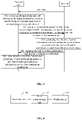
- FIG. 1 is a schematic flowchart of a method for feeding back channel state information according to an embodiment of the present application.
- the method may be performed by a terminal, and the method includes: step 110: receiving beamformed CSI-RSs, or the beamformed CSI-RSs and frequency domain basis vector indication information transmitted by a network side by means of antenna ports; where beams used in beamforming are determined based on spatial domain basis vectors, or based on the spatial domain basis vectors and frequency domain basis vectors, and the spatial domain basis vectors and the frequency domain basis vectors are determined based on an uplink channel.
- the network side pre-estimates and obtains the uplink channel, and notifies the terminal of the information of the uplink channel by transmitting the beamformed CSI-RSs, or the beamformed CSI-RSs and the frequency domain basis vector indication information to the terminal.
- the beams used in beamforming can be determined based on the spatial domain basis vectors and the frequency domain basis vectors corresponding to the uplink channel; if the network side transmits not only the beamformed CSI-RSs, but also the frequency domain basis vector indication information to the terminal, the beams used in beamforming can be determined only based on the spatial domain basis vector corresponding to the uplink channel, or based on the spatial domain basis vectors and the frequency domain basis vectors corresponding to the uplink channel, and the frequency domain basis vector indication information is used to indicate the frequency domain basis vector which is not used to determine the beams used in beamforming.
- the frequency domain basis vector indication information may be transmitted to the terminal by any one of radio resource control (RRC), media access control-control element (MAC-CE) and downlink control information (DCI) signaling.
- RRC radio resource control
- MAC-CE media access control-control element
- DCI downlink control information
- the beams used in beamforming may be determined based on the angle information of the uplink channel, or the angle information and delay information of the uplink channel; the angle information is determined based on the spatial domain basis vector, and the delay information is determined based on the frequency domain basis vector.
- the network side pre-estimates and obtains the angle information and delay information of the uplink channel, and transmits the beamformed CSI-RSs, or the beamformed CSI-RSs and the frequency domain basis vector indication information to the terminal, and the terminal can be informed the angle information and delay information of the uplink channel.
- the beams used in beamforming are determined based on the angle information and delay information of the uplink channel; if the network side transmits not only the beamformed CSI-RS, but also the frequency domain basis vector indication information to the terminal, the beams used in beamforming can be determined only based on the angle information of the uplink channel, or based on the angle information and delay information of the uplink channel, and the frequency domain basis vector indication information is used to indicate the frequency domain basis vector which is not used to determine the beams used in beamforming.
- the spatial domain basis vector used for determining the angle information of the uplink channel can be expressed as eigenvector, DFT, discrete cosine transform (DCT), polynomial coefficient, Karhunen-Loeve transform (KLT) and the like.
- the frequency domain basis vector of the delay information can be expressed as DFT, DCT, polynomial coefficient and the like.
- the specific number of spatial domain basis vectors and the specific number of frequency domain basis vectors may be either pre-agreed between the network side and the terminal, or configured by the network side to the terminal through signaling, which is not specifically limited in this embodiment of the present application.
- Step 120 determining port indication information and port combination coefficients for data transmission based on the beamformed CSI-RSs, or the beamformed CSI-RSs and the frequency domain basis vector indication information.
- the terminal After receiving the beamformed CSI-RSs, or the beamformed CSI-RSs and the frequency domain basis vector indication information, instead of calculating the angle information and delay information of the downlink channel, the terminal can obtain the spatial domain basis vector and frequency domain basis vector that can be used to determine the angle information and delay information of the downlink channel directly using the beamformed CSI-RSs, or the beamformed CSI-RSs and the frequency domain basis vector indication information, and then select the ports for data transmission, and generate port indication information and port combination coefficients corresponding to each port indicated by the port indication information.
- the reciprocity of angle information and delay information of uplink and downlink channels is applied, and the terminal can determine the port indication information and port combination coefficients for data transmission based on the beamformed CSI-RSs, or the beamformed CSI-RSs and the frequency domain basis vector indication information without additionally calculating the delay information of the downlink channel, which decreases the computational complexity of the terminal, reduces the feedback overhead of the terminal and further improves system performance.
- step 120 specifically includes: Step 121: determining multiple effective channel information based on the beamformed CSI-RSs, or the beamformed CSI-RSs and the frequency domain basis vector indication information.
- the terminal can estimate the effective channel information of a corresponding port based on the beamformed CSI-RSs. On this basis, the terminal can also obtain corresponding effective channel information when beams generated based on each spatial domain basis vector and each frequency domain basis vector are transmitted according to the frequency domain basis vector included in the frequency domain basis vector indication information, in combination with the estimated effective channel information.
- the number of multiple effective channel information is not less than a product of the number of spatial domain basis vectors and the number of frequency domain basis vectors.
- Step 122 determining the port indication information and the port combination coefficients for data transmission based on the multiple effective channel information.
- the terminal can select effective channel information for data transmission from the multiple effective channel information, and generate port indication information and port combination coefficients based on the port used corresponding to the selected effective channel information, and report the port indication information and port combination coefficients to the network side for the network side to calculate the downlink precoding.
- the number of ports selected by the terminal may be configured by the network side, reported by the terminal, or pre-agreed between the network side and the terminal.
- step 110 specifically includes: receiving first beamformed CSI-RSs transmitted by the network side by means of the antenna ports; where first beams used in beamforming the first CSI-RSs are determined based on all spatial domain basis vectors and all frequency domain basis vectors.
- the network side can implicitly transmit the frequency domain basis vector to the terminal by transmitting the first beamformed CSI-RSs to the terminal.
- M - 1 or more first beams are obtained by calculating the Kronecker product of a preset spatial domain basis vector and the M - 1 frequency domain basis vectors, respectively.
- the M - 1 frequency domain basis vectors are frequency domain basis vectors other than the first frequency domain basis vector among the M frequency domain basis vectors.
- the preset spatial domain basis vector is a spatial domain basis vector selected in advance from the 2 L spatial domain basis vectors, and the preset spatial domain basis vector may be pre-agreed between the network side and the terminal, or may be configured by the network side to the terminal through signaling, which is not specifically limited in this embodiment of the present application.
- transmission of the frequency domain basis vectors is realized through first CSI-RSs beamformed by 2 L + M - 1 first beams, which saves the downlink signaling overhead while reducing the computational complexity of the terminal.
- step 121 specifically includes:
- the effective channel information corresponding to the first CSI-RS can be obtained.
- the effective channel information directly determined based on the CSI-RS is recorded as the first effective channel information here.
- the number of the pieces of first effective channel information is consistent with the number of the first CSI-RSs received by the terminal and thus the number of the pieces of first effective channel information is 2 L + M - 1 or more.
- Step 1213 determining (2 L - 1) ( M - 1) or more pieces of second effective channel information based on 2 L - 1 or more pieces of first effective channel information corresponding to preset beamformed CSI-RSs among 2 L or more pieces of first effective channel information and M - 1 frequency domain basis vectors.
- the preset beamforming CSI-RSs may be may be pre-agreed between the network side and the terminal, or may be configured by the network side to the terminal through signaling.
- (2 L - 1) ( M - 1) or more pieces of second effective channel information is obtained by calculating the Hadamard product of the first effective channel information corresponding to the above 2 L - 1 preset beamformed CSI-RSs and M - 1 frequency domain basis vectors, respectively.
- the effective channel information obtained based on the first effective channel information and the frequency domain basis vector is recorded as the second effective channel information.
- Step 1214 taking 2 L + M - 1 or more pieces of first effective channel information and (2 L - 1) ( M - 1) or more pieces of second effective channel information as the effective channel information.
- 2 L + M - 1 or more pieces of first effective channel information determined directly based on CSI-RSs and (2 L - 1) ( M - 1) or more pieces of second effective channel information obtained based on first effective channel information and frequency domain basis vector are taken as the effective channel information.
- step 1213 specifically includes: respectively calculating a Hadamard product of each piece of first effective channel information corresponding to 2 L - 1 or more preset beamformed CSI-RSs and each frequency domain basis vector among M - 1 frequency domain basis vectors, to obtain (2 L - 1) ( M - 1) or more pieces of second effective channel information.
- the Hadamard product of each piece of first effective channel information orresponding to 2 L - 1 or more preset beamformed CSI-RSs and each frequency domain basis vector among the M - 1 frequency domain basis vectors is calculated, and the Hadamard product is taken as the second effective channel information corresponding to the each piece of first effective channel information corresponding to 2 L - 1 or more preset beamformed CSI-RSs and each frequency domain basis vector among the M - 1 frequency domain basis vectors.
- Each piece of first effective channel information corresponding to 2 L - 1 or more preset beamformed CSI-RSs and each frequency domain basis vector among the M - 1 frequency domain basis vectors are combined in pairs to obtain (2 L - 1) ( M - 1) or more pieces of second effective channel information.
- the terminal uses one antenna to transmit uplink signals, N r antennas to receive downlink signals, and downlink transmits a layer of data.
- a dual-polarized two-dimensional planar antenna array is configured on the network side, and the antenna array is mapped into 2 N 1 N 2 transmitting antenna ports, where N 1 and N 2 represent the number of antenna ports in the horizontal and vertical directions respectively, the number of PMI subbands is N 3 , and each subband has a size of 1 PRB.
- the network side transmits a layer of data to the terminal.
- k m represents an index corresponding to the m th frequency domain basis vector among the N 3 basis vectors.
- the terminal can determine M - 1 or more frequency domain basis vectors used by the network side.
- step 110 specifically includes: receiving second beamformed CSI-RSs and frequency domain basis vector indication information transmitted by the network side by means of the antenna ports; where second beams used in beamforming the second CSI-RSs are determined based on all the spatial domain basis vectors and a part of the frequency domain basis vectors, and the frequency domain basis vector indication information is configured to indicate the other part of the frequency domain basis vectors.
- the network side may also explicitly transmit the frequency domain basis vectors to the terminal by transmitting the second beamformed CSI-RSs and the frequency domain basis vector indication information to the terminal.
- the second CSI-RSs are CSI-RSs when the network side explicitly transmits the frequency domain basis vector, and the second beams are beams used in beamforming the second CSI-RSs.
- the frequency domain basis vectors used to determine the delay information of the uplink channel are divided into two parts, one of which is used to cooperate with all the spatial domain basis vectors to determine the second beams corresponding to the second CSI-RSs which is implicitly transmitted to the terminal through beamforming, and the other part of which constitutes the frequency domain basis vector indication information which is explicitly transmitted to the terminal.
- all the spatial domain basis vectors and a part of the frequency domain basis vectors can be obtained by each second CSI-RS, and the other part of the frequency domain basis vectors can be obtained by the frequency domain basis vector indication information, thereby all the spatial domain basis vectors and all the frequency domain basis vectors are obtained.
- the frequency domain basis vectors for determining the second beam may be one or more, and the number of the frequency domain basis vectors may be pre-agreed between the network side and the terminal, or may be configured by the network side to the terminal through signaling.
- the number of the spatial domain basis vectors is 2 L
- the number of the frequency domain basis vectors is M
- both L and M are positive integers
- the number of the second beams is not less than 2 LM' , where M' is a positive integer less than M
- 2 LM' or more second beams are determined based on 2 L spatial domain basis vectors and any M' frequency domain basis vectors
- the any M' frequency domain basis vectors include a first frequency domain basis vector, and all the elements of the first frequency domain basis vector are 1.
- L , M , and M' are all codebook parameters, and L , M , and M' may be configured by the network side to the terminal through signaling, or may be pre-agreed between the network side and the terminal.
- the M frequency domain basis vectors are divided into two parts, that is, M' frequency domain basis vectors and M - M' frequency domain basis vectors.
- 2 LM' or more second beams are obtained by calculating the Kronecker product of the 2L spatial domain basis vectors and the M' frequency domain basis vectors respectively. Since there is a first frequency domain basis vector with all elements being 1 among the M' frequency domain basis vectors, 2L or more first beams among the above 2 LM' or more second beams can also be recorded as being determined based on 2 L spatial domain basis vectors respectively.
- the frequency domain basis vector indication information includes ⁇ log 2 N 3 ⁇ 1 M ⁇ M ′ ⁇ bits indication information for indicating M - M' frequency domain basis vectors, where N 3 is the number of PMI subbands; or, the frequency domain basis vector indication information includes ⁇ log 2 ⁇ M ⁇ bits for indicating starting points of M - M' frequency domain basis vectors, and ⁇ log 2 ⁇ M ⁇ 1 M ⁇ M ′ ⁇ bits indication information for indicating M - M' frequency domain basis vectors; or, the frequency domain basis vector indication information includes ⁇ log 2 M ⁇ 1 ⁇ bit for indicating consecutive M frequency domain basis vectors.
- step 121 specifically includes: determining 2 LM' or more pieces of first effective channel information based on the second CSI-RSs beamformed by 2 LM' or more second beams; determining M - M' frequency domain basis vectors based on the frequency domain basis vector indication information; determining 2 L ( M - M' ) or more pieces of second effective channel information based on the first effective channel information corresponding to 2 L or more second beams determined based on the first frequency domain basis vector among 2 LM' or more second beams, and M - M' frequency domain basis vectors; and taking 2 LM' or more pieces of first effective channel information and 2 L ( M - M' ) or more pieces of second effective channel information as the effective channel information.
- the second CSI-RSs beamformed by 2 L or more second beams determined based on the first frequency domain basis vector may be obtained from the second CSI-RSs beamformed by 2 LM' or more second beams, and then the first effective channel information corresponding to the 2 L or more second beams determined based on the first frequency domain basis vector is determined, and the Hadamard product of the first effective channel information corresponding to the 2L or more second beams and M - M' frequency domain basis vectors is calculated, thereby obtaining 2 L ( M - M' ) or more pieces of second effective channel information.
- the effective channel information obtained based on the first effective channel information and the remaining frequency domain basis vectors is recorded as the second effective channel information.
- the number N 3 of PMI subbands is 13.
- the network side transmits a layer of data to the terminal.
- the terminal determines the remaining M - 1 frequency domain basis vectors selected by the network side according to the frequency domain basis vector indication information transmitted by the network side.
- the 2 L ports can be predefined by the network side and the terminal.
- 2 L ( M - 1) multiple effective channel information can be calculated according to the frequency domain basis vector indication information including M - 1 frequency domain basis vectors transmitted by the network side.
- the terminal first estimates the effective channel information of each port according to the second CSI-RSs received at 8 ports, and then determines 2 L ports according to the predefinition at the network side and the terminal, for example adopts the 1st ⁇ 4th ports of the first frequency domain basis vector.
- the terminal can calculate 2 L ( M - M' ) multiple effective channel information according to the effective channels estimated by the second CSI-RSs of the predefined 2 L ports in combination with M - M' frequency domain basis vectors.
- the network side transmits a layer of data to the terminal.
- step 122 specifically includes: step 1221: performing eigenvalue decomposition on a covariance matrix of the multiple effective channel information to obtain eigenvectors corresponding to the largest eigenvalues, the number of which is that of the downlink transmission layers.
- H ⁇ eff H ⁇ 0,0 ⁇ H ⁇ 0 , LM ⁇ 1 H ⁇ 1,0 ⁇ H ⁇ 1 , LM ⁇ 1 ⁇ C N r N 3 ⁇ K , where H ⁇ p , k is the corresponding effective channel information when the k th beam is transmitted in the p -polarization direction, and the k th beam in the p -polarization direction is a beam generated from the l th spatial domain basis vector v l and the m th frequency domain basis vector f m .
- Eigenvectors corresponding to the largest eigenvalues can be obtained by performing eigenvalue decomposition to covariance matrix H ⁇ eff H H ⁇ eff .
- the eigenvector ⁇ 1 ⁇ C K ⁇ 1 corresponding to the largest eigenvalue is taken as the eigenvector corresponding to the downlink transmission layer;
- the eigenvector ⁇ 1 ⁇ C K ⁇ 1 t corresponding the largest eigenvalue is taken as the eigenvector corresponding to the first layer, and the eigenvector ⁇ 2 ⁇ C K ⁇ 1 corresponding to the second largest eigenvalue is taken as the eigenvector corresponding to the second layer.
- Step 1222 selecting, from eigenvectors corresponding to any downlink transmission layer, non-zero elements with the largest amplitude, the number of which is not greater than a preset number of ports to obtain the port combination coefficient of the any downlink transmission layer.
- the preset number of ports K 0 is a preset number of ports used for data transmission of each downlink transmission layer.
- at most K 0 non-zero elements with the largest amplitude can be selected from the eigenvectors corresponding to the downlink transmission layer, and the above-mentioned at most K 0 non-zero elements with the largest amplitude can be taken as the port combination coefficient of the downlink transmission layer.
- Step 1223 determining the port indication information for data transmission of the downlink transmission layer based on the port to which an effective channel corresponding to the port combination coefficient of any downlink transmission layer is applied.
- the port indication information for data transmission of any downlink transmission layer can be reported to the network side through a bitmap or a combination coefficient log 2 K K 0 .
- Table 1 Port indication information of the first layer 1 0 0 1 0 1 1 0
- step 1222 specifically includes: selecting, from eigenvectors corresponding to any downlink transmission layer, non-zero elements with the largest amplitude, the number of which is not greater than the preset number of ports; normalizing and quantizing the non-zero elements with the largest amplitude, the number of which is not greater than the preset number of ports, to obtain the port combination coefficient of any downlink transmission layer.
- the method further includes: before step 110, transmitting sounding reference signals (SRSs) to the network side and determining the spatial domain basis vectors and the frequency domain basis vectors corresponding to the uplink channel based on the SRSs at the network side.
- SRSs sounding reference signals
- the terminal transmits SRSs to the network side.
- the network side can estimate the uplink channel based on the SRSs, and then determine corresponding spatial domain basis vectors and frequency domain basis vectors based on the uplink channel, and determine the beams used in beamforming based on the spatial domain basis vectors or based on the spatial domain basis vectors and the frequency domain basis vectors.
- the uplink channel ⁇ UL can be estimated based on the SRSs, and then the angle information and delay information of the uplink channel can be calculated using ⁇ UL , where the angle information and the delay information can be respectively obtained by performing inverse Fourier transform on ⁇ UL using a set of spatial domain compression basis vectors and a set of frequency domain basis vectors, that is, the angle information and delay information of the uplink channel can be determined by a set of spatial domain basis vectors and a set of frequency domain basis vectors.
- FIG. 2 is a schematic flowchart of a method for feeding back channel state information (CSI) according to another embodiment of the present application.
- the method is performed by a network side, such as a base station, and the method includes: step 210: transmitting beamformed channel state information reference signals (CSI-RSs), or the beamformed CSI-RSs and frequency domain basis vector indication information to the terminal by means of the antenna ports; where beams used in beamforming are determined based on spatial domain basis vectors or based on the spatial domain basis vectors and frequency domain basis vectors, and the spatial domain basis vectors and the frequency domain basis vectors are determined based on an uplink channel.
- CSI-RSs beamformed channel state information reference signals
- the network side pre-estimates the uplink channel, and transmits the beamformed CSI-RSs, or the beamformed CSI-RSs and the frequency domain basis vector indication information to the terminal, and the terminal can obtain the information of the uplink channel.
- the beams used in beamforming are determined based on the spatial domain basis vectors and the frequency domain basis vectors corresponding to the uplink channel;
- the beamforming CSI-RS transmits not only the beamformed CSI-RSs, but also the frequency domain basis vector indication information to the terminal, the beams used in beamforming can be determined only based on the spatial domain basis vector corresponding to the uplink channel, or can be determined based on the spatial domain basis vectors and the frequency domain basis vectors corresponding to the uplink channel, and the frequency domain basis vector indication information is used to indicate the frequency domain basis vectors which is not used to determine the beams used in beamforming.
- the frequency domain basis vector indication information may be transmitted to the terminal by any one of
- the beams used in beamforming can be determined based on the angle information of the uplink channel, or the angle information and delay information of the uplink channel; the angle information is determined based on the spatial domain basis vectors, and the delay information is determined based on the frequency domain basis vectors.
- the beams used in beamforming are determined based on the angle information and delay information of the uplink channel; if the network side transmits not only the beamformed CSI-RSs, but also the frequency domain basis vector indication information to the terminal, the beams used in beamforming can be determined only based on the angle information of the uplink channel, or can be determined based on the angle information and delay information of the uplink channel, and the frequency domain basis vector indication information is used to indicate the frequency domain basis vector which is not used to determine the beams used in beamforming.
- the spatial domain basis vectors used for determining the angle information of the uplink channel can be expressed as eigenvector, DFT, DCT, polynomial coefficient, KLT and the like.
- the frequency domain basis vectors of the delay information can be expressed as DFT, DCT, polynomial coefficient and the like.
- the specific number of spatial domain basis vectors and the specific number of frequency domain basis vectors may be either pre-agreed between the network side and the terminal, or configured by the network side to the terminal through signaling, which is not specifically limited in this embodiment of the present application.
- Step 220 receiving port indication information and port combination coefficients for data transmission fed back by the terminal; the port indication information and port combination coefficients are determined by the terminal based on the beamformed CSI-RSs, or the beamformed CSI-RSs and frequency domain basis vector indication information. Specifically, due to the reciprocity of the angle information and the delay information of the uplink and downlink channels, namely the equivalence between uplink and downlink channels in terms of the angle information and the delay information, the uplink and downlink channels correspond to the same spatial domain basis vectors and frequency domain basis vectors.
- the terminal After receiving the beamformed CSI-RSs, or the beamformed CSI-RSs and the frequency domain basis vector indication information, instead of calculating the angle information and delay information of the downlink channel, the terminal can directly use the beamformed CSI-RSs, or the beamformed CSI-RSs and the frequency domain basis vector indication information, to obtain the spatial domain basis vectors and frequency domain basis vectors that can be used to determine the angle information and delay information of the downlink channel, and then select the ports for data transmission, and generate port indication information and port combination coefficients corresponding to each port indicated by the port indication information. Immediately, the terminal feeds back the port indication information and the port combination coefficients to the network side, and the network side receives the port indication information and port combination coefficients fed back by the terminal.
- Step 230 determining precoding of the downlink transmission data based on the port indication information and the port combination coefficients.
- the reciprocity of angle information and delay information of uplink and downlink channels is applied, so that the terminal can determine the port indication information and port combination coefficients for data transmission based on the beamformed CSI-RSs, or the beamformed CSI-RSs and the frequency domain basis vector indication information without additionally calculating the delay information of the downlink channel, which decreases the computational complexity of the terminal, reduces the feedback overhead of the terminal and further improves system performance.
- step 210 specifically includes: transmitting first beamformed CSI-RSs to the terminal by means of the antenna port; the first beams used in beamforming the first CSI-RSs is determined based on all spatial domain basis vectors and all frequency domain basis vectors.
- the network side can implicitly transmit the frequency domain basis vectors to the terminal by transmitting the first beamformed CSI-RSs to the terminal.
- the first CSI-RSs are CSI-RSs when the network side implicitly transmits the frequency domain basis vectors, the first beams are beams used in beamforming the first CSI-RSs, and the beams corresponding to all the first CSI-RSs need to be calculated based on all the spatial domain basis vectors used to determine the angle information of the uplink channel and all the frequency domain basis vectors used to determine the delay information of the uplink channel. Therefore, on the terminal side, all the spatial domain basis vectors and all the frequency domain basis vectors can be obtained only by means of each first CSI-RS.
- the number of the spatial domain basis vectors is 2 L
- the number of the frequency domain basis vectors is M
- both L and M are positive integers
- the number of the first beams is not less than 2 L + M - 1
- 2 L or more first beams are determined based on 2 L spatial domain basis vectors
- M - 1 or more first beams are determined based on preset spatial domain basis vector and M - 1 frequency domain basis vectors
- the preset spatial domain basis vector is one of the 2 L spatial domain basis vectors.
- L and M are both codebook parameters, and L and M may be configured by the network side to the terminal through signaling, or may be predetermined by the network side and the terminal.
- M frequency domain basis vectors there is a frequency domain basis vector with all elements being 1, that is, the first frequency domain basis vector.
- 2 L + M - 1 or more first beams 2 L or more first beams are obtained by calculating the Kronecker product of the 2 L spatial domain basis vectors and the first frequency domain basis vector, respectively. Since all elements of the first frequency domain basis vector are 1, the above 2 L or more first beams may also be recorded as being determined based on the 2 L spatial domain basis vectors respectively.
- transmission of the frequency domain basis vectors is realized implicitly through first CSI-RSs beamformed by 2 L + M - 1 first beams, which saves the downlink signaling overhead while reducing the computational complexity of the terminal.
- all the spatial domain basis vectors and a part of the frequency domain basis vectors can be obtained by each second CSI-RS, the other part of the frequency domain basis vectors can be obtained by the frequency domain basis vector indication information, thereby all the spatial domain basis vectors and all the frequency domain basis vectors are obtained.
- the number of the spatial domain basis vectors is 2 L
- the number of the frequency domain basis vectors is M
- both L and M are positive integers
- the number of the second beams is not less than 2 LM' , wherein M' is a positive integer less than M
- 2 LM' or more second beams are determined based on 2 L spatial domain basis vectors and any M' frequency domain basis vectors
- the any M' frequency domain basis vectors include a first frequency domain basis vector, and all the elements of the first frequency domain basis vector are 1.
- the frequency domain basis vector indication information includes ⁇ log 2 N 3 ⁇ 1 M ⁇ M ′ ⁇ bits indication information for indicating M - M' frequency domain basis vectors, where N 3 is the number of PMI subbands; or, the frequency domain basis vector indication information includes ⁇ log 2 ⁇ M ⁇ bits for indicating the starting points of M - M' frequency domain basis vectors, and ⁇ log 2 ⁇ M ⁇ 1 M ⁇ M ′ ⁇ bits indication information for indicating M - M' frequency domain basis vectors; or, the frequency domain basis vector indication information includes ⁇ log 2 M ⁇ 1 ⁇ bits for indicating consecutive M frequency domain basis vectors.
- the beams used in beamforming are obtained by calculating Kronecker product of the spatial domain basis vectors and the frequency domain basis vectors.
- the Kronecker product of the two can be taken as the beams corresponding to the spatial domain basis vector and the frequency domain basis vector.
- the method further includes: before step 210, receiving the SRSs transmitted by the terminal; determining the spatial domain basis vectors and the frequency domain basis vectors corresponding to the uplink channel based on the SRSs. Specifically, after receiving the SRSs transmitted by the terminal, the network side can estimate the uplink channel based on the SRSs, and then determine corresponding spatial domain basis vectors and frequency domain basis vectors based on the uplink channel, and determine the beams used in beamforming on this basis or based on the spatial domain basis vectors and the frequency domain basis vectors.
- the uplink channel ⁇ UL can be estimated based on the SRSs, and then the angle information and delay information of the uplink channel can be calculated using ⁇ UL , where the angle information and the delay information can be respectively obtained by performing inverse Fourier transform on ⁇ UL using a set of spatial domain compression basis vectors and a set of frequency domain basis vectors, that is, the angle information and delay information of the uplink channel can be determined by a set of spatial domain basis vectors and a set of frequency domain basis vectors.
- FIG. 3 is a schematic flowchart of a method for feeding back channel state information (CSI) according to another embodiment of the present application.
- the terminal uses an antenna to send uplink signals, N r roots receive downlink signals, and downlink transmits a layer of data.
- a dual-polarized two-dimensional planar antenna array is configured on the network side, and the antenna array is mapped into 2 N 1 N 2 transmitting antenna ports, where N 1 and N 2 represent the numbers of antenna ports in the horizontal and vertical directions respectively, the number of PMI subbands is N 3 , and each subband has a size of 1 PRB.
- the method for feeding back channel state information includes the following steps:
- H ′ j UL represents the j th channel containing SRS subcarrier in the nth subband
- the comb structure of SRS is 4, and there are 3 subcarriers containing SRS in each PRB.
- the combination coefficient of this subband can be calculated as V H H n UL ⁇ C 2 L ⁇ 1
- the combination coefficients of N 3 subbands can be obtained, and the combination coefficients of all subbands can be expressed as W 2 E C 2 L ⁇ N 3 .
- M frequency domain basis vectors which corresponds to the maximum power obtained by compressing to each subband coefficient are selected from the candidate N 3 frequency domain compression base vectors, and then the indexes corresponding to the selected M frequency domain basis vectors are sorted in ascending order.
- the matrix constituted by each frequency domain basis vector is W f
- the indexes corresponding to the M frequency domain basis vectors before the phase rotation is performed are k 0 , ..., k m ,..., k M -1 , where k 0 represents the minimum index corresponding to each frequency domain.
- the frequency domain basis vector corresponding to the above index which is 0 is a vector, of which all elements are 1 and length is N 3 .
- Step 303 transmitting the beamformed CSI-RSs, or the beamformed CSI-RSs and frequency domain basis vector indication information to the terminal by the network side by means of the antenna ports.
- 1 N 3 is the first frequency domain basis vector among the M frequency domain basis vectors.
- the network side constructs frequency domain basis vector indication information including frequency domain basis vectors other than the first frequency domain basis vector, and also transmits the frequency domain basis vector indication information to the terminal.
- Step 304 calculating, by the terminal, the effective channel information and determining the port indication information and port combination coefficients of each downlink transmission layer.
- H ⁇ p , l , 0 H p , 0 v l H p , 1 v l ⁇ H p , N 3 ⁇ 1 v l , where H p ,1 represents the channel of the n th subband in the p -polarization direction.
- 2 L ( M - 1) multiple effective channel information can be calculated according to the frequency domain basis vector indication information including M - 1 frequency domain basis vectors sent by the network side.
- the index of the m th frequency domain basis vector on which phase rotation is performed is k m
- H ⁇ eff H ⁇ 0,0 ⁇ H ⁇ 0 , LM ⁇ 1 H ⁇ 1,0 ⁇ H ⁇ 1 , LM ⁇ 1 ⁇ C N r N 3 ⁇ K .
- Step 305 reporting, by the terminal, the port indication information and the port combination coefficients.
- the selected port indication information and port combination coefficients are reported to the network side through bitmap or combination coefficient log 2 K K 0 .
- FIG. 4 is a schematic structural diagram of a device for feeding back channel state information according to an embodiment of the present application, and as shown in FIG. 4 , the device includes a receiving unit 410, a port determining unit 420, and a feedback unit 430, in which:
- the reciprocity of angle information and delay information of uplink and downlink channels is applied, and the terminal can determine the port indication information and port combination coefficients for data transmission based on the beamformed CSI-RSs, or the beamformed CSI-RSs and the frequency domain basis vector indication information without additionally calculating the delay information of the downlink channel, which decreases the computational complexity of the terminal, reduces the feedback overhead of the terminal and further improves system performance.
- the port determining unit 420 includes:
- the receiving unit 410 is specifically configured to:
- the number of the spatial domain basis vectors is 2 L
- the number of the frequency domain basis vectors is M
- both L and M are positive integers
- the channel determining subunit is specifically configured to:
- the determining (2 L - 1) ( M - 1) or more pieces of second effective channel information based on 2 L - 1 or more pieces of first effective channel information corresponding to preset beamformed CSI-RSs in 2 L or more pieces of first effective channel information and M - 1 frequency domain basis vectors specifically includes: respectively calculating a Hadamard product of each first piece of effective channel information corresponding to 2 L - 1 or more preset beamformed CSI-RSs and each frequency domain basis vector among M - 1 frequency domain basis vectors to obtain (2 L - 1) ( M - 1) or more piece of second effective channel information.
- the receiving unit 410 is specifically configured to:
- the number of the spatial domain basis vectors is 2 L
- the number of the frequency domain basis vectors is M
- both L and M are positive integers
- the channel determining subunit is specifically configured to:
- the port determining subunit is specifically configured to:
- select, from eigenvectors corresponding to any downlink transmission layer, non-zero elements with the largest amplitude, the number of which is not greater than the preset number of ports to obtain the port combination coefficient of the any downlink transmission layer specifically includes:
- the device further includes a sounding reference signal (SRS) transmitting unit configured to: transmit SRSs to the network side and determine the spatial domain basis vectors and the frequency domain basis vectors corresponding to the uplink channel based on the SRSs at the network side.
- SRS sounding reference signal
- FIG. 5 is a schematic structural diagram of a device for feeding back channel state information (CSI) according to another embodiment of the present application.
- the device includes a transmitting unit 510, a port receiving unit 520 and a precoding unit 530, in which:
- the reciprocity of angle information and delay information of uplink and downlink channels is applied, and the terminal can determine the port indication information and port combination coefficients for data transmission based on the beamformed CSI-RSs, or the beamformed CSI-RSs and the frequency domain basis vector indication information without additionally calculating the delay information of the downlink channel, which decreases the computational complexity of the terminal, reduces the feedback overhead of the terminal and further improves system performance.
- the transmitting unit 510 is specifically configured to:
- the number of the spatial domain basis vectors is 2 L
- the number of the frequency domain basis vectors is M
- both L and M are positive integers
- the transmitting unit 510 is specifically configured to:
- the number of the spatial domain basis vectors is 2 L
- the number of the frequency domain basis vectors is M
- both L and M are positive integers
- the beams used in beamforming are obtained by calculating a Kronecker product of the spatial domain basis vectors and the frequency domain basis vectors.
- the device further includes a sounding reference signal (SRS) receiving unit configured to:
- FIG. 6 is a schematic diagram showing physical structure of a terminal according to an embodiment of the present application, and as shown in FIG. 6 , the terminal may include: a processor 601, a communication interface 602, a memory 603, and a communication bus 604, where the processor 601, the communication interface 602, and the memory 603 communicate with each other through the communication bus 604.
- the processor 601 may call computer programs that are stored on the memory 603 and executable on the processor 601 to implement the following steps: receiving beamformed CSI-RSs, or the beamformed CSI-RSs and frequency domain basis vector indication information transmitted by a network side by means of antenna ports; where beams used in beamforming are determined based on spatial domain basis vectors, or based on the spatial domain basis vectors and frequency domain basis vectors, and the spatial domain basis vectors and the frequency domain basis vectors are determined based on an uplink channel; determining port indication information and port combination coefficients for data transmission based on the beamformed CSI-RSs, or the beamformed CSI-RSs and the frequency domain basis vector indication information; feeding back the port indication information and the port combination coefficients to the network side for determining precoding of downlink transmission data based on the port indication information and the port combination coefficients at the network side.
- the terminal in the present embodiment can implement all the method steps in the foregoing method embodiments, and can achieve the same effects.
- the same parts and the same effects in this embodiment as in the method embodiment will not be repeated here.
- the logic instructions in the memory 603 described above may be implemented in the form of software functional units and may be stored in a computer readable storage medium while being sold or used as a separate product.
- the technical solutions of the embodiments of the present application in essence, or the parts that contributes to the prior art or the parts of the technical solutions can be embodied in the form of software product, which is stored in a storage medium and includes several instructions to cause a computer device (for example, a personal computer, a server, a terminal and the like) to perform all or part of the steps of the method described in various embodiments of the present application.
- the storage medium described above includes various media that can store program codes such as U disk, mobile hard disk, read-only memory (ROM), random access memory (RAM), magnetic disk, and compact disk.
- FIG. 7 is a schematic diagram showing physical structure of a network side provided by an embodiment of the present application, and as shown in FIG. 7 , the network side may include: a processor 701, a communications interface 702, a memory 703, and a communication bus 704, where the processor 701, the communication interface 702, and the memory 703 communicate with each other through the communication bus 704.
- the processor 701 may call computer programs that are stored on the memory 703 and executable on the processor 701 to implement the following steps: transmitting beamformed CSI-RSs, or the beamformed CSI-RSs and frequency domain basis vector indication information to the terminal by means of the antenna ports; where beams used in beamforming are determined based on spatial domain basis vectors or based on the spatial domain basis vectors and frequency domain basis vectors, and the spatial domain basis vectors and the frequency domain basis vectors are determined based on an uplink channel; receiving port indication information and port combination coefficients for data transmission fed back by the terminal; the port indication information and the port combination coefficients are determined by the terminal based on the beamformed CSI-RSs, or the beamformed CSI-RSs and frequency domain basis vector indication information; determining precoding of the downlink transmission data based on the port indication information and the port combination coefficients.
- the network side in this embodiment can implement all the method steps in the foregoing method embodiments, and can achieve the same effect.
- the same parts and the same effect in this embodiment as in the method embodiment will not be repeated here.
- the logic instructions in the memory 703 described above may be implemented in the form of software functional units and may be stored in a computer readable storage medium while being sold or used as a separate product.
- the technical solutions of the embodiments of the present application in essence, or the parts that contributes to the prior art or the parts of the technical solutions can be embodied in the form of software product, which is stored in a storage medium and includes several instructions to cause a computer device (for example, a personal computer, a server, a network device and the like) to perform all or part of the steps of the method described in various embodiments of the present application.
- the storage medium described above includes various media that can store program codes such as U disk, mobile hard disk, read-only memory (ROM), random access memory (RAM), magnetic disk, and compact disk.
- Embodiments of the present application further provide a non-transitory computer-readable storage medium, having a computer program stored thereon, and when being executed by a processor, the computer program causes the processor to implement the methods for feeding back channel state information according to the above embodiments, for example, including: receiving beamformed CSI-RSs, or the beamformed CSI-RSs and frequency domain basis vector indication information transmitted by a network side by means of antenna ports; where beams used in beamforming are determined based on angle information of an uplink channel, or based on the angle information and delay information of an uplink channel; the angle information is determined based on the spatial domain basis vectors, and the delay information is determined based on the frequency domain basis vectors; determining port indication information and port combination coefficients for data transmission based on the beamformed CSI-RSs, or the beamformed CSI-RSs and the frequency domain basis vector indication information; feeding back the port indication information and the port combination coefficients to the network side for determining precoding of downlink transmission data based on the port indication information and the port combination coefficient
- Embodiments of the present application further provide a non-transitory computer-readable storage medium having a computer program stored thereon, and when being executed by a processor, the computer program causes the processor to implement the channel state information feedback methods provided in the above embodiments, for example, including: transmitting beamformed CSI-RSs, or the beamformed CSI-RSs and frequency domain basis vector indication information to the terminal by means of the antenna port; where the beams used in beamforming are determined based on a spatial domain basis vectors or based on the spatial domain basis vectors and frequency domain basis vectors, and the spatial domain basis vectors and the frequency domain basis vectors are determined based on an uplink channel; receiving port indication information and port combination coefficients for data transmission fed back by the terminal; the port indication information and the port combination coefficients are determined by the terminal based on the beamformed CSI-RSs, or the beamformed CSI-RSs and frequency domain basis vector indication information; determining the precoding of the downlink transmission data based on the port indication information and the port combination coefficients.
- the device embodiments described above are merely illustrative, wherein the units described as separate components may or may not be physically separate, and the components displayed as units may or may not be physical units, that is, may be located at the same place or be distributed to multiple network units. Some or all of the modules may be selected according to actual needs to achieve the purpose of the solution of the present embodiment. Those of ordinary skill in the art can understand and implement the solution described above without paying creative works.
Landscapes
- Engineering & Computer Science (AREA)
- Signal Processing (AREA)
- Computer Networks & Wireless Communication (AREA)
- Quality & Reliability (AREA)
- Physics & Mathematics (AREA)
- Mathematical Physics (AREA)
- Radio Transmission System (AREA)
- Mobile Radio Communication Systems (AREA)
- Data Exchanges In Wide-Area Networks (AREA)
Applications Claiming Priority (3)
| Application Number | Priority Date | Filing Date | Title |
|---|---|---|---|
| CN202010085292 | 2020-02-10 | ||
| CN202110152398.0A CN113258974B (zh) | 2020-02-10 | 2021-02-03 | 信道状态信息反馈方法、装置、终端、网络侧和存储介质 |
| PCT/CN2021/076244 WO2021160122A1 (zh) | 2020-02-10 | 2021-02-09 | 信道状态信息反馈方法、装置、终端、网络侧和存储介质 |
Publications (2)
| Publication Number | Publication Date |
|---|---|
| EP4106221A1 true EP4106221A1 (de) | 2022-12-21 |
| EP4106221A4 EP4106221A4 (de) | 2024-03-06 |
Family
ID=77180875
Family Applications (1)
| Application Number | Title | Priority Date | Filing Date |
|---|---|---|---|
| EP21754654.8A Pending EP4106221A4 (de) | 2020-02-10 | 2021-02-09 | Verfahren zur rückmeldung von kanalzustandsinformationen, vorrichtung, endgerät und netzwerkseite sowie speichermedium |
Country Status (8)
| Country | Link |
|---|---|
| US (1) | US12191954B2 (de) |
| EP (1) | EP4106221A4 (de) |
| JP (1) | JP7566920B2 (de) |
| KR (1) | KR20220131993A (de) |
| CN (1) | CN113258974B (de) |
| BR (1) | BR112022015632A2 (de) |
| MX (1) | MX2022009173A (de) |
| WO (1) | WO2021160122A1 (de) |
Cited By (1)
| Publication number | Priority date | Publication date | Assignee | Title |
|---|---|---|---|---|
| US20240030981A1 (en) * | 2021-01-31 | 2024-01-25 | Huawei Technologies Co., Ltd. | Channel state information feedback method and communication apparatus |
Families Citing this family (12)
| Publication number | Priority date | Publication date | Assignee | Title |
|---|---|---|---|---|
| EP4320734A4 (de) * | 2021-05-10 | 2025-04-30 | Apple Inc. | Verfahren und vorrichtung zum konfigurieren von w1, w2 und wf zur portauswahl-codebuchverbesserung |
| CN114710188A (zh) * | 2022-02-28 | 2022-07-05 | 华为技术有限公司 | 一种传输方法及装置 |
| WO2023206170A1 (zh) * | 2022-04-27 | 2023-11-02 | 北京小米移动软件有限公司 | Csi的上报方法、预编码矩阵的确定方法、装置及设备 |
| WO2024016366A1 (zh) * | 2022-07-22 | 2024-01-25 | 北京小米移动软件有限公司 | Sd-fd基对的指示信息的发送接收方法、装置及系统 |
| WO2024033900A1 (en) * | 2022-08-12 | 2024-02-15 | Telefonaktiebolaget Lm Ericsson (Publ) | Priority rules for csi reports for coherent joint transmission |
| CN121605679A (zh) * | 2022-09-30 | 2026-03-03 | 北京小米移动软件有限公司 | 信息发送、接收方法和装置、通信装置及存储介质 |
| CN116249127B (zh) * | 2022-11-30 | 2025-08-29 | 中国移动通信集团上海有限公司 | Csi-rs波束的分配方法、装置、设备及存储介质 |
| CN116830717A (zh) * | 2023-04-17 | 2023-09-29 | 北京小米移动软件有限公司 | 通信参数确定方法、装置、设备及存储介质 |
| WO2024251190A1 (en) * | 2023-06-06 | 2024-12-12 | Mediatek Inc. | Method and apparatus for beam management in mobile communications |
| CN119109493A (zh) * | 2023-06-09 | 2024-12-10 | 华为技术有限公司 | 一种信道状态信息确定的方法和通信装置 |
| WO2025081293A1 (en) * | 2023-10-16 | 2025-04-24 | Qualcomm Incorporated | Fine frequency domain channel state information for large bandwidth |
| KR20250080521A (ko) * | 2023-11-28 | 2025-06-05 | 삼성전자주식회사 | 통신 시스템에서 프리코딩된 채널 상태 정보 비교를 통한 사운딩 참조 신호 기반 하향링크 채널 추정 방법 및 장치 |
Family Cites Families (16)
| Publication number | Priority date | Publication date | Assignee | Title |
|---|---|---|---|---|
| US9973249B2 (en) * | 2014-12-23 | 2018-05-15 | Samsung Electronics Co., Ltd. | Channel state information feedback schemes for FD-MIMO |
| KR102335741B1 (ko) * | 2015-08-13 | 2021-12-06 | 삼성전자주식회사 | 이동 통신 시스템에서 빔포밍된 csi-rs를 이용하는 통신 기법 |
| CN106941367A (zh) * | 2016-01-04 | 2017-07-11 | 中兴通讯股份有限公司 | 多输入多输出mimo的处理方法及装置 |
| CN107294644A (zh) * | 2016-03-31 | 2017-10-24 | 株式会社Ntt都科摩 | 参考信号发送方法、信道状态信息反馈方法、基站和移动台 |
| WO2018058621A1 (zh) * | 2016-09-30 | 2018-04-05 | 华为技术有限公司 | 一种波束赋形传输的方法及装置 |
| CN108155922A (zh) * | 2016-12-05 | 2018-06-12 | 中国电信股份有限公司 | 基于波束赋形的csi反馈方法及装置 |
| CN107980209B (zh) | 2017-02-16 | 2021-06-25 | 香港应用科技研究院有限公司 | 大规模mimo通信系统中报告信道状态信息(csi)的方法和装置 |
| CN108540190A (zh) * | 2017-03-06 | 2018-09-14 | 北京信威通信技术股份有限公司 | 波束赋形方法和装置 |
| US11218210B2 (en) * | 2017-05-30 | 2022-01-04 | Telefonaktiebolaget Lm Ericsson (Publ) | Technique for channel state acquisition |
| CN108880644B (zh) * | 2017-07-26 | 2019-06-11 | 华为技术有限公司 | 用于数据传输的方法、装置和系统 |
| US10868603B2 (en) * | 2018-03-09 | 2020-12-15 | Samsung Electronics Co., Ltd. | Method and apparatus to enable CSI reporting based on space-frequency compression |
| EP3576312A1 (de) * | 2018-05-30 | 2019-12-04 | FRAUNHOFER-GESELLSCHAFT zur Förderung der angewandten Forschung e.V. | Auf doppler-delay-codebuch basierende vorcodierung und csi-rückmeldung für drahtloskommunikationssysteme |
| CN110768700B (zh) | 2018-07-26 | 2021-02-23 | 华为技术有限公司 | 信道估计方法和装置 |
| CN113131978B (zh) * | 2019-12-30 | 2022-04-19 | 大唐移动通信设备有限公司 | 一种基于信道互易性的预编码矩阵配置方法及装置 |
| CN113271133B (zh) * | 2020-02-14 | 2023-09-08 | 大唐移动通信设备有限公司 | 一种天线端口指示方法、终端及网络侧设备 |
| US12395217B2 (en) * | 2021-01-15 | 2025-08-19 | Mediatek Inc. | Method for FR1 FDD channel state information |
-
2021
- 2021-02-03 CN CN202110152398.0A patent/CN113258974B/zh active Active
- 2021-02-09 EP EP21754654.8A patent/EP4106221A4/de active Pending
- 2021-02-09 MX MX2022009173A patent/MX2022009173A/es unknown
- 2021-02-09 BR BR112022015632A patent/BR112022015632A2/pt unknown
- 2021-02-09 US US17/794,253 patent/US12191954B2/en active Active
- 2021-02-09 KR KR1020227029814A patent/KR20220131993A/ko not_active Ceased
- 2021-02-09 WO PCT/CN2021/076244 patent/WO2021160122A1/zh not_active Ceased
- 2021-02-09 JP JP2022548763A patent/JP7566920B2/ja active Active
Cited By (2)
| Publication number | Priority date | Publication date | Assignee | Title |
|---|---|---|---|---|
| US20240030981A1 (en) * | 2021-01-31 | 2024-01-25 | Huawei Technologies Co., Ltd. | Channel state information feedback method and communication apparatus |
| US12574089B2 (en) * | 2021-01-31 | 2026-03-10 | Huawei Technologies Co., Ltd. | Channel state information feedback method and communication apparatus |
Also Published As
| Publication number | Publication date |
|---|---|
| KR20220131993A (ko) | 2022-09-29 |
| MX2022009173A (es) | 2022-08-17 |
| JP2023513713A (ja) | 2023-04-03 |
| US12191954B2 (en) | 2025-01-07 |
| JP7566920B2 (ja) | 2024-10-15 |
| CN113258974B (zh) | 2022-12-30 |
| CN113258974A (zh) | 2021-08-13 |
| EP4106221A4 (de) | 2024-03-06 |
| US20230075037A1 (en) | 2023-03-09 |
| BR112022015632A2 (pt) | 2022-09-27 |
| WO2021160122A1 (zh) | 2021-08-19 |
Similar Documents
| Publication | Publication Date | Title |
|---|---|---|
| EP4106221A1 (de) | Verfahren zur rückmeldung von kanalzustandsinformationen, vorrichtung, endgerät und netzwerkseite sowie speichermedium | |
| US12132541B2 (en) | Methods and apparatuses for feedback reporting in a wireless communications network | |
| US11101853B2 (en) | Method for determining precoding matrix indicator, user equipment, and base station | |
| EP4087151B1 (de) | Verfahren und vorrichtung zur konfiguration einer vorcodierungsmatrix auf kanalreziprozitätsbasis | |
| EP4597873A2 (de) | Verfahren und vorrichtungen zur csi-meldung in einem drahtloskommunikationssystem | |
| US11799526B2 (en) | Method and apparatus for transmitting a CSI report containing coefficients | |
| EP2985923B1 (de) | Verfahren zur bestimmung eines vorcodierungsmatrixindikators, benutzervorrichtung und basisstation | |
| EP3754863A1 (de) | Mehrstrahl-codebücher mit weiter optimierten verwaltungsdaten | |
| EP4412295A1 (de) | Verfahren und vorrichtung zur rückkopplung eines kanalstatus | |
| EP2985921A1 (de) | Verfahren zur meldung von kanalstatusinformationen, benutzergerät und basisstation | |
| US11296759B2 (en) | Precoding matrix index reporting method, communications apparatus, and medium | |
| EP4106215A1 (de) | Verfahren zur anzeige von antennenanschlüssen, endgerät und netzwerkseitige vorrichtung | |
| EP4373007A1 (de) | Csi-kompression auf basis einer mehrdimensionalen mimo-hf-signatur | |
| EP2445288B1 (de) | Verfahren und vorrichtung zum erhalten von kanalstatusinformationen | |
| EP2557719B1 (de) | Verfahren und system zur rückkopplung der korrelationsmatrix für systeme mit mehreren antennen | |
| EP2731277A1 (de) | Mehrantennenübertragungsverfahren, vorrichtung und system | |
| WO2024245529A1 (en) | Enhanced channel measurement reporting for network node side channel quality prediction | |
| WO2021074822A1 (en) | Differential and quantized side information transmission for type ii csi |
Legal Events
| Date | Code | Title | Description |
|---|---|---|---|
| STAA | Information on the status of an ep patent application or granted ep patent |
Free format text: STATUS: THE INTERNATIONAL PUBLICATION HAS BEEN MADE |
|
| PUAI | Public reference made under article 153(3) epc to a published international application that has entered the european phase |
Free format text: ORIGINAL CODE: 0009012 |
|
| STAA | Information on the status of an ep patent application or granted ep patent |
Free format text: STATUS: REQUEST FOR EXAMINATION WAS MADE |
|
| 17P | Request for examination filed |
Effective date: 20220817 |
|
| AK | Designated contracting states |
Kind code of ref document: A1 Designated state(s): AL AT BE BG CH CY CZ DE DK EE ES FI FR GB GR HR HU IE IS IT LI LT LU LV MC MK MT NL NO PL PT RO RS SE SI SK SM TR |
|
| DAV | Request for validation of the european patent (deleted) | ||
| DAX | Request for extension of the european patent (deleted) | ||
| A4 | Supplementary search report drawn up and despatched |
Effective date: 20240206 |
|
| RIC1 | Information provided on ipc code assigned before grant |
Ipc: H04B 7/06 20060101AFI20240131BHEP |
|
| STAA | Information on the status of an ep patent application or granted ep patent |
Free format text: STATUS: EXAMINATION IS IN PROGRESS |
|
| 17Q | First examination report despatched |
Effective date: 20260331 |