EP4119904A1 - Système de capteur, réseau pourvu d'au moins un système de capteur et procédé permettant de faire fonctionner un capteur - Google Patents
Système de capteur, réseau pourvu d'au moins un système de capteur et procédé permettant de faire fonctionner un capteur Download PDFInfo
- Publication number
- EP4119904A1 EP4119904A1 EP22184093.7A EP22184093A EP4119904A1 EP 4119904 A1 EP4119904 A1 EP 4119904A1 EP 22184093 A EP22184093 A EP 22184093A EP 4119904 A1 EP4119904 A1 EP 4119904A1
- Authority
- EP
- European Patent Office
- Prior art keywords
- sensor
- signal
- knowledge
- sensors
- computer
- Prior art date
- Legal status (The legal status is an assumption and is not a legal conclusion. Google has not performed a legal analysis and makes no representation as to the accuracy of the status listed.)
- Withdrawn
Links
Images

Classifications
-
- G—PHYSICS
- G01—MEASURING; TESTING
- G01D—MEASURING NOT SPECIALLY ADAPTED FOR A SPECIFIC VARIABLE; ARRANGEMENTS FOR MEASURING TWO OR MORE VARIABLES NOT COVERED IN A SINGLE OTHER SUBCLASS; TARIFF METERING APPARATUS; MEASURING OR TESTING NOT OTHERWISE PROVIDED FOR
- G01D21/00—Measuring or testing not otherwise provided for
-
- H—ELECTRICITY
- H04—ELECTRIC COMMUNICATION TECHNIQUE
- H04L—TRANSMISSION OF DIGITAL INFORMATION, e.g. TELEGRAPHIC COMMUNICATION
- H04L67/00—Network arrangements or protocols for supporting network services or applications
- H04L67/01—Protocols
- H04L67/12—Protocols specially adapted for proprietary or special-purpose networking environments, e.g. medical networks, sensor networks, networks in vehicles or remote metering networks
-
- H—ELECTRICITY
- H04—ELECTRIC COMMUNICATION TECHNIQUE
- H04W—WIRELESS COMMUNICATION NETWORKS
- H04W4/00—Services specially adapted for wireless communication networks; Facilities therefor
- H04W4/30—Services specially adapted for particular environments, situations or purposes
- H04W4/38—Services specially adapted for particular environments, situations or purposes for collecting sensor information
Definitions
- the invention relates to a sensor system with at least one sensor for generating at least one sensor signal that is dependent on a state variable that can be detected by sensors.
- a network with the at least one sensor system and a method for operating the sensor are also described.
- sensors in a technical environment requires professional and proper installation and operational setup of the sensors in order to be able to carry out the monitoring function in the best possible way. Necessary adjustments or changes to the parameterization of sensors are usually made manually, mostly by system experts, in order to be able to react to temporal variations in sensor operation, for example.
- the pamphlet DE 10 2018 122 411 A1 discloses a method for improving the measurement performance of sensors for detecting gaseous, liquid and/or solid media, the sensors determining or monitoring physical or chemical process variables using a measurement algorithm and being calibrated with specific calibration data.
- the measurement algorithm is updated based on currently measured sensor data from a previously selected group of sensors and transmitted to all sensors.
- the pamphlet DE 10 2016 202 569 A1 discloses a method for adapting a sensor system of a vehicle, comprising at least one sensor, to an environment detected by the sensor system, in which the following method steps are carried out: detecting a predefined environment detection situation using means of the vehicle; Determining control information for activating the sensor system of the vehicle as a function of the identified, predefined environment detection situation; and activating the sensor system of the vehicle in such a way that the measured values recorded in connection with the detected environment detection situation of at least one of the sensors and/or data determined from the measured values of one or more sensors of the sensor system are at least partially corrected for operating at least one vehicle function.
- the pamphlet U.S. 8,615,374 B1 discloses a modularly configurable sensor system that consists of a large number of sensor modules that exchange data, the purpose of which is targeted sampling on site.
- the pamphlet U.S. 2016/0142160 A1 describes an environmental sensor system comprising a multiplicity of sensor clusters, each of which has a multiplicity of sensors which are connected via a sensor coupler for bidirectional data transmission.
- the sensor clusters are connected to a calibration coordinator where the sensor signals from all sensor clusters are processed to obtain at least one result that is fed back to the sensor clusters, which then evaluate the reliability and accuracy of the sensors.
- the sensor coupler can calibrate, decommission or replace individual sensors that are deemed unreliable.
- the pamphlet DE 10 2014 204 631 A1 discloses a system for error detection of erroneous measurement data from a sensor unit in a sensor network and for calibrating this sensor unit.
- the device has a first means which is set up to receive at least first measurement data from a first sensor unit and/or second measurement data from a second sensor unit and to compare the first measurement data and/or the second measurement data with one another.
- the first means is also set up to recognize, depending on the comparison, whether erroneous measurement data are present.
- the first means is set up to receive at least first operating parameters of the first sensor unit or also second operating parameters of the second sensor unit, in particular the last calibration times, the sensor principles, the sensor positions and/or setting parameters, and to include these received operating parameters in the comparison.
- the pamphlet DE 103 30 251 A1 discloses a method and a device with the aid of which a measured value is recorded by means of at least one sensor and a control unit controlling at least one sensor.
- the sensor detects measured variables and forwards the measured variables thus detected to the separate control unit which is structurally separate from the sensor, the sensor being activated as a function of the measured variables detected in the control unit.
- the invention is based on the object of a network with at least two sensor systems that exchange data with one another, each of which provides at least one sensor for generating at least one sensor signal that is dependent on a state variable that can be detected by sensors, and via a means for bidirectional transmission of the at least one sensor signal per sensor system are connected to a computer-supported sensor node, which is part of the network and in which a sensor signal is evaluated to obtain at least one evaluation result and at least one control signal is determined on the basis of the evaluation result, which the means to the at least one sensor per sensor system to its sensor operation transfers, further develop and specify in such a way that the network of sensor systems can adapt as autonomously as possible to an individual measurement situation, without the need for costly and time-consuming sensor adjustment by e A specialist with the aim of capturing the measurement situation as optimally as possible using sensors and reacting independently to any changes that occur.
- claim 9 describes a method for operating the network.
- the network according to the solution with at least two sensor systems in mutual data exchange, each providing at least one sensor for generating at least one sensor signal, which is dependent on a state variable that can be detected by sensors, and via a means for bidirectional transmission of the at least one sensor signal per sensor system to a computer -supported sensor nodes are connected, which is part of the network and in which a sensor signal is evaluated to obtain at least one evaluation result and at least one control signal is determined on the basis of the evaluation result, which the agent transmits to the at least one sensor per sensor system for its sensor operation such that the computer-supported sensor node is in data exchange with a data memory, in which the at least one sensor signal or evaluation result and/or information derived therefrom and the at least one control signal un d/or information derived therefrom can be stored and retrieved and the data store is designed in the manner of a knowledge database and is populated with expert knowledge, and that the sensor signal evaluation is knowledge-based.
- the means for the bidirectional transmission of data or information can be implemented wirelessly or with a cable, depending on the system requirements.
- a wired design of the transmission means facilitates not only a trouble-free transmission of information, but above all the electrical energy supply required for sensor operation.
- the computer-supported sensor node advantageously has a neural network in which the knowledge-based signal evaluation for obtaining the at least one evaluation result takes place according to the principle of autonomous learning.
- the principle of autonomous learning requires access to expert knowledge, on the basis of which stemming from the at least one sensor Sensor signals are evaluated and evaluated in a qualified manner with the aim of self-optimizing sensor operation.
- the at least one computer-aided sensor node has a local memory in which expert knowledge is stored at least to an extent that enables at least a partial evaluation of the sensor signals of the sensor, which leads to an evaluation result on the basis of which a control signal is optimized for the sensor is generated.
- the data memory that exchanges data with the sensor node is designed in the form of a knowledge database that is initially populated with expert knowledge, the scope of which can be dynamically expanded within the separate data memory in addition to the data and information transmitted above via the computer-supported sensor node via at least one interface.
- the sensor system gains in "intelligence" step by step.
- the sensors contained in the individual sensor systems are preferably configured as sensors that can be parameterised, i.e. the sensors cannot only be operated with a mere switch-on and switch-off function, as is the case with so-called "on-off sensors”, but also have different sensor operating modes, in which a sensor can be operated by activation with sensor-specific control signals and as a function of a definable detection target.
- Such parameterizable sensors are able to operate their sensors autonomously and in a self-learning manner using the network according to the solution by using expert knowledge stored or stored in the knowledge database and by continuously monitoring and evaluating the adapt sensor-specific sensor signals independently to a sensor-specific measurement task.
- At least two sensors of any type i.e. "on-off sensors” and/or parametrizable sensors, are each connected to a computer-aided sensor node via the means for bidirectional data transmission, in which the sensor signals of the at least two sensors of the subject to knowledge-based sensor signal evaluation to obtain at least one evaluation result and in which a sensor-specific control signal is generated on the basis of the evaluation result for the activation of the at least two sensors, with the sensor-specific control signals generated in each case being transmitted via the means for bidirectional transmission to the respective sensor for its sensor operation will.
- any type i.e. "on-off sensors” and/or parametrizable sensors
- a first computer-aided sensor node with a number n of sensor systems and at least one second computer-aided sensor node with a number m of sensor systems are in communication via the means for bidirectional transmission of data.
- the numbers n and m do not necessarily have to be identical.
- the computer-supported sensor nodes connected in the network by means of bidirectional data communication are all also in bidirectional data exchange with a knowledge database that is stored or stored on a data memory and is equipped with expert knowledge that can be dynamically expanded through the bidirectional data exchange.
- All computer-aided sensor nodes that communicate with the knowledge database form a neural network and, due to the continuous exchange of information and data with the knowledge database, are able to record changes in relation to the state variables recorded by sensors as well as adjustments to the respective sensor operation and in the knowledge database to be saved, which dynamically expands its scope of knowledge, i.e. the self-learning sensor system becomes more intelligent step by step due to the constantly expanding expert knowledge.
- the expert knowledge stored locally on the respective computer-aided sensor nodes also expands, which is preferably applied to each of the individual computers in accordance with sensor-specific criteria -supported sensor node is individually selected and stored.
- the goal is to use the sensor signals generated during sensor operation intelligently and the information contained therein to enable completely self-sufficient operation of the sensor system or of the network consisting of at least two sensor systems that exchange data with each other, and this with a local on each individual computer supported sensor nodes as well as a growing learning curve that is to be located globally, ie within the network.
- the knowledge database connected to all computer-aided sensor nodes, the scope of which is constantly and dynamically increasing in terms of expert and empirical knowledge and serves as a knowledge base for serves to operate the sensor system.
- the network can be viewed as a self-contained, self-sufficient and autonomous sensor system or sensor network that has interfaces to constantly expand the scope of experience and knowledge.
- the network according to the solution is based on the basic procedural principle that at least one sensor signal is generated as a function of a sensor-detectable state variable, which is subjected to a knowledge-based signal evaluation, which leads to an evaluation result that forms the basis for the generation of a control signal, which is used as a feedback control signal for the operation of the sensor is taken as a basis.
- the sensor signal is evaluated based on dynamically expanding expert knowledge according to the principle of autonomous learning, i.e. evaluated and evaluated.
- the expert knowledge stored in a knowledge database is dynamically expanded by storing the sensor signal or the evaluation result and/or information derived therefrom and the at least one sensor signal and/or information derived therefrom in the knowledge database.
- at least two sensors each of which generates a sensor signal as a function of a state variable, these are also jointly subjected to the knowledge-based signal evaluation in order to obtain at least one evaluation result that is used to generate a control signal that is sent to the at least two sensors for their operation is transmitted.
- a large number of sensors are used as part of a self-learning network operation, of which a first group of sensors detects a state variable and generates sensor-specific sensor signals that are transmitted to a first computer-aided sensor node for the purpose of knowledge-based signal evaluation.
- sensors combined into at least one second group each detect a state variable using sensors and generate sensor-specific values for this purpose Sensor signals that are transmitted to a second computer-aided sensor node for the purpose of knowledge-based signal evaluation.
- Information is exchanged between the at least two computer-controlled sensor nodes, which information serves to obtain at least one evaluation result and to generate the sensor-specific control signals.
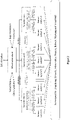
- figure 1 shows a link between a large number of individual sensor packages A to J, each of which includes at least one sensor of the same type, for example the sensor package A includes at least one micromagnetic sensor, for example in the form of a magneto-inductive distance sensor.
- Sensor package B has sensors that record the spatial geometry of objects and items, for example in the form of 3D scanner systems or stationary, optical 3D geometry sensors or stereo image recording systems.
- the sensor package C has at least one acoustic sensor, for example in the form of a microphone or hydrophone or a sound level meter.
- the sensor package D has at least one Thermographic sensor, for example in the form of an IR camera.
- the sensor package E includes at least one pressure sensor, for example in the form of a pressure cell or a capacitive, inductive or magnetic pressure sensor, etc.
- the sensor package F includes at least one ultrasonic sensor, for example in the form of a piezoelectric sensor.
- the sensor package G includes at least one eddy current sensor, the sensor package H includes at least one optical or visual sensor, for example in the form of a camera.
- the sensor package I comprises at least one temperature sensor, for example in the form of a bimetal sensor, thermistor or PTC thermistor, temperature-dependent measuring resistors, etc.
- All the individual sensors associated with the sensor packages A to J described above are each connected to a computer-aided sensor node SK-A, SK-B and SK-C via a wireless or wired bidirectional data transmission channel.
- all the sensors associated with the respective sensor packages A to J are in direct mutual bidirectional data exchange, i.e. without the interposition of any computer-aided sensor nodes SK-A, SK-B, SK-C.
- the latter applies in particular in cases in which the individual sensors have their own intelligent computer structure with a local storage unit.
- All three computer-supported sensor nodes SK-A, SK-B, SK-C shown are connected to a separate data memory in the form of a knowledge database via a bidirectional communication channel.
- figure 2 shows a schematic of a network structure with a large number of different sensors, see sensor pool, which are suitable for recording real state variables from the environment or environment, from existing infrastructures, from processes or process flows, from operating states, from states of wear and tear and the associated maintenance requirements, etc.
- the individual sensors combined within a sensor pool can be grouped according to species or type and combined into so-called sensor systems A to H etc.
- the Individual sensor systems A to H etc. each have at least one sensor that has a processor-controlled local memory and a bidirectional communication channel both with a computer-aided sensor node A, B, C etc. and with selected sensor systems B, C etc. is connected.
- the individual sensor nodes A, B, C, etc. for their part, communicate with one another via bidirectional communication channels and also exchange data with a separate knowledge database in which expert knowledge is stored or stored, which is dynamically enriched.
- the enrichment of expert knowledge takes place on the one hand via the data and information exchange on the part of the sensor nodes A, B etc. as well as via other interfaces via which empirical data, smart data or other information optimizing the sensor process can be transmitted.
- the pressing process is the most important and essential process step in the entire production chain.
- the components heated for the pressing process so-called blanks, are heated above their austenitization temperature and placed in a pressing tool using a handling system.
- Homogeneous heating of the blank is of crucial importance for ensuring consistent quality over the entire formed component after the pressing process step.
- thermographic cameras are used to inspect the heated blank as a whole before the pressing process.
- 3MA test systems measure in fractions of a second how soft or hard magnetic material is.
- 3MA test systems measure in fractions of a second how soft or hard magnetic material is.
- a large number of other magnetic parameters are determined that reflect different material properties, such as internal and load stresses, etc. Further details can be found in the relevant specialist literature.
- thermographic camera(s) and 3MA system By linking the two sensor systems above, i.e. thermographic camera(s) and 3MA system, via a common sensor node and access to a knowledge database enriched with expert knowledge, both sensor systems can be mutually optimized so that the thermographic camera is conspicuous on the one hand Material areas with a temperature that is too high or too low in the heated blank are transmitted directly to the 3MA system, which means that the 3MA sensor system can carry out a targeted expansion of the measuring point distribution.
- the 3MA sensor system is able to transmit feedback information to the thermal system as to whether and to what extent the anomalies reported by the thermal imaging camera have led to a quality-relevant change in the material properties.
- the measurement point distribution for quality testing is expanded and the thermographic focus points of the thermal camera are adjusted or expanded due to detected anomalies. According to the solution, such adjustments are made independently by means of optimization algorithms that can be used within the at least one computer-supported sensor node, so that the operating properties of the sensors involved in the monitoring adapt themselves to the measurement task in a self-optimizing manner as the measurement duration increases.
- critical positions for each tool and component can be independently determined and necessary measuring positions can be automatically adjusted or expanded. All data and information obtained during sensor operation are stored as additional expert knowledge in the separate database stored and are available as a knowledge base for further sensor operation and the construction of further sensor systems.
Landscapes
- Engineering & Computer Science (AREA)
- Computer Networks & Wireless Communication (AREA)
- Signal Processing (AREA)
- Health & Medical Sciences (AREA)
- Computing Systems (AREA)
- General Health & Medical Sciences (AREA)
- Medical Informatics (AREA)
- Physics & Mathematics (AREA)
- General Physics & Mathematics (AREA)
- Testing Or Calibration Of Command Recording Devices (AREA)
- Arrangements For Transmission Of Measured Signals (AREA)
Applications Claiming Priority (1)
| Application Number | Priority Date | Filing Date | Title |
|---|---|---|---|
| DE102021117918.1A DE102021117918A1 (de) | 2021-07-12 | 2021-07-12 | Sensorsystem, Netzwerk mit wenigstens einem Sensorsystem und Verfahren zum Betrieb eines Sensors |
Publications (1)
| Publication Number | Publication Date |
|---|---|
| EP4119904A1 true EP4119904A1 (fr) | 2023-01-18 |
Family
ID=83228893
Family Applications (1)
| Application Number | Title | Priority Date | Filing Date |
|---|---|---|---|
| EP22184093.7A Withdrawn EP4119904A1 (fr) | 2021-07-12 | 2022-07-11 | Système de capteur, réseau pourvu d'au moins un système de capteur et procédé permettant de faire fonctionner un capteur |
Country Status (2)
| Country | Link |
|---|---|
| EP (1) | EP4119904A1 (fr) |
| DE (1) | DE102021117918A1 (fr) |
Citations (11)
| Publication number | Priority date | Publication date | Assignee | Title |
|---|---|---|---|---|
| US6826607B1 (en) * | 1999-10-06 | 2004-11-30 | Sensoria Corporation | Apparatus for internetworked hybrid wireless integrated network sensors (WINS) |
| DE10330251A1 (de) | 2003-07-04 | 2005-01-20 | Robert Bosch Gmbh | Verfahren und Vorrichtung zur Sicherung der Qualität der Messwertaufnahme eines Drucksensors |
| US8615374B1 (en) | 2006-06-09 | 2013-12-24 | Rockwell Automation Technologies, Inc. | Modular, configurable, intelligent sensor system |
| DE102013203841A1 (de) * | 2013-03-06 | 2014-09-11 | Airbus Operations Gmbh | Vorrichtung zur Steuerung einer Vielzahl von Geräten an Bord eines Fahrzeugs |
| DE102014204631A1 (de) | 2014-03-13 | 2015-09-17 | Robert Bosch Gmbh | Vorrichtung, Verfahren und System zur Fehlererkennung, Fehlerdiagnose und Fehlerkorrektur in einem Sensornetzwerk |
| US20160142160A1 (en) | 2014-11-03 | 2016-05-19 | Fujitsu Limited | Method of managing sensor network |
| DE102016202569A1 (de) | 2016-02-19 | 2017-08-24 | Bayerische Motoren Werke Aktiengesellschaft | Verfahren und Vorrichtung zur Adaption eines Sensorsystems eines Fahrzeugs |
| US20190206562A1 (en) * | 2017-12-28 | 2019-07-04 | Ethicon Llc | Method of hub communication, processing, display, and cloud analytics |
| DE102018122411A1 (de) | 2018-09-13 | 2020-03-19 | Endress+Hauser SE+Co. KG | Verfahren zur Verbesserung der Messperformance von Feldgeräten der Automatisierungstechnik |
| US20200356086A1 (en) * | 2019-05-07 | 2020-11-12 | Cisco Technology, Inc. | Adaptively calibrated spatio-temporal compressive sensing for sensor networks |
| WO2021028023A1 (fr) * | 2019-08-13 | 2021-02-18 | Vega Grieshaber Kg | Dispositif capteur pour la transmission d'un réglage de paramètre de capteur |
Family Cites Families (1)
| Publication number | Priority date | Publication date | Assignee | Title |
|---|---|---|---|---|
| DE102013107964A1 (de) | 2013-07-03 | 2015-01-08 | Endress + Hauser Conducta Gesellschaft für Mess- und Regeltechnik mbH + Co. KG | Messanordnung |
-
2021
- 2021-07-12 DE DE102021117918.1A patent/DE102021117918A1/de active Pending
-
2022
- 2022-07-11 EP EP22184093.7A patent/EP4119904A1/fr not_active Withdrawn
Patent Citations (11)
| Publication number | Priority date | Publication date | Assignee | Title |
|---|---|---|---|---|
| US6826607B1 (en) * | 1999-10-06 | 2004-11-30 | Sensoria Corporation | Apparatus for internetworked hybrid wireless integrated network sensors (WINS) |
| DE10330251A1 (de) | 2003-07-04 | 2005-01-20 | Robert Bosch Gmbh | Verfahren und Vorrichtung zur Sicherung der Qualität der Messwertaufnahme eines Drucksensors |
| US8615374B1 (en) | 2006-06-09 | 2013-12-24 | Rockwell Automation Technologies, Inc. | Modular, configurable, intelligent sensor system |
| DE102013203841A1 (de) * | 2013-03-06 | 2014-09-11 | Airbus Operations Gmbh | Vorrichtung zur Steuerung einer Vielzahl von Geräten an Bord eines Fahrzeugs |
| DE102014204631A1 (de) | 2014-03-13 | 2015-09-17 | Robert Bosch Gmbh | Vorrichtung, Verfahren und System zur Fehlererkennung, Fehlerdiagnose und Fehlerkorrektur in einem Sensornetzwerk |
| US20160142160A1 (en) | 2014-11-03 | 2016-05-19 | Fujitsu Limited | Method of managing sensor network |
| DE102016202569A1 (de) | 2016-02-19 | 2017-08-24 | Bayerische Motoren Werke Aktiengesellschaft | Verfahren und Vorrichtung zur Adaption eines Sensorsystems eines Fahrzeugs |
| US20190206562A1 (en) * | 2017-12-28 | 2019-07-04 | Ethicon Llc | Method of hub communication, processing, display, and cloud analytics |
| DE102018122411A1 (de) | 2018-09-13 | 2020-03-19 | Endress+Hauser SE+Co. KG | Verfahren zur Verbesserung der Messperformance von Feldgeräten der Automatisierungstechnik |
| US20200356086A1 (en) * | 2019-05-07 | 2020-11-12 | Cisco Technology, Inc. | Adaptively calibrated spatio-temporal compressive sensing for sensor networks |
| WO2021028023A1 (fr) * | 2019-08-13 | 2021-02-18 | Vega Grieshaber Kg | Dispositif capteur pour la transmission d'un réglage de paramètre de capteur |
Also Published As
| Publication number | Publication date |
|---|---|
| DE102021117918A1 (de) | 2023-01-12 |
Similar Documents
| Publication | Publication Date | Title |
|---|---|---|
| EP3077878B1 (fr) | Procédé implémenté par ordinateur et système de surveillance automatique et de détermination de l'état de l'intégralité des étapes de processus dans une unité de traitement | |
| EP3850451B1 (fr) | Procédé pour améliorer la performance de mesure d'appareils de terrain de la technique d'automatisation | |
| EP3279756B1 (fr) | Dispositif de diagnostic et procédé de surveillance du fonctionnement d'une installation technique | |
| DE102018204137A1 (de) | Maschinenlernvorrichtung und Kompensationsvorrichtung für thermische Verschiebung | |
| DE102013013299A1 (de) | Verfahren zum Bedienen eines Feldgeräts | |
| EP3914979B1 (fr) | Capteur virtuel sur une plateforme pour machines supérieures | |
| DE102018204132A1 (de) | Maschinenlernvorrichtung und Kompensationsvorrichtung für thermische Verschiebung | |
| DE102020210461A1 (de) | Diagnostikeinrichtung und Diagnostikverfahren | |
| DE102008038415A1 (de) | Verfahren zur Überwachung des Ladezustands bzw. der Restkapazität einer Batterie bzw. eines Akkus in der Automatisierungstechnik | |
| DE102013005769A1 (de) | Maschine, Computerprogrammprodukt für ein Gerät zur Anzeige von Daten und Verfahren zur Statusüberwachung einer Maschine | |
| DE102019216393A1 (de) | Feldgerät zur prozessautomatisierung im industriellen umfeld | |
| EP0898151A2 (fr) | Méthode et appareil pour la configuration d'un dispostif de mesure | |
| WO2022128257A1 (fr) | Procédé de fonctionnement d'un système de surveillance | |
| DE102017116996B4 (de) | Inbetriebnahme und Konfiguration von mit Anlagen assoziierter Steuerelektronik | |
| DE102008042969A1 (de) | Verfahren und Vorrichtung zur Detektion von Prozesszuständen in alternierenden Produktionsprozessen | |
| WO2004023226A1 (fr) | Procede de regulation d'un processus thermodynamique a l'aide de reseaux neuronaux | |
| EP3821306B1 (fr) | Procédé de paramétrage d'un système de capteurs | |
| DE102010038573B4 (de) | Messverfahren für eine von Hilfsmessgrößen abhängige Messgröße | |
| WO2010040628A2 (fr) | Procédé pour tester le comportement d'une installation de traitement | |
| DE102008048985A1 (de) | Verfahren zur Prüfung eines Automatisierungssystems und Prüfgerät zum Prüfen eines Automatisierungssystems | |
| EP4119904A1 (fr) | Système de capteur, réseau pourvu d'au moins un système de capteur et procédé permettant de faire fonctionner un capteur | |
| DE102019111715B4 (de) | Verfahren zum Einstellen eines Fertigungsverfahrens für ein Bauteil | |
| EP4148519A1 (fr) | Procédé et dispositifs pour unités de soupapes de processus | |
| EP3553679A1 (fr) | Procédé de diagnostic de panne assisté par ordinateur pour un système technique | |
| EP3633476B1 (fr) | Procédé, dispositif et système de transmission d'informations de machine à un dispositif de service |
Legal Events
| Date | Code | Title | Description |
|---|---|---|---|
| PUAI | Public reference made under article 153(3) epc to a published international application that has entered the european phase |
Free format text: ORIGINAL CODE: 0009012 |
|
| STAA | Information on the status of an ep patent application or granted ep patent |
Free format text: STATUS: THE APPLICATION HAS BEEN PUBLISHED |
|
| AK | Designated contracting states |
Kind code of ref document: A1 Designated state(s): AL AT BE BG CH CY CZ DE DK EE ES FI FR GB GR HR HU IE IS IT LI LT LU LV MC MK MT NL NO PL PT RO RS SE SI SK SM TR |
|
| STAA | Information on the status of an ep patent application or granted ep patent |
Free format text: STATUS: REQUEST FOR EXAMINATION WAS MADE |
|
| 17P | Request for examination filed |
Effective date: 20230704 |
|
| RBV | Designated contracting states (corrected) |
Designated state(s): AL AT BE BG CH CY CZ DE DK EE ES FI FR GB GR HR HU IE IS IT LI LT LU LV MC MK MT NL NO PL PT RO RS SE SI SK SM TR |
|
| STAA | Information on the status of an ep patent application or granted ep patent |
Free format text: STATUS: EXAMINATION IS IN PROGRESS |
|
| 17Q | First examination report despatched |
Effective date: 20231201 |
|
| STAA | Information on the status of an ep patent application or granted ep patent |
Free format text: STATUS: THE APPLICATION IS DEEMED TO BE WITHDRAWN |
|
| 18D | Application deemed to be withdrawn |
Effective date: 20250313 |