EP4123204A1 - Ensemble de collier de fixation d'un article tubulaire sur un support externe - Google Patents
Ensemble de collier de fixation d'un article tubulaire sur un support externe Download PDFInfo
- Publication number
- EP4123204A1 EP4123204A1 EP22185388.0A EP22185388A EP4123204A1 EP 4123204 A1 EP4123204 A1 EP 4123204A1 EP 22185388 A EP22185388 A EP 22185388A EP 4123204 A1 EP4123204 A1 EP 4123204A1
- Authority
- EP
- European Patent Office
- Prior art keywords
- insert
- assembly
- head
- projection
- base
- Prior art date
- Legal status (The legal status is an assumption and is not a legal conclusion. Google has not performed a legal analysis and makes no representation as to the accuracy of the status listed.)
- Withdrawn
Links
Images

Classifications
-
- F—MECHANICAL ENGINEERING; LIGHTING; HEATING; WEAPONS; BLASTING
- F16—ENGINEERING ELEMENTS AND UNITS; GENERAL MEASURES FOR PRODUCING AND MAINTAINING EFFECTIVE FUNCTIONING OF MACHINES OR INSTALLATIONS; THERMAL INSULATION IN GENERAL
- F16L—PIPES; JOINTS OR FITTINGS FOR PIPES; SUPPORTS FOR PIPES, CABLES OR PROTECTIVE TUBING; MEANS FOR THERMAL INSULATION IN GENERAL
- F16L3/00—Supports for pipes, cables or protective tubing, e.g. hangers, holders, clamps, cleats, clips, brackets
- F16L3/08—Supports for pipes, cables or protective tubing, e.g. hangers, holders, clamps, cleats, clips, brackets substantially surrounding the pipe, cable or protective tubing
- F16L3/12—Supports for pipes, cables or protective tubing, e.g. hangers, holders, clamps, cleats, clips, brackets substantially surrounding the pipe, cable or protective tubing comprising a member substantially surrounding the pipe, cable or protective tubing
- F16L3/1222—Supports for pipes, cables or protective tubing, e.g. hangers, holders, clamps, cleats, clips, brackets substantially surrounding the pipe, cable or protective tubing comprising a member substantially surrounding the pipe, cable or protective tubing the member having the form of a closed ring, e.g. used for the function of two adjacent pipe sections
-
- F—MECHANICAL ENGINEERING; LIGHTING; HEATING; WEAPONS; BLASTING
- F16—ENGINEERING ELEMENTS AND UNITS; GENERAL MEASURES FOR PRODUCING AND MAINTAINING EFFECTIVE FUNCTIONING OF MACHINES OR INSTALLATIONS; THERMAL INSULATION IN GENERAL
- F16L—PIPES; JOINTS OR FITTINGS FOR PIPES; SUPPORTS FOR PIPES, CABLES OR PROTECTIVE TUBING; MEANS FOR THERMAL INSULATION IN GENERAL
- F16L3/00—Supports for pipes, cables or protective tubing, e.g. hangers, holders, clamps, cleats, clips, brackets
- F16L3/08—Supports for pipes, cables or protective tubing, e.g. hangers, holders, clamps, cleats, clips, brackets substantially surrounding the pipe, cable or protective tubing
- F16L3/12—Supports for pipes, cables or protective tubing, e.g. hangers, holders, clamps, cleats, clips, brackets substantially surrounding the pipe, cable or protective tubing comprising a member substantially surrounding the pipe, cable or protective tubing
- F16L3/123—Supports for pipes, cables or protective tubing, e.g. hangers, holders, clamps, cleats, clips, brackets substantially surrounding the pipe, cable or protective tubing comprising a member substantially surrounding the pipe, cable or protective tubing and extending along the attachment surface
- F16L3/1233—Supports for pipes, cables or protective tubing, e.g. hangers, holders, clamps, cleats, clips, brackets substantially surrounding the pipe, cable or protective tubing comprising a member substantially surrounding the pipe, cable or protective tubing and extending along the attachment surface the member being of metal, with or without an other layer of other material
-
- B—PERFORMING OPERATIONS; TRANSPORTING
- B21—MECHANICAL METAL-WORKING WITHOUT ESSENTIALLY REMOVING MATERIAL; PUNCHING METAL
- B21D—WORKING OR PROCESSING OF SHEET METAL OR METAL TUBES, RODS OR PROFILES WITHOUT ESSENTIALLY REMOVING MATERIAL; PUNCHING METAL
- B21D39/00—Application of procedures in order to connect objects or parts, e.g. coating with sheet metal otherwise than by plating; Tube expanders
- B21D39/04—Application of procedures in order to connect objects or parts, e.g. coating with sheet metal otherwise than by plating; Tube expanders of tubes with tubes; of tubes with rods
- B21D39/046—Connecting tubes to tube-like fittings
-
- B—PERFORMING OPERATIONS; TRANSPORTING
- B21—MECHANICAL METAL-WORKING WITHOUT ESSENTIALLY REMOVING MATERIAL; PUNCHING METAL
- B21D—WORKING OR PROCESSING OF SHEET METAL OR METAL TUBES, RODS OR PROFILES WITHOUT ESSENTIALLY REMOVING MATERIAL; PUNCHING METAL
- B21D39/00—Application of procedures in order to connect objects or parts, e.g. coating with sheet metal otherwise than by plating; Tube expanders
- B21D39/04—Application of procedures in order to connect objects or parts, e.g. coating with sheet metal otherwise than by plating; Tube expanders of tubes with tubes; of tubes with rods
- B21D39/048—Application of procedures in order to connect objects or parts, e.g. coating with sheet metal otherwise than by plating; Tube expanders of tubes with tubes; of tubes with rods using presses for radially crimping tubular elements
-
- F—MECHANICAL ENGINEERING; LIGHTING; HEATING; WEAPONS; BLASTING
- F16—ENGINEERING ELEMENTS AND UNITS; GENERAL MEASURES FOR PRODUCING AND MAINTAINING EFFECTIVE FUNCTIONING OF MACHINES OR INSTALLATIONS; THERMAL INSULATION IN GENERAL
- F16L—PIPES; JOINTS OR FITTINGS FOR PIPES; SUPPORTS FOR PIPES, CABLES OR PROTECTIVE TUBING; MEANS FOR THERMAL INSULATION IN GENERAL
- F16L55/00—Devices or appurtenances for use in, or in connection with, pipes or pipe systems
- F16L55/02—Energy absorbers; Noise absorbers
- F16L55/033—Noise absorbers
- F16L55/035—Noise absorbers in the form of specially adapted hangers or supports
Definitions
- the present invention relates to an assembly of clamping collar and fixing on a support of at least one tubular article, for example a pipe through which a fluid circulates, such as a pipe of a fuel system, of a braking system, cooling system or the like in a motor vehicle or the like.
- a fixing collar assembly comprises, on the one hand, a tubular element, comprising at least a part of pipe surrounded by an elastomeric sleeve, and on the other hand, an enveloping body made of a metal strip which surrounds and tightens the tubular element around the sleeve.
- the tightening of the tubular element in the support is usually ensured by forming the enclosing metal body with a generally curved U shape so as to create an essentially cylindrical recess located between two emerging branches, and then by inserting the tubular element into the recess, and finally pressing and securing the legs together, with additional fastening means such as a screw, rivet, bent tab, welding wire or the like, so as to tighten firmly the tubular sub-assembly inside the recess.
- the collar assembly includes a generally C-shaped annular member forming a body clamp and a fixing element which is connected to the clamp body by welding.
- the bracket With the use of a C-shaped engagement ring, the bracket can be adjusted radially and linearly on the tube to ensure correct alignment.
- the function of the clamp is to maintain tension in the clamp body once the clamp body is positioned around the tube. This assembly has many drawbacks.
- this assembly requires a welding operation to attach the clamping body and the mounting element together.
- the clamping body offers little flexibility to adapt to different tube diameters.
- the collar assembly comes in two pieces that must be welded together so specific precautions and tools are required. This results in increased installation time.
- the sleeve is received within the cavity of the collar and includes an oblong projection extending radially outward from the sleeve. This projection is received by an orifice formed in the metal collar to allow positioning of the sleeve relative to the metal collar.
- the user bends the metal collar around the sleeve until it reaches a closed position to secure the collar assembly around the tube. The closed position of the metal collar is maintained by plastic deformation of the metal collar and without any additional fixing.
- the object of the invention is to provide a clamp assembly which does not have the drawbacks mentioned above of the documents of the prior art.
- the invention provides a sturdy clamp assembly that holds the tubular article firmly without any welding, brazing or other fasteners.
- the subject of the invention is a set of clamps for fixing at least one tubular article to an external support, of the type comprising a deformable insert to define a substantially cylindrical cavity configured to receive the tubular article and a body metal casing delimiting a seat substantially inside which the insert is wrapped around the article, the insert comprising an external projection which extends radially outwards from the insert and is configured to cooperate with a corresponding hole formed in the seat of the metallic body so as to position the insert inside the body, the projection comprises a base attached to the insert and a head connected to the base by a radially extending connecting portion and provided on the periphery of the head with a protruding clipping rim configured to retain the insert inside the metallic casing body, characterized in that the insert comprises, at the base of the projection, a t rou through extending plumb with the clipping rim.
- the through hole is conveniently formed in the insert to allow injection molding of the protruding rim without requiring the use of injection molds requiring complex fittings.
- One of the problems of the prior art overcome by the invention is in particular to allow the molding of the insert without having to use additional movable slideways to form the area located under the clipping rim(s).
- clamp or clamp assembly overcomes the problems described above by providing a deformable insert which is easy to produce and which is easy to pre-assemble with the body of the envelope.
- the connecting portion radially connects the head along an external profile devoid of any edge or shoulder.
- the assembly comprising two protruding clipping edges facing each other and two corresponding through holes formed in said base.
- the two side through-holes are joined into a single through-hole extending below the head.
- the connecting portion comprises two portions of flexible skirts arranged around the through hole and facing each other.
- the connecting portion is in the form of a membrane joining the head and the base of the insert.
- the flexible membrane-like portion can stretch and flex during insertion to allow the flex edges to grip through the orifice or slot in the envelope body.
- the head is formed by a hollow body.
- the head extends substantially in the radial extension of the through hole and the connecting part connects the head to the base on the periphery of the through hole.
- the head is supported at a radial distance from said base by the connecting part and extends substantially over the entire surface of the through hole.
- the head of the projection has the shape of a solid with four lateral sides, two opposite sides extending laterally by two protruding clipping edges and the two other opposite sides extending laterally by two sections skirt hoses forming the connecting portion.
- the insert is elastically deformable between an undeformed open position and a deformed closed position, the insert having in the open position a general semi-tubular shape of U-section having a bottom and side walls, the projection being carried by the bottom of the insert.
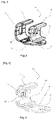
- the figure 1 is an illustration of a hose clamp assembly of the invention.
- the clamp assembly is designated by the general reference 10.
- the clamp assembly 10 is used to support a tubular article such as the tube 100 which can be a rigid tube, a flexible pipe or electrical wiring among other components.
- the tube 100 can be replaced by any other type of element to be supported.
- the hose clamp assembly 10 is intended to hold a cooling line, a fuel line or a brake line of an automobile.
- the clamp assembly 10 comprises a clamping zone 12 or housing of substantially cylindrical annular general shape configured to be engaged around the article 100.
- the clamp assembly 10 also includes a fixing tab 14 arranged to fix the tubular article 100 to an external support (not shown), for example equipment of a motor vehicle by various techniques. These support attachment techniques may include, but are not limited to, gluing, brazing, or welding. In the preferred embodiment of the invention, the clamp assembly 10 is attached to the external support, for example, by means of a threaded fastener.
- the fixing lug 14 comprises in this example one or more fixing holes 16.
- this fixing hole 16 makes it possible to fix the assembly assembly 10 to an external support structure, for example a chassis or an engine block, by means of a fixing element such as a screw (not shown).
- the clamp assembly 10 includes a deformable insert 20 to define the substantially cylindrical clamping zone or cavity 12 intended to receive the tubular element 100. 10 further comprises a peripheral metal body 22 or wrapping body 22 bent to form a generally U-shaped recess within which the insert 20 is wrapped.
- the insert 20 is sized to attach to the wrap support 22 and to conform to the outer diameter of the tube 100.
- the insert 20 is for example made of a molded elastomeric material.
- the type of elastomer material and the hardness can be chosen according to the requirements of a specific application.
- the insert 20 is molded in an open position illustrated for example on the figures 4 to 6 and is elastically deformable between this open position (undeformed state) and a closed position (deformed state).
- the insert 20 In the open position, the insert 20 has a generally semi-tubular shape with a U-shaped cross section comprising a bottom 26 and side walls 24.
- the insert 20 is open along its length.
- the insert 20 is designed so that when closed, as seen in the picture 1 or 2 , the insert 20 preferably takes on a generally cylindrical shape having a round cross-section with a circular inside diameter which forms the cylindrical cavity of the clamp assembly 10.
- insert 20 includes a radial projection 28 extending radially outward from insert 20.
- Radial projection 28 extends from a middle portion of bottom 26 of insert 20.
- the enveloping body 22 provides a generally U-shaped curved or enveloping portion in which an orifice 23 is provided.
- Orifice 23 is sized to receive radial projection 28 and is configured to cooperate with projection 28 to position insert 20 relative to enveloping body 22.
- the projection 28 comprises a base 30 fixed to the insert 20 and a head 32 connected to said base 30 by a connection portion 34 extending radially.
- the projection 28 is provided, at the periphery of the head 32, with a projecting clipping edge 36 to hold the insert 20 in place with respect to the metal casing body 22.
- the radial projection 28 facilitates the maintenance of the insert 20 inside the casing body 22 in the open position.
- the radial projection 28 is dimensioned such that the dimension in at least one direction of the head 32 is greater than the width of the slot or orifice 23 in the body of the clamping sleeve 22. Therefore, in use , the head 32 deforms temporarily to pass through the slot 23, then the head 32 resumes its initial shape to retain the insert 20 on the casing body 24.
- the projection 28 retains the insert 20 inside the wrap body 22, which allows the clamp assembly 10 to come pre-assembled in an open position ( FIGS.4-5 ).
- the clamp assembly 10 is configured to be closed around the tubular article 100 by a forming tool 200 so as to be folded around the article 100.
- the insert 20 comprises, at the level of the base 30 of the radial projection 28, a through hole 38 aligned radially under the projecting clipping edge 36.
- the head 32 of the projection 28 preferably comprises two protruding clipping edges 36 facing each other along the direction of the length of the projection 28.
- the insert 20 comprises , at the base 30 of the projection 28, two lateral through-holes 38 aligned radially under each of the two protruding clipping edges 36.
- the insert 20 can comprise one or more through-holes 38 as well as one or more protruding edges clipping 36 without departing from the scope of the invention.
- the side through-holes 38 are joined together and form a single through-hole extending below the surface of the head 32.
- the single through-hole has in this example an oblong shape with a longitudinal direction extending along the clipping edges highlights 36.
- connection portion 34 radially connects the head 32 along an outer profile devoid of any edge or shoulder.
- the connection part 34 comprises for example two sections of flexible skirt 40 arranged around the single through-hole 38 and in opposite face-to-face relationship along a width direction of the head 32.
- the contour of the head 32 is inscribed inside the through hole 38.
- the contour of the through hole 38 substantially follows the contour of the head 32.
- the head 32 is formed for example by a hollow body and extends above the through hole 38 of the insert 20.
- the head 32 extends above the through hole 38 and the connection part 34 laterally connects the head 32 to the base 30 at the periphery of the through hole 38.
- Head 32 of protrusion 28 preferably has a solid shape with four lateral sides.
- the head 32 comprises two opposite sides extending laterally by the two protruding clipping edges 36 and the two other opposite sides extending laterally by the two flexible skirt sections 40 forming the connection portion 34.
- the shape solid a in the present example as illustrated in FIGS.1-6 a general cube shape.
- at least one clipping rim 36 has a profile in the general shape of an inclined ramp facilitating the progressive introduction of the head 32 through the slot 23.
- the flexible connection portion 34 is in the form of a membrane which can stretch and flex during insertion to allow the bending edges 36 to hook through the orifice 23 made in the body of the device. envelope 22.
- the head 32 of the projection 28 may have the overall shape of a truncated quadrilateral pyramid or may have any other structure or shape allowing the clipping function to be performed.
- the insert 20 as a whole is produced by injection molding of an elastomeric plastic material in a free molding cavity of a molding die (not shown).
- a molding die comprising a mould, for example in two parts in order to delimit at least one free molding cavity inside which can be injected plastic material in the molten state.
- This free molding cavity is configured to conform the insert with the projection 28.
- the mold is then closed and a plastic material in the molten state is injected into the mold. This plastic material fills the free cavity of the mould.
- the mold is opened to extract the molded insert 20. Thanks to the presence of at least one through hole 38 extending under the projecting rim 36 of the head 32 of the projection 28 , the molding process is very simplified because the removal of the mold is facilitated by the presence of the through hole 38.
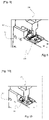
- FIGS. 8 to 10 illustrate part of the method of assembling the clamp assembly according to the invention.
- the figure 8 illustrates a first step of placing the metal clamp holder 22 into a forming tool 200 which includes a holder 204 where the holder assembly 10 is positioned.
- Bracket 204 includes a shaft or mechanical device that cooperates with additional hole 16 of bracket assembly 10.
- the forming tool 200 includes a U-shaped deformation clamp 202 which includes a deformation surface for applying a clamping force to the body of the support shell 22 leading to its plastic deformation and the deformation of the elastomeric insert 20 of the support assembly 10.
- the tubular element 100 is placed in the fixing space of the elastomeric insert 20 of the support assembly 10.
- the figure 10 then illustrates a final step consisting in actuating the forming tool 200 to plastically deform the second end of the metal support 22 around the casing element 100 and to grip the casing element 100, the elastomeric insert 20 being simultaneously bent in order to surround the casing element 100.
- the invention is not limited to the embodiments described above. Other embodiments within the reach of those skilled in the art can also be envisaged without departing from the scope of the invention defined by the claims below.
- the general shape of the head can be cylindrical, oblong, oval in cross-section.
- the number of projecting rims can be one or more without departing from the scope of the invention. 1
Landscapes
- Engineering & Computer Science (AREA)
- General Engineering & Computer Science (AREA)
- Mechanical Engineering (AREA)
- Clamps And Clips (AREA)
- Supports For Pipes And Cables (AREA)
- Connection Of Plates (AREA)
- Insertion Pins And Rivets (AREA)
Abstract
Description
- La présente invention concerne un ensemble de collier de serrage et de fixation sur un support d'au moins un article tubulaire, par exemple un tuyau à travers lequel circule un fluide, tel qu'un tuyau d'un système de carburant, d'un système de freinage, d'un système de refroidissement ou autre dans un véhicule automobile ou similaire.
- De tels colliers de fixation ou de serrage sont largement utilisés pour fixer des éléments tubulaires, tels que des tuyaux, à diverses structures. Un exemple d'utilisation bien connu consiste à fixer un tuyau à un moteur ou à un châssis dans un véhicule. Habituellement, un ensemble de collier de fixation comprend, d'une part, un élément tubulaire, comportant au moins une partie de tuyau entourée d'un manchon élastomère, et d'autre part, un corps enveloppant réalisé en une bande métallique qui entoure et serre l'élément tubulaire autour du manchon.
- Le serrage de l'élément tubulaire dans le support est habituellement assuré en formant le corps métallique enveloppant avec une forme générale en U incurvée de manière à créer un évidement essentiellement cylindrique situé entre deux branches émergentes, et puis en insérant l'élément tubulaire dans l'évidement, et enfin en pressant et en sécurisant les branches l'une contre l'autre, avec des moyens de fixation supplémentaires tels qu'une vis, un rivet, une languette pliée, un fil de soudure ou analogue, de manière à serrer fermement le sous-ensemble tubulaire à l'intérieur de l'évidement.
- Il est connu, en particulier grâce à la publication de la demande de brevet
US 5 806 813 , un ensemble de collier de serrage pour le montage de tubes, en particulier de tubes circulaires sur un élément de support. L'ensemble de collier comprend un élément annulaire généralement en forme de C formant un corps de serrage et un élément de fixation qui est relié au corps de serrage par soudage. Avec l'utilisation d'une bague d'engagement en forme de C, le support peut être ajusté radialement et linéairement sur le tube pour assurer un alignement correct. - La fonction de l'élément de fixation est de maintenir la tension dans le corps de serrage une fois que le corps de serrage est positionné autour du tube. Cet assemblage présente de nombreux inconvénients.
- D'une part, cet assemblage nécessite une opération de soudage pour attacher le corps de serrage et l'élément de montage ensemble. De plus, le corps de serrage offre peu de flexibilité pour s'adapter aux différents diamètres de tubes. Enfin, l'ensemble de collier se présente en deux pièces qui doivent être soudées ensemble de sorte que des précautions et outils spécifiques sont nécessaires. Il en résulte un temps d'installation augmenté.
- Une autre méthode classique pour monter un ensemble de collier de fixation ou serrage autour d'un article tubulaire, est décrite dans la publication du brevet
US 9, 482, 369 B2 - Le manchon est reçu à l'intérieur de la cavité du collier et comprend une projection oblongue s'étendant radialement vers l'extérieur du manchon. Cette projection est reçue par un orifice ménagé dans le collier métallique pour permettre un positionnement du manchon relativement au collier métallique. L'utilisateur courbe le collier métallique autour du manchon jusqu'à atteindre une position fermée pour sécuriser l'ensemble de collier autour du tube. La position fermée du collier métallique est maintenu par déformation plastique du collier métallique et sans aucune fixation additionnelle.
- L'invention a pour but de fournir un ensemble de collier de serrage qui ne présente pas les inconvénients mentionnés ci-dessus des documents de l'art antérieur. L'invention propose un ensemble de collier de fixation robuste qui tient fermement l'article tubulaire sans aucune opération de soudage, brasage ou autres éléments de fixation.
- A cet effet, l'invention a pour objet un ensemble de collier de fixation d'au moins un article tubulaire à un support externe, du type comprenant un insert déformable pour définir une cavité sensiblement cylindrique configurée pour recevoir l'article tubulaire et un corps métallique d'enveloppe délimitant un siège sensiblement à l'intérieur duquel l'insert est enveloppé autour de l'article, l'insert comprenant une projection externe qui s'étend radialement vers l'extérieur de l'insert et est configurée pour coopérer avec un orifice correspondant formé dans le siège du corps métallique de façon à positionner l'insert à l'intérieur du corps, la projection comprend une base attachée à l'insert et une tête connectée à la base par une portion de liaison d'extension radiale et pourvue en périphérie de la tête d'un rebord saillant de clipsage configuré pour retenir l'insert à l'intérieur du corps métallique d'enveloppe, caractérisé en ce que l'insert comprend, à la base de la projection, un trou traversant s'étendant à l'aplomb du rebord de clipsage.
- Le trou traversant est commodément formé dans l'insert pour permettre le moulage par injection du rebord saillant sans nécessiter le recours à des moules à injection nécessitant des accessoires complexes. Un des problèmes de l'art antérieur surmonté par l'invention est en particulier de permettre le moulage de l'insert sans avoir à utiliser des glissières mobiles supplémentaires pour former la zone localisée sous le ou les rebords de clipsage.
- Par ailleurs, l'ensemble de collier de fixation ou de serrage selon la présente invention surmonte les problèmes décrits ci-dessus en fournissant un insert déformable qui est facile à produire et qui est facile à pré-assembler avec le corps de l'enveloppe.
- Dans un autre mode de réalisation de l'invention, la portion de liaison connecte radialement la tête selon un profil externe dépourvu de tout bord ou épaulement.
- Dans un autre mode de réalisation de l'invention, l'ensemble comprenant deux bords saillants de clipsage en vis-à-vis l'un de l'autre et deux trous traversants correspondants formés dans ladite base.
- Dans un autre mode de réalisation de l'invention, les deux trous traversants latéraux sont réunis en un seul trou traversant s'étendant sous la tête.
- Dans un autre mode de réalisation de l'invention, la portion de liaison comprend deux portions de jupes flexibles disposées autour du trou traversant et en vis-à-vis l'une de l'autre.
- Dans un autre mode de réalisation de l'invention, la portion de liaison se présente sous la forme d'une membrane de jonction de la tête et de la base de l'insert. La portion flexible en forme de membrane peut s'étirer et fléchir pendant l'insertion pour permettre aux bords de flexion de venir s'accrocher au travers de l'orifice ou fente ménagée dans le corps d'enveloppe.
- Dans un autre mode de réalisation de l'invention, la tête est formée par un corps creux.
- Dans un autre mode de réalisation de l'invention, la tête s'étend sensiblement dans le prolongement radial du trou traversant et la partie de liaison relie la tête à la base en périphérie du trou traversant.
- Dans un autre mode de réalisation de l'invention, la tête est supportée à distance radiale de ladite base par la partie de liaison et s'étend sensiblement sur toute la surface du trou traversant.
- Dans un autre mode de réalisation de l'invention, la tête de la projection présente une forme de solide avec quatre côtés latéraux, deux côtés opposés se prolongeant latéralement par deux bords saillants de clipsage et les deux autres côtés opposés se prolongeant latéralement par deux tronçons flexibles de jupe formant la portion de liaison.
- Dans un autre mode de réalisation de l'invention, l'insert est élastiquement déformable entre une position ouverte non déformée et une position fermée déformée, l'insert présentant en position ouverte une forme générale semi-tubulaire de section en U ayant un fond et des parois latérales, la projection étant portée par le fond de l'insert.
- D'autres caractéristiques et avantages de l'invention apparaîtront à la lumière de la description qui suit, faite en référence aux dessins annexes dans lesquels :
-
Fig.1
[fig.1 ] représente une vue en perspective d'un ensemble de fixation d'un article tubulaire sur un support selon un premier point de vue ; -
Fig.2
[fig.2 ] représente une vue en perspective de l'ensemble de fixation selon un deuxième point de vue ; -
Fig.3
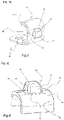
[fig.3 ] représente une vue en perspective de l'ensemble de fixation dans une configuration non assemblée; -
Fig.4
[fig.4 ] représente une vue en perspective de l'ensemble de fixation dans une configuration pré-assemblée selon un premier point de vue ; -
Fig.5
[fig.5 ] représente une vue en perspective de l'ensemble de fixation de lafigure 4 selon un deuxième point de vue ; -
Fig.6
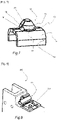
[fig.6 ] représente une vue en perspective de l'insert de l'ensemble de fixation représentée sur lafigure 1 ; -
Fig.7
[fig.7 ] représente une vue en perspective d'une variante de l'insert de lafigure 6 ; -
Fig.8
[fig.8 ] représente une première étape de montage du dispositif de lafigure 1 ; -
Fig.9
[fig.9 ] représente une deuxième étape de montage du dispositif de lafigure 1 ; -
Fig.10
[fig.10 ] représente une troisième étape de montage du dispositif de lafigure 1 . - La
figure 1 est une illustration d'un ensemble de collier de serrage de l'invention. L'ensemble de collier de serrage est désigné par la référence générale 10. Dans le mode de réalisation illustré sur lafigure 1 , l'ensemble de collier de serrage 10 est utilisé pour supporter un article tubulaire tel que le tube 100 qui peut être un tube rigide, un tuyau flexible ou un câblage électrique parmi d'autres composants. - Dans d'autres modes de réalisation, le tube 100 peut être remplacé par tout autre type d'élément à supporter. Dans cet exemple, l'ensemble de collier de serrage 10 est destiné à maintenir une conduite de refroidissement, une conduite de carburant ou une conduite de frein d'une automobile.
- Selon l'invention, l'ensemble de collier de serrage 10 comprend une zone de serrage 12 ou logement de forme générale annulaire sensiblement cylindrique configurée pour être engagée autour de l'article 100.
- L'ensemble de collier de serrage 10 comprend également une patte de fixation 14 agencée pour fixer l'article tubulaire 100 à un support externe (non illustré), par exemple un équipement d'un véhicule automobile par différentes techniques. Ces techniques de fixation au support peuvent comprendre, sans s'y limiter, le collage, le brasage ou le soudage. Dans le mode de réalisation préféré de l'invention, l'ensemble de collier de serrage 10 est fixé au support externe par exemple au moyen d'une fixation filetée.
- De manière préférentielle, la patte de fixation 14 comprend dans cet exemple un ou plusieurs trous de fixation 16. Par exemple, ce trou de fixation 16 permet de fixer l'ensemble de l'assemblage 10 à une structure de support externe, par exemple un châssis ou un bloc moteur, au moyen d'un élément de fixation tel qu'une vis (non illustrée).
- En référence aux
figures 1 et 2 , l'ensemble de collier de serrage 10 comprend un insert 20 déformable pour définir la zone ou cavité de serrage 12 sensiblement cylindrique destinée à recevoir l'élément tubulaire 100. L'ensemble 10 comprend en outre un corps métallique périphérique 22 ou corps d'enveloppement 22 plié pour former un évidement en forme générale de « U » à l'intérieur duquel l'insert 20 est enveloppé. - L'insert 20 est dimensionné pour se fixer au support d'enveloppement 22 et pour se conformer au diamètre extérieur du tube 100. L'insert 20 est par exemple réalisé dans un matériau élastomère moulé. Le type de matériau élastomère et la dureté peuvent être choisis en fonction des exigences d'une application spécifique.
- L'insert 20 est moulé dans une position ouverte illustrée par exemple sur les
figures 4 à 6 et est déformable de manière élastique entre cette position ouverte (état non déformé) et une position fermée (état déformé). - En position ouverte, l'insert 20 présente une forme générale semi-tubulaire de section transversale en forme de U comportant un fond 26 et des parois latérales 24. L'insert 20 est ouvert sur sa longueur. L'insert 20 est conçu de telle sorte que lorsqu'il est fermé, comme on le voit sur la
figure 1 ou 2 , l'insert 20 prend de préférence une forme générale cylindrique ayant une section transversale ronde avec un diamètre intérieur circulaire qui forme la cavité cylindrique de l'ensemble de collier de serrage 10. - En référence à la
figure 6 , l'insert 20 comprend une projection radiale 28 s'étendant radialement vers l'extérieur de l'insert 20. La projection radiale 28 s'étend à partir d'une partie médiane du fond 26 de l'insert 20. - Comme on peut le voir sur la
figure 4 ou5 , le corps d'enveloppement 22 fournit une partie incurvée ou enveloppante en forme générale de U dans laquelle un orifice 23 est ménagé. L'orifice 23 est dimensionné pour recevoir la projection radiale 28 et est configurée pour coopérer avec la projection 28 afin de positionner l'insert 20 par rapport au corps enveloppant 22. - La projection 28 comprend une base 30 fixée à l'insert 20 et une tête 32 reliée à ladite base 30 par une partie 34 de connexion s'étendant radialement. La projection 28 est pourvue, à la périphérie de la tête 32, d'un bord de clipsage en saillie 36 pour maintenir en place l'insert 20 par rapport au corps d'enveloppe métallique 22.
- La projection radiale 28 facilite le maintien de l'insert 20 à l'intérieur du corps d'enveloppe 22 en position ouverte. La projection radiale 28 est dimensionnée de telle sorte que la dimension dans au moins une direction de la tête 32 est supérieure à la largeur de la fente ou orifice 23 du corps de l'enveloppe de serrage 22. Par conséquent, en cours d'utilisation, la tête 32 se déforme temporairement pour passer à travers la fente 23, puis la tête 32 reprend sa forme initiale pour retenir l'insert 20 sur le corps d'enveloppe 24. La projection 28 retient l'insert 20 à l'intérieur du corps d'enveloppement 22, ce qui permet à l'ensemble de collier de serrage 10 d'être livré pré-assemblé dans une position ouverte (
FIGS.4-5 ). - L'ensemble de collier de serrage 10 est configuré pour être fermé autour de l'article tubulaire 100 par un outil de formage 200 de manière à être plié autour de l'article 100.
- De manière préférentielle, l'insert 20 comprend, au niveau de la base 30 de la projection radiale 28, un trou traversant 38 aligné radialement sous le bord de clipsage en saillie 36.
- Dans l'exemple illustré sur les figures, la tête 32 de la projection 28 comprend de préférence deux bords saillants de clipsage 36 en vis-à-vis selon le sens de la longueur de la projection 28. De préférence, l'insert 20 comprend, à la base 30 de la projection 28, deux trous traversants latéraux 38 alignés radialement sous chacun des deux bords de clipsage saillants 36. Bien entendu, l'insert 20 peut comprendre un ou plusieurs trous traversants 38 ainsi qu'un ou plusieurs bords saillants de clipsage 36 sans sortir du cadre de l'invention.
- De préférence, les trous traversants latéraux 38 sont réunis et forment un seul trou traversant s'étendant sous la surface de la tête 32. Le trou traversant unique a dans cet exemple une forme oblongue avec une direction longitudinale s'étendant selon les bords de clipsage saillants 36.
- La portion de connexion 34 relie radialement la tête 32 selon un profil extérieur dépourvu de tout bord ou épaulement. La partie de connexion 34 comprend par exemple deux sections de jupe flexible 40 disposées autour de l'unique trou traversant 38 et en relation de face à face opposée selon une direction de largeur de la tête 32.
- Le contour de la tête 32 est inscrit à l'intérieur du trou traversant 38. De préférence, le contour du trou traversant 38 suit sensiblement le contour de la tête 32. La tête 32 est formée par exemple par un corps creux et s'étend au-dessus du trou traversant 38 de l'insert 20. La tête 32 s'étend au-dessus du trou traversant 38 et la partie de connexion 34 relie latéralement la tête 32 à la base 30 en périphérie du trou traversant 38.
- La tête 32 de la saillie 28 a de préférence une forme de solide avec quatre côtés latéraux. Dans l'exemple décrit, la tête 32 comprend deux côtés opposés se prolongeant latéralement par les deux rebords de clipsage saillants 36 et les deux autres côtés opposés se prolongeant latéralement par les deux sections de jupe flexibles 40 formant la portion de connexion 34. La forme solide a dans le présent exemple comme cela est illustré aux
FIGS.1-6 une forme générale de cube. De préférence, au moins un rebord de clipsage 36 a un profil en forme générale de rampe inclinée facilitant l'introduction progressive de la tête 32 au travers de la fente 23. - De préférence, la portion de connexion flexible 34 a une forme de membrane qui peut s'étirer et fléchir pendant l'insertion pour permettre aux rebords de flexion 36 de venir s'accrocher au travers de l'orifice 23 ménagé dans le corps d'enveloppe 22.
- Dans la variante illustrée à la
figure 7 , la tête 32 de la saillie 28 peut avoir une forme globalement de pyramide quadrilatérale tronquée ou peut avoir toute autre structure ou forme permettant de réaliser la fonction de clipsage. - De préférence, l'insert 20 dans son ensemble est réalisé par moulage par injection d'une matière plastique élastomère dans une cavité libre de moulage d'une matrice de moulage (non représentée).
- Pour la fabrication d'un tel insert 20, on procède comme suit. On prévoit une matrice de moulage comprenant un moule, par exemple en deux parties afin de délimiter au moins une cavité libre de moulage à l'intérieur de laquelle peut être injectée une matière plastique à l'état fondu. Cette cavité libre de moulage est configurée pour conformer l'insert avec la projection 28.
- On ferme ensuite le moule et on injecte dans le moule une matière plastique à l'état fondu. Cette matière plastique remplit la cavité libre du moule. Une fois l'étape d'injection terminée, on ouvre le moule pour extraire l'insert moulé 20. Grâce à la présence d'au moins un trou traversant 38 s'étendant sous le rebord saillant 36 de la tête 32 de la projection 28, le procédé de moulage est très simplifié car le retrait du moule est facilité par la présence du trou traversant 38.
- Les
FIGS. 8 à 10 illustrent une partie du procédé d'assemblage de l'ensemble de collier de serrage selon l'invention. - La
figure 8 illustre une première étape consistant à placer le support de serrage métallique 22 dans un outil de formage 200 qui comprend un support 204 où l'ensemble de support 10 est positionné. Le support 204 comprend un axe ou un dispositif mécanique qui coopère avec le trou supplémentaire 16 de l'ensemble de support 10. - De plus, comme illustré sur la
figure 9 , l'outil de formage 200 comprend une pince de déformation 202 en forme de U qui comprend une surface de déformation destinée à appliquer une force de serrage sur le corps de l'enveloppe du support 22 conduisant à sa déformation plastique et à la déformation de l'insert élastomère 20 de l'ensemble de support 10. Ensuite, l'élément tubulaire 100 est placé dans l'espace de fixation de l'insert élastomère 20 de l'ensemble de support 10. - La
figure 10 illustre ensuite une dernière étape consistant à actionner l'outil de formage 200 pour déformer plastiquement la deuxième extrémité du support métallique 22 autour de l'élément de tubage 100 et pour saisir l'élément de tubage 100, l'insert élastomérique 20 étant simultanément plié afin d'entourer l'élément de tubage 100. - Bien entendu, l'invention ne se limite pas aux modes de réalisation précédemment décrits. D'autres modes de réalisation à la portée de l'homme du métier peuvent aussi être envisagés sans sortir du cadre de l'invention définie par les revendications ci-après. En particulier, la forme générale de la tête peut être cylindrique, oblongue, de section transversale ovale. Le nombre de rebords saillants peut être de un ou de plusieurs sans sortir du cadre de l'invention. 1
Claims (11)
- Ensemble de collier de fixation (10) d'au moins un article tubulaire (100) à un support externe, du type comprenant un insert (20) déformable pour définir une cavité sensiblement cylindrique (12) configurée pour recevoir l'article tubulaire (100) et un corps métallique d'enveloppe (22) délimitant un siège sensiblement à l'intérieur duquel l'insert (20) est enveloppé autour de l'article (100), l'insert (20) comprenant une projection externe (28) qui s'étend radialement vers l'extérieur de l'insert (20) et est configurée pour coopérer avec un orifice (23) correspondant formé dans le siège du corps métallique de façon à positionner l'insert (20) à l'intérieur du corps (22), la projection (28) comprend une base (30) attachée à l'insert (20) et une tête (32) connectée à la base (30) par une partie de liaison (34) d'extension radiale et pourvue en périphérie de la tête (32) d'un bord saillant de clipsage (36) configuré pour retenir l'insert (20) à l'intérieur du corps métallique d'enveloppe (22), caractérisé en ce que l'insert (20) comprend, à la base (30) de la projection (28), un trou traversant (38) s'étendant à l'aplomb du rebord de clipsage (36).
- Ensemble (10) selon la revendication précédente, dans lequel la partie de liaison (34) connecte radialement la tête (32) selon un profil externe dépourvu de tout bord ou épaulement.
- Ensemble (10) selon l'une quelconque des revendications précédentes, comprenant deux bords saillant de clipsage (36) en vis-à-vis l'un de l'autre et deux trous traversants (38) correspondants formés dans ladite base (30).
- Ensemble (10) selon l'une quelconque des revendications précédentes, comprenant deux rebords de clipsage (36) en vis-à-vis l'un de l'autre et deux trous traversants latéraux (38) alignés radialement sous chacun des rebords (36) qui sont réunis et forment un trou traversant unique s'étendant sous la surface de la tête (32).
- Ensemble (10) selon la revendication précédente, dans lequel la partie de liaison (34) comprend deux sections de jupes flexibles (40) disposées autour du trou traversant unique formés par la réunion des deux trous traversants (38) et en vis-à-vis l'une de l'autre.
- Ensemble (10) selon l'une quelconque des revendications précédentes, dans lequel la partie de liaison (34) se présente sous la forme d'une membrane de jonction de la tête (32) et de la base (30) de l'insert (20).
- Ensemble (10) selon l'une quelconque des revendications précédentes, dans lequel la tête (32) est formée par un corps creux.
- Ensemble (10) selon l'une quelconque des revendications précédentes, dans lequel la tête (32) s'étend sensiblement dans le prolongement radial du trou traversant (38) et la partie de liaison (34) relie la tête (32) à la base (30) en périphérie du trou traversant (38).
- Ensemble (10) selon l'une quelconque des revendications précédentes, dans lequel la tête (32) est supportée à distance radiale de ladite base (30) par la partie de liaison (34) et s'étend sensiblement sur toute la surface du trou traversant (38).
- Ensemble (10) selon l'une quelconque des revendications précédentes, dans lequel la tête (32) de la projection (28) présente une forme de solide avec quatre côtés latéraux, deux côtés opposés se prolongeant latéralement par deux bords saillants de clipsage (36) et les deux autres côtés opposés se prolongeant latéralement par deux tronçons flexibles de jupe (40) formant la partie de liaison (34).
- Ensemble (10) selon l'une quelconque des revendications précédentes, dans lequel l'insert (20) est élastiquement déformable entre une position ouverte non déformée et une position fermée déformée, l'insert (20) présentant en position ouverte une forme générale semi-tubulaire de section en U ayant un fond (26) et des parois latérales (24), la projection (28) étant portée par le fond (26) de l'insert (20).
Applications Claiming Priority (1)
| Application Number | Priority Date | Filing Date | Title |
|---|---|---|---|
| FR2107952A FR3125576B1 (fr) | 2021-07-22 | 2021-07-22 | Ensemble de collier de fixation d’un article tubulaire sur un support externe. |
Publications (1)
| Publication Number | Publication Date |
|---|---|
| EP4123204A1 true EP4123204A1 (fr) | 2023-01-25 |
Family
ID=78820868
Family Applications (1)
| Application Number | Title | Priority Date | Filing Date |
|---|---|---|---|
| EP22185388.0A Withdrawn EP4123204A1 (fr) | 2021-07-22 | 2022-07-18 | Ensemble de collier de fixation d'un article tubulaire sur un support externe |
Country Status (4)
| Country | Link |
|---|---|
| US (1) | US11953130B2 (fr) |
| EP (1) | EP4123204A1 (fr) |
| JP (1) | JP2023017732A (fr) |
| FR (1) | FR3125576B1 (fr) |
Families Citing this family (2)
| Publication number | Priority date | Publication date | Assignee | Title |
|---|---|---|---|---|
| US20250250011A1 (en) * | 2024-02-01 | 2025-08-07 | B/E Aerospace, Inc. | Composite beam joint for aircraft seat frame |
| US12313196B1 (en) * | 2024-02-27 | 2025-05-27 | Ford Global Technologies, Llc | Clamp for a pipe |
Citations (5)
| Publication number | Priority date | Publication date | Assignee | Title |
|---|---|---|---|---|
| US3564676A (en) * | 1967-10-25 | 1971-02-23 | Ges Fuer Technischen Fortschritt Mbh | Noise-attenuating pipe fastener |
| US5806813A (en) | 1997-01-06 | 1998-09-15 | Lab Holding Company | Tubing bracket assembly |
| US9482369B2 (en) | 2009-03-25 | 2016-11-01 | Franklin Fastener Company | Wrap bracket damper assembly |
| US20180326933A1 (en) * | 2017-05-15 | 2018-11-15 | Autotube Aktiebolag | Bracket and bracket assembly |
| DE102018109617A1 (de) * | 2018-04-20 | 2019-10-24 | Elringklinger Ag | Spannvorrichtung zum Abdichten und Verbinden zweier Rohre |
Family Cites Families (7)
| Publication number | Priority date | Publication date | Assignee | Title |
|---|---|---|---|---|
| US2250280A (en) * | 1940-05-14 | 1941-07-22 | Maurice M Starbird | Electrical bond |
| US5009376A (en) * | 1989-04-26 | 1991-04-23 | Usui Kokusai Sangyo Kaisha Ltd. | Seizure-fixing device of pipe by clamp member |
| US8439317B2 (en) * | 2009-02-27 | 2013-05-14 | Franklin Fastener Company | Grommeted clamp assembly |
| FR2950662B1 (fr) * | 2009-09-28 | 2011-10-28 | Snecma | Dispositif de fixation d'un element de forme allongee sur un carter de turbomachine |
| BR102012024461B1 (pt) * | 2012-09-26 | 2021-04-20 | Tigre S.A. Participações | abraçadeira para fixação de tubos |
| US20170030486A1 (en) * | 2015-07-28 | 2017-02-02 | Franklin Fastener Company | Captivating clamp |
| US10668878B1 (en) * | 2019-02-08 | 2020-06-02 | Franklin Fastener Company | Wrap bracket with attached push-on nut |
-
2021
- 2021-07-22 FR FR2107952A patent/FR3125576B1/fr active Active
-
2022
- 2022-07-18 EP EP22185388.0A patent/EP4123204A1/fr not_active Withdrawn
- 2022-07-22 US US17/871,238 patent/US11953130B2/en active Active
- 2022-07-22 JP JP2022117092A patent/JP2023017732A/ja active Pending
Patent Citations (6)
| Publication number | Priority date | Publication date | Assignee | Title |
|---|---|---|---|---|
| US3564676A (en) * | 1967-10-25 | 1971-02-23 | Ges Fuer Technischen Fortschritt Mbh | Noise-attenuating pipe fastener |
| US5806813A (en) | 1997-01-06 | 1998-09-15 | Lab Holding Company | Tubing bracket assembly |
| US9482369B2 (en) | 2009-03-25 | 2016-11-01 | Franklin Fastener Company | Wrap bracket damper assembly |
| US20180326933A1 (en) * | 2017-05-15 | 2018-11-15 | Autotube Aktiebolag | Bracket and bracket assembly |
| DE102018109617A1 (de) * | 2018-04-20 | 2019-10-24 | Elringklinger Ag | Spannvorrichtung zum Abdichten und Verbinden zweier Rohre |
| EP3781856B1 (fr) * | 2018-04-20 | 2022-05-04 | ElringKlinger AG | Dispositif de serrage pour assurer l'étanchéité et le raccordement de deux tuyaux |
Also Published As
| Publication number | Publication date |
|---|---|
| FR3125576A1 (fr) | 2023-01-27 |
| JP2023017732A (ja) | 2023-02-07 |
| US11953130B2 (en) | 2024-04-09 |
| US20230046790A1 (en) | 2023-02-16 |
| FR3125576B1 (fr) | 2026-03-06 |
Similar Documents
| Publication | Publication Date | Title |
|---|---|---|
| EP0911565B1 (fr) | Connexion rapide pour emmanchement d'un tube rigide dans un embout | |
| EP0469949B1 (fr) | Dispositif pour l'assemblage rapide d'une durite à un échangeur de chaleur d'un véhicule automobile | |
| EP2156088B1 (fr) | Dispositif de serrage | |
| EP1064489A1 (fr) | Raccord encliquetable pour tuyaux | |
| EP1497582B1 (fr) | Dispositif de raccordement etanche, en particulier pour un circuit d'admission d'air de moteur de vehicule automobile. | |
| FR2588354A1 (fr) | Dispositif de raccordement d'un tuyau elastiquement deformable a un tube rigide | |
| FR3066240A1 (fr) | Support et ensemble support | |
| FR2738893A1 (fr) | Procede de realisation d'un embout, embout et connecteur realises par ce procede et circuit comportant un tel connecteur | |
| FR2637021A1 (fr) | Dispositif de regulation de la pression du carburant d'un moteur a injection, presentant une grande facilite de montage et de demontage | |
| EP3734129A1 (fr) | Dispositif de serrage comprenant un collier et un joint d'etancheite | |
| FR3125576A1 (fr) | Ensemble de collier de fixation d’un article tubulaire sur un support externe. | |
| FR2742857A1 (fr) | Plaque collectrice pour echangeur de chaleur | |
| EP1055079A1 (fr) | Element tubulaire de conduite comportant une partie longitudinale rigide et une partie longitudinale souple en une seule piece | |
| EP0465288B1 (fr) | Dispositif de fixation de plaques de revêtement sur un support et assemblage obtenu à l'aide de ce dispositif | |
| FR2726625A1 (fr) | Dispositif de mise en forme d'un conduit en matiere plastique ou en matiere elastiquement deformable | |
| EP0396455A1 (fr) | Dispositif d'assemblage par encliquetage pour échangeurs de chaleur de véhicules automobiles | |
| WO2006045915A1 (fr) | Jonc de verrouillage segmente, assemblage et procede de montage correspondants | |
| FR2690966A3 (fr) | Outil destiné à désaérer des systèmes hydrauliques. | |
| EP1941201A2 (fr) | Dispositif de raccordement a corps soude | |
| FR2922475A1 (fr) | Procede de fabrication d'un dispositif de raccordement de canalisations de fluide | |
| FR2775753A1 (fr) | Collier de serrage pour tubes a connecter, en particulier tubes d'echappement | |
| EP0470918B1 (fr) | Joint entre éléments de tuyauterie | |
| BE559369A (fr) | ||
| FR2564563A1 (fr) | Dispositif pour fixer l'extremite d'un tuyau souple a un raccord | |
| FR2674491A1 (fr) | Dispositif de positionnement pour raccords de canalisations d'installations hydrauliques pour vehicules automobiles, notamment pour groupes de servodirection hydraulique. |
Legal Events
| Date | Code | Title | Description |
|---|---|---|---|
| PUAI | Public reference made under article 153(3) epc to a published international application that has entered the european phase |
Free format text: ORIGINAL CODE: 0009012 |
|
| STAA | Information on the status of an ep patent application or granted ep patent |
Free format text: STATUS: THE APPLICATION HAS BEEN PUBLISHED |
|
| AK | Designated contracting states |
Kind code of ref document: A1 Designated state(s): AL AT BE BG CH CY CZ DE DK EE ES FI FR GB GR HR HU IE IS IT LI LT LU LV MC MK MT NL NO PL PT RO RS SE SI SK SM TR |
|
| STAA | Information on the status of an ep patent application or granted ep patent |
Free format text: STATUS: REQUEST FOR EXAMINATION WAS MADE |
|
| 17P | Request for examination filed |
Effective date: 20230601 |
|
| RBV | Designated contracting states (corrected) |
Designated state(s): AL AT BE BG CH CY CZ DE DK EE ES FI FR GB GR HR HU IE IS IT LI LT LU LV MC MK MT NL NO PL PT RO RS SE SI SK SM TR |
|
| STAA | Information on the status of an ep patent application or granted ep patent |
Free format text: STATUS: EXAMINATION IS IN PROGRESS |
|
| 17Q | First examination report despatched |
Effective date: 20231220 |
|
| GRAP | Despatch of communication of intention to grant a patent |
Free format text: ORIGINAL CODE: EPIDOSNIGR1 |
|
| STAA | Information on the status of an ep patent application or granted ep patent |
Free format text: STATUS: GRANT OF PATENT IS INTENDED |
|
| RIC1 | Information provided on ipc code assigned before grant |
Ipc: F16L 55/035 20060101ALN20241125BHEP Ipc: B21D 39/04 20060101ALI20241125BHEP Ipc: F16L 3/123 20060101AFI20241125BHEP |
|
| INTG | Intention to grant announced |
Effective date: 20241210 |
|
| RIC1 | Information provided on ipc code assigned before grant |
Ipc: F16L 55/035 20060101ALN20241202BHEP Ipc: B21D 39/04 20060101ALI20241202BHEP Ipc: F16L 3/123 20060101AFI20241202BHEP |
|
| STAA | Information on the status of an ep patent application or granted ep patent |
Free format text: STATUS: THE APPLICATION IS DEEMED TO BE WITHDRAWN |
|
| 18D | Application deemed to be withdrawn |
Effective date: 20250411 |