EP4124501A1 - Système et procédé de charge pour véhicule électrique - Google Patents
Système et procédé de charge pour véhicule électrique Download PDFInfo
- Publication number
- EP4124501A1 EP4124501A1 EP22186673.4A EP22186673A EP4124501A1 EP 4124501 A1 EP4124501 A1 EP 4124501A1 EP 22186673 A EP22186673 A EP 22186673A EP 4124501 A1 EP4124501 A1 EP 4124501A1
- Authority
- EP
- European Patent Office
- Prior art keywords
- charging device
- information
- charging
- user terminal
- management server
- Prior art date
- Legal status (The legal status is an assumption and is not a legal conclusion. Google has not performed a legal analysis and makes no representation as to the accuracy of the status listed.)
- Pending
Links
Images




Classifications
-
- B—PERFORMING OPERATIONS; TRANSPORTING
- B60—VEHICLES IN GENERAL
- B60L—PROPULSION OF ELECTRICALLY-PROPELLED VEHICLES; SUPPLYING ELECTRIC POWER FOR AUXILIARY EQUIPMENT OF ELECTRICALLY-PROPELLED VEHICLES; ELECTRODYNAMIC BRAKE SYSTEMS FOR VEHICLES IN GENERAL; MAGNETIC SUSPENSION OR LEVITATION FOR VEHICLES; MONITORING OPERATING VARIABLES OF ELECTRICALLY-PROPELLED VEHICLES; ELECTRIC SAFETY DEVICES FOR ELECTRICALLY-PROPELLED VEHICLES
- B60L53/00—Methods of charging batteries, specially adapted for electric vehicles; Charging stations or on-board charging equipment therefor; Exchange of energy storage elements in electric vehicles
- B60L53/30—Constructional details of charging stations
- B60L53/305—Communication interfaces
-
- B—PERFORMING OPERATIONS; TRANSPORTING
- B60—VEHICLES IN GENERAL
- B60L—PROPULSION OF ELECTRICALLY-PROPELLED VEHICLES; SUPPLYING ELECTRIC POWER FOR AUXILIARY EQUIPMENT OF ELECTRICALLY-PROPELLED VEHICLES; ELECTRODYNAMIC BRAKE SYSTEMS FOR VEHICLES IN GENERAL; MAGNETIC SUSPENSION OR LEVITATION FOR VEHICLES; MONITORING OPERATING VARIABLES OF ELECTRICALLY-PROPELLED VEHICLES; ELECTRIC SAFETY DEVICES FOR ELECTRICALLY-PROPELLED VEHICLES
- B60L53/00—Methods of charging batteries, specially adapted for electric vehicles; Charging stations or on-board charging equipment therefor; Exchange of energy storage elements in electric vehicles
- B60L53/60—Monitoring or controlling charging stations
- B60L53/65—Monitoring or controlling charging stations involving identification of vehicles or their battery types
-
- B—PERFORMING OPERATIONS; TRANSPORTING
- B60—VEHICLES IN GENERAL
- B60L—PROPULSION OF ELECTRICALLY-PROPELLED VEHICLES; SUPPLYING ELECTRIC POWER FOR AUXILIARY EQUIPMENT OF ELECTRICALLY-PROPELLED VEHICLES; ELECTRODYNAMIC BRAKE SYSTEMS FOR VEHICLES IN GENERAL; MAGNETIC SUSPENSION OR LEVITATION FOR VEHICLES; MONITORING OPERATING VARIABLES OF ELECTRICALLY-PROPELLED VEHICLES; ELECTRIC SAFETY DEVICES FOR ELECTRICALLY-PROPELLED VEHICLES
- B60L53/00—Methods of charging batteries, specially adapted for electric vehicles; Charging stations or on-board charging equipment therefor; Exchange of energy storage elements in electric vehicles
- B60L53/10—Methods of charging batteries, specially adapted for electric vehicles; Charging stations or on-board charging equipment therefor; Exchange of energy storage elements in electric vehicles characterised by the energy transfer between the charging station and the vehicle
- B60L53/14—Conductive energy transfer
- B60L53/16—Connectors, e.g. plugs or sockets, specially adapted for charging electric vehicles
-
- B—PERFORMING OPERATIONS; TRANSPORTING
- B60—VEHICLES IN GENERAL
- B60L—PROPULSION OF ELECTRICALLY-PROPELLED VEHICLES; SUPPLYING ELECTRIC POWER FOR AUXILIARY EQUIPMENT OF ELECTRICALLY-PROPELLED VEHICLES; ELECTRODYNAMIC BRAKE SYSTEMS FOR VEHICLES IN GENERAL; MAGNETIC SUSPENSION OR LEVITATION FOR VEHICLES; MONITORING OPERATING VARIABLES OF ELECTRICALLY-PROPELLED VEHICLES; ELECTRIC SAFETY DEVICES FOR ELECTRICALLY-PROPELLED VEHICLES
- B60L53/00—Methods of charging batteries, specially adapted for electric vehicles; Charging stations or on-board charging equipment therefor; Exchange of energy storage elements in electric vehicles
- B60L53/60—Monitoring or controlling charging stations
- B60L53/66—Data transfer between charging stations and vehicles
-
- B—PERFORMING OPERATIONS; TRANSPORTING
- B60—VEHICLES IN GENERAL
- B60L—PROPULSION OF ELECTRICALLY-PROPELLED VEHICLES; SUPPLYING ELECTRIC POWER FOR AUXILIARY EQUIPMENT OF ELECTRICALLY-PROPELLED VEHICLES; ELECTRODYNAMIC BRAKE SYSTEMS FOR VEHICLES IN GENERAL; MAGNETIC SUSPENSION OR LEVITATION FOR VEHICLES; MONITORING OPERATING VARIABLES OF ELECTRICALLY-PROPELLED VEHICLES; ELECTRIC SAFETY DEVICES FOR ELECTRICALLY-PROPELLED VEHICLES
- B60L53/00—Methods of charging batteries, specially adapted for electric vehicles; Charging stations or on-board charging equipment therefor; Exchange of energy storage elements in electric vehicles
- B60L53/60—Monitoring or controlling charging stations
- B60L53/66—Data transfer between charging stations and vehicles
- B60L53/665—Methods related to measuring, billing or payment
-
- B—PERFORMING OPERATIONS; TRANSPORTING
- B60—VEHICLES IN GENERAL
- B60L—PROPULSION OF ELECTRICALLY-PROPELLED VEHICLES; SUPPLYING ELECTRIC POWER FOR AUXILIARY EQUIPMENT OF ELECTRICALLY-PROPELLED VEHICLES; ELECTRODYNAMIC BRAKE SYSTEMS FOR VEHICLES IN GENERAL; MAGNETIC SUSPENSION OR LEVITATION FOR VEHICLES; MONITORING OPERATING VARIABLES OF ELECTRICALLY-PROPELLED VEHICLES; ELECTRIC SAFETY DEVICES FOR ELECTRICALLY-PROPELLED VEHICLES
- B60L53/00—Methods of charging batteries, specially adapted for electric vehicles; Charging stations or on-board charging equipment therefor; Exchange of energy storage elements in electric vehicles
- B60L53/60—Monitoring or controlling charging stations
- B60L53/67—Controlling two or more charging stations
-
- B—PERFORMING OPERATIONS; TRANSPORTING
- B60—VEHICLES IN GENERAL
- B60L—PROPULSION OF ELECTRICALLY-PROPELLED VEHICLES; SUPPLYING ELECTRIC POWER FOR AUXILIARY EQUIPMENT OF ELECTRICALLY-PROPELLED VEHICLES; ELECTRODYNAMIC BRAKE SYSTEMS FOR VEHICLES IN GENERAL; MAGNETIC SUSPENSION OR LEVITATION FOR VEHICLES; MONITORING OPERATING VARIABLES OF ELECTRICALLY-PROPELLED VEHICLES; ELECTRIC SAFETY DEVICES FOR ELECTRICALLY-PROPELLED VEHICLES
- B60L53/00—Methods of charging batteries, specially adapted for electric vehicles; Charging stations or on-board charging equipment therefor; Exchange of energy storage elements in electric vehicles
- B60L53/60—Monitoring or controlling charging stations
- B60L53/68—Off-site monitoring or control, e.g. remote control
-
- G—PHYSICS
- G06—COMPUTING OR CALCULATING; COUNTING
- G06Q—INFORMATION AND COMMUNICATION TECHNOLOGY [ICT] SPECIALLY ADAPTED FOR ADMINISTRATIVE, COMMERCIAL, FINANCIAL, MANAGERIAL OR SUPERVISORY PURPOSES; SYSTEMS OR METHODS SPECIALLY ADAPTED FOR ADMINISTRATIVE, COMMERCIAL, FINANCIAL, MANAGERIAL OR SUPERVISORY PURPOSES, NOT OTHERWISE PROVIDED FOR
- G06Q50/00—Information and communication technology [ICT] specially adapted for implementation of business processes of specific business sectors, e.g. utilities or tourism
- G06Q50/06—Energy or water supply
-
- H—ELECTRICITY
- H02—GENERATION; CONVERSION OR DISTRIBUTION OF ELECTRIC POWER
- H02J—ELECTRIC POWER NETWORKS; CIRCUIT ARRANGEMENTS OR SYSTEMS FOR SUPPLYING OR DISTRIBUTING ELECTRIC POWER; SYSTEMS FOR STORING ELECTRIC ENERGY
- H02J7/00—Circuit arrangements for charging or discharging batteries or for supplying loads from batteries
- H02J7/40—Circuit arrangements for charging or discharging batteries or for supplying loads from batteries characterised by the exchange of charge or discharge related data
- H02J7/47—Arrangements for checking compatibility or authentication between one component, e.g. a battery or a battery charger, and another component, e.g. a power source
-
- B—PERFORMING OPERATIONS; TRANSPORTING
- B60—VEHICLES IN GENERAL
- B60L—PROPULSION OF ELECTRICALLY-PROPELLED VEHICLES; SUPPLYING ELECTRIC POWER FOR AUXILIARY EQUIPMENT OF ELECTRICALLY-PROPELLED VEHICLES; ELECTRODYNAMIC BRAKE SYSTEMS FOR VEHICLES IN GENERAL; MAGNETIC SUSPENSION OR LEVITATION FOR VEHICLES; MONITORING OPERATING VARIABLES OF ELECTRICALLY-PROPELLED VEHICLES; ELECTRIC SAFETY DEVICES FOR ELECTRICALLY-PROPELLED VEHICLES
- B60L2240/00—Control parameters of input or output; Target parameters
- B60L2240/70—Interactions with external data bases, e.g. traffic centres
- B60L2240/72—Charging station selection relying on external data
-
- B—PERFORMING OPERATIONS; TRANSPORTING
- B60—VEHICLES IN GENERAL
- B60L—PROPULSION OF ELECTRICALLY-PROPELLED VEHICLES; SUPPLYING ELECTRIC POWER FOR AUXILIARY EQUIPMENT OF ELECTRICALLY-PROPELLED VEHICLES; ELECTRODYNAMIC BRAKE SYSTEMS FOR VEHICLES IN GENERAL; MAGNETIC SUSPENSION OR LEVITATION FOR VEHICLES; MONITORING OPERATING VARIABLES OF ELECTRICALLY-PROPELLED VEHICLES; ELECTRIC SAFETY DEVICES FOR ELECTRICALLY-PROPELLED VEHICLES
- B60L2270/00—Problem solutions or means not otherwise provided for
- B60L2270/30—Preventing theft during charging
- B60L2270/32—Preventing theft during charging of electricity
-
- B—PERFORMING OPERATIONS; TRANSPORTING
- B60—VEHICLES IN GENERAL
- B60L—PROPULSION OF ELECTRICALLY-PROPELLED VEHICLES; SUPPLYING ELECTRIC POWER FOR AUXILIARY EQUIPMENT OF ELECTRICALLY-PROPELLED VEHICLES; ELECTRODYNAMIC BRAKE SYSTEMS FOR VEHICLES IN GENERAL; MAGNETIC SUSPENSION OR LEVITATION FOR VEHICLES; MONITORING OPERATING VARIABLES OF ELECTRICALLY-PROPELLED VEHICLES; ELECTRIC SAFETY DEVICES FOR ELECTRICALLY-PROPELLED VEHICLES
- B60L53/00—Methods of charging batteries, specially adapted for electric vehicles; Charging stations or on-board charging equipment therefor; Exchange of energy storage elements in electric vehicles
- B60L53/30—Constructional details of charging stations
- B60L53/31—Charging columns specially adapted for electric vehicles
-
- Y—GENERAL TAGGING OF NEW TECHNOLOGICAL DEVELOPMENTS; GENERAL TAGGING OF CROSS-SECTIONAL TECHNOLOGIES SPANNING OVER SEVERAL SECTIONS OF THE IPC; TECHNICAL SUBJECTS COVERED BY FORMER USPC CROSS-REFERENCE ART COLLECTIONS [XRACs] AND DIGESTS
- Y02—TECHNOLOGIES OR APPLICATIONS FOR MITIGATION OR ADAPTATION AGAINST CLIMATE CHANGE
- Y02T—CLIMATE CHANGE MITIGATION TECHNOLOGIES RELATED TO TRANSPORTATION
- Y02T10/00—Road transport of goods or passengers
- Y02T10/60—Other road transportation technologies with climate change mitigation effect
- Y02T10/70—Energy storage systems for electromobility, e.g. batteries
-
- Y—GENERAL TAGGING OF NEW TECHNOLOGICAL DEVELOPMENTS; GENERAL TAGGING OF CROSS-SECTIONAL TECHNOLOGIES SPANNING OVER SEVERAL SECTIONS OF THE IPC; TECHNICAL SUBJECTS COVERED BY FORMER USPC CROSS-REFERENCE ART COLLECTIONS [XRACs] AND DIGESTS
- Y02—TECHNOLOGIES OR APPLICATIONS FOR MITIGATION OR ADAPTATION AGAINST CLIMATE CHANGE
- Y02T—CLIMATE CHANGE MITIGATION TECHNOLOGIES RELATED TO TRANSPORTATION
- Y02T10/00—Road transport of goods or passengers
- Y02T10/60—Other road transportation technologies with climate change mitigation effect
- Y02T10/7072—Electromobility specific charging systems or methods for batteries, ultracapacitors, supercapacitors or double-layer capacitors
-
- Y—GENERAL TAGGING OF NEW TECHNOLOGICAL DEVELOPMENTS; GENERAL TAGGING OF CROSS-SECTIONAL TECHNOLOGIES SPANNING OVER SEVERAL SECTIONS OF THE IPC; TECHNICAL SUBJECTS COVERED BY FORMER USPC CROSS-REFERENCE ART COLLECTIONS [XRACs] AND DIGESTS
- Y02—TECHNOLOGIES OR APPLICATIONS FOR MITIGATION OR ADAPTATION AGAINST CLIMATE CHANGE
- Y02T—CLIMATE CHANGE MITIGATION TECHNOLOGIES RELATED TO TRANSPORTATION
- Y02T90/00—Enabling technologies or technologies with a potential or indirect contribution to GHG emissions mitigation
- Y02T90/10—Technologies relating to charging of electric vehicles
- Y02T90/12—Electric charging stations
-
- Y—GENERAL TAGGING OF NEW TECHNOLOGICAL DEVELOPMENTS; GENERAL TAGGING OF CROSS-SECTIONAL TECHNOLOGIES SPANNING OVER SEVERAL SECTIONS OF THE IPC; TECHNICAL SUBJECTS COVERED BY FORMER USPC CROSS-REFERENCE ART COLLECTIONS [XRACs] AND DIGESTS
- Y02—TECHNOLOGIES OR APPLICATIONS FOR MITIGATION OR ADAPTATION AGAINST CLIMATE CHANGE
- Y02T—CLIMATE CHANGE MITIGATION TECHNOLOGIES RELATED TO TRANSPORTATION
- Y02T90/00—Enabling technologies or technologies with a potential or indirect contribution to GHG emissions mitigation
- Y02T90/10—Technologies relating to charging of electric vehicles
- Y02T90/16—Information or communication technologies improving the operation of electric vehicles
- Y02T90/167—Systems integrating technologies related to power network operation and communication or information technologies for supporting the interoperability of electric or hybrid vehicles, i.e. smartgrids as interface for battery charging of electric vehicles [EV] or hybrid vehicles [HEV]
Definitions
- Embodiments of the invention relate to charging system and method for electric vehicle.
- the present invention is directed to a charging method for electric vehicle, the method including; at a user terminal, transmitting a location information of the user terminal to a management sever; at the management sever, determining at least one usable charging device corresponding to the location information; at the management sever, transmitting information for at least one determined charging device to the user terminal; at the user terminal, choosing at least one charging device among the at least one determined charging device; at the user terminal, transmitting a preemption request information for preemption at least one chosen charging device to the management server; at the management sever, locking at least one charging device corresponding to the preemption request information by transmitting a preemption order signal; at the management sever, transmitting information for a user of the user terminal to locked charging device; and unlocking the charging device corresponding to inputting a authentication information for authentication of the user.
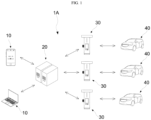
- FIGS. 1 to 3 are diagrams for describing a charging system for an electric vehicle according to the present disclosure.
- a charging system 1A for an electric vehicle may include a user terminal 10, a management server 20, and a charging device 30.
- the user terminal 10 may be a terminal corresponding to a user who is a driver of an electric vehicle 40.
- the user terminal 10 may transmit preemption request information for preempting at least one charging device 30 to the management server 20.
- the user terminal 10 may communicate with the management server 20 in a wired or wireless manner.
- the user terminal 10 may be a wireless communication terminal such as a smart phone, a tablet computer, a navigation device installed in a vehicle, or a wired communication terminal such as a desktop computer.
- the user terminal 10 may transmit location information thereof to the management server 20.
- the user terminal 10 may include a global positioning system (GPS) module.
- GPS global positioning system
- the management server 20 may determine at least one usable charging device 30 corresponding to the location information received from the user terminal 10.
- the management server 20 may determine and store location information of each charging device 30 in advance.
- the management server 20 may lock at least one charging device 30 by transmitting a preemption command signal to at least one charging device 30 corresponding to the preemption request information of the user terminal 10.
- the management server 20 may communicate with the user terminal 10 and the charging device 30.
- the management server 20 may be connected to a plurality of charging devices 30 through a WebSocket method according to open charge point protocol (OCPP) 2.0.
- OCPP open charge point protocol
- the charging device 30 may be unlocked in response to authentication information that is input for user authentication by the user terminal 10.
- the charging device 30 may charge the electric vehicle 40 corresponding to the user terminal 10.
- the charging device 30 may charge a battery (not shown) of the electric vehicle 40 corresponding to the user terminal 10.
- the charging device 30 may acquire information about the electric vehicle 40 from the electric vehicle 40, for example, various types of information such as a type and battery capacity of the electric vehicle, identification information of the electric vehicle, and information about a user of the electric vehicle 40.
- the charging device 30 may communicate with the electric vehicle 40 during charging.
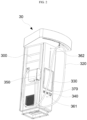
- FIG. 2 An example of the charging device 30 is shown in FIG. 2 , and an example of a coupler 310 is shown in FIG. 3 .
- the charging device 30 may include a main body 300, the coupler 310, a charging cable 320, a display part 330, a card reader part 340, a storage box 350, camera parts 361 and 362, and an ultrasonic sensor part 370.
- the display part 330 may display various types of information required for charging on a screen.
- the display part 330 may display information indicating that the charging device 30 is preempted, that is, information indicating preemption.
- the display part 330 may include a touch screen.
- the card reader part 340 may read a credit card, a charge card, and/or a member card though a touch method and/or an insertion method.
- the camera parts 361 and 362 may capture images around the charging device 30.
- the camera parts 361 and 362 may capture images of the electric vehicle 40 around the charging device 30.
- the camera parts 361 and 362 may include a first camera part 361 and a second camera part 362.
- the first camera part 361 and the second camera part 362 may be spaced a sufficient distance from each other.
- the first camera part 361 may be positioned below the display part 330, and the second camera part 362 may be positioned above the display part 330.
- FIG. 2 illustrates a case in which there are two camera parts 361 and 362, but the present disclosure may not be limited thereto.
- the ultrasonic sensor part 770 may detect the presence or absence of the electric vehicle 40 corresponding to the charging device 30 using ultrasonic waves.
- the ultrasonic sensor part 370 may detect information on whether the electric vehicle 40 occupies a parking space corresponding to the charging device 30 using ultrasonic waves.
- the charging device 30 may determine whether the electric vehicle 40 occupies the parking space using the information detected by the ultrasonic sensor part 370.
- the storage box 350 may be disposed on the main body 300.
- the storage box 350 may store the coupler 310.
- the coupler 310 may be electrically connected to the main body 300 through the charging cable 320.
- the coupler 310 may be connected to a charging port (not shown) provided in the electric vehicle 40. Then, power supplied from the main body 300 of the charging device 30 may be supplied to the electric vehicle 40 through the charging cable 320 and the coupler 310, and thus the electric vehicle 40 may be charged.
- the coupler 310 may be referred to as a charging gun.
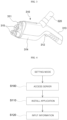
- the coupler 310 may include a coupler body 314, a latch 311, a handle part 313, a lock button 312, and a charging port 315.
- the charging port 315 may be connected to the charging port (not shown) of the electric vehicle.
- the charging device 30 may supply power to the electric vehicle 40 and may communicate with the electric vehicle 40.
- the charging port 315 may include a direct current (DC) power charging port, an alternating current (AC) power charging port, a proximity sensing port, a ground (GND) terminal, and a communication terminal.
- DC direct current
- AC alternating current
- GND ground
- the DC power charging port and the AC power charging port may be ports for supplying power to the electric vehicle 40, and the communication terminal may be a terminal for communication with the electric vehicle 40.
- the handle part 313 may be connected to the coupler body 314.
- the charging cable 320 may be connected to the coupler body 314.
- the latch 311 may be disposed on the coupler body 314.
- the latch 311 may prevent the coupler 310 from being separated from the charging port (not shown) of the electric vehicle in a state in which the coupler 310 is connected to the charging port (not shown) of the electric vehicle.
- the lock button 312 may be disposed on the coupler body 314 or the charging cable 320.
- the latch 311 may be fixed or released by the lock button 312.
- the latch 311 may be vertically rotated according to the operation of the lock button 312.
- the latch 311 moves upward, and when the user releases the lock button 312, the latch 311 may return to its original position downward.
- the user may press the lock button 312 to move the latch 311 upward and to allow the coupler 310 to be easily connected to the charging port of the electric vehicle.
- the coupler 310 may be fixed to the charging port of the electric vehicle while the latch 311 returns to its original position downward.
- the coupler 310 may be easily separated from the charging port of the electric vehicle.
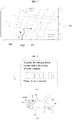
- FIG. 4 is a diagram for describing a setting mode. Hereinafter, descriptions of the above-described parts will be omitted.
- the setting mode may be a mode of installing an application (App) for an electric vehicle charging service in the user terminal 10.
- the user terminal 10 may access the management server 20 (S100).
- the user terminal 10 may download and install the App for an electric vehicle charging service from the management server 20 (S110).
- the user terminal 10 may transmit and store information about a user to and in the management server 20.
- the information includes various types of information such as a user's name, an address, and phone numbers, a payment method, and information about an owned electric vehicle (S120).
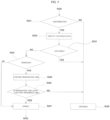
- FIGS. 5 to 12 are diagrams for describing a search mode. Hereinafter, descriptions of the above-described parts will be omitted.
- the search mode may be a mode of searching for at least one usable charging device 30.
- an App installed in the user terminal 10 may be executed (S200).
- the user terminal 10 may access the management server 20.
- the user terminal 10 may transmit location information thereof to the management server 20 (S210).
- the user terminal 10 may transmit GPS information (location information) acquired using the GPS module to the management server 20.
- GPS information location information acquired using the GPS module
- the user terminal 10 may transmit information about a search condition to the management server 20 (S220).
- the search condition may include at least one of a location condition for a location and a time condition for a time.
- the location condition may include a condition for a distance to the charging device 30 from a location included in current location information of the user terminal 10.
- the time condition may include a condition for a time taken to reach the charging device 30 from the user terminal 10.
- the management server 20 may determine at least one usable charging device 30 based on the location information received from the user terminal 10 (S230).
- the management server 20 may determine at least one usable charging device 30 in consideration of both of the location information received from the user terminal 10 and the information about the search condition.
- the determined usable charging device 30 may be referred to as a candidate charging device (CCD) 30.
- the management server 20 determines at least one usable charging device 30 in consideration of both of the location information received from the user terminal 10 and the information about the search condition.
- a user may input a location condition of 5 km and a time condition of 10 minutes to the user terminal 10.
- the user terminal 10 may transmit the information about the search condition including the location condition and the time condition to the management server 20.
- the management sever 20 may determine at least one CCD 30 located within a radius of 5 km from a current location of the user terminal 10 and located within an area at which the user may arrive within 10 minutes using the electric vehicle 40 from the current location of the user terminal 10.
- the management server 20 may transmit information about the at least one determined usable charging device 30, that is, information about the at least one determined CCD 30, to the user terminal 10 (S240).
- the information about the at least one determined usable charging device 30, that is, the information about the at least one determined CCD 30, which is transmitted to the user terminal 10 may include at least one of information about a location of the CCD 30, information about a type of the CCD 30, information about a distance between the user terminal 10 and the CCD 30, information about a time taken to reach the CCD 30, information about an estimated charging time, and information about a fee.
- the information about the fee may include information on a preemption fee and a charging fee.
- the contents of the preemption fee and the charging fee will be described in detail below.
- the user may choose the CCD 30 in consideration of the information about the at least one CCD 30 received from the management server 20 by the user terminal 10 (S250).
- the user terminal 10 sets the location condition of the search condition to be a radius of r km.
- the management server 20 may determine at least one CCD 30 located within a radius of r km from a current location of the user terminal 10.
- management server 20 may transmit information about the determined CCD 30 to the user terminal 10.
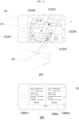
- the user terminal 10 may display locations of a plurality of CCDs 30 (CCD1, CCD2, CCD3, CCD4, and CCD5) on a map of a screen so as to correspond to a current location P1 of the user terminal 10.
- CCDs 30 CCD1, CCD2, CCD3, CCD4, and CCD5
- the user may choose a first candidate charging device 30 (CCD1) from among the plurality of CCDs 30 (CCD1, CCD2, CCD3, CCD4, and CCD5) displayed on the screen of the user terminal 10.
- CCD1 first candidate charging device 30
- CCD2, CCD3, CCD4, and CCD5 displayed on the screen of the user terminal 10.
- CCD1 detailed information about the chosen first CCD 30 (CCD1) may be displayed on the screen of the user terminal 10.
- the first CCD 30 (CCD1) may be chosen as the charging device 30 desired by the user.
- the user terminal 10 may display a path PH from the current location P1 of the user terminal 10 to a location of the chosen first CCD 30 (CCD1) on the screen.
- CCD1 chosen first CCD 30
- the user terminal 10 may transmit information about the chosen CCD 30 to the management server 20.
- the CCD 30 chosen by the user terminal 10 may be referred to as a target charging device (TCD) 30.
- TCD target charging device
- the concepts of the charging device 30, the CCD 30, and the TCD 30 may be introduced for convenience of description.
- the charging device 30, the CCD 30, and the TCD 30 may all have the same configuration.
- the user terminal 10 may transmit preemption request information for preempting the chosen CCD 30, that is, the TCD 30, to the management server 20 (S260).
- the management server 20 may transmit a preemption command signal to the TCD 30 in response to the preemption request information for preempting the TCD 30 (S260).
- the TCD 30 may be locked in response to the preemption command signal received from the management server 20 (S270).
- the TCD 30 may display information indicating preemption on a screen of the display part 330.
- information indicating that a corresponding charging device 30 is currently preempted and locked may be displayed on the screen of the display part 330 of the locked TCD 30.
- an authentication information input window PIW for inputting authentication information may be displayed on the screen of the TCD 30.
- the locked TCD 30 may be unlocked. This will be described in more detail below.
- the user of the user terminal 10 which transmits the preemption request information to the management server 20 may be referred to as a host user.
- the latch 311 of the coupler 310 for connection with the electric vehicle 40 corresponding to the user may be fixed.
- the charging port 315 of the coupler 310 of the locked TCD 30 may not be connected to a charging port of an electric vehicle of a user different from the host user.
- management server 20 may transmit information about the host user of the user terminal 10 to the locked TCD 30 (S280).
- the management server 20 may transmit information about the user of the user terminal 10 who transmits the preemption request information to the locked TCD 30.
- the locked TCD 30 may store information about the user of the user terminal 10, who transmits the preemption request information, that is, information about the host user (S281).
- the TCD 30 may determine which user sets the TCD 30 to be a locked state.
- the information about the host user transmitted to the locked TCD 30 may include various types of information such as information about the user terminal 10 of the host user, information about a payment method, authentication information, a name of the host user, and a resident registration number.
- the authentication information may include information required for authenticating the host user, such as a password, a membership number, and a credit card number.
- the authentication information may include information that is generated by the management server 20 in response to the preemption request information.
- the management server 20 may temporarily generate authentication information such as a password that may be used by the user terminal 10 corresponding to the TCD 30 and may transmit the temporarily generated authentication information to the user terminal 10 and the locked TCD 30.
- the host user may unlock the locked TCD 30 using the temporarily generated authentication information received from the management server 20.
- the locked TCD 30 receives information about the host user from the management server 20 to store the received information, even when a communication failure occurs between the locked TCD 30 and the management server 20, the locked TCD 30 may be smoothly unlocked, and thus the electric vehicle 40 may be smoothly charged.
- the TCD 30 may store information acquired in a charging process, and when communication is resumed thereafter, the TCD 30 may transmit the information acquired in the charging process to the management server 20.
- the use of the chosen CCD 30, that is, the use of the TCD 30, may be restricted from a time point at which the TCD 30 is locked in response to the preemption command signal to a time point at which the TCD 30 is unlocked.
- a time from the time point at which the TCD 30 is locked in response to the preemption command signal to the time point at which the TCD 30 is unlocked may be referred to as a waiting time.
- the management server 20 may determine a waiting time for the TCD 30 (S271).
- a waiting time may be preset in a process in which the host user chooses the TCD 30.
- the management server 20 may automatically set a waiting time.
- the management server 20 may determine an estimated time taken for the host user to reach the TCD 30 based on location information of a user terminal, that is, location information of the user terminal 10.
- the management server 20 may set a waiting time for the determined estimated time.
- the management server 20 may bill a preemption fee to the host user (S272).
- the management server 20 may bill a fee for the preemption of the TCD 30, that is, a preemption fee, to the host user.
- a fee for the time from the time point at which the TCD 30 is locked to the time point at which the TCD 30 is unlocked may be referred to as a first preemption fee.
- the first preemption fee billed to the host user may not be refunded.
- the first preemption fee may be billed as a prepayment fee.
- the first preemption fee may be billed at the time point at which the TCD 30 is locked.
- the host user needs to preregister a payment method such as a credit card number in the management server 20.
- the first preemption fee may increase progressively.
- a time taken for the host user to reach the CCD 30 is set to 5 minutes.
- the management server 20 may set a fee required to lock the TCD 30 such that other users cannot use the TCD 30 for 5 minutes, that is, the first preemption fee, to 500 won.
- a time taken for the host user to reach the CCD 30 is set to 10 minutes.
- the management server 20 may set a fee required to lock the TCD 30 such that other users cannot use the TCD 30 for 10 minutes, that is, the first preemption fee, to 1,500 won.
- the first preemption fee may be billed to the host user.
- the management server 20 may determine whether the charging device 30 is in an unused state (unconnected state) (S221).
- the management server 20 may set the corresponding charging device 30 to the CCD 30.
- the charging device 30 and the electric vehicle 40 may communicate with each other.
- the management server 20 may determine whether the coupler 310 of the charging device 30 is connected to the electric vehicle 40.
- the management server 20 may determine at least one usable charging device 30, which is located within a preset range from a current location of the user terminal 10, to be the CCD 30 or may determine at least one usable charging device 30, which is located at a location that may be reached within a certain time from the current location of the user terminal 10, to be the CCD 30.
- the CCD 30 may satisfy a condition in which the CCD 30 is in an unconnected state and thus is not used for charging at a determination time.
- the management server 20 may determine the charging device 30, which is not being currently used among one or more charging devices 30 located within a preset range from the current location of the user terminal 10, to be the CCD 30.
- the management server 20 may determine the charging device 30, which is not being currently used among one or more charging devices 30 located at a location that may be reached within a certain time from the current location of the user terminal 10, to be the CCD 30.
- the management server 20 may identify an occupied state of a parking space corresponding to the charging device 30 (S222) and may determine whether the parking space corresponding to the charging device 30 is currently occupied (S223).
- the management server 20 may use information detected by the ultrasonic sensor part 370 of the charging device 30 to determine whether the parking space corresponding to the charging device 30 is currently occupied.
- the ultrasonic sensor part 370 faces a parking space corresponding to the charging device 30 and may detect whether the electric vehicle 40 is parked in the parking space.
- the management server 20 may determine that the charging device 30 is in an unusable state (S228).
- the management server 20 may determine the corresponding device 30 to be the CCD 30.
- the CCD 30 may satisfy a condition in which the parking space corresponding to the charging device 30 is not occupied at a determination time at which an occupied state is determined.
- the management server 20 may determine whether the charging device 30 is in a reserved state (S224), and when the charging device 30 is not in the reserved state, the management server 20 may determine the corresponding charging device 30 to be an usable charging device 30, that is, the CCD 30 (S227).
- the CCD 30 may satisfy a condition in which the CCD 30 is not reserved for a preset first reference time from a determination time at which a reservation time is determined.
- the management server 20 may check a reservation time of the charging device 30 (S225) and may determine whether the reservation time is later than the preset first reference time (S226).
- the management server 20 may determine that the charging device 30 is unusable (S228).
- the management server 20 may determine that the corresponding device 30 is usable (S227) to determine the corresponding device 30 to be the CCD 30.
- the first reference time may correspond to a minimum time required to charge the electric vehicle 40 corresponding to the host user.
- the first reference time may be set to 20 minutes or more.
- the first reference time may be changed according to a time required to charge the electric vehicle 40 of the host user.
- the management server 20 may determine the corresponding charging device to be the CCD 30.
- the management server 20 may determine an estimated charging end time of the charging device 30 (S290).
- the management server 20 may determine the estimated charging end time in consideration of information such as battery capacity, charging speed, and the like of the electric vehicle 40 connected to the coupler 310 of the current charging device 30.
- the management server 20 may determine whether the estimated charging end time is within a preset second reference time (S291).
- the management server 20 may determine that the corresponding charging device 30 is unusable (S228).
- the management server 20 may determine the corresponding device 30 to be the usable CCD 30.
- the CCD 30 may satisfy a condition in which the CCD 30 is used for charging at a determination time at which the estimated charging end time is determined and the charging is to be finished within the preset second reference time from the determination time.
- the management server 20 may identify a driver of the electric vehicle 40 which occupies the parking space corresponding to the charging device (S292).
- the management server 20 may determine whether the driver is on board of the electric vehicle 40 (S293), and when the driver is not on board, the management server 20 may determine that the corresponding charging device 30 is unusable.
- the management server 20 may determine the corresponding charging device 30 to be the CCD 30 (S227).
- the CCD 30 may satisfy a condition in which the driver of the electric vehicle 40, which occupies the parking space corresponding to the charging device 30, is on board at a determination time.
- the management server 20 may transmit a preemption command to at least one CCD 30 corresponding to the preemption request information to lock the at least one CCD 30 (S270).
- the management server 20 may identify information about the electric vehicle 40 connected to the coupler 310 of the charging device 30 (S294).
- the management server 20 may identify information about a type of the electric vehicle 40.
- a location of the charging port of the electric vehicle 40 may also be identified.
- the charging device 30 may generate image information by photographing the electric vehicle 40 occupying a parking space (S295).
- the charging device 30 may transmit the generated image information to the management server 20.
- the management server 20 may analyze the information about the electric vehicle 40 acquired by the charging device 30 through the coupler 310 and the image information received from the charging device 30 to identify a direction of the electric vehicle 40 (S296) and may also identify a location of a driver seat in the electric vehicle 40 (S297).
- the driver may be identified at a location corresponding to the identified driver seat (S292).
- the presence or absence of the driver may be more precisely determined.
- the management server 20 may identify information about a location of the driver seat and information about the presence or absence of the driver.
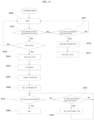
- FIG. 13 is a diagram for describing a charging mode. Hereinafter, descriptions of the above-described parts will be omitted.
- the charging mode may be a mode of unlocking the locked TCD 30 and charging the electric vehicle 40.
- the TCD 30 in a state of being locked in response to a preemption command signal may wait until unlocked (S300).
- the TCD 30 in the locked state may determine whether authentication information for authentication of a host user is input (S310).
- the authentication information may include information such as a credit card number, a membership number, and a password of the host user.
- the authentication information may include temporary information such as a password that is temporarily assigned to the host user by the management server 20.
- the waiting time may be counted from a time point at which the TCD 30 in the locked state is locked in response to the preemption command signal.
- the locked TCD 30 may release preemption by a host terminal (S312) and may be unlocked (S313) by itself.
- the locked TCD 30 may be unlocked and release the preemption.
- a first user uses the user terminal 10 to choose any first charging device 30, sets the chosen first charging device 30 to the TCD 30, and sets a waiting time to 10 minutes.
- the locked TCD 30 may set an extra margin of 1 minute (10% of the waiting time set by the user) in addition to 10 minutes set by the first user.
- the fourth reference time may be a total of 11 minutes.
- the TCD 30 may release the preemption by the first user and may be unlocked by itself.
- users different from the first user may use the unlocked first charging device 30.
- a preemption fee corresponding to the waiting time of 10 minutes set by the first user may not be refunded.
- the TCD 30 may determine whether the input authentication information matches authentication information stored therein after received from the management server 20 (S320).
- the process may proceed to operation S300 again, and when the input authentication information matches the stored authentication information, the TCD 30 may be unlocked by itself (S330).
- the locked TCD 30 may be unlocked upon receiving the authentication information for authenticating the host user.
- the locked TCD 30 may transmit the input authentication information to the management server 20.
- the management server 20 may compare the authentication information input to the TCD 30 with authentication information prestored in the management server 20 and may transmit a determination result to the TCD 30.
- the locked TCD 30 may compares the input authentication information with the authentication information stored therein after received in advance from the management server 20 and may determine whether the input authentication information match the stored authentication information.
- the TCD 30 may be unlocked and then charge the electric vehicle 40 corresponding to the host user (S340).
- the unlocked TCD 30 may charge a battery of the electric vehicle 40 corresponding to the host user.
- the management server 20 may bill a charging fee for the charging of the battery of the electric vehicle 40 to the host user (S360).
- the management server 20 may determine whether the coupler 310 of the TCD 30 is separated from the electric vehicle 40 after the charging is finished (S370).
- the management server 20 may end a charging process corresponding to the electric vehicle 40 (S380).
- the management server 20 may determine whether a preset third reference time has elapsed after the charging of the electric vehicle 40 is finished (S371).
- an additional fee may be billed to the host user.
- one user may preempt a plurality of charging devices 30. This will be described as follows.
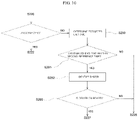
- FIGS. 14 to 16 are diagrams for describing an example of a method of preempting a plurality of charging devices. Hereinafter, descriptions of the above-described parts will be omitted.
- the management server 20 may provide information about a plurality of CCDs 30 to the user terminal 10.
- the user terminal 10 may display locations of the plurality of CCDs 30 (CCD1, CCD2, CCD3, CCD4, and CCD5) on a map of a screen so as to correspond to a current location P1 of the user terminal 10.
- a user may choose a plurality of CCDs from among the plurality of CCDs 30 (CCD1, CCD2, CCD3, CCD4, and CCD5) displayed on the screen of the user terminal 10.
- CCD1, CCD2, CCD3, CCD4, and CCD5 displayed on the screen of the user terminal 10.
- the user may choose a fourth candidate CCD 30 (CCD4) and a fifth candidate CCD 30 (CCD5) from among the plurality of CCDs 30 (CCD1, CCD2, CCD3, CCD4, and CCD5) displayed on the screen of the user terminal 10.
- CCD4 fourth candidate CCD 30
- CCD5 fifth candidate CCD 30
- the fourth CCD 30 (CCD4) and the fifth CCD 30 (CCD5) may be chosen to be the TCDs 30 desired by the user.
- a user who urgently desires to charge the electric vehicle 40 may choose the plurality of CCDs 30.
- the management server 20 After the management server 20 transmits information about the at least one determined CCD 30 to the user terminal 10 (S240), as shown in FIG. 15 , the management server 20 may determine whether the user terminal 10 chooses one CCD 30 (S251).
- the user terminal 10 may transmit preemption request information for preemption of one CCD 30, that is, one TCD 30, to the management server 20 (S260).
- the management server 20 may determine whether the user terminal 10 chooses the plurality of CCDs 30 (S252).
- the management server 20 may execute a preset first function (S253).
- the first function may include a waiting function until at least one CCD 30 is chosen, a changing function for a search condition, and the like.
- the user terminal 10 may transmit preemption request information for preemption of the plurality of chosen CCDs 30, that is, a plurality of TCDs 30, to the management server 20 (S260).
- At least one TCD 30 corresponding to the preemption request information may be locked (S270).
- the plurality of TCDs 30 corresponding to the preemption request information may be locked.
- the management server 20 may transmit information about a host user of the user terminal 10 to at least one locked TCD 30 (S280).
- the management server 20 may transmit information about the host user of the user terminal 10 to each of the plurality of locked TCDs 30 (S280).
- the management server 20 may separately bill a preemption fee to each of the TCDs 30.
- the management server 20 may determine a waiting time for the plurality of TCDs 30 (S271).
- the management server 20 may assign a weight to each of the plurality of TCDs 30.
- the management server 20 may set different weights assigned to the TCDs 30 according to the number of TCDs 30 chosen by the host user.
- the management server 20 may set the weight assigned to the TCD 30 to be high.
- the management server 20 may bill each of preemption fees for the locking of the plurality of TCDs 30 to the host user (S272).
- a preemption fee billed to the host user may not be refunded.
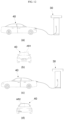
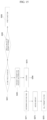
- a weight assigned to the TCD 30 may be set to 1 as shown in FIG. 16A .
- a preemption fee may be set to 500 won, when a waiting time is 15 minutes, a preemption fee may be set to 1,000 won, when a waiting time is 20 minutes, a preemption fee may be set to 2,000 won, when a waiting time is 25 minutes, a preemption fee may be set to 4,000 won, and when a waiting time is 30 minutes, a preemption fee may be set to 8,000 won.
- the preemption fee may increase progressively.
- weights assigned to the two TCDs 30 may be set to 1.2 as shown in FIG. 16B .
- a preemption fee when a waiting time is 10 minutes, a preemption fee may be set to 600 won, when a waiting time is 15 minutes, a preemption fee may be set to 1,200 won, when a waiting time is 20 minutes, a preemption fee may be set to 2,400 won, when a waiting time is 25 minutes, a preemption fee may be set to 4,800 won, and when a waiting time is 30 minutes, a preemption fee may be set to 9,600 won.
- a weight higher than 1.2, for example, a weight of 1.5 may be assigned to each of the three TCDs 30.
- the management server 20 may transmit a preemption command signal to the first CCD 30 and the second CCD 30 to lock the first CCD 30 and the second CCD 30.
- the management server 20 may transmit information about the user of the user terminal 10, that is, the host user, to the locked first CCD 30 and second CCD 30.
- the host user may input preset authentication information to the first CCD.
- the host user may input authentication information by bringing a credit card, a membership card, or the like close to the card reader part 340 of the first CCD 30.
- the host user may input authentication information by inputting a preset password to an authentication information input window PIW displayed on a display part 330 of the first CCD 30.
- the first CCD 30 may be unlocked in response to the authentication information input by the host user.
- the host user may charge a battery of the electric vehicle 40 using the unlocked first CCD 30.
- the management server 20 may bill a charging fee according to the charging of the battery of the electric vehicle 40 to the host user corresponding to the first CCD 30.
- the management server 20 may charge a second preemption fee for a time from a time point at which the first CCD 30 is locked to a time point at which the first CCD 30 is unlocked.
- the second preemption fee may be billed as a prepayment fee and may not be refunded.
- the second preemption fee may be an amount to which a weight of 1.2 is assigned as described with reference to FIG. 16 .
- a preemption fee (first preemption fee) to which a weight of 1 is assigned may be billed to the host user.
- the second preemption fee may be higher than the first preemption fee.
- the second CCD 30 may be unlocked upon unlocking the first CCD 30.
- the second CCD 30 may be unlocked.
- the management server 20 may bill the second preemption fee for a time from a time point at which the second CCD 30 is locked to a time point at which the second CCD 30 is unlocked.
- a charging fee for the second CCD 30 may not be billed to the host user.
Landscapes
- Engineering & Computer Science (AREA)
- Power Engineering (AREA)
- Transportation (AREA)
- Mechanical Engineering (AREA)
- Business, Economics & Management (AREA)
- Health & Medical Sciences (AREA)
- Economics (AREA)
- Public Health (AREA)
- Water Supply & Treatment (AREA)
- General Health & Medical Sciences (AREA)
- Human Resources & Organizations (AREA)
- Marketing (AREA)
- Primary Health Care (AREA)
- Strategic Management (AREA)
- Tourism & Hospitality (AREA)
- Physics & Mathematics (AREA)
- General Business, Economics & Management (AREA)
- General Physics & Mathematics (AREA)
- Theoretical Computer Science (AREA)
- Charge And Discharge Circuits For Batteries Or The Like (AREA)
- Electric Propulsion And Braking For Vehicles (AREA)
- Remote Monitoring And Control Of Power-Distribution Networks (AREA)
Applications Claiming Priority (2)
| Application Number | Priority Date | Filing Date | Title |
|---|---|---|---|
| KR20210098153 | 2021-07-26 | ||
| KR1020220087224A KR102770019B1 (ko) | 2021-07-26 | 2022-07-14 | 전기차의 충전 방법 및 시스템 |
Publications (1)
| Publication Number | Publication Date |
|---|---|
| EP4124501A1 true EP4124501A1 (fr) | 2023-02-01 |
Family
ID=82702876
Family Applications (1)
| Application Number | Title | Priority Date | Filing Date |
|---|---|---|---|
| EP22186673.4A Pending EP4124501A1 (fr) | 2021-07-26 | 2022-07-25 | Système et procédé de charge pour véhicule électrique |
Country Status (4)
| Country | Link |
|---|---|
| US (1) | US12611949B2 (fr) |
| EP (1) | EP4124501A1 (fr) |
| JP (1) | JP7385950B2 (fr) |
| CN (1) | CN115675146A (fr) |
Families Citing this family (8)
| Publication number | Priority date | Publication date | Assignee | Title |
|---|---|---|---|---|
| USD1089072S1 (en) * | 2023-02-27 | 2025-08-19 | Autel Digital Power Co., Ltd. | Charging station for electric vehicles |
| USD1103908S1 (en) * | 2023-03-29 | 2025-12-02 | Ingeteam Power Technology, S.A. | Recharging terminal for electric vehicles |
| USD1089073S1 (en) * | 2023-04-05 | 2025-08-19 | Autel Digital Power Co., Ltd. | Charging station for electric vehicles |
| CN116118550A (zh) * | 2023-04-10 | 2023-05-16 | 南通数英信息科技有限公司 | 一种充电桩无线启动系统及其启动设备 |
| WO2025042415A1 (fr) | 2023-08-22 | 2025-02-27 | Xcharge Energy Usa Inc. | Dispositif, procédé et support de charge |
| USD1099019S1 (en) * | 2023-08-22 | 2025-10-21 | Xcharge Energy Usa Inc. | Charging station |
| USD1121544S1 (en) * | 2024-04-09 | 2026-04-07 | Hyundai Motor Company | Charger for an electric vehicle |
| USD1093290S1 (en) * | 2024-04-25 | 2025-09-16 | ShenZhen CEGN Co., Ltd. | Charging pile |
Citations (3)
| Publication number | Priority date | Publication date | Assignee | Title |
|---|---|---|---|---|
| US20180105051A1 (en) * | 2016-10-19 | 2018-04-19 | Joyce A. Zheng | Method and system for managing charging stations |
| KR20180061569A (ko) * | 2016-11-29 | 2018-06-08 | 주식회사 비즈모델라인 | 주차 차단기를 이용한 전기차 예약 충전 방법 |
| CN112116757A (zh) * | 2020-09-15 | 2020-12-22 | 阳光电源股份有限公司 | 充电桩预约方法、装置、充电桩系统及其控制方法 |
Family Cites Families (33)
| Publication number | Priority date | Publication date | Assignee | Title |
|---|---|---|---|---|
| US7804274B2 (en) * | 2008-07-21 | 2010-09-28 | Coulomb Technologies, Inc. | Vehicle charging station having a dual position locking door |
| JP4745406B2 (ja) * | 2009-01-27 | 2011-08-10 | 日本宅配システム株式會社 | 電気自動車の充電システム |
| US8676636B2 (en) * | 2009-04-22 | 2014-03-18 | Parkpod Gmbh | System for managing electric energy grid-vehicle exchange devices |
| US8278875B2 (en) * | 2010-05-14 | 2012-10-02 | Coulomb Technologies, Inc. | Safety supervisory module of an electric vehicle charging station |
| WO2012034216A1 (fr) * | 2010-09-13 | 2012-03-22 | Addenergie Technologies Inc. | Station de charge de véhicule électrique et procédé de charge d'un véhicule électrique |
| US7986126B1 (en) * | 2010-10-01 | 2011-07-26 | Toyota Motor Sales, U.S.A., Inc. | Automated system for determining whether vehicle charge station is publicly accessible |
| US20120233077A1 (en) * | 2011-03-07 | 2012-09-13 | GM Global Technology Operations LLC | Electric charging station reservation system and method |
| US9180783B1 (en) * | 2011-04-22 | 2015-11-10 | Penilla Angel A | Methods and systems for electric vehicle (EV) charge location color-coded charge state indicators, cloud applications and user notifications |
| US9597967B2 (en) * | 2011-07-19 | 2017-03-21 | Siemens Industry, Inc. | Status indicating electric vehicle charging station, lightguide assembly and methods |
| JP5782390B2 (ja) * | 2012-02-08 | 2015-09-24 | トヨタ自動車株式会社 | 情報通知装置 |
| JP5605386B2 (ja) | 2012-03-30 | 2014-10-15 | 日本電気株式会社 | 端末装置、制御装置、充放電制御システム、充放電制御調整方法、充放電制御方法およびプログラム |
| JP5970070B2 (ja) * | 2012-09-03 | 2016-08-17 | 株式会社日立製作所 | 電気自動車の充電支援システムおよび充電支援方法 |
| US9142978B2 (en) * | 2012-11-06 | 2015-09-22 | EV Connect, Inc. | Queue prioritization for electric vehicle charging stations |
| US12322986B2 (en) * | 2012-12-03 | 2025-06-03 | ChargeItSpot, LLC | System and method for providing interconnected and secure mobile device charging stations |
| JP2014121110A (ja) * | 2012-12-13 | 2014-06-30 | Tokai Rika Co Ltd | 充電ケーブルロックシステム |
| KR101449170B1 (ko) | 2012-12-17 | 2014-10-10 | 현대자동차주식회사 | 전기자동차의 충전소 안내 시스템 및 그 방법 |
| JP6060710B2 (ja) | 2013-01-31 | 2017-01-18 | 株式会社デンソー | 充電施設の予約状況を管理するサーバ |
| JP2014230421A (ja) | 2013-05-23 | 2014-12-08 | 富士電機株式会社 | 充電装置 |
| KR101717324B1 (ko) | 2013-12-26 | 2017-03-16 | 엘에스산전 주식회사 | 충전기 및 이의 충전 커넥터 관리 방법 |
| US20170267114A1 (en) * | 2014-07-10 | 2017-09-21 | Control Module, Inc. | Shuttle System for Overhead EVSE |
| KR20180010375A (ko) | 2016-07-20 | 2018-01-31 | 주식회사 포스코아이씨티 | 전기차 충전 예약 시스템 및 전기차 충전 예약이 가능한 충전기 |
| KR20180010169A (ko) | 2017-10-19 | 2018-01-30 | 주식회사 포스코아이씨티 | 전기차 충전 예약 시스템 및 전기차 충전 예약이 가능한 충전기 |
| KR102470999B1 (ko) | 2017-10-27 | 2022-11-25 | 현대자동차주식회사 | 충전 관리 서버 및 충전 관리 서버의 제어 방법 |
| DE102018207219A1 (de) * | 2018-01-10 | 2019-07-11 | Audi Ag | Verfahren zum automatischen Entriegeln einer Ladeanordnung sowie Kraftfahrzeug |
| DE102018203942A1 (de) * | 2018-03-15 | 2019-09-19 | Audi Ag | Verfahren zum Reservieren einer elektrischen Ladestation, sowie Ladesystem |
| US11413982B2 (en) * | 2018-05-15 | 2022-08-16 | Power Hero Corp. | Mobile electric vehicle charging station system |
| CN109376889B (zh) * | 2018-10-31 | 2020-12-15 | 广州小鹏汽车科技有限公司 | 电动汽车及其充电管理方法、装置 |
| EP3656603A1 (fr) * | 2018-11-23 | 2020-05-27 | Henrik Thiele | Station de charge et système avec capteur de présence de véhicule et fonction d'authentification |
| CN110782054B (zh) * | 2019-09-30 | 2020-12-25 | 北京嘀嘀无限科技发展有限公司 | 一种充电桩占用提醒方法、装置、电子设备及存储介质 |
| US10981464B1 (en) * | 2020-01-13 | 2021-04-20 | NAD Grid Corp | Methods and systems for facilitating charging sessions for electric vehicles |
| US11890957B2 (en) * | 2020-05-06 | 2024-02-06 | University Of Florida Research Foundation, Incorporated | System and method for a battery on wheels (BoW) for charging mobile battery-operated units |
| US11368028B2 (en) * | 2020-09-16 | 2022-06-21 | Evq Technologies Private Limited | Facilitating charging of acceptor nodes by mobile charging systems |
| WO2022181673A1 (fr) * | 2021-02-25 | 2022-09-01 | 本田技研工業株式会社 | Procédé de vérification, dispositif de vérification, système de vérification, programme et support lisible par ordinateur |
-
2022
- 2022-07-25 EP EP22186673.4A patent/EP4124501A1/fr active Pending
- 2022-07-26 JP JP2022118924A patent/JP7385950B2/ja active Active
- 2022-07-26 US US17/814,958 patent/US12611949B2/en active Active
- 2022-07-26 CN CN202210882812.8A patent/CN115675146A/zh active Pending
Patent Citations (3)
| Publication number | Priority date | Publication date | Assignee | Title |
|---|---|---|---|---|
| US20180105051A1 (en) * | 2016-10-19 | 2018-04-19 | Joyce A. Zheng | Method and system for managing charging stations |
| KR20180061569A (ko) * | 2016-11-29 | 2018-06-08 | 주식회사 비즈모델라인 | 주차 차단기를 이용한 전기차 예약 충전 방법 |
| CN112116757A (zh) * | 2020-09-15 | 2020-12-22 | 阳光电源股份有限公司 | 充电桩预约方法、装置、充电桩系统及其控制方法 |
Also Published As
| Publication number | Publication date |
|---|---|
| US12611949B2 (en) | 2026-04-28 |
| US20230026182A1 (en) | 2023-01-26 |
| JP7385950B2 (ja) | 2023-11-24 |
| JP2023017756A (ja) | 2023-02-07 |
| CN115675146A (zh) | 2023-02-03 |
Similar Documents
| Publication | Publication Date | Title |
|---|---|---|
| US12611949B2 (en) | Charging system and method for electric vehicle | |
| US11535115B2 (en) | Electric vehicle capable of providing power to another vehicle, method for controlling the same, and system | |
| US9472045B2 (en) | Method and system for managing a power-charging space for a vehicle, especially a self-service electrical vehicle | |
| EP1477936A2 (fr) | Terminal embarqué dans un véhicule, méthode de communication pour des transactions et système de gestion de paiement afférent | |
| KR20180104561A (ko) | 주차 겸용 충전 시스템 및 이의 운영 방법 | |
| EP3656603A1 (fr) | Station de charge et système avec capteur de présence de véhicule et fonction d'authentification | |
| CN105957159A (zh) | 一种基于蓝牙技术实现停车场自动收费的方法和系统 | |
| JPH09190554A (ja) | 有料道路料金徴収方式 | |
| KR20190103925A (ko) | 차량 충전 방법, 단말기 및 서버 | |
| CN109584607A (zh) | 一种停车场自动泊车的方法及系统 | |
| KR20240068955A (ko) | 차량 정보 인식 기반의 플러그 앤 차지를 수행하기 위한 시스템 및 이를 위한 방법 | |
| JP2021179888A (ja) | 情報処理装置、システム、方法及びプログラム | |
| KR102770019B1 (ko) | 전기차의 충전 방법 및 시스템 | |
| US20240198963A1 (en) | Vehicle | |
| JP2005135070A (ja) | 情報配信システム、情報配信装置、検知装置、及び情報通信端末 | |
| CN108621833A (zh) | 基于车辆用户主动触发的充电桩解锁方法、装置及系统 | |
| JP2022075349A (ja) | 充電管理システム、貸出管理システム、充電管理方法、及びプログラム | |
| KR102488950B1 (ko) | 전기 차량 충전면 통합 관제 시스템 및 이의 실행 방법 | |
| JP2002352319A (ja) | 写真印刷自動販売機、及び写真印刷自動販売システム | |
| US12342104B2 (en) | Integrated display for electrified vehicle charge port | |
| JP2018163536A (ja) | 駐車車室管理サーバ、入出庫管理端末およびコンピュータプログラム | |
| CN116151818A (zh) | 交易方法、装置、设备、系统及存储介质 | |
| CN111192409B (zh) | 车辆和结算系统 | |
| CN115907047A (zh) | 信息处理装置、信息处理系统及信息处理方法 | |
| JP2022128781A (ja) | 情報処理装置、システム及び方法 |
Legal Events
| Date | Code | Title | Description |
|---|---|---|---|
| PUAI | Public reference made under article 153(3) epc to a published international application that has entered the european phase |
Free format text: ORIGINAL CODE: 0009012 |
|
| STAA | Information on the status of an ep patent application or granted ep patent |
Free format text: STATUS: THE APPLICATION HAS BEEN PUBLISHED |
|
| AK | Designated contracting states |
Kind code of ref document: A1 Designated state(s): AL AT BE BG CH CY CZ DE DK EE ES FI FR GB GR HR HU IE IS IT LI LT LU LV MC MK MT NL NO PL PT RO RS SE SI SK SM TR |
|
| STAA | Information on the status of an ep patent application or granted ep patent |
Free format text: STATUS: REQUEST FOR EXAMINATION WAS MADE |
|
| 17P | Request for examination filed |
Effective date: 20230731 |
|
| RBV | Designated contracting states (corrected) |
Designated state(s): AL AT BE BG CH CY CZ DE DK EE ES FI FR GB GR HR HU IE IS IT LI LT LU LV MC MK MT NL NO PL PT RO RS SE SI SK SM TR |