EP4130010A1 - Zinkverbindung, rohmaterial zur dünnschichtbildung, dünnschicht und verfahren zur herstellung einer dünnschicht - Google Patents
Zinkverbindung, rohmaterial zur dünnschichtbildung, dünnschicht und verfahren zur herstellung einer dünnschicht Download PDFInfo
- Publication number
- EP4130010A1 EP4130010A1 EP21778924.7A EP21778924A EP4130010A1 EP 4130010 A1 EP4130010 A1 EP 4130010A1 EP 21778924 A EP21778924 A EP 21778924A EP 4130010 A1 EP4130010 A1 EP 4130010A1
- Authority
- EP
- European Patent Office
- Prior art keywords
- thin
- film
- raw material
- alkyl group
- carbon atoms
- Prior art date
- Legal status (The legal status is an assumption and is not a legal conclusion. Google has not performed a legal analysis and makes no representation as to the accuracy of the status listed.)
- Granted
Links
Images


Classifications
-
- C—CHEMISTRY; METALLURGY
- C07—ORGANIC CHEMISTRY
- C07F—ACYCLIC, CARBOCYCLIC OR HETEROCYCLIC COMPOUNDS CONTAINING ELEMENTS OTHER THAN CARBON, HYDROGEN, HALOGEN, OXYGEN, NITROGEN, SULFUR, SELENIUM OR TELLURIUM
- C07F3/00—Compounds containing elements of Groups 2 or 12 of the Periodic Table
- C07F3/003—Compounds containing elements of Groups 2 or 12 of the Periodic Table without C-Metal linkages
-
- C—CHEMISTRY; METALLURGY
- C07—ORGANIC CHEMISTRY
- C07F—ACYCLIC, CARBOCYCLIC OR HETEROCYCLIC COMPOUNDS CONTAINING ELEMENTS OTHER THAN CARBON, HYDROGEN, HALOGEN, OXYGEN, NITROGEN, SULFUR, SELENIUM OR TELLURIUM
- C07F3/00—Compounds containing elements of Groups 2 or 12 of the Periodic Table
- C07F3/06—Zinc compounds
-
- C—CHEMISTRY; METALLURGY
- C23—COATING METALLIC MATERIAL; COATING MATERIAL WITH METALLIC MATERIAL; CHEMICAL SURFACE TREATMENT; DIFFUSION TREATMENT OF METALLIC MATERIAL; COATING BY VACUUM EVAPORATION, BY SPUTTERING, BY ION IMPLANTATION OR BY CHEMICAL VAPOUR DEPOSITION, IN GENERAL; INHIBITING CORROSION OF METALLIC MATERIAL OR INCRUSTATION IN GENERAL
- C23C—COATING METALLIC MATERIAL; COATING MATERIAL WITH METALLIC MATERIAL; SURFACE TREATMENT OF METALLIC MATERIAL BY DIFFUSION INTO THE SURFACE, BY CHEMICAL CONVERSION OR SUBSTITUTION; COATING BY VACUUM EVAPORATION, BY SPUTTERING, BY ION IMPLANTATION OR BY CHEMICAL VAPOUR DEPOSITION, IN GENERAL
- C23C16/00—Chemical coating by decomposition of gaseous compounds, without leaving reaction products of surface material in the coating, i.e. chemical vapour deposition [CVD] processes
- C23C16/06—Chemical coating by decomposition of gaseous compounds, without leaving reaction products of surface material in the coating, i.e. chemical vapour deposition [CVD] processes characterised by the deposition of metallic material
- C23C16/18—Chemical coating by decomposition of gaseous compounds, without leaving reaction products of surface material in the coating, i.e. chemical vapour deposition [CVD] processes characterised by the deposition of metallic material from metallo-organic compounds
-
- C—CHEMISTRY; METALLURGY
- C23—COATING METALLIC MATERIAL; COATING MATERIAL WITH METALLIC MATERIAL; CHEMICAL SURFACE TREATMENT; DIFFUSION TREATMENT OF METALLIC MATERIAL; COATING BY VACUUM EVAPORATION, BY SPUTTERING, BY ION IMPLANTATION OR BY CHEMICAL VAPOUR DEPOSITION, IN GENERAL; INHIBITING CORROSION OF METALLIC MATERIAL OR INCRUSTATION IN GENERAL
- C23C—COATING METALLIC MATERIAL; COATING MATERIAL WITH METALLIC MATERIAL; SURFACE TREATMENT OF METALLIC MATERIAL BY DIFFUSION INTO THE SURFACE, BY CHEMICAL CONVERSION OR SUBSTITUTION; COATING BY VACUUM EVAPORATION, BY SPUTTERING, BY ION IMPLANTATION OR BY CHEMICAL VAPOUR DEPOSITION, IN GENERAL
- C23C16/00—Chemical coating by decomposition of gaseous compounds, without leaving reaction products of surface material in the coating, i.e. chemical vapour deposition [CVD] processes
- C23C16/22—Chemical coating by decomposition of gaseous compounds, without leaving reaction products of surface material in the coating, i.e. chemical vapour deposition [CVD] processes characterised by the deposition of inorganic material, other than metallic material
- C23C16/30—Deposition of compounds, mixtures or solid solutions, e.g. borides, carbides, nitrides
- C23C16/40—Oxides
-
- C—CHEMISTRY; METALLURGY
- C23—COATING METALLIC MATERIAL; COATING MATERIAL WITH METALLIC MATERIAL; CHEMICAL SURFACE TREATMENT; DIFFUSION TREATMENT OF METALLIC MATERIAL; COATING BY VACUUM EVAPORATION, BY SPUTTERING, BY ION IMPLANTATION OR BY CHEMICAL VAPOUR DEPOSITION, IN GENERAL; INHIBITING CORROSION OF METALLIC MATERIAL OR INCRUSTATION IN GENERAL
- C23C—COATING METALLIC MATERIAL; COATING MATERIAL WITH METALLIC MATERIAL; SURFACE TREATMENT OF METALLIC MATERIAL BY DIFFUSION INTO THE SURFACE, BY CHEMICAL CONVERSION OR SUBSTITUTION; COATING BY VACUUM EVAPORATION, BY SPUTTERING, BY ION IMPLANTATION OR BY CHEMICAL VAPOUR DEPOSITION, IN GENERAL
- C23C16/00—Chemical coating by decomposition of gaseous compounds, without leaving reaction products of surface material in the coating, i.e. chemical vapour deposition [CVD] processes
- C23C16/22—Chemical coating by decomposition of gaseous compounds, without leaving reaction products of surface material in the coating, i.e. chemical vapour deposition [CVD] processes characterised by the deposition of inorganic material, other than metallic material
- C23C16/30—Deposition of compounds, mixtures or solid solutions, e.g. borides, carbides, nitrides
- C23C16/40—Oxides
- C23C16/407—Oxides of zinc, germanium, cadmium, indium, tin, thallium or bismuth
-
- C—CHEMISTRY; METALLURGY
- C23—COATING METALLIC MATERIAL; COATING MATERIAL WITH METALLIC MATERIAL; CHEMICAL SURFACE TREATMENT; DIFFUSION TREATMENT OF METALLIC MATERIAL; COATING BY VACUUM EVAPORATION, BY SPUTTERING, BY ION IMPLANTATION OR BY CHEMICAL VAPOUR DEPOSITION, IN GENERAL; INHIBITING CORROSION OF METALLIC MATERIAL OR INCRUSTATION IN GENERAL
- C23C—COATING METALLIC MATERIAL; COATING MATERIAL WITH METALLIC MATERIAL; SURFACE TREATMENT OF METALLIC MATERIAL BY DIFFUSION INTO THE SURFACE, BY CHEMICAL CONVERSION OR SUBSTITUTION; COATING BY VACUUM EVAPORATION, BY SPUTTERING, BY ION IMPLANTATION OR BY CHEMICAL VAPOUR DEPOSITION, IN GENERAL
- C23C16/00—Chemical coating by decomposition of gaseous compounds, without leaving reaction products of surface material in the coating, i.e. chemical vapour deposition [CVD] processes
- C23C16/44—Chemical coating by decomposition of gaseous compounds, without leaving reaction products of surface material in the coating, i.e. chemical vapour deposition [CVD] processes characterised by the method of coating
- C23C16/455—Chemical coating by decomposition of gaseous compounds, without leaving reaction products of surface material in the coating, i.e. chemical vapour deposition [CVD] processes characterised by the method of coating characterised by the method used for introducing gases into reaction chamber or for modifying gas flows in reaction chamber
-
- C—CHEMISTRY; METALLURGY
- C23—COATING METALLIC MATERIAL; COATING MATERIAL WITH METALLIC MATERIAL; CHEMICAL SURFACE TREATMENT; DIFFUSION TREATMENT OF METALLIC MATERIAL; COATING BY VACUUM EVAPORATION, BY SPUTTERING, BY ION IMPLANTATION OR BY CHEMICAL VAPOUR DEPOSITION, IN GENERAL; INHIBITING CORROSION OF METALLIC MATERIAL OR INCRUSTATION IN GENERAL
- C23C—COATING METALLIC MATERIAL; COATING MATERIAL WITH METALLIC MATERIAL; SURFACE TREATMENT OF METALLIC MATERIAL BY DIFFUSION INTO THE SURFACE, BY CHEMICAL CONVERSION OR SUBSTITUTION; COATING BY VACUUM EVAPORATION, BY SPUTTERING, BY ION IMPLANTATION OR BY CHEMICAL VAPOUR DEPOSITION, IN GENERAL
- C23C16/00—Chemical coating by decomposition of gaseous compounds, without leaving reaction products of surface material in the coating, i.e. chemical vapour deposition [CVD] processes
- C23C16/44—Chemical coating by decomposition of gaseous compounds, without leaving reaction products of surface material in the coating, i.e. chemical vapour deposition [CVD] processes characterised by the method of coating
- C23C16/455—Chemical coating by decomposition of gaseous compounds, without leaving reaction products of surface material in the coating, i.e. chemical vapour deposition [CVD] processes characterised by the method of coating characterised by the method used for introducing gases into reaction chamber or for modifying gas flows in reaction chamber
- C23C16/45523—Pulsed gas flow or change of composition over time
- C23C16/45525—Atomic layer deposition [ALD]
- C23C16/45553—Atomic layer deposition [ALD] characterized by the use of precursors specially adapted for ALD
Definitions
- the present invention relates to a zinc compound having a specific structure, a thin-film forming raw material including the zinc compound, a thin-film obtained by using the thin-film forming raw material, and a method of producing the thin-film.
- a thin-film forming raw material including a zinc compound shows specific electrical characteristics, and hence its applications to, in particular, uses in optoelectronics, such as a semiconductor element, a solar cell, and an LED, have been advanced.
- Examples of a method of producing a thin-film include a sputtering method, an ion plating method, metal organic decomposition (MOD) methods, such as a coating thermal decomposition method and a sol-gel method, a chemical vapor deposition (CVD) method, and an atomic layer deposition (ALD) method.
- MOD metal organic decomposition
- CVD chemical vapor deposition
- ALD atomic layer deposition
- the CVD method and the ALD method are each a thin-film formation technology based on chemical vapor deposition.
- the ALD method enables the formation of thin-films having fine shapes because the method enables the control of atomic layers on the surfaces of the thin-films through the growth of materials supplied by precursors to the surfaces of substrates having various compositions.
- a necessity for the ALD method has been growing because the development of nanotechnology and of the downsizing of an electronic material device, such as a capacitor electrode, a gate electrode, or an integrated circuit, has been incessantly advanced.
- a thin-film forming raw material to be used in the ALD method has been required to have a high vapor pressure and excellent thermal stability, and to be capable of forming a high-quality thin-film.
- the term "high-quality thin-film” means that a residual carbon amount in the film is small.
- a film thickness that can be formed per cycle is thick ( ⁇ 0.18 nm/cycle).
- a zinc oxide thin-film is formed by using zinc acetylacetonate and by using a MOCVD method.
- Patent Document 2 there is a disclosure of a bis( ⁇ -diketonato)zinc compound.
- a zinc ketoimine compound shows an excellent vapor property in the temperature range of from 170°C to 270°C.
- Non Patent Document 1 Systematic molecular engineering of Zn-ketoiminates for application as precursors in atomic layer depositions of zinc oxide", Dalton Trans., 2016, 45, p. 19012-19023
- an object of the present invention is to provide a zinc compound, which can be turned into vapor at low temperature, is excellent in thermal stability, and can produce a high-quality thin-film when used as a thin-film forming raw material.
- Another object of the present invention is to provide a thin-film forming raw material including the zinc compound, a thin-film obtained by using the thin-film forming raw material, and a method of producing the thin-film.
- the inventors of the present invention have made extensive investigations, and as a result, have found that a zinc compound having a specific structure can solve the above-mentioned problems. Thus, the inventors have completed the present invention.
- a zinc compound which is represented by the following general formula (1) or (2):
- R 1 represents an unsubstituted alkyl group having 1 to 5 carbon atoms, or an alkyl group having 1 to 5 carbon atoms in which part or all of hydrogen atoms are each substituted with a fluorine atom
- R 2 and R 5 each independently represent a hydrogen atom, a fluorine atom, an unsubstituted alkyl group having 1 to 5 carbon atoms, an alkyl group having 1 to 5 carbon atoms in which part or all of hydrogen atoms are each substituted with a fluorine atom, an alkyl group having 1 to 5 carbon atoms in which part or all of hydrogen atoms are each substituted with -OR 6 , or an alkyl group having 1 to 5 carbon atoms in which part or all of hydrogen atoms are each substituted with -NR 7 R 8
- R 3 and R 4 each independently represent a hydrogen atom, a fluorine atom, an unsubstituted alkyl group having 1 to 5 carbon atoms
- R 10 , R 11 , R 14 , and R 15 each independently represent a hydrogen atom, a fluorine atom, an unsubstituted alkyl group having 1 to 5 carbon atoms, an alkyl group having 1 to 5 carbon atoms in which part or all of hydrogen atoms are each substituted with a fluorine atom, an alkyl group having 1 to 5 carbon atoms in which part or all of hydrogen atoms are each substituted with -OR 17 , or an alkyl group having 1 to 5 carbon atoms in which part or all of hydrogen atoms are each substituted with -NR 18 R 19 , R 9 , R 12 , R 13 , and R 16 each independently represent a hydrogen atom, a fluorine atom, an unsubstituted alkyl group having 1 to 5 carbon atoms, or an alkyl group having 1 to 5 carbon atoms in which part or all of hydrogen atoms are each substituted with a fluorine atom, and R
- a thin-film forming raw material including the zinc compound above.
- a thin-film which is obtained by using the thin-film forming raw material above.
- a method of producing a thin-film including the steps of: introducing a raw material gas, which is obtained by vaporizing the thin-film forming raw material above, into a film formation chamber having set therein a substrate; and subjecting the zinc compound in the raw material gas to decomposition and/or a chemical reaction, to thereby form a thin-film containing a zinc atom (hereinafter referred to as "zinc-containing thin-film”) on a surface of the substrate.
- the zinc compound which can be turned into vapor at low temperature, is excellent in thermal stability, and can produce a high-quality thin-film when used as a thin-film forming raw material, can be provided.
- a high-quality zinc-containing thin-film can be formed by a CVD method, in particular, an ALD method.
- a zinc compound of the present invention is represented by the above-mentioned general formula (1) or (2).
- Examples of the unsubstituted alkyl group having 1 to 5 carbon atoms that is represented by each of R 1 to R 8 in the general formula (1) include a methyl group, an ethyl group, a n-propyl group, an isopropyl group, a n-butyl group, a sec-butyl group, a tert-butyl group, an isobutyl group, a n-pentyl group, a sec-pentyl group, a tert-pentyl group, an isopentyl group, and a neopentyl group.
- a zinc compound in which at least one of R 1 to R 8 represents an alkyl group having 1 to 4 carbon atoms is preferred, and a zinc compound in which at least one of R 1 to R 8 represents a methyl group, an ethyl group, an isopropyl group, a sec-butyl group, or a tert-butyl group is more preferred.
- Examples of the alkyl group having 1 to 5 carbon atoms in which part or all of hydrogen atoms are each substituted with a fluorine atom include a fluoromethyl group, a difluoromethyl group, a trifluoromethyl group, a fluoroethyl group, a difluoroethyl group, a trifluoroethyl group, a pentafluoroethyl group, a fluoropropyl group, a heptafluoropropyl group, a fluoropentyl group, and an undecylfluoropentyl group.
- a zinc compound in which at least one of R 1 to R 8 represents an alkyl group having 1 to 3 carbon atoms in which part or all of hydrogen atoms are each substituted with a fluorine atom is preferred, and a zinc compound in which at least one of R 1 to R 8 represents a fluoromethyl group, a difluoromethyl group, a trifluoromethyl group, or a pentafluoroethyl group is more preferred.
- Examples of the alkyl group having 1 to 5 carbon atoms in which part or all of hydrogen atoms are each substituted with -OR 6 the group being represented by each of R 2 and R 5 in the general formula (1), include a methoxymethyl group, an ethoxymethyl group, a propoxymethyl group, an ethoxyethyl group, an isopropoxyethyl group, an ethoxypropyl group, a methoxybutyl group, a fluoromethoxymethyl group, a difluoromethoxymethyl group, a trifluoromethoxymethyl group, a trifluoromethoxyethyl group, and a trifluoromethoxypropyl group.
- a zinc compound in which at least one of R 2 and R 5 represents a methoxymethyl group, a methoxyethyl group, an isopropoxyethyl group, or a trifluoromethoxymethyl group is preferred.
- Examples of the alkyl group having 1 to 5 carbon atoms in which part or all of hydrogen atoms are each substituted with -NR 7 R 8 , the group being represented by each of R 2 and R 5 in the general formula (1), include a dimethylaminomethyl group, a diethylaminomethyl group, a methylpropylaminomethyl group, a dimethylaminoethyl group, an ethylmethylaminomethyl group, and an ethylmethylaminoethyl group.
- a zinc compound in which at least one of R 2 and R 5 represents a dimethylaminomethyl group, a dimethylaminoethyl group, or an ethylmethylaminomethyl group is preferred.
- Examples of the unsubstituted alkyl group having 1 to 5 carbon atoms that is represented by each of R 9 to R 19 in the general formula (2) include the same groups as those exemplified for R 1 to R 8 in the general formula (1).
- a zinc compound in which at least one of R 9 to R 19 represents an alkyl group having 1 to 4 carbon atoms is preferred, and a zinc compound in which at least one of R 9 to R 19 represents a methyl group, an ethyl group, an isopropyl group, a sec-butyl group, or a tert-butyl group is more preferred.
- a zinc compound in which at least one of R 9 to R 19 represents an alkyl group having 1 to 3 carbon atoms in which part or all of hydrogen atoms are each substituted with a fluorine atom is preferred, and a zinc compound in which at least one of R 9 to R 19 represents a fluoromethyl group, a difluoromethyl group, a trifluoromethyl group, or a pentafluoroethyl group is more preferred.
- Examples of the alkyl group having 1 to 5 carbon atoms in which part or all of hydrogen atoms are each substituted with -OR 17 include the same groups as those exemplified for -OR 6 in the general formula (1).
- a zinc compound in which at least one of R 10 , R 11 , R 14 , and R 15 represents a methoxymethyl group, a methoxyethyl group, an isopropoxyethyl group, or a trifluoromethoxymethyl group is preferred.
- a zinc compound in which at least one of R 10 , R 11 , R 14 , and R 15 represents a dimethylaminomethyl group, a dimethylaminoethyl group, or an ethylmethylaminomethyl group is preferred.
- the zinc compound of the present invention may be produced by utilizing a well-known method.
- a zinc compound in which in the general formula (1), R 1 , R 2 , and R 5 represent ethyl groups, and R 3 and R 4 represent methyl groups may be obtained by: reacting diethylzinc with a dialkyldiketimine compound in a solvent; removing the solvent after the reaction; and purifying the residue through distillation.
- a zinc compound in which in the general formula (1), R 1 represents an ethyl group is preferred because the compound has a low melting point and a high vapor pressure, and hence can form a zinc-containing thin-film with high productivity.
- a zinc compound in which in the general formula (2), R 9 , R 12 , R 13 , and R 16 represent methyl groups, and R 10 , R 11 , R 14 , and R 15 represent ethyl groups may be obtained by: reacting diethylzinc with 2 equivalents of a dialkyldiketimine compound in a solvent; removing the solvent after the reaction; and purifying the residue through distillation.
- a zinc compound in which in the general formula (2), two or more of R 9 , R 12 , R 13 , and R 16 represent trifluoromethyl groups is preferred because the compound has a low melting point and a high vapor pressure, and hence can form a zinc-containing thin-film with high productivity.
- the present invention is not limited to these zinc compounds.
- the symbol “Me” represents a methyl group
- the symbol “Et” represents an ethyl group
- the symbol “iPr” represents an isopropyl group
- the symbol “sBu” represents a sec-butyl group
- the symbol “tBu” represents a tert-butyl group
- the symbol "CF 3 " represents a trifluoromethyl group.
- the compound may be suitably used as a precursor for a thin-film to be produced by a CVD method or an ALD method.
- the zinc compound of the present invention is preferably a liquid at normal temperature from the viewpoint of handleability.
- thermal decomposition start temperature In a DSC chart obtained by increasing the temperature of the zinc compound of the present invention from room temperature to 400°C with a differential scanning calorimeter (DSC) under the condition of a temperature increase rate of 10°C/min, the temperature at which an exothermic reaction becomes a peak top is defined as a thermal decomposition start temperature (°C).
- the thermal decomposition start temperature is preferably as high as possible because the compound of the present invention is more excellent in heat resistance.
- the thermal decomposition start temperature is preferably 250°C or more, more preferably 300°C or more.
- a temperature when the mass of the test compound reduces by 50 mass% is defined as a temperature (°C) at the time of a 50 mass% loss in TG-DTA.
- the temperature at the time of a 50 mass% loss in TG-DTA is preferably as low as possible because the zinc compound can be turned into vapor at lower temperature.
- the temperature at the time of a 50 mass% loss in TG-DTA is preferably 180°C or less, more preferably 160°C or less.
- the thin-film forming raw material of the present invention contain the zinc compound represented by the general formula (1) or (2), and the composition thereof varies depending on the kind of an intended thin-film.
- the thin-film forming raw material of the present invention when a thin-film containing only zinc as a metal is produced, the thin-film forming raw material of the present invention is free of a compound of a metal other than zinc and a semimetal compound.
- the thin-film forming raw material of the present invention may contain a compound containing a desired metal and/or a compound containing a semimetal (hereinafter referred to as "other precursor") in addition to the zinc compound represented by the general formula (1) or (2).
- the thin-film forming raw material of the present invention may further contain an organic solvent and/or a nucleophilic reagent as described later.
- the form of the thin-film forming raw material of the present invention is appropriately selected in accordance with an approach such as a transportation and supply method for a chemical vapor deposition method to be used, such as a CVD method or an ALD method.
- the gas transportation method involves: vaporizing the thin-film forming raw material, which is used in an atomic layer deposition method, of the present invention stored in a container (hereinafter simply referred to as “raw material container”) through heating and/or decompression, to thereby obtain a raw material gas; and introducing the raw material gas into a film formation chamber (hereinafter referred to as "deposition reaction portion") having set therein a substrate together with a carrier gas, such as argon, nitrogen, or helium, to be used as required.
- a carrier gas such as argon, nitrogen, or helium
- the liquid transportation method involves: transporting the thin-film forming raw material of the present invention to a vaporization chamber under a state of a liquid or a solution; vaporizing the raw material in the vaporization chamber through heating and/or decompression, to thereby obtain a raw material gas; and introducing the raw material gas into a film formation chamber.
- the zinc compound represented by the general formula (1) or (2) itself may be used as the thin-film forming raw material.
- the zinc compound represented by the general formula (1) or (2) itself or a solution obtained by dissolving the zinc compound in an organic solvent may be used as the thin-film forming raw material of the present invention.
- Those thin-film forming raw materials may each further contain the other precursor, a nucleophilic reagent, and the like.
- a method involving vaporizing and supplying the thin-film forming raw material independently for each component hereinafter referred to as "single source method”
- a method involving vaporizing and supplying a mixed raw material obtained by mixing a multi-component raw material with desired composition in advance hereinafter referred to as "cocktail source method”
- a mixture of the zinc compound represented by the general formula (1) or (2) and the other precursor or a mixed solution obtained by dissolving the mixture in an organic solvent may be used as the thin-film forming raw material.
- Those thin-film forming raw materials may each further contain a nucleophilic reagent and the like.
- organic solvent there is no particular limitation on the above-mentioned organic solvent, and a well-known general organic solvent may be used.
- organic solvent include: acetic acid esters, such as ethyl acetate, butyl acetate, and methoxyethyl acetate; ethers, such as tetrahydrofuran, tetrahydropyran, ethylene glycol dimethyl ether, diethylene glycol dimethyl ether, triethylene glycol dimethyl ether, dibutyl ether, and dioxane; ketones, such as methyl butyl ketone, methyl isobutyl ketone, ethyl butyl ketone, dipropyl ketone, diisobutyl ketone, methyl amyl ketone, cyclohexanone, and methylcyclohexanone; hydrocarbons, such as hexane, cyclohexane, methylcyclohexane, dimethylcyclo
- the amount of the entire precursors in the thin-film forming raw material is preferably set to from 0.01 mol/liter to 2.0 mol/liter, in particular, from 0.05 mol/liter to 1.0 mol/liter.
- the amount of the entire precursors refers to the amount of the zinc compound represented by the general formula (1) or (2).
- the amount of the entire precursors refers to the total amount of the zinc compound represented by the general formula (1) or (2) and the other precursor.
- Examples of the other precursor include compounds of: one kind or two or more kinds selected from the group consisting of compounds used as organic ligands, such as an alcohol compound, a glycol compound, a ⁇ -diketone compound, a cyclopentadiene compound, and an organic amine compound; and silicon or a metal.
- compounds used as organic ligands such as an alcohol compound, a glycol compound, a ⁇ -diketone compound, a cyclopentadiene compound, and an organic amine compound
- silicon or a metal examples of the other precursor include compounds of: one kind or two or more kinds selected from the group consisting of compounds used as organic ligands, such as an alcohol compound, a glycol compound, a ⁇ -diketone compound, a cyclopentadiene compound, and an organic amine compound.
- examples of the kind of the metal in the precursor include lithium, sodium, magnesium, aluminum, potassium, calcium, scandium, titanium, vanadium, chromium, manganese, iron, cobalt, nickel, copper, zinc, gallium, germanium, rubidium, strontium, yttrium, zirconium, niobium, molybdenum, technetium, ruthenium, rhodium, palladium, silver, indium, tin, antimony, barium, hafnium, tantalum, tungsten, rhenium, osmium, iridium, platinum, gold, lead, bismuth, radium, lanthanum, cerium, praseodymium, neodymium, promethium, samarium, europium, gadolinium, terbium, dysprosium, holmium, erbium, thulium, ytterbium, and lutetium.
- Examples of the alcohol compound to be used as the organic ligand in the above-mentioned other precursor include: alkyl alcohols, such as methanol, ethanol, propanol, isopropyl alcohol, butanol, sec-butyl alcohol, isobutyl alcohol, tert-butyl alcohol, pentyl alcohol, isopentyl alcohol, and tert-pentyl alcohol; ether alcohols, such as 2-methoxyethanol, 2-ethoxyethanol, 2-butoxyethanol, 2-(2-methoxyethoxy)ethanol, 2-methoxy-1-methylethanol, 2-methoxy-1,1-dimethylethanol, 2-ethoxy-1,1-dimethylethanol, 2-isopropoxy-1,1-dimethylethanol, 2-butoxy-1,1-dimethylethanol, 2-(2-methoxyethoxy)-1,1-dimethylethanol, 2-propoxy-1,1-diethylethanol, 2-sec-butoxy-1,1-diethylethanol, and 3-methoxy
- glycol compound to be used as the organic ligand in the above-mentioned other precursor examples include 1,2-ethanediol, 1,2-propanediol, 1,3-propanediol, 2,4-hexanediol, 2,2-dimethyl-1,3-propanediol, 2,2-diethyl-1,3-propanediol, 1,3-butanediol, 2,4-butanediol, 2,2-diethyl-1,3-butanediol, 2-ethyl-2-butyl-1,3-propanediol, 2,4-pentanediol, 2-methyl-1,3-propanediol, 2-methyl-2,4-pentanediol, 2,4-hexanediol, and 2,4-dimethyl-2,4-pentanediol.
- Examples of the ⁇ -diketone compound to be used as the organic ligand in the above-mentioned other precursor include: alkyl-substituted ⁇ -diketones, such as acetylacetone, hexane-2,4-dione, 5-methylhexane-2,4-dione, heptane-2,4-dione, 2-methylheptane-3,5-dione, 5-methylheptane-2,4-dione, 6-methylheptane-2,4-dione, 2,2-dimethylheptane-3,5-dione, 2,6-dimethylheptane-3,5-dione, 2,2,6-trimethylheptane-3,5-dione, 2,2,6,6-tetramethylheptane-3,5-dione, octane-2,4-dione, 2,2,6-trimethyloctane-3,5-dione, 2,6-dimethyloc
- cyclopentadiene compound to be used as the organic ligand in the above-mentioned other precursor examples include cyclopentadiene, methylcyclopentadiene, ethylcyclopentadiene, propylcyclopentadiene, isopropylcyclopentadiene, butylcyclopentadiene, sec-butylcyclopentadiene, isobutylcyclopentadiene, tert-butylcyclopentadiene, dimethylcyclopentadiene, and tetramethylcyclopentadiene.
- Examples of the organic amine compound to be used as the above-mentioned organic ligand include methylamine, ethylamine, propylamine, isopropylamine, butylamine, sec-butylamine, tert-butylamine, isobutylamine, dimethylamine, diethylamine, dipropylamine, diisopropylamine, ethylmethylamine, propylmethylamine, and isopropylmethylamine.
- Examples of the organic amine compound to be used as the organic ligand in the above-mentioned other precursor include methylamine, ethylamine, propylamine, isopropylamine, butylamine, sec-butylamine, tert-butylamine, isobutylamine, dimethylamine, diethylamine, dipropylamine, diisopropylamine, ethylmethylamine, propylmethylamine, and isopropylmethylamine.
- the precursor when the alcohol compound is used as the organic ligand, the precursor may be produced through a reaction between an inorganic salt of the metal described above or a hydrate thereof and an alkali metal alkoxide of the alcohol compound.
- the inorganic salt of the metal or the hydrate thereof may include a halide and a nitrate of the metal.
- the alkali metal alkoxide may include a sodium alkoxide, a lithium alkoxide, and a potassium alkoxide.
- the above-mentioned other precursor is preferably a compound which is similar to the zinc compound represented by the general formula (1) or (2) in the behavior of thermal decomposition and/or oxidative decomposition.
- the above-mentioned other precursor is preferably a compound which is similar to the zinc compound represented by the general formula (1) or (2) in the behavior of thermal decomposition and/or oxidative decomposition, and in addition, which causes no change through a chemical reaction or the like at the time of mixing.
- the thin-film forming raw material of the present invention may contain a nucleophilic reagent as required in order to improve the stability of each of the zinc compound represented by the general formula (1) or (2) and the other precursor.
- the nucleophilic reagent include: ethylene glycol ethers, such as glyme, diglyme, triglyme, and tetraglyme; crown ethers, such as 18-crown-6, dicyclohexyl-18-crown-6, 24-crown-8, dicyclohexyl-24-crown-8, and dibenzo-24-crown-8; polyamines, such as ethylenediamine, N,N'-tetramethylethylenediamine, diethylenetriamine, triethylenetetramine, tetraethylenepentamine, pentaethylenehexamine, 1,1,4,7,7-pentamethyldiethylenetriamine, 1,1,4,7,10,10-hexamethyltriethylenetetramine, and triethoxytri
- the thin-film forming raw material of the present invention is desirably prevented from containing impurity metal elements other than the components forming the raw material, impurity halogens such as impurity chlorine, and impurity organic substances to the extent possible.
- the content of each of the impurity metal elements is preferably 100 ppb or less, more preferably 10 ppb or less, and the total content thereof is preferably 1 ppm or less, more preferably 100 ppb or less.
- the raw material is used as a gate insulating film, a gate film, or a barrier layer of an LSI, it is required to reduce the contents of alkali metal elements and alkaline-earth metal elements that influence the electrical characteristics of a thin-film to be obtained.
- the content of the impurity halogens is preferably 100 ppm or less, more preferably 10 ppm or less, still more preferably 1 ppm or less.
- the total content of the impurity organic substances is preferably 500 ppm or less, more preferably 50 ppm or less, still more preferably 10 ppm or less.
- moisture causes generation of particles in the CVD raw material and generation of particles during thin-film formation, and hence it is better to remove moisture in the precursor, the organic solvent, and the nucleophilic reagent as much as possible in advance at the time of use in order to reduce moisture in each of the precursor, the organic solvent, and the nucleophilic reagent.
- the moisture content of each of the precursor, the organic solvent, and the nucleophilic reagent is preferably 10 ppm or less, more preferably 1 ppm or less.
- the thin-film forming raw material of the present invention is preferably prevented from containing particles to the extent possible in order to reduce or prevent particle contamination of a thin-film to be formed.
- the number of particles larger than 0.3 um be 100 or less in 1 ml of the liquid phase, and it is more preferred that the number of particles larger than 0.2 um be 100 or less in 1 ml of the liquid phase.
- Examples of a method of producing a thin-film through use of the thin-film forming raw material of the present invention include, but not limited to, a sputtering method, an ion plating method, a MOD method, such as a coating thermal decomposition method or a sol-gel method, and a CVD method.
- a sputtering method an ion plating method
- a MOD method such as a coating thermal decomposition method or a sol-gel method
- CVD method atomic layer deposition method
- an atomic layer deposition method (sometimes referred to as "ALD method) is preferred because the method has such many advantages as described below: the method is excellent in composition controllability and step coverage, is suitable for mass production, and enables hybrid integration.
- the method of producing a thin-film of the present invention includes the steps of: introducing a raw material gas, which is obtained by vaporizing the above-mentioned thin-film forming raw material, into a film formation chamber having set therein a substrate; and subjecting the zinc compound in the raw material gas to decomposition and/or a chemical reaction, to form a thin-film containing a zinc atom on a surface of the substrate.
- the step of vaporizing the thin-film forming raw material of the present invention to provide the raw material gas may be performed in a raw material container, or may be performed in a vaporization chamber.
- the thin-film forming raw material of the present invention is preferably vaporized at from 0°C to 200°C.
- a pressure in the raw material container and a pressure in the vaporization chamber when the thin-film forming raw material is vaporized in the raw material container or in the vaporization chamber to provide the raw material gas each preferably fall within the range of from 1 Pa to 10,000 Pa.
- a reactive gas only needs to be introduced into the film formation chamber.
- the reactive gas include: oxidizing gases, including oxygen, ozone, nitrogen dioxide, nitrogen monoxide, water vapor, hydrogen peroxide, formic acid, acetic acid, and acetic anhydride; reducing gases, including hydrogen; and nitriding gases, including organic amine compounds, such as a monoalkylamine, a dialkylamine, a trialkylamine, and an alkylenediamine, hydrazine, and ammonia. Those reactive gases may be used alone or as a mixture thereof.
- a gas containing oxygen, ozone, or water vapor is preferably used as the reactive gas because the thin-film forming raw material of the present invention satisfactorily reacts with the oxidizing gases, including oxygen, ozone, and water vapor, at specifically low temperatures.
- a gas containing water vapor is preferably used as the reactive gas because a high-quality thin-film having a small residual carbon amount can be produced with high productivity.
- the method of producing a thin-film according to one embodiment of the present invention is described in detail by taking a case in which a zinc-containing thin-film is formed through use of the thin-film forming raw material of the present invention by an ALD method as an example.
- the production method includes the steps of: introducing a raw material gas, which is obtained by vaporizing the thin-film forming raw material of the present invention, into a film formation chamber (treatment atmosphere) (raw material gas introduction step); adsorbing a zinc compound in the raw material gas onto the surface of a substrate, to form a precursor thin-film (precursor thin-film formation step); and introducing a reactive gas into the film formation chamber (treatment atmosphere), followed by reacting the precursor thin-film with the reactive gas, to form a zinc-containing thin-film on the surface of the substrate (zinc-containing thin-film formation step).
- the method includes a step of evacuating the gas in the film formation chamber (treatment atmosphere) (evacuation step) between the precursor thin-film formation step and the zinc-containing thin-film formation step, and after the zinc-containing thin-film formation step.
- the raw material gas introduction step, the precursor thin-film formation step, the evacuation step, the zinc-containing thin-film formation step, and the other evacuation step are sequentially performed as one cycle, and the thickness of the zinc-containing thin-film can be adjusted by repeating the cycle.
- the respective steps of the method of producing a thin-film of the present invention are described below.
- the raw material gas introduction step is a step of vaporizing the thin-film forming raw material of the present invention to provide the raw material gas, followed by the introduction of the raw material gas into the film formation chamber having set therein the substrate.
- the step of vaporizing the thin-film forming raw material of the present invention to provide the raw material gas may be performed in a raw material container, or may be performed in a vaporization chamber.
- the thin-film forming raw material of the present invention is preferably vaporized at from 0°C to 200°C.
- a pressure in the raw material container and a pressure in the vaporization chamber when the thin-film forming raw material is vaporized in the raw material container or in the vaporization chamber to provide the raw material gas each preferably fall within the range of from 1 Pa to 10,000 Pa.
- the gas transportation method involves: vaporizing the thin-film forming raw material of the present invention stored in a container (hereinafter referred to as "raw material container") through heating and/or decompression, to thereby obtain a raw material gas; and introducing the raw material gas into a film formation chamber having a substrate set therein together with a carrier gas, such as argon, nitrogen, or helium, to be used as required.
- a carrier gas such as argon, nitrogen, or helium
- the liquid transportation method involves: transporting the thin-film forming raw material to a vaporization chamber under a state of a liquid or a solution; vaporizing the raw material in the vaporization chamber through heating and/or decompression, to thereby obtain a raw material gas; and introducing the raw material gas into a film formation chamber.
- the zinc compound represented by the general formula (1) or general formula (2) itself may be used as the thin-film forming raw material.
- the zinc compound represented by the general formula (1) or general formula (2) itself or a solution obtained by dissolving the zinc compound in an organic solvent may be used as the thin-film forming raw material.
- Those thin-film forming raw materials may each further contain a nucleophilic reagent and the like.
- the above-mentioned single source method and cocktail source method may each be used as a method to be used in the raw material gas introduction step in addition to the above-mentioned gas transportation method and liquid transportation method.
- the thin-film forming raw material of the present invention is preferably vaporized at from 0°C to 200°C.
- the step of vaporizing the thin-film forming raw material to provide the raw material gas may be performed in a raw material container, or may be performed in a vaporization chamber.
- a pressure in the raw material container and a pressure in the vaporization chamber each preferably fall within the range of from 1 Pa to 10,000 Pa.
- the substrate to be set in the film formation chamber there are given, for example: silicon; ceramics, such as silicon nitride, titanium nitride, tantalum nitride, titanium oxide, ruthenium oxide, zirconium oxide, hafnium oxide, and lanthanum oxide; glass; and metals, such as metal cobalt and metal ruthenium.
- the shape of the substrate is, for example, a plate shape, a spherical shape, a fibrous shape, or a scaly shape.
- the surface of the substrate may be planar, or may have a three-dimensional structure such as a trench structure.
- the zinc compound represented by the general formula (1) or general formula (2) in the raw material gas introduced into the film formation chamber having set therein the substrate is deposited on (caused to adsorb onto) the surface of the substrate to form the precursor thin-film on the surface of the substrate.
- heat may be applied by heating the substrate or by heating the inside of the film formation chamber.
- the conditions under which the precursor thin-film is formed are not particularly limited, and for example, a reaction temperature (substrate temperature), a reaction pressure, and a deposition rate may be appropriately determined in accordance with the kind and thickness of the thin-film.
- the reaction temperature is preferably 100°C or more, which is a temperature at which the thin-film forming raw material of the present invention sufficiently undergoes a reaction, and is more preferably from 150°C to 400°C.
- the above-mentioned deposition rate may be controlled by the conditions (a vaporization temperature and a vaporization pressure) under which the thin-film forming raw material is supplied, the reaction temperature, and the reaction pressure.
- the deposition rate is preferably from 0.005 nm/min to 100 nm/min, more preferably from 0.01 nm/min to 50 nm/min because of the following reasons: when the deposition rate is large, the characteristics of the thin-film to be obtained may deteriorate; and when the deposition rate is small, a problem in terms of productivity thereof may occur.
- the raw material gas that has not adsorbed onto the surface of the substrate is evacuated from the inside of the film formation chamber.
- an evacuation method there are given, for example, a method involving purging the inside of a system in the film formation chamber with an inert gas, such as helium, nitrogen, or argon, a method involving performing evacuation by decompressing the inside of the system, and a combination of these methods.
- the decompression degree when decompression is performed falls within preferably the range of from 0.01 Pa to 300 Pa, more preferably the range of from 0.01 Pa to 100 Pa.
- the reactive gas is introduced into the film formation chamber, and a zinc-containing thin-film is formed from the precursor thin-film formed in the previous precursor thin-film formation step by the action of the reactive gas or by the action of the reactive gas and the action of heat.
- the reactive gas is an oxidizing gas
- a zinc oxide thin-film is formed.
- the temperature when the heat is applied preferably falls within the range of from room temperature to 500°C, more preferably the range of from 100°C to 400°C.
- the pressure of the system (in the film formation chamber) when this step is performed is preferably from 1 Pa to 10,000 Pa, more preferably from 10 Pa to 1,000 Pa.
- the thin-film forming raw material of the present invention has satisfactory reactivity with the oxidizing gas such as water vapor, and thus a high-quality zinc-containing thin-film having a small residual carbon amount can be produced with high productivity.
- Examples of the reactive gas include: oxidizing gases, including oxygen, ozone, nitrogen dioxide, nitrogen monoxide, water vapor, hydrogen peroxide, formic acid, acetic acid, and acetic anhydride; reducing gases, including hydrogen; and nitriding gases, including organic amine compounds, such as a monoalkylamine, a dialkylamine, a trialkylamine, and an alkylenediamine, hydrazine, and ammonia. Those reactive gases may be used alone or as a mixture thereof.
- a gas containing oxygen, ozone, or water vapor is preferably used as the reactive gas because the thin-film forming raw material of the present invention satisfactorily reacts with the oxidizing gases, including oxygen, ozone, and water vapor, at low temperatures.
- the reactive gas is preferably a gas containing ozone or water vapor because a film thickness to be obtained per cycle is thick, and hence a thin-film can be produced with high productivity, and a gas containing water vapor is more preferred.
- the reactive gas that is unreacted and a by-product gas are evacuated from the inside of the film formation chamber.
- An evacuation method and a decompression degree when decompression is performed are the same as those of the evacuation step after the precursor thin-film formation step described above.
- a zinc-containing thin-film having a desired film thickness is produced as follows: the raw material gas introduction step, the precursor thin-film formation step, the evacuation step, the zinc-containing thin-film formation step, and the other evacuation step are sequentially performed; deposition performed by the series of operations is defined as one cycle; and the cycle is repeated a plurality of times until a thin-film having a desired film thickness is obtained.
- the film thickness of the zinc-containing thin-film to be formed may be controlled by the number of the cycles.
- energy such as plasma, light, or a voltage
- a catalyst may be used.
- the energy may be applied or the catalyst may be used, for example, at the time of introducing the raw material gas in the raw material gas introduction step, at the time of heating in the precursor thin-film formation step or the zinc-containing thin-film formation step, at the time of evacuating the inside of the system in the evacuation step, or at the time of introducing the reactive gas in the zinc-containing thin-film formation step, or between the above-mentioned respective steps.
- the treatment is performed at an output of preferably from 0 W to 1,500 W, more preferably from 50 W to 600 W because an excessively large output does large damage to the substrate.
- annealing treatment may be performed in an inert atmosphere, an oxidizing atmosphere, or a reducing atmosphere in order to obtain more satisfactory electrical characteristics.
- a reflow step may be provided.
- the temperature in this case is preferably from 200°C to 1,000°C, more preferably from 250°C to 500°C.
- a well-known ALD apparatus may be used as an apparatus for producing a thin-film through use of the thin-film forming raw material of the present invention.
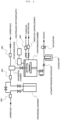
- the apparatus there are given an apparatus capable of performing bubbling supply of a precursor as illustrated in FIG. 1 and an apparatus including a vaporization chamber as illustrated in FIG. 2 .
- an apparatus capable of subjecting the reactive gas to plasma treatment as illustrated in FIG. 3 and FIG. 4 .
- the apparatus is not limited to single-substrate type apparatus as illustrated in FIG. 1 to FIG. 4 , and an apparatus capable of simultaneously processing a large number of substrates through use of a batch furnace may also be used.
- a thin-film produced through use of the thin-film forming raw material of the present invention may be formed as desired kinds of thin-films through the coating of a substrate made of, for example, a metal, oxide ceramics, nitride ceramics, or glass, by appropriately selecting the other precursor, the reactive gas, and the production conditions.
- the thin-film of the present invention is excellent in electrical characteristics and optical characteristics, and hence may be widely used for the production of, for example, electrode materials for memory elements typified by DRAM elements, resistance films, diamagnetic films used in recording layers of hard disks, and catalyst materials for polymer electrolyte fuel cells.
- the resultant orange transparent liquid was analyzed by 1 H-NMR and ICP-AES. As a result, the liquid was identified as Compound No. 27 that was a target compound. The analysis results of the resultant orange transparent liquid are described below.
- the resultant orange transparent liquid was analyzed by 1 H-NMR and ICP-AES. As a result, the liquid was identified as Compound No. 49 that was a target compound. The analysis results of the resultant orange transparent liquid are described below.
- the resultant orange transparent liquid was analyzed by 1 H-NMR and ICP-AES. As a result, the liquid was identified as Compound No. 59 that was a target compound. The analysis results of the resultant orange transparent liquid are described below.
- the weight of the test compound was measured with a TG-DTA at 10 Torr, an argon flow rate of 50 mL/min, and a temperature increase rate of 10°C/min in the scanning temperature range of from 30°C to 600°C, and a temperature (°C) when the mass of the test compound reduced by 50 mass% was evaluated as a "temperature (°C) at the time of a 50 mass% loss in reduced-pressure TG-DTA."
- a lower temperature (°C) at the time of a 50 mass% loss in reduced-pressure TG-DTA means that vapor is obtained at lower temperature.
- each of Compound No. 27, Compound No. 49, and Compound No. 59 had a thermal decomposition start temperature in the range of from 300°C to 400°C, and was hence excellent in thermal stability.
- each of Compound No. 27, Compound No. 49, and Compound No. 59 had a temperature at the time of a 50 mass% loss in reduced-pressure TG-DTA of less than 160°C, and hence vapor was obtained at low temperature.
- the zinc compound of the present invention was useful as a thin-film forming raw material.
- Comparative Compound 1 was not satisfactory as a thin-film forming raw material because of its poor thermal stability.
- a thin-film was produced on silicon dioxide that was a substrate under the following conditions by using Compound No. 27 as a thin-film forming raw material and by using the ALD apparatus illustrated in FIG. 1 .
- the composition of the thin-film was analyzed by using X-ray photoelectron spectroscopy. As a result, it was recognized that the thin-film was a thin-film containing zinc oxide, and its residual carbon amount was smaller than 0.01 atom% that was a detection limit.
- the film thickness of the thin-film was measured by using an X-ray reflectivity method. As a result, the thin-film formed on the substrate was a smooth film having a film thickness of 15 nm, and a film thickness obtained per cycle was about 0.03 nm.
- a series of steps formed of the following (1) to (4) was defined as one cycle, and the cycle was repeated 500 times.
- a thin-film was produced on silicon dioxide that was a substrate under the following conditions by using Compound No. 49 as a thin-film forming raw material and by using the ALD apparatus illustrated in FIG. 1 .
- the composition of the thin-film was analyzed by using X-ray photoelectron spectroscopy. As a result, it was recognized that the thin-film was a thin-film containing zinc oxide, and its residual carbon amount was smaller than 0.01 atom% that was a detection limit.
- the film thickness of the thin-film was measured by using an X-ray reflectivity method. As a result, the thin-film formed on the substrate was a smooth film having a film thickness of 17 nm, and a film thickness obtained per cycle was about 0.03 nm.
- a series of steps formed of the following (1) to (4) was defined as one cycle, and the cycle was repeated 500 times.
- a thin-film was produced on silicon dioxide that was a substrate under the following conditions by using Compound No. 59 as a thin-film forming raw material and by using the ALD apparatus illustrated in FIG. 1 .
- the composition of the thin-film was analyzed by using X-ray photoelectron spectroscopy. As a result, it was recognized that the thin-film was a thin-film containing zinc oxide, and its residual carbon amount was smaller than 0.01 atom% that was a detection limit.
- the film thickness of the thin-film was measured by using an X-ray reflectivity method. As a result, the thin-film formed on the substrate was a smooth film having a film thickness of 20 nm, and a film thickness obtained per cycle was about 0.04 nm.
- a series of steps formed of the following (1) to (4) was defined as one cycle, and the cycle was repeated 500 times.
- a thin-film was produced on silicon dioxide that was a substrate under the same conditions as those of Example 4 except that Comparative Compound 1 (diethylzinc) was used as a thin-film forming raw material.
- the composition of the thin-film was analyzed by using X-ray photoelectron spectroscopy. As a result, the thin-film was a thin-film containing zinc oxide, but residual carbon was detected. In addition, the state of the thin-film was observed by using scanning electron microscopy. As a result, the thin-film formed on the substrate was not smooth, and hence its film thickness could not be measured.
- the zinc compound of the present invention was able to be turned into vapor at low temperature, and was excellent in thermal stability.
- the use of the thin-film forming raw material including the zinc compound of the present invention was able to produce a high-quality zinc-containing thin-film.
Landscapes
- Chemical & Material Sciences (AREA)
- Organic Chemistry (AREA)
- General Chemical & Material Sciences (AREA)
- Chemical Kinetics & Catalysis (AREA)
- Engineering & Computer Science (AREA)
- Materials Engineering (AREA)
- Mechanical Engineering (AREA)
- Metallurgy (AREA)
- Inorganic Chemistry (AREA)
- Chemical Vapour Deposition (AREA)
- Inorganic Compounds Of Heavy Metals (AREA)
Applications Claiming Priority (2)
| Application Number | Priority Date | Filing Date | Title |
|---|---|---|---|
| JP2020065627 | 2020-04-01 | ||
| PCT/JP2021/011089 WO2021200219A1 (ja) | 2020-04-01 | 2021-03-18 | 亜鉛化合物、薄膜形成用原料、薄膜及びその製造方法 |
Publications (3)
| Publication Number | Publication Date |
|---|---|
| EP4130010A1 true EP4130010A1 (de) | 2023-02-08 |
| EP4130010A4 EP4130010A4 (de) | 2024-07-17 |
| EP4130010B1 EP4130010B1 (de) | 2026-04-29 |
Family
ID=77928403
Family Applications (1)
| Application Number | Title | Priority Date | Filing Date |
|---|---|---|---|
| EP21778924.7A Active EP4130010B1 (de) | 2020-04-01 | 2021-03-18 | Zinkverbindung, rohmaterial zur dünnschichtbildung, dünnschicht und verfahren zur herstellung einer dünnschicht |
Country Status (6)
| Country | Link |
|---|---|
| US (1) | US20230142848A1 (de) |
| EP (1) | EP4130010B1 (de) |
| JP (1) | JP7710437B2 (de) |
| KR (1) | KR102875898B1 (de) |
| IL (1) | IL296895A (de) |
| WO (1) | WO2021200219A1 (de) |
Families Citing this family (1)
| Publication number | Priority date | Publication date | Assignee | Title |
|---|---|---|---|---|
| JP7554763B2 (ja) * | 2019-11-01 | 2024-09-20 | 株式会社Adeka | 新規化合物、該化合物を含有する薄膜形成用原料及び薄膜の製造方法 |
Family Cites Families (7)
| Publication number | Priority date | Publication date | Assignee | Title |
|---|---|---|---|---|
| US6071561A (en) * | 1997-08-13 | 2000-06-06 | President And Fellows Of Harvard College | Chemical vapor deposition of fluorine-doped zinc oxide |
| JP3864214B2 (ja) | 2002-02-21 | 2006-12-27 | 独立行政法人物質・材料研究機構 | 酸化亜鉛光触媒薄膜の表面処理方法 |
| JP4565897B2 (ja) | 2004-06-14 | 2010-10-20 | 株式会社Adeka | 薄膜形成用原料及び薄膜の製造方法 |
| MX2009002181A (es) * | 2006-08-29 | 2009-04-22 | Pilkington Group Ltd | Metodo para la formacion de articulo recubierto con oxido de zinc. |
| US20090275164A1 (en) * | 2008-05-02 | 2009-11-05 | Advanced Technology Materials, Inc. | Bicyclic guanidinates and bridging diamides as cvd/ald precursors |
| CN107151347B (zh) * | 2017-06-28 | 2020-04-28 | 西北大学 | 一种用于组织填充的惰性多孔水凝胶的制备方法 |
| JP7554763B2 (ja) * | 2019-11-01 | 2024-09-20 | 株式会社Adeka | 新規化合物、該化合物を含有する薄膜形成用原料及び薄膜の製造方法 |
-
2021
- 2021-03-18 IL IL296895A patent/IL296895A/en unknown
- 2021-03-18 WO PCT/JP2021/011089 patent/WO2021200219A1/ja not_active Ceased
- 2021-03-18 JP JP2022511887A patent/JP7710437B2/ja active Active
- 2021-03-18 EP EP21778924.7A patent/EP4130010B1/de active Active
- 2021-03-18 US US17/915,300 patent/US20230142848A1/en active Pending
- 2021-03-18 KR KR1020227036836A patent/KR102875898B1/ko active Active
Also Published As
| Publication number | Publication date |
|---|---|
| TW202140500A (zh) | 2021-11-01 |
| WO2021200219A1 (ja) | 2021-10-07 |
| IL296895A (en) | 2022-12-01 |
| CN115362157A (zh) | 2022-11-18 |
| EP4130010A4 (de) | 2024-07-17 |
| KR102875898B1 (ko) | 2025-10-23 |
| JPWO2021200219A1 (de) | 2021-10-07 |
| JP7710437B2 (ja) | 2025-07-18 |
| KR20220161372A (ko) | 2022-12-06 |
| EP4130010B1 (de) | 2026-04-29 |
| US20230142848A1 (en) | 2023-05-11 |
Similar Documents
| Publication | Publication Date | Title |
|---|---|---|
| EP3783130A1 (de) | Quellenmaterial für dünnschichtbildung für atomlagenabscheidung und verfahren zur herstellung einer dünnschicht | |
| US11555044B2 (en) | Thin-film forming raw material for use in atomic layer deposition method, thin-film forming raw material, method for producing thin-film, and compound | |
| US20250109296A1 (en) | Thin-film forming raw material used in atomic layer deposition method and method of producing thin-film | |
| EP3712159B1 (de) | Rutheniumverbindung, rohstoff zur bildung einer dünnschicht, verfahren zur herstellung einer dünnschicht | |
| US20240167154A1 (en) | Thin-film forming raw material, which is used in atomic layer deposition method, thin-film, method of producing thin-film, and zinc compound | |
| EP3901326A1 (de) | Ausgangsmaterial zur herstellung einer dünnschicht für die atomschichtabscheidung, verfahren zur herstellung einer dünnschicht und alkoxidverbindung | |
| US12415821B2 (en) | Tin compound, thin-film forming raw material containing said compound, thin film formed from said thin-film forming raw material, method of producing said thin film using said compound as precursor, and method of producing said thin film | |
| US12104245B2 (en) | Compound, thin-film forming raw material that contains said compound, and method of manufacturing thin film | |
| EP4180417A1 (de) | Alkoxidverbindung, dünnschichtbildendes material und verfahren zur herstellung einer dünnschicht | |
| EP4130010B1 (de) | Zinkverbindung, rohmaterial zur dünnschichtbildung, dünnschicht und verfahren zur herstellung einer dünnschicht | |
| EP4067365B1 (de) | Verbindung, dünnschichtbildendes material und verfahren zum produzieren einer dünnschicht | |
| EP3951006A1 (de) | Rohmaterial zur formung einer dünnschicht, verfahren zur herstellung einer dünnschicht und scandiumverbindung | |
| EP4434994A1 (de) | Dünnfilmbildendes material zur verwendung bei der atomlagenabscheidung, dünnfilm, verfahren zur herstellung eines dünnfilms und rutheniumverbindung | |
| US12486573B2 (en) | Thin-film forming raw material, thin-film and method of producing thin-film | |
| US12509764B2 (en) | Thin-film forming raw material used in atomic layer deposition method, and method of producing thin-film | |
| US12559839B2 (en) | Indium compound, thin-film forming raw material, thin film, and method of producing same | |
| US12577660B2 (en) | Compound, thin-film forming raw material, thin-film, and method of producing thin-film | |
| US12480207B2 (en) | Tin compound, thin-film forming raw material, thin-film, method for producing thin-film, and halogen compound | |
| JP7516092B2 (ja) | 薄膜形成原料、薄膜及びその製造方法 | |
| CN115362157B (en) | Zinc compound, raw material for forming thin film, and method for producing same | |
| EP4249631A1 (de) | Verfahren zur herstellung einer dünnschicht | |
| KR20250155913A (ko) | 박막 형성용 조성물, 박막 형성용 조성물의 제조 방법, 박막 및 박막의 제조 방법 |
Legal Events
| Date | Code | Title | Description |
|---|---|---|---|
| STAA | Information on the status of an ep patent application or granted ep patent |
Free format text: STATUS: THE INTERNATIONAL PUBLICATION HAS BEEN MADE |
|
| PUAI | Public reference made under article 153(3) epc to a published international application that has entered the european phase |
Free format text: ORIGINAL CODE: 0009012 |
|
| STAA | Information on the status of an ep patent application or granted ep patent |
Free format text: STATUS: REQUEST FOR EXAMINATION WAS MADE |
|
| 17P | Request for examination filed |
Effective date: 20220922 |
|
| AK | Designated contracting states |
Kind code of ref document: A1 Designated state(s): AL AT BE BG CH CY CZ DE DK EE ES FI FR GB GR HR HU IE IS IT LI LT LU LV MC MK MT NL NO PL PT RO RS SE SI SK SM TR |
|
| DAV | Request for validation of the european patent (deleted) | ||
| DAX | Request for extension of the european patent (deleted) | ||
| A4 | Supplementary search report drawn up and despatched |
Effective date: 20240618 |
|
| RIC1 | Information provided on ipc code assigned before grant |
Ipc: C23C 16/455 20060101ALI20240612BHEP Ipc: C23C 16/40 20060101ALI20240612BHEP Ipc: C07F 3/00 20060101ALI20240612BHEP Ipc: C07F 3/06 20060101AFI20240612BHEP |
|
| STAA | Information on the status of an ep patent application or granted ep patent |
Free format text: STATUS: EXAMINATION IS IN PROGRESS |
|
| 17Q | First examination report despatched |
Effective date: 20250714 |
|
| GRAP | Despatch of communication of intention to grant a patent |
Free format text: ORIGINAL CODE: EPIDOSNIGR1 |
|
| STAA | Information on the status of an ep patent application or granted ep patent |
Free format text: STATUS: GRANT OF PATENT IS INTENDED |
|
| INTG | Intention to grant announced |
Effective date: 20251106 |
|
| GRAS | Grant fee paid |
Free format text: ORIGINAL CODE: EPIDOSNIGR3 |
|
| P01 | Opt-out of the competence of the unified patent court (upc) registered |
Free format text: CASE NUMBER: UPC_APP_0000642_4130010/2026 Effective date: 20260108 |
|
| GRAA | (expected) grant |
Free format text: ORIGINAL CODE: 0009210 |
|
| STAA | Information on the status of an ep patent application or granted ep patent |
Free format text: STATUS: THE PATENT HAS BEEN GRANTED |
|
| AK | Designated contracting states |
Kind code of ref document: B1 Designated state(s): AL AT BE BG CH CY CZ DE DK EE ES FI FR GB GR HR HU IE IS IT LI LT LU LV MC MK MT NL NO PL PT RO RS SE SI SK SM TR |
|
| REG | Reference to a national code |
Ref country code: CH Ref legal event code: F10 Free format text: ST27 STATUS EVENT CODE: U-0-0-F10-F00 (AS PROVIDED BY THE NATIONAL OFFICE) Effective date: 20260429 Ref country code: GB Ref legal event code: FG4D |