EP4130879A1 - Herstellungsverfahren für resistzusammensetzung und verfahren zur formung von mustern - Google Patents
Herstellungsverfahren für resistzusammensetzung und verfahren zur formung von mustern Download PDFInfo
- Publication number
- EP4130879A1 EP4130879A1 EP21779704.2A EP21779704A EP4130879A1 EP 4130879 A1 EP4130879 A1 EP 4130879A1 EP 21779704 A EP21779704 A EP 21779704A EP 4130879 A1 EP4130879 A1 EP 4130879A1
- Authority
- EP
- European Patent Office
- Prior art keywords
- group
- resist composition
- acid
- resin
- repeating unit
- Prior art date
- Legal status (The legal status is an assumption and is not a legal conclusion. Google has not performed a legal analysis and makes no representation as to the accuracy of the status listed.)
- Pending
Links
- 239000000203 mixture Substances 0.000 title claims abstract description 777
- 238000000034 method Methods 0.000 title claims abstract description 187
- 238000004519 manufacturing process Methods 0.000 title claims abstract description 85
- 238000000611 regression analysis Methods 0.000 claims abstract description 168
- 238000004458 analytical method Methods 0.000 claims abstract description 32
- 238000004364 calculation method Methods 0.000 claims abstract description 20
- 230000008859 change Effects 0.000 claims abstract description 19
- 239000011347 resin Substances 0.000 claims description 546
- 229920005989 resin Polymers 0.000 claims description 546
- 239000002253 acid Substances 0.000 claims description 254
- 239000007787 solid Substances 0.000 claims description 201
- 238000005481 NMR spectroscopy Methods 0.000 claims description 68
- 230000010354 integration Effects 0.000 claims description 42
- 230000009471 action Effects 0.000 claims description 15
- 238000000491 multivariate analysis Methods 0.000 claims description 4
- 125000000217 alkyl group Chemical group 0.000 description 220
- 125000004432 carbon atom Chemical group C* 0.000 description 166
- 150000001875 compounds Chemical class 0.000 description 146
- 125000001153 fluoro group Chemical group F* 0.000 description 146
- 229910052731 fluorine Inorganic materials 0.000 description 144
- 125000000753 cycloalkyl group Chemical group 0.000 description 133
- 125000003118 aryl group Chemical group 0.000 description 128
- 239000003795 chemical substances by application Substances 0.000 description 111
- 238000009792 diffusion process Methods 0.000 description 110
- 239000002904 solvent Substances 0.000 description 109
- -1 acryl Chemical group 0.000 description 108
- 125000001424 substituent group Chemical group 0.000 description 92
- ZCYVEMRRCGMTRW-UHFFFAOYSA-N 7553-56-2 Chemical group [I] ZCYVEMRRCGMTRW-UHFFFAOYSA-N 0.000 description 85
- 238000011156 evaluation Methods 0.000 description 82
- 229910052740 iodine Inorganic materials 0.000 description 82
- 238000011282 treatment Methods 0.000 description 81
- 238000010494 dissociation reaction Methods 0.000 description 80
- 230000005593 dissociations Effects 0.000 description 80
- 125000004435 hydrogen atom Chemical group [H]* 0.000 description 77
- 125000002887 hydroxy group Chemical group [H]O* 0.000 description 66
- 125000000962 organic group Chemical group 0.000 description 49
- 125000005843 halogen group Chemical group 0.000 description 48
- 230000002378 acidificating effect Effects 0.000 description 45
- 125000004093 cyano group Chemical group *C#N 0.000 description 43
- 125000002496 methyl group Chemical group [H]C([H])([H])* 0.000 description 43
- 125000004429 atom Chemical group 0.000 description 41
- 125000004430 oxygen atom Chemical group O* 0.000 description 36
- 239000000463 material Substances 0.000 description 35
- 125000002947 alkylene group Chemical group 0.000 description 33
- 125000005842 heteroatom Chemical group 0.000 description 33
- 125000005647 linker group Chemical group 0.000 description 32
- 125000003710 aryl alkyl group Chemical group 0.000 description 29
- 238000009826 distribution Methods 0.000 description 29
- 125000003545 alkoxy group Chemical group 0.000 description 28
- 238000011161 development Methods 0.000 description 28
- 230000018109 developmental process Effects 0.000 description 28
- 150000008053 sultones Chemical group 0.000 description 28
- 125000003342 alkenyl group Chemical group 0.000 description 27
- 125000000524 functional group Chemical group 0.000 description 27
- 150000001768 cations Chemical class 0.000 description 26
- 238000005259 measurement Methods 0.000 description 26
- 125000002950 monocyclic group Chemical group 0.000 description 26
- 125000004433 nitrogen atom Chemical group N* 0.000 description 25
- 239000003960 organic solvent Substances 0.000 description 25
- 238000012545 processing Methods 0.000 description 25
- 239000000758 substrate Substances 0.000 description 24
- 125000000686 lactone group Chemical group 0.000 description 23
- 125000003178 carboxy group Chemical group [H]OC(*)=O 0.000 description 22
- 238000001914 filtration Methods 0.000 description 22
- 230000002209 hydrophobic effect Effects 0.000 description 22
- 125000003367 polycyclic group Chemical group 0.000 description 22
- 230000005855 radiation Effects 0.000 description 22
- 229910052751 metal Inorganic materials 0.000 description 20
- 239000002184 metal Substances 0.000 description 20
- 125000001997 phenyl group Chemical group [H]C1=C([H])C([H])=C(*)C([H])=C1[H] 0.000 description 20
- 239000004094 surface-active agent Substances 0.000 description 20
- 125000002091 cationic group Chemical group 0.000 description 19
- 125000004122 cyclic group Chemical group 0.000 description 19
- 230000000694 effects Effects 0.000 description 19
- 125000001495 ethyl group Chemical group [H]C([H])([H])C([H])([H])* 0.000 description 19
- 229910052757 nitrogen Inorganic materials 0.000 description 19
- 230000000052 comparative effect Effects 0.000 description 18
- 125000004185 ester group Chemical group 0.000 description 18
- 125000000623 heterocyclic group Chemical group 0.000 description 18
- 125000001570 methylene group Chemical group [H]C([H])([*:1])[*:2] 0.000 description 18
- 229910052799 carbon Inorganic materials 0.000 description 17
- 238000010894 electron beam technology Methods 0.000 description 17
- 125000001183 hydrocarbyl group Chemical group 0.000 description 17
- 239000007788 liquid Substances 0.000 description 17
- 239000000523 sample Substances 0.000 description 17
- 239000000126 substance Substances 0.000 description 17
- 125000004434 sulfur atom Chemical group 0.000 description 17
- 125000002023 trifluoromethyl group Chemical group FC(F)(F)* 0.000 description 17
- 125000004453 alkoxycarbonyl group Chemical group 0.000 description 16
- 125000000129 anionic group Chemical group 0.000 description 16
- 125000005587 carbonate group Chemical group 0.000 description 16
- 150000002892 organic cations Chemical class 0.000 description 16
- 125000003277 amino group Chemical group 0.000 description 15
- 125000000113 cyclohexyl group Chemical group [H]C1([H])C([H])([H])C([H])([H])C([H])(*)C([H])([H])C1([H])[H] 0.000 description 15
- 238000005227 gel permeation chromatography Methods 0.000 description 15
- 238000010438 heat treatment Methods 0.000 description 15
- 125000001624 naphthyl group Chemical group 0.000 description 15
- 125000000449 nitro group Chemical group [O-][N+](*)=O 0.000 description 15
- XUIMIQQOPSSXEZ-UHFFFAOYSA-N Silicon Chemical compound [Si] XUIMIQQOPSSXEZ-UHFFFAOYSA-N 0.000 description 14
- 239000003513 alkali Substances 0.000 description 14
- 150000001721 carbon Chemical group 0.000 description 14
- 125000002915 carbonyl group Chemical group [*:2]C([*:1])=O 0.000 description 13
- 125000005010 perfluoroalkyl group Chemical group 0.000 description 13
- 229920000642 polymer Polymers 0.000 description 13
- 239000011148 porous material Substances 0.000 description 13
- 229910052710 silicon Inorganic materials 0.000 description 13
- YEJRWHAVMIAJKC-UHFFFAOYSA-N 4-Butyrolactone Chemical compound O=C1CCCO1 YEJRWHAVMIAJKC-UHFFFAOYSA-N 0.000 description 12
- 239000007864 aqueous solution Substances 0.000 description 12
- CATSNJVOTSVZJV-UHFFFAOYSA-N heptan-2-one Chemical compound CCCCCC(C)=O CATSNJVOTSVZJV-UHFFFAOYSA-N 0.000 description 12
- 125000002868 norbornyl group Chemical group C12(CCC(CC1)C2)* 0.000 description 12
- 125000000951 phenoxy group Chemical group [H]C1=C([H])C([H])=C(O*)C([H])=C1[H] 0.000 description 12
- LLHKCFNBLRBOGN-UHFFFAOYSA-N propylene glycol methyl ether acetate Chemical compound COCC(C)OC(C)=O LLHKCFNBLRBOGN-UHFFFAOYSA-N 0.000 description 12
- 239000002994 raw material Substances 0.000 description 12
- 125000004423 acyloxy group Chemical group 0.000 description 11
- 238000005530 etching Methods 0.000 description 11
- 239000012535 impurity Substances 0.000 description 11
- 150000002596 lactones Chemical group 0.000 description 11
- 230000036961 partial effect Effects 0.000 description 11
- 230000035945 sensitivity Effects 0.000 description 11
- 229910052717 sulfur Inorganic materials 0.000 description 11
- 150000001450 anions Chemical class 0.000 description 10
- JHIVVAPYMSGYDF-UHFFFAOYSA-N cyclohexanone Chemical compound O=C1CCCCC1 JHIVVAPYMSGYDF-UHFFFAOYSA-N 0.000 description 10
- 125000001511 cyclopentyl group Chemical group [H]C1([H])C([H])([H])C([H])([H])C([H])(*)C1([H])[H] 0.000 description 10
- LZCLXQDLBQLTDK-UHFFFAOYSA-N ethyl 2-hydroxypropanoate Chemical compound CCOC(=O)C(C)O LZCLXQDLBQLTDK-UHFFFAOYSA-N 0.000 description 10
- YLQBMQCUIZJEEH-UHFFFAOYSA-N tetrahydrofuran Natural products C=1C=COC=1 YLQBMQCUIZJEEH-UHFFFAOYSA-N 0.000 description 10
- WGTYBPLFGIVFAS-UHFFFAOYSA-M tetramethylammonium hydroxide Chemical compound [OH-].C[N+](C)(C)C WGTYBPLFGIVFAS-UHFFFAOYSA-M 0.000 description 10
- 239000004215 Carbon black (E152) Substances 0.000 description 9
- 125000002252 acyl group Chemical group 0.000 description 9
- 125000002993 cycloalkylene group Chemical group 0.000 description 9
- 229930195733 hydrocarbon Natural products 0.000 description 9
- 150000002430 hydrocarbons Chemical class 0.000 description 9
- 238000002156 mixing Methods 0.000 description 9
- 230000003287 optical effect Effects 0.000 description 9
- 125000005702 oxyalkylene group Chemical group 0.000 description 9
- 239000010703 silicon Substances 0.000 description 9
- XLYOFNOQVPJJNP-UHFFFAOYSA-N water Substances O XLYOFNOQVPJJNP-UHFFFAOYSA-N 0.000 description 9
- NIXOWILDQLNWCW-UHFFFAOYSA-M Acrylate Chemical compound [O-]C(=O)C=C NIXOWILDQLNWCW-UHFFFAOYSA-M 0.000 description 8
- IAZDPXIOMUYVGZ-UHFFFAOYSA-N Dimethylsulphoxide Chemical compound CS(C)=O IAZDPXIOMUYVGZ-UHFFFAOYSA-N 0.000 description 8
- YTPLMLYBLZKORZ-UHFFFAOYSA-N Thiophene Chemical group C=1C=CSC=1 YTPLMLYBLZKORZ-UHFFFAOYSA-N 0.000 description 8
- 125000005073 adamantyl group Chemical group C12(CC3CC(CC(C1)C3)C2)* 0.000 description 8
- 125000004450 alkenylene group Chemical group 0.000 description 8
- 239000003759 ester based solvent Substances 0.000 description 8
- 125000004108 n-butyl group Chemical group [H]C([H])([H])C([H])([H])C([H])([H])C([H])([H])* 0.000 description 8
- 125000000999 tert-butyl group Chemical group [H]C([H])([H])C(*)(C([H])([H])[H])C([H])([H])[H] 0.000 description 8
- FCEHBMOGCRZNNI-UHFFFAOYSA-N 1-benzothiophene Chemical group C1=CC=C2SC=CC2=C1 FCEHBMOGCRZNNI-UHFFFAOYSA-N 0.000 description 7
- OKTJSMMVPCPJKN-UHFFFAOYSA-N Carbon Chemical compound [C] OKTJSMMVPCPJKN-UHFFFAOYSA-N 0.000 description 7
- 125000001931 aliphatic group Chemical group 0.000 description 7
- 125000002029 aromatic hydrocarbon group Chemical group 0.000 description 7
- 230000006866 deterioration Effects 0.000 description 7
- LYCAIKOWRPUZTN-UHFFFAOYSA-N ethylene glycol Natural products OCCO LYCAIKOWRPUZTN-UHFFFAOYSA-N 0.000 description 7
- 125000001449 isopropyl group Chemical group [H]C([H])([H])C([H])(*)C([H])([H])[H] 0.000 description 7
- 239000012046 mixed solvent Substances 0.000 description 7
- 230000000269 nucleophilic effect Effects 0.000 description 7
- 125000001436 propyl group Chemical group [H]C([*])([H])C([H])([H])C([H])([H])[H] 0.000 description 7
- 239000000243 solution Substances 0.000 description 7
- ARXJGSRGQADJSQ-UHFFFAOYSA-N 1-methoxypropan-2-ol Chemical compound COCC(C)O ARXJGSRGQADJSQ-UHFFFAOYSA-N 0.000 description 6
- XEKOWRVHYACXOJ-UHFFFAOYSA-N Ethyl acetate Chemical compound CCOC(C)=O XEKOWRVHYACXOJ-UHFFFAOYSA-N 0.000 description 6
- CERQOIWHTDAKMF-UHFFFAOYSA-N Methacrylic acid Chemical compound CC(=C)C(O)=O CERQOIWHTDAKMF-UHFFFAOYSA-N 0.000 description 6
- OKKJLVBELUTLKV-UHFFFAOYSA-N Methanol Chemical compound OC OKKJLVBELUTLKV-UHFFFAOYSA-N 0.000 description 6
- KWYUFKZDYYNOTN-UHFFFAOYSA-M Potassium hydroxide Chemical compound [OH-].[K+] KWYUFKZDYYNOTN-UHFFFAOYSA-M 0.000 description 6
- VYPSYNLAJGMNEJ-UHFFFAOYSA-N Silicium dioxide Chemical compound O=[Si]=O VYPSYNLAJGMNEJ-UHFFFAOYSA-N 0.000 description 6
- HEMHJVSKTPXQMS-UHFFFAOYSA-M Sodium hydroxide Chemical compound [OH-].[Na+] HEMHJVSKTPXQMS-UHFFFAOYSA-M 0.000 description 6
- 239000007983 Tris buffer Substances 0.000 description 6
- 125000002723 alicyclic group Chemical group 0.000 description 6
- 125000003368 amide group Chemical group 0.000 description 6
- 125000006615 aromatic heterocyclic group Chemical group 0.000 description 6
- RTZKZFJDLAIYFH-UHFFFAOYSA-N ether Substances CCOCC RTZKZFJDLAIYFH-UHFFFAOYSA-N 0.000 description 6
- MLFHJEHSLIIPHL-UHFFFAOYSA-N isoamyl acetate Chemical compound CC(C)CCOC(C)=O MLFHJEHSLIIPHL-UHFFFAOYSA-N 0.000 description 6
- 125000006353 oxyethylene group Chemical group 0.000 description 6
- 230000008569 process Effects 0.000 description 6
- BYEAHWXPCBROCE-UHFFFAOYSA-N 1,1,1,3,3,3-hexafluoropropan-2-ol Chemical group FC(F)(F)C(O)C(F)(F)F BYEAHWXPCBROCE-UHFFFAOYSA-N 0.000 description 5
- LSNNMFCWUKXFEE-UHFFFAOYSA-M Bisulfite Chemical compound OS([O-])=O LSNNMFCWUKXFEE-UHFFFAOYSA-M 0.000 description 5
- WKBOTKDWSSQWDR-UHFFFAOYSA-N Bromine atom Chemical group [Br] WKBOTKDWSSQWDR-UHFFFAOYSA-N 0.000 description 5
- 238000003775 Density Functional Theory Methods 0.000 description 5
- SIKJAQJRHWYJAI-UHFFFAOYSA-N Indole Chemical group C1=CC=C2NC=CC2=C1 SIKJAQJRHWYJAI-UHFFFAOYSA-N 0.000 description 5
- JUJWROOIHBZHMG-UHFFFAOYSA-N Pyridine Chemical group C1=CC=NC=C1 JUJWROOIHBZHMG-UHFFFAOYSA-N 0.000 description 5
- 229910052801 chlorine Inorganic materials 0.000 description 5
- 238000001312 dry etching Methods 0.000 description 5
- 229940116333 ethyl lactate Drugs 0.000 description 5
- 125000000816 ethylene group Chemical group [H]C([H])([*:1])C([H])([H])[*:2] 0.000 description 5
- 230000001747 exhibiting effect Effects 0.000 description 5
- 229920001519 homopolymer Polymers 0.000 description 5
- 125000002883 imidazolyl group Chemical group 0.000 description 5
- 150000002739 metals Chemical class 0.000 description 5
- 239000002245 particle Substances 0.000 description 5
- 125000006239 protecting group Chemical group 0.000 description 5
- 229910052711 selenium Chemical group 0.000 description 5
- BDHFUVZGWQCTTF-UHFFFAOYSA-M sulfonate Chemical compound [O-]S(=O)=O BDHFUVZGWQCTTF-UHFFFAOYSA-M 0.000 description 5
- 125000000383 tetramethylene group Chemical group [H]C([H])([*:1])C([H])([H])C([H])([H])C([H])([H])[*:2] 0.000 description 5
- SMZOUWXMTYCWNB-UHFFFAOYSA-N 2-(2-methoxy-5-methylphenyl)ethanamine Chemical compound COC1=CC=C(C)C=C1CCN SMZOUWXMTYCWNB-UHFFFAOYSA-N 0.000 description 4
- NIXOWILDQLNWCW-UHFFFAOYSA-N 2-Propenoic acid Natural products OC(=O)C=C NIXOWILDQLNWCW-UHFFFAOYSA-N 0.000 description 4
- SVONRAPFKPVNKG-UHFFFAOYSA-N 2-ethoxyethyl acetate Chemical compound CCOCCOC(C)=O SVONRAPFKPVNKG-UHFFFAOYSA-N 0.000 description 4
- XLLXMBCBJGATSP-UHFFFAOYSA-N 2-phenylethenol Chemical group OC=CC1=CC=CC=C1 XLLXMBCBJGATSP-UHFFFAOYSA-N 0.000 description 4
- HEDRZPFGACZZDS-UHFFFAOYSA-N Chloroform Chemical compound ClC(Cl)Cl HEDRZPFGACZZDS-UHFFFAOYSA-N 0.000 description 4
- YCKRFDGAMUMZLT-UHFFFAOYSA-N Fluorine atom Chemical compound [F] YCKRFDGAMUMZLT-UHFFFAOYSA-N 0.000 description 4
- KAESVJOAVNADME-UHFFFAOYSA-N Pyrrole Chemical compound C=1C=CNC=1 KAESVJOAVNADME-UHFFFAOYSA-N 0.000 description 4
- WYURNTSHIVDZCO-UHFFFAOYSA-N Tetrahydrofuran Chemical compound C1CCOC1 WYURNTSHIVDZCO-UHFFFAOYSA-N 0.000 description 4
- 125000003158 alcohol group Chemical group 0.000 description 4
- 125000004390 alkyl sulfonyl group Chemical group 0.000 description 4
- 125000000484 butyl group Chemical group [H]C([*])([H])C([H])([H])C([H])([H])C([H])([H])[H] 0.000 description 4
- 125000001309 chloro group Chemical group Cl* 0.000 description 4
- 239000000470 constituent Substances 0.000 description 4
- BGTOWKSIORTVQH-UHFFFAOYSA-N cyclopentanone Chemical compound O=C1CCCC1 BGTOWKSIORTVQH-UHFFFAOYSA-N 0.000 description 4
- DIOQZVSQGTUSAI-UHFFFAOYSA-N decane Chemical compound CCCCCCCCCC DIOQZVSQGTUSAI-UHFFFAOYSA-N 0.000 description 4
- 230000007423 decrease Effects 0.000 description 4
- 238000004090 dissolution Methods 0.000 description 4
- SNRUBQQJIBEYMU-UHFFFAOYSA-N dodecane Chemical compound CCCCCCCCCCCC SNRUBQQJIBEYMU-UHFFFAOYSA-N 0.000 description 4
- 125000001033 ether group Chemical group 0.000 description 4
- XLLIQLLCWZCATF-UHFFFAOYSA-N ethylene glycol monomethyl ether acetate Natural products COCCOC(C)=O XLLIQLLCWZCATF-UHFFFAOYSA-N 0.000 description 4
- 239000011737 fluorine Substances 0.000 description 4
- DCAYPVUWAIABOU-UHFFFAOYSA-N hexadecane Chemical compound CCCCCCCCCCCCCCCC DCAYPVUWAIABOU-UHFFFAOYSA-N 0.000 description 4
- WGCNASOHLSPBMP-UHFFFAOYSA-N hydroxyacetaldehyde Natural products OCC=O WGCNASOHLSPBMP-UHFFFAOYSA-N 0.000 description 4
- CBOIHMRHGLHBPB-UHFFFAOYSA-N hydroxymethyl Chemical compound O[CH2] CBOIHMRHGLHBPB-UHFFFAOYSA-N 0.000 description 4
- 239000005453 ketone based solvent Substances 0.000 description 4
- LGRLWUINFJPLSH-UHFFFAOYSA-N methanide Chemical compound [CH3-] LGRLWUINFJPLSH-UHFFFAOYSA-N 0.000 description 4
- 125000004123 n-propyl group Chemical group [H]C([H])([H])C([H])([H])C([H])([H])* 0.000 description 4
- 125000006574 non-aromatic ring group Chemical group 0.000 description 4
- 125000004817 pentamethylene group Chemical group [H]C([H])([*:2])C([H])([H])C([H])([H])C([H])([H])C([H])([H])[*:1] 0.000 description 4
- 150000003335 secondary amines Chemical class 0.000 description 4
- 150000003384 small molecules Chemical class 0.000 description 4
- 125000000565 sulfonamide group Chemical group 0.000 description 4
- 125000000542 sulfonic acid group Chemical group 0.000 description 4
- 150000003512 tertiary amines Chemical class 0.000 description 4
- RSJKGSCJYJTIGS-UHFFFAOYSA-N undecane Chemical compound CCCCCCCCCCC RSJKGSCJYJTIGS-UHFFFAOYSA-N 0.000 description 4
- 125000000391 vinyl group Chemical group [H]C([*])=C([H])[H] 0.000 description 4
- IANQTJSKSUMEQM-UHFFFAOYSA-N 1-benzofuran Chemical group C1=CC=C2OC=CC2=C1 IANQTJSKSUMEQM-UHFFFAOYSA-N 0.000 description 3
- 238000005160 1H NMR spectroscopy Methods 0.000 description 3
- UIHCLUNTQKBZGK-UHFFFAOYSA-N 3-methyl-2-pentanone Chemical compound CCC(C)C(C)=O UIHCLUNTQKBZGK-UHFFFAOYSA-N 0.000 description 3
- CSCPPACGZOOCGX-UHFFFAOYSA-N Acetone Chemical compound CC(C)=O CSCPPACGZOOCGX-UHFFFAOYSA-N 0.000 description 3
- DKPFZGUDAPQIHT-UHFFFAOYSA-N Butyl acetate Natural products CCCCOC(C)=O DKPFZGUDAPQIHT-UHFFFAOYSA-N 0.000 description 3
- 239000004793 Polystyrene Substances 0.000 description 3
- DNIAPMSPPWPWGF-UHFFFAOYSA-N Propylene glycol Chemical compound CC(O)CO DNIAPMSPPWPWGF-UHFFFAOYSA-N 0.000 description 3
- 125000004448 alkyl carbonyl group Chemical group 0.000 description 3
- 150000008052 alkyl sulfonates Chemical class 0.000 description 3
- 125000004414 alkyl thio group Chemical group 0.000 description 3
- 125000005577 anthracene group Chemical group 0.000 description 3
- 125000000732 arylene group Chemical group 0.000 description 3
- 239000002585 base Substances 0.000 description 3
- 150000007514 bases Chemical class 0.000 description 3
- 239000011248 coating agent Substances 0.000 description 3
- 238000000576 coating method Methods 0.000 description 3
- 125000001559 cyclopropyl group Chemical group [H]C1([H])C([H])([H])C1([H])* 0.000 description 3
- 238000000354 decomposition reaction Methods 0.000 description 3
- VILAVOFMIJHSJA-UHFFFAOYSA-N dicarbon monoxide Chemical compound [C]=C=O VILAVOFMIJHSJA-UHFFFAOYSA-N 0.000 description 3
- 238000001035 drying Methods 0.000 description 3
- 239000003480 eluent Substances 0.000 description 3
- UHKJHMOIRYZSTH-UHFFFAOYSA-N ethyl 2-ethoxypropanoate Chemical compound CCOC(C)C(=O)OCC UHKJHMOIRYZSTH-UHFFFAOYSA-N 0.000 description 3
- DXVYLFHTJZWTRF-UHFFFAOYSA-N ethyl iso-butyl ketone Natural products CCC(=O)CC(C)C DXVYLFHTJZWTRF-UHFFFAOYSA-N 0.000 description 3
- 230000006870 function Effects 0.000 description 3
- 230000009477 glass transition Effects 0.000 description 3
- FUZZWVXGSFPDMH-UHFFFAOYSA-M hexanoate Chemical compound CCCCCC([O-])=O FUZZWVXGSFPDMH-UHFFFAOYSA-M 0.000 description 3
- RAXXELZNTBOGNW-UHFFFAOYSA-N imidazole Natural products C1=CNC=N1 RAXXELZNTBOGNW-UHFFFAOYSA-N 0.000 description 3
- 125000005462 imide group Chemical group 0.000 description 3
- 230000002401 inhibitory effect Effects 0.000 description 3
- 229940117955 isoamyl acetate Drugs 0.000 description 3
- 125000000959 isobutyl group Chemical group [H]C([H])([H])C([H])(C([H])([H])[H])C([H])([H])* 0.000 description 3
- JESXATFQYMPTNL-UHFFFAOYSA-N mono-hydroxyphenyl-ethylene Natural products OC1=CC=CC=C1C=C JESXATFQYMPTNL-UHFFFAOYSA-N 0.000 description 3
- 125000001147 pentyl group Chemical group C(CCCC)* 0.000 description 3
- ISWSIDIOOBJBQZ-UHFFFAOYSA-N phenol group Chemical group C1(=CC=CC=C1)O ISWSIDIOOBJBQZ-UHFFFAOYSA-N 0.000 description 3
- 125000003356 phenylsulfanyl group Chemical group [*]SC1=C([H])C([H])=C([H])C([H])=C1[H] 0.000 description 3
- 229920002223 polystyrene Polymers 0.000 description 3
- 238000002360 preparation method Methods 0.000 description 3
- 125000002924 primary amino group Chemical group [H]N([H])* 0.000 description 3
- 125000000168 pyrrolyl group Chemical group 0.000 description 3
- 125000002914 sec-butyl group Chemical group [H]C([H])([H])C([H])([H])C([H])(*)C([H])([H])[H] 0.000 description 3
- 125000003003 spiro group Chemical group 0.000 description 3
- 230000003746 surface roughness Effects 0.000 description 3
- 238000005406 washing Methods 0.000 description 3
- ZPVOLGVTNLDBFI-UHFFFAOYSA-N (±)-2,2,6-trimethylcyclohexanone Chemical compound CC1CCCC(C)(C)C1=O ZPVOLGVTNLDBFI-UHFFFAOYSA-N 0.000 description 2
- JOLQKTGDSGKSKJ-UHFFFAOYSA-N 1-ethoxypropan-2-ol Chemical compound CCOCC(C)O JOLQKTGDSGKSKJ-UHFFFAOYSA-N 0.000 description 2
- 238000001644 13C nuclear magnetic resonance spectroscopy Methods 0.000 description 2
- 125000004206 2,2,2-trifluoroethyl group Chemical group [H]C([H])(*)C(F)(F)F 0.000 description 2
- OXTQEWUBDTVSFB-UHFFFAOYSA-N 2,4,4-Trimethylcyclopentanone Chemical compound CC1CC(C)(C)CC1=O OXTQEWUBDTVSFB-UHFFFAOYSA-N 0.000 description 2
- HXVNBWAKAOHACI-UHFFFAOYSA-N 2,4-dimethyl-3-pentanone Chemical compound CC(C)C(=O)C(C)C HXVNBWAKAOHACI-UHFFFAOYSA-N 0.000 description 2
- FPZWZCWUIYYYBU-UHFFFAOYSA-N 2-(2-ethoxyethoxy)ethyl acetate Chemical compound CCOCCOCCOC(C)=O FPZWZCWUIYYYBU-UHFFFAOYSA-N 0.000 description 2
- HZAXFHJVJLSVMW-UHFFFAOYSA-N 2-Aminoethan-1-ol Chemical compound NCCO HZAXFHJVJLSVMW-UHFFFAOYSA-N 0.000 description 2
- XNWFRZJHXBZDAG-UHFFFAOYSA-N 2-METHOXYETHANOL Chemical compound COCCO XNWFRZJHXBZDAG-UHFFFAOYSA-N 0.000 description 2
- RXGUIWHIADMCFC-UHFFFAOYSA-N 2-Methylpropyl 2-methylpropionate Chemical compound CC(C)COC(=O)C(C)C RXGUIWHIADMCFC-UHFFFAOYSA-N 0.000 description 2
- QQZOPKMRPOGIEB-UHFFFAOYSA-N 2-Oxohexane Chemical compound CCCCC(C)=O QQZOPKMRPOGIEB-UHFFFAOYSA-N 0.000 description 2
- ZNQVEEAIQZEUHB-UHFFFAOYSA-N 2-ethoxyethanol Chemical compound CCOCCO ZNQVEEAIQZEUHB-UHFFFAOYSA-N 0.000 description 2
- ZIXLDMFVRPABBX-UHFFFAOYSA-N 2-methylcyclopentan-1-one Chemical compound CC1CCCC1=O ZIXLDMFVRPABBX-UHFFFAOYSA-N 0.000 description 2
- ZPVFWPFBNIEHGJ-UHFFFAOYSA-N 2-octanone Chemical compound CCCCCCC(C)=O ZPVFWPFBNIEHGJ-UHFFFAOYSA-N 0.000 description 2
- 125000003903 2-propenyl group Chemical group [H]C([*])([H])C([H])=C([H])[H] 0.000 description 2
- SYBYTAAJFKOIEJ-UHFFFAOYSA-N 3-Methylbutan-2-one Chemical compound CC(C)C(C)=O SYBYTAAJFKOIEJ-UHFFFAOYSA-N 0.000 description 2
- XJLDYKIEURAVBW-UHFFFAOYSA-N 3-decanone Chemical compound CCCCCCCC(=O)CC XJLDYKIEURAVBW-UHFFFAOYSA-N 0.000 description 2
- UJBOOUHRTQVGRU-UHFFFAOYSA-N 3-methylcyclohexan-1-one Chemical compound CC1CCCC(=O)C1 UJBOOUHRTQVGRU-UHFFFAOYSA-N 0.000 description 2
- RHLVCLIPMVJYKS-UHFFFAOYSA-N 3-octanone Chemical compound CCCCCC(=O)CC RHLVCLIPMVJYKS-UHFFFAOYSA-N 0.000 description 2
- HCFAJYNVAYBARA-UHFFFAOYSA-N 4-heptanone Chemical compound CCCC(=O)CCC HCFAJYNVAYBARA-UHFFFAOYSA-N 0.000 description 2
- VGVHNLRUAMRIEW-UHFFFAOYSA-N 4-methylcyclohexan-1-one Chemical compound CC1CCC(=O)CC1 VGVHNLRUAMRIEW-UHFFFAOYSA-N 0.000 description 2
- IYTXKIXETAELAV-UHFFFAOYSA-N Aethyl-n-hexyl-keton Natural products CCCCCCC(=O)CC IYTXKIXETAELAV-UHFFFAOYSA-N 0.000 description 2
- HYTRYEXINDDXJK-UHFFFAOYSA-N Ethyl isopropyl ketone Chemical compound CCC(=O)C(C)C HYTRYEXINDDXJK-UHFFFAOYSA-N 0.000 description 2
- XXRCUYVCPSWGCC-UHFFFAOYSA-N Ethyl pyruvate Chemical compound CCOC(=O)C(C)=O XXRCUYVCPSWGCC-UHFFFAOYSA-N 0.000 description 2
- ZRALSGWEFCBTJO-UHFFFAOYSA-N Guanidine Chemical compound NC(N)=N ZRALSGWEFCBTJO-UHFFFAOYSA-N 0.000 description 2
- CERQOIWHTDAKMF-UHFFFAOYSA-M Methacrylate Chemical compound CC(=C)C([O-])=O CERQOIWHTDAKMF-UHFFFAOYSA-M 0.000 description 2
- JLTDJTHDQAWBAV-UHFFFAOYSA-N N,N-dimethylaniline Chemical compound CN(C)C1=CC=CC=C1 JLTDJTHDQAWBAV-UHFFFAOYSA-N 0.000 description 2
- 229920001774 Perfluoroether Polymers 0.000 description 2
- GLUUGHFHXGJENI-UHFFFAOYSA-N Piperazine Chemical compound C1CNCCN1 GLUUGHFHXGJENI-UHFFFAOYSA-N 0.000 description 2
- NQRYJNQNLNOLGT-UHFFFAOYSA-N Piperidine Chemical compound C1CCNCC1 NQRYJNQNLNOLGT-UHFFFAOYSA-N 0.000 description 2
- 239000004698 Polyethylene Substances 0.000 description 2
- 239000004721 Polyphenylene oxide Substances 0.000 description 2
- 239000004743 Polypropylene Substances 0.000 description 2
- 239000004809 Teflon Substances 0.000 description 2
- 229920006362 Teflon® Polymers 0.000 description 2
- 229910021536 Zeolite Inorganic materials 0.000 description 2
- 238000010521 absorption reaction Methods 0.000 description 2
- 125000003172 aldehyde group Chemical group 0.000 description 2
- 125000005194 alkoxycarbonyloxy group Chemical group 0.000 description 2
- 150000003973 alkyl amines Chemical class 0.000 description 2
- 125000005196 alkyl carbonyloxy group Chemical group 0.000 description 2
- QGZKDVFQNNGYKY-UHFFFAOYSA-O ammonium group Chemical group [NH4+] QGZKDVFQNNGYKY-UHFFFAOYSA-O 0.000 description 2
- 150000001448 anilines Chemical class 0.000 description 2
- 125000005428 anthryl group Chemical group [H]C1=C([H])C([H])=C2C([H])=C3C(*)=C([H])C([H])=C([H])C3=C([H])C2=C1[H] 0.000 description 2
- 125000005142 aryl oxy sulfonyl group Chemical group 0.000 description 2
- 125000005228 aryl sulfonate group Chemical group 0.000 description 2
- 125000004104 aryloxy group Chemical group 0.000 description 2
- RFRXIWQYSOIBDI-UHFFFAOYSA-N benzarone Chemical compound CCC=1OC2=CC=CC=C2C=1C(=O)C1=CC=C(O)C=C1 RFRXIWQYSOIBDI-UHFFFAOYSA-N 0.000 description 2
- 230000015572 biosynthetic process Effects 0.000 description 2
- 125000001951 carbamoylamino group Chemical group C(N)(=O)N* 0.000 description 2
- 150000007942 carboxylates Chemical group 0.000 description 2
- 239000002131 composite material Substances 0.000 description 2
- 238000011109 contamination Methods 0.000 description 2
- 239000011162 core material Substances 0.000 description 2
- 150000003983 crown ethers Chemical group 0.000 description 2
- 125000006165 cyclic alkyl group Chemical group 0.000 description 2
- 125000001995 cyclobutyl group Chemical group [H]C1([H])C([H])([H])C([H])(*)C1([H])[H] 0.000 description 2
- ZAJNGDIORYACQU-UHFFFAOYSA-N decan-2-one Chemical compound CCCCCCCCC(C)=O ZAJNGDIORYACQU-UHFFFAOYSA-N 0.000 description 2
- 238000010586 diagram Methods 0.000 description 2
- HNPSIPDUKPIQMN-UHFFFAOYSA-N dioxosilane;oxo(oxoalumanyloxy)alumane Chemical compound O=[Si]=O.O=[Al]O[Al]=O HNPSIPDUKPIQMN-UHFFFAOYSA-N 0.000 description 2
- 238000007598 dipping method Methods 0.000 description 2
- 238000002408 directed self-assembly Methods 0.000 description 2
- 238000004821 distillation Methods 0.000 description 2
- 125000003438 dodecyl group Chemical group [H]C([H])([H])C([H])([H])C([H])([H])C([H])([H])C([H])([H])C([H])([H])C([H])([H])C([H])([H])C([H])([H])C([H])([H])C([H])([H])C([H])([H])* 0.000 description 2
- 125000005678 ethenylene group Chemical group [H]C([*:1])=C([H])[*:2] 0.000 description 2
- 125000002573 ethenylidene group Chemical group [*]=C=C([H])[H] 0.000 description 2
- 229940117360 ethyl pyruvate Drugs 0.000 description 2
- 238000001704 evaporation Methods 0.000 description 2
- 239000000945 filler Substances 0.000 description 2
- JBFHTYHTHYHCDJ-UHFFFAOYSA-N gamma-caprolactone Chemical compound CCC1CCC(=O)O1 JBFHTYHTHYHCDJ-UHFFFAOYSA-N 0.000 description 2
- IPBFYZQJXZJBFQ-UHFFFAOYSA-N gamma-octalactone Chemical compound CCCCC1CCC(=O)O1 IPBFYZQJXZJBFQ-UHFFFAOYSA-N 0.000 description 2
- GAEKPEKOJKCEMS-UHFFFAOYSA-N gamma-valerolactone Chemical compound CC1CCC(=O)O1 GAEKPEKOJKCEMS-UHFFFAOYSA-N 0.000 description 2
- NGAZZOYFWWSOGK-UHFFFAOYSA-N heptan-3-one Chemical compound CCCCC(=O)CC NGAZZOYFWWSOGK-UHFFFAOYSA-N 0.000 description 2
- AOGQPLXWSUTHQB-UHFFFAOYSA-N hexyl acetate Chemical compound CCCCCCOC(C)=O AOGQPLXWSUTHQB-UHFFFAOYSA-N 0.000 description 2
- 125000004051 hexyl group Chemical group [H]C([H])([H])C([H])([H])C([H])([H])C([H])([H])C([H])([H])C([H])([H])* 0.000 description 2
- XLYOFNOQVPJJNP-UHFFFAOYSA-M hydroxide Chemical compound [OH-] XLYOFNOQVPJJNP-UHFFFAOYSA-M 0.000 description 2
- 125000004029 hydroxymethyl group Chemical group [H]OC([H])([H])* 0.000 description 2
- 238000007654 immersion Methods 0.000 description 2
- 238000010348 incorporation Methods 0.000 description 2
- PZOUSPYUWWUPPK-UHFFFAOYSA-N indole Natural products CC1=CC=CC2=C1C=CN2 PZOUSPYUWWUPPK-UHFFFAOYSA-N 0.000 description 2
- RKJUIXBNRJVNHR-UHFFFAOYSA-N indolenine Natural products C1=CC=C2CC=NC2=C1 RKJUIXBNRJVNHR-UHFFFAOYSA-N 0.000 description 2
- 125000001041 indolyl group Chemical group 0.000 description 2
- 238000002347 injection Methods 0.000 description 2
- 239000007924 injection Substances 0.000 description 2
- 230000003993 interaction Effects 0.000 description 2
- 238000005342 ion exchange Methods 0.000 description 2
- 230000001678 irradiating effect Effects 0.000 description 2
- 239000010410 layer Substances 0.000 description 2
- 238000001459 lithography Methods 0.000 description 2
- 125000005641 methacryl group Chemical group 0.000 description 2
- 238000004776 molecular orbital Methods 0.000 description 2
- 239000000178 monomer Substances 0.000 description 2
- 230000003472 neutralizing effect Effects 0.000 description 2
- VKCYHJWLYTUGCC-UHFFFAOYSA-N nonan-2-one Chemical compound CCCCCCCC(C)=O VKCYHJWLYTUGCC-UHFFFAOYSA-N 0.000 description 2
- FDJSESZWPWMLEC-UHFFFAOYSA-N nonane Chemical compound CCCCCCCC[CH2+] FDJSESZWPWMLEC-UHFFFAOYSA-N 0.000 description 2
- BKIMMITUMNQMOS-UHFFFAOYSA-N normal nonane Natural products CCCCCCCCC BKIMMITUMNQMOS-UHFFFAOYSA-N 0.000 description 2
- NOUWNNABOUGTDQ-UHFFFAOYSA-N octane Chemical compound CCCCCCC[CH2+] NOUWNNABOUGTDQ-UHFFFAOYSA-N 0.000 description 2
- 125000002347 octyl group Chemical group [H]C([*])([H])C([H])([H])C([H])([H])C([H])([H])C([H])([H])C([H])([H])C([H])([H])C([H])([H])[H] 0.000 description 2
- XNLICIUVMPYHGG-UHFFFAOYSA-N pentan-2-one Chemical compound CCCC(C)=O XNLICIUVMPYHGG-UHFFFAOYSA-N 0.000 description 2
- FDPIMTJIUBPUKL-UHFFFAOYSA-N pentan-3-one Chemical compound CCC(=O)CC FDPIMTJIUBPUKL-UHFFFAOYSA-N 0.000 description 2
- PNJWIWWMYCMZRO-UHFFFAOYSA-N pent‐4‐en‐2‐one Natural products CC(=O)CC=C PNJWIWWMYCMZRO-UHFFFAOYSA-N 0.000 description 2
- 125000005003 perfluorobutyl group Chemical group FC(F)(F)C(F)(F)C(F)(F)C(F)(F)* 0.000 description 2
- 125000005004 perfluoroethyl group Chemical group FC(F)(F)C(F)(F)* 0.000 description 2
- 125000005009 perfluoropropyl group Chemical group FC(C(C(F)(F)F)(F)F)(F)* 0.000 description 2
- 125000000843 phenylene group Chemical group C1(=C(C=CC=C1)*)* 0.000 description 2
- 229920000570 polyether Polymers 0.000 description 2
- 229920000573 polyethylene Polymers 0.000 description 2
- 229920001155 polypropylene Polymers 0.000 description 2
- 229920001343 polytetrafluoroethylene Polymers 0.000 description 2
- 239000004810 polytetrafluoroethylene Substances 0.000 description 2
- RUOJZAUFBMNUDX-UHFFFAOYSA-N propylene carbonate Chemical compound CC1COC(=O)O1 RUOJZAUFBMNUDX-UHFFFAOYSA-N 0.000 description 2
- 125000003373 pyrazinyl group Chemical group 0.000 description 2
- 150000003242 quaternary ammonium salts Chemical class 0.000 description 2
- 229930195734 saturated hydrocarbon Natural products 0.000 description 2
- 239000004065 semiconductor Substances 0.000 description 2
- 238000000926 separation method Methods 0.000 description 2
- 229910002027 silica gel Inorganic materials 0.000 description 2
- 239000000741 silica gel Substances 0.000 description 2
- 239000000377 silicon dioxide Substances 0.000 description 2
- 238000005507 spraying Methods 0.000 description 2
- 125000002130 sulfonic acid ester group Chemical group 0.000 description 2
- 125000005463 sulfonylimide group Chemical group 0.000 description 2
- 230000008961 swelling Effects 0.000 description 2
- 125000005207 tetraalkylammonium group Chemical group 0.000 description 2
- BFKJFAAPBSQJPD-UHFFFAOYSA-N tetrafluoroethene Chemical compound FC(F)=C(F)F BFKJFAAPBSQJPD-UHFFFAOYSA-N 0.000 description 2
- 125000000101 thioether group Chemical group 0.000 description 2
- 125000003396 thiol group Chemical group [H]S* 0.000 description 2
- 229930192474 thiophene Natural products 0.000 description 2
- 125000005270 trialkylamine group Chemical group 0.000 description 2
- JOYRKODLDBILNP-UHFFFAOYSA-N urethane group Chemical group NC(=O)OCC JOYRKODLDBILNP-UHFFFAOYSA-N 0.000 description 2
- 229910052727 yttrium Inorganic materials 0.000 description 2
- 239000010457 zeolite Substances 0.000 description 2
- LABTWGUMFABVFG-ONEGZZNKSA-N (3E)-pent-3-en-2-one Chemical compound C\C=C\C(C)=O LABTWGUMFABVFG-ONEGZZNKSA-N 0.000 description 1
- SJHPCNCNNSSLPL-CSKARUKUSA-N (4e)-4-(ethoxymethylidene)-2-phenyl-1,3-oxazol-5-one Chemical group O1C(=O)C(=C/OCC)\N=C1C1=CC=CC=C1 SJHPCNCNNSSLPL-CSKARUKUSA-N 0.000 description 1
- DNIAPMSPPWPWGF-GSVOUGTGSA-N (R)-(-)-Propylene glycol Chemical group C[C@@H](O)CO DNIAPMSPPWPWGF-GSVOUGTGSA-N 0.000 description 1
- ULPMRIXXHGUZFA-UHFFFAOYSA-N (R)-4-Methyl-3-hexanone Natural products CCC(C)C(=O)CC ULPMRIXXHGUZFA-UHFFFAOYSA-N 0.000 description 1
- GKNWQHIXXANPTN-UHFFFAOYSA-M 1,1,2,2,2-pentafluoroethanesulfonate Chemical compound [O-]S(=O)(=O)C(F)(F)C(F)(F)F GKNWQHIXXANPTN-UHFFFAOYSA-M 0.000 description 1
- JGTNAGYHADQMCM-UHFFFAOYSA-M 1,1,2,2,3,3,4,4,4-nonafluorobutane-1-sulfonate Chemical compound [O-]S(=O)(=O)C(F)(F)C(F)(F)C(F)(F)C(F)(F)F JGTNAGYHADQMCM-UHFFFAOYSA-M 0.000 description 1
- YEDDVXZFXSHDIB-UHFFFAOYSA-N 1,1,2,2,3,3-hexafluoropropan-1-ol Chemical group OC(F)(F)C(F)(F)C(F)F YEDDVXZFXSHDIB-UHFFFAOYSA-N 0.000 description 1
- UGUHFDPGDQDVGX-UHFFFAOYSA-N 1,2,3-thiadiazole Chemical group C1=CSN=N1 UGUHFDPGDQDVGX-UHFFFAOYSA-N 0.000 description 1
- JYEUMXHLPRZUAT-UHFFFAOYSA-N 1,2,3-triazine Chemical group C1=CN=NN=C1 JYEUMXHLPRZUAT-UHFFFAOYSA-N 0.000 description 1
- ZZXUZKXVROWEIF-UHFFFAOYSA-N 1,2-butylene carbonate Chemical compound CCC1COC(=O)O1 ZZXUZKXVROWEIF-UHFFFAOYSA-N 0.000 description 1
- VAYTZRYEBVHVLE-UHFFFAOYSA-N 1,3-dioxol-2-one Chemical compound O=C1OC=CO1 VAYTZRYEBVHVLE-UHFFFAOYSA-N 0.000 description 1
- SGUVLZREKBPKCE-UHFFFAOYSA-N 1,5-diazabicyclo[4.3.0]-non-5-ene Chemical compound C1CCN=C2CCCN21 SGUVLZREKBPKCE-UHFFFAOYSA-N 0.000 description 1
- RWNUSVWFHDHRCJ-UHFFFAOYSA-N 1-butoxypropan-2-ol Chemical compound CCCCOCC(C)O RWNUSVWFHDHRCJ-UHFFFAOYSA-N 0.000 description 1
- FUWDFGKRNIDKAE-UHFFFAOYSA-N 1-butoxypropan-2-yl acetate Chemical compound CCCCOCC(C)OC(C)=O FUWDFGKRNIDKAE-UHFFFAOYSA-N 0.000 description 1
- LIPRQQHINVWJCH-UHFFFAOYSA-N 1-ethoxypropan-2-yl acetate Chemical compound CCOCC(C)OC(C)=O LIPRQQHINVWJCH-UHFFFAOYSA-N 0.000 description 1
- ODDDCGGSPAPBOS-UHFFFAOYSA-N 1-ethoxypropan-2-yl propanoate Chemical compound CCOCC(C)OC(=O)CC ODDDCGGSPAPBOS-UHFFFAOYSA-N 0.000 description 1
- DOVZUKKPYKRVIK-UHFFFAOYSA-N 1-methoxypropan-2-yl propanoate Chemical compound CCC(=O)OC(C)COC DOVZUKKPYKRVIK-UHFFFAOYSA-N 0.000 description 1
- KWKAKUADMBZCLK-UHFFFAOYSA-N 1-octene Chemical group CCCCCCC=C KWKAKUADMBZCLK-UHFFFAOYSA-N 0.000 description 1
- DMFAHCVITRDZQB-UHFFFAOYSA-N 1-propoxypropan-2-yl acetate Chemical compound CCCOCC(C)OC(C)=O DMFAHCVITRDZQB-UHFFFAOYSA-N 0.000 description 1
- HFZLSTDPRQSZCQ-UHFFFAOYSA-N 1-pyrrolidin-3-ylpyrrolidine Chemical compound C1CCCN1C1CNCC1 HFZLSTDPRQSZCQ-UHFFFAOYSA-N 0.000 description 1
- HYZJCKYKOHLVJF-UHFFFAOYSA-N 1H-benzimidazole Chemical compound C1=CC=C2NC=NC2=C1 HYZJCKYKOHLVJF-UHFFFAOYSA-N 0.000 description 1
- UIQGEWJEWJMQSL-UHFFFAOYSA-N 2,2,4,4-tetramethylpentan-3-one Chemical compound CC(C)(C)C(=O)C(C)(C)C UIQGEWJEWJMQSL-UHFFFAOYSA-N 0.000 description 1
- KNSPBSQWRKKAPI-UHFFFAOYSA-N 2,2-dimethylcyclohexan-1-one Chemical compound CC1(C)CCCCC1=O KNSPBSQWRKKAPI-UHFFFAOYSA-N 0.000 description 1
- FTGZMZBYOHMEPS-UHFFFAOYSA-N 2,2-dimethylcyclopentan-1-one Chemical compound CC1(C)CCCC1=O FTGZMZBYOHMEPS-UHFFFAOYSA-N 0.000 description 1
- YQTCQNIPQMJNTI-UHFFFAOYSA-N 2,2-dimethylpropan-1-one Chemical group CC(C)(C)[C]=O YQTCQNIPQMJNTI-UHFFFAOYSA-N 0.000 description 1
- GQHTUMJGOHRCHB-UHFFFAOYSA-N 2,3,4,6,7,8,9,10-octahydropyrimido[1,2-a]azepine Chemical compound C1CCCCN2CCCN=C21 GQHTUMJGOHRCHB-UHFFFAOYSA-N 0.000 description 1
- RNIPJYFZGXJSDD-UHFFFAOYSA-N 2,4,5-triphenyl-1h-imidazole Chemical compound C1=CC=CC=C1C1=NC(C=2C=CC=CC=2)=C(C=2C=CC=CC=2)N1 RNIPJYFZGXJSDD-UHFFFAOYSA-N 0.000 description 1
- NKIZSFXAIKPBCL-UHFFFAOYSA-N 2,5-dichloro-3,6-dimethylpyrazine Chemical compound CC1=NC(Cl)=C(C)N=C1Cl NKIZSFXAIKPBCL-UHFFFAOYSA-N 0.000 description 1
- WKBALTUBRZPIPZ-UHFFFAOYSA-N 2,6-di(propan-2-yl)aniline Chemical compound CC(C)C1=CC=CC(C(C)C)=C1N WKBALTUBRZPIPZ-UHFFFAOYSA-N 0.000 description 1
- AILVYPLQKCQNJC-UHFFFAOYSA-N 2,6-dimethylcyclohexan-1-one Chemical compound CC1CCCC(C)C1=O AILVYPLQKCQNJC-UHFFFAOYSA-N 0.000 description 1
- XGLVDUUYFKXKPL-UHFFFAOYSA-N 2-(2-methoxyethoxy)-n,n-bis[2-(2-methoxyethoxy)ethyl]ethanamine Chemical compound COCCOCCN(CCOCCOC)CCOCCOC XGLVDUUYFKXKPL-UHFFFAOYSA-N 0.000 description 1
- ZWEHNKRNPOVVGH-UHFFFAOYSA-N 2-Butanone Chemical compound CCC(C)=O ZWEHNKRNPOVVGH-UHFFFAOYSA-N 0.000 description 1
- PTTPXKJBFFKCEK-UHFFFAOYSA-N 2-Methyl-4-heptanone Chemical compound CC(C)CC(=O)CC(C)C PTTPXKJBFFKCEK-UHFFFAOYSA-N 0.000 description 1
- OJPDDQSCZGTACX-UHFFFAOYSA-N 2-[n-(2-hydroxyethyl)anilino]ethanol Chemical compound OCCN(CCO)C1=CC=CC=C1 OJPDDQSCZGTACX-UHFFFAOYSA-N 0.000 description 1
- XHIUFYZDQBSEMF-UHFFFAOYSA-N 2-methylbutyl acetate Chemical compound CCC(C)COC(C)=O XHIUFYZDQBSEMF-UHFFFAOYSA-N 0.000 description 1
- FDMAFOTXGNYBFG-UHFFFAOYSA-N 2-methylcycloheptan-1-one Chemical compound CC1CCCCCC1=O FDMAFOTXGNYBFG-UHFFFAOYSA-N 0.000 description 1
- XYYMFUCZDNNGFS-UHFFFAOYSA-N 2-methylheptan-3-one Chemical compound CCCCC(=O)C(C)C XYYMFUCZDNNGFS-UHFFFAOYSA-N 0.000 description 1
- 125000000094 2-phenylethyl group Chemical group [H]C1=C([H])C([H])=C(C([H])=C1[H])C([H])([H])C([H])([H])* 0.000 description 1
- ALZLTHLQMAFAPA-UHFFFAOYSA-N 3-Methylbutyrolactone Chemical compound CC1COC(=O)C1 ALZLTHLQMAFAPA-UHFFFAOYSA-N 0.000 description 1
- PFCHFHIRKBAQGU-UHFFFAOYSA-N 3-hexanone Chemical compound CCCC(=O)CC PFCHFHIRKBAQGU-UHFFFAOYSA-N 0.000 description 1
- FWIBCWKHNZBDLS-UHFFFAOYSA-N 3-hydroxyoxolan-2-one Chemical compound OC1CCOC1=O FWIBCWKHNZBDLS-UHFFFAOYSA-N 0.000 description 1
- GSYFDULLCGVSNJ-UHFFFAOYSA-N 3-methylcycloheptan-1-one Chemical compound CC1CCCCC(=O)C1 GSYFDULLCGVSNJ-UHFFFAOYSA-N 0.000 description 1
- AOKRXIIIYJGNNU-UHFFFAOYSA-N 3-methylcyclopentan-1-one Chemical compound CC1CCC(=O)C1 AOKRXIIIYJGNNU-UHFFFAOYSA-N 0.000 description 1
- LDMRLRNXHLPZJN-UHFFFAOYSA-N 3-propoxypropan-1-ol Chemical compound CCCOCCCO LDMRLRNXHLPZJN-UHFFFAOYSA-N 0.000 description 1
- AZASWMGVGQEVCS-UHFFFAOYSA-N 4,4-dimethylpentan-2-one Chemical compound CC(=O)CC(C)(C)C AZASWMGVGQEVCS-UHFFFAOYSA-N 0.000 description 1
- OKSDJGWHKXFVME-UHFFFAOYSA-N 4-ethylcyclohexan-1-one Chemical compound CCC1CCC(=O)CC1 OKSDJGWHKXFVME-UHFFFAOYSA-N 0.000 description 1
- RNDVGJZUHCKENF-UHFFFAOYSA-N 5-hexen-2-one Chemical compound CC(=O)CCC=C RNDVGJZUHCKENF-UHFFFAOYSA-N 0.000 description 1
- PSBKJPTZCVYXSD-UHFFFAOYSA-N 5-methylheptan-3-one Chemical compound CCC(C)CC(=O)CC PSBKJPTZCVYXSD-UHFFFAOYSA-N 0.000 description 1
- LPEKGGXMPWTOCB-UHFFFAOYSA-N 8beta-(2,3-epoxy-2-methylbutyryloxy)-14-acetoxytithifolin Natural products COC(=O)C(C)O LPEKGGXMPWTOCB-UHFFFAOYSA-N 0.000 description 1
- QTBSBXVTEAMEQO-UHFFFAOYSA-M Acetate Chemical compound CC([O-])=O QTBSBXVTEAMEQO-UHFFFAOYSA-M 0.000 description 1
- YNMZZHPSYMOGCI-UHFFFAOYSA-N Aethyl-octyl-keton Natural products CCCCCCCCC(=O)CC YNMZZHPSYMOGCI-UHFFFAOYSA-N 0.000 description 1
- BTBUEUYNUDRHOZ-UHFFFAOYSA-N Borate Chemical compound [O-]B([O-])[O-] BTBUEUYNUDRHOZ-UHFFFAOYSA-N 0.000 description 1
- CPELXLSAUQHCOX-UHFFFAOYSA-M Bromide Chemical compound [Br-] CPELXLSAUQHCOX-UHFFFAOYSA-M 0.000 description 1
- MRABAEUHTLLEML-UHFFFAOYSA-N Butyl lactate Chemical compound CCCCOC(=O)C(C)O MRABAEUHTLLEML-UHFFFAOYSA-N 0.000 description 1
- VEXZGXHMUGYJMC-UHFFFAOYSA-M Chloride anion Chemical compound [Cl-] VEXZGXHMUGYJMC-UHFFFAOYSA-M 0.000 description 1
- ZAMOUSCENKQFHK-UHFFFAOYSA-N Chlorine atom Chemical compound [Cl] ZAMOUSCENKQFHK-UHFFFAOYSA-N 0.000 description 1
- QGLBZNZGBLRJGS-UHFFFAOYSA-N Dihydro-3-methyl-2(3H)-furanone Chemical compound CC1CCOC1=O QGLBZNZGBLRJGS-UHFFFAOYSA-N 0.000 description 1
- KMTRUDSVKNLOMY-UHFFFAOYSA-N Ethylene carbonate Chemical compound O=C1OCCO1 KMTRUDSVKNLOMY-UHFFFAOYSA-N 0.000 description 1
- UFHFLCQGNIYNRP-UHFFFAOYSA-N Hydrogen Chemical compound [H][H] UFHFLCQGNIYNRP-UHFFFAOYSA-N 0.000 description 1
- KFZMGEQAYNKOFK-UHFFFAOYSA-N Isopropanol Chemical group CC(C)O KFZMGEQAYNKOFK-UHFFFAOYSA-N 0.000 description 1
- AFVFQIVMOAPDHO-UHFFFAOYSA-N Methanesulfonic acid Chemical compound CS(O)(=O)=O AFVFQIVMOAPDHO-UHFFFAOYSA-N 0.000 description 1
- NTIZESTWPVYFNL-UHFFFAOYSA-N Methyl isobutyl ketone Chemical compound CC(C)CC(C)=O NTIZESTWPVYFNL-UHFFFAOYSA-N 0.000 description 1
- FXHOOIRPVKKKFG-UHFFFAOYSA-N N,N-Dimethylacetamide Chemical compound CN(C)C(C)=O FXHOOIRPVKKKFG-UHFFFAOYSA-N 0.000 description 1
- SECXISVLQFMRJM-UHFFFAOYSA-N N-Methylpyrrolidone Chemical compound CN1CCCC1=O SECXISVLQFMRJM-UHFFFAOYSA-N 0.000 description 1
- CHJJGSNFBQVOTG-UHFFFAOYSA-N N-methyl-guanidine Natural products CNC(N)=N CHJJGSNFBQVOTG-UHFFFAOYSA-N 0.000 description 1
- PAYRUJLWNCNPSJ-UHFFFAOYSA-N N-phenyl amine Natural products NC1=CC=CC=C1 PAYRUJLWNCNPSJ-UHFFFAOYSA-N 0.000 description 1
- 229910019142 PO4 Inorganic materials 0.000 description 1
- NBIIXXVUZAFLBC-UHFFFAOYSA-N Phosphoric acid Chemical group OP(O)(O)=O NBIIXXVUZAFLBC-UHFFFAOYSA-N 0.000 description 1
- WTKZEGDFNFYCGP-UHFFFAOYSA-N Pyrazole Chemical compound C=1C=NNC=1 WTKZEGDFNFYCGP-UHFFFAOYSA-N 0.000 description 1
- FZWLAAWBMGSTSO-UHFFFAOYSA-N Thiazole Chemical group C1=CSC=N1 FZWLAAWBMGSTSO-UHFFFAOYSA-N 0.000 description 1
- GSEJCLTVZPLZKY-UHFFFAOYSA-N Triethanolamine Chemical compound OCCN(CCO)CCO GSEJCLTVZPLZKY-UHFFFAOYSA-N 0.000 description 1
- JKZWZMPRTYKSJF-UHFFFAOYSA-N [OH-].CC(=O)CC1=CC=C[SH+]1 Chemical compound [OH-].CC(=O)CC1=CC=C[SH+]1 JKZWZMPRTYKSJF-UHFFFAOYSA-N 0.000 description 1
- 239000006096 absorbing agent Substances 0.000 description 1
- CSCPPACGZOOCGX-WFGJKAKNSA-N acetone d6 Chemical compound [2H]C([2H])([2H])C(=O)C([2H])([2H])[2H] CSCPPACGZOOCGX-WFGJKAKNSA-N 0.000 description 1
- 125000002777 acetyl group Chemical group [H]C([H])([H])C(*)=O 0.000 description 1
- 150000007513 acids Chemical class 0.000 description 1
- 230000004913 activation Effects 0.000 description 1
- ORILYTVJVMAKLC-UHFFFAOYSA-N adamantane Chemical group C1C(C2)CC3CC1CC2C3 ORILYTVJVMAKLC-UHFFFAOYSA-N 0.000 description 1
- JIMXXGFJRDUSRO-UHFFFAOYSA-M adamantane-1-carboxylate Chemical compound C1C(C2)CC3CC2CC1(C(=O)[O-])C3 JIMXXGFJRDUSRO-UHFFFAOYSA-M 0.000 description 1
- 125000005571 adamantylene group Chemical group 0.000 description 1
- 239000000654 additive Substances 0.000 description 1
- 238000004378 air conditioning Methods 0.000 description 1
- 239000005456 alcohol based solvent Substances 0.000 description 1
- 230000001476 alcoholic effect Effects 0.000 description 1
- 150000001298 alcohols Chemical class 0.000 description 1
- 150000001334 alicyclic compounds Chemical class 0.000 description 1
- 150000007824 aliphatic compounds Chemical class 0.000 description 1
- 150000001338 aliphatic hydrocarbons Chemical group 0.000 description 1
- 125000005078 alkoxycarbonylalkyl group Chemical group 0.000 description 1
- 125000005079 alkoxycarbonylmethyl group Chemical group 0.000 description 1
- 125000002521 alkyl halide group Chemical class 0.000 description 1
- 125000005278 alkyl sulfonyloxy group Chemical group 0.000 description 1
- 229910052782 aluminium Inorganic materials 0.000 description 1
- 150000001408 amides Chemical class 0.000 description 1
- 125000004103 aminoalkyl group Chemical group 0.000 description 1
- 229940072049 amyl acetate Drugs 0.000 description 1
- PGMYKACGEOXYJE-UHFFFAOYSA-N anhydrous amyl acetate Natural products CCCCCOC(C)=O PGMYKACGEOXYJE-UHFFFAOYSA-N 0.000 description 1
- 125000002490 anilino group Chemical group [H]N(*)C1=C([H])C([H])=C([H])C([H])=C1[H] 0.000 description 1
- 125000004653 anthracenylene group Chemical group 0.000 description 1
- 150000001462 antimony Chemical class 0.000 description 1
- 238000013459 approach Methods 0.000 description 1
- 229910052785 arsenic Inorganic materials 0.000 description 1
- 125000005098 aryl alkoxy carbonyl group Chemical group 0.000 description 1
- 125000005161 aryl oxy carbonyl group Chemical group 0.000 description 1
- 125000005110 aryl thio group Chemical group 0.000 description 1
- QVGXLLKOCUKJST-UHFFFAOYSA-N atomic oxygen Chemical compound [O] QVGXLLKOCUKJST-UHFFFAOYSA-N 0.000 description 1
- 229940077388 benzenesulfonate Drugs 0.000 description 1
- 125000003785 benzimidazolyl group Chemical group N1=C(NC2=C1C=CC=C2)* 0.000 description 1
- 125000001797 benzyl group Chemical group [H]C1=C([H])C([H])=C(C([H])=C1[H])C([H])([H])* 0.000 description 1
- GSCLMSFRWBPUSK-UHFFFAOYSA-N beta-Butyrolactone Chemical compound CC1CC(=O)O1 GSCLMSFRWBPUSK-UHFFFAOYSA-N 0.000 description 1
- VEZXCJBBBCKRPI-UHFFFAOYSA-N beta-propiolactone Chemical compound O=C1CCO1 VEZXCJBBBCKRPI-UHFFFAOYSA-N 0.000 description 1
- 125000002619 bicyclic group Chemical group 0.000 description 1
- 230000005540 biological transmission Effects 0.000 description 1
- 125000002529 biphenylenyl group Chemical group C1(=CC=CC=2C3=CC=CC=C3C12)* 0.000 description 1
- VIIRNWDYAQXNGQ-UHFFFAOYSA-M bis(2-tert-butylphenyl)iodanium;hydroxide Chemical compound [OH-].CC(C)(C)C1=CC=CC=C1[I+]C1=CC=CC=C1C(C)(C)C VIIRNWDYAQXNGQ-UHFFFAOYSA-M 0.000 description 1
- 238000009835 boiling Methods 0.000 description 1
- 150000001638 boron Chemical class 0.000 description 1
- GDTBXPJZTBHREO-UHFFFAOYSA-N bromine Substances BrBr GDTBXPJZTBHREO-UHFFFAOYSA-N 0.000 description 1
- 229910052794 bromium Inorganic materials 0.000 description 1
- QDHFHIQKOVNCNC-UHFFFAOYSA-M butane-1-sulfonate Chemical compound CCCCS([O-])(=O)=O QDHFHIQKOVNCNC-UHFFFAOYSA-M 0.000 description 1
- 125000004106 butoxy group Chemical group [*]OC([H])([H])C([H])([H])C(C([H])([H])[H])([H])[H] 0.000 description 1
- 239000001191 butyl (2R)-2-hydroxypropanoate Substances 0.000 description 1
- XUPYJHCZDLZNFP-UHFFFAOYSA-N butyl butanoate Chemical compound CCCCOC(=O)CCC XUPYJHCZDLZNFP-UHFFFAOYSA-N 0.000 description 1
- 125000004063 butyryl group Chemical group O=C([*])C([H])([H])C([H])([H])C([H])([H])[H] 0.000 description 1
- 229910052793 cadmium Inorganic materials 0.000 description 1
- 229910052791 calcium Inorganic materials 0.000 description 1
- 238000011088 calibration curve Methods 0.000 description 1
- MIOPJNTWMNEORI-UHFFFAOYSA-M camphorsulfonate anion Chemical compound C1CC2(CS([O-])(=O)=O)C(=O)CC1C2(C)C MIOPJNTWMNEORI-UHFFFAOYSA-M 0.000 description 1
- 230000021523 carboxylation Effects 0.000 description 1
- 238000006473 carboxylation reaction Methods 0.000 description 1
- 125000003262 carboxylic acid ester group Chemical group [H]C([H])([*:2])OC(=O)C([H])([H])[*:1] 0.000 description 1
- 230000015556 catabolic process Effects 0.000 description 1
- 238000006243 chemical reaction Methods 0.000 description 1
- 239000000460 chlorine Substances 0.000 description 1
- 229910052804 chromium Inorganic materials 0.000 description 1
- 239000011651 chromium Substances 0.000 description 1
- GEKDHJTUYGMYFB-UHFFFAOYSA-N chromium;pentane-2,4-dione Chemical compound [Cr].CC(=O)CC(C)=O GEKDHJTUYGMYFB-UHFFFAOYSA-N 0.000 description 1
- 229910052802 copper Inorganic materials 0.000 description 1
- 238000001723 curing Methods 0.000 description 1
- 125000004966 cyanoalkyl group Chemical group 0.000 description 1
- 125000000392 cycloalkenyl group Chemical group 0.000 description 1
- 125000005112 cycloalkylalkoxy group Chemical group 0.000 description 1
- 125000005201 cycloalkylcarbonyloxy group Chemical group 0.000 description 1
- 125000005144 cycloalkylsulfonyl group Chemical group 0.000 description 1
- CGZZMOTZOONQIA-UHFFFAOYSA-N cycloheptanone Chemical compound O=C1CCCCCC1 CGZZMOTZOONQIA-UHFFFAOYSA-N 0.000 description 1
- 125000000582 cycloheptyl group Chemical group [H]C1([H])C([H])([H])C([H])([H])C([H])([H])C([H])(*)C([H])([H])C1([H])[H] 0.000 description 1
- 125000004956 cyclohexylene group Chemical group 0.000 description 1
- 125000000640 cyclooctyl group Chemical group [H]C1([H])C([H])([H])C([H])([H])C([H])([H])C([H])(*)C([H])([H])C([H])([H])C1([H])[H] 0.000 description 1
- MKJDUHZPLQYUCB-UHFFFAOYSA-N decan-4-one Chemical compound CCCCCCC(=O)CCC MKJDUHZPLQYUCB-UHFFFAOYSA-N 0.000 description 1
- 230000003247 decreasing effect Effects 0.000 description 1
- 125000002704 decyl group Chemical group [H]C([H])([H])C([H])([H])C([H])([H])C([H])([H])C([H])([H])C([H])([H])C([H])([H])C([H])([H])C([H])([H])C([H])([H])* 0.000 description 1
- 230000007547 defect Effects 0.000 description 1
- 238000001514 detection method Methods 0.000 description 1
- TXCDCPKCNAJMEE-UHFFFAOYSA-N dibenzofuran Chemical group C1=CC=C2C3=CC=CC=C3OC2=C1 TXCDCPKCNAJMEE-UHFFFAOYSA-N 0.000 description 1
- IYYZUPMFVPLQIF-ALWQSETLSA-N dibenzothiophene Chemical group C1=CC=CC=2[34S]C3=C(C=21)C=CC=C3 IYYZUPMFVPLQIF-ALWQSETLSA-N 0.000 description 1
- ZBCBWPMODOFKDW-UHFFFAOYSA-N diethanolamine Chemical compound OCCNCCO ZBCBWPMODOFKDW-UHFFFAOYSA-N 0.000 description 1
- SWSQBOPZIKWTGO-UHFFFAOYSA-N dimethylaminoamidine Natural products CN(C)C(N)=N SWSQBOPZIKWTGO-UHFFFAOYSA-N 0.000 description 1
- 125000000532 dioxanyl group Chemical group 0.000 description 1
- 230000008034 disappearance Effects 0.000 description 1
- 238000007599 discharging Methods 0.000 description 1
- ODQWQRRAPPTVAG-GZTJUZNOSA-N doxepin Chemical compound C1OC2=CC=CC=C2C(=C/CCN(C)C)/C2=CC=CC=C21 ODQWQRRAPPTVAG-GZTJUZNOSA-N 0.000 description 1
- 125000006575 electron-withdrawing group Chemical group 0.000 description 1
- 238000007786 electrostatic charging Methods 0.000 description 1
- 238000000921 elemental analysis Methods 0.000 description 1
- 238000010828 elution Methods 0.000 description 1
- CCIVGXIOQKPBKL-UHFFFAOYSA-M ethanesulfonate Chemical compound CCS([O-])(=O)=O CCIVGXIOQKPBKL-UHFFFAOYSA-M 0.000 description 1
- 239000004210 ether based solvent Substances 0.000 description 1
- 125000001301 ethoxy group Chemical group [H]C([H])([H])C([H])([H])O* 0.000 description 1
- BHXIWUJLHYHGSJ-UHFFFAOYSA-N ethyl 3-ethoxypropanoate Chemical compound CCOCCC(=O)OCC BHXIWUJLHYHGSJ-UHFFFAOYSA-N 0.000 description 1
- IJUHLFUALMUWOM-UHFFFAOYSA-N ethyl 3-methoxypropanoate Chemical compound CCOC(=O)CCOC IJUHLFUALMUWOM-UHFFFAOYSA-N 0.000 description 1
- 230000008020 evaporation Effects 0.000 description 1
- 238000001900 extreme ultraviolet lithography Methods 0.000 description 1
- 125000006162 fluoroaliphatic group Chemical group 0.000 description 1
- 238000012617 force field calculation Methods 0.000 description 1
- 238000009472 formulation Methods 0.000 description 1
- 125000002485 formyl group Chemical group [H]C(*)=O 0.000 description 1
- 239000007789 gas Substances 0.000 description 1
- MNWFXJYAOYHMED-UHFFFAOYSA-M heptanoate Chemical compound CCCCCCC([O-])=O MNWFXJYAOYHMED-UHFFFAOYSA-M 0.000 description 1
- BGYICJVBGZQOCY-UHFFFAOYSA-N heptyl propanoate Chemical compound CCCCCCCOC(=O)CC BGYICJVBGZQOCY-UHFFFAOYSA-N 0.000 description 1
- 125000001072 heteroaryl group Chemical group 0.000 description 1
- 125000004836 hexamethylene group Chemical group [H]C([H])([*:2])C([H])([H])C([H])([H])C([H])([H])C([H])([H])C([H])([H])[*:1] 0.000 description 1
- FYAQQULBLMNGAH-UHFFFAOYSA-N hexane-1-sulfonic acid Chemical compound CCCCCCS(O)(=O)=O FYAQQULBLMNGAH-UHFFFAOYSA-N 0.000 description 1
- GOKKOFHHJFGZHW-UHFFFAOYSA-N hexyl propanoate Chemical compound CCCCCCOC(=O)CC GOKKOFHHJFGZHW-UHFFFAOYSA-N 0.000 description 1
- WJRBRSLFGCUECM-UHFFFAOYSA-N hydantoin Chemical group O=C1CNC(=O)N1 WJRBRSLFGCUECM-UHFFFAOYSA-N 0.000 description 1
- 239000001257 hydrogen Substances 0.000 description 1
- 229910052739 hydrogen Inorganic materials 0.000 description 1
- XMBWDFGMSWQBCA-UHFFFAOYSA-N hydrogen iodide Chemical compound I XMBWDFGMSWQBCA-UHFFFAOYSA-N 0.000 description 1
- 125000002768 hydroxyalkyl group Chemical group 0.000 description 1
- 150000003949 imides Chemical class 0.000 description 1
- 230000006872 improvement Effects 0.000 description 1
- 238000009434 installation Methods 0.000 description 1
- 238000010813 internal standard method Methods 0.000 description 1
- 239000011630 iodine Chemical group 0.000 description 1
- 238000010884 ion-beam technique Methods 0.000 description 1
- 229910052742 iron Inorganic materials 0.000 description 1
- XEEYBQQBJWHFJM-UHFFFAOYSA-N iron Substances [Fe] XEEYBQQBJWHFJM-UHFFFAOYSA-N 0.000 description 1
- AMWUFXLSROXQFP-UHFFFAOYSA-N iron(3+);pentane-2,4-dione Chemical compound [Fe+3].CC(=O)CC(C)=O AMWUFXLSROXQFP-UHFFFAOYSA-N 0.000 description 1
- DLAPQHBZCAAVPQ-UHFFFAOYSA-N iron;pentane-2,4-dione Chemical compound [Fe].CC(=O)CC(C)=O DLAPQHBZCAAVPQ-UHFFFAOYSA-N 0.000 description 1
- 125000000468 ketone group Chemical group 0.000 description 1
- 229910052745 lead Inorganic materials 0.000 description 1
- 229910052744 lithium Inorganic materials 0.000 description 1
- 229910052749 magnesium Inorganic materials 0.000 description 1
- 238000000691 measurement method Methods 0.000 description 1
- QSHDDOUJBYECFT-UHFFFAOYSA-N mercury Chemical compound [Hg] QSHDDOUJBYECFT-UHFFFAOYSA-N 0.000 description 1
- 229910052753 mercury Inorganic materials 0.000 description 1
- 125000000956 methoxy group Chemical group [H]C([H])([H])O* 0.000 description 1
- 125000004184 methoxymethyl group Chemical group [H]C([H])([H])OC([H])([H])* 0.000 description 1
- XVTQAXXMUNXFMU-UHFFFAOYSA-N methyl 2-(3-oxo-2-pyridin-2-yl-1h-pyrazol-5-yl)acetate Chemical compound N1C(CC(=O)OC)=CC(=O)N1C1=CC=CC=N1 XVTQAXXMUNXFMU-UHFFFAOYSA-N 0.000 description 1
- HSDFKDZBJMDHFF-UHFFFAOYSA-N methyl 3-ethoxypropanoate Chemical compound CCOCCC(=O)OC HSDFKDZBJMDHFF-UHFFFAOYSA-N 0.000 description 1
- BDJSOPWXYLFTNW-UHFFFAOYSA-N methyl 3-methoxypropanoate Chemical compound COCCC(=O)OC BDJSOPWXYLFTNW-UHFFFAOYSA-N 0.000 description 1
- MQWCXKGKQLNYQG-UHFFFAOYSA-N methyl cyclohexan-4-ol Natural products CC1CCC(O)CC1 MQWCXKGKQLNYQG-UHFFFAOYSA-N 0.000 description 1
- 229940057867 methyl lactate Drugs 0.000 description 1
- CWKLZLBVOJRSOM-UHFFFAOYSA-N methyl pyruvate Chemical compound COC(=O)C(C)=O CWKLZLBVOJRSOM-UHFFFAOYSA-N 0.000 description 1
- 239000011259 mixed solution Substances 0.000 description 1
- 230000004048 modification Effects 0.000 description 1
- 238000012986 modification Methods 0.000 description 1
- MKQLBNJQQZRQJU-UHFFFAOYSA-N morpholin-4-amine Chemical compound NN1CCOCC1 MKQLBNJQQZRQJU-UHFFFAOYSA-N 0.000 description 1
- FZPXKEPZZOEPGX-UHFFFAOYSA-N n,n-dibutylaniline Chemical compound CCCCN(CCCC)C1=CC=CC=C1 FZPXKEPZZOEPGX-UHFFFAOYSA-N 0.000 description 1
- DGYRVXQIGUEFFK-UHFFFAOYSA-N n,n-dihexylaniline Chemical compound CCCCCCN(CCCCCC)C1=CC=CC=C1 DGYRVXQIGUEFFK-UHFFFAOYSA-N 0.000 description 1
- XTAZYLNFDRKIHJ-UHFFFAOYSA-N n,n-dioctyloctan-1-amine Chemical compound CCCCCCCCN(CCCCCCCC)CCCCCCCC XTAZYLNFDRKIHJ-UHFFFAOYSA-N 0.000 description 1
- 125000001280 n-hexyl group Chemical group C(CCCCC)* 0.000 description 1
- 125000004957 naphthylene group Chemical group 0.000 description 1
- 125000004998 naphthylethyl group Chemical group C1(=CC=CC2=CC=CC=C12)CC* 0.000 description 1
- 125000004923 naphthylmethyl group Chemical group C1(=CC=CC2=CC=CC=C12)C* 0.000 description 1
- 229910052759 nickel Inorganic materials 0.000 description 1
- WSGCRAOTEDLMFQ-UHFFFAOYSA-N nonan-5-one Chemical compound CCCCC(=O)CCCC WSGCRAOTEDLMFQ-UHFFFAOYSA-N 0.000 description 1
- 238000007344 nucleophilic reaction Methods 0.000 description 1
- WLGDAKIJYPIYLR-UHFFFAOYSA-M octane-1-sulfonate Chemical compound CCCCCCCCS([O-])(=O)=O WLGDAKIJYPIYLR-UHFFFAOYSA-M 0.000 description 1
- 238000006384 oligomerization reaction Methods 0.000 description 1
- 150000007524 organic acids Chemical class 0.000 description 1
- 235000005985 organic acids Nutrition 0.000 description 1
- IVMHDOBGNQOUHO-UHFFFAOYSA-N oxathiane Chemical group C1CCSOC1 IVMHDOBGNQOUHO-UHFFFAOYSA-N 0.000 description 1
- 229910052760 oxygen Inorganic materials 0.000 description 1
- 239000001301 oxygen Substances 0.000 description 1
- TWSRVQVEYJNFKQ-UHFFFAOYSA-N pentyl propanoate Chemical compound CCCCCOC(=O)CC TWSRVQVEYJNFKQ-UHFFFAOYSA-N 0.000 description 1
- UINNBXWPHZJNPF-UHFFFAOYSA-N phenacylsulfanium;hydroxide Chemical compound [OH-].[SH2+]CC(=O)C1=CC=CC=C1 UINNBXWPHZJNPF-UHFFFAOYSA-N 0.000 description 1
- YNPNZTXNASCQKK-UHFFFAOYSA-N phenanthrene Chemical group C1=CC=C2C3=CC=CC=C3C=CC2=C1 YNPNZTXNASCQKK-UHFFFAOYSA-N 0.000 description 1
- NIXKBAZVOQAHGC-UHFFFAOYSA-N phenylmethanesulfonic acid Chemical compound OS(=O)(=O)CC1=CC=CC=C1 NIXKBAZVOQAHGC-UHFFFAOYSA-N 0.000 description 1
- NBIIXXVUZAFLBC-UHFFFAOYSA-K phosphate Chemical compound [O-]P([O-])([O-])=O NBIIXXVUZAFLBC-UHFFFAOYSA-K 0.000 description 1
- 239000010452 phosphate Substances 0.000 description 1
- 150000003017 phosphorus Chemical class 0.000 description 1
- 239000003504 photosensitizing agent Substances 0.000 description 1
- 230000000704 physical effect Effects 0.000 description 1
- PJGSXYOJTGTZAV-UHFFFAOYSA-N pinacolone Chemical compound CC(=O)C(C)(C)C PJGSXYOJTGTZAV-UHFFFAOYSA-N 0.000 description 1
- 238000001020 plasma etching Methods 0.000 description 1
- 239000004014 plasticizer Substances 0.000 description 1
- 125000005570 polycyclic cycloalkylene group Chemical group 0.000 description 1
- 229920000193 polymethacrylate Polymers 0.000 description 1
- 229920001296 polysiloxane Polymers 0.000 description 1
- 229910052700 potassium Inorganic materials 0.000 description 1
- 150000003141 primary amines Chemical class 0.000 description 1
- 230000001737 promoting effect Effects 0.000 description 1
- 229960000380 propiolactone Drugs 0.000 description 1
- 125000001501 propionyl group Chemical group O=C([*])C([H])([H])C([H])([H])[H] 0.000 description 1
- 125000002572 propoxy group Chemical group [*]OC([H])([H])C(C([H])([H])[H])([H])[H] 0.000 description 1
- ILVGAIQLOCKNQA-UHFFFAOYSA-N propyl 2-hydroxypropanoate Chemical compound CCCOC(=O)C(C)O ILVGAIQLOCKNQA-UHFFFAOYSA-N 0.000 description 1
- ILPVOWZUBFRIAX-UHFFFAOYSA-N propyl 2-oxopropanoate Chemical compound CCCOC(=O)C(C)=O ILPVOWZUBFRIAX-UHFFFAOYSA-N 0.000 description 1
- 125000004805 propylene group Chemical group [H]C([H])([H])C([H])([*:1])C([H])([H])[*:2] 0.000 description 1
- DNXIASIHZYFFRO-UHFFFAOYSA-N pyrazoline Chemical compound C1CN=NC1 DNXIASIHZYFFRO-UHFFFAOYSA-N 0.000 description 1
- SBMSLRMNBSMKQC-UHFFFAOYSA-N pyrrolidin-1-amine Chemical compound NN1CCCC1 SBMSLRMNBSMKQC-UHFFFAOYSA-N 0.000 description 1
- 238000010526 radical polymerization reaction Methods 0.000 description 1
- 230000009467 reduction Effects 0.000 description 1
- 230000002829 reductive effect Effects 0.000 description 1
- 239000011342 resin composition Substances 0.000 description 1
- 238000007363 ring formation reaction Methods 0.000 description 1
- 229940081974 saccharin Drugs 0.000 description 1
- 235000019204 saccharin Nutrition 0.000 description 1
- 239000000901 saccharin and its Na,K and Ca salt Substances 0.000 description 1
- 150000003839 salts Chemical class 0.000 description 1
- GQKZRWSUJHVIPE-UHFFFAOYSA-N sec-amyl acetate Natural products CCCC(C)OC(C)=O GQKZRWSUJHVIPE-UHFFFAOYSA-N 0.000 description 1
- 150000003865 secondary ammonium salts Chemical class 0.000 description 1
- 238000004904 shortening Methods 0.000 description 1
- 235000012239 silicon dioxide Nutrition 0.000 description 1
- 229910052814 silicon oxide Inorganic materials 0.000 description 1
- 229910052709 silver Inorganic materials 0.000 description 1
- 229910052708 sodium Inorganic materials 0.000 description 1
- 239000011734 sodium Substances 0.000 description 1
- 125000006850 spacer group Chemical group 0.000 description 1
- 238000001228 spectrum Methods 0.000 description 1
- 238000004528 spin coating Methods 0.000 description 1
- 239000003381 stabilizer Substances 0.000 description 1
- 229910001220 stainless steel Inorganic materials 0.000 description 1
- 239000010935 stainless steel Substances 0.000 description 1
- 230000003068 static effect Effects 0.000 description 1
- 125000000547 substituted alkyl group Chemical group 0.000 description 1
- 238000006467 substitution reaction Methods 0.000 description 1
- LPSWFOCTMJQJIS-UHFFFAOYSA-N sulfanium;hydroxide Chemical compound [OH-].[SH3+] LPSWFOCTMJQJIS-UHFFFAOYSA-N 0.000 description 1
- 230000001629 suppression Effects 0.000 description 1
- 239000002344 surface layer Substances 0.000 description 1
- 150000003866 tertiary ammonium salts Chemical class 0.000 description 1
- 230000008719 thickening Effects 0.000 description 1
- 229910052718 tin Inorganic materials 0.000 description 1
- 229910052719 titanium Inorganic materials 0.000 description 1
- 125000003944 tolyl group Chemical group 0.000 description 1
- 125000005628 tolylene group Chemical group 0.000 description 1
- HTSABYAWKQAHBT-UHFFFAOYSA-N trans 3-methylcyclohexanol Natural products CC1CCCC(O)C1 HTSABYAWKQAHBT-UHFFFAOYSA-N 0.000 description 1
- 238000002834 transmittance Methods 0.000 description 1
- 125000005409 triarylsulfonium group Chemical group 0.000 description 1
- 125000001425 triazolyl group Chemical group 0.000 description 1
- IMFACGCPASFAPR-UHFFFAOYSA-N tributylamine Chemical compound CCCCN(CCCC)CCCC IMFACGCPASFAPR-UHFFFAOYSA-N 0.000 description 1
- IMNIMPAHZVJRPE-UHFFFAOYSA-N triethylenediamine Chemical compound C1CN2CCN1CC2 IMNIMPAHZVJRPE-UHFFFAOYSA-N 0.000 description 1
- ITMCEJHCFYSIIV-UHFFFAOYSA-M triflate Chemical compound [O-]S(=O)(=O)C(F)(F)F ITMCEJHCFYSIIV-UHFFFAOYSA-M 0.000 description 1
- KOFQUBYAUWJFIT-UHFFFAOYSA-M triphenylsulfanium;hydroxide Chemical compound [OH-].C1=CC=CC=C1[S+](C=1C=CC=CC=1)C1=CC=CC=C1 KOFQUBYAUWJFIT-UHFFFAOYSA-M 0.000 description 1
- MKZVNKSVBFCDLB-UHFFFAOYSA-M tris(2-tert-butylphenyl)sulfanium;hydroxide Chemical compound [OH-].CC(C)(C)C1=CC=CC=C1[S+](C=1C(=CC=CC=1)C(C)(C)C)C1=CC=CC=C1C(C)(C)C MKZVNKSVBFCDLB-UHFFFAOYSA-M 0.000 description 1
- 229910052721 tungsten Inorganic materials 0.000 description 1
- 238000000870 ultraviolet spectroscopy Methods 0.000 description 1
- 150000003672 ureas Chemical class 0.000 description 1
- 125000003774 valeryl group Chemical group O=C([*])C([H])([H])C([H])([H])C([H])([H])C([H])([H])[H] 0.000 description 1
- 229910052720 vanadium Inorganic materials 0.000 description 1
- 229910052725 zinc Inorganic materials 0.000 description 1
Images
Classifications
-
- G—PHYSICS
- G03—PHOTOGRAPHY; CINEMATOGRAPHY; ANALOGOUS TECHNIQUES USING WAVES OTHER THAN OPTICAL WAVES; ELECTROGRAPHY; HOLOGRAPHY
- G03F—PHOTOMECHANICAL PRODUCTION OF TEXTURED OR PATTERNED SURFACES, e.g. FOR PRINTING, FOR PROCESSING OF SEMICONDUCTOR DEVICES; MATERIALS THEREFOR; ORIGINALS THEREFOR; APPARATUS SPECIALLY ADAPTED THEREFOR
- G03F7/00—Photomechanical, e.g. photolithographic, production of textured or patterned surfaces, e.g. printing surfaces; Materials therefor, e.g. comprising photoresists; Apparatus specially adapted therefor
- G03F7/004—Photosensitive materials
-
- G—PHYSICS
- G03—PHOTOGRAPHY; CINEMATOGRAPHY; ANALOGOUS TECHNIQUES USING WAVES OTHER THAN OPTICAL WAVES; ELECTROGRAPHY; HOLOGRAPHY
- G03F—PHOTOMECHANICAL PRODUCTION OF TEXTURED OR PATTERNED SURFACES, e.g. FOR PRINTING, FOR PROCESSING OF SEMICONDUCTOR DEVICES; MATERIALS THEREFOR; ORIGINALS THEREFOR; APPARATUS SPECIALLY ADAPTED THEREFOR
- G03F7/00—Photomechanical, e.g. photolithographic, production of textured or patterned surfaces, e.g. printing surfaces; Materials therefor, e.g. comprising photoresists; Apparatus specially adapted therefor
- G03F7/16—Coating processes; Apparatus therefor
-
- G—PHYSICS
- G03—PHOTOGRAPHY; CINEMATOGRAPHY; ANALOGOUS TECHNIQUES USING WAVES OTHER THAN OPTICAL WAVES; ELECTROGRAPHY; HOLOGRAPHY
- G03F—PHOTOMECHANICAL PRODUCTION OF TEXTURED OR PATTERNED SURFACES, e.g. FOR PRINTING, FOR PROCESSING OF SEMICONDUCTOR DEVICES; MATERIALS THEREFOR; ORIGINALS THEREFOR; APPARATUS SPECIALLY ADAPTED THEREFOR
- G03F7/00—Photomechanical, e.g. photolithographic, production of textured or patterned surfaces, e.g. printing surfaces; Materials therefor, e.g. comprising photoresists; Apparatus specially adapted therefor
- G03F7/004—Photosensitive materials
- G03F7/039—Macromolecular compounds which are photodegradable, e.g. positive electron resists
-
- G—PHYSICS
- G03—PHOTOGRAPHY; CINEMATOGRAPHY; ANALOGOUS TECHNIQUES USING WAVES OTHER THAN OPTICAL WAVES; ELECTROGRAPHY; HOLOGRAPHY
- G03F—PHOTOMECHANICAL PRODUCTION OF TEXTURED OR PATTERNED SURFACES, e.g. FOR PRINTING, FOR PROCESSING OF SEMICONDUCTOR DEVICES; MATERIALS THEREFOR; ORIGINALS THEREFOR; APPARATUS SPECIALLY ADAPTED THEREFOR
- G03F7/00—Photomechanical, e.g. photolithographic, production of textured or patterned surfaces, e.g. printing surfaces; Materials therefor, e.g. comprising photoresists; Apparatus specially adapted therefor
- G03F7/004—Photosensitive materials
- G03F7/0045—Photosensitive materials with organic non-macromolecular light-sensitive compounds not otherwise provided for, e.g. dissolution inhibitors
-
- G—PHYSICS
- G03—PHOTOGRAPHY; CINEMATOGRAPHY; ANALOGOUS TECHNIQUES USING WAVES OTHER THAN OPTICAL WAVES; ELECTROGRAPHY; HOLOGRAPHY
- G03F—PHOTOMECHANICAL PRODUCTION OF TEXTURED OR PATTERNED SURFACES, e.g. FOR PRINTING, FOR PROCESSING OF SEMICONDUCTOR DEVICES; MATERIALS THEREFOR; ORIGINALS THEREFOR; APPARATUS SPECIALLY ADAPTED THEREFOR
- G03F7/00—Photomechanical, e.g. photolithographic, production of textured or patterned surfaces, e.g. printing surfaces; Materials therefor, e.g. comprising photoresists; Apparatus specially adapted therefor
- G03F7/004—Photosensitive materials
- G03F7/038—Macromolecular compounds which are rendered insoluble or differentially wettable
-
- G—PHYSICS
- G03—PHOTOGRAPHY; CINEMATOGRAPHY; ANALOGOUS TECHNIQUES USING WAVES OTHER THAN OPTICAL WAVES; ELECTROGRAPHY; HOLOGRAPHY
- G03F—PHOTOMECHANICAL PRODUCTION OF TEXTURED OR PATTERNED SURFACES, e.g. FOR PRINTING, FOR PROCESSING OF SEMICONDUCTOR DEVICES; MATERIALS THEREFOR; ORIGINALS THEREFOR; APPARATUS SPECIALLY ADAPTED THEREFOR
- G03F7/00—Photomechanical, e.g. photolithographic, production of textured or patterned surfaces, e.g. printing surfaces; Materials therefor, e.g. comprising photoresists; Apparatus specially adapted therefor
- G03F7/004—Photosensitive materials
- G03F7/039—Macromolecular compounds which are photodegradable, e.g. positive electron resists
- G03F7/0392—Macromolecular compounds which are photodegradable, e.g. positive electron resists the macromolecular compound being present in a chemically amplified positive photoresist composition
- G03F7/0397—Macromolecular compounds which are photodegradable, e.g. positive electron resists the macromolecular compound being present in a chemically amplified positive photoresist composition the macromolecular compound having an alicyclic moiety in a side chain
-
- G—PHYSICS
- G03—PHOTOGRAPHY; CINEMATOGRAPHY; ANALOGOUS TECHNIQUES USING WAVES OTHER THAN OPTICAL WAVES; ELECTROGRAPHY; HOLOGRAPHY
- G03F—PHOTOMECHANICAL PRODUCTION OF TEXTURED OR PATTERNED SURFACES, e.g. FOR PRINTING, FOR PROCESSING OF SEMICONDUCTOR DEVICES; MATERIALS THEREFOR; ORIGINALS THEREFOR; APPARATUS SPECIALLY ADAPTED THEREFOR
- G03F7/00—Photomechanical, e.g. photolithographic, production of textured or patterned surfaces, e.g. printing surfaces; Materials therefor, e.g. comprising photoresists; Apparatus specially adapted therefor
- G03F7/20—Exposure; Apparatus therefor
- G03F7/2002—Exposure; Apparatus therefor with visible light or UV light, through an original having an opaque pattern on a transparent support, e.g. film printing, projection printing; by reflection of visible or UV light from an original such as a printed image
- G03F7/2004—Exposure; Apparatus therefor with visible light or UV light, through an original having an opaque pattern on a transparent support, e.g. film printing, projection printing; by reflection of visible or UV light from an original such as a printed image characterised by the use of a particular light source, e.g. fluorescent lamps or deep UV light
-
- G—PHYSICS
- G03—PHOTOGRAPHY; CINEMATOGRAPHY; ANALOGOUS TECHNIQUES USING WAVES OTHER THAN OPTICAL WAVES; ELECTROGRAPHY; HOLOGRAPHY
- G03F—PHOTOMECHANICAL PRODUCTION OF TEXTURED OR PATTERNED SURFACES, e.g. FOR PRINTING, FOR PROCESSING OF SEMICONDUCTOR DEVICES; MATERIALS THEREFOR; ORIGINALS THEREFOR; APPARATUS SPECIALLY ADAPTED THEREFOR
- G03F7/00—Photomechanical, e.g. photolithographic, production of textured or patterned surfaces, e.g. printing surfaces; Materials therefor, e.g. comprising photoresists; Apparatus specially adapted therefor
- G03F7/26—Processing photosensitive materials; Apparatus therefor
- G03F7/30—Imagewise removal using liquid means
- G03F7/32—Liquid compositions therefor, e.g. developers
Definitions
- the present invention relates to a method for producing a resist composition and a pattern forming method.
- JP2019-211531A discloses a positive tone resist composition for EUV lithography, which has a predetermined composition.
- each time a resist composition is prepared a size of a pattern formed by performing an exposure treatment and a development treatment using the resist composition is evaluated, and in a case where there is a deviation from the desired size, the composition of the resist composition is appropriately readjusted, and a size of a pattern obtained by using the readjusted resist composition is repeatedly evaluated.
- an object of the present invention is to provide a production method capable of easily producing a resist composition with good production reproducibility.
- Another object of the present invention is to provide a pattern forming method.
- an "alkyl group” includes not only an alkyl group having no substituent (unsubstituted alkyl group), but also an alkyl group having a substituent (substituted alkyl group).
- a bonding direction of a divalent group cited in the present specification is not limited unless otherwise specified.
- (Meth)acryl in the present specification is a generic term encompassing acryl and methacryl, and means “at least one of acryl or methacryl”.
- (meth)acrylic acid is a generic term encompassing acrylic acid and methacrylic acid, and means “at least one of acrylic acid or methacrylic acid”.
- exposure in the present specification encompasses not only exposure by a bright line spectrum of a mercury lamp, far ultraviolet rays typified by an excimer laser, X-rays, EUV, or the like, but also drawing by particle beams such as electron beams and ion beams.
- an acid dissociation constant represents a pKa in an aqueous solution, and is specifically a value determined by computation from a value based on a Hammett's substituent constant and database of publicly known literature values, using the following software package 1. Any of the pKa values described in the present specification indicates values determined by computation using the software package.
- the pKa can also be determined by a molecular orbital computation method.
- a specific method therefor include a method for performing calculation by computing H + dissociation free energy in an aqueous solution based on a thermodynamic cycle.
- the H + dissociation free energy can be computed by, for example, density functional theory (DFT), but various other methods have been reported in literature and the like, and are not limited thereto.
- DFT density functional theory
- the pKa in the present specification refers to a value determined by computation from a value based on a Hammett's substituent constant and database of publicly known literature values, using the software package 1, but in a case where the pKa cannot be calculated by the method, a value obtained by Gaussian 16 based on density functional theory (DFT) shall be adopted.
- DFT density functional theory
- the pKa in the present specification refers to a "pKa in an aqueous solution” as described above, but in a case where the pKa in an aqueous solution cannot be calculated, a "pKa in a dimethyl sulfoxide (DMSO) solution” shall be adopted.
- DMSO dimethyl sulfoxide
- EUV extreme ultraviolet rays
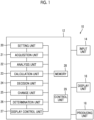
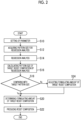
- the method for producing a resist composition according to the embodiment of the present invention by using a content of a repeating unit included in an acid-decomposable resin with respect to all repeating units and a predetermined physical quantity described later as parameters for a regression analysis, among the parameters, it is possible to identify the parameters which have a large effect on a pattern dimension. As a result, it is possible to confirm whether a predetermined formulating amount of the resist composition can achieve a predetermined target pattern size even in a case where raw materials of different lots are used. Even in a case where the above-described predetermined amount cannot be achieved, results of the regression analysis can be used to appropriately readjust the formulating amount of the resist composition.
- the production method according to the embodiment of the present invention can be adopted to a resist composition for EUV As a result, the resist composition can be produced with stable quality.
- the effects of the present invention are more excellent. That is, as the number of parameters increases, in many cases, the target resist composition in which the difference between the pattern size of the target resist composition and the target pattern size is within an allowable range in a determination step described later actually shows the target pattern size, and even for the target resist composition in which the difference is out of the allowable range, the resist composition in which composition is readjusted actually shows the target pattern size. That is, as the number of parameters increases, the resist composition can be produced with better reproducibility.
- Fig. 1 is a schematic diagram showing an example of a processing apparatus used in the method for producing a resist composition according to the embodiment of the present invention.
- a processing apparatus 10 used for determining a formulating amount of the resist composition and used in the method for producing a resist composition based on the formulating amount is configured by using hardware such as a computer.
- the method for producing a resist composition can be executed using hardware such as a computer and software, the method is not limited to the processing apparatus 10, and the method may be a program for causing a computer or the like to execute each step of the method for producing a resist composition as a procedure.
- the processing apparatus 10 is used in the method for producing a resist composition as described above.
- the formulating amount of the resist composition is determined, and the resist composition is produced based on the formulating amount.
- the resist composition is used in a photography method. For example, a resist film is formed from the resist composition on a silicon wafer. By subjecting the resist film to an exposure treatment and a development treatment, the resist film is processed into a specific pattern shape, and the silicon wafer is subjected to processing such as etching using the resist film as a mask.
- the processing apparatus 10 includes a processing unit 12, an input unit 14, a display unit 16, and a producing unit 18.
- the processing unit 12 includes a setting unit 20, an acquisition unit 21, an analysis unit 22, a calculation unit 23, a decision unit 24, a change unit 25, a determination unit 26, a display control unit 27, a memory 28, and a control unit 29.
- the processing apparatus 10 also includes Read Only Memory (ROM) and the like (not shown).
- the processing unit 12 is controlled by the control unit 29.
- the setting unit 20, the acquisition unit 21, the analysis unit 22, the calculation unit 23, the decision unit 24, the change unit 25, the determination unit 26, and the display control unit 27 are connected to the memory 28, and data of the setting unit 20, the acquisition unit 21, the analysis unit 22, the calculation unit 23, the decision unit 24, the change unit 25, the determination unit 26, and the display control unit 27 can be stored in the memory 28.
- the processing apparatus 10 By executing program stored in the ROM or the like with the control unit 29, the processing apparatus 10 functionally forms each unit of the setting unit 20, the analysis unit 22, the calculation unit 23, the decision unit 24, the change unit 25, and the determination unit 26.
- the processing apparatus 10 may be configured by a computer in which each unit functions by executing a program, or may be a dedicated apparatus in which each unit is configured of a dedicated circuit.
- the program is supplied, for example, in a form of computer software.
- each unit of the processing apparatus 10 will be described.
- the input unit 14 is various input devices for inputting various information according to an instruction of operator, such as a mouse and a keyboard.
- the display unit 16 displays, for example, various results, and various known displays are used.
- the display unit 16 also includes a device for displaying various information on an output medium, such as a printer.
- the resist composition includes an acid-decomposable resin which has a group decomposed by an action of acid to generate a polar group (hereinafter, also simply referred to as an "acid-decomposable resin") and a photoacid generator.
- the setting unit 20 sets a content of a repeating unit included in the acid-decomposable resin with respect to all repeating units in the resist composition and a physical quantity including at least a content of components in the resist composition as parameters.
- the acquisition unit 21 acquires a pattern size for a regression analysis by producing a plurality of resist compositions for a regression analysis with at least one of the parameters of the content of the repeating unit included in the acid-decomposable with respect to all repeating units and the above-described physical quantity, which are set in the setting unit, as a variable, producing a resist film using each of the produced resist compositions for a regression analysis, and performing a pattern forming treatment including an exposure treatment and a development treatment so that a target pattern size can be obtained by using each of the produced resist compositions for a regression analysis.
- the target pattern size indicates a performance required for the resist composition, and is a set value of the pattern size.
- As the set value of the pattern size for example, a line width of a line-shaped pattern and a diameter of a hole of a pattern having holes are used.
- the target pattern size and the pattern size for a regression analysis are the same type, and for example, the line width of the pattern or the diameter of the hole is used.
- the pattern size for a regression analysis obtained by performing the pattern forming treatment including the exposure treatment and the development treatment so as to obtain the target pattern size is an actually measured value of a size of the pattern obtained from the resist film produced from the resist composition.
- the analysis unit 22 performs a regression analysis on the pattern size for a regression analysis of the resist compositions for a regression analysis, which is obtained by the acquisition unit 21, using the parameter as the variable as an explanatory variable and using a target pattern size as an objective variable.
- a content of a repeating unit included in the acid-decomposable resin that is a component in a target resist composition which is a determining target of a formulating amount and includes the same types of components as components in the resist composition for a regression analysis (hereinafter, also simply referred to as a "target resist composition") with respect to all repeating units is measured by a nuclear magnetic resonance spectroscopy, and based on the regression analysis in the analysis unit 22, a pattern size of the target resist composition is calculated using the obtained content of the repeating unit included in the acid-decomposable resin with respect to all repeating units and the physical quantity used as the explanatory variables of the target resist composition.
- the physical quantity used as the explanatory variable is a physical quantity used as the parameter in the regression analysis, and is a physical quantity including at least the content of the components in the resist composition.
- the decision unit 24 compares the pattern size of the target resist composition, which is obtained by the calculation unit 23, with the target pattern size.
- the change unit 25 in a case where, in the decision unit 24, the difference between the pattern size of the target resist composition and the target pattern size is out of the allowable range, at least the content of the component in the target resist composition among the physical quantities used as the explanatory variables in the target resist composition is changed such that the difference between the pattern size of the target resist composition and the target pattern size is within the allowable range.
- the change unit 25 adjusts the formulating amount of the target resist composition.
- the pattern size of the changed target resist composition can be calculated based on the regression analysis.
- the formulating amount of the resist composition is determined based on the regression analysis of the analysis unit 22.
- the display control unit 27 causes the display unit 16 to display the parameters related to the resist composition for a regression analysis used in the regression analysis.
- the display control unit 27 caused the display unit 16 to display the content of the repeating unit included in the acid-decomposable resin with respect to all repeating units, which is obtained by the measurement by the nuclear magnetic resonance spectroscopy, the pattern size of the target resist composition obtained from the regression analysis, the target pattern size, the comparison result between the pattern size of the target resist composition and the target pattern size, the formulating amount of the resist composition, and the like.
- the display control unit 27 causes the display unit 16 to display the information
- various information may be read out from the memory 28 and displayed.
- the display control unit 27 can also cause the display unit 16 to display various information and the like input through the input unit 14.
- a resist composition is produced based on the formulating amount determined by the determination unit 26.
- a configuration of the producing unit 18 is not particularly limited, and a known one can be appropriately used.
- the producing unit 18 may have a configuration different from that of the processing apparatus 10, and for example, the resist composition can also be produced by another production device based on the formulating amount of the resist composition determined by the determination unit 26.
- Fig. 2 is a flowchart showing the method for producing a resist composition according to the embodiment of the present invention.
- a method for determining a resist formulating amount for example, the processing apparatus 10 shown in Fig. 1 is used.
- a content of a repeating unit included in the acid-decomposable resin with respect to all repeating units and a physical quantity including at least a content of components in the resist composition are set as parameters (step S10).
- the content of the above-described repeating unit with respect to all repeating units may be a mass proportion (% by mass) with respect to all repeating units, or may be a molar proportion (% by mole) with respect to all repeating units.
- the content of some types of repeating units included in the acid-decomposable resin with respect to all repeating units may be set as the parameter, or the content of all types of repeating units included in the acid-decomposable resin with respect to all repeating units may be set as the parameter. That is, it is sufficient that the content of at least a part of repeating units included in the acid-decomposable resin with respect to all repeating units is set as the parameter.
- the acid-decomposable resin includes three types of repeating units of a unit A, a unit B, and a unit C
- only the content of the unit A with respect to all repeating units may be set as the parameter, or the content of the unit A with respect to all repeating units, the content of the unit B with respect to all repeating units, and the content of the unit C with respect to all repeating units may be set as the parameter.
- the content of the repeating unit included in the acid-decomposable resin with respect to all repeating units, which is used in the calculation step described later, may be calculated from a preparation ratio of monomers used in the production of the acid-decomposable resin, or may be obtained by a known method such as a nuclear magnetic resonance spectroscopy.
- Measurement conditions of the nuclear magnetic resonance spectroscopy are not particularly limited, and examples thereof include measurement conditions of the nuclear magnetic resonance spectroscopy performed in the calculation step (step S16) described later.
- the acid-decomposable resin is a commercially available product
- a catalog value may be used.
- the physical quantity includes at least the content of components in the resist composition.
- the components in the resist composition are intended to be components in the resist composition, such as the acid-decomposable resin and the photoacid generator.
- the components in the resist composition include, as described later, an acid diffusion control agent, a surfactant, and a hydrophobic resin, in addition to the acid-decomposable resin and the photoacid generator.
- the content of the above-described components may be a mass proportion (% by mass) of the components with respect to the total mass of the resist composition, or may be a mass proportion (% by mass) of the components with respect to the total solid content in the resist composition.
- examples thereof include a content (% by mass) of the acid-decomposable resin with respect to the total solid content mass in the resist composition, a content (% by mass) of the photoacid generator with respect to the total solid content mass in the resist composition, and a content (% by mass) of the acid diffusion control agent with respect to the total solid content mass in the resist composition.
- the resist composition includes a plurality of components
- the content of the components in the resist composition which is selected as the physical quantity
- only the content of a part of the plurality of components included in the resist composition may be used, or each content of all the components included in the resist composition may be used. That is, it is sufficient that the content of at least a part of the plurality of components included in the resist composition is used.
- a resist composition including an acid-decomposable resin, a photoacid generator, and an acid diffusion control agent
- only the content of the acid-decomposable resin with respect to the total solid content mass in the resist composition may be selected as the physical quantity, or three values of the content of the acid-decomposable resin with respect to the total solid content mass in the resist composition, the content of the photoacid generator with respect to the total solid content mass in the resist composition, and the content of the acid diffusion control agent with respect to the total solid content mass in the resist composition may be selected as the physical quantity.
- the above-described total solid content means components in the resist composition, excluding a solvent, and even in a case where a component is liquid, the component is treated as the solid content.
- the above-described physical quantity includes at least the content of components in the resist composition, and may include a physical quantity other than the content of components in the resist composition.
- Examples of other physical quantities include a weight-average molecular weight of the acid-decomposable resin, a refractive index of the acid-decomposable resin, and a molecular weight distribution of the acid-decomposable resin.
- a method for measuring method the weight-average molecular weight of the acid-decomposable resin is not particularly limited, and the weight-average molecular weight can be measured by a gel permeation chromatography (GPC) analysis method.
- GPC gel permeation chromatography
- a known device can be used in the GPC analysis method.
- An installation location of the device used in the GPC analysis method is not particularly limited, and a location provided with air conditioning equipment is preferable.
- a pump part included in the device used in the GPC analysis method preferably has a high liquid feeding accuracy, and also preferably has a temperature control function.
- a column part included in the device used in the GPC analysis method preferably has a temperature control function.
- Examples of a detector included in the device used in the GPC analysis method include a differential refractometer (RI) or an ultraviolet-visible spectrophotometer.
- RI differential refractometer
- ultraviolet-visible spectrophotometer an ultraviolet-visible spectrophotometer.
- the acid-decomposable resin is a polymer consisting only of monomers having no aromatic ring, it is preferable to perform the measurement by RI.
- a column included in the device used in the GPC analysis method a commercially available column can be used.
- a filler include silica-based particles, polymethacrylate-based resin particles, and crosslinked polystyrene-based resin particles.
- a plurality of columns may be connected and used.
- a filler having a small particle size may be used.
- An eluent used in the GPC analysis method is not particularly limited, and examples thereof include various organic solvents and water.
- a flow rate of the eluent is not particularly limited, but is preferably in a range of 0.5 to 2.0 mL/min.
- a sample concentration in the GPC analysis method is not particularly limited, but is preferably adjusted in a range of 0.1% to 10% by mass.
- a sample injection amount in the GPC analysis method is not particularly limited, but is preferably in a range of 1 to 100 ⁇ L.
- the measurement of the standard sample for generating a calibration curve is preferably performed within 24 hours of the sample measurement.
- an internal standard method may be used in which an internal standard sample is added to the sample to correct the holding time thereof.
- the number of measurements in the GPC analysis method is not particularly limited, but a plurality of measurements may be performed and an average value thereof may be used in order to improve the measurement accuracy.
- the number of parameters set in the step S10 is not particularly limited, and examples thereof include multiple values including at least the content of the repeating unit included in the acid-decomposable resin with respect to all repeating units and the physical quantity including at least the content of components in the above-described resist composition.
- the number of physical quantities is preferably 2 or more, more preferably 3 or more, and still more preferably 4 or more.
- the upper limit is not particularly limited, and is preferably 10 or less.
- a plurality of resist compositions for a regression analysis which include at least the acid-decomposable resin and the photoacid generator, is produced with at least one of the parameters of the content of the repeating unit included in the acid-decomposable resin with respect to all repeating units and the above-described physical quantity, which are set in the setting step (step S10), as a variable.
- a pattern size for a regression analysis is acquired by performing a pattern forming treatment including an exposure treatment and a development treatment so that a target pattern size is obtained (step S12).
- a plurality of resist compositions for a regression analysis which include at least the acid-decomposable resin and the photoacid generator, is produced with at least one of the parameters set in the setting step as a variable.
- a plurality of resist compositions for a regression analysis is produced by fixing the content of the repeating unit included in the acid-decomposable resin with respect to all repeating units and changing content of components in the resist composition. That is, a plurality of resist compositions for a regression analysis, in which the content of the repeating unit included in the acid-decomposable resin with respect to all repeating units is constant and the content of components in the resist composition is different, is produced.
- a plurality of resist compositions for a regression analysis may be produced by fixing the content of components in the resist composition and changing the content of the repeating unit included in the acid-decomposable resin with respect to all repeating units.
- a plurality of resist compositions for a regression analysis may be produced by changing the both.
- a pattern size for a regression analysis is acquired by performing a pattern forming treatment including an exposure treatment and a development treatment so that a target pattern size is obtained. That is, by performing a pattern forming treatment using each of the resist compositions for a regression analysis so as to obtain a target pattern size, a predetermined pattern is formed and a size of the pattern (pattern size for a regression analysis) is acquired.
- the pattern forming treatment for obtaining the target pattern size is a pattern forming treatment performed for obtaining the target pattern size, and is a treatment including a series of operations in which a resist film is produced using the resist composition for regression analysis, and the produced resist film is exposed and developed. That is, the above-described pattern forming treatment includes at least a film forming treatment for producing a resist film using the resist composition for a regression analysis, an exposure treatment, and a development treatment. Conditions are appropriately set for each treatment so that the target pattern size is obtained.
- the type of a base material used, a film thickness of the resist film to be formed, and the like are appropriately set.
- the type of exposure light, the type of mask, the exposure amount, and the like are appropriately set.
- the type of a developer used and development conditions for example, the temperature of the developer, the contact time with the developer, and the presence or absence of a drying treatment
- the pattern forming treatment may include a treatment (for example, a rinsing treatment) other than the film forming treatment, the exposure treatment, and the development treatment.
- a treatment for example, a rinsing treatment
- the same pattern forming treatment is applied to the plurality of resist films.
- the pattern size for a regression analysis obtained by exposing the resist film is measured using, for example, a transmission electron microscope (TEM).
- TEM transmission electron microscope
- step S12 a regression analysis is performed on the pattern size for a regression analysis, which is obtained in the acquisition step (step S12), using the parameter as the variable as an explanatory variable and using the target pattern size as an objective variable (step S14).
- the regression analysis in the analysis step of the step S14 is not particularly limited, and is appropriately determined according to the number of parameters and the like.
- the regression analysis may be a multivariate analysis, and is preferably a multiple regression analysis.
- a method of the multiple regression analysis is well known. Examples thereof include a method described in "Yukihiro Ozaki, Akihumi Uda, Toshio Akai, “Multivariate Analysis for Chemist (Introduction Chemometrix)", Kodansha Co., Ltd.”.
- a multiple regression equation used in the calculation step (step S16) described later can be created in advance by carrying out this step.
- examples of the multiple regression equation include a multiple regression equation in which the content of the repeating unit included in the acid-decomposable resin with respect to all repeating units and the content of components in the resist composition are selected as variables.
- b 1 to bm and b0 represent a constant obtained by the multiple regression analysis
- X1 to Xm represent m types of parameters
- Y represents a pattern size (for example, a line width of the line-shaped pattern or a diameter of the hole).
- the acid-decomposable resin includes three kinds of a repeating unit A, a repeating unit B, and a repeating unit C is shown.
- Y b 1 X 1 + b 2 X 2 + b 3 X 3 + b 4 X 4 + b 5 X 5 + b 0
- b 1 to b5 and b0 represent a constant obtained by the multiple regression analysis
- X1 represents the content (% by mass) of the repeating unit A included in the acid-decomposable resin with respect to all repeating units
- X2 represents the content (% by mass) of the repeating unit B included in the acid-decomposable resin with respect to all repeating units
- X3 represents the content (% by mass) of the repeating unit C included in the acid-decomposable resin with respect to all repeating units
- X4 represents the content (% by mass) of the photoacid generator with respect to the total solid content mass in the resist composition
- X5 represents the weight-average molecular weight of the acid-decomposable resin
- Y represents a pattern size (for example, a line width of the line-shaped pattern or a diameter of the hole).
- the content of the repeating unit included in the acid-decomposable resin, which is a component in the target resist composition, with respect to all repeating units is measured by a nuclear magnetic resonance spectroscopy, and based on the regression analysis in the analysis step, a pattern size of the target resist composition is calculated using the obtained content of the repeating unit included in the acid-decomposable resin with respect to all repeating units and the physical quantity used as the explanatory variables of the target resist composition which is a determining target of a formulating amount (step S 16).
- the target resist composition includes the same types of components as the components in the resist composition for a regression analysis, and is a composition for determining the formulating amount of each component in a case of producing a resist composition in a producing step described later.
- each component is formulated based on the formulating amount of each component expected to achieve the target pattern size. That is, the formulating amount of each component in the target resist composition is an expected formulation showing predetermined performance.
- the target resist composition may be any composition in which the components used and the formulating amount thereof are determined in order to calculate the pattern size described later, and in this step, it is not necessary that the target resist composition itself is actually produced.
- the above-described target resist composition includes the same types of components as the components in the resist composition for a regression analysis.
- the resist composition for a regression analysis includes, as components, an acid-decomposable resin X including a specific repeating unit A and a specific repeating unit B, a photoacid generator Y, and a solvent X
- the above-described target resist composition also includes the acid-decomposable resin X, the photoacid generator Y, and the solvent X.
- Lot numbers may be different in the same type of components included in the target resist composition and the resist composition for a regression analysis.
- the acid-decomposable resin included in the target resist composition and the acid-decomposable resin included in the resist composition for a regression analysis may have different lot numbers at different production times.
- the performance may be different from that of the previous resist composition.
- the procedure of the present invention using components of different lots as components in the target resist composition, it is possible to produce a resist composition with good reproducibility even in a case where the components of a new lot are used.
- the pattern size (expected value) in a case where the pattern is formed of the target resist composition is calculated.
- the content of the repeating unit included in the acid-decomposable resin which is a component in the target resist composition with respect to all repeating units is measured by a nuclear magnetic resonance spectroscopy.
- the measurement by the nuclear magnetic resonance spectroscopy is usually carried out by dissolving the acid-decomposable resin in a predetermined measurement solvent.
- Examples of the nuclear magnetic resonance (NMR) spectroscopy include 1 H NMR method and 13 C NMR method.
- 13 C NMR method since the sensitivity is much lower than that of the 1 H NMR method, it is preferable to use measurement conditions as shown below.
- a frequency of an equipment used in the nuclear magnetic resonance spectroscopy is not particularly limited, but from the viewpoint of improving the sensitivity, is preferably 400 MHz or more and more preferably 500 MHz or more.
- a probe in the nuclear magnetic resonance spectroscopy preferably has a large probe diameter or an extremely low temperature probe.
- a coil preferably has a coil corresponding to various measurements installed inside.
- a sample tube in the nuclear magnetic resonance spectroscopy preferably has a thin tube thickness and a high thickness uniformity.
- various deuterated solvents acetone, tetrahydrofuran, methanol, dimethyl sulfoxide, and the like
- acetone, tetrahydrofuran, methanol, dimethyl sulfoxide, and the like can be used as a measurement solvent.
- the number of times of integration in the nuclear magnetic resonance spectroscopy is preferably 5000 or more, more preferably 10000 or more, and still more preferably 20000 or more. As the number of times of integration is larger, the accuracy of the measured value is higher but the measurement times is longer, so that the number of times of integration may be 50000 or less.
- a relaxation agent may be used in order to shorten the relaxation time and improve the quantitativeness of the compositional ratio.
- the relaxation agent include various metal salts (chromium acetylacetone complex, iron acetylacetone complex, and the like).
- a sample concentration in the nuclear magnetic resonance spectroscopy is preferably 20% by mass or more, and more preferably 25% by mass or more.
- a measured temperature in the nuclear magnetic resonance spectroscopy is preferably set high to an extent that decomposition of the sample and volatilization of the solvent do not matter.
- the physical quantity is used as the explanatory variable of the target resist composition.
- the content (% by mass) of the photoacid generator with respect to the total solid content mass in the resist composition and the weight-average molecular weight of the acid-decomposable resin are used as the physical quantities as the explanatory variables, the content (% by mass) of the photoacid generator included in the target resist composition with respect to the total solid content mass in the resist composition and the weight-average molecular weight of the acid-decomposable resin included in the target resist composition are each obtained.
- a pattern size of the target resist composition is calculated using the content of the repeating unit included in the acid-decomposable resin with respect to all repeating units, which is obtained by the nuclear magnetic resonance spectroscopy, and the physical quantity used as the explanatory variable of the resist composition which is a determining target of a formulating amount.
- the regression analysis in the analysis step is a multiple regression analysis
- the content of the repeating unit included in the acid-decomposable resin with respect to all repeating units, which is obtained by the nuclear magnetic resonance spectroscopy, and the physical quantity used as the explanatory variable of the resist composition which is a determining target of a formulating amount the pattern size of the pattern obtained by using the target resist composition can be predicted. That is, the predicted value of the pattern size obtained by using the target resist composition can be calculated as the calculated value.
- step S16 the pattern size of the target resist composition obtained in the calculation step (step S16) is compared with the target pattern size (step S18).
- the formulating amount of the resist composition is determined based on the regression analysis of the analysis step (step S14) (step S20).
- the formulating amount of the resist composition within the allowable range with respect to the above-described target pattern size is determined.
- a resist composition is produced based on the formulating amount of the resist composition, which is determined in the determination step (step S20) (step S22).
- a resist composition having the target pattern size is obtained.
- the above-described resist composition includes the same components as those in the target resist composition. That is, the resist composition is produced using the same components as those planned to be used in the target resist composition. More specifically, as the components in the resist composition and the components in the target resist composition, those manufactured at the same time (same lot number) are used. In this case, as described above, the formulating amount of each component is based on the formulating amount determined in the step S20.
- the allowable range of the above-described difference in the above-described comparison step can be appropriately set.
- the allowable range may be that the difference from the target pattern size is within ⁇ 0.5 nm, may be that the difference from the target pattern size is within ⁇ 0.1 nm, or may be that the difference from the target pattern size is 0.
- the comparison step of the step S18 in a case where the difference between the above-described pattern size of the target resist composition and the above-described target pattern size is out of the allowable range, at least the content of the components in the target resist composition among the physical quantities used as the explanatory variables in the target resist composition is changed such that the difference between the pattern size of the target resist composition and the target pattern size is within the allowable range, thereby adjusting the formulating amount of the target resist composition (step S24).
- the formulating amount of the target resist composition can be adjusted by changing the content (% by mass) of the photoacid generator with respect to the total solid content mass in the resist composition.
- the formulating amount of the target resist composition is changed, but at least the above-described content of components in the target resist composition may be changed, and other physical quantities may be changed at the same time.
- the formulating amount of the target resist composition is adjusted by changing the physical quantity used as the explanatory variable in the target resist composition
- the difference between the pattern size of the target resist composition and the target pattern size is adjusted to be within the allowable range, but in this case, it is preferable to adjust the formulating amount so that the difference is close to 0 (preferably, is 0).
- the formulating amount of the target resist composition is determined in the determination step (step S20).
- the resist composition is produced by the producing unit 18 (see Fig. 1 ) as described above based on the formulating amount determined in the determination step (step S20).
- the method for producing a resist composition is not particularly limited.
- the resist composition for example, it is preferable to dissolve the various components, such as the acid-decomposable resin and the photoacid generator, in the solvent, and then perform a filtration (may be a circulatory filtration) using a plurality of filters having different materials.
- a filtration may be a circulatory filtration
- a method of performing circulatory filtration twice or more is also preferable.
- the above-described filtration step also has an effect of reducing the content of the metal atom in the resist composition.
- a smaller pressure difference between the filters is more preferable, and the pressure difference is preferably 0.1 MPa or less, more preferably 0.05 MPa or less, and still more preferably 0.01 MPa or less.
- a method for performing the circulatory filtration using a filter in the production of the resist composition for example, a method of performing the circulatory filtration twice or more using a polytetrafluoroethylene-made filter having a pore diameter of 50 nm is also preferable.
- the content of the metal atom is reduced.
- Examples of the method for reducing the content of the metal atom in the resist composition include a method for adjusting the content by filtration using a filter.
- a filter pore diameter the pore size is preferably less than 100 nm, more preferably 10 nm or less, and still more preferably 5 nm or less.
- a filter a polytetrafluoroethylene-made filter, a polyethylene-made filter, or a nylon-made filter is preferable.
- the filter may be composed of a composite material in which the above-described filter material is combined with an ion exchange medium.
- a filter which has been previously washed with an organic solvent may be used.
- plural kinds of filters connected in series or in parallel may be used.
- a combination of filters having different pore diameters and/or materials may be used.
- various materials may be filtered plural times, and the step of filtering plural times may be a circulatory filtration step.
- examples of the method for reducing the content of the metal atom in the resist composition include a method of selecting raw materials having a low content of metals as raw materials constituting the various materials in the resist composition, a method of subjecting raw materials constituting the various materials in the resist composition to filter filtration, and a method of performing distillation under the condition for suppressing the contamination as much as possible by, for example, lining the inside of a production device with TEFLON (registered trademark).
- removal with an adsorbing material may be performed, in addition to the above-described filter filtration, and the filter filtration and the adsorbing material may be used in combination.
- adsorbing material known adsorbing materials can be used, and for example, inorganic adsorbing materials such as silica gel and zeolite and organic adsorbing materials such as activated carbon can be used.
- the resist composition produced as described above typically, in a case where an alkali developer is adopted as the developer, a positive tone pattern is suitably formed, and in a case where an organic developer is adopted as the developer, a negative tone pattern is suitably formed. That is, the resist composition may be a negative tone resist composition or a positive tone resist composition.
- a pattern can be formed by using the resist composition produced by the above-described production method according to the embodiment of the present invention.
- a procedure of a pattern forming method using the resist composition produced by the above-described production method according to the embodiment of the present invention is not particularly limited, but preferably includes the following steps.
- Step 1 step of forming a resist film using the resist composition
- Step 2 step of exposing the resist film
- Step 3 step of developing the exposed resist film using a developer to form a pattern
- Step 1 resist film forming step
- the step 1 is a step of forming a resist film on a substrate using the resist composition.
- the resist composition includes at least an acid-decomposable resin and a photoacid generator, and details of the components in the resist composition will be described in detail later.
- Examples of a method for forming a resist film using the resist composition include a method in which a resist composition is applied to a substrate.
- the resist composition can be applied to a substrate (for example, silicon and silicon dioxide coating) as used in the manufacture of integrated circuit elements by a suitable application method such as an application using a spinner or a coater.
- the application method is preferably a spin application using a spinner.
- a rotation speed upon the spin application using a spinner is preferably 1000 to 3000 rpm.
- the substrate may be dried to form a resist film.
- various underlying films an inorganic film, an organic film, or an antireflection film
- an underlayer of the resist film may be formed on an underlayer of the resist film as necessary.
- drying method examples include a method of heating and drying.
- the heating can be carried out using a unit included in an ordinary exposure machine and/or development machine, and may also be carried out using a hot plate or the like.
- a heating temperature is preferably 80°C to 150°C, more preferably 80°C to 140°C, and still more preferably 80°C to 130°C.
- a heating time is preferably 30 to 1000 seconds, more preferably 60 to 800 seconds, and still more preferably 60 to 600 seconds.
- a film thickness of the resist film is not particularly limited, but from the viewpoint that a fine pattern having higher accuracy can be formed, is preferably 10 to 150 nm and more preferably 15 to 100 nm.
- a topcoat may be formed on the upper layer of the resist film using a topcoat composition.
- the topcoat composition is not mixed with the resist film and can be uniformly applied to the upper layer of the resist film.
- the resist film is dried before forming the topcoat.
- the film thickness of the topcoat is preferably 10 to 200 nm, and more preferably 20 to 100 nm.
- the step 2 is a step of exposing the resist film.
- Examples of an exposing method include a method in which the formed resist film is irradiated with actinic rays or radiation through a predetermined mask.
- Examples of the actinic rays or radiation include infrared light, visible light, ultraviolet light, far ultraviolet light, extreme ultraviolet light, X-rays, and electron beams, preferably a far ultraviolet light having a wavelength of 250 nm or less, more preferably a far ultraviolet light having a wavelength of 220 nm or less, and particularly preferably a far ultraviolet light having a wavelength of 1 to 200 nm, specifically, KrF excimer laser (248 nm), ArF excimer laser (193 nm), F 2 excimer laser (157 nm), EUV (13 nm), X-rays, and electron beams.
- EUV (13 nm), X-rays, or electron beams is preferable
- EUV (13 nm) or electron beams is more preferable
- EUV (13 nm) is still more preferable.
- baking heating
- the baking accelerates a reaction in the exposed portion, and the sensitivity and the pattern shape are improved.
- a heating temperature is preferably 80°C to 150°C, more preferably 80°C to 140°C, and still more preferably 80°C to 130°C.
- a heating time is preferably 10 to 1000 seconds, more preferably 10 to 180 seconds, and still more preferably 30 to 120 seconds.
- the heating can be performed using a unit included in an ordinary exposure machine and/or development machine, or may also be performed using a hot plate or the like.
- This step is also referred to as a post-exposure baking.
- the step 3 is a step of developing the exposed resist film using a developer to form a pattern.
- Examples of a developing method include a method in which the substrate is immersed in a tank filled with a developer for a certain period of time (a dipping method), a method in which a development is performed by heaping a developer up onto the surface of the substrate by surface tension, and then leaving it to stand for a certain period of time (a puddle method), a method in which a developer is sprayed on the surface of the substrate (a spraying method), and a method in which a developer is continuously jetted onto the substrate rotating at a constant rate while scanning a developer jetting nozzle at a constant rate (a dynamic dispensing method).
- a dipping method a method in which the substrate is immersed in a tank filled with a developer for a certain period of time
- a puddle method a method in which a development is performed by heaping a developer up onto the surface of the substrate by surface tension, and then leaving it to stand for a certain period of time
- a spraying method a method in which a developer is sprayed
- a step of stopping the development may be carried out while replacing the solvent with another solvent.
- a developing time is not particularly limited as long as it is a period of time where the non-exposed portion of the resin is sufficiently dissolved, and is preferably 10 to 300 seconds and more preferably 20 to 120 seconds.
- a temperature of the developer is preferably 0°C to 50°C and more preferably 15°C to 35°C.
- Examples of the developer include an alkali developer and an organic solvent developer.
- an alkali aqueous solution including an alkali As the alkali developer, it is preferable to use an alkali aqueous solution including an alkali.
- the type of the alkali aqueous solution is not particularly limited, and examples thereof include an alkali aqueous solution including a quaternary ammonium salt typified by tetramethylammonium hydroxide, an inorganic alkali, a primary amine, a secondary amine, a tertiary amine, an alcoholamine, a cyclic amine, or the like.
- the alkali developer is preferably aqueous solutions of the quaternary ammonium salts typified by tetramethylammonium hydroxide (TMAH).
- TMAH tetramethylammonium hydroxide
- An appropriate amount of alcohols, a surfactant, or the like may be added to the alkali developer.
- An alkali concentration of the alkali developer is usually 0.1% to 20% by mass.
- a pH of the alkali developer is usually 10.0 to 15.0.
- the organic solvent developer is a developer including an organic solvent.
- a vapor pressure of the organic solvent included in the organic solvent developer is preferably 5 kPa or less, more preferably 3 kPa or less, and still more preferably 2 kPa or less at 20°C.
- Examples of the organic solvent used in the organic solvent developer include known organic solvents, and include an ester-based solvent, a ketone-based solvent, an alcohol-based solvent, an amide-based solvent, an ether-based solvent, and a hydrocarbon-based solvent.
- an ester-based solvent having 7 or more carbon atoms preferably 7 to 14 carbon atoms, more preferably 7 to 12 carbon atoms, and still more preferably 7 to 10 carbon atoms
- 2 or less heteroatoms as the organic solvent included in the organic solvent developer, from the viewpoint that swelling of the resist film can be suppressed in a case where EUV and electron beams are used in the above-described exposure step.
- the heteroatom of the ester-based solvent is an atom other than a carbon atom and a hydrogen atom, and examples thereof include an oxygen atom, a nitrogen atom, and a sulfur atom.
- the number of the heteroatoms is preferably 2 or less.
- ester-based solvent having 7 or more carbon atoms and 2 or less heteroatoms amyl acetate, isoamyl acetate, 2-methylbutyl acetate, 1-methylbutyl acetate, hexyl acetate, pentyl propionate, hexyl propionate, butyl propionate, isobutyl isobutyrate, heptyl propionate, or butyl butanoate is preferable, and isoamyl acetate is more preferable.
- a mixed solvent of the ester-based solvent and the hydrocarbon-based solvent or a mixed solvent of the ketone-based solvent and the hydrocarbon-based solvent may be used instead of the ester-based solvent having 7 or more carbon atoms and having 2 or less heteroatoms as the organic solvent included in the organic solvent developer. Also in this case, it is effective in suppressing the swelling of the resist film.
- ester-based solvent In a case where the ester-based solvent and the hydrocarbon-based solvent are used in combination, it is preferable to use isoamyl acetate as the ester-based solvent.
- a saturated hydrocarbon-based solvent for example, octane, nonane, decane, dodecane, undecane, and hexadecane is preferable.
- ketone-based solvent In a case where the ketone-based solvent and the hydrocarbon-based solvent are used in combination, it is preferable to use 2-heptanone as the ketone-based solvent.
- a saturated hydrocarbon-based solvent for example, octane, nonane, decane, dodecane, undecane, and hexadecane is preferable.
- a content of the hydrocarbon-based solvent depends on the solubility of the resist film in a solvent
- the content is not particularly limited, and the content may be appropriately prepared to determine a necessary amount of the hydrocarbon-based solvent.
- a plurality of the above-described organic solvents may be mixed, or the organic solvent may also be used in admixture with a solvent other than those described above or water.
- a moisture content of the developer as a whole is preferably less than 10% by mass, and the developer is more preferably substantially free of the moisture.
- a concentration of the organic solvent (in a case of mixing a plurality of organic solvents, a total thereof) in the developer is preferably 50% by mass or more, more preferably 50% to 100% by mass, still more preferably 85% to 100% by mass, particularly preferably 90% to 100% by mass, and most preferably 95% to 100% by mass.
- the above-described pattern forming method includes a step of performing washing using a rinsing liquid after the step 3.
- Examples of the rinsing liquid used in the rinsing step after the step of performing development using a developer include pure water. An appropriate amount of a surfactant may be added to the pure water.
- An appropriate amount of a surfactant may be added to the rinsing liquid.
- a method for the rinsing step is not particularly limited, and examples thereof include a method in which the rinsing liquid is continuously jetted onto the substrate rotated at a constant rate (a spin coating method), a method in which the substrate is immersed in a tank filled with the rinsing liquid for a certain period of time (a dipping method), and a method in which the rinsing liquid is sprayed on the surface of the substrate (a spraying method).
- the pattern forming method according to the embodiment of the present invention may include a heating step (post bake) after the rinsing step.
- a heating step post bake
- the developer and the rinsing liquid remaining between and inside the patterns are removed by baking.
- this step also has an effect that a resist pattern is annealed and the surface roughness of the pattern is improved.
- the heating step after the rinsing step is usually performed at 40°C to 250°C (preferably 90°C to 200°C) for usually 10 seconds to 3 minutes (preferably 30 to 120 seconds).
- an etching treatment on the substrate may be carried out using the formed pattern as a mask. That is, the substrate (or the underlayer film and the substrate) may be processed using the pattern formed in the step 3 as a mask to form a pattern on the substrate.
- a method for processing the substrate (or the underlayer film and the substrate) is not particularly limited, but a method in which a pattern is formed on a substrate by subjecting the substrate (or the underlayer film and the substrate) to dry etching using the pattern formed in the step 3 as a mask is preferable.
- the dry etching may be one-stage etching or multi-stage etching.
- etchings at the respective stages may be the same treatment or different treatments.
- etching any of known methods can be used, and various conditions and the like are appropriately determined according to the type of the substrate, usage, and the like.
- the etching can be carried out, for example, in accordance with Journal of The International Society for Optical Engineering (Proc. of SPIE), Vol. 6924, 692420 (2008 ), JP2009-267112A , and the like.
- the etching can also be carried out in accordance with " Chapter 4 Etching” in "Semiconductor Process Text Book, 4th Ed., published in 2007, publisher: SEMI Japan ".
- oxygen plasma etching is preferable as the dry etching.
- Various materials for example, a developer, a rinsing liquid, a composition for forming an antireflection film, and a composition for forming a topcoat
- a developer for example, a developer, a rinsing liquid, a composition for forming an antireflection film, and a composition for forming a topcoat
- impurities such as a metal (for example, Na, K, Ca, Fe, Cu, Mg, Al, Li, Cr, Ni, Sn, Ag, As, Au, Ba, Cd, Co, Pb, Ti, V, W, and Zn).
- a content of the impurities included in these materials is preferably, for example, 1 ppm by mass or less.
- Examples of a method for reducing the impurities such as metals in the various materials other than the resist composition include filtration using a filter.
- a filter pore diameter the pore size is preferably less than 100 nm, more preferably 10 nm or less, and still more preferably 5 nm or less.
- a filter a polytetrafluoroethylene-made filter, a polyethylene-made filter, or a nylon-made filter is preferable.
- the filter may be composed of a composite material in which the above-described filter material is combined with an ion exchange medium.
- a filter which has been previously washed with an organic solvent may be used.
- plural kinds of filters connected in series or in parallel may be used.
- a combination of filters having different pore diameters and/or materials may be used.
- various materials may be filtered plural times, and the step of filtering plural times may be a circulatory filtration step.
- examples of a method for reducing the impurities such as metals in the various materials other than the resist composition include a method of selecting raw materials having a low content of metals as raw materials constituting the various materials, a method of subjecting raw materials constituting the various materials to filter filtration, and a method of performing distillation under the condition for suppressing the contamination as much as possible by, for example, lining the inside of a device with TEFLON (registered trademark).
- removal of impurities with an adsorbing material may be performed, in addition to the above-described filter filtration, and the filter filtration and the adsorbing material may be used in combination.
- the adsorbing material known adsorbing materials can be used, and for example, inorganic adsorbing materials such as silica gel and zeolite and organic adsorbing materials such as activated carbon can be used. It is necessary to prevent the incorporation of metal impurities in the production process in order to reduce the impurities such as metals included in the various materials other than the above-described composition. Sufficient removal of the metal impurities from a production device can be confirmed by measuring the content of metal components included in a washing solution used to wash the production device.
- a conductive compound may be added to an organic treatment liquid such as the rinsing liquid in order to prevent breakdown of chemical liquid pipes and various parts (a filter, an O-ring, a tube, or the like) due to electrostatic charging, and subsequently generated electrostatic discharging.
- the conductive compound is not particularly limited, and examples thereof include methanol.
- An addition amount is not particularly limited, but from the viewpoint that preferred development characteristics or rinsing characteristics are maintained, the addition amount is preferably 10% by mass or less and more preferably 5% by mass or less.
- various pipes coated with stainless steel (SUS), or a polyethylene, polypropylene, or a fluororesin (polytetrafluoroethylene, a perfluoroalkoxy resin, or the like) that has been subjected to an antistatic treatment can be used.
- SUS stainless steel
- polyethylene, polypropylene, or a fluororesin polytetrafluoroethylene, a perfluoroalkoxy resin, or the like
- a method for improving the surface roughness of the pattern may be adopted to the pattern formed by the method according to the embodiment of the present invention.
- Examples of the method for improving the surface roughness of the pattern include the method of treating a pattern by a plasma of a hydrogen-containing gas described in WO2014/002808A . Additional examples of the method include known methods as described in JP2004-235468A , US2010/0020297A , JP2008-083384A , and Proc. of SPIE Vol. 8328 83280N-1 "EUV Resist Curing Technique for LWR Reduction and Etch Selectivity Enhancement ".
- an aspect ratio determined by dividing a height of the pattern with a line width of the pattern is preferably 2.5 or less, more preferably 2.1 or less, and still more preferably 1.7 or less.
- an aspect ratio determined by dividing a height of the pattern with a trench width or hole diameter of the pattern is preferably 4.0 or less, more preferably 3.5 or less, and still more preferably 3.0 or less.
- the pattern forming method according to the embodiment of the present invention can also be used for forming a guide pattern in a directed self-assembly (DSA) (see, for example, ACS Nano Vol. 4, No. 8, Pages 4815-4823 ).
- DSA directed self-assembly
- a pattern formed by the above-described method can be used as a core material (core) of the spacer process described in, for example, JP1991-270227A ( JP-H3-270227A ) and JP2013-164509A .
- the present invention further relates to a method for manufacturing an electronic device, including the above-described pattern forming method, and an electronic device manufactured by this manufacturing method.
- the electronic device is suitably mounted on electric and electronic apparatus (for example, home appliances, office automation (OA)-related equipment, media-related equipment, optical equipment, telecommunication equipment, and the like).
- electric and electronic apparatus for example, home appliances, office automation (OA)-related equipment, media-related equipment, optical equipment, telecommunication equipment, and the like.
- the resist composition includes an acid-decomposable resin (hereinafter, also referred as a "resin (A)") and a photoacid generator. As will be described later, the resist composition may include a component other than the above-described components.
- Examples of each component which can be included in the resist compositions for a regression analysis used in the above-described acquisition step and the target resist composition used in the calculation step include each component described later.
- an A value determined by Expression (1) is preferably 0.130 or more.
- a value H ⁇ 0.04 + C ⁇ 1.0 + N ⁇ 2.1 + O ⁇ 3.6 + F ⁇ 5.6 + S ⁇ 1.5 + I ⁇ 39.5 / H ⁇ 1 + C ⁇ 12 + N ⁇ 14 + O ⁇ 16 + F ⁇ 19 + S ⁇ 32 + I ⁇ 127
- the A value is 0.130 or more, but from the viewpoint that at least one of a point that the resolution of the resist film is even more excellent or a point that the LWR performance of a pattern thus formed is even more excellent can be obtained, it is preferable that the A value is 0.135 or more.
- An upper limit thereof is not particularly limited, but in a case where the A value is extremely high, the transmittance of EUV and electron beams of the resist film is lowered and the optical image profile in the resist film is deteriorated, which results in difficulty in obtaining a good pattern shape, and therefore, the upper limit is preferably 0.240 or less, and more preferably 0.220 or less.
- [H] represents a molar ratio of hydrogen atoms derived from a total solid content with respect to all atoms of the total solid content in the resist composition
- [C] represents a molar ratio of carbon atoms derived from the total solid content with respect to all the atoms of the total solid content in the resist composition
- [N] represents a molar ratio of nitrogen atoms derived from the total solid content with respect to all the atoms of the total solid content in the resist composition
- [O] represents a molar ratio of oxygen atoms derived from the total solid content with respect to all the atoms of the total solid content in the resist composition
- [F] represents a molar ratio of fluorine atoms derived from the total solid content with respect to all the atoms of the total solid content in the resist composition
- [S] represents a molar ratio of sulfur atoms derived from the total solid content with respect to all the atoms of the total solid content in the resist composition
- [I] represents a
- the resist composition includes a resin (acid-decomposable resin) having polarity that increases by the action of acid, a photoacid generator, an acid diffusion control agent, and a solvent
- the resin, the photoacid generator, and the acid diffusion control agent correspond to the solid content. That is, all the atoms of the total solid content correspond to a sum of all the atoms derived from the resin, all the atoms derived from the photoacid generator, and all the atoms derived from the acid diffusion control agent.
- [H] represents a molar ratio of hydrogen atoms derived from the total solid content with respect to all the atoms in the total solid content
- [H] represents a molar ratio of a sum of the hydrogen atoms derived from the resin, the hydrogen atoms derived from the photoacid generator, and the hydrogen atoms derived from the acid diffusion control agent with respect to a sum of all the atoms derived from the resin, all the atoms derived from the photoacid generator, and all the atoms derived from the acid diffusion control agent.
- the A value can be calculated by computation of the structure of constituent components of the total solid content in the resist composition, and the ratio of the number of atoms contained in a case where the content is already known. In addition, even in a case where the constituent component is not known yet, it is possible to calculate a ratio of the number of constituent atoms by subjecting a resist film obtained after evaporating the solvent components of the resist composition to computation according to an analytic approach such as elemental analysis.
- the resin (A) usually includes a repeating unit having a group having a polarity that increases through decomposition by the action of acid (hereinafter, also referred to as an "acid-decomposable group”), and preferably includes a repeating unit having an acid-decomposable group.
- the acid-decomposable group is a group which is decomposed by the action of acid to form a polar group.
- the acid-decomposable group preferably has a structure in which a polar group is protected by a leaving group which is eliminated by the action of acid. That is, the resin (A) has a repeating unit having a group which is decomposed by the action of acid to generate a polar group.
- the resin having this repeating unit has an increased polarity by the action of acid, an increased solubility in an alkali developer, and a decreased solubility in an organic solvent.
- an alkali-soluble group is preferable, and examples thereof include an acidic group, such as a carboxyl group, a phenolic hydroxyl group, a fluorinated alcohol group, a sulfonic acid group, a phosphoric acid group, a sulfonamide group, a sulfonylimide group, an (alkylsulfonyl)(alkylcarbonyl)methylene group, an (alkylsulfonyl)(alkylcarbonyl)imide group, a bis(alkylcarbonyl)methylene group, a bis(alkylcarbonyl)imide group, a bis(alkylsulfonyl)methylene group, a bis(alkylsulfonyl)imide group, a tris(alkylcarbonyl)methylene group, and a tris(alkylsulfonyl)methylene group; and an alcoholic hydroxyl group.
- an acidic group such
- a carboxyl group a phenolic hydroxyl group, a fluorinated alcohol group (preferably, a hexafluoroisopropanol group), or a sulfonic acid group is preferable.
- Examples of the leaving group which leaves by the action of acid include groups represented by Formulae (Y1) to (Y4).
- Rxi to Rx 3 each independently represent a (linear or branched) alkyl group, a (monocyclic or polycyclic) cycloalkyl group, an (linear or branched) alkenyl group, or a (monocyclic or polycyclic) aryl group.
- Rxi to Rx 3 are (linear or branched) alkyl groups, it is preferable that at least two of Rx 1 , Rx 2 , or Rx 3 are methyl groups.
- Rxi to Rx 3 each independently represent a linear or branched alkyl group, and it is more preferable that Rxi to Rx 3 each independently represent a linear alkyl group.
- Two of Rxi to Rx 3 may be bonded to each other to form a monocycle or a polycycle.
- an alkyl group having 1 to 5 carbon atoms such as a methyl group, an ethyl group, an n-propyl group, an isopropyl group, an n-butyl group, an isobutyl group, and a t-butyl group is preferable.
- a monocyclic cycloalkyl group such as a cyclopentyl group and a cyclohexyl group
- a polycyclic cycloalkyl group such as a norbornyl group, a tetracyclodecanyl group, a tetracyclododecanyl group, and an adamantyl group is preferable.
- an aryl group having 6 to 10 carbon atoms is preferable, and examples thereof include a phenyl group, a naphthyl group, and an anthryl group.
- alkenyl group of Rxi to Rx 3 a vinyl group is preferable.
- a cycloalkyl group is preferable as the ring formed by the bonding of two of Rxi to Rx 3 .
- a cycloalkyl group formed by the bonding of two of Rxi to Rx 3 a monocyclic cycloalkyl group such as a cyclopentyl group and a cyclohexyl group, or a polycyclic cycloalkyl group such as a norbornyl group, a tetracyclodecanyl group, a tetracyclododecanyl group, and an adamantyl group is preferable, and a monocyclic cycloalkyl group having 5 or 6 carbon atoms is more preferable.
- one of methylene groups constituting the ring may be replaced with a heteroatom such as an oxygen atom, with a group having a heteroatom, such as a carbonyl group, or with a vinylidene group.
- one or more of the ethylene groups constituting the cycloalkane ring may be substituted with a vinylene group.
- Rxi is a methyl group or an ethyl group and Rx 2 and Rx 3 are bonded to each other to form the above-described cycloalkyl group is preferable.
- R 36 to R 38 each independently represent a hydrogen atom or a monovalent organic group.
- R 37 and R 38 may be bonded to each other to form a ring.
- the monovalent organic group include an alkyl group, a cycloalkyl group, an aryl group, an aralkyl group, and an alkenyl group. It is also preferable that R 36 is a hydrogen atom.
- the alkyl group, the cycloalkyl group, the aryl group, and the aralkyl group may include a heteroatom such as an oxygen atom, and/or a group having a heteroatom, such as a carbonyl group.
- a heteroatom such as an oxygen atom
- a group having a heteroatom such as a carbonyl group.
- one or more of methylene groups may be substituted with a heteroatom such as an oxygen atom and/or with a group having a heteroatom, such as a carbonyl group.
- R 38 and another substituent included in the main chain of the repeating unit may be bonded to each other to form a ring.
- a group formed by the mutual bonding of R 38 and another substituent on the main chain of the repeating unit is preferably an alkylene group such as a methylene group.
- Formula (Y3) a group represented by Formula (Y3-1) is preferable.
- L 1 and L 2 each independently represent a hydrogen atom, an alkyl group, a cycloalkyl group, an aryl group, or a group formed by a combination thereof (for example, a group formed by a combination of an alkyl group and an aryl group).
- M represents a single bond or a divalent linking group.
- Q represents an alkyl group which may include a heteroatom, a cycloalkyl group which may include a heteroatom, an aryl group which may include a heteroatom, an amino group, an ammonium group, a mercapto group, a cyano group, an aldehyde group, or a group formed by a combination thereof (for example, a group formed by a combination of an alkyl group and a cycloalkyl group).
- one of methylene groups may be replaced with a heteroatom such as an oxygen atom or with a group having a heteroatom, such as a carbonyl group.
- one of L 1 or L 2 is a hydrogen atom, and the other is an alkyl group, a cycloalkyl group, an aryl group, or a group formed by a combination of an alkylene group and an aryl group.
- At least two of Q, M, or L 1 may be bonded to each other to form a ring (preferably a 5- or 6-membered ring).
- L 2 is preferably a secondary or tertiary alkyl group, and more preferably a tertiary alkyl group.
- the secondary alkyl group include an isopropyl group, a cyclohexyl group, and a norbornyl group
- examples of the tertiary alkyl group include a tert-butyl group and an adamantane group.
- Tg glass transition temperature
- an activation energy are increased, it is possible to suppress fogging in addition to ensuring a film hardness.
- Ar represents an aromatic ring group.
- Rn represents an alkyl group, a cycloalkyl group, or an aryl group.
- Rn and Ar may be bonded to each other to form a non-aromatic ring.
- Ar is preferably an aryl group.
- a ring member atom adjacent to the ring member atom directly bonded to the polar group (or a residue thereof) in the non-aromatic ring has no halogen atom such as a fluorine atom as a substituent.
- the leaving group which leaves by the action of acid may be a 2-cyclopentenyl group having a substituent (an alkyl group and the like), such as a 3-methyl-2-cyclopentenyl group, and a cyclohexyl group having a substituent (an alkyl group and the like), such as a 1,1,4,4-tetramethylcyclohexyl group.
- a repeating unit represented by Formula (A) is also preferable.
- L 1 represents a divalent linking group which may have a fluorine atom or an iodine atom
- R 1 represents a hydrogen atom, a fluorine atom, an iodine atom, a fluorine atom, an alkyl group which may have an iodine atom, or an aryl group which may have a fluorine atom or an iodine atom
- R 2 represents a leaving group which leaves by the action of acid and may have a fluorine atom or an iodine atom.
- at least one of L 1 , R 1 , or R 2 has a fluorine atom or an iodine atom.
- L 1 represents a divalent linking group which may have a fluorine atom or an iodine atom.
- the divalent linking group which may have a fluorine atom or an iodine atom include -CO-, -O-, -S-, -SO-, -SO 2 -, a hydrocarbon group which may have a fluorine atom or an iodine atom (for example, an alkylene group, a cycloalkylene group, an alkenylene group, and an arylene group), and a linking group formed by the linking of a plurality of these groups.
- Li -CO- or -arylene group-alkylene group having a fluorine atom or an iodine atom- is preferable.
- a phenylene group is preferable.
- the alkylene group may be linear or branched.
- the number of carbon atoms in the alkylene group is not particularly limited, but is preferably 1 to 10 and more preferably 1 to 3.
- the total number of fluorine atoms and iodine atoms included in the alkylene group having a fluorine atom or an iodine atom is not particularly limited, but is preferably 2 or more, more preferably 2 to 10, and still more preferably 3 to 6.
- R 1 represents a hydrogen atom, a fluorine atom, an iodine atom, an alkyl group which may have a fluorine atom or an iodine atom, or an aryl group which may have a fluorine atom or an iodine atom.
- the alkyl group may be linear or branched.
- the number of carbon atoms in the alkyl group is not particularly limited, but is preferably 1 to 10 and more preferably 1 to 3.
- the total number of fluorine atoms and iodine atoms included in the alkyl group having a fluorine atom or an iodine atom is not particularly limited, but is preferably 1 or more, more preferably 1 to 5, and still more preferably 1 to 3.
- the above-described alkyl group may include a heteroatom such as an oxygen atom other than a halogen atom.
- R 2 represents a leaving group which leaves by the action of acid and may have a fluorine atom or an iodine atom.
- examples of the leaving group include groups represented by Formulae (Z1) to (Z4).
- Formula (Z1) -C(Rx 11 )(Rx 12 )(Rx 13 )
- Formula (Z3) -C(R 136 )(R 137 )(OR 138 )
- Rxn to Rx 13 each independently represent an (linear or branched) alkyl group which may have a fluorine atom or an iodine atom, a (monocyclic or polycyclic) cycloalkyl group which may have a fluorine atom or an iodine atom, an (linear or branched) alkenyl group which may have a fluorine atom or an iodine atom, or an (monocyclic or polycyclic) aryl group which may have a fluorine atom or an iodine atom.
- Rxn to Rx 13 are (linear or branched) alkyl groups, it is preferable that at least two of Rxn, Rx 12 , or Rx 13 are methyl groups.
- Rx 11 to Rx 13 are the same as Rxi to Rx 3 in (Y1) and (Y2) described above, respectively, except that they may have a fluorine atom or an iodine atom, and have the same definitions and suitable ranges as those of the alkyl group, the cycloalkyl group, the alkenyl group, and the aryl group.
- R 136 to R 138 each independently represent a hydrogen atom, or a monovalent organic group which may have a fluorine atom or an iodine atom.
- R 137 and R 138 may be bonded to each other to form a ring.
- Examples of the monovalent organic group which may have a fluorine atom or an iodine atom include an alkyl group which may have a fluorine atom or an iodine atom, a cycloalkyl group which may have a fluorine atom or an iodine atom, an aryl group which may have a fluorine atom or an iodine atom, an aralkyl group which may have a fluorine atom or an iodine atom, and a group formed by a combination thereof (for example, a group formed by a combination of an alkyl group and a cycloalkyl group).
- a heteroatom such as an oxygen atom, in addition to the fluorine atom and the iodine atom, may be included in the alkyl group, the cycloalkyl group, the aryl group, and the aralkyl group. That is, in the above-described alkyl group, cycloalkyl group, aryl group, and aralkyl group, one of methylene groups may be substituted with a heteroatom such as an oxygen atom or with a group having a heteroatom, such as a carbonyl group.
- R 138 and another substituent included in the main chain of the repeating unit may be bonded to each other to form a ring.
- a group formed by the mutual bonding of R 138 and another substituent on the main chain of the repeating unit is preferably an alkylene group such as a methylene group.
- Formula (Z3) a group represented by Formula (Z3-1) is preferable.
- L 11 and L 12 each independently represent a hydrogen atom; an alkyl group which may have a heteroatom selected from the group consisting of a fluorine atom, an iodine atom, and an oxygen atom; a cycloalkyl group which may have a heteroatom selected from the group consisting of a fluorine atom, an iodine atom, and an oxygen atom; an aryl group which may have a heteroatom selected from the group consisting of a fluorine atom, an iodine atom, and an oxygen atom; or a group formed by a combination thereof (for example, a group formed by a combination of an alkyl group and a cycloalkyl group, each of which may have a heteroatom selected from the group consisting of a fluorine atom, an iodine atom, and an oxygen atom).
- Mi represents a single bond or a divalent linking group.
- Qi represents an alkyl group which may have a heteroatom selected from the group consisting of a fluorine atom, an iodine atom, and an oxygen atom; a cycloalkyl group which may have a heteroatom selected from the group consisting of a fluorine atom, an iodine atom, and an oxygen atom; an aryl group which may have a heteroatom selected from the group consisting of a fluorine atom, an iodine atom, and an oxygen atom; an amino group; an ammonium group; a mercapto group; a cyano group; an aldehyde group; a group formed by a combination thereof (for example, a group formed by a combination of the alkyl group and the cycloalkyl group, each of which may have a heteroatom selected from the group consisting of a fluorine atom, an iodine atom, and an oxygen atom).
- Ar 1 represents an aromatic ring group which may have a fluorine atom or an iodine atom.
- Rn 1 represents an alkyl group which may have a fluorine atom or an iodine atom, a cycloalkyl group which may have a fluorine atom or an iodine atom, or an aryl group which may have a fluorine atom or an iodine atom.
- Rn 1 and An may be bonded to each other to form a non-aromatic ring.
- a repeating unit having an acid-decomposable group a repeating unit represented by General Formula (AI) is also preferable.
- Examples of the alkyl group which may have a substituent, represented by Xai, include a methyl group and a group represented by -CH 2 -R 11 .
- Rn represents a halogen atom (a fluorine atom or the like), a hydroxyl group, or a monovalent organic group, examples thereof include an alkyl group having 5 or less carbon atoms, which may be substituted with a halogen atom, an acyl group having 5 or less carbon atoms, which may be substituted with a halogen atom, and an alkoxy group having 5 or less carbon atoms, which may be substituted with a halogen atom; and an alkyl group having 3 or less carbon atoms is preferable, and a methyl group is more preferable.
- Xai is preferably a hydrogen atom, a methyl group, a trifluoromethyl group, or a hydroxymethyl group.
- Examples of the divalent linking group of T include an alkylene group, an aromatic ring group, a -COO-Rt- group, and an -O-Rt- group.
- Rt represents an alkylene group or a cycloalkylene group.
- T is preferably a single bond or a -COO-Rt- group.
- Rt is preferably an alkylene group having 1 to 5 carbon atoms, and more preferably a -CH 2 - group, a -(CH 2 ) 2 - group, or a -(CH 2 ) 3 - group.
- an alkyl group having 1 to 4 carbon atoms such as a methyl group, an ethyl group, an n-propyl group, an isopropyl group, an n-butyl group, an isobutyl group, and a t-butyl group is preferable.
- a monocyclic cycloalkyl group such as a cyclopentyl group and a cyclohexyl group
- a polycyclic cycloalkyl group such as a norbornyl group, a tetracyclodecanyl group, a tetracyclododecanyl group, and an adamantyl group is preferable.
- an aryl group having 6 to 10 carbon atoms is preferable, and examples thereof include a phenyl group, a naphthyl group, and an anthryl group.
- alkenyl group of Rxi to Rx 3 a vinyl group is preferable.
- a monocyclic cycloalkyl group such as a cyclopentyl group and a cyclohexyl group is preferable, and in addition, a polycyclic cycloalkyl group such as a norbornyl group, a tetracyclodecanyl group, a tetracyclododecanyl group, and an adamantyl group is also preferable.
- a monocyclic cycloalkyl group having 5 or 6 carbon atoms is preferable.
- one of methylene groups constituting the ring may be replaced with a heteroatom such as an oxygen atom, with a group having a heteroatom, such as a carbonyl group, or with a vinylidene group.
- one or more of the ethylene groups constituting the cycloalkane ring may be substituted with a vinylene group.
- Rxi is a methyl group or an ethyl group and Rx 2 and Rx 3 are bonded to each other to form the above-described cycloalkyl group is preferable.
- each of the above-described groups has a substituent
- substituents include an alkyl group (having 1 to 4 carbon atoms), a halogen atom, a hydroxyl group, an alkoxy group (having 1 to 4 carbon atoms), a carboxyl group, and an alkoxycarbonyl group (having 2 to 6 carbon atoms).
- the substituent preferably has 8 or less carbon atoms.
- the repeating unit represented by General Formula (AI) is preferably an acid-decomposable tertiary alkyl (meth)acrylate ester-based repeating unit (a repeating unit in which Xai represents a hydrogen atom or a methyl group and T represents a single bond).
- a content of the repeating unit having an acid-decomposable group is preferably 15% by mole or more, more preferably 20% by mole or more, still more preferably 25% by mole or more, and particularly preferably 30% by mole or more with respect to all the repeating units in the resin (A).
- the upper limit thereof is not particularly limited, but is preferably 90% by mole or less, more preferably 80% by mole or less, and still more preferably 70% by mole or less.
- Xa 1 represents H, CH 3 , CF 3 , or CH 2 OH
- Rxa and Rxb each represent a linear or branched alkyl group having 1 to 5 carbon atoms.
- the resin (A) may include a repeating unit other than the above-described repeating units.
- the resin (A) may include at least one repeating unit selected from the group consisting of the following group A and/or at least one repeating unit selected from the group consisting of the following group B.
- Group A group consisting of the following repeating units (20) to (29)
- Group B group consisting of the following repeating units (30) to (32)
- the resin (A) preferably has at least one repeating unit selected from the group consisting of the above-described group A.
- the resin (A) also preferably includes at least one of a fluorine atom or an iodine atom.
- the resin (A) may have one repeating unit including both a fluorine atom and an iodine atom, and the resin (A) may include two kinds of repeating units, that is, a repeating unit having a fluorine atom and a repeating unit having an iodine atom.
- the resin (A) also preferably has a repeating unit having an aromatic group.
- the resin (A) preferably has at least one repeating unit selected from the group consisting of the above-described group B.
- the resin (A) preferably includes neither a fluorine atom nor a silicon atom.
- the resin (A) preferably has no aromatic group.
- the resin (A) may have a repeating unit having an acid group.
- an acid group having a pKa of 13 or less is preferable.
- the acid group for example, a carboxyl group, a phenolic hydroxyl group, a fluorinated alcohol group (preferably, a hexafluoroisopropanol group), a sulfonic acid group, a sulfonamide group, an isopropanol group, or the like is preferable.
- one or more (preferably one or two) fluorine atoms may be substituted with a group (an alkoxycarbonyl group and the like) other than a fluorine atom.
- -C(CF 3 )(OH)-CF 2 - formed as above is also preferable as the acid group.
- one or more fluorine atoms may be substituted with a group other than a fluorine atom to form a ring including -C(CF 3 )(OH)-CF 2 -.
- the repeating unit having an acid group is preferably a repeating unit different from the repeating unit having the structure in which a polar group is protected by the leaving group which is eliminated by the action of acid as described above, and the repeating unit having a lactone group, a sultone group, or a carbonate group, which will be described later.
- the repeating unit having an acid group may have a fluorine atom or an iodine atom.
- a repeating unit represented by Formula (B) is preferable.
- R 3 represents a hydrogen atom or a monovalent organic group which may have a fluorine atom or an iodine atom.
- L 4 represents a single bond or an ester group.
- R 8 is an alkyl group which may have a fluorine atom or an iodine atom, a cycloalkyl group which may have a fluorine atom or an iodine atom, an aryl group which may have a fluorine atom or an iodine atom, or a group formed by a combination thereof.
- R 4 and R 5 each independently represent a hydrogen atom, a fluorine atom, an iodine atom, or an alkyl group which may have a fluorine atom or an iodine atom.
- L 2 represents a single bond or an ester group.
- L 3 represents an (n+m+1)-valent aromatic hydrocarbon ring group or an (n+m+1)-valent alicyclic hydrocarbon ring group.
- the aromatic hydrocarbon ring group include a benzene ring group and a naphthalene ring group.
- the alicyclic hydrocarbon ring group may be monocyclic or polycyclic, and examples thereof include a cycloalkyl ring group.
- R 6 represents a hydroxyl group, or a fluorinated alcohol group (preferably, a hexafluoroisopropanol group).
- L 3 is preferably the (n+m+1)-valent aromatic hydrocarbon ring group.
- R 7 represents a halogen atom.
- the halogen atom include a fluorine atom, a chlorine atom, a bromine atom, and an iodine atom.
- n represents an integer of 1 or more. m is preferably an integer of 1 to 3 and more preferably an integer of 1 or 2.
- n 0 or an integer of 1 or more. n is preferably an integer of 1 to 4.
- (n+m+1) is preferably an integer of 1 to 5.
- a repeating unit represented by General Formula (I) is also preferable.
- an alkyl group having 20 or less carbon atoms such as a methyl group, an ethyl group, a propyl group, an isopropyl group, an n-butyl group, a sec-butyl group, a hexyl group, a 2-ethylhexyl group, an octyl group, and a dodecyl group is preferable, an alkyl group having 8 or less carbon atoms is more preferable, and an alkyl group having 3 or less carbon atoms is still more preferable.
- the cycloalkyl group of R 41 , R 42 , and R 43 in General Formula (I) may be monocyclic or polycyclic. Among these, a monocyclic cycloalkyl group having 3 to 8 carbon atoms, such as a cyclopropyl group, a cyclopentyl group, and a cyclohexyl group, is preferable.
- Examples of the halogen atom of R 41 , R 42 , and R 43 in General Formula (I) include a fluorine atom, a chlorine atom, a bromine atom, and an iodine atom, and a fluorine atom is preferable.
- the alkyl group included in the alkoxycarbonyl group of R 41 , R 42 , and R 43 in General Formula (I) the same as the alkyl group in R 41 , R 42 , and R 43 described above is preferable.
- Preferred examples of the substituent in each of the groups include an alkyl group, a cycloalkyl group, an aryl group, an amino group, an amide group, a ureido group, a urethane group, a hydroxyl group, a carboxyl group, a halogen atom, an alkoxy group, a thioether group, an acyl group, an acyloxy group, an alkoxycarbonyl group, a cyano group, and a nitro group.
- the number of carbon atoms in the substituent is preferably 8 or less.
- Ar 4 represents an (n+1)-valent aromatic ring group.
- the divalent aromatic ring group in a case where n is 1 is preferably, for example, an arylene group having 6 to 18 carbon atoms, such as a phenylene group, a tolylene group, a naphthylene group, and an anthracenylene group, or a divalent aromatic ring group including a heterocycle such as a thiophene ring, a furan ring, a pyrrole ring, a benzothiophene ring, a benzofuran ring, a benzopyrrole ring, a triazine ring, an imidazole ring, a benzimidazole ring, a triazole ring, a thiadiazole ring, and a thiazole ring.
- the above-described aromatic ring group may have a substituent.
- Specific examples of the (n+1)-valent aromatic ring group in a case where n is an integer of 2 or more include groups formed by removing any (n-1) hydrogen atoms from the above-described specific examples of the divalent aromatic ring group.
- the (n+1)-valent aromatic ring group may further have a substituent.
- Examples of the substituent which may be included in the above-described alkyl group, cycloalkyl group, alkoxycarbonyl group, alkylene group, and (n+1)-valent aromatic ring group include alkyl groups mentioned as R 41 , R 42 , and R 43 in General Formula (I); alkoxy groups such as a methoxy group, an ethoxy group, a hydroxyethoxy group, a propoxy group, a hydroxypropoxy group, and a butoxy group; and aryl groups such as a phenyl group.
- Examples of the alkyl group of R 64 in -CONR 64 - represented by X 4 include an alkyl group having 20 or less carbon atoms, such as a methyl group, an ethyl group, a propyl group, an isopropyl group, an n-butyl group, a sec-butyl group, a hexyl group, a 2-ethylhexyl group, an octyl group, and a dodecyl group, and an alkyl group having 8 or less carbon atoms, is preferable.
- X 4 is preferably a single bond, -COO-, or -CONH-, and more preferably a single bond or -COO-.
- an alkylene group having 1 to 8 carbon atoms such as a methylene group, an ethylene group, a propylene group, a butylene group, a hexylene group, and an octylene group, is preferable.
- an aromatic ring group having 6 to 18 carbon atoms is preferable, and a benzene ring group, a naphthalene ring group, and a biphenylene ring group are more preferable.
- the repeating unit represented by General Formula (I) preferably includes a hydroxystyrene structure.
- Ar 4 is preferably a benzene ring group.
- the repeating unit represented by General Formula (I) is preferably a repeating unit represented by General Formula (1).
- the resin included in the resist composition preferably has a hydroxystyrene-based repeating unit.
- Examples of the hydroxystyrene-based repeating unit include a repeating unit in which A in General Formula (1) represents a hydrogen atom.
- the repeating unit having an acid group will be exemplified below.
- a represents 1 or 2.
- R represents a hydrogen atom or a methyl group
- a represents 2 or 3.
- a content of the repeating unit having an acid group is preferably 5% by mole or more, and more preferably 10% by mole or more with respect to all the repeating units in the resin (A).
- the upper limit thereof is not particularly limited, but is preferably 50% by mole or less, more preferably 45% by mole or less, and still more preferably 40% by mole or less.
- the resin (A) may have a repeating unit having a fluorine atom or an iodine atom in addition to (Repeating unit having acid-decomposable group) and (Repeating unit having acid group) described above.
- the (Repeating unit having fluorine atom or iodine atom) herein is preferably different from other kinds of repeating units belonging to the group A, such as (Repeating unit having lactone group, sultone group, or carbonate group) and (Repeating unit having photoacid generating group), which will be described later.
- a repeating unit represented by Formula (C) is preferable.
- L 5 represents a single bond or an ester group.
- R 9 represents a hydrogen atom or an alkyl group which may have a fluorine atom or an iodine atom.
- R 10 represents a hydrogen atom, an alkyl group which may have a fluorine atom or an iodine atom, a cycloalkyl group which may have a fluorine atom or an iodine atom, an aryl group which may have a fluorine atom or an iodine atom, or a group formed by a combination thereof.
- the repeating unit having a fluorine atom or an iodine atom will be exemplified below.
- a content of the repeating unit having a fluorine atom or an iodine atom is preferably 0% by mole or more, more preferably 5% by mole or more, and still more preferably 10% by mole or more with respect to all the repeating units in the resin (A).
- the upper limit value thereof is preferably 50% by mole or less, more preferably 45% by mole or less, and still more preferably 40% by mole or less.
- the repeating unit having a fluorine atom or an iodine atom does not include (Repeating unit having acid-decomposable group) and (Repeating unit having acid group) as described above, the above-described content of the repeating unit having a fluorine atom or an iodine atom is also intended to mean a content of the repeating unit having a fluorine atom or an iodine atom, excluding (Repeating unit having acid-decomposable group) and (Repeating unit having acid group).
- the total content of the repeating units including at least one of a fluorine atom or an iodine atom in the repeating units of the resin (A) is preferably 20% by mole or more, more preferably 30% by mole or more, and still more preferably 40% by mole or more with respect to all the repeating units of the resin (A).
- An upper limit value thereof is not particularly limited, but is, for example, 100% by mole or less.
- Examples of the repeating unit including at least one of a fluorine atom or an iodine atom include a repeating unit which has a fluorine atom or an iodine atom, and has an acid-decomposable group, a repeating unit which has a fluorine atom or an iodine atom, and has an acid group, and a repeating unit having a fluorine atom or an iodine atom.
- the resin (A) may have a repeating unit having at least one selected from the group consisting of a lactone group, a sultone group, and a carbonate group (hereinafter, also collectively referred to as a "repeating unit having a lactone group, a sultone group, or a carbonate group").
- the repeating unit having a lactone group, a sultone group, or a carbonate group has no acid group such as a hexafluoropropanol group.
- the lactone group or the sultone group may have a lactone structure or a sultone structure.
- the lactone structure or the sultone structure is preferably a 5- to 7-membered ring lactone structure or a 5- to 7-membered ring sultone structure.
- the structure is more preferably a 5- to 7-membered ring lactone structure with which another ring structure is fused so as to form a bicyclo structure or a spiro structure or a 5- to 7-membered ring sultone structure with which another ring structure is fused so as to form a bicyclo structure or a spiro structure.
- the resin (A) preferably has a repeating unit having a lactone group or a sultone group, formed by extracting one or more hydrogen atoms from a ring member atom of a lactone structure represented by any of General Formulae (LC1-1) to (LC1-21) or a sultone structure represented by any of General Formulae (SL1-1) to (SL1-3).
- the lactone group or the sultone group may be bonded directly to the main chain.
- a ring member atom of the lactone group or the sultone group may constitute the main chain of the resin (A).
- the above-described portion of lactone structure or sultone structure may have a substituent (Rb 2 ).
- Preferred examples of the substituent (Rb 2 ) include an alkyl group having 1 to 8 carbon atoms, a cycloalkyl group having 4 to 7 carbon atoms, an alkoxy group having 1 to 8 carbon atoms, an alkoxycarbonyl group having 1 to 8 carbon atoms, a carboxyl group, a halogen atom, a hydroxyl group, a cyano group, and an acid-decomposable group.
- n2 represents an integer of 0 to 4. In a case where n2 is 2 or more, Rb 2 's which are present in a plural number may be different from each other, and Rb 2 's which are present in a plural number may be bonded to each other to form a ring.
- Examples of the repeating unit having a group having the lactone structure represented by any of General Formulae (LC1-1) to (LC1-21) or the sultone structure represented by any of General Formulae (SL1-1) to (SL1-3) include a repeating unit represented by General Formula (AI).
- Rb 0 represents a hydrogen atom, a halogen atom, or an alkyl group having 1 to 4 carbon atoms.
- Preferred examples of the substituent which may be contained in the alkyl group of Rb 0 include a hydroxyl group and a halogen atom.
- halogen atom of Rb 0 examples include a fluorine atom, a chlorine atom, a bromine atom, and an iodine atom.
- Rb 0 is preferably a hydrogen atom or a methyl group.
- Ab represents a single bond, an alkylene group, a divalent linking group having a monocyclic or polycyclic alicyclic hydrocarbon structure, an ether group, an ester group, a carbonyl group, a carboxyl group, or a divalent group formed by a combination thereof.
- a single bond or a linking group represented by -Ab 1 -CO 2 - is preferable.
- Abi is a linear or branched alkylene group, or a monocyclic or polycyclic cycloalkylene group, and is preferably a methylene group, an ethylene group, a cyclohexylene group, an adamantylene group, or a norbomylene group.
- V represents a group formed by extracting one hydrogen atom from a ring member atom of the lactone structure represented by any of General Formulae (LC1-1) to (LC1-21) or a group formed by extracting one hydrogen atom from a ring member atom of the sultone structure represented by any of General Formulae (SL1-1) to (SL1-3).
- an optical isomer is present in the repeating unit having a lactone group or a sultone group
- any of optical isomers may be used.
- one optical isomer may be used alone or a mixture of a plurality of the optical isomers may be used.
- an optical purity (ee) thereof is preferably 90 or more, and more preferably 95 or more.
- a cyclic carbonate ester group is preferable.
- repeating unit having a cyclic carbonate ester group a repeating unit represented by General Formula (A-1) is preferable.
- R A 1 represents a hydrogen atom, a halogen atom, or a monovalent organic group (preferably a methyl group).
- the repeating unit having a lactone group, a sultone group, or a carbonate group will be exemplified below.
- Rx is H, CH 3 , CH 2 OH, or CF 3
- Rx is H, CH 3 , CH 2 OH, or CF 3
- Rx is H, CH 3 , CH 2 OH, or CF 3
- a content of the repeating unit having a lactone group, a sultone group, or a carbonate group is preferably 1% by mole or more, and more preferably 5% by mole or more with respect to all the repeating units in the resin (A).
- the upper limit thereof is not particularly limited, but is preferably 65% by mole or less, more preferably 30% by mole or less, still more preferably 25% by mole or less, and particularly preferably 20% by mole or less.
- the resin (A) may have, as a repeating unit other than those described above, a repeating unit having a group which generates an acid by irradiation with actinic rays or radiation (hereinafter, also referred to as a "photoacid generating group").
- the repeating unit having a photoacid generating group corresponds to a compound which generates an acid by irradiation with actinic rays or radiation, which will be described later (hereinafter, also referred to as a "photoacid generator").
- Examples of such a repeating unit include a repeating unit represented by General Formula (4).
- R 41 represents a hydrogen atom or a methyl group.
- L 41 represents a single bond or a divalent linking group.
- L 42 represents a divalent linking group.
- R 40 represents a structural moiety which is decomposed by irradiation with actinic rays or radiation to generate an acid in a side chain.
- the repeating unit having a photoacid generating group is exemplified below.
- examples of the repeating unit represented by General Formula (4) include repeating units described in paragraphs [0094] to [0105] of JP2014-041327A .
- a content of the repeating unit having a photoacid generating group is preferably 1% by mole or more, and more preferably 5% by mole or more with respect to all the repeating units in the resin (A).
- the upper limit value thereof is preferably 40% by mole or less, more preferably 35% by mole or less, and still more preferably 30% by mole or less.
- the resin (A) may have a repeating unit represented by General Formula (V-1) or General Formula (V-2).
- the repeating unit represented by General Formula (V-1) and General Formula (V-2) is preferably a repeating unit different from the above-described repeating units.
- R 6 and R 7 each independently represent a hydrogen atom, a hydroxyl group, an alkyl group, an alkoxy group, an acyloxy group, a cyano group, a nitro group, an amino group, a halogen atom, an ester group (-OCOR or -COOR; R is an alkyl group or fluorinated alkyl group having 1 to 6 carbon atoms), or a carboxyl group.
- R is an alkyl group or fluorinated alkyl group having 1 to 6 carbon atoms
- the alkyl group a linear, branched, or cyclic alkyl group having 1 to 10 carbon atoms is preferable.
- the resin (A) preferably has a high glass transition temperature (Tg).
- Tg is preferably higher than 90°C, more preferably higher than 100°C, still more preferably higher than 110°C, and particularly preferably higher than 125°C. Since an excessively high Tg causes a decrease in dissolution rate in a developer, the Tg is preferably 400°C or lower and more preferably 350°C or lower.
- the glass transition temperature (Tg) of a polymer such as the resin (A) is calculated by the following method. First, each Tg of homopolymers consisting of only the respective repeating units included in the polymer is calculated by the Bicerano method. Hereinafter, the Tg calculated is referred to as a "Tg of the repeating unit. Next, the mass proportion (%) of each repeating unit to all the repeating units in the polymer is calculated. Next, the Tg at each mass proportion is calculated using a Fox's equation (described in Materials Letters 62 (2008) 3152 , and the like), and these are summed to obtain the Tg (°C) of the polymer.
- Tg glass transition temperature
- the Bicerano method is described in Prediction of polymer properties, Marcel Dekker Inc., New York (1993 ), and the like.
- the calculation of a Tg by the Bicerano method can be carried out using MDL Polymer (MDL Information Systems, Inc.), which is software for estimating physical properties of a polymer.
- a method for lowering the mobility of the main chain of the resin (A) include the following (a) to (e) methods.
- the resin (A) preferably has a repeating unit in which the homopolymer exhibits a Tg of 130°C or higher.
- the type of the repeating unit in which the homopolymer exhibits a Tg of 130°C or higher is not particularly limited, and may be any of repeating units in which the homopolymer exhibits a Tg of 130°C or higher, as calculated by a Bicerano method. It corresponds to a repeating unit having a Tg of a homopolymer exhibiting 130°C or higher, depending on the type of a functional group in the repeating units represented by Formulae (A) to (E) which will be described later.
- R A represents a group having a polycyclic structure.
- R x represents a hydrogen atom, a methyl group, or an ethyl group.
- the group having a polycyclic structure is a group having a plurality of ring structures, and the plurality of ring structures may or may not be fused.
- repeating unit represented by Formula (A) include the following repeating units.
- R represents a hydrogen atom, a methyl group, or an ethyl group.
- Ra represents a hydrogen atom, an alkyl group, a cycloalkyl group, an aryl group, an aralkyl group, an alkenyl group, a hydroxyl group, an alkoxy group, an acyloxy group, a cyano group, a nitro group, an amino group, a halogen atom, an ester group (-OCOR′′′ or -COOR′′′; R′′′ is an alkyl group or fluorinated alkyl group having 1 to 20 carbon atoms), or a carboxyl group.
- the alkyl group, the cycloalkyl group, the aryl group, the aralkyl group, and the alkenyl group described above may each have a substituent.
- a hydrogen atom bonded to the carbon atom in the group represented by Ra may be substituted with a fluorine atom or an iodine atom.
- R' and R" each independently represent an alkyl group, a cycloalkyl group, an aryl group, an aralkyl group, an alkenyl group, a hydroxyl group, an alkoxy group, an acyloxy group, a cyano group, a nitro group, an amino group, a halogen atom, an ester group (-OCOR′′′ or -COOR′′′; R′′′ is an alkyl group or fluorinated alkyl group having 1 to 20 carbon atoms), or a carboxyl group.
- the alkyl group, the cycloalkyl group, the aryl group, the aralkyl group, and the alkenyl group described above may each have a substituent.
- a hydrogen atom bonded to the carbon atom in the group represented by R' and R" may be substituted with a fluorine atom or an iodine atom.
- L represents a single bond or a divalent linking group.
- the divalent linking group include -COO-, -CO-, -O-, -S-, -SO-, -SO 2 -, an alkylene group, a cycloalkylene group, an alkenylene group, a linking group consisting of a plurality of these groups linked to each other, and the like.
- n and n each independently represent an integer of 0 or more.
- the upper limit of m and n is not particularly limited, but is 2 or less in many cases and 1 or less in more cases.
- R b1 to R b4 each independently represent a hydrogen atom or an organic group, and at least two or more of R b1 , ..., or R b4 represent an organic group.
- the types of the other organic groups are not particularly limited.
- the organic groups are a group in which a ring structure is directly linked to the main chain in the repeating unit, at least two or more of the organic groups are substituents having three or more constituent atoms excluding hydrogen atoms.
- repeating unit represented by Formula (B) include the following repeating units.
- R's each independently represent a hydrogen atom or an organic group.
- the organic group include organic groups such as an alkyl group, a cycloalkyl group, an aryl group, an aralkyl group, and an alkenyl group, which may have a substituent.
- R"s each independently represent an alkyl group, a cycloalkyl group, an aryl group, an aralkyl group, an alkenyl group, a hydroxyl group, an alkoxy group, an acyloxy group, a cyano group, a nitro group, an amino group, a halogen atom, an ester group (-OCOR" or -COOR”; R" is an alkyl group or fluorinated alkyl group having 1 to 20 carbon atoms), or a carboxyl group.
- the alkyl group, the cycloalkyl group, the aryl group, the aralkyl group, and the alkenyl group described above may each have a substituent.
- a hydrogen atom bonded to the carbon atom in the group represented by R' may be substituted with a fluorine atom or an iodine atom.
- n represents an integer of 0 or more.
- An upper limit of m is not particularly limited, but is 2 or less in many cases and 1 or less in more cases.
- R c1 to R c4 each independently represent a hydrogen atom or an organic group, and at least one of R c1 , ..., or R c4 is a group having a hydrogen-bonding hydrogen atom with the number of atoms of 3 or less from the main chain carbon.
- the group it is preferable that the group has hydrogen-bonding hydrogen atoms with the number of atoms of 2 or less (on a side closer to the vicinity of the main chain) to cause an interaction between the main chains of the resin (A).
- repeating unit represented by Formula (C) include the following repeating units.
- R represents an organic group.
- the organic group include an alkyl group, a cycloalkyl group, an aryl group, an aralkyl group, an alkenyl group, and an ester group (-OCOR or -COOR: R represents an alkyl group or fluorinated alkyl group having 1 to 20 carbon atoms), each of which may have a substituent.
- R' represents a hydrogen atom or an organic group.
- the organic group include an alkyl group, a cycloalkyl group, an aryl group, an aralkyl group, and an alkenyl group.
- a hydrogen atom in the organic group may be substituted with a fluorine atom or an iodine atom.
- cyclic is a group which forms a main chain as a cyclic structure.
- the number of ring-constituting atoms is not particularly limited.
- repeating unit represented by Formula (D) include the following repeating units.
- R's each independently represent a hydrogen atom, an alkyl group, a cycloalkyl group, an aryl group, an aralkyl group, an alkenyl group, a hydroxyl group, an alkoxy group, an acyloxy group, a cyano group, a nitro group, an amino group, a halogen atom, an ester group (-OCOR” or -COOR”; R" is an alkyl group or fluorinated alkyl group having 1 to 20 carbon atoms), or a carboxyl group.
- the alkyl group, the cycloalkyl group, the aryl group, the aralkyl group, and the alkenyl group described above may each have a substituent.
- the hydrogen atom bonded to the carbon atom in the group represented by R may be substituted with a fluorine atom or an iodine atom.
- R"s each independently represent an alkyl group, a cycloalkyl group, an aryl group, an aralkyl group, an alkenyl group, a hydroxyl group, an alkoxy group, an acyloxy group, a cyano group, a nitro group, an amino group, a halogen atom, an ester group (-OCOR" or -COOR”; R" is an alkyl group or fluorinated alkyl group having 1 to 20 carbon atoms), or a carboxyl group.
- the alkyl group, the cycloalkyl group, the aryl group, the aralkyl group, and the alkenyl group described above may each have a substituent.
- a hydrogen atom bonded to the carbon atom in the group represented by R' may be substituted with a fluorine atom or an iodine atom.
- n represents an integer of 0 or more.
- An upper limit of m is not particularly limited, but is 2 or less in many cases and 1 or less in more cases.
- Re's each independently represent a hydrogen atom or an organic group.
- the organic group include an alkyl group, a cycloalkyl group, an aryl group, an aralkyl group, and an alkenyl group, which may have a substituent.
- cyclic is a cyclic group including a carbon atom of a main chain. The number of atoms included in the cyclic group is not particularly limited.
- repeating unit represented by Formula (E) include the following repeating units.
- R's each independently represent a hydrogen atom, an alkyl group, a cycloalkyl group, an aryl group, an aralkyl group, an alkenyl group, a hydroxyl group, an alkoxy group, an acyloxy group, a cyano group, a nitro group, an amino group, a halogen atom, an ester group (-OCOR” or -COOR”; R" is an alkyl group or fluorinated alkyl group having 1 to 20 carbon atoms), or a carboxyl group.
- the alkyl group, the cycloalkyl group, the aryl group, the aralkyl group, and the alkenyl group described above may each have a substituent.
- the hydrogen atom bonded to the carbon atom in the group represented by R may be substituted with a fluorine atom or an iodine atom.
- R"s each independently represent a hydrogen atom, an alkyl group, a cycloalkyl group, an aryl group, an aralkyl group, an alkenyl group, a hydroxyl group, an alkoxy group, an acyloxy group, a cyano group, a nitro group, an amino group, a halogen atom, an ester group (-OCOR" or -COOR”; R" is an alkyl group or fluorinated alkyl group having 1 to 20 carbon atoms), or a carboxyl group.
- the alkyl group, the cycloalkyl group, the aryl group, the aralkyl group, and the alkenyl group described above may each have a substituent.
- a hydrogen atom bonded to the carbon atom in the group represented by R' may be substituted with a fluorine atom or an iodine atom.
- m represents an integer of 0 or more.
- An upper limit of m is not particularly limited, but is 2 or less in many cases and 1 or less in more cases.
- a content of the repeating unit represented by Formula (E) is preferably 5% by mole or more, and more preferably 10% by mole or more with respect to all the repeating units in the resin (A).
- the upper limit value thereof is preferably 60% by mole or less, and more preferably 55% by mole or less.
- the resin (A) may have a repeating unit having at least one group selected from a lactone group, a sultone group, a carbonate group, a hydroxyl group, a cyano group, or an alkali-soluble group.
- Examples of the repeating unit having a lactone group, a sultone group, or a carbonate group included in the resin (A) include the repeating units described in (Repeating unit having lactone group, sultone group, or carbonate group) described above. A preferred content thereof is also the same as described in (Repeating unit having lactone group, sultone group, or carbonate group) described above.
- the resin (A) may have a repeating unit having a hydroxyl group or a cyano group. As a result, adhesiveness to the substrate and affinity for a developer are improved.
- the repeating unit having a hydroxyl group or a cyano group is preferably a repeating unit having an alicyclic hydrocarbon structure substituted with a hydroxyl group or a cyano group.
- the repeating unit having a hydroxyl group or a cyano group does not have the acid-decomposable group.
- repeating unit having a hydroxyl group or a cyano group examples include a repeating unit represented by General Formulae (AlIa) to (AIId).
- a content of the repeating unit having a hydroxyl group or a cyano group is preferably 5% by mole or more, and more preferably 10% by mole or more with respect to all the repeating units in the resin (A).
- the upper limit value thereof is preferably 40% by mole or less, more preferably 35% by mole or less, and still more preferably 30% by mole or less.
- repeating unit having a hydroxyl group or a cyano group are shown below, but the present invention is not limited thereto.
- the resin (A) may have a repeating unit having an alkali-soluble group.
- alkali-soluble group examples include a carboxyl group, a sulfonamide group, a sulfonylimide group, a bissulfonylimide group, and an aliphatic alcohol group (for example, a hexafluoroisopropanol group) in which the ⁇ -position is substituted with an electron withdrawing group, and a carboxyl group is preferable.
- the resin (A) includes a repeating unit having an alkali-soluble group, the resolution for use in contact holes is increased.
- the repeating unit having an alkali-soluble group examples include a repeating unit having an alkali-soluble group that is directly bonded to the main chain of the resin, such as a repeating unit composed of an acrylic acid or a methacrylic acid, and a repeating unit having an alkali-soluble group that is bonded to the main chain of the resin through a linking group.
- the linking group may have a monocyclic or polycyclic hydrocarbon structure.
- the repeating unit having an alkali-soluble group is preferably a repeating unit with acrylic acid or methacrylic acid.
- a content of the repeating unit having an alkali-soluble group is preferably 0% by mole or more, more preferably 3% by mole or more, and still more preferably 5% by mole or more with respect to all the repeating units in the resin (A).
- the upper limit value thereof is preferably 20% by mole or less, more preferably 15% by mole or less, and still more preferably 10% by mole or less.
- Rx represents H, CH 3 , CHzOH, or CF 3 .
- repeating unit having at least one group selected from a lactone group, a hydroxyl group, a cyano group, or an alkali-soluble group a repeating unit having at least two selected from a lactone group, a hydroxyl group, a cyano group, or an alkali-soluble group is preferable, a repeating unit having a cyano group and a lactone group is more preferable, and a repeating unit having a structure in which a cyano group is substituted in the lactone structure represented by General Formula (LC1-4) is still more preferable.
- the resin (A) may have a repeating unit having an alicyclic hydrocarbon structure and not exhibiting acid decomposability. As a result, it is possible to reduce the elution of low-molecular-weight components from the resist film into an immersion liquid during liquid immersion exposure.
- a repeating unit include a repeating unit derived from 1-adamantyl (meth)acrylate, a repeating unit derived from diamanthyl (meth)acrylate, a repeating unit derived from tricyclodecanyl (meth)acrylate, and a repeating unit derived from cyclohexyl (meth)acrylate.
- the resin (A) may have a repeating unit represented by General Formula (III), which has neither a hydroxyl group nor a cyano group.
- R 5 represents a hydrocarbon group having at least one cyclic structure and having neither a hydroxyl group nor a cyano group.
- Ra represents a hydrogen atom, an alkyl group, or a -CHz-O-Raz group.
- Ra 2 represents a hydrogen atom, an alkyl group, or an acyl group.
- the cyclic structure included in R 5 includes a monocyclic hydrocarbon group and a polycyclic hydrocarbon group.
- Examples of the monocyclic hydrocarbon group include a cycloalkyl group having 3 to 12 carbon atoms (more preferably having 3 to 7 carbon atoms) and a cycloalkenyl group having 3 to 12 carbon atoms.
- polycyclic hydrocarbon group examples include a ring assembly hydrocarbon group and a crosslinked cyclic hydrocarbon group.
- crosslinked cyclic hydrocarbon ring examples include a bicyclic hydrocarbon ring, a tricyclic hydrocarbon ring, and a tetracyclic hydrocarbon ring.
- crosslinked cyclic hydrocarbon ring a fused ring in which a plurality of 5- to 8-membered cycloalkane rings are fused is also included.
- crosslinked cyclic hydrocarbon group a norbornyl group, an adamantyl group, a bicyclooctanyl group, or a tricyclo[5,2,1,0 2,6 ]decanyl group is preferable, and a norbornyl group or an adamantyl group is more preferable.
- the alicyclic hydrocarbon group may have a substituent, and examples of the substituent include a halogen atom, an alkyl group, a hydroxyl group protected by a protective group, and an amino group protected by a protective group.
- the halogen atom is preferably a bromine atom, a chlorine atom, or a fluorine atom.
- alkyl group a methyl group, an ethyl group, a butyl group, or a t-butyl group is preferable.
- the alkyl group may further have a substituent, and examples of the substituent include a halogen atom, an alkyl group, a hydroxyl group protected by a protective group, and an amino group protected by a protective group.
- Examples of the protective group include an alkyl group, a cycloalkyl group, an aralkyl group, a substituted methyl group, a substituted ethyl group, an alkoxycarbonyl group, and an aralkyloxycarbonyl group.
- alkyl group an alkyl group having 1 to 4 carbon atoms is preferable.
- a methoxymethyl group a methoxythiomethyl group, a benzyloxymethyl group, a t-butoxymethyl group, or a 2-methoxyethoxymethyl group is preferable.
- the substituted ethyl group is preferably a 1-ethoxyethyl group or a 1-methyl-1-methoxyethyl group.
- an aliphatic acyl group having 1 to 6 carbon atoms such as a formyl group, an acetyl group, a propionyl group, a butyryl group, an isobutyryl group, a valeryl group, and a pivaloyl group, is preferable.
- alkoxycarbonyl group an alkoxycarbonyl group having 1 to 4 carbon atoms is preferable.
- a content of the repeating unit represented by General Formula (III), which has neither a hydroxyl group nor a cyano group, is preferably 0% to 40% by mole, and more preferably 0% to 20% by mole with respect to all repeating units in the resin (A).
- Ra represents H, CH 3 , CHzOH, or CF 3 .
- the resin (A) may have a repeating unit other than the above-described repeating units.
- the resin (A) may have a repeating unit selected from the group consisting of a repeating unit having an oxathiane ring group, a repeating unit having an oxazolone ring group, a repeating unit having a dioxane ring group, and a repeating unit having a hydantoin ring group.
- the resin (A) may have various repeating structural units in addition to the repeating structural units described above.
- all the repeating units also preferably include (meth)acrylate-based repeating units (particularly, in a case where the composition is used for ArF applications).
- any resin of a resin in which all repeating units are methacrylate-based repeating units, a resin in which all repeating units are acrylate-based repeating units, or a resin with all repeating units consisting of a methacrylate-based repeating unit and an acrylate-based repeating unit can be used.
- the acrylate-based repeating unit is preferably 50% by mole or less of all the repeating units.
- the resin (A) can be synthesized in accordance with an ordinary method (for example, a radical polymerization).
- a weight-average molecular weight of the resin (A) as a value expressed in terms of polystyrene by a GPC method is preferably 1000 to 200000, more preferably 3000 to 20000, and still more preferably 5000 to 15000.
- a dispersity (molecular weight distribution) of the resin (A) is usually 1 to 5, preferably 1 to 3, more preferably 1.2 to 3.0, and still more preferably 1.2 to 2.0. As the dispersity is smaller, resolution and resist shape are more excellent, and a side wall of a resist pattern is smoother.
- a content of the resin (A) is preferably 50% to 99.9% by mass, and more preferably 60% to 99.0% by mass with respect to the total solid content of the composition.
- the resin (A) may be used alone or in combination of two or more kinds thereof.
- the photoacid generator may be in a form of a low-molecular-weight compound or a form incorporated into a part of a polymer.
- a combination of the form of a low-molecular-weight compound and the form incorporated into a part of a polymer may also be used.
- a molecular weight of the photoacid generator is preferably 3000 or less, more preferably 2000 or less, and still more preferably 1000 or less.
- the photoacid generator in the form incorporated into a part of a polymer, it may be incorporated into the part of the resin (A) or into a resin which is different from the resin (A).
- the photoacid generator is preferably in the form of a low-molecular-weight compound.
- the photoacid generator is not particularly limited as long as it is a known one, but it is preferably a compound that generates at least any one of organic acids such as sulfonic acid, bis(alkylsulfonyl)imide, and tris(alkylsulfonyl)methide by irradiation with actinic rays or radiation, preferably electron beams or extreme ultraviolet rays.
- organic acids such as sulfonic acid, bis(alkylsulfonyl)imide, and tris(alkylsulfonyl)methide by irradiation with actinic rays or radiation, preferably electron beams or extreme ultraviolet rays.
- More preferred examples thereof include a compound represented by General Formula (ZI), a compound represented by (ZII), and a compound represented by (ZIII).
- R 201 , R 202 , and R 203 each independently represent an organic group.
- the number of carbon atoms in the organic group of R 201 , R 202 , and R 203 is preferably 1 to 30 and more preferably 1 to 20.
- two of R 201 to R 203 may be bonded to each other to form a ring structure, and the ring structure may include an oxygen atom, a sulfur atom, an ester bond, an amide bond, or a carbonyl group in the ring.
- the group formed by the bonding of two of R 201 to R 203 include an alkylene group (for example, a butylene group and a pentylene group).
- Z - represents a non-nucleophilic anion (anion having a remarkably low ability of causing a nucleophilic reaction).
- non-nucleophilic anion examples include a sulfonate anion (an aliphatic sulfonate anion, an aromatic sulfonate anion, a camphor sulfonate anion, and the like), a carboxylate anion (an aliphatic carboxylate anion, an aromatic carboxylate anion, an aralkyl carboxylate anion, and the like), a sulfonylimide anion, a bis(alkylsulfonyl)imide anion, and a tris(alkylsulfonyl)methide anion.
- a sulfonate anion an aliphatic sulfonate anion, an aromatic sulfonate anion, a camphor sulfonate anion, and the like
- a carboxylate anion an aliphatic carboxylate anion, an aromatic carboxylate anion, an aralkyl carboxylate anion,
- An aliphatic moiety in the aliphatic sulfonate anion and the aliphatic carboxylate anion may be an alkyl group or a cycloalkyl group, and preferred examples thereof include a linear or branched alkyl group having 1 to 30 carbon atoms and a cycloalkyl group having 3 to 30 carbon atoms.
- an aryl group having 6 to 14 carbon atoms is preferable. Examples thereof include a phenyl group, a tolyl group, and a naphthyl group.
- alkyl group, cycloalkyl group, and aryl group may have a substituent.
- substituents include a nitro group, a halogen atom such as a fluorine atom, a carboxyl group, a hydroxyl group, an amino group, a cyano group, an alkoxy group (preferably having 1 to 15 carbon atoms), a cycloalkyl group (preferably having 3 to 15 carbon atoms), an aryl group (preferably having 6 to 14 carbon atoms), an alkoxycarbonyl group (preferably having 2 to 7 carbon atoms), an acyl group (preferably having 2 to 12 carbon atoms), an alkoxycarbonyloxy group (preferably having 2 to 7 carbon atoms), an alkylthio group (preferably having 1 to 15 carbon atoms), an alkylsulfonyl group (preferably having 1 to 15 carbon atoms), an alkyliminosulfonyl group (preferably having 1 to 15 carbon atoms), an ary
- Examples of the further substituent for the aryl group and ring structure of each group include an alkyl group (preferably having 1 to 15 carbon atoms).
- an aralkyl group having 7 to 12 carbon atoms is preferable.
- examples thereof include a benzyl group, a phenethyl group, a naphthylmethyl group, a naphthylethyl group, and a naphthylbutyl group.
- Examples of the sulfonylimide anion include a saccharin anion.
- an alkyl group having 1 to 5 carbon atoms is preferable.
- substituent of these alkyl group include a halogen atom, an alkyl group substituted with a halogen atom, an alkoxy group, an alkylthio group, an alkyloxysulfonyl group, an aryloxysulfonyl group, and a cycloalkylaryloxysulfonyl group, and a fluorine atom or an alkyl group substituted with a fluorine atom is preferable.
- alkyl groups in the bis(alkylsulfonyl)imide anion may be bonded to each other to form a ring structure. As a result, the acid strength is increased.
- non-nucleophilic anions examples include fluorinated phosphorus (for example, PF 6 - ), fluorinated boron (for example, BF 4 - ), and fluorinated antimony (for example, SbF 6 - ).
- an aliphatic sulfonate anion in which at least an ⁇ -position of the sulfonic acid is substituted with a fluorine atom an aromatic sulfonate anion substituted with a fluorine atom or a group having a fluorine atom, a bis(alkylsulfonyl)imide anion in which an alkyl group is substituted with a fluorine atom, or a tris(alkylsulfonyl)methide anion in which an alkyl group is substituted with a fluorine atom is preferable.
- non-nucleophilic anion a perfluoroaliphatic sulfonate anion (preferably having 4 to 8 carbon atoms) or benzenesulfonate anion having a fluorine atom is more preferable, and a nonafluorobutanesulfonate anion, a perfluorooctanesulfonate anion, a pentafluorobenzenesulfonate anion, or a 3,5-bis(trifluoromethyl)benzenesulfonate anion is still more preferable.
- a pKa of the generated acid is preferably -1 or less.
- examples of a preferred aspect of the non-nucleophilic anion include an anion represented by General Formula (AN1).
- Xf's each independently represent a fluorine atom or an alkyl group substituted with at least one fluorine atom.
- R 1 and R 2 each independently represent a hydrogen atom, a fluorine atom, or an alkyl group. In a case where a plurality of R 1 's and R 2 's are present, R 1 's and R 2 's may each be the same or different from each other.
- L represents a divalent linking group, and in a case where a plurality of L's are present, L's may be the same or different from each other.
- A represents a cyclic organic group.
- x represents an integer of 1 to 20
- y represents an integer of 0 to 10
- z represents an integer of 0 to 10.
- the number of carbon atoms in the alkyl group as the alkyl group substituted with a fluorine atom of Xf is preferably 1 to 10 and more preferably 1 to 4.
- the alkyl group as the alkyl group substituted with a fluorine atom of Xf is preferably a perfluoroalkyl group.
- Xf is preferably a fluorine atom or a perfluoroalkyl group having 1 to 4 carbon atoms.
- Specific examples of Xf include a fluorine atom, CF 3 , C 2 F 5 , C 3 F 7 , C 4 F 9 , CH 2 CF 3 , CH 2 CH 2 CF 3 , CH 2 C 2 F 5 , CH 2 CH 2 C 2 F 5 , CH 2 C 3 F 7 , CH 2 CH 2 C 3 F 7 , CH 2 C 4 F 9 , and CH 2 CH 2 C 4 F 9 .
- a fluorine atom or CF 3 is preferable.
- both Xf's are fluorine atoms.
- the alkyl group of R 1 and R 2 may have a substituent (preferably a fluorine atom), and the number of carbon atoms is preferably 1 to 4. Among these, the alkyl group of R 1 and R 2 is preferably a perfluoroalkyl group having 1 to 4 carbon atoms.
- alkyl group of R 1 and R 2 which has the substituent, include CF 3 , C 2 F 5 , C 3 F 7 , C 4 F 9 , C 5 F 11 , C 6 F 13 , C 7 F 15 , C 8 F 17 , CH 2 CF 3 , CH 2 CH 2 CF 3 , CH 2 C 2 F 5 , CH 2 CH 2 C 2 F 5 , CH 2 C 3 F 7 , CH 2 CH 2 C 3 F 7 , CH 2 C 4 F 9 , and CH 2 CH 2 C 4 F 9 .
- CF 3 is preferable.
- R 1 and R 2 are preferably a fluorine atom or CF 3 .
- x is preferably 1 to 10 and more preferably 1 to 5.
- y is preferably 0 to 4 and more preferably 0.
- z is preferably 0 to 5 and more preferably 0 to 3.
- the divalent linking group of L is not particularly limited, and examples thereof include -COO-, -OCO-, -CO-, -O-, -S-, -SO-, -SOz-, an alkylene group, a cycloalkylene group, an alkenylene group, a linking group consisting of a plurality of these groups linked to each other, and the like.
- a linking group having a total number of carbon atoms of 12 or less is preferable.
- -COO-, -OCO-, -CO-, or -O- is preferable, and -COO- or -OCO- is more preferable.
- the cyclic organic group of A is not particularly limited as long as it has a cyclic structure, and examples thereof include an alicyclic group, an aryl group, and a heterocyclic group (including not only an aromatic heterocyclic group but also a non-aromatic heterocyclic group).
- the alicyclic group may be a monocycle or a polycycle, and is preferably a monocyclic cycloalkyl group such as a cyclopentyl group, a cyclohexyl group, and a cyclooctyl group, or a polycyclic cycloalkyl group such as a norbornyl group, a tricyclodecanyl group, a tetracyclodecanyl group, a tetracyclododecanyl group, and an adamantyl group.
- a monocyclic cycloalkyl group such as a cyclopentyl group, a cyclohexyl group, and a cyclooctyl group
- a polycyclic cycloalkyl group such as a norbornyl group, a tricyclodecanyl group, a tetracyclodecanyl group, a tetracyclododecan
- an alicyclic group having a bulky structure and having 7 or more carbon atoms such as a norbornyl group, a tricyclodecanyl group, a tetracyclodecanyl group, a tetracyclododecanyl group, and an adamantyl group is preferable.
- aryl group examples include a benzene ring, a naphthalene ring, a phenanthrene ring, and an anthracene ring.
- heterocyclic group examples include groups derived from a furan ring, a thiophene ring, a benzofuran ring, a benzothiophene ring, a dibenzofuran ring, a dibenzothiophene ring, or a pyridine ring.
- groups derived from a furan ring, a thiophene ring, or a pyridine ring are preferable.
- examples of the cyclic organic group also include a lactone structure, and specific examples thereof include the lactone structures represented by General Formulae (LC1-1) to (LC1-17) described above.
- the above-described cyclic organic group may have a substituent, and examples of the substituent include an alkyl group (may be linear, branched, or cyclic; preferably having 1 to 12 carbon atoms), a cycloalkyl group (may be monocyclic, polycyclic, or spiro ring; preferably having 3 to 20 carbon atoms), an aryl group (preferably having 6 to 14 carbon atoms), a hydroxy group, an alkoxy group, an ester group, an amide group, a urethane group, a ureido group, a thioether group, a sulfonamide group, and a sulfonic acid ester group.
- a carbon constituting the cyclic organic group may be a carbonyl carbon.
- n2 represents an integer of 0 to 4.
- Rbz's which are present in a plural number may be the same or different from each other, and Rb 2 's which are present in a plural number may be bonded to each other to form a ring.
- examples of the organic group of R 201 , R 202 , and R 203 include an aryl group, an alkyl group, and a cycloalkyl group.
- R 201 , R 202 , or R 203 is an aryl group, and it is more preferable that all of R 201 , R 202 , and R 203 represent an aryl group.
- the aryl group in addition to a phenyl group, a naphthyl group, and the like, a heteroaryl group such as an indole residue and a pyrrole residue can also be used.
- the alkyl group and cycloalkyl group of R 201 to R 203 a linear or branched alkyl group having 1 to 10 carbon atoms or a cycloalkyl group having 3 to 10 carbon atoms is preferable.
- alkyl group a methyl group, an ethyl group, an n-propyl group, an isopropyl group, an n-butyl group, or the like is preferable.
- cycloalkyl group a cyclopropyl group, a cyclobutyl group, a cyclopentyl group, a cyclohexyl group, a cycloheptyl group, or the like is preferable. These groups may further have a substituent.
- substituents examples include a nitro group, a halogen atom such as a fluorine atom, a carboxyl group, a hydroxyl group, an amino group, a cyano group, an alkoxy group (preferably having 1 to 15 carbon atoms), a cycloalkyl group (preferably having 3 to 15 carbon atoms), an aryl group (preferably having 6 to 14 carbon atoms), an alkoxycarbonyl group (preferably having 2 to 7 carbon atoms), an acyl group (preferably having 2 to 12 carbon atoms), and an alkoxycarbonyloxy group (preferably having 2 to 7 carbon atoms), but the present invention is not limited thereto.
- a halogen atom such as a fluorine atom, a carboxyl group, a hydroxyl group, an amino group, a cyano group, an alkoxy group (preferably having 1 to 15 carbon atoms), a cycloalkyl group (preferably having 3 to 15 carbon atoms), an ary
- R 204 to R 207 each independently represent an aryl group, an alkyl group, or a cycloalkyl group.
- the aryl group of R 204 to R 207 is preferably a phenyl group or a naphthyl group, and more preferably a phenyl group.
- the aryl group of R 204 to R 207 may be an aryl group which has a heterocyclic structure having an oxygen atom, a nitrogen atom, a sulfur atom, or the like. Examples of a skeleton of the aryl group having a heterocyclic structure include pyrrole, furan, thiophene, indole, benzofuran, and benzothiophene.
- the alkyl group and cycloalkyl group of R 204 to R 207 are preferably a linear or branched alkyl group having 1 to 10 carbon atoms (for example, a methyl group, an ethyl group, a propyl group, a butyl group, and a pentyl group), or a cycloalkyl group having 3 to 10 carbon atoms (a cyclopentyl group, a cyclohexyl group, and a norbornyl group).
- the aryl group, alkyl group, and cycloalkyl group of R 204 to R 207 may have a substituent.
- substituents which may be included in each of the aryl group, the alkyl group, and the cycloalkyl group of R 204 to R 207 include an alkyl group (for example, having 1 to 15 carbon atoms), a cycloalkyl group (for example, having 3 to 15 carbon atoms), an aryl group (for example, having 6 to 15 carbon atoms), an alkoxy group (for example, having 1 to 15 carbon atoms), a halogen atom, a hydroxyl group, and a phenylthio group.
- Z - represents a non-nucleophilic anion.
- Z - is the same as that described as Z - in General Formula (ZI), and the preferred aspect thereof is also the same.
- the above-described photoacid generator is a compound which generates an acid in a size with a volume of 130 ⁇ 3 or more (more preferably, a sulfonic acid), more preferably a compound which generates an acid in a size with a volume of 190 ⁇ 3 or more (more preferably, a sulfonic acid), still more preferably a compound which generates an acid in a size with a volume of 270 ⁇ 3 or more (more preferably, sulfonic acid), and particularly preferably a compound which generates an acid in a size with a volume of 400 ⁇ 3 or more (more preferably, sulfonic acid), by irradiation with electron beams or extreme ultraviolet rays.
- the above-described volume is preferably 2,000 ⁇ 3 or less, and more preferably 1,500 ⁇ 3 or less.
- the value of the above-described volume is obtained using "WinMOPAC" manufactured by Fujitsu Limited.
- a photoacid generator which generates acids exemplified below by irradiation with actinic rays or radiation is preferable.
- the computed value of the volume is added (unit: ⁇ 3 ).
- the calculated value obtained here is a volume value of an acid in which a proton is bonded to the anionic moiety.
- a compound selected from the group consisting of compounds (I) to (III) described below is preferable.
- Compound (I) compound having each one of the following structural moiety X and the following structural moiety Y, in which the compound generates an acid including the following first acidic moiety derived from the following structural moiety X and the following second acidic moiety derived from the following structural moiety Y by irradiation with actinic rays or radiation
- Structural moiety X structural moiety which consists of an anionic moiety A 1 - and a cationic moiety M 1 + , and forms a first acidic moiety represented by HAi by irradiation with actinic rays or radiation
- Structural moiety Y structural moiety which consists of an anionic moiety A 2 - and a cationic moiety M 2 + , and forms a second acidic moiety represented by HA 2 , having a structure different from that of the first acidic moiety formed in the structural moiety X, by irradiation with actinic rays or radiation
- compound PI formed by substituting the cationic moiety M 1 + in the structural moiety X and the cationic moiety M 2 + in the structural moiety Y with H + in the compound (I) has an acid dissociation constant a1 derived from an acidic moiety represented by HA 1 , formed by substituting the cationic moiety M 1 + in the structural moiety X with H + , and an acid dissociation constant a2 derived from an acidic moiety represented by HA 2 , formed by substituting the cationic moiety M 2 + in the structural moiety Y with H + , and the acid dissociation constant a2 is larger than the acid dissociation constant a1
- the acid dissociation constant a1 and the acid dissociation constant a2 are determined by the above-described method. More specifically, with regard to the acid dissociation constant a1 and the acid dissociation constant a2 of the compound PI, in a case where the acid dissociation constant of the compound PI is determined, the pKa with which the compound PI (in which the compound PI corresponds to a "compound having HAi and HA 2 ”) serves as a "compound having A 1 - and HA 2 " is the acid dissociation constant a1, and the pKa with which "compound having A 1 - and HA 2 " serves as a "compound having A 1 - and A 2 - " is the acid dissociation constant a2.
- the above-described compound PI corresponds to an acid generated by irradiating the compound (I) with actinic rays or radiation.
- the difference between the acid dissociation constant a1 and the acid dissociation constant a2 in the compound PI is preferably 2.0 or more, and more preferably 3.0 or more.
- the upper limit value of the difference between the acid dissociation constant a1 and the acid dissociation constant a2 is not particularly limited, but is, for example, 15.0 or less.
- the acid dissociation constant a2 is, for example, 6.5 or less in the compound PI, and from the viewpoint that the stability of the cationic moiety of the compound (I) in the resist composition is more excellent, the acid dissociation constant a2 is preferably 2.0 or less, and more preferably 1.0 or less.
- the lower limit value of the acid dissociation constant a2 is, for example, -5.0 or more, preferably -3.5 or more, and preferably -2.0 or more.
- the acid dissociation constant a1 is preferably 2.0 or less, more preferably 0.5 or less, and still more preferably -0.1 or less in the compound PI.
- the lower limit value of the acid dissociation constant a1 is preferably -15.0 or more.
- the compound (I) is not particularly limited, and examples thereof include a compound represented by General Formula (Ia).
- M 11 + and M 12 + each independently represent an organic cation.
- a 11 - and A 12 - each independently represent an anionic functional group.
- a 12 - represents a structure different from that of the anionic functional group represented by A 11 - .
- L 1 represents a divalent linking group
- the acid dissociation constant a2 derived from the acidic moiety represented by A 12 H is larger than the acid dissociation constant a1 derived from the acidic moiety represented by HA 11 .
- Suitable values of the acid dissociation constant a1 and the acid dissociation constant a2 are as described above.
- Examples of the anionic functional group represented by A 11 - and A 12 - include groups represented by General Formulae (B-1) to (B-13).
- * in General Formula (B-12) is a bonding position to a group that is neither -CO- nor -SOz-.
- R x1 represents an organic group.
- R X1 a linear, branched, or cyclic alkyl group, or an aryl group is preferable.
- the number of carbon atoms in the above-described alkyl group is preferably 1 to 15 and more preferably 1 to 10.
- the above-described alkyl group may have a substituent.
- a fluorine atom or a cyano group is preferable.
- the alkyl group may be a perfluoroalkyl group.
- alkyl group may have a carbon atom substituted with a carbonyl group.
- the above-described aryl group is preferably a phenyl group or a naphthyl group, and more preferably a phenyl group.
- the above-described aryl group may have a substituent.
- a fluorine atom, a perfluoroalkyl group (for example, preferably having 1 to 10 carbon atoms, and more preferably having 1 to 6 carbon atoms), or a cyano group is preferable.
- an atom directly bonded to N - in R X1 is preferably neither a carbon atom in -CO- nor a sulfur atom in -SOz-.
- Tt is preferable that R X1 in General Formula (B-3) does not include a fluorine atom.
- R X2 represents a hydrogen atom or a substituent other than a fluorine atom and a perfluoroalkyl group.
- an alkyl group (which may be linear, branched, or cyclic) other than the perfluoroalkyl group is preferable.
- the number of carbon atoms in the above-described alkyl group is preferably 1 to 15 and more preferably 1 to 10.
- the above-described alkyl group may have a substituent other than a fluorine atom.
- R XF1 represents a hydrogen atom, a fluorine atom, or a perfluoroalkyl group. However, at least one of a plurality of R XF1 's represents a fluorine atom or a perfluoroalkyl group.
- the number of carbon atoms in the perfluoroalkyl group represented by R XF1 is preferably 1 to 15, more preferably 1 to 10, and still more preferably 1 to 6.
- R XF2 represents a fluorine atom or a perfluoroalkyl group.
- the number of carbon atoms in the perfluoroalkyl group represented by R XF2 is preferably 1 to 15, more preferably 1 to 10, and still more preferably 1 to 6.
- n represents an integer of 0 to 4.
- a combination of the anionic functional groups represented by A 11 - and A 12 - is not particularly limited, but for example, in a case where A 11 - is a group represented by General Formula (B-8) or (B-10), examples of the anionic functional group represented by A 12 - include a group represented by General Formula (B-1) to (B-7), (B-9), or (B-11) to (B-13); and in a case where A 11 - is a group represented by General Formula (B-7), examples of the anionic functional group represented by A 12 - includes a group represented by General Formula (B-6).
- the divalent liking group represented by L 1 is not particularly limited, and examples thereof include -CO-, -NR-, -CO-, -O-, an alkylene group (preferably having 1 to 6 carbon atoms; may be linear or branched), a cycloalkylene group (preferably having 3 to 15 carbon atoms), an alkenylene group (preferably having 2 to 6 carbon atoms), a divalent aliphatic heterocyclic group (preferably a 5- to 10-membered ring, more preferably a 5- to 7-membered ring, and still more preferably a 5- or 6-membered ring; each having at least one of an N atom, an O atom, an S atom, or an Se atom in the ring structure), and a divalent aromatic heterocyclic group (preferably a 5- to 10-membered ring, more preferably a 5- to 7-membered ring, and still more preferably a 5- or 6-membered ring; each having at least one of an N atom, an O
- These divalent linking groups may include a group selected from the group consisting of -S-, -SO-, and -SOz-.
- the above-described alkylene group, the above-described cycloalkylene group, the above-described alkenylene group, and the above-described divalent aliphatic heterocyclic group may be substituted with a substituent.
- substituents include a halogen atom (preferably, a fluorine atom).
- the organic cations represented by M 1 + and M 2 + each independently preferably an organic cation represented by General Formula (ZaI) (cation (ZaI)) or an organic cation represented by General Formula (ZaII) (cation (ZaII)).
- R 201 , R 202 , and R 203 each independently represent an organic group.
- the number of carbon atoms in the organic group of R 201 , R 202 , and R 203 is usually 1 to 30, and preferably 1 to 20.
- two of R 201 to R 201 may be bonded to each other to form a ring structure, and the ring structure may include an oxygen atom, a sulfur atom, an ester group, an amide group, or a carbonyl group in the ring.
- Examples of the group formed by the bonding of two of R 201 to R 203 include an alkylene group (for example, a butylene group and a pentylene group) and -CHz-CHz-O-CHz-CHz-.
- Examples of suitable aspects of the organic cation in General Formula (ZaI) include a cation (ZaI-1), a cation (ZaI-2), an organic cation (cation (ZaI-3b)) represented by General Formula (Zal-3b), and an organic cation (cation (Zal-4b)) represented by General Formula (Zal-4b), each of which will be described later.
- the cation (ZaI-1) is an arylsulfonium cation in which at least one of R 201 , R 202 , or R 203 of General Formula (ZaI) is an aryl group.
- R 201 to R 203 may be aryl groups, or some of R 201 to R 203 may be an aryl group and the rest may be an alkyl group or a cycloalkyl group.
- one of R 201 to R 203 may be an aryl group, the remaining two of R 201 to R 203 may be bonded to each other to form a ring structure, and an oxygen atom, a sulfur atom, an ester group, an amide group, or a carbonyl group may be included in the ring.
- Examples of the group formed by the bonding of two of R 201 to R 203 include an alkylene group (for example, a butylene group, a pentylene group, or -CHz-CHz-O-CHz-CHz-) in which one or more methylene groups may be substituted with an oxygen atom, a sulfur atom, an ester group, an amide group, and/or a carbonyl group.
- arylsulfonium cation examples include a triarylsulfonium cation, a diarylalkylsulfonium cation, an aryldialkylsulfonium cation, a diarylcycloalkylsulfonium cation, and an aryldicycloalkylsulfonium cation.
- the aryl group included in the arylsulfonium cation is preferably a phenyl group or a naphthyl group, and more preferably a phenyl group.
- the aryl group may be an aryl group which has a heterocyclic structure having an oxygen atom, a nitrogen atom, a sulfur atom, or the like. Examples of the heterocyclic structure include a pyrrole residue, a furan residue, a thiophene residue, an indole residue, a benzofuran residue, and a benzothiophene residue.
- the two or more aryl groups may be the same or different from each other.
- the alkyl group or the cycloalkyl group included in the arylsulfonium cation as necessary is preferably a linear alkyl group having 1 to 15 carbon atoms, a branched alkyl group having 3 to 15 carbon atoms, or a cycloalkyl group having 3 to 15 carbon atoms, and examples thereof include a methyl group, an ethyl group, a propyl group, an n-butyl group, a sec-butyl group, a t-butyl group, a cyclopropyl group, a cyclobutyl group, and a cyclohexyl group.
- substituents which may be included in the aryl group, the alkyl group, and the cycloalkyl group of R 201 to R 203 each independently include an alkyl group (for example, having 1 to 15 carbon atoms), a cycloalkyl group (for example, having 3 to 15 carbon atoms), an aryl group (for example, having 6 to 14 carbon atoms), an alkoxy group (for example, having 1 to 15 carbon atoms), a cycloalkylalkoxy group (for example, having 1 to 15 carbon atoms), a halogen atom, a hydroxyl group, and a phenylthio group.
- an alkyl group for example, having 1 to 15 carbon atoms
- a cycloalkyl group for example, having 3 to 15 carbon atoms
- an aryl group for example, having 6 to 14 carbon atoms
- an alkoxy group for example, having 1 to 15 carbon atoms
- the substituent may further have a substituent if possible, and may be in a form of an alkyl halide group such as a trifluoromethyl group, for example, in which an alkyl group has a halogen atom as a substituent.
- the cation (ZaI-2) is a cation in which R 201 to R 203 in General Formula (ZaI) are each independently a cation representing an organic group having no aromatic ring.
- the aromatic ring also encompasses an aromatic ring including a heteroatom.
- the number of carbon atoms in the organic group as R 201 to R 203 , which has no aromatic ring, is generally 1 to 30, and preferably 1 to 20.
- R 201 to R 203 are each independently preferably an alkyl group, a cycloalkyl group, an allyl group, or a vinyl group, more preferably a linear or branched 2-oxoalkyl group, a 2-oxocycloalkyl group, or an alkoxycarbonylmethyl group, and still more preferably a linear or branched 2-oxoalkyl group.
- Examples of the alkyl group and cycloalkyl group of R 201 to R 203 include a linear alkyl group having 1 to 10 carbon atoms or a branched alkyl group having 3 to 10 carbon atoms (for example, a methyl group, an ethyl group, a propyl group, a butyl group, and a pentyl group), and a cycloalkyl group having 3 to 10 carbon atoms (for example, a cyclopentyl group, a cyclohexyl group, and a norbornyl group).
- a linear alkyl group having 1 to 10 carbon atoms or a branched alkyl group having 3 to 10 carbon atoms for example, a methyl group, an ethyl group, a propyl group, a butyl group, and a pentyl group
- a cycloalkyl group having 3 to 10 carbon atoms for example, a cyclopentyl
- R 201 to R 203 may further be substituted with a halogen atom, an alkoxy group (for example, having 1 to 5 carbon atoms), a hydroxyl group, a cyano group, or a nitro group.
- the cation (Zal-3b) is a cation represented by General Formula (Zal-3b).
- R 1c to R 5c each independently represent a hydrogen atom, an alkyl group, a cycloalkyl group, an aryl group, an alkoxy group, an aryloxy group, an alkoxycarbonyl group, an alkylcarbonyloxy group, a cycloalkylcarbonyloxy group, a halogen atom, a hydroxyl group, a nitro group, an alkylthio group, or an arylthio group.
- R 6c and R 7c each independently represent a hydrogen atom, an alkyl group (a t-butyl group and the like), a cycloalkyl group, a halogen atom, a cyano group, or an aryl group.
- R x and R y each independently represent an alkyl group, a cycloalkyl group, a 2-oxoalkyl group, a 2-oxocycloalkyl group, an alkoxycarbonylalkyl group, an allyl group, or a vinyl group.
- R 1c , ..., or R 5c , R 5c and R 6c , R 6c and R 7c , R 5c and R x , and R x and R y may each be bonded to each other to form a ring, and the rings may each independently include an oxygen atom, a sulfur atom, a ketone group, an ester bond, or an amide bond.
- Examples of the above-described ring include an aromatic or non-aromatic hydrocarbon ring, an aromatic or non-aromatic heterocyclic ring, and a polycyclic fused ring formed by a combination of two or more of these rings.
- Examples of the ring include a 3- to 10-membered ring, and the ring is preferably a 4- to 8-membered ring and more preferably a 5- or 6-membered ring.
- Examples of the group formed by the bonding of any two or more of R 1c , ..., or R 5c , R 6c and R 7c , and R x and R y include an alkylene group such as a butylene group and a pentylene group.
- a methylene group in this alkylene group may be substituted with a heteroatom such as an oxygen atom.
- a single bond or an alkylene group is preferable.
- the alkylene group include a methylene group and an ethylene group.
- the cation (ZaI-4b) is a cation represented by General Formula (ZaI-4b).
- the alkyl group of R 13 , R 14 , and Ris is linear or branched.
- the number of carbon atoms in the alkyl group is preferably 1 to 10.
- the alkyl group is more preferably a methyl group, an ethyl group, an n-butyl group, a t-butyl group, or the like.
- R 204 and R 205 each independently represent an aryl group, an alkyl group, or a cycloalkyl group.
- the aryl group of R 204 and R 205 is preferably a phenyl group or a naphthyl group, and more preferably a phenyl group.
- the aryl group of R 204 and R 205 may be an aryl group which has a heterocyclic ring having an oxygen atom, a nitrogen atom, a sulfur atom, or the like. Examples of a skeleton of the aryl group having a heterocyclic ring include pyrrole, furan, thiophene, indole, benzofuran, and benzothiophene.
- the alkyl group and cycloalkyl group of R 204 and R 205 are preferably a linear alkyl group having 1 to 10 carbon atoms or a branched alkyl group having 3 to 10 carbon atoms (for example, a methyl group, an ethyl group, a propyl group, a butyl group, and a pentyl group), or a cycloalkyl group having 3 to 10 carbon atoms (for example, a cyclopentyl group, a cyclohexyl group, and a norbornyl group).
- the aryl group, the alkyl group, and the cycloalkyl group of R 204 and R 205 may each independently have a substituent.
- substituents which may be included in each of the aryl group, the alkyl group, and the cycloalkyl group of R 204 and R 205 include an alkyl group (for example, having 1 to 15 carbon atoms), a cycloalkyl group (for example, having 3 to 15 carbon atoms), an aryl group (for example, having 6 to 15 carbon atoms), an alkoxy group (for example, having 1 to 15 carbon atoms), a halogen atom, a hydroxyl group, and a phenylthio group.
- Compound (II) compound having two or more of the structural moieties X and the structural moiety Y, in which the compound generates an acid including two or more of the first acidic moieties derived from the structural moiety X and the second acidic moiety derived from the structural moiety Y by irradiation with actinic rays or radiation
- compound PII formed by substituting the cationic moiety M 1 + in the structural moiety X and the cationic moiety M 2 + in the structural moiety Y with H + in the compound (II) has an acid dissociation constant a1 derived from an acidic moiety represented by HAi, formed by substituting the cationic moiety M 1 + in the structural moiety X with H + and an acid dissociation constant a2 derived from an acidic moiety represented by HA 2 , formed by substituting the cationic moiety M 2 + in the structural moiety Y with H + , and the acid dissociation constant a2 is larger than the acid dissociation constant a1
- the acid dissociation constant a1 and the acid dissociation constant a2 are determined by the above-described method.
- the acid dissociation constant a1 and the acid dissociation constant a2 of the compound PII will be more specifically described.
- the compound (II) is, for example, a compound that generates an acid having two of the first acidic moieties derived from the structural moiety X and one of the second acidic moieties derived from the structural moiety Y
- the compound PII corresponds to a "compound having two HAi's and HA 2 ".
- the pKa in a case where the compound PII serves as a "compound having one A 1 - , one HA 1 , and HA 2 " is the acid dissociation constant a1
- the pKa in a case where the compound having two A1-'s and HA 2 serves as a "compound having two A 1 - 's and A 2 - " is the acid dissociation constant a2.
- the compound PII has a plurality of acid dissociation constants derived from the acidic moiety represented by HAi, formed by substituting the cationic moiety M 1 + in the structural moiety X with H + , the smallest value is considered as the acid dissociation constant a1.
- the above-described compound PII corresponds to an acid generated by irradiating the compound (II) with actinic rays or radiation.
- the compound (II) may have a plurality of the above-described structural moieties Y.
- the difference between the acid dissociation constant a1 and the acid dissociation constant a2 in the compound PII is preferably 2.0 or more, and more preferably 3.0 or more.
- the upper limit value of the difference between the acid dissociation constant a1 and the acid dissociation constant a2 is not particularly limited, but is, for example, 15.0 or less.
- the acid dissociation constant a2 is, for example, 6.5 or less in the compound PII, and from the viewpoint that the stability of the cationic moiety of the compound (II) in the resist composition is more excellent, the acid dissociation constant a2 is preferably 2.0 or less, and more preferably 1.0 or less. The lower limit value of the acid dissociation constant a2 is preferably -2.0 or more.
- the acid dissociation constant a1 is preferably 2.0 or less, more preferably 0.5 or less, and still more preferably -0.1 or less in the compound PII.
- the lower limit value of the acid dissociation constant a1 is preferably -15.0 or more.
- the compound (II) is not particularly limited, and examples thereof include a compound represented by General Formula (Ila).
- M 21 + and M 22 + each independently represent an organic cation.
- a 21 - and A 22 - each independently represent an anionic functional group.
- a 22 - represents a structure different from the anionic functional group represented by A 21 - .
- L 2 represents an (n1+n2)-valent organic group.
- n1 represents an integer of 2 or more.
- n2 represents an integer of 1 or more.
- the acid dissociation constant a2 derived from the acidic moiety represented by A 22 H is larger than the acid dissociation constant a1 derived from the acidic moiety represented by HA 21 .
- Suitable values of the acid dissociation constant a1 and the acid dissociation constant a2 are as described above.
- M 21 + , M 22 + , A 21 - , and A 22 - have the same definitions as M 11 + , M 12 + , A 11 - , and A 12 - in General Formula (Ia), respectively, and suitable aspects thereof are also the same.
- n1 pieces of M 21 + and n1 pieces of A 21 + represent the same group as each other.
- the (n1 + n2)-valent organic group represented by L 2 is not particularly limited, and examples thereof include groups represented by (A1) and (A2) below.
- groups represented by (A1) and (A2) below at least two of *'s represent bonding positions to A 21 - , and at least one of *'s represents a bonding position to A 22 - .
- T 1 represents a trivalent hydrocarbon ring group or a trivalent heterocyclic group
- T 2 represents a carbon atom, a tetravalent hydrocarbon ring group, or a tetravalent heterocyclic group.
- the hydrocarbon ring group may be an aromatic hydrocarbon ring group or an aliphatic hydrocarbon ring group.
- the number of carbon atoms included in the hydrocarbon ring group is preferably 6 to 18, and more preferably 6 to 14.
- the heterocyclic group may be an aromatic heterocyclic group or an aliphatic heterocyclic group.
- the heterocycle is preferably a 5- to 10-membered ring, more preferably a 5- to 7-membered ring, and still more preferably a 5- or 6-membered ring, each of which has at least one N atom, O atom, S atom, or Se atom in the ring structure.
- L 21 and L 22 each independently represent a single bond or a divalent linking group.
- the divalent linking group represented by each of L 21 and L 22 has the same definition as the divalent linking group represented by L 1 in General Formula (Ia), and a suitable aspect thereof is also the same.
- examples of the compound (II) include a compound represented by General Formula (IIax).
- any two of "M 23 + A 23 - ", "A 24 - M 24 + “, or "A 25 - M 25 + " correspond to the structural moiety X, and the other one corresponds to the structural moiety Y.
- the compound (IIax) generates an acid represented by General Formula (IIax-1) by irradiation with actinic rays or radiation.
- M 23 + A 23 - forms a first acidic moiety represented by HA 23
- a 24 - M 24 + forms a second acidic moiety represented by HA 24 having a structure different from that of the first acidic moiety
- a 25 - M 25 + forms a second acidic moiety represented by HA 25 having a structure different from that of the first acidic moiety.
- M 23 + , M 24 + , and M 25 + each independently represent an organic cation.
- a 23 - and A 25 - each represent a monovalent anionic functional group.
- a 24 - represents a divalent anionic functional group.
- L 1x and L 2x each represent a divalent organic group.
- n2x represents an integer of 1 or more.
- the smallest acid dissociation constant and the largest acid dissociation constant out of the acid dissociation constant a1 ax derived from the acidic moiety represented by HA 23 , the acid dissociation constant a2 ax derived from the acidic moiety represented by A 24 H, and the acid dissociation constant a3 ax derived from the acidic moiety represented by A 25 H correspond to the acid dissociation constant a1 and the acid dissociation constant a2, respectively.
- the acid dissociation constant derived from an acidic moiety that corresponds to neither the acid dissociation constant a1 nor the acid dissociation constant a2 is preferably within the acid dissociation constant a1 + 1.0, more preferably within the acid dissociation constant a1 + 0.7, and still more preferably within the acid dissociation constant a1 + 0.3.
- M 23 + , M 24 + , M 25 + , A 23 - , and A 25 - have the same definitions as M 11 + , M 12 + , A 11 - , and A 12 - in General Formula (Ia) described above, respectively, and suitable aspects thereof are also the same.
- a 23 - or A 25 - represents an acidic moiety corresponding to the acid dissociation constant a1 in a case where the organic cation is substituted with H +
- a group represented by either of General Formulae (B-8) and (B-10) is preferable as A 23 - or A 25 - .
- the divalent anionic functional group represented by A 24 - is not particularly limited, but examples thereof include a linking group including -N - -, and ⁇ -SO 2 -N - -CO- ⁇ , ⁇ -SO 2 -N - -SO 2 -, ⁇ -CO-N - -CO- ⁇ , ⁇ -SO 2 -N - - ⁇ , and the like are preferable.
- * represents a bonding position.
- n2x is preferably 1 to 3, more preferably 1 or 2, and still more preferably 1.
- the acid dissociation constant a2 ax derived from the acidic moiety represented by A 24 H corresponds to the acid dissociation constant a2.
- M 23 + and M 25 + each preferably represent the same group, and A 23 - and A 25 - each preferably represent the same group.
- M 24 + 's and A 24 + 's may be the same as or different from each other.
- the divalent organic group represented by each of L 1x and L 2x is not particularly limited, and examples thereof include -CO-, -NR-, -CO-, -O-, -S-, -SO-, -SOz-, an alkylene group (which preferably has 1 to 6 carbon atoms, and may be linear or branched), a cycloalkylene group (preferably having 3 to 15 carbon atoms), an alkenylene group (preferably having 2 to 6 carbon atoms), a divalent aliphatic heterocyclic group (preferably a 5- to 10-membered ring, more preferably a 5- to 7-membered ring, and still more preferably a 5- or 6-membered ring, each having at least one of an N atom, an O atom, an S atom, or an Se atom in the ring structure), and a divalent aromatic heterocyclic group (preferably a 5- to 10-membered ring, more preferably a 5- to 7-membered ring, and still more
- the above-described alkylene group, the above-described cycloalkylene group, the above-described alkenylene group, and the above-described divalent aliphatic heterocyclic group may be substituted with a substituent.
- substituents include a halogen atom (preferably, a fluorine atom).
- the bonding position with A 23 - and A 24 - is preferably a carbon atom (excluding carbonyl carbon).
- the bonding position with A 24 - and A 25 - is preferably a carbon atom (excluding carbonyl carbon).
- Compound (III) compound having two or more of the structural moieties X and the following structural moiety Z, in which the compound generates an acid including two or more of the first acidic moieties derived from the structural moiety X and the structural moiety Z by irradiation with actinic rays or radiation
- Structural moiety Z nonionic moiety capable of neutralizing an acid
- the nonionic moiety capable of neutralizing an acid in the structural moiety Z is not particularly limited, and is preferably, for example, an organic moiety including a functional group having a group or an electron which is capable of electrostatically interacting with a proton.
- Examples of the functional group having a group or electron capable of electrostatically interacting with a proton include a functional group with a macrocyclic structure, such as a cyclic polyether, or a functional group having a nitrogen atom having an unshared electron pair not contributing to ⁇ -conjugation.
- the nitrogen atom having the unshared electron pair, which does not contribute to the ⁇ -conjugation is a nitrogen atom having a partial structure represented by the following general formula.
- Examples of the partial structure of the functional group having a group or electron which is capable of electrostatically interacting with a proton include a crown ether structure, an azacrown ether structure, primary to tertiary amine structures, a pyridine structure, an imidazole structure, and a pyrazine structure, and among these, the primary to tertiary amine structures are preferable.
- the acid dissociation constant a1 derived from the acidic moiety represented by HAi, formed by substituting the cationic moiety M 1 + in the structural moiety X with H + is preferably 2.0 or less, more preferably 0.5 or less, still more preferably -0.1 or less, from the viewpoint that the LWR performance of a pattern to be formed is more excellent.
- the lower limit value of the acid dissociation constant a1 is preferably -15.0 or more.
- the compound PIII has a plurality of acid dissociation constants derived from the acidic moiety represented by HAi, formed by substituting the cationic moiety M 1 + in the structural moiety X with H + , the smallest value is considered as the acid dissociation constant a1.
- the compound (III) is, for example, a compound that generates an acid having two of the first acidic moieties derived from the structural moiety X and the structural moiety Z
- the compound PIII corresponds to a "compound having two of HAi".
- the pKa in a case where the compound PIII serves as a "compound having one of A 1 - and one of HAi" is the acid dissociation constant a1.
- the compound PIII has a plurality of acid dissociation constants derived from the acidic moiety represented by HAi, formed by substituting the cationic moiety M 1 + in the structural moiety X with H + , the smallest value is considered as the acid dissociation constant a1.
- the compound (III) is a compound represented by the compound (IIIa) which will be described later
- the compound PIII obtained by substituting the cationic moiety M 1 + in the structural moiety X with H + in the compound (III) corresponds to HA 31 -L 3 -N(R 2X )-L 4 -A 31 H.
- the compound (III) is not particularly limited, and examples thereof include a compound represented by General Formula (IIIa).
- M 31 + A 31 - corresponds to the structural moiety X.
- the compound (IIIa) generates an acid represented by HA 31 -L 3 -N(R 2X )-L 4 -A 31 H by irradiation with actinic rays or radiation. That is, “M 31 + A 31 - " forms the first acidic moiety represented by HA 31 .
- M 31 + represents an organic cation.
- a 31 - represents an anionic functional group.
- L 3 and L 4 each independently represent a divalent linking group.
- R 2X represents a monovalent organic group.
- M 31 + and A 31 - have the same definitions as M 11 + and A 11 - in General Formula (Ia), respectively, and suitable aspects thereof are also the same.
- L 3 and L 4 have the same definition as L 1 in General Formula (Ia), and suitable aspects thereof are also the same.
- the monovalent organic group represented by R 2X is not particularly limited, and examples thereof include an alkyl group (which preferably has 1 to 10 carbon atoms, and may be linear or branched), a cycloalkyl group (preferably having 3 to 15 carbon atoms), and an alkenyl group (preferably having 2 to 6 carbon atoms), in which -CH 2 -may be substituted with one or a combination of two or more selected from the group consisting of -CO-, -NH-, -O-, -S-, -SO-, and -SOz-.
- the above-described alkylene group, the above-described cycloalkylene group, and the above-described alkenylene group may be substituted with a substituent.
- a molecular weight of the compound represented by each of the compounds (I) to (III) is preferably 300 to 3000, more preferably 500 to 2000, and still more preferably 700 to 1500.
- a content of the compound represented by each of the compounds (I) to (III) is preferably 0.1% to 40.0% by mass, more preferably 1.0% to 35.0% by mass, still more preferably 5.0% to 35.0% by mass, and particularly preferably 5.0% to 30.0% by mass with respect to the total solid content of the composition.
- the compound represented by each of the compounds (I) to (III) may be used singly or in combination of two or more kinds thereof. In a case where two or more kinds of the compounds are used, a total content thereof is preferably within the suitable content range.
- the photoacid generator may be used singly or in combination of two or more kinds thereof.
- a content of the photoacid generator in the resist composition is preferably 0.1% to 50% by mass, more preferably 5% to 50% by mass, and still more preferably 8% to 40% by mass based on the total solid content of the composition.
- the content of the photoacid generator is high. From the above-described viewpoint, 10% to 40% by mass is preferable, and 10% to 35% by mass is more preferable.
- a solvent can be used in a case of preparing the resist composition by dissolving each of the above-described components.
- the solvent which can be used include organic solvents such as alkylene glycol monoalkyl ether carboxylate, alkylene glycol monoalkyl ether, alkyl lactate ester, alkyl alkoxypropionate, cyclic lactone having 4 to 10 carbon atoms, a monoketone compound having 4 to 10 carbon atoms, which may include a ring, alkylene carbonate, alkyl alkoxyacetate, and alkyl pyruvate.
- organic solvents such as alkylene glycol monoalkyl ether carboxylate, alkylene glycol monoalkyl ether, alkyl lactate ester, alkyl alkoxypropionate, cyclic lactone having 4 to 10 carbon atoms, a monoketone compound having 4 to 10 carbon atoms, which may include a ring, alkylene carbonate, alkyl alkoxyacetate, and
- alkylene glycol monoalkyl ether carboxylate examples include propylene glycol monomethyl ether acetate, propylene glycol monoethyl ether acetate, propylene glycol monopropyl ether acetate, propylene glycol monobutyl ether acetate, propylene glycol monomethyl ether propionate, propylene glycol monoethyl ether propionate, ethylene glycol monomethyl ether acetate, and ethylene glycol monoethyl ether acetate.
- alkylene glycol monoalkyl ether examples include propylene glycol monomethyl ether, propylene glycol monoethyl ether, propylene glycol monopropyl ether, propylene glycol monobutyl ether, ethylene glycol monomethyl ether, and ethylene glycol monoethyl ether.
- alkyl lactate ester examples include methyl lactate, ethyl lactate, propyl lactate, and butyl lactate.
- alkyl alkoxypropionate examples include ethyl 3-ethoxypropionate, methyl 3-methoxypropionate, methyl 3-ethoxypropionate, and ethyl 3-methoxypropionate.
- Examples of the cyclic lactone having 4 to 10 carbon atoms include ⁇ -propiolactone, ⁇ -butyrolactone, ⁇ -butyrolactone, ⁇ -methyl- ⁇ -butyrolactone, ⁇ -methyl- ⁇ -butyrolactone, ⁇ -valerolactone, ⁇ -caprolactone, ⁇ -octanoic lactone, and ⁇ -hydroxy- ⁇ -butyrolactone.
- Examples of the monoketone compound having 4 to 10 carbon atoms, which may include a ring include 2-butanone, 3-methylbutanone, pinacolone, 2-pentanone, 3-pentanone, 3-methyl-2-pentanone, 4-methyl-2-pentanone, 2-methyl-3-pentanone, 4,4-dimethyl-2-pentanone, 2,4-dimethyl-3-pentanone, 2,2,4,4-tetramethyl-3-pentanone, 2-hexanone, 3-hexanone, 5-methyl-3-hexanone, 2-heptanone, 3-heptanone, 4-heptanone, 2-methyl-3-heptanone, 5-methyl-3-heptanone, 2,6-dimethyl-4-heptanone, 2-octanone, 3-octanone, 2-nonanone, 3-nonanone, 5-nonanone, 2-decanone, 3-decanone, 4-decanone, 5-hexen-2-one, 3-penten-2-one,
- alkylene carbonate examples include propylene carbonate, vinylene carbonate, ethylene carbonate, and butylene carbonate.
- alkyl alkoxyacetate examples include 2-methoxyethyl acetate, 2-ethoxyethyl acetate, 2-(2-ethoxyethoxy)ethyl acetate, 3-methoxy-3-methylbutyl acetate, and 1-methoxy-2-propyl acetate.
- alkyl pyruvate examples include methyl pyruvate, ethyl pyruvate, and propyl pyruvate.
- a solvent having a boiling point of 130°C or higher at a normal temperature under a normal pressure is preferable.
- Specific examples thereof include cyclopentanone, ⁇ -butyrolactone, cyclohexanone, ethyl lactate, ethylene glycol monoethyl ether acetate, propylene glycol monomethyl ether acetate, 3-ethyl ethoxypropionate, ethyl pyruvate, 2-ethoxyethyl acetate, 2-(2-ethoxyethoxy)ethyl acetate, and propylene carbonate.
- the solvent may be used alone or in combination of two or more kinds thereof.
- a mixed solvent in which a solvent including a hydroxyl group in the structure and a solvent not including a hydroxyl group are mixed may be used.
- Examples of the solvent including a hydroxyl group include ethylene glycol, ethylene glycol monomethyl ether, ethylene glycol monoethyl ether, propylene glycol, propylene glycol monomethyl ether, propylene glycol monoethyl ether, and ethyl lactate. Among these, propylene glycol monomethyl ether or ethyl lactate is preferable.
- Examples of the solvent not including a hydroxyl group include propylene glycol monomethyl ether acetate, ethyl ethoxypropionate, 2-heptanone, ⁇ -butyrolactone, cyclohexanone, butyl acetate, N-methylpyrrolidone, N,N-dimethylacetamide, and dimethyl sulfoxide.
- propylene glycol monomethyl ether acetate, ethyl ethoxypropionate, 2-heptanone, ⁇ -butyrolactone, cyclohexanone, or butyl acetate is preferable, and propylene glycol monomethyl ether acetate, ethyl ethoxypropionate, or 2-heptanone is more preferable.
- a mass ratio of the content of the solvent including a hydroxyl group to the solvent not including a hydroxyl group is preferably 1/99 to 99/1, more preferably 10/90 to 90/10, and still more preferably 20/80 to 60/40.
- the mass of the solvent not including a hydroxyl group in the mixed solvent is 50% by mass or more.
- the above-described solvent is preferably a mixed solvent of two or more kinds including propylene glycol monomethyl ether acetate, and more preferably a combination of ⁇ -butyrolactone and butyl acetate.
- solvents described in paragraphs [0013] to [0029] of JP2014-219664A can also be used.
- the resist composition preferably includes an acid diffusion control agent.
- Examples of the acid diffusion control agent include a basic compound.
- Examples of the basic compound include a compound having a structure represented by Formulae (A1) to (E1).
- R 200 , R 201 , and R 202 may be the same or different from each other, and each represent a hydrogen atom, an alkyl group (preferably having 1 to 20 carbon atoms), a cycloalkyl group (preferably having 3 to 20 carbon atoms), or an aryl group (preferably having 6 to 20 carbon atoms).
- R 201 and R 202 may be bonded to each other to form a ring.
- the above-described alkyl group having a substituent is preferably an aminoalkyl group having 1 to 20 carbon atoms, a hydroxyalkyl group having 1 to 20 carbon atoms, or a cyanoalkyl group having 1 to 20 carbon atoms.
- R 203 , R 204 , R 205 , and R 206 may be the same or different from each other, and each represent an alkyl group having 1 to 20 carbon atoms.
- alkyl groups in General Formulae (A1) and (E1) are preferably unsubstituted.
- Examples of the compound having a structure represented by General Formulae (A1) to (E1) include guanidine, aminopyrrolidine, pyrazole, pyrazoline, piperazine, aminomorpholine, aminoalkylmorpholin, and piperidine.
- examples thereof include a compound having an imidazole structure, a diazabicyclo structure, an onium hydroxide structure, an onium carboxylate structure, a trialkylamine structure, an aniline structure, or a pyridine structure; an alkylamine derivative having a hydroxyl group and/or an ether bond; and an aniline derivative having a hydroxyl group and/or an ether bond.
- Examples of the compound having an imidazole structure include imidazole, 2,4,5-triphenylimidazole, and benzimidazole.
- Examples of the compound having a diazabicyclo structure include 1,4-diazabicyclo[2,2,2]octane, 1,5-diazabicyclo[4,3,0]non-5-ene, and 1,8-diazabicyclo[5,4,0]undec-7-ene.
- Examples of the compound having an onium hydroxide structure include triarylsulfonium hydroxide, phenacylsulfonium hydroxide, and sulfonium hydroxide having a 2-oxoalkyl group.
- triphenylsulfonium hydroxide tris(t-butylphenyl)sulfonium hydroxide, bis(t-butylphenyl)iodonium hydroxide, phenacylthiophenium hydroxide, and 2-oxopropylthiophenium hydroxide.
- the compound having an onium carboxylate structure is formed by carboxylation of an anionic moiety of a compound having an onium hydroxide structure, and examples thereof include acetate, adamantane-1-carboxylate, and perfluoroalkyl carboxylate.
- Examples of the compound having a trialkylamine structure include tri(n-butyl)amine and tri(n-octyl)amine.
- aniline compound examples include 2,6-diisopropylaniline, N,N-dimethylaniline, N,N-dibutylaniline, and N,N-dihexylaniline.
- alkylamine derivative having a hydroxyl group and/or an ether bond examples include ethanolamine, diethanolamine, triethanolamine, and tris(methoxyethoxyethyl)amine.
- aniline derivative having a hydroxyl group and/or an ether bond examples include N,N-bis(hydroxyethyl)aniline.
- examples of the basic compound also include an amine compound having a phenoxy group and an ammonium salt compound having a phenoxy group.
- amine compound a primary, secondary, or tertiary amine compound can be used, and an amine compound in which at least one alkyl group is bonded to a nitrogen atom is preferable.
- the amine compound is more preferably a tertiary amine compound.
- the amine compound may have a cycloalkyl group (preferably having 3 to 20 carbon atoms) or an aryl group (preferably having 6 to 12 carbon atoms) bonded to the nitrogen atom in addition to the alkyl group.
- the amine compound has an oxygen atom in the alkyl chain to form an oxyalkylene group.
- the number of oxyalkylene groups is 1 or more in the molecule, preferably 3 to 9 and more preferably 4 to 6.
- an oxyethylene group (-CHzCHzO-) or an oxypropylene group (-CH(CH 3 )CH 2 O- or -CHzCHzCHzO-) is preferable, and an oxyethylene group is more preferable.
- ammonium salt compound a primary, secondary, tertiary, and quaternary ammonium salt compound can be used, and an ammonium salt compound in which at least one alkyl group is bonded to a nitrogen atom is preferable.
- the ammonium salt compound may have a cycloalkyl group (preferably having 3 to 20 carbon atoms) or an aryl group (preferably having 6 to 12 carbon atoms) bonded to the nitrogen atom in addition to the alkyl group.
- the ammonium salt compound has an oxygen atom in the alkyl chain to form an oxyalkylene group.
- the number of oxyalkylene groups is 1 or more in the molecule, preferably 3 to 9 and more preferably 4 to 6.
- an oxyethylene group (-CHzCHzO-) or an oxypropylene group (-CH(CH 3 )CH 2 O- or CHzCHzCHzO-) is preferable, and an oxyethylene group is more preferable.
- Examples of the anion of the ammonium salt compound include a halogen atom, a sulfonate, a borate, and a phosphate. Among these, a halogen atom or a sulfonate is preferable. As the halogen atom, chloride, bromide, or iodide is preferable.
- the sulfonate is preferably an organic sulfonate having 1 to 20 carbon atoms. As the organic sulfonate, an alkyl sulfonate or an aryl sulfonate, which has 1 to 20 carbon atoms, is preferable.
- the alkyl group of the alkyl sulfonate may have a substituent, and examples of the substituent include fluorine, chlorine, bromine, an alkoxy group, an acyl group, and an aryl group.
- substituent include fluorine, chlorine, bromine, an alkoxy group, an acyl group, and an aryl group.
- alkyl sulfonate include methanesulfonate, ethanesulfonate, butanesulfonate, hexanesulfonate, octanesulfonate, benzyl sulfonate, trifluoromethanesulfonate, pentafluoroethanesulfonate, and nonafluorobutanesulfonate.
- Examples of an aryl group of the aryl sulfonate include a benzene ring, a naphthalene ring, and an anthracene ring.
- the benzene ring, the naphthalene ring, and the anthracene ring may have a substituent, and the substituent is preferably a linear or branched alkyl group having 1 to 6 carbon atoms or a cycloalkyl group having 3 to 6 carbon atoms.
- linear or branched alkyl group and the cycloalkyl group include a methyl group, an ethyl group, an n-propyl group, an isopropyl group, an n-butyl group, an isobutyl group, a t-butyl group, an n-hexyl group, and a cyclohexyl group.
- substituents include an alkoxy group having 1 to 6 carbon atoms, a halogen atom, a cyano group, a nitro group, an acyl group, and an acyloxy group.
- the amine compound having a phenoxy group and the ammonium salt compound having a phenoxy group are each a compound having a phenoxy group at the terminal on the opposite side to the nitrogen atom of the alkyl group which is included in the amine compound or the ammonium salt compound.
- the phenoxy group may have a substituent. Examples of a substituent of the phenoxy group include an alkyl group, an alkoxy group, a halogen atom, a cyano group, a nitro group, a carboxyl group, a carboxylic acid ester group, a sulfonic acid ester group, an aryl group, an aralkyl group, an acyloxy group, and an aryloxy group.
- a substitution position of the substituent may be any of 2- to 6-positions. The number of substituents may be in a range of 1 to 5.
- the compound preferably has at least one oxyalkylene group between the phenoxy group and the nitrogen atom.
- the number of oxyalkylene groups is 1 or more in the molecule, preferably 3 to 9 and more preferably 4 to 6.
- the oxyalkylene group an oxyethylene group (-CHzCHzO-) or an oxypropylene group (-CH(CH 3 )CH 2 O- or -CHzCHzCHzO-) is preferable, and an oxyethylene group is more preferable.
- the amine compound having a phenoxy group is obtained by heating and reacting a primary or secondary amine having a phenoxy group with a haloalkyl ether, adding an aqueous solution of a strong base such as sodium hydroxide, potassium hydroxide, and tetraalkylammonium thereto, and extracting the mixture with an organic solvent such as ethyl acetate and chloroform.
- a strong base such as sodium hydroxide, potassium hydroxide, and tetraalkylammonium
- the amine compound having a phenoxy group is obtained by heating and reacting a primary or secondary amine with a haloalkyl ether having a phenoxy group at the terminal, adding an aqueous solution of a strong base such as sodium hydroxide, potassium hydroxide, and tetraalkylammonium thereto, and extracting the solution with an organic solvent such as ethyl acetate and chloroform.
- a strong base such as sodium hydroxide, potassium hydroxide, and tetraalkylammonium
- composition according to the present invention may further include, as an acid diffusion control agent, a compound [hereinafter, also referred to as a "compound (PA)"] that has a proton-accepting functional group and generates a compound which is decomposed by an irradiation with actinic ray or radiation to exhibit deterioration in proton-accepting properties, no proton-accepting properties, or a change from the proton-accepting properties to acidic properties.
- a compound hereinafter, also referred to as a "compound (PA)”
- PA proton-accepting functional group
- the proton-accepting functional group refers to a functional group having a group or electron capable of electrostatically interacting with a proton, and for example, means a functional group with a macrocyclic structure, such as a cyclic polyether, or a functional group having a nitrogen atom having an unshared electron pair not contributing to ⁇ -conjugation.
- the nitrogen atom having the unshared electron pair which does not contribute to the ⁇ -conjugation, is a nitrogen atom having a partial structure represented by the following general formula.
- Preferred examples of the partial structure of the proton-accepting functional group include a crown ether structure, an azacrown ether structure, primary to tertiary amine structures, a pyridine structure, an imidazole structure, and a pyrazine structure.
- the compound (PA) is decomposed by irradiation with actinic ray or radiation to generate a compound exhibiting deterioration in proton-accepting properties, no proton-accepting properties, or a change from the proton-accepting properties to acidic properties.
- the decrease or disappearance of proton-accepting properties, or the change from proton-accepting properties to acid property is a change in proton-accepting properties due to the proton being added to the proton-accepting functional group, and specifically means that, in a case where a proton adduct is generated from the compound (PA) having the proton-accepting functional group and the proton, the equilibrium constant in chemical equilibrium thereof decreases.
- Specific examples of the compound (PA) include the following compounds. Further, with regard to the specific examples of the compound (PA), reference can be made to those described in paragraphs [0421] to [0428] of JP2014-041328A or paragraphs [0108] to [0116] of JP2014-134686A , the contents of which are incorporated herein by reference.
- the acid diffusion control agent may be used alone or in combination of two or more kinds thereof.
- a content of the acid diffusion control agent is preferably 0.001% to 10% by mass and more preferably 0.005% to 5% by mass with respect to the total solid content of the resist composition.
- the photoacid generator/acid diffusion control agent (molar ratio) is more preferably 5.0 to 200 and still more preferably 7.0 to 150.
- the acid diffusion control agent for example, compounds (amine compounds, amide group-containing compounds, urea compounds, nitrogen-containing heterocyclic compounds, and the like) described in paragraphs [0140] to [0144] of JP2013-011833A can be used.
- the resist composition may include a hydrophobic resin in addition to the above-described resin (A).
- the hydrophobic resin is designed to be unevenly distributed on a surface of the resist film, it is not necessary to have a hydrophilic group in the molecule as different from a surfactant, and may not contribute to uniform mixing of polar materials and non-polar materials.
- Examples of an effect caused by the addition of the hydrophobic resin include a control of static and dynamic contact angles of a surface of the resist film with respect to water and suppression of outgas.
- the hydrophobic resin preferably has any one or more of a fluorine atom, a silicon atom, and a CH 3 partial structure which is contained in a side chain moiety of a resin, and more preferably has two or more kinds thereof.
- the above-described hydrophobic resin preferably includes a hydrocarbon group having 5 or more carbon atoms. These groups may be included in the main chain of the resin or may be substituted in the side chain of the resin.
- hydrophobic resin includes a fluorine atom and/or a silicon atom
- the fluorine atom and/or the silicon atom in the hydrophobic resin may be included in the main chain or the side chain of the resin.
- the hydrophobic resin includes a fluorine atom, as a partial structure having a fluorine atom, a resin which has an alkyl group having a fluorine atom, a cycloalkyl group having a fluorine atom, or an aryl group having a fluorine atom is preferable.
- the alkyl group having a fluorine atom (preferably having 1 to 10 carbon atoms and more preferably having 1 to 4 carbon atoms) is a linear or branched alkyl group in which at least one hydrogen atom is substituted with a fluorine atom, and the alkyl group may further have a substituent other than the fluorine atom.
- the cycloalkyl group having a fluorine atom is a monocyclic or polycyclic cycloalkyl group in which at least one hydrogen atom is substituted with a fluorine atom, and may further have a substituent other than the fluorine atom.
- aryl group having a fluorine atom examples include an aryl group such as a phenyl group and a naphthyl group, in which at least one hydrogen atom is substituted with a fluorine atom, and the aryl group may further have a substituent other than the fluorine atom.
- repeating unit having a fluorine atom or a silicon atom examples include repeating units exemplified in paragraph [0519] of US2012/0251948A1 .
- the hydrophobic resin includes a CH 3 partial structure in the side chain moiety.
- the CH 3 partial structure included in the side chain moiety of the hydrophobic resin includes a CH 3 partial structure included in an ethyl group, a propyl group, and the like.
- a methyl group directly bonded to the main chain of the hydrophobic resin (for example, an ⁇ -methyl group in a repeating unit having a methacrylic acid structure) has only a small contribution of uneven distribution on the surface of the hydrophobic resin due to the effect of the main chain, the methyl group is not included in the CH 3 partial structure in the present invention.
- the resins described in JP2011-248019A , JP2010-175859A , and/or JP2012-032544A can also be preferably used, in addition to the resins described above.
- the resist composition may further include a surfactant.
- a surfactant By including the surfactant, in a case where an exposure light source at a wavelength of 250 nm or less, in particular, 220 nm or less is used, it is possible to form a pattern with good sensitivity and resolution and less adhesiveness and development defects.
- fluorine-based and/or silicon-based surfactant examples include the surfactants described in paragraph [0276] of US2008/0248425A .
- EFTOP EF301 or EF303 manufactured by Shin-Akita Chemical Co., Ltd.
- FLUORAD FC430, 431, and 4430 manufactured by Sumitomo 3M inc.
- MEGAFACE F171, F173, F176, F189, F113, F110, F177, F120, and R08 (manufactured by DIC Corporation); SURFLON S-382, SC101, 102, 103, 104, 105, or 106 (manufactured by Asahi Glass Co., Ltd.); TROYSOL S-366 (manufactured by Troy Corporation); GF-300 or GF-150 (manufactured by Toagosei Co., Ltd.); SURFLON S-393 (manufactured by AGC Seimi Chemical Co.
- the surfactant may be synthesized using a fluoroaliphatic compound produced by a telomerization method (also referred to as a telomer method) or an oligomerization method (also referred to as an oligomer method).
- a polymer including a fluoroaliphatic group derived from the fluoroaliphatic compound may be used as the surfactant.
- the fluoroaliphatic compound can be synthesized, for example, by the method described in JP2002-090991A .
- a surfactant other than the fluorine-based and/or the silicon-based surfactants described in paragraph [0280] of US2008/0248425A may be used.
- the surfactant may be used alone or in combination of two or more kinds thereof.
- a content thereof is preferably 0% to 2% by mass, more preferably 0.0001% to 2% by mass, and still more preferably 0.0005% to 1% by mass with respect to the total solid content of the composition.
- the resist composition may further include a dissolution inhibiting compound, a dye, a plasticizer, a photosensitizer, a light absorbing agent, and/or a compound promoting a solubility in a developer (for example, a phenol compound having a molecular weight of 1000 or less or an alicyclic or aliphatic compound including a carboxyl group), or the like.
- a dissolution inhibiting compound for example, a phenol compound having a molecular weight of 1000 or less or an alicyclic or aliphatic compound including a carboxyl group
- the resist composition may further include a dissolution inhibiting compound.
- the "dissolution inhibiting compound” is intended to be a compound having a molecular weight of 3000 or less, in which solubility in an organic developer decreases by decomposition due to the action of acid.
- the present invention is basically configured as described above.
- the method for producing a resist composition according to the embodiment of the present invention has been described in detail above, but the present invention is not limited to the above-described embodiments, and various improvements and changes can be made without departing from the spirit of the present invention.
- the column of "Molar ratio of repeating unit” indicates a content (% by mole) of each repeating unit constituting each acid-decomposable resin with respect to all repeating units.
- Resins A-1 to A-17 in Table 1-1 all have the respective repeating unit shown in the following chemical formulae, and the contents of the respective repeating units in the resins A-1 to A-17 correspond to the value shown in the column of "Molar ratio of repeating unit" in order from the left.
- resins A-19 to A-35 in Table 1-2 all have the respective repeating unit shown in the following chemical formulae, and the contents of the respective repeating units in the resins A-19 to A-35 correspond to the value shown in the column of "Molar ratio of repeating unit" in order from the left.
- resins A-37 to A-57 in Table 1-3 all have the respective repeating unit shown in the following chemical formulae, and the contents of the respective repeating units in the resins A-37 to A-57 correspond to the value shown in the column of "Molar ratio of repeating unit" in order from the left.
- resins A-59 to A-75 in Table 1-4 all have the respective repeating unit shown in the following chemical formulae, and the contents of the respective repeating units in the resins A-59 to A-75 correspond to the value shown in the column of "Molar ratio of repeating unit" in order from the left.
- resins A-77 to A-93 in Table 1-5 all have the respective repeating unit shown in the following chemical formulae, and the contents of the respective repeating units in the resins A-77 to A-93 correspond to the value shown in the column of "Molar ratio of repeating unit" in order from the left.
- resins A-95 to A-119 in Table 1-6 all have the respective repeating unit shown in the following chemical formulae, and the contents of the respective repeating units in the resins A-95 to A-119 correspond to the value shown in the column of "Molar ratio of repeating unit" in order from the left.
- each repeating unit constituting each acid-decomposable resin with respect to all repeating units was calculated from a value obtained by measuring with a measuring method described in ⁇ NMR measurement> described later and setting the number of times of integration of 5000 times.
- a weight-average molecular weight and molecular weight distribution of the acid-decomposable resin are values measured by the measuring method described in ⁇ GPC measurement> described later.
- Table 1 Table 1-1 Molar ratio of repeating unit Mw Pd (Mw/Mn) Resin A-1 27.9 15.1 57.0 6143 1.58 Resin A-2 28.2 14.5 57.3 6352 1.63 Resin A-3 27.2 15.5 57.3 5845 1.57 Resin A-4 28.8 14.0 57.2 6580 1.60 Resin A-5 27.8 15.4 56.8 5507 1.60 Resin A-6 27.3 15.5 57.2 6150 1.63 Resin A-7 27.5 16.9 55.6 6122 1.61 Resin A-8 29.4 13.5 57.1 6205 1.62 Resin A-9 27.6 12.7 59.7 6161 1.63 Resin A-10 27.8 14.1 58.1 6221 1.59 Resin A-11 26.0 14.5 59.5 6198 1.61 Resin A-12 27.5 15.4 57.1 6199 1.54 Resin A-13 29.
- hydrophobic resin As a hydrophobic resin, a hydrophobic resin E-1 having the respective repeating units shown in the following chemical formulae was used. The contents of the respective repeating units in the hydrophobic resin correspond to the value shown in the column of "Molar ratio of repeating unit" in order from the left. [Table 7] Table 2 Molar ratio of repeating unit Mw Pd (Mw/Mn) Resin E-1 90 5 5 - 11000 1.55
- Respective components shown in Tables 3-1 to 3-6 were mixed such that a concentration of solid contents was 2% by mass.
- the obtained mixed solution was filtered through firstly a polyethylene-made filter having a pore diameter of 50 nm, a nylon-made filter having a pore diameter of 10 nm, and lastly a polyethylene-made filter having a pore diameter of 5 nm in this order to prepare a resist composition.
- resist compositions Re-1 to Re-17, Re-19 to Re-35, Re-37 to Re-57, Re-59 to Re-77, Re-79 to Re-93, and Re-95 to Re-119 were used as a resist compositions for a regression analysis.
- the content (% by mass) of each component other than the solvent means a content with respect to the total solid content.
- a mixing ratio in the column of "Solvent” indicates a mass ratio of each solvent.
- a composition for forming an underlayer film AL412 (manufactured by Brewer Science, Inc.), was applied to a silicon wafer and baked at 205°C for 60 seconds to form an underlayer film having a film thickness of 20 nm.
- Each of the resist compositions Re-1 to Re-17, Re-19 to Re-35, Re-37 to Re-57, Re-59 to Re-77, Re-79 to Re-93, and Re-95 to Re-119 which were the resist compositions for a regression analysis described in Tables 3-1 to 3-6, were applied thereon, and baked at 100°C for 60 seconds to form a resist film having a film thickness of 45 nm.
- the silicon wafer having the obtained resist film was subjected to a pattern irradiation (exposure amount: 30 (mJ/cm 2 )) using an EUV exposure device (manufactured by Exitech Ltd., Micro Exposure Tool, NA 0.3, Quadruple, outer sigma 0.885, inner sigma 0.381).
- the resist film after the exposure was baked at 120°C for 60 seconds, developed with a tetramethylammonium hydroxide aqueous solution (2.38% by mass) for 30 seconds, and then rinsed with pure water for 30 seconds. Thereafter, the resist film was spin-dried to obtain a pattern for a regression analysis and acquire a pattern size for a regression analysis.
- CD (pattern size) 0.3486 ⁇ [Content of unit A (% by mole)] - 0.8767 ⁇ [Content of unit B (% by mole)] + 0.4834 ⁇ [Content of unit C (% by mole)] + 1.2320 ⁇ [Content of acid diffusion control agent (% by mass)] - 2.262
- the [Content of unit A (% by mole)] represents a content (% by mole) of the leftmost repeating unit in the following structural formula with respect to all repeating units
- the [Content of unit B (% by mole)] represents a content (% by mole) of the middle repeating unit in the following structural formula with respect to all repeating units
- the [Content of unit C (% by mole)] represents a content (% by mole) of the rightmost repeating unit in the following structural formula with respect to all repeating units
- the [Content of acid diffusion control agent (% by mass)] represents a content (% by mass) of the acid diffusion control agent in the resist composition with respect to the total solid content mass in the resist composition.
- the contents of the respective repeating units were 26.0% by mole, 16.0% by mole, and 58.0% by mole in order from the left, the weight-average molecular weight was 6500, and the molecular weight distribution (Pd (Mw/Mn)) was 1.58, the acid-decomposable resins was produced a plurality of times, and a plurality of resins A-18 having different lot numbers were prepared.
- the contents of the respective repeating units, the weight-average molecular weight, the molecular weight distribution, and the like differed from the above-described target values (contents for the respective repeating units: 26.0% by mole, 16.0% by mole, and 58.0% by mole, weight-average molecular weight: 6500, molecular weight distribution: 1.58). That is, the contents of the respective repeating units, the weight-average molecular weight, the molecular weight distribution, and the like in the resin A-18 of each lot number deviated from the target values.
- a composition including a predetermined amount of the following components was used as a target resist composition for determining a formulating amount.
- concentration of solid contents of the target resist composition is 2% by mass
- the content (% by mass) of each component other than the solvent means a content with respect to the total solid content
- “Solvent F-1/solvent F-2” represents a mixing ratio (mass ratio) of the solvent F-1 and the solvent F-2.
- the obtained pattern size of the target resist composition was compared with the target pattern size (25 nm), and in a case where the absolute value of the difference was more than 0.5 nm, the target resist composition was selected as a target resist composition for composition adjustment.
- target resist composition X1 10 kinds of target resist compositions for composition adjustment (hereinafter, also simply referred to as a "target resist composition X1") were prepared.
- target resist composition Y1 10 kinds of target resist compositions in which the absolute value of the difference between the pattern size of the target resist composition and the target pattern size (25 nm) was 0.5 nm or less (hereinafter, also referred to as a "target resist composition Y1") were prepared.
- the content of the acid diffusion control agent with respect to the total solid content mass in the target resist composition X1 was changed such that a pattern size of the prepared target resist composition X1 (target resist composition for composition adjustment) was set to the target pattern size (25 nm), thereby determining a formulating amount.
- a resist composition was prepared using the resin A-18 of the lot number included in the target resist composition X1 based on the determined formulating amount.
- the treatments described in ⁇ Acquisition of pattern size for regression analysis> above was carried out to form a pattern. Thereafter, in a case where the absolute value of the difference between a line width of the pattern and the target pattern size (25 nm) was within 0.5 nm, it was regarded as "pass", and in a case of being more than 0.5 nm, it was regarded as "fail".
- the evaluation was performed according to the same procedure as in Example 1, except that, as the explanatory variables for performing the multiple regression analysis, the content of each repeating unit included in the acid-decomposable resin with respect to all repeating units, the content of the acid diffusion control agent with respect to the total solid content mass in the resist composition, and the weight-average molecular weight of the acid-decomposable resin were selected, and the content of each repeating unit included in the resin A-18 used for the target resist composition with respect to all repeating units, the content of the acid diffusion control agent C-1 with respect to the total solid content mass in the target resist composition, and the weight-average molecular weight of the resin A-18 were substituted into the multiple regression equation to calculate the pattern size of the target resist composition.
- the evaluation was performed according to the same procedure as in Example 2, except that the number of times of integration of the NMR measurement in a case of measuring the content of each repeating unit included in the resin A-18 with respect to all repeating units was changed from 5000 times to 10000 times.
- the evaluation was performed according to the same procedure as in Example 2, except that the number of times of integration of the NMR measurement in a case of measuring the content of each repeating unit included in the resin A-18 with respect to all repeating units was changed from 5000 times to 20000 times.
- the evaluation was performed according to the same procedure as in Example 1, except that, as the explanatory variables for performing the multiple regression analysis, the content of each repeating unit included in the acid-decomposable resin with respect to all repeating units, the content of the acid diffusion control agent with respect to the total solid content mass in the resist composition, the weight-average molecular weight of the acid-decomposable resin, and the content of the acid-decomposable resin with respect to the total solid content mass in the resist composition were selected, and the content of each repeating unit included in the resin A-18 used for the target resist composition with respect to all repeating units, the content of the acid diffusion control agent C-1 with respect to the total solid content mass in the target resist composition, the weight-average molecular weight of the resin A-18, and the content of the resin A-18 with respect to the total solid content mass in the target resist composition were substituted into the multiple regression equation to calculate the pattern size of the target resist composition.
- the evaluation was performed according to the same procedure as in Example 1, except that, as the explanatory variables for performing the multiple regression analysis, the content of each repeating unit included in the acid-decomposable resin with respect to all repeating units, the content of the acid diffusion control agent with respect to the total solid content mass in the resist composition, the weight-average molecular weight of the acid-decomposable resin, the content of the acid-decomposable resin with respect to the total solid content mass in the resist composition, and the refractive index of the acid-decomposable resin were selected, and the content of each repeating unit included in the resin A-18 used for the target resist composition with respect to all repeating units, the content of the acid diffusion control agent C-1 with respect to the total solid content mass in the target resist composition, the weight-average molecular weight of the resin A-18, the content of the resin A-18 with respect to the total solid content mass in the target resist composition, and the refractive index of the resin A-18 were substituted into the multiple regression equation to calculate the pattern size of the target resist composition.
- the evaluation was performed according to the same procedure as in Example 1, except that, as the explanatory variables for performing the multiple regression analysis, the content of each repeating unit included in the acid-decomposable resin with respect to all repeating units, the content of the acid diffusion control agent with respect to the total solid content mass in the resist composition, the weight-average molecular weight of the acid-decomposable resin, the content of the acid-decomposable resin with respect to the total solid content mass in the resist composition, the refractive index of the acid-decomposable resin, and the content of the photoacid generator with respect to the total solid content mass in the resist composition were selected, and the content of each repeating unit included in the resin A-18 used for the target resist composition with respect to all repeating units, the content of the acid diffusion control agent C-1 with respect to the total solid content mass in the target resist composition, the weight-average molecular weight of the resin A-18, the content of the resin A-18 with respect to the total solid content mass in the target resist composition, the refractive index of the resin A-18,
- the evaluation was performed according to the same procedure as in Example 7, except that the number of times of integration of the NMR measurement in a case of measuring the content of each repeating unit included in the resin A-18 used for the target resist composition with respect to all repeating units was changed from 5000 times to 20000 times.
- the evaluation was performed according to the same procedure as in Example 1, except that, as the explanatory variables for performing the multiple regression analysis, the only content of each repeating unit included in the acid-decomposable resin with respect to all repeating units was selected, the content of each repeating unit included in the resin A-18 used for the target resist composition with respect to all repeating units was substituted into the multiple regression equation to calculate the pattern size of the target resist composition, a ratio of the pattern size to the target pattern size (pattern size/target pattern size) (for example, 1.1) was obtained, and the amount of the acid diffusion control agent C-1 was adjusted so as to be a value obtained by multiplying the content of the acid diffusion control agent in the target resist composition by the ratio.
- pattern size/target pattern size for example, 1.1
- a nuclear magnetic resonance ( 1 H NMR) spectroscopy of the acid-decomposable resin was performed under the following conditions.
- the weight-average molecular weight (Mw) of the resin was measured under the following conditions.
- the acid-decomposable resin was dissolved in PGMEA to prepare a PGMEA solution having a concentration of the acid-decomposable resin of 10% by mass.
- a PGMEA solution having a concentration of the acid-decomposable resin of 10% by mass.
- the refractive index of the acid-decomposable resin was determined with an automatic refractometer (Abbemat 550 (manufactured by Anton Paar GmbH)). The measurement temperature was set to 20°C.
- Resin compositional ratio means the “content of each repeating unit included in the acid-decomposable resin with respect to all repeating units
- Amount of acid diffusion control agent means the “content of the acid diffusion control agent with respect to the total solid content mass in the resist composition”
- Resin Mw means the "weight-average molecular weight of the acid-decomposable resin”
- Amount of resin means the “content of the acid-decomposable resin with respect to the total solid content mass in the resist composition
- Refractive index of resin means the "refractive index of the acid-decomposable resin
- PAG amount means the "content of the photoacid generator with respect to the total solid content mass in the resist composition.
- Evaluation X is the evaluation result in a case where the 10 kinds of target resist compositions X1 were used
- evaluation Y is the evaluation result in a case where the 10 kinds of target resist compositions Y1 were used.
- the contents of the respective repeating units were 41.5% by mole, 11.5% by mole, and 47.0% by mole in order from the left, the weight-average molecular weight was 7200, and the molecular weight distribution (Pd (Mw/Mn)) was 1.60, the acid-decomposable resins was produced a plurality of times, and a plurality of resins A-36 having different lot numbers were prepared.
- the contents of the respective repeating units, the weight-average molecular weight, the molecular weight distribution, and the like differed from the above-described target values (contents for the respective repeating units: 41.5% by mole, 11.5% by mole, and 47.0% by mole, weight-average molecular weight: 7200, molecular weight distribution: 1.60). That is, the contents of the respective repeating units, the weight-average molecular weight, the molecular weight distribution, and the like in the resin A-36 of each lot number deviated from the target values.
- resist composition Re-36 a composition including a predetermined amount of the following components
- concentration of solid contents of the target resist composition is 2% by mass
- the content (% by mass) of each component other than the solvent means a content with respect to the total solid content
- solvent F-1/solvent F-2 represents a mixing ratio (mass ratio) of the solvent F-1 and the solvent F-2.
- the obtained pattern size of the target resist composition was compared with the target pattern size (25 nm), and in a case where the absolute value of the difference was more than 0.5 nm, the target resist composition was selected as a target resist composition for composition adjustment.
- target resist composition X2 10 kinds of target resist compositions for composition adjustment
- target resist composition Y2 10 kinds of target resist compositions in which the absolute value of the difference between the pattern size of the target resist composition and the target pattern size (25 nm) was 0.5 nm or less (hereinafter, also referred to as a "target resist composition Y2”) were prepared.
- the content of the photoacid generator with respect to the total solid content mass in the target resist composition X2 was changed such that a pattern size of the prepared target resist composition X2 (target resist composition for composition adjustment) was set to the target pattern size (25 nm), thereby determining a formulating amount.
- a resist composition was prepared using the resin A-36 of the lot number included in the target resist composition X2 based on the determined formulating amount.
- the treatments described in ⁇ Acquisition of pattern size for regression analysis> above was carried out to form a pattern. Thereafter, in a case where the absolute value of the difference between a line width of the pattern and the target pattern size (25 nm) was within 0.5 nm, it was regarded as "pass”, and in a case of being more than 0.5 nm, it was regarded as "fail".
- the evaluation was performed according to the same procedure as in Example 9, except that, as the explanatory variables for performing the multiple regression analysis, the content of each repeating unit included in the acid-decomposable resin with respect to all repeating units, the content of the photoacid generator with respect to the total solid content mass in the resist composition, and the weight-average molecular weight of the acid-decomposable resin were selected, and the content of each repeating unit included in the resin A-36 used for the target resist composition with respect to all repeating units, the content of the photoacid generator B-2 with respect to the total solid content mass in the target resist composition, and the weight-average molecular weight of the resin A-36 were substituted into the multiple regression equation to calculate the pattern size of the target resist composition.
- the evaluation was performed according to the same procedure as in Example 10, except that the number of times of integration of the NMR measurement in a case of measuring the content of each repeating unit included in the resin A-36 with respect to all repeating units was changed from 5000 times to 10000 times.
- the evaluation was performed according to the same procedure as in Example 10, except that the number of times of integration of the NMR measurement in a case of measuring the content of each repeating unit included in the resin A-36 with respect to all repeating units was changed from 5000 times to 20000 times.
- the evaluation was performed according to the same procedure as in Example 9, except that, as the explanatory variables for performing the multiple regression analysis, the content of each repeating unit included in the acid-decomposable resin with respect to all repeating units, the content of the photoacid generator with respect to the total solid content mass in the resist composition, the weight-average molecular weight of the acid-decomposable resin, and the content of the acid-decomposable resin with respect to the total solid content mass in the resist composition were selected, and the content of each repeating unit included in the resin A-36 used for the target resist composition with respect to all repeating units, the content of the photoacid generator B-2 with respect to the total solid content mass in the target resist composition, the weight-average molecular weight of the resin A-36, and the content of the resin A-36 with respect to the total solid content mass in the target resist composition were substituted into the multiple regression equation to calculate the pattern size of the target resist composition.
- the evaluation was performed according to the same procedure as in Example 9, except that, as the explanatory variables for performing the multiple regression analysis, the content of each repeating unit included in the acid-decomposable resin with respect to all repeating units, the content of the photoacid generator with respect to the total solid content mass in the resist composition, the weight-average molecular weight of the acid-decomposable resin, the content of the acid-decomposable resin with respect to the total solid content mass in the resist composition, and the refractive index of the acid-decomposable resin were selected, and the content of each repeating unit included in the resin A-36 used for the target resist composition with respect to all repeating units, the content of the photoacid generator B-2 with respect to the total solid content mass in the target resist composition, the weight-average molecular weight of the resin A-36, the content of the resin A-36 with respect to the total solid content mass in the target resist composition, and the refractive index of the resin A-36 were substituted into the multiple regression equation to calculate the pattern size of the target resist
- the evaluation was performed according to the same procedure as in Example 9, except that, as the explanatory variables for performing the multiple regression analysis, the only content of each repeating unit included in the acid-decomposable resin with respect to all repeating units was selected, the content of each repeating unit included in the resin A-36 used for the target resist composition with respect to all repeating units was substituted into the multiple regression equation to calculate the pattern size of the target resist composition, a ratio of the pattern size to the target pattern size (pattern size/target pattern size) (for example, 1.1) was obtained, and the amount of the photoacid generator B-2 was adjusted so as to be a value obtained by multiplying the content of the photoacid generator in the target resist composition by the ratio.
- pattern size/target pattern size for example, 1.1
- the refractive index of the acid-decomposable resin was measured by ⁇ Measurement of refractive index of acid-decomposable resin> described above.
- Resin compositional ratio means the “content of each repeating unit included in the acid-decomposable resin with respect to all repeating units”
- PAG amount means the “content of the photoacid generator with respect to the total solid content mass in the resist composition”
- Resin Mw means the "weight-average molecular weight of the acid-decomposable resin”
- Amount of resin means the "content of the acid-decomposable resin with respect to the total solid content mass in the resist composition”
- Refractive index of resin means the "refractive index of the acid-decomposable resin.
- Evaluation X is the evaluation result in a case where the 10 kinds of target resist compositions X2 were used
- evaluation Y is the evaluation result in a case where the 10 kinds of target resist compositions Y2 were used.
- the contents of the respective repeating units were 31.2% by mole, 28.9% by mole, 29.6% by mole, and 10.3% by mole in order from the left, the weight-average molecular weight was 8200, and the molecular weight distribution (Pd (Mw/Mn)) was 1.65, the acid-decomposable resins was produced a plurality of times, and a plurality of resins A-58 having different lot numbers were prepared.
- the contents of the respective repeating units, the weight-average molecular weight, the molecular weight distribution, and the like differed from the above-described target values (contents for the respective repeating units: 31.2% by mole, 28.9% by mole, 29.6% by mole, and 10.3% by mole, weight-average molecular weight: 8200, molecular weight distribution: 1.65). That is, the contents of the respective repeating units, the weight-average molecular weight, the molecular weight distribution, and the like in the resin A-58 of each lot number deviated from the target values.
- a composition including a predetermined amount of the following components was used as a target resist composition for determining a formulating amount.
- concentration of solid contents of the target resist composition is 2% by mass
- the content (% by mass) of each component other than the solvent means a content with respect to the total solid content
- “Solvent F-1/solvent F-3/solvent F-4" represents a mixing ratio (mass ratio) of the solvent F-1, the solvent F-3, and the solvent F-4.
- the obtained pattern size of the target resist composition was compared with the target pattern size (25 nm), and in a case where the absolute value of the difference was more than 0.5 nm, the target resist composition was selected as a target resist composition for composition adjustment.
- target resist composition X3 10 kinds of target resist compositions for composition adjustment
- target resist composition Y3 10 kinds of target resist compositions in which the absolute value of the difference between the pattern size of the target resist composition and the target pattern size (25 nm) was 0.5 nm or less (hereinafter, also referred to as a "target resist composition Y3”) were prepared.
- the content of the acid diffusion control agent C-1 with respect to the total solid content mass in the target resist composition X3 was changed such that a pattern size of the prepared target resist composition X3 (target resist composition for composition adjustment) was set to the target pattern size (25 nm), thereby determining a formulating amount.
- a resist composition was prepared using the resin A-58 of the lot number included in the target resist composition X3 based on the determined formulating amount.
- the treatments described in ⁇ Acquisition of pattern size for regression analysis> above was carried out to form a pattern. Thereafter, in a case where the absolute value of the difference between a line width of the pattern and the target pattern size (25 nm) was within 0.5 nm, it was regarded as "pass”, and in a case of being more than 0.5 nm, it was regarded as "fail".
- the evaluation was performed according to the same procedure as in Example 15, except that, as the explanatory variables for performing the multiple regression analysis, the content of each repeating unit included in the acid-decomposable resin with respect to all repeating units, the content of the acid diffusion control agent with respect to the total solid content mass in the resist composition, and the weight-average molecular weight of the acid-decomposable resin were selected, and the content of each repeating unit included in the resin A-58 used for the target resist composition with respect to all repeating units, the content of the acid diffusion control agent C-1 with respect to the total solid content mass in the target resist composition, and the weight-average molecular weight of the resin A-58 were substituted into the multiple regression equation to calculate the pattern size of the target resist composition.
- the evaluation was performed according to the same procedure as in Example 16, except that the number of times of integration of the NMR measurement in a case of measuring the content of each repeating unit included in the resin A-58 with respect to all repeating units was changed from 5000 times to 10000 times.
- the evaluation was performed according to the same procedure as in Example 16, except that the number of times of integration of the NMR measurement in a case of measuring the content of each repeating unit included in the resin A-58 with respect to all repeating units was changed from 5000 times to 20000 times.
- the evaluation was performed according to the same procedure as in Example 15, except that, as the explanatory variables for performing the multiple regression analysis, the content of each repeating unit included in the acid-decomposable resin with respect to all repeating units, the content of the acid diffusion control agent with respect to the total solid content mass in the resist composition, the weight-average molecular weight of the acid-decomposable resin, and the content of the acid-decomposable resin with respect to the total solid content mass in the resist composition were selected, and the content of each repeating unit included in the resin A-58 used for the target resist composition with respect to all repeating units, the content of the acid diffusion control agent C-1 with respect to the total solid content mass in the target resist composition, the weight-average molecular weight of the resin A-58, and the content of the resin A-58 with respect to the total solid content mass in the target resist composition were substituted into the multiple regression equation to calculate the pattern size of the target resist composition.
- the evaluation was performed according to the same procedure as in Example 15, except that, as the explanatory variables for performing the multiple regression analysis, the content of each repeating unit included in the acid-decomposable resin with respect to all repeating units, the content of the acid diffusion control agent with respect to the total solid content mass in the resist composition, the weight-average molecular weight of the acid-decomposable resin, the content of the acid-decomposable resin with respect to the total solid content mass in the resist composition, and the refractive index of the acid-decomposable resin were selected, and the content of each repeating unit included in the resin A-58 used for the target resist composition with respect to all repeating units, the content of the acid diffusion control agent C-1 with respect to the total solid content mass in the target resist composition, the weight-average molecular weight of the resin A-58, the content of the resin A-58 with respect to the total solid content mass in the target resist composition, and the refractive index of the resin A-58 were substituted into the multiple regression equation to calculate the pattern size of the target resist
- the evaluation was performed according to the same procedure as in Example 15, except that, as the explanatory variables for performing the multiple regression analysis, the content of each repeating unit included in the acid-decomposable resin with respect to all repeating units, the content of the acid diffusion control agent with respect to the total solid content mass in the resist composition, the weight-average molecular weight of the acid-decomposable resin, the content of the acid-decomposable resin with respect to the total solid content mass in the resist composition, the refractive index of the acid-decomposable resin, and the content of the photoacid generator with respect to the total solid content mass in the resist composition were selected, and the content of each repeating unit included in the resin A-58 used for the target resist composition with respect to all repeating units, the content of the acid diffusion control agent C-1 with respect to the total solid content mass in the target resist composition, the weight-average molecular weight of the resin A-58, the content of the resin A-58 with respect to the total solid content mass in the target resist composition, the refractive index of the resin
- the evaluation was performed according to the same procedure as in Example 21, except that the number of times of integration of the NMR measurement in a case of measuring the content of each repeating unit included in the resin A-58 with respect to all repeating units was changed from 5000 times to 20000 times.
- the evaluation was performed according to the same procedure as in Example 15, except that, as the explanatory variables for performing the multiple regression analysis, the only content of each repeating unit included in the acid-decomposable resin with respect to all repeating units was selected, the content of each repeating unit included in the resin A-58 used for the target resist composition with respect to all repeating units was substituted into the multiple regression equation to calculate the pattern size of the target resist composition, a ratio of the pattern size to the target pattern size (pattern size/target pattern size) (for example, 1.1) was obtained, and the amount of the acid diffusion control agent C-1 was adjusted so as to be a value obtained by multiplying the content of the acid diffusion control agent in the target resist composition by the ratio.
- pattern size/target pattern size for example, 1.1
- the refractive index of the acid-decomposable resin was measured by ⁇ Measurement of refractive index of acid-decomposable resin> described above.
- Resin compositional ratio means the "content of each repeating unit included in the acid-decomposable resin with respect to all repeating units
- Amount of acid diffusion control agent means the “content of the acid diffusion control agent with respect to the total solid content mass in the resist composition”
- Resin Mw means the "weight-average molecular weight of the acid-decomposable resin”
- Amount of resin means the “content of the acid-decomposable resin with respect to the total solid content mass in the resist composition
- Refractive index of resin means the "refractive index of the acid-decomposable resin
- PAG amount means the "content of the photoacid generator with respect to the total solid content mass in the resist composition.
- Evaluation X is the evaluation result in a case where the 10 kinds of target resist compositions X3 were used
- evaluation Y is the evaluation result in a case where the 10 kinds of target resist compositions Y3 were used.
- the contents of the respective repeating units were 33.0% by mole, 33.0% by mole, and 34.0% by mole in order from the left, the weight-average molecular weight was 7100, and the molecular weight distribution (Pd (Mw/Mn)) was 1.64, the acid-decomposable resins was produced a plurality of times, and a plurality of resins A-78 having different lot numbers were prepared.
- the contents of the respective repeating units, the weight-average molecular weight, the molecular weight distribution, and the like differed from the above-described target values (contents for the respective repeating units: 33.0% by mole, 33.0% by mole, and 34.0% by mole, weight-average molecular weight: 7100, molecular weight distribution: 1.64). That is, the contents of the respective repeating units, the weight-average molecular weight, the molecular weight distribution, and the like in the resin A-78 of each lot number deviated from the target values.
- a composition including a predetermined amount of the following components was used as a target resist composition for determining a formulating amount.
- concentration of solid contents of the target resist composition is 2% by mass
- the content (% by mass) of each component other than the solvent means a content with respect to the total solid content
- “Solvent F-1/solvent F-5" represents a mixing ratio (mass ratio) of the solvent F-1 and the solvent F-5.
- the obtained pattern size of the target resist composition was compared with the target pattern size (25 nm), and in a case where the absolute value of the difference was more than 0.5 nm, the target resist composition was selected as a target resist composition for composition adjustment.
- target resist composition X4 10 kinds of target resist compositions for composition adjustment (hereinafter, also simply referred to as a "target resist composition X4") were prepared.
- target resist composition Y4 10 kinds of target resist compositions in which the absolute value of the difference between the pattern size of the target resist composition and the target pattern size (25 nm) was 0.5 nm or less (hereinafter, also referred to as a "target resist composition Y4") were prepared.
- the content of the acid diffusion control agent C-2 with respect to the total solid content mass in the target resist composition X4 was changed such that a pattern size of the prepared target resist composition X4 (target resist composition for composition adjustment) was set to the target pattern size (25 nm), thereby determining a formulating amount.
- a resist composition was prepared using the resin A-78 of the lot number included in the target resist composition X4 based on the determined formulating amount.
- the treatments described in ⁇ Acquisition of pattern size for regression analysis> above was carried out to form a pattern. Thereafter, in a case where the absolute value of the difference between a line width of the pattern and the target pattern size (25 nm) was within 0.5 nm, it was regarded as "pass”, and in a case of being more than 0.5 nm, it was regarded as "fail".
- the evaluation was performed according to the same procedure as in Example 23, except that, as the explanatory variables for performing the multiple regression analysis, the content of each repeating unit included in the acid-decomposable resin with respect to all repeating units, the content of the acid diffusion control agent with respect to the total solid content mass in the resist composition, and the weight-average molecular weight of the acid-decomposable resin were selected, and the content of each repeating unit included in the resin A-78 used for the target resist composition with respect to all repeating units, the content of the acid diffusion control agent C-2 with respect to the total solid content mass in the target resist composition, and the weight-average molecular weight of the resin A-78 were substituted into the multiple regression equation to calculate the pattern size of the target resist composition.
- the evaluation was performed according to the same procedure as in Example 24, except that the number of times of integration of the NMR measurement in a case of measuring the content of each repeating unit included in the resin A-78 with respect to all repeating units was changed from 5000 times to 10000 times.
- the evaluation was performed according to the same procedure as in Example 24, except that the number of times of integration of the NMR measurement in a case of measuring the content of each repeating unit included in the resin A-78 with respect to all repeating units was changed from 5000 times to 20000 times.
- the evaluation was performed according to the same procedure as in Example 23, except that, as the explanatory variables for performing the multiple regression analysis, the content of each repeating unit included in the acid-decomposable resin with respect to all repeating units, the content of the acid diffusion control agent with respect to the total solid content mass in the resist composition, the weight-average molecular weight of the acid-decomposable resin, and the content of the acid-decomposable resin with respect to the total solid content mass in the resist composition were selected, and the content of each repeating unit included in the resin A-78 used for the target resist composition with respect to all repeating units, the content of the acid diffusion control agent C-2 with respect to the total solid content mass in the target resist composition, the weight-average molecular weight of the resin A-78, and the content of the resin A-78 with respect to the total solid content mass in the target resist composition were substituted into the multiple regression equation to calculate the pattern size of the target resist composition.
- the evaluation was performed according to the same procedure as in Example 23, except that, as the explanatory variables for performing the multiple regression analysis, the content of each repeating unit included in the acid-decomposable resin with respect to all repeating units, the content of the acid diffusion control agent with respect to the total solid content mass in the resist composition, the weight-average molecular weight of the acid-decomposable resin, the content of the acid-decomposable resin with respect to the total solid content mass in the resist composition, and the refractive index of the acid-decomposable resin were selected, and the content of each repeating unit included in the resin A-78 used for the target resist composition with respect to all repeating units, the content of the acid diffusion control agent C-2 with respect to the total solid content mass in the target resist composition, the weight-average molecular weight of the resin A-78, the content of the resin A-78 with respect to the total solid content mass in the target resist composition, and the refractive index of the resin A-78 were substituted into the multiple regression equation to calculate the pattern size of the target resist
- the evaluation was performed according to the same procedure as in Example 23, except that, as the explanatory variables for performing the multiple regression analysis, the content of each repeating unit included in the acid-decomposable resin with respect to all repeating units, the content of the acid diffusion control agent with respect to the total solid content mass in the resist composition, the weight-average molecular weight of the acid-decomposable resin, the content of the acid-decomposable resin with respect to the total solid content mass in the resist composition, the refractive index of the acid-decomposable resin, and the content of the photoacid generator with respect to the total solid content mass in the resist composition were selected, and the content of each repeating unit included in the resin A-78 used for the target resist composition with respect to all repeating units, the content of the acid diffusion control agent C-2 with respect to the total solid content mass in the target resist composition, the weight-average molecular weight of the resin A-78, the content of the resin A-78 with respect to the total solid content mass in the target resist composition, the refractive index of the resin
- the evaluation was performed according to the same procedure as in Example 29, except that the number of times of integration of the NMR measurement in a case of measuring the content of each repeating unit included in the resin A-78 with respect to all repeating units was changed from 5000 times to 20000 times.
- the evaluation was performed according to the same procedure as in Example 23, except that, as the explanatory variables for performing the multiple regression analysis, the only content of each repeating unit included in the acid-decomposable resin with respect to all repeating units was selected, the content of each repeating unit included in the resin A-78 used for the target resist composition with respect to all repeating units was substituted into the multiple regression equation to calculate the pattern size of the target resist composition, a ratio of the pattern size to the target pattern size (pattern size/target pattern size) (for example, 1.1) was obtained, and the amount of the acid diffusion control agent C-2 was adjusted so as to be a value obtained by multiplying the content of the acid diffusion control agent in the target resist composition by the ratio.
- pattern size/target pattern size for example, 1.1
- the refractive index of the acid-decomposable resin was measured by ⁇ Measurement of refractive index of acid-decomposable resin> described above.
- Resin compositional ratio means the "content of each repeating unit included in the acid-decomposable resin with respect to all repeating units
- Amount of acid diffusion control agent means the “content of the acid diffusion control agent with respect to the total solid content mass in the resist composition”
- Resin Mw means the "weight-average molecular weight of the acid-decomposable resin”
- Amount of resin means the “content of the acid-decomposable resin with respect to the total solid content mass in the resist composition
- Refractive index of resin means the "refractive index of the acid-decomposable resin
- PAG amount means the "content of the photoacid generator with respect to the total solid content mass in the resist composition.
- Evaluation X is the evaluation result in a case where the 10 kinds of target resist compositions X4 were used
- evaluation Y is the evaluation result in a case where the 10 kinds of target resist compositions Y4 were used.
- the contents of the respective repeating units, the weight-average molecular weight, the molecular weight distribution, and the like differed from the above-described target values (contents for the respective repeating units: 25% by mole, 45% by mole, and 30% by mole, weight-average molecular weight: 7600, molecular weight distribution: 1.8). That is, the contents of the respective repeating units, the weight-average molecular weight, the molecular weight distribution, and the like in the resin A-94 of each lot number deviated from the target values.
- resist composition Re-94 a composition including a predetermined amount of the following components
- concentration of solid contents of the target resist composition is 2% by mass
- the content (% by mass) of each component other than the solvent means a content with respect to the total solid content
- solvent F-1/solvent F-2 represents a mixing ratio (mass ratio) of the solvent F-1 and the solvent F-2.
- the obtained pattern size of the target resist composition was compared with the target pattern size (25 nm), and in a case where the absolute value of the difference was more than 0.5 nm, the target resist composition was selected as a target resist composition for composition adjustment.
- target resist composition X 10 kinds of target resist compositions for composition adjustment (hereinafter, also simply referred to as a "target resist composition X5") were prepared.
- target resist composition Y5 10 kinds of target resist compositions in which the absolute value of the difference between the pattern size of the target resist composition and the target pattern size (25 nm) was 0.5 nm or less (hereinafter, also referred to as a "target resist composition Y5") were prepared.
- the content of the photoacid generator B-5 with respect to the total solid content mass in the target resist composition X5 was changed such that a pattern size of the prepared target resist composition X5 (target resist composition for composition adjustment) was set to the target pattern size (25 nm), thereby determining a formulating amount.
Landscapes
- Physics & Mathematics (AREA)
- General Physics & Mathematics (AREA)
- Spectroscopy & Molecular Physics (AREA)
- Exposure And Positioning Against Photoresist Photosensitive Materials (AREA)
- Materials For Photolithography (AREA)
- Photosensitive Polymer And Photoresist Processing (AREA)
Applications Claiming Priority (2)
| Application Number | Priority Date | Filing Date | Title |
|---|---|---|---|
| JP2020062773 | 2020-03-31 | ||
| PCT/JP2021/009032 WO2021199940A1 (ja) | 2020-03-31 | 2021-03-08 | レジスト組成物の製造方法、パターン形成方法 |
Publications (2)
| Publication Number | Publication Date |
|---|---|
| EP4130879A1 true EP4130879A1 (de) | 2023-02-08 |
| EP4130879A4 EP4130879A4 (de) | 2023-09-20 |
Family
ID=77929107
Family Applications (1)
| Application Number | Title | Priority Date | Filing Date |
|---|---|---|---|
| EP21779704.2A Pending EP4130879A4 (de) | 2020-03-31 | 2021-03-08 | Herstellungsverfahren für resistzusammensetzung und verfahren zur formung von mustern |
Country Status (6)
| Country | Link |
|---|---|
| US (1) | US20230045851A1 (de) |
| EP (1) | EP4130879A4 (de) |
| JP (1) | JP7343694B2 (de) |
| KR (1) | KR102711197B1 (de) |
| TW (1) | TWI854110B (de) |
| WO (1) | WO2021199940A1 (de) |
Families Citing this family (1)
| Publication number | Priority date | Publication date | Assignee | Title |
|---|---|---|---|---|
| JP7088399B1 (ja) * | 2021-12-17 | 2022-06-21 | Dic株式会社 | ノボラック型フェノール樹脂の探索方法、情報処理装置、及びプログラム |
Family Cites Families (29)
| Publication number | Priority date | Publication date | Assignee | Title |
|---|---|---|---|---|
| JPH03270227A (ja) | 1990-03-20 | 1991-12-02 | Mitsubishi Electric Corp | 微細パターンの形成方法 |
| DE69618501T2 (de) * | 1995-03-08 | 2002-06-13 | Matsushita Electric Industrial Co., Ltd. | Verfahren zur Herstellung eines Musters |
| JP3251170B2 (ja) * | 1995-03-08 | 2002-01-28 | 松下電器産業株式会社 | パターン形成方法 |
| JP2002090991A (ja) | 2000-09-13 | 2002-03-27 | Fuji Photo Film Co Ltd | ポジ型レジスト組成物 |
| JP3963846B2 (ja) | 2003-01-30 | 2007-08-22 | 東京エレクトロン株式会社 | 熱的処理方法および熱的処理装置 |
| CN100424822C (zh) | 2003-06-06 | 2008-10-08 | 东京毅力科创株式会社 | 基板的处理膜表面粗糙度的改善方法及基板的处理装置 |
| JP2008083384A (ja) | 2006-09-27 | 2008-04-10 | Fujifilm Corp | ポジ型レジスト組成物及びそれを用いたパターン形成方法 |
| EP1975705B1 (de) | 2007-03-28 | 2016-04-27 | FUJIFILM Corporation | Positive Resistzusammensetzung und Verfahren zur Strukturformung |
| JP4550126B2 (ja) | 2008-04-25 | 2010-09-22 | 東京エレクトロン株式会社 | エッチングマスク形成方法、エッチング方法、および半導体デバイスの製造方法 |
| JP2010175859A (ja) | 2009-01-29 | 2010-08-12 | Fujifilm Corp | 感活性光線または感放射線性樹脂組成物、およびこれを用いたパターン形成方法 |
| JP5793867B2 (ja) * | 2009-07-07 | 2015-10-14 | 三菱レイヨン株式会社 | 重合体の製造方法 |
| US9023578B2 (en) * | 2009-07-07 | 2015-05-05 | Mitsubishi Rayon Co., Ltd. | Copolymer for lithography and method for evaluating the same |
| JP5437165B2 (ja) * | 2010-05-24 | 2014-03-12 | 三菱レイヨン株式会社 | 共重合体組成解析方法及びそのプログラム |
| JP5618625B2 (ja) | 2010-05-25 | 2014-11-05 | 富士フイルム株式会社 | パターン形成方法及び感活性光線性又は感放射線性樹脂組成物 |
| JP5802369B2 (ja) | 2010-07-29 | 2015-10-28 | 富士フイルム株式会社 | 感活性光線性又は感放射線性樹脂組成物、並びに、それを用いたレジスト膜及びパターン形成方法 |
| US9733564B2 (en) * | 2010-10-18 | 2017-08-15 | Mitsubishi Chemical Corporation | Copolymers for lithography and method for producing same, resist composition, method for producing substrate with pattern formed thereupon, method for evaluating copolymers, and method for analyzing copolymer compositions |
| KR101744608B1 (ko) | 2011-03-28 | 2017-06-08 | 후지필름 가부시키가이샤 | 감활성 광선성 또는 감방사선성 수지 조성물, 및 이 조성물을 이용한 감활성 광선성 또는 감방사선성 막 및 패턴 형성 방법 |
| JP5056974B1 (ja) | 2011-06-01 | 2012-10-24 | Jsr株式会社 | パターン形成方法及び現像液 |
| JP5818710B2 (ja) | 2012-02-10 | 2015-11-18 | 東京応化工業株式会社 | パターン形成方法 |
| JP5789623B2 (ja) | 2012-03-29 | 2015-10-07 | 富士フイルム株式会社 | 感活性光線性又は感放射線性樹脂組成物、並びにそれを用いた感活性光線性又は感放射線性膜及びパターン形成方法 |
| JP6008608B2 (ja) | 2012-06-25 | 2016-10-19 | 東京エレクトロン株式会社 | レジストマスクの処理方法 |
| JP6012289B2 (ja) | 2012-06-28 | 2016-10-25 | 富士フイルム株式会社 | パターン形成方法、感活性光線性又は感放射線性樹脂組成物、レジスト膜、及び電子デバイスの製造方法 |
| JP5850873B2 (ja) | 2012-07-27 | 2016-02-03 | 富士フイルム株式会社 | 感活性光線性又は感放射線性樹脂組成物、それを用いたレジスト膜、パターン形成方法、及び電子デバイスの製造方法 |
| JP5873826B2 (ja) | 2012-07-27 | 2016-03-01 | 富士フイルム株式会社 | パターン形成方法、及び電子デバイスの製造方法 |
| JP6088827B2 (ja) | 2013-01-10 | 2017-03-01 | 富士フイルム株式会社 | ネガ型レジスト組成物、それを用いたレジスト膜及びパターン形成方法、並びにレジスト膜を備えたマスクブランクス |
| JP6287466B2 (ja) | 2013-04-08 | 2018-03-07 | Jsr株式会社 | レジスト組成物及びレジストパターン形成方法 |
| JP6721157B2 (ja) * | 2015-07-22 | 2020-07-08 | 株式会社平間理化研究所 | 現像液の成分濃度測定方法及び装置、並びに、現像液管理方法及び装置 |
| JP6871839B2 (ja) * | 2017-10-31 | 2021-05-12 | 信越化学工業株式会社 | レジストの品質管理方法及びレジストの品質予測モデルを得る方法 |
| JP7119592B2 (ja) | 2018-05-31 | 2022-08-17 | 日本ゼオン株式会社 | Euvリソグラフィ用ポジ型レジスト組成物およびレジストパターン形成方法 |
-
2021
- 2021-03-08 WO PCT/JP2021/009032 patent/WO2021199940A1/ja not_active Ceased
- 2021-03-08 EP EP21779704.2A patent/EP4130879A4/de active Pending
- 2021-03-08 JP JP2022511717A patent/JP7343694B2/ja active Active
- 2021-03-08 KR KR1020227031338A patent/KR102711197B1/ko active Active
- 2021-03-12 TW TW110108848A patent/TWI854110B/zh active
-
2022
- 2022-09-06 US US17/903,158 patent/US20230045851A1/en active Pending
Also Published As
| Publication number | Publication date |
|---|---|
| JPWO2021199940A1 (de) | 2021-10-07 |
| KR20220140592A (ko) | 2022-10-18 |
| WO2021199940A1 (ja) | 2021-10-07 |
| JP7343694B2 (ja) | 2023-09-12 |
| TWI854110B (zh) | 2024-09-01 |
| TW202141190A (zh) | 2021-11-01 |
| US20230045851A1 (en) | 2023-02-16 |
| EP4130879A4 (de) | 2023-09-20 |
| KR102711197B1 (ko) | 2024-09-27 |
Similar Documents
| Publication | Publication Date | Title |
|---|---|---|
| TWI827629B (zh) | 感光化射線性或感放射線性樹脂組成物、圖案形成方法、電子器件的製造方法、樹脂 | |
| EP3919528B1 (de) | Für aktinische strahlen empfindliche oder strahlungsempfindliche harzzusammensetzung, resistfilm, verfahren zur herstellung eines musters und verfahren zur herstellung einer elektronischen vorrichtung | |
| KR102450804B1 (ko) | 감활성광선성 또는 감방사선성 수지 조성물, 레지스트막, 패턴 형성 방법, 전자 디바이스의 제조 방법, 수지 | |
| EP3614206B1 (de) | Lichtempfindliche zusammensetzung für euv-licht, mustererzeugungsverfahren und verfahren zur herstellung einer elektronischen vorrichtung | |
| KR102404436B1 (ko) | 감활성광선성 또는 감방사선성 수지 조성물, 레지스트막, 패턴 형성 방법, 전자 디바이스의 제조 방법 | |
| EP3919981A1 (de) | Aktinische lichtempfindliche oder strahlungsempfindliche harzzusammensetzung, resistfilm, verfahren zur herstellung eines musters und verfahren zur herstellung einer elektronischen vorrichtung | |
| JP6650509B2 (ja) | 感活性光線性又は感放射線性樹脂組成物、レジスト膜、パターン形成方法、電子デバイスの製造方法 | |
| JP6801115B2 (ja) | 感活性光線性又は感放射線性樹脂組成物、レジスト膜、パターン形成方法、電子デバイスの製造方法、レジスト膜付きマスクブランクス、レジスト膜付きマスクブランクスのパターン形成方法 | |
| EP3885378A1 (de) | Gegenüber aktinischen strahlen empfindliche oder strahlungsempfindliche harzzusammensetzung, resistfilm, strukturformungsverfahren und herstellungsverfahren für elektronische vorrichtung | |
| EP3988543A1 (de) | Für aktinische strahlen empfindliche oder strahlungsempfindliche harzzusammensetzung, resistfilm, musterbildungsverfahren und verfahren zur herstellung einer elektronischen vorrichtung | |
| KR20180074745A (ko) | 패턴 형성 방법 및 전자 디바이스의 제조 방법 | |
| EP4129974A1 (de) | Gegenüber aktinischen strahlen oder strahlung empfindliche harzzusammensetzung, gegenüber aktinischen strahlen oder strahlung empfindlicher film, verfahren zur formung eines musters und verfahren zur herstellung einer elektronischen vorrichtung | |
| JPWO2020095641A1 (ja) | 感放射線性樹脂組成物、レジスト膜、パターン形成方法、電子デバイスの製造方法 | |
| US20230045851A1 (en) | Method for producing resist composition and pattern forming method | |
| EP3992179A1 (de) | Verfahren zur herstellung einer aktivlichtempfindlichen oder strahlungsempfindlichen harzzusammensetzung, strukturformungsverfahren und verfahren zur herstellung einer elektronischen vorrichtung | |
| EP4039669A1 (de) | Aktive lichtempfindliche oder strahlungsempfindliche harzzusammensetzung, aktiver lichtempfindlicher oder strahlungsempfindlicher film, verfahren zur formung eines musters und verfahren zur herstellung einer elektronischen vorrichtung | |
| JP7260643B2 (ja) | 活性光線又は放射線の照射によって酸を発生する化合物の精製方法、感活性光線性又は感放射線性樹脂組成物の製造方法、パターン形成方法、電子デバイスの製造方法 | |
| WO2017169746A1 (ja) | 感活性光線性又は感放射線性樹脂組成物、レジスト膜、パターン形成方法、電子デバイスの製造方法、レジスト膜付きマスクブランクス、レジスト膜付きマスクブランクスのパターン形成方法 | |
| KR102689228B1 (ko) | 패턴 형성 방법, 전자 디바이스의 제조 방법, 감활성광선성 또는 감방사선성 수지 조성물, 레지스트막 | |
| WO2020203073A1 (ja) | Euv光用感光性組成物、パターン形成方法、電子デバイスの製造方法 |
Legal Events
| Date | Code | Title | Description |
|---|---|---|---|
| STAA | Information on the status of an ep patent application or granted ep patent |
Free format text: STATUS: THE INTERNATIONAL PUBLICATION HAS BEEN MADE |
|
| PUAI | Public reference made under article 153(3) epc to a published international application that has entered the european phase |
Free format text: ORIGINAL CODE: 0009012 |
|
| STAA | Information on the status of an ep patent application or granted ep patent |
Free format text: STATUS: REQUEST FOR EXAMINATION WAS MADE |
|
| 17P | Request for examination filed |
Effective date: 20220831 |
|
| AK | Designated contracting states |
Kind code of ref document: A1 Designated state(s): AL AT BE BG CH CY CZ DE DK EE ES FI FR GB GR HR HU IE IS IT LI LT LU LV MC MK MT NL NO PL PT RO RS SE SI SK SM TR |
|
| DAV | Request for validation of the european patent (deleted) | ||
| DAX | Request for extension of the european patent (deleted) | ||
| A4 | Supplementary search report drawn up and despatched |
Effective date: 20230821 |
|
| RIC1 | Information provided on ipc code assigned before grant |
Ipc: G03F 7/20 20060101ALI20230814BHEP Ipc: G03F 7/039 20060101AFI20230814BHEP |