EP4131082A1 - Datenmessverfahren und -vorrichtung sowie elektronische vorrichtung und computerlesbares medium - Google Patents
Datenmessverfahren und -vorrichtung sowie elektronische vorrichtung und computerlesbares medium Download PDFInfo
- Publication number
- EP4131082A1 EP4131082A1 EP21878996.4A EP21878996A EP4131082A1 EP 4131082 A1 EP4131082 A1 EP 4131082A1 EP 21878996 A EP21878996 A EP 21878996A EP 4131082 A1 EP4131082 A1 EP 4131082A1
- Authority
- EP
- European Patent Office
- Prior art keywords
- training
- target
- model
- deep learning
- learning network
- Prior art date
- Legal status (The legal status is an assumption and is not a legal conclusion. Google has not performed a legal analysis and makes no representation as to the accuracy of the status listed.)
- Granted
Links
Images


Classifications
-
- G—PHYSICS
- G06—COMPUTING OR CALCULATING; COUNTING
- G06F—ELECTRIC DIGITAL DATA PROCESSING
- G06F21/00—Security arrangements for protecting computers, components thereof, programs or data against unauthorised activity
- G06F21/30—Authentication, i.e. establishing the identity or authorisation of security principals
- G06F21/31—User authentication
-
- G—PHYSICS
- G06—COMPUTING OR CALCULATING; COUNTING
- G06N—COMPUTING ARRANGEMENTS BASED ON SPECIFIC COMPUTATIONAL MODELS
- G06N20/00—Machine learning
-
- G—PHYSICS
- G06—COMPUTING OR CALCULATING; COUNTING
- G06F—ELECTRIC DIGITAL DATA PROCESSING
- G06F18/00—Pattern recognition
- G06F18/20—Analysing
- G06F18/21—Design or setup of recognition systems or techniques; Extraction of features in feature space; Blind source separation
- G06F18/217—Validation; Performance evaluation; Active pattern learning techniques
-
- G—PHYSICS
- G06—COMPUTING OR CALCULATING; COUNTING
- G06F—ELECTRIC DIGITAL DATA PROCESSING
- G06F21/00—Security arrangements for protecting computers, components thereof, programs or data against unauthorised activity
- G06F21/30—Authentication, i.e. establishing the identity or authorisation of security principals
- G06F21/44—Program or device authentication
-
- G—PHYSICS
- G06—COMPUTING OR CALCULATING; COUNTING
- G06F—ELECTRIC DIGITAL DATA PROCESSING
- G06F3/00—Input arrangements for transferring data to be processed into a form capable of being handled by the computer; Output arrangements for transferring data from processing unit to output unit, e.g. interface arrangements
- G06F3/14—Digital output to display device ; Cooperation and interconnection of the display device with other functional units
-
- G—PHYSICS
- G06—COMPUTING OR CALCULATING; COUNTING
- G06F—ELECTRIC DIGITAL DATA PROCESSING
- G06F3/00—Input arrangements for transferring data to be processed into a form capable of being handled by the computer; Output arrangements for transferring data from processing unit to output unit, e.g. interface arrangements
- G06F3/14—Digital output to display device ; Cooperation and interconnection of the display device with other functional units
- G06F3/147—Digital output to display device ; Cooperation and interconnection of the display device with other functional units using display panels
-
- G—PHYSICS
- G06—COMPUTING OR CALCULATING; COUNTING
- G06N—COMPUTING ARRANGEMENTS BASED ON SPECIFIC COMPUTATIONAL MODELS
- G06N20/00—Machine learning
- G06N20/20—Ensemble learning
-
- G—PHYSICS
- G06—COMPUTING OR CALCULATING; COUNTING
- G06N—COMPUTING ARRANGEMENTS BASED ON SPECIFIC COMPUTATIONAL MODELS
- G06N3/00—Computing arrangements based on biological models
- G06N3/02—Neural networks
- G06N3/04—Architecture, e.g. interconnection topology
- G06N3/044—Recurrent networks, e.g. Hopfield networks
-
- G—PHYSICS
- G06—COMPUTING OR CALCULATING; COUNTING
- G06N—COMPUTING ARRANGEMENTS BASED ON SPECIFIC COMPUTATIONAL MODELS
- G06N3/00—Computing arrangements based on biological models
- G06N3/02—Neural networks
- G06N3/04—Architecture, e.g. interconnection topology
- G06N3/044—Recurrent networks, e.g. Hopfield networks
- G06N3/0442—Recurrent networks, e.g. Hopfield networks characterised by memory or gating, e.g. long short-term memory [LSTM] or gated recurrent units [GRU]
-
- G—PHYSICS
- G06—COMPUTING OR CALCULATING; COUNTING
- G06N—COMPUTING ARRANGEMENTS BASED ON SPECIFIC COMPUTATIONAL MODELS
- G06N3/00—Computing arrangements based on biological models
- G06N3/02—Neural networks
- G06N3/04—Architecture, e.g. interconnection topology
- G06N3/045—Combinations of networks
-
- G—PHYSICS
- G06—COMPUTING OR CALCULATING; COUNTING
- G06N—COMPUTING ARRANGEMENTS BASED ON SPECIFIC COMPUTATIONAL MODELS
- G06N3/00—Computing arrangements based on biological models
- G06N3/02—Neural networks
- G06N3/04—Architecture, e.g. interconnection topology
- G06N3/0464—Convolutional networks [CNN, ConvNet]
-
- G—PHYSICS
- G06—COMPUTING OR CALCULATING; COUNTING
- G06N—COMPUTING ARRANGEMENTS BASED ON SPECIFIC COMPUTATIONAL MODELS
- G06N3/00—Computing arrangements based on biological models
- G06N3/02—Neural networks
- G06N3/08—Learning methods
-
- G—PHYSICS
- G06—COMPUTING OR CALCULATING; COUNTING
- G06N—COMPUTING ARRANGEMENTS BASED ON SPECIFIC COMPUTATIONAL MODELS
- G06N3/00—Computing arrangements based on biological models
- G06N3/02—Neural networks
- G06N3/08—Learning methods
- G06N3/09—Supervised learning
-
- G—PHYSICS
- G06—COMPUTING OR CALCULATING; COUNTING
- G06N—COMPUTING ARRANGEMENTS BASED ON SPECIFIC COMPUTATIONAL MODELS
- G06N3/00—Computing arrangements based on biological models
- G06N3/02—Neural networks
- G06N3/08—Learning methods
- G06N3/098—Distributed learning, e.g. federated learning
-
- G—PHYSICS
- G09—EDUCATION; CRYPTOGRAPHY; DISPLAY; ADVERTISING; SEALS
- G09G—ARRANGEMENTS OR CIRCUITS FOR CONTROL OF INDICATING DEVICES USING STATIC MEANS TO PRESENT VARIABLE INFORMATION
- G09G2350/00—Solving problems of bandwidth in display systems
-
- G—PHYSICS
- G09—EDUCATION; CRYPTOGRAPHY; DISPLAY; ADVERTISING; SEALS
- G09G—ARRANGEMENTS OR CIRCUITS FOR CONTROL OF INDICATING DEVICES USING STATIC MEANS TO PRESENT VARIABLE INFORMATION
- G09G2354/00—Aspects of interface with display user
-
- G—PHYSICS
- G09—EDUCATION; CRYPTOGRAPHY; DISPLAY; ADVERTISING; SEALS
- G09G—ARRANGEMENTS OR CIRCUITS FOR CONTROL OF INDICATING DEVICES USING STATIC MEANS TO PRESENT VARIABLE INFORMATION
- G09G2358/00—Arrangements for display data security
-
- G—PHYSICS
- G09—EDUCATION; CRYPTOGRAPHY; DISPLAY; ADVERTISING; SEALS
- G09G—ARRANGEMENTS OR CIRCUITS FOR CONTROL OF INDICATING DEVICES USING STATIC MEANS TO PRESENT VARIABLE INFORMATION
- G09G2370/00—Aspects of data communication
- G09G2370/04—Exchange of auxiliary data, i.e. other than image data, between monitor and graphics controller
Definitions
- Embodiments of the present disclosure relate to the field of computer technologies, and in particular, to a data measurement method and apparatus, an electronic device and a computer-readable medium.
- a data measurement method and apparatus an electronic device and a computer-readable medium are provided to solve the technical problems mentioned in Background.
- a data measurement method including: acquiring a data set; processing the data set to obtain a processing result; and determining the processing result as a measurement result, and controlling a target device with a display function to display the measurement result.
- a data measurement apparatus including: an acquisition unit configured to acquire a data set; a processing unit configured to process the data set to obtain a processing result; and a display unit configured to determine the processing result as a measurement result, and control a target device with a display function to display the measurement result.
- an electronic device including: one or more processors; and a storage apparatus storing one or more programs; the one or more programs, when executed by the one or more processors, causing the one or more processors to perform the method as described in the first aspect.
- a computer-readable medium storing a computer program, wherein, when the program is executed by a processor, the method as described in the first aspect is performed.
- the data set is inputted to the pre-trained deep learning network, so as to obtain a measurement result meeting a requirement of a user.
- the user's requirement for data calculation is met, providing convenience for the user' subsequent use of data.
- Names of messages or information exchanged between a plurality of apparatuses in implementations of the present disclosure are used for illustrative purposes only and are not intended to limit the scope of such messages or information.
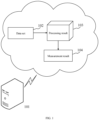
- FIG. 1 is a schematic diagram of an application scenario of a data measurement method according to some embodiments of the present disclosure.
- a computing device 101 may acquire a data set 102. Then, the computing device 101 may input the data set 102 to a pre-trained deep learning network and output a processing result 103. Finally, the computing device 101 may determine the processing result 103 as a measurement result 104. In addition, the computing device 101 may control a target device with a display function to display the measurement result 104.
- the computing device 101 may be hardware or software.
- the computing device When being hardware, the computing device may be implemented as a distributed cluster formed by a plurality of servers or terminals, or as a single server or a single terminal device.
- the computing device When being software, the computing device may be installed in the hardware device listed above. It may be implemented as, for example, a plurality of software or software modules to provide distributed services, or as a single software or software module. Specific limitations are not made herein.
- FIG. 1 a number of the computing device in FIG. 1 is merely illustrative. Any number of computing devices may be provided according to implementation requirements.
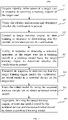
- FIG. 2 shows a flow 200 of some embodiments of the data measurement method according to the present disclosure.
- the method may be performed by the computing device 101 in FIG. 1 .
- the data measurement method includes the following steps.
- step 201 a data set is acquired.
- an execution subject (such as the computing device 101 shown in FIG. 1 ) of the data measurement method may acquire the data set in a wired or wireless connection manner.
- the execution subject may receive a data set inputted by a user as the data set.
- the execution subject may be connected to another electronic device in a wired or wireless connection manner, and acquire a data set in a database of the electronic device connected as the data set.
- the wireless connection manner may include, but is not limited to, 3G/4G connection, WiFi connection, Bluetooth connection, WiMAX connection, Zigbee connection, ultra wideband (UWB) connection, and other wireless connection manners known now or to be developed in the future.
- step 202 the data set is inputted to a pre-trained deep learning network, and a processing result is outputted.
- the execution subject may input the data set to the pre-trained deep learning network and output a processing result.
- input may be the data set and output may be the processing result.
- the deep learning network may be a Recurrent Neural Network (RNN) or a Long Short-Term Memory networks (LSTM).
- RNN Recurrent Neural Network
- LSTM Long Short-Term Memory networks
- the data set may be "flue gas temperature, flue gas flow, flue gas humidity, vapor flow, and economizer outlet temperature.”
- the outputted processing result may be boiler flue gas oxygen content.
- the training of the deep learning network includes: acquiring identity information of a target user in response to receiving a training request of the target user; verifying the identity information and determining whether the verification is passed; and controlling a target training engine to start training in response to determining that the identity information passes the verification.
- step 203 the processing result is determined as a measurement result, and a target device with a display function is controlled to display the measurement result.
- the execution subject may determine the processing result as a measurement result. Then, the execution subject may push the measurement result to a target device with a display function and control the target device to display the measurement result.
- the data set is inputted to the pre-trained deep learning network, so as to obtain a measurement result meeting a requirement of a user.
- the user's requirement for data calculation is met, providing convenience for the user' subsequent use of data.
- FIG. 3 is a flowchart 300 of some embodiments of training of a deep learning network in the data measurement method according to the present disclosure.
- the method may be performed by the computing device 101 in FIG. 1 .
- the data measurement method includes the following steps.
- step 301 identity information of a target user is acquired in response to receiving a training request of the target user.
- an execution subject (such as the computing device 101 shown in FIG. 1 ) of the data measurement method may acquire identity information of the target user in response to receiving a training request of the target user.
- the training request may be an instruction for starting training a model.
- the target user may be a user in need of training and having passes verification such as preset registration and authentication.
- step 302 the identity information is verified and it is determined whether the verification is passed.
- the execution subject may verify the identity information and determine whether the verification is passed. As an example, the execution subject retrieves, based on the identity information, a pre-constructed identity information base to determine whether the identity information exists in the identity information base. In response to determining that the identity information exists, the execution subject may determine that the verification is successful.
- a target training engine is controlled to start training in response to determining that the identity information passes the verification.
- the execution subject may control a target training engine to start training in response to determining that the identity information passes the verification.
- the training engine may be an engine that supports a plurality of algorithm selection modules to provide support for training the deep learning network in different service scenarios.
- step 304 in response to detecting a selection operation of the target user for a training model in a training model base, the target training engine is verified to determine whether the verification is passed.
- the execution subject may verify, in response to detecting a selection operation of the target user for a training model in a training model base, the target training engine to determine whether the verification is passed.
- the training model base may be a set of training models for users to select to meet their requirements.
- the execution subject may verify a permission of the target training engine to determine whether the target training engine has the permission to support the training of the training model selected by the target user.
- the training model base may be "training model A, training model B, training model C".
- a training permission of the target engine may be "training model A and training model C”. If the target user selects the training model as "training model B", the execution subject may determine that the verification on the target training engine is not passed. Otherwise, the execution subject may determine that the verification on the target training engine is passed.
- step 305 in response to determining that the target training engine passes the verification, an initial model is transmitted to a terminal device of the target user.
- the execution subject may transmit an initial model to a terminal device of the target user.
- the initial model may be a model untrained or not meeting a preset condition after training.
- the initial model may also be a model having a deep neural network structure.
- a pre-trained feature extraction model may be a pre-trained neural network model for feature extraction.
- the neural network model may have various existing neural network structures.
- the neural network model may be a Convolutional Neural Network (CNN).
- eXtreme Gradient Boosting (XGBoost) may be used for the initial model.
- a storage position of the initial model is not limited in the present disclosure.
- step 306 the initial model is trained by using the acquired training sample set, to obtain a trained initial model.
- the execution subject may start training the initial model by using the acquired training sample set.
- a training process is as follows.
- a training sample is selected from the training sample set, wherein the training sample includes a sample data set and a sample processing result.
- the execution subject inputs the sample data set in the training sample to the initial model.
- an outputted processing result is compared with the sample processing result to obtain a processing result loss value.
- the execution subject may compare the processing result loss value with a preset threshold to obtain a comparison result.
- the initial model in response to completion of the training of the initial model, the initial model is determined as a trained initial model.
- the acquired training sample set may be local data of a terminal device of the target user.
- the processing result loss value described above may be a value obtained by inputting the outputted processing result and the corresponding sample processing result to an executed loss function as parameters.
- the loss function (such as a square loss function or an exponential loss function) is generally used for estimating a degree of inconsistency between a predicted value (such as the sample processing result corresponding to the sample data set) and a real value (such as the processing result obtained through the above steps) of a model. It is a non-negative real-valued function.
- the loss function may be set according to an actual requirement.
- the loss function may be a cross entropy loss function.
- the method further includes: in response to determining that the training of the initial model is not completed, adjusting related parameters in the initial model, and re-selecting a sample from the training sample set and using the adjusted initial model as an initial model to continue the training step.
- the trained initial model may ensure continuous upload and download between the terminal device and the target training engine on the premise of compression protocol and security protocol, and the trained initial model may be continuously updated by iteration.
- step 307 at least one model stored by the terminal device and the trained initial model are aggregated by using the target training engine to obtain a combined training model.
- the execution subject may aggregate, by using the target training engine, at least one model stored by the terminal device and the trained initial model, to obtain a combined training model.
- the method further includes: controlling the target training engine to stop training in response to detecting a combination termination request of the target user, and storing a combined training model when the training is stopped to a target model base.
- the execution subject may generate an interface for the combined training model, and then store the combined training model for which the interface is generated to the target model base.
- the execution subject may store training records related to the combined training model and state information during the training to a cloud database.
- the method further includes: acquiring a query interface in response to detecting a query operation of the target user; and extracting, from the target model base, historical records and state information of a model having an interface the same as the query interface, and controlling the target device to display the historical records and the state information.
- the historical records may be information for each training in a model training process.
- the flow 300 of the data measurement method in some embodiments corresponding to FIG. 3 reflects the steps of how to train the deep learning network and obtain the combined training model.
- the solutions described in the embodiments may obtain a measurement result meeting a requirement of a user by processing a data set.
- the user's requirement for data calculation is met, providing convenience for the user' subsequent use of data.
- an error caused by manual calculation may be prevented to great extent and a more accurate measurement result may be obtained.
- the user may select training models for different business scenarios, which improves the utilization of the model.
- the generated combined training model also better meets user requirements and improves user experience to some extent.
- the present disclosure provides some embodiments of a data measurement apparatus.
- the apparatus embodiments correspond to the method embodiments in FIG. 2 .
- the apparatus may be specifically applied to a variety of electronic devices.
- a data measurement apparatus 400 includes: an acquisition unit 401, a processing unit 402 and a display unit 403.
- the acquisition unit 401 is configured to acquire a data set.
- the processing unit 402 is configured to input the data set to a pre-trained deep learning network, and output a processing result, wherein the deep learning network is trained through a training sample set, and the training of the deep learning network includes: acquiring identity information of a target user in response to receiving a training request of the target user; verifying the identity information and determining whether the verification is passed; and controlling a target training engine to start training in response to determining that the identity information passes the verification.
- the display unit 403 is configured to determine the processing result as a measurement result, and control a target device with a display function to display the measurement result.
- the training of the deep learning network includes: verifying, in response to detecting a selection operation of the target user for a training model in a training model base, the target training engine to determine whether the verification is passed; transmitting, in response to determining that the target training engine passes the verification, an initial model to a terminal device of the target user; training the initial model by using the acquired training sample set, to obtain a trained initial model; and aggregating, by using the target training engine, at least one model stored by the terminal device and the trained initial model, to obtain a combined training model.
- a training sample in the training sample set includes a sample data set and a sample processing result
- the deep learning network is trained by taking the sample data set as input and the sample processing result as expected output.
- the data measurement apparatus 400 is further configured to: control the target training engine to stop training in response to detecting a combination termination request of the target user, and store a combined training model when the training is stopped to a target model base.
- the data measurement apparatus 400 is further configured to: acquire a query interface in response to detecting a query operation of the target user; and extract, from the target model base, historical records and state information of a model having an interface the same as the query interface, and control the target device to display the historical records and the state information.
- the units in the apparatus 400 correspond to the steps in the method described with reference to FIG. 2 .
- the operations, features and beneficial effects described above for the method also apply to the apparatus 400 and the units included therein, which are not described in detail herein.
- FIG. 5 is a schematic structural diagram of an electronic device (such as the computing device 101 in FIG. 1 ) 500 configured to implement some embodiments of the present disclosure.
- a server shown in FIG. 5 is only an example and should not impose any limitations on functionality and scope of use of the embodiments of the present disclosure.
- the electronic device 500 may include a processing apparatus (such as a central processing unit or a graphics processor) 501, which may execute various appropriate actions and processing according to programs stored in a read-only memory (ROM) 502 or programs loaded from a storage apparatus 508 into a random access memory (RAM) 503.
- the RAM 503 further stores various programs and data required by operation of the electronic device 500.
- the processing apparatus 501, the ROM 502 and the RAM 503 are connected to one another via a bus 504.
- An input/output (I/O) module 505 is also connected to the bus 504.
- the following apparatus may be connected to the I/O interface 505: an input apparatus 506 including, for example, a touch screen, a touchpad, a keyboard, a mouse, a camera, a microphone, an accelerometer, a gyroscope, and the like; an output apparatus 507 including, for example, a liquid crystal display (LCD), a speaker, a vibrator, and the like; a storage apparatus 508 including, for example, a magnetic tape, a hard disk, and the like; and a communication apparatus 509.
- the communication apparatus 509 may allow the electronic device 500 to conduct wireless or wired communication with other devices to exchange data.
- FIG. 5 illustrates an electronic device 500 having various apparatuses, it should be understood that it is not required to implement or have all of the illustrated apparatuses. Alternatively, more or fewer apparatuses may be implemented or included. Each block shown in FIG. 5 may represent one apparatus or a plurality of apparatuses as required.
- some embodiments of the present disclosure include a computer program product including a computer program loaded on a computer-readable medium, and the computer program includes program code for executing the method shown in the flowchart.
- the computer program may be downloaded and installed from the network via the communication apparatus 509, or installed from the storage apparatus 508, or installed from the ROM 502.
- the processing apparatus 501 When the computer program is executed by the processing apparatus 501, the above functions defined in the method of the embodiments of the present disclosure are executed.
- the above computer-readable medium may be a computer-readable signal medium or a computer-readable storage medium or any combination thereof.
- the computer-readable storage medium may be, for example, but is not limited to, an electronic, magnetic, optical, electromagnetic, infrared, or semiconductor system, apparatus, or device, or any combination thereof.
- the computer-readable storage medium may include, but are not limited to, an electrical connection having one or more wires, a portable computer disk, a hard disk, a random access memory (RAM), a read-only memory (ROM), an erasable programmable read only memory (EPROM or flash memory), an optical fiber, a portable compact disk read-only memory (CD-ROM), an optical storage device, a magnetic storage device, or any suitable combination thereof.
- the computer-readable storage medium may be any tangible medium that contains or stores programs, which may be used by or in connection with an instruction execution system, apparatus, or device.
- the computer-readable signal medium may include a data signal that is propagated in the baseband or propagated as part of a carrier, carrying computer-readable program codes. Such propagated data signals may take various forms, including, but not limited to, electromagnetic signals, optical signals, or any suitable combination thereof.
- the computer-readable signal medium may also be any computer-readable medium except for the computer-readable storage medium, and the computer-readable signal medium may send, propagate or transmit a program for use by or in connection with an instruction execution system, apparatus or device.
- Program codes included on the computer-readable medium may be transmitted by any suitable medium, which includes, but is not limited to, a wire, a fiber optic cable, RF (radio frequency), and the like, or any suitable combination thereof.
- the client and the server may communicate using any network protocol currently known or developed in the future, such as a HyperText Transfer Protocol (HTTP), and may interconnect with digital data communication (such as a communication network) in any form or medium.
- HTTP HyperText Transfer Protocol
- the communication network include a local area network ("LAN”), a wide area networks ("WAN”), an inter-network (e.g., the Internet), a peer-to-peer network (e.g., an ad hoc peer-to-peer network), as well as any network currently known or developed in the future.
- the computer-readable medium may be included in the apparatus; or may be separately present and is not incorporated in the electronic device.
- the computer-readable medium carries one or more programs.
- the one or more programs when executed by the electronic device, cause the electronic device to: acquire a data set; input the data set to a pre-trained deep learning network, and output a processing result, wherein the deep learning network is trained through a training sample set, and the training of the deep learning network includes: acquiring identity information of a target user in response to receiving a training request of the target user; verifying the identity information and determining whether the verification is passed; and controlling a target training engine to start training in response to determining that the identity information passes the verification; and determine the processing result as a measurement result, and control a target device with a display function to display the measurement result.
- Computer program codes for executing the operations of some embodiments of the present disclosure may be written in one or more programming languages, or combinations thereof, wherein the programming languages include an object-oriented programming language such as Java, Smalltalk, C++, and also include conventional procedural programming language, such as "C" language or similar programming languages.
- the program codes may be executed entirely on the user's computer, partly executed on the user's computer, executed as an independent software package, partly executed on the user's computer and partly executed on a remote computer, or entirely executed on a remote computer or on a server.
- the remote computer may be connected to the user's computer through any kind of network, including a local area network (LAN) or a wide area network (WAN), or may be connected to an external computer (e.g., using an Internet service provider to connect via the Internet).
- LAN local area network
- WAN wide area network
- an Internet service provider to connect via the Internet
- each block of the flowchart or block diagram may represent one module, a program segment, or a portion of the codes, and the module, the program segment, or the portion of codes includes one or more executable instructions for implementing specified logic functions.
- the functions marked in the blocks may also occur in an order different from the order marked in the drawings. For example, two successively represented blocks may in fact be executed substantially in parallel, and they may sometimes be executed in an opposite order, depending upon the involved function.
- each block of the block diagrams and/or flowcharts, and combinations of blocks in the block diagrams and/or flowcharts may be implemented in a dedicated hardware-based system that executes specified functions or operations, or may be implemented by a combination of dedicated hardware and computer instructions.
- the units described in some embodiments of the present disclosure may be implemented either in software or in hardware.
- the units described may also be arranged in a processor, which, for example, may be described as: a processor includes an acquisition unit, a processing unit, and a display unit.
- the names of these units do not, in some cases, qualify the units.
- the acquisition unit may also be described as "a unit for acquiring a data set".
- FPGA Field Programmable Gate Array
- ASIC Application Specific Integrated Circuit
- ASSP Application Specific Standard Product
- SOC System on Chip
- CPLD Complex Programmable Logic Device
Landscapes
- Engineering & Computer Science (AREA)
- Theoretical Computer Science (AREA)
- Physics & Mathematics (AREA)
- General Physics & Mathematics (AREA)
- General Engineering & Computer Science (AREA)
- Software Systems (AREA)
- Data Mining & Analysis (AREA)
- Artificial Intelligence (AREA)
- Evolutionary Computation (AREA)
- Computing Systems (AREA)
- Mathematical Physics (AREA)
- Life Sciences & Earth Sciences (AREA)
- Computational Linguistics (AREA)
- General Health & Medical Sciences (AREA)
- Biophysics (AREA)
- Biomedical Technology (AREA)
- Health & Medical Sciences (AREA)
- Molecular Biology (AREA)
- Computer Security & Cryptography (AREA)
- Computer Vision & Pattern Recognition (AREA)
- Computer Hardware Design (AREA)
- Human Computer Interaction (AREA)
- Medical Informatics (AREA)
- Bioinformatics & Cheminformatics (AREA)
- Bioinformatics & Computational Biology (AREA)
- Evolutionary Biology (AREA)
- Management, Administration, Business Operations System, And Electronic Commerce (AREA)
- User Interface Of Digital Computer (AREA)
- Debugging And Monitoring (AREA)
Applications Claiming Priority (2)
| Application Number | Priority Date | Filing Date | Title |
|---|---|---|---|
| CN202011095139.0A CN114372569A (zh) | 2020-10-14 | 2020-10-14 | 数据测量方法、装置、电子设备和计算机可读介质 |
| PCT/CN2021/101133 WO2022077946A1 (zh) | 2020-10-14 | 2021-06-21 | 数据测量方法、装置、电子设备和计算机可读介质 |
Publications (3)
| Publication Number | Publication Date |
|---|---|
| EP4131082A1 true EP4131082A1 (de) | 2023-02-08 |
| EP4131082A4 EP4131082A4 (de) | 2023-10-25 |
| EP4131082B1 EP4131082B1 (de) | 2025-11-19 |
Family
ID=81138480
Family Applications (1)
| Application Number | Title | Priority Date | Filing Date |
|---|---|---|---|
| EP21878996.4A Active EP4131082B1 (de) | 2020-10-14 | 2021-06-21 | Datenmessverfahren und -vorrichtung sowie elektronische vorrichtung und computerlesbares medium |
Country Status (5)
| Country | Link |
|---|---|
| US (1) | US20220300858A1 (de) |
| EP (1) | EP4131082B1 (de) |
| JP (1) | JP7717698B2 (de) |
| CN (1) | CN114372569A (de) |
| WO (1) | WO2022077946A1 (de) |
Families Citing this family (17)
| Publication number | Priority date | Publication date | Assignee | Title |
|---|---|---|---|---|
| CN114881180A (zh) * | 2022-07-11 | 2022-08-09 | 浙江瑞邦科特检测有限公司 | 混凝土抗压强度数据的管理方法、装置、设备及存储介质 |
| CN115168733A (zh) * | 2022-07-28 | 2022-10-11 | 中国银行股份有限公司 | 手机应用界面推送方法及装置 |
| CN115862807B (zh) * | 2022-09-02 | 2024-02-02 | 深圳市智云医康医疗科技有限公司 | 基于机器学习的健身训练方法、系统、介质及电子设备 |
| CN115567227B (zh) * | 2022-12-02 | 2023-04-07 | 华南师范大学 | 一种基于大数据安全的身份认证方法及系统 |
| CN116663614B (zh) * | 2022-12-22 | 2025-10-28 | 阿里巴巴(中国)有限公司 | 深度学习网络结构的生成方法及装置 |
| CN115879006A (zh) * | 2022-12-27 | 2023-03-31 | 北京火山引擎科技有限公司 | 数据处理方法及装置 |
| CN116187587A (zh) * | 2023-04-24 | 2023-05-30 | 中国科学院地理科学与资源研究所 | 指数预测方法、装置、设备及计算机可读存储介质 |
| CN116702168B (zh) * | 2023-05-19 | 2024-01-12 | 国网物资有限公司 | 供应端信息检测方法、装置、电子设备和计算机可读介质 |
| CN116614757B (zh) * | 2023-07-18 | 2023-09-26 | 江西斐耳科技有限公司 | 一种基于深度学习的助听器验配方法及系统 |
| CN116974561A (zh) * | 2023-07-31 | 2023-10-31 | 中电金信软件有限公司 | 一种页面展示方法、装置、电子设备及存储介质 |
| CN116757100B (zh) * | 2023-08-18 | 2023-12-15 | 国科大杭州高等研究院 | 推力预测模型训练及推力预测方法、装置、设备、介质 |
| CN116894163B (zh) * | 2023-09-11 | 2024-01-16 | 国网信息通信产业集团有限公司 | 基于信息安全的充放电设施负荷预测信息生成方法和装置 |
| CN118194159B (zh) * | 2024-03-18 | 2024-12-17 | 北京德风新征程科技股份有限公司 | 智能边缘作业设备、边缘环境监测方法、电子设备和介质 |
| CN119512854A (zh) * | 2024-10-17 | 2025-02-25 | 济南浪潮数据技术有限公司 | 数据分析方法、装置、计算机设备和存储介质 |
| CN118963977B (zh) * | 2024-10-21 | 2025-03-14 | 瓴羊智能科技有限公司 | 分布式训练方法、系统、设备、存储介质及程序产品 |
| CN120671795B (zh) * | 2025-08-22 | 2025-11-21 | 中化现代农业有限公司 | 模型协同处理方法和装置、电子设备以及计算机存储介质 |
| CN121392880B (zh) * | 2025-12-25 | 2026-03-27 | 中汽信息科技(天津)有限公司 | 一种基于大模型的多场景文本识别方法及系统 |
Family Cites Families (13)
| Publication number | Priority date | Publication date | Assignee | Title |
|---|---|---|---|---|
| WO2018075995A1 (en) * | 2016-10-21 | 2018-04-26 | DataRobot, Inc. | Systems for predictive data analytics, and related methods and apparatus |
| CN107766940B (zh) * | 2017-11-20 | 2021-07-23 | 北京百度网讯科技有限公司 | 用于生成模型的方法和装置 |
| WO2019164981A1 (en) * | 2018-02-20 | 2019-08-29 | Pearson Education, Inc. | Systems and methods for automated evaluation model customization |
| CN110543946B (zh) * | 2018-05-29 | 2022-07-05 | 百度在线网络技术(北京)有限公司 | 用于训练模型的方法和装置 |
| CN109492771A (zh) * | 2018-11-12 | 2019-03-19 | 北京百度网讯科技有限公司 | 交互方法、装置和系统 |
| CN109670600B (zh) * | 2018-12-14 | 2019-10-25 | 启元世界(北京)信息技术服务有限公司 | 基于云平台的决策方法和系统 |
| CN111612153B (zh) * | 2019-02-22 | 2024-06-14 | 华为技术有限公司 | 训练模型的方法和装置 |
| CN110009059B (zh) * | 2019-04-16 | 2022-03-29 | 北京字节跳动网络技术有限公司 | 用于生成模型的方法和装置 |
| CN110263930B (zh) * | 2019-06-28 | 2025-08-22 | 北京百度网讯科技有限公司 | 用于发送信息的方法和装置 |
| CN110929880B (zh) * | 2019-11-12 | 2025-01-24 | 深圳前海微众银行股份有限公司 | 一种联邦学习方法、装置及计算机可读存储介质 |
| CN111008704B (zh) * | 2019-11-29 | 2023-08-04 | 上海能塔智能科技有限公司 | 电动汽车联邦学习的处理方法、装置、设备与存储介质 |
| CN111401367B (zh) * | 2020-03-20 | 2025-07-18 | 深圳前海微众银行股份有限公司 | 基于联邦ocr模型的字符检测方法、装置、设备和介质 |
| CN111340242B (zh) * | 2020-05-15 | 2020-08-04 | 支付宝(杭州)信息技术有限公司 | 保护隐私的模型联合训练方法及装置 |
-
2020
- 2020-10-14 CN CN202011095139.0A patent/CN114372569A/zh active Pending
-
2021
- 2021-06-21 WO PCT/CN2021/101133 patent/WO2022077946A1/zh not_active Ceased
- 2021-06-21 EP EP21878996.4A patent/EP4131082B1/de active Active
- 2021-06-21 JP JP2022539397A patent/JP7717698B2/ja active Active
-
2022
- 2022-05-30 US US17/828,028 patent/US20220300858A1/en active Pending
Also Published As
| Publication number | Publication date |
|---|---|
| WO2022077946A1 (zh) | 2022-04-21 |
| JP7717698B2 (ja) | 2025-08-04 |
| JP2023545593A (ja) | 2023-10-31 |
| US20220300858A1 (en) | 2022-09-22 |
| EP4131082B1 (de) | 2025-11-19 |
| CN114372569A (zh) | 2022-04-19 |
| EP4131082A4 (de) | 2023-10-25 |
Similar Documents
| Publication | Publication Date | Title |
|---|---|---|
| US20220300858A1 (en) | Data measurement method and apparatus, electronic device and computer-readable medium | |
| CN108520220B (zh) | 模型生成方法和装置 | |
| CN108985446A (zh) | 用于告警的方法及装置 | |
| KR20200145641A (ko) | 정보 생성 방법 및 장치 | |
| US20210133600A1 (en) | Systems and methods for validation of artificial intelligence models | |
| CN112685799B (zh) | 设备指纹生成方法、装置、电子设备和计算机可读介质 | |
| CN112231663A (zh) | 结合rpa和ai的数据采集方法、装置、设备及存储介质 | |
| CN112434620B (zh) | 场景文字识别方法、装置、设备和计算机可读介质 | |
| US20220309405A1 (en) | Combined-learning-based internet of things data service method and apparatus, device and medium | |
| WO2021217340A1 (zh) | 基于ai的通用智能家居方案自动化设计方法及装置 | |
| CN110084298B (zh) | 用于检测图像相似度的方法及装置 | |
| CN108629355A (zh) | 用于生成工作量信息的方法和装置 | |
| CN110956127A (zh) | 用于生成特征向量的方法、装置、电子设备和介质 | |
| CN115022328B (zh) | 服务器集群以及服务器集群的测试方法、装置和电子设备 | |
| CN111787041A (zh) | 用于处理数据的方法和装置 | |
| CN117057681B (zh) | 软件质量评估方法、装置、设备和存储介质 | |
| CN117743796B (zh) | 基于投资标注数据的指令集自动化质量校验方法、系统 | |
| US20250211440A1 (en) | Systems and methods for leveraging offline virtual authentication tokens | |
| CN110991661A (zh) | 用于生成模型的方法和装置 | |
| WO2024007938A1 (zh) | 一种多任务预测方法、装置、电子设备及存储介质 | |
| CN117993709A (zh) | 价值风险信息生成方法、装置、设备和计算机可读介质 | |
| CN117994014A (zh) | 价值信息生成方法、装置、电子设备和计算机可读介质 | |
| CN112434619B (zh) | 病例信息提取方法、装置、设备和计算机可读介质 | |
| CN114697206B (zh) | 物联网节点管理方法、装置、设备和计算机可读介质 | |
| CN106611100B (zh) | 一种用户行为分析方法和装置 |
Legal Events
| Date | Code | Title | Description |
|---|---|---|---|
| STAA | Information on the status of an ep patent application or granted ep patent |
Free format text: STATUS: THE INTERNATIONAL PUBLICATION HAS BEEN MADE |
|
| PUAI | Public reference made under article 153(3) epc to a published international application that has entered the european phase |
Free format text: ORIGINAL CODE: 0009012 |
|
| STAA | Information on the status of an ep patent application or granted ep patent |
Free format text: STATUS: REQUEST FOR EXAMINATION WAS MADE |
|
| 17P | Request for examination filed |
Effective date: 20221026 |
|
| AK | Designated contracting states |
Kind code of ref document: A1 Designated state(s): AL AT BE BG CH CY CZ DE DK EE ES FI FR GB GR HR HU IE IS IT LI LT LU LV MC MK MT NL NO PL PT RO RS SE SI SK SM TR |
|
| A4 | Supplementary search report drawn up and despatched |
Effective date: 20230926 |
|
| RIC1 | Information provided on ipc code assigned before grant |
Ipc: G06F 3/147 20060101ALI20230920BHEP Ipc: G06F 21/31 20130101ALI20230920BHEP Ipc: G06V 10/82 20220101ALI20230920BHEP Ipc: G06N 3/08 20230101AFI20230920BHEP |
|
| DAV | Request for validation of the european patent (deleted) | ||
| DAX | Request for extension of the european patent (deleted) | ||
| REG | Reference to a national code |
Ref country code: DE Ref legal event code: R079 Free format text: PREVIOUS MAIN CLASS: G06N0003080000 Ipc: G06F0021310000 Ref document number: 602021042821 Country of ref document: DE |
|
| GRAP | Despatch of communication of intention to grant a patent |
Free format text: ORIGINAL CODE: EPIDOSNIGR1 |
|
| STAA | Information on the status of an ep patent application or granted ep patent |
Free format text: STATUS: GRANT OF PATENT IS INTENDED |
|
| RIC1 | Information provided on ipc code assigned before grant |
Ipc: G06F 18/21 20230101ALI20250516BHEP Ipc: G06N 3/08 20230101ALI20250516BHEP Ipc: G06F 3/147 20060101ALI20250516BHEP Ipc: G06F 21/31 20130101AFI20250516BHEP |
|
| INTG | Intention to grant announced |
Effective date: 20250610 |
|
| GRAS | Grant fee paid |
Free format text: ORIGINAL CODE: EPIDOSNIGR3 |
|
| GRAA | (expected) grant |
Free format text: ORIGINAL CODE: 0009210 |
|
| STAA | Information on the status of an ep patent application or granted ep patent |
Free format text: STATUS: THE PATENT HAS BEEN GRANTED |
|
| AK | Designated contracting states |
Kind code of ref document: B1 Designated state(s): AL AT BE BG CH CY CZ DE DK EE ES FI FR GB GR HR HU IE IS IT LI LT LU LV MC MK MT NL NO PL PT RO RS SE SI SK SM TR |
|
| REG | Reference to a national code |
Ref country code: CH Ref legal event code: F10 Free format text: ST27 STATUS EVENT CODE: U-0-0-F10-F00 (AS PROVIDED BY THE NATIONAL OFFICE) Effective date: 20251119 Ref country code: GB Ref legal event code: FG4D |
|
| REG | Reference to a national code |
Ref country code: DE Ref legal event code: R096 Ref document number: 602021042821 Country of ref document: DE |
|
| REG | Reference to a national code |
Ref country code: IE Ref legal event code: FG4D |
|
| REG | Reference to a national code |
Ref country code: NL Ref legal event code: MP Effective date: 20251119 |
|
| PG25 | Lapsed in a contracting state [announced via postgrant information from national office to epo] |
Ref country code: ES Free format text: LAPSE BECAUSE OF FAILURE TO SUBMIT A TRANSLATION OF THE DESCRIPTION OR TO PAY THE FEE WITHIN THE PRESCRIBED TIME-LIMIT Effective date: 20251119 |
|
| REG | Reference to a national code |
Ref country code: LT Ref legal event code: MG9D |
|
| PG25 | Lapsed in a contracting state [announced via postgrant information from national office to epo] |
Ref country code: NO Free format text: LAPSE BECAUSE OF FAILURE TO SUBMIT A TRANSLATION OF THE DESCRIPTION OR TO PAY THE FEE WITHIN THE PRESCRIBED TIME-LIMIT Effective date: 20260219 |
|
| PG25 | Lapsed in a contracting state [announced via postgrant information from national office to epo] |
Ref country code: FI Free format text: LAPSE BECAUSE OF FAILURE TO SUBMIT A TRANSLATION OF THE DESCRIPTION OR TO PAY THE FEE WITHIN THE PRESCRIBED TIME-LIMIT Effective date: 20251119 Ref country code: HR Free format text: LAPSE BECAUSE OF FAILURE TO SUBMIT A TRANSLATION OF THE DESCRIPTION OR TO PAY THE FEE WITHIN THE PRESCRIBED TIME-LIMIT Effective date: 20251119 Ref country code: AT Free format text: LAPSE BECAUSE OF FAILURE TO SUBMIT A TRANSLATION OF THE DESCRIPTION OR TO PAY THE FEE WITHIN THE PRESCRIBED TIME-LIMIT Effective date: 20251119 |
|
| REG | Reference to a national code |
Ref country code: AT Ref legal event code: MK05 Ref document number: 1859428 Country of ref document: AT Kind code of ref document: T Effective date: 20251119 |
|
| PG25 | Lapsed in a contracting state [announced via postgrant information from national office to epo] |
Ref country code: NL Free format text: LAPSE BECAUSE OF FAILURE TO SUBMIT A TRANSLATION OF THE DESCRIPTION OR TO PAY THE FEE WITHIN THE PRESCRIBED TIME-LIMIT Effective date: 20251119 |
|
| PG25 | Lapsed in a contracting state [announced via postgrant information from national office to epo] |
Ref country code: RS Free format text: LAPSE BECAUSE OF FAILURE TO SUBMIT A TRANSLATION OF THE DESCRIPTION OR TO PAY THE FEE WITHIN THE PRESCRIBED TIME-LIMIT Effective date: 20260219 |
|
| PG25 | Lapsed in a contracting state [announced via postgrant information from national office to epo] |
Ref country code: IS Free format text: LAPSE BECAUSE OF FAILURE TO SUBMIT A TRANSLATION OF THE DESCRIPTION OR TO PAY THE FEE WITHIN THE PRESCRIBED TIME-LIMIT Effective date: 20260319 |
|
| PG25 | Lapsed in a contracting state [announced via postgrant information from national office to epo] |
Ref country code: PT Free format text: LAPSE BECAUSE OF FAILURE TO SUBMIT A TRANSLATION OF THE DESCRIPTION OR TO PAY THE FEE WITHIN THE PRESCRIBED TIME-LIMIT Effective date: 20260319 |
|
| PG25 | Lapsed in a contracting state [announced via postgrant information from national office to epo] |
Ref country code: PL Free format text: LAPSE BECAUSE OF FAILURE TO SUBMIT A TRANSLATION OF THE DESCRIPTION OR TO PAY THE FEE WITHIN THE PRESCRIBED TIME-LIMIT Effective date: 20251119 |
|
| PG25 | Lapsed in a contracting state [announced via postgrant information from national office to epo] |
Ref country code: LV Free format text: LAPSE BECAUSE OF FAILURE TO SUBMIT A TRANSLATION OF THE DESCRIPTION OR TO PAY THE FEE WITHIN THE PRESCRIBED TIME-LIMIT Effective date: 20251119 |